Las Condes, Santiago de Chile. 17.14.
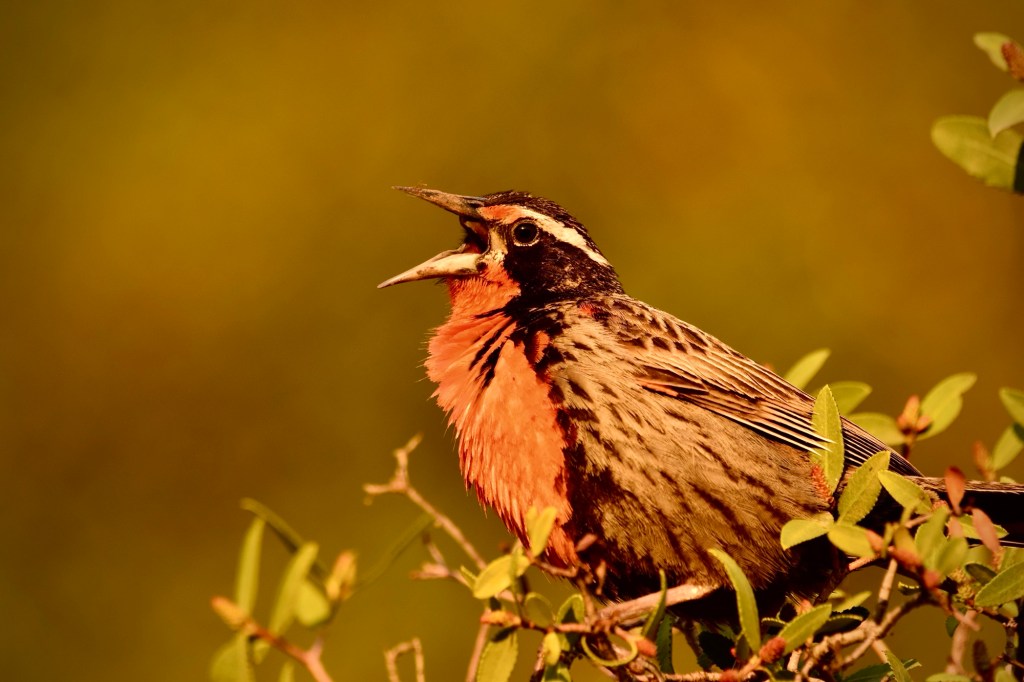
It’s getting to that stage of my time in Chile where I’m starting to take advantage of every moment remaining. Over the last few weeks I’ve gotten quite used to the sight of the Andes, the caracaras that seem to be constantly somewhere on the horizon and the wheezy call and response of the characterful meadowlarks. But soon I’ll have to say goodbye. So, while the weather holds at least, I’ll try to get out after work and soak up as much of that view as I can.
After a productive day spent exploring Carol Ann Duffy’s poetry (specifically Quickdraw, Demeter, Shooting Stars and Delilah) and hanging out with the Senior English team, I popped in to grab my camera and went straight back up the road to Observatory Hill (Cerro Calán). It was smoggy and overcast on my way up, but by the time I reached the summit, the sun had found a breach in the cloud line near the horizon and came shining through – just in time to light up the meadowlarks that were scrambling about the summit.

I went all the way to Patagonia for pumas and took a boat out into the Pacific to see an albatross, but the meadowlarks have been a feature wherever I’ve gone. For me, they’re probably the bird of Chile – after all, national bird or not, I’ve seen condors in Peru, albeit perhaps not as frequently as I have here.
If I had more time – and the weather were kinder – I’d head south again in search of the chucao, a smart little Chilean speciality, and try my luck in search of the Magellanic woodpeckers that reside within the forests of Chiloe. I’d also try to track down the elusive tucúquere, the largest of the owls of Chile, that has thus far eluded me. I suspect I’ll be absolutely knackered when I return from my final adventure next week, but if the sun decides to make a very overdue return, I might make one last jaunt out to Batuco, a wetland reserve to the north of the city, in the hope that I might find the burrowing owls that live around the lake.
Until then, I’m quite content to watch the meadowlarks bousting about.
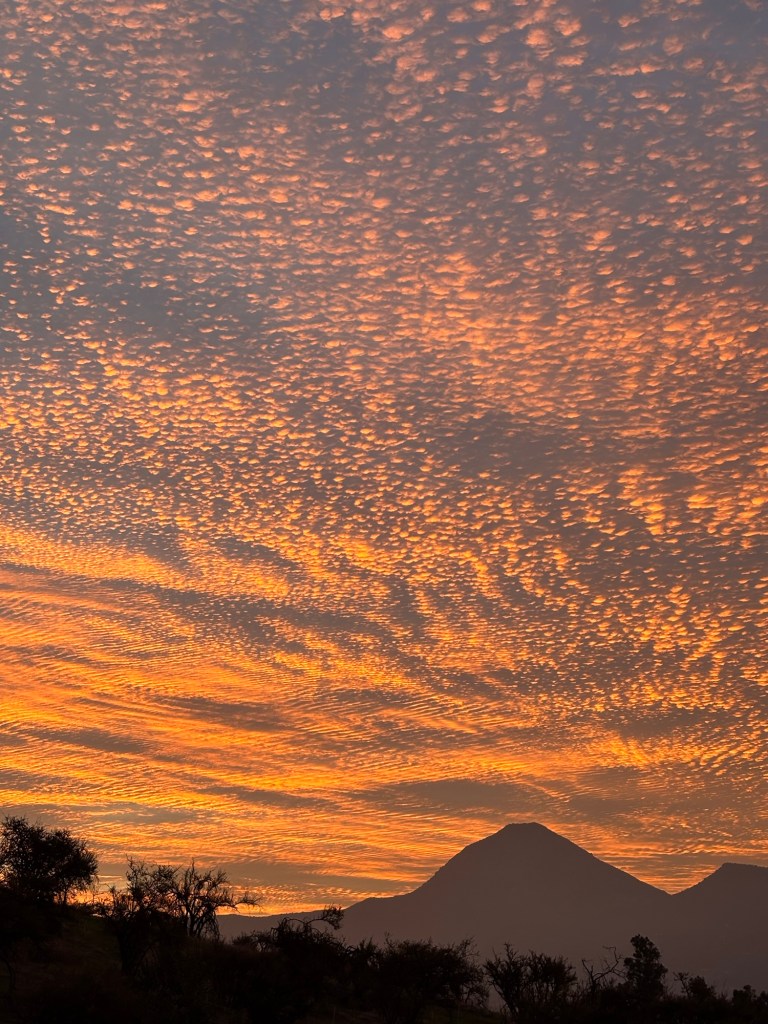
When the sun can be seen, Santiago experiences an incredible second sunset. The dying embers of dusk catches the peaks of the mountains and showers them in golden light, before they fade to an imperial grey against the iron skies beyond. Then, just when you think it’s over, the mountains erupt in an incredible crimson light. I’m not sure what triggers that second burst of light. Maybe it’s the sun hitting the Pacific, or some trick of the clouds. Either way, it’s breathtaking.

As I walked back down the road toward Avenida Charles Hamilton, the clouds became a mirrored beach, like so much stippled sand. To the north, the triangular summit of Cerro Manquehue rose into the ether like a child’s drawing. It’s been the eternal backdrop of my stay here in Santiago, visible from both my home in Las Condes and my office in Craighouse on the other side of the mountain.
Before I came here, Manquehue was just the name of a Chilean Catholic community who I met once in Durham, many years ago. Now it’s one of my favourite waymarkers in the Valle Central.
Tomorrow brings an observation – one of my last – and a planning session with the Deputy Head for a fully-fledged 90-minute lesson of my own on Thursday. If I didn’t know better, I’d say they were testing me. It almost feels like a job interview.
I saw a fox near the car park as I left today – a gold and silver vixen, rooting around the trees just beyond the fence. These culpeos are a lot closer to wolves and jackals than they are to true foxes, but nature clearly likes the design of the fox, because the culpeo and its cousin the chilla have both evolved to fill that niche.
I’ll take that as a good sign. Nothing that beautiful could be anything else. BB x


Me encantan tus fotos y como describes las experiencias de tu viaje a Santiago. Maravilloso !! Cuidate.
LikeLiked by 1 person