Middle Years

Lo Barnechea, Santiago de Chile. 15.05.

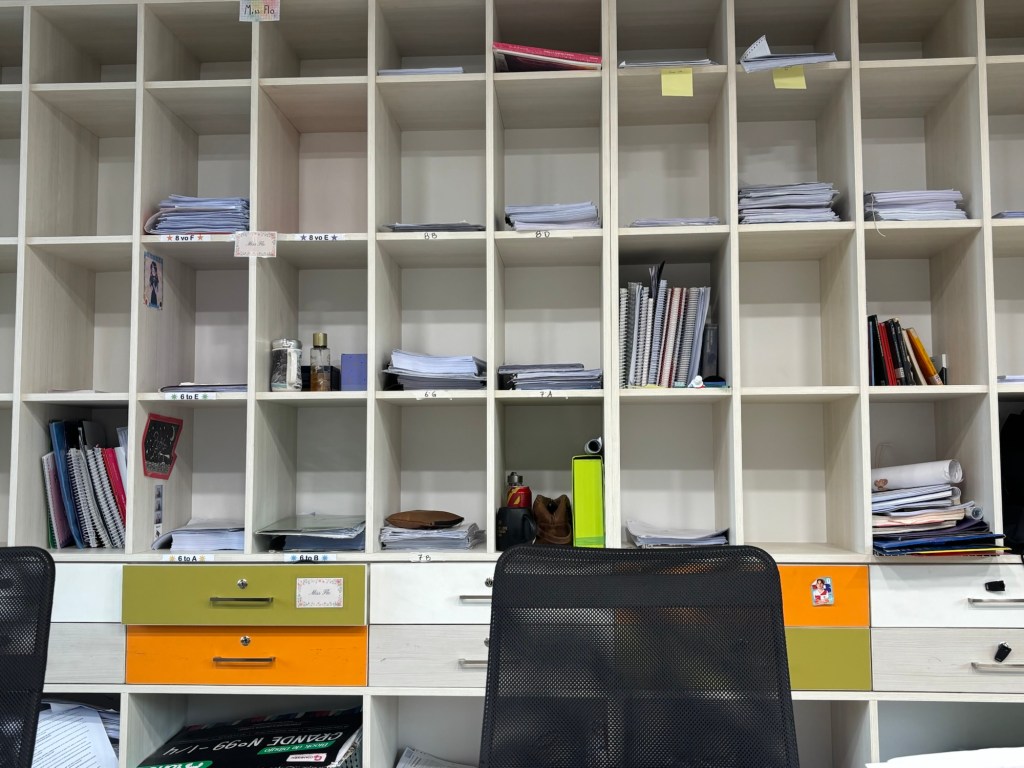
Today’s lesson observations were largely spent with a friendly Spanish teacher called Mario. The Middle Years Programme or MYP – the IB’s equivalent of Years 6 to 9 – follows a really interesting programme at this time of year. Or at least that’s how I see it!

All of the classes in 6° (Year 6) are currently working on a triptych project centred around haikus, so that they can get used to how syllables work in context. The students have free choice as to what to write their haikus about, provided it concerns an aspect of Japanese culture. As for the range of ideas in the classroom…! Sakura trees, Matsumoto Castle, Mount Fuji, the origins of sushi, Tokugawa Ieyasu… The creativity and ambition of these IB-trained children is truly astounding.

In 7° (Year 8), the students are working on their organisational and presentational skills through a marketing project. Not only do they have to create the product, they have to design the marketing poster, complete with a functional slogan and all the trappings of a street-side ad, right down to the contact details and the disclaimers. Once they’ve created their project, they have to explain their product and why they have designed their ad the way they have, commenting on their own use of language and where they got their sources. It strikes me as an incredibly mature way to handle a Year 8 language class. I must find out what ours do – I’d be surprised if it is as high-brow. Or maybe I’m just bowled over by the full body of the IB, having only touched the tail of the beast before.

In 8°, the students have an even more ambitious task ahead of them: an anthology of Chilean poets (sans Neruda), from which they have to select two poems by different poets and compare them, analysing the stylistic features at work in each one. We definitely did this in English when I was growing up, but not in that kind of detail, not at that age. It reminds me of how far ahead Spain’s Lengua castellana course was of my own English syllabus, as it took me two years to reach the material I had covered during my year out in Spain (which is effectively three, as I was held back a year when I moved out in order to help me acclimatise). I can’t vouch for the quality of their work as it’s still being marked, but they seemed about as keen on poetry as your average English kid is – which is to say, not in the slightest.

It’s a shame, how universally unpopular poetry seems to be. I guess it’s because of the difficulty spike when compared to a humdrum comprehension text: all the best poets do love to weave a lot of clever imagery and references that require major unpacking to properly appreciate. I’ve always been of the opinion that the best toolkit for handling poetry is a serious arsenal of general knowledge, but with that too on the wane in the age of instant information, I can’t see poetry becoming anything more than a niche interest among the global student body.

Well. Not unless I have anything to do with it, anyway. BB x

Time Warp

Las Condes, Santiago de Chile. 19.13.

As I expected, when I arrived at school this morning, a plan for whatever it was I was supposed to do out here had yet to materialise. I think part of that is because they didn’t really know what they were working with: whether I was here to observe, to gain teaching experience, or perhaps even to help out in Maths (god forbid!). When they realised that I could not only speak Spanish but had been teaching for eight years already, that changed the game quite a bit… Really, you’d have thought this kind of thing would have been communicated ages ago! But, like I said, it was not altogether unexpected – I knew this exchange was going to be a bit ersatz until I found my feet, given how little information I had to work with before setting out.

Anyway…! What a school. What an incredible institution! I’ve been teaching the IB Diploma for the best part of five years now, but to see a school system where it is not just an additional pathway but the culmination of a five year programme… It almost seems ridiculous to offer the standalone diploma without the run-up of the MYP.

Craighouse sits at the very top of the extremely well-to-do suburb of Lo Barnechea, which is a step-up from the already smart Las Condes. It seems the higher up the mountainside you go, the higher up the societal ladder you climb, too. Mock Tudor houses with half-timbered facades. Americanesque mansions with illuminated porches and Spanish haciendas. The drive up to school from Las Condes felt like orienting one’s way through a bougie estate agent’s catalogue.

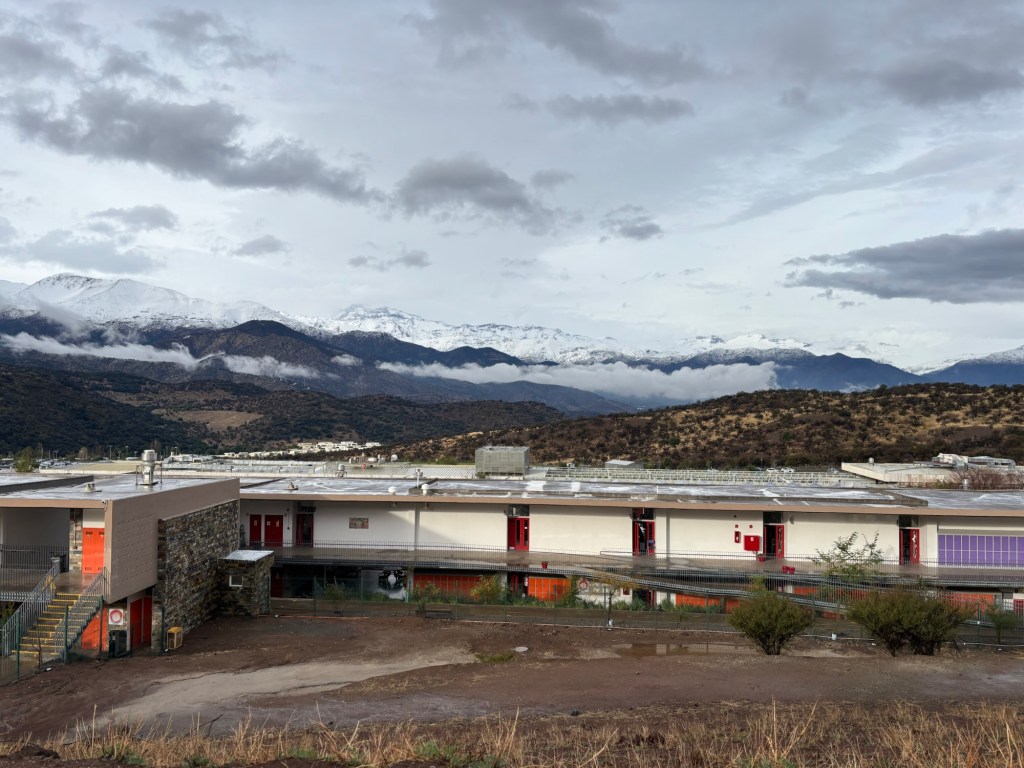
The school itself? An absolute dream of an establishment. Making rooms for scientific inquiry… Inquiry centres, which are glorified libraries with all the bells and whistles… Gyms and sports facilities that would make even my sportier students salivate… And when the clouds clear, the snowy peaks of the Andes all around them. How lucky these kids are!


The plan is coming together – slowly. For now, I’m going to be working with the Lenguaje department, helping to deliver Language and Comprehension classes. Ironically, in a school that teaches almost entirely in English, it’s the one department that is taught exclusively in Spanish. Bizarrely, they’ve hired in an English exchange teacher to help deliver the Spanish Language and Literature programme.

It is exactly what I wanted. It will be a challenge, I won’t deny that. But it is precisely what I was angling for. It is all part of the grand plan: teach Spanish, even to the Spaniards, until I am good enough to return to Spain and do the same over there. In Spain – at least in public schools – teachers of English are expected to be able to deliver Lengua Castellana as well. That’s like expecting our French teachers to be able to offer English Literature.

Of course, the British system doesn’t work like that at all – but then, why should it? Our entire curriculum fails to consider the importance of bilingualism, purely because of the cultural dominance of English on the world stage. If not English, which language would you choose? It would have to be one that your average teacher spoke well enough to capably deliver their subject, and that sole requirement kills the idea in one shot. Your average British teacher is simply not good enough at any foreign language to teach their core subject to the same standard as they would in their own, never mind finding one common foreign language at a national level. No – until another language reaches the same level of prestige as English, I don’t think it’s likely we’ll see that kind of programme over here.

But that’s ok. I plan to move abroad anyway. The more I see of this whole school IB approach, I have to admit, the more I like it. If I can only find a school in Spain where I can sink my teeth into a system like this one… Boy. That would be the dream. BB x

U-Turn

14.02, The Flat.

In the blink of an eye, my second year at Taunton has come and gone. It’s been another hurricane season, I won’t deny that. A little easier than last year, perhaps – if only because of the repetitive nature of teaching the same course – but every bit as busy. Since September, I’ve taken my student Funk Band out to their first external gig, joined a band of my own, taken a team to the Oxford Schools Finals Day for the second year in a row and led a public speaking workshop in the form of a legal practice (which, of course, I am totally qualified for…). I have returned to Extremadura under iron skies, taken yet another school trip to Barcelona and travelled all the way to Peru in search of the Andean condor on one of the most amazing adventures of my life. I have not found Her – Somerset is proving a very dry place – but I have made some good friends at work, which is a positive. I haven’t exactly had much time to commit to the search, and I have also spent almost every day of my holidays on the road, which is terribly self-indulgent of me, but it is how I survive the manic 24/7 existence that is working in a boarding school.

True to form, my summer holidays are set to follow the same trend. After a few days’ reprieve – just about enough time to tidy the flat and pack – I will be traveling across the Atlantic again, bound this time for Chile, nearly 1,500km further south than where I left off in April. Please don’t get me wrong – this one isn’t a purely self-indulgent adventure. I’m off to work at a school out there in Chile’s capital, Santiago, for three weeks or so. As to what form that work may take, I am still completely in the dark. I imagine any rational human being might balk at the idea of being less than a week away from traveling to the other side of the planet at no small expense without so much as an address or even the vaguest idea of what to expect, but I’m at that stage of my life where I am entirely my own agent and any change is welcome. The alternative is a rather static Somerset summer, alternating between driving lessons and debilitating bouts of hayfever. With my timetable for the next academic year allowing some time for the former, I think I can allow myself to dodge the latter by switching seasons in a Spanish-speaking country.

I won’t be hiding under an austral snowstorm all summer. When my five weeks are up, I’ve a wedding to attend in Athens, which I have been looking forward to for a very long time. Once again, I’ve only planned the beginning. How I get home after four days in the Greek capital remains up in the air. Maybe I’ll find a quiet spot in Thessaloniki and soak up the Mediterranean sun while I work on my novel. Or maybe I’ll travel back home across Europe, seeing Romania like I planned years ago. I haven’t decided yet.

I really don’t know what the next two months will bring. At the very least, I hope they bring change, whatever that looks like. My boss would really like me to stop saying yes to everything. She means well, I know. But if I don’t say yes to things like this, my youth will slip through my fingers and I will find myself in the same job ten years from now, still hoping that She will appear. The apps don’t work – everyone is exhausted – so, like a good scientist, I have to go and do the fieldwork. I don’t expect to find Her in Chile (let’s be honest, at a distance of nearly twelve thousand kilometres, it would probably be better for me if I didn’t), but it can’t hurt to try – and along the way, it would be nice to make some new friends and learn something new. I have work to do, of course – this Spanish Language A: Literature course won’t write itself – but with several long flights on the cards, that shouldn’t be a problem. With one “buffer” week on either side of my placement, I should have plenty of time to explore.

In short, I don’t know how this ends. I don’t know how it middles either. But I do know how it starts. Since I’m going all the way to the far side of the world, I figured I could go a little further. Before my placement begins – the day after the FIFA World Cup Final – I will be indulging my inner Attenborough once again in the desolate wilds of Patagonia. After a little shopping around, I’ve found a respectable guide who will take me in search of one of Chile’s most magical creatures: the puma. I didn’t have any luck with the jaguars in Manu this Easter, so hopefully Patagonia will deliver.

I hadn’t planned on going back to South America so soon – but here we are. Life is full of u-turns, but they aren’t always as exciting as this. So here’s to the summer of ’26! BB x

Minor Adjustments

The Flat, 21.56.

Two weeks from now – right now – I will be sitting somewhere in the transit lounge in Bogotá’s El Dorado International Airport, awaiting my connecting flight to Peru. That’s about 5,300 miles (or 8,500 kilometres) from home, which will be the furthest I have ever been from home by a long shot, beating both Kampala and a brief layover in Dallas last year – and, if things go to plan, I may well find myself even further afield before the year is out. I will also be a full five hours out of sync before I even reach my final destination, so I will need to be careful and try to acclimatise with an altered sleep schedule a few days in advance.

We are very much into the preparation phase now. I have arranged the last of my accommodations for the journey in Ollantaytambo, where I hope to end my Peruvian adventure in the peace and quiet of the Sacred Valley. I have ordered a new pair of sturdy Merrell hiking books to see me around the altiplano and beyond. I should do a preparatory pack this weekend to see if I can fit everything into my rucksack. I’m a light traveller, but the zoom lens is likely to be the largest and heaviest of the equipment I will be lugging around. The jury’s still out as to whether I should take a book with me or simply use up the last of my Audible subscription credits and download more audiobooks than I could possibly hope to finish in that time. I’m leaning toward the latter, if only because I’m not particularly good at leaving a good book behind.

I’ve been meaning to get out and about and keep practising with the lens, but my time is very limited. Last week I managed to escape for just over an hour on Friday afternoon while the sun was out, but between report-writing, lesson planning, taking my team to Oxford Schools on Saturday and being on duty almost all of Sunday, I haven’t had much luck. The Netherclay Community Wood isn’t too far from home, but it had rained a lot on Friday so I didn’t explore the woods too much, as the ground beneath my feet had become little better than a squelching quagmire. Little wonder, then, that there were so few walkers out and about.

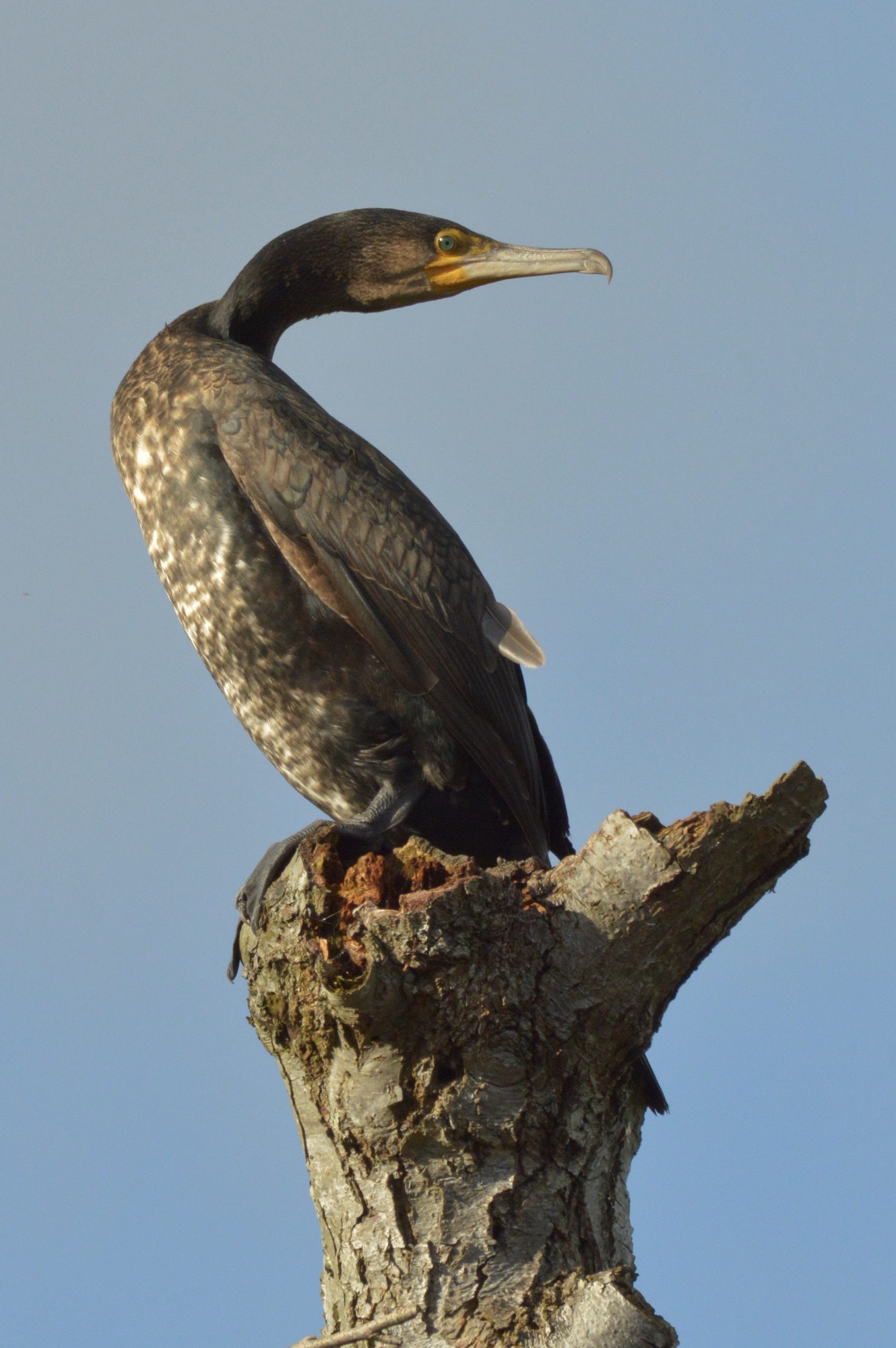
I went looking for the water rail that I heard last week, but I didn’t see or hear it. I did disturb a kingfisher on the other side of the pond, though, and while the halcyon bird was much too fast for me, I did have more luck with a young cormorant in the momentary interlude when the winter sun deigned to show its face.


Having something incredible to look forward to always makes the Lent term – by far the hardest of all the school terms – a lot easier to bear. Last year, the knowledge that I would be spending all of three weeks in and around Spain was enough. This time, I have pushed the boat out so far that there is a very real danger that the tide will carry it away. And once it does, where will it take me? I’ve lost track of the number of times I’ve caught myself exploring other destinations, other wildlife adventures, other places where I can run while I still have the light of life. This year it’s South America’s turn, but in the years to come, I would dearly like to see the rest of the world, now that the wanderlust has returned. I still harbour dreams of seeing the eerie saguaro stands of Sonora, but a number of other old ideas have started to rise to the surface, like bubbles beneath a frozen lake: KwaZulu-Natal, Kanha National Park, Svalbard and Borneo.

It may well be that in abandoning my search for Her, wherever she may be, and indulging in the thing that has always brought me the most joy, I am putting off the thing I want the most in life. It may also be that I find Her along the road. Either way, I am done waiting. The apps are drier than the Atacama these days and the conversations drier still. There is a world of light and life and joy out there and I can no longer ignore it. It is time for a change of scenery. BB x

Camino XXIV: The Road Not Taken

Plaza Mayor, León. 21.03.

Tomorrow marks the end of one Camino and the beginning of another. And not a moment too soon. I fear my social battery is at maximum capacity. I got the jitters after showing up late to the dinner the others had arranged at the Royal Tandoori, to find a crowd of fourteen.

Maybe it was the sudden shift from the intimate setting of my haircut the hour before to a busy table of English and Americans holding court over an Indian meal; or maybe it was the location of my Siege Perilous as the final invitee, squashed into the corner; or the fact that they’d started without me.

Whatever it was, I know now that my decision to leave the Camino Francés is a wise one. It’s a little shameful to admit, but I could use a break. I’m not proud of the fact that these social settings continue to throw me every so often, but I am getting better at hitting the escape button before it escalates.


On the walk into León this morning, Talia asked me a question that has genuinely had me thinking all day. I think it was something like this:

When did you decide not to pursue a career in biology?

At first it seemed a pretty straightforward question. My grades in Biology were never all that great, the competition at my school was just too much and it never occurred to me even once to study Biology (or Natural Sciences) at university.

But with a little context, I can see why she asked me that out of the blue – and I’m frankly amazed how much I’ve suppressed what is nothing less than a core memory that might once have changed the course of my life.

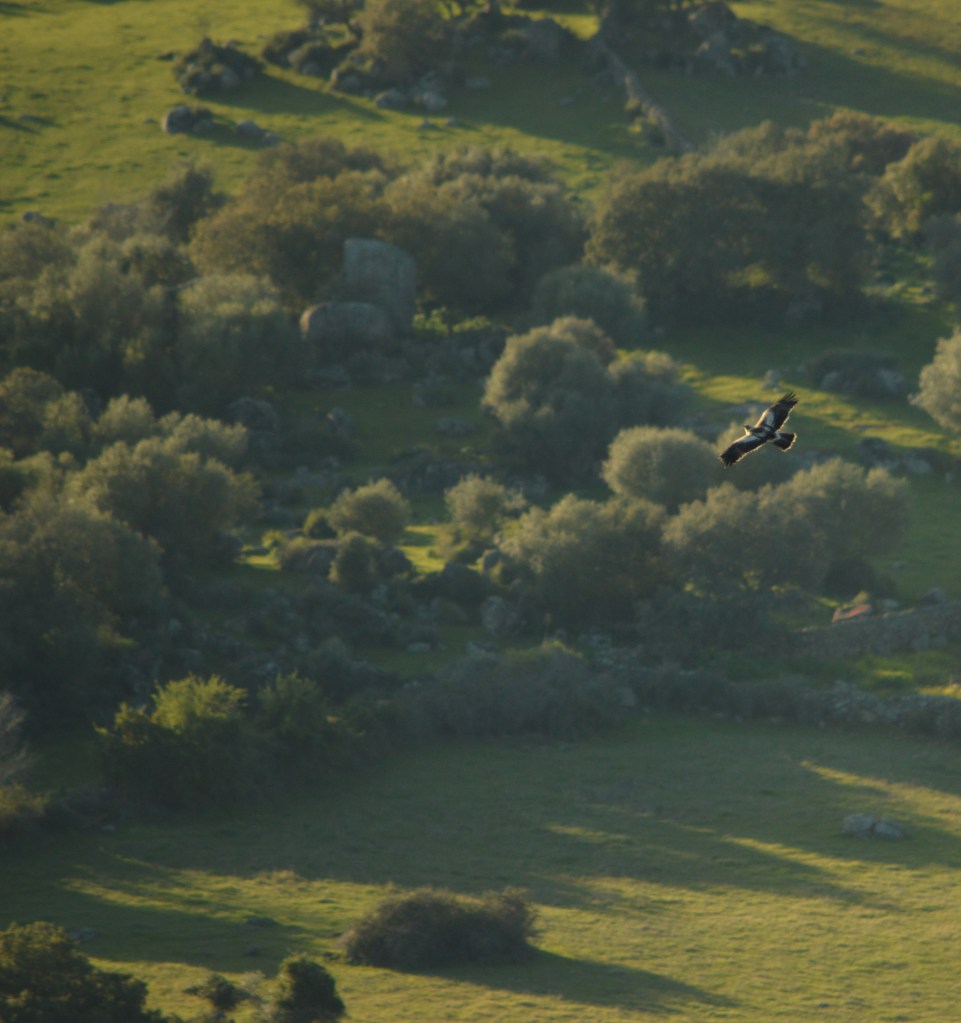
Audrey was using an app to identify some of the birds we’d seen since leaving Mansilla de las Mulas – I think it was Seek. I pointed out a few things I could hear: serins in the branches of a nearby tree, a booted eagle circling in a field, the bee-eaters we’d heard the day before.

I guess it was that quickfire succession of names that prompted Talia’s question. My answer was fairly improvised, but I think it checks out.

When did I decide not to pursue a career in biology? When I realised that it was never going to be about zoology – not under the British education system, anyway. That, and my mathematical ability was (and is), quite frankly, dismal.


I have various interests. I’m a musician. A linguist. A writer, an occasional poet and a Hispanist. A mimic. A Catholic. But before all of these things, I am a naturalist. Before I found my fluency in Spanish and French, I could already understand the calls of every bird in the British Isles and could tell you what most of them meant: warning, alarm, hunger and mating calls. It was, I suppose, the first language I ever learned.

I was just as obsessive with my childhood interest in dinosaurs: I had to know them all. Where they were found, why they were called what they were called. It wasn’t enough to know the famous ones, like the T-Rex and velociraptors – I had to dig deeper. One such precocious example that comes to mind was my decision to bring along a Eustreptospondylus drawing to Show and Tell at primary school. Doubtless an elephant would have sufficed, but why would I ever have settled for something as basic as that?

I still have discarded exercise books that my parents gave me where I logged all the species mentioned in wildlife documentaries. I always put down the title and locations covered, and I sometimes wrote the date, too. Others I used as scrapbooks, taping in feathers and sketching footprints and writing about when and where I found them.

You’d have thought that these might have been the early indicators of a scientist. Certainly, I wanted nothing more than to be a palaeontologist when I was a kid (which can be gently excused by the fact that the BBC’s peerless Walking with Dinosaurs documentary series came out just in time to capitalise on my five-year-old dinosaur obsession.

When I was a little older, I genuinely considered a career in conservation. I entertained the idea of a degree in Ornithology, or something similar, to allow me to put my fiendishly good memory for birds and their calls to use.

And then, suddenly, that dream died.


It was probably the maths that killed it. All the natural science degrees I explored required a basic level of mathematical competence and at the time I was struggling to scrape even a passing grade at GCSE. Chemistry, too – a lot of Zoology degrees suggested chemistry as an A Level, and chemistry was far too mathematical for me. Without maths, my conservation aspirations were dead in the water. That was that.

But there was another factor that pushed an old dream out of the nest: the slow decay of a child’s interest as the subject closest to his heart never even materialised in the subject that should have concerned it most intimately.

My memories of Biology center on two things: plant cells and sourdough bread. I was so excited when food chains and food webs came up, until I realised that, within the British curriculum, that was the one and only time that animals would be mentioned. Everything else was so cold, so clinical. Palisade walls and mytochondria. Genomes and inheritance, though usually in plants. The fact that I knew the names of every animal and bird in the British Isles (and most of Europe, for that matter) gave me no advantage whatsoever.

My school was a specialist science school. Our Biology department was doing really exciting things with MS research, and it was one of my Biology teachers who was instrumental in sending me out to Uganda on my first ever teaching post. But somewhere along the way, my aspirations as a conservationist were slowly choked by the strangling vines of the British science curriculum. Zoology, palaeontology, anthropology, ornithology and even primatology were all areas I was desperate to explore, but as the years went by and Biology concerned itself less and less with the natural world and more and more with the minutiae of bacteria and cell structure, the less I cared for it.

It must have been around then that I first entertained the idea of becoming a teacher – once I realised I would never be good enough at two of my weakest subjects to survive to the point when Biology became Zoology. Fifteen years old and already carrying the shards of a shattered dream.


One way or another, I think I realised early on that there was little that a Zoology degree could teach me that I truly desired. I didn’t need to pursue a career in science to justify my greatest love. Knowing the names of every animal and bird gave me a sort of spiritual connection with each and every one of them – no scientific research could work a greater magic than that. Still, it’s interesting to think where my life could have gone if I’d really committed to that path.

Instead, here I am, gone thirty, walking the Camino with a head that twists so quickly when I see the silhouette of a kite or vulture that it’s a miracle I haven’t twisted my neck yet.

It’s hard to say what my experience would be like if I walked all the way to the end of the road with these wonderful people. I will never know, because I have made my choice. And I know it is the right choice. It will take me up into the mountains and back into the natural world, where I am and have always been at my happiest.

Here’s to that – to good health and happiness, and a significantly harder road ahead! BB x

Come and See

The theme of the Commemoration Service and Prize-giving Ceremony today was Come and see. To that end, the school Chaplain chose John 1:35-51 – the one where Jesus calls together his first disciples. I think the message was intended to convey the importance of getting involved, because that’s something that our kids here really do more than anywhere else I’ve ever worked. But for me, it had a second layer. My disciples, as it were, had assembled for the first time, and delivered one of the best performances I’ve seen in thirteen years.

I have a funk band again. And I couldn’t be prouder of them.


There’s a very real danger of this entry sounding selfish. I admit it freely – it would be foolish of me to claim that my efforts with the school funk band have been entirely selfless. After all, I have wanted a funk band for thirteen years.

Ever since I left my funk band behind at the end of my schooldays, I have had a band-shaped void in my heart. Durham’s Northern Lights, African Singing and Drumming Society and the Gospel Choir were decent placeholders, as were the various choirs and house music ensembles that I’ve cobbled together over the years, but they’ve only ever been pale imitations of what I once had. The fear of cultural appropriation that came in the wake of the BLM movement put all my attempts on ice after 2020, and with the way the workload was piling up as I took on more responsibilities at work, I’d pretty much given up hope of ever giving back the magic… until a year ago, when I sent off a few job applications in a bid for some interview experience.

As soon as I heard that one of the schools I’d applied to had a functioning funk band, the die was cast. I had found what I was looking for. I would consider nowhere else.


I have always loved music. Perhaps the Spanish blood in my heart beats with its own tempo, or maybe it’s because I had two music teachers for parents. Either way, I’ve been making music since the moment I could bash a keyboard with my infant fists. School was a gauntlet of choirs, orchestras and musicals, but it wasn’t until I got involved with the Soul and Funk Band at the school over the road that I ever truly loved performing. My bandleader, a living legend by the name of Mr D, was in a very similar fix to the one I’m in now: he’d been in a band himself, found himself in teaching, and channeled his love for the music right at us, giving us one of the best experiences of my entire school career – and my life, come to think of it. If I have become a carbon copy of that man, it is not at all unintentional. When I was wrangling with teenage relationship troubles and other trivial affairs, he directed me to the microphone and gave me something to take my mind off all of the noise. I got my chance when one of the girls didn’t show up for her solo, and I took over one of the James Brown numbers. James was right: it felt good – so good. It turned me from a shy and reclusive wallflower into a confident vocalist, and eventually, the band’s frontman.

My first teaching post in Uganda set me on the path to being a teacher, heading up Public Speaking and Debating here has turned me into an orator, and Spain made me whole like nothing else could, but it was Mr D and the Soul & Funk Band that really made me the man I am today.

So yes – I have recklessly pursued my lost band for thirteen years, and now that I’ve found one, I have done everything I can to turn an already gifted bunch of musicians into a powerhouse – like we were, when we were young, but even better. But it is not just a selfish nostalgic streak on my part. It is my way of giving back what I was given, all those years ago. And maybe, just maybe, along the way, I can do for some of these kids what Mr D did for me, and set them on the path to the happiest days of their lives. BB x


Set List:

+ Play that Funky Music (Wild Cherry)

+ September (Earth, Wind & Fire)

+ Doo Wop (That Thing) (Lauryn Hill)

Saying Yes, Saying No

I had my probation meeting today. No, don’t worry, it’s nothing to worry about – just the first part of the “settling in” process of the new job. It’s always good to get constructive feedback on your teaching, and even better to get positive feedback from kids, colleagues and parents alike. Emails remain the bane of my existence, my beast to be slain, and I dare to say that, had I gone into the teaching profession a hundred years ago, before the days of instant communication, I might even have been an exemplary teacher.

Most of all, however, I can’t help but find it delightfully ironic that my main piece of constructive criticism was that I still have a tendency to “say yes to everything”. Saying yes was something of a New Year’s resolution, and it’s been a bloody good one, to be honest. So far “saying yes” has given me: a new job, a short-lived but precious romance with an American beauty, a string of adventures from Paris and Prague to Poland, the chance to teach French again after several years’ oblivion, the title of Head of Debating & Public Speaking and, finally, a well-intentioned caution.

In fact, probably the only thing I’ve said no to this term was tonight’s post-carols drinks with the staff, and that was only because I’d have missed my train if I’d delayed even a minute longer.

I guess that’s just as well. I don’t think I’ve ever felt more exhausted after a Christmas term. It’s been pretty full-on, even by my standards.


I’m off to Poland tomorrow. Polish is absolutely not one of the languages I claim as part of my arsenal, so communication is going to be a bit ropey – but, hey, that’s nothing new to me. It has nothing in common at all with any of the languages I speak, so learning has been slow… on top of everything else I’ve had on this term. Sometimes I have to take a step back and think about all the plates I’m spinning at work:

  • Teaching French and Spanish to Years 7-13 (spanning two different exam boards for GCSE as well as A Level and the IB)
  • Heading up the Debating & Public Speaking events and competitions
  • Living on-site as a boarding house deputy and working two overnight shifts a week
  • Volunteering with a local school
  • Tenoring in the Chapel Choir and staffing any and all music trips
  • Attending as many home fixtures as I can to support the boys

No small wonder I’ve had no time for a relationship or driving lessons this term…! The stress of the latter might just have broken me, if I’d managed to fit my lessons in anywhere at all into my crammed schedule – which is highly unlikely. I think the only reason I managed last year was because I was six years into the job and had taught most of the kids for years, so I could walk straight from my driving lesson into teaching Year 10 GCSE Spanish without batting an eyelid.

Most rational teachers would be practically collapsing into bed tonight after a term like this one. Instead, I’m lugging two rucksacks across the country to catch an early morning flight to Warsaw, so that I can spend the first four days of the Christmas holidays in some bleak corner of Eastern Europe searching for wolves (or traces of wolves). I blame all that time spent reading The Tiger this summer. I’d be tracking Siberian tigers if I could, but I’ve traveled across the world once already this year in search of a dream, so I’m settling for an adventure a little closer to home this time.

At least it’s meant I have something to say in return when my students tell me about their Christmas plans in India, Florida and/or the Maldives. “Wolf tracking” seems to fall under the banner of decidedly unusual responses to the question “any plans for the holidays?”.

Thunderstruck is playing in the one functioning ear of my earphones. The train is fifteen minutes late but racing to make up for lost time. I’ve fired off the usual end-of-term fusillade of messages to friends and family, bursting upon the surface of my WhatsApp in two-minute intervals like an underwater volcanic vent. Old habits die hard. Thunderstruck was the great gift of my American adventure, and it’s been a real mood-lifter ever since. Unsurprisingly, it’s my most played song on Spotify this year.

I think I’ll listen to it a couple times more as the train nears its destination. I could use a boost. BB x

Winds, Waves and Words

It’s 18.00 over here in Saint-Malo and the heavens have opened. An Atlantic wind is battering against the windows and the heavyset black-backed gull that chased off Hector has given up on attacking the ashtray on the windowsill and taken his leave. I might head into town for dinner later, but for now, I’m quite content curled up on the sofa of my AirBnB with a book, a hot chocolate and the time to write. So I thought I’d start today’s post with a little history.


Saint-Malo has a long and complicated past. Originally a 6th century refuge for Welsh monks, including the venerable Maclou of Aleth who gave the town its name, the rocky outpost became a haven for Bretons fleeing the advancing “North-men” or Normans some two hundred years later. In the 17th century, its strategic location made it a natural hub for state-licensed piracy or “privateering”, which elevated its fortunes considerably and paved the way for a generation of wealthy explorers: Jacques Cartier, a native malouin, is credited with giving Canada its name (via the Iroquois kanata) and Louis-Antoine de Bougainville, another son of Saint-Malo, established the first European settlement in the Falkland Islands, which – at least in Spanish – still bear their original Breton name: las Islas Malvinas, from the French Îles Malouines.


The city fell to the Germans during the Second World War as part of their Atlantikwall stratagem, and the skeletons of their fortifications still dot the Breton coastline: in Saint-Malo, the levelled ruins of German pillboxes rub shoulders with 17th century Vauban forts. Surprisingly, much of what you see today was carefully reconstructed, as around 80% of the city was destroyed by the Allies in their dogged attempt to drive the Germans from the old pirate stronghold.

Allied bombers over Saint-Malo in August 1944. The fortified isle of Grand-Bé is at the centre of the blast

Most of the German fortifications have long since been torn down, but you can still see the concrete bases of many structures on the cliffs beneath the city wall and on the surrounding islets of Grand-Bé. They make very comfortable places to sit and watch the sunset.


In case it wasn’t obvious, the town’s rich history is one of the biggest reasons I’m here. But the other is its wildness: there are plenty of sandy beaches in the south, but I don’t get any real kick out of sea-swimming unless there are rocky areas to explore. The southeast coast of England with its famous white cliffs is quite a sight to behold, but it doesn’t quite have the jagged beauty that the west has in abundance, and Brittany has it to spare.

I spent many of the happiest days of my childhood scouring the rock pools of Folkestone for tiny critters: gobies, blennies, butterfish, velvet swimming crabs and even, just the once, a pipefish. Brittany is only the other side of the Channel, so much of the shoreline is familiar. I can’t help keeping an eye out for anemones when I’m out on the rocks, especially the snakelocks variety – I always thought they were especially interesting.


Across the bay from Saint-Malo stands the islet of Grand-Bé, which can be reached on foot at low tide via a barnacle-encrusted causeway. A similar road stretches on to the Vauban fort on Petit-Bé, though a small section of that road remains under a foot of water even at low tide and must be forded with shoes in hand.

Grand-Bé offers a glimpse of what Saint-Malo must once have been: a windswept escarpment just off the mainland, inhabited only by lizards, gulls, a small colony of shags and a company of oystercatchers that can be heard all across the bay. Two of these noisy seabirds were standing in attendance upon Chateaubriand’s tomb, as though to keep him company. From this spot, on a clear day, you can hear the twittering of goldfinches, the cries of gulls, the occasional grunt from one of the shags and the endless piping of oystercatchers on the rocks below or in the sky above – and, of course, the ringing of the bells of Saint Vincent’s cathedral across the bay.

I wonder if the old Romantic was as bewitched by the wild birds of his native Brittany as his writing implies? He certainly had a real flair when it came to writing about nature. Perhaps that’s why he chose this spot.


I spent some time last night watching the sunset over Grand-Bé. I had left my Camino bracelet in the apartment, but I had brought a few other tokens with me. I often take a number of “lucky” objects on my travels: little souvenirs and keepsakes to remind me of home when I’m on the road.

Well, not home exactly. With no fewer than ten moves under my belt at the age of thirty (and just under half of them international) I’m still not entirely sure where home is. But they remind me of friendships and memories that mean a lot to me, and that helps with the loneliness that is a natural side-effect of traveling alone.

In my satchel, ever at my side, I carry my journal, my fifth and longest-serving since I took up the art twelve years ago. It’s coming apart at the seams and bound inexpertly by sellotape – hardly surprising for a little book that has come with me to work every day for the last five years, as well as on every adventure I’ve been on in that time. Concealed within is my lucky dollar, a ticket to the Prado in Madrid, a tawny owl feather, the plectrum that one of my Rutherford boys used to win House Music two years in a row and a perfumed letter.

There is one more keepsake that has been sharing the road with me this summer. It even came with me to America, traversing the Bayou, the Mississippi and the bright lights of Nashville. It’s a card from one of my students, one of many I received in my last week at Worth. The lengths this particular student went to so as to ensure I got the card, as well as the maturity of its message from one so young, are just two of the reasons this one in particular has come with me. I am many things, and a great many less, but I would be a writer – and so that is why I have always believed that the greatest gift I can ever receive is in the form of words. No physical object can ever surpass the depth of feeling that comes from such expression.

I have a bad habit of making people cry when I write them farewell letters (an equally bad habit I’ve adopted for leaving students), but I very nearly met my match with this one. The student in question signed off with a favourite quote of theirs from Lin-Manuel Miranda: “sometimes words fail me”. There’s any number of reasons they could have chosen that one for me – I might well have said the line verbatim in reaction to the behaviour of that class at least once – but it’s a powerful message for a would-be writer.

Words do fail me, and often. There have been moments this year where I have been genuinely speechless, from shock or awe or wonder. It is comforting to know that such a consummate wordsmith shares that affliction.


Tomorrow, I have decided upon a rather spontaneous adventure. I have already bought my ticket. All I can do now is hope that the weather holds. Then – we shall see what we shall see. BB x

Backwards and Forwards

Another year, another Christmas come and gone. I’m back at the flat after a week up north with the parents. Billy Ocean is playing on the Bluetooth speaker as I write – Stay the Night – and the torrential rain that followed me south stopped about an hour or two ago. Everything is more or less as I left it, with the exception of fresh sheets on the bed.

It’s been nearly six years since I took up my post here, moving back to England from Spain. I sometimes wonder what direction my life might have taken had I stayed on and taken up the teaching post I had on the cards in Galicia, but I know I made the right decision for my career. Over the course of those six years, I’ve earned my stripes (and, more importantly, qualifications) as a fully-fledged teacher within the British educational system, enrolled in a number of courses and taken on more responsibilities than I expected, up to and including being an Oxford-style debating judge. There hasn’t been a day in those six years when I’ve woken up dreading the day ahead or resenting my job – not even in my PGCE year, which was shot right through the heart by the COVID pandemic. I love teaching, I love my subject, and the knowledge that I am keeping up a family tradition that goes back generations gives me an eternal flame that cannot be extinguished.

But that’s not to say living and working in a boarding school has been without its doubts. I’ve definitely had some bad days – who hasn’t? – and I’m very aware that my choice of career (coupled with my lingering anxiety about responding to messages) has had a good hand in shrinking my social circle with every passing year. A senior member of staff at the school once described living and working in a boarding school as “submarining”; that is, disappearing from the rest of the world at the start of term and resurfacing only once the last child has left the building, some three months later. It’s an apposite analogy, and one that’s hard to sell to anybody outside the system.

I suspect that after six years in the same school – nearly long enough to see a generation of students through their whole educational journey – it’s natural to start to feel the need for a change. As for where that change will take me, I’m not yet sure. I only know that change is coming, and it would do me a world of good to seek my destiny somewhere beyond the horizon. Perhaps the idea came to me on the Camino and has been incubating ever since, or perhaps it crystallized after a conversation with a colleague about how it’s very easy to count the things you do for others in this line of work, but on reflection, it can be a lot harder to say what you’ve done for yourself. I’ve been lucky enough to have a partner to guide and support me through the greater part of those five-and-a-half years, but December finds me on my own once again, and as the months start to fall away before the big three-zero, I’m conscious that the career path I desire is out of reach until Lady Luck sees fit to give me another chance. And since the online dating scene has been about as generous as a paddling pool is to a fisherman of late, it’s probably time I upped sticks.

With that thought in mind, I’m starting to look at the world around me with fresh eyes. The flat that’s been my home for two years now seems more detailed than before. The cat-print mug on my desk that probably belongs to my housemaster, containing a shamrock-green bauble, a gift from a Colombian parent. The collage of photos in an IKEA frame of friends from my university days, all but two of whom I haven’t seen in years. Curios on my dresser: a boomerang, a vinyl cover of Fidder on the Roof and three chips from a Las Vegas casino. Photos on my bookshelf: my class of 4° ESO from Villafranca (my first real job), my cousins, the windmills of La Mancha and my mother’s first car, an orange Volkswagen beetle. The mirror that never made it onto the wall, and the blocky but practical Skorva bed that has put in a good year’s shift after the last one finally collapsed after a marathon service (it was a veteran when it came into my possession over a decade ago). Some of these things haven’t moved an inch in two years.

I’m not usually one for resolutions, but I am going to take more of a handle on my own future in 2024. I’ve already thrown the first stone by committing to weekly driving lessons, and while it may be some time yet before I have wheels of my own, that crucial piece is finally on the board. Fortune has given me a later return to work than usual, so I have seized the chance to ring in the New Year with my cousins in Spain, something I have wanted to do ever since we first reconnected back in 2018. It may be that my next post doesn’t have an international airport within walking distance, so I might as well make the most of it while I still can.

I’ll also try to write some more. I’ve been channeling my creative endeavours into the creation of a Spanish culture podcast, but it wouldn’t hurt to flex my writing arm some more on here every once in a while. Even if I’m the only one who comes back and re-reads these posts, it makes for an interesting insight into my mindset at various points of my career.

I’ll check in again tomorrow. Until then – tschuss! BB x

2023: A Year in Pictures

January

2023 begin much like it is today: wet and windy. In keeping with the last seven years, the year began somewhere new: this time, in an AirBnB in Wilpshire, some two hundred and thirty-five miles from home. It had been a wonderful New Year’s Eve, but a fleeting one: cracks were starting to form in my relationship. I decided to ignore them and looked inwards instead. A few weeks later I saw a pheasant on a stroll around Wakehurst and had no idea that the very same bird would seek me out when things began to unravel several months later. Hindsight is a curious thing.


February

The villagers of South Willingham lost their bid to save the local forest from being turned into a bike park. I know it will bring much-needed money to the area, but a part of my heart always breaks a little when somebody carves up another patch of the earth for human entertainment. I wandered among the trees and soaked in the winter light. No footpath leads through the woods, so I might be the last person to do so. I also passed my driving theory test, but didn’t tell anybody about that for a while.


March

The man who doesn’t take a day off unless he’s dead or dying was very nearly brought down by a fever this term, reaching its peak the day of the House Music final. My very conscientious partner drove all the way up to my place to drop off a get-well-soon care package and gave me clear instructions to rest, but I dragged myself to the school theatre to support my boys in their bid for victory – and was not disappointed. Rutherford took home the House Music shield for the first time in over a decade. I didn’t fully recover until the following Monday, but I rode the high of their success for months afterward.


April

Seeking answers, I sought out the Camino – and the Camino provided. Within days I had found an incredible cast of characters, and had the Easter holidays been longer, I would have gone with them all the way to the end. I walked a hundred and thirty kilometres in just under a week with a Brit, a Dane, a Canadian, a Spaniard, a Dutch girl, a couple of Californians and the most charismatic Italian I have ever encountered – and I have encountered more than a few. I told myself I would be back to finish the job, but I didn’t think at the time that I would throw myself back at the Camino a few months later.


May

Matters of the heart came to a head. I drifted back to Wakehurst and sat on a grassy bank near the American plantation to clear my head. The pheasant appeared and sat beside me, keeping me company for the best part of half an hour. Say what you like, but animals seem to have a sixth sense for when humans are in distress. My mother’s cat made a beeline for my brother when he was in the doldrums in much the same way. It did not heal my heart but it did a lot to patch it back together. In the meantime, I went at my living room and restructured the place, hoping to find a new sense of direction by altering my perspective and my surroundings. It’s a lot easier to move a bookcase around when you don’t possess several hundred books, though.


June

I broke things off with her and felt awful about it – but seventy-eight reports, a bout of vomiting sickness in the boarding house and preparations for the school trip to Seville helped me stay on track. The Leavers’ Ball was more of an event than a formality this year, seeing as it meant saying farewell to a cohort of students who had joined the school at the same time I had. An immensely nostalgic music tour to Salzburg rounded out the month and found me playing the violin at the same bandstand I had played back in 2006, some seventeen years ago. In a very up-and-down year, June was a particularly erratic rollercoaster of a month.


July

I’m quite convinced that the answer to most questions can be found on the Camino, and I had unfinished business from the Easter holidays, so a mere two days after returning from Austria I was back on a plane and bound for Bilbao once again. You’ve probably followed me on that particular journey already, but if you haven’t, you can always start again right here. Three weeks and nearly five hundred kilometres later, I arrived at the end of the world and stared across the Atlantic to America. Someday soon, I’ll take my adventures across that ocean. But not yet.


August

August was a quiet month. August always is. I popped up to London a couple of times and saw some old friends, which was much needed – I have distanced myself from a lot of old acquaintances after the way they upbraided me over the Gospel Choir fiasco, and it took quite a bit of courage to resurface, even though it’s been some two years since. The social current flows fast in the capital city. London remains a charming place to visit, but I’m sure glad I don’t live up there. I’m a lot better at dealing with cities than I used to be, but I’m definitely a country boy at heart.


September

Term started late this year, meaning August was already over by the time the students returned. It wasn’t a scorcher like last summer, but the warm weather stayed with us for quite some time. A new wave of weekend activities and a house camera kept me busy at weekends, and I finally managed to host a party in the flat over the first Exeat of the year, using the old projector to beam karaoke onto one of my walls. I also got back into drawing, completing a giant poster for one of the walls.


October

Storms Agnes and Babet tore across the British Isles and put an abrupt end to the long summer days. Sussex remained relatively stable while the roads of the Lincolnshire Wolds turned into rivers. I spent the October half term with my parents and even made it to Manchester to see my brother’s first ever publicly exhibited artwork on the first floor of a fancy riverside hotel. I also wrote a pantomime for my school, but internal politics made it impossible to get off the ground. At least I have the backbone of a script that I can carry over to whichever school I head to next.


November

We lost the first round of House Music, but only by a single point – so there’s hope for my boys yet. More importantly, I bit the bullet and started learning to drive. Finding the time to schedule in two hours of driving during a working week is ridiculous – and probably the biggest reason I’ve put it off for so many years – but, steadily, I’m starting to get the hang of it. Or rather, I was, until a combination of sickness and cover lessons made it impossible to schedule in the last two lessons of term. Here’s hoping I can pick up where I left off in the new year.


December

December hurtled around at the speed it always does, though this year the last stretch did seem longer than usual. I managed to strong-arm Riu Riu Chiu back into the Carol Service at last, which the kids seemed to love, and helped to draw up the motion for the Students vs. Alumni debate, though I was not especially fond of the heavy economical slant in which it dragged the proceedings. My brother spent Christmas with his partner, so it was just my mother and father and I this year. Midnight Mass was bizarre – half an hour of forced carols before the Mass itself began at midnight (rather than the usual 11.45pm start) – but, traditions must be maintained. I blew the dust off Duolingo and got back into learning Italian after more than a year’s hiatus, though I daresay I’ve picked up a little in that time from my students.


This time tomorrow I’ll be in Madrid. Since leaving university I’ve made a point of seeing in the New Year somewhere new, but this year, for the first time since we met, I can finally celebrate it with my Spanish family, so I’m headed for the pueblo to see in 2024. I haven’t seen some of my cousins since my youngest counsin’s first communion back in 2019, so it’s a reunion that’s been a long time coming. Here’s to a good one, folks. BB x