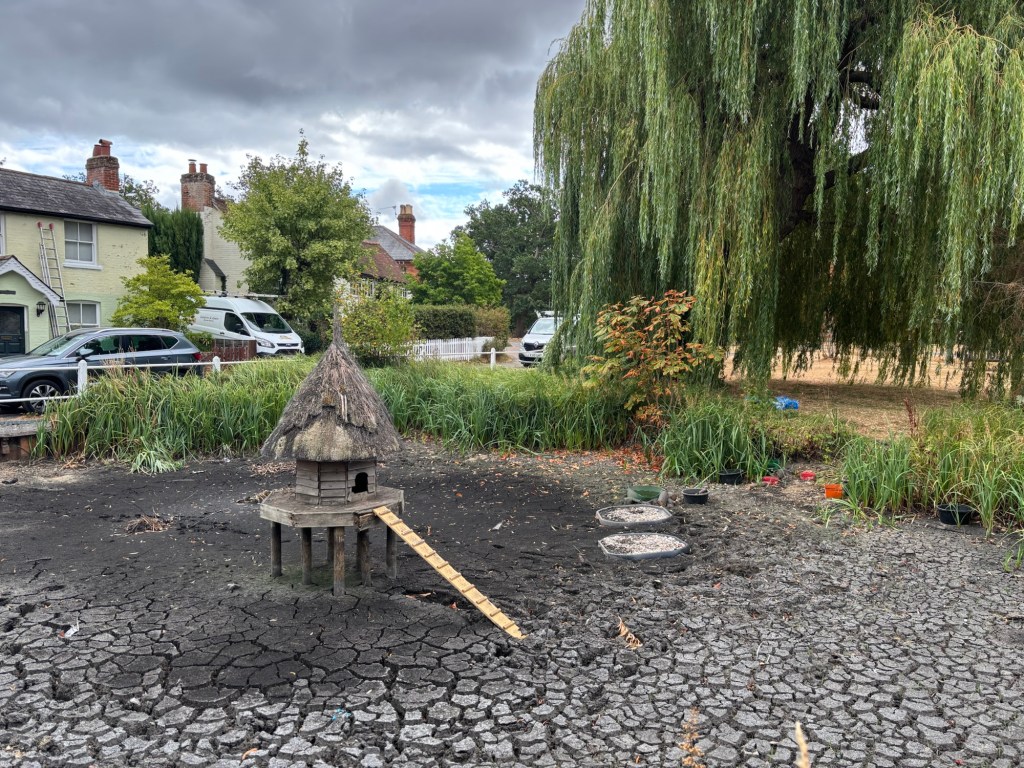
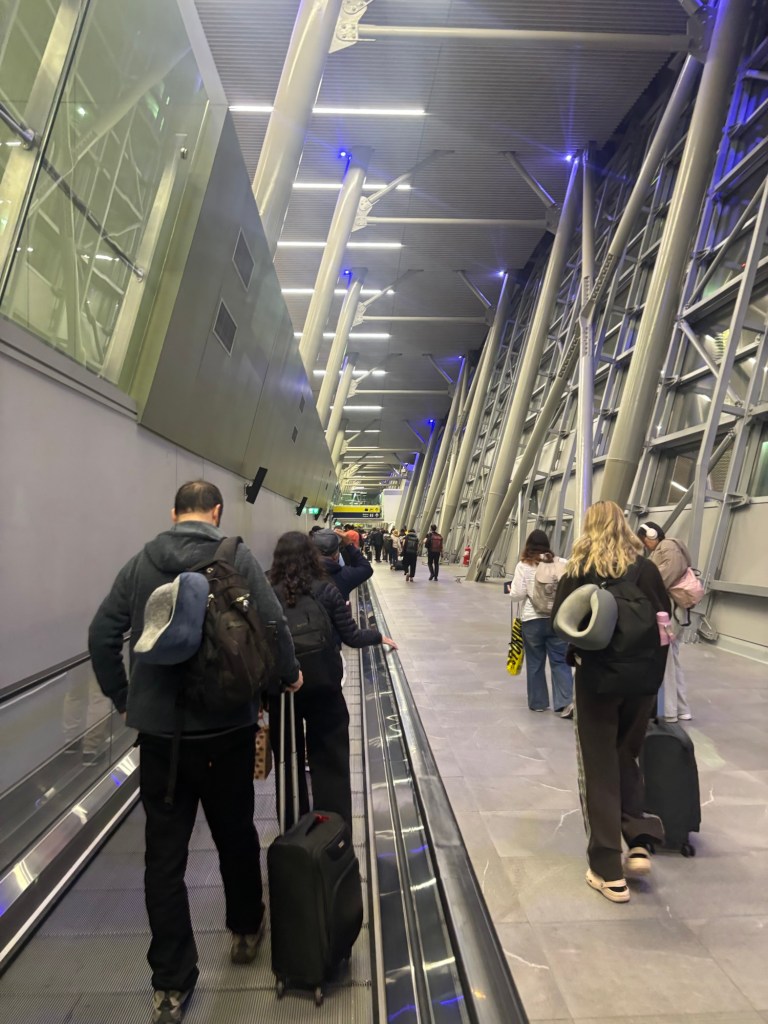
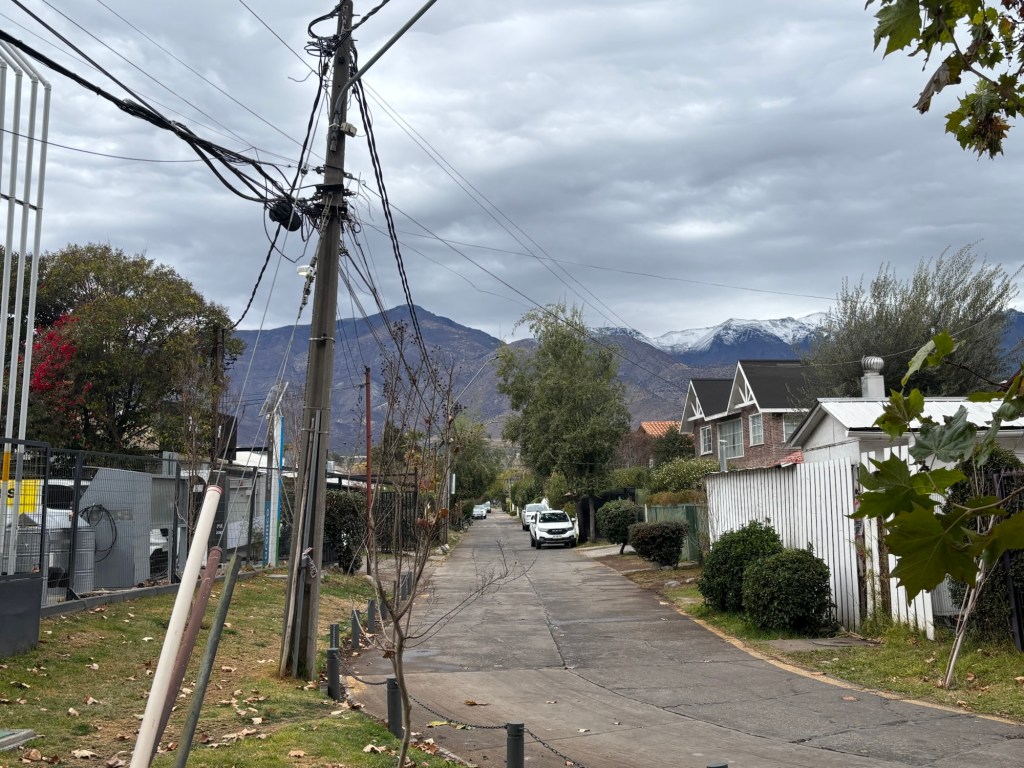
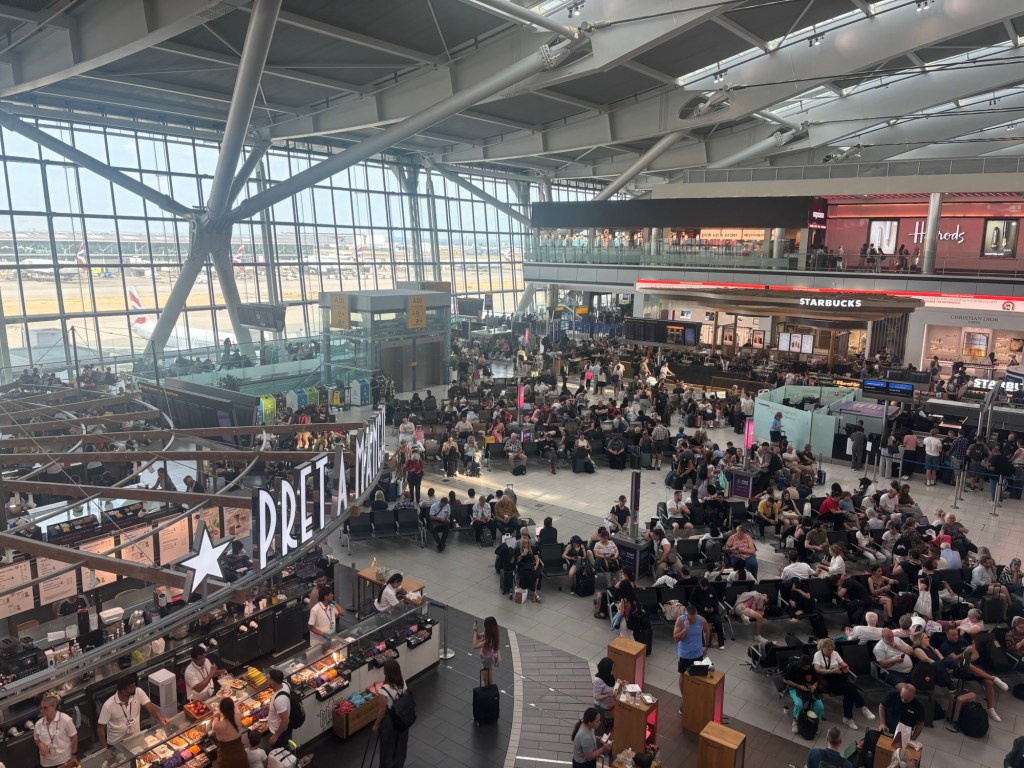
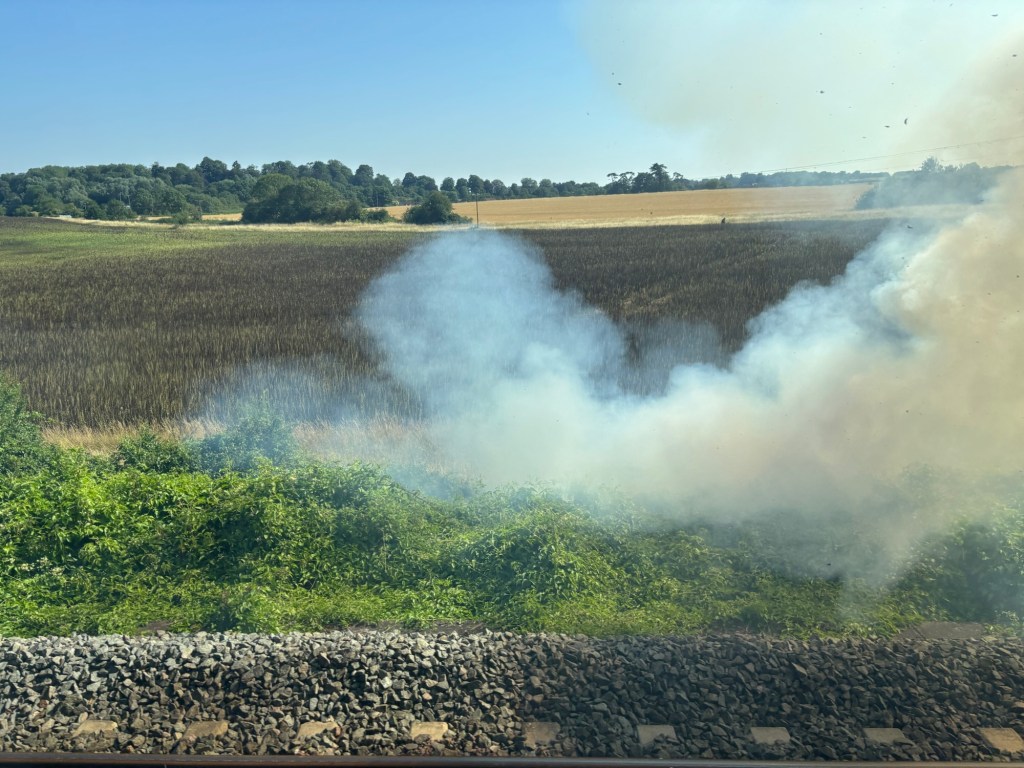
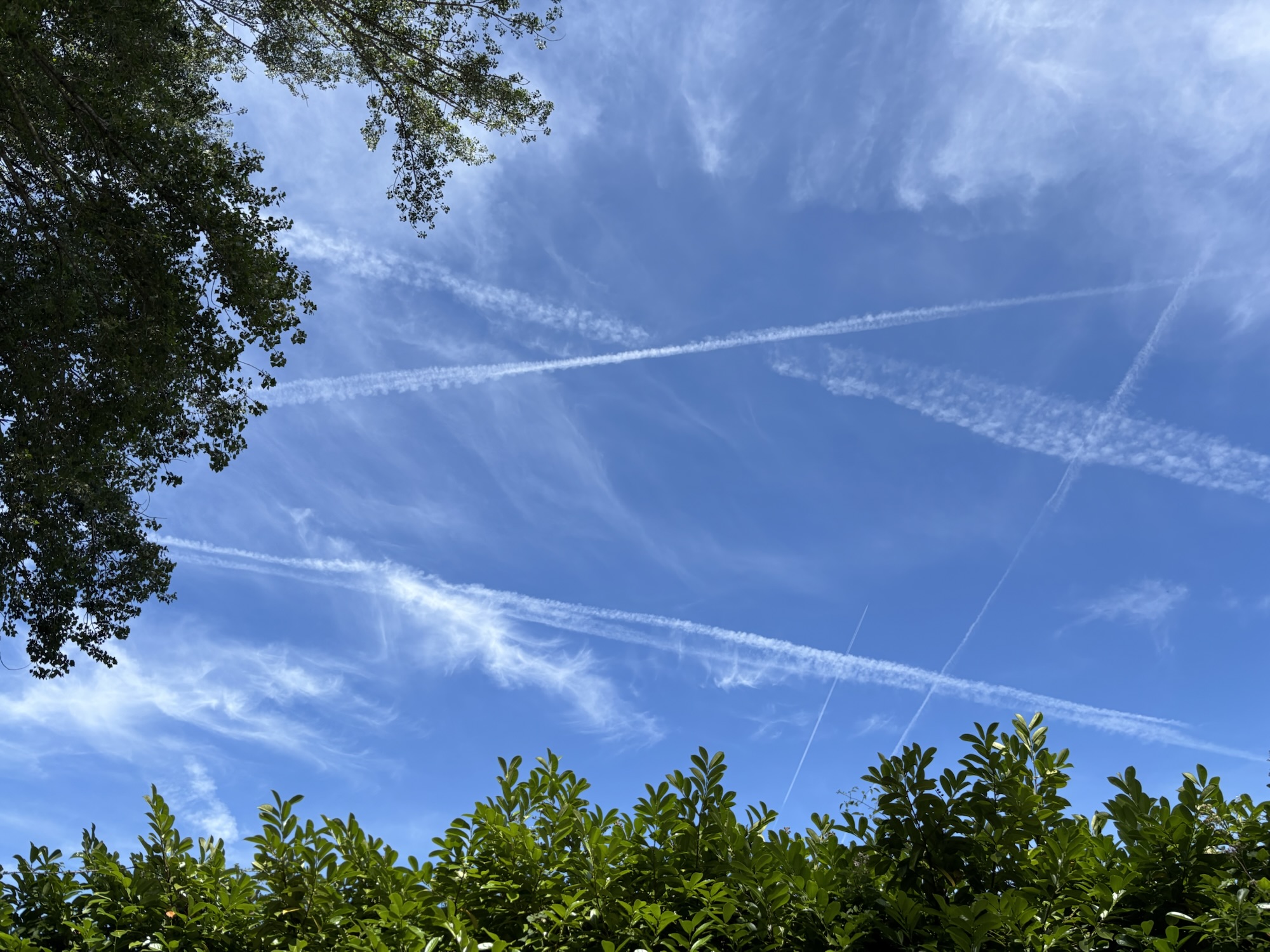
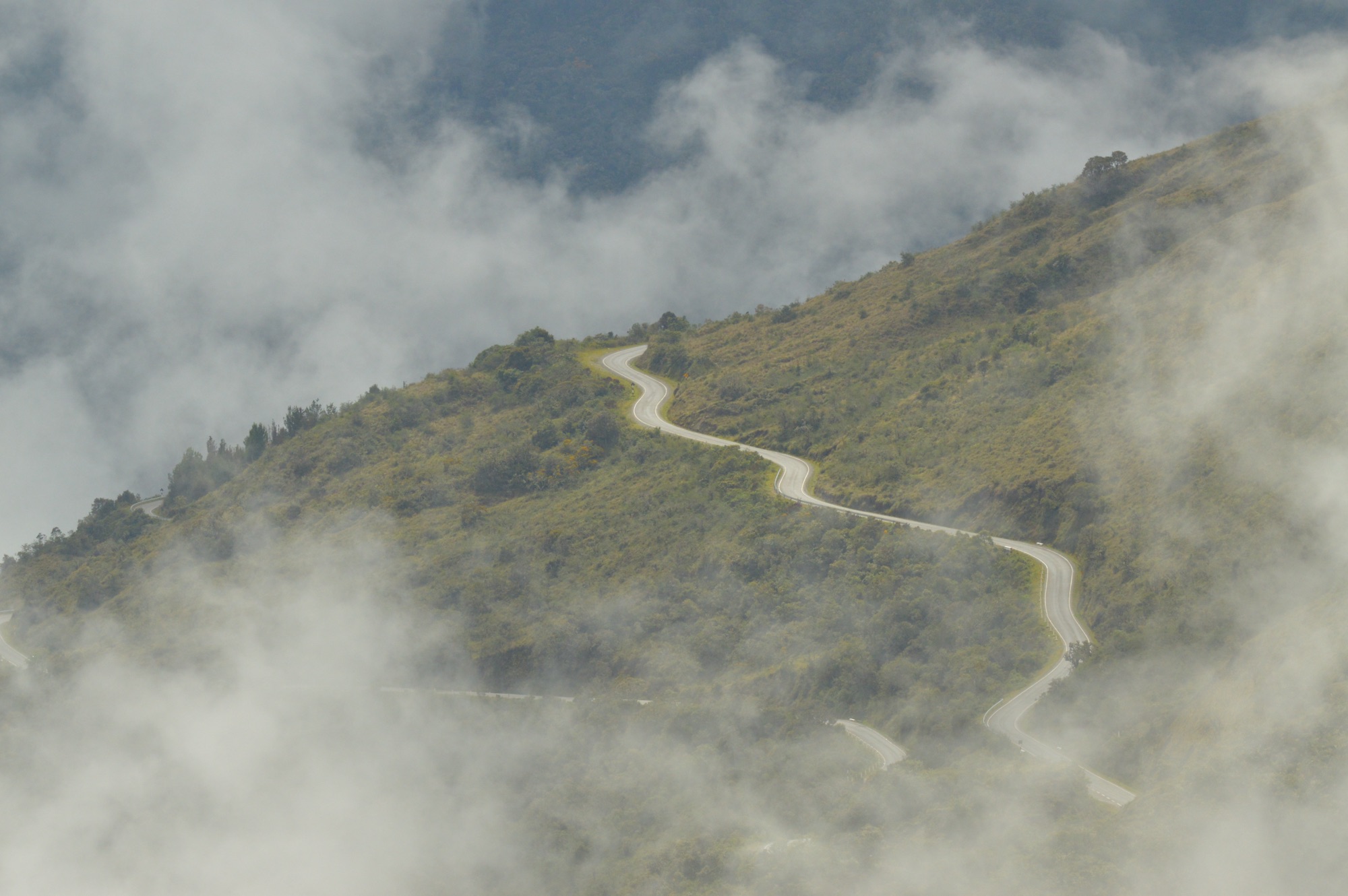
England swelters under the glare of an unseasonably ferocious sun. For the second day in a row, the temperature is pushing well into the thirties. It’s all the news can talk about. Trains are running slower due to speed restrictions, three children have “gotten into difficulties” while bathing (a tactful way of avoiding the potentially triggering d-words associated with fatal water incidents) and the whole of the South seems to have jumped into the car and carved out a four-square fiefdom on Bournemouth Beach.
I’ve hopped out east to pay my mother a visit, and in so doing stepped right into the hottest part of the country – bar London, of course, which is usually a couple of degrees warmer than the rest of the island. England is rather pretty in May, though she wears her best dress in the first two weeks of the month, when the flowers are still fresh and the wind is cool. Now, the early summer sun is at that particularly British angle where it’s high enough to burn but low enough to blind, and the heat feels more like the first week of August than the last week of May.
Retreating before the summer’s wrath, I have sought solace and shades along the banks of Hampshire’s rivers.
England is at its most beautiful wherever a river can be found. Crystal waters running over gravel, with shadowy trout and grayling darting from sunlight to shadow. Clumps of weeds and watercress wafting in the water as though in the wind. The trailing arms of a weeping willow gently tracing the water’s surface. Iridescent dragonflies of every shape and size – dragons, damsels and darters – hawking from bank to bank, playing a longer game than the mayflies, whose inert bodies drift downstream, their twenty-four hours spent. Chiffchaffs, wrens and blackcaps singing from the trees, the lazy purr of an overheated wood pigeon and, now and then, the explosive song of a Cetti’s warbler from deep within the darkest heart of a reedbed or thicket.
When I am traveling far from home, this is the image of England that I miss most of all.
Did you see the pike in that first picture? Don’t worry if you missed it – they are master ambush predators. Go back and see if you can spot it.
This corner of the River Alre passing through Alreston is supposed to have otters and kingfishers, but I was over the moon to see a pike. They were always my favourite fish when I was a lad, and it’s not hard to see the appeal for a young boy: fully grown, they’re huge, sinister, almost crocodilian monsters with soulless eyes and fins that move so slowly that their every twitch seems calculated. A perfect killing machine. Hardly surprising for a fish that outlived the dinosaurs, whose ancestors prowling Cretaceous rivers were not all that different from the river monsters that lurk in reedbeds outside Tescos and Sainsbury’s.
I can see why adventurous young lads might get a kick out of fishing up one of these ancient beasts, but I’m just as happy spotting one drifting between the weeds. It makes a change from chasing chiffchaffs through the branches of the tallest trees.
I’m racing home now, clearing the green fields of the Vale of Pewsey under a mercifully cloud-studded sky. I acquired a few books in a second-hand bookshop for a couple of pounds and a new sketchbook for a little more. I’ve been meaning to get my hands on the Horrible Histories books for a while, since they had an enormous impact on my art and my love for history and storytelling. Everyone seems to remember the enormously popular TV show (which, for my sins, I have never seen) but the books appear to have faded into collective oblivion. I dare say Martin Brown had more influence on my pen-and-line drawings than any other artist – besides the legendary Chris Riddell, of course.
Power’s running out. I’d better stop typing and leave enough juice on this thing to get me through the ticket barrier at Taunton station. See you around! BB x
Albergue Seminario Menor, Santiago de Compostela. 18.11.
Two years ago, when I walked into Santiago’s Praza do Obradoiro under a cool white cloud, I could not shake the feeling that I had not quite earned the triumph that the end of the Camino usually entails. I had walked in alone, in the early hours of the morning, after setting out from Burgos some twenty-one days prior. My credencial showed that I had walked all the way, but not all at once: my circuitous route had taken me four years, starting in the summer of 2019 and continuing in the spring and summer of 2023, after COVID and a number of other factors prevented me from walking further.
Not this time. Today felt like the finish you read about in books and in the films. Today, after walking over a thousand kilometres across France and Spain, to be welcomed like a hero by old friends in front of a crowd of thousands before a cathedral bathed in light… I was on the verge of tears this time.
Ribadiso was silent when I left at around a quarter to five this morning – the earliest I have set out along the entire trek. A few cows had wandered down to the river for a drink by the reflected light of a few lamps along the bridge, but I could hardly make out more than their silhouettes in the gloom. My phone did a much better job than my eyes could do.
Darkness shrouded my steps until well after seven o’clock, so the first two and a half hours of my walk were made in the long shadows of night. As usual, I avoided using my phone’s torch as much as possible, navigating by starlight and the shadows of the trees against the sky, turning it on only to check I was not in any danger of leaving the trail. I passed a few pilgrims on the road who turned their glaring flashlights on me as I motored past, no doubt perplexed as to why I had decided not to light up the way in front of me.
I picked up considerable speed whenever I saw the dim moving light of a headtorch on the road ahead. I have not been a huge fan of headlamps and torches since two were trained on me like searchlights at two o’clock in the morning on a beach in Almería, during my mad trek across Spain at the age of eighteen. The fright that experience gave me has never really gone away, which may go some way to explaining my general disdain for the invasive, almost threatening white light of a handtorch. But there’s also my natural stubbornness, which I suspect has much more to do with it. You don’t really need a torch to navigate by night… not when your eyes grow accustomed to the gloom. So why bother?
I considered stopping for breakfast at a number of cafés once they started to open their doors after 7am, but every time I neared one, it looked packed to the gills, so I moved on. If I’d known that this would be the case all the way to Santiago and that I would not stop again until I reached the holy city, I might have shrugged off my pride and popped in for a tostada. But I didn’t, and when I accidentally took the forest route bypassing O Pedrouzo altogether – the usual staging post before the final push to Santiago – I decided to push on to the end on the power of a Bolycao and the last of my Nakd blueberry bars. It wasn’t much of a breakfast for a forty-three kilometre hike, I’ll admit, but it did the job.
The road got quieter before O Pedrouzo after I had overtaken all of those pilgrims who had set out from Arzúa, only to ramp up again as I hit the back of the O Pedrouzo brigade. I met a few new characters as well as the first of a few old faces from the Camino Francés: Don Decibel, a raucous Spanish soldier whose phone call to his friends ten kilometres back hardly required the use of a phone at all (though I’m not sure I’d count the repeated phrases “oyé maricones” and “viva España putamadres” as a conversation); the Shadow, a French pilgrim who seemed to catch up to me constantly despite my attempts to race on ahead; Tim & Jackie, an Australian couple who fell behind us at Carrión de los Conded when Tim’s legs started to cause him trouble; and Edoardo, the charismatic Don Juan, who had slowed down to walk with a large group of Italian pilgrims.
And then there were the school and university groups. Hundreds of them. Well over a thousand, if I’d bothered to count them all. The ticker in the Pilgrim Office in Santiago showed that 847 had already made it to the city before I arrived at around twelve o’clock, so that number is not as much of a hyperbole as you might think.
The post-Sarria rush is real. It wasn’t quite as obvious two years ago as it is now, in the middle of August, when the crush is at its highest. I’d wager that I’d have seen even more if I’d left even a little later. They were all in very high spirits and many of them were draped in the colourful flags of their home regions: Andalucía, Valencia and Asturias were the most obvious. I looked for the black bars of the Extremaduran flag, but I didn’t see one.
I wondered, if I’d carried a flag, which one I would have the right to bear. Not Andalucía, surely, as I only lived there for a little under a year as a child (though it has forever marked my accent and identity), and not Extremadura either, since I have no familial connection to that earthly paradise whatsoever. La Mancha, perhaps, as that is where my cousins reside – but when my great-grandmother was born, that part of La Mancha was part of Murcia. My grandfather and his father, on the other hand, were from the Valencian province of Alicante.
In short, I have no claim to any of the regional flags. So I would have settled for the rojigualda instead.
I couldn’t find the famous pilgrim statues on Monte do Gozo – I wonder if they’ve been moved to a different location? Their pedestal was where Google Maps said it would be, but I could not find them. I did, however, see my destination for the first time, and that was motivation enough to proceed: the twin turrets of Santiago’s cathedral, between the gleaming white houses and the towering eucalyptus trees.
When I left Ribadiso this morning, Google Maps thought it would take me around nine hours to reach Santiago. It took me seven. I had some powerfully uptempo music to get me through the last ten kilometres, up to and including:
Rhythm is Gonna Get You – Gloria Estefan
Higher Ground – Stevie Wonder
Voodoo Child – Rogue Traders
El Cid March – Miklos Rozsa
It’s a Big Daddy Thing – Big Daddy Kane
Qué Pasa Contigo – Alex Gaudino
Walk Right Now – The Jacksons
Deliver Us – The Prince of Egypt
The last one was the killer. I get emotional listening to that track at the best of times, but the timing was absolutely perfect, reaching the triumphant crescendo finale just as I reached the back of the square and turned to face the cathedral. There really were tears in my eyes this time.
Let’s face the facts. I walked a bloody long way.
I had hardly arrived in the main square when I was jumped by three old friends: Juha the Finn, Max the Austrian and David the American. To be honest, I was not expecting to run into any of the old guard at all: my side quest over the San Salvador and along the Primitivo put me almost a week out of sync with the crew I had walked with, and even three double days wouldn’t have been enough to catch up to them all.
However, with the exception of Chip (who left for home several days ago) and Audrey and Talia (who I missed by a matter of hours), everyone else was here, including Alonso and Gust, the last remaining members of our little band of seven. I could not have hoped for a better welcome wagon.
Alonso, Gust and I are all at the Seminario – along with a good number of familiar faces – and we had a decent lunch (if a bit pricey for what it was) and a phenomenal Gujarati supper at Camino Curry, a brave new enterprise by a family from Birmingham that was both the most delicious and the friendliest meal I have had on the entire Camino. Given that the fellows had been advertising on my Facebook posts, I’d say they earned my custom.
We said farewell to Max and Juha for the last time on this Camino and returned to the albergue for a couple of rounds of Go Fish (instead of watching the 10pm screening of the Superman movie at the local cinema and risking the nine minute dash back to the seminario before lock-up). I’m normally averse to card games but I had a great time. It reminded me of those dark internet-free nights in Uganda long ago, with Teddy and Maddy and Mina. That feels like a lifetime ago.
Well… tomorrow is another day. No more 5am starts. That’s something to look forward to! BB x
Today was a lot more like the Camino Francés that I remember: long, unforgiving, sociable and under the stars for the first half of the morning. I’ve been taking it easy with all these post-sunrise starts with the other pilgrims, so with my fork from León now very much on the horizon, it’s good to get back into the routine.
We agreed the night before to strike out for Sahagún, partly because Audrey wanted to go further and potentially save a day to add to the end of her trip, and partly because I wanted to get to Sahagún after having had the place recommended at least twice. There was also the very real possibility that we could both shake the freeloading Englishman and catch up to the endlessly entertaining double act of Juha and Mad Max, who have been at least a day ahead of since Grañón, where the floor beds didn’t agree with Max’s back.
So, at five on the dot, the five of us set out from Carrión and into the night. We lost Edoardo sometime before sunrise – I’m not sure he could keep up, as he does appear to be carrying the biggest stick on the Camino (which probably might be better described as a branch or log). I also got lost: in my stubborn refusal to use artificial light, I completely missed the turn-off to the pilgrim road after Carrión and lost twenty minutes backtracking once I’d realised my mistake. On the plus side, it did mean total silence and an unrestricted view of the night sky, which was spectacular this morning.
There’s no lighting along the nineteen kilometre road between Carrión and Calzadilla, and all the towns are distant, so the stargazing was almost as good as it was on Tenerife. Even the Milky Way was visible, stretching westwards toward Santiago like the songs describe.
I spent a great deal of the morning racing ahead, mostly because of an obnoxious pilgrim who was lighting the entire path with a brilliant LED head torch, even though visibility by star and moonlight was perfectly good enough once your eyes had adapted. With him in the dust, I allowed myself some time to listen to a couple of chapters of an audiobook (some short stories about the Sargasso Sea from Strange Tales from the Deep and I, Claudius).
Not too long after sunrise, I saw flashes of white in a field by the road and trained my eyes on the spot: I counted ten great bustards, closer than I’ve ever seen them. Of course, they were far too distant for my iPhone (which makes for a superb camera, but is utterly useless as a telephoto lens), but you can just about make them out in the photo below (to the right).
After a brief pitstop for breakfast in Calzadilla, I raced on ahead once again. This time, I took advantage of the empty pilgrim road to do some singing practice, mostly from Jesus Christ Superstar, which I pretty much sang off-copy for all parts. I don’t have an eidetic memory, but I do have an uncanny ability to retain enormous amounts of information about things I’m interested in. Musical scripts fall under that category.
I stopped in Moratinos to pick up a beautiful wax stamp from Il Guru Improbable. I’ve missed this one before, as it’s much too soon after the usual staging post of Terradillos de los Templarios to obtain in the early hours of the morning, so I’m glad I pushed on today.
At Moratinos, I took up with a new group of pilgrims: Tom, a retired education superintendent from Michigan; a Finnish woman on her fourth Camino; and Tina, a Swiss-Guatemalan girl inspired to walk the Camino by a German comedian who hates walking. It made for a healthy change, and it was fun to tell my grandfather’s tale in full once again, which I haven’t done anywhere near as often on this Camino – last time, it usually preceded me by the time I met a new face!
Audrey caught up to me as we approached Sahagún and we entered the town together, seeking a pharmacy (for her feet) and an ice cream (for my appetite). At 13.10, it was the latest we’ve arrived at a destination yet, but it did mean no waiting for the albergue to open, which was a huge plus.
The bells are ringing for 22.00, and the white storks nesting on the bell tower are doing a lot of beak-clicking. That’s a sound I will always associate with Spain, no matter where else I may hear it.
Tomorrow we’re going to do another long slog, striking out for Mansilla de las Mulas if we can – which should, in theory, catch us up to the others who we lost on the road over a week ago.
I’m back in Castrojeriz, a Castilian hill-fort town some twenty-one kilometres down the road from last night’s stop in Hornillos. I probably could have gone a little further today, but there’s a local festival in town and I wanted to check it out. It’s much too easy to lose track of things on the Camino over a good conversation, and in so doing miss something special.
I mean – it is a garlic festival. So it’s nothing extraordinary. But I happen to love garlic (sopa de ajo is my favourite dish in the whole world) so I feel duty-bound to check this one out.
The hospitaleros at Hornillos left out a proper spread for breakfast, so we ate well today. Even so, we were up and gone by 6.20am, shortly before sunrise – which is getting noticeably later each week. The turbines on the surrounding hills continued to spin in the twilight, their red warning lights blinking like eyes along the blue horizon.
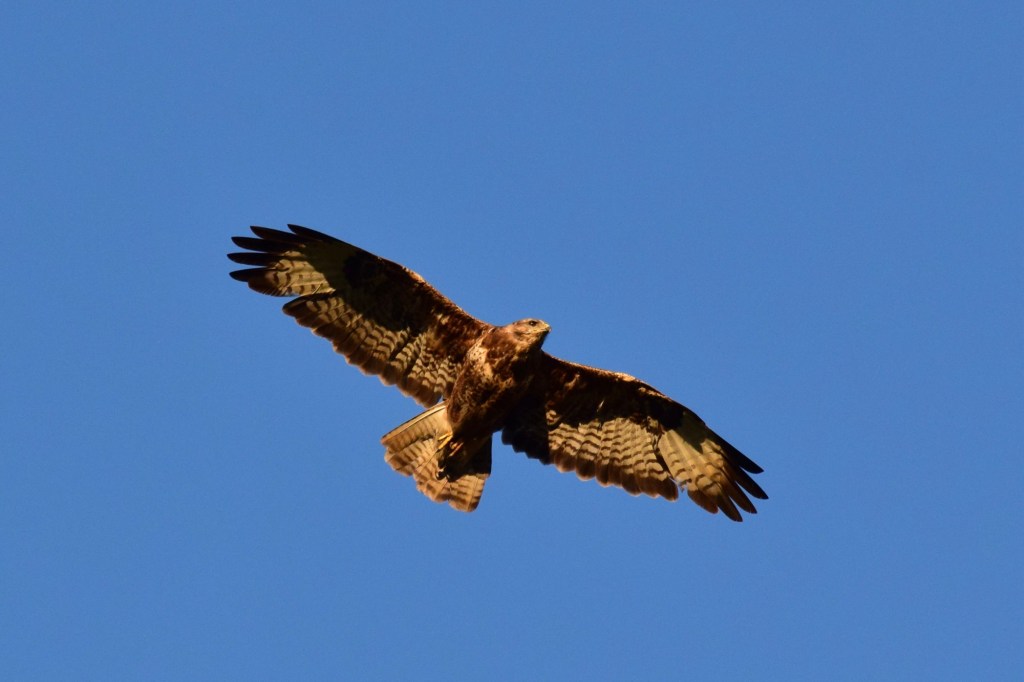
A gentle blanket of cloud shrouded our ascent up to the high meseta west of Hornillos. Apart from a few simple crosses erected along the road, the terrain was featureless, and all the shadows harrier-shaped: I counted at least seven Montagu’s harriers quartering the fields between Hornillos and Hontanas, from the agile ring-tailed youngsters to the ghostly silver shapes of the adult males. Vultures always take the top spot in my animal pantheon, but Montagu’s harriers are absolutely in my top five.
There’s not much a mobile phone can do with these elusive spirits, but you can just about make out the long-tailed shape of one in the photo below.
The sunrises over the meseta are peerless. It’s amazing just how many colours come out of the fields of gold, which pairs better with the sky than the grapes of La Rioja with the local jamón. I can’t imagine walking this route in winter, when the fields are stripped and bare. It must be spiritual then, too, but I would miss the warm hues of the wheat.
To reach Castrojeriz, you have to pass through the ruins of the Monasterio de San Antón. According to my route planner, I had intended to stay here, but it was only ten o’clock, and the day was still very young, so I pressed on – but not before snapping some photos of what is easily one of the most breathtaking buildings along the Camino Francés, with its ruined arches spanning the road to Castrojeriz.
The monks quartered here used to treat those afflicted with Saint Anthony’s Fire, a sickness we now know as ergotism. Advances in agriculture have more or less eliminated the disease, but the source is all around us in the wheat and rye that once carried the sickness. Before the causes were understood, the spasms and hallucinations that sufferers endured were believed to be a form of divine punishment or demonic possession. It’s hard to say whether the monks’ sanctified treatments truly worked, or whether the cutting-out of rye from their diet was what made the Order so effective. Either way, the monks resorted to a Christian form of white magic to keep the locals safe back in the day.
I like to imagine their ministrations might have saved the lives of at least a few pilgrims bound for Santiago over the centuries.
Gust was waylaid by a photographer for about half an hour on the road to Castrojeriz, and I was only spared the same fate by his silent warning to stay away and the timely arrival of two British university students, one of them a Durham undergrad. They stopped a little way along with their group so I couldn’t walk with them for that long, but I hope I can catch up to them again at some point before León.
I rejoined the Americans at Castrojeriz and we grabbed a drink before lunch, partly out of curiosity to see whether Gust could extricate himself from the photographer’s grip. We were more than a little surprised to see a MAGA hat, but nobody dared to engage the man in conversation. If he was a pilgrim, he was traveling very light indeed.
Downtown, the garlic festival was in full flow. A charanga band was marching around town, playing their oompah-like music wherever they went (just like back in Nájera), while old folks huddled around their collection of cloves and groups of kids in matching tee-shirts ran rings around the market stalls.
I suspect the Feria del Ajo is a relatively recent innovation (I’ve seen the number 46° floating around), but I shouldn’t wonder that this kind of harvest festival has been happening here for far longer. There’s a food-tasting event we’re going to check out later, and even a concert by the New York Youth Orchestra at 8pm tomorrow – though we’ll be long gone by then.
Garlic is famous in folklore for its protective characteristics, especially against malevolent spirits like vampires and demons. It’s also mightily medicinal, and has been fighting off disease and bacteria in humans for far longer than it has been used to ward off the undead. Given its life-giving properties, it’s easy to see how the latter superstition came about, in an age when Galen’s law of humours was widely accepted as gospel and any and all imbalances, including light and dark, required correction.
Frankly, I can’t think of any imbalances that couldn’t be corrected by a nice, hot bowl of garlic soup. It really is the very best of restoratives.
Audrey has popped out to explore the town. Alonso is watching a movie and Talia has fallen asleep. I might head out for a wander in a moment too, now that things are starting to open again after the afternoon siesta. Here’s to a little more white magic this evening! BB x
Well, so much for Plan A. The American pilgrims I set out with this morning were in such a tearing hurry to beat the heat that we reached Los Arcos shortly before 10am. I’ve done the Camino a few times before, and my instincts tell me that – shy of the discovery of a true marvel – it’s nothing short of ridiculous to call it a day before the hour has even reached double figures. So I excused myself, picked up my sticks and set out, as I did all those years before, for Sansol.
Estella is pretty much an essential stopover on the Camino de Santiago, but the primary disadvantage of doing so is the fact that the famous wine fountain of Iratxe is hardly a forty minute walk from the city. If you save your visit for the small hours of the morning, and expect the wine to flow like water, you will be disappointed. At least today it was running – the last time I came by it wasn’t operating at all – but it hardly gave more than a few drops when we reached it at around 5.50am.
I can’t think of many places in the world that have actual wine fountains, so it’s definitely worth checking out, but for those who want a little more than a few drops, this may be one to investigate via an afternoon sortie from Estella.
I walked with the Americans for a bit, but I stopped for breakfast in Azqueta and let them press on. It was easy to seek them out for a laugh and good company, but even easier to forget the gulf in age between us (I am about ten years older than all of them), which became steadily more apparent as the conversations went on. I was also missing the solitary aspects of the Camino that had become so deeply ingrained since Oloron – as I suspected I might – and the distance did me good.
My DNA Heritage tests results came back today. Turns out I’m actually more Spanish than English, if the test kit is gospel (which I would very much like to believe!): 37.5% Iberian to 26.4% English. Either the Spanish genes on my mother’s side are ridiculously strong or the English genes on my father’s side are a lot more varied than I thought. As it turns out, as well as the obvious Spanish genetic indicators (I didn’t really need a box kit to tell me that), I apparently have a not inconsiderable amount of French and Breton ancestry (6% each).
This last detail is really very interesting, as I’ve latterly developed something of a soft spot for Bretagne after spending the summer in Saint-Malo last year. Granted, the Breton genome encompasses most of Normandy, too, so it’s just as likely a relict trace of Norman (aka British) DNA, but still – I’ll take it. I’ll take any connection to that beautiful part of the world.
Now I’m on the Camino Francés, pilgrim junk is much more of a feature of the Camino. Stones piled in cairns upon the trailmarkers, obnoxious stickers plastered all over the signs, clothes and prayer flags left hanging in the branches of low-hanging trees… Even if the yellow arrows weren’t there, it would be hard to lose your way for all the detritus.
It’s very easy to criticise, and perhaps I shouldn’t. After all, as is so often repeated in hostels and on the Camino Facebook groups, everyone walks the Camino in their own way. But I do think we forget that this is a country, with real people getting on with their lives, long after we have come and gone.
Do the piles of stones left behind really make a difference, even to those who choose to do so, or are you just following a fad you’ve seen? And what happens when they start to change the landscape, as at Cruz de Ferro, and need to be removed by heavy machinery to prevent further damage?
Do the stickers you leave on signs actually contribute to the experience of the Camino for those who come after you, or are you just creating one more labour-intensive task for some local official who will have to spend hours scraping them off – or even using local funds to buy new signage?
Do we really need to be reminded to visit Baden-Würrtemberg? For the record, I thought Baden-Würrtemberg was bloody beautiful when I stayed in Karlsrühe in 2019, but after seeing the “Nett hier” stickers once too often in a place of spectacular beauty, I have developed a profound dislike for the name and the arrogance implied by the stickers. There is such a thing as overadvertising!
At the root of my consternation in today’s post is this. It’s been eleven days on the Camino de Santiago and I’ve yet to encounter somebody who’s here for reasons of faith. Everyone – everyone – is here for a walk. Because they’ve heard of the Camino. For a challenge. A holiday. An adventure. And the pilgrim community, like a hive, is very quick to turn angrily on anyone who voices the opinion that somewhere, underneath the spirit of free and individualistic adventure, might be found the bones of a genuinely spiritual journey.
Maybe I’ve just not had much luck. But it would be nice to share the road with another believer, in a place where you might have thought it so much more likely to find one.
I’m still stopping in every church I pass. I still say a prayer to God on behalf of my grandparents and my dear friends’ father before every cross, every chapel, every shrine. I don’t feel “holier” than my fellow pilgrims, because I’m just as guilty of using the Camino as an affordable excuse to spend my entire summer holiday in Spain. But still – it’d be nice to meet someone who has come to the Camino for a genuine reason beyond “I heard about it and it sounded pretty awesome”.
Perhaps the Koreans are the answer. The trouble is, they don’t speak much English, and no Spanish at all beyond Buen Camino, so conversation is something of a non-starter.
Spain needs pilgrim money now as much as it did when the wars against the Muslims were still raging on and cash was hard to come by. But I do wonder where they all are, those walking the Camino with spiritual intent. Maybe I’ll find them out on the Meseta. It truly is a magical place.
England is experiencing another heatwave, but out here, the weather is mild. The hospitalero is cooking up an enormous paella to share between us tonight. That is, me and the five other pilgrims who made it out here: a quiet German lady, an ageing Italian who talks to himself a lot and snores like it’s an Olympic sport, a Tuscan with a strong accent and a couple of very lovey-dovey Romans. The least that can be said is that English is no longer the lingua franca and that is such a sweet relief. I was almost starting to feel I’d left Spain behind! BB x
Picture this, if you can. Call upon all of your senses.
First, sound. Wind, cool and dry, blowing in the branches of the pine trees above, their branches coated in trailing clumps of lichen. A blackcap singing an enchanting solo in the forest, and an endless percussion of cicadas, assailing the ear with their rasping ostinato from every side. You can’t see them. But they’re there. Hundreds of them.
Next, smell. The fresh scent of pine bark, mingling with the dusty trace of crumbling masonry. The occasional coolness of water blowing in off the lake. Mingling with taste, a hint of fried fish from the bar, which closed up shop half an hour ago.
Touch, then. The feel of carved wood, nearly two centuries old. The trace of numbers in stone, chiselled in many hundreds of years before even that. The uneven cobbles of a road long since neglected, and the powdery feel of the houses that line it, within which a thousand plants have weaved a citadel of their own.
Finally, sight. Picture an entire village abandoned a hundred years ago. See the stone balconies, carved with Roman triumph, presiding over an empty world. A church, with fragments of brilliant blue still visible in the decaying fresco above the spot where the slate once stood, stripped bare and opened to the heavens. A lonely watchtower, manned now by thirsty crows, their beaks agape in the heat of the afternoon.
This is my stop for tonight: the abandoned village of Ruesta, one of the last stops before leaving Aragón.
I left on time this morning, shortly before six, sent on my way by Lulu and Nicole with a packed sandwich, an orange and a boiled egg. It felt like being sent off to school. Some hospitaleros really do push the boat out to make you feel at home during your brief stay!
I missed the sign in the darkness and so headed north for a kilometre before joining the road and returning to my westward trajectory. It added about fifteen minutes to my time, but it did give me an unrestricted view of the morning.
Camino sunrises are something of a tradition on the way to Santiago, but I am going to miss these Aragonese mornings. There’s something about the mountains that makes them that much more mystical. Maybe it’s the way the light turns each row of hills a different shade of blue, always fading toward the base.
I spent a considerable part of the morning chasing quails. They’re almost impossible to see with the naked eye, standing at around 16cm tall (that’s just over half a ruler) and seldom taking flight when alarmed, preferring to sit tight and rely on their cryptic camouflage to avoid detection. They were all over the place, though – I must have counted at least forty individuals calling from different spots along the Camino in the hour or two after sunrise. They can throw their voices around 150 metres, which can make them very hard to locate, especially when there are four or five in the same field calling at once. I flushed one completely by accident at the side of the road and it took off into one of the vast wheat fields on sharp, whirring wings.
England must have sounded like this, a long time ago. There are places you can go in the UK and hear quails, which do migrate that far (some make it all the way to Scotland), but not on the same scale as you can here in Spain.
Along with the quails, I saw a grey partridge – a rarity in Spain, confined to the north – and goodness knows how many corn buntings, but I think it’s the foxes that stood out the most. There must be plenty in the area, as I saw three within a rather short space of time, including one sprinting across a field near Martés.
A major feature of today’s walk were the badlands de yeso: strange, wrinkled mounds of gypsum, a distinctive feature of Aragón, Navarra and Almería. This is the kind of terrain that contains fossils like the shell I found yesterday: a prehistoric stockpile of marine life, buried deep beneath the soft grey hills. They’re really quite striking, and since there are no Caminos that pass through the Bardenas Reales to the southwest (one of the strangest lunar landscapes you can find in Europe), the Camino Aragonés does at least provide an introduction.
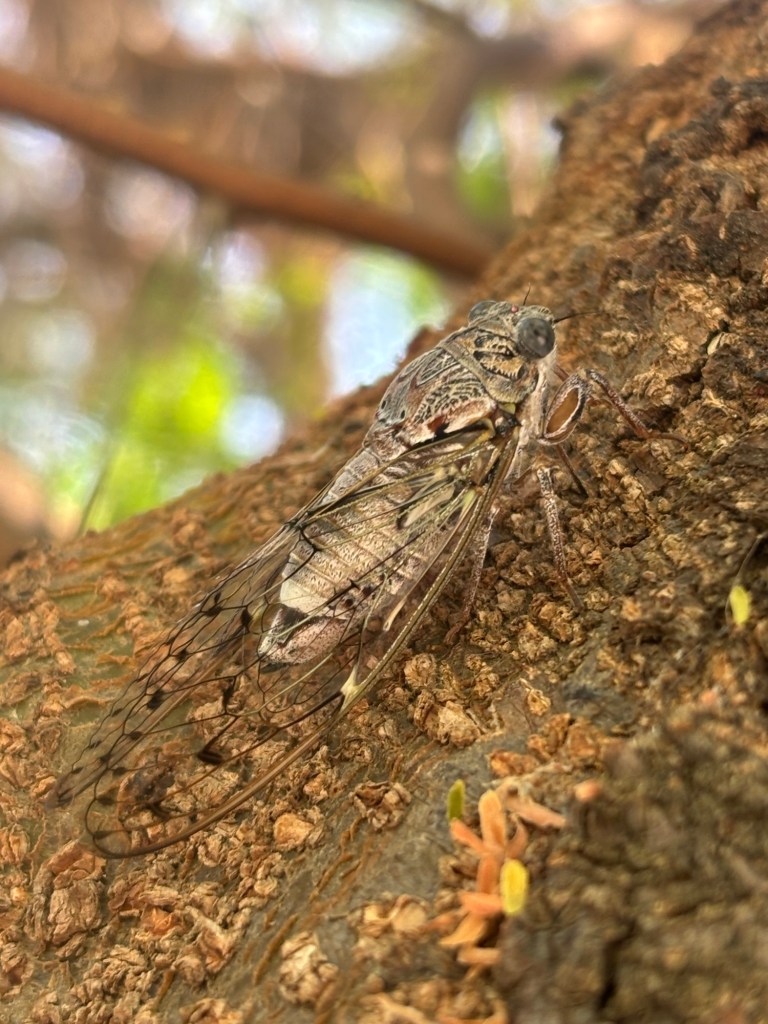
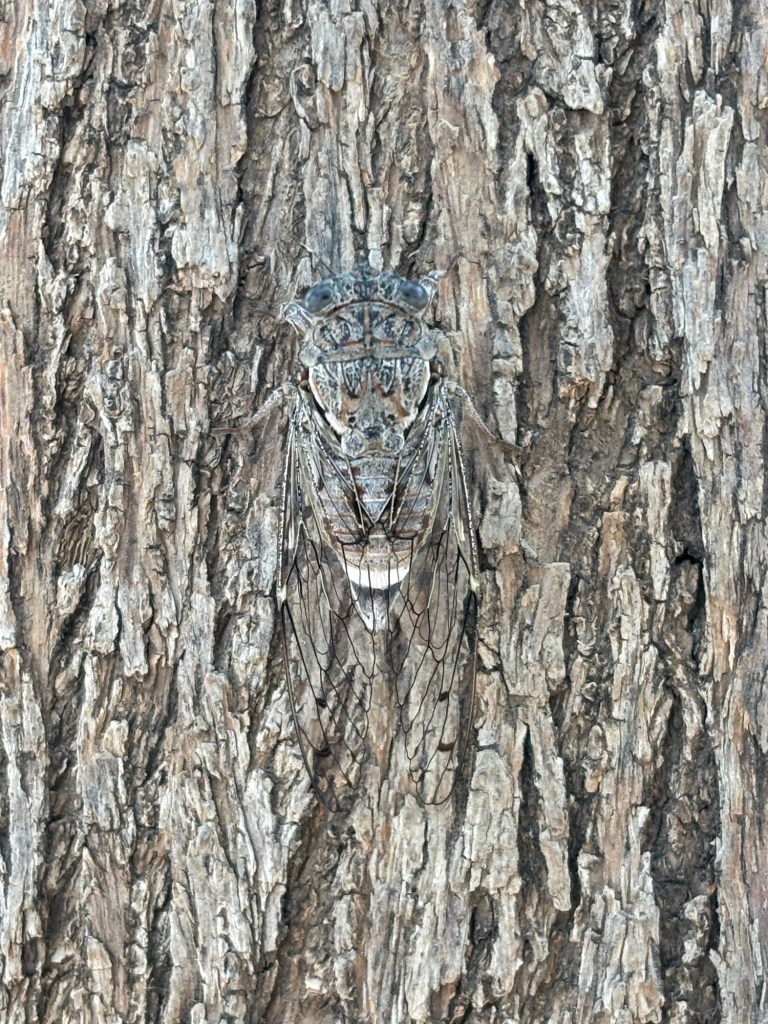
I stopped for water shortly after a brief exploration of Artieda and its gypsum hills (to the great confusion of a local who thought I’d lost the Camino). Here, at my feet of all places, I found one of the ventriloquists: not a quail, but a cicada. They usually conceal themselves high up in the trees, where their voices carry and their mottled bodies blend perfectly into the bark. This one was clearly an amateur, however, as the motion of its churring was trembling the blade of grass in its legs, making it stand out like a sore thumb.
Not to be outdone, my final hour was a butterfly parade, with a scarce swallowtail taking centre stage. I have fond memories of this little creature as it’s one of the ten animals I recorded on my first trip to Spain as an eleven-year-old. Contrary to the famous adage popularised by Muhammad Ali, most butterflies don’t “float”, having a rather manic and jerky flight. Swallowtails, however, are on the larger side, and they do float, or at least seem to, fanning their wings out midflight to glide on the air. They’re skittish, like most butterflies, so it’s hard to get close, but their size, acrobatics and striking colours make them a delight to watch.
Which brings me to Ruesta. There’s really all sorts on the Camino, and Ruesta is very much one of the sorts. Abandoned in 1959 after a lengthy decline – largely because of the construction of the nearby Yesa reservoir, which flooded most of the agricultural land the village depended on – the village has largely fallen into a slow state of disrepair.
Ruesta’s church had some spectacular frescos, which were carefully transferred to Jaca’s Diocesan museum to prevent them from being lost forever. I imagine the place might once have looked not too dissimilar to Artieda, a hilltop town not too far from here. From some angles, you can still just about imagine life as usual: children running down the street to school, the bakery in full swing, old locals gathered at a street corner to gossip…
Ruesta has two functioning buildings: a casa de cultura (of all things) and an albergue, complete with a lively bar/restaurante. The secret to Ruesta’s survival is its acquisition by the CGT, the Confederación General del Trabajo, one of Spain’s larger trade unions. There are plenty of clues for those who don’t recognise the red-and-black flag: the raised fist, the quotes and dates graffitied across the walls and the plethora of signage in Catalan, Galician and Basque (the CGT, being anarcho-syndicalist in its outlook, has strong ties to the local separatist movements).
To their credit, they’ve done a wonderful job. The regional government won’t step in to rebuild Ruesta, as it’s just one of over two hundred abandoned towns in Aragón, so the syndicate has stepped in. They’ve carved out a fully-functioning community in the heart of the old village and are carefully coexisting with the place, without feeling the need to develop or bulldoze what doesn’t serve. The result is a very unique staging post of the Camino de Santiago. There’s not many places along the profitable pilgrim road that have been allowed to fall apart, and yet at the same time been so carefully curated.
I wonder how the future will see us? The creatures of the past left their traces in the rocks by chance. We’ve been deliberately stamping our seal on the earth for thousands of years. Will they marvel at tyre tracks in the mud and put them in museums? Will they weave fantastical stories around the objects they find, like discarded vapes and perfume bottles? What will we make of it all, a thousand years from now?
The Camino gives you a lot of time to think. Six hour walks through the countryside, every day for six weeks… It’s a test of resilience, if not of your sanity. Thank goodness I’m perfectly happy with my own company! BB x
I bid Mariano adiós at around 5.45 this morning and left Jaca just all the young folks were finding their way home after an enjoyable Friday night on the town. Far away to the south, a summer thunderstorm lit up the sky every four or five minutes, and by counting the seconds between flashes, I was able to catch one of the strikes with my camera.
With Jaca behind me, I am very conscious I am headed into a world of great distances and tiny villages, so I did double-check to make sure I had enough cash to last at least three days – the time it will take to get to the next town with a functioning ATM.
With the thunderclouds rumbling away in the distance, I had to keep turning back to watch the sunrise, which was singularly spectacular this morning. The sky was a shade of pastel pink normally reserved for Renaissance paintings, and the clouds building up above the mountains could only hold back the sunburst for so long. When it came, it pierced two gaping holes in the clouds, like gleaming eyes, before ripping an almighty gash right through the centre and sending a hundred golden rays into the morning sky.
I had a choice to make today – to press on to Arrés or take a lengthy detour via the Monastery of San Juan de la Peña – but in the end it was the weather that made my mind. A gentle summer rain began to fall shortly after sunrise – not the heavy, sheet rain that makes any outdoor activity miserable, but a light, warm, refreshing rain. The kind that provides relief after a long morning on the road – but makes cross-country hikes hard and soggy work. Rerouting to San Juan de la Peña turns an already reasonable itinerary (24.6km) into a trek (38.4km), and after my ascent and descent of the Pyrenees in one go two days ago, I thought it wiser to forgo the monastery this time – after all, these feet have to take me all the way to Santiago. I have to be careful!
The Camino from Jaca mostly follows the road and the river, but it does provide several forested cross-country stretches that offer some relief. On one of these, in the hills south of Ascara, I stopped for a breather and there I found a most remarkable thing: a symbol of Santiago, a shell, but ancient. A fossil from an ancient sea, perhaps ten million years old or more, just sitting at the side of the Camino, waiting to be found.
I’ve always wanted to come to Aragón for its fossil beds. Teruel, Aragón’s southernmost province, is believed to have the highest concentration of fossils per square metre in Europe, and there’s even a sauropod named for the region (Aragosaurus). There are some incredible relics from the ancient world to be found in this vast region, including a large number of well-preserved dinosaur footprints at El Castellar and Galve. I wasn’t expecting to have any luck with dinosaurs on the Camino, as the fossil beds themselves are far from the pilgrim road and pretty hard to reach without a car, so I can’t believe my luck in finding a Miocene scallop shell – and in such good condition!
Today’s hike was a pretty solitary one. That’s not to say I’ve met many pilgrims on the road – today I saw one, and that’s one more than the last four days – but the distances between the towns today felt immense. That’s fairly typical of the Spanish interior, and Aragón is no exception. What makes this part of Spain so striking is its singular orography: so many of the hills in the Río Aragón basin are perfectly flat on top, forming an alien landscape that reaches its peak in the Bardenas Reales to the southwest.
Naturally, in this land of shifting frontiers, many of these mesas have a hilltop town or castle sitting neatly on top. I can see at least one from my stop for tonight in the hill town of Arrés: Canal de Berdún, away to the north. If Arrés had proved to be a ghost town, I would have tried my luck there.
Fortunately, it isn’t. Arrés is little more than a hamlet tucked away in a cleft of the long wooded sierra that runs the length of the Río Aragón, with some fifty permanent residents or less to its name, but don’t let its silence deceive you (even on a Saturday afternoon when everything seems to have ground to a halt). The municipal albergue is fully operational and perfectly equipped, allowing for a stay in possibly one of the most beautiful corners of the Camino Aragonés.
I’ve done my washing by hand, as usual, and it’s hanging out to dry. In this heat, it already will be within another ten minutes or so.
To end the day, the French hospitaleras, Lulu and Nicole, gave us a tour of the village, showed us the sunset from the highest point (which was spectacular) and cooked up a wonderful dinner which we shared between the six of us (including two Aragonese bicigrinos who showed up five minutes before dinner).
I’m just penning the last details now, drinking a chamomile tea, and listening to the night sounds of crickets, a distant dog barking and, somewhere in the valley below, the ceaseless extraterrestrial churring of a nightjar. It’s blissfully quiet here. I’m looking forward to the sociable side of the Camino Francés, but I’m so glad I came this way. It’s been spectacular. BB x
Blimey, but it’s hot outside. If the hordes of ruddy topless locals in the streets of Bristol weren’t enough of an indication, then the winged ants might have been. They always seem to appear out of nowhere when the heat reaches its apogee. Where I’m going, it’s a full ten degrees hotter, and here I am with a cardigan tied about my waist. I felt just slightly insane packing the cardigan, but it’s best to be prepared for all eventualities – especially when I’m up in the mountains. Heatwave or no heatwave, a lot can happen over the course of six weeks.
Check-in at Bristol was a breeze – unless you count the security team selecting my satchel for “explosive checks”. I’m not sure what they expected to find in there: seven different grades of black pen, a rubber, a pencil sharpener, three pencils, three empty pilgrim passports, a hand-drawn map, a very battered journal and a rosary of La Virgen del Rocío… but no explosives. I’m not sure they’d fit! My rucksack might be light but my satchel is, as ever, full to bursting.
I broke the habit of a lifetime and lingered in duty free, where I picked up a few last minute supplies: namely, a solar battery pack and a watch. I’ve left the guidebooks behind this time, and I’m trusting in the plans I scribbled down on three flashcards (spot the teacher), but if it comes to it, I’ll need my phone for navigation. There’s a few stops without electricity on my itinerary, and sometimes you don’t get a bed near the sockets, so a battery pack is a pretty good investment for a trip like this.
Lord knows I’ll be moving and removing the watch a lot this summer to avoid getting a watch-strap tan, but I figured it was high time I had something to look at when I hold up my wrist.
It’s funny how regional Bristol feels. Half the tannoy voices are human (London’s human airport staff bowed out of their tannoy duties years ago), and with the automated RP infiltrating just about every corner of the country these days, it’s curious to hear the voice over the speakers drag the not-so-gentle R in airport. Sometimes it feels like the only place you’ll find the West Country burr that was once so widespread is on public transport. It’s a shame. It’s really quite endearing.
My flight is at 19.25, so I had an early dinner. My usual compulsion for continuity set in, so I grabbed a burrito from the Real California stand upstairs. I had my first non-school burrito in Chicago O’Hare International Airport at the end of my American adventure, so it makes sense to start the next grand adventure with one, too.
It’s a busier flight than I expected. Mind, it is a Sunday night – if anybody were here for the weekend, I suppose this would be the obvious flight home. I’m hoping the public transport situation at the other end is more reliable than the one in Tenerife, as I don’t really fancy another late night wander. All being well, I should be in bed by midnight, and it’s not a dreadfully early start tomorrow to catch the southbound train, but I would like to see a little of the city before I go, so I might start the early morning routine and grab a bite to eat.
After Bordeaux, we’re into the swing of things. I haven’t booked anything beyond the connecting train to Oloron-Sainte-Marie, so I’m putting my trust in God and the road. For somebody who genuinely despises planning in advance, the Camino is the very best sort of holiday. I have no doubt that there will be trials ahead, but that only makes the adventure all the more exciting. We don’t get an awful lot of real adventures in the day-to-day of adult life, so I’m off chasing dreams again. Only this time they’re not red-haired and American, but European and full of light and love.
I’d better save my phone battery and stop blogging. I expect we’ll be boarding soon. Oh – and there’s the bell. À bientôt.
Tonight is my last night in the comfort of my own home. By this time tomorrow, I will have checked into my hostel in Bordeaux, the first of six weeks of bunk beds, temperamental showers and creaky metal lockers. Six weeks is as long as a half term – I have to keep reminding myself of that fact. Six weeks is a very long time to be on the road. But my bag is nearly packed and I’m starting to get itchy feet. Let’s hope that’s the only condition my feet suffer from over the next month and a half!
That’s me – a much younger version of me, that is – on my first Camino, some six years ago. A lot has changed since then! Back then, I was still a humble teaching assistant, without the PGCE or the workload that comes with it. I couldn’t walk more than a week or so of the Camino because I was being ousted from my house on site, which had caught the eye of an ambitious young minister, and I had my PGCE Numeracy skills test to revise for (which was nowhere near as hard as I thought it would be). The girl I was with at the time would also not have been overly keen on me staying away so long, so it was only an eight day affair, from St-Jean-Pied-de-Port to Logroño.
I considered various Caminos this summer, including the Norte and the Plata. The fiendish heat forecast for the summer put me off the Plata, which would have taken me through easily my favourite regions of Spain – Andalucía and Extremadura – and the tarmac trails and relatively high cost ultimately dissuaded me from the Norte. Rumours are currently circulating that they’re filming the sequel to Martin Sheen’s The Way on the Norte this summer, so I think I’ve made the right choice.
I’ve done the Francés before, so why am I doing it again? For the same reason I second-guessed the Plata: you are more likely to find people on the Francés, and it’s the people who make or break the Camino. I met an ensemble cast of characters on my last run: Mikkel the Dane, Domenico the Carabiniere, the Professor, Mamasita the German drunkard and Simas, who walked with me to the end of the road in Fisterra. People from all walks of life can be found on the Camino, and especially on the Francés, which is by far the most affordable of all the available options.
But I’m not doing the same route. Not entirely. This year I’m starting in Oloron-Sainte-Marie, some sixty-five kilometres to the east of Saint-Jean-Pied-de-Port. The Camino Aragonés – by some accounts, the “original” Camino Francés – starts a few days’ march to the south at the pass of Somport, but I want to enjoy the unbridled majesty of the Pyrenees, so rather than catching a bus to the border, I’m going to walk the last few days of the Chemin d’Arles, one of the French pilgrim roads that leads up into the mountains.
The more popular Napoleon Route from Saint-Jean-Pied-de-Port begins with a monstrously steep climb up and over Lepoeder summit at the western edge of the Pyrenees. I walked that way years ago with three Italian guys. One of them had done the Aragonés before and was full of praise for its natural beauty, and so it is to him, I suppose, that I owe the seeds of this itinerary.
The scenery on the Napoleon route is spectacular, and the elevation is certainly nothing to sniff at, but if memory serves, it felt more like a giant hill than a mountain (or, at the very least, a Scottish highland). The Camino Aragonés, on the other hand, cuts straight through the heart of the Pyrenees.
I’m rather picky when it comes to mountains, largely on account of having been dreadfully spoilt by a year in the rugged limestone-scarred hills of the Sierra de Grazalema as a kid. Unless it’s sheer, craggy and haunted by the hulking shadows of an eagle, it’s not mountain enough for me.
Maybe I’ll get lucky and see a lammergeier – easily identifiable by their diamond-shaped tails. Maybe. Right now, I’d settle for some mountain air. My flat has only one window that can open, and all the others are frosted and quintuple-glazed – one of the downsides of living attached to a boarding house.
After Somport, the Camino Aragonés winds down to the Aragonese city of Jaca before arcing around to the west. I’ll be joining the Camino Francés at Puente La Reina, after which I will be on familiar territory as far as León. The meseta is legendarily testing, but I wouldn’t walk it any other time of year. There’s something powerful about taking the pilgrim road straight across the Sun’s anvil.
Well, I suppose I’d better start packing my bag, and then try to get some sleep. I’ve a routine to get into, after all. See you on the other side. BB x
Reports written. Exams marked and feedback given. A couple of workshops with the Y12s on character strengths and interview skills given. With the exception of six lessons at the start of next week, the school year is all but finished. I had nothing to do this afternoon, so I popped into town to get some Camino supplies. In two weeks’ time I’ll be on the road, and for six weeks at that – the longest adventure I’ll have ever taken – so I need to make sure everything is in place.
One thing I won’t be short of this time is stamp space. The credenciales I ordered from Santiago have arrived: two, plus a freebie with the guide I ordered to the Camino Primitivo. Each one has space for about 78 stamps, so even if I collect three stamps per day every day across those six weeks, two should cover it nicely. I can hold onto the spare for myself, or give it to a pilgrim who is running low. I’ll take all three in any event.
Am I hoping to meet some people around my age? Of course I am. There weren’t all that many the last time I did the Camino in the summer of ’23 (compared to the spring, that is) but maybe I just timed it wrong. Being a teacher, summer is all I really have to work with, so summer it is.
I’ve been walking in my new Keane sandals, and they’re as reliable as ever. I have some new Merino wool socks that should help with the prevention of blisters, and I have dug up my supplies of Compeed blister plasters from whatever hole they’d disappeared into since the last Camino – I was surprised by how many I still had. I didn’t pick up a First Aid kit today, but that might be an airport job, as there are useful implements that I wouldn’t be able to take through security anyway.
Not too much to report. It might not be such a bad idea to get back into the habit of blogging daily before I go – writing requires regular exercise, just like training for a hike. Maybe I’ll try to do something with the books I’ve been reading. That might be illuminating. BB x