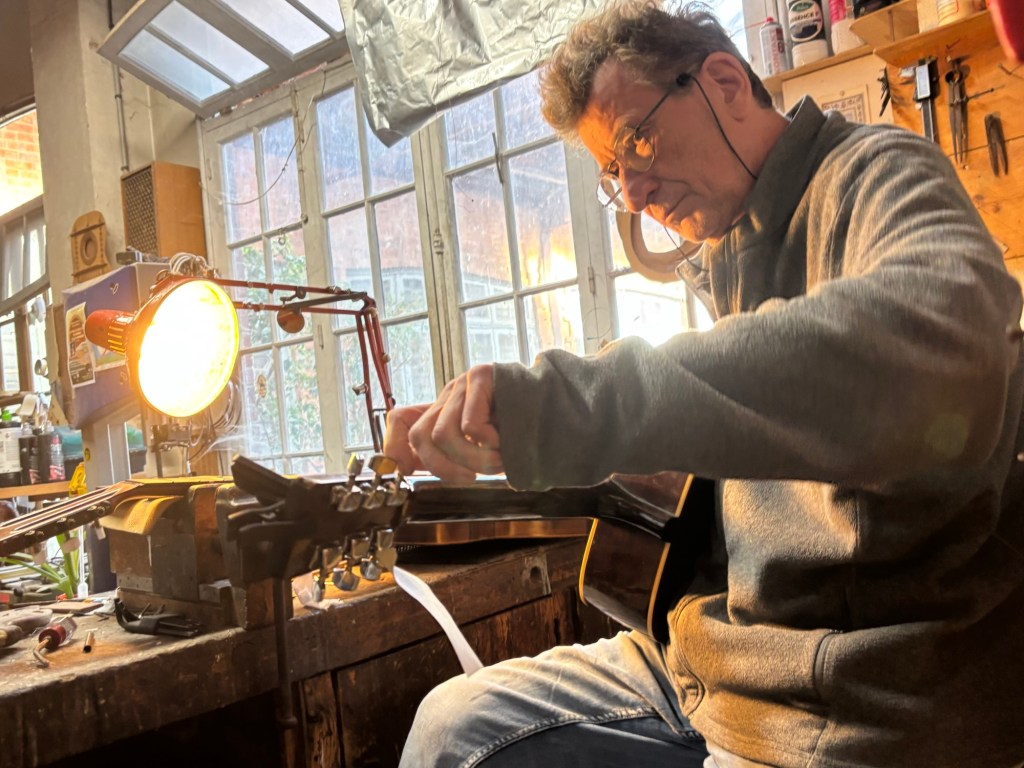
Rafe’s playing his guitar downstairs. It’s been a while in the making, as it was with a luthier in Toulon for most of the holiday. Our driver has done a wonderful job in getting us to Hyères and Toulon, but we haven’t gone any further as he has been finding driving in France a rather stressful experience. It’s a reminder of both how little I cared for driving way back when, but also how much more in control I could be when faced with a setback, which was encouraging – in a round-about sort of way.
Anyway, we’ve been to Toulon and back and recovered the guitar. It cost him a lot more than he planned, but given that it involved refitting all of the frets, restringing the body and fitting a brand new set of tuning pins, it’s not all that surprising.
I just enjoyed stepping into the luthier’s workshop. It felt like walking into an older world, into a time when things were fixed or remade by craftsmen… before Amazon’s buy-it-again culture drove so much of it underground.
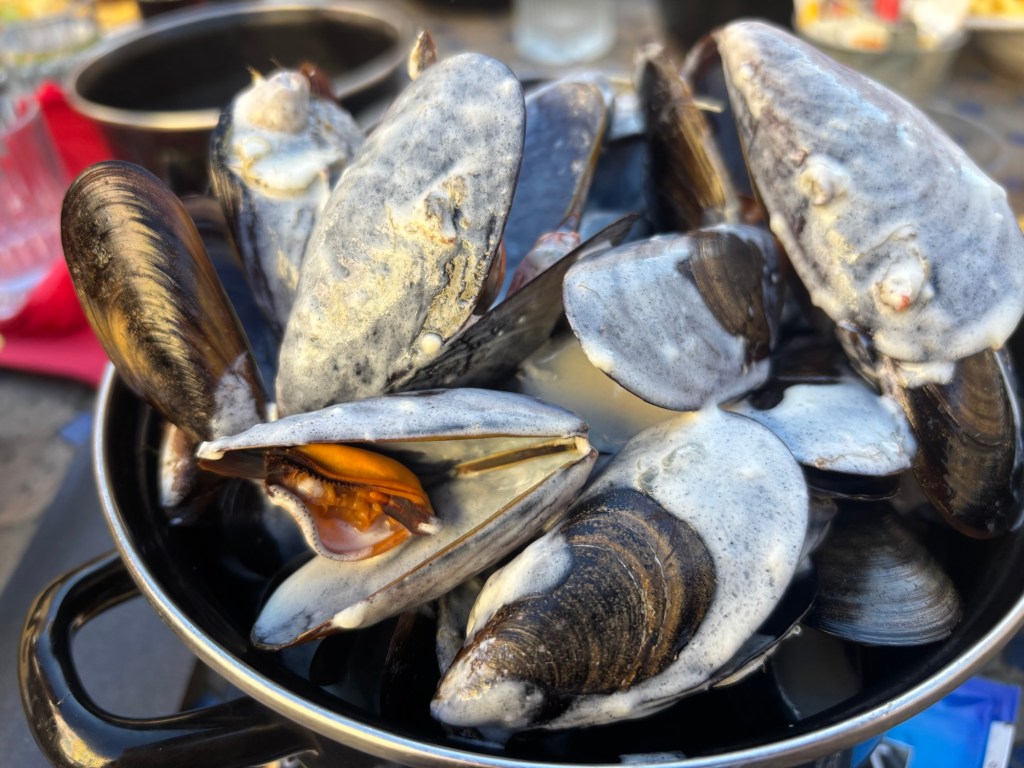
For the second day in a row, we settled on a seafood lunch. Traveling solo makes it easy to forget how complicated catering for a group can be, and there have been reminders of those Camino days out here. Fortunately, that’s not been an impediment to securing my favourite French dish of all out here: moules au Roquefort. I grew up on the more popular moules marinières – a memorable and delicious excuse for day trips to Calais from my childhood home by the sea – but one taste of the powerful combination of fresh mussels and the tanginess of Roquefort cheese in Brittany two years ago has made me a convert. If it is on the menu, I will accept no substitute.
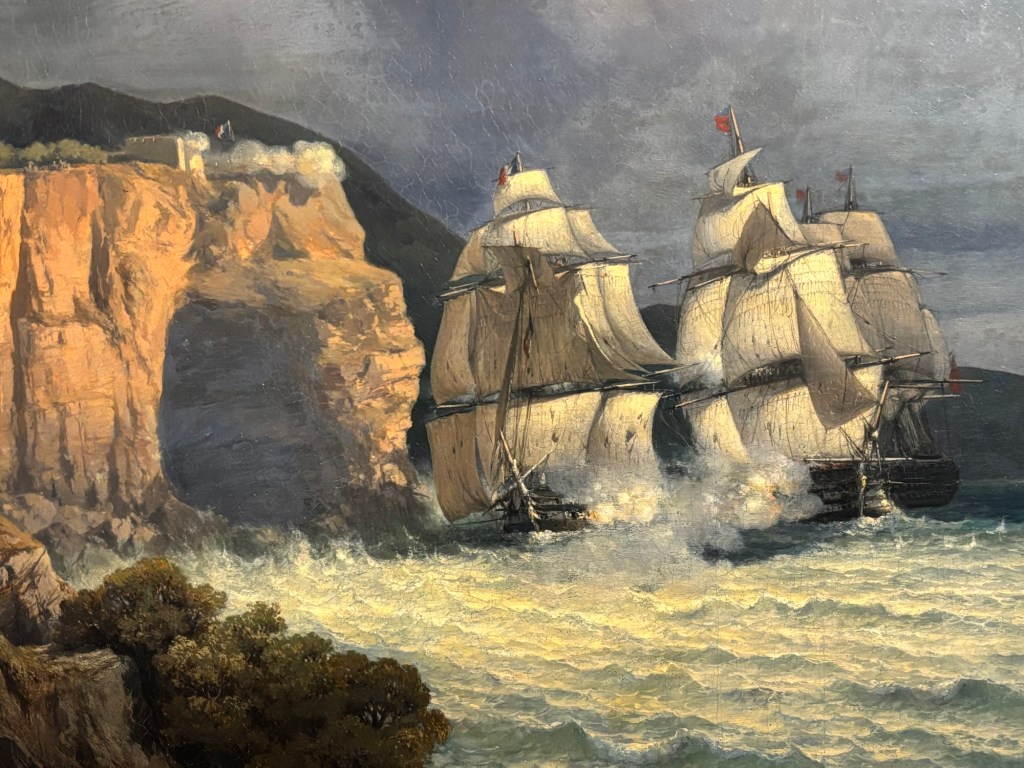
We took a jaunt into Toulon’s maritime museum. It wasn’t quite as interesting as Barcelona’s drassanes, but then, I have a major preference for pre-1900 history, so I tend to switch off in the presence of most modern history exhibits (the fault of a heavily 20th century-skewed history curriculum at school, I think). It does have a nice collection of nautical paintings, though, which are always beautiful to observe.
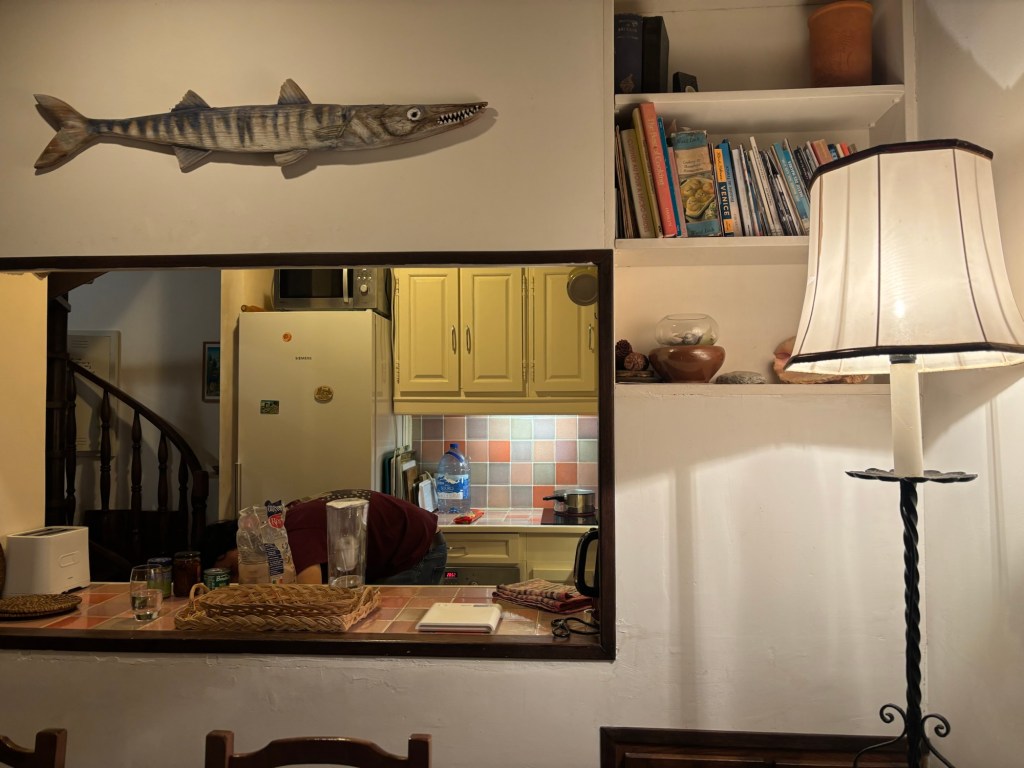
Rafe is making a bouillabaisse for supper tonight, so we stopped off at E. Leclerc on the way home to pick up some supplies. I shall miss Rafe’s superb cooking when this holiday is over, but it is a reminder of how much I enjoy my solitude. Living on my own for seven years has only honed my reclusive tendencies, I think, and the absence of stillness gets to me sometimes. It’s a helpful reminder that, while I’d like to find Her and settle down and all, I have to balance my ambitions with my very human nature.
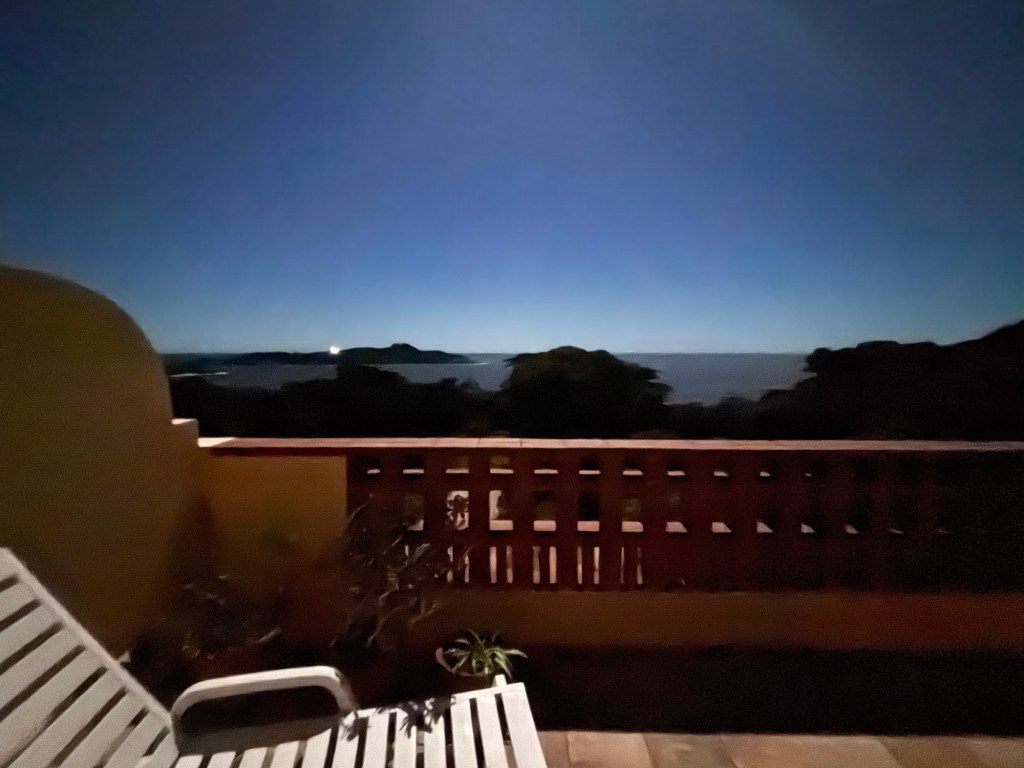
On another note, the moon was so bright last night that it was almost as bright as daylight outside. I wish we had nights like that in the UK. BB x
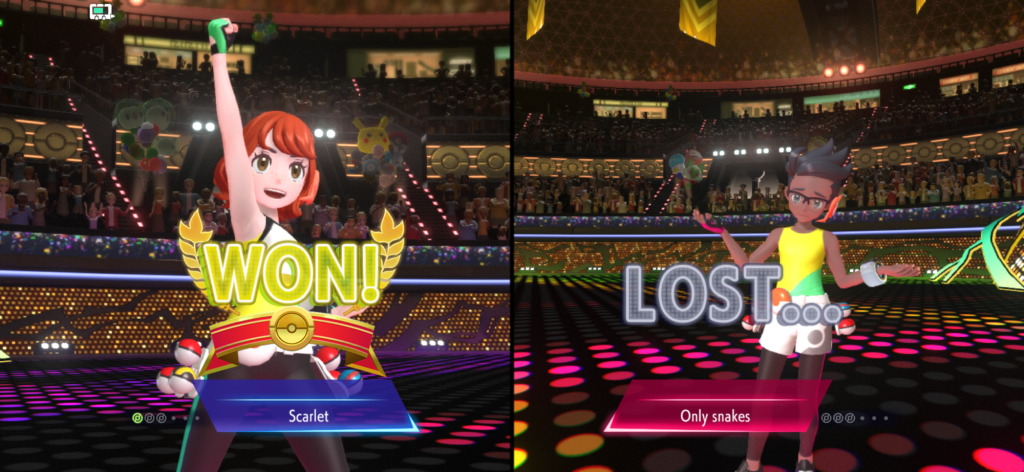
Something I’ve done to pass the time out here in Hyères is to download one of the newer releases in the Pokémon series, of which I’ve been an on-and-off devotee for years. Are you surprised? I imagine not. It tallies extremely well with my lifelong obsession with teaching myself the names of all the birds and beasts around me.
The game in question, Pokémon Champions, is a very different game to the ones I’ve played before, in that it is exclusively targeted at what is known as PvP (player versus player), being arguably the most accessible method yet for players around the world to test their mettle against each other. In principle, at least, it’s a great idea.
Rafe and his friends seem to have been playing Champions for a while, so I thought I’d give it a go, being something of a veteran player of the series (I got my first game – Pokémon Ruby – when I was around ten and was into the TV show well before that). I might even have gone so far as to call myself something of an expert.
Or… so I thought.
After winning through the first few rounds (against what was clearly a generous AI opponent or two) I got absolutely mauled in the later tiers. Unlike the mainline games – which used to have a proper challenge for competent players in the postgame in the Battle Tower and its variants – Champions pitches you immediately against the rest of the world, most of whom prefer to play with the current titans of the competitive metagame.
I can take a loss, but it was a bit disheartening to be able to go no further with my favourites. The real heart of the Pokémon series – which, let’s face it, is a sanitised modern take on animal baiting – was and always has been about going on a journey with your chosen team, developing a bond with them as you go. The battles were the main appeal of the game, it’s true, but they made a lot more sense when you’d gone on an adventure and grown together. Victories and losses felt keener, more interesting, more deserved.
Champions necessarily strips that all away so you can get straight to business – and, in so doing, it loses its heart. I thought I might enjoy the challenge, but I’m nothing if not stubborn, and I don’t like the idea that progression means switching out the team that I have named and grown up with for monsters that will get the job done better. Stripped down to competitive PvP, it becomes much more about prediction, calculation and synergy. It’s the endgame all Pokémon trainers have always been working towards, no doubt, but it’s a lot less enjoyable that I expected.
It reflects a frustrating trend in the series of late, dividing the franchise between the mainline games – which have become so defanged in their difficulty level as to become stultifying at times – and the competitive environment of the VGC. For those of us in the middle – competent players who have dedicated a lot of time to the series but aren’t that interested in smashing teams we have no connection to against each other just to climb the ranks – there is no middle ground.
For the first time in the franchise’s history, I won’t be getting the next game in the series (Winds and Waves) largely on account of the fact that I can’t justify the expense of a Switch 2, but also because it’s getting to the point where I’ve outgrown what the series has become. It feels like Pokemon used to have a lot more heart and a lot more of a challenge, except the two were kept in balance, while they have now been almost surgically separated.
I can’t knock Champions’ concept. It’s just missing the more sheltered element that the mainline games had which let you train against computer-controlled teams, which were a lot more forgiving while still posing a genuine challenge to experienced players. If it had that small tweak, I might just be convinced to return.
Come on, Pokémon. Remember when you had one of your own characters convey arguably the most important message in the whole franchise back in Gold and Silver? We do!
Strong Pokemon. Weak Pokemon. That is only the selfish perception of people. Truly skilled trainers should try to win with their favourites.
Karen, Johto Elite Four
Sure, they had an NPC completely contradict that memorable quote in the Ruby and Sapphire remakes (which was a really callous thing to do). There’s been a lot of that retconning lately, such as dropping the famous “Gotta catch ’em all!” tagline when the franchise became far too big to accommodate them all in a single game.
All the same, I think it’s sad that the company has lost a lot of its heart and soul. For the sake of future Pokemon fans, I hope they see the light and start to try to move the series back toward its humbler roots. BB x
Another day, another step into autumn. I’ve just finished the washing up and am reading about Enrique’s rebellion on the island of Hispaniola in Simon Park’s Wreckers. The others are downstairs watching a League of Legends championship (apparently that’s a thing). Work seems a long way away.
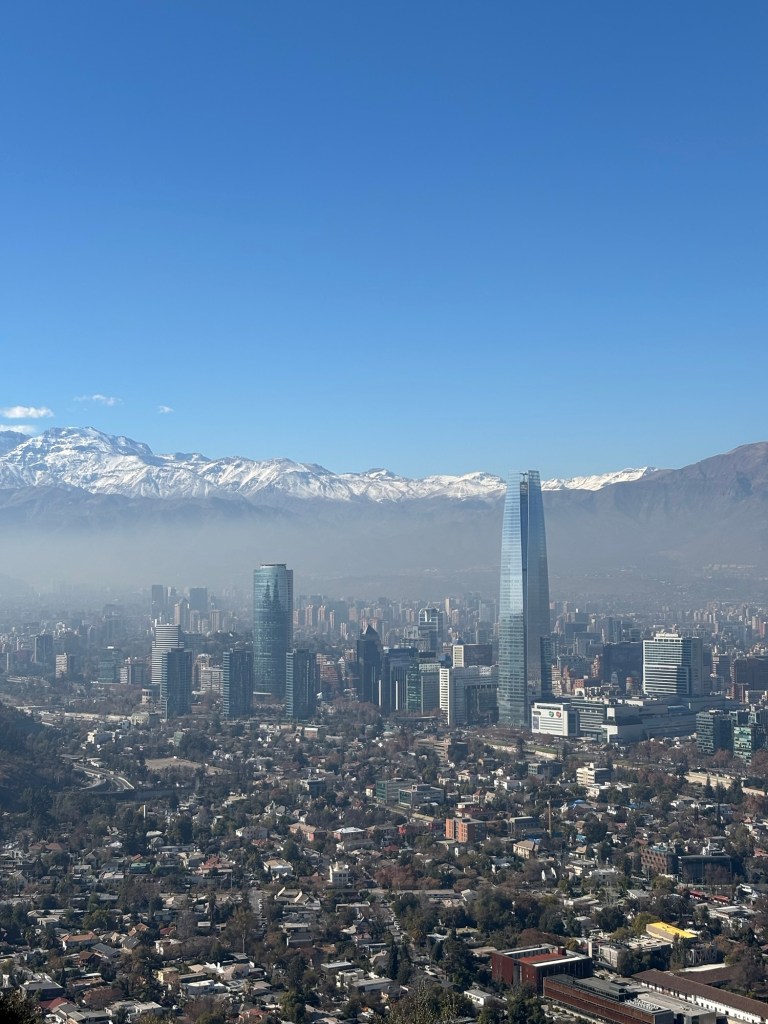
I wonder what the future holds? Where will I be in a few years’ time? It’ll take me a year or two to find my feet as an English teacher once I get to Santiago, but I have every confidence I’ll get there in the end. Where will I be? Will I have a flat of my own in trendy Providencia or Nuñoa, or will I find myself in some other part of the city? Who will I choose to spend my free time, as I’ll have so much more of it than I have ever known?
What worlds will my new friends introduce me to, when our paths cross? My friendships have taken me to the blossom forests of Prague – where I was told it was a shame they had no daughters left to bring me into the family – and the starlit streets of Athens, where I saw my dear friends tie the knot after a Cadillac ride through the city. One of my wildest relationships sent me across the ocean to the American South. Even this spontaneous adventure to Hyères is the fruit of a friendship. My friendships open up the world to me.
With any luck, She is over there, waiting. It does nobody any good to pin hopes on dreams, but I’m starting to really believe that. Hopefully she’s a Spanish speaker, because while I’m prepared to teach any children I’m lucky enough to have to speak Spanish, I’d rather they learned from somebody who grew up speaking it – not from a professional mimic. I may be 40% Iberian to 26% English, as the DNA test said, but I can’t help the fact I grew up in England. There’s a whole world I still need to learn: language, lifestyle and love. I hope there is space enough in my heart.
We’re running low on some of the smaller groceries. Five men get through a lot more food than I thought. Time for another trip to E. Leclerc, I think. BB x
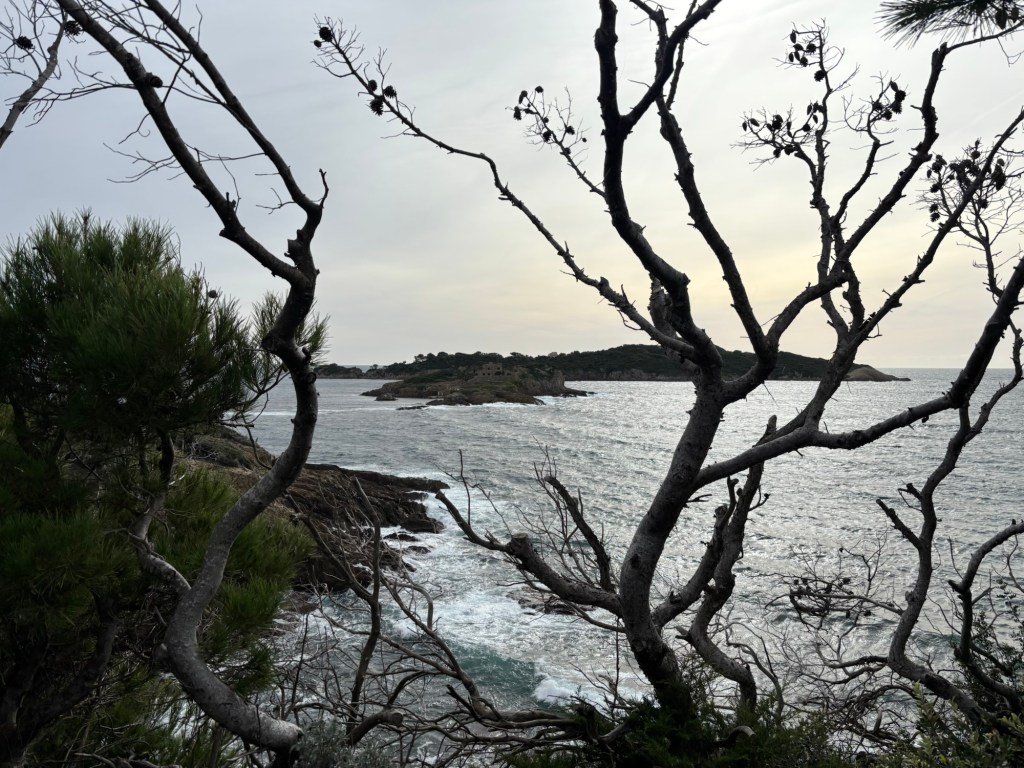
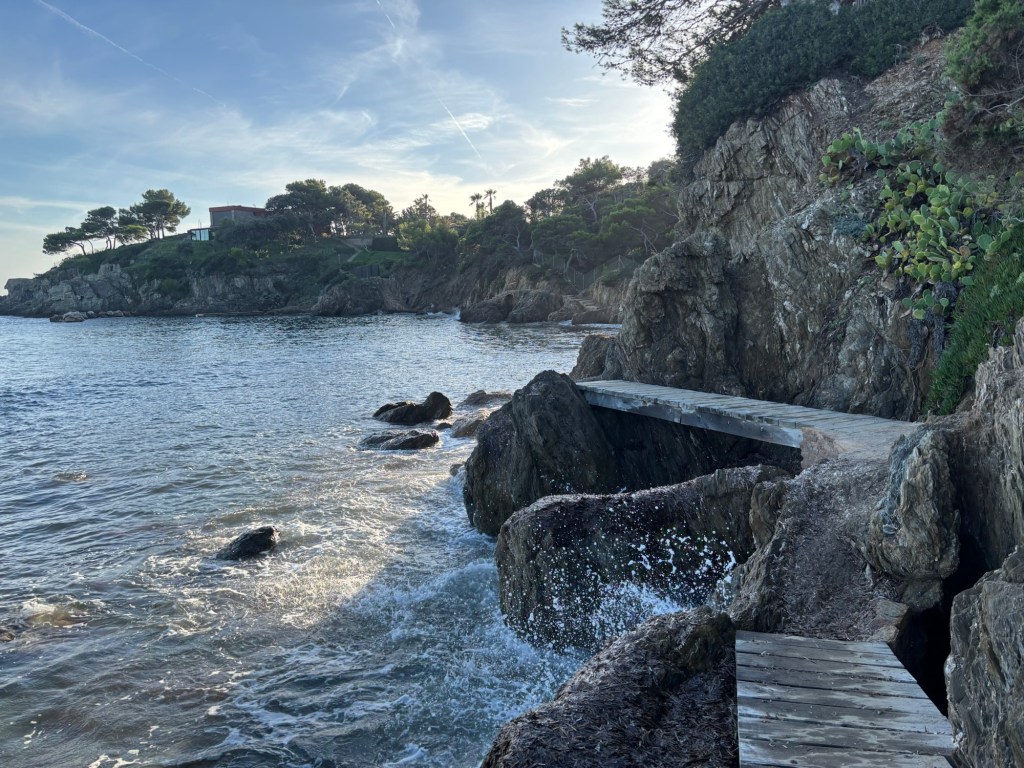
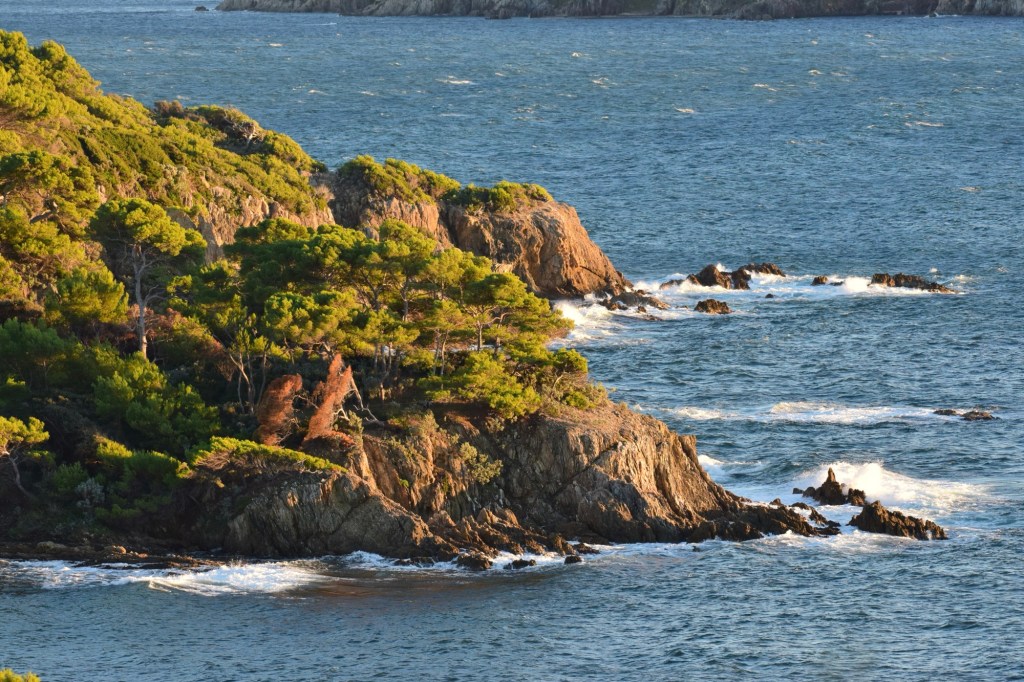
Still no sign of the shearwaters. I suspect they’ve long since gone out into deeper waters. Still, a couple hours’ hike around Cap de l’Estérel and its crumbling WWII fortifications was a welcome change after another morning sheltering from the rain (though I did manage to pop down to the bakery before lunch to pick up some supplies).
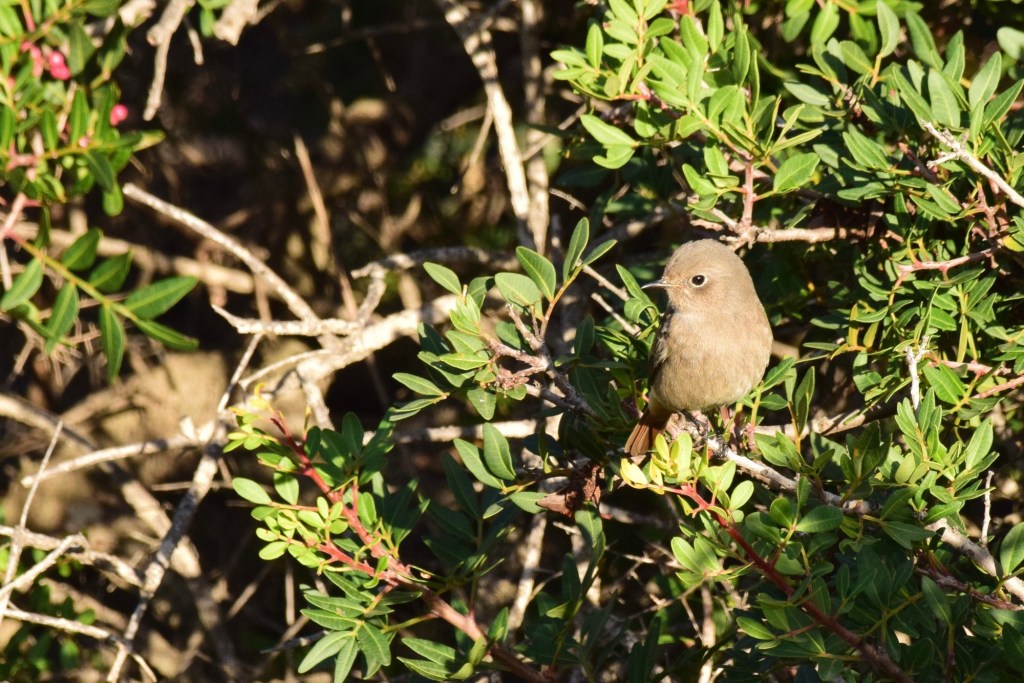
The Sardinian warblers are proving to be just as elusive as ever, but the black restarts that live on the peninsula are charming enough in their feverish movements among the bushes in search of food.
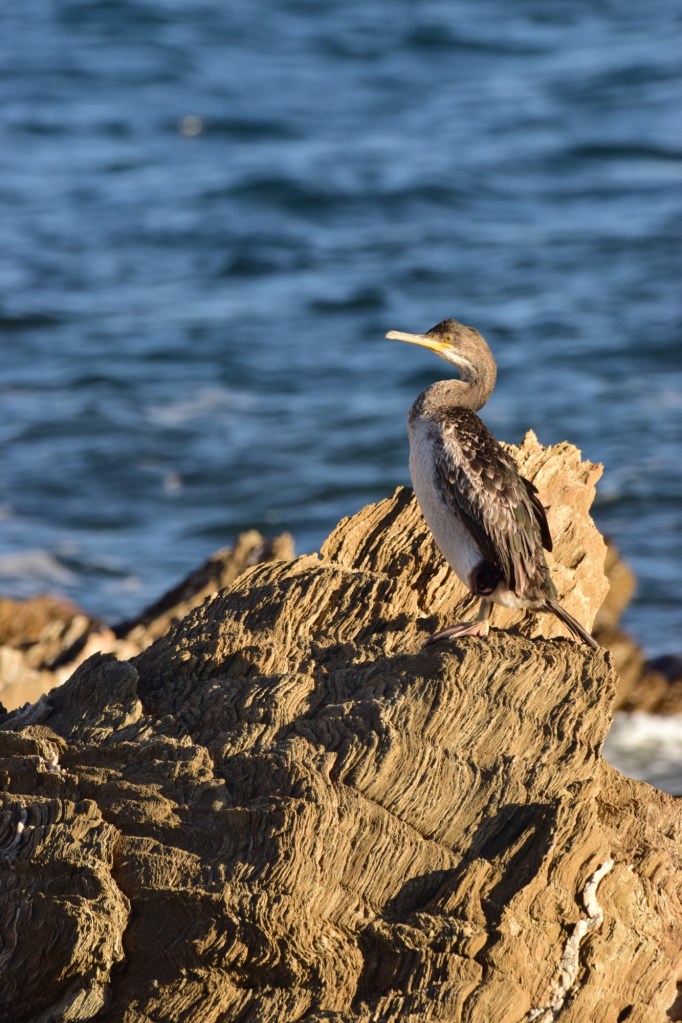
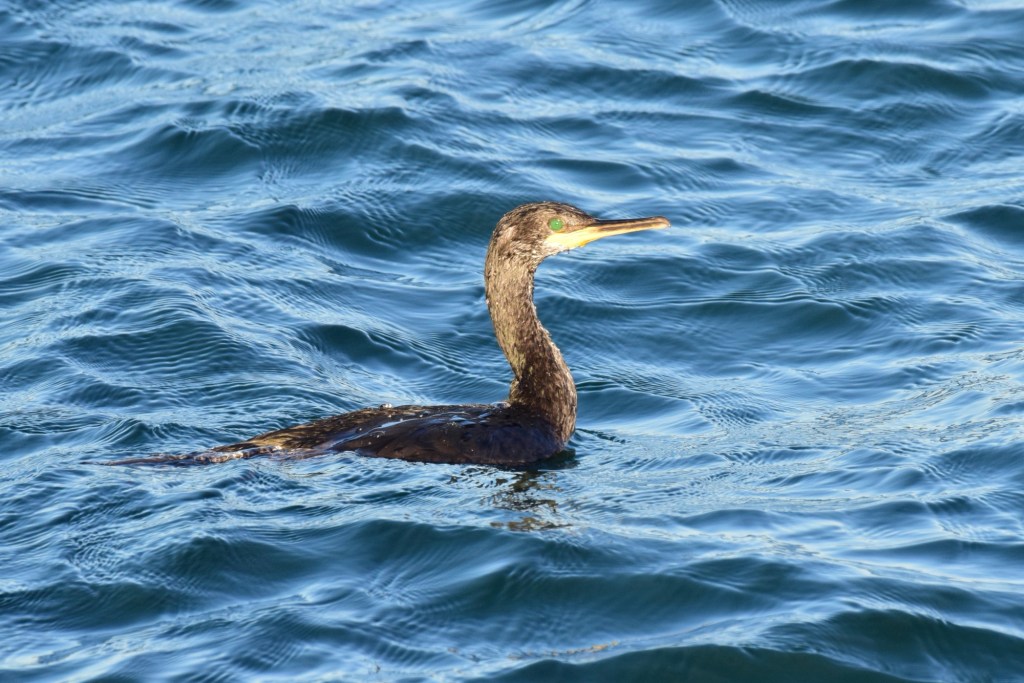
One seabird that stays on the coast throughout the year is the Mediterranean shag (phalacrocorax aristotelisdesmarestii), a leaner, paler cousin of the bottle-green bird that we have back home. In the UK – discounting the Farne Islands – I’ve only ever seen these birds at a distance, but in the Mediterranean I’ve had quite a few close encounters.
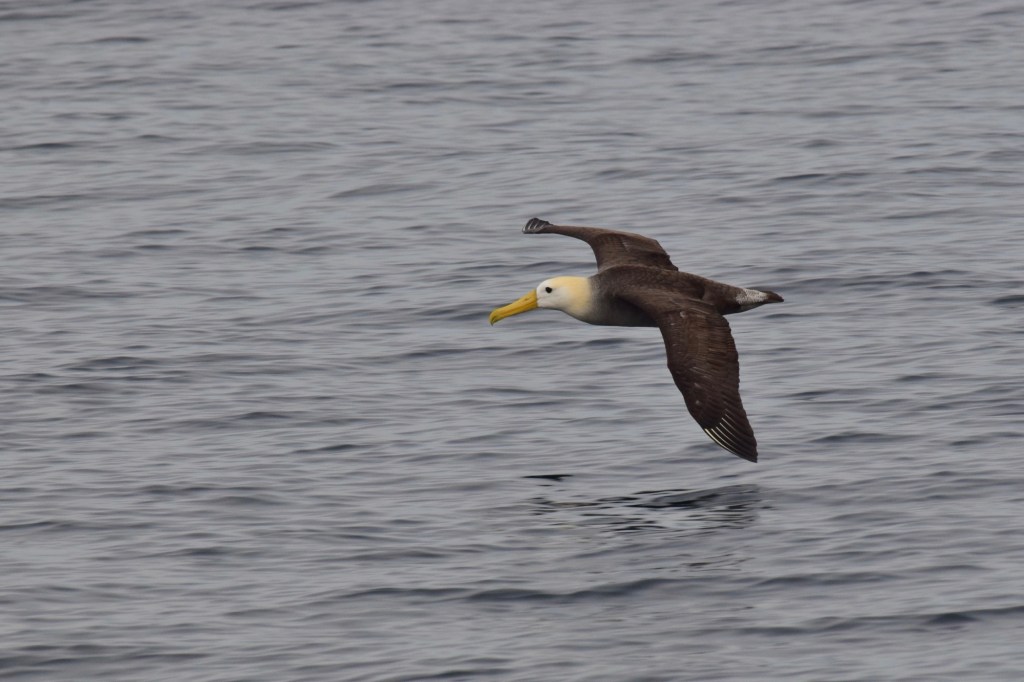
I’ve always been really struck by how fiercely green their eyes are. So many Pacific seabirds I encountered in Peru and Chile had strikingly red eyes, which I believe is an evolutionary adaptation that helps them to see better in the murky waters of the Humboldt current. I think the vivid green eyes of cormorants and shags share a similar function, but they’re no less impressive for the colour swap.
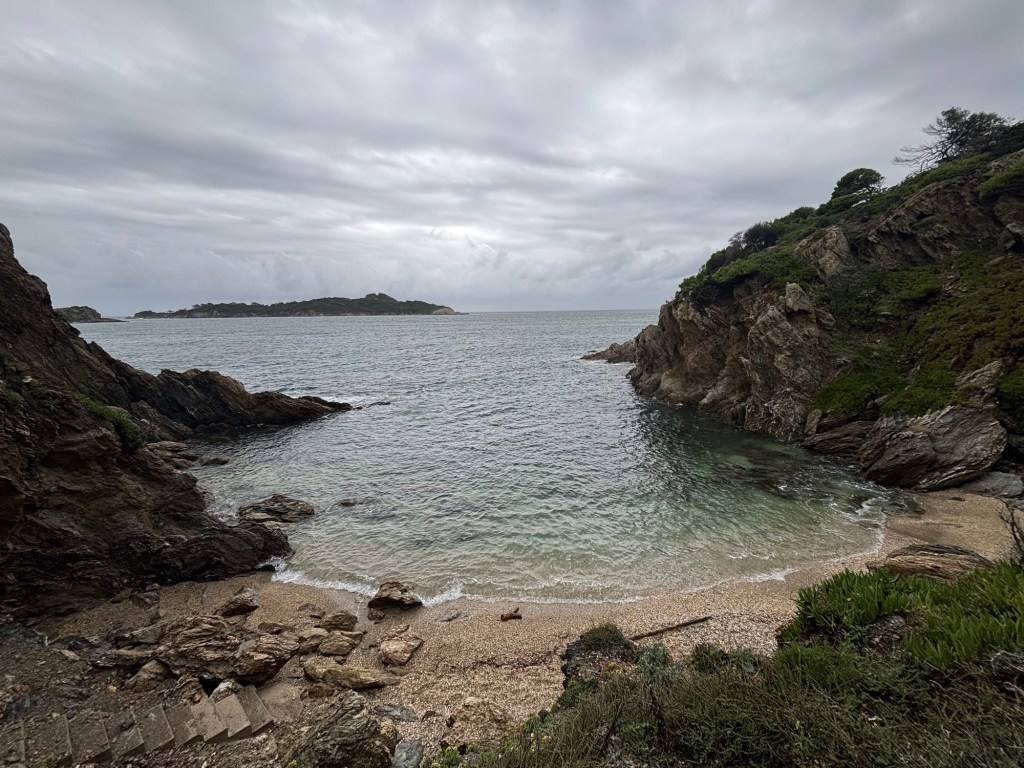
The sentier littoral (coastal path) that rounds the cape was a lot easier to follow than the one that supposedly laps the lagoon. I imagine it’s a lot busier in the summer months, but I still ran into a few French families and joggers along the way.
The weather is proving to be quite erratic here. The forecast rarely matches the reality: today was supposed to be a washout, but the rain all came down within the space of twenty minutes this morning. With any luck, it’ll be warm enough to go for a sea swim tomorrow. It won’t be quite as warm as the Aegean back in August, but it’d be nice to get a bit of sea swimming in before we go. BB x
The sun graced us with its presence once again, so I set out early today. It usually takes me a few days to properly get my bearings, and I was eager to explore the saltmarshes between Giens and Hyères, so I grabbed my camera and a bite to eat and was out the door by half past eight. At least at this time of year, that’s not too long after sunrise.
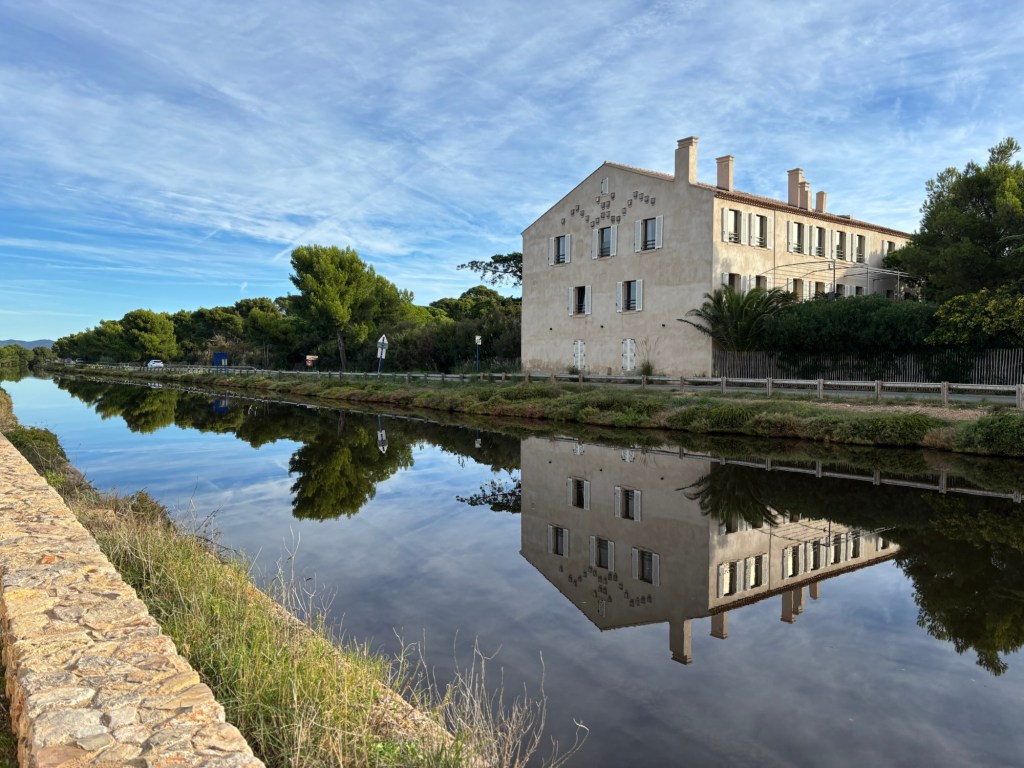
My first hurdle was the path around the Étang des Pesquiers. The maps will tell you there’s a footpath you can follow that laps the lagoon. The maps are wrong. What might have been an access point to the inner ring is fenced off and within private property, and the other bridge – a further three kilometres to the north – allows you no closer unless you are with a guided tour, which departs once a week on Wednesdays or Thursdays. There is a wildlife trail that eventually leaves the main road, but the saltpans are almost empty from there on out. The animals aren’t dumb, and they stick to the reserve.
At least there’s plenty to see from the road, even if you can’t get all that close. It’s also quite a nice walk, when there isn’t that much traffic (for a relatively small peninsula there was a lot of movement for a Thursday morning).
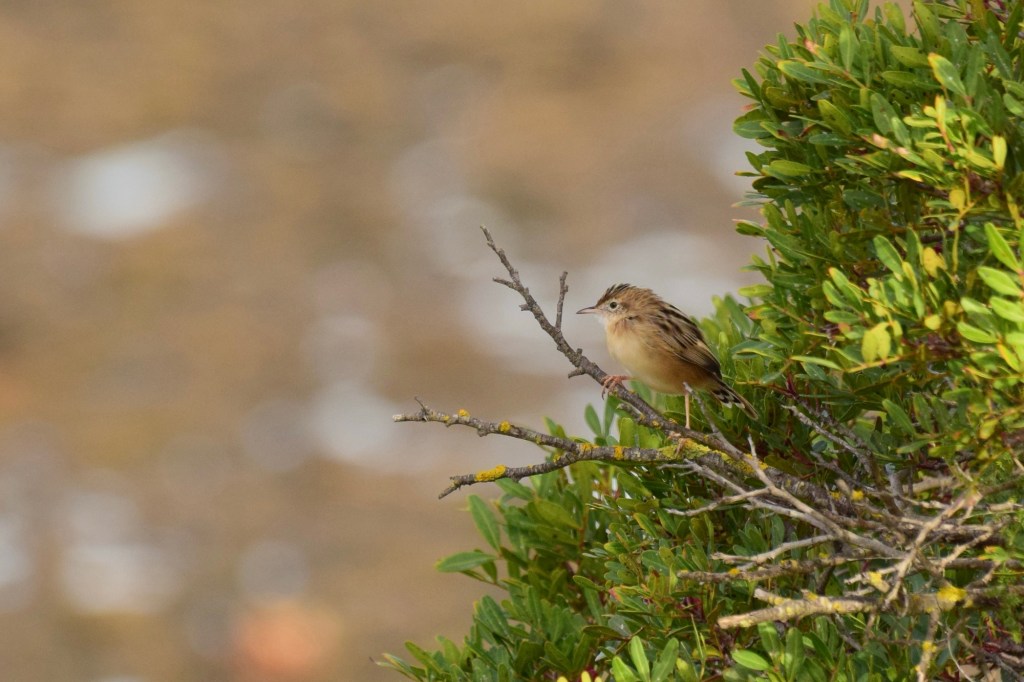
I found a small mound just beyond the sluice gates and took up a stakeout to see what I could see and hear. A Chinese family of three were close behind me and spooked most of the local wildlife with their chatter, but after they had moved on the birds slowly began to reappear. I recognised a few old Mediterranean favourites from my childhood among the scrub lining the dyke: Sardinian warblers, Cetti’s warblers, firecrests and the ever-characterful zitting cisticola. It’s a little late in the year for the bouncing flight call that gave them their S-tier name, but I’m a lot better at identifying them on sight than I used to be, so I don’t need to rely on their call so much.
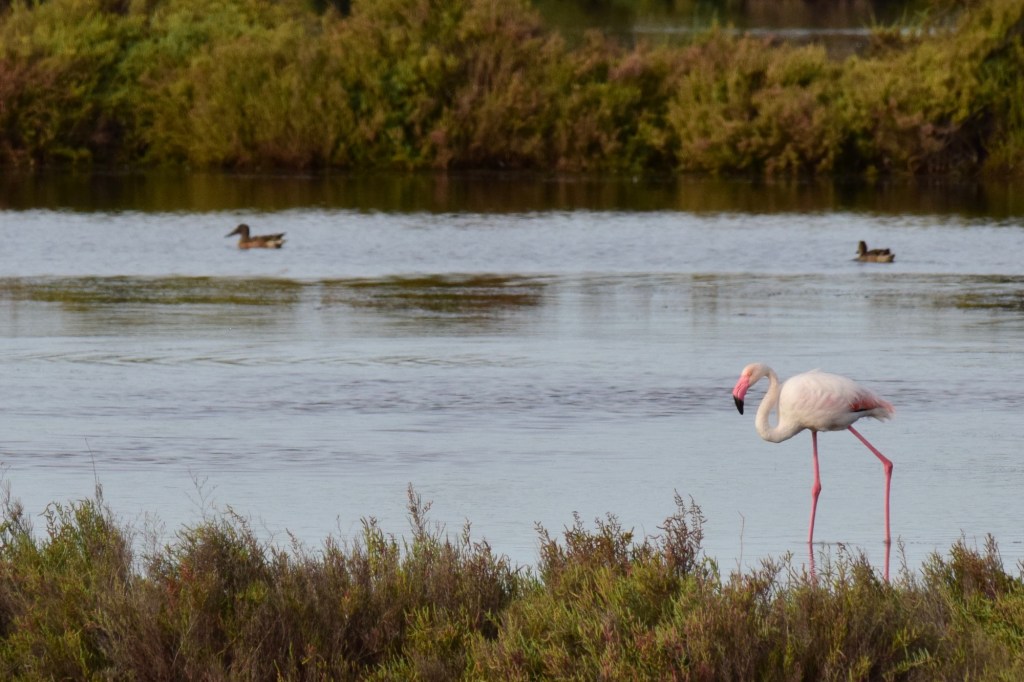
There are all sorts of waders to see at this time of year as the autumn migration kicks off. I counted redshanks, greenshanks, grey plovers, bar-tailed godwits, curlews and the always elegant avocet, but I’m sure I’d have found more if I’d found a path into the marshes. I even saw a young ringtail Hen Harrier quartering the edge of the saltmarsh as I arrived, though I never did track it down again. I had similar luck with the water rails that seemed to be everywhere and nowhere, though I must have been close enough to stepping on one at one point.
The real draw of the Étang des Pesquiers is its wintering herd of flamingoes. I’ve seen Greater Flamingoes before and in greater numbers, too – Doñana always delivered plenty, not to mention the enormous breeding colony at Antequera’s Fuente de Piedra lagoon – but these are the fifth flamingo species I’ve seen this year alone. To see the last of the six, the Lesser Flamingo, I’d have to travel to East Africa or India. I’m not quite mad enough for that, but it’s pretty awesome to have seen nearly all of the flamingoes of the world in a single year.
The others were not yet out of bed by the time I got back around eleven, so I needn’t have hastened home. They’d already had breakfast, but I think the fresh supply of baguettes from the lakeside bakery was appreciated.
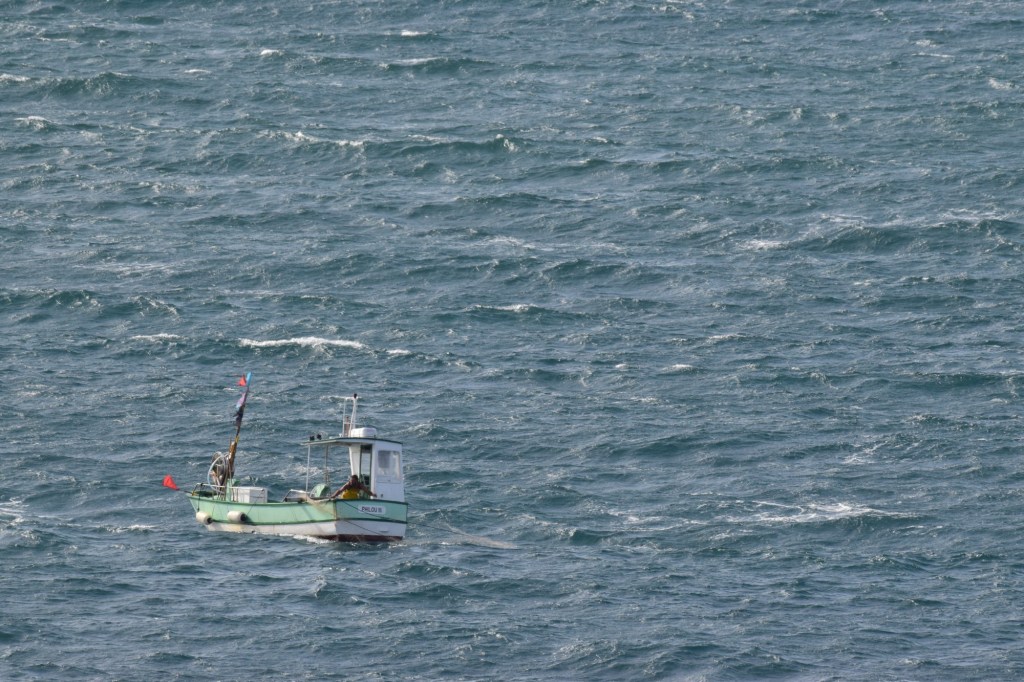
We had lunch outside with the mistral blowing. Some generous soul left a decent pair of binoculars here, so I scanned the sea for shearwaters. I didn’t find any, but I did spot a single fisherman reeling in his net just offshore.
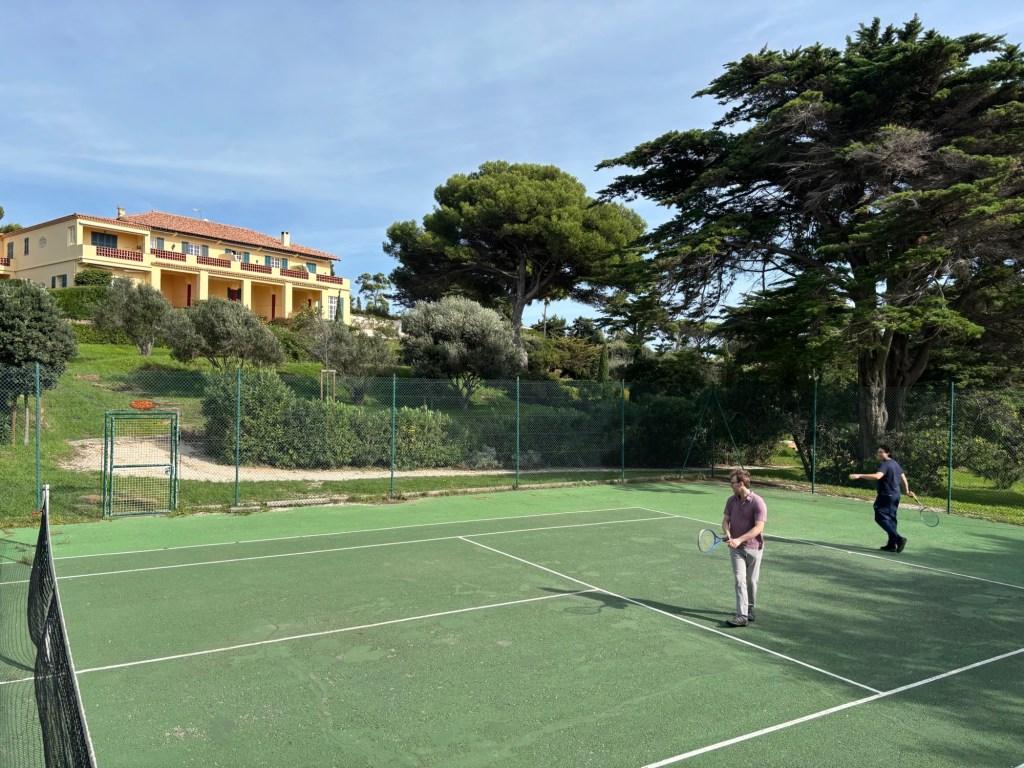
We had a game of tennis in the afternoon – or as close to a game of tennis as one decent player and four academics could manage. It was fun, even though I’m about as good at tennis now as I was when I was fourteen – which is to say, laughably bad. I did manage to hit the ball a few times though, which is a small improvement.
The sunsets here are rather special. I think we’re due another thunderstorm. The red sky certainly seemed to imply that the rain will return, so I’m glad to have got out and done some exploring today.
I certainly wouldn’t begrudge another lightning storm. The last one was pretty spectacular.
Tomorrow, Toulon. Raffi needs to track down a luthier, first and foremost, and there’s more to see in the south of France beyond the Giens Peninsula. BB x
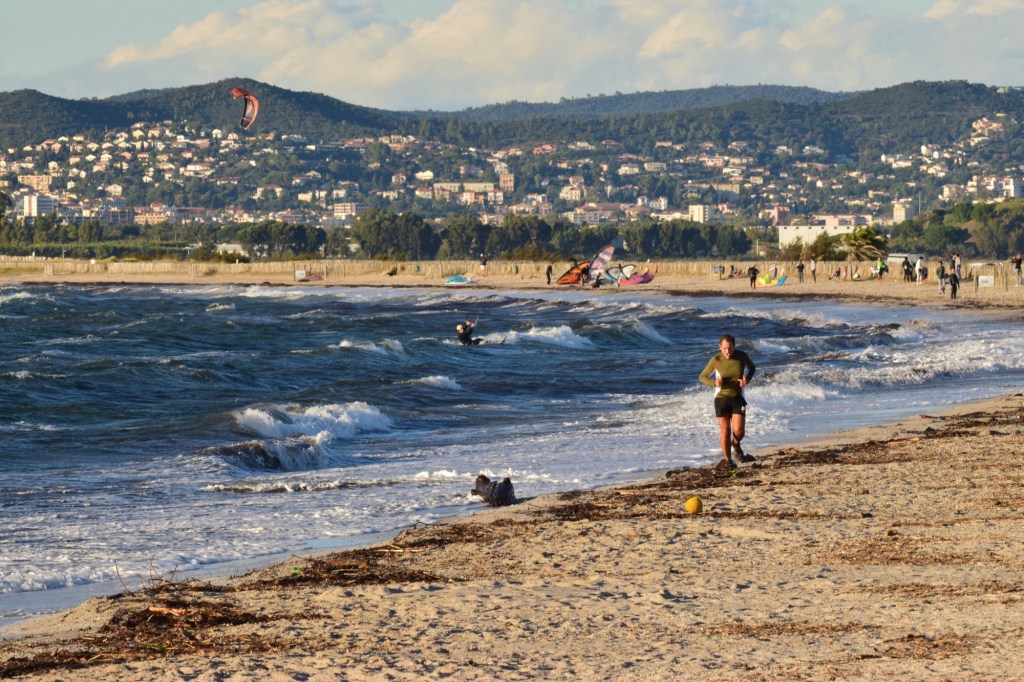
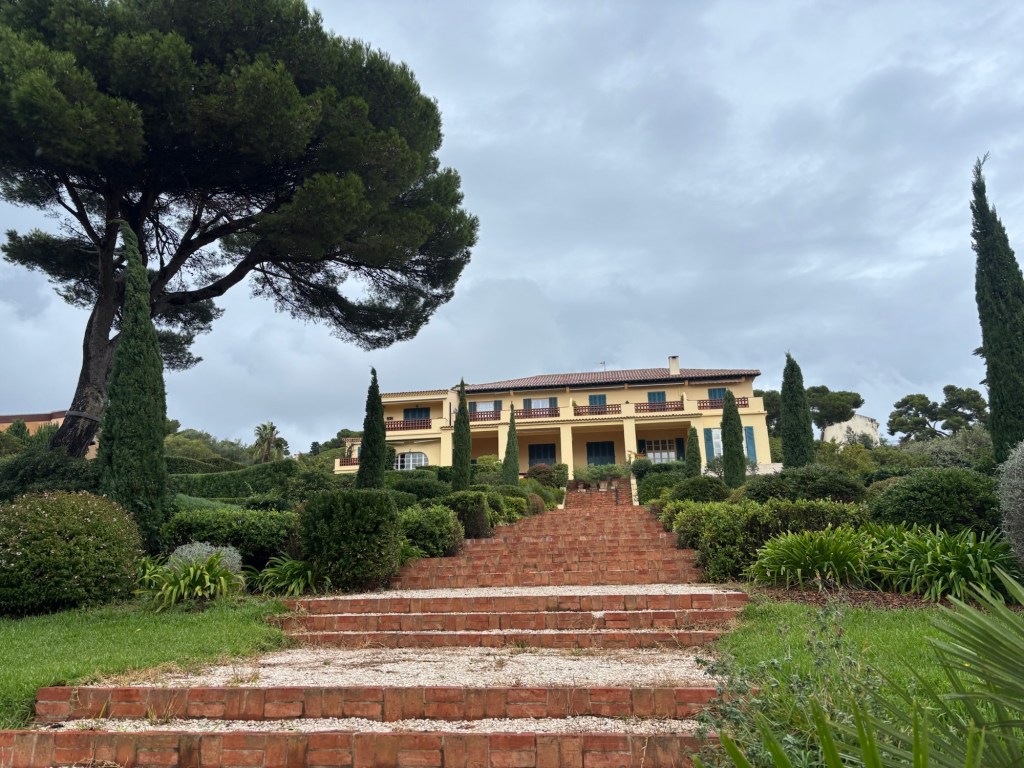
The Giens Peninsula is very much at the mercy of the Mistral, a cold north wind that batters the coast of southern France. My image of the Côte d’Azur was always one of quiet sandy beaches under stone-pine trees, so this wind-borne strip of sand is something new.
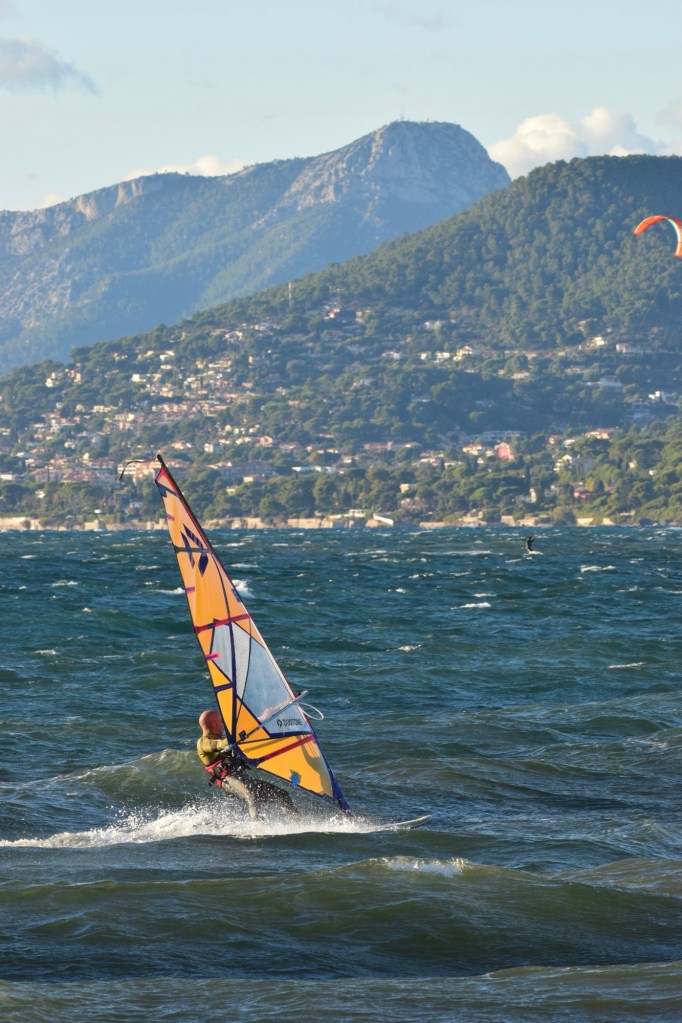
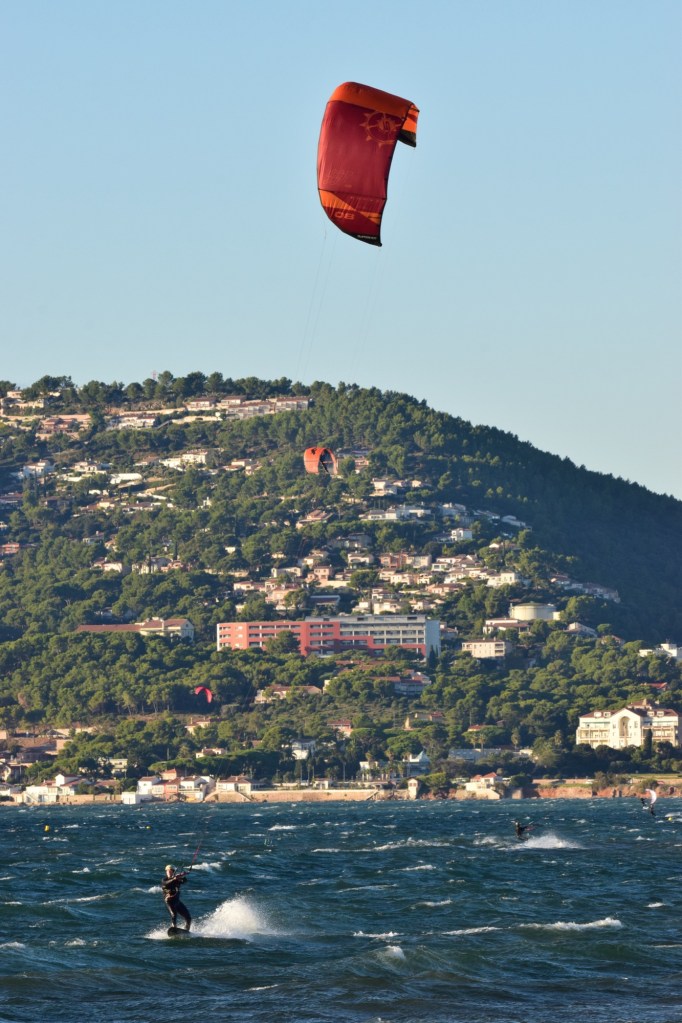
In the summer months, I imagine this place must be teeming with tourists. For now, the holidaymakers are almost entirely French – either locals or Parisians down for the weekend. There’s a good range of southern and metropolitan accents about. Almost all of them are here for the watersports: windsurfing, kitesurfing and hydrofoils are the order of the day, given the superb conditions along the Plage de l’Almanarre.
They’re quite fun to watch. For every surfer that crashes face-first into the waves, there are at least two more that manage to leap clear of the water into the air. I’m keeping a keen eye out for shearwaters, though I’m sure they’re almost all gone by now, bound for the richer waters of the South Atlantic as Europe has pitches into winter. For the time being, I’ll content myself with the aerial acrobatics of my own species, aping the mastery of the shearwaters in their absence.
BIRDA tells me I’m up to an incredible 499 birds this year, the highest number of species I’ve ever seen in a single year. It’s been fun keeping a tally for a change. I’m not out for any particular total, though it’d be nice to cross the half-century mark. No sign of the redwings or fieldfares yet, though I’m sure they’ll have made it back to the UK by the time I’m home. In the meantime, I’ll see if I can’t track down at least one shearwater before I have to return to England in a week’s time.
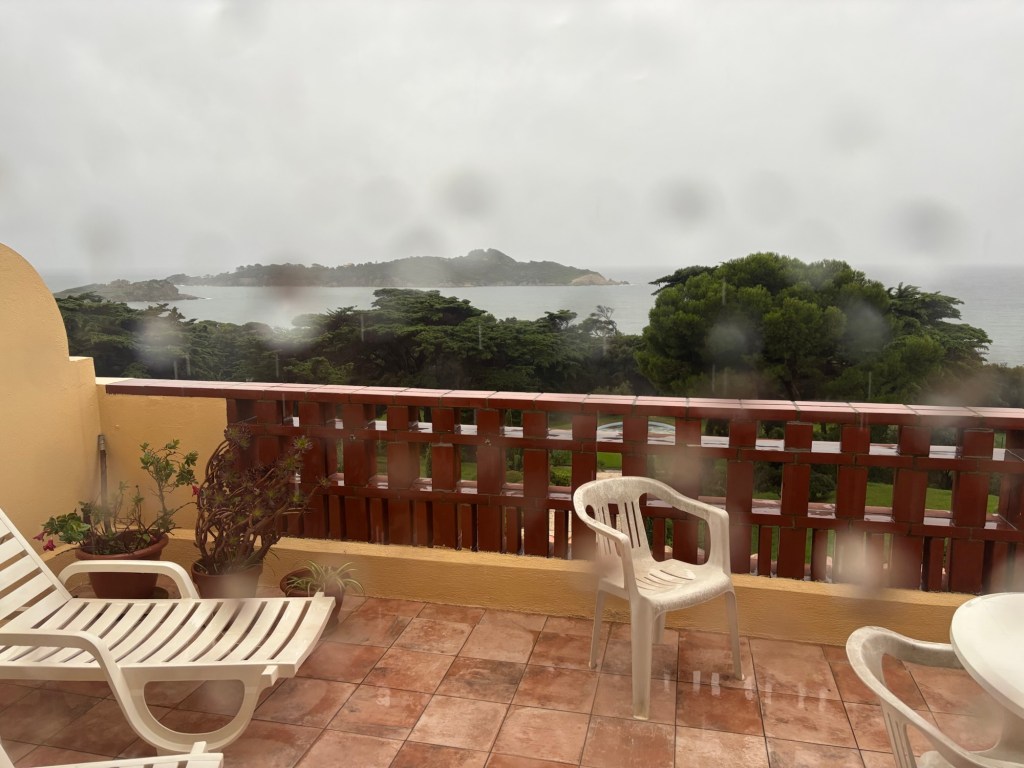
It’s raining outside. I turned off my alarms out of courtesy to my companions, but the dissonant blare of a flood alert woke us all up around 8am anyway. The Giens Peninsula is enveloped in a thick cover of white cloud, out of which the islands of Petit and Grand Ribeau seem to come and go. I haven’t got out to explore yet, thanks to the inclement weather. With the flood warnings threatening the thin strip of sand connecting us to the mainland, we could well be stuck here today. It feels very cut-off from the world.
Now seems as good a time as any to come clean. Five months remain until I turn my life upside down and leave the UK for good.
Over the summer, while I was working in Santiago, I was made an offer that was very hard to turn down: a permanent post as Teacher of English Literature in the school’s Senior Department (the equivalent of our Years 10-13 in the UK). That might seem like a complete u-turn on the last eight years of French and Spanish teaching experience over here, but in more ways than one, it’s the natural evolution of my career, which has already become extremely literature-heavy. This was always the plan: to teach MFL to the stage where I had mastered both French and Spanish to the point where I could capably deliver advanced literature in both, take an SEQ (Subject Enhancement Qualification) over the summer to add English to my roster, and then use all three as a sledgehammer to break into the Spanish education system. They can take away my ability to work across Europe as a citizen of the EU, but they can’t take away my will. You might call it my personal revenge against Brexit.
I hear you. Chile is a pretty big sidestep to reach that goal – over 8.000km to the side, to be precise. But let’s be realistic: just how often do opportunities like this come around? Here, at last, is a chance to bypass the additional expense of further training and (quite possibly) the need for a degree in English Literature. It’s the job I always wanted, and while it might not be in Spain, it is in a Spanish-speaking country. As the bandits of Skyrim would say, that’s close enough.
It’s not just the job. It’s the lifestyle. I’ve been living and working within the British boarding school system for the last eight years. I ran the calculations through AI this morning and was genuinely alarmed by just how much of my time I’ve given away over the years. Factoring in Wednesday and Friday nights, Saturday mornings and occasional Sunday duties, I’ve lost well over a year of my life to the boarding school world. That’s pretty humbling – and it might go some way to explaining how so many of my friends appear to have found the time to meet their partners, tie the knot and settle down already.
It’s not just the amount of time but the quality of it. I’m not working every hour I’m on call, but I can’t do anything or go anywhere. Little things like house assemblies and tutor time mean I can’t disappear on a Friday night, even if I have no lessons to teach on Saturday morning. Spontaneity – the freedom to improvise that I hold in dangerously high regard – is hard to exercise in such a world.
Moving to Chile means leaving that world behind. It means finding a place of my own to live, where I can live by my own rules. It means commuting to work (which, I’ll be honest, I have missed). It means losing an immediate community – and the additional incentive to go out there and find my own. It will be a more costly existence than the one I have known for the last eight years, but that is what the last eight years have been for: to make this change all the easier.
I will have to leave everything behind. I have five months to get rid of all the furniture I have acquired over the last ten years or so, as I can’t take any of it with me. I won’t be sad to see the back of it. I won’t be parted from my books, so I’ll have to find them a home until I know whether this move is for life. This is all a lot easier said than done, of course, but I can’t help feeling I’ll be a lot happier starting from scratch. As long as I have my journal, my camera and my health, I’ll be OK.
It goes without saying that my wildlife bonanza over the summer has played an enormous part in swaying my decision. The fact that I might be able to see condors from my office every week is surreal. The whole of South America will on my doorstep. Peru’s keys to the Amazon. Brazil’s Pantanal. Argentina’s great whale migration. Chile’s magnificent pumas. All of the little things: hummingbirds, mockingbirds, meadowlarks and caracaras. Having pelicans, albatrosses and enormous sea lions within a couple of hours’ reach at weekends. The summer just gone was without a doubt the happiest of my life, and I would dearly like to be that happy forever.
It’s no guarantee that She will be in Chile, but with such an incredible wealth of wildlife to see every day of the year, I don’t think I’ll have all that much time to contemplate. I’ll be much too busy seeking out pudus, kodkods and tucúqueres to care all that much. If I find Her along the way, I’ll consider it a bonus. All the same, it can’t hurt my chances: Santiago’s population of seven million is sure to be a better place to start than Taunton’s sixty-one thousand.
It will be quite easily the most dramatic move of my life so far. I’ve lived in a number of places – Uganda, Morocco, Jordan and Spain, of course – but most of them were very much intended to be temporary. This could be it. I will certainly treat it as such until I know otherwise.
I’m not relishing breaking the news to my students, but I’ll have to do so sooner or later. My job ad went up today, and with the interviews due to start shortly after we return, it will only be a matter of time until they put two and two together. That’s partly what this is all about – reasoning it out to myself before I have to spell it out to them. Knowing what to say. Hopefully they’ll understand.
The New World is calling. Like so many before me, I must leave my life behind and seek my destiny across the sea. Knowing what you know, having read what you have read, can you blame me? BB x
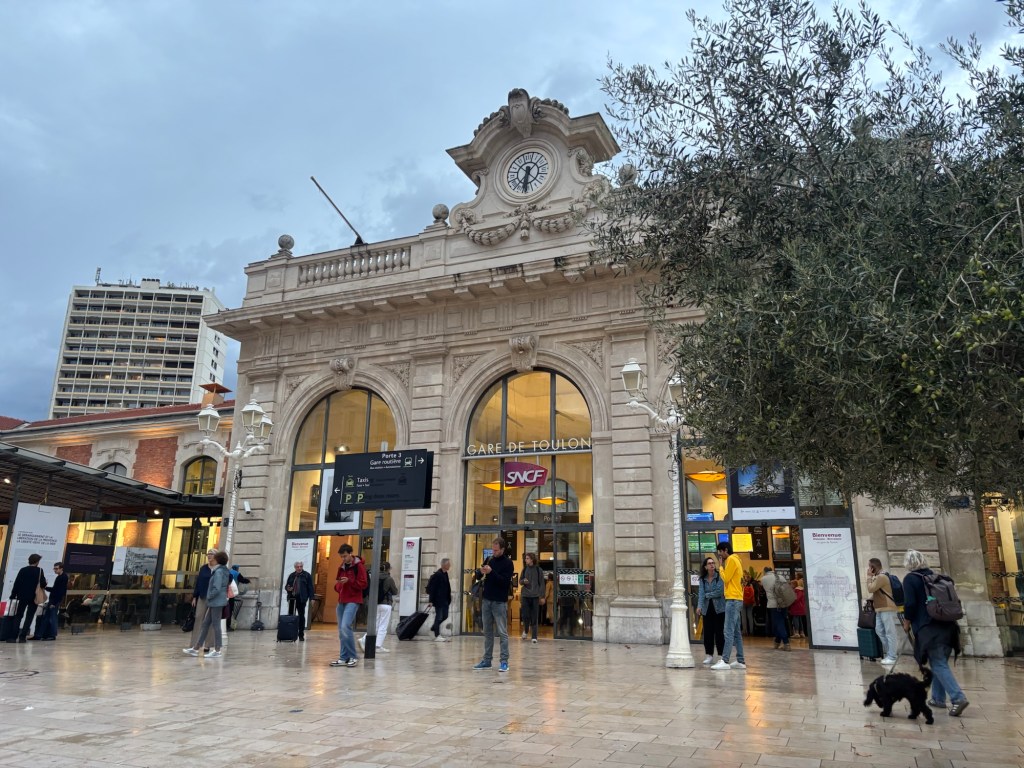
The train to Hyéres is delayed by forty minutes, so I’ve stepped outside the station to get some fresh air. The Côte d’Azur is still in the grip of Storm Adam and the skies are the colour of steel, though they look almost blue beyond the sickly glow of the streetlights.
Clouds of cigarette smoke. Black and green olives rolling across the pavement from the trees standing outside the gare. The cheery sing-song jingle of the SNCF echoing over the rush of the wind and the casual drawl of the Provençale accent. Effortlessly chic Toulonnaise girls talking into earpieces, Eastern European sans-abri moving their blankets out of the rain, a Hispanic couple chatting away in slow, heavily accented English and a number of other accurate but overused cliches.
It’s good to be out of England, though. Two weeks without work would have driven me mad with boredom.
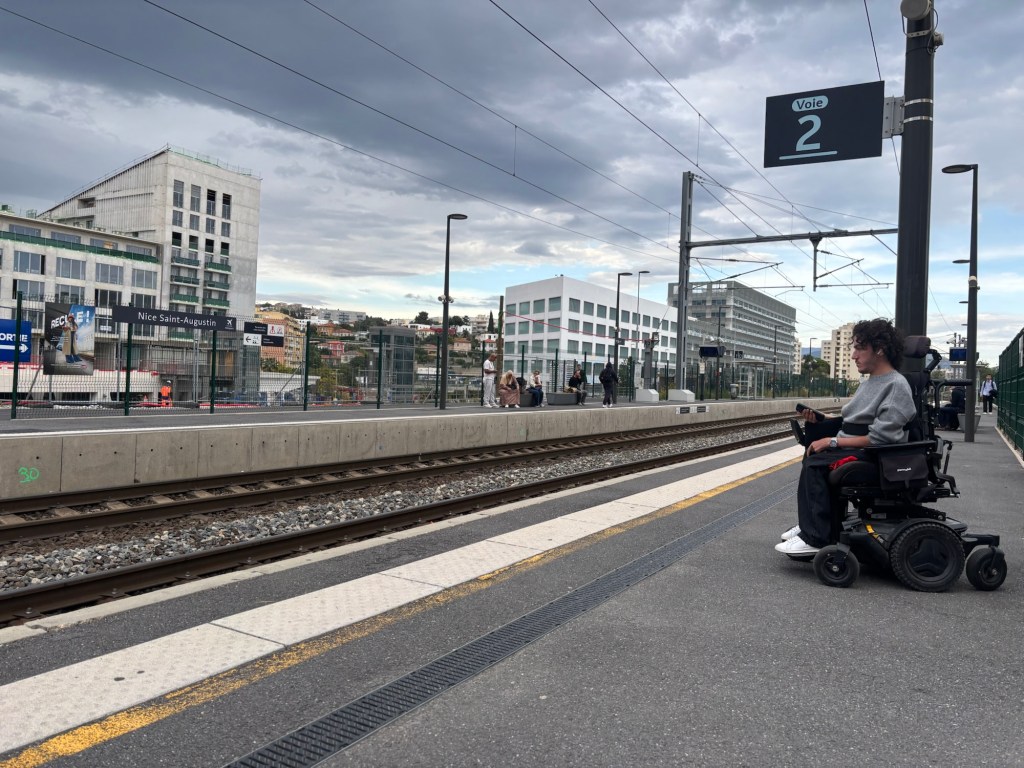
The train was delayed by around fifty minutes in the end. At least one of my companions was getting extremely jittery by the lack of signage on the notice boards, even as the train’s departure was seemingly imminent. Thank goodness I’ve been trained on Spain’s AVE and the last-minute-madness. After the rush for the subway in New York this spring and the gauntlet of flights going to and coming back from the Galapagos this summer, it will take a lot more than a ghost train to get under my skin.
France hasn’t ever grabbed me the way Spain has since the start, though I daresay I haven’t ever given it the chance. This is probably my eighth or ninth trip to France, if you include at least three day trips to Calais (and you leave out any holidays where France was simply a staging post), all of which add up to a little over a month on French soil. I’ve lost count of the amount of time I’ve spent in Spain, but it’s almost certainly closer to four years than it is to three.
The Côte d’Azur gets a lot of attention of the summer variety, but it’s quite beautiful under the iron skies of autumn. I’ve packed for the cold, but I wouldn’t begrudge the odd day of sunshine so I can enjoy the Mediterranean once again – it was so blissfully warm back in the summer. There’s talk of curfews because of the violent protests erupted across France right now, so I might not be going for any 3am swims, but I’m looking forward to being (relatively) tech free for a week or so.
If it weren’t for the comms-heavy side of my day job, I’d quite happily sack off the WiFi and go off grid. I miss those blissful evenings back in my year abroad days – before data became a universal thing – where leaving work meant leaving the internet behind. The amount of reading I managed to get done! There’s just no comparison.
I’ve made it to Hyéres. My final destination is the Giens Peninsula, some four kilometres to the south. It’s late and the sky is threatening rain, so I don’t quite fancy walking it. The taxis here are expensive at 40-50€ a throw and the three or four Uber drivers in town are reluctant to accept what is probably not a very cost-effective return journey. But I’m not that bothered. I’m confident we’ll get there somehow. BB x
As the time of New Bryyo came to be, the old ways faded. The cries of joy from those who honored Science covered the angry shouts of those who mourned the old ways, the Primal Traditions.
Metroid Prime 3: Corruption
The world is changing. The England I grew up in – rather, the England my parents grew up in – is slowly fading away. Regional accents are disappearing before the ceaseless march of RP and MLE. Kids start secondary school with no knowledge of any of the old country dances but an in-depth understanding of all the machines that can be found in a gym. In order to facilitate our constant push toward a genuinely multicultural society, we have relinquished a lot of the traditions that made this country unique.
Much of this change can be chalked up to the inevitable march of time. However, whenever a culture feels it is under threat, there will always be those who make a stand.
Reading the above, you might be forgiven for thinking I’m on the same side as the people who marched on Taunton today. I’ll set the record straight – never in a million years. This whole jingoistic, xenophobic and fundamentally Eurosceptic fiasco utterly destroyed my hopes of moving back to Spain, forcing me to seek employment on this rock for the last ten years. As far as I’m concerned, the right has a lot to answer for – up to and including the murder of my great-grandfather and his friends back in the 1950s. All the same, I remain committed to my philosophy that you must be prepared to listen to all points of view, even if they go against everything you believe in, if you are to truly understand the world and your place in it.
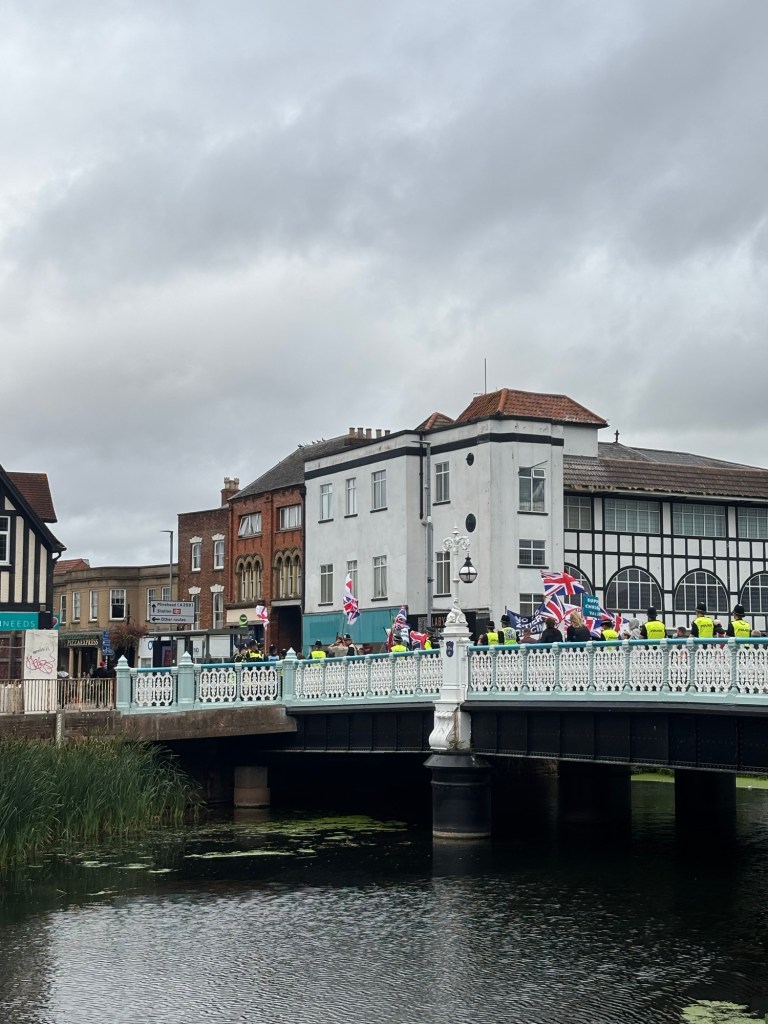
That’s why I popped into town today, to see the protest and counter-protest taking place in Taunton. My great-grandparents all but gave their lives to make a stand against fascism, so it would be remiss of me to turn a blind eye when something so significant comes to town.
I heard them coming from the ground floor of Waterstones. They’re weren’t particularly great in number – maybe a little over forty, all told – but they were hard to miss. A considerable police escort flanked them every step of the way. An angry-looking crowd, with shaved heads, full sleeves of tattoos and dark sunglasses. Some of them carried the English flag, others the Union Jack. One or two carried placards demanding support for Christian values. One carried a tattered yellow flag bearing the five red squares of the Jerusalem cross, the ancient symbol of the Crusaders.
I wasn’t expecting religion to have anything to do with today’s protest. Another tradition that we are slowly losing here is our faith, though we are by no means the only country in that predicament, with regular church attendance falling around the world.
Tenconi, the UKIP Leader, was the special guest in town, leading the march on the Taunton Police HQ. To his credit, the protest didn’t turn ugly as we feared it might, though his choice of words gave me serious pause for thought: these are the demons, they are the ones we must defeat… At times it felt like I was watching a very British take on Bible Belt Baptism.
One of the fellas had a shirt with the words “If my flag offends you, I’ll help you pack” emblazoned across the front in big black capital letters. I could do with a pair of strong arms when I inevitably leave this country someday, though something tells me the words were not intended for me.
I wonder where this will all lead? Like Tolkien before me, I mourn for the passing away of the old world. A student of language and culture I may be, but I do regret the ease with which we have so readily traded away parts of our own identity as a nation for this thing called “the future”. When I was at university, I remember getting slapped down for voicing that idea by peers who went as far as to say that England either didn’t have a distinct culture to speak of – which is grossly ignorant at best – or worse, “didn’t deserve to have one for what they did to the world”. As a child of at least two cultures myself, identity means a lot to me, so I’m not sure how to feel about it. It just worries me that the same people who are trying to make a stand against the slow death of the old ways are all too often the kind who take that line of thought too far and turn preservation into purification. Change is a necessary and ultimately inevitable part of life, but it can be a painful experience, especially for those who stand in its way or its wake. It’s a tightrope, holding onto tradition while ushering in the future. I certainly don’t envy any politicians right now.
I’ll muse about this some more. My thoughts are hazy. I just wanted to jot down my observations as the far-right march on and into the distance, on my own doorstep, no less. BB x