Retreat from the Heat

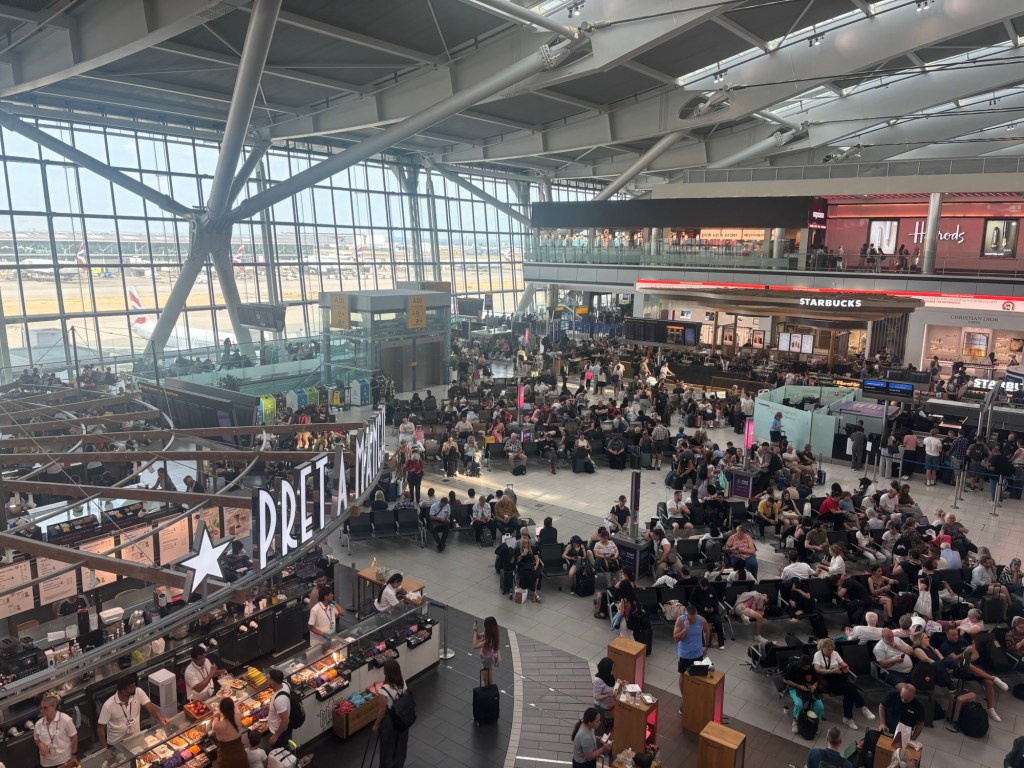
London Heathrow Terminal 5, London. 20.00.

So far so good! I hit the exact hurdle I expected at check-in – namely, Iberia failing to allow for middle names and slapping them on the end of my surname, making for one heck of a name – but the lady at the desk waved me on in without a fuss. My suitcase is off on its merry way, and in another half hour or so I’ll leave this charging station and set out after it.

It hadn’t really dawned on me quite how far a fourteen-and-a-half hour flight truly is until I saw it printed on my boarding pass. That’s an odyssey of a journey right there, and all of it in the dark, being one of those nightchaser flights that seemingly travels backwards in time.

My contact in Santiago has got in touch, so I no longer need concern myself with my suitcase once I reach the other side of the world – and that really is a load off my mind! I have an aisle seat at the very back of the plane, so I can’t guarantee I’ll have slept all that well by the time we arrive. I hope they have a decent film or two on tap! I’m conscious that I’m missing the France/Morocco quarterfinal as I write, but maybe it’ll be showing in one of the bars en route to the C Gates.


The news here is all about the heat – that, and Nigel Farage’s impending by-election against Count Binface. There are so many reasons I would move abroad – not least of all the number of colleagues who tell me (in the nicest possible way!) that they don’t think I belong here – but when it comes to political satire, we really are the best in the world. Where else would a would-be prime minister be forced to spend the summer debating against a man with a bin on his head?

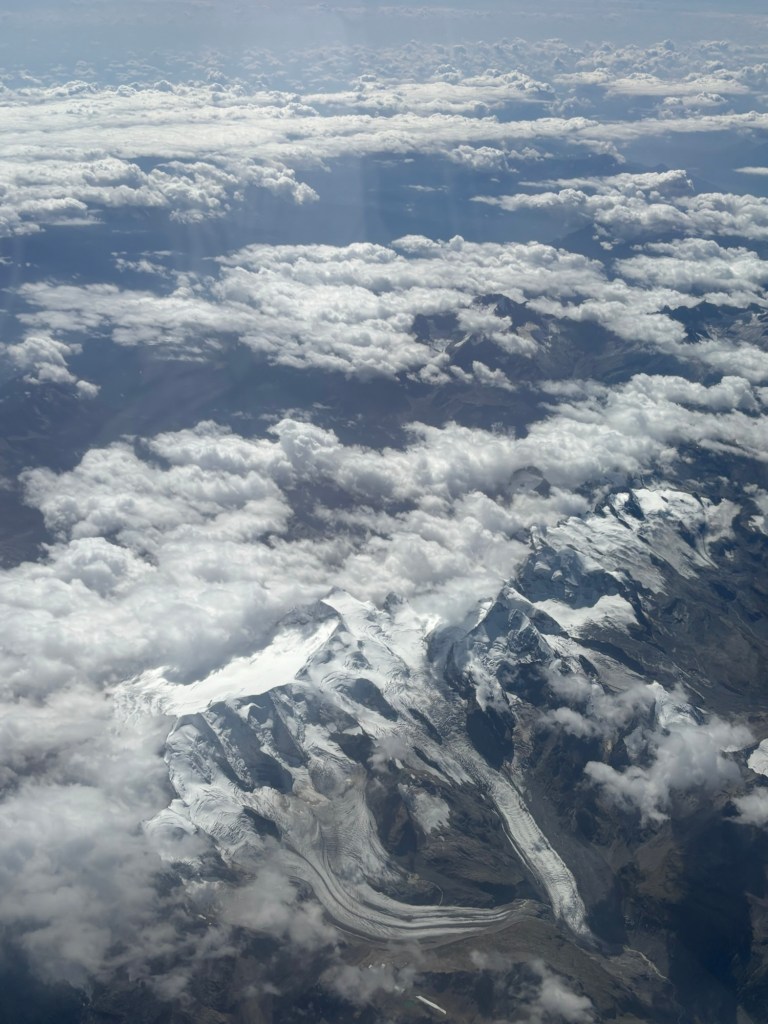
Enough of this madness. Onwards! To a country of wonderful wine and breathtaking mountains where they speak my grandfather’s language. The forecast is eternally in flux, but it now looks like it’s set to snow throughout my stay in Puerto Natales. Strangely enough, it will be the first snow I’ve seen in nearly two years. I hope I have packed enough for the cold! BB x

U-Turn

14.02, The Flat.

In the blink of an eye, my second year at Taunton has come and gone. It’s been another hurricane season, I won’t deny that. A little easier than last year, perhaps – if only because of the repetitive nature of teaching the same course – but every bit as busy. Since September, I’ve taken my student Funk Band out to their first external gig, joined a band of my own, taken a team to the Oxford Schools Finals Day for the second year in a row and led a public speaking workshop in the form of a legal practice (which, of course, I am totally qualified for…). I have returned to Extremadura under iron skies, taken yet another school trip to Barcelona and travelled all the way to Peru in search of the Andean condor on one of the most amazing adventures of my life. I have not found Her – Somerset is proving a very dry place – but I have made some good friends at work, which is a positive. I haven’t exactly had much time to commit to the search, and I have also spent almost every day of my holidays on the road, which is terribly self-indulgent of me, but it is how I survive the manic 24/7 existence that is working in a boarding school.

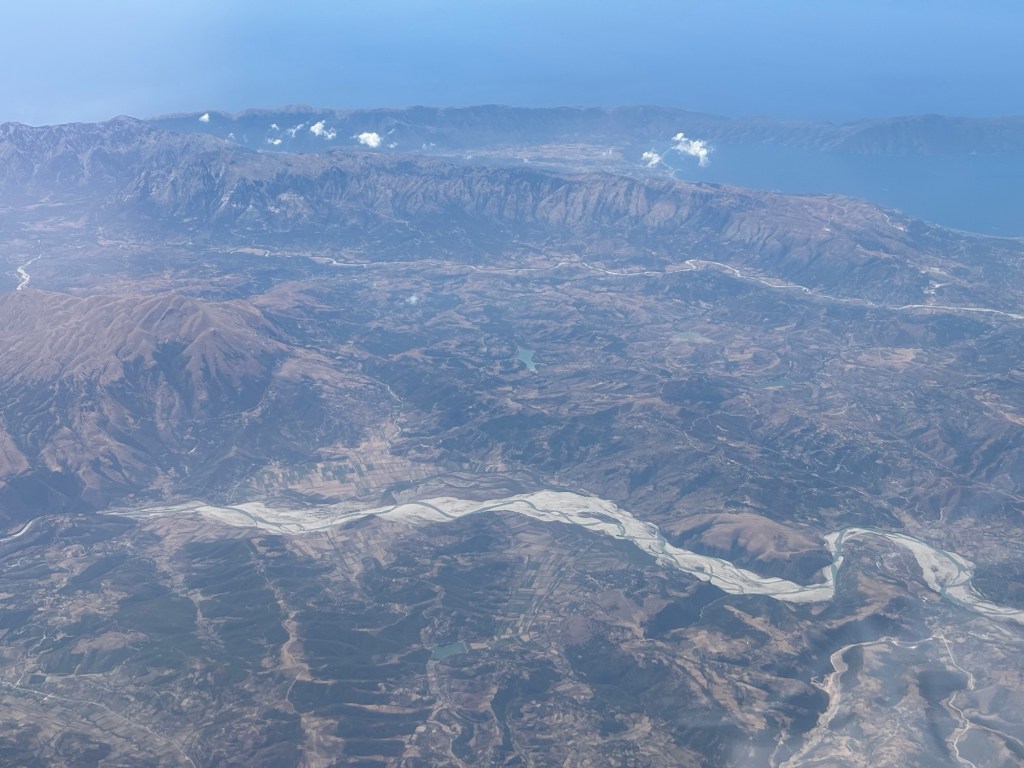
True to form, my summer holidays are set to follow the same trend. After a few days’ reprieve – just about enough time to tidy the flat and pack – I will be traveling across the Atlantic again, bound this time for Chile, nearly 1,500km further south than where I left off in April. Please don’t get me wrong – this one isn’t a purely self-indulgent adventure. I’m off to work at a school out there in Chile’s capital, Santiago, for three weeks or so. As to what form that work may take, I am still completely in the dark. I imagine any rational human being might balk at the idea of being less than a week away from traveling to the other side of the planet at no small expense without so much as an address or even the vaguest idea of what to expect, but I’m at that stage of my life where I am entirely my own agent and any change is welcome. The alternative is a rather static Somerset summer, alternating between driving lessons and debilitating bouts of hayfever. With my timetable for the next academic year allowing some time for the former, I think I can allow myself to dodge the latter by switching seasons in a Spanish-speaking country.

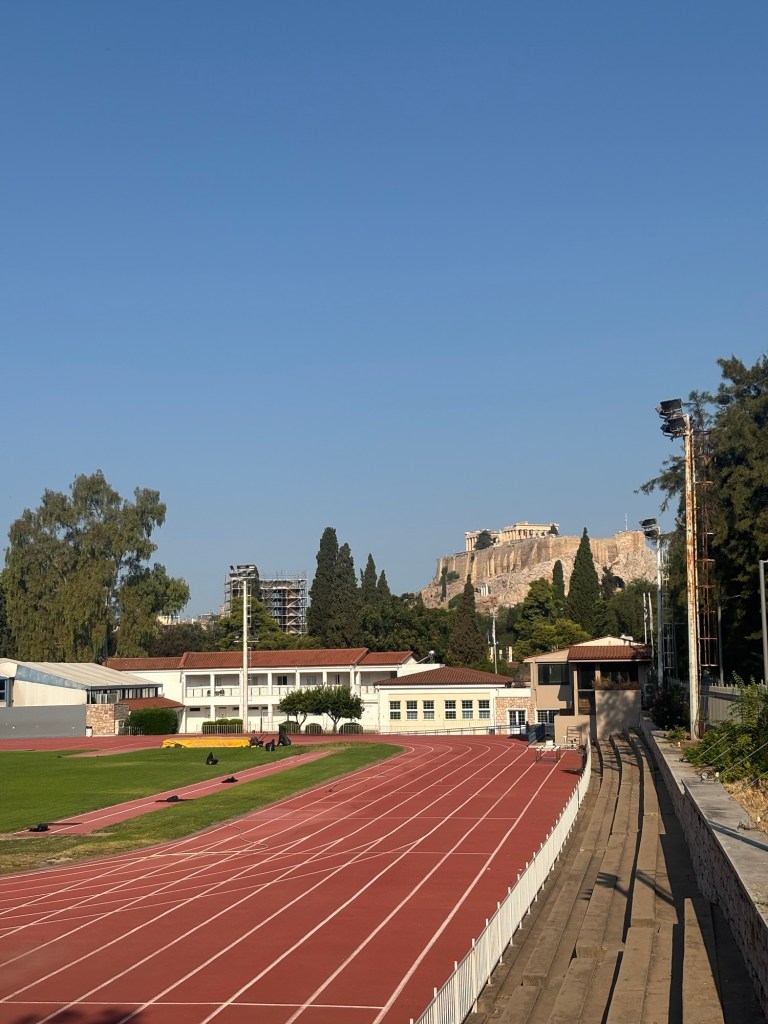
I won’t be hiding under an austral snowstorm all summer. When my five weeks are up, I’ve a wedding to attend in Athens, which I have been looking forward to for a very long time. Once again, I’ve only planned the beginning. How I get home after four days in the Greek capital remains up in the air. Maybe I’ll find a quiet spot in Thessaloniki and soak up the Mediterranean sun while I work on my novel. Or maybe I’ll travel back home across Europe, seeing Romania like I planned years ago. I haven’t decided yet.

I really don’t know what the next two months will bring. At the very least, I hope they bring change, whatever that looks like. My boss would really like me to stop saying yes to everything. She means well, I know. But if I don’t say yes to things like this, my youth will slip through my fingers and I will find myself in the same job ten years from now, still hoping that She will appear. The apps don’t work – everyone is exhausted – so, like a good scientist, I have to go and do the fieldwork. I don’t expect to find Her in Chile (let’s be honest, at a distance of nearly twelve thousand kilometres, it would probably be better for me if I didn’t), but it can’t hurt to try – and along the way, it would be nice to make some new friends and learn something new. I have work to do, of course – this Spanish Language A: Literature course won’t write itself – but with several long flights on the cards, that shouldn’t be a problem. With one “buffer” week on either side of my placement, I should have plenty of time to explore.

In short, I don’t know how this ends. I don’t know how it middles either. But I do know how it starts. Since I’m going all the way to the far side of the world, I figured I could go a little further. Before my placement begins – the day after the FIFA World Cup Final – I will be indulging my inner Attenborough once again in the desolate wilds of Patagonia. After a little shopping around, I’ve found a respectable guide who will take me in search of one of Chile’s most magical creatures: the puma. I didn’t have any luck with the jaguars in Manu this Easter, so hopefully Patagonia will deliver.

I hadn’t planned on going back to South America so soon – but here we are. Life is full of u-turns, but they aren’t always as exciting as this. So here’s to the summer of ’26! BB x

Strange New World

Jaguar Ecolodge, Manu NP. 20.07.

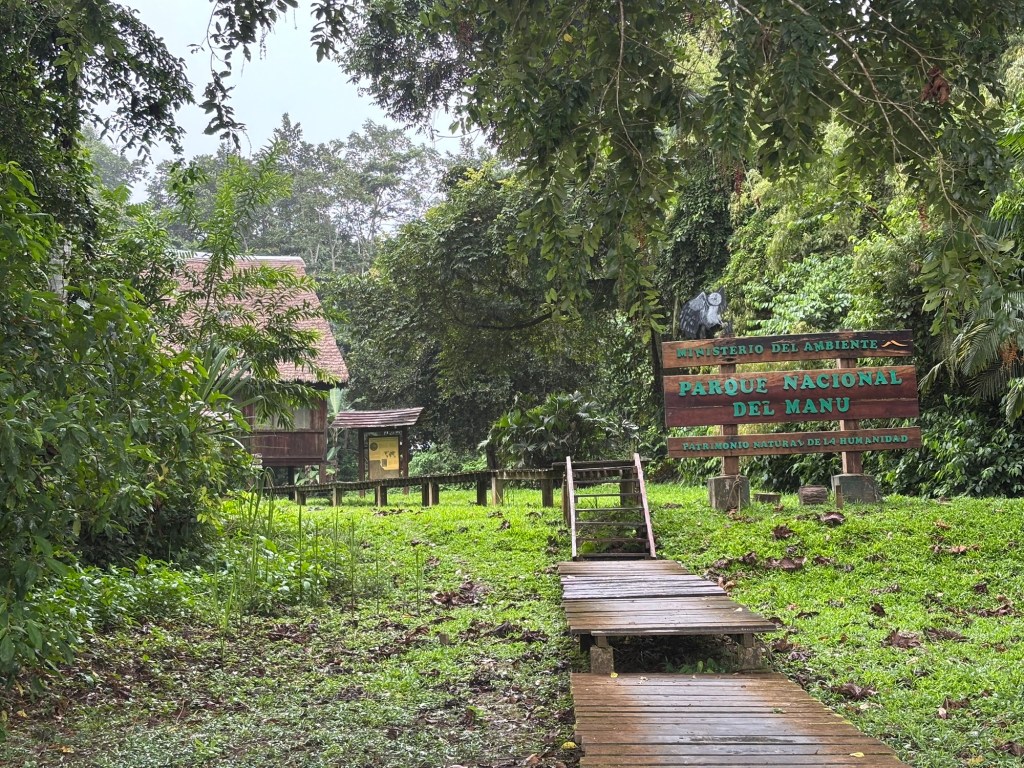
Shortly after eight this morning, we crossed over into the Reserved Zone. After three days of travel through Manu’s enormous national park, we have finally arrived at the inner sanctum – where the wild things truly are.

If it had stopped raining for even a minute or so of the eight hour journey upriver, we might have seen a lot more of those wild things than we did. As it was, the rains had swollen the river to a monstrous size, swallowing up most of the sandbanks, so the only creatures that were much in evidence were the water birds – who probably would have been there anyway.

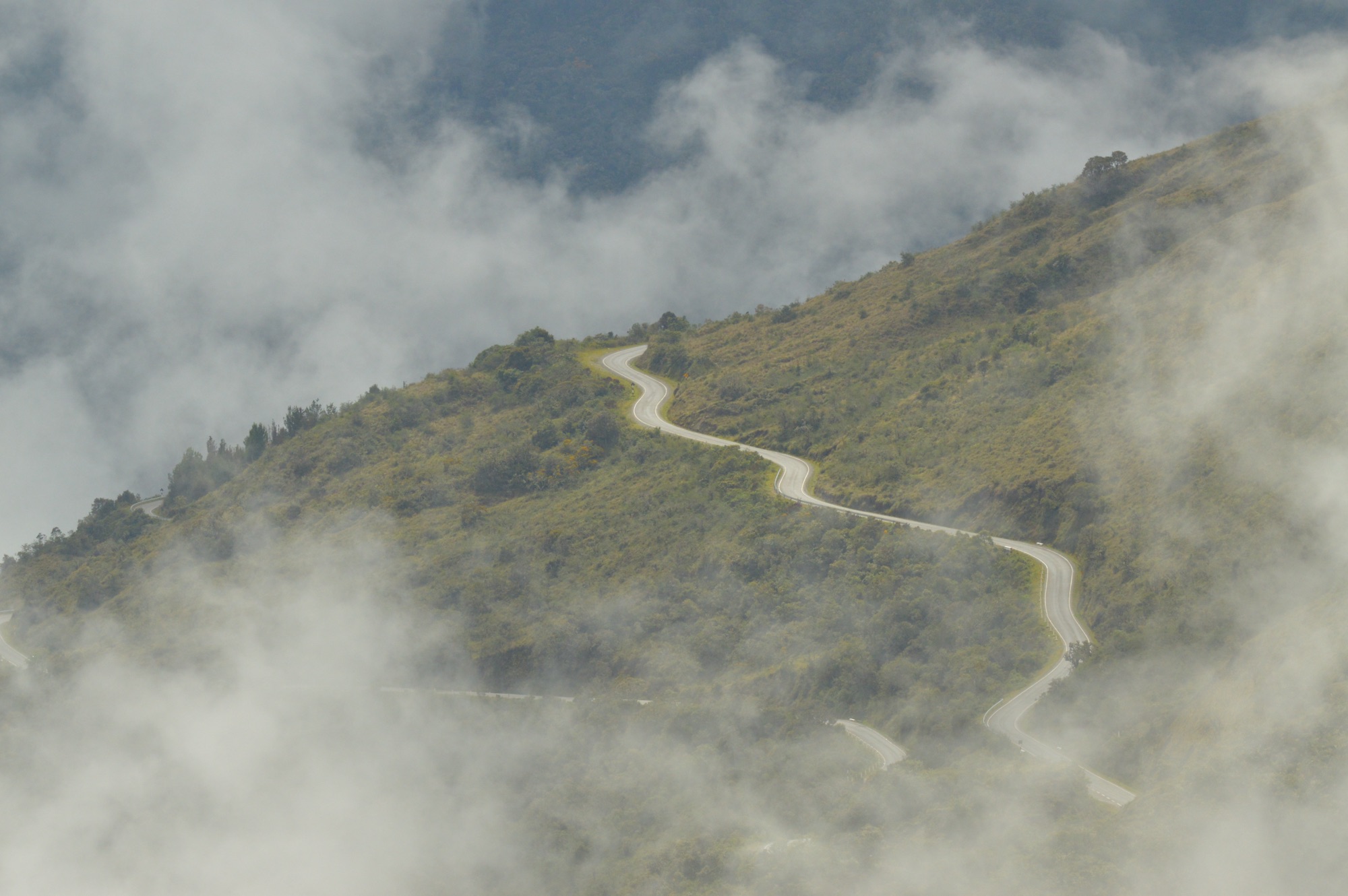
All the same, it is hard to describe just how incredible this place truly is. The mountains are far behind us now, concealed by the clouds that covered our approach. Now it is only the river and the forest in every possible direction.


It’s surprising how quickly you get used to the sight of free-flying macaws; birds that until now I have only ever seen as captives of the pet trade. Pet parrots are such a thing – or at least, they were in my childhood – that seeing them wild almost feels like the reverse of normality.

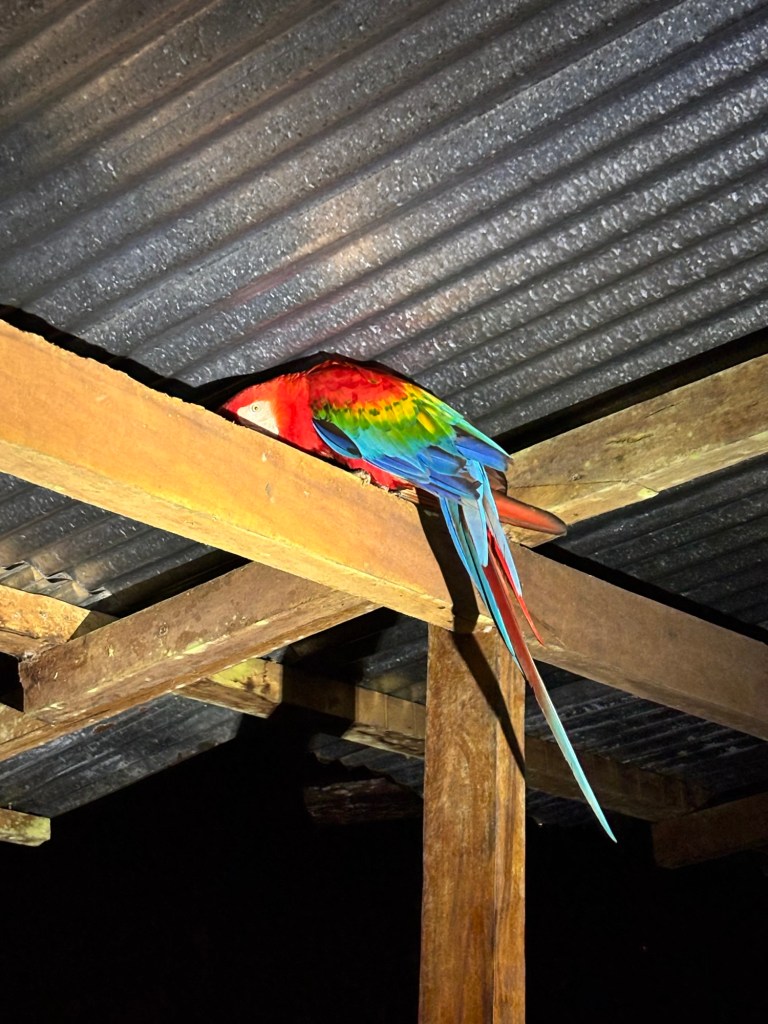
So many of the iconic birds live here in Manu: blue-and-yellow, red-and-green and the iconic scarlet macaw. There was a scarlet macaw at the Bonanza lodge this morning, in fact, sheltering from the rain. A “free pet”, according to our guide, who comes to the lodge because of the prospect of handouts (and, evidently, shelter). There is little need for a cage when the animal is already in its natural habitat, I guess.


I realised only when we got to our destination – the Jaguar Eco Lodge – that I have finally lost my first object of this trip. Frustratingly, it’s my card reader. It’s not the end of the world – I’ve managed every other adventure without it – but it does make blogging on the go a lot less feasible as I can’t share the photos I’ve been taking on the go. I guess you’ll just have to wait. I’ll have to backdate these posts anyway, as I’m already three days behind – power has been a precious commodity, WiFi even more so m, and more importantly, I haven’t wanted to waste even a second on my phone when I’m out here in one of the most beautiful places on earth.


After a five o’clock start, we got back into the boat and sailed downriver to Boca Manu, where the Madre de Diós meets the Manu river. Our first port of call was the ranger station, where we were officially signed in and registered. Of the 29 rangers that work within the park, 11 come from the native communities that live within its borders. That much was plain from the personnel at the station, who looked about as far removed from Europeans as the modern world allows.

They were exceptionally kind. If we were not on a guided tour, I would have liked to stop and chat for a while. After all, I once wanted to be a park ranger myself. If it hadn’t been for my dismal mathematical ability and my lacklustre scores in Biology – coupled with my desire to raise a family – I might even have followed that path.


Manu is home to 1.030 species of birds. That’s an astonishing one tenth of the birds that can be found in the entire planet. So I might be forgiven for being a little glum at the prospect of the seemingly endless rain continuing for a third day, grounding most of the park’s birds deep within the cover of the trees.

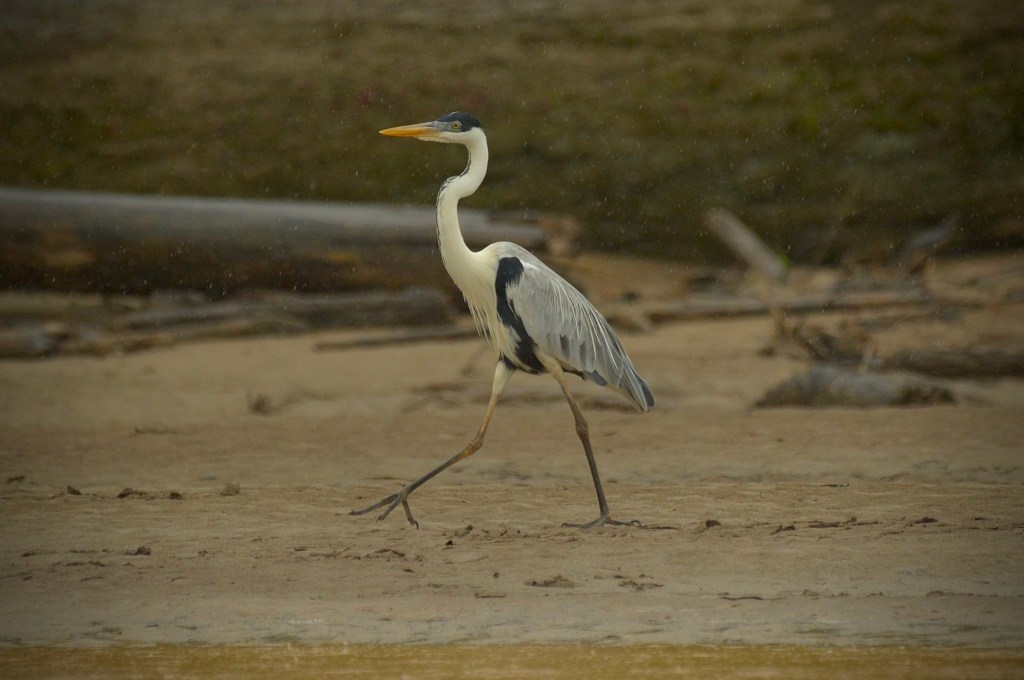
At least a few of the shorebirds were gracious enough to put in an appearance, on what little of the shore remained, including a few handsome cocoi herons, wood storks and a jabiru, a marabou-esque migrant from Brazil.


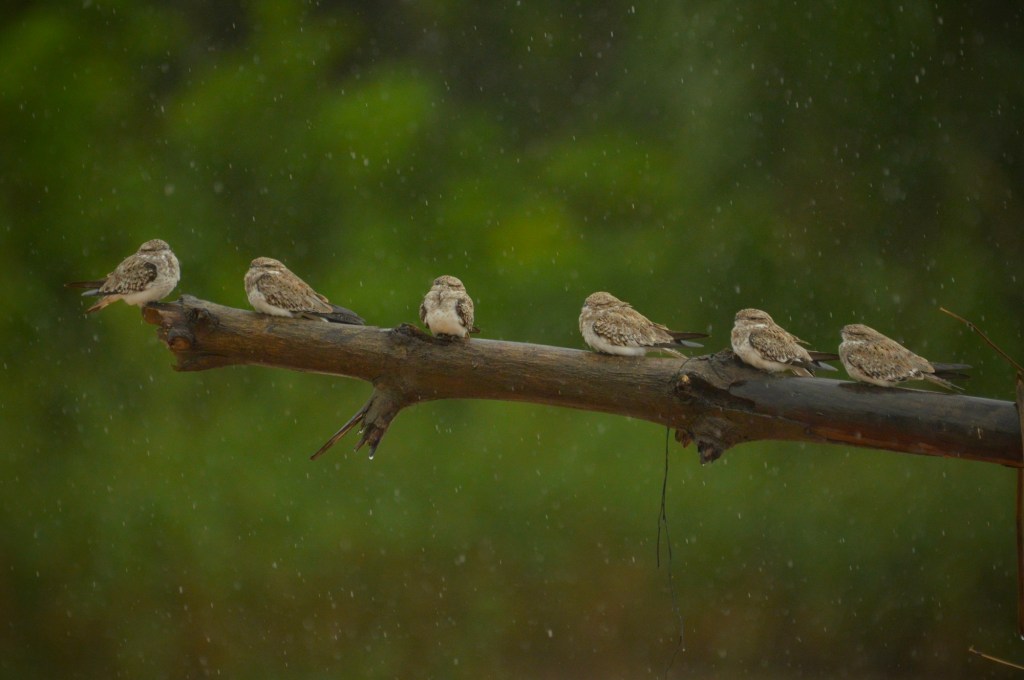
We even had the good fortune to see the sandy-coloured nightjars that usually roost on the sandbars. They had sought refuge on a sunken tree, and looked rather disgruntled at their change of roost.


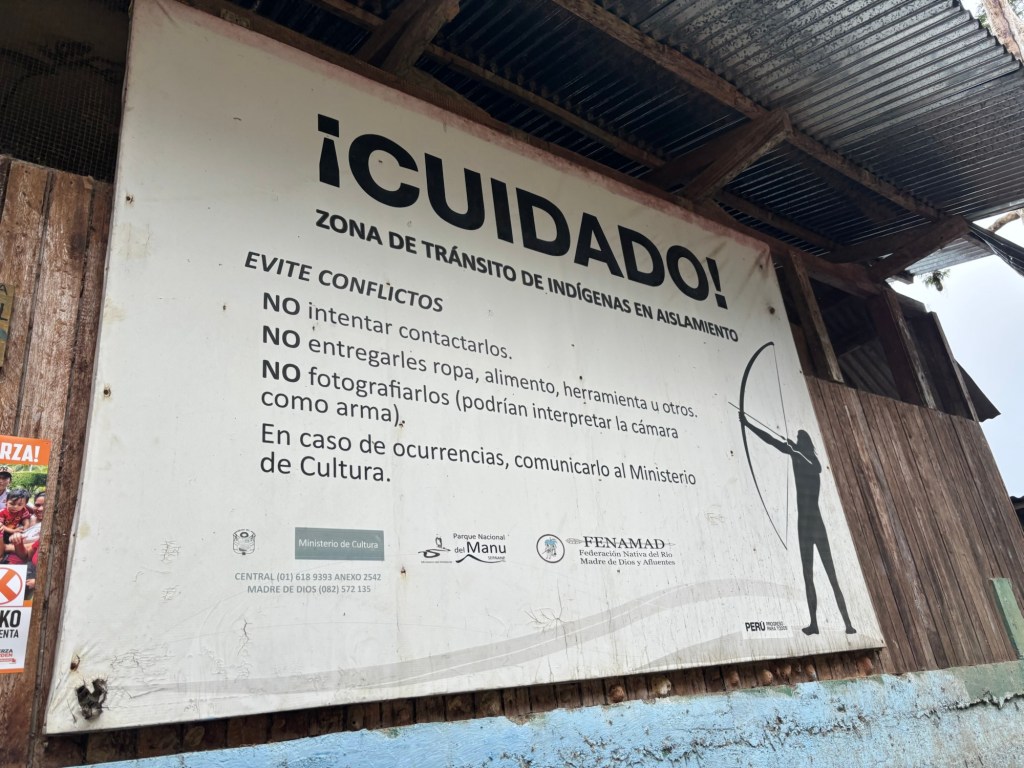
After another unbelievably good lunch on the boat courtesy of our chef Bernadino, we made straight for the nearby horseshoe lake of Cocha Salvador in search of giant otters. The usual location, Cocha Otorongo, has been out of bounds ever since it was raided by one of the local uncontacted tribes eight months ago.

There are signs in various places warning you to stay away from the tribes, not so much because of the risk to your own life through conflict, but because of the far greater risk to theirs of disease.

It feels strange to be in a part of the world where there are still people in the forest who remain free and out of step with the world. I don’t know what to make of it.


Powerboats are not allowed on the horseshoe lakes or cochas out of respect for the local wildlife. There is a catamaran for use by guides and their groups, provided you bring your own paddles. We couldn’t see the otters from the jetty, so we set out along its south arc in search.

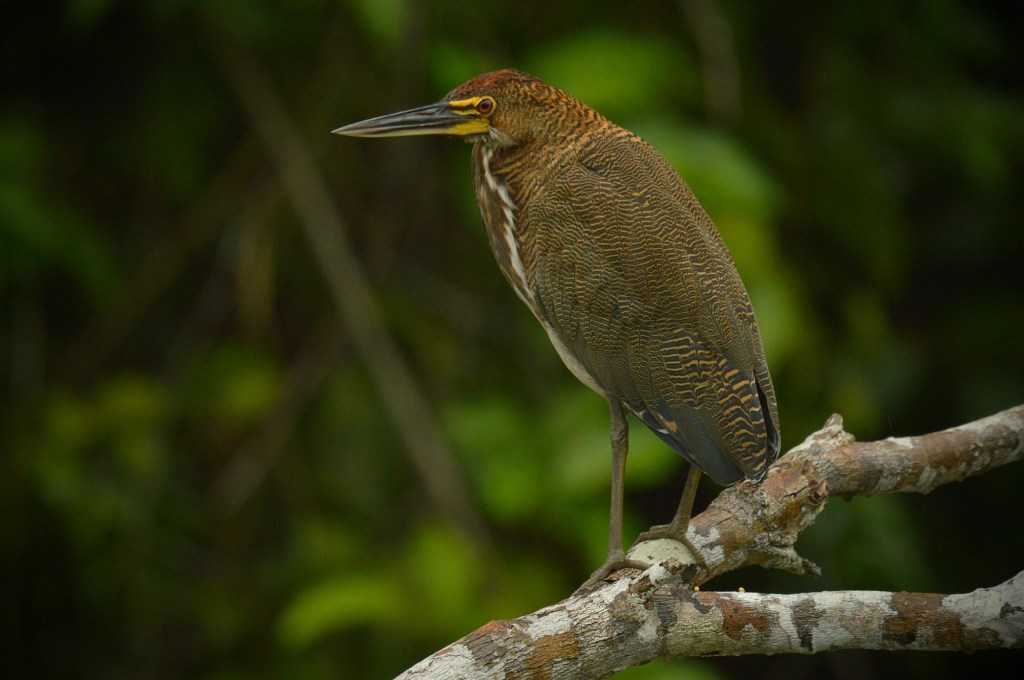
The cochas are a sanctum like nowhere else I have ever known. I must have counted over a hundred species of animal and bird in the space of a couple of hours, despite the driving rain that returned to lash us throughout our quest. There were at least four species of kingfisher out and about, and an impressive young tiger-heron, which wasn’t as skittish as herons often are and allowed us to float right past.


My companions looked utterly despondent as the hours went by, the rain came down harder and the otters remained invisible. But I was having a great time, though I would have traded an hour of the day for a little sunshine, if only to make the conditions for photography a little better (I had to crank my shutter speed right down and force a steady hand to compensate for how dark it was beneath those clouds).

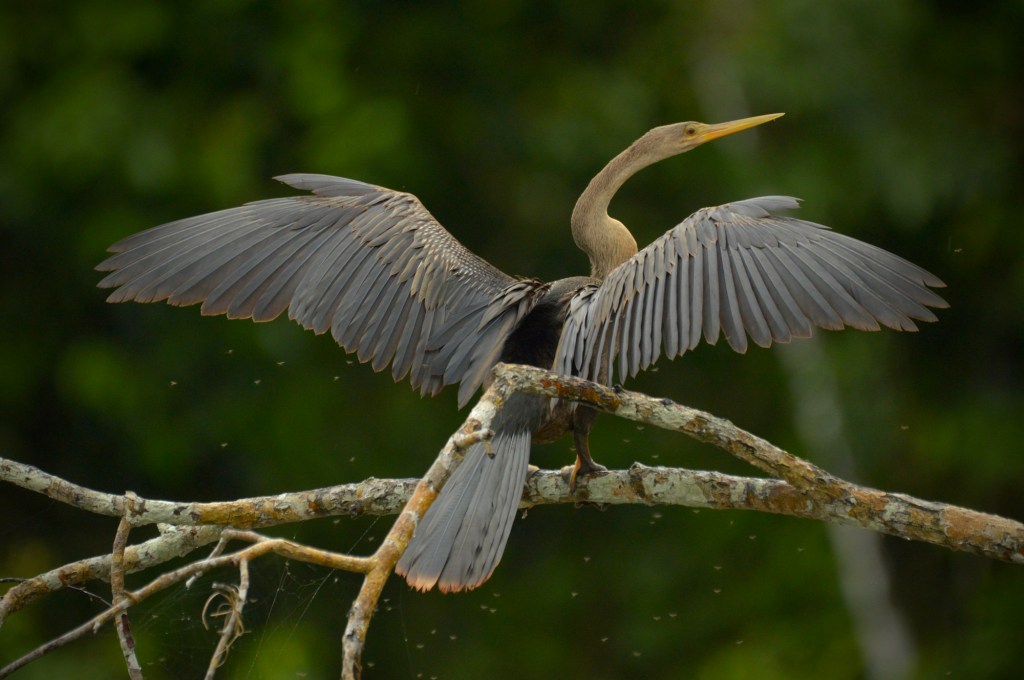
Another American bird that kept us company on our jaunt around the lake was the anhinga, an extended version of the cormorant, whose habit of swimming so low in the water that only its long neck breaks the surface has given it the alternative name of “snakebird”.


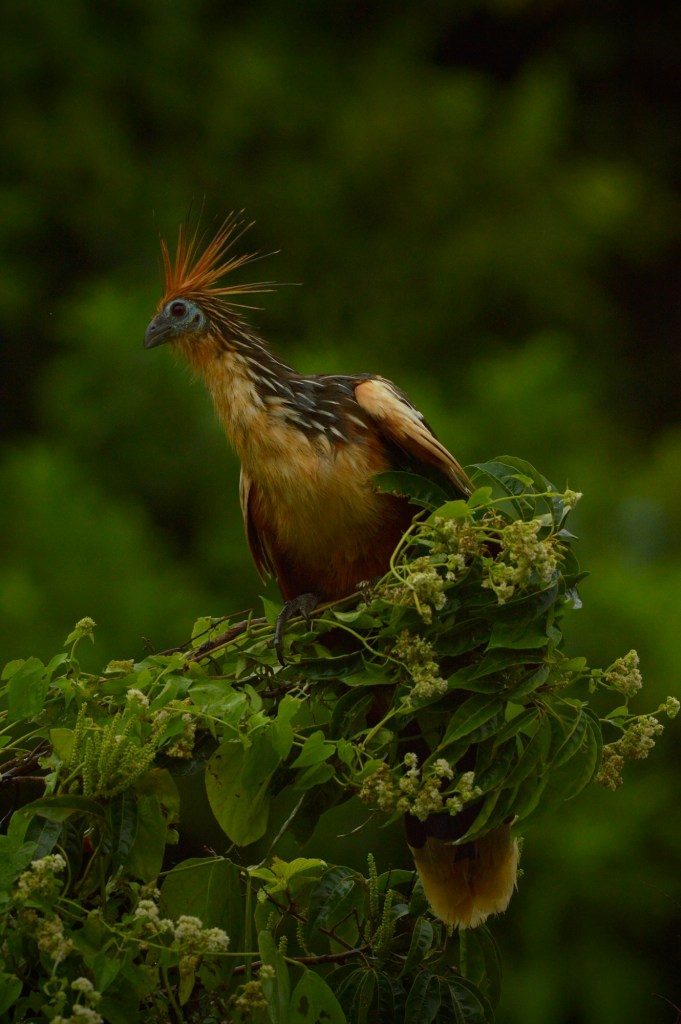
However, while the otters remained beyond our grasp, my primary target for the day was met over and and over again: the utterly bizarre hoatzin, a plant-eating bird that looks like an unholy cross between a hawk, a parrot, a pigeon, a chicken and a cormorant. Understandably, perhaps, this half-breed is in its own family. I’m not sure any other bird family would admit it as it of their own.

It really is, quite literally, the ugly duckling of the bird world. And I absolutely love them in their weirdness.


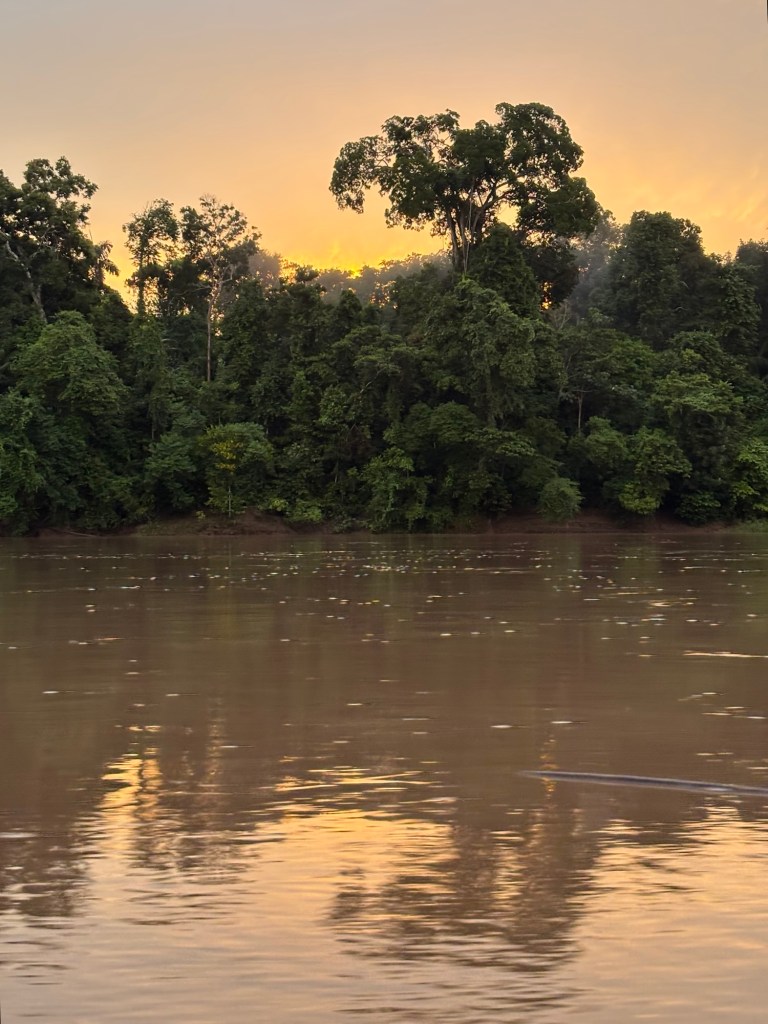
The otters never did appear, but we were finally relieved of the rain and rewarded with a stunning Amazonian sunset as we sailed back upriver to the lodge. We even encountered a family of night-monkeys on the walk back to camp, but my lens couldn’t handle the darkness all too well. I guess I’ll just have to keep trying! There’s always tomorrow’s night walk.

That’s on write-up done. Onto the next one. BB x

Neocolonial

Highway 1S near Tambo de Mora. 9.09.

The sun is climbing toward its pinnacle in the enormous Peruvian sky. The UV warnings on the weather apps are off the charts, so I’m going to have to layer up properly with the sun cream before I leave the bus, or I’ll be fried out there. My destination today is Paracas, a coastal resort town some 256km to the south of Lima – more specifically, the Islas Ballestas and their seabird colonies.

First, however – a few observations about Peru. For one thing, my dating apps have exploded. Without even lifting a finger, I’ve got more hits in twenty four hours than I’ve had in four years, and that’s no exaggeration. I wonder what that says – about me and about this country. Is it because the odds of somebody finding me attractive have been boosted by the overwhelming numerical force of some ten million people? Am I simply more interesting to a Latin mindset than a European? Or – dare I say it – is it something more sinister?

Is it because I’m white?


Hear me out. Malinchismo is a concept we study at IB and A Level Spanish – that is, it’s a concept I always try to include in any syllabus I’m teaching that involves Latin America. In short, it’s a form of cultural “cringe”, an embarrassment of one’s own native culture in the presence of an outsider, which often manifests in the invisibilisation or even eradication of the affected community. The term itself is Mexican and comes from the problematic folk anti-heroine La Malinche, a teenage girl who served Hernán Cortés and his conquistadors as translator and thus played a major role in the toppling of the Aztec Empire.

It may be Latin American in concept, but it is a global phenomenon. It explains the demand for skin-whitening creams in Africa and Asia and the dominance of English as a trade language, even in corners of the world that don’t see many Brits. It has even sunk its claws into our own island, with RP and its bratty sibling Estuary English swallowing up most of the old accents and dialects.

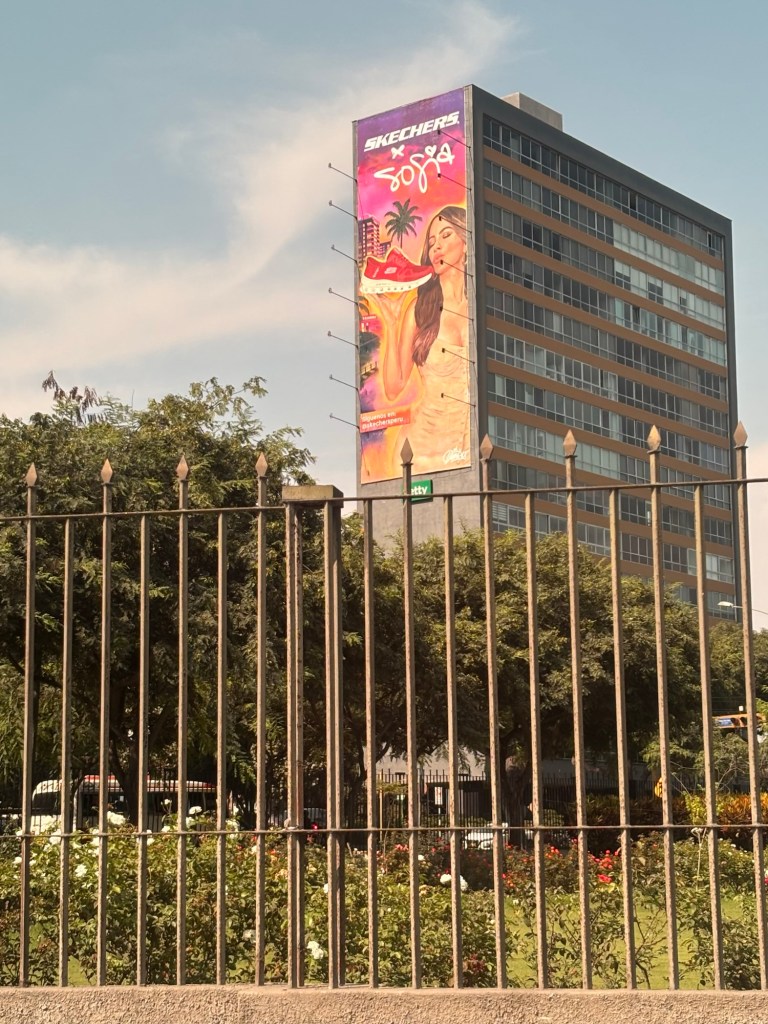
Peru, like the US, is a billboard country. Commercial is king. And the face of those enormous commercials is very rarely Peruvian. Giant posters for everything from sportswear and energy drinks to doctors and dental practices all feature the same cast: lithe, beaming individuals, all handsome, all sporty, all white.


I’ll use the dating apps as a counterpoint. There are so many beautiful native faces and body types out there, and that’s just from a glance. But I’ve yet to see any of them represented on the billboards. It’s as though they’re all advertising some supernatural deity, removed from this world, above and beyond the reach of the average Peruvian.

Which, I suppose, isn’t all that far from the truth.

What do we do about it? By the looks of things, not that much. The hostel I’m staying in has a crowd of white tourists (including me), many of them on the next leg of a grand tour of South America. Very few of them speak any Spanish whatsoever.

In the hostel, they talk. Largely about things travelers always talk about – that is, home – and swap stories of nightmare experiences along the road. They talk of the continents they’ve ticked off. They talk of ayahuasca: two guys who can’t have meat or salt or sugar or sex for a month because a shaman put a plant spirit inside of them which – or so they were told – would react most fiercely if they broke their diet pact. Others talk blithely of Iguaçu Falls (“beyond the waterfall there’s not that much else to see”), Rio (“the party scene is decent”) and Patagonia (“it’s actually really expensive and full of couples”).


Most of the travelers I was with this morning have gone. It’s only a handful of stragglers who opted for the Paracas Reserve tour and the Hacienda San José slave tunnels. Everyone else has gone on to Huacachina, an oasis town famous for its sand dunes – which we venerate by driving all over them in petrol-belching dune buggies.

Say what you like, but it’s a strange way to appreciate another country. Imagine if the White Cliffs of Dover were turned into an enormous quad-bike park, charging wealthy Arab and Chinese holidaymakers a handsome sum to tear up one of our most beautiful landscapes. It’s not exactly an awkward comparison.

What saddens me more, I think, is the lack of genuine wonder. Maybe it’s a Western thing to avoid poetic adoration – at least out loud. Maybe we’re just too sanguine. It might come across as “gushing” or insincere. Either way, you hear a lot more about their “trips” than their trips. The whole of South America seems to pass them by in a psychedelic haze.

The whole thing smacks of colonialism. Not the naked, gun-point kind that subjugated the Americas long ago, but a more insidious march of cultural domination. When we holiday abroad and talk about home, and not about the places we see, we build up a temple to the West and its ways that is, quite frankly, underserved. By demanding adrenaline sport holidays and beach or ski resorts, we are only tightening the chokehold that Western culture has over the world. It doesn’t matter that it’s no longer fashionable to abuse the people when we’re quite happy to continue to tear up the land itself. That is colonialism – it just walks, talks and dresses like the very Western liberals who claim to despise it.


Tourism makes up for about 8% of Peru’s GDP. Many Peruvians rely on the tourist industry and the money it brings to make a living. The least we can do is to come here with an open heart and an open mind and tread softly.

This is not our world. We should be gentle in how we handle it. BB x

Wish List

With Chile now a very real possibility this summer, it’s time to bury the heartbreak hatchet with the Americas and accept the fact that I’m ridiculously excited about crossing the Atlantic again. Somehow, between the red hair and the po’ boys, I missed out on the opportunity of a lifetime to linger in the New World and enjoy all the sights and sounds of a place I’d never seen before. Instead, I beat a hasty retreat home to nurse my wounded pride. This time I have my priorities straight: I’m going out there for me.

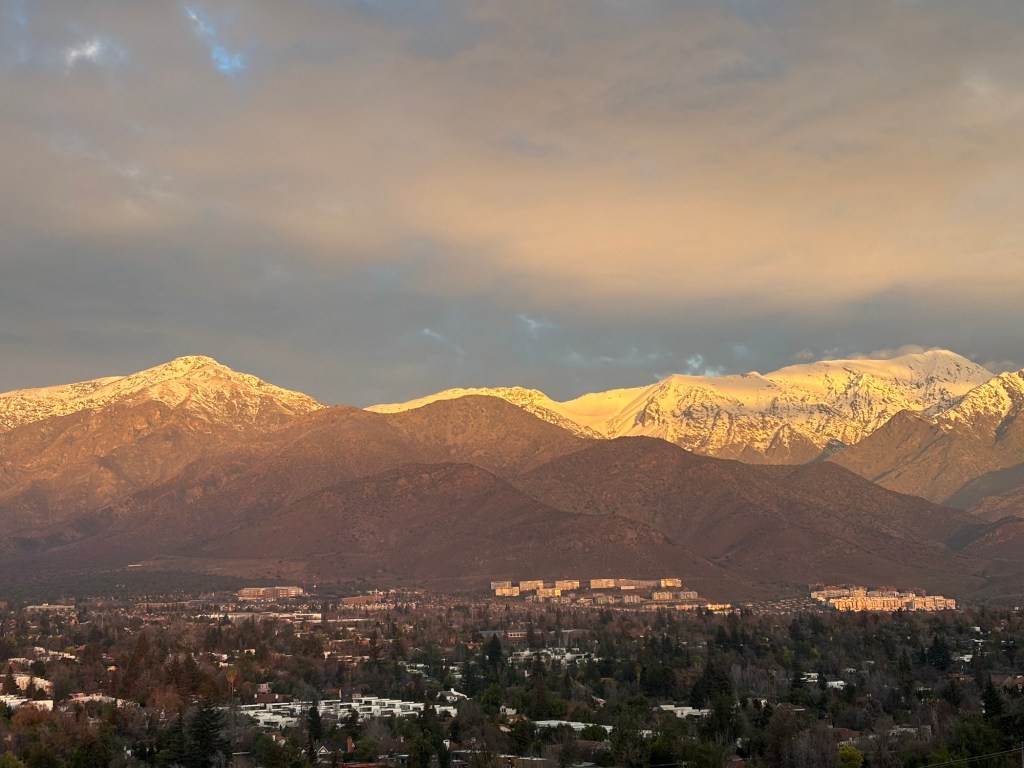
There is so much to look forward to this year: from a brief pitstop in Madrid and Colombia’s El Dorado Airport to my first ever encounter with the Pacific Ocean on the grey shores of tearless Lima; the guano colonies of Paracas and the altiplano around Arequipe; the cloud forests of the Sacred Valley and the pristine jungles of the Amazon; and then, after a brief return to reality, the snow-capped mountains of Santiago de Chile, the starlit expanse of the Atacama Desert and the desolate shores of Tierra del Fuego; and at the end of it all, a wedding in Athens and the quiet of Lake Kerkini. If the world is going to hell in a handcart, I’m going to see it all before it’s gone.


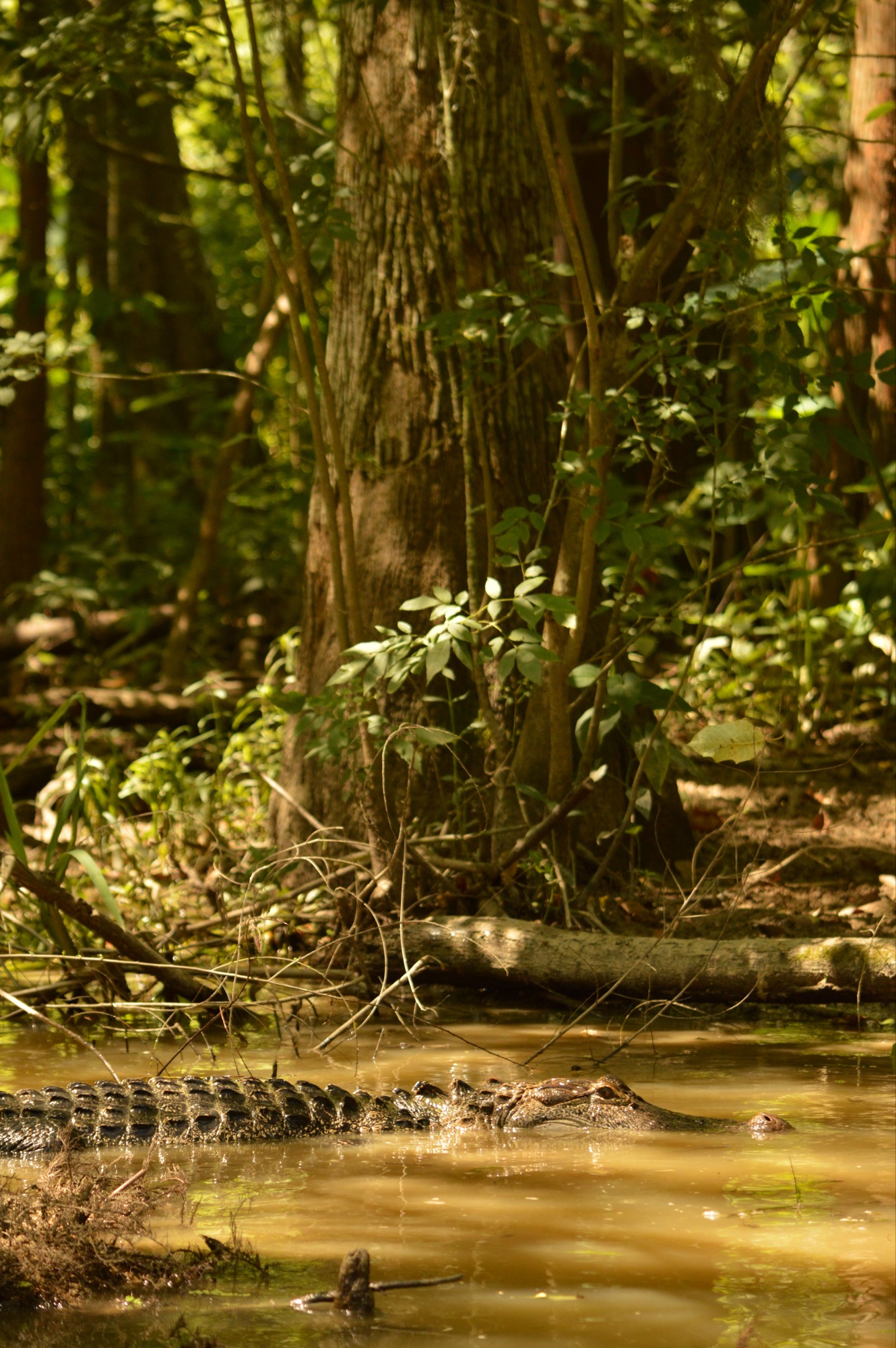
My only real wild encounters during my last trip to the Americas – if you don’t count a brief glimpse of a bald eagle from the train – were in the Louisiana bayou, where I chartered a boat and captain to take me up the Pearl River of Slidell’s Honey Island Swamp (which you can read about here). During my six days in the States, I saw only a handful of American birds, and most of them were on my Bayou side-quest: cardinals, chickadees and blue jays around the visitor centre (commonplace to most Americans but brand new to me), wood ducks and whistling ducks in the forest and spoonbills and anhingas along the river. The alligators, on the other hand, were everywhere. You could hardly miss them. I also saw a family of scruffy-looking racoons, rounding out the American classic collection. Short of a white-tailed deer or two, I think I ticked off most of the North American beginner’s collection.

But South America… now, that will be a different ball game entirely.


I included Patagonia on my wish list years ago, but I never thought I’d actually end up going there someday. Now that it’s real, I can’t shake it from my head. There are so many things I want to see and do, and I haven’t even begun to learn them all properly.

So I thought I’d write a list – nothing obsessive, mind, just something to look back on when I return. My itinerary for Peru is nearly finished, and my plans for Chile will have to wait until I have a clearer idea of what lies ahead (and what I will actually be doing out there). For now, at least, I can indulge in a little harmless wish-listing – starting with the essentials…

  1. Andean Condor the only one that I’m really pinning my hopes on (my itinerary will accommodate multiple attempts)
  2. Black, Turkey or King Vultures – in case it wasn’t obvious, I’ve got a real soft spot for vultures!
  3. Hummingbirds – I’m not fussed about the species, I just fancy seeing the sunbirds’ transatlantic cousins!
  4. Pumas – it’ll have to wait for my Patagonian adventure, but it would beat even the wolves of Poland
  5. Jaguars – I’m not expecting to see them in Manu, but it would be incredible if I did
  6. Pelicans – in my head, a line of pelicans flying over the water is the image of the Pacific I’m after
  7. Guanacos – llamas are great and all, but nothing beats seeing their wild cousins
  8. Howler monkeys – something tells me I may regret putting these muditos on the list
  9. Giant otters – regular otters are rare enough, so maybe the Amazon will provide!
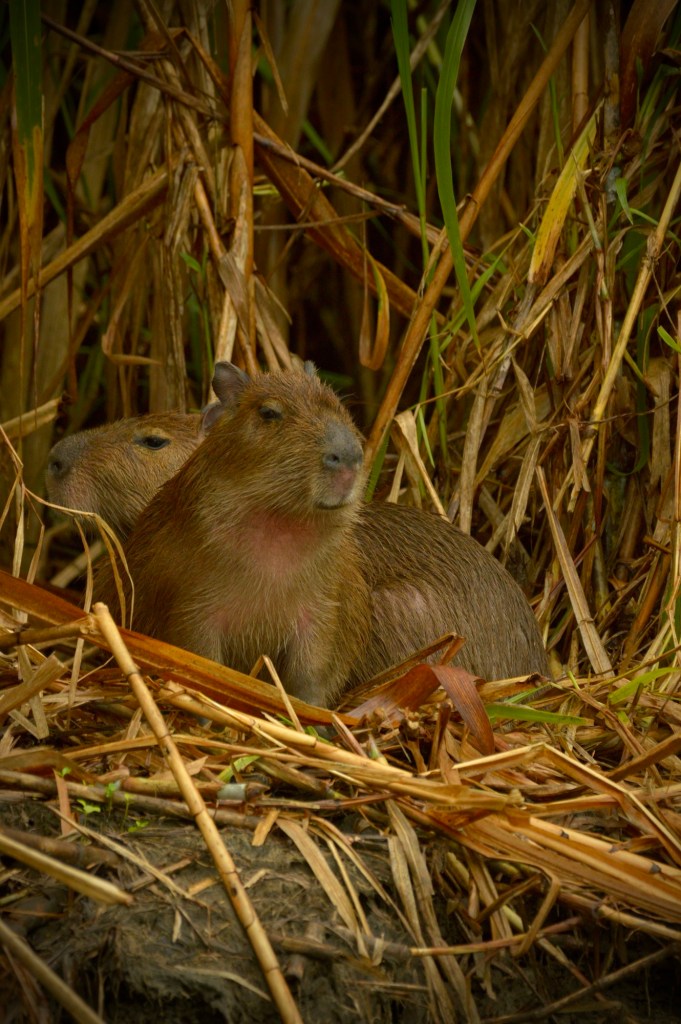
  10. Capybaras – because my Year 7 & 8 students are counting on me to bring them photos
  11. Rheas – another gem I don’t expect to see, but one that I will have to come back for!
  12. Sloths – something that won’t disappear into the jungle in the blink of an eye, maybe?
  13. Anacondas – to see just how large they truly are
  14. Hoatzin – surely the most bizarre bird of the Americas!
  15. Penguins – Humboldt, Magellanic or King, depending on the country
  16. Tinamous – because their names are simply wonderful on the ear
  17. Tapirs – the closest I’ll get to megafauna on this adventure
  18. Boobies – not going all the way to the Americas just for the boobies this time, but they’d be a nice reward!
  19. Macaws – the symbol of the Amazon, right?
  20. Cacti – fine, this one’s no animal, but it’s definitely American enough to warrant a spot on this list

There’s a blackbird singing outside. They’re getting earlier and earlier as the year turns. I, too, should turn in. BB x

Egret

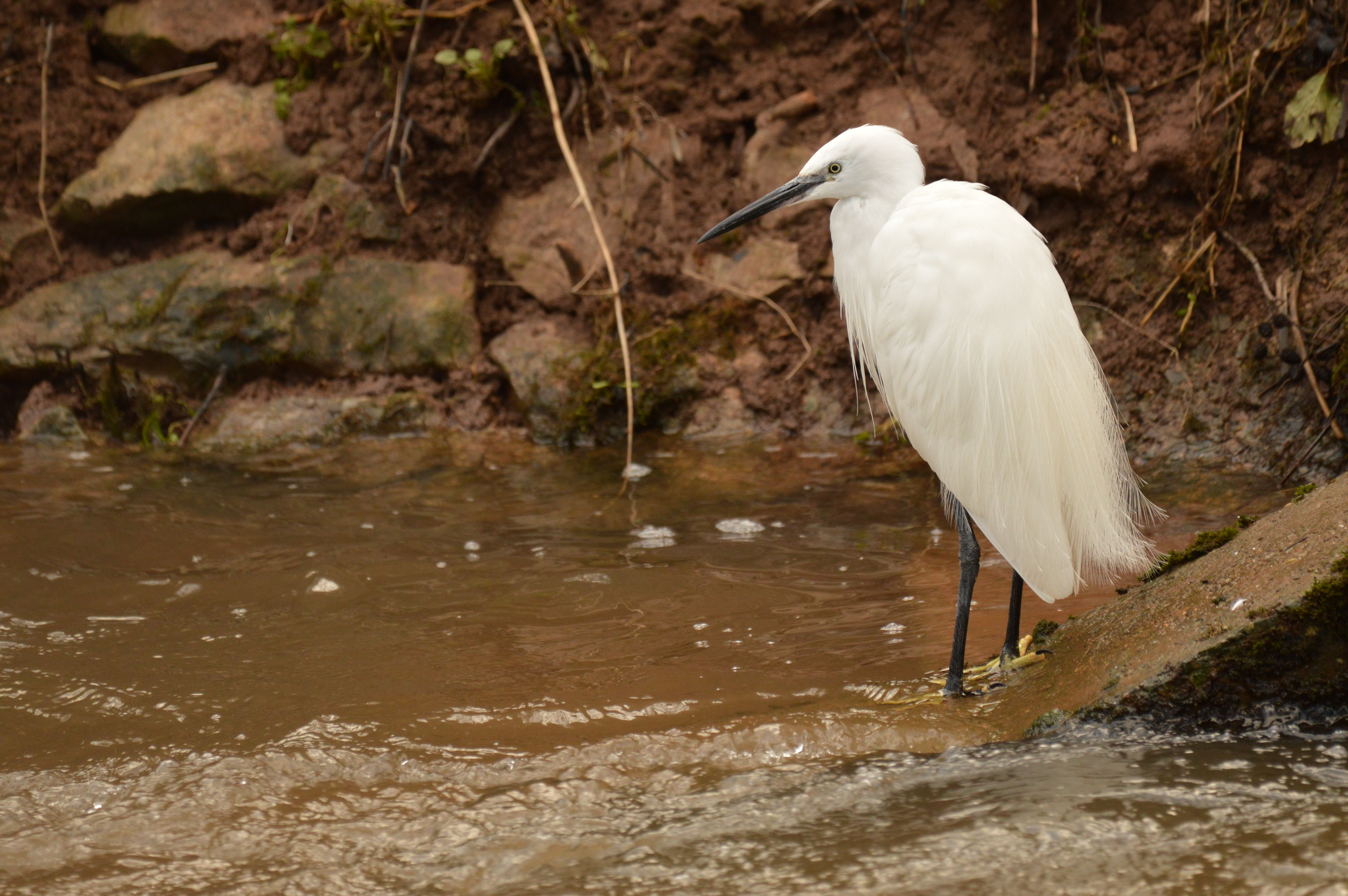
Little Egret (Egretta garzetta) – River Tone. 22/2/26

On my afternoon wander along the Tone yesterday I came across an egret fishing on the concrete steps of a flow measuring station. I’m so used to the snowy white shapes of these beautiful birds in and around the rivers and fields of the English countryside that it’s sometimes hard to remember a time when these were a very rare sight indeed.

When I was not yet ten, the presence of an egret in the area was something my family or friends found newsworthy. That’s not exactly surprising. Compared to our native (and undeniably stately) grey herons, they do have an exotic look about them. Maybe it’s the silky plumes (or aigrettes) of their breeding plumage, or maybe it’s the smart yellow galoshes they seem to wear on their feet. The speed of their colonisation of the British Isles gave the Roman Empire a run for its money: by the time I was fifteen, they were already such a feature of the Kentish wetlands and saltmarshes that they had somewhat lost their star appeal, if not their lustre. They no longer triggered a rare bird alert on twitchers’ pagers up and down the country, and their names no longer appeared in bold capital letters on the “Recent Sightings” blackboards at nature reserves.

But first, some myth-busting. It’s not as though the egret is an exotic immigrant to our shores. Far from it. Various species of egrets could be found in the British Isles throughout history, before a combination of over-hunting and the insatiable demand for egret feathers wiped them out. Such was the obsession for aigrettes – which once bedecked the headwear of noble lords and ladies alike – that the little egret and its cousin, the great white egret, were driven out of much of Western Europe as well, seeking sanctuary along the sheltered shores of the Mediterranean. It wasn’t until a pioneering group of Englishwomen came together in 1889 to form the Society for the Protection of Birds (the forerunner to the cherished RSPB) that the egret’s fortunes began to change, first by petitioning powerful high-society types to eschew feathers from their wardrobe, then lobbying the government to ban them outright. It clearly caught on, because the Americans set up a similar initiative of their own over in Oregon, where the native great and snowy egrets were suffering a similar fate. Gradually, with aigrette feathers off the market, the birds began to reappear in the fields and fenlands they had once called home. It would be another hundred years before they attempted to recolonise the British Isles, but once they did, they came back in droves.

I bought a magazine once in the late 2000s that predicted the arrival of the rest of Europe’s heron and egret species in the UK as global warming made these cold islands more favourable to birds more at home in southern Europe. It wasn’t wrong. Since then, both the cattle and great white egret have secured a foothold in Britain, with all three species present in the Avalon Marshes over in the Somerset Levels. If it weren’t for the fact that I work six days out of seven – and Sunday trains and buses are awful in this part of the world – I’d be over there like a shot. Somehow, I fear the open wilds of the Avalon Marshes will have to wait until I have wheels, because after a few sums, it would actually work out cheaper for me to fly to Europe and back than to spend a night or two in Glastonbury in order to visit the Levels. Mad how that works.

Not that I’d say not to being back in Europe, of course – though I am still waiting for my temporary ban to lift, as I hit the ninety day limit last year and would very much like to go back to my grandfather’s country without having to pay a fine. I always try to keep an open mind, but sometimes, Brexit, I really do wish you hadn’t screwed up my life quite so much.

Anyway. These papers won’t mark themselves. Just thought I’d muse a little on something uplifting before getting back to the grind. BB x

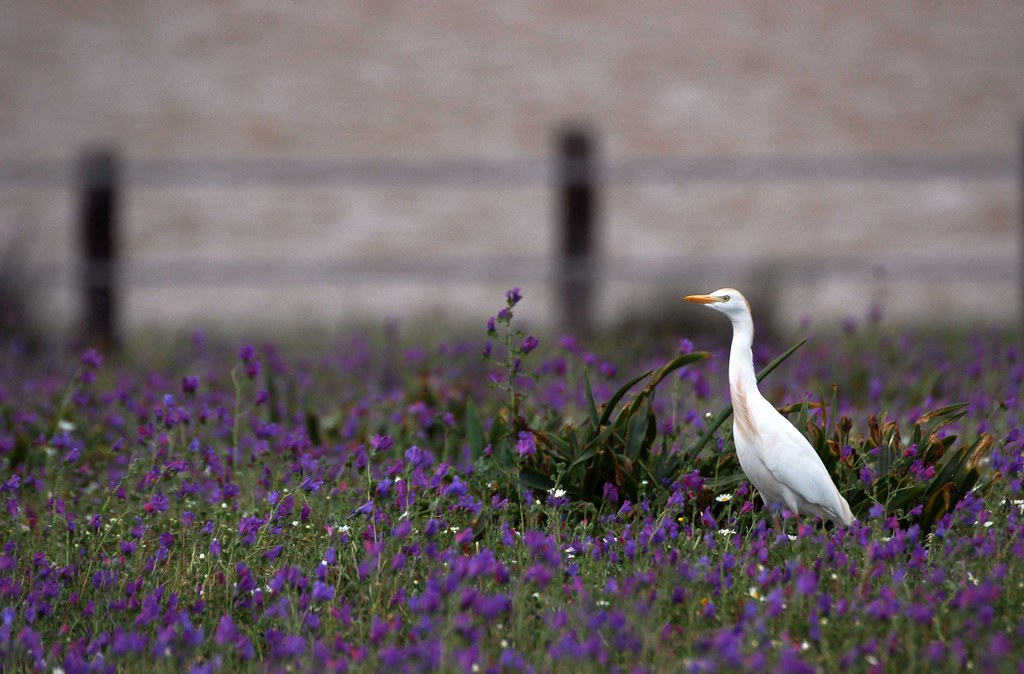
Cattle Egret (Ardea ibis) – Dehesa de Abajo, Spain. 26/4/10

Define Success

I suppose I ought to comment on Bad Bunny’s Superbowl performance earlier this week. I confess I haven’t seen it in its entirety just yet – give me a few more days and then we’ll be on half term, and I’ll give it the attention it justly deserves. Instead, I thought I’d explore something else I saw on my newsfeed today.

Let’s talk about success and what it looks like. According to a survey conducted a few months ago by NBC’s News Decision Desk Poll on Gen Z – a generation from which I am removed by only a few years – the parameters for what constitutes success vary wildly between men and women on opposite ends of the political spectrum. I tend to do a bit of digging when I see stories like this, since you can’t take any news items at face value these days, but the results are certainly very believable.


The fact that neither children nor marital status were a priority for any demographic other than Trump-voting men is not really a surprise. When I asked my debating team to rank the success factors this afternoon, all three groups had children as their least important, and they are the demographic in the survey.

It’s equally unsurprising to see money concerns so high up the list for both male and female responses in both the Trump and Harris camps. There’s no dodging the fact that we’re living through a cost of living crisis in the West right now, and that Gen Z – and, it should be said, the tail end of the millennial generation, like myself – have been screwed over in a number of wicked ways: the rise of the smartphone, the surge in housing prices and university tuition and the creeping dread of AI, not to mention the anxiety crisis that has taken root in the fertile soil left behind by an almost total absence of conflict in the Western world and the genuine terror that has inspired for much of human history. When I was a kid and had yet to give the matter all that much thought, I remember wondering whether what the world needed was another damned good scrap just to let off some steam. Now that I’m older and potentially wiser, I’m not sure if I have entirely shaken that belief, though my reasoning may have changed somewhat.

If I have read the rubric correctly, those surveyed were asked to select the three factors that most aligned with their personal definition of success. Out of curiosity to see how I square with the generation below, I thought I’d rank them myself.

  1. Having a job or a career you find fulfilling
  2. Having children
  3. Being married
  4. Using your talents and resources to help others
  5. Having enough money to do the things you want to do
  6. Making your family or community proud
  7. Achieving financial independence
  8. Being spiritually grounded
  9. Having emotional stability
  10. Owning your own home
  11. Having no debt
  12. Fame and Influence
  13. Being able to retire early

Now, it’s not an entirely fair test, as I am neither a true Gen Z-er, nor am I American, nor did I vote in the US election. But it does throw up a number of concerns – namely, that my responses to the survey align more closely with the average male Trump voter. My students have often described me as one of the most liberal-minded teachers in the school – so do these responses say more about their world view or my ability to mask my true beliefs?

I’m not sure. To me, success is not something that can be quantified in wealth or status. It is inextricably tied up with the pursuit of destiny. Life is nothing but a cycle without a quest, and quests are all about success. If at first you don’t succeed, you simply pick yourself up and try again.

In two of my three success factors, I confess I am failing miserably. Despite my (apparently) outwardly liberal persona, I am deeply traditional at heart, and it should come as no surprise to any in my circle that I want nothing more from life than a wife and children someday. That would be the ultimate success. Love, companionship and parenthood – these are surely the greatest quests of all. Everything else is a gift.

My generation seems to have always been at odds with the idea of raising a family, continually bumping it down the to-do list until it has fallen into the dark gap behind the sofa, somewhere beneath going on holiday more than once a year and running the London Marathon. Perhaps that explains why the birth rate here in the UK is at its lowest point since records began, averaging around 1.4 children to each woman. In an increasingly faithless world, we have put personal success (with the emphasis on the silent letter “I” in personal) on a pedestal and worshipped it to excess, and now we are paying the price for it. Being the contrarian that I am, it is all I can do to fight a current that is doing its very best to drown me.

So while I have the rare privilege of finding my job endlessly fulfilling (I only considered leaving it once, and that was at the height of COVID’s online learning period), I must admit that, by my own definitions of success, I am – for the present – relatively unsuccessful.

But there are plenty of reasons to be happy in my success.

I love my job. It allows me to spend almost all of my waking hours using my knowledge and resources to help others.

By carrying the torch as a teacher for the fifth generation, I know that I am making my family proud, and that gives me an enormous sense of fulfilment.

For all the churches and services I have attended throughout my life, I may not have found a spiritual community that speaks to me just yet – not even along the Camino – but then, my faith has always been a very personal thing, and I do feel grounded under the aegis of la Virgen del Rocio, whose mark I have borne on my wrist for the best part of a year.

I don’t own my own home – I can’t think of many in my generation who do, besides a few of the privately-educated folks I was at university with – but again, I’m not an American, and I suspect that level of privacy and property has a lot more currency across the pond.

Debt is simply a fact of life for my generation, so I’m not even sure why that’s on the list, and while I have little time for fame or influence, I care even less for the idea of retiring early when the job I have to do is so important, so I’m quite happy for it to languish at the bottom of the list. Maybe my thoughts on that will change when I am older. I hope not.


Half term is around the corner. I’m going to try to get some more writing in ahead of Peru. Do stay tuned for updates on the itinerary! BB x

Punt

21.56. The Flat.

I’ve done it again. I’ve signed myself up for another mad adventure. As whim decisions go, this one is definitely up there with swapping jobs for a change of scene and flying to the States for a third date.

There wasn’t even much of a build-up to it. I had a relatively quiet weekend not on duty. On Saturday morning I taught a couple of sixth form lessons, marked some speaking exams and wound down with a little Arkham City. By Sunday night I had a one-way ticket to Lima for the absurdly low price of £250. I still need to think about the return journey, but that’s a tomorrow problem.


Why now? Simply put I’ve been hankering for a proper adventure for a while now. Social media will do that to you, I suppose, though I’d be more inclined to believe that my full-on, six-days-a-week job played a larger role.

And why Peru? Well, there’s any number of reasons. The fact that it’s a Spanish-speaking country is the main one, and the crazy bargain price I snagged is another (seriously, I’ve never found flights that cheap and I’ve been looking on and off for years) – and then, of course, there’s the wildlife, probably the most understated incentive behind any of my adventures.

I’ve been considering India, Japan and South Africa for the best part of ten years, but each has its own complications. India requires all of the jabs, Japan is expensive both to get to and to get around (never mind the language barrier), and South Africa – or at least the parts I want to see – is downright dangerous.

There’s also the fact that I always feel I have to justify my holidays. As a Spanish teacher, exploring South America can only add to the sum of what I can pass on to the students under my aegis.

At least, that’s how I intend to justify gallivanting off to the land of the Incas for three weeks.


I read an article today about the fitness frenzy afflicting my generation (the millennials). Apparently we spend more on the gym, supplements and sportswear than we do on other social activities. I’m definitely not in that demographic, but I can believe that claim.

I’ve seen the shift before my very eyes in the time I’ve worked in boarding. I don’t remember the gym being much of a feature when I was at school, or protein powder, or supplements, or any of that nonsense. Omega 3 fish oil, maybe, but none of this “cut” and “bulk” insanity. These days it’s everywhere. The Underground train was full of garish posters selling the stuff two weeks ago, alongside a rosy ad for a fertility clinic. From PTs to PBs, designer shorts to designer bottles and all the weird chemistry-set-sounding stuff people ingest – and none of it cheap – fitness seems to have become the new luxury product on the market.

Perhaps that’s an inevitable outcome of a world where our work and most of our lives is so very (and depressingly) sedentary. I do worry about them, though. About how self-centred the world is becoming. About the mental health behind the physical wall.

I’m in no position to judge, of course. If I harbour any cynicism for this trend, it’s largely because I’m well aware I’m on the outside looking in. Fitness is clearly a social activity, and here I am writing my thoughts on the matter from the quiet of my living room, surrounded by the thousand or so books I’ve managed to accrue while most of my contemporaries have been out making friends and finding lovers – or pumping iron. Instead, I’ve been building a library. It’s what my great-grandfather Mateo always wanted. Would he have wanted it for me though, I wonder?

Honestly, I think I’ve been into a gym three times in my life, but since two of them were duty supervision shifts for work, I’m not sure they count. All I know about the gym is that a very dear friend of mine went into one years ago and never came back. It might be a poor excuse, but it’s a pretty major reason for my lifelong wariness of those places.


No. As usual, I’m fighting the current. Contrary to the rest of my generation, I’m prioritising my time, when and while I still have it, on the equally self-centred task of traveling solo, to learn as much about the world as I can. One day, if I should be so lucky, there may be a family in my life, and while I would trade away all the things that I do for even one day of that traditional idyll, I am conscious that I would miss my freedom.

So I’m taking a punt and getting out of the country for a bit – and this time, to somewhere other than Spain (though admittedly I am spending the weekend prior in Madrid, as it brought the flight costs down by a couple of hundred).

I’m not really a planner, but this will definitely require a fair amount of it. Peru may be Spanish-speaking, but it definitely isn’t Spain – it’s a little over two and a half times the size. I don’t intend to do Machu Picchu – like Petra, I fear the wonder of that vista from the Puerta del Sol has long been scourged by a horde of millennial photographers – so I will be seeking out some of the country’s other gems. It’s a work in progress, but for now, I’m thinking of:

  • The Nazca lines (from the air)
  • The Mummies of Chauchilla
  • Hummingbirds (wherever they may be!)
  • Semana Santa in Cusco
  • The Palomino islands (penguins, pelicans and sea lions)
  • Apurímac Canyon (to find an Andean condor or two)
  • Parque Nacional del Manu (for monkeys, mainly, but also to see the Amazon Rainforest on the other side of the Andes)
  • Taquile and the floating islands of the boatmen of Uros, Lake Titicaca (partly because it’s come up in the same IB Language B past paper for seven years, but also because I read about them when I was seven and they fascinated me)
  • Sacsayhuaman (Inca ruins that aren’t always in the cover of Wanderlust magazine – and one of the best place names in the Americas, period)
  • If time allows, possibly a mad jaunt over the border to La Paz and the Salar de Uyuni, the vast salt flats on the edge of the Atacama Desert that comprise the world’s largest natural sky-mirror

…and all of that within three weeks. I don’t much care for package tours, so I’m going to map out my own itinerary over the next month or so.

Catch me later when I’ve done a bit more reading. I’ll be less preachy and more teachy then, I hope. BB x

The Sun Returns

Andén 13, Estación de Autobuses de Cáceres. 13.29.

That last post was a bit lacklustre. I can’t be at the top of my game all the time, but I’ll admit it is hard to write convincingly about my favourite topic – nature – when the rain kept me indoors for most of the day. I got out for a bit during the evening to have dinner at Mesón Troya, one of the restaurants in the square (usually a place to avoid in larger towns, but not so here), but beyond my short sortie beyond the castle walls, I didn’t get very far yesterday. Instead, I contented myself with watching the stars from the hilltop and counting the towns and villages twinkling in the darkness of the great plains beyond: Monroy, Santa Marta de Magasca, Madroñera, and the brilliant glow of faraway Cáceres.


Morning summoned a slow sunrise into a cloudless sky. If I had brought walking clothes, I would have set out across the llanos on foot – but Chelsea boots, a smart winter coat and bootcut Levi’s jeans don’t exactly make for the most comfortable long-distance fare, so I erred on the side of caution and took a stroll into the berrocal – the rocky hill country south of Trujillo.


Idly, I set my sights on a restored 17th century bridge some five kilometres or so from town, but I was quite happy to wander aimlessly if the path presented any interesting forks.

My working life is so full of tasks that require forethought and planning that it’s nothing short of liberation itself to have that kind of absolute freedom that I crave: the freedom to do or not do, to turn back or to push on, to take this road or that, without any thought as to the consequences (beyond the need to get back in time for the bus). A freedom that becomes maddening when it’s taken away from me, like it was in Jordan, all those years ago. It’s a hardwired philosophy that I’ve become increasingly aware of as I’ve grown older, bleeding into my views on speech, movement and identity – and massively at odds with most of my generation.

Perhaps it’s an inherited desire for freedom from my Spanish side: I do have family ties to Andalucía, a region that once made a surprisingly successful bid for anarchy, and my great-grandparents quite literally put their lives on the line to make a stand for freedom of thought under Franco’s fascist regime.

Or perhaps that’s just wishful thinking. Either way, it’s hard to deny just how important that sense of total freedom is to me. Maybe I’m more like the Americans than I thought.


I didn’t make it as far as the bridge. The full day of rain from the day before had done more than dampen the sandy soil and form puddles and pools in the road. It had also swollen the Arroyo Bajohondo to the size of a small river. It didn’t look particularly bajo or hondo, but I didn’t trust the stability of the soil underfoot and didn’t fancy making way to Mérida with soaking jeans up to my knees for the sake of a tiny bridge, so I turned about and returned the way I had come.


Without a car at my disposal, I couldn’t make it out onto the plains, home to Trujillo’s more emblematic species (bustards, sandgrouse and stone curlews), but the berrocal was teeming with wonders of its own. Hoopoes, shrikes and stonechats watched my coming and going from the rungs of rusting farming stations, while woodlarks and skylarks ran this way and that along the stone walls that marked the boundaries of cattle stalls along the way. A flock of Iberian magpies kept me company on the way back, their jaunty black caps almost shining in the sunlight, and I nearly missed a lonely lapwing sitting in one of the fields – a curiously English sight in far-flung Extremadura – before it took off on powerful, bouncing wingbeats.

Speaking of powerful wingbeats, I was practically clipped on my way down to the arroyo by three hulking shapes that flew overhead. I clocked one as a griffon – there are few silhouettes I know better – but I had a feeling the other two might have been black vultures – something about their colossal size and the heaviness of their beaks. They seemed to have disappeared by the time I turned the corner in pursuit, which is hard to imagine for creatures with a wingspan of around 270cm.

A change in perspective always helps, however. I found all three on my way back, sunning themselves on a granite boulder not too far from where I’d first seen them. I suppose I’d have had my back to them on the way down. And what an impressive sight they are! Hulking great things, even if they were some way off.


Even with the full day of rain, I’ve scarcely had a moment out here where I’ve felt lost or alone. Spain works an incredibly potent magic upon me, whether it comes in the form of the music of its native language, pan con aceite y tomate, the immense blue skies of Castilla or the spectacular sight of its vultures, forever and always my favourite sight in the whole world.

I conveyed this jokingly to an old lady from Villafranca on the bus. She gripped my arm with a talon that the vultures might have envied and told me in no uncertain terms to “búscate un trabajo aquí”. It does feel like the universe is trying to help me to set things right and come back. But I have to get it right. I need this to work this time. So – fingers crossed.

If I could spend the rest of my life in the passing shadow of the vultures, I’d die a happy man. BB x

Camino XL: Last Man Standing

London Heathrow Airport, Terminal 5. 19.45.

The Camino isn’t truly over until you’ve made it home, so here I am on the 19.50 from Heathrow’s Terminal 5. It wasn’t the best welcome back to England. Somebody pinched the flip-flops from my bag. They weren’t exactly in the best condition and frankly I could care less, but it’s the principle of it. Six weeks of relatively careless travel across two countries and the first item stolen from me is within minutes of landing back in the UK. Add to that the grey hellscape that is Heathrow, the cost of just about everything, and the facelessness of London…

No. I don’t want to think about that. Not right now. My nerves are shredded enough as it is. I want to think about where I’ve been. Who I’ve met. What I’ve learned.


Nearly six weeks ago, I locked myself out of my flat, caught a late flight to Bordeaux and set out for the Spanish border with little but a few spare clothes and my journal. I did not know quite what to expect from such a last-minute decision: it had been a toss-up between the miserable money-sink of more driving lessons or a second Camino, and after a stressful year in a new school, the decision was just too easy.

My reasons for setting out upon the Camino this year were varied. I had an uncommonly wonderful holiday in Spain at Easter and wanted to say thank you. A dear friend lost her father and I promised to pray for him at every church I found. I needed some healing after last summer’s heartbreak, which was mostly healed in El Rocío, though this wound has proved difficult to recover from fully.

I also needed to get away for a while. Social media has been leering at me with a stream of weddings of old friends, and with each one, I am reminded of how much I have been forgotten – or rather, how much I have allowed myself to be forgotten by going radio silent and burying myself in my work for the last eight years. I am still coming to terms with what I am now fairly certain is my undiagnosed ADHD, which came to a head somewhat this year, and would go some way to explaining much of my behavioural quirks and communication issues. I ended the year on a major high with the triumph of my new funk band – something I’ve wanted back in my life for thirteen years – but I still needed a change.

I come into my own on the Camino. There’s no pressure to communicate, but so much reward for doing so. Fleeting but powerful friendships based on shared adventures and the sharing of stories. A chance to swap languages constantly, and to learn new things about myself and the world each day. A chance to be back in my grandfather’s country, and to feel his spirit at my side. To walk in the light of the Blanca Paloma and to see the wonders of her world. To patch up the wounds in my lonely heart with an alchemy of golden fields, griffons and the churring of nightjars. To sing, to write, to read, to tell stories, to laugh, to walk, to climb, to run, to swim and to be surrounded by the one thing in this world that has never let me down: nature.

In short: to walk the Camino is to be myself.


When Gust left this morning, I was the last of us left in Santiago. I have been incredibly fortunate this year with my companions, who have been the most wonderful company – even for this lonely wanderer who so often set off on his own to walk the road alone, for days or even weeks at a time.

Alex. The lawyer. My fellow countryman. Lost to us far too soon in Burgos. In many ways, the one who brought us all together. You set the pace – sometimes too fast for even me to catch up. You came to my defence against the Dutchman and his beer-fuelled football rant. I would have walked with you to the end.

Audrey. The marine biologist. The trooper. A seeker of solace and of silence, with a kind word for everyone and a pure heart. This was your Camino, I feel. The rest of us just fell into orbit. And who could resist the gravity of such a warm disposition? I hope you found the peace you were looking for in the shining Aegean Sea.

Talia. The neuroscientist. The brains of the operation and the questioner. Sage and sober and endlessly perceptive. You awoke in me an awareness of paths untraveled that I had long ignored, shining more light upon the road than any headtorch-wielding peregrino – which I, in my preference for the starlit dark, sorely needed.

Alonso. The diplomat. The wanderer with a thousand-yard smile. Powered by kudos and watermelon. Chasing the Sun across the horizon “for the bit”. Your wits were almost as fast as your Strava-fuelled sprints down hill and mountain, and you brought humour to every town and village we found. 100%. For you, the journey goes on.

Chip. The agent. The sunniest Salt Laker this side of the Atlantic. Friend to the saint, the sinner and the sandhill crane. Fountain of wisdom and wit and the only thing holding me back from being the eldest of the family (for which I was very grateful!). We never did get to say goodbye, so perhaps I will have the chance to say hello there again someday.

Gust. The drummer. The free-spirited Waldorf wayfarer. Blighted by blood blisters, broken sandals and Italian blessings and still one of the bravest of us all at seventeen years of age (or eighteen, if your credencial was to be believed). A chip off the old block who slept in a bus shelter to secure an earned Atlantic sunrise. You give me hope.


I’m already thinking ahead to my next Camino. I love the sociable side to the Camino Francés, but now that I have done it twice, I feel it may be time for a sea change. The Camino Mozárabe is calling to me, looping through the marbled hills of Andalusia and winding across the green fields of Extremadura. I don’t think I’d be likely to meet such an excellent and eclectic cast as the one with which I have shared the road for the last six weeks, but it would be another genuine adventure – as the Camino Aragonés, the Primitivo and the San Salvador were this summer.

Of course, for the same budget, I could probably have a week’s holiday somewhere really exciting: a tiger safari in India, chimp-tracking in Tanzania or an adventure around the deserts of northern Mexico. But would it make me as happy as another five or six weeks in Spain? Probably not. I know what makes me happy. Happiness has a name and her name is Spain.


Well, I’m back in England now. But the story isn’t over. Not yet. I’ll be back tomorrow to muse a little more. I just wanted to put some thoughts down while the memories are fresh in my mind. BB x