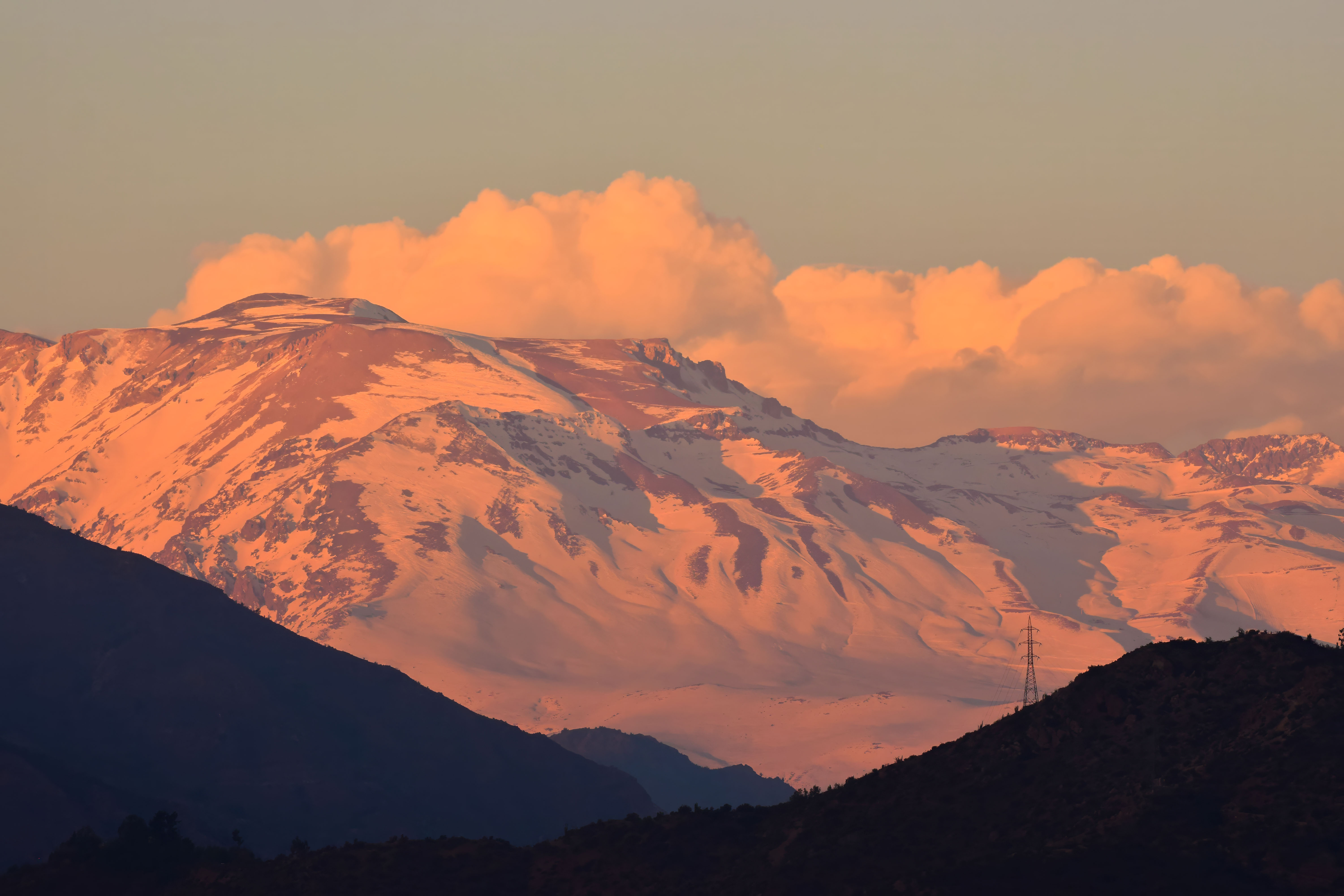
Chilean Memories #9: Snowy Sunset
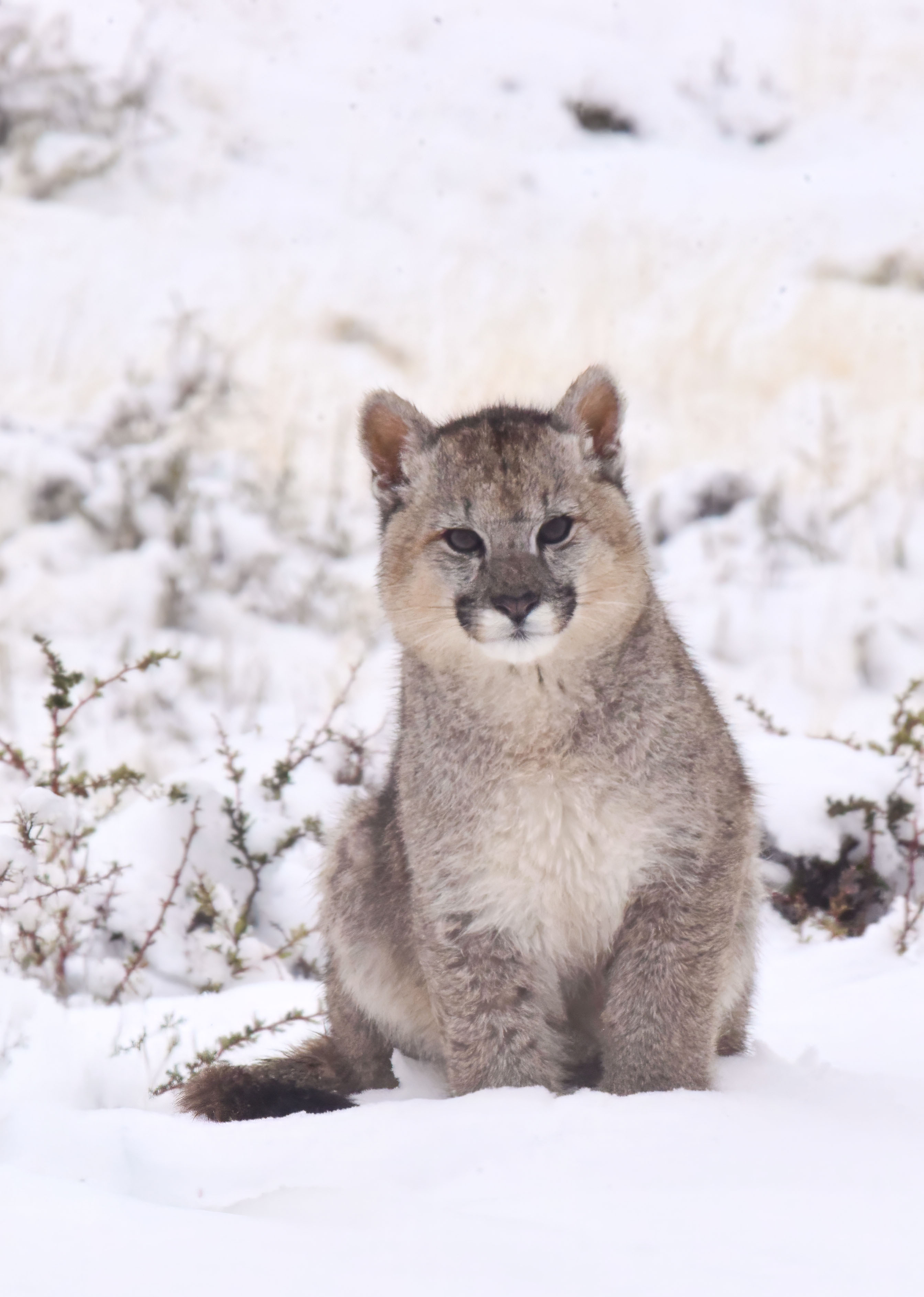
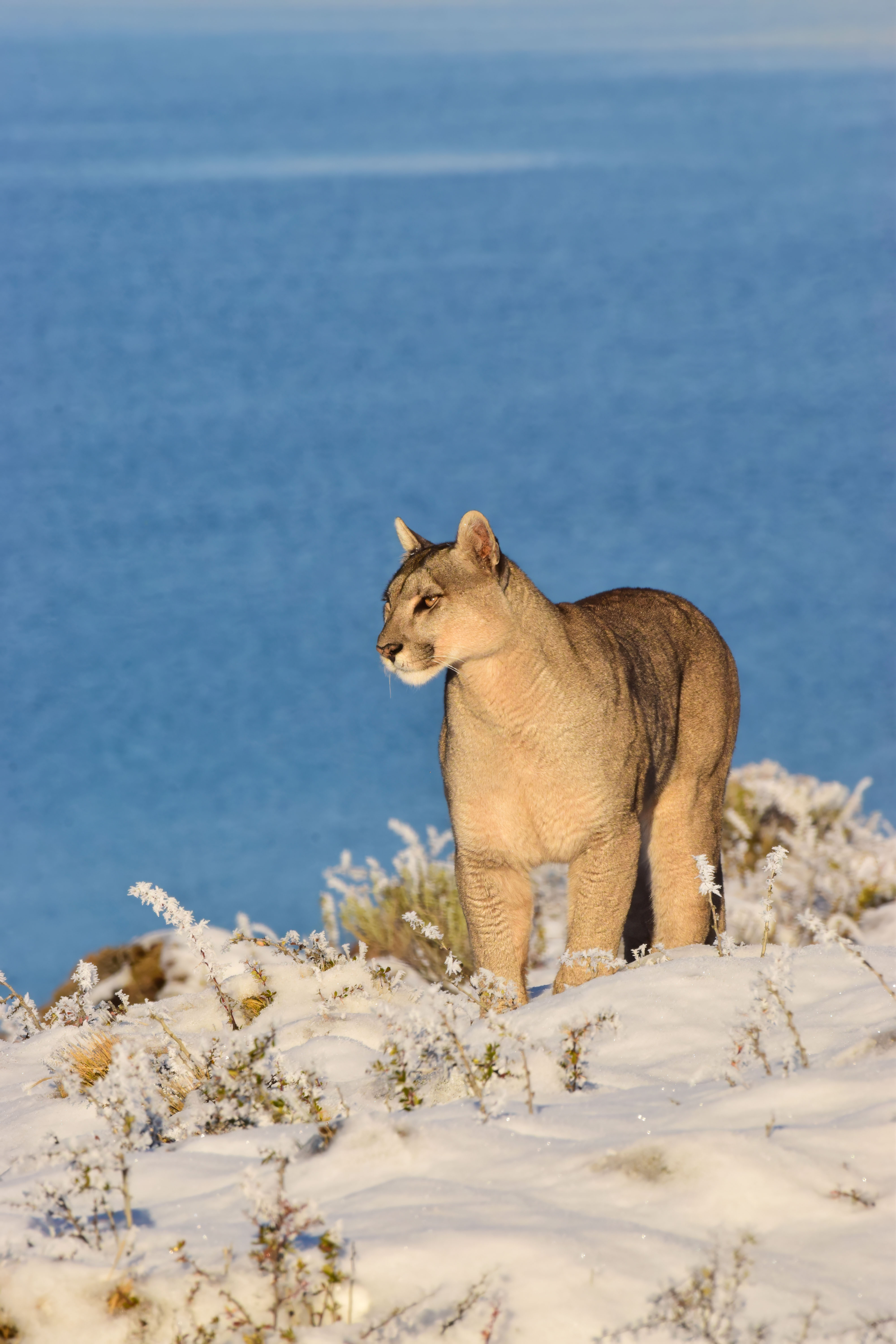
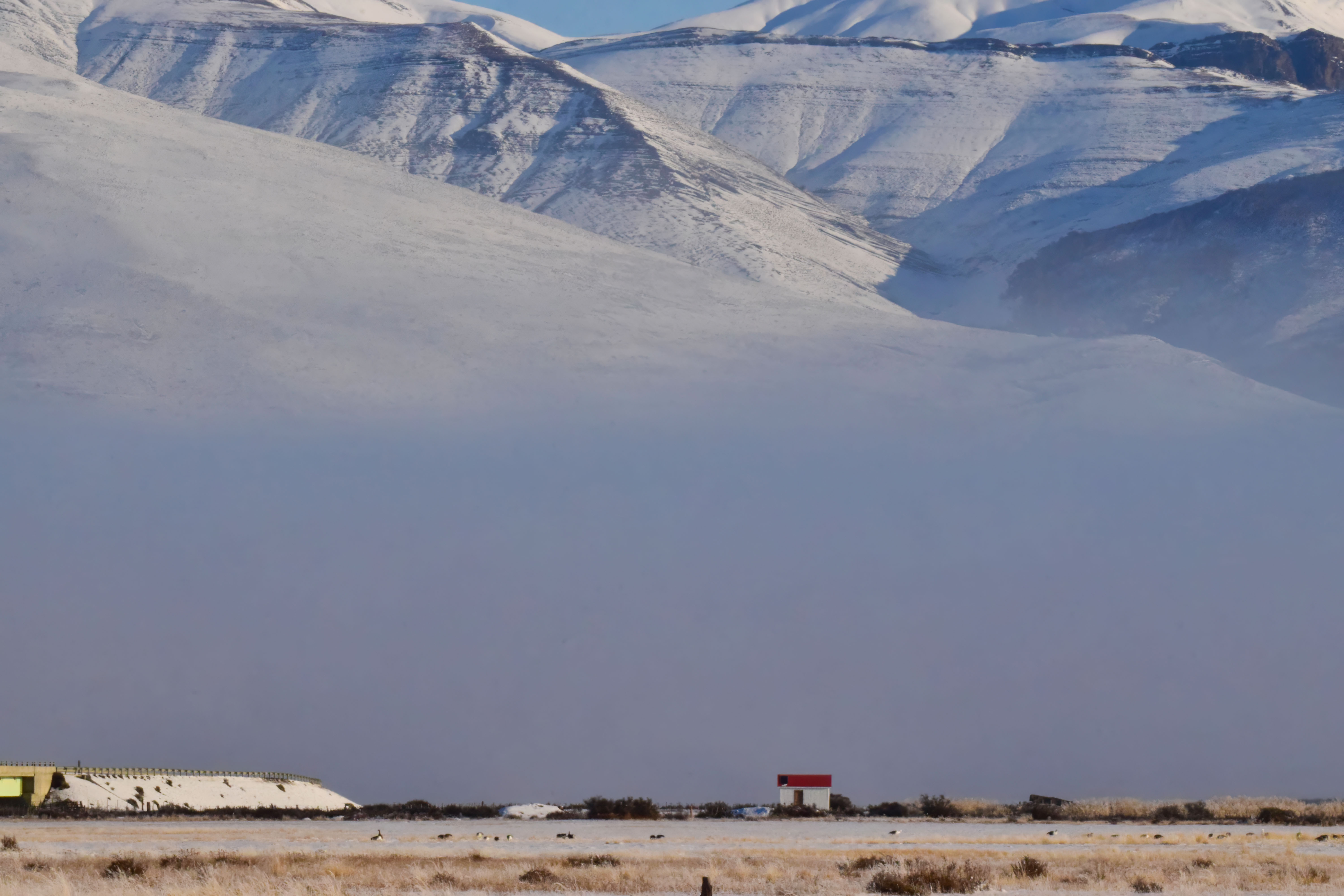
Hostel Coastal B&B, Puerto Natales. 18.48.
I know I’ve found somewhere absolutely desolate when I hear myself throwing the word “beautiful” around like a flail. And that just about sums up Puerto Natales. Desolate. But breathtakingly beautiful in its desolation.

Wind the clock back. I’ve had comfier flights. The journey down to Puerto Natales via an hour’s layover in Puerto Montt was perfectly smooth, but I’ve not yet recovered from the debilitating impact of a fourteen hour flight in an air-conditioned box, so my eyes and nose were streaming all morning. To add insult to injury, my ears clogged up upon landing in Puerto Montt, which was less painful than a nuisance that it was impossible to ignore. It was some relief when the last of the new passengers had found their seats and the plane was up in the firmament once again.
I did, however, get my money’s worth from the window seat. Chile’s Lake District is nothing short of spectacular. Think Cumbria if you will, but on a much, much grander scale, where the lakes are larger than cities and the mountains are merely supporting characters for the real stars of the show: the mighty snowcapped volcanoes, rising up and out of the earth in perfect wintry cones. Some of them were gently smoking from their summits; others forced the clouds to crest their peaks like waves, adding a further sheen to their majesty. This place is very high on my list of options for the last week – if I can only find a way to get down here overland, that is. I think I’ll have done quite enough flying by the time I get back from this cold corner of the world!

After Puerto Montt, the world below disappeared beneath the clouds for all of two hours. It was only upon the final descent, mere minutes from the tiny landing strip, that the snowy wastes of Patagonia finally appeared. If Santiago felt like Spain and the Lake District looked like England or even Canada, this is something else entirely. I have no yardstick for this kind of world. Not even Poland in the grip of midwinter comes close. The indescribable vastness of it all, scored with criss-crossing tracks and frozen ponds, appearing and disappearing at will beyond the snow clouds… it’s almost eerie.

Landing was no small feat either. The captain had to pull up out of the descent just moments from touchdown due to fierce winds, the likes of which I have only read about in books about this place. The ancient explorers called this land Tierra del Fuego after the many fires lit upon the shore by the indigenous Selk’nam, but Tierra del Viento may be a more appropriate moniker – this corner of the world seems to be ruled by the wind.

I wasn’t entirely sure how I was going to get from the dinky little airport into town, but that question was answered quickly by the local transfer shuttle service advertising itself loudly in the arrivals lounge, and at $5 for door-to-door service, they’re practically giving it away.
It would had been a shorter service had the driver heard me correctly and taken me to the Hostal Coastal and not the Hostal Austral, which whacked another twenty minutes onto the trip and gave me a proper scenic tour of the backwaters of Puerto Natales. I suppose it doesn’t help that the two words sound similar, and I can’t blame the driver for defaulting to the one that is actually in Spanish. But this B&B is wonderfully homey, if a wee bit of a trek from the centre (we’re talking the minutes, tops, but it’s enough to make me reconsider going out in the cold and the dark for supper).
Puerto Natales is immediately a very different world to the rest of Chile. Even our layover in Puerto Montt had many of the same birds flying by as can be found in Santiago. But not here.
If check-in hadn’t taken a little while, I could have practically fed the chimango caracaras that were perched on the fence outside. I went searching for them later, but a family of fishermen spooked them off. It was a shame, but it was just as well – none of my photos came out right anyway as it was getting very dark. That’s why I came out to look around, really – to get my bearings and play around with the camera settings so that I’m not caught out if we should be so lucky as to find any pumas over the next few days.

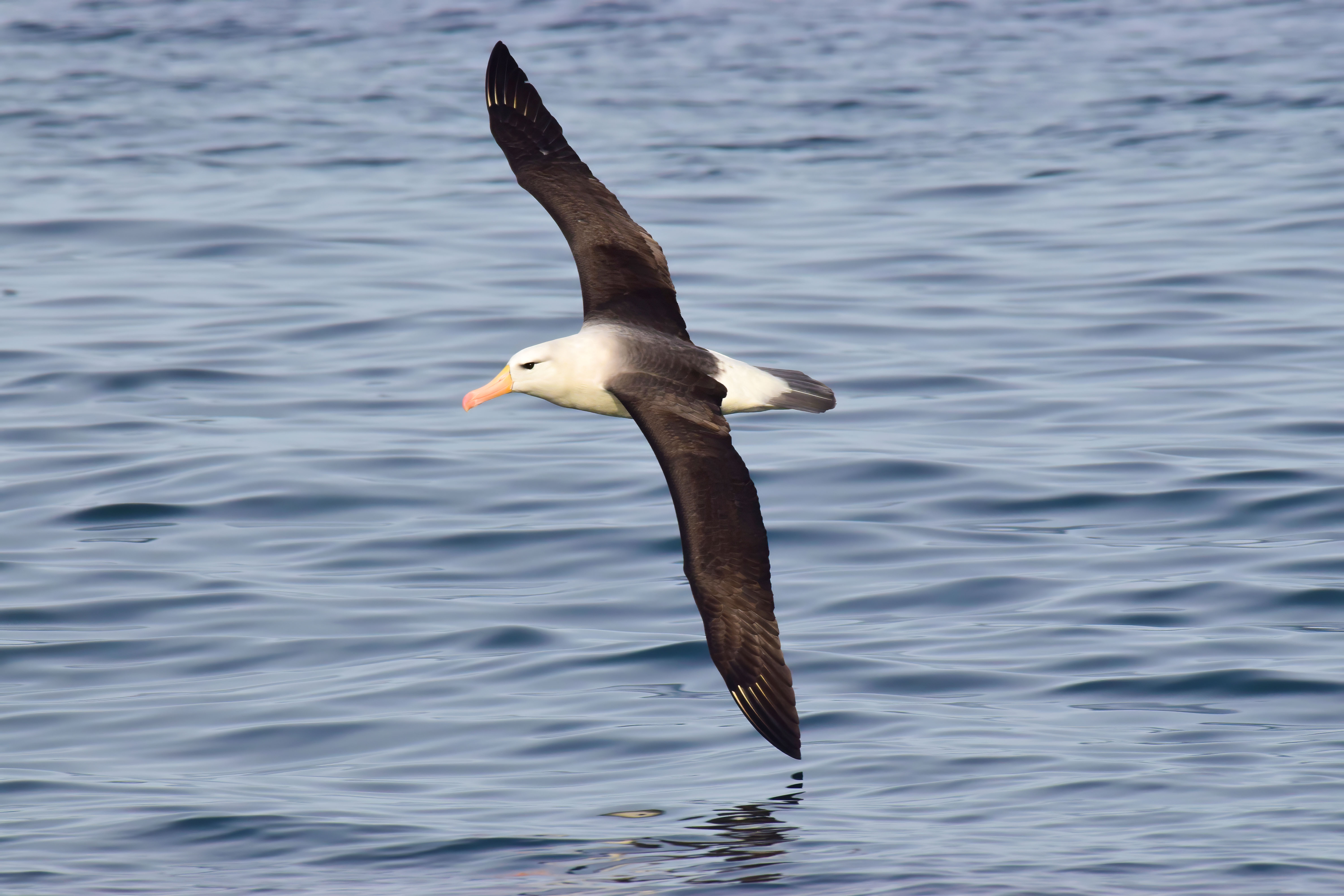
Apart from the caracaras, the wildlife here is much more like what you might find in Antarctica. Imperial shags bobbing on the water in the bay and sinister-looking dolphin gulls with their dark feathers and red beaks. White-eared grebes sharing the shoreline with upland geese, steamer ducks and… what the?

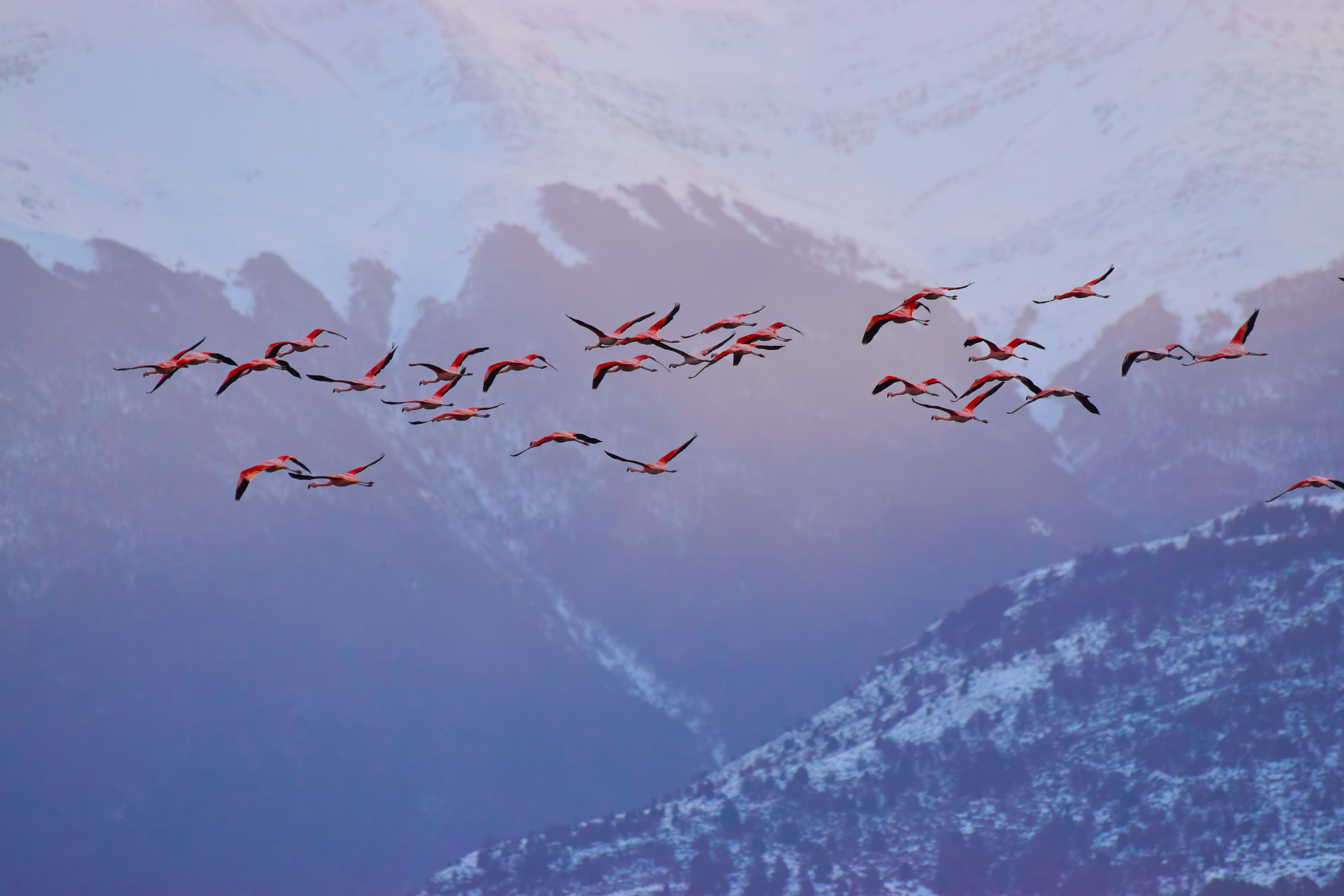
That’s right, the guidebooks aren’t goosing you. Puerto Natales hosts a herd of Chilean flamingos during the winter months. Quite why they come here, to this dark and desolate corner of the world, I can only guess. Perhaps it has something to do with the legendarily rich Humboldt current. Either way, they are a decidedly strange sight: a mass of crimson and salmon pink in an iron-grey Antarctic sea.

I think I’ll call it a day there. My ears were rescued until the captain had to do that emergency manoeuvre and now they’re right back to how they were before. It wouldn’t be the first time I’ve had some kind of Eustachian Tube Dysfunction, only the last time it ended in a burst ear drum and three bizarre and painful months of diplacusis dysharmonica. That’s why I’m not trying to force my Eustachian tubes open by the conventional methods. With any luck, they’ll heal in time.
A good night’s sleep would be nice – I didn’t get much last night because the five Brazilians in my dorm decided to turn on all the lights just before midnight and have a jolly conversation at full volume about their respective cities. They didn’t get the hint until they left for the club, and when they did, the chap from Rio decided to ignore his alarm at four in the morning, so the fellow in the bed above him had to creep out and switch it off. At least, I think that’s what he did.
But now I have a room to myself for five nights. Bliss! I intend to make the most of it. Starting with a good kip. Tomorrow is another day. BB x
Las Condes, Santiago de Chile. 10.50.
After a flight that seemed to go on forever, I have made landfall in Chile. Tomás, my host for the next four weeks or so, very generously offered to come and pick me up from the airport – an offer I found it impossible to decline, operating on about an hour’s proper sleep and six hours of sleepless shut-eye.
Being right at the back of the plane meant that I was the very last customer served dinner, by which point they had run out of everything but chicken. I hadn’t eaten much, so that was fine by me – I thought it was really top-notch, by plane standards (or any standards, for that matter). The film choices were fab too, once I’d worked out where to plug in the complimentary headset (hint: it’s in the armrest to your right). I watched The Mummy: Tomb of the Dragon Emperor (largely on fast forward, as I’d had it on my mind a few days prior), considered Avatar III: Fire and Ash and then changed my mind and opted for Michael, the biopic about my all-time favourite artist that I had somehow managed to miss in cinemas this summer. I’m not normally a fan of biopics, lumping them somewhat unfairly under the same “cash-grab” category as Disney’s recent slew of remakes, but I thought this one was genuinely moving. Then again, I adore MJ and his music, so that’s probably my own bias talking.
I still managed to watch a silent version of Avatar on one of the telescreens in the row in front. It looked almost identical to the previous two films, boiling down to a sequence of who-took-who-prisoner and Eywa saves the day again, but maybe I was missing something without the dialogue.
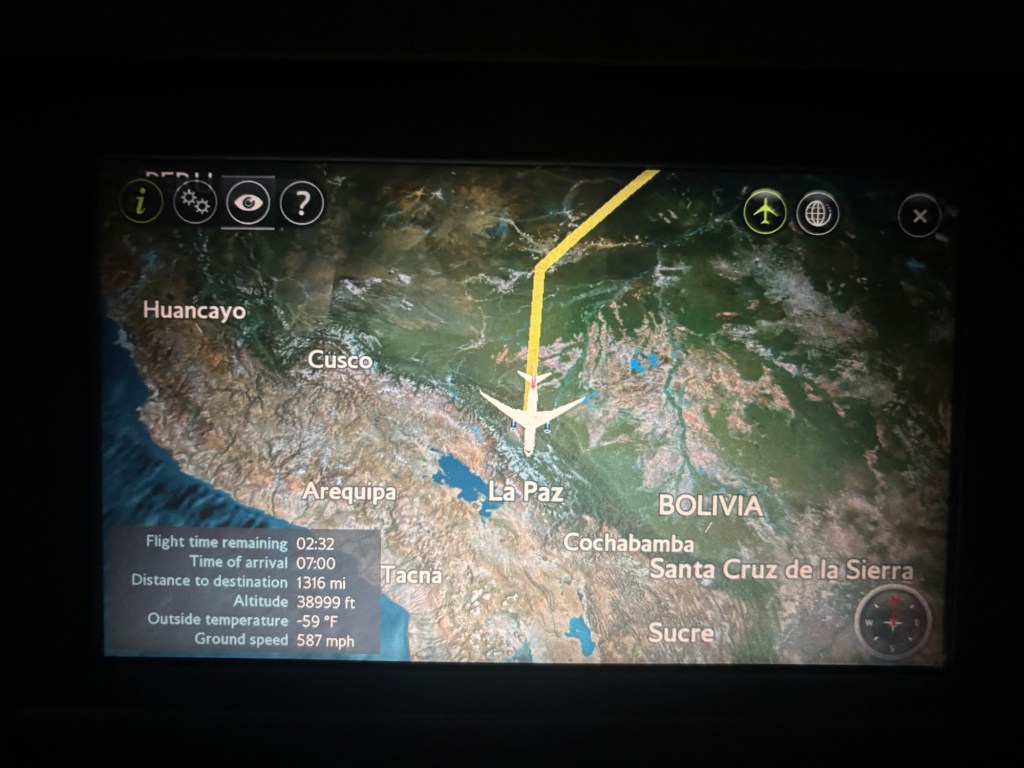
I also managed to watch The Batman before landing in Santiago ahead of schedule at 7am this morning. That’s around six or seven hours of films, plus another six trying to get some sleep – and that’s still not the entirety of the flight time. That’s an indication of just how long the journey to Santiago is. Thank goodness it was all in the dark!
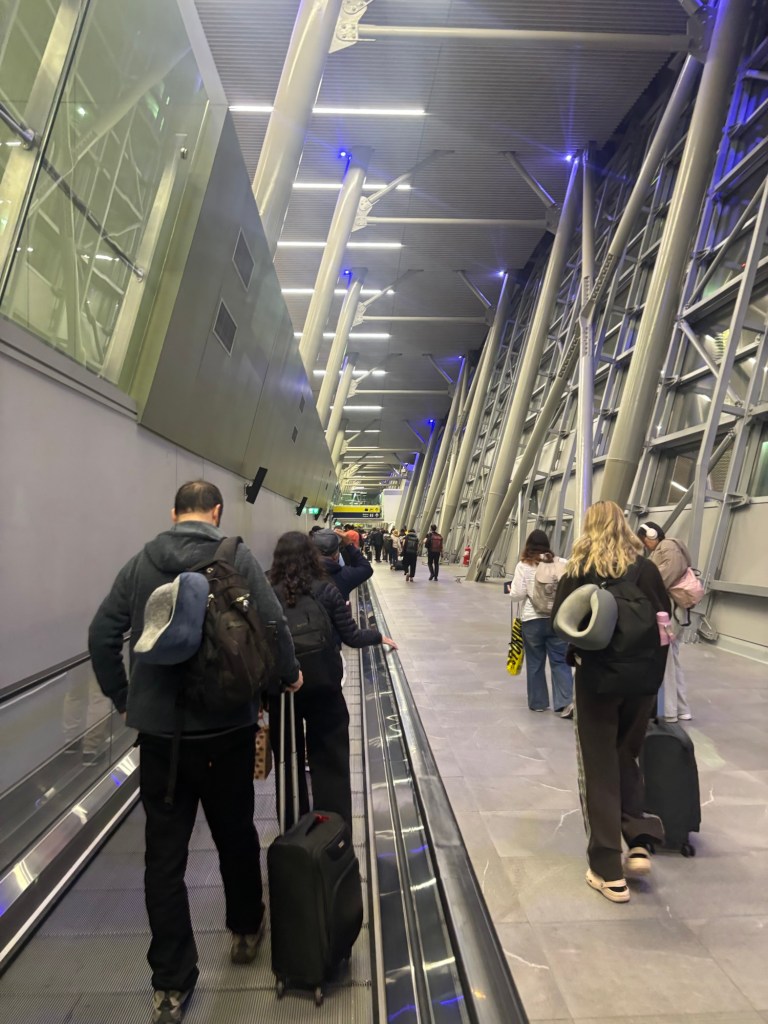
It took about an hour to get through customs, largely because the immigration control was very busy for seven o’clock in the morning. I had a gut feeling I’d be assigned to Gate 13 – unlucky for some – which I was, some thirty minutes later, only to find that Señorita Allende at the control desk was writing her next novella for each customer, so the queue for Gate 13 moved at a snail’s pace. I was two clients from the desk when she put on her coat, packed her things and signalled to the rest of us that her shift was over and to find another gate. The man at Gate 12 was much more efficient: a quick glance at my passport, a stamp (yay!) and through.
I was stopped at customs, which was an interesting change, because of the marmalade I’d brought over as a gift for Tomás and his family. I’d forgotten how much of a fuss is made of preserves! They let me through without a fuss – and with the marmalade, amazingly – but maybe next time I’ll stick to chocolate.
First impressions of Santiago? I’ve barely got to know the place, but from a single drive across the city to my host’s home in residential Las Condes, it’s a very different city to Lima or Arequipa. It feels instantly more like Madrid or Barcelona in its architecture, with its tower blocks and its vast network of underground highways. A dense wintry cover of cloud is currently hanging over the city, shrouding most of the snow-capped peaks beyond a grey veil, while the thick layer of smog that hovers above the city was immediately obvious upon leaving the airport.
It feels decidedly weird leaving England with a tan and a t-shirt, getting on a plane to somewhere abroad and immediately having to throw on a jumper and some warmer socks. It’s also a positively balmy 17°C here, a point emphasised by the faraway screeching of monk parakeets, an invasive species in most European cities but just as native to this strip of South America as the puma and the condor. It’ll be even colder down south in Patagonia. I hope my winter gear is warm enough!
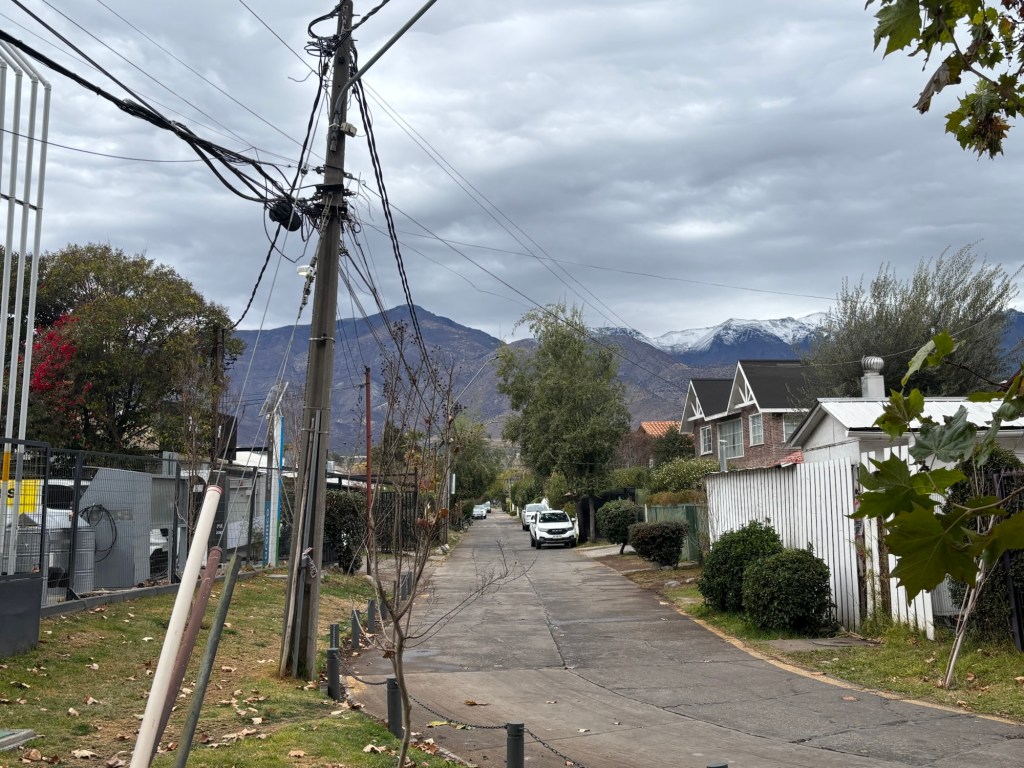
I’m giving up on trying to catch up on lost sleep. It’s not working, and probably dangerous to try, or I really will throw my sleeping patterns right off. I’ll get a proper night’s sleep at the hostel I’ve booked in downtown Santiago tonight, after getting my bearings and catching the Spain v Belgium game, of course. Until then, let’s take it slow. Don’t want to burn out before I’ve even started my placement now! BB x
The Flat, 21.56.
Two weeks from now – right now – I will be sitting somewhere in the transit lounge in Bogotá’s El Dorado International Airport, awaiting my connecting flight to Peru. That’s about 5,300 miles (or 8,500 kilometres) from home, which will be the furthest I have ever been from home by a long shot, beating both Kampala and a brief layover in Dallas last year – and, if things go to plan, I may well find myself even further afield before the year is out. I will also be a full five hours out of sync before I even reach my final destination, so I will need to be careful and try to acclimatise with an altered sleep schedule a few days in advance.
We are very much into the preparation phase now. I have arranged the last of my accommodations for the journey in Ollantaytambo, where I hope to end my Peruvian adventure in the peace and quiet of the Sacred Valley. I have ordered a new pair of sturdy Merrell hiking books to see me around the altiplano and beyond. I should do a preparatory pack this weekend to see if I can fit everything into my rucksack. I’m a light traveller, but the zoom lens is likely to be the largest and heaviest of the equipment I will be lugging around. The jury’s still out as to whether I should take a book with me or simply use up the last of my Audible subscription credits and download more audiobooks than I could possibly hope to finish in that time. I’m leaning toward the latter, if only because I’m not particularly good at leaving a good book behind.
I’ve been meaning to get out and about and keep practising with the lens, but my time is very limited. Last week I managed to escape for just over an hour on Friday afternoon while the sun was out, but between report-writing, lesson planning, taking my team to Oxford Schools on Saturday and being on duty almost all of Sunday, I haven’t had much luck. The Netherclay Community Wood isn’t too far from home, but it had rained a lot on Friday so I didn’t explore the woods too much, as the ground beneath my feet had become little better than a squelching quagmire. Little wonder, then, that there were so few walkers out and about.
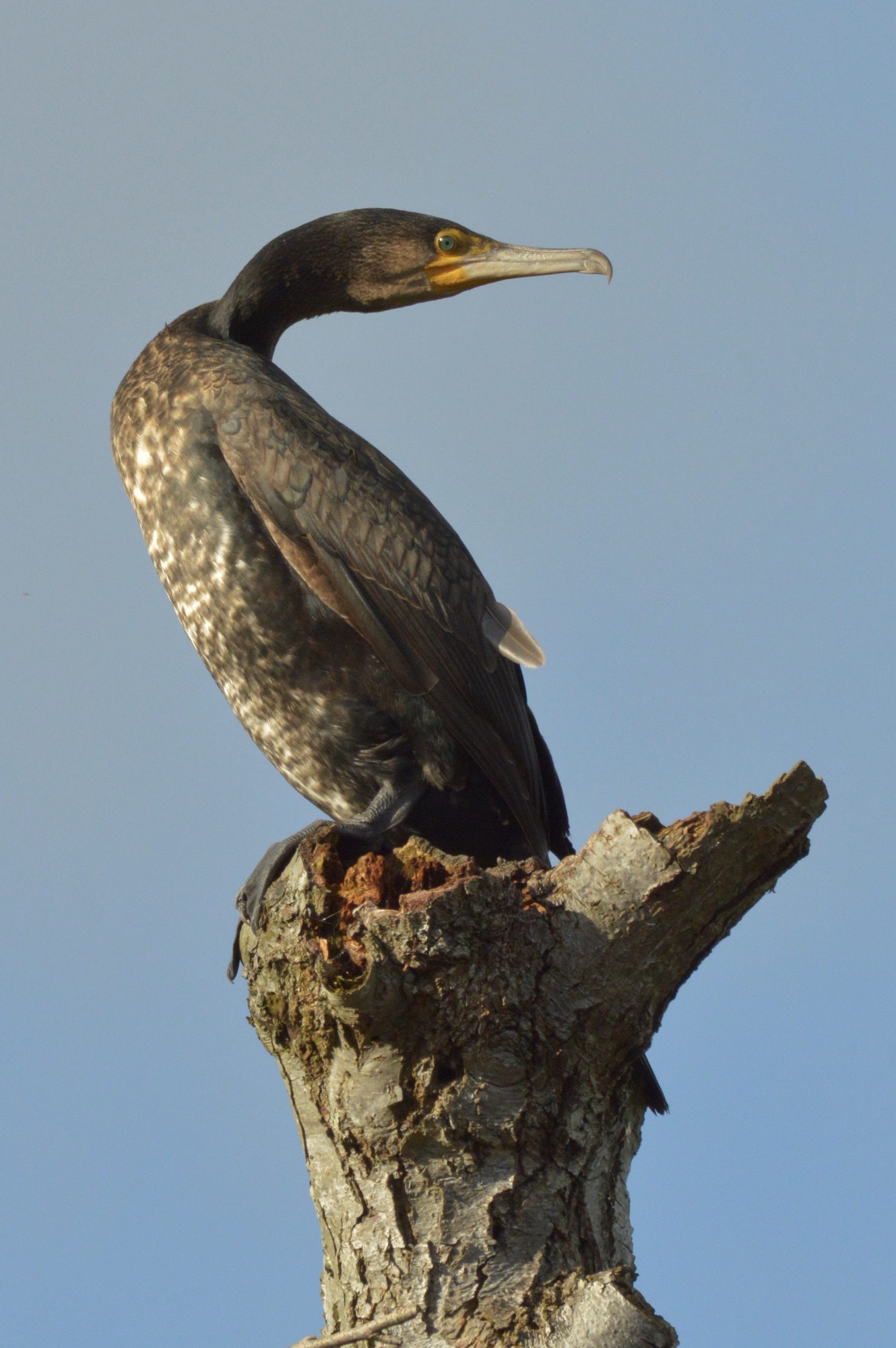
I went looking for the water rail that I heard last week, but I didn’t see or hear it. I did disturb a kingfisher on the other side of the pond, though, and while the halcyon bird was much too fast for me, I did have more luck with a young cormorant in the momentary interlude when the winter sun deigned to show its face.
Having something incredible to look forward to always makes the Lent term – by far the hardest of all the school terms – a lot easier to bear. Last year, the knowledge that I would be spending all of three weeks in and around Spain was enough. This time, I have pushed the boat out so far that there is a very real danger that the tide will carry it away. And once it does, where will it take me? I’ve lost track of the number of times I’ve caught myself exploring other destinations, other wildlife adventures, other places where I can run while I still have the light of life. This year it’s South America’s turn, but in the years to come, I would dearly like to see the rest of the world, now that the wanderlust has returned. I still harbour dreams of seeing the eerie saguaro stands of Sonora, but a number of other old ideas have started to rise to the surface, like bubbles beneath a frozen lake: KwaZulu-Natal, Kanha National Park, Svalbard and Borneo.
It may well be that in abandoning my search for Her, wherever she may be, and indulging in the thing that has always brought me the most joy, I am putting off the thing I want the most in life. It may also be that I find Her along the road. Either way, I am done waiting. The apps are drier than the Atacama these days and the conversations drier still. There is a world of light and life and joy out there and I can no longer ignore it. It is time for a change of scenery. BB x
Palacio Santa Marta, Trujillo. 19.04.
It turns out the rain in Spain does indeed fall mainly on the plain. And when it does, it does so with a Biblical vengeance. I made it to my hotel in Trujillo with just seconds to spare when the heavens opened. Any hopes I might have harboured of exploring the city’s surrounding countryside were swiftly washed away, as the rain came down all afternoon, all through the night and long into the following morning.
This would be a real downer if I’d had plans. But my itinerary is an open book and I’m always happy to improvise – it is my preferred method of travel. So I enjoyed a late morning, a proper breakfast and the blissful quiet of one of Spain’s most beautiful (if isolated) towns.
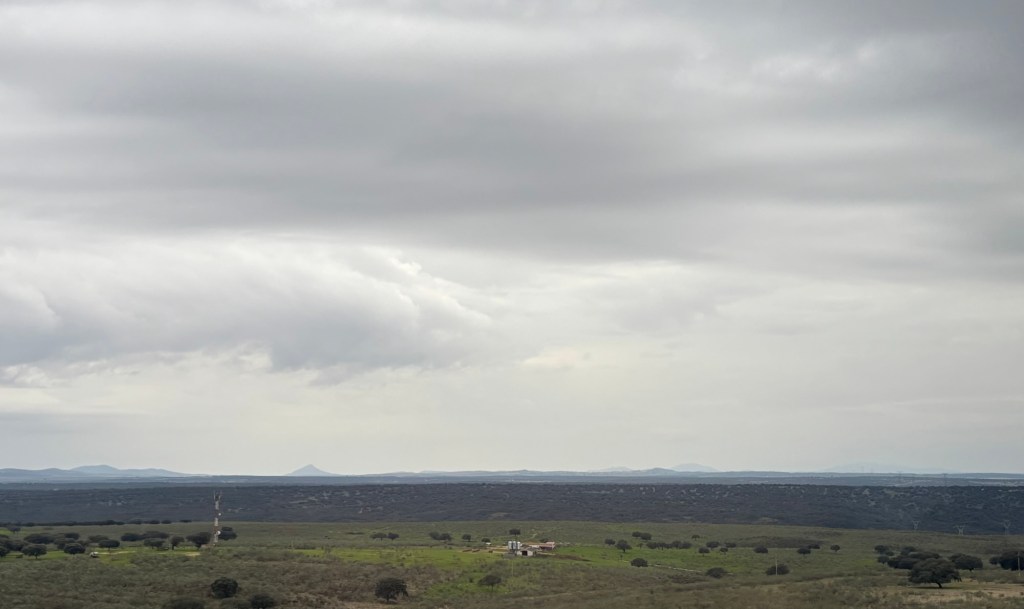
Trujillo sits atop a small granite ridge in a boulder-strewn corner of the Llanos de Cáceres, a vast and featureless steppe that stretches between the Sierra de San Pedro in the west and the Ibor Mountains to the east. There’s nothing like it in Western Europe. You’d have to go as far as the Puzsta in eastern Hungary to find anything close to its vastness. Lichen-covered granite boulders rise out of the earth like giant’s teeth and the odd tree stands alone in the fields, but beyond that, it’s like staring into the infinite.
Little wonder, then, that Hernán Cortés and Francisco Pizarro – both native sons of this part of the world – set their sights on nothing less than the horizon – they’d had no choice but to do so since the day they were born.

Extremadura can be a desolate place in winter. It can be pretty desolate in summer, too, but there is a virgin beauty in its isolation. By avoiding the grasping arms of the hordes of tourists who have strangled much that remained of Old Spain into submission, Extremadura has managed to hold on to the embers of an ancient fire which exists only in the memory of those living among the tower blocks of the southern coast.
Perhaps that’s why it’s often considered one of the main contenders for the Birdwatching Capital of Europe, since so many rare and otherwise elusive species still flock here in droves, taking advantage of our absence to go about their lives as their ancestors have done since before we came to this land.
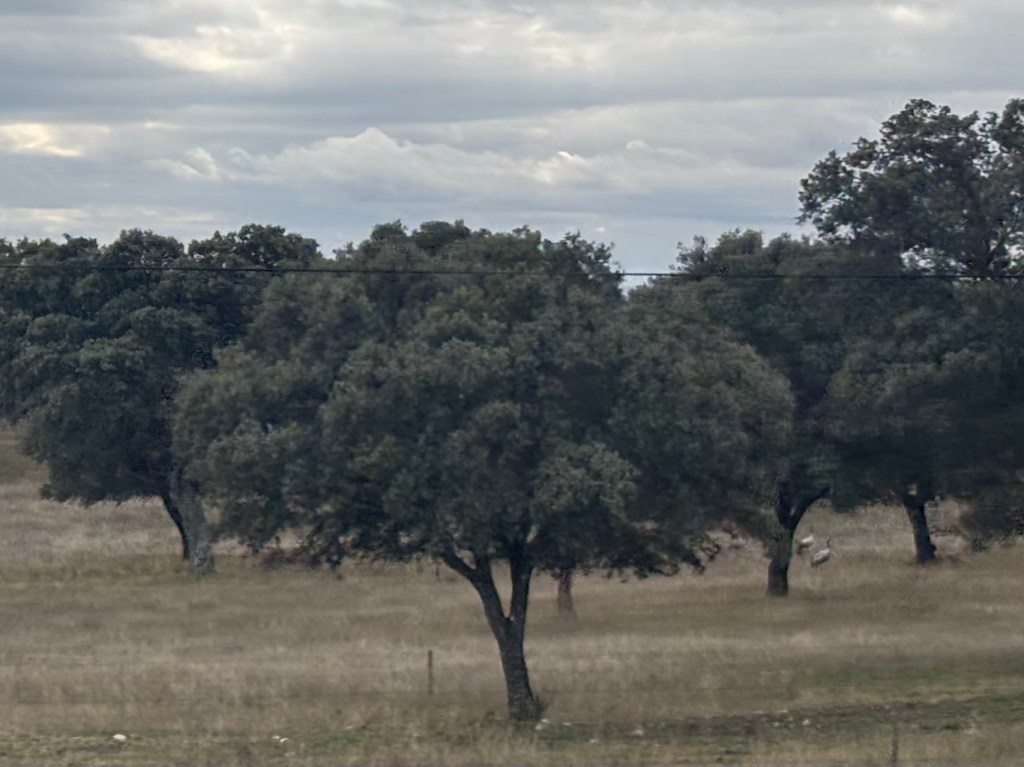
You can see some of that without even leaving the motorway. Every winter, more than 75,000 common cranes travel from their breeding grounds in Northern Europe to this remote corner of the Iberian peninsula. They spend the colder months in the shade of the dehesas, feeding on acorns. They’re a rather common sight if you look beneath the trees, and at over a metre in height, they’re hard to miss.
When I first came to Trujillo in the spring of 2016, I promptly fell in love with the place. It wouldn’t be the first remote corner of Spain that’s stolen my heart – El Rocío and Hornachos are up there – and it won’t be the last. It’s found its way into my saga as the elected home of my hero, partly out of practicality and partly out of a sense of wish fulfilment on my part. Half of me wishes I’d been brave enough to flat out ask to be sent here for my second British Council placement back in 2017. It would have been a lottery, of course, but what would it have been like to live here, I wonder? Trujillo is a lot smaller than Villafranca de los Barros – and a lot more out of the way – but infinitely more scenic.
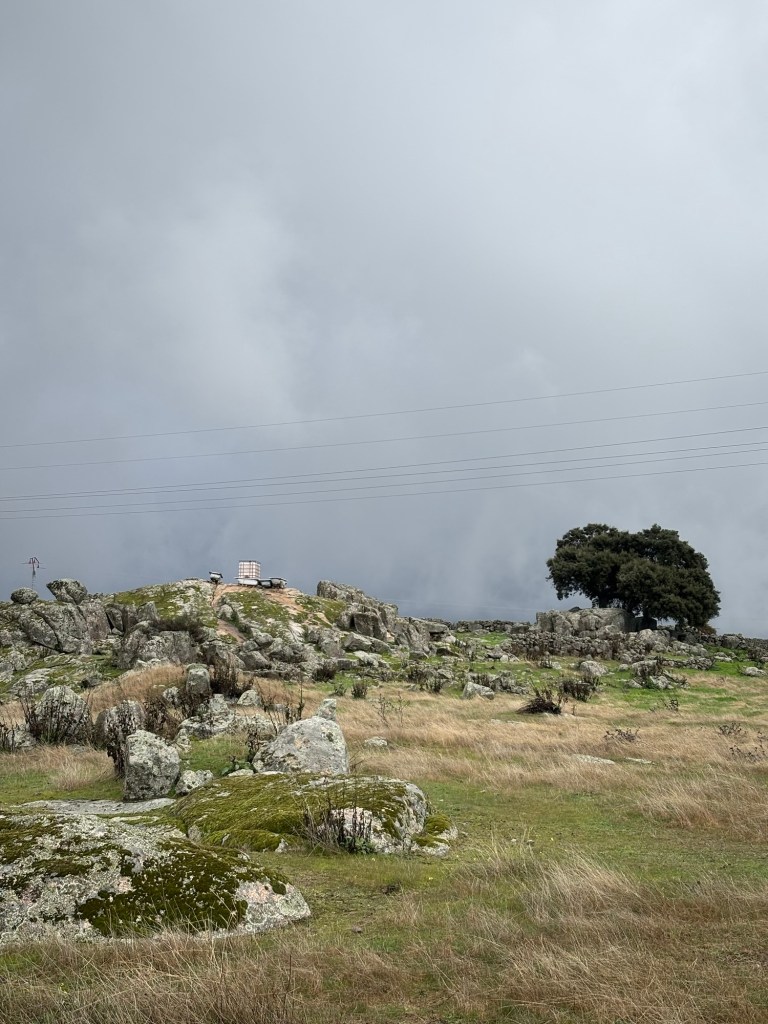
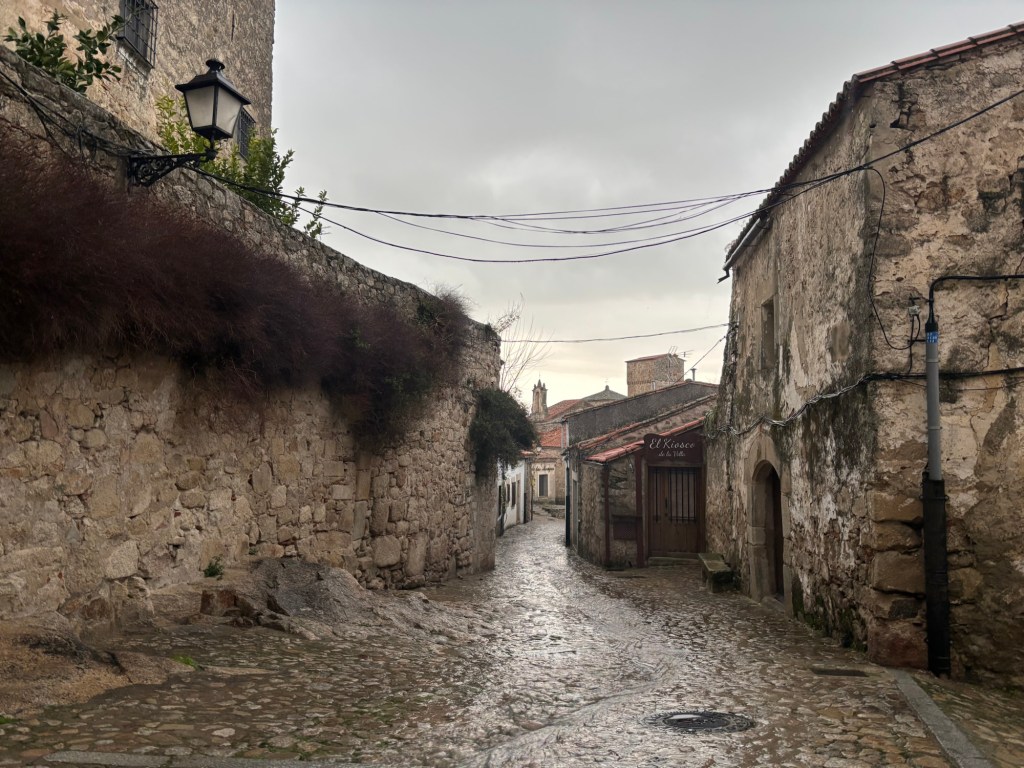
I managed a short reccie to the north of town, before the skies turned dark once again and I had to admit defeat and return to the hotel. The cobbled streets running down from the hilltop had become rivers in their own right. It wasn’t yet siesta time, but nobody else was out and about. And with good reason!
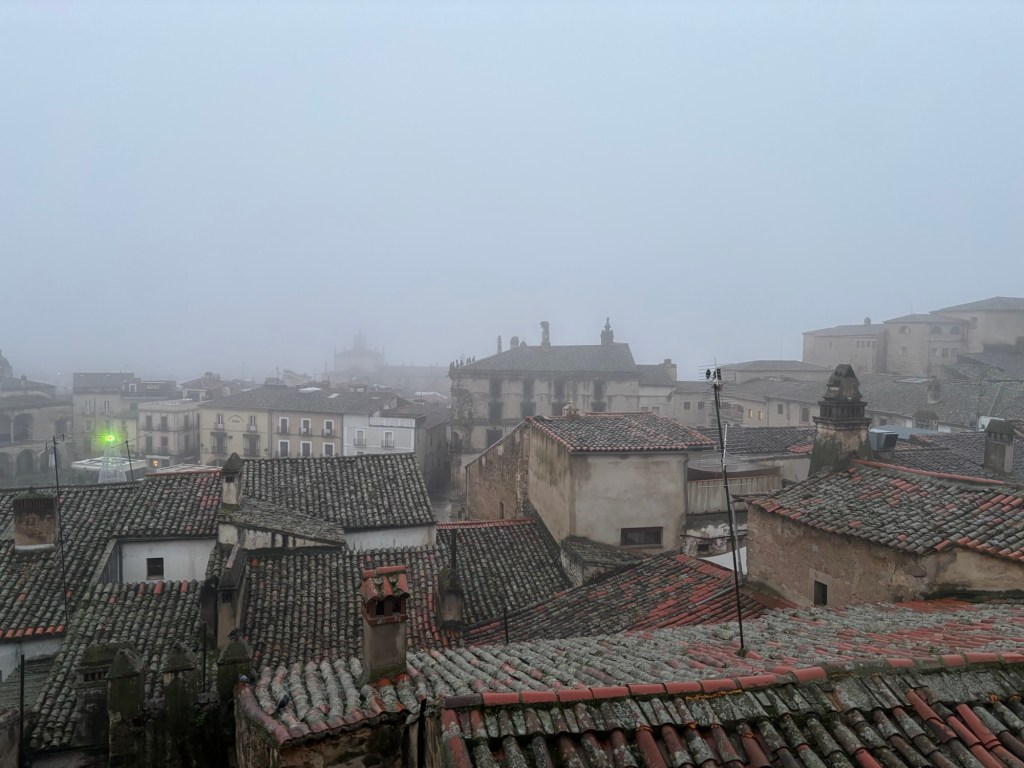
From my vantage point on the second floor of the hotel, I can see out across the plaza and the rest of town. There isn’t all that much to see, with the rain clouds obscuring most of the world from view, but when the sun is shining, you can see straight across to the pyramidal Sierra de Santa Cruz – and the town at its feet, curiously named Santa Cruz de la Sierra (I’m not altogether sure which came first).
If the weather had been kinder I’d have set out at first light and tried to reach the old Moorish settlement at its summit… but then, I haven’t exactly come dressed for a hike. Perhaps it’s for the best that I have had a day to take it easy in Trujillo.
Tomorrow is a new day. 0% chance of rain. I don’t need to rush off anywhere, so I might go for a stroll after breakfast and try to soak up the countryside while I’m here. BB x
Notes, field guides and micro-memoirs
A Solo Travel and Literature Blog
All about trees
Barcelona · Spain · Food · Travel
A glimpse of the world through my lens
Synastry & Karmic Astrology
A Journey of Travels, Teachings, and Truths Told Plainly
Musings of a trekking author
Inspiration and Spirituality **Award Free**
Illustrations to make you smile, laugh, and sometimes make you see things from a different perspective 😉
a woman with wings travelling the world solo

