Puerto Baquerizo Moreno, Galápagos Islands. 20.40.
The days here on the islands are falling into a sort of rhythm. Morning brings a slow and dark sunrise through the garúa, followed by spells of gentle rain falling on the roof over my head. The clouds hug the island for most of the morning, until the sun burns through them all shortly after one o’clock, which allows for a spell of humid sunshine until the clouds swallow up the sun once again before sunset.
August is – it should be said – definitely not the sunniest time of the year here in the Galapagos. Come to think of it, nowhere in South America seems to be, whenever I’m passing through. In fact, of the fifty-six days I’ve spent in South America this year, just under half have been washed out with rain. That could just be bad luck – I have been to each destination in its “off season”, which does usually coincide with the rainy season – but it could equally be an anomaly. Chile, for one, does not usually get as much rain as it did this winter.
It’s not so bad here, though. It doesn’t come down in buckets like it did in Chile and the Peruvian Amazon, and it does have the added perk of keeping the beaches and trails free of day-trippers, most of whom hole up in their hotels during the rain.
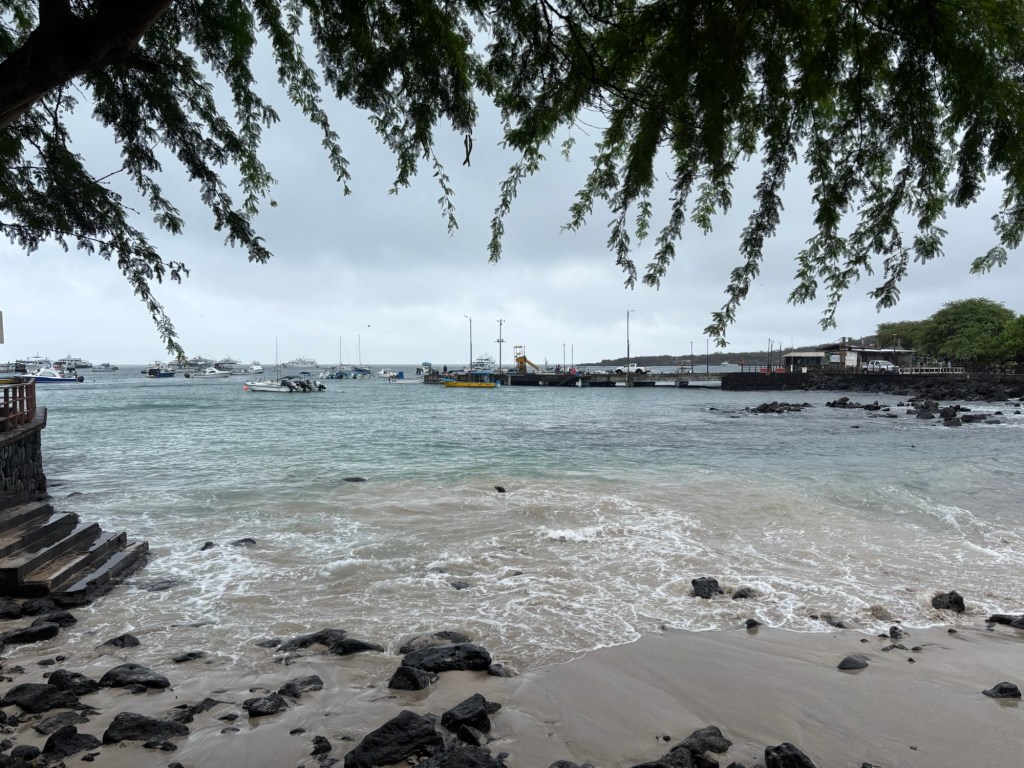
After a fake-out from the sun this morning (which was only briefly with us before the rain clouds returned) I set out up the Tijeretas trail to the cove I’d seen the other day. It was, predictably, almost deserted: just one other swimmer was there, the same one I saw when I scouted out the trail a few days ago, doing lengths of the bay.
I didn’t have a rental GoPro on me this time. Not that it really matters – some things are best remembered by memory alone. All the advice online had said the water would be much too cold to go in without a wetsuit. I suppose that advice was targeted at Americans, specifically the ones from Florida, where the daily temperature is a lot warmer. As an Englishman who has swum in the shores of the English Channel more than once, I found the water around San Cristóbal to be blissfully warm. I could have been in there for hours.
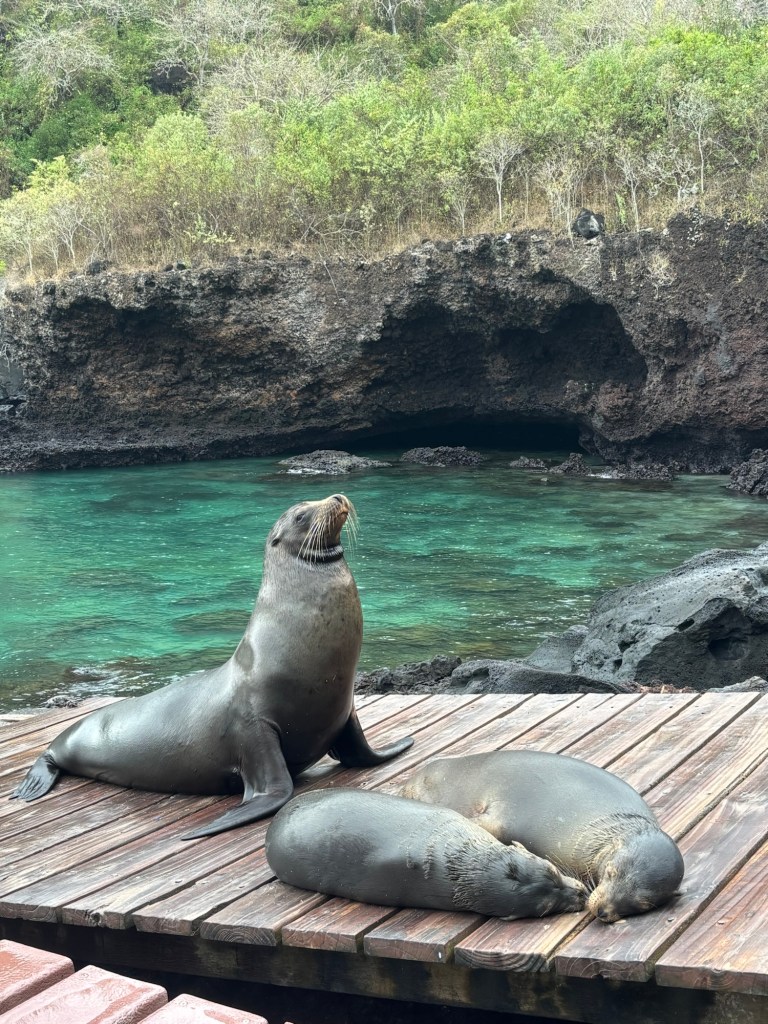
Here, as everywhere, I was joined in both land and sea by the sea lions. They really are everywhere on these islands, but they properly come into their own underwater, where their powerful flippers help them to fly through the water like birds in the air. At least twice during my swim I was nearly clipped by one that appeared out of nowhere, shimmering like gold in the grey water.
As for the rest of the world beneath the waves… where do I even begin? Butterflyfish and parrotfish, sergeant majors and surgeonfish, hogfish and hawkfish… all as wildly named and widely colourful as a Dr Seuss book. Like so many who come to the Galápagos, no doubt, I was especially captivated by the impressive king angelfish, one of the larger species you can find close to the shore, its dark body lined with an almost iridescent electric blue, complete with a smart shoulder stripe and a tail as yellow as a flame. What must Darwin and his men have thought when they saw these oceans full of living jewels on their voyage here, nearly two hundred years ago?
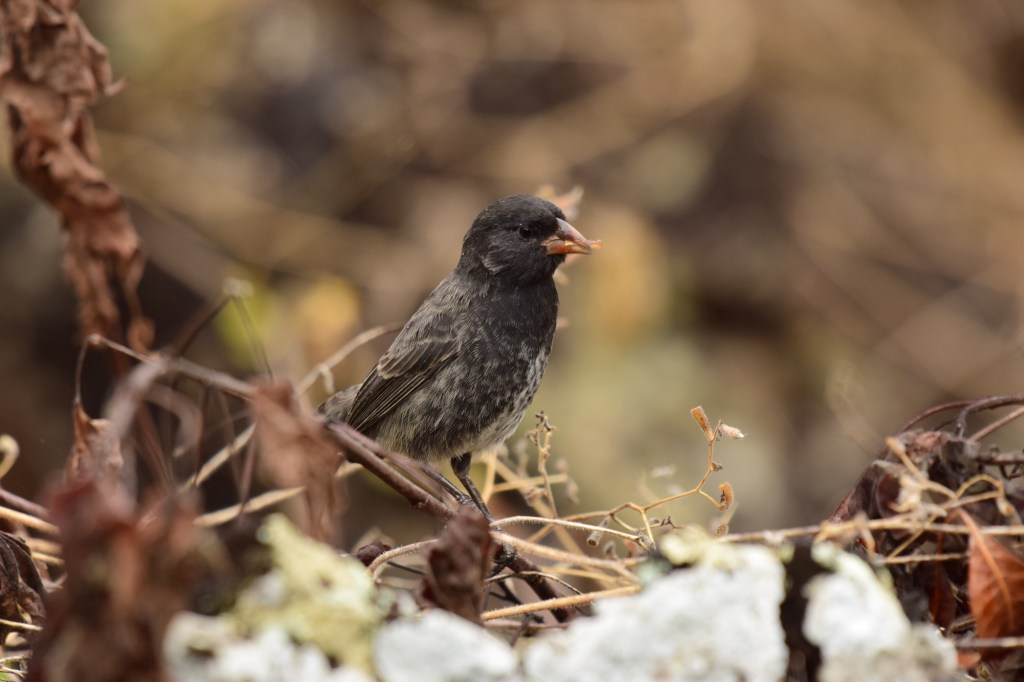
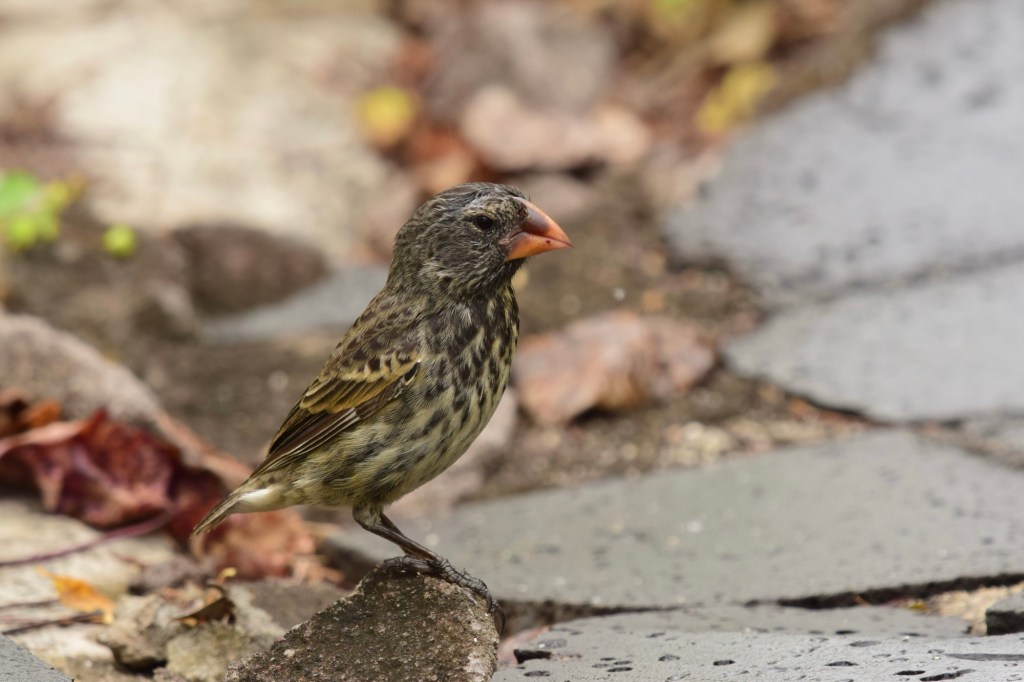
Speaking of Darwin, after I’d done a full length of the bay and dried off, I took my time heading back to my cabin so that I could linger in the forest. Mangrove warblers are just about everywhere, but it’s Darwin’s finches that are the real celebrities. Both species of ground finch are fairly easy to spot: small and medium. About as creatively named as a Starbucks order, they are at least easy to tell apart by the size of their bills.
I had lunch for $6 at a really lovely local joint in town, el Rincón de Sebas. I hadn’t eaten anything since lunch yesterday, so the bowl of steaming hot shrimp soup and the breaded fish were nothing short of heavenly. I’m not really the dieting type, but there is something to be said for delayed gratification.
I waited out the hottest part of the day in the cabin, wrestling unsuccessfully with the dry weeds that festooned one of my tops which gel from the balcony where it was drying into the rocks below. Whatever plant it was, it’s like no weed I’ve ever encountered before. Short of a professional roller, that burdock-like debris isn’t coming off easily, so I’ve had to admit defeat for the time being. Fortunately, it’s not exactly long-sleeved weather up here.
After negotiating tomorrow’s plan with Samuel, my guide from the other day, I opted for his discounted trip to León Dormido, also known as Kicker Rock. There was still a chance I could hold out for a possible opening on Española’s Punta Suárez, but that particular adventure has become synonymous with frustration on this trip, to the point where I have christened the place “Impossible Island”. Even if it were to appear now, I would be faced with paying double the price of the alternative – which, when you consider it would cost more than a one way flight to Peru from London, massively puts it into perspective.
Thanks, but no thanks. I’ll diversify my options and spend a day with the fish.
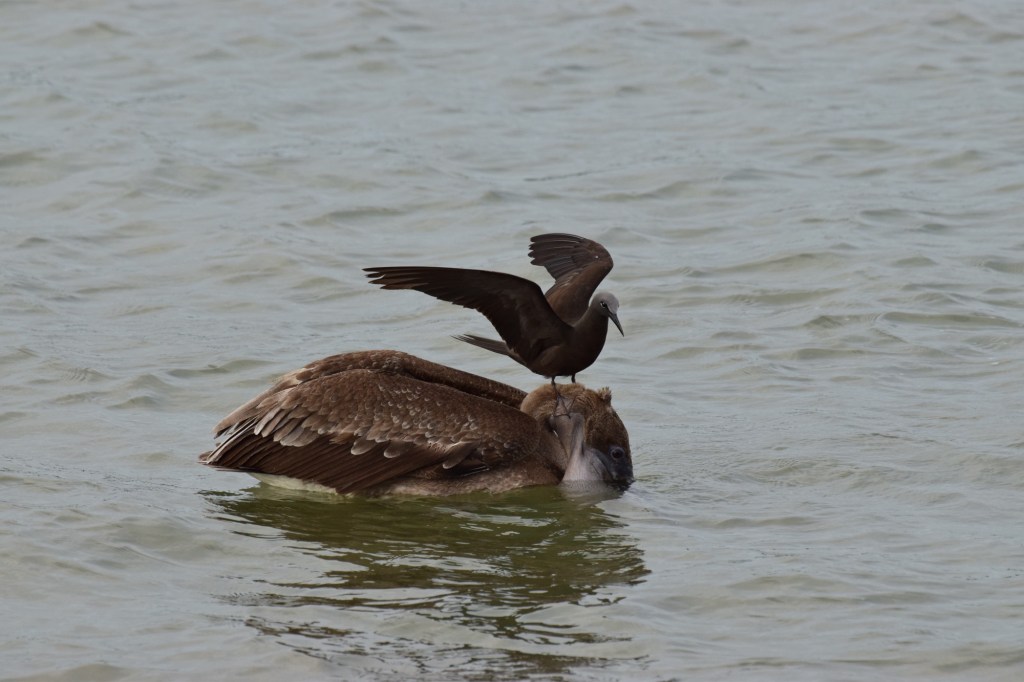
There’s always something to see in Puerto Baquerizo Moreno’s harbour, so I took my camera with me on my way into town to collect my snorkelling gear. Sure enough, the manglar and its connecting channel near the Ecuadorean naval base was a wildlife magnet, so there was much to see here. The local noddies were pestering a young pelican that was fishing in the bay. One of them continually tried to land on its head, doubtless hoping to snatch anything the giant caught before it went straight down the bird’s gullet.
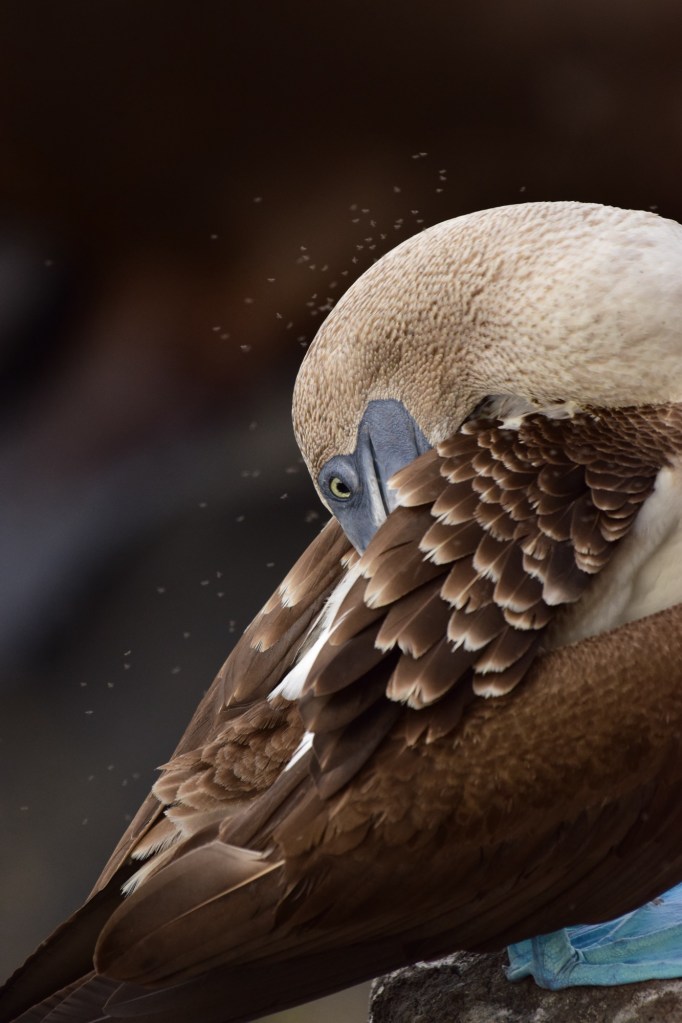
A couple of boobies were drawing a small crowd – not the American family watching them (/their smartphones) but the flies around their heads. I’ve noticed that these gnats seem to pester the iguanas quite a bit, so naturally a larger and more warm-blooded creature such as a booby would make for a better target.
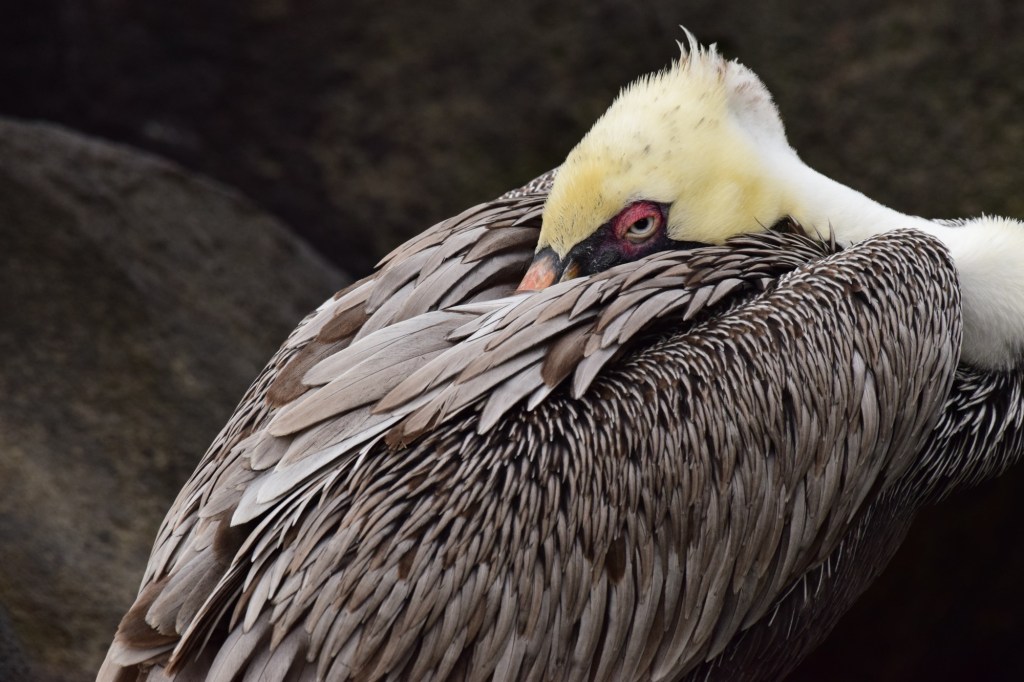
The oldest of the pelicans was avoiding the problem by simply burying its face between its wings. It kept one eye open, languidly watching the world go by. I didn’t get to see this particularly impressive specimen in full breeding plumage, because it took off and left while I was distracted by something else.
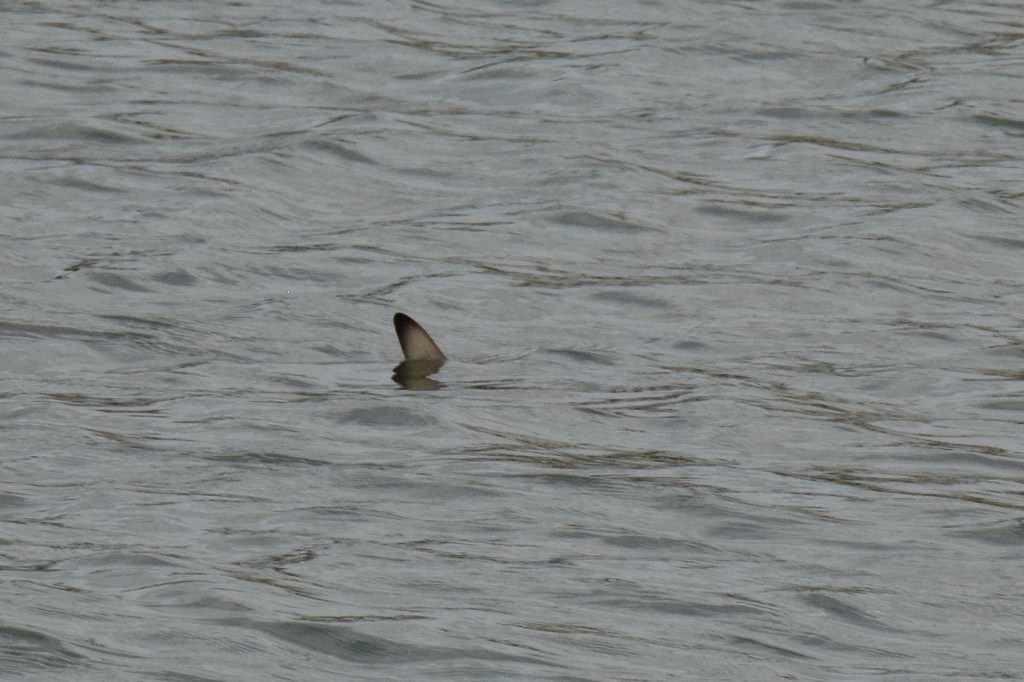
That something else was just a glimpse, but enough to be sure of what I was seeing: the tip of the dorsal fin of a shark. They don’t usually come this far into the shallows, so I was surprised to see the familiar Jaws-esque fin break the surface, putting the local sea lions on edge.
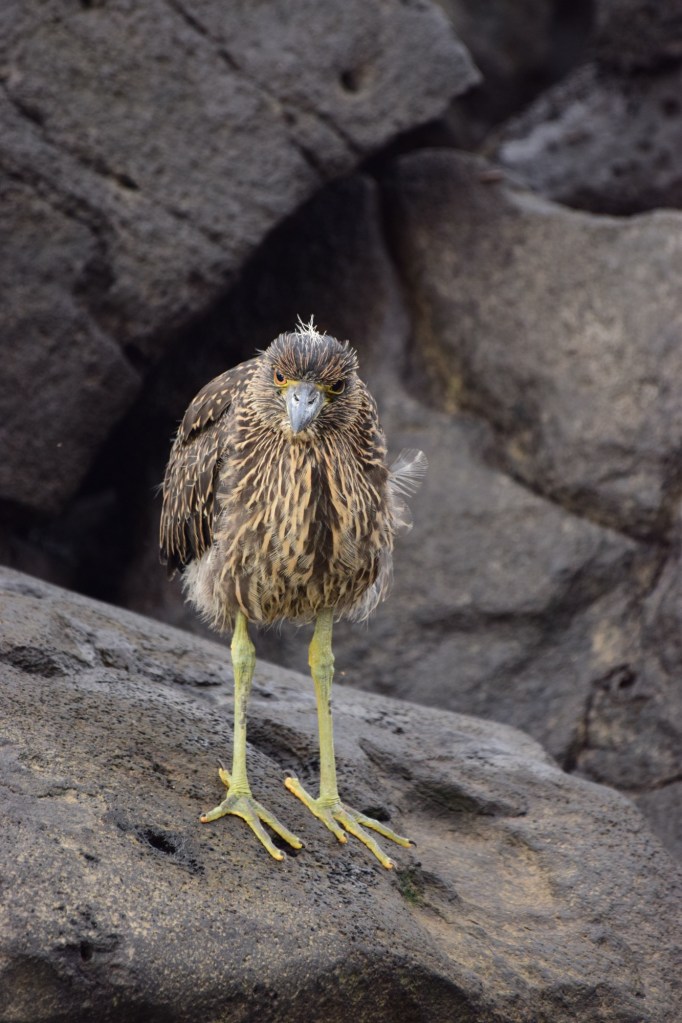
The channel that runs alongside the road is a heron magnet. All three species of San Cristóbal’s small herons can be found here: yellow-crowned night heron, striated heron and lava heron. The sunbathing night heron from the other day was here, but I was more intrigued by the scruffy-looking youngsters hanging around the rocks. Head-on, they are remarkably frog-like in their appearance.
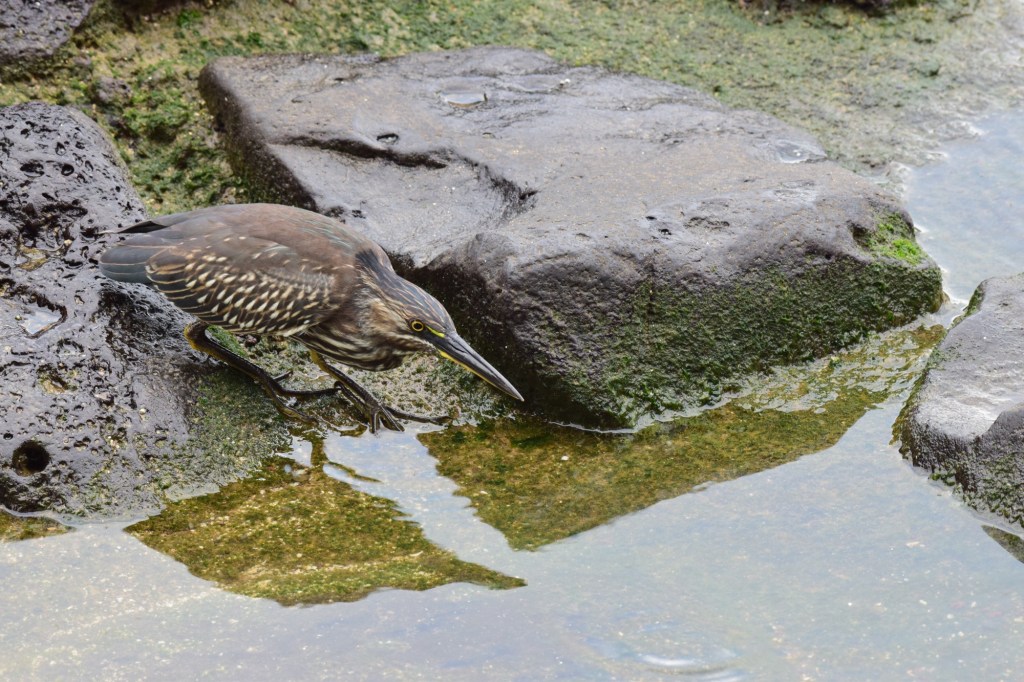
The striated heron – the same one that can be found across the Americas – is a lot like the endemic lava heron, only a lot more patterned. I tested out the camera’s dynamic range options with this one as it hunted in the shallows. I’m still learning as a photographer, but if I can get to the stage where my photos aren’t so blurry anymore, I’ll be a happy man.
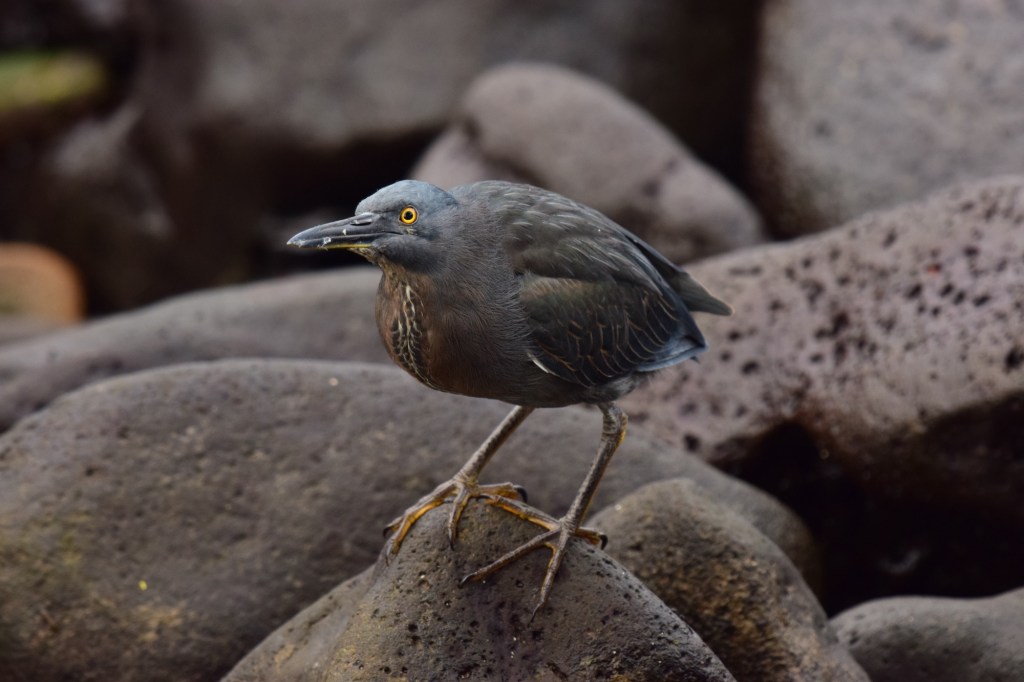
One photo I am particularly happy with is this one. The lava herons are really hard to shoot as they are fundamentally dark birds that haunt a dark and rocky background, making conditions difficult. Fortunately, they’re a lot less active than the finches or shearwaters who have been giving me the run-around, so I had time to frame this one nicely.
Tomorrow is a day in the water. I hope the weather is kinder. Who knows what we will find in the legendary depths of Kicker Rock? Another shark would be nice, but I’d settle for a turtle or ray. BB x

