Puerto Ayora, Galápagos Islands. 19.52.
My final Galápagos expedition answered a question that’s been bugging me since I landed in Puerto Ayora two days ago: why is it perpetually cloudy here? San Cristobal had its fair share of cloudy days, but – with the exception of a few hours on Wednesday afternoon – Puerto Ayora has been shrouded in a mantle of grey and white from the moment I arrived. Well, I have my answer: rain shadow.
It’s not that the entire island of Santa Cruz gets more cloud than its eastern neighbour. It’s simply that all the cloud cover gets trapped behind the highlands, forcing it to build up over the south side of the island, like Tenerife in reverse. I was worried when we left Puerto Ayora that today would be a washout, but as soon as we cleared the Gemelas sinkholes, we stepped into a shining world of clear skies and tropical sun.
It’s a good thing I brought my sun lotion today.
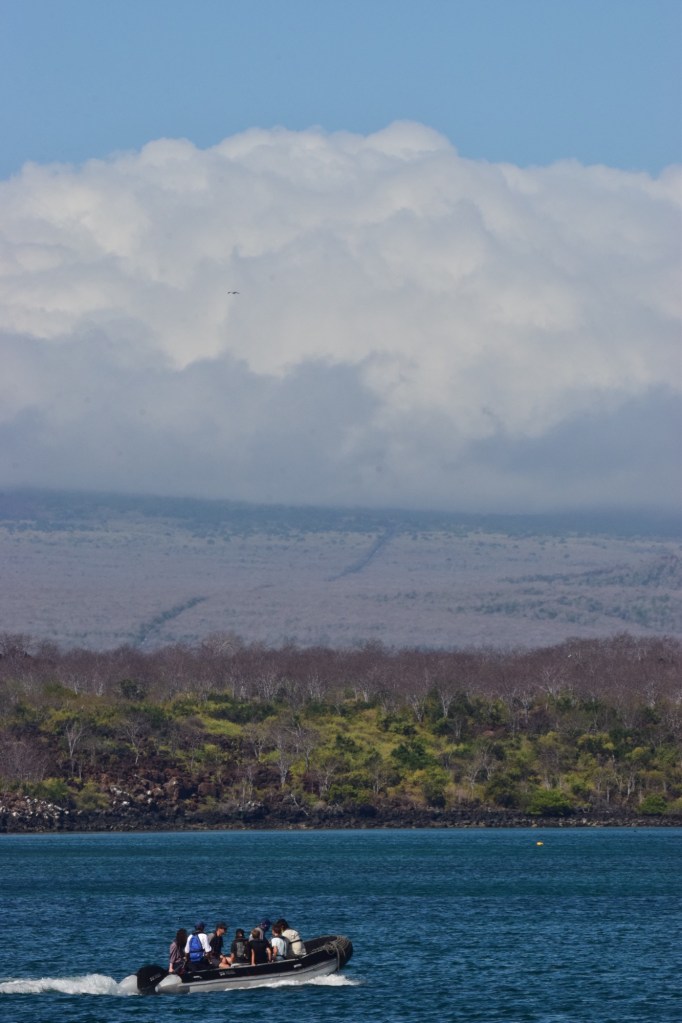
One thing I’ve learned in my time in the Galápagos is that all of the tours are something of a lottery. You can pay whatever you like, but ultimately it’s the park rangers who dictate who has access and when. Sometimes you get lucky and get the best light of the day (before 11am) – and sometimes you don’t. Today was the latter. Beach first, hike last. It’s definitely the inferior of the two options, for at least three good reasons:
- Animals are a lot more active in the earlier hours of the day. As the midday heat approaches, both birds and reptiles become a lot more reclusive to get out of the heat
- Taking a dip in the Pacific feels a lot nicer (and a lot more earned) after stomping around for an hour or two under the sun
- The midday lighting with the sun dead overhead isn’t exactly the optimal condition for photography, especially for dark subjects like frigatebirds
In short, I was a bit miffed when we were allocated a visit to Las Bachas first – not least of all because North Seymour is one of the more expensive day trips on offer (at around $260-300 at the cheaper end). In most other parts of the world, when you’re paying that much for a day trip, you usually get some kind of say as to how to work the itinerary.
The Galápagos are different – and I suspect that the tourism explosion of the last ten years or so has had a lot to do with that. The upside is that the system has the animals’ welfare at its heart – or so I’d like to believe anyway. Controlling the daily tourist visits allows the park rangers to set limits on disturbance to the native fauna, which can only be a good thing.
Rant over. Let’s get back to some good old-fashioned awe, wonder and nature writing.
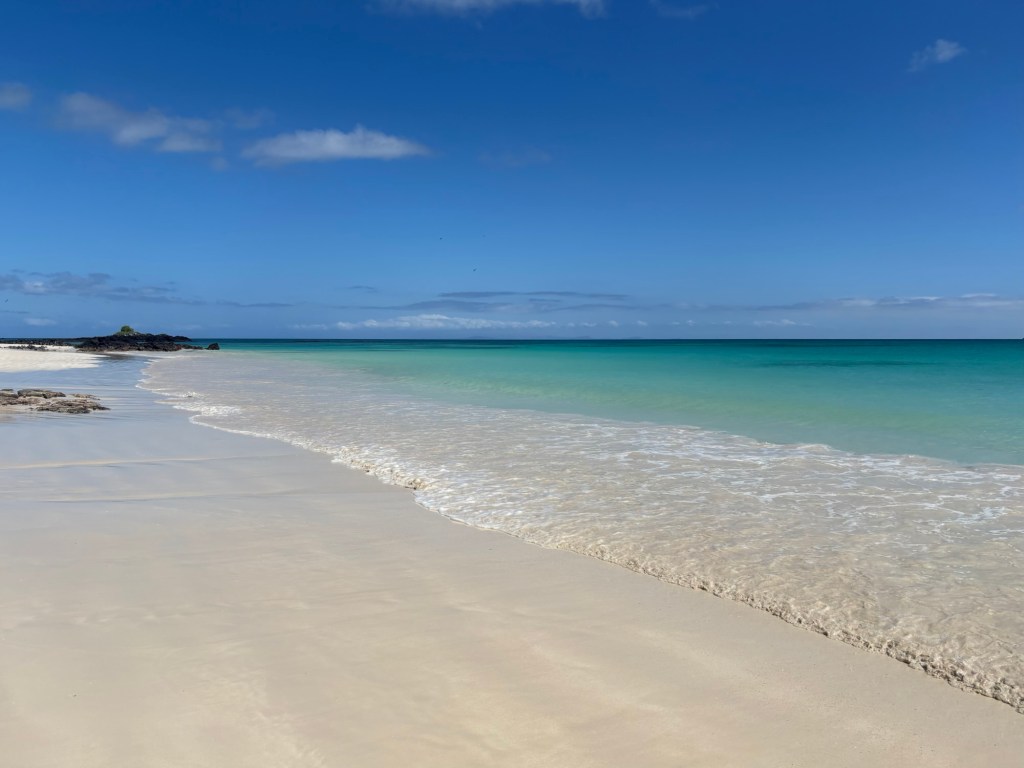
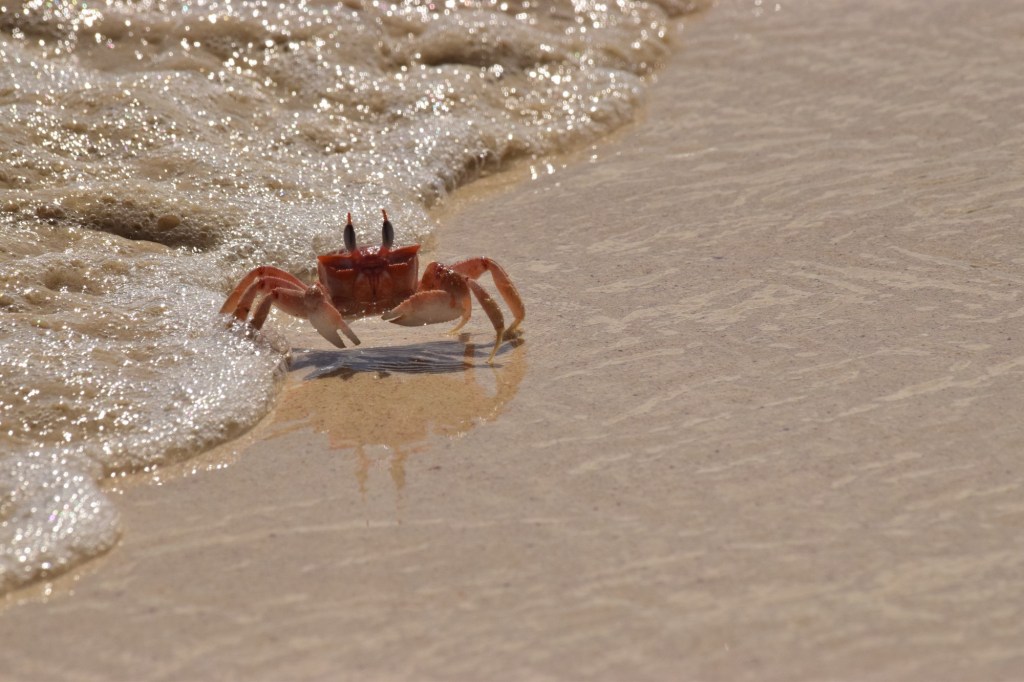
First off, whether you’re visiting in the morning of the afternoon, Playa Las Bachas is a genuine haven. After days of choppy seas, finding a calm white sand beach like El Manglecito was a major treat. Once occupied by US troops to control access to the Panama Canal during WWII, the only patrols you’ll find there now are the ghost crabs that race up and down the beach, forming enormous collections of tiny spitballs as they sift through the sand for microscopic food washed up by the tide.
I’ve only seen Sally Lightfoots since I got here (and one crab that liked a lot more like the ones we have back home), so seeing so many of these beautiful ghost crabs was a major highlight.
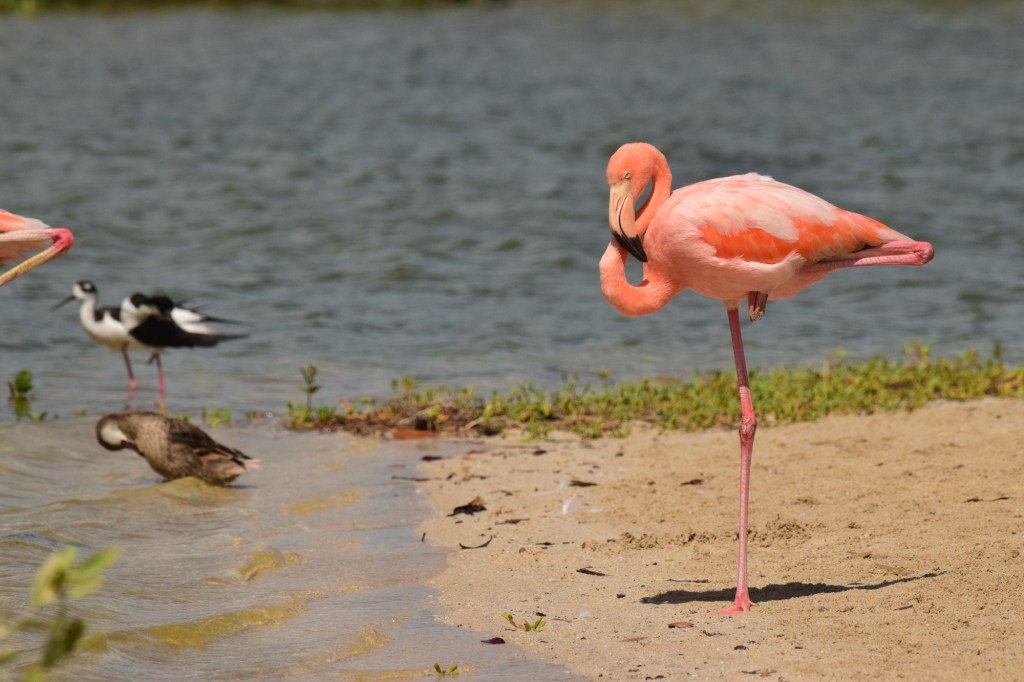
One species I was nearly prepared to cough up another $150 to seek out was hanging around a small lagoon behind the sand dunes. The American flamingo is the fourth and final flamingo species in the Americas, meaning the only flamingo in the world that I have yet to see is the lesser flamingo of sub-Saharan Africa and west India. I thought you’d have to go all the way to neighbouring Isabela, the largest of the Galápagos Islands, to be in with a chance of finding one of these colourful creatures, but there’s a small colony here at Las Bachas that regularly puts in an appearance.
Bypassing Isabella means I leave without seeing two iconic Galápagos species: the penguin and the flightless cormorant. However, to even have a chance at seeing the latter, you need to skip the day trips and take a cruise that explores the westernmost islands, where the elusive flightless cormorant can be found – and that can cost upwards of $4,000 before factoring in the enormous financial handicap that applies to all single travellers.
On that note, seriously, what gives? Since touchdown last Saturday I’ve met just two other solo travelers here. The rest are couples, families or groups of retirees. If you get to talking with them, a great many of them are lawyers, bankers, hedge fund managers and businessmen. I feel very out of place as a teacher here. Whatever it might once have been, the Galápagos does seem to have become a rich man’s playground.
Thank goodness the only riches in this world that matter are the ones that were living and breathing on these islands long before people came here.
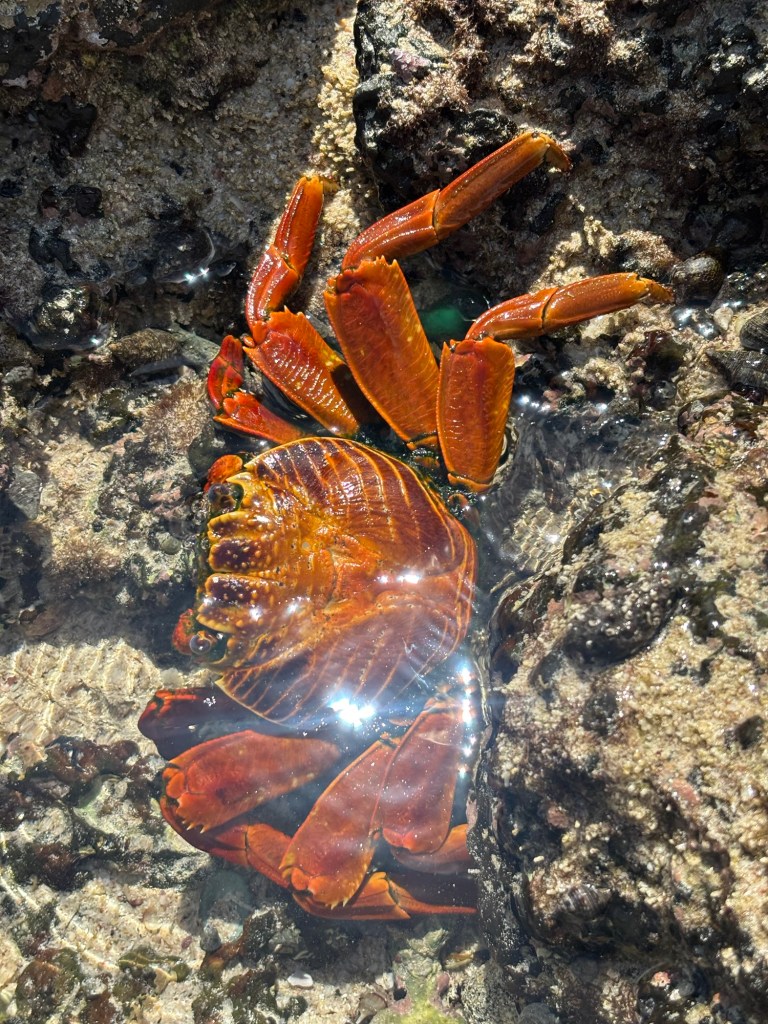
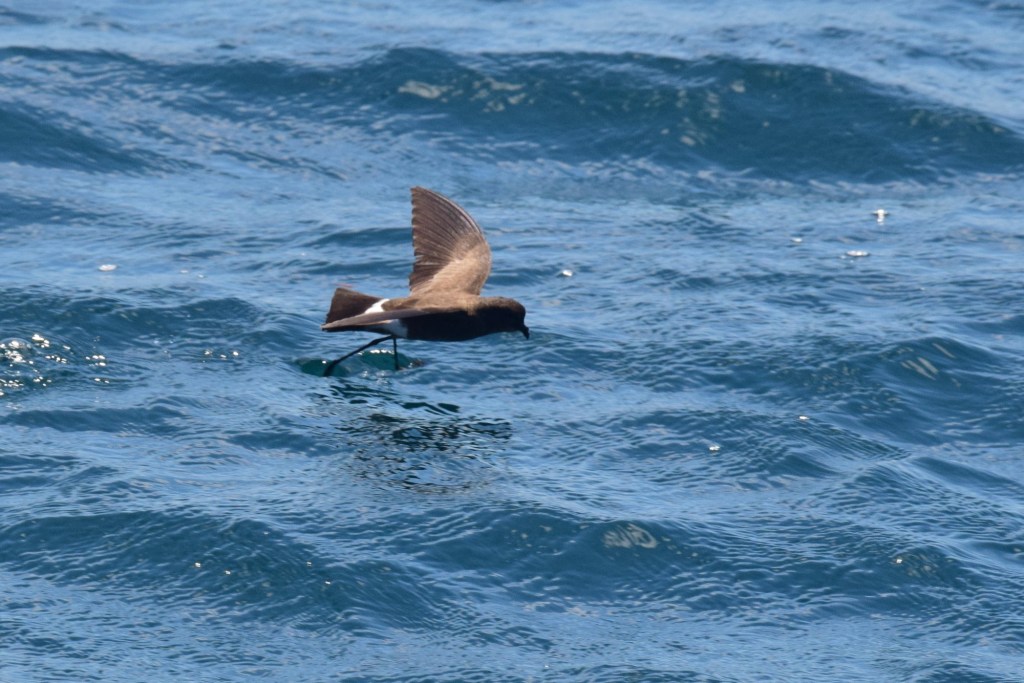
I saw another two turtles at Las Bachas before we got back on the zodiac and returned to our boat, the Galapagos Shark. The crossing to North Seymour is substantially shorter than, say, the journey to Punta Pitt, but you have to go it slow in these waters, as there are so many turtles about. While the other passengers stretched out on the forecastle, I stayed up on deck watching the shearwaters and storm-petrels dancing across the surface of the water behind us.
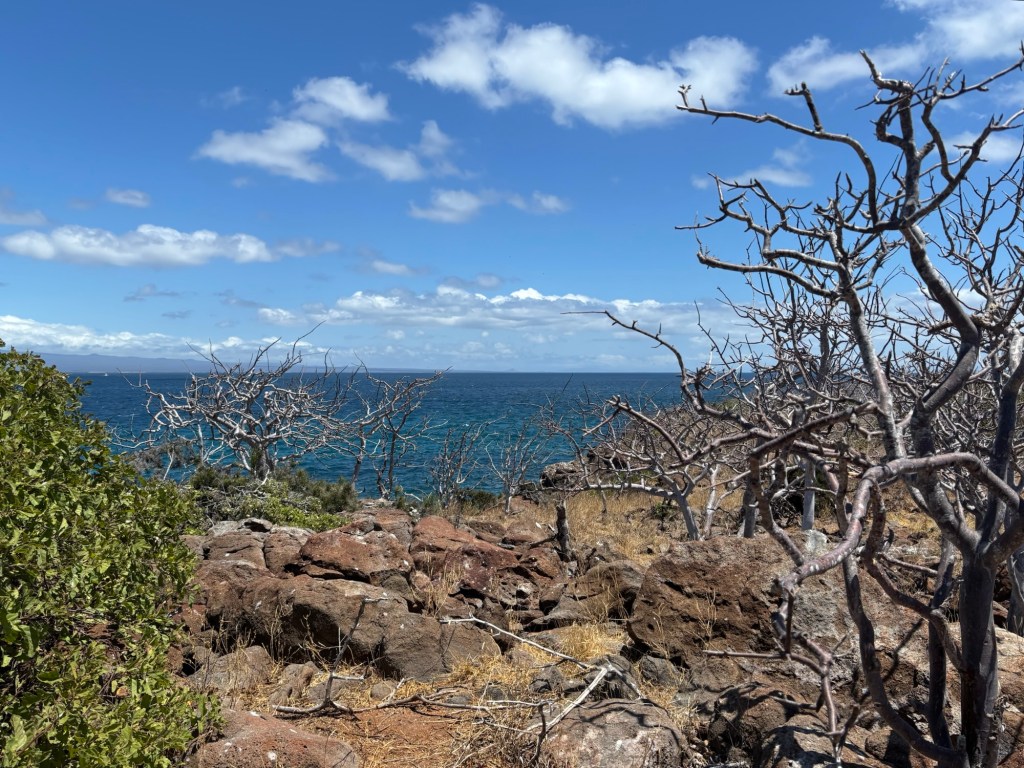
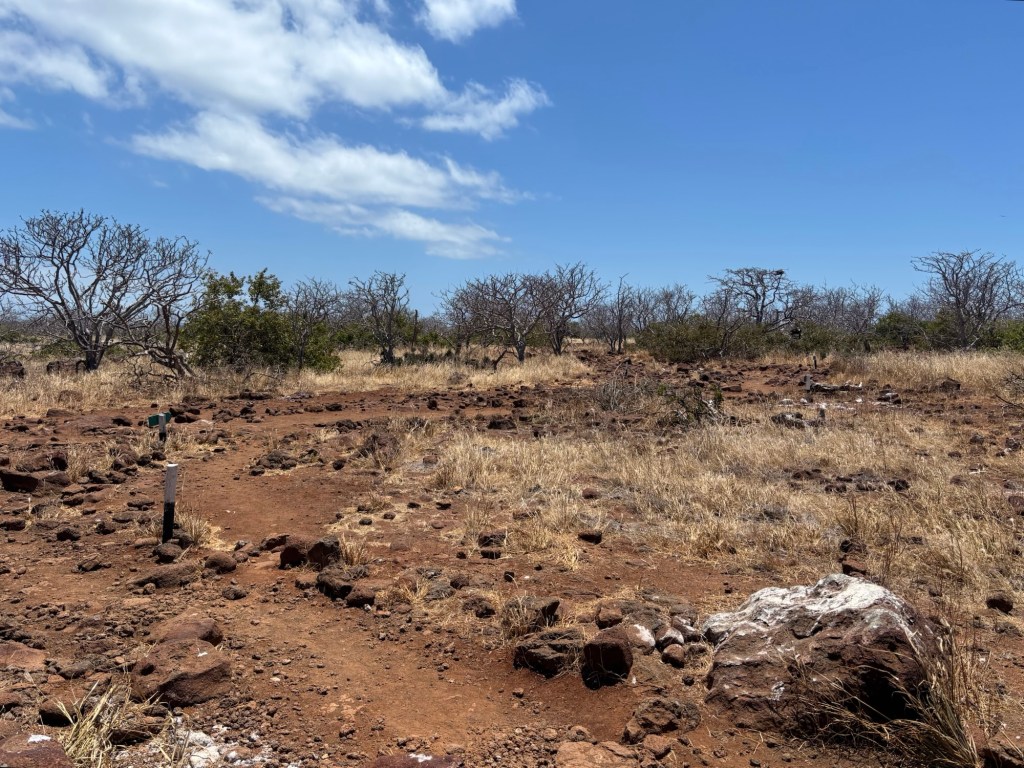
North Seymour Island is a strange place. Under the right conditions, I would go so far as to say that it might even be eerie. A forest of dead-looking trees. Golden grass on a slab of sun-scorched rock, where the boulders come to life before your eyes and take the shape of gigantic land iguanas, lumbering across the path like miniature dinosaurs, while pterodactyl-esque frigatebirds cast enormous shadows as they hang in the wind. It’s worth coming to this place if only because it’s so different to everywhere else.
The big draw of North Seymour is its huge colony of frigatebirds. These aerial pirates can be found all over the Galápagos Islands, but they have their primary stronghold here off the coast of Baltra. More than a thousand pairs breed here each year, accompanied by thousands more juveniles, making North Seymour probably the best place in the world to see these magnificent creatures up close.
Both great and magnificent frigatebirds can be found here. The difference between the two is only slight, but easily appreciated in the sunlight: male great frigatebirds have a green sheen on their shoulders, whereas magnificent frigatebirds’ shoulder feathers shine a glossy purple.
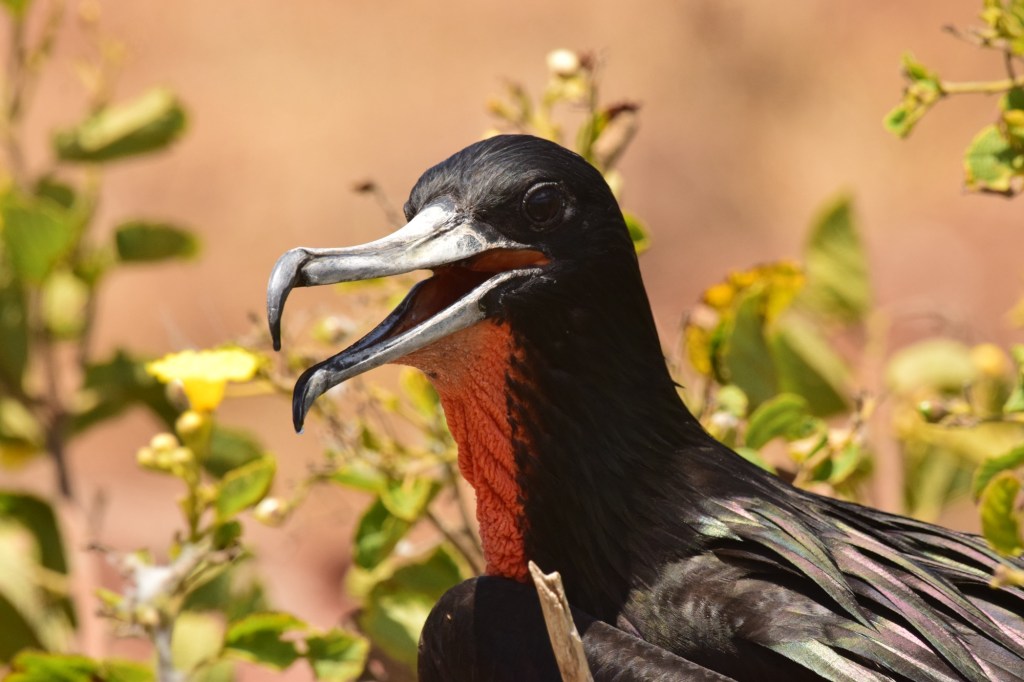
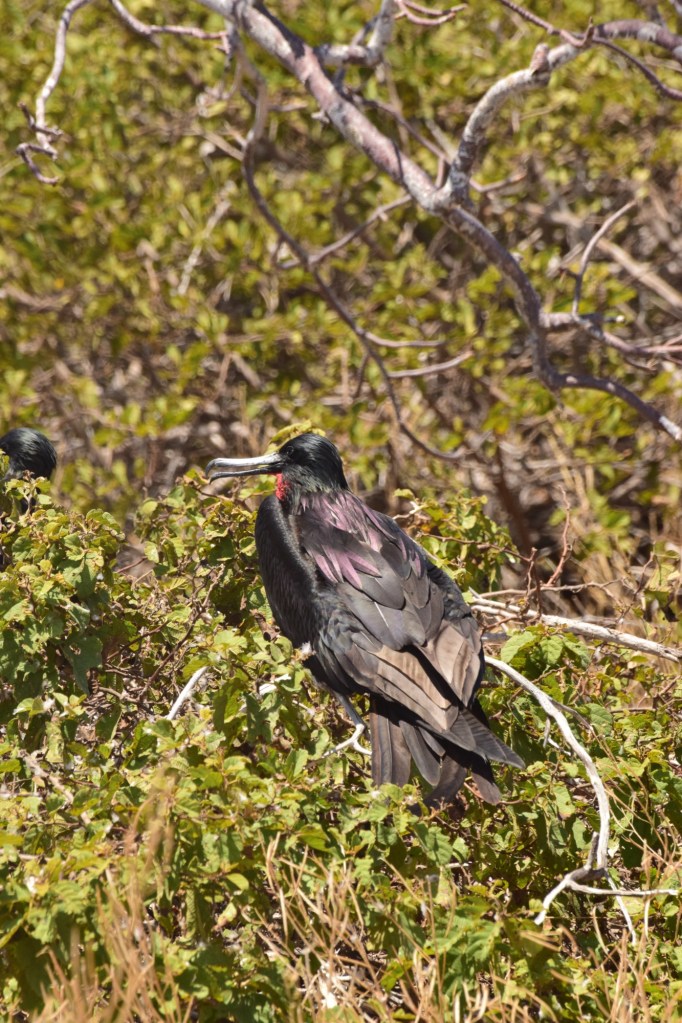
This is also a spectacular place to see the males inflating their famous throat sacs to attract the attention of passing females. We’re quite late into the breeding season, so this wasn’t as common a sight today as it was a month ago, but I did hear and see a few males displaying a fair distance from the path.
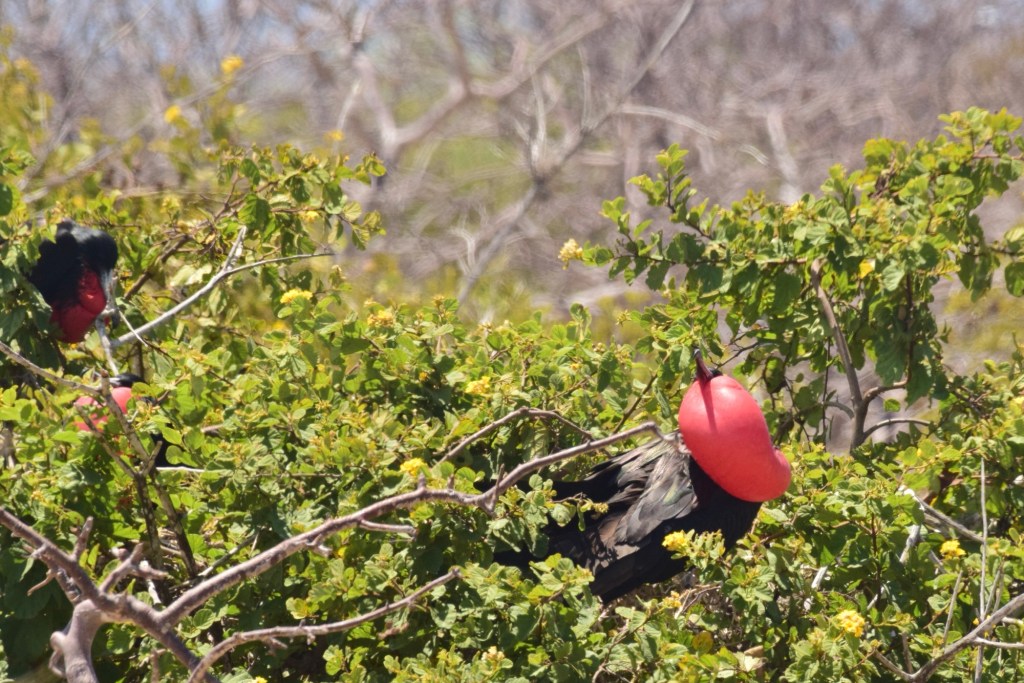
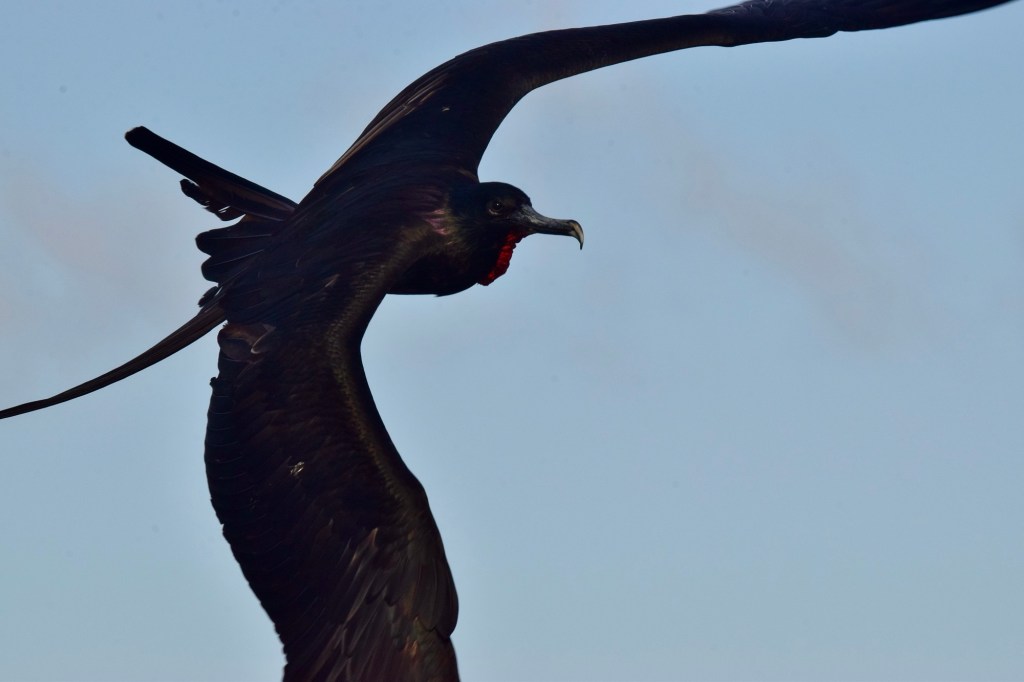
Frigatebirds are far and away my favourite birds of the Galápagos. They may be one of the easier creatures to spot – they were the first animals I saw as the plane came in to land and I am quite sure they will be the last I see, too – but that does not detract in the slightest from their magnificence.
I caught myself thinking more than once that if I ever got a tattoo (Ed.: I won’t), I would consider the silhouette of one of these beautiful creatures. I seem to be drawn to the vultures of the animal kingdom, even where there are no vultures. Or perhaps it’s the fact that these aerial pirates are effectively feathered bandits – and I have always had a thing for bandits. I very nearly wrote my undergraduate dissertation on bandits.
One of the best things about the Galapagos is that the animals’ lack of fear allows you to witness the kind of behaviour that normally goes unnoticed. This youngster called its mother to it and, after much high-pitched pleading, convinced her to disgorge her catch so that it could eat.
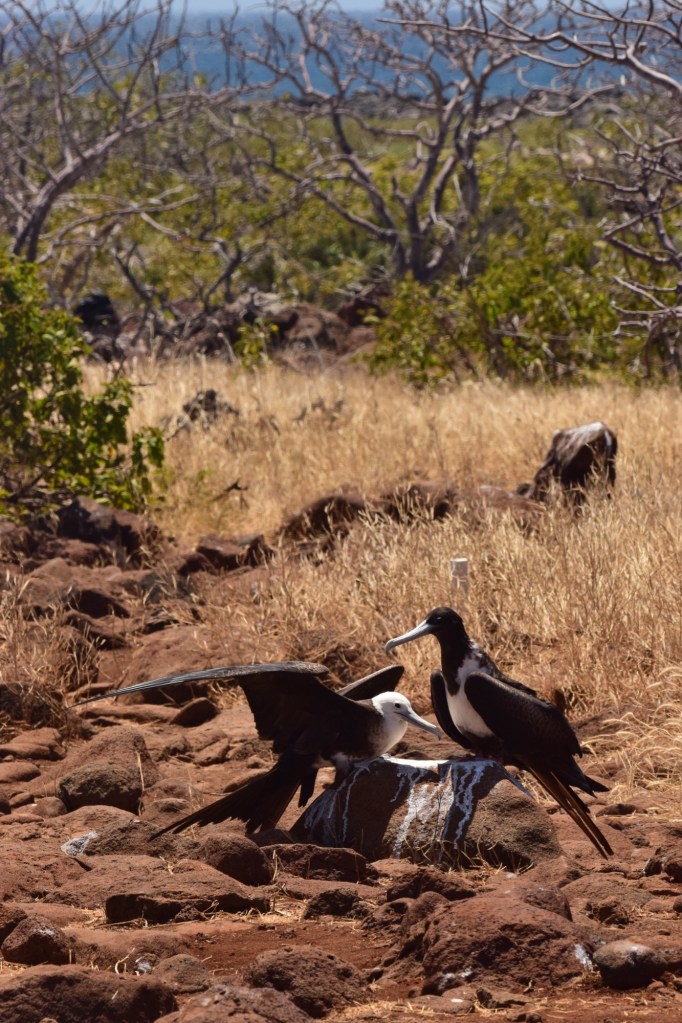
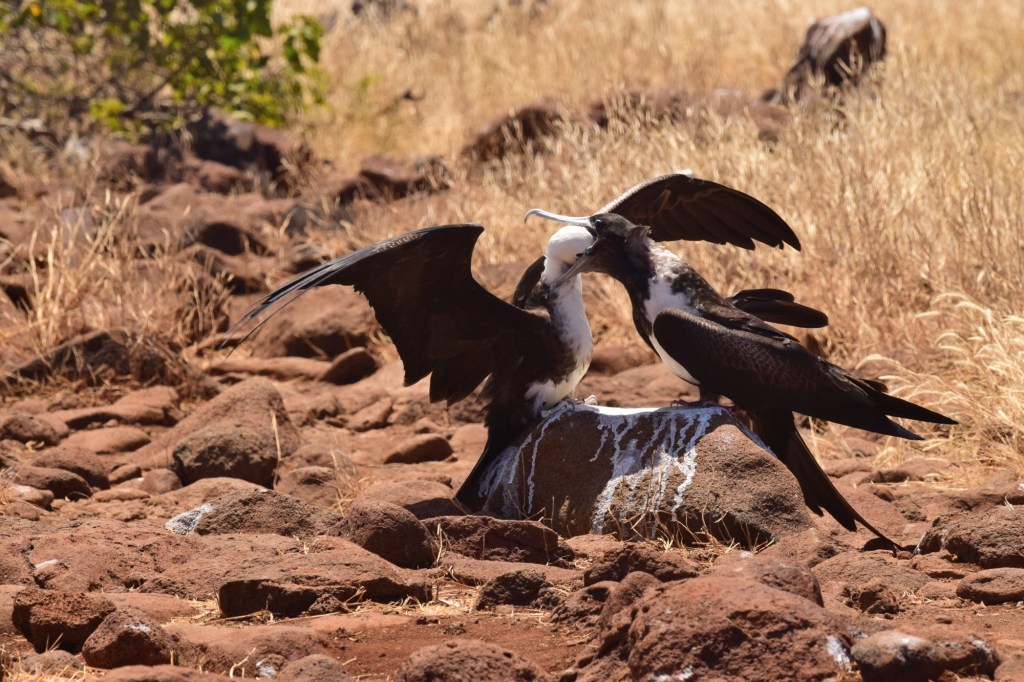
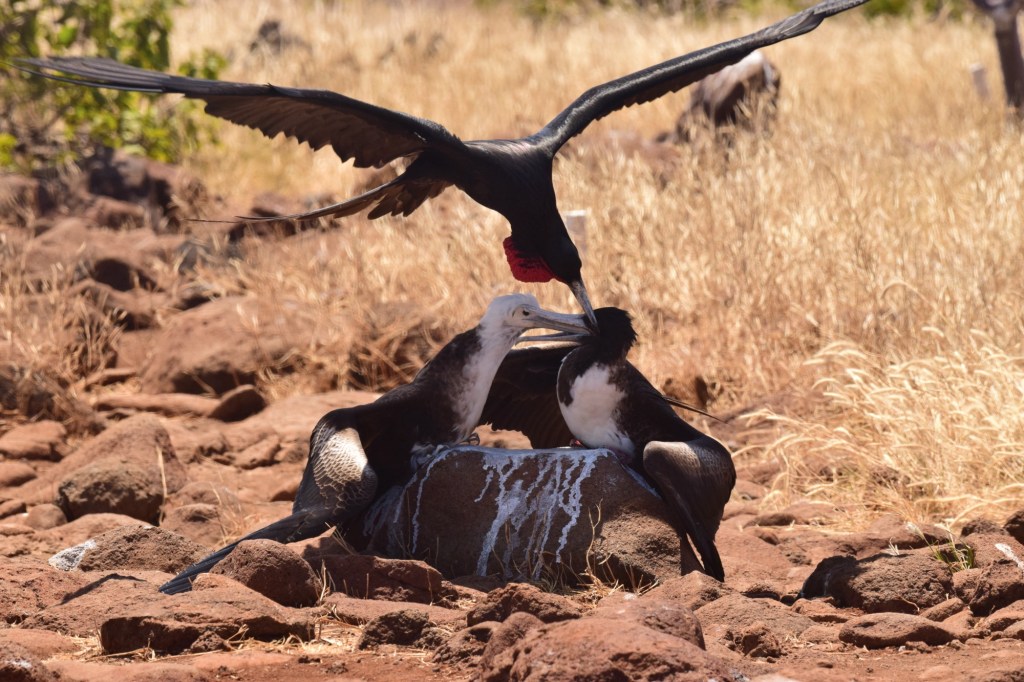
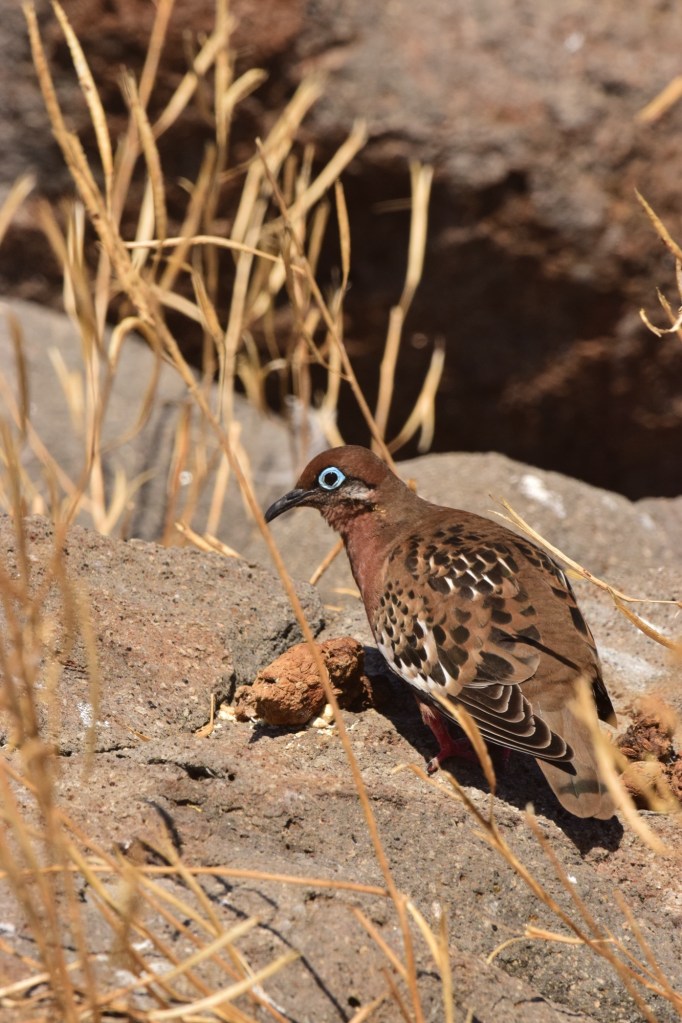
Frigatebirds aside, I finally managed to track down a Galápagos endemic: the Galapagos Dove. These tiny cousins of the Peruvian doves must have been blown onto these islands millions of years ago, adapting into the colourful, rock-patterned creatures you can see today. They avoid towns and cities, so to have a chance of finding them you have to search the more remote corners of the inhabited islands.
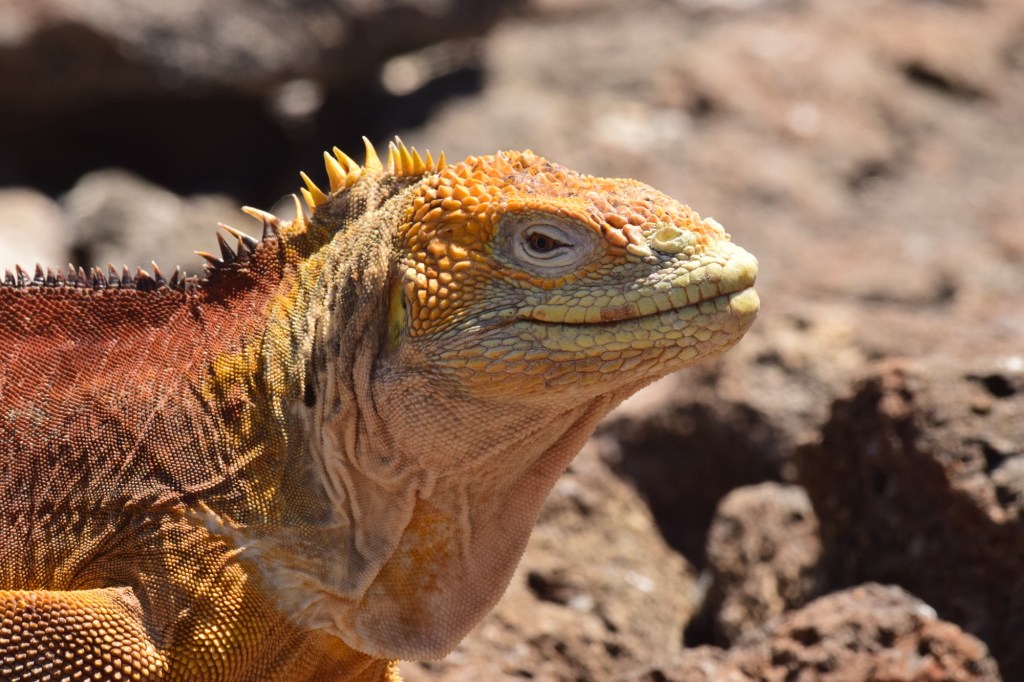
So far I’ve managed to neglect the other star of North Seymour: the land iguanas that have made this island their home since they were extirpated from Baltra. Only the males have the distinctive sandy-orange colouration – the females are a more uniform grey in colour.
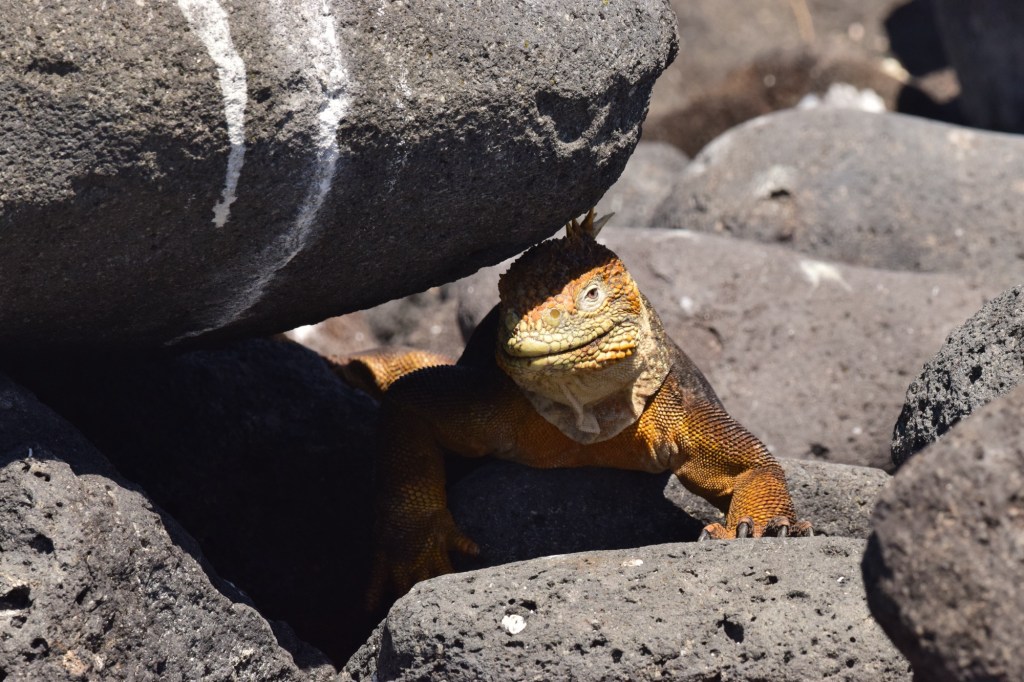
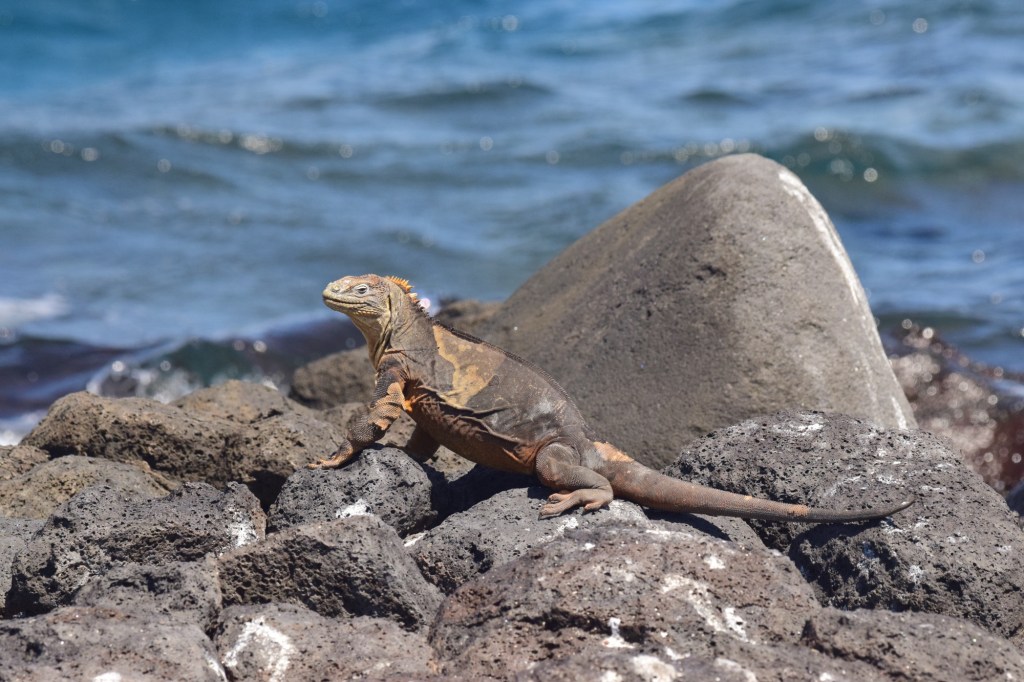
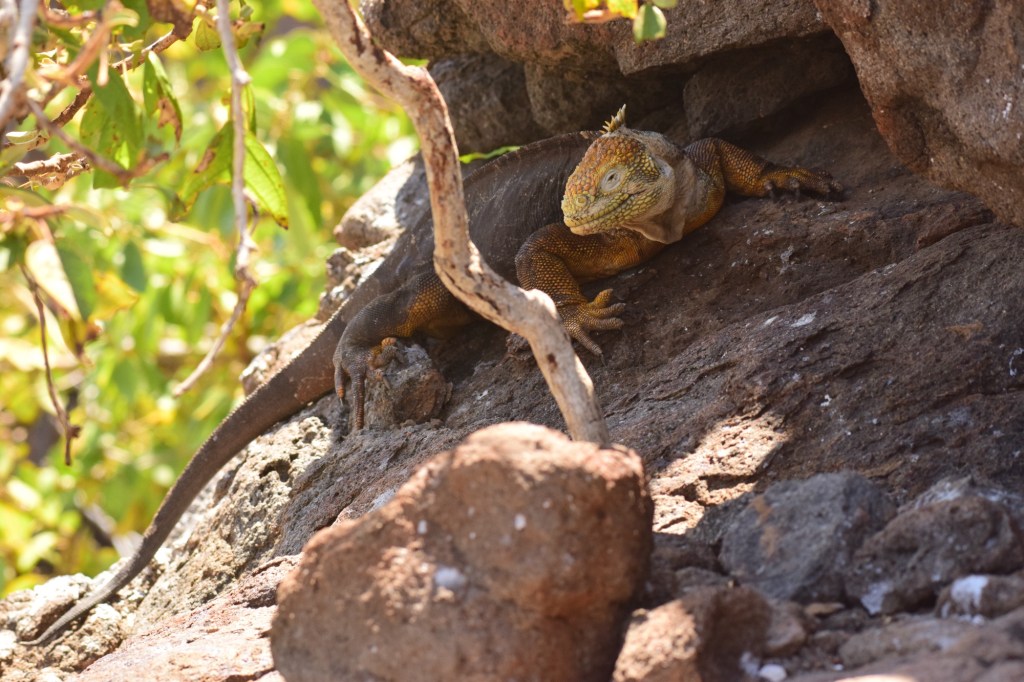
Before we left, a scuffle in the rocks sent one of the females scurrying across the path and into the shadows of the cliff. Her spook, the alpha male, followed her only as far as the path before stopping to cast a languid and uncaring eye in our direction.
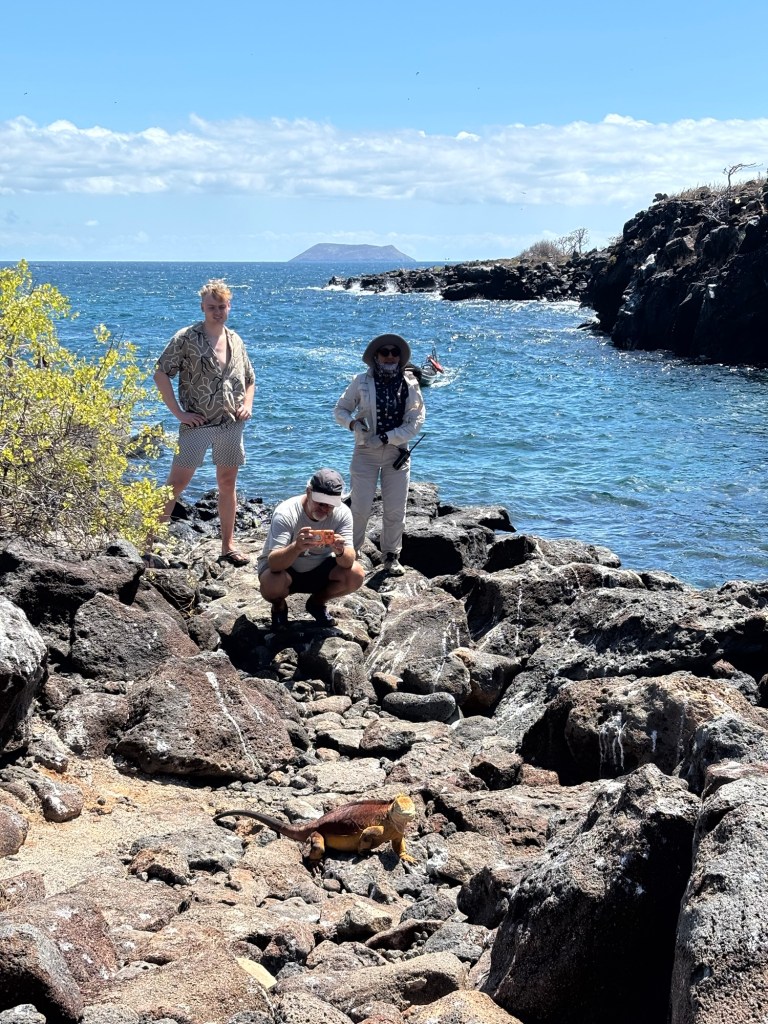
These land iguanas look a lot more like their green cousins back on the mainland than their hyperspecialised marine cousins with whom they share the island. A younger me would have come to the islands purely for the iguanas. I was hugely into reptiles back then. I eventually became more interested in birds, partly because the UK doesn’t exactly have a thriving population of reptiles. So it was nice to embrace my inner child today and binge on some spectacular reptiles.
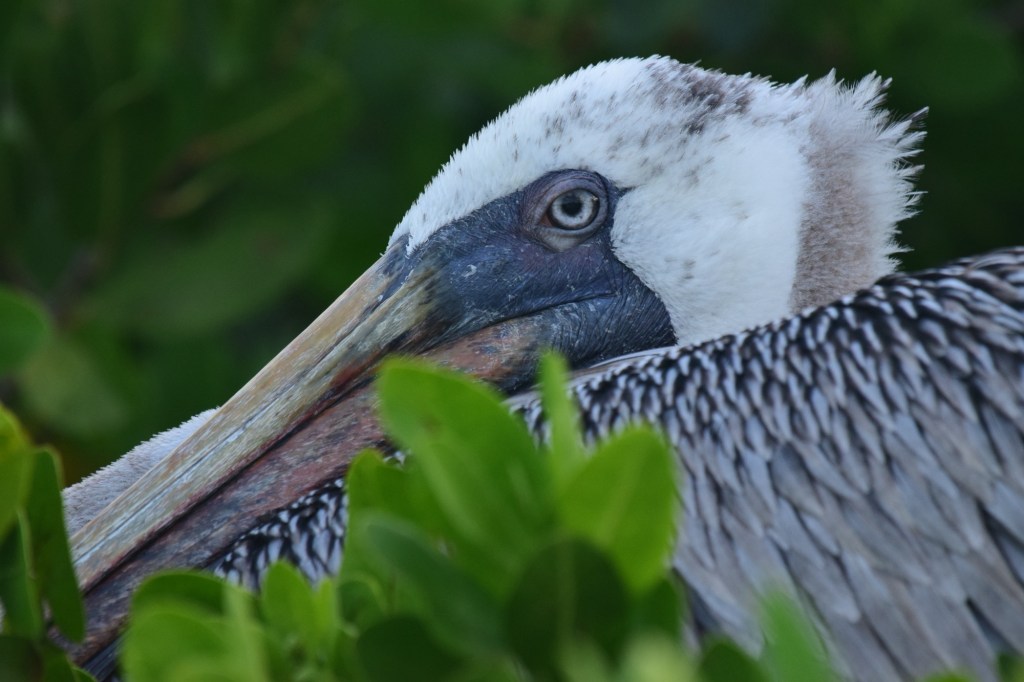
I spent my last afternoon in Santa Cruz down by the mangrove-lined fisherman’s wharf watching the pelicans. There is always bycatch to be had and so both pelican and frigatebird gather at the right time of day to pick up the scraps left out for them by the fishermen.
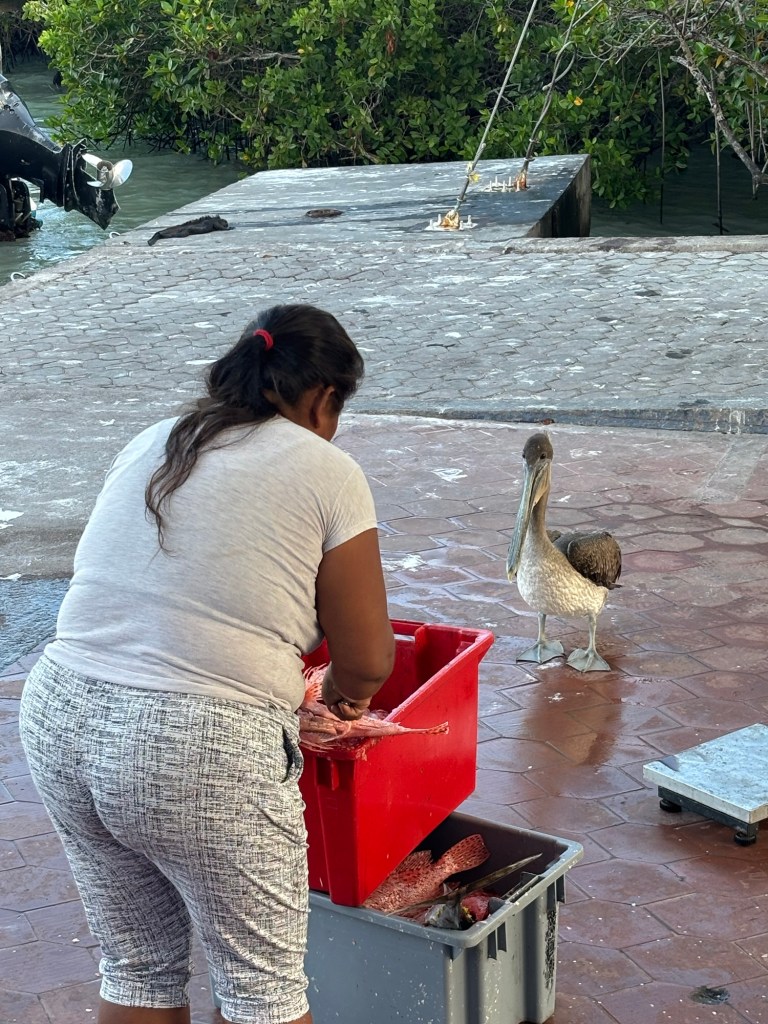
Like so many gringos, I’m just a visitor to these islands: here to see one of nature’s greatest marvels before returning to my normal life far across the sea. But these galapagueños spend their entire lives surrounded by these beautiful creatures: pelicans, turtles, frigatebirds, mockingbirds, sea lions, marine iguanas, giant tortoises and Sally Lightfoot crabs are as much a part of their everyday as house sparrows and pigeons are for us. That’s absolutely mind-boggling for me, but it’s only a different reality. No wonder the rangers are so defensive of their greatest treasure.
Tomorrow, I have to make my way back up to Baltra to catch my flight back to Guayaquil, then on to Santiago via a layover in Lima. It’s a fairly long-winded flight, but the real question is how to get to the airport as a single traveler. I might end up taking a taxi to the Itabaca channel, as it’s set at $25 and I did just find a secret stash of dollars that I forgot I had (I’m very good at hiding my cash in different places for safety’s sake and then forgetting where I put it).
My adventures are nearly over. It’s been a long summer. It’s going to sound odd, but I could use a holiday. Traveling solo means being switched on all the time, even when you’re laid out on a tropical beach. The Galápagos is neutral territory, but there is no place like home. I’m looking forward to a little peace of mind – but that is still some ten days away. The journey continues! BB x

