Boundaries

Gatwick Airport South Terminal, England. 11.19.

I’m on my way to Athens to celebrate with an old friend who is tying the knot with his long-time partner in a beautiful ceremony in a chapel that looks out over the Aegean Sea. I should be ecstatic but I’m feeling downhearted at the moment on account of the GCSE results. They weren’t shoddy, by any stretch, but they were way off what we hoped they’d be – and it all comes down to the grade boundaries.

It’s got me thinking a lot about how we treat languages in the UK.


Back in 2006, an article by the BBC reported that the study of foreign languages had reached the “point of no return”. Only two years prior, Tony Blair’s Labour government had taken the decision to make MFL non-compulsory post-14, after which thousands of students elected to ditch French, Spanish and German from their curricula. While Spanish has seen a decent recovery from the initial “freefall” recorded – bouncing back from 62.413 in 2006 to 132.680 in 2026 – German has been less fortunate, continuing to decline in popularity nationwide: the relatively healthy 90.311 studying German in 2006 have been whittled down to 32.525 this summer. Some schools are now considering whether it is economically viable to continue to offer languages, which command smaller and smaller classes by the year. Northern Ireland is thinking of scrapping the study of German altogether.

As a language teacher, I naturally don’t like where this is going. What makes things worse, however, are the barriers within the surviving MFL syllabi. There are a number of factors blighting the study of languages that aren’t helping us to promote them in lieu of the flashier, brash-ier and cashier subjects like Economics and Business Studies.

The MFL GCSEs are a mixed bag. Sometimes they feel formulaic and predictable. At others they can be surprisingly progressive, asking candidates to describe a photograph about sports where half the players on a basketball court are in wheelchairs, or a family scene showing a same-sex couple and an adopted child of a totally different ethnicity. This year’s Listening dictation task in the Pearson Edexcel features the infamous “Ma petite sœur est bisexuelle”, read by a childlike voice that really threw my students, who might well have spent the two repeats wondering how and why a little girl would have already decided to self-identify as bisexual – and in the middle of their GCSE exam, no less. I’m glad we’re on the frontier of pushing positive representation, but I can imagine the response in the nation’s more conservative Muslim students and their families.

Recruiting for A Level is an uphill task with or without the competition from maths and the three sciences – especially with Further Maths elbowing a fourth subject out of the picture so often – since MFL A Levels can be fiendishly hard, relying more on the candidate’s ability to retain a vast breadth of knowledge both historical, political and literary in both spoken and written formats. Add to that the sky-high grade boundaries driven at least in part by the large number of native speakers who take the subject for an easy A and you have a whole host of reasons why students think twice about studying languages. They’re definitely a hard A Level, I’m not about to deny that, but if we don’t get the numbers, we run the risk of leading our country and its children into even more of a monolingual and inward-facing nightmare than the one we’re already weaving, spurred on by the global ill-sentiment toward the ongoing refugee crisis and the perceived erosion of our national identity.

I’m not sure what to suggest. I do what I can to make learning languages as fun and inclusive as possible. I’m sure I’m not the best at what I do – especially since I’ve always seen languages as a pathway to meeting people and telling stories, rather than finding any particular joy in their acquisition for its own sake – but I work hard together with my colleagues year on year to try and convince our students that speaking a second language competently (that is, post-GCSE) is an increasingly rare gift among the English which will take them so far.


I might use this trip of mine as an example. For the first time in a long time, I’m going to be completely at sea. I might be able to speak seven languages with varying degrees of fluency, but I don’t speak a word of Greek. I’m so used to being able to muscle in and go native in Spanish, French and Italian that suddenly finding myself in a situation where I can’t manage much more than thank you and goodbye is extremely disorienting. Sure, I could speak English at them and expect to be understood – but that just strikes me as rude at best and colonial at worst.

I’m tuning in, slowly, but it’s hard from zero. Alex is my host, but he’s the one getting married, so I can’t expect him to spend his weekend translating for me. There’s so much I’d love to do. I’d love to know what Petros from Naxos is recounting, since he seems to have a raft of stories with proper Greek gusto. I’m dying to know what Alex’s brother is saying when he’s clearly running through some of the steps for the dances. I’d like to ask Alex who the girl is with the smile of an angel in the corner of the room. But I can’t do any of these things, because I can’t speak Greek.

Monolingualism is an enormous handicap. Even a capable linguist should remind themselves of the gift they have earned by putting themselves in a position where they are truly lost every so often, if only as a reminder of how precious the ability to move from one language to another really is.

I’ll paraphrase the above for my students when I get back. Whatever it takes to buck the national trend and fight the death of MFL, I’ll do it. I just wish we’d been given a fair idea of the new spec grade boundaries a year ago, so our students knew just how much harder they had to work to get what they deserved.


My body clock is all over the place. Three hours ago I was in the UK, two hours behind Greece – but five hours ahead of Chile, and seven hours ahead of the Galápagos Islands, where I was until Saturday. Little wonder I’m having trouble sleeping.

I’ll report on tonight’s events together with tomorrow’s in one big fat Greek wedding post. I just thought I’d sandwich my thoughts on languages into my funk over the grades.

It’s gone two in the morning, which is approaching my usual bedtime in the UK, but probably only halfway through tomorrow night’s festivities which are due to go on until the dawn. I’d better try to get some sleep tonight at least. BB x

Hasta la Vista, Mister

Aeropuerto Arturo Merino Benítez, Santiago de Chile. 23.23.

Three weeks at Craighouse School have come and gone in the blink of an eye. In that time I have seen and done all sorts of career-boosting things. I have observed Maths, English, Spanish and French classes, as well as a number of department meetings: sometimes in English, sometimes in Spanish. I have taught the basics of French conjugation with -ER verbs, folktales from England, the Basque Country and the Middle East for a middle school kamishibai project and Augustinian theology within an exploration of good and evil in Othello. I have moderated an extended essay, taken part in an MUN debate on the two state solution, discovered that what I have only dreamed of doing for years – teaching English Literature – is well within my capabilities… and I have made some friends for life out here.

I think one of the reasons I avoided anything and everything to do with Latin America at university was because I wasn’t ready yet. I should have known that, having lost my heart to an American once already, I would be drawn back across the Atlantic like a moth to a flame. It’s not the light – it’s the warmth. The warmth of the people here. I have barely begun to scratch the surface of this country.


First things first – my Othello lesson was a triumph. After dropping in on a couple of Y12 classes and offering my take on Carol Ann Duffy and the religious context behind Shakespeare’s work, I was told that the senior deputy head and former head of English wanted to see me teach. Teaching a forty-five minute French lesson that I’ve taught for years is one thing. Teaching a ninety minute class on hardcore morality ethics, Protestant ideology and social context within one of Shakespeare’s weightier plays is another matter entirely.

Lucky for me, I had a bloody good teacher back in my schooldays, and a quick refresher last week was enough to remind me that I had forgotten very little of what I was taught, even across a distance of fourteen years. I’ve also been gearing up to teach Othello myself as part of the Spanish Language A course, so I was not unprepared. Still. No pressure.

I’ve got to hand it to the kids. They might have only been a standard level class, but they handled the higher level material extremely well. When I circulated as they were practising a Paper 2-style comparative task, I had some really enlightening conversations. So many great questions, so many bright ideas. I was really proud of them. Ninety minutes seemed like a tall order when I turned in around eleven o’clock last night, but it was over far too soon.


I spent the afternoon wrapping up. Signing out of all my accounts on the school laptop. Handing back the IB Language books I’d borrowed. Switching out my teaching boots for hiking shoes. I dropped in on the middle school Lenguaje department to say goodbye and had it corrected to a see you soon. Hispanics don’t do goodbyes. Much too final.

One final and unexpected resident of the English department hung around to see me off: the mockingbird that has been hanging around the office for the last couple of weeks. Somebody had left the door open so it had popped inside to see if there was anything edible. After a small circuit I managed to guide it back outside. They’re extremely characterful creatures, mockingbirds. I hope to see more of them where I’m going next. It’s a place where they made history. Natural history, that is.


To close out my time here, Alfredo (the head of English) took me and a couple of colleagues out to dinner at Baco, a swish restaurant in upmarket Providencia. It felt like I’d been part of the team for a year, rather than a week. Chileans may have more in common with the Basques than the Andalusians, but they’re an incredibly warm and honest people.


I’d say that’s that, but I’ve got to come back to Santiago to pick up my suitcase and catch my flight home in nine days’ time, so I’m not quite done with Santiago yet. But now I’m sitting in the departures lounge of Santiago’s Arturo Merino Benítez airport, absolutely buzzing about the last great adventure on my South American odyssey. It’s been an amazing month so far, full of unforgettable wildlife encounters and exceptionally warm people. This will just put a seal on the whole thing.

Or maybe even a sea lion… BB x

Anagnorisis

Las Condes, Santiago de Chile. 19.22.

How do I describe what I’m feeling right now? I’m not sure. So I’ll do my best to reason my thoughts as I write. That’s what this whole blog exercise is for, after all, right? To throw down all the scattered puzzle pieces in my head so that they make a lot more sense on paper. That’s the idea behind it, anyway.


It’s like this. I’ve spent the last ten years of my life teaching foreign languages: English, Spanish, French, Arabic and even Italian. I do it because it’s what my degree was all about, primarily, but also because I have a pretty good ear and, frankly, I’m pretty good at it. In the last five years – after I’d earned my stripes – I’ve started teaching more and more literature, first through the Spanish Language B section of the International Baccalaureate Diploma, then as a fundamental part of the A Level course for both French and Spanish. The further I get into my teaching career, the more I hunger for the literary side of the course, genuinely revelling in the exploration of theme, character, identity and authorial philosophy. I love teaching the little ones, too – it’s immensely entertaining to go from discussing the corruption of the soul in French to learning Spanish phonics with various animals within the space of an hour – but every year I feel myself drawn ever closer into the literature.

Here in Chile, for the first time since my schooldays, I’ve had the freedom to teach English Literature as though it were my alma mater. It feels as natural as breathing. It helps that I have being using the same skills for years now to deliver the literature aspects of the French and Spanish courses, but… there is something more to it. This feels… right, somehow. Like this is what I was meant to be doing all along. And I’m feeling very conflicted about this.

I shouldn’t. This was always the plan – to move back to Spain and teach English Literature, if I could. But it is never going to happen in the UK. Never. I wouldn’t be allowed to cross over because of a lack of subject expertise and experience, no matter how much I point to my long years teaching literary analysis in another language. Similarly, it’s tremendously unlikely I’d be hired as a Spanish Language and Literature teacher in Spain, for which I am arguably more qualified, because why on earth would you hire a foreigner who has acquired your language from scratch to teach it to children when there are so many native speakers who are far better equipped to do so?

In short, my qualifications and my intentions simply do not add up. I did Spanish at university because I wanted to move back to Spain, but because my profession is teaching – a career path from which I will not stray on principle – I find myself stuck, unable to break into the Spanish education system as easily as mother did with music. I know what I want to do, but the barriers are all around me.

It’s frustrating – and yet the impression I get out here, in a school built upon the IB core philosophy of the universality of thought, is that none of that matters. Where I came from, what credentials I hold, what language I use from day to day. The only thing that matters is a passion for literature and for inquiry, wherever that takes me.

We could learn a lot from this system. Rather, I could learn a lot from it. The only question is, does Spain have anywhere that follows the same philosophy? That really would be the dream, if I could only track it down.


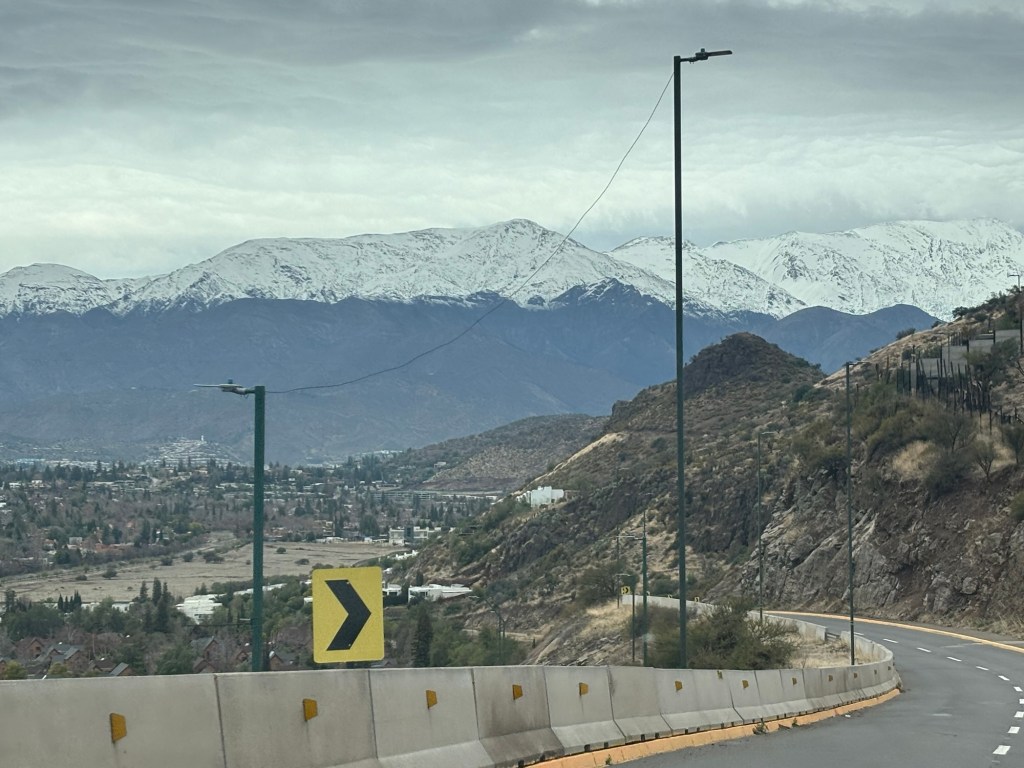
The sun has been out all day. Only now, in the last moments of the evening, has a thin carpet of cloud been pulled up as though to tuck it into bed. This would be only the third day of sunshine I have had since arriving in Chile, now four weeks ago to the day. So I have come up to the top of Observatory Hill to watch the sunset lay its Midas touch upon the Andes, perhaps for the last time, and think about the future.

Tomorrow, one last class of Othello – a proper hour and a half’s marathon on morality and ethics, Augustinian philosophy and Paper 2 preparation – and then it’s over. This strange exchange with Chile that was never on the cards until suddenly it was. I hope I leave a good impression.

And after that… somewhere completely different. Somewhere I have wanted to go since I was six years old. Somewhere… enchanted, even. BB x

AI Agencies Ltd.

Lo Barnechea, Santiago de Chile. 15.00.

Today has been a bit more of an admin day. One of my activities for next week fell through, so I spent a fair part of this morning re-arranging my plans with a couple of other agencies to keep my itinerary as close to the original as possible. It hasn’t been easy. I’ve been leaning heavily on AI, not as a lesson planner, but as a travel agent, and I have to be honest, I fear for the travel industry. ChatGPT and Copilot may need gentle nudging and correcting as they work, but they do a phenomenal job at trawling the net for deals, dates and travellers’ tales from TripAdvisor, Reddit and beyond.

I’m not the biggest fan of AI, but as an impartial entity to bounce ideas off, it’s an absolute doozy. It has really helped me to streamline my plans, keeping them within a very reasonable budget – especially important as my choice of location is not exactly famous for being a budget destination. I do often have to correct its mistakes, which is why I would caution any students of mine from meddling with it unless it’s on terms they understand – good advice for just about anything unknown – but as a rule it does a pretty good job at doing the heavy lifting.

I genuinely can’t wait – I’m practically chomping at the bit here – but I promised to keep it a secret, so I will leave just the smallest of clues in this post in case you want to hazard a guess at my intentions.


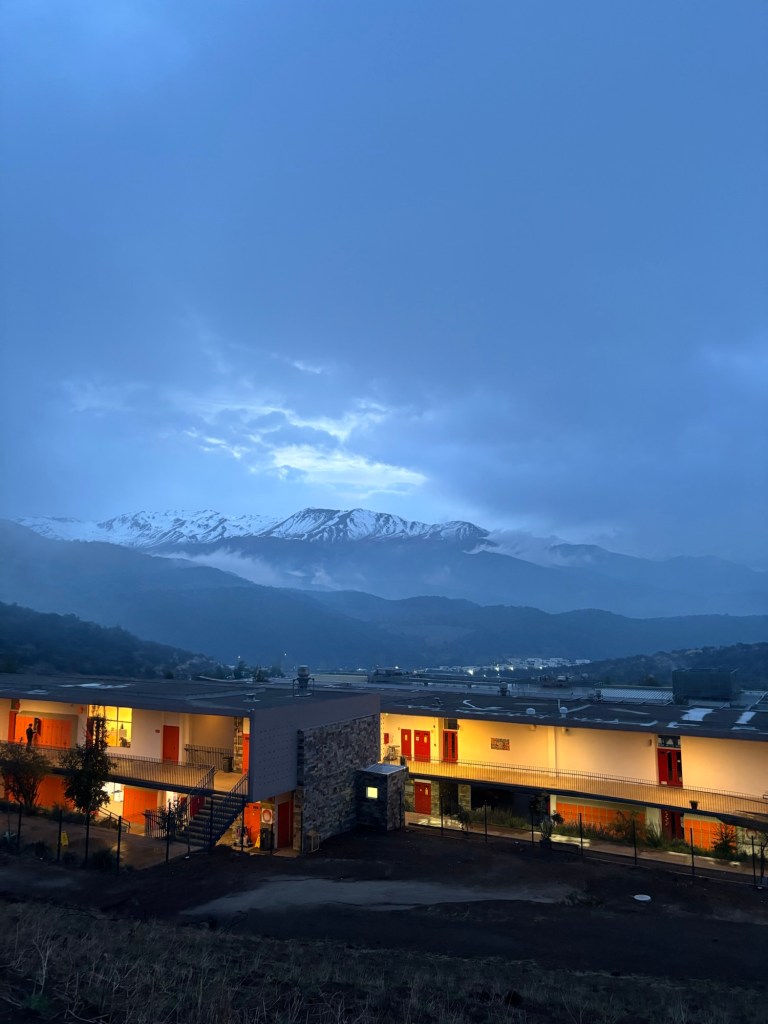
I’m currently sitting in the English office, listening in on the weekly department meeting on debating strategies and what constitutes a suitable number of poems within the Language A anthology. On my left, the windows open out onto the hill country around Manquehue, where I saw no fewer than sixteen condors circling shortly before lunch. That makes three days out of three this week where I’ve seen the titans of the Andean skies from my office. Normally it’s just the diucas and mockingbirds that pop in for a lookaround once the kids have gone back inside for the third hour of the day. On my right, the windows open out onto the enormity of the Andes to the north, still wearing a wintry mantle of snow. Further down the hill – just out of sight beyond the classroom blocks – are the school’s sports pitches. Our kids play rugby against the backdrop of a nineteenth-century clock tower and the Southwestern Railway. These kids have the towering heights of the Andes all around them. These are just the foothills: somewhere beyond stands the fearsome Cerro Plomo, reaching some 17,861 feet into the sky.


Upon reflection, by journey’s end, I will have spent an astonishing two months south of the equator this year. The last time I was this far south I was tracking mountain gorillas in the impenetrable cloud forests of Bwindi on the Congolese border.

I remember being of the opinion that Chile was a destination I was only prepared to visit thanks to some generous financial assistance with the flights, considering it otherwise a prohibitively expensive destination. I see now just how wrong I was. Not about the money – Chile is easily one of the more expensive South American countries – but about how much there is to see and to do.

I’m now genuinely considering coming back someday to pick up the things that I missed: Chiloé, Conguilio, Punta Arenas, San Pedro de Atacama and so much more besides. There’s simply too much to see here, even when you have five weeks to play around with, and for a naturalist like me, the fact that it pales in comparison to its megadiverse neighbour, Peru, means very little when a casual glance out gives you one of the most spectacular birds of prey on the planet.

Two weeks from now, I will be back home, a brief pit stop on the island before duty calls me to Athens for one last dance. I had a brief moment of nostalgia for it today when I popped in to help a colleague set up a game of Just a Minute to give her students a boost with their listening skills in debating. I love that game to bits – and the BBC Radio show from which I have poached it.

Two days remain. Let’s do this! BB x

Loose Ends

Las Condes, Santiago de Chile. 17.14.

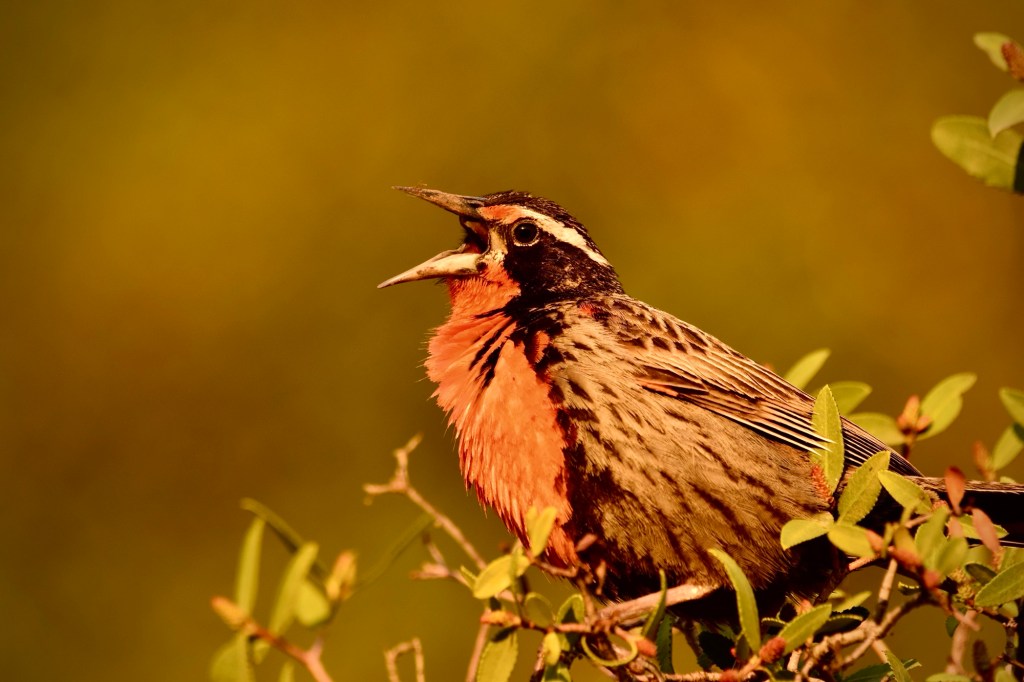
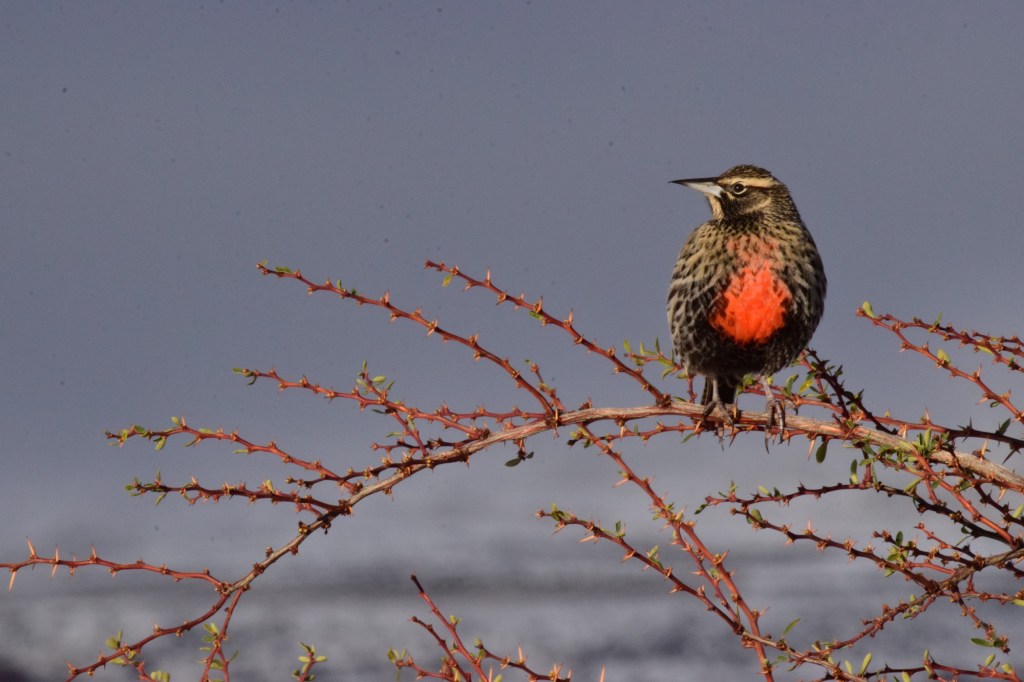
It’s getting to that stage of my time in Chile where I’m starting to take advantage of every moment remaining. Over the last few weeks I’ve gotten quite used to the sight of the Andes, the caracaras that seem to be constantly somewhere on the horizon and the wheezy call and response of the characterful meadowlarks. But soon I’ll have to say goodbye. So, while the weather holds at least, I’ll try to get out after work and soak up as much of that view as I can.

After a productive day spent exploring Carol Ann Duffy’s poetry (specifically Quickdraw, Demeter, Shooting Stars and Delilah) and hanging out with the Senior English team, I popped in to grab my camera and went straight back up the road to Observatory Hill (Cerro Calán). It was smoggy and overcast on my way up, but by the time I reached the summit, the sun had found a breach in the cloud line near the horizon and came shining through – just in time to light up the meadowlarks that were scrambling about the summit.


I went all the way to Patagonia for pumas and took a boat out into the Pacific to see an albatross, but the meadowlarks have been a feature wherever I’ve gone. For me, they’re probably the bird of Chile – after all, national bird or not, I’ve seen condors in Peru, albeit perhaps not as frequently as I have here.

If I had more time – and the weather were kinder – I’d head south again in search of the chucao, a smart little Chilean speciality, and try my luck in search of the Magellanic woodpeckers that reside within the forests of Chiloe. I’d also try to track down the elusive tucúquere, the largest of the owls of Chile, that has thus far eluded me. I suspect I’ll be absolutely knackered when I return from my final adventure next week, but if the sun decides to make a very overdue return, I might make one last jaunt out to Batuco, a wetland reserve to the north of the city, in the hope that I might find the burrowing owls that live around the lake.

Until then, I’m quite content to watch the meadowlarks bousting about.


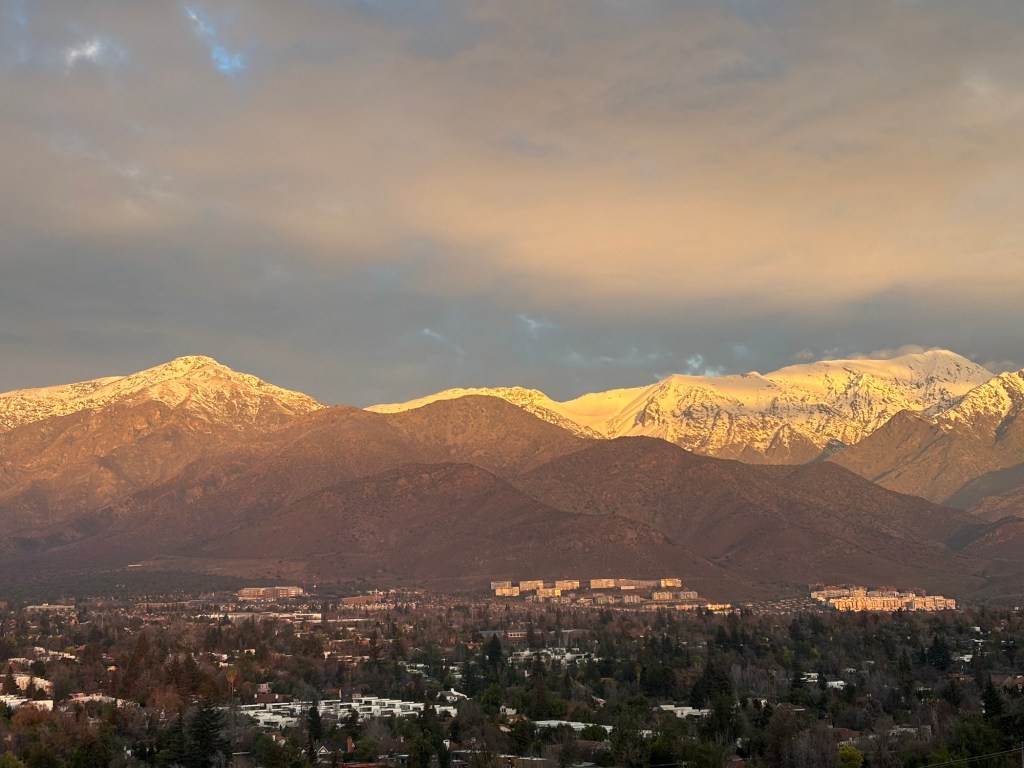
When the sun can be seen, Santiago experiences an incredible second sunset. The dying embers of dusk catches the peaks of the mountains and showers them in golden light, before they fade to an imperial grey against the iron skies beyond. Then, just when you think it’s over, the mountains erupt in an incredible crimson light. I’m not sure what triggers that second burst of light. Maybe it’s the sun hitting the Pacific, or some trick of the clouds. Either way, it’s breathtaking.


As I walked back down the road toward Avenida Charles Hamilton, the clouds became a mirrored beach, like so much stippled sand. To the north, the triangular summit of Cerro Manquehue rose into the ether like a child’s drawing. It’s been the eternal backdrop of my stay here in Santiago, visible from both my home in Las Condes and my office in Craighouse on the other side of the mountain.

Before I came here, Manquehue was just the name of a Chilean Catholic community who I met once in Durham, many years ago. Now it’s one of my favourite waymarkers in the Valle Central.


Tomorrow brings an observation – one of my last – and a planning session with the Deputy Head for a fully-fledged 90-minute lesson of my own on Thursday. If I didn’t know better, I’d say they were testing me. It almost feels like a job interview.

I saw a fox near the car park as I left today – a gold and silver vixen, rooting around the trees just beyond the fence. These culpeos are a lot closer to wolves and jackals than they are to true foxes, but nature clearly likes the design of the fox, because the culpeo and its cousin the chilla have both evolved to fill that niche.

I’ll take that as a good sign. Nothing that beautiful could be anything else. BB x

Upgraded

Lo Barnechea, Santiago de Chile. 15.35.

After a relatively quiet week left largely to my own devices, my third and final week here in Santiago has got off to a thundering start. Not only did I get to observe an English Language A lesson on Othello – easily my favourite Shakespeare and one of my chosen texts for next year – I actually got to teach a large chunk of it, steering the lesson firmly into the context-heavy waters of racial and religious subtext.

It could hardly have felt more natural. Granted, it was only half of a double lesson that was in my hands, but it was everything I wanted my experience of teaching literature to be. I remain very much attached to the idea that one day, God willing, I might get the chance to teach the literature of my own language, too. It’s a tremendously uphill journey, as my degree is in Modern Languages and Cultures and my training is entirely in French and Spanish, though I did skew almost all of my modules into the realm of literary analysis during my university studies. It’s also worth noting that my grades in English Literature – and my passion for the classes – were simply streets ahead of my interest in languages at school, which, I admit, were something that came naturally to me rather than a particular passion of mine. No, I haven’t read nearly widely enough in English as one might have done reading English Literature at degree level, but then, I’ve read a great deal less in French, and here I am teaching Albert Camus and Gael Faye for the third year in a row. Go figure.

It must have gone down well, because I’ve been invited by the Director of the Senior section of the school to teach another Y12 class the same material, but in more depth, on Thursday morning. Realistically, this is what I expected what my placement to look like, albeit in Middle – but this is much more my sort of thing.

I also popped in on a Y11 French class, which was suggested as a possibility in my very first week, but has been held back due to the ongoing cycle of assessments. Students start French much later here (which seems logical, with France being seven thousand miles away), so they were only learning the basics of introductions and masculine/feminine adjectives, but it was good to get my eye in – because on Thursday I’ll be taking the entire class as they move into the realm of verb conjugation. Fortunately, it’s only the regular -ER verbs I need to concern myself with, and being native Spanish speakers, they should be able to grasp the concept of verb conjugation considerably more capably than my English students. They reminded me a lot of my Y11s back home: lively, bolshy, but keen to do well and to impress. Two thirds of them are carrying on with me to A Level, which I’m still raving about. I don’t imagine it’ll be a trend moving forward, but I’ll do my best to try and engineer that kind of success in the years to come. After all, with languages on the decline across the UK, my job does depend on it somewhat!

My final commitment for today, after a lovely lunch with the Senior English department, was to drop in on the school’s MUN/Debate Club, hosted by Sebastian, one of the English team. I’ve got to hand it to their ambition, tackling the two-state solution between Israel and Palestine for one of their first debates, but they handled it superbly, and some of them stuck around at the end for feedback, just like mine do at the end of a Burke or Interhouse Debate. After a couple of weeks where my attention and interaction has largely involved my colleagues and their respective schemes of work, it feels incredible to be working with the students directly at last. It reminds me just how much I love this job, which is surprisingly reassuring, even in the middle of my summer holidays.

Saying it makes it so. Today is the start of week five. Four weeks remain, which will be down to less than two by the time my responsibilities in Chile and Greece are concluded. Once again, I have contrived to whittle down the gargantuan private school holidays into a much more manageable break by keeping myself as busy as my sanity will allow, though with a full seven weeks of ever-changing plans, this summer really does take the biscuit. I might feel guilty about relinquishing time I could have spent refreshing my memory behind the wheel of a car if I weren’t so busy… but you know as well as I do that that would be an out-and-out lie. Between the mountain lions, albatrosses, hummingbirds and Shakespeare, I couldn’t be happier with how this summer has gone.

Tomorrow calls for Carol Ann Duffy (…!). We haven’t crossed paths since she and her stolen snowman were unceremoniously shunted to one side in favour of Seamus Heaney and his litany of potato poems during my GCSE years. I’ll hit the books tonight and come armed and ready to muck in with a Y11 class, who are presenting their analysis tomorrow. The fun never stops! BB x

Halfway

Las Condes, Santiago de Chile. 21.24.

Today marks the halfway stage, both of my three-week exchange post and of my five-week extended summer break in South America. Life goes on for the students at Craighouse, and I have to remind myself that while it’s cold and coat weather here, and everyone is hard at work, my summer holidays are ticking by. Not that I haven’t made the most of them, of course – I can scarcely remember a more action-packed summer than this one – but it is something I have to tell myself when it feels like I might spend another day observing lessons.


Today I finished my myths and legends compilation for the Middle Lenguaje department and popped over to the Senior English department to get to know the team. Turns out that’s where French is based too, so I guess I’ll be up there a fair bit for the rest of my placement. They seem like a really friendly bunch. Hell, everyone here is really friendly. It’s been a really neat choice, coming out here for the summer. I’ve also had a lot of time to speak Spanish and work on my novels, so that’s been pretty useful, too.

Bit by bit, my last week is steadily falling into place. It’s going to be something to look forward to, to really set a seal on what has been a phenomenal second outing to Latin America. I hope it’s the first of many. BB x

Project Time

Las Condes, Santiago de Chile. 20.20.

I’ve been assigned a task to do for the Middle Lenguaje department that is right up my street. The students of 6° Básico are working toward familiarisation with Criterion C of the MYP (already!) and, to liven things up a little, they’re going to start working on a myths and legends project next week, which they will explore during a parent-teacher conference event in two weeks’ time – one which I shall sadly miss, being somewhere totally different by the 10th of August. But I still won’t say where!

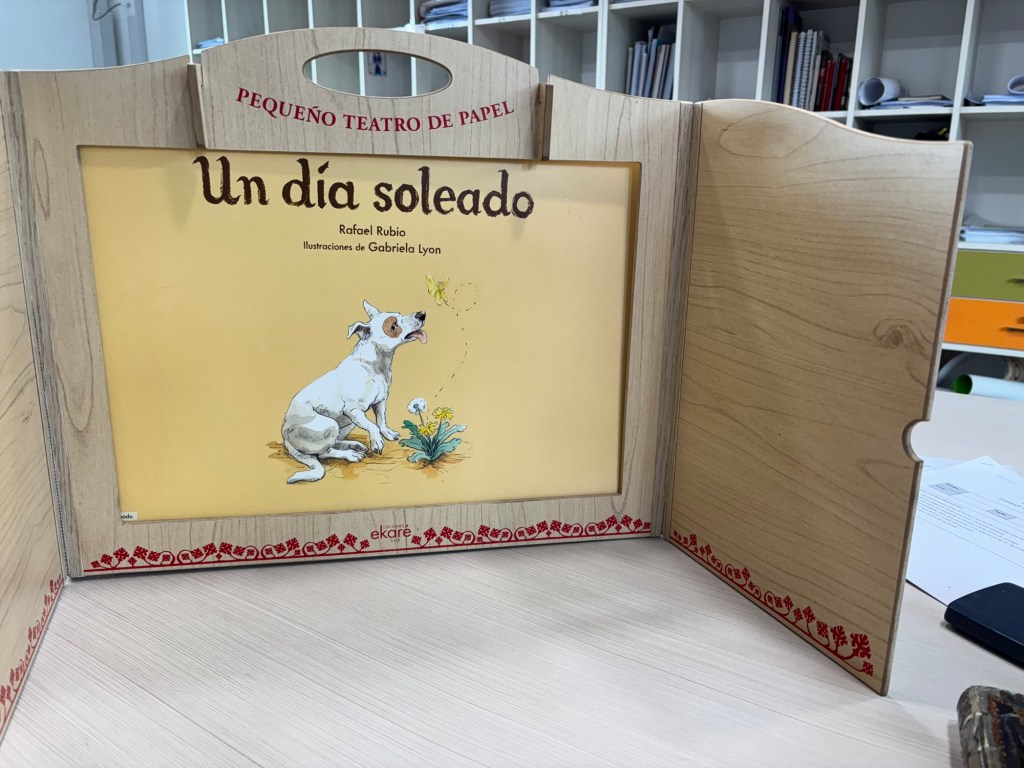
To really bring their presentation and storytelling skills to life, they’re going to create their own kamishibai (the one word in our meeting on Monday that I could not decipher for love nor for money, being neither English nor Spanish!). A kamishibai is a sort of slide theatre, with the script on the back of the cards so you can tell the story moment by moment using the images on the card. Think of it as an ersatz cinema.


I’d have been all over a project like this one in Year 7. We did do a poetry writing challenge around a set theme, which was really fun (and I did reasonably well, if memory serves), but nothing as arty as this.

To help out, I’ve been tasked with offering six additional folktales from around the world to complement the North and South American stories the kids will have the chance to work with. After careful consideration, I chose the following:

  • Gawain and the Green Knight (UK) – I felt an Arthurian legend had to be in there for England’s sake, and the Green Knight’s tale favours a standalone event.
  • Mr Seguin’s Goat (FR) – A rogue choice, but I needed an animal-centred story and a French folktale and this one ticked both boxes. I slightly tweaked the ending so that it might be a bit more appealing. I hope Charles Perrault would forgive me!
  • Martin Tkiki (ES) – A Basque legend I have always taught to my Year 8s when practising the past tense and consequently one I know really well. I also like the idea that it might even hint at our earliest interactions with Neanderthals and what we may have learned (or even taken) from their society.
  • How Maui Slowed the Sun (PF) – A lot of these kids will have seen Moana, but I first learned about the mighty Maui in a beautifully illustrated Myths and Legends book. Disney’s Maui merely alludes to his great deeds in You’re Welcome, but they’re worth reading for yourself.
  • Urashima Taro (JP) – I could have gone with any number of Japanese folktales, but this East Asian parallel to Rip Van Winkle is both short, imaginative and easily accessible to non-native readers.
  • Ali Baba and the Forty Thieves (IR) – Probably one of my favourite folktales of all time and easily the longest in the collection, but it could not be strimmed down without losing the magic. It was Ali Baba or Sinbad and the former is, admittedly, a lot easier to follow.

If I can get my hands on a functioning school laptop tomorrow morning – as planned – I should have them written out and tied up by lunchtime tomorrow. I wonder which ones they’ll choose? BB x

818

Las Condes, Santiago de Chile. 19.50.

Week two started slow today. A couple of meetings and a non-starter quest for a functioning laptop meant that I spent the day working on my books, which was a lovely way to spend the day productively – as well as a reminder to myself that I am technically on holiday – albeit perhaps not as exchange-heavy as it could have been. I have bigger events coming up this week, though, and I suspect it will be the last week of my exchange when it really feels like I have a fully functioning timetable.


There are always so many birds around campus. The nest boxes the students have put up all over the school site for their CAS project obviously help, but it’s not just the charming little rufous-crowned sparrows that make the place feel so friendly. The mockingbirds are always perched somewhere, every time I look up I see a caracara of some description hanging in the air, and just before break this morning I know I saw the faraway silhouette of a condor circling the heights of Manquehue.

It’s the meadowlarks that are currently lending some extra charm to the place, if I had to choose a standout. I first got to know these characterful creatures in snowy Patagonia, but it turns out they’re just as common up here around Santiago, hopping about in the car park and sitting quite fearlessly on the school fence, singing their hearts out as the Year 7s play some kind of tag game just feet away.


My BIRDA app tells me my total count of species I’ve seen so far is up to 818 after this weekend’s exploits. Even I have to admit that’s getting to be a dizzying figure, and well over three hundred of that total are birds I have seen in the last five months. I’m not a professional lister like many seasoned birdwatchers, chasing a particular total on my life, year or patch list, but it’s fun having an app where you can log it all, and in so doing learn something about the sheer diversity of species you have found – and, consequently, discovering what is still left out there to see.

I probably could have seen more species if I’d paid through the nose for that Abra Málaga trip, but I wasn’t really after that kind of number-obsessive behaviour. One albatross would have been magical enough on yesterday’s boat trip, and I was blessed with four different kinds. It does not pay to go out into the wild with great expectations. Nature provides on its own terms.

Not too much to report for now, but keeping my writer’s block at bay with regular note taking. And it does seem to be working! BB x

Intercambio

Las Condes, Santiago de Chile. 21.28.

Four days into my teacher exchange and I’m still blissfully without a timetable as such. As a matter of fact, that’s actually quite a relief – because I keep running into new opportunities every day, and it’s helpful to be able to say yes to everyone for a change.

Today I spent the entire day in the Senior division of the school, with the equivalent year groups 10-13 (1°-4° Medio by Chilean standards). I also got my eye in on a PAES class, a preparatory class for students preparing to sit the national exams required to enter Chile’s university system, which functions much like the “seventh term” that was once offered by some British schools for Oxbridge hopefuls.

It was a bloody useful class to watch. I even had a go at the paper myself, and got only one question wrong over a 30-minute assault of two reading comprehensions. It’s not that the chosen literary texts were hard – though I’ll admit there were some words I’d never encountered – but the questions were tricky with frustratingly similar choices of answers, and often required really careful reading to decide between two of a possible four.

For the record, the texts were El barco de vapor (which I’m sure I’ve come across somewhere) and El leve Pedro – in case I decide to use them myself as part of my Language A course design. Which I very probably will.


It’s raining again. My trips to South America seem to involve a lot of rain. Since I still have no timetable set in stone – and this is a very ad hoc exchange – I’m hoping to get away early tomorrow and make for the coast, as the weather is likely to be worse next weekend, and I will be off on my travels at the end of the last week – location TBC. For now, at least, the weekend looks like Valparaíso.

Provided the fog that is rolling in off the Pacific doesn’t come sooner than expected, Saturday will see me set out on a small ship into the Pacific Ocean in search of the only bird on the planet with a wingspan larger than a condor: the albatross. I expect the sea will be more than a little choppy, but I’ve always wanted to do a proper pelagic trip, and since the days of working one’s passage on ocean liners is well and truly dead and gone, this is the next best thing.

If the weather puts a stopper in my Pacific plans, there’s plenty to see and do in Valparaíso – including the city’s resident fur seals and its plethora of seafood options. It’ll also be good to get out of the capital for a bit. Host families are lovely and all that, but eight years of living on my own have made me into a very independent sort of creature.

Someday, somebody will shake me out of that. Maybe. For now, this social battery of mine needs the solace of the sea.


I’ll get back you once I get there. It’s a bit touch and go, but the best adventures always are. BB x