Hostal Casa Volante, Valparaíso. 16.37.
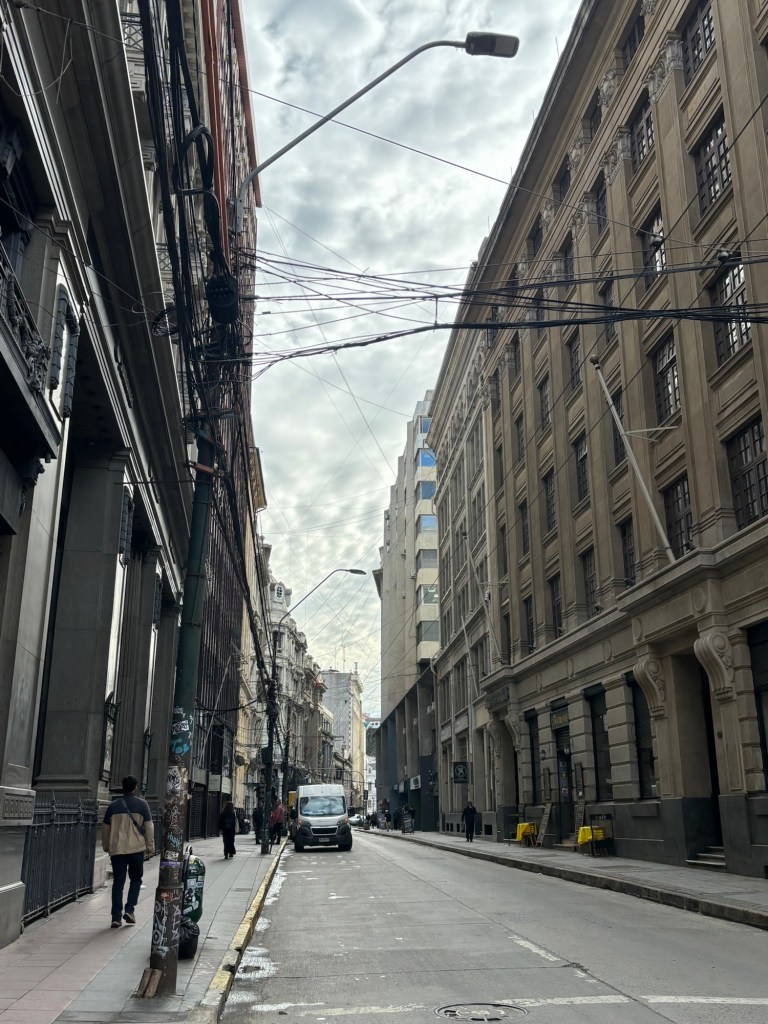
Santiago de Chile may be cursed to be a smog-bound citadel for the rest of its days, but in one particular sense, it is exceptionally well-placed: it is about an hour’s drive up into the mountains to the east for skiing during the winter months, while a hour and a half’s drive to the west will take you to the Pacific coast. Santiago’s summer sisters, Valparaíso and Viña del Mar, may only be a hundred kilometres out as the condor flies, but they are a world away from the Chilean capital. In some ways, they are decidedly European: winding streets with towering Parisian buildings, complete with tramlines and traffic lights. In others, they are absolutely Latin American: a fiercely compact cultural melting pot, with Peruvian outposts everywhere.
With my timetable still very much up to me (consisting entirely of lesson observations at the moment), I struck out early for Valparaíso today, very much in the mindset that the part of town where the bus station is – or so the books all tell me – is no place to be after dark. It took me about three hours to get here, all in all, so had I waited until I had got home, it would be around half past nine here – which is definitely pushing it, even by my standards.
So here we are, in Valparaíso, Chile’s second city. With a population of around 300,000, it’s a little larger than the hamlet of 47 in La Mancha for which it was named.
Let’s be real. I’ve come here for two things: sea lions and Pablo Neruda. I’ve been juggling my choice of poet for the Language A course for a while, between Neruda – arguably Latin America’s greatest poet – and Lorca, who I hold in especially high regard. In the end, it is Lorca who has won the day, if only because I have studied him so much over the years (and, no doubt, because I have skin in the game by being part Andalusian myself). All the same, it would be a crime not to include Neruda in the course, so I plan to use his poems to prepare my students for the unseen.
Neruda, for now, must wait. I’ll have time for that tomorrow, after the pelagic expedition. I arrived too soon to check in, so I turned my feet east and followed the coastline as far as the twin piers of Caleta Portales.
I didn’t have to go far to get my sea lion fix. The main pier of Muelle Barón may be out while the city pours time and money into what looks to be a seafront shopping mall in the making, but the real show is a few hundred metres to the east, where the skeletal ruins of an old gas company dock has become one of the favoured haul-out sites for the city’s sea lions.
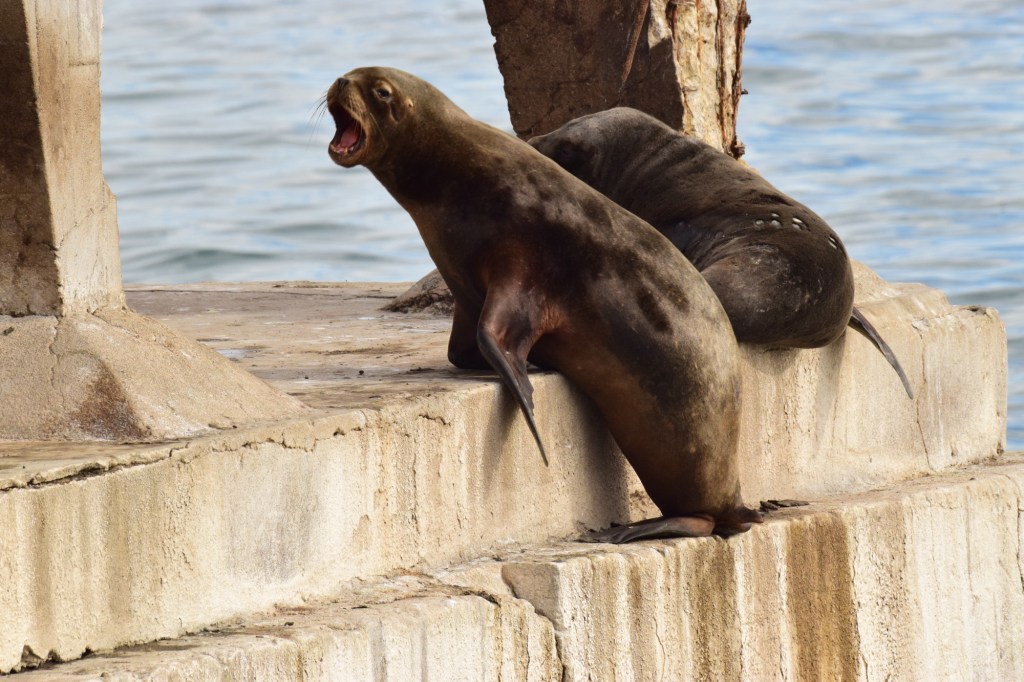
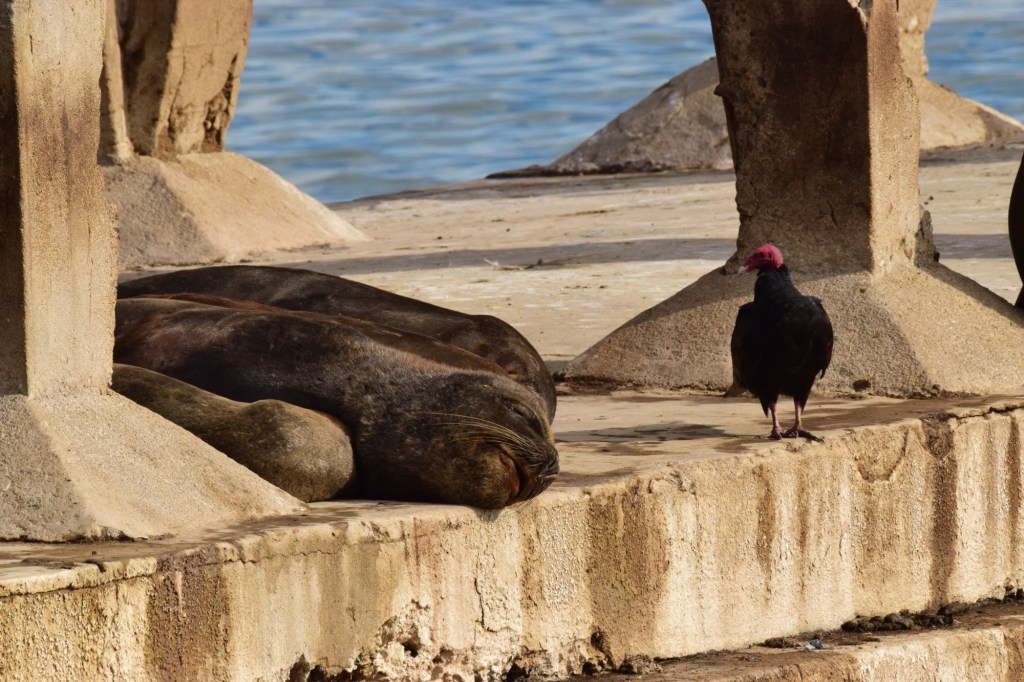
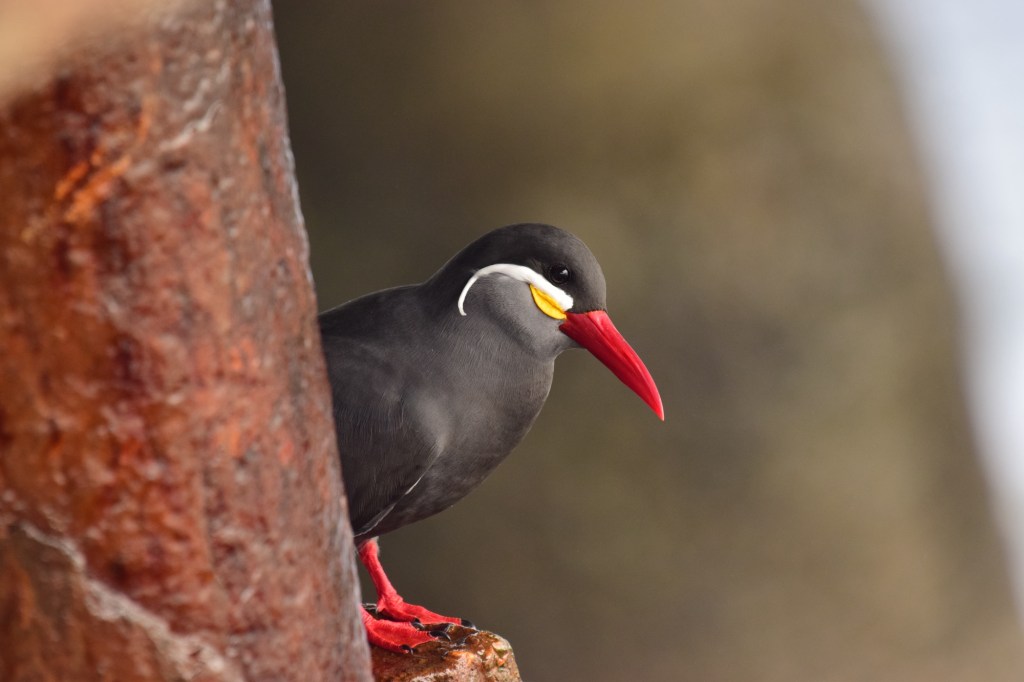
Alongside the sea lions, the structure is the perch of choice for a surprising number of seabirds, given its safe distance from the shore but proximity to the fisheries. I picked out kelp gulls, Inca terns, a couple of turkey vultures, Peruvian boobies, three species of cormorant and, of course, the Peruvian pelicans that I was hoping to see again.
I thought there might be something loose in my rucksack, as I kept hearing some kind of fabric shuffling sound, but to my astonishment a man in dirty overalls clambered out from among the boulders, seemingly from some crevice beneath the very rocks upon which I had been sitting for the better part of half an hour. He acknowledged me with a gravelly “wenodía”, set down his tatty red baseball cap to mark where he had slept and then picked his way across the rocks, crouching every so often to inspect something between the crevasses of the sea wall.
Valparaíso is a lot poorer than Santiago’s uptown districts like Las Condes. That much is plain.
Moving east, I had my eyes trained on the water, on the off chance that a wandering penguin might show up. I did spot one, a fair distance from the shore, but something else entirely caught my attention – something entirely unexpected.
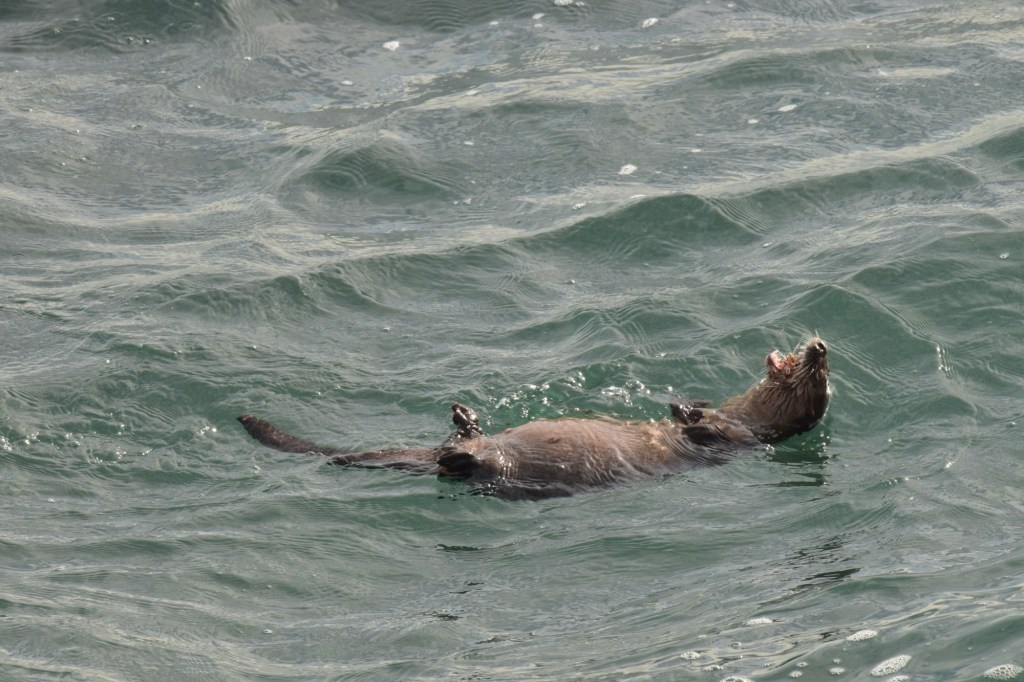
A marine otter.
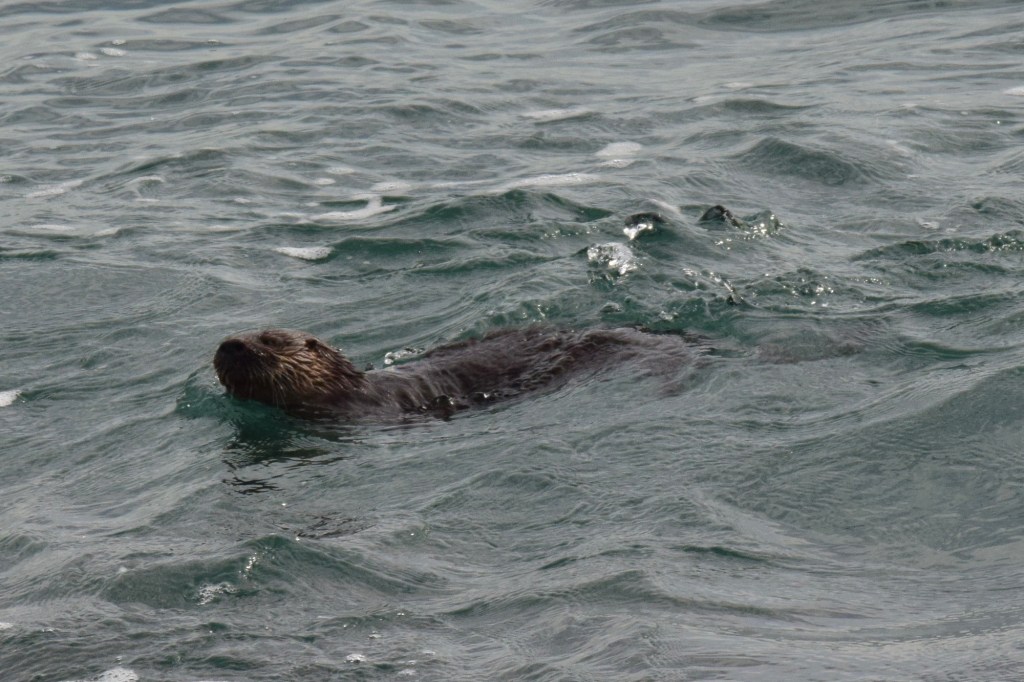
Marine otters – known in Chile as chungungos or gatos marinos (sea cats) are not sea otters, like the fluffballs found from Baja California up along the North American coast, but they do live almost exclusively in the sea, rarely venturing into freshwater like other otters. Like sea otters, marine otters were once hunted for their pelts and are thus an endangered species, and quite a rare sight along South America’s Pacific coast. So I really wasn’t expecting to see one here, in the very heart of Valparaíso.
Apparently, marine otters are specialist feeders according to their location, with southern populations preferring fish and northern populations opting for shellfish. This must be one of the northern otters, because in the fifteen minutes or so I spent watching it before it disappeared, it must have caught and eaten at least four small lobsters.
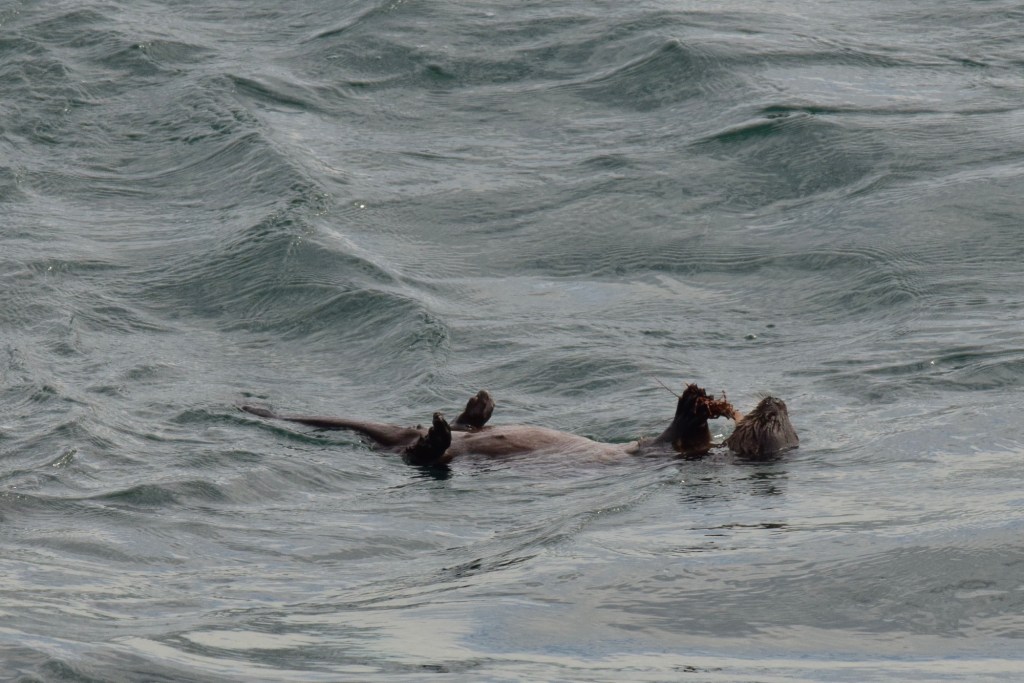
That makes two species of rare otter I have managed to find this year: giant otters in the Amazon and marine otters in the Pacific. And I still haven’t tracked down the otters that live in the Tone, just a stone’s throw from my flat! I’m sure they’ll show up eventually. Maybe I should make that my mission, before the year is out: to see a third and final species of otter, preferably before Christmas!
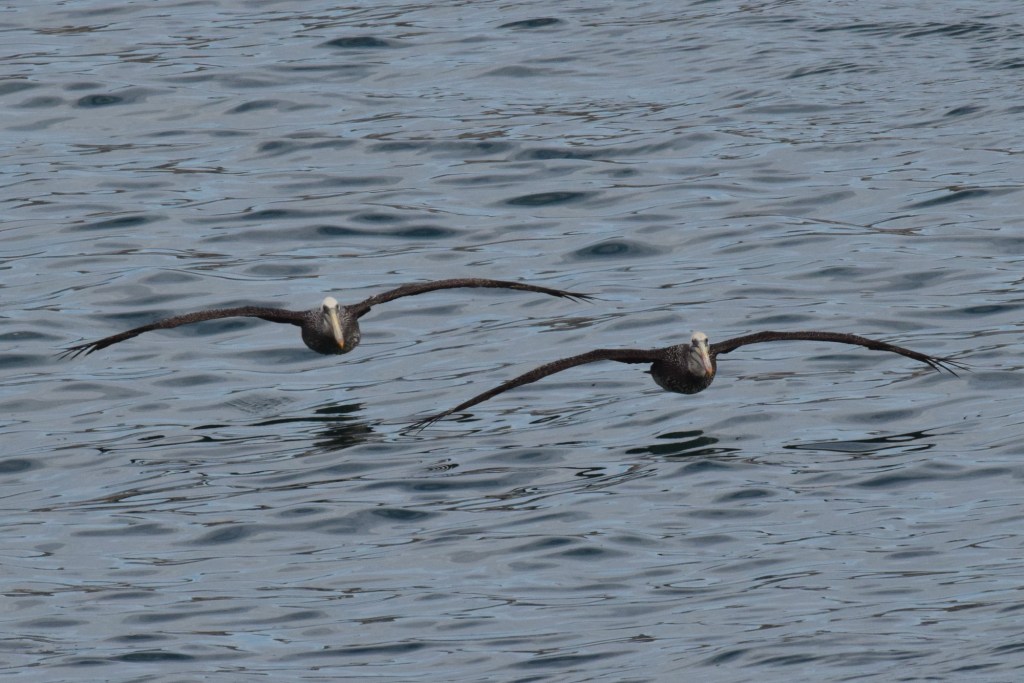
Not to be outdone, the pelicans put in a good show, sailing in low over the water in that spectacular flight pattern of theirs. I have wanted to see pelicans do this since my mother told me about it after her trip to Peru back in 2015, when I wanted to be just about anywhere but Amman, and I have had the incredibly good fortune to see that sight several times this year.
It’s not the stuff Attenborough documentaries are made of, for sure, and the good people of Valparaíso must see it all the time, but it is something I will never tire of seeing.
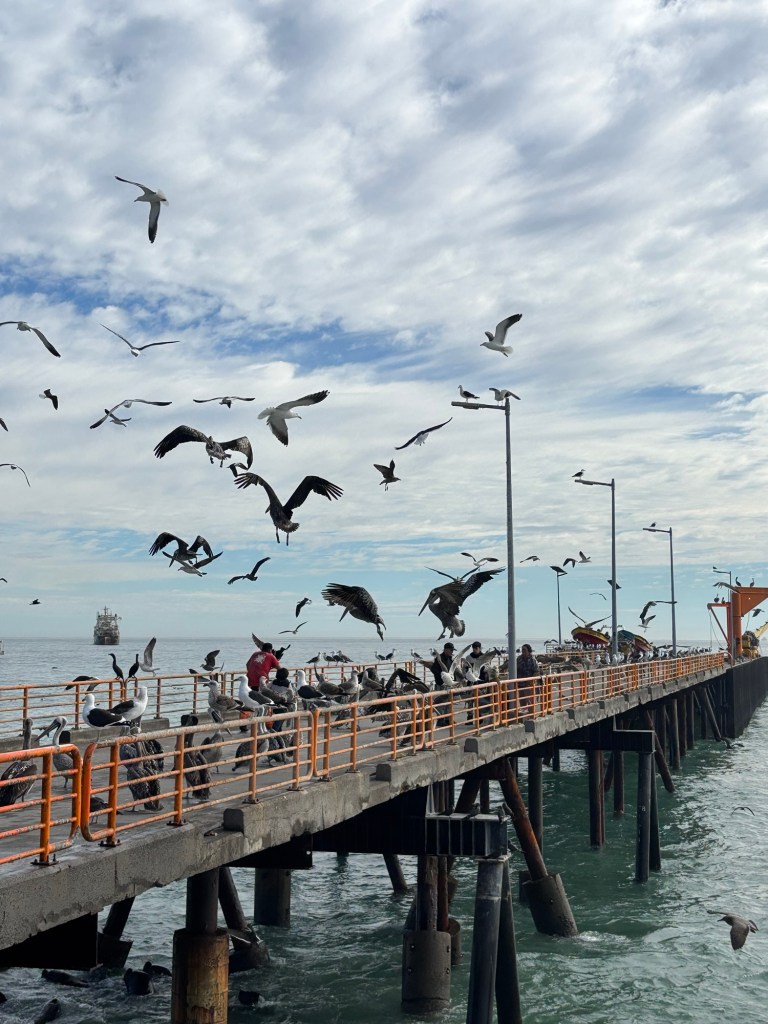
Eventually, I reached the busy fishing port of Caleta Portales. I reached it at absolutely the right time of day, too: around noon, the fishermen throw their bycatch back into the sea, loading the scraps into repurposed shopping trolleys and dumping them over the pier into the water below. The local wildlife is well aware of this daily bounty – and, thanks to a quick Google, so was I.
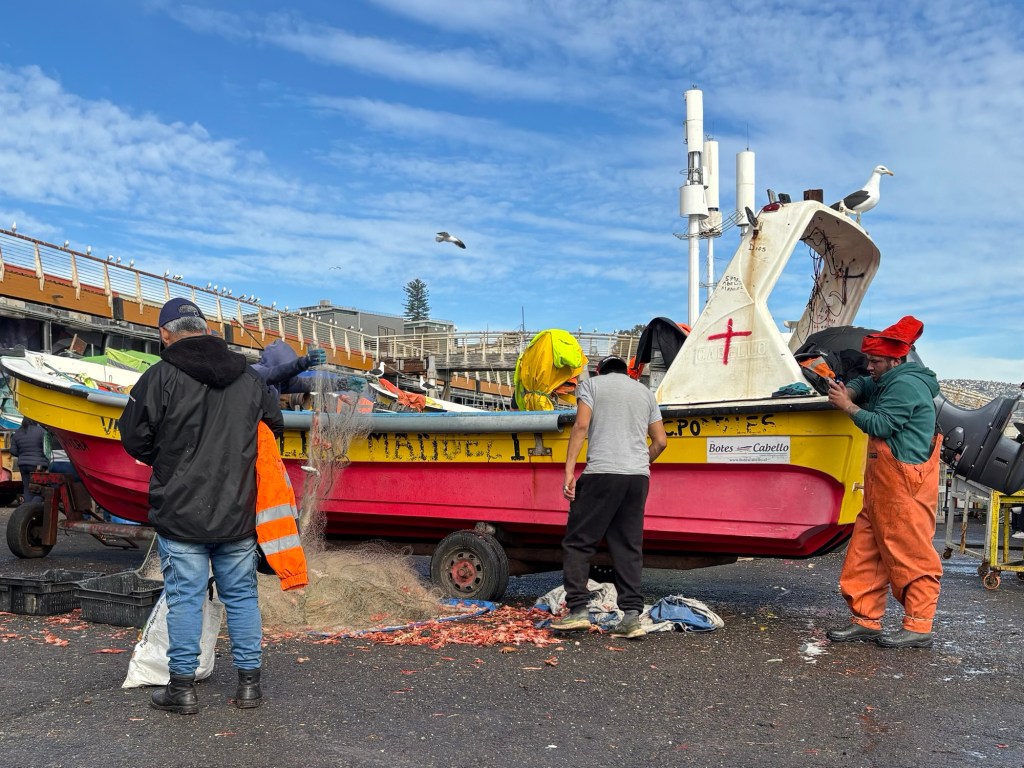
If you needed a clue that the drop was imminent, you only needed to count the pelicans. They had gathered in numbers so great I struggled to put a number to them – and pelicans are not small birds by any measure. They seemed to be perched upon every surface they could find: the sea wall, car roofs, billboards, shipping crates, stalls, bridges, lampposts and on the concrete among the fishermen themselves. After seeing them at a distance in Paracas, they were now far too close for my lens!
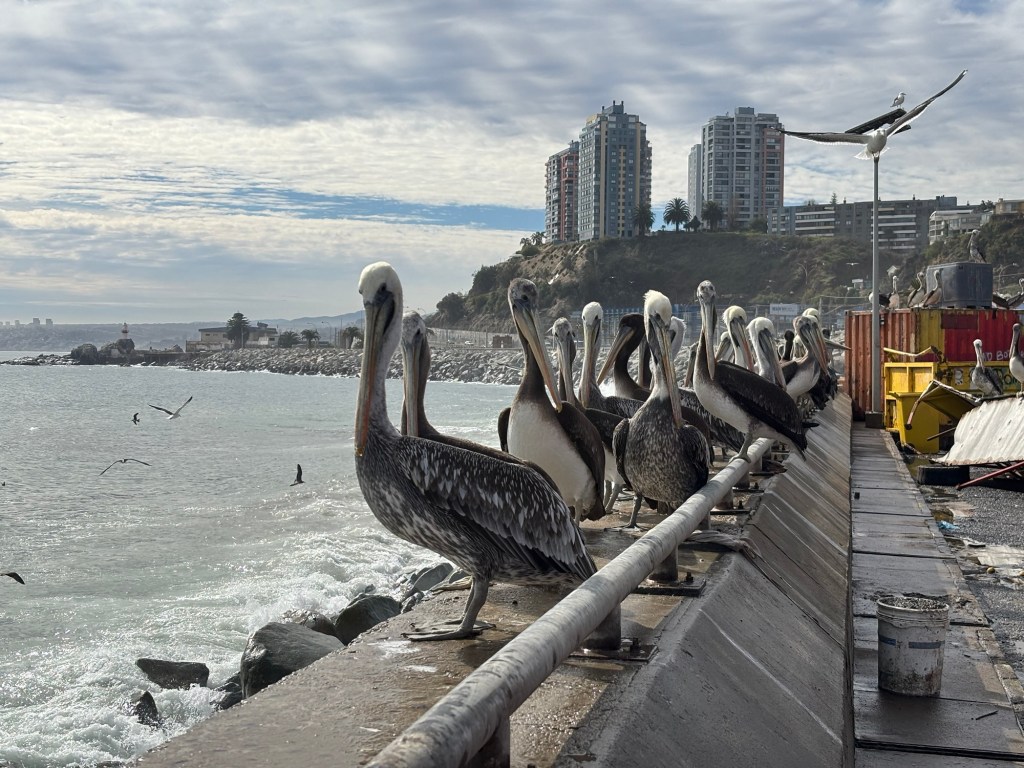
One small perk of being here now in midwinter is that some of the adults have started to put on their smarter summer plumage, with a smart yellow tinge to their more defined white faces.
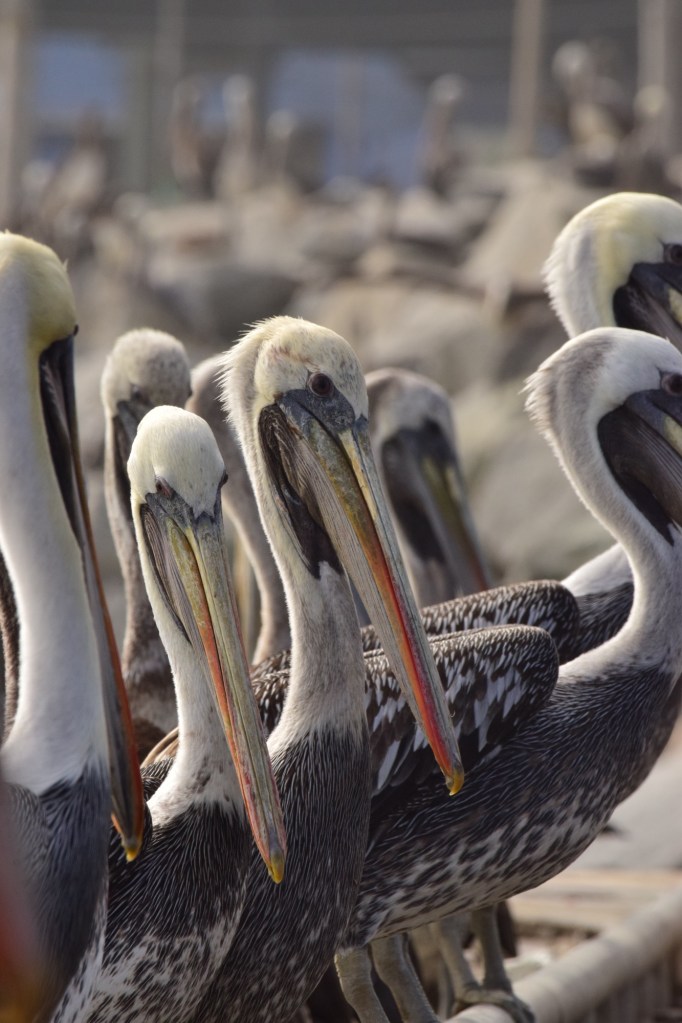
I was already aware of the immense dark shapes in the shadow of the pier, but the appearance of the fisherman with his trolley worked like a magnet, drawing the dark mass along after him, following the overpowering stench of fish – or the sudden vortex of feathers and screeching gulls that followed in his wake.
With the seafood sloshed overboard, the shoreline turned into a frenzy of activity. It didn’t take me long to pick out the bull among the sea lions massing around the shoreline: he completely dwarfed all the others, and that’s saying something.
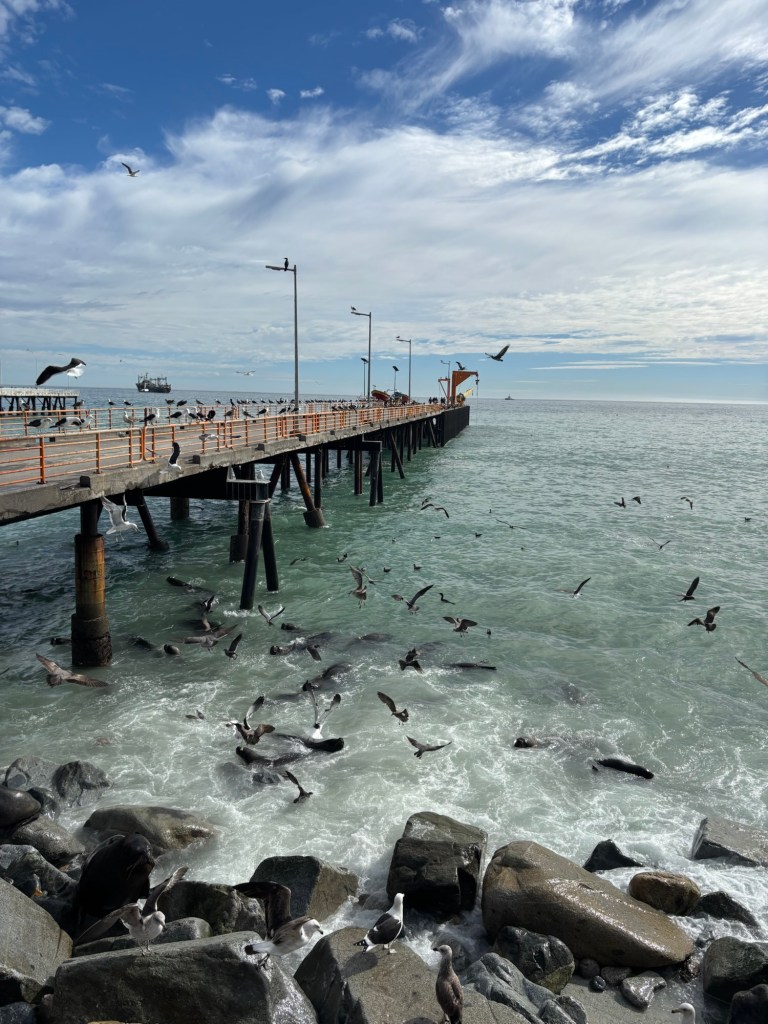
Forget the roly-poly dumplings that you find off the coast of Britain. Sea lions are an entirely different beast. Adult males can reach a whopping three metres in length and weigh in at around 325kg. They’re also fiercely territorial, as was plain enough from the deep scars on some of the males, including the old bull.
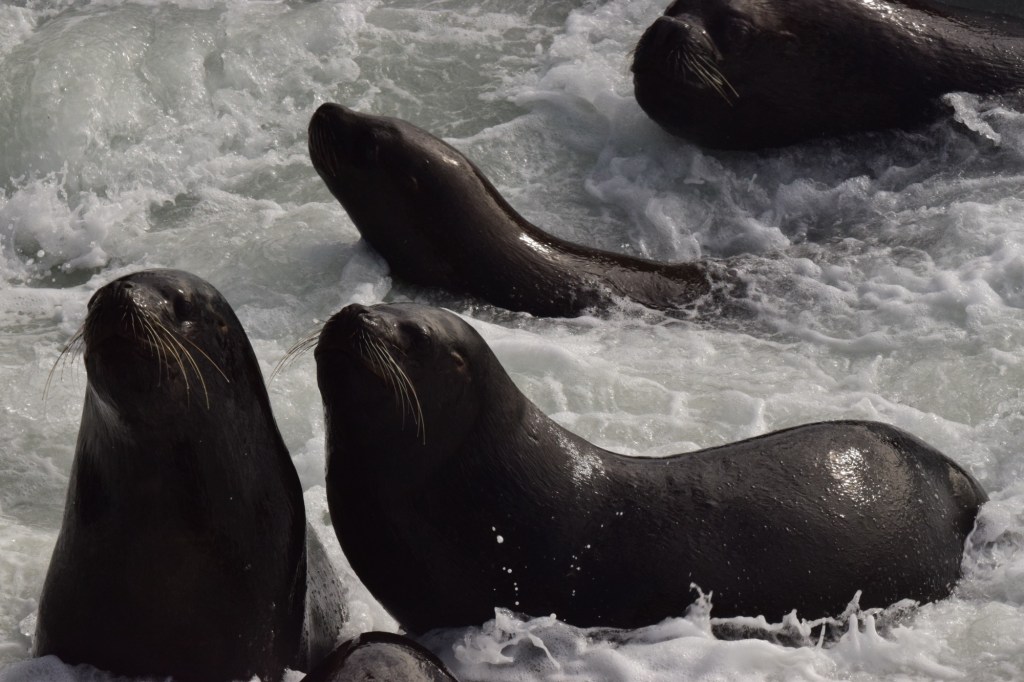
At that size – and at this distance – they were simply too big to get on camera. The 300mm would have been useful here, I think, but it’s sitting on top of my chest of drawers back home in Somerset. As such, I had to make do with portraits of the beasts that had hauled out onto the rocks to wait their turn while the bull ate the sea lion’s share of the bycatch.
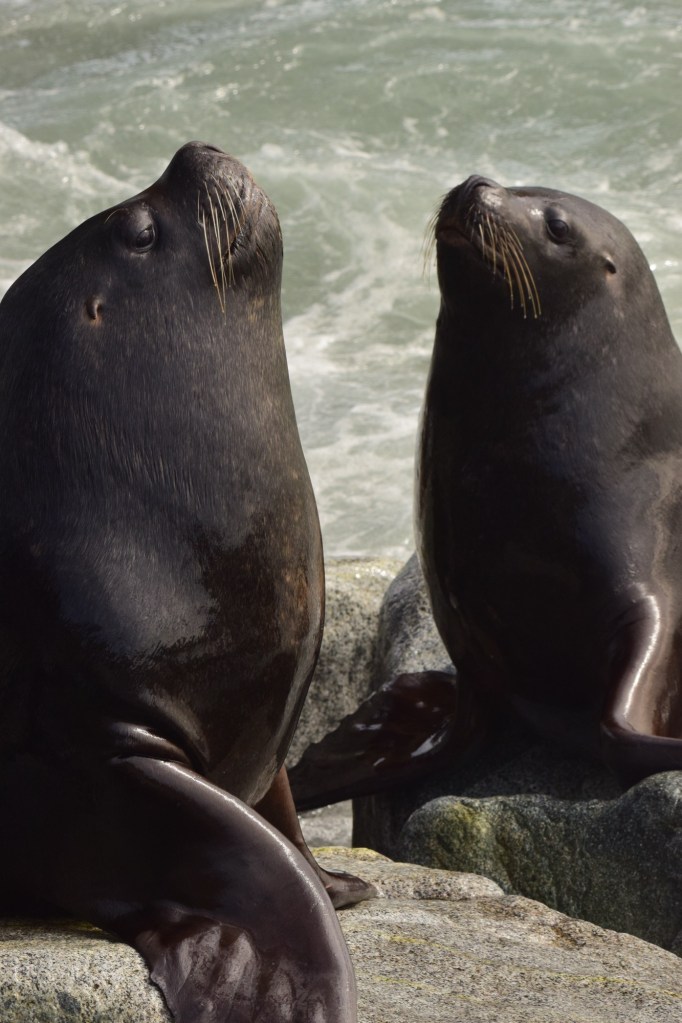
At this range, of course, you can make out a lot of detail. The thickness of their whiskers. The sharpness of their teeth. The minuscule ears at the back of their heads, and the scars on their torsos.
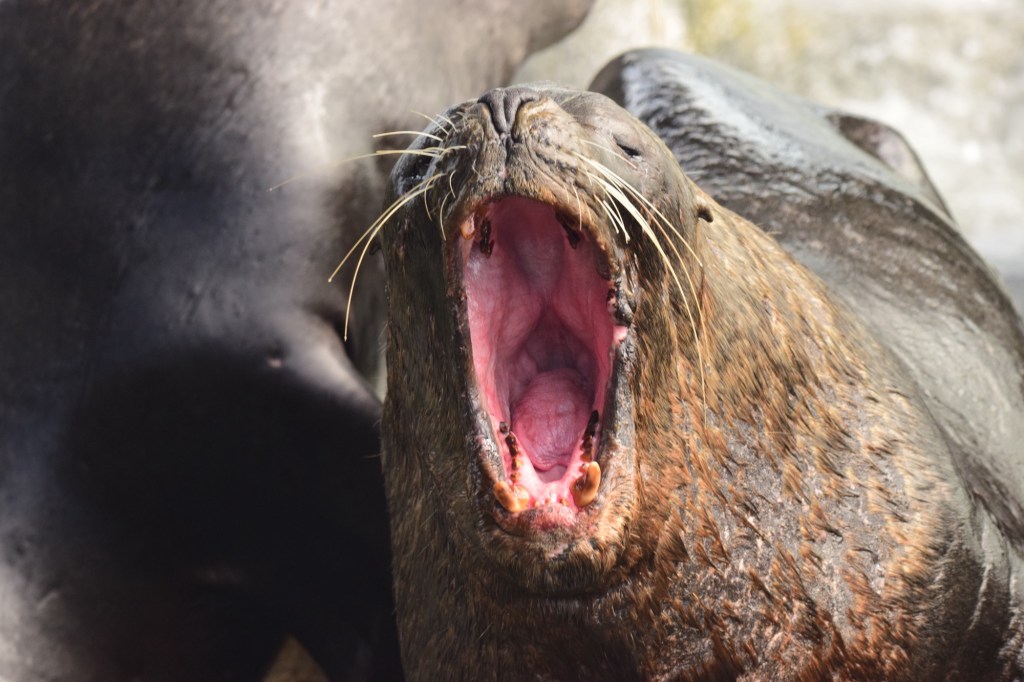
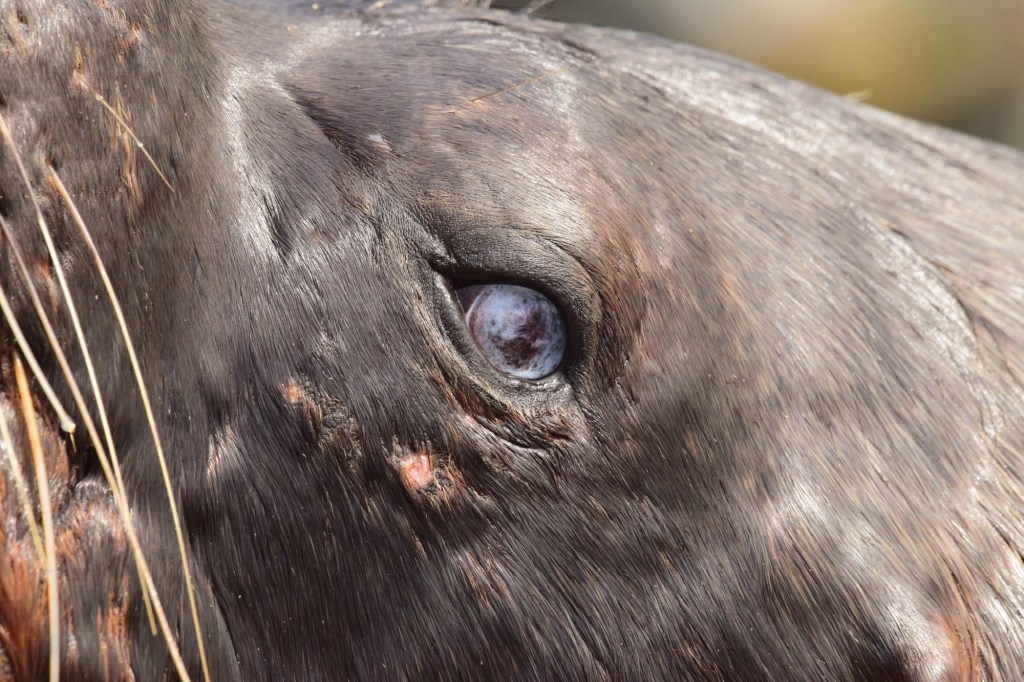
One male was so close you could see the whites of his eyes twice over. His eyes seemed to have misted over. He must be very old for a sea lion to have contracted such an infection. I wonder how old? They can live to be around twenty years old in the wild, I think, so this one can’t be far off that mark.
Arguably prettier than the titans hogging the spotlight was a small family of Inca terns, waiting patiently for their chance to swoop in and seize some of the scraps for themselves. This is another species I travelled all the way out to the Islas Ballestas to see, only to find them so close here in Valparaíso that they might have been eating out of my hand.
Here, at least, the lens really did put in the yards.
I hung around the port for well over an hour before deciding it was probably time to head on back to Valparaíso, have a decent lunch and check in to my hostel. The skipper advised against having a large supper ahead of tomorrow’s ocean voyage, so I made a mental note to have a decent lunch instead, and acquire some snacks for the journey home.
It’s not the most scenic route back to Valparaíso from Caleta Portales. In places, the city seems to be collapsing into the sea, and where there isn’t the salty tang of the sea, there is the sweet stench of sweat, marijuana and human faeces. There’s a lot of homelessness here. All the carriages of a derelict train seemed very much lived-in, with signs of recent occupation all over the place: a bouquet of flowers tied to the grille, a washing line strung out in the gloom behind a window, and a dog waiting patiently on the step of the driver’s car. It’s probably more homely than the crevasses among the boulders below the sea wall, though I imagine it’s not much warmer.
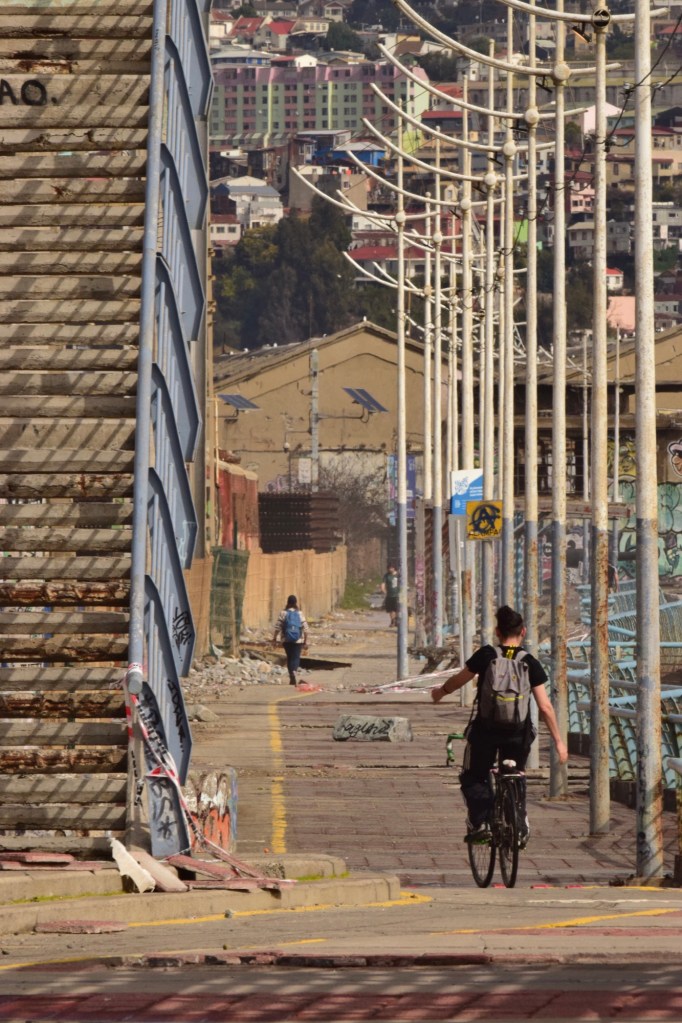
The city never seems to catch a break. The Spanish blew the city to pieces in 1866 during the Chincha Islands War. Forty years later, in 1906, Valparaíso was ripped apart by an extremely violent earthquake – a fairly common occurrence in this part of the world, with the city sitting squarely upon the Nazca plate boundary. Apparently, there was a small one just a few days ago off Quintero, where I am headed tomorrow. It’s quite something, seeing the tsunami warning signs all over the place.
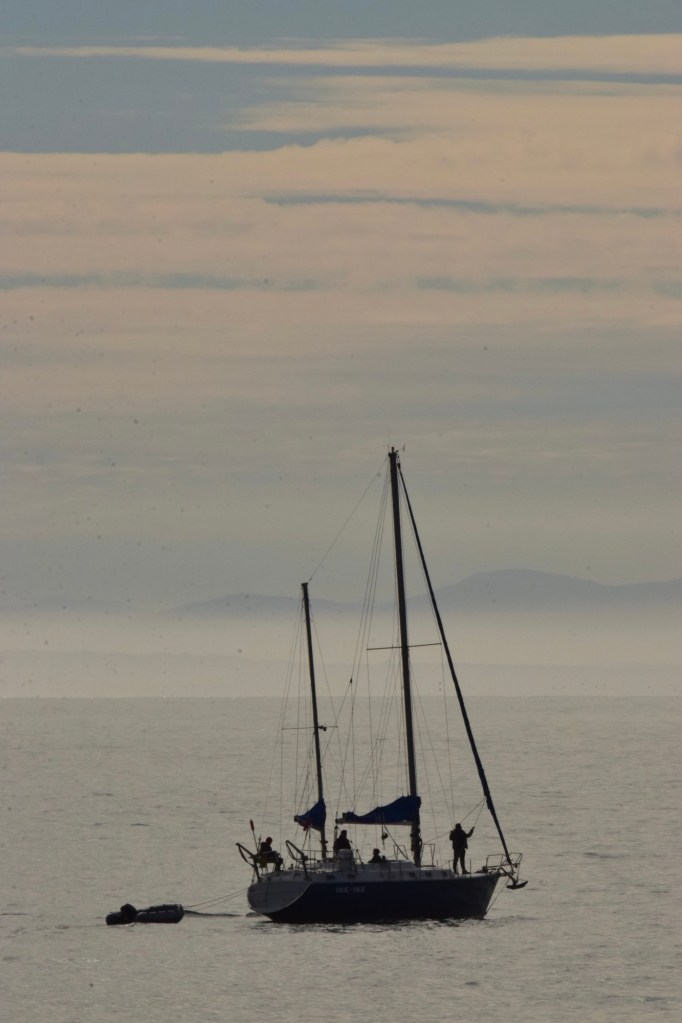
The captain has just told me that the boat needs a service tomorrow morning, so we have rescheduled. Weather permitting, we are going ahead on Sunday. That should make my journey home a bit easier. Even so, it is likely to be my most out-of-pocket adventure yet.
Tomorrow, then, is wide open. A whole day to explore Valparaíso! I’ll make sure it starts with a good sleep and a decent breakfast. Those sea lions had a proper feast today – I might as well do the same. BB x

