Chilean Memories #7: Sea Lions
Puerto Baquerizo Moreno, Galápagos Islands. 18.55.
I could have sworn that it crossed my mind when I was packing for Chile that I might want to take my GoPro. It would have very easily fit inside my suitcase. It’s not as though I overpacked, by any stretch of the imagination. If anything, I almost certainly underpacked. Well, it can’t be helped – how was I to know that my last South American adventure of the summer would take me snorkelling, when Chile was (and still is) in the grip of winter?
Long story short, I really, really, really wish I’d had it on me today. But I didn’t. So I’ve done my best to make up for it with the trusty Nikon. I hope you enjoy!

Today’s expedition took me out to León Dormido, more commonly known as Kicker Rock. I’ll be honest, of all the Galápagos day tours available, this one was not on my list. It probably should have been, as it’s one of the most spectacular places in the world to go snorkeling, or so they say. Knowing what I know now – which is that the discount I had from my guide was considerable, compared to the other guests – I’m glad I signed on for a last minute slot.
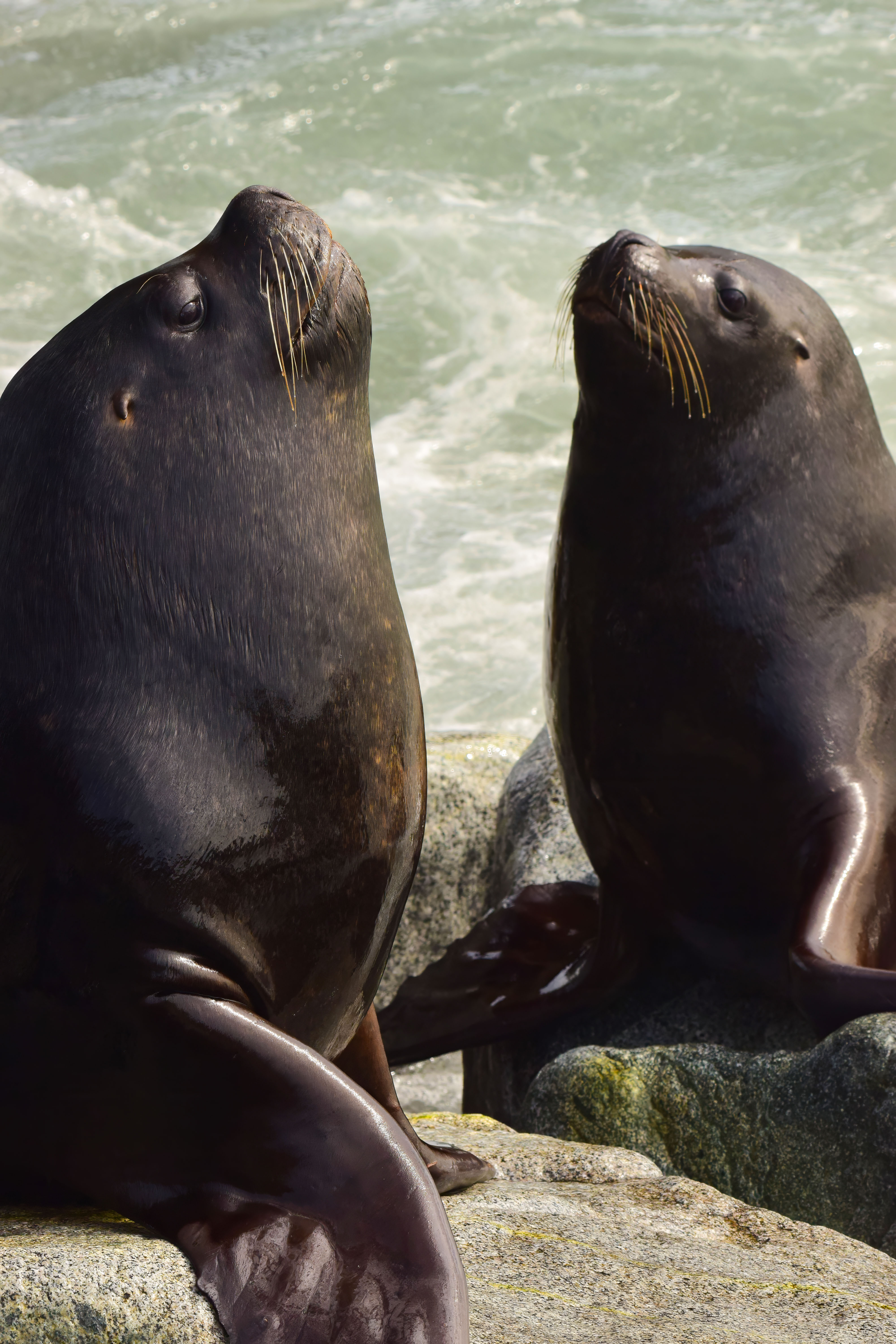
I rocked up early to the marina, as instructed, but sometimes I forget that this is South America. A 7.45am meet turned into a 9.15am departure, so I had plenty of time to photograph the sea lions, which never fail to disappoint, no matter how accustomed one becomes to their presence here.

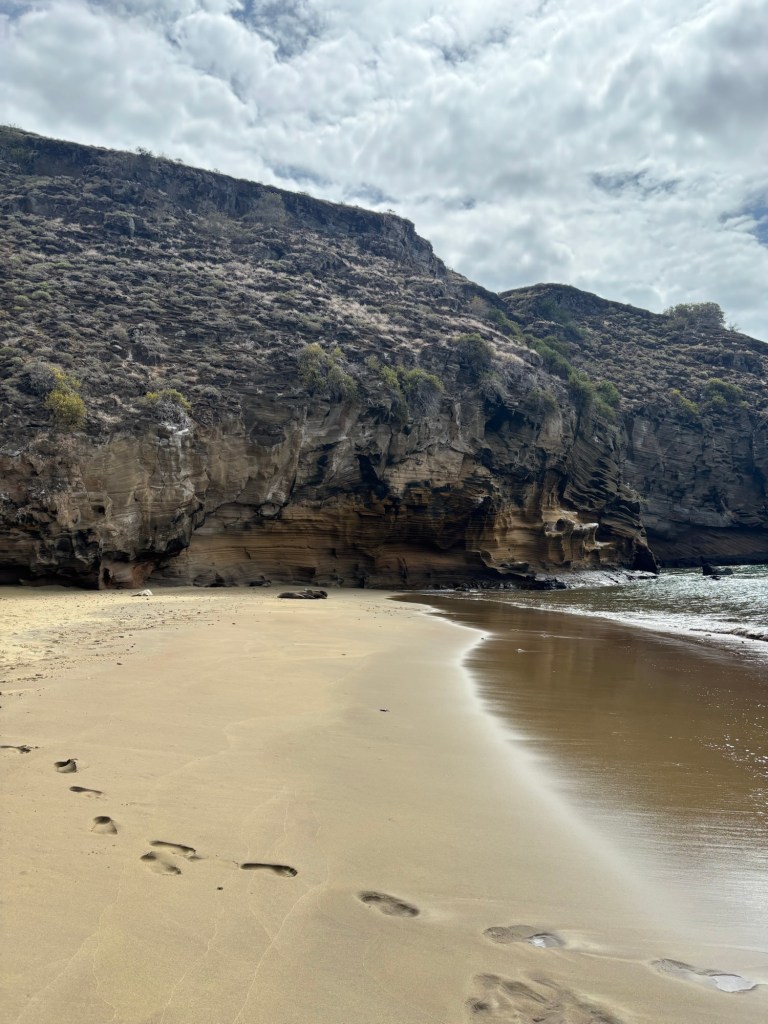
We had an afternoon slot for León Dormido, so Samuel took us to a sanctuary beach within eyesight of the rock known as Playa El Manglecito. When we arrived, there was hardly any wind at all – just the waves lapping upon a white sand beach. The surface of the water was only broken once in the distance by a mobula ray leaping into the air and disappearing into the endless blue. With the possible exception of Finisterre, this is probably the first true white sand beach I’ve ever seen, and boy did it live up to the hype!

I considered snorkelling with the others, but it only took a few seconds in the water to realise that something was wrong. My mask filled with seawater almost immediately, stinging my eyes and forcing me to my feet early. A small tear where the straps met the rubber seal of the mask was the culprit – something I confess I hadn’t spotted when I checked the mask last night. So I shrugged, got back out and went for a walk along the beach.
There was plenty to keep me occupied. The molten scrub beyond the shore was alive with little things: finches, warblers and colourful lava lizards. Of course, there’s always a sea lion about too, and since it was so curious about us, I couldn’t help but indulge it as well.


Indigo and her mother, a couple of experienced divers from the UK, told me I had to go back in the water: they had seen as many as fourteen turtles in the bay. I told them about my mask and Indigo lent me hers. I’m past the stage of my life where I’d awkwardly turn such an offer down out of affected politeness – and I really did want to see a turtle.
It took me a little while to find them. I swam across half the bay at first, thinking they might be sheltering on the far side, only to nearly collide with one of the giants as I returned to the shore.
Oh, if only I’d had the GoPro – the things I could have shown you! Green turtles are simply enormous. So much bigger than I expected. I think I assumed all turtles but the giant leatherbacks were around the size of an Olive Ridley, but these green turtles can grow to five feet in length. The largest of the turtles in the bay must have been that size or close to: he was busy gnawing algae from the rocks and paid me no attention whatsoever, though I can only have been a metre or so away when the waves hurled me in his direction.
I didn’t linger as I didn’t want to cause them any undue stress. They didn’t seem at all bothered by my presence, but turtles are endangered enough as it is, so I spent a few minutes in total awe, watching them feed and fly through the water on those evolutionarily perfect flippers, before pushing off back toward the shore.
Our divemaster Jesús called the three divers back to the boat, but the rest of us – me, a Brazilian-American and a mother and son from Austria – had another half hour to enjoy the beach. Naturally, I’d surrendered the working snorkel back to Indigo, but I figured I could at least have a go at capturing the turtles on camera, albeit from above.
The trouble with turtles is that they are perfectly adapted to life underwater, and do not need to come up for air as readily as other animals. When inactive, such as when they need to sleep, they can submerge for an astonishing seven hours without needing to breathe. Even when they’re awake, they can still hold their breath for thirty minutes or more if they need to – and when they do pop up for a breath, it only lasts a couple of seconds until they dive back down again.
All this is to say that photographing a turtle out of the water is a very difficult challenge. But I had half an hour and nothing better to do, so I took a stakeout. It was almost impossible at first, but when a couple of them decided to cross the bay and swim out of the dark reef and over the white sand, the job was suddenly made a lot easier. All I had to do was to track the shadows.

The calm sea that carried us gently into the bay had been whipped up into a fierce swell by the wind, which made the job even harder, but I managed a few half decent photos as the first one made its way across the bay.

Looking at a turtle is beholding one of the greatest survivors on Earth. These incredible reptiles have been around since the time of the earliest dinosaurs in the early Triassic, some 230 million years ago, and two mass extinctions, as well as a host of other destructive factors – including our depraved taste for their meat and shells – have not been able to rid the planet of these mighty success stories. It was a real privilege to see them so close.

I’ll be honest. After that incredible encounter, the snorkelling at León Dormido was… a bit of a letdown. Kicker Rock is a world-famous diving location, where entire schools of hammerhead sharks, eagle rays and even mantas can be seen. Naturally, snorkelling is a bit more restrictive, doubling your time but limiting your exploration to the surface. I was lucky that they had a spare mask, so I could see underwater without any difficulty this time.
We saw parrotfish, triggerfish and rainbow wrasse and a few impressive sea stars clinging to the wall of the rock, but beyond that, the most memorable encounter was the enormous salp swarm we found ourselves in. Every single movement of my hands was surrounded by a swirling cloud of reddish gelatinous organisms that looked like drawings of cells from my old biology textbooks. The sun must have drawn them all up to the surface from deeper, darker waters below, beyond the deep blue beneath my feet where the blades of sunlight fail to penetrate.

I’ve never snorkelled in open water before, so I think I was much more accustomed to being able to stop and breathe normally more often than I feasibly could with the seafloor more than 130 feet below. It took me a while to master breathing through the snorkel, and even once I’d lost my nerves about breathing through a tube, seawater still managed to get into my nose and up and into my oesophagus. After about twenty minutes it felt as though my throat was on fire with all the ingested salt, which probably didn’t help with my state of mind. It was only when I was distracted by the playful antics of the attendant sea lions or a particularly interesting fish that I didn’t think of the discomfort I was in.
The divers said they’d seen it all: reef sharks, hammerheads, eagle rays and barracuda and all the rest. They were all much, much lower down. I didn’t begrudge them for it – that’s what they trained for, after all. It was a good reminder, however, that my gut was right all along: snorkeling isn’t really my cup of tea, compared to, say, a two-hour hike. In that sense, I haven’t changed much since my school years: I know what I’m good at and I do it often enough to consider it mastered. I’m open to new experiences, but given the choice between snorkeling and hiking some other time, I might think again next time.
Unless, of course, I’ve got my GoPro on me. Or I’ve shaved (which may or may not have had an impact on the water getting into my nose).
Fortunately, there was one resident of León Dormido which had eluded me so far, and it was a creature I’d been hoping to see since I got here: a tropicbird. These angelic creatures are shy seabirds, nesting deep within the cliffs in hard-to-reach places, and – at least here – usually fly in pairs. Bloody hell, but they’re hard to catch, moving tremendously fast in wide circles against a bright blue sky, but after much trial and effort I finally caught one.

The return journey was a very bumpy ride. We’d been sheltered from the wind and waves on the east side of Kicker Rock, but had to cross a raging sea to get back to port. In spite of myself, I caught myself dozing off, which you’d think would be hard in a boat that keeps landing with a jolt and a hard splash after cresting every wave, but there’s something about afternoon journeys after a long day’s expedition that renders you terribly susceptible to fatigue, whatever the circumstances. I wrapped the strap of my camera as tightly around my arms as it would allow, just in case.

Samuel’s contact did finally offer me a trip to Española, the Impossible Island, but for tomorrow. Sadly, I neither have the budget nor the time: Punta Pitt and Kicker Rock between them cost what Española would have been, and besides, I have an early departure tomorrow for Santa Cruz, the second of the two islands on my Galápagos adventure.
I’ve been on the islands for four days and I still haven’t seen the giant tortoises that they were named for. That will change on Santa Cruz. It’s time to bring this adventure to a close in style – and, hopefully, add a couple more species to the roster in the process. Santa Cruz, here we come! BB x
Puerto Baquerizo Moreno, Galápagos Islands. 18.45.
At the time of writing, I still haven’t heard back from the folks at EcoChallenger about the trip to Española. They did say they’d had engine troubles last week and would provide me with a full refund if they couldn’t go ahead, but also that they would keep me informed. I sent a chaser to see if if they’d fixed their boat, but no luck.
So, rather than feeling glum about it, I found an alternative tour for today out to the other side of the island: Punta Pitt, the easternmost point of the Galápagos. Here, with any luck, I might be able to recreate at least some of what I would have found out on Española.
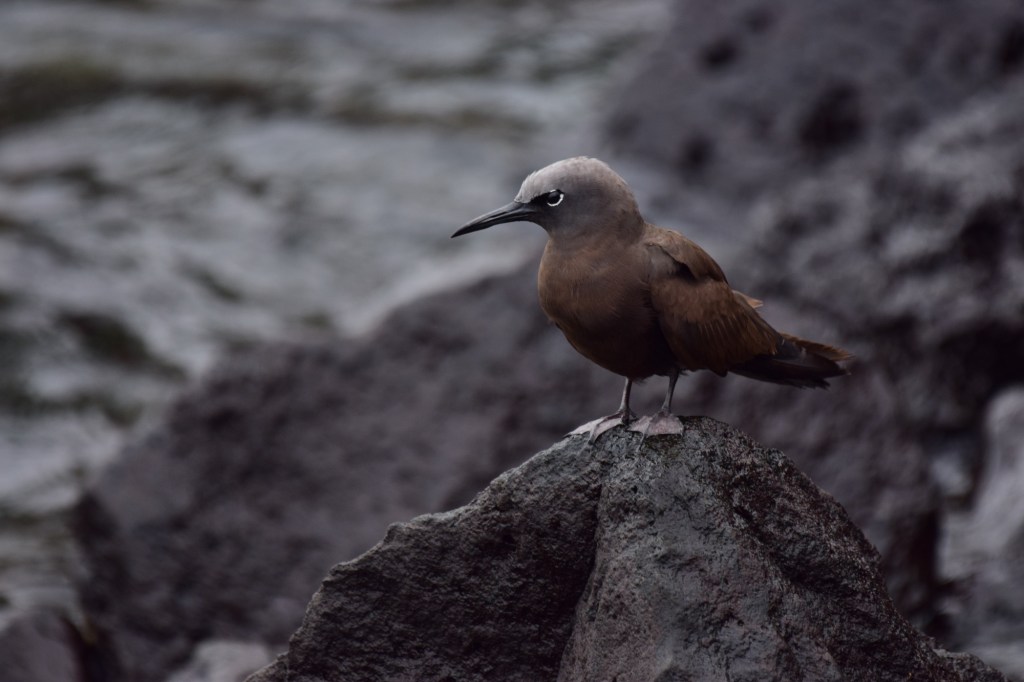
I picked up my snorkel gear from the Kingfisher GPS agency and walked back to the marina to meet my guide. Traveling with me today were a lesbian couple from California, a couple of American missionaries, their sister and her three children and a shy Australian birder. We were due to have one more on the team, but they never showed up – but at least while we waited I had time to get a better shot of the noddy sitting in the harbour, in the same place I saw it yesterday.
The journey to Punta Pitt from Puerto Baquerizo Moreno takes you all the way along the north coast of the island, and after passing the lighthouse at Punta Carola, it’s nothing but volcanic rock on one side and the open ocean on the other. Kicker Rock looms in the distance – a freestanding volcanic cliff famous for being the haunt of hammerhead sharks in the right season – but that wasn’t part of our itinerary, so we sailed on past. Beyond Kicker Rock, some of the Galapagos’ pelagic birds picked up our trail and followed the boat: Galapagos petrels, Galapagos shearwaters and two kinds of storm-petrel native to these waters.
I don’t believe in reincarnation, but if it did exist, I should love to come back as a shearwater. The speed with which they race across the water, seemingly delighting in the thrill of it… it’s magical to watch, even if they are in a mad hurry to find enough food to raise their chicks, sequestered in some burrow near or far away.
I was so busy keeping an eye out for seabirds that at least once I saw something else with wings leaping from the water: a flying fish, recently arrived in these islands, and just in time for the breeding season.
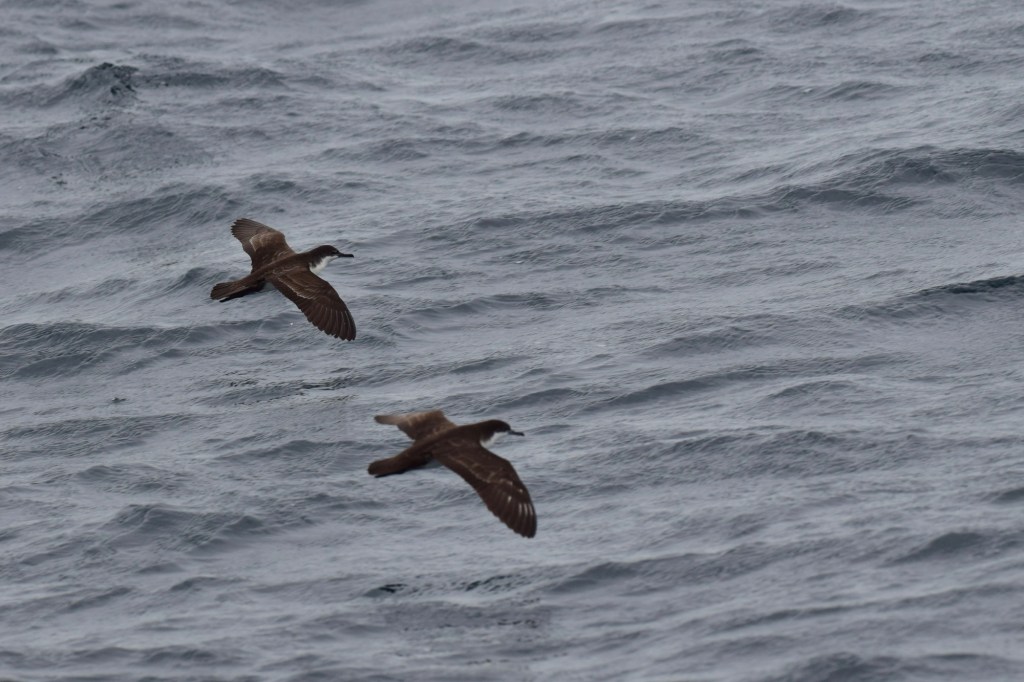
The weather looked unpredictable but the sea itself was a bit easier to read, so when we reached Islote Pitt, I made the decision not to enter the water. Sure, it was a waste of $30 on the rental GoPro, but I know I made the right call. Even the guide upon his return admitted grimly that the conditions were awful. The water was cold, choppy in the extreme and visibility was limited to about 10cm. Those that did take a dip said they’d managed to see a couple of sergeant majors, but that was about it. The qualified divers had a bit more luck with some eagle rays, but even they confessed that it was a hard and relatively fruitless dive.
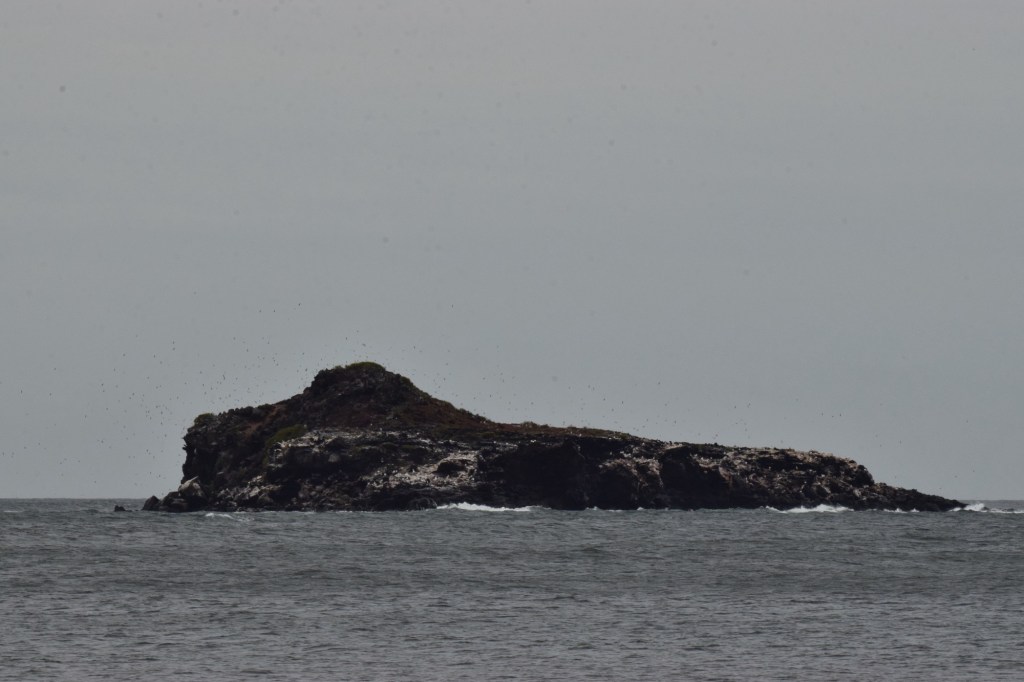
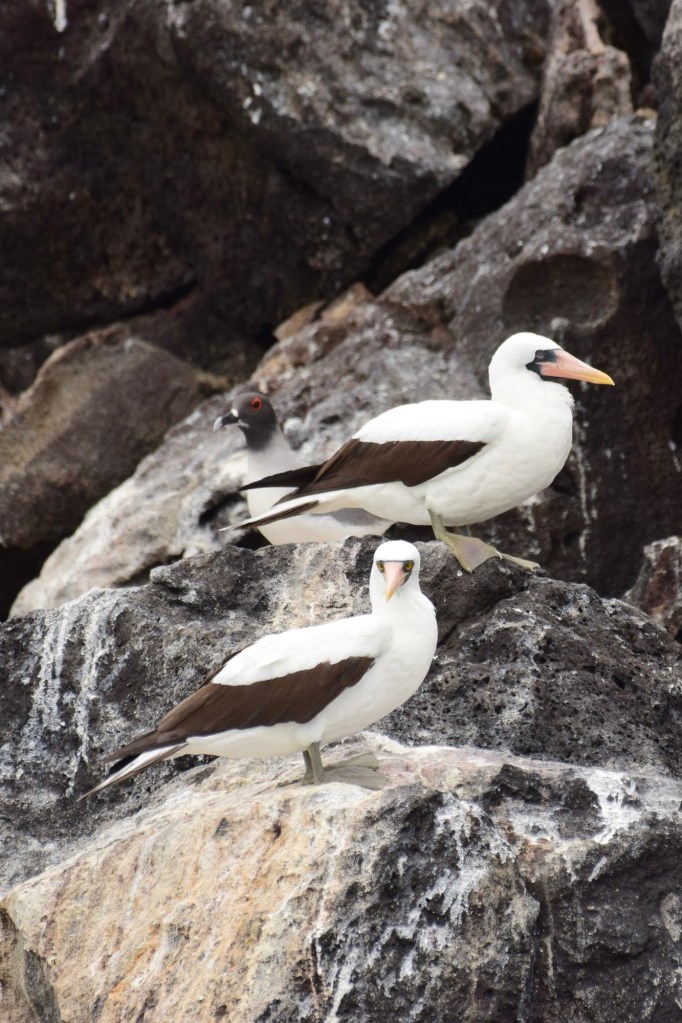
I, on the other hand, was having a whale of a time. Islote Pitt is home to a ridiculous quantity of endemic species, including both Elliot’s and wedge-tailed storm-petrels, Galápagos shearwaters and swallow-tailed gulls – the only nocturnal gulls in the world. I’m used to seeing storm-petrels at a distance, zooming across the surface of the open ocean and next to impossible to track with a camera, but I’ve never seen a colony before.

I’ve seen a lot of South American gulls on this trip: kelp gulls, dolphin gulls, grey gulls and lava gulls, to be precise. But swallow-tailed gulls are really rather special. Whether it’s their white wings and silver mantle, or the smart red ring around their eyes, or even their eerily haunting cry, they’re simply unlike any other gull I’ve ever seen.

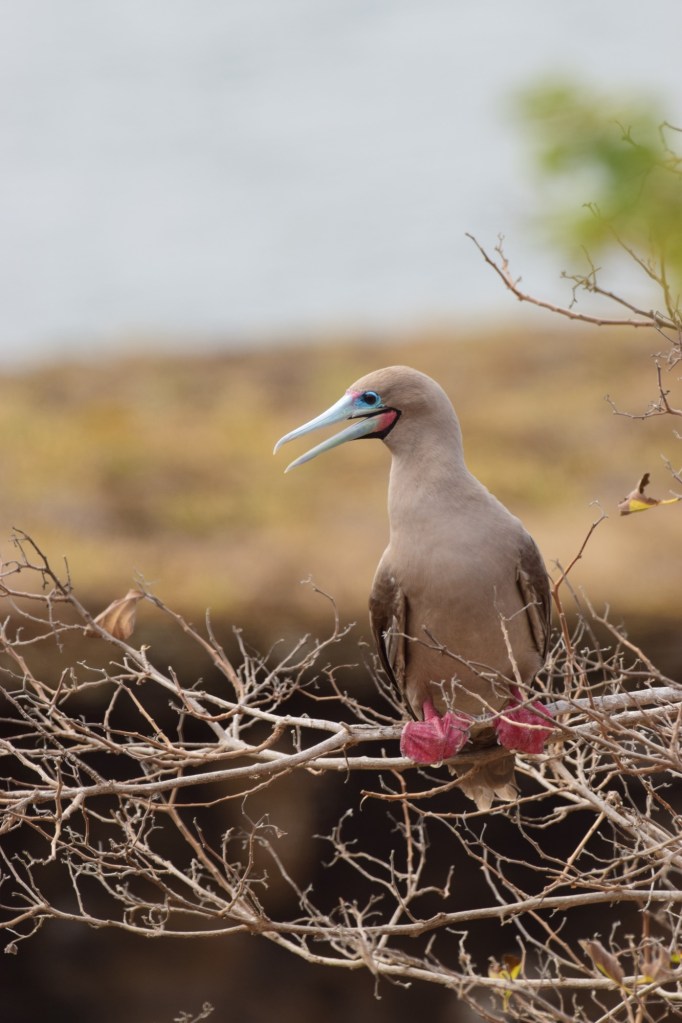
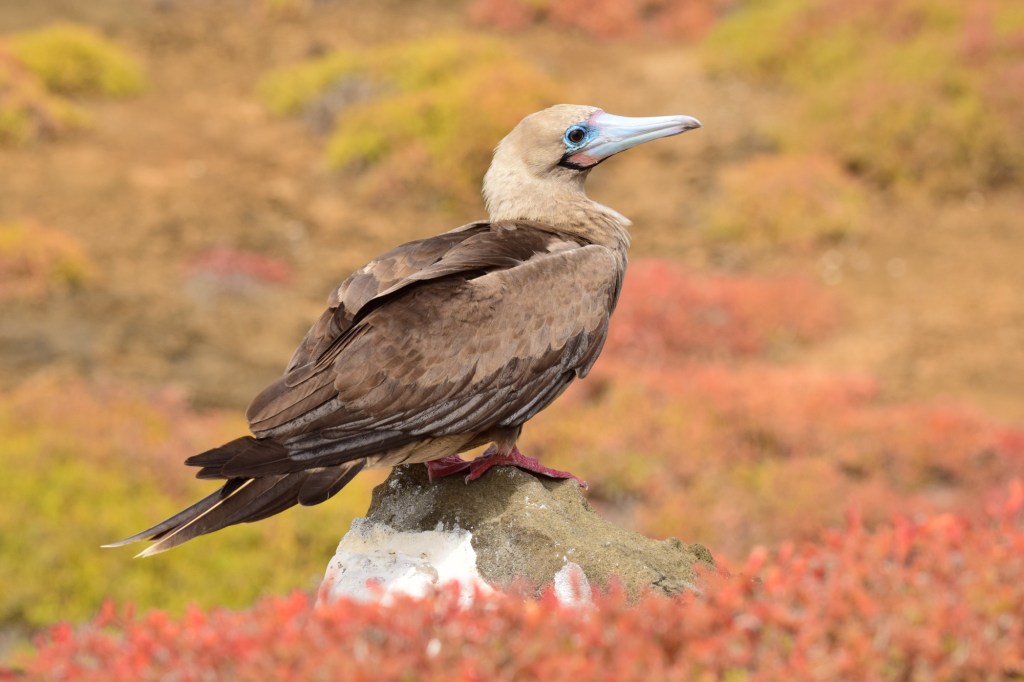
Punta Pitt’s major claim to fame (as well as the explanation behind the title) is that it is the only place in the Galápagos Islands where all three species of booby can be found together. Each one nests in a different spot: blue-footed boobies on the ground, red-footed boobies in the trees and Nazca boobies on the cliffs.
The Nazca boobies at Punta Pitt itself nest on a cliff some distance from the path at the point itself, so your best views would be at Islote Pitt, which is home to an enormous colony of the handsome seabird, alongside the frigatebirds, swallow-tailed gulls and a legion of storm petrels.
The hike up into the cliffs from the cove at Punta Pitt takes you deep into the volcanic coastline, up a tree-lined gully that becomes a torrent in times of severe rainfall. You’ll encounter the most famous residents of Punta Pitt, the rare red-footed boobies, shortly before climbing the pass over to the other side: they’re hard to miss, as they nest right next to the path.
Boobies get their bright-coloured feet from their choice of diet, which seems to be an evolutionary choice in the race to find a mate. Red-footed boobies primarily hunt squid and flying fish, both rich in carotenoids, which gives them their red colouring; blue-footed boobies are after the same nutrients, but their choice of catch – sardines – gives them a wholly different colouration. The brighter the feet, the more successful the bird is at finding a mate.
In August, the breeding season is already well under way, with some early partners already feeding large fluffy chicks. Others are still taking it in turns to incubate their eggs, with one partner flying in from a morning’s hunting to relieve the other on the nest.
For once, I was with a really respectful group of tourists. Once they worked out that the birds don’t like being approached too closely, they asked if we could keep our distance and move on so as not to disturb the birds further. Music to my ears!
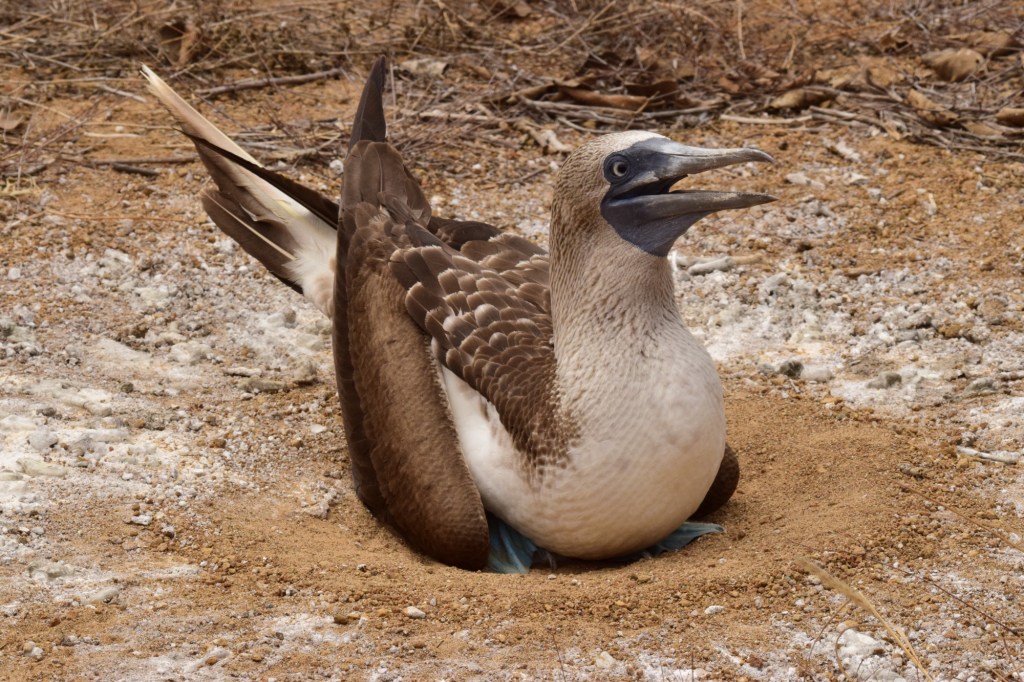
Sometimes you didn’t have much choice but to be close, as their choice of nests catch you by surprise, in a scrape beside the path or tucked away in a tree in the middle of the road.
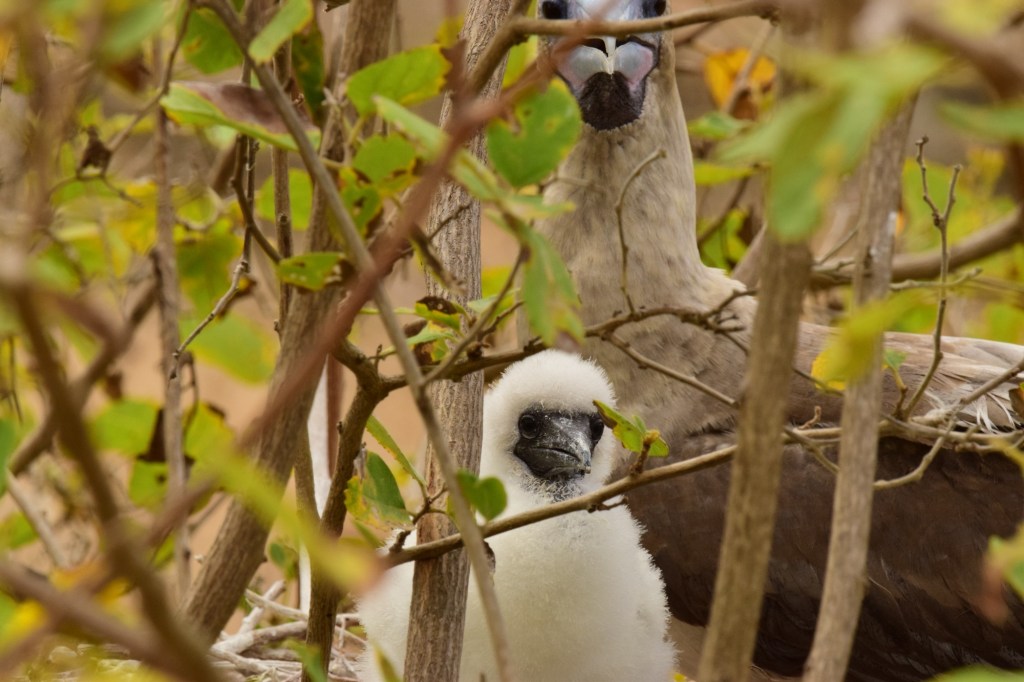
They’re not the only iconic Galápagos residents that breed at Punta Pitt. The enormous frigatebirds can be found here too, looking even more fluffy than the boobies, albeit at least twice the size.

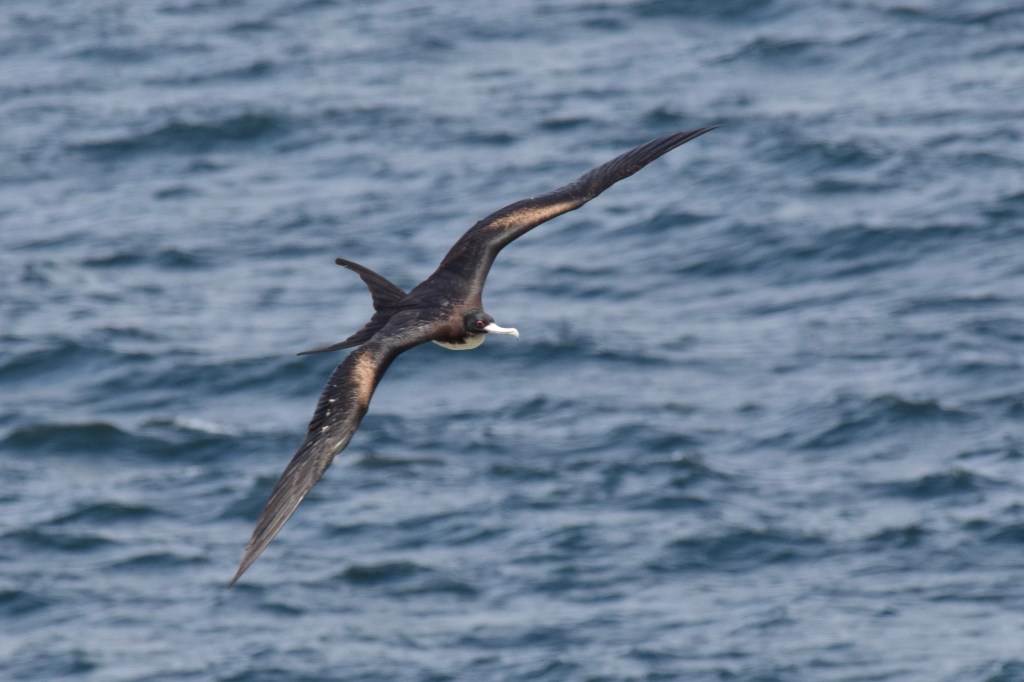
Frigatebirds are absolutely enormous – you won’t truly appreciate just how big they are until you see them for yourself. Using their swallow-like forked tail as a rudder, opening and closing their streamers to steer in the wind, they are masters of the air, perfectly designed for outspeeding the boobies and robbing them of their fish, which I have been lucky enough to witness.
I also saw a beautiful angel of a seabird here: a red-billed tropicbird, all white with long streamers and a bright red bill. They’re small – tern size at best – and nest in crevices in the cliffs that are impossible to reach, so you won’t see them as well as the other denizens of Punta Pitt, but it was quite a sight to see as it set out to sea to go fishing.
The red-footed boobies come in two colours: a white morph – more common in the western Pacific – and a coffee-coloured brown morph which is more easily found here in the Galapagos. The two morphs are totally interchangeable and cross-breed from time to time: for the ladies, it’s not about the colour of their feathers but the brightness of their feet.

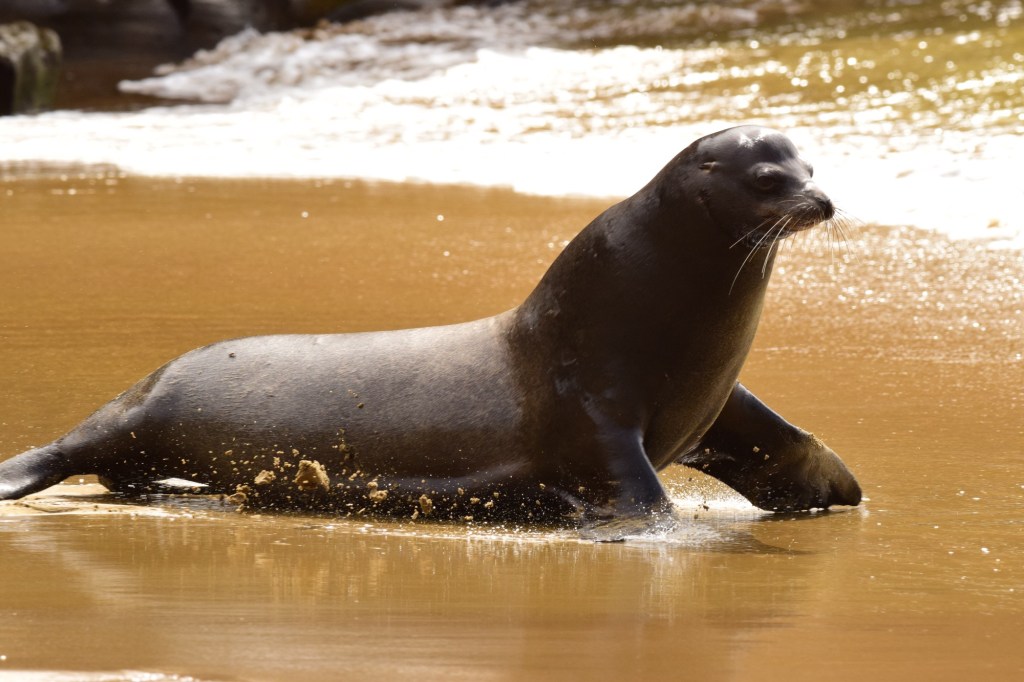
After a solid two hour hike up into the cliffs, we left the boobies and their ramshackle nests and climbed back down to the beach where we landed. While the captain’s boy ferried us back to the boat on a small skiff, the local sea lion alpha was busy defending his territory, chasing off a rival male that had just arrived on the beach.
I overheard a family of Americans in Puerto Baquerizo Moreno watching the sea lions lazing around the port and saying how easy life must be for them. For the dominant male, it couldn’t be further from the truth. From the moment he assumed command, he cannot hunt, eat or sleep, patrolling his territory constantly and fighting off suitors as they come. This is, of course, extremely debilitating, leaving them physically weakened after nearly a month without food, but there are cases of individual alpha males returning to reclaim their harem up to three times in a single season. So when you hear the endless barking that is such a part of the soundscape of Puerto Baquerizo Moreno, remember how long it might have been since the males have been able to eat. For sea lions, the urge to mate simply outweighs all other options on the table, including eating and sleeping.
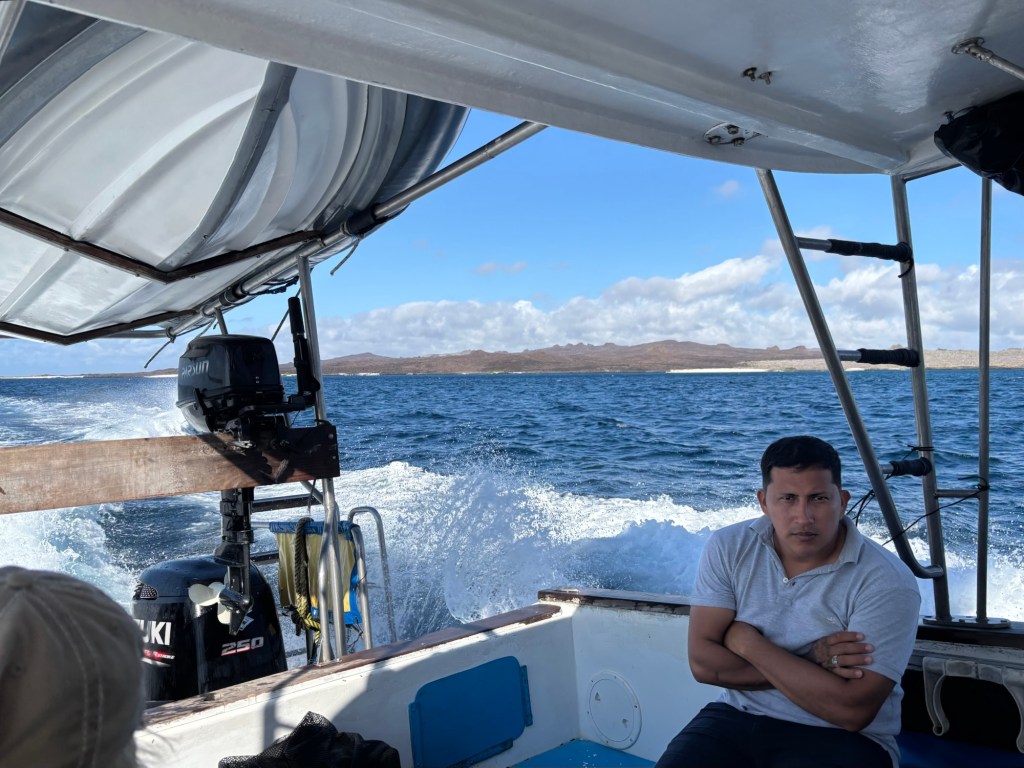
The boat ride back to Puerto Baquerizo takes a lot less time as you ride the fast-moving current back, shaving a whole hour off the journey. In the middle of the day, there’s not as much to see either, so most of my companions fell asleep, aided by those curious neck-braces with built-in fans that I saw some colleagues wearing back home during the June heatwave.
Samuel, our guide, was keen to know how long I’d be here. I told him how last minute this whole operation was, and that I’d more or less given up on Española with no news from the folks at EcoChallenger. He said he’d ask around – after all, it’s not the agencies here that conduct the tours but rather the guides and their attendant boatmen. The agencies merely act as middlemen, sending a certain quota to the actual operators down in the harbour. So who knows? Maybe I’ll get to go to Española after all. either way, I’m glad I opted for Punta Pitt – it was absolutely incredible.
I’ll get an early night and have a quieter day tomorrow. I could do with some time to put the snorkeling mask to good use. I hear the bay where I saw the turtles is an almost guaranteed spot to see them year-round, so I think I’ll go there first if the weather is kind. It’s usually rainy and cloudy in the mornings and then sunny in the afternoons here, which is an easy enough pattern to follow.
See you next time! BB x
Las Condes, Santiago de Chile. 20.54.
I grew up within sight of the sea. You’re never far from the sea in Kent: the furthest I ever lived from the coast was about ten miles as the crow flies, while the second half of my childhood was spent less than a mile from the white cliffs of Dover. As such, I am very attached to the sea and all its smells and sounds: the salt spray of the winter waves, the hushing rush of pebbles pulled down the beach by the tide and the cry of the herring gull. If I should be so lucky, one day, I should like to live by the sea.
Today I took that lifelong love for the sea and dialled it up a notch by taking a pelagic trip out into the Pacific – into the open ocean.
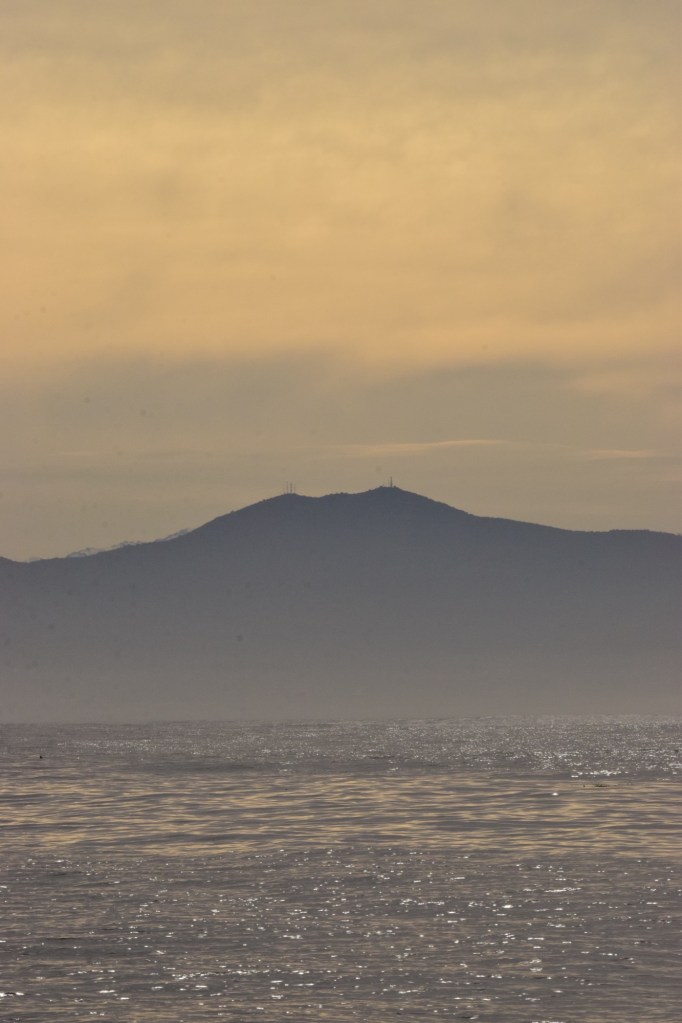
Rodrigo, my guide for the day, picked me up from outside my hostel in Valparaíso shortly after seven. A punctured tyre delayed him by forty minutes or so, so he was anxious to get going, so as not to hold up the crew of their ship up in Quintero, a seaside fishing town some thirty miles north of Valparaíso.
Shortly before we got there, the sun rose into a fiercely red sky. A certain old English saying came to mind:
Red sky at night, shepherd’s delight
Red sky in the morning, sailor’s warning
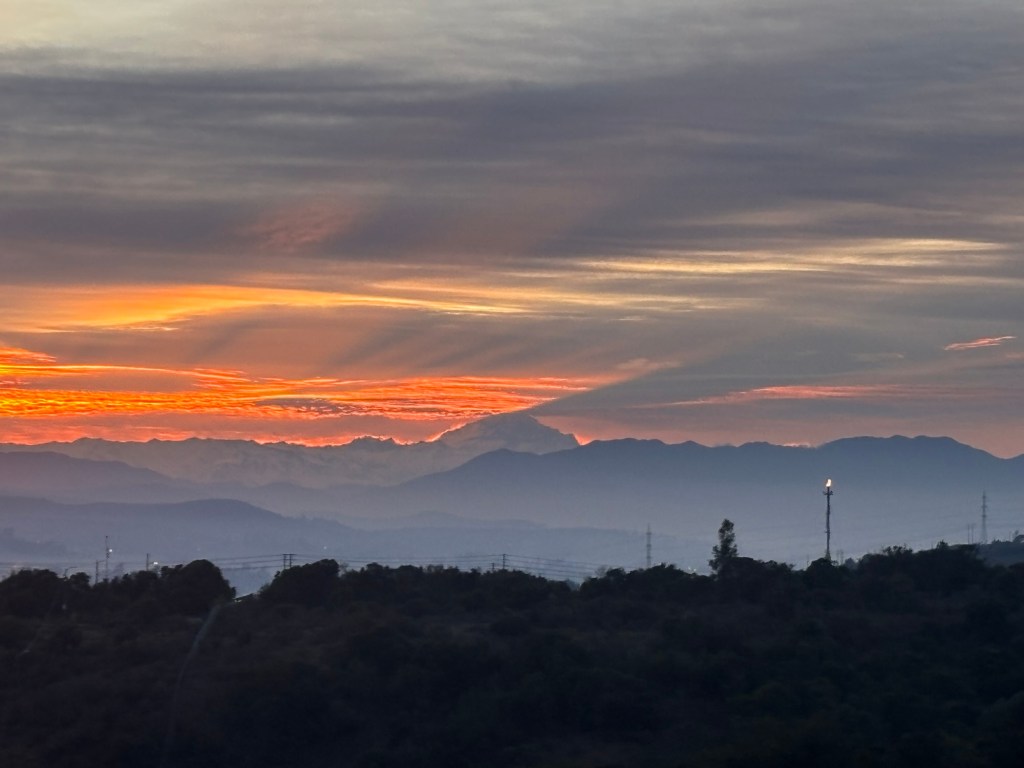
It was a beautiful sight, even if it did threaten rain. More spectacular, though, was a clear view of Aconcagua, the tallest mountain in all the Americas and the highest peak outside of Asia. The great white sentinel was so immense that by some trick of the light it seemed to throw the entire south of Chile into darkness. Apparently, only 30-40% attempts to scale Aconcagua are successful. The mountain is evidently as much an apu – a sacred mountain – as its better-known kin to the north of the cordillera, and not to be underestimated.
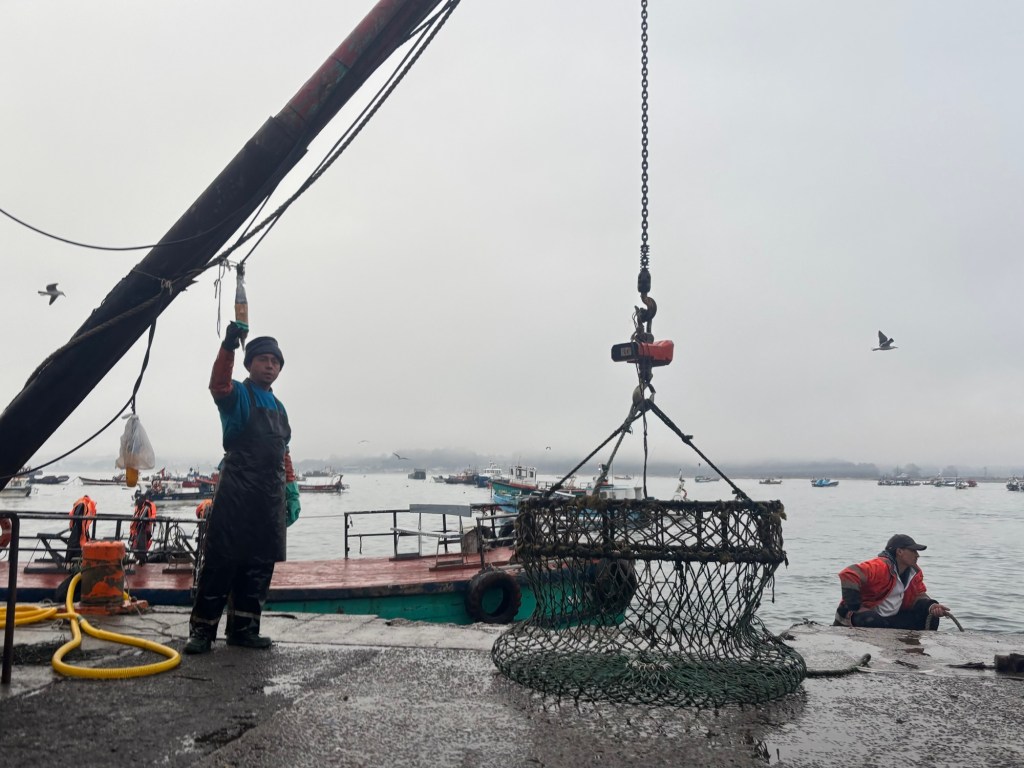
The local fishermen of Quintero were already hard at work as we arrived, slicing up some frighteningly large squid and cleaning their skiffs after a night out on the ocean. They seemed curious about the small group of day trippers herded onto a boat waiting in their harbour – all of them Chilean, with the exception of one wandering Briton – but paid us no more attention than the pelicans: a sort of intentional acknowledgement, as they went about their work.
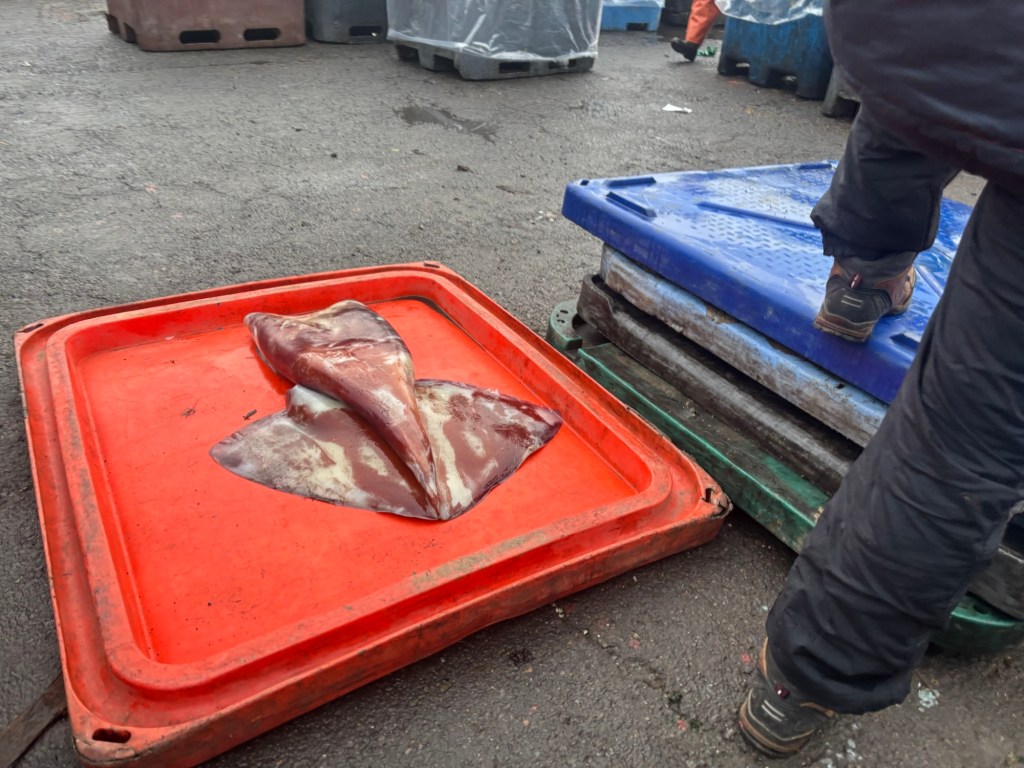
I couldn’t help being totally bowled over by the frighteningly large squid laid out in the fishery. Humboldt squid – or jibia as they’re known in Chile – are among the largest squid species in the world, reaching a whopping five feet in length. They’re so numerous along the coast of the Americas that they represent a third of the squid catch worldwide – and despite the fact that nearly two thousand tons of them are hunted in Chile alone every year, their population is still expanding. That’s a testament to just how rich the Humboldt current truly is. It’s also why Chile has always been home to a healthy population of sperm whales, who devour these and even larger prey, including arguably the most famous whale of all time: Mocha Dick, an aggressive and exceptionally cunning albino sperm whale who survived nearly a hundred attempts on his life before being brought down off Mocha Island. His story inspired Herman Melville to write the American classic Moby Dick, but it’s the original tale that is taught here in Chile as part of the national identity-building curriculum. How cool is that?
We left the harbour – with its attendant sea lions and pelicans – and started out on the hour’s journey out into the open ocean. For most of that first hour, we were tailed by kelp gulls – Chile’s ubiquitous answer to the herring gull – and strange shapes in the water, many of which turned out to be discarded bottles or cans floating eternally along the Humboldt. I counted at least four Fanta bottles and two bicycle tyres, the latter floating nearly side by side. I wonder what happened to the bicycle itself?
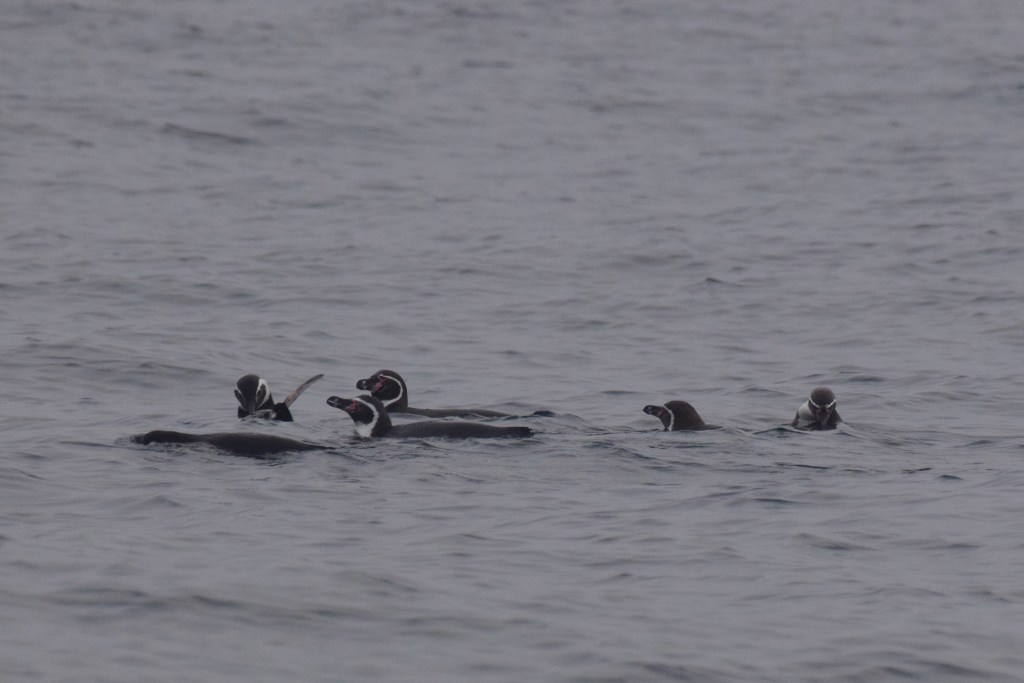
Some of the shapes moving along the surface of the water were a lot more interesting. A curious sea lion, a huala or great grebe fishing offshore, or a family of penguins, spending the winter at sea. Over the course of the morning we saw both species native to Chile: Humboldt penguins – the kind I saw in the Islas Ballestas in Peru – and Magellanic penguins, a more southerly species that have colonies right down to the Chilean Antarctic.
We didn’t have to go far from the harbour to see our first pelagic species of the morning. The first to make their appearance were the shearwaters, experts of the open ocean, zooming low over the surface of the water, banking this way and that. With the roll of the waves, they seemed to slice through the surface with the tips of their wings in the way that gave them their name, though I swear I never saw them touch the water once.
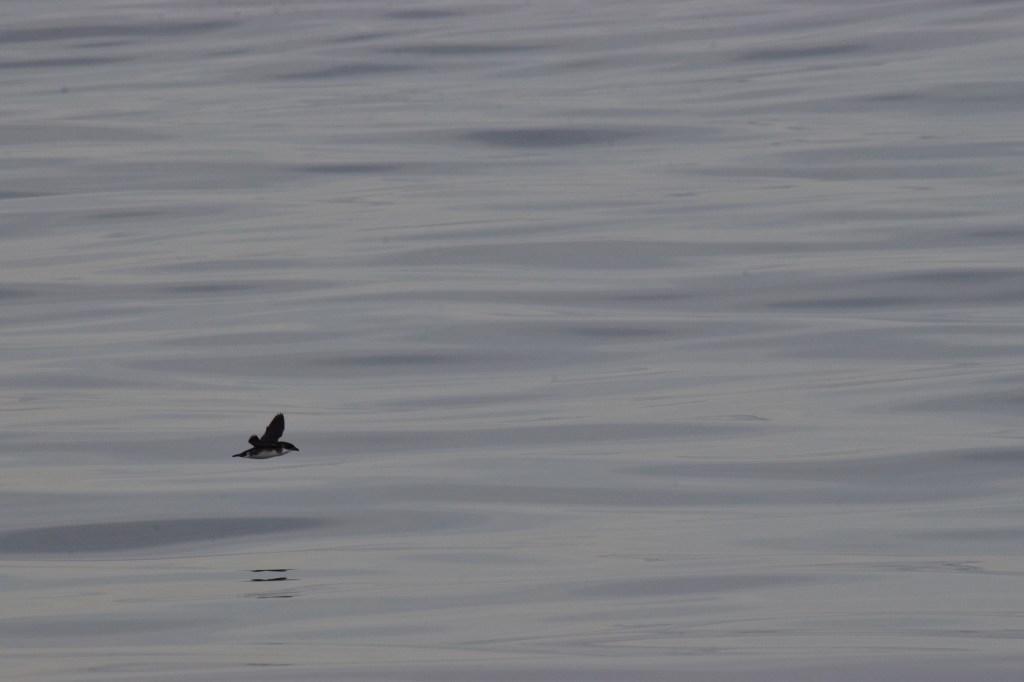
In the descending gloom, they were hard to catch on camera. A little easier were the diving-petrels, tiny auk-like birds that preferred to paddle away from the boat, popping in and out of sight beneath the waves in the habit for which I suppose they were named.
As the rocky headland of Quintero faded into the mist, we were almost entirely enveloped. This dense sea mist is one of the reasons there haven’t been any pelagic tours since April: if the visibility is this poor, the harbour doesn’t let ships out into the open ocean, lest they become lost, disoriented by the waves – or worse, collide with another ship.
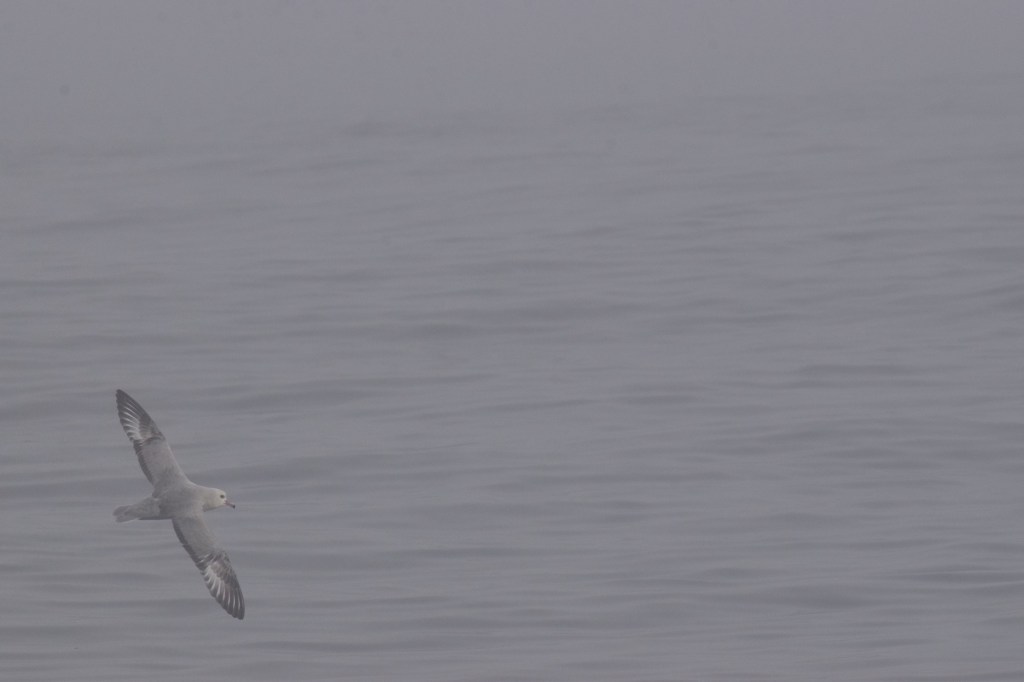
Only the fulmars kept us company in the mist, slicing through the fog on silver wings.
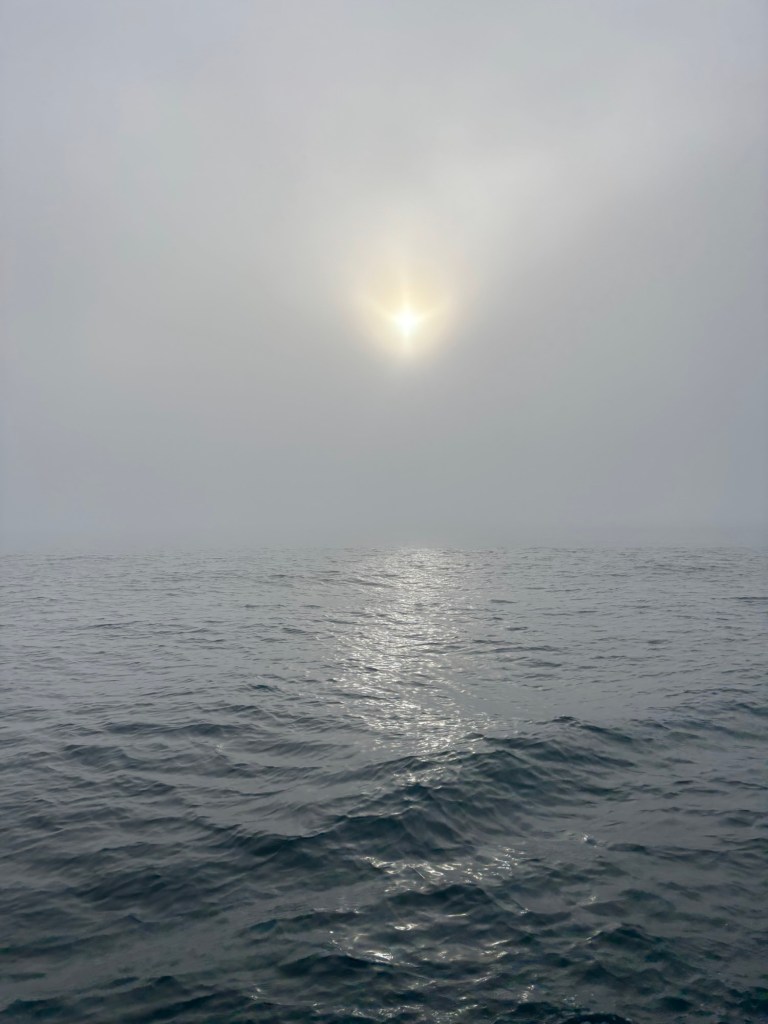
After what must have been an hour, the first sign of relief began to glow in the east: the sun, clear of the mountains and their attendant clouds at last, was trying to fight its way through the fog. Curiously, some trick of the light warped its shape into something that looked like a cross or perhaps even an angel with arms outstretched. It’s so easy to see how legends could form in such a strange and unsettling space as the open ocean, in a time when there was so much less knowledge and so much more wonder in the world.
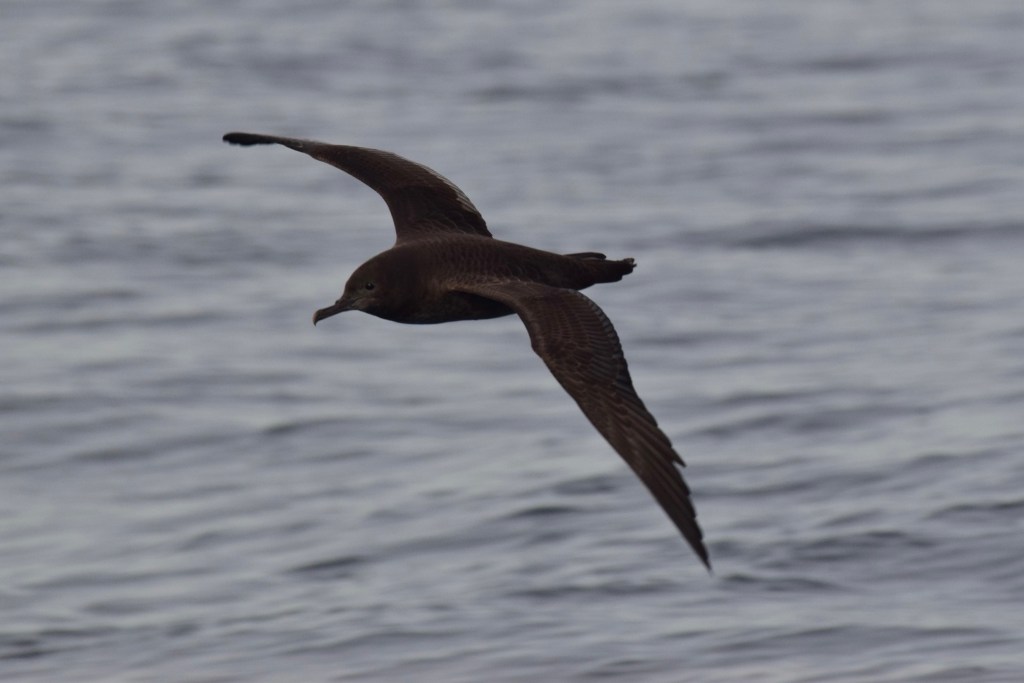
As the mist began to clear, we reached the feeding grounds of the open ocean. There were plenty of shearwaters around, mostly sooties – a dainty species of southern waters that can sometimes be seen as far north as the British Isles on their wanderings. But this is their home, off the southern coast of the Americas, and there were plenty enough of them to prove it.
A young lad on the crew lifted the lid on one of the chum buckets – fish heads and squid tentacles, mostly – and threw some into the water for the birds that had followed us so patiently. They were watchful, at first, as wild things should be, but once the kelp gulls cottoned on, the shearwaters lost their timidity.
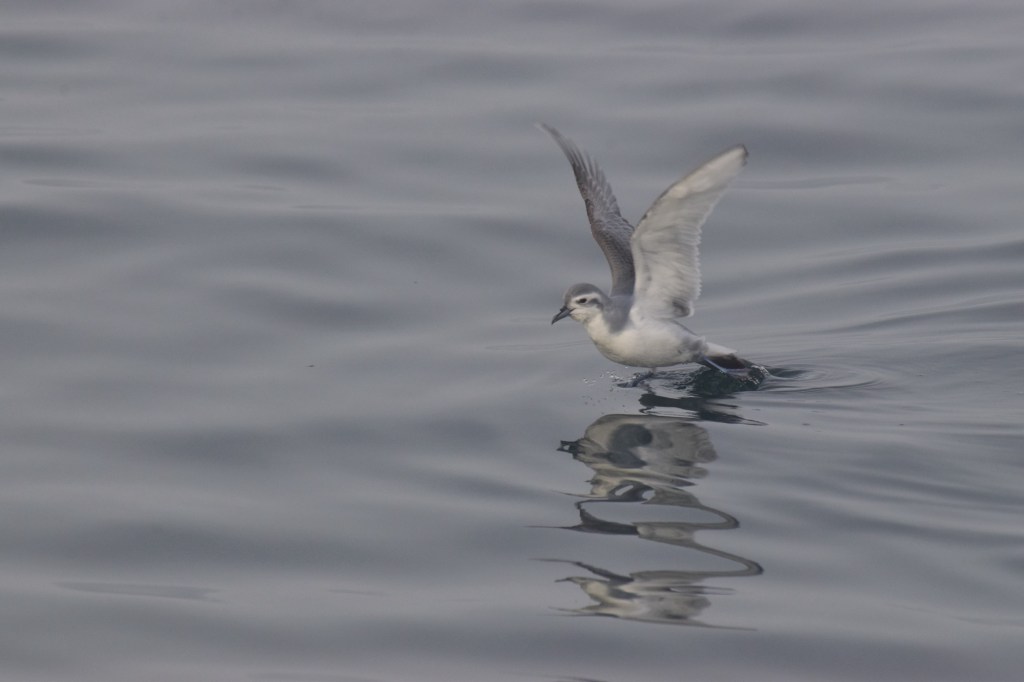
One bird I had not expected to encounter at all was a prion – known around here as a paloma marina or sea dove. These Antarctic birds had been driven north by weather currents in the South Seas, by the looks of things, and it was a real delight to watch them bobbing around beside the boat, dipping their heads beneath the water in a constant, frantic search for food.
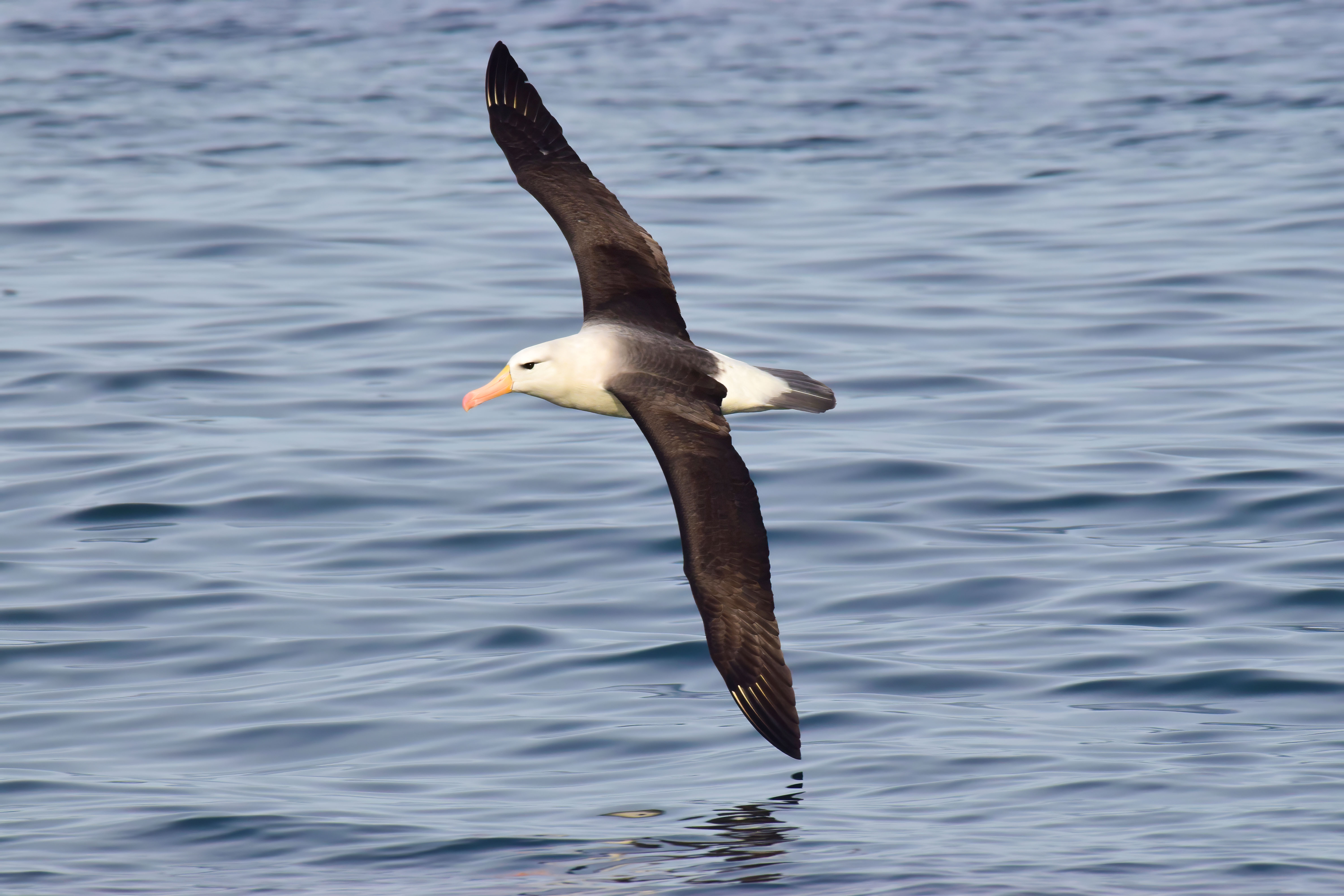
The real prize of the open ocean took its time. A cry of “albatross” from the captain (one Chilean bird whose name is seemingly universal) drew our attention to an enormous shape gliding through the mist behind the boat. It was there for a moment and then it was gone.
A few minutes later, one of the crew spotted it again. The giant – a black-browed albatross, and presumably the same individual – must have caught the scent of the chum and was following the boat at an increasingly shorter distance, arcing across the water in the kind of wide waves that children do on bicycles when following something too slow for their liking.
In time, it seemed to lose all suspicion of us whatsoever and flew in incredibly close, so close that you could see the glint of sunlight on the tip of its bill.
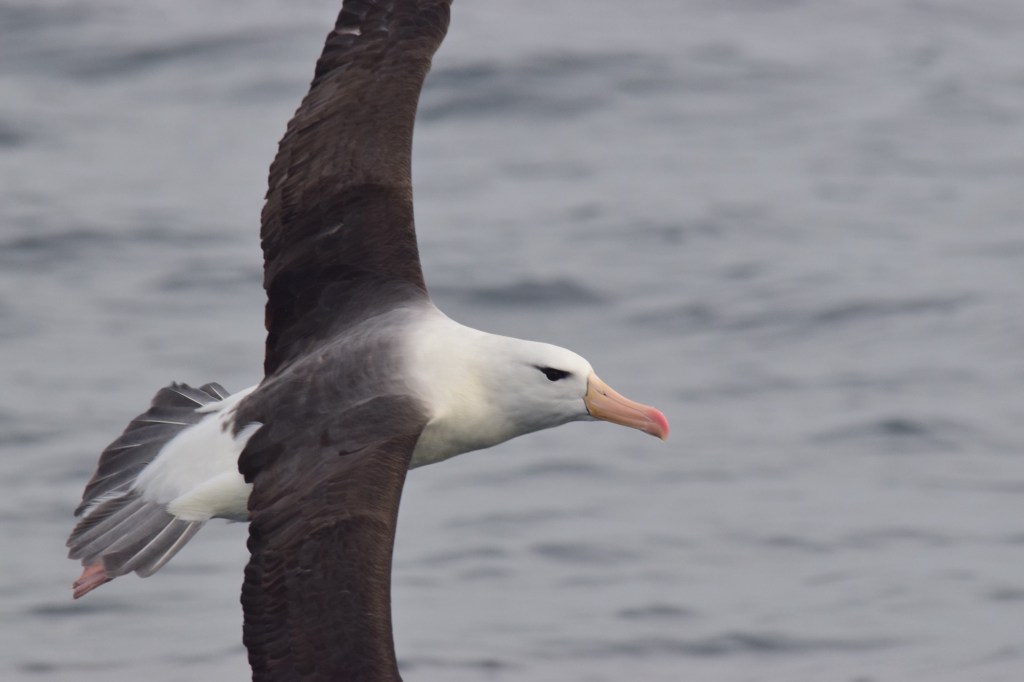
One of the Chilean birdwatchers sitting at the back of the boat beside me remarked somewhat ruefully that he had seen far more activity in previous July expeditions. To him, the ocean was unnaturally quiet today.
I couldn’t have cared less. I was hoping to see one albatross, but I didn’t expect it to be so close, and so bloody impressive. They really are magnificent creatures.
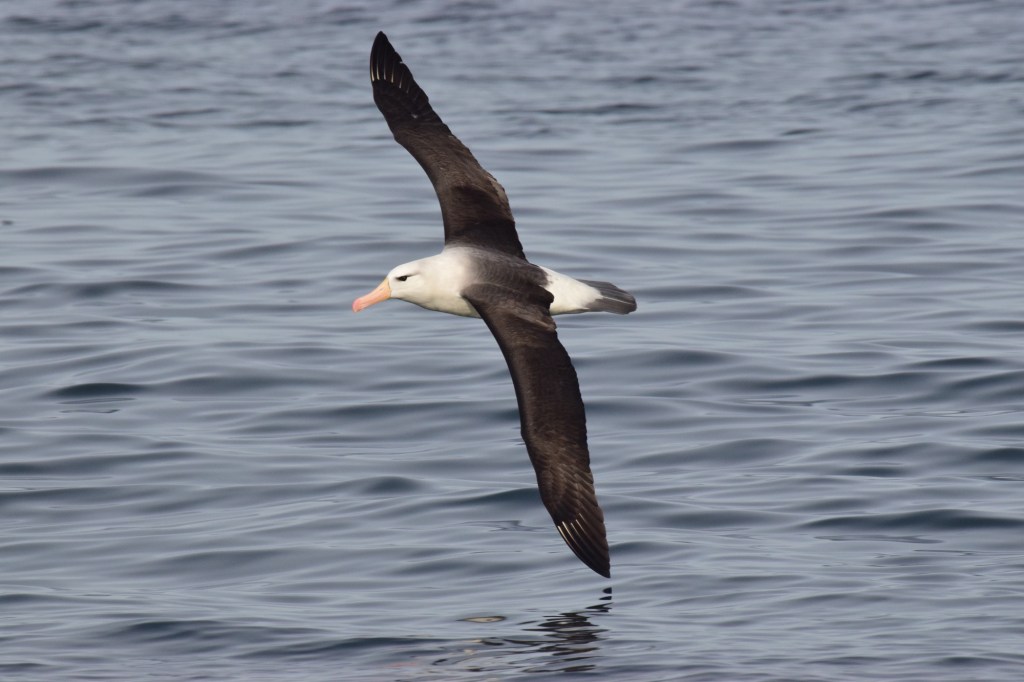
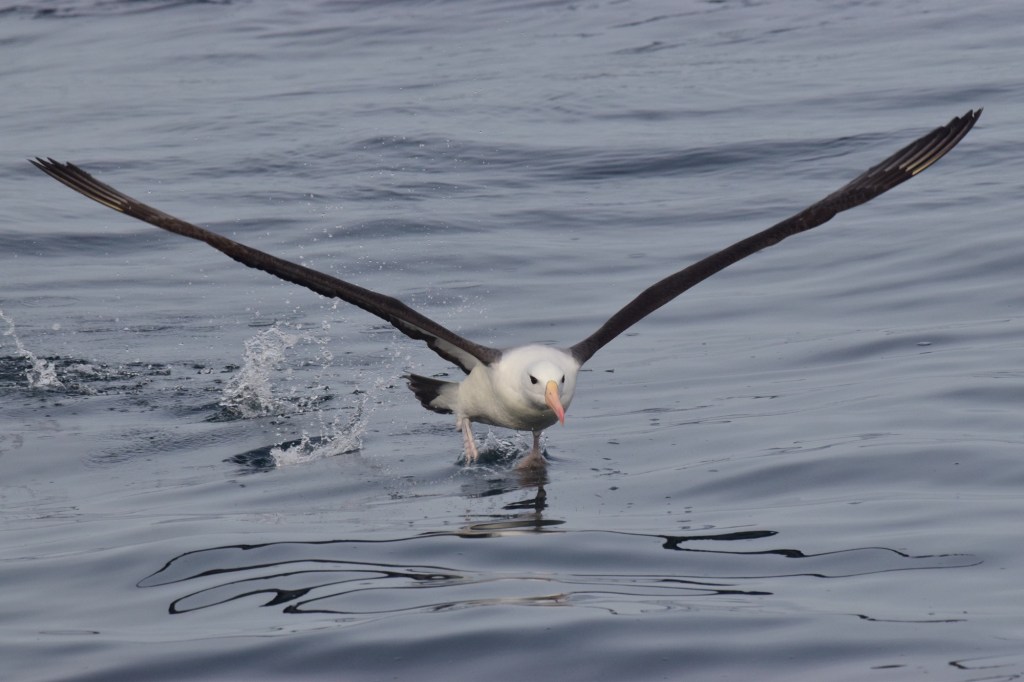
The albatross is a perfect gliding machine. The only time they need to beat their enormous wings is upon takeoff, which is a somewhat clumsy affair requiring one heck of a run-up – although, when you consider that said run-up usually takes place on the surface of the water, that feat is all the more impressive. To aid them in this endeavour, their webbed feet are absolutely enormous, giving them serious launching power as they race across the waves. Once airborne, they can glide for hours, riding the wind on wings that have evolved to make them the true masters of the open ocean.
As the scent of chum in the water drew more and more seabirds, other species began to appear. There was much activity on the boat when a Salvin’s albatross came riding in to join the bounty: a larger, greyer species with a smart yellow lining to its bill. Like the black-browed, its eyes sit beneath a dark shadow, giving the peaceable bird a perpetual frown – though it looked stern enough when it came charging in to chase the other gulls away from the discarded fish heads thrown overboard.
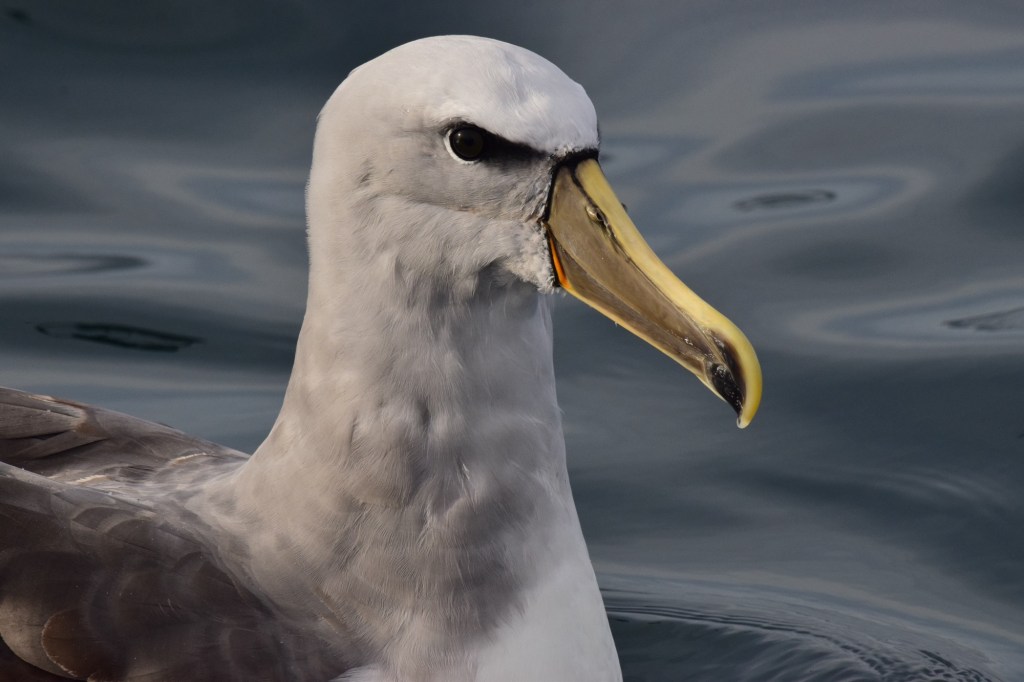
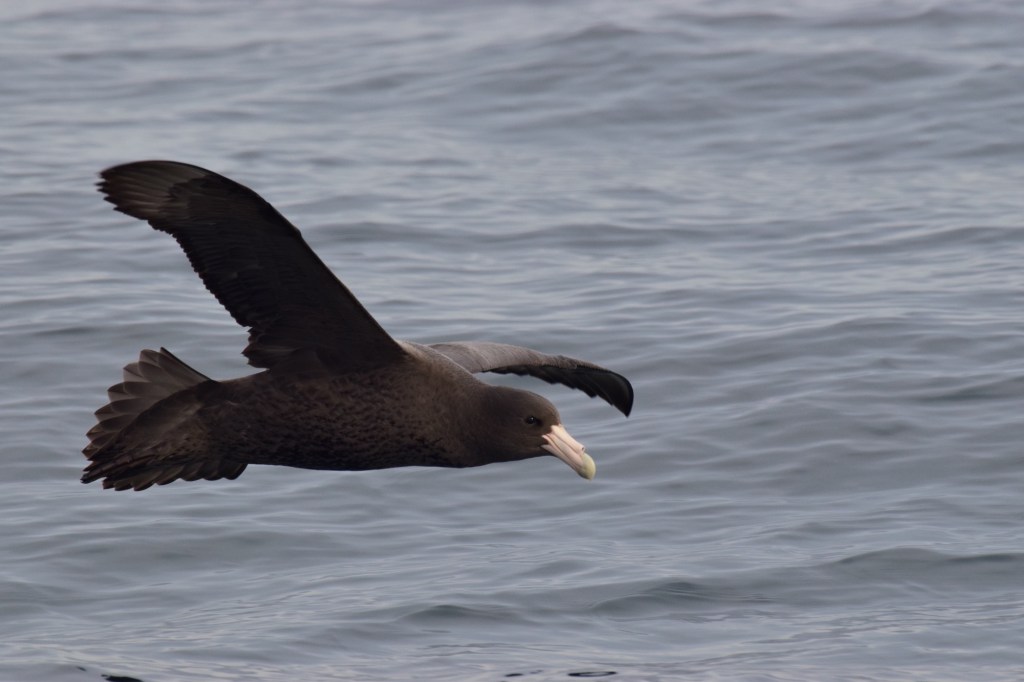
As more and more birds were drawn to the bounty, others besides the albatrosses came in to investigate. Petrels of every kind: smart pintado petrels, Westland petrels from New Zealand, tiny storm-petrels – known to Spaniards a golondrinas de mar (sea swallows) – and southern giant petrels, like the ones I saw in Natales. I quite like these dark morph birds, but there’s a pale morph that look truly sinister, with cold grey eyes – much more suitable for the vultures of the southern seas.
If it weren’t for the albatrosses, these giant petrels would have dwarfed everything in sight. As it was, the best they could take home was second-billing (no pun intended).
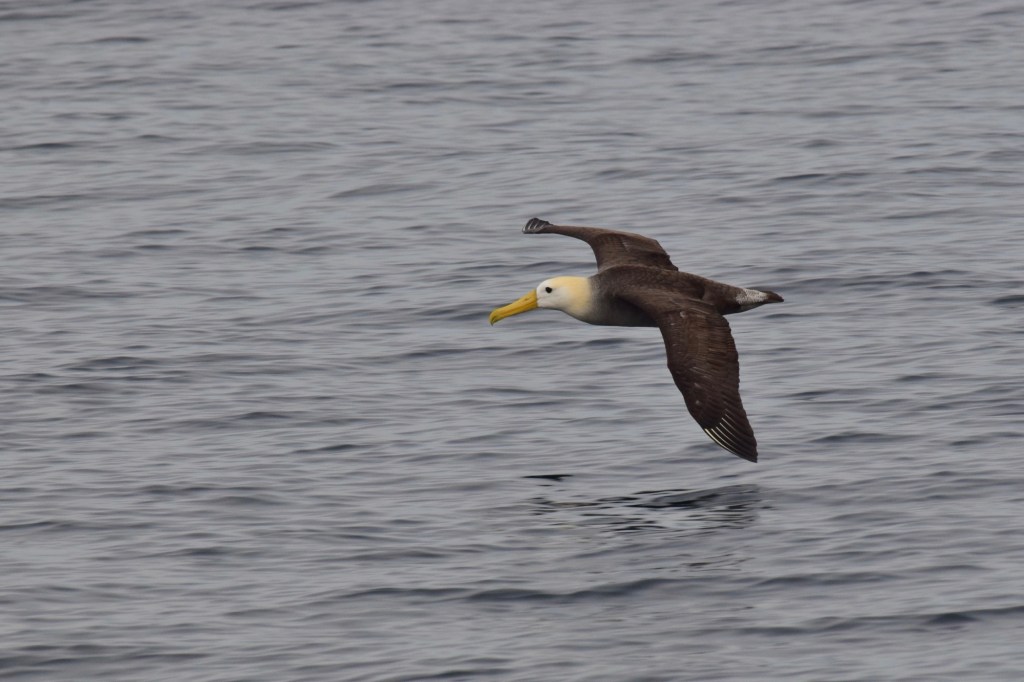
There was a great deal of excitement on board when another albatross appeared: a waved albatross, a stranger to these waters that usually makes its home in the Galápagos Islands to the north. The albatross is a true wanderer, scouring the length and breadth of the ocean in search of food, so they can turn up just about anywhere outside of the breeding season. Even so, the captain remarked that in the last twenty years he had only seen five of them, so it was quite a special sight.
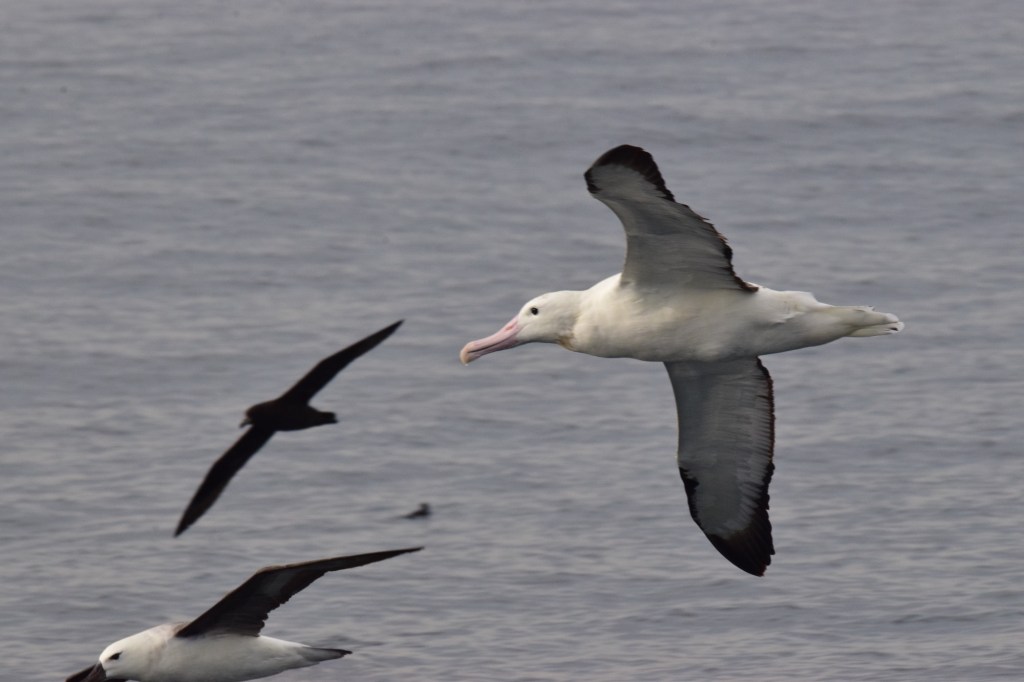
For me, though, the most spectacular bird of all was the last to appear. Towards the very end of the expedition, a truly enormous shape coasted into view from the direction of the open ocean, riding in on the wind on three-metre-long wings. A royal albatross – tied with the wandering albatross for the largest wingspan on the planet.
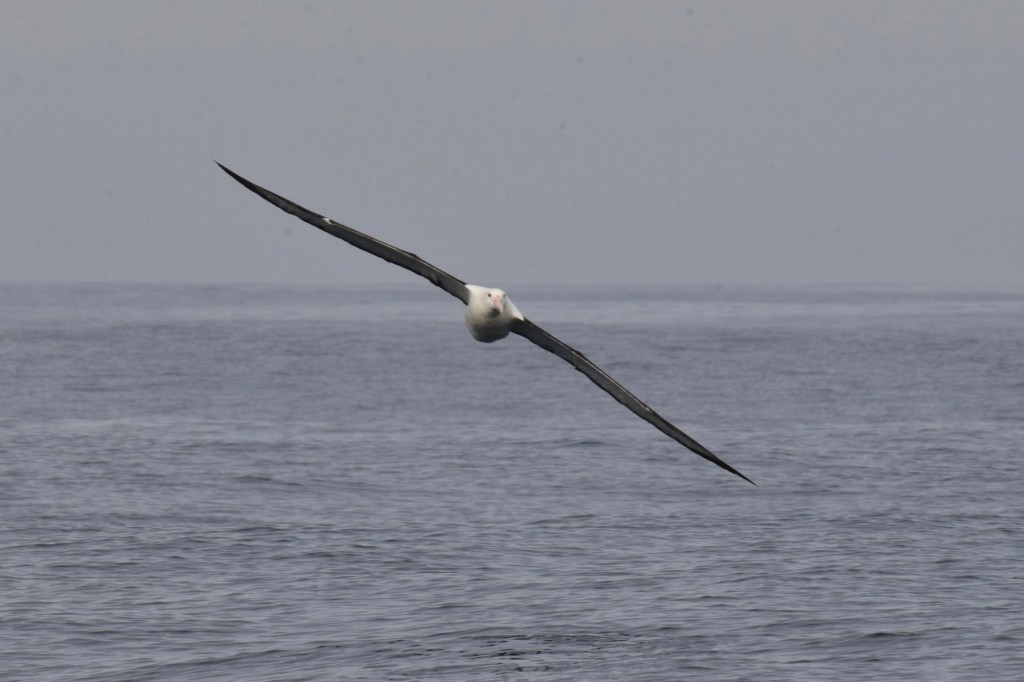
More wary than its kin – or perhaps more stately – the wanderer kept its distance, gliding in enormous circles around the boat. I’m not sure where they stand in the pecking order, or whether the royal in their name is a flight of fancy on our part in allusion to their size, but the giant was indisputably the largest and most powerful of all those gathered to the feast.
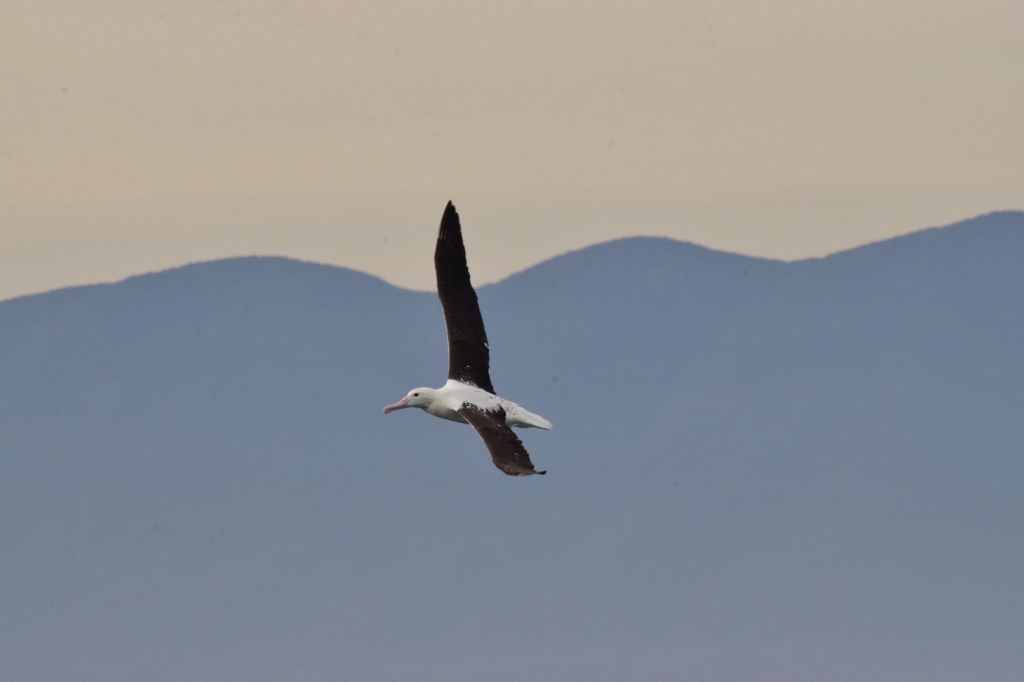
Just once did the wanderer come in close enough to truly appreciate how much larger it was than everything else: even the other albatrosses looked like gulls beside it. Unlike the angry-looking black-browed and Salvin’s, the royal albatross has a kind face with deep black eyes and a clean pink bill.
To see one is to understand how sailors of old were enchanted by this bird, spinning legends about it, including the famous belief that to kill an albatross was to invite disaster – upon ship, captain and crew.
What an incredible encounter! I hoped for one albatross and saw at least fifteen, including the largest of them all. My ears may not have fully recovered yet, but I couldn’t feel more fortunate right now.
Upon returning to Quintero, we all had lunch together at a seafood joint opposite the harbour. Quintero is not on the tourist trail – it isn’t even mentioned in the Rough Guides book I brought with me – so the fare was local, fairly-priced and fresh – and absolutely divine. I mulled over the menu for a bit before opting for a mint and ginger lemonade – my favourite Chilean drink – and the caldo de congrío, a wonderfully warm Chilean seafood soup.
I would have caught the bus back to Santiago, but one of the birdwatchers was tremendously keen to offer me a lift as he was headed back south anyway, and thought he might show me parts of the interior I might otherwise not see. I don’t tend to turn offers like this one down, and I had plenty of time, so I accepted.
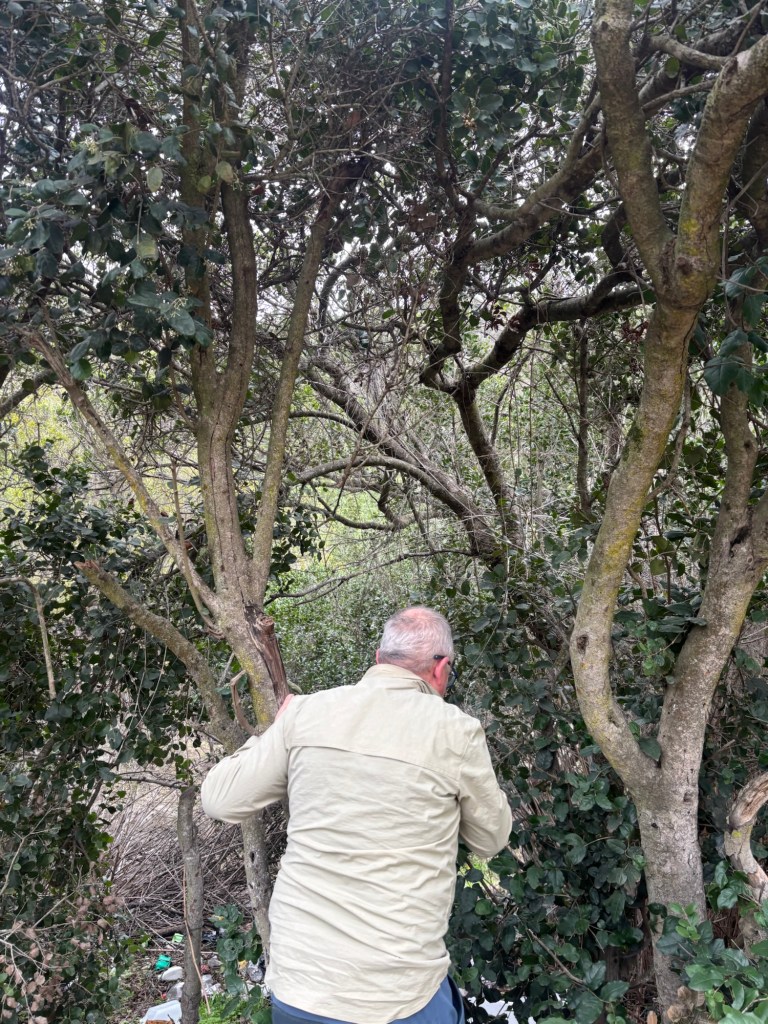
Manuel – a Chilean marine researcher of proud Basque extraction – was a proper fount of information. He has been into birds his whole life, studying ornithology at colleges across the United States and working primarily in pelagic research. His job has taken him from the coast of California to the Galapagos and the Pitcairn Islands, as well as both the North and South poles. He remembers when they were proper frontier territories, before modern tourism sank its teeth into the far-flung corners of the world. He remembers also when much of the coast of Valparaíso was a giant lagoon, with bird-rich wetlands that have long since dried up and turned into cattle country after so many years of drought. The recent downpour is an anomaly: the Chilean palm trees that grow in the hills to the east all bear the blackened scars of the fires that rip through the countryside when the summer heat is at its worst, aided by the invasive eucalyptus trees that do so love to self-immolate.
As well as a crash course in Chilean fauna, flora, history and politics, Manuel was something of a prankster, hellbent on stopping in the middle of nowhere to take a photo of me so that I could send it to Rodrigo, our guide, so as to let him believe that I had been dropped off in the middle of nowhere. The average citizen might have left the joke at a passing comment, but Manuel was adamant to see it through, passing over several promisingly desolate spots in the hills before finding one to his liking.
His puckish side satisfied, he made sure to send me on my way with some herbs for my tea and a fresh loaf of local bread, superior to any supermarket pan de molde. I had some this morning. It really was superb.
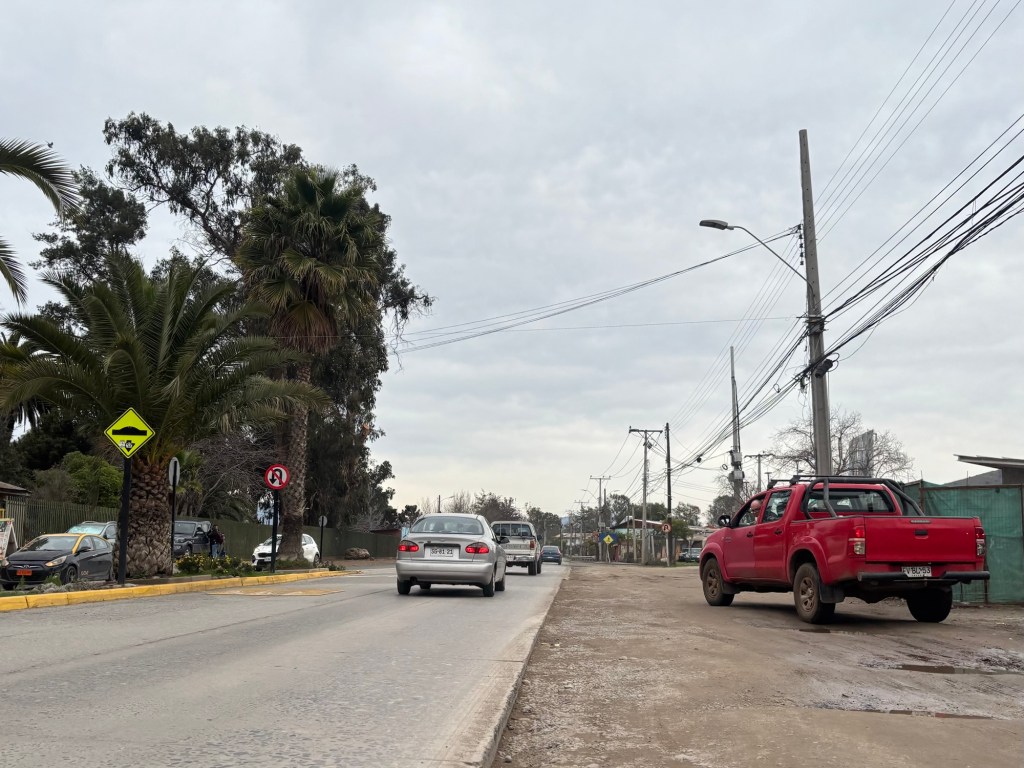
Manuel dropped me off in Melipilla, a one-storey town to the southwest of Santiago that has definitely seen better days. Several earthquakes – including one that had its epicentre in the heart of the town itself – have laid waste to what was once a very pretty Chilean town, with colonial adobe houses and two impressive churches. What remains is a sad mishmash of old and new, houses patched together with new materials, as though the whole town was rebuilt using six different LEGO sets. The street art of Valparaíso has made its way here, too, though it is perhaps less welcome here than it is in the cascading streets of the seaside city.
I bought a bus ticket for a paltry 2.000 pesos (just over a pound, I think) for the fifty minute ride back to Santiago, and as a bus arrived just as I was buying the ticket, I didn’t need to wait at all. It was half six by the time I made it back to the flat in Las Condes, long before Tomás and his family returned from their Sunday outing to see his grandfather. I meant to sit down and write, but after I had put my clothes in for a much-needed spin in the laundry, I pretty much collapsed into bed. It’s funny what a morning out on the ocean will do.
My second week begins. I will try to see some English lessons this week – and, with any luck, get a bit more involved after a week observing the middle and senior teams.
I have also reached a decision as to what to do with my last week out here. But that, for now, must wait. Let it be a surprise. There is a lot more magic in that. BB x
Hostal Casa Volante, Valparaíso. 16.37.
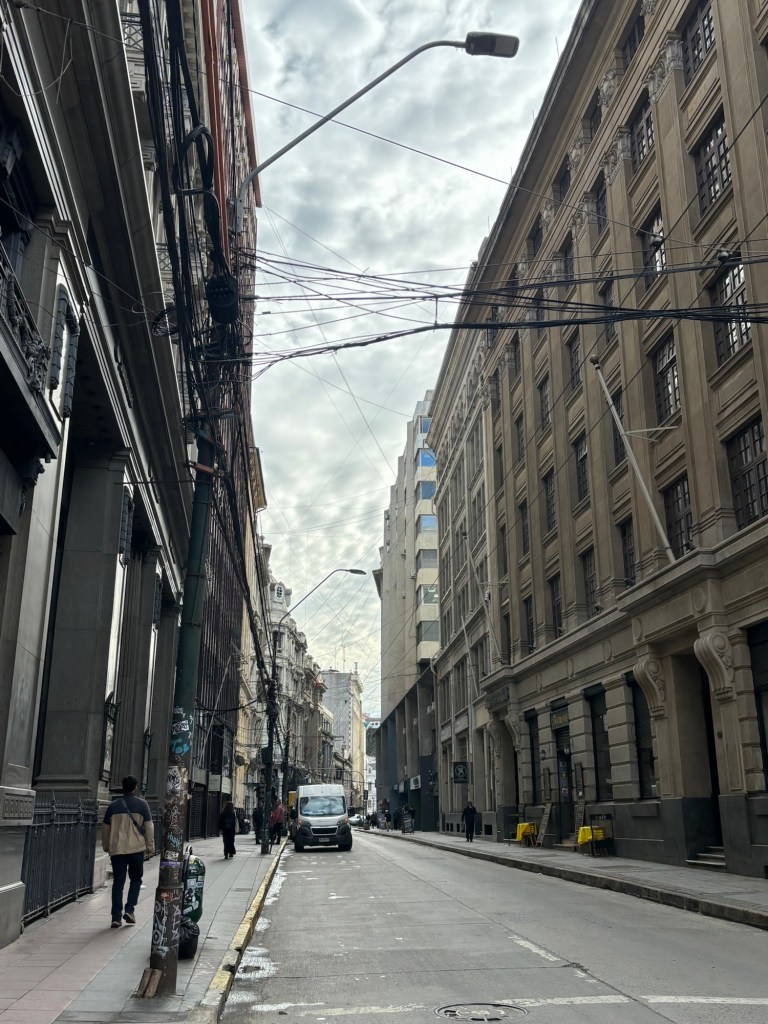
Santiago de Chile may be cursed to be a smog-bound citadel for the rest of its days, but in one particular sense, it is exceptionally well-placed: it is about an hour’s drive up into the mountains to the east for skiing during the winter months, while a hour and a half’s drive to the west will take you to the Pacific coast. Santiago’s summer sisters, Valparaíso and Viña del Mar, may only be a hundred kilometres out as the condor flies, but they are a world away from the Chilean capital. In some ways, they are decidedly European: winding streets with towering Parisian buildings, complete with tramlines and traffic lights. In others, they are absolutely Latin American: a fiercely compact cultural melting pot, with Peruvian outposts everywhere.
With my timetable still very much up to me (consisting entirely of lesson observations at the moment), I struck out early for Valparaíso today, very much in the mindset that the part of town where the bus station is – or so the books all tell me – is no place to be after dark. It took me about three hours to get here, all in all, so had I waited until I had got home, it would be around half past nine here – which is definitely pushing it, even by my standards.
So here we are, in Valparaíso, Chile’s second city. With a population of around 300,000, it’s a little larger than the hamlet of 47 in La Mancha for which it was named.
Let’s be real. I’ve come here for two things: sea lions and Pablo Neruda. I’ve been juggling my choice of poet for the Language A course for a while, between Neruda – arguably Latin America’s greatest poet – and Lorca, who I hold in especially high regard. In the end, it is Lorca who has won the day, if only because I have studied him so much over the years (and, no doubt, because I have skin in the game by being part Andalusian myself). All the same, it would be a crime not to include Neruda in the course, so I plan to use his poems to prepare my students for the unseen.
Neruda, for now, must wait. I’ll have time for that tomorrow, after the pelagic expedition. I arrived too soon to check in, so I turned my feet east and followed the coastline as far as the twin piers of Caleta Portales.
I didn’t have to go far to get my sea lion fix. The main pier of Muelle Barón may be out while the city pours time and money into what looks to be a seafront shopping mall in the making, but the real show is a few hundred metres to the east, where the skeletal ruins of an old gas company dock has become one of the favoured haul-out sites for the city’s sea lions.
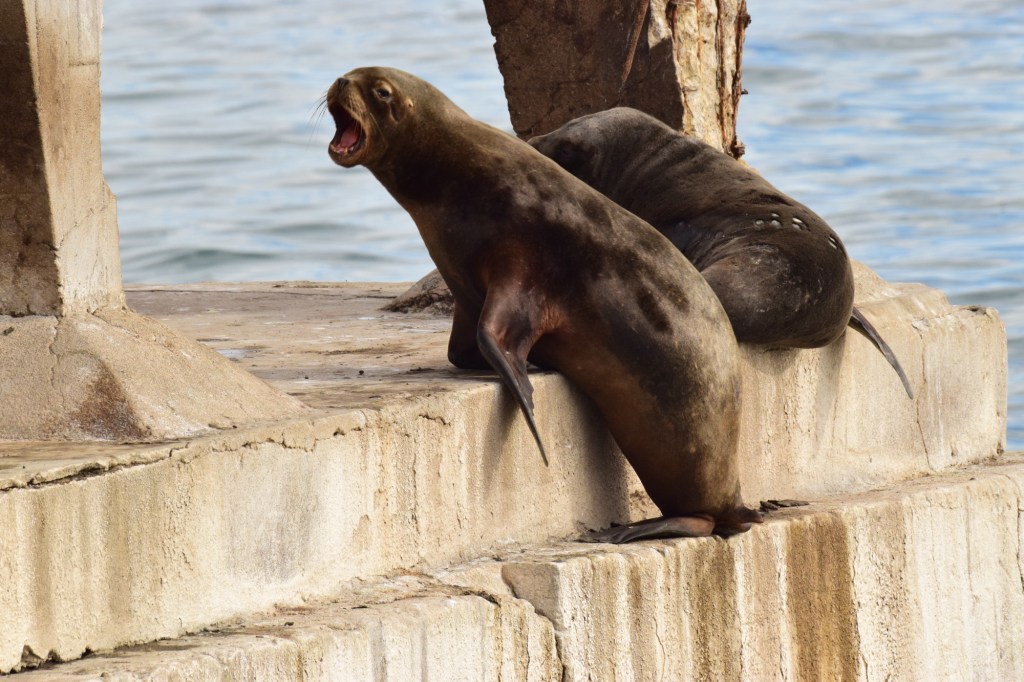
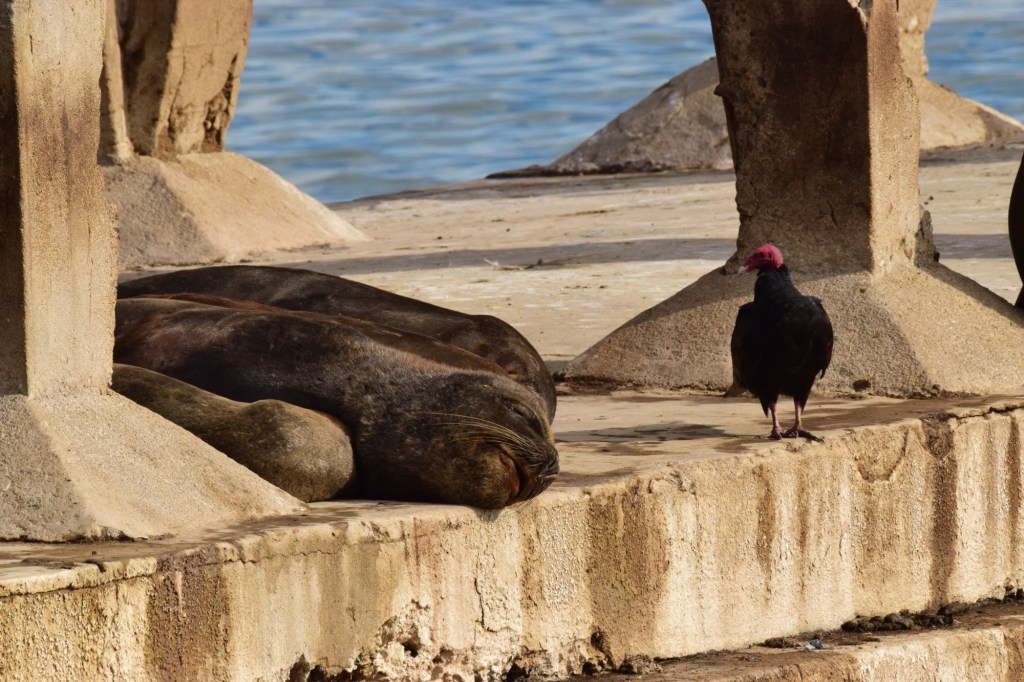
Alongside the sea lions, the structure is the perch of choice for a surprising number of seabirds, given its safe distance from the shore but proximity to the fisheries. I picked out kelp gulls, Inca terns, a couple of turkey vultures, Peruvian boobies, three species of cormorant and, of course, the Peruvian pelicans that I was hoping to see again.
I thought there might be something loose in my rucksack, as I kept hearing some kind of fabric shuffling sound, but to my astonishment a man in dirty overalls clambered out from among the boulders, seemingly from some crevice beneath the very rocks upon which I had been sitting for the better part of half an hour. He acknowledged me with a gravelly “wenodía”, set down his tatty red baseball cap to mark where he had slept and then picked his way across the rocks, crouching every so often to inspect something between the crevasses of the sea wall.
Valparaíso is a lot poorer than Santiago’s uptown districts like Las Condes. That much is plain.
Moving east, I had my eyes trained on the water, on the off chance that a wandering penguin might show up. I did spot one, a fair distance from the shore, but something else entirely caught my attention – something entirely unexpected.
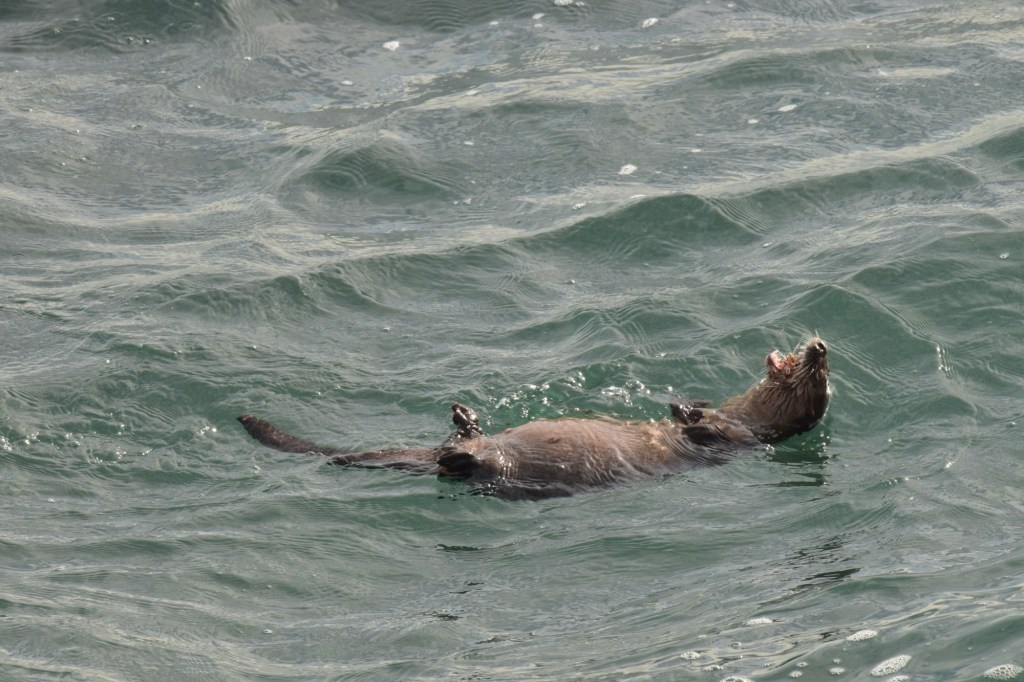
A marine otter.
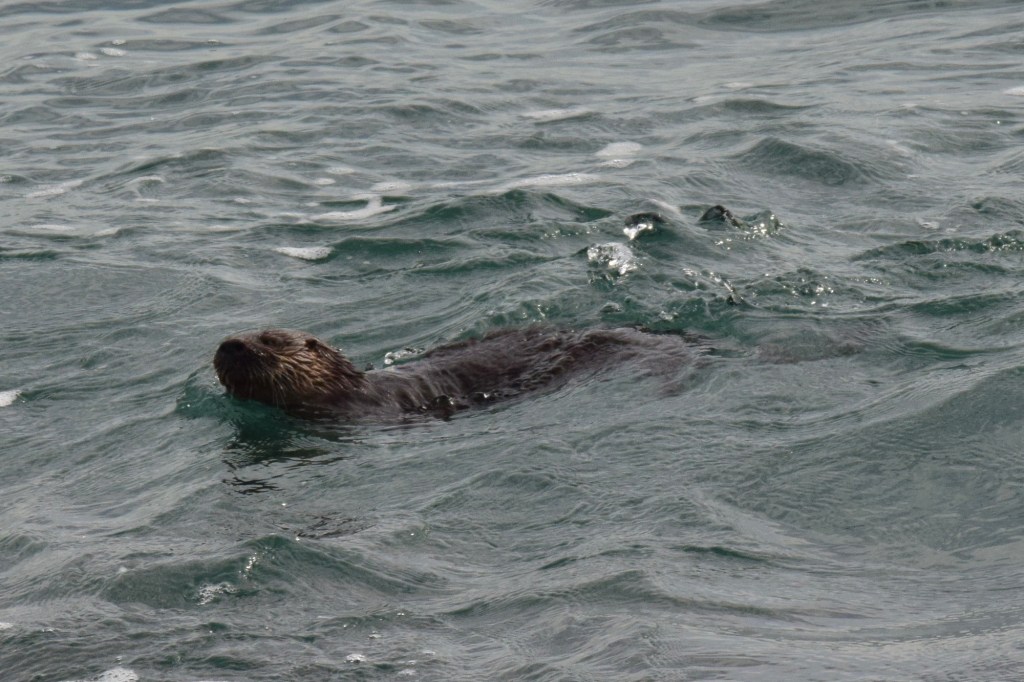
Marine otters – known in Chile as chungungos or gatos marinos (sea cats) are not sea otters, like the fluffballs found from Baja California up along the North American coast, but they do live almost exclusively in the sea, rarely venturing into freshwater like other otters. Like sea otters, marine otters were once hunted for their pelts and are thus an endangered species, and quite a rare sight along South America’s Pacific coast. So I really wasn’t expecting to see one here, in the very heart of Valparaíso.
Apparently, marine otters are specialist feeders according to their location, with southern populations preferring fish and northern populations opting for shellfish. This must be one of the northern otters, because in the fifteen minutes or so I spent watching it before it disappeared, it must have caught and eaten at least four small lobsters.
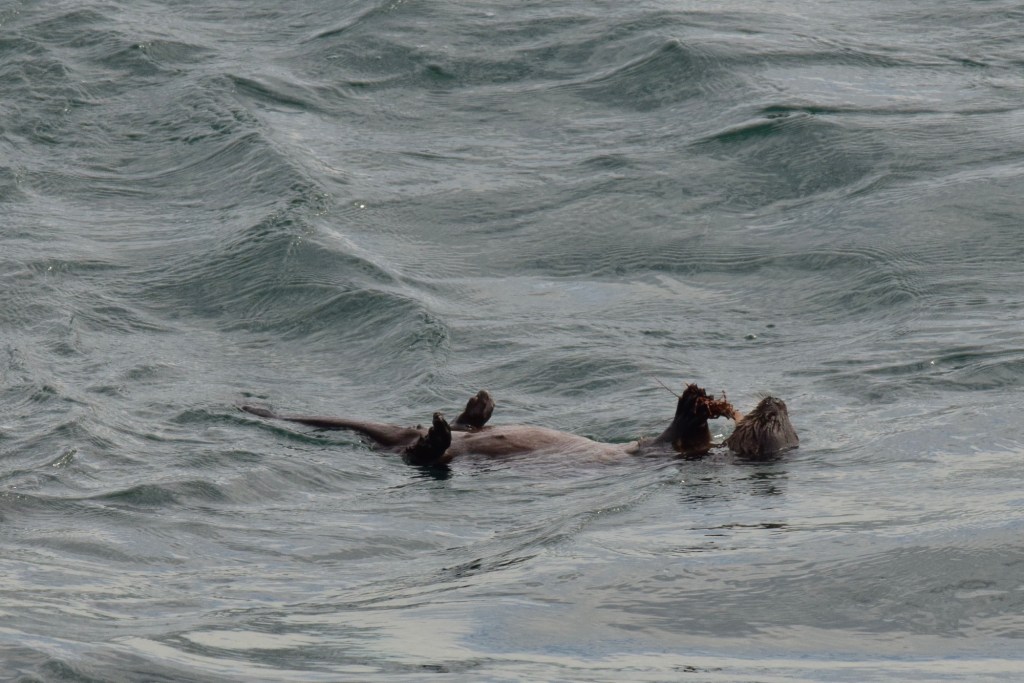
That makes two species of rare otter I have managed to find this year: giant otters in the Amazon and marine otters in the Pacific. And I still haven’t tracked down the otters that live in the Tone, just a stone’s throw from my flat! I’m sure they’ll show up eventually. Maybe I should make that my mission, before the year is out: to see a third and final species of otter, preferably before Christmas!
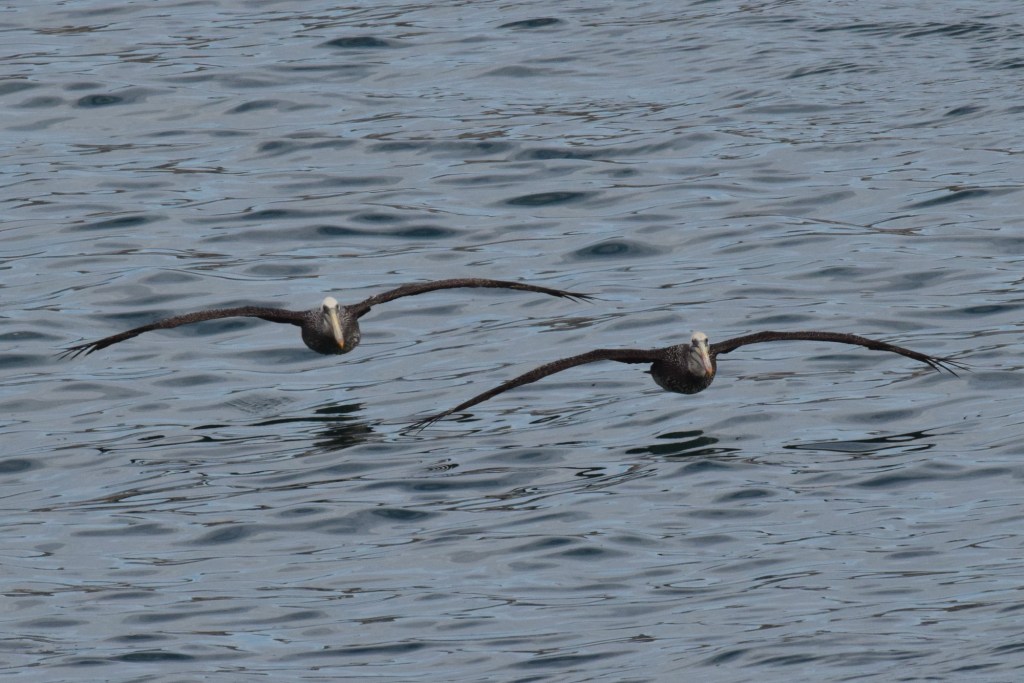
Not to be outdone, the pelicans put in a good show, sailing in low over the water in that spectacular flight pattern of theirs. I have wanted to see pelicans do this since my mother told me about it after her trip to Peru back in 2015, when I wanted to be just about anywhere but Amman, and I have had the incredibly good fortune to see that sight several times this year.
It’s not the stuff Attenborough documentaries are made of, for sure, and the good people of Valparaíso must see it all the time, but it is something I will never tire of seeing.
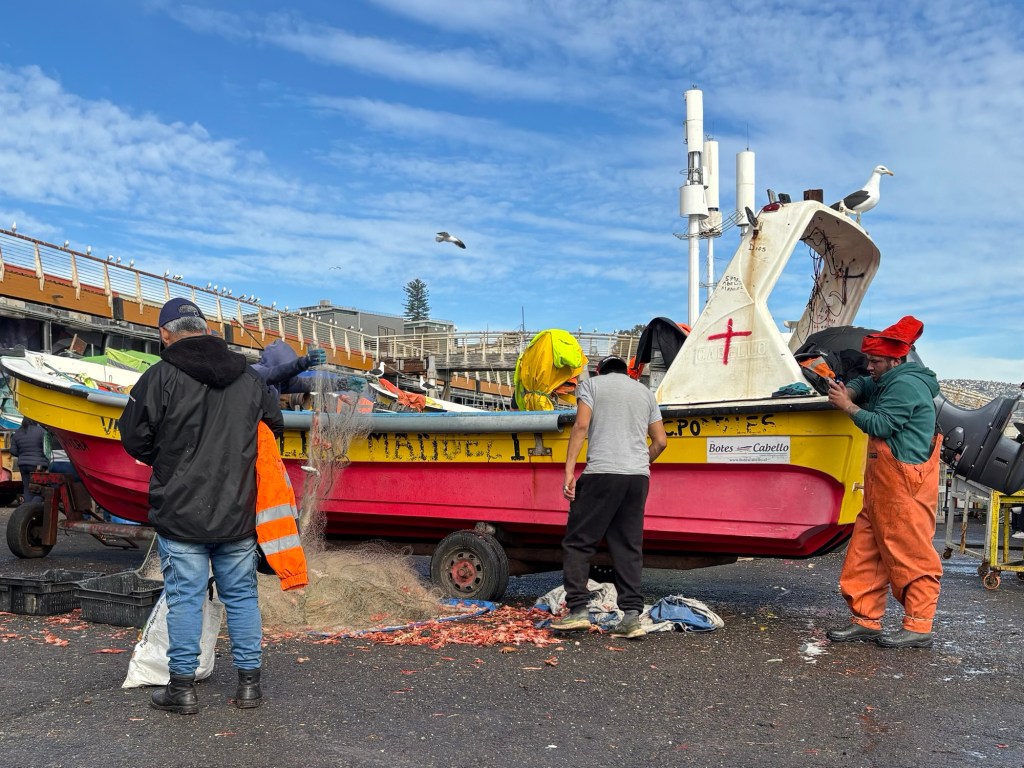
Eventually, I reached the busy fishing port of Caleta Portales. I reached it at absolutely the right time of day, too: around noon, the fishermen throw their bycatch back into the sea, loading the scraps into repurposed shopping trolleys and dumping them over the pier into the water below. The local wildlife is well aware of this daily bounty – and, thanks to a quick Google, so was I.
If you needed a clue that the drop was imminent, you only needed to count the pelicans. They had gathered in numbers so great I struggled to put a number to them – and pelicans are not small birds by any measure. They seemed to be perched upon every surface they could find: the sea wall, car roofs, billboards, shipping crates, stalls, bridges, lampposts and on the concrete among the fishermen themselves. After seeing them at a distance in Paracas, they were now far too close for my lens!
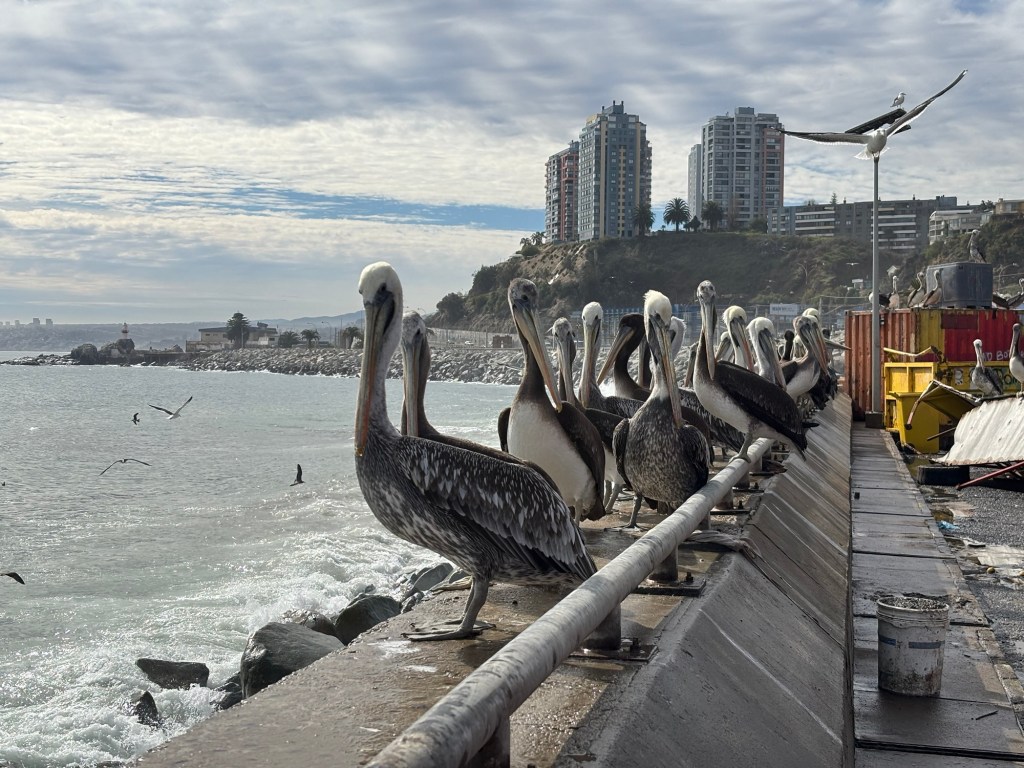
One small perk of being here now in midwinter is that some of the adults have started to put on their smarter summer plumage, with a smart yellow tinge to their more defined white faces.
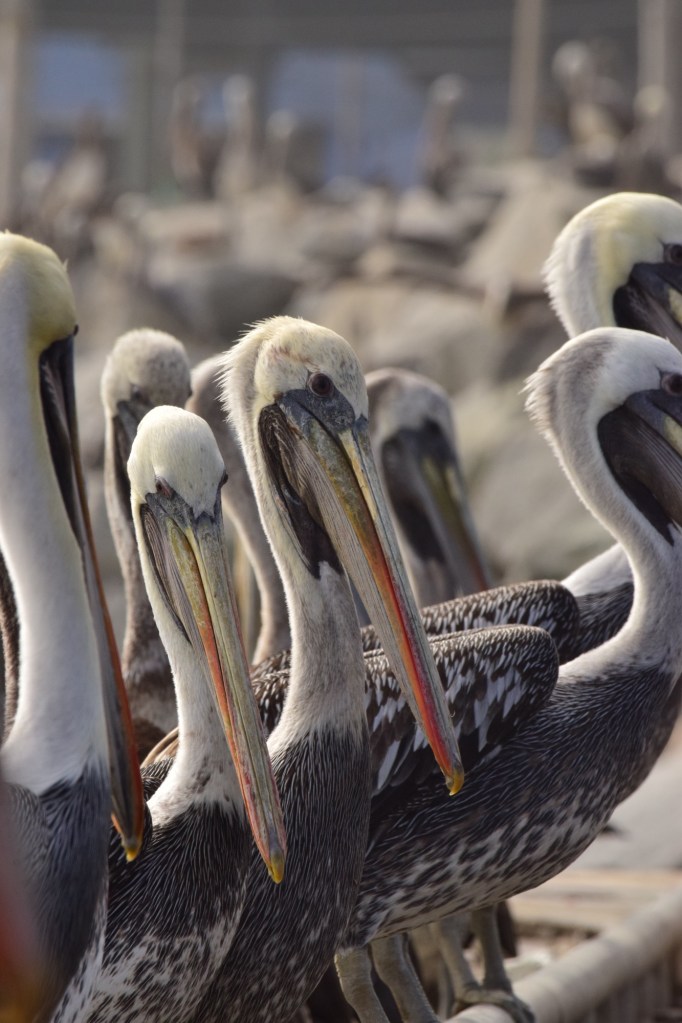
I was already aware of the immense dark shapes in the shadow of the pier, but the appearance of the fisherman with his trolley worked like a magnet, drawing the dark mass along after him, following the overpowering stench of fish – or the sudden vortex of feathers and screeching gulls that followed in his wake.
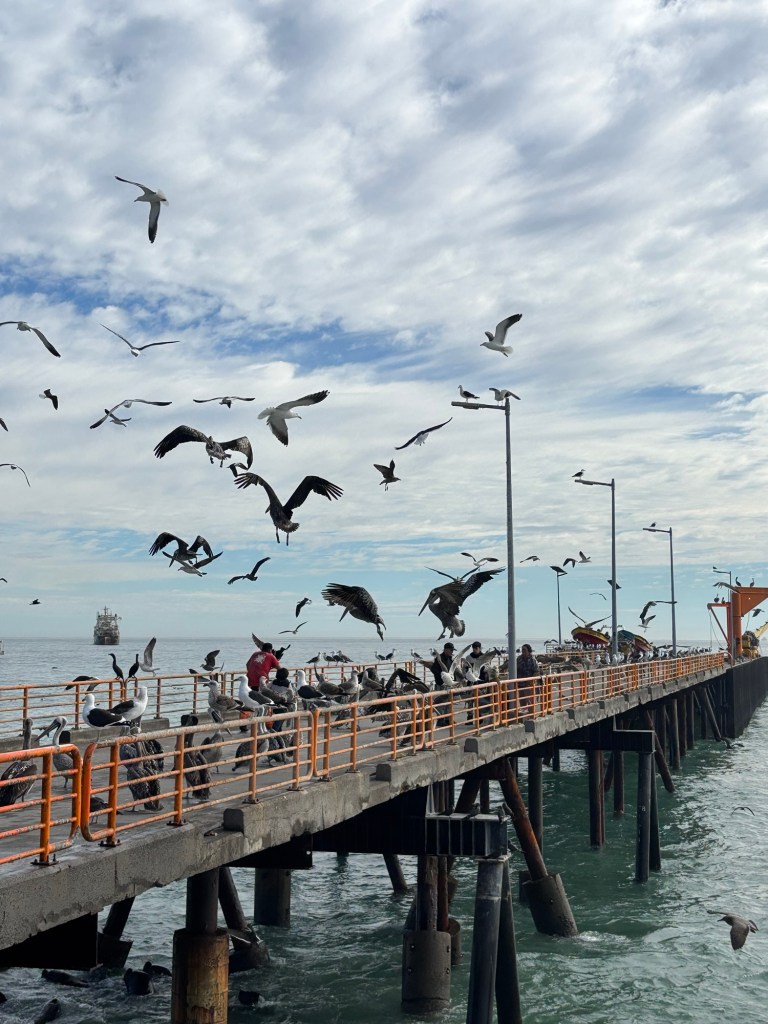
With the seafood sloshed overboard, the shoreline turned into a frenzy of activity. It didn’t take me long to pick out the bull among the sea lions massing around the shoreline: he completely dwarfed all the others, and that’s saying something.
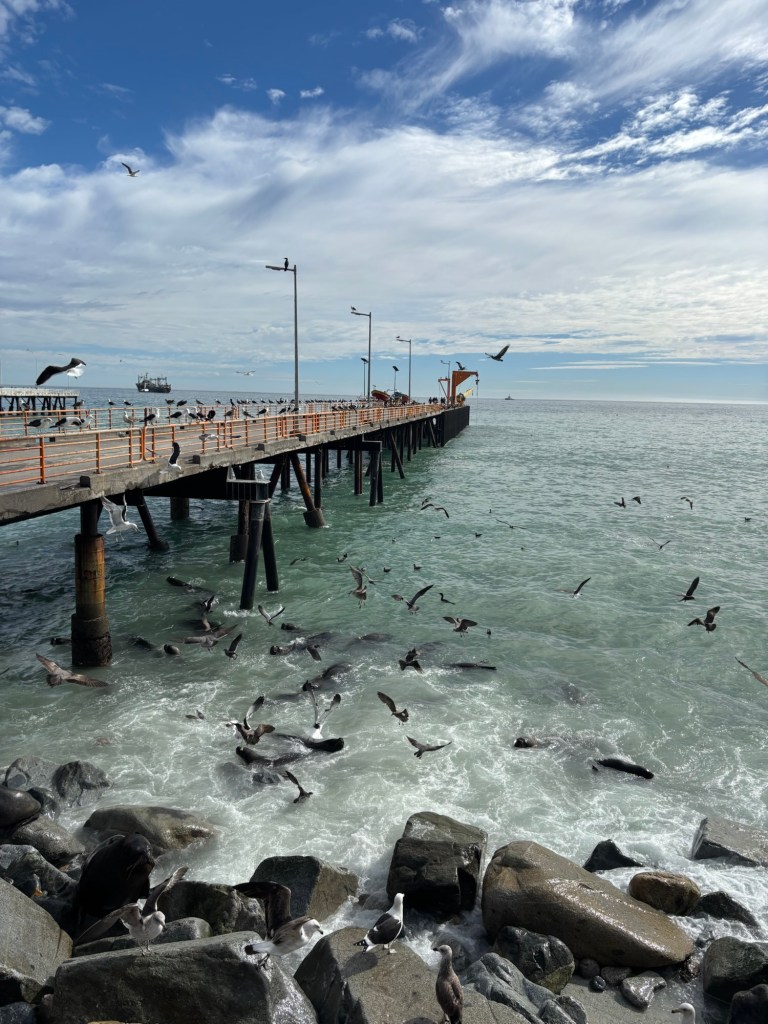
Forget the roly-poly dumplings that you find off the coast of Britain. Sea lions are an entirely different beast. Adult males can reach a whopping three metres in length and weigh in at around 325kg. They’re also fiercely territorial, as was plain enough from the deep scars on some of the males, including the old bull.
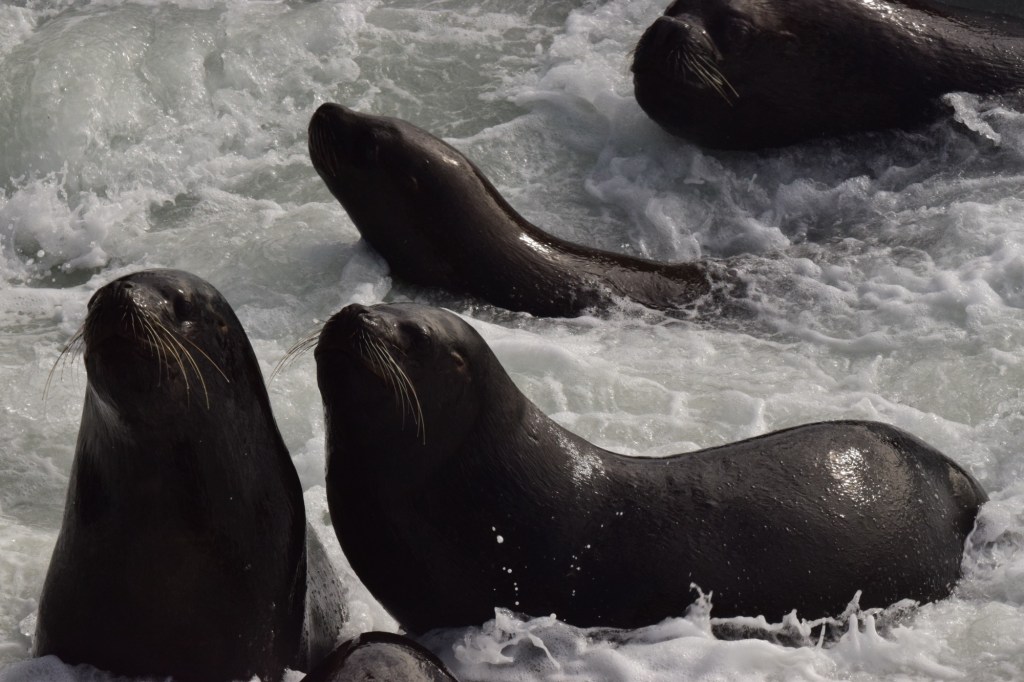
At that size – and at this distance – they were simply too big to get on camera. The 300mm would have been useful here, I think, but it’s sitting on top of my chest of drawers back home in Somerset. As such, I had to make do with portraits of the beasts that had hauled out onto the rocks to wait their turn while the bull ate the sea lion’s share of the bycatch.
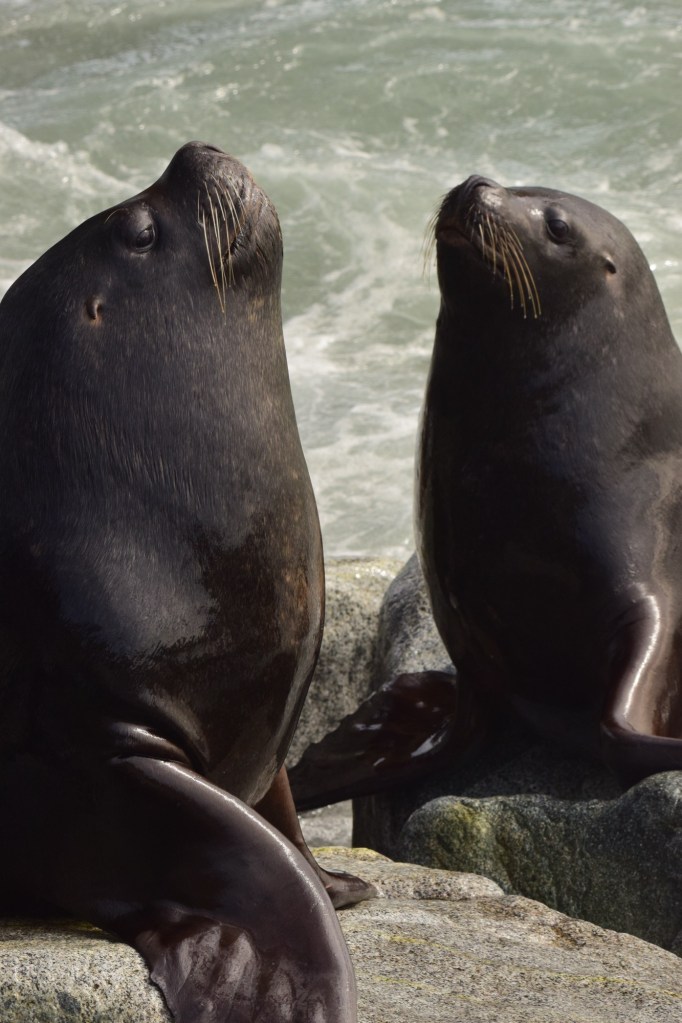
At this range, of course, you can make out a lot of detail. The thickness of their whiskers. The sharpness of their teeth. The minuscule ears at the back of their heads, and the scars on their torsos.
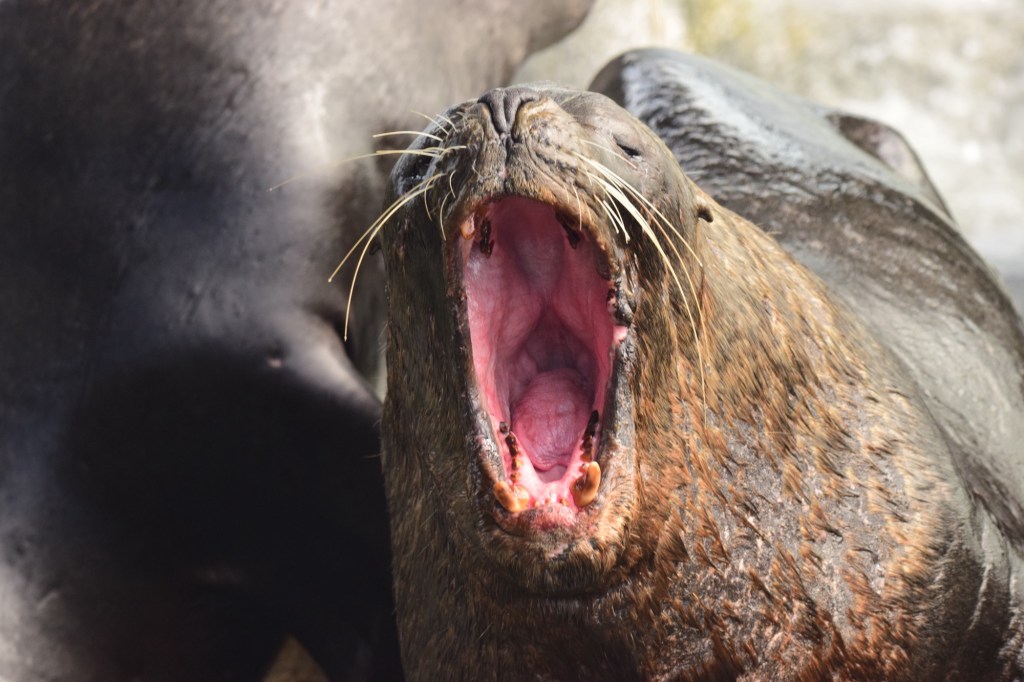
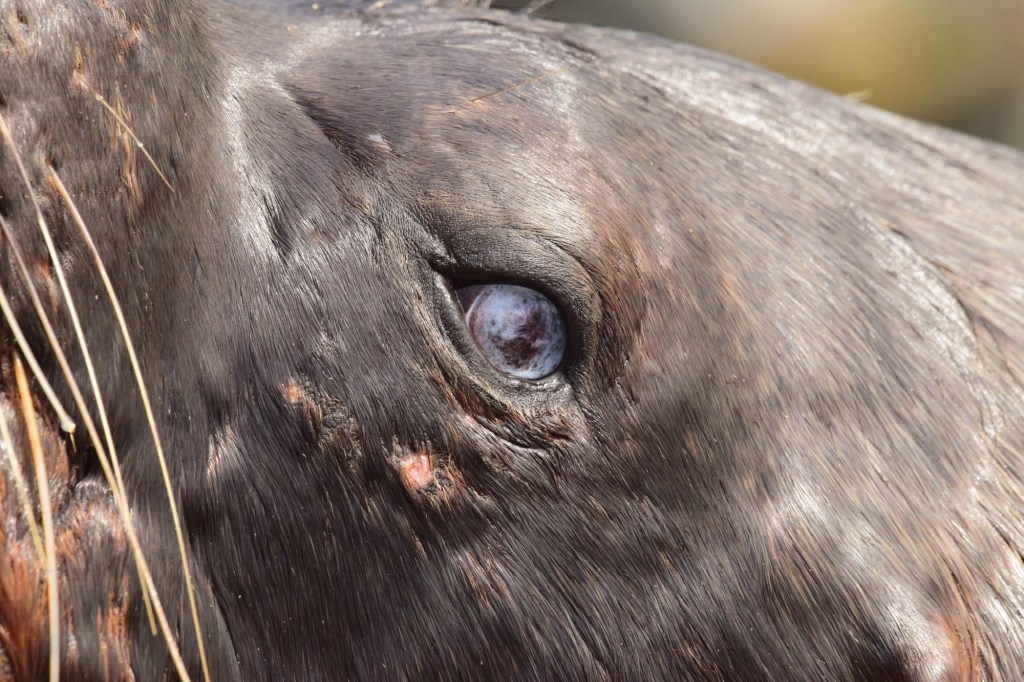
One male was so close you could see the whites of his eyes twice over. His eyes seemed to have misted over. He must be very old for a sea lion to have contracted such an infection. I wonder how old? They can live to be around twenty years old in the wild, I think, so this one can’t be far off that mark.
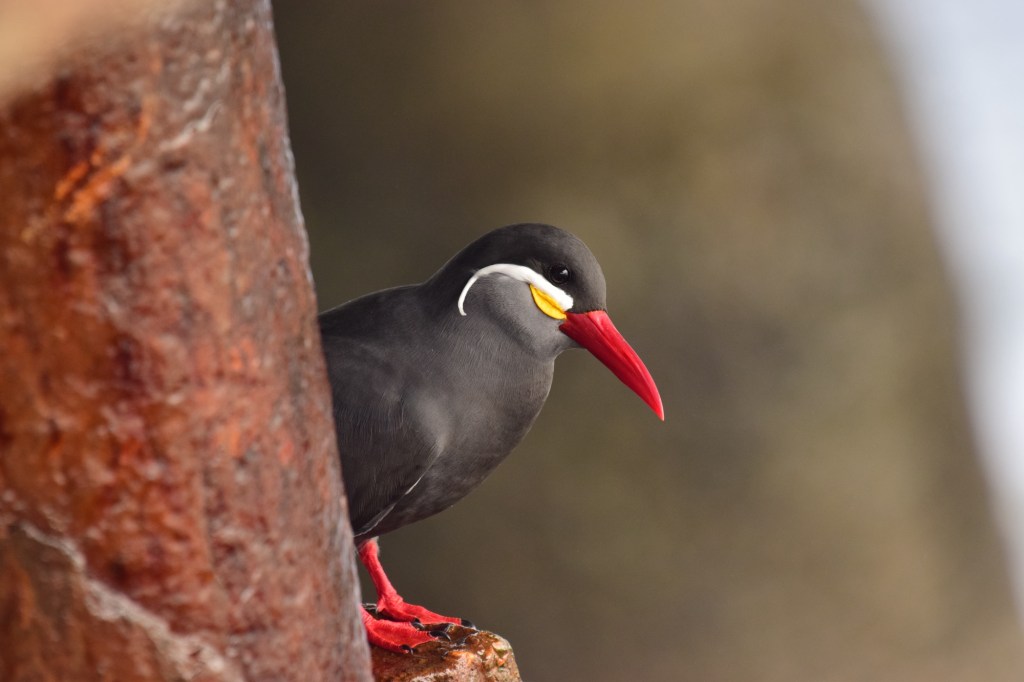
Arguably prettier than the titans hogging the spotlight was a small family of Inca terns, waiting patiently for their chance to swoop in and seize some of the scraps for themselves. This is another species I travelled all the way out to the Islas Ballestas to see, only to find them so close here in Valparaíso that they might have been eating out of my hand.
Here, at least, the lens really did put in the yards.
I hung around the port for well over an hour before deciding it was probably time to head on back to Valparaíso, have a decent lunch and check in to my hostel. The skipper advised against having a large supper ahead of tomorrow’s ocean voyage, so I made a mental note to have a decent lunch instead, and acquire some snacks for the journey home.
It’s not the most scenic route back to Valparaíso from Caleta Portales. In places, the city seems to be collapsing into the sea, and where there isn’t the salty tang of the sea, there is the sweet stench of sweat, marijuana and human faeces. There’s a lot of homelessness here. All the carriages of a derelict train seemed very much lived-in, with signs of recent occupation all over the place: a bouquet of flowers tied to the grille, a washing line strung out in the gloom behind a window, and a dog waiting patiently on the step of the driver’s car. It’s probably more homely than the crevasses among the boulders below the sea wall, though I imagine it’s not much warmer.
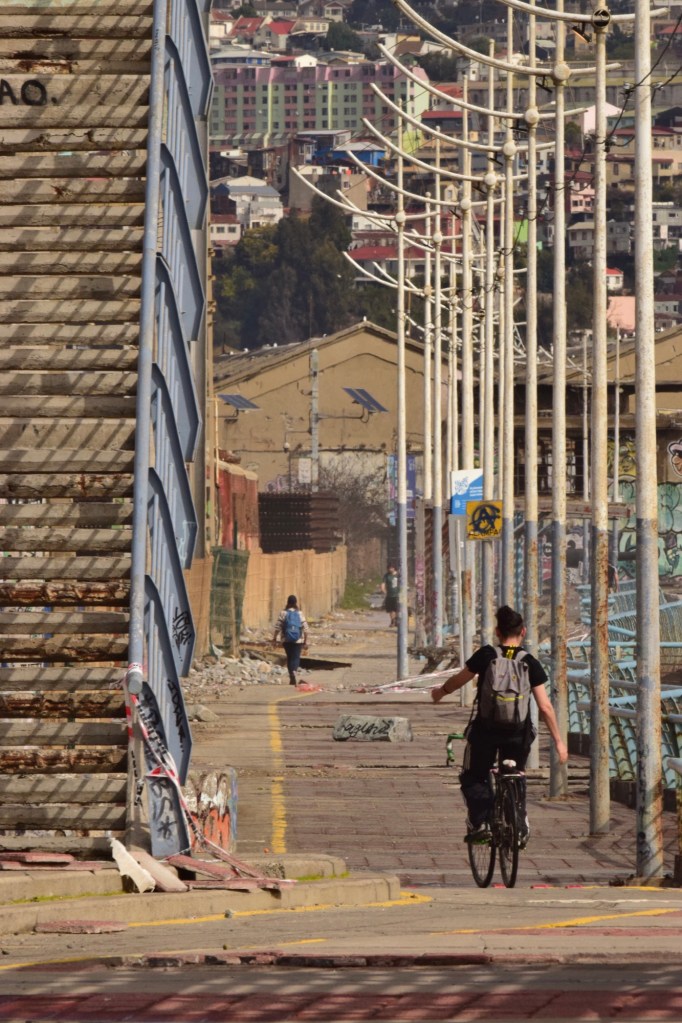
The city never seems to catch a break. The Spanish blew the city to pieces in 1866 during the Chincha Islands War. Forty years later, in 1906, Valparaíso was ripped apart by an extremely violent earthquake – a fairly common occurrence in this part of the world, with the city sitting squarely upon the Nazca plate boundary. Apparently, there was a small one just a few days ago off Quintero, where I am headed tomorrow. It’s quite something, seeing the tsunami warning signs all over the place.
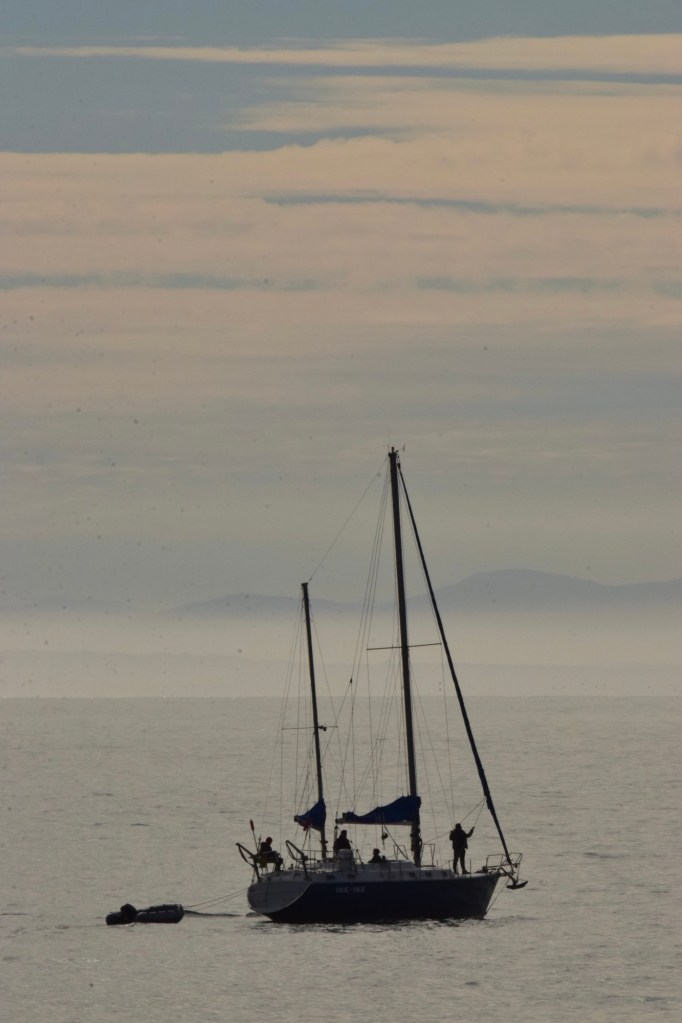
The captain has just told me that the boat needs a service tomorrow morning, so we have rescheduled. Weather permitting, we are going ahead on Sunday. That should make my journey home a bit easier. Even so, it is likely to be my most out-of-pocket adventure yet.
Tomorrow, then, is wide open. A whole day to explore Valparaíso! I’ll make sure it starts with a good sleep and a decent breakfast. Those sea lions had a proper feast today – I might as well do the same. BB x
Las Condes, Santiago de Chile. 21.28.
Four days into my teacher exchange and I’m still blissfully without a timetable as such. As a matter of fact, that’s actually quite a relief – because I keep running into new opportunities every day, and it’s helpful to be able to say yes to everyone for a change.
Today I spent the entire day in the Senior division of the school, with the equivalent year groups 10-13 (1°-4° Medio by Chilean standards). I also got my eye in on a PAES class, a preparatory class for students preparing to sit the national exams required to enter Chile’s university system, which functions much like the “seventh term” that was once offered by some British schools for Oxbridge hopefuls.
It was a bloody useful class to watch. I even had a go at the paper myself, and got only one question wrong over a 30-minute assault of two reading comprehensions. It’s not that the chosen literary texts were hard – though I’ll admit there were some words I’d never encountered – but the questions were tricky with frustratingly similar choices of answers, and often required really careful reading to decide between two of a possible four.
For the record, the texts were El barco de vapor (which I’m sure I’ve come across somewhere) and El leve Pedro – in case I decide to use them myself as part of my Language A course design. Which I very probably will.
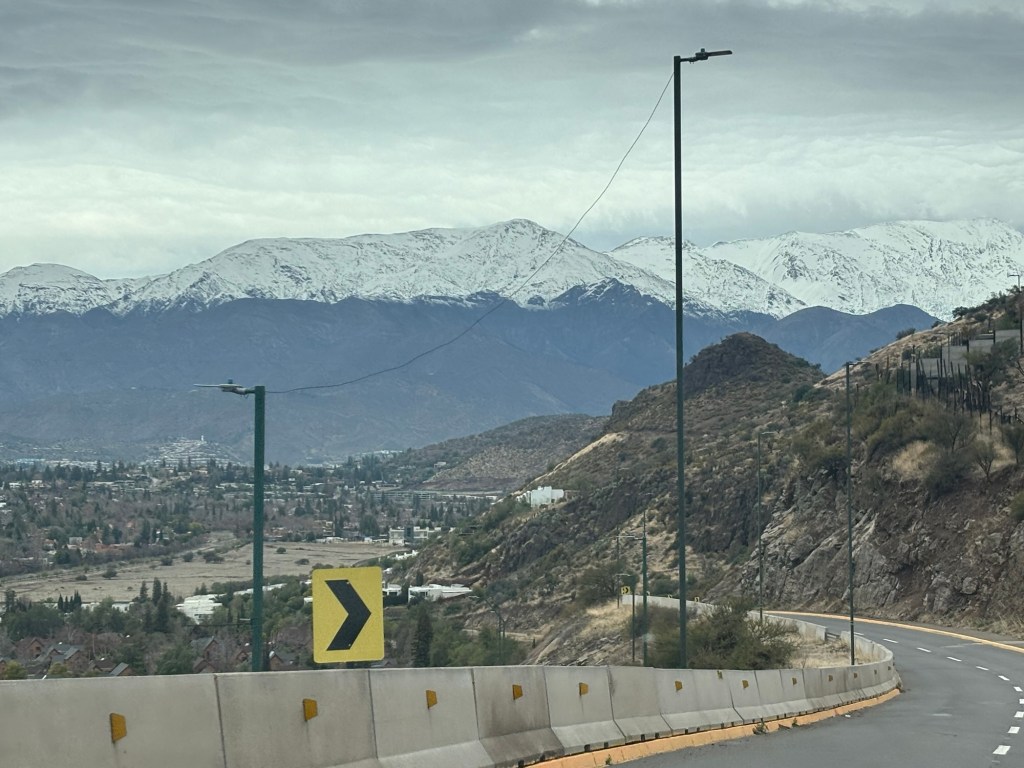
It’s raining again. My trips to South America seem to involve a lot of rain. Since I still have no timetable set in stone – and this is a very ad hoc exchange – I’m hoping to get away early tomorrow and make for the coast, as the weather is likely to be worse next weekend, and I will be off on my travels at the end of the last week – location TBC. For now, at least, the weekend looks like Valparaíso.
Provided the fog that is rolling in off the Pacific doesn’t come sooner than expected, Saturday will see me set out on a small ship into the Pacific Ocean in search of the only bird on the planet with a wingspan larger than a condor: the albatross. I expect the sea will be more than a little choppy, but I’ve always wanted to do a proper pelagic trip, and since the days of working one’s passage on ocean liners is well and truly dead and gone, this is the next best thing.
If the weather puts a stopper in my Pacific plans, there’s plenty to see and do in Valparaíso – including the city’s resident fur seals and its plethora of seafood options. It’ll also be good to get out of the capital for a bit. Host families are lovely and all that, but eight years of living on my own have made me into a very independent sort of creature.
Someday, somebody will shake me out of that. Maybe. For now, this social battery of mine needs the solace of the sea.
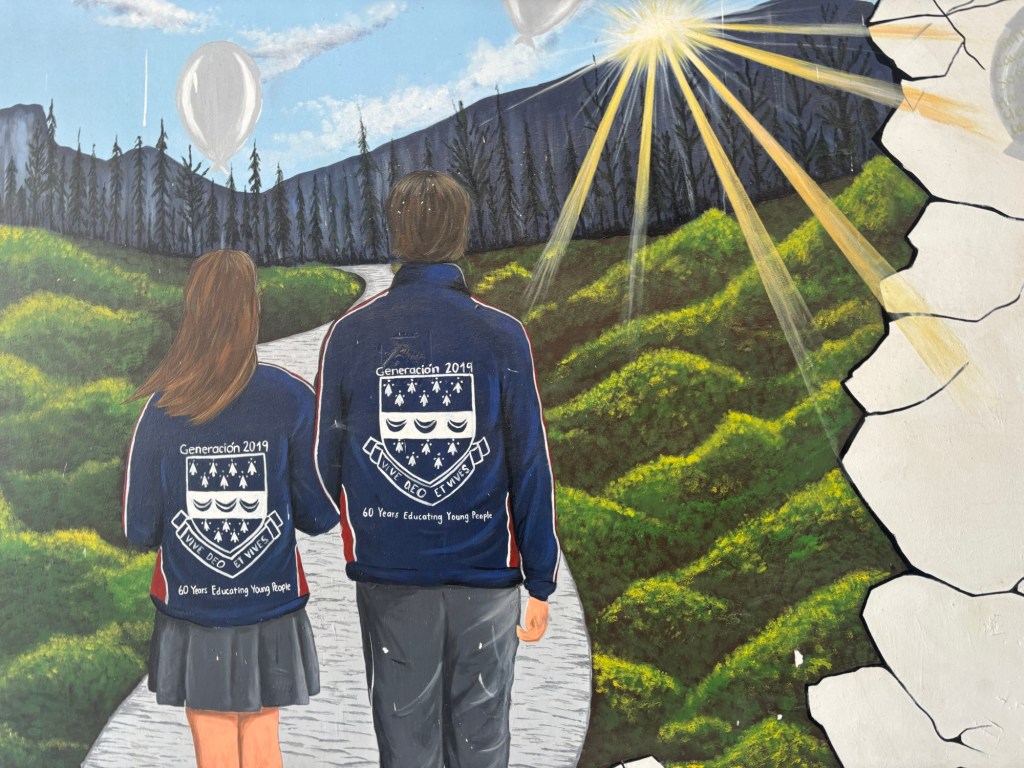
I’ll get back you once I get there. It’s a bit touch and go, but the best adventures always are. BB x
Miraflores, Lima. 15.00.
Where do I begin? Where do I even begin?
I’ll start with Uber. Lima is absolutely enormous – a 2,672 square kilometre metropolis with over ten million inhabitants – and it’s pretty daunting to get even from Miraflores to the coast, and especially when you’re lugging around some pretty expensive gear.
Uber to the rescue! For little more than the price of a meal deal, I was able to get to my destination this morning: the Pántanos de Villa, a wetland reserve sheltered within the city itself.
I actually had cold feet about my plan this morning. Was I doing some ridiculous by striking out on my own to a corner of Lima well off the usual tourist trail?
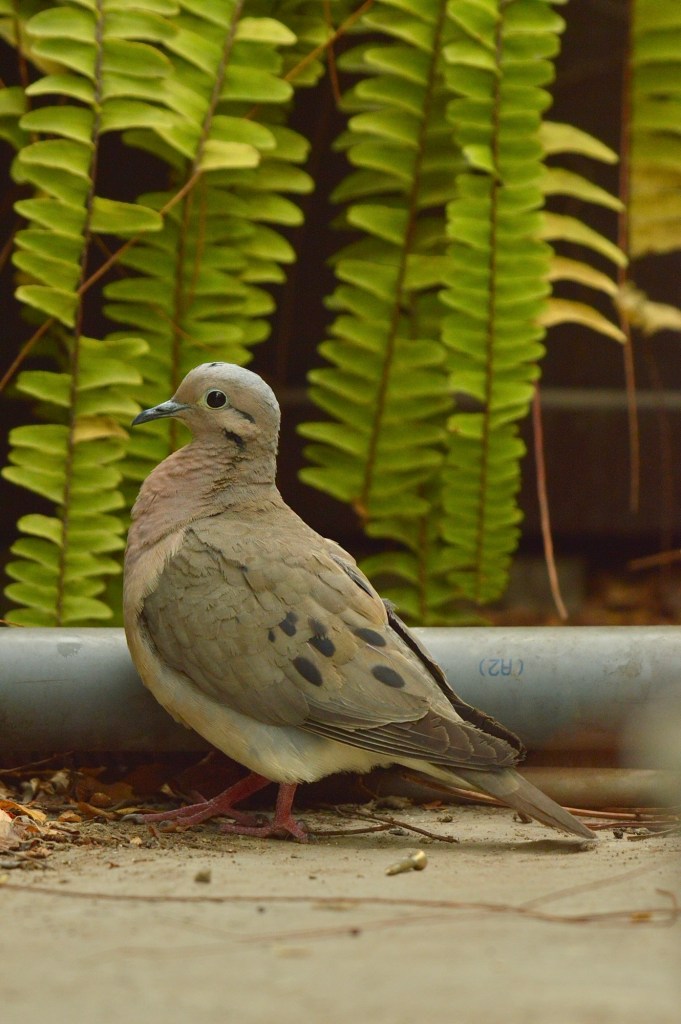
Then again, if I didn’t, would I regret it? The answer was a resounding yes, so I hailed an Uber and set out. But not before seeing my first Peruvian bird of the trip: an eared dove which was kind enough to wake me up this morning.
Uber drivers aren’t a very talkative lot, but their choice of radio is always interesting. My first had YouTube on and was watching/listening to a bizarre Peruvian comedy show featuring two men with oversized prosthetic noses commenting on the imminent Paraguay/Brazil football game. Whatever they were saying was hard to follow beneath an overactive soundboard, rotating between all the classic meme sounds after almost every line. Soundboards seem to be a feature of modern mass media, but I confess myself surprised to find it already taking root out here.
The most obvious sound by far is car horns – which are technically banned in Miraflores, though that doesn’t stop them being part of the sinfonía limeña.
The Pántanos are a sanctuary within the hustle and bustle of Lima. Even if birds aren’t your thing, it’s good to come here for a bit of peace and quiet. I got there for 8.30am, which is when the website said the reserve opened its doors, but I was told very politely that the guides would be there at 9am, if I would be so kind as to wait.
I had no issues waiting – one of the thing I was most excited to see in Peru was already here. So many of them, in fact, that I lost count.
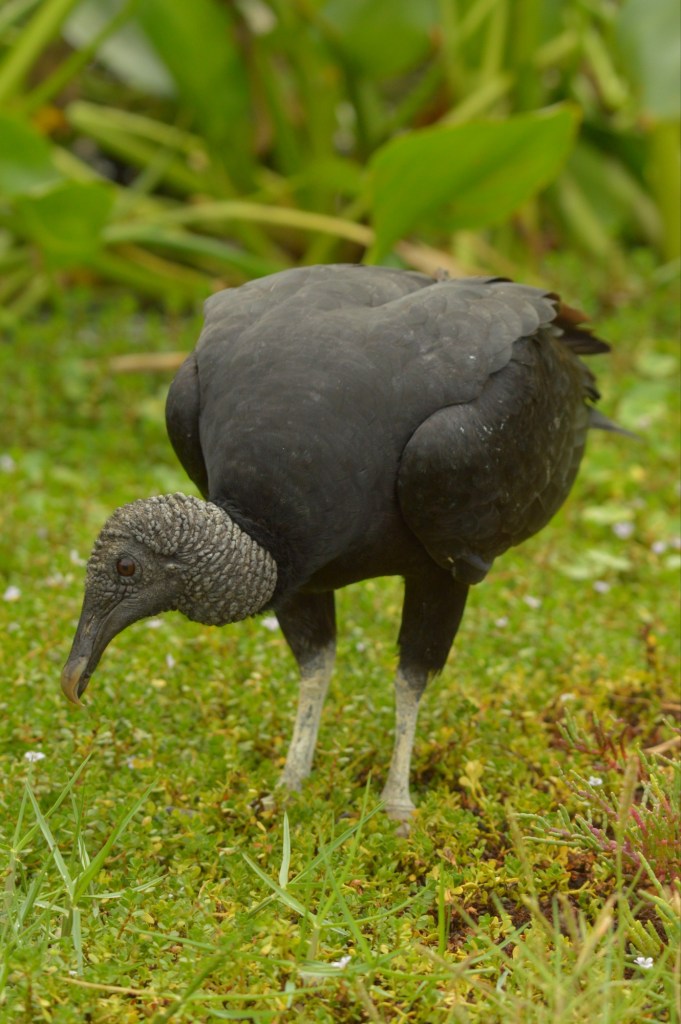
Introducing the black vulture, known in Peru as the gallinazo, which might be translated as “enormous chicken” – which fits quite nicely, I think.
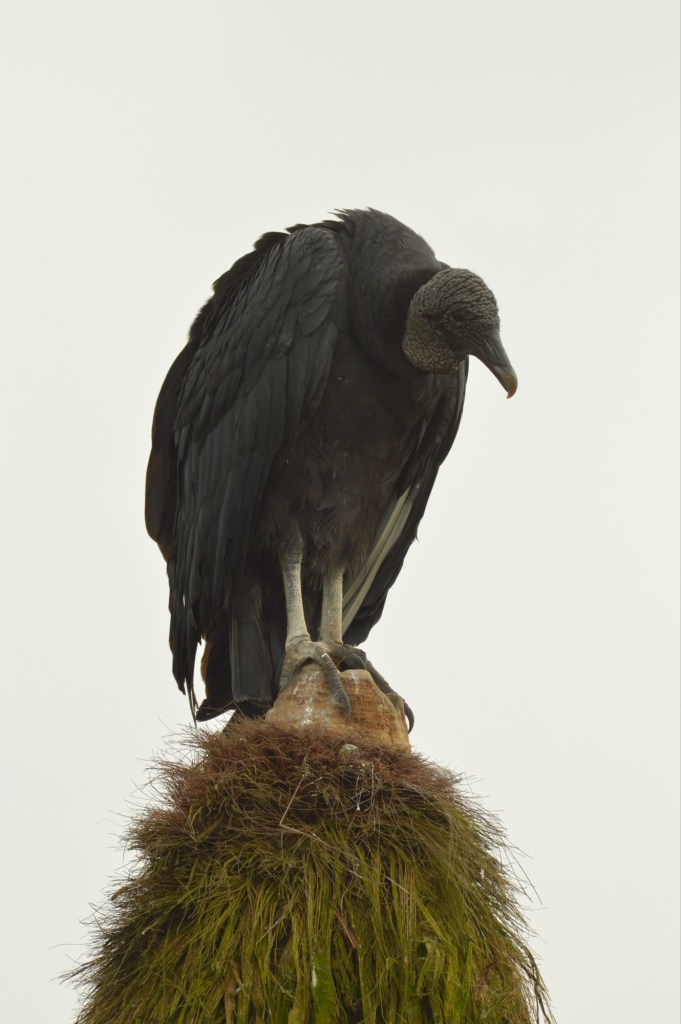
They’re about the size of a turkey, and the only sound they make is a sort of grunted sneeze. My guide, a knowledgeable young tourism grad who was working her way toward a posting in Arequipa, pointed out how skittish and shy they can be – which was the only thing she said that made me raise an eyebrow, because it feels like nothing in this country fears the presence of man like they would in Europe. I’ve never been so close to so many species in a single day. I wonder why that is?
The Pántanos’ star resident is the Siete Colores de la Totora, a seven-coloured gem of a bird that is surprisingly hard to spot as it feeds among the stems of the reeds. Seeing one would, according to my guide, be a very “buen augurio” (good omen), but I made it plain that I wasn’t here to tick boxes – I just wanted to see any and all of the magic that Peru would offer. We got incredibly lucky and saw a wild cuy, a species of guinea pig that are native to the marshes, but it was much too quick for my camera.
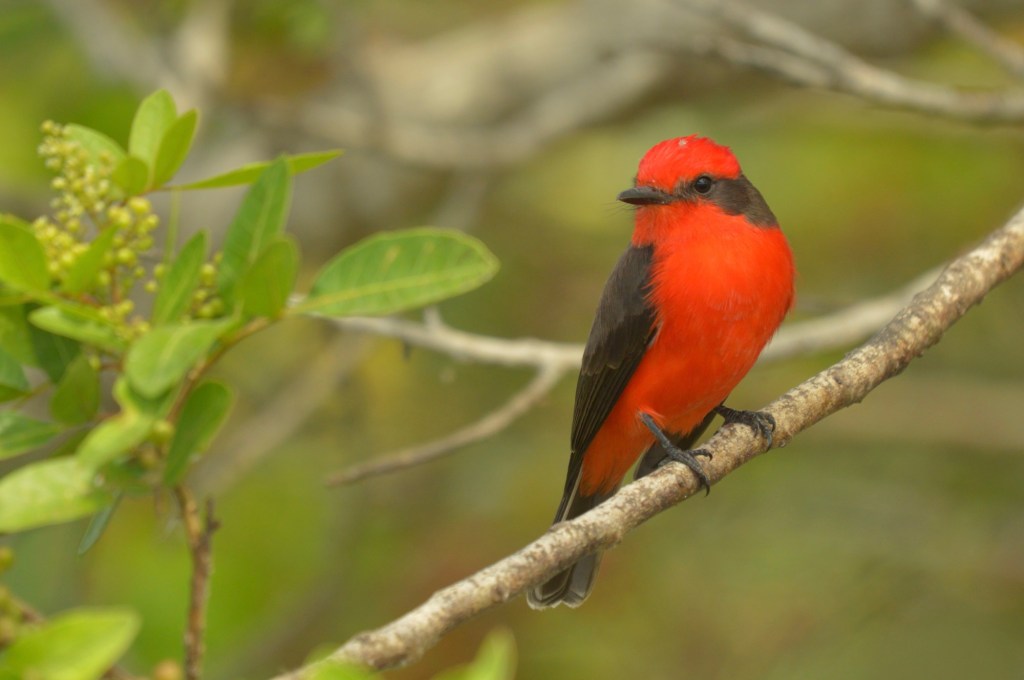
I had more luck with one of the reserve’s most beautiful treasures: a vermilion flycatcher, surely one of the most spectacular birds to be found in Peru – and they’re quite literally everywhere!
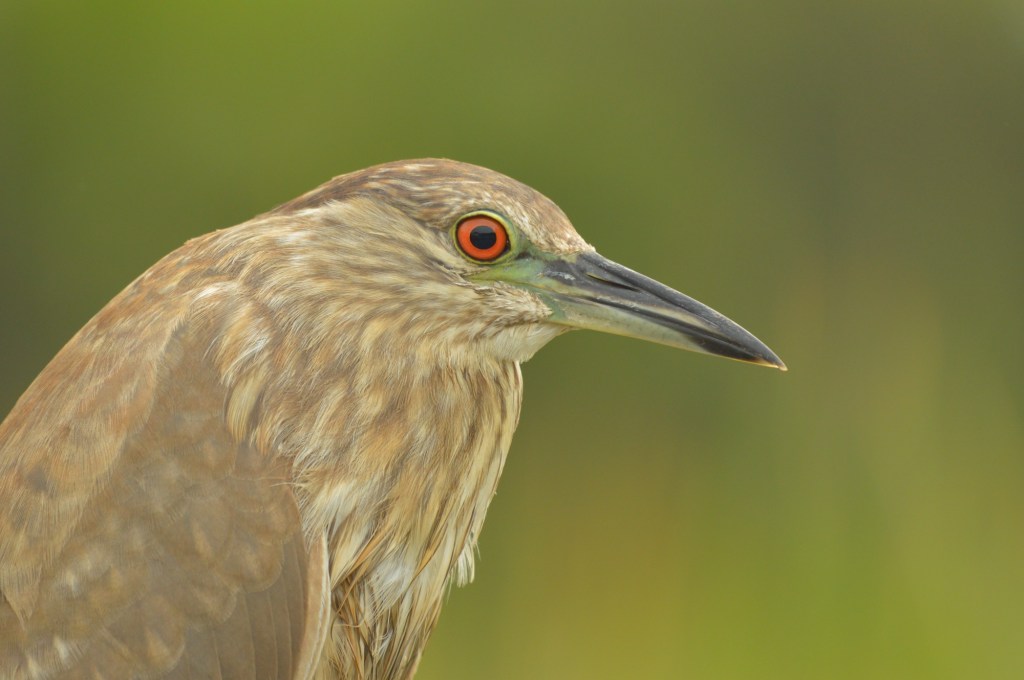
I needn’t have worried about the Toledo night heron being so distant, because there was one sitting right next to the visitor’s centre. I’ve never had the chance to appreciate their bright red eyes from so close, an evolutionary adaptation to hunting by night – hence the name!
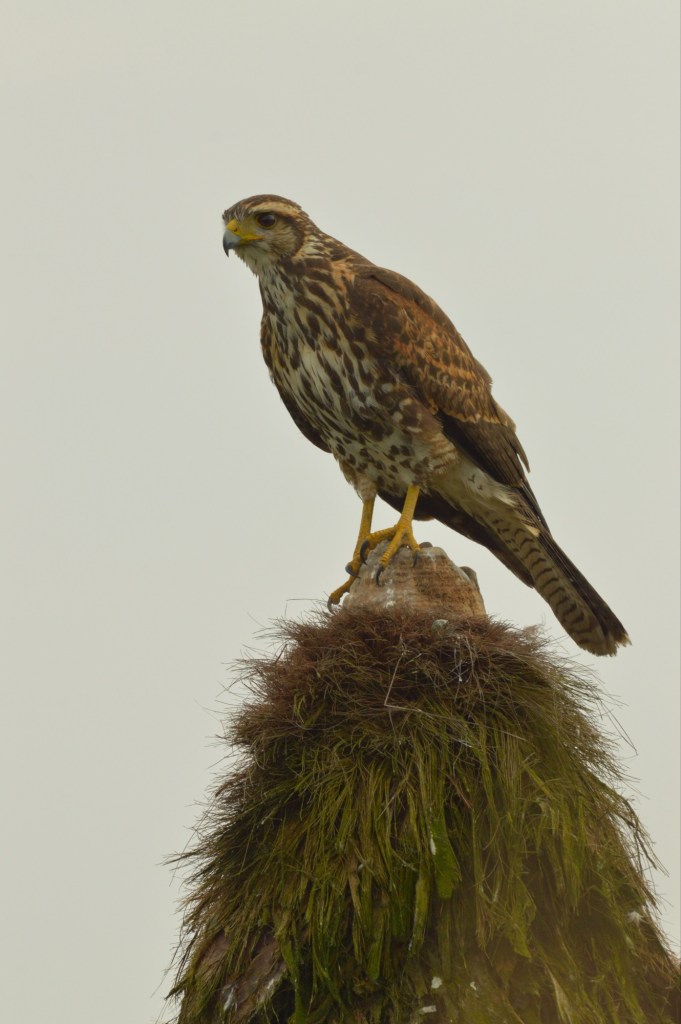
Not to be outdone by the vultures, a young Harris hawk swept in to investigate the cuy situation. These incredibly intelligent birds are a favourite of falconers – if you’ve been to a bird of prey show, you’ve almost certainly seen one – but they’re native to this part of the world. They’re also one of the few species here I knew on sight!
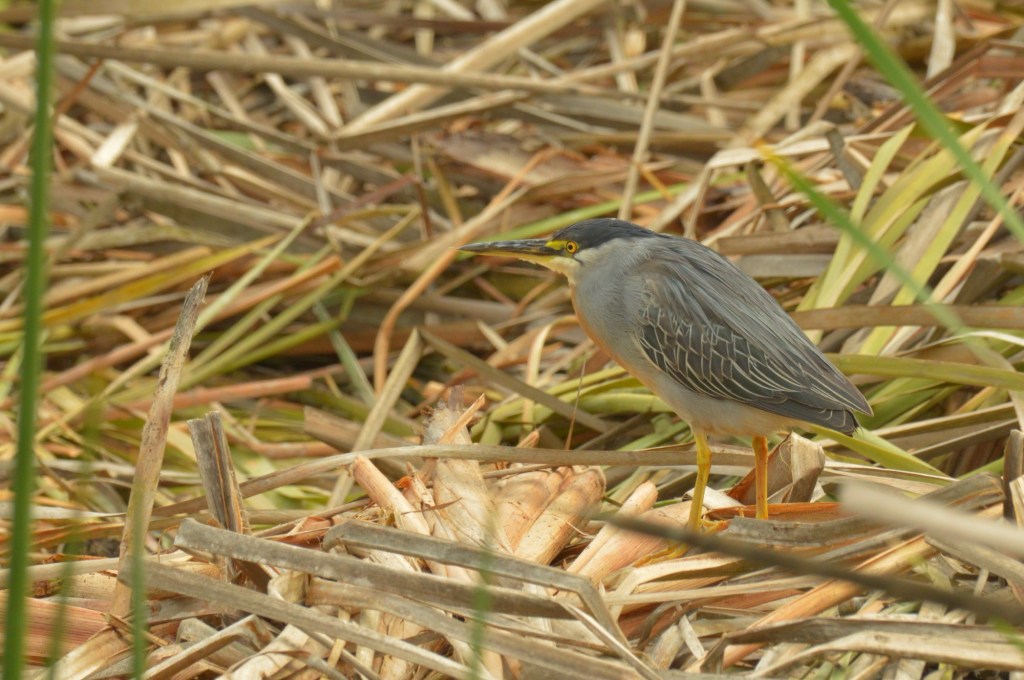
I saw my first hummingbird of the trip: an Amazilia, I think, though I haven’t gone through my sightings with a guidebook yet. They’re damned near impossible to photograph until they land, being about the size of a finger and moving with all the agility of a butterfly. I’m trying to snap everything I see so I can log them later, but at least I recognised this little fella: a striated heron, one of a number of familiar species that are shared between Peru and – of all places – Uganda.
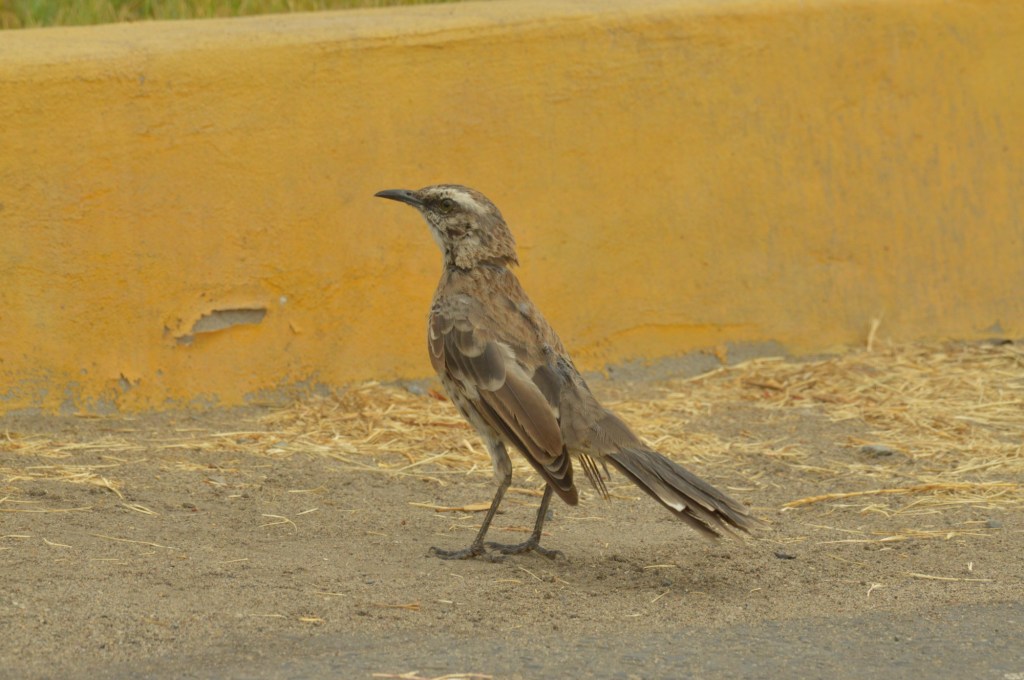
To reach the last circuit of the Pántanos de Villa, you have to leave the wetlands and walk about ten minutes further along the road to the coast. The road passes through a private residential estate, but they’re quite used to naturalists from the Pántanos passing through, so I was waved through without any ceremony. I could have stopped a number of times in pursuit of an unfamiliar birdcall, but I didn’t particularly want to draw attention to myself by pointing my zoom lens into somebody’s garden, so I contented myself with the mockingbirds that followed me inquisitively for half of the journey.
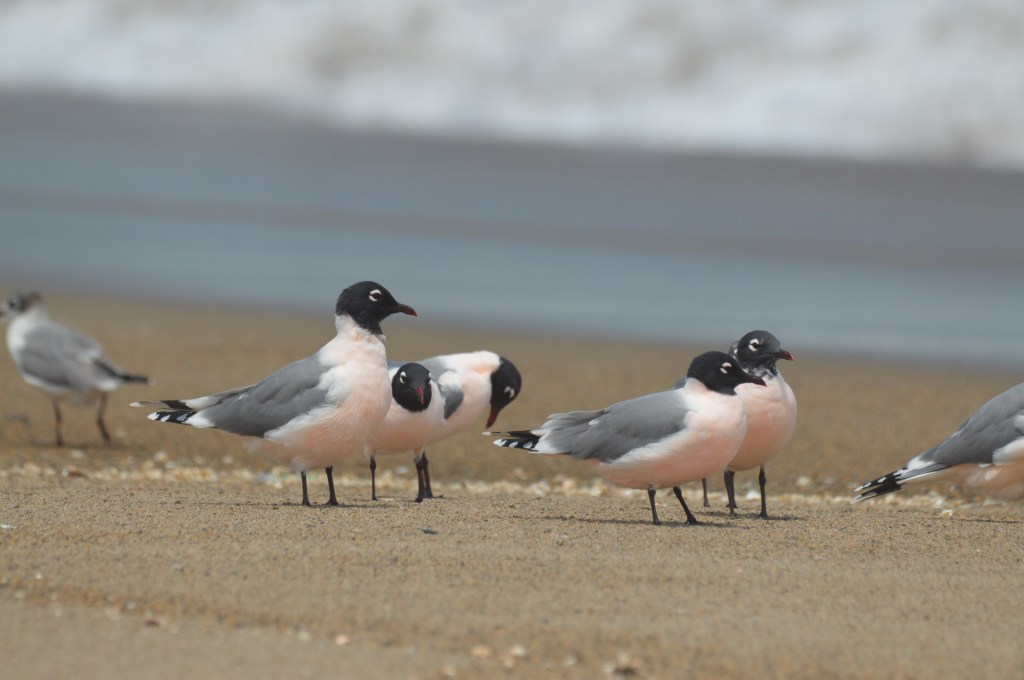
Out past the condominium is the Circuito de Maravilla, which – at the right time of year – hosts an enormous flock of Franklin’s Gulls, which come all the way down to Peru from their breeding grounds in the prairie lakes of central Canada and the Dakotas.
This was obviously the right time of year.
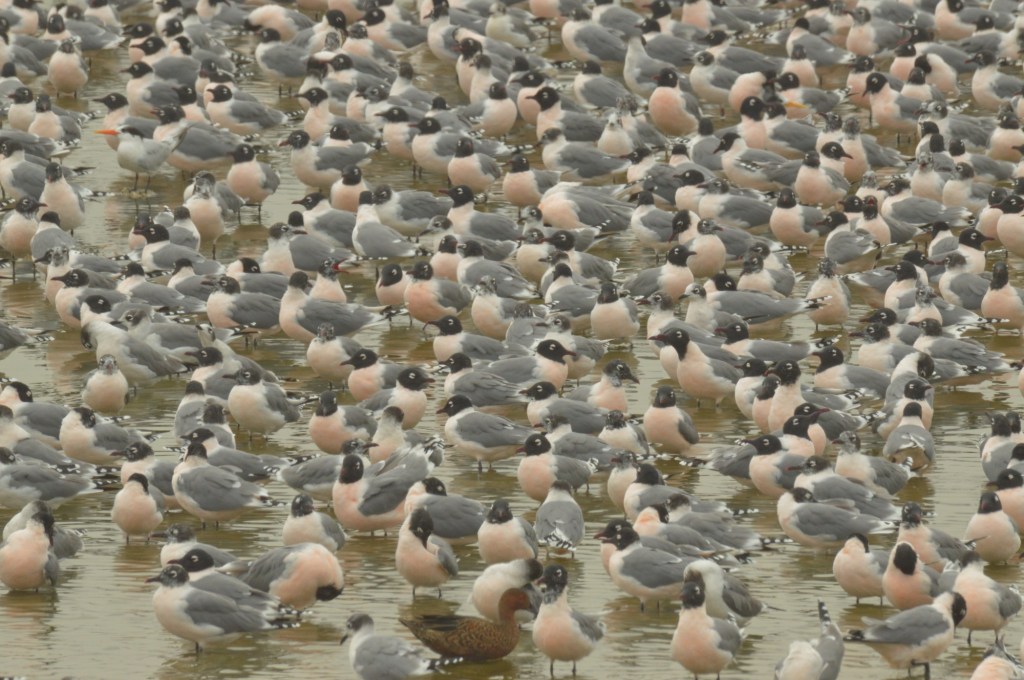
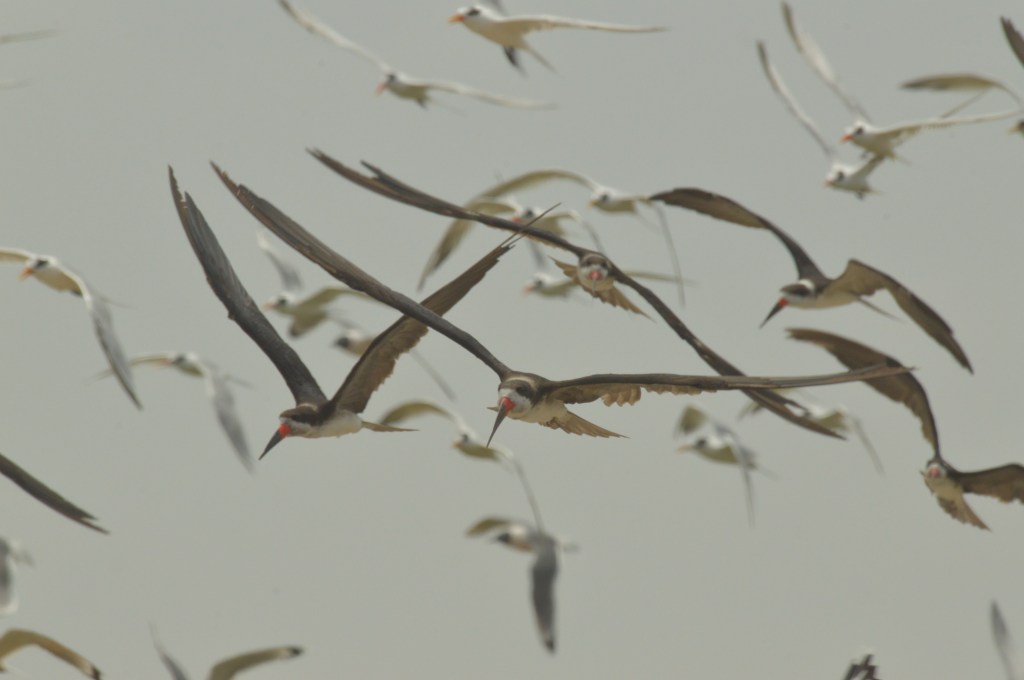
Hundreds of them had gathered at the lagoon, making ready to begin their 15,000 kilometre migration to their nesting grounds. Some were already sporting the handsome salmon pink chests and black hoods. They were joined by a huge flock of skimmers, a bizarre bird whose lower mandible is longer than its upper, so that it can skim the surface of the water to catch its prey.
Beyond the lagoon, however, is a sight even more impressive than anything I’d seen thus far. The Pacific.
If I’m mentioning it a lot, it’s because I’m bewitched. I’ve never seen or heard an ocean quite like it. It booms just like I’ve read about in books. Not the slow, salty roar of the Atlantic, but a genuine boom like a distant cannon. It has to be heard to be believed.
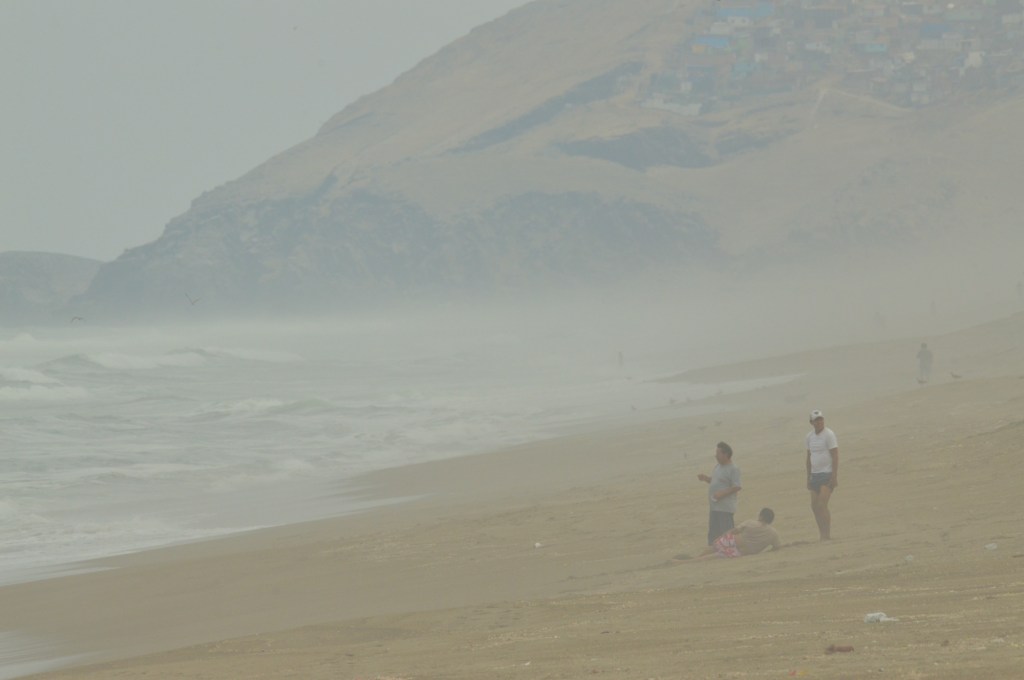
I had to sit and watch it for a while. I wasn’t the only one with that idea, either: I was joined in my vigil for most of the morning by a local man with a baseball cap and a Disney princess carrier bag. He simply stared out to sea for the best part of half an hour.
So did I. It’s nice to know I’m not the only one who can lose time just staring at the beauty of nature.
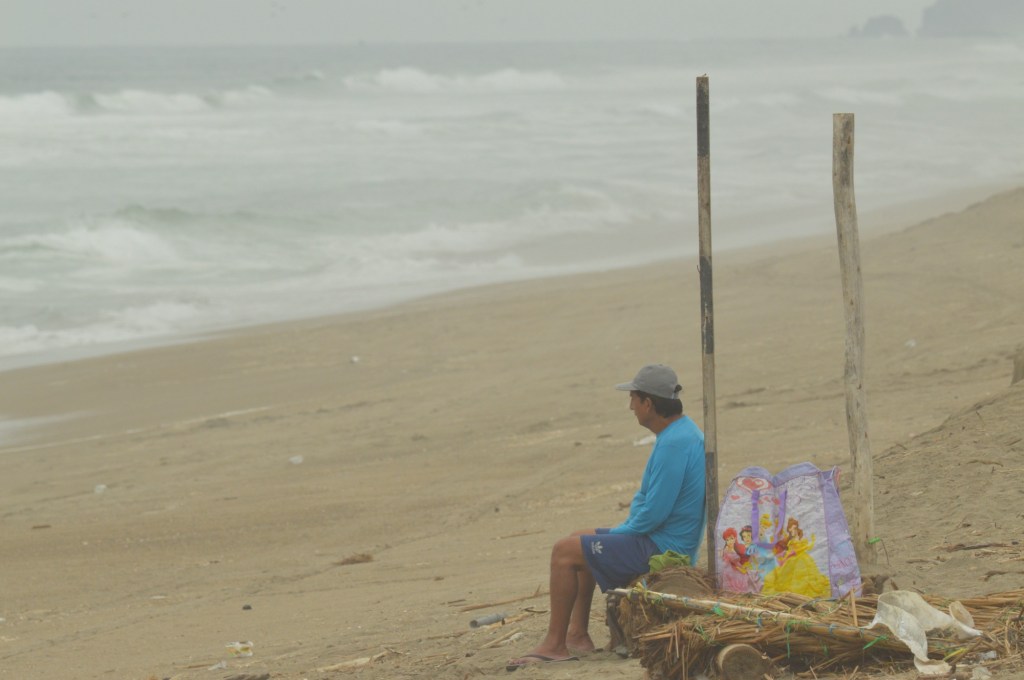
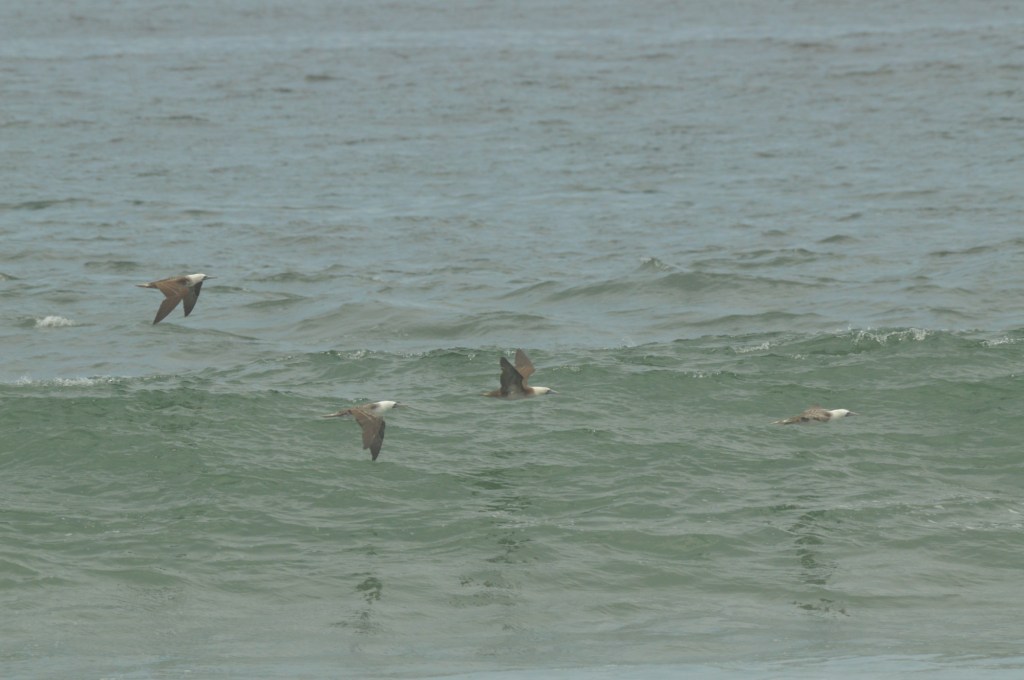
The Humboldt current which flows up the South American coast from Antarctica keeps the water cold – and extremely productive. This is one of the richest seas in the world, and you won’t be allowed to forget it for even a moment. Gulls, terns, cormorants, boobies, pelicans and an attendant host of shorebirds are constantly in sight. I suspect I’ll have better results at Paracas tomorrow.
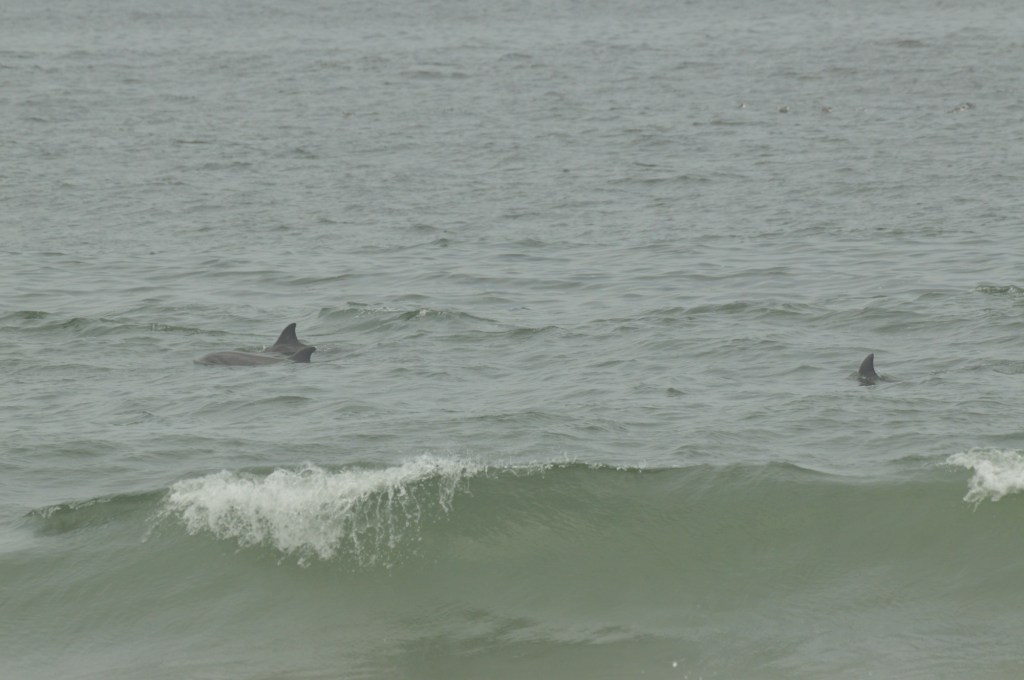
It wasn’t just birds, either. While I was scanning the open ocean from a washed-up palm stump, I saw something dark cresting the water, then another – and another. A whole family of dolphins were feeding just off the shore. They didn’t breach, but they stuck around long enough to count them: eight of them in all. And all because I stopped to watch the waves for a while.
The sun came out from behind the clouds around 12, at which point I thought it sensible to consider a retreat – the Peruvian sun can be a cruel god, and I hadn’t brought my sun lotion (I hadn’t expected to stay so long!). Some of the Franklin’s gulls came to say goodbye, looking even more smart in the sunlight.
I made it back to the shade of the Pántanos visitor centre and rested for a bit. I could have hailed an Uber there and then, but I wasn’t quite done with the wetlands, and when I saw a couple of visitors head into the reserve on their own, I followed suit.
No sign of the cuy, but while I was searching I saw something moving among the reeds. My buen augurio had come to see me off: a seven-coloured rush tyrant. It’s only a youngster, so it’s not as dashing as it will be in a year’s time, but that’s neither here nor there. Peruvians say they grant wishes. So I have made mine.
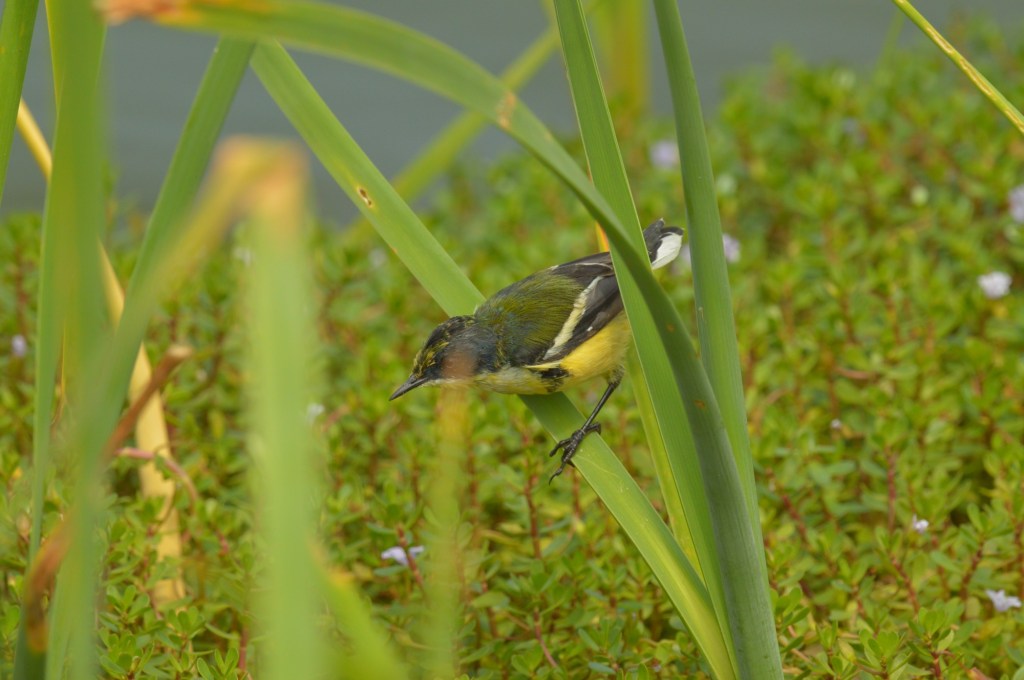
I could have included even more photos, but I’ll try to pace these posts – there’s simply too much to report, so I must be choosy!
I’m currently taking it easy back at the hostel. My camera definitely needs charging after a serious workout, as do my own batteries – and I could use a shower.
That’s enough work for the Nikon today, I think. I’ll switch things up tonight and explore the human side of Peru for a change! BB x
Notes, field guides and micro-memoirs
A Solo Travel and Literature Blog
All about trees
Barcelona · Spain · Food · Travel
A glimpse of the world through my lens
Synastry & Karmic Astrology
A Journey of Travels, Teachings, and Truths Told Plainly
Musings of a trekking author
Inspiration and Spirituality **Award Free**
Illustrations to make you smile, laugh, and sometimes make you see things from a different perspective 😉
a woman with wings travelling the world solo

