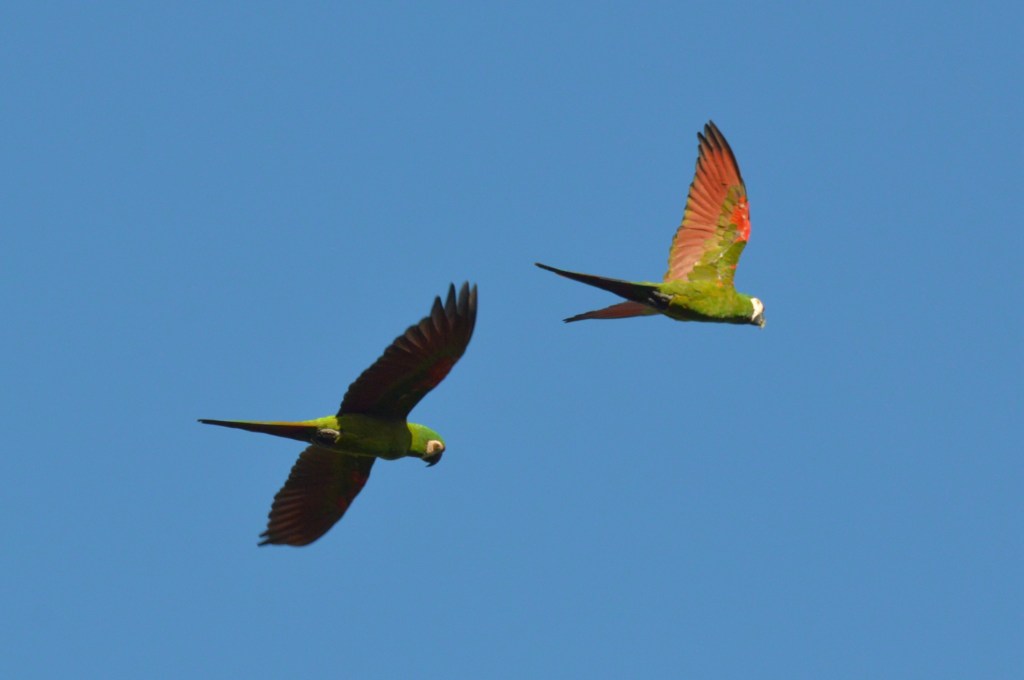
Casa Tunki, Cusco. 23.20.
I’m back in Cusco. Same hotel, same room, same bed, even. I’m not sure if that makes the return better or worse. It’s like I never left… and yet so much has happened in the last six days. Can it really be true that I was in the Amazon Rainforest for nearly a week? Did I really see giant otters, quetzals, caimans and tapirs, or did I just dream it all?
In case you hadn’t picked it up already, I’m feeling genuinely quite sad. I’ve not had that feeling about leaving a place behind for a long time. It’s probably a combination of fatigue, consecutive 4.30am starts and extremely busy days, coupled with a legion of mosquito bites (the damned things seemed immune to even the highest factor DEET), but I imagine tangled up in all of that physical strain is also a genuine sense of loss.
I have never been to a place like Manu before. Where there are so many species of animal all around you all the time that you can barely keep track. Doñana comes close, but Doñana is relatively accessible. Bus timings aside, I could reach El Rocío within twenty-four hours of leaving my front door in England. Manu lies on the other side of the world and beyond: a full two to three days’ ride by boat and car from Cusco, over the Andes and far along the Madre de Diós River.
I will leave Peru in a few days’ time knowing I have seen and done all I came to see and do. I will be happy about that. But there is a Manu-sized hole in my heart. i didn’t feel this way about Bwindi, or Queen Elizabeth National Park, or Białowieza Forest. But I feel it here. I cannot explain why it affects me so. But it has.
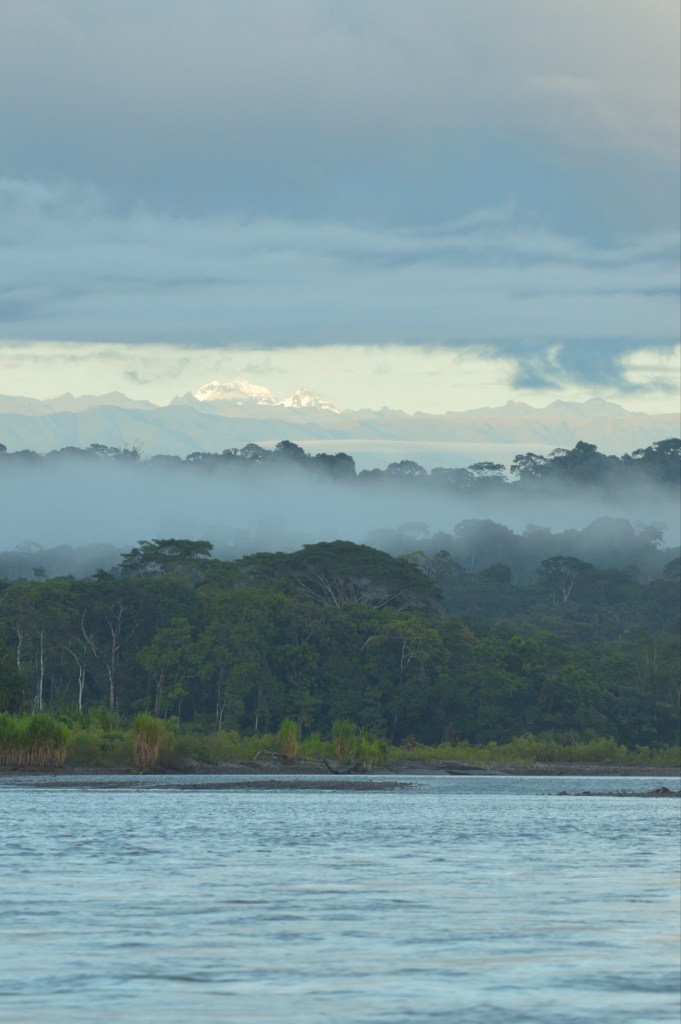
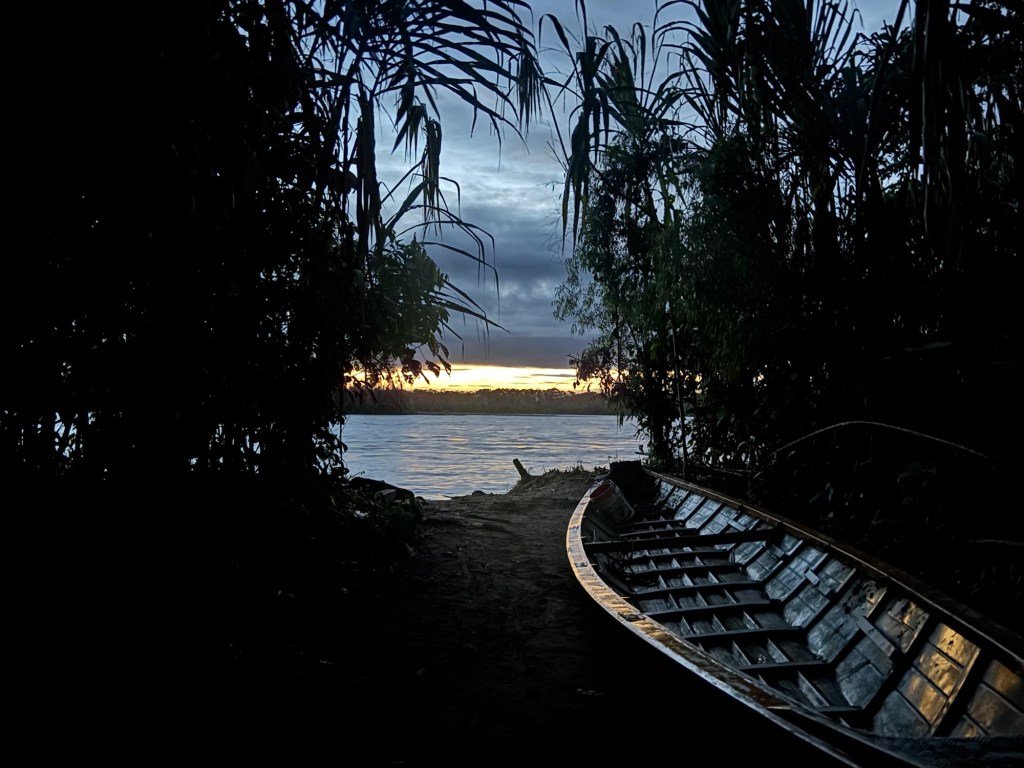
We left Bonanza Lodge at daybreak. The fishing boat was where we had left it the night before, cleaned of all the silt and stones and shining in the sunlight. Our boat was moored a little way downriver – we had to move it to give ourselves space to haul the skiff out of the water last night.
I dozed on and off during the four hour journey to Atalaya. We stopped a couple of times at sandbars for loo breaks. The weather could hardly have been better, and the river had shrunk considerably, creating islands where there had been none before. My only regret with Manu is that we had not set out on a day like today. The things we might have seen!
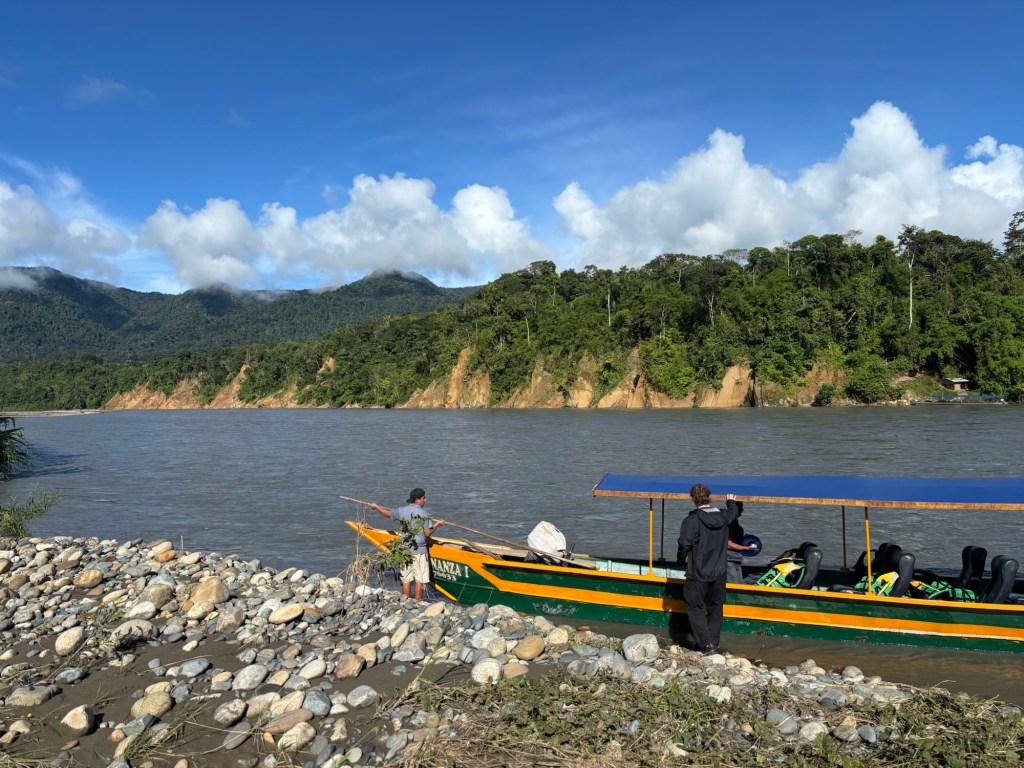
We got to Atalaya Port just after nine, where we encountered a couple of other tour groups: one headed into Manu, the other headed back to Cusco (a three-day variant). Quite what they expected to see or achieve in three days when it takes at least one and a half to reach the park is beyond me, though perhaps they came for the hot springs. The bunch of loutish English fellas who got off their tour bus and went straight to the bar to buy booze and cigarettes gave a strong indication that they had not come all the way out here to see cocoi herons and black-faced antthrushes.
We said goodbye to our captain Felipe and his boat boy, Hugh, sending them off with tips for their service. I noticed that Felipe cut the motor every time he saw me angle my lens at something while we were out on the river. I almost stopped shooting because of that, so as not to inconvenience the others, but in my heart I was extremely grateful for his charity.
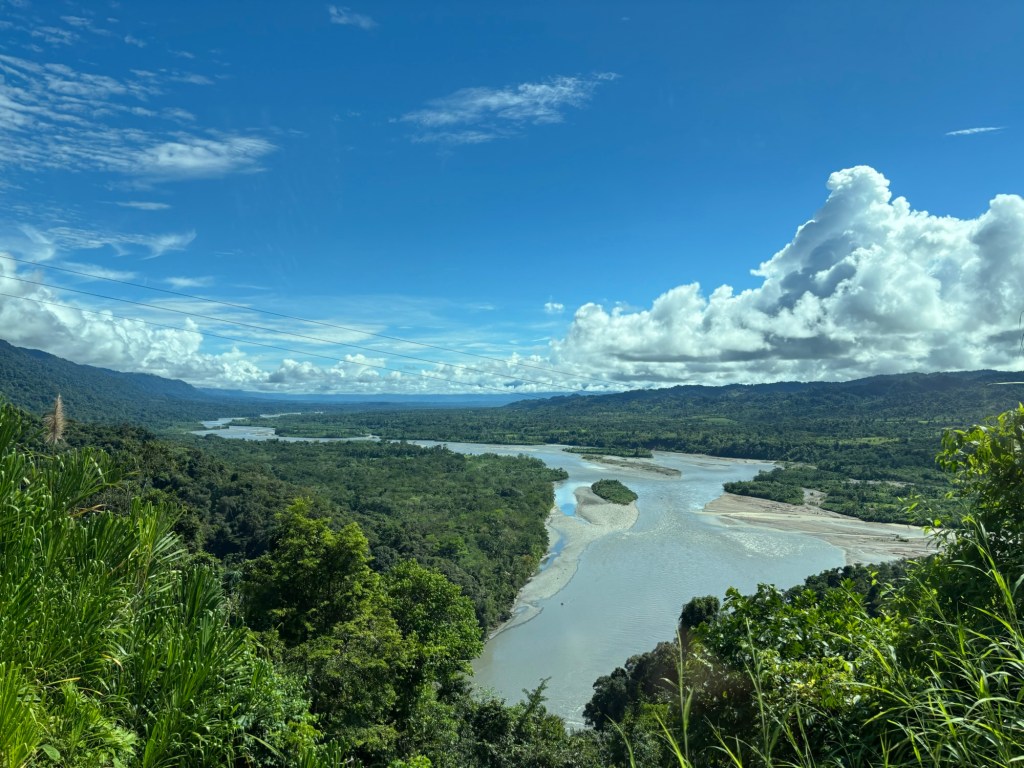
We saw the Río Madre de Diós one last time from the mirador where we had stood a few days ago, on a far wetter and cloudier day, before it vanished behind the trees, out of sight and out of mind, but not out of memory.
Having climbed steadily for most of the morning, the road from Atalaya forks sharply up into the cloud forests that mark the edge of the Andes. We stopped for lunch at a spot halfway up to Acjanaco (the pass over the mountains) where Rive had wanted to pause on the way down, only it had been raining hard then. Now, the sun was shining, so we could enjoy a short hike to see the twin waterfalls of Pachayoq – which may mean “master of the earth” in Quechua, if my work on piecing together their various suffixes is correct.
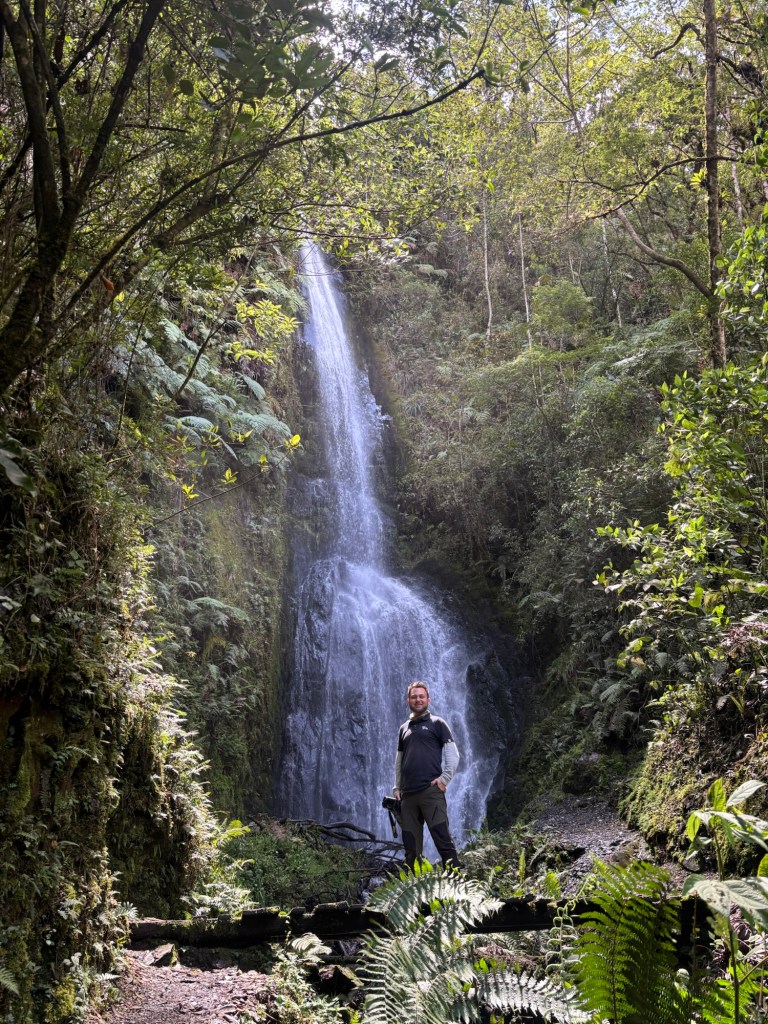
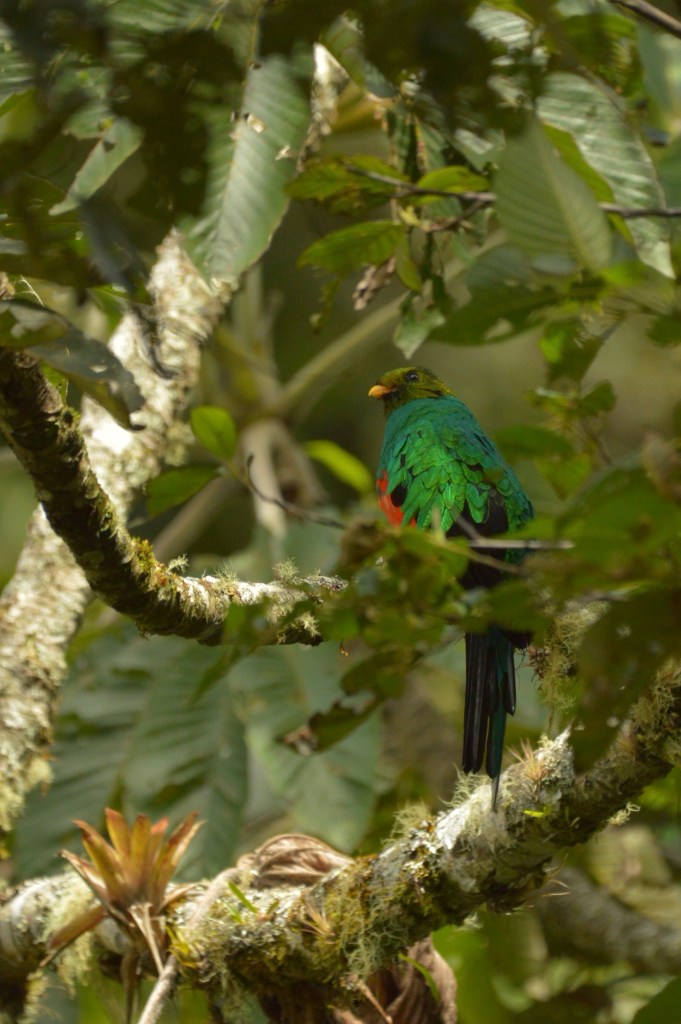
I guess I dawdled, because by the time I came down, the others had vanished. Rive too – but I soon realised where they had gone when I heard him whistle for my attention. They had gone up the road on Rive’s command, as he had found the thing he had brought us here for in the first place: not lunch, not waterfalls, but the real gem of the cloud forest: a quetzal.
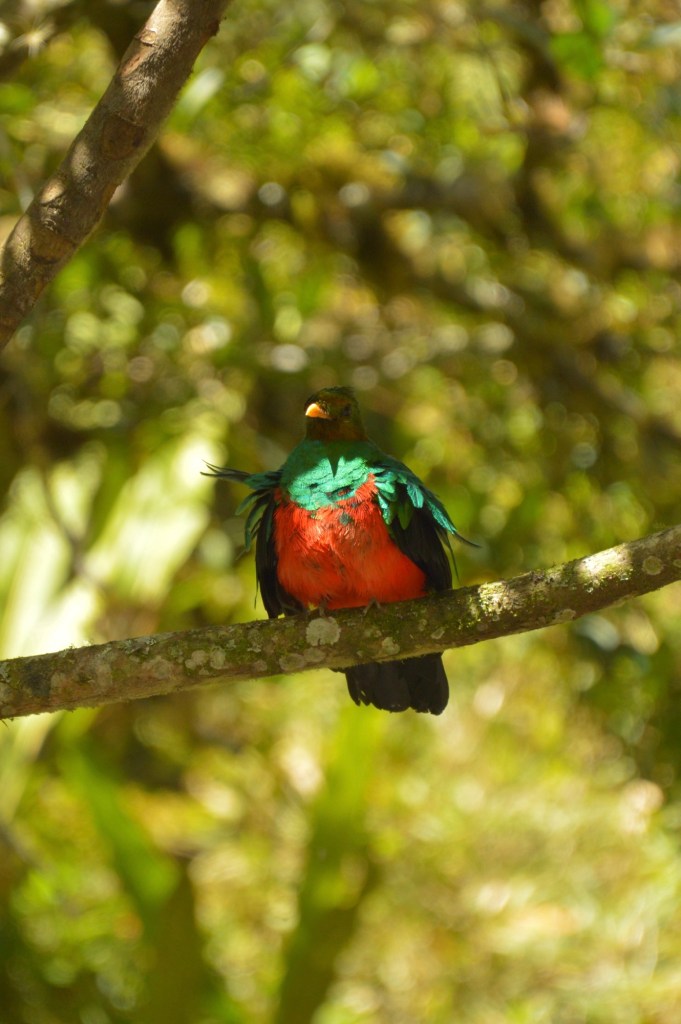
Like the hoatzin, the quetzal is a bird whose name originated in the Nahuatl language of pre-Colombian Mexico. There, they were highly prized by both the Aztec and the Mayans for their spectacular green feathers. Moctezuma, one of the last Aztec emperors, had a headdress made up of more than four hundred.
Here in Peru, however, they are a shy bird of the cloud forests, and eagerly sought after by all the tour groups who pass this way. Lucky for us, Rive knew exactly where to look.
It would be the last wild encounter of the tour – and what an incredible find to end the trip. Certainly a lot more than “just another bird – like we haven’t seen enough already”, as the English louts from Atalaya brayed aloud over our shoulders while waiting for their cook to set the table.
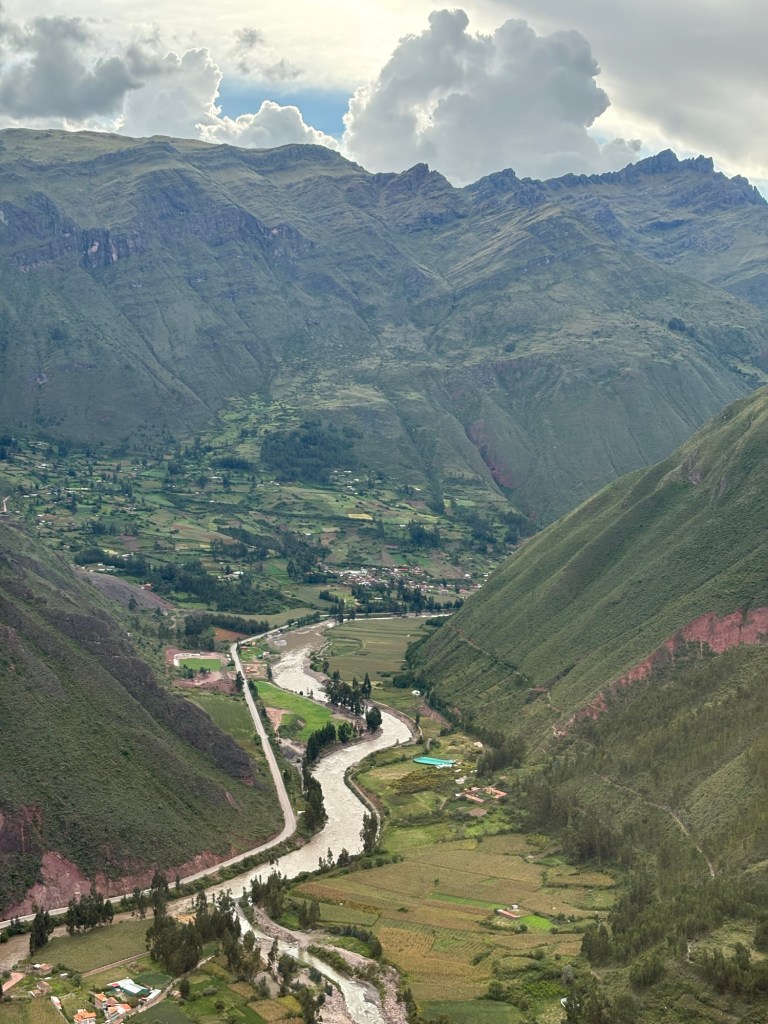
After Acjanaco, the scenery changes instantly. The endless rainforest is gone. The slopes on the south side of the Andes are comparatively naked, marked by a few terraces and patches of eucalyptus trees. It is still beautiful – far more impressive than anything in Somerset – but it is not Manu.
I will recover from this maudlin reverie, I promise. But it does feel a little like saying goodbye to a lover who you fear you may never see again. I will simply have to make sure that is not the case. I’m stubborn like that.
We reached Cusco shortly after five – an impressively swift journey, considering twelve hours prior we had been deep in the rainforest on the other side of the mountains. Our driver Ale dropped us off one by one: first Jace, the Danish girls Katrin and Isabella and our guide Rive; then the German couple, Vera and Robert; and then me. I said a fond farewell to our chef Bernadino, who has been the beating heart of this expedition, never deprived of his enormous smile. I will miss that man – and not just because of his sumptuous cooking.
Farewell, Manu. It has been an honour. Tomorrow, I will head to Ollantaytambo, the last stage of my journey, for a few days of peace and quiet in the Sacred Valley. Between my work snapping away for all of six days and our exertions salvaging the boat yesterday, I think I have earned them. BB x