Paradise Lost

Casa Tunki, Cusco. 23.20.

I’m back in Cusco. Same hotel, same room, same bed, even. I’m not sure if that makes the return better or worse. It’s like I never left… and yet so much has happened in the last six days. Can it really be true that I was in the Amazon Rainforest for nearly a week? Did I really see giant otters, quetzals, caimans and tapirs, or did I just dream it all?

In case you hadn’t picked it up already, I’m feeling genuinely quite sad. I’ve not had that feeling about leaving a place behind for a long time. It’s probably a combination of fatigue, consecutive 4.30am starts and extremely busy days, coupled with a legion of mosquito bites (the damned things seemed immune to even the highest factor DEET), but I imagine tangled up in all of that physical strain is also a genuine sense of loss.

I have never been to a place like Manu before. Where there are so many species of animal all around you all the time that you can barely keep track. Doñana comes close, but Doñana is relatively accessible. Bus timings aside, I could reach El Rocío within twenty-four hours of leaving my front door in England. Manu lies on the other side of the world and beyond: a full two to three days’ ride by boat and car from Cusco, over the Andes and far along the Madre de Diós River.

I will leave Peru in a few days’ time knowing I have seen and done all I came to see and do. I will be happy about that. But there is a Manu-sized hole in my heart. i didn’t feel this way about Bwindi, or Queen Elizabeth National Park, or Białowieza Forest. But I feel it here. I cannot explain why it affects me so. But it has.
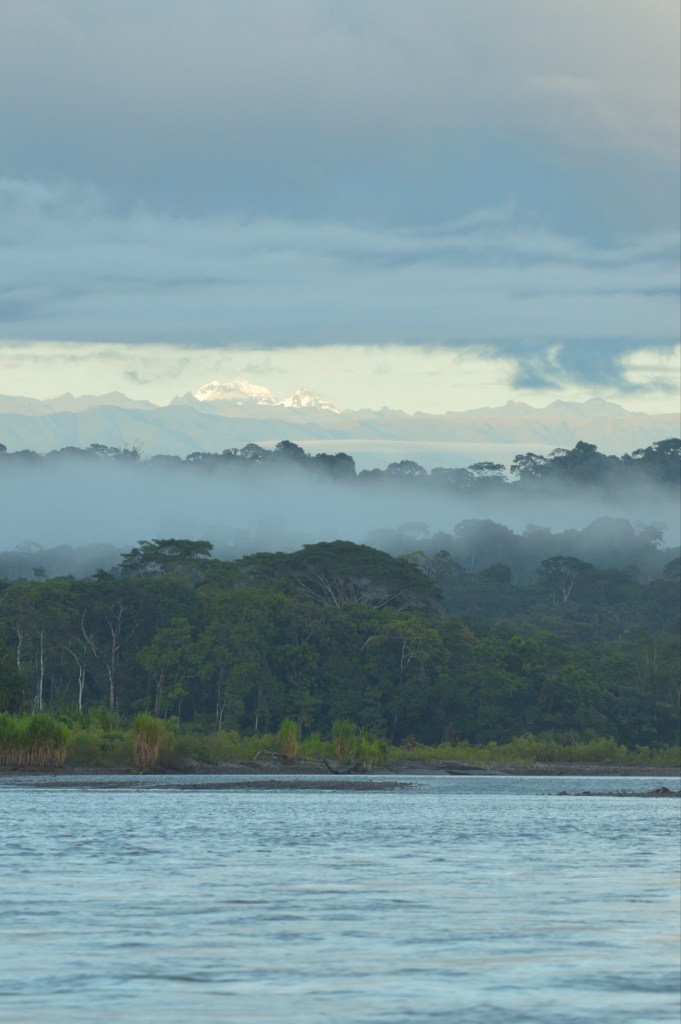

We left Bonanza Lodge at daybreak. The fishing boat was where we had left it the night before, cleaned of all the silt and stones and shining in the sunlight. Our boat was moored a little way downriver – we had to move it to give ourselves space to haul the skiff out of the water last night.
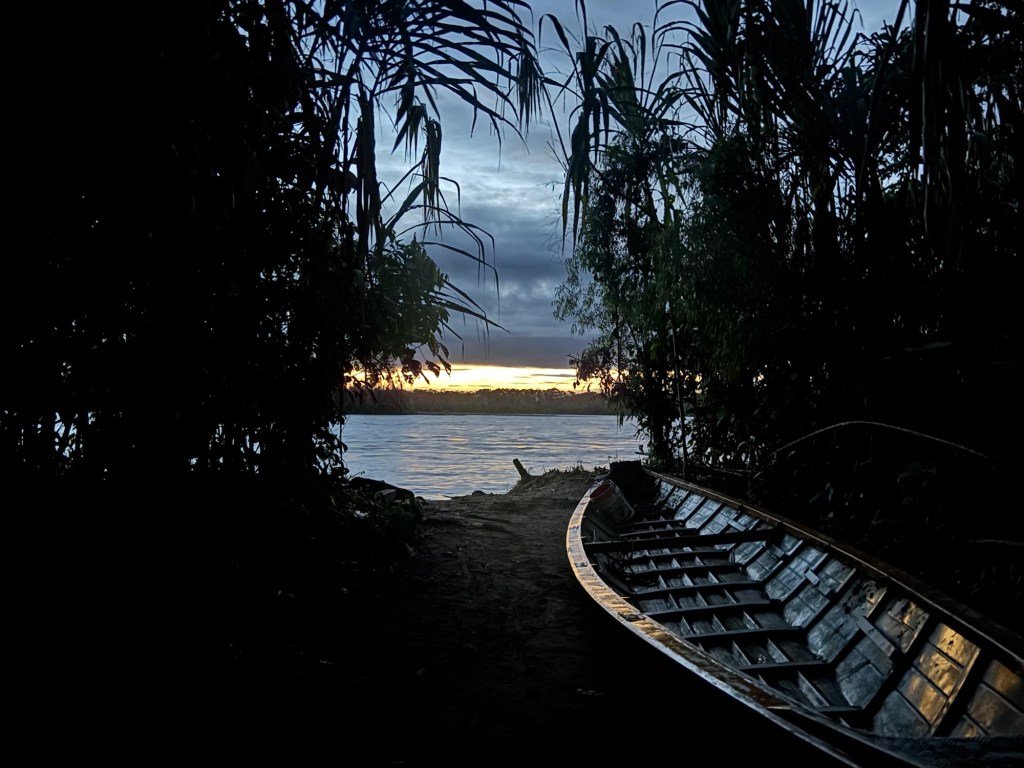

I dozed on and off during the four hour journey to Atalaya. We stopped a couple of times at sandbars for loo breaks. The weather could hardly have been better, and the river had shrunk considerably, creating islands where there had been none before. My only regret with Manu is that we had not set out on a day like today. The things we might have seen!
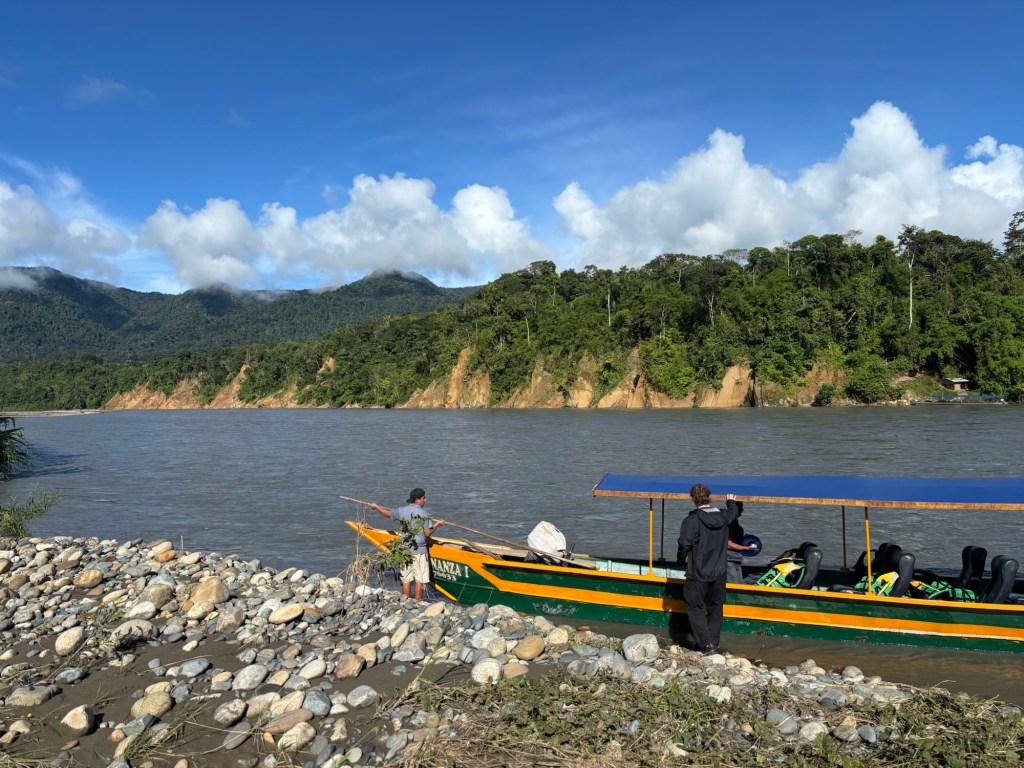

We got to Atalaya Port just after nine, where we encountered a couple of other tour groups: one headed into Manu, the other headed back to Cusco (a three-day variant). Quite what they expected to see or achieve in three days when it takes at least one and a half to reach the park is beyond me, though perhaps they came for the hot springs. The bunch of loutish English fellas who got off their tour bus and went straight to the bar to buy booze and cigarettes gave a strong indication that they had not come all the way out here to see cocoi herons and black-faced antthrushes.

We said goodbye to our captain Felipe and his boat boy, Hugh, sending them off with tips for their service. I noticed that Felipe cut the motor every time he saw me angle my lens at something while we were out on the river. I almost stopped shooting because of that, so as not to inconvenience the others, but in my heart I was extremely grateful for his charity.

We saw the Río Madre de Diós one last time from the mirador where we had stood a few days ago, on a far wetter and cloudier day, before it vanished behind the trees, out of sight and out of mind, but not out of memory.
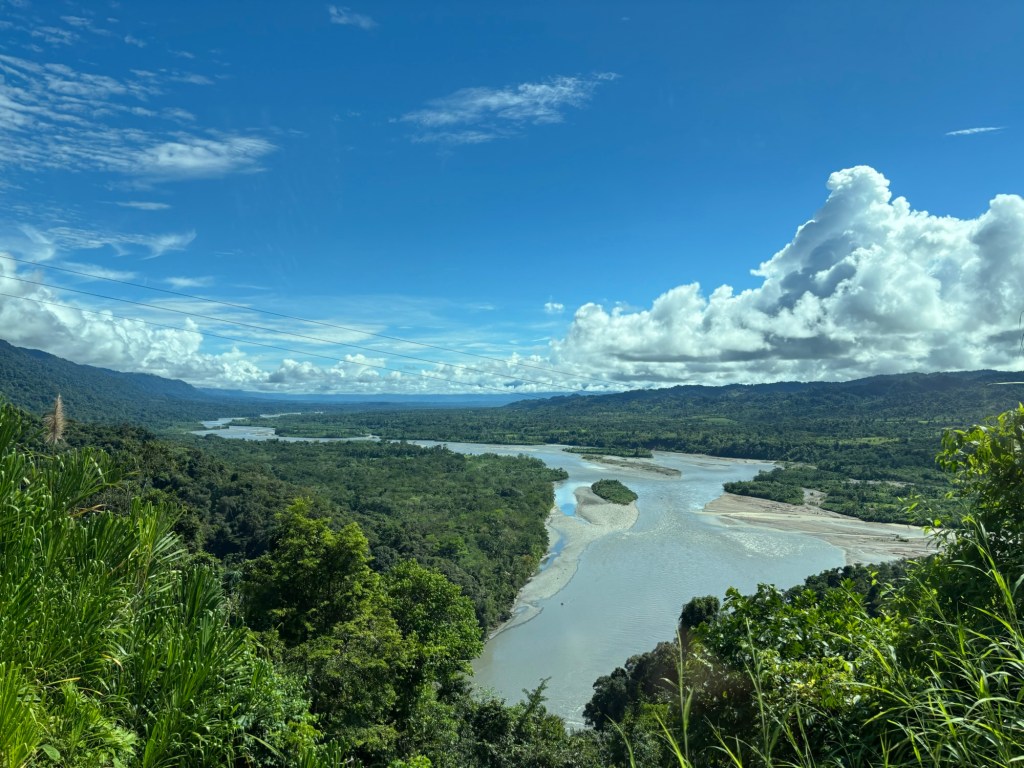

Having climbed steadily for most of the morning, the road from Atalaya forks sharply up into the cloud forests that mark the edge of the Andes. We stopped for lunch at a spot halfway up to Acjanaco (the pass over the mountains) where Rive had wanted to pause on the way down, only it had been raining hard then. Now, the sun was shining, so we could enjoy a short hike to see the twin waterfalls of Pachayoq – which may mean “master of the earth” in Quechua, if my work on piecing together their various suffixes is correct.
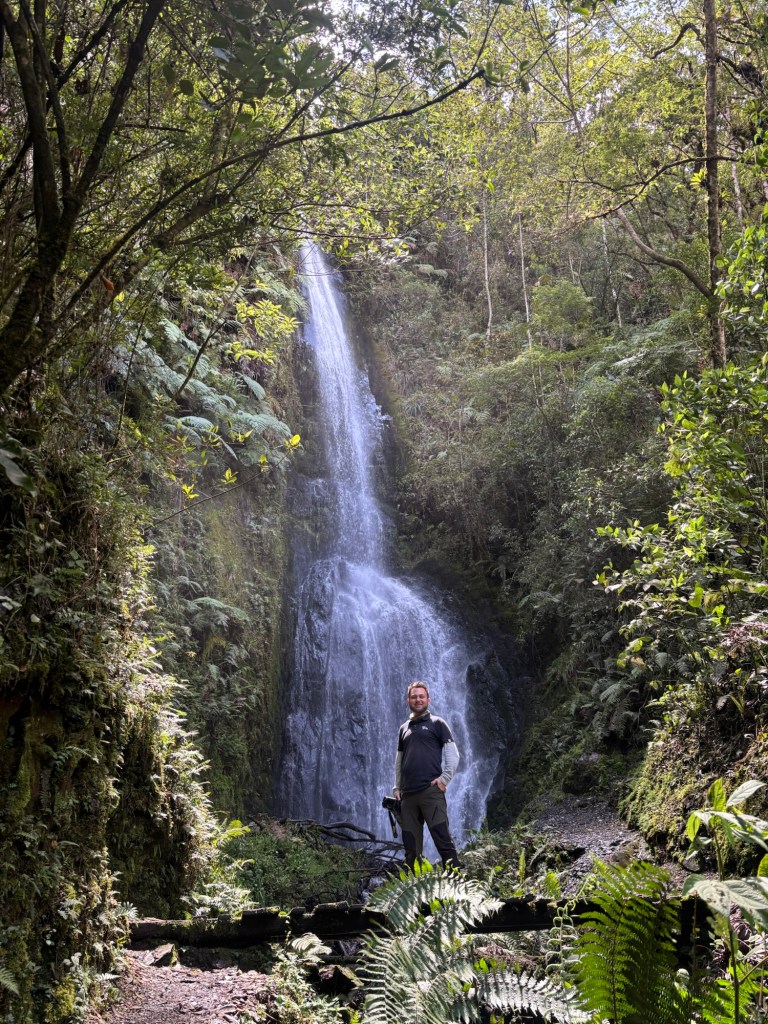

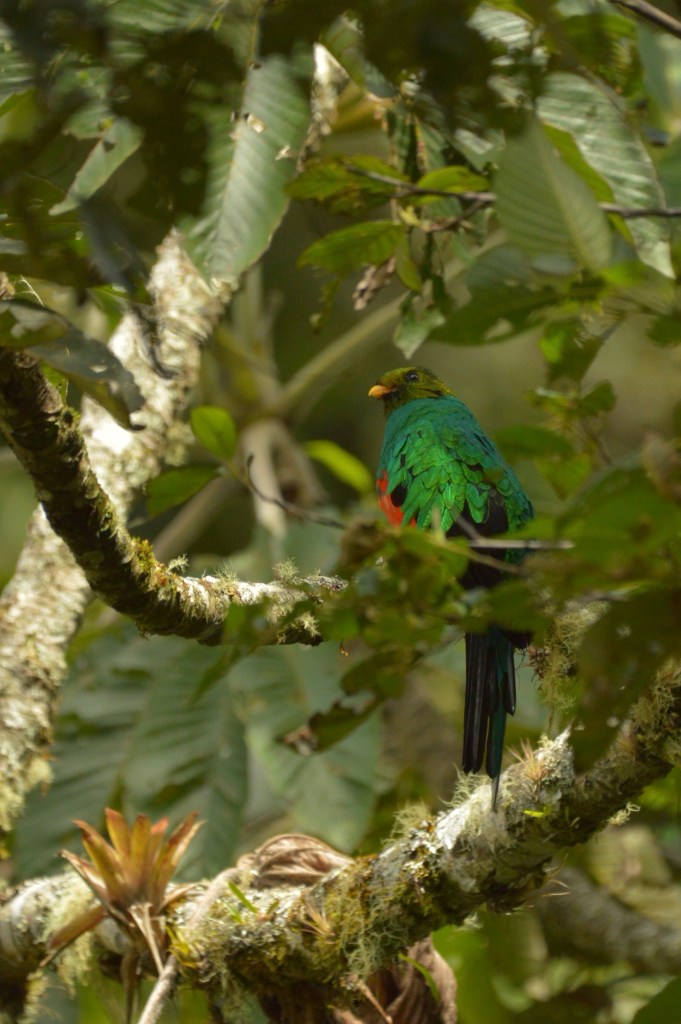
I guess I dawdled, because by the time I came down, the others had vanished. Rive too – but I soon realised where they had gone when I heard him whistle for my attention. They had gone up the road on Rive’s command, as he had found the thing he had brought us here for in the first place: not lunch, not waterfalls, but the real gem of the cloud forest: a quetzal.
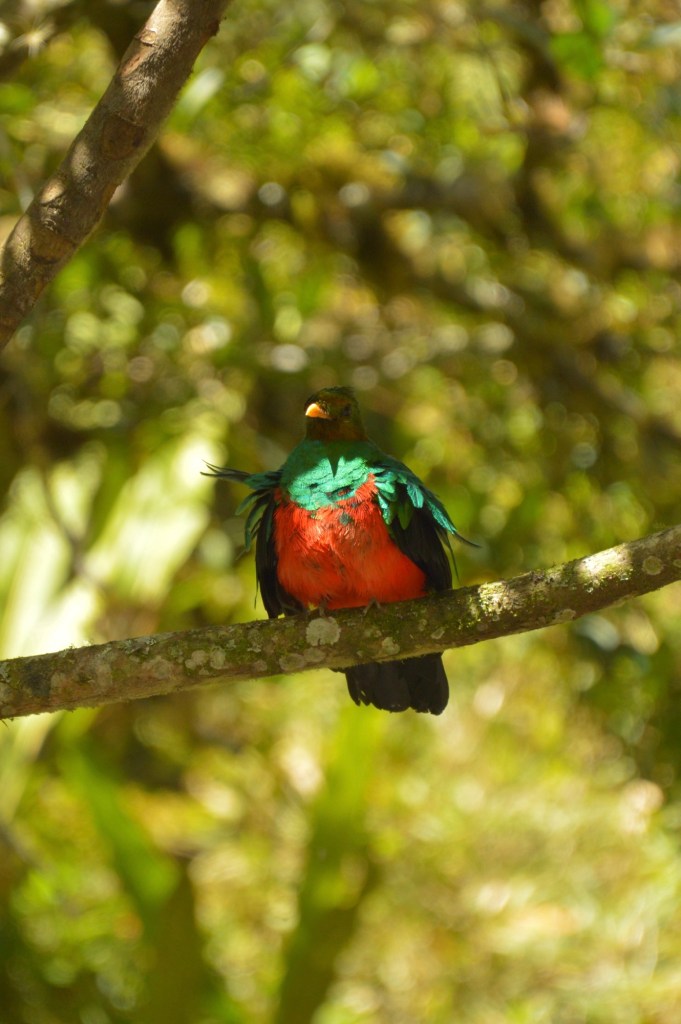

Like the hoatzin, the quetzal is a bird whose name originated in the Nahuatl language of pre-Colombian Mexico. There, they were highly prized by both the Aztec and the Mayans for their spectacular green feathers. Moctezuma, one of the last Aztec emperors, had a headdress made up of more than four hundred.

Here in Peru, however, they are a shy bird of the cloud forests, and eagerly sought after by all the tour groups who pass this way. Lucky for us, Rive knew exactly where to look.

It would be the last wild encounter of the tour – and what an incredible find to end the trip. Certainly a lot more than “just another bird – like we haven’t seen enough already”, as the English louts from Atalaya brayed aloud over our shoulders while waiting for their cook to set the table.

After Acjanaco, the scenery changes instantly. The endless rainforest is gone. The slopes on the south side of the Andes are comparatively naked, marked by a few terraces and patches of eucalyptus trees. It is still beautiful – far more impressive than anything in Somerset – but it is not Manu.

I will recover from this maudlin reverie, I promise. But it does feel a little like saying goodbye to a lover who you fear you may never see again. I will simply have to make sure that is not the case. I’m stubborn like that.
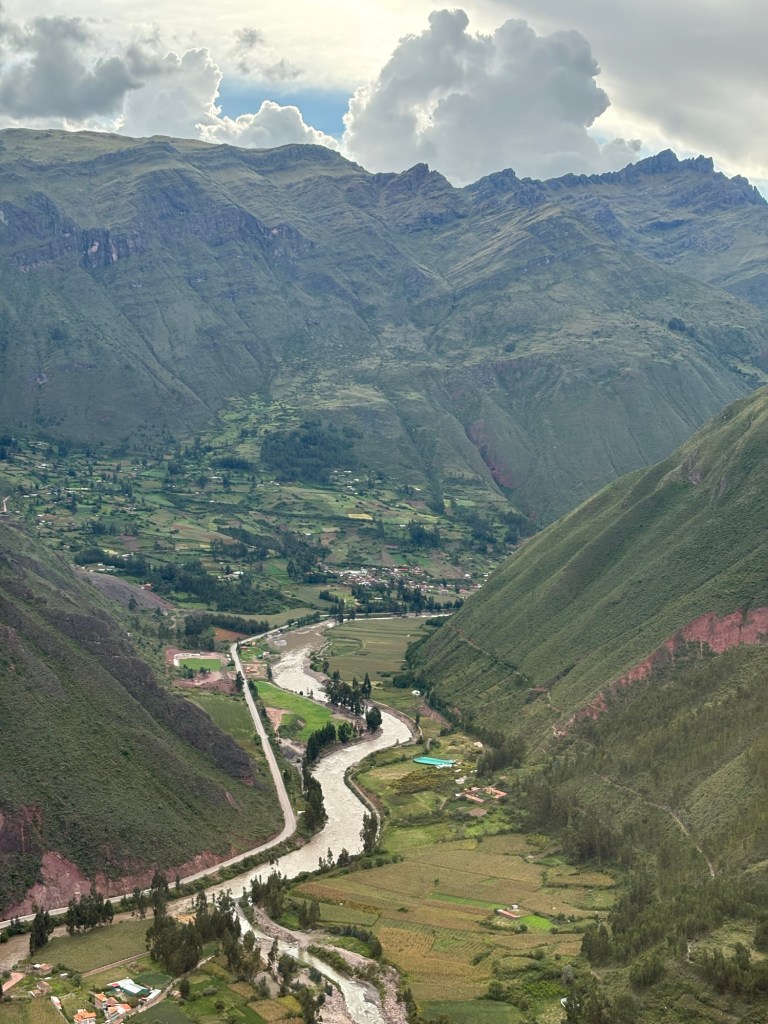

We reached Cusco shortly after five – an impressively swift journey, considering twelve hours prior we had been deep in the rainforest on the other side of the mountains. Our driver Ale dropped us off one by one: first Jace, the Danish girls Katrin and Isabella and our guide Rive; then the German couple, Vera and Robert; and then me. I said a fond farewell to our chef Bernadino, who has been the beating heart of this expedition, never deprived of his enormous smile. I will miss that man – and not just because of his sumptuous cooking.

Farewell, Manu. It has been an honour. Tomorrow, I will head to Ollantaytambo, the last stage of my journey, for a few days of peace and quiet in the Sacred Valley. Between my work snapping away for all of six days and our exertions salvaging the boat yesterday, I think I have earned them. BB x
The Drums of War

Casa Tunki, Cusco. 14.12.

I can’t believe what I’m seeing in the news today. It’s like the world is going to Hell. Here in Cusco, you’d never know there was a terrible war taking place far away, over the mountains, across the ocean and the great sea of sand. Trump might have a habit of talking big game, but he is backed by the mightiest nation on the planet. I fear for the people of Iran.

As if I didn’t already feel cut off from everything that is going on, I am about to go off grid for six whole days. I don’t imagine there’s much signal in the Amazon rainforest, and I would rather not use up my phone battery trying to find out. During that time, Peru will elect its next president and Trump’s deal with have to be met – or else.

Once again, I find myself wondering with no small amount of irony that the most dangerous stretch of my South American adventure will be the layover in New York.


But isn’t that what this was all about? To get away from it all for a bit – from work, from loneliness, from the depressing chaos of global politics?

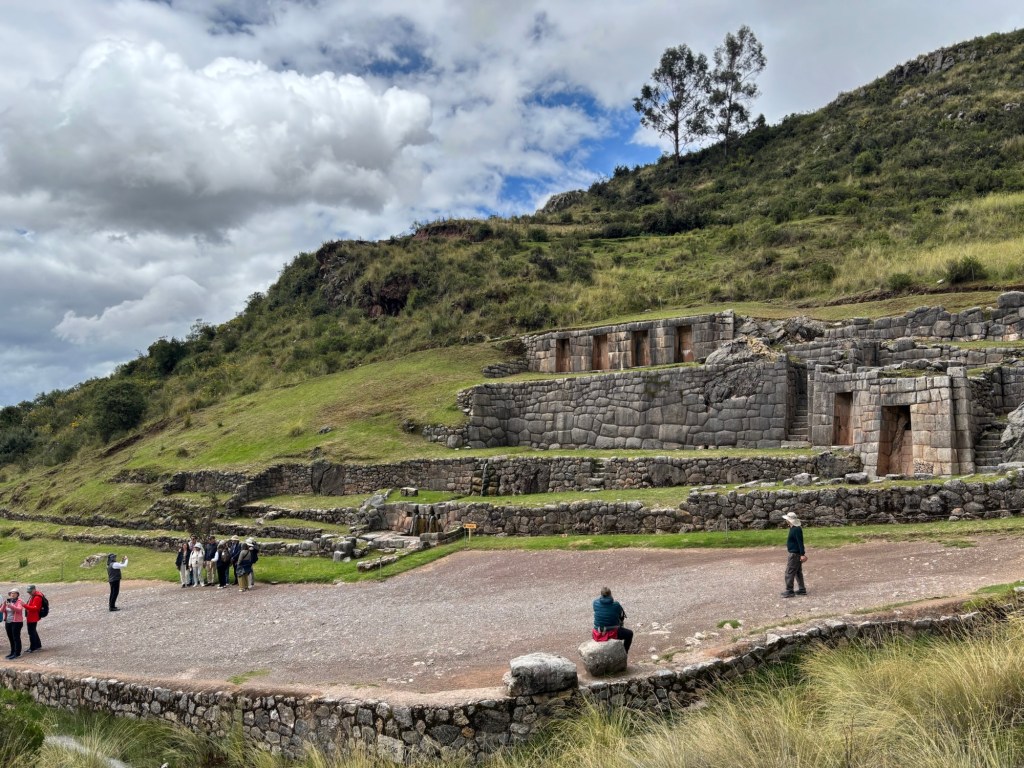
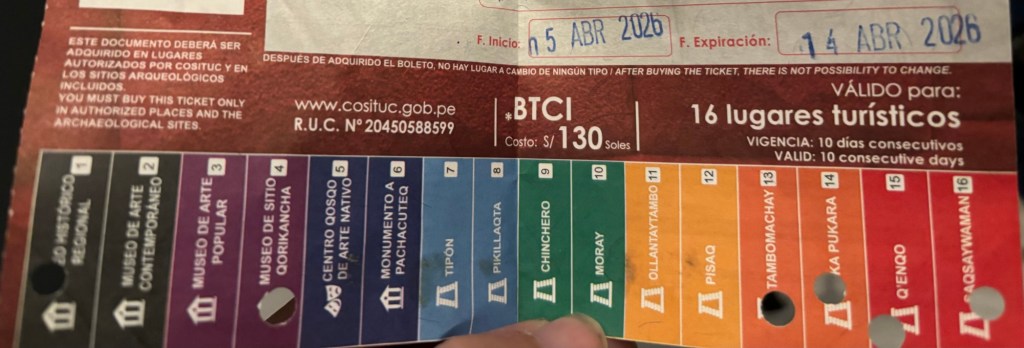
Having bought the boleto turístico, and with one day more in Cusco than I’d originally planned, I decided to go all in. 130 soles for 16 sites may sound good, but at 20 soles each, the average traveler is more likely to save money by paying at each site. Some are far away, like Tipón and Pikillaqta, four are in the Sacred Valley, one of them is in the middle of a roundabout in one of the busiest streets of downtown Cusco and two of them are art galleries.

However – I bought the ten day pass, so now I have to get my money’s worth. Tipón and Pikillaqta are too far away to be reached without hiring a guide and a vehicle, but I reckon I can do everything else on this ticket. At least now it feels like a proper challenge!


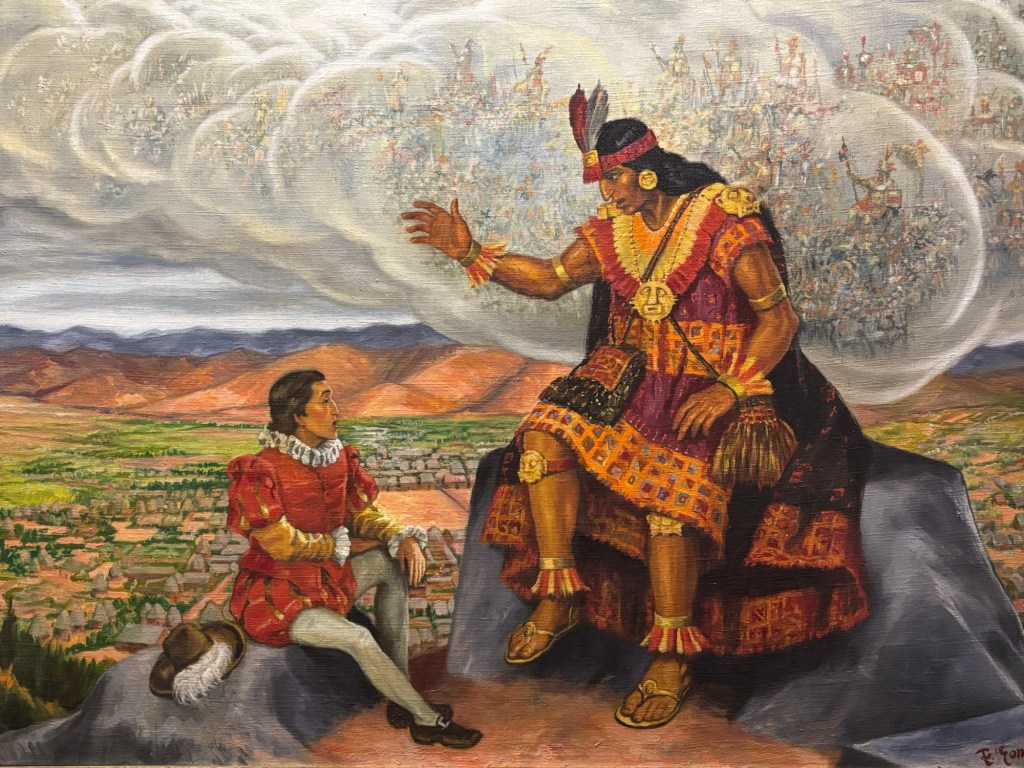
With Sacsayhuamán already achieved, first on my list was the Museo Histórico Regional. It’s worth visiting solely because it was the house of the incredible Inca Garcilaso de la Vega, a 16th century Peruvian nobleman for whom the expression “main character energy” might have been coined. Though Spanish by birthright, he was also the great-grandson of the Inca Huayna Capac, one of the last rulers of the Inca Empire known as the Tahuantinsuyo. Raised primarily by his Inca mother and uncle, he developed a profound admiration for his heritage and, assisted by the lavish education his Spanish father provided for him, he became the first great writer of the Americas. At 21, he left Peru for Spain, fought for the Crown in the Morisco Rebellion, and published many books about his native land and its people.

Understandably, El Inca is venerated here in Peru as both a defender of the native people and one of Cusco’s most illustrious native sons, whose works were influential for many famous statesmen and philosophers.


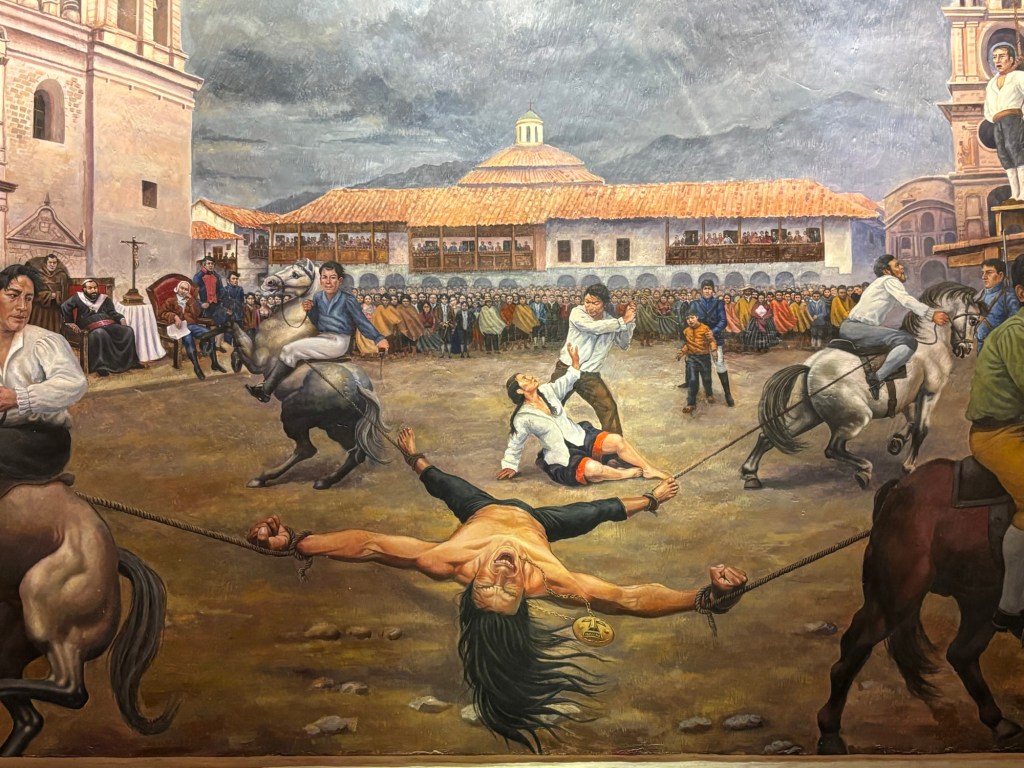
Another of Cusco’s greatest heroes is Tupac Amaru II, also of royal descent, who started a rebellion against the Spanish after witnessing multiple abuses of power at the expense of the indigenous peoples of Peru through his work as a muleteer. Unlike El Inca Garcilaso de la Vega, however, Tupac Amaru met a grisly end, torn apart in a public execution in Cusco’s Plaza Mayor as a punishment for his resistance.

It’s worth noting that Tupac Amaru II was the first public figure to abolish the slavery of Black people in the Spanish Americas. Perhaps that’s one of the reasons why Afeni Shakur decided to give her son the name of this legendary figurehead of indigenous resistance, knowing that such a powerful name could only inspire the young 2Pac to great things.


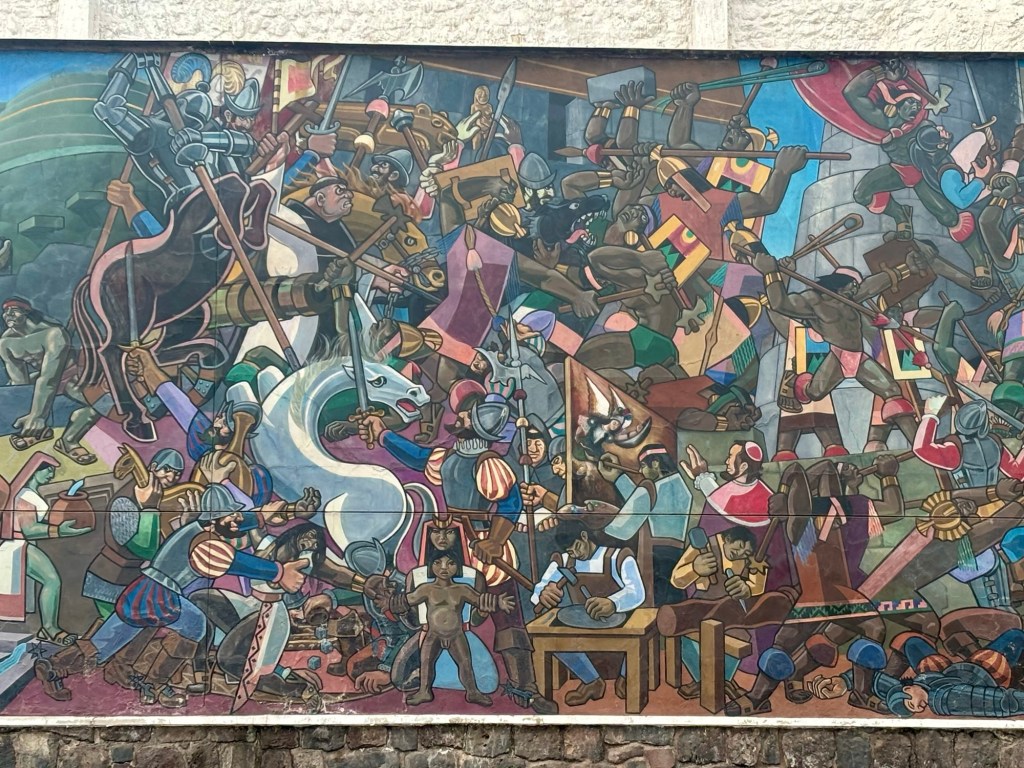
While it’s not on the list, I had to head downtown to find the enormous mural I’d seen on my way into town on my first night. I love a mural, especially when it tells a story, and one day I’d love to see Diego Rivera’s historical paintings in Mexico City. But for now, Cusco has its own retelling of the history of its people.

There are just so many details to pick up. The way the Spanish soldiers merge with the bodies of their horses, like centaurs, in imitation of the confusion the mounted soldiers caused among the natives, who had never seen a horse before. The war dog held on a chain by a Cistercian monk. The conquistadors gambling with dice over their stolen gold. The indigenous painter portraying the scene as a righteous conquest aided by a winged Santiago, under the instruction of a Spanish cleric. The bolas weapons of the Inca and the Spanish cannon.

You could read a hundred accounts of the Spanish conquest of Peru and still learn more from a painting like this.


This morning, I ticked off another two on the list: Puka Pukara, the Red Fort, and Tambomachay, the Resting Place. You’ll be offered a visit to these by any of the guides hanging around Sacsayhuamán, and they’re well served by the white servicio turístico vans – but, me being me, I decided to walk there.

It’s not that far. Tambomachay, the further of the two, is about an hour and a half from the centre of Cusco. It is mostly uphill, however, and I was lucky the weather was on my side: be it a favour of the Lady of the Marshes or no, I was protected from the sun by a merciful cover of cloud all the way there and back. I had my rosary on as I often do when I’m not sure if the road is safe or not, so I’ll chalk it up to a little divine intervention.

Even on foot, I still got there before the bulk of the morning’s tourist traffic arrived. It was worth the hike – steep though it was – to see a part of Cusco that I might otherwise have missed.


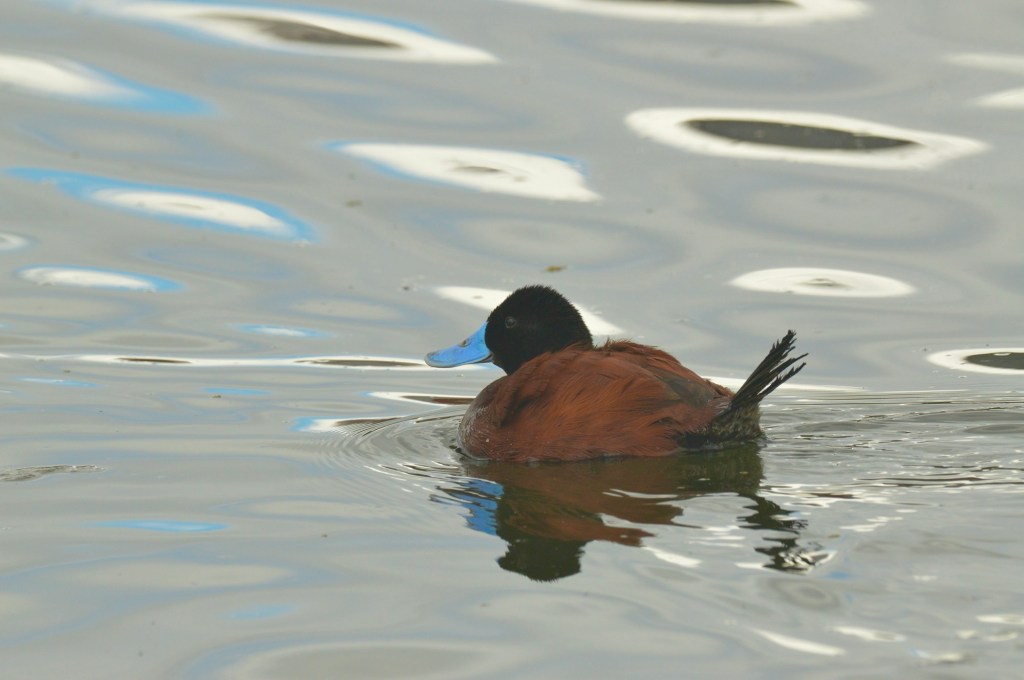
It also gave me the chance to check out Huayllarqocha’s small wetland reserve, which will have to be my substitution for Huacarpay. I didn’t see any of the grebes that supposedly live here, but I did see an Andean flicker (an American species of woodpecker) and a number of Andean ducks, a smart relative of the Ruddy Duck that can be found in North America.


Now that I’ve had some rest, I should go and pick up my washing from the lavandería down the road. After that, I should pack for tomorrow, before checking out the two art galleries and, with any luck, a performance of local music and dance at the Centro Qosqo de Arte Nativo.

I’m not sure if you’ll hear from me tomorrow. Like I said, going into the Amazon may well mean going completely off-grid. Either way, I’ll try to keep writing. The next six days are likely to be red letter days, both here in Peru and out there in the wider world.

Hasta la próxima. BB x

Violetears and Metaltails

Casa Tunki, Cusco. 17.42.

Six hundred years ago, under the vision of the Inca Pachacútec, a team of architects were tasked with turning an existing settlement in the Sacred Valley into the cultural nerve centre of an empire. For their inspiration, they chose one of the most powerful of all the animals with which they shared their world: the puma. The city of Cusco is believed to have been built in the shape of a resting puma, with the Tullumayo and Saphy rivers marking the outline of its body, the citadel of Sacsayhuamán as its head (ears and all) and the Huacaypata – the present-day Plaza de Armas – as its heart.

The puma was an incredibly important spiritual entity for the Inca. Legend gave it tremendous power: their spit was hail, the blink of their eyes thunderbolts, and their roar was the roll of thunder.

I’m writing this in Casa Tunki’s restaurant, with the heavy roll of thunder overhead. I have been exceptionally lucky with the weather thus far, but it’s still the rainy season out here, and the rain has finally caught up to me. It has spelled disaster for tomorrow’s expedition to Waqrapukara, which the operators have had to cancel due to landslides in the area. Luckily for me, I have three whole days after returning from Manu, so I am not too troubled. I could always try again when I return.


My wanderings today took me to a quiet corner of Cusco. Tucked away in the hills to the south of the suburb of San Jerónimo is a tiny hummingbird sanctuary, nestled on a forested slope off the 123 highway. If you didn’t know it was there, you’d never be able to find it.

My guide Benjamin picked me up from the hotel and, together with his companion and driver Jeremy, we set out. It was just me on this tour, so for the first time out here I had the chance for a proper conversation.

The sanctuary itself – titled the Pachacútec Bosque Andino – is a strange mix of what looks like a garden centre, a Zen garden and a hiking trail. At different times of year, different birds can be found here. I got the impression from my guide that other guests have come here seeking the Bearded Mountaineer, a Peruvian endemic. He seemed a little anxious at first that I might be pinning my hopes on finding one. I hope I gave him the impression that I wasn’t a lister. I was just happy to be out of the city and surrounded by nature again.

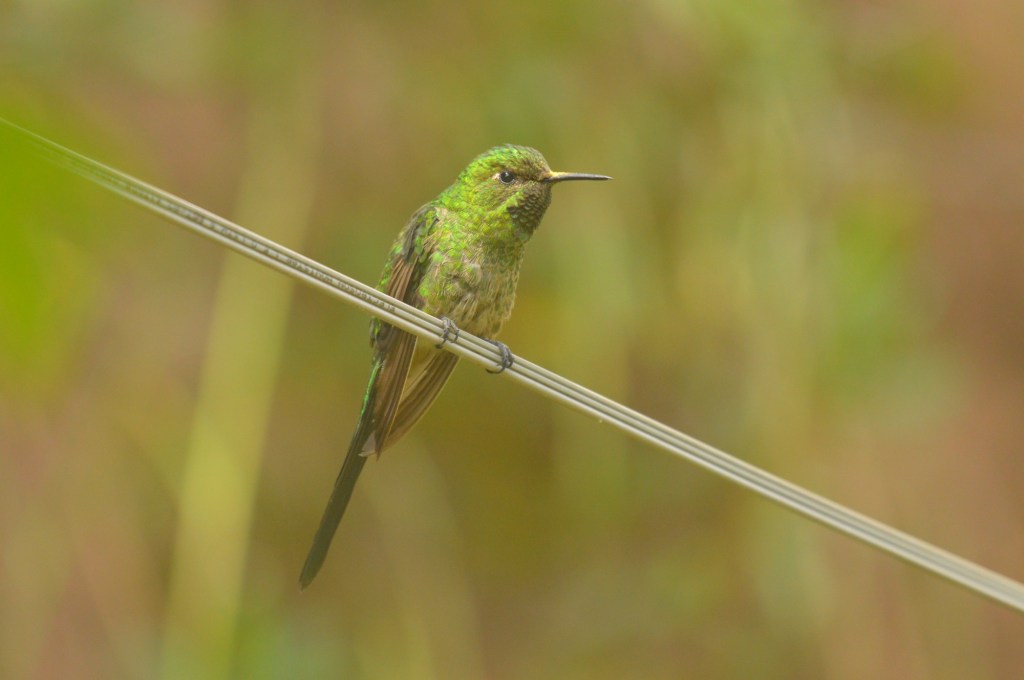
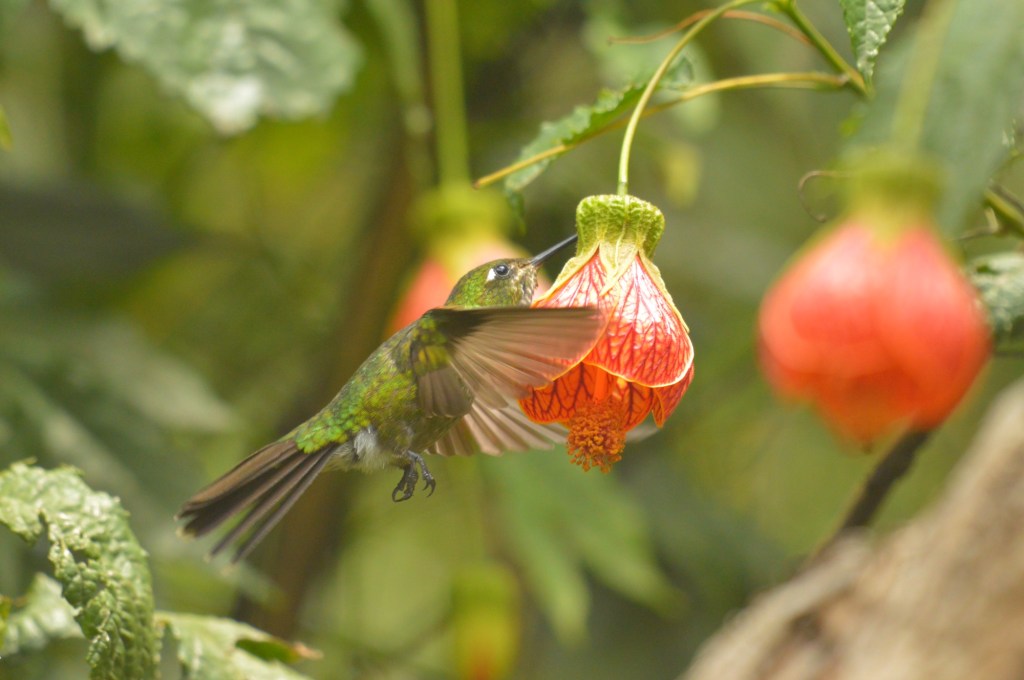
One of the sanctuary’s starlets, a young trainbearer, put in an early appearance. The adult males of this species have enormous tails that nearly double their length, but this one still has a fair bit of growing up to do.


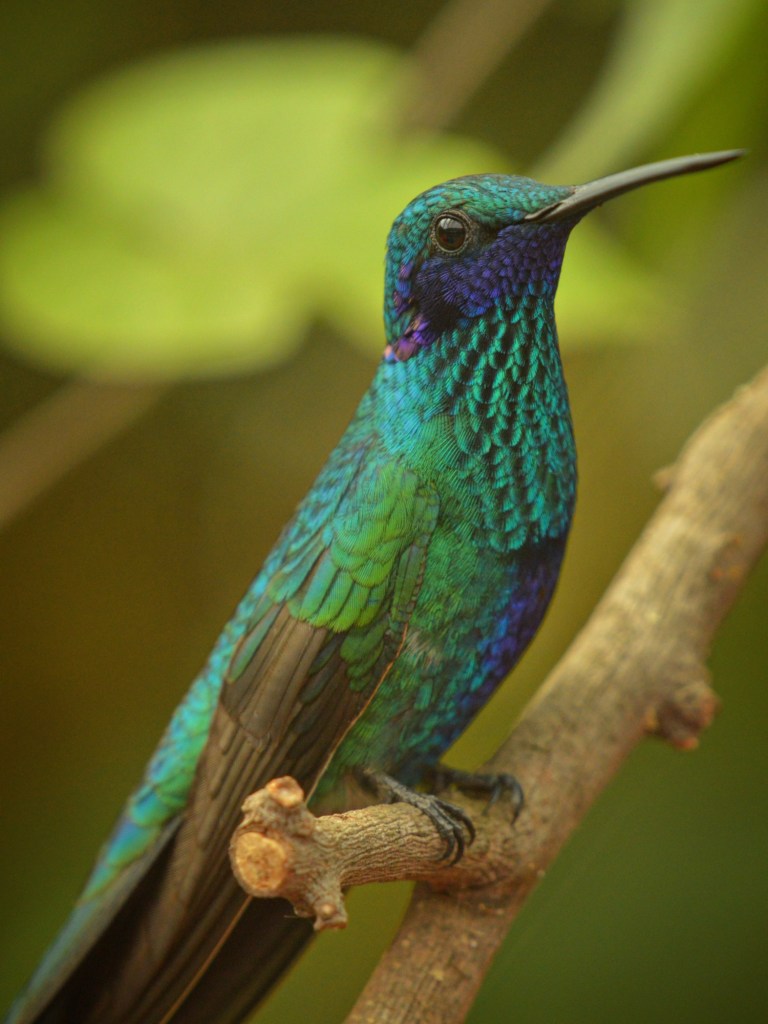
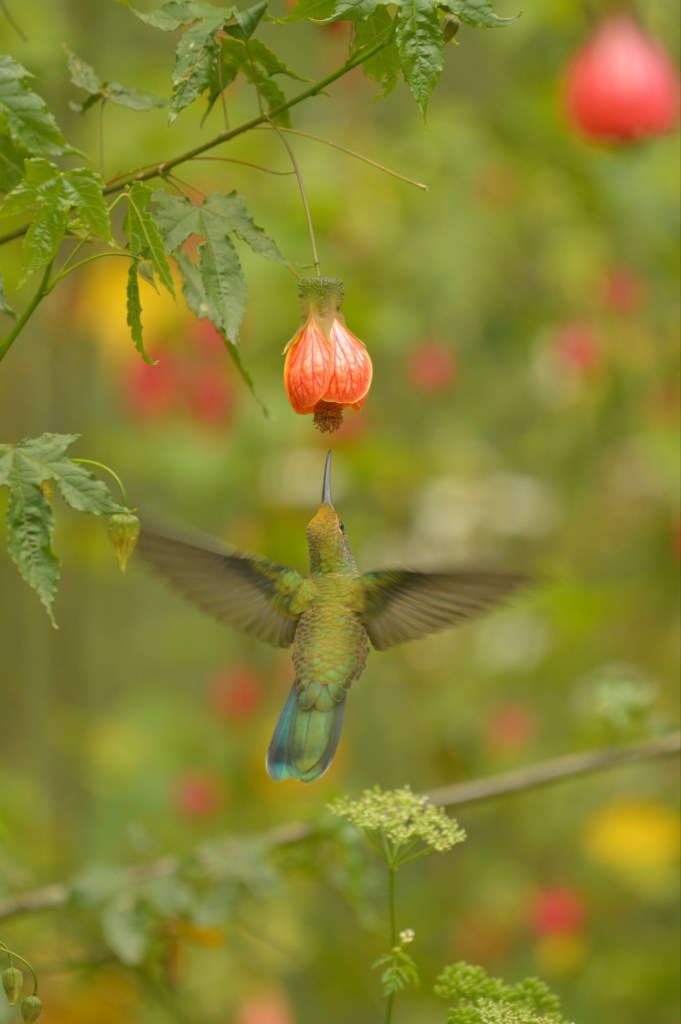
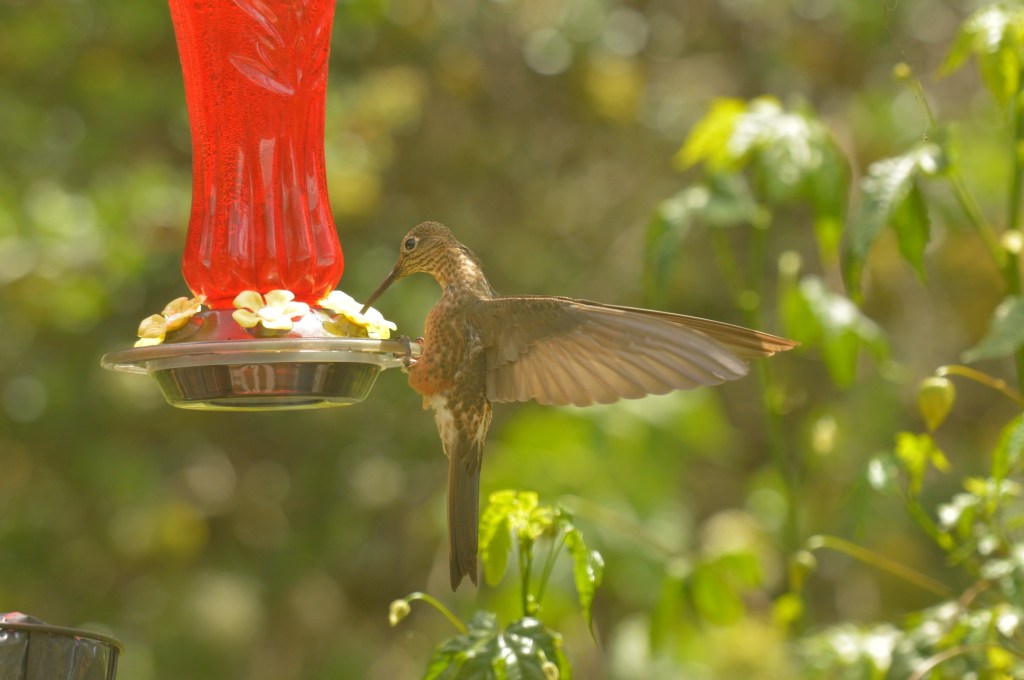
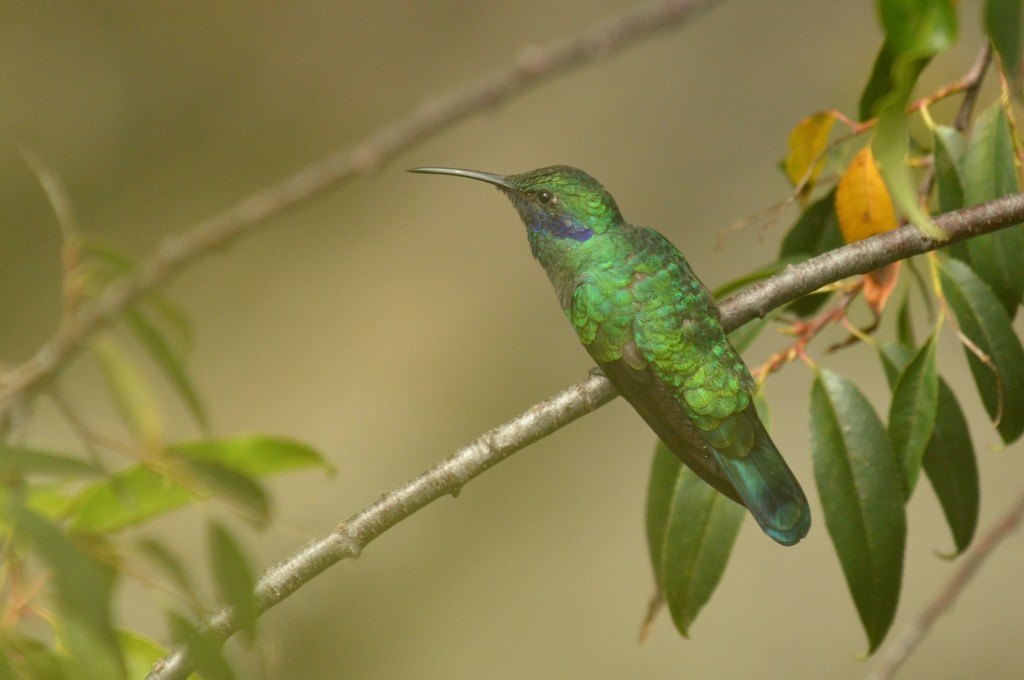
The primary residents of the sanctuary – as in the hills around Cusco itself – are the violetears. They’re extremely territorial and will fight off just about anything that gets in their way, no matter the size. I saw them take on metaltails, thrushes, tanagers and even the giant hummingbird that was trying to use the feeders.

Yesterday, I found them by sound and movement. Today, I hardly needed to try. They didn’t seem to be bothered by us at all.


Whenever the violetears were busy fighting everything that came too close, a tiny metaltail popped out of the bushes to chance a quick feed at one of the flowers, before darting away the moment the mechanical clicks of the violetears announced they were on their way back.


I seem to remember reading somewhere that hummingbirds and flowers have evolved simultaneously, with some flowers only admitting a certain species of hummingbird to visit them. It explains why their Old World equivalent, the sunbirds, remain stranded east of the Atlantic, while hummingbirds can only be found in the west.


The largest hummingbird species, the giant hummingbird, was surprisingly shy – though that may have more to do with the aggressive violetears than any inherent skittishness in its nature. They’re considerably larger than their diminutive relatives, being about as large as a small thrush, and they sound a lot less like bees when they fly overhead, though they still move like the clappers.


Well now – now that I have a whole day free, I think I’ll take it easy tomorrow. I’ll try to make more use of my boleto turístico, the ten-day ticket that covers most of the historic sites and museums in Cusco.

I’ve finalised the arrangements for the Amazon, which is now only a little over twenty-four hours away. The two Americans in the hotel next to me are busy discussing which nautical themed tattoo they should get (as they’re considerably cheaper here than back home), but I will be putting all of this behind me for a week. I am quite looking forward it that.

Fingers crossed my luck holds out for some wholesome companions! BB x

Cuscotopia

Casa Tunki, Cusco. 14.22.

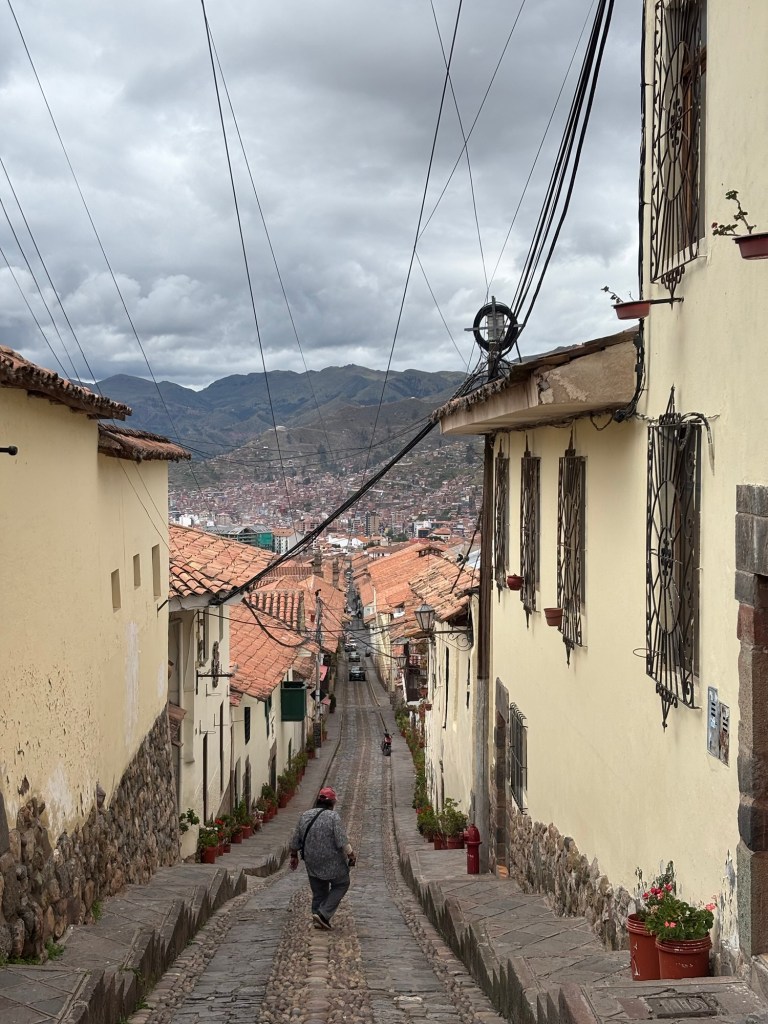
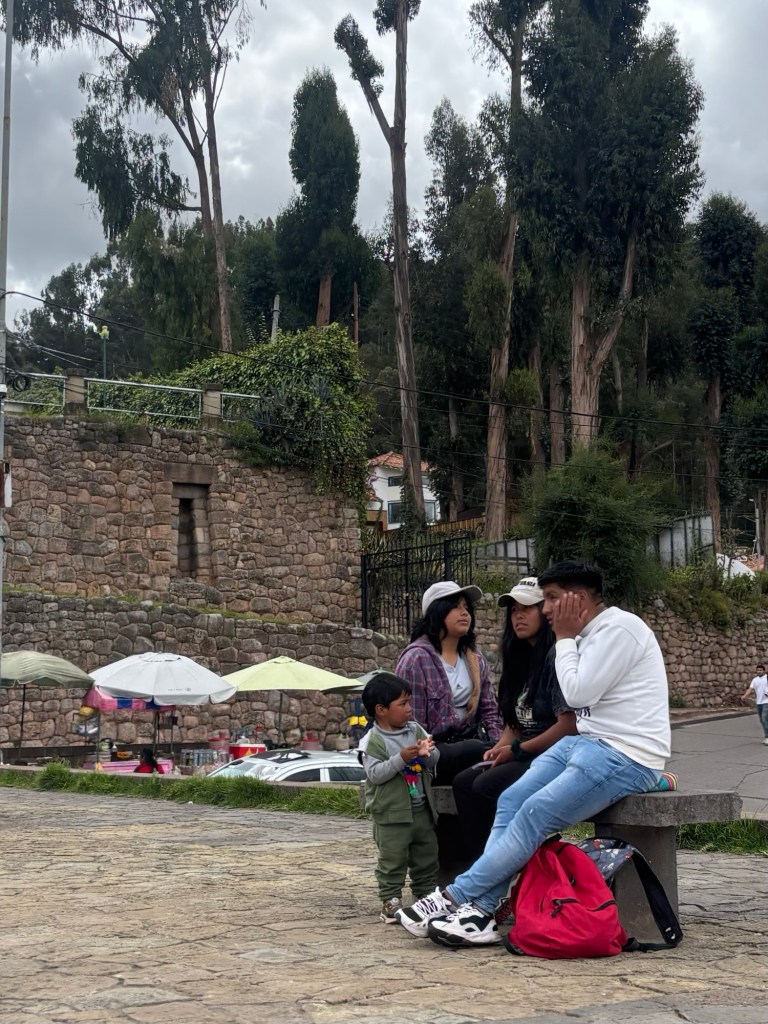
Overnight, I’ve gone from one of the tallest people in town to one of the shortest. Or at least, on a par with the locals. That’s because Cusco is awash with tourists, as it surely has been ever since Machu Picchu was rediscovered. Towering Germans, athletic Americans, French and Italian girls walking around in legging shorts that seem at odds with the local custom of long dresses, heavy socks and boots.

I could go off on one of my usual rants about the vapidity of some of these tick-box trekkers. But I won’t. You’re bored of hearing it and I’m bored of repeating it. So I’ll focus on the other things I’ve seen. It is worth knowing, however, just how much the tourists seem to run this town.


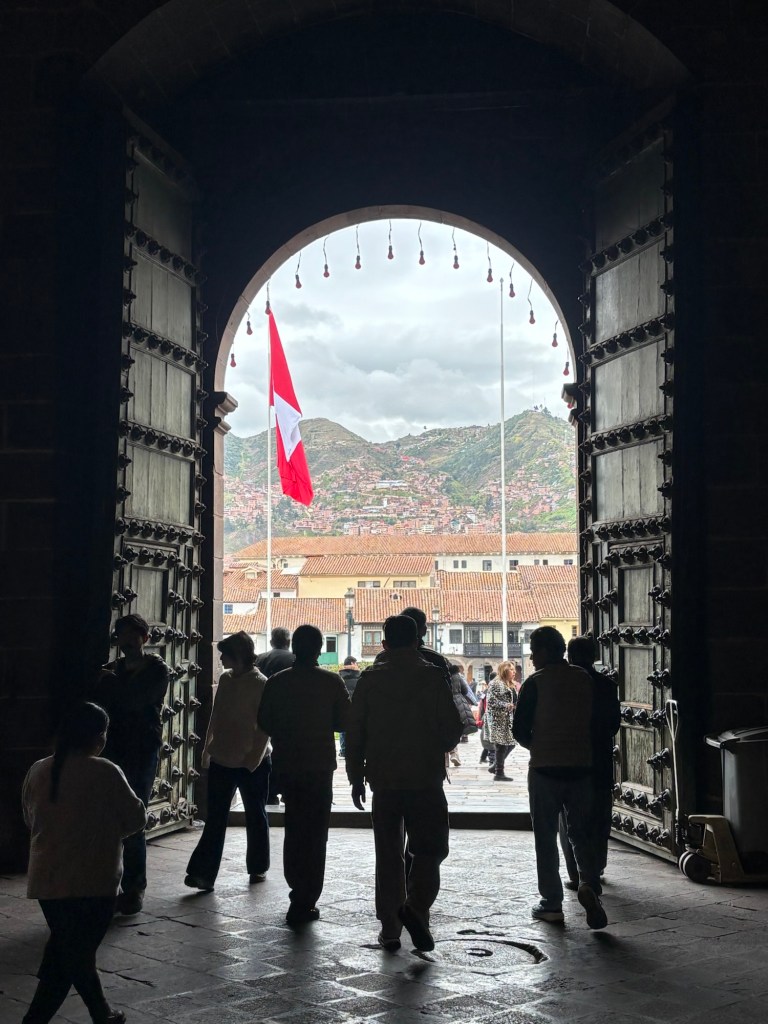
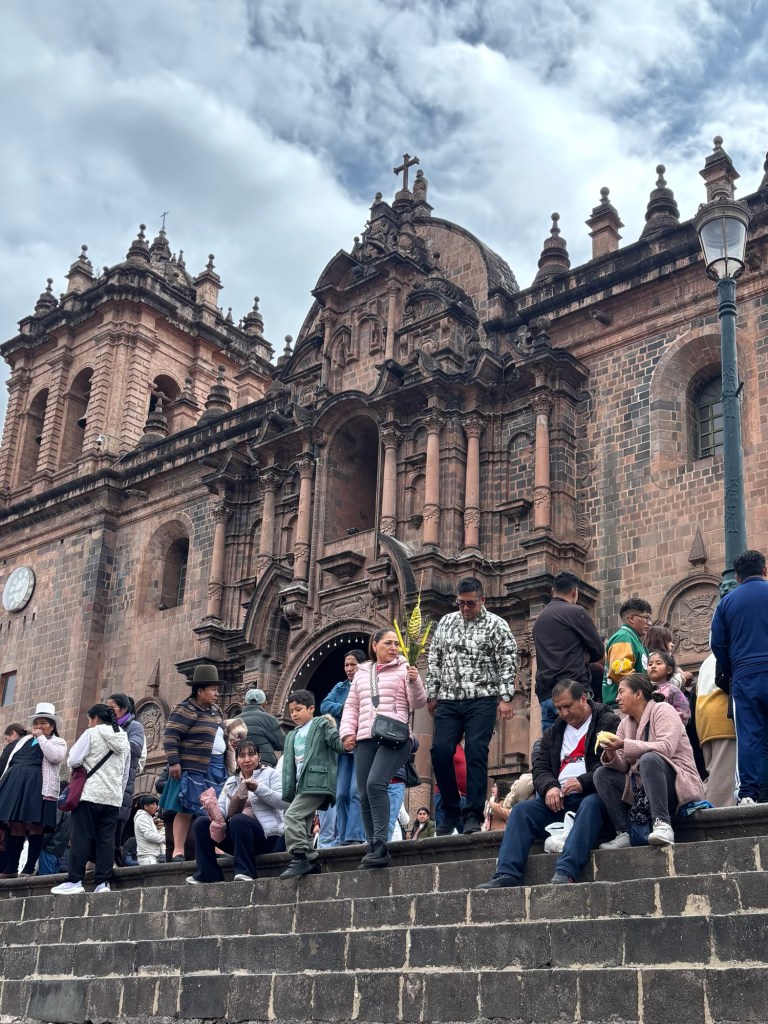
Today is Easter Sunday, so I allowed myself a proper night’s sleep (my first in a while) and had breakfast at the hotel before going to the cathedral for prayers.

I have, at last, noticed the altitude. It’s not debilitating like I thought, but it is certainly a factor that cannot be ignored. Going to sleep last night was a drawn-out procedure, not because some of the Picchu junkies wouldn’t stop talking at the top of their voices, but because it felt like I was eternally short of breath. Every yawn and every deep breath felt incomplete. I guess that’s simply a factor of living at this kind of altitude – there’s simply less oxygen to go around.

By the morning, however, I was feeling much better, so I had all the energy I needed to go out and get my bearings.


Semana Santa came to an end this morning with the celebration of Jesus’ resurrection in the Catedral de Cusco. They had three Masses back to back and I caught the tail end of the second.

The cathedral was almost full to bursting, so I said my prayers in front of the shrine to Mary with a few of the local women. Unexpectedly, I felt something. Not for the first time, either. I’m not entirely sure what it was, but it moved me.


I scoped out the HQ for the Amazon Wildlife company so that I would be able to find my way there easily tomorrow. There was a local man with a very violent nosebleed being attended to by two policemen outside. I hope that’s not a potential symptom of altitude sickness!

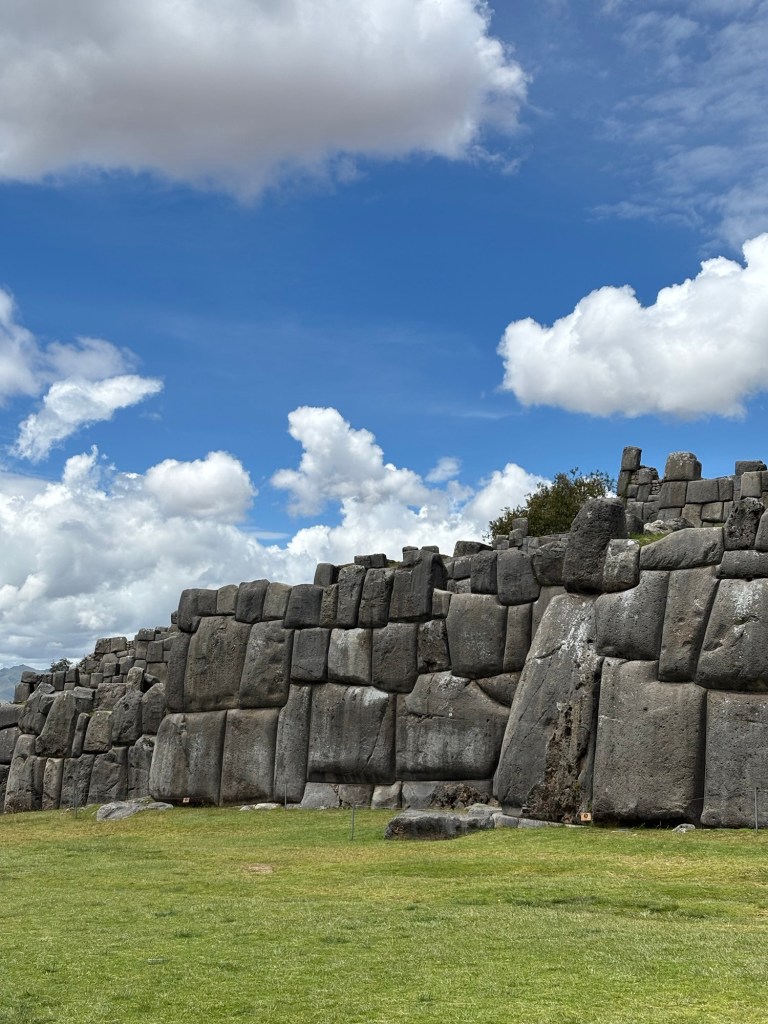
Speaking of which, as it was still fairly early, I decided to climb up to the old Inca fortress of Sacsayhuamán that sits on a hilltop above the city of Cusco. When I say climb, I mean it. The ascent is no joke. It’s supposed to be good practice for the Inca Trail, but as that’s not on my itinerary, it served as a beginning for the Waqrapukara and Inti Punku side quests I have planned.


Sacsayhuamán is a large Inca complex, parts of which can be found all around Cusco, since the Spanish took a leaf out of their former Moorish rulers’ book and cannibalised much of the fortress to build their churches and colonial houses and estates. The rocks that remain are mostly the largest and most cumbersome, retaining their masterful stonemasonry – each of them cut in just such a way as to slot together without need for mortar.

There’s no gold here – any that there might have been was stolen by the Spanish may hundreds of years ago – but it is still quite an impressive complex. It’s certainly more than ‘just a pile of stones’ as one English father remarked to his wife and son on their way up the hill…


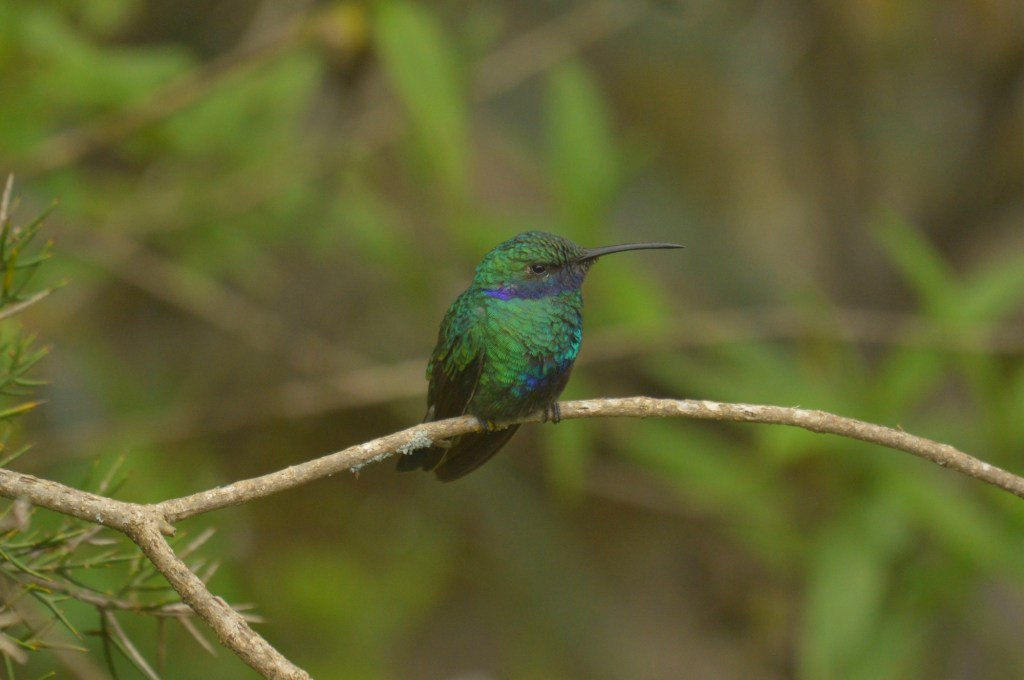
I decided to throw any idea of self-consciousness to the wind on the way back down and spent about forty minutes or so hunting hummingbirds. The winding path up to Sacsayhuamán follows a Eucalyptus forest, which was uncommonly alive with birdsong (those poisonous trees are usually devoid of life). One particularly noisy resident is the beautifully named Sparkling Violetear, one of the many hummingbirds that can be found in the hills around Cusco. They’re notoriously hard to photograph, but patience is a virtue I have learned through this hobby, so after enduring the stares and multilingual remarks about the size of my camera by all the passers-by I was rewarded with a close encounter with one of the sparkling little gems.


I saw a giant hummingbird, the largest of its kind, on the way up, but it didn’t stick around for very long, so the violetears were my main success this morning. I’m going to a hummingbird sanctuary tomorrow, so I might well see a great deal more of them, but for now, I’m happy with what I saw and heard.


I found a spot in town for lunch that wasn’t crawling with tourists (in fact, it was almost entirely Peruvian in clientele, which is always a good sign). A huge bowl of caldo de cordero and a drink cost me a grand total of forty soles, which is a little less than £9. I’m going to miss how affordable this country is.

I’ll also miss how handsome the people are. What a royal profile these Peruvians have! And to think that some people pay for a rhinoplasty to have their noses shrunk… What a travesty! I find it quite a fetching look, myself.


I’ve taken it easy today, otherwise I might burn out – it is a pretty full on adventure, and I’m conscious that I’m back to work the day after I return, so I need to fit in some time to rest during this holiday.

But that won’t stop me going out for supplies and another wander this evening. Maybe I’ll be able to find something new in the twilight! BB x