Puerto Ayora, Galápagos Islands. 18.55.
Coming all the way to the Galápagos Islands and leaving without seeing the giant tortoises would be like going to Jordan and skipping out on Petra, or bypassing any kind of safari whatsoever on a visit to Kenya or Tanzania. You could do it, but you’d be missing out on something truly special.
As luck would have it, you don’t have to go too far to find them. Though they may not be as numerous as they once were long ago (an astonishing 350,000 were carried off the islands by sailors and scientists as a source of food and oil), there are still thousands of them to be found even on the populated islands of San Cristóbal and Santa Cruz. The ranches in the interior will give you your best chance at seeing them, but don’t get it confused: they’re not open-air zoos built to accommodate the surviving giant tortoises. They’re functioning orchards and pastoral plots that happen to sit right on the tortoises’ migration route to and from the clouded highlands. The fact that they provide a ready supply of fruit is simply one of the reasons they can often be found lurching around the ranches.
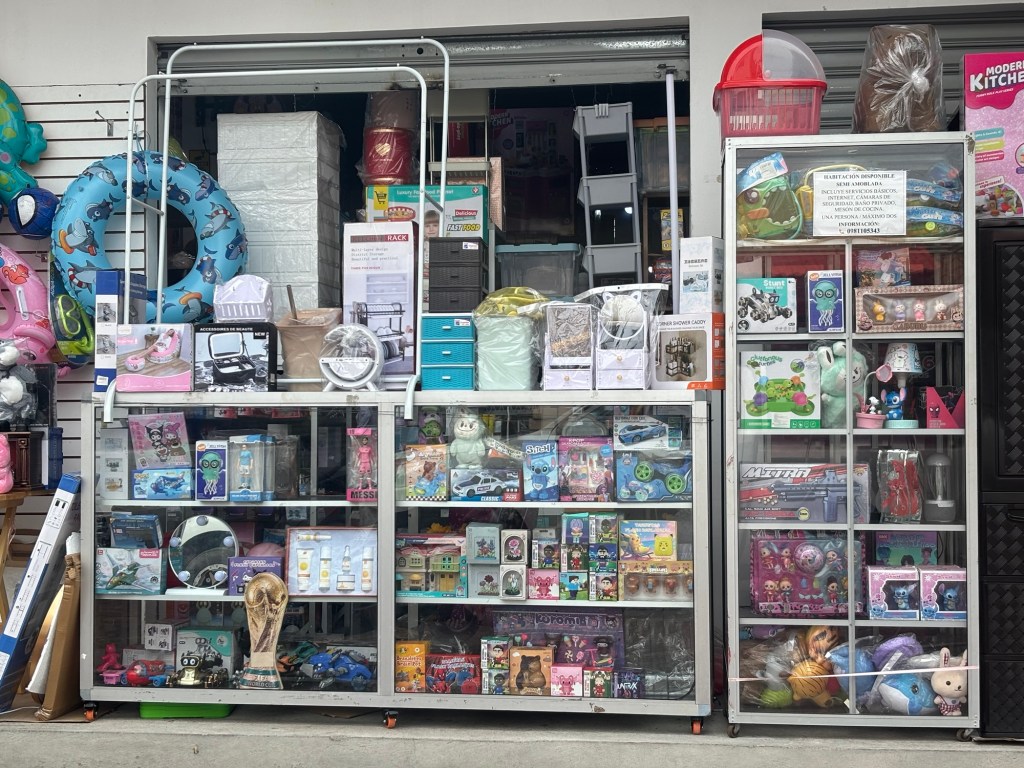
I was picked up from my hostal at about 8.42 by a slightly irascible taxi driver. On the way out of town, I couldn’t help noticing a dollar store selling all sorts of cheap plastic tat: brainrot bracelets, a K-Pop Demon Hunters make-up kit, imitation night goggles from Lilo and Stitch and a plastic figurine of Haaland. For an island that makes such a big deal about not importing single-use plastics, there’s a lot of single-use plastic junk on sale here for locals and tourists alike. I hope one day we learn to stop mass-producing stuff like this and give capitalism one almighty sock in the jaw, though I doubt that will happen in my lifetime.
My destination today was Galápagos Frontier, the closest accessible ranch to Puerto Ayora. I was going to walk there, but when the heavens opened shortly after seven o’clock, I decided to take up the ranch owner’s offer of a taxi shuttle and save myself the hour and a half’s hike. By the looks of things, it would have been a pretty straightforward route, as a separate cycle lane follows the highway right into the interior, but it did allow me to slow down and enjoy my breakfast, so I guess I was grateful.
The taxi driver dawdled a bit, so he made up for lost time by hurtling along the highway, narrowly missing a couple of chickens and a very fleeting glimpse of a pachay – the Galápagos crake, a rare and endemic cousin of the moorhen that came to these islands over a million years ago. It was some relief when he finally slowed down near the ranch gates, because I don’t like to think what would have happened if we’d met a giant tortoise around the bend.
Speaking of which, I counted at least three of the lumbering giants before we’d even arrived. At four feet tall by five feet across, they’re pretty hard to miss.
Our guide, Julio César (ave!), had a lot to tell us about the ranch and its flora and fauna, so he brought along a Canadian volunteer to translate for him, as the American mother and son on our trip didn’t speak any Spanish. We butted heads a bit over travel advice for Peru as the young American fella was headed there next. She recommended Paracas and Huacachina as her highlight. I told him I’d managed Paracas in a day and she said I was “fucking insane”, which seemed an odd sort of way to talk to a client, but… that’s North Americans for you. No filter. I gave them a wide berth for the rest of the tour and stuck close to Julio, bypassing the need to speak in English for the rest of the morning.
It’s only a small boundary of mine, but I don’t take kindly to being sworn at without uttermost provocation. Priggish, perhaps, but it’s a principle I try to stick to.
Anyway. I wasn’t here to hang out with tourists. I came up here to see the giant tortoises. And see them I did.
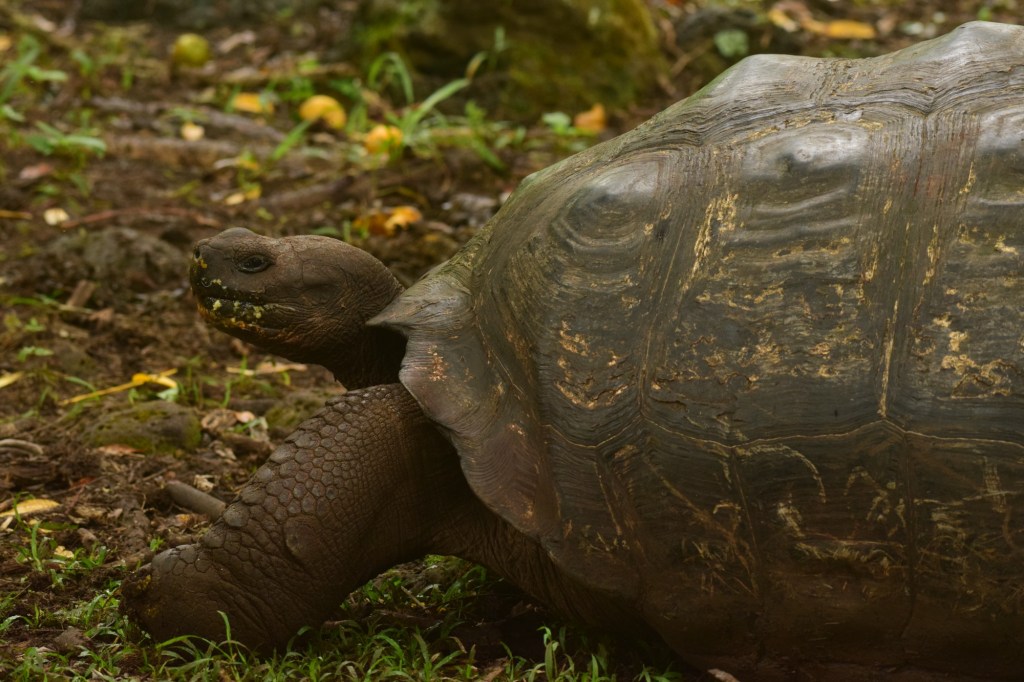
I’ve always known they’re incredibly long-lived creatures, but just how long has never really dawned on me. Some of these tortoises were well over a hundred years old, with at least one or two individuals over the one-hundred-and-fifty mark. Julio showed us the sun-bleached shell of a male he had found dead on the ranch at the start of the tour, adding that it was the only such cadaver he’d found in forty years working this corner of the island. That statistic alone hints at the ridiculous surviving power of these creatures, whose metabolism is so slow that they can go for as long as a year without food or drink.
Turtles may have been around since the Triassic in one form or another, but these giants really are reminiscent of the age of the dinosaurs in their almost miraculous longevity.
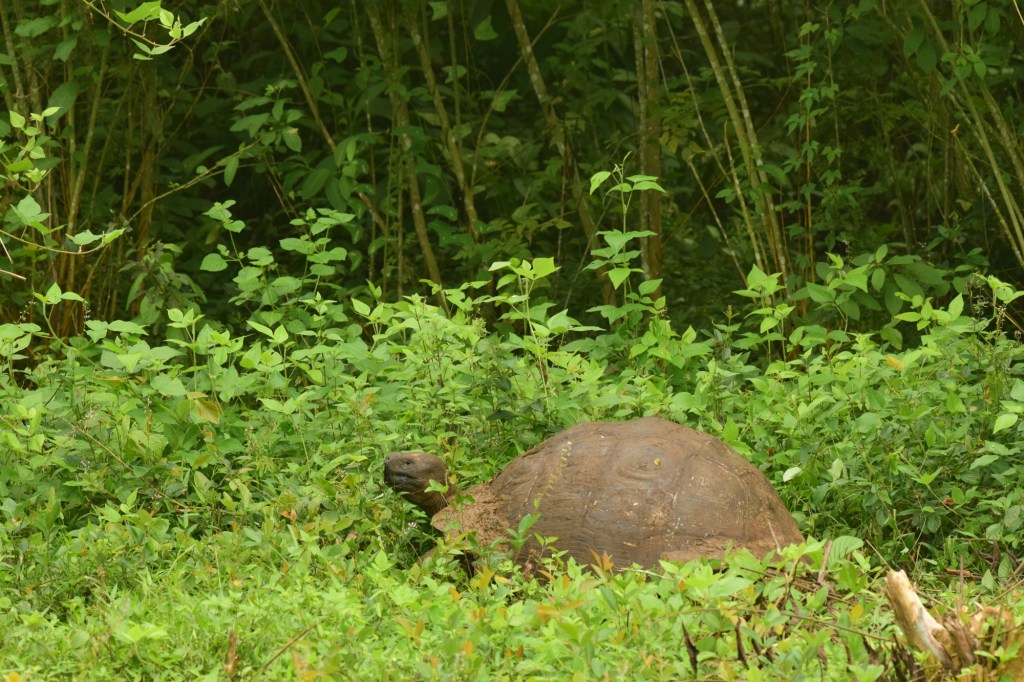
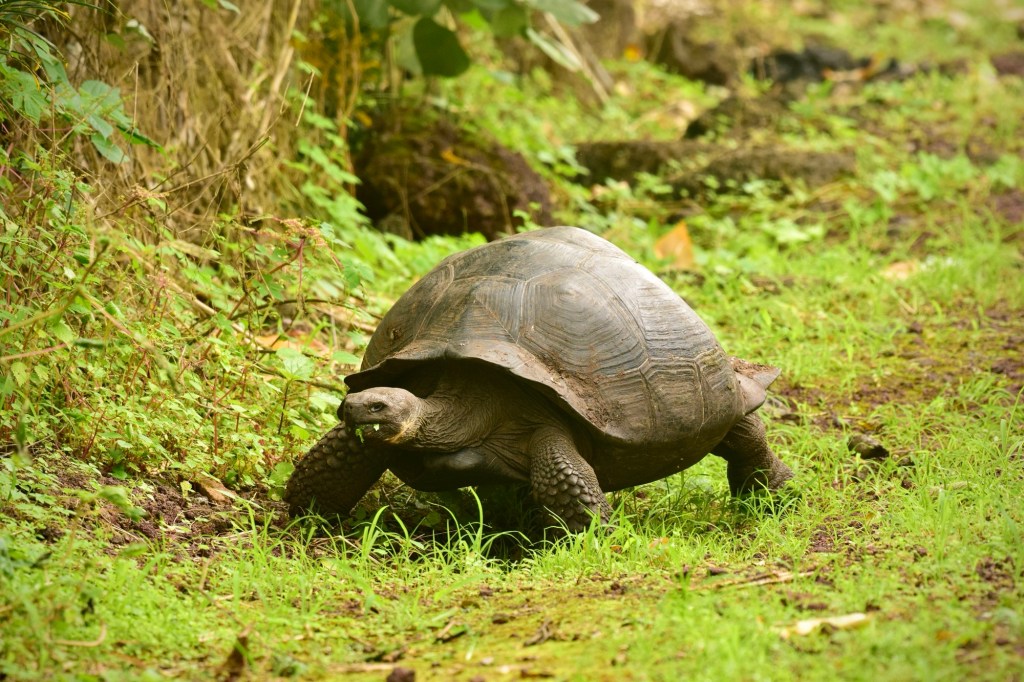
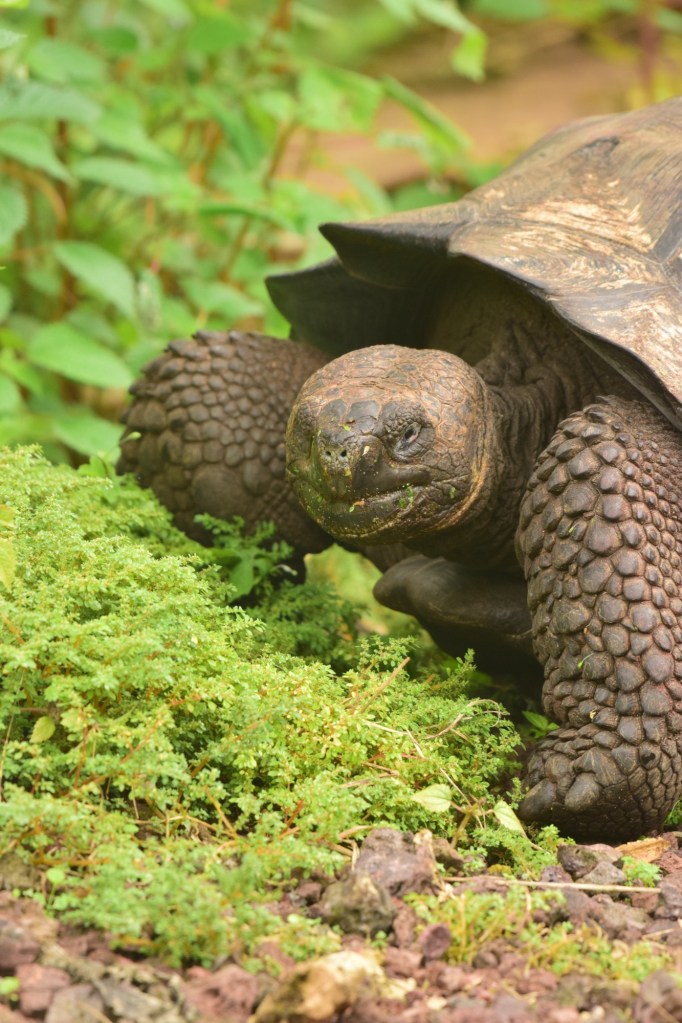
You can age a giant tortoise by their shells. Younger tortoises have more clearly defined grooves in their shells, which wear away with age. Ironically, the fewer the lines, the older they are. So it stands to reason that some of these tortoises individuals we saw – like the one below – were incredibly old. Old enough to have seen two world wars come and go. Old enough to remember a time before tourism on the islands. And with the record age in captivity pushing 174 years, it’s not beyond the realms of possibility that one or more tortoises on the islands remember a young Charles Darwin who came here in 1835.
I don’t know about you, but I found that absolutely mind-boggling.
Many of the tours on the ranches include a visit to the lava tunnels, a labyrinthine network of caves hollowed out of the mountain by ancient rivers of molten rock, long since cooled and emptied. Near the coast, these are the preferred burrows of the Galápagos penguin, but up here in the highlands, they’re more commonly used as roosts for barn owls and the three endemic bat species that call the islands home.
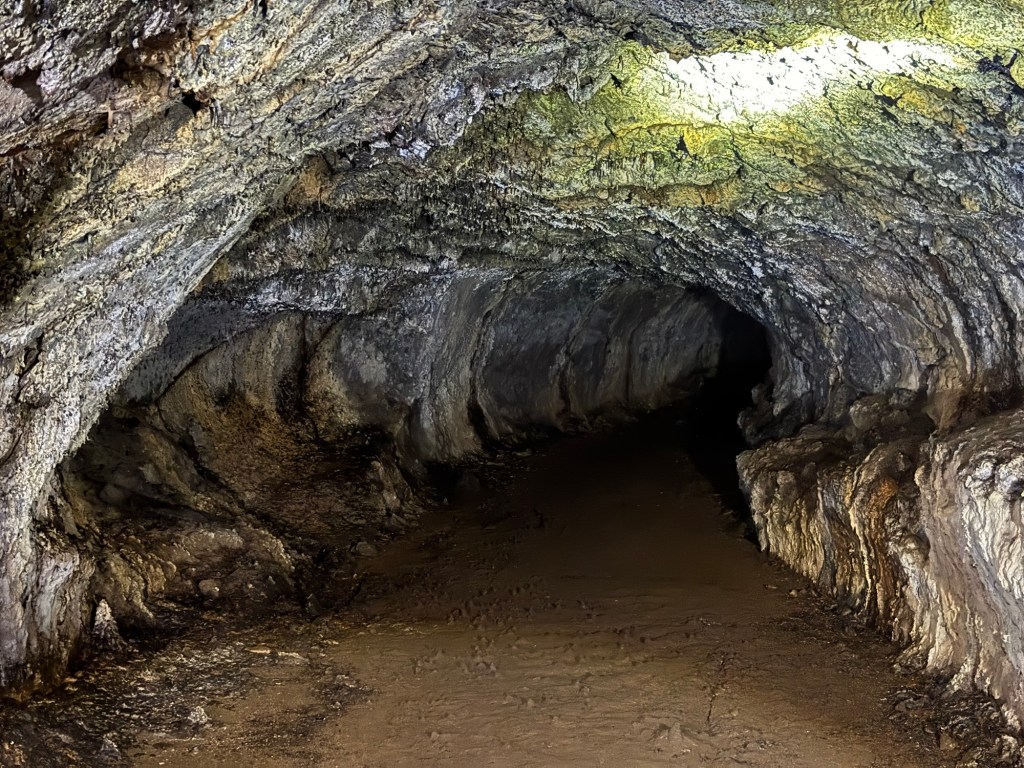
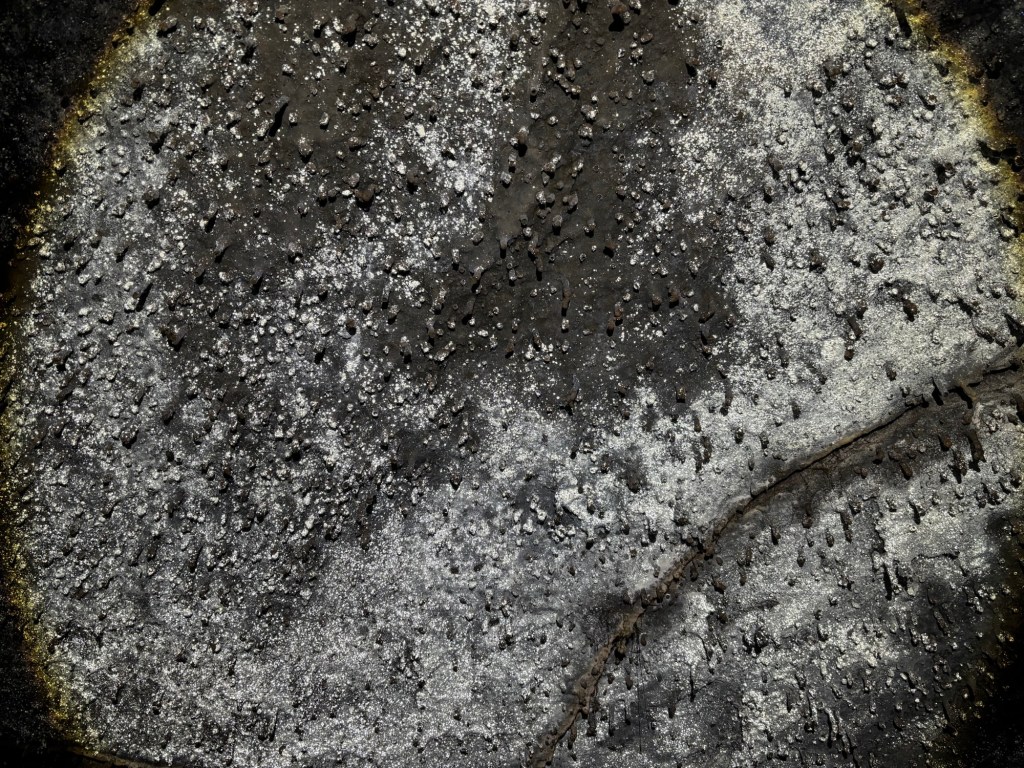
The most amazing thing about the lava tunnels – apart from the fact that they seem to go on forever – is the way their ceilings sparkle and gleam in the torchlight. Thousands of water droplets and bacteria scintillate in silver and gold, making the long dark of the tunnels alive with light.
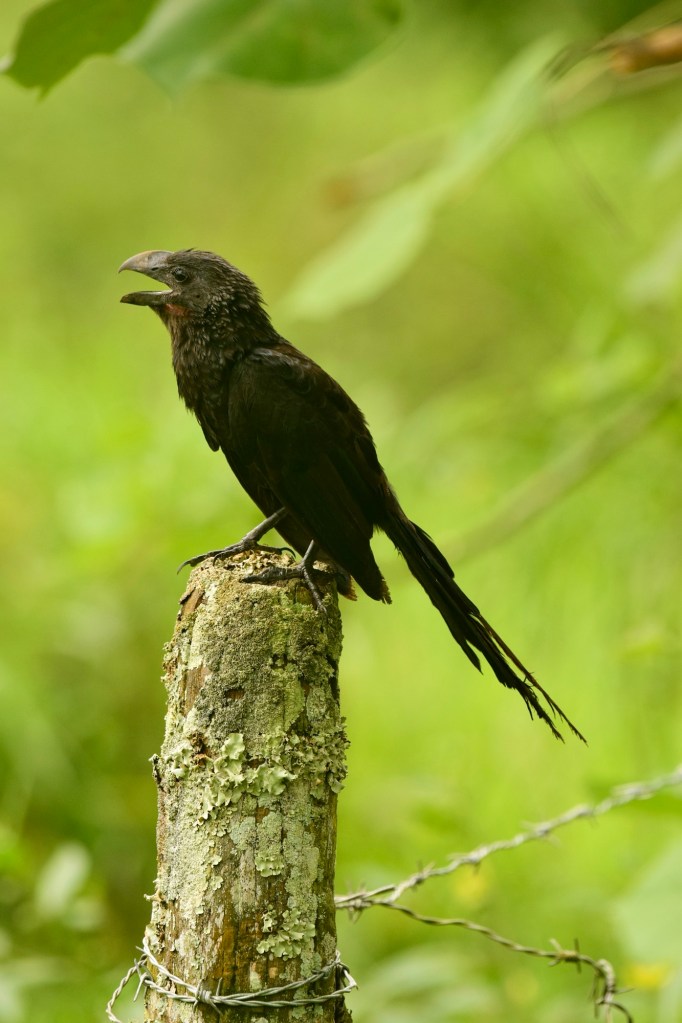
Back up and out in the light, we were tailed for a short distance by a flock of anis. These cuckoo/crow-like birds aren’t native to the Galapagos but were brought here from the mainland in the 70s to deal with the horsefly problem blighting the highland ranches. Now they’re everywhere, attacking much of the native wildlife, so every few years the local community organises a major cull of the species to keep their numbers in line.
It doesn’t help that they’re actually a very endearing kind of bird. This sort of job is much easier when the culprit is small, faceless and preferably creepy-crawly.
Living and working in Santiago this summer has, at times, felt decidedly European. You’re never under any allusion that you’re in an entirely different hemisphere, but all the same, the roads and the streets are very western, very cosmopolitan. Up in the highlands of the Galápagos, there’s something very… equatorial about the place. One-storey houses at the roadside with chalkboards selling fruit. Red earth roads leading into the distance with thick green vegetation on either side. Tarmac roads without pavements or bollards. It almost feels like being back in Uganda.
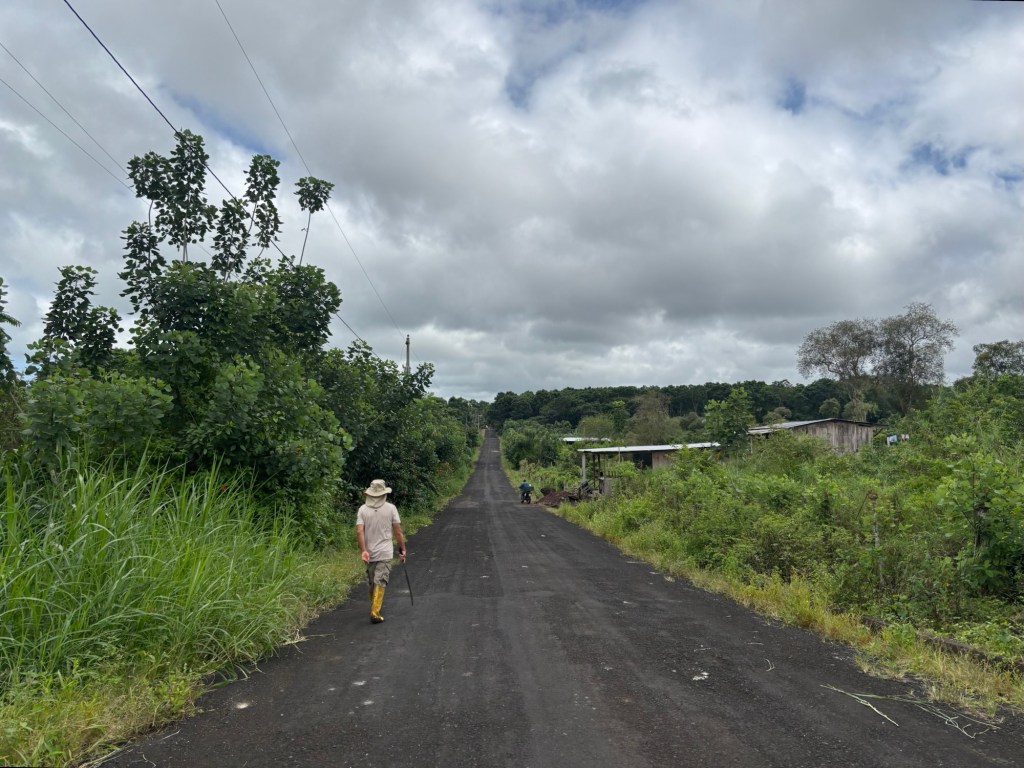
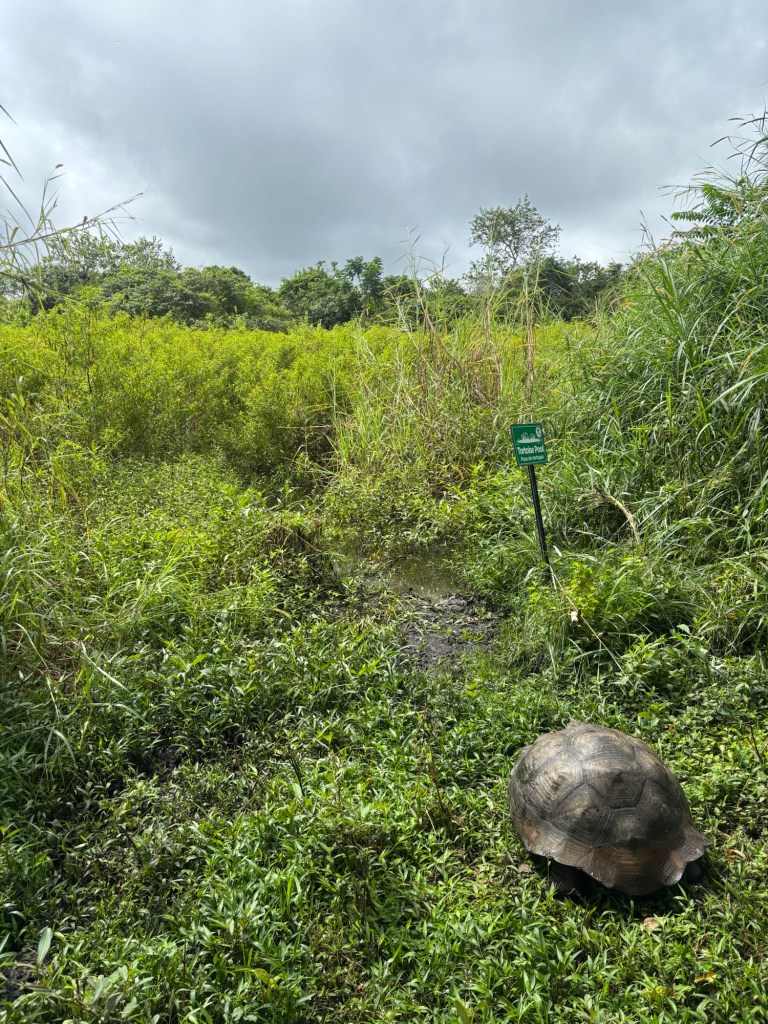
With the vegetation so high at this time of year (following the daily rains), it can be hard to encounter a giant tortoise that isn’t buried up to its neck in greenery. So I was glad to find at least one by the roadside that was wandering out in the open. It can be hard to gauge their size when they’re on their own, but if I told you that their shells can reach a man’s waist or even abdomen in the very largest specimens, that may give you an idea.
It’s been quite a wild ride, this summer, and spending the last few days with the giant tortoises of the Galápagos seems like a nice way to wind down what has been a total blur of events since I left the UK to burn under the unforgiving summer sun of July 2026. It’s still burning now. In South America we’ve had rain almost every day here since I arrived. If only I could send some of it back to Europe ahead of my return. Folk might welcome it there.
A week from today, I will be in Athens, on what really will be the last of my labours for the summer. I had originally planned to make my own way home across Europe after that, but then the Galapagos happened, so I’m going to save both money and time and come back to the UK when the wedding festivities are over to edit my photos and rest. Lord knows I could do with the comfort of my own bed and books again.
But before that, I have one final Galápagos adventure upon which I must embark: the frigatebird colony of North Seymour Island. I hope the weather is kind on this last expedition. BB x

