Hotel Riviera Colonial, Arequipa. 19.14.
The time has come to leave Lima and the Pacific behind and make for the interior. I have enough sense not to go from 79m above sea level to 3.400m in one go, so I’m bound for Arequipa, the White City, which sits at a decent halfway house of 2.335m. That’s still a good thousand metres higher than Andorra la Vella, which is probably the closest I’ve ever come to sleeping at altitude, but it’ll have to do.
After spending ages writing up yesterday’s report, I sat back in the upstairs lounge area of Pariwana, finished off my (now rather crushed) Doritos and called an Uber. Whisked away by another speedy and efficient limeño, I said hasta la próxima to the city and its mighty Pacific shore – since I’ll be back, albeit briefly, at the end of my adventure.
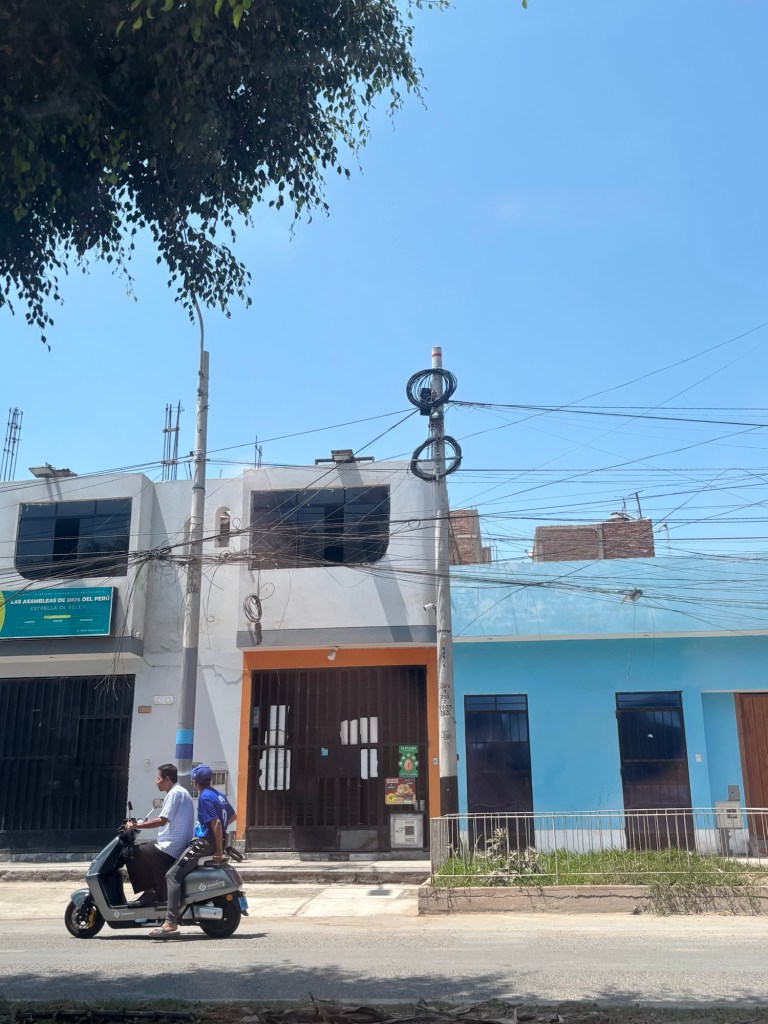
Lima’s Jorge Chávez airport is a model of efficiency. Fine, so the USB charging ports don’t all work (I never did find one that was fully operational), but the security is slick and efficient and it has a lot of good places to eat offering real food, not just fast food junk (England, please learn from this). I’ve also been to shadier airports. Despite being in the heart of the run-down district of Callao – which is known for having a higher violent crime rate than the rest of the capital – I found it was perfectly safe to come and go.
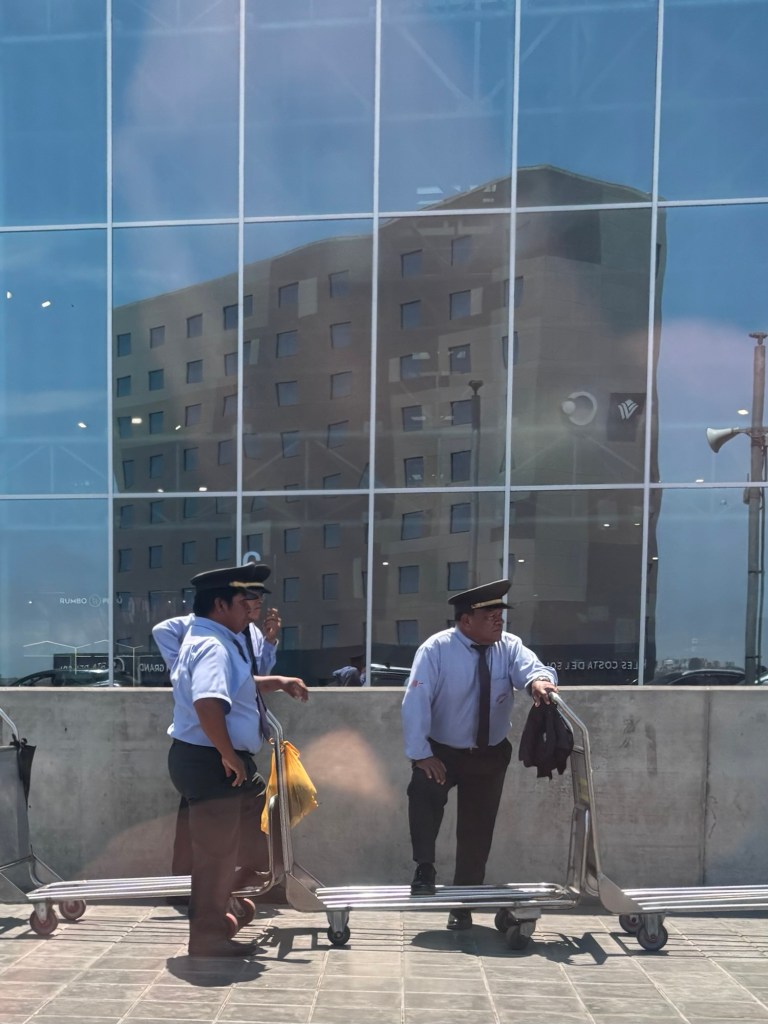
From the air, Lima looks a lot better than it does from the street. You can really appreciate the might of the Atlantic swell as its parallel waves break upon the winding coastal cliffs that separate the city from the sea.
Herman Melville described the city as “Tearless Lima – the strangest, saddest city thou can’st see”. I suspect he was referring either to the lack of rain or, more likely, to the garúa, the dense costal fog that usually clouds Peru’s capital in a white veil. I saw the garúa on the night I arrived, and it lingered into my first morning, but the city has been basking under the South American sun for most of my stay, so tearless is not a word I will be using to describe Lima anymore.
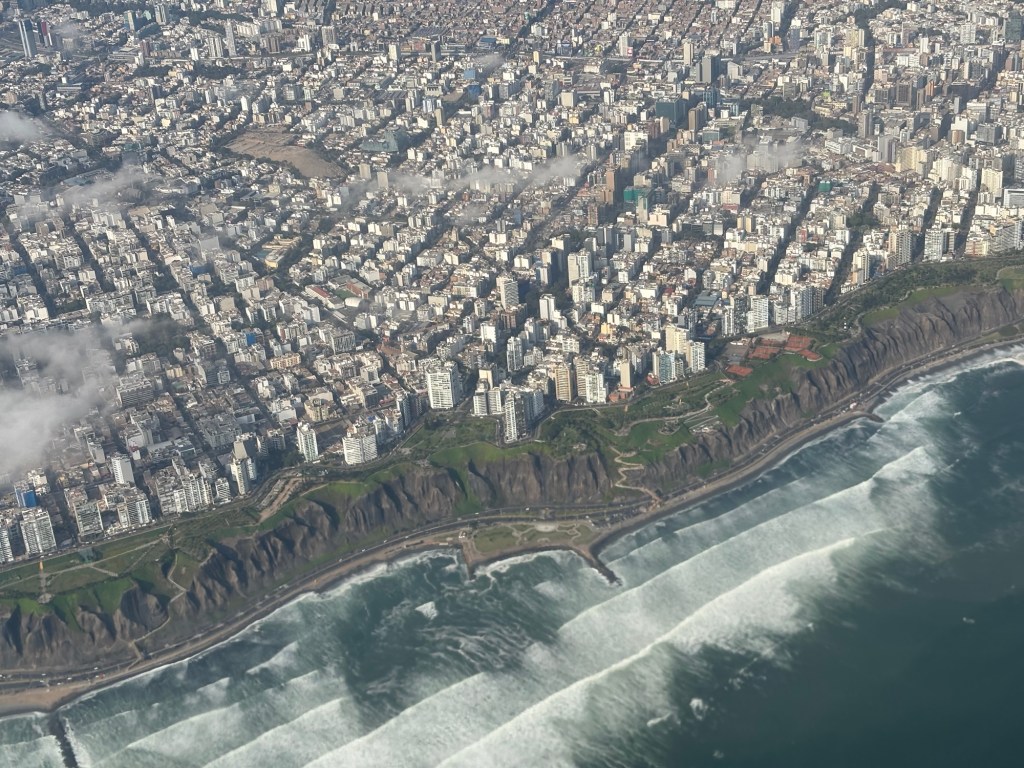
I can’t remember whether I paid extra for a window seat on this flight, but I had one, and that was pretty special. Looking back, it would have been foolish to pay the ridiculous 90$ for the privilege of a window from Madrid to Bogotá, as almost all of the Caribbean and South American leg was under a dense cover of cloud. You win some, you lose some. All I lost was the possibility of a good sleep.
I was on the wrong side of the plane for the Nazca lines, though I think we would have been a bit too high up to see them anyway. What I got instead was an unrestricted view of the mountains below as they climbed and climbed and climbed, up into the clouds and even up and above them.
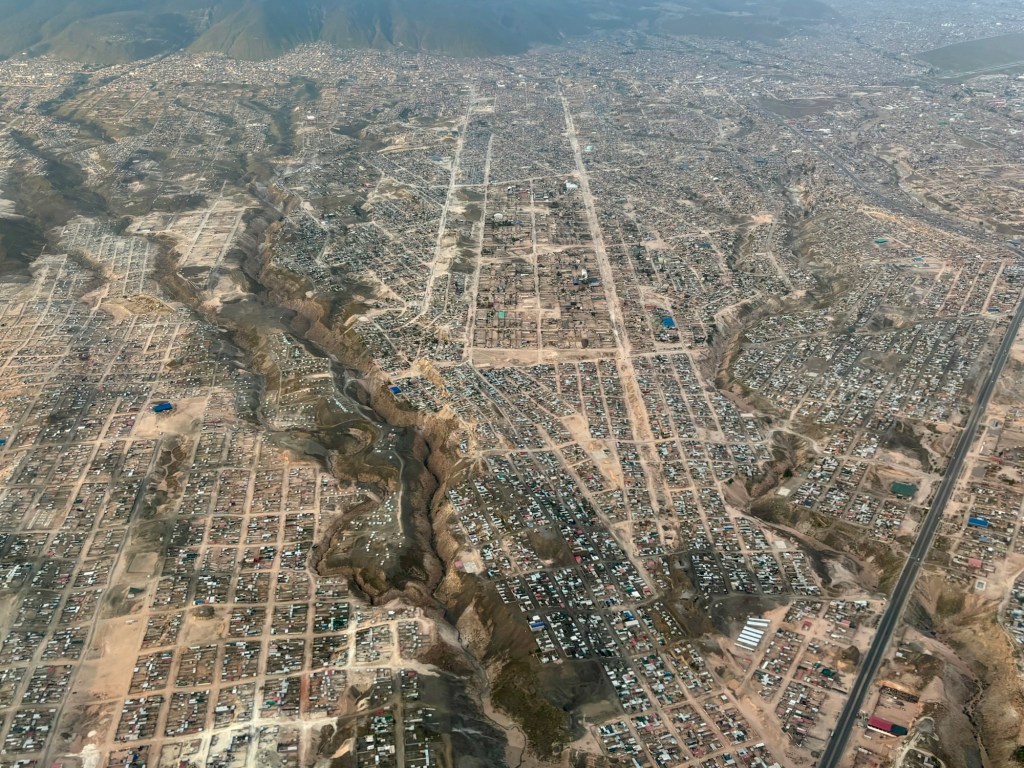
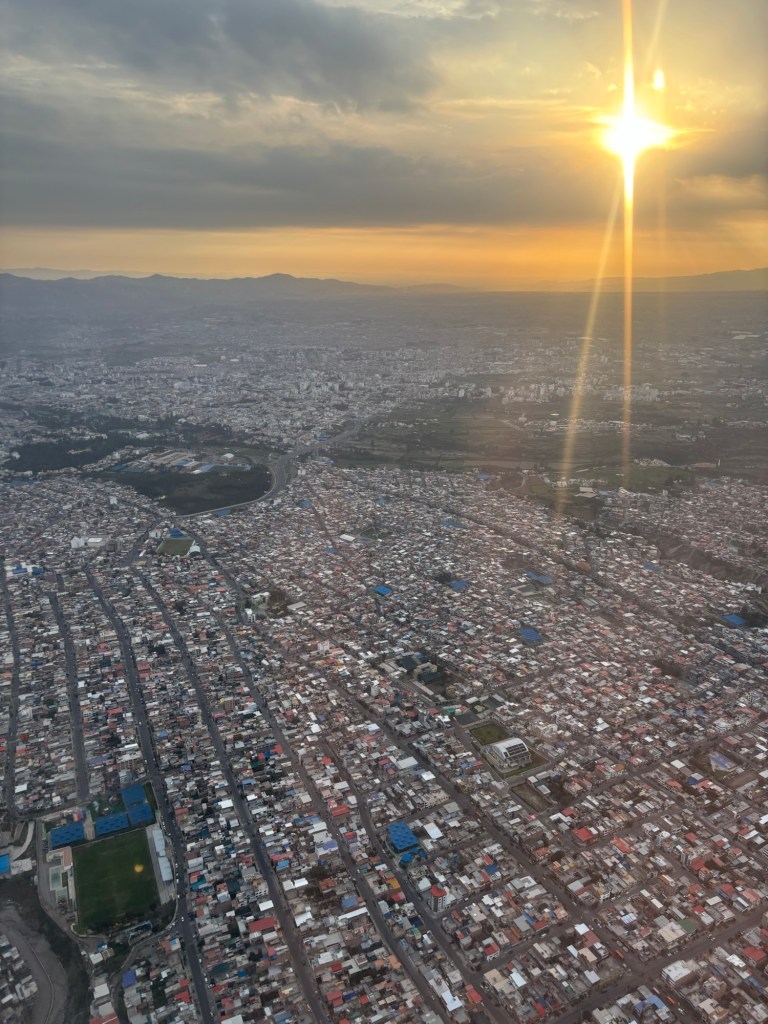
I could post some pictures of the mountains, but with my itinerary for the next week or so being largely mountain-oriented, I think I’ll spare you the overload. What is much easier to appreciate from the sky, however, is the incredible human geography of South America.
I’m no fan of cities – you know this – but that doesn’t mean I can’t appreciate their shape, their size and their strangeness – especially when they seem to blend into the very earth itself (something we don’t do nearly well enough in Northern Europe).
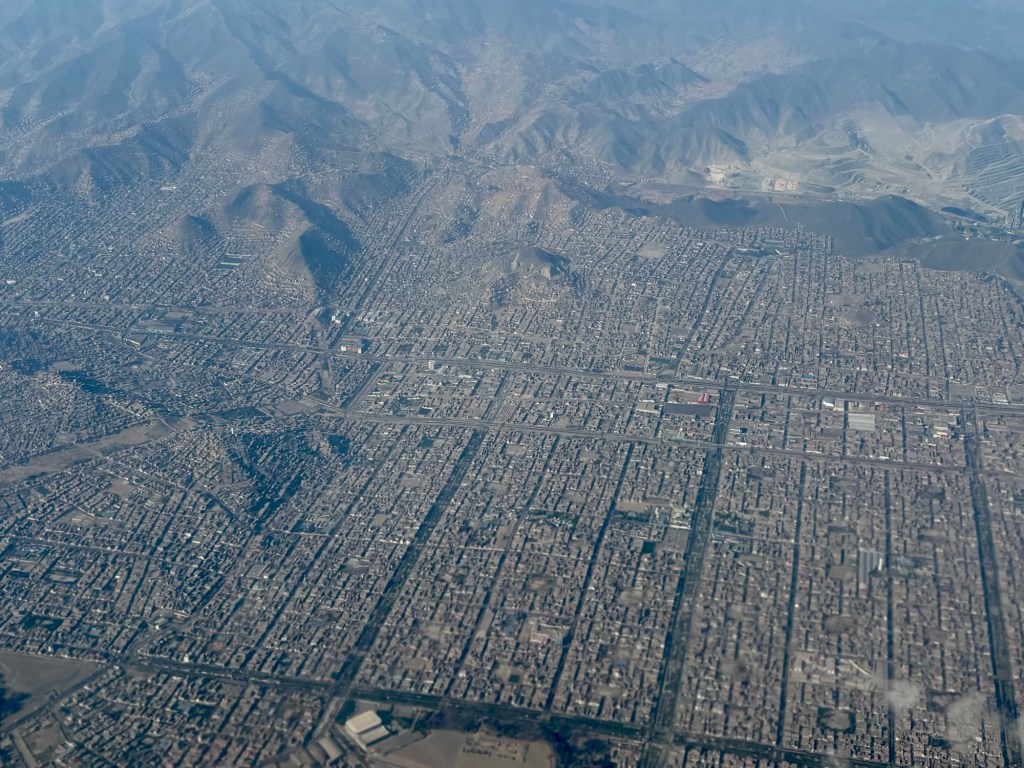
New World cities favour the grid system that, in Europe, is most famously found in Barcelona. It’s still alien to me and I find it quite fascinating to behold from the sky.
Arequipa, the second largest city in Peru after Lima, is also faithful to the grid system – even though the city is scored and cut through by canyons and rivers. Old Word architects would have worked around the landscape, twisting streets and warping estates to fit into the space, but here in the Americas, they just stuck to the plan, regardless of the complications.
Well – here we are in Arequipa, stage two of the Peruvian adventure. I think tonight’s Semana Santa celebration is a subdued one, so I will try to get some rest. It’s a 2.30am start tomorrow, so if I don’t get an early night, I’ll be more like the walking dead for Colca Canyon tomorrow.
Which probably isn’t the best advice when you’re looking for the largest carrion-eater on the planet. BB x
 The Book of Barnabas