Gone with the Wind

Flight IB0114, somewhere off the west coast of Morocco. 14.01.

For a twelve hour flight, my return journey from Santiago was a lot better than my flight out nearly six weeks ago. My attempt to walk back to Las Condes (ultimately foiled at the unassailable Cruce del Autopista Costanera Norte) had one important side-effect, besides giving me one last Chilean wildlife adventure: it left me absolutely shattered by the time I got into my Uber for the airport. I nearly fell asleep several times in the cab, so when I finally boarded the plane at around half past ten, it wasn’t hard to get some shut-eye, despite having an assigned aisle seat one row from the back of the plane.

Well – I suppose that’s not strictly true. I fought hard to stay awake for the first hour for the sake of supper, but that turned out to be a wasted vigil. Shortly after crossing the Andes, we hit the most terrifying turbulence I have ever experienced on a flight somewhere over Argentina. For all of forty minutes, the plane bucked and rocked like a horse in a rodeo, sending terrifying shockwaves down the aisle and dismantling the dinner service in quite a startling fashion before it had even got going.

I suppose they cancelled supper because by the time we’d got clear of the winds, most of the meals had gone cold. Either way, beyond the very Hispanic juice club forming at the back of the plane, there was no catering for almost the eternity of the flight.

Fortunately, I wasn’t conscious for almost the entirety of the flight, either. I must have slept for at least seven hours, which has got to be a personal record. It helps that I managed to freeze my telescreen by accident only two hours into the flight, preventing me from watching any more movies. The map service on these Iberia flights looks extremely high hi-tech… too much for my poor telescreen. The best I got out of it was an old favourite: Sinbad: Legend of the Seven Seas.

If you think that’s a childish thing to watch, the businessman on my right spent the latter half of the flight playing Angry Birds.

Before that, he watched all three of the Star Wars sequel films back to back, which I caught snatches of as I drifted in and out of sleep. I only saw the first of them in the cinema when it was released and promptly gave up on them after seeing the hackneyed cash grab that was The Force Awakens. By the looks of things, I didn’t miss out on the last two. What I saw of The Rise of Skywalker was genuinely the most contrived and confusing plot I think I have ever seen. The original Star Wars films didn’t exactly have the most intriguing dialogue, but it did have heart, a clear plot and – most importantly – originality.

Whatever happened to the movie industry? When did profit, special effects and live-action remakes become more important than a good story? I hope we can break free of this creative wasteland we’ve been in for the last decade and more.


That looks like breakfast making its way down the aisle. I hope it finds its way back to row 52 before we land in an hour’s time – I’m famished! BB x

To Guayaquil and Beyond

Aeropuerto de San Cristóbal, Puerto Baquerizo Moreno. 10.55.

When I was just a kid, there were a few things I already knew wanted to achieve in life. I wanted to fall in love and have a family, write stories and, one day, go to some of the places I used to see on wildlife documentaries like Blue Planet, Land of the Tiger and Natural World. All of those dreams are still with me, but today, one of them comes true.

One destination in particular was a prize beyond all others, especially considering I was much more into reptiles back then than any other creature. A destination so remote and so wild that the animals that live there have little to no fear of man, despite centuries of visitors and worldwide fame. A volcanic archipelago that inspired a certain British naturalist to design one of the most revolutionary scientific theories of all time. A chain of islands named for their iconic, lumbering residents, some of which patrol the same corner of their highland world since they hatched in the early 1900s.

I’m talking, of course, about the Galápagos Islands. Here I am at last, about to embark on an adventure twenty-four years in the making. Here I am – and here we go!


Now that the secret is out of the bag, I can stop speaking in riddles!

I slept for at least part of the flight from Santiago to Guayaquil. I must have done, at least, because I don’t remember it feeling like a five hour flight at all. I woke up here and there, usually at opportune times such as when the flight crew came down the aisle with water and an in-flight snack of diced fruit and chocolate, but after sleeping little the night before, I think my fatigue got the better of me – and just as well! I don’t think I’ll want to miss even a second of my time on the islands for something as trivial as sleep.


Ecuador is one of the birdwatching capitals of the world, but I’m no lister, so I don’t begrudge my brief pit stop being limited to the interior of Guayaquil Airport. All the same, there’s a lot to be seen from the ceiling-high windows on the south side, near the KFC. I’d seen tanagers, hummingbirds and kingbirds before, but the cuckoo-like anis that live in the palm grove beside the departures lounge are a lot of fun to observe, as are the long-tailed grackles with which they share the scrub.


Now – logistics. Traveling to the Galapagos with a tour company may mean a lot of the admin is done for you, but if you, like me, prefer to strike out alone and do it yourself – which really does keep the costs down – you’re going to want to do a couple of things before leaving Guayaquil.

  1. Make sure you have US dollars in hand – $200 at the very least for the island entry fee for foreign tourists, which must be paid in cash immediately upon arrival at the airport on the islands. If you have large denominations, now is the time to use them, as you’ll need smaller bills for day-to-day expenses around the Galapagos. There are ATMs in the major ports, but they have a reputation for running out, so having a float of ready cash is vital. There’s an ATM in the south corner of the terminal, between the KFC and the Salidas Nacionales door.
  2. Before going through security (via the Salidas Nacionales door on the south side of the airport), make sure you go to the check-in desk that says “Tourists traveling to Galápagos Islands”. You can’t miss it – it’s the one in the middle with the big queues of gringos. You’ll need to queue twice for two different mandatory pre-flight checks.
  3. Make sure you fill out the TCT (Tarjeta de control de tránsito), also known as the Tourist Transit Card, before you go through security. It costs $20, but there is a small surcharge for doing it online. Select “pay at airport”, use some of the dollars you’ve picked up and dodge the online fee.
  4. Once you have your TCT, you also need to fill out a separate form declaring you’re not bringing any illegal goods onto the island. Processed food and plants come under that bracket, so polish off any snacks before you leave. It’s the islands and their wildlife that are at stake if you don’t. When you have the form in hand (or on your phone), join the queue to run your bags through the scanner. Once you’re clear to go, that’s it for the checks.

August is the tail end of high season in the Galapagos, or so I’ve been lead to believe. However, the 9.17am flight to San Cristobal was one of the emptier flights I’ve taken on my travels in South America, so despite skimping on seat reservation and being assigned an aisle seat, there was nobody else on my row at all – or the two in front, come to that – so I landed a window spot after all. Result!


Given the magnitude of what’s coming, I’ll leave it there for today’s post and fall into line one day behind, which should give me the breathing room I need to write each day without racing against the clock. So come back tomorrow to find out about my first day on the island of San Cristóbal, easternmost of the Galápagos Islands! BB x

Going Up

Hotel Riviera Colonial, Arequipa. 19.14.

The time has come to leave Lima and the Pacific behind and make for the interior. I have enough sense not to go from 79m above sea level to 3.400m in one go, so I’m bound for Arequipa, the White City, which sits at a decent halfway house of 2.335m. That’s still a good thousand metres higher than Andorra la Vella, which is probably the closest I’ve ever come to sleeping at altitude, but it’ll have to do.

After spending ages writing up yesterday’s report, I sat back in the upstairs lounge area of Pariwana, finished off my (now rather crushed) Doritos and called an Uber. Whisked away by another speedy and efficient limeño, I said hasta la próxima to the city and its mighty Pacific shore – since I’ll be back, albeit briefly, at the end of my adventure.


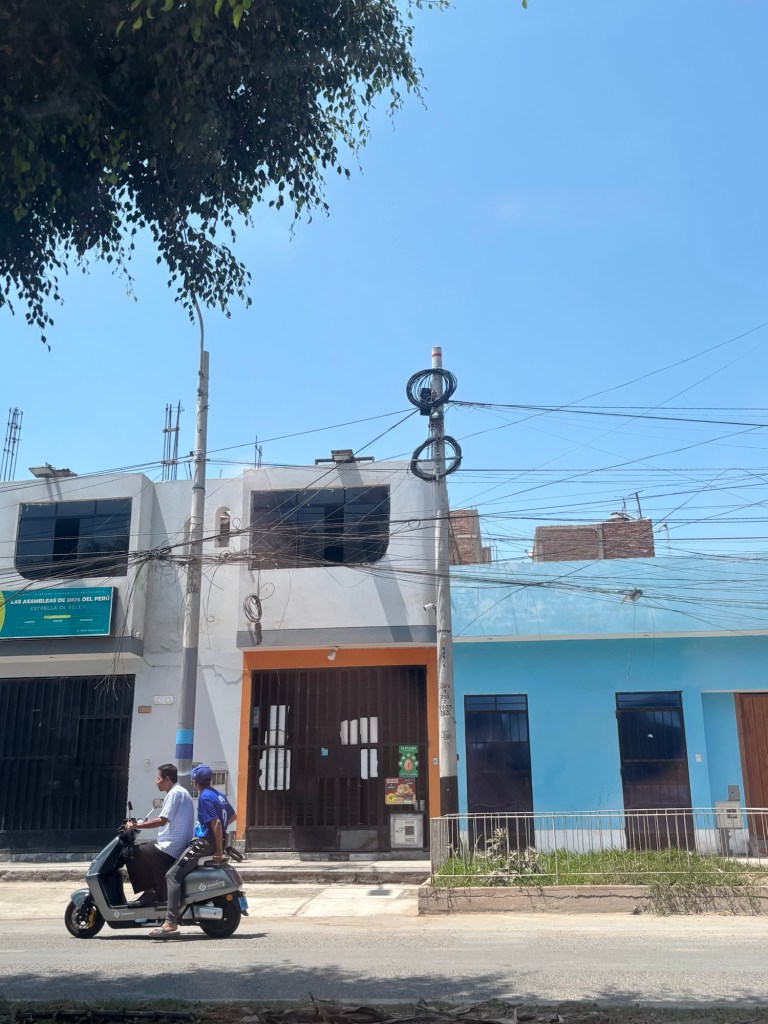
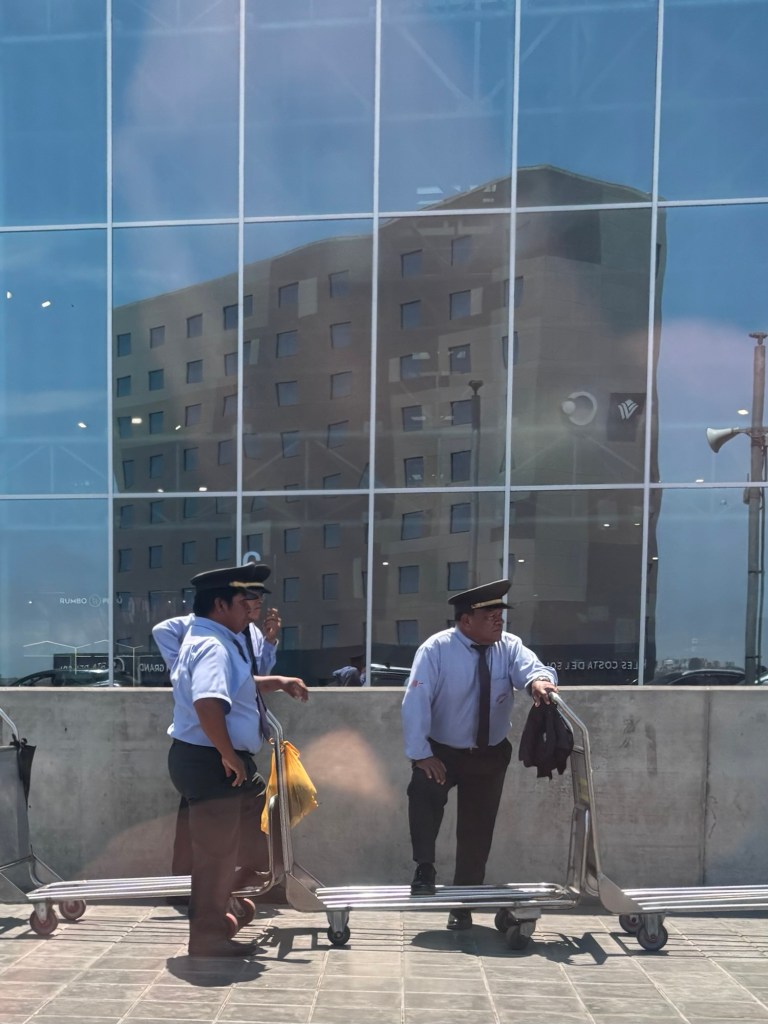
Lima’s Jorge Chávez airport is a model of efficiency. Fine, so the USB charging ports don’t all work (I never did find one that was fully operational), but the security is slick and efficient and it has a lot of good places to eat offering real food, not just fast food junk (England, please learn from this). I’ve also been to shadier airports. Despite being in the heart of the run-down district of Callao – which is known for having a higher violent crime rate than the rest of the capital – I found it was perfectly safe to come and go.


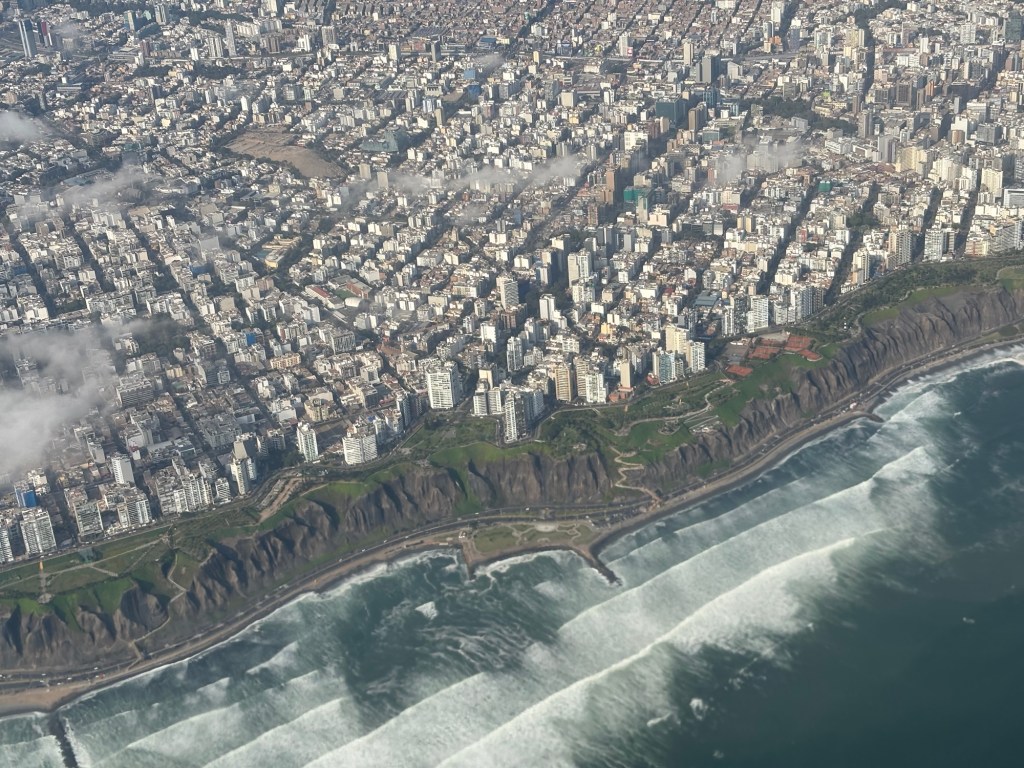
From the air, Lima looks a lot better than it does from the street. You can really appreciate the might of the Atlantic swell as its parallel waves break upon the winding coastal cliffs that separate the city from the sea.

Herman Melville described the city as “Tearless Lima – the strangest, saddest city thou can’st see”. I suspect he was referring either to the lack of rain or, more likely, to the garúa, the dense costal fog that usually clouds Peru’s capital in a white veil. I saw the garúa on the night I arrived, and it lingered into my first morning, but the city has been basking under the South American sun for most of my stay, so tearless is not a word I will be using to describe Lima anymore.


I can’t remember whether I paid extra for a window seat on this flight, but I had one, and that was pretty special. Looking back, it would have been foolish to pay the ridiculous 90$ for the privilege of a window from Madrid to Bogotá, as almost all of the Caribbean and South American leg was under a dense cover of cloud. You win some, you lose some. All I lost was the possibility of a good sleep.

I was on the wrong side of the plane for the Nazca lines, though I think we would have been a bit too high up to see them anyway. What I got instead was an unrestricted view of the mountains below as they climbed and climbed and climbed, up into the clouds and even up and above them.

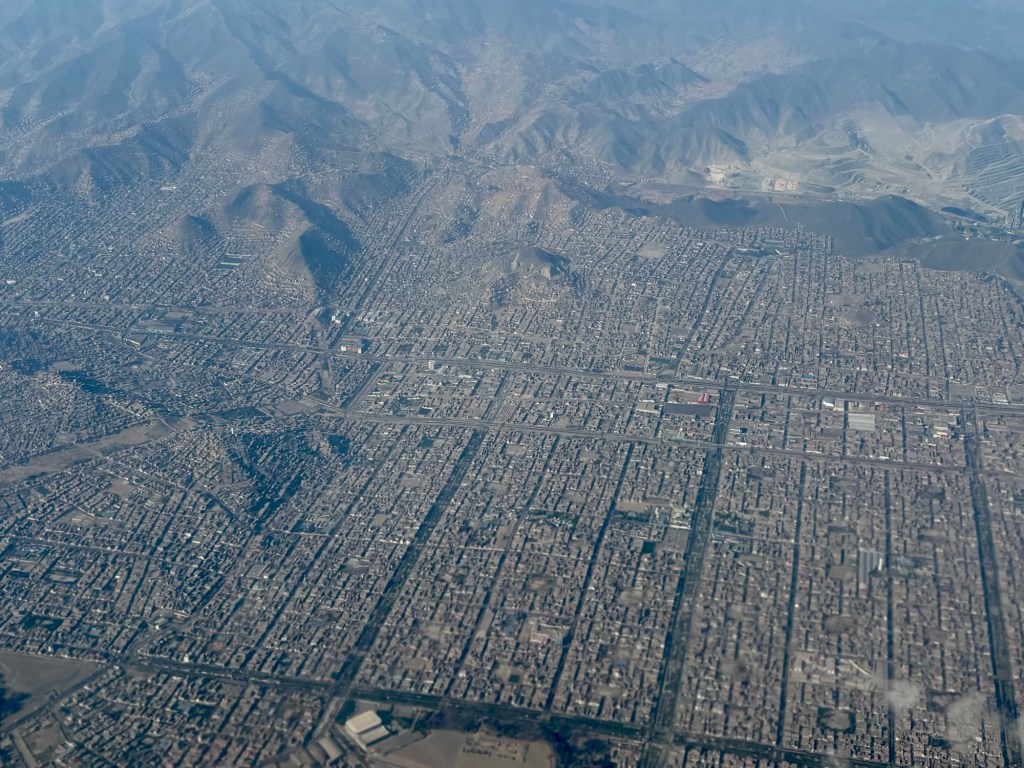
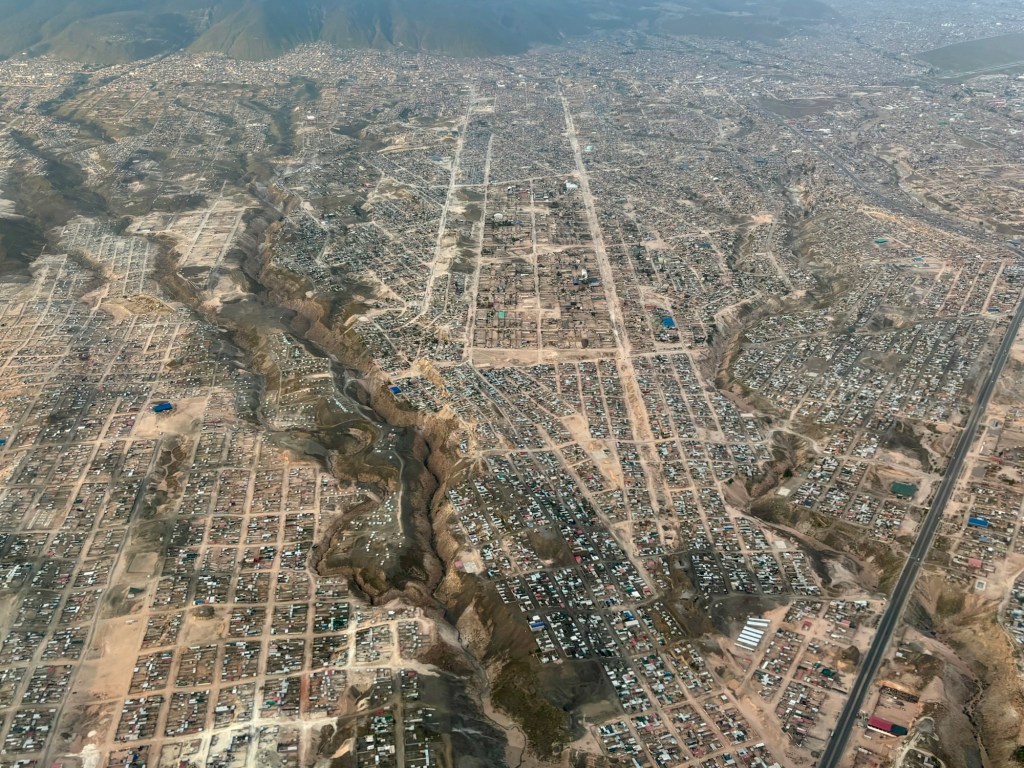
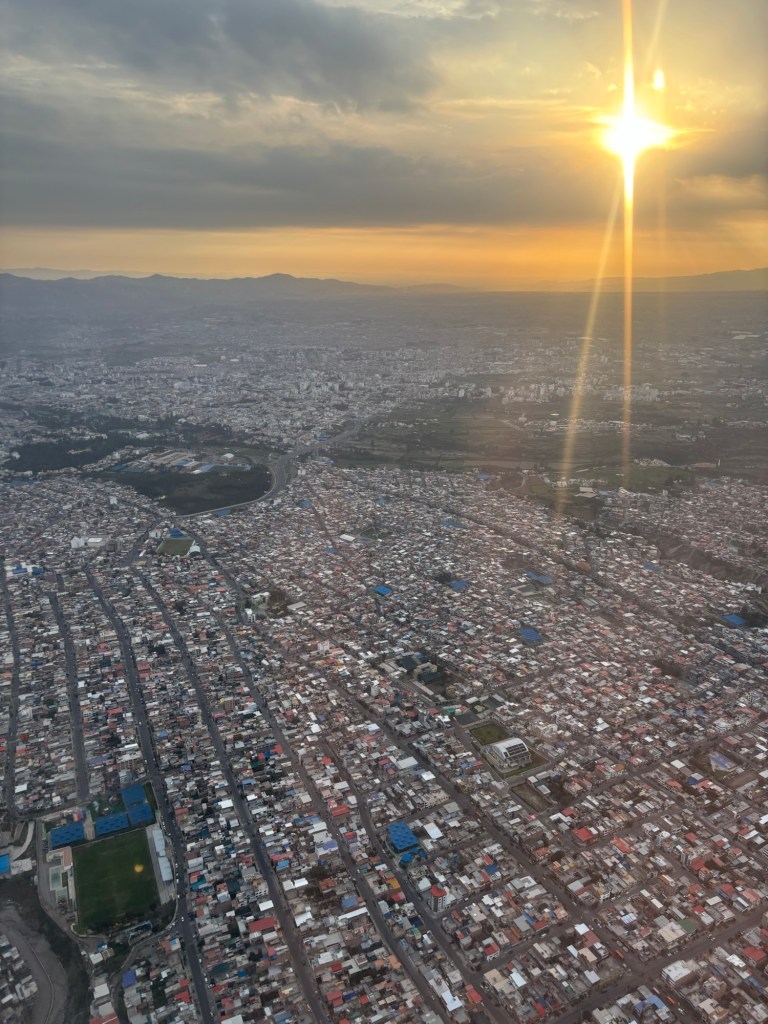
I could post some pictures of the mountains, but with my itinerary for the next week or so being largely mountain-oriented, I think I’ll spare you the overload. What is much easier to appreciate from the sky, however, is the incredible human geography of South America.

I’m no fan of cities – you know this – but that doesn’t mean I can’t appreciate their shape, their size and their strangeness – especially when they seem to blend into the very earth itself (something we don’t do nearly well enough in Northern Europe).


New World cities favour the grid system that, in Europe, is most famously found in Barcelona. It’s still alien to me and I find it quite fascinating to behold from the sky.

Arequipa, the second largest city in Peru after Lima, is also faithful to the grid system – even though the city is scored and cut through by canyons and rivers. Old Word architects would have worked around the landscape, twisting streets and warping estates to fit into the space, but here in the Americas, they just stuck to the plan, regardless of the complications.


Well – here we are in Arequipa, stage two of the Peruvian adventure. I think tonight’s Semana Santa celebration is a subdued one, so I will try to get some rest. It’s a 2.30am start tomorrow, so if I don’t get an early night, I’ll be more like the walking dead for Colca Canyon tomorrow.

Which probably isn’t the best advice when you’re looking for the largest carrion-eater on the planet. BB x