The time has come to leave Lima and the Pacific behind and make for the interior. I have enough sense not to go from 79m above sea level to 3.400m in one go, so I’m bound for Arequipa, the White City, which sits at a decent halfway house of 2.335m. That’s still a good thousand metres higher than Andorra la Vella, which is probably the closest I’ve ever come to sleeping at altitude, but it’ll have to do.
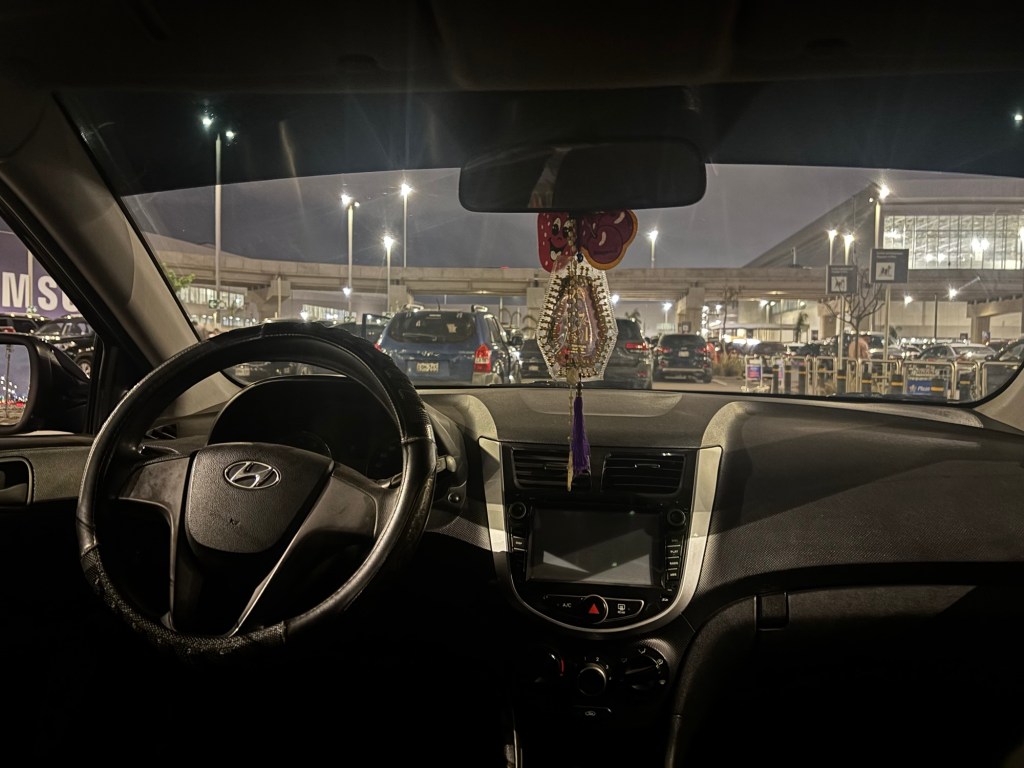
After spending ages writing up yesterday’s report, I sat back in the upstairs lounge area of Pariwana, finished off my (now rather crushed) Doritos and called an Uber. Whisked away by another speedy and efficient limeño, I said hasta la próxima to the city and its mighty Pacific shore – since I’ll be back, albeit briefly, at the end of my adventure.
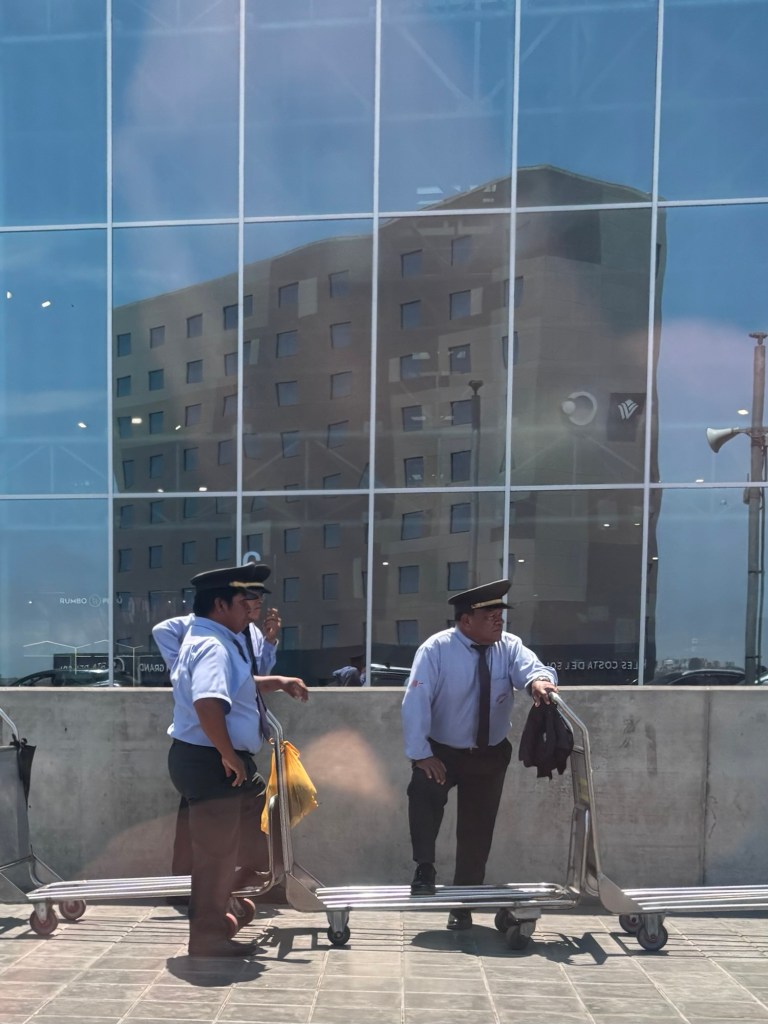
Lima’s Jorge Chávez airport is a model of efficiency. Fine, so the USB charging ports don’t all work (I never did find one that was fully operational), but the security is slick and efficient and it has a lot of good places to eat offering real food, not just fast food junk (England, please learn from this). I’ve also been to shadier airports. Despite being in the heart of the run-down district of Callao – which is known for having a higher violent crime rate than the rest of the capital – I found it was perfectly safe to come and go.
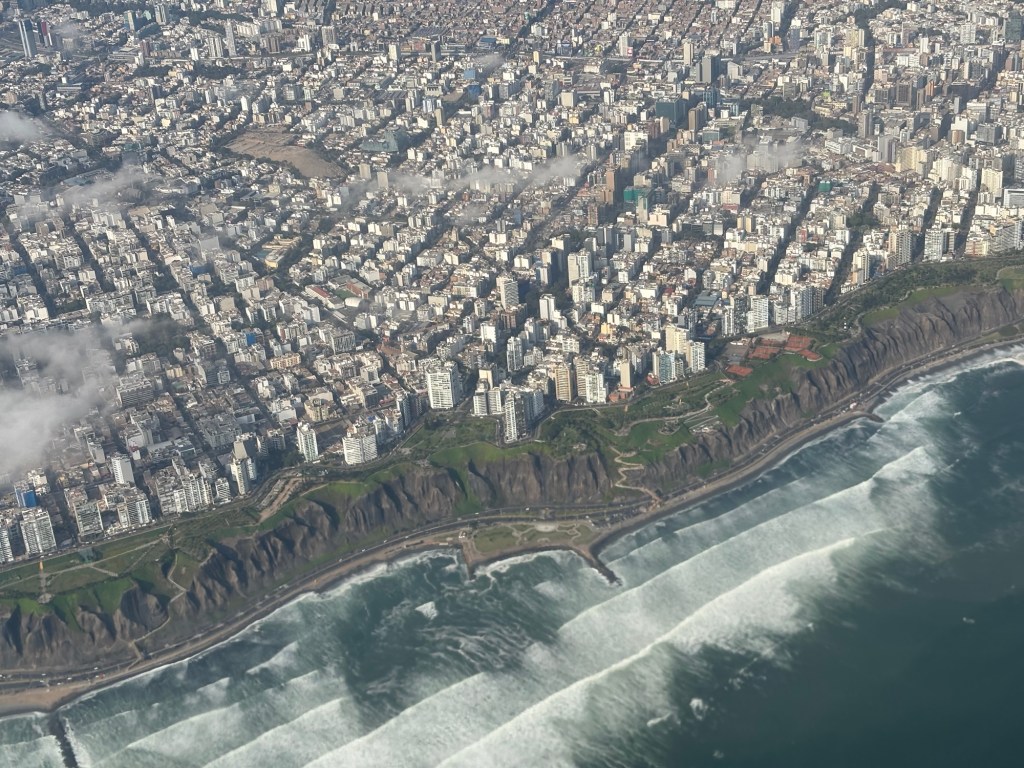
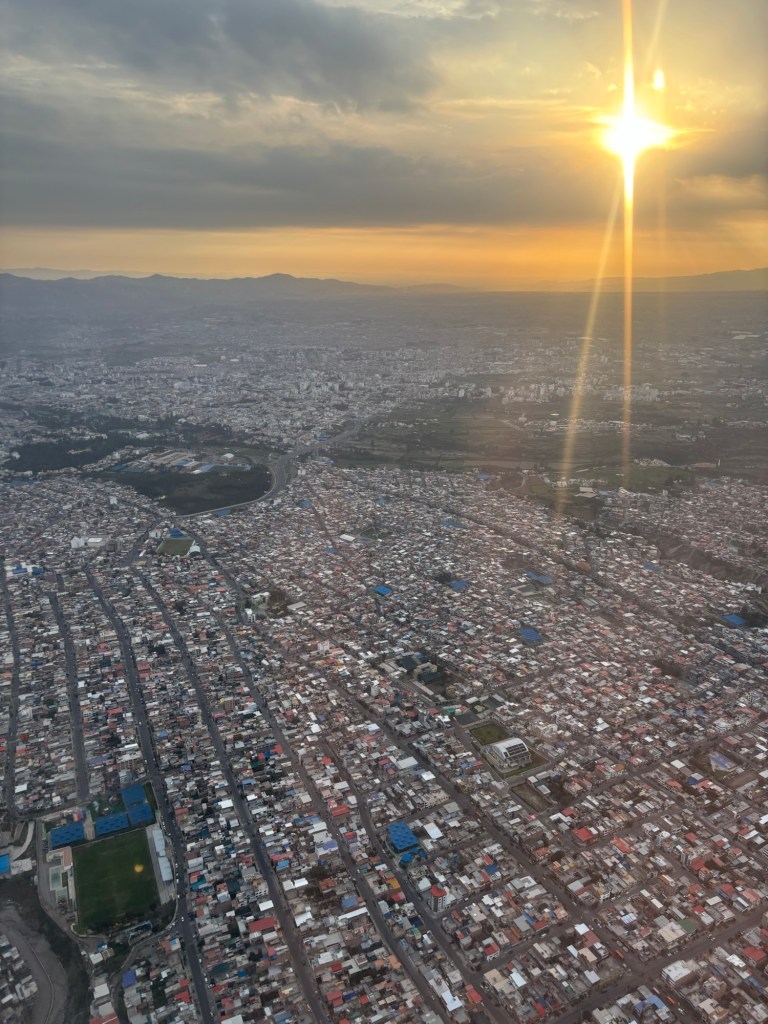
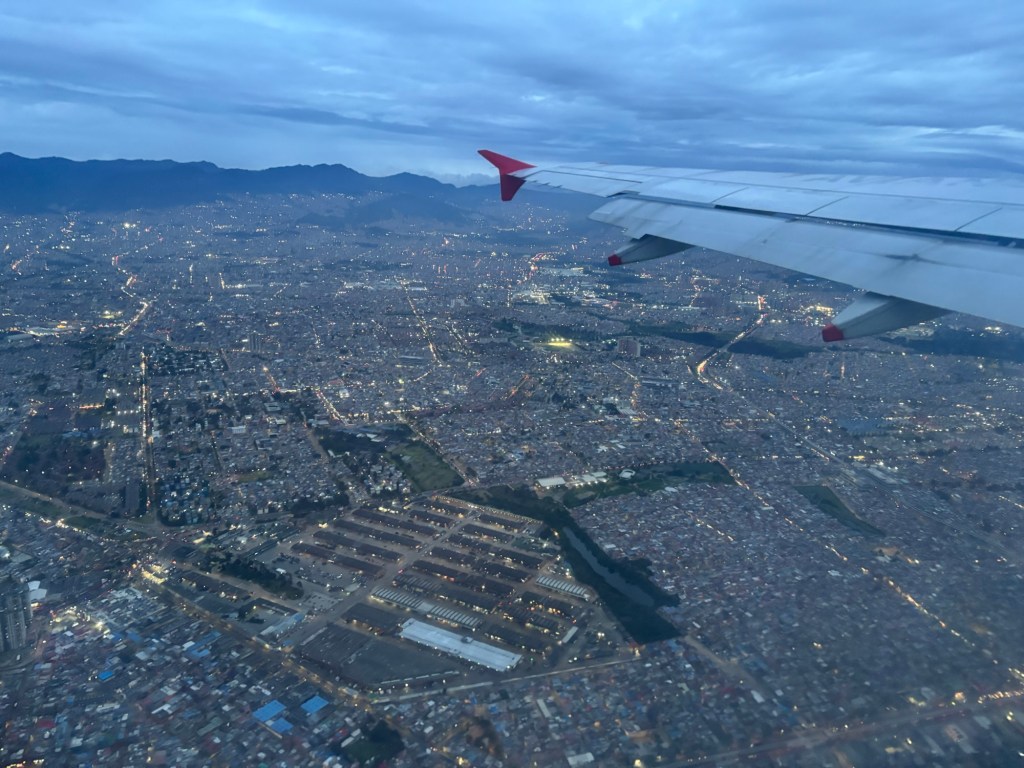
From the air, Lima looks a lot better than it does from the street. You can really appreciate the might of the Atlantic swell as its parallel waves break upon the winding coastal cliffs that separate the city from the sea.
Herman Melville described the city as “Tearless Lima – the strangest, saddest city thou can’st see”. I suspect he was referring either to the lack of rain or, more likely, to the garúa, the dense costal fog that usually clouds Peru’s capital in a white veil. I saw the garúa on the night I arrived, and it lingered into my first morning, but the city has been basking under the South American sun for most of my stay, so tearless is not a word I will be using to describe Lima anymore.
I can’t remember whether I paid extra for a window seat on this flight, but I had one, and that was pretty special. Looking back, it would have been foolish to pay the ridiculous 90$ for the privilege of a window from Madrid to Bogotá, as almost all of the Caribbean and South American leg was under a dense cover of cloud. You win some, you lose some. All I lost was the possibility of a good sleep.
I was on the wrong side of the plane for the Nazca lines, though I think we would have been a bit too high up to see them anyway. What I got instead was an unrestricted view of the mountains below as they climbed and climbed and climbed, up into the clouds and even up and above them.
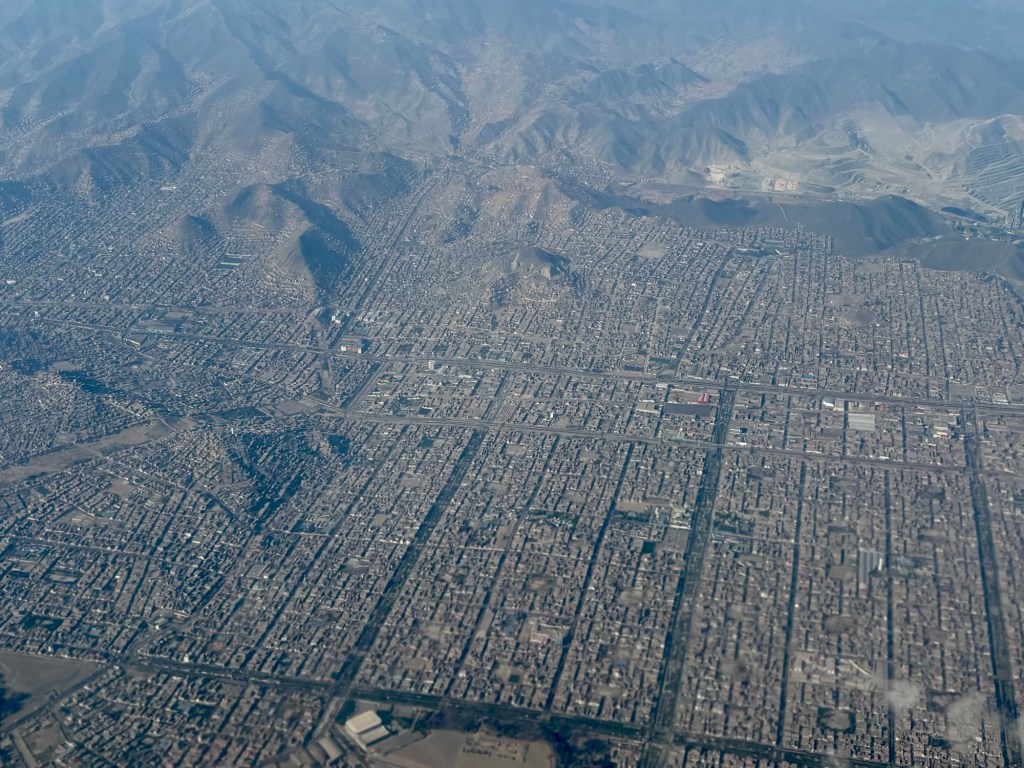
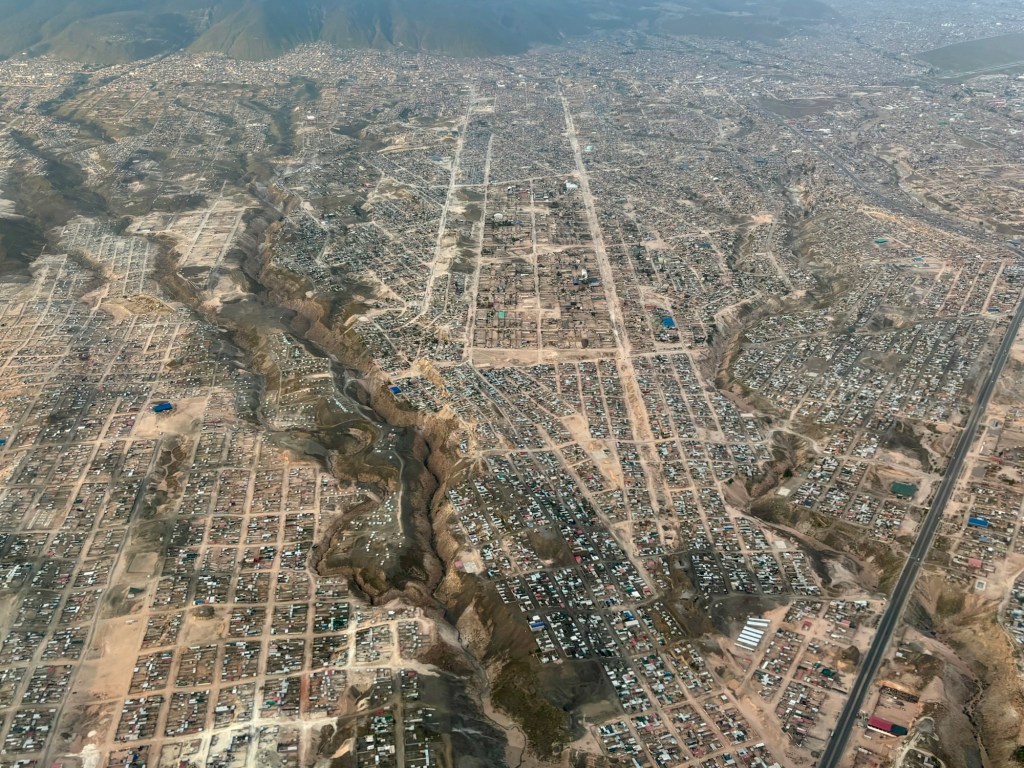
I could post some pictures of the mountains, but with my itinerary for the next week or so being largely mountain-oriented, I think I’ll spare you the overload. What is much easier to appreciate from the sky, however, is the incredible human geography of South America.
I’m no fan of cities – you know this – but that doesn’t mean I can’t appreciate their shape, their size and their strangeness – especially when they seem to blend into the very earth itself (something we don’t do nearly well enough in Northern Europe).
New World cities favour the grid system that, in Europe, is most famously found in Barcelona. It’s still alien to me and I find it quite fascinating to behold from the sky.
Arequipa, the second largest city in Peru after Lima, is also faithful to the grid system – even though the city is scored and cut through by canyons and rivers. Old Word architects would have worked around the landscape, twisting streets and warping estates to fit into the space, but here in the Americas, they just stuck to the plan, regardless of the complications.
Well – here we are in Arequipa, stage two of the Peruvian adventure. I think tonight’s Semana Santa celebration is a subdued one, so I will try to get some rest. It’s a 2.30am start tomorrow, so if I don’t get an early night, I’ll be more like the walking dead for Colca Canyon tomorrow.
Which probably isn’t the best advice when you’re looking for the largest carrion-eater on the planet. BB x
I’ll start with Uber. Lima is absolutely enormous – a 2,672 square kilometre metropolis with over ten million inhabitants – and it’s pretty daunting to get even from Miraflores to the coast, and especially when you’re lugging around some pretty expensive gear.
Uber to the rescue! For little more than the price of a meal deal, I was able to get to my destination this morning: the Pántanos de Villa, a wetland reserve sheltered within the city itself.
I actually had cold feet about my plan this morning. Was I doing some ridiculous by striking out on my own to a corner of Lima well off the usual tourist trail?
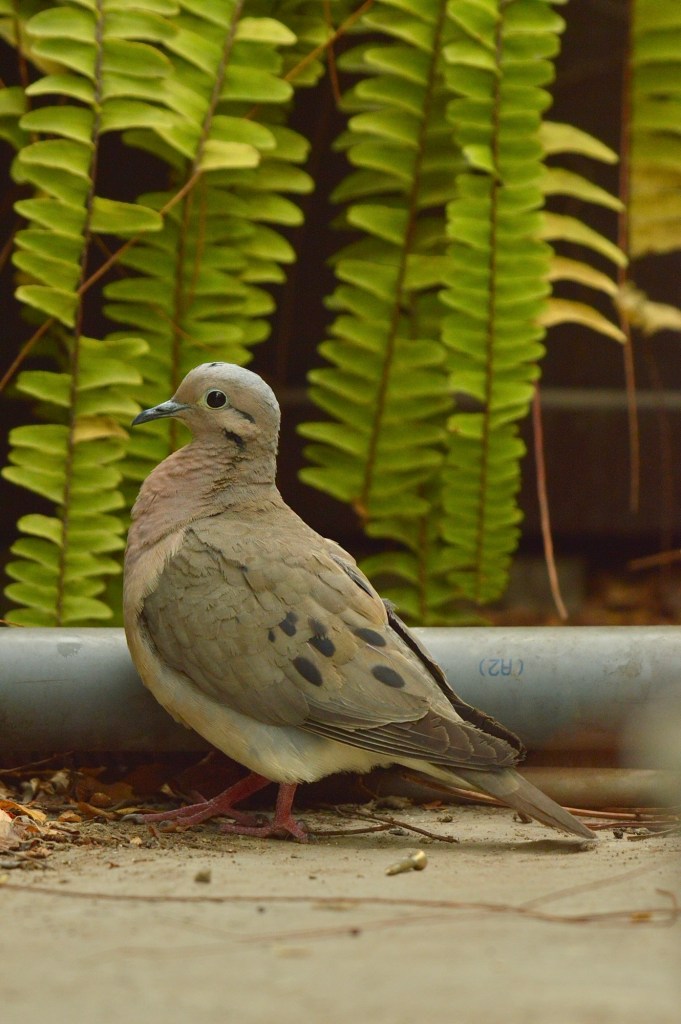
Then again, if I didn’t, would I regret it? The answer was a resounding yes, so I hailed an Uber and set out. But not before seeing my first Peruvian bird of the trip: an eared dove which was kind enough to wake me up this morning.
Uber drivers aren’t a very talkative lot, but their choice of radio is always interesting. My first had YouTube on and was watching/listening to a bizarre Peruvian comedy show featuring two men with oversized prosthetic noses commenting on the imminent Paraguay/Brazil football game. Whatever they were saying was hard to follow beneath an overactive soundboard, rotating between all the classic meme sounds after almost every line. Soundboards seem to be a feature of modern mass media, but I confess myself surprised to find it already taking root out here.
The most obvious sound by far is car horns – which are technically banned in Miraflores, though that doesn’t stop them being part of the sinfonía limeña.
The Pántanos are a sanctuary within the hustle and bustle of Lima. Even if birds aren’t your thing, it’s good to come here for a bit of peace and quiet. I got there for 8.30am, which is when the website said the reserve opened its doors, but I was told very politely that the guides would be there at 9am, if I would be so kind as to wait.
I had no issues waiting – one of the thing I was most excited to see in Peru was already here. So many of them, in fact, that I lost count.
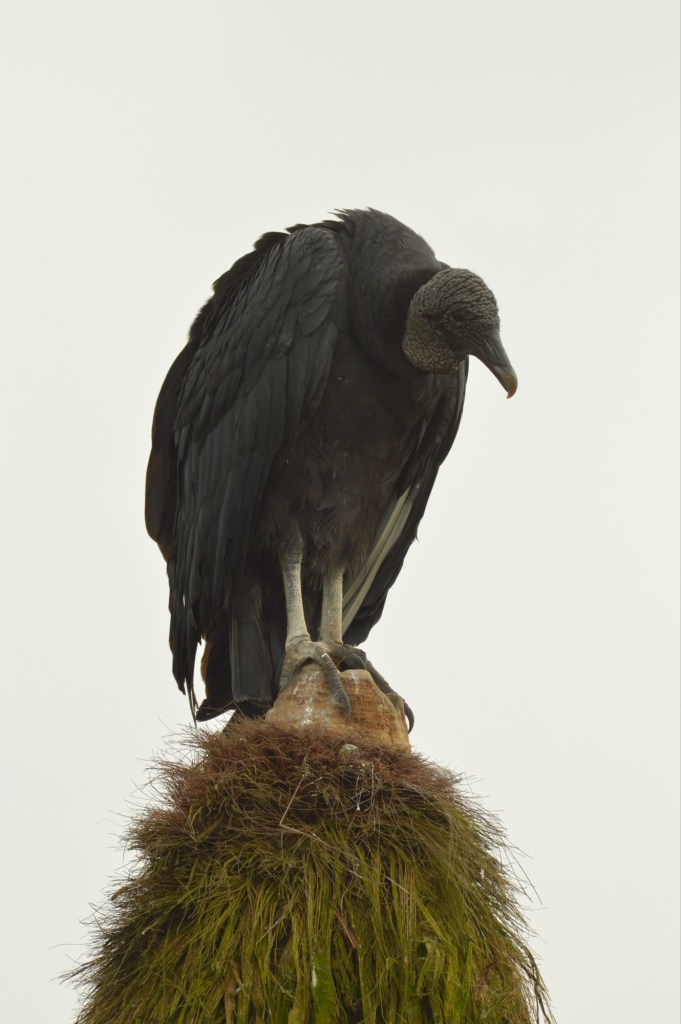
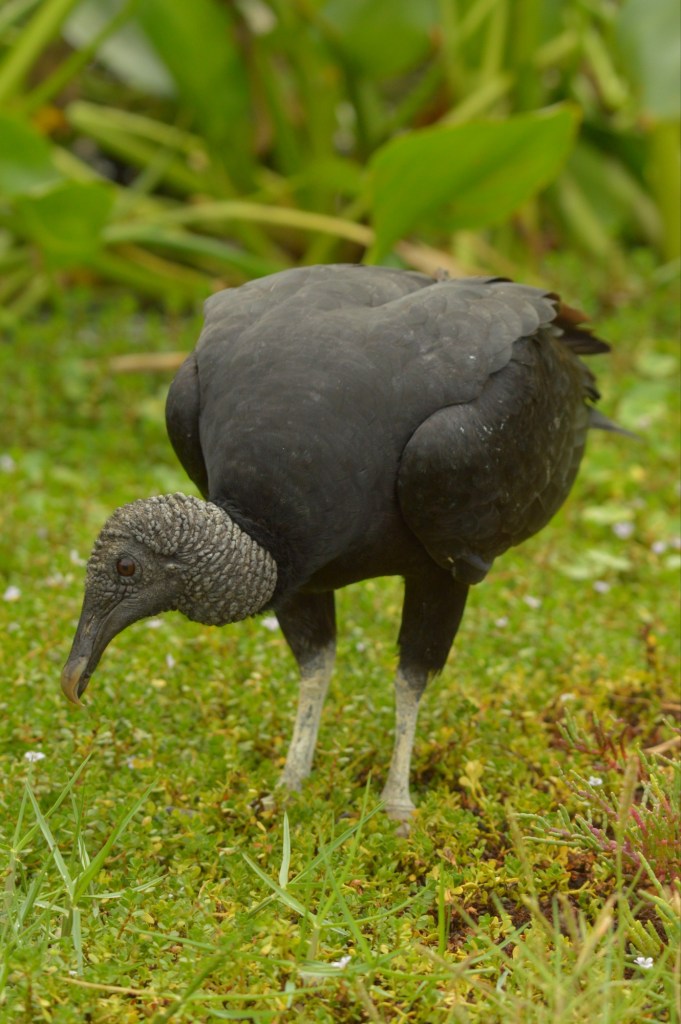
Introducing the black vulture, known in Peru as the gallinazo, which might be translated as “enormous chicken” – which fits quite nicely, I think.
They’re about the size of a turkey, and the only sound they make is a sort of grunted sneeze. My guide, a knowledgeable young tourism grad who was working her way toward a posting in Arequipa, pointed out how skittish and shy they can be – which was the only thing she said that made me raise an eyebrow, because it feels like nothing in this country fears the presence of man like they would in Europe. I’ve never been so close to so many species in a single day. I wonder why that is?
The Pántanos’ star resident is the Siete Colores de la Totora, a seven-coloured gem of a bird that is surprisingly hard to spot as it feeds among the stems of the reeds. Seeing one would, according to my guide, be a very “buen augurio” (good omen), but I made it plain that I wasn’t here to tick boxes – I just wanted to see any and all of the magic that Peru would offer. We got incredibly lucky and saw a wild cuy, a species of guinea pig that are native to the marshes, but it was much too quick for my camera.
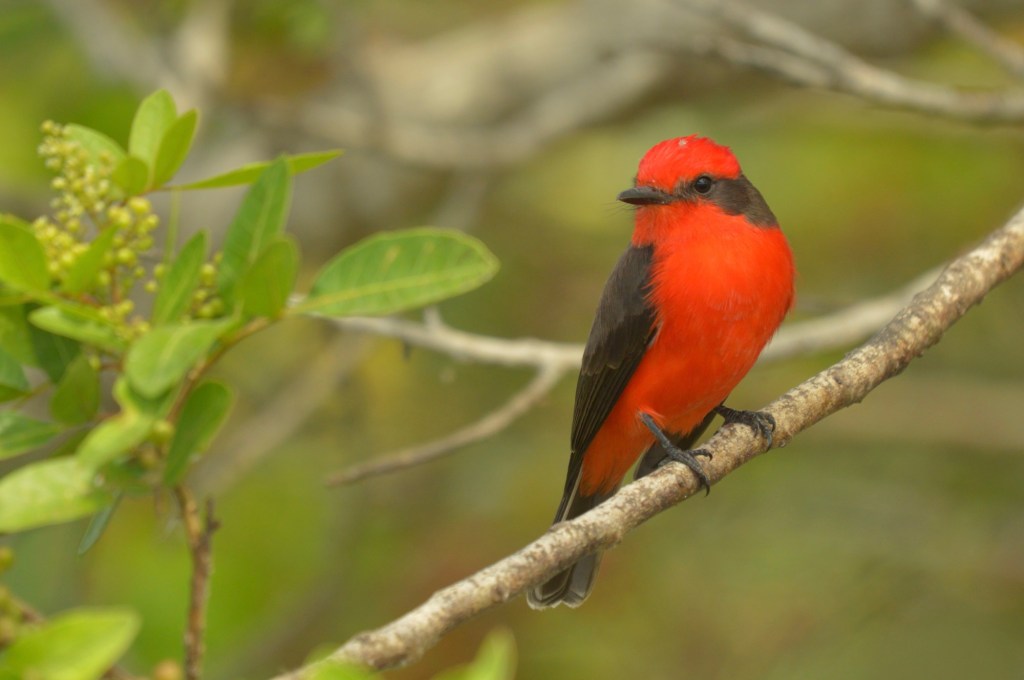
I had more luck with one of the reserve’s most beautiful treasures: a vermilion flycatcher, surely one of the most spectacular birds to be found in Peru – and they’re quite literally everywhere!
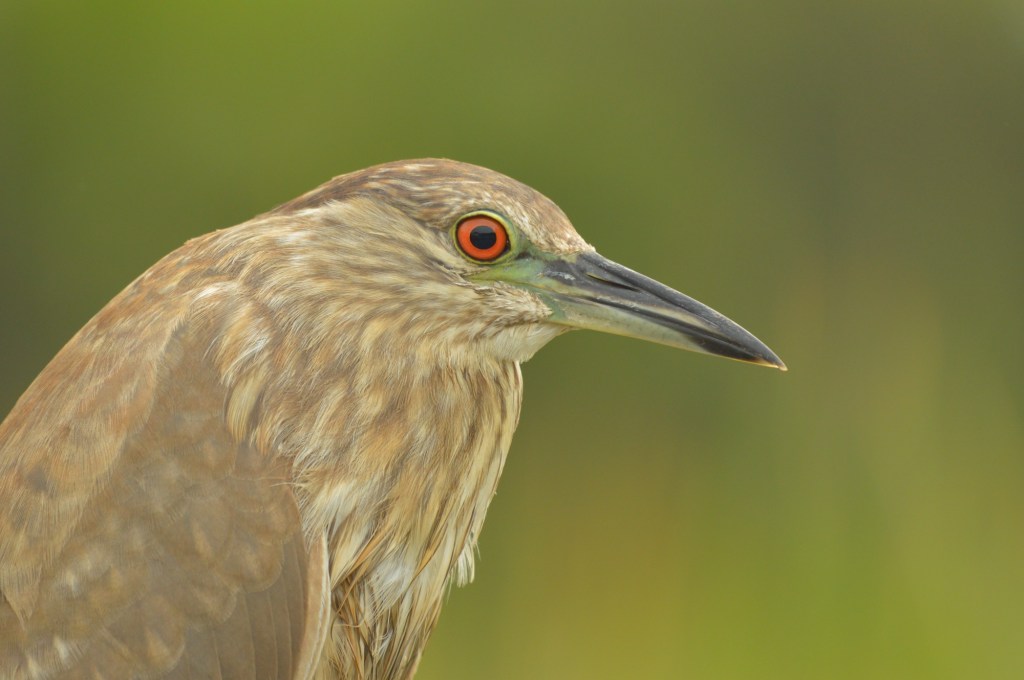
I needn’t have worried about the Toledo night heron being so distant, because there was one sitting right next to the visitor’s centre. I’ve never had the chance to appreciate their bright red eyes from so close, an evolutionary adaptation to hunting by night – hence the name!
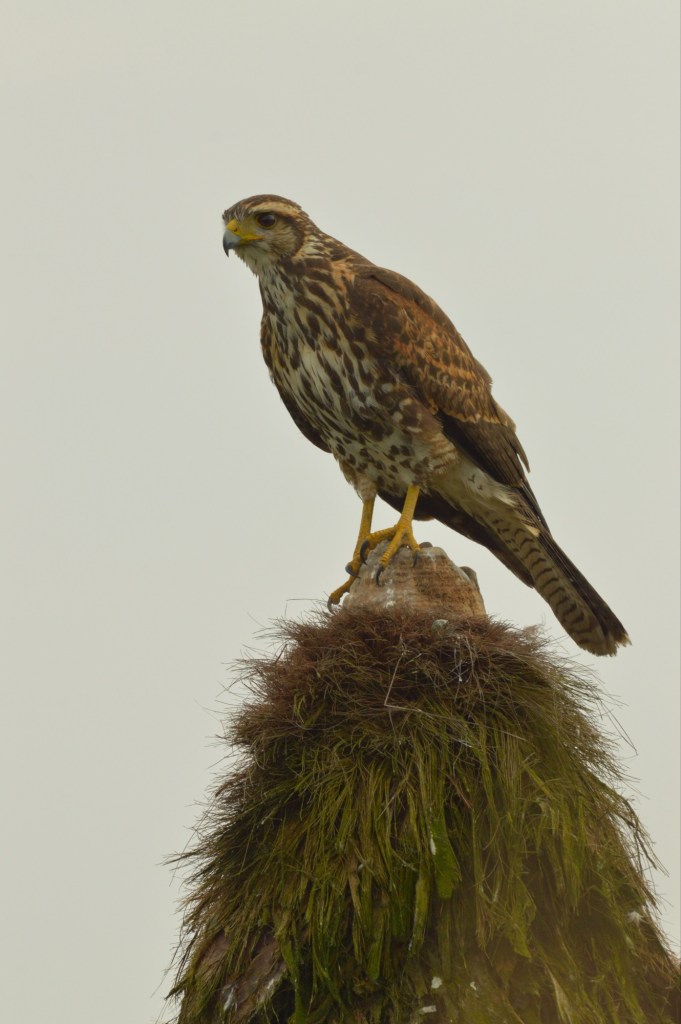
Not to be outdone by the vultures, a young Harris hawk swept in to investigate the cuy situation. These incredibly intelligent birds are a favourite of falconers – if you’ve been to a bird of prey show, you’ve almost certainly seen one – but they’re native to this part of the world. They’re also one of the few species here I knew on sight!
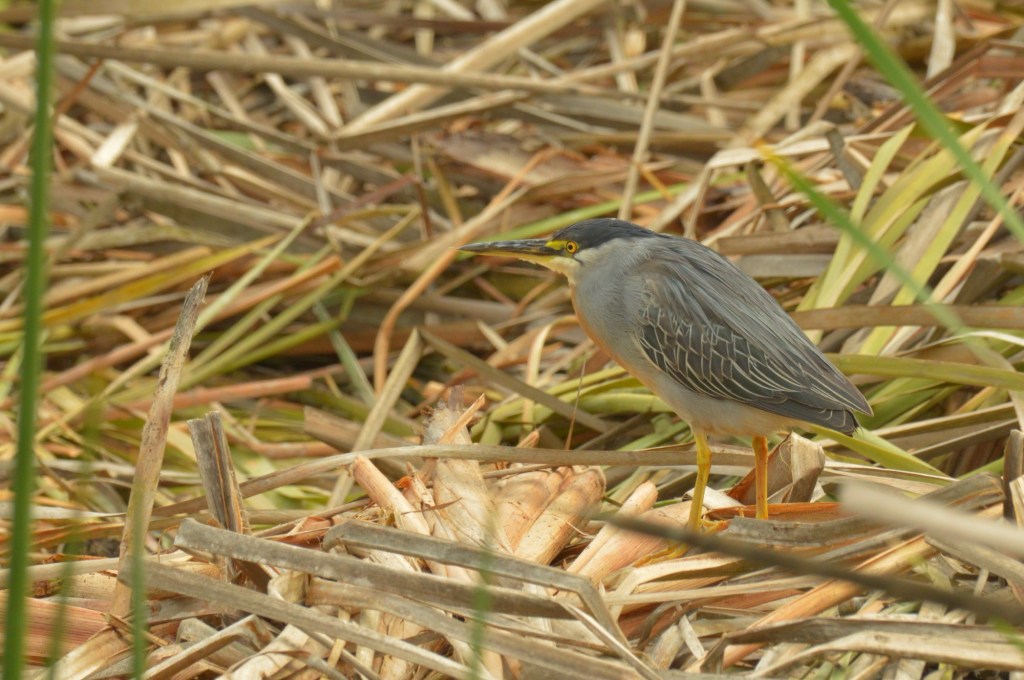
I saw my first hummingbird of the trip: an Amazilia, I think, though I haven’t gone through my sightings with a guidebook yet. They’re damned near impossible to photograph until they land, being about the size of a finger and moving with all the agility of a butterfly. I’m trying to snap everything I see so I can log them later, but at least I recognised this little fella: a striated heron, one of a number of familiar species that are shared between Peru and – of all places – Uganda.
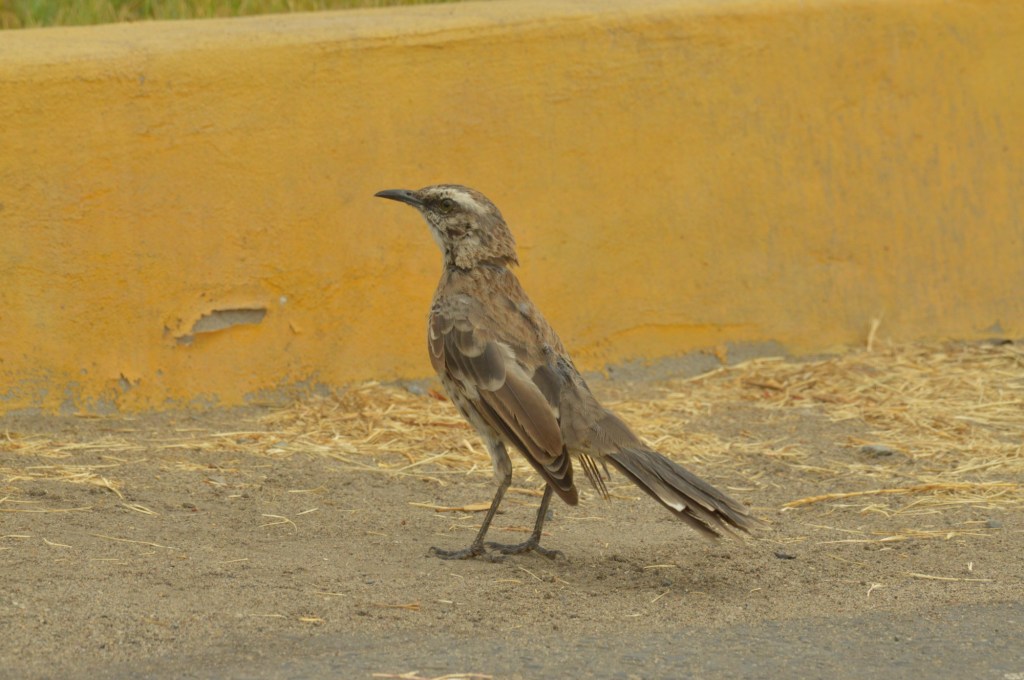
To reach the last circuit of the Pántanos de Villa, you have to leave the wetlands and walk about ten minutes further along the road to the coast. The road passes through a private residential estate, but they’re quite used to naturalists from the Pántanos passing through, so I was waved through without any ceremony. I could have stopped a number of times in pursuit of an unfamiliar birdcall, but I didn’t particularly want to draw attention to myself by pointing my zoom lens into somebody’s garden, so I contented myself with the mockingbirds that followed me inquisitively for half of the journey.
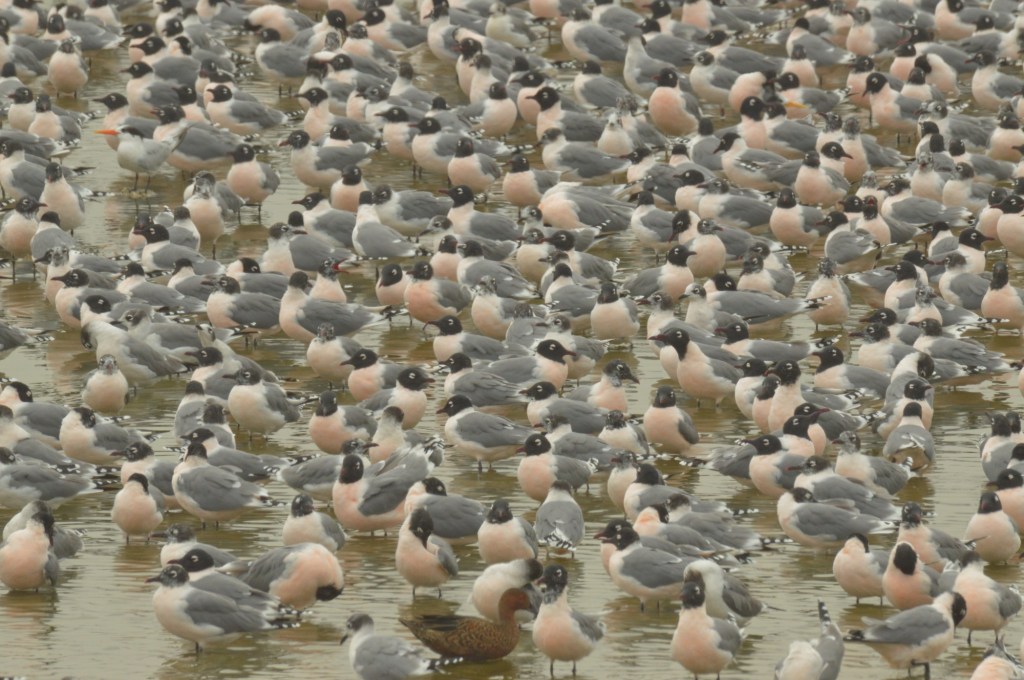
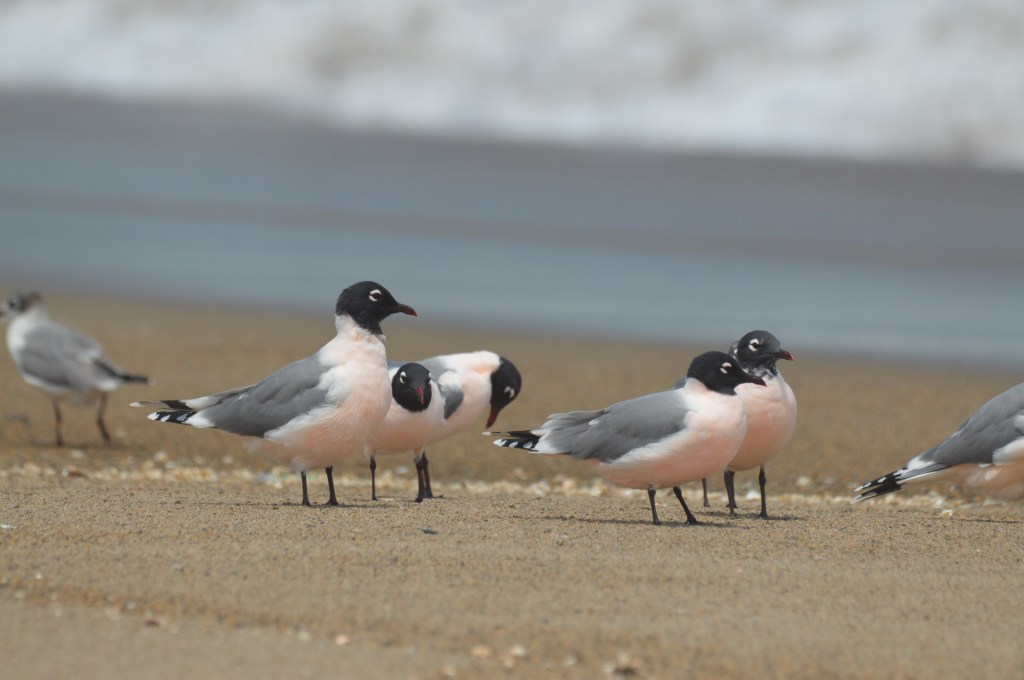
Out past the condominium is the Circuito de Maravilla, which – at the right time of year – hosts an enormous flock of Franklin’s Gulls, which come all the way down to Peru from their breeding grounds in the prairie lakes of central Canada and the Dakotas.
This was obviously the right time of year.
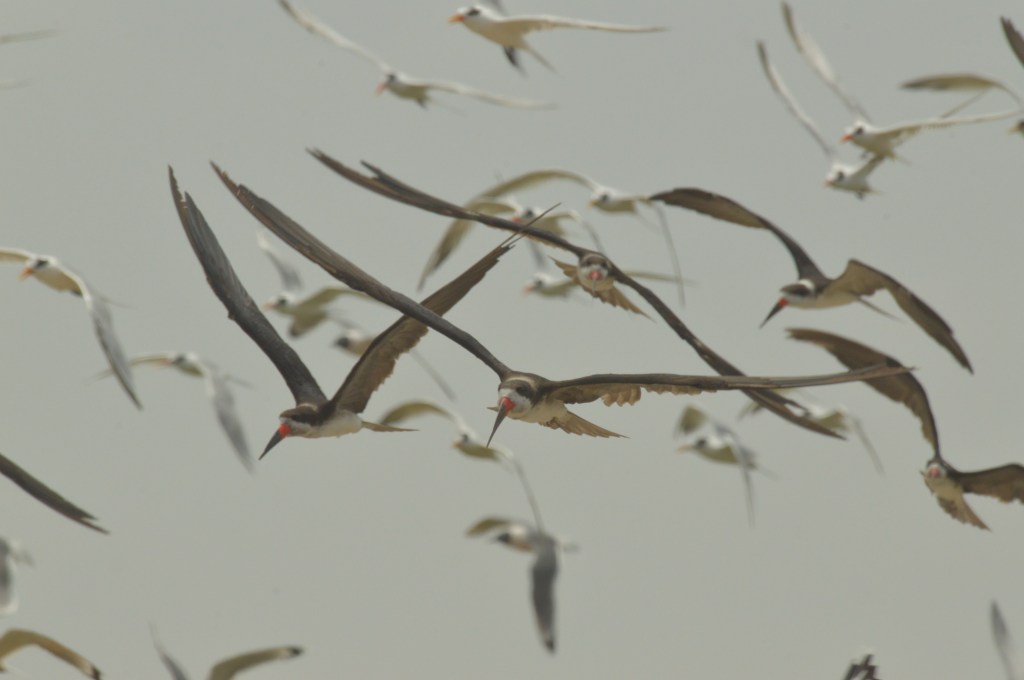
Hundreds of them had gathered at the lagoon, making ready to begin their 15,000 kilometre migration to their nesting grounds. Some were already sporting the handsome salmon pink chests and black hoods. They were joined by a huge flock of skimmers, a bizarre bird whose lower mandible is longer than its upper, so that it can skim the surface of the water to catch its prey.
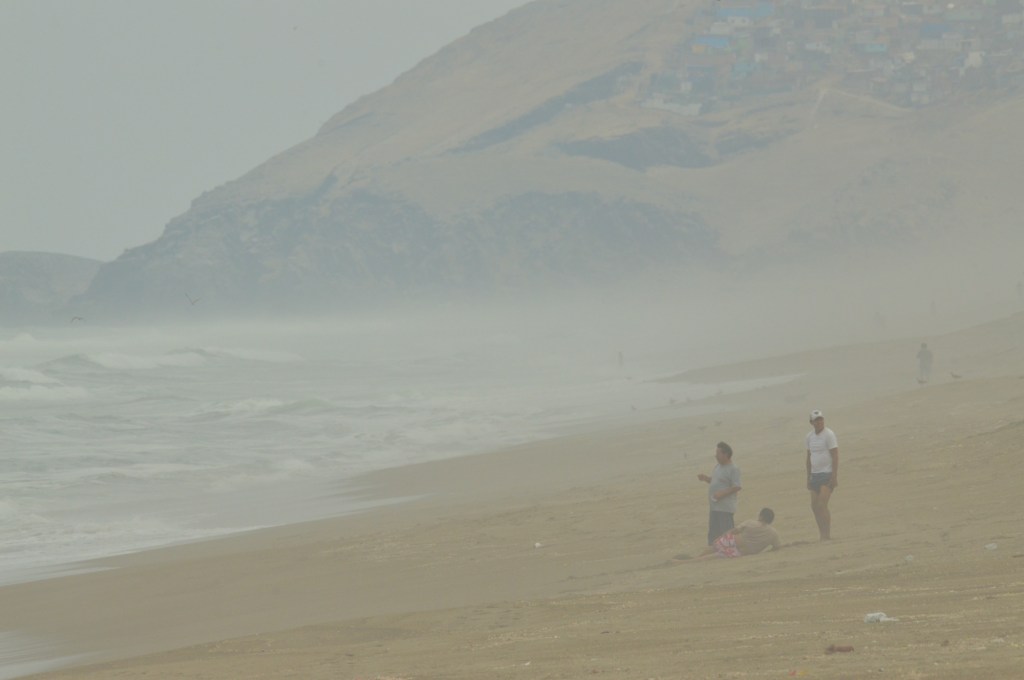
Beyond the lagoon, however, is a sight even more impressive than anything I’d seen thus far. The Pacific.
If I’m mentioning it a lot, it’s because I’m bewitched. I’ve never seen or heard an ocean quite like it. It booms just like I’ve read about in books. Not the slow, salty roar of the Atlantic, but a genuine boom like a distant cannon. It has to be heard to be believed.
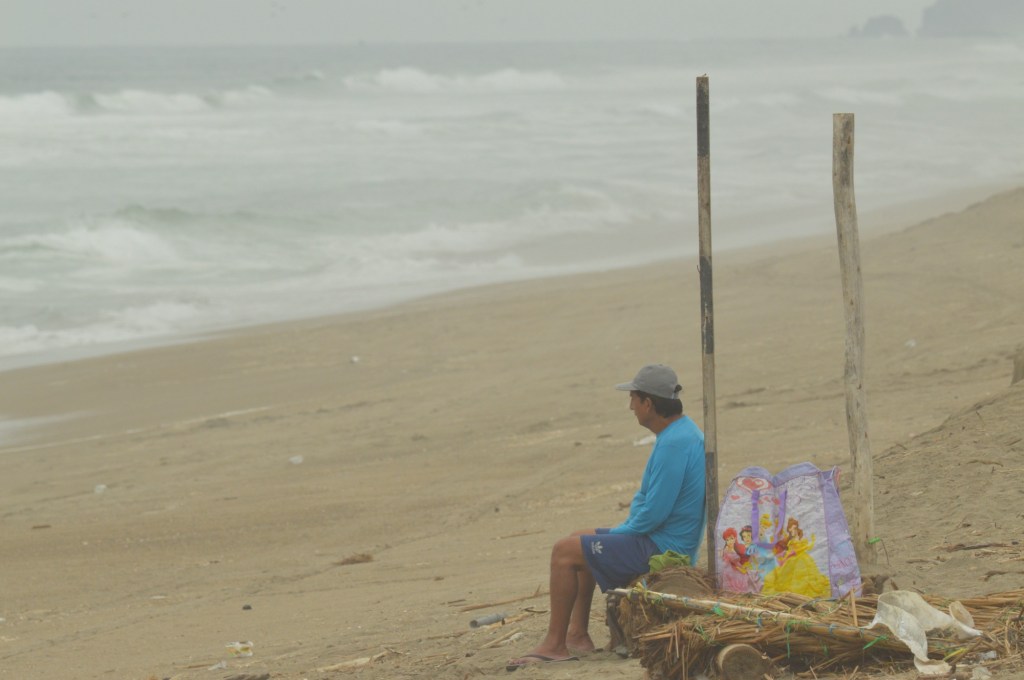
I had to sit and watch it for a while. I wasn’t the only one with that idea, either: I was joined in my vigil for most of the morning by a local man with a baseball cap and a Disney princess carrier bag. He simply stared out to sea for the best part of half an hour.
So did I. It’s nice to know I’m not the only one who can lose time just staring at the beauty of nature.
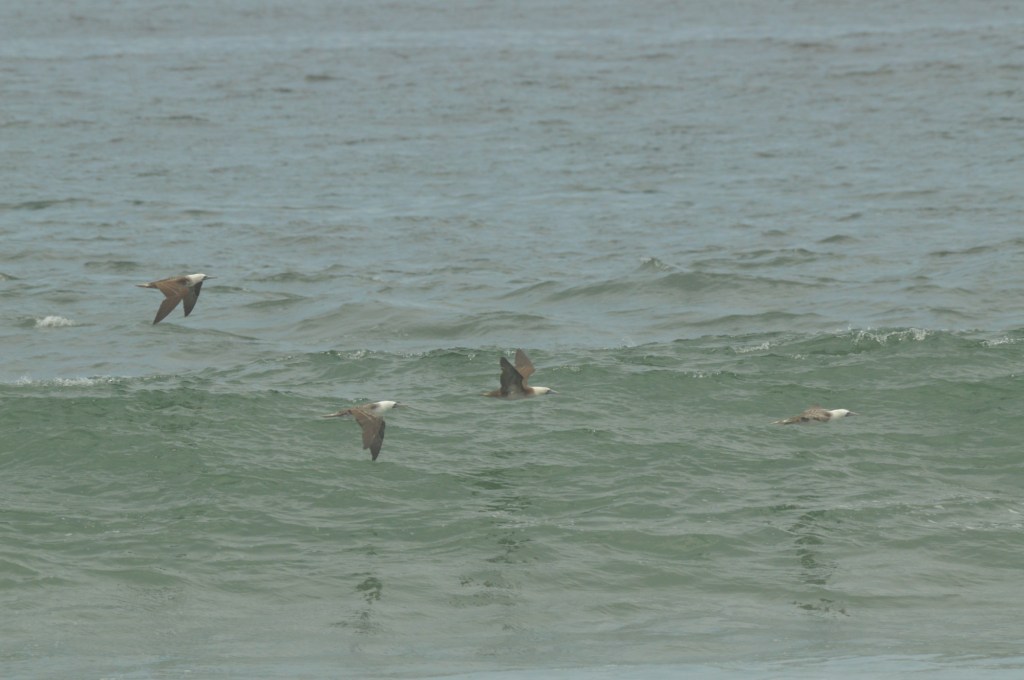
The Humboldt current which flows up the South American coast from Antarctica keeps the water cold – and extremely productive. This is one of the richest seas in the world, and you won’t be allowed to forget it for even a moment. Gulls, terns, cormorants, boobies, pelicans and an attendant host of shorebirds are constantly in sight. I suspect I’ll have better results at Paracas tomorrow.
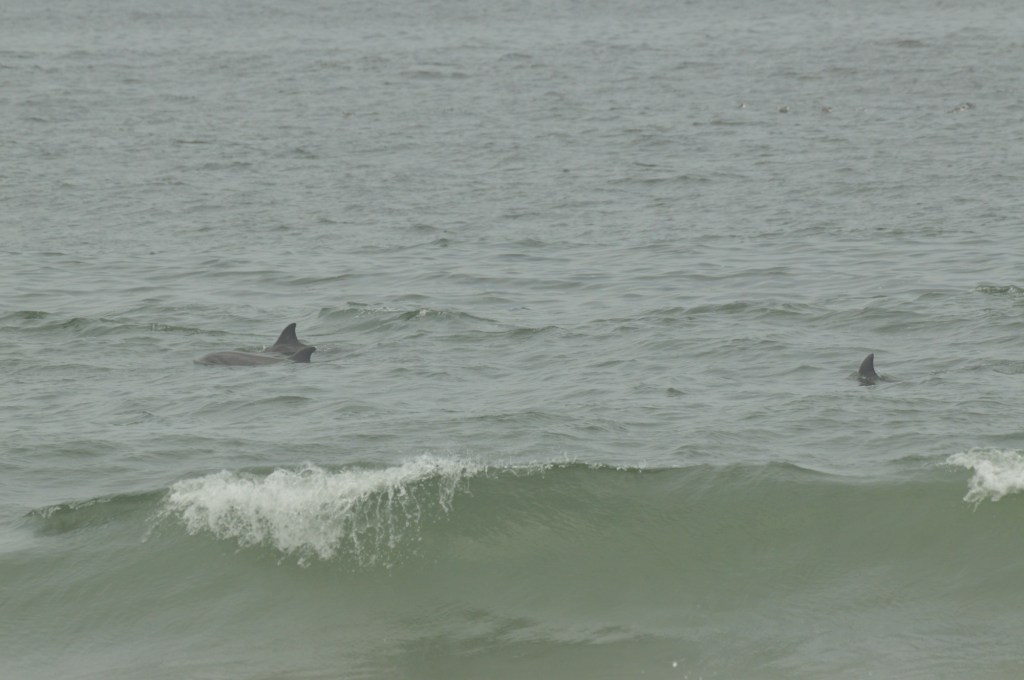
It wasn’t just birds, either. While I was scanning the open ocean from a washed-up palm stump, I saw something dark cresting the water, then another – and another. A whole family of dolphins were feeding just off the shore. They didn’t breach, but they stuck around long enough to count them: eight of them in all. And all because I stopped to watch the waves for a while.
The sun came out from behind the clouds around 12, at which point I thought it sensible to consider a retreat – the Peruvian sun can be a cruel god, and I hadn’t brought my sun lotion (I hadn’t expected to stay so long!). Some of the Franklin’s gulls came to say goodbye, looking even more smart in the sunlight.
I made it back to the shade of the Pántanos visitor centre and rested for a bit. I could have hailed an Uber there and then, but I wasn’t quite done with the wetlands, and when I saw a couple of visitors head into the reserve on their own, I followed suit.
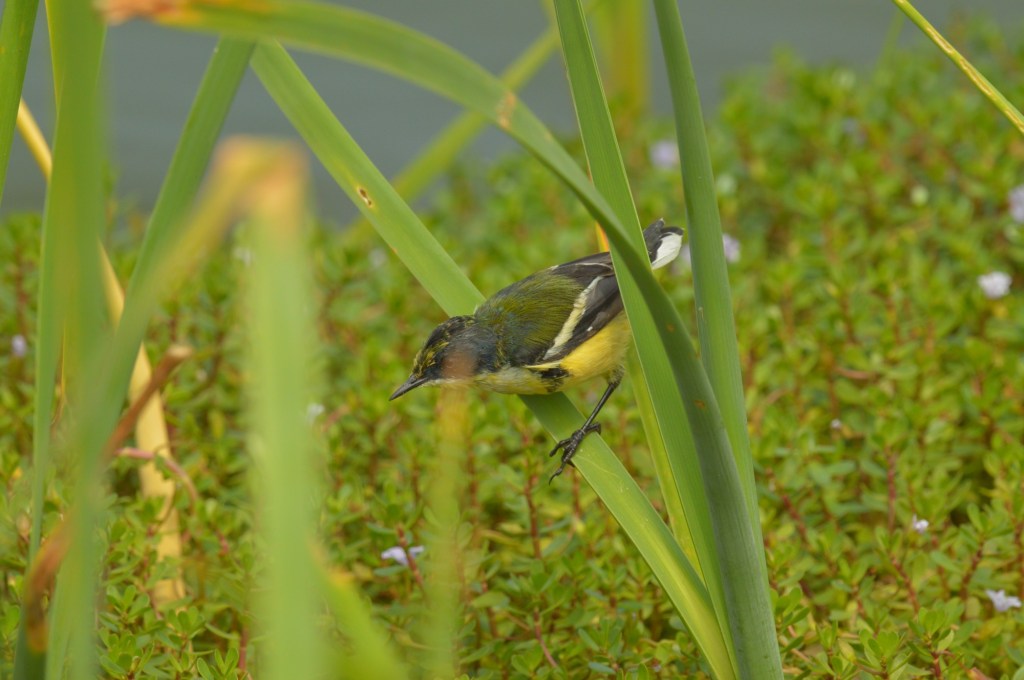
No sign of the cuy, but while I was searching I saw something moving among the reeds. My buen augurio had come to see me off: a seven-coloured rush tyrant. It’s only a youngster, so it’s not as dashing as it will be in a year’s time, but that’s neither here nor there. Peruvians say they grant wishes. So I have made mine.
I could have included even more photos, but I’ll try to pace these posts – there’s simply too much to report, so I must be choosy!
I’m currently taking it easy back at the hostel. My camera definitely needs charging after a serious workout, as do my own batteries – and I could use a shower.
That’s enough work for the Nikon today, I think. I’ll switch things up tonight and explore the human side of Peru for a change! BB x
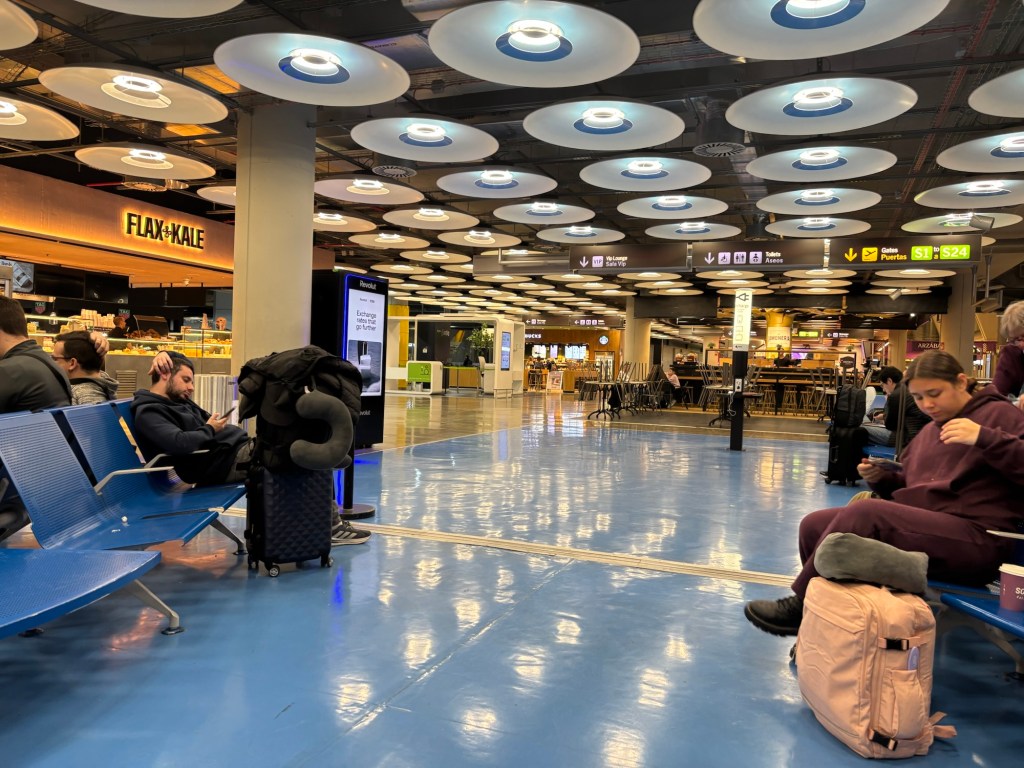
“Nobody speaks English in this fucking airport,” says the miserable Brit sitting behind me over the phone. “You’d think in one of the busiest airports in the word they might have someone who can speak English.”
With that kind of attitude, it’s hardly surprising that flights to the UK are sequestered away in Madrid’s cut-off Terminal 4S, together with all the other non-European destinations: Bogotá, San Juan, Dallas and Chicago…
I know I can be a bit of a snob when it comes to Spanish, but it always gives me a knot in my stomach when I hear one of my countrymen speaking like that, as though the rest of the world should simply kowtow to the supremacy of the English and their language. That mindset should have perished with the Empire, long ago, but sadly it’s all too common – and probably on the rise, with the number of students studying languages continuing to plummet in the UK.
For the record, English is absolutely everywhere in Barajas. Most of the signage is in English first and Spanish second. You’d have to try pretty hard to be genuinely cut off from the English language out here these days. Sometimes I think the Spaniards just enjoy playing the “no hablo inglés” card when they encounter a grumpy fellow like the man behind me. It keeps us on our toes – and it’s one way to get back at us for the slap in the face that was Brexit.
12.192 feet above the Atlantic, Southwest of Corvo & Flores. 11.55.
They dimmed the lights in the cabin about two hours ago, shortly after serving breakfast. Most of the passengers are wrapped up in their blankets and fast asleep. I don’t know how much I have slept in that time, but I’d wager it’s not much – more like wakeful dozing. I don’t usually go to bed before one or two in the morning, so despite the five AM start I’m probably operating on a good deal more sleep than usual. I moved my trip to Paracas to Wednesday, which should give me time to get a good night’s sleep and acclimatise once I reach Lima.
There’s a nice father and daughter from La Rioja sitting next to me, off to visit a relative in Guatemala. Since we’ve established friendly relations, hopefully they’ll let me take a photo out of the window when we pass over the Caribbean in a few hours’ time. I’ve got the aisle seat, which is fine for legroom, but bad luck for both sleep and views.
I haven’t got my head around the boarding procedure for Avianca. I was in Group F out of A-G, so I assumed I’d be one of the last on, but they let F-G on before D-E. Unremarkable, maybe, but I’m in Group D on the next flight, so I hope that doesn’t mean I’m right at the back of the line. I guess it depends on how the Colombians order their alphabet.
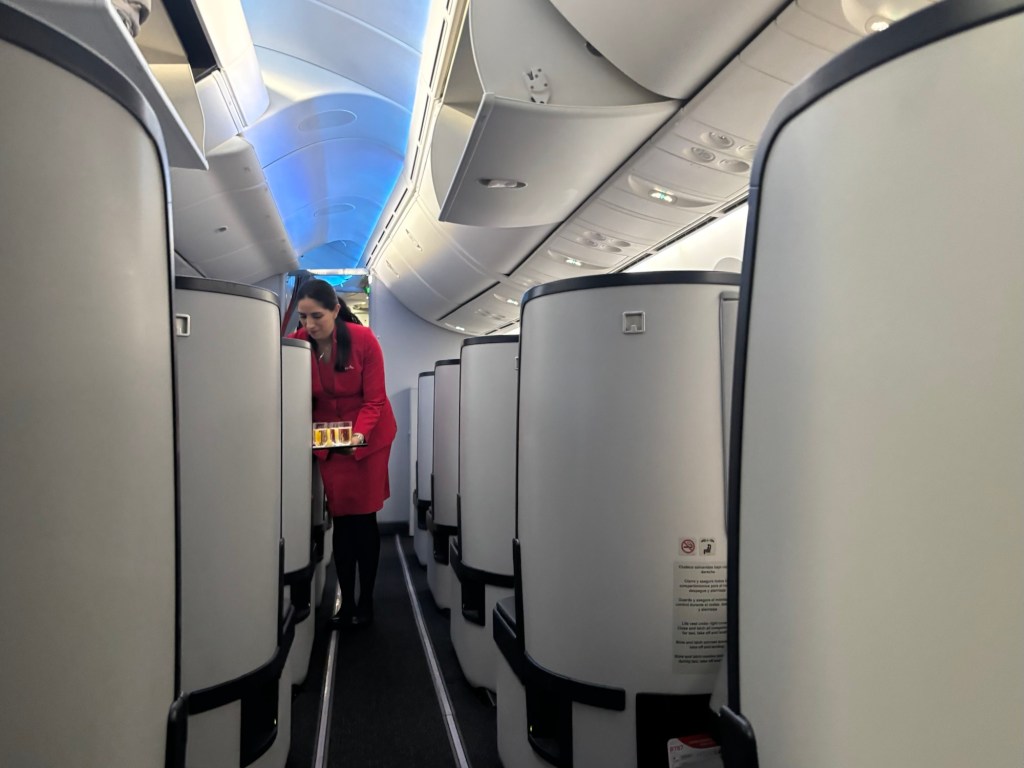
The folks up in business class are all tucked away in their cabins. I could never justify paying that much to fly – and probably fail to sleep anyway – but it must be pretty snug.
43.000 feet above the Caribbean Sea. 16.10.
The lights have come back. I wonder if that means they’re serving lunch? They’ve got Superman on the film listing, but my earphones are of the lightning port variety, so I can’t get them to work. I’ve spent a couple of hours catching clips from those watching films around me. By the way they’re all watching with the subtitles on, I can’t help but wonder if they’re all in the same boat.
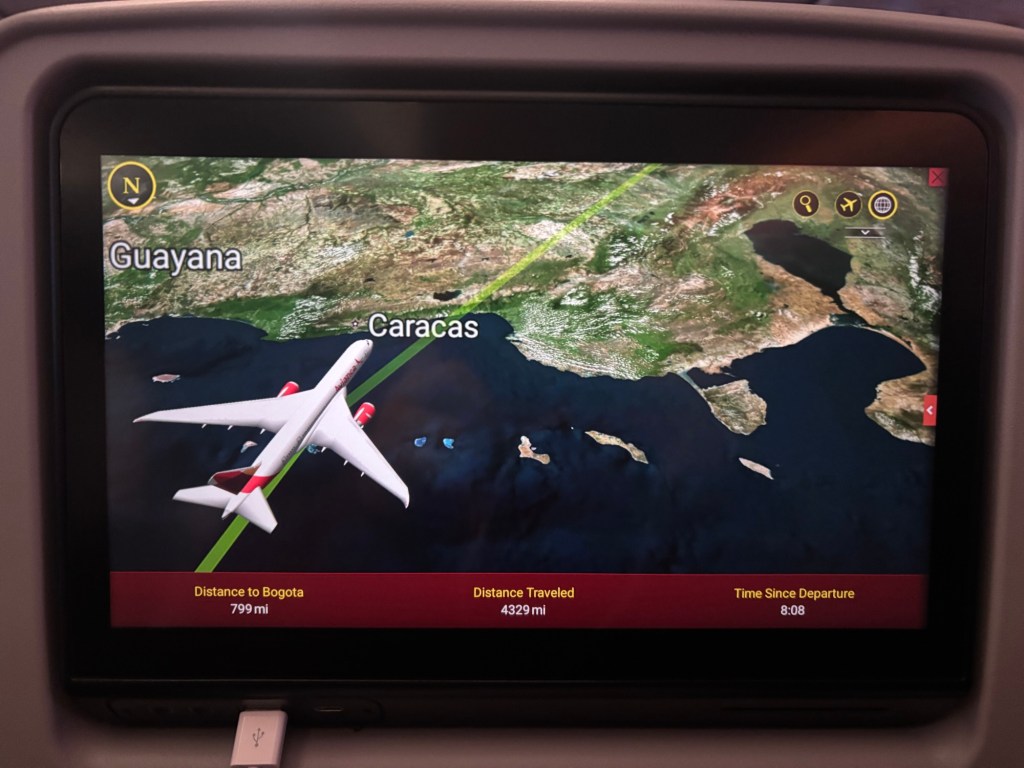
We flew over the Caribbean about an hour ago. I saw one island among the clouds through the tinted windows of the cabin while waiting for the bathroom to become available, but I’m not sure which one. Nassau, perhaps? The route map on the tele screen only gives its capital as St. Maarten, but my knowledge of Caribbean geography isn’t exactly watertight. It’s a first taste of how unfamiliar the world around me is about to be.
The wind is starting to pick up. The reefs and atolls of Aruba have appeared on the horizon, the vanguard of a mighty continent. Beyond that lies Venezuela. The enormity of South America is about to open up beneath me.
Aeropuerto Internacional El Dorado, Bogotá, Colombia. 12.28 (19.28 GMT+1).
¡Bienvenidos a Colombia! The weather forecast says thundery showers with a gentle breeze but the sun is shining brightly out there. I’m hoping that’s a sign of things to come.
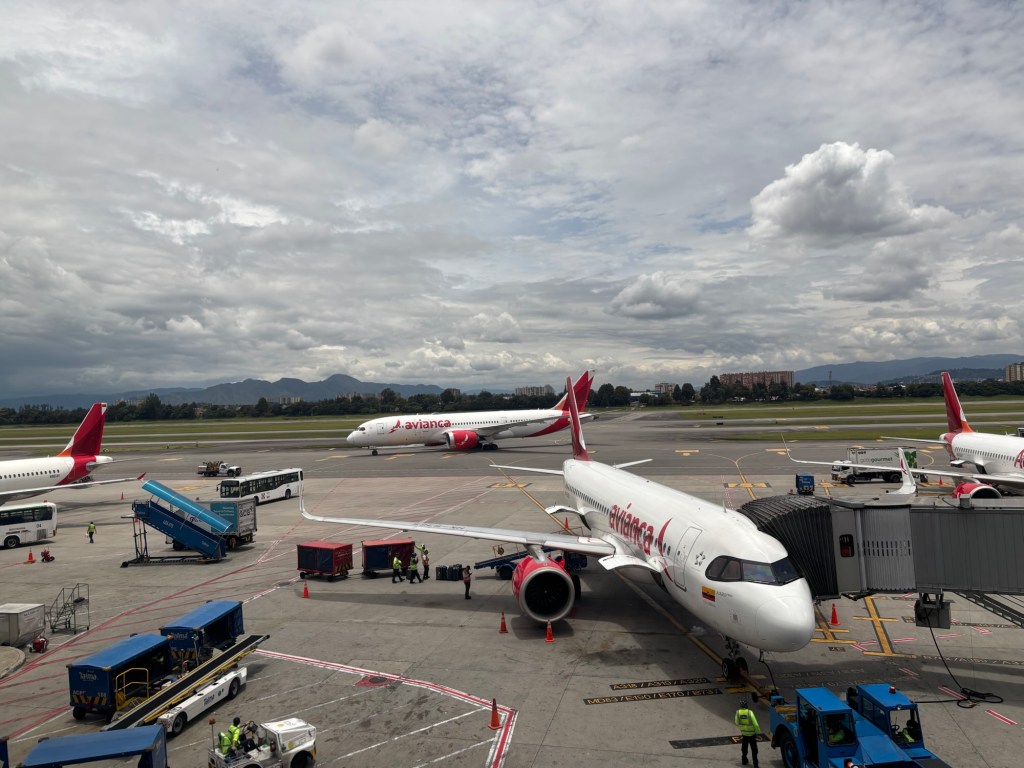
El Dorado reminds me a lot of Dallas International, in that almost everybody here seems to be going somewhere else. The queue for passport control to leave the airport was barely in the double figures while the line for connecting flights stretched on down half the hallway. I was sorely tempted to strike out and explore Bogotá, but for once in my life I’ve erred on the side of caution. For one thing, I’m tired, and I’d definitely need my wits about me out there. For another, I haven’t planned this leg of the journey at all, so I really would be going it blind. Most importantly, my next flight boards at 4pm, so while I have around four hours to wait, that’s not really enough to risk a potentially unsafe pitstop on Colombian soil.
Some other time, Colombia. Let’s not derail this South American adventure before it’s even started.
The airport WiFi in Bogotá leaves much to be desired. It’s not free like Madrid, and after only a couple of prompts my phone won’t even take me to the airport website anymore, so I’ve resorted to data – I needed to get online to finalise my pick-up from Lima tonight. The hostel are sending a car for me. I’m normally averse to that sort of thing, but I’d rather play it safe in a place I don’t know.
At least to start with.
Puerta A6, Aeropuerto Internacional El Dorado, Bogotá, Colombia. 14.20.
Still a couple of hours to go until my connecting flight departs for Lima. When I’m done writing I’ll decamp to a charging station to give my phone some extra juice – I’ll need it to contact my driver once I land.
I’ll do some reading to while away the time. I’ve brought a book with me but it’s a bit florid. I find myself skipping entire pages just to advance the plot. I bought it years ago because the setup sounded exactly like my cup of tea (19th century intercultural romance set in a distant corner of the British Empire) but it’s a bit of a slow burn. It’s been a while since a book really grabbed me. I ought to make that my mission out here. I’ve downloaded the audiobook of Michelle Paver’s latest, Rainforest, if not for the valid thematic link to this adventure then because her books always strike gold.
Some observations of Colombia, you ask? Hm. It seems to be a land of strange trees and clouded mountains; of sleepy travellers and softly-spoken staff; of real coffee, fake boobs and handsome aquiline noses. A place where people haven’t forgotten the joy of having children. Where Dallas was a concrete desert, Bogotá at least has the decency to keep their largest transit hub a tree-lined haven. I bought some travel-sized toothpaste and a couple of snacks and the bill came back in Colombian pesos, though the till used the dollar symbol. Thank heavens my bank statement gave the true cost in pounds, or I might have just paid 45.000$ for a 22ml tube of ColgateTriple Action…
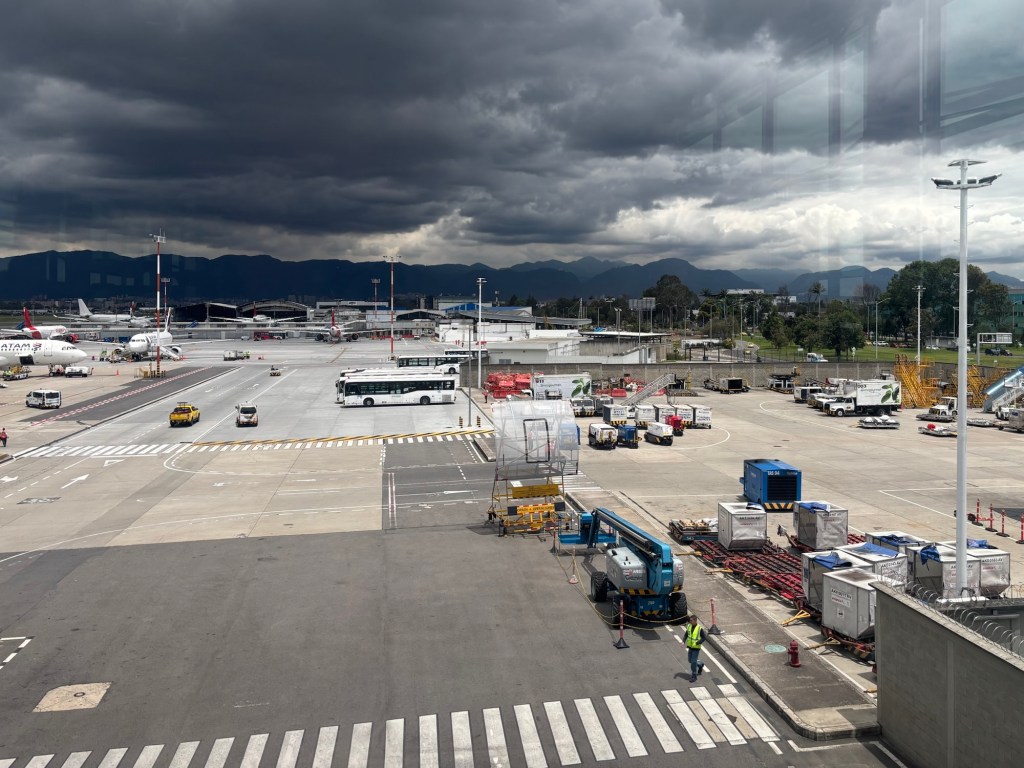
There’s not that much to see on the wildlife front from the departures lounge. I clocked a couple of foreign-looking swallows flitting about outside and I’m almost certain I saw the silhouettes of three black vultures wheeling about over the residential district to the east, but other than that, the only obvious denizens of the runway are the cattle egrets that seem to follow the groundskeepers about like stray dogs. I’ll just have to wait a little longer for the party to really begin.
Somewhere over the Cordillera de Sumapaz, Colombia. 18.27.
A lonely light twinkles in the darkening world below: a single, blinking star in a forest as dark as the night. It is the only sign of civilisation for miles around. And then the light, the forest and all the earth beneath it are swallowed up by the clouds. The sprawl of Bogotá is a distant memory.
I paid 20$ for less than ten minutes’ worth of a view from the window, but I consider it money well spent. Like that first waterfall I saw in Ethiopia as we came down out of the clouds all those years ago, it is a sight I will not forget. The last homely house in Colombia. The Rivendell of the Rainforest.
A few stragglers from Madrid have made it onto the plane. The stately Peruvian gentleman with the cane who was the first onto the plane at both Madrid and Bogotá. A barmy looking gentleman in a puffer jacket and a wide-brimmed hat festooned with badges and his wife with the wine-red hair. No sign of the white man with the dreadlocks down to his waist – I suspect he has gone into Bogotá in search of an ayahuasca shaman. I suppose we all have our reasons for traveling this far. On reflection, are mine any less barmy?
A family of three were late and so the plane was held up by about twenty minutes. In that time I managed to finish Romesh Gunesekera’s Prisoners of Paradise (I don’t like leaving a job half done). It picked up in the second half, but I found myself skipping pages again toward the end. I wasn’t sure whether it was trying to be a Malabar Pride and Prejudice or a gritty historical account of colonial prejudice. Either way, I found the heroine jarring.
Time and again, one finds the narrative of the enemies to lovers trope in romance fiction.
Yuck.
I don’t think I’ve ever understood why romance that evolves out of people being fickle and mean to each other is so highly prized. Maybe it’s a condition peculiar to Western women. Give me the sincere and generous passion of the Latin any day.
I suspect that’s why I put The Far Pavilions on such a pedestal – it manages to stage a believable passionate romance that is neither coy nor mawkish. It’s certainly proved a very tough act to follow.
Hostal Pariwana, Miraflores, Lima, Peru. 21.36.
Te estamos vigilando.
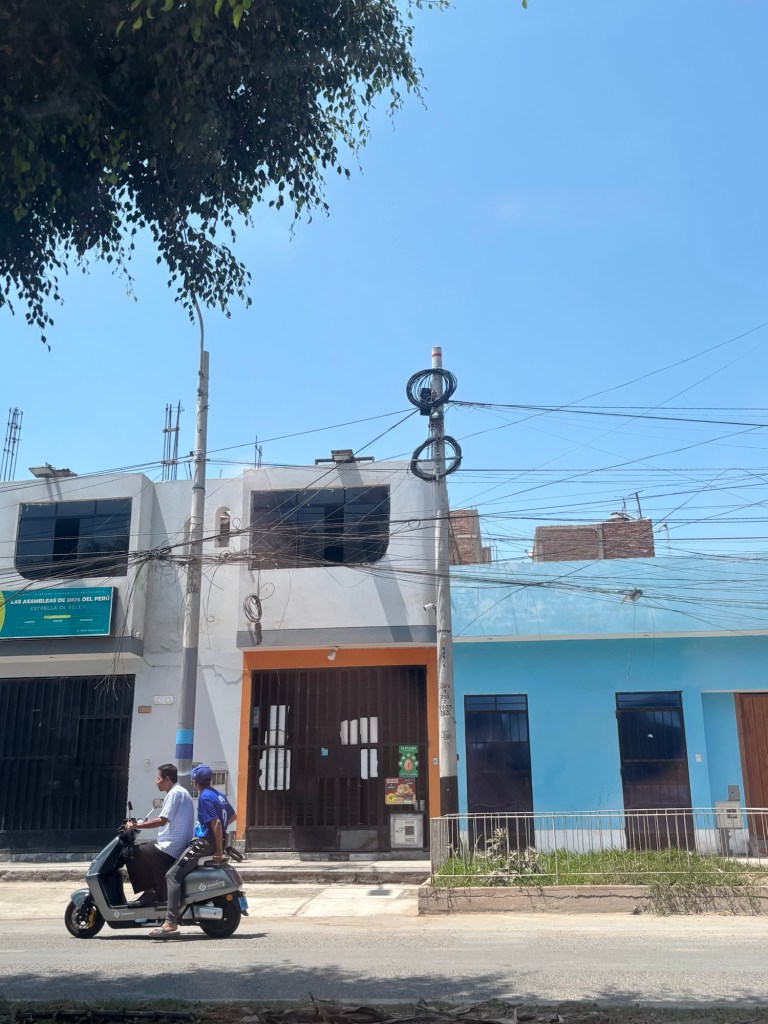
Lima. The scenery has shifted dramatically. Between Jorge Chávez International Airport and downtown Lima sits Callao, a sprawling conurbation which must be crossed to enter the city, If you needed reminding that Peru isn’t all high-end tourist offerings after weeks of preparation and booking in advance, Callao provides an immediate antidote.
Enormous posters line the edge of the runway, advertising Ayacucho, Amazonas and Machu Picchu in brash, gaudy colours; across the street, row upon row of squat houses in varying states of completion, and all of them very much lived in. Wide dusty streets with pitfalls and potholes. Fried chicken shops every minute or so. Election posters promising a safer Callao, plastered in duplicate over every flat surface. Police tape – peligro, no pasar. Dollar stores everywhere – a mere talon of the claw of the American overlord. Graffiti on the walls: el mundo apesta (the world stinks).
And then, suddenly, Callao falls away and there it is. The Ocean. The mighty Pacific. I saw it from the plane, but this is something else. It’s too dark to appreciate it in all of its majesty, but I had a hint of its bounty by the sheer number of fishing ships out in the bay. They looked more like an armada readying for war.
Miraflores feels like a completely different city. Callao felt like the South America I’ve been reading about in history books. Miraflores is more like the one you find in Nat Geo Traveller or a copy of Lonely Planet. American twenty-somethings discussing the TSA, pipe dreams of owning their own airplanes and the relationships that other travellers have struck up along the way.
It’s ten past eleven here in Lima, but it’s ten past six in Madrid. Give or take a couple of hours’ sleep on the plane from Bogotá, I have been awake for almost twenty five hours. I had better turn in or tomorrow really will be a washout! BB x