England swelters under the glare of an unseasonably ferocious sun. For the second day in a row, the temperature is pushing well into the thirties. It’s all the news can talk about. Trains are running slower due to speed restrictions, three children have “gotten into difficulties” while bathing (a tactful way of avoiding the potentially triggering d-words associated with fatal water incidents) and the whole of the South seems to have jumped into the car and carved out a four-square fiefdom on Bournemouth Beach.
I’ve hopped out east to pay my mother a visit, and in so doing stepped right into the hottest part of the country – bar London, of course, which is usually a couple of degrees warmer than the rest of the island. England is rather pretty in May, though she wears her best dress in the first two weeks of the month, when the flowers are still fresh and the wind is cool. Now, the early summer sun is at that particularly British angle where it’s high enough to burn but low enough to blind, and the heat feels more like the first week of August than the last week of May.
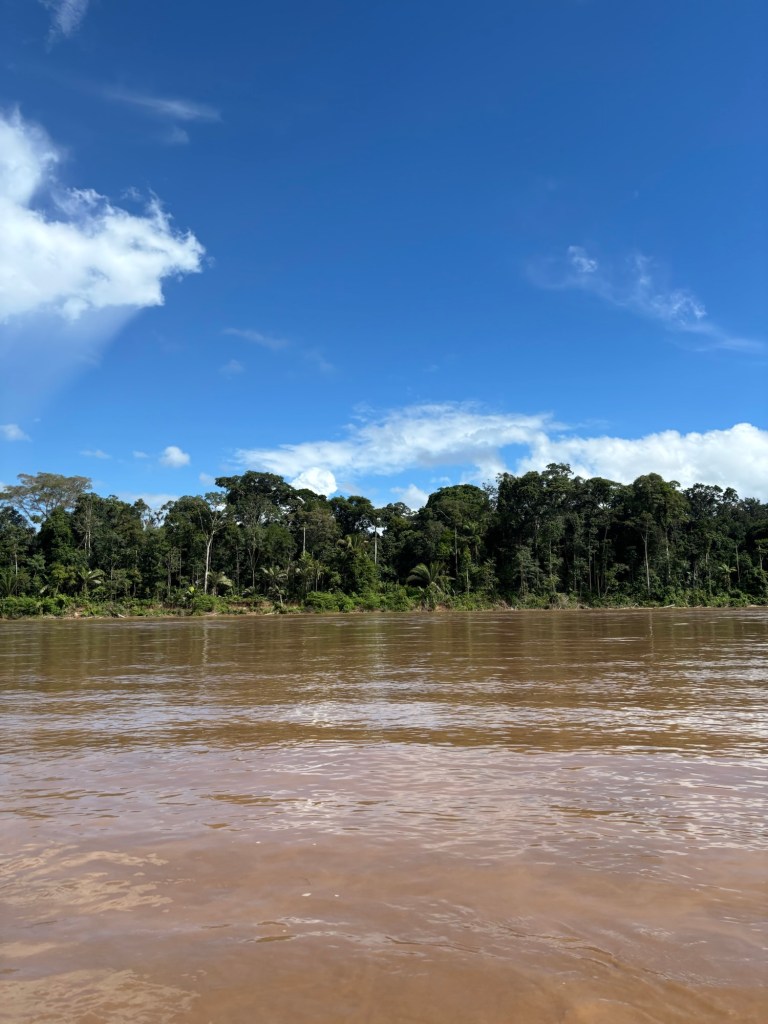
Retreating before the summer’s wrath, I have sought solace and shades along the banks of Hampshire’s rivers.
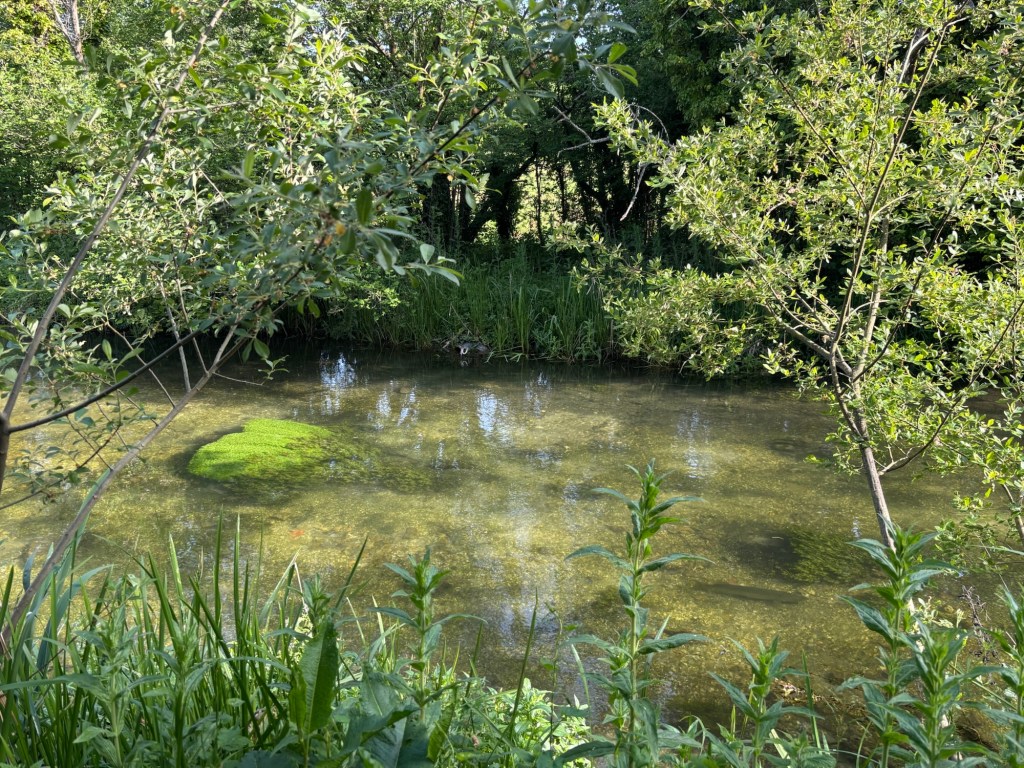
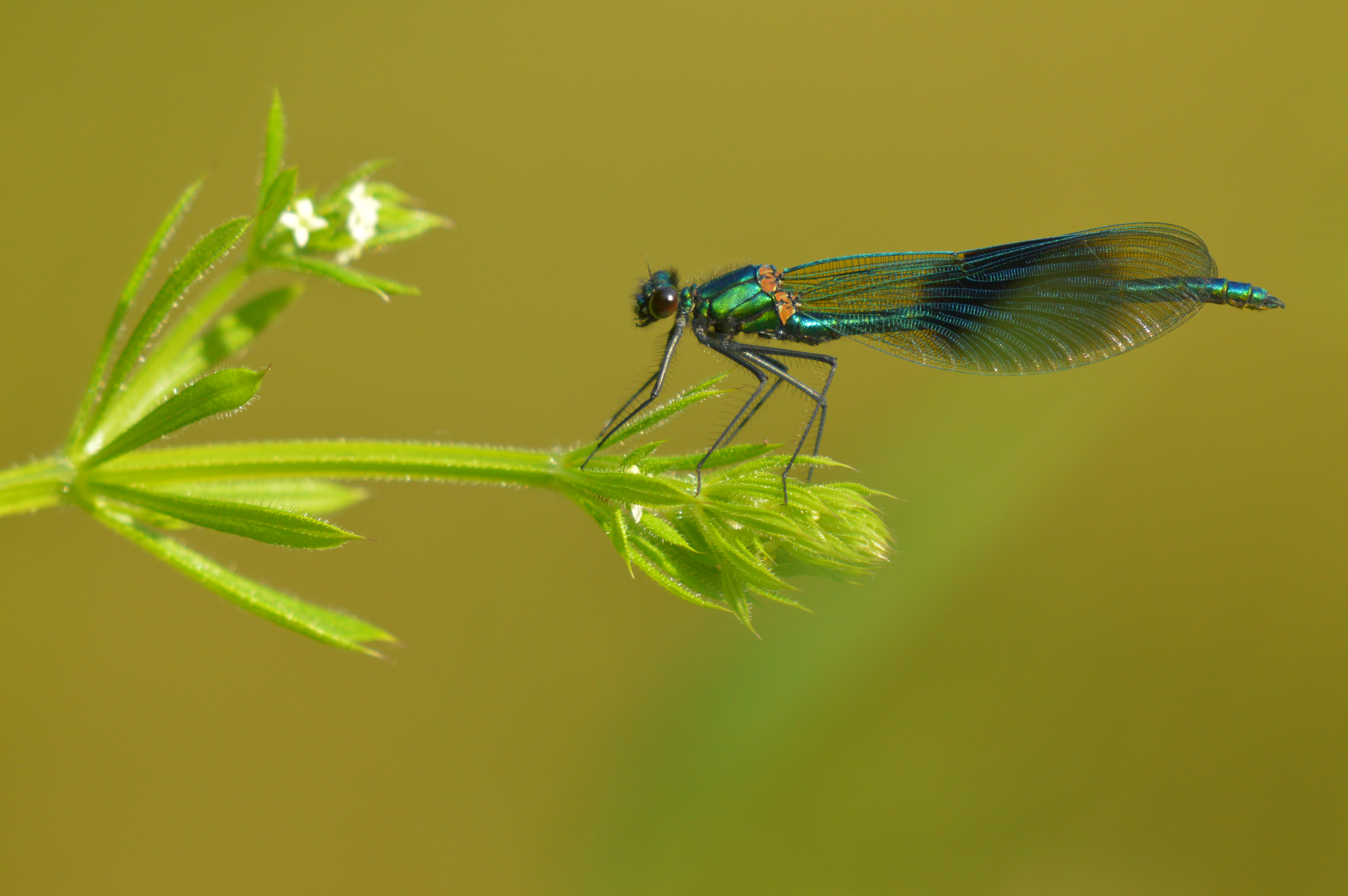
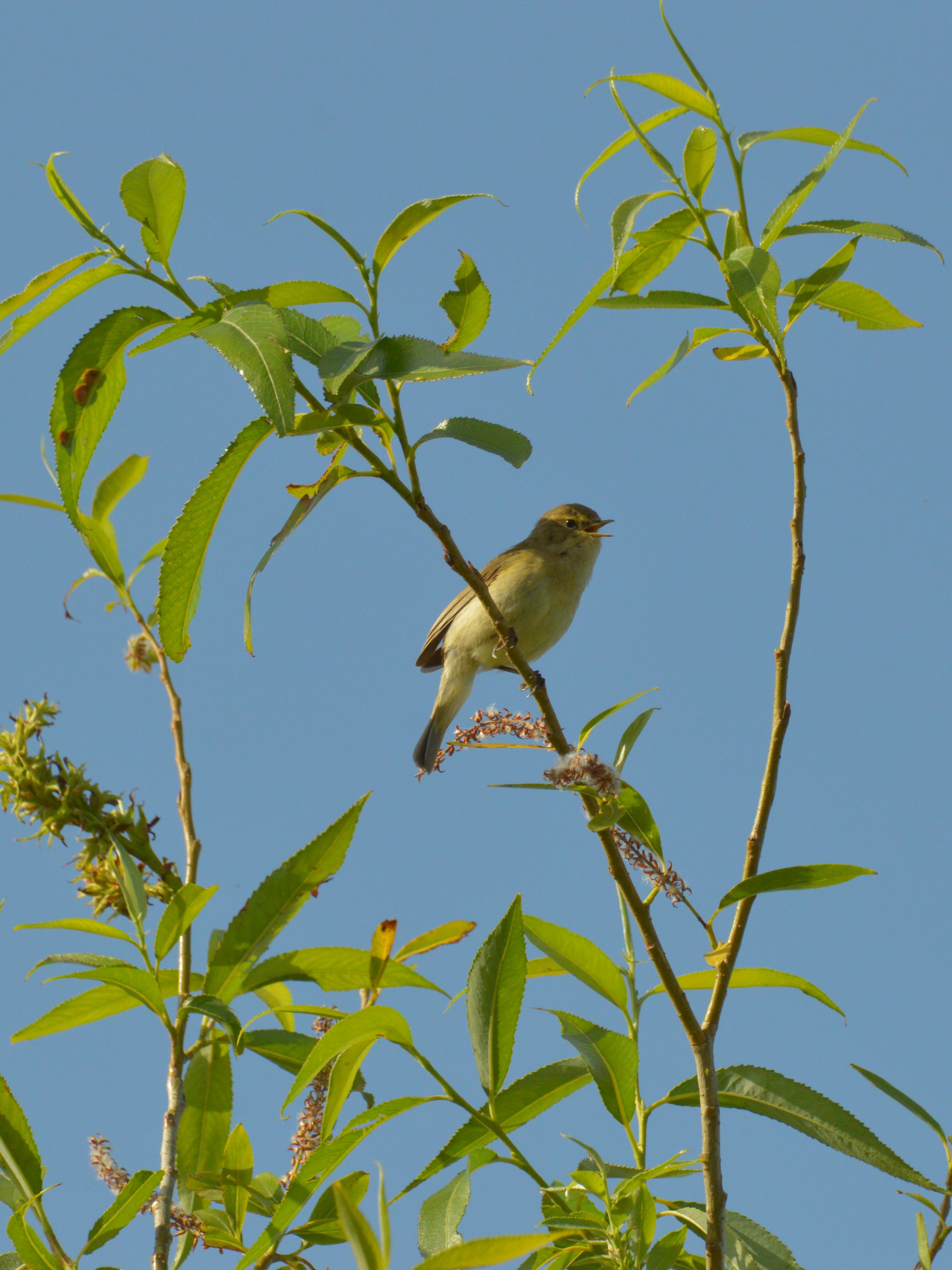
England is at its most beautiful wherever a river can be found. Crystal waters running over gravel, with shadowy trout and grayling darting from sunlight to shadow. Clumps of weeds and watercress wafting in the water as though in the wind. The trailing arms of a weeping willow gently tracing the water’s surface. Iridescent dragonflies of every shape and size – dragons, damsels and darters – hawking from bank to bank, playing a longer game than the mayflies, whose inert bodies drift downstream, their twenty-four hours spent. Chiffchaffs, wrens and blackcaps singing from the trees, the lazy purr of an overheated wood pigeon and, now and then, the explosive song of a Cetti’s warbler from deep within the darkest heart of a reedbed or thicket.
When I am traveling far from home, this is the image of England that I miss most of all.
Did you see the pike in that first picture? Don’t worry if you missed it – they are master ambush predators. Go back and see if you can spot it.
This corner of the River Alre passing through Alreston is supposed to have otters and kingfishers, but I was over the moon to see a pike. They were always my favourite fish when I was a lad, and it’s not hard to see the appeal for a young boy: fully grown, they’re huge, sinister, almost crocodilian monsters with soulless eyes and fins that move so slowly that their every twitch seems calculated. A perfect killing machine. Hardly surprising for a fish that outlived the dinosaurs, whose ancestors prowling Cretaceous rivers were not all that different from the river monsters that lurk in reedbeds outside Tescos and Sainsbury’s.
I can see why adventurous young lads might get a kick out of fishing up one of these ancient beasts, but I’m just as happy spotting one drifting between the weeds. It makes a change from chasing chiffchaffs through the branches of the tallest trees.
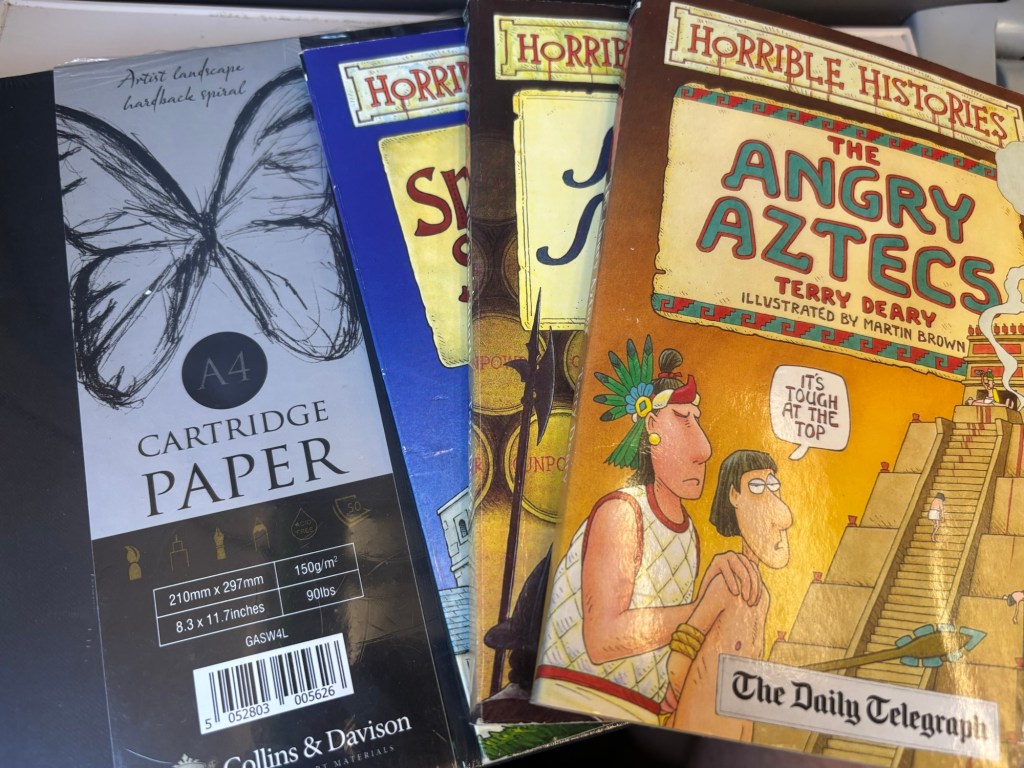
I’m racing home now, clearing the green fields of the Vale of Pewsey under a mercifully cloud-studded sky. I acquired a few books in a second-hand bookshop for a couple of pounds and a new sketchbook for a little more. I’ve been meaning to get my hands on the Horrible Histories books for a while, since they had an enormous impact on my art and my love for history and storytelling. Everyone seems to remember the enormously popular TV show (which, for my sins, I have never seen) but the books appear to have faded into collective oblivion. I dare say Martin Brown had more influence on my pen-and-line drawings than any other artist – besides the legendary Chris Riddell, of course.
Power’s running out. I’d better stop typing and leave enough juice on this thing to get me through the ticket barrier at Taunton station. See you around! BB x
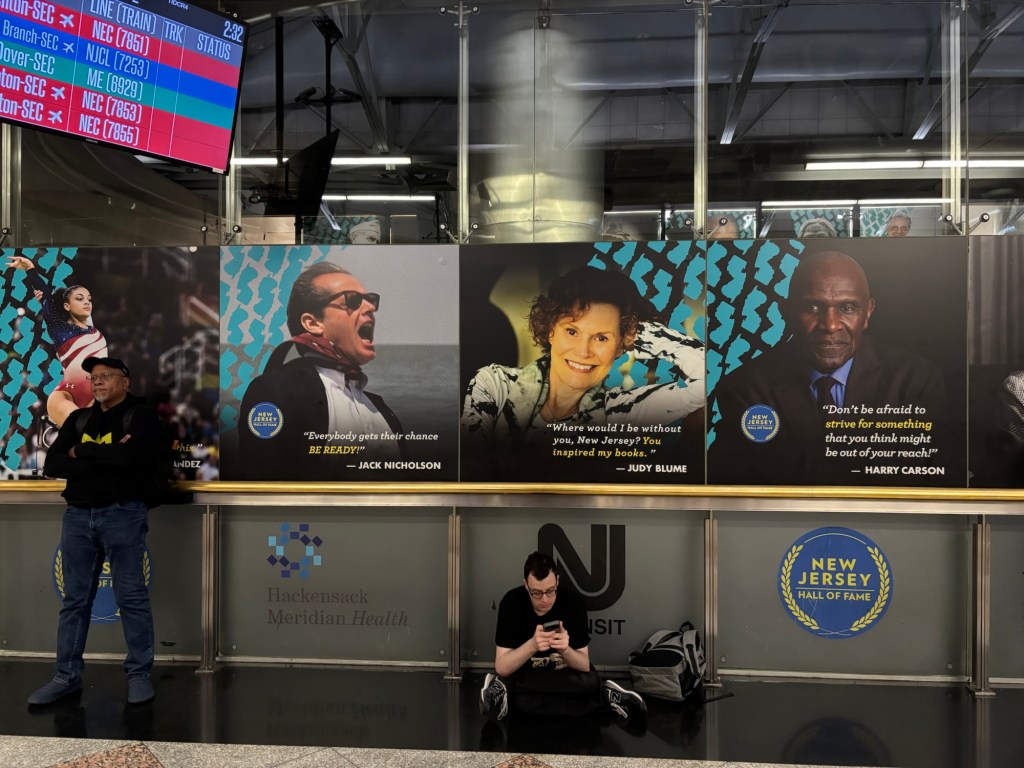
Newark Liberty International Airport, Newark, NJ. 17.27.
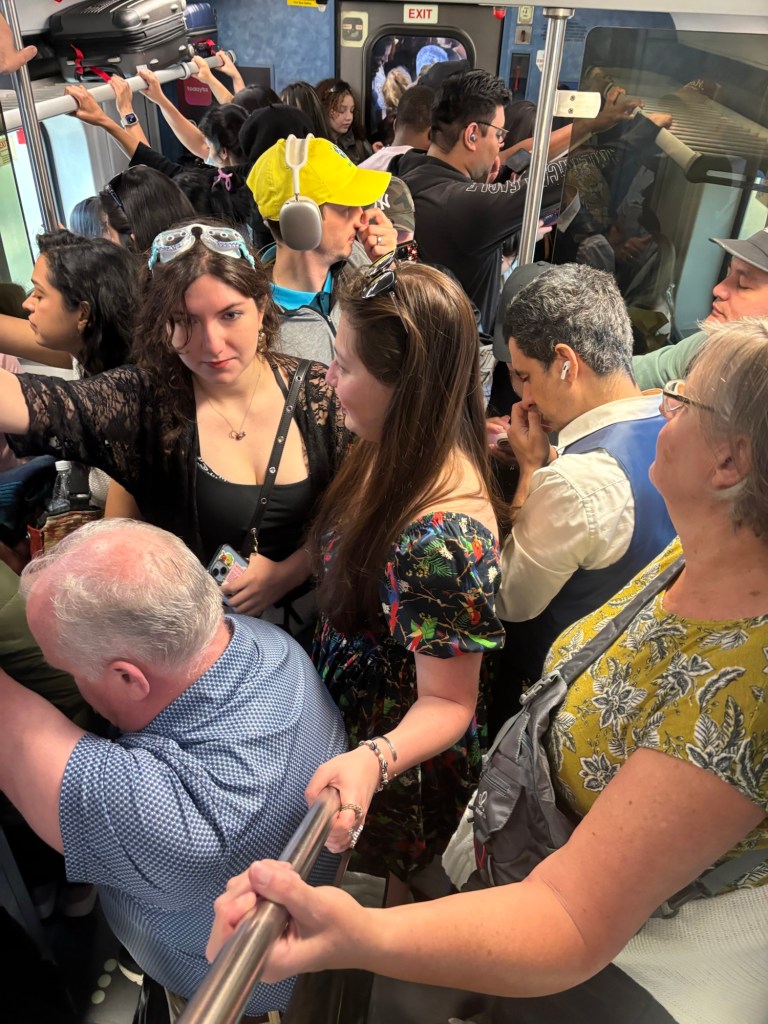
Good morning America! The sun is shining, my bag is re-checked and I’m off to see the city, standing on the steps of an absolutely rammed Amtrak train bound for Penn Station. I will never roll my eyes at the train from London to Taunton again. This is a whole other level of packed.
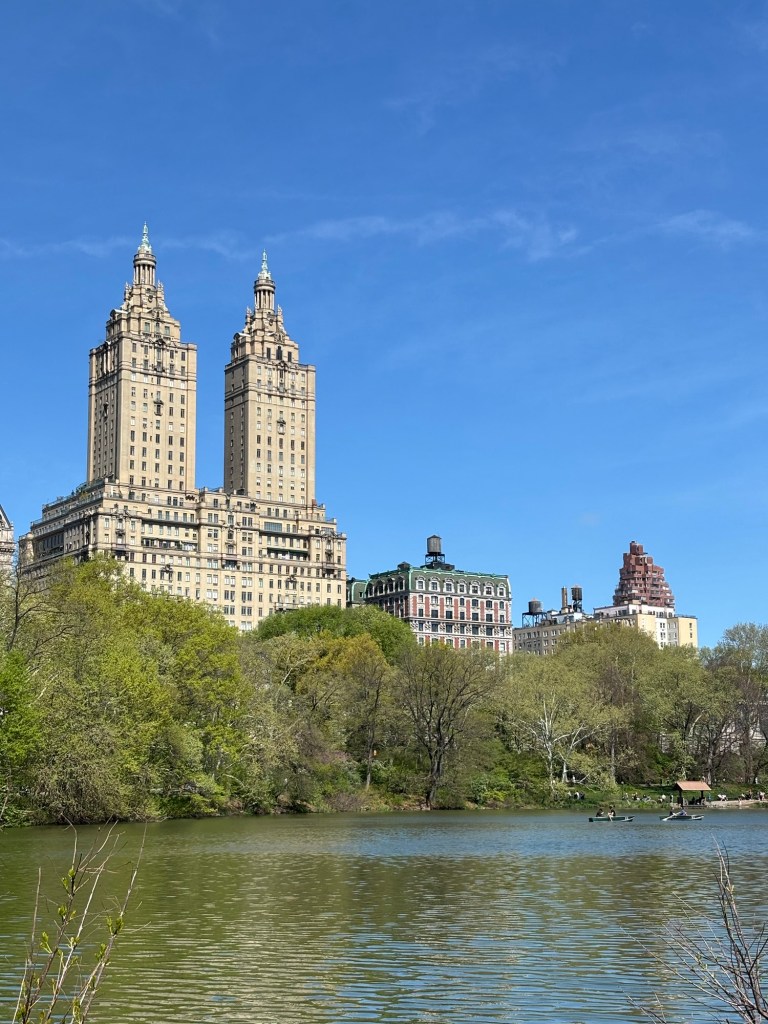
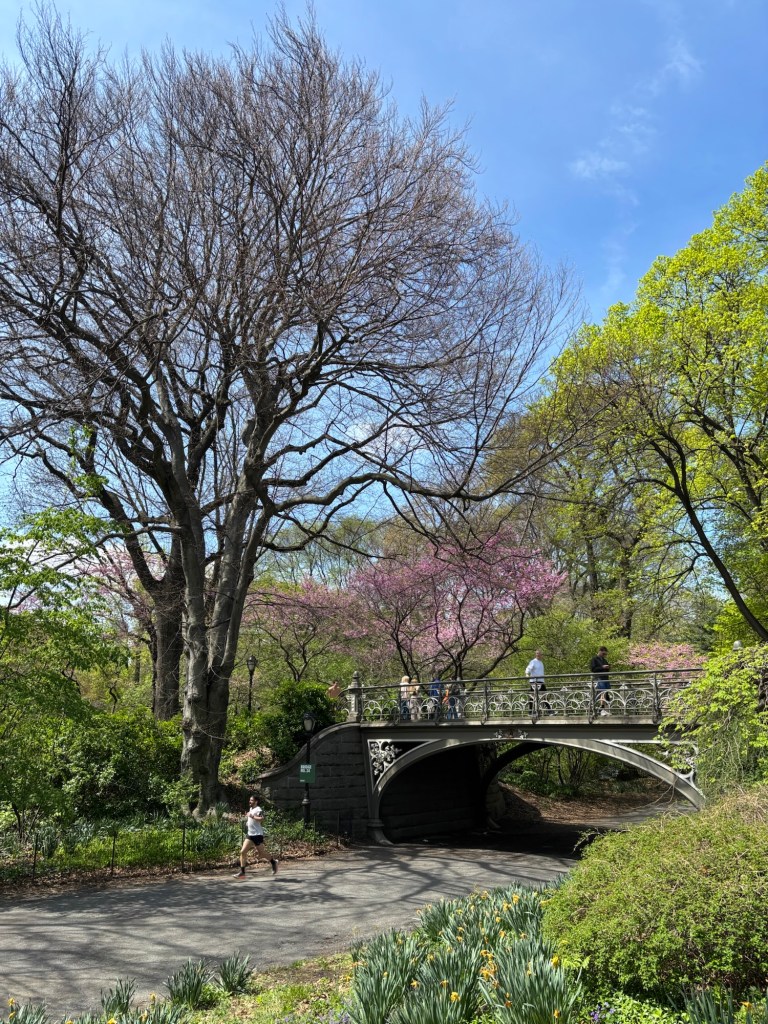
Two years ago, I promised myself I’d never come back to this country. I allowed a broken heart to derail what should have been a grand old adventure around the States and swore off America for good, having come to associate the place with gators, gumbo and the worst heartbreak I had ever known. And yet here I am, in Central Park no less, using the last couple of months left on my ESTA to explore New York City. Fate has a funny way of making us eat our words.
And boy, am I glad I did! What an exciting way to round off the Peruvian adventure!
People come to New York City for all sorts of reasons. Jazz, sports, food from every corner of the globe. World famous locations like the Empire State Building, Broadway, the Statue of Liberty, the Brooklyn Bridge, Trump Tower, Times Square and 110th Street… The list goes on and on. But me? I had only three hours to play with, so I spent almost all of them in Central Park.
Why? Because Central Park is a sanctuary for birds traveling up and down the east coast. Being the size it is, New York City and its adjoining suburbs make up an absolutely enormous area of developed land that has devoured what was once a vast stretch of virgin forest and marshland along the eastern seaboard. Central Park sits right at its heart, a large but contained green lung which many migrating species use as an important stopover on their journey home.
Which is apt, because that’s exactly what I was doing.
I have always wanted to see New York City. I wasn’t so fussed about staying here, though now that I’ve had a bite of the Big Apple I can’t help feeling I’d like to come back someday with a bit more than three hours to play with, which simply isn’t enough time to explore a metropolis like NYC.
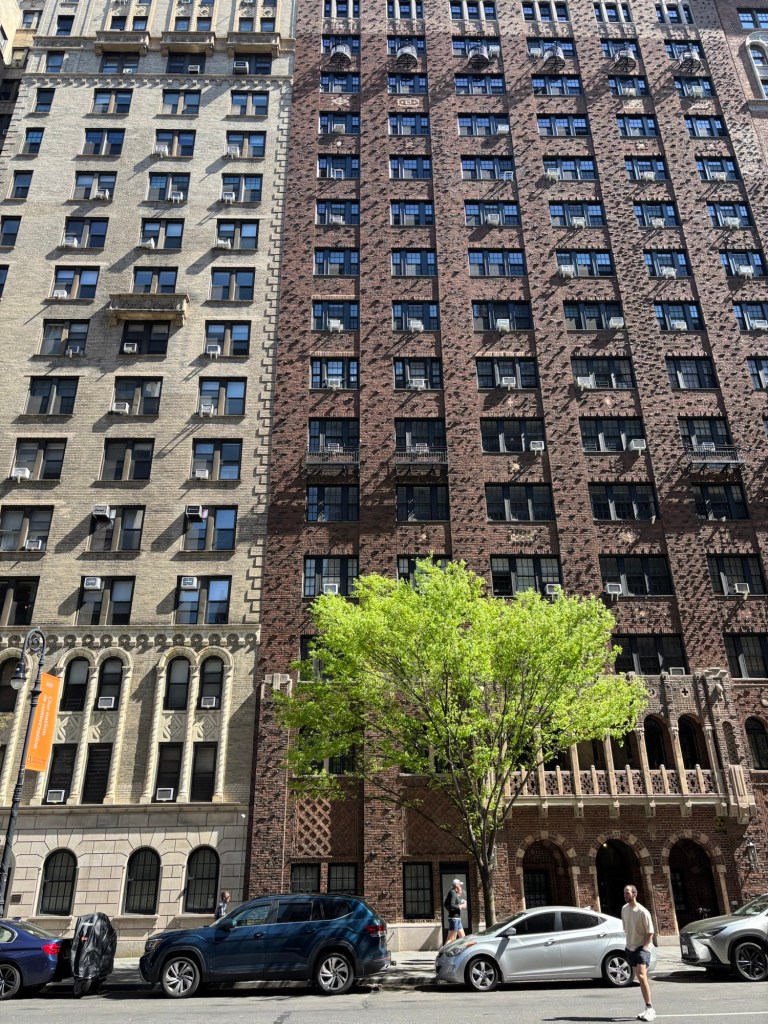
Everything here is exactly the way I pictured it: towering brown-brick buildings with iron steps winding up the sides. Yellow cabs and green street signs. And billboards – yes! Billboards! It’s a quirky thing to take a shine to, but they were such a memorable feature of my last visit to the US and I really have missed them!
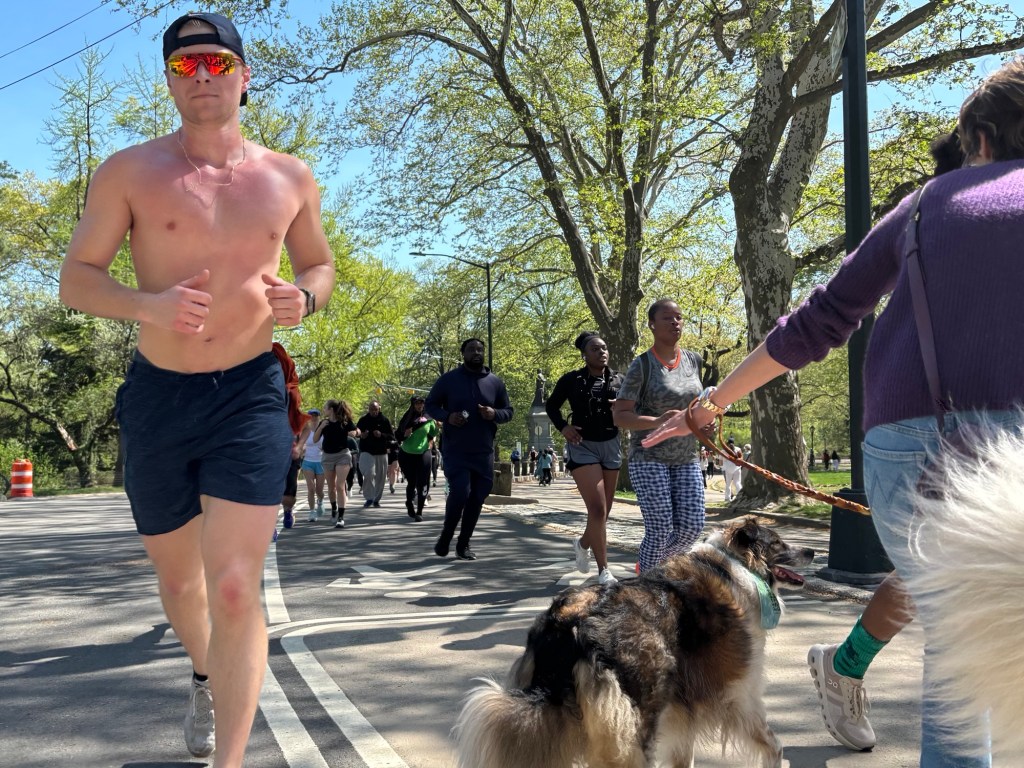
The glorious weekend sunshine had drawn thousands to Central Park, especially the city’s athletic youth, who were out in force on the largest park run I have ever seen. I don’t know what the Americans put in their food, but there’s something larger than life about the American twenty-something-or-other: they’re huge. We like to joke in the UK that the US has an obesity problem (a problem we often forget is shared) but take a casual stroll through Central Park on a Saturday and you might be forgiven for thinking the average American to be some sort of übermensch. Then again, this is the land that gave us Michael Phelps and breastaurant chains like Hooters, so perhaps that’s not altogether surprising.
Anyway. I didn’t come all this way to gawp like an awkward teenager at all the breasts and rippling pectorals. Not even close. I came here to see some birds that we just don’t get back home – at least, not unless the autumn winds blow them way off course, since many North American species wind up in the Scilly Isles every year.
Most of the birds I went hunting for today are common backyard species that the average American wouldn’t get overly excited about, but I didn’t really get the chance to go exploring the last time I was Stateside, so I was quite happy to marvel at some of the city’s more colourful residents.
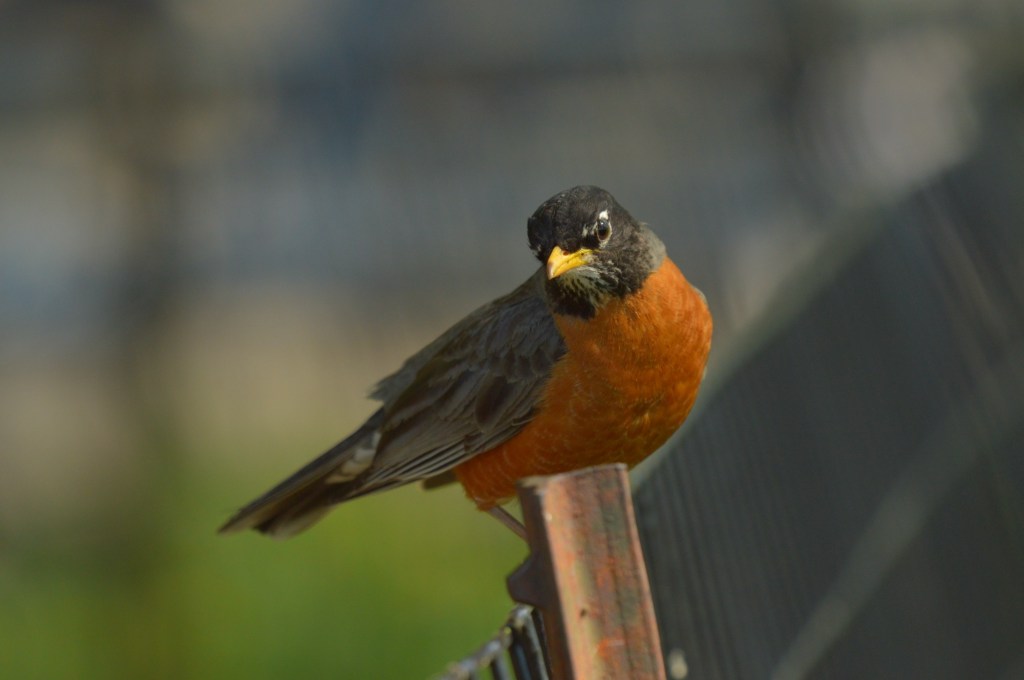
First up: the American robin, with his smart orange chest. These things are everywhere and pretty hard to miss. House sparrows and common starlings have invaded the Americas in recent years, and they’re arguably a lot more common, eking out a living even within the unforgiving human hive of New York’s streets, but the flashy American robin stands its ground in the leafy suburbs.
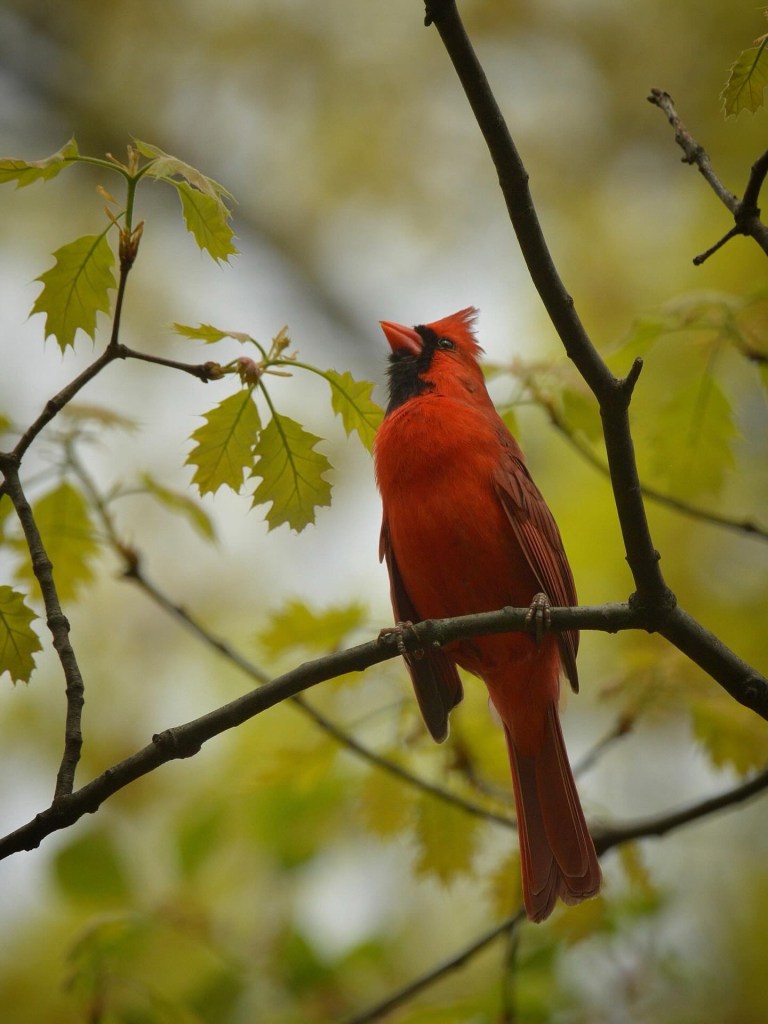
I saw two kinds of woodpecker and heard at least three, though I didn’t quite get as close as I did in Manu. One dashing bird that might have been more at home among the jewels of the Peruvian jungle was that spectacular American favourite, the northern cardinal. Not only are they beautiful birds, all decked out in red and black, but their song is – well, I was going to write sweet or musical, but the word I really want to say is homely. I can see why so many Americans are especially fond of them.
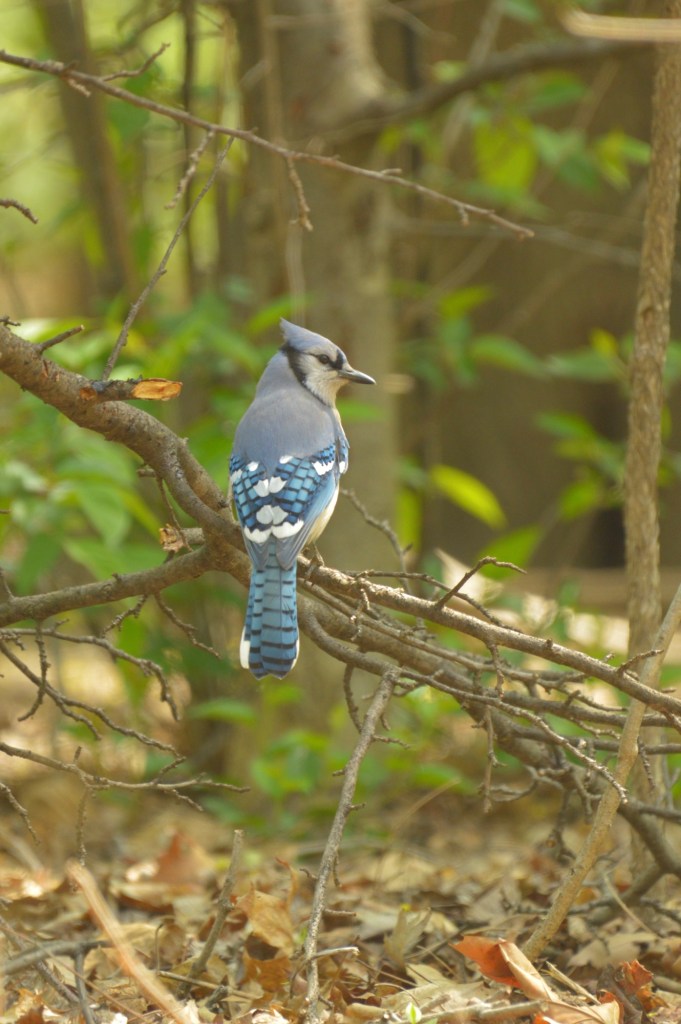
One more bird that I was really keen to see was an easy find throughout Central Park: the blue jay. I never get tired of seeing jays back home in England. Their electric blue feathers were among the most prized trophies for those of us who collected feathers as children, and the blue jay takes that dash of blue in the jay’s wardrobe and goes all in.
I wonder what the first settlers made of these birds? Of course, I’ve grown up seeing their pictures in books, so (unlike Peru) I knew exactly what I was looking for. But imagine those first travelers, confronted with birds that looked familiar and yet utterly, utterly different. Hence American robins – which are actually thrushes – named for their red breasts, and blue jays – which are in the crow family, though not exactly jays in the strictest sense – named for their striped blue feathers.
A lot of New World species have names that seem to have been coined in a hurry, unlike the birds we grew up with whose etymology is often a lot more complex. Sapsippers, seedeaters, sunbeams and puffbacks certainly seem a lot more user-friendly than mergansers, dunlins, ospreys and orioles. Americans seem a lot more prone to call things like they see them rather than spending years conjuring up a more esoteric or poetic name – such as the aubergine, which can be tracked in a perfect, unbroken line of evolution from its point of origin in the East until it crossed the Atlantic and became an eggplant.
On the subject of American approaches to birds, I was pleasantly surprised to find I was not the only one in Central Park who had come for the birds. I encountered at least three different parties out with their binoculars, all of them on the hunt for spring migrants, and all of them discussing their task in that wonderfully amicable way that Americans seem to specialise in.
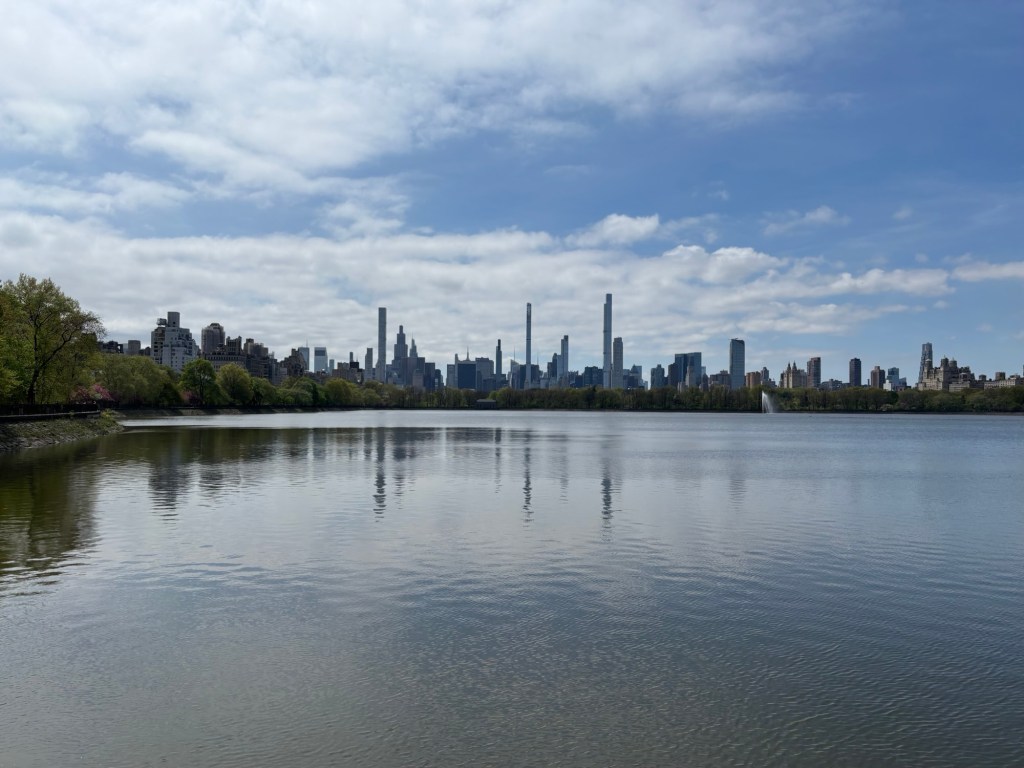
One party by the reservoir pointed out a Bonaparte’s gull (or, in their terms, a “boney”) roosting among the ring-billed and American herring gulls. Another group were watching the blue jays I had seen earlier. A much larger party had gathered in the North Woods, seemingly following the news of a hooded warbler, a rare and colourful passage migrant in these parts.
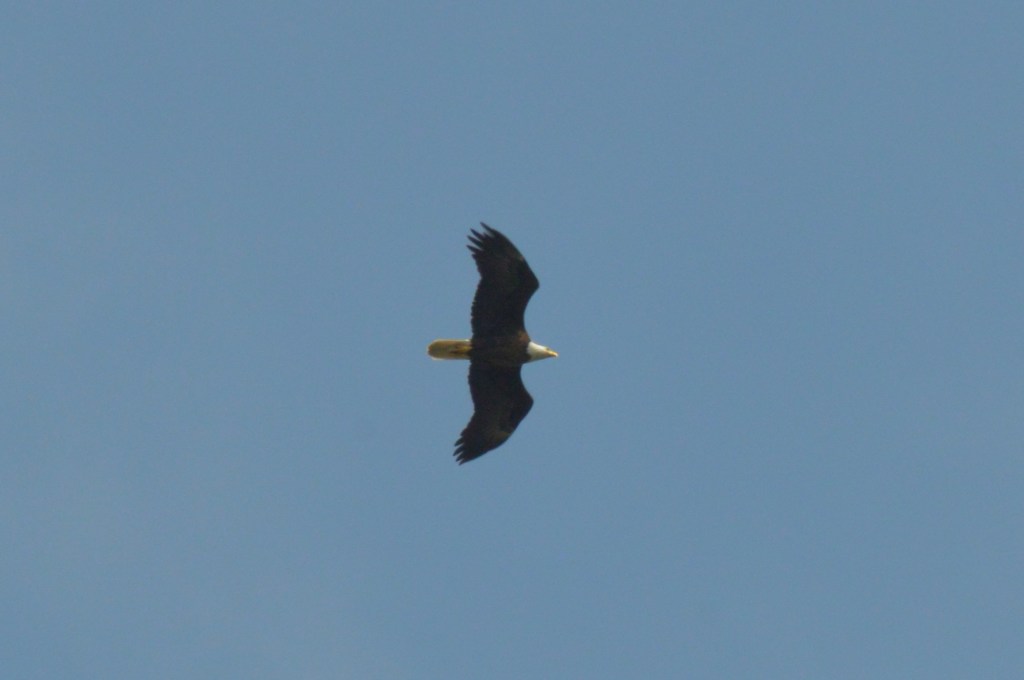
I didn’t see it, but I wasn’t that fussed. After all, merely moments before I’d struck gold when a familiar silhouette soaring high above the city turned out to be that all-American icon that I’d already seen woven into a hundred badges of homeland security officers this morning: a bald eagle.
I really wasn’t expecting to see something as spectacular as a bald eagle in New York City itself, but it just goes to show what a magnet Central Park can be at this time of year.
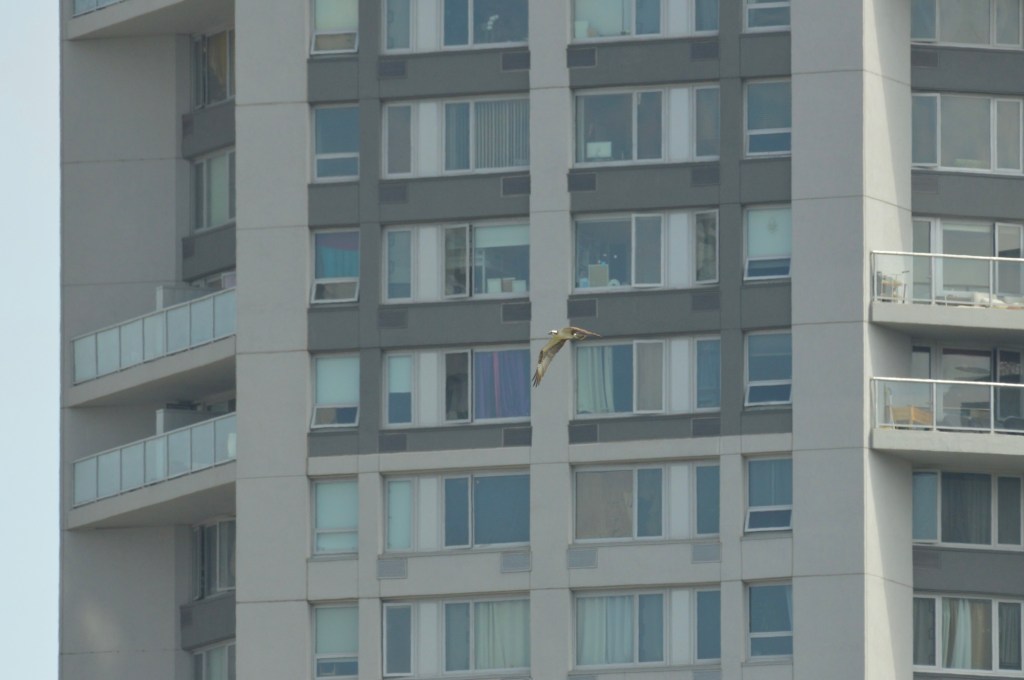
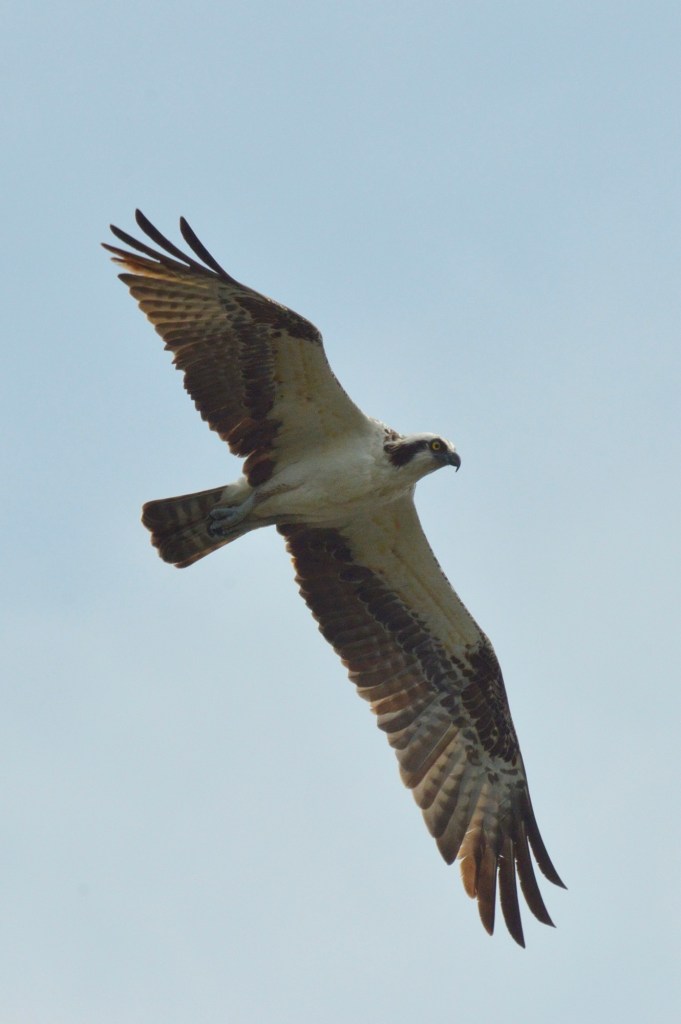
It wasn’t the only inner city eagle I encountered, either. I was just about to cross 110th Street (of Bobby Womack fame) when I saw a long-winged silhouette hawking over the Harlem Meer that I instantly recognised as that of an osprey. These awesome fish-eating eagles are an increasingly common sight in Central Park during the migration season. I had good views of them in the Louisiana bayou two summers ago, but to see one fishing at close range with the backdrop of Harlem behind it was a real treat.
Up close, you can properly appreciate their owl-like eyes, which seem considerably larger than those of other birds of prey, and their rough, scaly talons, specifically evolved to snatch and hold on to large and slippery fish.
Sure, I was in Harlem, I could have used the opportunity to explore New York’s fascinating black history, and maybe even visited the homes of some of my favourite musicians. But I’m a naturalist first and everything else second, remember? So I ended up spending about fifteen or twenty minutes just sitting on the bank of the Harlem Meer watching it hunting, while a madwoman hurled abuse at passers-by in a heavy Bronx drawl and a black man in his forties played with two remote-controlled cars on the opposite bank.
Eventually, I realised that time was catching up on me. I had to make sure I was back at the airport with at least an hour to spare, as I could not count on security at Newark being swift (and I was right – the queue took about forty minutes, with sniffer dogs tasked with inspecting all of us).
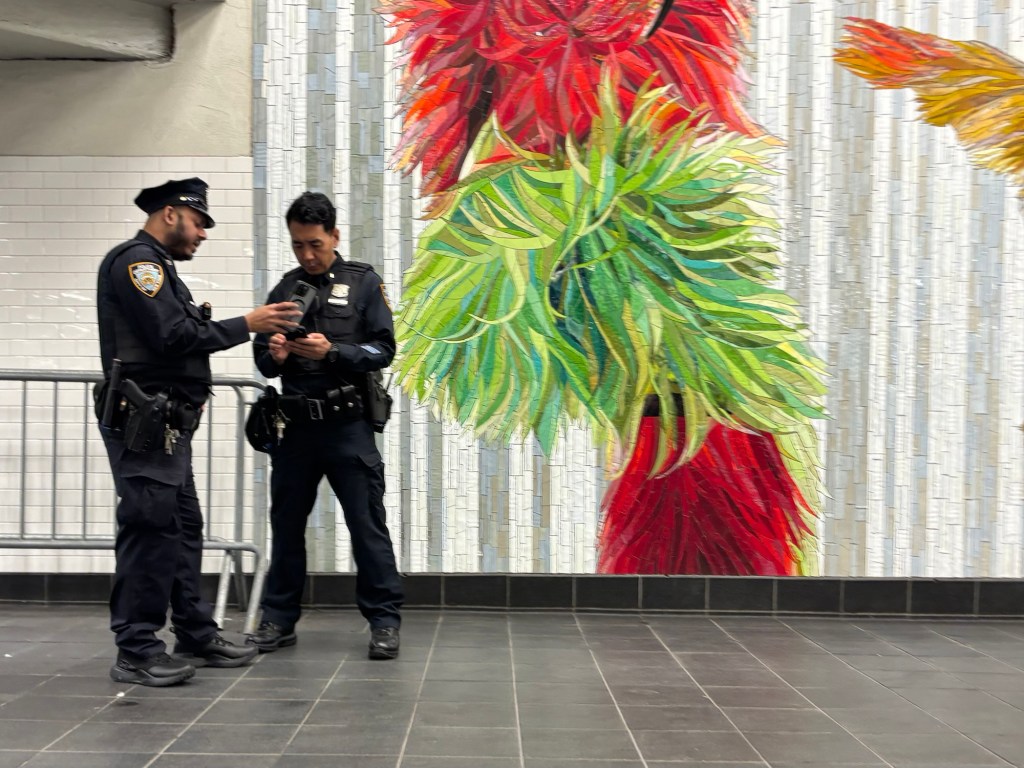
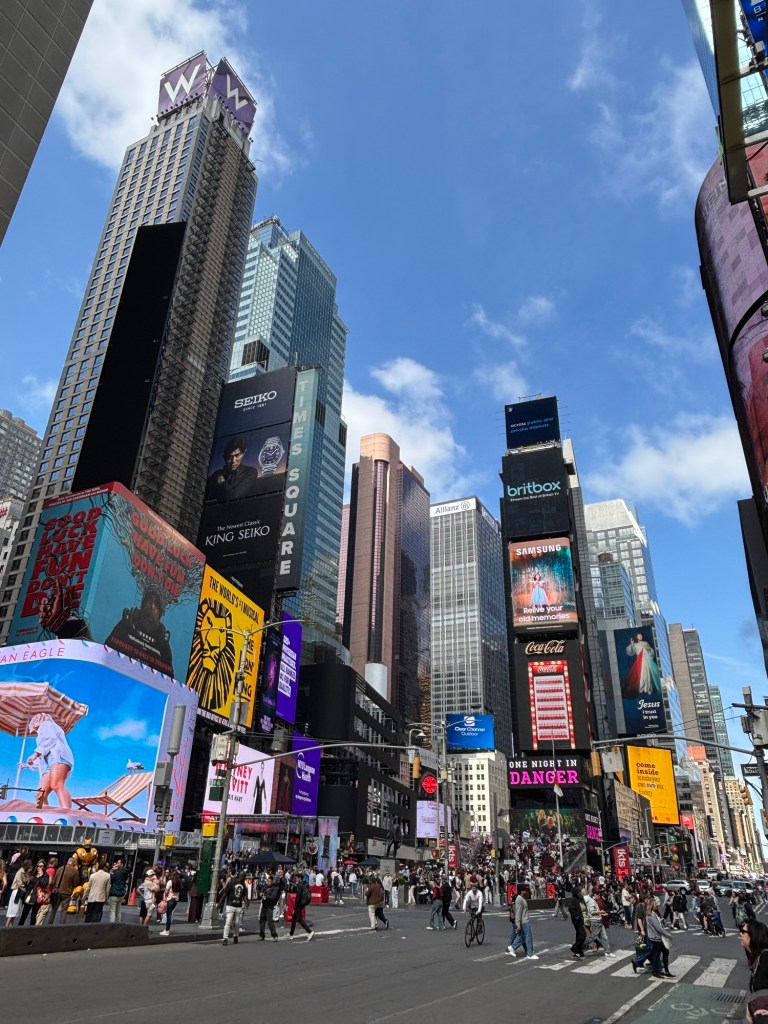
As such, I had to ditch my whimsical plan to see Trump Tower. That ludicrous golden folly isn’t going anywhere anytime soon. So in the time I had remaining, I packed up my camera for the last time on this adventure and took the Subway back downtown to Times Square – because I couldn’t come all this way to New York City and skip the human element altogether, right?
I suppose the ludicrous frenzy of New York’s most iconic street might have thrown me had I not just spent three weeks in South America, where crowded cities are par for the course. Compared to Lima, the only major difference was the colour: Times Square really is eye-wateringly garish. I only saw it during the day. I imagine at night it is a spectacle like nothing else on Earth.
Some other time, perhaps.
Well – that’s all, folks. I’ve made it safely onto the last flight of my adventure and I’m headed for home. The sun has already set behind us, but we’re racing forward in time over the Atlantic to meet it on the other side. Below me, Prince Edward Island is fading into the night and the shadowy island of Labrador – home of The Chrysalids and just about visible in the gloom – marks the last stretch of dry land in the Americas before this plane sets out across the lonely blue waters of the Atlantic and puts the New World behind us.
Thank you for coming with me on this latest and greatest adventure. I hope you have enjoyed reading about my travels as much as I have enjoyed writing about them. They’ll certainly keep me going through the next term ahead, which is always a busy one (though mercifully not quite as busy as the last two).
My adventures aren’t over yet. Spring is here and there’s plenty more for me to see and do back home. But it will be a little while until I have another adventure quite as grand as this one. A man’s got to work, after all!
Aeropuerto Internacional Alejandro Velasco Astete, Cusco. 12.27.
My journeys around Peru have come to an end – and with them, my first foray into Latin America is complete. It has taken a dreadfully long time for this Hispanist to cross the Atlantic and put my Spanish to the test in the New World, but I have done it. I return to my day job with a much stronger understanding of the South American angle of my subject.
Doubtless I won’t have much to report today, between transit after transit (leaving Ollantaytambo for Cusco, Cusco for Lima and then Lima for New York and home). As such, I thought it might be worth doing a quick TLDR version of my adventures for anyone interested in visiting Peru. Read on if you’re curious.
Language
First things first: Peru is a Spanish-speaking country, but much of its signage and a lot of its citizens (even the beggars on the streets of Cusco) have a good understanding of English because of the sheer number of tourists who come here. I stood my ground and spoke Spanish almost all the time, but I reckon you’d probably be alright out here without being fluent in Spanish – though it really does help to grease the wheels, make friends of the locals and avoid coming across as a total gringo.
Safety
One of the biggest deterrents to travel around South America is, of course, whether it’s safe to do so. I can only answer with a resounding yes. I have spent three weeks lugging a very expensive camera around the country, which ought to have made me quite the target (and, for the record, I don’t look very Hispanic, let alone Peruvian) but I haven’t had any trouble whatsoever. Naturally, you need to keep your eyes open and avoid certain areas after dark (Lima’s Callao, for example) but that advice applies just as much to travel at home as it does here. In short: Peru is a very safe country.
Oh, and while I remember, it’s not the massage vendors in Cusco you need to keep an eye on. It’s actually the painting sellers, who are really drug dealers in disguise. Just so you know.
Food
Peruvian cuisine is phenomenal. While I never did get around to trying the national favourite of cuyfrito or fried guinea pig (too many bones) I have eaten some of the most wonderful dishes ever out here. Whether you’re on the coast and deciding between spicy ceviche or aromatic parihuela, or up in the mountains and sampling the delicious lomo saltado with a glass of chicha morada, there are a thousand flavours to choose from. It’s also a very vegetarian friendly country, with plenty of healthy meat-free options in most of the major cities. I come away from this place with a new obsession for amaranth in the form of kiwicha – a deliciously healthy Peruvian porridge spiced with cinnamon and clove. If I can get a hold of the ingredients back home, I’m teaching myself how to make it.
Weather
If you travel to Peru at this time of year (March/April), you need to be prepared for everything. Light clothing for the coast, where it can hit 30°C and the sun is fierce. Winter wear for the mountains, where it is a full twenty degrees colder, especially if you’re planning on hiking up to the snowbound peaks. Rain gear, for sure, as the rainy season doesn’t end until May. Finally, a high factor sun lotion, because whatever the weather, the UV risk is high here.
Cost
Getting to Peru is the expensive part – but there are ways to reduce your costs. By flying from Madrid, I took about £200 off the total cost, which was still a money-saving hack even after factoring in a flight to Madrid and a night there. I’m not sure whether the flight I found was anomalous, but there is definitely something to be said for waking up at 4am and checking SkyScanner – both of the deals I found were only that price in the small hours of the morning.
Once you’re here, it’s unbelievably cheap to get around. I’ve played it safe with the limited time I had and flown LatAm between my three main destinations of Lima, Arequipa and Cusco, but it still worked out very affordable. Travel by bus is cheaper still – considerably – but it does entail a lot of overnight rides that can last for more than ten hours. Uber is also an affordable and safe way to get around, especially to and from the country’s airports.
In total, I think I’ve managed to stick to my budget of £2000 – including flights, accommodation and everything in between – but I know I could have done it for even cheaper.
Tours and Activities
With the exception of a few days’ roaming, I have relied heavily on GetYourGuide out here, and it has not let me down yet. If you’re the type that likes everything planned out before you go, you can organise all of your activities before you even set out. Most of the day trips are rarely beyond the £40 mark and are great value for money in terms of what they allow you to access: faraway attractions like Colca Canyon and the Islas Ballestas are considerably more achievable thanks to the myriad of day trips on offer. If you’re short on time, I can’t recommend PeruHop more highly – they were incredibly warm and professional (a rare combination).
And of course, there’s Amazon Wildlife Peru. I loved my 6D/5N tour to Manu National Park so much that I’m seriously considering coming back for another tour with them someday. If you’re in the market for an Amazon adventure with phenomenal cooking but you don’t fancy a malaria-ridden location that requires a whole lot of jabs, check them out. You won’t regret it.
Wildlife
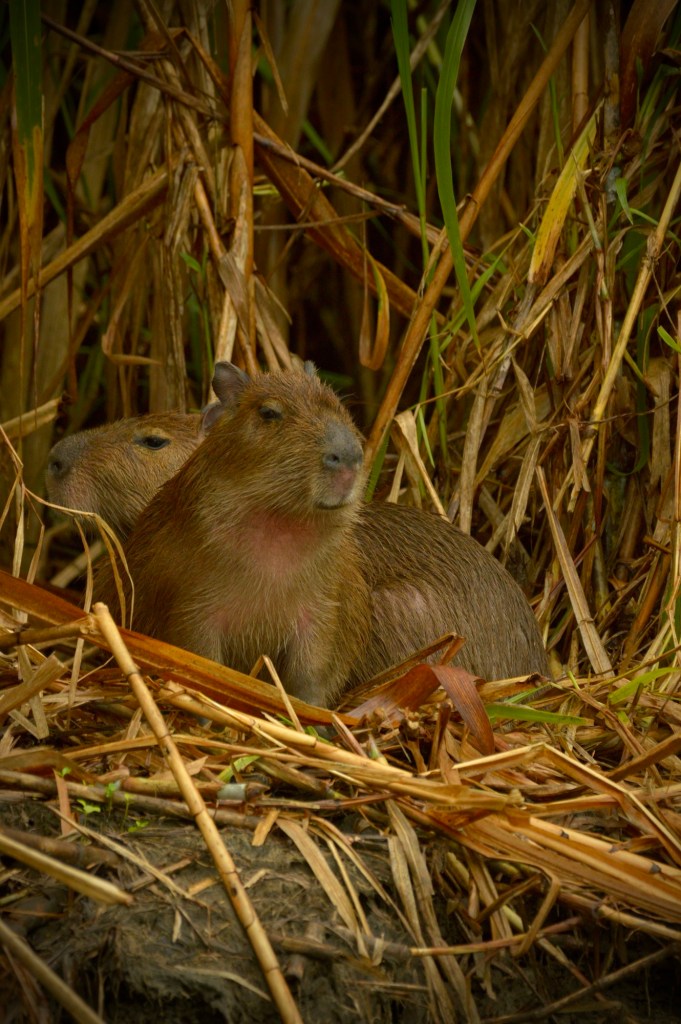
If I’m qualified to report on anything, it’s this. Peru is a naturalist’s dream come true. Over nineteen days, I’ve seen nearly three hundred species of birds, as well as dolphins, tapirs, capybara, black and white caimans, a fer-de-lance snake, bullet ants, stick insects and, of course, giant otters and monkeys galore. I could have seen even more if I’d done a few tailored birding excursions, which I passed up this time around (I thought 300$ for a private tour in search of a few endemic passerines was hard to justify for someone who isn’t really an anorak).
Peru has it all: deserts, coastlines, marshes, mountains, salt lakes, cloud forests and rainforests. Even if you only limited yourself to a week split between Cusco and Manu, you’d still see more animals than many people do in a lifetime.
I’ll be back.
Things I will miss
Kiwicha for breakfast
Coca tea
Hummingbirds absolutely everywhere
Condors
The snow-capped peaks of the Andes
Huaynos (very romantic Andean music)
Being visible on a dating app for a change
The height of the average Peruvian
Manu National Park
Things I won’t miss
Gringos in ponchos (it’s not a good look)
DEET-resistant biting flies
Rain that lasts longer than three days
Seceo (give me a Castilian ethe any day)
I think that’ll do for now. It’s still a couple of hours until my flight to Lima starts boarding. I’ll ask the waitress for a tres leches cake when she comes around. I could use the energy! BB x
My time in Peru is drawing to its end. In two days’ time, I will leave this beautiful country with its cloud forests, its condors and its coca tea and return to a land of Teams, terms and checking my emails on an hourly basis. I’m not vapid enough to lust after a life spent on the road – I strongly believe that at some point you have to be a responsible citizen and work for your community – but I always dread the returning shackles of my communication-based existence, with or without an adventure to sweeten the deal. I wish, if wishing were not in vain, that Teams and emails had never come to blight this world, to become a scourge for people like me – but the world is thus. Thus have we made the world.
I left Cusco at the slovenly hour of 6.40am yesterday with all of my belongings on my last organised tour of the trip: a guided tour of the Inca and pre-Inca sites of Chinchero, Moray, Maras and the unfinished citadel of Ollantaytambo, the last stop on my journey. It worked out cheaper than hiring a ride to Ollantaytambo direct from Cusco, and after six days in the Amazon I didn’t feel up to navigating the very affordable local bus service (which I’m sure is very reliable, but works entirely on know-how, which I am definitely lacking on this first visit to Peru).
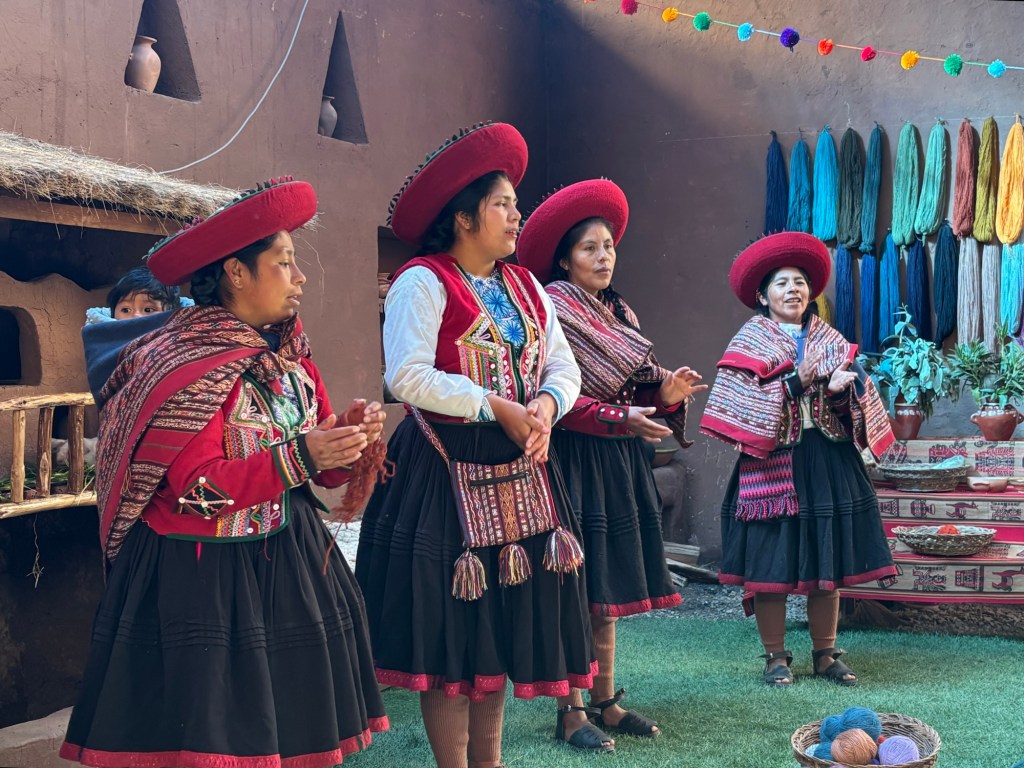
Chinchero, the first stop on the tour, involved a visit to a local cooperative, where we were shown how cochineal dye was made. It was obviously geared toward the tourist trade, but it allowed me to lay my hands on a decent souvenir: a snug alpaca wool jumper (which I definitely appreciate here in Ollanta, which is a lot colder than the other places I have been).
Chinchero is what Cusco used to be: a quiet Andean town where a lot of the population speak Quechua and learn Spanish. But change is coming. To relieve the strain on Cusco’s Alejandro Velasco Astete airport – and improve tourist traffic to nearby Machu Picchu – the Peruvian government is building a brand new international airport just outside the city. When it is complete – most likely in 2028 – it will be both Peru’s second international airport (after Lima) and the second-highest airport in South America (after Bolivia’s La Paz). Construction is about 40% complete, but has ground to a halt in the last few months as the country’s politics have shifted to the presidential election – which, at the time of writing, is still to be decided, some three days after the election took place (though it looks likely that Keiko Fujimori will win the day).
It would mean that any future intentions of visiting Manu will be a lot more straightforward, but I do worry for Machu Picchu. Can it handle the tide that is coming? Will the proximity of an international airport help this region to prosper, or will it only usher in more and more day-trippers who have come here just to gawp at the view and take the perfect selfie – only to plaster it on their dating app profiles to look well-travelled, the way my generation once did with the Tiger Temple and Elephant Jungle Sanctuary in Thailand?
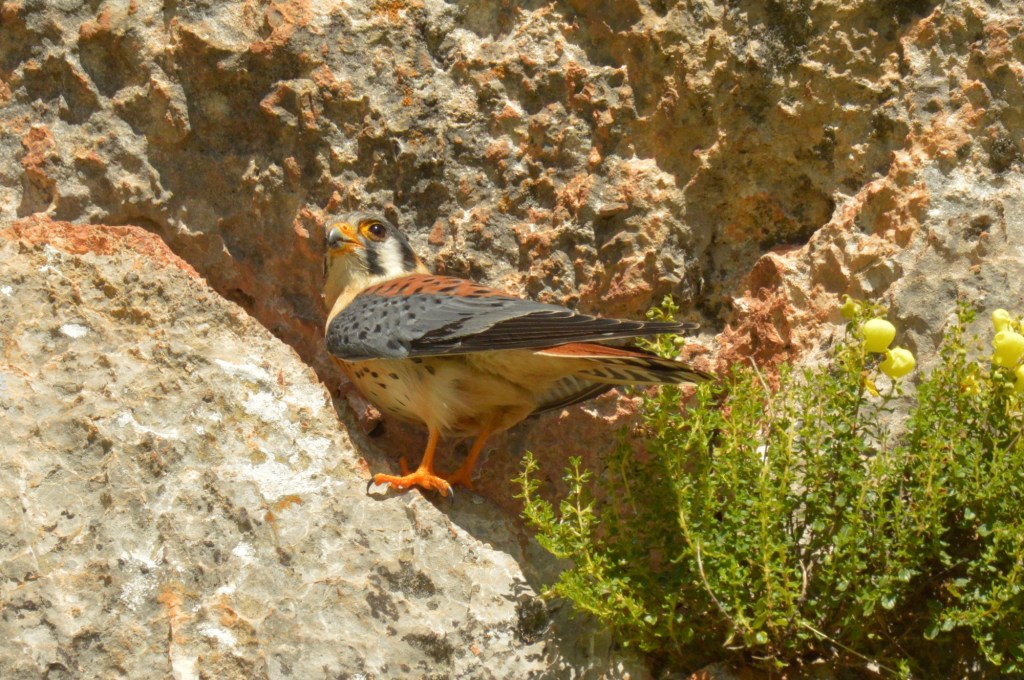
Our guide had the most mellifluous voice, whether he was speaking in Spanish or in American-accented English. It was almost hypnotic. He also really knew his stuff: I learned a lot about all of the places we visited during the day, even if I did wander off on occasion. A pair of American kestrels were nesting within the Chinchero ruins, and I had to observe these beautiful falcons for a little while. I had brought the zoom, after all – best it had some use on this fundamentally landscape-oriented adventure.
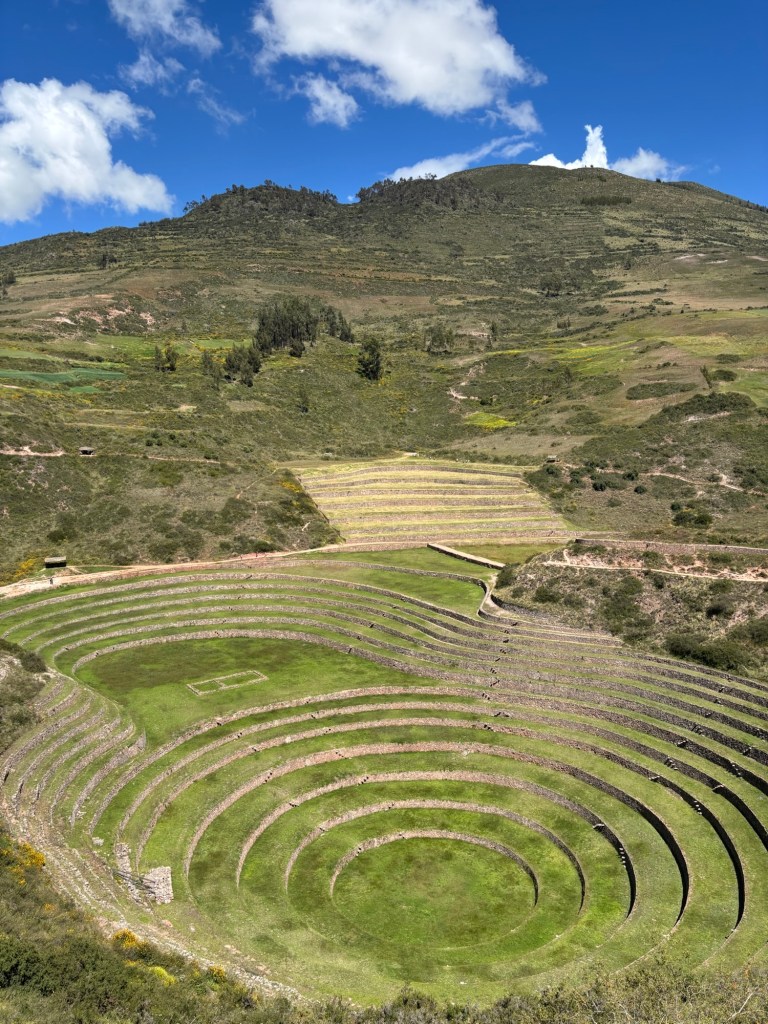
After Chinchero, we made for the bizarre terraces of Moray. These curious laddered circles carved into the earth are part of a potentially enormous complex that has yet to be fully uncovered. They were, I believe, a kind of pre-Columbian hothouse, an intricate agricultural system where each layer had a separate microclimate to the one immediately above, and could therefore be used to grow a large variety of crops. You can tell the difference for yourself just moving up and down the hillside, where the temperature rises and falls quite noticeably.
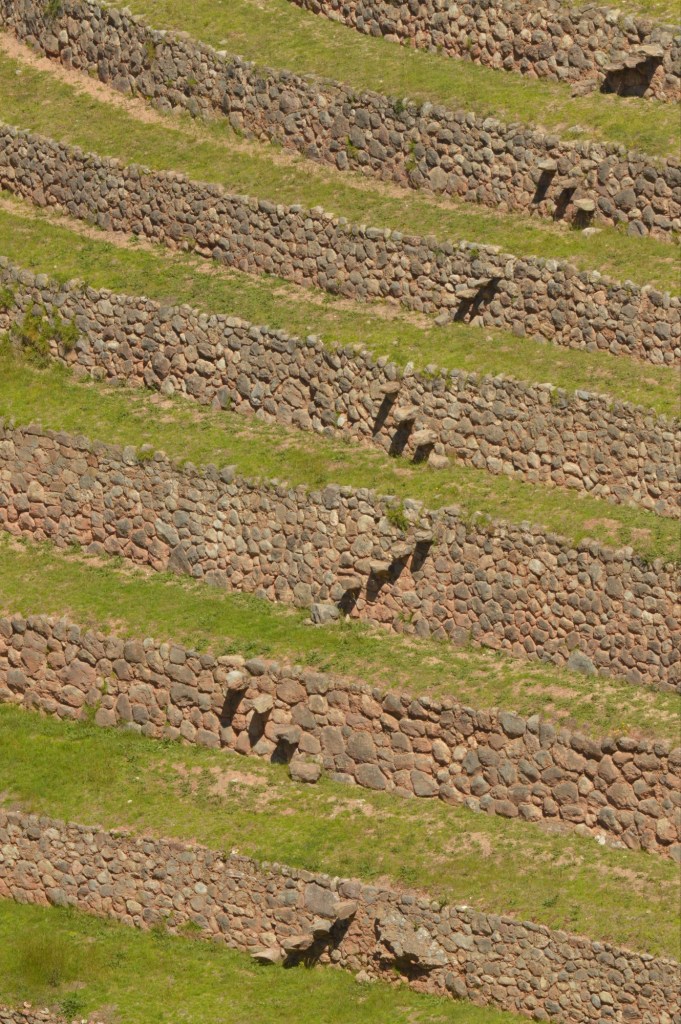
I’d seen the terraces of Moray countless times on GetYourGuide and various colourful billboards around Cusco city, but something I hadn’t appreciated were the tiny steps built into the walls, allowing passage from the lowest level right the way up to the top. I had always assumed people just climbed up and down – but then, the average Peruvian is very short, with men reaching a general maximum of 5’6”. I’d feel like a giant for the first time in my life if it weren’t for all these gangling Americans and German tourists spoiling my fun.
Tragically, perhaps that’s why my dating apps have really exploded out here. Maybe there really is something to be said for being 5’7” in a country where that isn’t considered short. Shallow, humbling, but potentially enlightening.
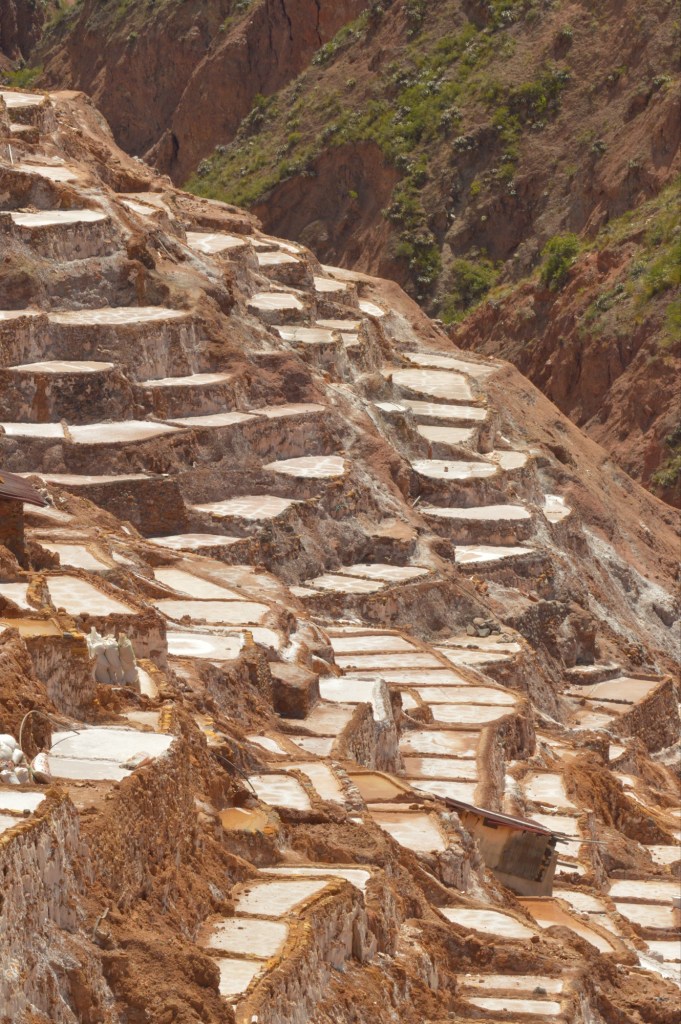
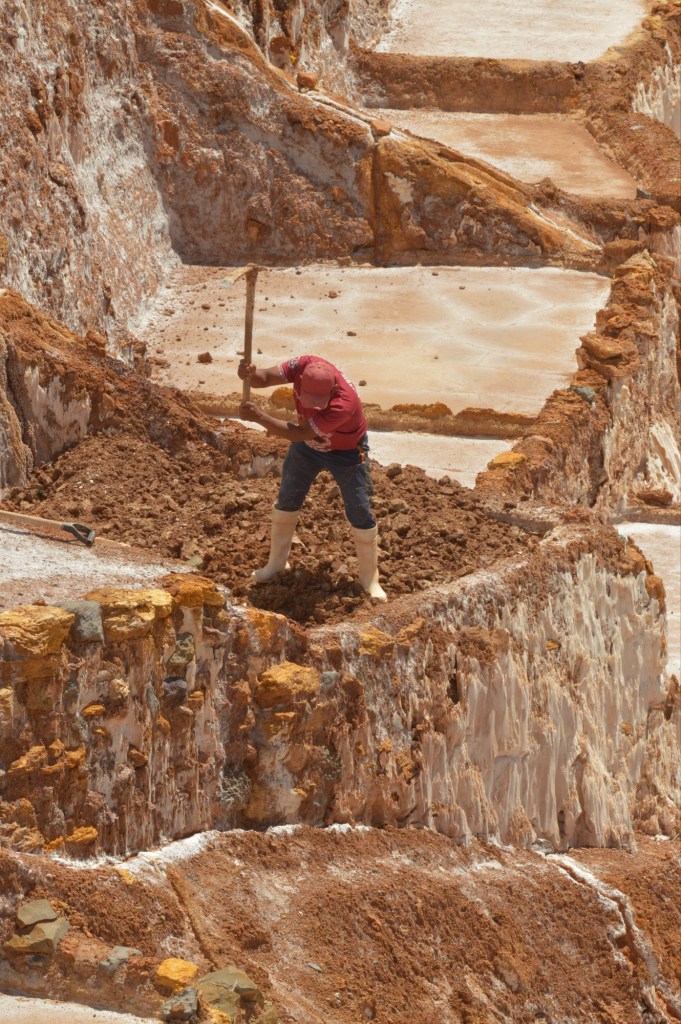
From Moray, we made a short hop through the town of Maras to the nearby salt mines upon which Maras’ fortunes were built. About 3,500 square basins of crystallised salt protrude from the mountainside, supplied by a saltwater stream that bubbles up from the rocks higher up. There were once five thousand of these salt wells, but erosion and regular earthquakes have destroyed many of them over the years, and the locals are (understandably) very protective of further exploration of what has been their primary source of income for potentially hundreds of years.
We’re still not quite out of the rainy season, so the mines aren’t in full working order just yet – that comes in July – but there were still a few local men toiling under the sun, shifting great sacks full of salt and restoring some of the dried-up salt wells.
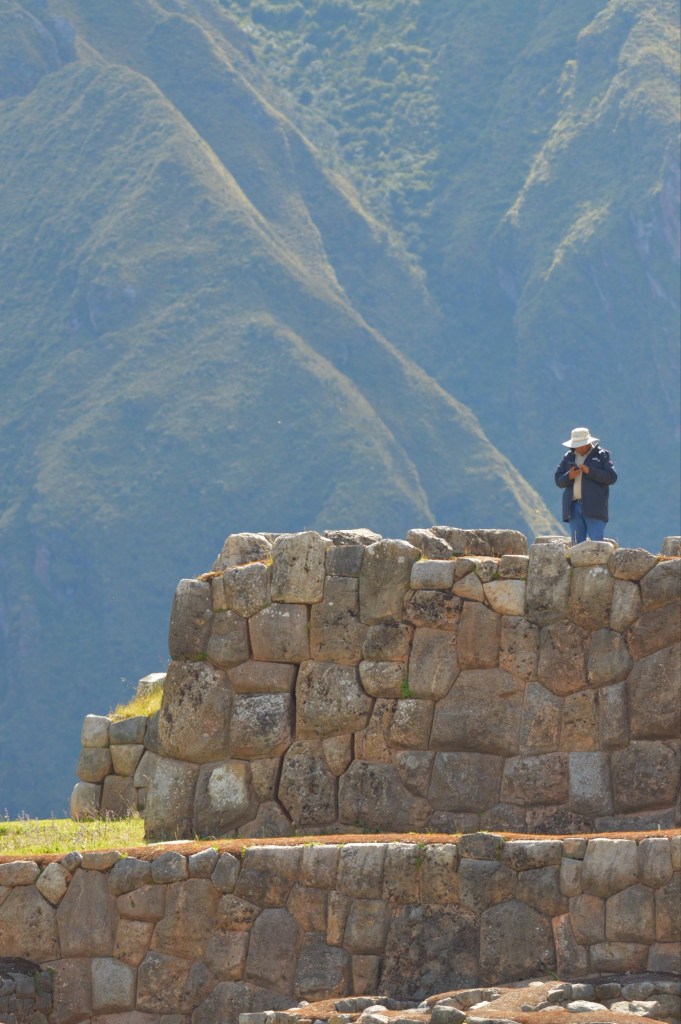
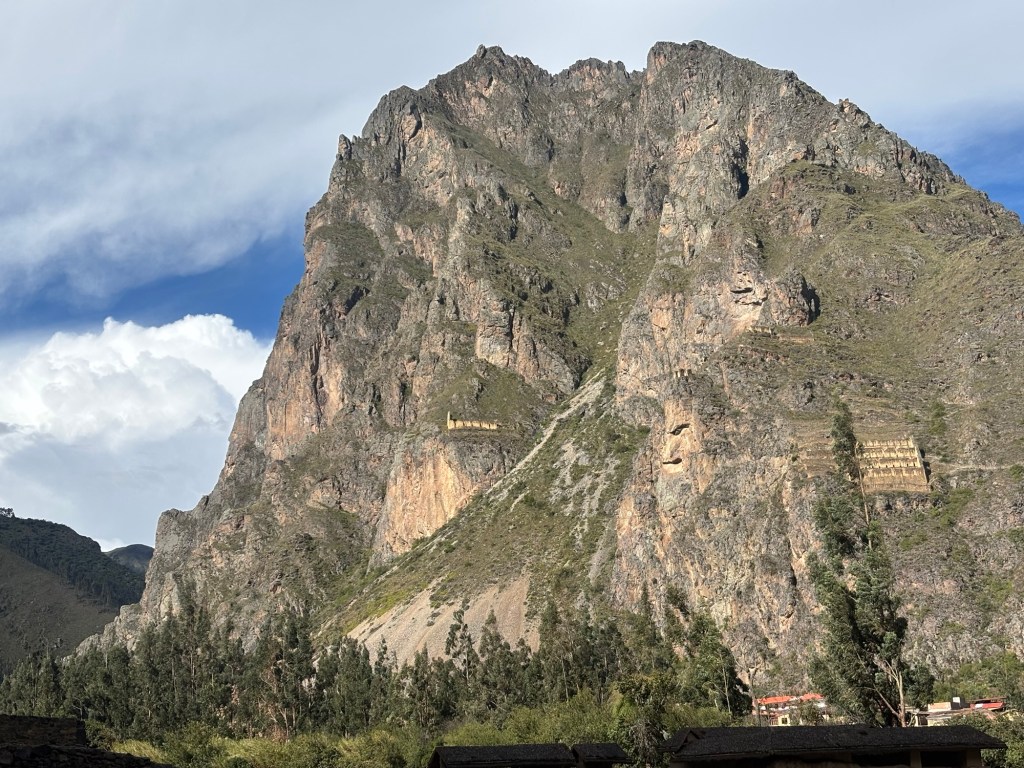
After a buffet lunch in Urubamba, the driver took us to our last stop of the tour: Ollantaytambo, the usual staging post for travelers making for the Inca trail to Machu Picchu (or taking the easier route by train). Ollantaytambo sits between two formidable cliffs, into which have been built a number of watchtowers, fortresses and storehouses, with the aim of protecting this vital Inca town in the heart of the Sacred Valley.
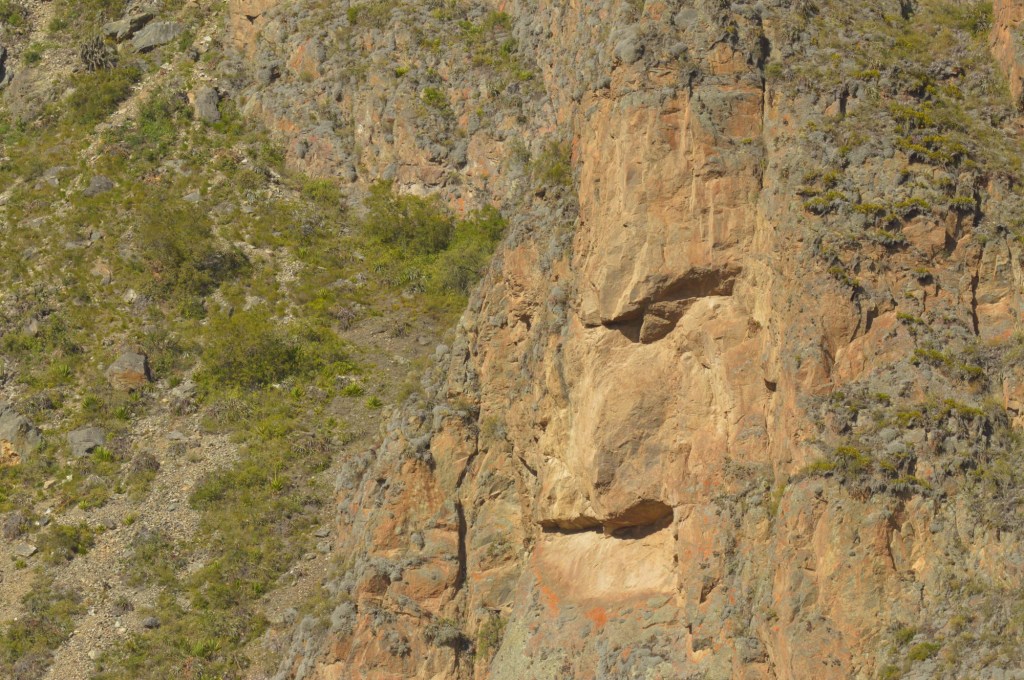
That’s not the only thing they carved into the mountainside either. Under the right light, it’s possibly to make out the unmistakable profile of a face between the two military buildings on the mountain’s western face. It’s possible that the design is a mistake of nature, but from the way the rock is worn around the base of what would be its nose – and it is an extremely Peruvian nose – it’s a lot more likely it was carved out of the rock by the ancient settlers of the Sacred Valley, in imitation of an apu, an Andean spirit or mountain god.
Quite how they achieved this Rushmore-esque feat hundreds of years ago on a gradient that would make Philippe Petit blanch is beyond my ability to understand – but I can’t help but admire those ancient Andean stonemasons. It almost makes the nearby Skylodge suites hanging from the mountainside seem like a joke – almost.
Well, it’s 9am and I’ve had breakfast. I guess I should go out and do some exploring. I’m taking it easy today before trekking up to the Inti Punku (the Sun Gate) tomorrow in what will be my final adventure here in Peru, as was always the plan.
It helps that it’s cloudy. On a sunnier day, I might feel I was wasting the opportunity for some serious mountain-gazing. But after more than two weeks of constant activity (I really have been doing something adventurous every single day), I think I can justify a relaxed itinerary just this once. BB x
The great Amazonian adventure is almost over. Like the macaws flying in shrieking groups across the river, I too will soon be traveling away from here. I am starting to get cold feet about leaving this place. I don’t have a choice, as I’m with an organised tour, and getting here without one would be next to impossible, but I can’t help feeling greatly attached to this place. There is something eternal about forests that pulls you in. Maybe it’s an inherited memory from years ago, before our ancestors left the shelter of the trees and walked out into the world.
Which is a very fitting image for what happened today.
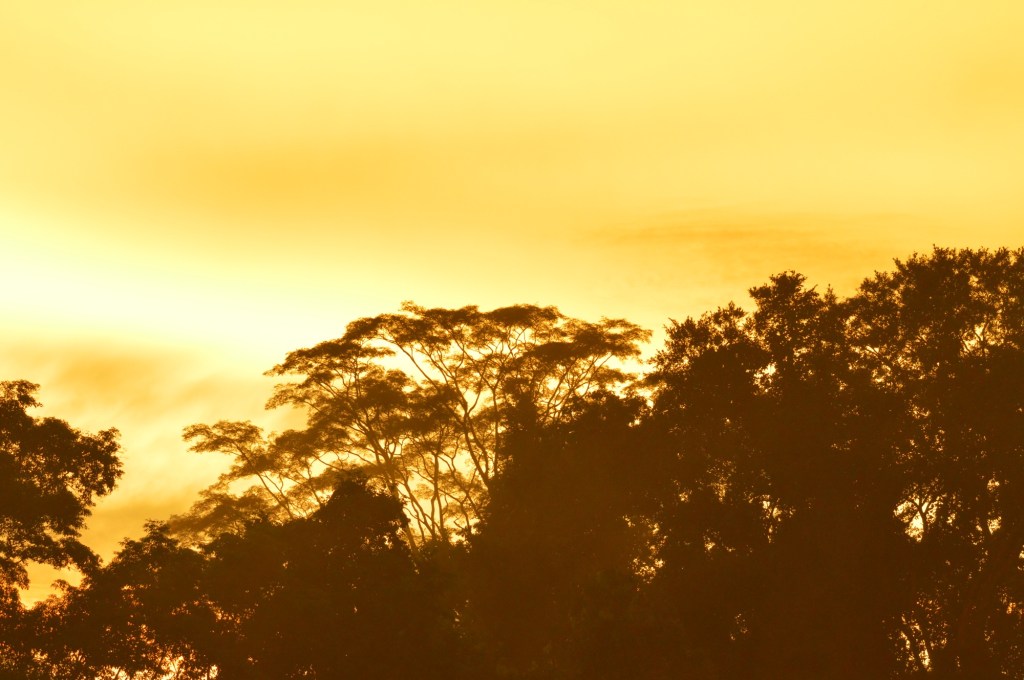
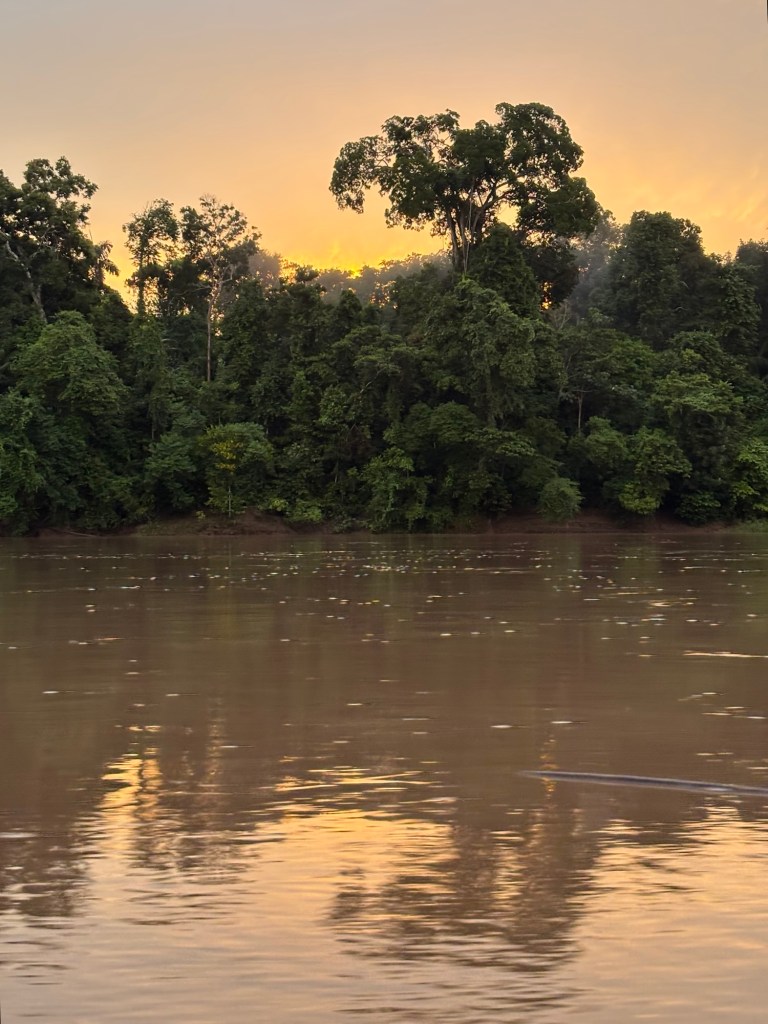
Dawn breached like a golden whale through the clouded sky, bathing the forest in its hopeful glow. I haven’t had as many Amazonian sunrises as I’d have liked due to the inclement weather, but this morning made up for it.
We stopped off at the ranger station to sign out and fill out a couple of surveys. The posters in there about the pet trade stabbed at my heart like they did the first time – and, just like then, I seriously wondered what I was doing teaching when I could be out here, fighting for what I believe in. If I hadn’t pinned all my hopes on finding Her and raising a family, this is where I would be. Somewhere like this, anyway.
Flights of fancy aside, we set out for the river confluence we forded the other day, only this time we sailed downriver for a kilometre or so to reach Boca Manu, Rive’s hometown, so that he could vote in the presidential election.
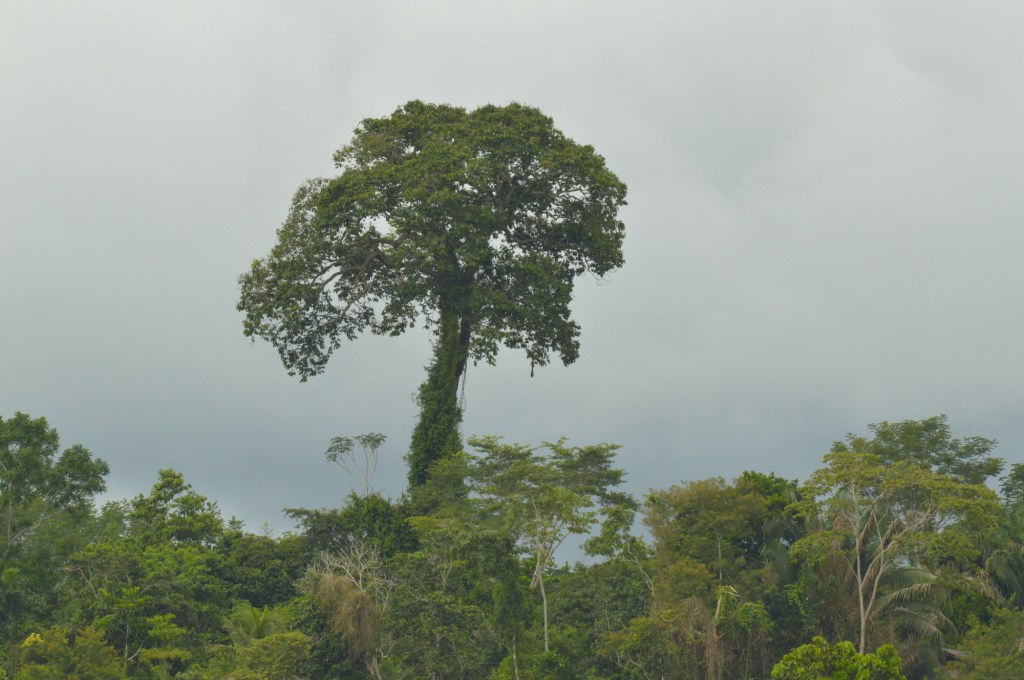
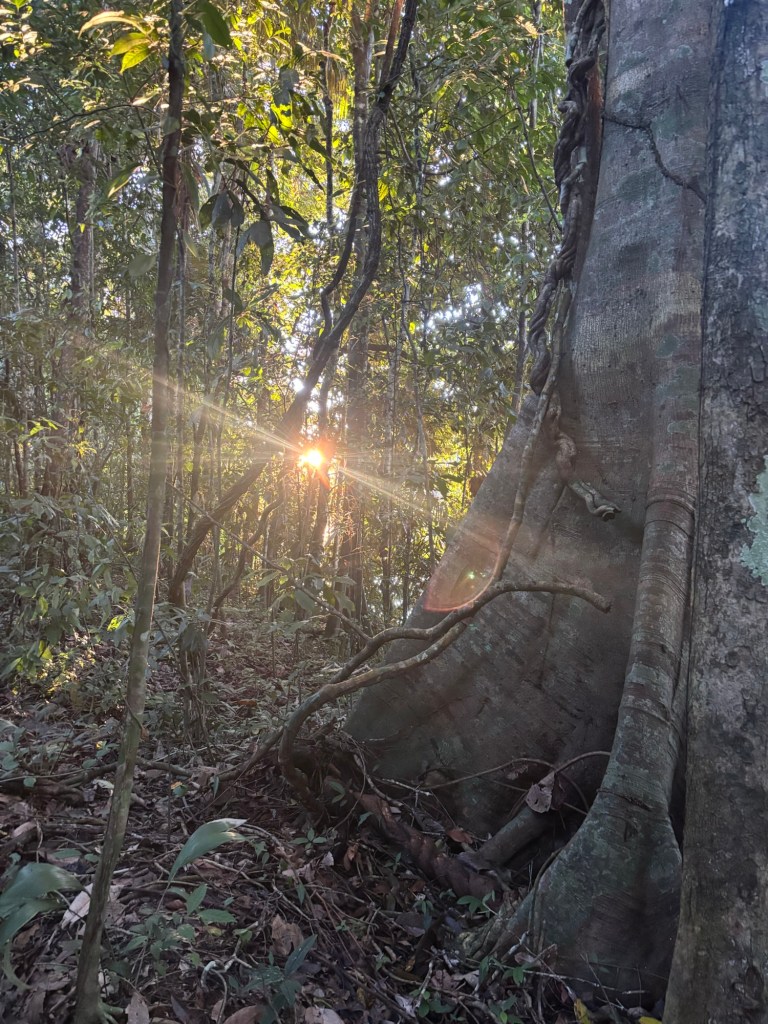
I had almost forgotten that the rest of the world was still turning within the timeless shelter of these mighty kapok trees. Here, life goes on as it has done for millions of years. The sun rises over a misty canopy and sets to the shriek of macaws and the chirping of a thousand crickets. Politics feels so petty in a place like this.
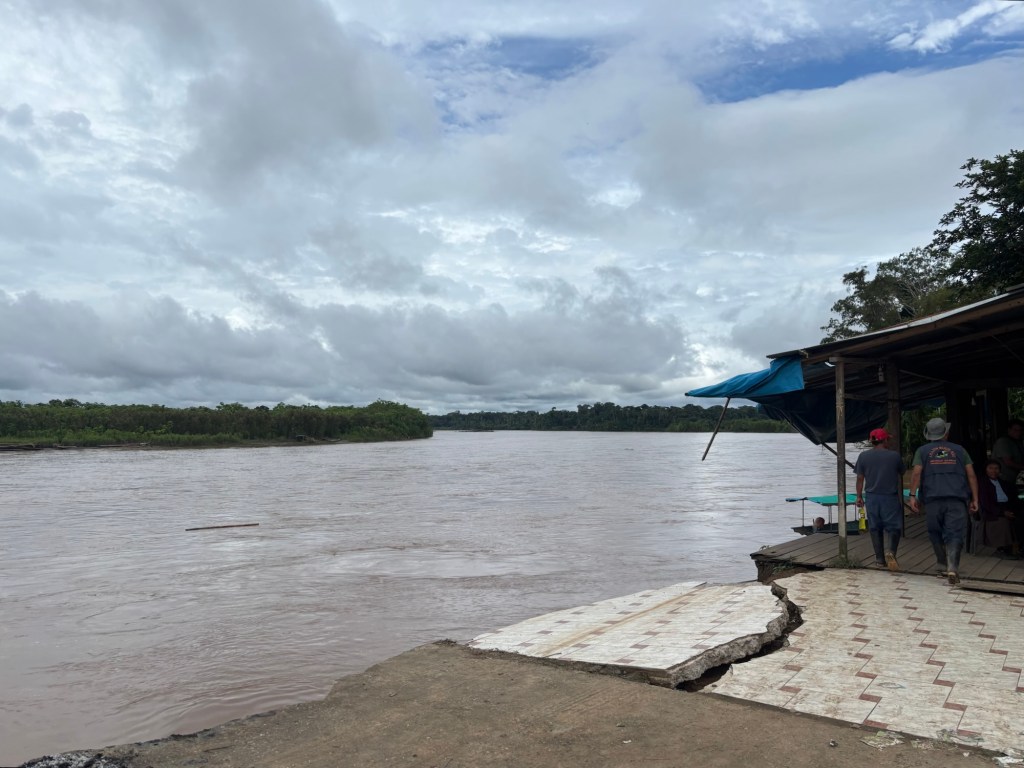
Boca Manu is a world away from Cusco. This largely native community sits on the edge of the national park, where the Manu river meets the mighty Madre de Dios. So fierce is the flow of the combined rivers that the town is steadily retreating into the forest. The jetty is a few slabs of wood fastened to several oil drums with a plank bridge leading up to a tiled section of the riverbank that was once a couple of houses, long since lost to the river. Only the scaffold of a single wall remains, and it has been converted into an advertising post for the local ferrymen.
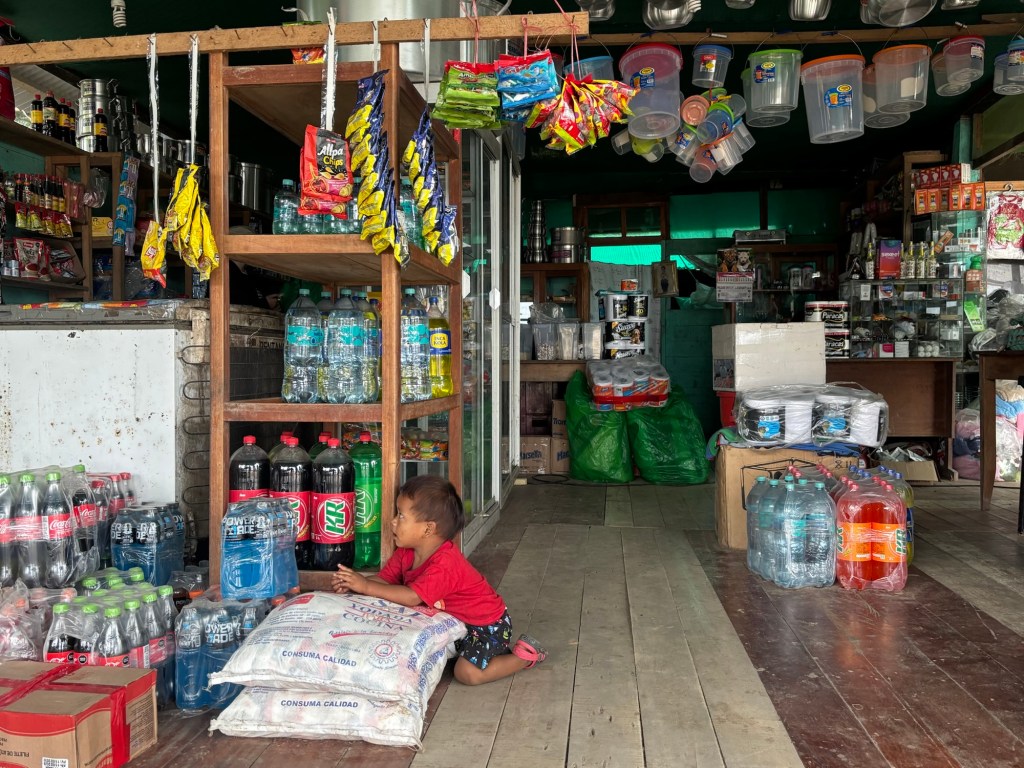
My companions set out for a walk into town while Rive went to cast his vote for one of the thirty-six contenders for Peru’s next president. I followed, albeit at a distance. From the way people stared, I don’t think Boca Manu gets many visitors. It’s certainly wouldn’t be on the itinerary if not for today being election day.
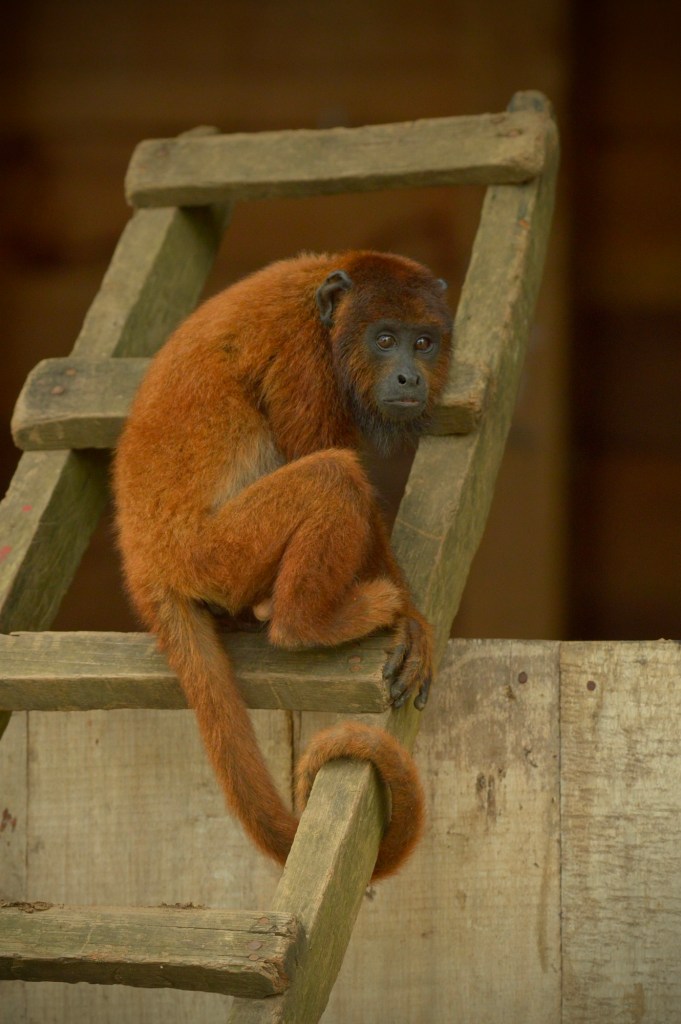
For the second time on this trip, I saw a case of jungle domestication. If I hadn’t met the resident macaw at Bonanza, I might have been more startled when a red howler monkey suddenly appeared out of nowhere, slipping through a farm gate and into a kitchen window, before the monkey’s owner, a small boy not much taller than the monkey itself, came back out with the howler wrapped protectable around his back.
It would be so easy to judge with a European eye, and yet I am sure these animals mean more to the locals here because they can name them. In our rush to become civilised, we have become worryingly nature-blind in the West. If I should be so lucky as to have children of my own one day, I will try to teach them what I know. When you a put a name to something (or even someone), it suddenly matters a whole lot more than it did before.
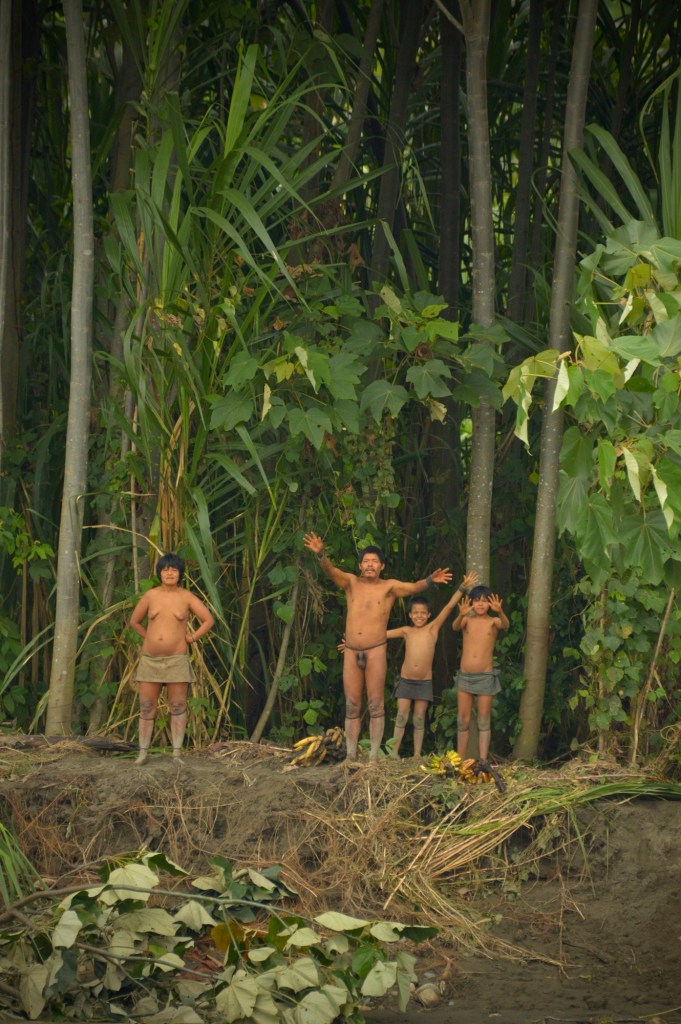
I dozed off on the boat, but was stirred back out of my reverie by a slightly cautious word from Rive: “Native people, on the bank of the river”.
I looked with my eyes first. Sure enough, there they were: brown figures at the forest’s edge, watching us. A man and woman, dressed in little but string and strips of cloth, flanked by a couple of grinning children. They stared at us at first, and then waved enthusiastically in our direction. A fifth child watched from the shadow of the trees, one finger in his mouth, unflinching.
I counted five, but Rive assured us that there would be a great deal more hidden away in the trees who would appear if we got too close. We respected the law of the land and moved on, feeling the curiosity of their eyes burning into our backs as we sailed on up the river.
Manu National Park is home to an unknown number of indigenous uncontacted tribes, some of the last people on Earth to remain beyond the reach of civilisation. Some were driven into these protected forests by conflict with farmers and miners over the Brazilian border. Others have been here since long before the borders of the park were drawn.
A Proto-Arawak people, the uncontacted tribes are divided into family groups throughout the vast area of forest stretching west from the river to the cloud forests at the foot of the Andes. They are only very rarely encountered on visits to Manu, which is all to the good, as their interactions with us in the past have not always been friendly. Camera traps around the lakes show that they have been known to trail visiting tourists on their walks through the forest, running silently through the trees and making their presence known only by their splayed footprints in the mud and, sometimes, bows, arrows and woven baskets left behind in a panic.
It’s dark out there now. I wonder what that family is called. What hopes and ambitions those young children have. The tribes are known to fight and each other over each other’s women – an important economic force in these communities, since more women means more babies, and more babies means a stronger community. Another side note that we have chosen to ignore in the West.
Back at Bonanza, the weather continued to be exceptionally kind – an apology, perhaps, for all those days of rain.
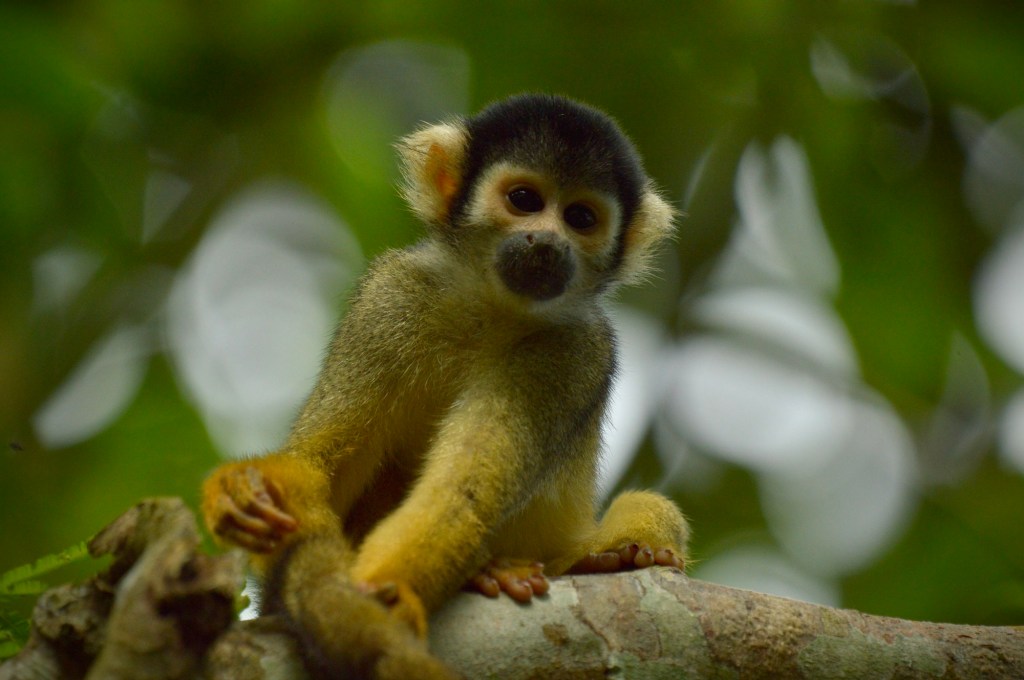
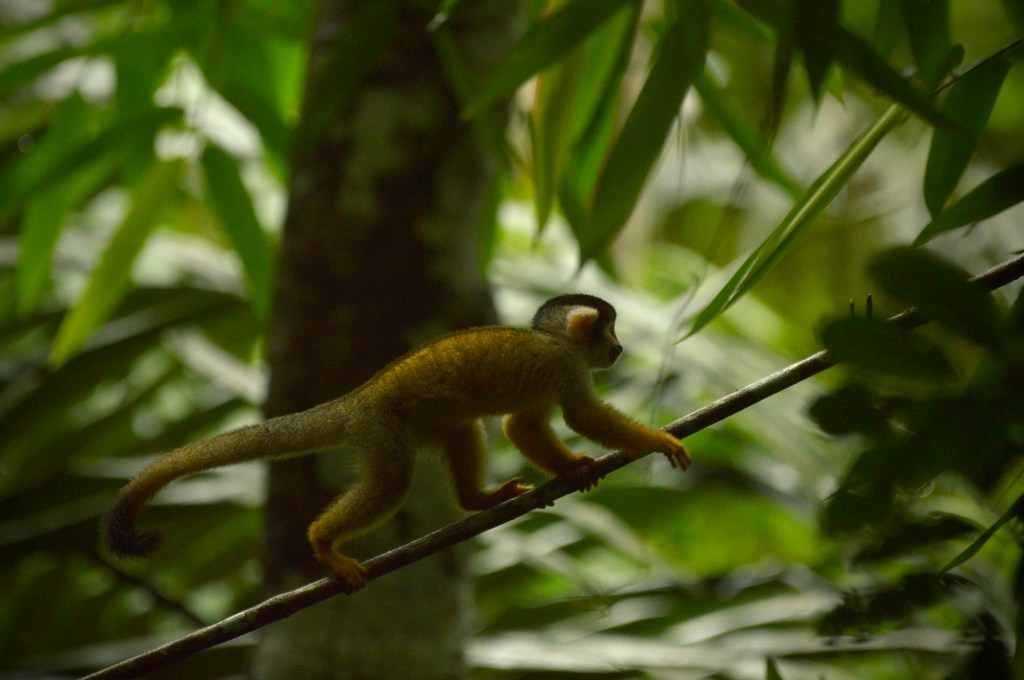
We had two hours to rest. I spent them exploring the grounds, chasing after a sunbittern that was lurking around the flooded ditch by the lodge and watching an adorable troop of squirrel monkeys feeding in the trees just behind my cabin. I’d forgotten how hard they can be to photograph as they move numbly through the canopy, especially once they’ve become used to your presence and no longer stop to stare at you out of curiosity.
I wonder – do they look at us the same way we looked looked at those native people at the edge of the forest?
After a chat with Rive about the natives over a bowl of Bernadino’s homemade snacks, we went into the forest to look for bats roosting in the great kapok tree. The flooded creek was still nearly waist high in parts, so we couldn’t reach the observation tower to watch the parrots flying in to roost at sunset, which was a shame. Seeing a different kind of bat made up for it though.
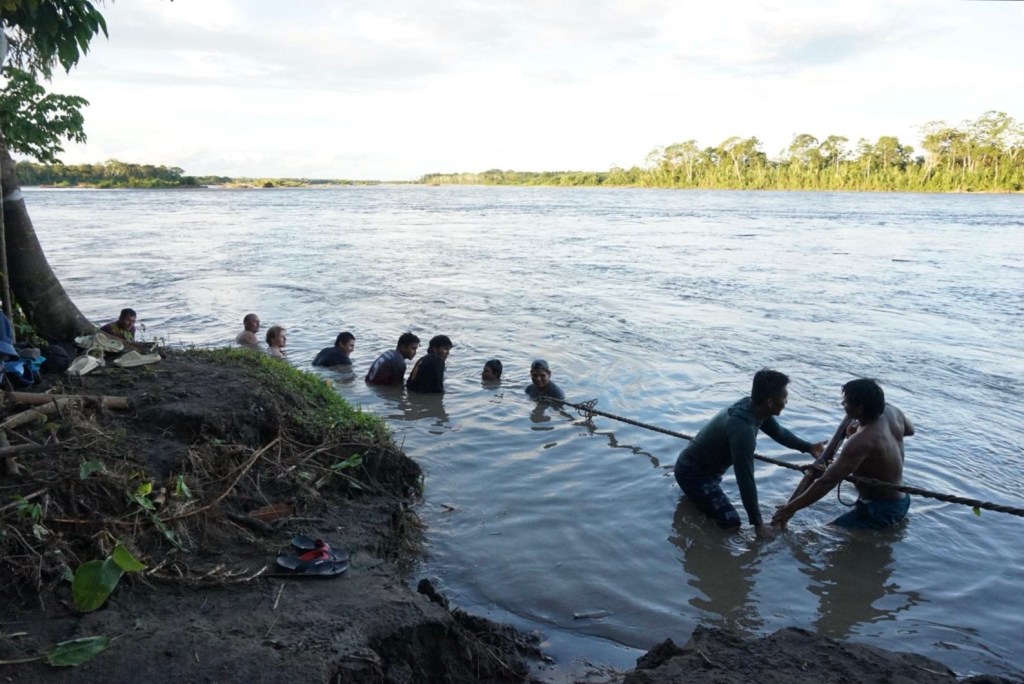
Instead, Rive suggested going to help the lodge’s boys retrieve their sunken fishing boat from the river’s edge. We had noticed it on the day we arrived, visible only by its prow sticking out of the water. Weighed down with the sheer volume of rain the night before we arrived, it had tipped over and the river had done the rest, filling it with silt and stones.
I was delayed because I had set out into the forest to try to track down a tinamou that was calling just metres from the forest path. They’re exceptionally hard to locate, though, being cryptically camouflaged and calling from the shelter of the thickest parts of the undergrowth. To make up for my lateness, I stripped down to my shorts once I got there and got into the river up to my neck with the rest of the men.
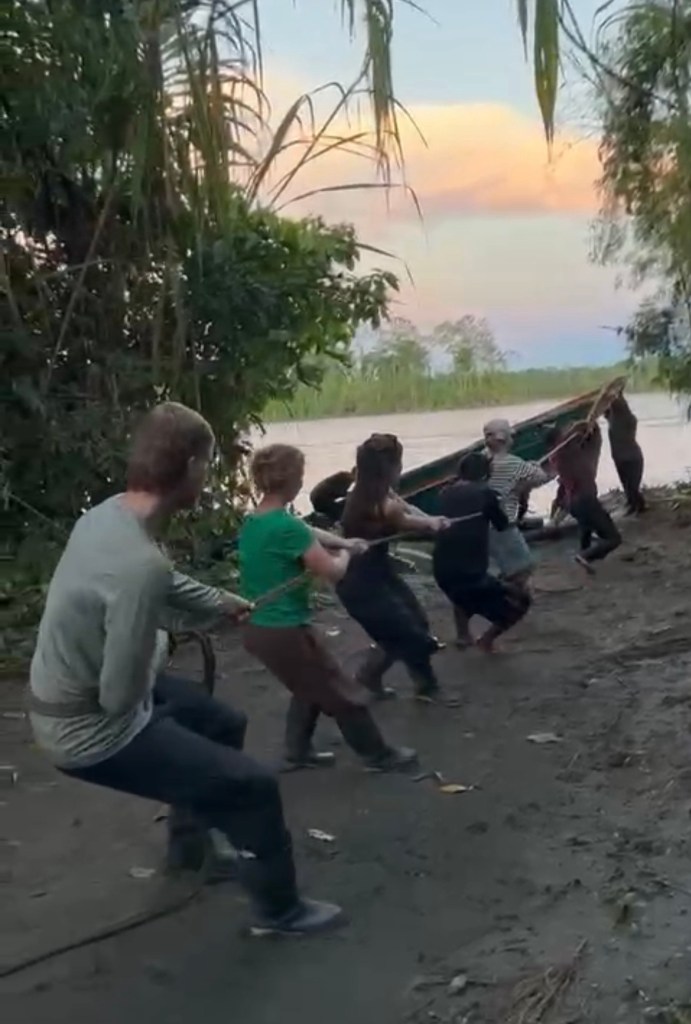
It took a team of twelve men in the water and another support team of gringos on the rope up on dry land the best part of half an hour (and no shortage of pivoting and digging) to get the job done. Led by our captain, a burly native man from Atalaya who engineered a makeshift tourniquet using logs and thick rope to drag the skiff closer to the shore, we eventually managed to haul the fishing boat up and out of the mud. It felt good to be helpful, rather than just coming and going through Manu like any other passive tourist.
I also learned at first hand why the uncontacted tribes have remained so, with civilisation so close at hand. Swimming from one side of the sunken skiff to the other, I found myself more than a metre from the riverbank. It dropped steeply all of sudden, deeper than I could reach, and the force of the current dragged me downriver. The only reason I didn’t get carried far was because I wasn’t that far out and I had the boat to hold on to.
I’m not the most powerful swimmer, but I don’t think even the strongest swimmer could fight a current that strong. In the dry season, the river isn’t quite as high, but it still flows with the cumulative force of hundreds of miles of rainwater, and the ground here is sloped as it climbs up into the cloud forests and becomes the Andes once again, adding to its momentum. I don’t think I’ve ever seen a river where the water wasn’t level before today. I’ve certainly never been in one that was quite so strong.
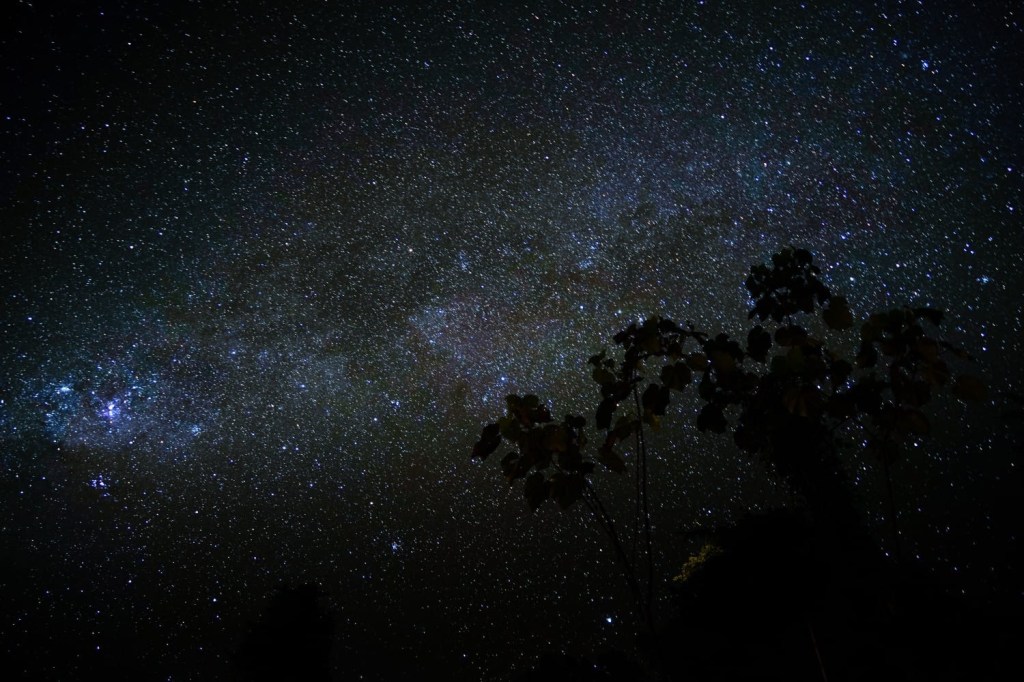
Dinner felt earned after that – as did the cold shower immediately afterwards. I stuck around outside for a while before heading back into my lodge to sleep, as the night sky was too good to miss. Accompanied by the eerie flash of fireflies below the skyline, an enormous arm of the Milky Way cut right overhead, flanked by strange new constellations that I’ve only ever read about in books, like the Southern Cross. I might have seen it briefly in Uganda, too, but I was only south of the Equator for a few days. And anyway, that was a very long time ago.
I don’t know when I’ll see a sky this clear again. The only light here comes from the dim lamps in one or two of the lodges, and the nearest town, Boca Manu, is many miles away to the north. So here, deep in the Amazon rainforest, you can see the night sky as it was always intended to be: immense, magical and unspoiled, like the rainforest all around me.
I don’t want to go. My clothes would really appreciate being somewhere higher and drier (especially after my dip in the river), but this place has got into my heart like nowhere else in Peru – and I’ve adored pretty much every part of this country that I have seen.
But going is tomorrow’s business, not tonight’s. I should get some sleep – we have an early start and a long journey tomorrow. I’ll let the rainforest sing me go sleep one last time. BB x
Some days are red letter days. I should have known today would be one of those days when I woke up and it wasn’t raining.
After three days and nearly sixty-six hours of on-and-off rain, the sun had returned. The forest looks so different in the sunlight. I had almost forgotten what being dry felt like.
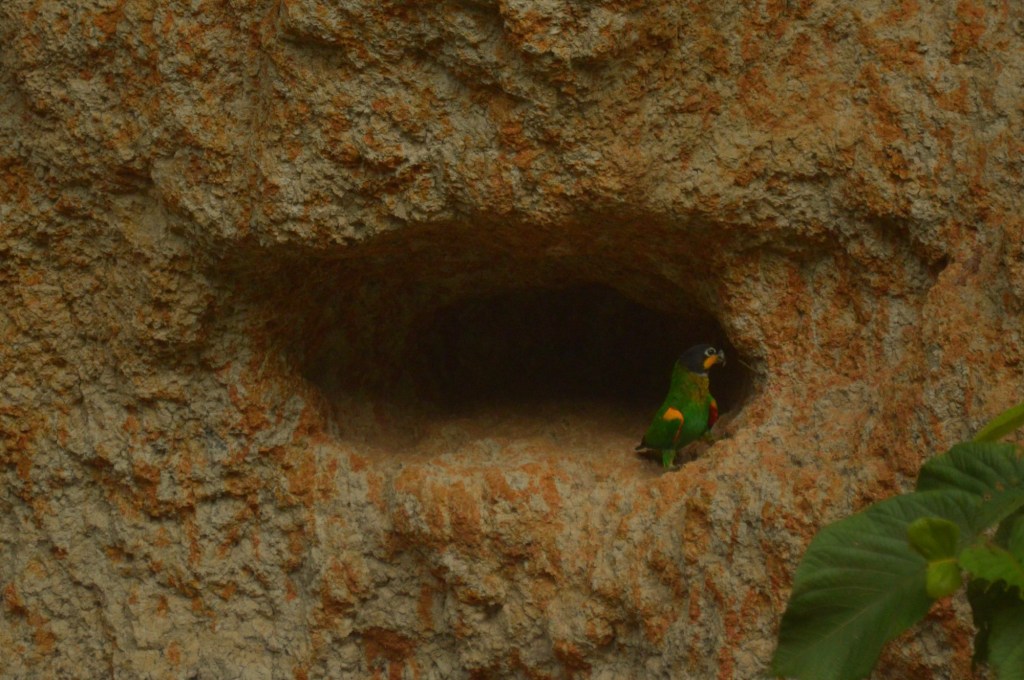
Our destination this morning was the macaw clay lick or collpa in search of parrots. Bernardino sent us off with a packed breakfast and Rive led us deep into the surrounding rainforest, with the caution that the macaws would not come in the numbers that they do in the dry season, owing to the abundance of fruit-bearing trees at this time of year. As such, I wasn’t expecting much – so I wasn’t overly disappointed when the only psitticaforme to put in an appearance (beyond the distant flyby pairs of macaws) was a couple of orange-cheeked parrots. They were adorable to watch, but they weren’t quite the spectacle that this place sees in the hotter months.
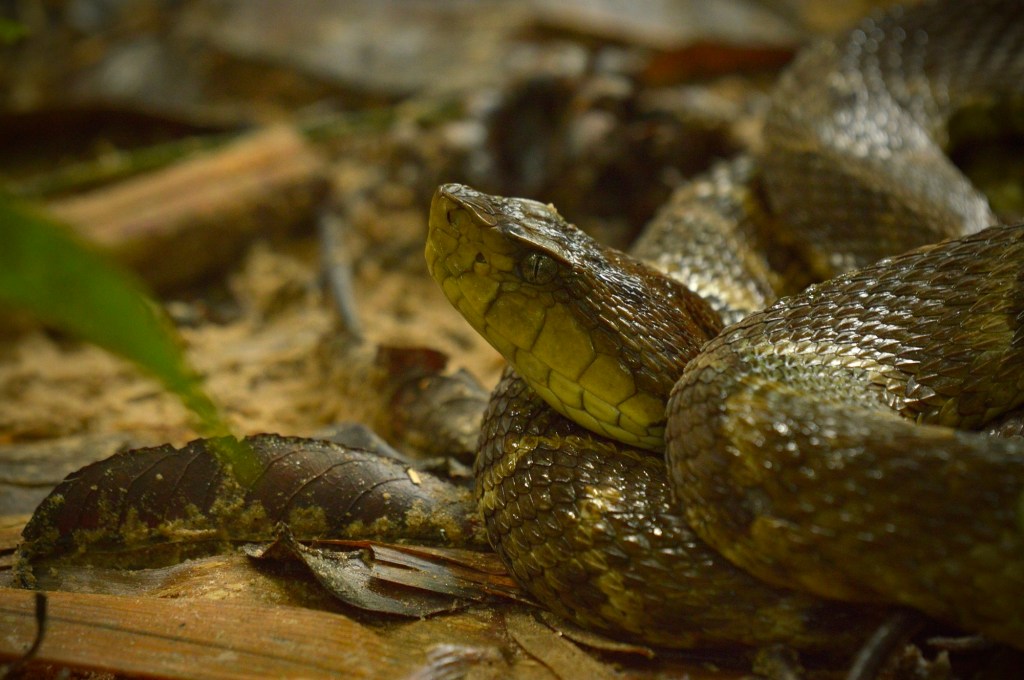
Eager to find us something to celebrate, Rive went out into the rainforest and came running back a half-hour later with the news that he had found a Fer-de-lance snake – the deadliest snake in South America and one of the most dangerous denizens of the Amazon – near the mammal clay lick a short distance away. Leaving our supplies in the macaw hide, we set out after him.
Sure enough, it was sitting right where Rive had found it: a beautiful and deadly viper, whose untreated bite is fatal. I didn’t need to worry about getting close enough for a good photo, as the lens was the perfect safeguard.
While we waited out the final hours, a troupe of squirrel monkeys and an accompanying pair of capuchins kept us company. I had been hoping for a close encounter with some of South America’s monkeys since we entered the park, and I wasn’t disappointed.
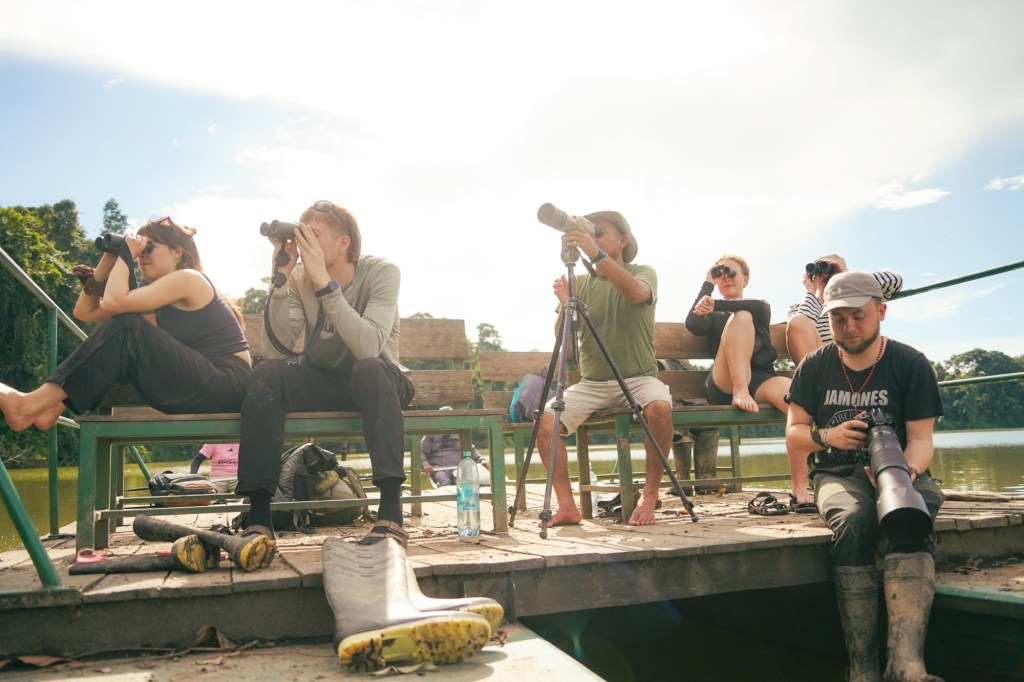
Back at the lodge, Rive called in a few favours and managed to secure us a couple of extra hours on the lagoon so that we could search for the otters again. Visits to the lake are strictly controlled by the rangers, but since we had laboured fruitlessly under a downpour the day before, Rive was given the green light to take us out again.
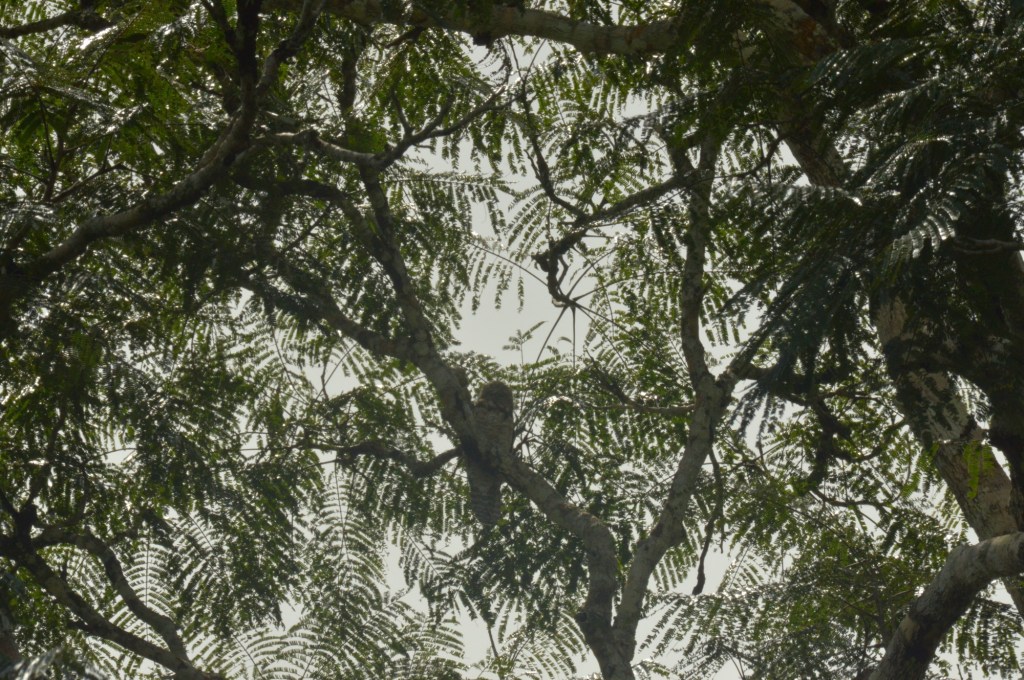
While the sun was shining (and the forest was suddenly absolutely sweltering) we rushed to wash and dry our clothes – they were, it must be said, a mass of damp and sweaty fabric by this point. While I was coming and going, one of the lodge groundskeepers approached with a smile and asked me something I didn’t at first understand: “¿quiere el gripotú?”. It was only when I realised that – just like our guide – he was saying a bird’s name in English that I gathered he was offering to show me a great pottoo. It was high up in the tallest tree, unmoving, looking for all the world like an extension of the branch upon which it was sitting, but this Leandro was able to point it out. I was very grateful – hard as they are to find, I was hoping to see one of these cryptic creatures out here.
After another incredible spread put on by our chef Bernadino, we set out. Hoping for a change of fortune, I doubled back and took my rosary this time. Maybe the Lady of the Marshes would give us the luck we needed to find the river wolves of the Cocha Salvador.
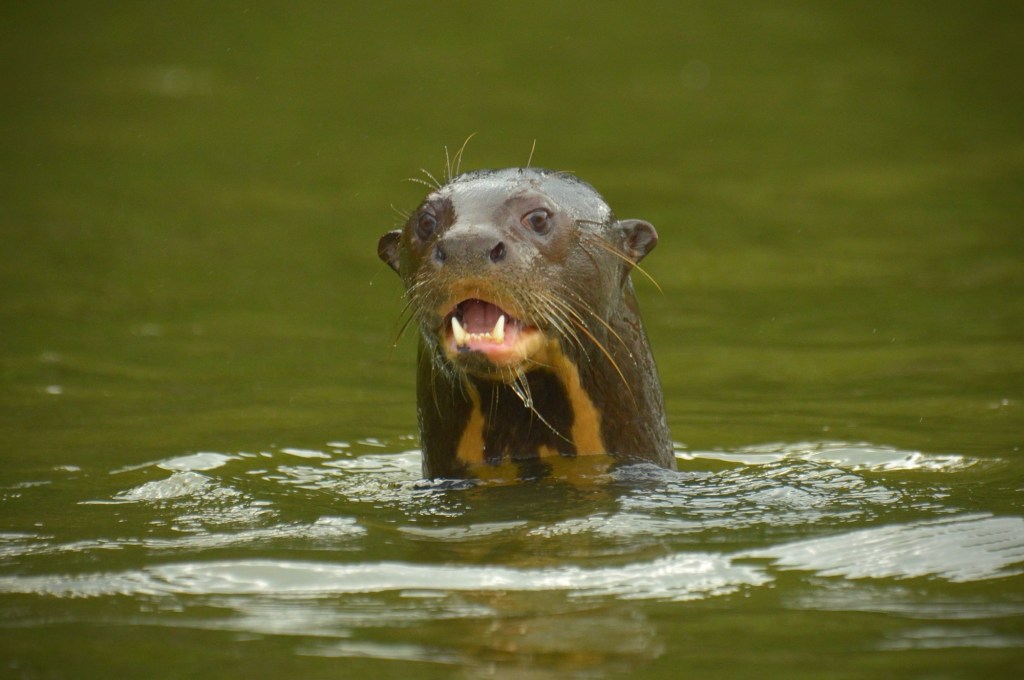
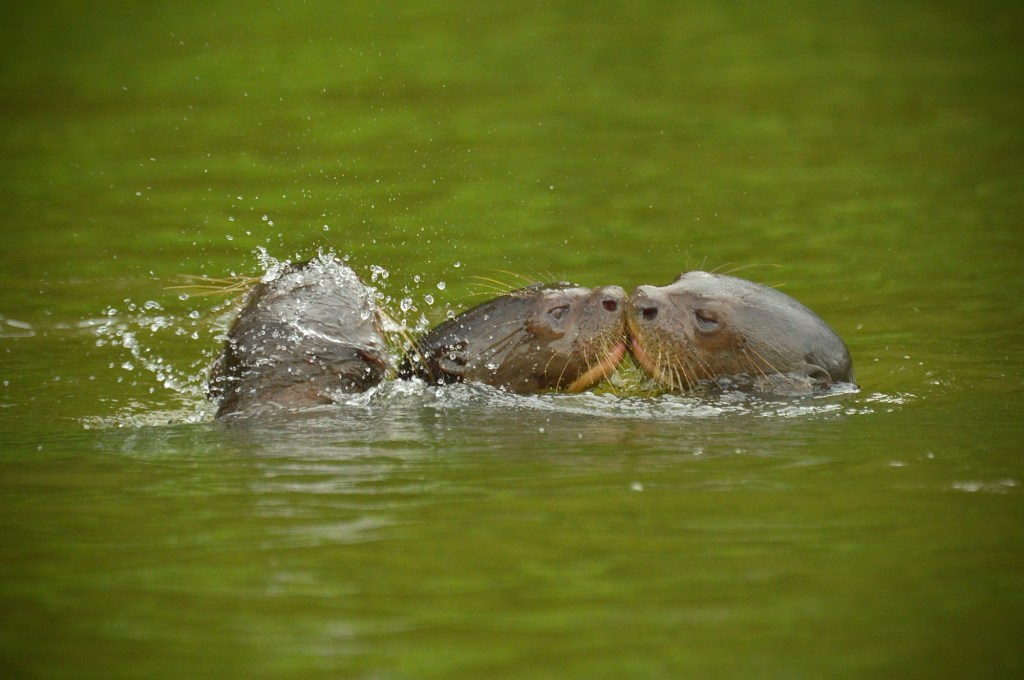
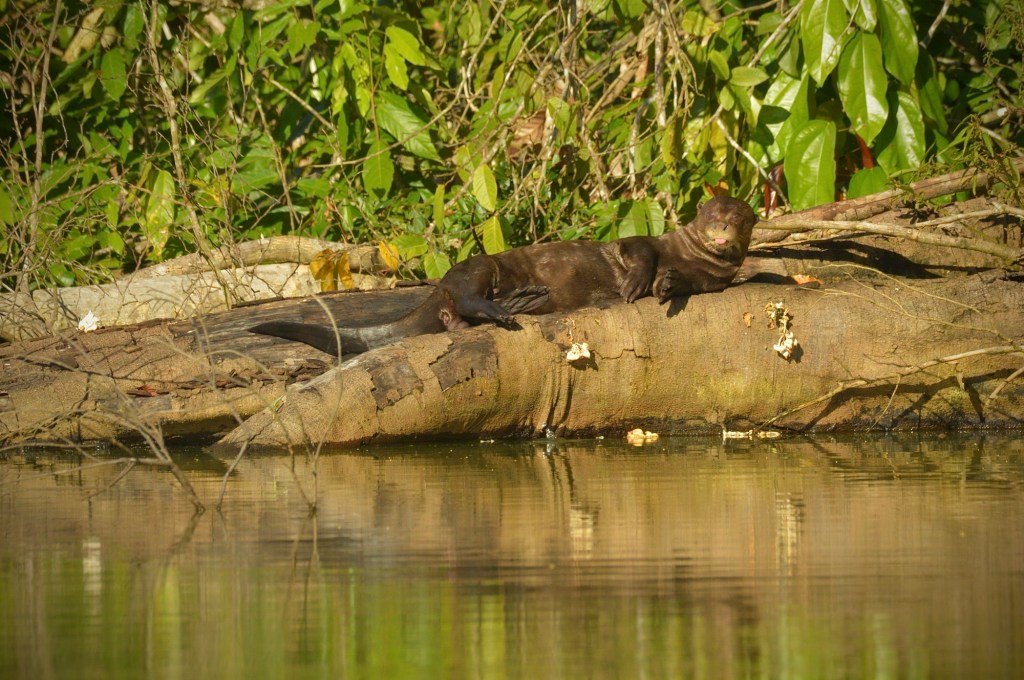
And she did. We had hardly been standing at the dock on the concha when our boatman called out “otter otter!”. We got into the catamaran and drifted out into the lake, but didn’t need to paddle the thing far – the otters came straight to us!
Giant otters are found only in South America. The largest of them – the dominant male and female of each family – can grow to an astounding two metres in length. They were hunted to near extinction a few decades ago when overfishing and the demand for otter fur purses led many wily Peruvians to export their pelts for great profit, but in places like Manu they have been able not only to survive but to thrive. Hundreds of otters are estimated to live in the conchas along the Manu river, with each family staking out a territory of their own.
They’re very endearing to watch, whether they’re hunting, eating or just playing around. The locals call them lobos – wolves – rather than nutrias (the Spanish word for otter) on account of their habit of forming family packs around a dominant male and female, but when they’re hauled out of the water and rolling around looking for a comfy spot, they look a lot more like very long cats.
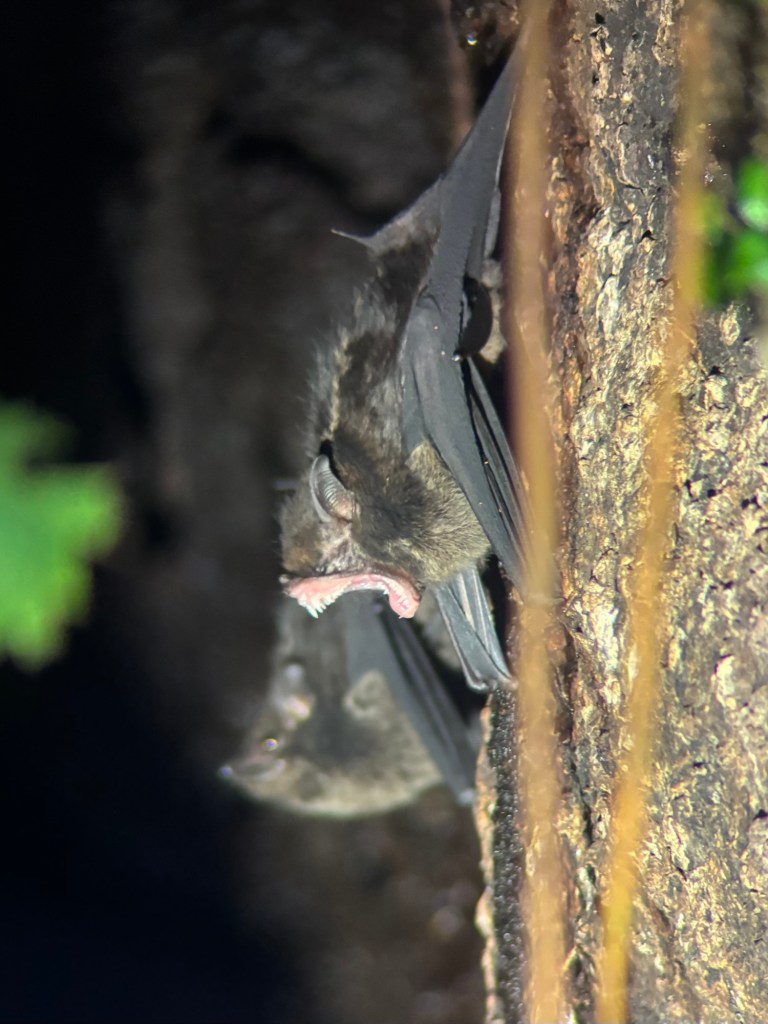
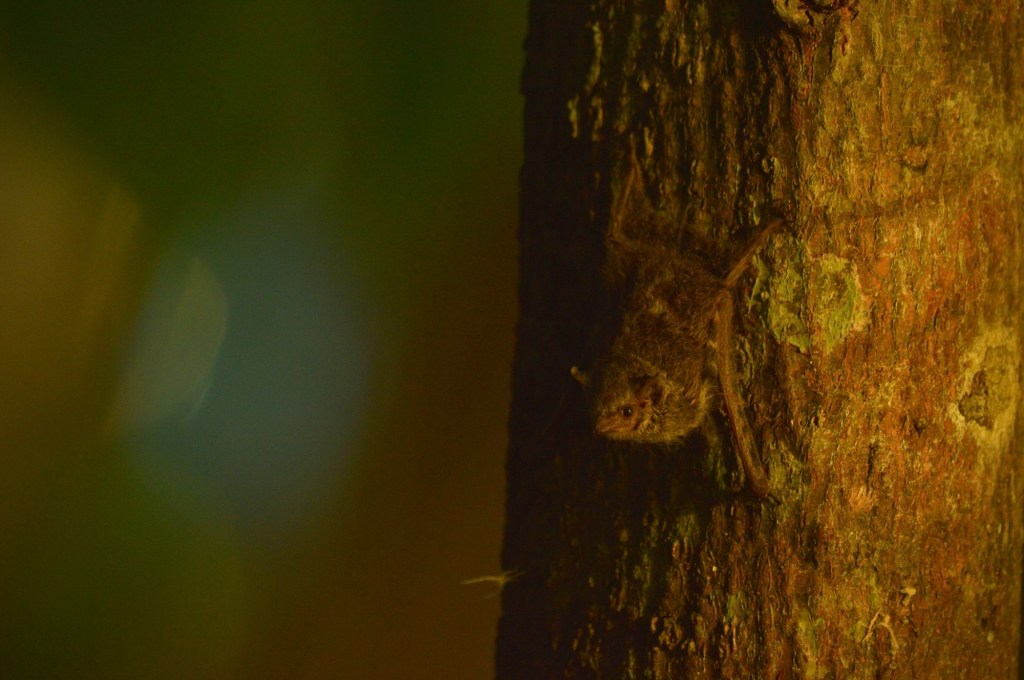
Another tour group was waiting for us to return with the catamaran, so we couldn’t hang out with the otters all afternoon – which is just as well, because my arms got absolutely mauled by the lake’s biting flies, which didn’t seem to be bothered by the DEET I had applied before setting out. My right arm in particular looks like a measles case. We were dropped off at the second of the lake’s two docks, putting a large roost of long-nosed bats to flight from under the jetty as we arrived. I hoped to catch one in flight, but I got luckier: one of them landed on a tree by the jetty and clung to the trunk, watching me from those tiny, beady eyes. It only took off when one of my companions returned from the forest and stepped out onto the jetty.
Before heading back to the lodge, Rive took us on a night walk through the forest. The rainforest is a magical place in the first half hour after sunset: a symphony of birds coming off shift and insects and amphibians taking their place. Tinamous whistling mournfully in the undergrowth and woodcreepers echoing their cries from the canopy. The descending hoot of a pygmy-owl, the beautifully sad song of the ant-thrush and the piping calls of poison frogs from the leaf litter. What an incredible place this is!
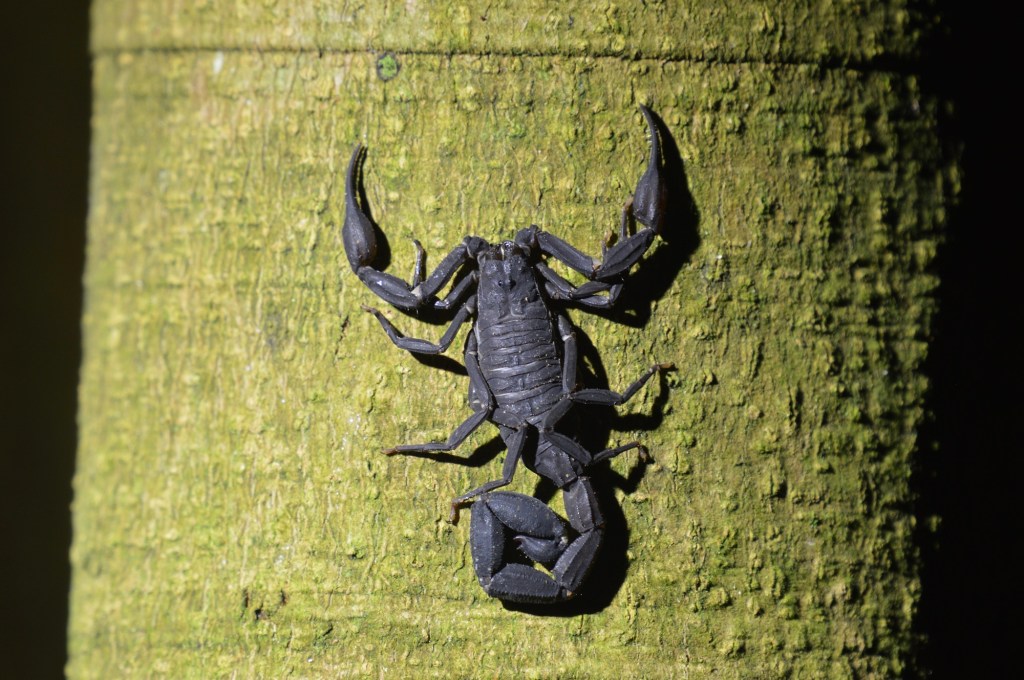
Incredible – and also incredibly dangerous. As if the poison frogs weren’t enough, we found an enormous cane toad, many tremendously large spiders and two scorpions, including this especially monstrous individual clinging to a tree trunk near the river. I’ve been checking my boots and shoes twice as carefully ever since!
Bernadino had prepared another incredible feast for dinner, which felt like a triumph after the day’s work. Rive was pleased: essentially, we had ticked every box so far but the jaguar, and that was always going to be a Herculean task during the rainy season, with the sandbars all submerged by the swollen river and the mornings much too rainy to encourage any of the great beasts out into the open.
Tomorrow we begin the twenty-hour trek back to Cusco. Eight hours in the boat as far as Bonanza and then another twelve from there. I am very happy with all that I have seen, and I am ready to return to civilisation, but I still want to come back. In my heart I know that I am not finished with Manu. It has been a very special place. Someday, I hope I will see this place again. It is already imprinted upon my heart like so many places: a lighting tree in Huelva, a porch in Boroboro, a smooth boulder on the cliff at Finisterre.
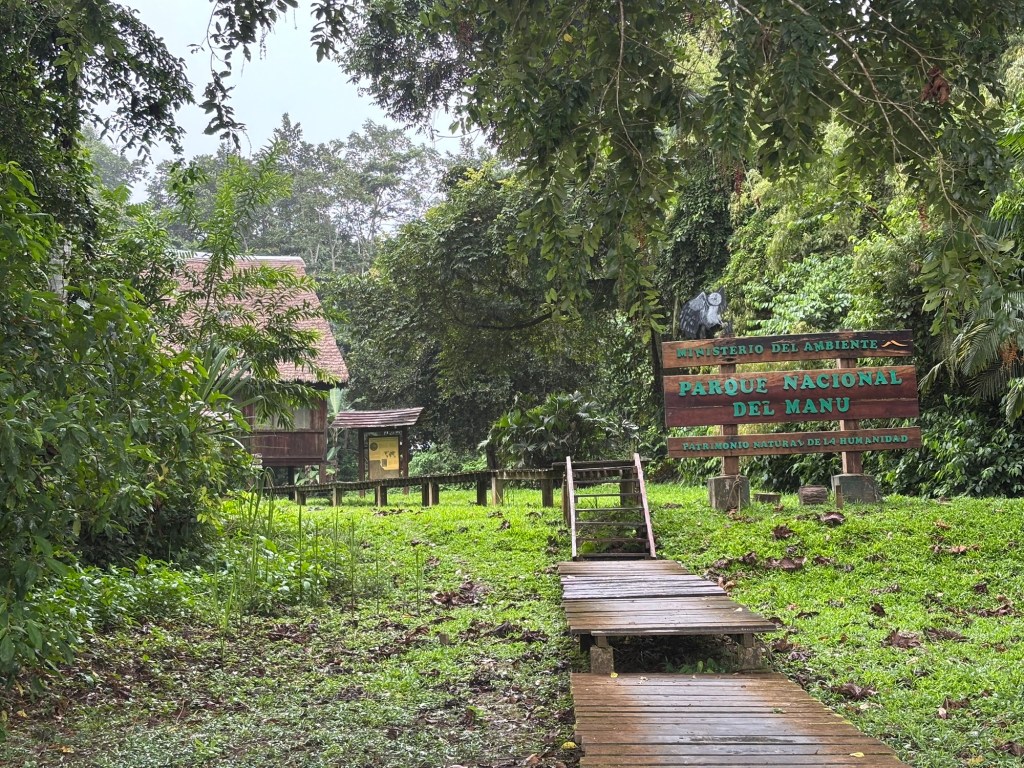
Shortly after eight this morning, we crossed over into the Reserved Zone. After three days of travel through Manu’s enormous national park, we have finally arrived at the inner sanctum – where the wild things truly are.
If it had stopped raining for even a minute or so of the eight hour journey upriver, we might have seen a lot more of those wild things than we did. As it was, the rains had swollen the river to a monstrous size, swallowing up most of the sandbanks, so the only creatures that were much in evidence were the water birds – who probably would have been there anyway.
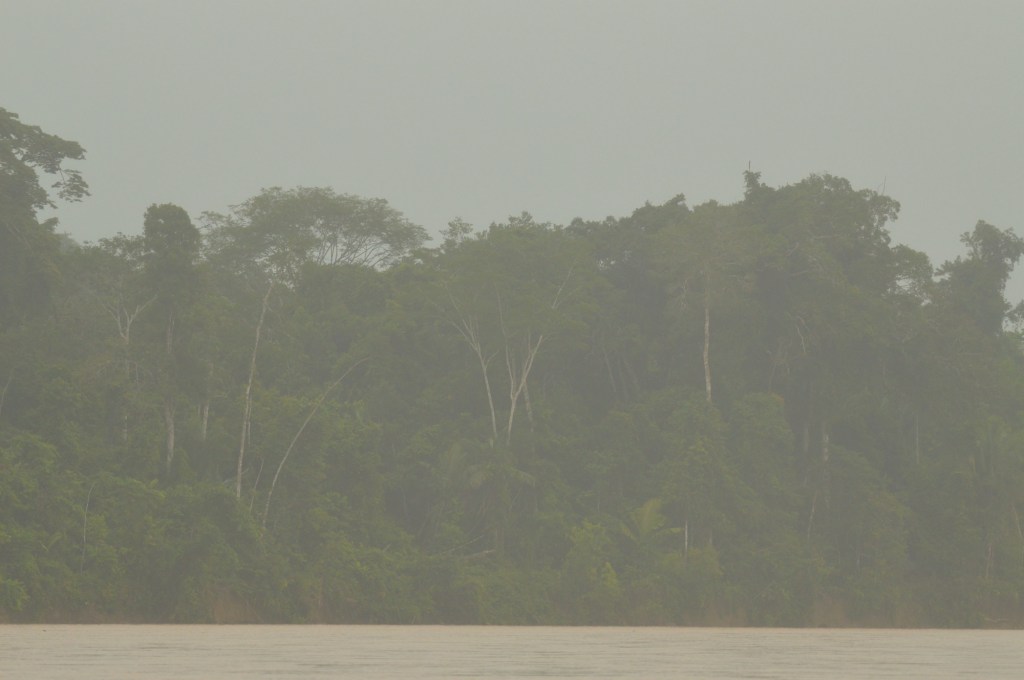
All the same, it is hard to describe just how incredible this place truly is. The mountains are far behind us now, concealed by the clouds that covered our approach. Now it is only the river and the forest in every possible direction.
It’s surprising how quickly you get used to the sight of free-flying macaws; birds that until now I have only ever seen as captives of the pet trade. Pet parrots are such a thing – or at least, they were in my childhood – that seeing them wild almost feels like the reverse of normality.
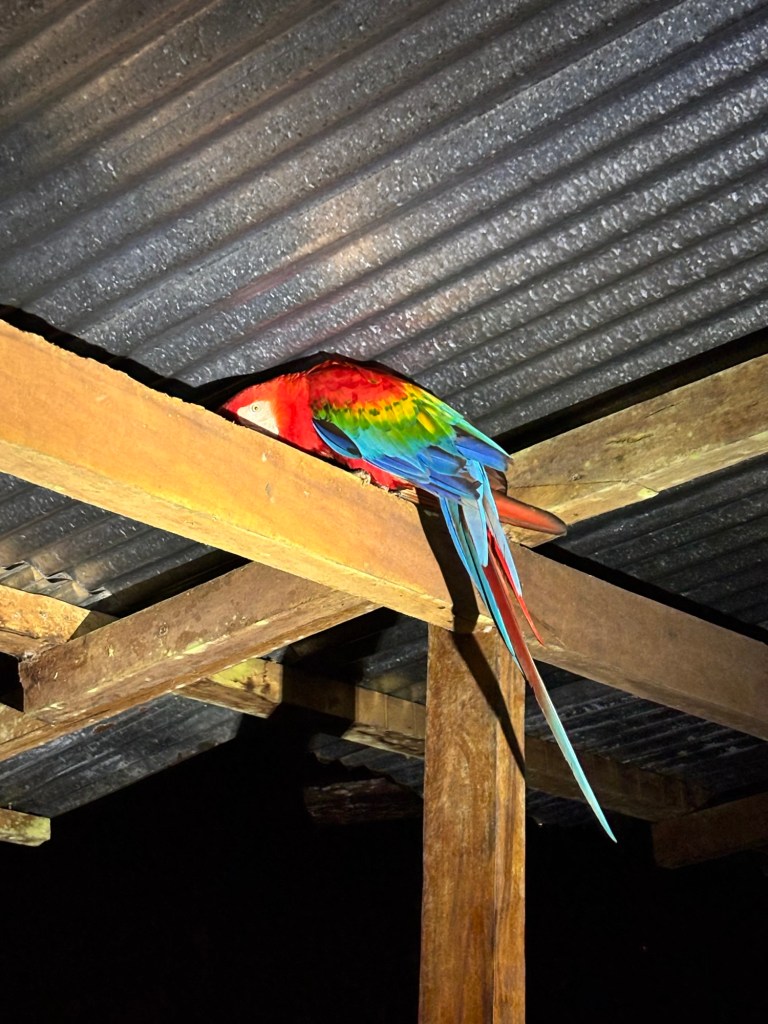
So many of the iconic birds live here in Manu: blue-and-yellow, red-and-green and the iconic scarlet macaw. There was a scarlet macaw at the Bonanza lodge this morning, in fact, sheltering from the rain. A “free pet”, according to our guide, who comes to the lodge because of the prospect of handouts (and, evidently, shelter). There is little need for a cage when the animal is already in its natural habitat, I guess.
I realised only when we got to our destination – the Jaguar Eco Lodge – that I have finally lost my first object of this trip. Frustratingly, it’s my card reader. It’s not the end of the world – I’ve managed every other adventure without it – but it does make blogging on the go a lot less feasible as I can’t share the photos I’ve been taking on the go. I guess you’ll just have to wait. I’ll have to backdate these posts anyway, as I’m already three days behind – power has been a precious commodity, WiFi even more so m, and more importantly, I haven’t wanted to waste even a second on my phone when I’m out here in one of the most beautiful places on earth.
After a five o’clock start, we got back into the boat and sailed downriver to Boca Manu, where the Madre de Diós meets the Manu river. Our first port of call was the ranger station, where we were officially signed in and registered. Of the 29 rangers that work within the park, 11 come from the native communities that live within its borders. That much was plain from the personnel at the station, who looked about as far removed from Europeans as the modern world allows.
They were exceptionally kind. If we were not on a guided tour, I would have liked to stop and chat for a while. After all, I once wanted to be a park ranger myself. If it hadn’t been for my dismal mathematical ability and my lacklustre scores in Biology – coupled with my desire to raise a family – I might even have followed that path.
Manu is home to 1.030 species of birds. That’s an astonishing one tenth of the birds that can be found in the entire planet. So I might be forgiven for being a little glum at the prospect of the seemingly endless rain continuing for a third day, grounding most of the park’s birds deep within the cover of the trees.
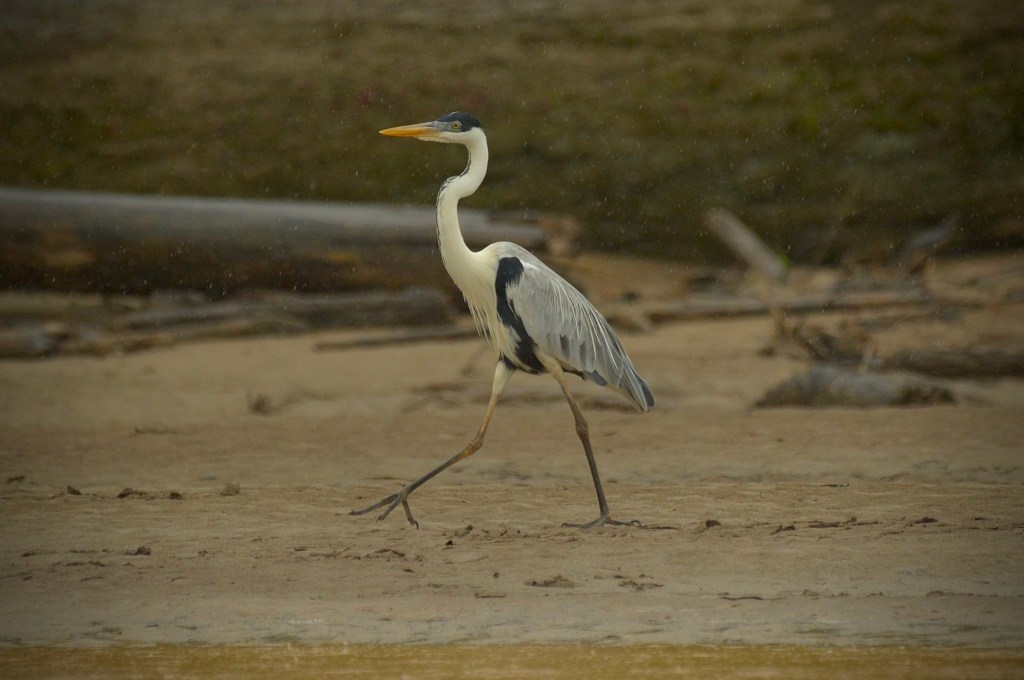
At least a few of the shorebirds were gracious enough to put in an appearance, on what little of the shore remained, including a few handsome cocoi herons, wood storks and a jabiru, a marabou-esque migrant from Brazil.
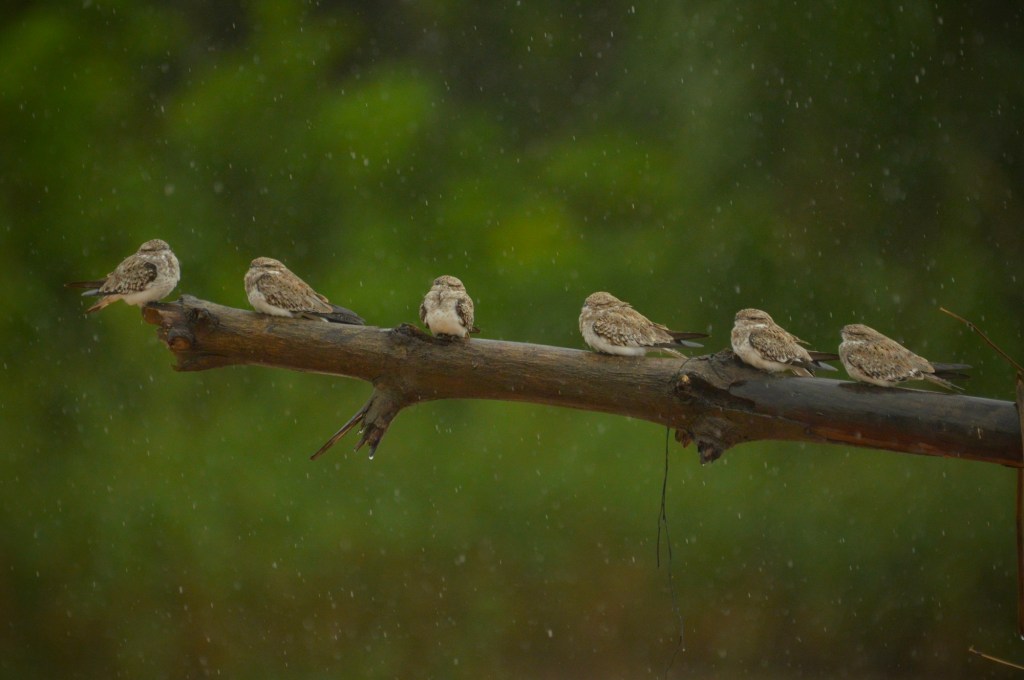
We even had the good fortune to see the sandy-coloured nightjars that usually roost on the sandbars. They had sought refuge on a sunken tree, and looked rather disgruntled at their change of roost.
After another unbelievably good lunch on the boat courtesy of our chef Bernadino, we made straight for the nearby horseshoe lake of Cocha Salvador in search of giant otters. The usual location, Cocha Otorongo, has been out of bounds ever since it was raided by one of the local uncontacted tribes eight months ago.
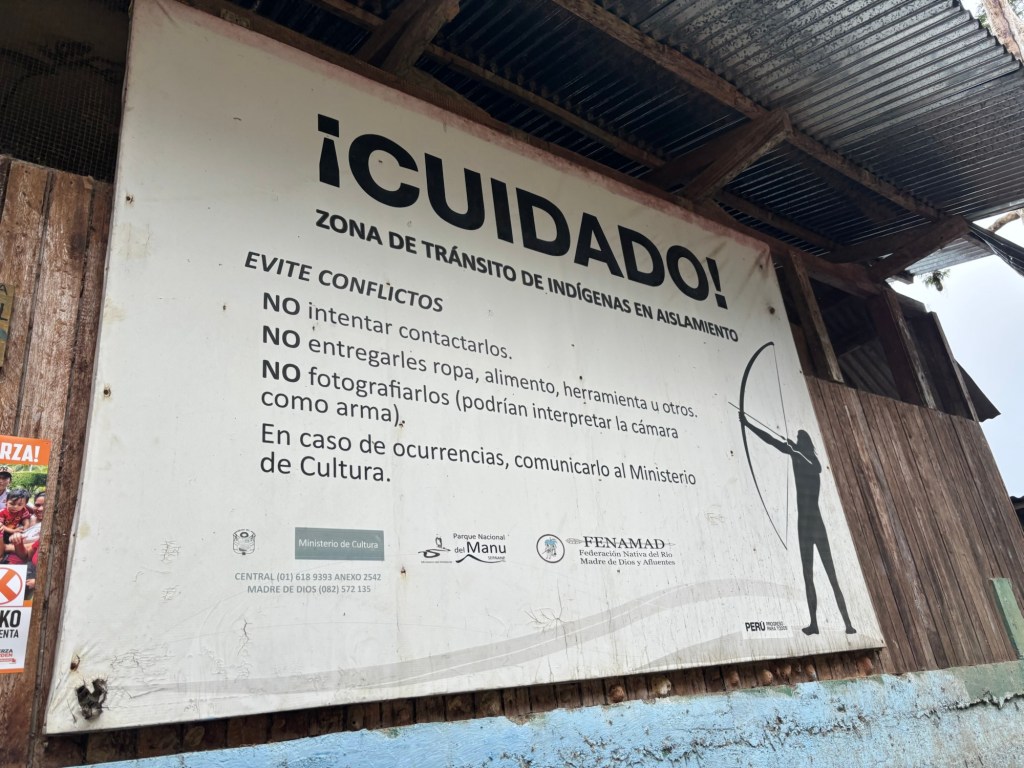
There are signs in various places warning you to stay away from the tribes, not so much because of the risk to your own life through conflict, but because of the far greater risk to theirs of disease.
It feels strange to be in a part of the world where there are still people in the forest who remain free and out of step with the world. I don’t know what to make of it.
Powerboats are not allowed on the horseshoe lakes or cochas out of respect for the local wildlife. There is a catamaran for use by guides and their groups, provided you bring your own paddles. We couldn’t see the otters from the jetty, so we set out along its south arc in search.
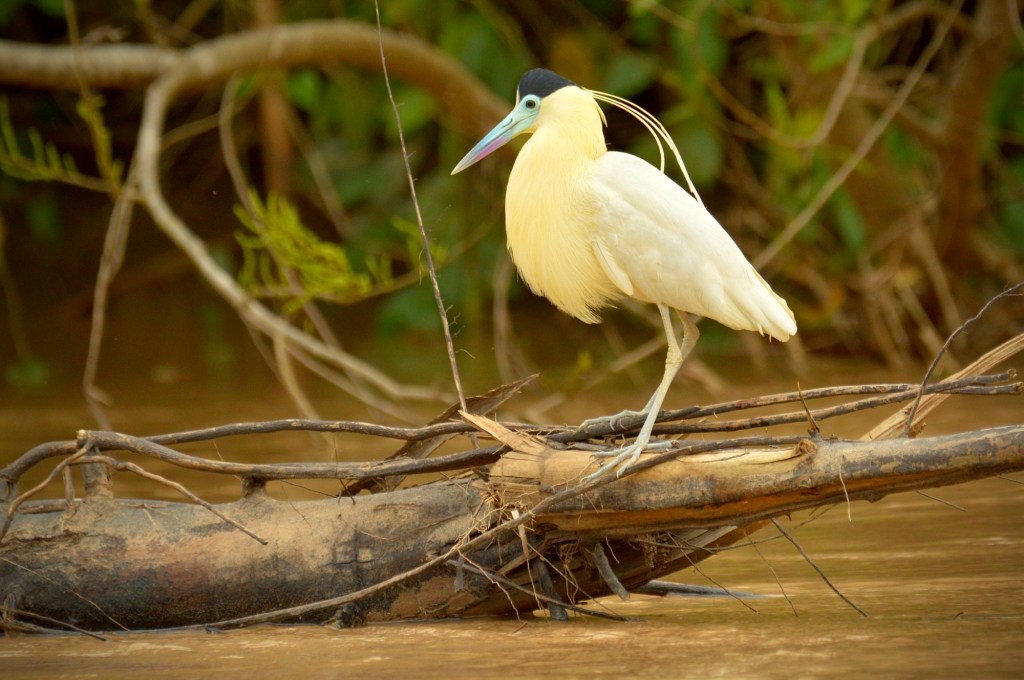
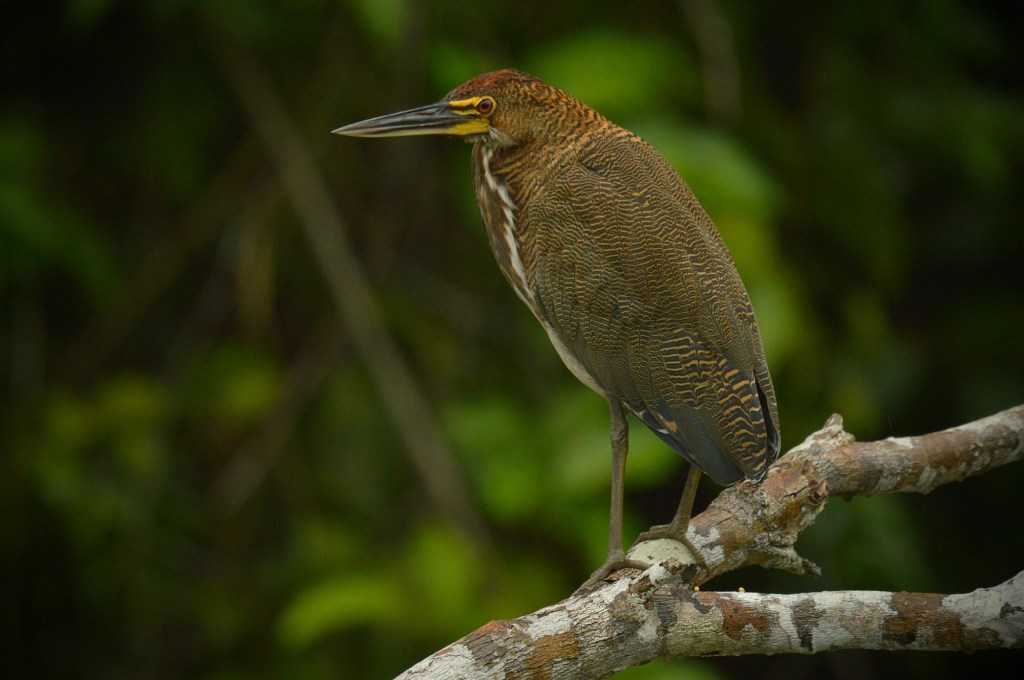
The cochas are a sanctum like nowhere else I have ever known. I must have counted over a hundred species of animal and bird in the space of a couple of hours, despite the driving rain that returned to lash us throughout our quest. There were at least four species of kingfisher out and about, and an impressive young tiger-heron, which wasn’t as skittish as herons often are and allowed us to float right past.
My companions looked utterly despondent as the hours went by, the rain came down harder and the otters remained invisible. But I was having a great time, though I would have traded an hour of the day for a little sunshine, if only to make the conditions for photography a little better (I had to crank my shutter speed right down and force a steady hand to compensate for how dark it was beneath those clouds).
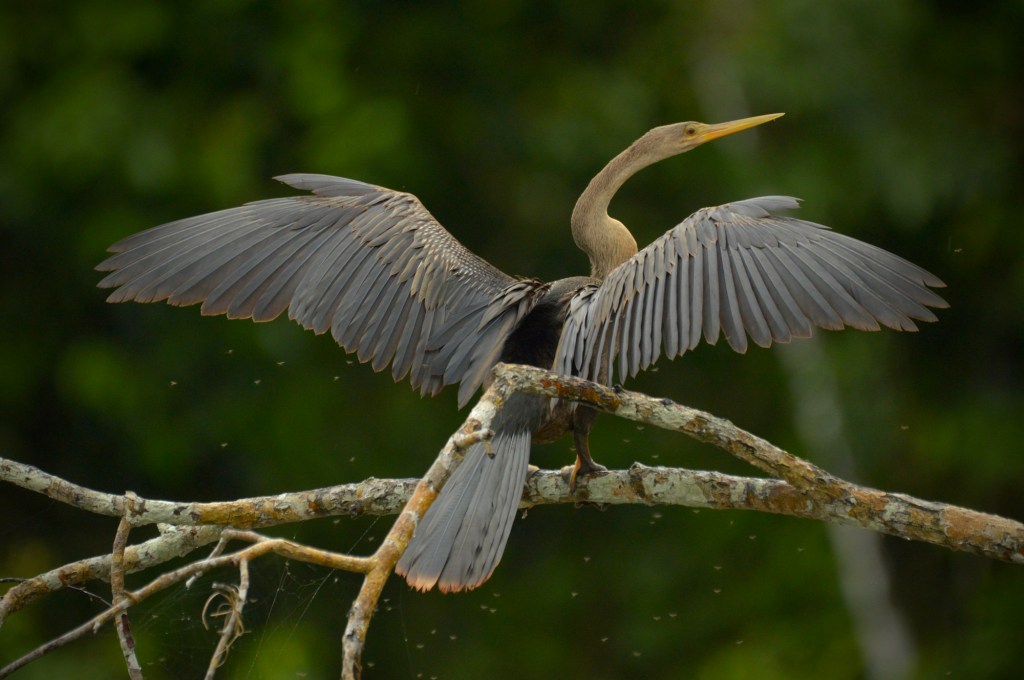
Another American bird that kept us company on our jaunt around the lake was the anhinga, an extended version of the cormorant, whose habit of swimming so low in the water that only its long neck breaks the surface has given it the alternative name of “snakebird”.
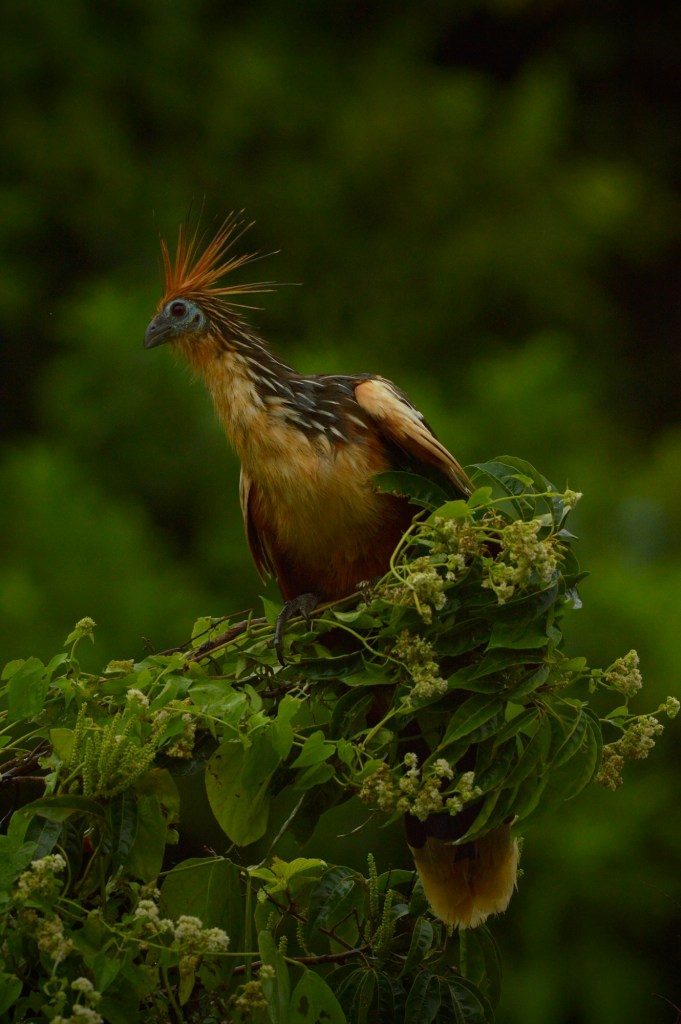
However, while the otters remained beyond our grasp, my primary target for the day was met over and and over again: the utterly bizarre hoatzin, a plant-eating bird that looks like an unholy cross between a hawk, a parrot, a pigeon, a chicken and a cormorant. Understandably, perhaps, this half-breed is in its own family. I’m not sure any other bird family would admit it as it of their own.
It really is, quite literally, the ugly duckling of the bird world. And I absolutely love them in their weirdness.
The otters never did appear, but we were finally relieved of the rain and rewarded with a stunning Amazonian sunset as we sailed back upriver to the lodge. We even encountered a family of night-monkeys on the walk back to camp, but my lens couldn’t handle the darkness all too well. I guess I’ll just have to keep trying! There’s always tomorrow’s night walk.
I can’t believe what I’m seeing in the news today. It’s like the world is going to Hell. Here in Cusco, you’d never know there was a terrible war taking place far away, over the mountains, across the ocean and the great sea of sand. Trump might have a habit of talking big game, but he is backed by the mightiest nation on the planet. I fear for the people of Iran.
As if I didn’t already feel cut off from everything that is going on, I am about to go off grid for six whole days. I don’t imagine there’s much signal in the Amazon rainforest, and I would rather not use up my phone battery trying to find out. During that time, Peru will elect its next president and Trump’s deal with have to be met – or else.
Once again, I find myself wondering with no small amount of irony that the most dangerous stretch of my South American adventure will be the layover in New York.
But isn’t that what this was all about? To get away from it all for a bit – from work, from loneliness, from the depressing chaos of global politics?
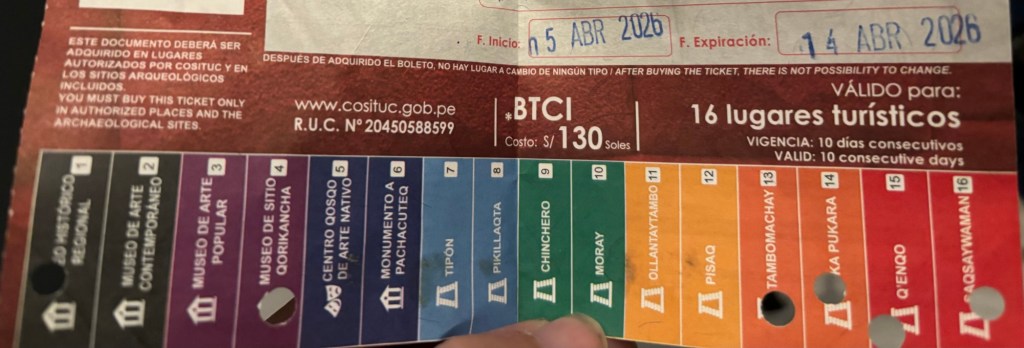
Having bought the boleto turístico, and with one day more in Cusco than I’d originally planned, I decided to go all in. 130 soles for 16 sites may sound good, but at 20 soles each, the average traveler is more likely to save money by paying at each site. Some are far away, like Tipón and Pikillaqta, four are in the Sacred Valley, one of them is in the middle of a roundabout in one of the busiest streets of downtown Cusco and two of them are art galleries.
However – I bought the ten day pass, so now I have to get my money’s worth. Tipón and Pikillaqta are too far away to be reached without hiring a guide and a vehicle, but I reckon I can do everything else on this ticket. At least now it feels like a proper challenge!
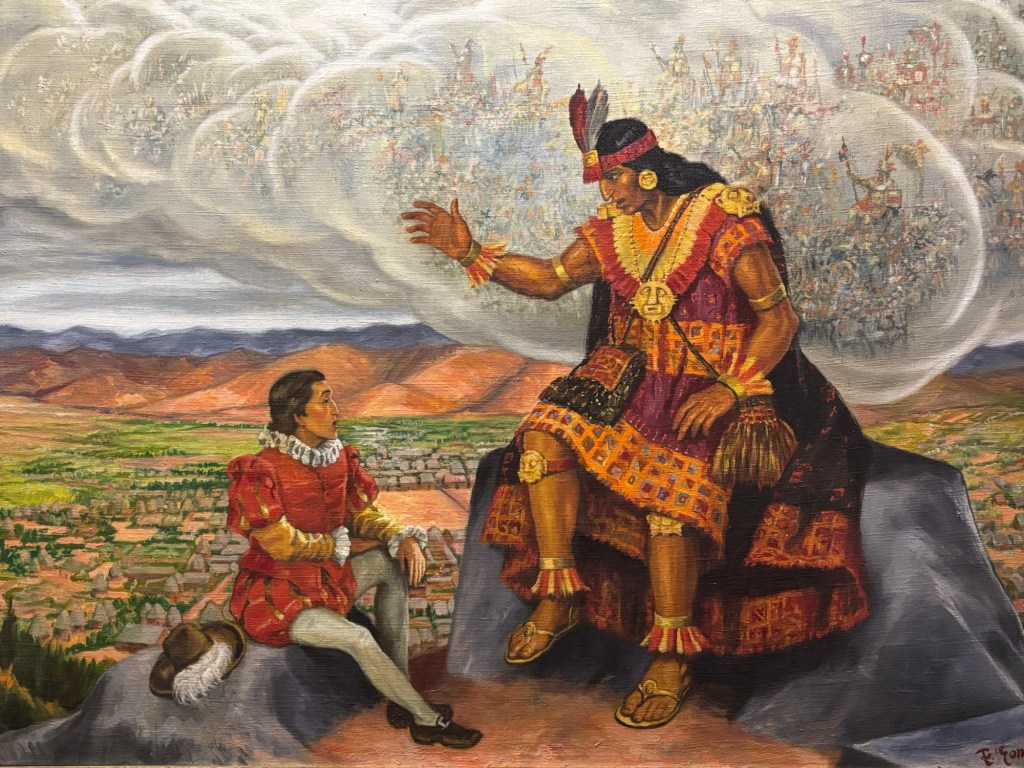
With Sacsayhuamán already achieved, first on my list was the Museo Histórico Regional. It’s worth visiting solely because it was the house of the incredible Inca Garcilaso de la Vega, a 16th century Peruvian nobleman for whom the expression “main character energy” might have been coined. Though Spanish by birthright, he was also the great-grandson of the Inca Huayna Capac, one of the last rulers of the Inca Empire known as the Tahuantinsuyo. Raised primarily by his Inca mother and uncle, he developed a profound admiration for his heritage and, assisted by the lavish education his Spanish father provided for him, he became the first great writer of the Americas. At 21, he left Peru for Spain, fought for the Crown in the Morisco Rebellion, and published many books about his native land and its people.
Understandably, El Inca is venerated here in Peru as both a defender of the native people and one of Cusco’s most illustrious native sons, whose works were influential for many famous statesmen and philosophers.
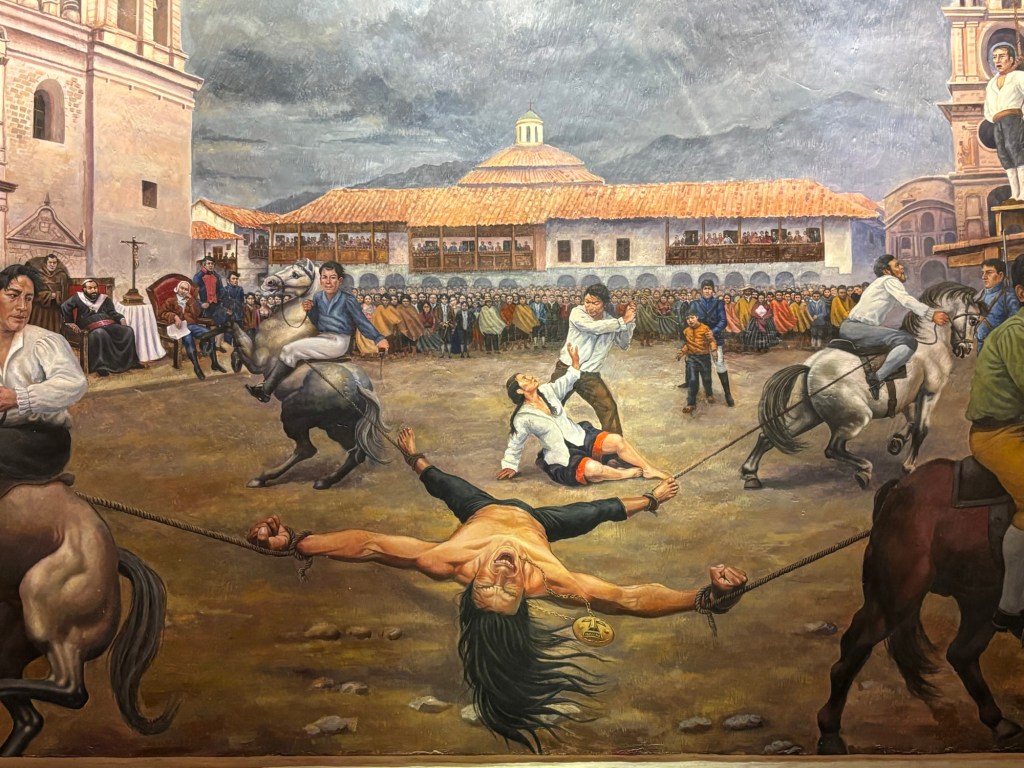
Another of Cusco’s greatest heroes is Tupac Amaru II, also of royal descent, who started a rebellion against the Spanish after witnessing multiple abuses of power at the expense of the indigenous peoples of Peru through his work as a muleteer. Unlike El Inca Garcilaso de la Vega, however, Tupac Amaru met a grisly end, torn apart in a public execution in Cusco’s Plaza Mayor as a punishment for his resistance.
It’s worth noting that Tupac Amaru II was the first public figure to abolish the slavery of Black people in the Spanish Americas. Perhaps that’s one of the reasons why Afeni Shakur decided to give her son the name of this legendary figurehead of indigenous resistance, knowing that such a powerful name could only inspire the young 2Pac to great things.
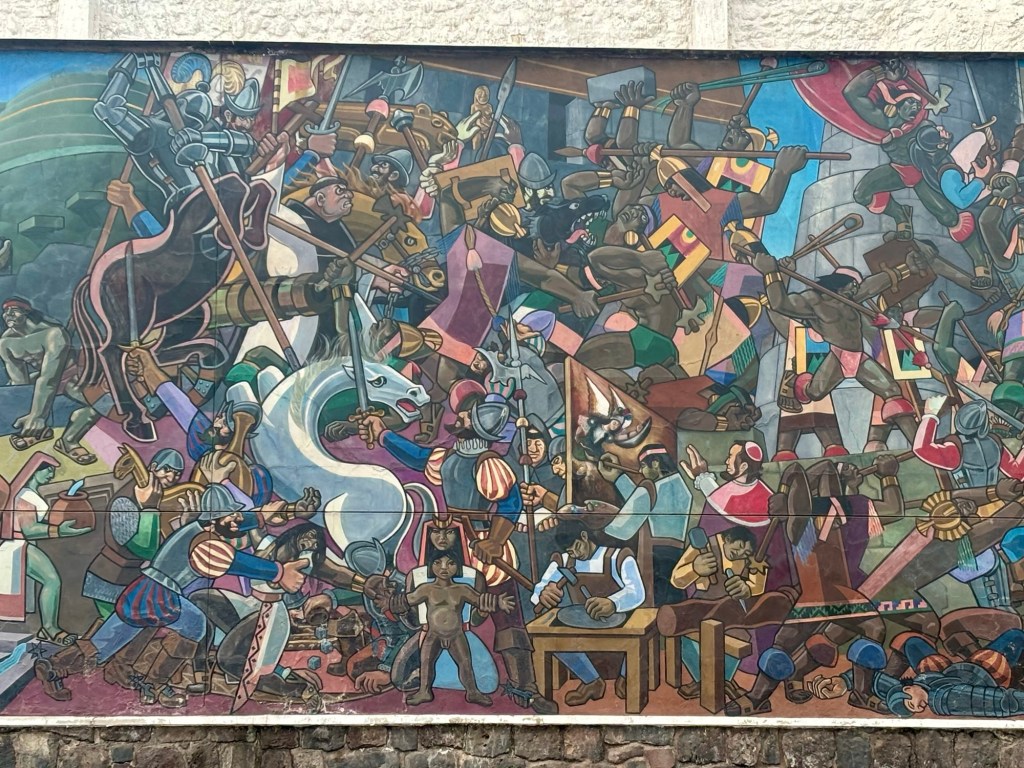
While it’s not on the list, I had to head downtown to find the enormous mural I’d seen on my way into town on my first night. I love a mural, especially when it tells a story, and one day I’d love to see Diego Rivera’s historical paintings in Mexico City. But for now, Cusco has its own retelling of the history of its people.
There are just so many details to pick up. The way the Spanish soldiers merge with the bodies of their horses, like centaurs, in imitation of the confusion the mounted soldiers caused among the natives, who had never seen a horse before. The war dog held on a chain by a Cistercian monk. The conquistadors gambling with dice over their stolen gold. The indigenous painter portraying the scene as a righteous conquest aided by a winged Santiago, under the instruction of a Spanish cleric. The bolas weapons of the Inca and the Spanish cannon.
You could read a hundred accounts of the Spanish conquest of Peru and still learn more from a painting like this.
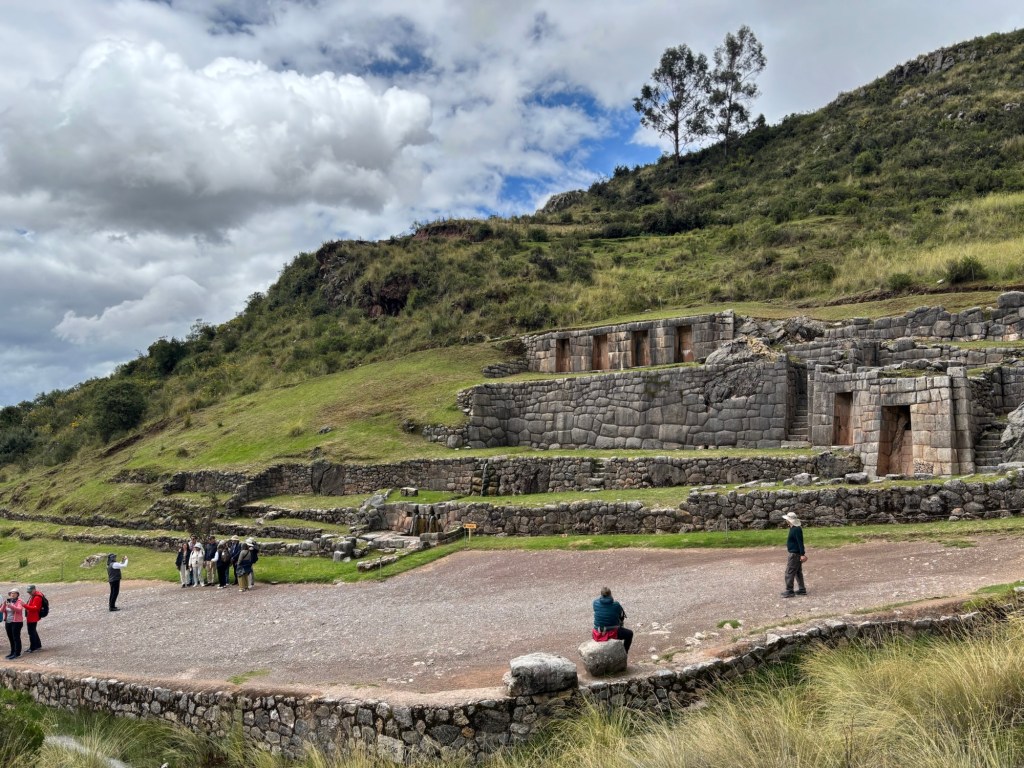
This morning, I ticked off another two on the list: Puka Pukara, the Red Fort, and Tambomachay, the Resting Place. You’ll be offered a visit to these by any of the guides hanging around Sacsayhuamán, and they’re well served by the white servicio turístico vans – but, me being me, I decided to walk there.
It’s not that far. Tambomachay, the further of the two, is about an hour and a half from the centre of Cusco. It is mostly uphill, however, and I was lucky the weather was on my side: be it a favour of the Lady of the Marshes or no, I was protected from the sun by a merciful cover of cloud all the way there and back. I had my rosary on as I often do when I’m not sure if the road is safe or not, so I’ll chalk it up to a little divine intervention.
Even on foot, I still got there before the bulk of the morning’s tourist traffic arrived. It was worth the hike – steep though it was – to see a part of Cusco that I might otherwise have missed.
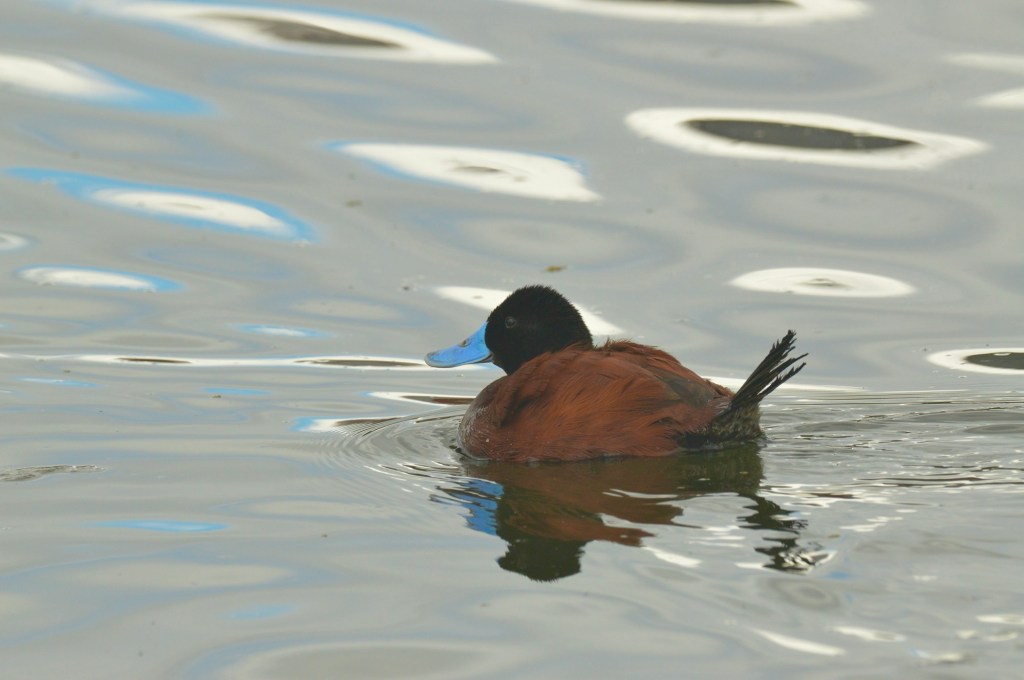
It also gave me the chance to check out Huayllarqocha’s small wetland reserve, which will have to be my substitution for Huacarpay. I didn’t see any of the grebes that supposedly live here, but I did see an Andean flicker (an American species of woodpecker) and a number of Andean ducks, a smart relative of the Ruddy Duck that can be found in North America.
Now that I’ve had some rest, I should go and pick up my washing from the lavandería down the road. After that, I should pack for tomorrow, before checking out the two art galleries and, with any luck, a performance of local music and dance at the Centro Qosqo de Arte Nativo.
I’m not sure if you’ll hear from me tomorrow. Like I said, going into the Amazon may well mean going completely off-grid. Either way, I’ll try to keep writing. The next six days are likely to be red letter days, both here in Peru and out there in the wider world.
Six hundred years ago, under the vision of the Inca Pachacútec, a team of architects were tasked with turning an existing settlement in the Sacred Valley into the cultural nerve centre of an empire. For their inspiration, they chose one of the most powerful of all the animals with which they shared their world: the puma. The city of Cusco is believed to have been built in the shape of a resting puma, with the Tullumayo and Saphy rivers marking the outline of its body, the citadel of Sacsayhuamán as its head (ears and all) and the Huacaypata – the present-day Plaza de Armas – as its heart.
The puma was an incredibly important spiritual entity for the Inca. Legend gave it tremendous power: their spit was hail, the blink of their eyes thunderbolts, and their roar was the roll of thunder.
I’m writing this in Casa Tunki’s restaurant, with the heavy roll of thunder overhead. I have been exceptionally lucky with the weather thus far, but it’s still the rainy season out here, and the rain has finally caught up to me. It has spelled disaster for tomorrow’s expedition to Waqrapukara, which the operators have had to cancel due to landslides in the area. Luckily for me, I have three whole days after returning from Manu, so I am not too troubled. I could always try again when I return.
My wanderings today took me to a quiet corner of Cusco. Tucked away in the hills to the south of the suburb of San Jerónimo is a tiny hummingbird sanctuary, nestled on a forested slope off the 123 highway. If you didn’t know it was there, you’d never be able to find it.
My guide Benjamin picked me up from the hotel and, together with his companion and driver Jeremy, we set out. It was just me on this tour, so for the first time out here I had the chance for a proper conversation.
The sanctuary itself – titled the Pachacútec Bosque Andino – is a strange mix of what looks like a garden centre, a Zen garden and a hiking trail. At different times of year, different birds can be found here. I got the impression from my guide that other guests have come here seeking the Bearded Mountaineer, a Peruvian endemic. He seemed a little anxious at first that I might be pinning my hopes on finding one. I hope I gave him the impression that I wasn’t a lister. I was just happy to be out of the city and surrounded by nature again.
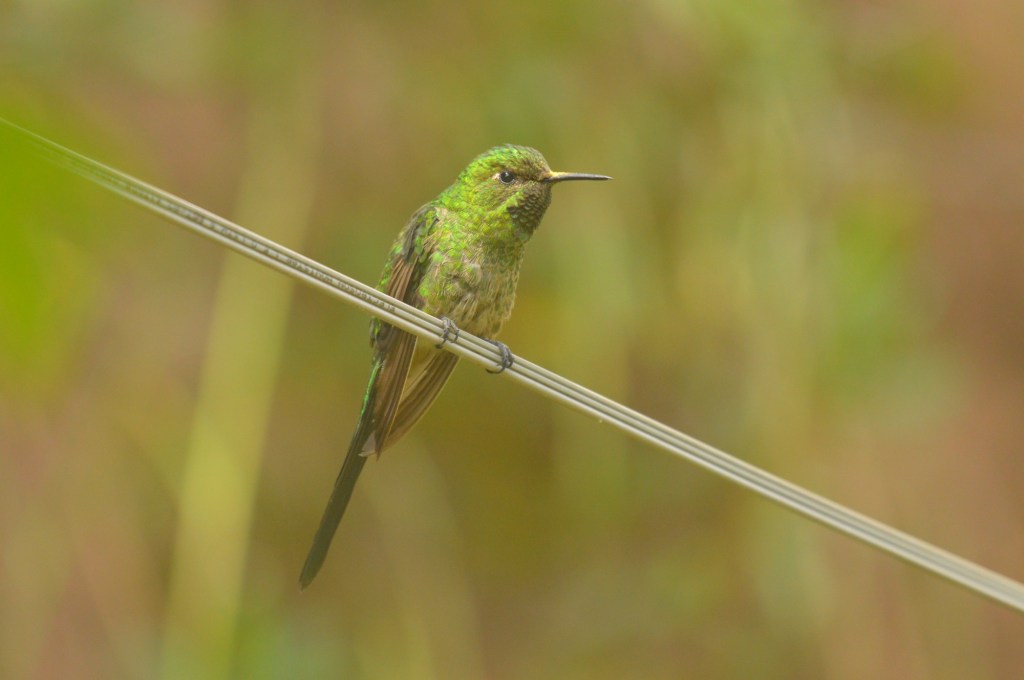
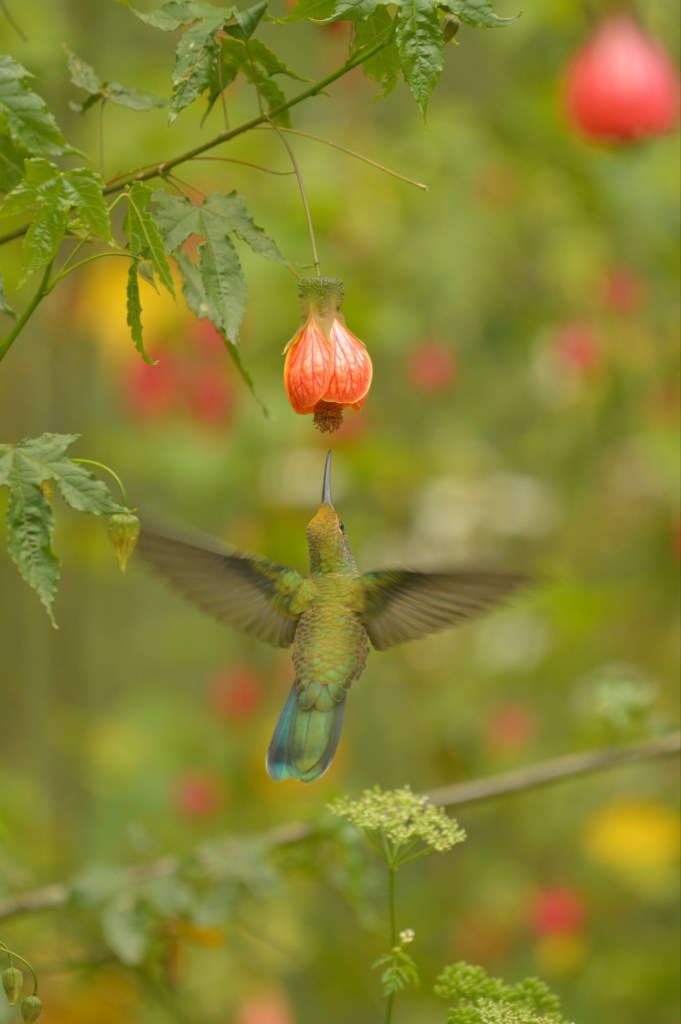
One of the sanctuary’s starlets, a young trainbearer, put in an early appearance. The adult males of this species have enormous tails that nearly double their length, but this one still has a fair bit of growing up to do.
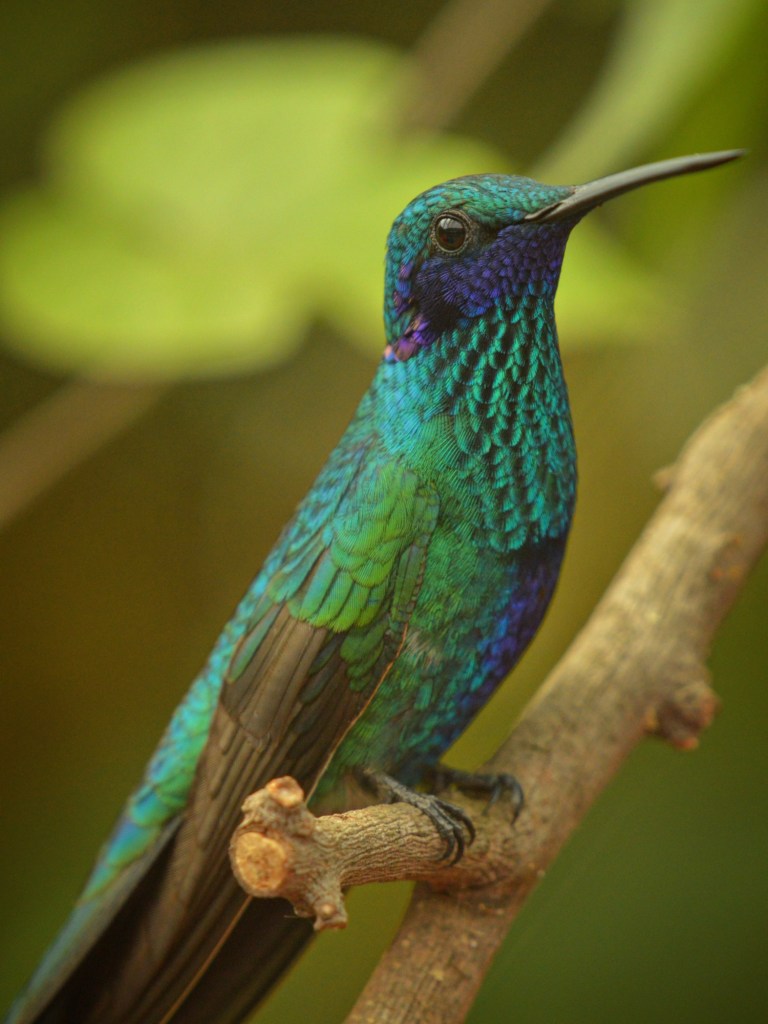
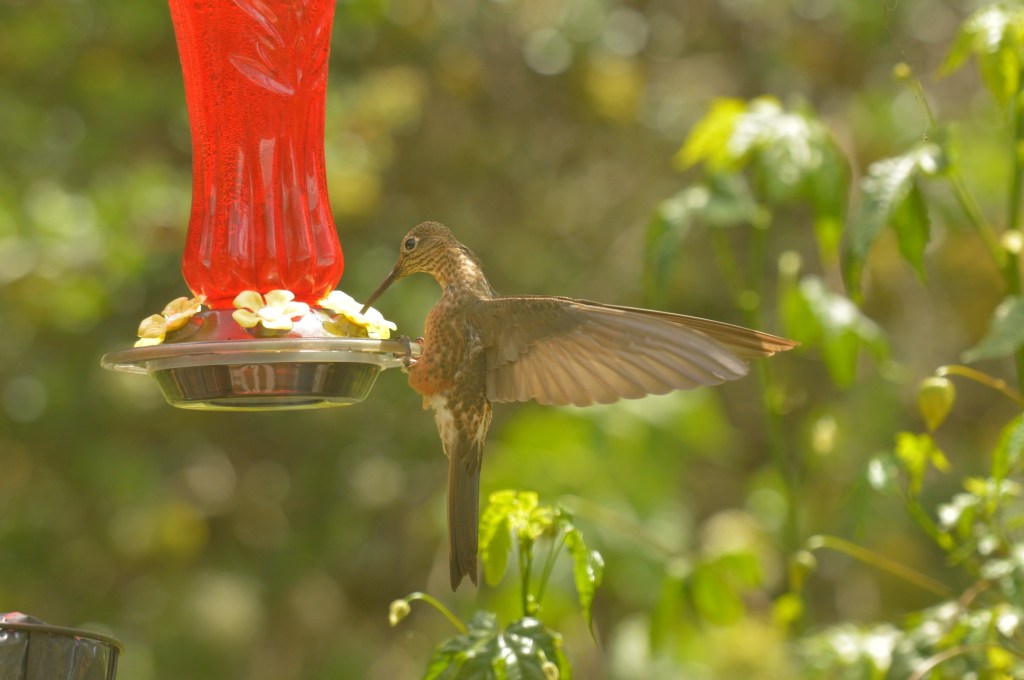
The primary residents of the sanctuary – as in the hills around Cusco itself – are the violetears. They’re extremely territorial and will fight off just about anything that gets in their way, no matter the size. I saw them take on metaltails, thrushes, tanagers and even the giant hummingbird that was trying to use the feeders.
Yesterday, I found them by sound and movement. Today, I hardly needed to try. They didn’t seem to be bothered by us at all.
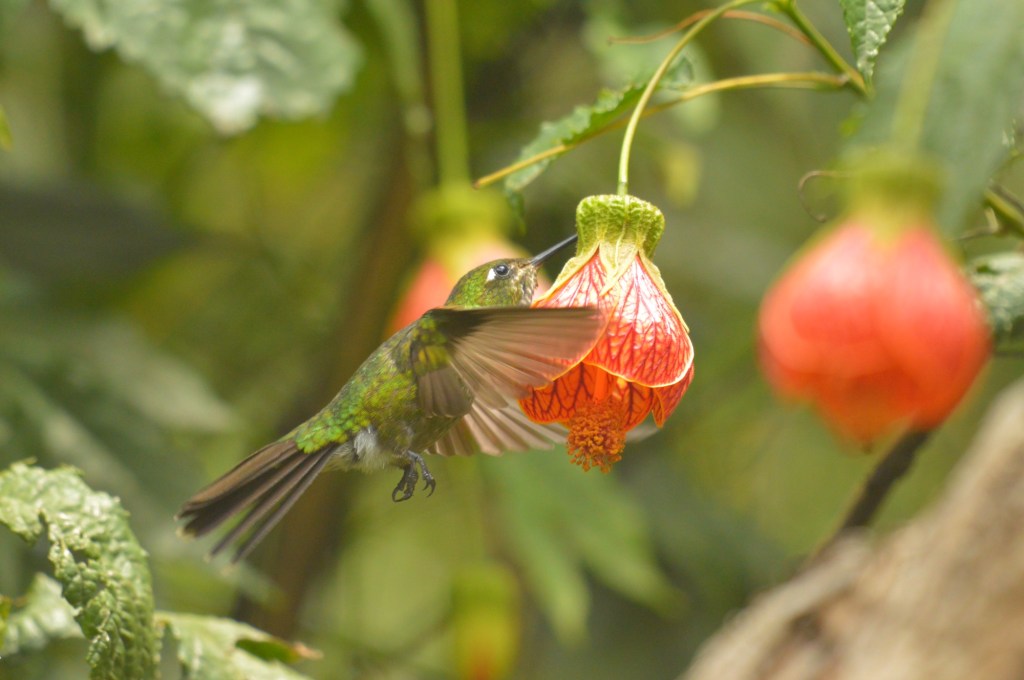
Whenever the violetears were busy fighting everything that came too close, a tiny metaltail popped out of the bushes to chance a quick feed at one of the flowers, before darting away the moment the mechanical clicks of the violetears announced they were on their way back.
I seem to remember reading somewhere that hummingbirds and flowers have evolved simultaneously, with some flowers only admitting a certain species of hummingbird to visit them. It explains why their Old World equivalent, the sunbirds, remain stranded east of the Atlantic, while hummingbirds can only be found in the west.
The largest hummingbird species, the giant hummingbird, was surprisingly shy – though that may have more to do with the aggressive violetears than any inherent skittishness in its nature. They’re considerably larger than their diminutive relatives, being about as large as a small thrush, and they sound a lot less like bees when they fly overhead, though they still move like the clappers.
Well now – now that I have a whole day free, I think I’ll take it easy tomorrow. I’ll try to make more use of my boleto turístico, the ten-day ticket that covers most of the historic sites and museums in Cusco.
I’ve finalised the arrangements for the Amazon, which is now only a little over twenty-four hours away. The two Americans in the hotel next to me are busy discussing which nautical themed tattoo they should get (as they’re considerably cheaper here than back home), but I will be putting all of this behind me for a week. I am quite looking forward it that.
Fingers crossed my luck holds out for some wholesome companions! BB x
Aeropuerto Internacional Alfredo Rodríguez, Arequipa. 16.20.
I have often seen it written of Uganda that it is Africa in miniature – that is, a concentrated version of the vast array of biomes you can find across the continent. The more I travel Peru, the more I’m convinced that this is South America’s equivalent: jungle, desert, glaciers, prairie, megacities and coastal plains. Peru really does have it all. No wonder it is home to the second largest number of bird species in the world (after Colombia).
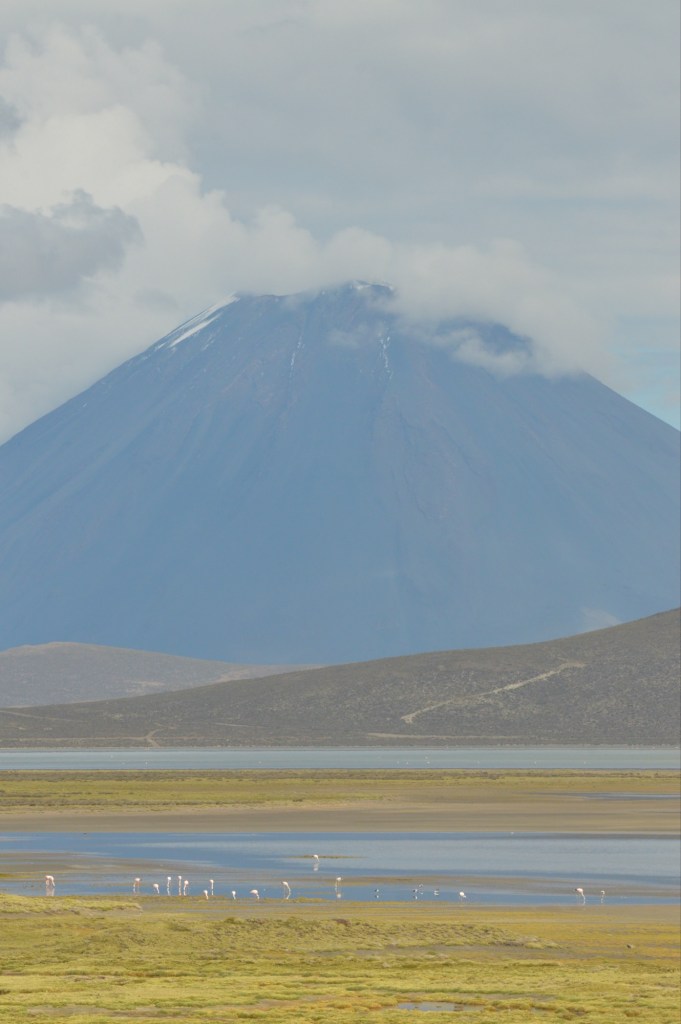
If the Islas Ballestas are touted as the “poor man’s Galápagos”, then today I paid a flying visit to the poor man’s Salar de Uyuni. While my original plan for this adventure ended with a trip to Bolivia’s enormous salt flats on the edge of the Atacama Desert, my decision to go all in on an Amazonian side-quest to Manu got in the way. I really didn’t want to leave South America without seeing the salt lakes, though, as they were a fairly major inspiration for coming out here in the first place.
Luckily, there’s one tiny outlier of the Uyuni salt flats tucked away in the mountains east of Arequipa, within the Reserva Nacional de Salinas y Aguada Blanca. Getting there is a pretty arduous journey, but if you can find a way, the views are out of this world.
My onward flight to Cusco leaves at 18.05, so I needed to find a way to the salt flats and back in time to catch my plane. As luck would have it, there was a tour on GetYourGuide that fit the bill perfectly. It meant another early start, but after yesterday’s 2am kick-off, a 5.40am pick-up felt like a lie-in.
Not a bus or a people carrier this time, but a Land Cruiser. There were only two other travelers on board – a bilingual couple from Texas and Veracruz – so I got the front seat. Result!
Ah, but I’m not that naive. If something feels too good to be true, it’s usually because it is.
We had one more passenger to pick up before leaving Arequipa, but in a turn of events that would probably be familiar to a US Homeland Security officer, that one passenger turned out to be a family of five – they’d simply “forgotten” to mention they’d booked for more than one.
Not for the first time, being young and single became a major liability. As the most expendable passenger, I was asked if I would be so kind as to sit in the back.
I didn’t mind overmuch at the time – after all, one thing my superzoom isn’t very good at is in-transit photography – but I hadn’t considered the terrain… or the supreme manspreading abilities of the couple squeezed in next to me. The tarmac road stops shortly after leaving the Arequipa suburb of Paucarpata. From there on out, it’s a dirt track all the way up to the salt lakes – and the road winds a lot.
For all of two hours, I was rocked about in the back of the car, bumping my head quite a bit – which is more than can be said for the state of my legs! The relief when the lakes came into view… words can’t begin to describe!
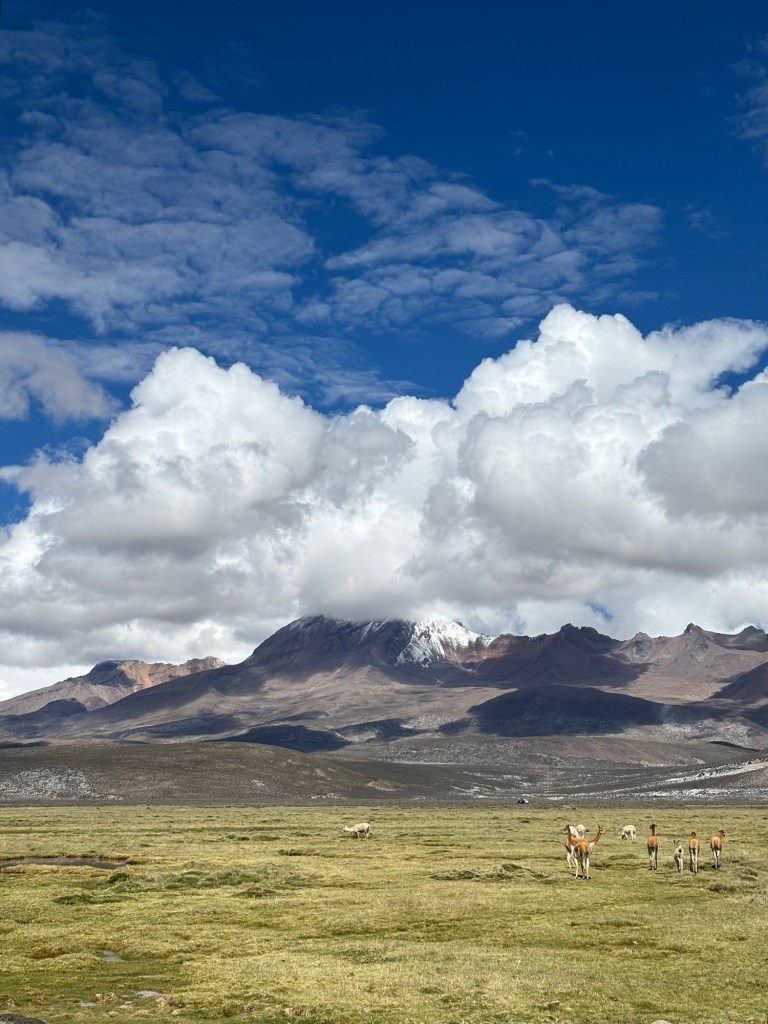
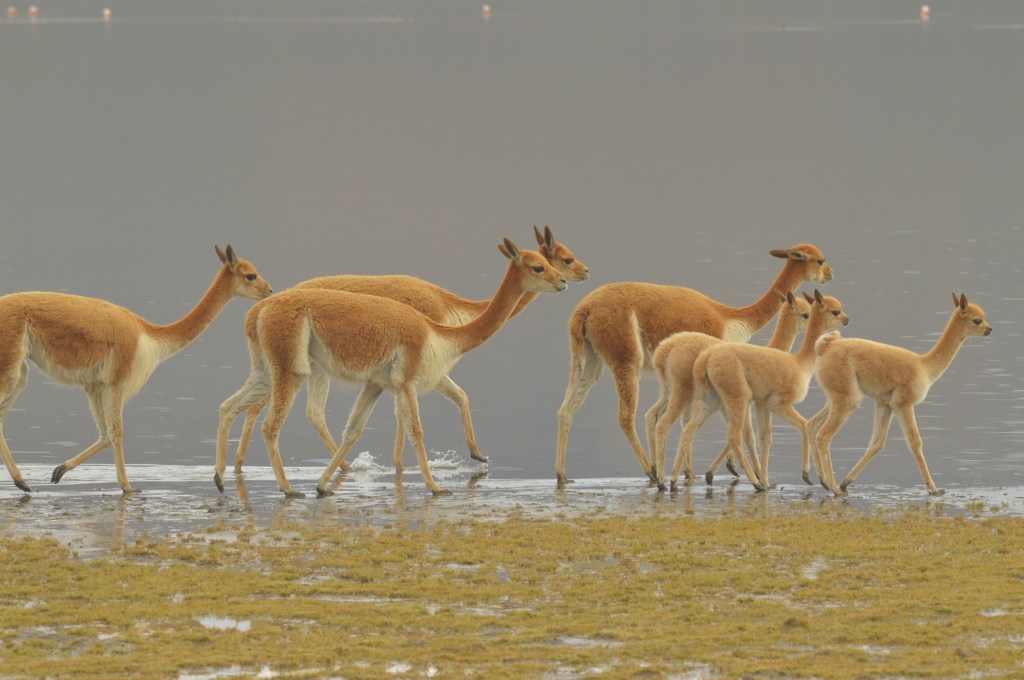
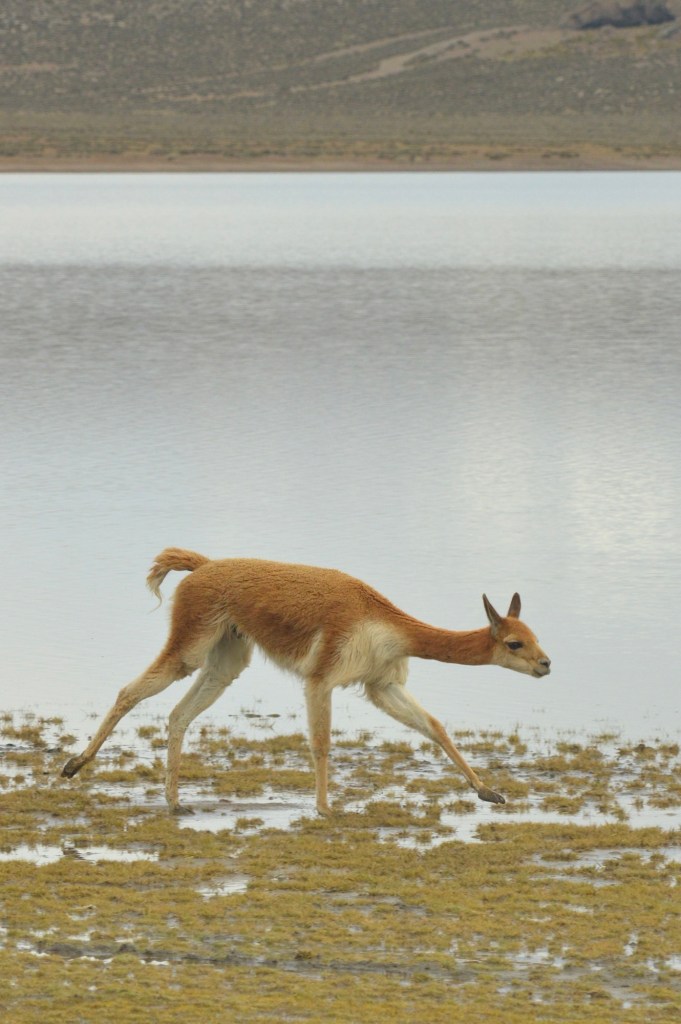
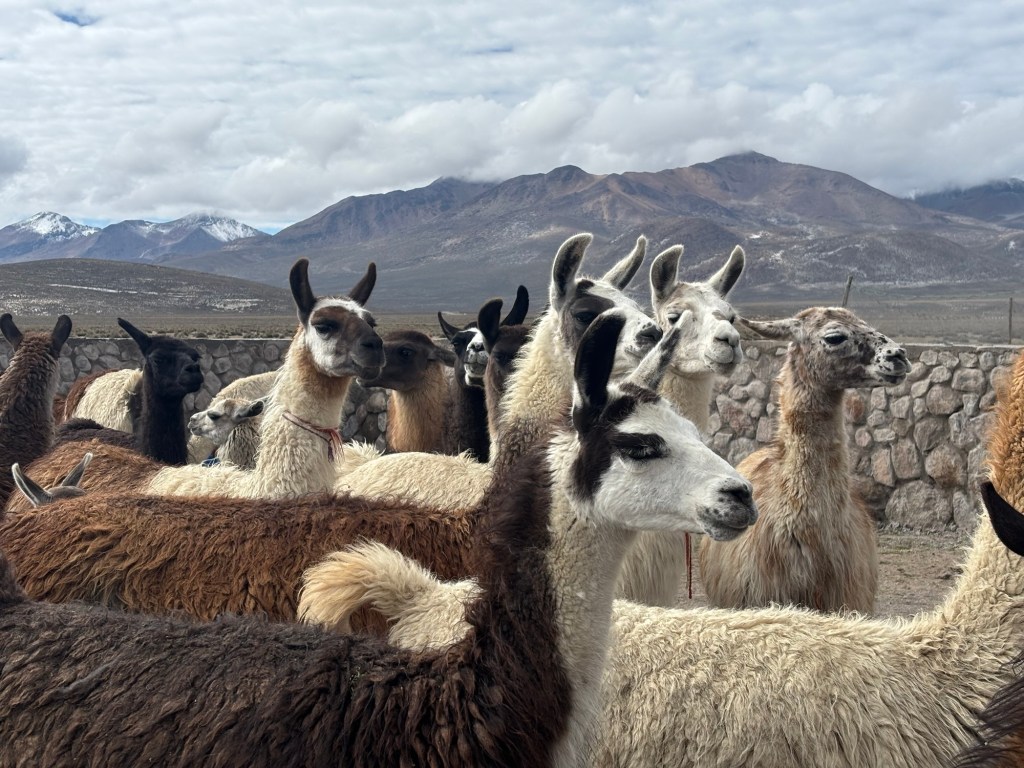
There was a fair bit of activity around the edge of the lake – mostly free-roaming llamas and alpacas, but a couple of small herds of vicuña, too.
We stopped by the lake’s edge for a closer look. The herd’s dominant male wasn’t particularly chuffed, but he had his hands (or hooves?) full keeping one of the younger males in line with much running around and snorting.
Before going out to explore the area, our driver took us to the tiny lakeside community of Chilitia for a light breakfast. As an apology for the cramped conditions of the journey, breakfast was on the house for the three of us on the back row. Granted, we’re talking a grand total of 15 soles, but the gesture was very much appreciated – my legs were still pretty sore!
As always, the stop was also an incentive to buy local alpaca products. It’s getting to the stage where I’m considering breaking a lifelong aversion to souvenir shopping, but I’m still very conscious that I have to carry everything I have on my back – and it’s already a tighter squeeze than the back seat of that Land Cruiser once my lens is packed away.
So I just contented myself with watching the llamas and enjoying the palliative effects of a coca tea.
The most amazing thing about today’s adventure was the unrestricted freedom of it. Once we’d reached the water’s edge, we were given an hour and fifteen to go wherever we wanted – even out onto the flats, if we so desired.
Music to my ears! I’d already clocked a number of things I didn’t recognise, so I was anxious to get to work.
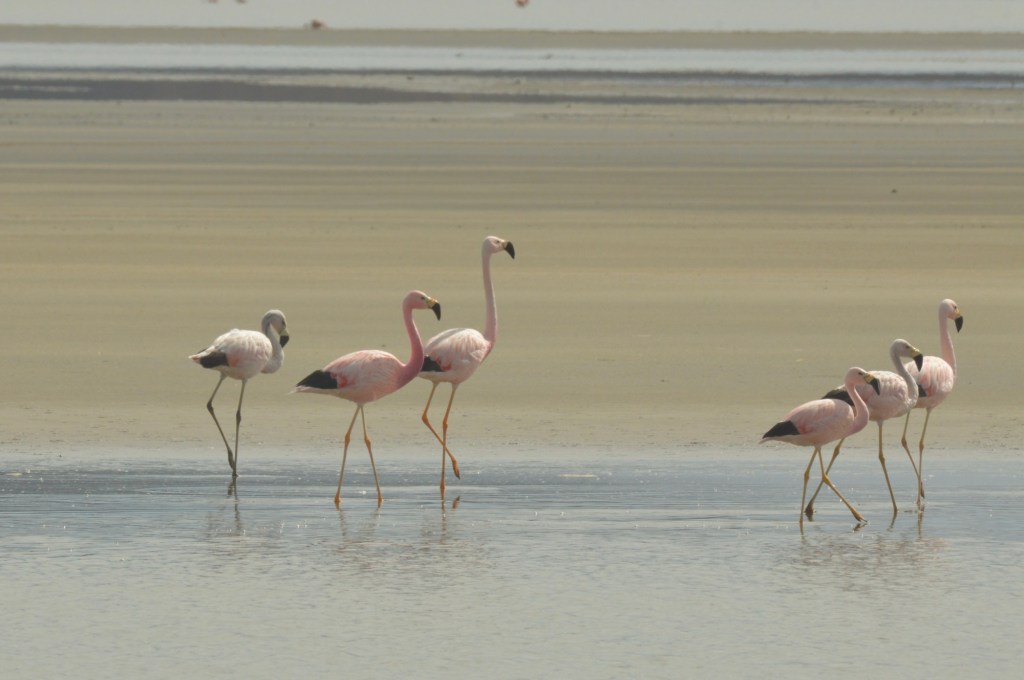
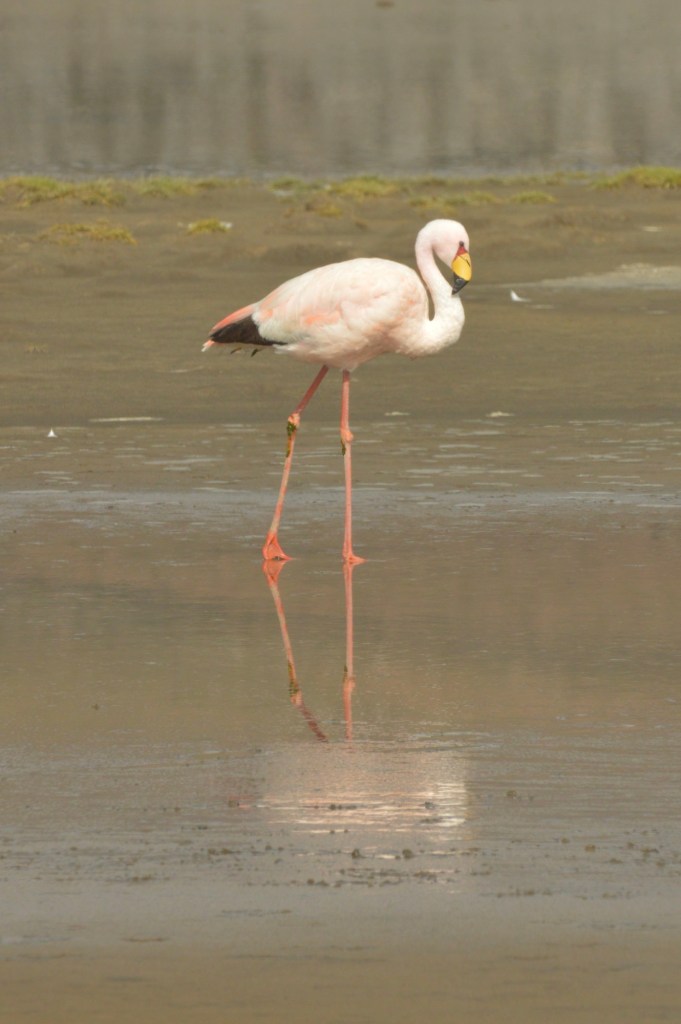
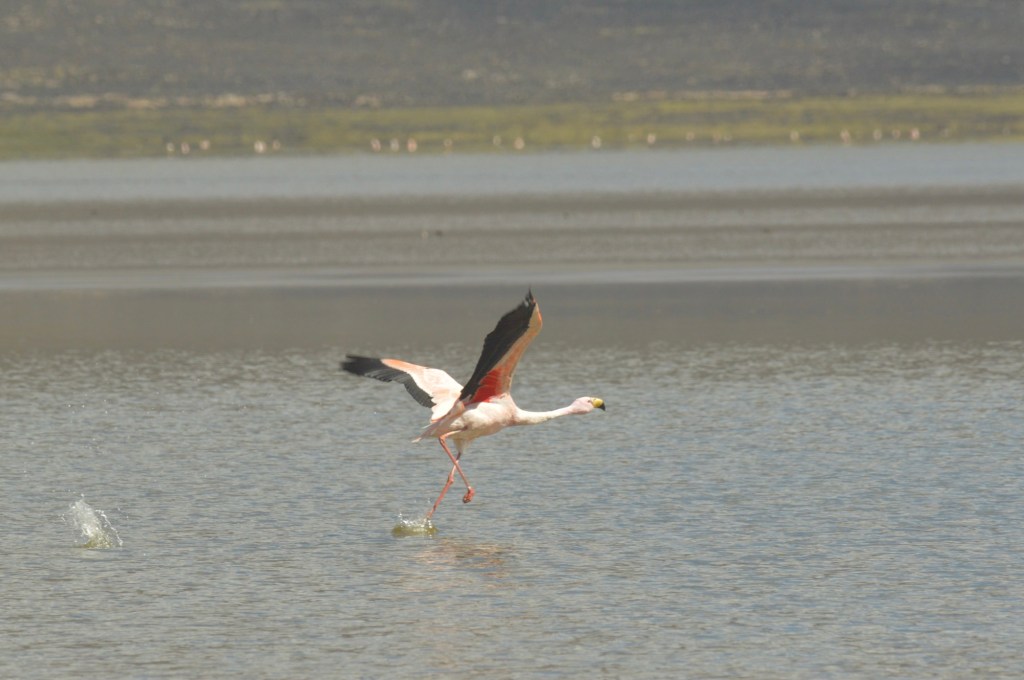
One of the big draws of the Salinas – at least for a naturalist like me – is that all three of South America’s flamingoes can be found here. The red-kneed Chilean flamingoes stayed far out in the centre of the lake, but a few flamboyances (yes, that is the collective noun) of Andean and James’ flamingoes were a little closer to the shore, so I tried to see if I could differentiate them by sight.
It’s mainly a question of checking their legs. Chilean flamingoes have black legs with distinct red knees. Andean flamingoes have yellow legs, and James’ flamingoes have red legs. If your eyesight is sharp enough, you’ll also notice that James’ flamingoes have red lores – that is, the patch of skin between the eye and the beak. Simplicity itself!
In the winter months, these lakes dry out and turn bone white under the unforgiving Andean sun, but now it’s the shoulder season, and there’s still enough water to keep the flamingoes around. Once it’s gone, they’ll leave these mountains and make for more permanent wetlands along the coast, like the Pántanos de Villa in Lima.
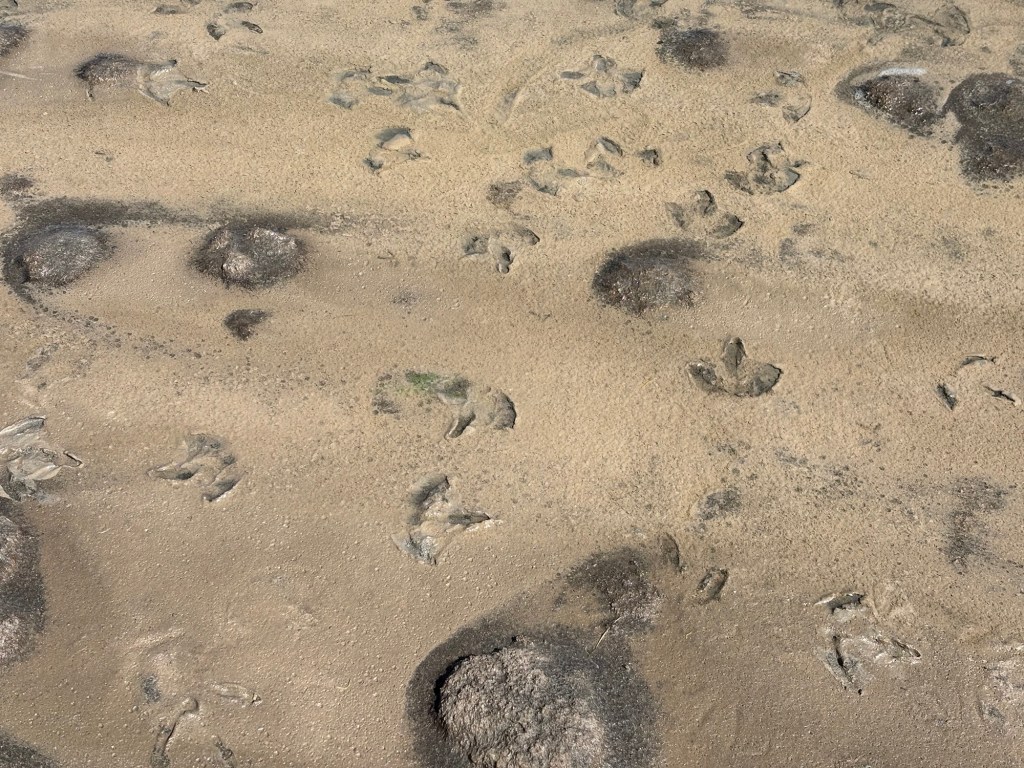
I’m still a kid at heart, so I scoured the lakeside for flamingo feathers. I found three bright pink ones, but they were kind of wet (as you might expect) so I cleaned them up using a couple of napkins I’d brought along and pocketed them. When they’re properly dry, I’ll put them in my journal with the others I’ve picked up along the way.
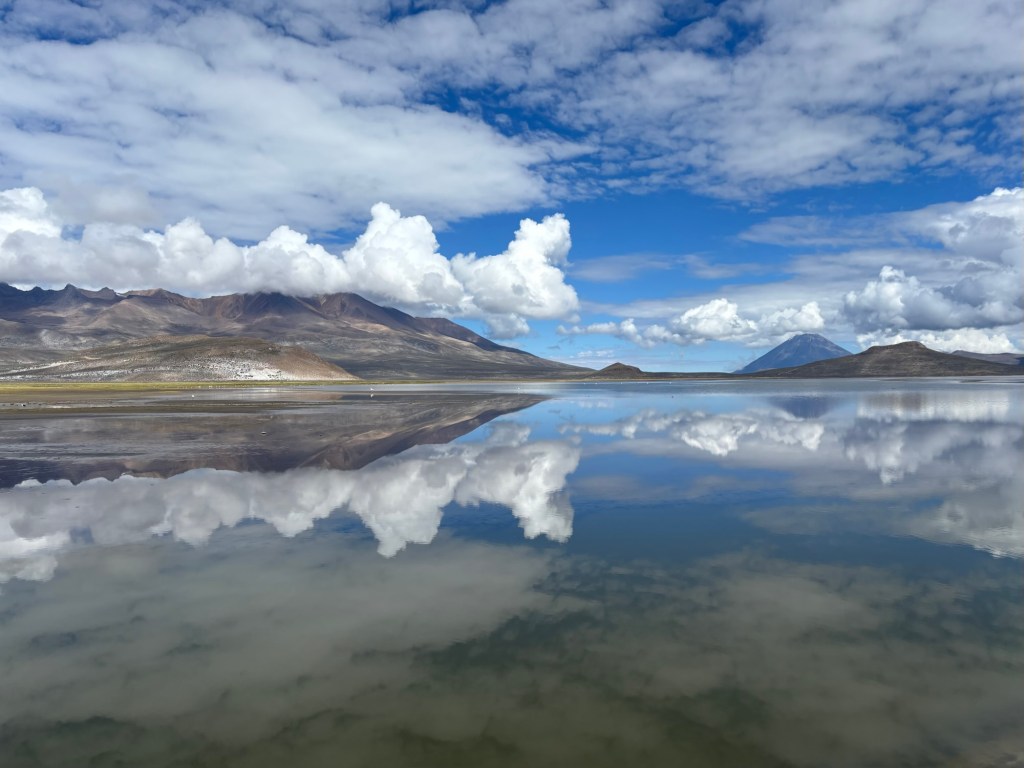
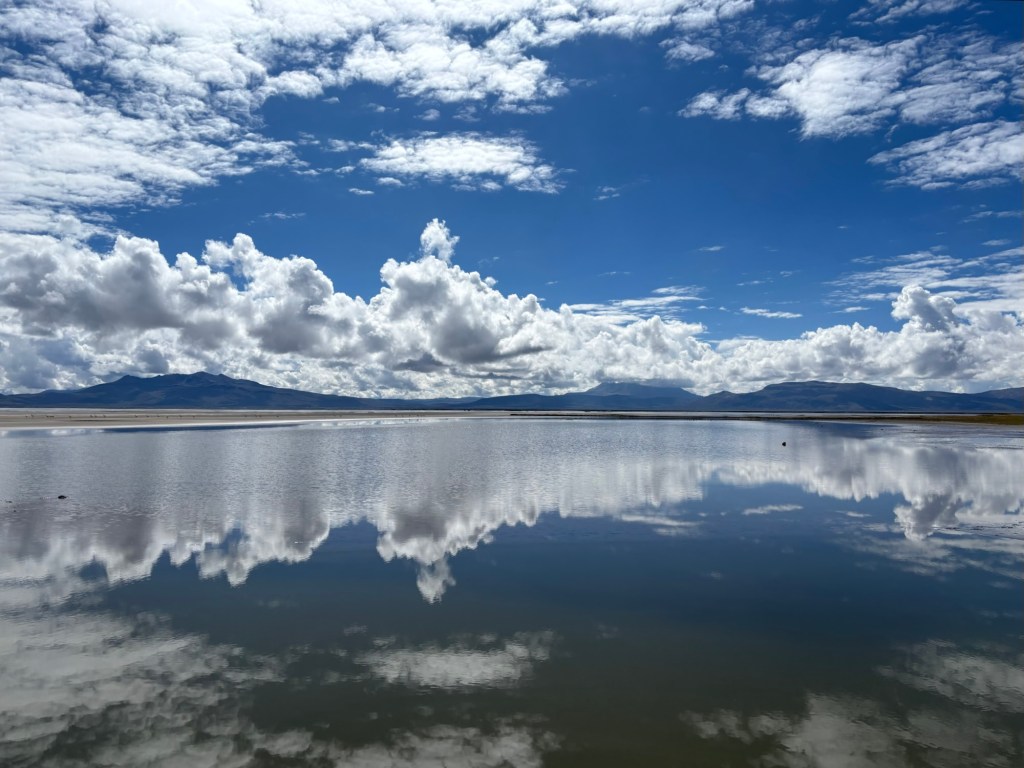
While there’s water, the salt lakes form an altogether different kind of miracle: an enormous natural mirror, broken only by the tiny ripples around the feet of the flamingoes. It’s places like this that make you especially grateful for clouds, because under a clear sky, half the magic of these magic mirrors would be lost.
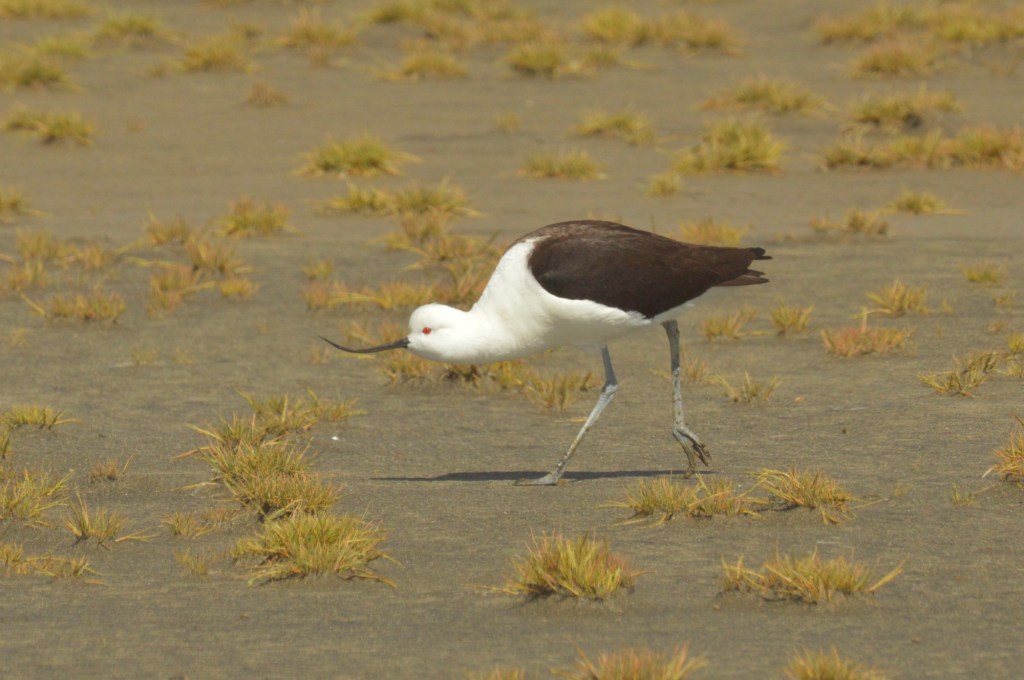
Flamingoes aren’t the only knock-kneed stars of the altiplano. A familiar and yet unfamiliar call alerted me to a couple of Andean avocets, who sounded like the ones we have back home, only… accented. As though they’re speaking a different language. Which, I suppose, they are!
This one spent a long time chasing sandpipers. I’m not sure what threat it thought the tiny little waders posed, but it wasted no time in putting all the sandpipers in the immediate area to flight.
I spent about half an hour exploring the lakeside before turning inland in search of highland species. I found quite a handful, all of which I had to look up later: cream-winged ciclodes, Andean negritos, Cordilleran canasteros and crested ducks, to name just a few.
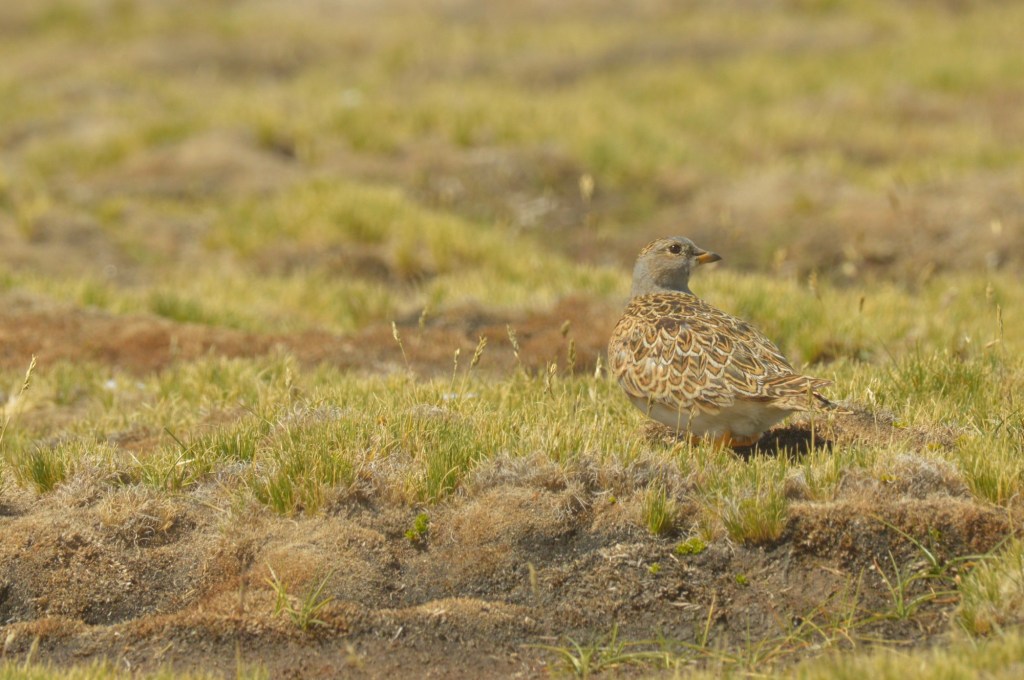
But the star find was a pair of adorable seedsnipes – a tiny wader distantly related to the plovers, but looking for all the world like a finch-sized partridge.
If it hadn’t been for the driver whistling me back to the car (fifteen minutes early, mind!), I’d have stuck around to see if I could find some more of them.
But alas! My traveling companions were bored and had seen all they had to see, taken the selfies they wanted to take, and were ready to go home. So I was summoned back to the car and we set off on the return journey to Arequipa.
Mercifully, I fell asleep for the first hour of the journey – probably on account of the sun! – but the last hour was even more cramped than the journey up had been, with both of my neighbouring passengers spread out in slumber. Once we were back in Arequipa, it took the best part of an hour before my legs had recovered completely.
That’s enough cramped conditions for one day. I’ve found my seat on the flight for Cusco and it’s wonderfully comfy (LatAm, you are a dream come true).
It’s time to go up again. The Inca stronghold of Cusco awaits! See you on the other side. BB x