Where to next…?

It’s getting mighty cold here in Tierra de Barros. I went to sleep clutching at my knees and somehow managed a decent night’s rest, only to wake up and find I’d left the window slightly ajar. I think I need to invest in a winter duvet more than a bike. I’m still not used to this system of alternating between summer and winter duvets. I almost miss the English climate. Almost…

We’re now three weeks away from the end of term. Yes, term ends on the 22nd December, and this year that falls on a Friday. Late, but not too late. Today’s a regular Monday. I’m sitting in the living room, easily the warmest room in the flat, having just turned the heating off after a generous couple of hours’ life-giving warmth. I have a private class with the kiddos at six (hopefully they’ll behave better this week – but then, they are only three years old), and I need to go shopping, as when I went this afternoon it took picking up the first item in the fruit and veg aisle for me to realise I’d left both my cash and my card at home.

So what’s to do? Well, it’s the time of year when I need to start thinking about where I’d like to be next year. Amongst other cards I have on the table – up to and including the JET programme in a few years’ time – the original plan still stands, which is to carry on with the British Council assistant jig for another year, albeit this time not in IES Meléndez Valdés, 06220 Villafranca de los Barros, Badajoz. The school has been wonderful to me and I could hardly have asked for a better host for two years, but I ought to spread my wings and discover somewhere new whilst I can. After all, Spain is a kingdom of many worlds: Extremadura may be one of her most beautiful, but there are other jewels in the crown!

So, for my own benefit – and for those who are interested in applying for the programme – I’ve decided to go through each region, in alphabetical order, to assess the strengths and drawbacks of working in each. Coming back to Villafranca was easy… it’s time to step back into the unknown!

(Ed.: I’ve used my own photos where possible – Andalucía, Cantabria, Extremadura and Madrid – but the rest are various stock images!)


Andalucía
DSC_0208

Where: South
Weather: Hot
Dialects: No (though Andalú, the regional accent, might as well be)
Visited?: Yes (far too often)

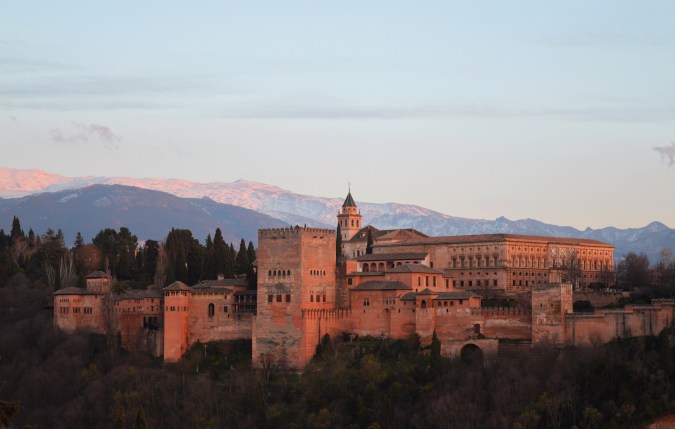
Ah, Andalucía. My old homeland! And, until recently, the region of Spain I knew best. In many ways the ‘classic’ Spain that comes to mind, Andalucía is – understandably – very oversubscribed as a destination. The Americans tend to have their eyes on it, and thanks to their system, which allows preferential treatment to consecutive-year assistants, they tend to end up there eventually, too (after doing time in equally beautiful backwater regions). Andalucía isn’t necessarily more spectacular than any of the other regions, but it offers a lot more bang-for-your-buck over the distance it spans: cities like Granada, Córdoba, Cádiz, Ronda and Sevilla ooze Romantic charm, and then there’s the natural beauty of the Alpujarras, Doñana National Park, the Sierra Morena and the all-too-often-overlooked beaches of the Costa de la Luz. It’s a fantastic region in which to fall in love with Spain, but because it’s so well known, it can be difficult to escape… unless, of course, you end up in somewhere like Olvera.

Probability: 7/10

Aragón
Where: Northeast
Weather: Cold
Dialect: Aragonese, Catalan (only in the high north and west)
Visited?: Yes

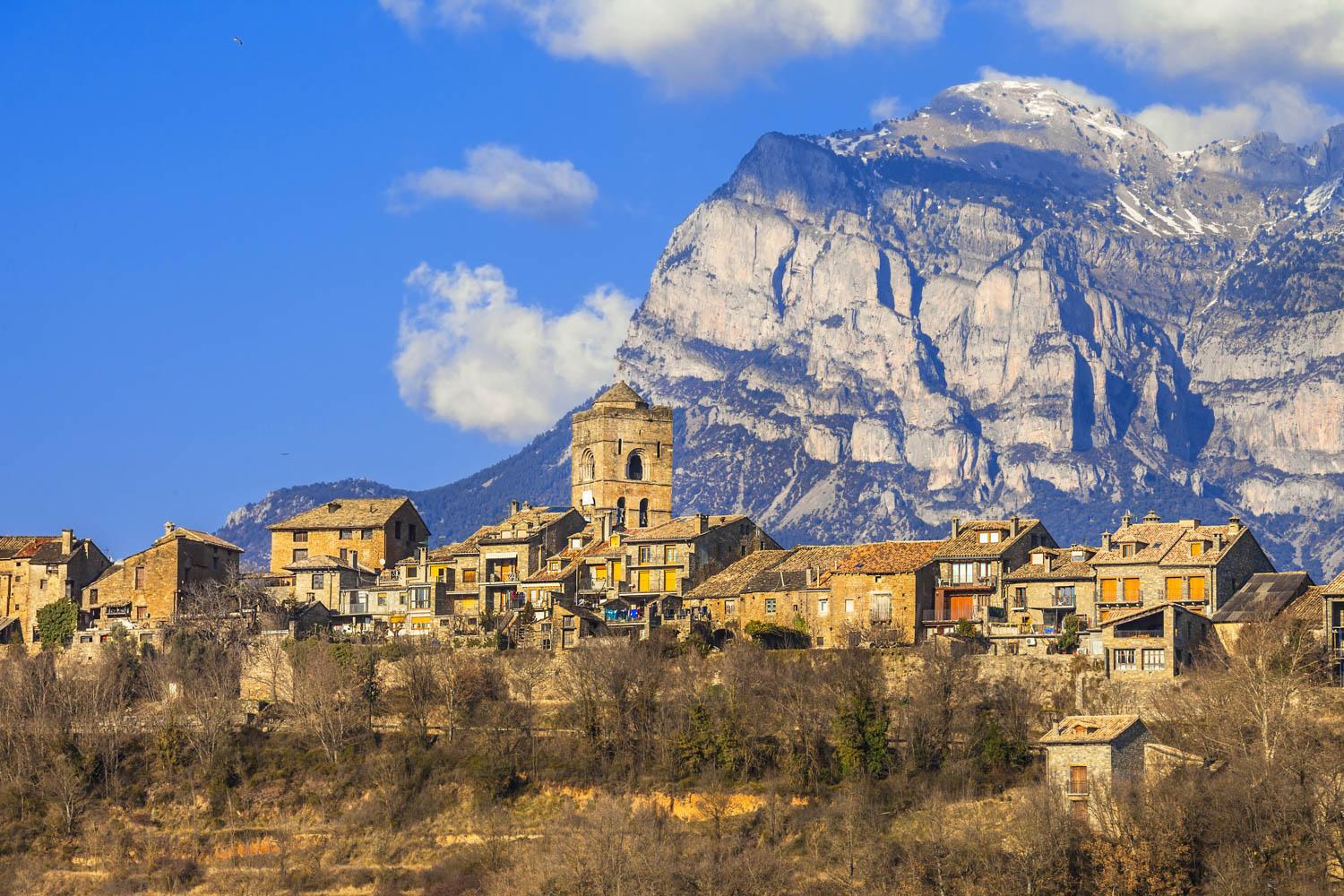
Alright, so a service station and a brief visit to Calatayud don’t exactly count as visiting Aragón per se… Aragón is a lot like Extremadura. Lots of people pass through it on their way to somewhere else. Zaragoza is probably its most famous city, but what of the rest of the region? Huesca in the north plays host to some of the most beautiful Pyrenean landscapes out there, and Teruel would kindly like to remind you that it does exist, despite what the rest of Spain will tell you. Aragonese, a local dialect, survives to the present, but as Spanish is the only ‘official’ language, there’s no cause for concern. High on the Spanish plateau, it gets mighty chilly in winter, but it is also the home of the Comarca de Monegros, a vast expense of semi-desert. And, like Extremadura, its comparatively unknown status makes it a very good place to go native.

Probability: 8/10

Asturias
Where: North
Weather: Cold
Dialects: No
Visited: Yes

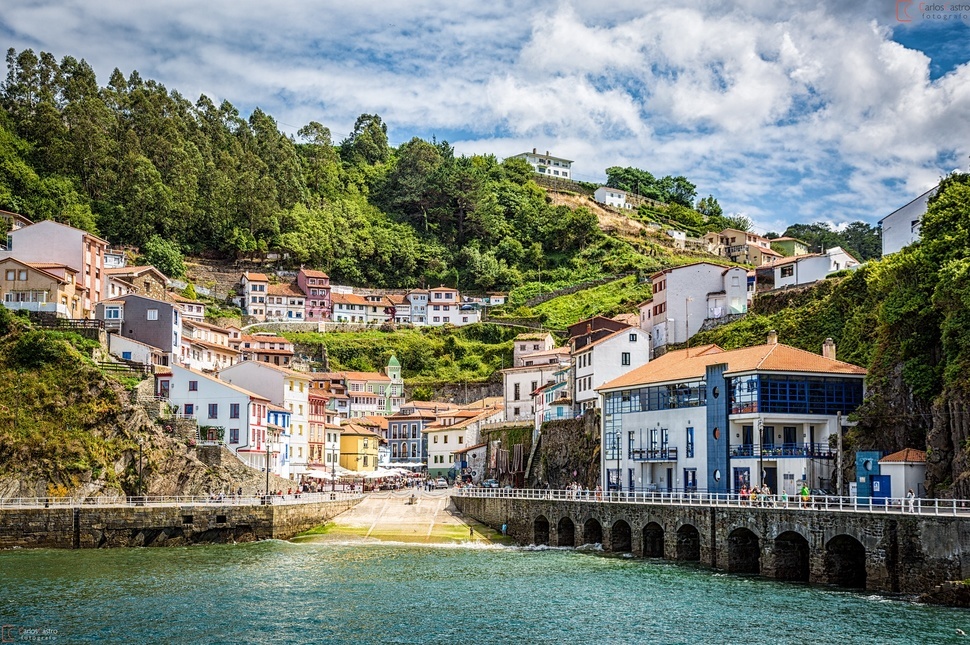
A popular choice amongst second-years, Asturias is where modern Spain was born. With pretty seaside towns, Alpine comforts and forested hills that actually go brown in autumn, in some ways it’s the perfect antidote to the Spanish south. For those used to endless heat, readily available paella and Moorish castles, it can seem like a very different world… which it is. The Spanish is very clear here, and it has some of the most beautiful beaches on the peninsula, even if they aren’t exactly the warmest. It’s a little harder to get to, but Santander’s airport offers cheap flights and is only just across the border. It is, however, a little on the expensive side.

Probability: 8/10

Cantabria

DSC_0201

Where: North
Weather: Cold
Dialects: No
Visited: Yes

Cantabria, after Andalucía and Extremadura, is the region of Spain I’ve visited the most. No, scratch that. Technically speaking, Santillana del Mar is the third region of Spain I’ve visited the most, as for some reason I ended up there on all three occasions. A marginally less mountainous version of Asturias, Cantabria is a good choice for the British auxiliar who doesn’t want to leave behind too many creature comforts. Quesada pasiega, a local speciality, is unheavenly good (like most of the Iberian peninsula’s takes on the custard tart), and the stereotype is true: I’ve seen more cows and tractors here than in any other part of Spain. It doesn’t have the quasi-African feel of the south, but what it does have is a cheap and reliable train network, which is a huge plus in any world.

Probability: 5/10

Castilla La Mancha

Where: South-central
Weather: Hot/cold
Dialects: No
Visited: Yes

Like Aragón, Castilla La Mancha is a region I can hardly claim to have visited, having spent just a few days in Toledo a few years back. If Andalucía is the Spain sold to tourists, Castilla La Mancha is the one you find in picture books. It’s Don Quijote country, and any bus ride from Madrid to the south will show you that: seemingly endless fields stretch as far as the eye can see, dotted in various locations with mountain ranges and the iconic windmills (see Consuegra, above). It’s also, coincidentally, the land of my ancestors; my grandfather was from Villarrobledo, a town near Albacete. An immense region where it is very easy to go native, but perhaps not the most awe-inspiring on offer. Toledo, however, is easily one of the world’s most beautiful cities…

Probability: 4/10

Castilla y León

Where: Northwest
Weather: Cold
Dialects: Leonese (in León province)
Visited: Yes

Make no bones about it. Castilla y León is gorgeous. It has its less interesting parts (the Camino de Santiago goes through them), and is in part a mirror of sister-province Castilla La Mancha to the south, but drawn across the meseta are some of Spain’s most striking landscapes. The Duero river gorge is breath-taking, as are the old Roman gold mines of Las Medulas (see above), and the granite-strewn scenery to the north of Burgos looks like something out of a Lord of the Rings film (but then, this was where El Cid was born). Here they speak the ‘purest’ Spanish, so you’ll have absolutely no problems with the language here. It’s clear, crisp and, whilst no slower than the usual Spanish machine-gun delivery, easier to understand than, say, any of the southern accents. The cuisine is also spectacular; in my humble opinion, most of Spain’s best food is its earthy, country food, and you’ll find a lot of it here. The cities of León, Burgos and especially Salamanca are wonders in their own right. Just watch out for the slow-burning Leonese separatist movement.

Probability: 8/10

Cataluña

Where: Northwest
Weather: Warm
Dialects: Catalan (official language)
Visited: Yes

This year would have been a very interesting year to be working in Spain’s black-sheep region. Even after the failure of Puigdemont’s half-hearted rebellion, I suspect it’d be worth a punt for the next few years. I’ve been to Barcelona a couple of times; school trips on both occasions, so I’ve barely begun to scratch to the surface of the place. The Costa Brava is undeniably beautiful, with stunning Mediterranean coves and sparkling white beaches. The Catalonian interior, however, is what grabs me: like neighbouring Aragón, Cataluña has some spectacular mountains. This is Serrallonga’s country, and I’d sure like to find out some more about the gang warfare between the Nyerros and the Cadells of old… if it weren’t for the language barrier. Now more than ever do I regret taking a Persian module over Catalan at university! You should bear in mind that Cataluña’s relative affluence makes it a little more expensive than the other comunidades, especially so in Barcelona itself. But if you’re after a more cosmopolitan experience, this is the place for you!

Probability: 6/10

Ceuta and Melilla

Where: North coast of Morocco
Weather: Hot
Dialect: No (though strong Arabic presence)
Visited: No

Despite the fact that I lived in Tetouan for an entire summer last year, I never did visit Ceuta. For one reason or another, something always came up to stop me going. Which is a shame, really: as the Spanish territories go, they’re pretty unique. Expect a very Moroccan vibe, with the North African kingdom literally within a stone’s throw at any given moment. If it weren’t for their size and the general cost and difficulty in getting to and from them if I ever wanted to travel, I’d probably sign up right away. It would, at the very least, give me an excuse to keep my Arabic polished. Most of the placements are in the two cities, though, which is a bit of a turn-off for me.

Probability: 4/10

Extremadura
DSC_0546

Where: West
Weather: Hot/cold
Dialects: No
Visited: Yes

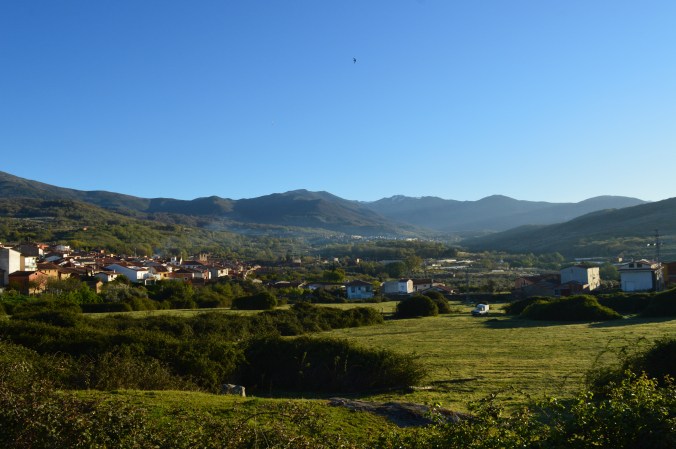
Of course, I could always stay put, but ask for a more northerly location: specifically, the green hills of Cáceres. There’s no denying Extremadura is by far my favourite region, and with good reason: it’s wild, it’s still relatively undiscovered, it’s lacking in other guiris and the people are some of the friendliest I’ve ever met. Plus, La Vera. Plus, Hornachos. Plus, the book. Heck, I’d stay just to be closer to Tasha and Miguel, who were pivotal in my return to Villafranca this year. With its welcoming vibe and its off-the-wall auxiliares, it’d be my top recommendation to anybody, though I’d concede you have to be prepared to be out in the sticks to be here. For me, however, it’s something of a safe option, and I’d much rather use this chance whilst I have it to explore some more of my grandfather’s beautiful country. Even if Extremadura is the best. Period. I’ll be coming back to this place for the rest of my life.

Probability: 7/10

Galicia
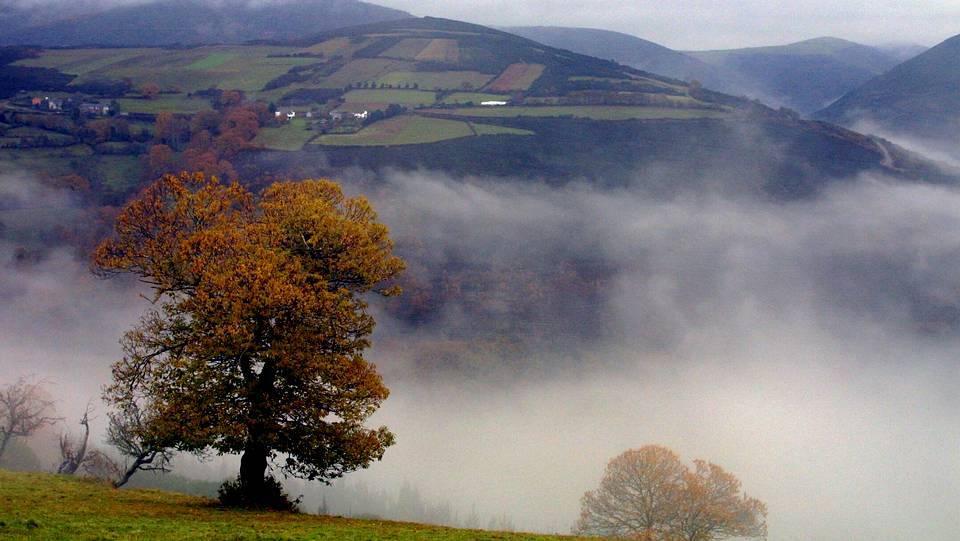
Where: Northwest
Weather: Cold
Dialects: Gallego (official language)
Visited: No

It rains a lot. Now that we’ve got that out of the way, let’s look at Galicia. Galicia is the Ireland of Spain, where the country’s Celtic roots are strongest. I mean, when their folk bands deliberately cover songs made famous by The Corrs, the ties are hard to miss. Galicia is about as far from the Spanish south as you can get on the mainland, in both distance and culture. Gallego is a thing, but I’m not above learning a new language. The word on the street is that the auxiliar programme there is one of the best in the country, if not the best. That, combined with the cheapness of living and otherworldliness that this region offers, make it the standout competitor for my attention this time around. And I never thought I’d consider it, which makes it all the more appealing. After all, I had no idea what or where Extremadura was, once upon a time. I’d very much like Galicia to be my next miraculous discovery.

Probability: 9/10

Islas Baleares

Where: Mediterranean Sea
Weather: Hot
Dialects: Catalan
Visited: No

Mallorca, Menorca and Ibiza. Party destinations in summer… and for the rest of the year? Well, EasyJet and Ryanair are always offering such cheap flights that there must be something to do there in January… right? If it weren’t for the fact that they’re islands, I might seriously consider the Baleares. But I like having room to manoeuvre, and I don’t know whether I’d feel trapped on an island. Plus, they speak a lot of Catalan there. Once again, I wish I’d not gone chasing Persian down the rabbit hole.

Probability: 2/10

Islas Canarias

Where: Off the west coast of Morocco
Weather: Hot
Dialects: No
Visited: No

First things first: it’s quite a long way from Spain. The Canary Islands, like the Baleares, can seem a very remote posting. Cheap flights are readily available to the UK and elsewhere, thanks to a steady flow of tourists, but I’m not sure I’d be thrilled if I were posted there – not least of all because it’s quite difficult to distance yourself from the touristic side, upon which the Canary Islands depend. I wouldn’t mind going in search of the islands’ Houbara bustards though, or taking a stroll in the misty laurel forests of the Garajonay National Park.

Probability: 3/10

La Rioja

Where: North
Weather: Warm
Dialects: No
Visited: No

I’m going to be perfectly honest. I know next to nothing about La Rioja, except for the fact that it’s a small region with a justifiable fame for its wine. Given its positioning, I expect it’s a little more pricey than what I’m used to, but don’t hold me to that. I’ll leave you to discover La Rioja in my stead.

Probability: 2/10

Madrid

DSC_0341

Where: Central
Weather: Hot
Dialects: No
Visited: Yes

One word. No. The surrounding countryside of Madrid is unquestionably beautiful, no doubt about that, but I would rather leave the country than work in Madrid itself. As cities go, Madrid’s not so bad, but I’m a country boy; cities are for visiting, not for living in. Auxiliares posted in Madrid earn 1000€ instead of the usual 700€ to compensate for the higher living costs and also work 16 hours per week instead of 12, though after calculating the going rate for private lessons and such, I don’t half wonder whether that’s entirely fair – or even financially viable. No; for me, Madrid is just too big a move. I’d recommend the Sierra de Guadarrama, El Rey León and the Parque del Retiro, though (pictured).

Probability: 1/10

Murcia

Where: Southeast
Weather: Hot
Dialects: No
Visited: No

This year’s auxiliares are complaining about the fact we haven’t been paid for October and November yet. If what I’ve heard about Murcia is true, the auxiliares posted there are never paid on time. Murcia is one of Spain’s hidden gems: like Aragón and Extremadura, it often gets overlooked because it has more glamorous neighbours that have more of what it has and better. In Murcia’s case, that’s Valencia and Andalucía. I know a few lovely people from Murcia and I’d love to visit one day, but as year on year it becomes a larger wing of Almeria’s enormous European greenhouse, I find myself drawn to the greener, wilder parts of Spain.

Probability: 4/10

Navarra

Where: North
Weather: Cold
Dialects: No
Visited: No

A former kingdom in its own right (which, you could argue, is an accolade held by most of the Spanish realms), Navarra sits at the feet of the Pyrenees as a less extreme though equally wondrous region in the Spanish north. A friend of mine was based in Tudela last year and had a great time there, so it seems to be to be a good place to work. Like the Canary Islands, it’s also more popular with Brits than Americans, so expect less encounters with scotch tape, candies and Fall. It’s also rather well situated, allowing easy access to several of Spain’s more attractive destinations.

Probability: 6/10

País Vasco

Where: North
Weather: Cold
Dialects: Basque
Visited: Yes

The Basque Country got a positive makeover recently in the film Ocho Apellidos Vascos and its sequel, not doing away with but helping to redirect attention from the ETA bombings of the past to the more attractive aspects of Basque culture. If the Catalans are independent, it’s nothing compared to the Basques, whose regional language – Euskera – is so far removed from Spanish that it feels as though you’ve skipped five countries rather than one region. Situated in the industrial north, the Basque Country plays host to much of Spain’s industry (just look at all the Basque banks), and is therefore afforded a more affluent lifestyle. That makes it more expensive, which is a drawback, but many would argue it’s worth it. The Basques are, after all, the stuff of legend…

Probability: 5/10

Valencia

Where: East
Weather: Hot
Dialects: Valencian
Visited: No

There’s a good deal more to Valencia than the corruption and the coast, even if that is the image most people have. I’ve never made it to El Cid’s triumphal city, it never having been quite on my radar, and though I have many friends who have been up and down the coast, I’ve never quite felt the pull to go. Another more costly region, Valencian – a variant of Catalan – is widely spoken here, though Spanish is also used in its capacity as the kingdom’s official language. It played a large role in the expulsion of the Moriscos though, and that’s something I’d like to look into, albeit over a short period of time. Maybe for holidays, but for me, not for work.

Probability: 3/10


I’m more or less decided on the northwest, but I’m still open to ideas. Now that Senegal is an option for language assistant placements, it’s that little bit harder to say no to the world beyond Spain (that would have turned my world upside down if it had been an option in my second year. I would very probably have dropped Arabic, studied French and continued to wing it with Spanish). However, a promise is a promise, and I’m determined to do what I can to become truly fluent in Spanish, however long it takes, wherever it leads me.

The deadline for next year is 12th February 2018. I have a couple of months to decide. BB x
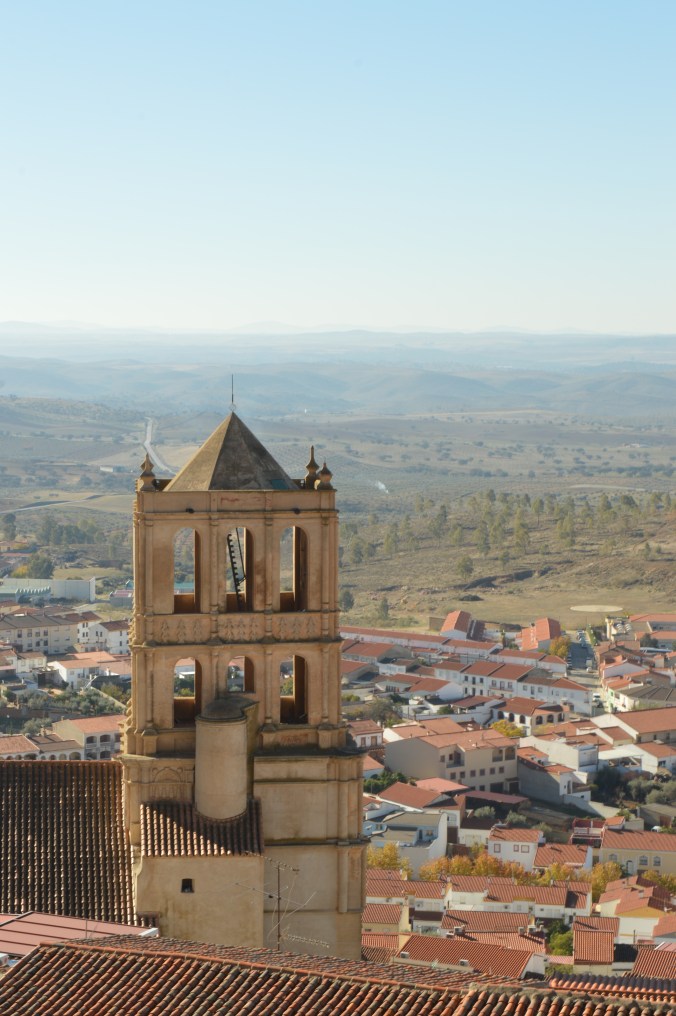
Rainbow’s End

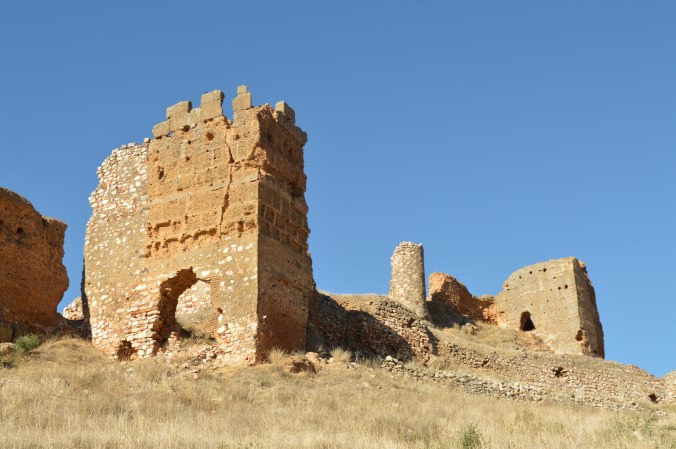
Hornachos. How you play with my heart! You, who the Moors adored in this land of endless fields, are indeed beautiful; the purple heights of the Sierra Grande soaring out of the earth like the broken spine of some great ship upon the shore… Home of the golden eagle and his imperial cousin, the fierce boar and the mighty griffons, the guardians of this beautiful kingdom… The twinkling lights of your houses, seen from afar to be floating in the night like the island of Laputa…

…why on earth do you only have one fucking bus per day?!

DSC_0249

That’s right. One of the most beautiful towns of Extremadura is hamstrung by its virtual inaccessibility. Centuries after the departure of the Moriscos, the mountainside town remains as unapproachable as ever it was under the rule of the soon-to-be pirate kings, albeit for slightly more mundane reasons.

Hornachos is served by one bus line, which is perfectly suited to the Hornachego with a job in the outside world, but virtually useless for the interested day-tripper. Two buses make for the town at 15.15 and 18.45 on weekdays (with the notable exception of Fridays), and one leaves for the outside world at 7.15am. And that’s it. It wouldn’t be so bad if there were any cheap accommodation offers, but with a slew of casas rurales, 50€ per night is the standard. When nearby Villafranca – which has almost nothing to see, by comparison – has a hostel for 10€ a night, it seems a little ridiculous. Not least of all because I would happily spend as much as 50€ every month (or more) if it meant I could be in Hornachos every weekend. Because I would. As for BlaBlaCar, the distance between Villafranca is too long to walk (and then hike), but too short for a popular carshare. You can’t free camp either, because of local laws. Goddammit.

Simply put, day-tripping to Hornachos is simply not possible without a car.

DSC_0262

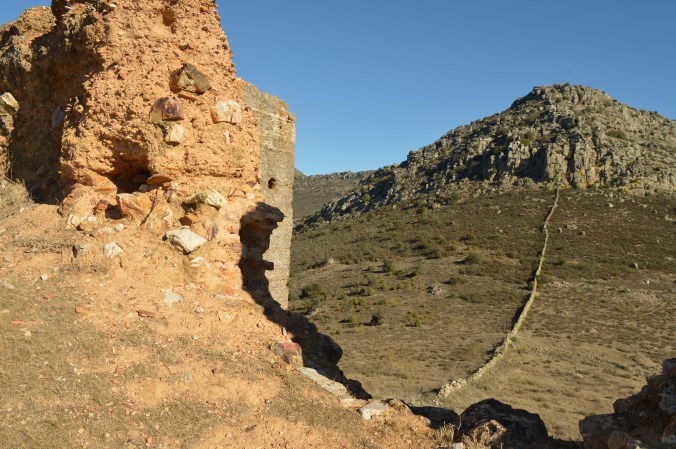
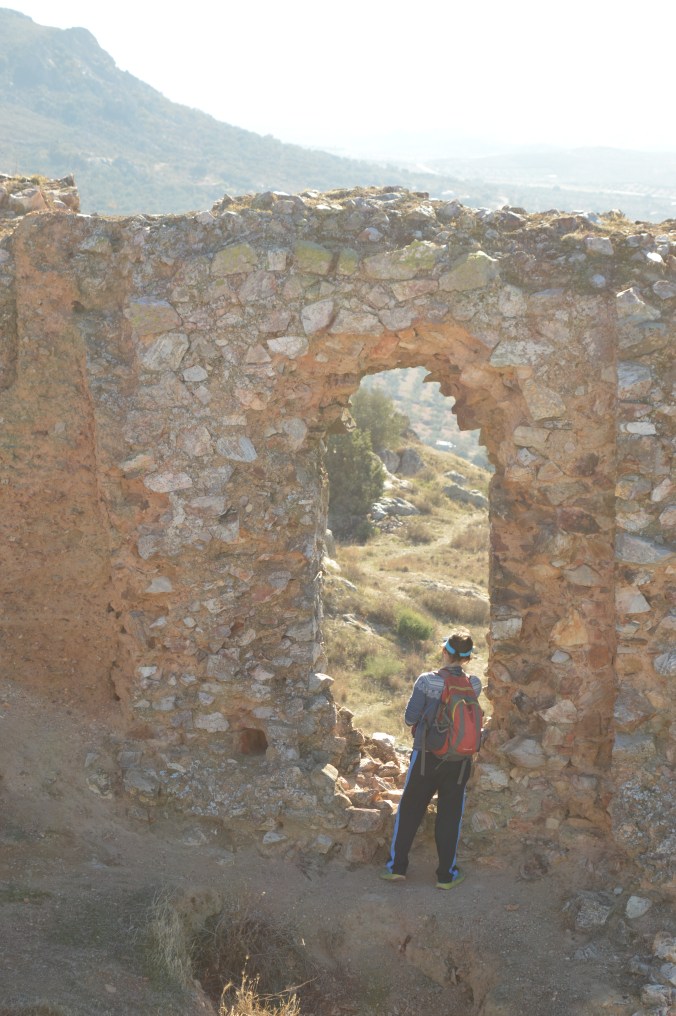
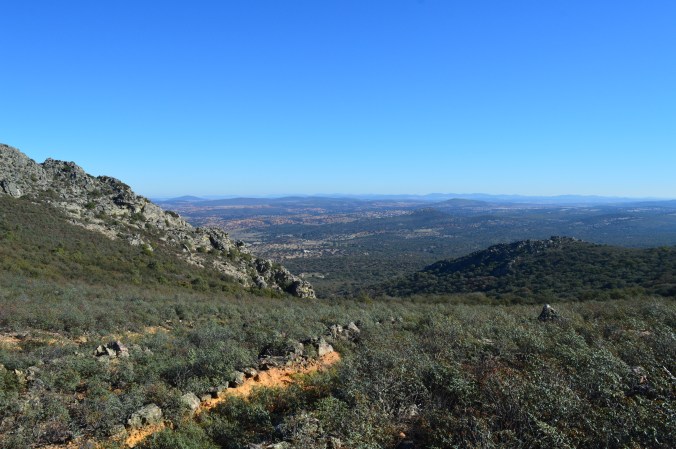
Its inaccessibility, however, is my sole complaint. Because, besides a lousy bus service, Hornachos has it all: the ruins of a tenth-century Moorish castle, a Mudejar church, an enormous sierra with vast fields of rolling dehesa stretching out for miles behind, a history so bitter and intense it might have been written in lemon juice and a super-friendly Casa de Cultura. I fell in love with Hornachos from the moment I first laid eyes on it. The unmistakable silhouette of Olvera, my old hometown, still strikes a chord or two in my heartstrings whenever I see it, but the Sierra Grande has long since overshadowed its place at the centre of my heart.

DSC_0269

I was lucky enough to hitch a ride with a couple of friends who wanted to go hiking in the Sierra, so I leaped at the chance. We didn’t have long to stay in the castle, because as we arrived atop the ruins, the shrieks and shouts of an approaching school trip sailed up the hill to meet us, like a colourful besieging army. Amber didn’t hesitate to let them know we were English. I replied to their questions in Arabic. Brownie points go to Amber for being a decent human being, where I just wanted to be difficult, I think.

It did drive home to me just how deceptive the mountains are, though. We had no idea there was a forty-strong school trip coming up the mountain to meet us until we’d reached the top, though one might have heard them for miles around. It’s a dangerous place up there, and little wonder the Moors made a beeline for the mountains when they reached these lonely parts.

DSC_0266

I had a private lesson in the afternoon and a language exchange at the EOI, so I had to be back in Almendralejo for four o’clock, which didn’t give us mountains of time to explore (ho ho). We fitted in the usual circular route, albeit in reverse, as well as a cheeky yoga session at the end – needless to say I remain as flexible as a dinner plate – though this time I scaled the first leg of the Trasierra route which crosses the Sierra Grande and winds down into the fields below. Further exploration is definitely required.

DSC_0270

The church, sadly, is closed to the public. Like the museum, if you’re interested, you have to ask for the key from the local tourist information office. I suppose this is the normal way of things; you take things for granted in the outside world, where Seville and Marrakesh whore their finery to the lowest bidder. Hornachos retains some of that ancient-world mystique. As much as it bothers me, perhaps that’s the secret to its survival.

You’ve got to hand it to the old town for its tenacity. Who’d have thought that this quiet gathering of houses on the side of the Sierra Grande was once home to the men who would go on to become the infamous Sallee Rovers of Robinson Crusoe fame? I wonder whether there were any Hornachegos amongst the corsairs who took part in the equally bloody Sack of Baltimore in 1631, only twenty-one years after their expulsion from the Iberian peninsula… Rabat sure does seem like a world away from this flat, flat world…

DSC_0550

‘We’re not in Hornachos anymore…’

I will make you famous, Hornachos. When the world knows of El Gran Hornachego and his adventures across Iberia and beyond, you will get the fame you deserve. I will write you back into history. That’s a promise.

DSC_0223

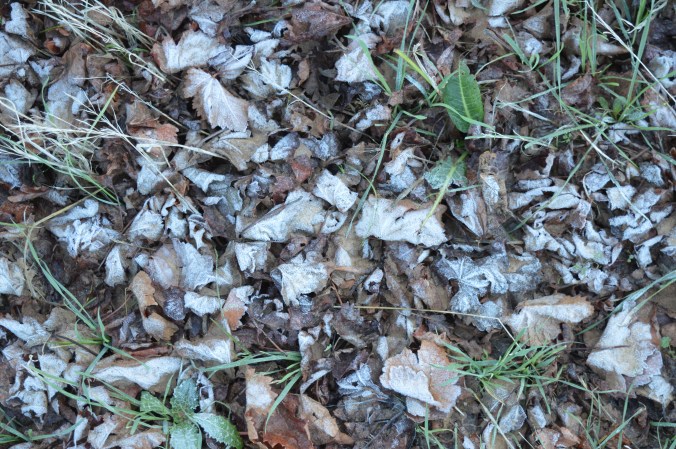
Also, after my sour-grapes episode about cold and snow, we did actually have some frost yesterday. Not much, and only in the shaded ditches at the side of the olive fields, but it was something. I hear Durham’s been looking beautiful in the snow lately, like Spain did last year. Why do I always manage to miss the snow wherever I go? BB x

Frost vs Nixon

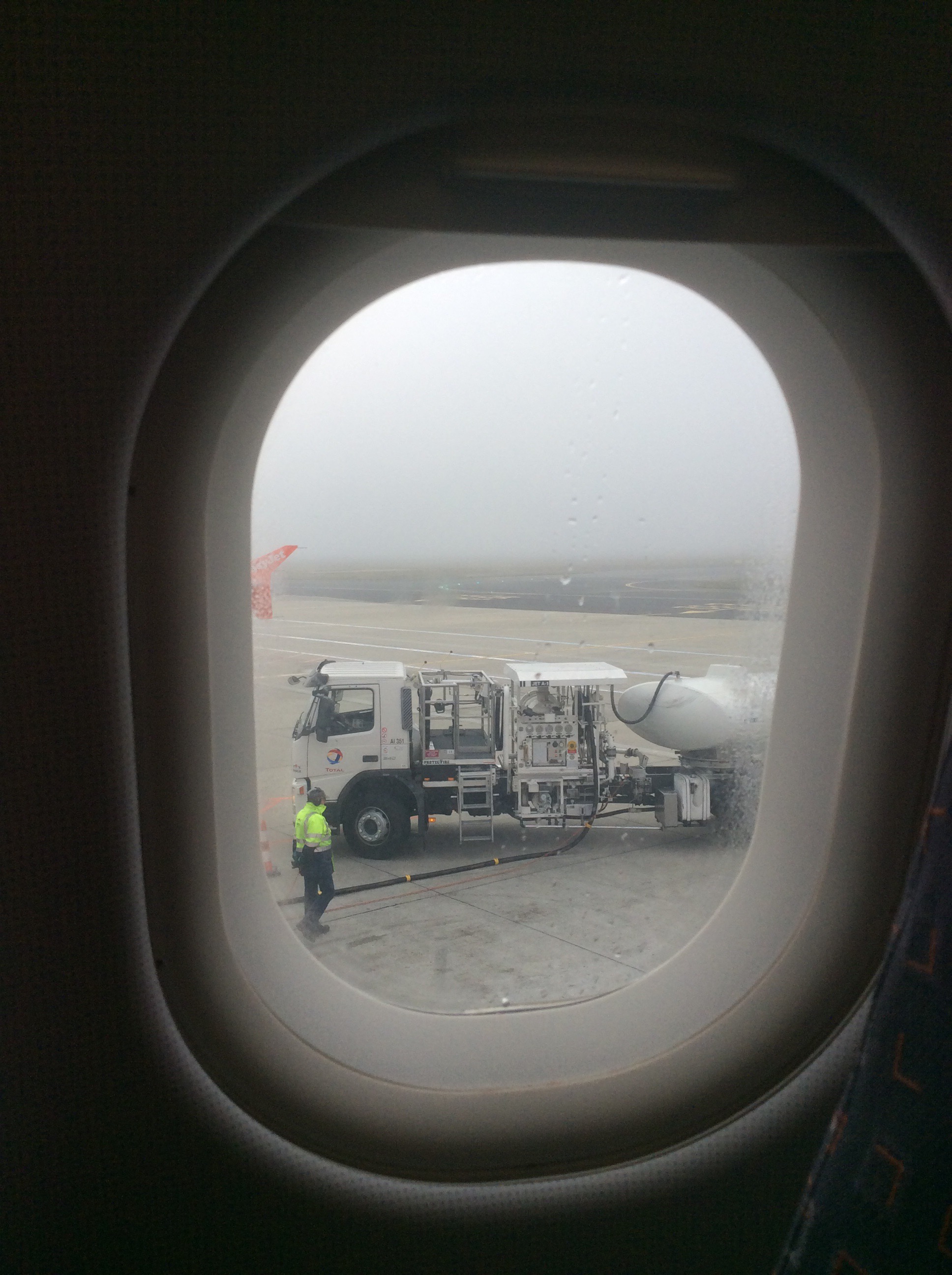
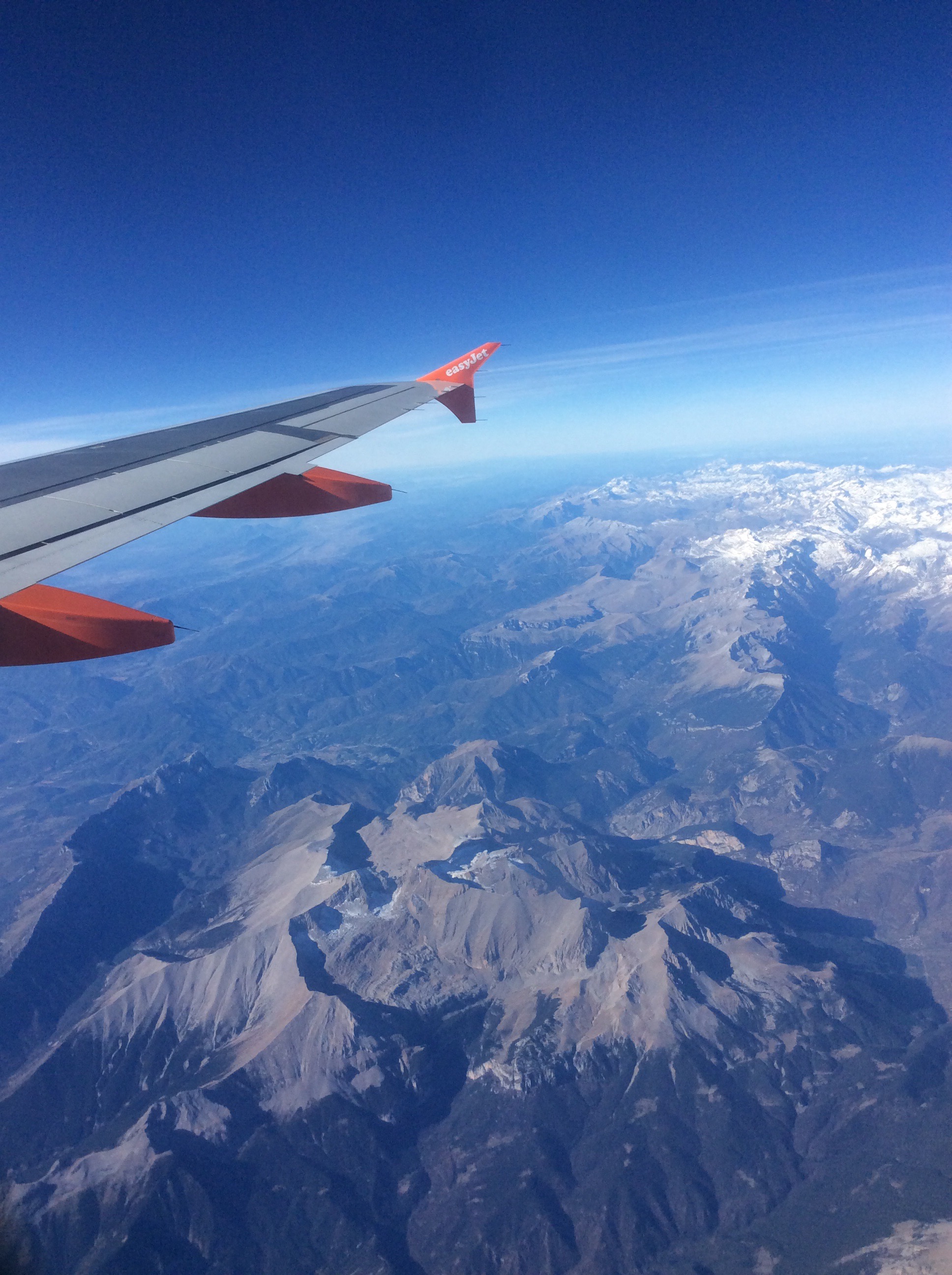
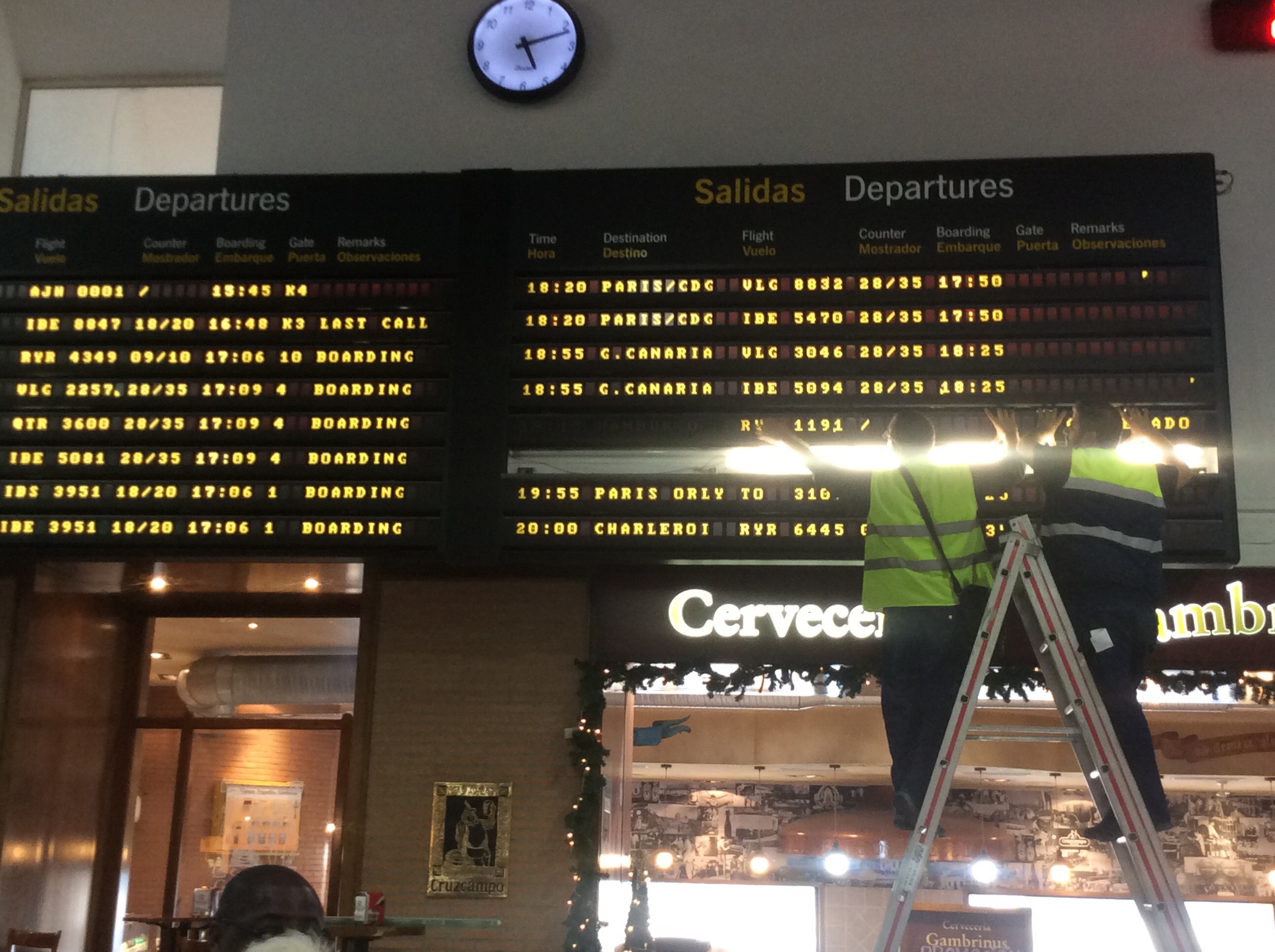
That was, without a doubt, the smoothest flight I’ve ever taken. No more complicated than getting on and off a bus. The plane was on time, there was no security check at the other end and I was on the bus to the city centre within five minutes of leaving the plane. To top it off, my entire row was empty, so I got the window seat for free. It isn’t often that you get such a slick service with a budget airline, but after my previous experience (I haven’t forgiven you for that 20€ croque monsieur, EasyJet) I consider it my just reward.

DSC_0078

STOP PRESS: The automated American translation in Plaza de Armas just mangled Matalascañas beyond belief (Matter-lass-cun-arse). Help.

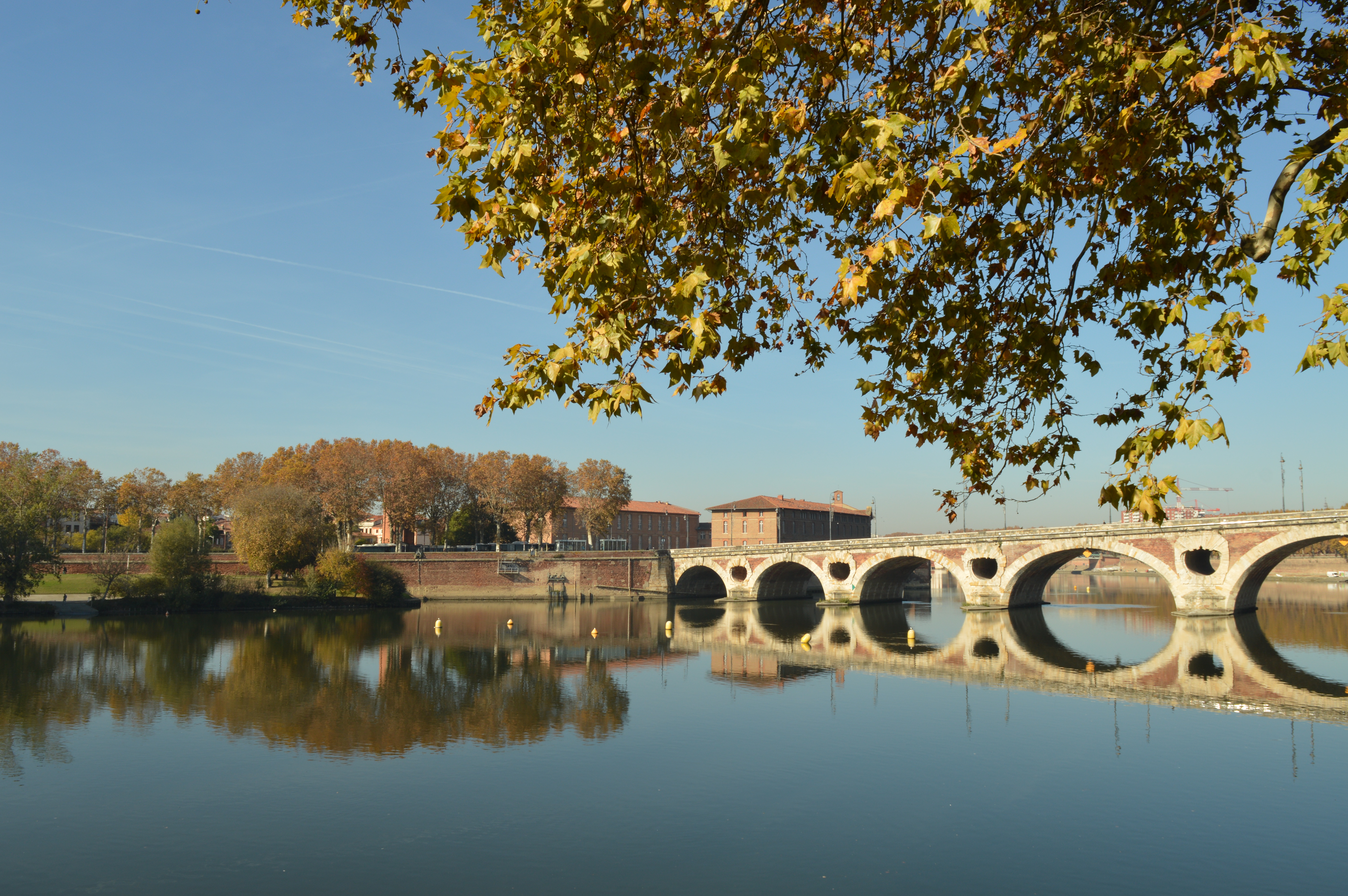
Toulouse was covered in a thick fog when I left this morning. Bella said it didn’t feel much like France, but it sure as heck didn’t feel like Spain. With all the yellow and brown trees, misty rivers and starling swarms overhead, it felt a lot more like England than anywhere else. The cold has set in down in Extremadura, but it’s not a true wintry chill like there is here in the lower foothills of the Pyrenees. Oddly enough, on our way through the city streets with salted caramel-drizzled Belgian waffles in hand, I found myself missing home.

That is, I wound up missing England whilst on holiday in France from working in Spain.

DSC_0119

In the past it was a lot easier to say where I wanted to be. Spain had purple gallinules, bee-eaters and griffon vultures, England had woodpigeons. It was an easy decision to make. Now that I’m older and avifauna is no longer priority number one, it’s not quite so clear cut (though the vultures are still a major factor). I don’t begrudge my mixed-up ancestry in the slightest – I couldn’t be more proud of it – but if I did, it would be over the confusion it’s left me with regards to where I want to be.

England is cold and England is damp, and my lungs suffer for over half the year for it. The English are, in my experience, prickly when it comes to difference, nervy when it comes to work and uncomfortable in just about any given situation, without mentioning their appalling inability to talk about their feelings. Living is expensive, work is hard and life is lived for the weekend.

It is, however, the land where I was born. And, for all their faults, the English understand a great many subtleties that pass the Spanish by: public footpaths, music for its own sake, quality satire and coffee shops, amongst others. It’s also a land of gorgeous crispy winter mornings with frosted grass, thick mist and a promise of rain, and indoor afternoons spent reading with a mug of hot chocolate on carpeted floors. In short, England does autumn and winter properly.

DSC_0007

Spain has everything else. Spain is hot – at least until November, when a harsh, dry cold sweeps in across the plains – and damp is a thing of the imagination, especially in drought years such as this. It doesn’t have a fantastic music scene, but it does have endless rolling hills of wild olive trees and cork oaks, overflown by kites, vultures, harriers and eagles, not to mention cranes, storks and a whole host of other impressive creatures. It has tostadas and decent olive oil. It has good food for good prices, skies so blue you couldn’t paint them properly if you tried, and a crippling addiction to ham that goes back centuries.

In addition, the Spanish are only too happy to tell you how they feel, at the expense of small-talk topics such as the weather (which most of them couldn’t give a fig about) and sport (where a lot will tell you how failed their exercise regime is/was/will be). And, for better of for worse, family is everything to them. Many Spaniards are completely hamstrung by their devotion to their families, and a good many more don’t begrudge them for it one bit.

Spain also has Spanish. The happiness machine. That’s the biggest win of them all.

Through my own strength of will (and a fair degree of my mother’s), Spain has become a far bigger part of my life than it otherwise might have been. And if I never shut up about it, it’s because Spain is not just the longest love affair of my life, it’s a family affair. It fills the enormous hole that most of my generation fill with Snapchat and social media. Just being here makes me happy.

You can’t spend your life chasing happiness, and it’s unhealthy to try. But it’s a rare kind of joy when happiness and work combine like they do out here. And when I find myself missing those autumn mornings, frost on the car bonnet and even the beautifully reassuring sound of the woodpigeons, I look around me and remind myself where I am. Azure-winged magpies bouncing out of the trees, shepherds leading their merino sheep across the fields and impressive stone castles sitting atop lonely hills. No Christmas feeling, no carols and definitely no a cappella, but no wheezing either. I can’t do everything I’d like, but at the very least I can be me. I can live with that. BB x
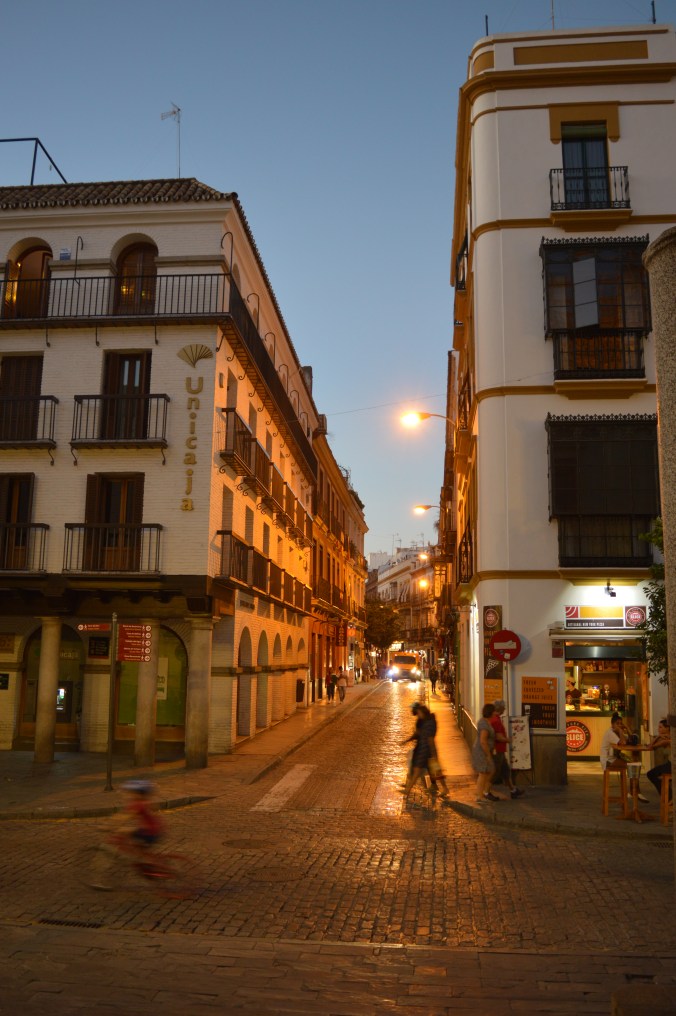
That Smell

I don’t make a habit of leaving my beloved Spain during a placement. Some misplaced sense of pride tends to keep me tied to this marbled rock whilst most of the American auxiliares catch every cheap flight to Yurp they can lay their hands on. And when they’ve traveled across the Atlantic to get here, who can blame them? But duty calls, and I find myself sitting in row five of an EasyJet plane bound for Toulouse. Pride is one thing, holding out in spite of your heart is another. And let’s face it, I won’t have the chance or excuse to stay in Toulouse for free again very soon, and as I rarely visit France anyway, I might as well carpe the diem.

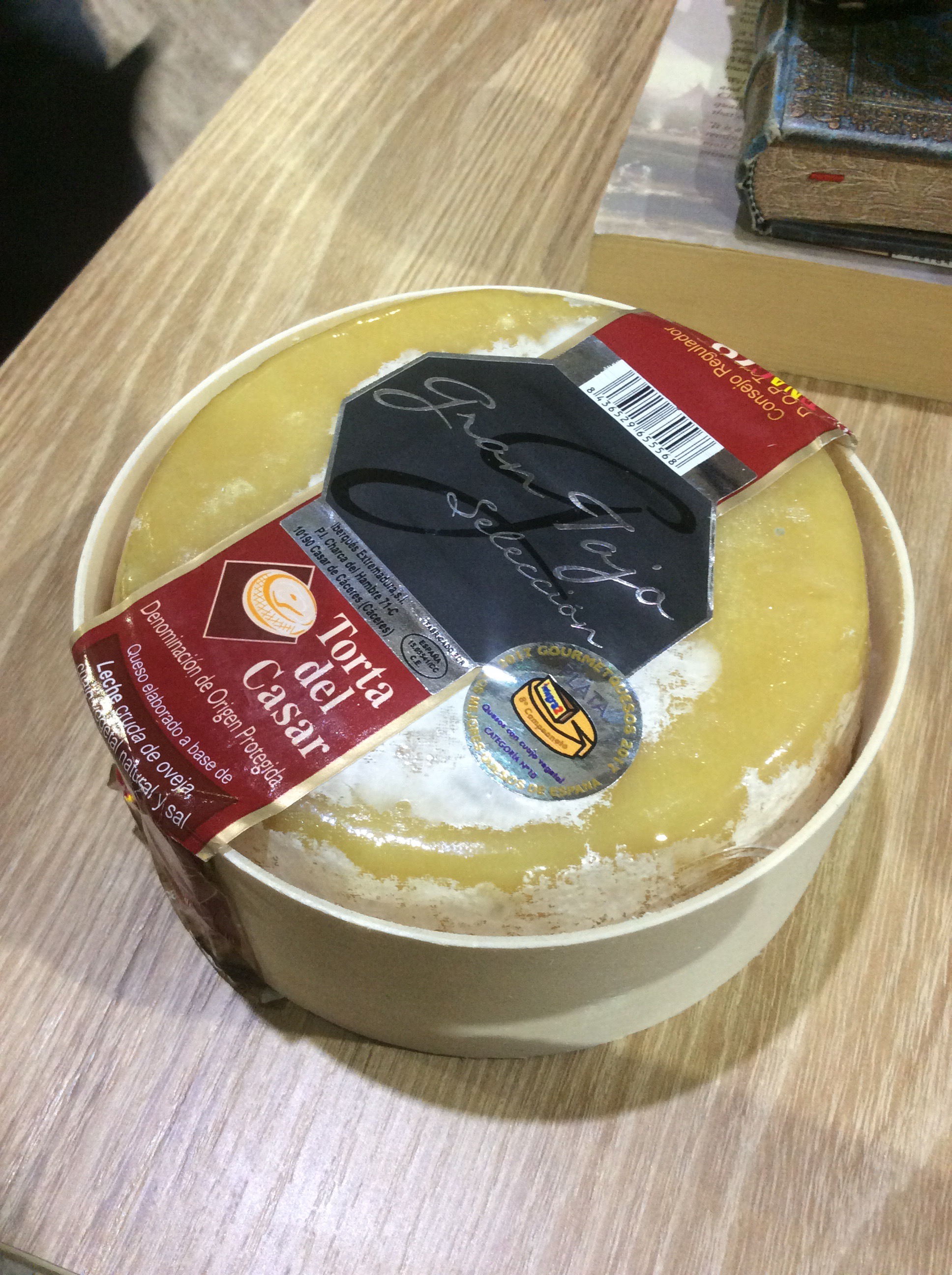
As a gift for Bella’s host family for putting me up (not once but twice) I’m bringing some Torta del Casar, a delicious if seriously pungent cheese from Casar de Cáceres to the north. I’d have got my hands on the more local Torta de Barros if I could find it, but as the Casar is also denominación de origen and equally delicious, I do believe it’s a fine alternative. It’s a sloppy, spreading cheese, and has a spectacular tang like the pimentón that is grown in the north, or – come to that – a good deal of the dry foods that hail from the Iberian interior. The trouble with the cheese is that its smell is seriously strong. It must be, or else I wouldn’t be able to smell it so well. My sense of smell is terrible, and always has been (which must, I wonder, have a fairly major impact on my sense of taste as well), so as a rule of thumb if something smells strong to me, it could probably knock a dog out.

As sense loss goes, having a fault in the olfactory department is, at least to me, one of the easiest deficiencies to deal with in the sensory department. I’d far rather no smell than, say, no sight or hearing. It does, however, occasionally give me cause to wonder whether I’m missing out on the minutiae, like the smell of the Romanian family who were at the Leda kiosk before me on my return journey home last night. No sooner had they taken their leave, the tired-looking woman at the desk gave me a long, troubled look and said, grimly, ‘Qué olor… Qué olor’.

I wasn’t aware Romanians smelled differently. I wasn’t aware they smelled at all, to be honest. I for one didn’t smell anything (though I’ll grant you, for the reasons I’ve already given, I’m not the best judge).

It is, however, a small marker of the resentment some locals harbour towards the not-unremarkable Romanian immigrant population. Whether that’s because it’s harvest season, or because their population has grown in size since my last visit, their presence is particularly notable at the moment. Romanian is the second most commonly heard language in the streets after Spanish, doubly so in certain locations. There are now at least two shops in Villafranca that stock Romanian goods and foodstuffs. I run into the same families in Día on a regular basis (though not as often as I used to since it went upmarket). My weekly route to and from a private class in Almendralejo takes me through what can only be the Romanian quarter. As a local entity, their presence can no longer be ignored.

I’d love to learn Romanian. It’s apparently not such a great leap from the other Latin languages, being a Latinate language itself. But learning the language would be only the first hurdle; breaking the silence would be the next. There’s as much a cultural barrier in place as a language barrier. For a point of comparison, one need only look at the Chinese or the Moroccans, both of whom are now long-established here. There’s even a halal butcher’s in Almendralejo, with Arabic signage as plain as though al-Andalus had survived to the present. Commerce, at least, thrives between the three.

It’s different in the schools. This year I have at least five Muslim students in my classes, the children of Moroccans who live and work in town. It says a lot that that’s worth pointing out, but it says even more that their presence in my classes far outsizes the Romanian presence. There are Romanian kids in the school; that much I know from a glance over the register. But they’re in the non-bilingual classes, along with the gypsies, Moroccans and Algerians. I don’t see them at all.

After a week of hosting the Polish exchange, my mind’s caught up in the whole interculturalism thing, like it hasn’t been since that frustratingly theoretical text on interculturalism vs multiculturalism in university last year. If the Polish presence in the U.K. were as notable as the Romanian presence in Tierra de Barros, the usual intolerant factions of my homeland would have a great deal to say about it. It surprises me – and pleases me – that I’ve yet to see such a bubbling-up here. However, it’s little encounters like the lady at the bus station that make me wonder how deep the suspicion festers. I can only hope it was simply a case of an overly sensitive nose.

There are lots of babies on this flight. I deal with noisy children on a very regular basis on account of my private lessons, so I’m getting better at tuning them out. We’re passing Pamplona and preparing to cross the Pyrenees at their Western end, into French airspace. One can almost smell the strike fever. I hope it doesn’t give me too much trouble this time. I’ve got be back at work on Monday morning. But until then, let the music play. BB x

P.S. Students of Arabic Literature, yes, the title is a deliberate reference to Sonallah Ibrahim.

Copper, Copper, Everywhere

I love history, but I’m no historian. It was always one of my favourite subjects at school, despite the fact that I wasn’t especially good at it (particularly when it became Historiography). Were it not for History, I might have achieved a string of straight As at A Level. I didn’t. The temptation to study a subject I loved but wasn’t brilliant at was too strong. It’s a lesson I didn’t learn when I went on to study Arabic at university. There, too, I paid for my interest. But I can’t help myself. I love a challenge, and I love history even more. Ever since getting my first Horrible Histories book as a kid I’ve been hooked.

Please don’t ask me about the Chalcolithic Age, though.

Yesterday I went to Almendralejo’s EOI (Escuela Oficial de Idiomas) to take part in an excursion to Huerta Montero, a Copper Age tholos or communal passage grave on the outskirts of town. The visit was primarily for the benefit of the B1 level students of the school, so that they could learn some of their history of their town at the same time as practising their English. We don’t get many tourists coming out here for the history (we don’t get many tourists out here at all, come to that), so rather than hiring the local guide, the EOI decided to use one of the auxiliares to give the tour. Tasha knew me for a history boffin and suggested me. Yours truly then had to clue up on this obscure Chalcolithic (please don’t make me pronounce that again) sepulchre, gleaning facts and titbits about Copper Age Spain to produce a reasonably interesting (and, crucially, intelligible) presentation for the students. I did say I like a challenge…

I learned a lot, I must say. I’ve never really looked into the Copper Age, or the Bronze Age, or even the Stone Age for that matter. Did you know, for example, that the average life expectancy in the third and fourth millennia BCE was around 23 years old? It was pretty humbling to be giving out that little factoid with twenty-three years to my own name. Also new to me, and perhaps more interesting still, was the knowledge that Almería, once home to El Argar, Spain’s dominant Bronze Age culture, is in part the product of Bronze Age environmental meddling. The El Argar civilisation, Spain’s most advanced in its day, developed at such a voracious speed that, together with a shift in climate, it resulted in the creation of Almeria’s vast semi-desert, such as the Sierra de Baza and the Tabernas wastes. A message for our time if ever there was one.

I’m not sure how much information the students gleaned from my presentation alone. I did my best. The ensuing hour or two over a pint in Almendralejo’s Hotel Acosta Centro was a great deal more informative, and it re-affirmed my faith in humanity in finding more than one avid naturalist amongst the Extremeño community. The fires of Catalonia are still smouldering, but on an environmental front, I do believe Spain is changing for the better. Whether it is too little too late remains to be seen, but a little awareness can do so much good.

Here’s to that. Chin chin! BB x

The Best Margherita in the World

It must be time for the second half of Biff and Ben’s Andalusian Adventures. Apologies for the delay; work is picking up speed fast, just like it always does. Private lessons are adding up now. I look after a group of kids for an hour twice a week and suddenly the whole town is in on the game. It won’t be long before my previously timetable is fully booked, perhaps even more so than the last time I was here. The way things are going, I might even earn more than that year, too: private lessons pay a lot more in the long run than a regular assistant’s hourly salary.

So, after spending an enjoyable sunset watching bats skimming low over the water in the town park, I thought it was high time I got this post out of the way so I can justify giving you weekly musings and updates – which, I maintain, always make for much more entertaining reading than another ‘wish-you-were-here’ travelogue.

That said, here’s one such adventure.


After a day wandering about Seville and discussing the pros and cons of Salvation, I thought we could do with a trip further afield. Through our AirBnB host Emma we managed to rent a car at less than twenty-four hours’ notice. It took some doing, but we did it. All we had to do was decide upon a destination. It took some convincing, but I managed to dissuade Biff and Rosie from visiting El Rocío. Why they alighted on that one in particular is beyond me. I suppose the fact that I’d name-dropped the place for years and years had something to do with it. At any other time I’d have loved to show off my favourite Spanish lady, but after a year of bad droughts and worse forest fires, she’s hiding her skirts in shame at the way she’s been treated. I can only hope she finds her smile again.

Emma looked horrified when they mentioned their plans to her, pulling the same pained expression most Spaniards seem to pull whenever you mention you’re headed for Huelva (“but… why?”). I spent most of the night and a good twenty minutes of the morning making other plans and, over breakfast, I posited a route through the Serranía de Ronda an alternative. They took the bait. Thank the Lord.

With Biff at the wheel, we reached the intersection and headed east, instead of west. Towards the mountains. Always a good direction to be going in. There was a strange black fog over the town of Dos Hermanas as we left Seville behind. Not sure what that was all about. Time to head up into the mountains where the air is clear.

DSC_1107

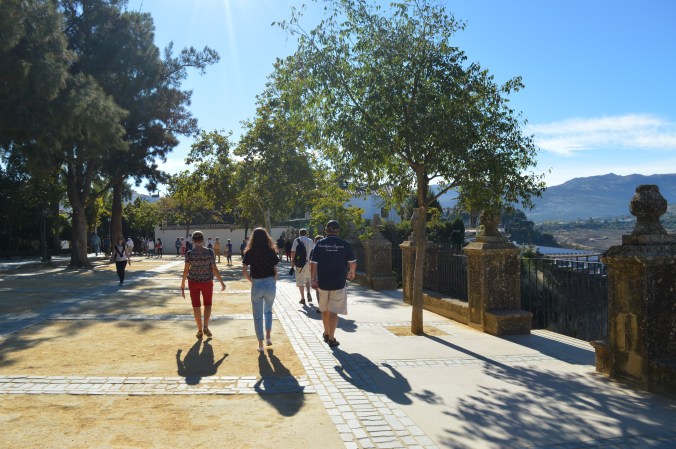
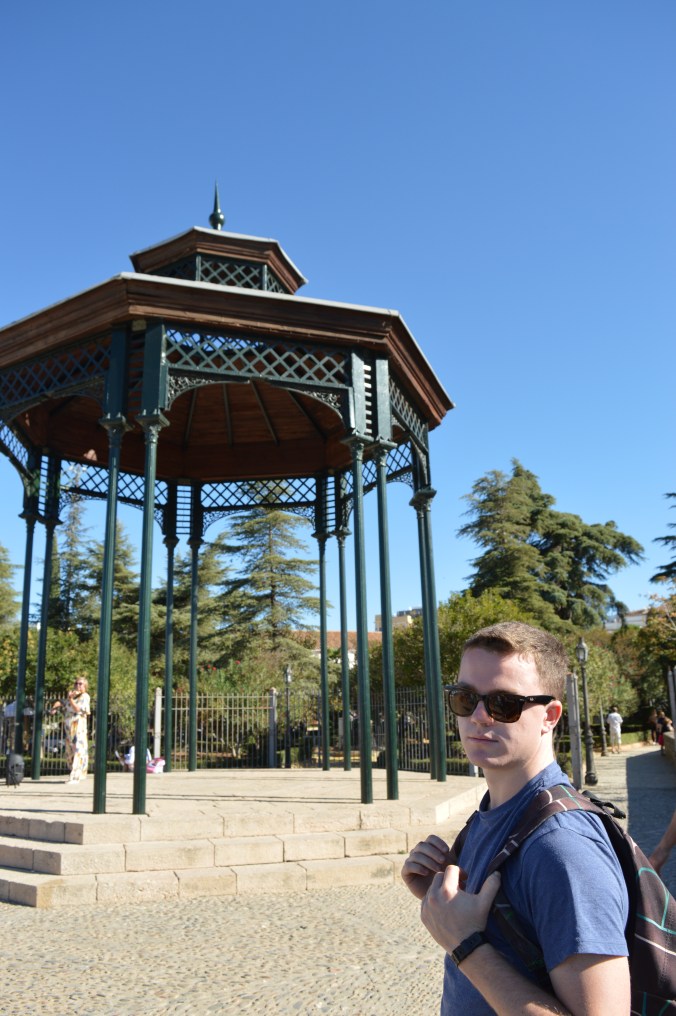
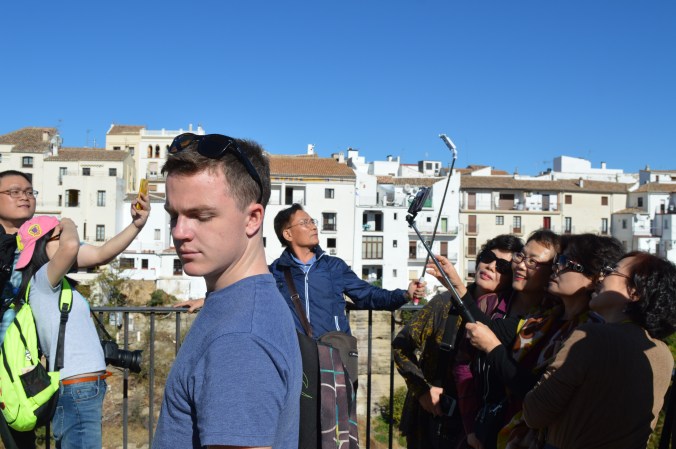
Ronda. It’s been ten years. It’s been more than ten years. And still I remembered my way about that most beautiful town, truly the jewel of the Andalusian sierras. Little wonder the famous bandoleros made the sierras around here their home. A guitarist and his accompanying dancer plied their trade before the balcony on the park promenade. A horde of Spanish tourists marched down the walk towards us, the noisiest of all the world’s sightseers. And now they’re armed with selfie sticks. They seem to be one of the few things the older generation has learned how to use – and discovered to be much to their liking. God help us all.

DSC_0006

We had plenty of time and a lot of shadows to kill. So we meandered along the cliff wall in the direction of the famous bridge, whilst I explained how GHOTI was fish and Biff threw me for a loop with the seven pronunciations of -OUGH. Trust me, when you’re in the English teaching trade, nuggets like these are fun. I’m serious.

DSC_0011

Or at least, they are for me. Biff may have other ideas

Rivalling the Spanish tourists in town were the Asians, who had come in great numbers. And upon the battlefield of the bridge, where Spanish and Asian met, selfie-sticks held aloft, it looked as though two armies wielding pikes were set to clash. It was rather difficult to find a good spot without crossing somebody’s line of fire, I can tell you.
DSC_0021

What’s wrong with a good landscape?

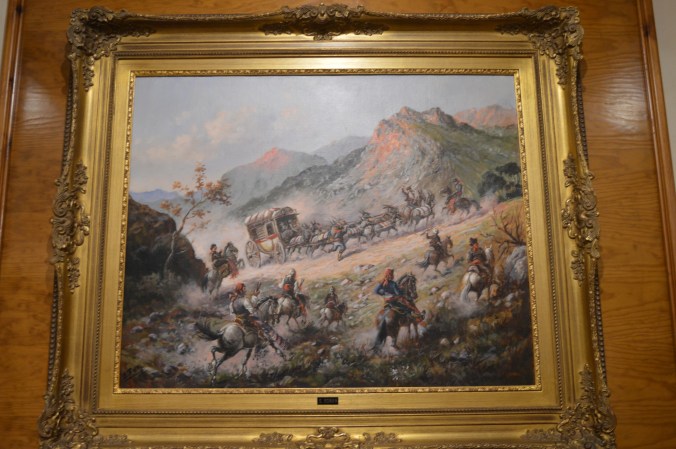
We passed the homage to the Romantic Travellers of Ronda where, despite the relatively sparse decoration, the selfie stick brigade was back in force. A little further on, past a curio shop and the Museo de Lara, we stumbled upon another blast from the past: the bandit museum. Had I had half a brain I would have made it priority number one to visit this little establishment whilst writing my TLRP on bandits two years back. I didn’t, and I still nabbed a decent 85% (thank you, Google Books), but boy, do I still wish I had! The place was a gold mine and – to my surprise – it didn’t drive Biff and Rosie out of their minds. On the contrary, they even seemed to enjoy the visit! Which made me happy. Though perhaps not as happy as having the chance to see an entire collection of bandit knives…
DSC_0041

Lunch – at Gastrobar Déjà Vu, directly opposite the museum – was spectacular. I haven’t eaten so well for so little since Amman’s Bab el-Yemen. Twelve euros for ten tapas. And that’s ten home-made, local produce tapas. Insane. England, please look and learn. Tapas shouldn’t cost more than three to four euros a head, if that. Not seven. Please remember that.

DSC_0064

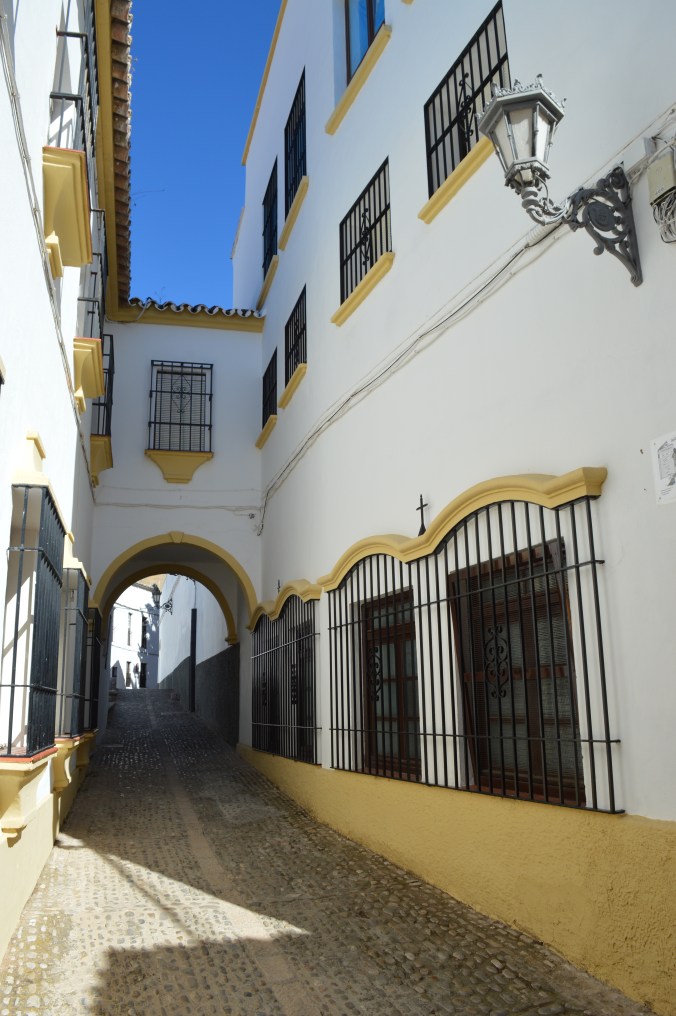
Ronda’s streets look stunning under the azure sky, but it was the gorge we came to see. And this is where my ten-year-old memory failed me a little – because the last time I came here, I’m almost certain the path beneath the cliff wall went no further than a few metres or so.

DSC_0067

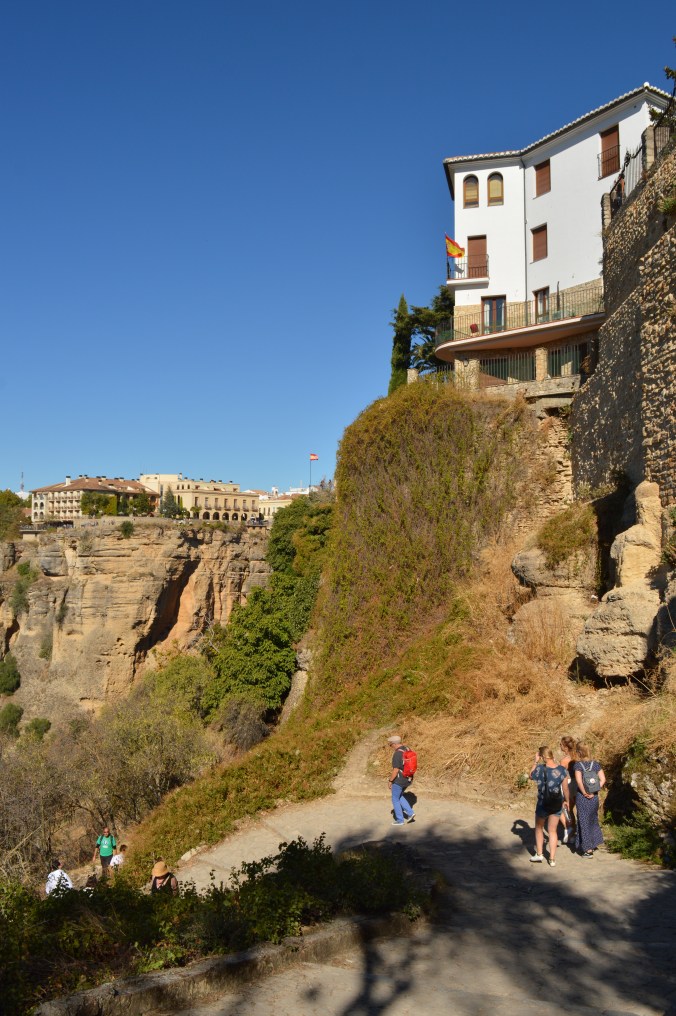
Not anymore. I guess Ronda must have hit the bigtime on the tourist circuit, because the track down to the gorge is in a brilliant state, complete with Via Ferrata routes, ropes and little cairns left by daytrippers here and there.

DSC_0144

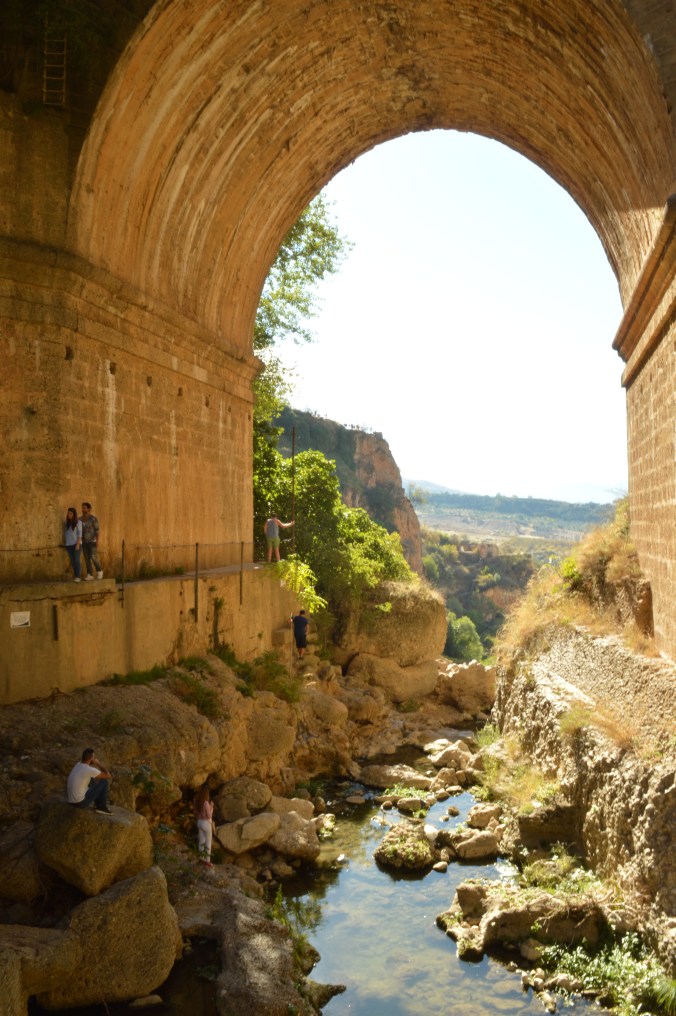
I could have sworn the Tejo river itself was polluted and closed off the last time I was here. Not so anymore! You can wind your way down the gorge and walk along the river valley, looking up at the bridge high above. It’s quite a surreal experience, and very humbling. The bridge looks enormous from on high, but it’s nothing compared to how it looks from below. And when you’ve got the sierras beyond framed by the archway…

DSC_0166

…I could hardly ask for more.

The only anomaly of the excursion was the well-hut a short way out on the other side of the gorge. Because, if memory serves, I remember getting as far as a small building like that when I was twelve years old… though this one lies so close to the waterfall at the bottom that one might as well be there already. I wonder just how far I got?

DSC_0192

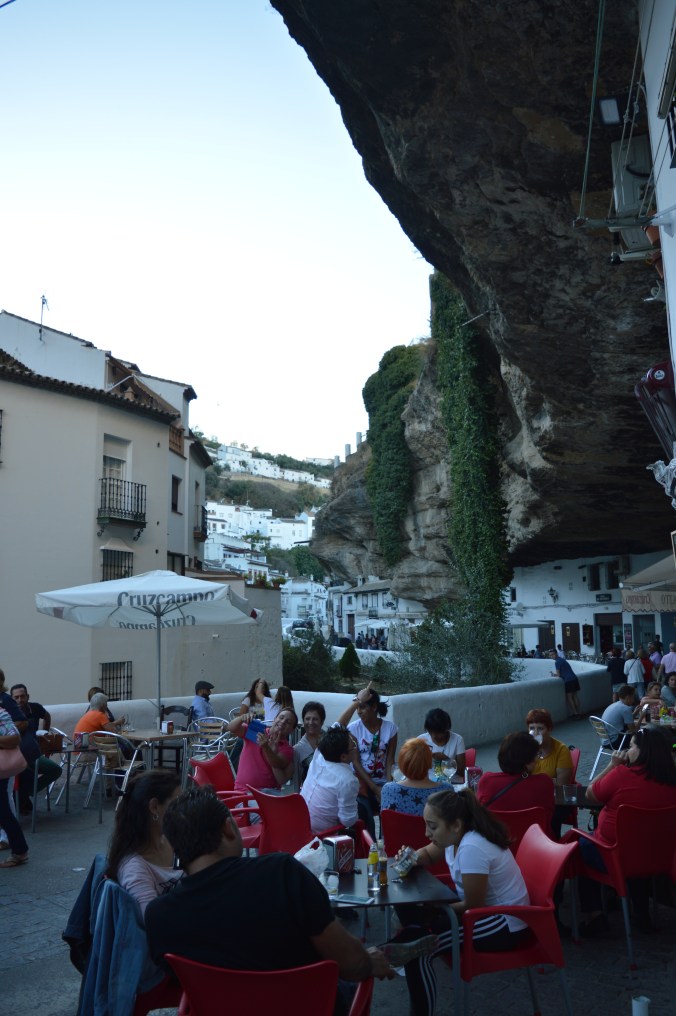
From Ronda we took a meandering north route home via Setenil de las Bodegas, another gorge town where the denizens decided to build under and over rather than just over. It’s well off the beaten track, and well worth the visit. The sun was quite low in the sky by the time we got there and much of it was in shadow, but as Biff pointed out, you could definitely feel the difference between the warmer, sunlit side of the street, and the cooler, forever-shaded side. Enterprising people, these Andalusians.

DSC_0221

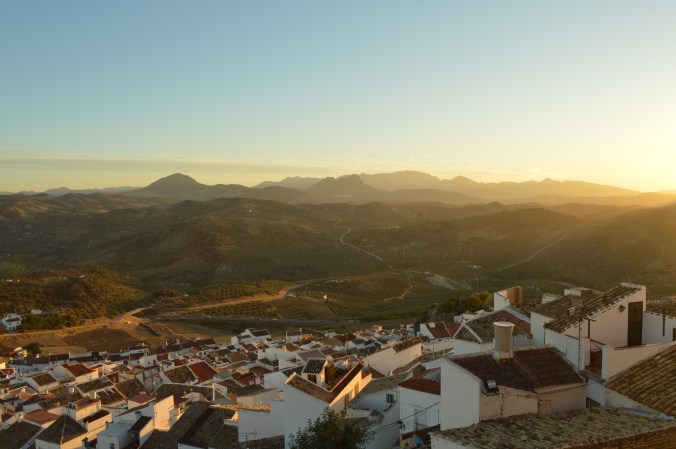
The road home to Seville took us on a beeline towards a sight which is now very, very familiar to me: the silhouette of my old home, Olvera. The road from Setenil offers perhaps the best view of the town for miles around. So despite my better judgement, Biff and Rosie convinced me that we needed to pay it a visit.

So we did.

DSC_0248

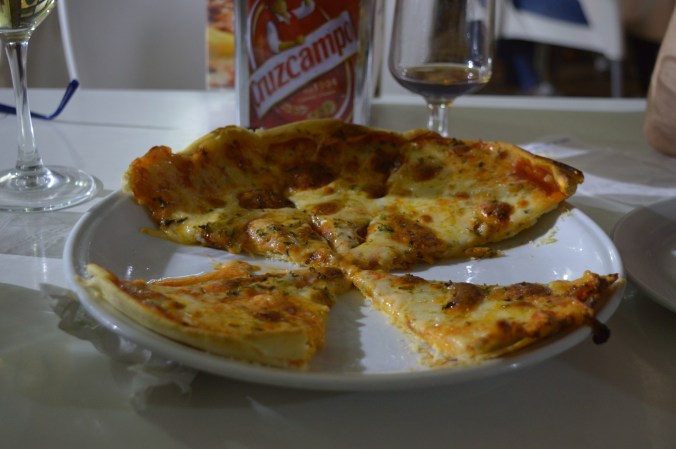
It was decidedly weird to see Biff – my oldest and closest friend – walking down the streets of a town which, until now, has stood like an island in my life, a year away and apart. Worlds collided. And I said as much several times. So, to recover from the weirdness of it all, I suggested dinner at Bar-Restaurante Lirios. And there’s a decision I had no second thoughts or qualms about. Because Lirios, in my humble opinion, serves up the best margherita pizzas in the whole world. And that’s worth travelling all the way over the hills and across the sierras for. I usually order margherita whenever I’m out at a pizzeria to see if anywhere can do it better. Having not been to Italy, my options have been limited, but thus far, I’ve yet to meet Lirios’ match. When last I came to this town, it was in search of an old flame of mine. Frankly, I missed a trick. What was really calling to me over the distance of years was not a brown-eyed beauty, but a well-seasoned pizza. As with most things in Spain, and in life, I suppose, it’s the simplest pleasures that speak the loudest.

DSC_0263

I’ve no travels on the books as of yet. The bike hunt is still in progress (I put a busy WhatsApp conversation on silent at just the wrong time), and I’m still waiting for a day when I have the time and the lack of errands to allow me to find a bike to take me to Hornachos and beyond, that prince of towns.

It’s winter, now. This morning was bloody cold. I almost got my scarf out of the drawer. It won’t be long until I’ll be less hesitant. Autumn lasted for a grand total of one week and three days. Fran’s complaining about the absence of an enagua for the table, and I have a cold. Summer’s finally taken her leave. Winter has arrived. BB x


Bulerías and Bananagrams

I haven’t been traveling much recently. A combination of earnest novel-writing, job hunting, private lesson planning and musing over where to buy a cheap bike have conspired to keep me here in Villafranca for the time being. This year I’m working just the one job (proof that, even in the best of all possible worlds, experience isn’t always the best guide), so I have some four hundred euros less per month to live on. Weekend adventures have become what they always were, at heart: a luxury. Sometimes, however, an opportunity presents itself which cannot be turned down for love nor money. Biff’s visit to Seville last week was just such an opportunity.

How I managed to make it through the entirety of my last year out here labouring under the belief that I couldn’t cancel my private lessons for my own benefit is a mystery to me. I rescheduled my Thursday guardería session, packed my things as the WiFi man finally showed up (hello Murphy, long time no see) and hopped on the afternoon bus to Seville. It felt so good to be on the road on a Thursday afternoon. Previously I was working right up to the wire on a Thursday, so that the weekend began on a Friday morning. This year siestas are a thing, and I wonder how I ever managed without them. They’re the perfect solution to early mornings, late nights and post-weekend fatigue. The blinds in my room are a work of genius: at a basic level, they let in the morning light through little gaps in the shutters, which you can close off completely, leaving the room completely dark. I’m enjoying the shelter now, and I know I’ll appreciate all the more when this country heats up again come May next year… that is, if it ever cools down sufficiently for that to be a noticeable change (it’s almost November and it’s still pushing high twenties here).

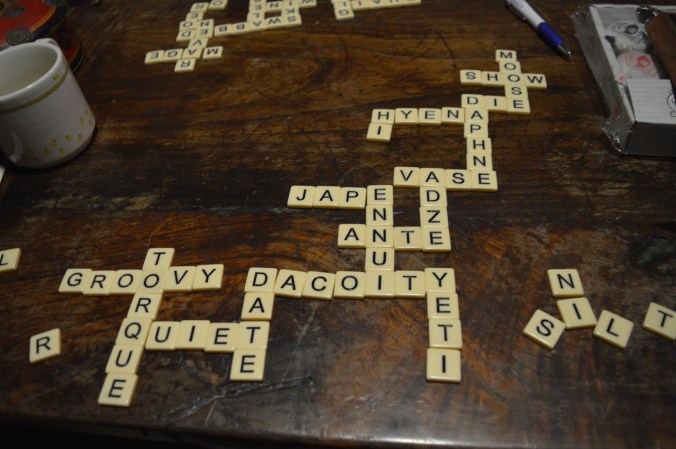
After weeks of ESL games, I leapt at the chance to spar on an equal footing. Biff inducting me into Bananagram, which is something like the bastard child of Scrabble and a crossword. My passion for complicated and obscure words dragged me down a lot, but it made for some visually appealing results, win or loss.

DSC_1095

But I didn’t cancel my private class to play Bananagrams all weekend. I’ve been moving in and out of Spain for several years now, so it’s always a pleasure to see my grandfather’s country through fresh eyes. Biff hadn’t been here since our school’s music tour to Spain back in 2006. I’m not sure why I found that so hard to grasp. But it’s chiefly because I had new eyes to look through that I got to see a side of Seville I’d never seen before. Palmeras are delicious, persimmons aren’t half bad and, if you’re looking for flamenco off the beaten track, you can do a lot worse than La Carbonería…

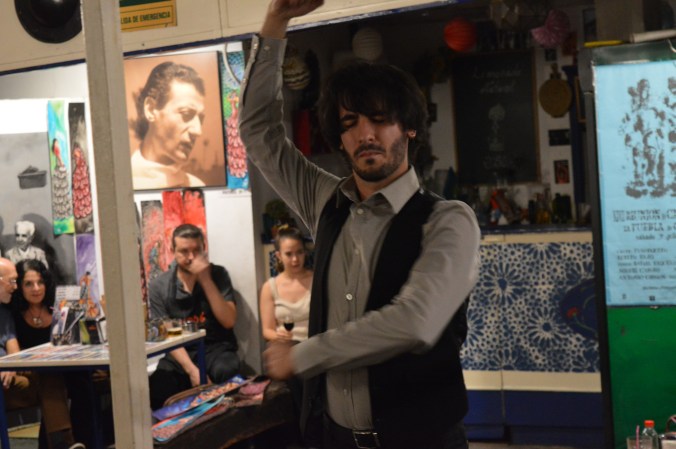
DSC_0950

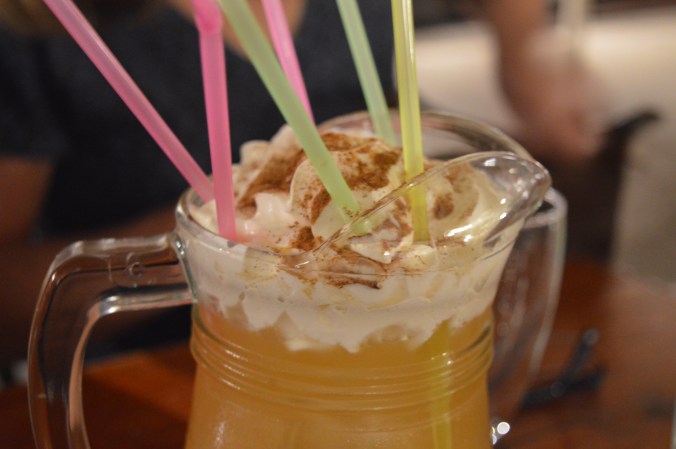
I work by the rule of three. Once is happenstance. Twice is coincidence. Three times is a message (or interest, if we’re talking about catching somebody’s eye). And three recommendations to visit La Carbonería from three different sources – the head of Chemistry, my flatmate and Biff’s AirBnB host – was too obvious a message to ignore. So, with a glass of agua de Sevilla in hand (that stuff is deadly), we nabbed a table near the performers and were treated to a decent forty-five minutes’ set.

DSC_0927

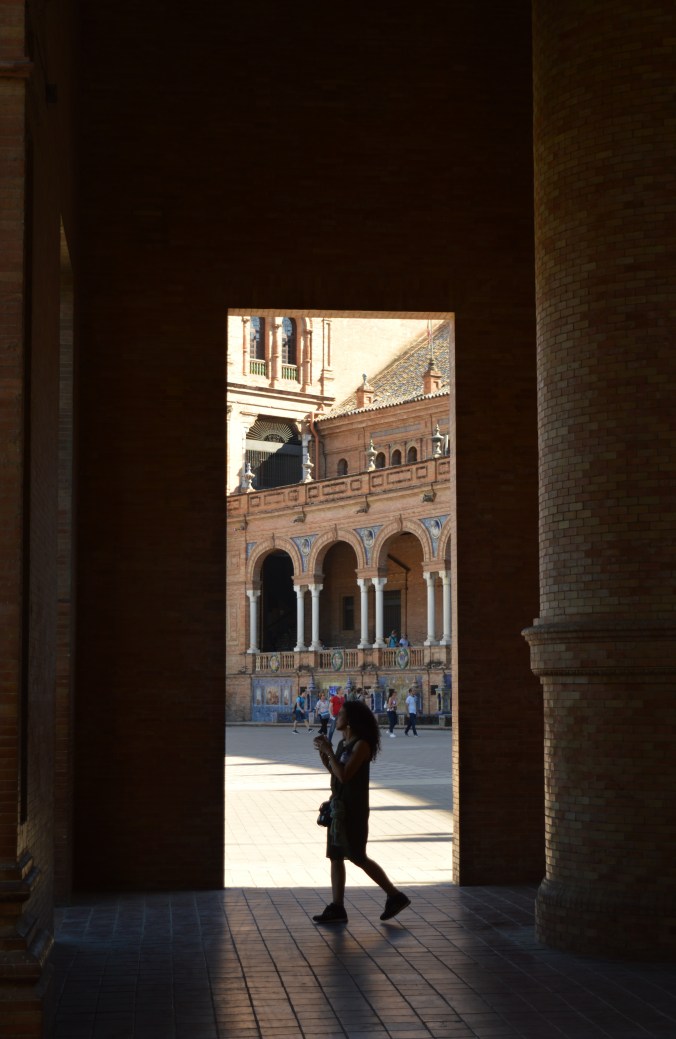
It was nice to have the time to wander about Seville at leisure. So often I’ve been running through Seville, waiting for a bus, or a plane, or something along those lines. There was a demonstration in the Plaza de España by the police for equal pay, watched from the shade by a mounted division. Catalonia was being stripped of its powers, so I think the police had other things on their mind. It felt weird, to stand in the plaza and see the cities and regions of Spain painted on the panels all around, knowing that up north the kingdom was pulling itself apart. Just like the Paris attacks, it was hard to believe such a thing was possible under the Spanish sun. Babies in pushchairs followed the protesters, Latin tourists snapped photos, gypsies danced for pennies on the steps. Life goes on.

DSC_1050

Fortune favours the interested. Go on a wander about town and you never know what you might find. I’ve seen a Mario Kart stag do, a gypsy wedding and an errant griot here. On our journey in search of a tapa or two, I saw a nun with a stuffed-toy octopus in her backpack. You never know what you might find.

DSC_1069

Seville’s streets are beautiful by night. Some parts look like France, others look like Spain, and others central Europe. I suspect it’s the trams that make it look like central Europe. The monk parakeets that live in the palm trees and the ring-necked parakeets that nest in the alcoves of the various churches jostle for space, and the screeches of the latter make the place sound eerily like London every once in a while, though it’s not quite cold enough at night. The chestnut vendors are out and about. When the nights are colder, the steam rising from their wheeled stands will complete the picture. I hope they’re about in Córdoba, too. I’d like to buy a bag of them and eat them on the Roman bridge as the sun goes down and the lights on the mosque come up.

DSC_1076

I wonder what my next visit will deliver. BB x


Crash and Burn

Galicia’s forests are burning. They suspect foul play. Somebody somewhere truly does like to watch the world burn. Here in Villafranca, we were woken by the long-awaited crash of a thunderstorm, the one that usually rolls around on the second weekend of October. It was late this year, but it came nonetheless, and it came down hard. For just an hour or so, the roads were rivers.

Aeolus had more than the winds of wrath in his bag this morning. Some five or six staff are leaving for Seville tomorrow, perhaps for good. A bag of a very different nature – a bolsa extraordinaria, to be precise – has been opened there, offering the chance for many wayward Andalusians scattered to the far regions of Spain to return home. It’s no guarantee, but as the sudden glut of places for maths and science teachers overrides the need for success in the all-important oposiciones (the national exams that decide the fate of teachers here) there’s everything to fight for. My housemate was one of those called up. He packed his bags and left twenty minutes ago. He left some yoghurts in the fridge and a towel in the bathroom – ‘por si acaso‘.

For a few hours, I was in freefall. I made a stand here when the going was good in Almendralejo, adamant in my decision to improve my Spanish and stay true to Villafranca. It looked as though it had paid off. Two and a half weeks in, the storm broke, the floor vanished and I found myself staring into the abyss. Strong-armed out of the storm by a savvy Argentinian, I’m back on dry ground for the time being. After the ride that the last three days have given me, I’m lucky to be where I am, to know the folks that I do. It could be a lot worse. I could be in Galicia, where the fires rage, or Catalonia, where the cold arm of the state has begun to descend upon the separatists. It’s quite the year to be in Spain.

The storm isn’t over yet. The clouds were building thick and dark over the mountains to the east as I made my way home. We’re due for another night of thunder and lightning, and a lot of rain. Aeolus hasn’t done with us yet. But I’ve got the sails drawn and my hand on the rudder this time and I’m ready to ride it. That’s quite enough being blown about for one month. A handful of the staff were after some ‘Inglés de la calle’ at the staff lunch yesterday. Well, here’s an old classic for you, folks. Aeolus, come at me, bro. BB x

Withdrawal

My school has a band, now. Secondary school or not, I have to admit I was a little excited when I found out. It consists of a piano, a guitar, a trombone, two saxophones, a drummer and a singer. Three guesses who that last one is. Better still, the music they thrust into my hands upon my return was by none other than Stevie Wonder. It’s For Once in my Life – in my opinion, not one of his best (I WishSuperstition and Uptight are in a godly league of their own), but better than a poke in the eye.

The first rehearsal was a bit touch-and-go. The drummer had an egg-shaker and I had to explain the concept of counting in.

The withdrawal is real. I’ve written two and a half arrangements for my old a cappella group in three days. I’ve had Marvin Gaye’s greatest hits on repeat and I threw myself at the Concha Velasco Band as their most avid supporter at their gig in Villafranca last night. I lost my voice from shouting the lyrics so much. That’s probably a good thing. My Romanian neighbours are spared another day of me wandering in and out of the house keeping my unused tenor voice exercised. Saturday morning means gym for a lot of folks here, time to work on their bodies. My voice isn’t getting the workout it used to. I have to keep practising.

This week, perhaps more than ever before, the blow of severing ties with the musical world has come down hard. Perhaps doubly so because almost all of my old Lights buddies will be back in Durham this weekend for a reunion gig of sorts. I made the decision not to go, even though it’s the Puente del Pilar this week and I haven’t been at work since two o’clock on Wednesday afternoon. It didn’t break my heart as it might once have done, but the aftermath hurts. We all have to make tough decisions, sometimes. It’s got a lot to do with growing up and moving on. The collegiate music scene, brimming with talented musicians from near and far, is behind me. I’m here now, in a country which a friend of mind once described as simply having no ‘afán’ (desire) for music for its own sake. Even my holdfast, the Concha Velasco Band, are set to disband soon. Real life, work and responsibilities have risen like the tide, and as is so often the case, it’s only the lead singer who’s pushing blindly for unity in the wake of disarray. It’s as much a reflection of how things could have been had I not let go of the group I loved the most. I needed that.

If I haven’t said it before, I’m saying it again now. Spain is not ideal for the musician. I laughed at the notion that it would get to me like it did to my parents, thinking that with twenty-odd years’ less immersion than them, I’d be alright. I was wrong. The lack of a music scene hurts. It hurts a lot. I think I’ve done more listening to music here in the last week than I did in an entire term at Durham, discounting the obligatory use of my essay-writing playlist. Granted, I’ve compounded my situation by living not just in Spain but in the sticks. But even so, music isn’t as much a part of this world as it is in England. In a class the other day we were discussing activities you might do at a youth club, and I genuinely had to spell it out that music was or could be an option. One of the brightest girls gave me a nonplussed look and said, very matter-of-factually, ‘music is only extracurricular’. Make of that what you will.

Flamenco is more than music. Flamenco is an art form which, like so many, has its masters and its endless amateurs. And so much of it is tied up with dance. The joy of making music for its own sake is lost here. As the son of two music teachers, it hurts. Having been in choirs, groups and bands my whole life, it cuts deep. I feel lost, and more than a little distant recently.

On the way back from the library, I saw something in the sky and I looked up. It was a vulture. I’d just been writing about them in my book, so I felt pretty fortunate to see my own material brought to life before my eyes. Riding the thermals on wings spread wide, with tapering fingers splayed in the current, it circled the park for a few minutes. Within a minute there was another one, closer. They rode higher and higher until, finally, they tucked their wings into that upside-down W shape and, like spinning disks, soared motionlessly from the top of their spiral to the west.

I could have cried. I love this country. I love it so much. I love the language, the people and the food, and I especially love the animals that live here. Especially the vultures. Music lifts me high, but nothing lifts me higher than being where I want to be, in a land where such magnificent creatures still roam the skies on your way to and from the supermarket. My heart bleeds a little. I had to give a queen to take the king. I may yet regret my decision. Or, I may find some new wellspring of energy in this country. I may not have my music, but I still have hope. That’s all I can ask for. BB x

The Swing of Things

Routine has returned. The dust has settled, and I’m not talking about the kind that’s tinting the sky a dirty grey every day, nor over the Catalan situation. My life as an auxiliar de conversación in IES Meléndez Valdés is back in shape, much the same as before, with a few noteworthy changes. They’ve decided to streamline the programme a little more this year, with me working through the coursebook rather than preparing a random talking point every week. Honestly, I’m rather relieved. It was fun coming up with something new and bold every week, but I found myself questioning more than once whether it was really the most efficient use of my time and theirs.

Oh, and there’s talk of a band or even choir in the making. Pretty revolutionary for a country where it takes a class of sixteen-year olds the best of ten minutes to realise that the one potential youth club activity they’ve forgotten is music. ‘Music is only extracurricular’, explains one of the girls who couldn’t understand why I was so confused that none of them had come up with it within seconds. I guess that’s Spain for you. This is a country that loves sport so much you spend your primary years learning theory of sport, for pity’s sake. Proof, if ever you needed it, that people vary in their tastes from country to country. I’ve been trying to enthuse about music here, but I’m fighting a lose battle. It’s not so much selling sand to the Arabs as trying to convince them of the merits of a pair of high-grade skis. Still, we live in hope. Enrique Iglesias, the Gypsy Kings and Camarón de la Isla all hailed from this peninsula. Where there’s a will, there’s a way.

I found the town library. It eluded me all year during my last post, because – like many things in Spain – it’s so badly signposted that unless you happen to know that many libraries are located within the confines of the Casa de Cultura, you’d be lost. It’s certainly not advertised on the outside of the building. I found it, anyway, and it’s the perfect working environment. They converted what looks like a small factory floor into the reading area and the typist’s offices into the library itself. It’s a far cry from the Bill Bryson, but it’s a start. Before the year is out, I’ll give the bigger one in Mérida a look-in. I wonder if it has any material on Hornachos…

Just a short post today. I’ve little more to say. The air-con in this library is on at full blast and noisy. Most of the kids in here are wearing Spagnolo shirts, which means they’re almost certainly from one of the two private schools, though I can see at least one of my lot at one of the tables. But then, it’s five to six in the afternoon. Who in their right mind would be in the library when they could be out in the evening sun with their friends? BB x