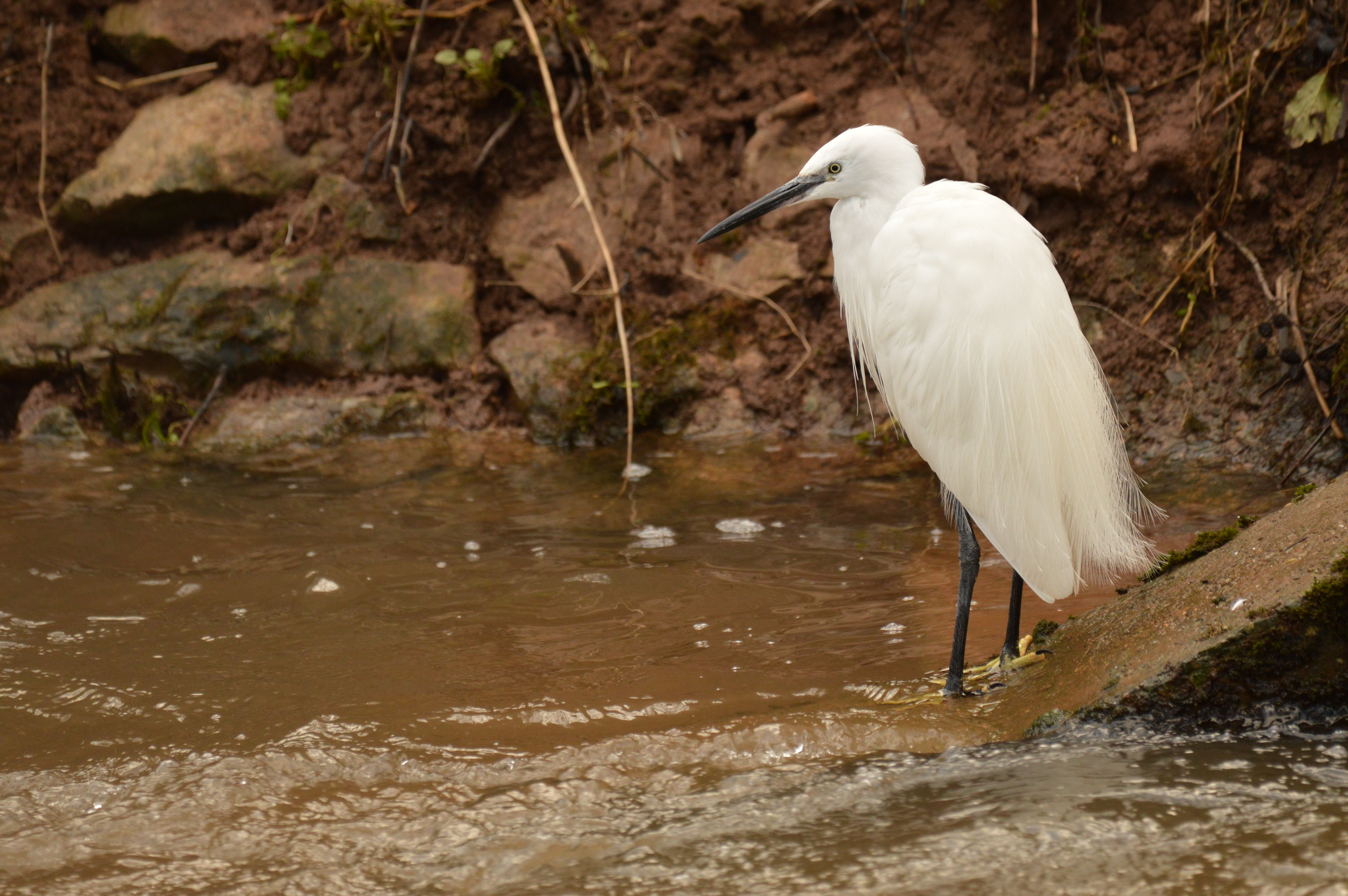
On my afternoon wander along the Tone yesterday I came across an egret fishing on the concrete steps of a flow measuring station. I’m so used to the snowy white shapes of these beautiful birds in and around the rivers and fields of the English countryside that it’s sometimes hard to remember a time when these were a very rare sight indeed.
When I was not yet ten, the presence of an egret in the area was something my family or friends found newsworthy. That’s not exactly surprising. Compared to our native (and undeniably stately) grey herons, they do have an exotic look about them. Maybe it’s the silky plumes (or aigrettes) of their breeding plumage, or maybe it’s the smart yellow galoshes they seem to wear on their feet. The speed of their colonisation of the British Isles gave the Roman Empire a run for its money: by the time I was fifteen, they were already such a feature of the Kentish wetlands and saltmarshes that they had somewhat lost their star appeal, if not their lustre. They no longer triggered a rare bird alert on twitchers’ pagers up and down the country, and their names no longer appeared in bold capital letters on the “Recent Sightings” blackboards at nature reserves.
But first, some myth-busting. It’s not as though the egret is an exotic immigrant to our shores. Far from it. Various species of egrets could be found in the British Isles throughout history, before a combination of over-hunting and the insatiable demand for egret feathers wiped them out. Such was the obsession for aigrettes – which once bedecked the headwear of noble lords and ladies alike – that the little egret and its cousin, the great white egret, were driven out of much of Western Europe as well, seeking sanctuary along the sheltered shores of the Mediterranean. It wasn’t until a pioneering group of Englishwomen came together in 1889 to form the Society for the Protection of Birds (the forerunner to the cherished RSPB) that the egret’s fortunes began to change, first by petitioning powerful high-society types to eschew feathers from their wardrobe, then lobbying the government to ban them outright. It clearly caught on, because the Americans set up a similar initiative of their own over in Oregon, where the native great and snowy egrets were suffering a similar fate. Gradually, with aigrette feathers off the market, the birds began to reappear in the fields and fenlands they had once called home. It would be another hundred years before they attempted to recolonise the British Isles, but once they did, they came back in droves.
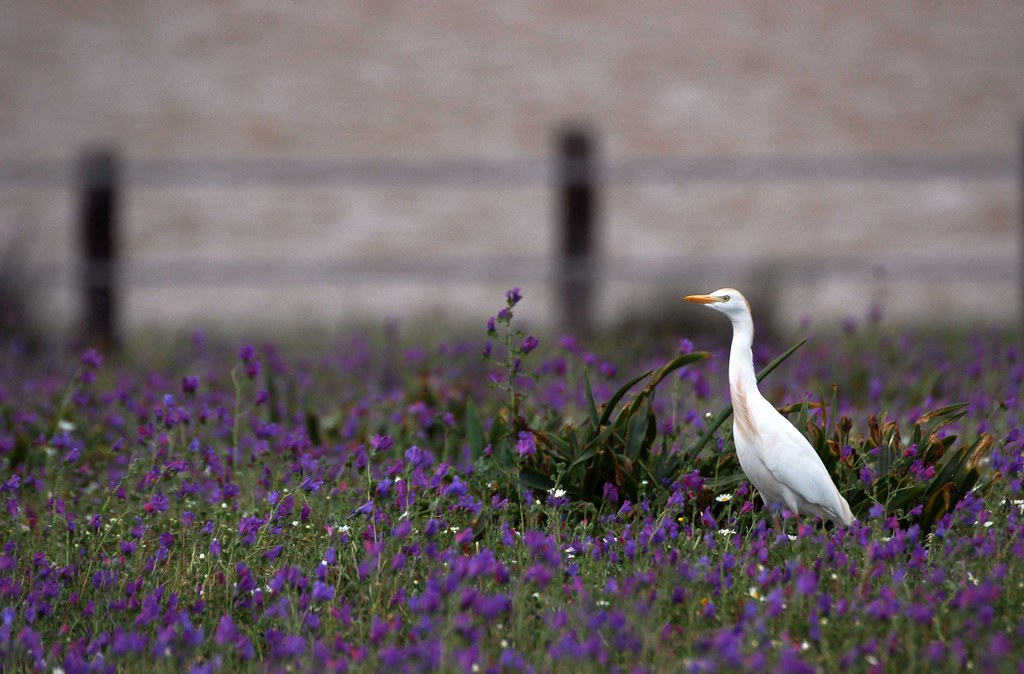
I bought a magazine once in the late 2000s that predicted the arrival of the rest of Europe’s heron and egret species in the UK as global warming made these cold islands more favourable to birds more at home in southern Europe. It wasn’t wrong. Since then, both the cattle and great white egret have secured a foothold in Britain, with all three species present in the Avalon Marshes over in the Somerset Levels. If it weren’t for the fact that I work six days out of seven – and Sunday trains and buses are awful in this part of the world – I’d be over there like a shot. Somehow, I fear the open wilds of the Avalon Marshes will have to wait until I have wheels, because after a few sums, it would actually work out cheaper for me to fly to Europe and back than to spend a night or two in Glastonbury in order to visit the Levels. Mad how that works.
Not that I’d say not to being back in Europe, of course – though I am still waiting for my temporary ban to lift, as I hit the ninety day limit last year and would very much like to go back to my grandfather’s country without having to pay a fine. I always try to keep an open mind, but sometimes, Brexit, I really do wish you hadn’t screwed up my life quite so much.
Anyway. These papers won’t mark themselves. Just thought I’d muse a little on something uplifting before getting back to the grind. BB x
 The Book of Barnabas