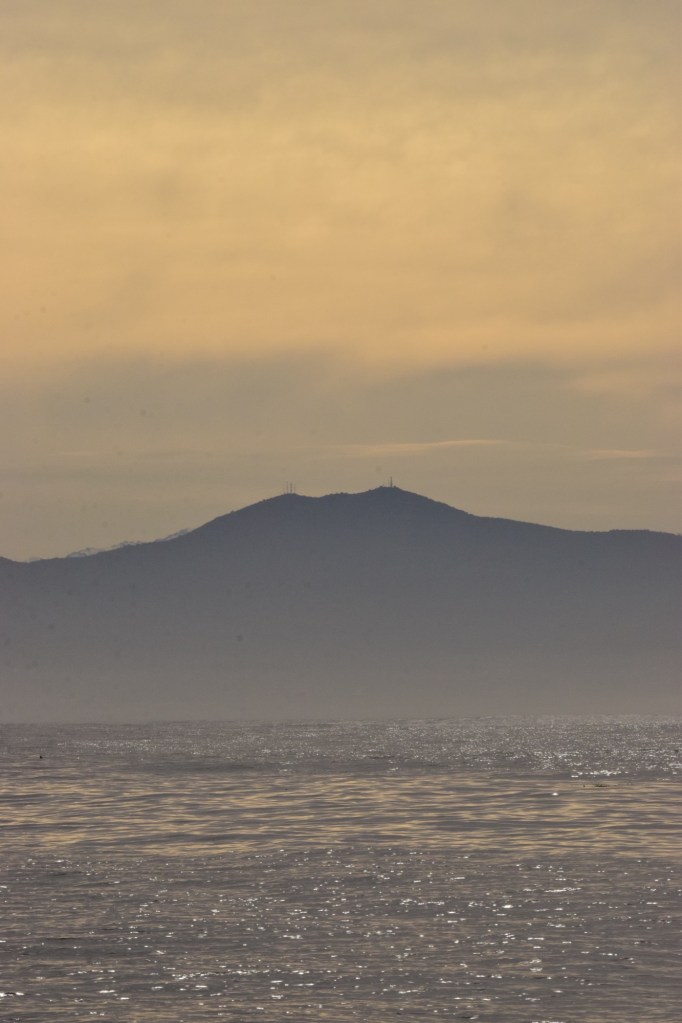
With strong winds and heavy rain forecast for much of central and southern Chile this weekend, I decided against any madcap travels beyond Santiago. It’s just as well, too: even my whimsical considerations of hopping over the border to tick Argentina off the list with a flying visit to Mendoza would have been impossible, after yesterday’s renewed snowfall blocked the mountain pass, closing the terrifyingly steep Ruta 60 for what is likely to be quite some time.
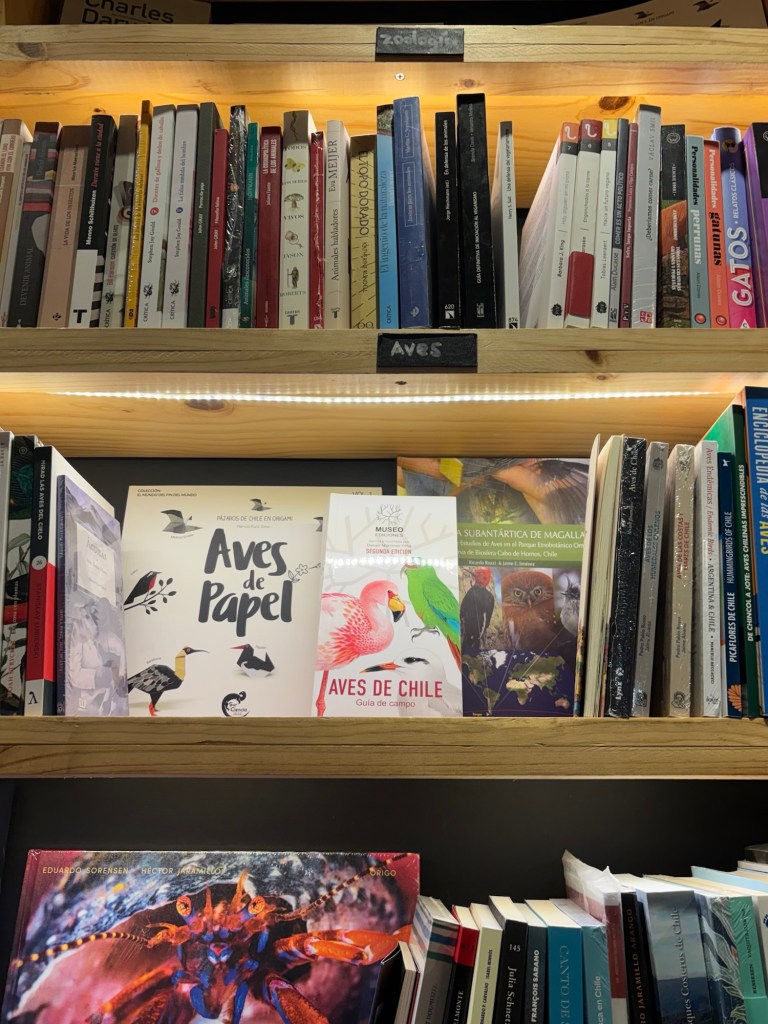
For once, I erred on the side of common sense and spent my Saturday in downtown Santiago, stocking up on a few important supplies for my final adventure in South America, now less than a week away. My main target was the sportswear giant Decathlon, but while I was hunting it down I stumbled upon a fabulous bookshop specialising in natural history in an underground mall at Tobalaba. I’ll simply have to come back here before I go – the selection of books on offer was incredibly tempting.
I still can’t get over how much birdwatching is a thing over here. I’m so used to Hispanics being generally disinterested in birds they can’t shoot out of the sky. It’s so heartwarming that that particular aspect of Hispanic culture is shifting, and that Latin Americans seem to be the driving force behind it.
With my Decathlon business concluded, I popped into Jumbo – Chile’s answer to Spain’s Mercadona – to grab a couple of snacks for the week ahead. Amazingly, the supermarket did me for lunch, too: they were giving out free samples of the seafood stew mix (which was amazing!) as well as free samples of strawberry yoghurt and pistachio ice cream. They weren’t exactly full-size dishes, but Tomás ordered far too much pizza last night, so I was quite happy with a couple of free nibbles for lunch.
The heavy rains of the past couple of weeks have transformed the Mapocho River which runs through the city. When I arrived, it was little more than a steady flow in a largely dry canal. It’s now a roaring torrent that cuts above the din of the traffic when you’re close enough. Chile really is a country of extremes: when it rains here, people have to be prepared for property damage and flood control, even up here in the mountains.
By the time I reached the car park at the foot of Cerro San Cristobal, it was already half past one, and a lot of city folk had come to the same conclusion as me: that is, that it would be nicer to go for a walk today, rather than tomorrow, when the scheduled rains are due to come down hard. Parquemet was full of cyclists and runners, as it was on my last ascent now three weeks ago, but after a flying visit to the Japanese Garden – which was probably the noisiest zen garden in creation, thanks to it being located within a Hispanic capital city – I ducked off the road, following one of the many forest tracks intended for downhill mountain bikers. But for a lone jogger, I had this route to myself, which meant it was alive with wildlife.
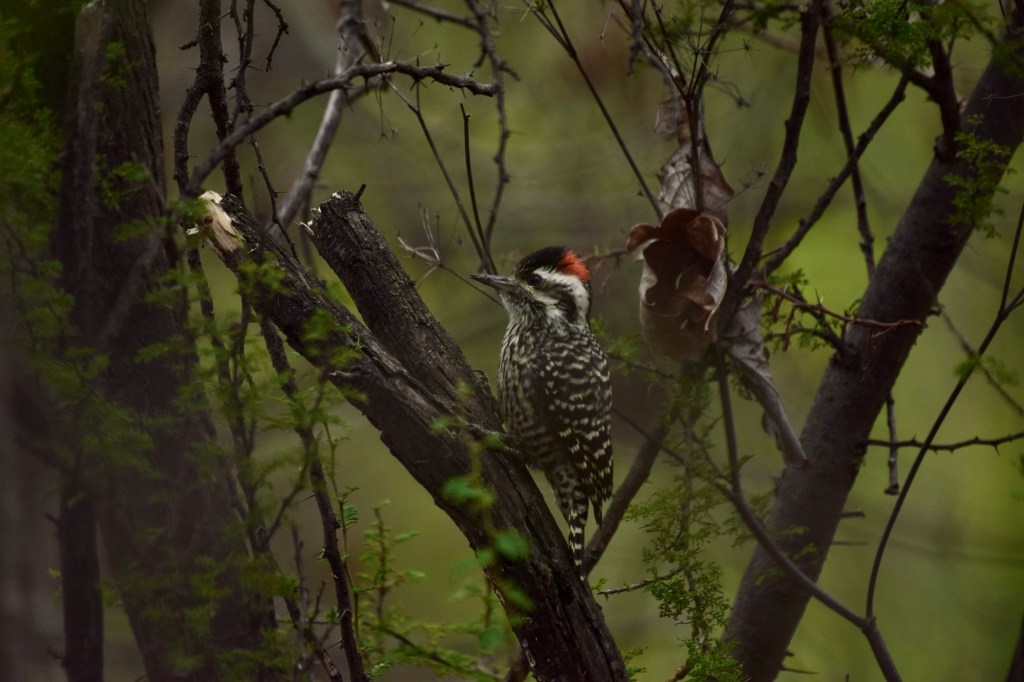
The first critter to show up was a woodpecker. I never did find the famous Magellanic woodpecker during my visit to Patagonia – a very good reason to come back someday – so this striped woodpecker or carpinterito is my first in Chile. Like most woodpeckers, it was a nightmare to capture on film, being in the darkest part of the forest, moving constantly and under a dark, overcast sky, but I just about managed a couple of shots before it disappeared among the trees.
A large flock of finches followed me along the spine of the cerro, feeding among the dead foliage at the side of the path. The siskins here look and sound a lot like the ones back home, but the sierra finches are really rather special. I saw some of these pretty birds in Cusco, but in Santiago they’re essentially garden birds.
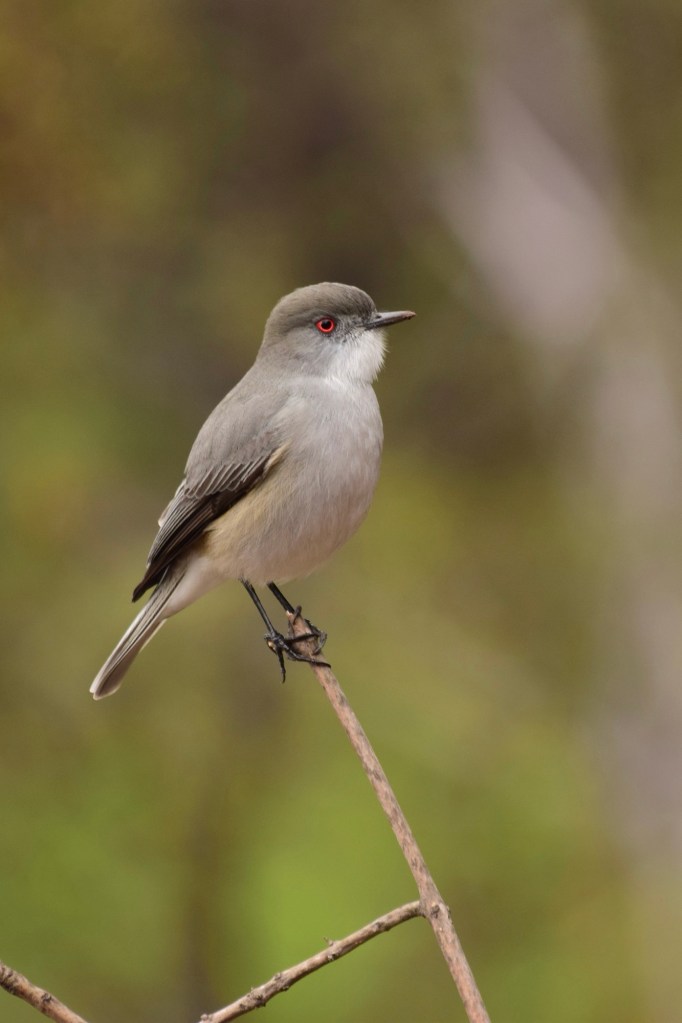
I hoped I might find some of the pretty diuca finches that are so common at school. There weren’t any on the cerro today, but I did keep running into diucons, their fiery red eyes even more obvious in the midday light than they were the other day, when I was shooting into the sun.
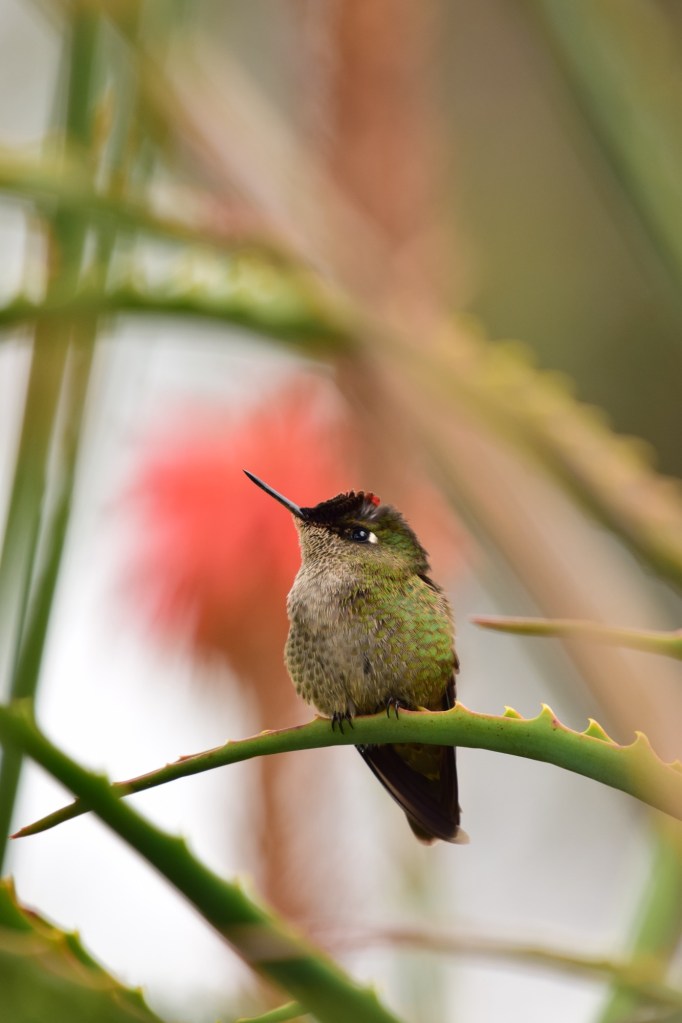
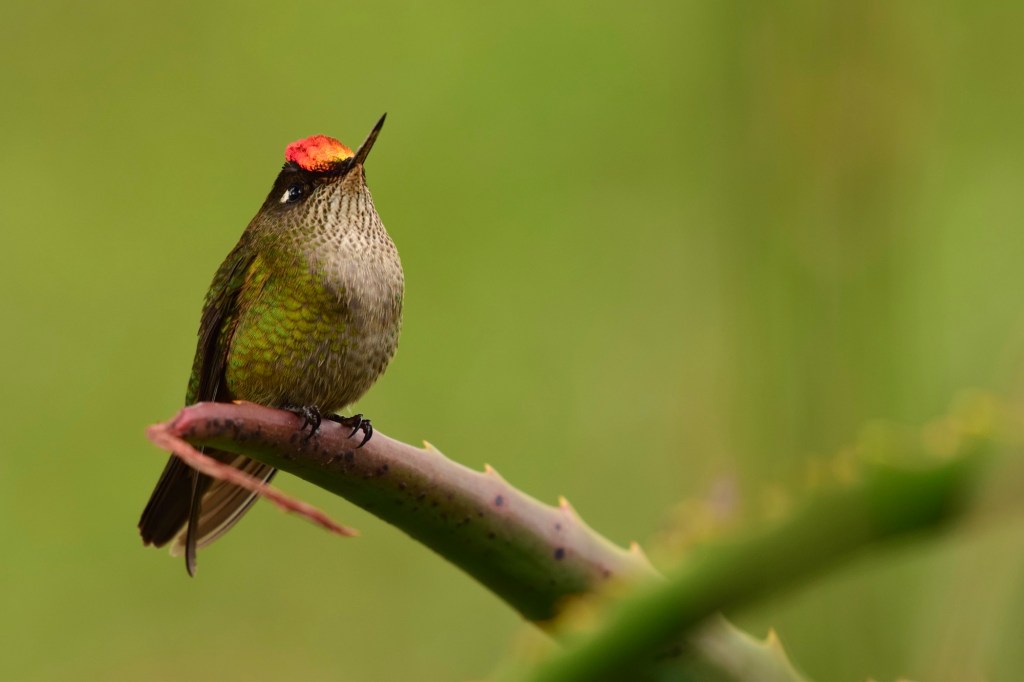
The best find of all, though, was a bird I’ve become very familiar with here in Santiago. I hear them every single day, and see them at least three days out of seven, whenever I should be near a poker plant. The green-backed firecrown is probably Chile’s most well-known hummingbird, since it seems to have a home on even the busiest streets in the city centre.
The last time I had a close encounter with one of these living gemstones, I didn’t have my camera on me. This time, I came prepared. Firecrowns are fearless little creatures, driven by an insatiable hunger that is a side-effect of their rapid metabolism – so, once again, I was able to sit quite close and watch, until the bird landed so close I could see its heartbeat and its tiny tongue tasting the air.
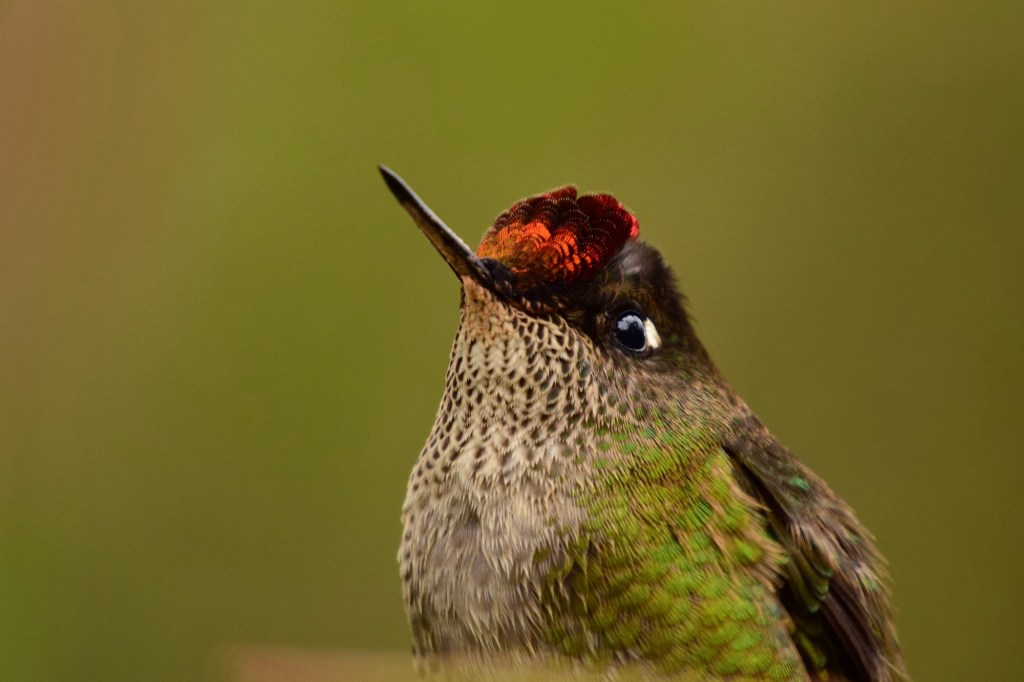
The firecrown gets its name from the male’s plumage, which really is quite something. Even with the naked eye, you can’t miss that sudden flash of scarlet when they alight upon a branch, just like hoopoes do with their crests when they land.
The secret is the iridescent sheen to its feathers, each one bending the light slightly differently depending on its position on the bird’s forehead. They can, of course, flatten and raise their crests at will, so I had to wait a little while before I was able to capture that ripple of red light.
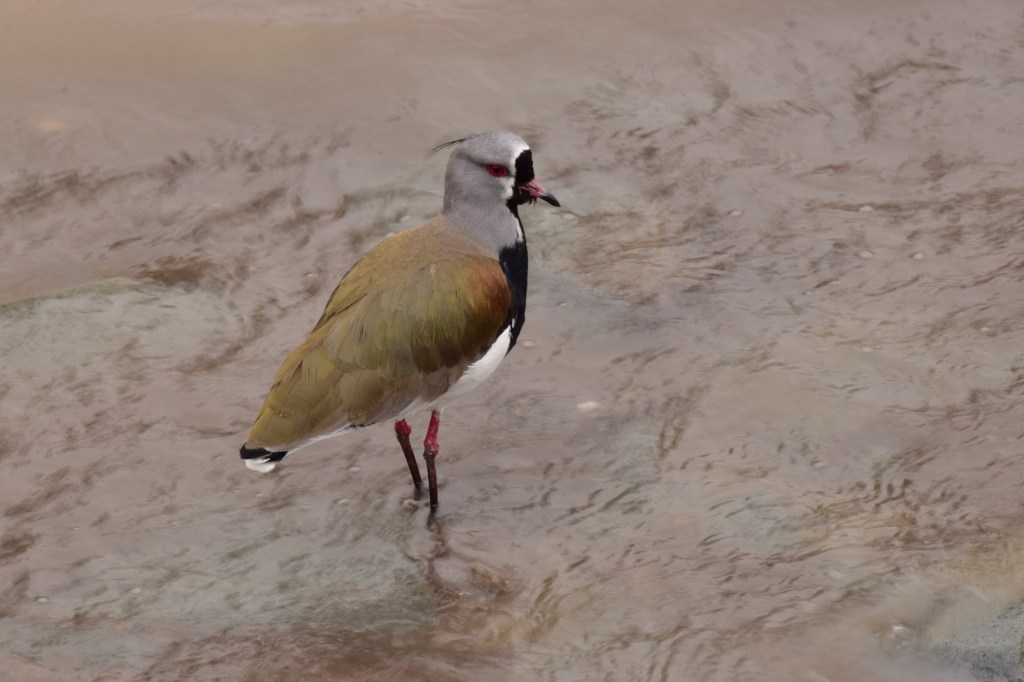
After spending a happy half hour or so with the firecrowns, I wound my way back down the cerro and used what little battery I had left on my phone to catch a bus back to Las Condes. I only stopped one more time, just before stepping on board the 409, to see a couple of Southern Lapwings that had flown in and gone down to the river. I see and hear these birds every day, too, as they’re a lot noisier than the firecrowns, but I haven’t yet had the chance to get a photo. They’re usually patrolling the rugby pitches in pairs, and they have a reputation for being ferocious with passers-by in the spring, when they have eggs or chicks near at hand.
Well, it’s getting dark outside. I didn’t expect to have such a good afternoon’s birdwatching on what was essentially an extended shopping trip, but sometimes, it’s the outings you don’t plan that turn out to be the best.
That said, I’ve done a lot of planning for next week’s mad adventure, so I hope that turns out for the best, too. It really is going to be rather special. BB x
I’m up early after falling asleep far earlier than usual last night (around 8pm – shocking!), so I thought I’d use the time to pencil in my afternoon’s adventures.
While I’ve been working around the Craighouse campus, I’ve had a lot of time to watch the comings and goings of the birds that make their home around the capital city. Taunton has its fair share of feathered friends, of course, but I’ve had thirty years to get used to herring gulls, crows and woodpigeons. I might be in my third week out here, but I still get a big smile watching the rufous-crowned sparrows hopping about. Naturally, I don’t bring my camera to work, so given that we actually had some sunshine today – and that my colleague Tomás was done an hour before the end of the school day – I thought I’d capitalise on the sunlight and do a bit of suburban birdwatching.
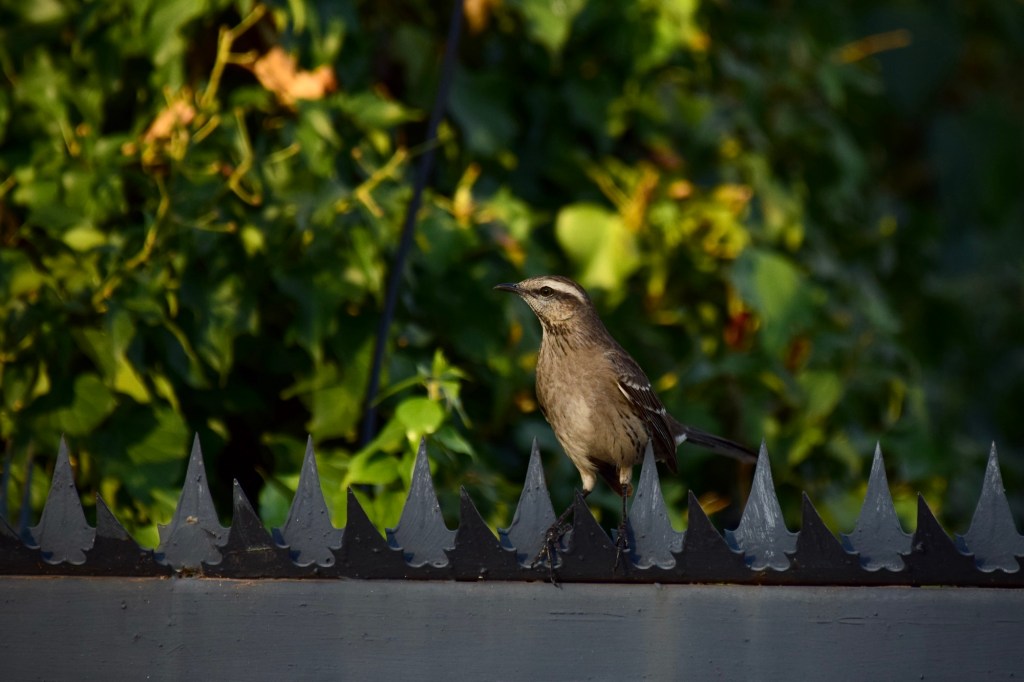
One bird that’s easy to find around Santiago is the mockingbird. I’ve come across these characterful creatures in New Orleans, Lima and the open steppe of Patagonia, but the cheerful Chilean mockingbird is very much a feature of Santiago itself. I imagine they’d be garden birds, if one had the money for a garden in this habitually dry part of the world.
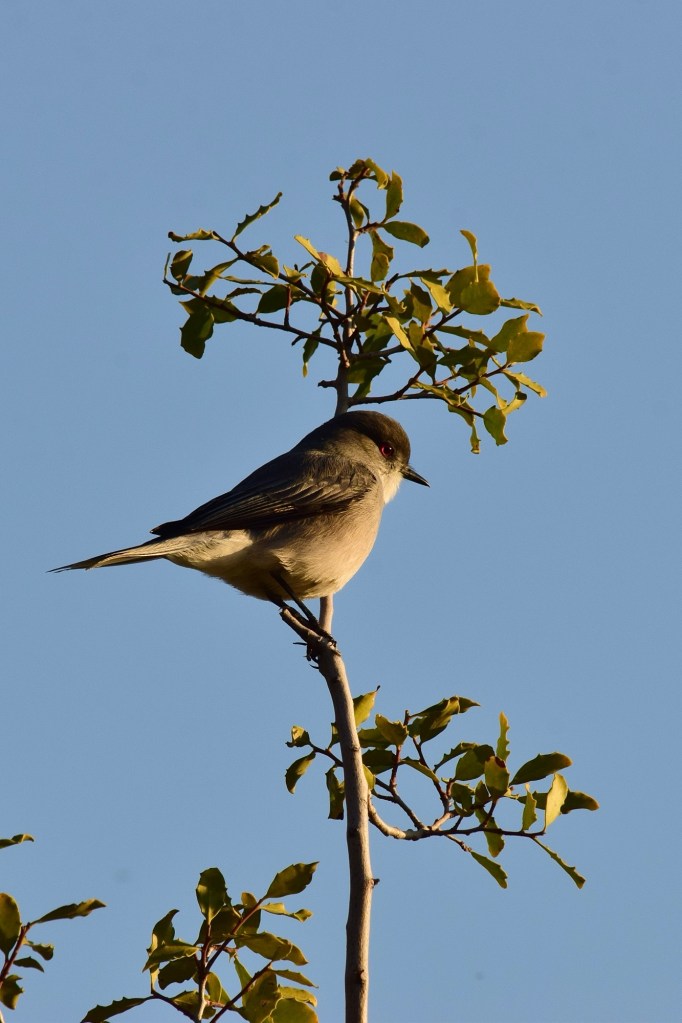
I thought I might try and snap one of the many Chilean swallows circling the heights of Cerro Calán, but they were much too fast and never came down to roost. I did, however, finally have manage to capture a fire-eyed diucon – a little grey bird with striking red eyes, almost like those of a Victorian doll, that moves just like a flycatcher from back home.
It was really encouraging to see more than a couple of other walkers up on Cerro Galán with binoculars and the BIRDA app on their phones. I can’t help but notice that birdwatching seems to be a lot more popular here than I anticipated. I suppose it helps a lot when your average city birds are really quite spectacular to start with.
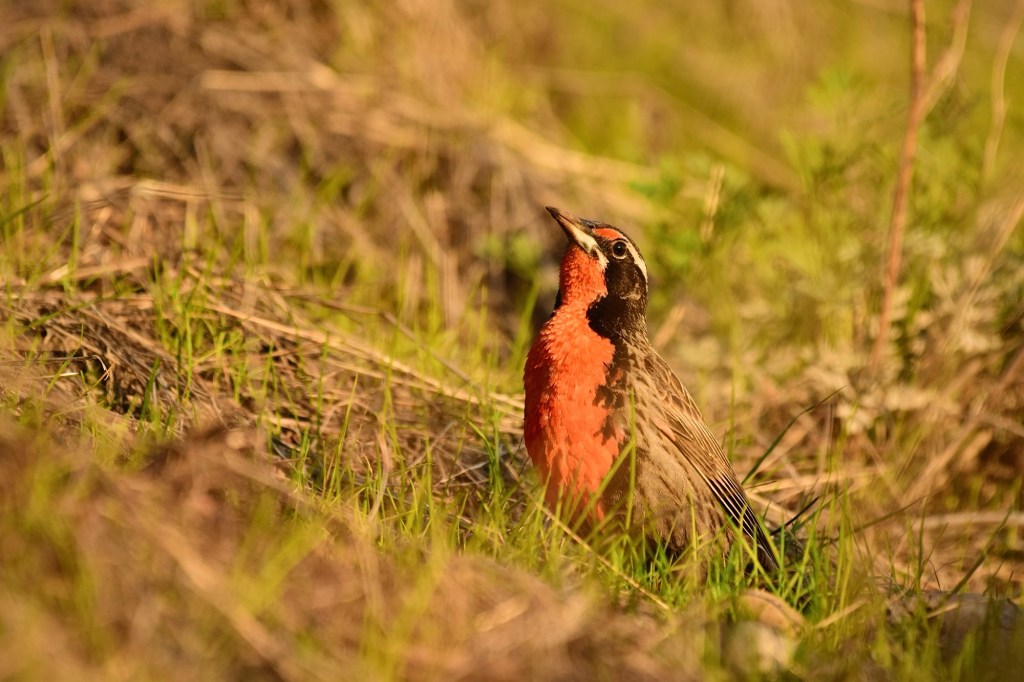
Take the meadowlarks, for example, who make their presence known with a tremendously loud wheezy call that goes off like a Mexican wave as soon as the first one in the flock puffs out its chest and sings. These are the birds that the locals in Santiago seem to love the most, and with such an eye-popping splash of red on the males’ chests, I can’t say I blame them.
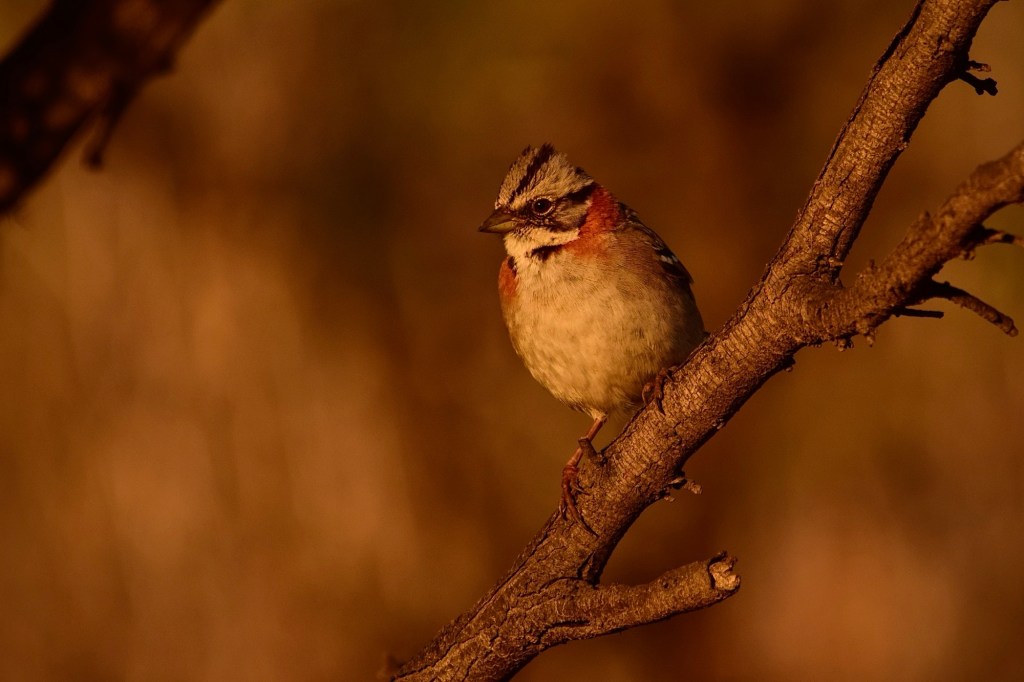
Definitely saving a corner of this post for my favourite little sparrows, though. Slightly smaller than our house sparrows, with an endlessly cheerful chip to let you know they’re nearby, they also have a beautiful song when they’re feeling more musical.
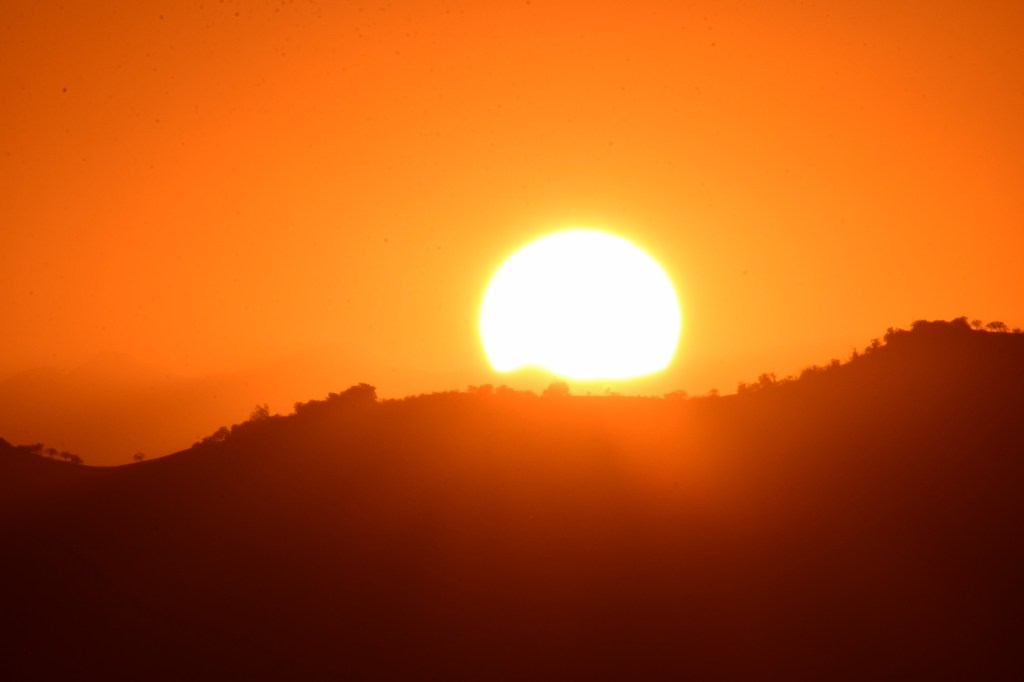
I was up on the cerro long enough to catch the sunset, which was an added bonus. It must have been tremendous from Valparaíso, no doubt, but even here in Santiago, with the forested mountains of La Campana between us and the horizon, it was quite a sight to see.
Today I think I’ll wander over to the Senior English department and try to catch a few more lessons. Be proactive for a change! BB x
I grew up within sight of the sea. You’re never far from the sea in Kent: the furthest I ever lived from the coast was about ten miles as the crow flies, while the second half of my childhood was spent less than a mile from the white cliffs of Dover. As such, I am very attached to the sea and all its smells and sounds: the salt spray of the winter waves, the hushing rush of pebbles pulled down the beach by the tide and the cry of the herring gull. If I should be so lucky, one day, I should like to live by the sea.
Today I took that lifelong love for the sea and dialled it up a notch by taking a pelagic trip out into the Pacific – into the open ocean.
Rodrigo, my guide for the day, picked me up from outside my hostel in Valparaíso shortly after seven. A punctured tyre delayed him by forty minutes or so, so he was anxious to get going, so as not to hold up the crew of their ship up in Quintero, a seaside fishing town some thirty miles north of Valparaíso.
Shortly before we got there, the sun rose into a fiercely red sky. A certain old English saying came to mind:
Red sky at night, shepherd’s delight
Red sky in the morning, sailor’s warning
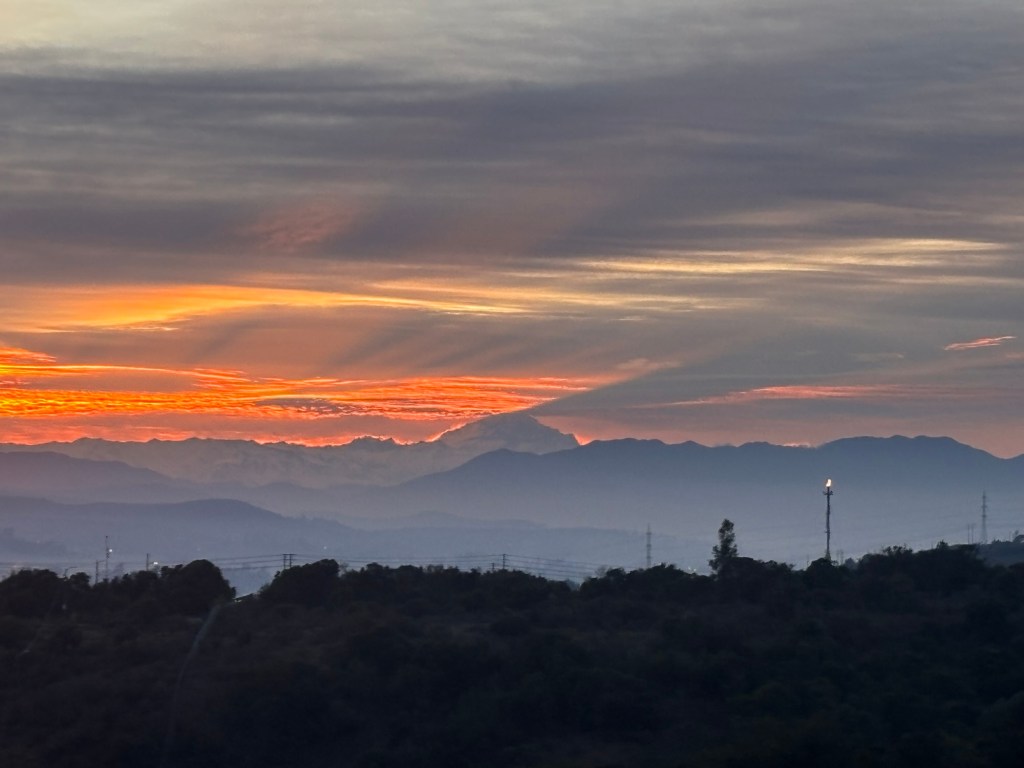
It was a beautiful sight, even if it did threaten rain. More spectacular, though, was a clear view of Aconcagua, the tallest mountain in all the Americas and the highest peak outside of Asia. The great white sentinel was so immense that by some trick of the light it seemed to throw the entire south of Chile into darkness. Apparently, only 30-40% attempts to scale Aconcagua are successful. The mountain is evidently as much an apu – a sacred mountain – as its better-known kin to the north of the cordillera, and not to be underestimated.
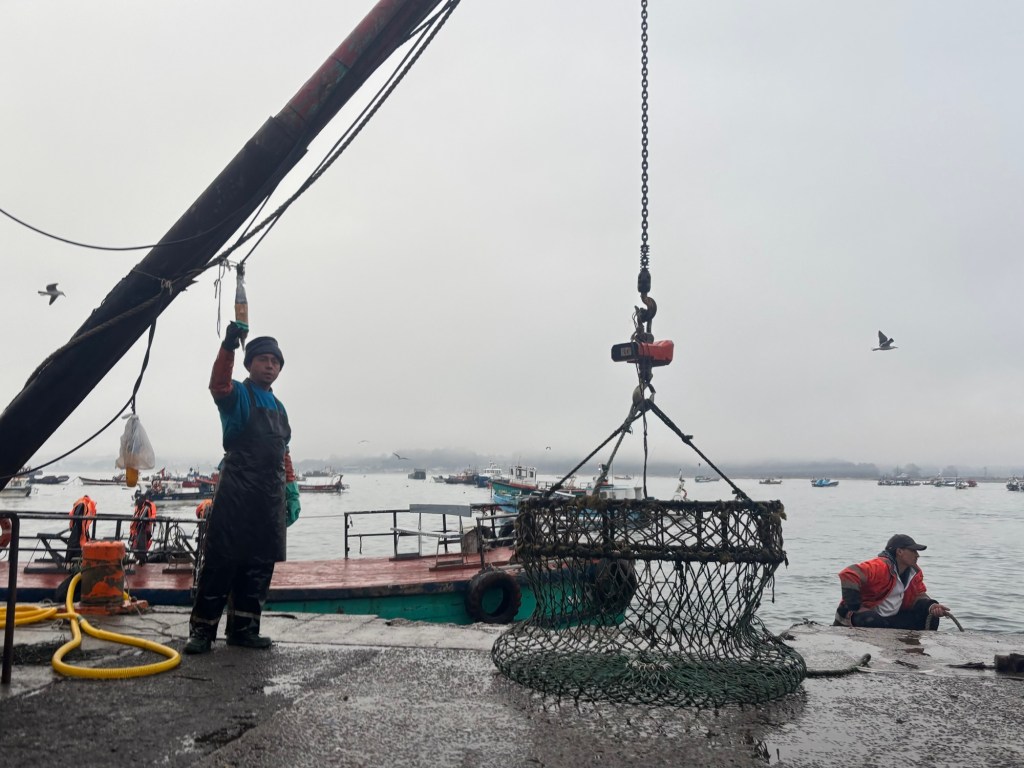
The local fishermen of Quintero were already hard at work as we arrived, slicing up some frighteningly large squid and cleaning their skiffs after a night out on the ocean. They seemed curious about the small group of day trippers herded onto a boat waiting in their harbour – all of them Chilean, with the exception of one wandering Briton – but paid us no more attention than the pelicans: a sort of intentional acknowledgement, as they went about their work.
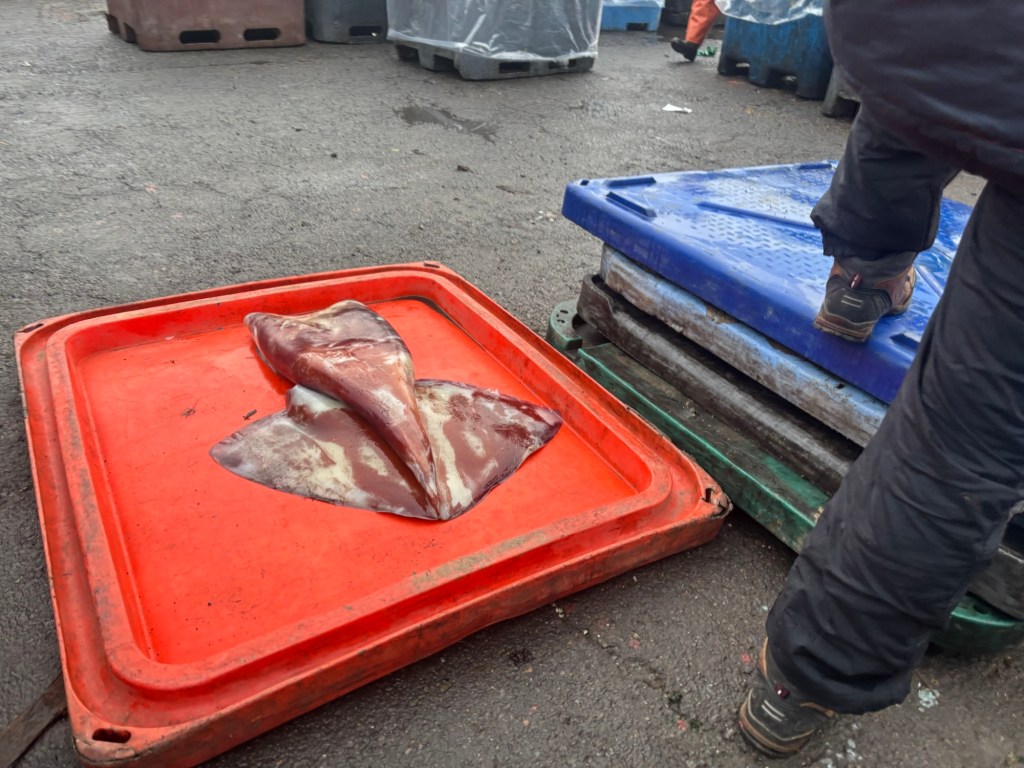
I couldn’t help being totally bowled over by the frighteningly large squid laid out in the fishery. Humboldt squid – or jibia as they’re known in Chile – are among the largest squid species in the world, reaching a whopping five feet in length. They’re so numerous along the coast of the Americas that they represent a third of the squid catch worldwide – and despite the fact that nearly two thousand tons of them are hunted in Chile alone every year, their population is still expanding. That’s a testament to just how rich the Humboldt current truly is. It’s also why Chile has always been home to a healthy population of sperm whales, who devour these and even larger prey, including arguably the most famous whale of all time: Mocha Dick, an aggressive and exceptionally cunning albino sperm whale who survived nearly a hundred attempts on his life before being brought down off Mocha Island. His story inspired Herman Melville to write the American classic Moby Dick, but it’s the original tale that is taught here in Chile as part of the national identity-building curriculum. How cool is that?
We left the harbour – with its attendant sea lions and pelicans – and started out on the hour’s journey out into the open ocean. For most of that first hour, we were tailed by kelp gulls – Chile’s ubiquitous answer to the herring gull – and strange shapes in the water, many of which turned out to be discarded bottles or cans floating eternally along the Humboldt. I counted at least four Fanta bottles and two bicycle tyres, the latter floating nearly side by side. I wonder what happened to the bicycle itself?
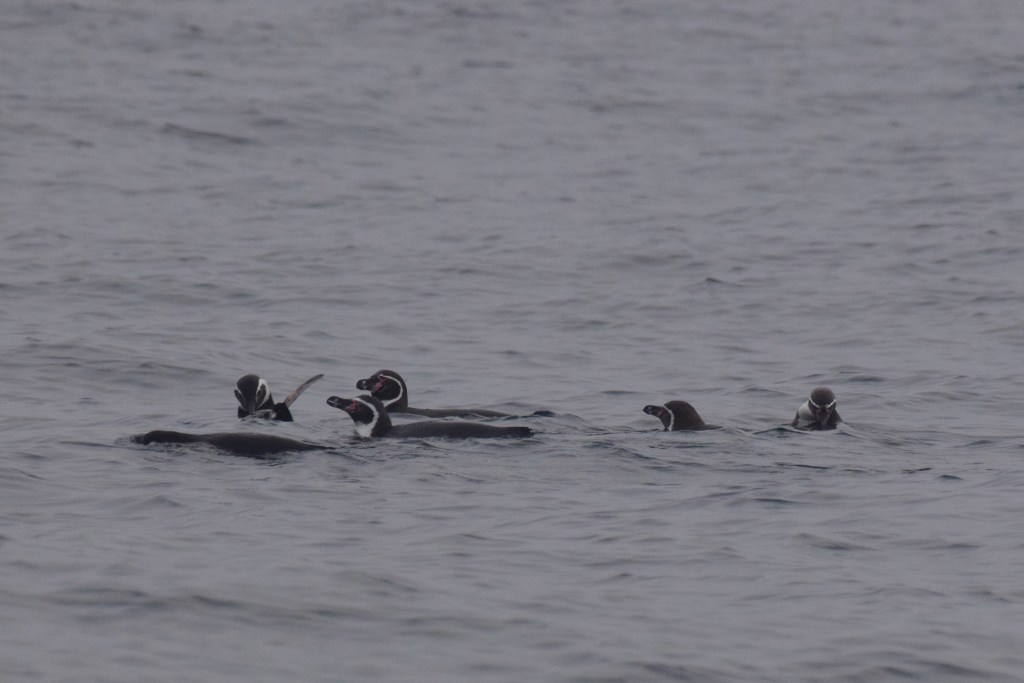
Some of the shapes moving along the surface of the water were a lot more interesting. A curious sea lion, a huala or great grebe fishing offshore, or a family of penguins, spending the winter at sea. Over the course of the morning we saw both species native to Chile: Humboldt penguins – the kind I saw in the Islas Ballestas in Peru – and Magellanic penguins, a more southerly species that have colonies right down to the Chilean Antarctic.
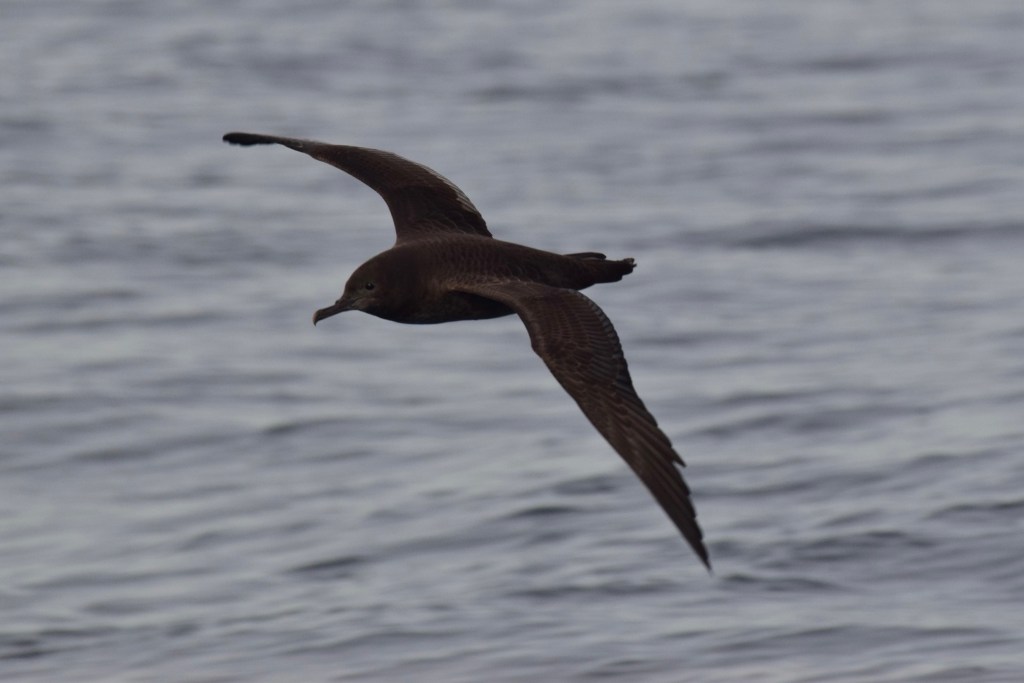
We didn’t have to go far from the harbour to see our first pelagic species of the morning. The first to make their appearance were the shearwaters, experts of the open ocean, zooming low over the surface of the water, banking this way and that. With the roll of the waves, they seemed to slice through the surface with the tips of their wings in the way that gave them their name, though I swear I never saw them touch the water once.
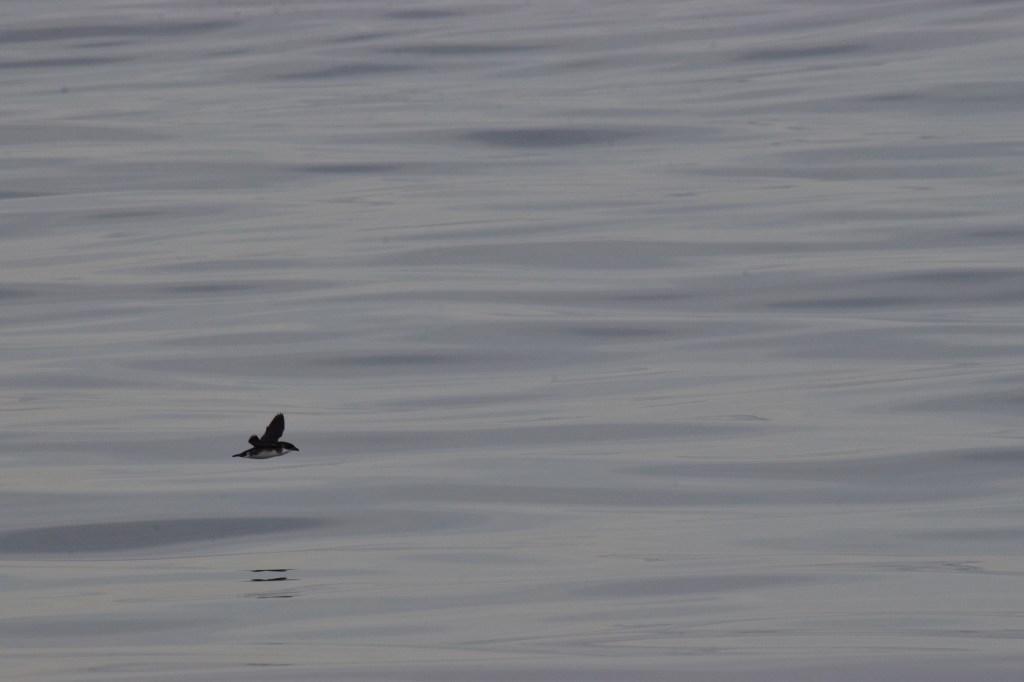
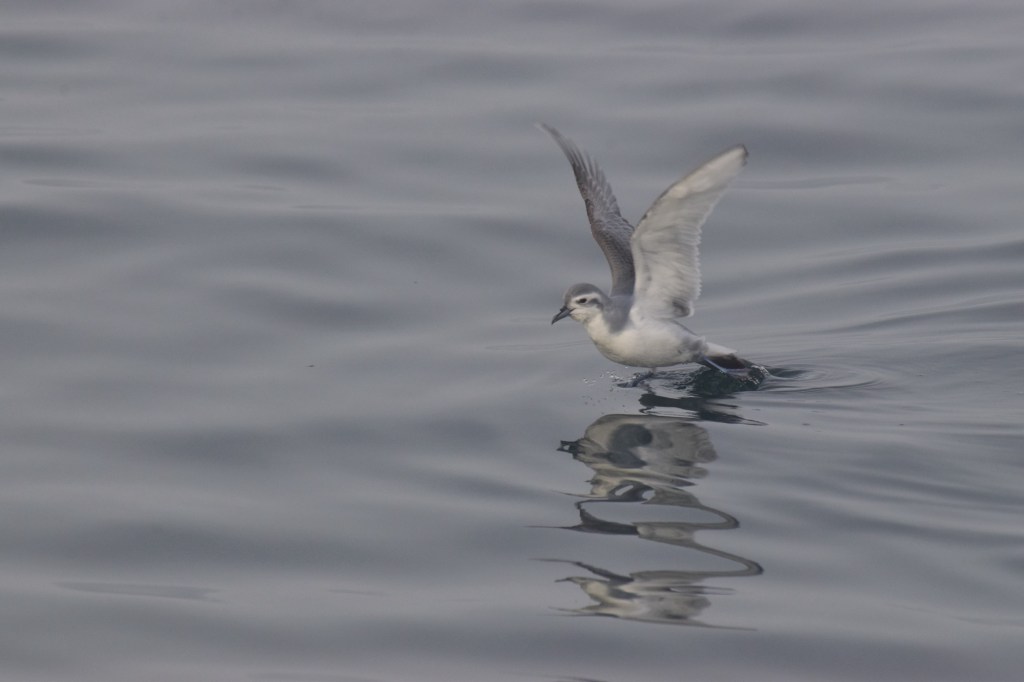
In the descending gloom, they were hard to catch on camera. A little easier were the diving-petrels, tiny auk-like birds that preferred to paddle away from the boat, popping in and out of sight beneath the waves in the habit for which I suppose they were named.
As the rocky headland of Quintero faded into the mist, we were almost entirely enveloped. This dense sea mist is one of the reasons there haven’t been any pelagic tours since April: if the visibility is this poor, the harbour doesn’t let ships out into the open ocean, lest they become lost, disoriented by the waves – or worse, collide with another ship.
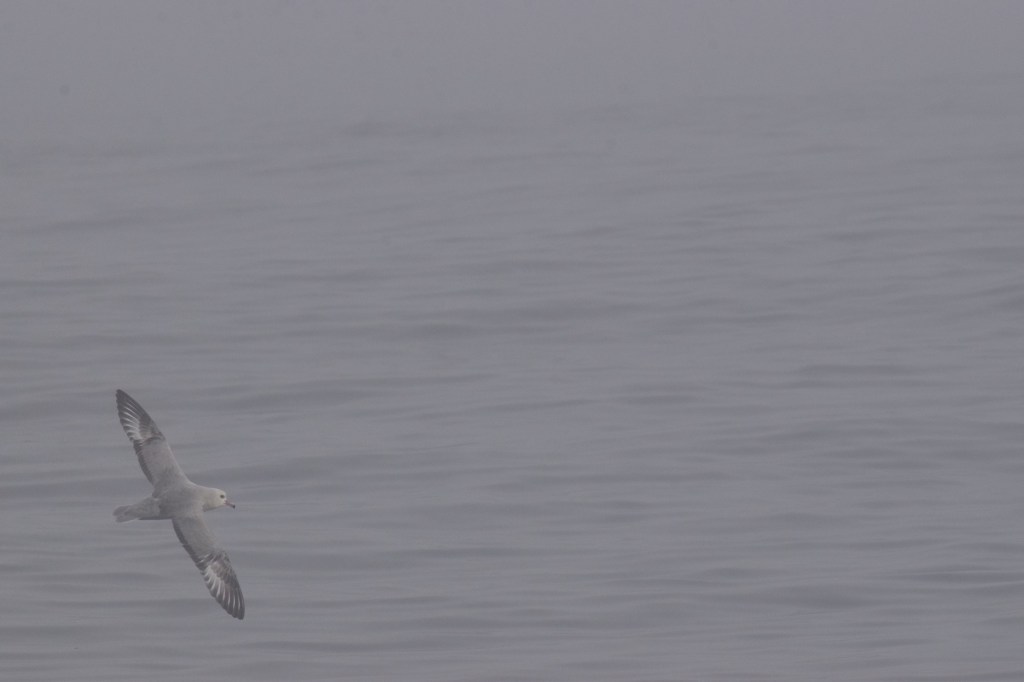
Only the fulmars kept us company in the mist, slicing through the fog on silver wings.
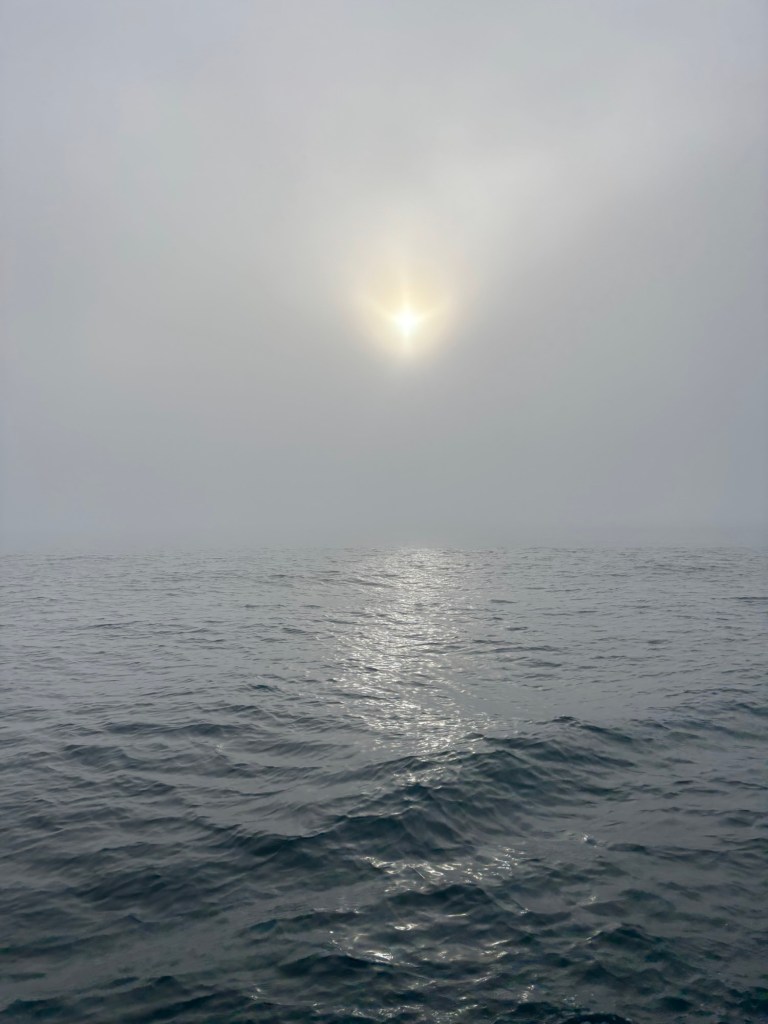
After what must have been an hour, the first sign of relief began to glow in the east: the sun, clear of the mountains and their attendant clouds at last, was trying to fight its way through the fog. Curiously, some trick of the light warped its shape into something that looked like a cross or perhaps even an angel with arms outstretched. It’s so easy to see how legends could form in such a strange and unsettling space as the open ocean, in a time when there was so much less knowledge and so much more wonder in the world.
As the mist began to clear, we reached the feeding grounds of the open ocean. There were plenty of shearwaters around, mostly sooties – a dainty species of southern waters that can sometimes be seen as far north as the British Isles on their wanderings. But this is their home, off the southern coast of the Americas, and there were plenty enough of them to prove it.
A young lad on the crew lifted the lid on one of the chum buckets – fish heads and squid tentacles, mostly – and threw some into the water for the birds that had followed us so patiently. They were watchful, at first, as wild things should be, but once the kelp gulls cottoned on, the shearwaters lost their timidity.
One bird I had not expected to encounter at all was a prion – known around here as a paloma marina or sea dove. These Antarctic birds had been driven north by weather currents in the South Seas, by the looks of things, and it was a real delight to watch them bobbing around beside the boat, dipping their heads beneath the water in a constant, frantic search for food.
The real prize of the open ocean took its time. A cry of “albatross” from the captain (one Chilean bird whose name is seemingly universal) drew our attention to an enormous shape gliding through the mist behind the boat. It was there for a moment and then it was gone.
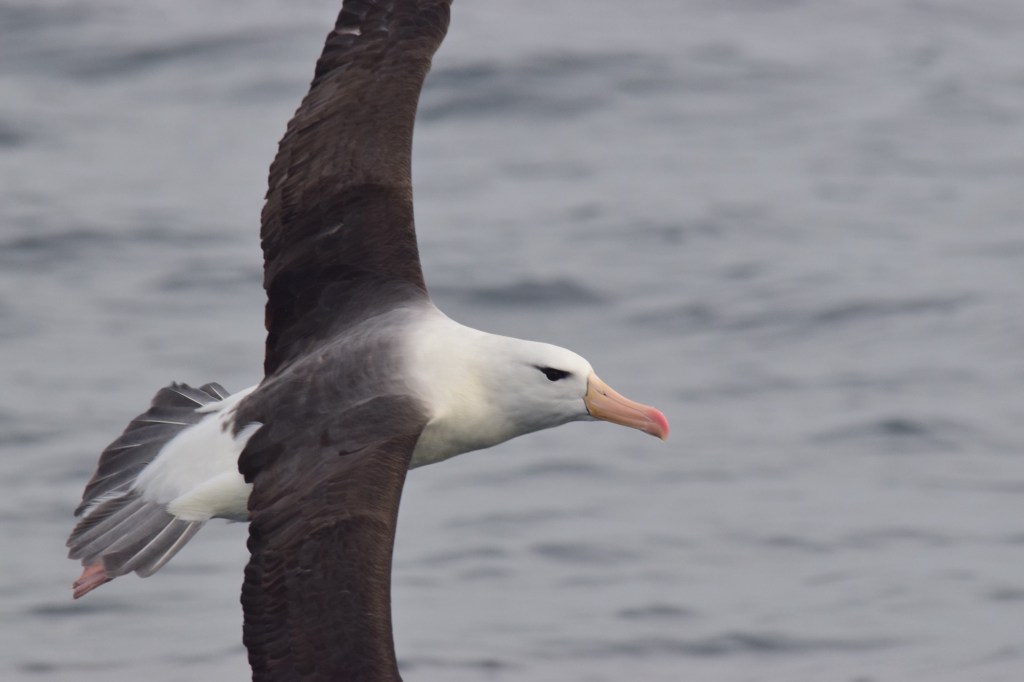
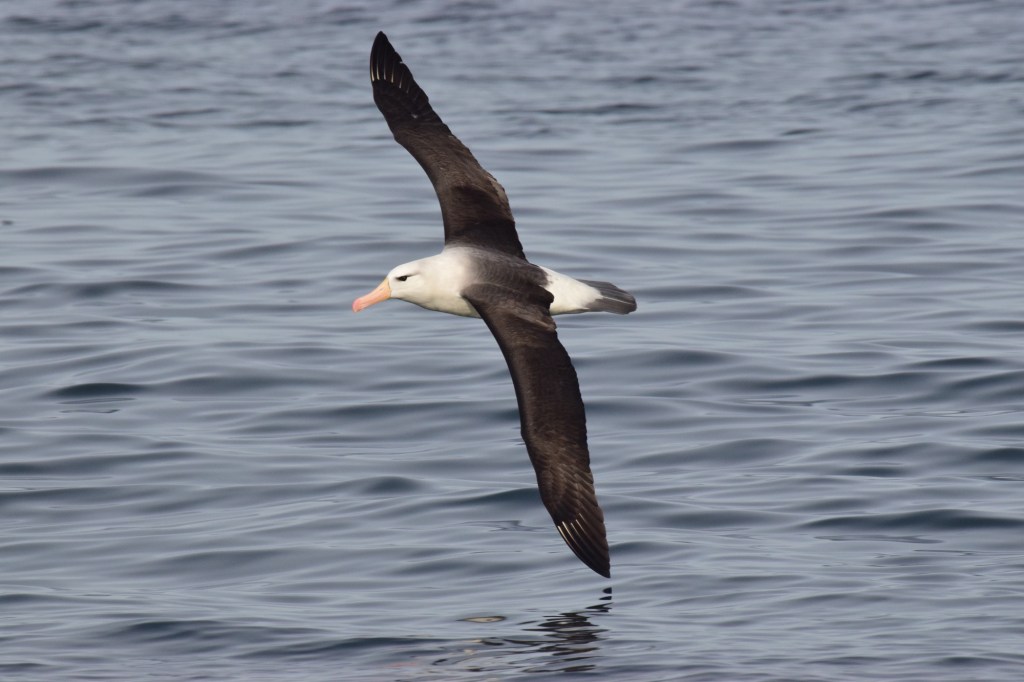
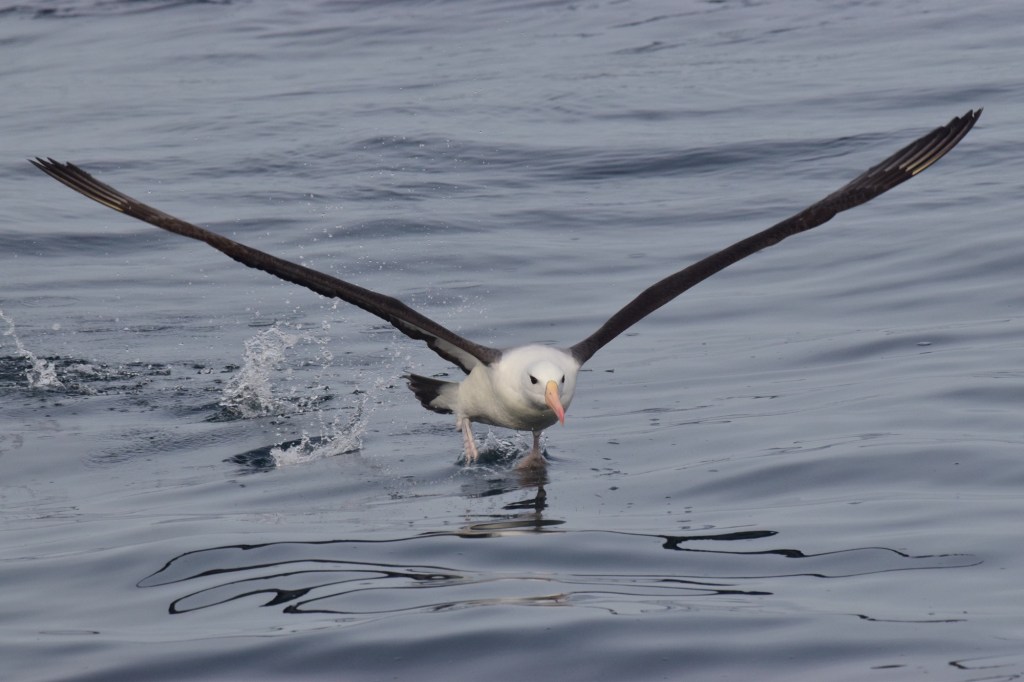
A few minutes later, one of the crew spotted it again. The giant – a black-browed albatross, and presumably the same individual – must have caught the scent of the chum and was following the boat at an increasingly shorter distance, arcing across the water in the kind of wide waves that children do on bicycles when following something too slow for their liking.
In time, it seemed to lose all suspicion of us whatsoever and flew in incredibly close, so close that you could see the glint of sunlight on the tip of its bill.
One of the Chilean birdwatchers sitting at the back of the boat beside me remarked somewhat ruefully that he had seen far more activity in previous July expeditions. To him, the ocean was unnaturally quiet today.
I couldn’t have cared less. I was hoping to see one albatross, but I didn’t expect it to be so close, and so bloody impressive. They really are magnificent creatures.
The albatross is a perfect gliding machine. The only time they need to beat their enormous wings is upon takeoff, which is a somewhat clumsy affair requiring one heck of a run-up – although, when you consider that said run-up usually takes place on the surface of the water, that feat is all the more impressive. To aid them in this endeavour, their webbed feet are absolutely enormous, giving them serious launching power as they race across the waves. Once airborne, they can glide for hours, riding the wind on wings that have evolved to make them the true masters of the open ocean.
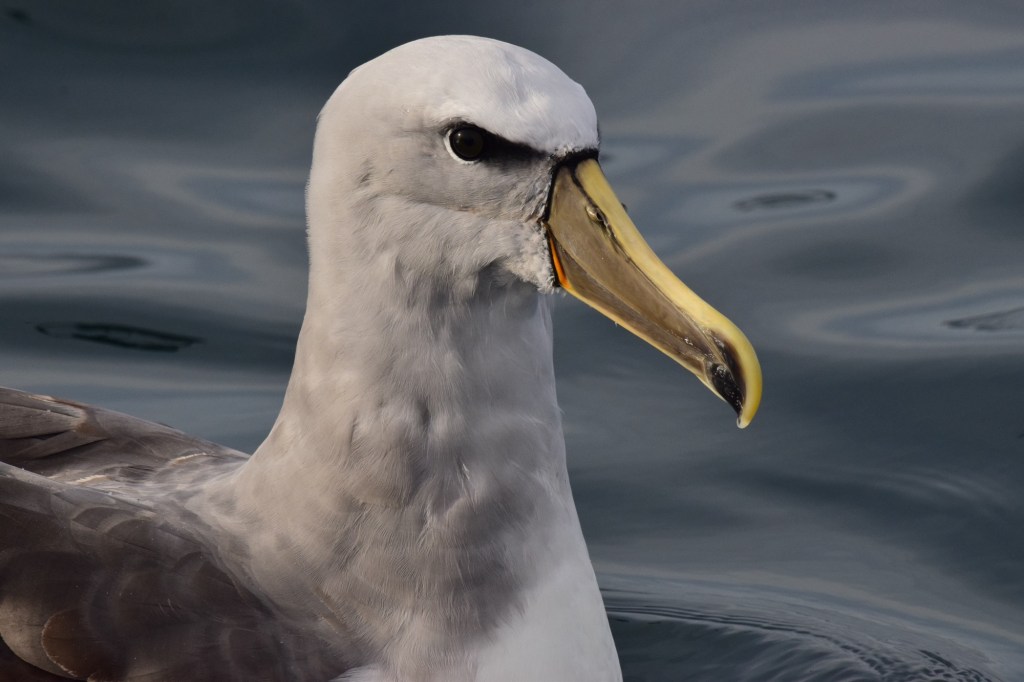
As the scent of chum in the water drew more and more seabirds, other species began to appear. There was much activity on the boat when a Salvin’s albatross came riding in to join the bounty: a larger, greyer species with a smart yellow lining to its bill. Like the black-browed, its eyes sit beneath a dark shadow, giving the peaceable bird a perpetual frown – though it looked stern enough when it came charging in to chase the other gulls away from the discarded fish heads thrown overboard.
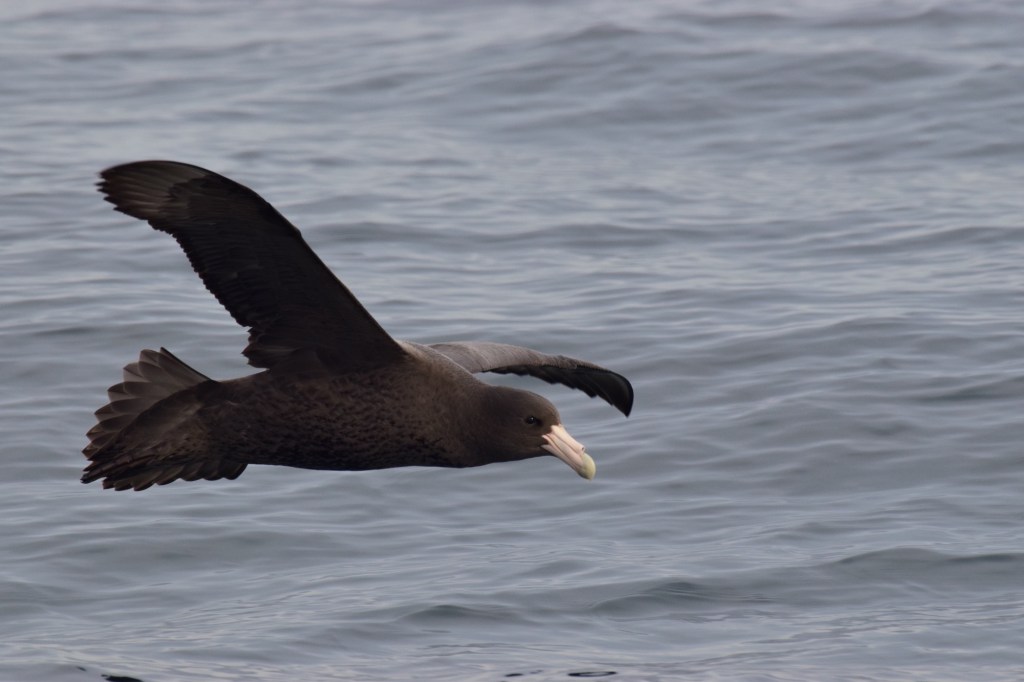
As more and more birds were drawn to the bounty, others besides the albatrosses came in to investigate. Petrels of every kind: smart pintado petrels, Westland petrels from New Zealand, tiny storm-petrels – known to Spaniards a golondrinas de mar (sea swallows) – and southern giant petrels, like the ones I saw in Natales. I quite like these dark morph birds, but there’s a pale morph that look truly sinister, with cold grey eyes – much more suitable for the vultures of the southern seas.
If it weren’t for the albatrosses, these giant petrels would have dwarfed everything in sight. As it was, the best they could take home was second-billing (no pun intended).
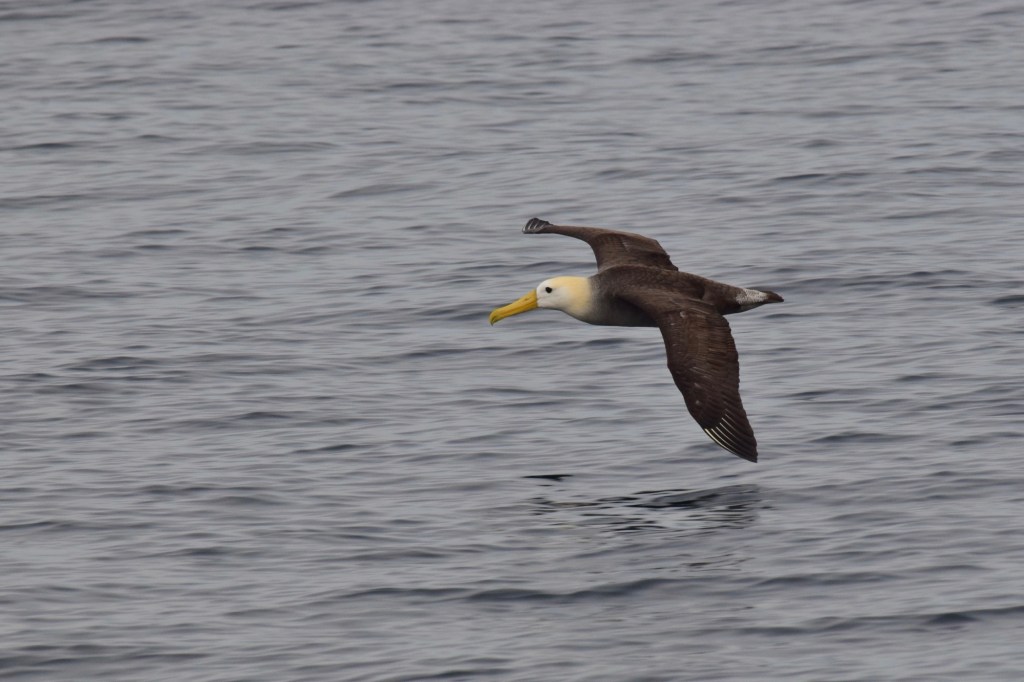
There was a great deal of excitement on board when another albatross appeared: a waved albatross, a stranger to these waters that usually makes its home in the Galápagos Islands to the north. The albatross is a true wanderer, scouring the length and breadth of the ocean in search of food, so they can turn up just about anywhere outside of the breeding season. Even so, the captain remarked that in the last twenty years he had only seen five of them, so it was quite a special sight.
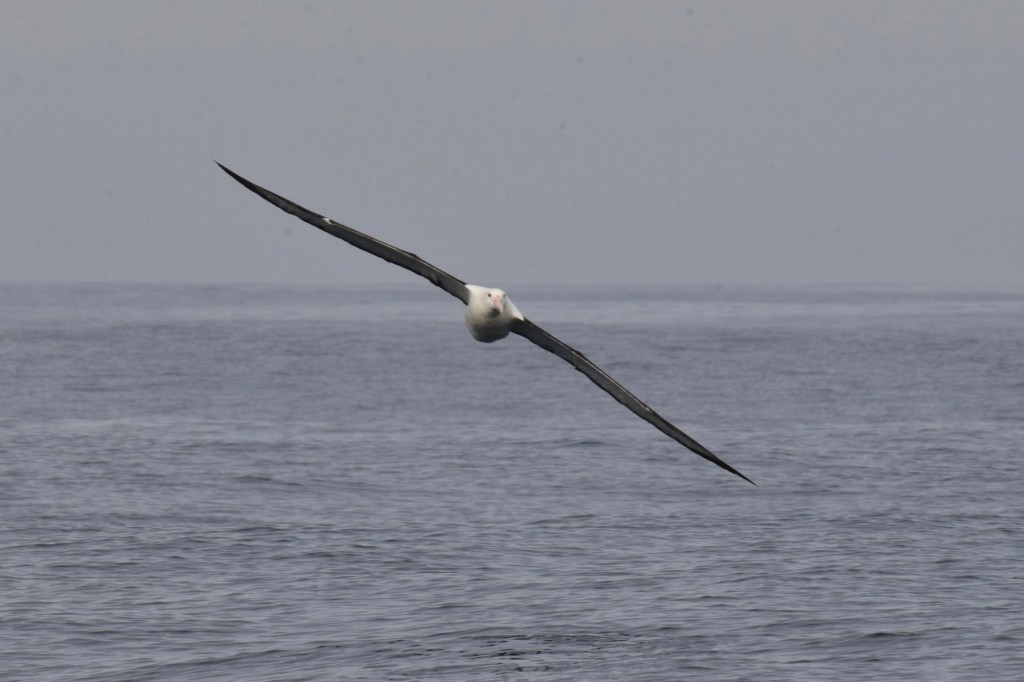
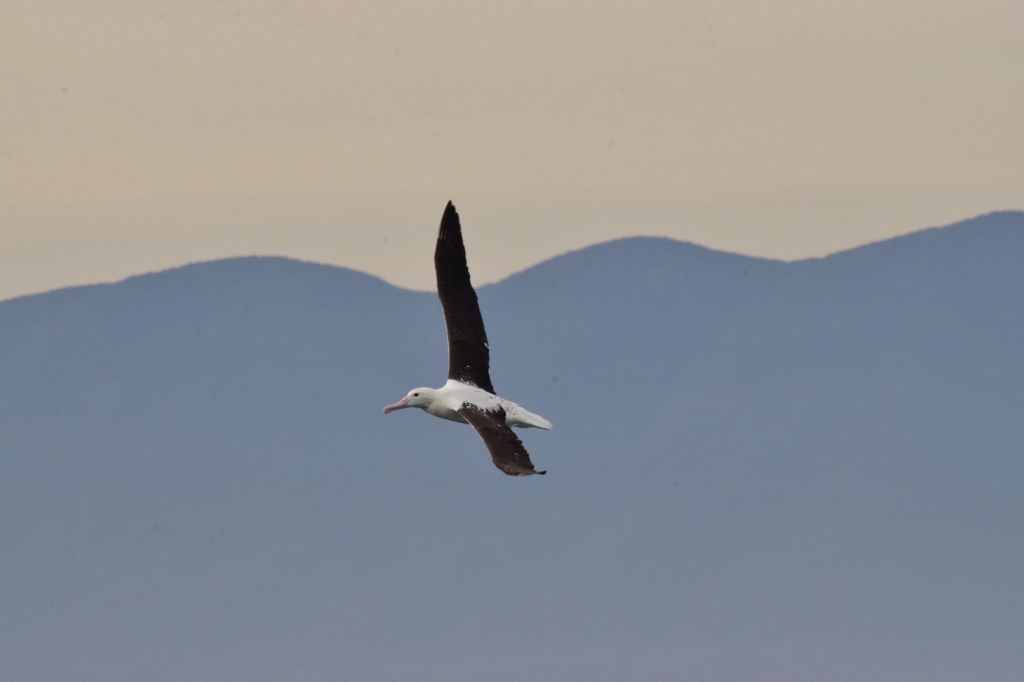
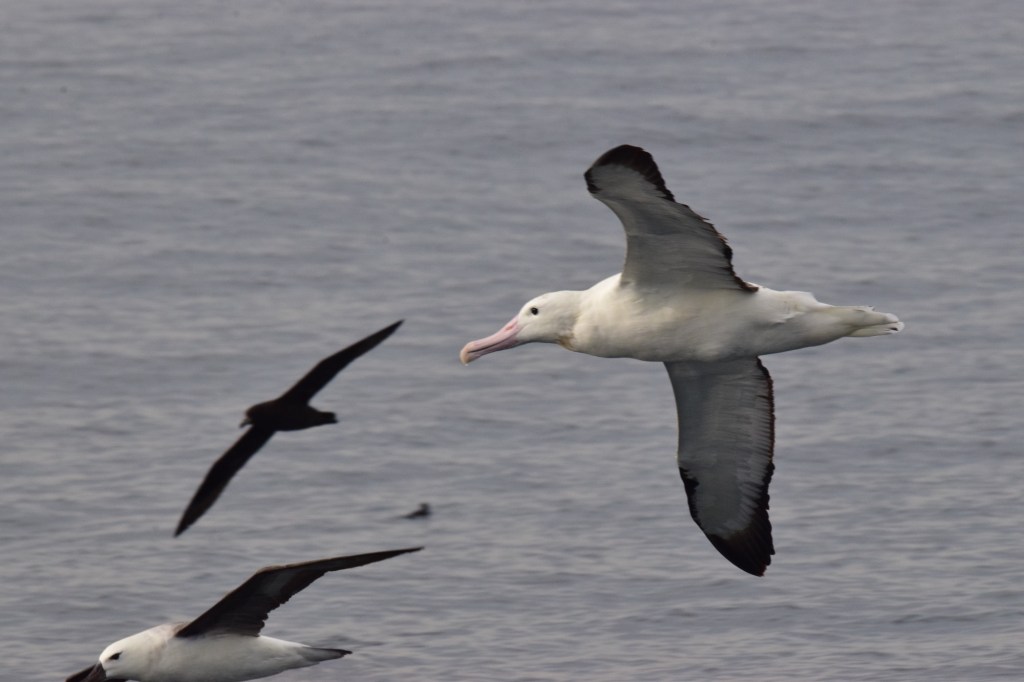
For me, though, the most spectacular bird of all was the last to appear. Towards the very end of the expedition, a truly enormous shape coasted into view from the direction of the open ocean, riding in on the wind on three-metre-long wings. A royal albatross – tied with the wandering albatross for the largest wingspan on the planet.
More wary than its kin – or perhaps more stately – the wanderer kept its distance, gliding in enormous circles around the boat. I’m not sure where they stand in the pecking order, or whether the royal in their name is a flight of fancy on our part in allusion to their size, but the giant was indisputably the largest and most powerful of all those gathered to the feast.
Just once did the wanderer come in close enough to truly appreciate how much larger it was than everything else: even the other albatrosses looked like gulls beside it. Unlike the angry-looking black-browed and Salvin’s, the royal albatross has a kind face with deep black eyes and a clean pink bill.
To see one is to understand how sailors of old were enchanted by this bird, spinning legends about it, including the famous belief that to kill an albatross was to invite disaster – upon ship, captain and crew.
What an incredible encounter! I hoped for one albatross and saw at least fifteen, including the largest of them all. My ears may not have fully recovered yet, but I couldn’t feel more fortunate right now.
Upon returning to Quintero, we all had lunch together at a seafood joint opposite the harbour. Quintero is not on the tourist trail – it isn’t even mentioned in the Rough Guides book I brought with me – so the fare was local, fairly-priced and fresh – and absolutely divine. I mulled over the menu for a bit before opting for a mint and ginger lemonade – my favourite Chilean drink – and the caldo de congrío, a wonderfully warm Chilean seafood soup.
I would have caught the bus back to Santiago, but one of the birdwatchers was tremendously keen to offer me a lift as he was headed back south anyway, and thought he might show me parts of the interior I might otherwise not see. I don’t tend to turn offers like this one down, and I had plenty of time, so I accepted.
Manuel – a Chilean marine researcher of proud Basque extraction – was a proper fount of information. He has been into birds his whole life, studying ornithology at colleges across the United States and working primarily in pelagic research. His job has taken him from the coast of California to the Galapagos and the Pitcairn Islands, as well as both the North and South poles. He remembers when they were proper frontier territories, before modern tourism sank its teeth into the far-flung corners of the world. He remembers also when much of the coast of Valparaíso was a giant lagoon, with bird-rich wetlands that have long since dried up and turned into cattle country after so many years of drought. The recent downpour is an anomaly: the Chilean palm trees that grow in the hills to the east all bear the blackened scars of the fires that rip through the countryside when the summer heat is at its worst, aided by the invasive eucalyptus trees that do so love to self-immolate.
As well as a crash course in Chilean fauna, flora, history and politics, Manuel was something of a prankster, hellbent on stopping in the middle of nowhere to take a photo of me so that I could send it to Rodrigo, our guide, so as to let him believe that I had been dropped off in the middle of nowhere. The average citizen might have left the joke at a passing comment, but Manuel was adamant to see it through, passing over several promisingly desolate spots in the hills before finding one to his liking.
His puckish side satisfied, he made sure to send me on my way with some herbs for my tea and a fresh loaf of local bread, superior to any supermarket pan de molde. I had some this morning. It really was superb.
Manuel dropped me off in Melipilla, a one-storey town to the southwest of Santiago that has definitely seen better days. Several earthquakes – including one that had its epicentre in the heart of the town itself – have laid waste to what was once a very pretty Chilean town, with colonial adobe houses and two impressive churches. What remains is a sad mishmash of old and new, houses patched together with new materials, as though the whole town was rebuilt using six different LEGO sets. The street art of Valparaíso has made its way here, too, though it is perhaps less welcome here than it is in the cascading streets of the seaside city.
I bought a bus ticket for a paltry 2.000 pesos (just over a pound, I think) for the fifty minute ride back to Santiago, and as a bus arrived just as I was buying the ticket, I didn’t need to wait at all. It was half six by the time I made it back to the flat in Las Condes, long before Tomás and his family returned from their Sunday outing to see his grandfather. I meant to sit down and write, but after I had put my clothes in for a much-needed spin in the laundry, I pretty much collapsed into bed. It’s funny what a morning out on the ocean will do.
My second week begins. I will try to see some English lessons this week – and, with any luck, get a bit more involved after a week observing the middle and senior teams.
I have also reached a decision as to what to do with my last week out here. But that, for now, must wait. Let it be a surprise. There is a lot more magic in that. BB x
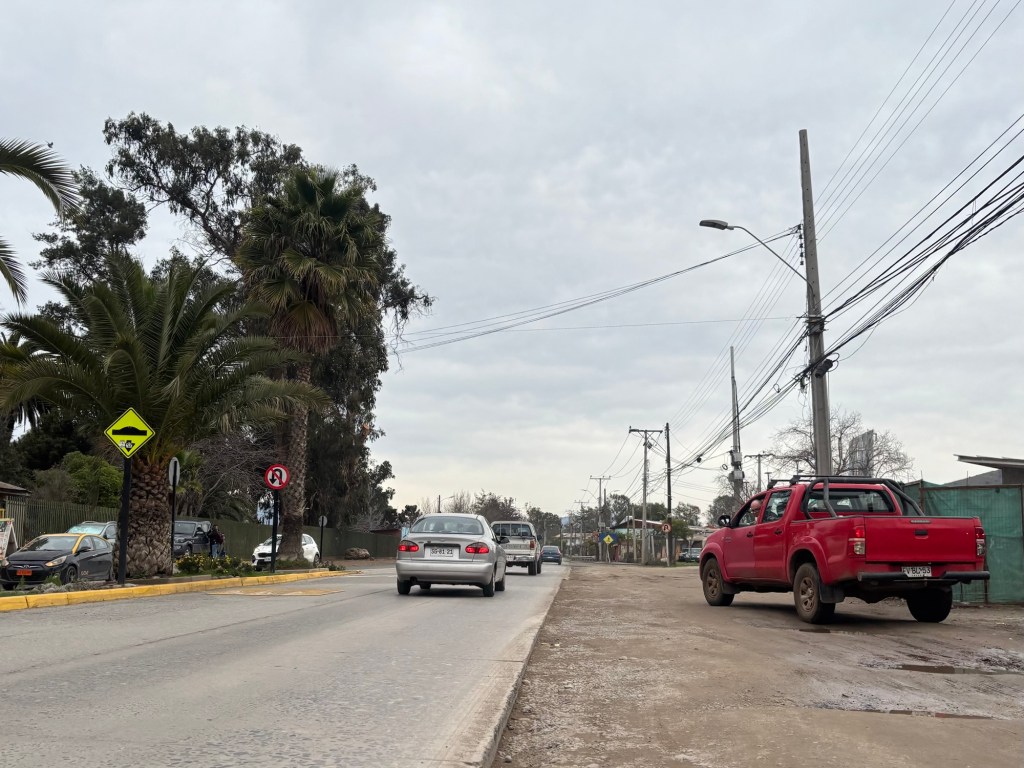
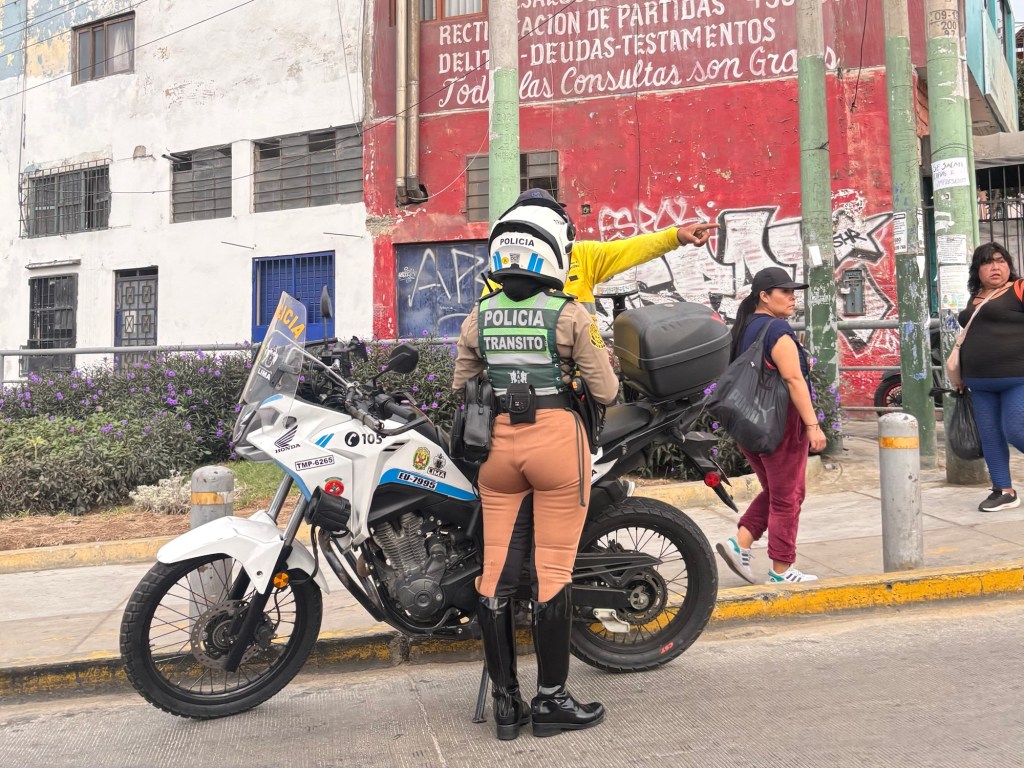
I’ll start with Uber. Lima is absolutely enormous – a 2,672 square kilometre metropolis with over ten million inhabitants – and it’s pretty daunting to get even from Miraflores to the coast, and especially when you’re lugging around some pretty expensive gear.
Uber to the rescue! For little more than the price of a meal deal, I was able to get to my destination this morning: the Pántanos de Villa, a wetland reserve sheltered within the city itself.
I actually had cold feet about my plan this morning. Was I doing some ridiculous by striking out on my own to a corner of Lima well off the usual tourist trail?
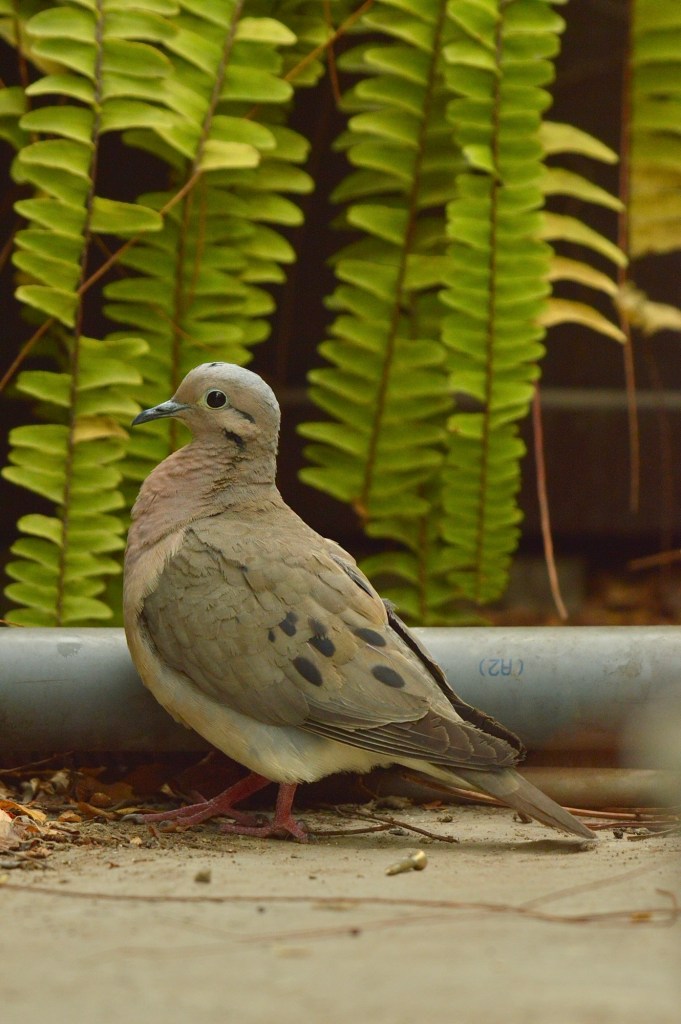
Then again, if I didn’t, would I regret it? The answer was a resounding yes, so I hailed an Uber and set out. But not before seeing my first Peruvian bird of the trip: an eared dove which was kind enough to wake me up this morning.
Uber drivers aren’t a very talkative lot, but their choice of radio is always interesting. My first had YouTube on and was watching/listening to a bizarre Peruvian comedy show featuring two men with oversized prosthetic noses commenting on the imminent Paraguay/Brazil football game. Whatever they were saying was hard to follow beneath an overactive soundboard, rotating between all the classic meme sounds after almost every line. Soundboards seem to be a feature of modern mass media, but I confess myself surprised to find it already taking root out here.
The most obvious sound by far is car horns – which are technically banned in Miraflores, though that doesn’t stop them being part of the sinfonía limeña.
The Pántanos are a sanctuary within the hustle and bustle of Lima. Even if birds aren’t your thing, it’s good to come here for a bit of peace and quiet. I got there for 8.30am, which is when the website said the reserve opened its doors, but I was told very politely that the guides would be there at 9am, if I would be so kind as to wait.
I had no issues waiting – one of the thing I was most excited to see in Peru was already here. So many of them, in fact, that I lost count.
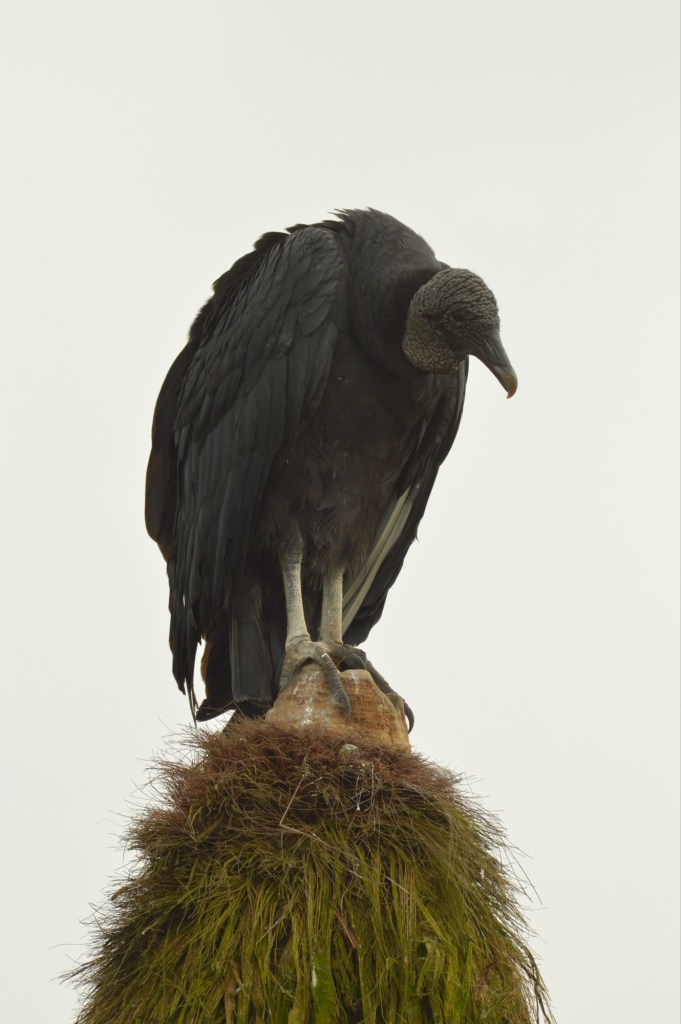
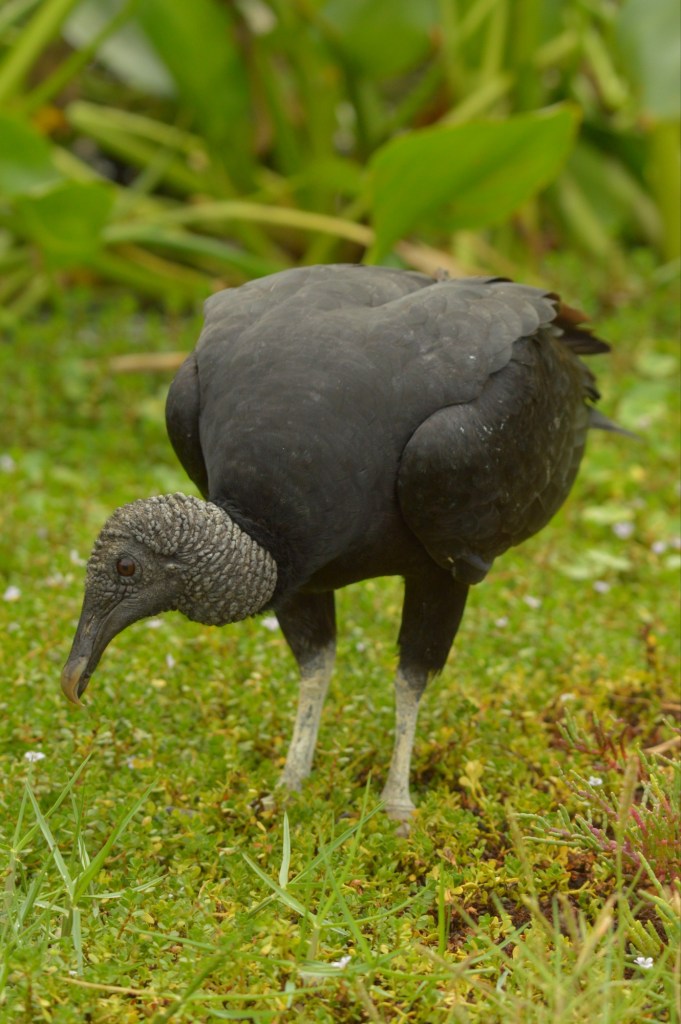
Introducing the black vulture, known in Peru as the gallinazo, which might be translated as “enormous chicken” – which fits quite nicely, I think.
They’re about the size of a turkey, and the only sound they make is a sort of grunted sneeze. My guide, a knowledgeable young tourism grad who was working her way toward a posting in Arequipa, pointed out how skittish and shy they can be – which was the only thing she said that made me raise an eyebrow, because it feels like nothing in this country fears the presence of man like they would in Europe. I’ve never been so close to so many species in a single day. I wonder why that is?
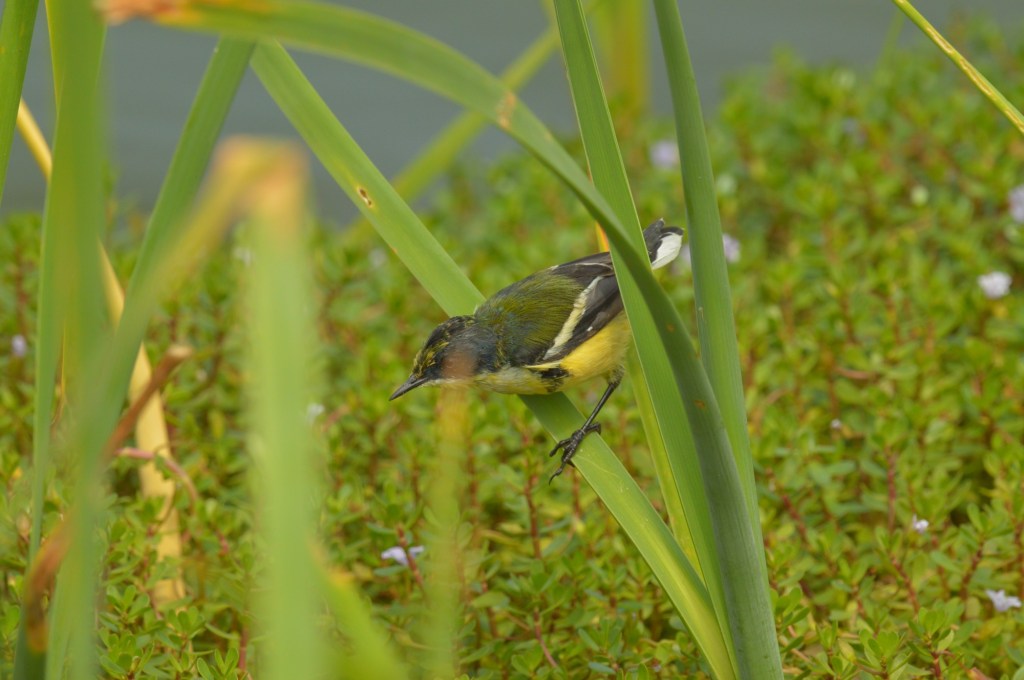
The Pántanos’ star resident is the Siete Colores de la Totora, a seven-coloured gem of a bird that is surprisingly hard to spot as it feeds among the stems of the reeds. Seeing one would, according to my guide, be a very “buen augurio” (good omen), but I made it plain that I wasn’t here to tick boxes – I just wanted to see any and all of the magic that Peru would offer. We got incredibly lucky and saw a wild cuy, a species of guinea pig that are native to the marshes, but it was much too quick for my camera.
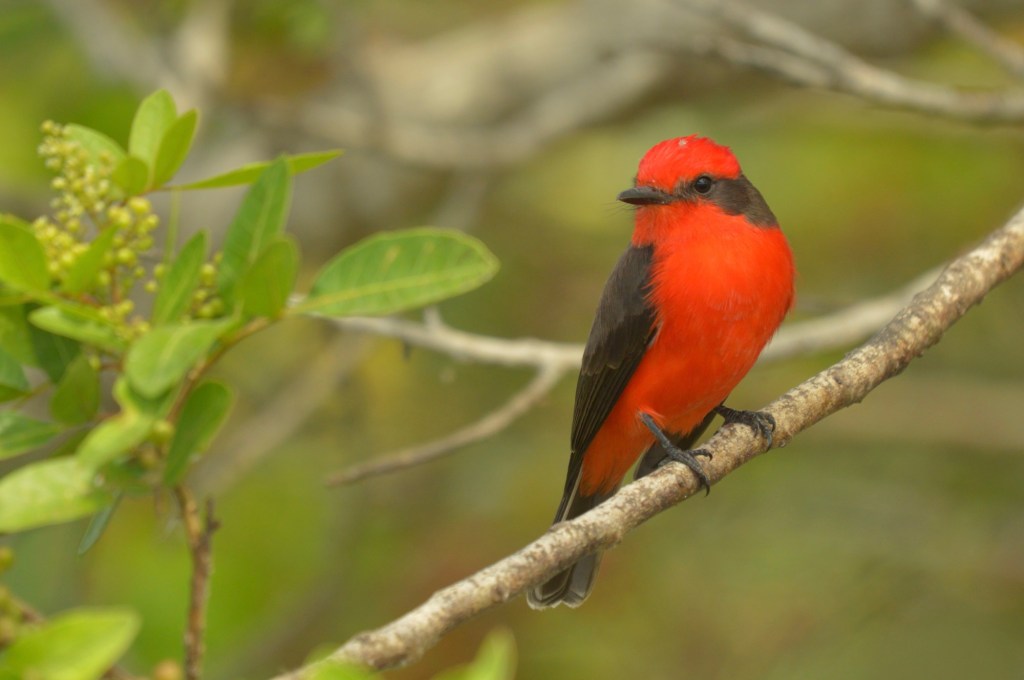
I had more luck with one of the reserve’s most beautiful treasures: a vermilion flycatcher, surely one of the most spectacular birds to be found in Peru – and they’re quite literally everywhere!
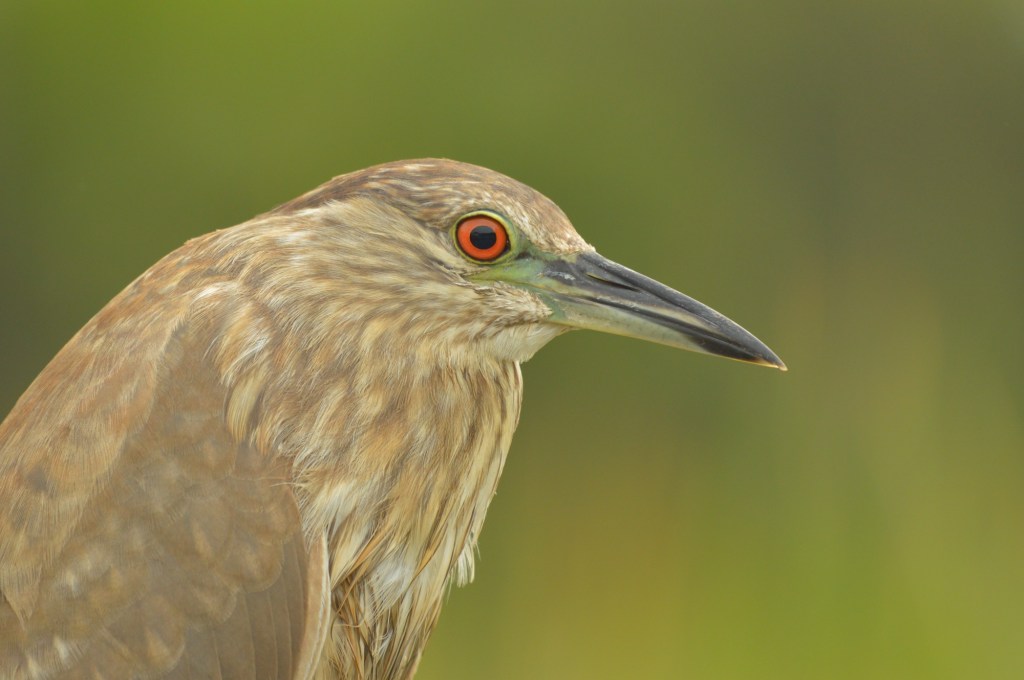
I needn’t have worried about the Toledo night heron being so distant, because there was one sitting right next to the visitor’s centre. I’ve never had the chance to appreciate their bright red eyes from so close, an evolutionary adaptation to hunting by night – hence the name!
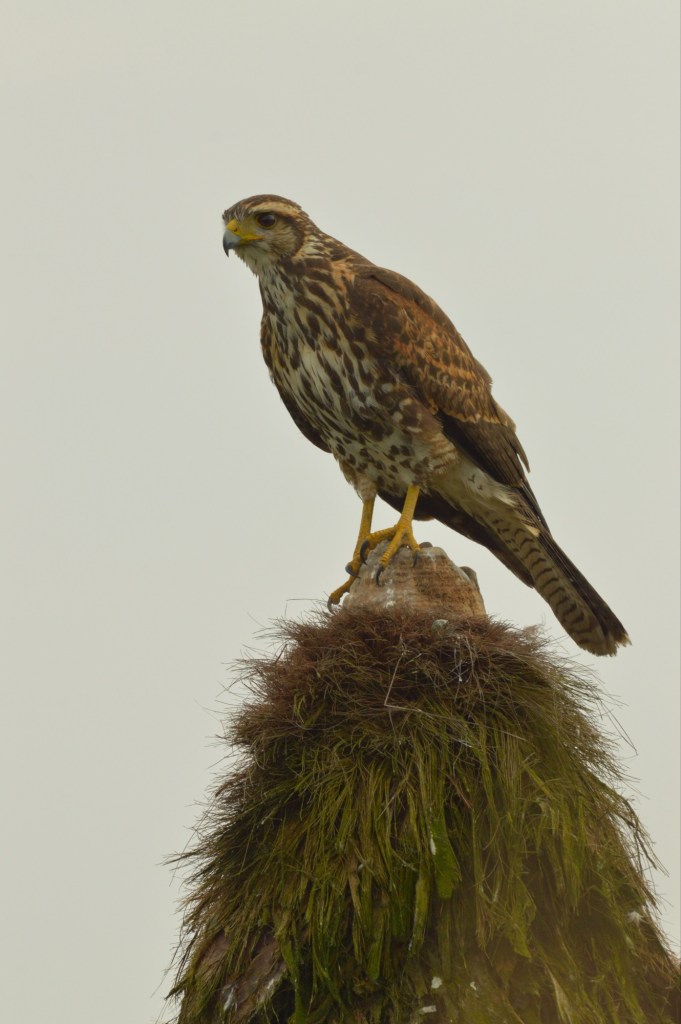
Not to be outdone by the vultures, a young Harris hawk swept in to investigate the cuy situation. These incredibly intelligent birds are a favourite of falconers – if you’ve been to a bird of prey show, you’ve almost certainly seen one – but they’re native to this part of the world. They’re also one of the few species here I knew on sight!
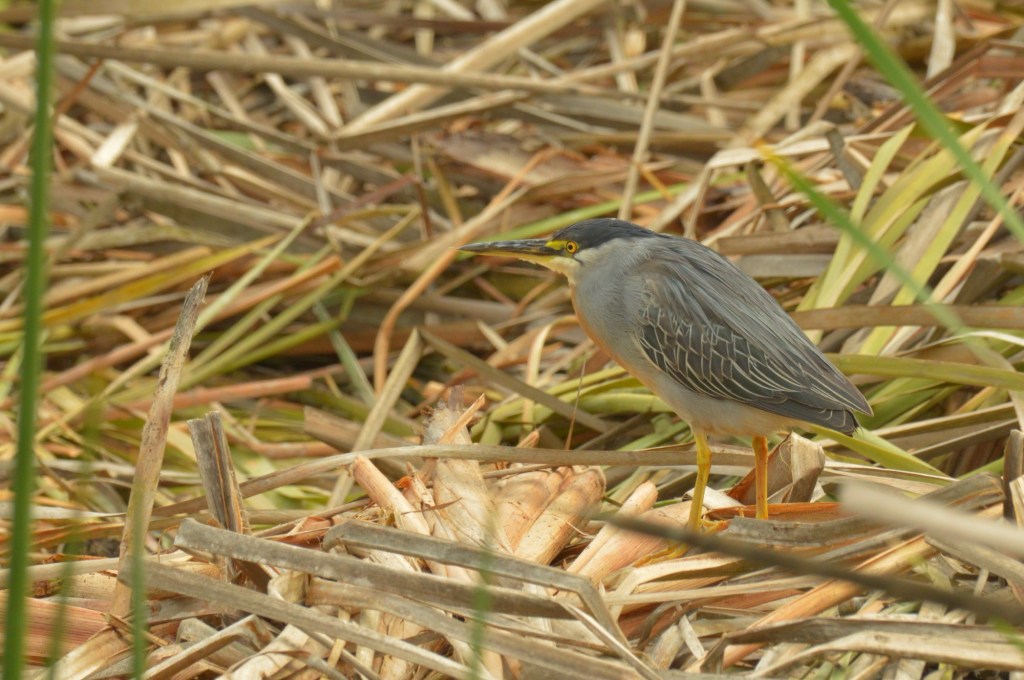
I saw my first hummingbird of the trip: an Amazilia, I think, though I haven’t gone through my sightings with a guidebook yet. They’re damned near impossible to photograph until they land, being about the size of a finger and moving with all the agility of a butterfly. I’m trying to snap everything I see so I can log them later, but at least I recognised this little fella: a striated heron, one of a number of familiar species that are shared between Peru and – of all places – Uganda.
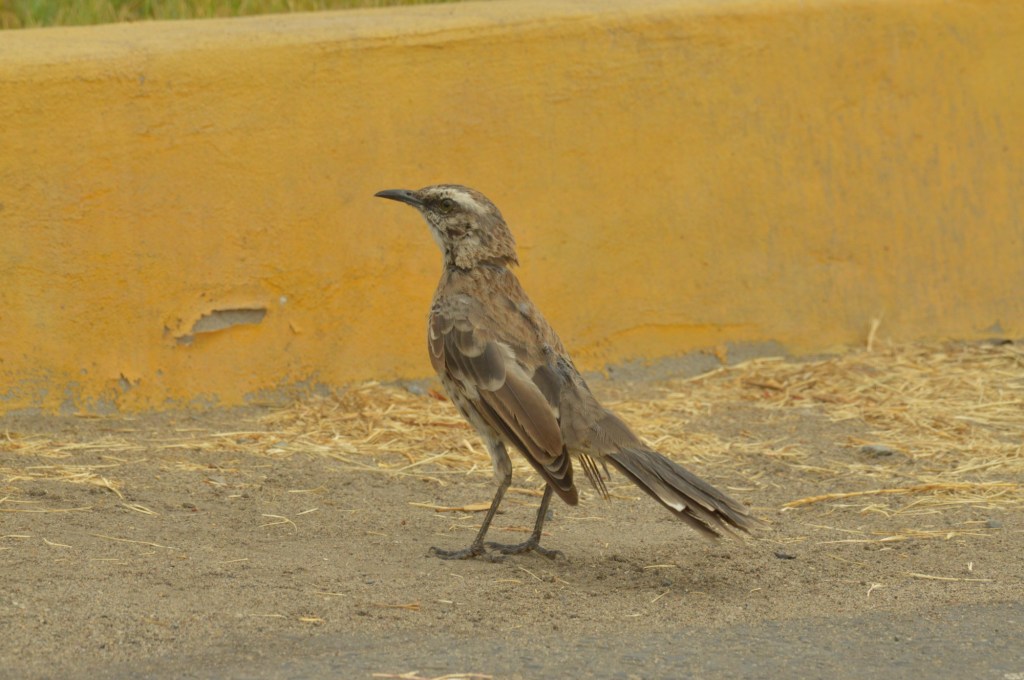
To reach the last circuit of the Pántanos de Villa, you have to leave the wetlands and walk about ten minutes further along the road to the coast. The road passes through a private residential estate, but they’re quite used to naturalists from the Pántanos passing through, so I was waved through without any ceremony. I could have stopped a number of times in pursuit of an unfamiliar birdcall, but I didn’t particularly want to draw attention to myself by pointing my zoom lens into somebody’s garden, so I contented myself with the mockingbirds that followed me inquisitively for half of the journey.
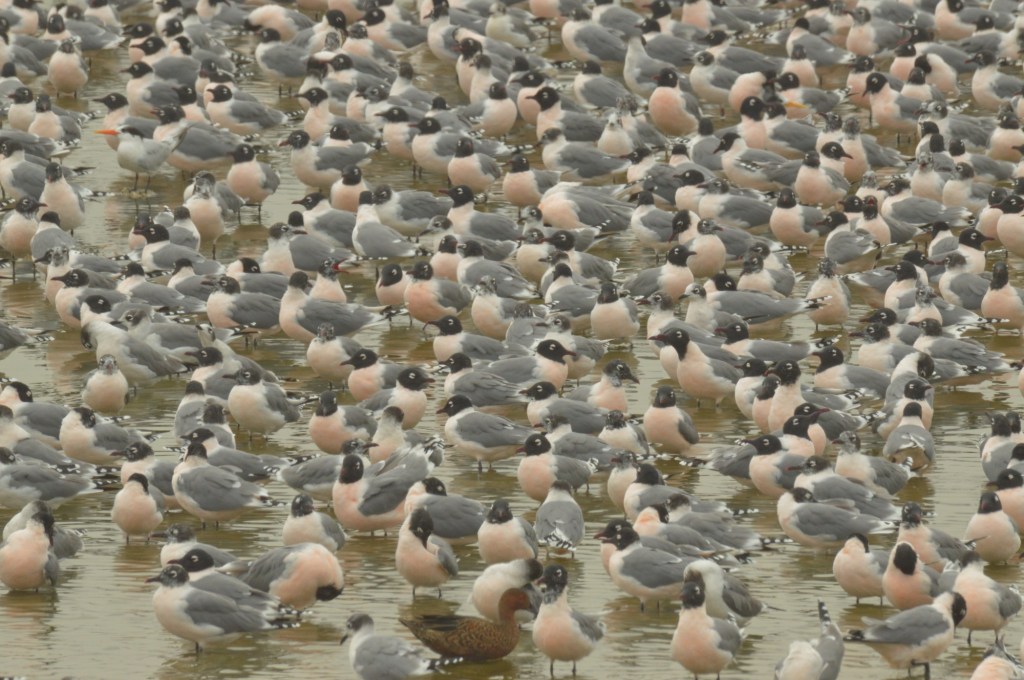
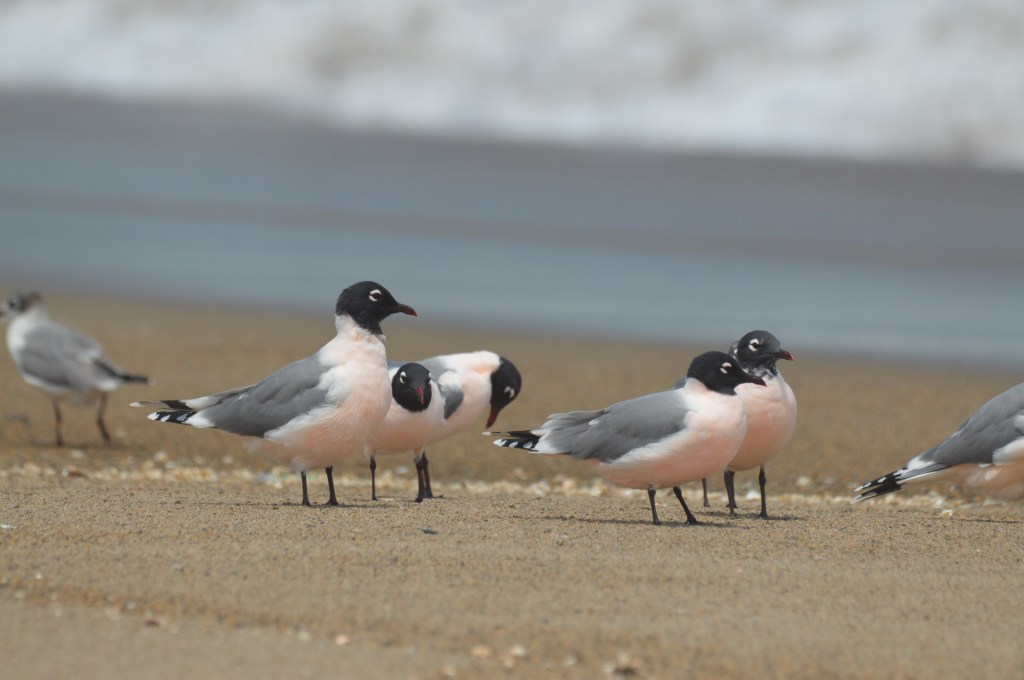
Out past the condominium is the Circuito de Maravilla, which – at the right time of year – hosts an enormous flock of Franklin’s Gulls, which come all the way down to Peru from their breeding grounds in the prairie lakes of central Canada and the Dakotas.
This was obviously the right time of year.
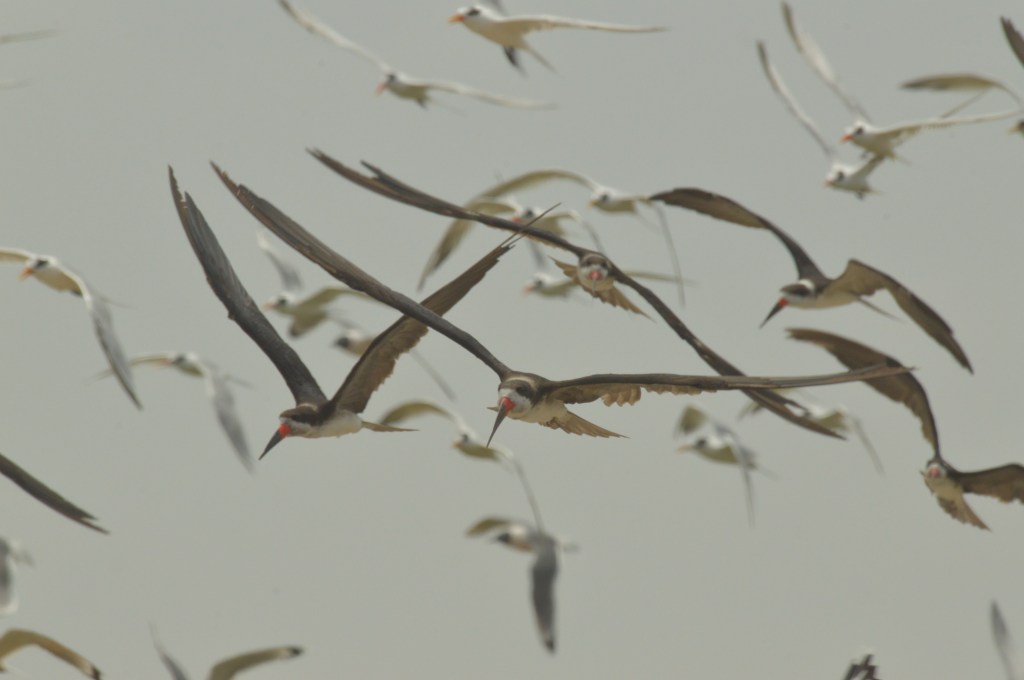
Hundreds of them had gathered at the lagoon, making ready to begin their 15,000 kilometre migration to their nesting grounds. Some were already sporting the handsome salmon pink chests and black hoods. They were joined by a huge flock of skimmers, a bizarre bird whose lower mandible is longer than its upper, so that it can skim the surface of the water to catch its prey.
Beyond the lagoon, however, is a sight even more impressive than anything I’d seen thus far. The Pacific.
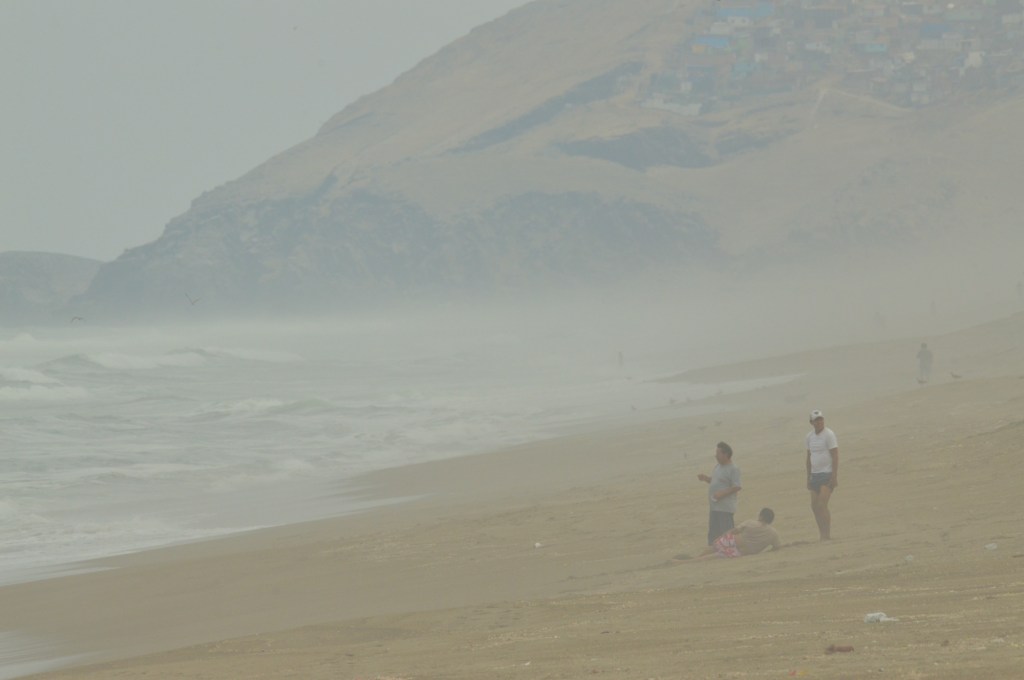
If I’m mentioning it a lot, it’s because I’m bewitched. I’ve never seen or heard an ocean quite like it. It booms just like I’ve read about in books. Not the slow, salty roar of the Atlantic, but a genuine boom like a distant cannon. It has to be heard to be believed.
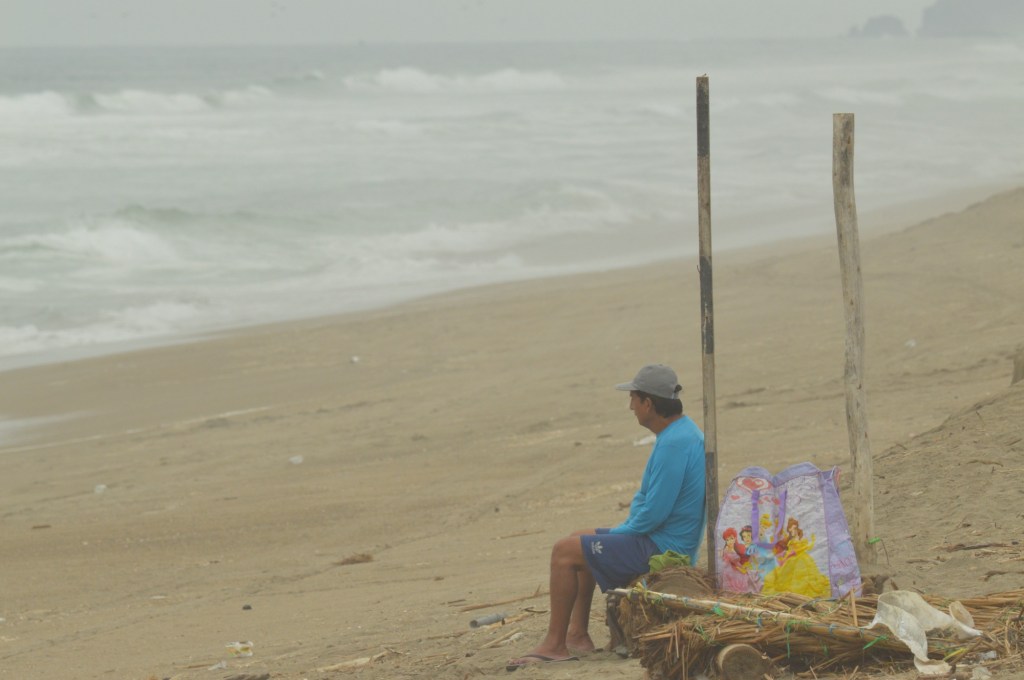
I had to sit and watch it for a while. I wasn’t the only one with that idea, either: I was joined in my vigil for most of the morning by a local man with a baseball cap and a Disney princess carrier bag. He simply stared out to sea for the best part of half an hour.
So did I. It’s nice to know I’m not the only one who can lose time just staring at the beauty of nature.
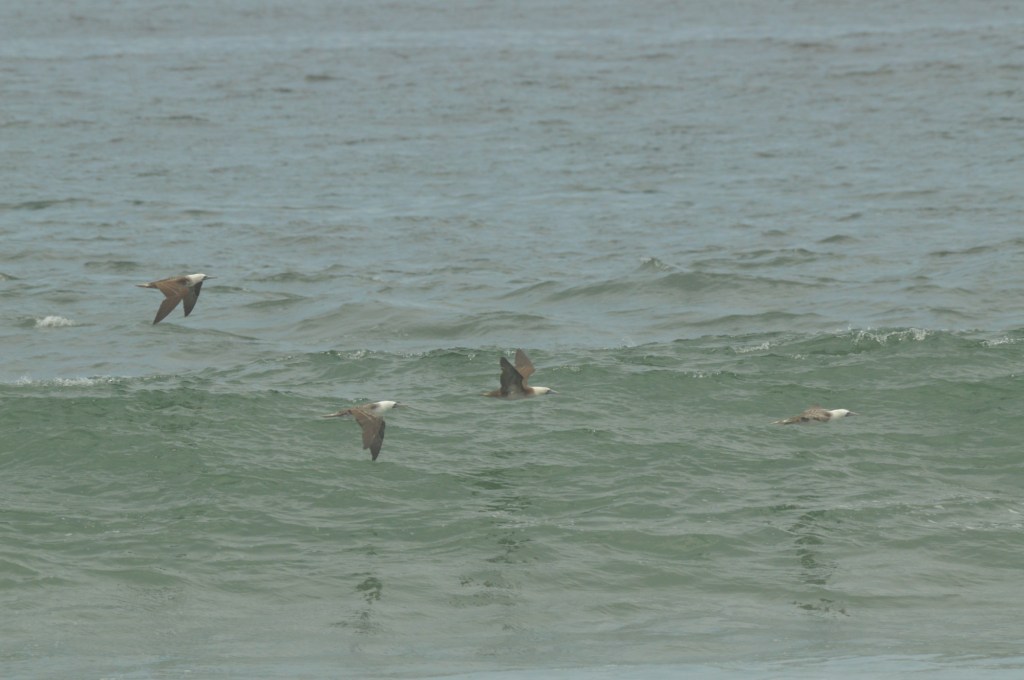
The Humboldt current which flows up the South American coast from Antarctica keeps the water cold – and extremely productive. This is one of the richest seas in the world, and you won’t be allowed to forget it for even a moment. Gulls, terns, cormorants, boobies, pelicans and an attendant host of shorebirds are constantly in sight. I suspect I’ll have better results at Paracas tomorrow.
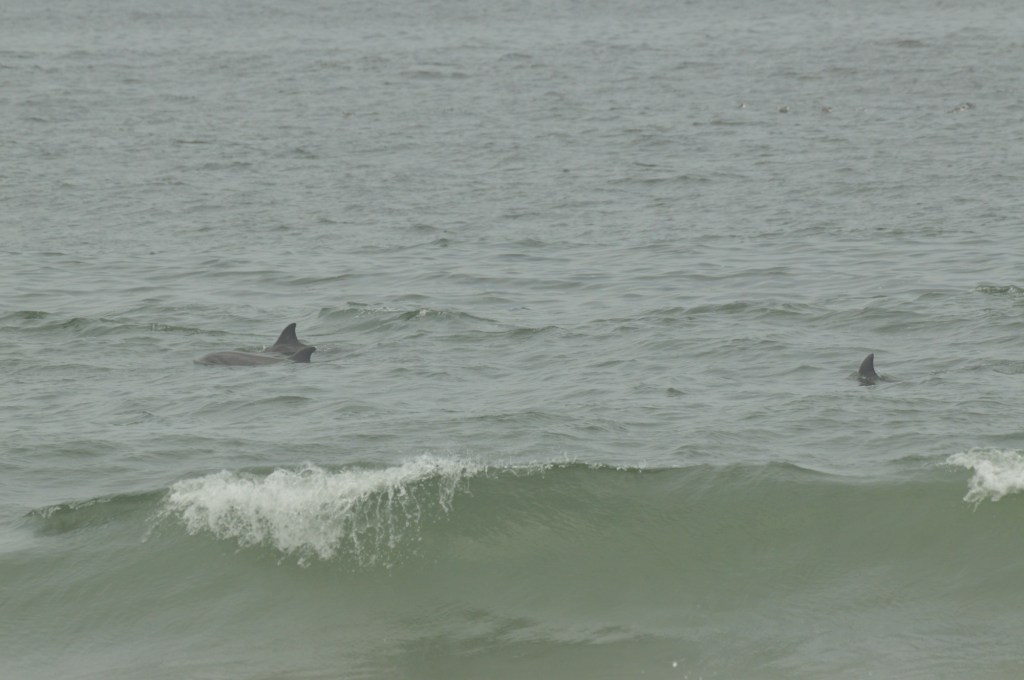
It wasn’t just birds, either. While I was scanning the open ocean from a washed-up palm stump, I saw something dark cresting the water, then another – and another. A whole family of dolphins were feeding just off the shore. They didn’t breach, but they stuck around long enough to count them: eight of them in all. And all because I stopped to watch the waves for a while.
The sun came out from behind the clouds around 12, at which point I thought it sensible to consider a retreat – the Peruvian sun can be a cruel god, and I hadn’t brought my sun lotion (I hadn’t expected to stay so long!). Some of the Franklin’s gulls came to say goodbye, looking even more smart in the sunlight.
I made it back to the shade of the Pántanos visitor centre and rested for a bit. I could have hailed an Uber there and then, but I wasn’t quite done with the wetlands, and when I saw a couple of visitors head into the reserve on their own, I followed suit.
No sign of the cuy, but while I was searching I saw something moving among the reeds. My buen augurio had come to see me off: a seven-coloured rush tyrant. It’s only a youngster, so it’s not as dashing as it will be in a year’s time, but that’s neither here nor there. Peruvians say they grant wishes. So I have made mine.
I could have included even more photos, but I’ll try to pace these posts – there’s simply too much to report, so I must be choosy!
I’m currently taking it easy back at the hostel. My camera definitely needs charging after a serious workout, as do my own batteries – and I could use a shower.
That’s enough work for the Nikon today, I think. I’ll switch things up tonight and explore the human side of Peru for a change! BB x
It can be done! After living in Somerset for the best part of two years, I finally made it to the Avalon Marshes. It’s a little out of the way – as fenlands often are – and, being without a car of my own, impossible to reach outside of term-time, but with a little planning I managed to successfully navigate the one bus there and back again after school this morning. Worth it? Absolutely!
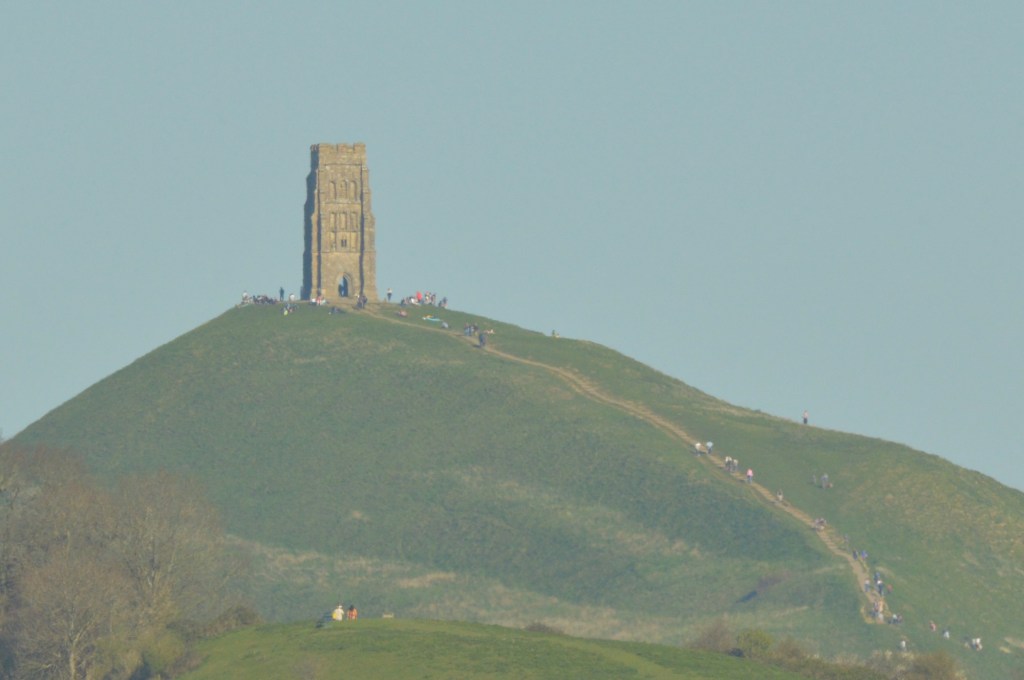
The Avalon Marshes are a network of pools, channels and reedbeds that stretch from the west of the festival town of Glastonbury across the Somerset Levels. Being naturally averse to crowds, Glastonbury and its ilk have never even crossed my mind as a way to spend the summer, so I’ve never had any cause to come this way before. Evidently, I was missing out. This mystical corner of the British Isles has a real charm to it. The 376 bus dropped me off outside The Royal Oak in neighbouring Street and I struck out across country for the marshes from there. Along the way, I walked in the sightline of the legendary Glastonbury Tor. It was a balmy spring day – the fourth in a run of consistently sunny days – so the Tor was drawing a growing crowd of sun-seekers, like a sweet on an anthill. If I had a little more time, I might have gone and had a look myself.
The magic started before I even reached the Glastonbury Canal that runs into the fens. I had just come upon the first of the reedbeds that herald the Avalon Marshes when I heard the sound that I had come here for: a low, pipe-like boom. A sound that inspired many a myth and folktale in the British Isles, and that once was surely heard all across this island. The noise belongs to the great bittern, a singularly beautiful and cryptic variety of heron that is surely the prince of the fens. I can’t remember whether or not I have ever conclusively heard a booming bittern before – my memories of a possible encounter with one in Stodmarsh when I was a lad are a bit hazy – so I have hesitated to add them to my life list thus far.
Today, however, I was left in no doubt. I must have heard at least six different individuals booming all across the fens, including one that was so close that I could swear I heard its resonant intake of breath before each boom. The great bittern is a master of camouflage, however, with a plumage so perfectly suited to its life within the reedbeds that it is almost completely invisible when “bitterning”, so despite the fact that they were making enough noise to be heard from Glastonbury, I never saw so much as a feather. But I wasn’t disheartened in the slightest. Just to hear that booming sound was worth the journey out here. I’ll have to do it again sometime.
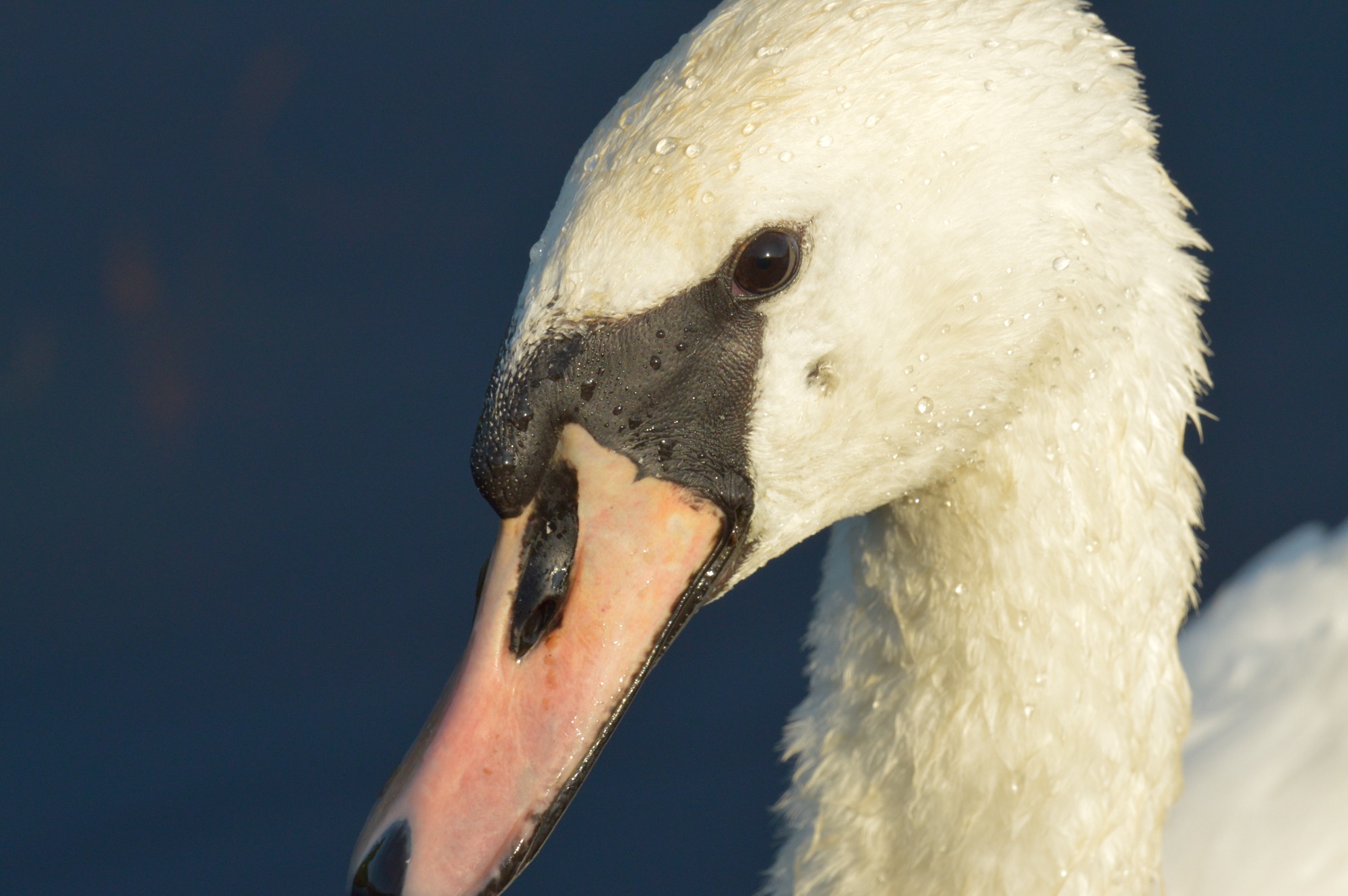
While I was scanning the reeds for one of the bitterns, a swan came swimming by, giving me something to train the lens on.
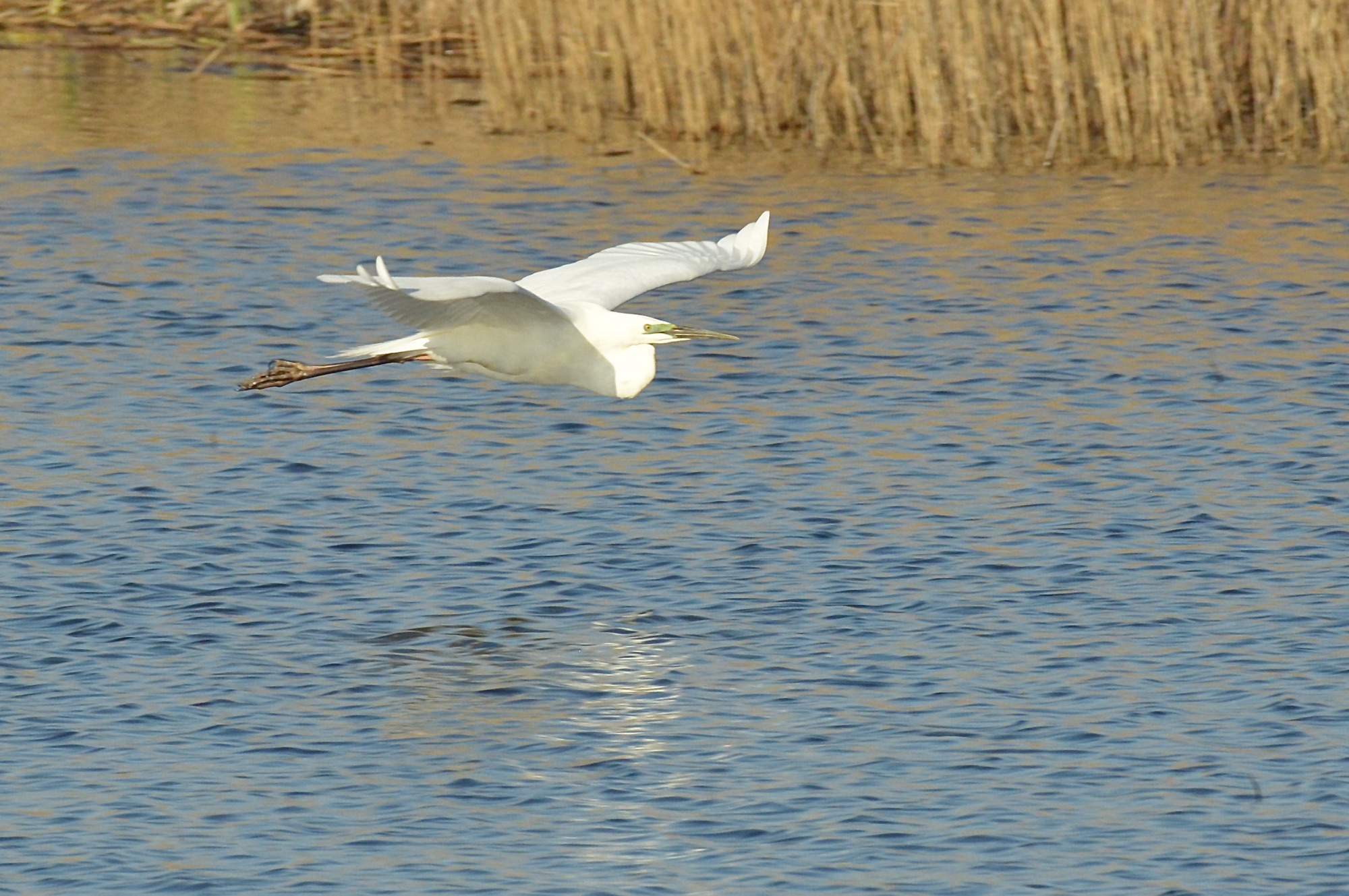
The swans weren’t the only great white birds in the marshes. Another species that has drawn me to the Avalon Marshes today is the Great White Egret, a relative newcomer to the British Isles. The largest of the egrets is actually a heron, a fact that is obvious from its size, which is considerable. I’ve seen these beautiful birds before on the continent, but this would be the first time I’ve seen one here in the UK. When I was a kid, this would have been a very rare find, but much has changed since then. The Avalon Marshes have around fifty breeding pairs, which is frankly ridiculous, considering that they only started breeding here a few years ago. Even the other birdwatchers in the Avalon Hide barely batted an eyelid when one flew into view. It’s a sign that, no matter how bad things may seem, life always finds a way.
On that note, I feel I have to talk about one of the things I haven’t missed about birdwatching: the manspreading. The term didn’t exist when I was a kid, but it certainly does fit the bill.
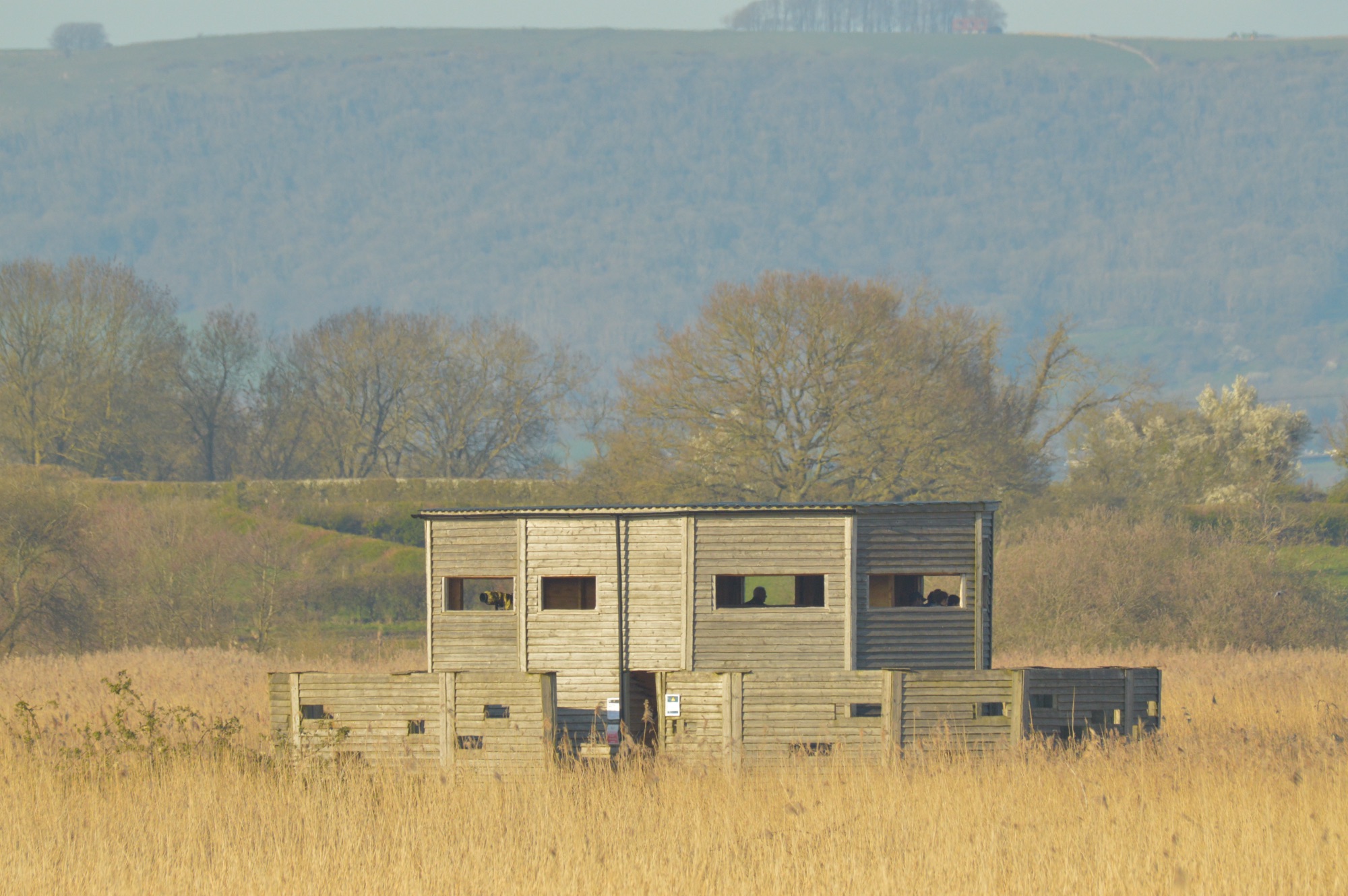
I thought I’d check out the Avalon Hide to see if I could find one of those elusive bitterns, but it had been staked out by a very different group of boomers, who had each selected a window to themselves and laid out their gear all about them: a panoply of scopes, binoculars and cannon-like lenses that made even my monster zoom lens seem like a hand gun. Only one window was available, which looked out back the way I had come. I stuck around for about twenty-five minutes, listening to their familiar birder-talk, but it quickly became apparent that they meant to stick around until sunset to see if either the bitterns or the resident barn owl would make an appearance, and as I had to catch a bus home, I had to cede the hide to them.
I explored the “cattle class” alternative screens below the tower, very much aware of the scopes poking out of the windows above me like artillery. Sometimes a bird-hide can look a lot like a pill-box.
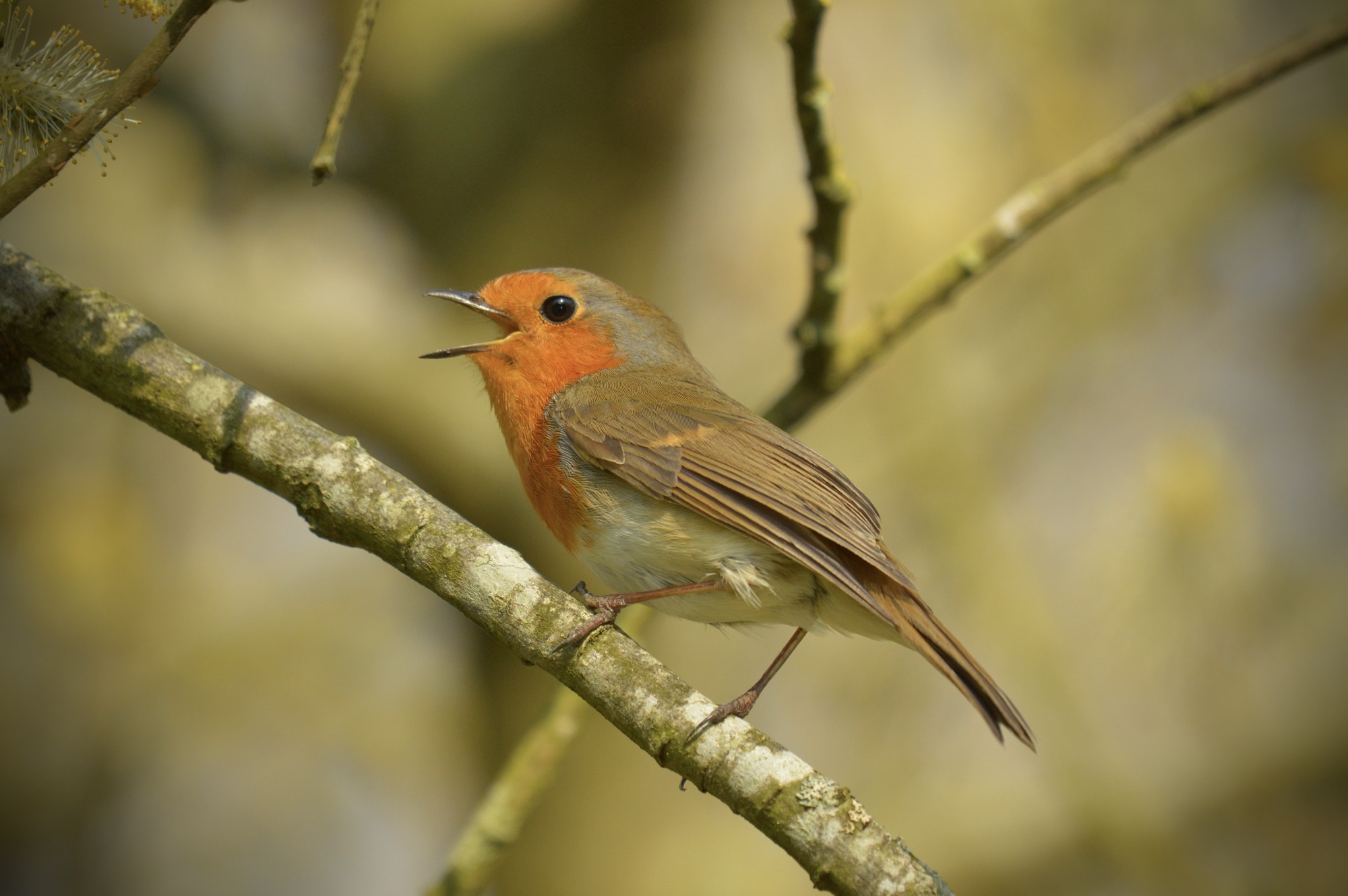
A friendly chap and his wife restored my faith in the hobby when they pointed me in the direction of a water rail they had just seen, but it never did reappear from its hiding place in the reeds, so we went out separate ways with a shrug. Fortunately for me, there was plenty to see: perhaps sixty or seventy shovelers out on the lake, along with attendant flocks of gadwall, mallard, tufted duck, teal and coot, as well as a few noisy great-crested grebes. Most of them were much too far for even my faithful 500mm, but a robin that followed me out of one of the hides was perfectly happy to let me take his photograph, which definitely made up for it.
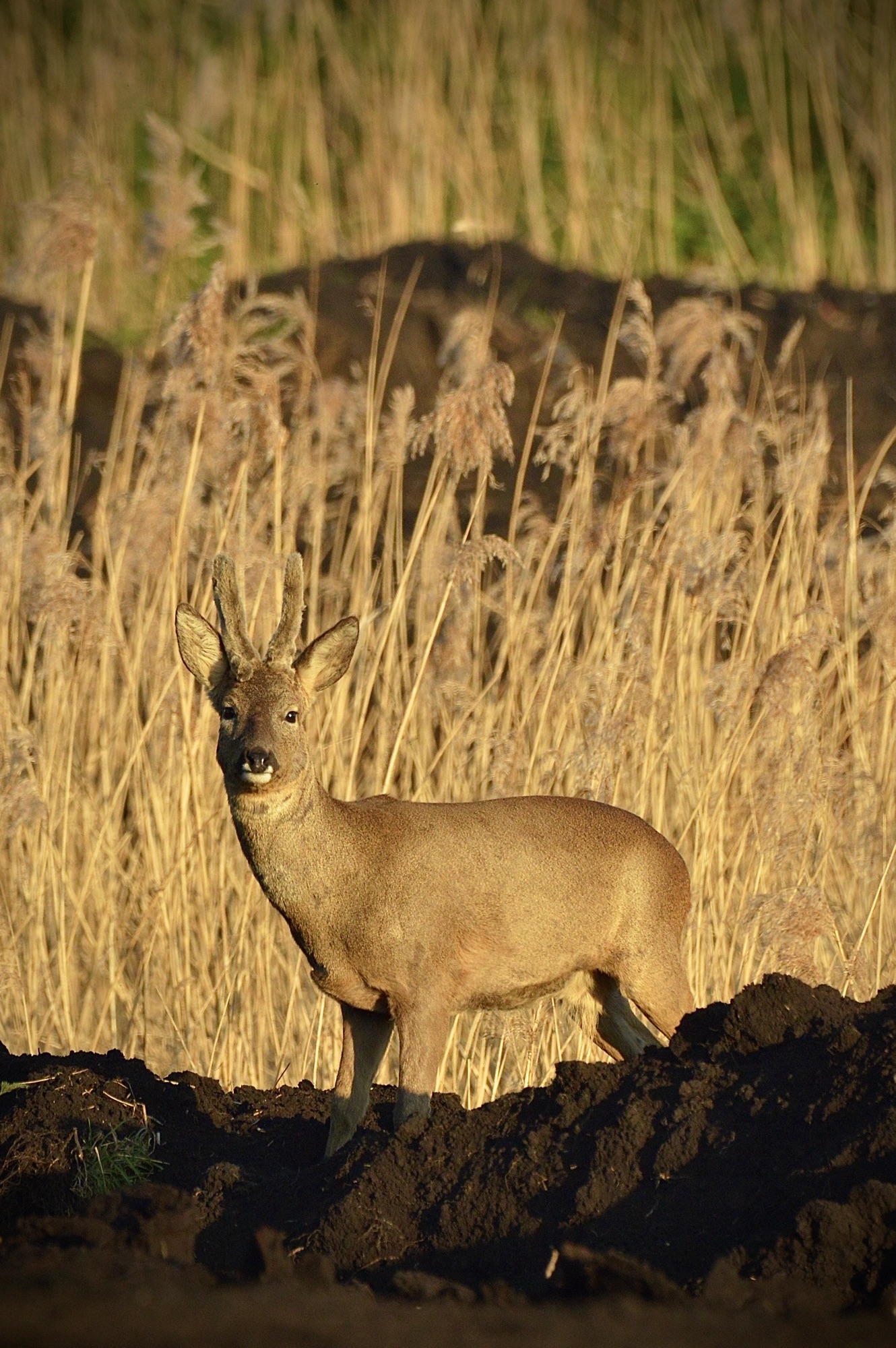
As this was my first sortie to Avalon, I didn’t want to end up stranded by missing the last bus home, so I left with plenty of time to get back to Glastonbury. It was a quiet walk once I’d put the birders and the bitterns behind me, and I only ran into two other walkers out with their dogs along the trail. There seems to be a small gypsy community on the edge of the marshes – something about the layout of their encampment seemed strangely familiar, not to mention the presence of two old and very battered horse-drawn caravans in the yard. When I reached the edge of the marshes, I stopped to look back in the direction I had come, and when I turned back to Glastonbury I saw something staring back at me from the edge of the reeds. I thought it might have been a muntjac at first, but it was much too big for that. It was, of course, one of our native roe deer. Fearless as ever, it didn’t even flinch when I raised my camera.
One thing’s for sure: I’ll be back. It’s only a £3 bus ride from Taunton and, while the return journey is broken up with a layover in Somerton, it’s perfectly doable in a day. I’ll be back for the bitterns, either later in the spring or next year, depending on how busy my duty weekends are after the holidays.
This time next week, I’ll be in Madrid. From there it’s only a matter of hours until I set out for South America. That has come around shockingly fast. I’m starting to get very excited! I’ve had a full month to put the camera through its paces and I think I’ve got the hang of the lens and its demands now – the way it handles, the settings it requires for optimum output and, of course, its weight. Now all I need is to be out there already. Thank you Avalon for being the last stage of boot camp for my trusty Nikon companion. Here’s to the next grand adventure! BB x
I’m slowly starting to rebuild the life I left behind me. It’ll take a little while, but it’s starting to feel very familiar: the long walks, the eyes on swivel-stalks, the weight-training involved in swapping the zoom lens from one arm to the other. In a way, it’s like I never stopped – though it has been about fifteen years since I last did this sort of thing on the regular.
One of the first things to establish is a “patch” – that is, somewhere nearby that I can visit easily and regularly for a quick nature fix throughout the year. I’m still in the market, but I think I’ve decided upon the stretch of the River Tone that runs along Longrun Meadow and into the Netherclay Community Wood. It’s within easy walking distance and there’s plenty to see, including otters – though I dare say I’d be exceptionally lucky to find them out on a weekend wander.
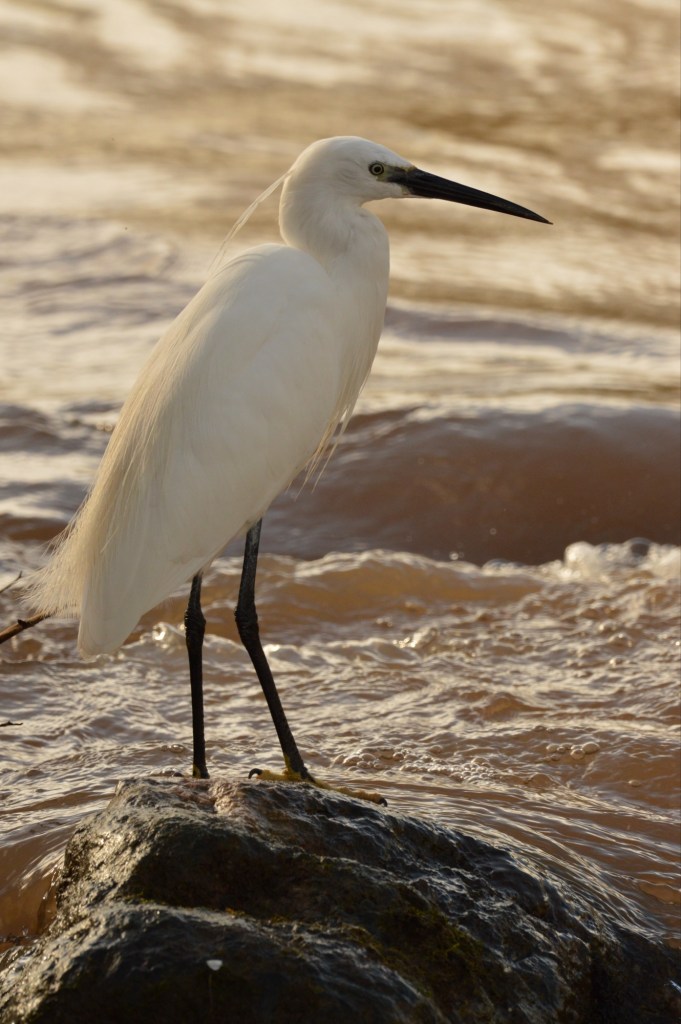
The egrets around here are pretty fearless, though. The flooded banks of the Tone must be harbouring a number of small fish, because I was able to watch this one hunting for quite some time, catching a couple of tiddlers and a small eel. I wonder why great egrets are more skittish than the little and cattle egrets that have colonised so many towns and cities? Is it genetic, perhaps – or is it the memory of that obsessive slaughter for their feathers that keeps them at bay?
I added a few new locals to my “patch list” – namely, teal and buzzard – but spent most of the walk learning how best to cradle the heavy lens over a long distance. I think I’ll need a strap for the lens itself, because I don’t want to chance the weight of it putting undue strain on the camera itself.
I was looking at a tied-down weekend this week, but thanks to a couple of necessary swaps and the support of my wonderful Debating team, I worked Friday night instead and got the weekend off. Suddenly, I had a free Sunday. Coupled with the knowledge that my Railcard expired at midnight, putting a definitive end to many years of affordable train fares, I decided to put the lens through its paces in a new environment: Dawlish Warren.
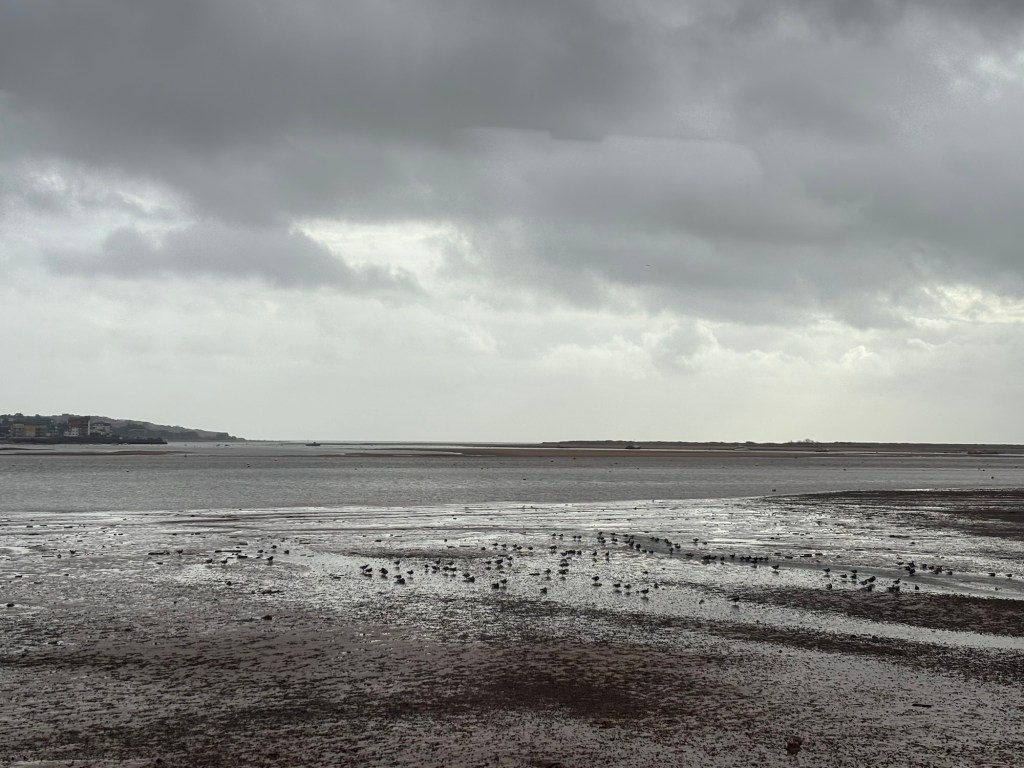
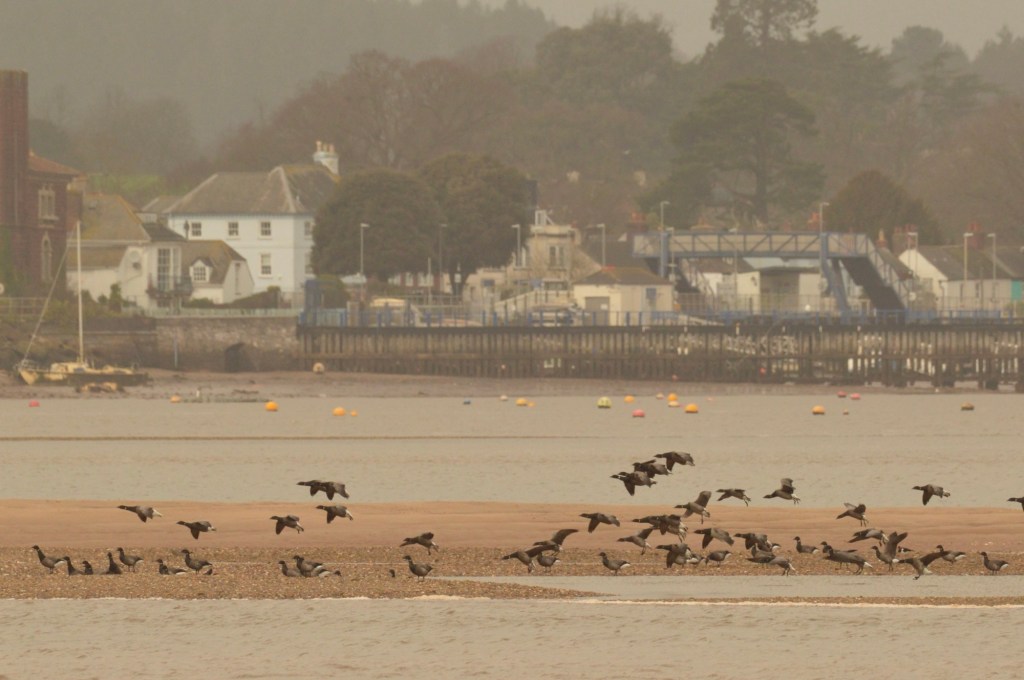
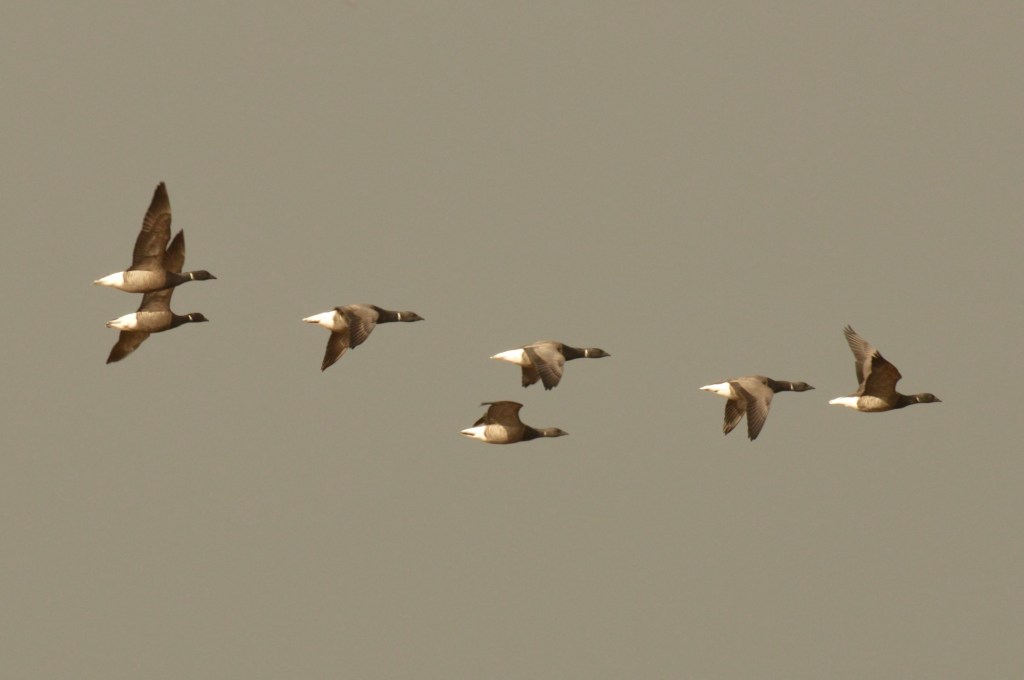
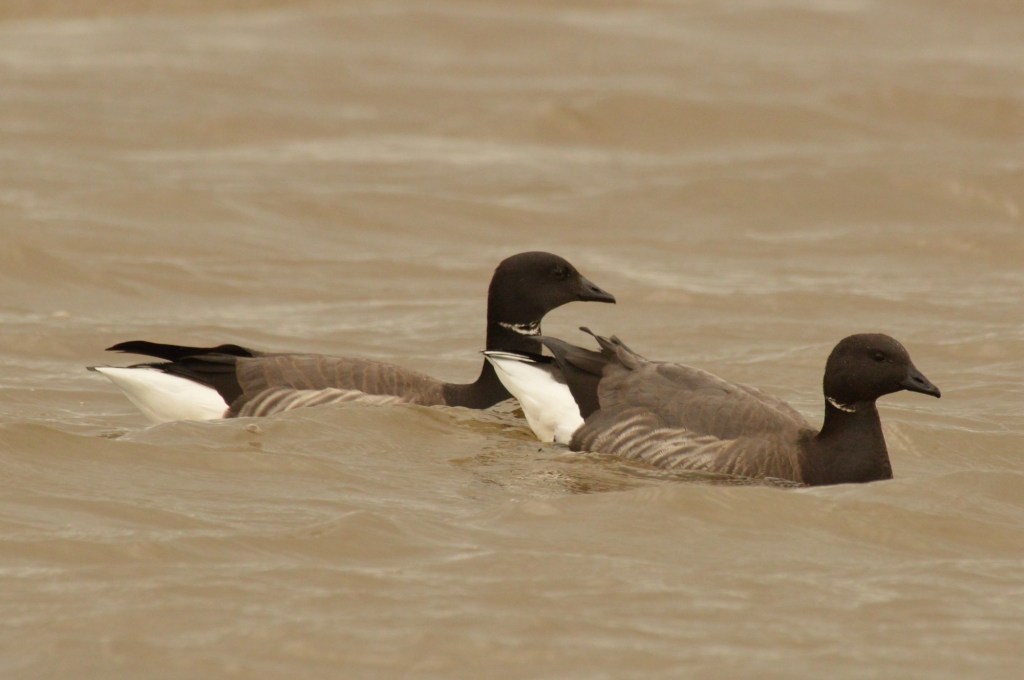
I came out here at the end of October, when the sun was still shining and the beach was still packed with holidaymakers. In my memory it felt like the end of summer, but it must have been autumn, because the brants had already arrived in great numbers. They were very much in evidence today, numbering well over a hundred, and more than likely the same birds I saw back then.
Brant geese are a seafaring species of goose that spend the winter around the coasts of the British Isles, returning to their breeding grounds in the Arctic circle at the beginning of spring. Most of our geese – the dark-bellied kind – come from northern Russia and Siberia, though the odd light-bellied individual is often to be found among them, straggling over from its North American range.
In ancient times, before their migration routes were known, the people of the British Isles had no answer to explain what happened to the thousands of “burnt geese” that flocked to the coasts, saltmarshes and estuaries, only to disappear without a trace with the spring. Together with the closely-related barnacle geese – who once pulled a similar disappearing trick – they were believed to hatch from goose barnacles, which shared their colour palette. As such, being “not of flesh”, they were permitted on Christian fast-days – a practical solution in desperate times, it must be said.
It’s hard to see how anyone could have believed that old yarn about birds born from barnacles, but then again, the same people believed that swallows slept at the bottom of ponds during the winter. Sometimes we make up the most fanciful nonsense to avoid having to face the obvious reality, even when it is staring us in the face.
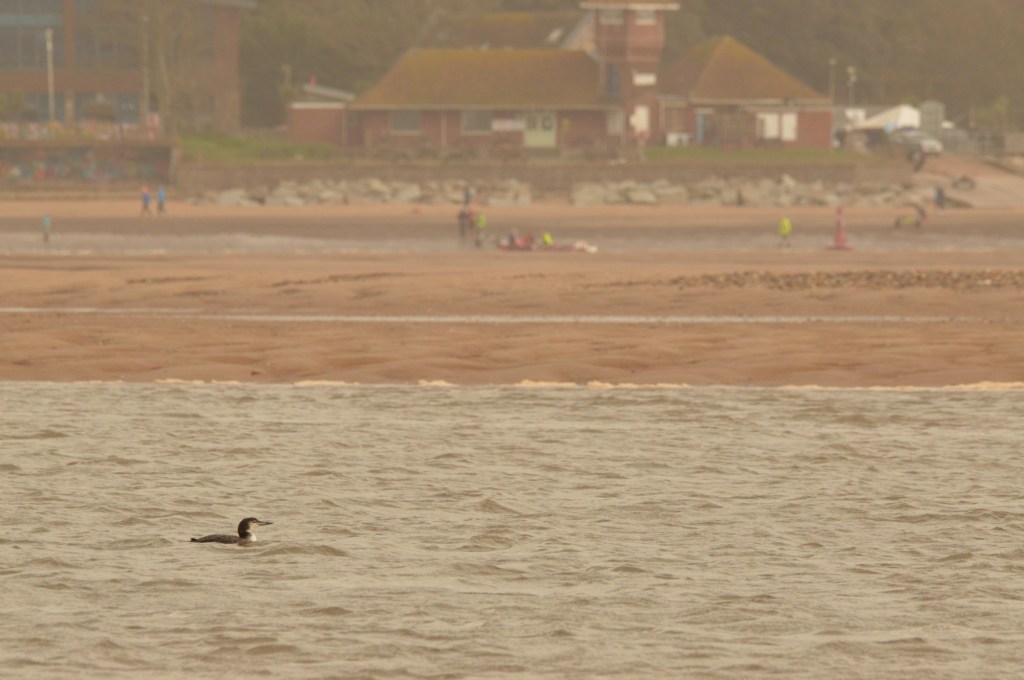
Out in the bay, I saw a silhouette I recognised immediately, diving and resurfacing in a small channel between the shore and a shrinking sandbank. The most common diving seabird around here is the cormorant, but in winter, there are quite a few birds that might dive beneath the surface: shags, sawbill ducks, scoters, grebes and divers. Only one of those comes close in size to the cormorant, and that particular bird holds its head level, unlike the cormorant, who swims with his bill upturned.
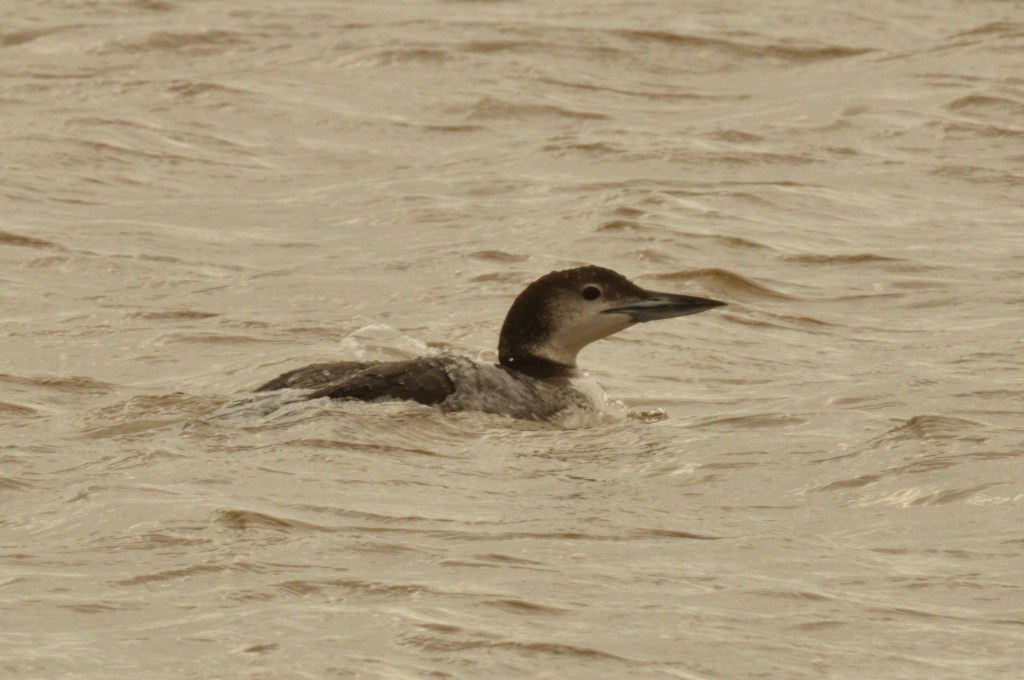
I didn’t need binoculars to know I had found a great northern diver – the first I’ve seen since my schooldays – and I went tearing across the beach to get a closer look.
The last time I saw one of these impressive creatures, it was far out to sea and flying east along the British Channel. I haven’t had the luxury of seeing one so close before – close enough to appreciate its terrifying red eyes, an evolutionary trait shared with grebes that filters light and helps them to see underwater.
I watched it hunting in the bay for a few minutes, before it decided to run the gauntlet of the shrinking sandbar and scour the southern shore. I counted the seconds between each dive. This one averaged out at 40 seconds, but the diver has been known to stay submerged for up to five minutes. Pretty impressive for such a small and fast-moving creature.
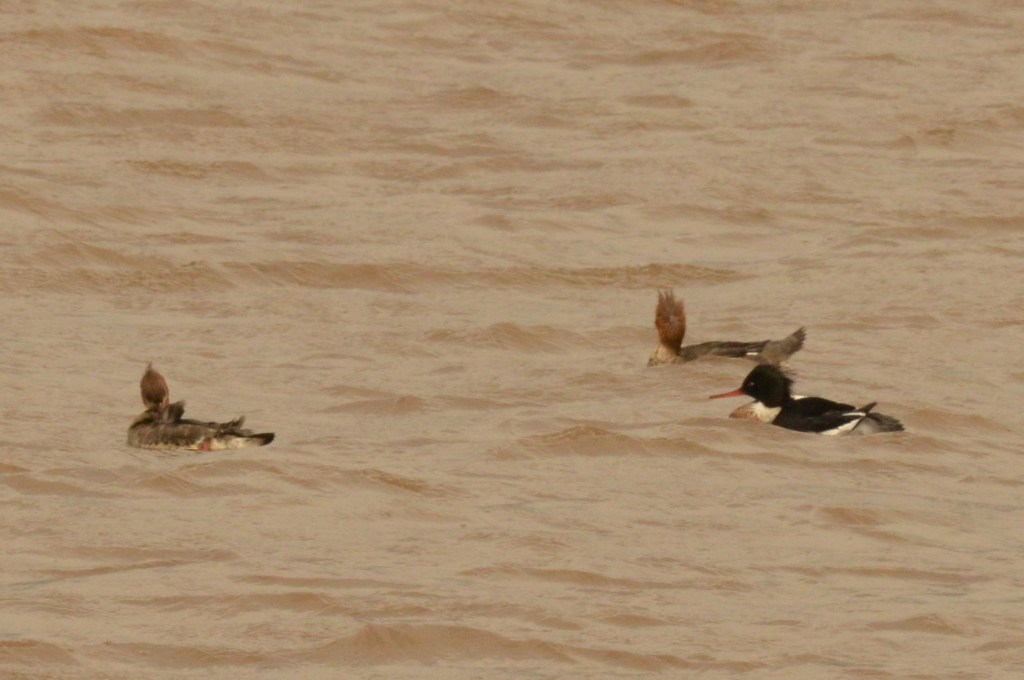
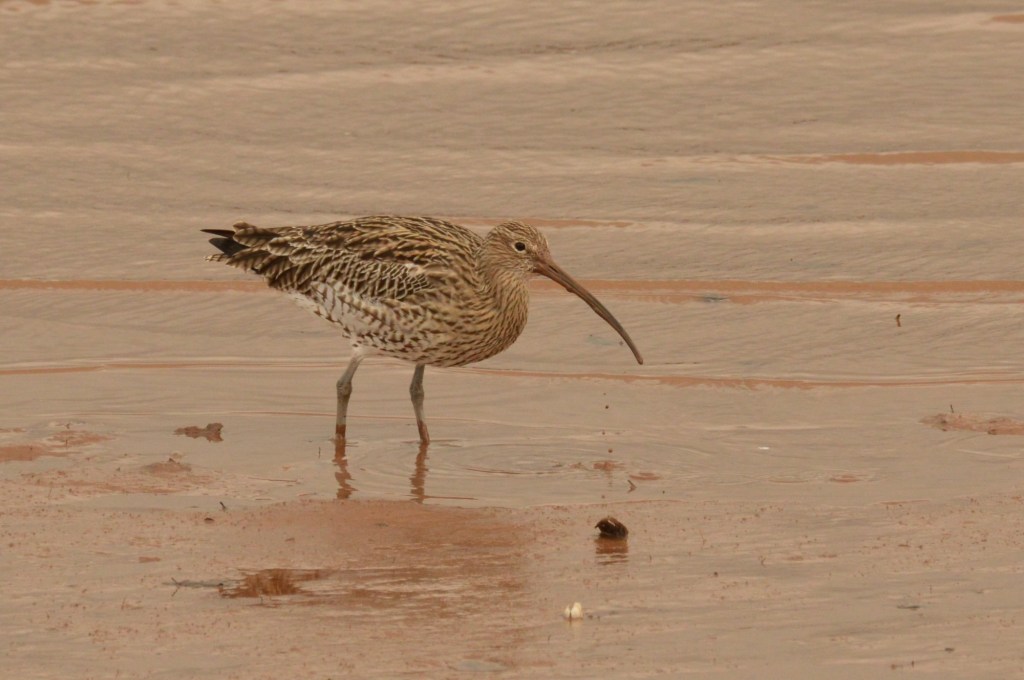
I made it back to Dawlish Warren’s station in plenty of time for the hourly train, but the sun was still shining and I hadn’t yet had enough, so I set out along the Warren Road to the north. The railway hugs the coastline, so the roads meanders a bit on its way north from the Warren. Eventually, after about an hour’s jaunt through the countryside, I came to the ferry town of Starcross. I decided against pushing on to the Exminster Marshes and set up shop at the station, which looks out over the estuary. I was rewarded for my patience with a family of punk-rock red-breasted mergansers, as well as a number of familiar waders probing the mudflats below: turnstones, redshanks, greenshanks and a couple of curlews.
There will always be a special place in my heart for curlews. Their mournful bubbling call was the backdrop to many a childhood adventure around Romney Marsh and the mudflats of Sandwich Bay, and followed me up into the highlands of Scotland on a couple of hiking adventures in my twenties.
Apart from that, they’re remarkably beautiful creatures, with their cryptic feathering and dark, thoughtful eyes. I’ve been very lucky with the egrets around Taunton, but I hope I can continue to observe these magnificent creatures and do justice to them with my new gizmo.
I might not get so flexible a weekend for a while now, so I’ve cashed in my chips early. But I’ll be back with more nature news in the near future, so stay tuned! BB x
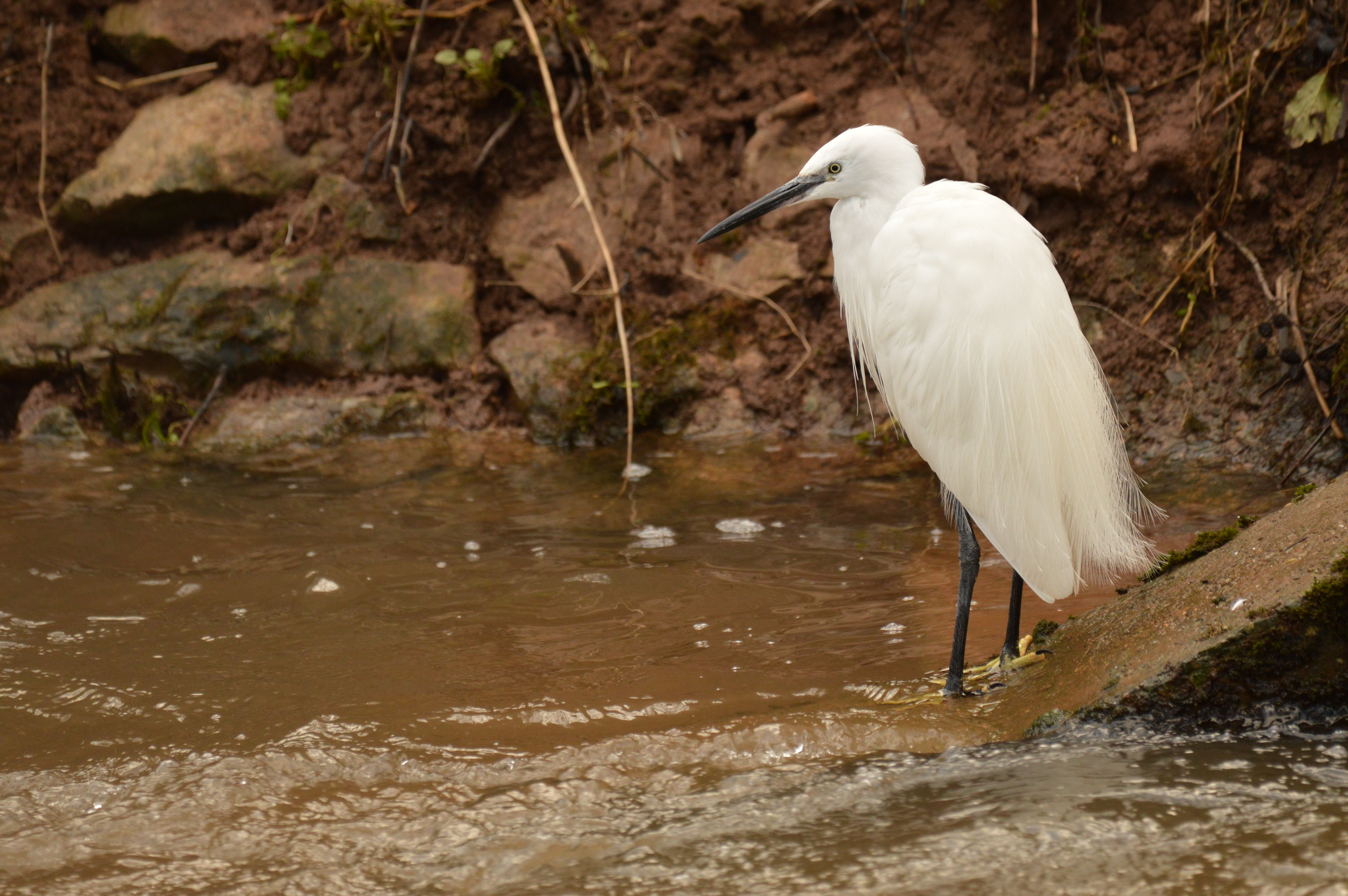
Little Egret (Egretta garzetta) – River Tone. 22/2/26
On my afternoon wander along the Tone yesterday I came across an egret fishing on the concrete steps of a flow measuring station. I’m so used to the snowy white shapes of these beautiful birds in and around the rivers and fields of the English countryside that it’s sometimes hard to remember a time when these were a very rare sight indeed.
When I was not yet ten, the presence of an egret in the area was something my family or friends found newsworthy. That’s not exactly surprising. Compared to our native (and undeniably stately) grey herons, they do have an exotic look about them. Maybe it’s the silky plumes (or aigrettes) of their breeding plumage, or maybe it’s the smart yellow galoshes they seem to wear on their feet. The speed of their colonisation of the British Isles gave the Roman Empire a run for its money: by the time I was fifteen, they were already such a feature of the Kentish wetlands and saltmarshes that they had somewhat lost their star appeal, if not their lustre. They no longer triggered a rare bird alert on twitchers’ pagers up and down the country, and their names no longer appeared in bold capital letters on the “Recent Sightings” blackboards at nature reserves.
But first, some myth-busting. It’s not as though the egret is an exotic immigrant to our shores. Far from it. Various species of egrets could be found in the British Isles throughout history, before a combination of over-hunting and the insatiable demand for egret feathers wiped them out. Such was the obsession for aigrettes – which once bedecked the headwear of noble lords and ladies alike – that the little egret and its cousin, the great white egret, were driven out of much of Western Europe as well, seeking sanctuary along the sheltered shores of the Mediterranean. It wasn’t until a pioneering group of Englishwomen came together in 1889 to form the Society for the Protection of Birds (the forerunner to the cherished RSPB) that the egret’s fortunes began to change, first by petitioning powerful high-society types to eschew feathers from their wardrobe, then lobbying the government to ban them outright. It clearly caught on, because the Americans set up a similar initiative of their own over in Oregon, where the native great and snowy egrets were suffering a similar fate. Gradually, with aigrette feathers off the market, the birds began to reappear in the fields and fenlands they had once called home. It would be another hundred years before they attempted to recolonise the British Isles, but once they did, they came back in droves.
I bought a magazine once in the late 2000s that predicted the arrival of the rest of Europe’s heron and egret species in the UK as global warming made these cold islands more favourable to birds more at home in southern Europe. It wasn’t wrong. Since then, both the cattle and great white egret have secured a foothold in Britain, with all three species present in the Avalon Marshes over in the Somerset Levels. If it weren’t for the fact that I work six days out of seven – and Sunday trains and buses are awful in this part of the world – I’d be over there like a shot. Somehow, I fear the open wilds of the Avalon Marshes will have to wait until I have wheels, because after a few sums, it would actually work out cheaper for me to fly to Europe and back than to spend a night or two in Glastonbury in order to visit the Levels. Mad how that works.
Not that I’d say not to being back in Europe, of course – though I am still waiting for my temporary ban to lift, as I hit the ninety day limit last year and would very much like to go back to my grandfather’s country without having to pay a fine. I always try to keep an open mind, but sometimes, Brexit, I really do wish you hadn’t screwed up my life quite so much.
Anyway. These papers won’t mark themselves. Just thought I’d muse a little on something uplifting before getting back to the grind. BB x
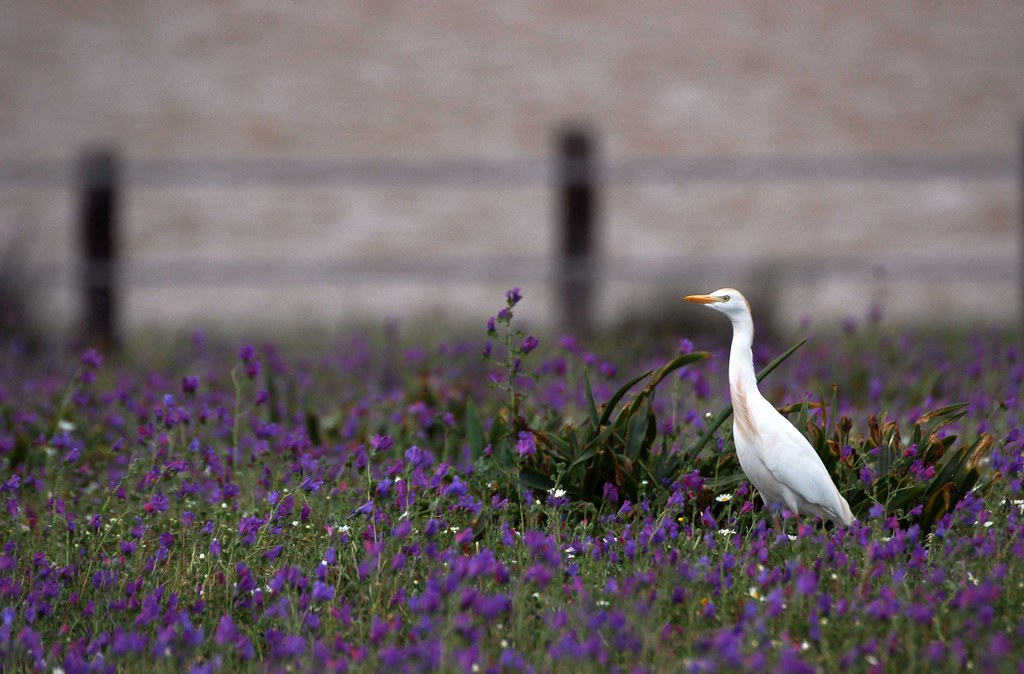
Cattle Egret (Ardea ibis) – Dehesa de Abajo, Spain. 26/4/10
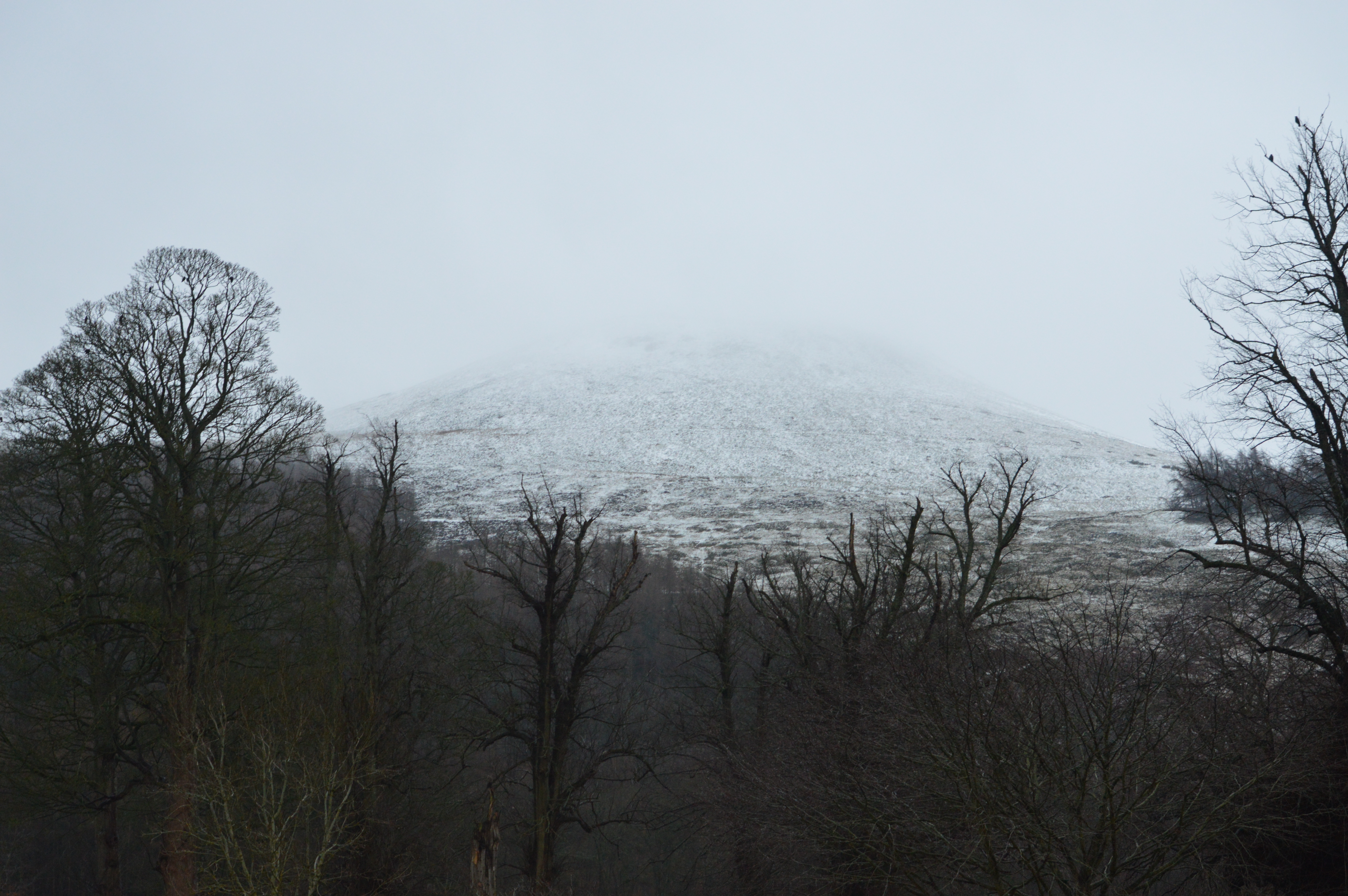
I’ve just come back from a wonderful five days in Scotland with some very dear friends. Apart from being a much-needed social fix, it was as good an excuse as any for a change of scenery. Unlike the rest of the UK, where it has so far managed to rain every single day since the new year began, Scotland and its particular brand of Celtic magic has contrived to turn some of that endless precipitation into flurries of snow, which still frosted the distant highlands beyond the Firth of Forth as my southbound train whisked me around the coast at Berwick. I ended up going north one day sooner than planned to tag along to a family hike in the Lomond Hills around Falkland, for which I was woefully overdressed. We popped in to Andy and Babette’s church first, so I had my Sunday best on, which wasn’t exactly the right fare for carrying a pushchair through ankle-deep mud and melted snow. Still – there’s got to be a first time for everything, right?
God – but Edinburgh is such a beautiful city. I don’t say that all that often about cities, but Edinburgh is special. If Spain doesn’t work out – and I am still holding out that it will – Edinburgh wouldn’t be a bad fallback. What a place to raise a child!
With my Peruvian adventure now just over a month away, I have started to get serious in my preparations. I have booked my first accommodation option in Cuzco, using the only dates of which I can be sure, and started to map out the various bus routes I will be taking. I have nineteen days, which isn’t nearly enough to see all that Peru has to offer, but I’ll give it a damned good try.
As I can’t be sure if I’ll return to Peru anytime soon, it occurred to me a few weeks ago that now might be the right time to invest in an upgrade to my trusty 75-300mm telephoto lens. The reliable little Nikkor lens has done a fine job for the last ten years – almost to the day – but in a country teeming with sights I have never seen before, a little more reach would be a very handy thing to have.
When I was starting out as a wildlife photographer, I used a second-hand Nikon D70 and 75-300mm lens and so I grew very accustomed to shooting with that focal length, but when I was around fourteen, my mother bought me a Sigma 150-500mm. I don’t want to think about how much it must have cost her back then (when we weren’t exactly in clover after our ruinous attempt to move to Spain), but it was one hell of an investment. Once I got the hang of the behemoth and its various quirks (notably its optimal range of 400mm, as it tended to blur beyond that range), it became nothing short of my right arm.
Goodness knows I had enough practice. Weekly sorties became routine. My homework diaries from Year 10 and 11 have a clearer record of my weekend plans than they do of any homework I might have been set. My usual haunts were scattered across East Kent: Stodmarsh, Sandwich Bay, Margate and my local patch at the Undercliff where the White Cliffs of Dover began; and sometimes further afield, to the lonely wetlands of Dungeness and the Elmley Marshes. I still find it ironic that I didn’t really get bit by the birdwatching bug until my last week living in Spain, by which point it was almost too late to appreciate what I had out there. Still, Kent was a wonderful place to learn that trade, and I even made something of a name for myself as the Young Kent Birder for the Kent Ornithological Society. That was also my first foray into blogging, as it happens – this particular endeavour is merely the successor to a record-keeping exercise that I have been working on since I was fourteen years old.
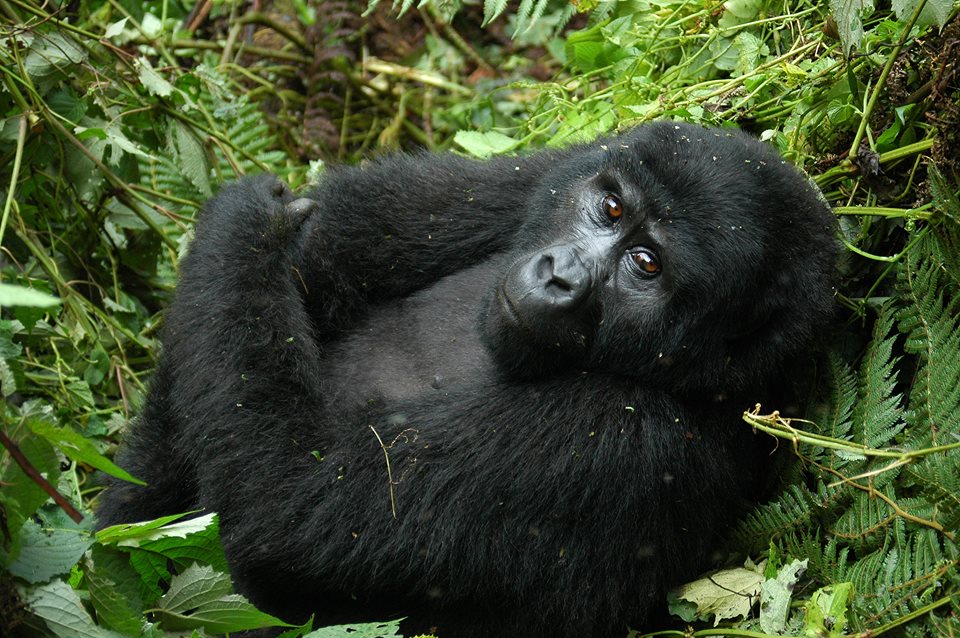
The Sigma lens came with me on many adventures, but it was absolutely invaluable when I went to work in Uganda during the first three months of my gap year. I honestly don’t know what I’d have done without it. I certainly wouldn’t have had nearly as much luck with the fish eagles, crowned cranes, tree-climbing lions and mountain gorillas as I did with the Sigma lens at my side.
Sadly, we leave some of our most cherished things behind when we grow up. When I became a man, I put away childish things, and for some reason, the Sigma lens – and the birdwatching world it had opened to me – was one of those “childish things” I put away when I left for university. Maybe I was only trying to fit in. Maybe all the time I would have spent out and about in nature was reassigned to making time for friends and rehearsals. One way or another, I sort of let go of something that had been a fundamental part of my childhood – and, if I’m being honest, my soul. I regret that, I guess.
The naturalist in me never went away. I distinctly recall keeping a quiet list of the birds I saw in a notebook while traveling around Morocco with some friends from my Arabic course. I remember also taking an unfettered delight in the sight of a sparrowhawk when it struck down a pigeon in my garden and proceeded to disembowel it in front of the kitchen window. And there was always an enormous grin on my face if and when I encountered the pair of goosanders that lived on the River Wear en route to a seminar in the morning. I think I even altered my route most days to try to see them.
After a few months in Spain during my year abroad, I used some of my Erasmus grant to buy myself a new camera. The new model – the D3200 that I have used ever since – was a budget model and thus did not come with an in-built focus motor. When I remembered the faithful Sigma and tried it out with my new kit, I realised that its days as a wildlife zoom lens were over. Let’s just say that tracking a 15cm kingfisher flying at 40kmph across the surface of a rushing river is hard enough with an autofocus-ready lens, and damned near impossible when you’re trying to catch it manually. Several years of neglect had also left it in a rusty state. While still perfectly functional, web-like fungus had grown across its inner rings, doubtless the result of its final foray in the cloud forests of Bwindi Impenetrable National Park.
Since then, I have done a decent job with my 75-300mm, but the glory days of wielding a mighty telephoto like a flanged mace felt like a distant memory. Until yesterday, when I bit the bullet and ordered a proper upgrade: introducing the Nikon 200-500mm AF-S. It’s not exactly the latest model – the lens went on the market in 2015, shortly before I bought the D3200 – but it is a huge step forward in terms of what I can do with my wildlife photography. I’m not really at the stage in my career where I feel I can justify splashing out on one of those titanic cannon-esque superzooms that the other Kentish birdwatchers used to lug around, but I am at the stage in my life when I want something to live for. Lady Luck is proving hard to find, so until she turns up, I’ve decided to step back in time and blow the dust off a hobby that used to have me grinning from ear to ear from week to week.
Some people find their joy in the gym or in park run. But for me, the answer is and has always been nature. Now that I am fully-armed once again – for the first time in nearly fourteen years – it’s time to get back out there and enjoy a hobby again.
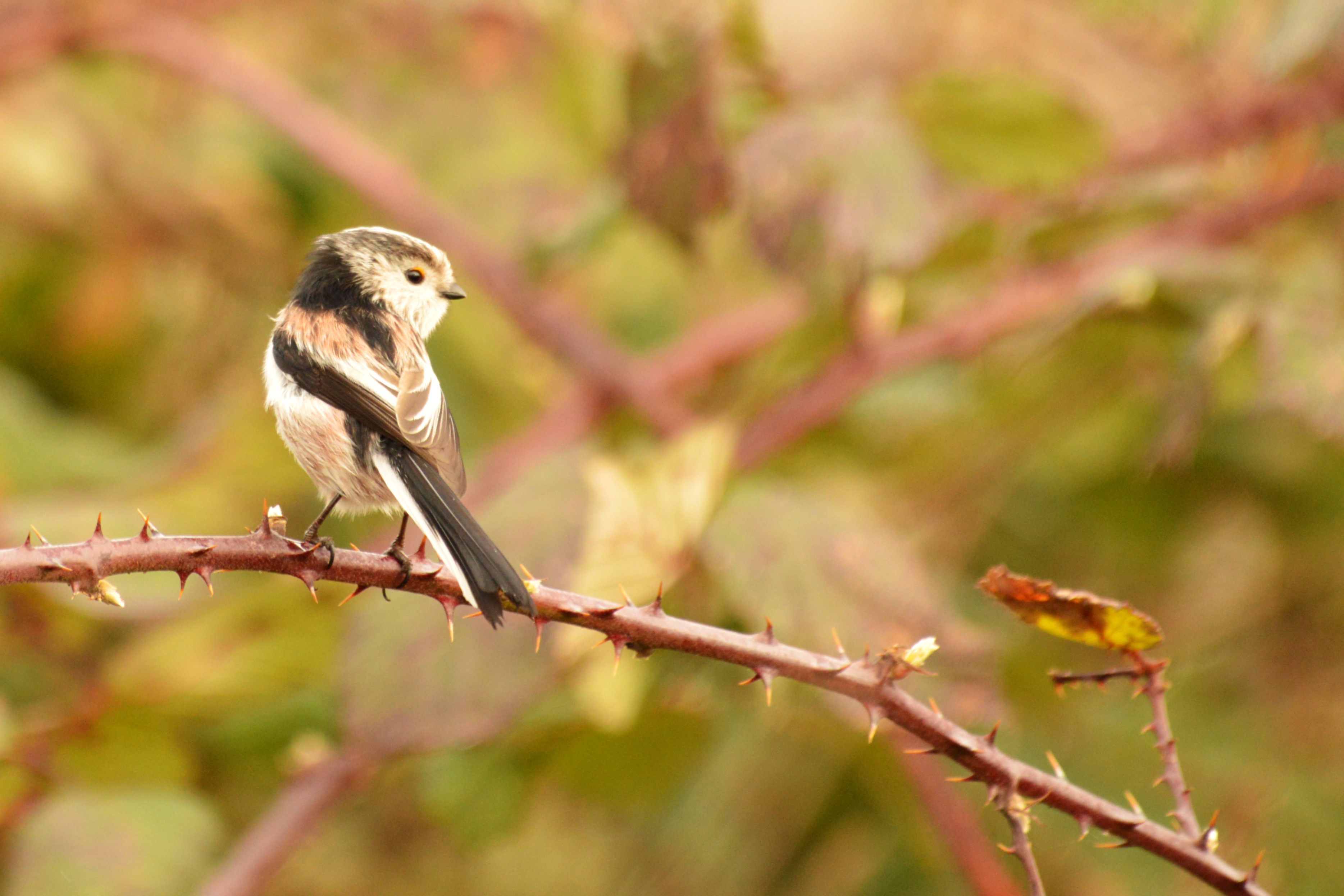
Long-tailed Tit (Aegithalos caudatus), River Tone.
I still don’t have wheels of my own, so my forays will be limited until such a time as I get my hands on a driver’s license, but for now, I intend to explore my immediate area. There’s plenty to see in the corner of Somerset where I live, and the local bus and train network is pretty handy. With the forecast looking none too promising (the rain continues), I thought I’d start with a wander up and down the River Tone, so that I could dash home in case the heavens opened. Fortunately, the worst I got was a gentle mist for the first five minutes, after which I had a very dry (if muddy) two hours’ walk.
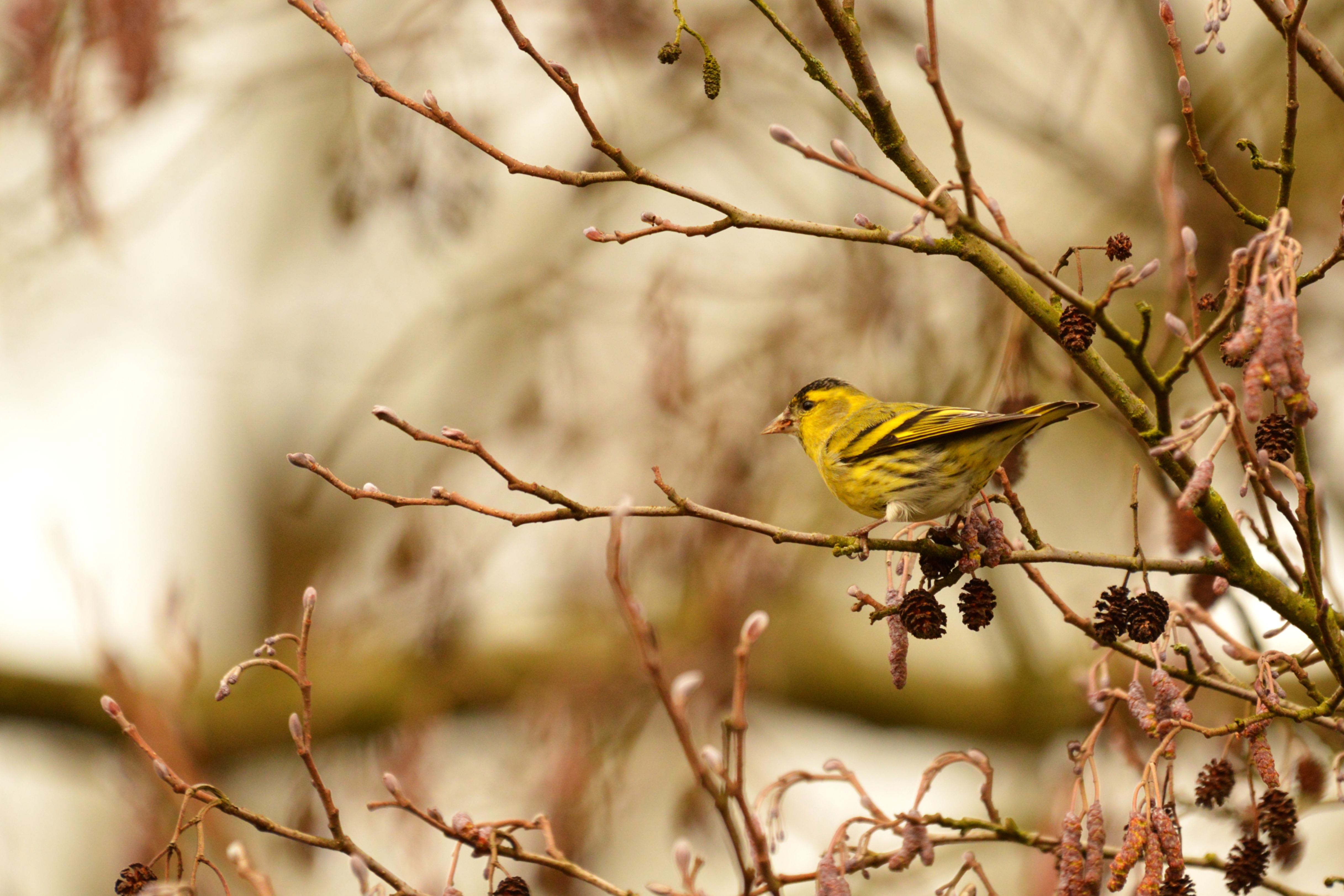
The Nikon 200-500mm is about the same length as the old Sigma, but it is both chunkier and heavier, so I found myself using the tripod grip as a handle. It also requires two spins of the barrel to extend to its full focal length (back in the day, I could wind out the Sigma to its precise maximum of 400mm in a single move), but in a major improvement on the Sigma, it loses none of its visual acuity at its full extension, so in a very real sense, I am working with a longer telephoto than I have ever operated before. I had plenty of opportunities to put it through its paces this morning with the roving flocks of passerines that were feeding along the river, and it did not disappoint, tracking the nimble movements of treecreepers, siskins, goldcrests and long-tailed tits as they hopped about between the leafless branches.
I’m a firm believer that it takes more than just an expensive camera or lens to make a decent wildlife photographer. What it really requires is a solid understanding of your subject and their fickle nature. Fortunately, I have spent most of my thirty-two years on this planet observing the world around me, so while I still can’t keep pace with the rest of my generation in many respects, I do know what I’m doing in the field of wildlife photography. I’m no professional, nor would I ever consider making this hobby into a side-hustle, but it does bring me immense joy.
Eurasian Siskin (Spinus spinus), River Tone.
It’s so good to be back. My arm is complete again. Let’s make this a year to remember! BB x
León is already a distant memory. I’m sitting in the shade of an awning in the garden of the albergue parroquial, having just spent a blissful twenty minutes with my feet in the foot-bath. The meseta stage is almost over and the foothills of the Montes de León are but a day’s walk away. Change is coming!
I slept very well last night, though perhaps because I wasn’t one of the Italians who tried to have dinner at the hostel ten minutes after lights out, incurring the wrath of the hostalera. All the nearby sockets were in use, so I had to leave my phone to charge down the hallway, which deprived me of an alarm for the morning… but, if the last few days are anything to go by, you hardly need an alarm on the Camino. You might just as well use the fifteen others that go off around the same time.
I was out the door by 6am and racing back to Plaza Santo Domingo – and with good reason. After yesterday’s mindless urban trudge into the city, I found a way to circumvent León’s even more extensive westward sprawl: the A1 city bus to La Virgen del Camino, on the very edge of the city outskirts. Thirty years ago I might not have bothered, but I couldn’t quite face an hour and a half’s march through characterless modern development, so I was more than happy to stump up the 1.60€ fare and rub shoulders with the orange-tee brigade of SOLTRA workers headed for their 7am shift in La Virgen. Two other pilgrims were in on the secret, but I lost them a short distance out of town when they stopped to check their bags. From then on out, I barely saw another pilgrim for the rest of the trek.
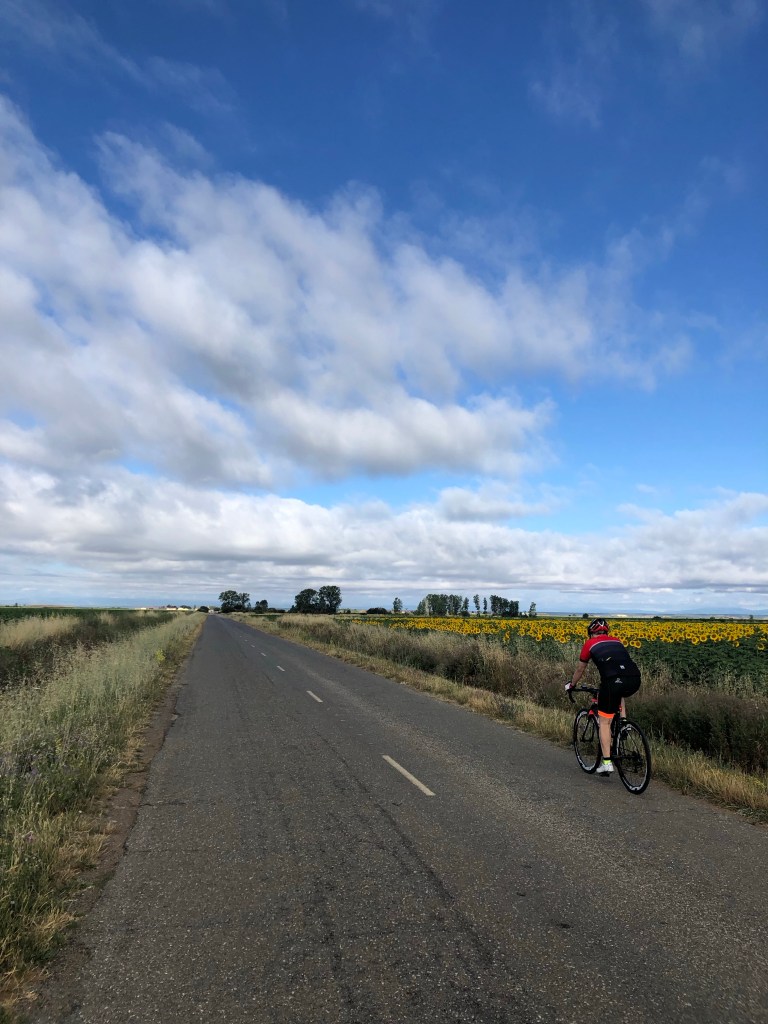
After yesterday’s easy 19km wander, I opted for the alternative scenic route via Villar de Mazarife. The original Camino follows the N-120 in an unbroken line for 32km, while the Mazarife road winds its way through the countryside to the south for 36km. I was up for a challenge, and I didn’t fancy another roadside walk, and for once, I know I made the right call.
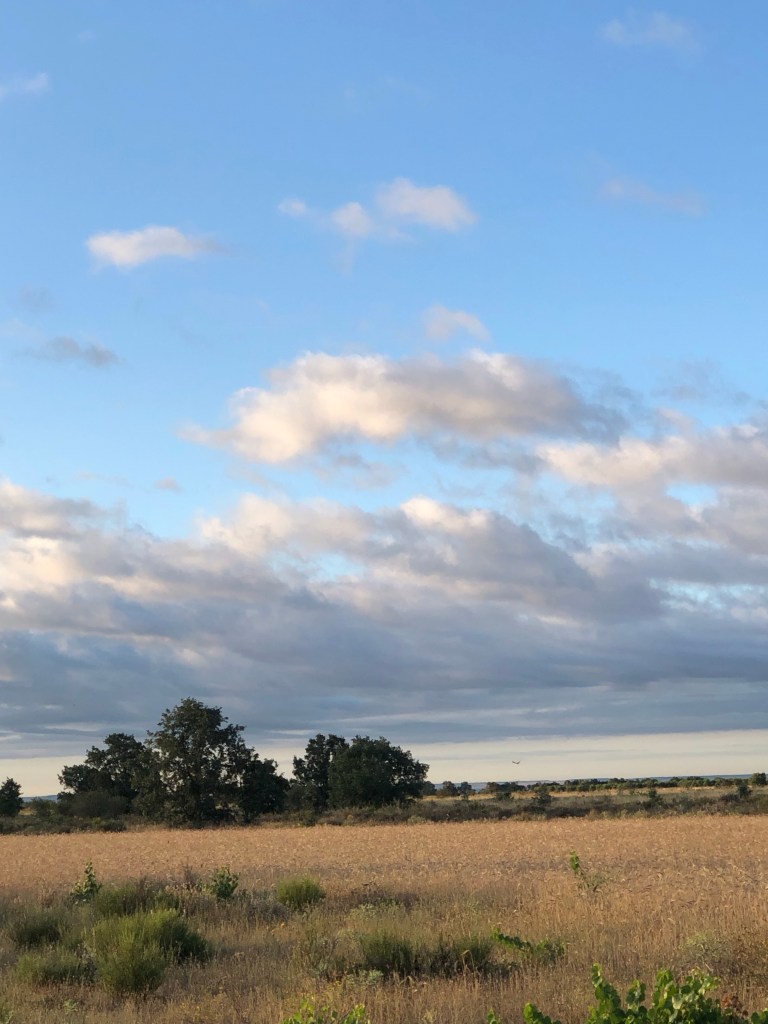
Southwest of León, the Camino carves a path through the scrubbier hinterlands of the Meseta. Fields of wheat and sunflowers give way to open dehesas, with sparse yellow grassland interspersed with stands of ancient oak trees. In a way, it felt like being back in Extremadura.
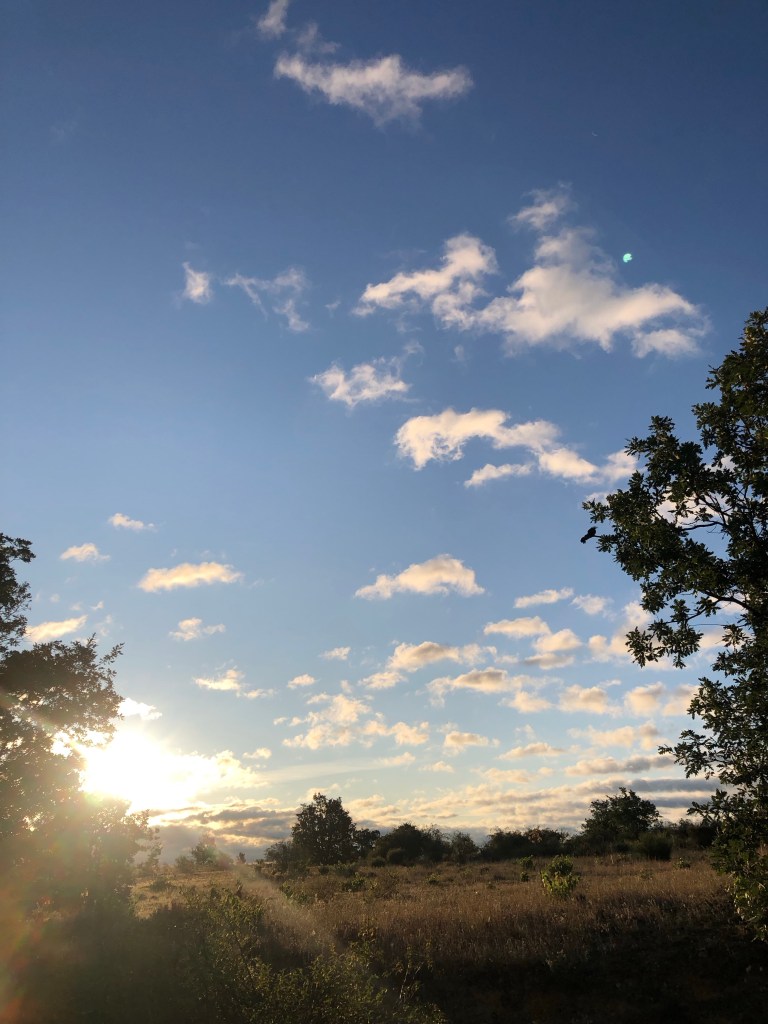
Better yet, the first hour after sunrise yielded some of the best birdwatching yet on the Camino. The usual backdrop of quail, turtle dove and stonechat provided some musical continuity to the meseta movement, with a colourful inclusion of golden oriole, blackcap and nightingale. There were quite a few kites about, whistling in that very plaintive way they do, and the calls of bee-eaters will never fail to make me smile. While I can also add great grey shrike, honey buzzard and whitethroat to my list this morning, I think it was the fleeting encounter with a greater spotted cuckoo that was the standout from today’s walk, tearing ahead through the scrub in front of me as I neared the first town on the trail, Chozas del Camino. As usual, a phone camera is next to useless for this kind of thing, but I did manage a snap before it was gone (look to the right of the second tree from the left).
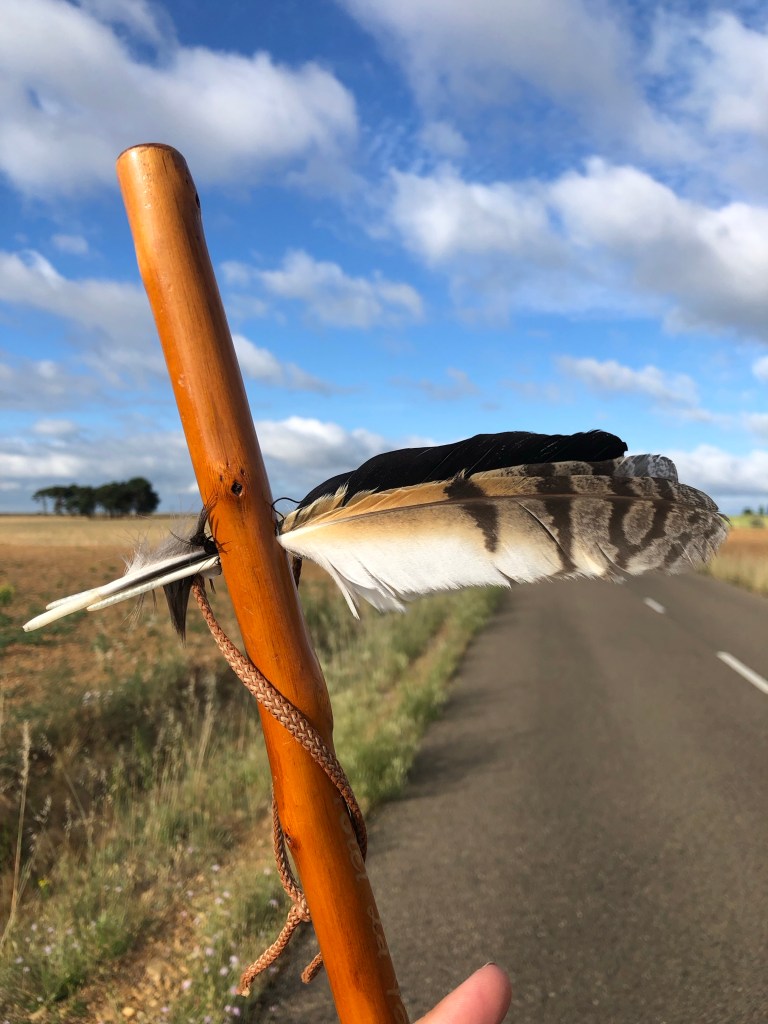
After narrowly avoiding a major desvío at Chozas, I followed the road to Mazarife for the next hour or so. Along the way, sensing rather than smelling death, I guess, I came upon a mass of feathers at the side of the road. On closer inspection, it was a long-eared owl, and a relatively young one at that. Given its condition, it must have been hit by a car less than a day ago, or else it would have been devoured long since. Acting on an intuition beyond simple curiosity, I picked up two of its wing feathers and fastened them alongside the raven feather to my staff. Besides the fact that owl feathers are one of nature’s most intriguing artefacts – they are engineered to move silently through the air – I think my desire was to give the unfortunate creature (a migratory species in most parts of Europe) one last journey, as it were. I will carry them to Santiago and Finisterre… and beyond, if I can.
With a feathered staff and a satchel full of pens, pencils and sharpenings, I’m rather conscious that I’m starting to take on the appearance of a tin-pot shaman. My silent reasoning that ravens represent life, light and hope (they brought the knowledge of fire to man in Scandinavian mythology) and owls death, darkness and wisdom (via the Greek tradition) probably doesn’t help, either. I’m still searching for a stork feather, though despite their abundance, these are proving hard to find.
All I can say is I had this coming. In my first teaching post in Uganda, I was given the moniker ‘Ojok’, meaning ‘healer’ or ‘witch doctor’. It wasn’t anything more than an attempt at humour by my hosts, but hey, I guess such titles should be earned, right?
From Villar de Mazarife, one of the straightest roads of the entire Camino leads for some ten kilometres to the hamlet of Villavante. With the exception of the occasional buen camino from a field worker clad in orange hi-vis overalls, and the need to duck and weave to avoid the mechanical water jets every now and then, it was a fairly uneventful walk, but a beautifully quiet one at that.
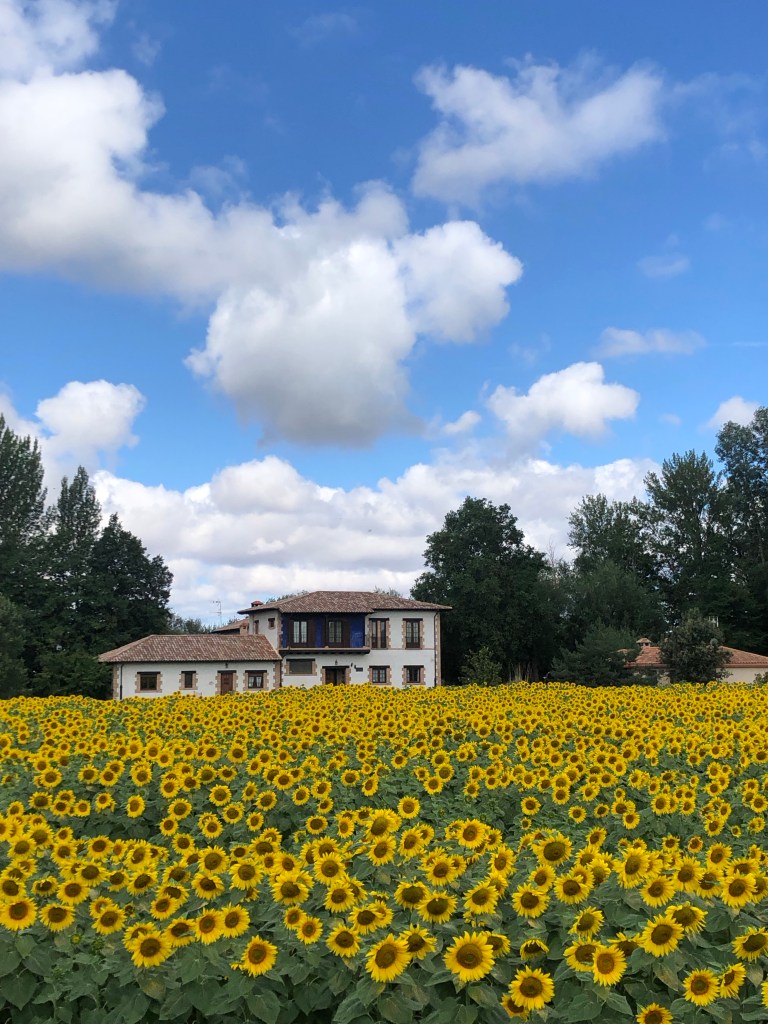
At Villavante, the Camino forks to the north to cross the León-Astorga railway line. It’s practically worth the trek for the view of the Casa Rural Los Molinos, nestled behind what appears to be a private tree-lined sunflower grove.
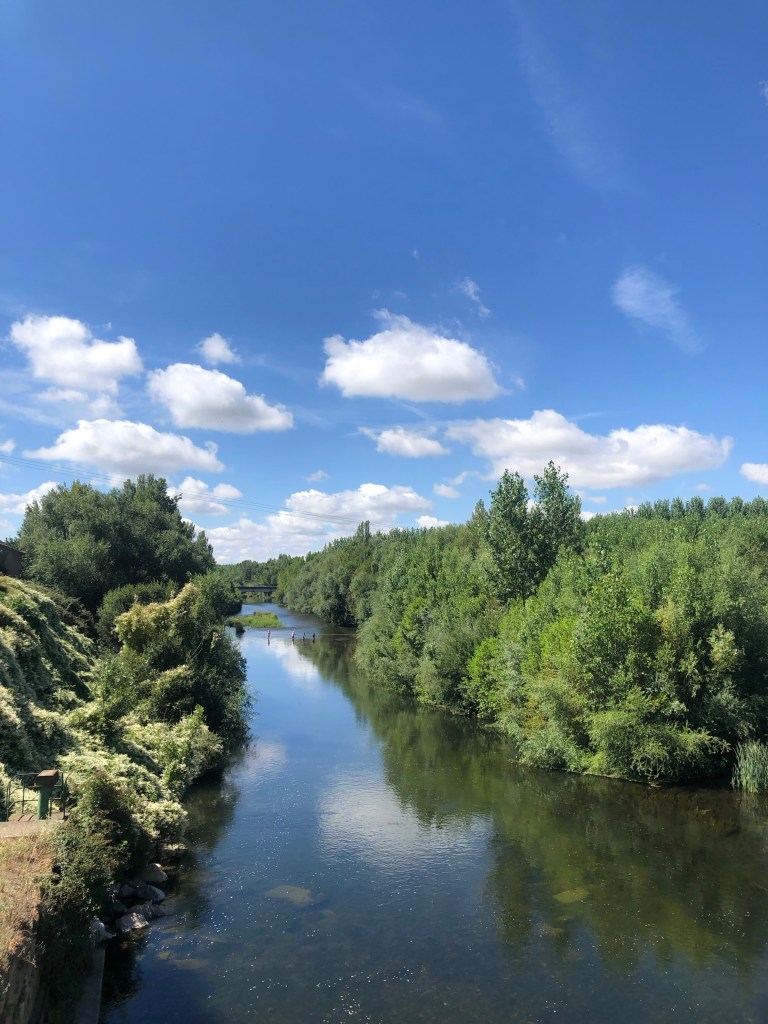
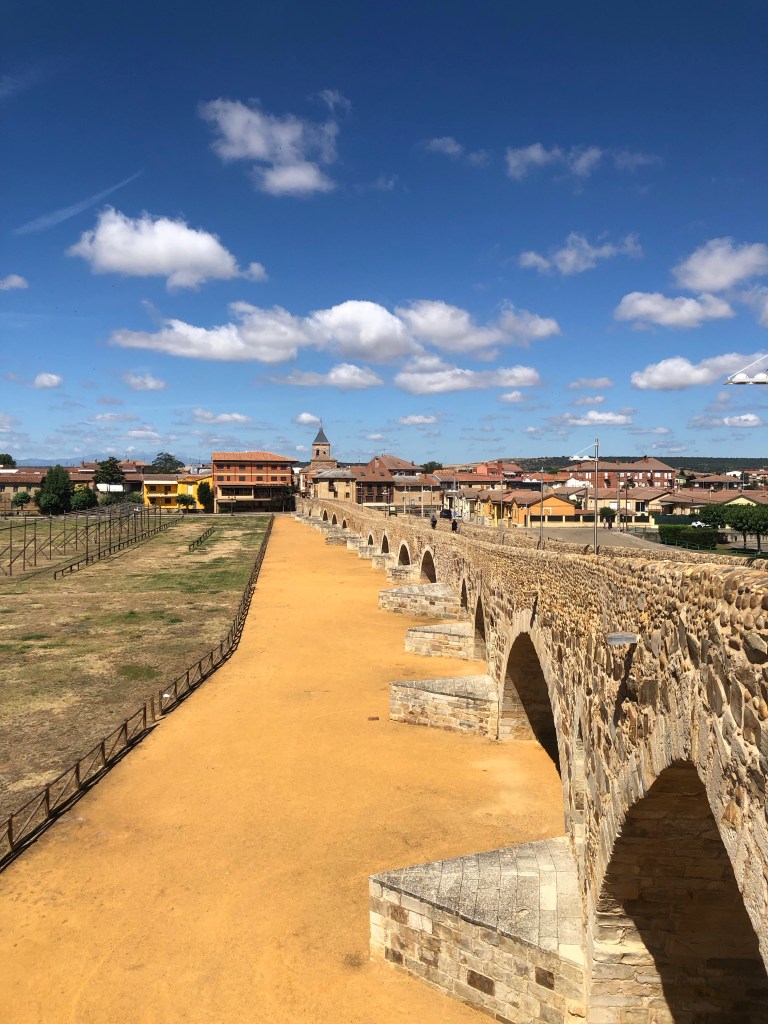
After that, it’s only a short distance to Hospital de Órbigo. It’s a good-sized town and, at 12pm on the dot and after nearly five hours’ walking (with a sum total of fifteen minutes’ break), I was more than ready to throw down my pack for the day. The entrance to the town over the medieval Puente Honroso (which I’m 90% sure featured in my dissertation) simply sealed the deal. This place is incredibly beautiful.
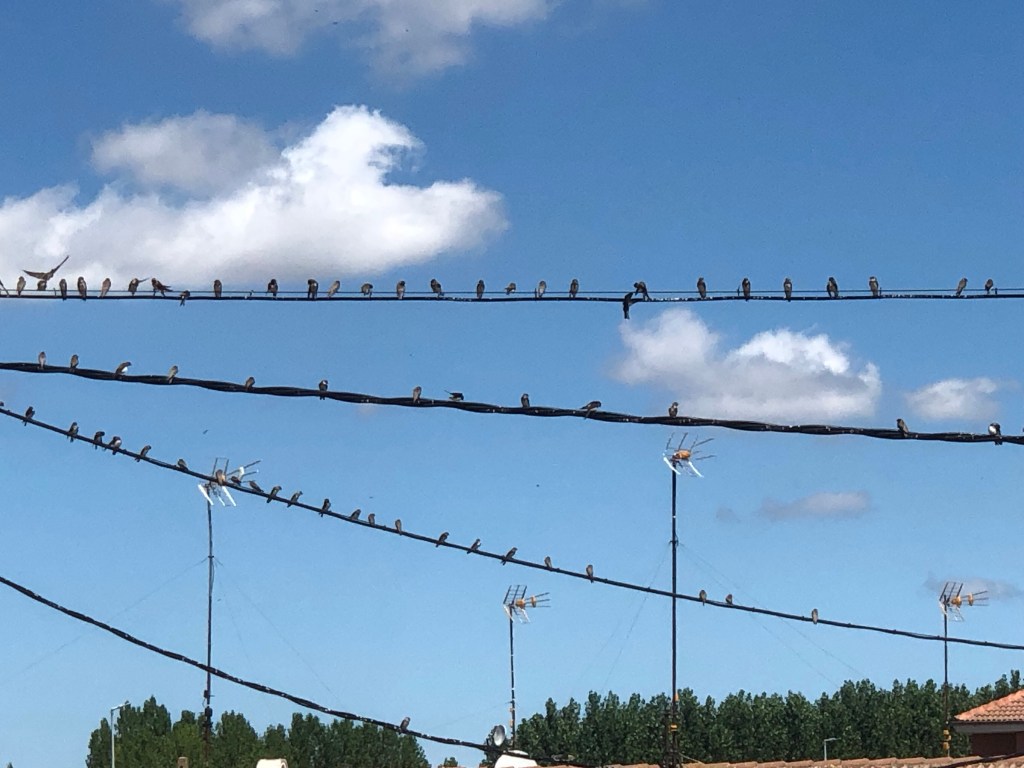
It’s said that a certain Don Suero, a local knight, challenged all comers to the bridge to win the heart of a lady, breaking 300 spears in as many jousts before an ever-growing crowd. The lords, the ladies and the medieval gaiety may be long gone, but the endlessly chattering sand martins lined up along the wires by the bridge make a good substitute.
Well, there goes my siesta. Tomorrow is a much shorter walk – three and a half hours at most – but I hear there’s a thousand-year-old oak tree near Santibáñez de Valdeiglesias, so I will extend my walk to take a look. Now I have the trappings of a new age shaman, I might as well play the part. BB x
The year is turning. Can you feel it? The light in the morning has shifted ever so slightly, but it’s noticeable. We’re past the peak, and before long the red-gold winds of autumn will be upon us. Thanks to the fierce heat we had in July, some of the trees are already wearing their russet cloaks. I shouldn’t be surprised if we’re in for a long, dry winter this year. Perhaps that’s the way of things to come, perhaps not. Time will tell.
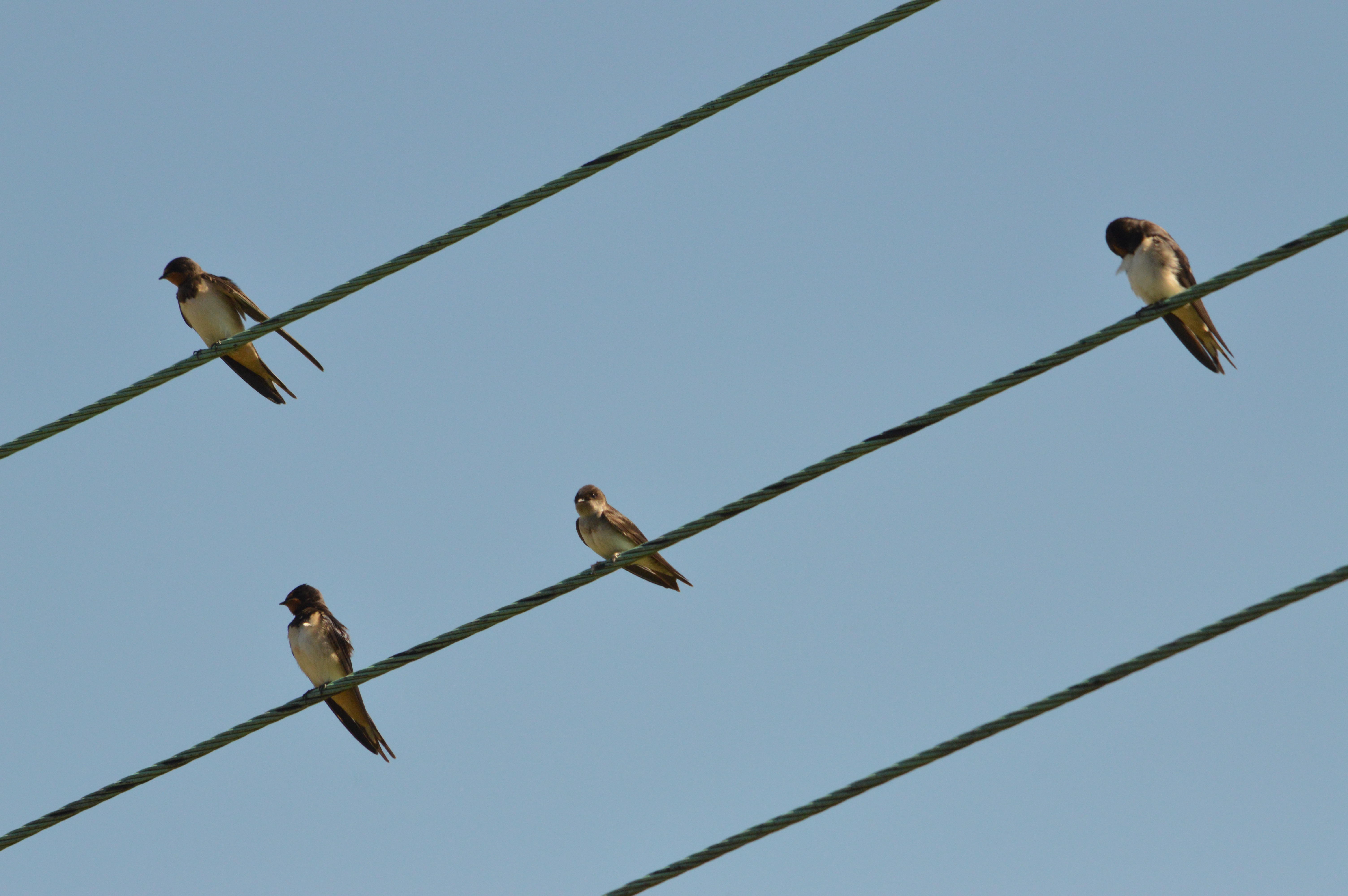
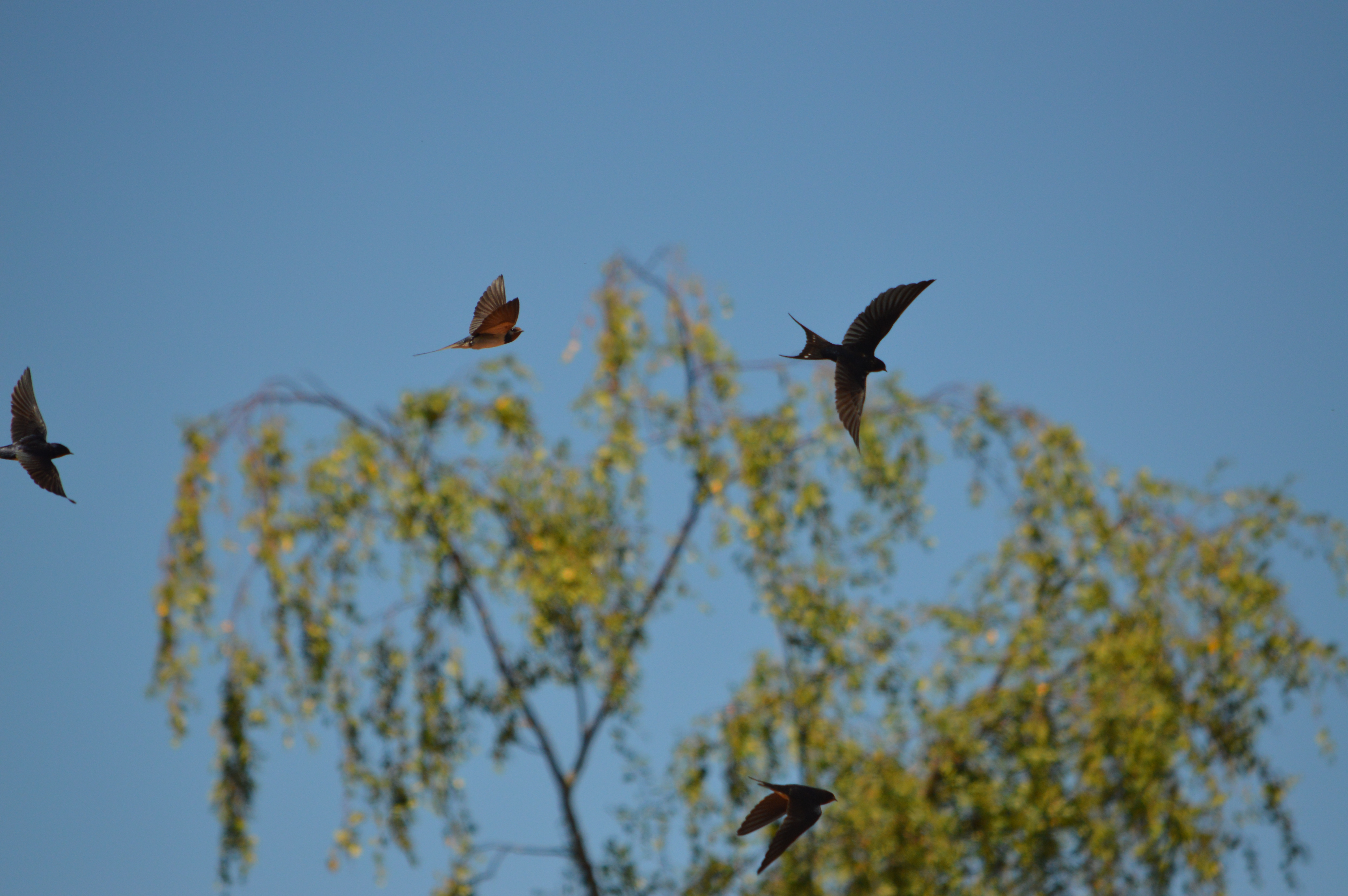
The family of swallows that nests in the barn near the house have had a very successful year. I counted eleven of them on the wires this morning: two parents with full streamers and nine noisy youngsters whose tails have yet to grow out in full. I had to count twice because of a sand martin who seems to prefer hanging out with swallows than his own kin, who have a colony in a field half a mile down the road. There comes a time every year, usually in September, when the swallows and martins suddenly gather en masse in a noisy spectacle before setting off for the south. We’re not quite there yet, no matter how abnormal this summer’s weather has been, but it sure felt like a nod to that day this morning.
Swallows, swifts and martins – collectively known as hirundines, which might have something to do with the Latin word harundo, meaning the forked shaft of an arrow – really are some of nature’s miracles. The tiny flashes of blue and white that dance over the fields with such cheerful abandon in summer travelled around 9,700km from their wintering grounds in South Africa to get here, and in the space of a few short months they have to make the same journey all over again in reverse, this time with their young in tow. Most estimates have them traveling about 320km every day. That’s a bloody long way to go when you’re only a few months old!
This morning the family looked like they were getting some practice in for the long journey ahead. Mum and dad would sit with the youngsters on the wires for a while, chattering amongst each other while the kids preened endlessly, before suddenly taking off and wheeling about the garden with their offspring racing after them. They might have been hunting, of course, but some of the young ones were far more interested in playing keep-up with a pigeon feather, catching it and keeping it from touching the ground, the way children sometimes do with a balloon. It was really quite endearing to see.
In the past, where our swallows went each winter had us stumped. There were some truly bizarre theories floating around. Following in Aristotle’s footsteps, some thought they hibernated underground. Some thought that they slept at the bottom of deep lakes and ponds, since they spent a great deal of their time hawking over the water during the summer months. One 17th century theory, courtesy of Englishman Charles Morton, claimed the Moon as the swallows’ winter destination as the only logical explanation for their total disappearance. It sounds absurd, but it’s not so outlandish a theory when you try to imagine explaining that these tiny creatures travel further twice a year than most humans will in a lifetime. It even makes the underground hibernation theory seem plausible!
It’s an incredibly hazardous journey, and not every one of our brave swallows will make it there and back. There are all manner of dangers they have to face: sea crossings, storms, high winds, predation by hobbies (consummate swallow-catchers), not to mention human interference – some will be caught for food, and the Maltese in particular are infamous for their practice of trapping migrating birds by liming fences. And then, of course, there’s the mighty Sahara Desert. Michael Morpurgo wrote a fantastic children’s book about that journey – Dear Olly – which you should read if you want an idea.
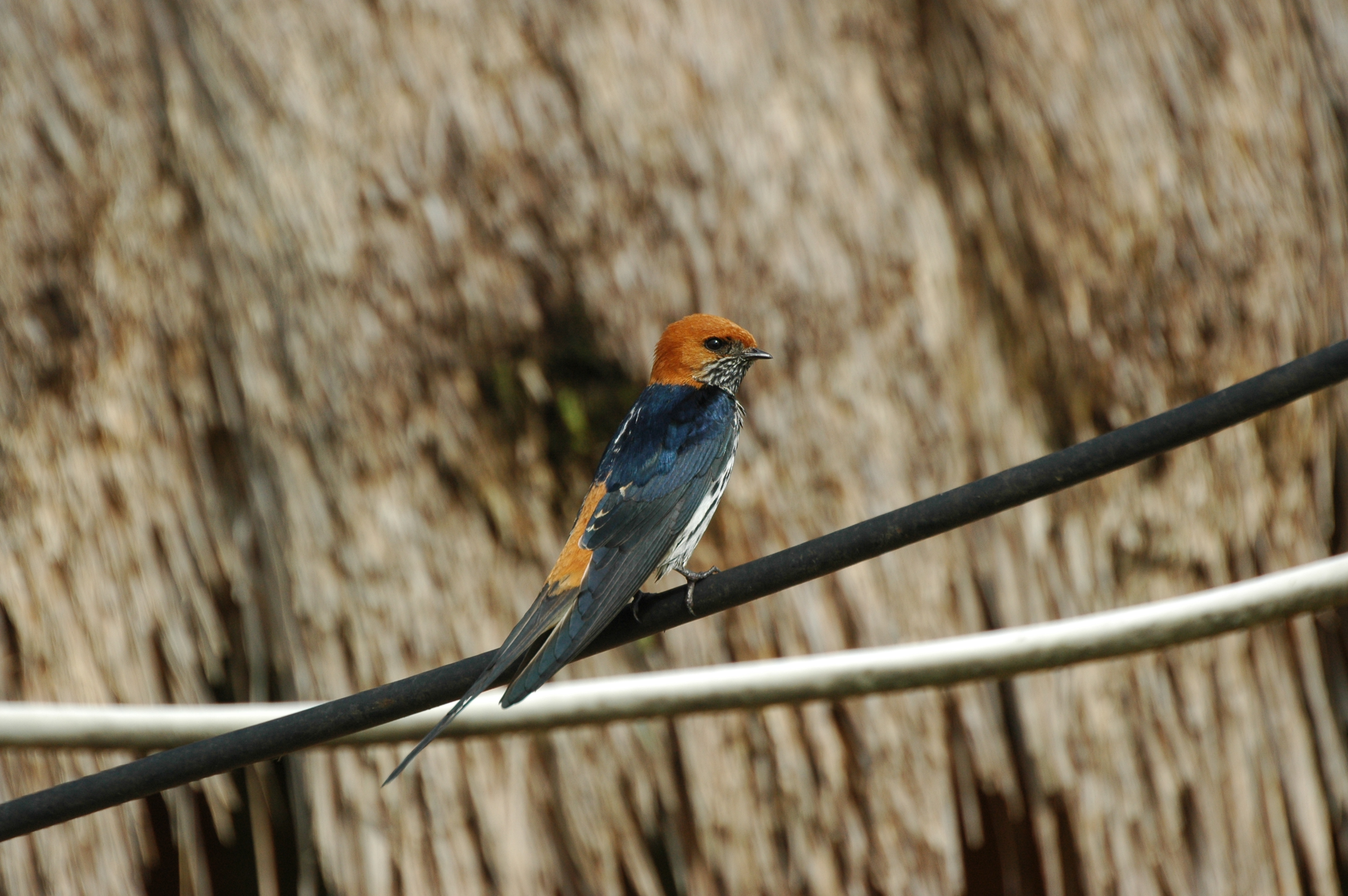
So why travel all that way? Competition might well have something to do with it. After all, Africa has plenty of swallows of its own (without all these European swallows “comin’ over ‘ere and takin’ our jobs” etc.) and fans of Monty Python will be well aware of the fact that African swallows are non-migratory. On my travels around Uganda during the rainy season (November) back in 2012, I saw plenty of familiar-looking swallows hawking over the White Nile, but most of the birds I clocked were local species that don’t travel far from home. Still, I couldn’t help wondering whether maybe just one of the brave little birds flitting by had crossed my path sometime before, either in Spain or the south of England. How’s that for a flight of fancy! <groan>
Greater striped swallow, Ishasha Lodge (Queen Elizabeth National Park) Uganda, 18th November 2012
Swallows are remarkable creatures to watch. While we still have a few weeks left of summer, try to find a few minutes to enjoy the little winged miracles. I’m sure they do wonders for one’s mental health, but to use less clinical terms, they sure can lift one’s spirits. Today, for the first time, I saw two of the youngsters doing something I’ve never seen swallows do before: sunbathing. Plenty of birds do this kind of thing to regulate body temperature, but it’s the first time I’ve seen swallows in the act. It was just two of them who kept leaning over in the sunlight – the others were far more interested in preening, though the sand martin looked as though he wanted to get in on the action!