I’ve heard various accounts of the pilgrim road across the Meseta. It is so often described as the most arduous stretch of the Camino, skipped by those pilgrims who find its endless expanses of featureless wheat fields uninspiring and/or dull. A dear friend and former companion on the road wrote to me yesterday, calling it “demotivating and mentally draining”. So I haven’t come out here under any illusions.
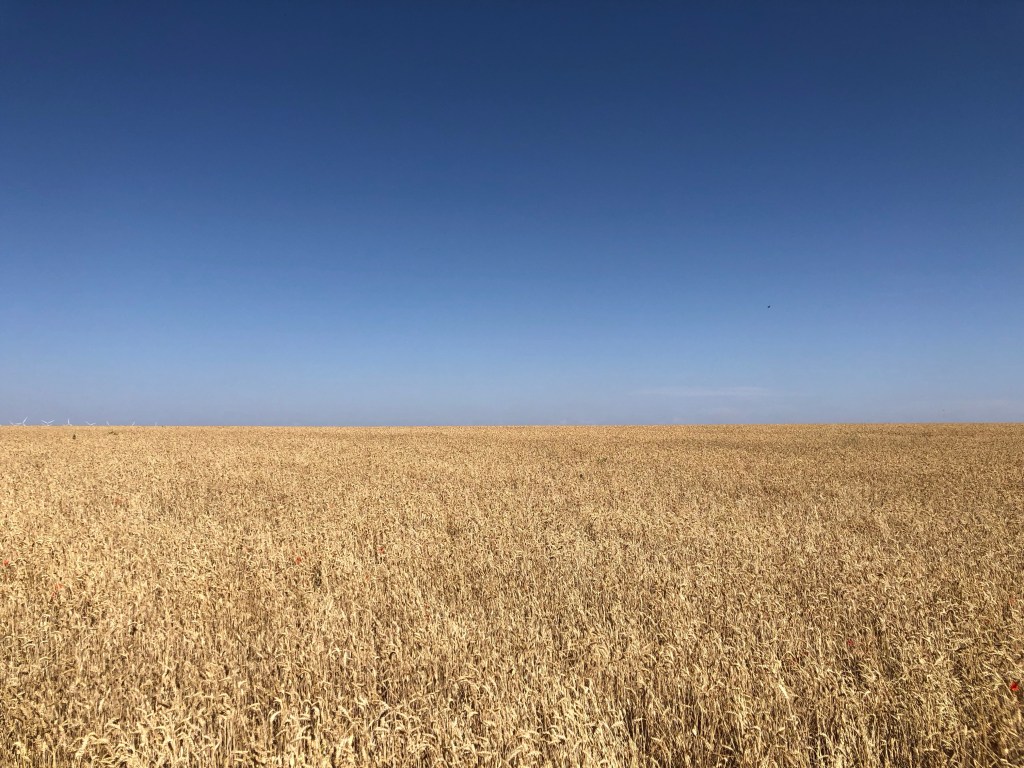
I’m only one day in, so I haven’t yet got the full flavour of the Meseta. But I’ll tell you what it has in abundance: silence. Spain isn’t a country that is known for peace and quiet – quite the opposite, in fact, being a regular contender for Europe’s loudest country – but if there is a corner of the kingdom where silence is as golden as the fields over which it presides, this is
It should be said, setting off a full hour before daybreak probably didn’t help (yes, I am definitely that pilgrim). The others in the hostel in Burgos must have found my coming-and-going at a quarter past five in the morning frustrating, though I did what I could to soften my steps. I would have thought I had learned my lesson last time, but for whatever reason I’m still working on the assumption that most places fill up quickly around midday.
Burgos was softly lit by a clouded moon as I took my leave of the Cid’s city. Beside the storks, those speechless sentinels of Spanish skies, I only saw two other living things on my way out: a street-sweeper hosing down the steps above the cathedral, and a solitary Japanese peregrino who took a wrong turn. Everyone else with half a brain – the city’s entire population and the rest of the pilgrims on the trail, for that matter – was still in bed, enjoying a few hours’ more sleep.

The sun was up by the time I reached the outskirts of Villalba de Burgos, the first stop on the road. Still no pilgrims, but the Guardian Civil made a couple of appearances as they patrolled the road in their car. Here I took my leave of the Arlanzón river, stopping only to refill my water bottle at a park fountain and to listen to the flute-song of a golden oriole concealed somewhere within the poplar trees.
The Meseta begins to unravel in earnest after the sleepy town of Tardajos, which I imagine presents a good introduction of what is to come. Half the town seems deserted, and this time that has little to nothing to do with the time of day. Squat, single-storey townhouses rub shoulders with taller, more modern homes, though in some cases it is just as much the latter that have their windows boarded up as the former.
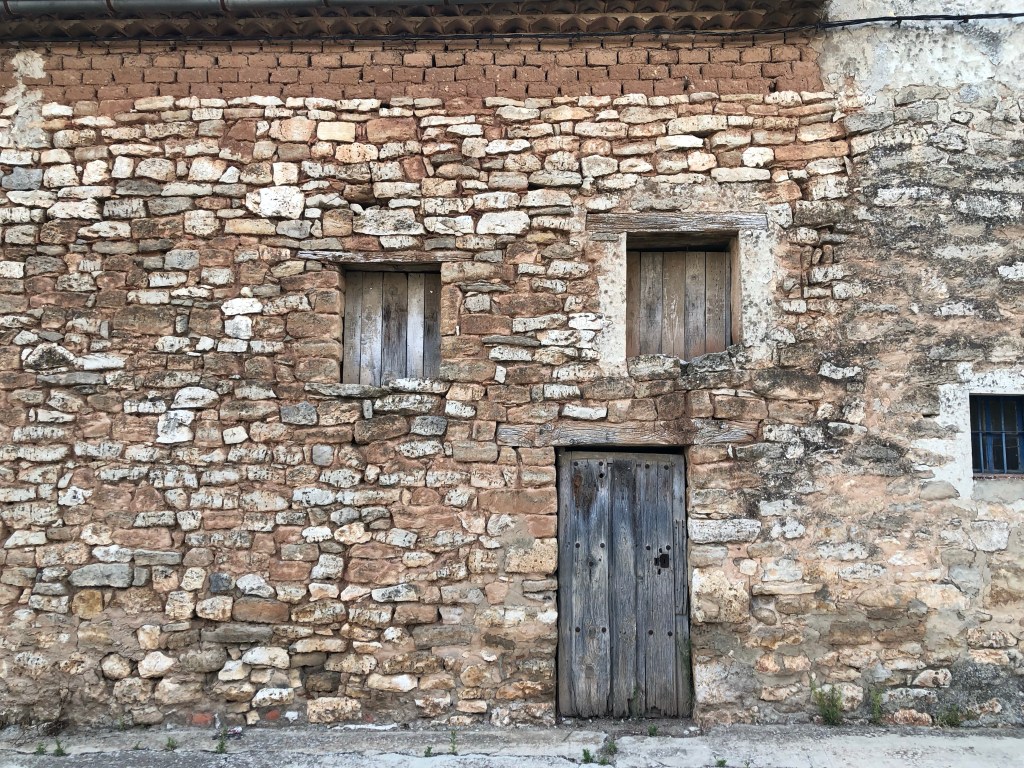
I stopped at Rabé de las Calzadas to see if the local church were open. No luck. It looks as though the parish priest serves multiple towns, celebrating Mass first at one church and then another. You can sometimes get stamps in these spots, but it’s really candles I’m looking for – when I can, I like to say a prayer for my grandfather and great-grandparents, for whom I walk this road. They say the reason is that pilgrims would probably try to sleep in them for free and might not be as respectful of their lodging if they did. Which is understandable. So far this year, I’ve only found one I could enter. I’ll keep looking, though.
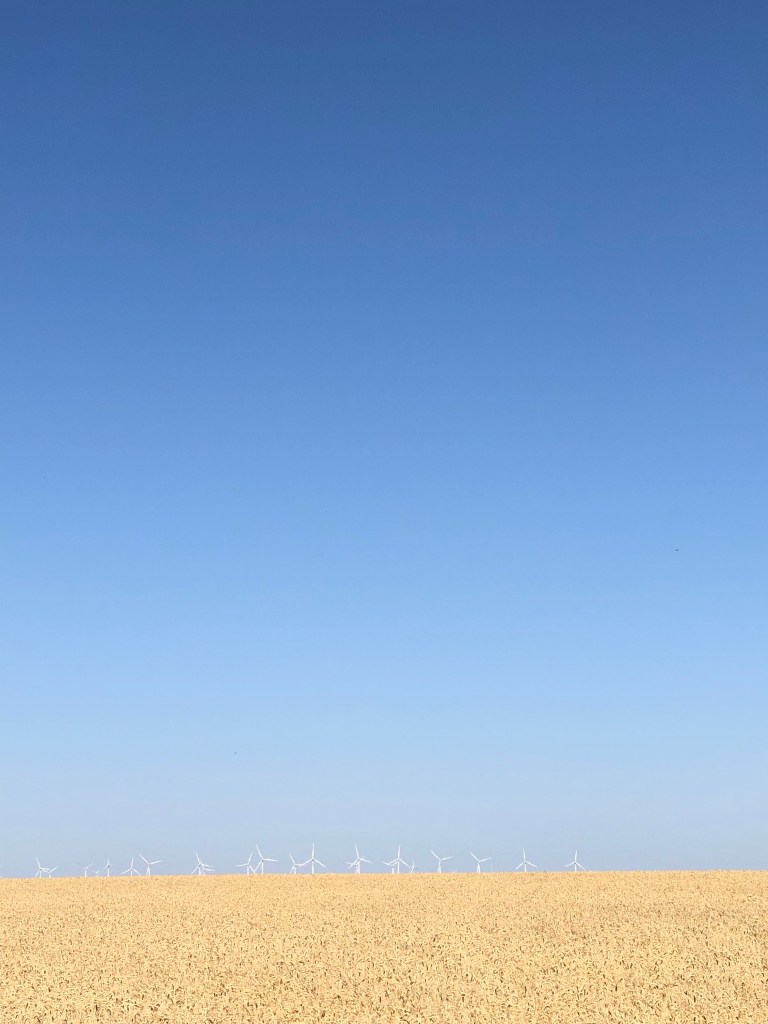
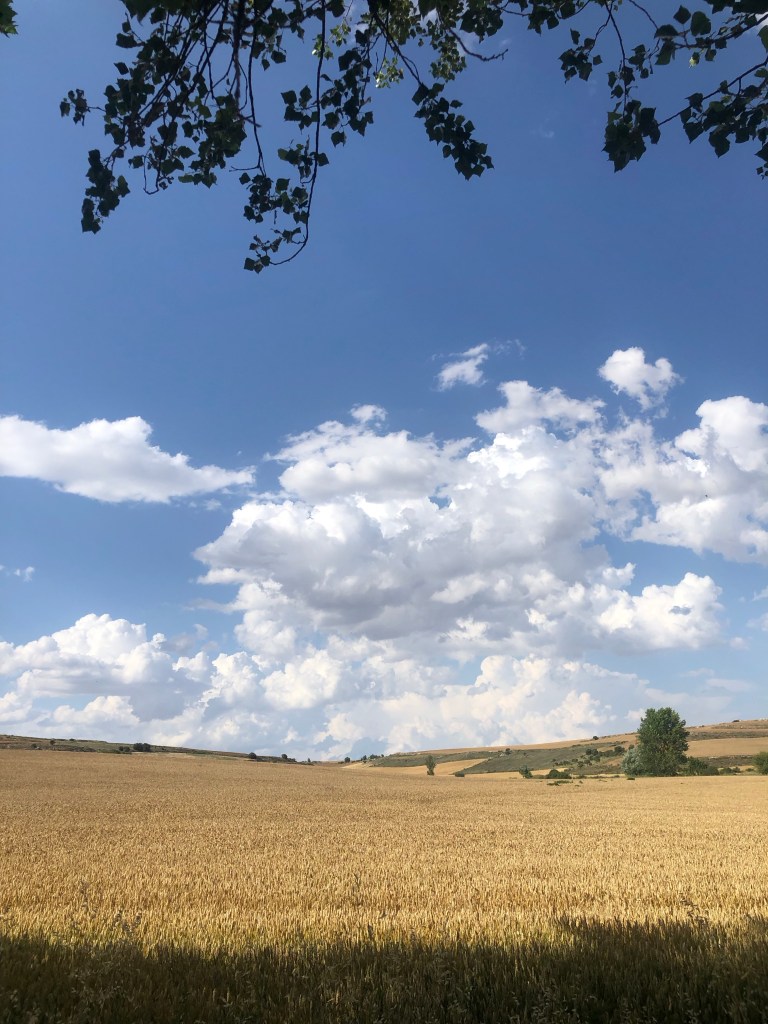
It’s a steep climb after Rabé up into the Meseta proper. The last green hills of Burgos give way to a sea of gold, unbroken at eye level but towered over by a host of wind turbines that make the place a dry parody of the North Sea: similarly featureless, though a great deal warmer.
I’m getting the feeling this is all coming across as rather maudlin. For a nature lover like me, however, this is bliss. If you can put a name to the sights and sounds around you, you’re never truly alone.
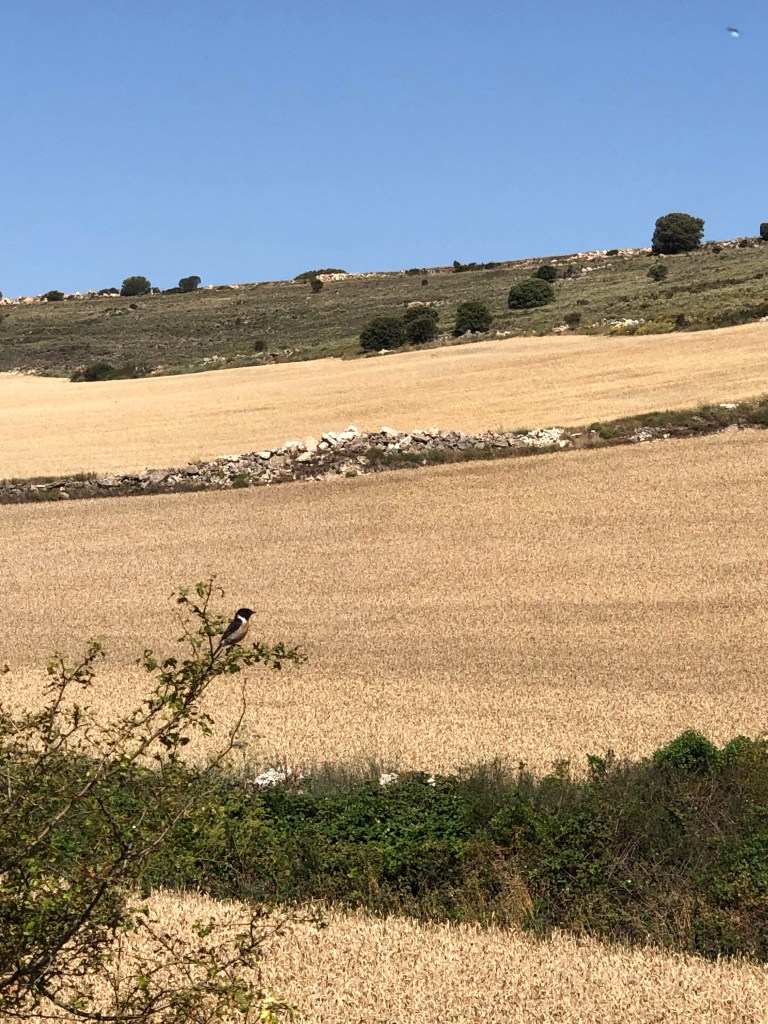
Since leaving Burgos, I’ve been accompanied most of the way by the friendly two-tone song of the stonechat. Families of three – a parent and two fledgelings – seem to pop up everywhere, unbothered by my passing in their tireless search for food. Warblers of every kind – willow, Sardinian, fan-tailed and Cetti’s – sing from the hedgerows, signalling the presence of a river long before it comes into view. Corn buntings, wagtails and jolly wheatears pop in and out of sight between the wheatsheafs. Swifts, swallows and martins fill the empty villages with sound, and hoopoes add a flash of brilliant black-and-white when disturbed in the parks and gardens along the way. In the vast Castilian skies, storks, kites, ravens and solitary griffons are a constant presence, and in the fields below, quail and turtle dove sing unseen, their purrs and whistles keeping the silence at bay. And butterflies of every colour and size are so abundant there’s a very real danger of stepping on them.
On the plateau above Hornillos, I even caught a glimpse of one of my favourite creatures of all: the slender, ghostly shape of a male Montagu’s harrier, quartering the fields like a runaway birdscarer. I haven’t seen one of those since my time in Extremadura, where they find the vast emptiness much to their liking.
I’ve come to a halt in arguably the strangest stop of the Camino so far. Falling prey to my own hubris, as I am often wont to do, I left Hornillos behind and pressed on to what several guidebooks call a “Camino favourite”, the remote Albergue de San Bol. Tucked away in a river valley just five kilometres shy of Hontanas, it is easily missed, and with so many pilgrims keen to race through the Meseta, that’s understandable. I got here at half twelve and found the place deserted, with a sign on the door saying it would be opened at two. I stuck around, taking the opportunity to wash my feet and sandals in the small pool and do some reading while I waited.
Five or six curious pilgrims came by to investigate. None of them have stayed. The first one, a German by the sound of him, asked about a place to fill up his bottle, shrugged and moved on. Another two came by, but went on their way not five minutes afterwards. A Dutchman made noises about staying on but disappeared without a trace while I was washing my clothes. Two Italians rocked up an hour later, who could easily have been my age… only, they were fresh out of school and keen to press on to Hontanas. By this point I’d already made the decision to stay, so I bid them addió and nailed my colours to the mast when at last the local hostalera showed up.
From her I learned the truth – the Camino has been quiet for a few days, but April and May were absolutely heaving this year. That’s probably due to the backlog of pilgrims like myself who haven’t been able to take the road for two years due to COVID. At this time of year, few pilgrims stop at this stage, unless they’re traveling in a group. Would I be alright if I were the only guest tonight, she asked?
Well, so much for my first “communal feel” albergue. On the plus side, it allows me one more day to really be my own boss. It isn’t often on the Camino that you get an entire dormitory to yourself, or the chance to watch the sunset in a place so idyllic as this. I’ve already paid for my bed for the night with the last of the coins I had on me (I really should have taken cash out in Burgos, as banks and ATMs are few and far between out here) so I’m going to kick back and really enjoy having this slice of paradise to myself for once.
There will be plenty of time to socialise on the Camino. But I’m in no hurry – if anything I’d like to avoid the crush in Santiago on Saint James’ day three weeks from now – so I will take my time and allow myself a few later starts from now on. And who knows? If I tarry a while, I might just find more stories in these slumbering villages than I would in the pilgrims tearing through this lonely stage.
Peace out. I’m getting some serious peace in tonight. BB x
 The Book of Barnabas