South Sea Safari

Hostal Coastal B&B, Puerto Natales. 18.42.

I had to improvise a bit today, after my original plan of jumping on a full-day tour of the Torres del Paine National Park and the Cueva del Milodón fell through. Fortunately, you don’t even have to leave Puerto Natales to enjoy some spectacular wildlife, even in the heart of winter. I was also lucky with the weather today, which was largely sunny for most of the day, making photography that much easier.


Many of Natales’ resident birds look deceptively like domesticated waterfowl, which could not be further from the truth. There are crested ducks absolutely everywhere, greatly outnumbering the smaller and daintier yellow-billed teals that are one of the few birds that remain wary of humans around here. The black-necked swans that live out in the fjord are probably the most iconic residents of Puerto Natales, but they were joined today by a few pairs of Coscoroba swans, a swan-like goose that can be found from the Antarctic waters of southern Chile all the way up to Brazil.


It’s clear who holds the reins of power, though. Not five minutes after the coscorobas came in to land, a pair of black-necked swans moved in, and one of them charged the coscorobas, putting them to flight. About the only bird I haven’t seen them attack yet are the tiny white-eared grebes – I wonder if that’s because they can’t see them?


Some of the birds here look familiar, even at a head-spinning distance of just over thirteen thousand kilometres from home. A small colony of house sparrows and feral pigeons have made the town their own, as they have in most towns and cities around the planet, and at first glance the oystercatchers look similar – but these are Magellanic oystercatchers, limited to the southern tip of South America. You can tell them apart by the yellow ring around their eyes. If other human species had survived, would we have been able to tell each other apart by similar signs?


There was one creature in particular that I was hoping to see – and I was not disappointed. After a half hour’s careful observation – having been almost certain I’d seen the silhouette I was looking for across the bay when I set out – I was very nearly scalped by an absolute giant that came soaring in from behind my post on the dock: a southern giant petrel, a genuine monster of the South Sea with a two-metre wingspan and a violent disposition.


The giant petrel will eat just about anything and has a reputation for bludgeoning and drowning birds much larger than itself, including penguins, gannets and albatrosses. It will even squabble with its kin over human waste left behind by passing ships. For this reason, it’s known as the vulture of the Southern ocean – which is probably why I was so keen to see one. Besides the simple fact that they really are incredibly impressive birds to behold.


A more friendly resident of Puerto Natales is the chimango caracara. You couldn’t miss these happy little hawks if you had even the least know-how about birds – they’re all over the place, perched on lampposts, drifting over the streets in the centre of town, wandering the dockyards in gangs of five or six and hopping along the beach in search of scraps. One of them had found the remains of a coscoroba and wasn’t about to share it with any one, flapping at any other caracaras that came its way.


The occasional passing clouds across the sun made for a tricky job adjusting the shutter speed on the new camera, but when the sun did come out, I could not have been happier with the results. It helps, of course, that so many of Patagonia’s animals aren’t that shy at all.


The old jetty is one of Puerto Natales’ most famous sights, and it hosts a large colony of Imperial cormorants in the winter months. Many of them had gone by mid-morning, seeking richer waters further down the fjord, but I must have counted nearly a hundred here the other night.


I went out for another walk after lunch, following the same circuit in the hope that the giant petrel would return. After about twenty minutes, it caught me by surprise once again, rushing so low over my head that I could hear the wind whistle in its giant wings. I hoped it might return the way it had come, but when it did not show itself again after about half an hour, I wandered back across town. I would have gone back to the hostal for a bit, but something made me press on to the other side, further south. That was where the petrel went, after all.

I didn’t quite make it as far as the fishing wharf, because there was a lovely view from the Edificio Cultural Costanera. I had only just packed away my camera when I found myself having to rush to get it back out again as a flamingo came in to land, right next to one just off the shore that I had not even noticed.


At such a close range, I could see just how heavily feathered the Chilean flamingo’s face is. It must be an adaptation to the cold, as these particular flamingos make their home here in Antarctic Chile and up in the frigid lakes of the Patagonian mountains. A far cry from the languid heat of Fuente de Piedra and Lake Turkana, for sure.


They were just the first. Soon, as the sun was beginning to set, a whole herd of flamingos came in to join them, their feathers glowing a blood-red scarlet in the evening light as they came down into the bay.


They made for quite a sight: a great herd of flamingos set against the backdrop of the snowy peaks of the Kawésqar Mountains. I certainly didn’t expect to see them again, having spotted earlier in the day that they had decamped to the other side of the bay since the day I arrived, and until recently, they had shown no signs of moving.


They were pretty quick to move, however, for one thing: a dark, powerful thing on two-metre wings, speeding towards them just above the surface of the water like a fighter plane. The petrel was back – and the mere sight of it put the fear of God into the flamingos. With much honking and splashing, they took off in a mad hurry, even when it was clear that the petrel was simply passing by.


What a spectacle they made as they flew up the fjord! It was like something out of a dream – and they kept turning this way and that, giving me every chance to snap them against the mighty mountains beyond.


It felt like the perfect ending to the trip, even though I have most of the day tomorrow as well, since my flight doesn’t leave until half four. But I come away with so many incredible memories, some of which I have written about and many of which I can print and put up on my wall. That’s how a good holiday should be, right? BB x

Venice III: Spirits of the Marshes

Three days in and I’m already a day behind. I guess that’s a good thing, as it means I not only had a packed day yesterday, I also had a busy sociable evening swapping stories with fellow travellers. It’s travelling done right, and all I ask is your patience, dear readers – such days make for good writing.


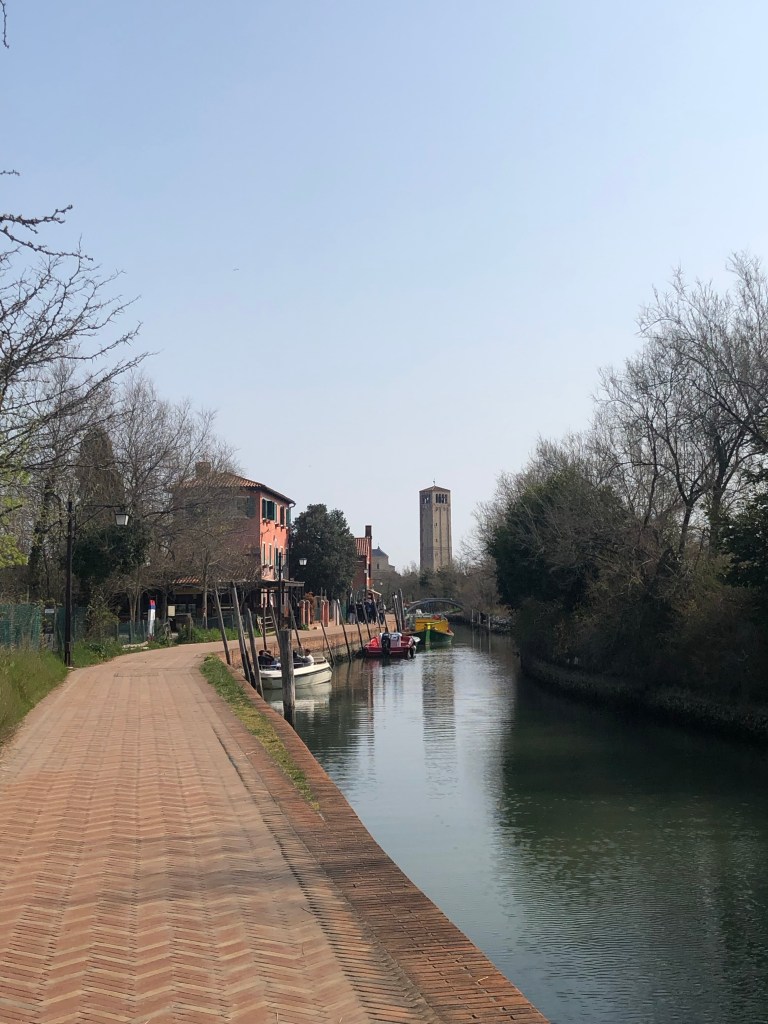
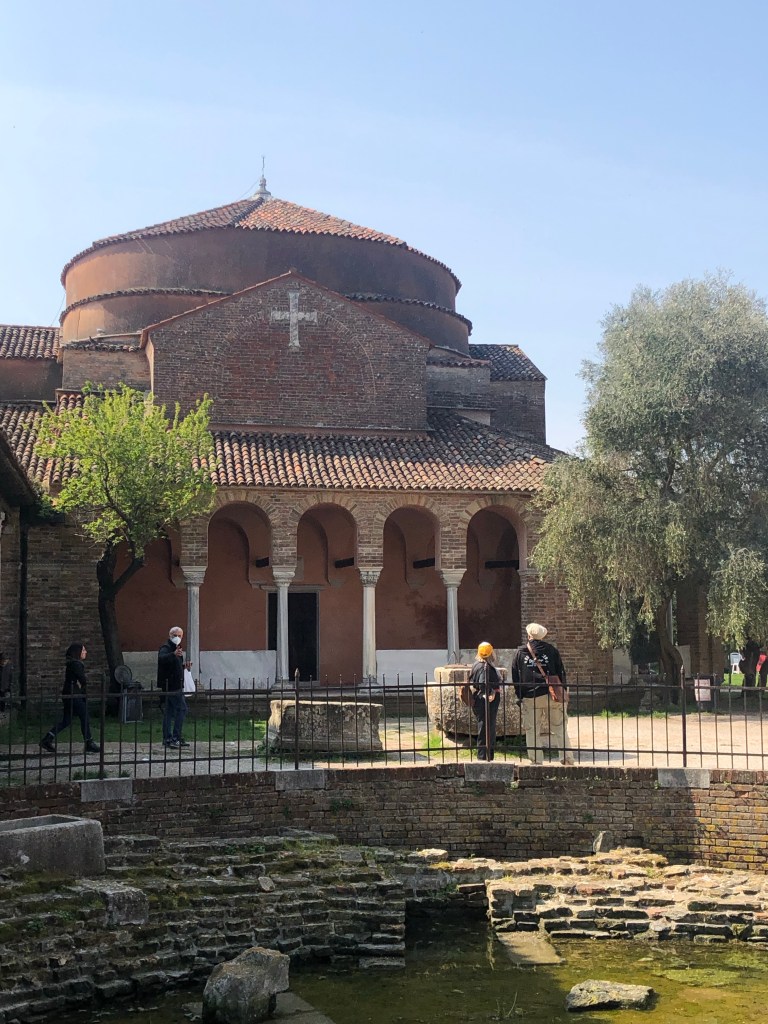
Wednesday was another make-it-up-as-you-go kind of day. I had it in mind to visit the smaller islands out in the lagoon – namely Murano and Burano – but as the vaporetto rolled up to Fondamente Nove, I suddenly decided to take a chance on mysterious Torcello, Venice’s predecessor. Most of the guidebooks pointed out it was almost deserted with very little to see other than an ancient church – the oldest in the lagoon – but if you’ve been reading for a while, you’ll know that’s one big fat tick in the box for me.

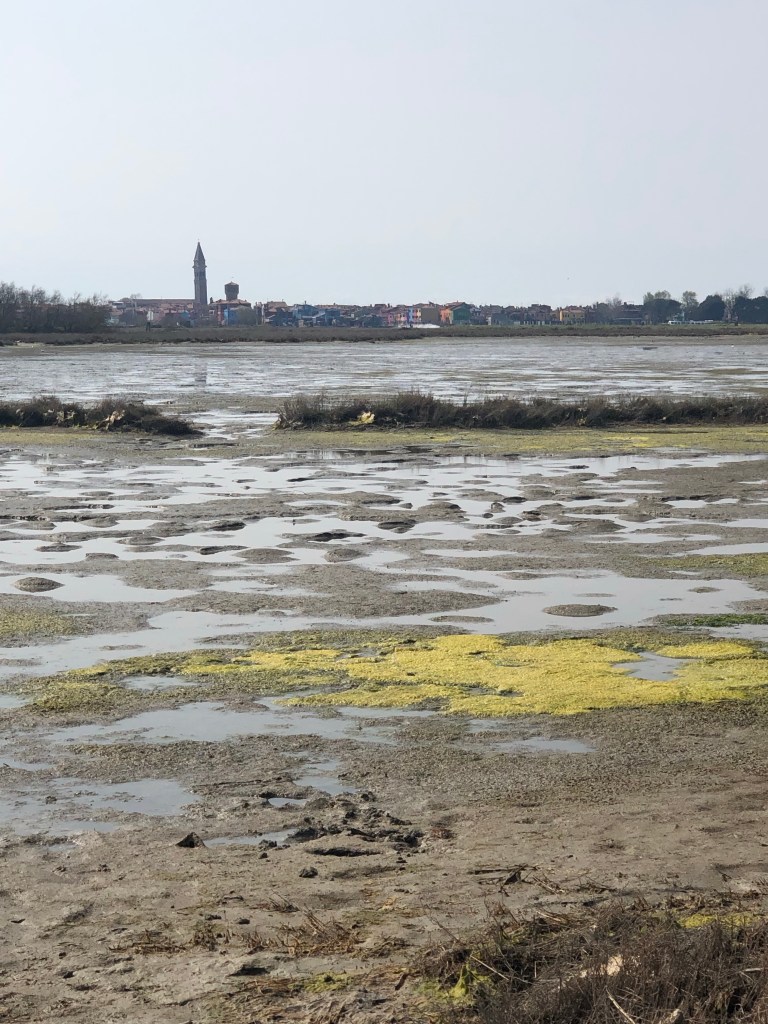
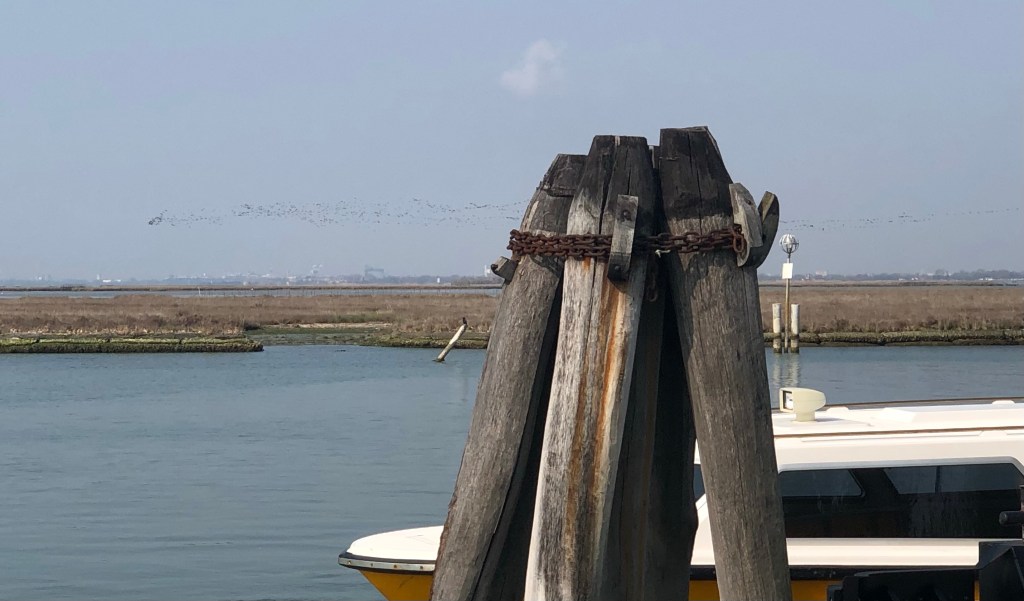
The lagoon feels truly vast once you’re out on it and Venice is behind you. Wooden struts stacked in threes mark what can only be described as water highways, giving the lagoon the appearance of a race course – until you realise it’s not mere practicality but also a safety measure for sailors, as there are multiple areas of the lagoon that are considerably shallower than they seem. Here and there, large expanses of mudflats rise out of the water, giving the lagoon’s waterbirds a place to retreat from the noise of the city.

The vaporetto chugged into Murano, city of glass, and then Burano in turn, city of lace and paintbox streets, but I spurned both of these for the diamond in the rough that is Torcello, risking a stranding for a chance to see one of the lagoon’s hidden gems. (In hindsight, I needn’t be so melodramatic – Torcello is surprisingly well serviced by the vaporetti, with a boat every fifteen minutes from neighbouring Burano).

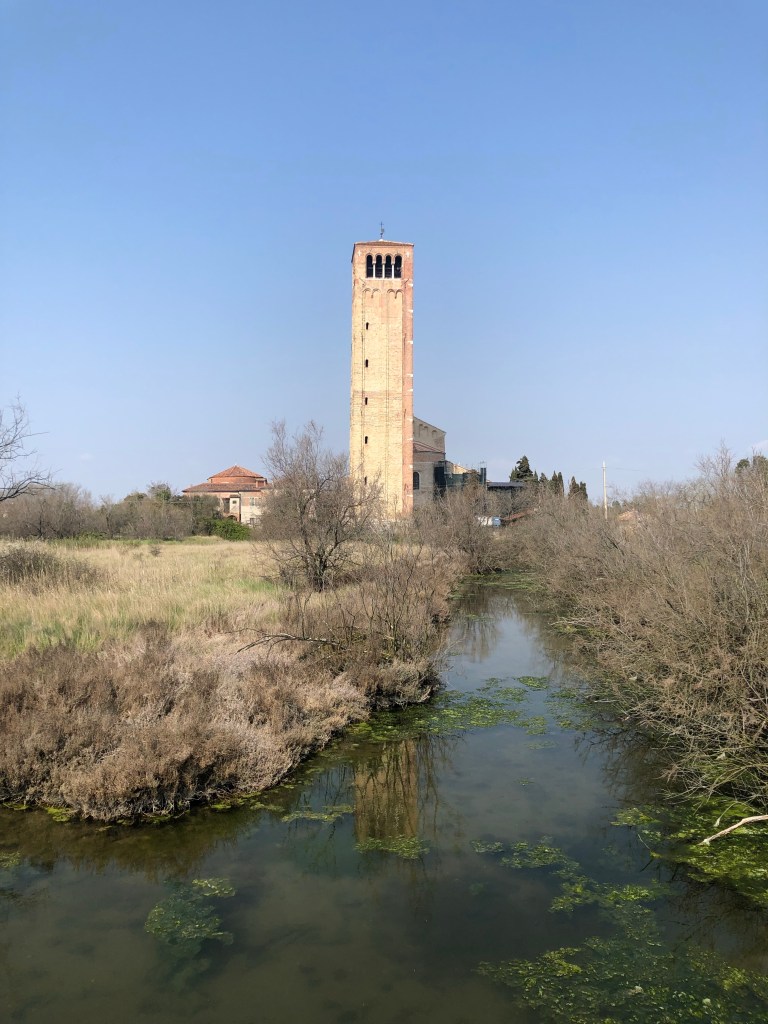
Why come way out here? Easy. Torcello is nothing less than Venice’s ancestor, home of the first Venetians who arrived in these islands around the year 422 fleeing the forces of Attila and his Huns as the Western Roman Empire fell beneath fire and the sword. Guided by the visions of their priest, the refugees escaped into the lagoon, believing the great water would hide them from the Huns. They named their new home Torcello, meaning “Tower and Sky” – which is eerily apt today, as that’s almost all that’s left of what was once a thriving city.

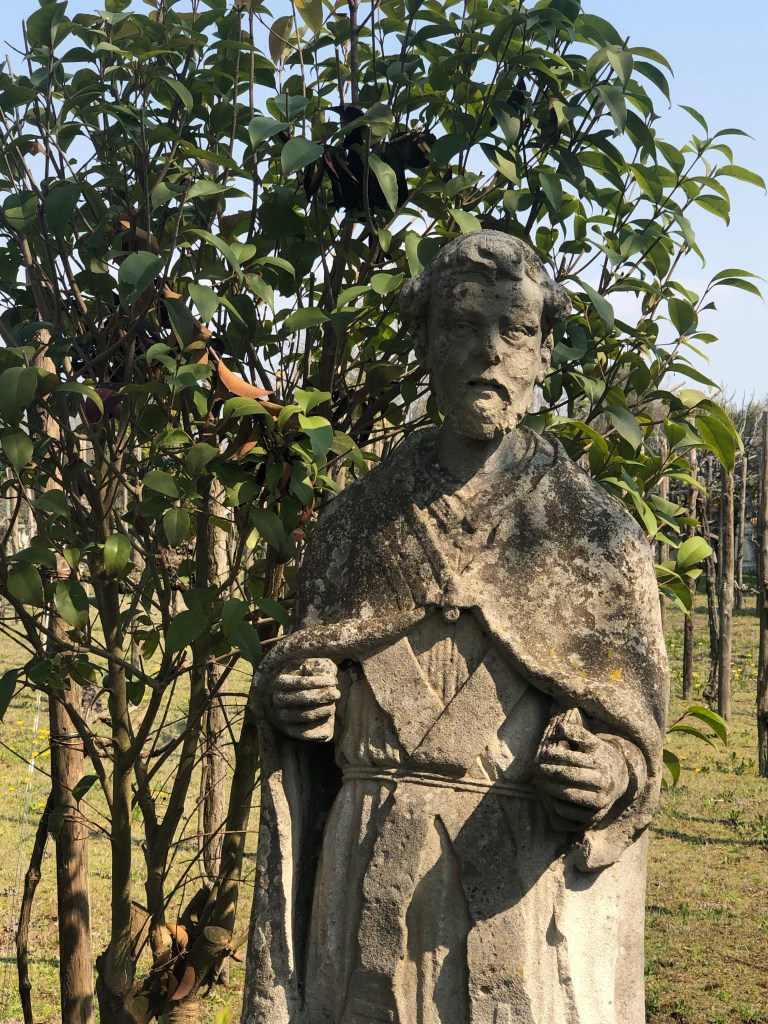
In its heyday, some twenty thousand people called this island home, and it punched well above its weight as a centre of commerce and tolerance until at least the tenth century, though you’d never guess to look at it today. All that remains are some twenty residents, a few houses, some scattered allotments, a collection of Romanesque statues abandoned to time and an old church in the Roman-Byzantine style, whose bell-tower still dominates the landscape – the “Sky Tower” that gave the town its name. On a clear day you can just about see it from Venice itself, staring jealously across the lagoon.

Several factors brought about Torcello’s decline, not least of all the lagoon itself. Just as she did during the first COVID lockdown, Nature showed how quickly she can regain control when she wants to. Over time the island began to sink back beneath the water, swallowing up the villages and turning the once prosperous salt-flats into malaria-ridden marshes. Torcello’s disciples fled in the wake of the tide, seeking refuge on the other islands.

And then, of course, there was Venice herself. What was originally an offshoot of Torcello quickly took advantage of its father’s plight, absorbing its fugitives into its own ranks. Eventually, the son far outshone the father, and as more and more citizens abandoned their former home to its fate, the glory of Torcello faded into memory. The many thousands who once called this island home simply disappeared.

I had my lunch on a jetty east of the Roman church with four ducks paddling hopefully in attendance below. Venice is quiet, but Torcello is something else. Sure, maybe not so much that afternoon, as one of the locals had his radio on full blast as he scoured his fishing boat upriver, but I can imagine this place is as silent as the desert most days.

I’ve always been attracted to the desolate corners of the world. A childhood spent exploring Dungeness, Stodmarsh, Elmley and Doñana National Park has left me with a voracious appetite for marshlands that has never really gone away. So when I look out across the mudflats and listen to the cries of the shorebirds, my heart falls into step and I feel calm and content. But marshes are lonely places. I can think of few places in the world with a lonelier atmosphere. The mournful cries of plovers and sandpipers out on the flats give the place an eerie sadness. The gulls almost sound as though they’re laughing at you for losing yourself here. Solitary herons and egrets prowl the canals like watchmen. And of course there’s the mournful curlew, whose bubbling trill is possibly one of the most haunting sounds in nature. What unholy terror drove the first Venetians to such a lonely place? Their fear of the Huns must have been great indeed to seek to build a home out here in the lonely marshes.

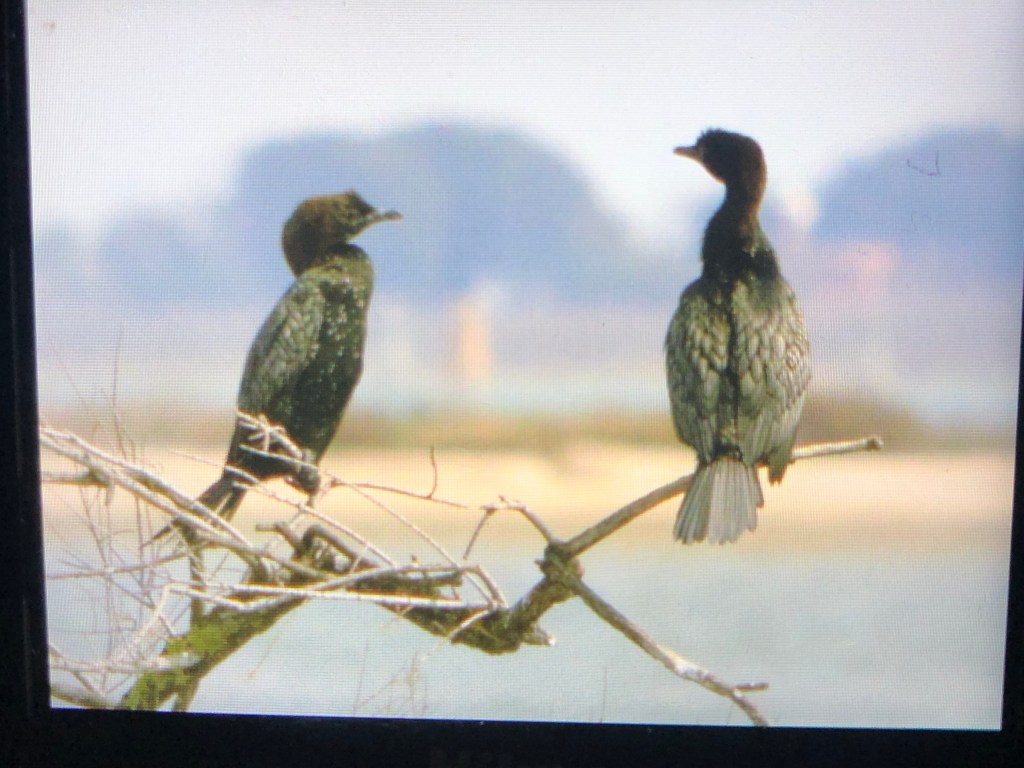
As I leave the island, a thin dark cloud appears on the horizon, moving fast toward Burano. As it draws near, I see it is no cloud at all but a raft of pygmy cormorants, thousands of them, flying in a loose formation that surely stretches for half a kilometre in length. Like oversized starlings, they sail over the marshes, moving deeper into the lagoon.

Perhaps these little sea-crows are the perfect metaphor for the Venetians themselves. A creature of the land that took to the water, making himself a master fisherman, building his nest out on the lagoon. I’m not the first to jump to that conclusion either. A sixth century Roman official wrote of the denizens of Torcello thus:

You live like sea-birds, with your homes dispersed, like the Cyclades, across the surface of the water.

Cassiodorus, 523 AD

Standing on the forgotten shore of Torcello, it’s easy to imagine that the thousands of cormorants passing by really are the spirits of those first Venetians, making the same exodus from land to lagoon every morning for generation after generation, like the denouement to a tragic Greek myth: some cruel trick of the old gods, granting the refugees an eternal escape from their would-be oppressors. That such creatures should choose to haunt Torcello, the forgotten ancestral home of the Venetians, only adds to that mythos.

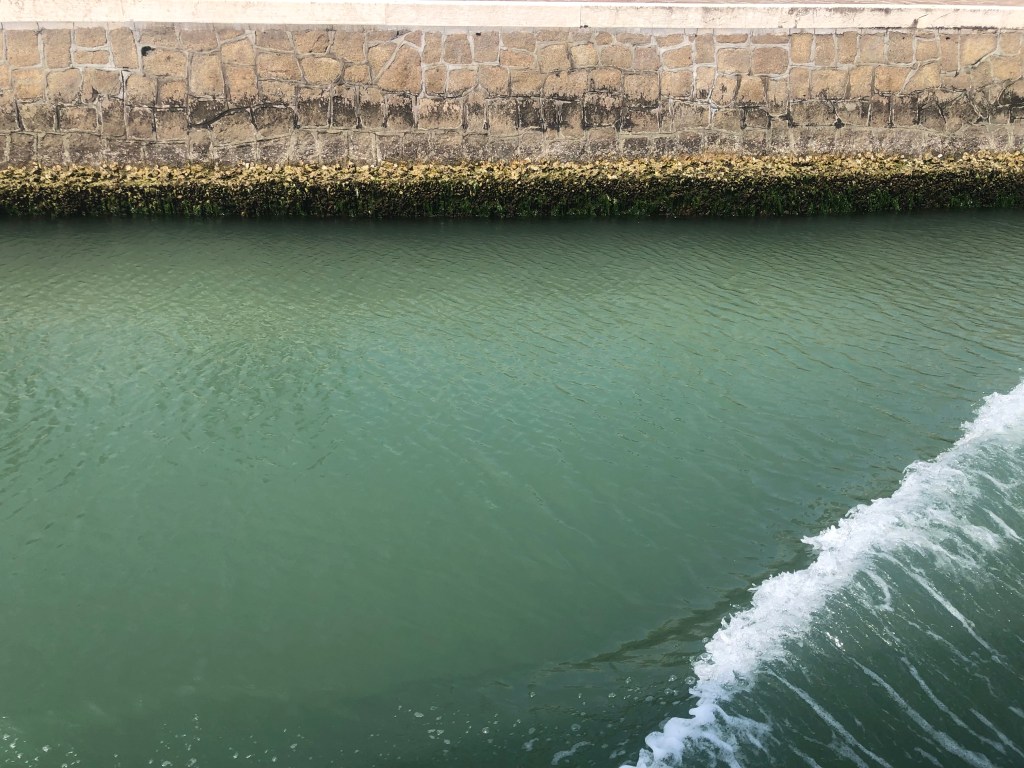
The outlying marshlands of the Venetian lagoon are full of such spirits, if you’re prepared to leave the bustle of Venice and its glass-blowing cousins behind for a couple of hours. If you truly want to see what Venice might have looked like before its canals become cloudy and green from all the water traffic, come to Torcello, whose ancient canals are clear as daylight, revealing a colourful array of sea grasses, seaweed and scuttling crabs on the silt below. And listen, just for a moment, to the ghosts out on the mudflats, knowing you’re hearing the same haunting sounds that the first Venetians defied to make their home here, over a thousand years ago. BB x

Hesperornis

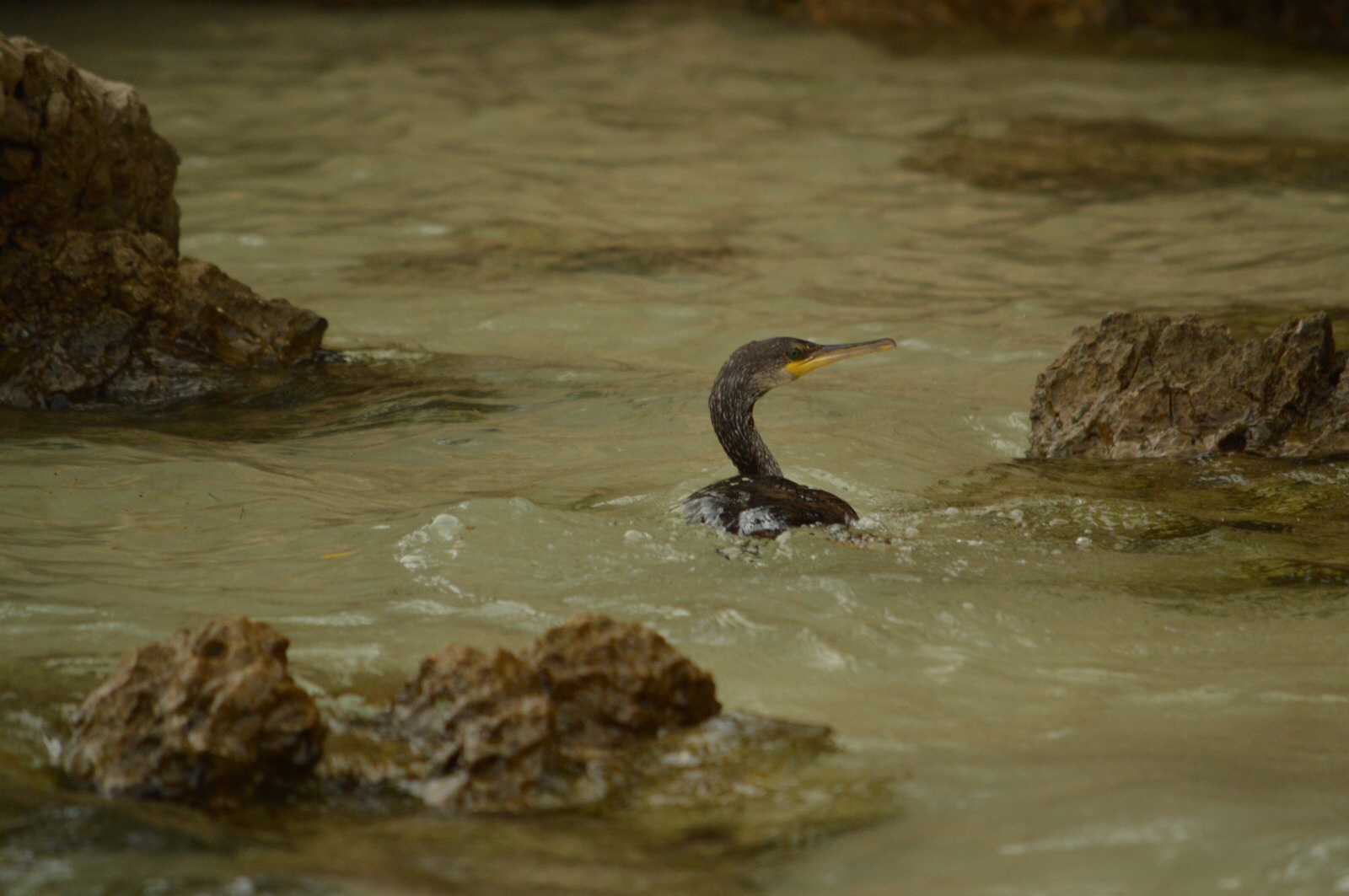
At around eight o’clock in the morning, the sun isn’t quite all the way up yet and the beaches around Arenal d’en Castell are, for the most part, empty of swimmers. A few Speedo-wearing junkies hug the shoreline, and the running girl is back on the boardwalk as she was yesterday, same time, same place. Other than that, the beach is empty – except for one unexpected bather out for a morning swim.

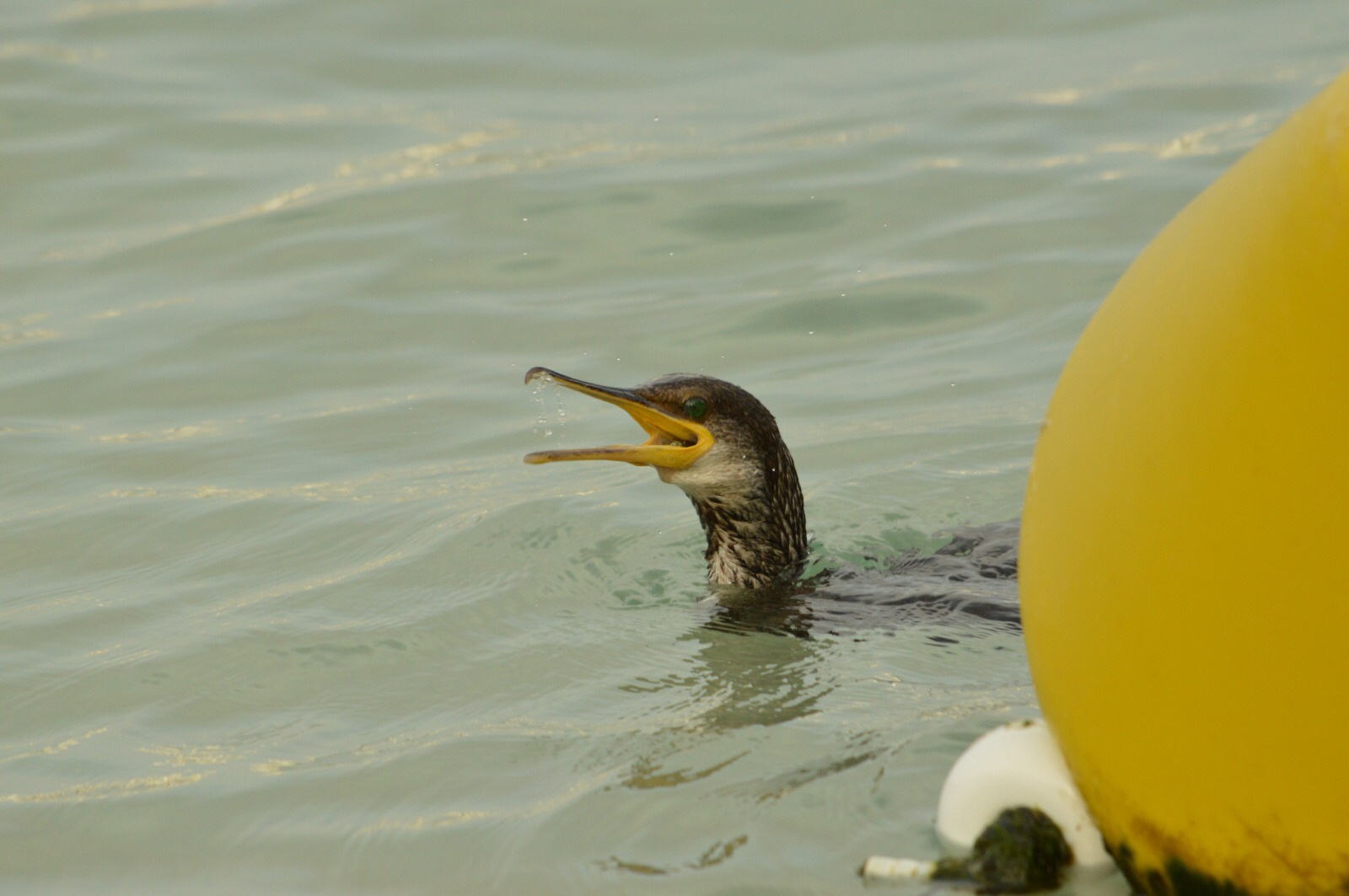
The Mediterranean Shag – perhaps more appropriately dubbed in Spanish as the tufted cormorant – is a diving bird that one normally associates with the rugged cliffs and seabird colonies of the north. The last time I saw these odd-looking snake-necked seabirds I was standing atop the windswept cliffs of Inner Farne, where the birds had built their messy nests mere inches from the footpath. The Farne Islands are magical in their own right with their denizens so fearless and so close at hand, so I suppose I assumed the Farne birds to be a braver sort. In most other parts of the world, birds (and other animals for that matter) know well enough to steer clear of the capricious hand of man. The Great Auk didn’t – and is consequently no longer with us.

Before the tourism industry boomed in the Mediterranean, sea turtles and monk seals swam into the sandy coves to give birth and plovers nested on the shorelines. The human demand for a place in the sun has pushed many of these creatures to local extinction – the Mediterranean monk seal is now one of the rarest mammals on the planet – but some species have decided the only way to cope with the summer surge of noisy humanity is to simply go about their business as though nothing had changed. The shags of Arenal d’en Castell do not appear to mind the presence of their human neighbours in the slightest. The waters of the bay are still teeming with fish, and for this master fisherman, the presence of a few hardy toe-dippers is no obstacle to a morning’s hunting.

There are at least three shags in the bay, not counting those that haunt the rocky cliffs of the headland to the northeast. Like many “urban” animals, they lack the lustre of their wild counterparts. The shining bottle-green feathers of the Farne birds are absent here: Phalacrocorax aristotelis desmarestii dons a more humble suit, with a touch of the sandy-grey “pardel” colour that flecks the coats of all Spain’s beasts, from its mice and rabbits to its bears and wolves.

Or at least, this bunch of townies do.

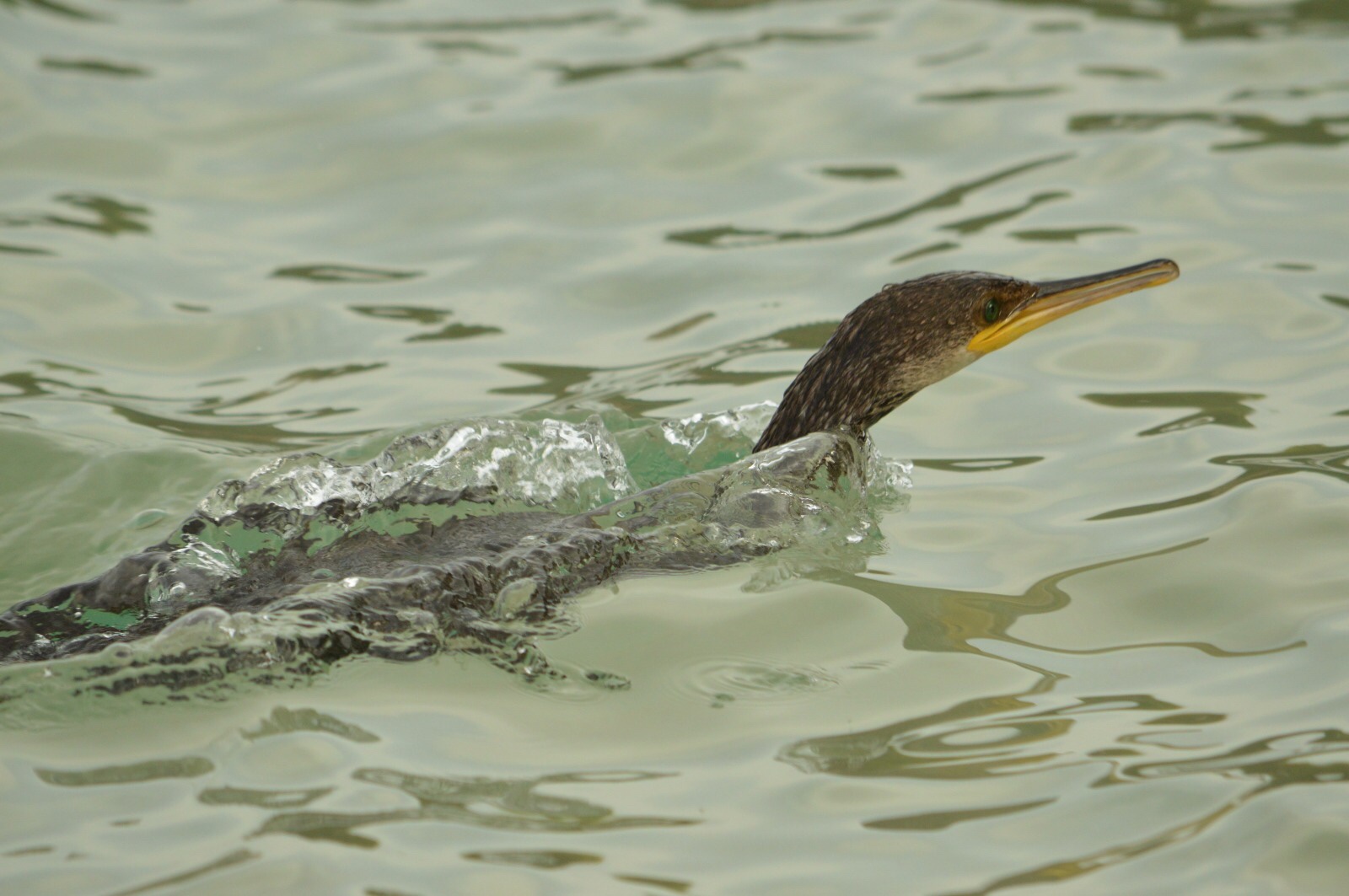
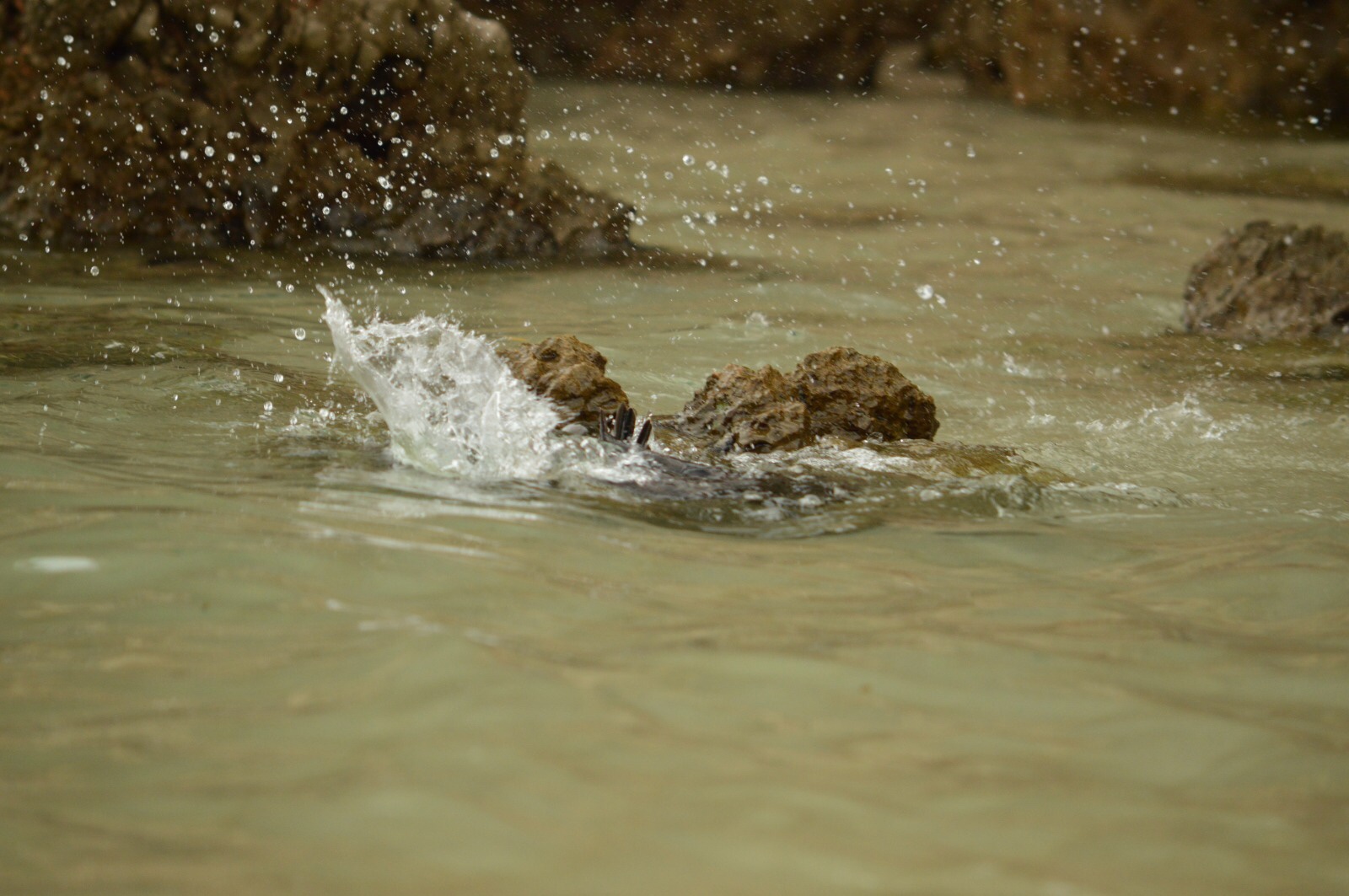
They really are masterful swimmers. This youngster did an entire length of the bay in a matter of minutes, displaying incredible agility as it darted through the shallows, oftentimes passing within a few feet of the day’s first paddlers, and avoiding what obstacles it encountered with incredible dexterity – with one exception. Perhaps age will bring wisdom.

Every once in a while, nature, that ancient mechanic, finds a form it likes and seems to say to itself ‘yes, that’ll do – no need for further adjustments’. Sharks and sponges and jellyfish have filled an ecological niche since time immemorial, and there is much in the shag that harks back to some of the earliest birds, not least of all the fearsome Hesperornis, a seagoing avian dinosaur with sharp teeth on its beak. There are no teeth on its descendant, but as it floats along the surface of the water, snorkelling often and propelling itself along by its back legs, it seems an ancient creature; and when it finds what it was looking for, it kicks with its powerful legs and dives. And if it looked a capable swimmer on the surface, that is nothing compared to what it can achieve below the waves.

Would that I had an underwater camera and could show you just what I mean! Swimming around the headland this afternoon, I ran into the bird again, paddling only a few metres away without a care in the world. When it dived, I went under and followed it on its underwater hunt. Such speed! The bird moves like a torpedo through the water, powering ahead with powerful kicks of its bright yellow feet. I could only keep up for as long as it allowed; when it had enough of the lumbering tag-along, it kicked harder and took off through the depths. Were the sea calmer I might have watched it go, but the high winds stirred up the sand on the seabed and within seconds it disappeared into the gloom.

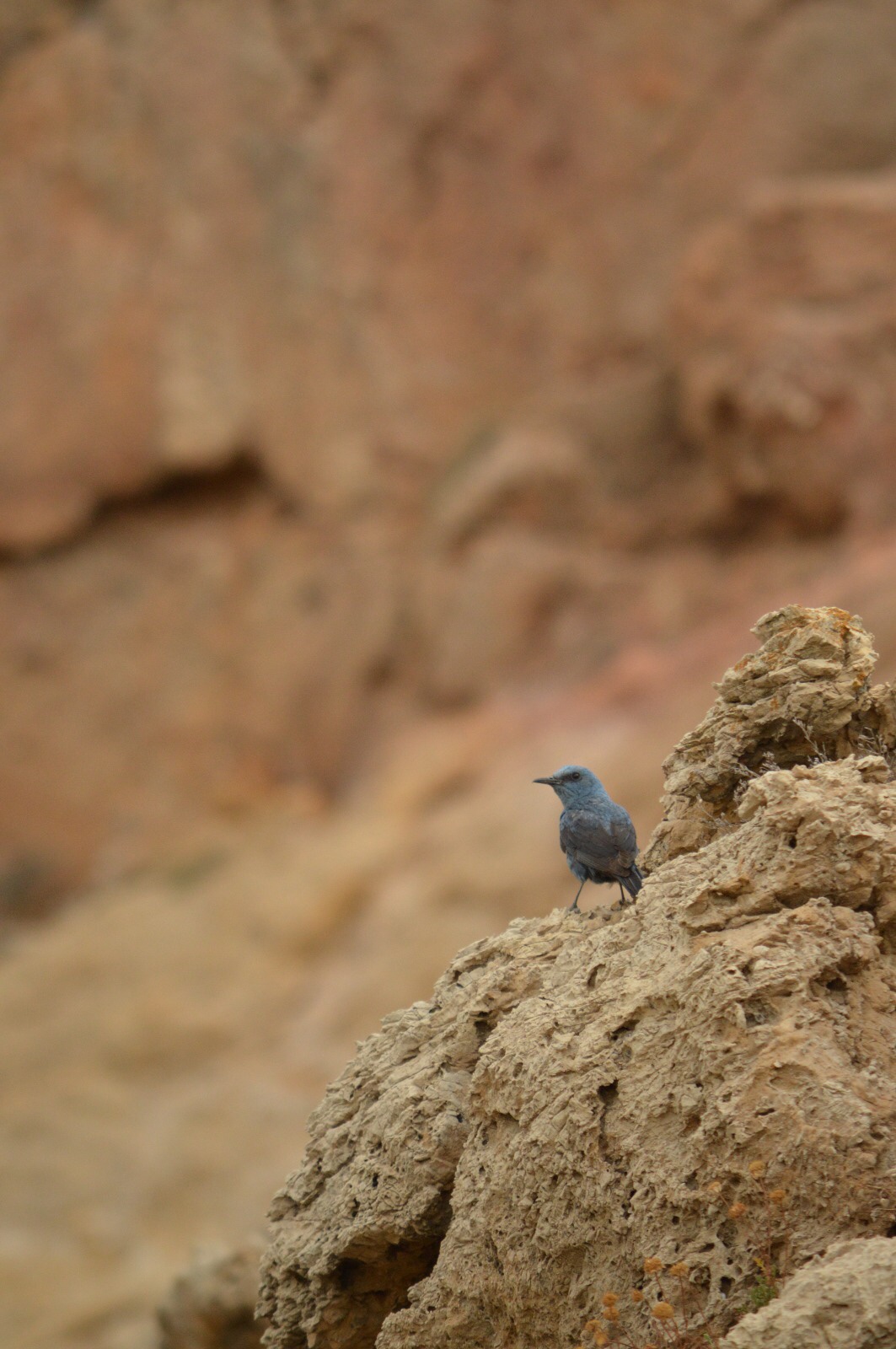
It’s moments like this that I wake up for. The flycatchers hawking around the climbing frame in the garden. The hummingbird hawkmoth that visits the hedge every day, the turtle doves that purr from the Aleppo pines, and the blue rock thrushes that warble from the cliffs of every rocky cove – and all of this within five minutes of the flat. Menorca is wild and, for the nature lover for whom a casual swim is simply not enough, it is a truly beautiful place to explore.

The high winds of the last few days are finally on the wane; the waves are not crashing upon the headland as they were this morning. Tomorrow I make for Fornells to explore the reefs on the northernmost cape of the island. I hear there are moray eels to be seen, though I should consider myself more fortunate if I should have the chance to swim with the shags once again. It was a real RSPB moment, up there with the vultures in the mist and the saltpan harrier, and I shall treasure it for years to come. BB x