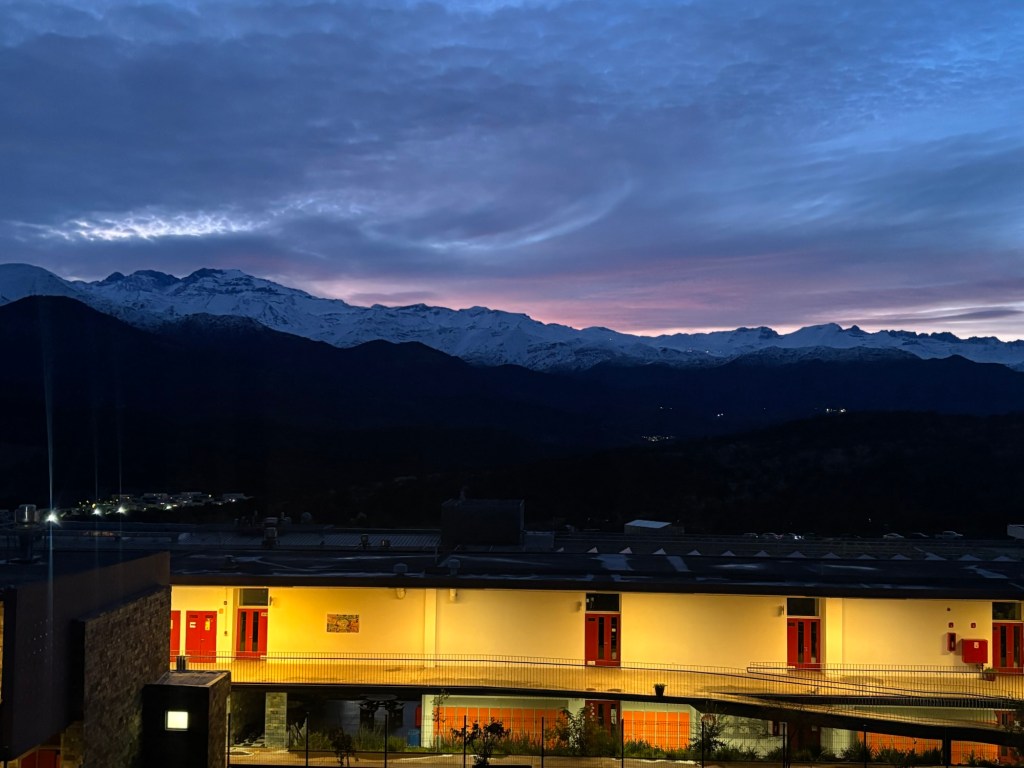
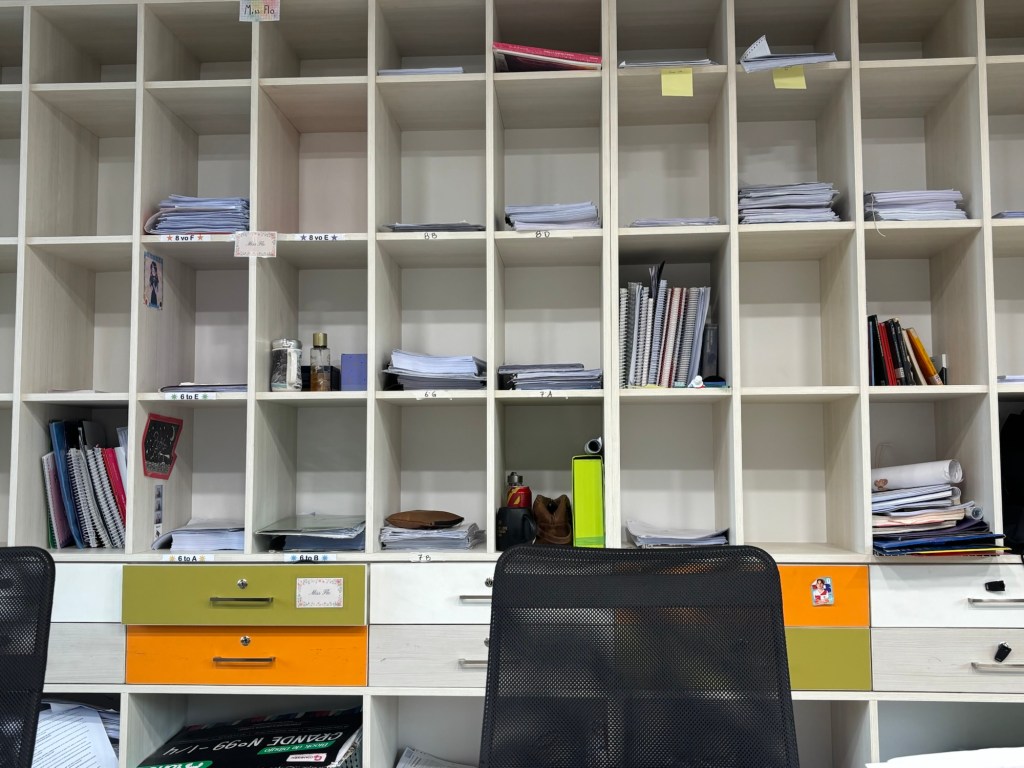
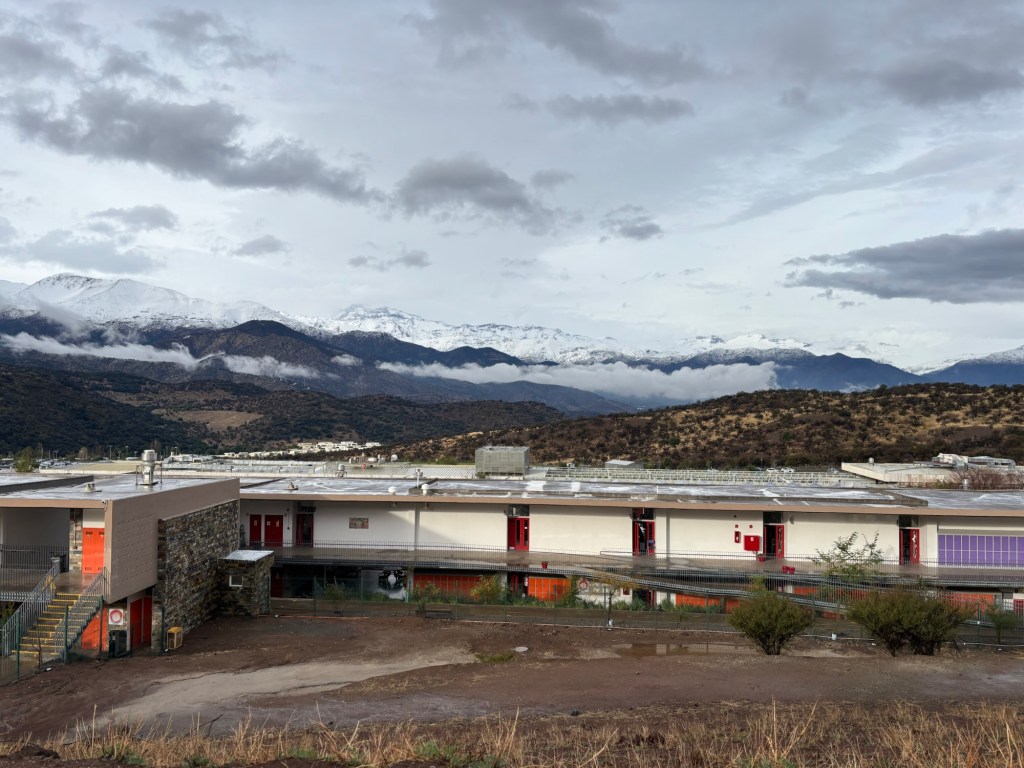
Anagnorisis

Las Condes, Santiago de Chile. 19.22.

How do I describe what I’m feeling right now? I’m not sure. So I’ll do my best to reason my thoughts as I write. That’s what this whole blog exercise is for, after all, right? To throw down all the scattered puzzle pieces in my head so that they make a lot more sense on paper. That’s the idea behind it, anyway.


It’s like this. I’ve spent the last ten years of my life teaching foreign languages: English, Spanish, French, Arabic and even Italian. I do it because it’s what my degree was all about, primarily, but also because I have a pretty good ear and, frankly, I’m pretty good at it. In the last five years – after I’d earned my stripes – I’ve started teaching more and more literature, first through the Spanish Language B section of the International Baccalaureate Diploma, then as a fundamental part of the A Level course for both French and Spanish. The further I get into my teaching career, the more I hunger for the literary side of the course, genuinely revelling in the exploration of theme, character, identity and authorial philosophy. I love teaching the little ones, too – it’s immensely entertaining to go from discussing the corruption of the soul in French to learning Spanish phonics with various animals within the space of an hour – but every year I feel myself drawn ever closer into the literature.

Here in Chile, for the first time since my schooldays, I’ve had the freedom to teach English Literature as though it were my alma mater. It feels as natural as breathing. It helps that I have being using the same skills for years now to deliver the literature aspects of the French and Spanish courses, but… there is something more to it. This feels… right, somehow. Like this is what I was meant to be doing all along. And I’m feeling very conflicted about this.

I shouldn’t. This was always the plan – to move back to Spain and teach English Literature, if I could. But it is never going to happen in the UK. Never. I wouldn’t be allowed to cross over because of a lack of subject expertise and experience, no matter how much I point to my long years teaching literary analysis in another language. Similarly, it’s tremendously unlikely I’d be hired as a Spanish Language and Literature teacher in Spain, for which I am arguably more qualified, because why on earth would you hire a foreigner who has acquired your language from scratch to teach it to children when there are so many native speakers who are far better equipped to do so?

In short, my qualifications and my intentions simply do not add up. I did Spanish at university because I wanted to move back to Spain, but because my profession is teaching – a career path from which I will not stray on principle – I find myself stuck, unable to break into the Spanish education system as easily as mother did with music. I know what I want to do, but the barriers are all around me.

It’s frustrating – and yet the impression I get out here, in a school built upon the IB core philosophy of the universality of thought, is that none of that matters. Where I came from, what credentials I hold, what language I use from day to day. The only thing that matters is a passion for literature and for inquiry, wherever that takes me.

We could learn a lot from this system. Rather, I could learn a lot from it. The only question is, does Spain have anywhere that follows the same philosophy? That really would be the dream, if I could only track it down.
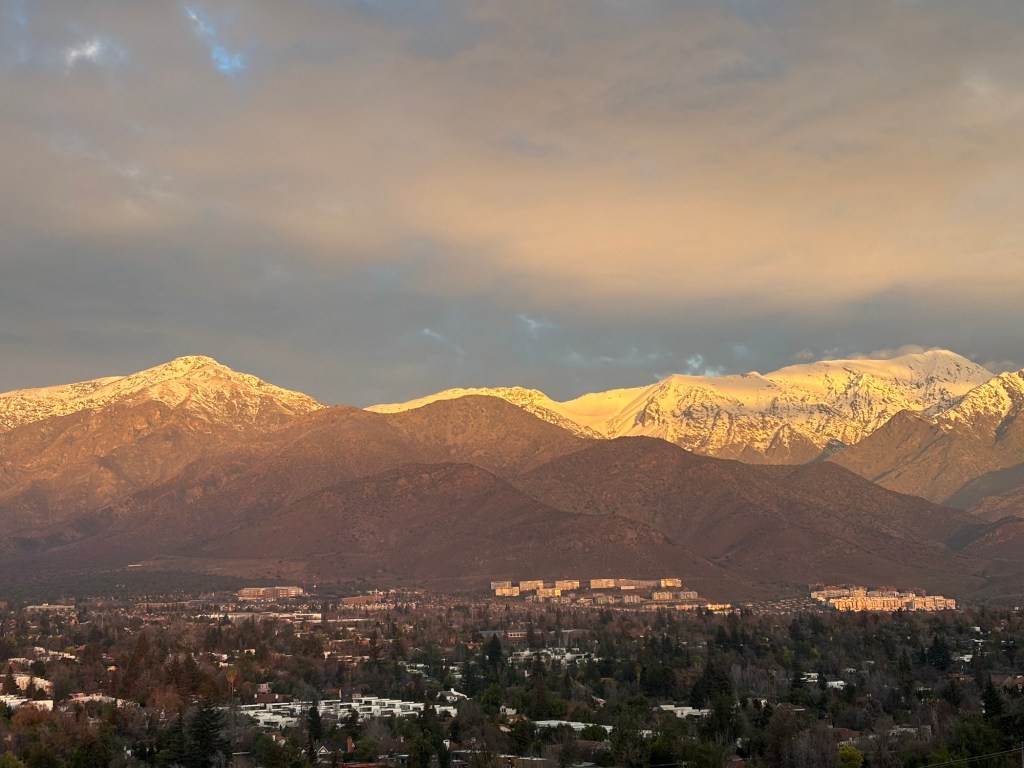

The sun has been out all day. Only now, in the last moments of the evening, has a thin carpet of cloud been pulled up as though to tuck it into bed. This would be only the third day of sunshine I have had since arriving in Chile, now four weeks ago to the day. So I have come up to the top of Observatory Hill to watch the sunset lay its Midas touch upon the Andes, perhaps for the last time, and think about the future.

Tomorrow, one last class of Othello – a proper hour and a half’s marathon on morality and ethics, Augustinian philosophy and Paper 2 preparation – and then it’s over. This strange exchange with Chile that was never on the cards until suddenly it was. I hope I leave a good impression.

And after that… somewhere completely different. Somewhere I have wanted to go since I was six years old. Somewhere… enchanted, even. BB x

Reading Ahead

Lo Barnechea, Santiago de Chile. 10.50.

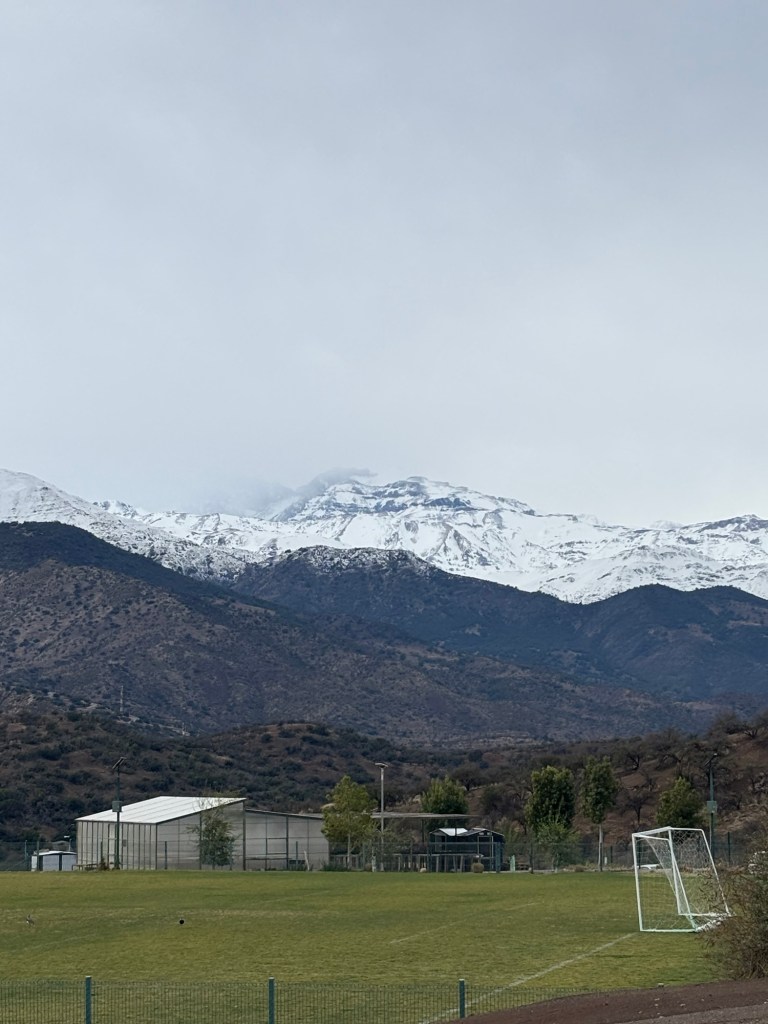
The sun has returned. It feels like quite a long time since I last saw it. It has been so cloudy with the constant threat of rain here in Santiago that I haven’t really seen the sun since the day I arrived, now some three weeks ago – with the exception of that glorious afternoon down in Patagonia when the snowclouds cleared. I have missed it: Chile looks so very different in the sunlight. The lingering snow in the high mountains is a special shade of blue, though it looks about as soft and cold as marble. The students spent their breaktime playing one of their quarterfinal intercolour football games, with a mixed team of boys and girls. A meadowlark is singing somewhere above the classroom block, and every time I turn around, I can see a harris hawk or two gliding high up in the wintry blue sky. This is a very special place.

One of the most reassuring things about this Chilean exchange is the renewed confidence I have regarding my text choices for the Spanish Language A course I’m rolling out. After a chat with the English department yesterday, it turns out they are studying some of the texts that I planned on exploring with my students next year – so there is a precedent! As it stands, my reading list looks something like this:

  1. Rebelion en la granja (George Orwell, UK)
  2. Maus (US)
  3. Pedro Paramo (Juan Rulfo, MX)
  4. El tunel (Ernesto Sabato, AR)
  5. Romancero gitano (Federico Garcia Lorca, ES)
  6. El reino de este mundo (Alejandro Carpentier, CU)
  7. El burlador de Sevilla (Tirso de Molina, ES)
  8. La casa de los espiritus (Isabel Allende, CL)
  9. Cien años de soledad (Gabriel Garcia Marquez, CO)
  10. El maestro y Margarita (Mikhail Bulgakov, RU)
  11. Veinte poemas de amor y una cancion desesperada (Pablo Neruda, CL)
  12. Otelo (Shakespeare, UK)
  13. El extranjero (Albert Camus, FR)

To be honest, I’m surprised at myself with this list – primarily because of the tremendously heavy Latin American focus. Years ago, in my university days, I steered my Hispanic Studies degree firmly away from Latin American texts, focusing instead on all things Iberian: Castilian medieval epics, postmodern Spanish literature, and the Quijote module that never was. However, the parameters of the IB are clear: the texts studied should cover a broad range of geographic regions and time periods, so that students can discuss the similarities and differences between the overarching themes, and in so doing, ask insightful questions that push them closer to being truly global citizens. That, at least, is the idea.

It’s a big ask. My usual stomping ground is medieval epics like El Cantar del mio Cid (which, funnily enough, is one of the set texts for the Spanish Language and Literature course out here), but I really want my students to get to grips with the wider Hispanic world – just as I am getting to grips with it myself, after stubbornly ignoring the Hispanic World beyond the Atlantic for far too long.

I´ve tried to cover as many countries as I can while threading together a coherent corpus that lends itself well to comparative work, revolving around five primary themes: power, identity, memory, morality and the supernatural. It’s a tall order for my students, I know, and I hope they are up to the task. Hell, I hope I am up to the task! But I am seriously looking forward to being a full-on teacher of literature at last, even if I have had to come by the road of Spanish Literature in order to do so.

With that being said, I had better crack on and get some of these presentations whipped up. This curriculum won’t write itself! BB x

Birds and Books

Lo Barnechea, Santiago de Chile. 15.43.

The shrill cry of lapwings precedes the school bell by seconds. There’s obviously more than a couple that will have their nest somewhere in the school grounds when winter is over, as they’re here every day, soaring and bouncing over the school with their odd, bat-like flight.

I’ve become quite used to the rufous-crowned sparrows that live around the school. There are house sparrows here too, the same as we have back home, as well as the handsome slate-grey diuca finches, but the characterful little South American sparrows are a joy to watch and to hear as they hop around the campus. Sometimes they’re joined by a mockingbird – I’ve seen the same individual at least once each day, usually around the goal posts in the patio – and today I had the treat of being reunited with the smart scarlet spectacle of a flock of meadowlarks that came rooting around the school car park around lunchtime. I haven’t seen them since I left the snowy hills of Patagonia last week, so it is lovely to be reminded of that wintry paradise when it is already some two and a half thousand kilometres to the south. 

They say that even the mighty condor comes down from the high mountains when the weather is fierce, when it can be seen from the school grounds from time to time. Now that really would be a sight!


I’ve had a fair bit of thinking time today between observations and meetings, so I’ve had time to soak in the nature of my surroundings a bit more. I saw a couple of project classes again this morning, before organising a meeting with the Head of Senior Literature after lunch.

Senior Literature… Now we’re talking business! I’m painfully aware that my decision to embark upon this mad adventure with Spanish Language A makes us one of the few schools in the UK that offer such a Spanish-heavy course. It’s also not been lost on me how bizarre my exchange set-up is: I’m an British teacher working in the one department at school that operates entirely in Spanish. It tends to throw most of these kids (and teachers!) for a loop.

I feel a great sense of relief for having spoken to a colleague who coordinates the Higher Level Language and Literature programme here at Craighouse. At least a third of the books I have nominally chosen for my own course are on their list of set texts, and the Head of Department both knew of and really rated every one of my choices. My colleagues back home are largely linguists rather than literati: a passing glance and an apologetic wave of their hands was the best response I got to my admittedly annoying enthusiasm about my text choices. Now I feel at the very least as though I have not been operating entirely in the dark.

The conversation ended with a visit to the Inquiry Centre for inspiration’s sake and a jokey offer to consider working here. I’m keen to get out of England and back into the Spanish system – or, better yet, the IB – but I’m not sure Santiago is the place for me. Maybe it hasn’t grown on me yet. I’m also getting to that age where all I really want is to find Her and settle down. Santiago is – it should be said – about as far away from home and everyone I know as I could feasibly go with the skills that I have. All the same, I’ll admit I floated the idea in my head for a little while.

I’ll let it float a while longer. Two and a half weeks remain of this exchange, which may well prove to be a lot more useful than I anticipated. It was absolutely the right decision as far as my fledgling Language A course is concerned, but it may prove to have other uses that I have yet to discover. Time will tell. 


Tomorrow I’m going to pop in on a few senior literature classes and maybe drop in on primary as well. There’s talk of the possibility of seeing how English Literature is taught here, too, which I’d absolutely love to see. I’ll keep you posted. BB x

Middle Years

Lo Barnechea, Santiago de Chile. 15.05.

Today’s lesson observations were largely spent with a friendly Spanish teacher called Mario. The Middle Years Programme or MYP – the IB’s equivalent of Years 6 to 9 – follows a really interesting programme at this time of year. Or at least that’s how I see it!

All of the classes in 6° (Year 6) are currently working on a triptych project centred around haikus, so that they can get used to how syllables work in context. The students have free choice as to what to write their haikus about, provided it concerns an aspect of Japanese culture. As for the range of ideas in the classroom…! Sakura trees, Matsumoto Castle, Mount Fuji, the origins of sushi, Tokugawa Ieyasu… The creativity and ambition of these IB-trained children is truly astounding.

In 7° (Year 8), the students are working on their organisational and presentational skills through a marketing project. Not only do they have to create the product, they have to design the marketing poster, complete with a functional slogan and all the trappings of a street-side ad, right down to the contact details and the disclaimers. Once they’ve created their project, they have to explain their product and why they have designed their ad the way they have, commenting on their own use of language and where they got their sources. It strikes me as an incredibly mature way to handle a Year 8 language class. I must find out what ours do – I’d be surprised if it is as high-brow. Or maybe I’m just bowled over by the full body of the IB, having only touched the tail of the beast before.

In 8°, the students have an even more ambitious task ahead of them: an anthology of Chilean poets (sans Neruda), from which they have to select two poems by different poets and compare them, analysing the stylistic features at work in each one. We definitely did this in English when I was growing up, but not in that kind of detail, not at that age. It reminds me of how far ahead Spain’s Lengua castellana course was of my own English syllabus, as it took me two years to reach the material I had covered during my year out in Spain (which is effectively three, as I was held back a year when I moved out in order to help me acclimatise). I can’t vouch for the quality of their work as it’s still being marked, but they seemed about as keen on poetry as your average English kid is – which is to say, not in the slightest.

It’s a shame, how universally unpopular poetry seems to be. I guess it’s because of the difficulty spike when compared to a humdrum comprehension text: all the best poets do love to weave a lot of clever imagery and references that require major unpacking to properly appreciate. I’ve always been of the opinion that the best toolkit for handling poetry is a serious arsenal of general knowledge, but with that too on the wane in the age of instant information, I can’t see poetry becoming anything more than a niche interest among the global student body.

Well. Not unless I have anything to do with it, anyway. BB x

Time Warp

Las Condes, Santiago de Chile. 19.13.

As I expected, when I arrived at school this morning, a plan for whatever it was I was supposed to do out here had yet to materialise. I think part of that is because they didn’t really know what they were working with: whether I was here to observe, to gain teaching experience, or perhaps even to help out in Maths (god forbid!). When they realised that I could not only speak Spanish but had been teaching for eight years already, that changed the game quite a bit… Really, you’d have thought this kind of thing would have been communicated ages ago! But, like I said, it was not altogether unexpected – I knew this exchange was going to be a bit ersatz until I found my feet, given how little information I had to work with before setting out.

Anyway…! What a school. What an incredible institution! I’ve been teaching the IB Diploma for the best part of five years now, but to see a school system where it is not just an additional pathway but the culmination of a five year programme… It almost seems ridiculous to offer the standalone diploma without the run-up of the MYP.

Craighouse sits at the very top of the extremely well-to-do suburb of Lo Barnechea, which is a step-up from the already smart Las Condes. It seems the higher up the mountainside you go, the higher up the societal ladder you climb, too. Mock Tudor houses with half-timbered facades. Americanesque mansions with illuminated porches and Spanish haciendas. The drive up to school from Las Condes felt like orienting one’s way through a bougie estate agent’s catalogue.

The school itself? An absolute dream of an establishment. Making rooms for scientific inquiry… Inquiry centres, which are glorified libraries with all the bells and whistles… Gyms and sports facilities that would make even my sportier students salivate… And when the clouds clear, the snowy peaks of the Andes all around them. How lucky these kids are!


The plan is coming together – slowly. For now, I’m going to be working with the Lenguaje department, helping to deliver Language and Comprehension classes. Ironically, in a school that teaches almost entirely in English, it’s the one department that is taught exclusively in Spanish. Bizarrely, they’ve hired in an English exchange teacher to help deliver the Spanish Language and Literature programme.

It is exactly what I wanted. It will be a challenge, I won’t deny that. But it is precisely what I was angling for. It is all part of the grand plan: teach Spanish, even to the Spaniards, until I am good enough to return to Spain and do the same over there. In Spain – at least in public schools – teachers of English are expected to be able to deliver Lengua Castellana as well. That’s like expecting our French teachers to be able to offer English Literature.

Of course, the British system doesn’t work like that at all – but then, why should it? Our entire curriculum fails to consider the importance of bilingualism, purely because of the cultural dominance of English on the world stage. If not English, which language would you choose? It would have to be one that your average teacher spoke well enough to capably deliver their subject, and that sole requirement kills the idea in one shot. Your average British teacher is simply not good enough at any foreign language to teach their core subject to the same standard as they would in their own, never mind finding one common foreign language at a national level. No – until another language reaches the same level of prestige as English, I don’t think it’s likely we’ll see that kind of programme over here.

But that’s ok. I plan to move abroad anyway. The more I see of this whole school IB approach, I have to admit, the more I like it. If I can only find a school in Spain where I can sink my teeth into a system like this one… Boy. That would be the dream. BB x