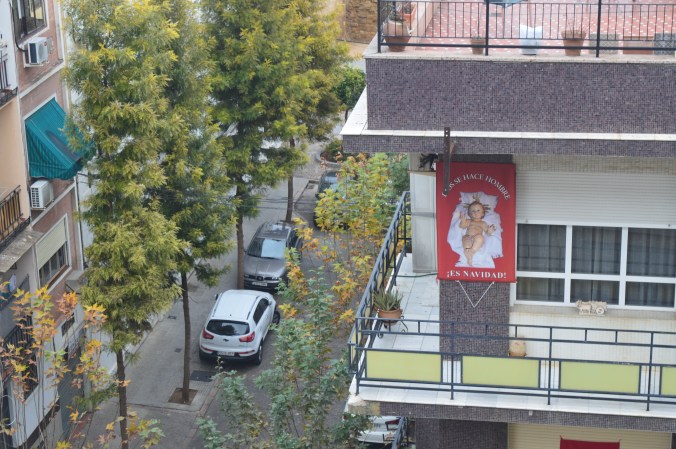
Chaouen and the Petra Effect

There are some places that you come across that feature on almost everybody’s wish list. The pyramids of Giza, the lost city of Machu Picchu and the Great Wall of China, the name a few of the standout examples. Ask for more and you might encounter a few more classics, like New York’s Central Park and the bustling canals of Venice. Extend the list a little further and you’ll probably find a small Moroccan town nestled deep in the Rif mountains of some forty thousand inhabitants. Why? Because a large part of the old town is painted powder blue. Introducing Chefchaouen, the blue pearl of Morocco.

DSC_0443

I should point out, it’s currently under scaffolding in anticipation of its upcoming designation as a UNESCO World Heritage site. Just like the Fes tanneries last year, that’s another visit hamstrung by the UNESCO beetles. Fortunately, I’ll be a mere hour away all summer, so I’ll be back when they’re done. It promises to be spectacular.

DSC_0560

It’s a strange experience, wandering along an entirely blue street. The whole medina looks like something out of a picture book. You can almost hear the suspicious mutterings of the locals when the first travelers stumbled upon the town a century or so ago; a four hundred-year old refuge from the zealous rage of Castile. There are some doorways and passages that are instantly recognizable from the travel guides and Instagram accounts, and with good reason: they practically scream out for a photo.

And that’s where the trouble begins.

DSC_0454

Chefchaouen is, at the same time, a photographer’s dream and nightmare. Not only have you got some of the most beautiful colours to play around with that architecture can provide, but the villagers themselves are extremely photogenic and set off any street scene like saffron – if you feel like risking it.

DSC_0460

Chaouen has been in the mainstream tourist trade for some five years now and it’s inhabitants have had plenty of time to develop their own opinions about being posted all over the global social media on a daily basis. Being the cautious type, I’d rather avoid trouble and settle for those unoriginal empty street shots, taking proper dioramas only when all backs are turned. But even that, it seems, is sometimes a little too much to ask.

DSC_0369

‘No photos! No photos!’ cries an old woman, rounding a corner just as I press down the shutter on what was mere seconds previously an empty street. I hastily stow away my camera as she grumbles to herself in Arabic about the likelihood of it cropping up on Facebook tomorrow morning. True to self, I’m left feeling so guilty for taking that snap one second too late that I end up doing the rest of Chaouen sans apareil. Thanks for that, jaddatii.

A common joke bandied about by Moroccans – aimed almost exclusively at people like me, I shouldn’t doubt – is the ‘no paranoia’ jibe, reserved for all those travelers who assume indifference when hailed in the street. I had this two or three times after my run-in with the camera-shy abuela, when I bemused a few stallholders by passing by a gorgeous Chaoueni door without reaching for my camera.

DSC_0564

I tried my luck again the following morning, having recovered from that little stumble, only to run into exactly the same problem when I was quite innocently photographing a lantern. ‘No! No!’ says a villager, climbing the stairs towards me. ‘No photos!’. Jesus, Chaouen, what am I allowed to photograph?

The result? I spent the entire day sketching instead.

Sketching appears to be harmless. I’m not entirely sure what the difference is between a sketch and a photograph – a true craftsman puts just as much work into both – but people don’t seem to mind you standing on a street corner and scribbling away for twenty minutes or so. You’d think after a couple of minutes that it’s fairly obvious that you’re the subject of a doodle when the artist in question keeps stealing a casual glance over your shoulder to the mountains behind, and that that might bother some folks… but apparently not. It even has curious passers-by stop and talk to you.

Perhaps that easily-offended old Chaoueni did me a good turn after all. It’s all too easy to become lost behind a camera.

DSC_0559

I have mixed feelings about Chaouen. On the one hand I do admit that it is rather gorgeous, as Moroccan towns go. For me it’s not a scratch on the more authentic Taroudant or Imoulas, but that has more to do with the thriving tourist traffic than the town itself. My main problem with it, it must be said, is what I term the Petra effect: when something receives so much hype that the reality can’t help but disappoint. It’s unfair to say that you shouldn’t rave about an especially beautiful place, but sometimes I’d rather make my own discovery than find the path trodden down before me by the world entire and the locals already soured by thousands of camera-toting holiday-makers. One almost misses the hippies.

DSC_0486

Like Petra before it, I’d heard so very many enticing anecdotes and seen so many beautiful photos of Chaouen that I wasn’t as bowled over as I probably should have been. I will, however, be back. There’s more to the town than I had time to see… and I have all summer. BB x

Four Days without Reggaeton

‘You want taxi, my friend? No? What, you no want talk to me? Why you travel if you no want talk to people? You all the same, you think you are better than us, but you are wrong. We are better than you.’

Welcome back to Morocco, I suppose.

DSC_0267

Goodbye Tarifa!

There’s something endlessly enchanting about waking up in a new country. It breaks up the monotony of the everyday. It sends gears spinning that had until recently been lying dormant. It also comes with a change in breakfast too, which is never a bad thing.

DSC_0291

Bang in the centre of the medina and all you can eat for 10 euros a night…

On one of those fantastically last-minute whim decisions which I have been known to make , I decided to take up the offer of two of my English department colleagues to spend the puente de Mayo in Morocco. Four days isn’t nearly enough to enjoy Morocco – each town deserves a full day and night’s exploration to even begin to get a taste of the area – but when it’s so close that you can see the cars from the other side of the sea, it’s impossible not to feel the tug of the south. I’m not very good at saying no to anything, but when it comes to adventure, I find it exceedingly difficult to say no. So here I am, on the 12 o’clock bus to Chefchouen, saying yes – and loving every second of it.

DSC_0295

Getting Bourne Ultimatum vibes…

The last time I was in an Arab country was Jordan. Let’s not go over that again. Jordan’s going to be a bug-bear of mine for a very long time. It’s a name which carries greater fear for me than Syria, Korea and the Democratic Republic of Congo ever could. It wasn’t so much the country as it was the fact that I simply didn’t want to be there. Backed into a corner as I was with my commitments to the British Council, I wasn’t given a choice. And in that frame of mind, as always, I was defeated before ever I got on the plane. It wasn’t in my interest… And as my parents will know only too well, if something is not in my interest, the chance of me doing well is next to zero.

DSC_0346

The Rif: b-e-a-utiful

Not so Morocco. Maybe it’s the green hills and the icy rivers flowing down from the mountains and into the sea. Maybe it’s the jaw-dropping kasbahs of the desert south or the quiet, homely feel of the melting-pot medinas of the north. Maybe it’s even the simple fact that this is Africa. But I think that the real reason I have so much love for this country is because I want to be here. It’s a minor difference, but it changes everything.

Waking up with the dawn chorus in the middle of a city sounds ridiculous, especially when there’s a complimentary alarm service courtesy of the mosques at four in the morning, but in Tangier it’s easily done, and the soundscape is just as fantastic a mix as the city itself. There’s the warbling calls of flocks of roving bulbuls, that ever-present feature of Arab towns; on top of that you’ve got a chorus of roosters crowing at the dawn, interspersed with the occasional bubbling note of a laughing dove, two quintessentially African sounds; and then there’s the aggressive cackle of the gulls, which smacks more of Europe than anywhere else. Even the repetitive wi-tu wii-twii-tu wii-twii-tu of the house buntings echoes the sales pitch of the taxi driver, yelling the name of his destination over and over as though it were an object to be bought or sold.

DSC_0301

Spot the six species of bird in this picture (better still, imagine them)

And that’s just the naturalist in me. The linguist side of me is in his element: this is a place where I could be using all four of my languages – English, French, Spanish and Arabic – at any given moment. Across Morocco, but especially in Tangier. It’s like something out of a dream, and we haven’t even got to Chefchaouen yet.

DSC_0332

Tangier’s Kasbah is actually a lot more impressive than it is made out to be

But for a less-than-welcoming start thanks to a jilted taxi tout lying in wait at the dock entrance, it’s been so good to be back. And as I’m the only Arabist in tow, this time it’s up to me alone to do the talking – and that’s a huge plus right off the bat. I hope there may soon come a time when it’s safe enough to study Arabic anywhere, from Western Sahara to the Sudan, from Yemen to Iraq; to excel, I need to be on my own. And that’s what this year has been all about. I’ve learned from my mistakes in Jordan. Moroccan Arabic won’t be any easier than Jordanian, if not harder, but I’m going to tackle it head-on and alone – and better still, in a willing state of mind. I can’t wait. BB x
Polo’s Bastards

With my summer plans in a near-constant state of flux, I thought it about time to set a few things straight. This time last year I still wasn’t sure what I’d be doing for the summer of 2016. By all rights, I figured I was still lumped with another two months in Jordan. Since then, it’s bottled about through three weeks in South Africa, chilling out at Olvera’s August feria, hiking the Sultan’s trail from Bucharest to Istanbul, crossing the Pyrenees from the Atlantic to the Mediterranean, ten days in Romania, another ten in Egypt and, somewhere, completing my four month minimum in Tetouan, Morocco.

Understandably, my brain is a bit of a clusterfuck at the moment. It’s partly because of that that I accidentally booked a hotel for the wrong night in Chefchaouen and had to pay an obscene 95€ just to cancel, it being less than fifteen days until our visit now. (This is why I prefer to stay in cheap-o hostels, people…) And it’s unnecessary expenses like that that make me reconsider.

So this is me, reconsidering. Let this exploration of yours truly’s very own version of Polo’s Bastards stand testament to any further meanderings. The following ten countries, in ascending order, are the top ten on my hit-list. And they aren’t exactly the easiest. (Spain, for various reasons, is not included – call me easily pleased, but it’d invariably take the top spot).

Southern Morocco

10

Tafraoute, Morocco

This one’s on the list despite the fact that I’ve already been because I was only there for five days or so, and it’s worth an adventure in its own right. Morocco’s south is famous for the Sahara, for Erg Chebbi and the reasonably easily-accessible camel treks that set out into the dunes from Merzouga. Morocco is such a diverse country, and merits proper exploration of each of its three zones – the Rif, the High Atlas and the Anti-Atlas – independently. It’s the south that bowled me over, not least of all Taroudant, by far the most charming city I encountered when I trekked from Agadir to Fes. It’s also the home of Abderraman Rajji, the kind old Berber who offered his house to Archie and I. Tafraoute in particular has been calling out to me ever since. The way things are going, I might even consider exploring the south some more in September…

Yemen

The Republic of Yemen

Jebel Shugruf, Yemen

You’re mad. No, seriously, you’re insane. But Yemen has been my top Arabic destination since the very get-go, being one of the contenders for both Sheba and the most beautiful country in the world in my books (it may or may not have something to do with having so much in common with the country in the top spot on my list). Since it’s been a war-zone for so very long and many parts are still tribal – the two may or may not go hand in hand – much of the country has been spared the glass-and-cement arm that has scarred so much of the Gulf. Not to mention the gorgeous, Ali Baba-esque mountaintop towns. Wallahi.

Democratic Republic of Congo

Mount Nyiragongo  tourism destinations

Mount Nyiragongo, Democratic Republic of Congo

I’ve been within a stone’s throw of the DRC twice. On both occasions I had this mad urge to throw caution to the wind and cross the border. Fortunately, a crocodile-infested river stopped me the first time and a hundred miles of unchecked jungle stopped me the second. Needless to say, my appetite is whetted. This is the true African stereotype, Conrad’s dark zone, peppered with active volcanoes glowing red in the night – and at the risk of further destroying any faith you had in my sanity, it’s the danger of the place that attracts me so. Doesn’t the name alone sound so powerful?

Argentina

7

Tierra del Fuego, Argentina

A curiously mainstream addition to the list, I’ve had just about enough of seeing the same mountain range on the front of Lonely Planet, National Geographic and Wanderlust magazine – and have therefore decided that it must feature on this list. Patagonia looks so very crumpled and torn apart that it’s almost unnatural. I’ve been in love with mountains my whole life, and Argentina’ Tierra del Fuego represents possibly one of the most perfect mountain ranges in the world, picture-perfect in every way. And hey – they speak Spanish!

Egypt

6

Abu Simbel, Egypt

Let’s face it, who doesn’t want to see the Pyramids? Or the Sphinx? Or the Valley of the Kings? Egypt was my fall-back for Arabic until the Arab Spring ruined everything… now it’s been relegated to the dust of lost dreams, which is rather fitting, though it’s resurfaced from the sand of late in light of the summer flux. My only issue with Egypt is the package-y nature of it. If I could go, I’d rather backpack it – and that is the first leg of Cairo to Cape Town. That really would be an adventure and a half!

India

5

Mehrangarh Fort, Rajasthan

One word: Rajasthan. Land of desert forts, of rose sunsets, of dark-eyed mysteries. It’s the realm of the Far Pavilions‘ Bhithor (I think) and of Valmik Thapar’s Desert Kingdoms episode of Land of the Tiger. Southeast Asia may be the flavour of the month for most backpackers, but I’d eschew the Thailand-Cambodia-Vietnam trail for a month in Rajasthan alone anyday. India’s so massive and so diverse that you’d need more than three months to fully appreciate the place. And some day, I intend to do just that.

Ireland

4

Murder Hole, Donegal

I have absolutely no idea why or how County Donegal made it onto this list. One day it simply seized my brain and became the country of origin of my princess. I guess it all spun out from there; that, and that damned gorgeous accent they have up there in Ulster. Ireland’s a damned sight closer than any of the countries on this list (and is also, consequentially, the only European entry), but the only thing holding me back is the expense of traveling around; a fair hike compared to the others. Even so, I doubt it’ll be long before I’m drawn out to the Emerald Isle.

Cameroon

img_3316

Rhumsiki, Cameroon

As well as my madcap desires concerning Cairo to Cape Town, I have this less ambitious but no less adventurous urge to visit each of Africa’s four corners: North, South, East and West. Having seen central Africa already, I’m chomping at the bit to see the rest of it. It’s first on the list of countries I’d consider volunteering in, since I reckon it would really merit getting to know on a more human basis than backpacking could ever provide. It also has a serious bushmeat trade problem that I feel strongly about. On top of that, Cameroon has all that I love about Africa: fantastic food, spectacular countryside, great apes and a dark history. It’s also a necessary stopping point since one of my novels takes place here. Let’s just call it ‘essential research’.

South Africa

3

The Drakensberg, Kwa-Zulu Natal

Words cannot describe my love for this country that I’ve never been to. I’ve waxed lyrical enough about the land of Quatermain, of P.K., my ex-girlfriend and the Zulus before, so I won’t go on about it. What I will say is that I came with a hair’s breadth of going this year, barred only because my bank wouldn’t let me pay for both my flights and my brother’s in one go. Taking it as a message from above, I backed down. But only for a run-up. I’m not even close to the door yet.

Ethiopia

1

Gelada Baboon in the Simien Mountains, Ethiopia

Truly, Ethopia must be the King of Africa. It’s Africa with castles, with Gods-in-the-flesh and sulphur fields. The people are – in my humble opinion – probably the most beautiful in the whole world, being a striking blend of Arab and African. I had a three-hour layover in Addis en route to Uganda four years ago and I guess it started there – there, or a few hours before, when our plane came down out of the clouds and I saw Africa for the very first time, a paradise of rolling plains that gave way to spectacular waterfalls and blood-red cliffs. The Simien Mountains also top the list for me in terms of beautiful mountain ranges… and I haven’t even got onto Harar’s hyena-men. Then there’s Erta Ale, Gondar, Addis Ababa herself, the Omo Valley… Ethiopia simply has everything – and less tourists than the other African giants. Perfection. All I’m waiting for here is another like-minded adventurer to join me and I’m there. Just you wait, Ethiopia. Just you wait.

There. When you’re struggling for an idea as to where to go next in a couple of weeks, or months, or a year, return here. These are my top ten. And one day, come Hell or high water, I’ll have seen them all. BB x
Griffonheart

Sometimes, when a bird flies low over your head, you can hear the rush of wind through its wings. Swifts do that, from time to time. Swifts and pigeons. It’s a quiet, singing sound like a sudden release of breath, over and gone by the time you’ve worked out where it came from. Now try to picture the same scenario with a nine-foot wingspan. The result sounds something like a gale, a genuine roar of wind, every bit as impressive as those giant wings. This is Monfragüe and this is a griffon, truly one of the most spectacular creatures on the planet.

Griffon

I don’t really know what it is that attracts me to vultures so much. They’re not the most attractive creatures on the planet. Their heads are snake-like and feather-bare, their eyes are cold and sinister and they spend their entire lives feeding on dead things. If birds are supposed to sing, vultures sound like they have a bellyful of iron filings when they make a sound – and that isn’t often. But for some reason, I’m obsessed with the damned things, and always have been.

DSC_0610

Extremadura is a very special part of the world, but doubly so if you’re as much of a bird nut as I am. The immense blue skies are almost always dotted somewhere in the middle with a black speck wheeling round and round on the thermals: kite, eagle or vulture. I grew up in the south of England where the largest soaring bird you’re likely to see is a rook, and I still remember the sheer thrill of seeing my very first vulture when I was about nine years old. For me they represented Valmik Thapir’s India, of cliff-forts and desert kingdoms. To see them wheeling lazily about the Spanish sky was like something out of a dream. And so the love affair with the griffons began.

5385452975_2c3babecc1_o

Since then, they’ve got me stranded in the mountains, terrified my little brother, warned me of thunderstorms and – in quite possibly my favourite travel anecdote to date – they even got me arrested by the Spanish military police. I kid you not. Apparently photographing vultures isn’t a believable excuse for wandering about the countryside alone at fifteen without one’s passport…

4555278683_0c053028e4_o

(Not even for results like this…?)

If I’d had any idea what kind of scrapes my passion for vultures would get me into, I wonder whether I’d have had second thoughts. Somehow I doubt it. Something tells me I’d have found my way to the same spot sooner or later.

DSC_0761

There are four kinds of vultures in Europe, and all four of them can be found in Spain – if you know where to look. The griffons are the most obvious and by far the most numerous, nesting in colonies that can number as many as a thousand strong. The other resident is the far rarer black vulture, recognisable by its sheer size alone; fully-grown adults measure three metres from wingtip to wingtip, making them one of the largest birds in the world. The Egyptian vulture is a smaller summer visitor from Africa, where they eat ostrich eggs by smashing them open with stones. But it is the fourth and final that is the most famous: the lammergeyer, a golden-bodied, diamond-tailed king of the skies that feeds almost entirely on bones. I’ve only ever seen one once, at an incredible distance, whilst in the French Pyrenees some seven years ago. It remains one of my greatest dreams to go chasing after the legendary quebrantahuesos, ‘the one that breaks bones’.

Like I said, I’m hooked on the creatures.

DSC_0857

I have to admit, they do have some seriously menacing eyes…

Dad was in a grouchy mood and didn’t let us stay very long. Must be something to do with the distance from Villafranca to Monfragüe (which, I should point out, is as beautifully in the middle of absolutely nowhere as are all of my favourite destinations). I could happily have spent five hours and more just stood atop the castle with the vultures wheeling about all around me, or sitting under the cliff and watching them plummeting out of the sky and onto the rock in a fierce rush of thunder.

DSC_0725

Needless to say I will be back. Everyone has their vice. Some like their drink, some like their fast cars, others have difficulty sitting still. I have this peculiar fascination with vultures and I’m not even close to understanding them. Yet. BB x
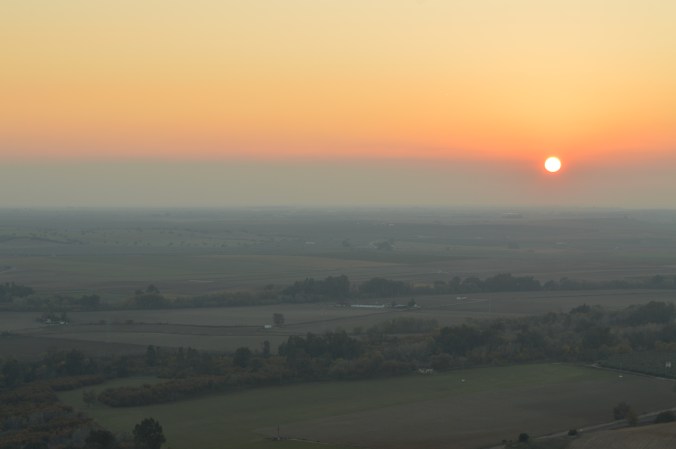
Holy Gridlock, Batman!

I remember saying a couple of days ago that I was going to take it easy and travel less this year, beginning with Semana Santa. Predictably, that failed almost as soon as the words left my mouth. I’m now sitting at ease on the balcony of a cute little hostel in Córdoba, having spent the last four days traveling in a large triangle around Andalucía, from Matalascañas to the Great Mosque. It’s the Easter equivalent of last term’s ‘square puente’ to Lisbon, Aveiro and Salamanca. Only this time, I’m not alone, and it’s been a barrel of laughs from start to finish.

I’ve told you about El Rocío. Let’s start with Seville. Seville is one of those cities that I’ve always thought rather overrated. It’s the Spanish equivalent of Frozen; people come back from it raving about what they’ve seen to such an extent that by the time you get around to going to see it yourself, it’s difficult not to be disappointed. Unlike Frozen, however, it’s worth digging in and opening your eyes a little.

DSC_0983

No, I’m not the biggest fan of Frozen. Something to do with Elsa’s dumbstruck ‘of course, love!’ remark, as though love were entirely alien to a Disney film and its target audience… and let’s not forget that ubiquitous Let it Go.

I’m sidetracking. As usual. I’ve been very blasé about Seville all year, using it largely as a transit between Villafranca and other southern destinations – mainly Olvera – and never visiting the city for its own sake. Mistake. If you can find a place to stay for the night in Seville, do. Especially in Semana Santa. Having the freedom to see the city by night as well as by day is a treat not to be overlooked.

DSC_1053

In my current adventures I’m joined once again by fellow traveler/blogger Brocklesby, spending half of her Easter holidays down south. Traveling with a companion can be infinitely more entertaining than going solo, especially when you’re both new to the place, but it’s been super-helpful acting as a kind of lemming-guide. I’m something of an old hand with Sevilla and Córdoba, having spent about a month apiece in each of them when you add up the days, so – with the fifty-fifty assistance of the Arch Deceiver aka HERE Maps – I’ve been acting as a guide. It’s a lot of fun to introduce somebody to all of your favourite spots, as well as the main sights, but best of all you get to try things out that you never quite found the gumption to do alone, like this museum or that ice cream parlour. It’s a blast and I should travel in twos or threes more often.

DSC_1036

Travelers to Seville in Semana Santa should be warned: bring a compass, a map and/or plenty of patience. Navigation is made almost impossible by the processions. In most of the smaller towns, these are usually nocturnal affairs of some eighty metres in length that take five or six minutes to pass, and good seats can be had by simply racing ahead by several streets and waiting by the side of the street.

DSC_0988

Not in Seville. Not only is everyone in town in on the secret, so is the tourist population, both of which are immense. On top that, the processions themselves are enormous, trailing as many as three streets at a time and taking all of an hour and more to pass – and there can be as many as six happening simultaneously across town.

Understandably, this turns something as simple as crossing a street into a labour of Heracles. It’s a circumstance where shortcuts really do make long delays, and itinerant penitants and busy streets make the heart sink. I distinctly remember saying that ‘if you see Jesus, you’re screwed’; blasphemous, perhaps, but in accurate reference to the fact that the float bearing Jesus is almost always followed by the Virgin Mary some thirty minutes later, meaning that Jesus marks the very epicentre of the gridlock. Thanks Jesus.

DSC_1073

That being said, it’s something you have to watch at least once. And whilst it may not be all that much fun to watch the tips of the penitents’ colored hoods sailing by over the heads of a pushy multitude, if you can get yourself to the front, it’s surely one of the human wonders of the world to behold.

DSC_1107

I’m not a pushy person. I think I’m too English. So it would take a miracle to get me to the front of the queue. But God, or Fate – or an unusually benevolent Murphy – had other plans tonight. Having said that it would be ironic if we ended up walking down a street and coming face to face with a procession headed in our direction, that is exactly what happened, and with the grand finale, no less. We tried to duck out of the way through a gap in the multitude, but the Guardia closed it off and shoved us unceremoniously back into the crowd – which put us, quite by accident, right at the front. It suited us just fine, but it must have bothered those who’d been there long before us something awful.

DSC_1173

It might not have been as soul-stirring as the Olvera madrugada procession – which goes on all through the night and involves no small amount of mountain-climbing – but it was a genuine privilege to behold from such a premier position.

I’ll be back next year. Most certainly. A lot of Spaniards claim to be rather impassive on the subject of Semana Santa, but their dogged adherence to an age-old tradition far more authentic than any search for chocolate eggs says otherwise. I, like Hemingway and Irving before me, am yet another foreigner hopelessly entranced by the magic of it all; only, I’ve at least a quarter of Spanish blood in me, so I’m not a total stranger. I’d like to think that counts for something. BB x
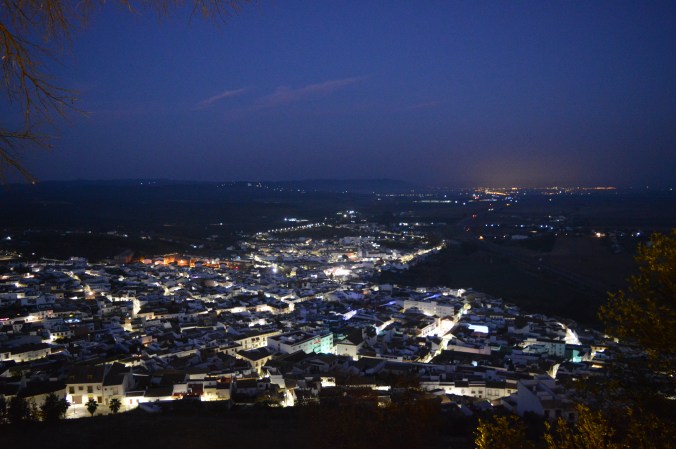
Paradise Lost and Found

I wish I could tell you I’d read Milton’s poems, from which I’ve shamelessly adopted the title of this post. I haven’t. But even if I had, I doubt a throwaway quote here or there would be necessary. I’m in a place that fills me right up to the top with pure and simple happiness, gives an edge to my writing hand and recharges my well-worn batteries. Paradise has a name and though this one may sound like a cross between a stud and an aviary and smell like a sweet mixture of manure and marshwater, it’s perfection for a country boy like me.

DSC_0314

El Rocío. More correctly known as Aldea del Rocío, as that is exactly what it is: a village. It may be the size of a small town, but looks can be deceiving: over half of the townhouses are empty for the larger part of the year. Once a year in May, El Rocío plays host to one of the largest, loudest and more colourful celebrations of the Iberian peninsula, the Romería deal Rocío. As many as a million Spaniards, dressed to the nines in rustic splendour, descend upon the village from all over the country to pay homage to the Madre de las Marismas, El Rocío’s very own Virgin Mary.

DSC_0390

This is a very big deal. Accommodation in that week is normally booked out months in advance, if not years. To give you some kind of idea, have a look at the price hike in this particular hostel below:


My mental maths isn’t brilliant, but I’d say that’s at least ten times the price I’m paying per night, if not twenty. That gives you an idea as to just how popular the festival is.

Semana Santa, on the other hand, is a minimal affair. A couple of special Masses and a single daytime procession on Holy Friday. So what on earth am I doing here now?

DSC_0520

The answer is all around me. El Rocío is drop-dead gorgeous, but better still is the countryside that surrounds it: the skirts of Doñana National Park, one of Europe’s most beautiful remaining wildernesses. Sandy forests of stone-pines stretching into the infinite. Scrubby heaths awash with colourful spring flowers of yellow and white and powder blue. Shimmering lakes and marshes teeming with flocks of noisy flamingoes and an eternally blue sky that almost always has at least one kite whirling about in the distance, whistling a beautiful trill into the mix of carriage bells, chattering swallows, whirrupping bee-eaters and the incessant oop-oop-oop of a hoopoe. This place is as close to paradise as this world allows. It’s also a place where absolutely everyone wears a cap or riding boots or both, so it suits me down to a T. Especially now, when my hair is a triple-crown disaster of a birds’ nest and in bad need of a cut – and therefore hidden under my very own flat ‘at.

I won’t bore you to death with five hundred words about my birdwatching adventures. It’s not a passion that everybody understands. What I will say about it is that it is deeply rewarding, endlessly unpredictable and that Doñana National Park is the very embodiment of that unpredictability. I swear that it’s different every single year, and I’ve been coming here for the best part of a decade now. In some years it’s half-drowned in rainwater, in others mild after a dry winter. I’ve seen boar, deer and mongooses in one year and never again since. The same goes for the gallinules, herons, pratincoles, harriers and marsh terns; each of them in one good year apiece, but never together. This year’s treasure is the glossy ibis, a Doñana regular that I’ve never been able to get that close to… until now.

DSC_0608

Doñana is one of those places where I can sit and do nothing and watch the world go by without feeling in the least bit guilty. Time just seems to stand still here. That the entire populace of El Rocío seems to prefer the saddle to the driving seat goes a long way to entrenching that romanticism, naturally, but there’s a similarly timeless feeling to be found in sitting in the shade of a stone-pine on the Raya Real and listening to the wind. Every once in a while the blue-winged magpies cease their chattering, the hoopoe calls it a day and all that you can hear is the dry whisper of the wind. It’s spellbinding. Like Merlin to Morgana, I’m ensnared. But it is a very beautiful enchantment.

DSC_0792

At some point I’m going to have to turn my feet back in the direction of town and head for the bus stop (this town’s not big enough for a bus station, especially since they diverted the main road). This morning I was almost keen to move on, in that snug-in-bed-with-a-good-book way – this one’s Shadow of the Moon by my favourite author, M.M. Kaye – but three steps outside and I was entranced once again. Oh, to live here and to spend my days in the saddle! I get romantic notions of owning an Andalusian stallion called Suleiman and riding about the stone-pine woods with the One, whoever and wherever she may be.

That’s quite enough of that. I’ll see you in Seville. BB x

Veils and Cartwheels

Another weekend, another adventure gone by. My weekend travel budget is capped at 90€ wherever I go, for which I’ve managed Cantabria, Lisbon and now Granada. Not bad from Extremadura. I’d like to say I’m entering economy-mode after this, for the end-of-year adventure’s sake, but that’s unlikely what with Semana Santa around the corner. So let’s just say I’m going to be even more budget-savvy than usual from now on. But that’s hardly going to stop me from going searching for more adventures.

I made a promise to a few friends from Durham to pay a visit whilst they were lodged in the gorgeous Moorish stronghold of Granada. That promise was, however, dependent on the arrival of the first snows in the high peaks of the Sierra Nevada. That little proviso caught me out, as it only began snowing in earnest around Carnaval weekend, by which point most of the Durham crew had long since left Granada for their next destination. Still, a promise is a promise and I’m a man of my word, so off I went. It just so happens that I have a couple of Spanish friends based there anyway, so I wasn’t heading for another solo weekend.

DSC_0073

I’m now a total convert to BlaBlaCar; if not for the drastically lower price tag and journey time (16€ for a four-hour ride from Zafra to Granada is pretty fantastic) then for the conversation practice. In a funny, roundabout kind of way, I remember complaining that it was exactly this kind of taxi-practice that bothered me in Jordan. I suppose that was because it felt like the only window of opportunity at the time. Here, it’s just one of many, and I’ve made some really interesting acquaintances through the system. One day, if just for the ease of going wherever I want, I really should learn to drive.

The real boon of BlaBla’ing it to Granada was getting there in time for sunset. It was gone half past six o’clock when we got there and the sky was already a gorgeous yellowy-pink, so I had a bit of a run to the Mirador de San Nicolas to get what I – and the rest of Granada – was after: that unforgettable view of the Alhambra, surely one of the world’s most beautiful buildings, set against the backdrop of the salmon-pink snows of the Sierra Nevada. I’ve never seen the Mirador so busy, and the views explain it all.

DSC_0151

To the outsider, the presence of a gypsy troupe breaking into song and the chatter of Arabic in the crowd might seem too good to be true. There’s often flamenco up here, according to my local sources, but the Arabic is new to me – perhaps because this is the first time I’ve been in Granada since I started learning Arabic, and therefore I’m tuned to listen out for it.

Flamenquin

The trouble with working a British Council assistantship on your year abroad is that it royally screws over your second language. Had I more brain than heart, I would have prioritised Arabic over Spanish, being nearly fluent in the latter before I set out anyway. But it’s never that simple with yours truly, and the prospect of spending eight months and more in my grandfather’s country was just too good to turn down. That I could have gone for a similar placement in Chile, in Argentina or Ecuador but didn’t is testament to just how much I adore this country.

As a result, I’m none too confident with my Arabic right now. Oh, it’s probably still all up there, buried deep beneath my Amman angst, but I haven’t really given it much thought since I packed my bags and left Jordan last summer. Seeing the Alhambra reminded me why I chose to study it in the first place. The sad truth of the matter is that it’s not the Middle East that interests me (at least, not the contemporary one), but North Africa. The Moors. Al-Andalus. This is what drove me to study Arabic; so that I might understand this ancient world a little better. That’s why I have so much love for Morocco and why I was in such high dudgeon about being sent to Jordan last year. My heart is here, in this part of the world, and I always follow my heart.

DSC_0208

Take one look at that view and tell me I’m a fool for falling in love.

It was quite a fiddly weekend on the outset. The group gathering I’d planned on fell through straight away because one of the girls went to Seville for her best friend’s birthday, after which the others pulled out, leaving me high and dry with my hostel and ride already booked. It only dawned on me then that most of the other Durham students had already left Granada, and when my only remaining card said she’d probably be busy all weekend with a project anyway, I thought I’d have a rather lonely city break on my hands. Because, Granada being Granada, you can’t just stroll up to the Alhambra. It’s usually fully booked at least two months in advance at the weekends and on public holidays, so by the time the girls let me know they weren’t going to be there, it was far too late for a flying visit.

Understandably, I was feeling pretty let down.

Nevertheless, Fate is a most unpredictable woman, and as it turned out she dealt me a very fair hand indeed. The weather was impeccable, and I spent a gorgeous sunny morning with the albayzin – Granada’s labyrinthine Moorish quarter – pretty much to myself. I was mainly in town for inspiration and I found buckets of it. My sketchbook came back at least five or six pages more full than before, so I call that a success.

I must have spent at least two hours just sitting and sketching at Washington Irving’s feet on the garden walk up to the Alhambra, where six or seven costumed students asked me to photograph them beside the Son of the Alhambra. I think there was a treasure hunt or competition of some kind going on. I’m still not entirely sure. Saturday, I’m told, is when all the bachelor nights and hen nights take place, and these usually start in sunlight hours – visible, and often audible, at quite a distance. It could have been one of those… minus the phallic straws, of course.

DSC_0401

My luck turned whilst I was people-watching atop the Alcazaba and a message came pinging through, telling me that the one Durham student left in Granada had not gone to Cordoba as planned due to a heavy night on her flatmate’s account and was game for some exploration. Hallelujah for you, Violet! It was getting infuriating sitting by the Alhambra and watching the hundreds pouring in and out in the knowledge that I couldn’t get in if I tried, so it did me a world of good to be called down from the heights and back into town.

There was a loud, booming sound as I wandered back down the path which I put down to construction work, but the closer I got, the more rhythmic it sounded, until it sounded much too upbeat to be a pneumatic drill. The Plaza Nueva was packed and, at the centre, I was met with something I really hadn’t expected to find: a samba band.

DSC_0586

Accompanying the band was a veil-dancer, not unlike the one I saw in Caceres back in November, only this one had more of a gypsy’s flair to her style than the lithe Arabic movements of her predecessor.

DSC_0526

The veils this dancer wielded streamed off the blades of the twin red fans in her hands. Needless to say it was something beautiful to watch and I was mesmerized, for how long I don’t know. When you see a thing of beauty, you really have to look.

DSC_0565

That wasn’t the only attraction in town. Barely five minutes after the samba band had packed their things and left, another street artist took their place.

DSC_0611

What looked quite commonplace to begin with quickly turned out to be anything but.

DSC_0640

Was it acrobatics? Was it dance? Was it mime? Something of a mixture of all three, I think. The girl turned wheel after wheel about the square, casually stepping out of the hoop every so often to wiggle about for a bit before stepping in for another spin.

DSC_0677

Violet’s still new to the place, but she did a fine job showing me about the place nonetheless. All I ask is good conversation and she delivered, and how. She even led us straight into a free-for-all tango, which may or may not have consisted of no staff or professionals whatsoever. It’s so hard to tell in this country, where almost everybody can dance when it comes to the crunch.

DSC_0735

It’s really quite something to see the oldies really going for it, and practically flooring the youngsters whilst they’re at it.

DSC_0699

If the technique is all in the feet, then the passion is all in the face. Oh, to be able to dance with the passionate restraint of these deities!

DSC_0690

We found a decent place to tapear outside the touristic district where I made a beeline for my Achilles’ heel – croquetas – which were of a very high quality, I must say, and further story-swapping, which was of an even higher quality. I could hardly ask for more. Thanks Violet!

Now, somebody up there must have been smiling on me, because Ana, my Olvereñan friend, managed to wrap up her project for the afternoon and turned up to pick me up from lunch. Ana’s a gaditana through and through but she’s been in Granada for some time now, so she knows the place better than I ever could. She took me to a gorgeous café under the Mirador de San Nicolas with a killer view of the Alhambra. They didn’t have Arabic tea, but they did have Pakistani tea, which was a damned good substitute. And what better could I ask for: two fascinating, challenging conversations in two languages with such good company all afternoon! I’m truly spoilt.

DSC_0743

There was better to come. This is where knowing a local really comes in handy. Ana found her cousin up at the mirador and after we’d been chatting with them for a while, they left and we got their space on the wall. It’s a fiercely contested wall, for obvious reasons, and Ana and I got all of an hour with that unbeaten view as the sun set and the lights were turned on. The Alhambra looks spectacular at any time of day, but by night the snows on the mountaintop are a deep blue and the castle walls seem to glow golden in the torchlight. It’s overdone, it’s clichéd and some might say it’s even cringe-worthy, but for me, it’s nothing more and nothing less than the most beautiful building in the world.

DSC_0762

I’ll finish off the tale in another post tomorrow. Y’all need breathing space, I think. As do I – I’ve a private class in twenty minutes and I can’t be dilly-dallying around! BB x

Adventures in Cow Country

Good morning Cantabria!

DSC_0069

Cabezón de la Sal is a simply gorgeous mountain village sat in a cleft between the hills of Santillana and the Escudo de Cabuérniga, a mighty ridge stretching in a straight line all the way to the Asturian border. What makes it so immediately different from the south is the layout of the town: if anything, it’s more English than Spanish. Where small two-story flats hold the monopoly in the town centre, semidetached houses dominate almost everywhere else. Long gone are the snake-like rows of white houses with barred windows and marble porches; the Cantabrian norm is stone-brick dwellings with wooden roofs and quaint, upper-storey balconies. It’s charming, if a little alien to a habituated southerner like me.

DSC_0292

There are buses – apparently – but it’s the local train service that holds sway here. Quiet, comfortable and cheap at the price, Cantabria’s FEVE provides a reliable alternative to Extremadura’s LEDA – provided you arrive in town before ten to nine at night, that is.

DSC_0080

‘Let’s go to Potes,’ says Kate, ‘for a little walk.’ So off we went to Torrelavega, that city of burgeoning factories and towering flat-blocks that I passed through twice four years ago in the early days of my trans-Iberian adventure. In the sunlight, Torrelavega looks…

DSC_0089

…well, I’ll not beat about the bush. Torrelavega is not exactly Paris. If Cabezón is a more rustic version of Villafranca, Torre is the Almendralejo equivalent in Kate’s neck-o’-the-woods. But like Almendralejo, it’s got its own charms. One of them goes by the name of red velvet sponge-cake.

DSC_0087

We arrived in Torrelavega looking for the bus to Potes, but the bus station proved singularly unhelpful, and a quick browse of the internet told us that the bus we were looking for left not from the bus station, but from the Palomera office by the train station we’d just left behind. In a scene which echoed the night before (albeit in slow motion), we half-ran back to the station… but there was absolutely no sign of the bus. Or any bus. Or even a bus stop, for that matter. Unless the Potes bus is a mystical bus which flies through the air and receives its passengers from the balcony of the Palomera offices on the second floor, I declare that bus stop to be an enigma. The city of Atlantis and the fabled kingdom of Shangri-La have captivated the imagination of man for centuries. Now I shall brazenly add the Palomera bus stop to that box of unsolved mysteries.

DSC_0088

Thinking on our feet, we dabbled with the idea of catching the train into Asturias in search of the equally mysterious inland bay of Gulpiyuri, but after all of that faffing around with the Potes bus we’d just missed the only practical train to Llanes by five minutes. As though calling out from a memory, Santillana del Mar came to mind and I decided we would grab the next train back to Cabezón and strike out for the coast via the Town of Three Lies. Public transport has as its advantages, but as a species, we should never forget that it was learning to walk on our own two feet that got us where we are today. And so off we went.

DSC_0096

The strangest thing about this last-minute change of plan was that it meant retracing my steps almost pace for pace from that ridiculous adventure, now some four years ago, right down to getting off at the very station where the driving rain turned me back to the shelter of Santillana del Mar. But for a few forks in the road, I had the entire route embedded in my mind as though I’d walked it ten times over rather than once. Perhaps that’s fate. She’s been playing a long game with me.

DSC_0119

It felt decidedly weird coming down out of the hills into the cobbled streets of Santillana all over again. As Spanish villages go, Santillana has got to be amongst the very prettiest. It’s known as the town of three lies – being neither holy, flat, nor by the sea – but if that is so, then it’s a damned beautiful liar. As I so often find myself doing, I made sure to revisit all of the places I’d been before: the same church, the same quesada shop, the same Savage Culture boutique that I still don’t fully understand. I can’t explain it, but something about this town keeps pulling me back.

DSC_0130

We had a picnic lunch of peanut butter sandwiches on the steps of the Colegiata de Santa Juliana and basked in the afternoon sun. 15 degrees Celsius… not bad for Cantabria. In all the bad weather Spain’s north coast has been having of late, I must confess I think myself bloody lucky to have landed a whole twenty-four hours of glorious sunshine in the one day I had to explore the place. I could hardly have asked for better: better weather, or better countryside, or better company.

DSC_0160

Leaving Santillana behind, we climbed steadily northwards across the rolling hills to the coast. Along the way we were misled by the Arch-Deceiver that is HERE Maps, which tried to convince us that what looked suspiciously like an overgrown stream was actually a main road, and we were caught up in a high-speed chase with a tractor, like an extremely low-budget Cantabrian version of Need for Speed. The stereotype lives: Cantabria truly is a land of green hills, of cows and of tractors.

DSC_0146

The last time I wandered these hills, the skies were iron-grey and I could only see as far as the next range of hills for the glowering rainclouds. I can’t have known it at the time, but I was seriously missing out. After abandoning the path and freelancing our way up a hill, Watership Down fashion, we were treated to what must be the most awe-inspiring landscape I’ve seen since I first stepped onto the plains of Caceres.

For once, I had the full works on me, so you can enjoy the view three times over, with the wide-angle 18mm…

DSC_0150

…and the macro 200mm…

DSC_0153

…and the telephoto 500mm.

DSC_0154

Sadly, the Nikon-compatible Sigma 500mm doesn’t come with an in-built autofocus motor, so it won’t be the powerhouse it has always been for rapid-fire avian photography, but at least I got some use out of it this weekend.

It was a beautiful view and all of that, but it was an equally beautiful dead end, so we had to climb back down the hill, cross the cow-fields and roll under a possibly electrified fence in order to get back to the road down to the sea (we didn’t check to find out – not when we were so close to our goal). After a very long and very winding road down one last hill, we made it – at last – to the sea.

DSC_0237

Extremadura has so much to offer, but there’s one thing it really lacks: the sea. You don’t notice until you think about it. Discounting Uganda, I’ve never lived more than an hour from the sea (much less in the UK) so Extremadura is the most inland location I’ve ever had to deal with. To see the Atlantic in all its cold fury once again was a real sight for sore eyes. The storm-force winds and murderous waves of the previous week are gone, but the waves still put on a formidable display for us.

DSC_0188

We spent about an hour by the sea, Kate and I, watching the waves pounding the shore and snacking on Cantabria’s finest delicacy, quesada pasiega. Yum yum. There’s a little ermita built into a cave in the cliffs which we didn’t get the time to visit, but I doubt it would have looked any more impressive up close than from afar. Imagine living in a place like that, with the sound of the Atlantic roaring all about you, twenty-four hours a day. The focus you would have to have – or learn to have – borders on the superhuman. Little wonder, then, that it is what it is. I wonder how an estate agent might describe it?

DSC_0201

It’s getting to that time of year when the sun starts to set later, but sunset was already fast approaching as we turned back for Santillana at about six o’clock. In the gloom of the oncoming night, we finished off the quesada on the banks of the Saja river by moonlight and killed time by making for Rudagüera, the next stop along the Cabezón line… and then legging it back the way we came when it became apparent that it was a little further than we’d thought (one last flick of the claw from HERE Maps) and that we’d probably miss the next train.

DSC_0261

Back in Cabezón, after a drink at a local hunters’ bar, complete with mounted boar heads and numerous black-and-white stills of hunting men of old stood proudly over the carcasses of Cantabria’s once widespread brown bears, Kate took me to visit one of her favourite eateries, El Paraíso. At 2,45€, I thought a ración of patatas bravas would be enough to fill a corner after so much walking (we crammed in about thirty kilometres today, all in all), but I forgot…

DSC_0276

We’re in the north. In my experience, northerners in any country seem to have a much better idea as to what constitutes a decent portion size. Maybe it’s the climate. Who knows? In my earlier traveling days, food was the last thing I was prepared to fork out for. How things have changed since then! Coming back from that Spain trek dangerously underweight four years ago has left a profound mark, and these days food is the one luxury I’m prepared to spend on, and spend well. A long day’s walking deserves a long night’s eating, and I think I did pretty well on both fronts.

So, all in all, it was a very successful trip, albeit a very brief one! I was lucky enough to get a BlaBlaCar on the way back that didn’t mess me around. Better yet, he was no more and no less than a gaditano. Oh, to hear that accent again after twenty-four hours and more of people pronouncing their s’s…! You have no idea how happy it made me.

DSC_0323

Cabezón de la Sal to Villafranca is still a bloody long way to go, but where the bus took all of nine hours, Rafa made it for me in six. In those six hours, taking in the windswept, snowy heights of Reinosa, I was treated to the finest conversation BlaBla can offer, up to and including:

  • Franco’s suppression of the education system
  • The legacy of al-Andalus
  • An anthropological history of Cadiz
  • The true nature of corruption in Spain
  • The Spanish Civil War
  • Gibraltan Spanglish
  • The rationality of England’s outside stance on the EU
  • Podemos and the total absence of a government at the moment
  • Why and how dubbing came to be one of Spain’s biggest businesses (and blights)
  • Piracy in the Old Mediterranean
  • The Growth of the Spanish film industry

I could go on. There were at least five or six hours of it. And all of it in Spanish, and in the very finest gaditano. Talk about a workout… and politics! The eighteen year-old me would never have believed a word of it.

Needless to say, my faith in BlaBlaCar is restored and I’ll be bound for Cadiz proper at some point to make good on that drink I’ve been offered. If I am to live up to the title of ‘Él que va conociendo al mundo’ that I’ve been given, BlaBlaCar is a damned good way of going about it.

DSC_0164

But last of all, I’d like to air high-five my good friend Kate for putting me up (and putting up with me) for two nights and a day in Cantabria. Yours truly is not the most pleasant company in a city, but in the countryside where he belongs, he’s just as insufferable, if only on the other side of the positive/negative spectrum. Kate’s seen me at my lowest in Amman and probably at my highest – quite literally – in the life-giving paradise that is Cantabria. Thank you, Kate, and I hope to return the favour when you’re down in the south! The adventure never ends. Not really. Not ever. BB x

PS. You can read about her side of things here. It’s a lot more tongue-in-cheek than mine.

Tractor Beam

Andalucia and Extremadura have plenty in common. They’re both southern, they’re both gorgeously hot and sunny most of the time and the language in both of them borders on the incomprehensible. So you can understand why I applied for both when I got myself into this auxiliar malarkey just over a year ago. My third choice, unmentioned since my very first blog posts back in May, was Cantabria. Land of cows, snow-capped mountains, green hills and tractors. The Iberian Alps, the Spanish Yorkshire. About as far away from the dusky south as you can get. So what in Creation drove me there this weekend – besides a frustratingly slow bus?

I’ll put it like this. You can’t keep a good man down, and you most definitely can’t shut up a wanderer in his house for long.

Besides hopping down to Olvera for Carnaval, I’ve done no traveling since Madrid back in the first week of January. That’s only a couple of months back, granted, but compared to the madness of last term, I’ve been doing a lot of nothing of late. In any case, I got a bad case of itchy feet last week and, watching the weather forecast, I made a spontaneous decision to visit my dear friend Kate in Cantabria – on the other side of the country. She’s working as an auxiliar up there and we’ve got much the same setup, right down to the state/private school split. If you haven’t already been keeping up with her adventures, check them out over at Langlesby Travels. Besides being jolly good fun, it makes for a lot easier reading than most of my biweekly outpourings!

I’d planned on two full days up north, as for the first time since I started trawling the site last year there was a super-convenient BlaBlaCar bound for Santander at midnight on Thursday, meaning I’d be in Cantabria for seven o’clock in the morning. It was just too good to be true…!

And so it proved. After a fourth BlaBlaBlunder where the driver changed his mind and shifted the drive six hours earlier, bang in the middle of my afternoon classes, any hopes of arriving early were dashed, so I resigned myself instead to one day in Cow Country and one whole day on the bus. Thanks, BlaBlaCar. I feel like it’s important to point out that as a system it’s by no means foolproof, as so many headstrong young things would have you think. It’s done me some very good turns and I do believe it really is the way forward, but it’s screwed me over in equal measure. You win some, you lose some. In that sense, perhaps BlaBlaCar is a good metaphor for life.

The journey began, as they so often do, in Mérida, where I found myself on the Roman bridge, scanning the reeds for a ridiculously early little bittern. Villafranca and its endlessly repetitive surroundings lack a viable soul spot, which Mérida offers in the ever-changing Guadiana. Mérida may always seem to be lacking something, but the river has never let me down. There’s something beautifully elemental about rivers. This one in particular is never the same. The first time I saw it, the river was playing host to several families of purple gallinules, frolicking about in the reeds. A month later the whole stretch was clogged with water hyacinth. Three weeks after that, half of it had been siphoned off and the rest was being heaped onto the banks by a team of gumboots. This weekend, the river was barely ankle-deep, with only the deepest stretch in full flow – only to be magically restored to life two days later. Oh Guadiana, you baffle me.

DSC_0003

What gives, Guadiana?

The journey north was fairly uneventful. I spent almost all of it trying to read Cavell’s Moghul, but more often than not staring out of the window at the changing scenery and, before sundown, came to the conclusion that Cáceres province truly is one of the most beautiful places on Earth. If you don’t believe me, visit Plasencia. If Spain has an Eden outside of Doñana, it may be found there.

img_3567

Snow on the mountains in Castilla y Leon

Despite reassurances from the driver that we were perfectly on schedule, we still pulled into Torrelavega a full twenty minutes late – which, coincidentally, is the exact amount of time I’d factored on giving myself to get from the bus station to the train station. Sprint as fast as I did – I may not be much of a sportsman, but I consider myself half-decent over a short distance – I arrived at the station just as the last train was leaving. Last year’s BB would have cried in frustration at this oh-so predictable turn of events; this year’s BB shrugged it off and chartered a taxi. It ended up costing me almost as much to go the last few kilometres to Cabezón de la Sal as it did to come all the way from Mérida, and at least three times the train fare, but that’s taxes for you. I’ve told you before… I don’t like taxis. Period.

DSC_0051

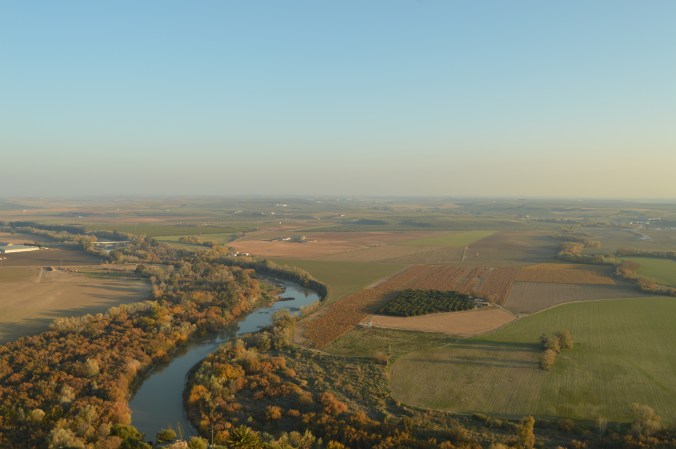
The River Tagus in the plains of Caceres

At any rate, I made it to Cabezón de la Sal and, after wandering aimlessly in the dark, lost in the Alpine beauty of the place, Kate finally found me, introduced me to her friend Almu and I had my southern accent swiftly corrected. That can only mean one thing: all those weekends in Olvera are paying off. They’ll make a guiritano out if me yet.

The following day’s adventures require a post in their own right, so I’ll give them that much. Keep your eyes peeled for the second installment! BB x