Capsule 19, Atypicap, Puerto de la Cruz. 19.02.
The last post went off on a tangent about guaguas – so much so that I didn’t even get on to talking about the purpose of my voyage: to hike in the caldera of Spain’s tallest mountain and the symbol of Tenerife itself: Teide National Park.
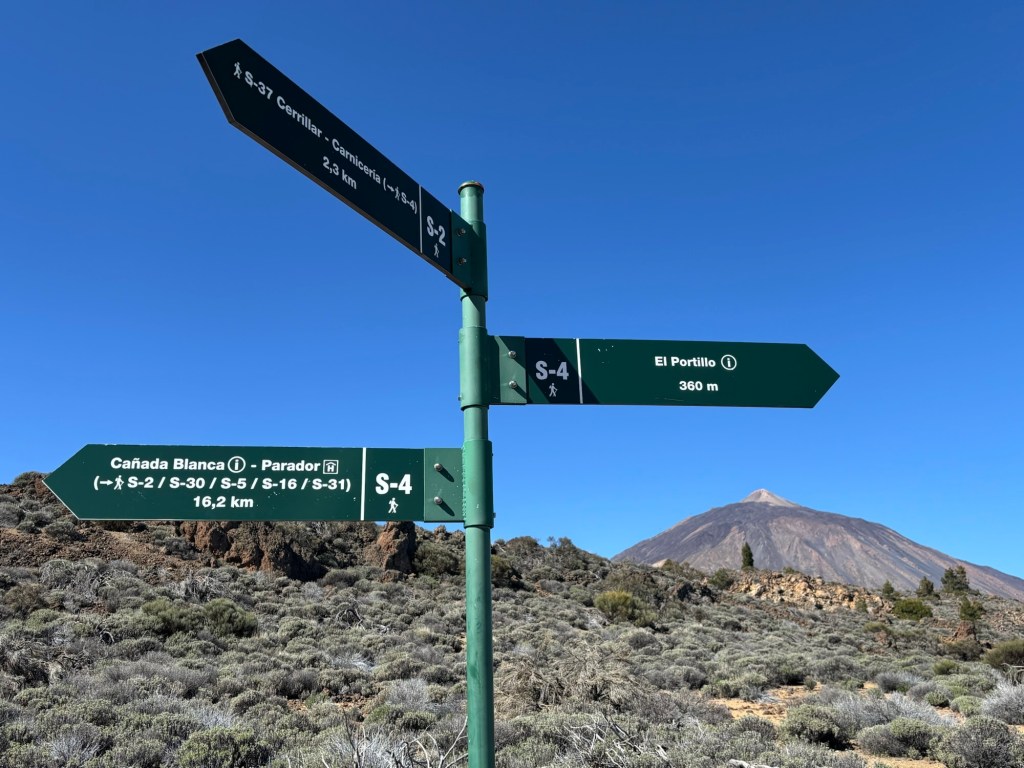
Ignore the ads plastered across bus stations and billboards: Teide, not the widely advertised Loro Parque, is the true ‘must’ of Tenerife. There is so much about Teide that is worthy of a story. It is an active volcano, erupting most recently in 1909. It was sacred to the Guanche people (the native peoples of the Canaries before the Spanish conquest), who saw it as both a holy mountain and the jail of the fire demon Guayota, interred within the mountain by their supreme deity, Achamán.
What did Guayota do to deserve such a fate? He kidnapped Magec, the Guanche sun god, and trapped them inside the mountain, plunging the world into darkness. Despairing for their future, the islanders prayed to Achamán, who fought a fierce battle with Guayota and imprisoned him within the mountain forever.

Teide itself is a mighty thing indeed. Even from the caldera – which, it must be said, is not the mountain’s most beautiful side – it towers above everything else, dwarfing not just the high cliffs and mountains around Tenerife’s rim but the surrounding islands as well. One can only imagine the terror the islanders must have felt when it caused the earth to roar and spewed fire and fury out of its peak.
It was said that Teide’s eruptions were a sign of Guayota’s fury at his imprisonment, and that his children, in the form of demonic dogs known as tibicenas, haunted the mountainside by night.
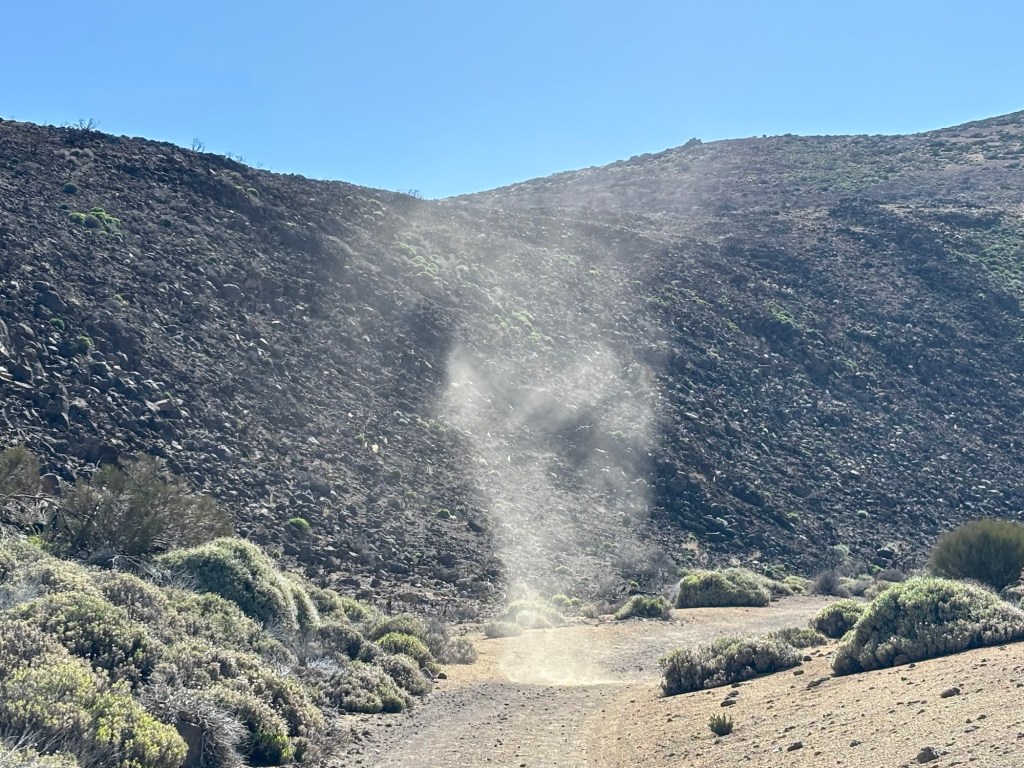
I didn’t see any hellhounds on my lap of the park, but I did see a dust devil as I set out from El Portillo. I used to see these quite frequently when I lived in Jordan, but outside of desert environments they are quite rare.
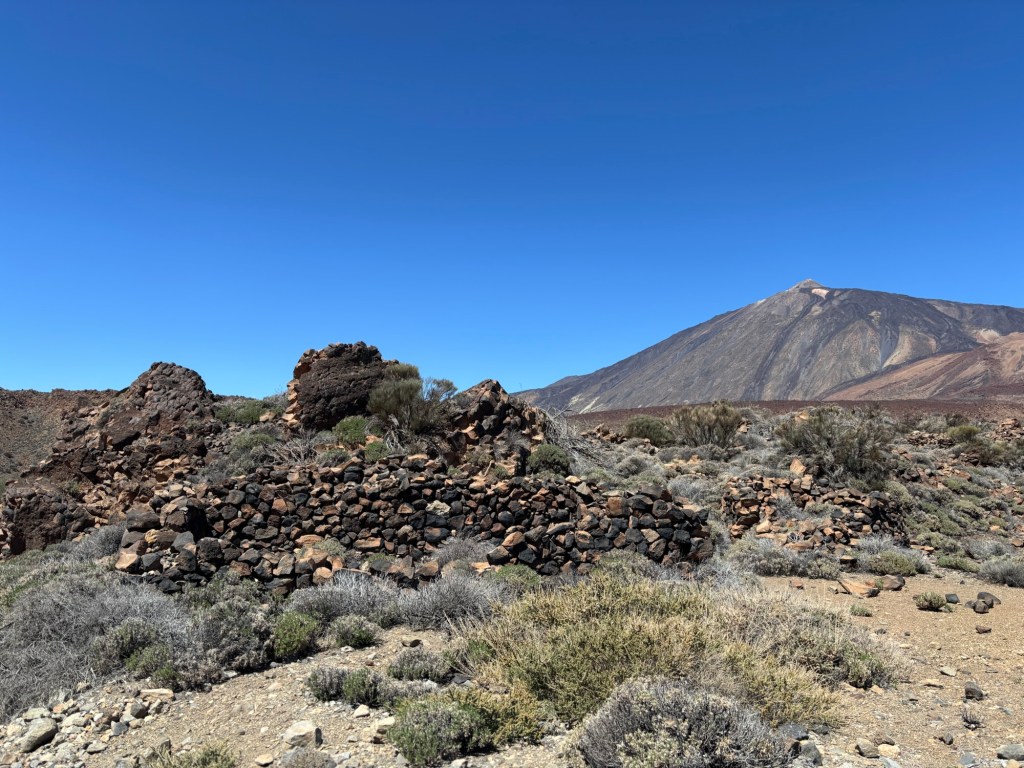
Scattered around the caldera floor are a number of unfinished or ruined dwellings built out of the scattered basalt rocks. These present a mystery to the casual hiker: what were they? The ancient dwellings of the Guanches? An initiative by the park authorities? Hunting refuges? In truth, they are none of these things: the caldera was far too hostile an environment for settlement by the Guanches, construction within the national park is tightly restricted, and hunting – naturally outlawed – would net a poor return, as the largest birds within the park are kestrels and the odd buzzard, and the only native mammals are bats.
No – they are actually the remains of a German attempt to build a sanatorium within the caldera in the early 20th century. A lack of funding, the eventual creation of the National park and, of course, two world wars put a bullet in the head of the project and now all that remains are the foundations of these houses, which now provide shelter for the enigmatic blue-bellied lizards that can only be found here on Tenerife.
These creatures are everywhere in the caldera, darting across the path and into the numerous crevices in the boulder-strewn ash field as you pass. There are two other species endemic reptiles within the park – the Tenerife skink and the Tenerife gecko – but the casual observer is much more likely to cross paths with the Tenerife lizard, especially around the Parador car park where they have become quite fearless.
The Canary Islands – curiously, named not for the species of finch that calls the islands home, but for the large population of monk seals (or sea dogs) that once lived here – are home to a large number of endemic reptiles, some of them textbook cases of island gigantism: that is, where a species has fewer natural predators and can thus grow to a size far greater than its mainland relatives. The largest of these, the El Hierro giant lizard, is a relic of precolonial times, when giant lizards were much more common in these islands, as well as much larger: fossils indicate that some could exceed a metre in length, right up until the arrival of the Spanish in the 1490s.
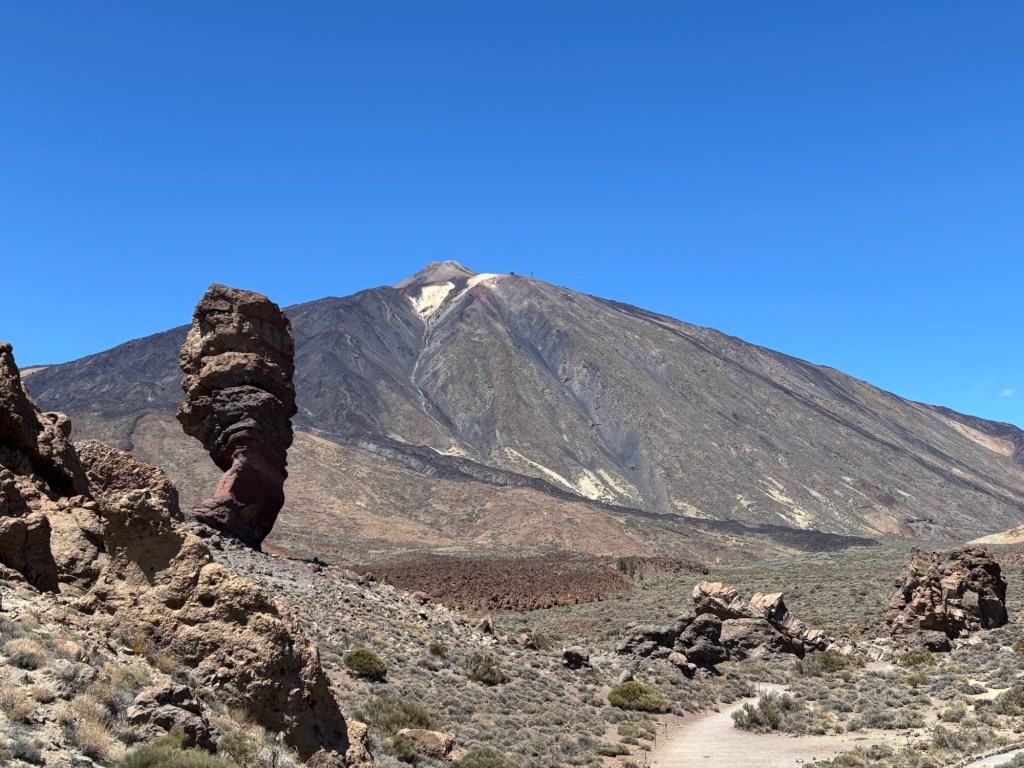
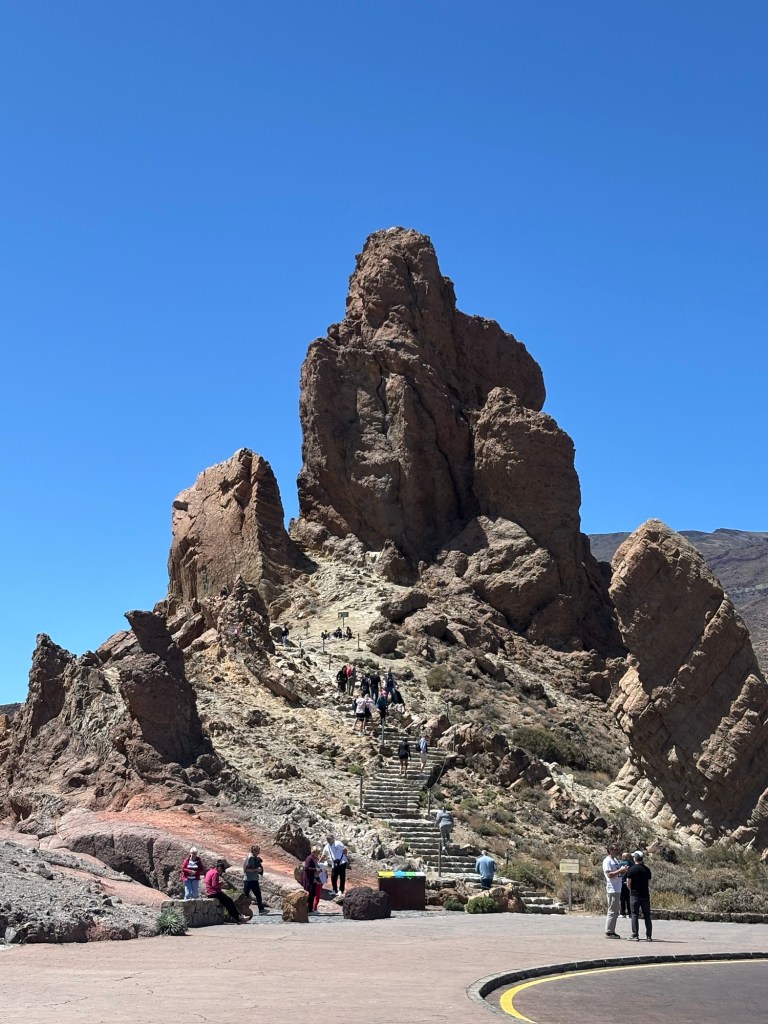
No visit to Teide would be complete without taking in the Roques de García, the roots of an ancient mountain even older than Teide itself. The most well-known of these has to be the Roque Cinchado, also known as ‘el árbol de piedra’ – the stone tree. Standing on the footpath a few paces from the car park provides you with one of the most famous views in all of Spain: the Roque Cinchado with Teide as its backdrop. The old man of the mountain and its son. I had to wait for a family testing out their drone to get a clear shot, but it was worth it.
It’s not the only impressive rock formation in the caldera: there’s a mighty organ-like basalt structure down in the valley floor, and the largest of the Roques de García seems to have become – of all things – a beauty spot. Three Italian men sat at the top of the steps, sporting designer sunglasses and expensive shoes. A Ukrainian girl dressed in pink with her hair tied back in a high ponytail occupied one of the lower peaks for the best part of twenty minutes, turning her head this way and that while her friend took photographs. As a matter of fact, I was the odd one out for not wearing my best: it seems whole busloads of well-dressed teens and students come up here for the ultimate profile picture.
I wonder if they spared a thought for the ancient fire demon trapped with the mountain behind them – or whether they thought to learn about the Guanches, the true Canarians, whose fire was extinguished many hundreds of years ago. They were crushed as a mere prelude to the conquest of the Americas, and I don’t remember their story featuring much in my history classes in Spain. If there are any left, their bloodline had long since mingled with the Spanish to the point where it has all but faded away. Perhaps it is fate that they too, like the fire demon Guayota, now lie buried deep within the mountain.
Tomorrow I strike out west for the peace and quiet of Chinyero. It’s been a long time coming. BB x
 The Book of Barnabas