I’m here in Carrión de los Condes, a full day ahead of schedule. So much for not rushing this time. It was definitely not my intention to walk nearly fifty kilometres today, but here we are. At the very least, I think it’s safe to say I have put one of the more tedious stretches of the meseta behind me. My feet might be killing me, but silver linings and all that.
I got my comeuppance for being an early riser in Burgos this morning. By five o’clock half the dorm was already up and about, so at 5.15am I gave up trying to doze away the hour and got my things together. I’d had the foresight to buy breakfast the day prior, before a wander up to Castrojeríz’s ruined castle (as if I hadn’t walked enough already), so I chowed down on a Bolycao (childhood classic) and set off into the darkness.
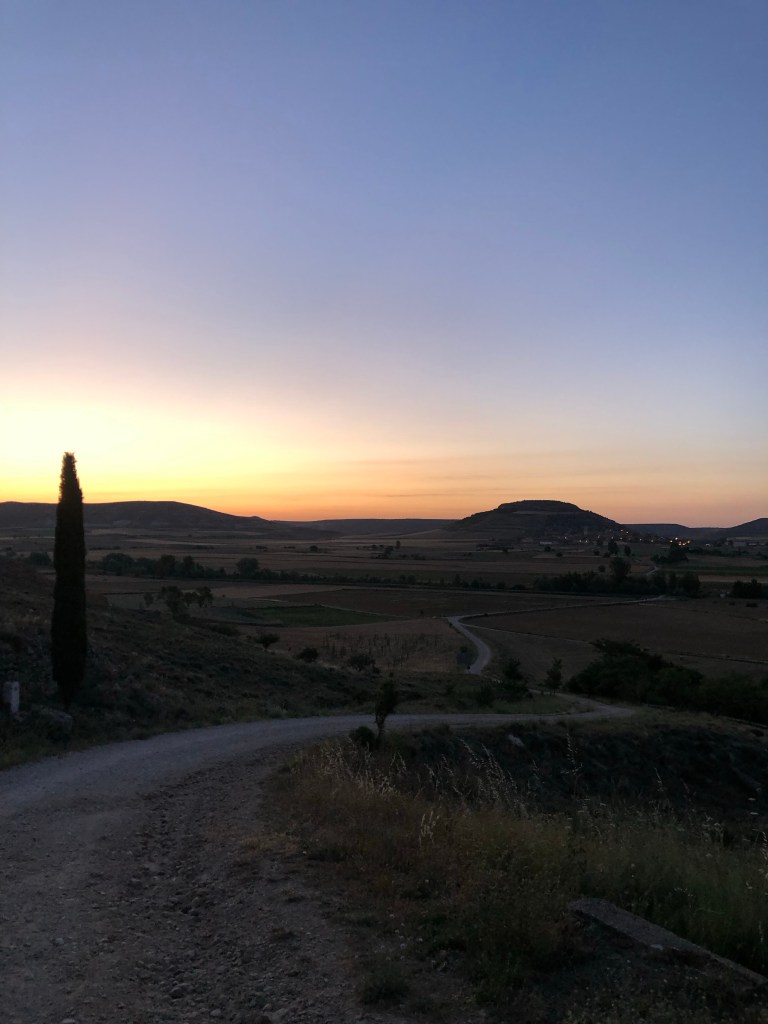
One definite plus to setting out before dawn was the climb up the side of Mostelares, a steep banked plateau guarding the road to Itero. In the late morning sun I’m sure it would have been a sweaty, unforgiving affair, but with the sun still below the horizon (and the help of my trusty stick) it was relatively easy. I overtook the only other pilgrims on the road, bade farewell to the army of wind turbines blinking like distant artillery fire in the distance, and put Castrojeríz behind me.
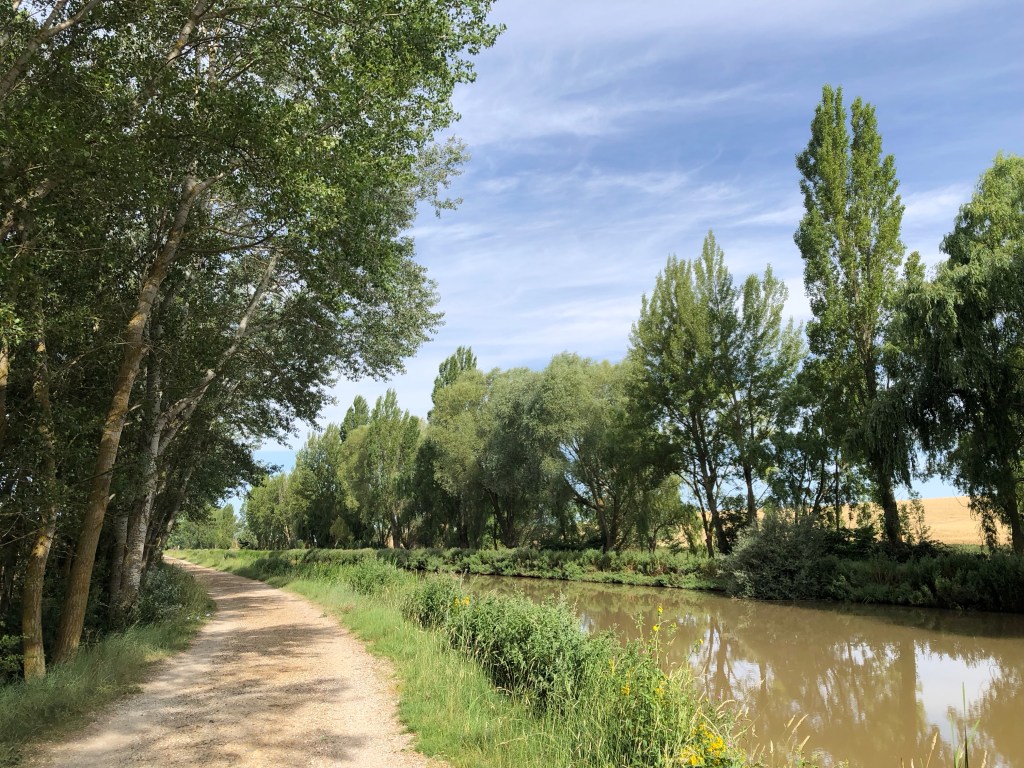
A large riverside grove before Itero de la Vega broke the monotony of the wheat-fields for a bit (Theresa May could get seriously naughty in this part of the world), and I caught a glimpse of a deer between the Lorien-esque rows of birch trees. A talkative group of five Spanish women were on my tail by this point, so I let them overtake and take the clickity-clack of their guiri sticks with them. I’m not sure what their real name is in English, but my kids in Extremadura used to call them palos guiri and the name has stuck.

After Itero, the usual stop is Boadilla del Camino, but it was not even 10am so I decided to press on (this is becoming a running theme). The Camino follows the Canal de Castilla until Frómista, which was a welcome change of scenery, if a little bizarre in the middle of the meseta. I’m not sure the local wildlife knows quite what to make of it: I heard the odd reed warbler and saw a flock of lapwings land in a nearby field, but other than that it was an eerily quiet waterway, as man-made imitations of natural things often are. God is not mocked.
Frómista was… a strange place. It felt decidedly more like an urbanización than a town per se. I arrived around 11.15, two hours too early for most of the albergues which habitually re-open around 13.00-14.00 after a lightning quick clean. A couple of merry storks did their beak-clicking ceremony as I reached the town centre, but I got a strange vibe from the place and decided not to linger. Perhaps it was the fact that all the albergues would be shut for another two hours, or maybe it was the fact that the one recommended by all the guidebooks had so many vitriolic one-star reviews on Google complaining about the rudeness of the hostalero.
Whatever it was, a madness took me, and I decided to try my luck in the next town along.
Big mistake. Población de Campos is only a few kilometres on from Frómista, but by now it was noon and the midday sun was up. After an uninspiring slog along the side of a main road – the first of many – I dropped in on the first option, Albergue La Finca.
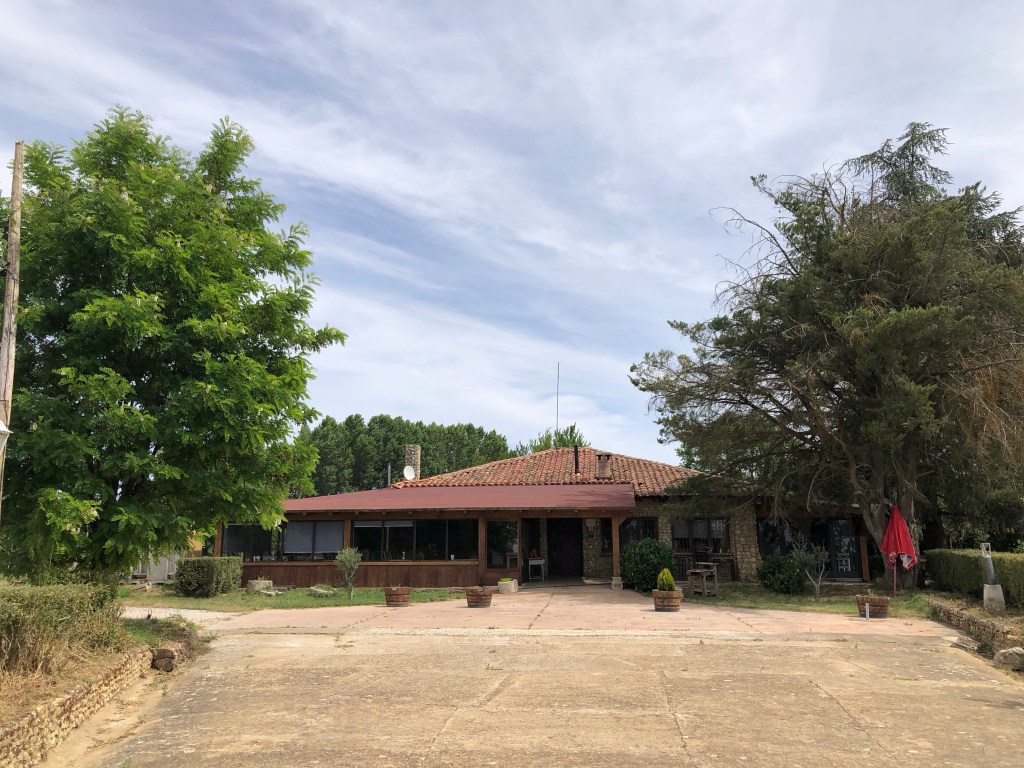
Well, there wasn’t any dust on the tables, and there were some papers on the front desk that looked recent, but that was about it. The garden looked as though it had seen better days, the gate was slightly ajar and there were no cars in the drive – or peregrinos, for that matter. I rang the doorbell a few times, waited, and then moved on to try my luck with the albergue municipal.
I didn’t fare much better there. The sign was missing, and after a brief search I found it stashed behind a bush. I decided to ask at the nearby hotel, where the kindly dueña informed me that, sadly, both albergues were closed for renovations. I could try at Villamentero, another 5km up the road. Her own Hotel would have set me back 40€, which isn’t ludicrously steep, but on the Camino that sum equates to five nights in an albergue, so I had to pass it up politely.
At this point, I got it into my head to push on all the way to Carrión. A stupid idea, but with prospects along the road ahead looking bleak, and zero desire on my part to backtrack to Frómista, the idea slowly began to seem more and more logical. and, I’ll admit, the whimsical desire to say I’d carried on to Carrión ultimately tipped the scales.
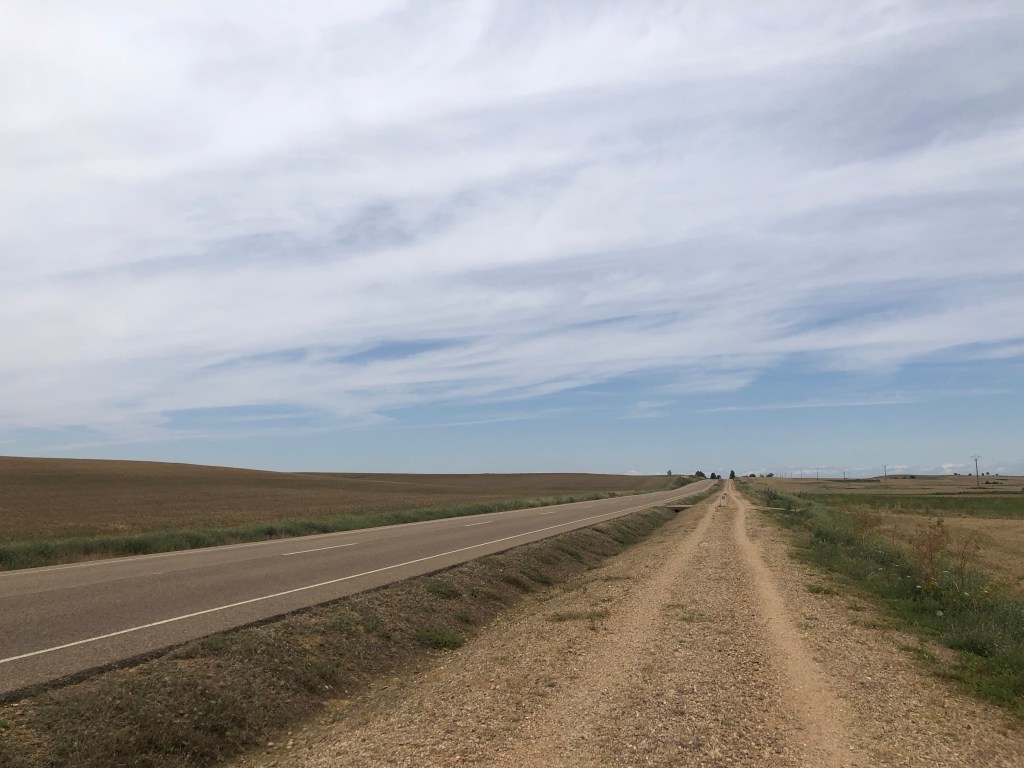
Cue the most tedious stretch of the Camino so far. Fifteen kilometres and three hours of featureless roadside walking. I guess this is what everyone was referring to when they said the meseta could drive a man mad. I clocked a couple of occelated lizards somewhere near Villalcázar – the enormous green buggers are unmistakeable – and claimed a bustard feather, but beyond that, and the chafing pain of my seriously overworked feet, I was genuinely counting the mileage signs all the way to Carrión.
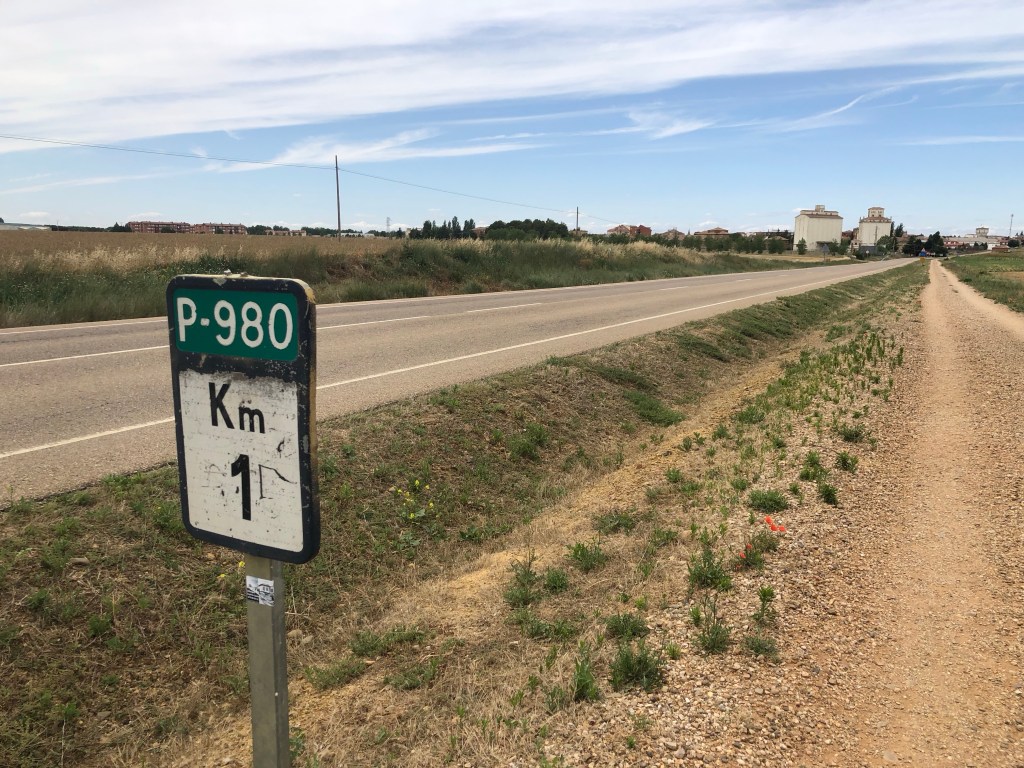
When it finally appeared on the horizon, with the mountains of León in the background, I could have done a somersault out of relief – only, I don’t think I’ve ever been athletic enough for such a feat, and it would have been the death of my feet anyway. So I contented myself with a hallelujah and used the last of my reserves to power on past the silos and into the promised land.
Somebody up there was looking out for me today. A merciful blanket of cloud covered me all the way from Población de Campos, and when I reached Carrión, the Albergue Santa María still had beds going spare. The shower that followed was never more welcome, nor felt so good.
It seems very busy all of a sudden up here. I guess I was one day behind the crowd. Perhaps I’ll meet some of the younger peregrinos tonight. It would make a change from three days of walking the Camino alone. But let’s just see how things pan out! BB x
 The Book of Barnabas