A Parting Gift

A loud knocking at my door woke me this morning. It was only Łukasz checking I was up and about, but it caught me off guard all the same. I must have passed out the night before. I guess I was more worn out than I thought. My phone was on about 18% battery and the bathroom light was on. I sheepishly turned it off, threw on some clothes and all but inhaled a cup of green tea so as not to hold the others up any longer. Talk about a bad start.

I needn’t have been so flustered. It was absolutely miserable outside, the earth damp from a night of rain and melted snow and the sky dark with the threat of more. The temperature had risen by about six degrees, which was something, but it was hardly what you’d call perfect wildlife watching conditions.

Nature, however, is and always has been fickle, and we were in for more than one surprise before we bade farewell to Białowieża.


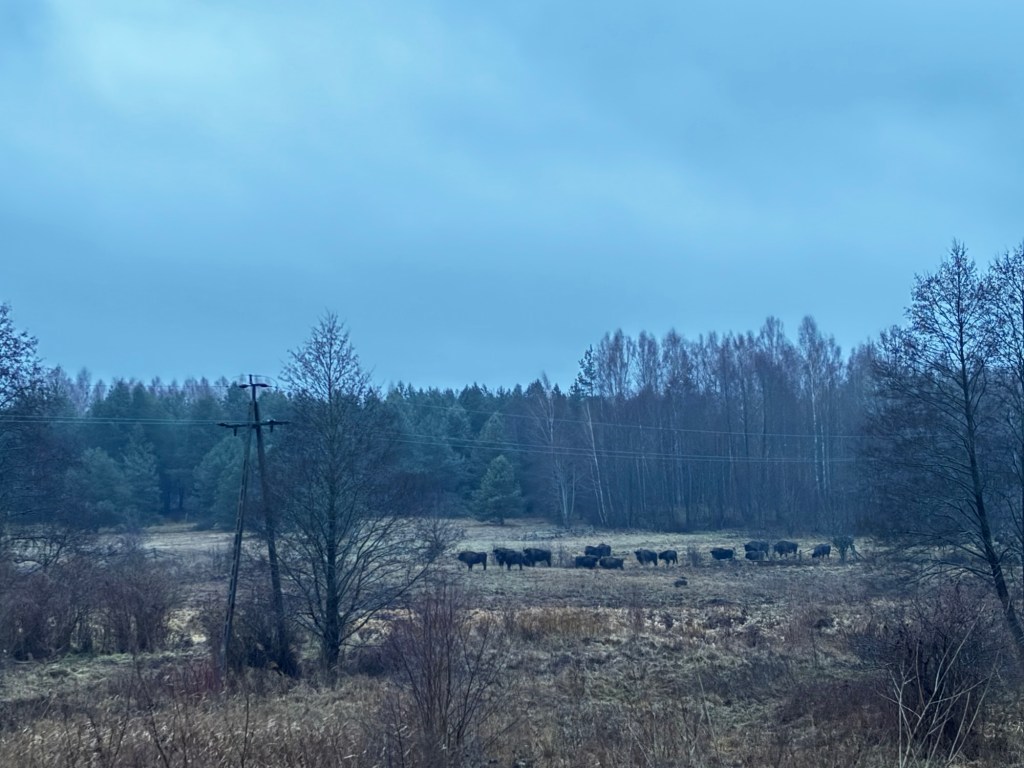
We agreed to try for the bison once again, after our lucky encounter with the wolves the day before. We found the herd even faster than on the first morning, grazing in a field just outside Narewka. They seemed unapproachable at first, but Łukasz had a better idea.


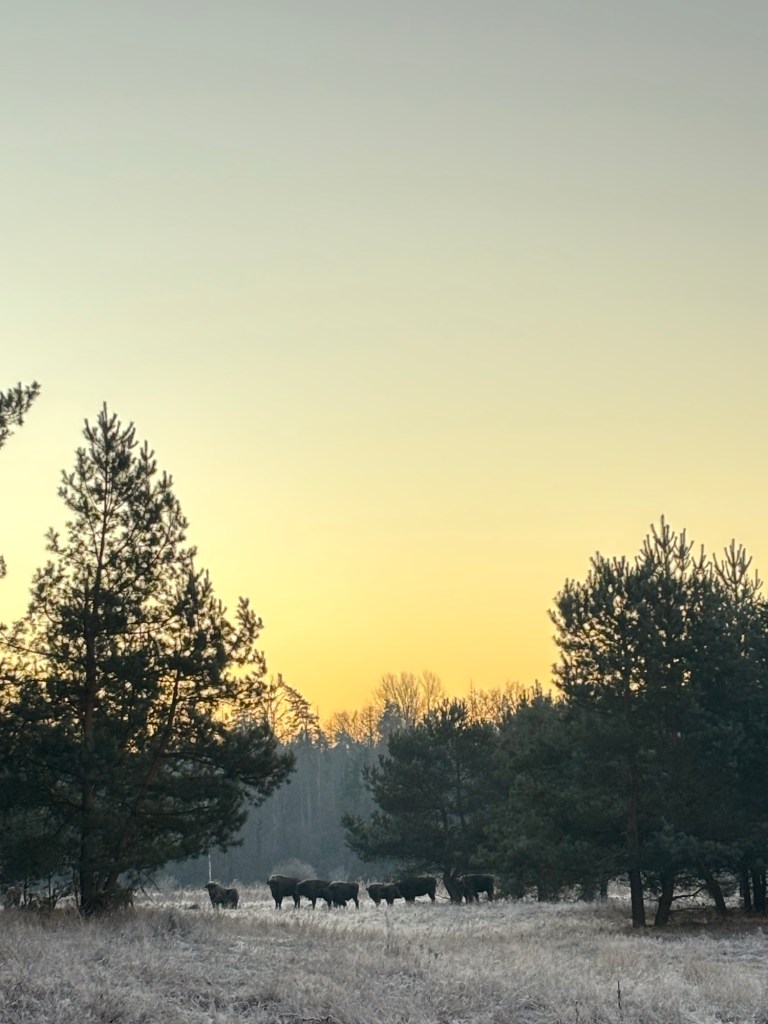
A hidden track ran through the forest on the other side, allowing us to get a lot closer than we’d managed on the previous occasion. Of course, the conditions were awful for photography. The focus assist light on my camera kept blinking in its struggle to focus on the dark shapes which Łukasz admonished me for, fearing it might spook the herd. I gave up pretty quickly and contented myself with watching the bison through my binoculars. I did manage a grab shot through them with my phone again, though.


A squall came in and we backed down. Łukasz concluded it was not the herd we’d seen before, which had numbered some thirty-nine individuals and hadn’t featured the bull with the twisted horn. Hoping to show us more in the time we had left, he took us back to the last place we’d seen the larger herd. He offered to go out and run to the spot where we’d left them. I volunteered to go with him. We had barely gone more than a few yards when he suddenly stopped in his tracks, held up his hand and said ‘Wolf!’.

I dropped to my knees and followed his line of sight. And there it was, standing on a rise at the edge of the forest: a white wolf, its winter coat lightly flecked with grey and brown. Like an echo from yesterday, it soon got wind of our attention and slinked back into the trees and out of sight. Łukasz tried calling after it, but there was no response.

After waiting for several minutes, we counted our stars for a second encounter with wolves in as many days and started heading back to the car. I must have been on high alert since being all but shaken out of bed this morning, because I saw it first: a second wolf, barely fifty metres away, watching us from the field adjacent to the track. This time it was me that gave the signal. I’d made the choice to leave my camera behind on this quick sortie, but I didn’t care. With only my binoculars to rely on, I was spared the frustration of staring through a viewfinder and getting poor results, and instead had the joy of watching the beautiful creature bounding away across the field as though it were only feet away.

I can’t show you what I saw. So let me describe it to you.

A tall and powerfully built creature, with the faintest of black lines down its legs. A warm buff colour lines its flanks, the colour of undercooked gingerbread, but its eyes – a lot more visible at such close range – are an amber so intense that not even the best of Warsaw’s jewellers could hope to replicate it. It runs as gracefully as though it were sailing across the field, and its body moves like a wave, arching and falling with every step. When it stops to look back – and it does this only once, and for just a moment – the black lips on its white muzzle are drawn into a grin. And then it turns away with a swish of its tail and lopes off into the forest.

This is Białowieża’s farewell: a final encounter with one of its most handsome creatures of all.

It is magnificent. I am lost for words.


The car is now flying through the vast flats of Eastern Poland. Scenery I remember seeing only in picture books of the East plays beyond the window like a zoetrope: stands of towering, limbless spruce trees, bending under the weight of the wind; lonely cabins and hunting hides in the fields; water towers and the bulbous spires of Orthodox churches rising out of the low-lying villages we pass.

It’s unlike any place I’ve ever been before – but then, I guess I haven’t ever traveled this far east. Go any further than Białowieża and you’ll run headlong into the Belarus border wall – a reminder that Iron Curtain of the previous century was, true to its name, only drawn back, and not ripped down for good.


One day, if the fates allow, I would love to see Siberia. I suspect that kind of adventure is absolutely off the cards for now, but until then, I can only hope things do not spiral out of control the way they did before.

There is too much that is beautiful in this part of the world, too much that has been done to save these treasures from the brink of oblivion. Too much to sacrifice on the altar of ambition. Well – that’s my ten cents on the matter, anyway. BB x

Forest of the Dead

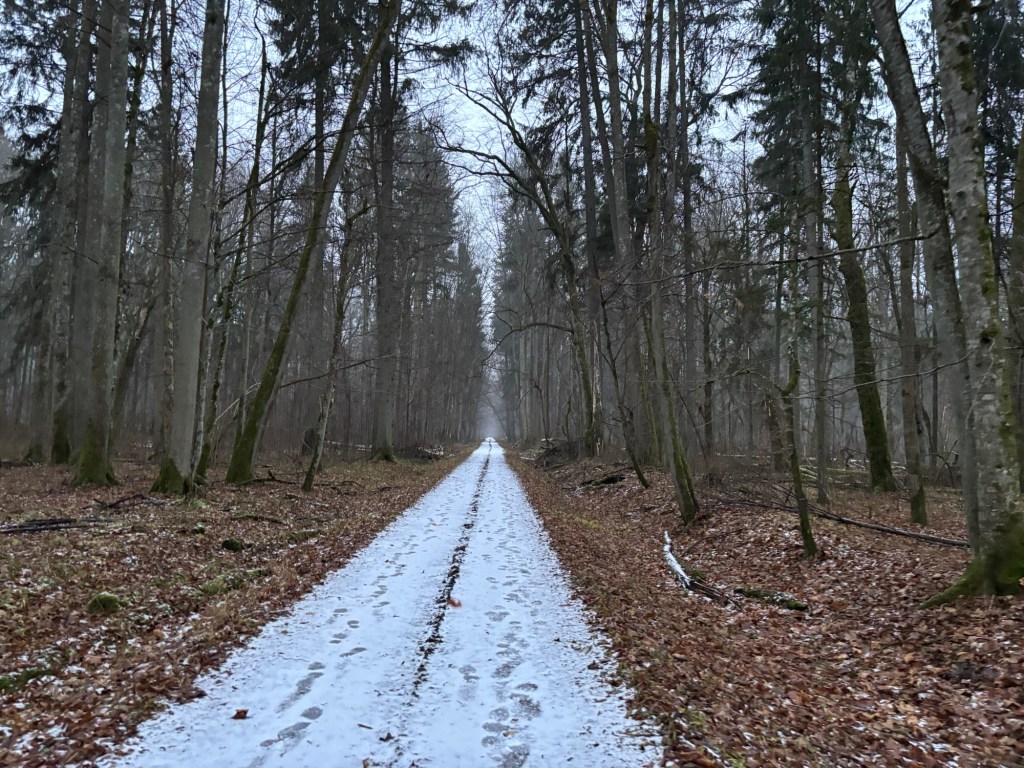
I’m kneeling in the snow, staring down an arrow-straight road carved through the forest by the Russians more than a century ago. Our guide makes a signal and tells us to wait. We could be here for up to an hour. The fever that has followed me since stepping out of the plane in Warsaw has not broken yet: I’m still nursing a headache and a bad cough, my back hurts, and I’m starting to freeze from the feet up. But I’d suffer it all again to see what I just saw: a genuine forest spirit, a shadow of the ancient world, loping out of the trees and onto the road. A wild wolf.


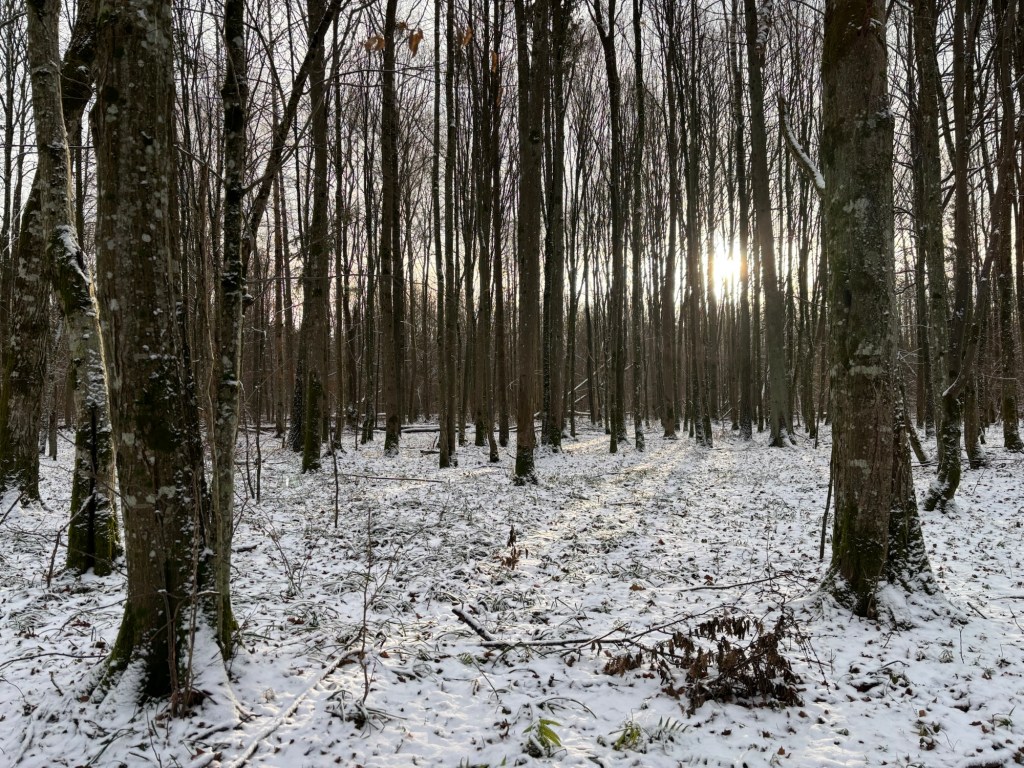
When I woke up this morning, it was to a frozen world. The snow hadn’t started falling when I turned in around midnight, but there must have been quite a lot of it during the night, because there wasn’t a single track to be seen in the village. That may have more to do with the fact that we were up and gone by six thirty, a full hour before sunrise, and on a Sunday morning to boot.


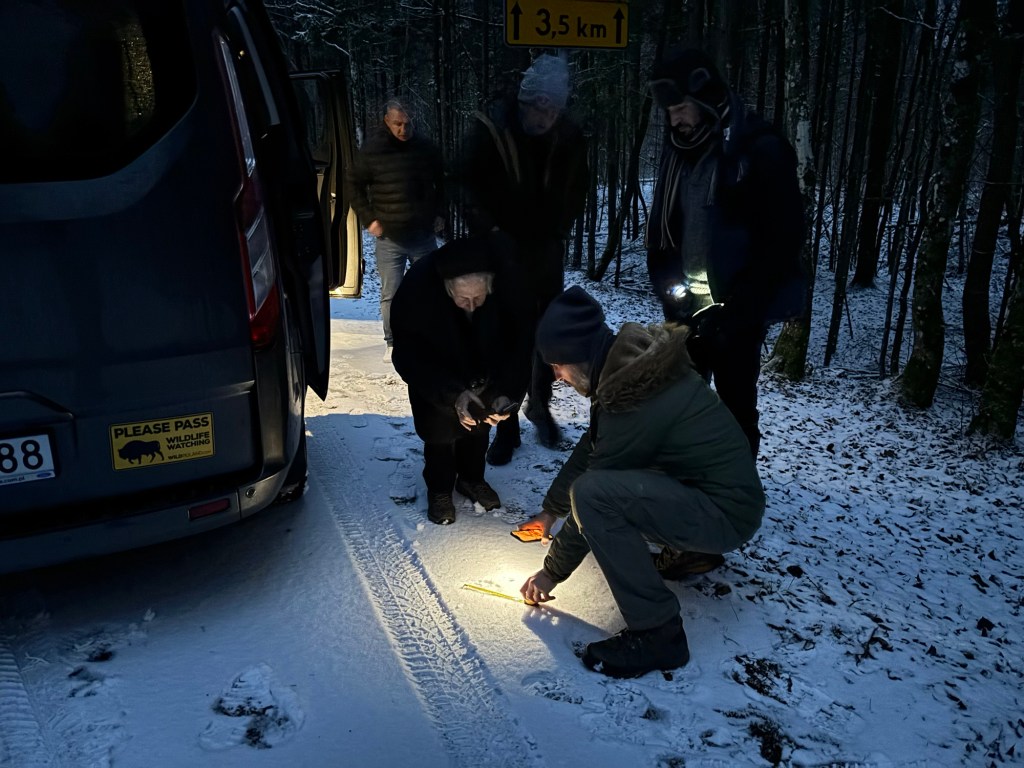
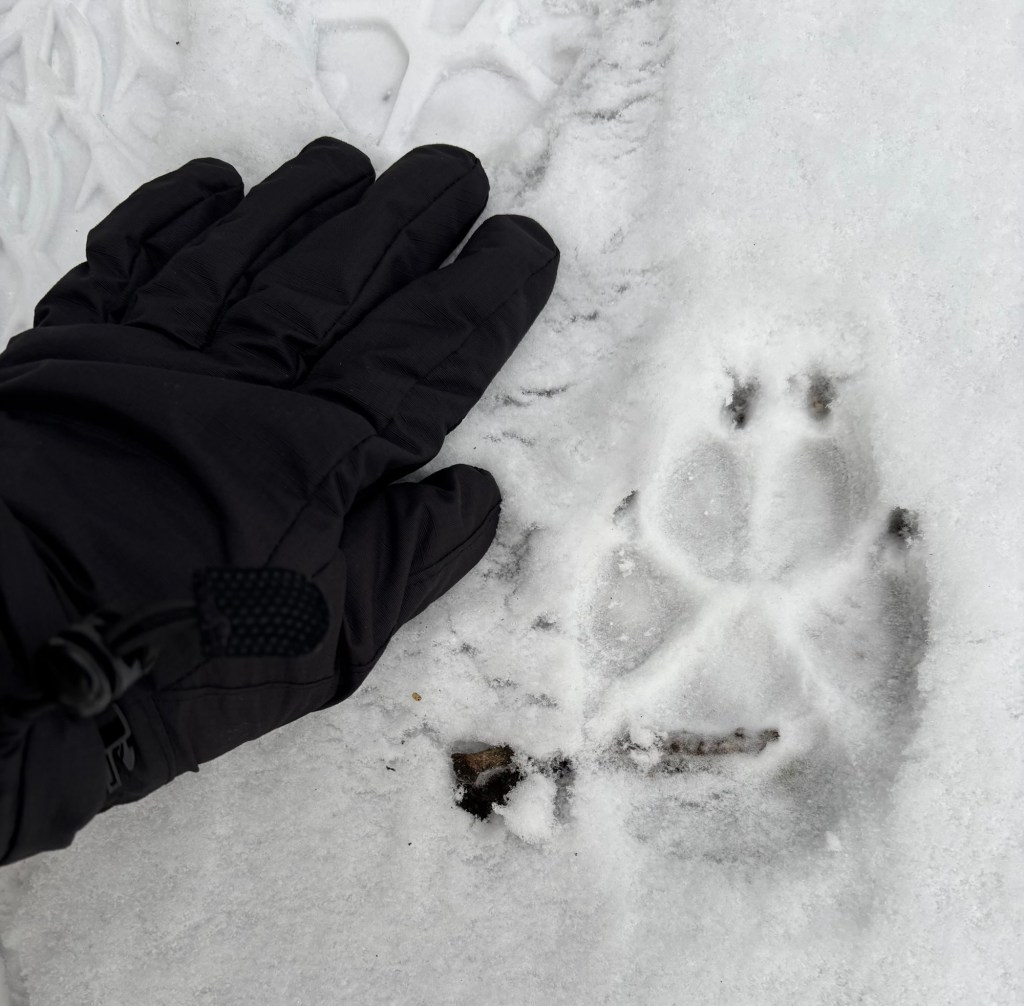
After a short drive through the frozen forest, Łukasz brought the car to a sudden stop and jumped out to show us what he had seen: a single set of footprints in the snow, larger than those of any dog I’d ever seen. Following a tip-off from a friend of his, we set off into the forest to try our luck with one of the wolf packs that inhabit Białowieża Forest.

We didn’t have to go for before we found another set of prints. And another. And another. In all, we counted around eleven sets of prints in the snow. They had to be recent: the snow had only started in the early hours of the morning, and it was still very early. We pushed on to the crossroads, hoping to catch a glimpse of our quarry crossing the road in one of four possible directions.


We waited. A couple of red deer broke the cover of the trees, but they didn’t look particularly perturbed – not a good sign when you’re tracking a creature that puts the fear of God into nearly everything that moves in the forest. Łukasz tried calling out to them – and a bloody convincing mimic he is, too – but the forest was silent. Wherever the wolves were, they were doing what they done since we first crossed paths as a species hundreds of thousands of years ago: giving us a very wide berth.

We moved on, taking a chance on the left road. A couple of minutes into the walk, we came to a sudden halt at the sign of a dark shadow in the road at the top of the rise. On closer inspection through the binoculars, it was another tracker and his party staring right back at us through a pair of binoculars of his own.

We met halfway. Łukasz and the other guide swapped information. They’d come from the other side of the quadrant and had found tracks on the road leading into the woods, but nothing on the forest trail, meaning the pack of eleven had to be in there still. They might well have been watching us all the while, invisible between the thousand arms of the trees within.

Well, some of them, anyway. One of the women from the other party suddenly pointed back down the road and said something. My head turned so quick it might have snapped – and then I saw it. A lone wolf standing in the road, staring straight at us. Łukasz gave a signal and we all dropped to the ground, some on their bellies, since wolves are more likely to be spooked by a standing human silhouette than a prone one.

It didn’t hang around. Before my companions could get their cameras ready, it had loped off into the cover of the trees on the other side and was gone.

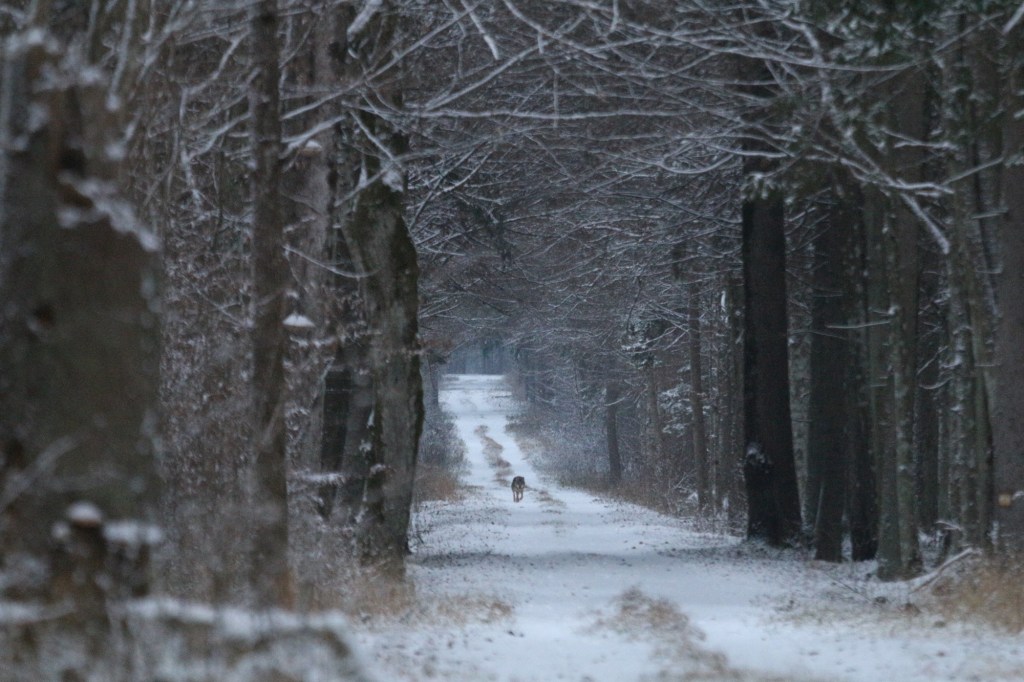
We waited there for quite some time. Where there was one, the other ten were sure to be nearby. Just as we were getting restless, three red deer came hurtling through the trees to our right, from the part of the forest where the wolves were hiding. Had they been spooked by the pack? The others were momentarily distracted and in that moment I had my eyes on the road, and that’s when I saw it: a second wolf, emerging right where the first had come and gone. Unlike the first, this one didn’t cross the road in one go, but instead came trotting towards us. I motioned to the others and tried a few photos, but my poor camera was struggling in the low light, so I contented myself with the binoculars instead.


Nothing quite prepares you for the size of the wolf. You expect a dog, or something like it, but it is so much more. Bigger. Stronger. A restless hunger in its yellow eyes. An untamed purpose in its gait. Even its footprints tell you you’re in the presence of something magnificent: there’s no graceless wrinkles or adapted opposable thumbs in its pug, just a perfect symmetry of power.


We never did see the other nine members of the pack. It’s possible they made a kill during the night and decided to remain close to their prey, sending the two we saw ahead as scouts. Who knows? Eventually, we elected to abandon the vigil and leave them be, since by now the pack must have worked out where we were and how to avoid us. We left the forest by the same road we came, but not before a lone bull bison emerged from the trees just a hundred metres or so down the road. Poland, you sure know how to pull out all the stops!


We ventured into the strictly protected area of Białowieża Forest after breakfast, hoping to try our luck with some of the park’s rare bird species, but a combination of high wind and sleet cast a spell on the woods. A single mistle thrush cackling at the gates was the only sound we ever heard: neither the croak of a raven, the wittering tattoo of a nuthatch, nor the hoot of an owl, the mew of a buzzard or the drumbeat of one of the nine species of woodpecker that call the forest home. Nothing. Even the wind died away as we wandered deeper into the woods, where some of the trees are hundreds of years old, and others older still.

Białowieża Forest is famous for being one of Europe’s last remaining primeval forests, but what is even more fascinating – if a little disturbing – is that an astonishing 30% of its trees are dead (some figures indicate it may even be nearly 50%). It is, in a way, a forest of the dead, albeit one so full of life in the spring and summer that you could be forgiven for missing that small detail.

Not so in the bleak midwinter, however. The towering spruce trees look more like the charred pillars of a gutted cathedral, while those that have crashed to the ground seem like the carcasses of enormous serpents, their curving branches like shattered ribs on the forest floor. Everywhere is the sweet smell of decay and black fungus grows on the stumps of the fallen giants. The presence of several stones and crosses marking the mass execution site of hundreds of Polish Jews by the Nazis only adds to the creeping dread.

We spent around three hours in the woods, learning about the ancient trees and the various species of fungi that call the forest home, but the eerie silence of the birds was sorely noted.

We did not leave disappointed, however. Something far more beautiful and far more chilling took its place.

Just a hundred metres or so from the main gate, an unmistakeable howl broke the silence, echoed a few seconds later by another. It’s amazing how a sound that you must have imagined and read about in books for years can still make the blood run cold on instinct.

I would have settled for hearing a wolf over seeing one on this trip, and I got both. I may not have been the luckiest in love this year, but I’ve taken all the chips home with the wolves on this trip. Maybe it’s a sign that I’m doing something right at last – reconnecting with the younger version of me who was far more interested in the natural world than anything else.

If I have any budding resolutions for the New Year, it’s to do something like this again. I am, and always will be, a naturalist first and foremost, and everything else I claim to be second. I should reclaim that part of me. It is, it must be said, a genuinely happy and fulfilled part of me, and the greatest gift I could give to any children I should be lucky enough to have someday. BB x

Thathanka

Local Time: 21.00

Bojarski Gościniec, Narewka

The temperature has risen a little since yesterday, though not by much. I’m still nursing a bad case of end-of-term-itis – it always hits me bad in the first few days of the holidays – so marching through the frosty Polish deepwoods with weak lungs and a headache was a bit of a challenge. But if I was properly breath-taken, it was on account of the incredible wildlife encounters I had this morning.

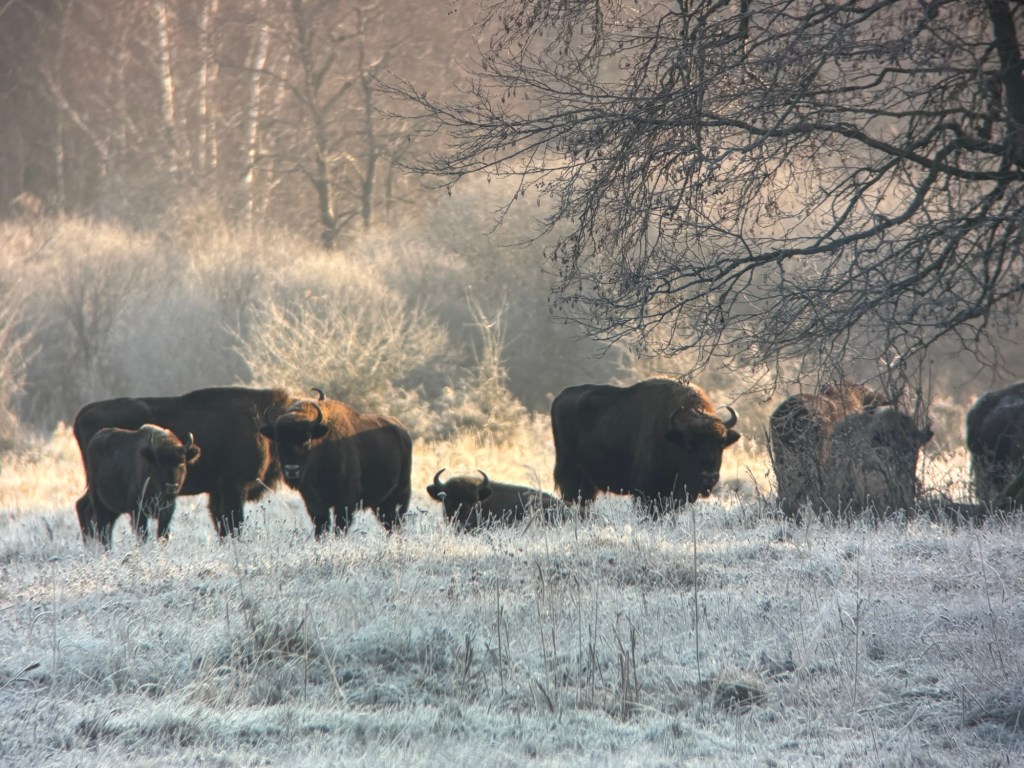
We must have set off shortly after 7am, about half an hour before sunrise. We had a couple of false starts – it turns out hay bales make very convincing bison half an hour before sunrise – but it didn’t take us long to track down a sizeable herd grazing in the fields.


The European Bison, or wisent, is one of conservation’s greatest success stories. What was once a ubiquitous symbol of Pleistocene Europe had been driven to extinction in all three of its holdouts by the end of the first quarter of the 20th century. Though strictly protected on the hunting preserves of the Russian Tsars, their numbers were already dwindling during the Early Modern Period and the last wild bison was shot here in Białowoeza in 1921, shortly after marauding German soldiers during WW1 whittled the herds down to just a few surviving beasts. With so many bison in zoos and private menageries spread across Europe, however, an effort was conceived to bring the wisent back from extinction. From an initial breeding stock of twelve, the population gradually recovered over the second half of the last century. The wild population now stands at around 4,000 individuals, headquartered along the Poland-Belarus border, with reintroduction projects from Blean Woods in Kent to Castelo Branco in Portugal – a truly remarkable rescue operation.


Our guide, Łukasz, took us to a number of places where the bison often leave the forest to graze. It’s been a good year for acorns, so they aren’t venturing out into the open as much as usual, browsing instead on the bumper crop in the dark heart of the ancient forest. Perhaps that’s why we had no luck after leaving the first herd to try our luck elsewhere.

We did find a solitary elk sitting beside the road, half covered in frost, which was an amazing stroke of luck.


Łukasz made the call to return to the herd we’d seen at sunrise, so we parked at the last spot we’d seen them and ventured out across the frosty meadow in search of our quarry.

It wasn’t hard. The heaviest land animal in Europe isn’t exactly inconspicuous.

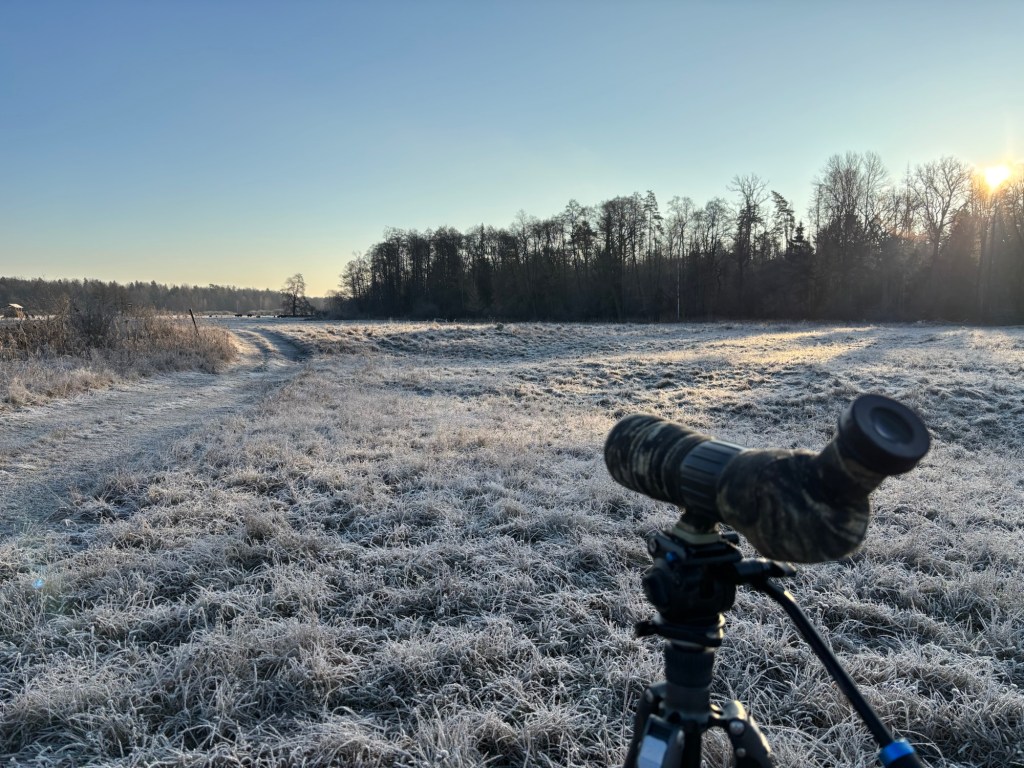
My camera didn’t really do the beasts justice – I don’t possess a supertelephoto lens like many amateur wildlife photographers – so I resorted to a little optical trickery by “digiscoping” – that is, holding my iPhone camera up to the viewfinder of Łukasz’ scope. It took some manoeuvring and I only got one usable shot, but the result was pretty good… for a phone.


Tomorrow, we set out in search of the reason I booked this holiday in the first place: wild wolves. I’m well aware the odds are stacked against us, and to be honest I’d settle for hearing them, or even just following their tracks, but it is set to snow tonight, so who knows – we may get lucky. Watch this space! BB x

Tiny Wings

3rd October, 10.40pm. The Flat

The October half term holiday came to a rather unorthodox end this evening with a last minute trip into town to catch a talk by celebrated English nature-writer, John Lewis-Stempel, on his latest release: England: A Natural History. It isn’t every day you get to meet people who you have grown up reading, and as this is a year for saying yes to things, why not? I came away with a signed copy and a really interesting chat with the author about the importance of names – not just the scientific names of the animals and plants around us, mind, but the old English names that are disappearing even faster than some of the creatures themselves: you might have heard of a peewit or yaffle, or possibly even a dumbledore, but would you know a bumbarrel or cuddy bear* if they were sitting in a tree in your garden? (Answers at the end!)


I’m feeling much recharged after ten days’ leave. These boarding school terms really do knock the stuffing out of you, though as I like to say, I’m happiest when I’m up to my eyeballs – it leaves less time for dwelling on things. I left it a little late for any far-flung adventures this year, but I did make it to Dartmoor a few nights back, taking advantage of the last few days of the public bus service that crosses the moors before they shut down over the winter.


Why Dartmoor? Possibly because it’s arguably easier to get to by public transport than Exmoor, which is a lot closer, but mainly because I had an insatiable itch to see the legendary Wistman’s Wood, a tiny sliver of temperate rainforest nestled deep in the heart of the national park. It popped up in a number of ghost stories I read a while back and again in Guy Shrubsole’s The Lost Rainforests of Britain. The desire to see that last fragment of the Great Wood that once covered this island ended up pressing against the inside of my skull like Wistman’s own stunted trees.

I was holding out for mist and fog, but I had neither. The weather was actually remarkably pleasant for fickle Dartmoor, so instead of mirk and mystery I was treated to soft clouds and sunlight through the ancient branches; the kind of warm glow that Tolkien bestowed for a moment upon Fangorn Forest, an ancient wood of his own design. Did he pass through here, I wonder? His faithful illustrator Alan Lee certainly must have done at some point.


Just as it sits in a valley in the innermost chamber of Dartmoor’s heart, so too is Wistman’s Wood at the heart of much of Dartmoor’s folklore. It is said to be haunted by the spirit of a terrier who can still be heard scampering through the boulders, while by night it is prowled by the far more sinister wisht hounds, a local variant of the hell-hound myth that can be found across the British Isles, from the gytrash and Barghest to the Beast of Bodmin. The wisht hounds were believed to be kennelled in Wistman’s Wood by Old Crockern himself, the ancient pagan spirit of the moor whose foreboding tor rides the crest of the hills a short distance to the west of the woods.

There were no malevolent spirits during my brief stay, of course – at least, none that I could see from my perch atop a boulder on the fringes of the forest (visitors are no longer allowed to enter the wood proper, so as to protect the longevity of this sacred and truly unique ecosystem). But that is not to say the place was lifeless: quite the contrary, in fact. There was no wind, but the trees were alive with rustling leaves that turned out to be the beating of tiny wings. In the space of a single minute I clocked three species of tit (blue, great and coal), blackbirds, redwings, wrens, robins, tiny treecreepers and the truly pint-sized goldcrest, our smallest native bird. I haven’t seen a forest so alive in a long time. Even the air itself felt different, a fact that would have been obvious to all but the senseless by the thick, mossy lichen growing on every surface, a perfect natural yardstick for a healthy forest.


I spent the next five hours or so wandering in a wide arc around the surrounding moorland, following a rather makeshift path swiped from the internet the night before. I haven’t hiked around Dartmoor since I was at primary school, so I’d forgotten that, up on the moors, river crossings are often not bridges but rows of stepping stones. Which are a delightful challenge in balmy summer weather, no doubt, but something of a roadblock after the first heavy rains of autumn. I made the tactical decision to not tempt fate and so I took off boots, rolled my trousers up to my knees and waded across.

I hardly need to point out that Dartmoor’s rivers are devilishly chilly – and surprisingly deep. I was just shy of the other bank when the water came almost up to my waist. Thank goodness I’d brought a spare pair of trousers, or I’d have had a very wet hike back to the inn!


Luckily, as I crested the hills due south of Two Bridges, the sun came out to guide me home. It seemed to turn the grass to gold, in a wave that washed down the hillside until I was stranded in an ocean of golden blades. I straggled up to the Crock of Gold, a small stone-strewn vantage point where, as if on cue, a shining rainbow daubed itself across the grey sky to the north. No leprechauns on this occasion, but I got my gold one way or another.


Well, I’d better put down my proverbial pen and get some sleep. Back to work tomorrow, and another busy term awaits! BB x


*Bravo for holding out for the answers! A peewit is of course a lapwing, a yaffle is a green woodpecker and a dumbledore is a bumblebee, while cuddy bear and bumbarrel are old English names for the wren and long-tailed tit respectively! Go figure!

Longhorns and Lightning

Tomorrow is the first day of a new life. After a long summer of alternating adventures, up-and-down driving lessons and watching the clock, it’s back to school for this bleeding heart. I’m determined to make a success of it. Once again, I find myself thinking back to my first teaching post in Uganda, nearly twelve years ago – where it all began. Did I know it then? I must have had an inkling – that was partly why I went, to see if teaching was for me – but I suspect I was blinded by the lure of seeing Africa with my own eyes. My lanyard is hanging from the door, my notebook is on my bedside table and the pen pot on my desk – a gift in the shape of a Dia de los Muertos mug – is stuffed with fully-loaded board markers. It’s nearly time to get started. But for now, let’s dive back into the realm of memories; to a remote farmstead on the banks of the White Nile…


9th October 2012
Ugandan Independence Day (50th Anniversary)

One month into our stay in Boroboro in northern Uganda, Luke Ojungu came trundling into the driveway of the Bishop’s compound in his enormous four-by-four. With Uganda on the brink of celebrating the fiftieth anniversary of its independence from Britain, we had an unexpected holiday on our hands and the former headmaster had offered to take us to stay at his farm in the Apac region to the southwest. The bishop said a prayer to bless our journey and send us on our way with God’s protection, though Luke’s impressive 6’5″ stature might well have been all the protection we needed. His plan? To show us a corner of Uganda we might not see otherwise, and to put us to work herding his cattle.

No visitor to Uganda who makes it out of the capital can possibly miss the famous Ankole cattle. For one thing, they’re everywhere, and for another, their enormous horns make them easy to spot over a great distance. I wonder if that was an intentional bit of genetic wizardry on the part of the cattlemen, so that they could keep stock of their herds from far away?


Luke had several hundred longhorn cattle spread across his lands south of the river, along with a large number of goats and chickens back on the home farm, which by Ugandan standards (or any standards, for that matter) made him a rather wealthy landowner. He was very keen to point out Matthew, the hornless bull he had named after the headmaster of our school back in England. It was hard to tell whether it was an affectionate gesture or somewhat tongue-in-cheek, choosing the one longhorn bull without horns for such an honour, but we had a laugh all the same. A running in-joke was born and Matthew “the most indie cow in the world” and his distaste for anything mainstream kept the four of us amused all weekend.


We arrived in time to help with administering the inoculations, which had already taken a couple of days, what with the herds spread out across the forested hills. Maddie, the team scientist, took the lead on this one, seeing a chance to do a little fieldwork ahead of the Biology degree ahead of her. Several years ahead of the rest of us in maturity and wisdom, if not in age, she was always out in front and seizing any and all opportunities that came floating our way, whether we joined her or not. It was Maddie’s idea to go to Uganda in person to snag a better deal on the national park permits. It was Maddie’s idea to spend all night dancing with locals down the road from our tumbledown hotel in Bwindi Impenetrable National Park. I should have followed her lead more often.

Mind you, it was also Maddie’s idea to ride along with the staff to a remote village in the north to the funeral of a colleague we’d never met, even though the service was conducted entirely in Lango (of which we understood perhaps four words between the four of us) and the return journey had me sandwiched between quite possibly the two largest women in Uganda.


With jabs administered, Luke left us in the care of two of his cattlemen, Alphonse and Gideon (I definitely misheard Gideon as Geryon the first time around, since that’s what I wrote in my journal, though that would have been a very fitting name for a cattle herder!). Out in the bush, I got my wish: to explore a proper African wilderness. True, it was grazed by Luke’s hundred-strong herd of cattle, but there were wild things everywhere: drongos, hornbills, cuckoos, parrots and forest kingfishers. Overhead, the awkward silhouette of a pair of bateleurs kept us company across the open marches. In the course of a single cattle drive I counted at least forty species I’d never seen before, jotting down details of what I’d seen and sketching while the memory was fresh.

In short, I’d make a decent Darwin, but a useless cowherd.


The drive took us deep into the forest, which swallowed up the herd quite capably. The going was a little hard, with thorny acacia branches poking in all directions, and we got to wondering whether we were being watched by other, more sinister residents of the forest as we cut a path through the trees: our encounter with a troop of baboons at the crossing at Karuma the day before had left me with a deep-seated awe (and justified terror) of the things, and I couldn’t shake the idea that they might be hiding in the trees, watching us from evil, sunken eyes.

I needn’t have bothered: the great herd of longhorns drove most of the forest creatures before it like a scourge. But it’s funny what gets into your head.


What was waiting for us, however, was a tropical storm. We had reached the heart of the forest, where the bush was at its thickest, when Alphonse brought us to a stop at the sound of a heavy drumroll from the north. Gideon went on ahead to divert the herd, but we had gone no further than a hundred metres when the heavens opened. It did not happen gradually, as rainstorms do in the British Isles, but in an instant: one minute the sky was grey with promise, the next it was sheet-white and bucketing it down. It was as though somebody had turned on an almighty showerhead, the way it just came down all of a sudden, and it went on for the best part of an hour. At Alphonse’s suggestion we sheltered beneath the scant cover of the trees, holding the herd at a standstill while we waited for the worst of it to pass. The waterproof hiking boots which had endured similar conditions in the Lake District were waterlogged within minutes, and we were all of us soaked to the skin – it was hard to imagine that only moments before it had been a balmy thirty degrees and we had been bemoaning having run out of sun lotion. I don’t think I have ever been so utterly drenched. If I remember correctly, I was quite miserable. We all were.


Luke came to the rescue around midday, picking us up from the side of the road when we finally broke free of the forest and saw the Nile, our intended destination, winding across the valley ahead. Regardless of the conditions, it would still have been another couple of hours’ march to the river, and Luke was quite anxious that we would not catch our death of cold on his watch, so we were whisked back to the farm for a warm cup of tea and fresh clothes. Alphonse and Gideon bade us farewell and pushed on toward the river, even as the clouds threatened a second deluge with flash and thunder.

We conceded defeat before these incredibly hardy cattlemen and their herd, and returned to teaching the following week with a renewed sense of purpose: we had a lot more to offer in passing on what we had learned than in wandering blindly through the bush in the wake of men who had been herding cattle since they were children.

I said I was miserable – which, according to my diary, is a fact – but like most things that get me down, I’d do it all again in a heartbeat, if only to see the rain come down as ferociously as it did that day, and to feel that shudder in my heart when the first drumroll of the rainy season came thundering in. Matthew wouldn’t have thought all that much of it. After all, there’s all manner of cliches when one gets to talking of a thunderstorm, and Matthew is far too indie for any of that nonsense. BB x

The Devil’s Cauldron

The white IKEA bookcase in the corner of my bedroom holds my most treasured memories: cherished books from my childhood, photo albums fit to bursting and hand-written diaries that stretch back as far as 2012. One of these last, spineless and soft around the edges, features a Van der Grinten map of the world: an eighteenth birthday present from a friend. It contains the tales of my adventures in Uganda, the first teaching post I ever held. As I open it, a handful of photos fall out: a vulture, a much younger me in Kyambura Gorge and the misty mountains of Bwindi Impenetrable Forest. Memories come flooding back. Come with me down memory lane, and I’ll take you on one of the most breath-taking adventures I ever made.


19th September 2012

According to my diary, it was an early start. My alarm clock woke me up at 3am, and while I was dressed and ready to go, my companions were a little slower on the uptake. Can you blame them? I sat on the concrete porch of the little house in the garden of the Bishop’s residence, watching the stars. There is no night quite like the African night. It is a deeper black than you can possibly imagine in the West: enlightenment has left our world overlit. Without streetlights to pollute the sky, the heavens sparkle with an ethereal light that has not been seen in most of Europe for over a century. I counted more than twenty shooting stars before our driver arrived and whisked us away into the dawn.

The Langton Four – that was what they called us. We were the first student representatives to visit our partner school in Boroboro in the once troubled north of Uganda. There had been staff exchanges in the past, but with the Lord’s Resistance Army waging a private war in the region for the last two decades, the idea of any kind of student involvement was limited to non-uniform days until my final year at school. When the opportunity suddenly presented itself, I practically bit their arm off. I read the required BBC article on David Cameron’s threat to withdraw aid to Uganda over and over again, and I turned up to my interview with a portfolio of printed photographs (which I still have). I suppose I was hoping to angle my way in as the team journalist. The team was chosen on the night of the interviews and my name was among the four. I still think of it as one of the happiest nights of my life.

The sky began to glow red around 6.40am, and the sun was up moments later. African sunrises really are like the opening to Disney’s The Lion King – that is, visibly quick. Maddie got out for a run in the morning light – we had been on the road for two hours already – before we reached the town of Purongo, a collection of red-walled houses and small businesses on the northern edge of Murchison Falls National Park. This was our Ugandan “welcome wagon”, as it were: a trip to Uganda’s first national park at the end of our first week at the school. Getting in was complicated by the print-date of my US dollars – the Uganda Wildlife Authority (UWA) had taken the decision to refuse any dollars printed before 1981 – but on this occasion they let it slide. We were joined by Robert, one of the park rangers, which brought the total in the car up to seven. I drew the short straw and ended up on the left-side of the middle row, landing a window seat that looked straight into the rising sun.

We learned within the first half-hour of our safari that it was wiser to keep the windows closed: the tsetse flies that share a home with Africa’s megafauna have a taste for human blood, when they can get it. Forget the harmless bluebottles that hurl themselves at your window: tsetse flies are another beast entirely. They’re loud, they have a bite like a needle, and they’re very hard to kill once they get into the car, despite their size, which is considerable. They clung to the glass like remoras for most of the morning, just waiting for somebody to wind down the window for air.

The first of the park’s larger inhabitants came into view just beyond the gates in the form of a herd of Ugandan kob, a stocky antelope that with the crowned crane forms one half of the Ugandan coat of arms. It was a modest start to the safari, and I was a lot more interested in the bizarre-looking hartebeest standing in their midst. With a head that might have given birth to the expression ‘why the long face?’, they look too warped to be real, like a badly stretched photo on a student PowerPoint. It spooked when the car came to a stop and bolted. They seem more skittish than other antelope species: though I saw several of the strange beasts during my time in Uganda, I never did get a good photo of one.


We didn’t have to go much deeper into the park before the park ranger pointed out a giraffe. He needn’t have bothered: at over five metres tall, they aren’t exactly hard to spot. Murchison Falls NP was one of the last holdouts of the giraffe in Uganda, after war and poaching drastically reduced their numbers in the last century. The giraffes that can be seen in Uganda are the nominate species, known as Nubian giraffes, and could once be found as far north as Egypt. Back in 2012, they were still known as Rothschild’s giraffes – they were reclassified in 2016 – so it looks as though they have been “decolonised”, dropping the name of a wealthy British banker and zoologist in favour of a name that conjures up their former homeland. Murchison Falls itself was similarly renamed under the Ugandan dictator, Idi Amin Dada, though the fact that he was the brains behind the switch may account for the fact that the park formerly known as Kabalega Falls has since reverted to its old colonial title, for better or for worse.


We reached Paraa around midday, where the Victoria Nile cuts right through the hearts of the national park. We missed the ferry by minutes so we parked up on the riverbank and waited for it to return under a thick cover of cloud. My friends had to stop me from getting too close to the water, as a large pod of hippos were dozing just metres from the bank. Some estimates hold that hippos are responsible for around 500 deaths a year, making them one of the more dangerous creatures on the continent – though not as dangerous as Africa’s snakes, which claim thousands of victims every year. I think I was actually more interested in the gangling jacana that was bobbing around at the water’s edge, but that’s by the by. Just like me to miss the wood for the trees.

From Paraa, it’s a bumpy ride to the falls for which the park is named. I’ve described them in my journal as “royal”. Kabalega – Amin’s preferred name for the falls – comes from Chwa Kabalega II, King of the Bunyoro people who call this corner of Uganda home, so it’s not a poor choice of an adjective. Hailed by the UWA as “the world’s most powerful waterfall”, the Nile is forced through an eight-metre chokepoint, creating a thunderous spectacle as the full force of the world’s longest river is hurled into an abyss known as the Devil’s Cauldron. It really does have to be seen to be believed.


It’s incredible to think that this mighty river winds its way all the way up to the Mediterranean. For centuries, the origins of the Nile were a mystery to the Western World. The Banyoro knew of the great river, of course, but they would have been just as surprised to know that the river that thundered through their kingdom watered the deltas of the pharaohs, some two thousand miles to the north. It might seem strange that the source of such a historically important river remained a mystery well into the nineteenth century, but as the early explorers discovered, the Nile is a treacherous creature that holds onto its secrets with a jealous force almost as strong as its flow: once you reach Sudan, the river becomes heavily overgrown, making navigating by boat near impossible, and stands of reeds and papyrus hug the banks so densely that, in some parts of its course, it obscures the river entirely from view.

The Ancient Romans had a saying, Nili caput quaerere, “to seek the head of the Nile”, which meant to attempt the impossible. It’s possible the saying originated with the Emperor Nero who did just that, tasking a small expeditionary force of his Praetorian Guard to find the legendary source in the first century AD. The historical accounts claim they made it as far as Southern Sudan before finding their passage blocked, but some claim they may have made it as far as the thundering waterfalls of northern Uganda. It’s a strange thought, to picture the Praetorian Guard standing here, staring in awe at the falls in the same spot that shadowed Winston Churchill, Ernest Hemingway, Humphrey Bogart and, much later, myself.


What the photos don’t show is the spectacular double rainbow that forms over the Devil’s Cauldron as the Nile thunders through the gorge. We saw the falls shortly after a brief spell of heavy rain, so the force of the flow was especially ferocious. Two weeks later, when the full force of the wet season came down, it would have been near impossible to get as close to the falls as we got without being blasted with the spray. Apparently, these can sometimes be seen at night, when the moonlight is exceptionally strong: these are called “moonbows”, and have been spotted by birdwatchers who come here looking for the bizarre pennant-winged nightjars that nest in the surrounding forest. We didn’t stay long enough to find out, but I’m sure it must be a beautiful sight to behold.

The first thing I ever saw in Africa was a waterfall. The connecting flight from Heathrow to Addis Ababa rode the clouds for most of the journey, but shortly after waking up on that first morning, the clouds parted for just a moment, revealing a jaw-droppingly beautiful mountainscape, with a silver river launching itself over the edge of a high cliff the colour of bronze. Victoria Falls is the one that comes to mind for most, but for me, it’s a toss-up between Murchison Falls and that nameless cascade that first stopped my heart all those years ago. Maybe I should go in search of more waterfalls!


Honestly, I’m getting the travel bug just writing this. I think it’s time I blew the dust off the travel section in my library and started cooking up a plan. I know I’ve had a grand adventure this year to the States, and I’m grateful, but after a slightly abortive early finish, I feel like I haven’t quite sated the travel bug this time around. Let’s see… if I can pass my driving test, I think I will reward myself with another grand adventure – only next time, I will do it for me. It certainly makes for fun writing! BB x
Saudade

SAUDADE – (n.) a deep nostalgic longing for someone or something absent, infused with a melancholic awareness that it may never return.

I looked up last night and saw a plane coming in to land at Heathrow. One of the big ones that comes in from across the Atlantic, like the one I flew home on nearly five weeks ago. It made me think of that Monday morning, seeing the sunrise over London, knowing in my head – even if I didn’t want to admit it in my heart – that I had come to the end of a cheery chapter in my life.

A plane like that one brought her here to this cloud-covered island many months ago. I wonder what my summer would have looked like if it hadn’t?


The Portuguese have this wonderful untranslatable expression called ‘saudade’. It’s often taken to mean the feeling of missing someone or somewhere, or more precisely a sense of longing for that thing, but many Portuguese and Brazilians will tell you that it’s a lot more subtle than that. There’s a sense of finality to it, also: an understanding that what you once had may never come back at all, an acceptance of that, but a wistful longing for it all the same. Not the raw kind that breaks you in the days and weeks that follow, but a tempered and reflective sense of nostalgia for what once was and what could have been.

It’s not unique to the Portuguese, but it is especially common in their culture – and perhaps even more so among the Brazilians. It is said that the expression may have evolved during the Age of Discoveries, when the wives of the great explorers of the day bade farewell to their husbands and lovers as they set out for the Americas (how ironic) knowing full well that they may never see them again, and that if they did, they would return as changed men.

Among the Brazilians, it has taken on the sense of a nostalgia for a lost future: a golden country that never was. The American dream isn’t just limited to the States – a shard of it can be found embedded like a splinter in the subconscious of all the descendants of the colonists, I believe. Why else should they have made such a journey if not in hope of a better tomorrow?

I feel that way about Spain, sometimes. Perhaps that’s the generational shockwave of my grandfather’s death in his mid-twenties, rippling across the years to the present, an echo of a lost world that could have been. Spain calls to us. It has been calling for sixty years. Come back. Come home. Sometimes you spend hours, days and even weeks waiting for somebody to reply (looking at you, folks on Hinge) without realising that something greater has been waiting for you all the time, if only you knew how to answer.

I have been the architect of my own saudade by choosing to devote my life to gazing upon that dream from afar: teaching Spanish to the English, sharing my love for a country I can only touch a few times a year. It is a test of endurance, to look upon a thing of beauty and not to touch. Spain has always been that thing. It fills me with awe, excitement, a deep-seated admiration and an infectious appreciation for life itself, but a sense of longing all the same, knowing that it is in my heart, but beyond my reach. Like there’s something blocking the way that I can’t see. Perhaps it’s akin to sleeping beside a former lover, after the love has gone.


I wandered through the woods as the sun came down. I think the nightjars have already gone back to Africa – there must be plenty of them around for a local bar to bear the name The Nightjar – but I was followed across the heath by a pair of stonechats. In that year I spent growing up in the Andalusian sierras, that was a sound that accompanied me every weekend on my forays down to the abandoned railway at the foot of the mountain where we lived: a whistle followed by a song like the clash of two small stones.

Further in, I found a couple of kite feathers. There are so many in these woods. When I was a child, you would have been lucky to see a buzzard – poison and poor public perception very nearly wiped them out – but now they’re everywhere once again. The red kites that once quartered the streets of London before their extirpation in the 19th century have also come back with a bang, and their feathers turn up in the forest quite regularly. I left some in a small tree for another person to find – some bright-eyed kid like me, perhaps, who might take them home as a treasure. Something they can look back on in years to come, and remember the day, remember the smell of the forest, remember the one who took them there by the hand – the feel of their hand, the sunlight in their laugh. I’d like to think that. BB x

The Wind that Shakes the Barley

What a vast gulf there is between love and loved! It is measureless. Still, most people have crossed it in their lives, some of them more than once.

Henry Rider Haggard, The People of Mist


Summer rumbles along. August yawns before me, and once I’m settled into my new home at the end of the week it will be a quieter month than this very to-and-fro, up-and-down July. I’ve managed to book in some driving lessons starting next week, despite the ongoing national shortage of instructors, so I should count my blessings. I’ve also been very lucky to have traveled so far. I mean, honestly: four weeks ago today I was wandering around New Orleans. Three weeks ago I was on an island. Two weeks ago I was sitting atop Montmartre in Paris, eating frites and watching the sunset.

I really have moved around a lot this summer. I should be grateful. That’s what I tell myself.


The summer holidays are a rough time to handle heartache. There’s never a good time, but the holidays really are the worst. For dealing with affairs of the heart, the best things to have around you are friends and family who will listen, advise and support you, if not a job that will keep you too busy to dwell overmuch. All of these are close at hand when you live and work in a boarding school (or any school, for that matter, though the boarding scene does amplify most things).

Come the holidays, however, and you can find yourself cut off. Marooned. It’s like floating in a wide, wide sea, in a boat that has lost its motor, looking and hoping for the afterglow of the stars you’ve been chasing, even though you know both the looking and the hoping will hurt your eyes.

I love a good quest. It gives one’s life meaning, purpose. Something to come home and tell stories about. Seeking out my long-lost family in Spain – that was a quest. Walking the Camino for my grandfather José – that was another. Even the ten-metre colossus of a drawing I created at university was a quest after a fashion. In short, any endeavour that you put your heart and soul into is a quest. So perhaps you might forgive me for trying to catch a shooting star this summer, knowing full well that they are so precious precisely because they are fleeting.

It’s just because it’s in those fleeting moments that we truly feel alive that we hunger for them so.


The hardest relationships to walk away from are the ones where you both still care about each other. Where, by whatever divine prank, the whole world stood between you, telling you to listen to reason and face the enormity of the Ocean, even as you railed against it. Bloody Hinge! Bloody Atlantic! Bloody bleeding heart!

One of you must be the brave one and make the bitterest of choices. Somebody needs to be the one to say “good bye”. Good-bye is a powerful word, and one I try to avoid – it is so much more final than “farewell”. And even when it is the right word to say, it’s never easy to cut yourself off entirely from the person with whom you have come to share a corner of your heart. But one of you must do this, and that will always leave the other with questions. What more could I have done? Did I let the flame die out from a lack of attention, or did I snuff it out from too much? Had I the winged sandals of Hermes or the might of Moses to part the sea between us, would it have been enough?

Questions come easily in the silence of the summer holidays. So I’ve been going out in the evenings for long walks to clear my head and focus on the beauty of the world around me, as the year turns.


The harvest season has begun, and the wind among the gentle fields of barley can hardly be heard over the distant roar of the combine harvesters up on the golden hills. Hay is in the air and, every now and then, the faint smell of mushrooms. Autumn is waiting in the wings. Change is coming.

One thing I’ve noticed this year is that there are so many owls up here in Lincolnshire. More than I’ve ever seen in the south, that’s for sure. Owls are an omen of bad luck in many parts of the world, but here in Europe we chose to see in them wisdom. Perhaps that’s on account of their enormous eyes, or their ability to turn their head in seemingly all directions.

Last night I saw a barn owl quartering the fields after sundown, a ghostly silhouette against the evening sky as it flapped noiselessly overhead – or rather, noiseless in its wings, for it was shrieking as it went.

Barn owls. Flamingoes. Rollers. Swans. It’s a strange quirk that the most beautiful creatures make the most alarming sounds. There is nothing alarming about the wind in the barley tonight. It rustles softer than any sigh.

Nature is a powerful healer, and so is writing. I will make good use of both in the weeks to come, until life and work begins again. A new world is waiting! I have waited long enough. BB x
Marooned

13.25. High summer. Somewhere in the Lincolnshire Wolds.

English summer skies are blinding. There’s an intensity to the white clouds that blanket this island in summer that demands a permanent squint, or a pair of good sunglasses. America – and even Europe – seem a long, long way away from here.

Six days ago I was sitting on a low wall among the ruins of an old boathouse on the largest of the Chausey Islands, a collection of low-lying islands in the bay of Saint-Malo. I’d never heard of them until the day before, when I saw that a local ferry company was offering day trips out that way, but I do love an adventure, especially one that goes well off the beaten track. Due to its remote location, there were only two boats a day from Saint-Malo: one to the island, and one from. Which is how I ended up spending seven hours on an island measuring just 1.5km across.


The Chausey Islands are a magical place. Quiet. Peaceful. Cut-off. It’s not so far from the coast that you feel lost – neighbouring Granville over in Normandy is a little nearer than Calais is to Dover, and in good sunlight you can see as far as the spires of Saint-Malo on the Breton coast – but far enough to feel like you’ve put some distance between yourself and the world. Even on a cloudy day, you can see the ghostly pyramid of Mont-Saint-Michel rising out of the sea to the south like Atlantis. Or should that be Ys?

People have been living in these islands for centuries. The Vikings of old used to stop here regularly en route to their raids along the mainland, and you can still see the holes they bored into some of the rocks to anchor their longboats. The narrow channel between Grand Île and the other islands still carries a Viking name: the Chausey Sound, the southernmost “sound” in Europe. There were once a few farms here, and even a school until the last century. Now it plays home to French holidaymakers, who pass their jealously-guarded homes down through the generations, so I’m told.


I have a habit of winding up in places like this. Others travel to meet people, have a great time, see the world. I always seem to end up by myself, searching for myself, marooned with my thoughts. It’s not that I don’t set out in search of those things too – I just find my way to these spots quite naturally.

I found the spot I was searching for to the west of the island, on a low islet overlooking the ebbing tide beneath a crown of standing stones. But for the hulking black-backed gulls, a couple of oystercatchers and the odd lizard, I had the bay to myself.

I let my mind wander. I thought about a great many people, and wondered what they were doing at that moment in time. Were they happy? Were they wandering like me? Had they ever found just such a place and turned their thoughts to friends and lovers past? I think so. I think it’s in our nature to do just that in the far-flung corners of the world. Maybe that’s why I’ve always been a sucker for a good Western: nothing sends you on a greater inward journey than the wilderness.


I had questions, but the answers didn’t come to me as readily as they did on the Camino last year, so I waited out the hours on a beach, reading Breton fairytales and burning under the sun. When the boat did come, it was to carry me back to Saint-Malo across a choppy sea that left half the passengers on the deck soaked to their skin, though the sun was shining bright.

I didn’t see as many seabirds as I hoped, but I did clock a guillemot taking its fledgling on what might well have been its first swim as the sun came out. I also came away with a number of close encounters with the lizards that call the island home – all of them a lot less skittish than their cousins on the mainland. I used to love looking for lizards in the countryside when I was a kid, so after the nostalgia of rockpool rediscovery, it was refreshing to turn another leaf of the history books.


Until the next adventure, folks. BB x

Winds, Waves and Words

It’s 18.00 over here in Saint-Malo and the heavens have opened. An Atlantic wind is battering against the windows and the heavyset black-backed gull that chased off Hector has given up on attacking the ashtray on the windowsill and taken his leave. I might head into town for dinner later, but for now, I’m quite content curled up on the sofa of my AirBnB with a book, a hot chocolate and the time to write. So I thought I’d start today’s post with a little history.


Saint-Malo has a long and complicated past. Originally a 6th century refuge for Welsh monks, including the venerable Maclou of Aleth who gave the town its name, the rocky outpost became a haven for Bretons fleeing the advancing “North-men” or Normans some two hundred years later. In the 17th century, its strategic location made it a natural hub for state-licensed piracy or “privateering”, which elevated its fortunes considerably and paved the way for a generation of wealthy explorers: Jacques Cartier, a native malouin, is credited with giving Canada its name (via the Iroquois kanata) and Louis-Antoine de Bougainville, another son of Saint-Malo, established the first European settlement in the Falkland Islands, which – at least in Spanish – still bear their original Breton name: las Islas Malvinas, from the French Îles Malouines.


The city fell to the Germans during the Second World War as part of their Atlantikwall stratagem, and the skeletons of their fortifications still dot the Breton coastline: in Saint-Malo, the levelled ruins of German pillboxes rub shoulders with 17th century Vauban forts. Surprisingly, much of what you see today was carefully reconstructed, as around 80% of the city was destroyed by the Allies in their dogged attempt to drive the Germans from the old pirate stronghold.

Allied bombers over Saint-Malo in August 1944. The fortified isle of Grand-Bé is at the centre of the blast

Most of the German fortifications have long since been torn down, but you can still see the concrete bases of many structures on the cliffs beneath the city wall and on the surrounding islets of Grand-Bé. They make very comfortable places to sit and watch the sunset.


In case it wasn’t obvious, the town’s rich history is one of the biggest reasons I’m here. But the other is its wildness: there are plenty of sandy beaches in the south, but I don’t get any real kick out of sea-swimming unless there are rocky areas to explore. The southeast coast of England with its famous white cliffs is quite a sight to behold, but it doesn’t quite have the jagged beauty that the west has in abundance, and Brittany has it to spare.

I spent many of the happiest days of my childhood scouring the rock pools of Folkestone for tiny critters: gobies, blennies, butterfish, velvet swimming crabs and even, just the once, a pipefish. Brittany is only the other side of the Channel, so much of the shoreline is familiar. I can’t help keeping an eye out for anemones when I’m out on the rocks, especially the snakelocks variety – I always thought they were especially interesting.


Across the bay from Saint-Malo stands the islet of Grand-Bé, which can be reached on foot at low tide via a barnacle-encrusted causeway. A similar road stretches on to the Vauban fort on Petit-Bé, though a small section of that road remains under a foot of water even at low tide and must be forded with shoes in hand.

Grand-Bé offers a glimpse of what Saint-Malo must once have been: a windswept escarpment just off the mainland, inhabited only by lizards, gulls, a small colony of shags and a company of oystercatchers that can be heard all across the bay. Two of these noisy seabirds were standing in attendance upon Chateaubriand’s tomb, as though to keep him company. From this spot, on a clear day, you can hear the twittering of goldfinches, the cries of gulls, the occasional grunt from one of the shags and the endless piping of oystercatchers on the rocks below or in the sky above – and, of course, the ringing of the bells of Saint Vincent’s cathedral across the bay.

I wonder if the old Romantic was as bewitched by the wild birds of his native Brittany as his writing implies? He certainly had a real flair when it came to writing about nature. Perhaps that’s why he chose this spot.


I spent some time last night watching the sunset over Grand-Bé. I had left my Camino bracelet in the apartment, but I had brought a few other tokens with me. I often take a number of “lucky” objects on my travels: little souvenirs and keepsakes to remind me of home when I’m on the road.

Well, not home exactly. With no fewer than ten moves under my belt at the age of thirty (and just under half of them international) I’m still not entirely sure where home is. But they remind me of friendships and memories that mean a lot to me, and that helps with the loneliness that is a natural side-effect of traveling alone.

In my satchel, ever at my side, I carry my journal, my fifth and longest-serving since I took up the art twelve years ago. It’s coming apart at the seams and bound inexpertly by sellotape – hardly surprising for a little book that has come with me to work every day for the last five years, as well as on every adventure I’ve been on in that time. Concealed within is my lucky dollar, a ticket to the Prado in Madrid, a tawny owl feather, the plectrum that one of my Rutherford boys used to win House Music two years in a row and a perfumed letter.

There is one more keepsake that has been sharing the road with me this summer. It even came with me to America, traversing the Bayou, the Mississippi and the bright lights of Nashville. It’s a card from one of my students, one of many I received in my last week at Worth. The lengths this particular student went to so as to ensure I got the card, as well as the maturity of its message from one so young, are just two of the reasons this one in particular has come with me. I am many things, and a great many less, but I would be a writer – and so that is why I have always believed that the greatest gift I can ever receive is in the form of words. No physical object can ever surpass the depth of feeling that comes from such expression.

I have a bad habit of making people cry when I write them farewell letters (an equally bad habit I’ve adopted for leaving students), but I very nearly met my match with this one. The student in question signed off with a favourite quote of theirs from Lin-Manuel Miranda: “sometimes words fail me”. There’s any number of reasons they could have chosen that one for me – I might well have said the line verbatim in reaction to the behaviour of that class at least once – but it’s a powerful message for a would-be writer.

Words do fail me, and often. There have been moments this year where I have been genuinely speechless, from shock or awe or wonder. It is comforting to know that such a consummate wordsmith shares that affliction.


Tomorrow, I have decided upon a rather spontaneous adventure. I have already bought my ticket. All I can do now is hope that the weather holds. Then – we shall see what we shall see. BB x