Somewhere in deepest Patagonia. 17.00.
When I arrived in Puerto Natales last night, the first snows of winter had already covered the great plains of Patagonia in a thin layer of snow. The snow was still falling as I made my way into town and it was still coming down hard as I turned in for the night (at the ungodly hour of 9pm). So it’s hardly surprising that I woke to a total whiteout this morning. Patagonia looked into her winter wardrobe and put on her most beautiful dress of all.
Such were the conditions as Fabián, my guide for the next few days, picked me up and set off from the lamp-lit streets of Puerto Natales into the endless night.

I shopped around a lot before choosing Fabián of Fauna Silvestrek, largely because puma tracking in this corner of the world is not a budget-friendly experience. Touring with one of the English-language conglomerates can set you back thousands of dollars for just a couple of days. Traveling solo necessarily makes wildlife tourism an expensive operation, since you inevitably have to pay the same rate that a group would cover between three or four, so I was relieved when I found a Spanish-language option which looked much more personal, reliable and affordable. Tracking pumas is easier here than anywhere else in the world, but never guaranteed, so you want to be sure you’re investing in the right guy.
Fabián, it turns out, was exactly the right guy.
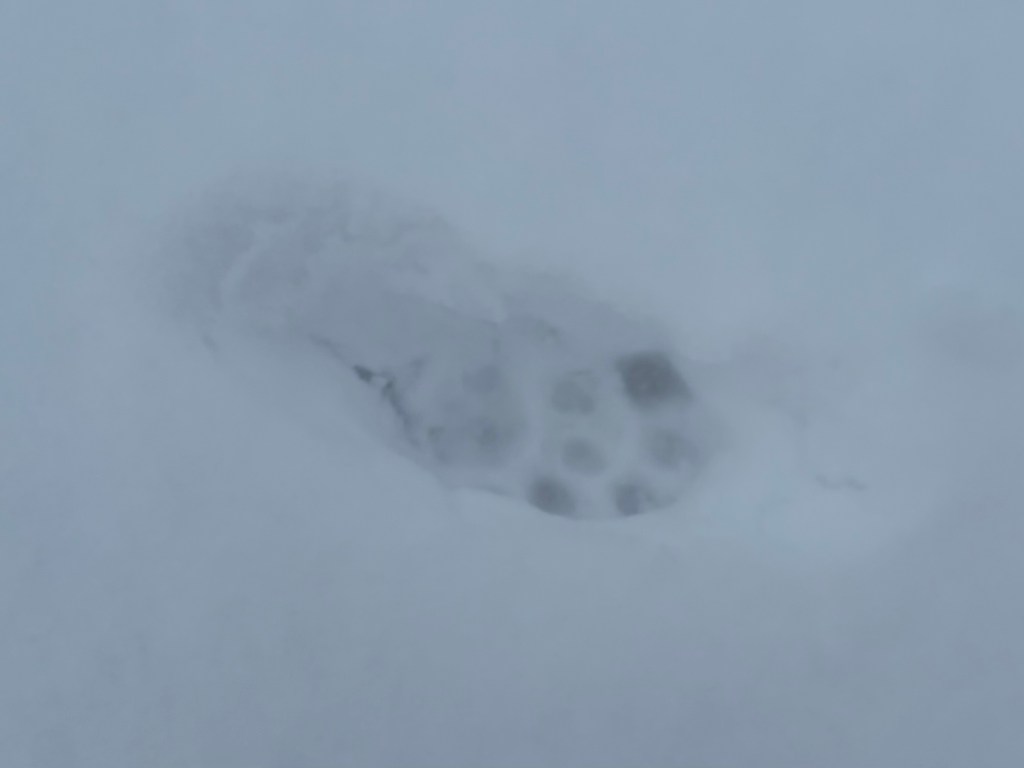
It’s a two hour drive from Puerto Natales to puma country, on the edge of PN Torres del Paine. In winter, it’s arguably easier to find pumas – or mountain lions, as they’re known in North America – outside the national park, where the elevation makes for a more unforgiving climate. Along the way you pass all sorts of signs you’ll find nowhere else, warning of collisions with pumas, guanacos, rheas and even armadillos. I’m keeping my eyes peeled for a ñandú – a Patagonian variant of the ostrich, and one of only a handful of words that start with the letter ñ – but we haven’t seen any yet. Maybe they’re keeping a low profile in the outer reaches of the park.
Today and tomorrow (and very probably the day after) are all about pumas. That’s what I came all the way down here for. And today did not disappoint.

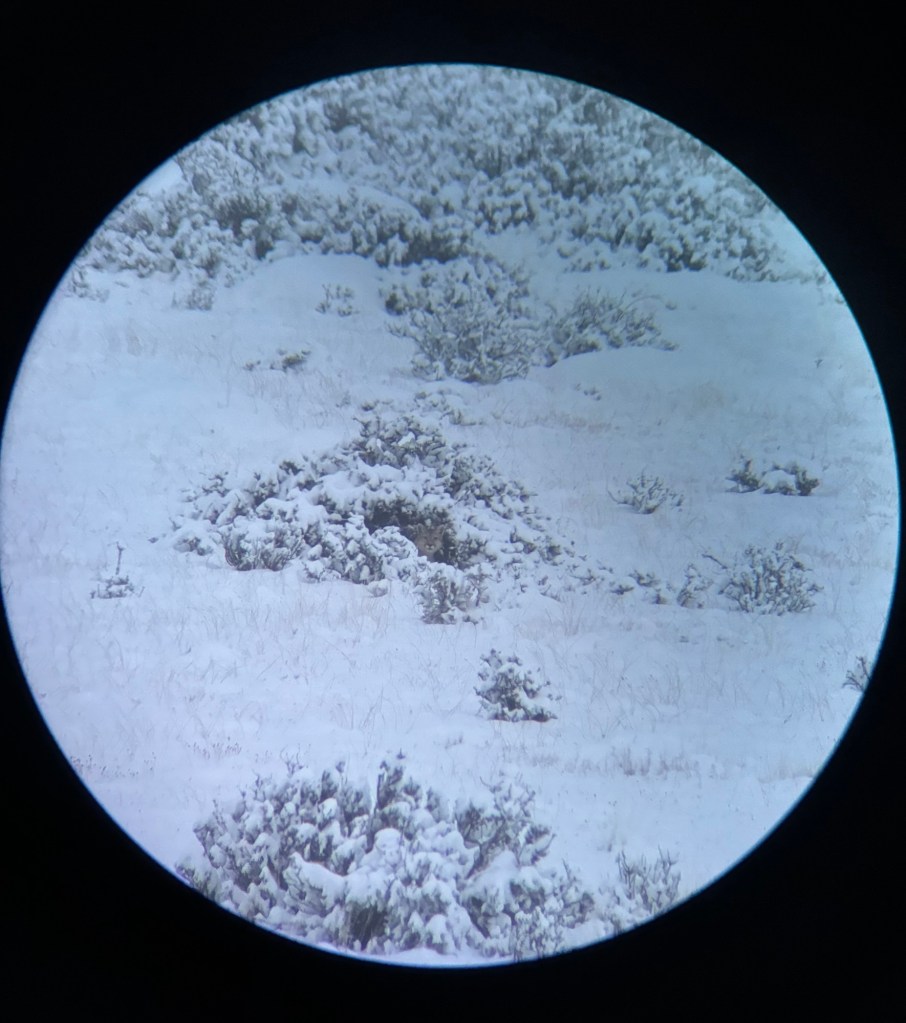
We found our first cat hidden beneath the shelter of a bush not too far from the road. Fabián located it amidst the white wilderness with a thermal scope, which is a seriously useful piece of kit – especially when the whole world has frozen over. It was a youngster, unknown to the local guides, that had killed a guanaco recently. Puma kills are known around here as carneos, and are used by the trackers in their operations around the park, as each kill usually guarantees that the puma will stay in the immediate vicinity for the next three to four days, attracting other scavengers in the process.
This one – NN (No tiene Nombre) – stayed hidden in its shelter, being more wary of us than its more habituated kin in the park. So the best I could do was a digiscoped shot with Fabian’s scope. Even so, I was on tip-toes with excitement. One puma already, within minutes of arriving in puma country! Score!
The trackers communicate with each other via walkie-talkies. You can spot their cars a long way off by the antennae affixed to the roof, which allow them to talk to each other across the vast and signal-less distances of Patagonia. As such, when one tracker locates a puma, they will tip off the others.
Following one such tip-off, Fabián led me to a featureless deep (one of thousands) where a tracker and his clients had gathered, searching for a female puma and her cub which were still in the immediate vicinity. Just how immediate became apparent when I saw the back and the kinked tail of an adult mountain lion appear all of a sudden behind the scrub just a stone’s throw from the road. We stuck around for about an hour to try and locate them, but pumas are magical creatures. For a beast that can grow to a whopping 2.6m in length, they have a remarkable ability to disappear, even in a landscape covered in snow.
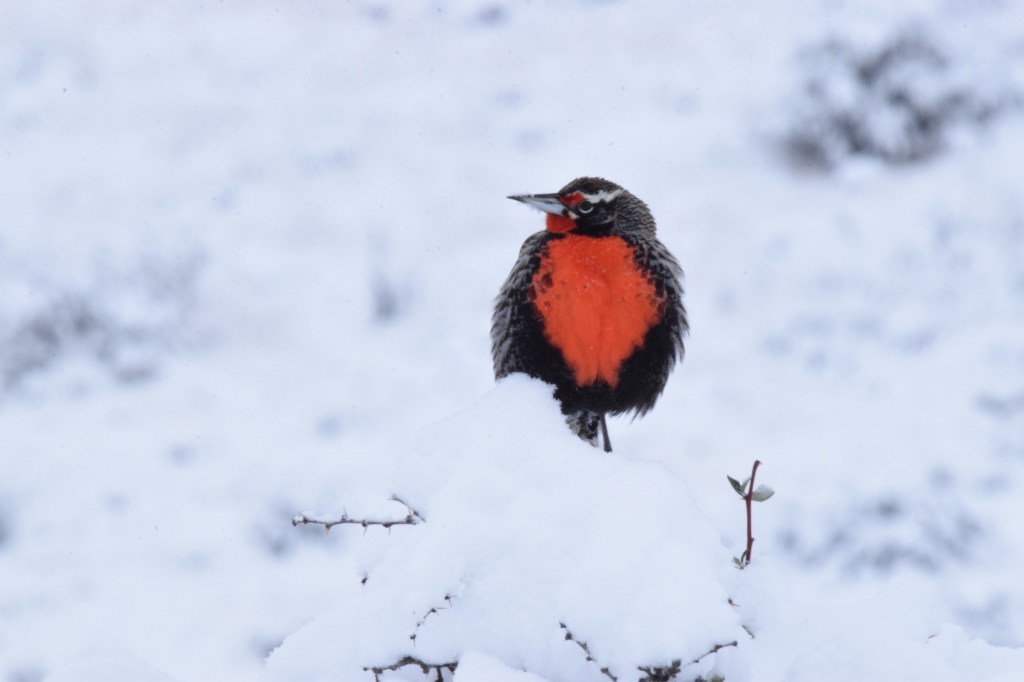
It wasn’t that cold, in spite of the snow, and a flock of meadowlarks kept us company in the meantime, twittering noisily among the deep footprints left behind by a previous company of trackers. The males are especially spectacular with their crimson chests. The brighter the red, the healthier the individual – so naturally, the more successful the male with the ladies. Ladies and gentleman: the gymbro of the bird world.
Nearby, a small herd of guanacos kept a wary eye on the spot where the pumas had disappeared. If the trackers don’t guide you to a puma, the guanacos just might. Their high-pitched alarm call is usually a good sign that the apex predator of Patagonia is somewhere nearby. Incidentally, guanacos complete the set: having seen alpacas, llamas and vicuñas in Peru, guanacos are the final member of the South American camelids.
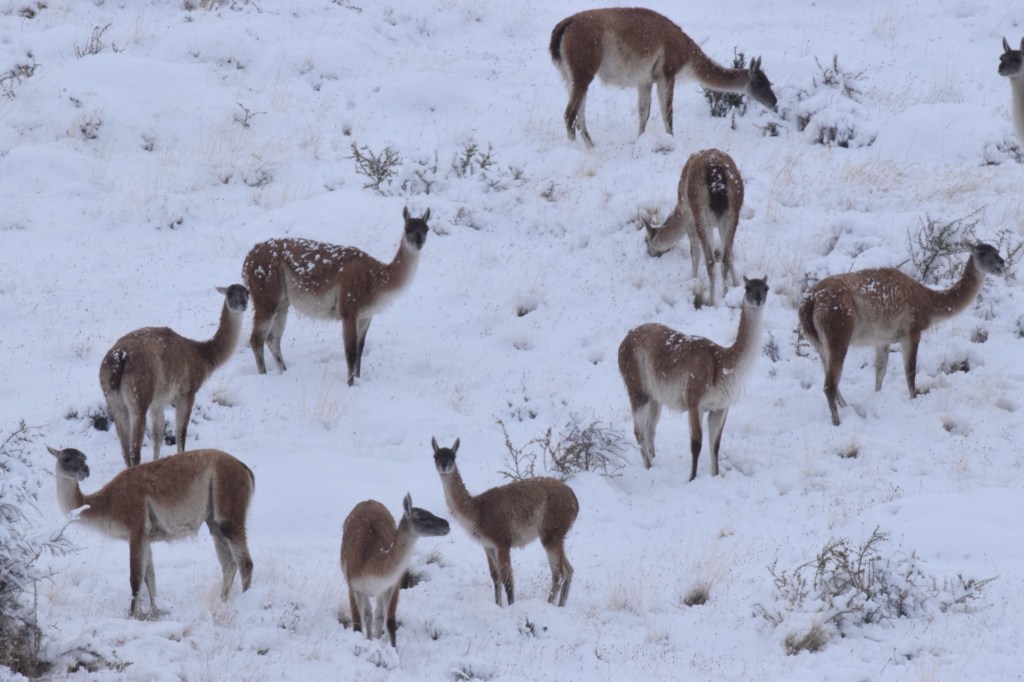
These handsome beasts were once to be found across all of Chile, but hunting whittled their numbers to zero not long after the arrival of the first European settlers, and these days their range is restricted to the Cono Sur, with an outlying population in Peru.
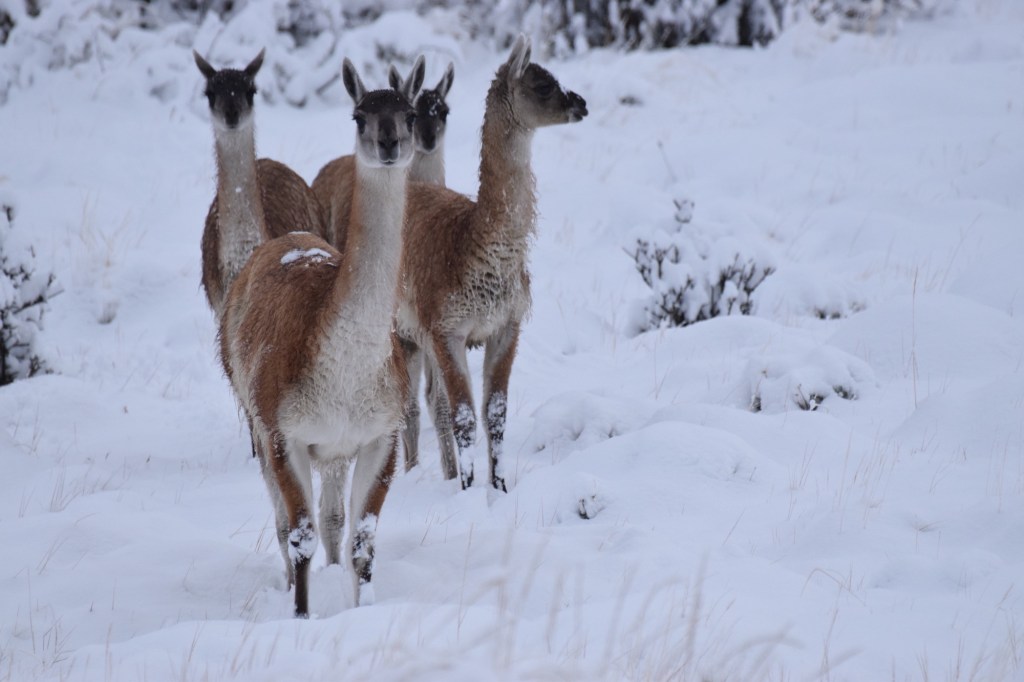
We came across another herd further up the road, consisting of an alpha male and his three female attendants, with a fifth on lookout high up on the nearest hill. These vaulted the fence and came right past the car – or rather, the alpha managed just fine, while two of his followers looked on in confusion.
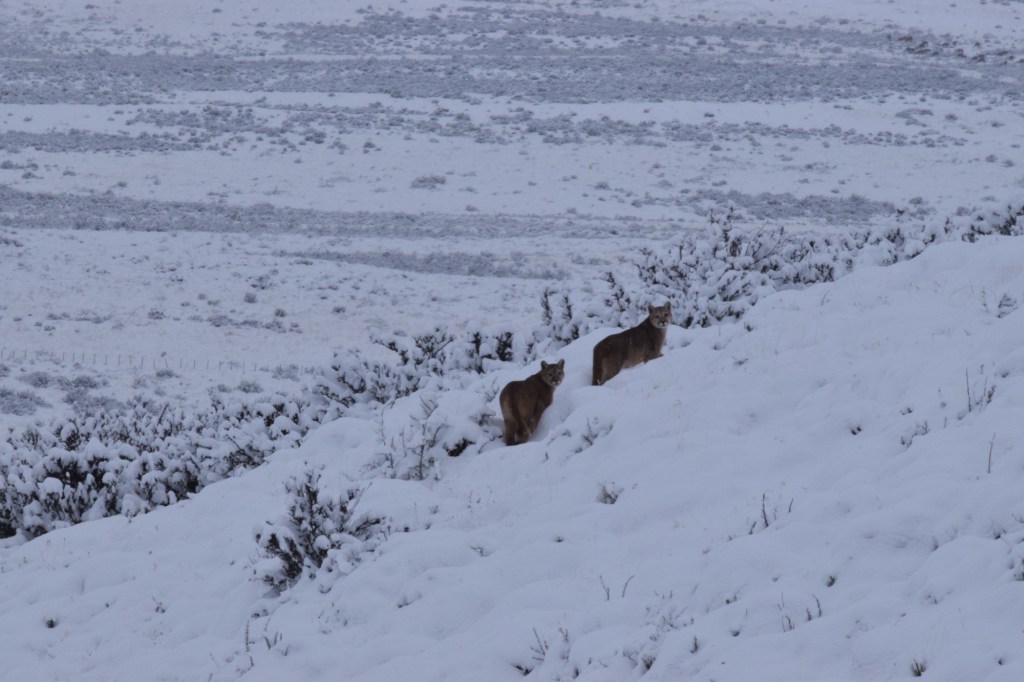
We came back to try our luck with the pumas from earlier, arriving in the very nick of time to see them leave the shelter of the scrub and strike out into the open.

This particular female is called Lenga, after a local kind of tree whose branches are distorted by the fierce Antarctic winds. Lenga’s tail is similarly misshapen, though nobody knows why. She appeared one day, as wandering pumas often do, with her oddly-shaped tail, and her attendant cub, Ñire.

We watched them cross the frozen lake and climb up into the snow-covered mattoral until they were mere shadows among the scrub before the snow clouds concealed them from sight. If that had been it for our encounter with the pumas, I’d have been quite content. But we were only getting started.
Another handsome resident of these windswept wastes is the crested caracara, known locally as the carancho (amazingly, a lot of the local birds and beasts seem to have preserved their precolonial names). Two of them were perched at the side of the road, quite unfazed by the four-wheel drive that ground to a halt right in front of them. Seeing how unafraid so many animals are in foreign corners of the world really makes one reflect on how violently we have treated the countryside in the UK for its creatures to be so innately terrified of us. Food for thought.

Arcing around a snowdrift and following the edge of Lago Sarmiento, the largest of the region’s lakes, we soon came across another group of tourists and their attendant tracker walking up the road, armed to the teeth with enough telephoto lenses to inspire envy in the World Cup press box. The reason for their almost religious procession was padding along a few metres ahead: an adult female puma, known as Escarcha (Frost), one of the park’s habituated mountain lions. We fell into line, marching for about half a kilometre before Fabian told me to press on while he went back for the car.
Cue a rather awkward incident where the tracker of the other group told me – in no uncertain words – to get lost. The implication was clear: I hadn’t paid for his services, so I shouldn’t be walking with his group. When Fabián caught up to me, another tracker working for the Others rounded on him, accosting him for tagging along “without so much as saying hello”. They were so busy chewing that one out that nobody seemed to notice that Escarcha’s calls had summoned two adorable cubs from the snow.

After a short distance, Escarcha and her cubs disappeared into the scrub. Team Territorial struck out onto a nearby hillside to get a better view, and we knew better than to follow them. Sure, from our spot on the road, we couldn’t tell whether they had the best seats in the house, but in the end it was the cubs who levelled the playing field. In their constant scampering about, up the hill and back down again, they made no attempt to stay hidden for long.
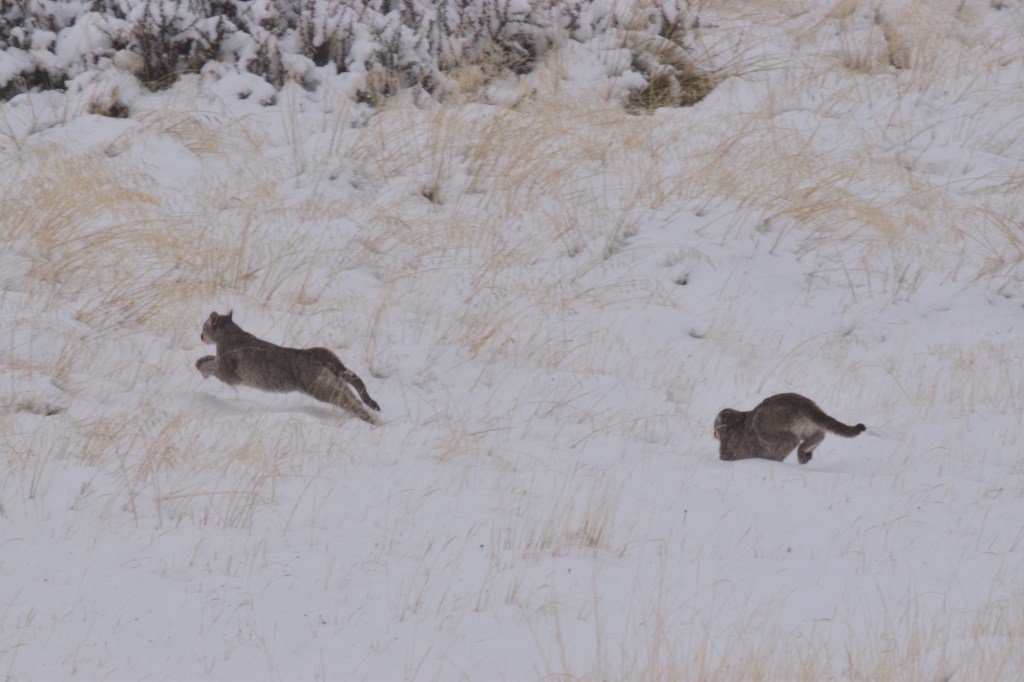
Like many cats, baby pumas are born with bright blue eyes that gradually turn a golden-brown after about six months, which helped to age these youngsters considerably – not yet a year old, but past the blue-eyed stage of infancy. The zoom lens could have told me that, but as it turns out, I hardly needed it: one of the cubs, more curious than its sibling, scampered up onto the road and sat watching us for a while. I don’t know what was going through its head, but it was clearly thinking.
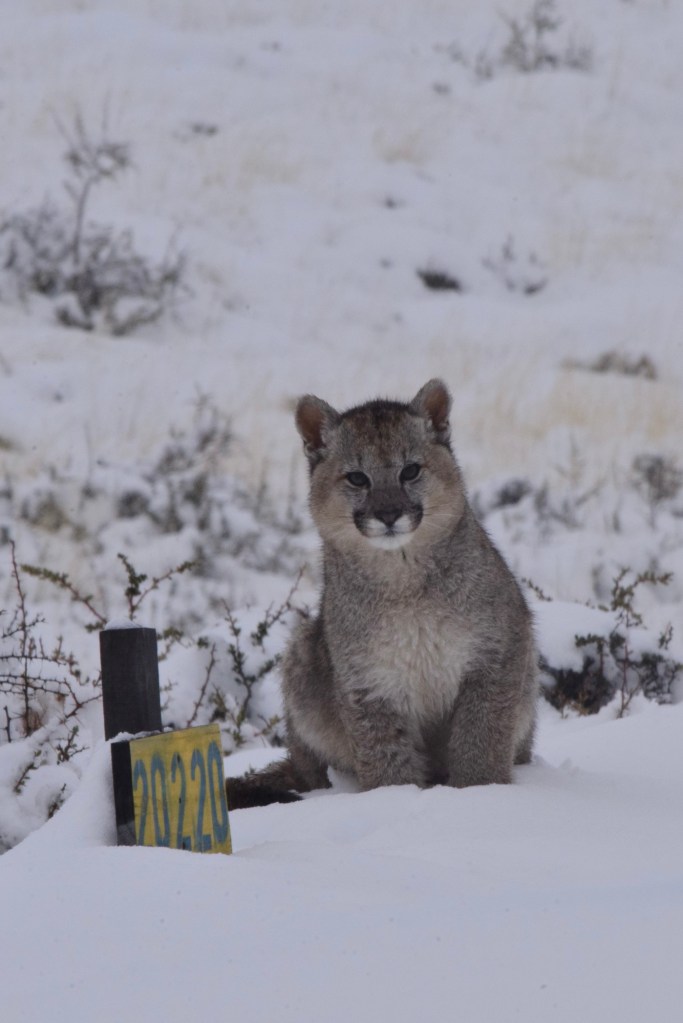
Nearby, Escarcha kept a languid eye on her playful cubs. Habituated does not mean tame by any standards, and anybody with half a brain knows not to get too close to anything with lion in its name – and especially if it is a mother and her cubs. Even so, to see such an awesome predator at such a distance… I had no idea we would be so lucky on day one!
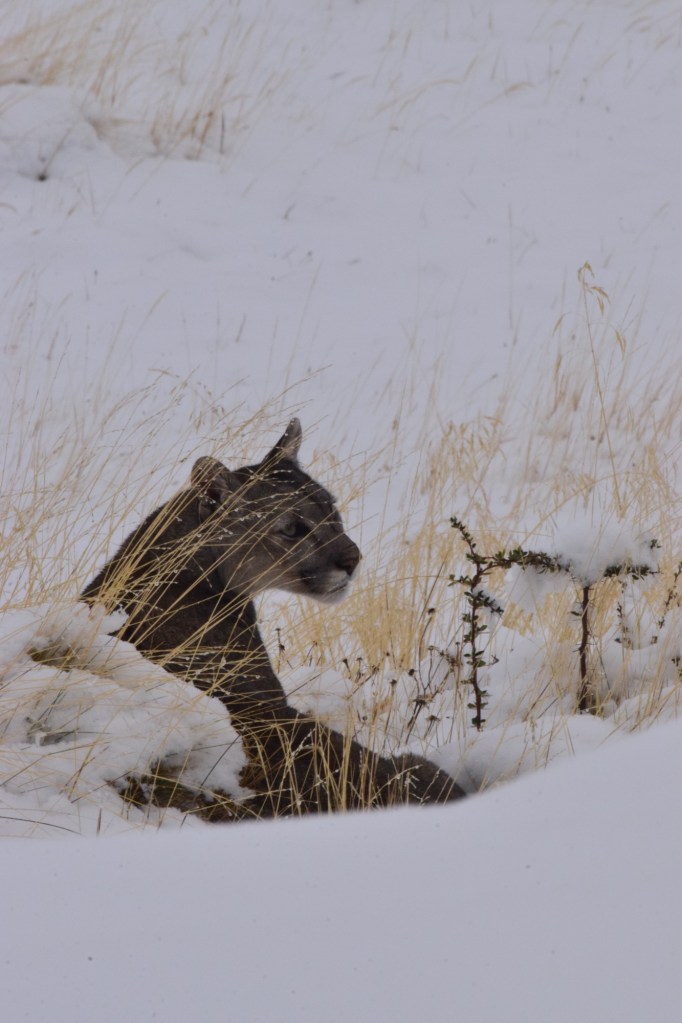
Soon, most of the trackers and their teams had arrived to try to deliver similar views of Escarcha and her cubs. However, being largely creatures of the night, they were to be disappointed: after that last bout of curiosity, Escarcha and her cubs disappeared into the snowy tangle of a mata scrub and never emerged, presumably falling into a deep and wintry sleep as the temperature dropped beyond.
Together with the other trackers, Fabián and I were on stakeout for the rest of the afternoon, but to no avail. The meadowlarks were keen to point out the presence of the pumas by flocking around their chosen scrub and twittering noisily, before a ghostly cinereous harrier drove them all up into the air.
After vultures, harriers are probably some of my favourite creatures in the animal kingdom, The way they seem to float as they silently quarter their territories, traveling in ever-widening circles… together with the silvery grey colour of the males… they’re all kinds of magnificent. Words can’t even.
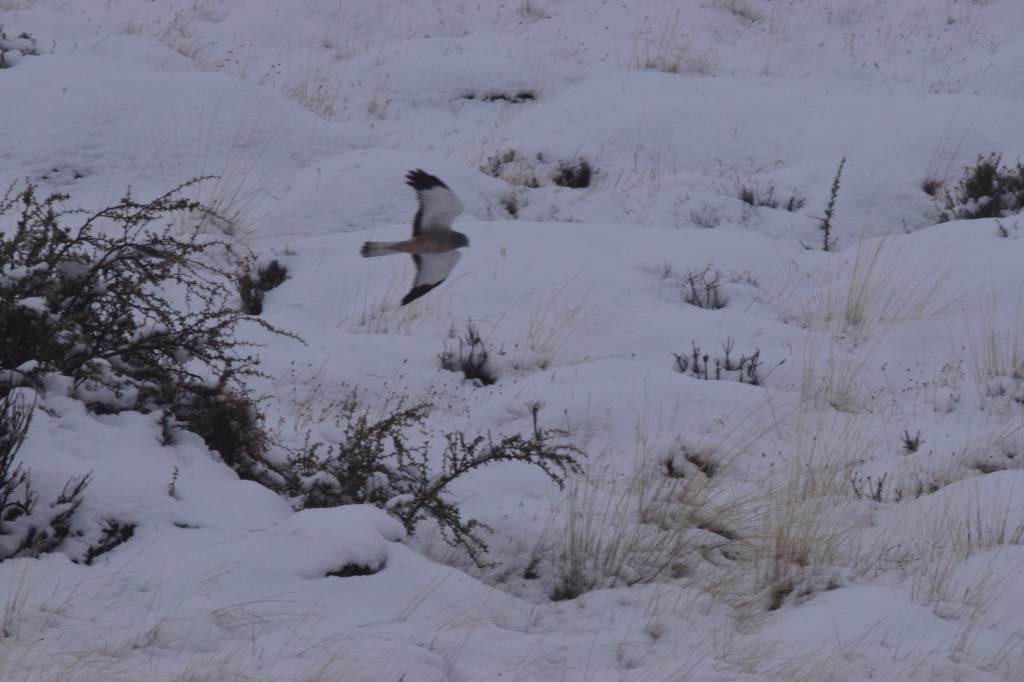
Shortly before six, with the light beginning to fail, Fabián signalled it was time to head for home. Chances are we may well run into Escarcha again tomorrow. Just as well: I was shaking something awful out there. One accustoms to the cold, of course, but those first few minutes after leaving the warmth of the car are definitely the worst as the body acclimatises. I must have looked like I had the ague – which would have rendered any attempts to take a steady photograph in the fading light almost impossible!
The return journey back to Puerto Natales was a lot more scenic than the journey up this morning, if only because the clouds had begun to break apart, defogging the world below. Where before all had been ghostly white, some mysterious deity had revealed a breathtaking landscape of sheer cliffs, towering mountains and grey lakes. It was already getting dark, so hopefully tomorrow (when the weather is forecast to be clearer) will produce some better landscape results. For now, I want to remember this view: yellow grass in the snow against a hopeful yellowing sky.

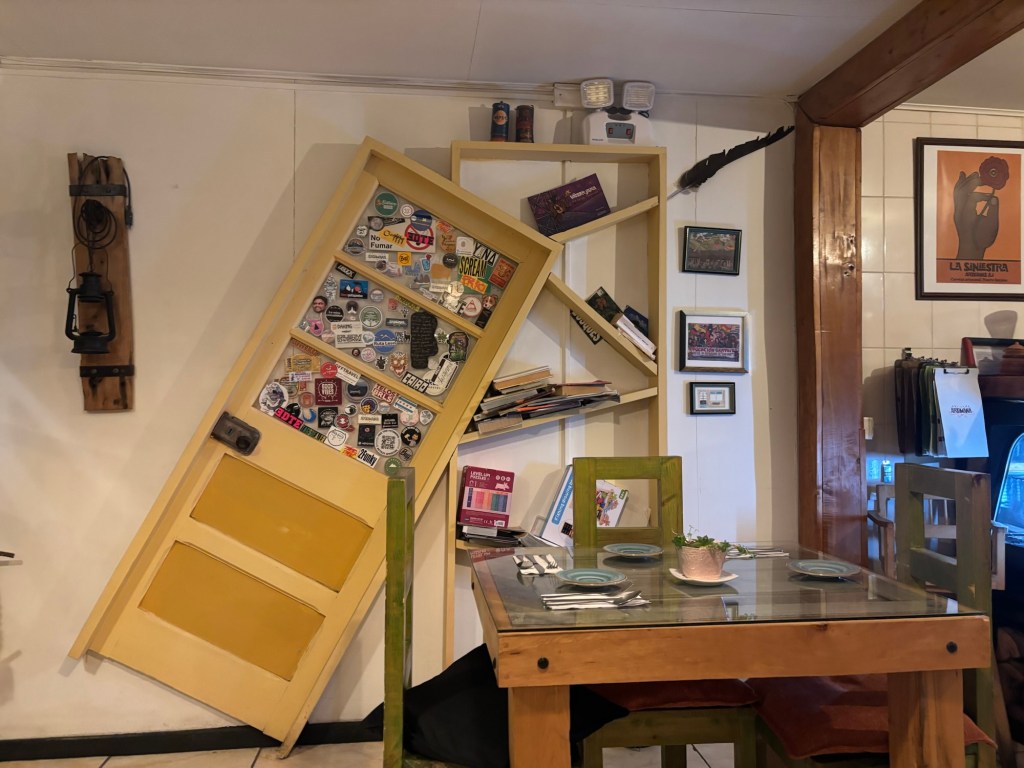
I got through today’s expedition on the restorative power of six cocktail-sized chorizo bites and a Starbucks caramel waffle, so I was a little peckish by the time we got back to base. On a tip-off from Fabián, I dropped in on Artimaña, a quirky restaurant in the centre of town. And what a find! Like a lot of the local establishments, it had a condor feather nailed to the wall (this seems to be a local tradition of some sort), but the food was incredible, all of it locally sourced and rustled up on command. Friendliest staff ever, too. I’ll have to come back here again – more than once before I leave, I’d wager. I don’t usually click with a place this quick, but there’s something Artimaña gets right in one hit. It might be the condor feather, of course, but I’d think I’m a bit more subtle than that.
Mammoth post – it’s not often I have so much to record. But today really was a red letter day, and I have to get this all down before I forget.
Tomorrow, Round II: pumas, and – with any luck – the enigmatic ñandú. Topping today’s ridiculous success rate will be hard, but I am as insufferably full of hope as I have ever been, supercharged by a full twenty-four hours in a frozen paradise. Fingers crossed! BB x


