Help! I Left My Heart in Nashville

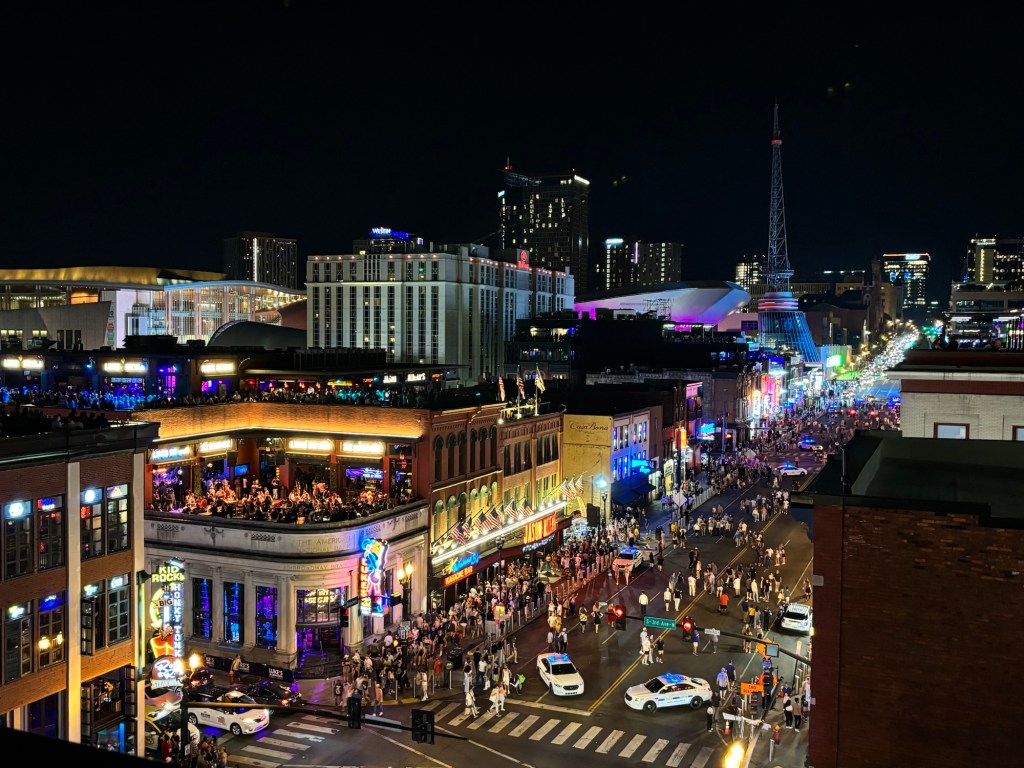
Imagine a city where every third man and woman is dressed in roper boots and ten-gallon hats. Bars with gaudy neon signs line the Main Street, bearing the names of stars of the Country music scene. Live music sails out of the windows of every floor. Every. Floor. A city where, despite its infamous popularity with bachelor and bachelorette parties, the folks still turn a welcoming smile on you and ask how you’re doin’. A city where, as the sun goes down, the streets seem to glitter with the reflected light off the rhinestone-studded outfits worn by revellers in the street.

This is Nashville. And it’s quite unexpectedly captured my heart.


Perhaps it’s only fitting that a self-described country boy with a habit of eschewing cities should find himself very much at home in the Music City where Country music is king. I am so glad I came here. And to think I didn’t even know much about the place beyond the occasional mention in the odd James Brown and Tina Turner number…! Thank you, Mackenzie, for opening my eyes to this wonder.

But hold on, I’m getting ahead of myself. There’s more to Nashville than just the frenetic delights of Broadway. First, let me take you on a detour to the strangest hotel I’ve ever seen: the Opryland Resort.


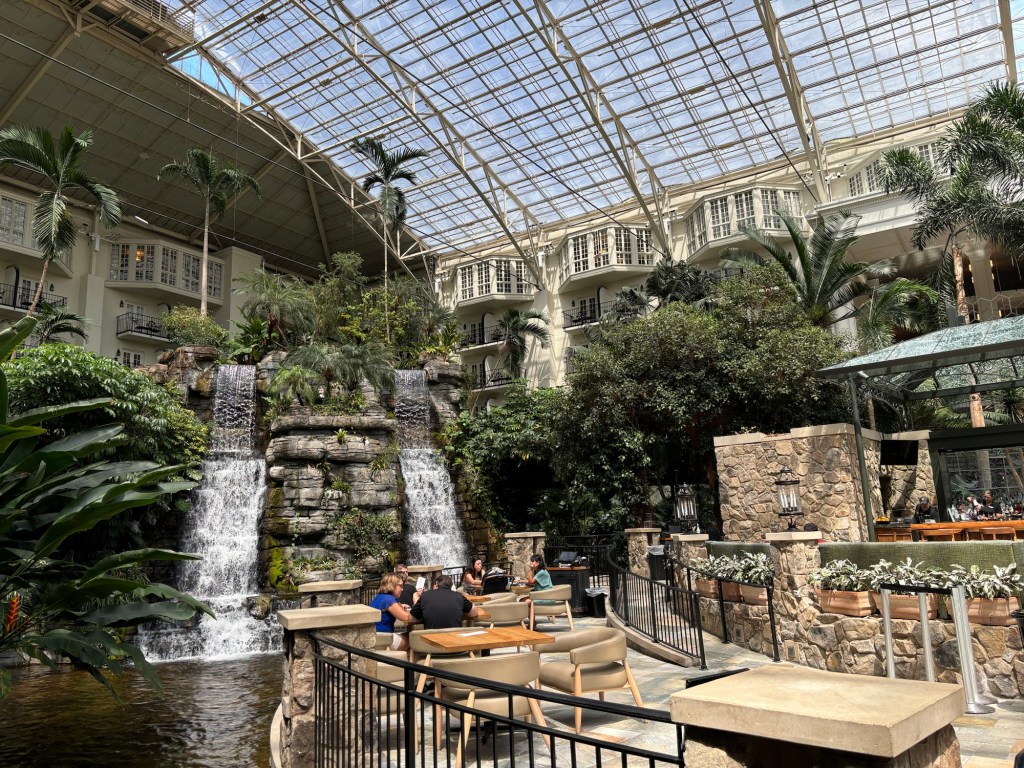
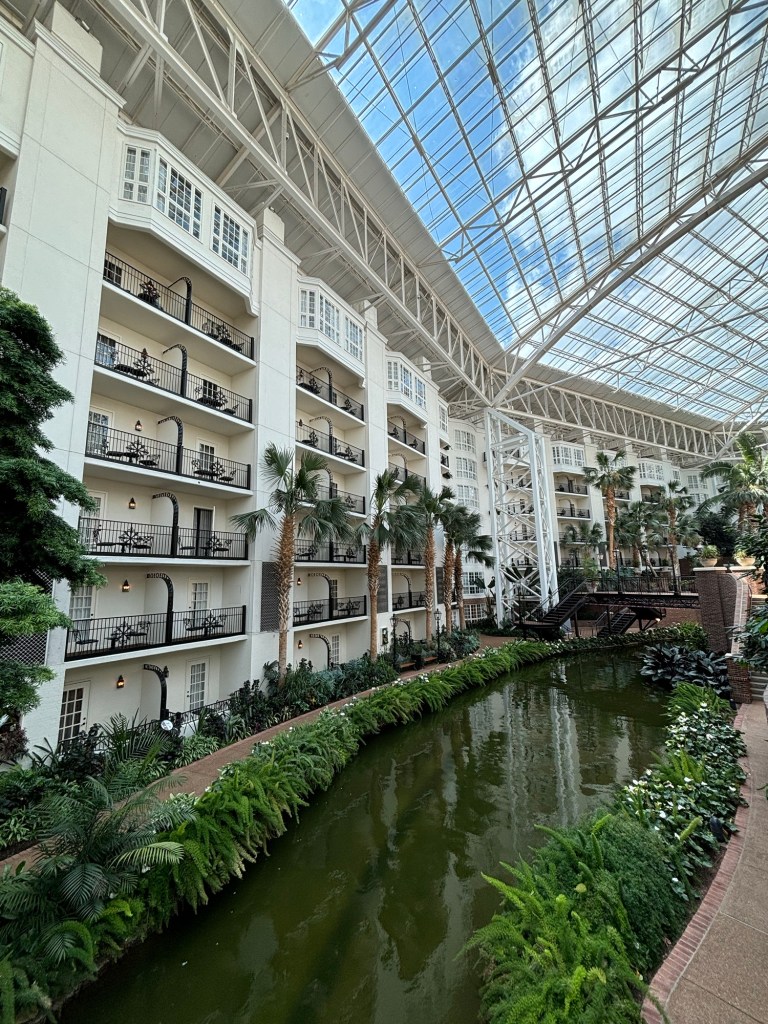
It might look like an enormous walk-in aviary, but it’s actually a vast hotel and spa complex. It’s free to explore, even if you’re not staying, but what a place…! It’s hard to know what is the most bizarre thing of all: the waterfall, the boat tours along the artificial river, the nods to American architecture (up to and including a distinctive New Orleans home) or the fact that all of this can be found within a gigantic glass-roofed building that looks like a recycled film set for Jurassic Park III.

Well, I did want to see the America that most casual tourists don’t get to see, and I’m not disappointed! Maybe I’ll be mad enough to spend the night here someday.


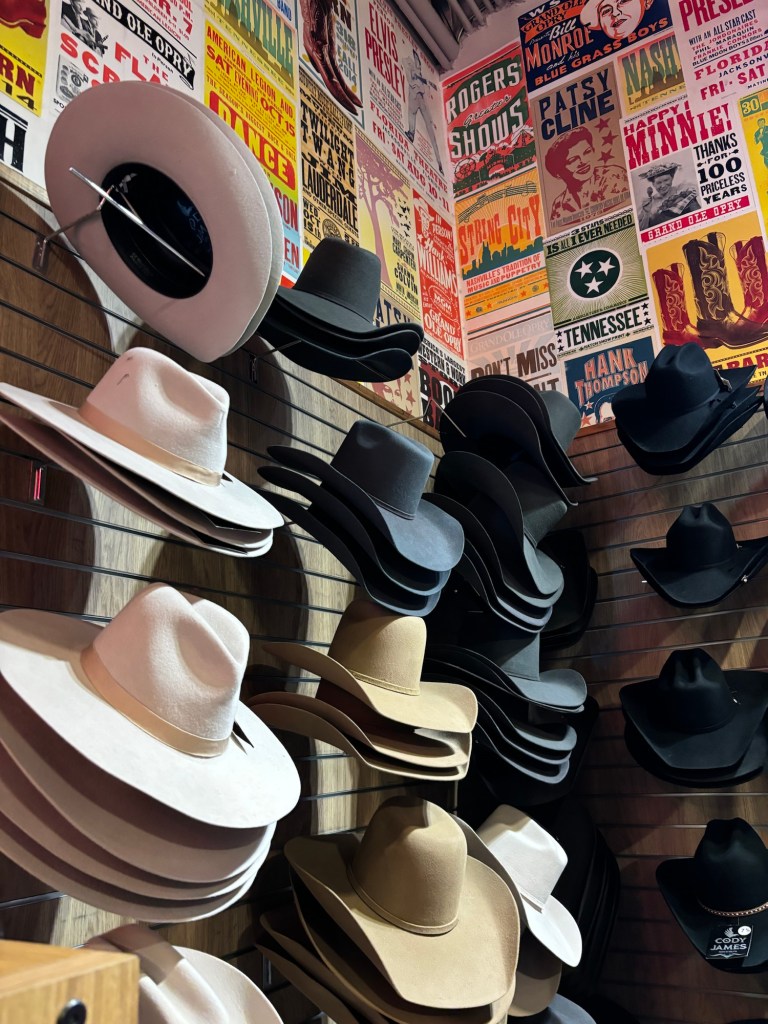
With our things stashed away in a much less outlandish (but nonetheless phenomenal) establishment, Mackenzie took me out onto Broadway for a bit of shopping ahead of a night bar-hopping and soaking in as much live music as a single night can offer. I’ll admit I was almost tempted to shell out on a pair of boots and/or a hat, but in the end I settled for a Country-style shirt. After all, it’s likely to get a little more mileage than the hat!


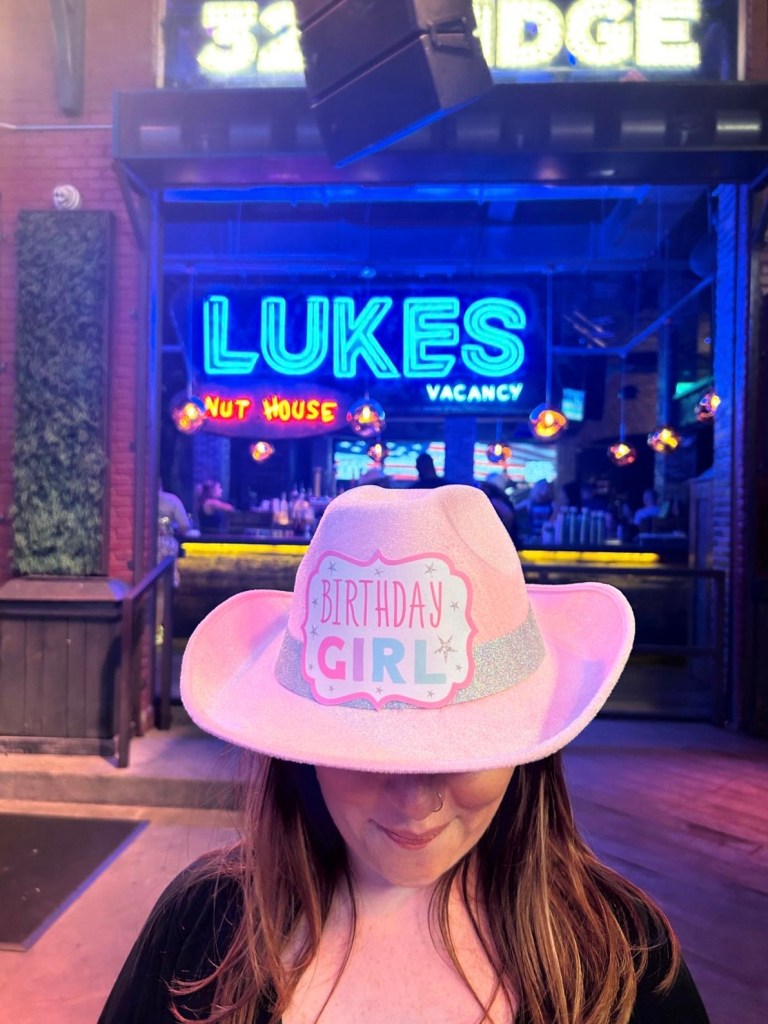
Kitted out in my new Nashville wear, we grabbed a couple of drinks at Luke’s 32 Bridge, where we met up with the rest of Mackenzie’s friends. One of the local bands was kicking up a storm on the roof with a couple songs I recognised. I’ve done my homework with this genre, which I confess is relatively new to me!


I caught myself singing along to Country Girl (Shake It For Me), Chicken Fried and Save a Horse (Ride a Cowboy), all of which seem to be crowd favourites (and all of which have now found their way into my golden jukebox playlist on Spotify). More impressively still, they wound up their set for the evening with an almighty medley that included the one and only Play That Funky Music, the song I used to close gigs with back in my schooldays. And what a mashup…! Yes, I was taking notes! I might be on holiday, but I’d be a fool not to jot some ideas down for house music when it comes around.


We didn’t get any free drinks for the birthday hat, though birthday wishes were flying in from all directions from well-wishers on the street, which was sweet. The drinks we did get, though, were fantastic. It would be madness to come to Tennessee and leave without sampling the famous Jack Daniel’s Tennessee whisky, which I had in the form of a Fireball. Yum!


To quote Luke Bryan: I don’t want this night to end. But it did, like all good things do, and in the best possible way: with a little bit of chicken fried to share. I haven’t tried nearly enough of this Southern speciality, so I guess I’ll have to come back and remedy that someday.

Nashville is something else. If you’re even partially interested in good music, grab your boots and make a pilgrimage here as soon as you can. It’s got to be the most fun I’ve ever had in the city and that’s a fact.


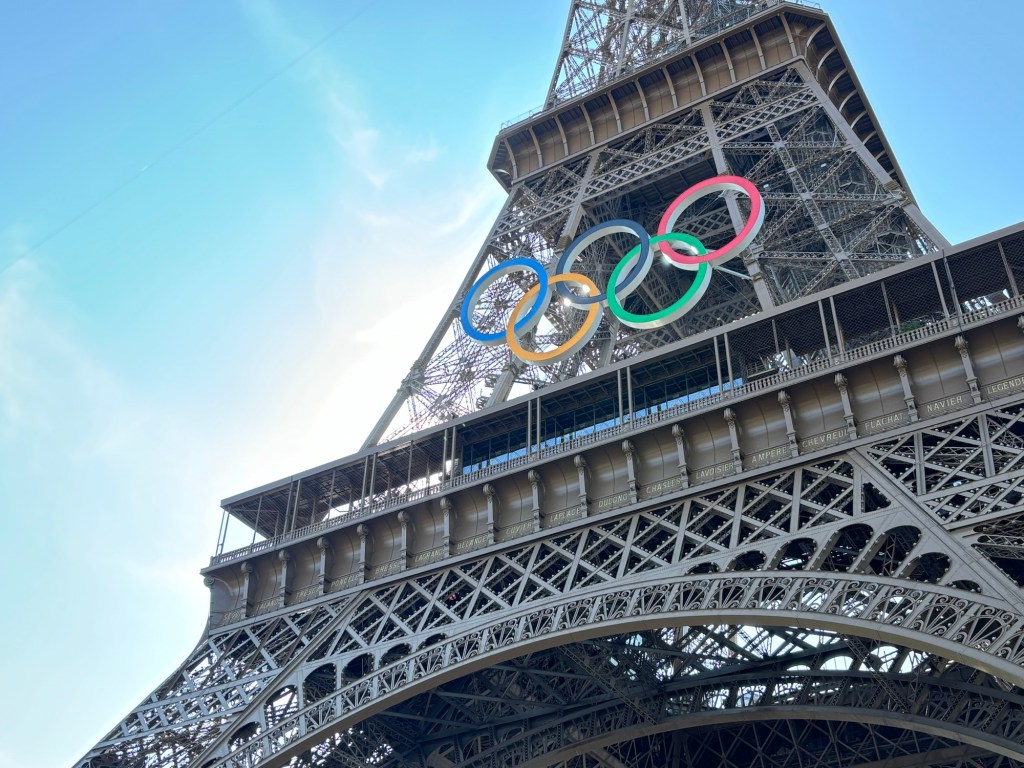
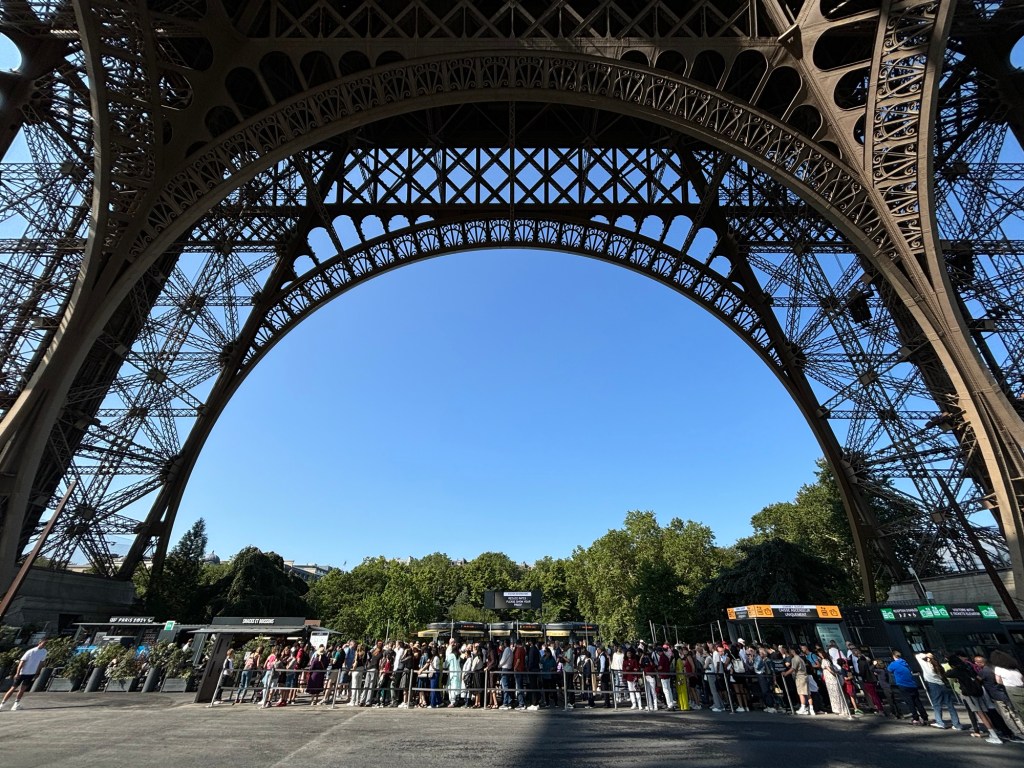
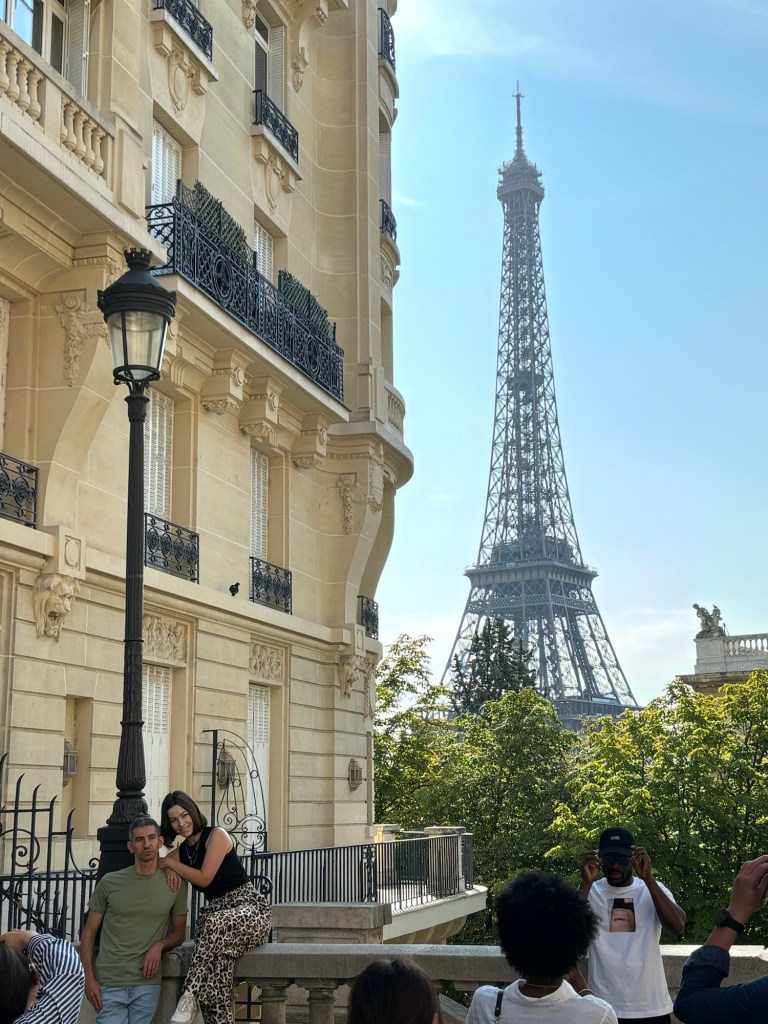
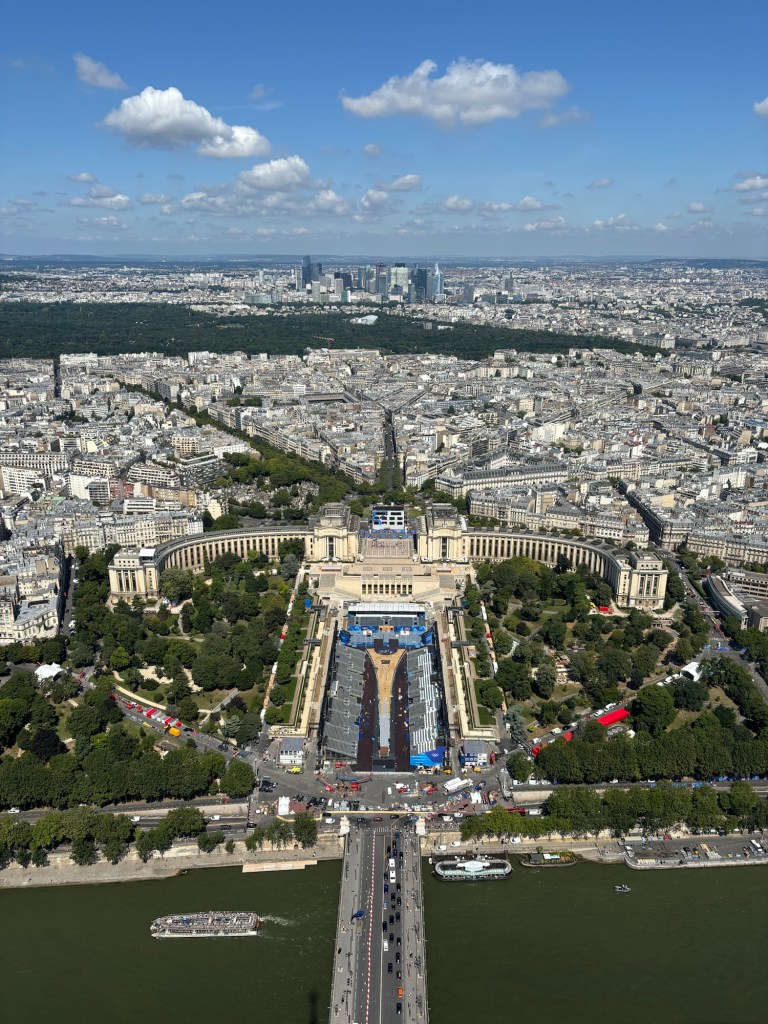
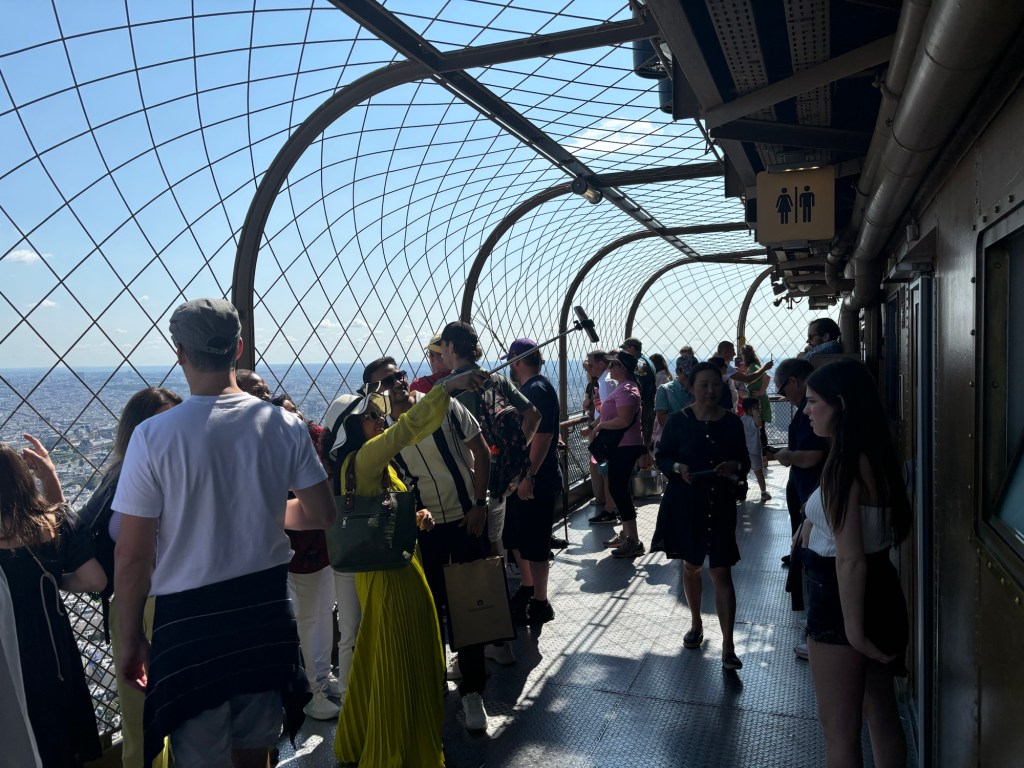
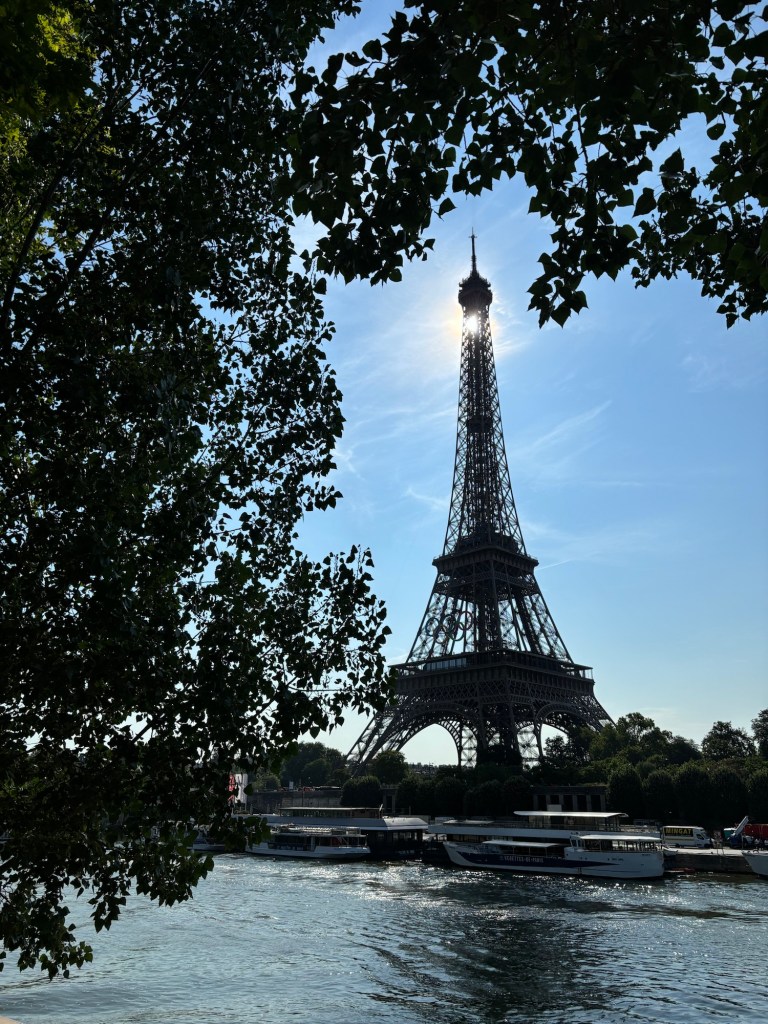
Say, that tower looks like the Eiffel Tower. I wonder if that’s intentional. If that’s not a reminder from the universe that I need to spend some time in France this summer before teaching A Level French for the first time (God help me) then I don’t know what is!

See you again sometime, Nashville. I think I left a bit of my heart with you. BB x

Shooting Star

Her father was a man “led by a star” as the natives say, and would follow it over the edge of the world and be no nearer.

Henry Rider Haggard, The Ghost Kings

We travel for all kinds of reasons. Sometimes you set out to see a place because you have a particular place in mind: maybe you heard about it somewhere, or saw it in a magazine, and need to see it with your own eyes. Sometimes it stems from a deep-seated desire to get away from home: “anywhere but here”. And sometimes, when the time is right, the driving force is beyond your control. It starts like a tide coming in, the waves rushing about your feet, warm and wonderful. Before you know it, the waters are racing back the way they came in a cascade of glittering sand and silt, pulling you into their wake, as though you’re standing upon the wake of a shooting star.

That is the force that has carried me here to Alabama. Something like it, anyway. It’s not exactly on the tourist trail. I’ve certainly not seen the Heart of Dixie appear in my social media feed over the years, whereas I dare say I’ve seen enough selfies in New York, Chicago and California to make like I’ve been there myself by now. But I do like to leave the beaten trail when I can. So here I am.


Independence Day found me on a boat in the Tennessee River, a mighty tributary of the mightier Mississippi, with a merry band of Americans celebrating their country’s national holiday the right way: beers in hand, country music blasting from the speakers, the immense American sky overhead, and the Stars and Stripes billowing out behind. I could hardly have asked for a more authentic way to celebrate the Fourth of July if I tried.


We spent almost all day out on the river, which may well account for the angry sunburn that has now morphed into one of the darkest tans I’ve had in years. Or maybe the burn came from standing in the wake of that shooting star, I can’t say. Either way, I had a lot of fun diving into the Tennessee River.

Some sights are so beautiful that you daren’t get too close, afraid that even the lightest touch might drive you mad, but I couldn’t leave America without some kind of contact with one of the two-hundred and fifty daughters of that legendary river that drains the entire continent of North America. Incidentally, it’s almost certainly the first time I’ve ever swum in a river. What a way to break a habit!


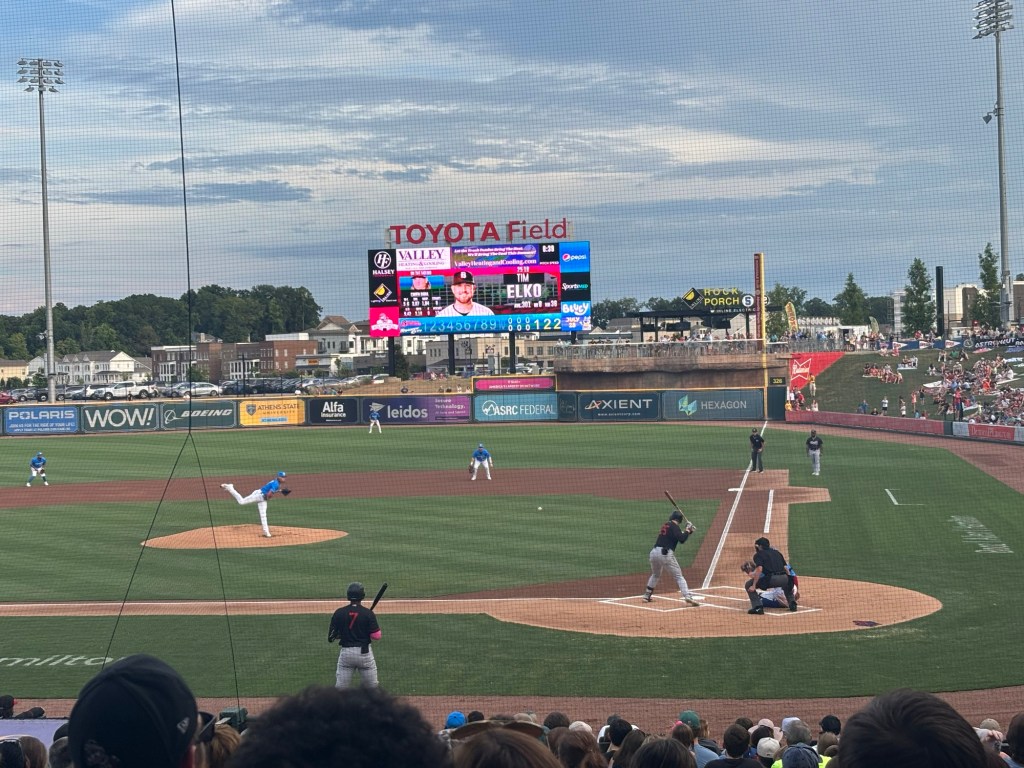
My host, the wonderful Mackenzie, had one all-American experience after another to throw my way. After watching the Fourth of July fireworks in a parking lot in downtown Huntsville, she took me to a diner for a proper American-style brunch of sweet tea with biscuits and gravy – consider me converted! – followed by a visit to Target, America’s legendary superstore, where I was amazed by the low cost of clothing. And to top it all off, we went to a baseball game at the local stadium between the Birmingham Barons and the local team, the Huntsville Trash Pandas.

Baseball – at least to this outsider – seems to be more of an event than a game. Nine innings across nearly three hours of play, broken up by a stream of events intended to involve the audience. Along with the opening national anthem, I clocked a kids’ race against the mascot, a couple of singalongs with a hype man and the sparkly cheerleaders, a cabezudo-style “space race” in support of a local enterprise and even a dance-off… all to keep your attention throughout the marathon experience.

With all that going on and more, I was very distracted, so I can’t say I’m any the more familiar with how baseball works, but it was such an incredible experience!


The fireworks after the game were even more spectacular than those that were set off the night before, which really is something – though deserved, perhaps, given that it was the home team that took home the win. The spectacle lasted a full twenty minutes, which is about as long as it took to leave the car park after the game. Everyone left in a mad scramble via the two exits to the car park, creating a logjam that went on for ages. One stereotype is true: America is a country that has yet to learn how to queue properly.


Nashville calls tomorrow. I have a good feeling about that. BB x

Don’t Sleep With a Drip (Call a Plumber)

In the Southlands there’s a city / way down on the river / where the women are very pretty / and all the men deliver.

The Princess and the Frog

Two things hit you right away when you step out of the car and into New Orleans: the heat and the smell. Both are overpowering. The heat gets under your clothes and into your skin in seconds, as though you’re sliding into a sauna. The smell hits you like a wave: a heady mix of diesel, sugar and, above all else, weed. I’ve never been anywhere quite like it.


After the city complex that is Dallas/Fort Worth International, New Orleans’ Louis Armstrong Airport felt much cosier – insofar as Americans do “cosy” when it comes to buildings. The lack of passport control caught me off guard, but then, it was only on an interstate flight. I didn’t get a stamp for the passport, which is a little annoying – it would have looked nice next to all the European stamps (a tiny compensation for Brexit).

I took an Uber into town, it being a Sunday and me having no idea where the bus set out from. Every American I’ve ever spoken to has only had bad things to say about their public transport, and besides, I figured an Uber would at least give me a local to talk to en route. My driver Calvinisha was a very charming New Orleans girl who was only too keen to point me in the direction of a number of food joints, namely Mr. Ed’s Oyster Bar. I’ve added it to the list. She also added that I’d ‘just missed out on the swinger festival’. I didn’t ask her to clarify whether she meant that in the musical or sexual sense. In New Orleans, it could easily have been either.


I checked into my hostel on 1028 Canal Street and set out for a wander, very conscious that I needed an early night to avoid any jet-lag on my first couple of days. My room was empty but for a steady drip from a leak in the ceiling and a disembodied voice coming from behind one of the curtains: a British guy clearly playing some kind of MMORPG, telling his friend to “use black sword”, “send in a fire mage” and other strange and rather bizarre commands. Leaving him to his world of make-believe, I locked my things away and set out for a stroll.

It’s hard to describe my first thoughts of New Orleans and at the same time do the city justice. It is certainly a culture shock for a European country boy like me. Skyscrapers that dwarf most of London’s tallest buildings. Shops that look like El Rocío homes openly advertising voodoo, weed and “barely legal” strippers. At first glance, New Orleans is everything you might expect to hear about in 20th century Soviet propaganda about America: casual, sleazy, decadent. But when it’s 38°C out there and the humidity is over 70%, can you blame them?


It feels like this town ought to operate on a Spanish-style siesta timetable – and yet, even in the hottest part of the day, folk are still wandering the streets. You have to hand it to the pioneers and their descendants. Louisiana heat is not to be trifled with.


For me, this whole American adventure is kind of a test. I think one of the subconscious reasons I’ve never really thought about going to the States is because of my languages. Hear me out. I’m not the best at striking up a conversation with a total stranger, in a shop or bar or anywhere else – unless it’s in another language. For whatever reason, I’m a lot bolder in my dealings with strangers when it’s in Spanish or even French. I honestly believe that it’s a confidence trick – you’re focusing so much on getting the language right that you don’t stop to think about where you are, who you’re talking to. I’ve heard so much Spanish here and I’m instantly filled with a desire to leap into conversation, which I can’t say happens as readily in English. I’ll just have to work on that.


I came back to the hostel around seven thirty and tried to get an early night’s sleep. I was in for a bit of a shock: the dripping was actually coming down onto my bed, a full third of which was soaked through. Never mind the damp, the constant slap of water on the soaked mattress was maddening. It’s funny how you can doze off amid the constant hum and roar of a plane engine, but a rhythmic tap with keep you up. I tried taping it up, but after five minutes it returned with a vengeance, beating an even faster rhythm than before. I admitted defeat and curled up into the drier part of the bed.

I confess I was so tired that I didn’t have the energy to drag myself out of bed and tell the front desk, but in the end I didn’t need to – a guardian angel in the bunk next to mine had already phoned ahead and eventually the hostel staff allowed me to move to the bed across the room. I don’t think I’ve ever fallen asleep so fast.

Tomorrow is another day – the bayou calls! BB x

Skylink

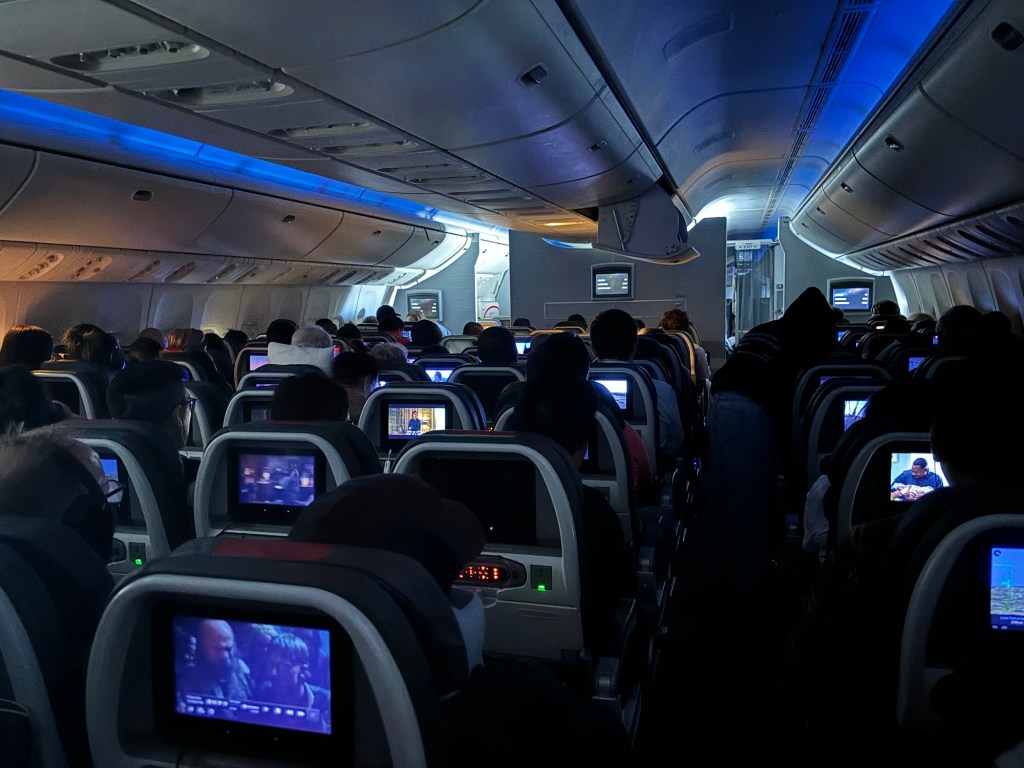
Four days ago I was standing in the ruins of a Roman theatre in the Andalusian port of Cádiz, a contender for the oldest continually occupied city in Europe at over three thousand years old. Four days, one Leavers’ Ball and a ten hour flight later and I’m sitting in Terminal B for Bravo in Dallas/Fort Worth International Airport, built in the year 1974. The fact that Cádiz’s Roman theatre itself is relatively young – built around 70 B.C. – only adds to the stark comparison. The culture shock is real.

First impressions:

  • The Mississippi is huge. Enormous. It looked like a colossal brown snake winding across the plains into the distance
  • Cowboy hats seem to be worn unironically here – and with a frequency that would surprise you!
  • The selection of in-flight movies on offer is considerably superior to all the streaming services at the moment (heck, they even had both Dune movies)
  • Airport taxes – what the hell is that about?
  • Security was thorough but not nearly as austere as I expected

In case you haven’t noticed, this is my first time in the United States. I honestly have no idea what to expect, since until recently I wasn’t particularly interested in crossing the Atlantic for an adventure – well, not this far north of the Caribbean, at any rate.

But I did promise myself that I’d reward myself with a proper adventure if I landed a new job this year, and a promise is a promise. I just didn’t expect it to take me to the land of Sitting Bull and Civil Rights, that’s all!


I don’t have too much to report on just yet, beyond a general wide-eyed wonder at all of it. After all, I haven’t legally set foot in the States yet – that will happen when I touch down in New Orleans in a few hours’ time.

Sounds like they’re boarding in five minutes’ time. Not sure what a Deadheader is outside of a gardening context, but I’d better get my stuff together all the same. Starting to feel the jet-lag kicking in, but I hope I can shake it with an early night this evening! BB x


Camino XVI: Great Expectations

After yesterday’s long walk from León, today’s itinerary was mercifully short. Astorga is only 15km from Hospital de Órbigo, but it’s such a friendly city and so well set up for pilgrims that it’s worth a stay – if for no other reason than to rest up for the next couple of days of hiking as the Camino climbs into the Montes de León.


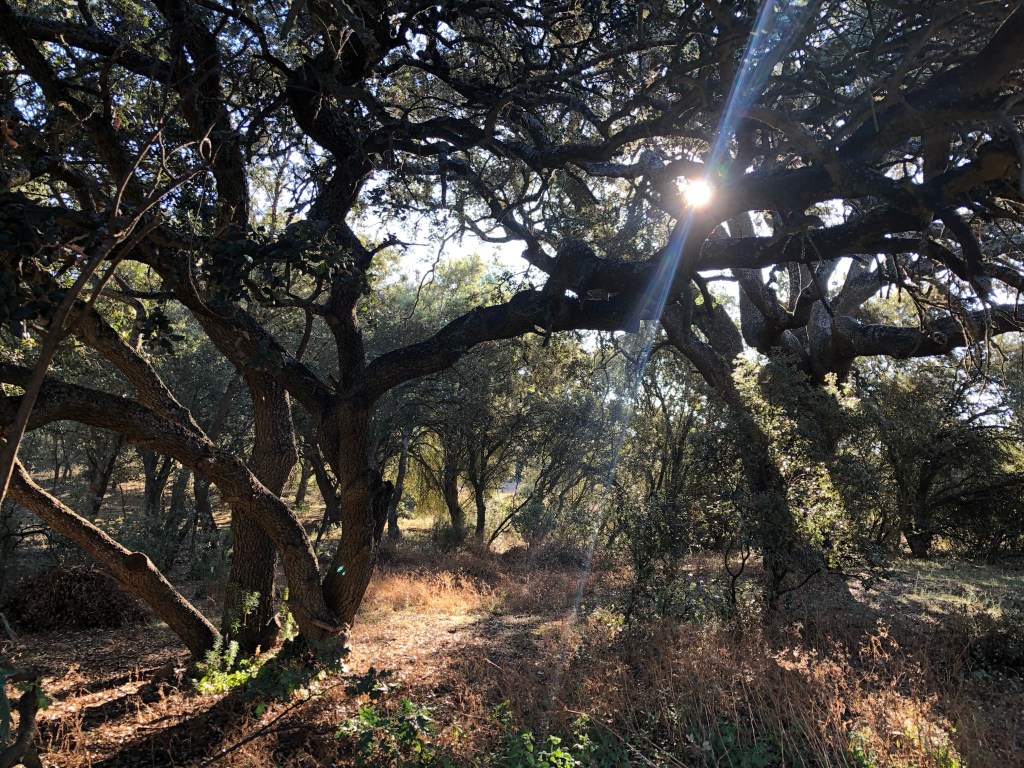
I set out later than usual this morning, since Google and the guidebook were suggesting only 3-3.5 hours’ walk to Astorga. To kill the time, however, I took a detour in search of an ancient oak tree said to grow deep in the old forest north of Valdeiglesias.

Joined on my random quest by Anna-Marie, a Danish ceramist from Aarhus, it took half an hour to track down the location (with a little help from Google Maps). A local out walking his dog was justifiably baffled by my madcap mission but it was a good excuse to have a chat in my favourite language.

We found the spot where the tree was supposed to be, but whether we found the tree or not is anybody’s guess. The trailing lichen from every branch certainly made the forest look considerably older than the others I’ve passed thus far, but that probably has more to do with the health of the forest and its relative altitude above the last kilometre of the meseta.

The jury’s out on the tree. Still, it was an adventure!


Anna-Marie took a break and I pressed on, making a mental note that our detour left us over an hour behind the other pilgrims. Once again, I had the Camino to myself, which meant that I was much less inclined to pause at the couple of rest stops I encountered. Which meant I gave the Casa de los Dioses a miss, though it looked like more of a hippie love-in than even this crazy shaman could handle!

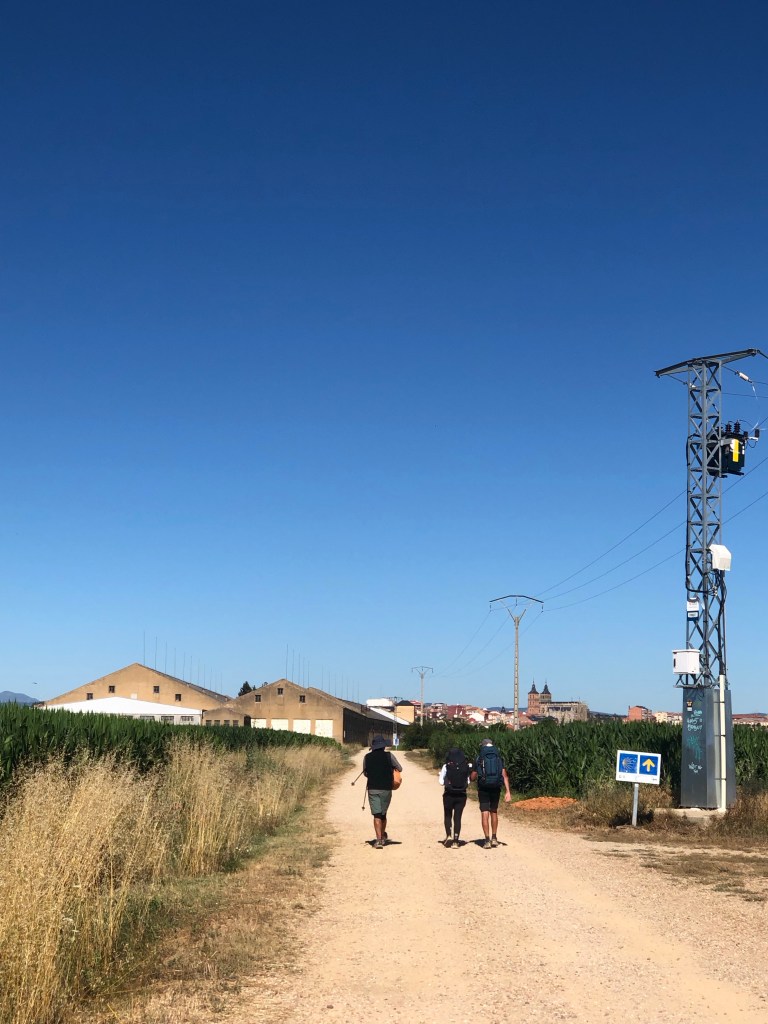
I must have gone like the clappers (or they must have breakfasted long), because I wasn’t all that far out of San Justo de La Vega before I caught up to a familiar bunch: Tadeo, Christophe and Estrella. It was good to have company for the final stretch, so I slowed down my pace and fell into step.


We made it to Astorga on the back of Tadeo’s wonderful singing voice and Estrella’s remarkable knowledge of Spanish ballads (apparently they pop up here and there in Korean dramas – who knew?).

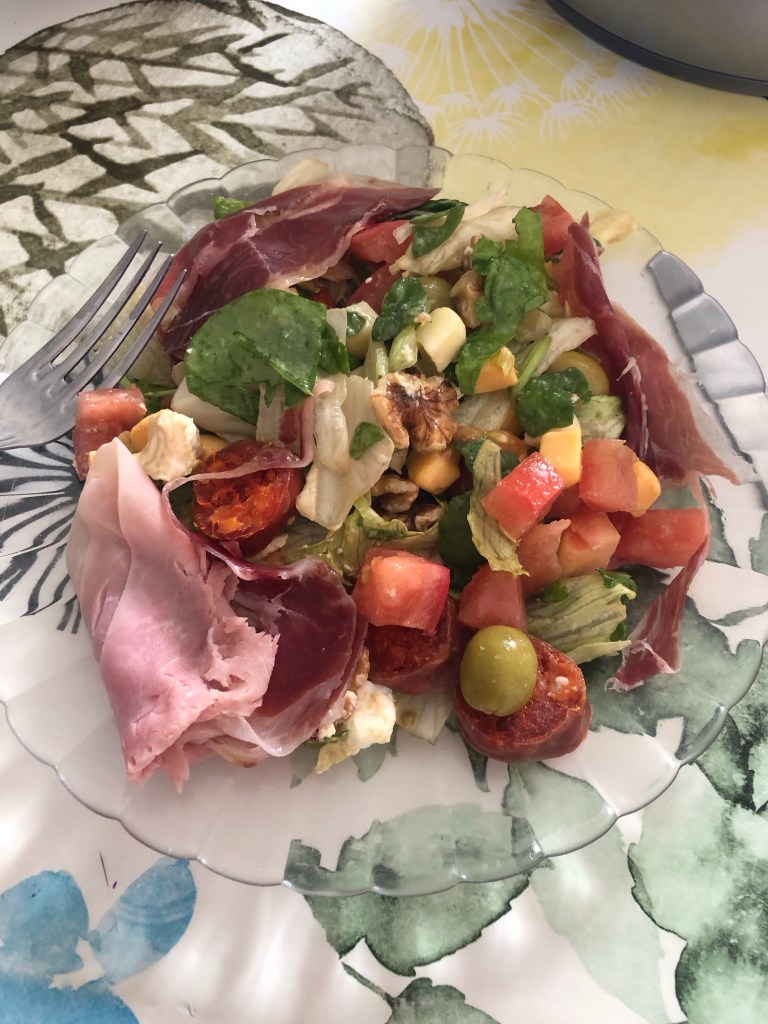
In lieu of a menu peregrino – which can get a bit samey – we bought supplies at a local supermarket for a communal salad. And what a salad! I haven’t even so much since starting the Camino. Good food, good company, good language practice and great exercise. There’s really very little to fault the Camino.

Unless you don’t like Italian. Because there’s a lot of Italians on the Camino! They must be the biggest demographic out there by a country mile… BB x

Camino XV: Shaman

León is already a distant memory. I’m sitting in the shade of an awning in the garden of the albergue parroquial, having just spent a blissful twenty minutes with my feet in the foot-bath. The meseta stage is almost over and the foothills of the Montes de León are but a day’s walk away. Change is coming!


I slept very well last night, though perhaps because I wasn’t one of the Italians who tried to have dinner at the hostel ten minutes after lights out, incurring the wrath of the hostalera. All the nearby sockets were in use, so I had to leave my phone to charge down the hallway, which deprived me of an alarm for the morning… but, if the last few days are anything to go by, you hardly need an alarm on the Camino. You might just as well use the fifteen others that go off around the same time.

I was out the door by 6am and racing back to Plaza Santo Domingo – and with good reason. After yesterday’s mindless urban trudge into the city, I found a way to circumvent León’s even more extensive westward sprawl: the A1 city bus to La Virgen del Camino, on the very edge of the city outskirts. Thirty years ago I might not have bothered, but I couldn’t quite face an hour and a half’s march through characterless modern development, so I was more than happy to stump up the 1.60€ fare and rub shoulders with the orange-tee brigade of SOLTRA workers headed for their 7am shift in La Virgen. Two other pilgrims were in on the secret, but I lost them a short distance out of town when they stopped to check their bags. From then on out, I barely saw another pilgrim for the rest of the trek.


After yesterday’s easy 19km wander, I opted for the alternative scenic route via Villar de Mazarife. The original Camino follows the N-120 in an unbroken line for 32km, while the Mazarife road winds its way through the countryside to the south for 36km. I was up for a challenge, and I didn’t fancy another roadside walk, and for once, I know I made the right call.

Southwest of León, the Camino carves a path through the scrubbier hinterlands of the Meseta. Fields of wheat and sunflowers give way to open dehesas, with sparse yellow grassland interspersed with stands of ancient oak trees. In a way, it felt like being back in Extremadura.

Better yet, the first hour after sunrise yielded some of the best birdwatching yet on the Camino. The usual backdrop of quail, turtle dove and stonechat provided some musical continuity to the meseta movement, with a colourful inclusion of golden oriole, blackcap and nightingale. There were quite a few kites about, whistling in that very plaintive way they do, and the calls of bee-eaters will never fail to make me smile. While I can also add great grey shrike, honey buzzard and whitethroat to my list this morning, I think it was the fleeting encounter with a greater spotted cuckoo that was the standout from today’s walk, tearing ahead through the scrub in front of me as I neared the first town on the trail, Chozas del Camino. As usual, a phone camera is next to useless for this kind of thing, but I did manage a snap before it was gone (look to the right of the second tree from the left).


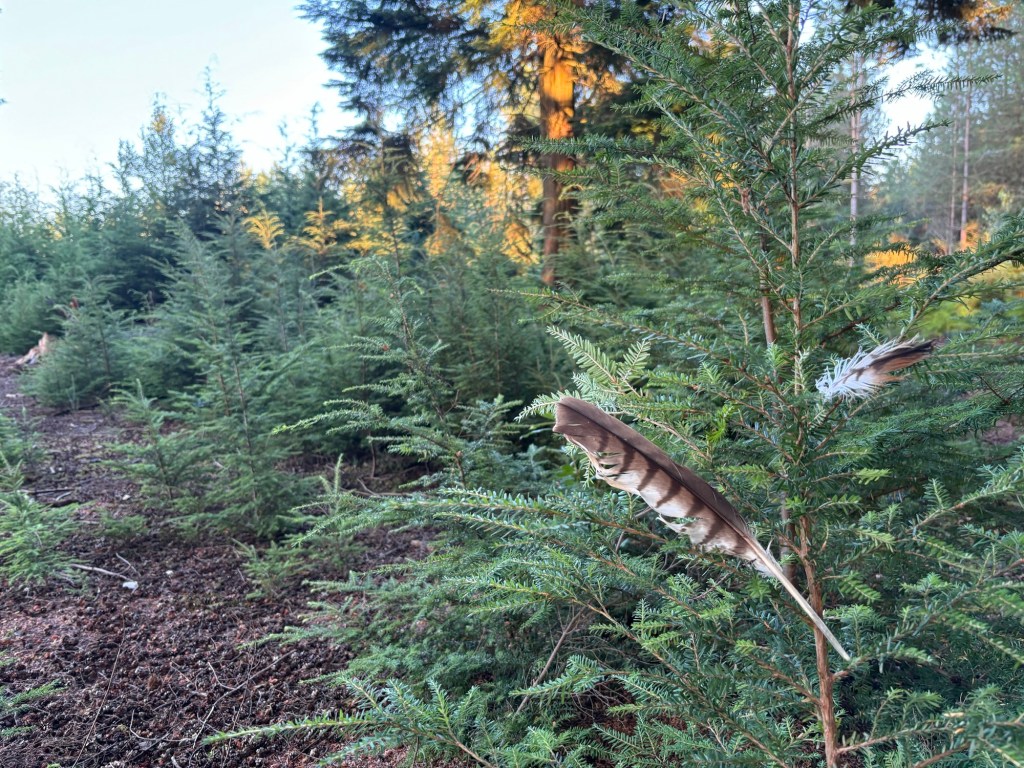
After narrowly avoiding a major desvío at Chozas, I followed the road to Mazarife for the next hour or so. Along the way, sensing rather than smelling death, I guess, I came upon a mass of feathers at the side of the road. On closer inspection, it was a long-eared owl, and a relatively young one at that. Given its condition, it must have been hit by a car less than a day ago, or else it would have been devoured long since. Acting on an intuition beyond simple curiosity, I picked up two of its wing feathers and fastened them alongside the raven feather to my staff. Besides the fact that owl feathers are one of nature’s most intriguing artefacts – they are engineered to move silently through the air – I think my desire was to give the unfortunate creature (a migratory species in most parts of Europe) one last journey, as it were. I will carry them to Santiago and Finisterre… and beyond, if I can.

With a feathered staff and a satchel full of pens, pencils and sharpenings, I’m rather conscious that I’m starting to take on the appearance of a tin-pot shaman. My silent reasoning that ravens represent life, light and hope (they brought the knowledge of fire to man in Scandinavian mythology) and owls death, darkness and wisdom (via the Greek tradition) probably doesn’t help, either. I’m still searching for a stork feather, though despite their abundance, these are proving hard to find.

All I can say is I had this coming. In my first teaching post in Uganda, I was given the moniker ‘Ojok’, meaning ‘healer’ or ‘witch doctor’. It wasn’t anything more than an attempt at humour by my hosts, but hey, I guess such titles should be earned, right?


From Villar de Mazarife, one of the straightest roads of the entire Camino leads for some ten kilometres to the hamlet of Villavante. With the exception of the occasional buen camino from a field worker clad in orange hi-vis overalls, and the need to duck and weave to avoid the mechanical water jets every now and then, it was a fairly uneventful walk, but a beautifully quiet one at that.


At Villavante, the Camino forks to the north to cross the León-Astorga railway line. It’s practically worth the trek for the view of the Casa Rural Los Molinos, nestled behind what appears to be a private tree-lined sunflower grove.


After that, it’s only a short distance to Hospital de Órbigo. It’s a good-sized town and, at 12pm on the dot and after nearly five hours’ walking (with a sum total of fifteen minutes’ break), I was more than ready to throw down my pack for the day. The entrance to the town over the medieval Puente Honroso (which I’m 90% sure featured in my dissertation) simply sealed the deal. This place is incredibly beautiful.


It’s said that a certain Don Suero, a local knight, challenged all comers to the bridge to win the heart of a lady, breaking 300 spears in as many jousts before an ever-growing crowd. The lords, the ladies and the medieval gaiety may be long gone, but the endlessly chattering sand martins lined up along the wires by the bridge make a good substitute.


Well, there goes my siesta. Tomorrow is a much shorter walk – three and a half hours at most – but I hear there’s a thousand-year-old oak tree near Santibáñez de Valdeiglesias, so I will extend my walk to take a look. Now I have the trappings of a new age shaman, I might as well play the part. BB x

Camino XIV: Stamped Out

I at least made an effort to wait for my fellow pilgrims this morning, but impatience got the best of me. When half an hour passed and all but a trickle of the pilgrims from my albergue had come and gone, I gave up and set out for León. I wasn’t in any particular hurry, but a conversation over dinner with an Italian veteran of the Camino (this would be his tenth rodeo) had me reflecting on his words: you can never do the Camino at any pace other than your own. Well, there I was, trying to match the speed of another pilgrim or two. In the end I have to be true to myself. So off I went.


It’s not far from Mansilla de las Mulas to León – four hours, tops, though I could probably have done it in a little over three. But for the Museo de los Pueblos Leoneses, which I really did want to visit, I might have pushed on yesterday and done two days’ work in one. But I am being kind to my feet, seeing so many pilgrims in varying states of deterioration, and so I made my way leisurely this morning.

The approach to León is not the most scenic of the Camino by any standards – most of it passes through an extensive suburban industrial estate – but there was still some magic in the sunrise when it came over a roadside field where a large number of storks were flying in to feed from all directions.


I dawdled for a bite to eat in Arcahueja, still in the hope that a few of my pilgrim companions would show up. They must have been tardy this morning, because I never did see them. Instead my French got a serious polishing over a conversation with Jean-Paul from Carcassonne and Adine from Versailles. It might be lacking the instant spark of my last Camino, but if I remember this leg for one thing, it will be the constant linguistic gymnastics – I don’t think I’ve had to bounce between languages so often ever before. It’s bloody good fun!

I reached the outskirts of León at around 10 but it was almost 11 by the time I reached the Benedictine albergue, my digs for the night. Of the old guard, only Sean the Irishman and Alan from Rennes elected to stay here – I haven’t seen anybody else I know. It’s equally possible others will join here. It’s an established fact that the road gets seriously busy from Sarria, so that’s something to look forward to.

For future reference, July is – surprisingly – low season. The Camino is at its busiest in May, June and then August and September. For whatever reason, July is a quiet month on the Camino. Well – now I know!


León’s enormous cathedral was under heavy scaffolding the last time I visited so I thought I’d pop inside. It’s pretty magnificent as cathedrals go, but I still think that spending so many hours of my childhood in Canterbury Cathedral has left me somewhat jaded when it comes to cathedrals. More importantly, it produced another stamp for the pilgrim passport, which is now dangerously close to completion…


I had a snack lunch in the kitchen with a very cheap spread from a nearby Coviran and had a short siesta to while away the hours before everything reopened at 6pm. Conscious that the Galician stage requires a minimum of two stamps per day (or something like that), I went to the Asociación de Amigos del Camino de Santiago to seek a new credencial. It wasn’t immediately obvious, but rather, tucked away in an office on the fifth floor of an unassuming tower block above a bank near the Plaza Santo Domingo. The socios inside, however, were wonderfully friendly and I had a good long natter after their initial confusion over my names (Spaniards always seem to have issues gettin their heads around the British custom of middle names). Armed with a new credencial (and with my mood improved by a humorous argument about whether or not to stick the two credenciales together, which was a bone of contention between two of the socios), I am now prepared for the final two stages of the Camino. Bring on the stamps! BB x

Camino XIII: Birds of a Feather

I’ll say this much for Calzadilla de los Hermanillos: it’s a beautifully reflective way to end the meseta experience, before you say farewell to the plains and reach the Órbigo floodplains at Mansilla de las Mulas. Sure, I ditched the other pilgrims to strike out upon that road, but it was totally worth it.


The hostalera in the donativo laid out a real spread for breakfast, so I helped myself to a better start than I’ve had in days: boiled eggs, yoghurt, pastries, flat peaches, cherries and a sandwich and a half for the road. Fuelled on such a feast, I was more than ready to tackle the Roman Camino.

After outstripping the other pilgrims, I had the rest of the Calzada Romana – the ancient Roman raid to the mines – all to myself. And what a morning for it! From the rise, you can see all the way to the distant peaks of the Picos de Europa, ringed with fire by the rising sun. The intermittent canals that cut across the causeway worked like mirrors, carving mercurial strips out of the earth, so that each one seemed to be a continuation of the sky above, and the fields around it a floating world. One of the best sunrises I’ve had on the Camino yet, and I’ve had a good one every day.


You get a good sense of the infinite on the Camino, walking in the footsteps of a thousand years of pilgrims who came before you (the earliest recorded pilgrimage to Santiago was in 930 A.D.), but walking on an old Roman road added another level of grandeur to the experience. The rough stone path made a change from a week of dirt tracks and concrete, and while it may well be wishful thinking in my part, it’s possible, however unlikely, that my feet touched the same stone that some long-forgotten legionary trod two thousand years ago. Nuts!

Sadly I didn’t bump into any ghostly centurions in the early hours of the morning, but the irrigation system provided a jump scare of it’s own: one of the mechanisms was so close to the path that I only had a five second window to clear the distance if I didn’t want to get soaked! That sure woke me up.


One huge plus of not taking the Bercianos route was the wildness of the calzada romana. I had my usual encounters with stonechats and wheatears (both northern and Iberian), but this unfrequented section of the Camino was a real gem for wildlife-watching. I saw my first quail whirring across the fields on tiny wings, and a couple of partridges, rabbits and a lone red deer rounded out this morning’s game. Every arroyo was alive with singing frogs – which is possibly how the nearby village of Burgo Ranero got its name – but a lonely nightingale had them beat toward the end of the road. A couple of ravens loitering around the ruined Villamarcos station chased off a buzzard that perched too close, then eyed me suspiciously as I walked on by. I found one of their feathers a little way on. It’s currently fastened to my walking pole for luck.

After several encounters with the grey males over the last few days, I finally saw a female Montagu’s harrier in the distance, and I must have clocked about nine or ten hoopoes by journey’s end. But best of all was a cuckoo that came out of nowhere during the morning’s only river crossing. Normally you hear these birds rather than see them, but this one was sitting in the middle of the road when a hoopoe gave it a merry chase for several minutes while I removed the grit from my sandals.


I got to Mansilla de las Mulas well ahead of schedule. I knew staying in Calzadilla would shorten today’s walk, but I still got to the albergue for 10.30am, meaning I had a good two and a half hours to kill before anything was open for business. All the same, this time it was as well that I did so: of the three albergues in Mansilla, one was fully booked and another, the municipal, was closed for renovations (and has been since April, at least), leaving me with no options but the pricier Jardín del Camino. I can’t complain after a very affordable night in a donativo, but when you’re used to paying 10€ as a standard, 16€ for a bed and a further 16€ for a menu peregrino is a bit steep… still! It’s all relative. Just think what that would cost back home….!

After a mid-afternoon snooze, I made a beeline for the Museo de los Pueblos Leoneses. Do check it out if you pass through – it’s a veritable gold mine of knowledge about the region and immaculately presented across three floors. I was especially interested in the local festivals and Maragatos, but the collection of dolls was equally memorable… though perhaps for all the wrong reasons!


I quizzed the lady at the desk about the signs and she laughed before I’d even finished the sentence. Apparently everybody asks the same question! Yes, she said, it’s not a random act of vandalism but rather the action of a movement which has deep roots in the region, thanks to the fiercely strong regional identity of the Leonese people. Given the chance, many would rather not be conflated with their neighbours. That much is clear from their local customs, costumes and festivals, which differ considerably from the Castilians. I’ve seen vaguely similar outfits in northern Extremadura (which was part of the kingdom of León at the zenith of its power) but the colourful guirrio is almost Latin American in its manic display. I was reminded of an Apache festival I saw in a book once. It’s funny how some people come up with the same concept despite a distance of many thousands of miles.


Tomorrow, I shoot for León. It’s not an overly long walk, or a particularly interesting one as it reaches the outlying industrial suburbs of the great city of the north, so I’ll tarry a little tomorrow and find some company on the road. I should probably also think about booking ahead for Santiago, since at the rate I’m going I really will be there in time for the festivities, and I hear they’re a spectacle that really oughtn’t to be missed if you can help it.

But until then, goodnight – everybody else has been in bed for a half hour already. Time to hit the hay! BB x
Camino XI: Sunflower State

It’s taken four days, but I’ve finally caught up with a “scene” – fellow pilgrims I can vibe with, that is. One of the strange constants of the Camino is the difference a single day can make. For three days I’ve stayed in hostels that were almost empty. After doing two days’ walking in one, for the last two nights I’ve been all but rubbing shoulders. I guess that mad 45km trek to Carrión yesterday paid off. Falling in and out of sync on the Camino can completely alter your experience.


Yesterday was a long day. After starting at 5.50am and reaching Carrión by 3.30pm, I had barely finished my blog for the day when I was swept along to Vespers, then a musical meet-and-greet, then Mass, before tracking down dinner in a nearby hostal. I was bloody efficient, even if my feet were killing me!

In summary, Carrión de los Condes is a must, and the Albergue Parroquial de Santa María totally lived up to its expectations as a highlight of the Camino. The nuns who serve at the albergue were not just the friendliest community I’ve met so far, they also got the guitars out and led all the pilgrims and the visiting Christian youth mission group, Jatari, in a singalong welcome event. A really unique Camino night and definitely one you should try not to miss!


If yesterday morning’s early start was a shock to the system after a few sluggish days, this morning was a full gear up. I was up at five when people started moving around, but within five minutes they’d all packed up and gone, stripping the beds and everything. I was still thinking of taking a rest day in Carrión at this point, but seeing the conviction of the other pilgrims gave me a boost and so I strapped on my sandals, pre-applied some blister plasters (prevention is better than cure) and set out.

Only this time, for once, not alone! My first companion on the road today was Carlos, a translator from Baja California, who walked with me until at least as far as the legendary food van (which I completely overlooked – one for next time). I defaulted to Spanish and we talked about the importance of sign language for a bit.

Along the way we fell into step with an American mother and daughter from Virginia, Elaine and Catherine, one powering on ahead, one following at a distance behind. I was asked why I’m on the Camino, which requires the full ten minute story about my grandfather José, but I’m getting pretty good at telling that story by now. At my merciless pace I ended up in step with Elaine and we came to a stop a couple of hours in to allow Catherine to catch up.

While waiting I met Alan, a Dreamer from Britanny, who had received enlightenment on the Camino in the form of a dream to set up his own donativo (donation-based hostel) back home in France. We swapped in and out of French and English where necessary, until bumping into another American, Chris from Wisconsin, and switching back to full English just before Calzadilla, where I was able to use a little Portuguese to order my first tortilla breakfast of the Camino from the Brazilian owners of the Camino Real bar.

Seriously, a humongous thank you to all the language teachers I’ve had over the years. Days like today make me remember how much I owe the lot of you!

The late breakfast stop was a real culture shift from the last three days of bombing it without stopping to the next albergue. I must have spent an hour shooting the breeze with some of my companions from the morning’s walk!


From Calzadilla, the remaining nine kilometres of the road marches past more sunflowers than I’ve ever seen in my life. With the sun at my back, as it almost always is on the Camino (if you’re walking in the morning, which is when you should get most of it done), the sunflowers were practically beaming at us the whole way, like fans cheering on a racer. None of them reached the height of my mother’s steroid sunflower (fed on a bizarre animal feed), but there was enough variety to resemble a crowd.


Basic high-school metaphors aside, they were a welcome sight after three days of wheat fields. 53% of the photos I took today are of sunflowers, which definitely makes sense.

One of the pilgrims today said walking the Camino was like following the seasons, which each stage a different time of year. I guess the meseta is the height of summer. One thing is certain: as the Camino pushes always westwards, you do always have the sun at your back. If you should get lost, it’s a safe bet that as long you position yourself with the sun behind you, you’ll find your way back to the road eventually. Perhaps that puts all of in a sort of sunflower state, looking for the sun every morning and keeping it at our backs. It would certainly be pretty merciless to do the reverse and walk into it for six hours a day!


Shortly before Lédigos I caught up with my final companion for the day, Bridgette from Brisbane. By this point it was nearly twelve and the sun was beginning to work on us like an anvil, so when she suggested stopping for a drink before the last three kilometres I was more than game. A quick pit stop turned into a three hour rest over iced tinto de verano, and I was in no hurry to move, even when the clock threatened half past three and Bridgette considered a fifth glass of wine. But eventually we got a move on and cleared the last three kilometres to Terradillos in less than twenty minutes, to find the albergue less than half full, meaning we could snag an empty room. It just goes to show that arriving early isn’t always necessary! Though I expect it will become more of a thing as we get closer to Galicia…


It’s good to have company at last. It will make for less reflective and more anecdotal blogging, but that’s probably good for me and for you too, dear readers! After all, there’s only so many times I can spin a yarn about Montagu’s harriers and vast skies… BB x

Camino X: Carry On, Carrión

I’m here in Carrión de los Condes, a full day ahead of schedule. So much for not rushing this time. It was definitely not my intention to walk nearly fifty kilometres today, but here we are. At the very least, I think it’s safe to say I have put one of the more tedious stretches of the meseta behind me. My feet might be killing me, but silver linings and all that.


I got my comeuppance for being an early riser in Burgos this morning. By five o’clock half the dorm was already up and about, so at 5.15am I gave up trying to doze away the hour and got my things together. I’d had the foresight to buy breakfast the day prior, before a wander up to Castrojeríz’s ruined castle (as if I hadn’t walked enough already), so I chowed down on a Bolycao (childhood classic) and set off into the darkness.

One definite plus to setting out before dawn was the climb up the side of Mostelares, a steep banked plateau guarding the road to Itero. In the late morning sun I’m sure it would have been a sweaty, unforgiving affair, but with the sun still below the horizon (and the help of my trusty stick) it was relatively easy. I overtook the only other pilgrims on the road, bade farewell to the army of wind turbines blinking like distant artillery fire in the distance, and put Castrojeríz behind me.


A large riverside grove before Itero de la Vega broke the monotony of the wheat-fields for a bit (Theresa May could get seriously naughty in this part of the world), and I caught a glimpse of a deer between the Lorien-esque rows of birch trees. A talkative group of five Spanish women were on my tail by this point, so I let them overtake and take the clickity-clack of their guiri sticks with them. I’m not sure what their real name is in English, but my kids in Extremadura used to call them palos guiri and the name has stuck.


After Itero, the usual stop is Boadilla del Camino, but it was not even 10am so I decided to press on (this is becoming a running theme). The Camino follows the Canal de Castilla until Frómista, which was a welcome change of scenery, if a little bizarre in the middle of the meseta. I’m not sure the local wildlife knows quite what to make of it: I heard the odd reed warbler and saw a flock of lapwings land in a nearby field, but other than that it was an eerily quiet waterway, as man-made imitations of natural things often are. God is not mocked.


Frómista was… a strange place. It felt decidedly more like an urbanización than a town per se. I arrived around 11.15, two hours too early for most of the albergues which habitually re-open around 13.00-14.00 after a lightning quick clean. A couple of merry storks did their beak-clicking ceremony as I reached the town centre, but I got a strange vibe from the place and decided not to linger. Perhaps it was the fact that all the albergues would be shut for another two hours, or maybe it was the fact that the one recommended by all the guidebooks had so many vitriolic one-star reviews on Google complaining about the rudeness of the hostalero.

Whatever it was, a madness took me, and I decided to try my luck in the next town along.

Big mistake. Población de Campos is only a few kilometres on from Frómista, but by now it was noon and the midday sun was up. After an uninspiring slog along the side of a main road – the first of many – I dropped in on the first option, Albergue La Finca.


Well, there wasn’t any dust on the tables, and there were some papers on the front desk that looked recent, but that was about it. The garden looked as though it had seen better days, the gate was slightly ajar and there were no cars in the drive – or peregrinos, for that matter. I rang the doorbell a few times, waited, and then moved on to try my luck with the albergue municipal.

I didn’t fare much better there. The sign was missing, and after a brief search I found it stashed behind a bush. I decided to ask at the nearby hotel, where the kindly dueña informed me that, sadly, both albergues were closed for renovations. I could try at Villamentero, another 5km up the road. Her own Hotel would have set me back 40€, which isn’t ludicrously steep, but on the Camino that sum equates to five nights in an albergue, so I had to pass it up politely.

At this point, I got it into my head to push on all the way to Carrión. A stupid idea, but with prospects along the road ahead looking bleak, and zero desire on my part to backtrack to Frómista, the idea slowly began to seem more and more logical. and, I’ll admit, the whimsical desire to say I’d carried on to Carrión ultimately tipped the scales.


Cue the most tedious stretch of the Camino so far. Fifteen kilometres and three hours of featureless roadside walking. I guess this is what everyone was referring to when they said the meseta could drive a man mad. I clocked a couple of occelated lizards somewhere near Villalcázar – the enormous green buggers are unmistakeable – and claimed a bustard feather, but beyond that, and the chafing pain of my seriously overworked feet, I was genuinely counting the mileage signs all the way to Carrión.


When it finally appeared on the horizon, with the mountains of León in the background, I could have done a somersault out of relief – only, I don’t think I’ve ever been athletic enough for such a feat, and it would have been the death of my feet anyway. So I contented myself with a hallelujah and used the last of my reserves to power on past the silos and into the promised land.

Somebody up there was looking out for me today. A merciful blanket of cloud covered me all the way from Población de Campos, and when I reached Carrión, the Albergue Santa María still had beds going spare. The shower that followed was never more welcome, nor felt so good.

It seems very busy all of a sudden up here. I guess I was one day behind the crowd. Perhaps I’ll meet some of the younger peregrinos tonight. It would make a change from three days of walking the Camino alone. But let’s just see how things pan out! BB x