Tooth and Claw

The 1942 Disney classic Bambi really ought to have been a PG. It might well have been by its own standards if it were released today. It’s dark, there’s more than one traumatic death (one only just off-screen) and some of the music is even more anxiety-inducing than the Jaws theme, which it may well have inspired. Man, the ever-present danger and the film’s primary antagonist, was justifiably placed at number 20 on AFI’s list of the greatest movie villains of all time, ranking higher than all but one of all the animated villains ever created – and we never even see him.

But I’m not going to talk about Man. We know our own capacity for wickedness. I’d rather muse over the one aspect of that movie that used to genuinely terrify me as a child.

I’m talking, of course, about the dogs.

From the moment the music cuts out and the barking starts, it’s a solid couple of minutes of pure terror. The artists could hardly have drawn them to be more terrifying, with shining white teeth and cruel, heartless eyes of featureless white or soulless black. The constant baying of the hunting pack stays in your head years later, drawing near like drums whenever you hear the soundtrack – and it’s not a mile away from the reality either. I remember hearing a hunting horn sound in the countryside somewhere in the south of France when I was younger and the distant thunder of a pack of dogs on the scent. It’s a sound lost to England many years ago, but one you still might come across if you travel around the quieter corners of Europe.

That chase sequence in Bambi has stuck with me for years. It’s not an outright vilification of hunting, but it is an awesome depiction of unbound savagery from a darker time in our past, before hunting regulation and wildlife protection laws were brought into force. We never see the film’s primary villain, but his capacity for monstrous carnage is more than evident in the beasts he has created, the beasts of our own making.

It’s only recently that I’ve started to take an interest in dogs. It’s possible that Bambi put me off them early on. Or the ones from the horror-show that is the 1954 animated film Animal Farm. Or the dog from Manor Farm in 1978’s Watership Down (there were some horrific portrayals of man’s best friend in 20th century children’s movies). Or maybe it’s just because I’ve spent the last twenty-eight years of my life living with cats that I’ve naturally picked the opposing team. Regardless, the tide, if not turning exactly, is beginning to even out.

El mastin español – guardian of the Tierra de Barros

When I lived in Extremadura, I remember finding some of the largest dogs I’ve ever seen out in the countryside, lazing about in the shadows within fenced enclosures and barking at anything and anyone that came near. Not just any bark, either, but a terrible, three-throated bellow that you can hear from a great distance, the kind you might expect from Cerberus. I’m talking about the Spanish Mastiff, an impressive breed once used by the shepherds of La Mesta, Spain’s ancient “wool mafia”, as a guard dog for their valuable Merino sheep. A working dog bred for its size and strength, it’s not hard to imagine this beast in action against the wolves and bears that once roamed the forests of Iberia. They were popular combatants in bear-baiting, a sport which was just as popular in parts of Spain as it was in medieval England, to the detriment of the country’s bear population. Dog after dog would have been sent against the great beasts until they could fight no longer.

These days, of course, there are probably more mastiffs in Spain than there are wolves and bears put together, and the giant bear-killers look like old soldiers gone to seed in their enclosures under the Spanish sun. There was only one victor in their fight against the country’s predators, and it wasn’t the vanishing wolves, the ghost-like bears or even the mastiff, chained to its post in the quiet Spanish countryside. It’s quite sad, when you think about it.

It wasn’t only the wild beasts of Spain’s interior that the mastiff was trained to fight. There are plenty of stories of the use of perros de guerra in the Spanish conquest of Mexico. Given the diminutive size of the dogs native to the Americas upon the Spanish arrival (see the xolo dog for an example), it’s hardly surprising the Spanish saw fit to use their monstrous dogs as additional leverage in their fight for the American interior. Becerrillo, a war dog owned by the conquistador Juan Ponce de León, is the most famous example. Whether it was the mastiff, the alano or even the greyhound the Spanish employed, the results speak for themselves, and monstrous armoured dogs appear in a number of contemporary recollections of the conquest – there’s an especially telling (and graphic) depiction in the Coyoacan Codex. Whether you choose to believe all the details of the so-called “black legend” concerning Spain’s atrocities in the New World, there’s no denying the awesome power of these war dogs if you ever encounter one in the Spanish countryside.

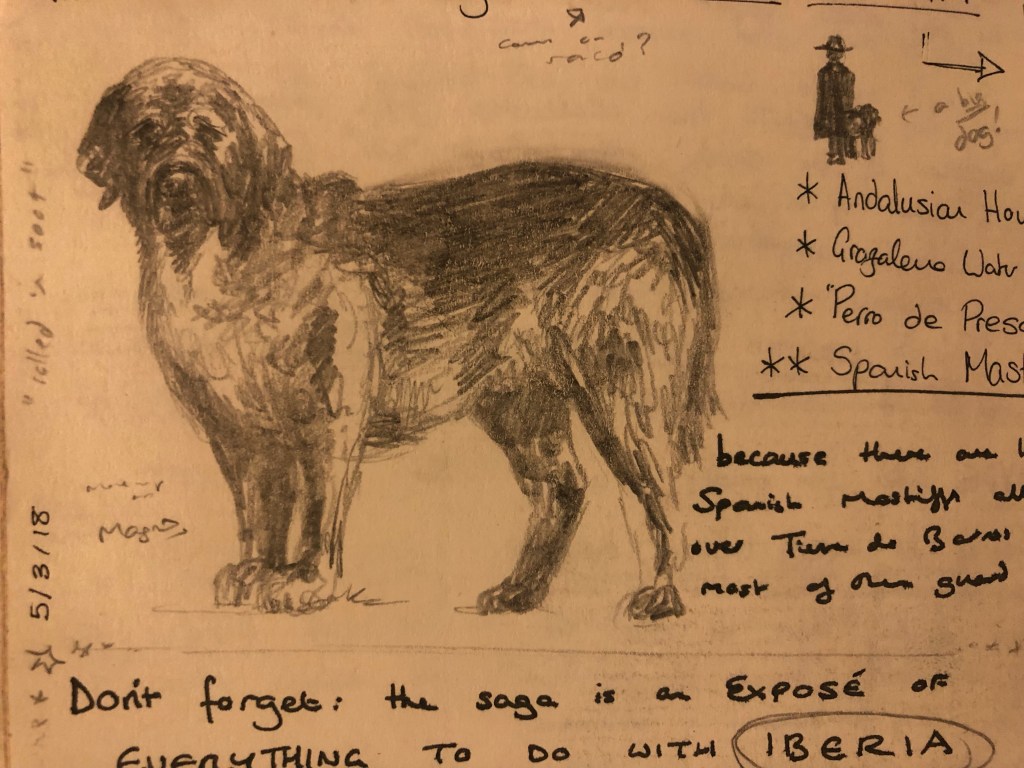
A quick sketch of a Spanish alano, scribbled into the journal between Church and tutor today

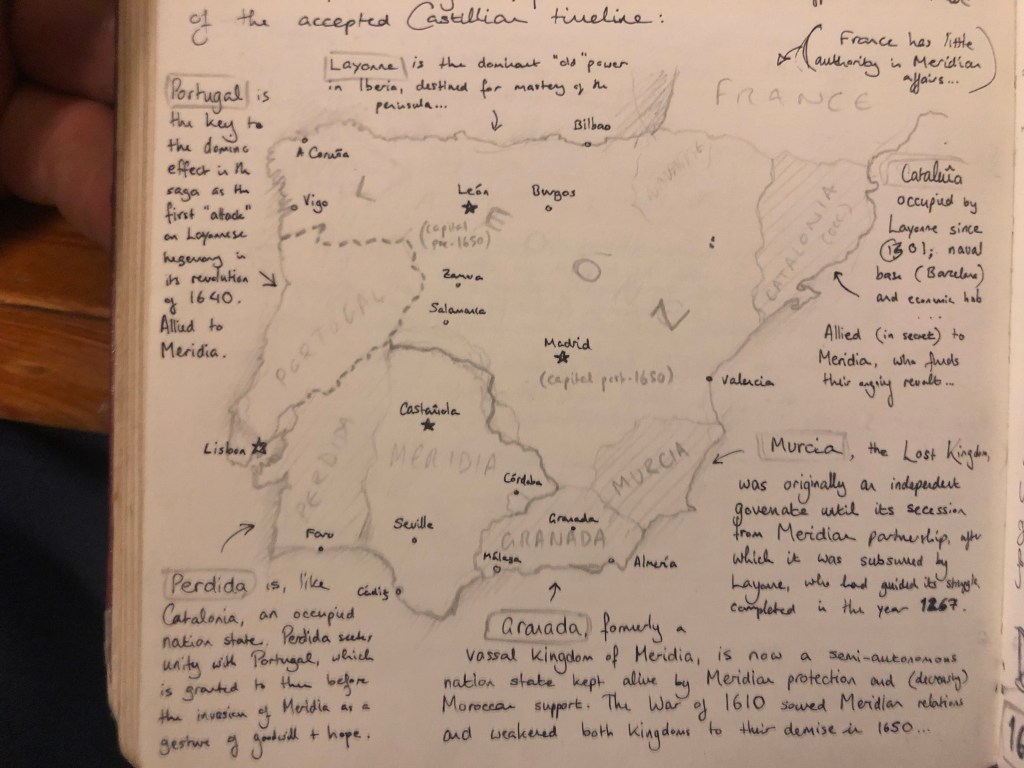
Naturally, I’ve written one into my book, as a faithful companion to my leading lady. It’s not as simple as you’d think, writing a dog breed into a book, as by its very nature, dog-breeding is an ever-changing world. Many of the dogs we know today have only been around for a few hundred years or so. The Spanish mastiff we know today is already a very different animal to the kind used at the start of the twentieth century: the original mastiff was still a sturdy, powerfully-built working dog, but not at all like the lumbering giant you see around the Spanish countryside today.

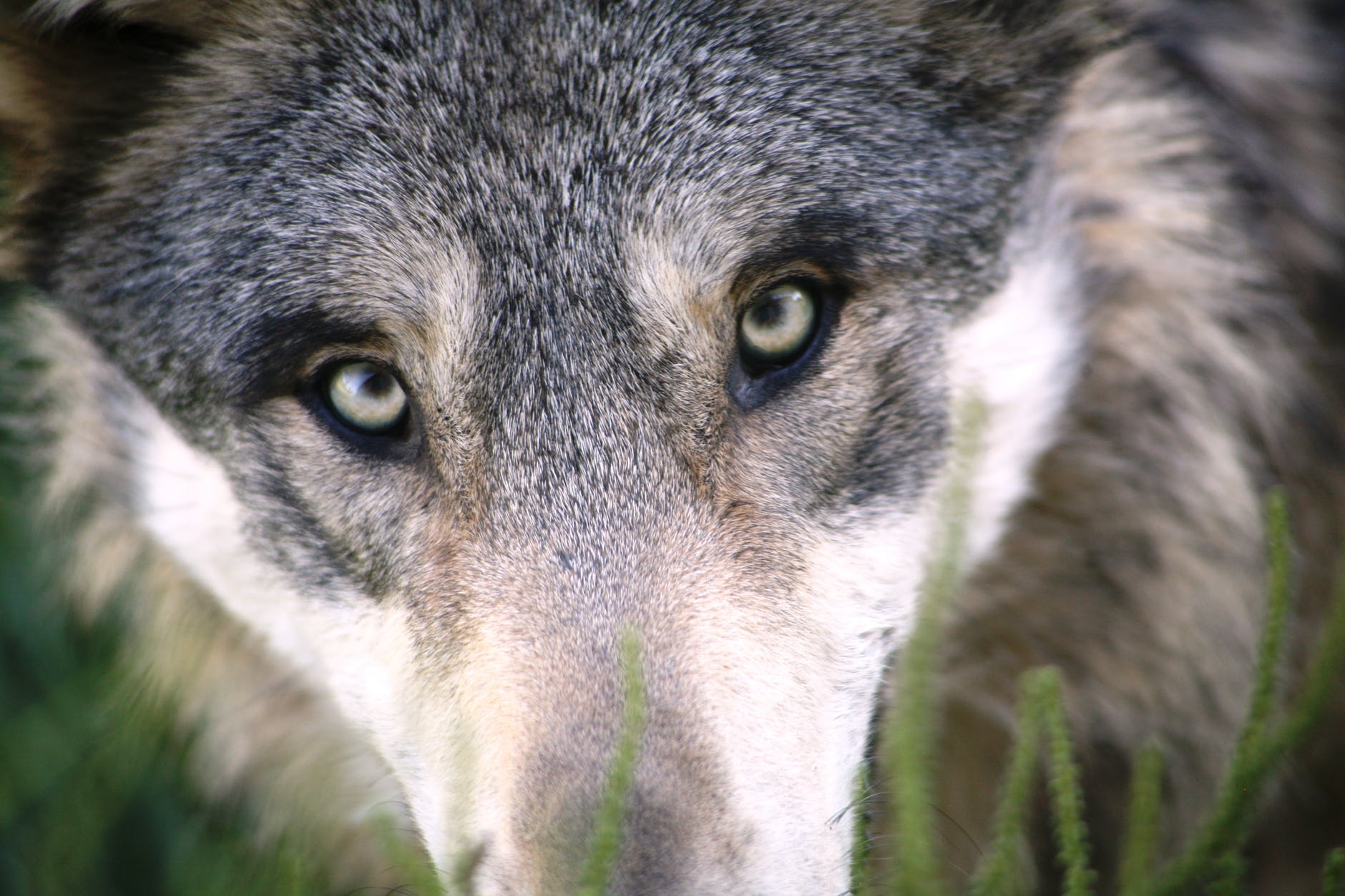
Other dogs that were more familiar to our ancestors have long since disappeared: the stocky Old English bulldogs bred for the sport of bull-baiting, long-since replaced by the squat, hyperbrachycephalic creatures we know today; the alaunt, the rache and the Talbot hound, the mainstays of medieval nobles and huntsmen; and, of course, the mighty Molossus, the ancient war dog of the Greeks and Romans. In our endless desire to bend nature to our will – bigger, smaller, stronger, more obedient, less intelligent – we have warped our old enemy, the wolf, into an absurd array of shapes and sizes. It’s a testament to man’s ingenuity that, long ago, we were able to turn our most hated rival into our best friend, but my word, did we do some terrible things to him along the way. I wonder what a wolf thinks when it crosses paths with a pug or a dachshund. Is there a flicker of recognition, do you think, or have thousands of years of man’s meddling twisted their kin into shapes they cannot begin to understand as one of their own?

Photo by Brenda Timmermans on Pexels.com

I’d really like to track wolves in the wild someday. I’ve heard that one of the better places to do that in Europe is in the wild Abruzzo region of central Italy. I don’t think I’ll manage it this time – as you might expect from one of Italy’s last refuges for the symbol of Rome, it’s not exactly a hop, skip and a jump on public transport. But if years of nature-watching has taught me anything, it’s patience, and I can wait for an experience like that. Spain’s Sierra de la Culebra is also supposed to be a good place to search for wolves, and when last I heard from the place, a pack had been seen in Extremadura, though memory fails me as to where.

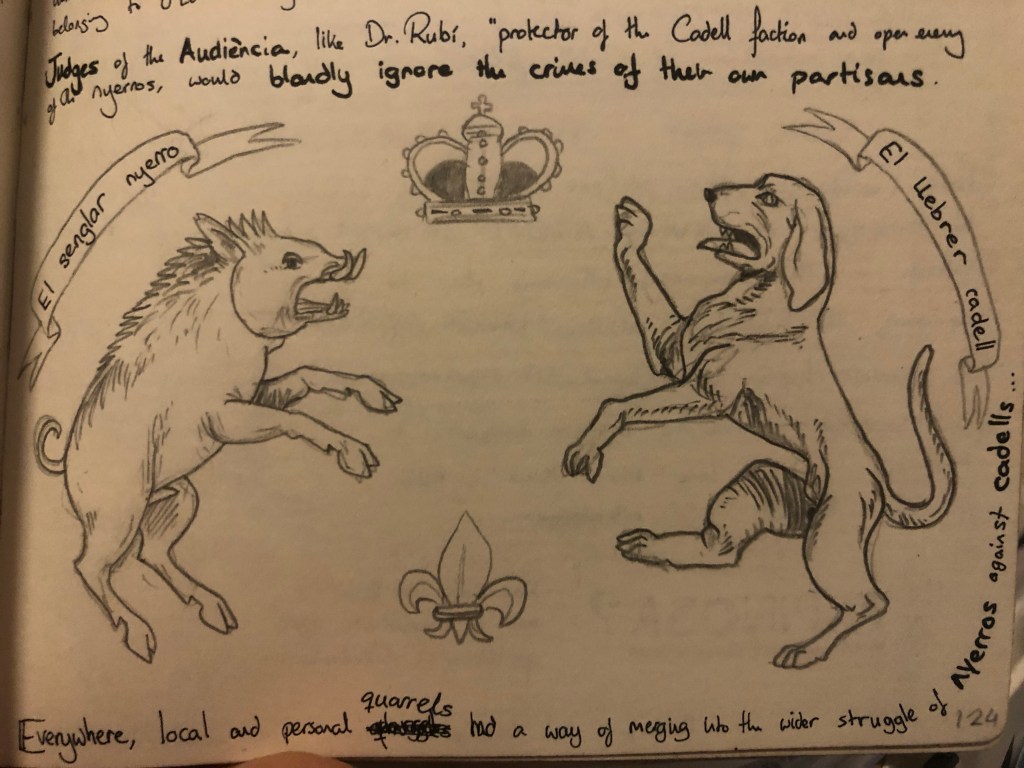
The llebrer (R), symbol of one of Catalunya’s most notorious 17th century gangs, the Cadells

In the meantime, I will read up some more on Spain’s dogs, if only for the sake of my novel. If there’s a place for the loyal mastiff, I’m sure I can find a space for something like the nightmare fuel from Bambi, too. BB x

Dagobah: The Longest Night of my Life

Planning ahead for Italy this April has got me thinking about the last time I travelled solo, now almost a decade ago.

When I was eighteen years old, my mother gave me a copy of Laurie Lee’s As I Walked Out One Midsummer Morning and a map of northern Spain. I joined the dots and bought myself a one way flight to Santander, planning to walk south as he did, until I reached the Mediterranean Sea.

It didn’t exactly pan out like that, but it was and is to this day one of the toughest and most formative adventures I’ve ever made in my life.

Travelling solo is not for everyone. You’ve got to be comfortable with your own company for long periods of time. You have to be able to think on your feet and adapt to whatever happens around you, because nobody is going to look out for you but yourself. Most importantly of all, you need to be brave. You’ll hear plenty of stories about the kindness of strangers, but nine times out of ten, it’s a case of shy bairns get nowt; if you aren’t prepared to talk to people, the loneliness birds will start to circle.

That’s what happened to me, all those years ago. My Spanish was good – more than good enough to hold my own in a conversation – but my courage was lacking. The bottomless charisma that comes almost by osmosis from working in a private school hadn’t sunk in yet, and I would have rather bitten my own tongue than enter into a conversation with a stranger. Consequently, I spent the greater part of those four and a half weeks in what can only be described as a state of monastic silence.

As a rule, I’ve tried to find a travel partner on every adventure since, as there are few things more reassuring than good company on the road. Back then, halfway through my gap year, I was cut off like never before: everybody I knew was either at university, at work or halfway across the globe on gap years of their own. So I didn’t have much choice.

I was young, inexperienced, and woefully naïve about how much I ought to be spending daily on food. Little wonder, then, that when I came home I was dangerously underweight. That first encounter with solo travel taught me a lot, but most of all it taught me never to skimp on food. Ever.

Looking back, it’s so easy to focus on the negatives, largely because of how didactic they all were. One stands clear above the others like a lonely mountain. Sleeping rough in the mountains above Madrid with nothing but a sleeping bag and a rucksack for a pillow. That endless night will be with me forever. Let me paint it for you.


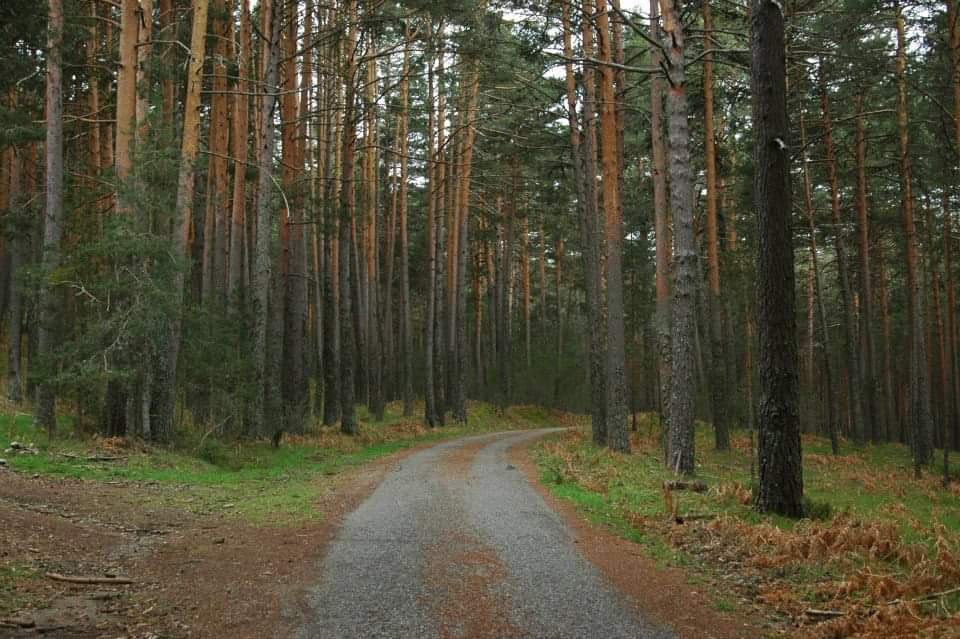
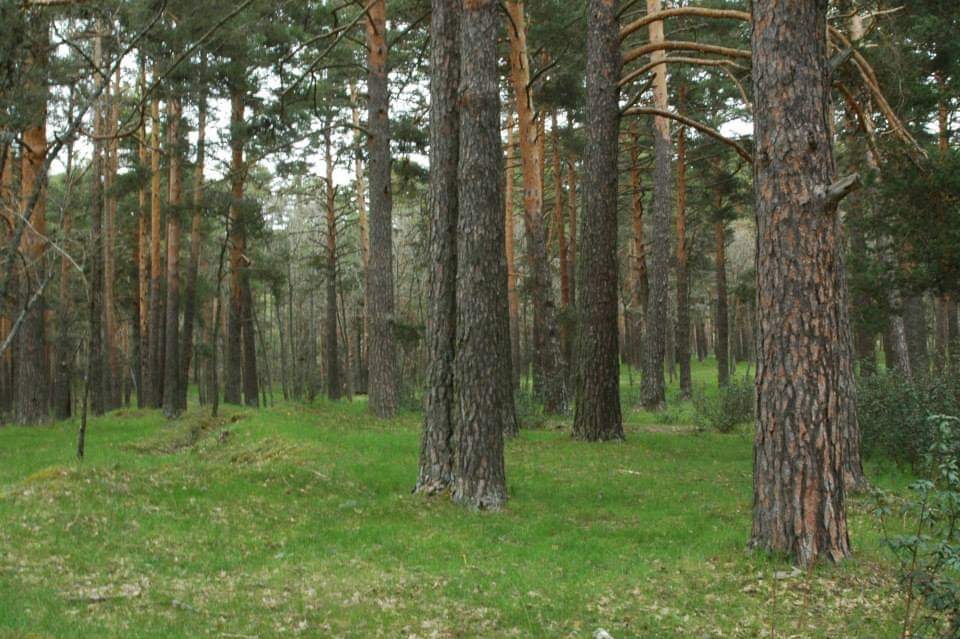
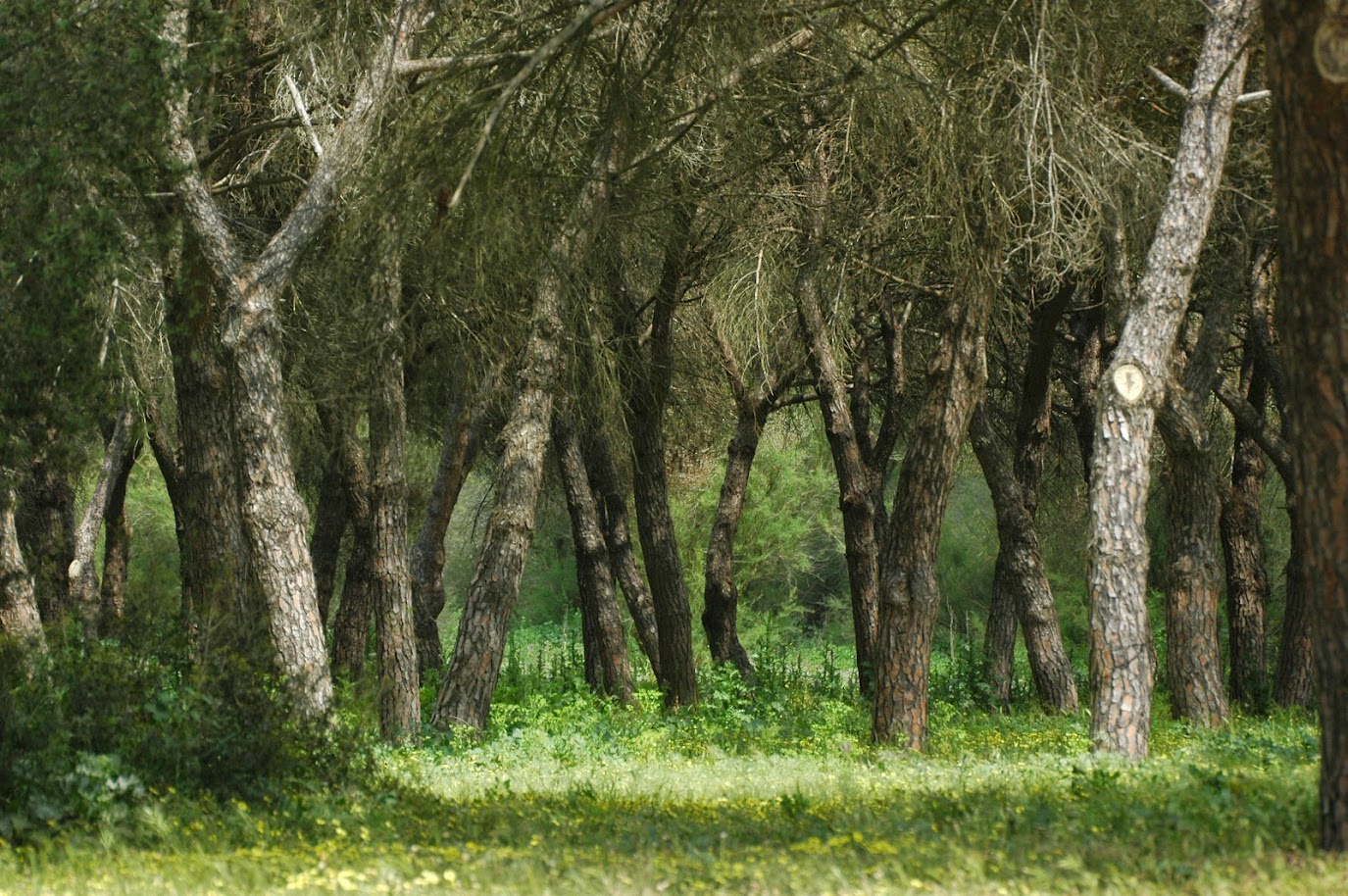
Picture it. A patch of relatively stable ground in the heart of a dark pine forest, on the lower slopes of the mountains. At least two hours’ walk from the nearest settlement. Pine needles where the grass doesn’t grow, and the roots of the trees poking out of the ground here and there like toes in the sand. The light fading as dusk sets in, no sunset, just a gradual darkening of the grey light between the trees as the world before your eyes starts to fuzz and crackle like static on an old television. From somewhere far off, a raven croaks, and once or twice, an owl.

You put your head on your rucksack and try to shut your eyes, but sleep doesn’t come. Maybe it’s because it’s still light out there. Minutes feel like hours. You turn on your iPod and ration a few songs to pass the time. Maybe fatigue will get you in the end. But it doesn’t.

Night falls, but there’s no moon. The ground under your sleeping bag is cold. Wet. It sinks through the lining and into your skin. Your teeth are chattering. You put on all the clothing you’ve brought; three layers of socks, two sweaters and a makeshift scarf. It doesn’t stop the chattering. Then there’s the gentle sound of rain as the clouds roll across the mountainside, scattering water through the trees.

You check your watch. It’s only been twenty minutes. It’s still only just after nine o’clock. Most Spaniards aren’t even in bed at this time. You ration some more music.

The darkness is almost absolute. You can only just make out the silvery light of the trunks of the nearest trees, lit by the ghost of the moon, buried deep in the clouded night. The patter of rain echoes through the whole forest.

Suddenly, a harsh bark breaks the silence. It shouldn’t scare you out of your wits, but it does. You freeze, listening, half expecting – wait! There it is again. It’s a roe deer, you know that. You’re sure of it. You’ve heard that barking cry so many times before back home. It’s just a deer. Harmless. But what good is that knowledge when you’re wrapped up in a sleeping bag, alone, and nobody knows you’re up there? And what if you’re not so sure? What if it’s something… else?

It’s funny how the mind plays tricks on you in the darkness. How quickly you can unravel. For a time I am certain I had managed to convince myself it was not deer but wolves I was hearing – that ancient terror of the deep forest that all of us carry, buried deep inside.

The barking goes on for hours. Or maybe minutes. The minutes feel like hours. The hours feel like days. Time seems to have slowed to a crawl. The night is endless. No moon, no stars, no light from the distant towns. Just the static darkness that creeps through the trees, and the rain, the endless, endless rain.

You count the barks. You count sheep. You call home, consider bailing there and then. You talk to yourself, argue with yourself. You turn to God, perhaps for the first time. You swear. You laugh. You cry. You drain the iPod to zero to keep your spirits up, trying not to picture the prowling things between the trees that your eyes are so keen to paint.

Sleep is fleeting: a minute or two of semi-consciousness here and there, leaving you more and more tired, and yet less able to find that rest you now desire above all things.

And when the dawn comes, that first blessed grey light between the trees, you don’t even care anymore how little you’ve slept. You hardly notice the gnawing aches in your legs, or the numbness in your teeth from all the chattering. You’re just overjoyed to see the light once again – because there’s a magic in the dawn that is timeless. The darkness is on the run, and there’s a new day on the way. Dawn was ever the hope of men.


Looking back now, there’s so much I didn’t do that I know I should have done. I didn’t tell anybody where I was going. I didn’t pack enough food. And any of you with even a little camping experience will have spotted one glaring absence: never mind the obvious lack of a tent, I didn’t even bring a roll mat. No wonder I spent the night shivering.

One thing’s for certain: there’ll be no repeats of that night in the Guadarrama, not in Italy, not ever. I’ve had some long and painful nights in my life, but that one stands head and shoulders above the others. I don’t think I’ve ever felt more alone. But that makes it all the more powerful a memory. It’s a lightning-rod for my fears. Whenever I’m feeling down for whatever reason, I think of that night in the mountains. I was miserable, I was lonely, I was terrified – but I survived.

In the old Star Wars stories, Master Yoda went into exile on the swamp world of Dagobah, a planet with a strong connection to the dark side of the Force. Hubris had laid his order low and taken everything from him; only by humbling himself in isolation and communing with the dark was he able to understand it – and, in so doing, learn to rise above it all.

At some point in our lives, we all need to be brought to our knees, if only to understand who we really are when it all falls apart. I wouldn’t say I look back on that night with pride – the whole enterprise was nothing short of madness to begin with – but it did settle once and for all what I believed.

Darkness is not something to run from. It cannot be escaped. There’s darkness in all of us, as sure as shadows lengthen in the light. But, like a shadow, it must be faced head on if you would not be afraid. We have to confront our fears if we wish to understand them – and to understand how we react it to them. And to face your demons, whatever and wherever they may be, you need your starlight. I call that starlight Hope.

Hope and despair. The light and the dark. All that I am today is built on that bedrock. Hope is my raison d’etre, my polestar, my core value if you will, and it was forged in that endless night on Guadarrama.

Travelling alone can be tough – especially if you’re inclined to sadistic escapades like sleeping rough in the mountains like I was – but I can think of few better ways to find the meaning of life.

And if you’re wondering why I put myself through that ordeal, there’s a perfectly logical answer: there’s a chapter in my book where my protagonist is abandoned in the wild, and my English teacher once told me to “write only about what you know”! The things we do for art…

I don’t expect anything nearly as dramatic in Italy. Heck, I’m mainly going to fill some pages in my journal. But I am going with a hopeful heart once again, to feel that brush with the world beyond.

And to find a better Margherita pizza than the ones they make at Lirios. Maybe. BB x
Kicking the Habit

I can’t believe it. I’ve done the unthinkable: I’ve booked myself a holiday, and for once, it’s not Spain. Well, that’s not strictly true. I should say I’ve booked half a holiday that isn’t in Spain, because there’s nowhere else in the world I’d rather be in Holy Week than with my family, especially since the procesiones haven’t happened for two years now. But after an evening spent stuck in a rut over where to go and what to do in the week prior, I decided it was high time I broke the mould and explored somewhere new for a change. It’s a place I’ve never been before, and yet it’s also a place I’ve had so much to do with over the years that it would be nothing short of criminal to keep ignoring it.

The destination…? Italy!

For years the excuse for passing over Italy has been my (completely unfounded) belief that “everything Italy can do, Spain can do better… plus they speak Spanish”. Spoken like a true tercio, but not exactly the most grounded of opinions, nor a particularly sensible idea for somebody who’s supposed to be a modern foreign languages teacher.

So I’m giving myself a week out there to open my eyes and blow my mind.

I have six weeks to teach myself some basic Italian. Given the almost daily contact I have with Italians at work, that shouldn’t be too difficult – and hey, I could use a challenge.

Part of me feels I’m getting a little old for this solo travel malarkey, and yet there’s another part of me that’s been getting restless for months. I need something to take my mind off how messy 2021 was, something to jumpstart the thrill of adventure I used to feel all those years ago… and, most important of all, something that will give me stories to tell on here that aren’t always about my grandparents. I could certainly do with some fresh material for a change.

A slightly mad move on my part, but if I have to spend another holiday at home I’ll almost certainly go mad. 2017 Me is wagging a finger and calling this kind of behaviour entitled, but then, 2017 Me thought he had it all figured out – and he had just spent a week up at the Edinburgh Fringe, which was probably one of the most expensive holidays I’ve ever had. To throw more fuel on the fire, this year’s summer holidays are going to be little but driving lessons, and as the Camino de Santiago has yet to return to normal, I have no excuses. So it all hangs on Easter.

I have a start point in Venice. And I have an end point in Rome. Eight days is what I have to play around with. I suspect there’s so much to see in both cities that I ought to split the week in half between the two rather than trying to cram in anywhere else en route, but I’ll cross that bridge later. For now, I have a language to learn.

Gee, I haven’t felt this motivated in ages. It’s time to fall in love with the open road once again. Fatti sotto, Italia! BB x
Streets of London

2.20am. I’m riding home on the 2.08 from London Victoria. I didn’t even know trains still ran at that ungodly hour of the morning. Apparently they do: one every hour at eight minutes past the hour. They lock the station until ten minutes or so before the train leaves, and there’s quite a crowd loitering outside the gates just before they open them. Three Bridges is clearly the place to be at two in the morning. Who’d have thought it?

I did some much needed “getting out” today. With a couple of exceptions I’ve more or less turtled for four years or more. I guess that’s the nature of life in a boarding school: whereas most other folks can play their weekends and snatch evenings here and there, in teaching you block out your free time by your holidays…

The chap two seats ahead is fast asleep in his seat. His phone alarm is going off for the third time. The lads on the row of seats opposite looked annoyed at first, but one of them has struck up a conversation with the sleeper and asked if he’s going to get home OK.

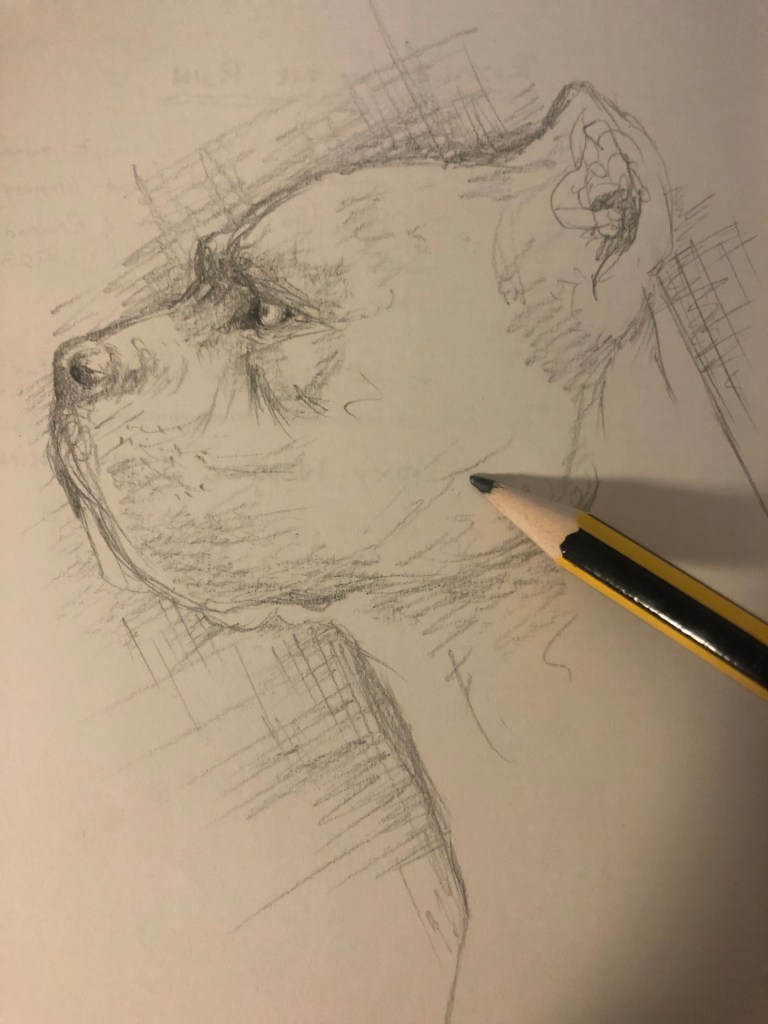
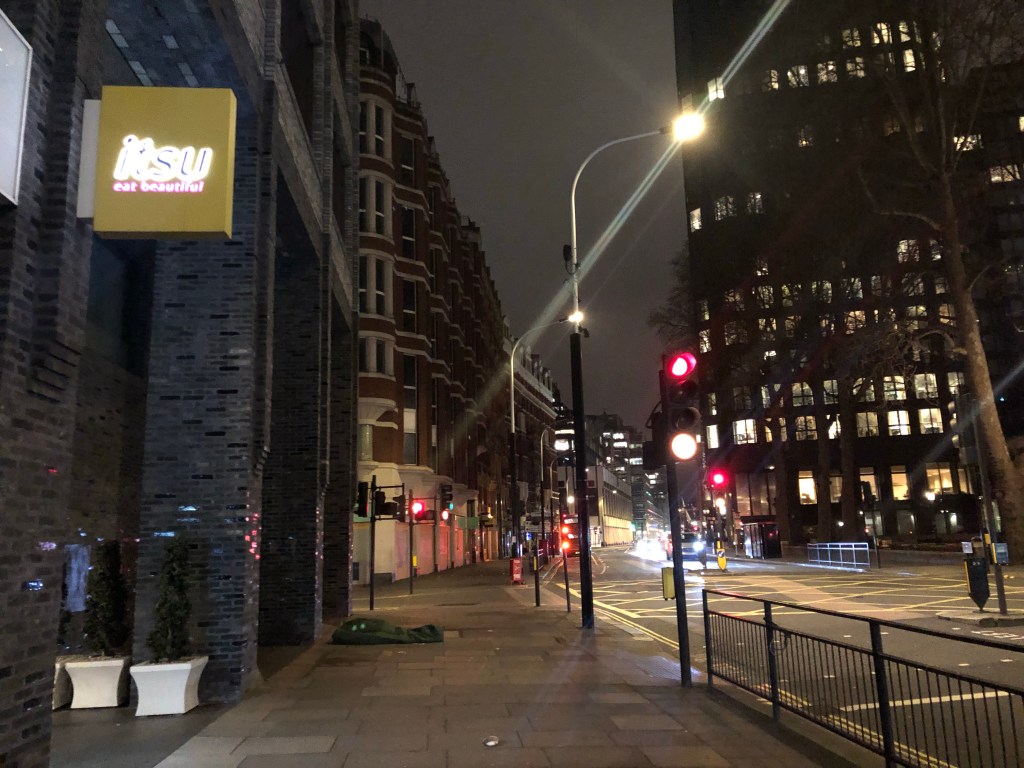
I killed some time with my sketchbook on the Underground this afternoon, and again waiting in the street in Holborn before the party. A homeless man wandered over, cap in hand, to ask for help. Normally I have to admit I’d probably turn a callous blind eye, but something about London draws me in, makes me think differently. I asked for his name and we got talking. He said his name was James, and that he was trying to find a place that would take both him and his dog for the night. I gave him something to start his hunt – for once I happened to have a loose note on me. We shook hands and he set off at a run.

I didn’t have to make the trek home quite so soon. A friend offered me the key to his place for the night, if I could find my way there. I turned it down, partly out of habit, partly out of pride, and partly because of James. Having such an easy solution in London when so many are out on the streets… for some reason it didn’t sit right. You think in a different key in the small hours.

I remember sleeping rough in the wastelands beyond Almeria years ago. Gaunt from a month of under budgeting and undereating and feeling hollow. I remember the fear of that first night, the isolation. It could never compare to the real thing, of course, but I was young, foolhardy, and I wanted to have an idea of how it felt. One night I was curled up in the dunes when a couple of cars rolled up onto the beach around two in the morning. Men with flashlights climbed out and scanned the beach. I got the jitters and decided to move – they were probably night-fishing, but your brain plays all kinds of tricks at night. I don’t think I’ll ever forget the genuine pit-of-my-stomach terror when, barely a few yards down the beach, I saw two of the torch beams slowly sweep the beach and lock onto me. I ran. My God, did I run. I don’t think I’ve ever run so fast in my life. I must have gone at least a kilometre or more before I collapsed in the dunes.

Almeria seems a long way away. London is surprisingly busy in the small hours. Not the city that never sleeps, per se, but one that keeps at least one eye open all night. Offices lit up, calendars and Macs on desks. Lads coming home from the lash. A girl tottering home on heels, makeup streaming, eyes weeping. And many, many sleeping bags in doorways.

It felt good to go out again. I haven’t danced in years – not since university, I shouldn’t wonder. And as it’s London, the music was both a) quality and b) perfect for dancing shoes. I should do this again sometime. Not that I’d make a habit out of catching the 2.08, though.

Gatwick Airport ahead. Only another five minutes or so to go, and then it’s the long walk back through the forest. I’ll probably be in bed by 4, with or without the moonlight to guide me – I’ve made that journey so often I could probably do it blind.

I’ll sign off now so my phone has enough juice for another chapter or so of Michelle Paver’s Ghost Hunter on Audible. That will take me at least as far as the forest – there, at least, I will feel safe again. BB x
Tzompantli: An Ode to Extremadura

On Monday, I kick off my new role as the middle school gifted and talented programme coordinator with a lecture on the Aztecs. It wasn’t the obvious choice, as Mexico is a country I have neither visited nor researched nearly as extensively as my grandfather’s country. As a matter of fact I made a conscious effort to steer well clear of Latin American affairs at university, cleaving to the Iberian modules even when it meant the pickings would be slim. If Durham’s only Cervantes specialist hadn’t been on maternity leave in my final year, I could have stayed quite happily in my fairy-tale world of knights and princesses and Moorish warlords and binged on ballads, and I wouldn’t have had to go anywhere near strap-on wielding Catalans and metaphysical Madrilenians. Oh Quijote, en mala hora me abandonaste!

Ordinarily, for such a school project I would have stuck to my guns and wheeled out some Moorish magic with a talk about Islamic Spain, something that is close to my heart; or El Cid, a man whose legend (and whose 1961 movie) is embedded, thorn-like, a couple of inches deeper. I even briefly considered whipping up something about pirates, but I haven’t read nearly enough to do that one justice. Not yet.

I landed upon the Aztecs for a couple of reasons. One, because the book I have chosen to read with my IB students is Laura Esquivel’s Malinche. Two, because my school – or rather, the people whose money built the house in which I now live and work – has a long history with Mexico, a connection that is plainly carved into the stone in several places.

But I think the main reason I wanted to explore the Mexica was because it ties me back, through the ruthless conquistadors, to a place that is still very dear to me: Extremadura.

My first contact with Spain was with Andalusia, with her jagged crags and whitewashed mountain villages. If I wasn’t spellbound there and then, my mum and dad must have been, because they made the crazy decision to up sticks and move us there in 2006… right on the eve of the financial crisis that was already driving many of Spain’s expats out. It might not have been the wisest move for three out of the four of us, but after a year of weekend hikes in the surrounding sierras, gecko-hunts in the streets by night, Holy Week spectaculars and vulture-chasing in the misty heights of El Gastor, I was absolutely hooked. Andalusia was my polestar for many years to follow, and her light shone brightest on the paradise of the tierras rocieras of Doñana National Park.

(The author, blinded by the light since ’05)

Over the years I braved her jealousy and flirted with her sisters: a school trip took me from Barcelona and the magical Mediterranean town of Tossa de Mar up and into the clouded dales of Cantabria and the foothills of austere Asturias. Legends of the Cid led me to Burgos and the empty plains of Old Castile, the guiding light of my ancestry led me home to la Mancha, and in recent years I’ve swum in the crystal waters of Mallorca and Menorca. Throw in flying visits to Aragon, Alicante, La Rioja and the Basque Country and it’s getting to the stage where there’s hardly a corner of the country I haven’t explored.

But I don’t think I could ever have anticipated the rawness of my obsession with Extremadura. From the moment I set foot on her soil I was lost. It honestly felt like falling in love for the first time. Not the high school crush kind of falling in love, but that kind of mature depth of feeling, that gut-wrenching, iron-tasting jolt in your upper body that tells you something’s starting functioning inside that was only dormant before.

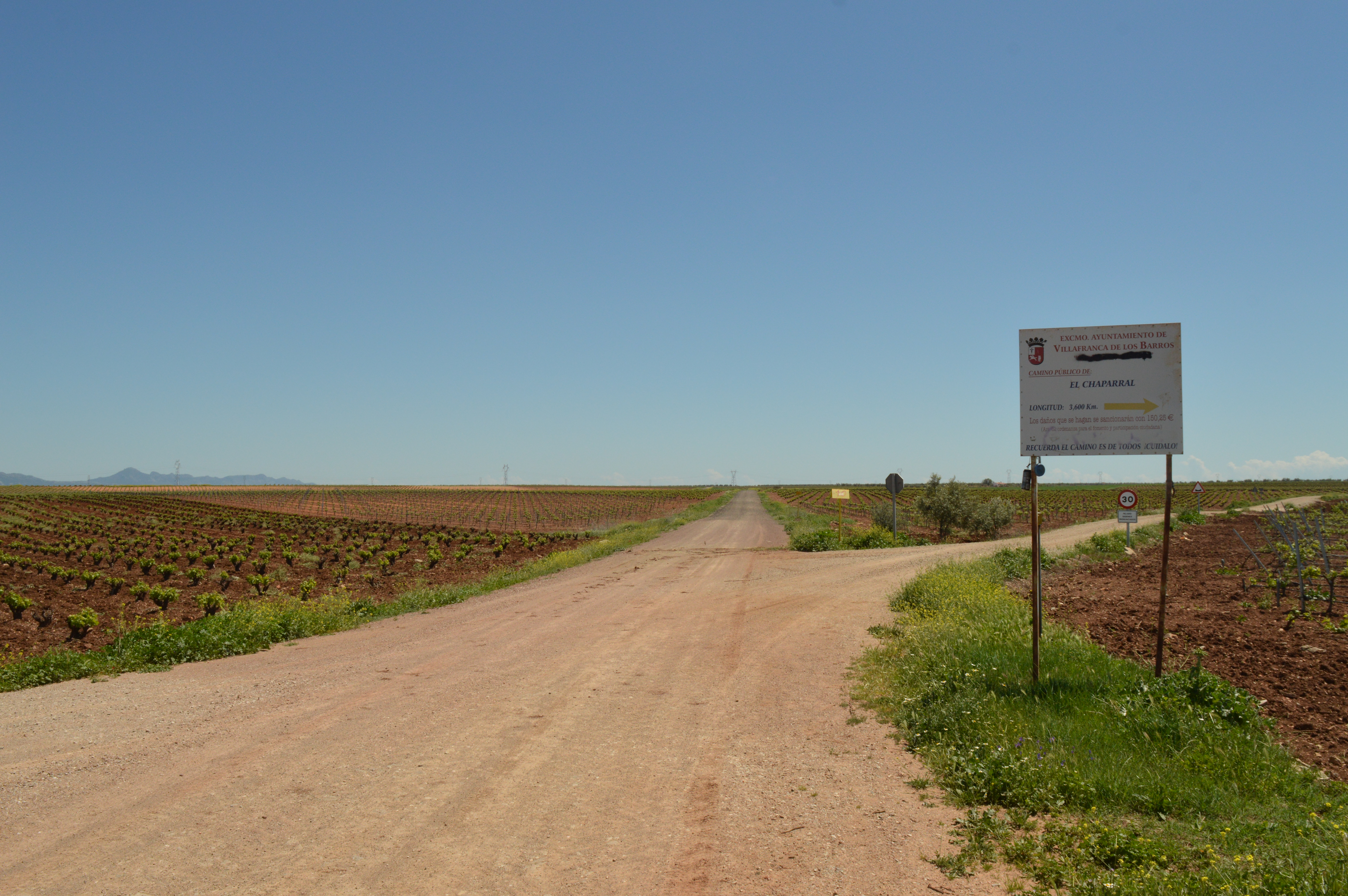
Oh, cut the poetry already, BB. If you’ve been reading this blog as long as I’ve been writing it, you’ll know I didn’t actually talk like that when I arrived in Villafranca de los Barros on that hot September afternoon seven years ago. But hindsight is a wonderful thing, and any corner of the Earth that could convince me to jettison my plans for taking my teaching game over to South America for a second (and very almost a third) time must have an awesome power.

When Hernan Cortes and his men entered Tenochtitlan, one of the greatest cities of the world at the time, one of the things that shocked them most of all were the dreadful tzompantli, wooden scaffolds nearly two metres in height that carried between them the many thousands of impaled skulls of the sacrificial victims of the Aztecs. They came back to Spain telling wild tales of eagle warriors and war priests with matted hair and bleeding knives, and when one reads of the savagery wielded in the name of Castile upon the Mexica, it isn’t hard to understand why it’s been so popular until recently to discount the stories of tzompantli as a myth invented by the conquistadors to justify their actions. Until 2015, the year I moved to their homeland, when the bases of the huey tzompantli were uncovered in Mexico City, complete with row upon row of human skulls, laid out like so many candy calaveras on Dia de los Muertos. The conquistadors, for all their sins, must have had stories worth telling, if only people would listen.

Extremadura is one of those places I will probably write about again and again for the rest of my life. If Andalusia was my first crush, Extremadura was the lady who captured my heart for good. Not even the knowledge I have now that ties my bloodline more closely to Valencia than la Mancha can put a stain (no pun intended) on my devotion to her. Hers is a story I would tell and tell and tell until my tongue split in two.

Tzompantli: an image which struck no small amount of awe and fear. The presence of a God or Gods unknown (and a word that first threatened to split my tongue in two, but is now so satisfying to say that I have rather awkwardly made it the title of this post).

That is my Extremadura. Unknown. Disconnected. Hard to say. Trainless. Abandoned. The conquistadors couldn’t get out fast enough. Malaria festered in her hidden valleys long after it had been extirpated everywhere else, and the Mesta virtually enslaved her very earth to their will, subjecting her people to centuries of poverty. But it is precisely because of these fascinating tales – coupled with her unparalleled natural beauty – that I do believe Extremadura to be the jewel in Spain’s crown.

And oh, look – I started writing about Mexico and here we are, back in Spain. I’m nothing if not predictable. Some of us spend our lives traveling in search of that “something” that is just beyond our reach. I count myself amongst the lucky ones who found what I was looking for and need look no further – at least, no further than the light that shines on Spain’s shores. I can only hope Doña Extremadura forgives my curiosity.

Did Rodrigo, last of the Visigoth kings, truly disappear in her mountains after the fall of Merida? Did an army of ants reduce one of her villages to rubble? Were there really hordes of dwarves in Las Hurdes who descended into the valleys by night to terrify the locals? And what made Carlos, supreme ruler of the Spains, the Americas and all the Hapsburg Empire decide to spend the last years of his life in her wooded hills?

You will only find out if you go. Don’t hold on too tightly to your heart. BB x

P.S. Thinking about sharing some more stories from this part of the world… watch this space.

Under the Shadow of the Stone Pines

On a balmy September afternoon back in 2012, three friends and I were sitting on our suitcases in the bustling complex that is Heathrow Airport. We’d already played the find-the-most-expensive-item-in-duty-free game and were killing time for the gate to flare up on the departures board. We were bound for Uganda, to our partner school in the north, on what could so very easily be construed as your generic gap yah adventure. We were under no illusions as to that. Teddy made a joke about one of us ‘finding ourselves’ out there. Maddie was quick to reply that she’d already found herself right here in the terminal. That made me chuckle – probably because, with good reason, that joke about ‘finding yourself’ was squarely directed at me.
I’ll admit it. I have a habit of falling head over heels for things. Especially places. It goes with the terrain of being a self-confessed Romantic. Naturally, this obsession with location carries over into my reading. Setting is one of the first things that I look for when I read a book. Bother dialogue. Bother clever plot twists. If the cast doesn’t travel any further than their cul-de-sac then I’m out. Any author that can make the setting just as enthralling as the plot has me round their finger. That’s why I’ve always adored M.M. Kaye’s The Far Pavilions. India comes to life through her words, so vividly that at times I could almost hear it, smell it, feel it through the pages. Michelle Paver weaves a similar magic in her writing, and I earnestly try to conjure the same enchantments in my own efforts, though Spain is a fickle mistress and so very hard to please.

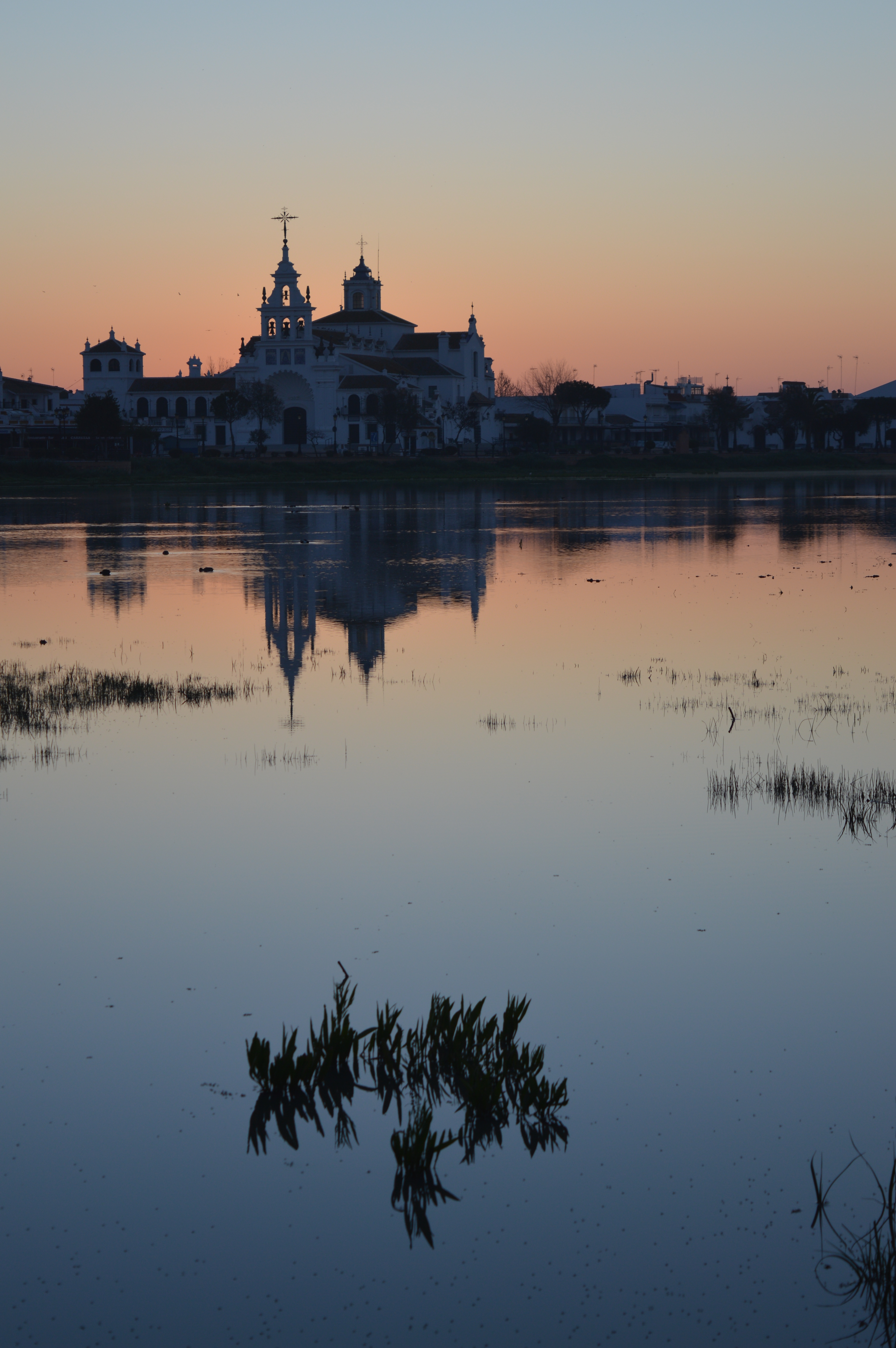
The funny thing about travel and this idea of ‘finding yourself’ is that no two people ever feel the same way about a place. I remember all the raised eyebrows when I used to tell colleagues that my favourite place in all of Spain was a town in the western marshes of Andalusia by the name of El Rocío. Outside of romería season, it’s ostensibly little more than a cluster of whitewashed houses overlooking a seasonal lagoon in arguably the flattest corner of the peninsula, where you can stare across the horizon and see nothing but mile upon mile of shimmering heat. And yet, there is something about that corner of Huelva that calls to me, some spell that weaved its secret magic on me a long time ago.

I’ve had the good fortune to travel across Spain a great deal over the last few years, and there are a number of contenders now for that ever-congested corner of my heart. The gorge at Ronda and the green hills of La Vera. The limestone maw of Zaframagon and the devil’s leap of Monfrague. The vast steppe of Caceres and fair Trujillo, a throne set upon Extremadura’s golden fields. The lonely silhouette of Olvera, and Hornachos, jewel in the Moriscos’ crown and once proud watchtower over the Sierra Grande. Putting my extremely biased affection for Andalusia and Extremadura into a basket, you can add the mysterious heights of Montserrat, the windmill-crowned slopes of La Mancha and the awesome majesty of the Picos de Europa that once guided the weary conquistadors home. All this, and I know I’ve only really scratched the surface.

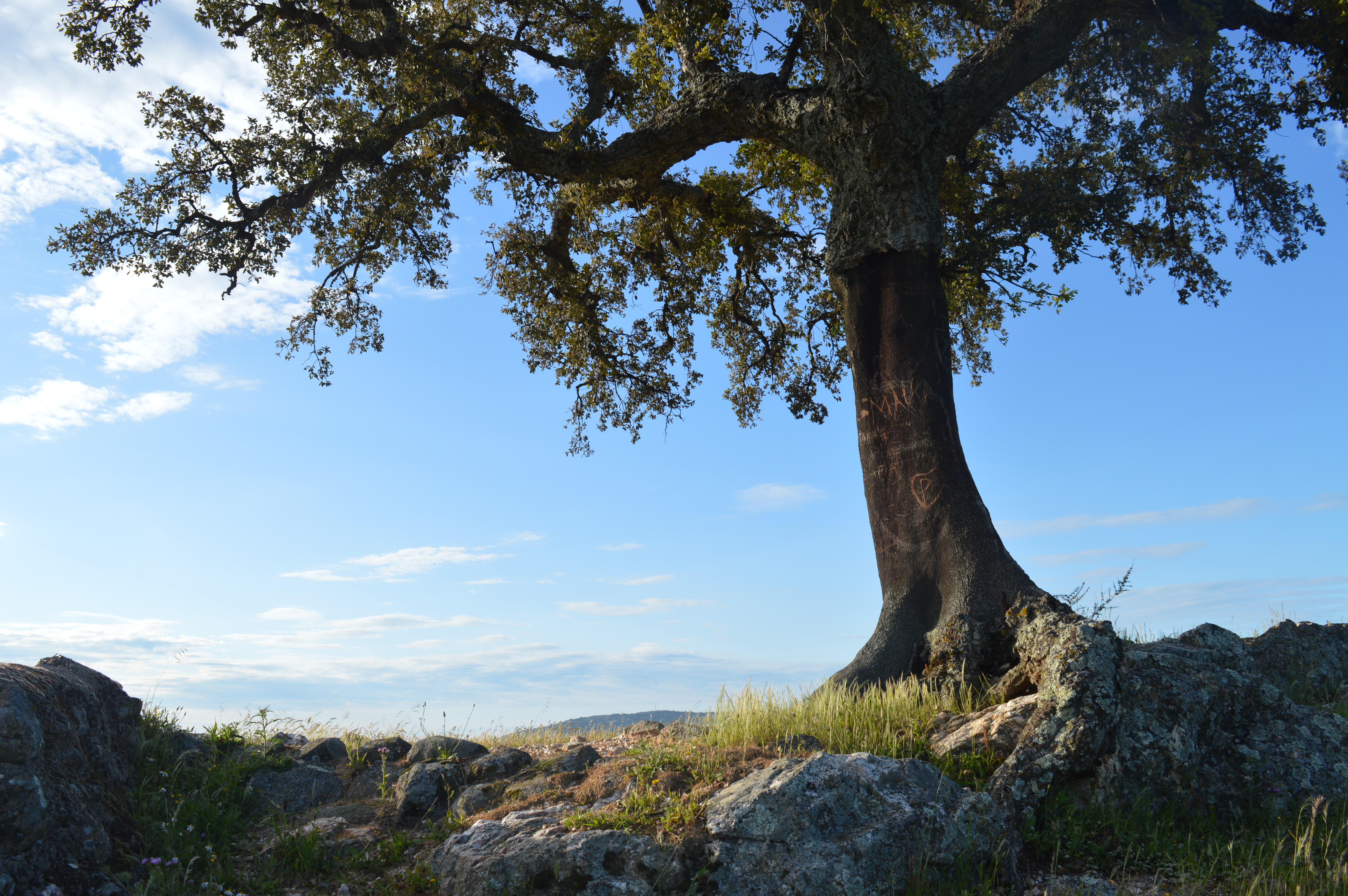
All the same, though my heart is spread across Spain with a rigour that would reduce a piece of toast to crumbs, there is still one spot that reigns supreme over them all. If you’ve been reading this blog since the beginning, you’ll have seen it over and over again in the header up there. But in case you missed it, here it is again.

To the east of the sanctuary town of El Rocío lies the Raya Real, a sandy track that cuts through the heart of the Parque Nacional de Doñana. Once a year, it serves as the primary conduit for almost a million pilgrims who descend upon the town in colourful, bolshy gaiety (as only Spaniards can) to pay homage to the Blanca Paloma herself, the guardian patroness of the marshes. Like most pilgrimages, it’s as much about the journey as the destination, and listen to any one of the many sevillanas sung by the pilgrims and you’ll get a flavour for just how in tune they are with the world around them. What an excuse to journey through some of the most incredible scenery on God’s Earth, all while dressed to the nines!

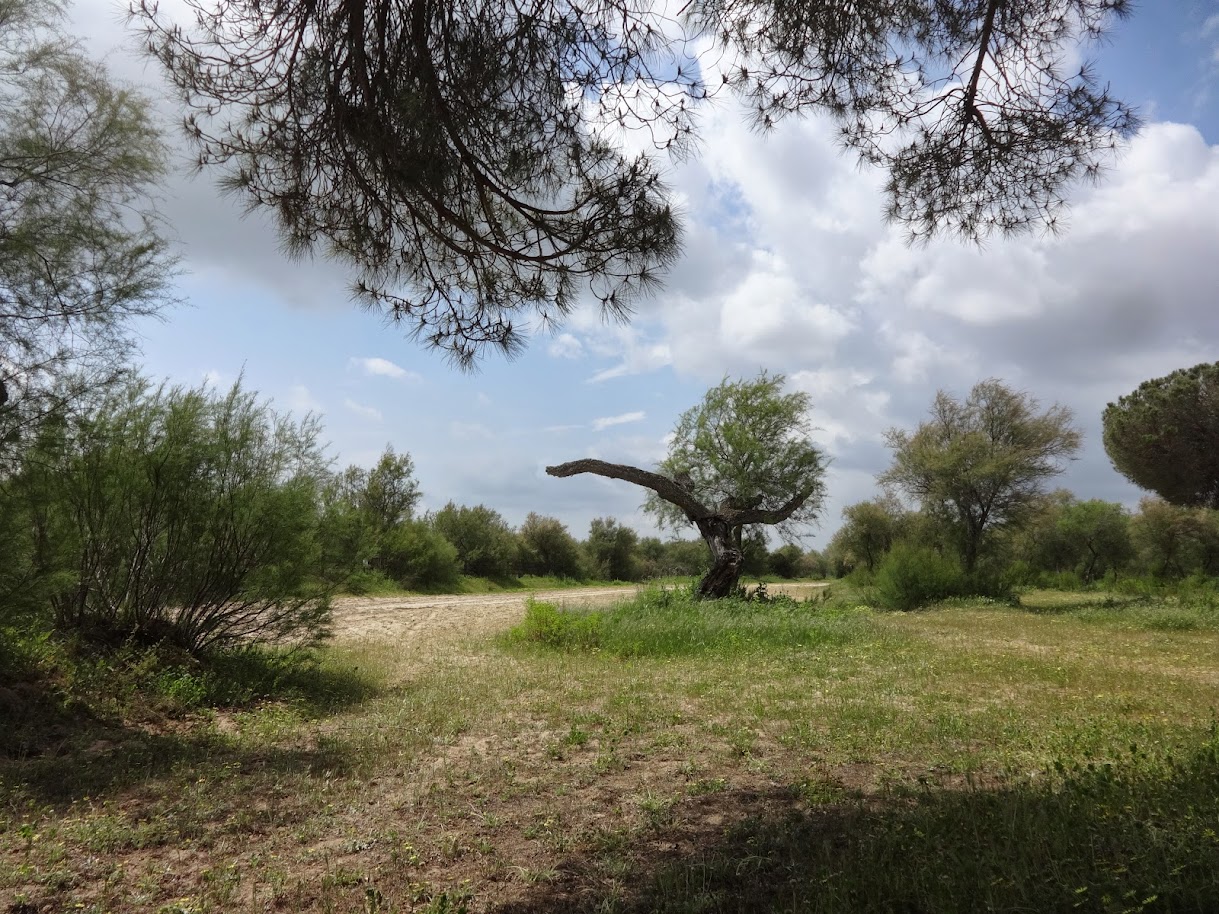
This is all romantically hypothetical, of course. I’ve never seen the Romería in full swing. All the same, there’s this one patch of the Raya Real that I can see in my mind’s eye right now, if I close my eyes for a moment. As for you, dear reader, you need only direct your eyes back up at the top of this post. It’s that tree on the left.

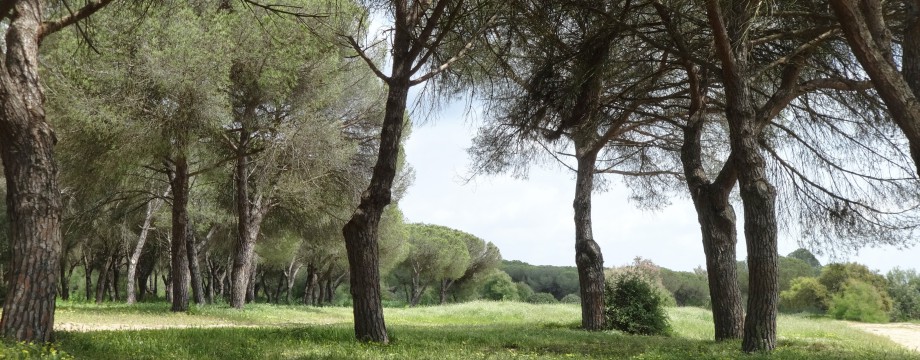
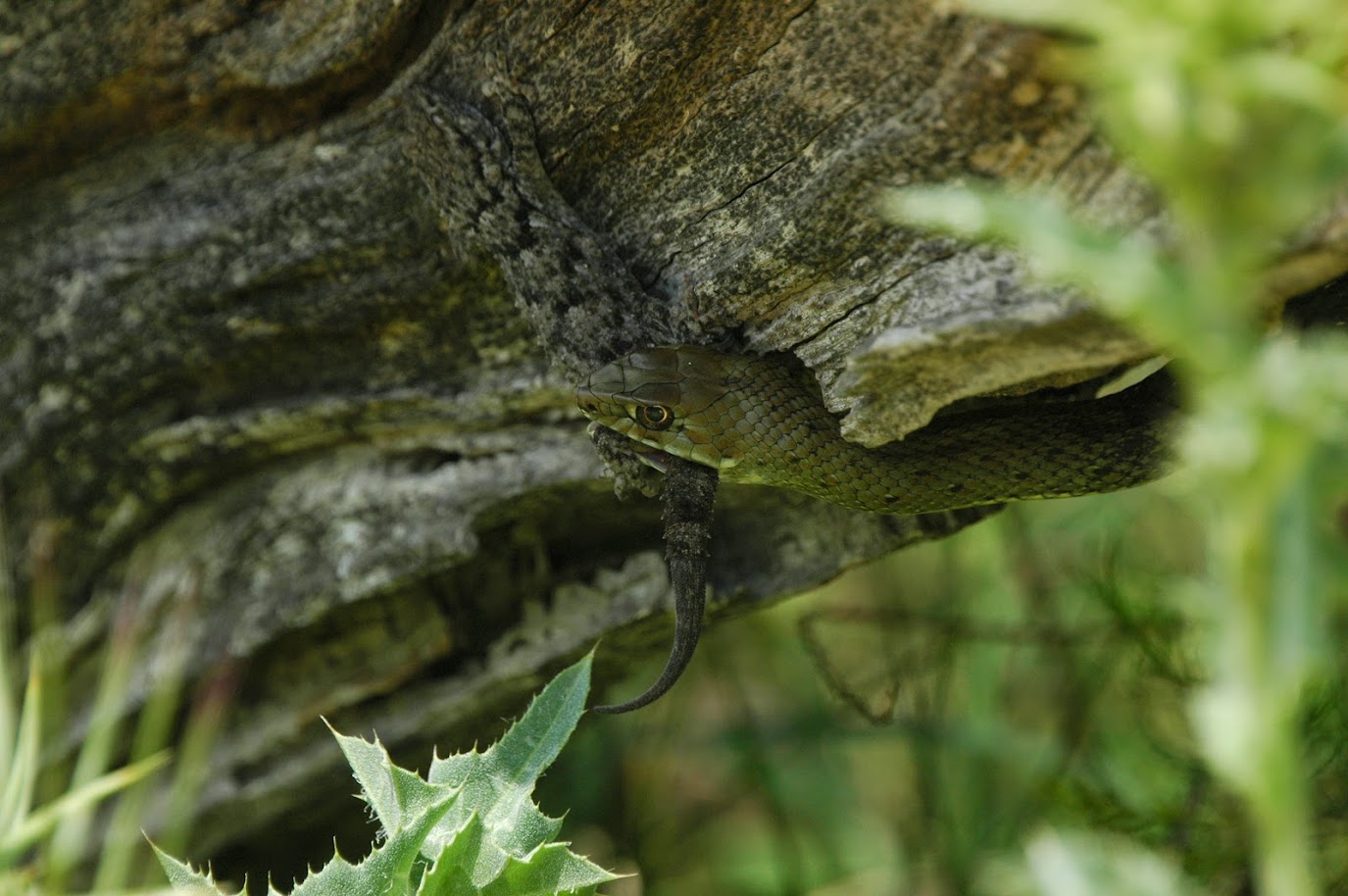
There’s a cluster of stone-pine trees (acebuches) that grow in an island of grass where the Raya Real forks temporarily, before the two tracks converge at the Puente del Ajolí, the last stop on the pilgrimage. A dead tree stands at its westernmost edge, which more often than not hides a gecko or two – I even spooked a Montpelier’s snake mid-hunt here once. A stand of ashes flank the edge of the great pinar, where cuckoos sometimes sing, and in the skies above the Raya Real, bee-eaters go wheeling and soaring in the spring, with bellies like sapphires, backs like rubies and voices like springwater.

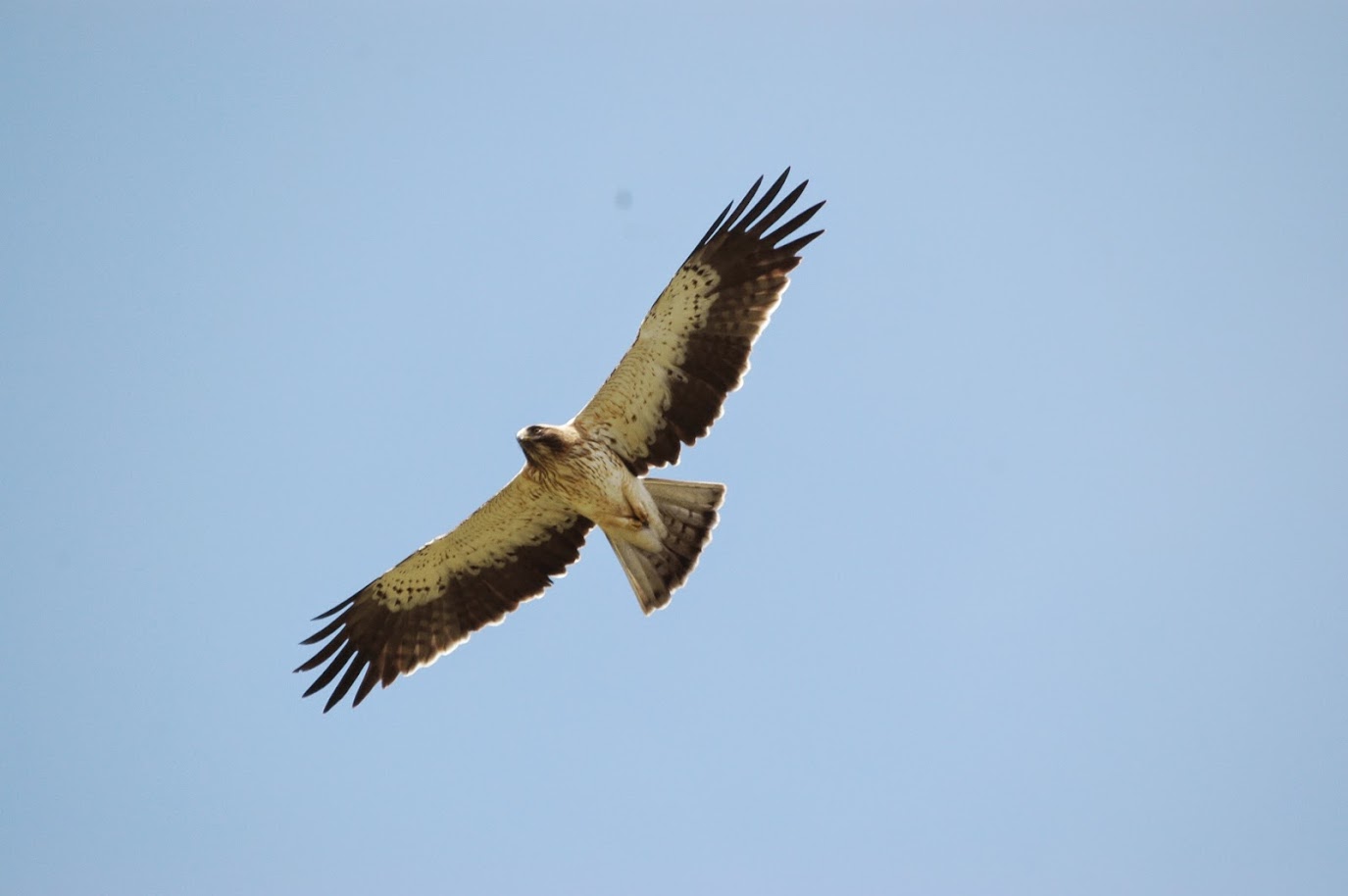
Here, under the shadow of the stone pines, I used to sit when I was a boy and listen. After a few seconds you tune in to the silence and hear it all. The wind over the shimmering plains, the rustle of the ash trees. The whistling kites overhead and the mechanical clang of a butcher-bird in one of the branches nearby. From somewhere far off, a panzorrino (native) calling to his horses, or the bark of a dog. Open your eyes for a moment and stare into the blue, and you might see a tiny speck or two up high in the heavens; a griffon and his mate, perhaps, riding the thermals above the coto below. Just once I saw a Spanish Imperial Eagle here, soaring high above the kites below. Maybe that was the first wave of the wand for me – I was a highly impressionable novice birdwatcher at the time. And though it’s kites and booted eagles that have plied the skies on every return visit, the magic in those splayed wings is always there.

In my eighteenth year, I remember sitting beneath my tree, leafing through a copy of Lorca’s Yerma that I’d picked up in town, when a couple of horses rode down the track nearby, one mounted, one riderless. A local girl had fallen from her horse some way back and tried unsuccessfully to get back into the saddle for a few hundred metres. She asked if I could lend a hand, and so I did, giving her my hands to step up and back into the saddle. I watched them go, I heard them laugh and look back, and I went back to my tree, to Yerma and the kites. A golden opportunity to get to know the town of my dreams through its people slipped through my fingers like the sand on which it stands. I’d make some quip about the Virgen del Rocío being a jealous woman, but I really think I had my head in the clouds then and there.

Fool.

Is there a place you return to in spirit, even if you can’t be there in person? This is mine, beneath the shade of the stone pines on the Raya Real. Millions pass by that tree every year without knowing the connection I have to that singular tree, to the kites that nested in its branches once, to the snakes and geckos and their game of cat-and-mouse about its roots. And why should they, when their goal is in sight? They don’t need to do any soul-searching: la Blanca Paloma waits with open arms.

I’ll leave you with a couple of lines from one of my favourite sevillanas that conjures up some of the magic where my words fail. If you like, you can listen to it here – sevillanas should never be read when they can be sung – performed by that band which takes its very name from the road of my dreams: Raya Real.

Las llanuras ardientes de la marisma
El ganado retinto con paso lento
Se acerca hasta el arroyo que esta sediento
Seco está el monte bajo, seco está el rio
Los pastos del invierno ya se han perdido

El Rocío es un milagro, una mañana lo vi
Cuando Triana cruzaba el Puente del Ajolí

Until next time. BB x

Living out of a Book: Adventures with a Journal

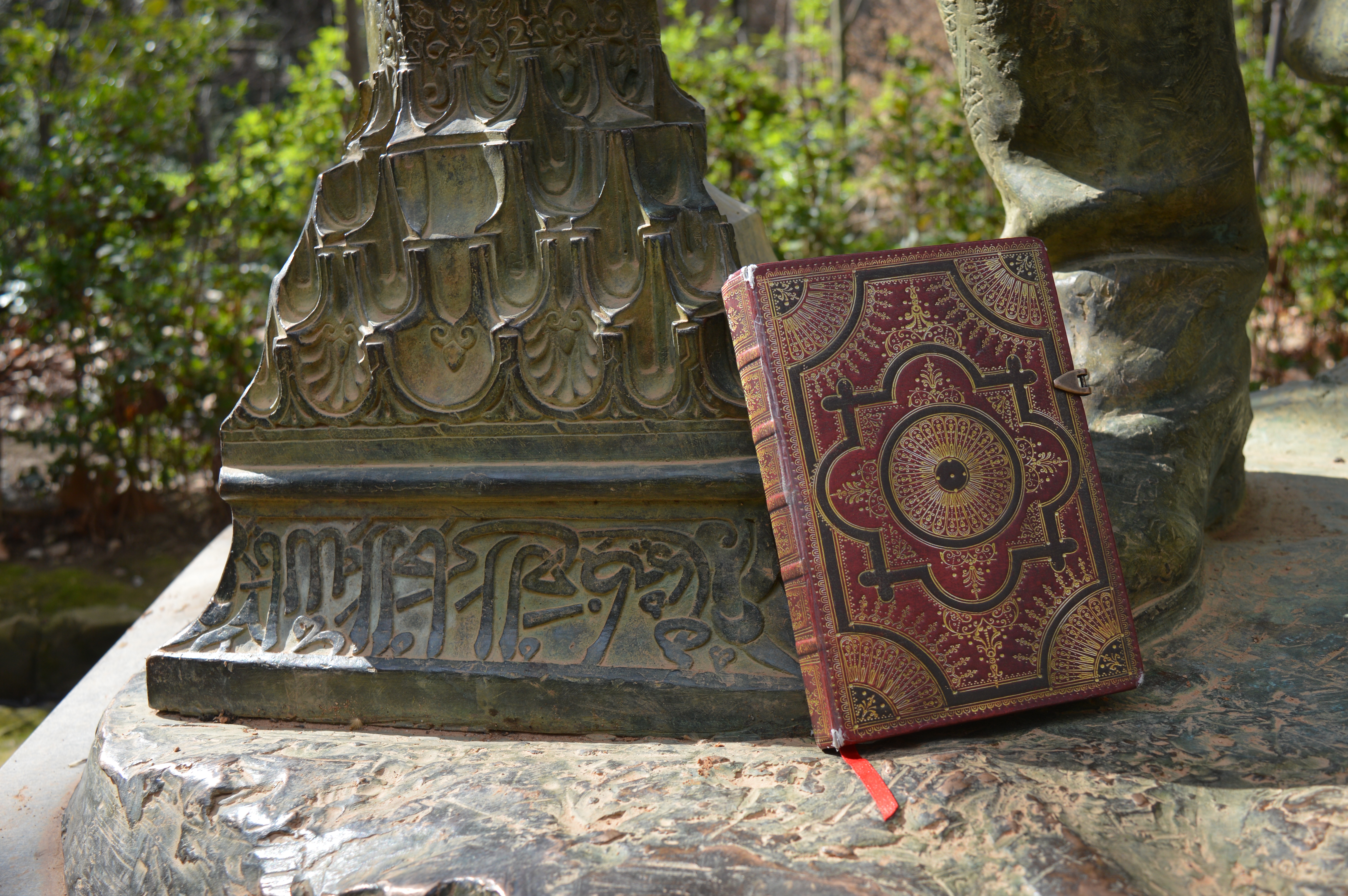
The Red Book (my first “Renaissance” journal) at the feet of Washington Irving, Granada (March 2016)

Let me tell you something for free: full-time employment is a writer’s bane. You knew that already, so neither of us lost anything in that transaction. Except me, and the ever-increasing gaps between the dates in my journal.

I spent so much of this weekend powering through marking after a week of KS3 assessments that it only occurred to me as I filed my Year 9 papers away that last weekend was the first time I’d given my novel some serious thought in a year and a half. Since you can chalk that “blip” up to the first lockdown, it’s probably safe to say the last time I made any real headway with my book was before I took up a post in a boarding school back here in the UK. That is to say, back when I was living in Extremadura, now almost four years ago. If it weren’t for the fact that I still carry a journal around with me, I’d have made no progress in that time whatsoever.

But since I’m more of a glass-half-full kind of guy, I’m going to focus less on the killing instinct of working life and more on the magic of keeping a journal. Because, as always, there’s a story behind it – and in my case, it’s a lot more personal than I ever knew.

I’ve written reasonably extensively about my journalling habit before, but in case you missed it, click here for an earlier piece on one of my favourite journals, the Red Book.

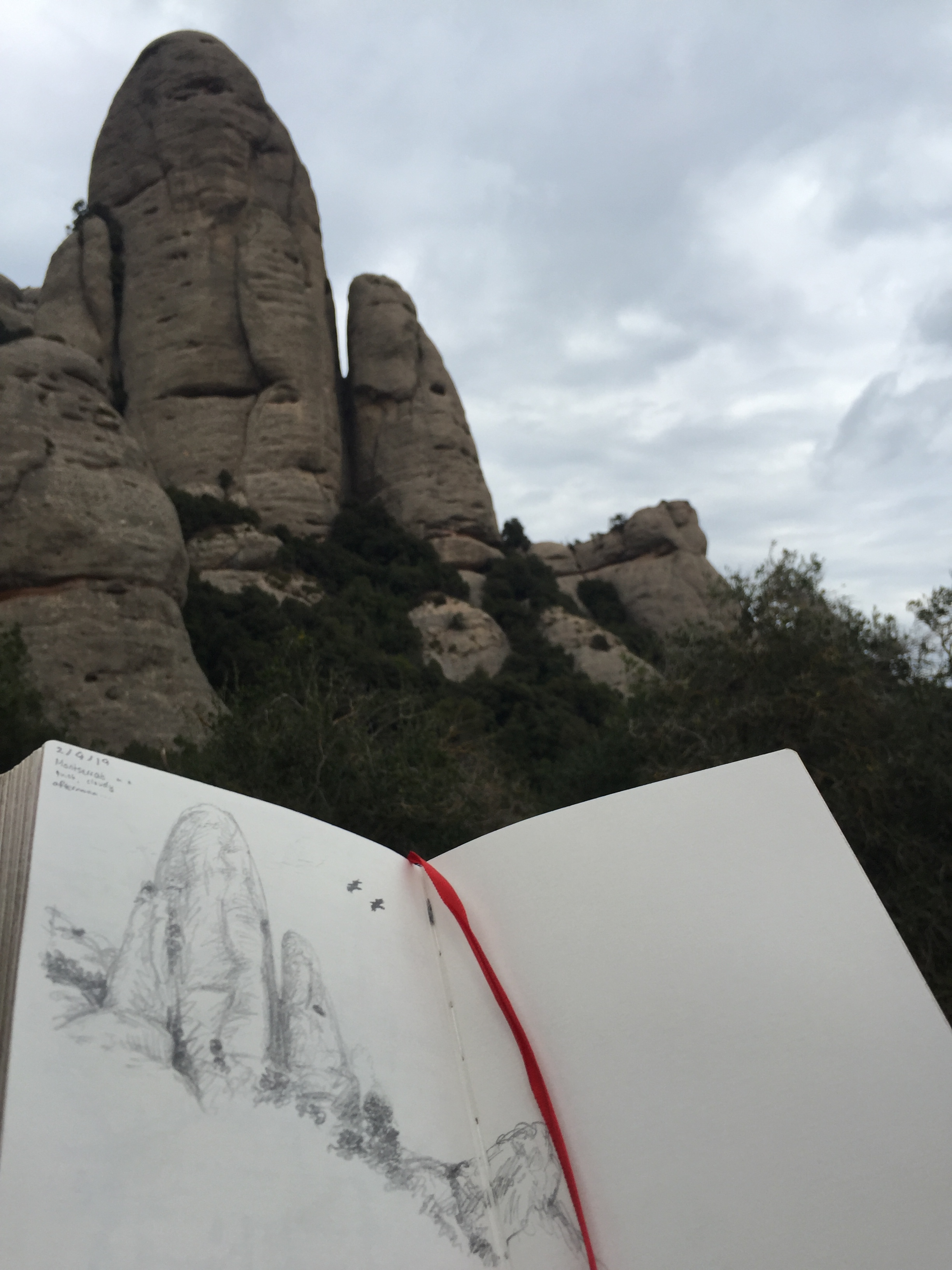
Sketching the windy peaks of Montserrat (April 2019)

I don’t think I’ve ever been without a sketchbook of sorts. Going back to my parents’ place for Christmas turned up quite a few of my oldest surviving books, dog-eared, half-filled and almost all of them featuring the same cast of characters that share a space in my head and my heart to this day. Studying Art for GCSE and A Level naturally fed the habit, though I seem to remember having separate sketchbooks for school and for myself right the way through. I suppose I should reach out to a couple of early inspirations here: to Mr Howe, for his no-holds-barred approach to sketchbook work (“unfinished pieces are often more interesting than finished pieces” has stuck with me); to my old friend Freddie, whose handwriting I secretly admired and have long since adapted into my own; and, of course, to my own mother, who must have kept several journals of her own when she was younger.

These first attempts were more art than word, though. It wasn’t until my eighteenth year that I took the craft of journalling more seriously, riding off the back of having successfully kept a diary for a little over a whole year – to date, the longest successful writing streak in my life. With many long months to go until the first day of my degree, I picked up a small flip-journal from Waterstones and penned some thoughts. At first, it was just lists: locations in my novel, possible pen names, key elements for fantasy fiction. On the second page I branched out and jotted down some facts that I found interesting, for a change of pace (my brother was quick to point out this was a considerably less interesting way to use a journal). I guess not everybody needs to know that the underside of a waterfall is called an undercutting; that Mullah Omar donned the mystical Cloak of the Prophet to drum up support in 1996; and that Dr William Bryden was the sole survivor of the Khyber Pass massacre of 1842.

Three pages in and the novel is the back in the limelight – and so it continues. Every so often, I find something in a book or on the news that I deem worthy of recording, but as a rule, the bulk of my pen-and-pencilwork concerns the fate of my cast of characters and the world in which they live, ever-growing, ever-crystallising. Sketches in pencil duck and weave through the gaps like weasels, giving over onto full page illustrations when I really found my mojo. It’s a formula I have deviated from very little for nine years now.

Gypsy Legends and Grenadine Gifts (2020)

When I was younger, and I still had these crazy notions (as the young and reckless always do) of embarking upon death-defying expeditions to Afghanistan and beyond, I remember thinking that, if something should happen to me, the world in my head that I had spent all but the first seven years of my life creating would disappear completely. That is, unless I left enough material behind for somebody to pick up the pieces. I suppose that morbid justification stuck, because there is now enough information spread across my various journals for somebody to put together the various stories I have always wanted to tell.

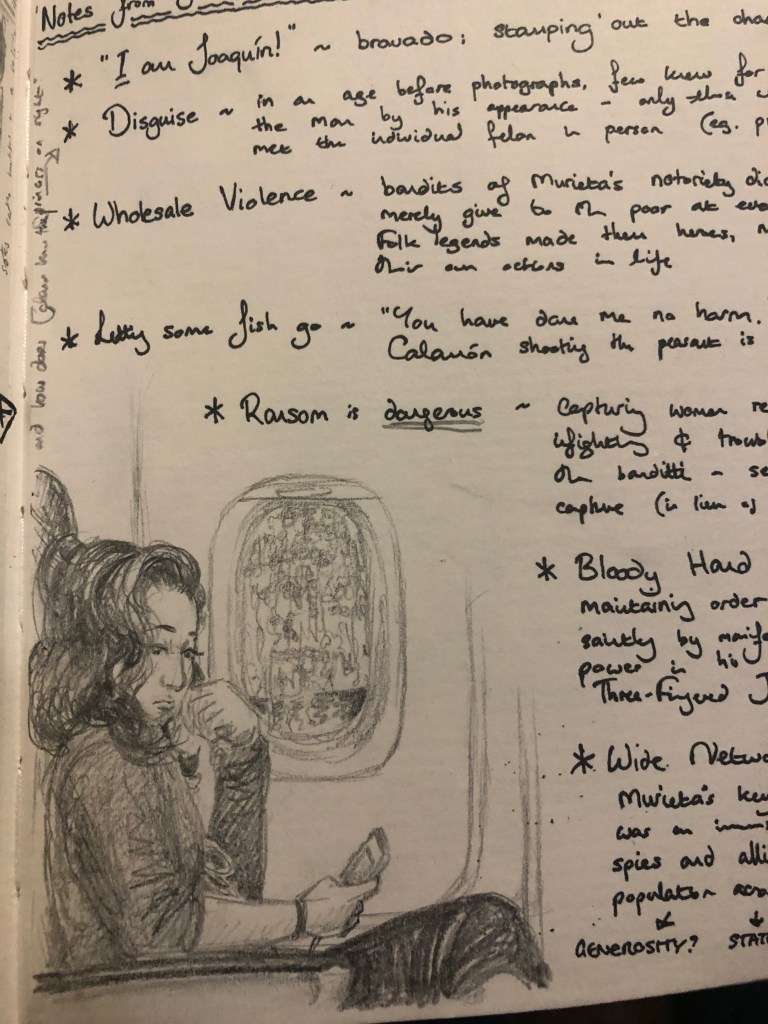
The rain in Spain on the plane (August 2019)

And perhaps there’s a logical explanation for that mindset.

My great-grandmother Mercedes was a woman ahead of her time. In a Spain teetering on the brink of Civil War, she found love with a poet and musician called Mateo. They corresponded in verse, quoting Oscar Wilde and Keats and Plato and Engels. Their handwritten letters to each other – safeguarded by my family for over fifty years – tell of a truly devoted husband and wife on an equal intellectual footing, flying in the face of the dictadura and the expectations of women outlined in the Guia de la buena esposa. Mercedes was well-known about town for her journal, which was as much a part of her character as her glass of brandy and cigars. Though her locally legendary journals themselves are lost to time, it is chiefly through her precious letters to her Mateo that I can see through a window in that past. It is a past which comes clearer into focus the more I get to know my family out there. The fatalist in me cannot help but wonder at the sequence of events that led to me arriving at my family’s door with little more than my journal in hand, unconsciously carrying the one item that would prove my connection to a great-grandmother I never had the chance to meet. Mercedes left this world the very same year I came into it.

I spent the greater part of my search for my family focused on the grandfather I never knew, but it is my bisabuela Mercedes who guides my hand these days. I’m a strong believer in upholding family traditions, and it doesn’t half lend a sense of purpose to the scribblings in my journals, even if they never lead anywhere. My ancestors left me a literal paper trail and I must follow.

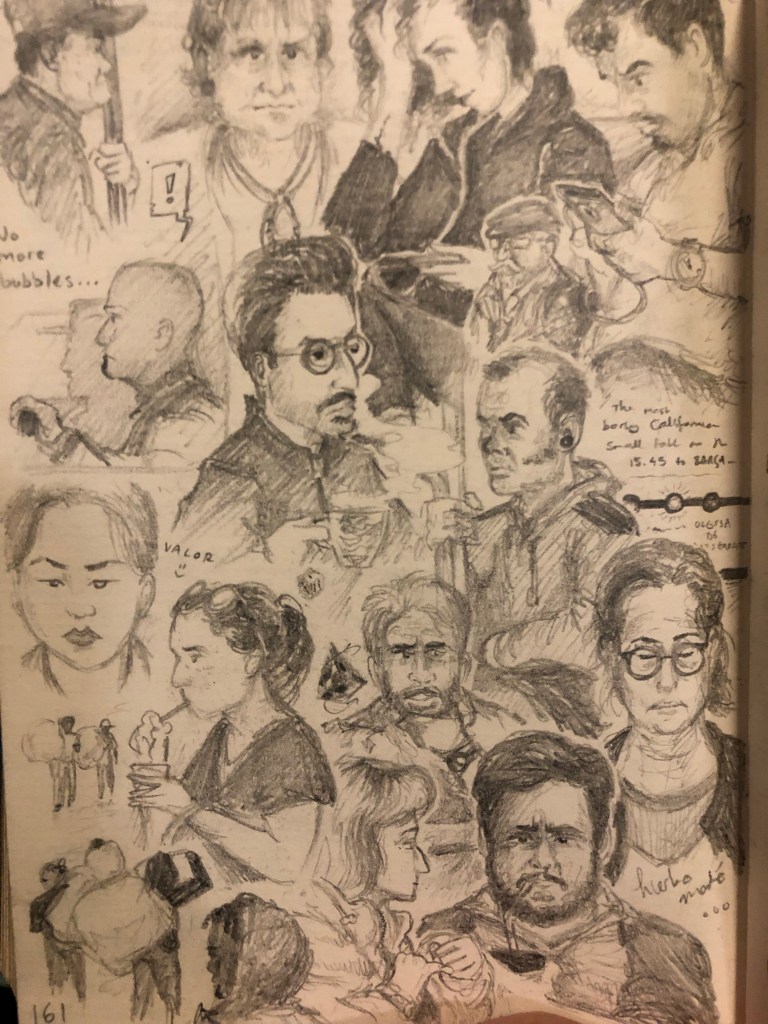
Barcelona vignettes (March 2019)

Have you ever kept a journal? I’d highly recommend it. It’s less onerous than a diary and a beautiful thing to look back on. Through mine, I can read the world around me through the strokes of my pen: the euphoria of success in the a cappella semifinals; my bewilderment at Brexit; the shockwaves of the fire of Notre-Dame; and my bottomless love for the country of my ancestors. It’s all there, and since boarding school life makes it nigh-on impossible to knock out a couple of chapters a week like I used to, my journals do a thumping good job at telling the story.

And maybe, one day, that’s exactly what they’ll do, when they fall into the hands of my grandchildren. I’d like that. I think Mercedes would have liked that, too.

BB x

Hesperornis

At around eight o’clock in the morning, the sun isn’t quite all the way up yet and the beaches around Arenal d’en Castell are, for the most part, empty of swimmers. A few Speedo-wearing junkies hug the shoreline, and the running girl is back on the boardwalk as she was yesterday, same time, same place. Other than that, the beach is empty – except for one unexpected bather out for a morning swim.

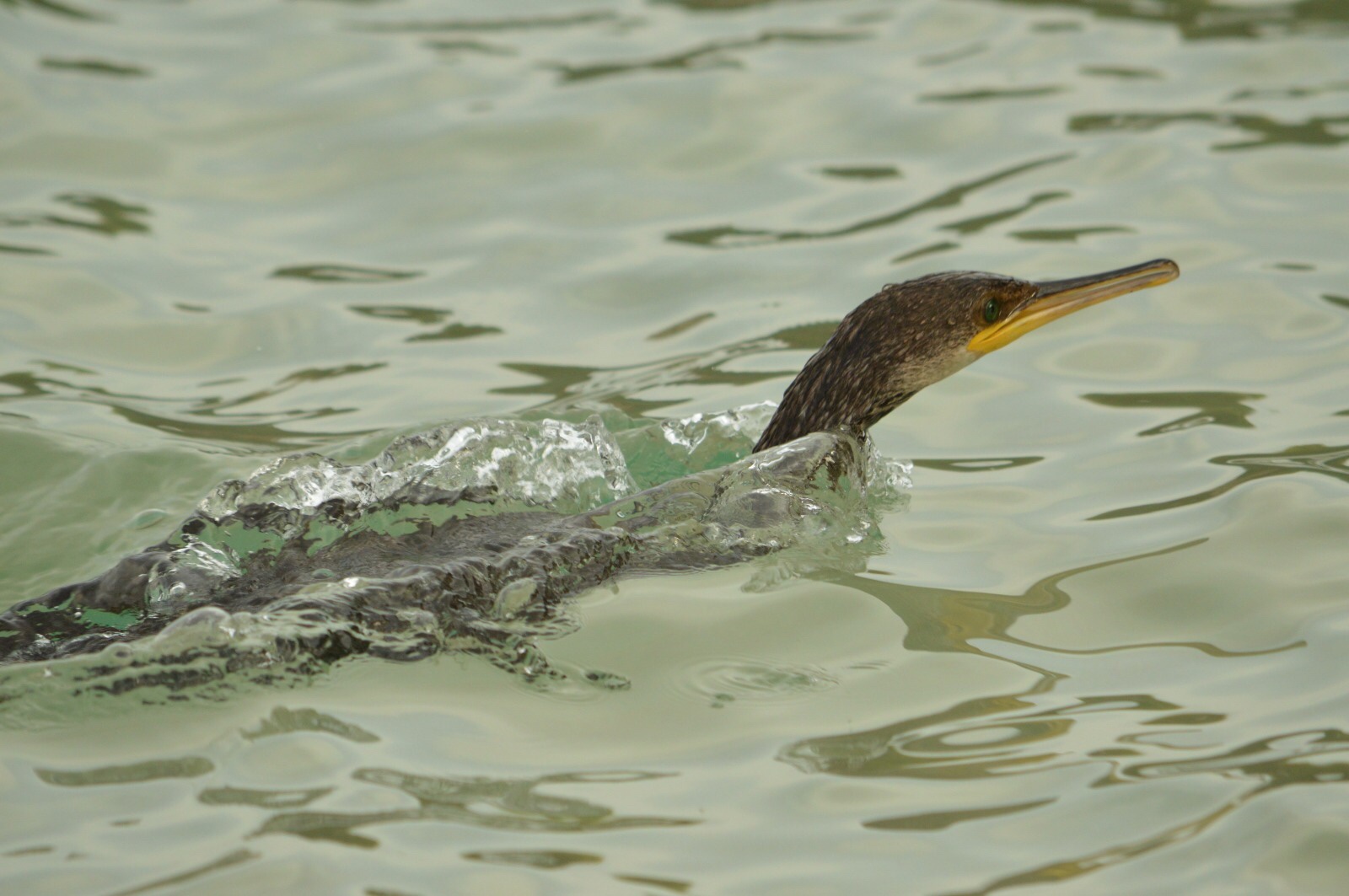
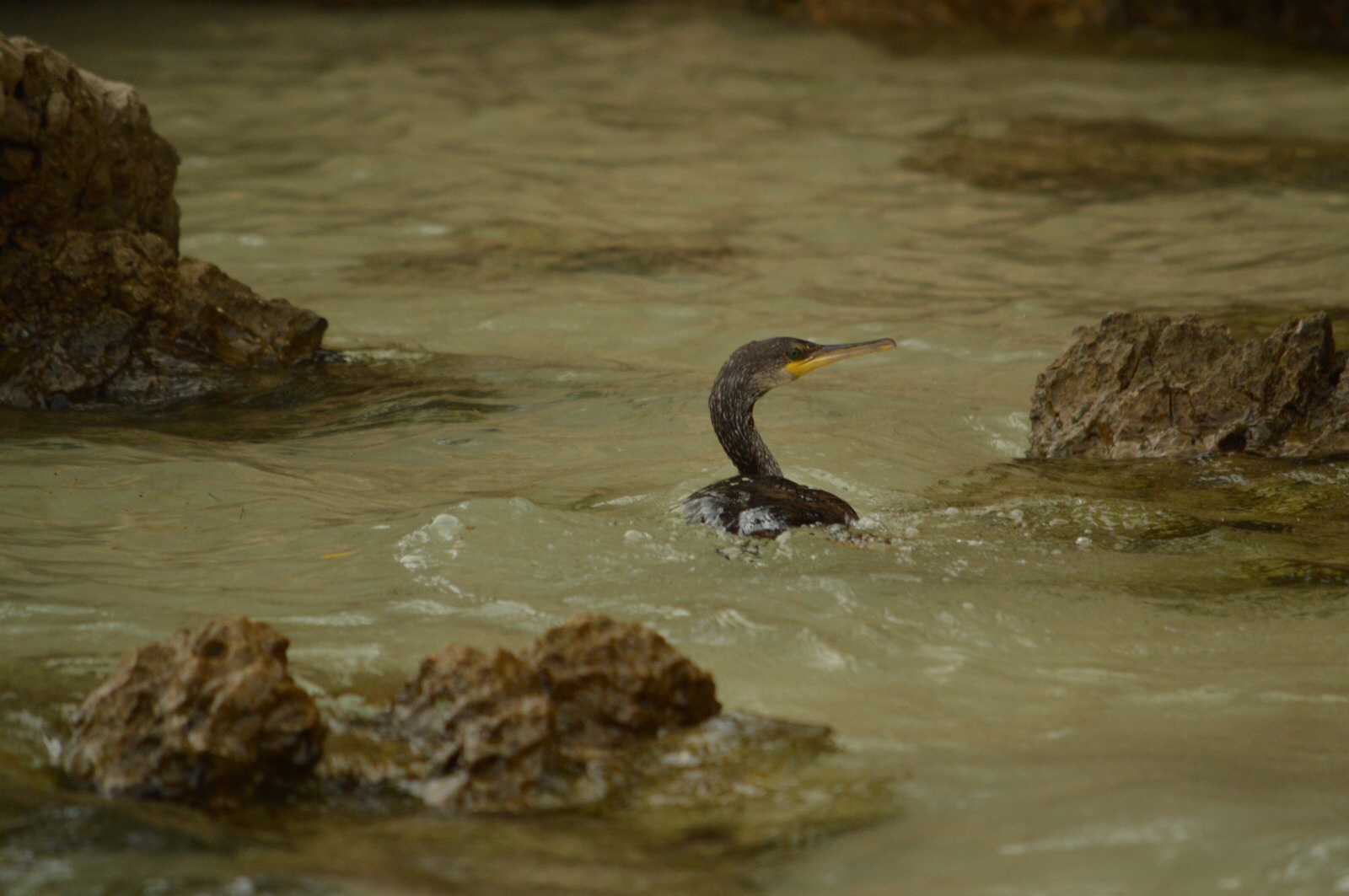
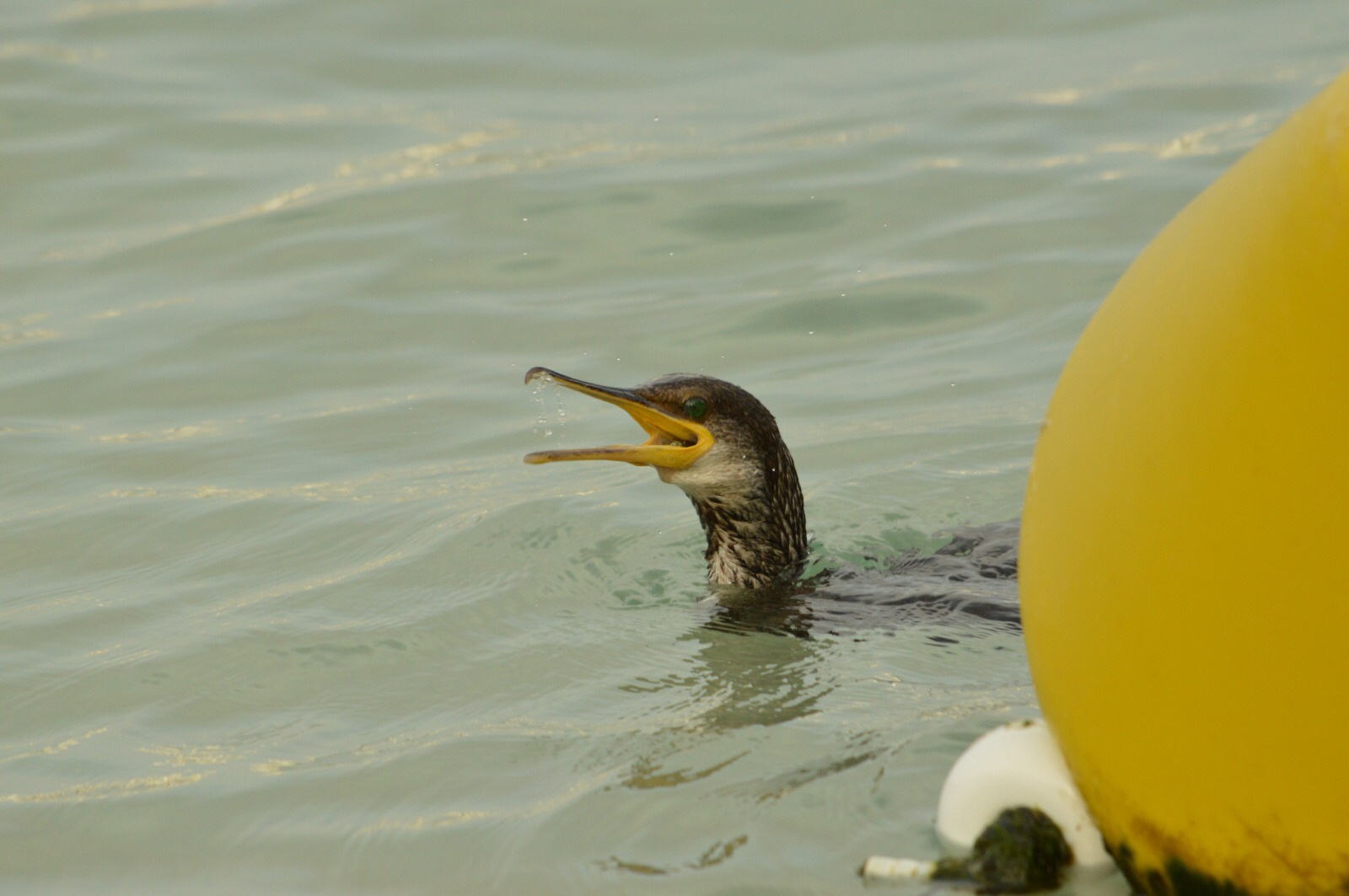
The Mediterranean Shag – perhaps more appropriately dubbed in Spanish as the tufted cormorant – is a diving bird that one normally associates with the rugged cliffs and seabird colonies of the north. The last time I saw these odd-looking snake-necked seabirds I was standing atop the windswept cliffs of Inner Farne, where the birds had built their messy nests mere inches from the footpath. The Farne Islands are magical in their own right with their denizens so fearless and so close at hand, so I suppose I assumed the Farne birds to be a braver sort. In most other parts of the world, birds (and other animals for that matter) know well enough to steer clear of the capricious hand of man. The Great Auk didn’t – and is consequently no longer with us.

Before the tourism industry boomed in the Mediterranean, sea turtles and monk seals swam into the sandy coves to give birth and plovers nested on the shorelines. The human demand for a place in the sun has pushed many of these creatures to local extinction – the Mediterranean monk seal is now one of the rarest mammals on the planet – but some species have decided the only way to cope with the summer surge of noisy humanity is to simply go about their business as though nothing had changed. The shags of Arenal d’en Castell do not appear to mind the presence of their human neighbours in the slightest. The waters of the bay are still teeming with fish, and for this master fisherman, the presence of a few hardy toe-dippers is no obstacle to a morning’s hunting.

There are at least three shags in the bay, not counting those that haunt the rocky cliffs of the headland to the northeast. Like many “urban” animals, they lack the lustre of their wild counterparts. The shining bottle-green feathers of the Farne birds are absent here: Phalacrocorax aristotelis desmarestii dons a more humble suit, with a touch of the sandy-grey “pardel” colour that flecks the coats of all Spain’s beasts, from its mice and rabbits to its bears and wolves.

Or at least, this bunch of townies do.

They really are masterful swimmers. This youngster did an entire length of the bay in a matter of minutes, displaying incredible agility as it darted through the shallows, oftentimes passing within a few feet of the day’s first paddlers, and avoiding what obstacles it encountered with incredible dexterity – with one exception. Perhaps age will bring wisdom.

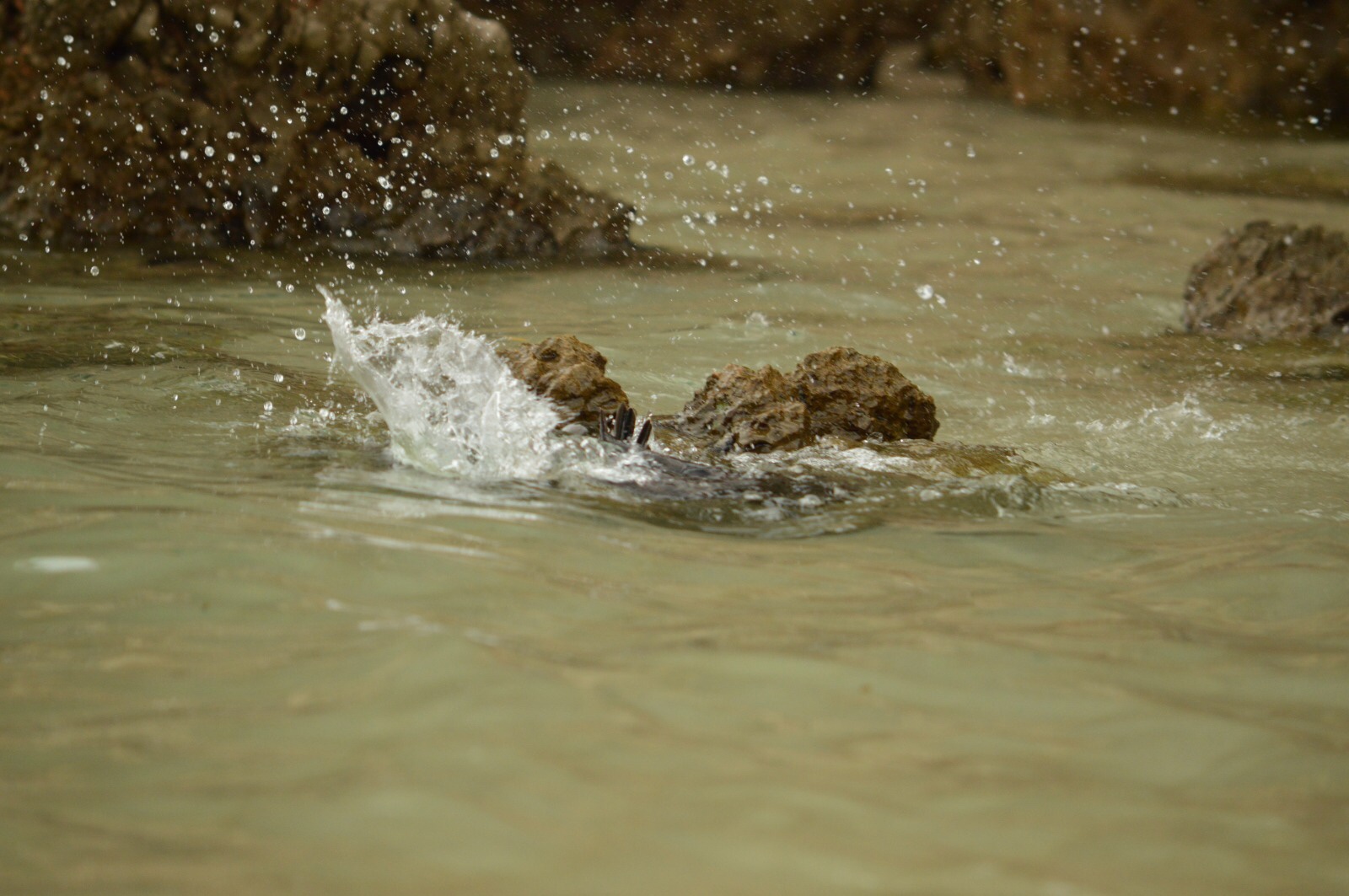
Every once in a while, nature, that ancient mechanic, finds a form it likes and seems to say to itself ‘yes, that’ll do – no need for further adjustments’. Sharks and sponges and jellyfish have filled an ecological niche since time immemorial, and there is much in the shag that harks back to some of the earliest birds, not least of all the fearsome Hesperornis, a seagoing avian dinosaur with sharp teeth on its beak. There are no teeth on its descendant, but as it floats along the surface of the water, snorkelling often and propelling itself along by its back legs, it seems an ancient creature; and when it finds what it was looking for, it kicks with its powerful legs and dives. And if it looked a capable swimmer on the surface, that is nothing compared to what it can achieve below the waves.

Would that I had an underwater camera and could show you just what I mean! Swimming around the headland this afternoon, I ran into the bird again, paddling only a few metres away without a care in the world. When it dived, I went under and followed it on its underwater hunt. Such speed! The bird moves like a torpedo through the water, powering ahead with powerful kicks of its bright yellow feet. I could only keep up for as long as it allowed; when it had enough of the lumbering tag-along, it kicked harder and took off through the depths. Were the sea calmer I might have watched it go, but the high winds stirred up the sand on the seabed and within seconds it disappeared into the gloom.

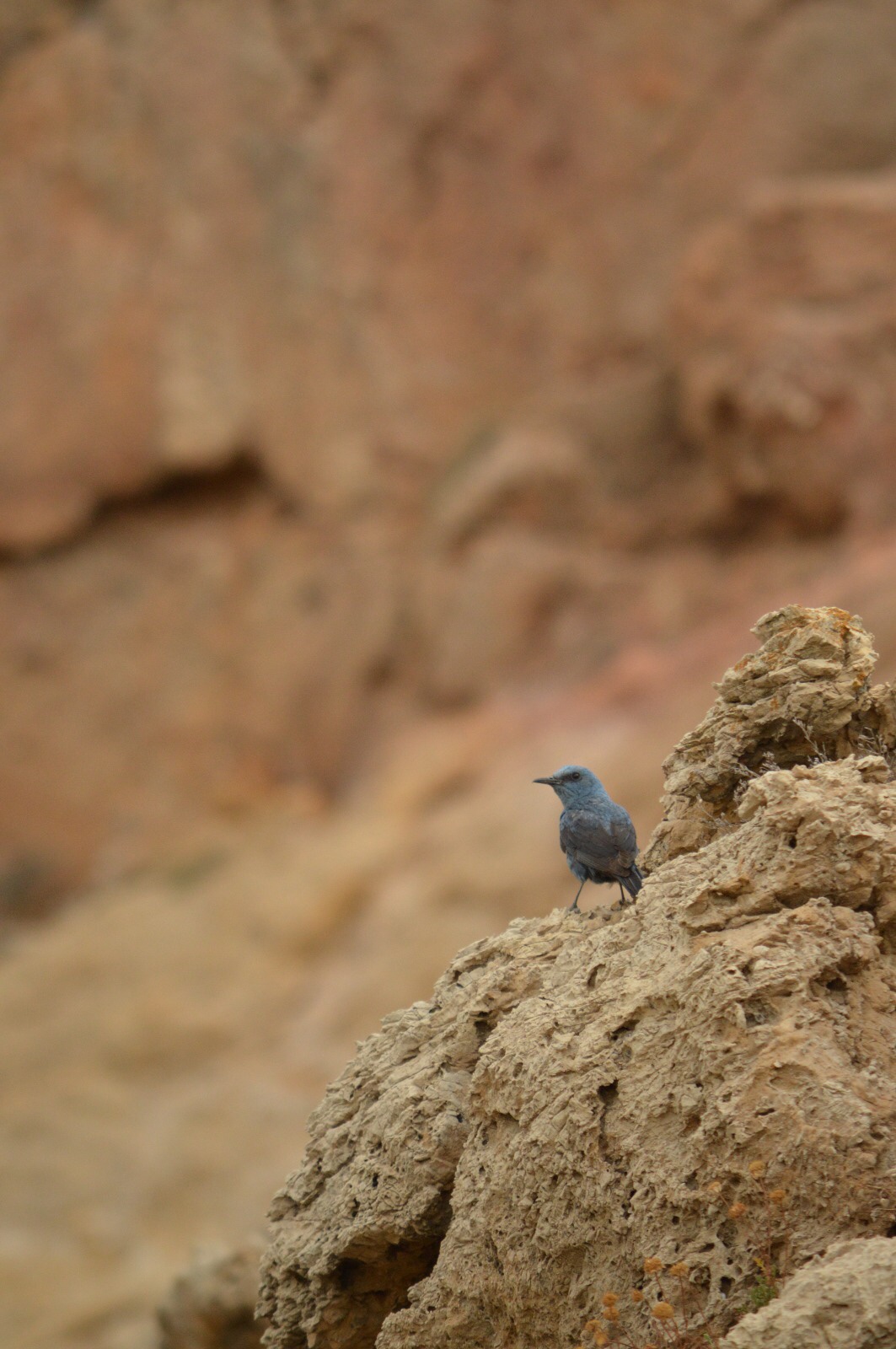
It’s moments like this that I wake up for. The flycatchers hawking around the climbing frame in the garden. The hummingbird hawkmoth that visits the hedge every day, the turtle doves that purr from the Aleppo pines, and the blue rock thrushes that warble from the cliffs of every rocky cove – and all of this within five minutes of the flat. Menorca is wild and, for the nature lover for whom a casual swim is simply not enough, it is a truly beautiful place to explore.

The high winds of the last few days are finally on the wane; the waves are not crashing upon the headland as they were this morning. Tomorrow I make for Fornells to explore the reefs on the northernmost cape of the island. I hear there are moray eels to be seen, though I should consider myself more fortunate if I should have the chance to swim with the shags once again. It was a real RSPB moment, up there with the vultures in the mist and the saltpan harrier, and I shall treasure it for years to come. BB x

Stormchasing

It only rained for three minutes this evening – four, at a push – but it was enough. The muggy, sweat-laundering heat that swallowed me body and soul from the moment I stepped out of the plane this morning is over, and with a night breeze blowing and the temperature pleasantly cool, the last three hours of the day are for writing. I’ve not had the time or mental energy to put pen to paper for several months, and I doubt I will at all next year. So tonight, and maybe for the next few nights, the sun is shining and a haymaker am I.

Sweet Caroline is playing on a loudspeaker in the hotel bar down the road. The only other sounds, besides the ever more distant rumblings of thunder, are the chirring of crickets, the metallic ring of a flagpole in the wind and snatches of conversation from the holidaymakers in the surrounding block. I thought tonight might be a night for geckos, but I can’t see or hear any tonight. Not on my balcony, anyway. The rain might have driven them off.

Beach holidays have been late in coming to me. As with so much in my life, I suppose I have been contrary: what appealed to everybody else must therefore be uninspired and dull. I’d love to say I’m still game to throw myself gung-ho into another madcap adventure, but after a year in a boarding school, I’m quite spent, and for once the idea of spending more than a couple of days on the beach isn’t quite as dreary as it once sounded.

Ok, scratch that. The storm that rolled in over the cliffs today lit a fire in my soul and I was up and out the door in a heartbeat.

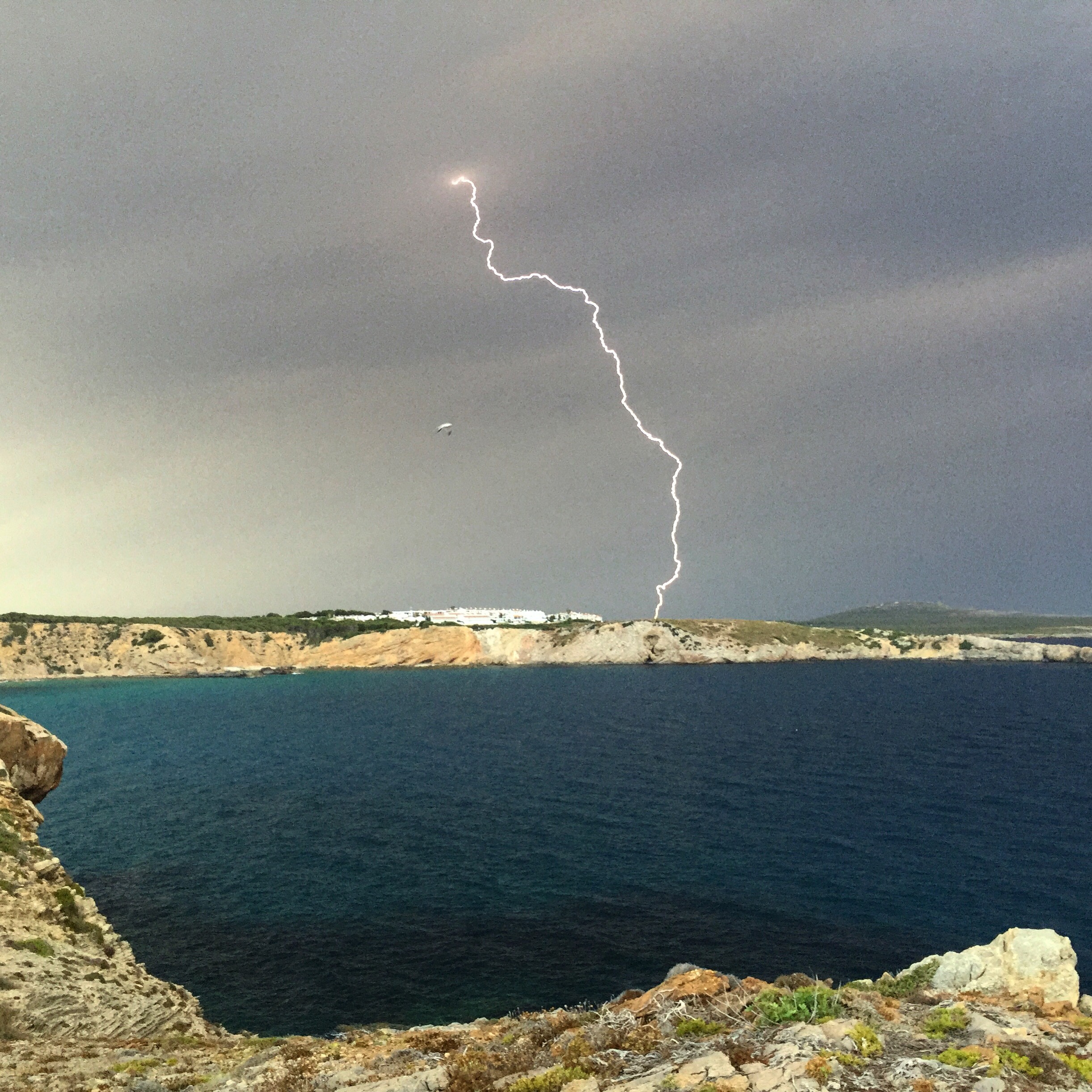
Standing alone atop the wind-scarred wastes of the Cap des Redoble, I looked out to the west and watched the thunderstorm come rolling in. I have seen displays of grater majesty and covered my ears before more deafening drumrolls, but it felt truly sensational to stand alone, high atop a cliff, as thunderbolts great and small rained down all around me.

Some forked across the sky, skirting beneath the clouds like bubbles under ice, whilst others weaved in and out of the haze as though there were a holes in the clouds. Others still hurtled straight into the sea offshore, some thin and wispy, others monstrous and so bright they lit up the sea in their wake and pulsed in stasis upon the grey canvas of the sky behind before disappearing into the ether – invariably just before I’d pressed down the shutter on my camera.

I love a good thunderstorm. Who doesn’t? It is truly one of nature’s most awesome performances, and who can blame the ancients for believing gods great and wicked were behind such electric devilry. Only weeks ago I wandered out into the grounds at night to watch a silent storm from the hilltop, and stood in equally silent awe for almost half an hour as lightning danced across the sky in flashes of silver and violet, twelve strikes to a minute. And six years before that, in the garden of the bishop’s residence in Boroboro, I watched a similar storm paint the sky shades of purple I had never seen before.

I had planned this first post to be about swimming with tetras and breams and mullets and wrasse, but the thunderstorm that followed somewhat stole its… well. You get the idea.

Nature has always been my elixir. A reliable restorative that works every time, if only I allow myself the time to go out in search of it. That’s part of the draw of working in a rural boarding school, I guess – that at any given moment, if I have an hour or two to spare, I can strap on my walking shoes and be in the heart of an English forest within minutes. My fears are gone, the world is put to rights and my soul is singing. Amman simply couldn’t offer that and I suffered.

In The Power of One, one of Bryce Courtenay’s best and one of my favourite books of all time, the wise and humble Doc tells Peekay that, whatever the question, ‘the answer you shall find in nature‘. Wise words and I swear by ’em. I just wish I were wise enough to act on them more often. Next year is likely to be my greatest hurdle yet, and I will need every trick in my arsenal to pull through.

Four more days in Menorca are just what the doctor ordered. And when Menorca is but a distant memory, a thunderstorm or two like the one I saw today wouldn’t be so bad. BB x

The Strength of Blood

Seat eighty-six, coach two. A sky full of flat-bottomed clouds. The immensity of La Mancha racing by in a haze of olive green, dirty white and wine red, with scarlet carpets of poppies laid out in the tall grass of the wheat-fields. Ruined farmhouses crumbling amongst the endless vineyards, men and women bent double as they work the fields, and a lonely oak tree standing tall. Woodpigeons scattering in the wake of the train; a single kestrel perched high upon a telegraph pole; a pair of harriers wheeling overhead on slender wings, the female a living shadow of the earth below, the male a silver spirit of the sky above. I cannot see the bustards I saw on the way here, nor the rabbits or hares or even the magpies. But far off to the south the land rises, and I can see the blue hills of La Solana and Infantes, the vanguard of the sierras of Andalusia. Andalusia: where all of this began.

It seems strange, now, to imagine this whole Spanish adventure without my family at the heart of it. All those years spent wandering in the shade of the stone pines of Doñana, hiking in the scrubby mountains around Grazalema and anchoring myself in one way or another to an ancient, characterful little corner (literally) of the province of Cádiz… I question why, a cup of café con leche in hand, we did not simply come straight here to La Mancha, where the family is, was and always had been, rather than go chasing the same Andalusian dream that ruined so many British families before us. It would have made a lot more sense, certainly. But such is the way of things, and if we had, would I have half the story to tell? Would I even be where I am today? I think not.

The high sierras of Ronda. The stone pine forests of Huelva. The scent of snow in the Alpujarras, the Arabic lettering on the walls of the Alhambra and the pillared forest of the Great Mosque of Córdoba. And of course, the unspoilt wilds of Extremadura, from the plains of Cáceres to the paradise hills of La Vera. That is the Spain I know. The Spain I have come to love with all of my heart. Just as an athlete needs to warm up before a race, so too did I need to wander before finding my way. My mother chose the destination; I chose the road.

As I continue my wandering in the streets of Alcázar de San Juan, waiting for the connecting train to Madrid, I pass a small and modern church. Families pour out onto the street, shaking hands, exchanging kisses, the children playing chase in the street. I say to myself, aloud, “así habría sido mi vida, quizás…”. I walk in the direction of the windmills, knowing full well I will not make it there and back in the forty minutes at my disposal. I find a small park on the way and stop to eat a semicurado sandwich in a concrete ring decorated with painted tiles telling the story of Don Quijote. I must read that book, I really must. It’s nothing short of a crime to have come this far with my Spanish and not to have read the book.

An hour passes. The train sails through the lush greenery of Aranjuez. My mind races back to an August afternoon, many years ago, when my parents decided to break up the long drive south to our new home with a visit to the royal palace there. Twelve year-old me, with little to no idea what I was getting myself in for, crouched down over a pond staring at pumpkinseed fish. Leaving England behind meant nothing to me, then. I was going to live in a country with pumpkinseed fish, and eagles, and hoopoes, and vultures, and Cola Cao. I knew my priorities. These days I’m not so sure. I know what they are – that much I have learned – but which are the most pressing priorities, the ones I truly cannot live without… that is hard to say.

Without England, I would not have my music. My gospel choir. My a cappella group. My funk band and the chance to pour all my heart and soul into the most powerful necessity on the planet. But without Spain, I would not have my greatest love. I would not have my family, my ever-changing, ever-constant paradise, and the happiness machine that is the Spanish language itself (forgive the overuse of the word “my” – it is so very easy to feel possessive about the things you care the most about). For the last three years I have been forced to choose between the two, and it has done its level best to tear me apart.

Seat forty-eight, coach one. Getafe rises up and out of the fields, heralded by an advance guard of red tower blocks on the horizon. The wilderness is behind us now; the metropolis ahead. Last night I dreamed I was climbing a steep forested hill, when out of nowhere a stag, huge and thunderous with broad antlers, bolted out of the bushes, cleared the fence to my left in a single leap and came to a halt on the other side of the path, looking back at me as though to challenge me. Google says to dream of a stag is an augur of caution against making hasty decisions, and that a running stag foretells a great deal of luck in family life. It sounds like superstitious stuff and nonsense to me, but in truth, I have not had a dream so vivid in a long time. And I have been known to avoid walking under scaffolding.

By eight thirty tonight I will be back at work. With exam season in full swing I could hardly ask for more than I already have. But I return home full of light. Spending the weekend with my family has been everything I wanted it to be and more besides, just like it was this time last year, and the Easter before that. I have never known a happiness quite like it. Seeing the shock, the joy and the tears on my little cousin’s face when he saw me in the church of San Blas… it is a memory I will never forget. Last year it was the novelty of discovery that shook me. Now it is the strength of love and blood, the strongest of all ties. And it will keep me strong until we meet again. That much I know. BB x