Creativity in the Classroom: A Step Too Far?

I´m falling into something of a routine out here, now. Three hours with the state school, two hours with the Catholic school, one hour´s private English lesson, one hour´s Spanish conversation with my flatmate, a couple of hour´s reading and then bed. That´s good. I like a routine. It lets me know what I´m doing. I tend to go a bit spare without exact orders.

As I guessed all along, the term ´language assistant´ is a very loose one, interpreted by different schools in different ways. Some of my companions are working as ´classic´ language assistants, taking individuals or small groups for short periods for conversation. Others attend class with an English teacher as a human dictionary, there to lend a hand whenever a native speaker´s touch is needed. In Spanish, the term ´language assistant´ gets shortened down to just one word – auxiliar – which leaves even more room for interpretation. And just as happened in the last two ´language assistant´ jobs I´ve had, I seem to be working a real teacher rota.

Granted, I had prior warning this time. The first time I was promoted, so to speak, I had no idea that I was supposed to be taking full classes on my own until I was told that the diminutive head of the French department had decided to benefit from my presence by taking a month´s holiday at short notice. This time I was given a couple of lessons´ observation to get the feel of it, and even though they mostly left me leading the events – a harbinger, I guess – it was good to know what I was getting myself in for in advance.

So I´m a sub-teacher. That´s not a problem. In fact, it´s exactly what I wanted. It´s just… well, it´s reassuring to know that it doesn´t matter where you go in the world, ´language assistant´ is always a very flexible term.

In one school I take entire classes on my own, from bawling primary level to studious upper sixth. In the other I also prepare an hour´s class for whichever groups of the twelve I have that day – equally widely-spread, but fortunately without the weekly terrors of the primaria – and these are almost always under the supervision and occasional assistance of one of the English staff. The irony there is that they´re probably doing what comes under my job description. The system in place is the one used by bilingual schools nationwide: one class where the language of conversation can only be English, to compliment the others which are spent on writing and grammar. Nobody likes grammar. So that means it´s my class that everyone looks forward to by default, which is something to smile about.

Taking a full class obviously means you need an hour´s worth of material, and with teenagers thrown into the mix, you need to be prepared for all eventualities. I´m learning what to do when they´re tired, and how to calm them down when they´re exciteable, without letting them know there´s a system to it all. I´m learning what ideas students wants to discuss and which ones turn them off, and which games work well, and which ones don´t. And though I should have seen it coming a mile off, I tried this week once again with what is and always has been the greatest stumbling block of all: tapping into the students´ creativity.

Now this is something I feel very strongly about, and I´ve already written one behemoth of a text this week, so I´ll tackle it as lightly as I can. The simple fact of the matter is that there isn´t enough emphasis placed on creativity in schools these days. To tell the truth, I´m not entirely sure there ever has been. One of my English teachers once announced at a parents´ evening that she was ´paid to teach, not to inspire´. I disagree entirely. Inspiration should be right at the front of teaching, if we´re not all to become mindless robots.

Ah, but this is beginning to smack of yesterday´s post. It´s vaguely related, primarily because the game I´ve been ending my technology lessons with – a simplified variation on the British radio show I´m Sorry I Haven´t A Clue´s “Good News, Bad News” – has, time and again, come up dead in the water. The reason? Because nobody´s able to tap into their own creativity. I don´t know whether it got stamped out of the education system in favour of textual comprehension or the study of presentational devices – the kind of stuff that actually comes up in an exam – but the art of coming up with stories seems to disappear once you hit secondary school level.

For a budding author, I find this nothing short of horrifying. I spent most of my school career writing stories, and yes, it probably did affect my grades, but I left with an impressive English mark, and it´s my English that has always saved my neck. I´d have been flat-out rejected from grammar school if it hadn´t been for my English, since my mathematical capability is comparable to that of a wet flannel. The only excuse I can think of is that I´ve never stopped writing: from short stories to novels, diaries to blogs, love letters to newspaper articles. It keeps me alive. More importantly, it keeps my brain alive.

The higher up the education system you go, the less you´re encouraged to think for yourself. At some point you have to start quoting other writers. Then you have to start referencing other texts you´ve read and basing your arguments on the standpoints of extinct luminaries. The result, of course, is that by the time you get to university and you´re suddenly encouraged to come up with your own argument, a lot of people are quite understandably left high and dry, because they haven´t been taught how to think that way.

Here´s the difficulty. Creativity cannot be taught. It can be encouraged, it can be inspired, but it cannot be taught. For starters, how do you mark creativity? This is a regular feature of the arts world, of course, but outside the tripartite kingdom of Art, Music and Drama, creativity doesn´t get all that much of a look-in. In a world where everybody is mark-centric, from pupils to parents to headmasters and the governors to whom they bow, that kind of question gets thrown out early on, and the baby with the bathwater. So me going headlong into a class of fifteen year-olds and expecting them to come up with a story in fifteen minutes of “Good News, Bad News” was the very height of foolishness, especially for somebody with two jobs´ worth of teaching experience under his belt. A different English teacher – one who certainly did know how to inspire – once told us that the truth of the matter is that there are those who can, and those who can´t. I´m still not entirely sure where I stand on that, since I´m none too keen to cut anybody off, but I acknowledge that there´s more than a kernel of truth in that statement.

Creativity, I believe, is something that we´re all born with. We all loved to listen to stories when we were children, and most of us will have tried our hand at making one or two, intentionally or no. Heck, it´s fuelled language growth, all the arts and technology for all human existence. The trouble is that so much of it disappears when we grow up, when we´re told we have to put fiction behind us and focus on the real world. Unless you´re a stubborn little bastard like me, and you decide early on to defy that and to hold on to your creativity and remain a child forever. Like a twenty-first century Peter Pan.

In short, it´s perhaps too much to expect every student to be able to create stories of their own, especially at secondary level. There are a few rogue elements – it´s not difficult to recognise your own characteristics in others – but on the whole it strays much too far into the awkward silence minefield. Well, I´ve learned my lesson (no pun intended). But I´m not about to concede defeat. Never. I doubt I´ll make story-tellers out of the lot of them, but if I can sow the seeds of a budding Cervantes or Lope amongst the drowsy horde, I´ll consider my job accomplished. At the end of the day, we´re all story-tellers in one way or another. All it takes is the courage to leave behind what is real and to dabble with what is not. I said right at the start that I like exact orders. True. But there´s enough of an anarchist in me to want to break free sometimes. I hope there´s a little anarchy in everybody. BB x

Flicking V’s

The first thing you should know about Villafranca: life may seem slow here, but the underground current moves lightning quick.

And here we go! The longest stretch of the year abroad has begun, and boy does it look it. It certainly felt it as I tried to bed down after packing everything I’ll need for the next nine months into a single suitcase. I got a bad case of cold feet in the last five minutes before I fell asleep, wondering when the next time I’d have a bed of my own would be. I’m hosteling it for the first three nights whilst I find my feet here, which takes me up to Friday night. It’s looking like it won’t all be resuelto by then, but, it’s still early days. If nothing’s been arranged by then, I’ll use the weekend to sort out a few vital affairs in Badajoz, namely acquiring an essential NIE, or número de identidad de extranjero, a turgid, long-winded process that looks to be quite the bureaucratic nightmare, worse by far than a flotilla of ICPCs. But we’ll just have to wait and see. If the Facebook page is anything to go by, some manage it with minimal hassle, others don’t. Luck of the draw. You just keep your head screwed on and tackle it sin compromiso, niño. This is no time to be shy.

Taking a breather under Alicia’s Bridge

Getting to Villafranca from Seville was not the simplest voyage I’ve ever undertaken. What really didn’t smooth things out was the singularly unhelpful bus driver, who told me that the 14:15 to Valladolid would not pass through Villafranca de los Barros; even if I wanted Mérida, I’d need a different bus. Fortunately this is Spain, and one of the passengers told me otherwise. So I took a chance on the Valladolid bus and, what do you know, it does pass through Villafranca. El Conductor was none too gracious with letting me take my suitcase from the bowels of his bus either, but he let it go in the end, and I took my first steps into Villafranca de los Barros fighting the temptation to flick several triumphant V’s in his direction.

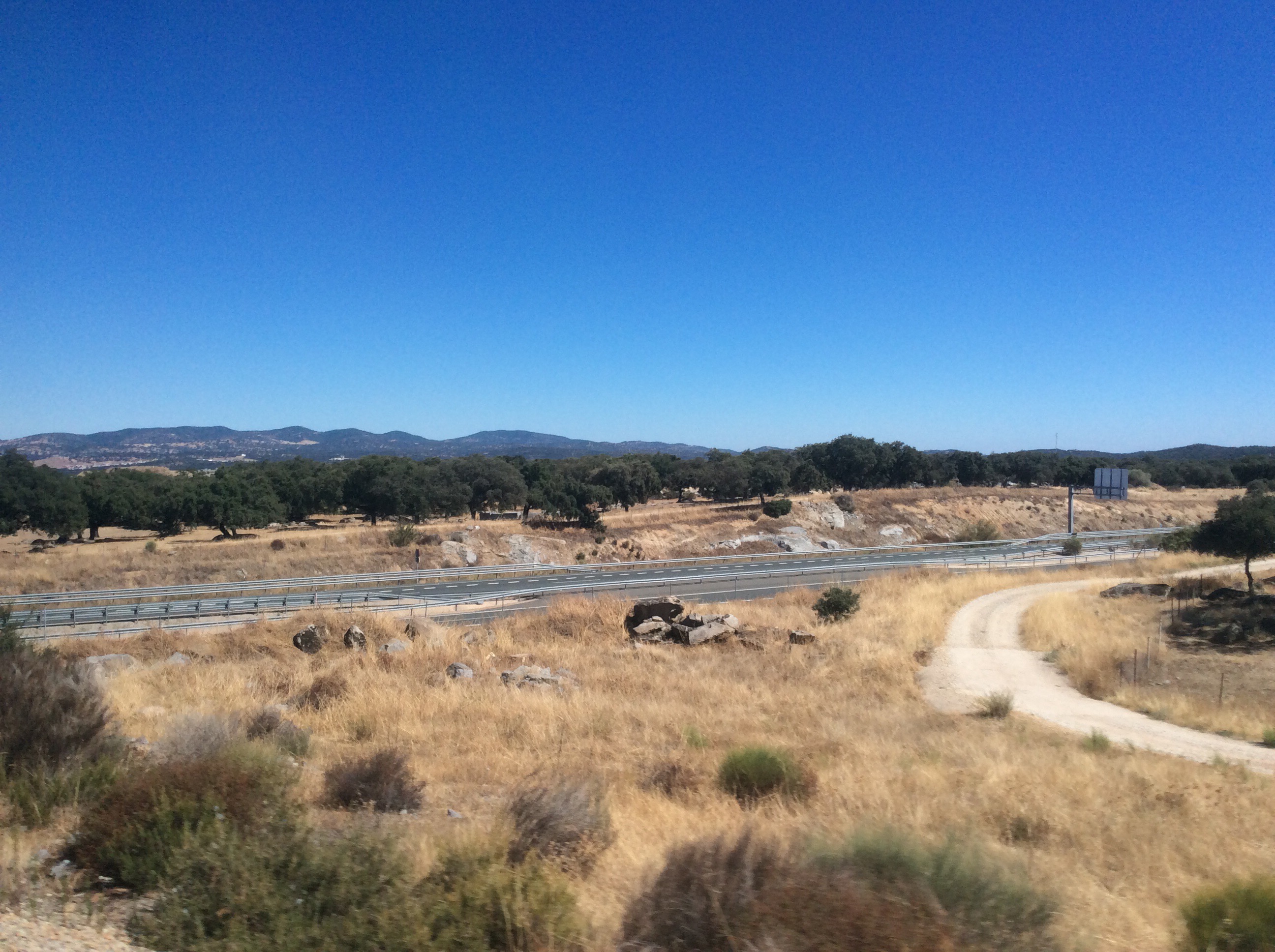
This place is a lot drier than I’m used to (discounting Amman)

At four in the afternoon, the place really is nothing short of a ghost town. I took a walk through the centre to have a little look-around, and for the most part the place was deserted. On the edge of town, where the comparatively large park meets the open countryside, you can see all the way to the Montes de Toledo to the north. A cold wind was blowing across the steppe, which only added to the frontier town vibe. I was entirely alone in my circuit of the northern part of town, but for a handful of chatty students leaving the walled confines of the Colegio San José, essentially a Spanish remodeling of Worth Abbey. Mum thinks I should put in some extra hours there if I can and I have to say I’m pretty tempted, but it looks like I might be kept quite busy here after all.

As arranged, I’ve come into school right away, and thanks to all eight of the Meléndez Valdés English staff, I feel like I know the place already. Must be that charming will to help out that most Spaniards have preprogrammed into their systems (I’m looking at you, Mr Bus Driver). It’s dead similar to IES Sierra de Lijar as far as memory serves, but then, I suppose all Spanish secondary schools follow a similar mold. A major confidence boost is the music teacher, who was particularly keen to see me – she already has her sights on a Christmas concert with a potential choir in mind. I’ll keep you posted on that one.

At any rate, it’s such a relief to be speaking Spanish again, even if I do keep tripping over invading Arabic words – especially ‘na3m’ and ‘qariib’. It’s like 711 in my brain. But if I can keep this up, I’ll be fluent in a matter of months. Which is no bad thing.

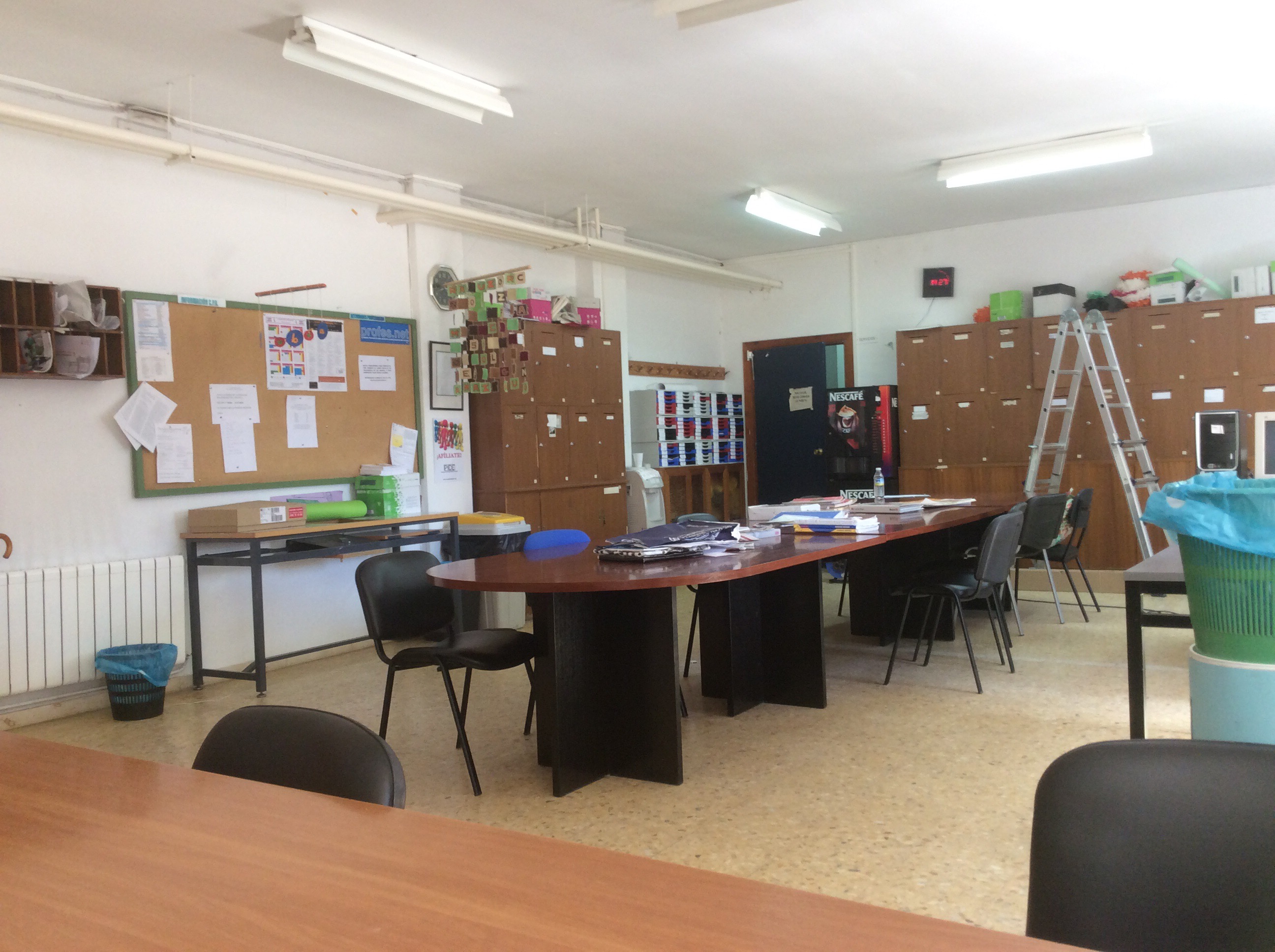
Back to the staffroom life!

I’ve been charged with assisting with a few ESO classes primarily, which in this case is the bilingual branch of the school, along with a couple of classes of bachillerato. I’m still not entirely sure what that entails, as it seems a lot of my lessons will be open-book. It’s less a case of ‘here’s what we want you to teach’ and more a case of ‘there’s your office, and here are some materials you may wish to use’. That said, the age-old rule where ‘assistant’ is a byword for ‘another teacher’ still stands, as it did in Dr Obote College and with my summer job last year; I might end up taking a full class once or twice a week. Or more. My horario still isn’t finalised so it’s still all up in the air, but we’ll see. What I do know is that I get a day off a week, on either Monday or Friday, and I’m free in the afternoons – ‘para viajar’. They seem keen that I do, and I’m not about to disappoint on that count. I’ll probably need that extra day anyway; getting to and from VdB isn’t the easiest of operations. Given the spread of Saint’s Days and national festivals (a poor year for puentes, I’m afraid) I should probably try for having my day off on Friday, but I’m not about to get shirking just yet. Besides, I think I’m going to like it here.

I’ve still got to sort out somewhere to live for the next nine months, but that might not be the Herculean task it first seemed. I was game for roving the town in search of se alquila signs, but the staff have been lightning-quick in the hour since I arrived here. I already have two apartments and two flat-shares on the table to choose from. One of the newer members from staff is very keen to help out on that front, sweeping all the other offers off the board in typically bombastic Spanish style with an offer from his primo for a very competitively-priced flat-share. He’s showing me the place after the meeting this afternoon, and since I can have the place until June, it seems the best offer yet. The dueño is a real gitano and I’m going to have to negotiate to get as good a deal as it is by the sounds of things, but if it means I can share with a Spaniard, so much the better, purely so that I don’t have to worry about company. As it turns out, Wikipedia’s estimate as to the population count of Villafranca de los Barros, currently at 13,000, was wildly off the charts – by about ten thousand. So in a curious twist of fate I’ve got exactly what I asked for. And since everybody seems to know everybody here, I’m hoping it won’t take too long to get comfortable.

As before, it’s going to be a mask-wearing game. In the staff room, it’s Spanish for everything, and they’ve been very complimentary already as to the strength of my castellano – but the children cannot know that. To them I’m just a native/naïve English speaker, here to improve their English. Here’s to hiding that fabulous Andalou drawl for as long as I can.

I guess that if chinks start to appear in my armour, I could always claim it’s the Arabic coming through instead. It’s not like it hasn’t tried several times already. BB x

Necessarily Childish

Would you believe it? There are clouds over Amman today – real, genuine clouds. Yes, I really am getting excited about clouds. So tell me I’m crazy; I already know that. I just miss the sight of a sky that isn’t a brown shade of blue, that’s all.

We’re coming to it now, the end of my stay in Jordan. Just three days of class remain, and then a whole week and more to do whatever before our return flight takes us home – via a day’s sojourn in Kiev, provided the airport authorities allow us to pop out for a visit between flights! (Those twelve hours sure will drag if they don’t…) Way back in May when Kate, Katie, Andrew and I booked our flights, we had no idea we were going to get almost all of our traveling done before the end of term. Well, here we are at the end, and I’ve already seen the abandoned desert castles, seen the sun set over the Promised Land from the bitter waters of the Dead Sea, wandered the Roman ruins of Jerash, swam with triggerfish at Aqaba, trekked Dana, gawped at Petra by day and night and watched a veritable storm of shooting stars over Wadi Rum. Somehow I’ve managed all of that in our weekend breaks, and in retrospect, it’s as well that I did so; had I stuck to my guns in leaving some sights for next year, I’d have missed out for good on sights like Petra and the reefs of the Red Sea. Though Amman itself may have crushed this little country mouse, I can’t recommend Jordan highly enough. That’s always been my stance.

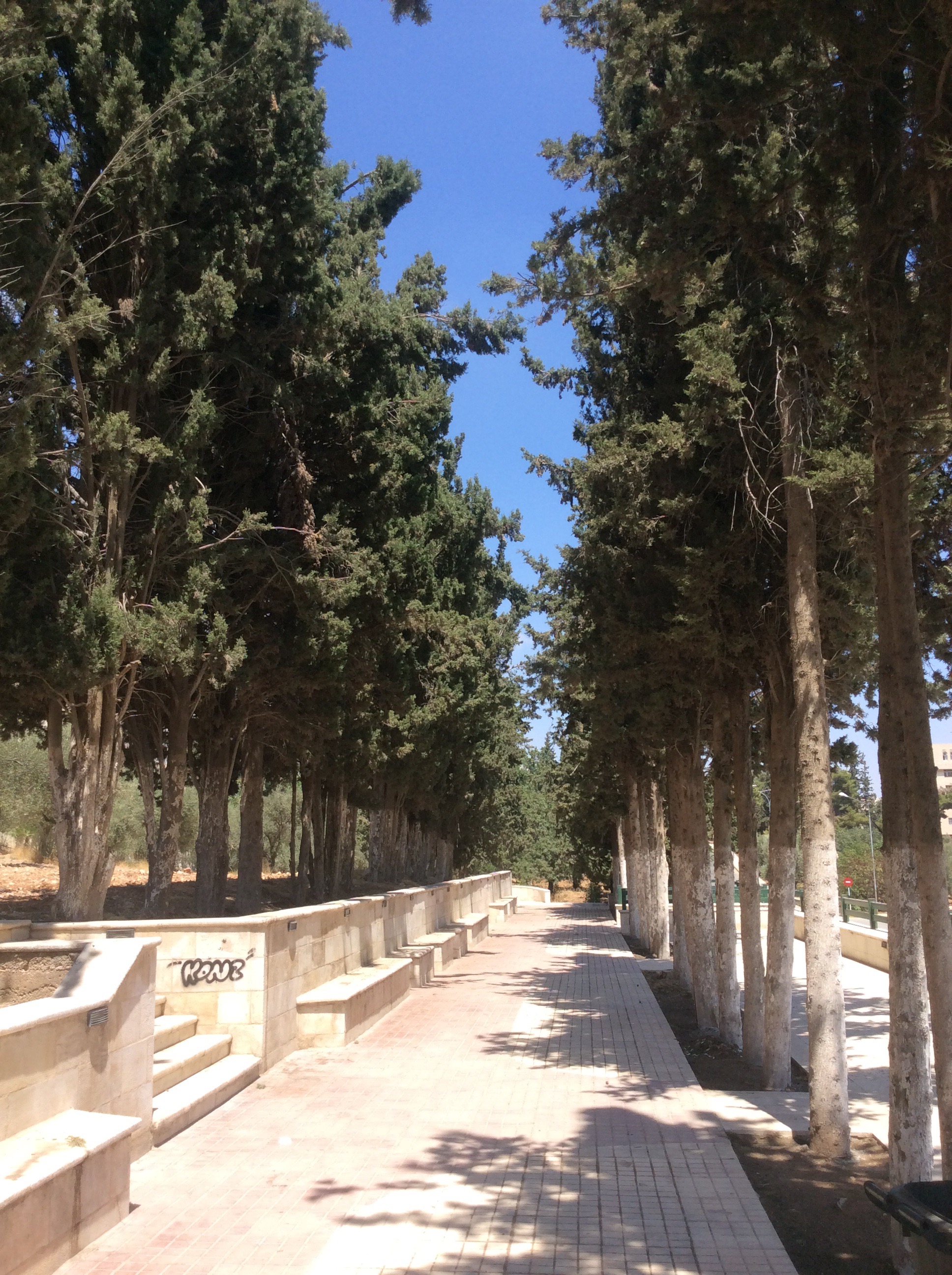
Trees, people! Trees……..!

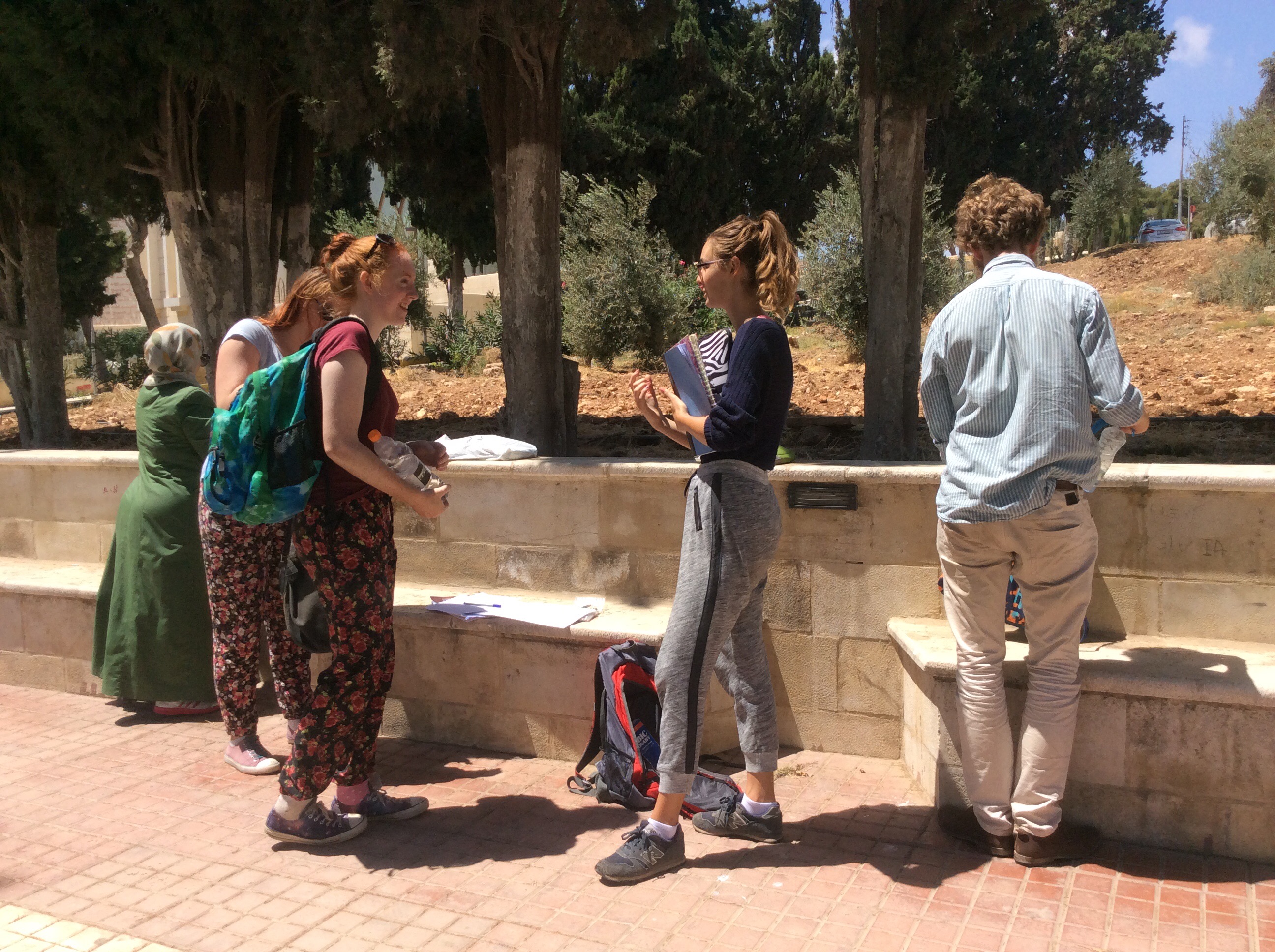
We took an hour and a half of class today out in the sunshine in the Jordanian University grounds. They’re on vacation at the moment, so the grounds were deserted of students and we had the run of the northern campus. I’ve never felt more focused in all my time out here; just a little dose of sunshine, the warbling trill of a sunbird from one of the cedar trees and the taste of air that hasn’t come from a fickle conditioner… I was speaking more fluently than ever before. I guess that drives home this morning’s debate on students being more attentive if given access to green spaces in school. Now that’s something I can agree with! If only we could visit the university more often… It’s a bummer, living right next to the only green space in Amman, and not being allowed to enter it except on official business.

Class dismissed

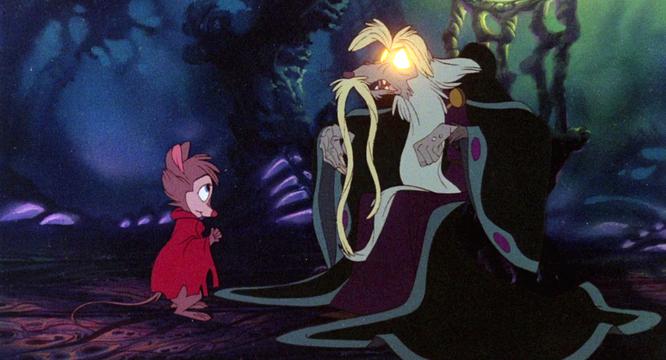
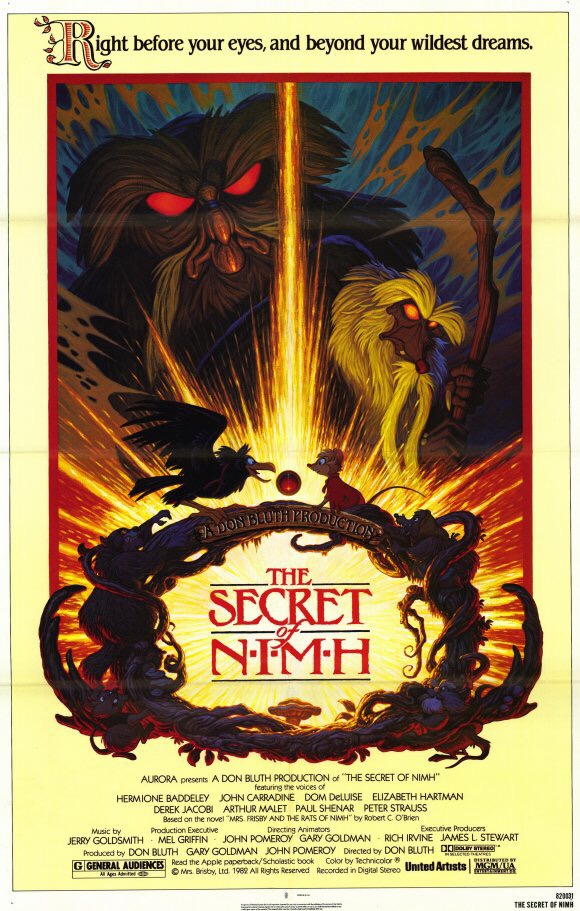
To keep the engine going in the last hurdle, I’ve been making liberal use of Youtube. Specifically, two animated films from my childhood: Kenneth Grahame’s The Wind in the Willows (the 1988 Burbank version) and Don Bluth’s The Secret of N.I.M.H., based on the 1971 book Mrs Frisby and the Rats of NIMH by Robert C. O’Brien. If there’s one thing I’m seriously into, it’s obscure cartoons. The ones that fell by the wayside, in a manner of speaking. I guess that has something to do with growing up with Freddie as F.R.0.7., the obscurest of the lot, but there’s something magical about trawling through all of these hidden gems. Jaded as it sounds, they just don’t make films like ’em these days. Dreamworks and Pixar paved the way for a new era of animation with works of genius like the Shrek films and Finding Nemo, but since then, it’s just been one furry animal film after the other, as far as I can tell. I’d say I’m getting too old for such things, but that’s a complete lie; I still get the same kick out of The Lion King that I did when I was a five year-old sitting ten inches from the television in the back room. Preach.

But Don Bluth… oho, now we’re talking. They’re just so… dark. Tell me you didn’t feel afraid when you first watched The Land before Time – those jagged landscapes and bubbling swamps, and all the death…! Littlefoot’s mother died onscreen. Disney could do it too: The Lion King was extraordinary because you saw Mufasa die onscreen. Powerful stuff. But the best Disney offers up these days is one of a thousand villains falling to an offscreen demise (my sincerest apologies, Clayton). Not so with Don Bluth. The wise Nicodemus is crushed beneath a mountain of scaffolding. Rasputin’s soul is sucked out of him by the forces of Hell itself. The guy even had a hand in the original Sleeping Beauty, so you know he knew what he was doing. His style is also truly iconic; those stark, jagged landscapes from The Land Before Time follow you through American TailThe Secret of NIMH and Thumbelina; truly, a world apart from the sugar-coated Disney kingdom.

Derek Jacobi, is that really you?

Not that I have anything against Disney. I love it. Even some of their new stuff is great. I thought Wreck-it-Ralph was going to be dismal from the premise, but it blew me away. I just find myself wishing that the Paperman project had pulled through. Hand-drawn animation just smacks of my childhood and I covet it dearly.

Don Bluth, you really did have a thing for glowing eyes…

If you remember any of these classics, I’ll point you towards some even more obscure titles that you may not have heard of. Give Ralph Bakshi a try if you haven’t already: I’m thinking Cool World and Fire and Ice. Or there’s Nelvana’s niche Rock and Rule. Equally trippy, but worth the ride. And don’t forget the darkest of them all, the one that gave an entire generation nightmarish images they would never forget: Rosen’s 1978 adaptation of Watership Down. So… much… blood…

This, of course, has next to nothing to do with Jordan, or even Arabic for that matter. But it’s a damned good healing technique. I’m quite ready to go home, even though eleven days still remain, but the memory of these animated gems will keep me soldiering on. Ah, to have been alive in the sixties and seventies when these wonders were being created… I might have thrown caution to the wind and gone for a career as an animator. What a different life that might have been! BB x