Camino XVII: The Bones of Burgos

Albergue Casa del Cubo, Burgos. 22.55.

There’s a grumpy old Spanish guy in the bunk below mine. He made a point of asking me earlier if I snored in that direct, you had better not way that Spaniards do (‘No roncas, eh?’). He put the same question to my two companions just before bed. Well, after a couple of rounds of solitaire in his phone, he’s snoring away down there, along with the Koreans in the bunks next door. Like it matters…! You’d have thought a pilgrim might have learned a little patience by Burgos.


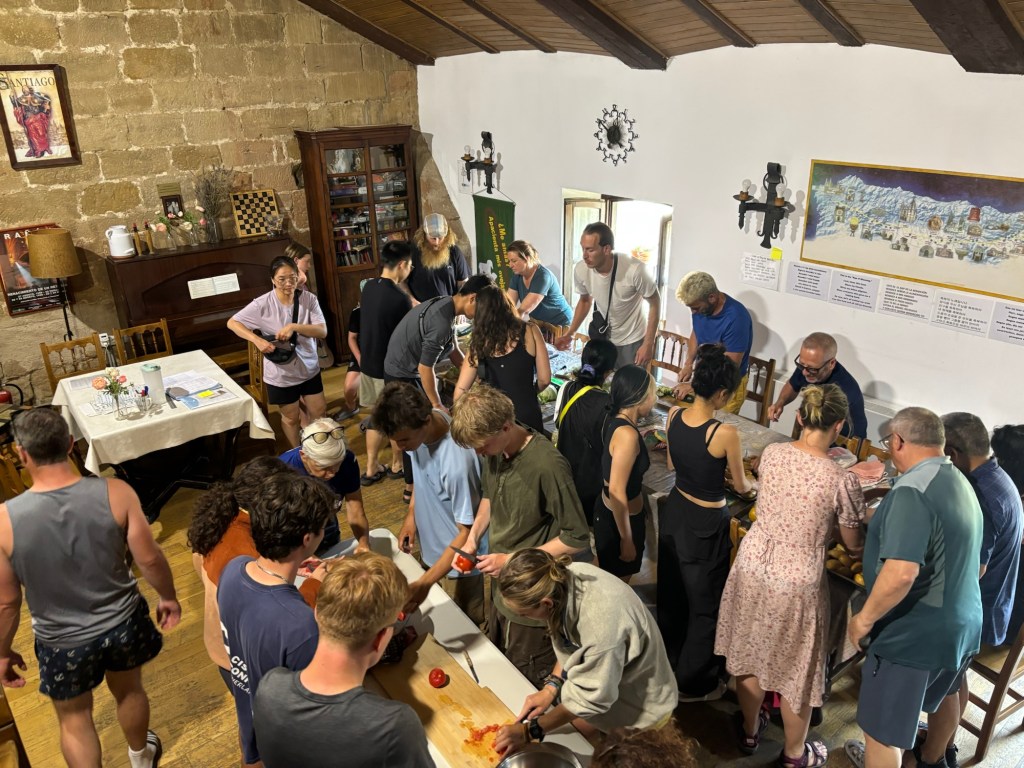
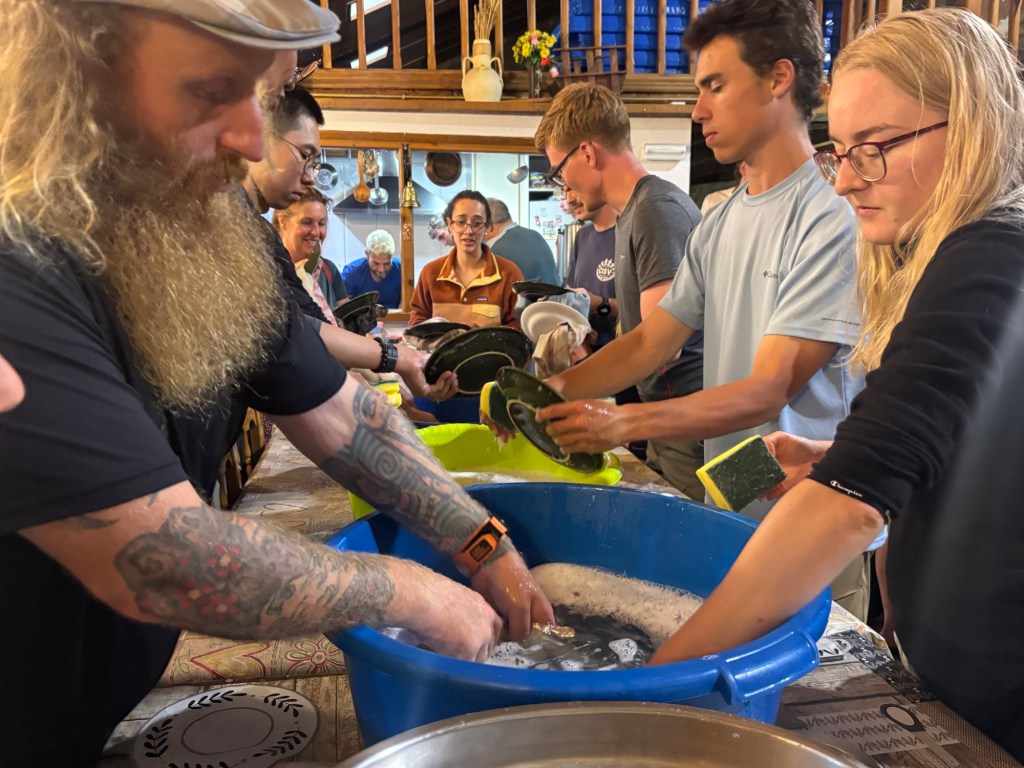
We got lucky yesterday. The Albergue in Atapuerca had a room of six beds so we had a room to ourselves, complete with an en suite bathroom. Along the way we’d picked up Gust, a seventeen-year-old Belgian student who was struggling with his blisters, so we took him under our wing for the rest of the day. There weren’t many restaurants in town, so I bought some supplies from the only shop in town (where the Central American shopkeeper was having a great time rapping to a backing track while I browsed the vegetable aisle) and rustled up a rice and vegetable pisto for the six of us. It felt good to cook for company again. It’s been a while.

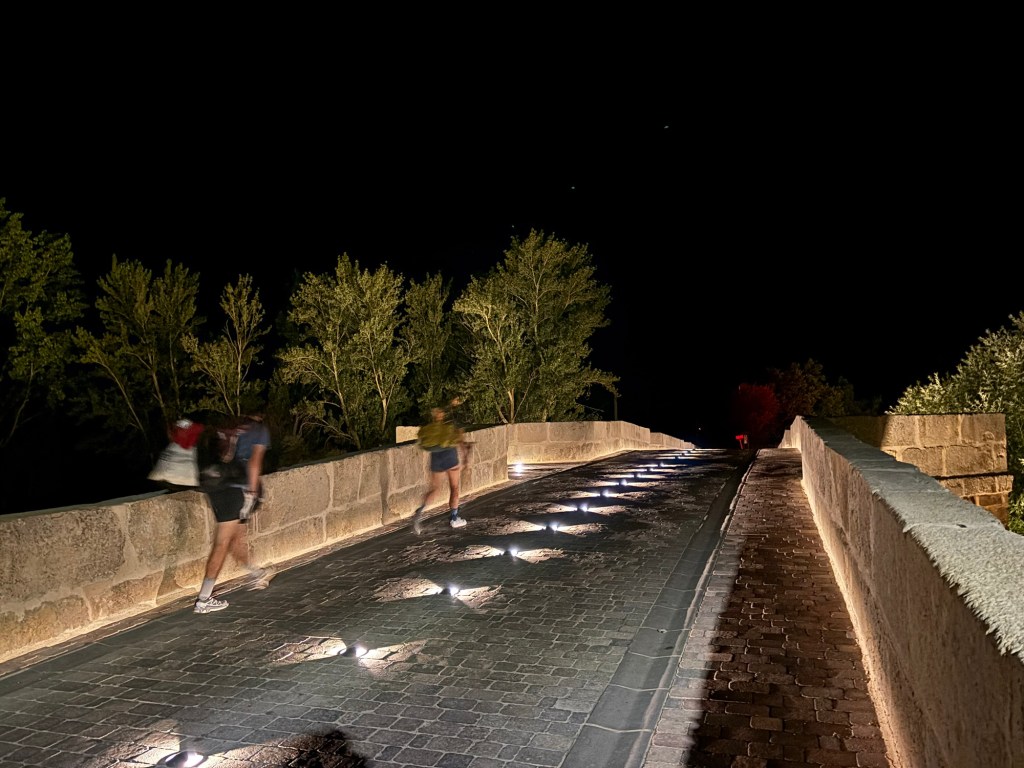
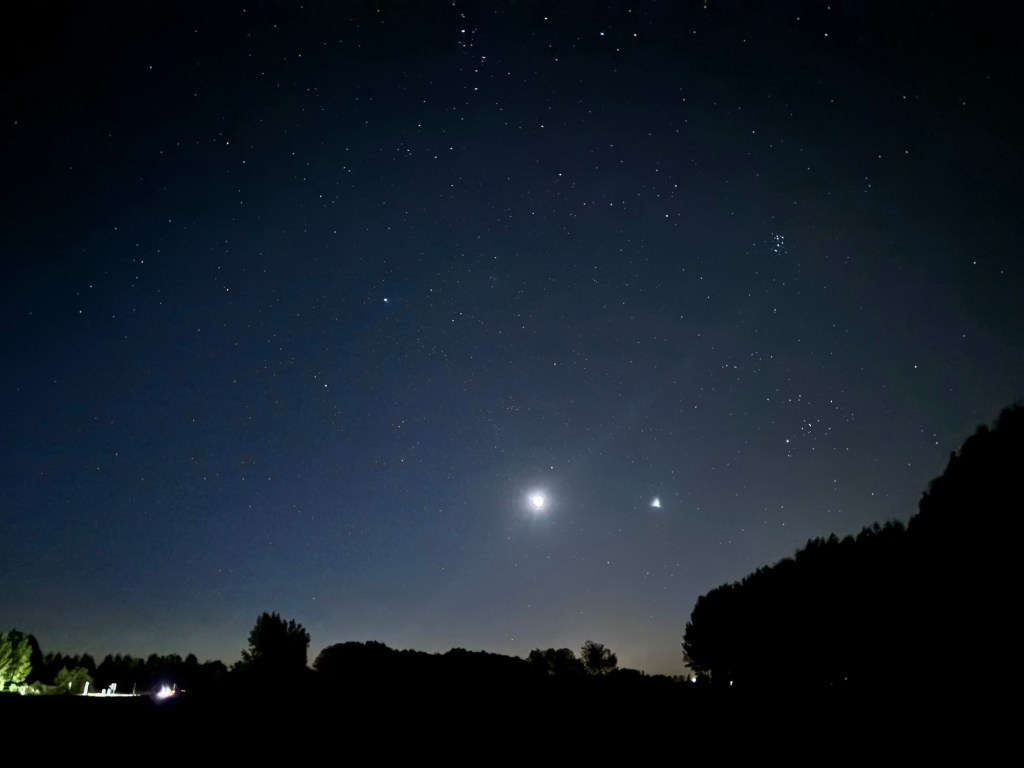
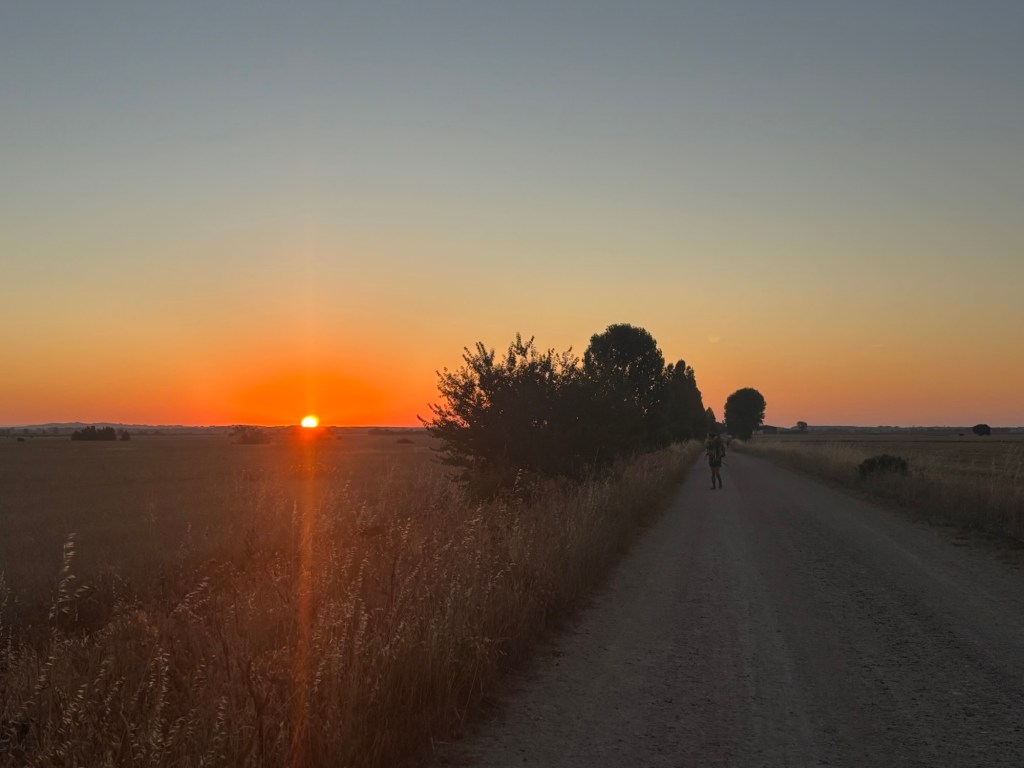
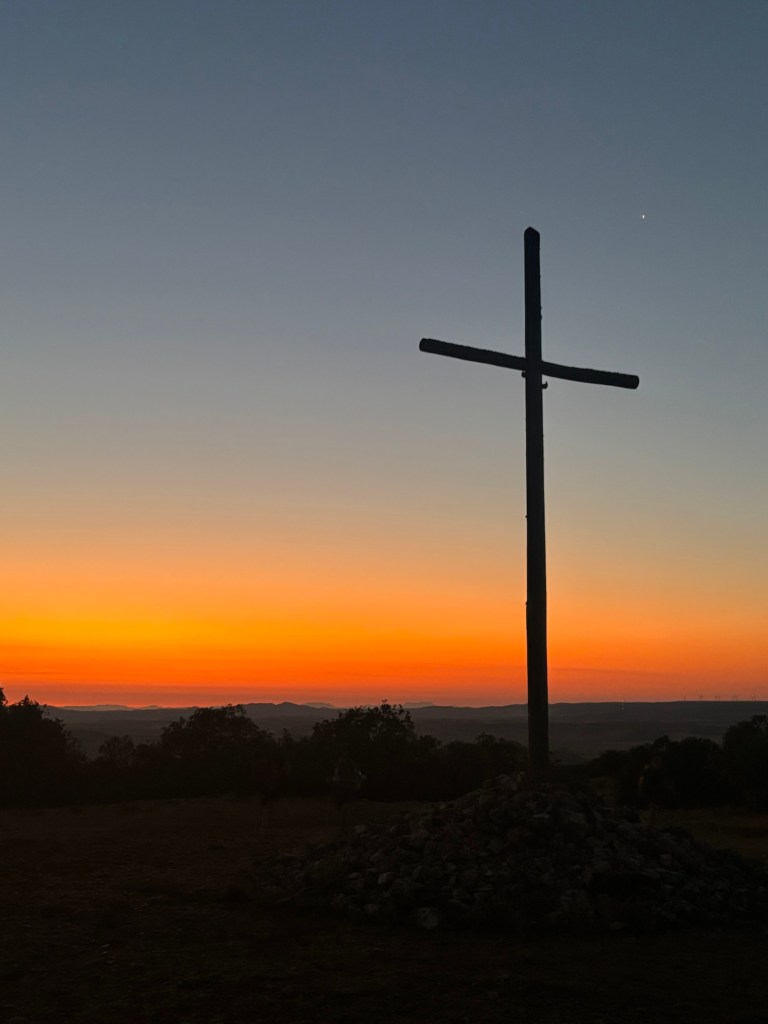
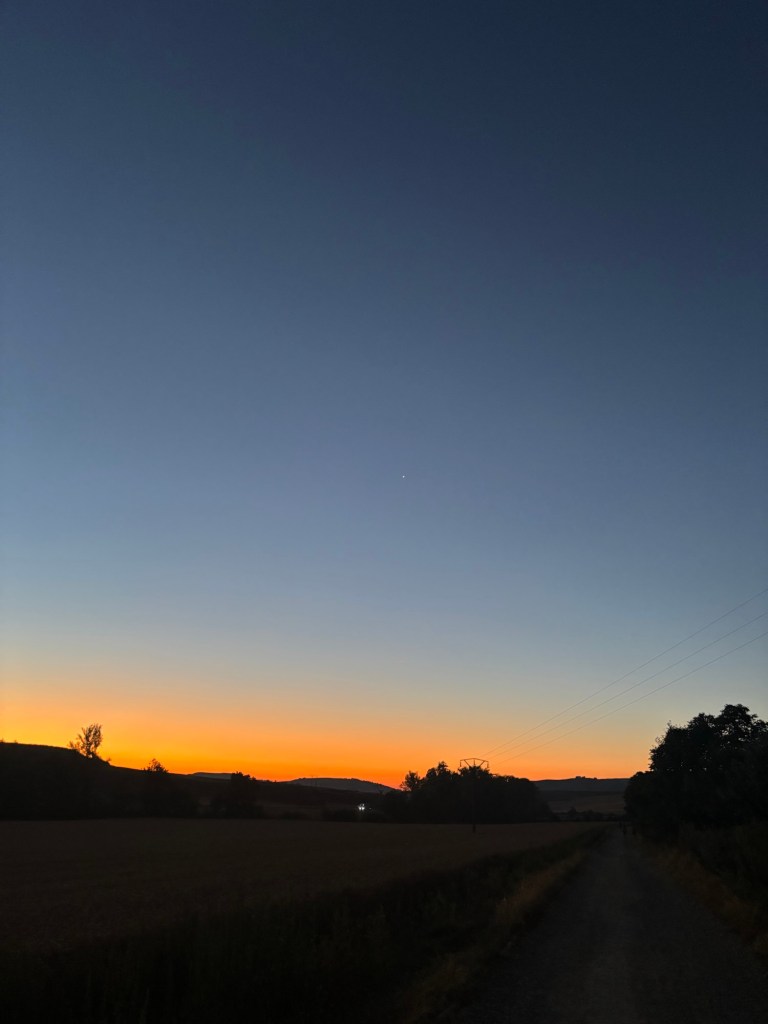
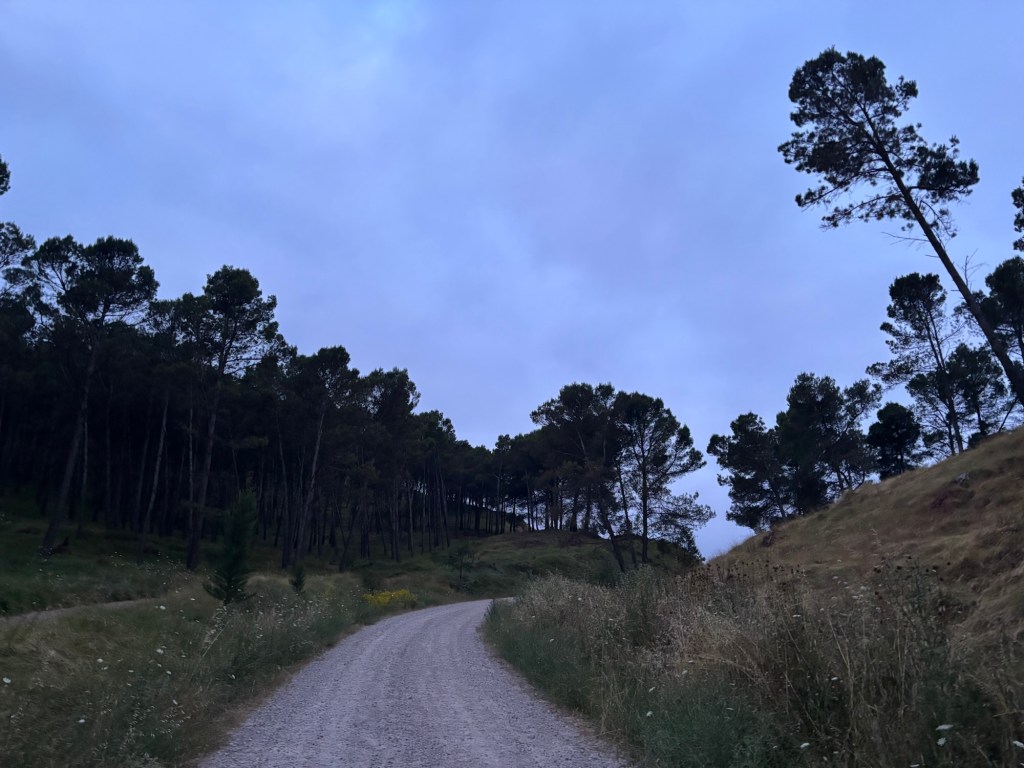
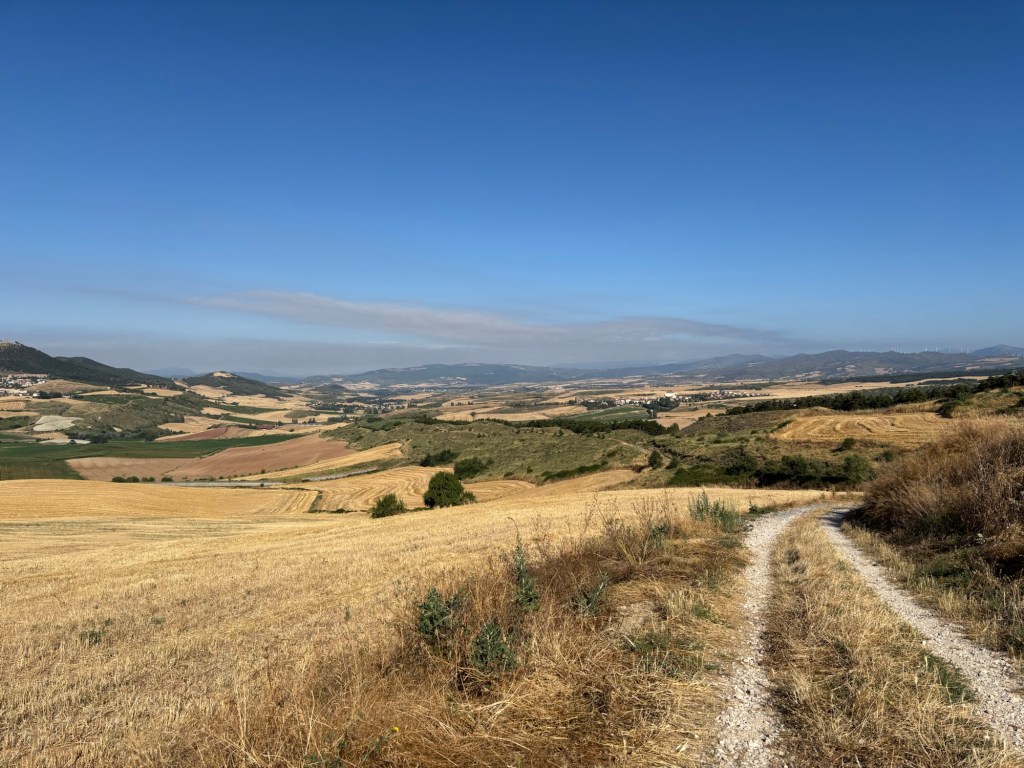
We set out shortly before sunrise, finding our way up the Sierra de Atapuerca by moonlight. The sun was not yet over the horizon when we crested the hill, and the soundscape was still very much that of the Spanish night: a couple of scops owls called their piping call from the trees, the high-pitched twittering of a bat occasionally caught my ears and, from somewhere far off, the unmistakeable churr of a nightjar.


We stopped for breakfast in Cardeñuela Riopico at the same place I came with Mikkel, Sofia and Lachlan two years ago. It was just as good as it was then, only this time, I allowed myself to stay and eat rather than tearing off harum-scarum for Burgos on my own.

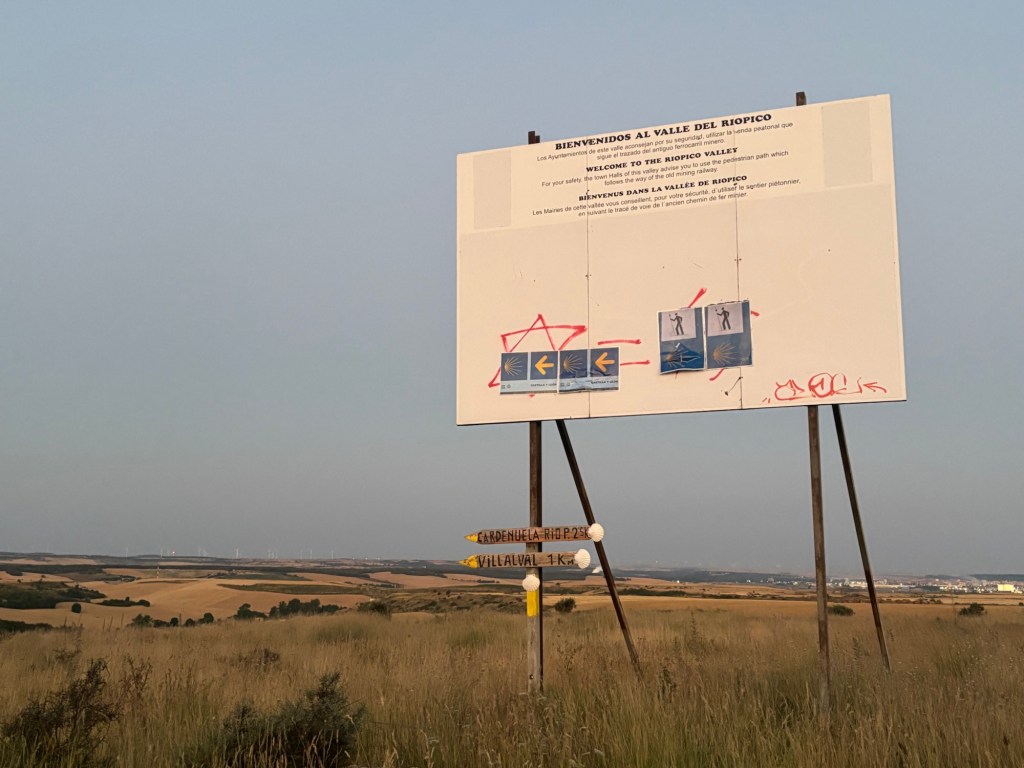
The signs are still defaced all over the place with images of the Star of David equaling a swastika. They’ve tried to cover them up with pilgrim pointers here and there, but the pilgrim preference for the Palestinian cause is obvious.


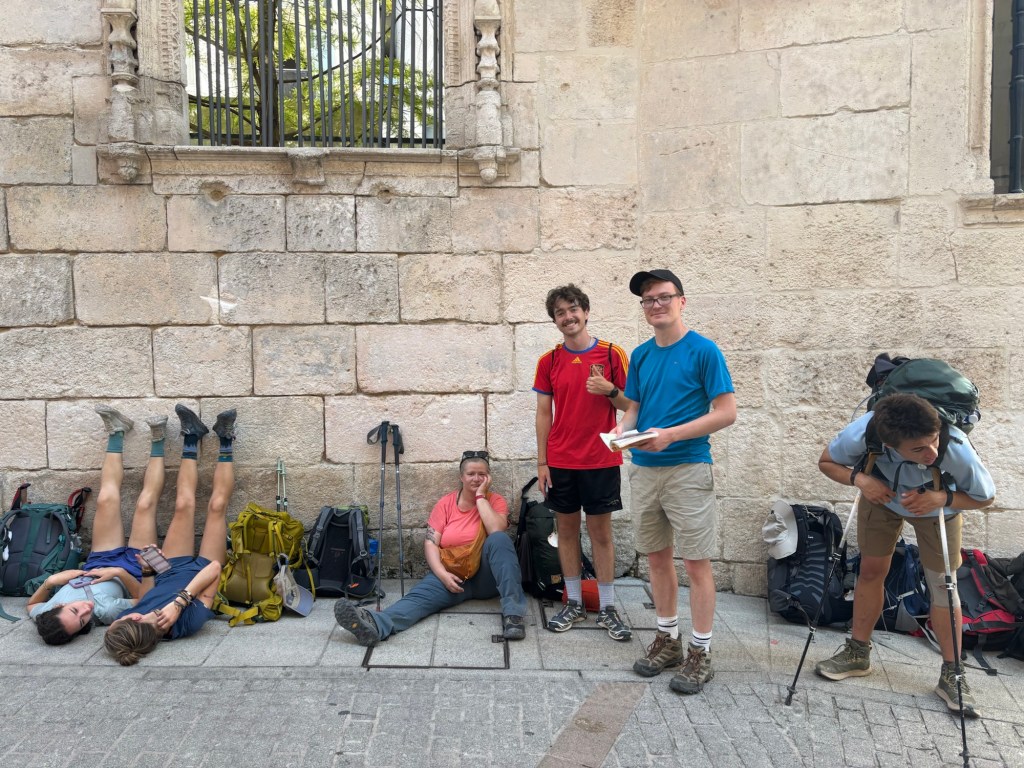
We reached Burgos early, despite missing the turnoff for the Río Arlanzón alternative (which I maintain is bloody well hidden, as I’ve now missed that turning twice). The result was at least half an hour of trudging through Burgos’ deeply unattractive industrial estate on the eastern side of the city, so we amused ourselves with a protracted game of Just a Minute, at which Talia proved to be a past master.

It was just before eleven when we reached the albergue, which meant we still had an hour to kill, so we took it in turns to do an ice cream run / sightseeing. Gust parted with us to meet up with his brother. We might run into him on the road, or we might not. I hope he looks after his feet – they were in a bad way.


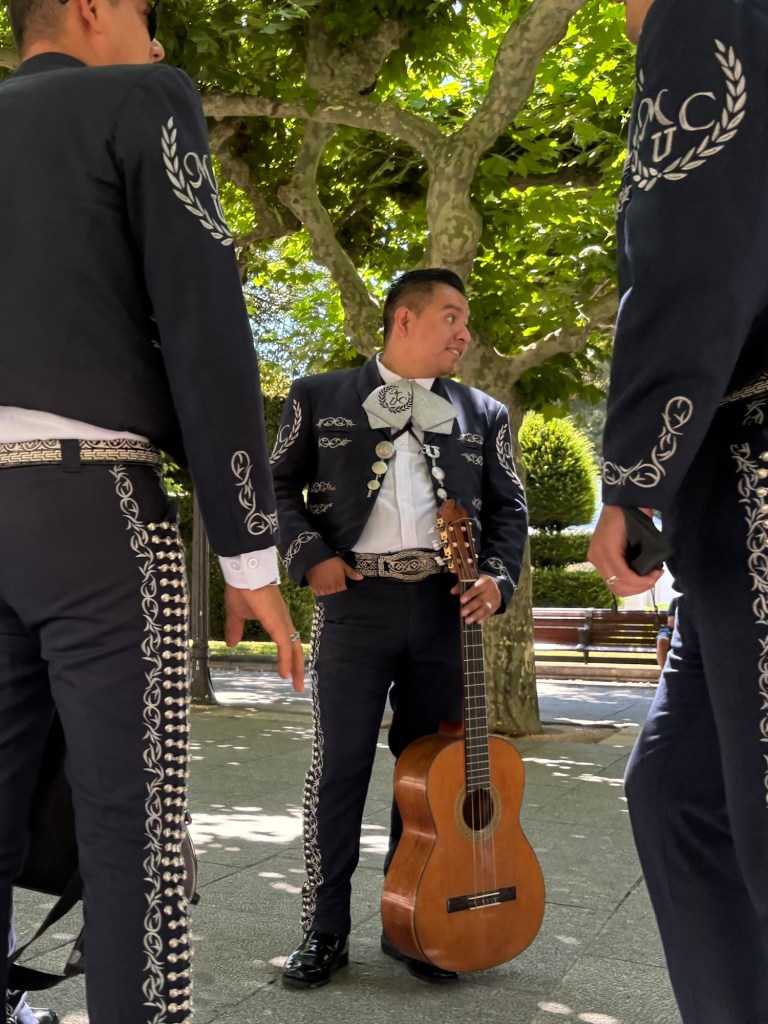
There was a Mexican wedding or quinceañera or some kind of celebration in town, dressed in the decorated black, white and red that could belong to just about any traditional European country – though the loitering mariachis rather gave the game away.


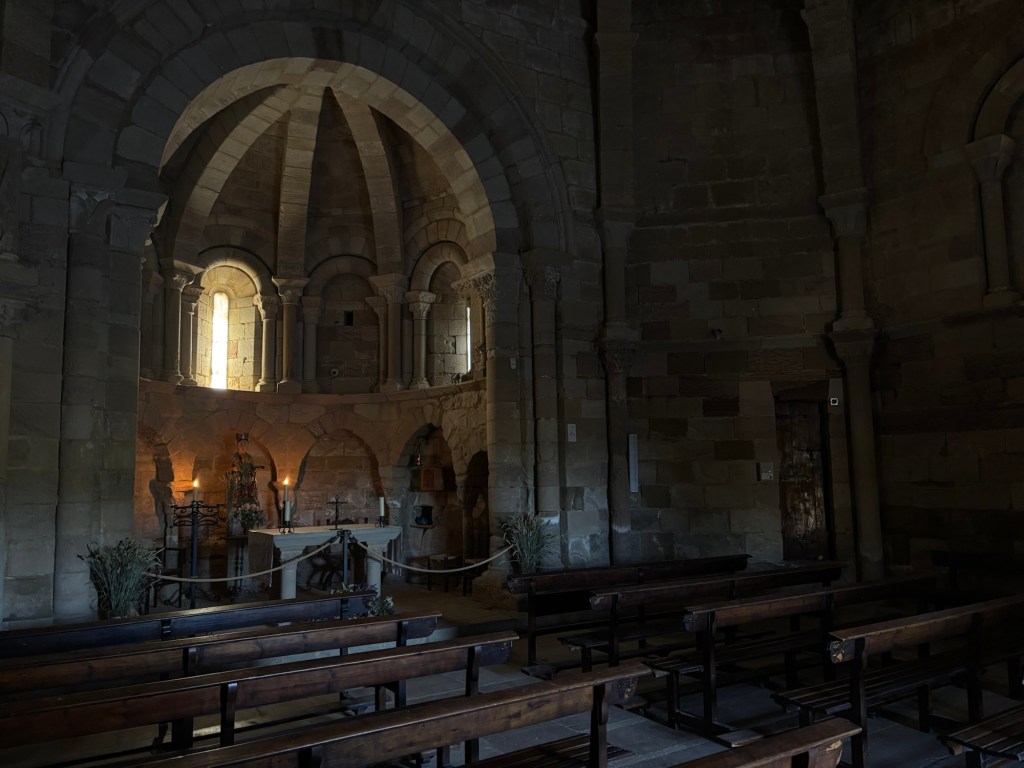
After an afternoon nap (complete with one snoring Spanish hypocrite), I set out to investigate the Museo de la Evolución Humana, one of the world’s best human evolution museums. I managed to convince the team to check it out, but set out ahead of them to take out some money for the meseta stage (where, if memory serves, ATMs are hard to come by).

I’ll be honest with you. Human evolution is one of those things that absolutely fascinates me. In another life I’d have studied anthropology and primatology. Maybe seeing chimpanzees and mountain gorillas in the wild drove it home all those years ago, or maybe it’s an offshoot of a childhood obsession with all things palaeontological, but it’s genuinely one of my major passions in life, albeit one I don’t talk about so much.

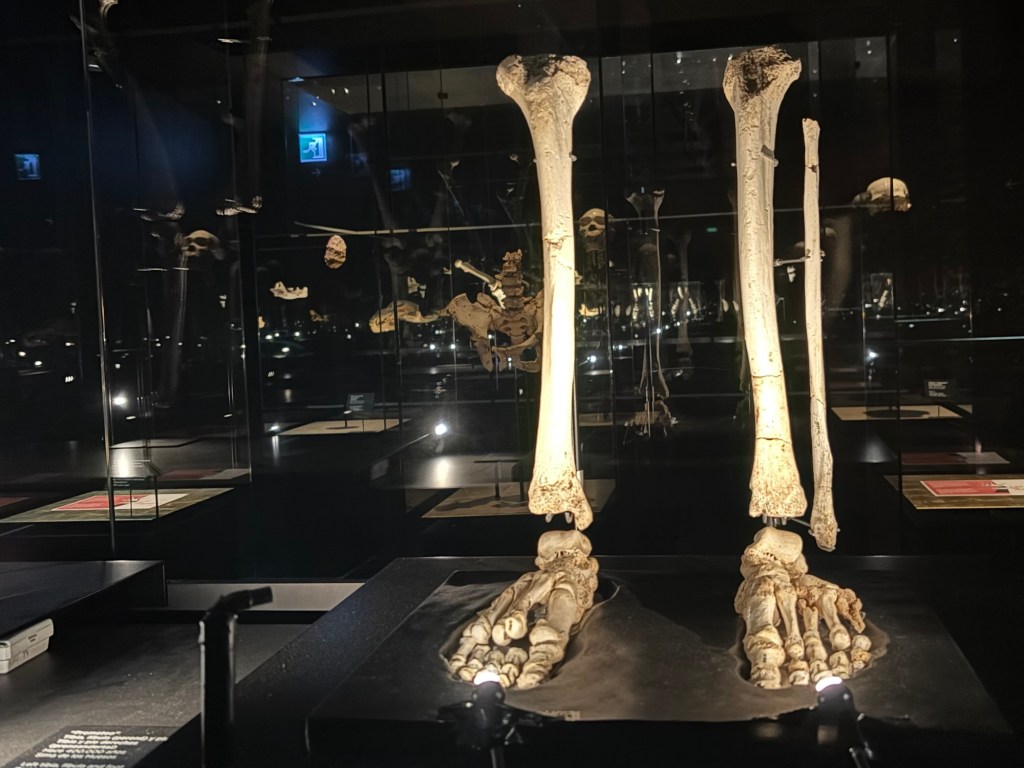
I had a similar experience with the Museo de Tenerife in the spring, but the MEH in Burgos is even more jaw-dropping. The knowledge that I was looking at the real bones of some of our earliest ancestors was genuinely spine-tingling.


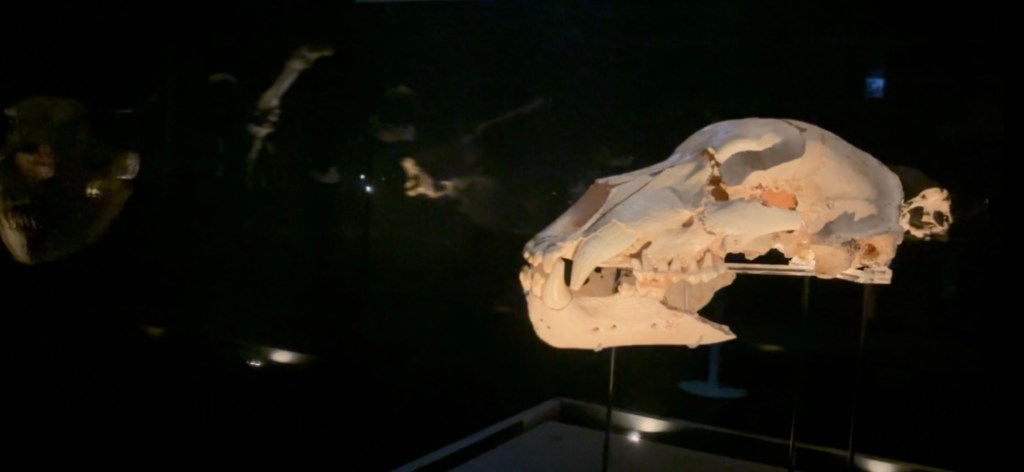
The caves of Atapuerca are one of the most valuable dig sites for the bones of ancient humans in the world, with over twenty-eight specimens found to date, alongside a host of other Pleistocene and earlier animals that no longer grace these hills, such as hyenas, jaguars, Irish Elk and the mighty cave bear.


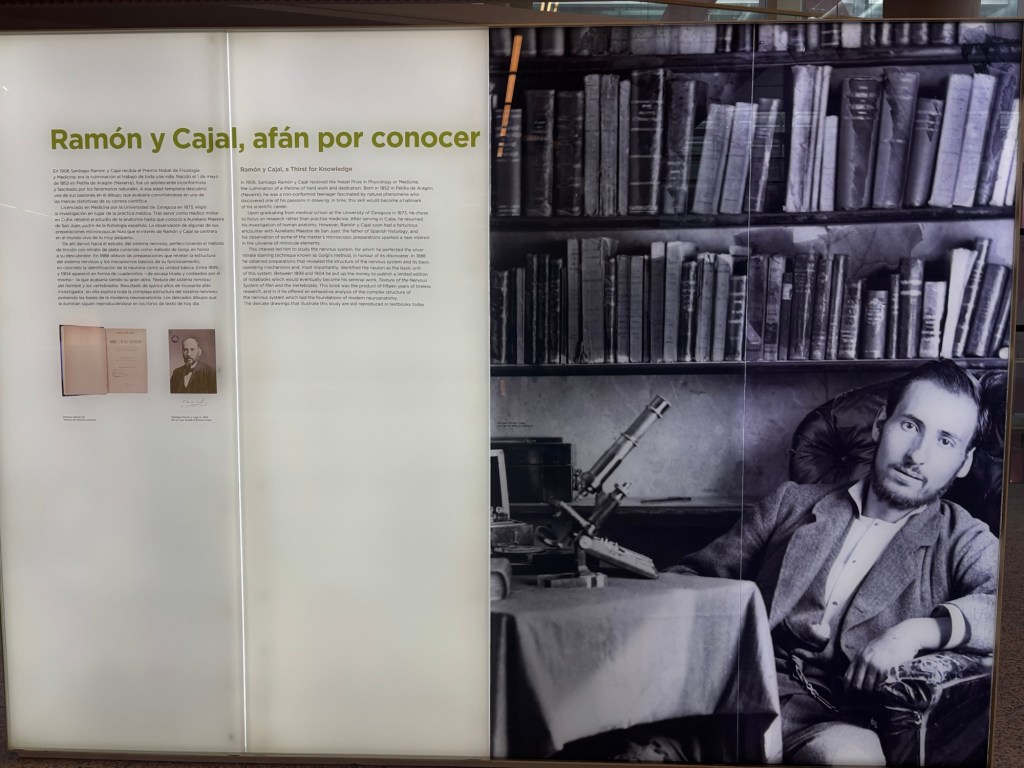
I gleaned everything I could about our ancestors the last time came here in 2013, but there was plenty more to clue up on that if missed before: this time I learned a lot about Ramón y Cajal, Spain’s most eminent scientist and the man who discovered the neuron and its function. Maybe that’s why so many of the main streets and squares in Spanish towns and cities carry his name, connecting people and places like synapses firing daily.

In this morning’s walk-and-talk, one of my companions said she was intrigued by my quest for knowledge. That’s probably the biggest ego massage I’ve had in a while, but I’ll take it. I’m glad to have learned something very new, and it is very much an integral part of my personality to be always on the hunt for a new story, a new tale to tell.


I’ll pick this last one to finish, because it’s getting late, I’m behind on my blogging and the Koreans next door are on the verge of creating an unconscious four-part harmony with their cacophonous snoring.

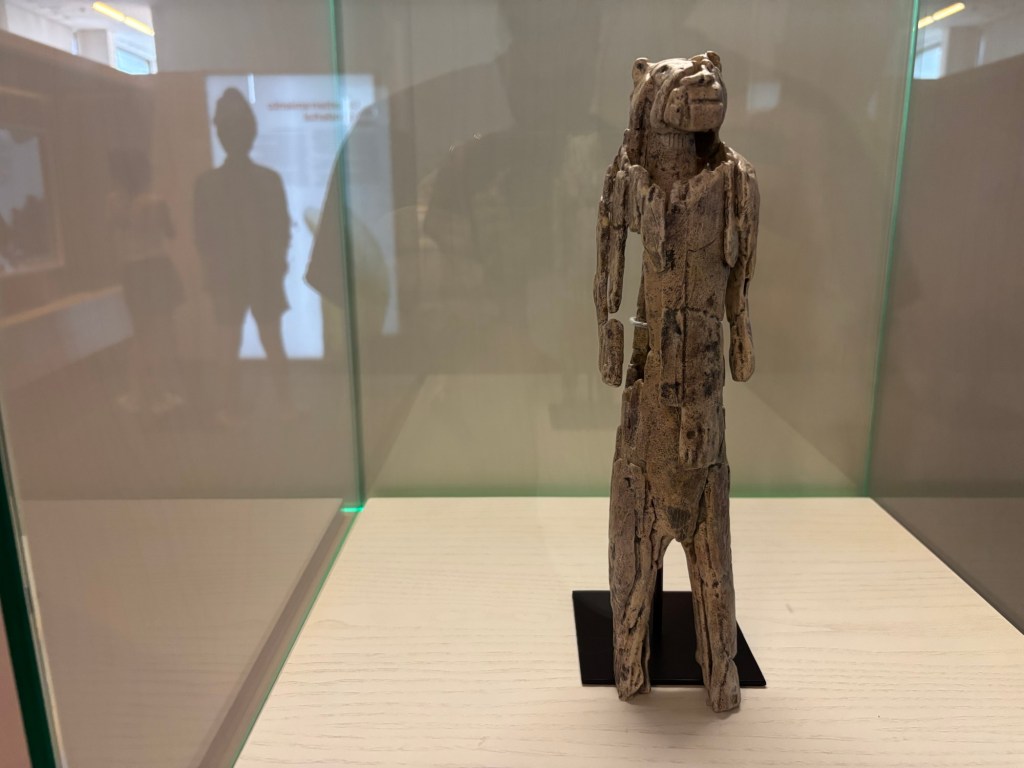
There’s a small replica on the third floor of the MEH that is, as the plaque reads, quite possibly one of the precious of all the treasures in the collection. It is a mammoth task carved into the shape of a human – but with one strange detail. The head isn’t human at all. Rather, it’s quite clearly the head of a cave lion: stocky, bull-nosed but intensely leonine. It’s known as the Löwenmensch figurine – or the Lion-man of Hohlenstein-Stadel, and its concrete evidence of our ancestors’ ability to imagine around 40,000 years ago. Quite possibly, it’s the earliest evidence for mythology out there: man-beast hybrids remain a fairly common feature of world mythology to this day. Just look at Hinduism.


I’ll have to look into this incredible artefact some more when I get hole. But for now – sleep. I’ll be up again in five and a half hours… unless the Koreans wouldst wake Heaven with their snoring. BB x

Camino XVI: Silent Hill

Hostal la Plazuela Verde, Atapuerca. 15.50.

After yesterday’s paltry fifteen kilometre walk, today’s 30km+ hike across the Montes de Oca felt like much more of a feat. We’ve landed, at last, in Atapuerca, the last post before Burgos and the end of the line for several peregrinos.


I’ve enjoyed a few later starts over the last few days, so it felt good to get back to another 5am departure under the stars. It was a little chilly this morning, though not as cold as it was the last time I made this trek, when (if my memory serves) I required the use of gloves to stop my hands from shaking in the spring of 2023. The sun rose late, so for at least the first hour of today’s march I was under the aegis of the morning star, Venus, sitting alone in the firmament to the east.


The signs for Santiago are getting shorter. The kilometre count is nearly down to 500, so I’ll be passing the halfway point of the Camino at some stage between Burgos and León. I’m looking forward to the flats of the Meseta, but the mystery of the Camino de San Salvador and the Camino Primitivo are becoming more and more appealing by the day as I hear stories of these less-traveled roads from some of the pilgrims that I meet. It will certainly be a very different Camino to the one I’ve had for the last week or so.


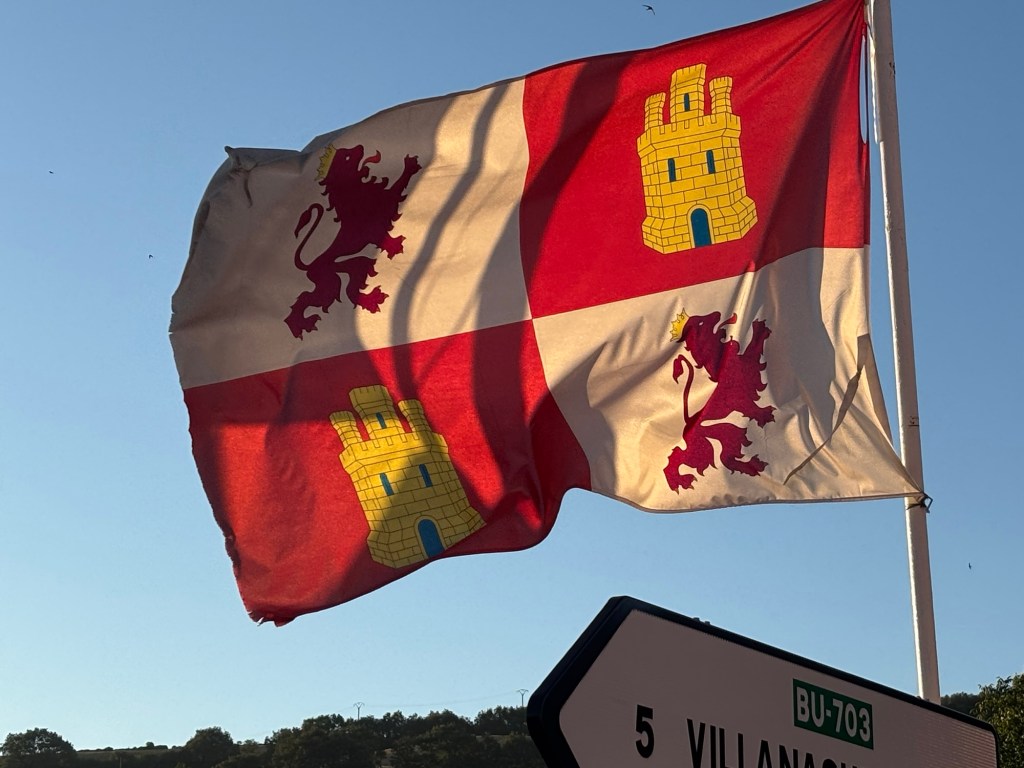
Shortly after leaving Grañón yesterday, we entered the immensity of Castilla y León, Spain’s largest territory. The rivalry between the twin kingdoms remains in the signage, with most of the Camino markers defaced in some way so that the word “León” is crossed or blacked out. The reverse is true once you enter the old Leonese territories around Sahagún, where the graffiti becomes even more markedly separatist in nature. It’s a not so subtle reminder that Spain had always been a conglomerate of different peoples rather than one singular nation, from the Castilians and the Catalans to the Leonese, the Basques, the Galicians, the Andalusians and the Asturians.

How do you even begin to govern such a diverse nation, with such ancient and deeply-rooted territorial disputes?


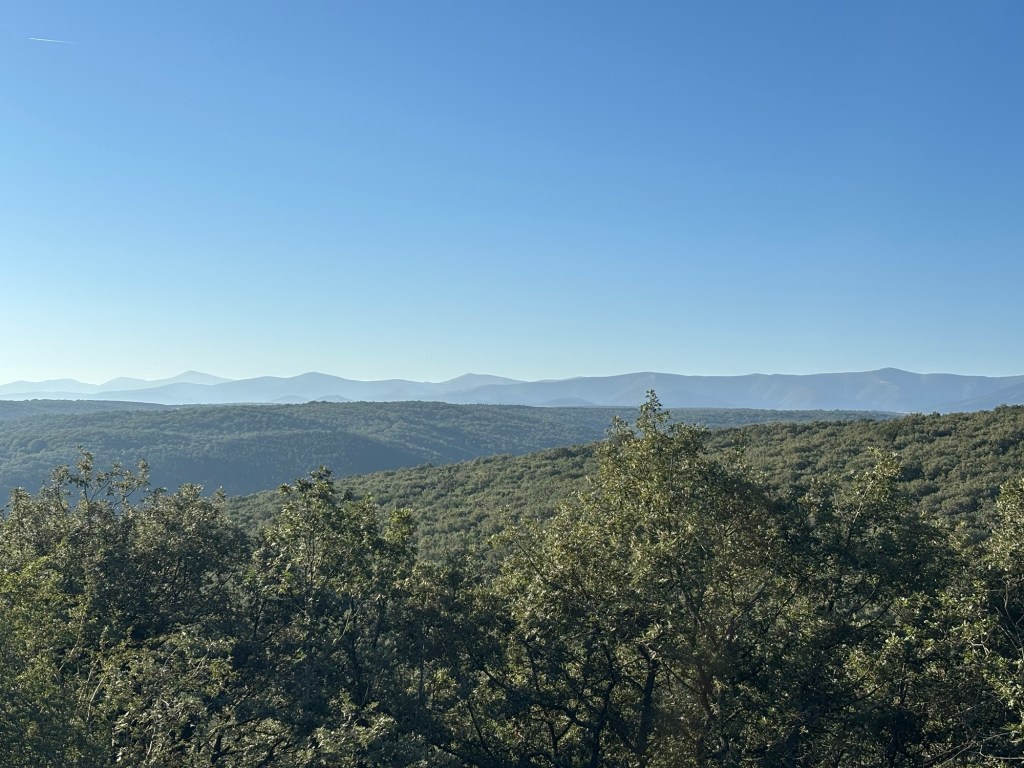
After a much-needed breakfast stop at Villafranca Montes de Oca, where the bar (El Pájaro) opened just minutes after we arrived, we set off up into the forested hills. The Montes de Oca are the very north-westernmost reach of the larger Sierra de la Demanda. The name comes from an old dispute over land use in the hill country rather than the difficulty of its terrain, but after the relatively flat and easy days from Puente La Reina to Logroño and beyond, it is a demanding task before the endless expanse of the Meseta Central.


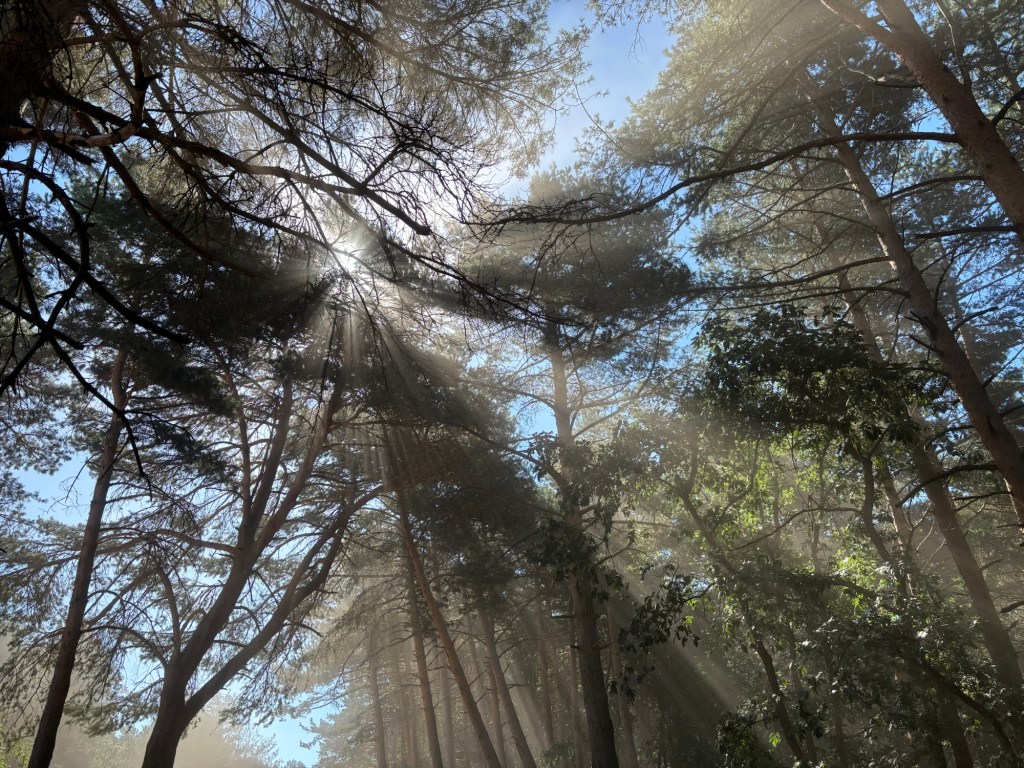
The Montes de Oca are a mystical place. Toward the top of the hill, the birdsong seems to die back into silence. Not even the vultures circle here. I’ve encountered this eerie silence before in Sachsenhausen, an olive grove near Víznar (Granada) and a remote village in northern Uganda, where the Lord’s Resistance Army marched in and executed the entire village. It is the silence of the dead.

A small concrete block marks the spot where around three hundred men and women were executed during the Civil War: Republicans, political dissidents, liberal thinkers and just about anyone who disagreed with the vision of the Nationalist state that was to come. They were dragged from their homes during the night to this lonely stretch of forest, summarily shot and thrown into one of a number of mass graves that can be found less than a hundred metres from the Camino itself.

This is the fate that might have befallen my great-grandfather Mateo, had he been any more outspoken in his beliefs than he already was. Instead, he was dismissed from his post and sent away to a village where he would not cause trouble, and only when he went to hospital for a minor operation did they find a way to deal with him quietly, leaving him on the hospital bed to die.

I suspect this, however, is what happened to the rest of his friends: the circle of poets, free-thinkers and philosophers to which he and his wife Mercedes belonged, before Franco and his nationalist forces turned their world upside down.


Many of the trees here are new: plantations of pine trees that were planted after the ancient oaks burned down in a fire some fifty years ago. Somewhere beneath them all are the remains of other victims of the war, concealed by Spain’s painful attempt to forget. The official Pacto del Olvido – the Pact of Forgetting – passed in 1975 after Franco’s death was an attempt to move on from the divisive horrors of the past and forge a new country, but for many, the memory of the silenced dead is still very raw. Even the birds of the forest seem to abide by it, nearly a century later.


A jolly chappie called Ángel had set up shop in the spot where there was a food truck a few years ago, selling fruit juice and watermelon slices, and at 2€ a throw for the latter, it was simply too good to pass up.

We stopped for a snack lunch at San Juan de Ortega (if tostada con tomate can be considered lunch) before pressing on to Atapuerca. Today and tomorrow are going to be the hottest days for a while with an average high of 35°C, so we were keen to reach our destination before the sun got too high in the sky.

I brought the team to a halt at Agés, the village where I stayed the last time I came this way, to drink and re-supply before the final two kilometre push across the shadeless fields of Atapuerca. Being an average of nine years older than the others in my group (ranging from seventeen to twenty-five), I have somewhat fallen into the position of leader, which seems to happen rather easily these days. I guess it’s the teacher in me. I don’t resent it at all. It’s quite nice to be able to look out for them and to serve as their guide, especially since one of them is still at school and doing the Camino as part of an IB project.


There aren’t that many options for eating out in Atapuerca, so we might cook together tonight. That would be nice, as tomorrow will invariably involve a farewell meal out in Burgos, so a communal dinner of own creation would make a welcome change.

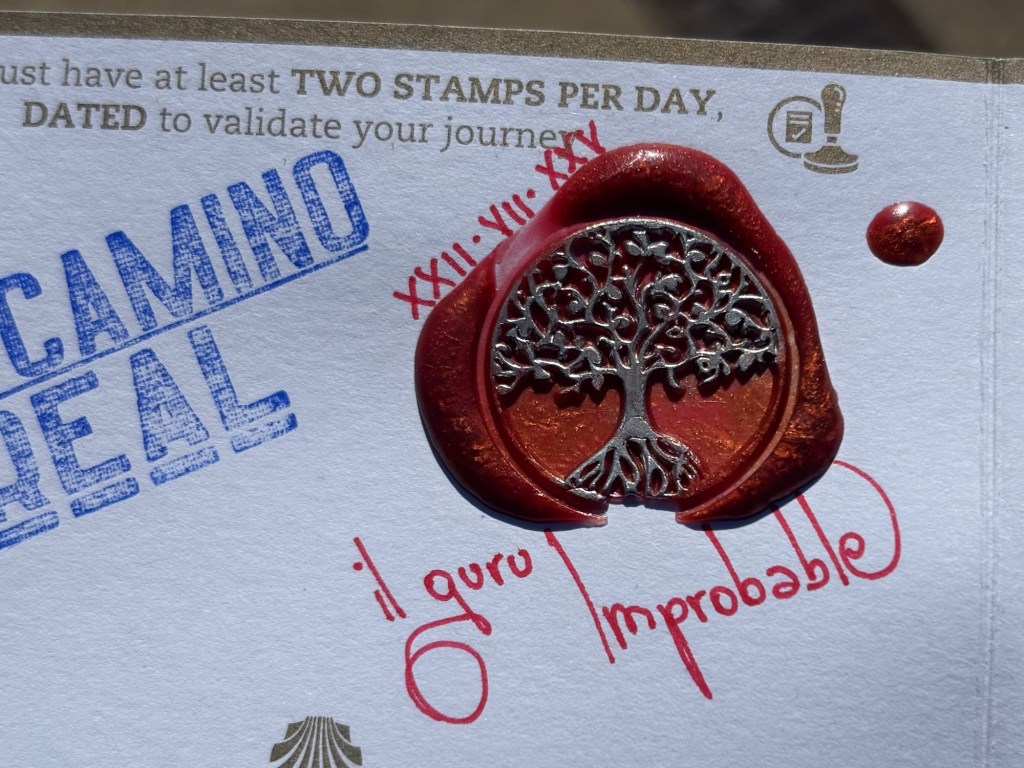
My pilgrim passport is looking a lot healthier. One whole side is nearly complete. It’s getting easier to pick up three or more stamps per day (which was near impossible in the first week or so). I may not need my third credencial after all, though I suspect I will still need my second! BB x

Camino XV: Grañón

Albergue Cuatro Cantones, Belorado. 20.57.

The grand majority of Camino guidebooks operate in such a fashion that some towns become natural starting and finishing points. At 21km from Nájera, Santo Domingo de la Calzada is a perfect example (with your average pilgrim walking around 20km a day). On the one hand, this is a very good thing, as it means any deviation from the recommended staging posts may give you a feel of the Camino as it used to be. On the other, it means that some towns soak up all the trade and leave the others dry. So how do you fight the industry?

Grañón has the answer: by being the most memorable and unique albergue on the entire Camino de Santiago.


After leaving Santo Domingo just before midday, I used the last of the cloud cover to beetle across the plains for a further 6km to Grañón, feeling slightly guilty that I was abandoning my Camino family again but confident that I was making the right decision – I’d missed Grañón before out of ignorance, and I wasn’t going to do so again in full knowledge.

Upon arrival I was greeted by the hospitaleros Kevin and Juan Manuel, a Chinese-Australian and a sevillano. For the first hour and a half it was just me and three Koreans, and it looked to be a rather cosy night ahead, but then Alex showed up, followed by Audrey, Alonso and Talia, and then Johan and Max. For whatever reason (possibly the clouds) they’d all decided to push on to Grañón after me. I must have sold it pretty convincingly without meaning to. My heart was lifted and I was tremendously grateful.

I fell into conversation with Juanma in the garden who asked after my Camino story, I told him about my grandfather and the grim fate that had befallen my great-grandparents, both victims of Franco’s regime – one murdered, the other dismissed and sent into a sort of internal exile. I’ve told this story so many times that it’s become second nature, but that’s the first time it’s drawn tears in a listener. Juanma explained that it had touched him deeply: his family, and so many others in Andalusia, had suffered a similar fate after the Civil War, which left thousands of families across the country broken, scattered and changed forever.

I’ll make a beeline for any Spanish accent, wherever I can find one, but I will always have a soft spot for an Andalusian. He was the only person thus far to recognise my Virgen del Rocío wristband for what it was, which was a tremendously good start for me: it’s not often one encounters a fellow devotee of the Mother of the Marshes on the Camino (or even another Catholic, but that’s another matter).


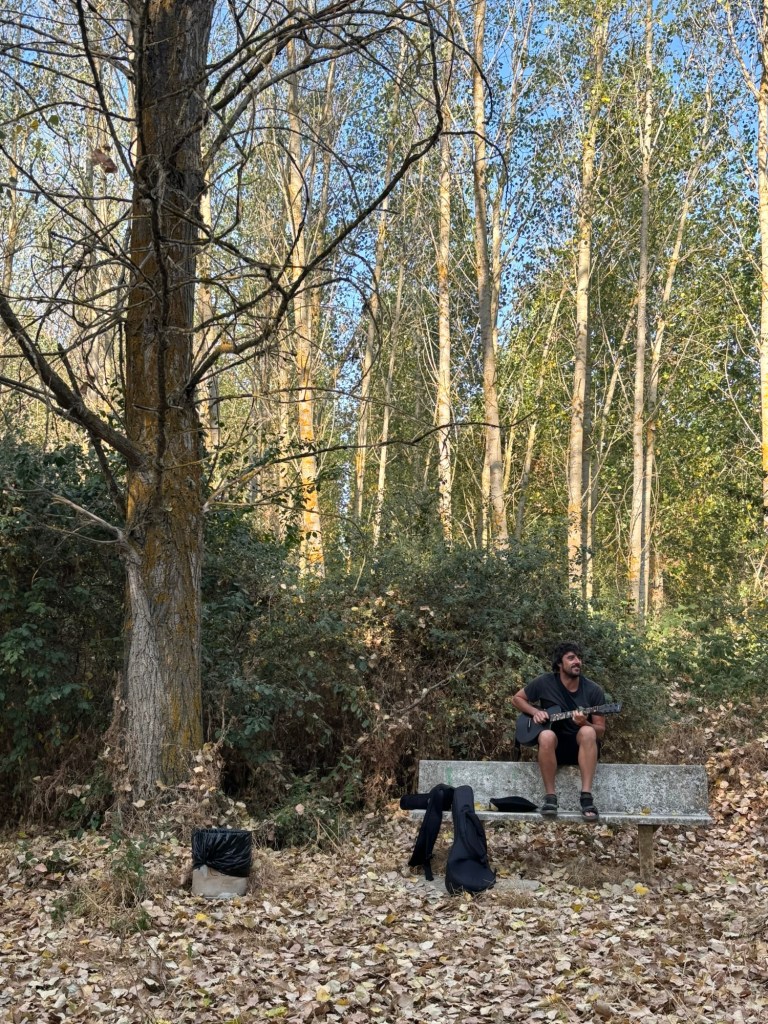
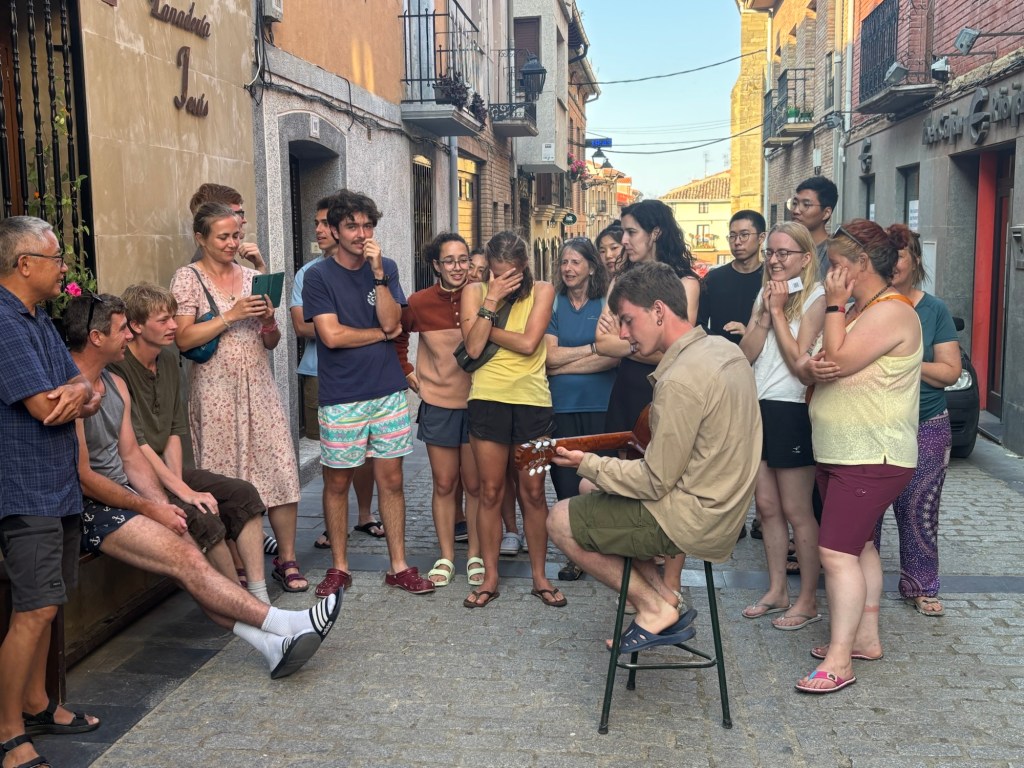
After preparing dinner – where for some reason I was assigned the role of sous chef and tasked with handing out jobs and ordering the entire operation – the hospitaleros requested some music. Johnny, an Irishman, was one of two who could play the guitar, but his repertoire and mine were worlds apart. The other guitarist, a young Danish kid fresh out of school, had only been learning a few months. So (not for the first time in my life) I ended up singing a cappella the only song I could think of that works: Pata Negra’s Yo me quedo en Sevilla.

It’s a gypsy love song to the city of Sevilla itself, and one that I’ve known since I first heard it on my mother’s Rough Guide to the Music of the Gypsies aged seven or eight. Back then, of course, my language skills weren’t really up to scratch, and I knew the song as “Single Feather”; my little brother and I used to run around the house holding a pheasant feather or something like that when it was playing in the old CD player. Ironically, it’s been a mainstay of my repertoire ever since, and one I usually wheel out if I’m called upon to sing in moments like this.

It’s amusing enough to be mistaken for a Spaniard because of the way that I speak, but delivering a gypsy ballad with all the frantic passion and duende that I can muster is both an ego trip and an out-of-body experience. I don’t think I have any gypsy blood at all, but the music speaks to me on a deeper level, touching my heartstrings in its dance through the blossom-scented squares of Sevilla.

God knows what the other pilgrims made of it but the Spaniards were impressed.


Later, after Mass, we had to go to the village bakery to collect our potatoes, as the albergue has no oven. There followed a strange ritual where we had to sing for our supper, divided up into nationalities. The Italians did two numbers (one I didn’t catch and Bella Ciao) and the Spanish committee (to which I defected) was psyched up for a tongue-in-cheek rendition of La Macarena, but since we were almost entirely hospitaleros (yours truly temporarily excluded), we were let off the hook. The English-speaking team (about 75% of the pilgrims, including my family and all the Koreans, Germans, Slovenes and Japanese) came up with… uh.,, Twinkle Twinkle Little Star.

Turns out they could easily have done Bohemian Rhapsody, but they didn’t organise in time. Never mind! One way or another, we got the potatoes.


After dinner, we went back into the church for a candlelit reflection in the choir. Prayers in multiple languages followed by the passing of the flame (the “pilgrim candle”) where we had a chance to say something: a reflection, a prayer, a wish for the Camino. Most of them just said “Buen camino” and passed it on. I held on for a good couple of minutes, I think.

I prayed out loud – something I don’t do all that often. It felt like the right thing to do. I prayed for my grandfather, José, and my great-grandparents, Mateo and Mercedes. I prayed for David, the father of one of my closest friends, for whom I have chosen to walk the Camino this year. I prayed for all of us, for a safe and spiritual road to Santiago. I prayed my thanks to God and to La Virgen del Rocío for all she has done for me this year: through heartbreak and healing and natural wonders, she has always been there to guide me.

Maybe it was a bit much. That would be very me. But it was (and may easily be) one of the only chances to worship together on the Camino and I took it with both hands.


I’d just brushed my teeth for bed when Juanma asked for a favour: he was taking over the albergue as hospitalero the day after and wanted help with translating his script into English. I worked it out with him from a notebook in a bar in town over a caña while he ordered his “usual” (a Maxibon ice cream).

We discussed a lot of things. Why there aren’t many Spaniards on the Camino (they’re all on bicycles, competing against each other to complete it in the fastest possible time). Why there are so many Koreans (it’s nationally regarded as a major CV booster, as well as a temporary solution to widespread youth unemployment). And where the Germans, who used to be everywhere, have gone (the Via de la Plata and the Via Mozárabe, to avoid the crowds on the Francés).


I’ll have more to say later about our next stop, I suspect. But I wanted to get this all down now while it’s fresh in my mind. It’s taken at least an hour, but it has killed the time and allowed me to stay and wait for the others to wake up, and that’s no bad thing. BB x

Camino XIV: Black Eyes

Cafetería La Concha, Grañón. 16.15.

A red sky in the morning is usually a herald of rain. I saw the rising sun for just a fraction of a minute as I left Nájera: a huge blood-red disk, perfectly circular, disappearing almost as soon as it appeared behind a low curtain of cloud that stretched at least as far as Aragón, and perhaps beyond. It’s certainly true that it was a cooler and cloudier morning than most, but whatever promise of rain the sun made it the early hours was forgotten once it was out of sight, like a fickle lover. The clouds have almost entirely disappeared, leaving behind the immense blue heavens for which Spain is so famous.

I’m here in Grañón – ice cream in hand – and it couldn’t have worked out for the better.


I was woken in the night by a pillow to the face. In the half-light I saw the pilgrim on the bunk below standing there. He said something, but it was in German and I was half-asleep, so I neither understood nor recall what he said. I guess I might have been snoring, though that’s not usually a problem these days – but I was on the top bunk, which had no railings, so my sleeping posture probably wasn’t the best last night.

The others – my Camino family, as it were – were all still fast asleep, and their intention was to reach Santo Domingo de la Calzada (the guidebooks do have a strong hand in where pilgrims end up), so I set out alone. I have somewhat mastered the “Irish Exit” strategy, and the Camino lends itself very well to such a move.

The reward for striking out alone was a nightjar – and not just the sound of one, but the sight of one as well. They’re bizarre creatures, nightjars: shaped like a cuckoo, or maybe a small hawk, with an owl-like face, a whispered beak and enormous black eyes. They’re often heard in the places they frequent, but rarely seen due to their nocturnal habits, so it’s remarkable that they should have left such an impression as to have such an intensely evocative name in each language.

In German they’re nachtschwalben – night swallows. In Spanish, chotacabras – goat-suckers (the Italian succiacapre is much the same). The French use the term engoulevent – literally, wind-eater, on account of their hunting habit of flying through the twilight air with their beaks wide open. In English, I can only assume the name is phonic: because the nightjar’s call can only be described as a long, rasping jar or churr, which it can go on producing for hours with seemingly no need to rest.

I only saw it a few times as it moved beneath the forest canopy, with the jerky motion of a child’s toy glider, its wings held high as it manoeuvred dextrously through the trees. But it was enough. I consider that a very good start to the day.


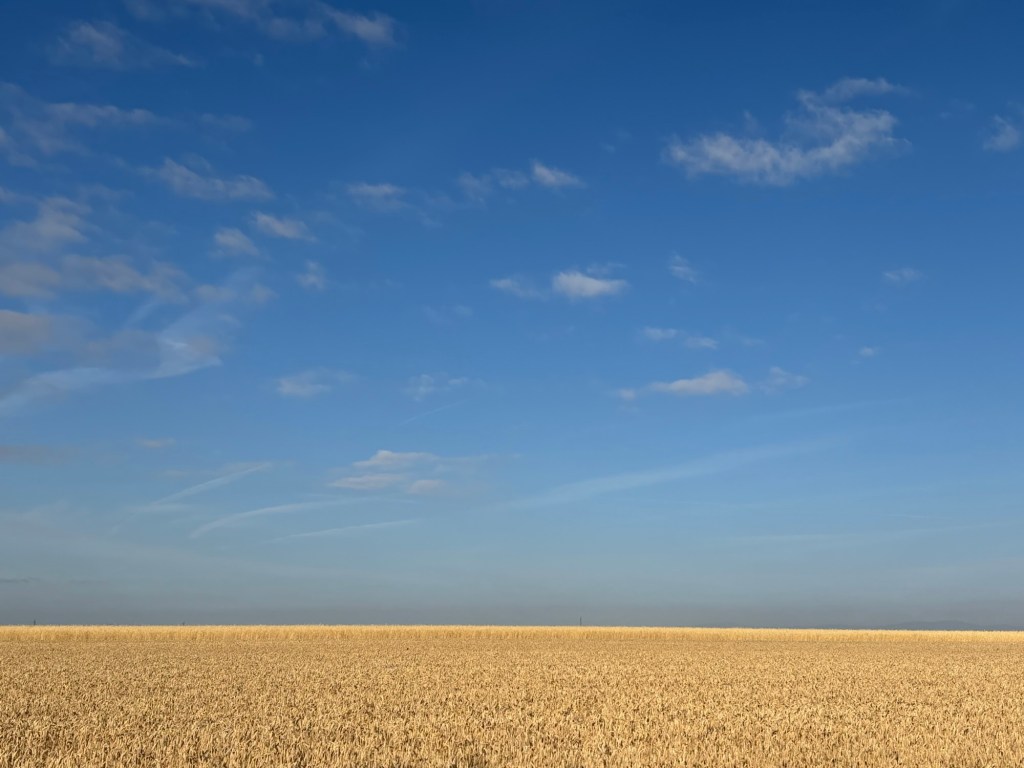
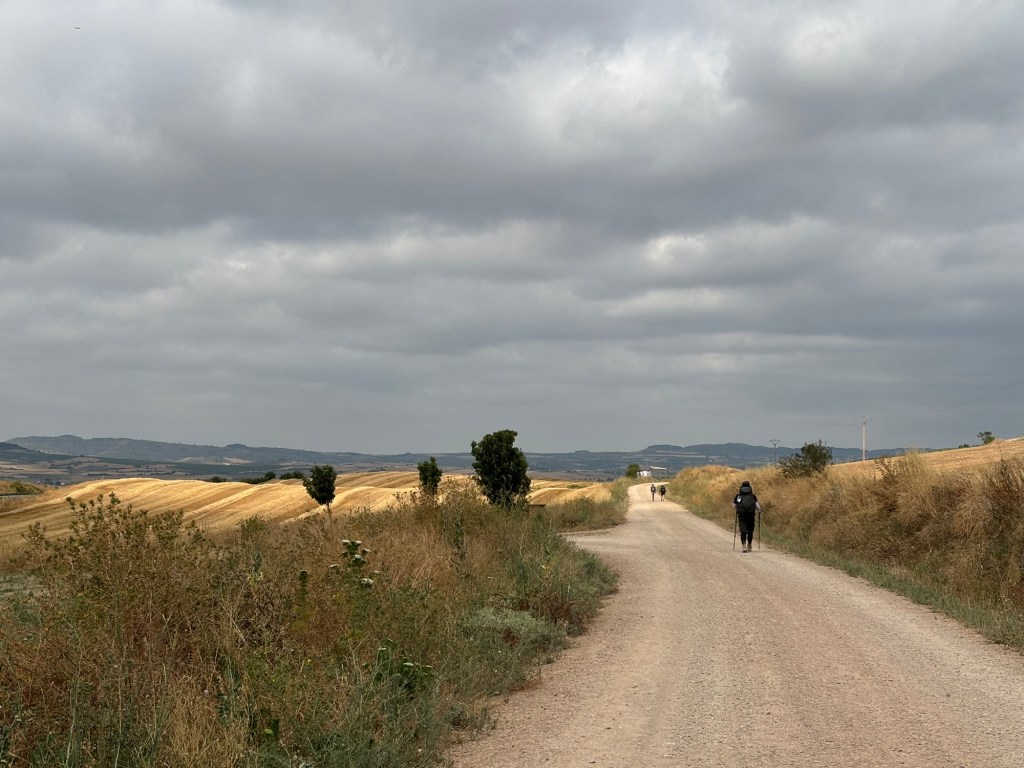
I came this way during the spring a few years ago and I remember needing gloves, it was so cold. There was even frost on the ground. Not so today: the endless green fields of shimmering wheat have since turned to gold, as though by the hand of Midas. With the merciful cover of the clouds, they were not blinding to the eye, so the loss of my sunglasses in Sansol the other day was no concern, though I did buy a new pair in Santo Domingo; it would be nothing short of madness to attempt the ceaseless flat of the Meseta without them (where it sometimes feels like you’re walking on the sky).


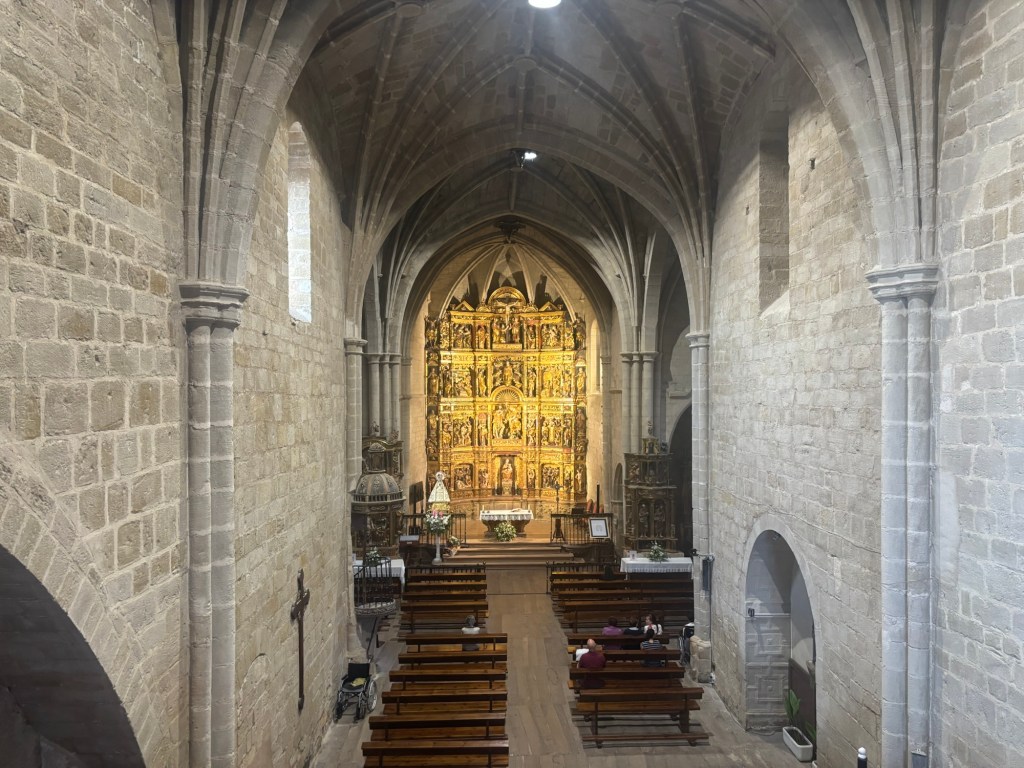
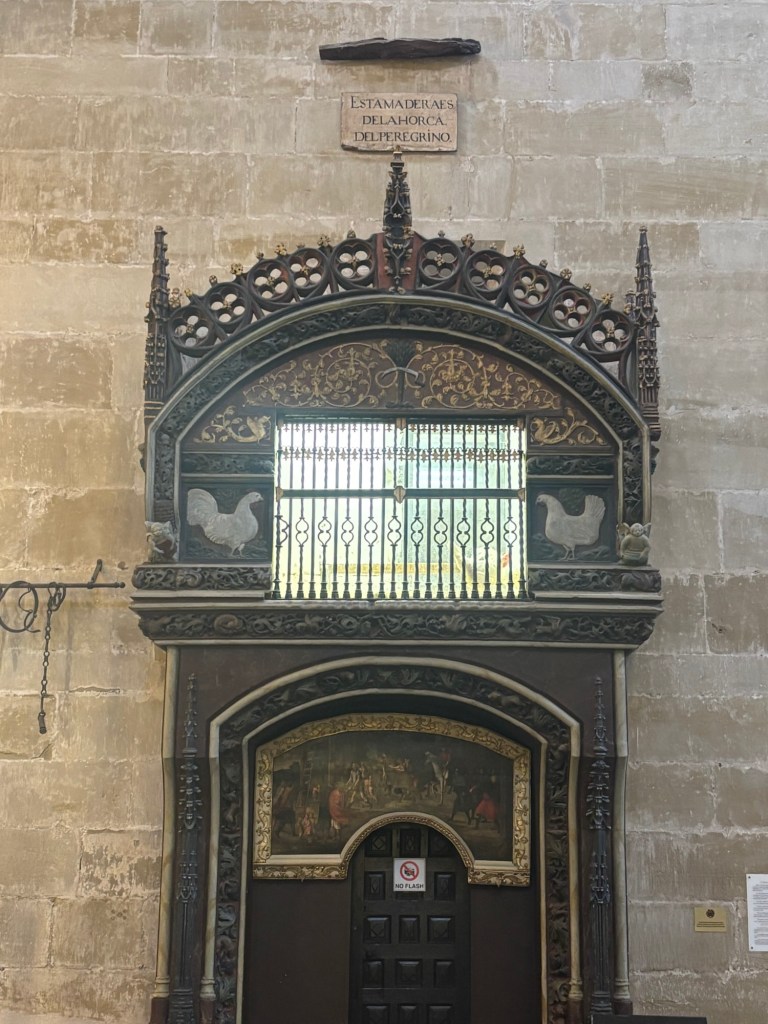
I stopped in Santo Domingo to have the rest of the pâté and bread I bought yesterday as a light lunch. The last time I came here, I was with Mikkel, Lachlan and Sophia and so I never got around to visiting the cathedral, so I made good on that today. Apart from netting me another couple of stamps for the credencial, it also housed a number of treasures that I wanted to investigate – not least of all the famous “resurrected chickens” that feature so prominently in the town’s history.


Santo Domingo de la Calzada, like so many towns along the Camino, was born on the pilgrim road, founded by the same Domingo García who gave the town its name. Its most famous legend tells of the execution of a young German pilgrim who, passing through the town, attracted the attention of the mesonera (innkeeper). After rejecting her amorous advances, the spiteful mesonera concealed a silver cup in the pilgrim’s bag before he left, for which he was accused of theft, sentenced to death and hanged on the spot. When his parents came to identify the body, they found him alive, claiming Santo Domingo had saved him. The sceptical mayor, who was fairly sure that the boy they had hanged the day before had been executed properly, claimed he was as alive as the chicken on his plate – which promptly stood up and crowed, testifying to the truth of the pilgrim’s fate.

Ever since, a pair of the descendants of the resurrected chickens (don’t ask me how they check) have been kept in the cathedral, together with a piece of the scaffold where they hanged – or tried to hang – the innocent pilgrim, all those centuries ago. Go figure.


Santo Domingo’s cathedral, like many in Spain, is full of hidden treasures. I was particularly taken – as always – by the mythical creatures that pop up in the stonemasonry. Harpies, dragons, demons, griffins… for a faith that spent so much time and money driving all traces of paganism from the land, it sure is amusing to see that Spain’s churches are full to the rafters – quite literally – with frozen memories of that dark world.


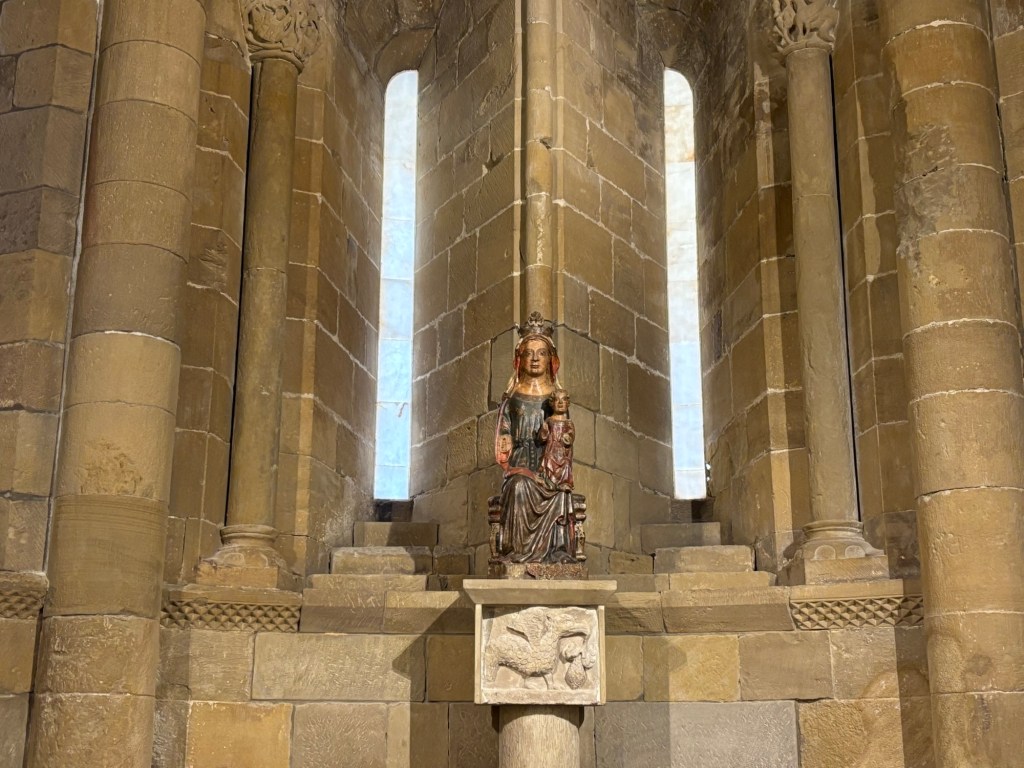
One really stands out, especially after some recent reading. In one alcove, an icon of the Virgin Mary and child stands above the carved image of a griffin – in fact, there’s quite a few griffins watching over the chapel from the surrounding pillars. There’s a deeper poignancy at work here: griffins have been symbols of maternity since their invention over a thousand years ago.


Unlike the other mythological beasts of the ancient world, like centaurs, unicorns and minotaurs – which have a solid grounding in Greek mythology – the griffin seems to spring into existence out of nowhere, but already fully-formed.

Adrienne Mayor has a very convincing theory that the griffin is an unmistakeable reimagining of the protoceratops, a Cretaceous era dinosaur often found protecting its young in the lands where griffins were believed to reside (Central Asia). As stories of such “griffins” reached Europe, they entered our heraldic system, and are often to be found around the Virgin Mary, the single most important symbol of maternity in the Christian faith. A seemingly bizarre pairing – but a perfectly logical one. Two ancient beliefs meeting in the middle.


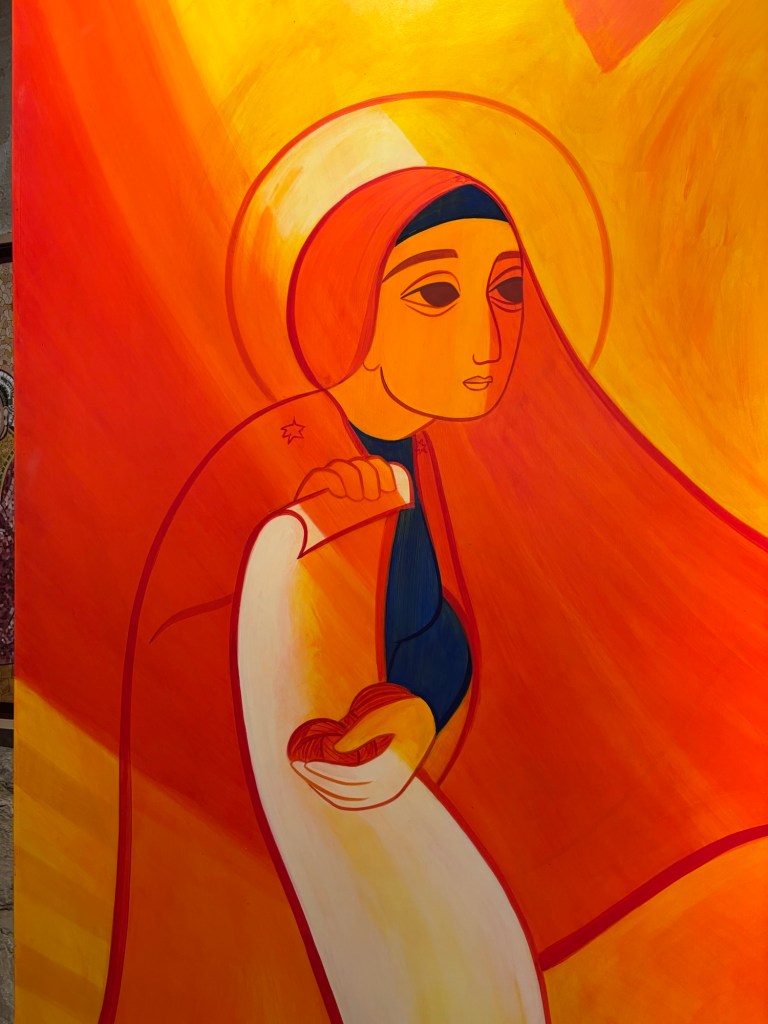
Under the cathedral, where Santo Domingo is buried, a relatively recent mosaic stares out at you from a thousand shining tiles. The design is modern, but the style is almost Byzantine: teardrop-shaped faces line the wall with huge, almond eyes the colour of midnight.


This is the kind of religious art that I have always found especially compelling. There’s an otherworldliness to it that borders on the mystical, a connection to the faith of those first believers long ago. That’s what I sometimes think the modern church is missing, why so many lose interest: the more it tries to modernise, to catch up to the new generations “on their level”, the more it loses the mystery that made the early church so compelling. I know that for me, at least, it’s that connection to the ancient ways, to tradition, that speaks to me. And I get a piece of that when I see this kind of art, even in imitation. A mirror to the ancient world, when faith was new and hot like a flame.


It’s nearly half past five. I’d better head back to the albergue – I’m on dinner duty. That’s the price for arriving early! BB x

Camino XI: Not Here

Albergue de Sansol. 16.38.

Well, so much for Plan A. The American pilgrims I set out with this morning were in such a tearing hurry to beat the heat that we reached Los Arcos shortly before 10am. I’ve done the Camino a few times before, and my instincts tell me that – shy of the discovery of a true marvel – it’s nothing short of ridiculous to call it a day before the hour has even reached double figures. So I excused myself, picked up my sticks and set out, as I did all those years before, for Sansol.


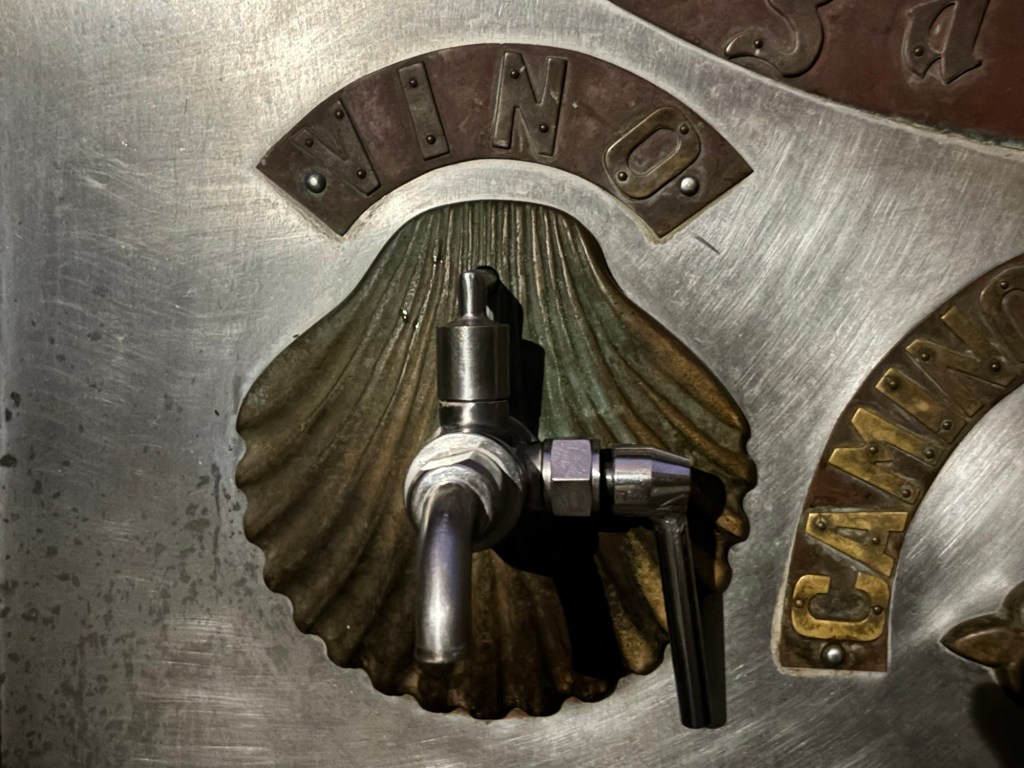
Estella is pretty much an essential stopover on the Camino de Santiago, but the primary disadvantage of doing so is the fact that the famous wine fountain of Iratxe is hardly a forty minute walk from the city. If you save your visit for the small hours of the morning, and expect the wine to flow like water, you will be disappointed. At least today it was running – the last time I came by it wasn’t operating at all – but it hardly gave more than a few drops when we reached it at around 5.50am.

I can’t think of many places in the world that have actual wine fountains, so it’s definitely worth checking out, but for those who want a little more than a few drops, this may be one to investigate via an afternoon sortie from Estella.


I walked with the Americans for a bit, but I stopped for breakfast in Azqueta and let them press on. It was easy to seek them out for a laugh and good company, but even easier to forget the gulf in age between us (I am about ten years older than all of them), which became steadily more apparent as the conversations went on. I was also missing the solitary aspects of the Camino that had become so deeply ingrained since Oloron – as I suspected I might – and the distance did me good.


My DNA Heritage tests results came back today. Turns out I’m actually more Spanish than English, if the test kit is gospel (which I would very much like to believe!): 37.5% Iberian to 26.4% English. Either the Spanish genes on my mother’s side are ridiculously strong or the English genes on my father’s side are a lot more varied than I thought. As it turns out, as well as the obvious Spanish genetic indicators (I didn’t really need a box kit to tell me that), I apparently have a not inconsiderable amount of French and Breton ancestry (6% each).

This last detail is really very interesting, as I’ve latterly developed something of a soft spot for Bretagne after spending the summer in Saint-Malo last year. Granted, the Breton genome encompasses most of Normandy, too, so it’s just as likely a relict trace of Norman (aka British) DNA, but still – I’ll take it. I’ll take any connection to that beautiful part of the world.


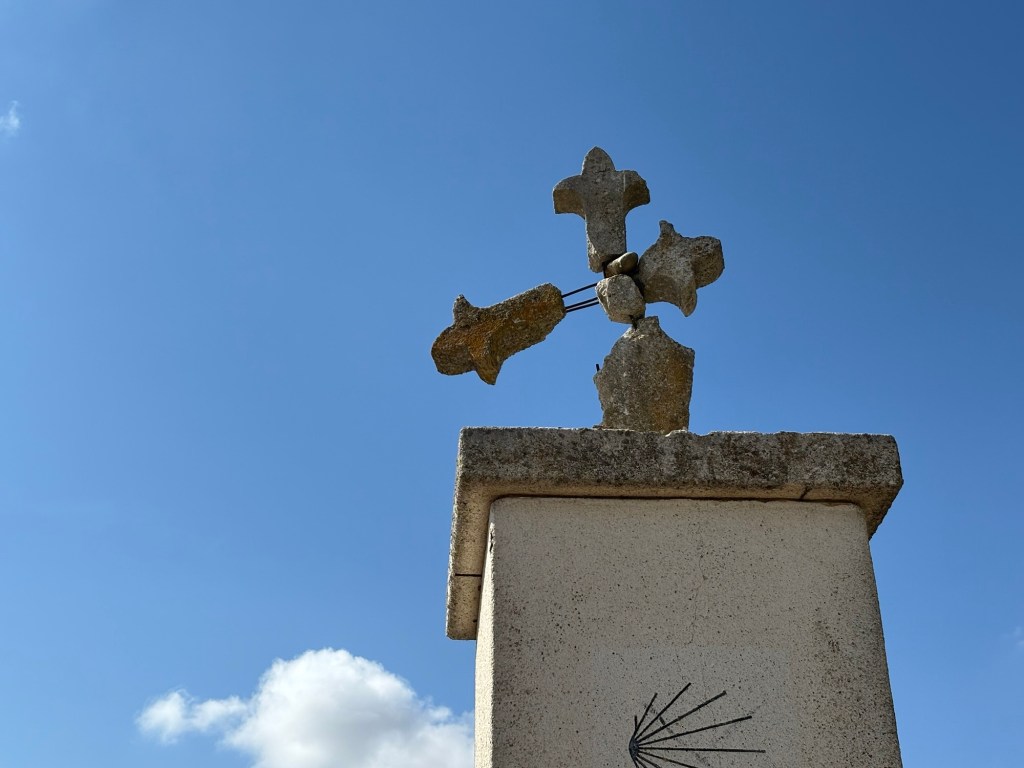
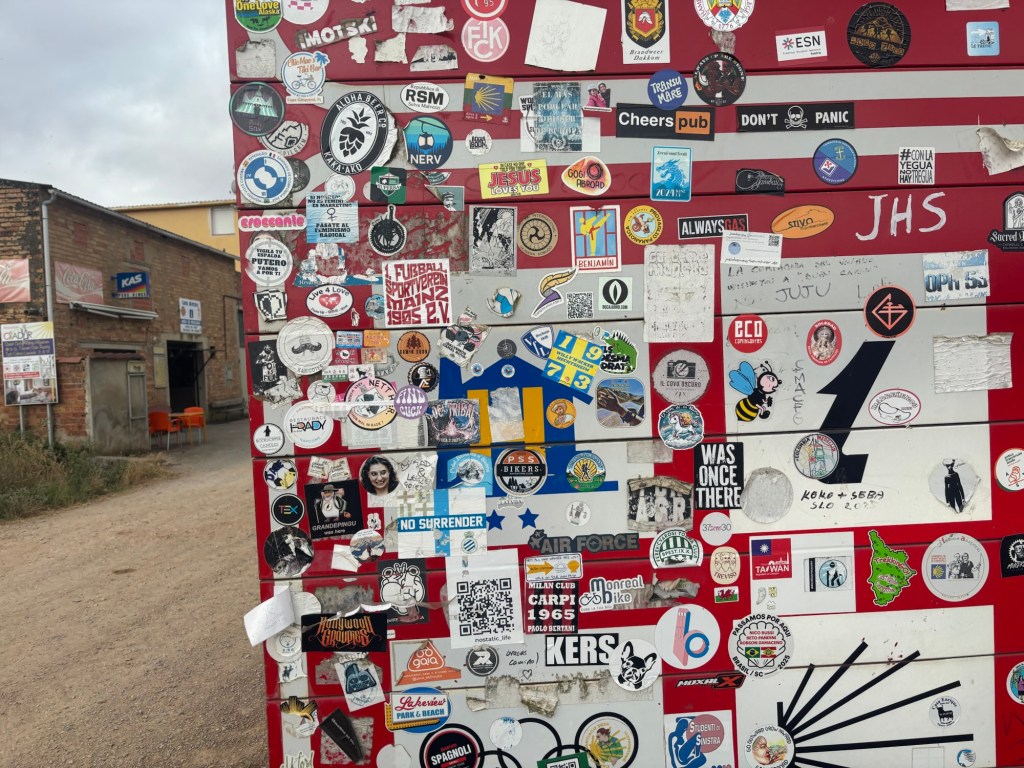
Now I’m on the Camino Francés, pilgrim junk is much more of a feature of the Camino. Stones piled in cairns upon the trailmarkers, obnoxious stickers plastered all over the signs, clothes and prayer flags left hanging in the branches of low-hanging trees… Even if the yellow arrows weren’t there, it would be hard to lose your way for all the detritus.

It’s very easy to criticise, and perhaps I shouldn’t. After all, as is so often repeated in hostels and on the Camino Facebook groups, everyone walks the Camino in their own way. But I do think we forget that this is a country, with real people getting on with their lives, long after we have come and gone.

Do the piles of stones left behind really make a difference, even to those who choose to do so, or are you just following a fad you’ve seen? And what happens when they start to change the landscape, as at Cruz de Ferro, and need to be removed by heavy machinery to prevent further damage?

Do the stickers you leave on signs actually contribute to the experience of the Camino for those who come after you, or are you just creating one more labour-intensive task for some local official who will have to spend hours scraping them off – or even using local funds to buy new signage?

Do we really need to be reminded to visit Baden-Würrtemberg? For the record, I thought Baden-Würrtemberg was bloody beautiful when I stayed in Karlsrühe in 2019, but after seeing the “Nett hier” stickers once too often in a place of spectacular beauty, I have developed a profound dislike for the name and the arrogance implied by the stickers. There is such a thing as overadvertising!


At the root of my consternation in today’s post is this. It’s been eleven days on the Camino de Santiago and I’ve yet to encounter somebody who’s here for reasons of faith. Everyone – everyone – is here for a walk. Because they’ve heard of the Camino. For a challenge. A holiday. An adventure. And the pilgrim community, like a hive, is very quick to turn angrily on anyone who voices the opinion that somewhere, underneath the spirit of free and individualistic adventure, might be found the bones of a genuinely spiritual journey.

Maybe I’ve just not had much luck. But it would be nice to share the road with another believer, in a place where you might have thought it so much more likely to find one.

I’m still stopping in every church I pass. I still say a prayer to God on behalf of my grandparents and my dear friends’ father before every cross, every chapel, every shrine. I don’t feel “holier” than my fellow pilgrims, because I’m just as guilty of using the Camino as an affordable excuse to spend my entire summer holiday in Spain. But still – it’d be nice to meet someone who has come to the Camino for a genuine reason beyond “I heard about it and it sounded pretty awesome”.

Perhaps the Koreans are the answer. The trouble is, they don’t speak much English, and no Spanish at all beyond Buen Camino, so conversation is something of a non-starter.

Spain needs pilgrim money now as much as it did when the wars against the Muslims were still raging on and cash was hard to come by. But I do wonder where they all are, those walking the Camino with spiritual intent. Maybe I’ll find them out on the Meseta. It truly is a magical place.


England is experiencing another heatwave, but out here, the weather is mild. The hospitalero is cooking up an enormous paella to share between us tonight. That is, me and the five other pilgrims who made it out here: a quiet German lady, an ageing Italian who talks to himself a lot and snores like it’s an Olympic sport, a Tuscan with a strong accent and a couple of very lovey-dovey Romans. The least that can be said is that English is no longer the lingua franca and that is such a sweet relief. I was almost starting to feel I’d left Spain behind! BB x

Camino X: Hellmouth

Albergue Municipal, Estella-Lizarra. 20.39.

Excuse the late entry – I’ve chosen to be sociable today and have spent most of the afternoon in the company of fellow pilgrims from around the world. It’s been a welcome change after nine days of silence! But a promise is a promise, and I have a duty to uphold! So here’s today’s report.


I was up early this morning – five to four, to be precise. Falling asleep around ten didn’t help my sleep pattern, I guess. I couldn’t quite justify striking out for Estella so soon – it is only just under 22km from Puente La Reina – so I dawdled until five, at which point several pilgrims were already getting ready to go. Again, I dawdled, not wanting to arrive in Estella with two hours to kill before being able to jettison my rucksack, so I carved the names “Niña” and “Pinta” into my sticks (after Columbus’ ships – the Santa María, the third of the trio, is my rosary). It’s not especially visible, as all I had to hand was a kitchen knife, but it’s a start.


I was one of the first to strike out, but I gradually let a fair number of pilgrims overtake me. I stopped frequently; waiting for the sunrise at Cirauqui, sketching a lonely cemetery, grabbing a tortilla sandwich at the same bar I ate in when I walked this path with my mother six years ago. I also managed to collect a few stamps, which is always a plus.


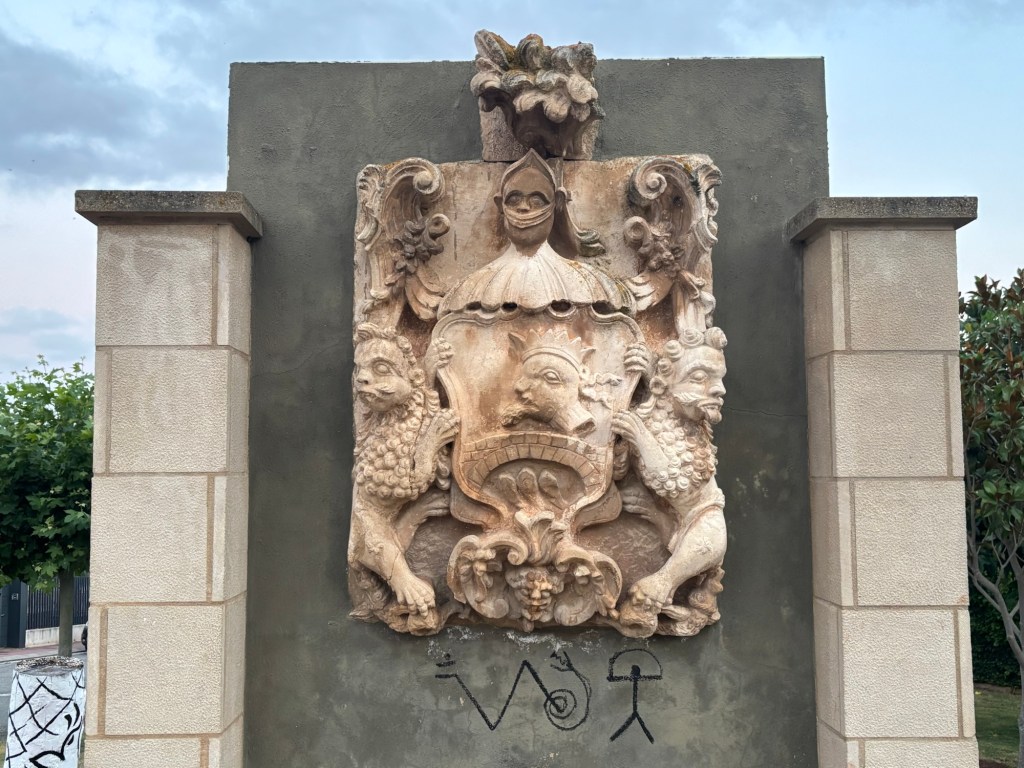
I spent a lot of time today looking at the decorations on houses and doors, which suddenly become more elaborate upon entering the Basque territories. Many houses bear a heraldic crest, and around here the motif of the knight’s helmet with the visor raised is fairly common. In heraldry, this is usually the sign of high-ranking nobility. Many of medieval Spain’s most prominent nobles were of Basque extraction (or Basque adjacent), like the Mendoza, Loyola and Haro lines.

Curiously, scratched beneath one of these crests were two symbols. One is easily recognisable as the Índalo, an ancient fertility symbol from Spain’s southeast. The other is… well, I’m not entirely sure. I’m fairly certain it’s an invention by the artist who left the Índalo, in much the same style, with what seems to be a serpent drawn out of the end. Graffiti usually has a point to make – I wonder what it could mean?


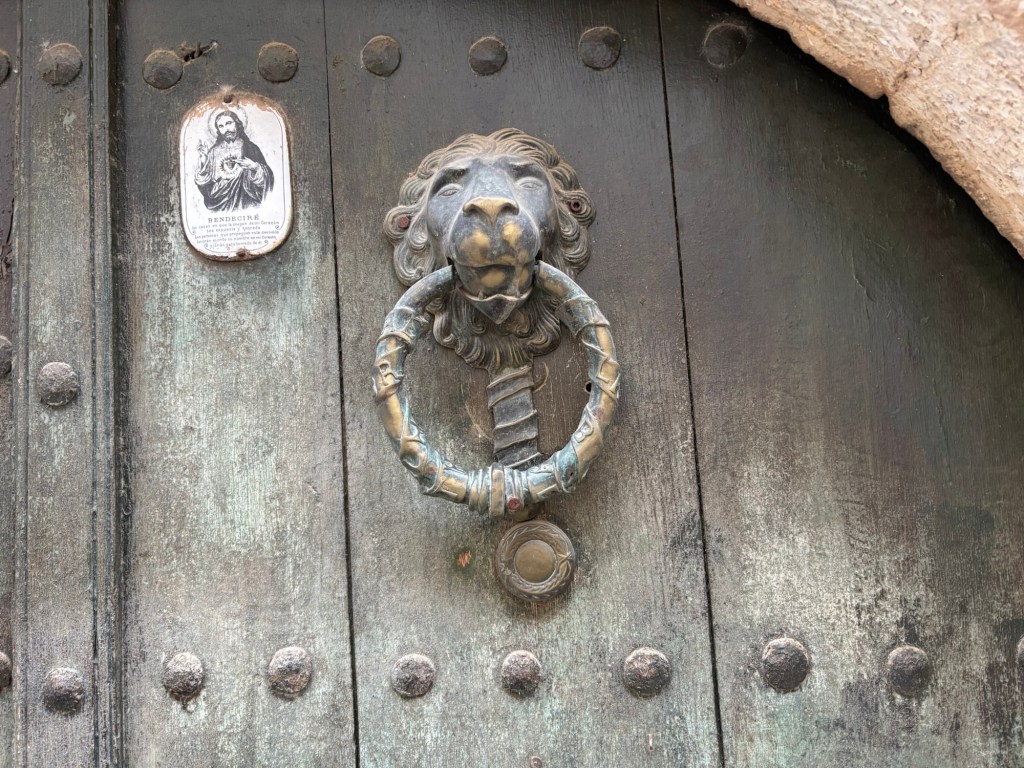
I couldn’t help noticing the door knockers as I passed through Cirauqui. My mother used to fill memory cards with photographs of these things, which in the south (and here) often take the shape of a woman’s hand holding a metal ball, known as a Hand of Fátima. It’s an ancient Moorish motif used to ward off the evil eye, and appears in a lot of Mediterranean and North African jewellery. The lion’s head – a style much more familiar to those of us who live on the other side of the Pyrenees – does much the same thing, warding off evil spirits with its frozen roar.


I am, of course, reading far too much into this. I imagine your average Joe (or José) probably doesn’t consider how effective this or that door knocker will be at warding off evil spirits. Still, it’s one of those things that’s so deeply embedded into our psyche that we don’t even realise we’re doing it. Like Christmas, in a way. Most of us don’t give thanks to God for the birth of Jesus Christ on the 25th December, but that doesn’t stop us from opening presents and celebrating late into the night.


I spent so much time hobnobbing with fellow pilgrims this afternoon that I didn’t really get to explore Estella much. It was also a sweltering 36°C, which didn’t exactly encourage an afternoon wander. Fortunately, I stayed here for two whole days the last time I came through, so I’ve seen all of Estella and its charms before.

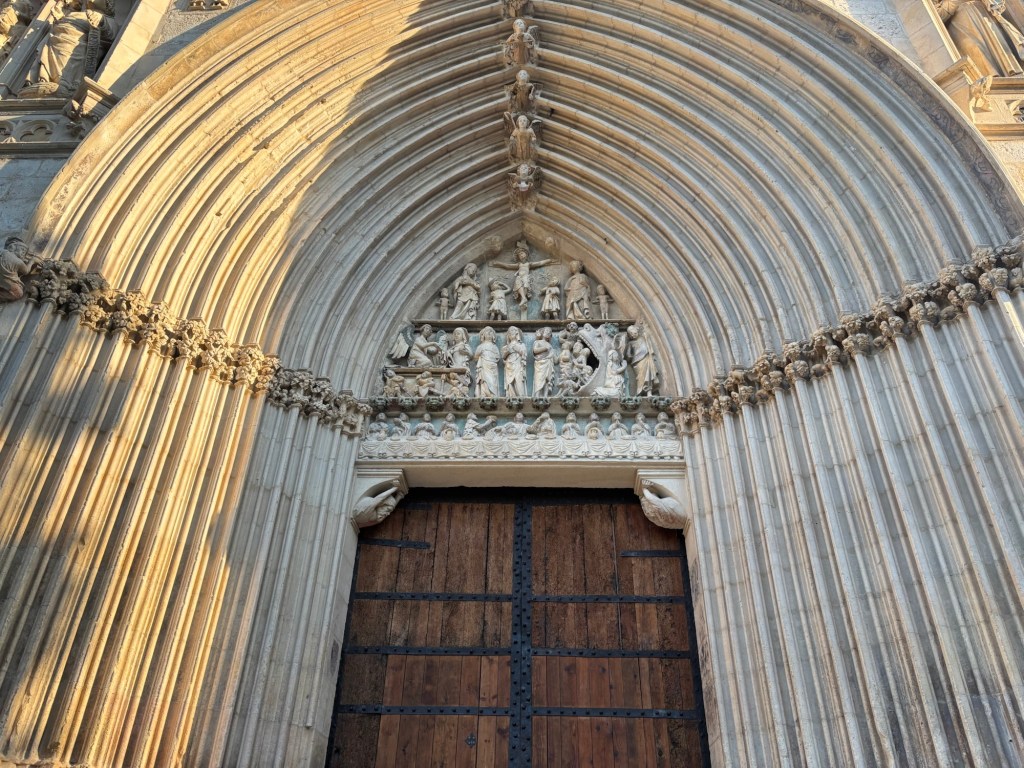
One thing I did seek out, though, was the remarkable archway of the Iglesia del Santo Sepulcro. It caught my attention today for the same reason it did all those years ago: the horrifying maw swallowing sinners, and dragging them into Hell.


This motif is not unique to Estella. It can be found all over Europe. I’m fairly sure I saw one in Bordeaux last week. It’s known as a Hellmouth, and it can be found in Anglo-Saxon artwork at least as far back as the 8th century. It’s thought to be a representation of the “Crack of Doom”, the Day of Judgment – crack having a dual meaning in English, being both a harsh sound (like a thunderbolt or trumpet blast) and a chasm or pit. It may even have ties to an old Scandinavian legend of the Fenris Wolf, who was destined to swallow up Odin, the Allfather, and thus the world entire.

It’s certainly funny to think that such an English (read: Anglo-Saxon) blend of Christian and pagan imagery should find its way onto the doorway of a Spanish church, over a thousand kilometres to the south. It’s just one more reminder of the power of a good story: dropped in the right place, and told in the right way, it can send ripples that cross entire oceans.


Tomorrow I make for Los Arcos, a town I bypassed last time in favour of the ice baths of Sansol. Let’s see what I missed! BB x

Camino IX: Switching Lanes

Albergue de Peregrinos de los Padres Reparadores, Puente La Reina. 17.00.

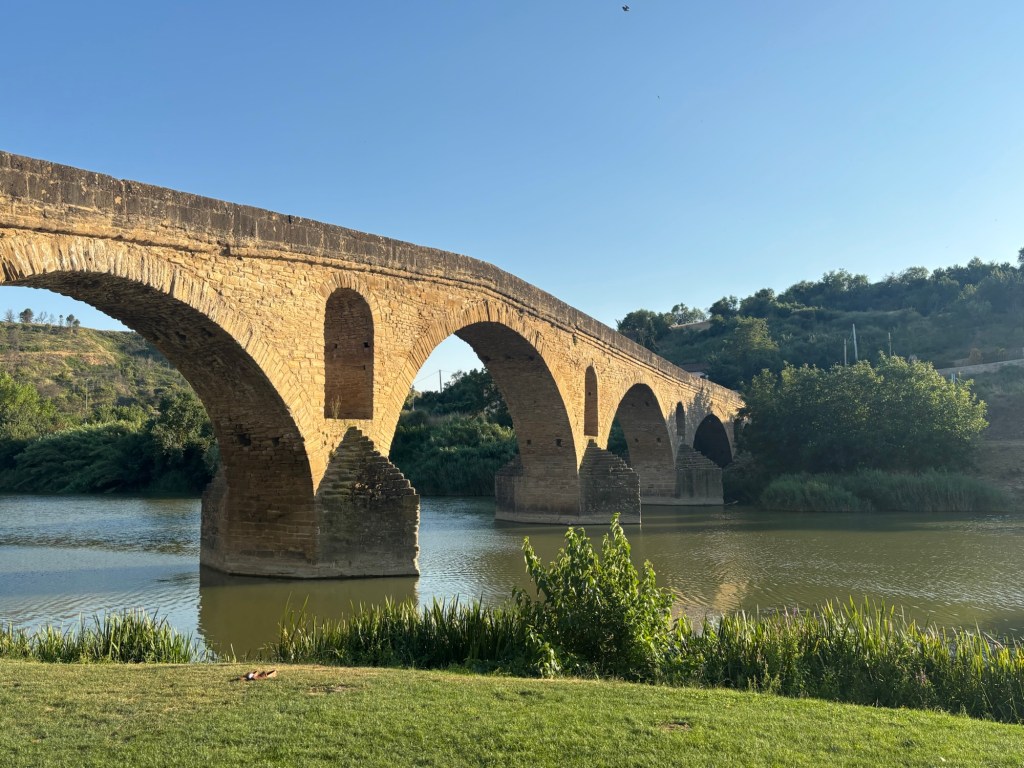
At last, after nine days of having practically the entire Camino Aragonés to myself, I have joined up with the pilgrims on the Camino Francés. What a change it’s been! Puente La Reina is much the same as it was when I was last here, some six years ago, but it is a lot busier. A lot. There must be nearly a hundred people in this albergue alone, and it’s not even the only one in town. Still – it’s good to see other people again!


I left Monreal shortly before six this morning, which, in retrospect, was a mistake. I probably should have left half an hour earlier, given the distance (another 31km day today). It was quite a trek, and most of it under the sun.

I bade farewell to Aragón two days ago when I crossed the border into Navarra, but today was the “real” goodbye, as the mighty peaks of the Pyrenees slipped beyond the horizon for the last time. I shall miss them. I overtook the seventy-eight year old pilgrim Mari Carmen for the last time and then the road was mine, for perhaps the last time in many weeks.

I was not entirely alone. A fox raced along the path ahead of me for a short distance, and a small herd of deer had come down from the sierra to feed. They looked up as I walked by but didn’t seem all that bothered. I guess they’re more used to pilgrims in this part of the world.


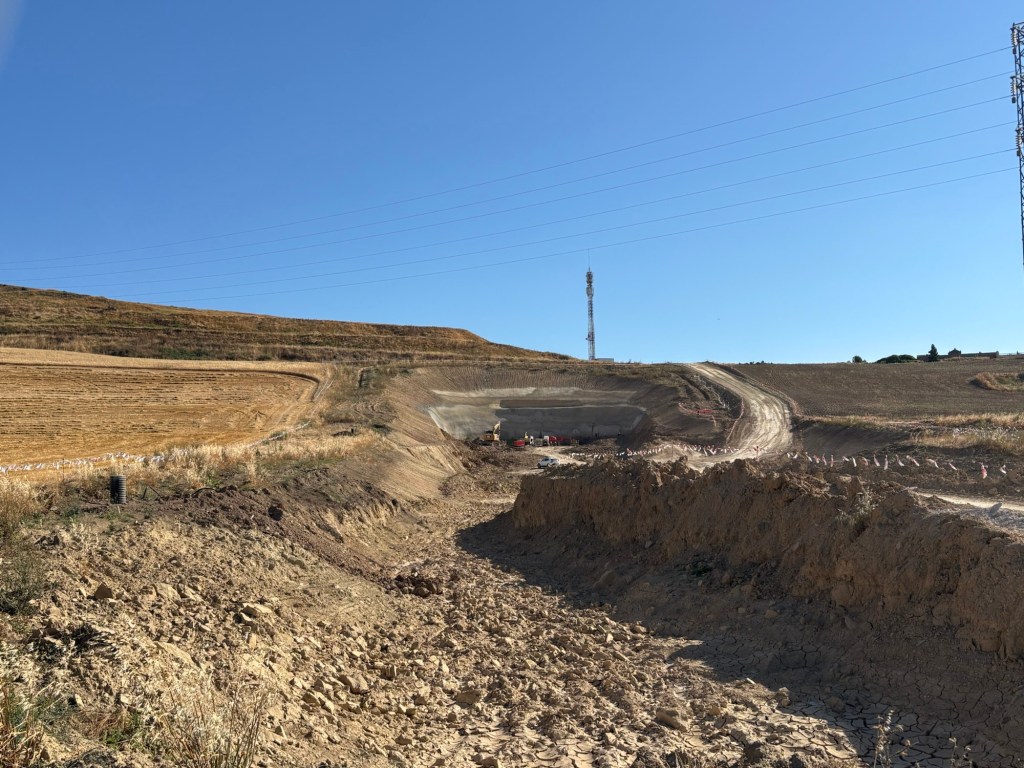
The Camino skirts the northern edge of the Montes de Valdorba, the last of the pre-Pyrenean sierras before the great open fields of the Ebro floodplain. Along the way, it passes a number of immense limestone quarries, like the Canteras de Alaiz: great, gaping wounds in the mountainside, sometimes laddered like a pyramid, sometimes sliced in a perfect square, and sometimes belching great pillars of dust into the morning light like something out of Tolkien’s fiery pits of Utumno.


A similarly industrial hellscape met me on the other side of the AP-15, the busy highway connecting Pamplona and San Sebastián with Zaragoza. It looks like they’re extending the road out west, so I was glad to have the company of Robert Harris’ Conclave for a time.


The final two-and-a-half hour trek across the fields west of Tiebas were tough, as the sun was already high and the forested slopes of the sierra were quickly becoming a distant memory. There were butterflies absolutely everywhere: little blues, skippers, commas, red admirals, painted ladies, marbled whites and the odd swallowtail. I suspect they were less troubled by the heat than the birds, who were keeping mostly to the shade, their beaks open and their chests rising and falling quickly.


La Iglesia de Santa Maria de Eunate was noteworthy in that it was the first albergue of the Camino so far which was A) open and B) had a stamp for the credencial to offer. I made a promise before setting out on this pilgrimage to pray for one soul in particular in every church I found, so it’s a tremendous source of relief when I can go inside, rather than having to genuflect before the door, under the sun.


After what seemed like an age – and with the audiobook reaching its final line only just in time – I suddenly realised that I recognised the Camino I was walking, because I’d done it before. The Caminos converge just after Óbanos (where I picked up another stamp), and from there it was a relatively easy march to Puente La Reina. My legs were beginning to tire, which is not entirely surprising after two 30km+ days back to back, so I was greatly relieved to reach the albergue merely minutes later.

And here we are! I’ve already met a number of interesting pilgrims: Ruby, a gap year Physicist from Kent; Max, a Salzburger who set out from his front door three months ago; an Irishman who teaches English in Shanghai; a Finn with a penchant for Spanish girls; and Amaya, a Basque girl bound for Logroño.

And Puente La Reina put me right, food-wise. One of the bars offering a menu peregrino had sopa de ajo on the menu, so I was drawn right in.


There’s a pilgrim’s mass at 7.30pm, so I’ll try to make for that – I remember it being very friendly the last time I was here. Here’s to a highly sociable few weeks! BB x

Camino V: Along the Aragón

Albergue de Peregrinos de Arrés. 13.48.

I bid Mariano adiós at around 5.45 this morning and left Jaca just all the young folks were finding their way home after an enjoyable Friday night on the town. Far away to the south, a summer thunderstorm lit up the sky every four or five minutes, and by counting the seconds between flashes, I was able to catch one of the strikes with my camera.


With Jaca behind me, I am very conscious I am headed into a world of great distances and tiny villages, so I did double-check to make sure I had enough cash to last at least three days – the time it will take to get to the next town with a functioning ATM.

With the thunderclouds rumbling away in the distance, I had to keep turning back to watch the sunrise, which was singularly spectacular this morning. The sky was a shade of pastel pink normally reserved for Renaissance paintings, and the clouds building up above the mountains could only hold back the sunburst for so long. When it came, it pierced two gaping holes in the clouds, like gleaming eyes, before ripping an almighty gash right through the centre and sending a hundred golden rays into the morning sky.


I had a choice to make today – to press on to Arrés or take a lengthy detour via the Monastery of San Juan de la Peña – but in the end it was the weather that made my mind. A gentle summer rain began to fall shortly after sunrise – not the heavy, sheet rain that makes any outdoor activity miserable, but a light, warm, refreshing rain. The kind that provides relief after a long morning on the road – but makes cross-country hikes hard and soggy work. Rerouting to San Juan de la Peña turns an already reasonable itinerary (24.6km) into a trek (38.4km), and after my ascent and descent of the Pyrenees in one go two days ago, I thought it wiser to forgo the monastery this time – after all, these feet have to take me all the way to Santiago. I have to be careful!


The Camino from Jaca mostly follows the road and the river, but it does provide several forested cross-country stretches that offer some relief. On one of these, in the hills south of Ascara, I stopped for a breather and there I found a most remarkable thing: a symbol of Santiago, a shell, but ancient. A fossil from an ancient sea, perhaps ten million years old or more, just sitting at the side of the Camino, waiting to be found.


I’ve always wanted to come to Aragón for its fossil beds. Teruel, Aragón’s southernmost province, is believed to have the highest concentration of fossils per square metre in Europe, and there’s even a sauropod named for the region (Aragosaurus). There are some incredible relics from the ancient world to be found in this vast region, including a large number of well-preserved dinosaur footprints at El Castellar and Galve. I wasn’t expecting to have any luck with dinosaurs on the Camino, as the fossil beds themselves are far from the pilgrim road and pretty hard to reach without a car, so I can’t believe my luck in finding a Miocene scallop shell – and in such good condition!


Today’s hike was a pretty solitary one. That’s not to say I’ve met many pilgrims on the road – today I saw one, and that’s one more than the last four days – but the distances between the towns today felt immense. That’s fairly typical of the Spanish interior, and Aragón is no exception. What makes this part of Spain so striking is its singular orography: so many of the hills in the Río Aragón basin are perfectly flat on top, forming an alien landscape that reaches its peak in the Bardenas Reales to the southwest.

Naturally, in this land of shifting frontiers, many of these mesas have a hilltop town or castle sitting neatly on top. I can see at least one from my stop for tonight in the hill town of Arrés: Canal de Berdún, away to the north. If Arrés had proved to be a ghost town, I would have tried my luck there.


Fortunately, it isn’t. Arrés is little more than a hamlet tucked away in a cleft of the long wooded sierra that runs the length of the Río Aragón, with some fifty permanent residents or less to its name, but don’t let its silence deceive you (even on a Saturday afternoon when everything seems to have ground to a halt). The municipal albergue is fully operational and perfectly equipped, allowing for a stay in possibly one of the most beautiful corners of the Camino Aragonés.


I’ve done my washing by hand, as usual, and it’s hanging out to dry. In this heat, it already will be within another ten minutes or so.


To end the day, the French hospitaleras, Lulu and Nicole, gave us a tour of the village, showed us the sunset from the highest point (which was spectacular) and cooked up a wonderful dinner which we shared between the six of us (including two Aragonese bicigrinos who showed up five minutes before dinner).


I’m just penning the last details now, drinking a chamomile tea, and listening to the night sounds of crickets, a distant dog barking and, somewhere in the valley below, the ceaseless extraterrestrial churring of a nightjar. It’s blissfully quiet here. I’m looking forward to the sociable side of the Camino Francés, but I’m so glad I came this way. It’s been spectacular. BB x

Camino III: Over the Frontier

Albergue Elías Valiña, Canfranc. 15.10.

I’ve made it over the border and into Spain! Canfranc is a beautifully quiet Aragonese mountain town, but it was one hell of a trek getting here from Borce, way over on the other side of the Pyrenees.


I set out a lot earlier than usual this morning, leaving Borce at 5.40am, a full hour before sunrise. I needed the extra hour to make it up the mountain, over the border and back down to Canfranc, the third village down from the pass on the Spanish side.

My intention to bypass the usual stop at Somport wasn’t as mad as it sounds. There were some pretty scathing reviews online about the Albergue, which I’d been tempted to write off as foreign ignorance, but there was also the matter of the considerable descent, which would have required another early start – not to mention the dangerous terrain underfoot should the weather turn foul. So, a full hour earlier than yesterday, I set out into the darkness.


It took me about an hour to reach Urdos, the last French commune before the frontier, and along the way I passed the formidable Fort Portalet, a 19th century fortress carved into the mountainside to guard the pass.

Arguably the most impressive thing about it was the network of bunkers and tunnels that seemed to burrow their way down the cliffside, presumably to allow the French garrison to snipe at any attempted invaders. I don’t even want to think about how they managed such a feat in 1842.


The sun came up just as I reached Urdos, or at least I think it did, because the Lescun valley was shrouded in a thick belt of cloud. The mountains must work like some kind of giant bowl, trapping the cold air inside. The result was a vast moisture net, turning all the vegetation within the valley floor into a living, breathing lake. For at least the first half of the morning, it was very beautiful to look at, and nothing further.


The Camino deviates from the main road a lot – perhaps a lot more than necessary – and one long deviation rides up the eastern slopes of the mountains above Urdos, where one of the tributaries of the Aspe river can be found. It also harboured my first non-Albergue stamp of the Camino Aragonés, in a small pilgrim station set out under a fir tree by a farmstead in the hamlet of Marrassaa. Some kind soul had put out some hot water, a selection of teas and sugars and a notebook with a stamp, along with a few walking sticks, should the Somport-bound pilgrim be lacking.


As it happens, as of twenty minutes before the stop, I wasn’t. Two hazel-wood sticks of near perfect size (one was a few inches shorter than the other) were lying in the road, the last remnant of what must have once been a fence, as they still had a very frayed but intact wire strung between them. Seeing an act of Providence – it would have been foolhardy to attempt the pass without them – I took them (and the wire) along with me, until they had smoothed enough in my hand to work the wire free.

When I was confronted by a far superior collection of sticks at Marrassaa, I was tempted to let the shorter one go, but found that I couldn’t separate the one from the other – it felt wrong, somehow. So I pressed on with my two fenceposts, which I dubbed the Palos de la Frontera – a play on the place I found them, and the Andalusian port from which Columbus set out for the Americas.

Boy, did I need them today.


The descent from the Urdos deviation was… costly. The sodden undergrowth all but drowned my feet, and as I was considering a change of socks, it provided a final challenge: a gauntlet of ankle-deep mud and nettles. I got as far as I could with both feet astride the ditch, until the gap became too wide and too dangerous to attempt. I could either endure the wrath of a tangle of nettles or face the mud. In the end, still feeling the sting of yesterday’s nettles, I swallowed my pride and sloshed straight through the mud. Vile.

Naturally, I washed my socks in the river at the foot of the valley, did my best to dry my sandals, and swapped in a pair of warm hiking socks. Thank goodness I had spares.


After a short stint along the road, the Camino climbed back up into the forest on the eastern side. I may have been cautious about leaving the road again – which wasn’t exactly heaving with traffic – but it was the fastest route to the top, so I stuck to it.

The cloud forest was mesmerisingly beautiful, especially as I hit the cloud level and seemed to be burrowing my way through the mist. The stretches of open grassland, however, were dreadful. Up here, in the thick of the clouds, the grass was even wetter than on the valley floor. I might as well have swum up the mountain. More treacherous by far, the path was so overgrown that it was perilously easy to miss the edge of the path and lose your footing – as I did at least once, very nearly tumbling down the mountainside. The sticks genuinely saved my neck.


It didn’t get any easier until I reached the road at the top of the mountain, where suddenly, as if by magic, the clouds disappeared entirely. It was easier to see why when I’d gone a little further, where the road turned to show me the huge belt of cloud trapped in the valley. Up here, above the clouds, it was as hot and sunny as any Spanish summer morning.


Somport itself was eerily quiet. I thought I’d earned myself a celebratory elevenses-lunch at the Albergue Aysa café, but a glance through the window showed no signs of life at all. The old border gate looked to be gathering dust, too, defunct since the arrival of the Schengen zone some forty years ago. No chance of an early lunch on the border, then – but I did say a prayer at the shrine of Mary, and I did appreciate the spectacular views down the Spanish side of the border.


In a heartbeat, I was suddenly in Spain. It’s amazing how quickly the world changes, national border or no. The lush vegetation of the French side was gone, replaced by a warm and dry boulder-strewn landscape, where the clustered forests gave way to spread-out stands of conifers. Crickets and cicadas replaced the chaffinches and blackbirds that had accompanied me up the other side, and all the hikers said buenas instead of bonjour.

Most striking of all were the carpets of English Iris, a Pyrenean flower of singular beauty that grew all over the place in the high meadows. They brought life to the place, which was much needed, as the ski station of Candanchú was little more than a ghost town. No shops, no traffic, no children in the park. All the ski lifts frozen in place where they ground to a halt several months ago. Just the sound of a door slamming shut in one of the apartment blocks I walked past. It was quite eerie.


It took me just shy of two hours to descend to Canfranc-Estación, the first living town on the Spanish side after Somport. Powered on by my fourth Nak’d bar (I brought eight out with me, but I was saving these for today’s trek), I made it down the mountain in reasonably good time. I changed my socks again just before descending, which was a very good idea – I wasn’t going to risk the blisters that might have ensued from a further three hours’ march in sodden feet. My sandals dried out quickly in the heat, which was a small blessing.

Canfranc-Estación is a curious affair, seemingly built around the enormous international railway station in 1928. The monstrous project paid minimal returns, and the station closed down in 1970 after a number of disasters included a fire in 1944 that destroyed almost all the homes in the town, driving the townsfolk to relocate to the village of Los Arañones further down the valley. There’s supposed to be plans afoot to get the station working again, but for now, the building serves as a rather grandiose hotel.


There are a few private albergues in Canfranc-Estación, but I had my heart set on the municipal in Canfranc Pueblo, which was still an hour’s walk away. It was already one o’clock, which is a silly time of day to be walking the Camino in summer, but I was adamant, so I decided to forgo the extremely tempting aromas coming from the asadores in town and press on.

Beyond the grand station, the Camino weaves its way down the mountainside through a series of shady forests and warm meadows. Quite a few locals had set up shop beside the pools created by the many rivers tumbling down into the valley, but I had a schedule to keep – I would have to be quick if I were to reach Canfranc in time for the 14.00 opening time of the municipal Albergue.

Fortunately, I had no need to check my phone to navigate anymore. The yellow trail markers have returned, almost as soon as I crossed the border. These flechas amarillas make it very hard to get lost on the Camino, making it surely one of the most welcoming of long-distance hikes in the world. I’ll tell you sometime about the man who came up with the idea. But that, I think, is enough for today.


The Norwegian couple who run this donativo albergue have offered to make both dinner and breakfast for the four of us sheltered here tonight. And what a donativo…! It’s one of the best set-ups I’ve seen in an albergue this side of Galicia. No wonder it was so highly praised online!

Time, I think, for a nap before dinner. At an estimated 1,300m of ascent and a further 700m of descent over 29km, I’ve earned it. BB x
Camino II: Wings and Stings

Hôpital de Saint-Jacques, Borce. 14.42.

Today’s march was only a little under two kilometres more than yesterday, but boy, did it feel every step of them!

I set out from Sarrance just before 7am, conscious once again that I didn’t want to book it to Borce. I had at the back of my mind that it might be sensible to push on to Urdos, if only to save me some mileage during the long climb up to Somport tomorrow, but I’m very aware that I have to keep these legs of mine in decent shape for six weeks, so no unnecessary bursts of speed or marathon days for me, thank you.


Much of the Camino today followed precarious paths along the river or the road. Arguably, the road stretches were considerably safer: rockfalls and erosion have conspired to make the cross-country sections of the road rather dangerous. Some thoughtful soul had fixed sturdy metal cords to the cliff wall for balance, but it’s plain enough that this section of the Camino sees considerably less traffic than the others.


This is most obvious in the jungle of thorns and nettles that grow about the path. For most of the morning I had to tread a jaunty path through the stinging undergrowth (overgrowth might be a better term), moving with the precision of a mountain goat to avoid the worst of them – especially when the alternative was a steep plunge into the rocky riverbed far below. I didn’t get particularly lucky, as the scars and the great red welts on my shins and neck will testify.

Between them and the mozzies, it’s been a pretty rough start to the Camino as far as bites and stings are concerned!


I crossed the threshold of the morning sun as I reached the outskirts of Bedous, disturbing a whole pack of caged hunting dogs as I did so. Their mournful barking must have been audible across the entire valley. It reminded me of a hunt I heard once when traveling through France, with the curious blast of the horn rising over the excited barks of the hunting dogs. This lot weren’t going anywhere fast, but I had a sense of the primal fear they must invoke in their quarry.


A far more pleasant sound became more and more strident as I entered Bedous: the plaintive whistles of kites. There were quite a few of them gathering in the trees around the Stade de Pierre Leyrat, the town’s rugby pitch (definitive proof that we are still in France). I didn’t give it too much thought as to why until I was flagged down by a local man out for a stroll, who pointed the kites out to me and asked me if I wanted to see a ‘spectacle’. I’m not much in the habit of saying no, so I stuck around to see what he was getting at. He was beaming and kept saying ‘ils sont impatients, ces milans… ils savent qu’il est en retard’.


Just who it was that was running late became apparent a few minutes later, when a man dressed in a red hoodie and one red glove appeared, carrying a bucket in his hand. Within seconds the kites seemed to double in number. There must have been at least forty of them, or even fifty. I haven’t seen so many in one place since the day of the winged ants in Uganda.


A small huddle of locals had gathered to watch, so I just got incredibly lucky arriving just as the kites were gathering. The man in red only apologised that the vultures were missing: ‘c’est formidable, mais ils manquent les vautours’.


They weren’t entirely missing, though. I could see at least two of them riding the thermals up above the peaks of the mountains. And they’d left a trace of their presence behind on the pitch, because when I went to collect the feathers I’d spotted from the stands, I found one which was far too big to belong to a kite. A feather from quite possibly my favourite animal in all creation: I couldn’t have asked for a greater totem to carry with me on the Camino this summer.


In case that wasn’t enough, a shepherd came down out of the hills with his dog and his flock of sheep. They seemed rather non-plussed by the small crowd gathered to watch the kites, and needed quite a bit of chivvying on from the shepherd and his dog before breaking into a run to catch up to him. Is it really a mountain adventure if you don’t see something like this?


Leaving Bedous and its kites behind, I followed the Camino about forty minutes later out of town and into the mountains. The road cut straight through a formidable gorge before winding a twisting path through via an EDF hydroelectric power station, fed by a pair of huge pipes running right up to the top of the mountains. The place seemed to be in full flow, but the only soul I could see was a woman smoking a cigarette outside the gates.


The following hour or so can only be described as an ordeal. After a brief stop in the woods, the Camino all but disappeared, and I had to improvise a path through several cattle fields. The cattle were nowhere to be seen, so their attendants – the murderous horseflies – turned their attention on me instead. And damn, they were persistent. For the best part of forty minutes or so I had to swing my baseball cap left and right like a medieval flail to keep the buggers off, and still they followed me, swarming about my head and legs through field and forest, determined to get a stab at me.

I think one of them got through, but it was hard work, flailing my arms around for so long. I guess they got as much of a workout as my legs today.

They only left me alone once I reached the cattle, at which point they must have decided that there were far easier targets than the fool with the baseball cap who had wandered carelessly into their lair.


It was quite a relief to see the road again. There wasn’t much traffic because of the repairs they’re making to the road surface, which was focused on the exact spot where the Camino rejoins the road. With any luck, that will mean they’re finished with the section between Borce and Urdos, which pilgrims have been catching the bus to avoid over the last few weeks.

The signs for Borce told a story of their own. It’s believed to come from an Occitan word, bòrça, which means farm or hamlet, but its phonic similarity to the French word for bear – ours – seems to have left a mark in its identity. Bears feature prominently in town, from local artwork and murals to the official signage on the road. And it’s this last that is the most interesting, because on both signs announcing the turnoff for Borce, you can quite clearly see the impact of a shotgun blast.


It could have been an accident, but the fact that it appears on the second sign – and only on the image of the bear – confirms that this is a local act of protest against the reintroduction of bears to the Pyrenees, after the last native bear was shot in 2004. The bears are back, thanks to conservation efforts involving the considerable population of bears in Slovenia, and they’re actually growing in number, but that’s not something that’s been welcomed by everyone.


When I was a boy, my parents took me on holiday to Les Cabannes, a mountain town on the eastern side of the French Pyrenees. There, they’d daubed the words ‘Non aux ours’ – no bears – in huge yellow letters on many of the roads (or rather, as I remember it, ours aux non, as they’d painted it in such a way that you’d read the words as you drove forward).

That was around fifteen years ago. The fury is still raw, with a local 81-year-old hunter jailed for four months for killing a bear that attacked him while he was out hunting in the mountains.

Spain has a similar problem with wolves, with one Cantabrian town leaving the severed heads of a local wolfpack on the steps of the town hall as a warning to those who would try to bring the wolf back from the edge of extinction. It’s been hundreds of years since we drove the wolf and the bear out of their homes in Europe, but the ancient fear we harbour towards these beautiful animals is still painfully present, so long as we try to share their world.


But I’m doing Borce a disservice. The village is tremendously charming, and full of running water – the most important amenity after such an arduous trek. Christian met me by one of the fountains, having lately returned from Canfranc; he and Miguel had caught the bus to the Spanish border this morning to see the impressive station, and Miguel had decided to press on from there, while Christian returned to Borce as his last stop before his journey home tomorrow. The two fellows have been a jolly presence for the first three days of the Camino, and I shall miss their company. Fortunately, it looks as though I won’t be alone for long, as there were quite a few pilgrims in Borce. It must be its status as the first (and last) stop after the train terminus in Bedous before Somport, the starting point of the Camino Aragonés.

So this time tomorrow – with any luck – I shall be in Spain. To celebrate, I had a Borçoise crêpe at the Auberge de l’Ours, following a tip-off Christian had received from the bus driver. It really was quite spectacular, and I couldn’t have left France without having one of these delicious French specialities.


Well, that’s quite enough for one day. There’s no WiFi here, so I’m relying on data to get this through to you. It’ll cost me, I’m sure, but that’s what all the hard work over the last year is for, right? That’s what I keep telling myself, anyway. À demain! BB x