The Seven Chairs

Hotel Rambla Emérita, Mérida. 20.30.

The starlings have finished their shift for the night and turned in their timecards. The yappy dog has taken over the night shift and is busy barking at every car that goes past. What the appeal may be in such scrappy scamps I cannot guess. If I worked in a profession that allowed me the time to have a dog, I’d want one that looked like… well, a dog, I guess. A wolf, moreover. Like a sheepdog, a collie or a wolfhound.

I’m thinking out loud. But that, I guess, is what blogging is for. Anyway. Here’s my account of Mérida, capital city of Extremadura, former heart of the Roman province of Lusitania, and the seat of the king in my novels.
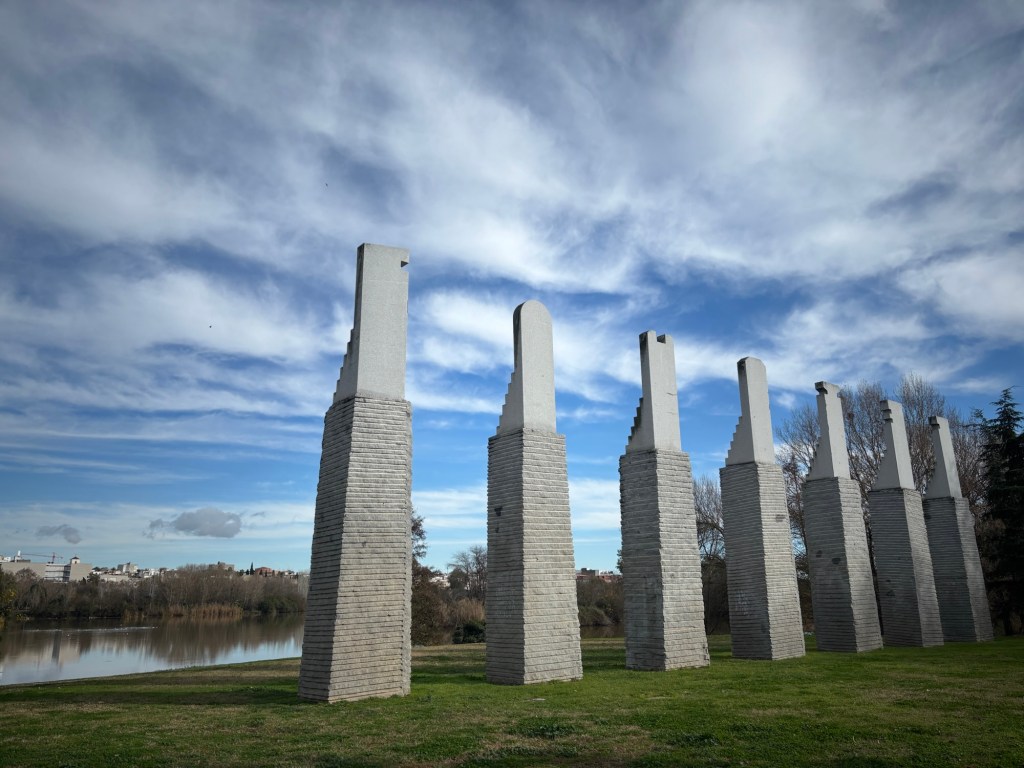

As you leave the bus station on the south bank of the Guadiana River, you’ll notice almost right away a cryptic row of sculptures on the riverbank. At first glance, they seem to spell out a word, but a closer look reveals that they aren’t letters at all, but rather figurative depictions of thrones (if they were letters, I suppose they might spell out “CEIOHAD”, which – besides looking more like Irish than Spanish – is about as easy to understand as the Muqattāt of the Qur’an).

They are the work of local sculptor Rufino Mesa, native son of Valle de Santa Ana, and they pay homage to one of Mérida’s most cherished legends: that of the Seven Chairs that once stood outside the city.

According to legend, these enormous block of stone were the seats of seven Muslim princes (or kings, depending on the teller), who sat upon these ancient thrones to discuss matters of state. Given the fractious nature of the various Berber tribes who occupied the Iberian peninsula during the period of the Muslim conquest and the ensuing Taifa period when Al-Andalus splintered into a network of warring states, it’s perfectly possible that such a drama might have played out at least once here.

Until the start of the 20th century, these seven chairs were still a visible feature of the city, sitting in a field a short distance from the edge of town: a strange but not entirely ignored feature of the city. The ring of stone had seen use as a bullring in the 18th century, and the story of the seven kings had evolved into legends of buried treasure, though no major excavation took place until the archaeological endeavours of Maximiliano Macías and José Ramón Mélida in 1910.

At the time, the site looked very different to how it does today:


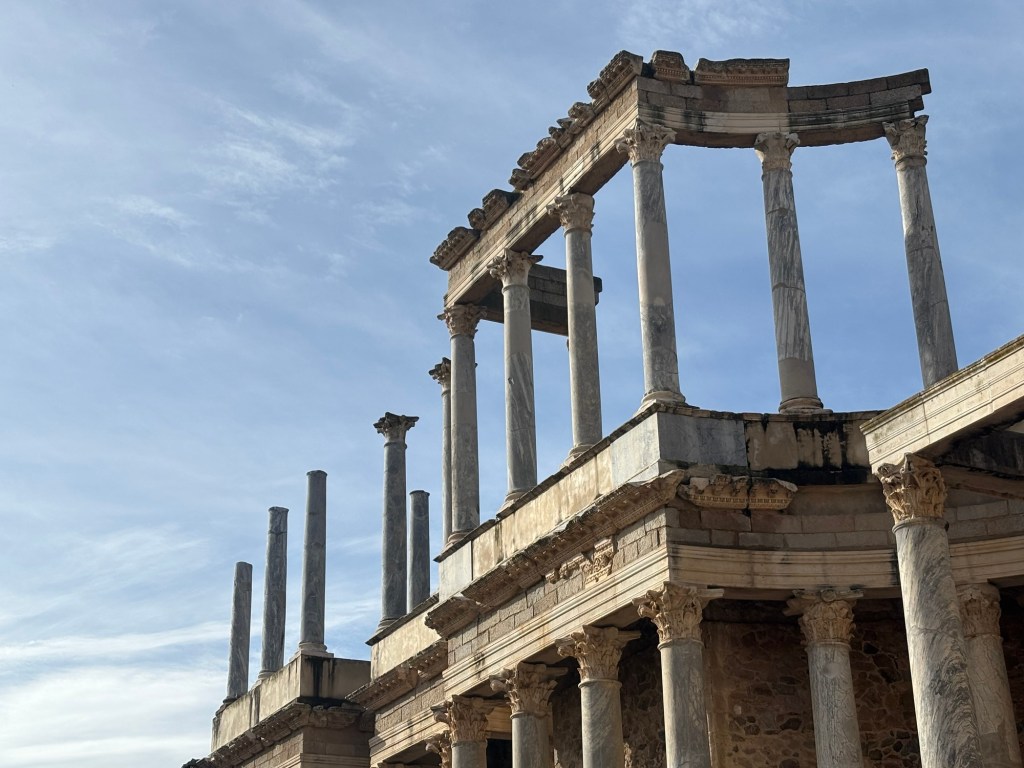
Digging deep, Macías and Mélida uncovered the roots of the seven chairs, revealing an enormous Roman theatre that had lain hidden beneath the earth for around fifteen hundred years. Its remains had long since been scavenged by the Visigoths and their Muslim successors for use in other constructions – such as the Grand Mosque of Córdoba, where there can be little doubt that many of its original pillars may be found – but the greater part of the foundations remained preserved beneath the earth.


It’s not quite as well-preserved as the Roman complex at Jersey, but then, Mérida sits on the bank of a great river – the Guadiana – and has been the site of battles both ancient and modern since the Teatro Romano was first built, and has therefore been a frontline city for much of its existence.

The modern reconstruction is an impressive feat, but more impressively still, it has been partially restored as a working theatre, hosting the Festival del Teatro Romano every summer. I’ve yet to see the festival with my own eyes, so it remains a bucket list item.
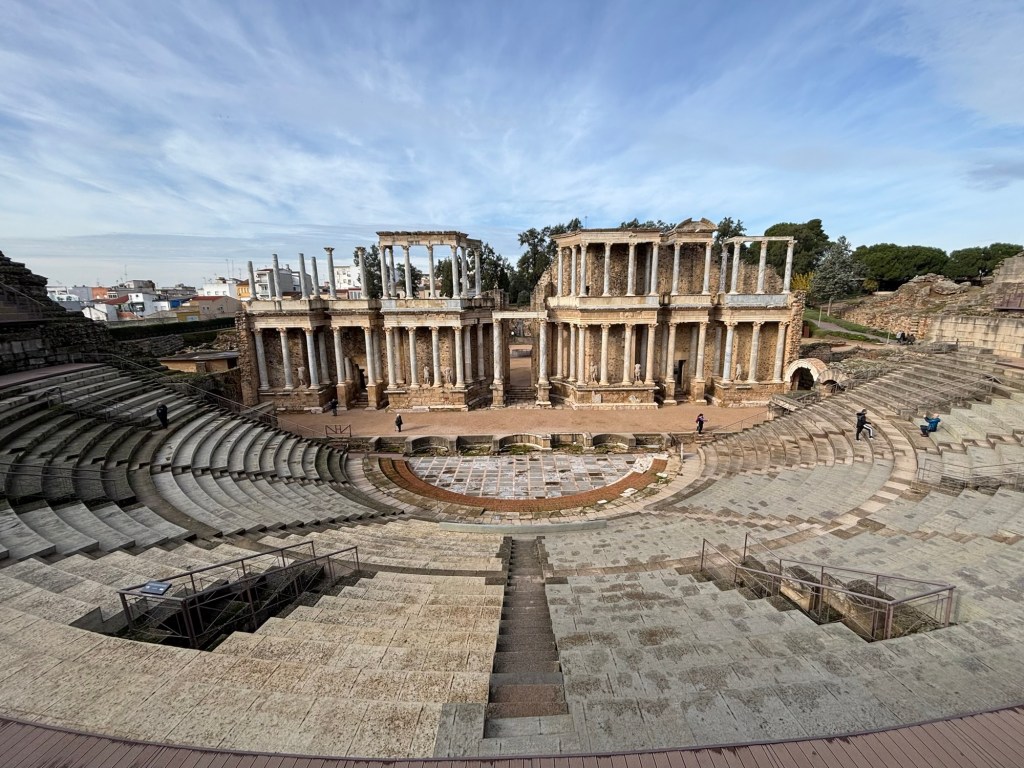

I spent nearly two hours wandering around the remains of the Theatre and Amphitheatre. I’ve been here before, of course – twice, at least, as I seem to recall a brief visit with IES Meléndez Valdés – but this place loses nothing in the rediscovery.

I caught myself touching one of the ancient slabs of stone and wondering what it would be like to be hurled backwards in time to the moment it was first laid there. I’m sure I’m not the first to have had that thought and I know I won’t be the last. The plethora of books both fiction and non-fiction on the Romans are proof of our ongoing fascination with the Roman Empire – even if it does come at the detriment of our interest in any of the other periods that followed (seriously, I’ve been to several bookshops now and I can’t find even one book on Mérida’s history between the fall of Rome and the Civil War).

I’ve more stories to relate, but I think I’ll keep split them up – Mérida has more than one story to tell. As the Córdoban scholar Mohammed Ar-Razi once put it:

No hay hombre en el mundo que cumplidamente puede contar las maravillas de Mérida.

So I won’t try to do so in a single blog post – or several. Instead, like the Visigoths, the Muslims and nearly a hundred generations of Spaniards before me, I’ll take what I can and use its bricks and mortar as the foundations for my own stories. BB x
Rome III: Respighi’s Quest

For my last two days in Italy, I decided to embark on a rather esoteric quest: to see all the pines of Rome featured in the orchestral piece of the same name by Italian composer Ottorino Respighi. If you grew up with Disney’s Fantasia 2000 – like I did – you may remember it as the number with the flying humpback whales. The symphonic poem in question is divided into four movements, and though I didn’t manage to hit the correct time of day for each one, it was an enjoyable musical challenge to round out my time in Italy!

It’s also a fitting challenge since music provided me (and my mum) with our first Italian connection, and I’ve been scraping by out here on a combination of guesswork from Spanish, DuoLingo and twenty years of orchestral jargon…

So, play the music below and read along as the Chicago Symphony Orchestra takes you through the movements!


I. The Pines of the Villa Borghese (I pini di Villa Borghese, allegretto vivace)

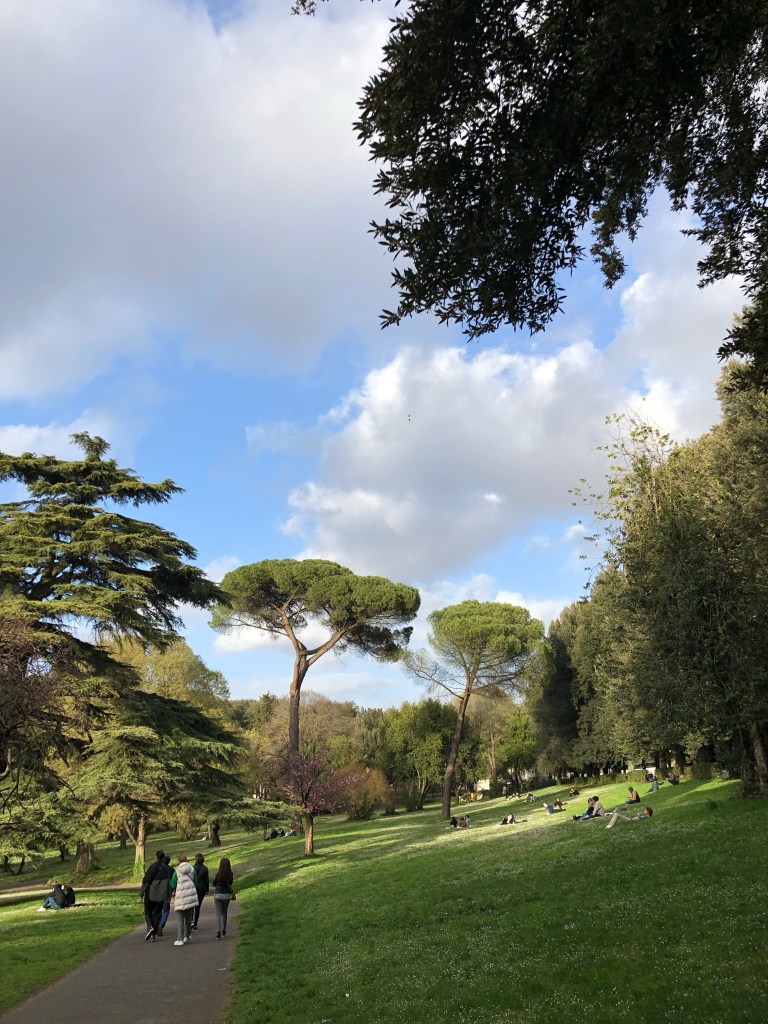
I clocked these pines last night on an evening wander towards the Spanish Steps. Respighi wasn’t wrong to write this movement as the jolliest, most playful of the four: when I was there, the Giardini della Villa Borghese were full of children playing in the evening light. A couple of fairground rides replaced the Roman ring a ring o’roses game in the original, but in all other respects it still fits perfectly. The man knew his source material!

The Borghese gardens also appear to be a favourite spot for Roman romance. As the sun starts to sink behind the trees, the long shadows cast by the stone pines stretch like rivers between the patches of sunlight, where in one corner of the gardens couples clustered like mayflies in the light. A girl in her twenties was picking daisies to fashion into a chain, four Spaniards laughed their heads off as they wheeled up and down the paths on rental bikes, while in the middle of the gardens a priest gave a homily to a small crowd in front of one of the chapels.

If I should find the One someday, I’ll take her for a walk here, too.


II. The Pines near a Catacomb (I pini presso una catacomba, lento)

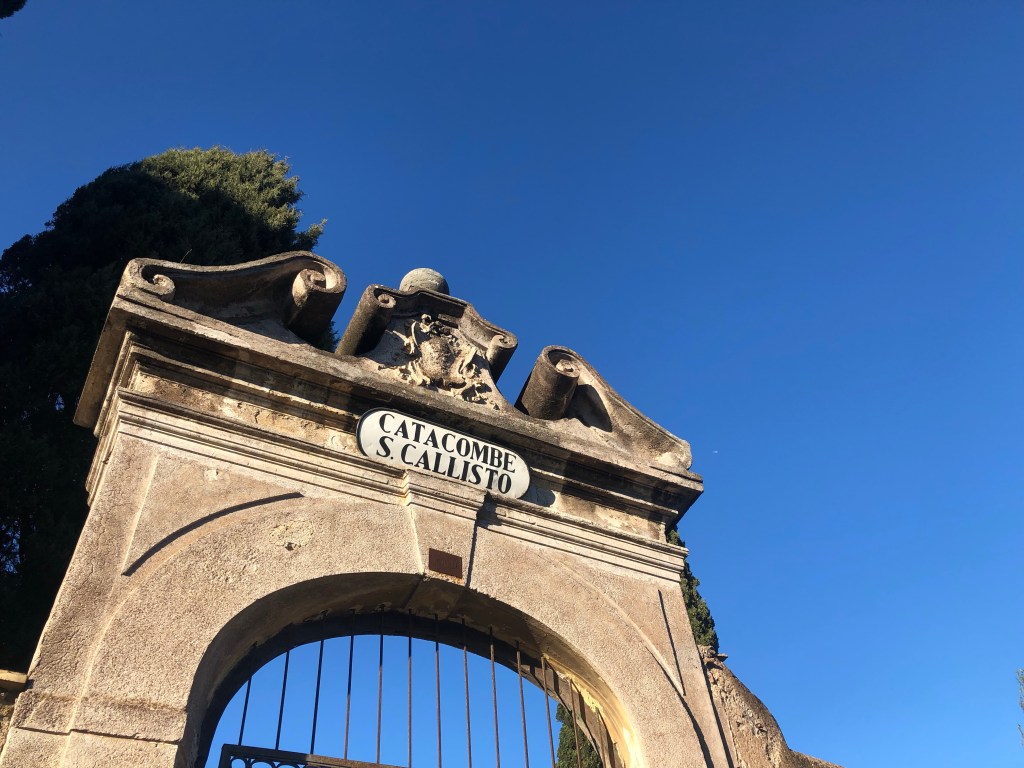
By the time I reached the catacombs, they were all shut up for the week… but that’s what you get for prioritising the Pope over a blog post. Compared to the rest of the Appian Way, the area around the catacombs was quiet and shaded… though that may have more to do with the lateness of the hour by the time I reached them. Here in Rome, as in Spain, cypress trees mark the resting places of the dead, lining the roads to the catacombs. They’ve been symbols of death since ancient times, since they cannot regenerate when cut back, and so they stand as sentinels outside tombs, cemeteries and graveyards all across the Mediterranean. The Romans’ beloved stone pines tower above them, but I think its the sad and stately rows of cypress trees that Respighi is alluding to in this movement.


III. The Pines of the Janiculum (I pini del Gianicolo, lento)

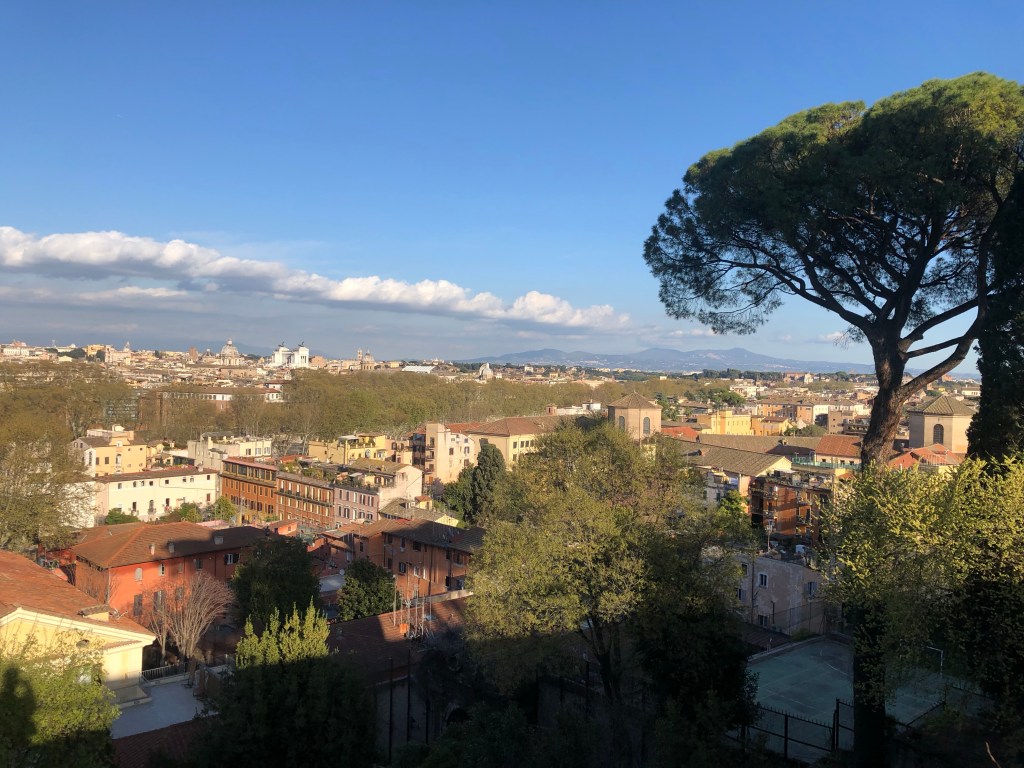
My first night in Rome was spent watching the sun set over the Eternal City. A girl I once put on pedestal told me to make the most of every sunrise and sunset. I left behind both girl and pedestal years ago, but it’s still a rule I live by when I’m on the road. Snacking on a focaccia from the hilltop, I had a sweeping view of the city, from the Vatican to the distant towns of Tivoli and Palestrina. The pines that grow here are the stone pines of Doñana, the trees of my childhood. The Romans had a special love for this tree and planted it wherever they went, especially along roads like the Via Appia.

Down in the dark branches below the viewpoint, some of the city’s monk parakeets screeched this way and that (oddly enough this South American species began to colonise Rome around the same time the Argentinian Pope Francis was elected), but my eyes were drawn to a tiny black-and-white shape moving up the trunk of the tallest stone line overlooking the city: a lesser spotted woodpecker, the first I’ve seen in many years. The rising and falling flute in Respighi’s movement pairs well with all the birds I saw here: the parakeets racing by, the pigeons wheeling over the roofs below, the tiny woodpecker climbing up and up. But I didn’t hear the nightingale that Respighi insisted on featuring at the end of this movement. Perhaps it’s too early in the year – though I suspect it’s more because it’s much too crowded here for such a self-conscious minstrel.


IV. The Pines of the Appian Way (I pini della Via Appia, tempo di marcia)

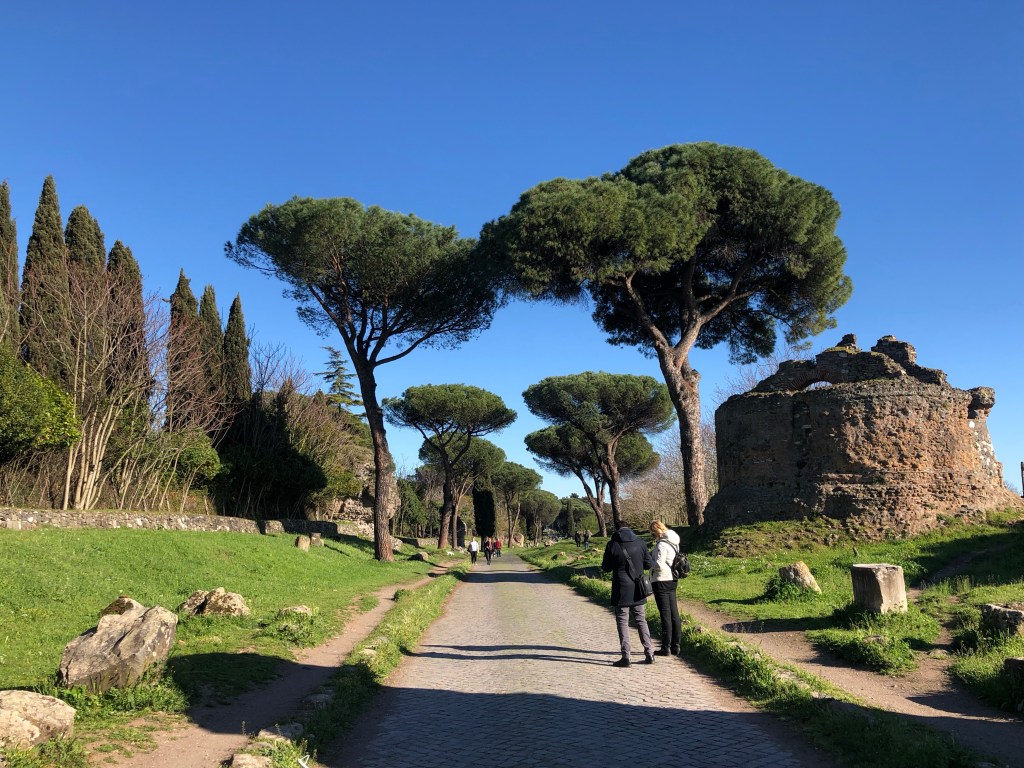
This was always my favourite movement – and what a sight! No visitor to Rome should pass up the chance to take a walk on the Via Appia, especially on a Sunday when the road is closed to traffic and the Romans descend upon the ancient highway in their droves for an afternoon passegiata. Walking the forum is one thing, but this is something else. The Via Appia is probably the oldest road still in use in the western world, and you really do get the feeling you’re walking in the footsteps of the ancient Romans as you walk this road. The things this road has seen…! This is where soldiers marched to the port and on to Egypt, where nobles lived in luxury beyond the confines of the city, and where the great orator Cicero was assassinated. I fell into the Romantic trap of many travelers before me as I passed one old Roman sitting on a marble colonnade, with skin of burnished bronze, black, sunken eyes and an aquiline nose that would have looked supreme on any Caesar; and I wondered whether he was the descendant, through many fathers, of Romans who had lived on this road two thousand years ago.

I also heard a nightingale here – he must have missed his cue in the Third Movement.

If Cannaregio was my favourite spot in Venice, the Via Appia takes the top spot in Rome. It’s breathtakingly beautiful, flanked with ancient Roman treasures along its entire length, and absolutely mustn’t be missed. And Respighi nails it with his final movement: it’s heroic, majestic and the perfect finale to both my long walk and my time in Italy.


I’ll tell you the tale of my incredible Palm Sunday experience as soon as I get my hands on a computer, as my phone photos simply don’t do it justice, but until then, arrivederci Italia! Sei bellisima e tornerò presto! And that’s a promise. BB x

Old vs New

It’s been a mad week. Over the last week I’ve had to fret over dwindling career prospects, squeeze answers out of a class that don’t appear to have improved at all in two years, hurdle a new wave of needlessly ambiguous admin, wrangle with pushy internet dealers and, to top it all off, deal with a flatmate and a friend who could still disappear at any given moment should a better offer arise. It’s not been easy. The first few weeks of term are always an uphill struggle but I’ve never known one week quite this bad.

Five days of mental block were torture. None of my attempts at writing came to fruition. I needed a break. I had to get away from it all. And Fate, as she often does in such situations, came up with the goods. At the end of an afternoon spent filling in forms for Student Finace and the local Junta – and venting my hysteria through last week’s Have I Got News For You – an offer to join the other auxies for a Halloween Party came through. I ummed and ahhed and was on the verge of turning it down when I had one of my spontaneous urges and decided to go for it. I had no time to prepare an outfit, so I came as an un-ironed shirt. Perhaps that’s the least of the small-world horrors I’ve had to deal with this week, but it was easier to explain.

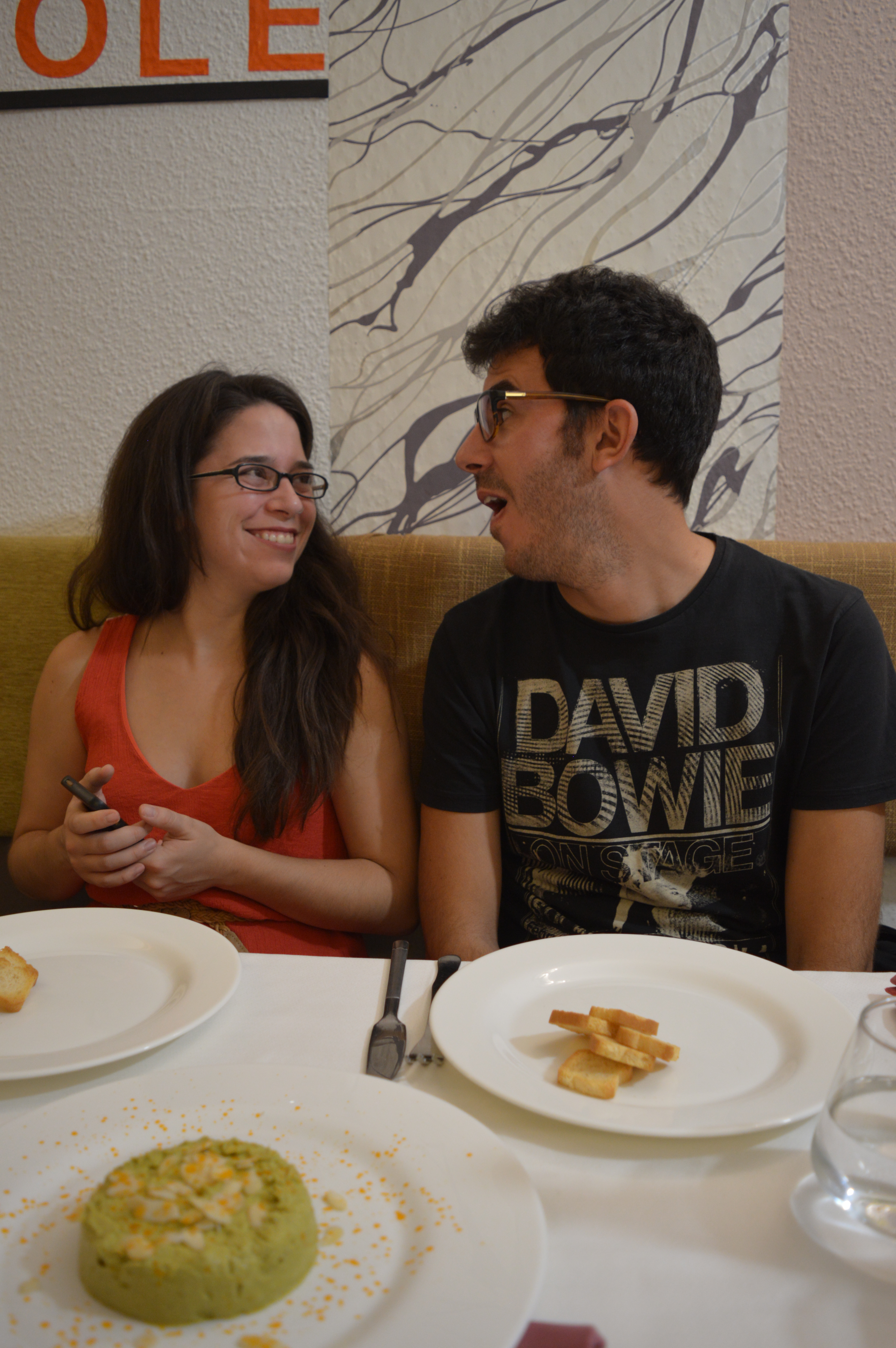
It was an enjoyable if tame night, for which I was truly grateful. I had the chance to discuss my music withdrawal issues with a kindred spirit, and to gather opinions from the new auxies on their new home. I also got to put my dancing shoes on at Concha when Billie Jean came on. I needed that. But most importantly of all, I got to spend some quality time with two of the brightest stars of the Tierra de Barros, Tasha and Miguel.

DSC_0807

If I needed a reaffirmation that I had made the right choice in coming back to Villafranca and not striking out somewhere new, this was it. These two are perhaps the greatest of all reasons for my return. Vultures, Hornachos and migas were waiting, but these two goofballs were a greater lure yet. And it isn’t often you can so easily allow yourself the luxury of moving your workplace to be near to your friends.

DSC_0889

We spent the day in Mérida, where Fate once again showed me a kind hand for my spur-of-the-moment decision. Because I spent time with Tasha, I learned that the Junta needs a stamp from the bank and a paper copy of our ICPC, which have to be mailed, not emailed. Even though I went to the Orientation days this year, that detail wasn’t spelled out, nor was it included in the emails. It’s a good thing I spent Friday morning hunting for envelopes and stamps, albeit for a different purpose. If the man at the estanco hasn’t been so dishearteningly begrudging at surrendering two rows of stamps rather than the twenty I was asking for, I might have used them all. Forewarned is forearmed.

She also demonstrated a knack for knowing my desires by meddling with Miguel’s car’s CD player. The Red Hot Chilli Peppers CD kept pausing, so he put on a Galician band who played the unmistakeable lullaby-dream of Erin Shore, albeit to the name of Romance de Novembro with Galician lyrics – this, after gallego has been so on my mind after my parents’ visit this week. Fate, or whatever it is that organises these things, sure knows what she’s doing. At twenty-three years old, I still cling to the storybook belief that everything that happens happens for a reason. It’s hard not to see the lines when you want to.

DSC_0811

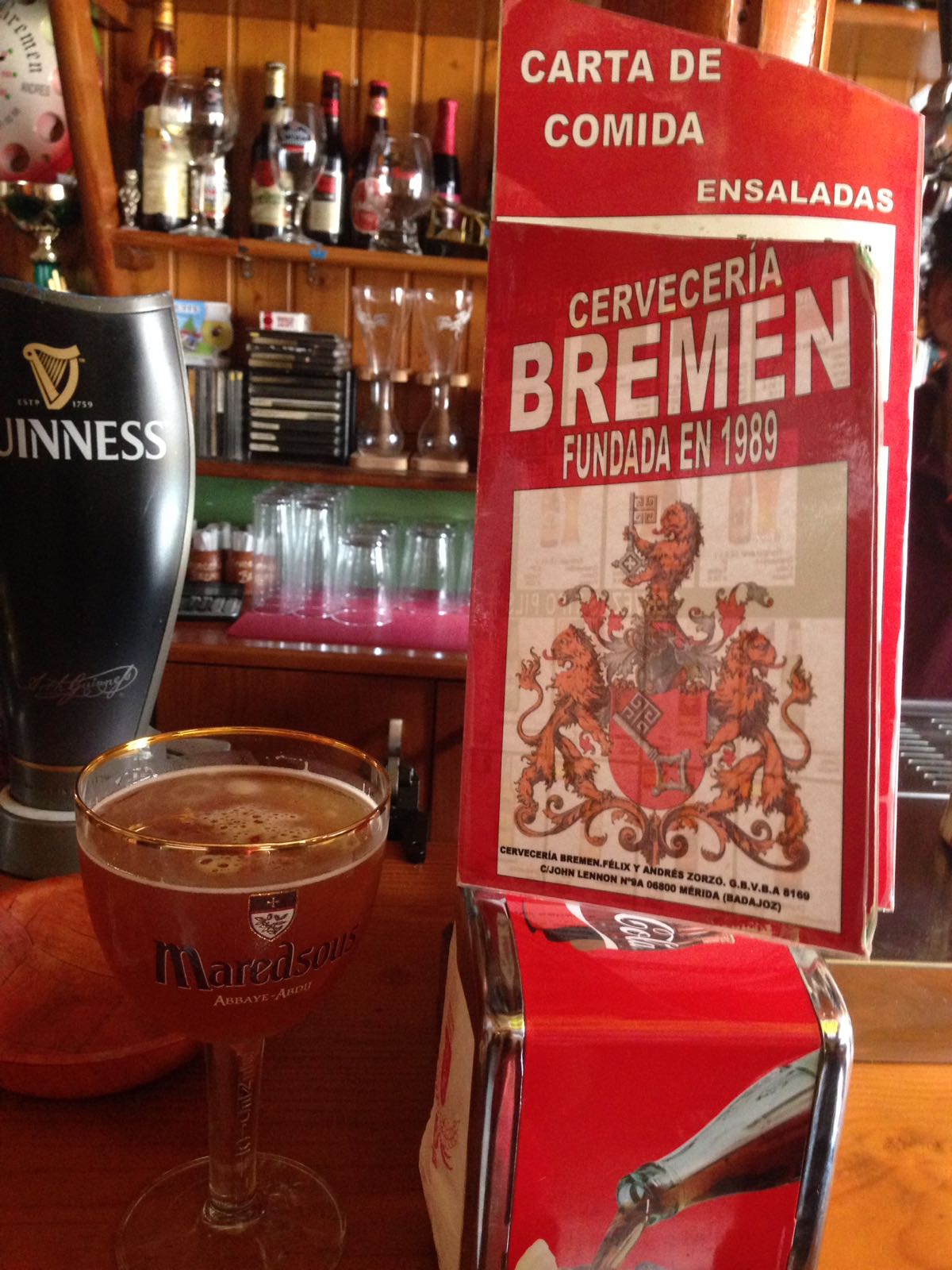
 We had a couple of beers in a Bremen-themed bar on the curiously named John Lennon Street, complete with memorabilia of the former Beatle plastered on the wall beside buxom stein-bearing belles and German insignia, whilst the bartender bemoaned the loss of jobs in the wake of Catalonia’s defiant pursuit of independence. Spanish flags still hang from balconies across the region a week and more after the Día de España celebrations, in solidarity with a nation that’s being pulled apart by old wounds. My beer tasted like strawberries and wasn’t unpalatable. I guess beer is like tea, coffee and sitcoms: unappealing at first, but you learn to appreciate it over time. Effort leads to endurance, eventually, enjoyment.

IMG-20171021-WA0013

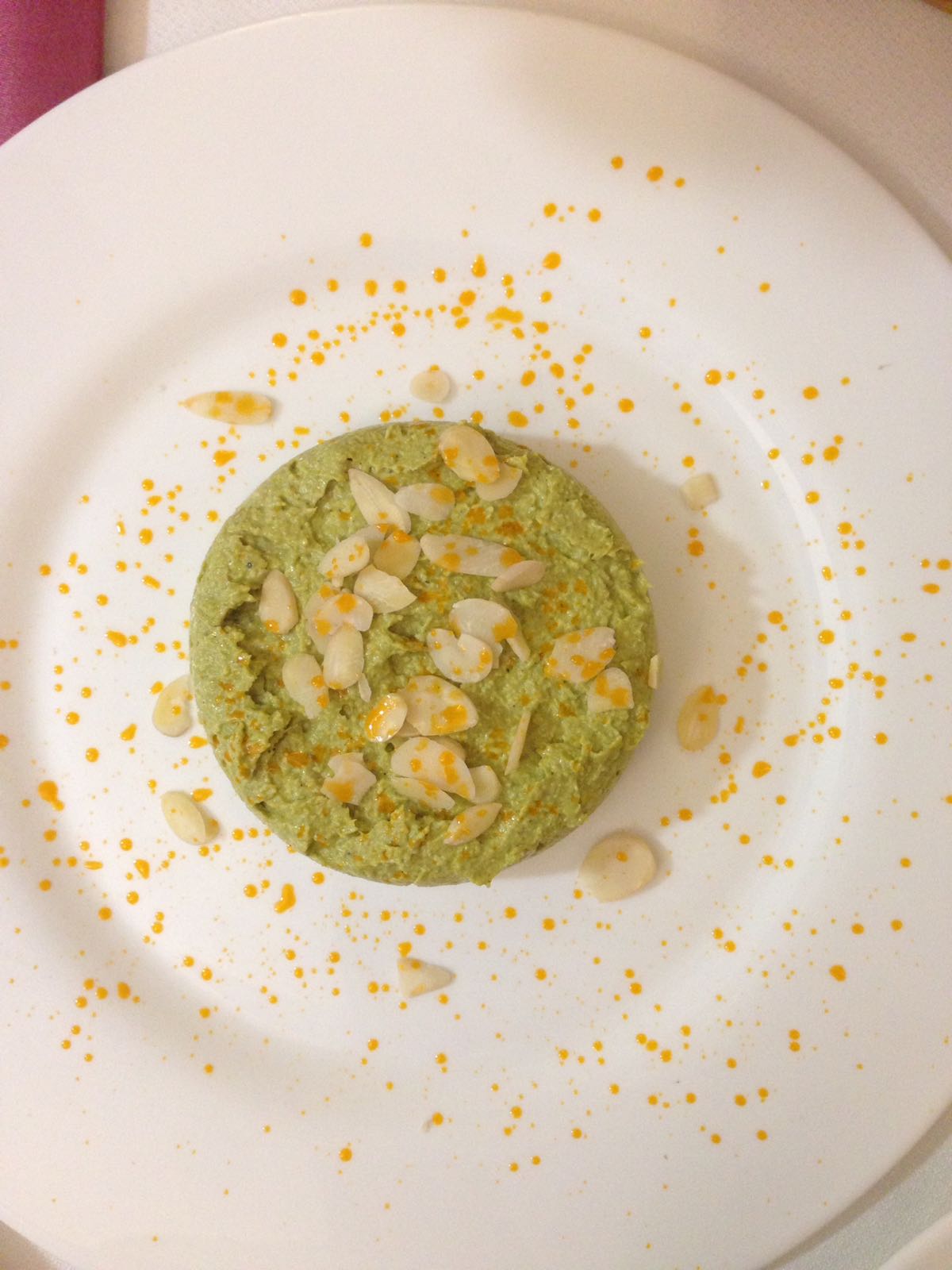
Lunch was superb. We visited La Taberna del Sole on the recommendation of a student of Tasha’s and we were not disappointed. Four courses (including a green asparagus and almond pâté and the ever-reliable croquetas de jamón) left us fit to bust, and at under twenty euros a head, it was a steal for a fancy lunch. The city is finally opening up to me.

IMG-20171021-WA0014

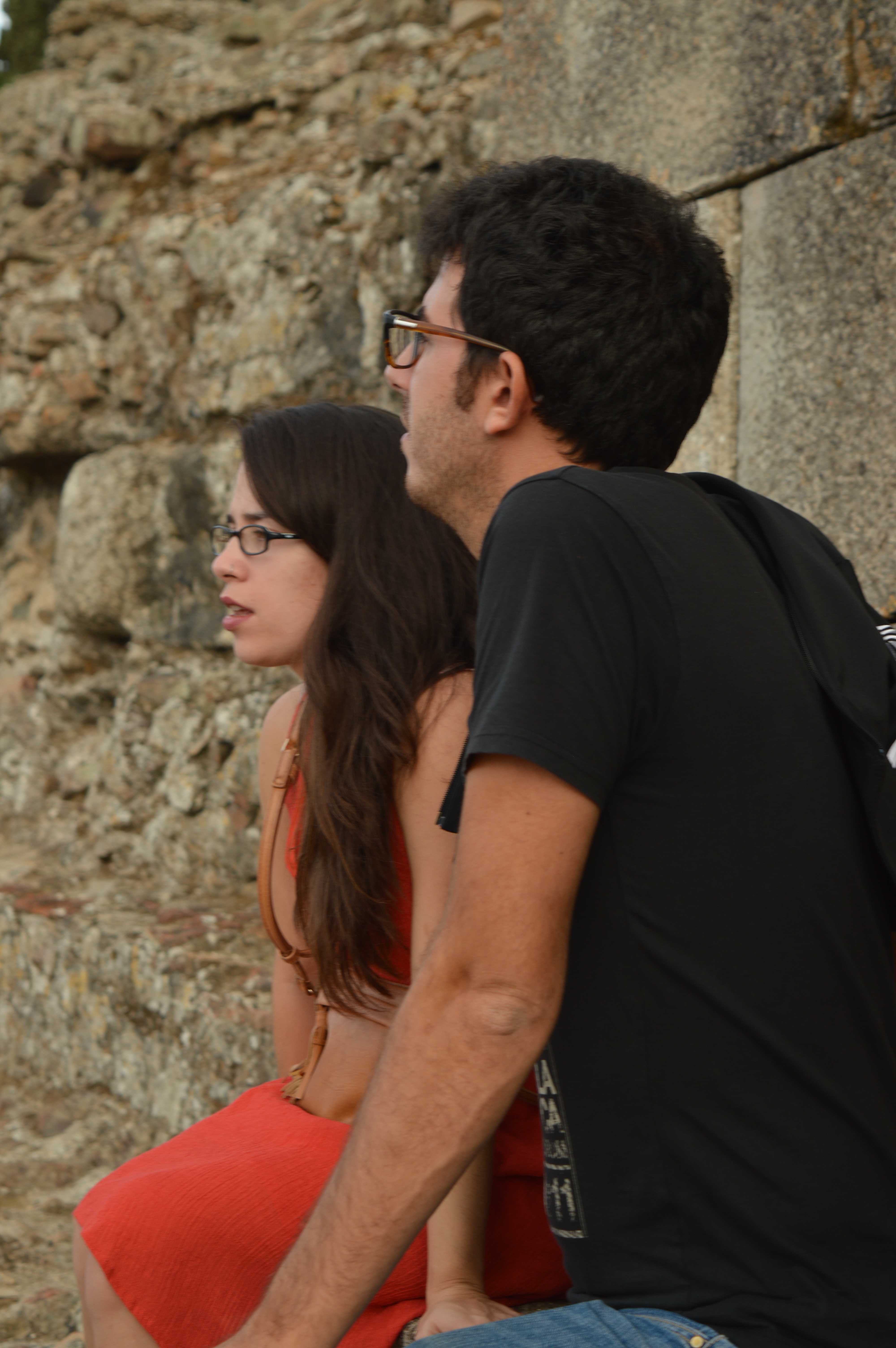
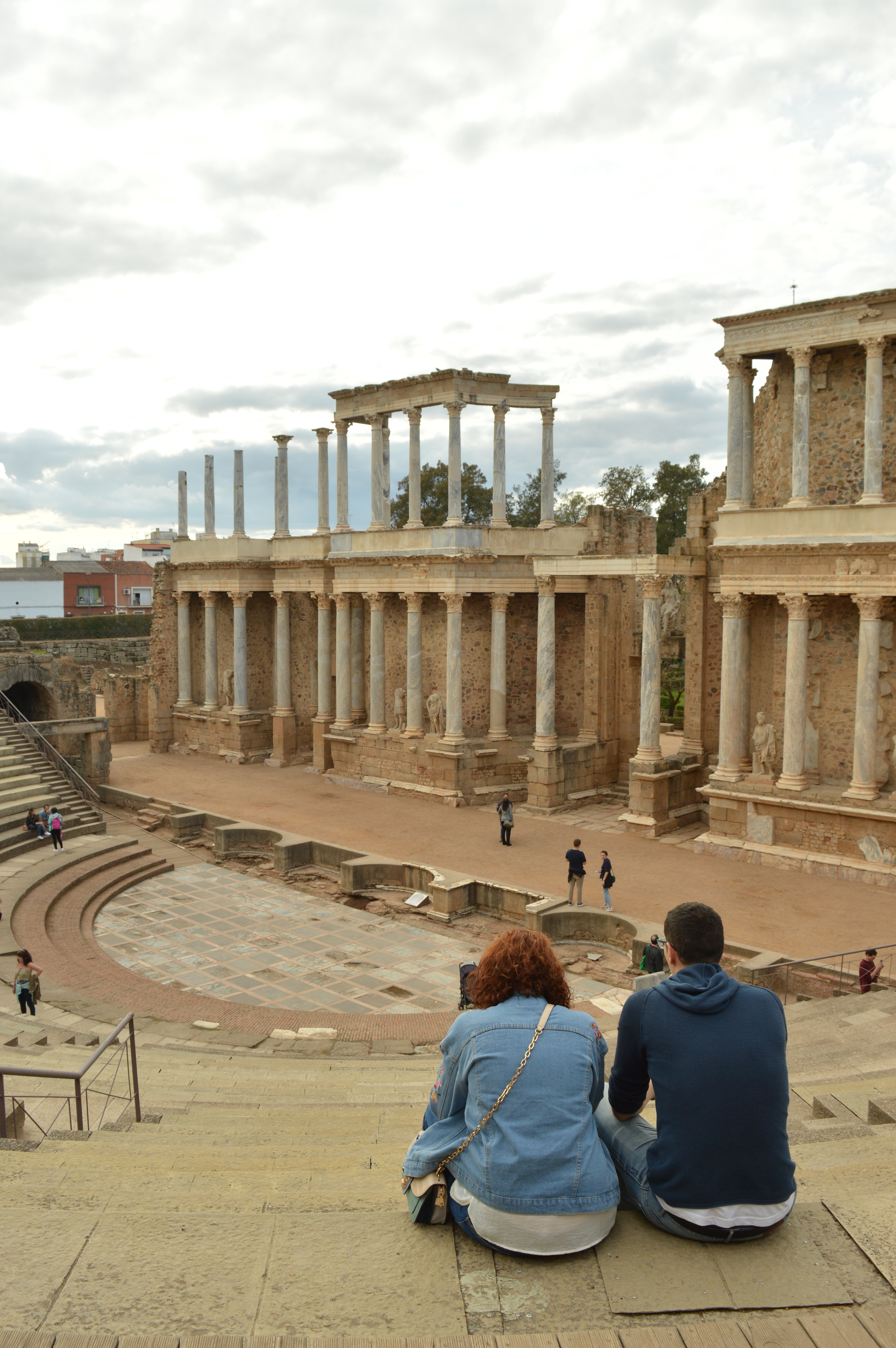
Despite having already lived here for a year, I never visited Mérida’s famous Roman theatre. Tasha and Miguel thought it was high time that was remedied. I guess I’m spoiled from having wandered the ancient beauty of Jerash and Petra, but Mérida’s reconstructed theatre complex is nothing to be scoffed at. It’s hard to believe it was all but underground a few decades ago, back when the city was confined to the north bank of the Guadiana and the Los Milagros aqueduct still marked the northern edge of town. Stradivarius and Burger King now adorn the old streets, rubbing shoulders with the Temple of Diana and Saint Eulalia’s basilica. Times are changing quickly here.

DSC_0873

The amphitheatre is equally impressive. Complete with a sunken arena that wouldn’t look out of place in an episode of Pokémon, the building is in remarkably good nick for its age. It’s always a little hard to tie the two together, the sophistication of the Roman Empire and the bloodlust of its citizens who paid to watch men and beasts kill each other. Man, the noblest of all beings, and the one who delights most in killing his own kind. In Rome we see man for what he truly is, perhaps. A vainglorious hypocrite.

DSC_0902

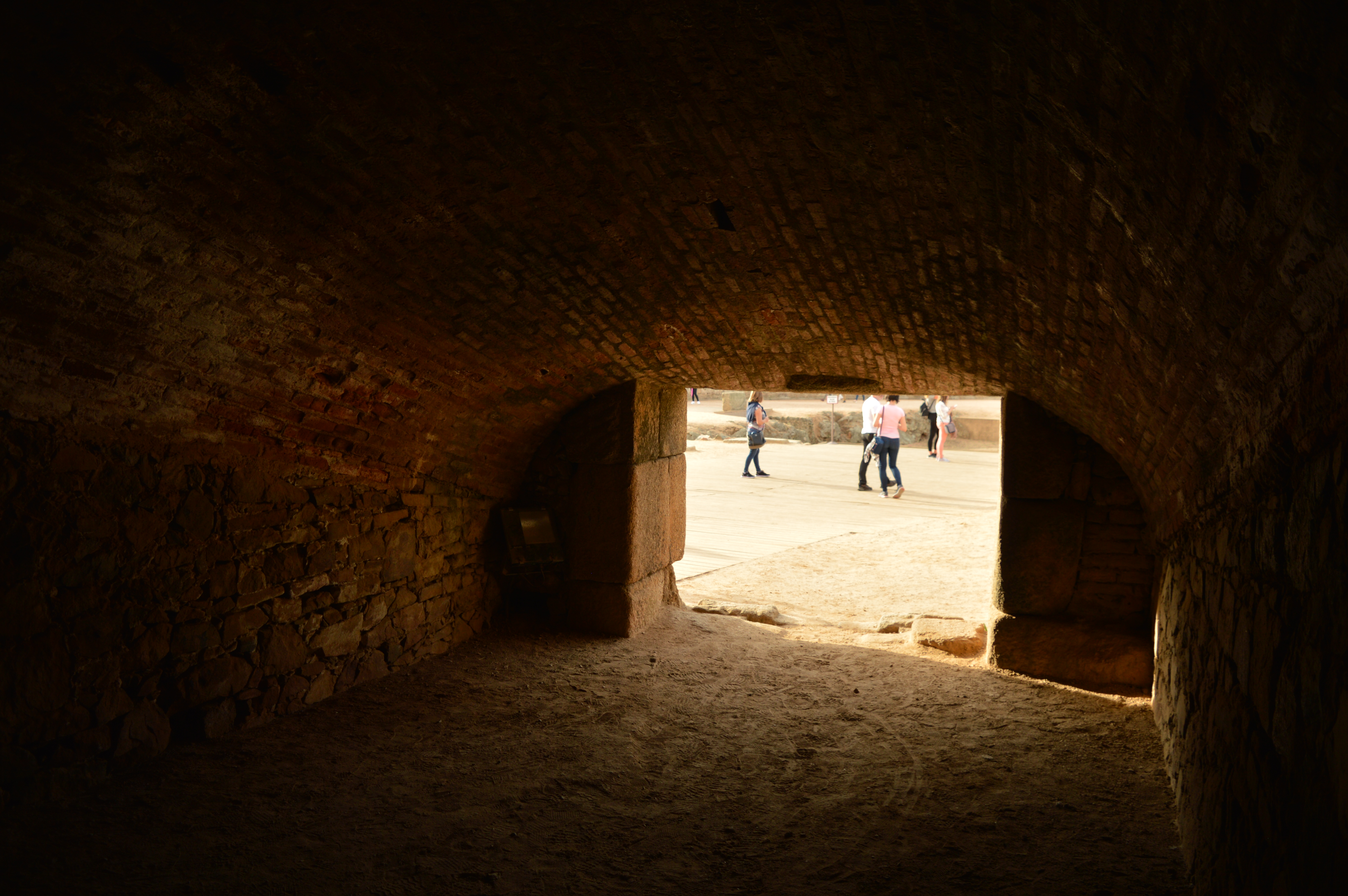
I entered via the dens where the wild beasts were kept for venato fights, ducking low so as not to bang my head on the way out like I had on the way in. I wonder what unwilling denizens of the Empire were caged here for the sport of a Roman carnival: boar from the surrounding hills, bears from the Cantabrian hills, lions from across the Strait… Maybe they even had aurochs here, mighty shadows of the toros bravos that still fight on in the Roman games of a land that saw fit to preserve them. I wonder how many beasts in all lost their lives in this arena.

DSC_0893

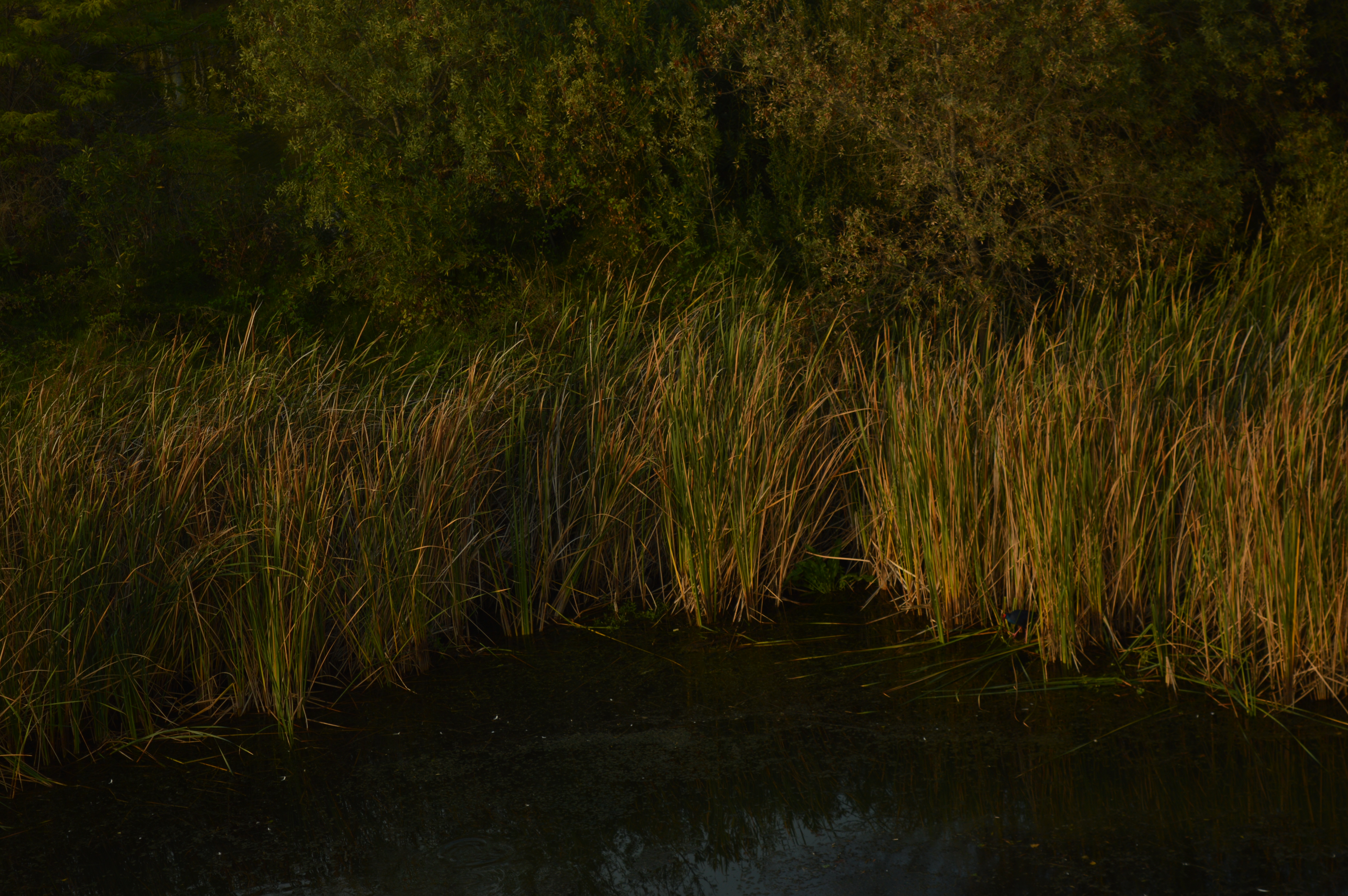
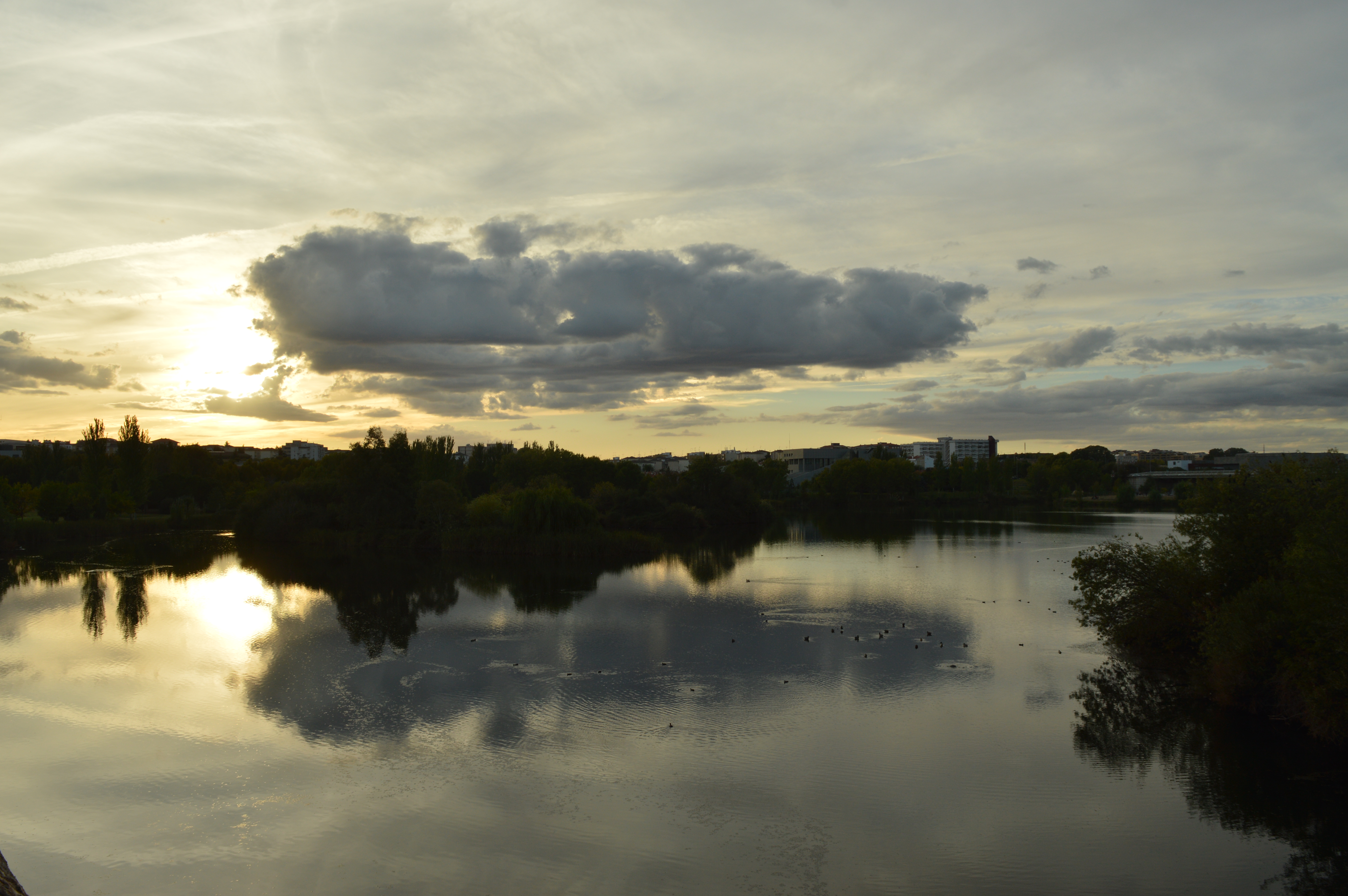
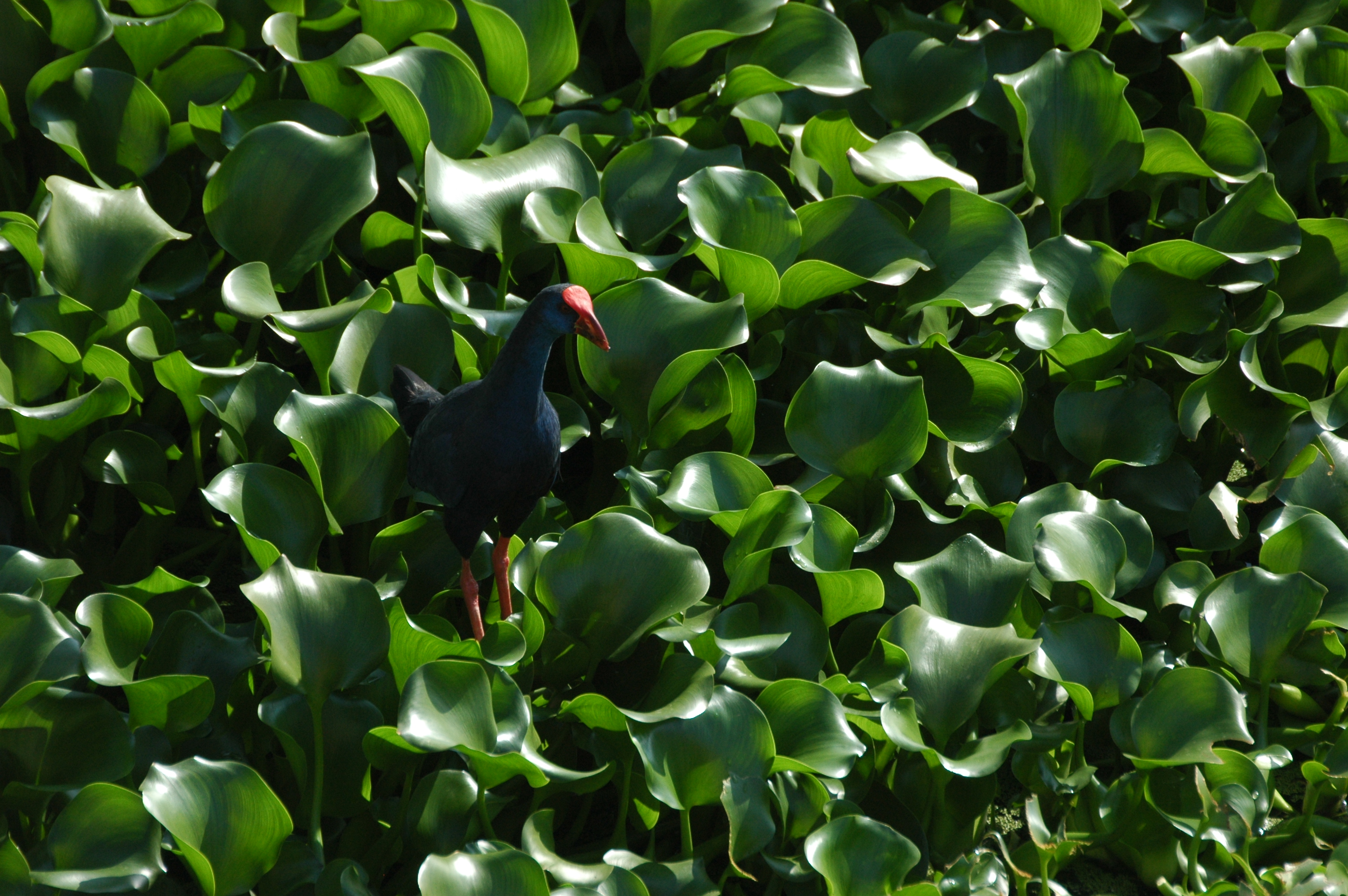
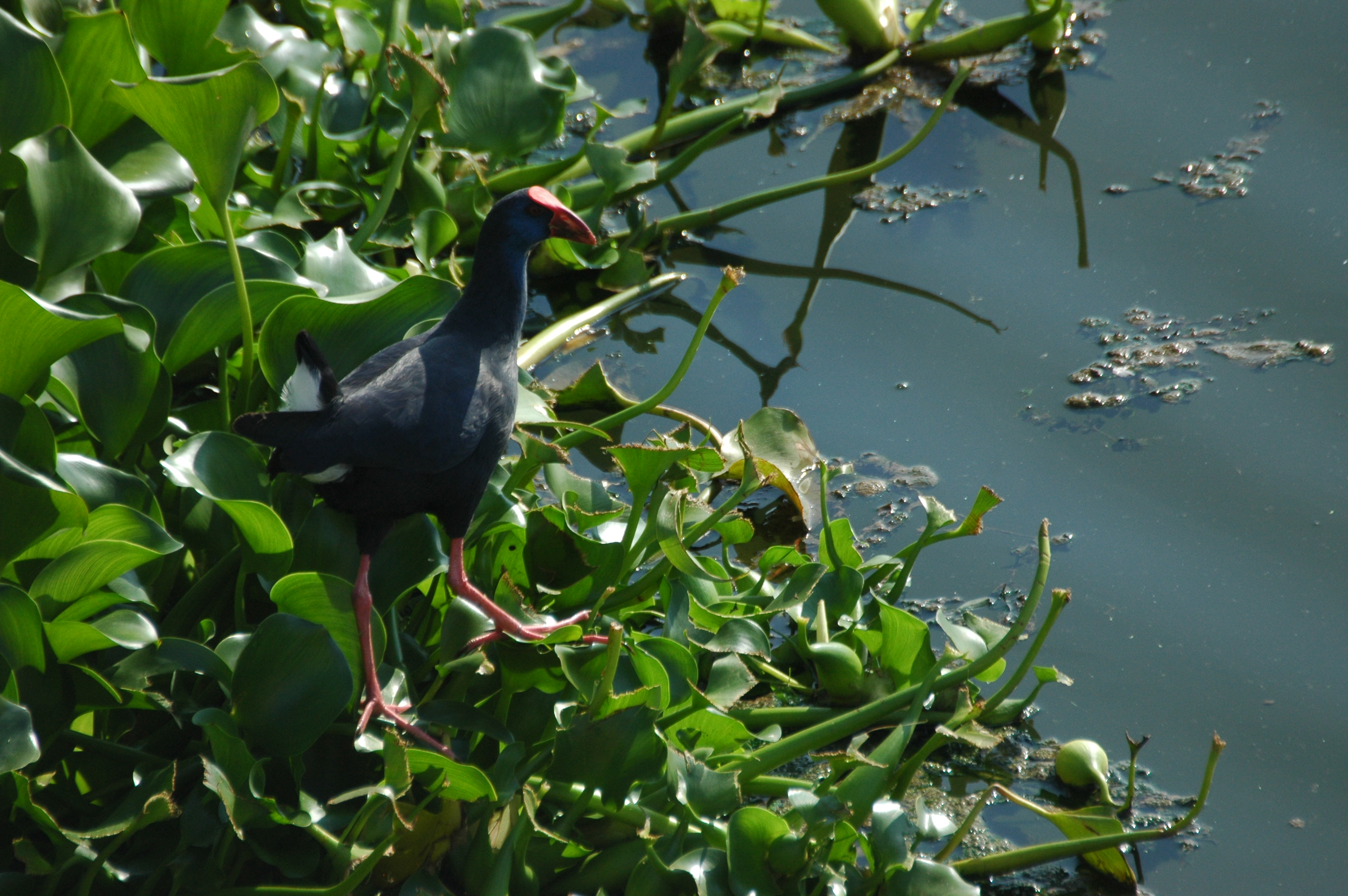
We crossed the Roman bridge on the way home. I looked, I listened and I spotted the swamphen that often haunts the reeds on the island, gnawing away at a reedstem clutched between its gangly toes. I wonder if it’s the same bird that I so often saw here two years ago? It always brings a smile to my face to see it, and it was a pleasure doubled to share it was my friends. Durham had its goosanders. Mérida has her curious calamón. Overhead, the impressive silhouette of a black vulture glided noiselessly to the west. For all the fury and doubt that the modern world brings in its wake, there is such beauty left in the old world.

DSC_0921

The storm has passed. The last of the rain fell during the night. I woke up this morning and opened the window to a cold breeze that had not been there before. I smiled. Everything seems better in the cold light of day. I can do this. Autumn has come at last. The long, dry Extremeño summer is over. BB x

DSC_0924

NB. It’s a pain when you have to write a blog post twice. This time it was because I wanted to italicise Have I Got News for You, erased it by accident, and, when Undo didn’t return them, rebooted to save the effort of writing those six words again. This will all be so much easier when WiFi finally comes to the flat in just under two weeks’ time…

And the Manacles are Off

It’s over, at last! After almost a month of to-and-froing between school, the ayuntamiento and the Almendralejo police station, I have a Spanish bank account and the admin period is finally at an end. Alright, so there’s still some confusion over whether I really need a Spanish social security number and I’m not entirely sure how to top up my phone since it isn’t compatible with its own network app, but the most important stage (and one that, by the sounds of things, the other assistants accomplished weeks ago) is done and dusted.

So what better way to celebrate than with a little travel?

You see, I adore traveling. I’m sure I didn’t need to tell you that, but I feel like in the three weeks I’ve been here I’ve never had the chance to get out. Not for want of opportunity, of course, but I told myself right at the beginning that I wasn’t to go traveling until I’d finished all the paperwork. That was supposed to be before my (abortive) training course in Cáceres on 1st October. Well, now it’s the 16th. But that’s ok. Villafranca feels like home now, I’ve christened it with my first stupidly long walk, and I have to say I’m quite enjoying being ‘El Inglés’. But I’ve waited long enough, and now here I am in the Plaza Alta in Badajoz, enjoying a ración of some seriously high-quality croquetas as the city wakes up for the night.

A paltry three and a half euros took me all the way to Mérida, the regional capital of Extremadura. It’s also minuscule compared to Badajoz and Cáceres, for which the two provinces of Extremadura are named, which means you can get around the place in a couple of hours. I didn’t plan on staying long, since I only intended to use the city as a launch-pad for getting to Badajoz – there’s only one bus direct from Villafranca and it leaves at nine in the morning – but, as is so often the way of things, Mérida turned out to be a whole lot more than a collection of pristine Roman ruins.

DSC_0051

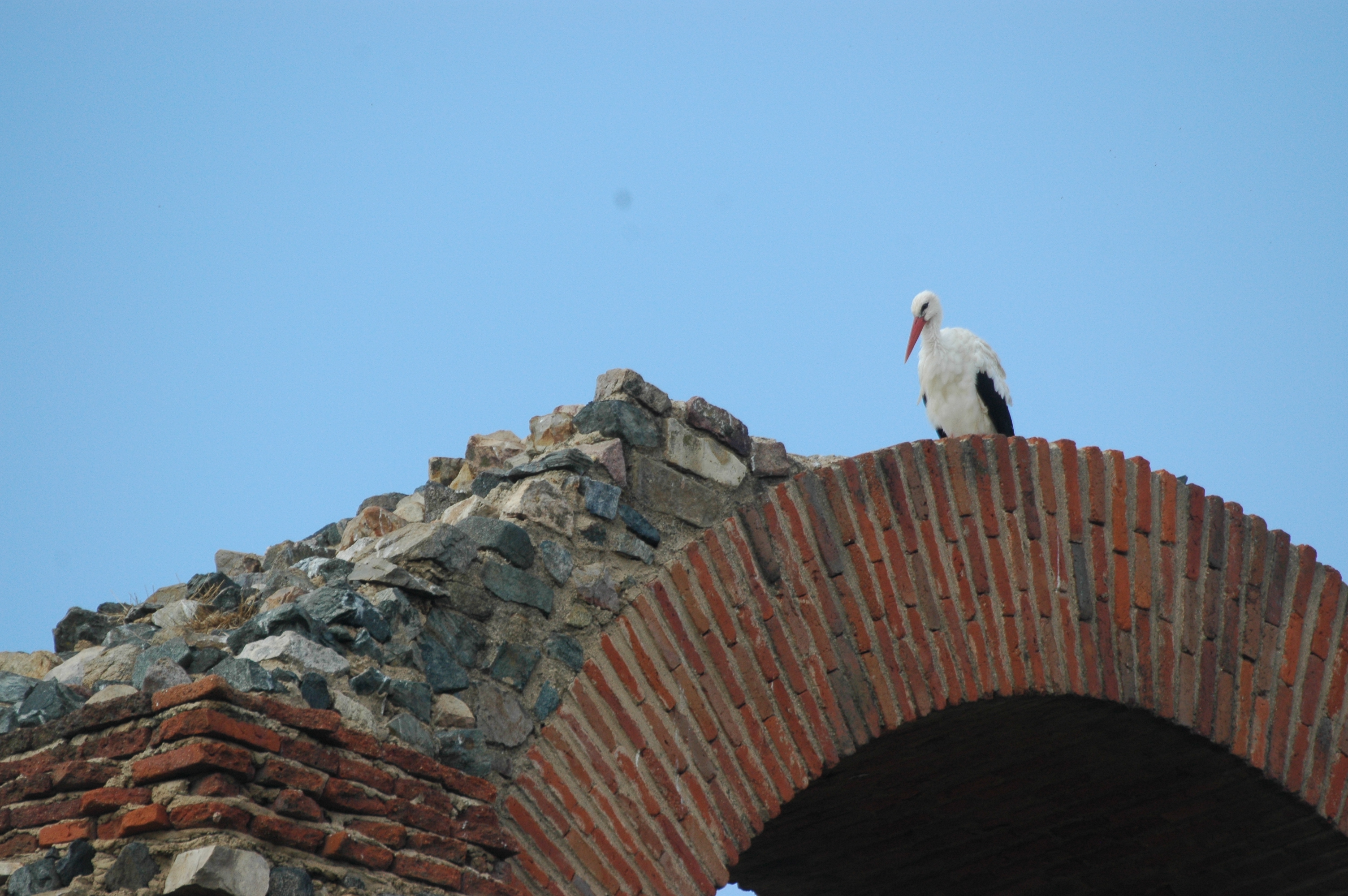
At first glance it looks a lot like Córdoba, with the Roman bridge and the great big river splitting the old town from the new. But then, so does Badajoz. It’s missing the beauty of the mosque, of course, but then, Córdoba is and always will be in a league of its own. What it does have is a spectacular aqueduct on the north side of town. If you see any photos of Mérida, it’s bound to feature in more than one of them. Unlike the one in Segovia the city gave it breathing space and there’s a park around it now, but that hasn’t stopped the storks from taking advantage of all those convenient flat-topped towers.

DSC_0196

Ah, but I can do better than that. It took me almost half an hour to cross the Roman bridge over the Guadiana this morning, not because of its length – you can span it in five minutes or less at a stride – but because I was held up by two of my favourite little riverside friends, both of them easy to spot because of all the noise they were making.

I haven’t been to Doñana National Park almost every year for the last seven years for nothing, and when I heard a distinctly disgruntled grunting cutting over the babble of an approaching horde of school kids, I was hanging over the side of the bridge and scanning the reeds in a flash; and sure enough, there he was. Old Longshanks himself.

DSC_0072

What can I say? Gallinules. Love ’em. Loved the ridiculous things since I first saw a picture of one in a book. The name’s daft enough – Purple Swamp-Hen, in full – but the feet are something else.

DSC_0081

I don’t know why I make such a big deal about gallinules over anything else, but they’ve always been the ultimate Doñana bird for me. Perhaps it’s because it’s basically a giant purple chicken. Mm, close enough.

DSC_0088

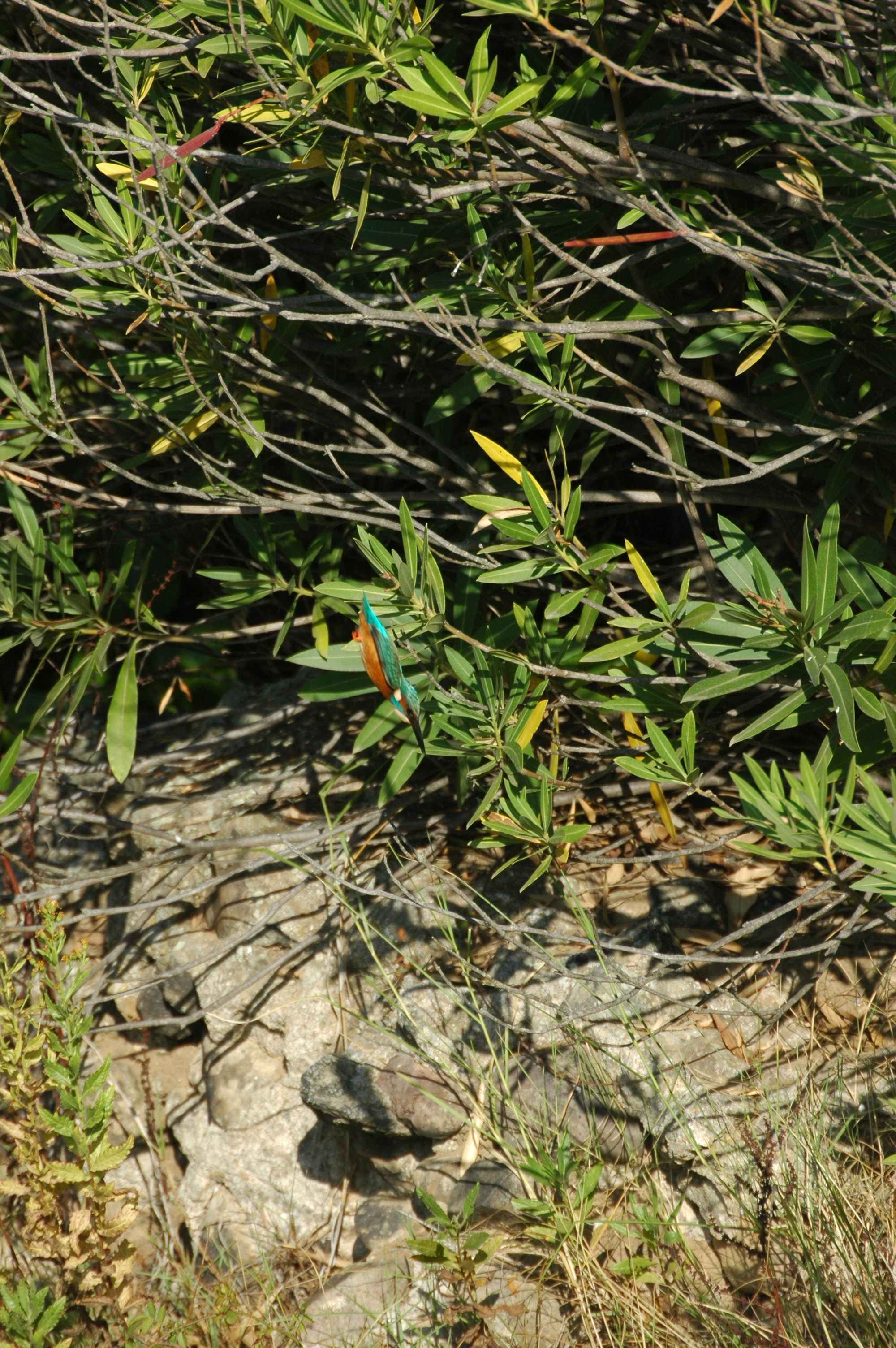
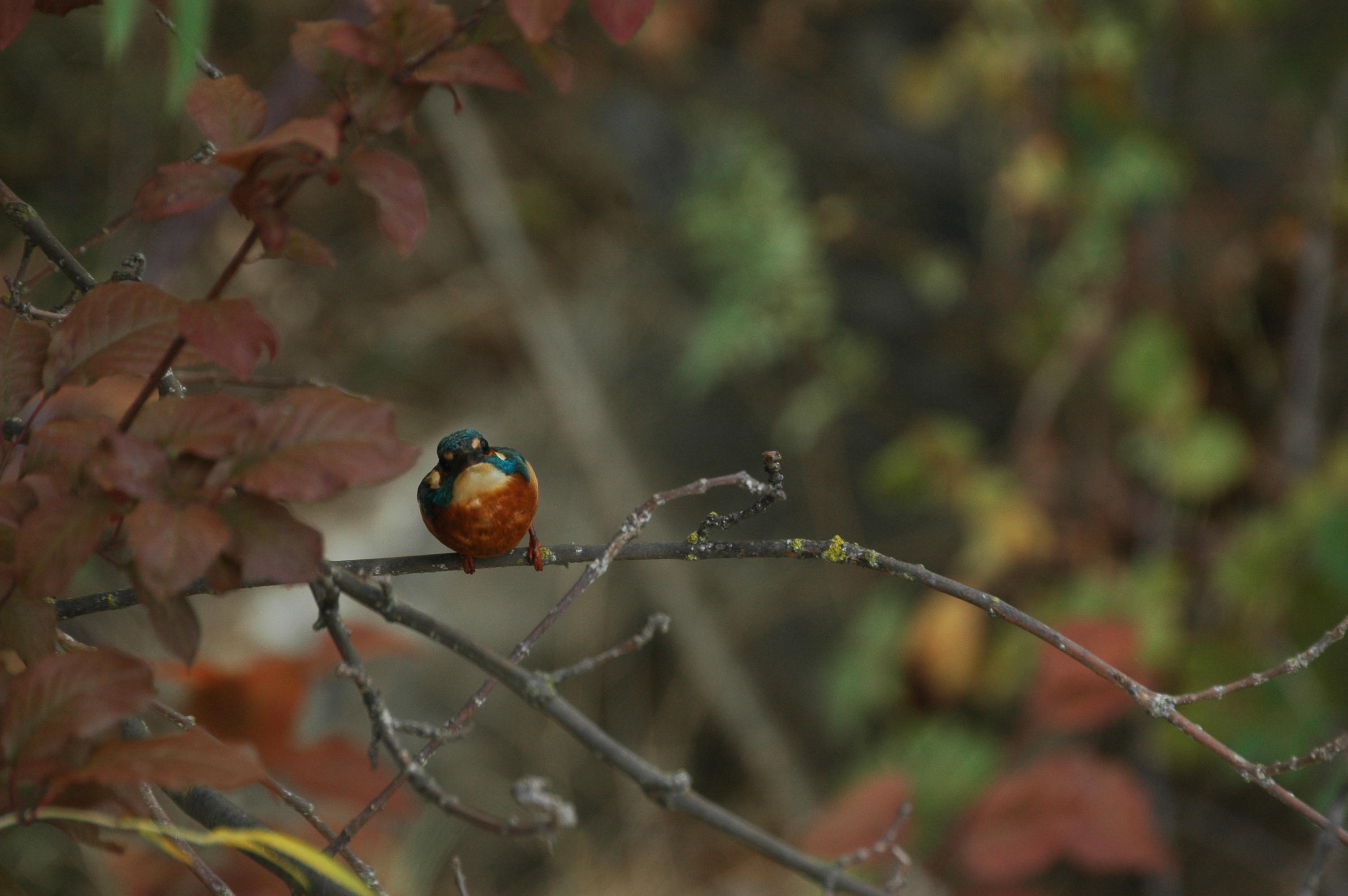
Feathered friend number two should be a lot more familiar to most of you. He’s also rather colourful, but a heck of a lot smaller and shinier to boot. And once you know what they sound like, you’ll see a lot more of them. It’s a kingfisher, of course!

DSC_0112

At least, I hope you know what a kingfisher is. Nobody here does. Not even if I give them the equally impressive Spanish name of martin pescador.

DSC_0127

I’m still waiting on that perfect kingfisher photo. The one everyone wants: wings spread wide, water droplets falling from a dive, fish in beak etc. but until that moment, they’re always a pleasure to watch.

DSC_0172

Everybody else was walking on by and doubtless wondering who that young loony was in the maroon hoodie-and-chinos combo with the ridiculous lens, hanging half over the bridge, but hey, I was having a good time. That’s my idea of a morning well spent, anyway.

Sheesh, long post. My travelogues usually are. Badajoz is rather beautiful, and if my right thigh weren’t still punishing me for that 45km cross-country hike last weekend, I’d probably be enjoying it more. I could do with a rest. It’s a lot bigger than Mérida and I had to double the distance when it turned out that the albergue I had in mind was a school groups affair. I was accosted outside by three young girls who asked me if I wanted a blowjob and called out ‘oyé, feo’ and ‘mochila verde’ after me when I ignored them. Then I tried taking a shortcut through the park into the Alcazaba, but shortcuts do tend to make long delays, and in this case the road came to a sudden and unexpected end. The door was there alright, but the road… wasn’t.

The adventures never end! Left the restaurant to soak up the night in the square and a wandering troupe of musicians asked me for directions to the ayuntamiento. I pointed them in the right direction, but their leader deduced that I clearly wasn’t from Badajoz. Back atcha, tío; ‘I’m from Villafranca de los Barros’. ‘Villafranca?! Hombre, somos de Ribera!’ (the next town along from VdB). It’s a small world. And I’ve just noticed that I missed a major performance from the best gypsy musicians of Badajoz at the theatre tonight. Only two doors down from the hostel, as well. Rats. I’ll be back.

I’d better call it a night there and head on back to the hostel. I might try for sunrise over the Guadiana after this evening’s gorgeous Portuguese sunset. On a final note, I had the happiest moment of the month on the road to Badajoz when I saw, in the distance, a giant V-flock of some one hundred and twenty cranes on their way south. It’s only the very moment I’ve been waiting for, the first true sign of winter in Extremadura. I was practically jumping out of my seat, I was so happy.

The photo hardly does it justice, so I’ll go hunting for them some other time when I’m not stuck on a bus. But that’s an adventure for another day. BB, which may or may not stand for Bird-Brain amongst other things, signing out x