For my last two days in Italy, I decided to embark on a rather esoteric quest: to see all the pines of Rome featured in the orchestral piece of the same name by Italian composer Ottorino Respighi. If you grew up with Disney’s Fantasia 2000 – like I did – you may remember it as the number with the flying humpback whales. The symphonic poem in question is divided into four movements, and though I didn’t manage to hit the correct time of day for each one, it was an enjoyable musical challenge to round out my time in Italy!
It’s also a fitting challenge since music provided me (and my mum) with our first Italian connection, and I’ve been scraping by out here on a combination of guesswork from Spanish, DuoLingo and twenty years of orchestral jargon…
So, play the music below and read along as the Chicago Symphony Orchestra takes you through the movements!
I. The Pines of the Villa Borghese (I pini di Villa Borghese, allegretto vivace)
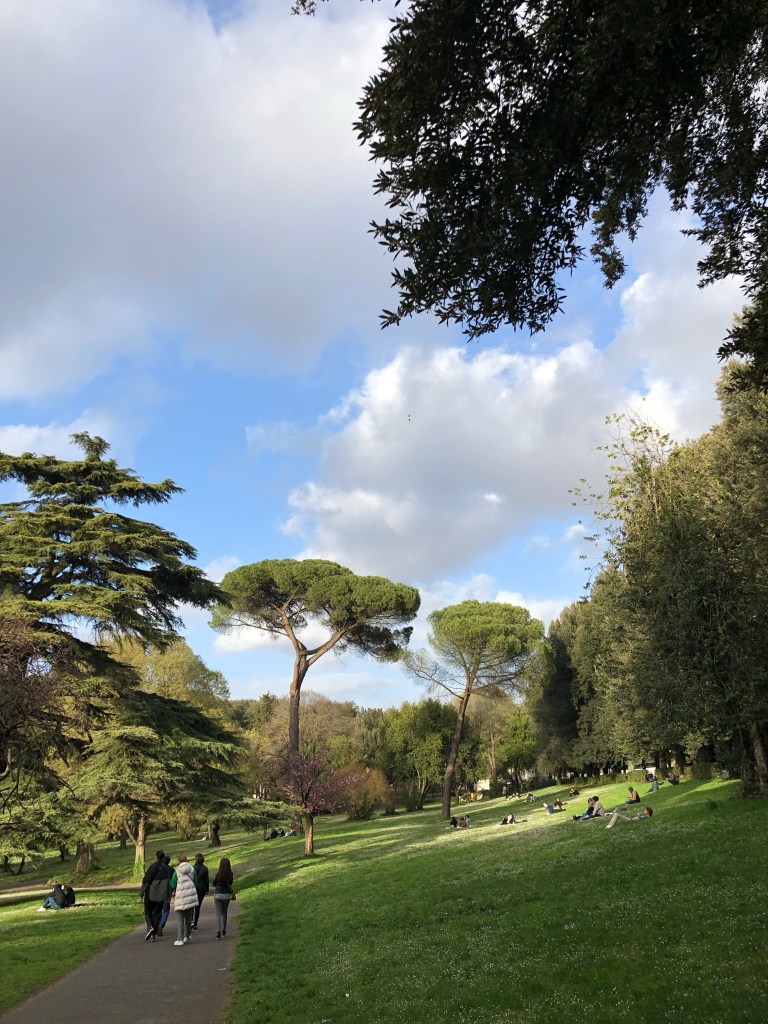
I clocked these pines last night on an evening wander towards the Spanish Steps. Respighi wasn’t wrong to write this movement as the jolliest, most playful of the four: when I was there, the Giardini della Villa Borghese were full of children playing in the evening light. A couple of fairground rides replaced the Roman ring a ring o’roses game in the original, but in all other respects it still fits perfectly. The man knew his source material!
The Borghese gardens also appear to be a favourite spot for Roman romance. As the sun starts to sink behind the trees, the long shadows cast by the stone pines stretch like rivers between the patches of sunlight, where in one corner of the gardens couples clustered like mayflies in the light. A girl in her twenties was picking daisies to fashion into a chain, four Spaniards laughed their heads off as they wheeled up and down the paths on rental bikes, while in the middle of the gardens a priest gave a homily to a small crowd in front of one of the chapels.
If I should find the One someday, I’ll take her for a walk here, too.
II. The Pines near a Catacomb (I pini presso una catacomba, lento)
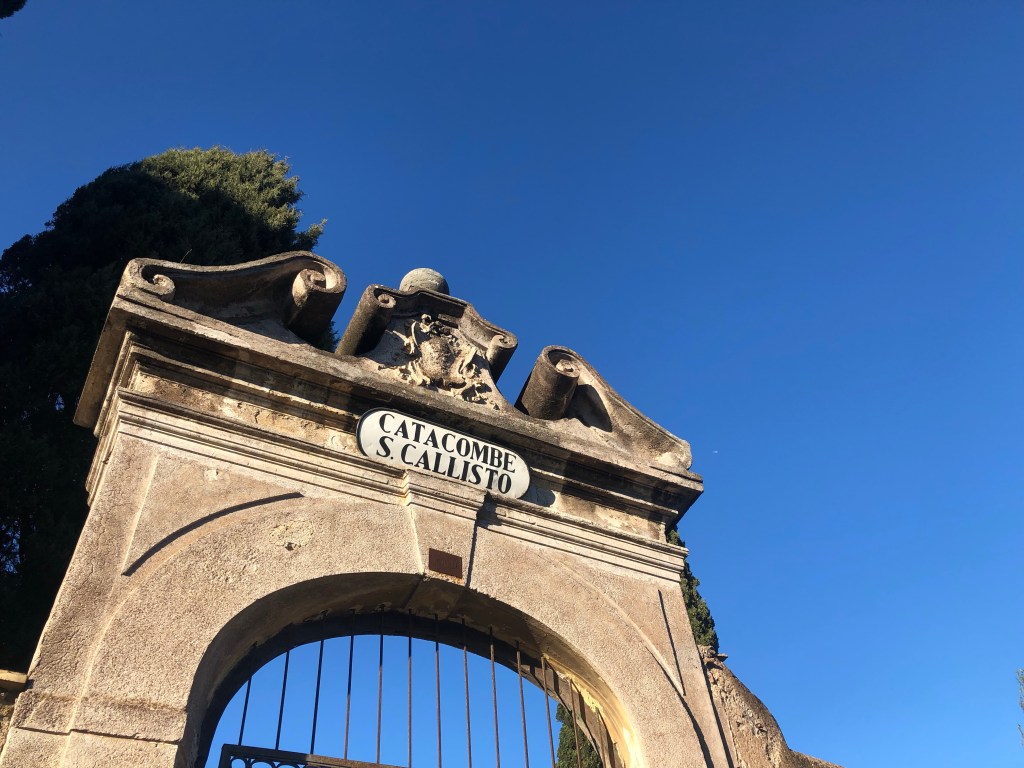
By the time I reached the catacombs, they were all shut up for the week… but that’s what you get for prioritising the Pope over a blog post. Compared to the rest of the Appian Way, the area around the catacombs was quiet and shaded… though that may have more to do with the lateness of the hour by the time I reached them. Here in Rome, as in Spain, cypress trees mark the resting places of the dead, lining the roads to the catacombs. They’ve been symbols of death since ancient times, since they cannot regenerate when cut back, and so they stand as sentinels outside tombs, cemeteries and graveyards all across the Mediterranean. The Romans’ beloved stone pines tower above them, but I think its the sad and stately rows of cypress trees that Respighi is alluding to in this movement.
III. The Pines of the Janiculum (I pini del Gianicolo, lento)
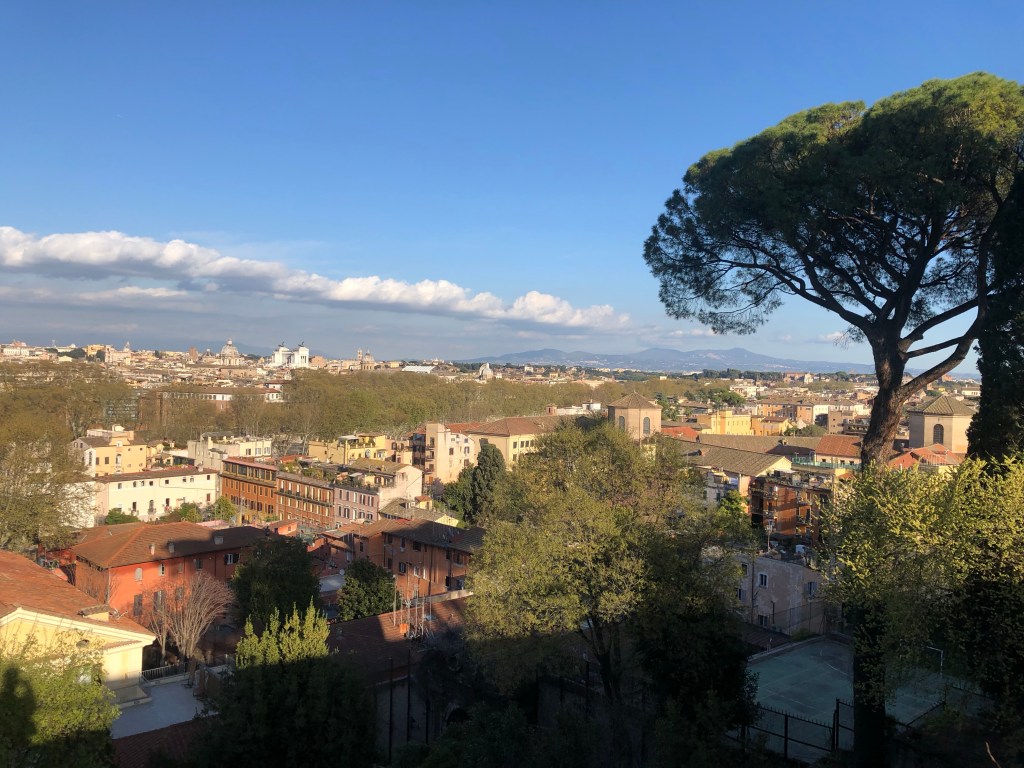
My first night in Rome was spent watching the sun set over the Eternal City. A girl I once put on pedestal told me to make the most of every sunrise and sunset. I left behind both girl and pedestal years ago, but it’s still a rule I live by when I’m on the road. Snacking on a focaccia from the hilltop, I had a sweeping view of the city, from the Vatican to the distant towns of Tivoli and Palestrina. The pines that grow here are the stone pines of Doñana, the trees of my childhood. The Romans had a special love for this tree and planted it wherever they went, especially along roads like the Via Appia.
Down in the dark branches below the viewpoint, some of the city’s monk parakeets screeched this way and that (oddly enough this South American species began to colonise Rome around the same time the Argentinian Pope Francis was elected), but my eyes were drawn to a tiny black-and-white shape moving up the trunk of the tallest stone line overlooking the city: a lesser spotted woodpecker, the first I’ve seen in many years. The rising and falling flute in Respighi’s movement pairs well with all the birds I saw here: the parakeets racing by, the pigeons wheeling over the roofs below, the tiny woodpecker climbing up and up. But I didn’t hear the nightingale that Respighi insisted on featuring at the end of this movement. Perhaps it’s too early in the year – though I suspect it’s more because it’s much too crowded here for such a self-conscious minstrel.
IV. The Pines of the Appian Way (I pini della Via Appia, tempo di marcia)
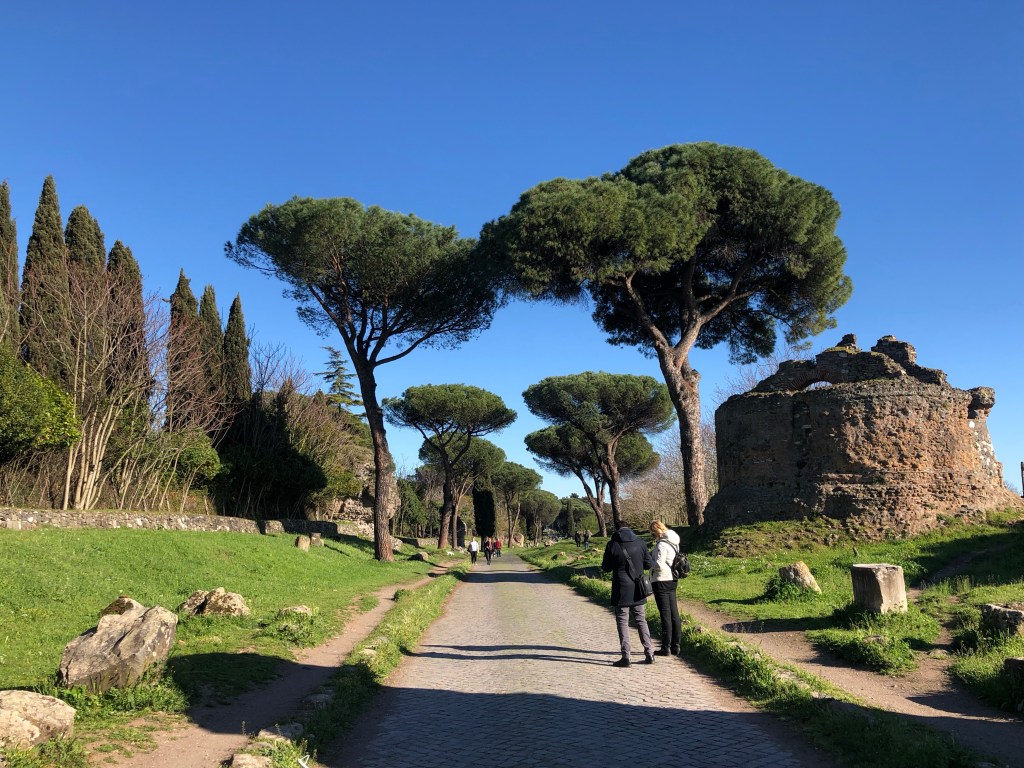
This was always my favourite movement – and what a sight! No visitor to Rome should pass up the chance to take a walk on the Via Appia, especially on a Sunday when the road is closed to traffic and the Romans descend upon the ancient highway in their droves for an afternoon passegiata. Walking the forum is one thing, but this is something else. The Via Appia is probably the oldest road still in use in the western world, and you really do get the feeling you’re walking in the footsteps of the ancient Romans as you walk this road. The things this road has seen…! This is where soldiers marched to the port and on to Egypt, where nobles lived in luxury beyond the confines of the city, and where the great orator Cicero was assassinated. I fell into the Romantic trap of many travelers before me as I passed one old Roman sitting on a marble colonnade, with skin of burnished bronze, black, sunken eyes and an aquiline nose that would have looked supreme on any Caesar; and I wondered whether he was the descendant, through many fathers, of Romans who had lived on this road two thousand years ago.
I also heard a nightingale here – he must have missed his cue in the Third Movement.
If Cannaregio was my favourite spot in Venice, the Via Appia takes the top spot in Rome. It’s breathtakingly beautiful, flanked with ancient Roman treasures along its entire length, and absolutely mustn’t be missed. And Respighi nails it with his final movement: it’s heroic, majestic and the perfect finale to both my long walk and my time in Italy.
I’ll tell you the tale of my incredible Palm Sunday experience as soon as I get my hands on a computer, as my phone photos simply don’t do it justice, but until then, arrivederci Italia! Sei bellisima e tornerò presto! And that’s a promise. BB x

 The Book of Barnabas