Adios Galapagos

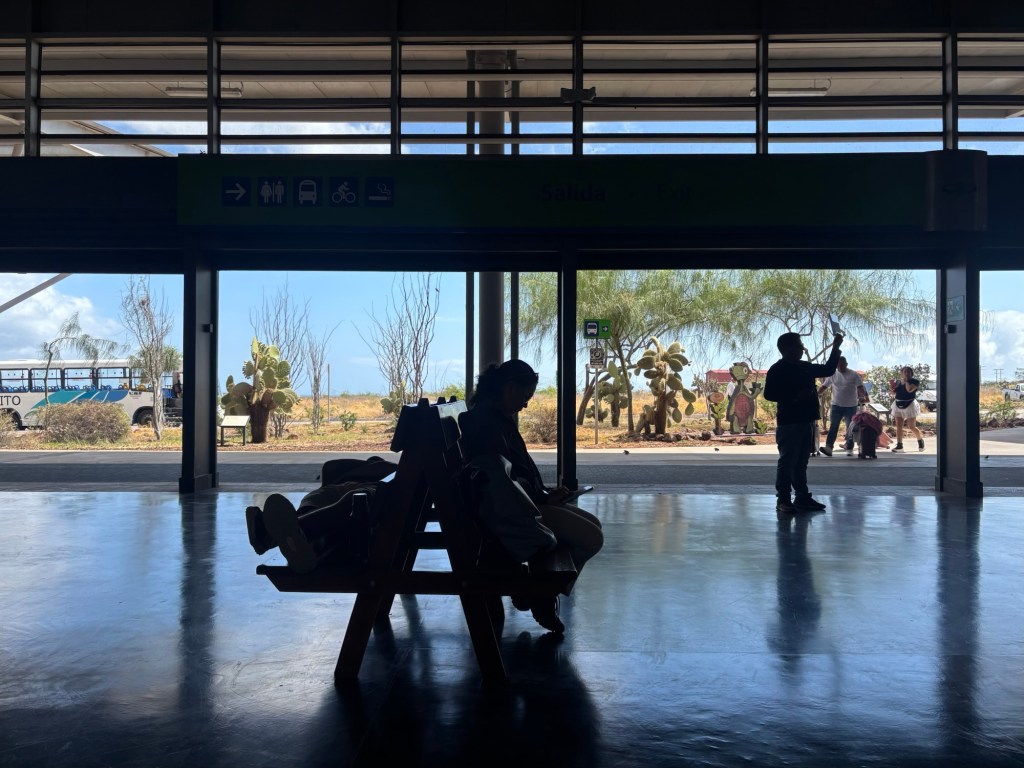
Aeropuerto Seymour, Baltra, Galápagos Islands. 10.57.

What an incredible week it’s been! But like all good things, it’s finally come to an end. I’ve made it back to Baltra, not too far from where I was yesterday, and I have a good few hours until my flight departs – the last one of the day. I could have dawdled in Puerto Ayora, but if there’s one thing solo travel has taught me, it’s not to chance the final day, especially when you’re navigating to a place you haven’t been.

Getting to the airport was a cinch. The flat rate for a taxi to the Itabaca Channel is $30, which is per cab, not per head, but as I’m traveling solo, there wasn’t much of a chance of splitting it – and it’s not too much of a price to pay in any event. After that, a single dollar pays your fare across the channel (just get in line under the shelter) and then it’s another $5 for the bus to the airport (which seems non-negotiable – I don’t think you’re allowed to walk it).

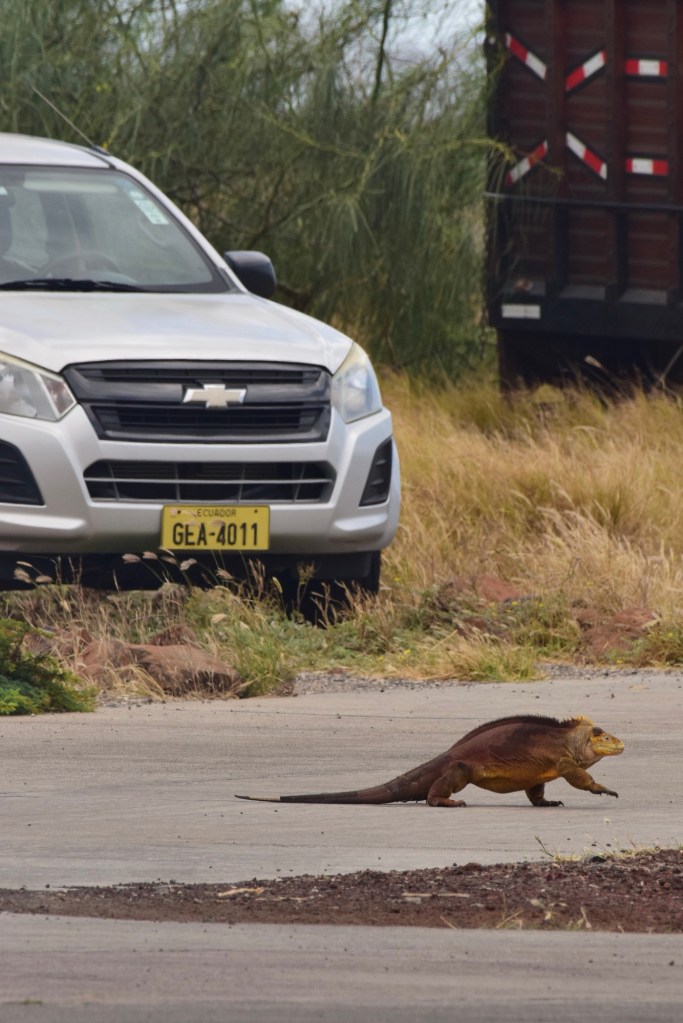
All-in, the journey takes about an hour. It’s a pretty small airport, but there are a few shops where you can buy last-minute souvenirs, some snacks for the journey, or grab some final photos of the finches and reptiles that live around the airport. There’s at least one land iguana prowling around that you might see if you’re lucky.

While I’m waiting, I thought I’d run down my ranking for the things I’ve done on this trip, in case you ever consider the same:

✩✩✩✩✩ Punta Pitt ($240)

Easily the best trip on this tour and a very good substitute for Española’s Punta Suarez. Incredible views of all three species of booby, shearwaters, petrels and storm-petrels galore and a superb guide in Samuel Quiroz.

✩✩✩✩ Puerto Baquerizo Moreno (Free)

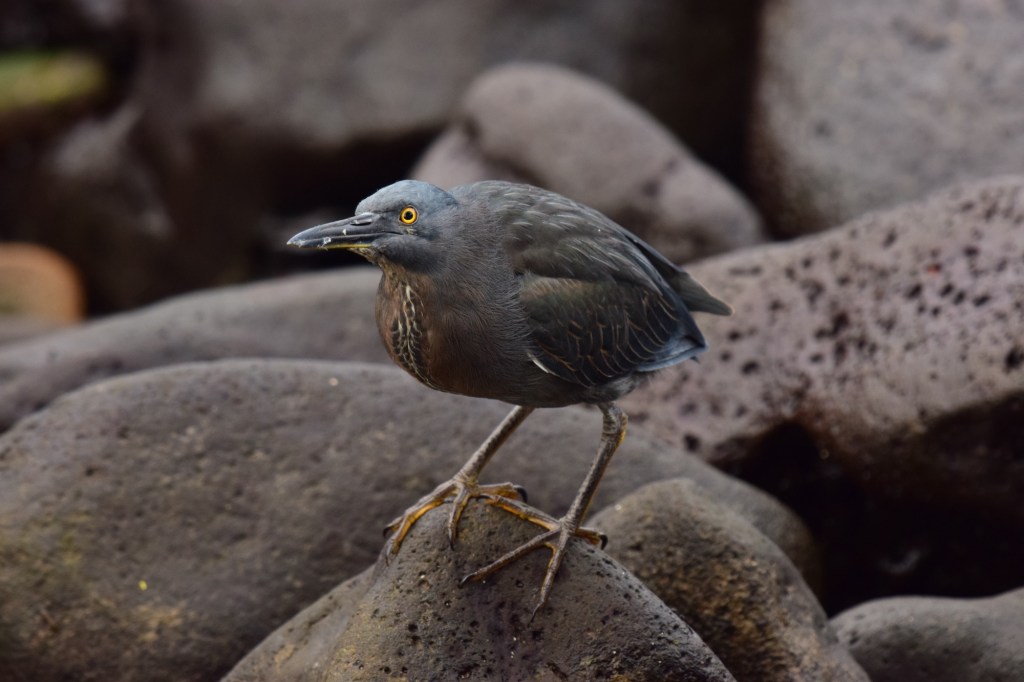
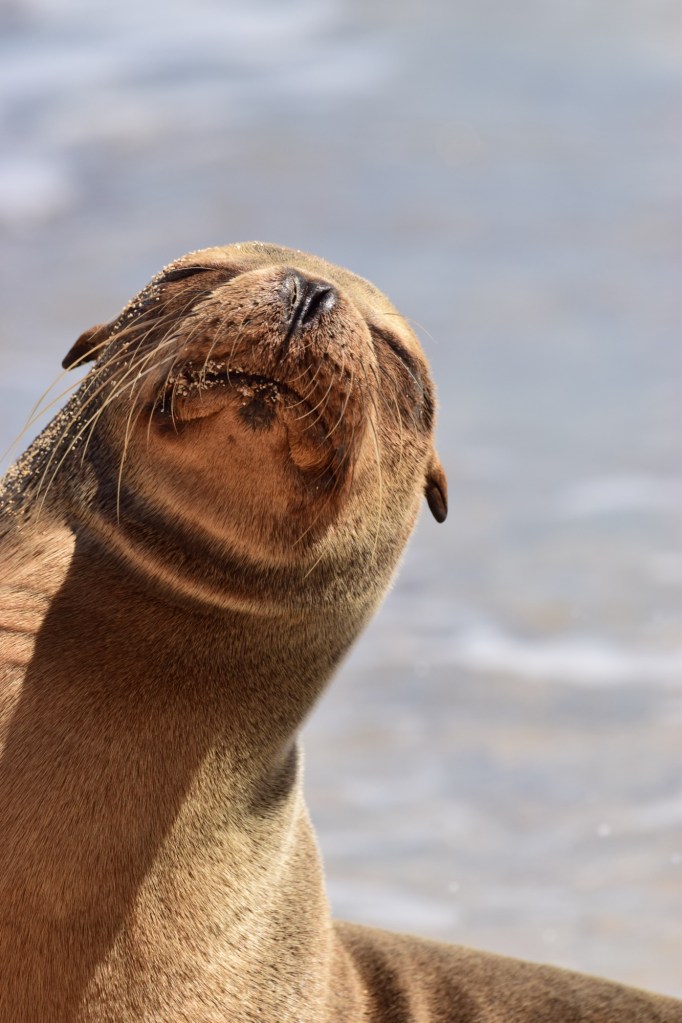
San Cristobal’s only town is genuinely one of the best places for close encounters with animals of all kinds. Mockingbirds, sea lions, finches, lava herons, noddies, pelicans, iguanas and crabs abound, and I’ve seen both turtles and sharks without even having to leave town. I can’t think of anywhere quite like it.

✩✩✩ North Seymour ($260)

The best destination for observing frigatebirds and land iguanas in the Galapagos for sure. They also chuck in a visit to Playa Las Bachas for flamingoes, turtles and ghost crabs. The only reason it’s not higher on my list was because of the timing. It would probably be near the top spot if we hadn’t gone in the middle of the day.

✩✩ Galapagos Frontier ($35)

A superb spot for seeing the famous giant tortoises, so close to Puerto Ayora that you could get there on foot if you wanted to. The $35 tour doesn’t include the taxi fare there and back ($25) which is worth considering, and holds this back a spot or two.

Kicker Rock ($150)

One of the best diving spots in the world – but perhaps not as legendary for snorkeling. $150 seems a bit steep to see a few fish that you could find just as easily by snorkelling off Cerro Tijeretas, but there are tropicbirds to be seen here, and the turtles at Playa Manglecito more than made up for the snorkeling at the rock itself.

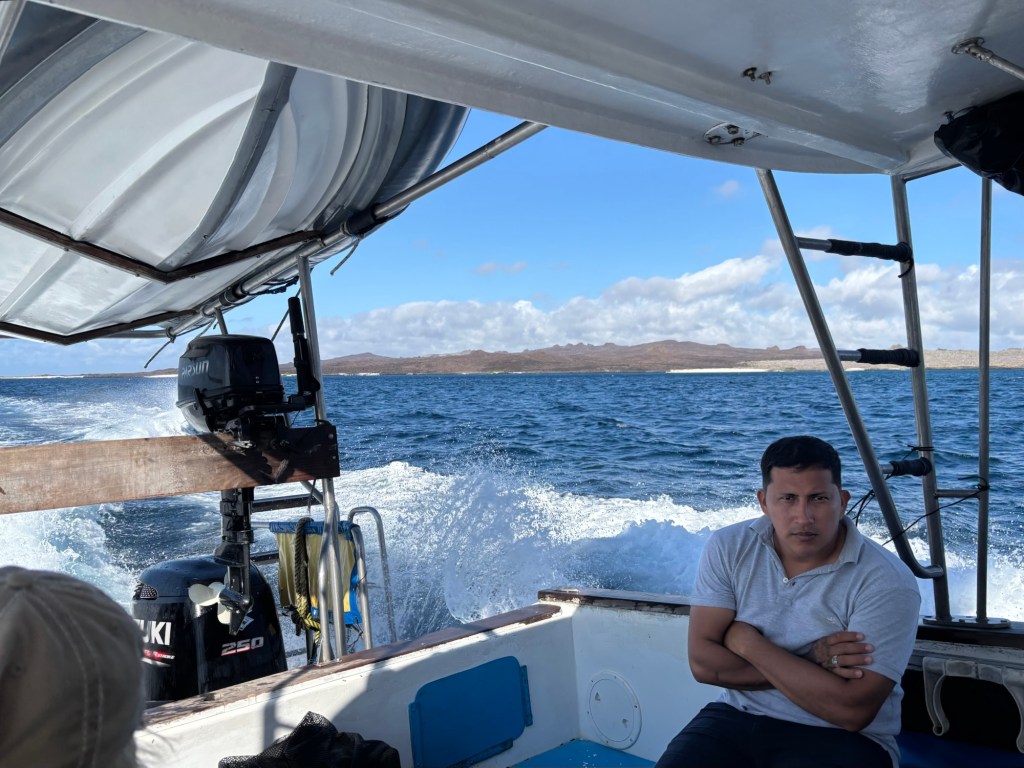
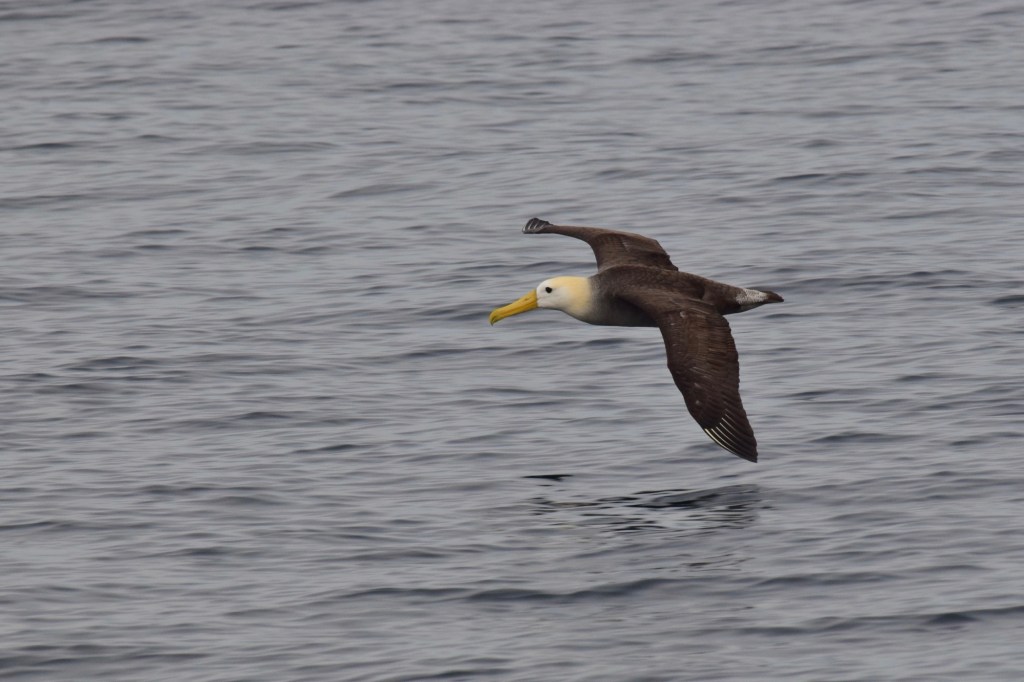
Pouring one out for the trip that never was: Punta Suarez on Isla Española. I’d have sacrificed both Punta Pitt and North Seymour to make that trip happen, but thanks to a malfunction with my tour operator’s onboard motor, it was not to be. At least I got my refund. When I think about it, $260 is a bit steep to see an albatross I’ve already seen, a third species of mockingbird and a shiny version of the marine iguanas – but then, none of the tours on the Galapagos are cheap. It’s set up to be a once-in-a-lifetime sort of destination, so people come here with cash to burn.

I’ll have to find some other way and some other place to see nesting albatrosses. This can’t be the only place in the world. I’m sure we’ll meet again somewhere, someday.

Readjusting to life at home is going to take some time after all of this. It’s been one wildlife spectacular after another this year in an almost unbroken line since my spontaneous trip to Peru in March. It’s been incredible falling back in love with the wild again. I don’t feel so lonely anymore and my general sense of happiness has gone through the roof. How can you be anything but happy when you’re surrounded by nature? I can’t recommend it enough. It’s the perfect antidote to the political and technological nightmare within which we find ourselves these days.

Whatever the problem, you will always find the answer in nature. I firmly believe that.

In total, I’ve spent just shy of $700 on trips and tours. That’s significantly less than I expected, and ridiculously cheaper than taking the liveaboard cruise option which starts at around $3.000. Traveling the Galapagos by yourself absolutely can be done, but if you’re giving it some thought, here’s my advice:

  • Do inquire about timings of trips and tours if you can, as these do somewhat dictate the success of your tours. Morning hikes are better than afternoon hikes.
  • Keep an eye out for guides with a III insignia under their badges on their left sleeves – these are park scientists and will be genuine fountains of information.
  • Be patient with the weather in August. The garúa rain can be disheartening in the morning, but it invariably clears by midday.
  • Always carry single dollars in paper or coin – you’ll need these more than you think for ferries, launches and helping restaurant staff to break down larger bills.
  • Don’t trust the prices on the packaging in the mini markets – stuff invariably costs more than what it says because of the cost of importing goods onto the islands.
  • Share and share alike! Not everybody brings a camera to the islands, so offer to share any photos you take with people on your trip so they can take away some magical memories! I’ve been asked at least three times so there’s clearly a demand for it.
  • You really don’t need to speak Spanish here as these islands live off the tourist trade, but if you can, please do – it goes such a long way with the locals.
Not too much longer to wait now. I might go and find something to eat. It’s going to be a long and probably rather sleepless night! BB x
Show Me Your Boobies

Puerto Baquerizo Moreno, Galápagos Islands. 18.45.

At the time of writing, I still haven’t heard back from the folks at EcoChallenger about the trip to Española. They did say they’d had engine troubles last week and would provide me with a full refund if they couldn’t go ahead, but also that they would keep me informed. I sent a chaser to see if if they’d fixed their boat, but no luck.

So, rather than feeling glum about it, I found an alternative tour for today out to the other side of the island: Punta Pitt, the easternmost point of the Galápagos. Here, with any luck, I might be able to recreate at least some of what I would have found out on Española.


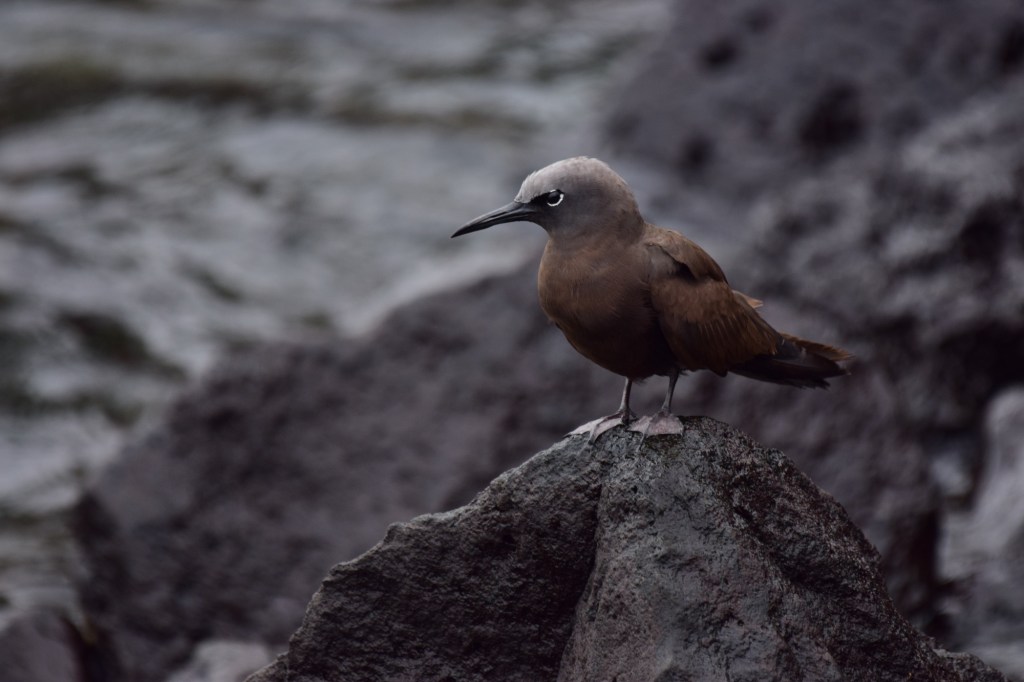
I picked up my snorkel gear from the Kingfisher GPS agency and walked back to the marina to meet my guide. Traveling with me today were a lesbian couple from California, a couple of American missionaries, their sister and her three children and a shy Australian birder. We were due to have one more on the team, but they never showed up – but at least while we waited I had time to get a better shot of the noddy sitting in the harbour, in the same place I saw it yesterday.


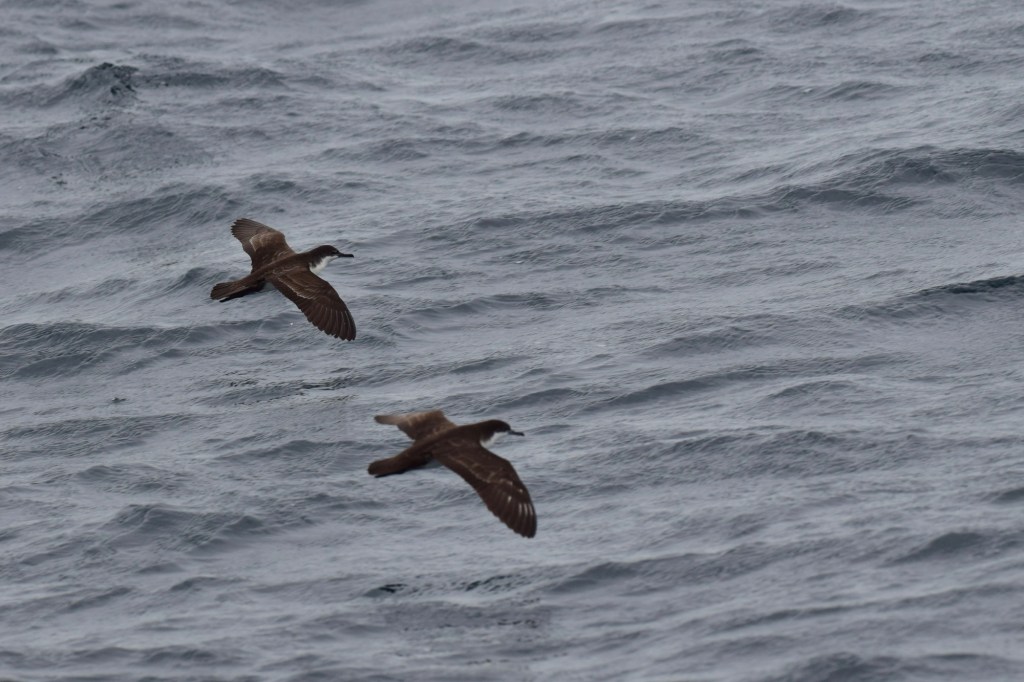
The journey to Punta Pitt from Puerto Baquerizo Moreno takes you all the way along the north coast of the island, and after passing the lighthouse at Punta Carola, it’s nothing but volcanic rock on one side and the open ocean on the other. Kicker Rock looms in the distance – a freestanding volcanic cliff famous for being the haunt of hammerhead sharks in the right season – but that wasn’t part of our itinerary, so we sailed on past. Beyond Kicker Rock, some of the Galapagos’ pelagic birds picked up our trail and followed the boat: Galapagos petrels, Galapagos shearwaters and two kinds of storm-petrel native to these waters.

I don’t believe in reincarnation, but if it did exist, I should love to come back as a shearwater. The speed with which they race across the water, seemingly delighting in the thrill of it… it’s magical to watch, even if they are in a mad hurry to find enough food to raise their chicks, sequestered in some burrow near or far away.

I was so busy keeping an eye out for seabirds that at least once I saw something else with wings leaping from the water: a flying fish, recently arrived in these islands, and just in time for the breeding season.


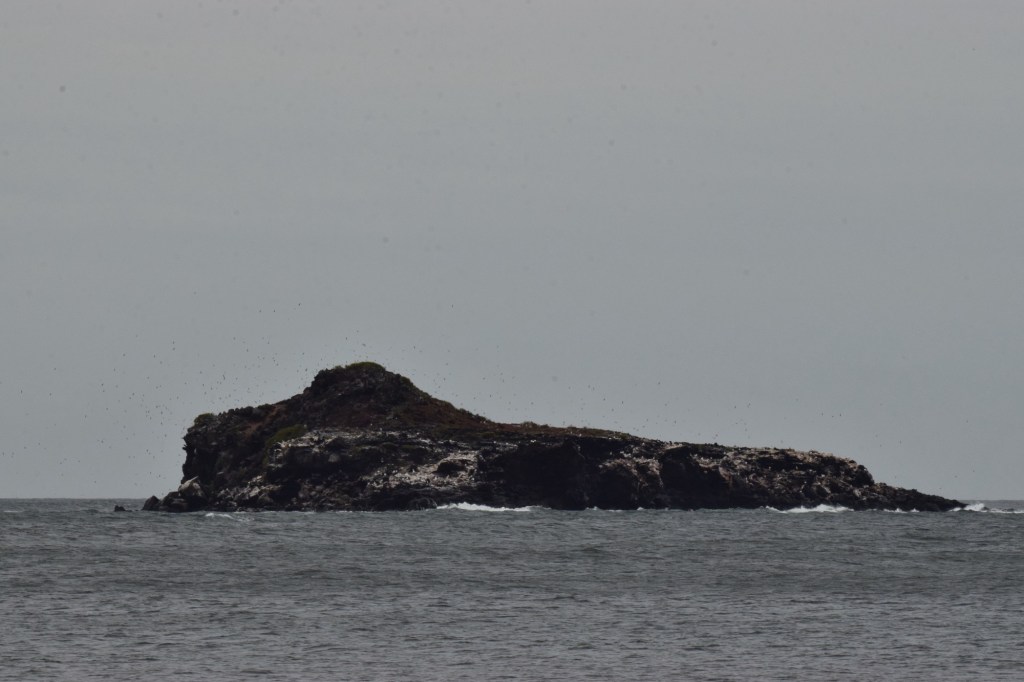
The weather looked unpredictable but the sea itself was a bit easier to read, so when we reached Islote Pitt, I made the decision not to enter the water. Sure, it was a waste of $30 on the rental GoPro, but I know I made the right call. Even the guide upon his return admitted grimly that the conditions were awful. The water was cold, choppy in the extreme and visibility was limited to about 10cm. Those that did take a dip said they’d managed to see a couple of sergeant majors, but that was about it. The qualified divers had a bit more luck with some eagle rays, but even they confessed that it was a hard and relatively fruitless dive.


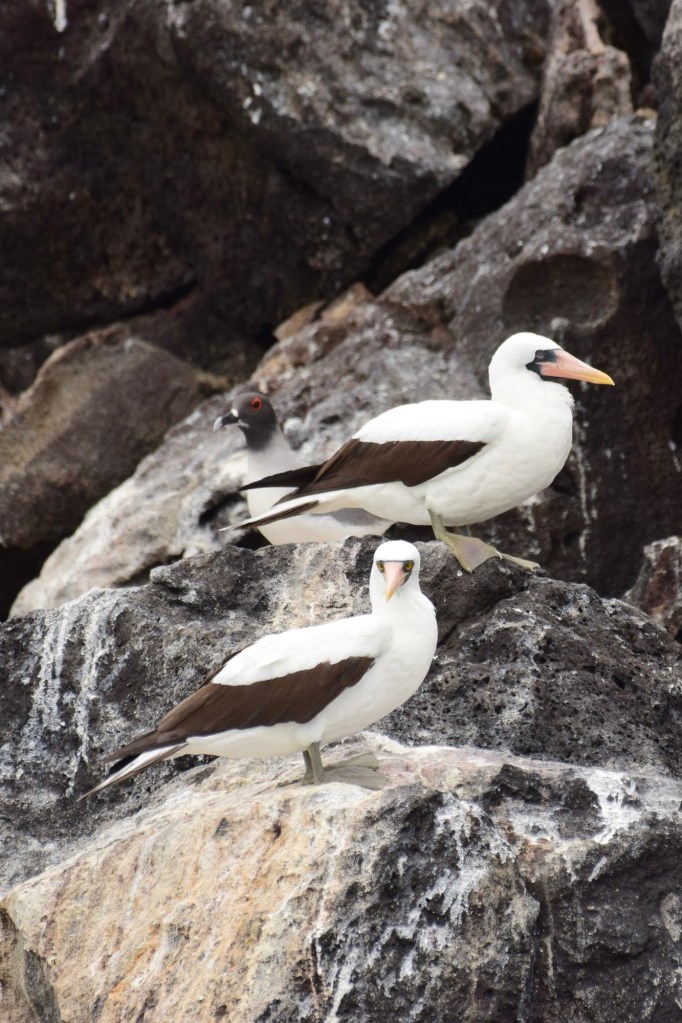
I, on the other hand, was having a whale of a time. Islote Pitt is home to a ridiculous quantity of endemic species, including both Elliot’s and wedge-tailed storm-petrels, Galápagos shearwaters and swallow-tailed gulls – the only nocturnal gulls in the world. I’m used to seeing storm-petrels at a distance, zooming across the surface of the open ocean and next to impossible to track with a camera, but I’ve never seen a colony before.


I’ve seen a lot of South American gulls on this trip: kelp gulls, dolphin gulls, grey gulls and lava gulls, to be precise. But swallow-tailed gulls are really rather special. Whether it’s their white wings and silver mantle, or the smart red ring around their eyes, or even their eerily haunting cry, they’re simply unlike any other gull I’ve ever seen.


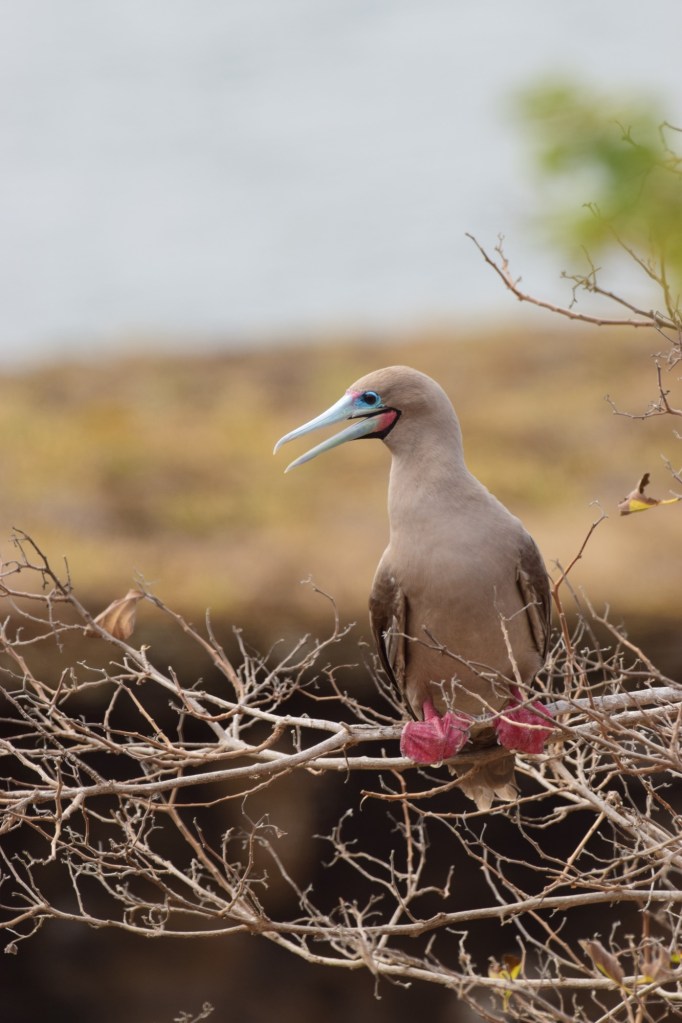
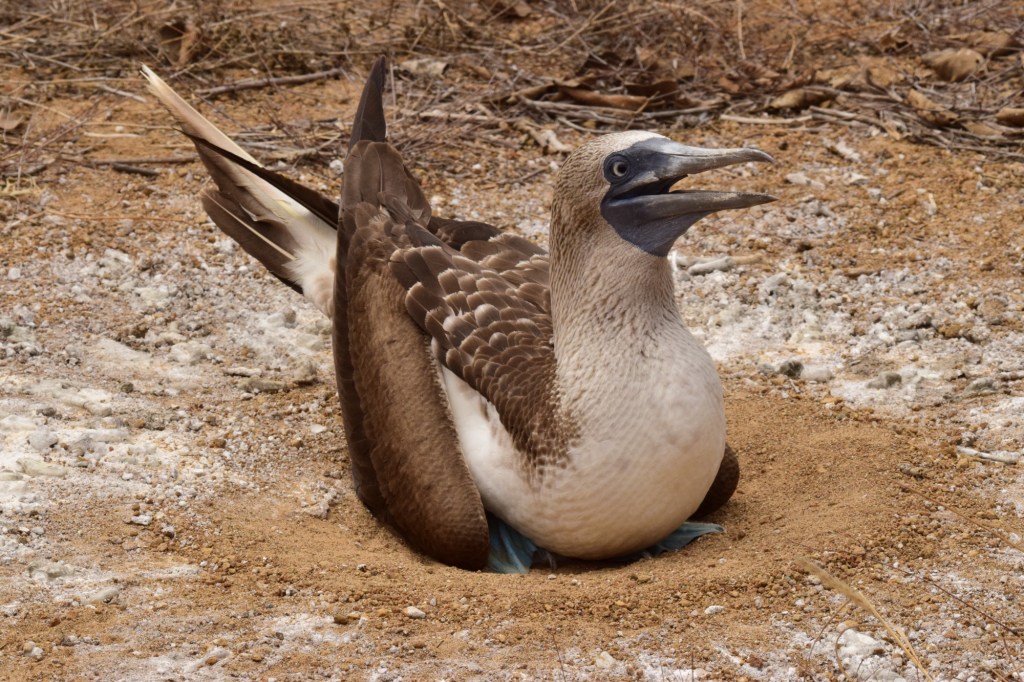
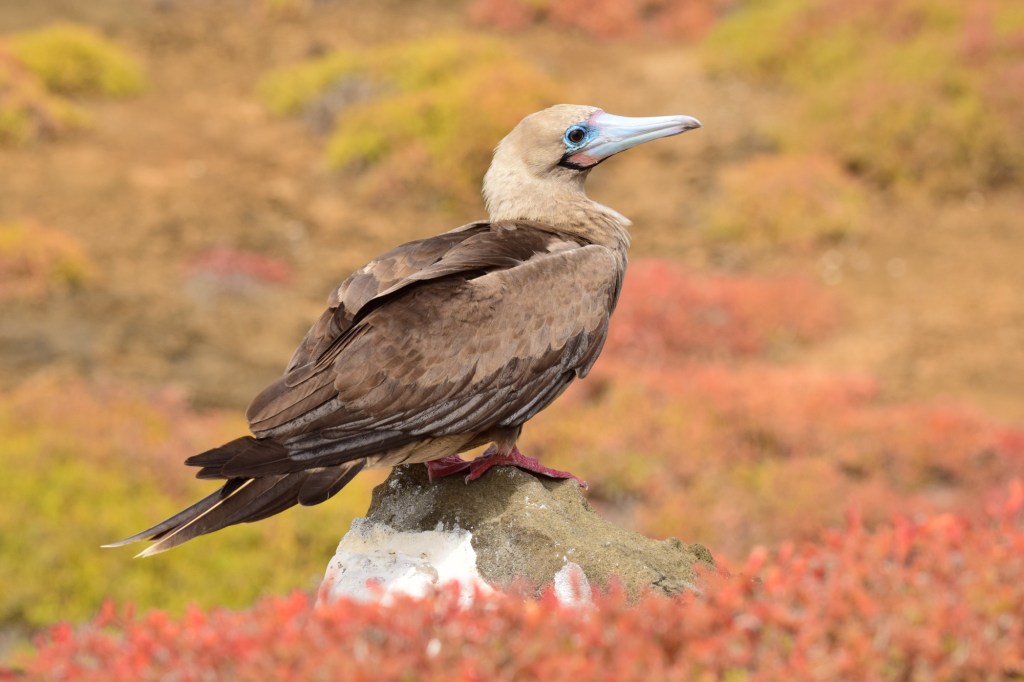
Punta Pitt’s major claim to fame (as well as the explanation behind the title) is that it is the only place in the Galápagos Islands where all three species of booby can be found together. Each one nests in a different spot: blue-footed boobies on the ground, red-footed boobies in the trees and Nazca boobies on the cliffs.

The Nazca boobies at Punta Pitt itself nest on a cliff some distance from the path at the point itself, so your best views would be at Islote Pitt, which is home to an enormous colony of the handsome seabird, alongside the frigatebirds, swallow-tailed gulls and a legion of storm petrels.


The hike up into the cliffs from the cove at Punta Pitt takes you deep into the volcanic coastline, up a tree-lined gully that becomes a torrent in times of severe rainfall. You’ll encounter the most famous residents of Punta Pitt, the rare red-footed boobies, shortly before climbing the pass over to the other side: they’re hard to miss, as they nest right next to the path.

Boobies get their bright-coloured feet from their choice of diet, which seems to be an evolutionary choice in the race to find a mate. Red-footed boobies primarily hunt squid and flying fish, both rich in carotenoids, which gives them their red colouring; blue-footed boobies are after the same nutrients, but their choice of catch – sardines – gives them a wholly different colouration. The brighter the feet, the more successful the bird is at finding a mate.


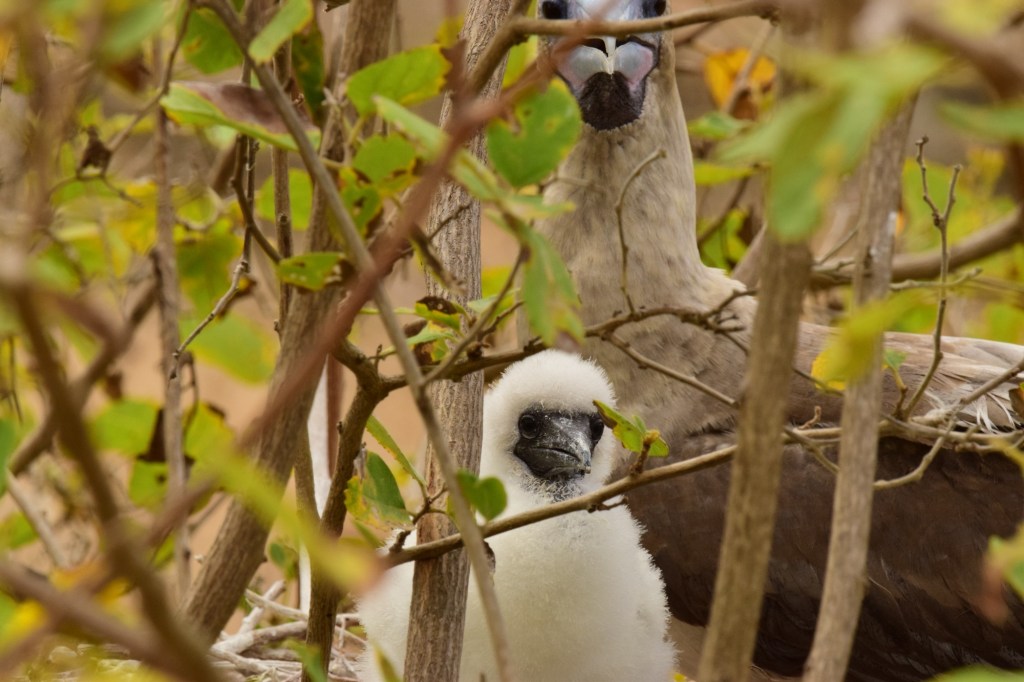
In August, the breeding season is already well under way, with some early partners already feeding large fluffy chicks. Others are still taking it in turns to incubate their eggs, with one partner flying in from a morning’s hunting to relieve the other on the nest.

For once, I was with a really respectful group of tourists. Once they worked out that the birds don’t like being approached too closely, they asked if we could keep our distance and move on so as not to disturb the birds further. Music to my ears!


Sometimes you didn’t have much choice but to be close, as their choice of nests catch you by surprise, in a scrape beside the path or tucked away in a tree in the middle of the road.


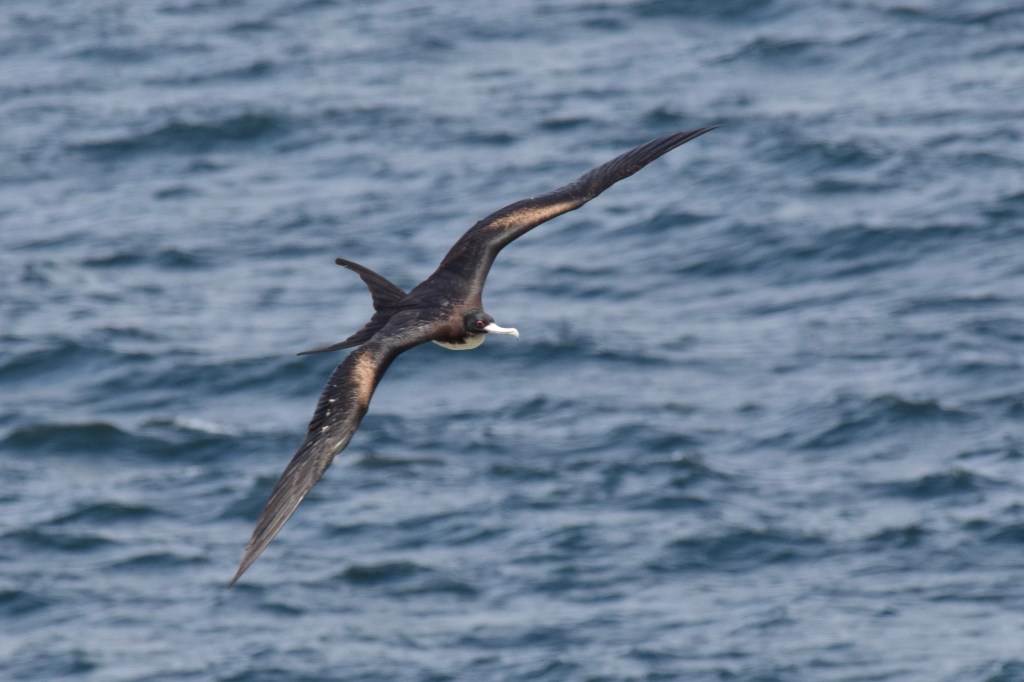
They’re not the only iconic Galápagos residents that breed at Punta Pitt. The enormous frigatebirds can be found here too, looking even more fluffy than the boobies, albeit at least twice the size.


Frigatebirds are absolutely enormous – you won’t truly appreciate just how big they are until you see them for yourself. Using their swallow-like forked tail as a rudder, opening and closing their streamers to steer in the wind, they are masters of the air, perfectly designed for outspeeding the boobies and robbing them of their fish, which I have been lucky enough to witness.

I also saw a beautiful angel of a seabird here: a red-billed tropicbird, all white with long streamers and a bright red bill. They’re small – tern size at best – and nest in crevices in the cliffs that are impossible to reach, so you won’t see them as well as the other denizens of Punta Pitt, but it was quite a sight to see as it set out to sea to go fishing.


The red-footed boobies come in two colours: a white morph – more common in the western Pacific – and a coffee-coloured brown morph which is more easily found here in the Galapagos. The two morphs are totally interchangeable and cross-breed from time to time: for the ladies, it’s not about the colour of their feathers but the brightness of their feet.


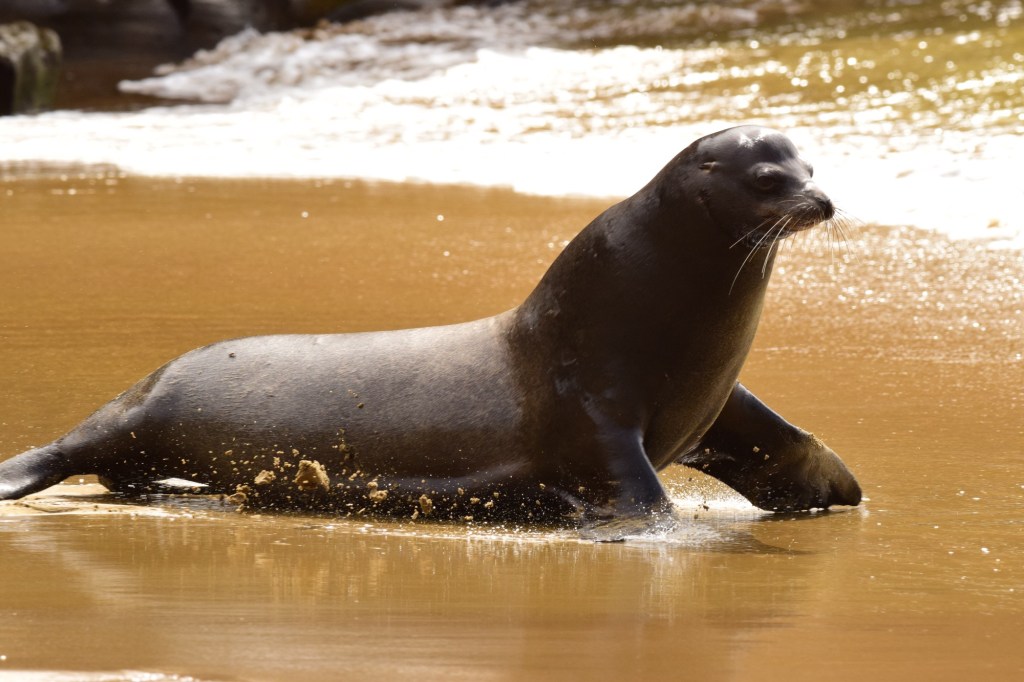
After a solid two hour hike up into the cliffs, we left the boobies and their ramshackle nests and climbed back down to the beach where we landed. While the captain’s boy ferried us back to the boat on a small skiff, the local sea lion alpha was busy defending his territory, chasing off a rival male that had just arrived on the beach.

I overheard a family of Americans in Puerto Baquerizo Moreno watching the sea lions lazing around the port and saying how easy life must be for them. For the dominant male, it couldn’t be further from the truth. From the moment he assumed command, he cannot hunt, eat or sleep, patrolling his territory constantly and fighting off suitors as they come. This is, of course, extremely debilitating, leaving them physically weakened after nearly a month without food, but there are cases of individual alpha males returning to reclaim their harem up to three times in a single season. So when you hear the endless barking that is such a part of the soundscape of Puerto Baquerizo Moreno, remember how long it might have been since the males have been able to eat. For sea lions, the urge to mate simply outweighs all other options on the table, including eating and sleeping.


The boat ride back to Puerto Baquerizo takes a lot less time as you ride the fast-moving current back, shaving a whole hour off the journey. In the middle of the day, there’s not as much to see either, so most of my companions fell asleep, aided by those curious neck-braces with built-in fans that I saw some colleagues wearing back home during the June heatwave.

Samuel, our guide, was keen to know how long I’d be here. I told him how last minute this whole operation was, and that I’d more or less given up on Española with no news from the folks at EcoChallenger. He said he’d ask around – after all, it’s not the agencies here that conduct the tours but rather the guides and their attendant boatmen. The agencies merely act as middlemen, sending a certain quota to the actual operators down in the harbour. So who knows? Maybe I’ll get to go to Española after all. either way, I’m glad I opted for Punta Pitt – it was absolutely incredible.


I’ll get an early night and have a quieter day tomorrow. I could do with some time to put the snorkeling mask to good use. I hear the bay where I saw the turtles is an almost guaranteed spot to see them year-round, so I think I’ll go there first if the weather is kind. It’s usually rainy and cloudy in the mornings and then sunny in the afternoons here, which is an easy enough pattern to follow.

See you next time! BB x