Chilean Memories #8: Caracara
Hostal Coastal B&B, Puerto Natales. 18.42.
I had to improvise a bit today, after my original plan of jumping on a full-day tour of the Torres del Paine National Park and the Cueva del Milodón fell through. Fortunately, you don’t even have to leave Puerto Natales to enjoy some spectacular wildlife, even in the heart of winter. I was also lucky with the weather today, which was largely sunny for most of the day, making photography that much easier.

Many of Natales’ resident birds look deceptively like domesticated waterfowl, which could not be further from the truth. There are crested ducks absolutely everywhere, greatly outnumbering the smaller and daintier yellow-billed teals that are one of the few birds that remain wary of humans around here. The black-necked swans that live out in the fjord are probably the most iconic residents of Puerto Natales, but they were joined today by a few pairs of Coscoroba swans, a swan-like goose that can be found from the Antarctic waters of southern Chile all the way up to Brazil.

It’s clear who holds the reins of power, though. Not five minutes after the coscorobas came in to land, a pair of black-necked swans moved in, and one of them charged the coscorobas, putting them to flight. About the only bird I haven’t seen them attack yet are the tiny white-eared grebes – I wonder if that’s because they can’t see them?

Some of the birds here look familiar, even at a head-spinning distance of just over thirteen thousand kilometres from home. A small colony of house sparrows and feral pigeons have made the town their own, as they have in most towns and cities around the planet, and at first glance the oystercatchers look similar – but these are Magellanic oystercatchers, limited to the southern tip of South America. You can tell them apart by the yellow ring around their eyes. If other human species had survived, would we have been able to tell each other apart by similar signs?

There was one creature in particular that I was hoping to see – and I was not disappointed. After a half hour’s careful observation – having been almost certain I’d seen the silhouette I was looking for across the bay when I set out – I was very nearly scalped by an absolute giant that came soaring in from behind my post on the dock: a southern giant petrel, a genuine monster of the South Sea with a two-metre wingspan and a violent disposition.

The giant petrel will eat just about anything and has a reputation for bludgeoning and drowning birds much larger than itself, including penguins, gannets and albatrosses. It will even squabble with its kin over human waste left behind by passing ships. For this reason, it’s known as the vulture of the Southern ocean – which is probably why I was so keen to see one. Besides the simple fact that they really are incredibly impressive birds to behold.

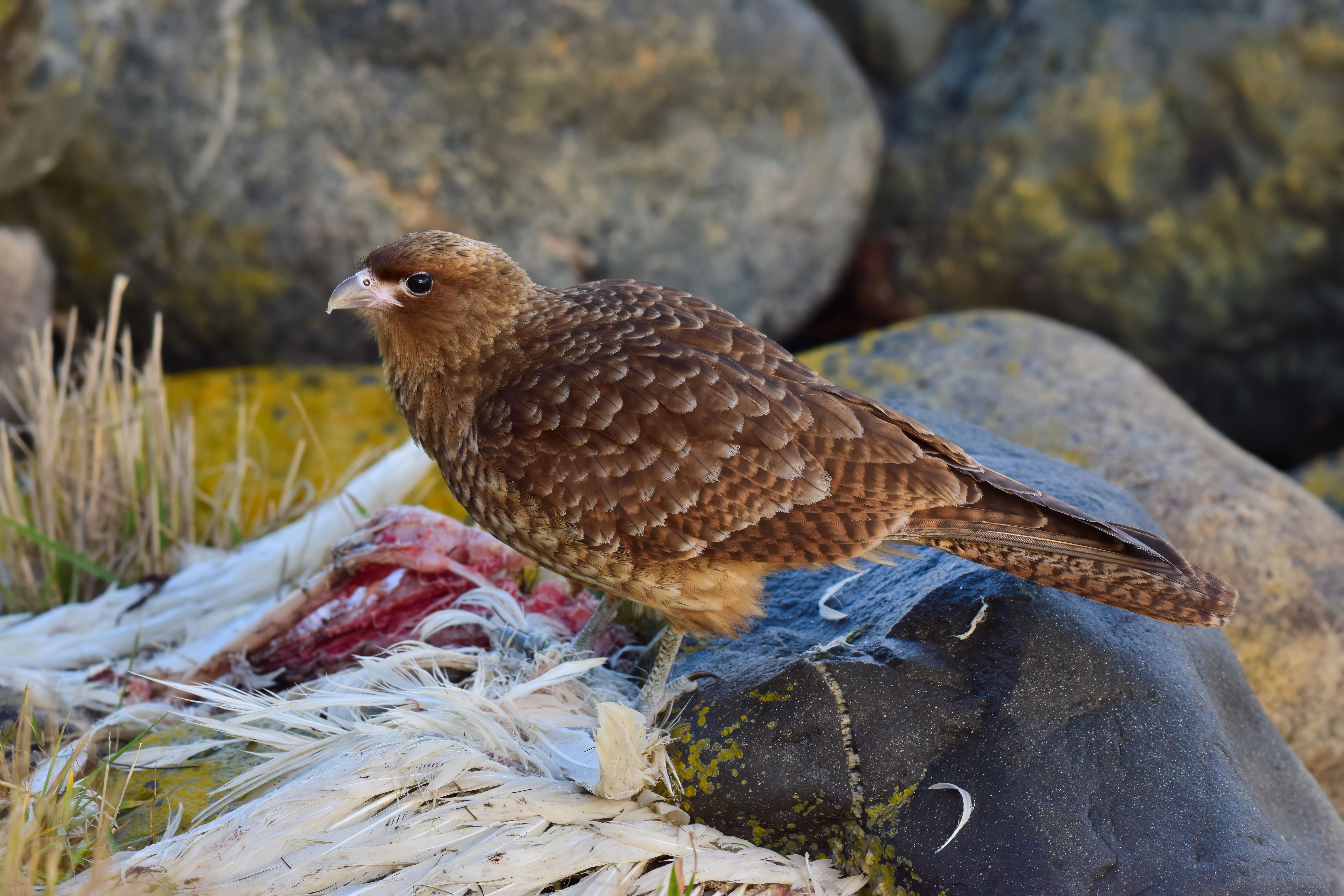
A more friendly resident of Puerto Natales is the chimango caracara. You couldn’t miss these happy little hawks if you had even the least know-how about birds – they’re all over the place, perched on lampposts, drifting over the streets in the centre of town, wandering the dockyards in gangs of five or six and hopping along the beach in search of scraps. One of them had found the remains of a coscoroba and wasn’t about to share it with any one, flapping at any other caracaras that came its way.

The occasional passing clouds across the sun made for a tricky job adjusting the shutter speed on the new camera, but when the sun did come out, I could not have been happier with the results. It helps, of course, that so many of Patagonia’s animals aren’t that shy at all.

The old jetty is one of Puerto Natales’ most famous sights, and it hosts a large colony of Imperial cormorants in the winter months. Many of them had gone by mid-morning, seeking richer waters further down the fjord, but I must have counted nearly a hundred here the other night.

I went out for another walk after lunch, following the same circuit in the hope that the giant petrel would return. After about twenty minutes, it caught me by surprise once again, rushing so low over my head that I could hear the wind whistle in its giant wings. I hoped it might return the way it had come, but when it did not show itself again after about half an hour, I wandered back across town. I would have gone back to the hostal for a bit, but something made me press on to the other side, further south. That was where the petrel went, after all.
I didn’t quite make it as far as the fishing wharf, because there was a lovely view from the Edificio Cultural Costanera. I had only just packed away my camera when I found myself having to rush to get it back out again as a flamingo came in to land, right next to one just off the shore that I had not even noticed.

At such a close range, I could see just how heavily feathered the Chilean flamingo’s face is. It must be an adaptation to the cold, as these particular flamingos make their home here in Antarctic Chile and up in the frigid lakes of the Patagonian mountains. A far cry from the languid heat of Fuente de Piedra and Lake Turkana, for sure.

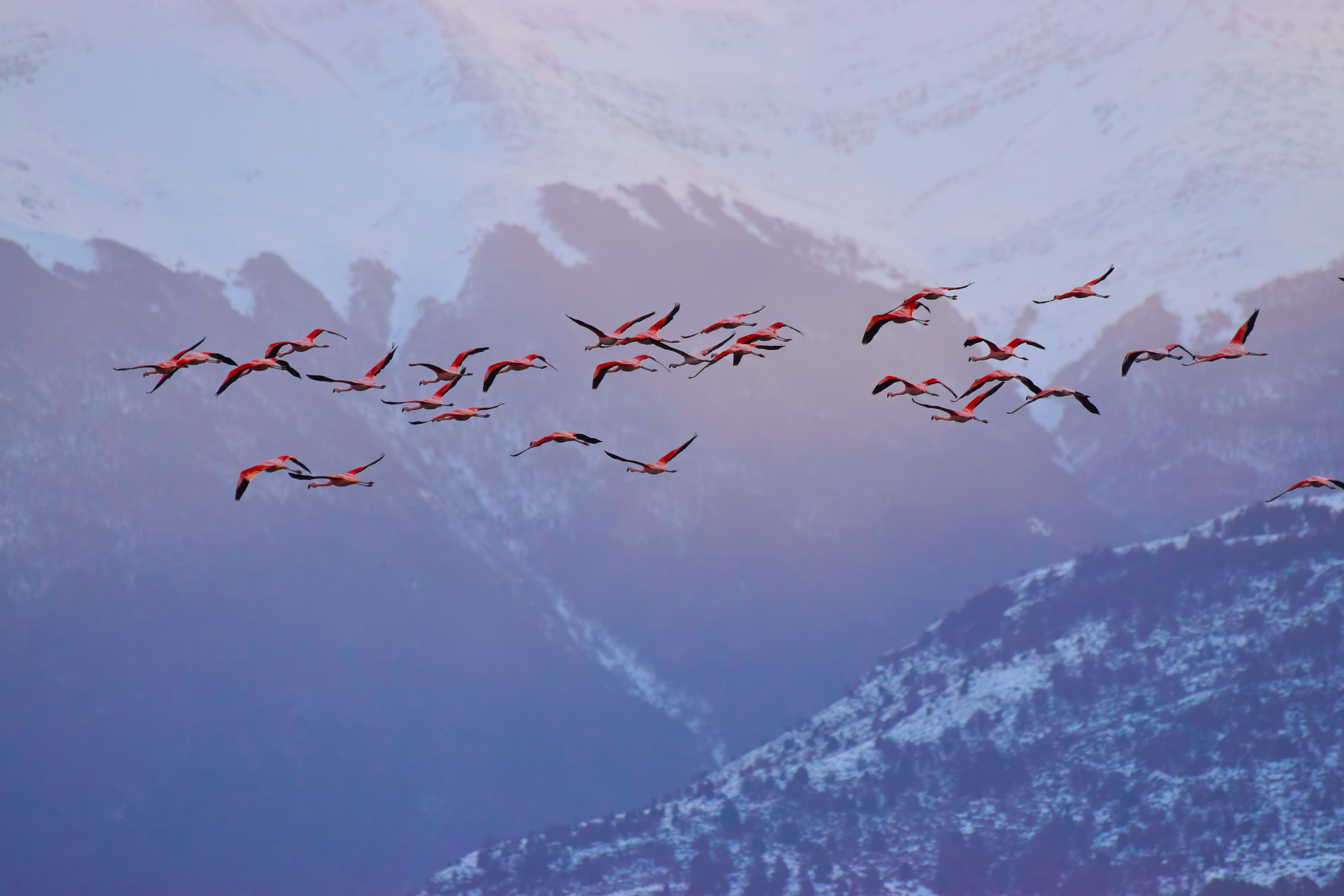
They were just the first. Soon, as the sun was beginning to set, a whole herd of flamingos came in to join them, their feathers glowing a blood-red scarlet in the evening light as they came down into the bay.

They made for quite a sight: a great herd of flamingos set against the backdrop of the snowy peaks of the Kawésqar Mountains. I certainly didn’t expect to see them again, having spotted earlier in the day that they had decamped to the other side of the bay since the day I arrived, and until recently, they had shown no signs of moving.

They were pretty quick to move, however, for one thing: a dark, powerful thing on two-metre wings, speeding towards them just above the surface of the water like a fighter plane. The petrel was back – and the mere sight of it put the fear of God into the flamingos. With much honking and splashing, they took off in a mad hurry, even when it was clear that the petrel was simply passing by.

What a spectacle they made as they flew up the fjord! It was like something out of a dream – and they kept turning this way and that, giving me every chance to snap them against the mighty mountains beyond.

It felt like the perfect ending to the trip, even though I have most of the day tomorrow as well, since my flight doesn’t leave until half four. But I come away with so many incredible memories, some of which I have written about and many of which I can print and put up on my wall. That’s how a good holiday should be, right? BB x

Hostal Coastal B&B, Puerto Natales. 19.20.
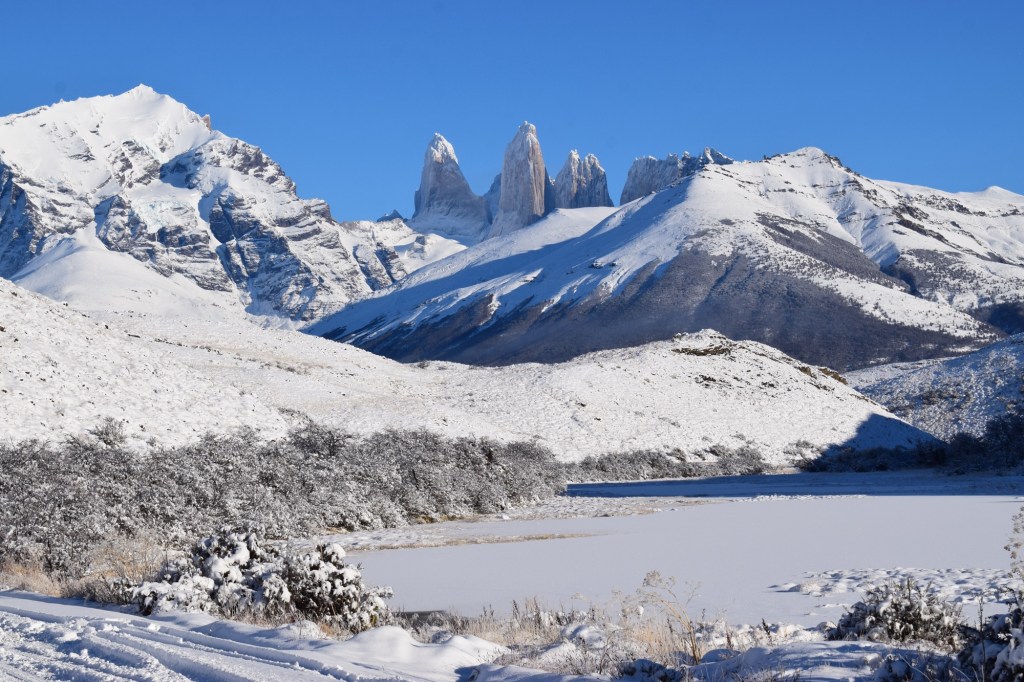
Patagonia is transformed in the sunlight. From the moment I arrived, the whole territory has been shrouded in a dense fog ushered in by the snow, concealing much of the land behind a mysterious grey curtain. Today, at dawn, everything changed. Shadows into silhouettes. Mystery into majesty. I have never been more in love with this place than I was today.
And to think there were people online who advised against coming here in winter… I can only imagine they wanted to keep something this precious to themselves. Because I think I can say without a hint of hyperbole that Patagonia in the heart of winter is one of the most beautiful sights you will ever see.
This morning’s quest began where we left off yesterday, at the frozen field where Escarcha and her cubs had gone to ground. Tracks in the snow indicated that they had moved on during the night, but there was at least one puma still in the area: an adult female, one of the offspring of the legendary Rupestre, the former matriarch of Torres del Paine. It was still dark, but following the lurching silhouette of a sight that was becoming quite familiar still set my heart racing.
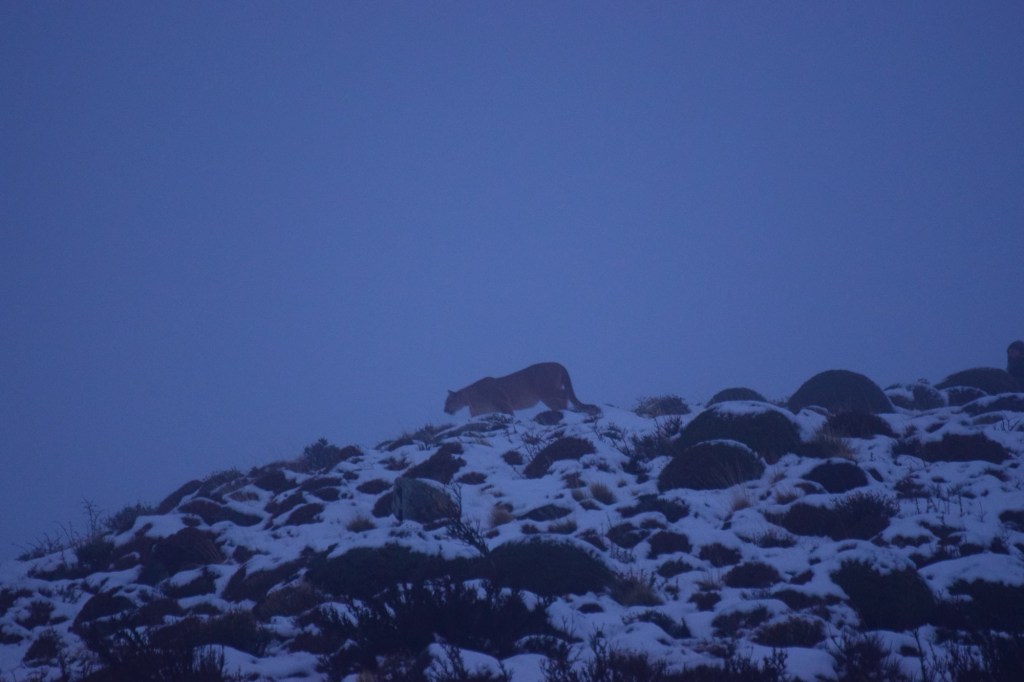
She seemed to be following the scent trail left behind on the cliff – either Escarcha and her cubs or another puma entirely – as she kept pausing at each overhang and doing the Flehmen response, a technique which allows cats to analyse the scents they detect in extreme detail, ascertaining information such as the age, health and sex of the scent-bearer. Cats are remarkably intelligent creatures and the puma – arguably the most successful of all the cats of the Americas, with more names than any other species of felid and a range spanning from Alaska to Tierra del Fuego – is no exception to the rule.
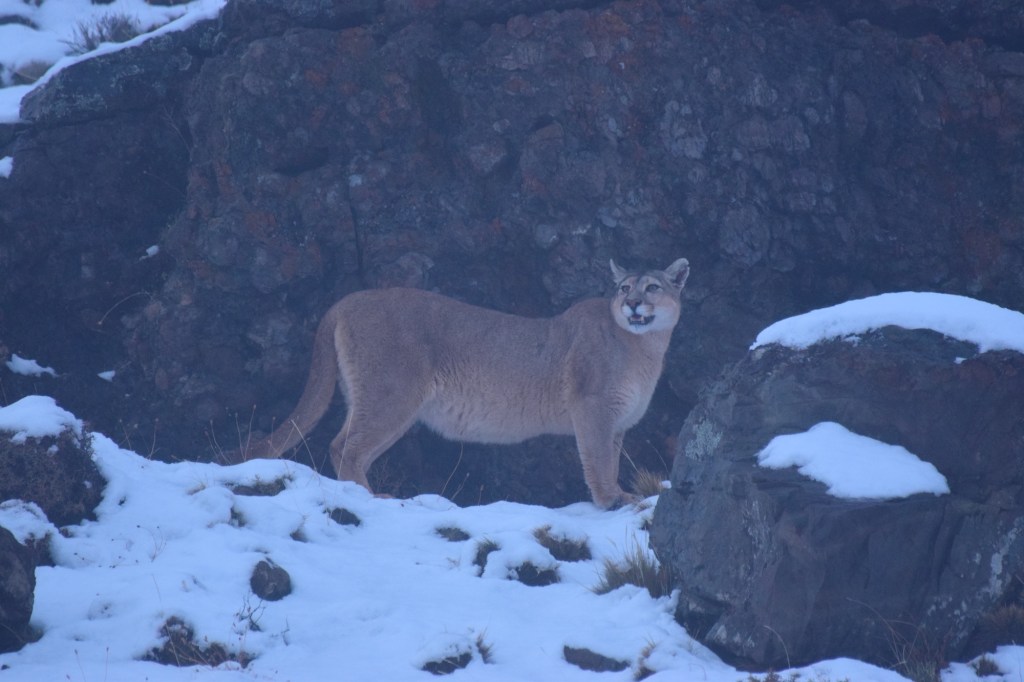
The female took her leave and wandered off toward Lago Sarmiento, and we turned back in search of the new arrival from yesterday, NN, just as the sun began to crest the hills to the east, bathing everything in a golden halo. NN was where we left him yesterday, and while he popped out of his hiding place for a gnaw at his hidden kill, he promptly returned to the scrub and disappeared again.
Forging a new path, Fabián took us down a new route, past the frozen lake where we had found Lenga and Ñire yesterday and up into the foothills of Torres del Paine. We saw no pumas en route, but they had clearly been here during the night, with fresh prints along the road and across the fields beyond.
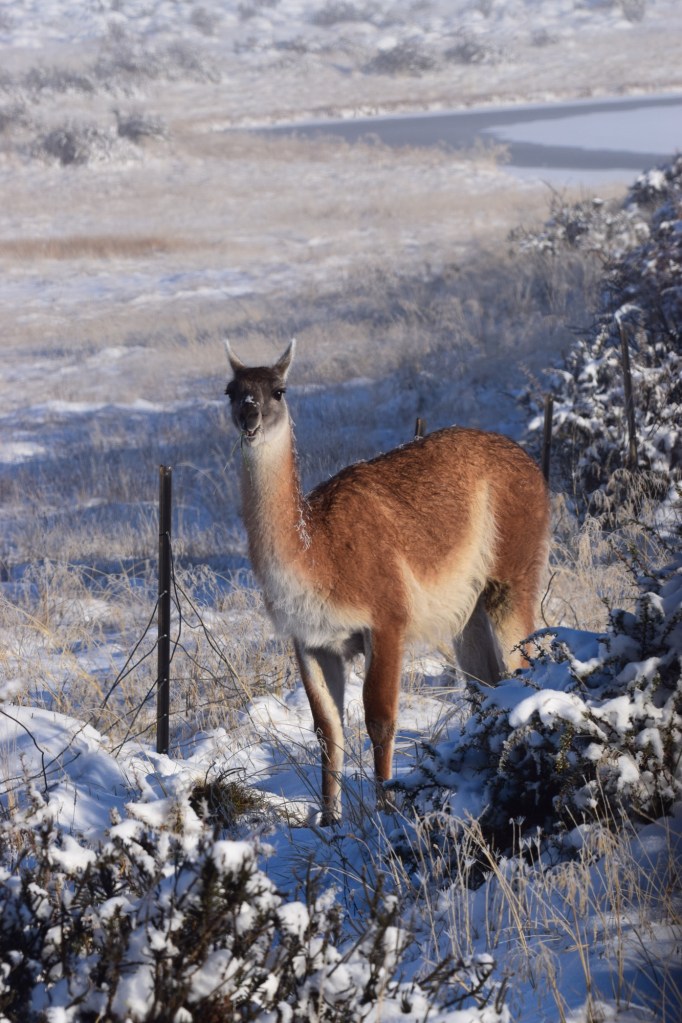
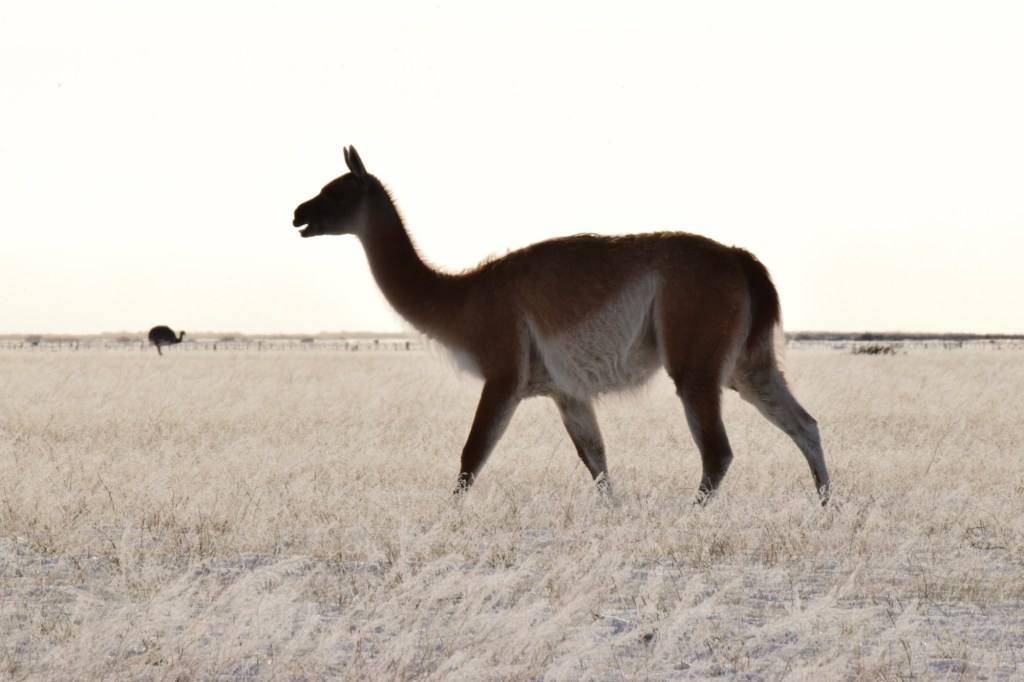
The guanacos, on the other hand, were everywhere. Apparently, in this corner of the world, only 4% of guanacos survive infancy, with the other 96% falling prey to the pumas. That figure alone goes a long way to explaining the concentration of pumas here in Tierra del Fuego – and also, the fecundity of the guanacos, since they still outnumber the pumas by at least ten to one. We didn’t get that classic “guanacos against the backdrop of the Torres” shot that Fabián was angling for, but the winter sunlight made for some breathtaking views of the guanacos on the eastern slopes.
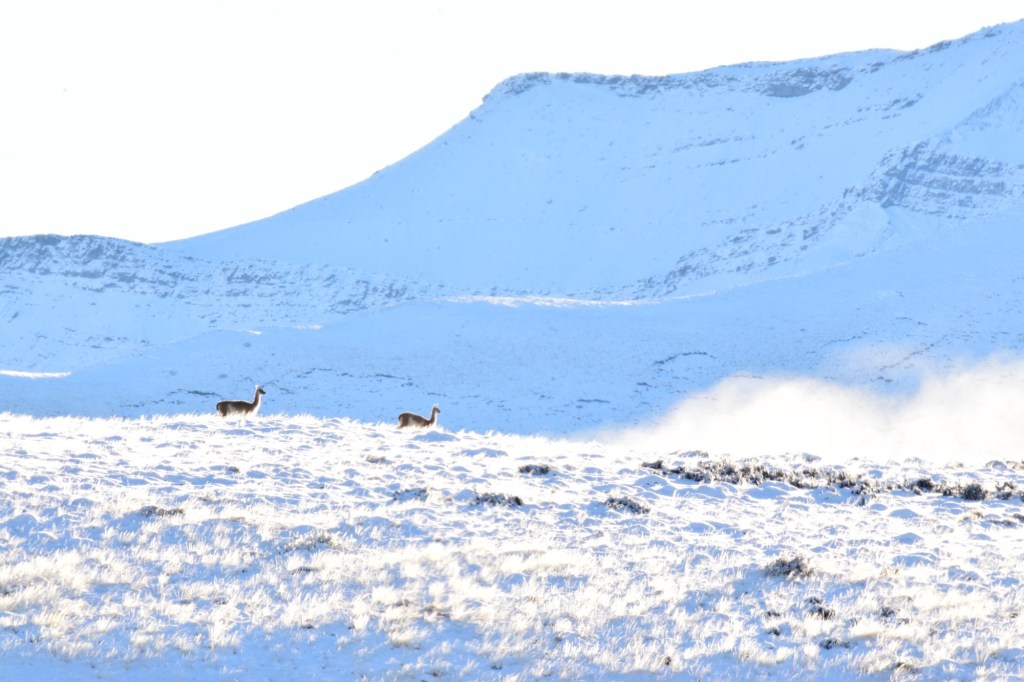
Skittish beneath the mist, the guanacos seemed to lose a lot of their nervousness in the sunlight – perhaps because the increased visibility made them less anxious about being ripped apart by an unseen puma at any given moment. We were able to pass by so close that you could see the frost crystals on their ears.
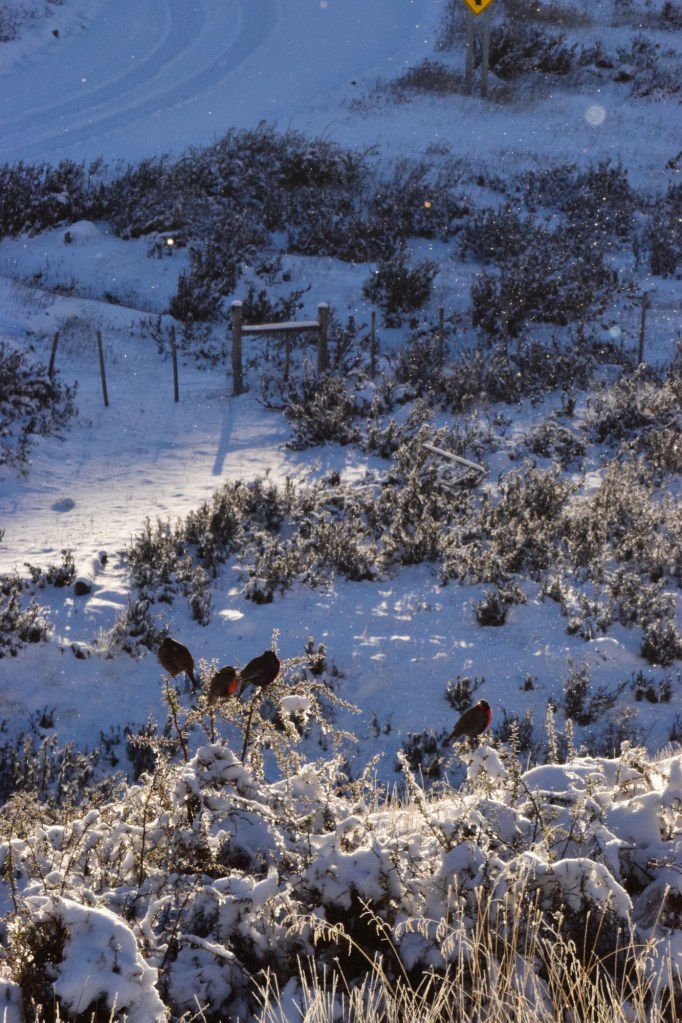
The park’s meadowlarks were just as abundant today as they were yesterday, only this time they played second-fiddle to a natural phenomenon I have only ever heard about but never seen until now: diamond dust. A true polar experience, it is a kind of sub-zero “precipitation” that only forms under a cloudless sky: effectively, a ground-level cloud of ice crystals that seem to sparkle in the sunlight. I really should have filmed it, in retrospect, but some things never look as good on camera (though you can just about see it in the picture below). This was definitely one of those things. It was magical enough to behold, and something I’d recommend traveling all the way here to see in its own right.
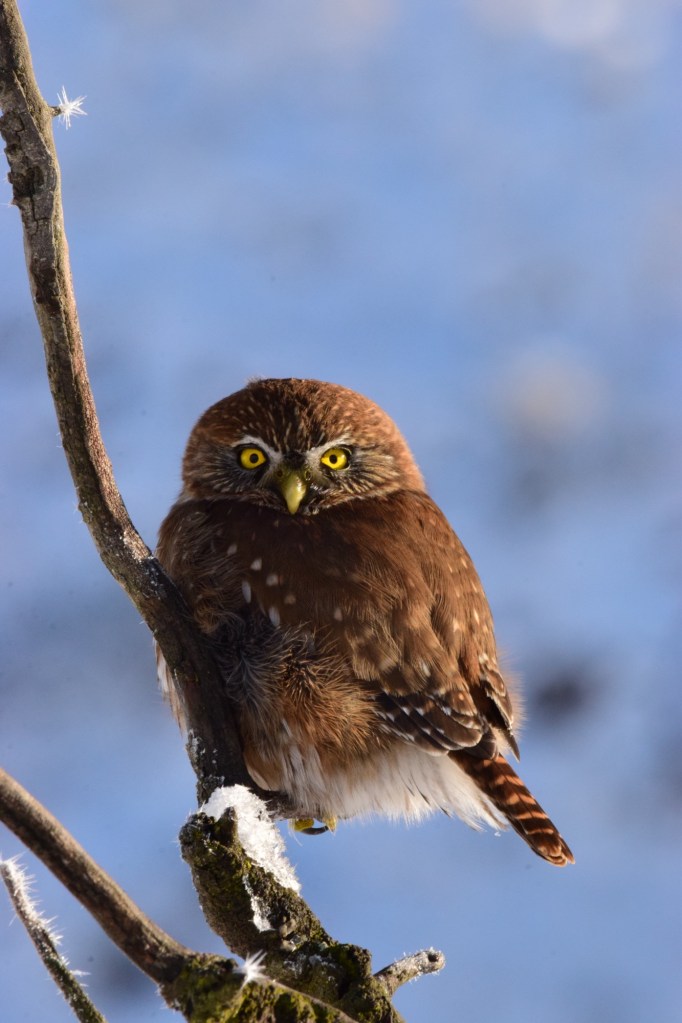
Fabián drove on toward a small frozen forest of lenga trees in search of a chuncho – an Austral Pygmy Owl – that he knew to inhabit the area. I spotted it, but I think it’s safe to say he knew which tree it would be likely to be in, as any guide worth their salt would. After all, it happens to grow in a very iconic spot: right in front of the world-famous peaks of Torres del Paine.
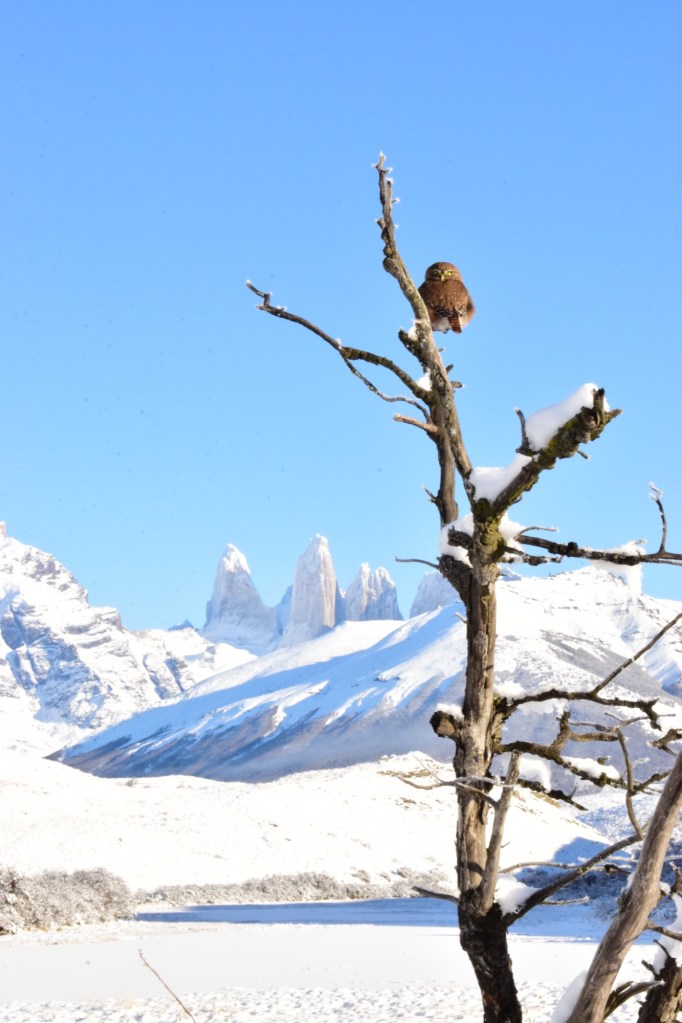
Remarkably, the tiny little owl paid us no mind whatsoever, so I could get in so close I could see the yellow of its eyes without the help of my lens – which, of course, did a phenomenal job at close-range.
Back at Lago Sarmiento, a tip-off over the walkie-talkies alerted us to the return of Escarcha and her cubs, patrolling the edge of the lake. One guide and his group – the pike-square of supertelephoto users from yesterday – had jumped the fence and gone down to the lake and enjoyed ridiculously close views as the family passed them by, but at least Fabián and the other guides had the restraint not to insist we all go down to the shore and crowd the pumas. Instead we waited patiently and watched from a distance as Escarcha left her cubs in a safe spot and set out to go hunting.
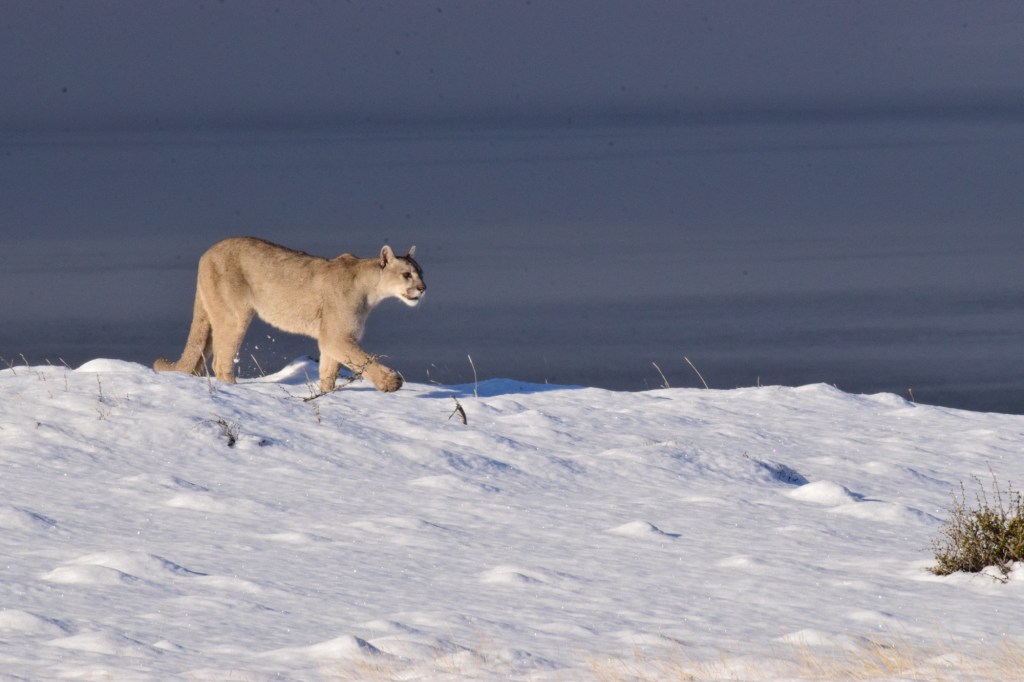
That is not to say that we were not also treated to a close encounter. Escarcha’s route up into the hills took her right past us, passing mere feet away. Unfazed, she climbed up the snowy slope and disappeared into the descending clouds.
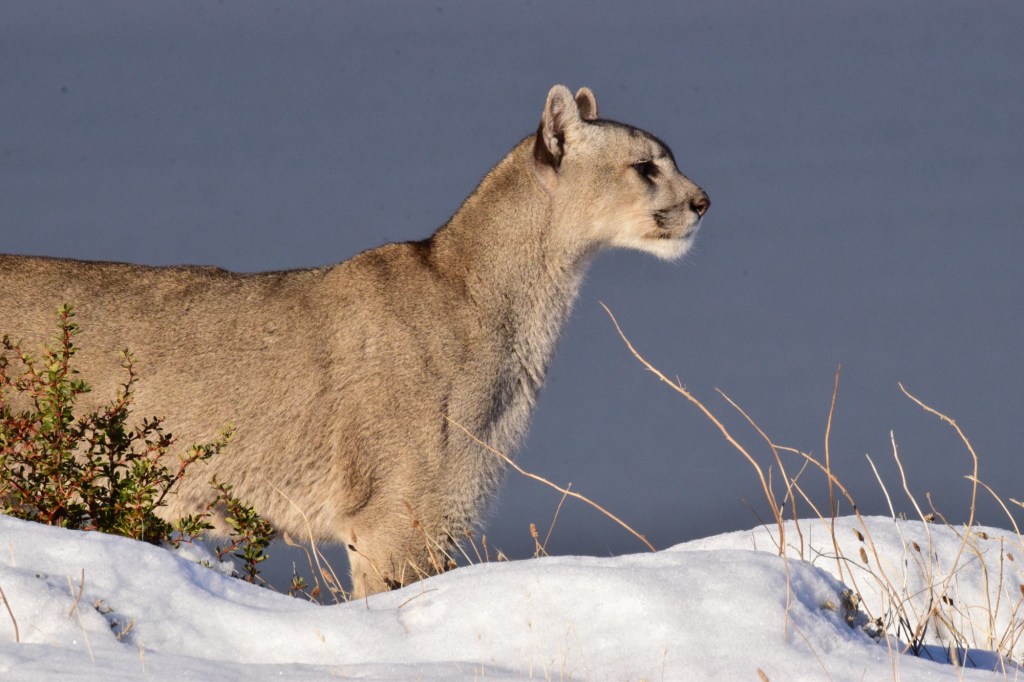
We waited for a while, suspecting from the approaching guanaco herd and the descending mist that she might have been hunting the herd, but Escarcha eventually appeared as if out of nowhere and went back down to hunt among the scrub by the lakeside, presumably for some smaller prey like hare. Fabián offered the choice to stay and pursue more pumas or to search for the other animal denizens of the park, and after some thought, I opted for the latter. After all, I did really want to see a ñandú. So we bade farewell to the others, who all remained with Escarcha and her cubs, and left the heart of puma country for Cerro Guido.
Like many of the places we have visited, Cerro Guido is a private ranch or estancia, but one of many that has realised that wildlife tourism can be tremendously more profitable than regular ranching. As such, a large part of the Cerro Guido ranch is given over to the local wildlife, giving the prairie-dwelling guanacos and rheas – and the puma that hunt them – a perfect haven of their own.
The ñandúes were very visible, albeit always in the middle distance, but the guanacos continued to make for good subjects against the afternoon light.
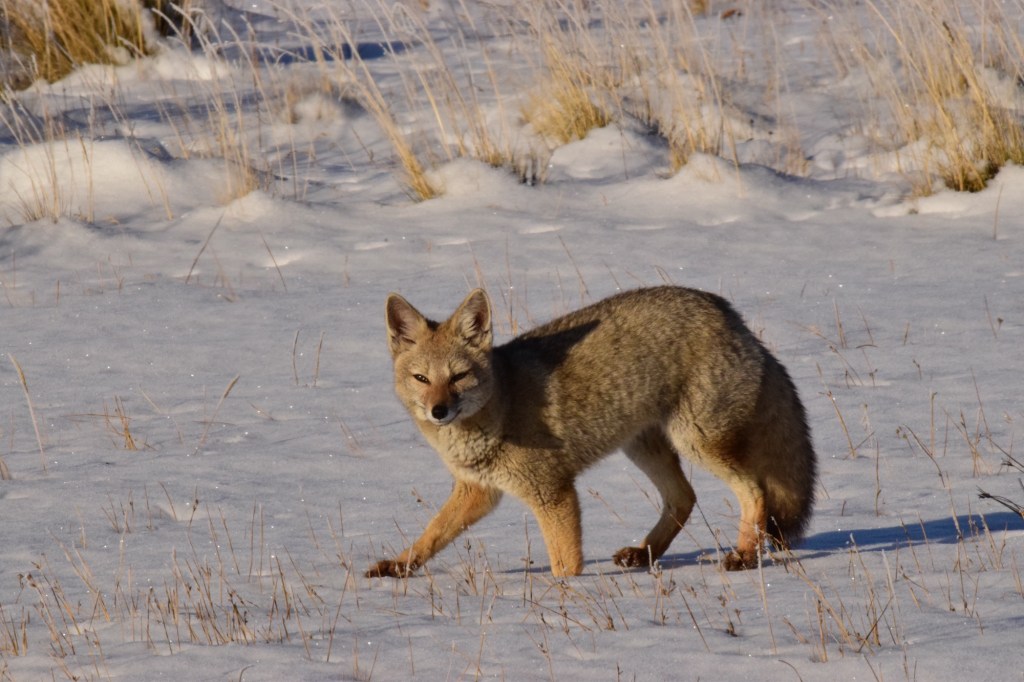
Another Patagonian mainstay was very much in evidence today: the South American Gray or Patagonian fox, a canid that is actually more closely related to coyotes and jackals than it is to the true foxes we know and love from back home. Just like they do in winter back in England, they were out looking for partners ahead of the mating season in spring, so we saw more than a dozen in all, sometimes alone, sometimes scampering about the fields in pairs. This one seemed to be limping, until we realised it was not walking with an odd gait but rather struggling with the depth of the snow, plunging up to its elbow every few steps.
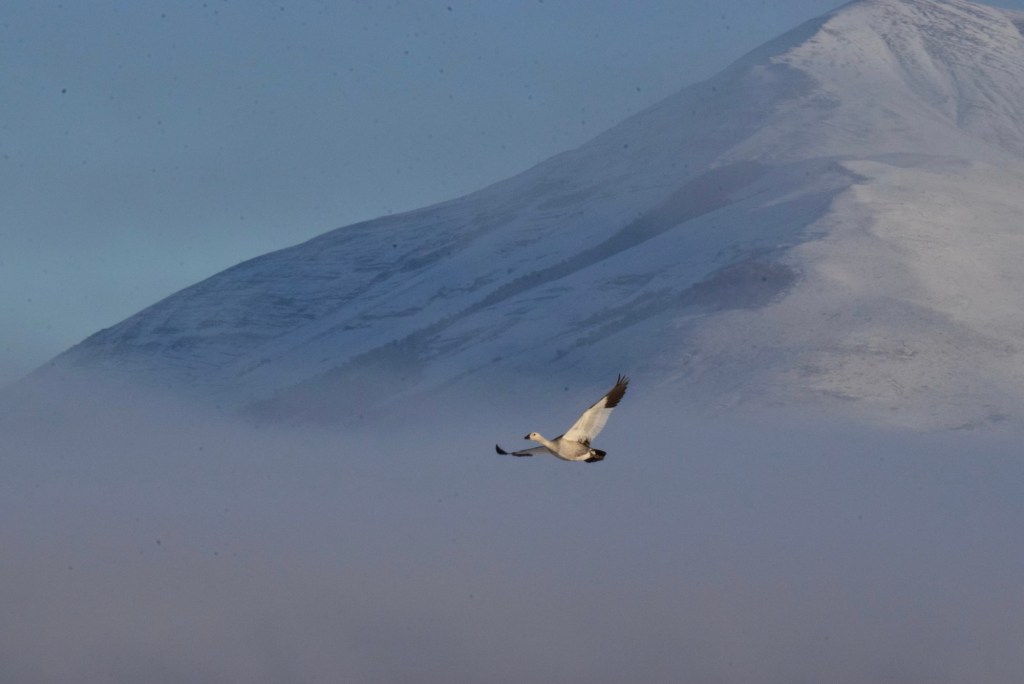
The caiquén or upland goose was by far the most numerous resident of Cerro Guido, outnumbering even the ubiquitous guanacos. Caiquenes pair for life, though their fidelity is curiously one-sided: if the female dies, the heartbroken male will never pair off again, joining a bachelor group for the rest of his days, whereas if the male dies, the female will usually find a new mate within a few weeks. It’s a neat trick to ensure evolutionary stability in the long term, and – if you choose to look at it that way – a funny reflection of how men and women react to breakups.
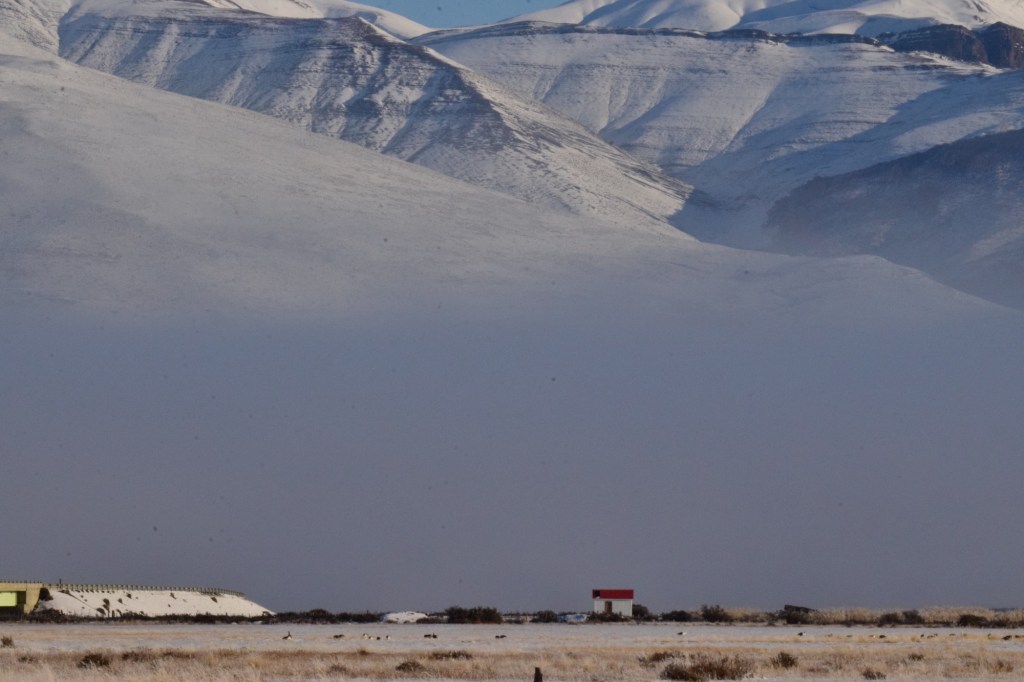
I joked about the bus station-looking shelters, only to be told that yes, they really are paraderos – and to rub salt in the wound, a bus rounded the corner and passed us merely moments later. It’s hard to imagine now, but in the warmer months, when ranches like this one are more active, many ranch-hands travel to and from their posts this way. I caught myself wondering (and not for the first time since arriving) how amazing it would be to sack everything off and live here, way out here in the Chilean Antarctic wilderness. I’ve had madder dreams, trust me, and a little more careful thought would surely shake me out of my reverie. But I haven’t given it that much thought yet. It’s just a hunch I had – and a bottomless love for the wildest and most magnificent natural wonders of the world (and, coincidentally, places that style themselves as “the End of the World”).
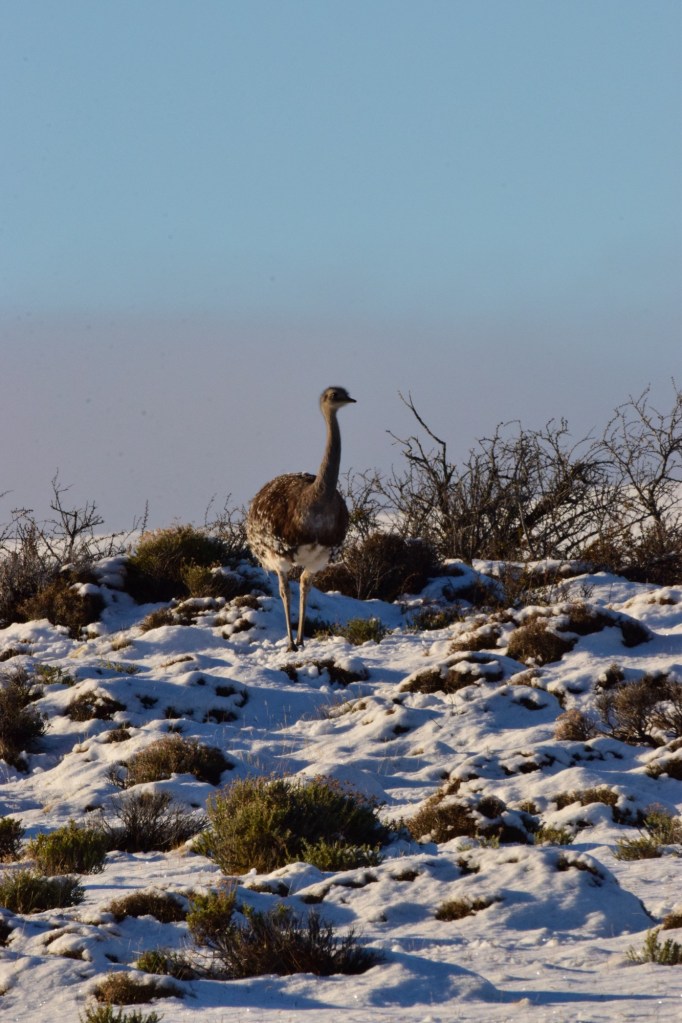
We didn’t find any nearby ñandúes, and the two that had been relatively close but obscured by a bush on the way in had wandered far off by the time we turned about to make our way out. Not to be disappointed, though, Fabián spotted one near the road after we had left Cerro Guido and I jumped out to track it down.
I’ve not seen ostriches in the wild, or emus, or cassowaries, or any ratite for that matter. So I have no yardstick for truly bizarre appearance of this relatively huge flightless creature, which looks almost entirely out of place in the snowy scrubland of Patagonia. But, like the moa of New Zealand, ratites like the rhea are just as capable of adapting to cold conditions as their cousins in Africa are to the searing heat of the Namib and Sahara Deserts.
The ñandú or Lesser Rhea was brought to the attention of the world by the second voyage of the HMS Beagle, though it Charles Darwin and not the French naturalist Alcide d’Orbigny who is more often associated with the bird. I could reel off more facts about rheas, but really I’d just like to see another and another. They’re remarkable creatures, even in a country full of healthy specimens of the incomparably beautiful puma.
But we still weren’t done. The road back to Puerto Natales passes by a great wall of stone, jutting out of the slope like the outer walls of some fortress. In Spain, a cliff face this vertical would be alive with griffons and known as a buitrera. Here in Puerto Natales, they’re known as condoreras. I don’t think I need to tell you what mighty creatures makes its home here.
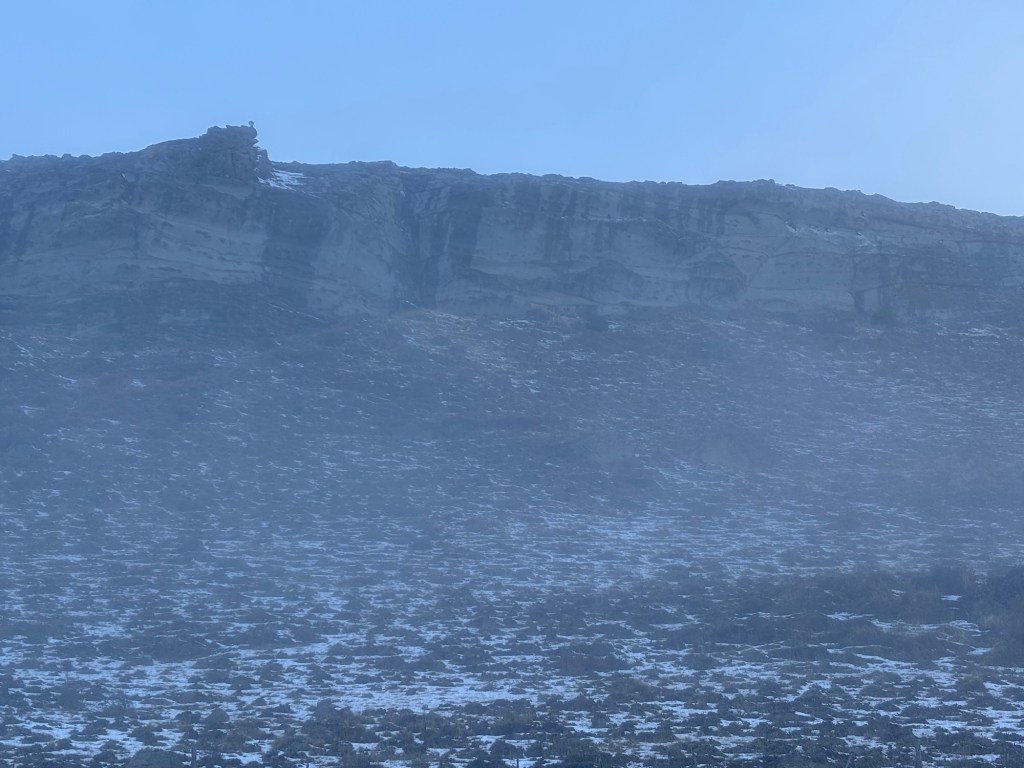
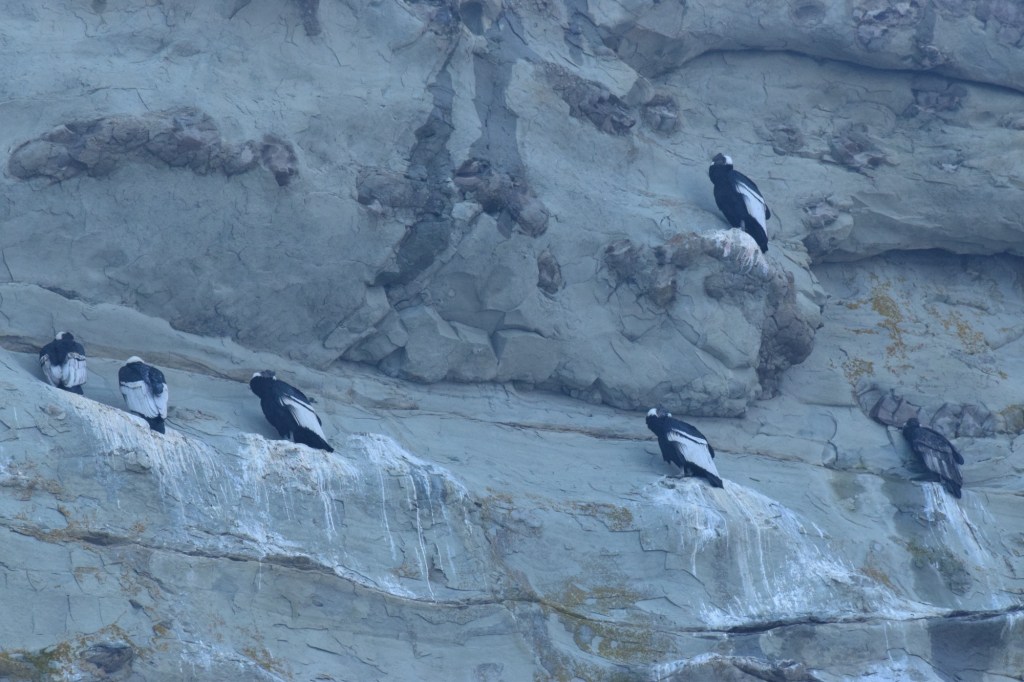
I am, of course, talking about the largest bird of prey of all: the Andean condor. Unlike Colca Canyon in Peru, Patagonia (especially in winter) offers the chance to see these magnificent vultures at rest, where the whites of their wings can be much more easily appreciated. As the fog began to clear, we counted well over thirty of them. Fortunately, they’re scavengers to a fault, so there was nothing ominous at all about the fact that their numbers seem to grow exponentially every time we tried to count them.
Fabián joked about looking for a condor feather at the base of the cliff, which would almost certainly have turned up at least one. However, condor feathers are almost as sacred now as they were in the time of the Inca, albeit for less divine reasons: taking one out of the country is illegal, punishable by fines of up to an eye-watering $100,000. I adore vultures and have a collection of feathers I have found in my travels at home, but I’m not mad enough to chance that one.
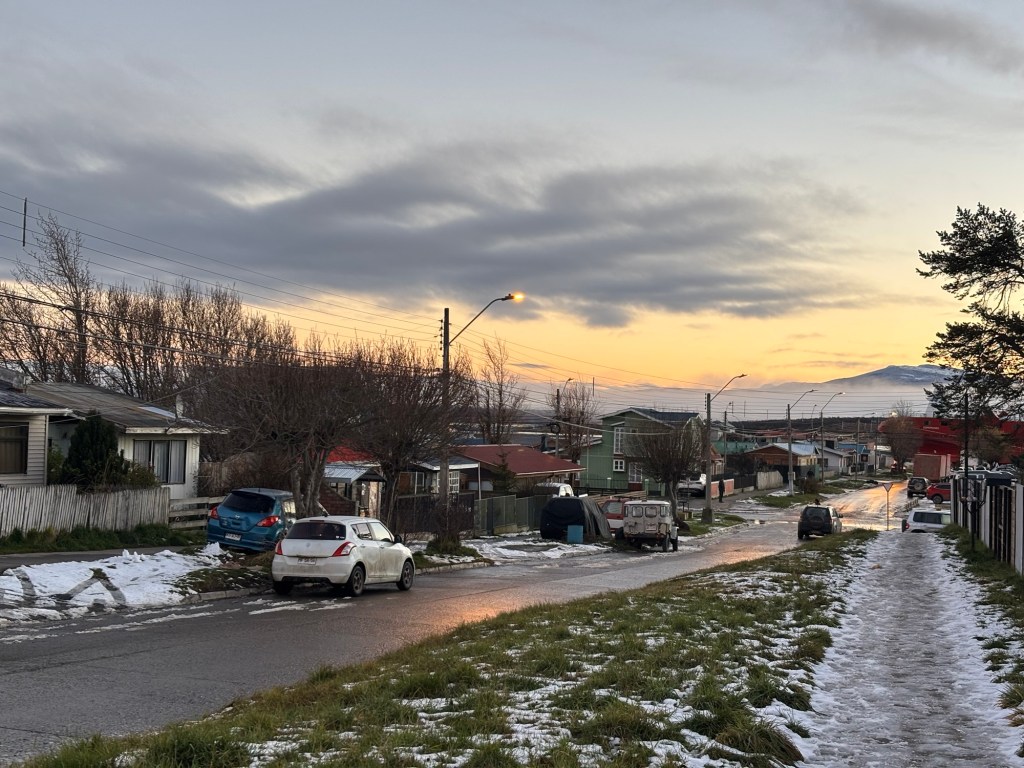
The sun was beginning to set as we neared Puerto Natales, casting a final golden light over the slopes and the descending mist and turning the rest of the world a gentle shade of blue. There is a huge cave known as the Cueva del Milodón near here. I will try to book a trip out there for Thursday, as it is one of a handful of things to do in Puerto Natales that doesn’t require any high-grade trekking and expensive national park permits. I’ll give it some thought.

I had another serious urge to move here as I crossed town on the way back from the bank to my B&B. Forget the fact that it’s on the other side of the planet, in a place literally named the End of the World. There’s just something magical about this place. It’s unlike anything I’ve ever seen: like a frontier from the Old West frozen in time, surrounded by an array of animals so spectacular that you could live several lifetimes here and never get bored.
I wonder if they have a school that needs a languages teacher?
Enough musing. Another marathon read today. Sorry. Things will calm down a bit when I start my work placement in Santiago, I’m sure, but for now, every second is diamond dust and needs recording. I already miss this place and I haven’t even left yet. I’m only just halfway through my trip, for Pete’s sake.
One more day’s tracking awaits. Hopefully the weather (and our singularly good luck) holds out. BB x
Hostel Coastal B&B, Puerto Natales. 18.48.
I know I’ve found somewhere absolutely desolate when I hear myself throwing the word “beautiful” around like a flail. And that just about sums up Puerto Natales. Desolate. But breathtakingly beautiful in its desolation.

Wind the clock back. I’ve had comfier flights. The journey down to Puerto Natales via an hour’s layover in Puerto Montt was perfectly smooth, but I’ve not yet recovered from the debilitating impact of a fourteen hour flight in an air-conditioned box, so my eyes and nose were streaming all morning. To add insult to injury, my ears clogged up upon landing in Puerto Montt, which was less painful than a nuisance that it was impossible to ignore. It was some relief when the last of the new passengers had found their seats and the plane was up in the firmament once again.
I did, however, get my money’s worth from the window seat. Chile’s Lake District is nothing short of spectacular. Think Cumbria if you will, but on a much, much grander scale, where the lakes are larger than cities and the mountains are merely supporting characters for the real stars of the show: the mighty snowcapped volcanoes, rising up and out of the earth in perfect wintry cones. Some of them were gently smoking from their summits; others forced the clouds to crest their peaks like waves, adding a further sheen to their majesty. This place is very high on my list of options for the last week – if I can only find a way to get down here overland, that is. I think I’ll have done quite enough flying by the time I get back from this cold corner of the world!

After Puerto Montt, the world below disappeared beneath the clouds for all of two hours. It was only upon the final descent, mere minutes from the tiny landing strip, that the snowy wastes of Patagonia finally appeared. If Santiago felt like Spain and the Lake District looked like England or even Canada, this is something else entirely. I have no yardstick for this kind of world. Not even Poland in the grip of midwinter comes close. The indescribable vastness of it all, scored with criss-crossing tracks and frozen ponds, appearing and disappearing at will beyond the snow clouds… it’s almost eerie.

Landing was no small feat either. The captain had to pull up out of the descent just moments from touchdown due to fierce winds, the likes of which I have only read about in books about this place. The ancient explorers called this land Tierra del Fuego after the many fires lit upon the shore by the indigenous Selk’nam, but Tierra del Viento may be a more appropriate moniker – this corner of the world seems to be ruled by the wind.

I wasn’t entirely sure how I was going to get from the dinky little airport into town, but that question was answered quickly by the local transfer shuttle service advertising itself loudly in the arrivals lounge, and at $5 for door-to-door service, they’re practically giving it away.
It would had been a shorter service had the driver heard me correctly and taken me to the Hostal Coastal and not the Hostal Austral, which whacked another twenty minutes onto the trip and gave me a proper scenic tour of the backwaters of Puerto Natales. I suppose it doesn’t help that the two words sound similar, and I can’t blame the driver for defaulting to the one that is actually in Spanish. But this B&B is wonderfully homey, if a wee bit of a trek from the centre (we’re talking the minutes, tops, but it’s enough to make me reconsider going out in the cold and the dark for supper).
Puerto Natales is immediately a very different world to the rest of Chile. Even our layover in Puerto Montt had many of the same birds flying by as can be found in Santiago. But not here.
If check-in hadn’t taken a little while, I could have practically fed the chimango caracaras that were perched on the fence outside. I went searching for them later, but a family of fishermen spooked them off. It was a shame, but it was just as well – none of my photos came out right anyway as it was getting very dark. That’s why I came out to look around, really – to get my bearings and play around with the camera settings so that I’m not caught out if we should be so lucky as to find any pumas over the next few days.

Apart from the caracaras, the wildlife here is much more like what you might find in Antarctica. Imperial shags bobbing on the water in the bay and sinister-looking dolphin gulls with their dark feathers and red beaks. White-eared grebes sharing the shoreline with upland geese, steamer ducks and… what the?

That’s right, the guidebooks aren’t goosing you. Puerto Natales hosts a herd of Chilean flamingos during the winter months. Quite why they come here, to this dark and desolate corner of the world, I can only guess. Perhaps it has something to do with the legendarily rich Humboldt current. Either way, they are a decidedly strange sight: a mass of crimson and salmon pink in an iron-grey Antarctic sea.

I think I’ll call it a day there. My ears were rescued until the captain had to do that emergency manoeuvre and now they’re right back to how they were before. It wouldn’t be the first time I’ve had some kind of Eustachian Tube Dysfunction, only the last time it ended in a burst ear drum and three bizarre and painful months of diplacusis dysharmonica. That’s why I’m not trying to force my Eustachian tubes open by the conventional methods. With any luck, they’ll heal in time.
A good night’s sleep would be nice – I didn’t get much last night because the five Brazilians in my dorm decided to turn on all the lights just before midnight and have a jolly conversation at full volume about their respective cities. They didn’t get the hint until they left for the club, and when they did, the chap from Rio decided to ignore his alarm at four in the morning, so the fellow in the bed above him had to creep out and switch it off. At least, I think that’s what he did.
But now I have a room to myself for five nights. Bliss! I intend to make the most of it. Starting with a good kip. Tomorrow is another day. BB x
Notes, field guides and micro-memoirs
A Solo Travel and Literature Blog
All about trees
Barcelona · Spain · Food · Travel
A glimpse of the world through my lens
Synastry & Karmic Astrology
A Journey of Travels, Teachings, and Truths Told Plainly
Musings of a trekking author
Inspiration and Spirituality **Award Free**
Illustrations to make you smile, laugh, and sometimes make you see things from a different perspective 😉
a woman with wings travelling the world solo

