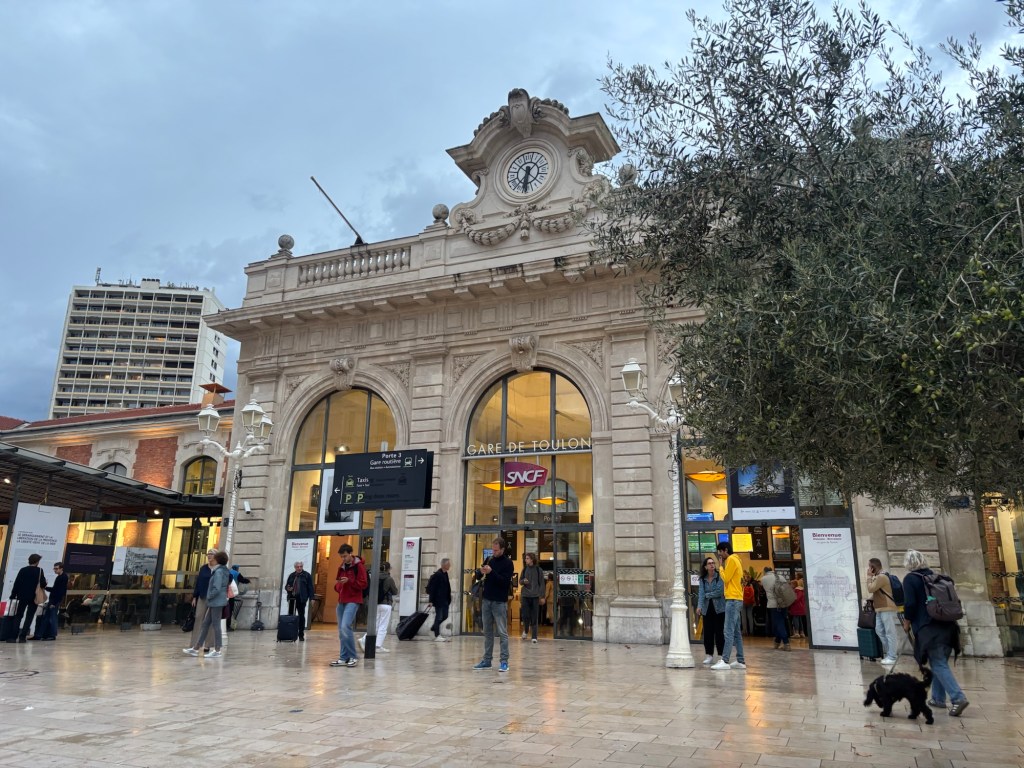
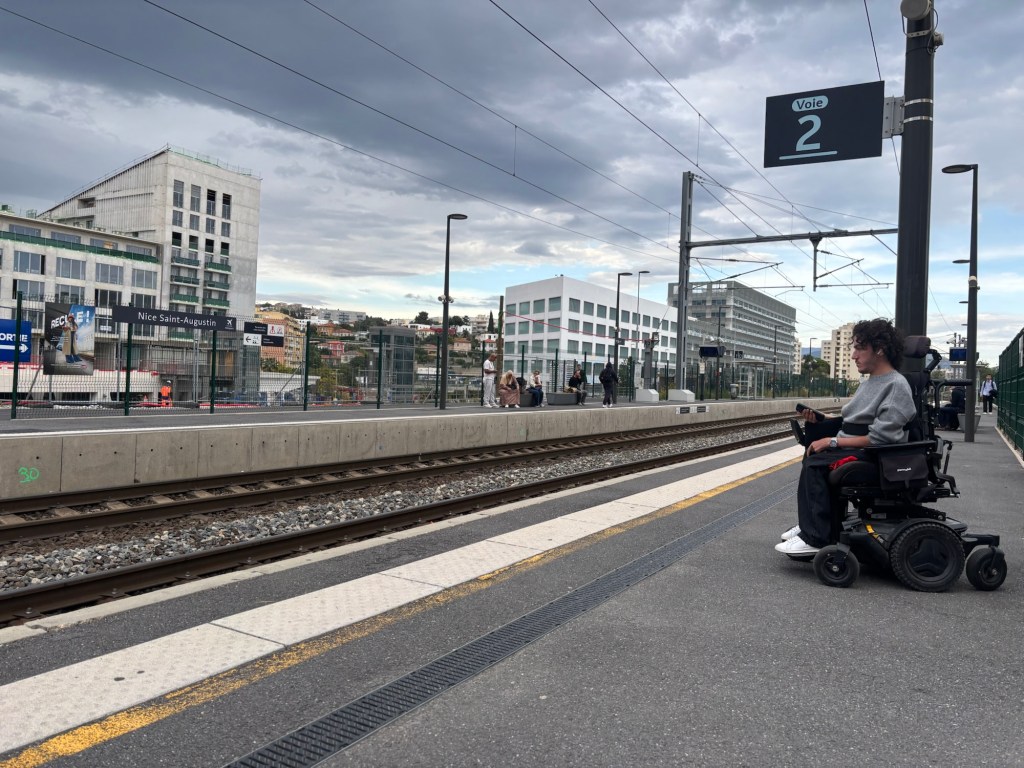
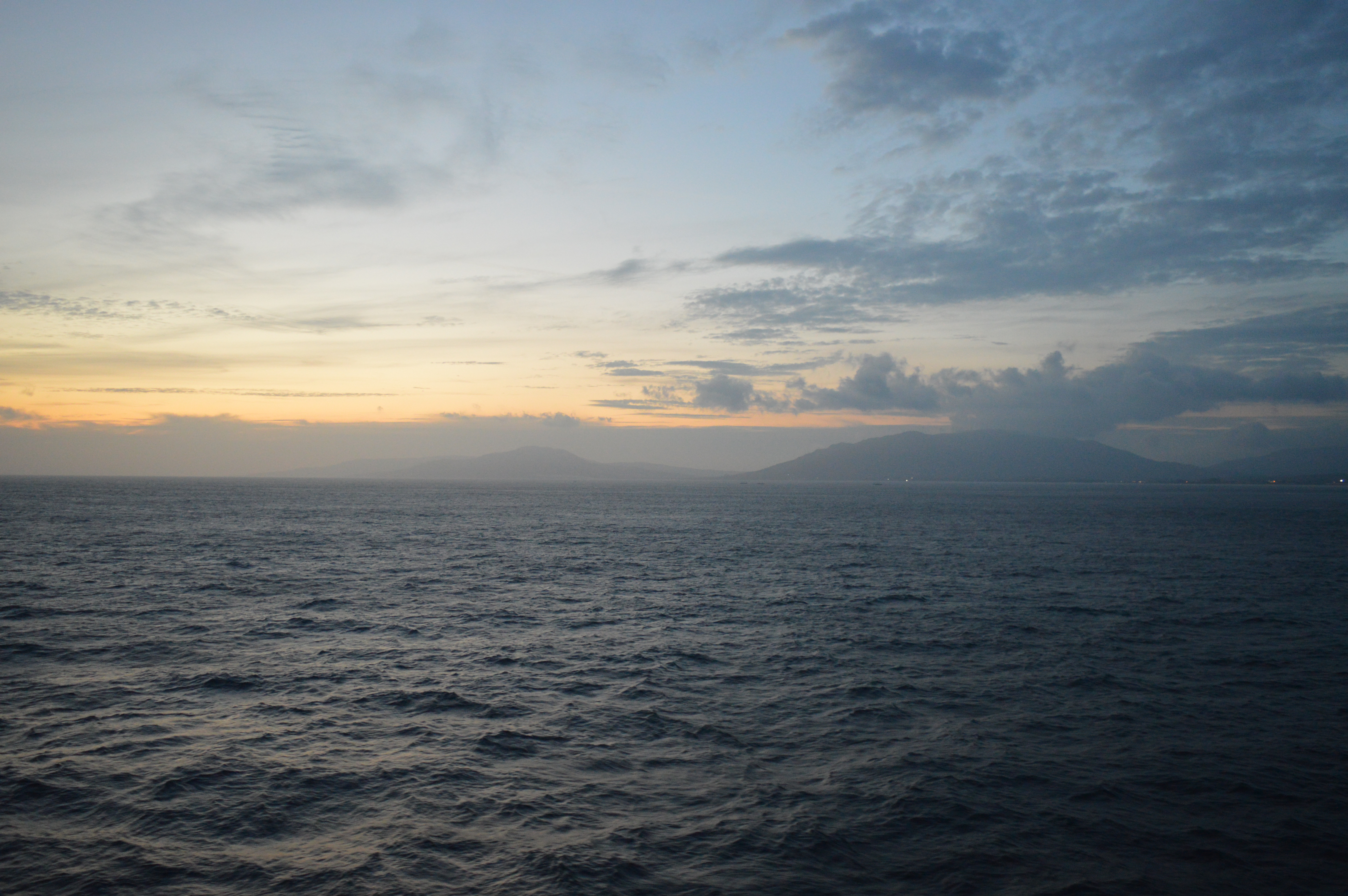
The train to Hyéres is delayed by forty minutes, so I’ve stepped outside the station to get some fresh air. The Côte d’Azur is still in the grip of Storm Adam and the skies are the colour of steel, though they look almost blue beyond the sickly glow of the streetlights.
Clouds of cigarette smoke. Black and green olives rolling across the pavement from the trees standing outside the gare. The cheery sing-song jingle of the SNCF echoing over the rush of the wind and the casual drawl of the Provençale accent. Effortlessly chic Toulonnaise girls talking into earpieces, Eastern European sans-abri moving their blankets out of the rain, a Hispanic couple chatting away in slow, heavily accented English and a number of other accurate but overused cliches.
It’s good to be out of England, though. Two weeks without work would have driven me mad with boredom.
The train was delayed by around fifty minutes in the end. At least one of my companions was getting extremely jittery by the lack of signage on the notice boards, even as the train’s departure was seemingly imminent. Thank goodness I’ve been trained on Spain’s AVE and the last-minute-madness. After the rush for the subway in New York this spring and the gauntlet of flights going to and coming back from the Galapagos this summer, it will take a lot more than a ghost train to get under my skin.
France hasn’t ever grabbed me the way Spain has since the start, though I daresay I haven’t ever given it the chance. This is probably my eighth or ninth trip to France, if you include at least three day trips to Calais (and you leave out any holidays where France was simply a staging post), all of which add up to a little over a month on French soil. I’ve lost count of the amount of time I’ve spent in Spain, but it’s almost certainly closer to four years than it is to three.
The Côte d’Azur gets a lot of attention of the summer variety, but it’s quite beautiful under the iron skies of autumn. I’ve packed for the cold, but I wouldn’t begrudge the odd day of sunshine so I can enjoy the Mediterranean once again – it was so blissfully warm back in the summer. There’s talk of curfews because of the violent protests erupted across France right now, so I might not be going for any 3am swims, but I’m looking forward to being (relatively) tech free for a week or so.
If it weren’t for the comms-heavy side of my day job, I’d quite happily sack off the WiFi and go off grid. I miss those blissful evenings back in my year abroad days – before data became a universal thing – where leaving work meant leaving the internet behind. The amount of reading I managed to get done! There’s just no comparison.
I’ve made it to Hyéres. My final destination is the Giens Peninsula, some four kilometres to the south. It’s late and the sky is threatening rain, so I don’t quite fancy walking it. The taxis here are expensive at 40-50€ a throw and the three or four Uber drivers in town are reluctant to accept what is probably not a very cost-effective return journey. But I’m not that bothered. I’m confident we’ll get there somehow. BB x
I’m on my way to Athens to celebrate with an old friend who is tying the knot with his long-time partner in a beautiful ceremony in a chapel that looks out over the Aegean Sea. I should be ecstatic but I’m feeling downhearted at the moment on account of the GCSE results. They weren’t shoddy, by any stretch, but they were way off what we hoped they’d be – and it all comes down to the grade boundaries.
It’s got me thinking a lot about how we treat languages in the UK.
Back in 2006, an article by the BBC reported that the study of foreign languages had reached the “point of no return”. Only two years prior, Tony Blair’s Labour government had taken the decision to make MFL non-compulsory post-14, after which thousands of students elected to ditch French, Spanish and German from their curricula. While Spanish has seen a decent recovery from the initial “freefall” recorded – bouncing back from 62.413 in 2006 to 132.680 in 2026 – German has been less fortunate, continuing to decline in popularity nationwide: the relatively healthy 90.311 studying German in 2006 have been whittled down to 32.525 this summer. Some schools are now considering whether it is economically viable to continue to offer languages, which command smaller and smaller classes by the year. Northern Ireland is thinking of scrapping the study of German altogether.
As a language teacher, I naturally don’t like where this is going. What makes things worse, however, are the barriers within the surviving MFL syllabi. There are a number of factors blighting the study of languages that aren’t helping us to promote them in lieu of the flashier, brash-ier and cash–ier subjects like Economics and Business Studies.
The MFL GCSEs are a mixed bag. Sometimes they feel formulaic and predictable. At others they can be surprisingly progressive, asking candidates to describe a photograph about sports where half the players on a basketball court are in wheelchairs, or a family scene showing a same-sex couple and an adopted child of a totally different ethnicity. This year’s Listening dictation task in the Pearson Edexcel features the infamous “Ma petite sœur est bisexuelle”, read by a childlike voice that really threw my students, who might well have spent the two repeats wondering how and why a little girl would have already decided to self-identify as bisexual – and in the middle of their GCSE exam, no less. I’m glad we’re on the frontier of pushing positive representation, but I can imagine the response in the nation’s more conservative Muslim students and their families.
Recruiting for A Level is an uphill task with or without the competition from maths and the three sciences – especially with Further Maths elbowing a fourth subject out of the picture so often – since MFL A Levels can be fiendishly hard, relying more on the candidate’s ability to retain a vast breadth of knowledge both historical, political and literary in both spoken and written formats. Add to that the sky-high grade boundaries driven at least in part by the large number of native speakers who take the subject for an easy A and you have a whole host of reasons why students think twice about studying languages. They’re definitely a hard A Level, I’m not about to deny that, but if we don’t get the numbers, we run the risk of leading our country and its children into even more of a monolingual and inward-facing nightmare than the one we’re already weaving, spurred on by the global ill-sentiment toward the ongoing refugee crisis and the perceived erosion of our national identity.
I’m not sure what to suggest. I do what I can to make learning languages as fun and inclusive as possible. I’m sure I’m not the best at what I do – especially since I’ve always seen languages as a pathway to meeting people and telling stories, rather than finding any particular joy in their acquisition for its own sake – but I work hard together with my colleagues year on year to try and convince our students that speaking a second language competently (that is, post-GCSE) is an increasingly rare gift among the English which will take them so far.
I might use this trip of mine as an example. For the first time in a long time, I’m going to be completely at sea. I might be able to speak seven languages with varying degrees of fluency, but I don’t speak a word of Greek. I’m so used to being able to muscle in and go native in Spanish, French and Italian that suddenly finding myself in a situation where I can’t manage much more than thank you and goodbye is extremely disorienting. Sure, I could speak English at them and expect to be understood – but that just strikes me as rude at best and colonial at worst.
I’m tuning in, slowly, but it’s hard from zero. Alex is my host, but he’s the one getting married, so I can’t expect him to spend his weekend translating for me. There’s so much I’d love to do. I’d love to know what Petros from Naxos is recounting, since he seems to have a raft of stories with proper Greek gusto. I’m dying to know what Alex’s brother is saying when he’s clearly running through some of the steps for the dances. I’d like to ask Alex who the girl is with the smile of an angel in the corner of the room. But I can’t do any of these things, because I can’t speak Greek.
Monolingualism is an enormous handicap. Even a capable linguist should remind themselves of the gift they have earned by putting themselves in a position where they are truly lost every so often, if only as a reminder of how precious the ability to move from one language to another really is.
I’ll paraphrase the above for my students when I get back. Whatever it takes to buck the national trend and fight the death of MFL, I’ll do it. I just wish we’d been given a fair idea of the new spec grade boundaries a year ago, so our students knew just how much harder they had to work to get what they deserved.
My body clock is all over the place. Three hours ago I was in the UK, two hours behind Greece – but five hours ahead of Chile, and seven hours ahead of the Galápagos Islands, where I was until Saturday. Little wonder I’m having trouble sleeping.
I’ll report on tonight’s events together with tomorrow’s in one big fat Greek wedding post. I just thought I’d sandwich my thoughts on languages into my funk over the grades.
It’s gone two in the morning, which is approaching my usual bedtime in the UK, but probably only halfway through tomorrow night’s festivities which are due to go on until the dawn. I’d better try to get some sleep tonight at least. BB x
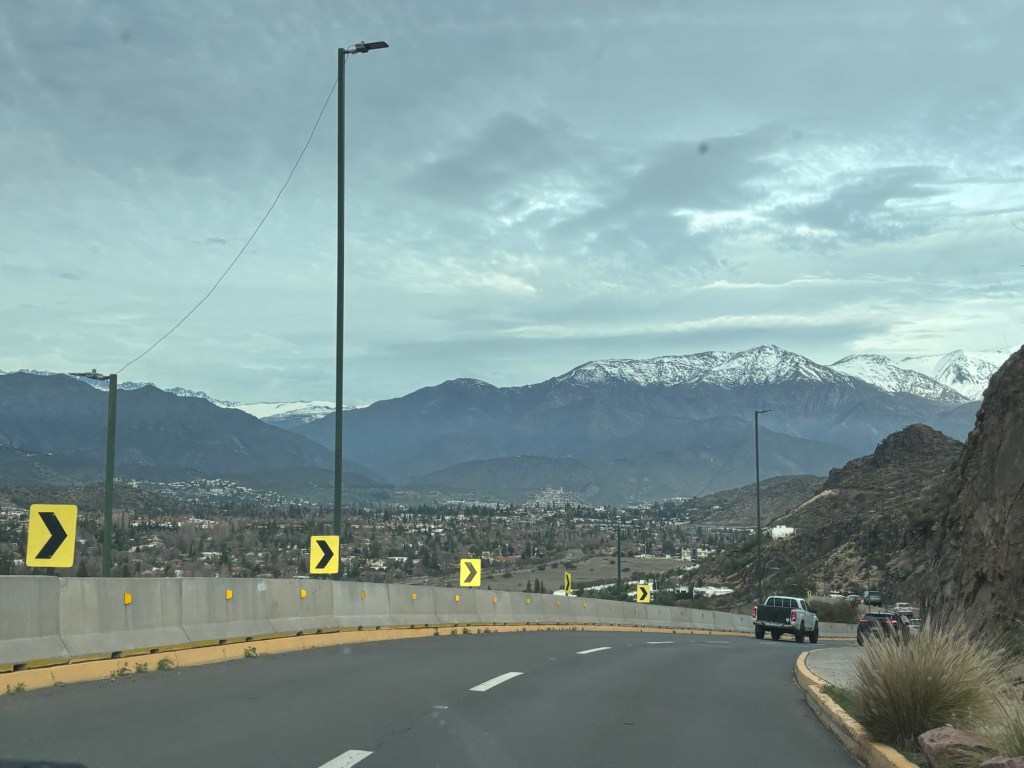
After a relatively quiet week left largely to my own devices, my third and final week here in Santiago has got off to a thundering start. Not only did I get to observe an English Language A lesson on Othello – easily my favourite Shakespeare and one of my chosen texts for next year – I actually got to teach a large chunk of it, steering the lesson firmly into the context-heavy waters of racial and religious subtext.
It could hardly have felt more natural. Granted, it was only half of a double lesson that was in my hands, but it was everything I wanted my experience of teaching literature to be. I remain very much attached to the idea that one day, God willing, I might get the chance to teach the literature of my own language, too. It’s a tremendously uphill journey, as my degree is in Modern Languages and Cultures and my training is entirely in French and Spanish, though I did skew almost all of my modules into the realm of literary analysis during my university studies. It’s also worth noting that my grades in English Literature – and my passion for the classes – were simply streets ahead of my interest in languages at school, which, I admit, were something that came naturally to me rather than a particular passion of mine. No, I haven’t read nearly widely enough in English as one might have done reading English Literature at degree level, but then, I’ve read a great deal less in French, and here I am teaching Albert Camus and Gael Faye for the third year in a row. Go figure.
It must have gone down well, because I’ve been invited by the Director of the Senior section of the school to teach another Y12 class the same material, but in more depth, on Thursday morning. Realistically, this is what I expected what my placement to look like, albeit in Middle – but this is much more my sort of thing.
I also popped in on a Y11 French class, which was suggested as a possibility in my very first week, but has been held back due to the ongoing cycle of assessments. Students start French much later here (which seems logical, with France being seven thousand miles away), so they were only learning the basics of introductions and masculine/feminine adjectives, but it was good to get my eye in – because on Thursday I’ll be taking the entire class as they move into the realm of verb conjugation. Fortunately, it’s only the regular -ER verbs I need to concern myself with, and being native Spanish speakers, they should be able to grasp the concept of verb conjugation considerably more capably than my English students. They reminded me a lot of my Y11s back home: lively, bolshy, but keen to do well and to impress. Two thirds of them are carrying on with me to A Level, which I’m still raving about. I don’t imagine it’ll be a trend moving forward, but I’ll do my best to try and engineer that kind of success in the years to come. After all, with languages on the decline across the UK, my job does depend on it somewhat!
My final commitment for today, after a lovely lunch with the Senior English department, was to drop in on the school’s MUN/Debate Club, hosted by Sebastian, one of the English team. I’ve got to hand it to their ambition, tackling the two-state solution between Israel and Palestine for one of their first debates, but they handled it superbly, and some of them stuck around at the end for feedback, just like mine do at the end of a Burke or Interhouse Debate. After a couple of weeks where my attention and interaction has largely involved my colleagues and their respective schemes of work, it feels incredible to be working with the students directly at last. It reminds me just how much I love this job, which is surprisingly reassuring, even in the middle of my summer holidays.
Saying it makes it so. Today is the start of week five. Four weeks remain, which will be down to less than two by the time my responsibilities in Chile and Greece are concluded. Once again, I have contrived to whittle down the gargantuan private school holidays into a much more manageable break by keeping myself as busy as my sanity will allow, though with a full seven weeks of ever-changing plans, this summer really does take the biscuit. I might feel guilty about relinquishing time I could have spent refreshing my memory behind the wheel of a car if I weren’t so busy… but you know as well as I do that that would be an out-and-out lie. Between the mountain lions, albatrosses, hummingbirds and Shakespeare, I couldn’t be happier with how this summer has gone.
Tomorrow calls for Carol Ann Duffy (…!). We haven’t crossed paths since she and her stolen snowman were unceremoniously shunted to one side in favour of Seamus Heaney and his litany of potato poems during my GCSE years. I’ll hit the books tonight and come armed and ready to muck in with a Y11 class, who are presenting their analysis tomorrow. The fun never stops! BB x
“Con el arroz con leche… Seventeen pounds. Cash or card?”
“Bueno, con tarjeta, si se puede.”
“Uy, perdón. No sabía. Vi tu cara y…”
“Bueno si, es verdad que tengo la cara guiri, y que soy inglis, pero hay que esforzarse un poco al viajar, no?”
“Bien dicho. Pues, la tarjeta aquí… gracias.”
“A usted.”
“Otra vez, perdón. Y por favor, no me vuelvas a llamar ese usted.”
Exchange at the Air Food One, Santiago Airport
When I teach the verb forms in class, I sometimes get asked by my students about usted. Etymologically, I’ve always found it something of a doozy. While I’ve always been rather fond the Arabic origin theory via the phonetically similar “ustaadh” (meaning doctor or teacher), the general consensus (backed up by the RAE) is that it comes from an abbreviation of ‘vuestra merced’, an old honorific meaning “your mercy” or “your worship”. The old way of writing the letter U as V, paired with the increasingly shorter abbreviation to “Vd”, gradually distilled the honorific into a single world, usted, which is now used around the Spanish-speaking world as a polite term of address.
Except in Spain, in my experience, where it’s usually regarded as an affront.
Until this week, I’ve used usted just once in my life, and it was wrong. I’ll admit, I avoided it for years purely out of laziness. Like the French vous,usted requires a different person when addressing somebody: where vous takes the second person plural, usted takes the third person singular. Think of it like a waiter in a very fancy restaurant (“would sir like a bottle of the house wine?”). When you’re learning a language, it’s hard enough to get the tenses right, never mind the societal conditions dictating whether one should use formal or informal speech.
The one time I did experiment with usted, I got laughed out of court. After spending years trying to locate my Spanish family and finally tracking them down to a pueblo de La Mancha (you can read that saga here), I spent a long evening being introduced to my kin. One of my uncles, the venerable Don Augusto, worked in the local bank and seemed to command some sway as one of the family patriarchs. Here, I thought, was a textbook case for usted: a term reserved “for older people and those to whom you want to show more respect”, to quote the oft-used student resource, BBC Bitesize.
Augusto’s response? “Usted? Pero, ¿por qué usted? Somos familia.” Augusto isn’t a blood relation, but that means little in Spain where family is still everything. We had a little laugh about it and I never used usted again.
Until this week, where for whatever reason I’ve been using it daily in my interactions in shops, restaurants and pensiones. I can only assume it’s the subtle influence of my increased use of French, where the polite form is not only more common, but mandatory in certain contexts. The French even have two verbs to distinguish the point when you must use formal speech (vouvoyer) and relax into informal speech (tutoyer).
Latin Americans love their formality. They held onto thedeferential vos (a close relation of the French vous) in lieu of tú long after the Spanish gave it up as a lower class symbol, and usted is used all over. Using tú outside of close-knit circles of family and friends is actually considered overly familiar to the point of being vulgar.
But in speech, as in other ways, Latin Americans and Spaniards must not be conflated. The Spaniard’s innate love of familiarity and hostility toward authority make for infertile soil for formal speech. It may have been more common in the last century under the dictatorship, but like much that was once sacred, it is sliding steadily into the void. And is that such a bad thing? Why hold someone at arm’s length when there is a potential friend to be made? Warmer climes make for warmer people, and the Spanish are no exception to that rule whatsoever.
My brief exchange with the tiller at the airport café is a classic example: Spaniards may consider the uninvited use of usted to be an affront, a way of saying “you and I are doing business only, nothing more”. A short soujourn in Morocco, Spain’s southern neighbour and the ancestral home of many of its people, will show you the paramount importance attached to friendly, familiar interactions in even the briefest of dealings: no item can be bought or sold without engaging in witty banter over family and friends over a glass of mint tea. It’s a habit the Spanish have never quite been able to shake, and one that would have been a worthy addition to my EPQ on Spain’s Islamic heritage, had I known about it at the time.
Well, I’ve had my slice of humble pie (or tortilla). It’s back to the books for now. I’ll bow out gracefully, and informally. They seem to prefer things that way here! BB x
I started learning French when I was around five or six years old. A lady used to come to my primary school and ran a French class as an after-school club. I remember it so distinctly because the teacher always brought those strawberry-favoured biscuits that I used to devour. I think they’re called Lulu « barquettes », but ever since one of my school-friends described them as “vagina biscuits”, the unfortunate moniker has kind of stuck.
What I’m trying to say is that I’ve been studying French for twenty-five years of the thirty I’ve been alive. Perhaps that’s why I burned out at university.
I’m on the road again, and this time it’s Paris. I’m very much aware that it’s been years since I had to speak French outside of a classroom setting, so I have come out here to put that right. I also have another quest in hand: I have to kindle the fires of a slow-burning romance with France and the French. Unlike Spanish, which had me at hola, I have never been as besotted by my third language.
There are good reasons for this: I have strong family ties to Spain, the landscape and wildlife were just that much more exotic in my early days as a kid naturalist, and I never had the chance to lose interest due to starting over with the same textbook three times at three different schools like I had to with Encore Tricolore (two more encores than I cared for). It was easy to fall for Spain: she was the new girl on the block and she lit the path to finding my long-lost grandfather once again. But there was a time, and not all that long ago, when I was genuinely considering splitting my year abroad between France and Spain. I know I was at my most intrigued in my sixth form years, thanks primarily to an iron-willed teacher (who scared the living daylights out of us all) and an immensely encouraging language assistant, who never failed to find an angle for me to explore in her lessons. So it’s not like I’m starting from scratch. The attraction has always been there, albeit buried deep.
And that’s what I’m here to do. I had a thing for France once. It might have fizzled out over the years, but I know it’s still there. I just have to find the spark. And where better to start than Paris – the city of light?
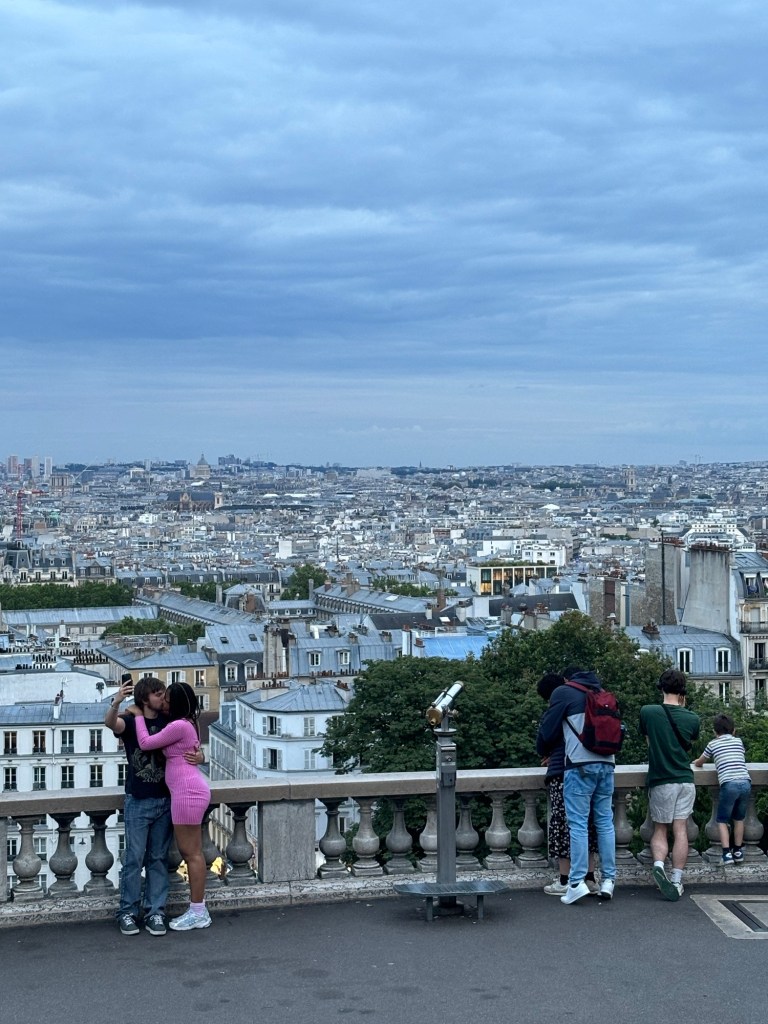
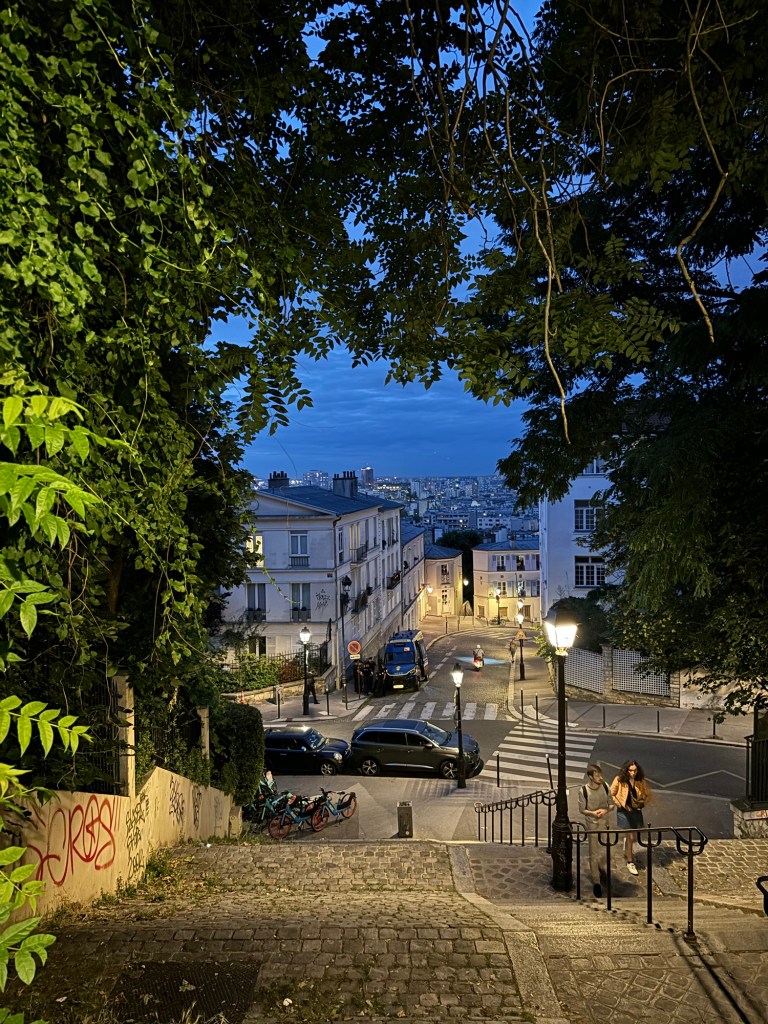
I haven’t been to Paris since I was eleven, and the last time I was here I climbed up the winding steps of Montmartre to the domed towers of Sacré-Cœur, so I figured that would be as good a place as any to start. The gendarmerie were out in force: the Paris Olympics are now only days away, and security in the city seems to be tightening up and fast. That didn’t stop the locals from having a good time, blasting music from the steps of the church, waving off the Indian lovelock vendors and generally having a good time.
Paris really is a beautiful city, even for the solo traveller, though I feel it’s absolutely a destination best enjoyed with a partner. I got much the same impression in Venice a couple years ago. Everywhere you look there’s a couple sharing a kiss, taking a selfie, holding hands at a café. It makes a welcome change from the awkward coolness of the British. We could learn a lot from these masters of the art.
Let’s play this like a dating profile. Let’s get serious. Monogamy is out of the question since I’m not about to be unfaithful to Spanish, so I’m hoping French is willing to share. Distance doesn’t bother me – Paris is only half an hour away by plane – and twenty-five and over would count for every one of those years I have spent grinding French. I am open to a short-term relationship with this language, but a long-term would be preferable (especially as I may well need French as my sledgehammer to get into the Spanish education system someday). Words of affirmation are 100% my love language, so I’m hoping I can find a warm spark within the infamous chilly disposition of the Parisians. And while my music tastes aren’t likely to be all that compatible, I was a major Stromae fan in my university days, and I’ve always had a thing for Afro-French artists, like Baloji. Between that and the unsurpassable bandes dessinées of my childhood (Astérix, Tintin et al.), we might just about have enough in common to have a go at it. So – how about a café date, to mettre la machine en marche?
I should find a café and make it my own while I’m here. That’s a plan for breakfast tomorrow, I think. You can’t really get an eye for Paris unless you spend some time in a café, after all. A bientôt, mes amis. BB x
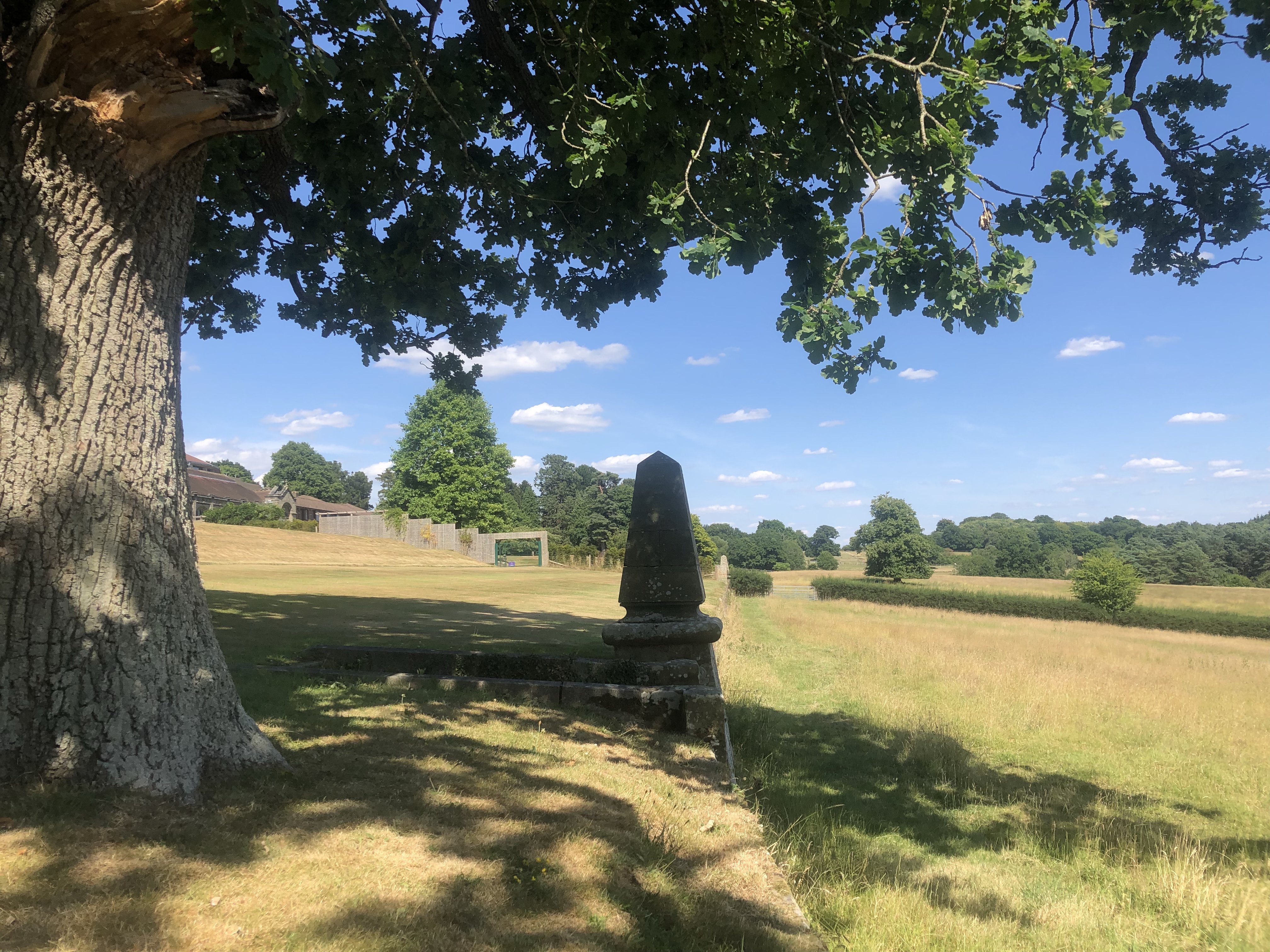
Bastille Day. The temperatures hit 26 degrees Celsius this afternoon. The BBC Weather app is predicting a high of 34 on Tuesday. The folks on the radio are starting to use the words ‘ration’ and ‘hosepipe ban’. I sat outside on the south-facing ha-ha and stared out across the Weald towards the South Downs for about an hour. I brought a few books to read – four more than I actually needed, as is my habit – and spent about ten minutes “reading” the mega-drawing, reliving the memories recorded on that gargantuan scroll.
I saw a monk in the quiet garden sitting in silent contemplation and reminded myself how lucky I am to live and work where I do. Isolation does no wonders for the human condition, but there’s a reason enlightenment is rarely sought in the cities. Sometimes the key to more positive thinking is just to get outside for an hour or two, even if there is no destination in mind. I certainly feel a lot happier for it.
Over the forest to the south, I saw a pair of hobbies displaying. I haven’t seen such a thing in a long, long time. I’d forgotten what masters of the air they are. Little wonder they’re among the few predators capable of catching a swallow on the swing. They cut through the air like feathered lightning, making the hovering kestrel nearby look like one of Da Vinci’s clumsy flying machines by comparison.
A few minutes later, the white buzzard flapped into view. It wasn’t around for more than half a minute, before two crows sent it back the way it had come, back into the wooded dark of the Weald. A hat-trick of British birds of prey in as little as five minutes. Reminded me of a sunny June afternoon when I was a kid, when to my disbelief I clocked no fewer than six raptor species circling above the house at once: kestrel, buzzard, sparrowhawk, hobby, two red kites and a peregrine. To this day I have no idea how they all came to be in the same place at the same time. In Gibraltar, maybe, but not in Kent.
The race for Boris’ replacement is picking up momentum. My parents were quick to bat aside my guess that Sunak would take the throne, but the odds seem to be in his favour at the moment. I’m no political pundit, but I feel it’s worth recording these things from time to time. Since reading Philipp Blom’s Nature’s Mutiny last year (a collection of anecdotes documenting the Little Ice Age), I’m all the more convinced it’s important that those of us who spend our free moments writing make a point of logging the everyday. Who knows what it might tell future generations about the way we lived?
I’m getting itchy feet again. I think I might go on just the one *little* adventure before the summer is over, and I’m thinking it ought to be France – not least of all because of the relative ease of getting there by boat. It sounds like nothing less than chaos surrounding airlines at the moment, which are struggling to meet the logjam of two years’ worth of cancelled summer holidays when they haven’t yet recovered from the post-COVID staff shortages. I don’t plan on going far, but I have always wanted to see the Bayeux Tapestry, and one of the better things to come out of 2021/22 has been a rediscovery of my love for French, thanks to an especially heartwarming Year 7 class I had the pleasure to teach this year. I confess I wasn’t overly enthusiastic about going back to teaching two languages at the start of the year (after my experience teaching lower set Year 9 in my PGCE year), but these kids really turned it all around. So… Normandy? I’d better do some research, but… I’ve got to say, the opportunity to spend even a couple of days in a place of such historical importance… It’s dangerously tempting! BB x
‘You want taxi, my friend? No? What, you no want talk to me? Why you travel if you no want talk to people? You all the same, you think you are better than us, but you are wrong. We are better than you.’
Welcome back to Morocco, I suppose.
Goodbye Tarifa!
There’s something endlessly enchanting about waking up in a new country. It breaks up the monotony of the everyday. It sends gears spinning that had until recently been lying dormant. It also comes with a change in breakfast too, which is never a bad thing.
Bang in the centre of the medina and all you can eat for 10 euros a night…
On one of those fantastically last-minute whim decisions which I have been known to make , I decided to take up the offer of two of my English department colleagues to spend the puente de Mayo in Morocco. Four days isn’t nearly enough to enjoy Morocco – each town deserves a full day and night’s exploration to even begin to get a taste of the area – but when it’s so close that you can see the cars from the other side of the sea, it’s impossible not to feel the tug of the south. I’m not very good at saying no to anything, but when it comes to adventure, I find it exceedingly difficult to say no. So here I am, on the 12 o’clock bus to Chefchouen, saying yes – and loving every second of it.
Getting Bourne Ultimatum vibes…
The last time I was in an Arab country was Jordan. Let’s not go over that again. Jordan’s going to be a bug-bear of mine for a very long time. It’s a name which carries greater fear for me than Syria, Korea and the Democratic Republic of Congo ever could. It wasn’t so much the country as it was the fact that I simply didn’t want to be there. Backed into a corner as I was with my commitments to the British Council, I wasn’t given a choice. And in that frame of mind, as always, I was defeated before ever I got on the plane. It wasn’t in my interest… And as my parents will know only too well, if something is not in my interest, the chance of me doing well is next to zero.
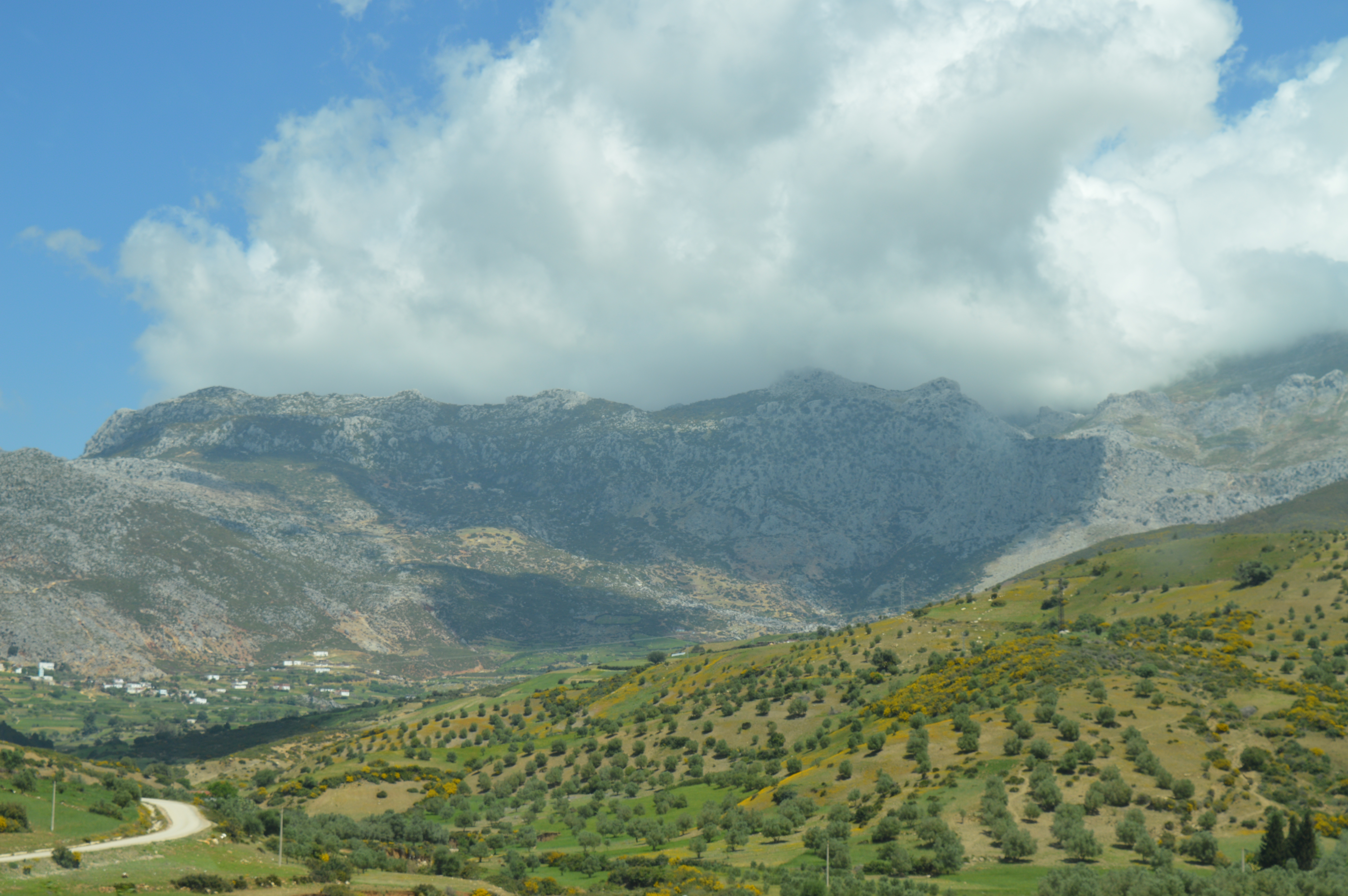
The Rif: b-e-a-utiful
Not so Morocco. Maybe it’s the green hills and the icy rivers flowing down from the mountains and into the sea. Maybe it’s the jaw-dropping kasbahs of the desert south or the quiet, homely feel of the melting-pot medinas of the north. Maybe it’s even the simple fact that this is Africa. But I think that the real reason I have so much love for this country is because I want to be here. It’s a minor difference, but it changes everything.
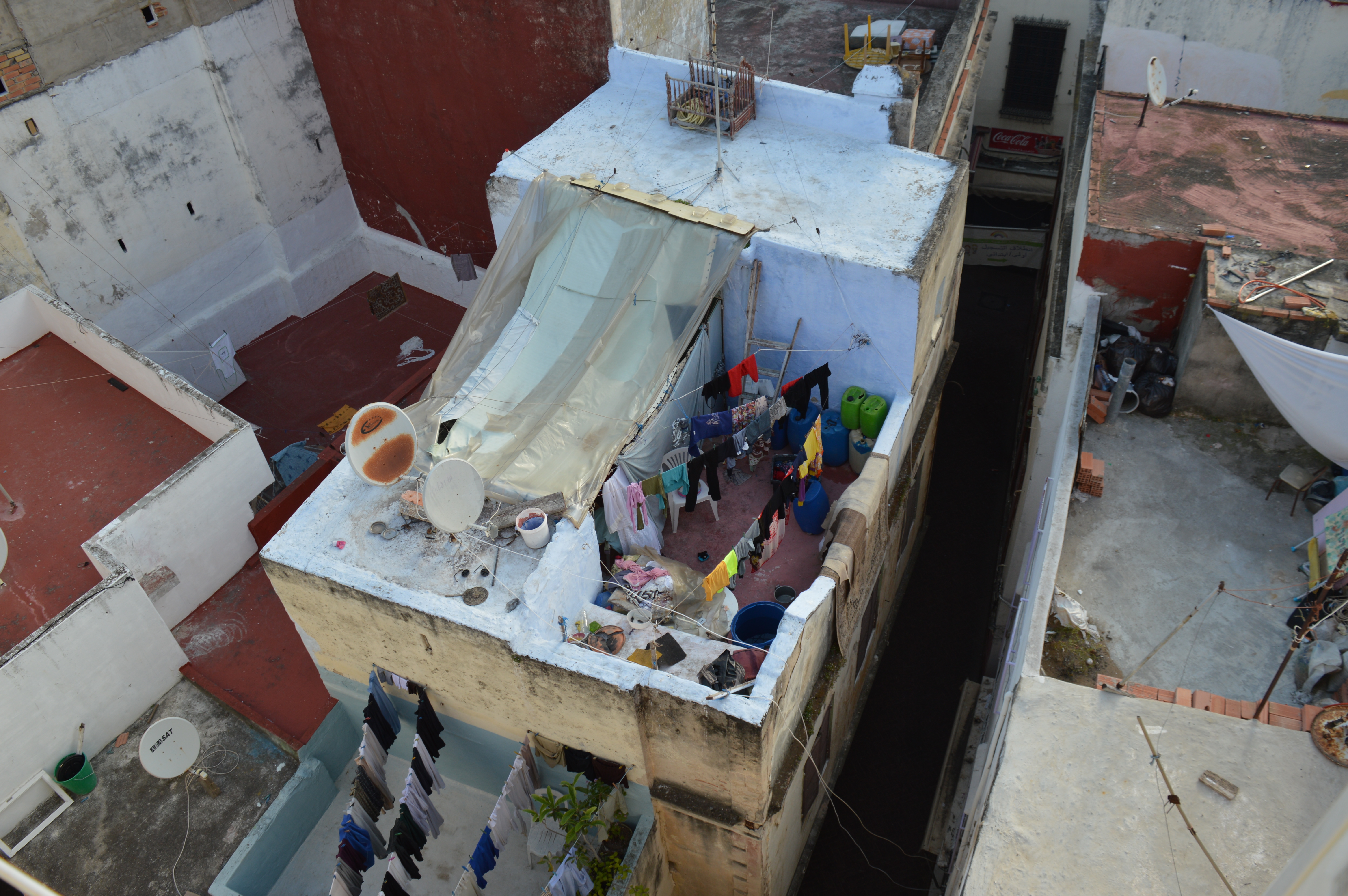
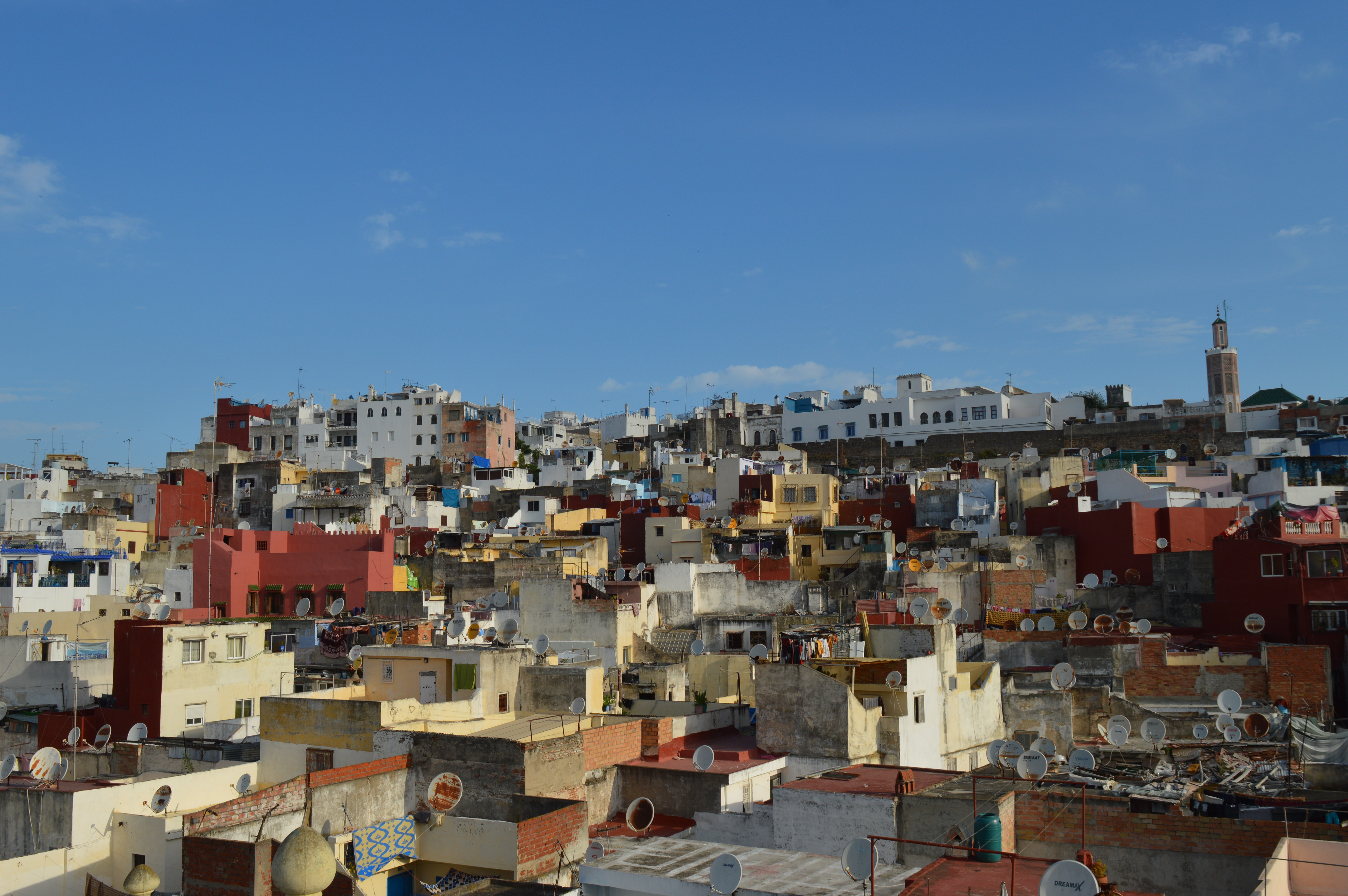
Waking up with the dawn chorus in the middle of a city sounds ridiculous, especially when there’s a complimentary alarm service courtesy of the mosques at four in the morning, but in Tangier it’s easily done, and the soundscape is just as fantastic a mix as the city itself. There’s the warbling calls of flocks of roving bulbuls, that ever-present feature of Arab towns; on top of that you’ve got a chorus of roosters crowing at the dawn, interspersed with the occasional bubbling note of a laughing dove, two quintessentially African sounds; and then there’s the aggressive cackle of the gulls, which smacks more of Europe than anywhere else. Even the repetitive wi-tu wii-twii-tu wii-twii-tu of the house buntings echoes the sales pitch of the taxi driver, yelling the name of his destination over and over as though it were an object to be bought or sold.
Spot the six species of bird in this picture (better still, imagine them)
And that’s just the naturalist in me. The linguist side of me is in his element: this is a place where I could be using all four of my languages – English, French, Spanish and Arabic – at any given moment. Across Morocco, but especially in Tangier. It’s like something out of a dream, and we haven’t even got to Chefchaouen yet.
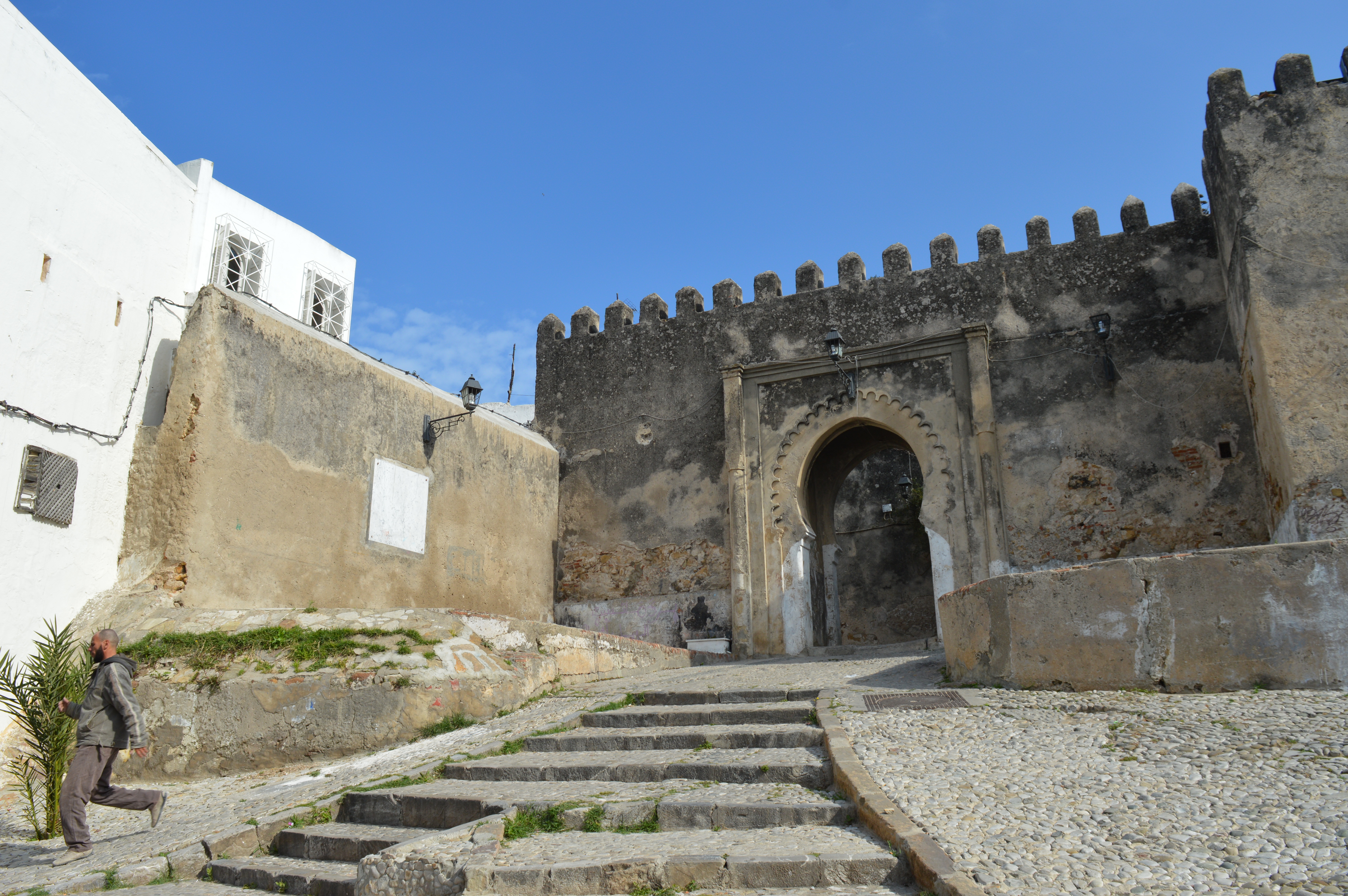
Tangier’s Kasbah is actually a lot more impressive than it is made out to be
But for a less-than-welcoming start thanks to a jilted taxi tout lying in wait at the dock entrance, it’s been so good to be back. And as I’m the only Arabist in tow, this time it’s up to me alone to do the talking – and that’s a huge plus right off the bat. I hope there may soon come a time when it’s safe enough to study Arabic anywhere, from Western Sahara to the Sudan, from Yemen to Iraq; to excel, I need to be on my own. And that’s what this year has been all about. I’ve learned from my mistakes in Jordan. Moroccan Arabic won’t be any easier than Jordanian, if not harder, but I’m going to tackle it head-on and alone – and better still, in a willing state of mind. I can’t wait. BB x