Mangrove Junkie

Puerto Ayora, Galápagos Islands. 21.00.

This morning I said farewell to San Cristóbal. The easternmost island of the Galápagos chain has been a blissful retreat from the world, shrouded in stormclouds and sunshine. Having a cabin all to myself on the edge of town made a change from the usual hostel circuit. After several years of bunk beds of varying stages of comfort, I think I earned it.
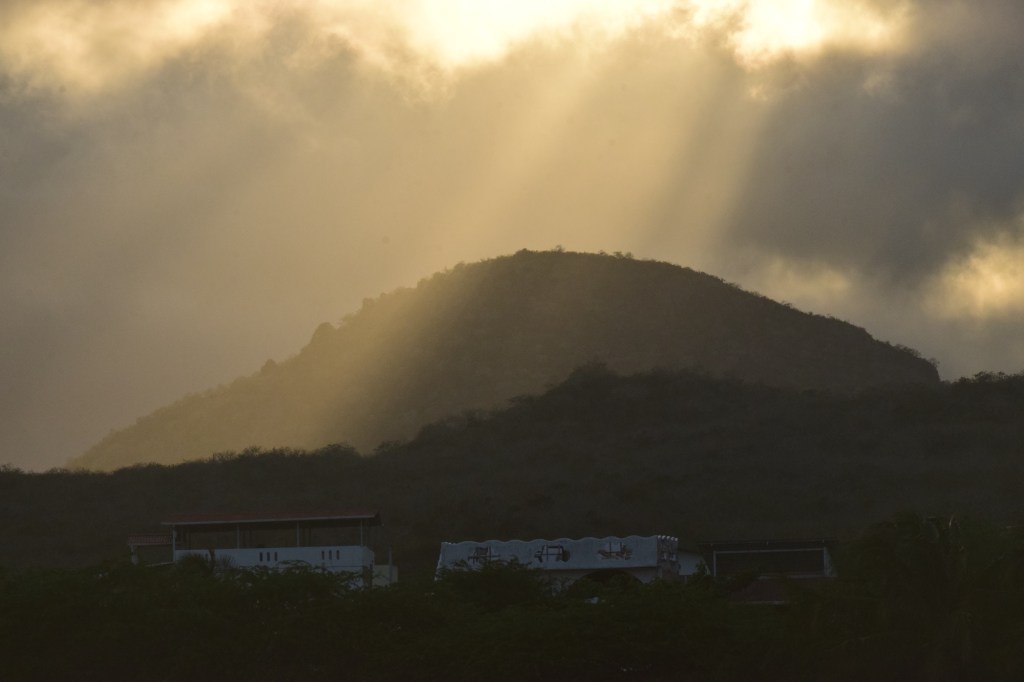

I arrived a full forty-five minutes early at the harbour, as instructed, to be last in the queue. I should have known: the majority of the tourists on these islands at the moment are Dutch, Germans and Americans, who aren’t known for being slack when it comes to appointments. As such, when I finally did get onto the ferry, I was given a seat at the very front of the boat.

The Israeli sitting next to me was incensed. “Shit, man. This fucking sucks. These are the worst seats in the whole boat.” I smiled and shrugged it off – windowless or not, it was only a two hour boat trip across the open ocean – but he was seriously ticked off about what he saw as the rank injustice of the affair.

Fortunately, due to a mix-up involving the unexpected arrival of a family of four, the captain asked if we’d be so kind as to move up on deck so the family could sit together – so I effectively got an upgrade for free. So did the Israeli, whose response was a lot more vainglorious than mine, but I guess it takes all sorts to make a world. Up top, I had the refreshing breeze of the ocean wind, the occasional spray of saltwater and views all around – and, unlike a number of passengers, I wasn’t sick once. For somebody who isn’t exactly a sailor, I have always been surprised at my resistance to seasickness. Surprised – and very grateful!
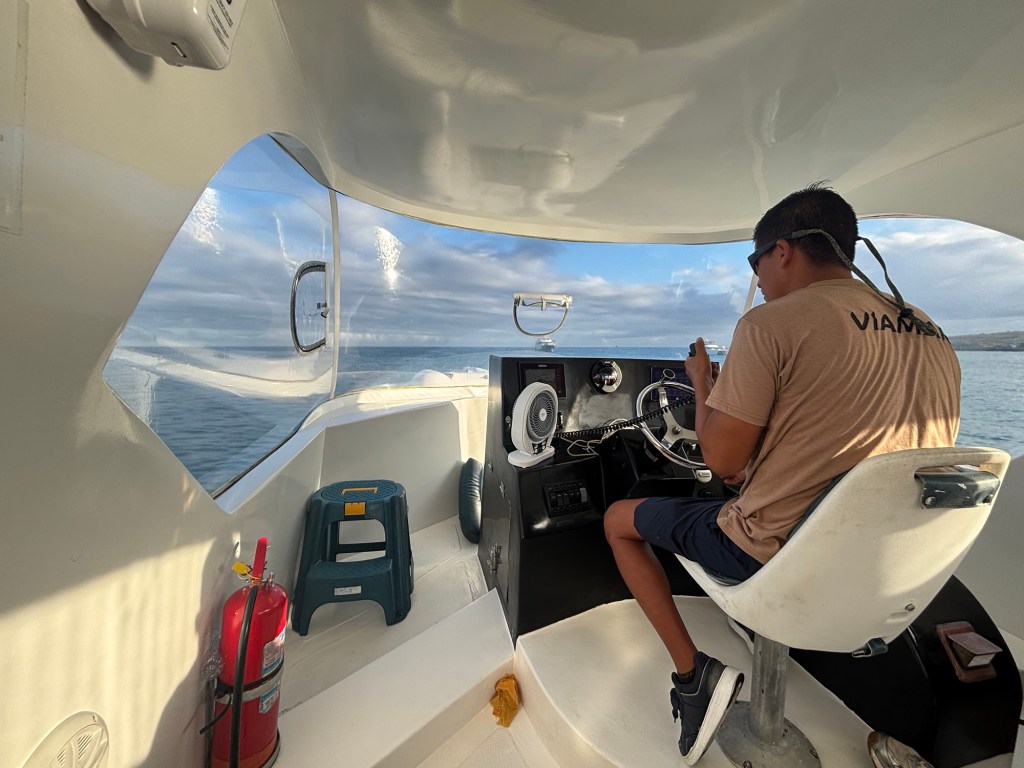

The ferry between San Cristóbal and Santa Cruz takes about two hours, passing the uninhabited island of Santa Fé shortly before docking in Puerto Ayora, the largest town in the Galápagos. It was only shortly after nine, so I had a quick breakfast and then thought I might at least check in my luggage, but the lovely ladies at my hostal, the Flightless Cormorant, let me into my room right away. With my rucksack unpacked, I set out to explore and get my bearings of Puerto Ayora.

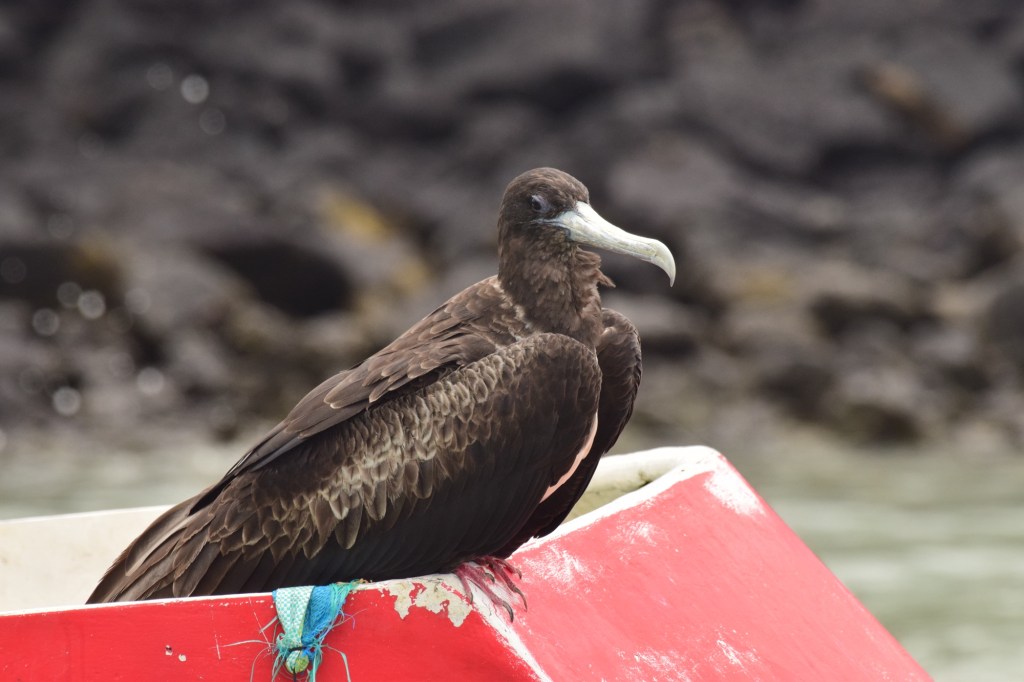
As they always are in the Americas, the fisherman’s wharf is a hive of activity. In Valparaiso, it draws gulls, terns, pelicans and the local sea lion population right up to the harbour. Here in the Galapagos, the frigatebirds add some local colour. They almost never seem to land, and the reason for that became clear when I saw one resting on the roof of a boat: their feet are tiny, almost vestigial in appearance. It seems that this was the sacrifice they made millions of years ago in order to become masters of the air, just like our swifts back home in Europe, only more than five times the size.

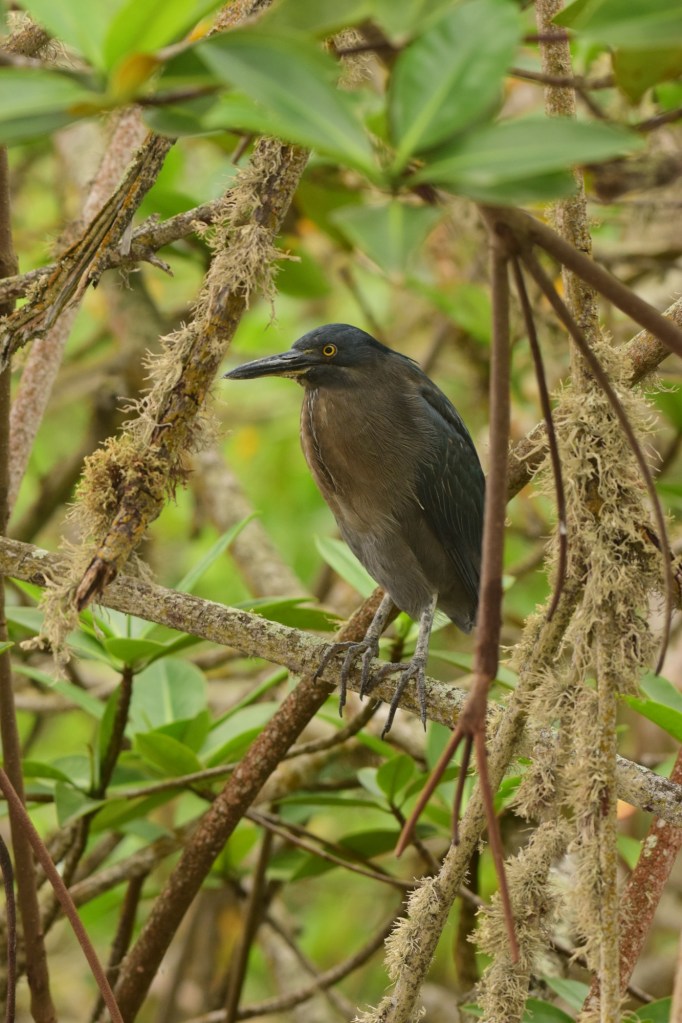
Here, as on San Cristóbal, you can find lava herons, with the added touch that the mangrove trees make for a slightly more interesting backdrop. The mangroves are easily my favourite thing about Santa Cruz – I’ve only ever seen them in books and documentaries, and they are every bit as spectacular as I always thought – even here, where they start right in the heart of Puerto Ayora itself.

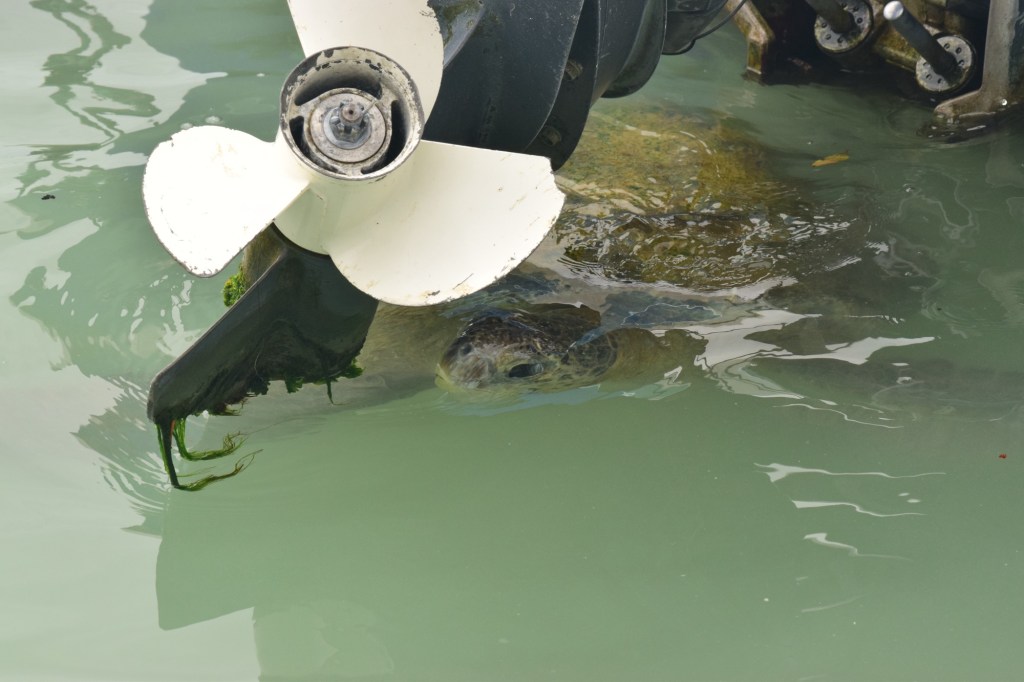
Obviously my turtle encounter yesterday wasn’t enough, because a short burst of breath near the boats alerted my attention to a youngster drifting near the surface, less than a stone’s throw from the harbour. It was feeding on the algae growing on the bottom of the boats, particularly on the propellers raised just inches above the surface. The Galápagos Islands are famous for the close encounters you can have with the local wildlife, but I have to admit, I wasn’t expecting to see both sharks and turtles without even having to leave the larger towns.

One of the big draws in Puerto Ayora is the Charles Darwin Research Centre to the east of the city. Free to visit – except for the Fausto Llerena Giant Tortoise breeding centre, which is perilously easy to stumble into (and be politely removed from) as it has no fencing! – it is worth a look-around even if just for the passport stamp you can acquire here, the only legitimate way to obtain such a stamp (as they do not issue any stamps at the airport).

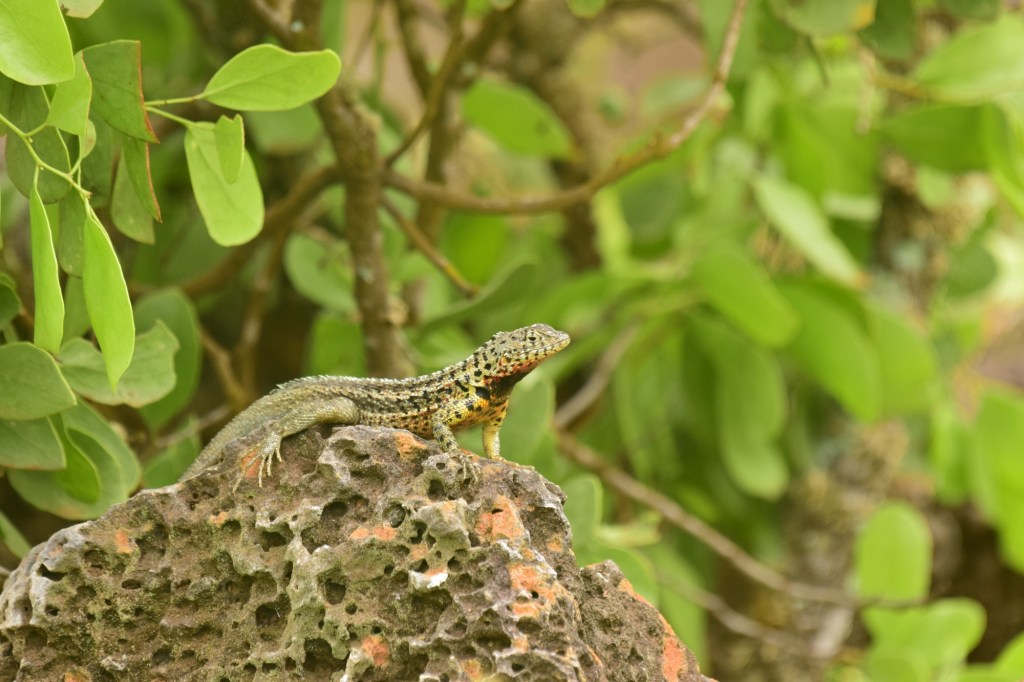
The walk there takes you into the wilder country around Puerto Ayora, and you have to watch your feet: there are reptiles everywhere. I lost count of the lava lizards and marine iguanas, and I’m almost certain I saw the looped body of a Galápagos snake disappear into the bushes as I turned a corner.

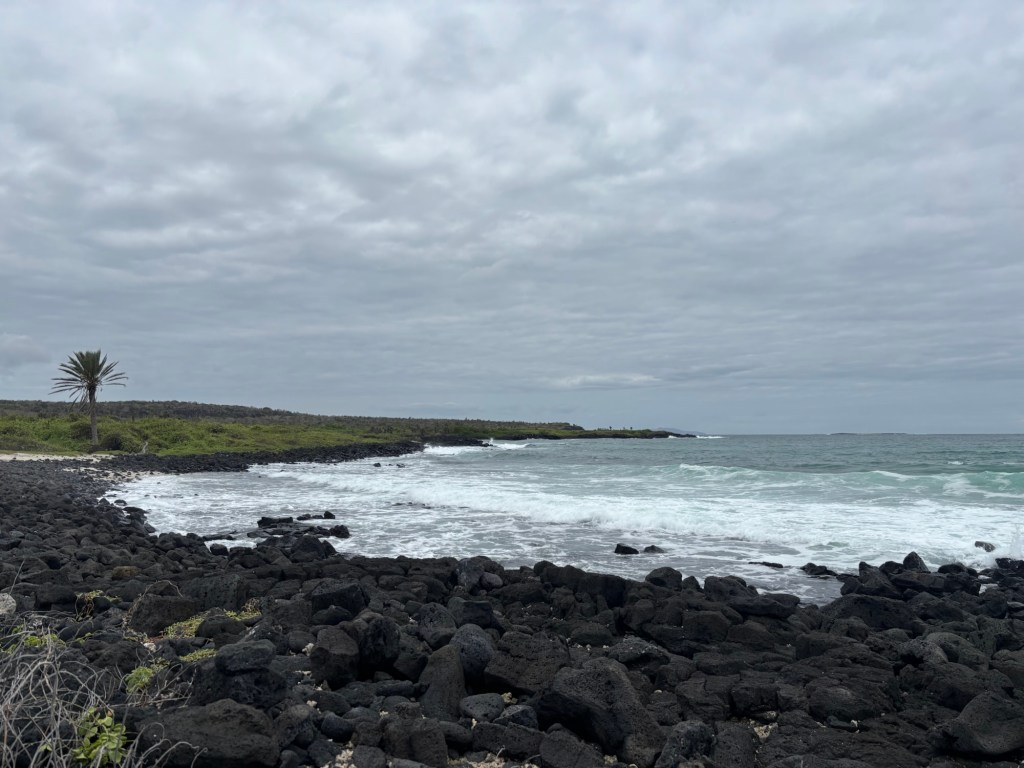
Follow the trail that leads east of the Charles Darwin Research Centre and you’ll reach Playa Ratonera, a wild and wave-battered volcanic shoreline. It has a few sandy stretches, but it’s hardly a pleasure beach, as it gets the full force of the Pacific. It’s mostly mangroves, carpet weed and black volcanic boulders, with the shattered white remnants of millions of years of coral taking the place of pebbles.

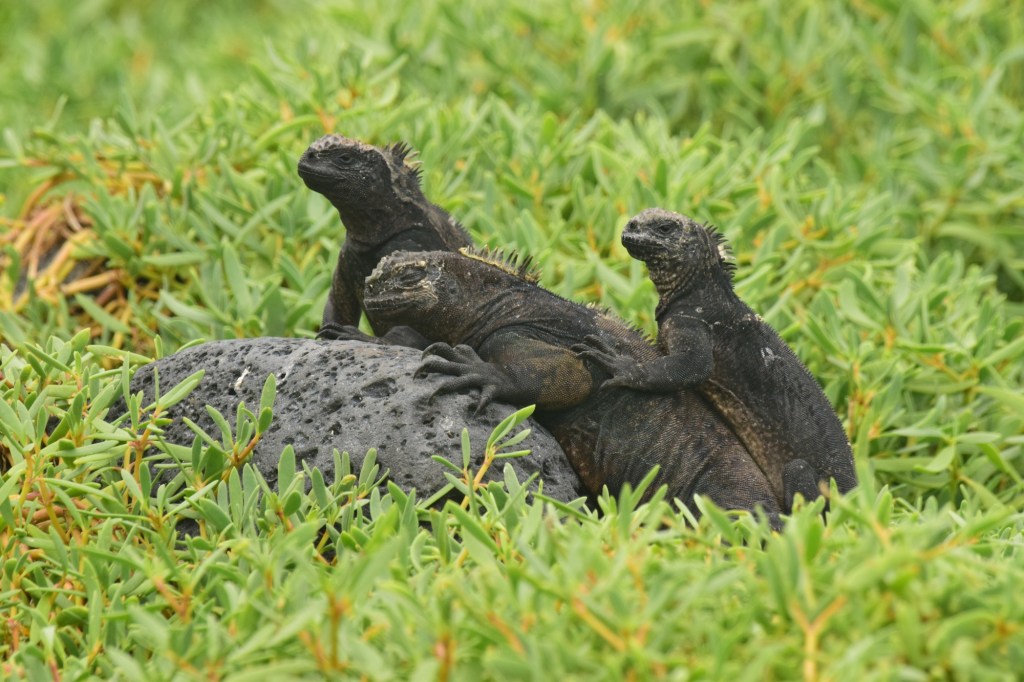
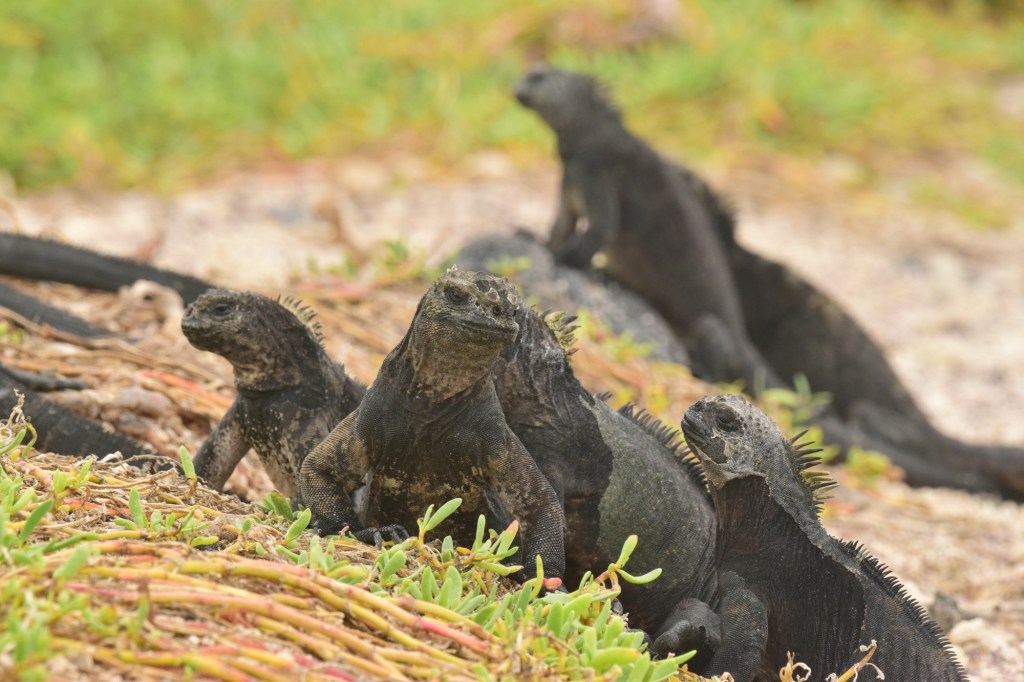
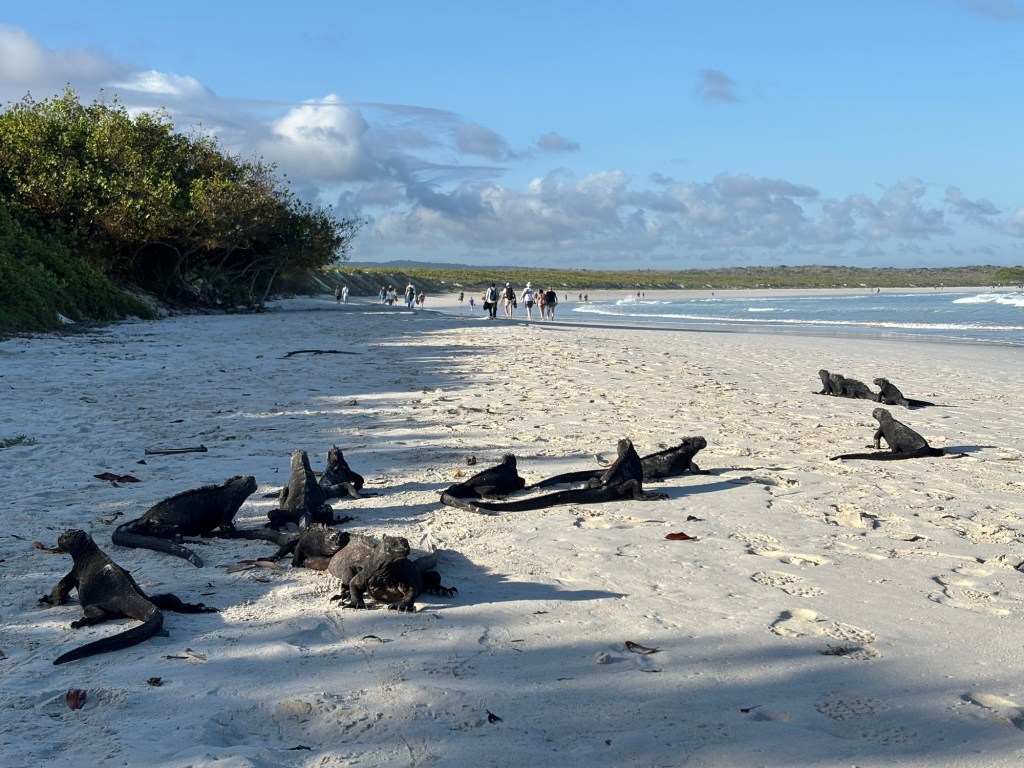
One huge draw is the local population of marine iguanas. There were always a few around the harbour on San Cristóbal, but Santa Cruz has hundreds of them.

The collective noun for marine iguanas is a mess, which is about right. They are absolutely everywhere, sprawling all over each other on the path, off the path, among the weeds and atop the rocks. You really do have to watch where you step, because they’re a lot more sluggish than the lava lizards and don’t tend to move even when they’re only inches away.
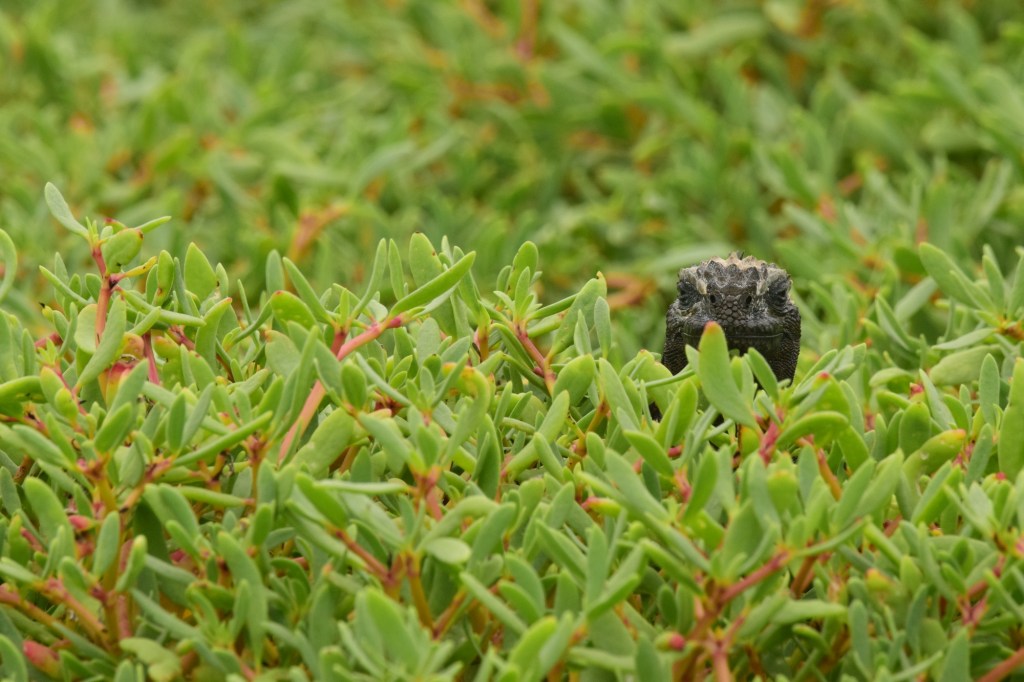

They were attended by a massive great blue heron, the American cousin of our grey herons. Herons of this size have a Catholic diet, so I imagine the smaller iguanas form a part of that, before they become too large for even the most ambitious herons. I’ve seen these birds swallow fish that are far too large for their long necks, but they probably do go down the hatch a lot more easily than a spiky, scaly adult iguana.
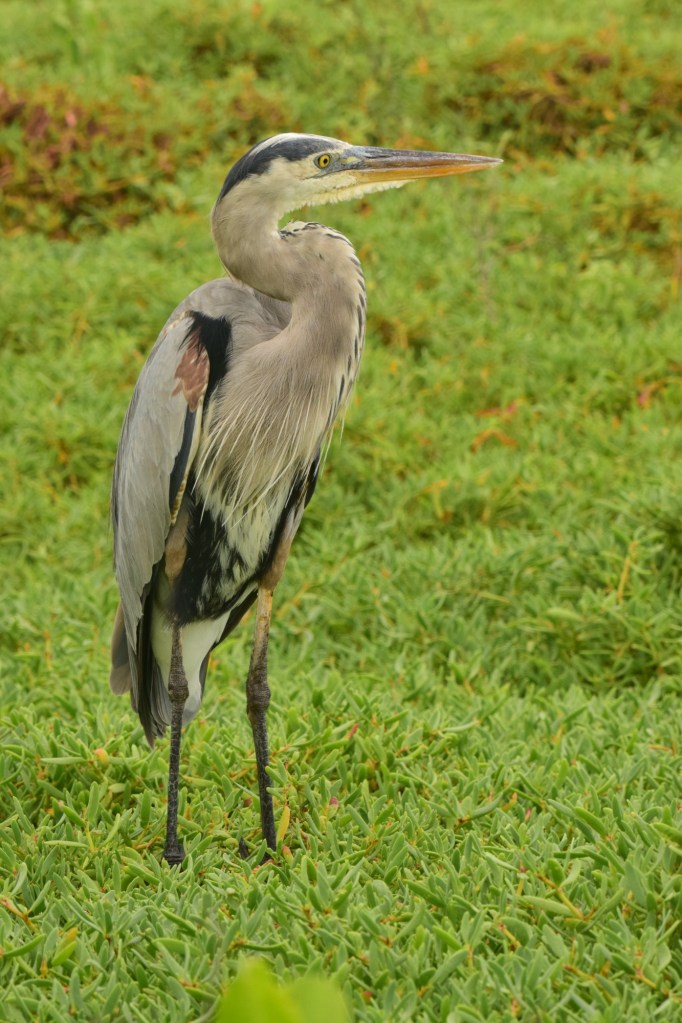

Time and again here I am bowled over by how unafraid the local wildlife is of us. Herons, iguanas, mockingbirds, finches, boobies and oystercatchers… none of them seem to mind one jot that they share their world with us. Only the whimbrels seem to have retained their wariness, though given their status as migrants in these islands, perhaps their behaviour may be excused.
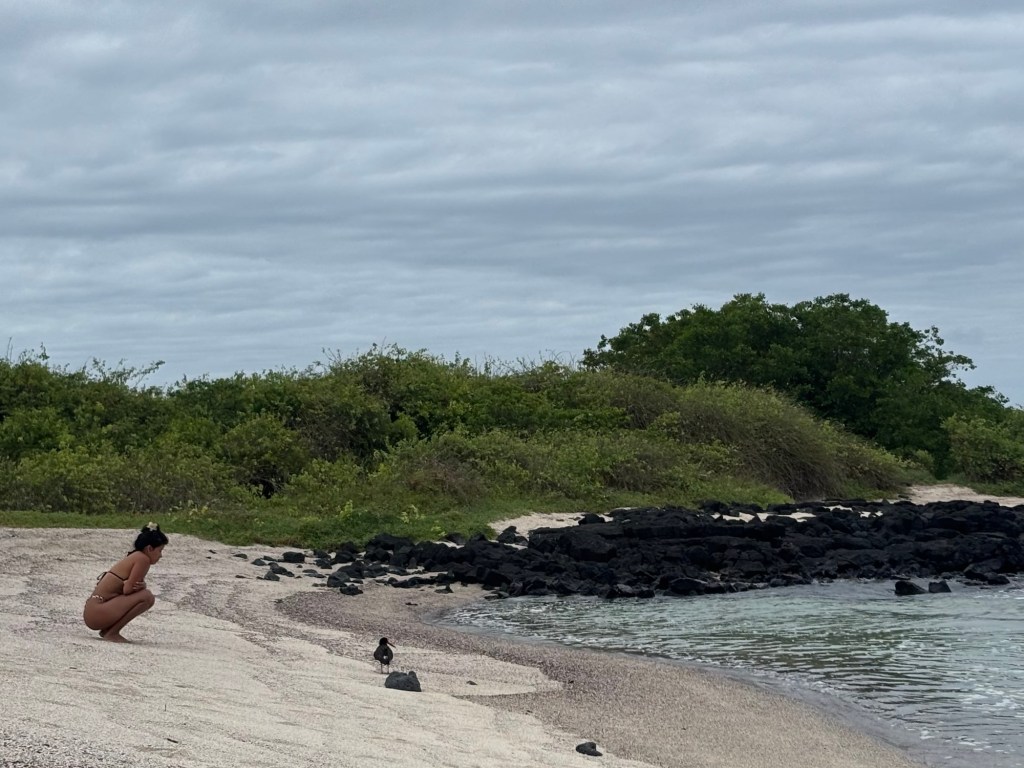

The other beach worth visiting in Puerto Ayora’s immediate area is Playa Tortuga, a stretch of exposed white sand to the southwest. Getting there requires registering with a park ranger and a half hour’s trek through the opuntia cactus forest, but when you see the final destination, you’ll understand why so many people both local and foreign make this trek every day. It’s a paved route, so it’s not exactly arduous, and it does have the benefit of sending you through bird country. I finally saw the largest of the ground finches, with its impressively large nutcracker bill, as well as the local species of mockingbird, noticeably different in voice and appearance to the birds on San Cristóbal.
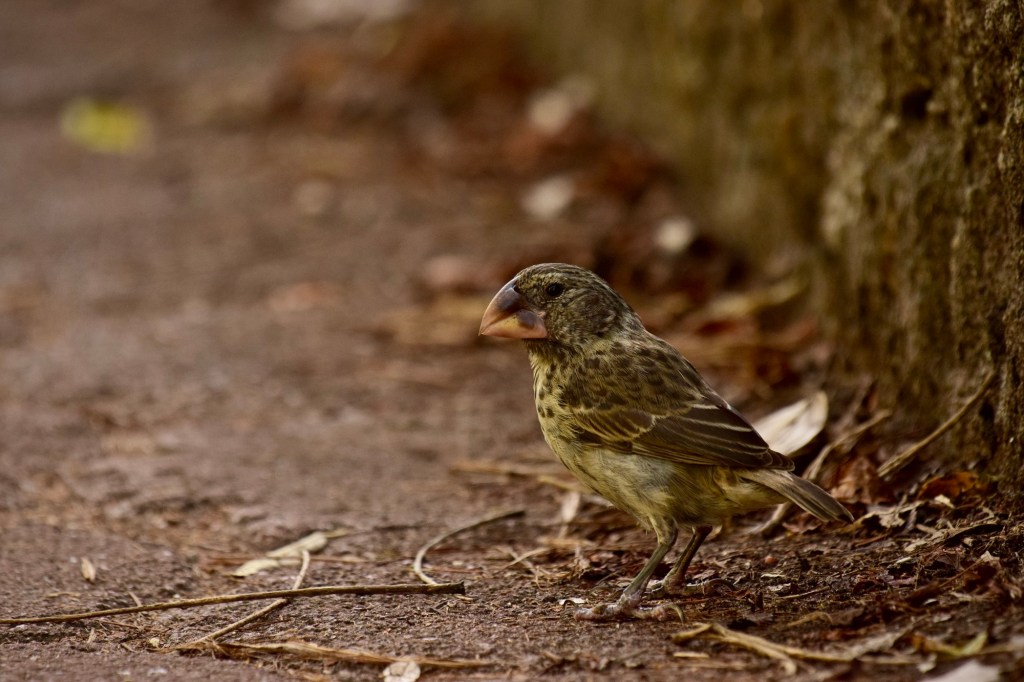
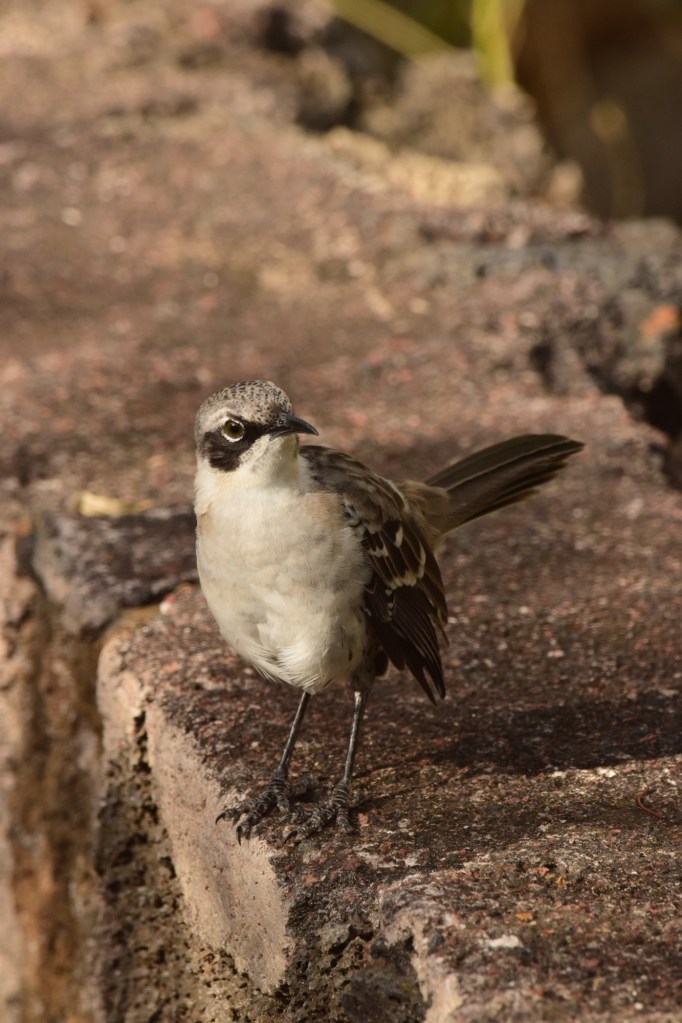

I believe Playa Tortuga is so named because it plays host to a breeding colony of green turtles at the right time of year, but to get there, you first have to cross Playa Brava, beaten savagely by the force of the ocean. When I got there the afternoon’s daytrippers were all heading back to town in a slow and sandy procession. The rangers close the beach at five, so as I arrived at twenty past four, I didn’t have an awful lot of time.
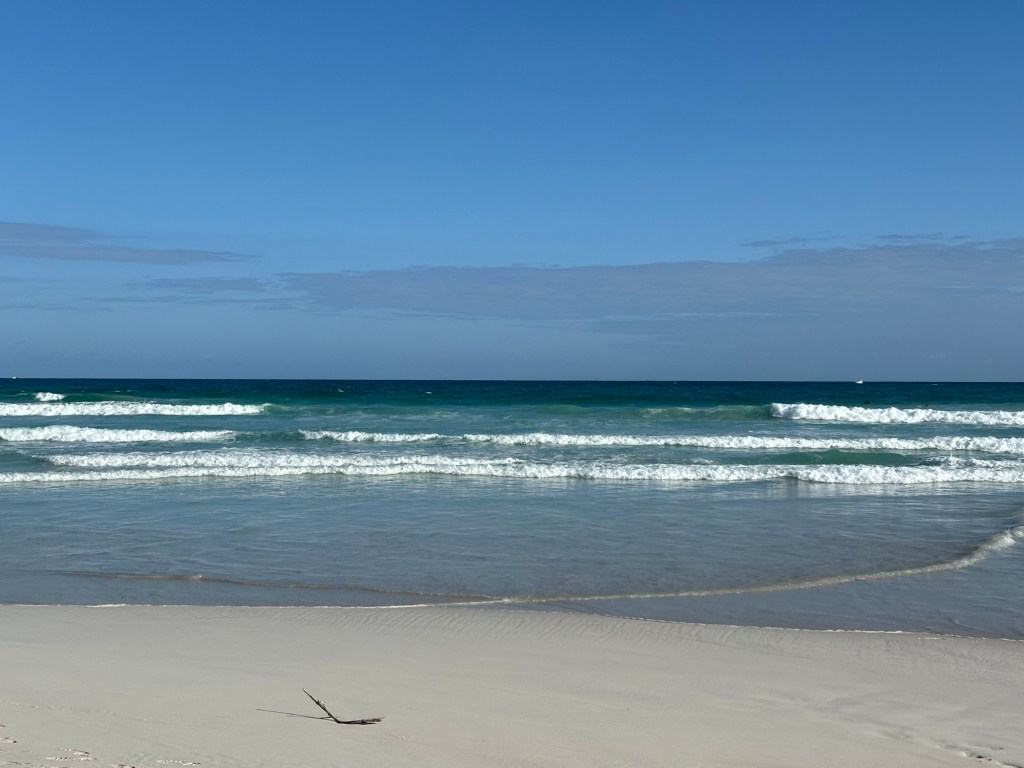

Time enough, though, to appreciate the strange beauty of the mangroves. On the far side of the red flag beach (where the waves are far too strong to allow for bathing) you’ll find the not-so-secret mangrove-lined bay of Playa Tortuga. It’s no hyperbole to say that it is by far the most beautiful beach in the Galapagos that I’ve seen so far: quiet, secluded and with views to die for all around.
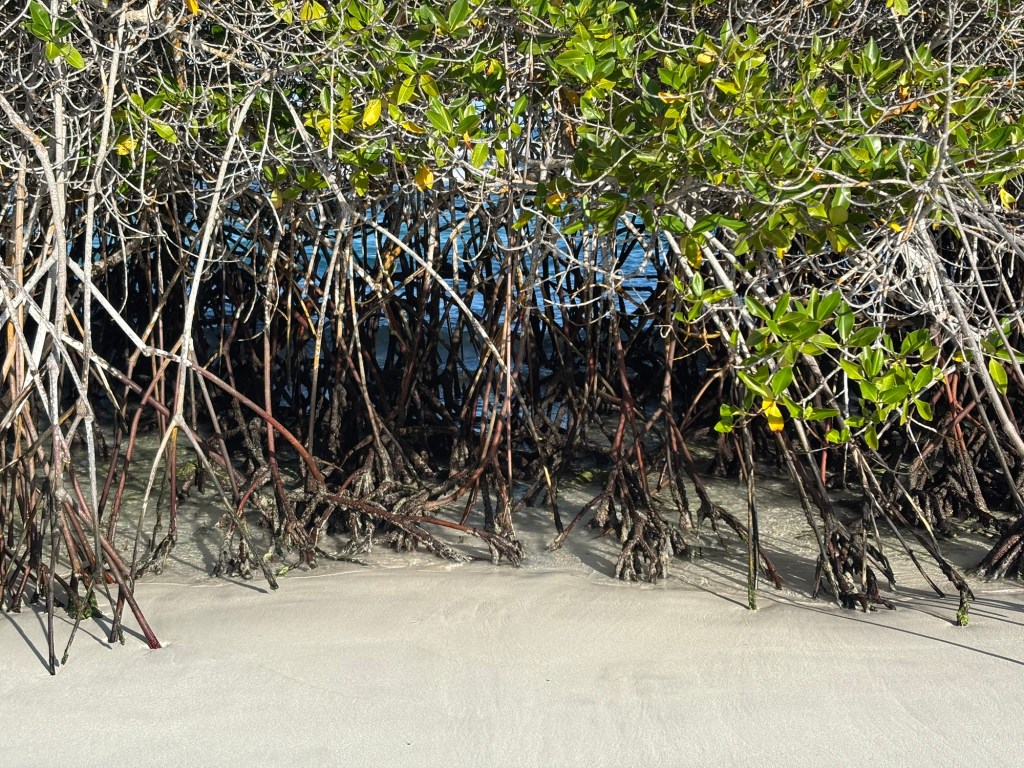

I didn’t bring my swimming gear, and it would have been too late to pop in for a swim even if I had, but it was a hard-fought temptation not to dive right in. I confess I usually have more than a little contempt for those who travel the world just to lounge around on a beach without a care for the local wildlife or culture, but when the beaches are this good, I can begin to understand why somebody might be mad enough to empty their bank account to be in a place like this.
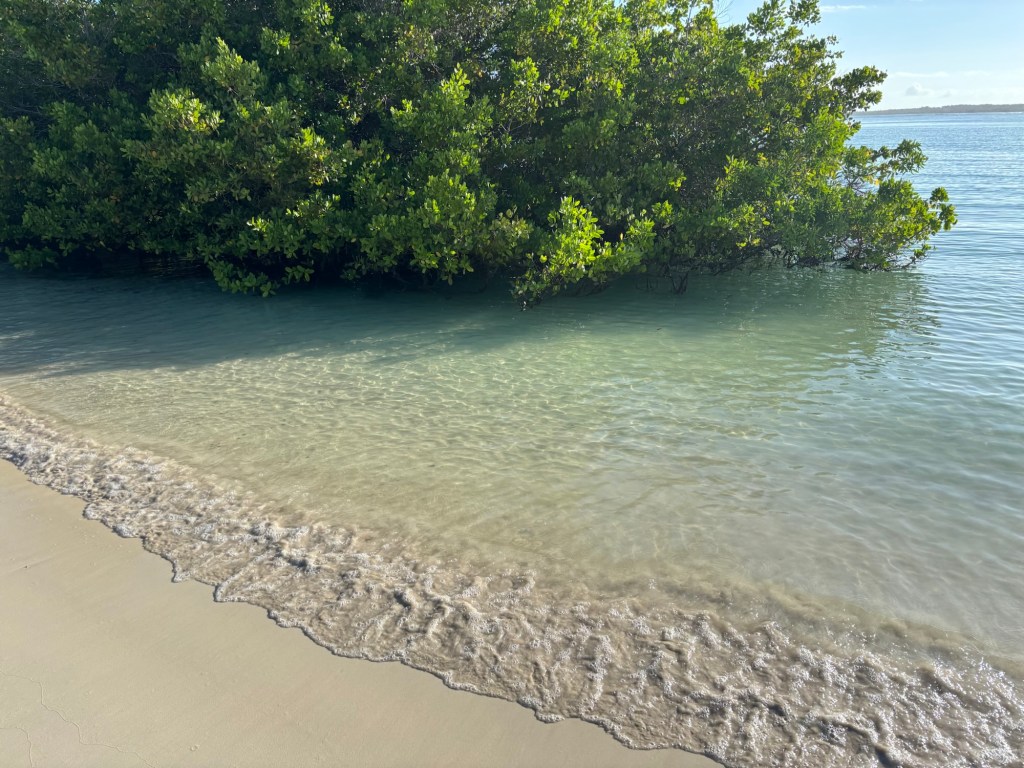

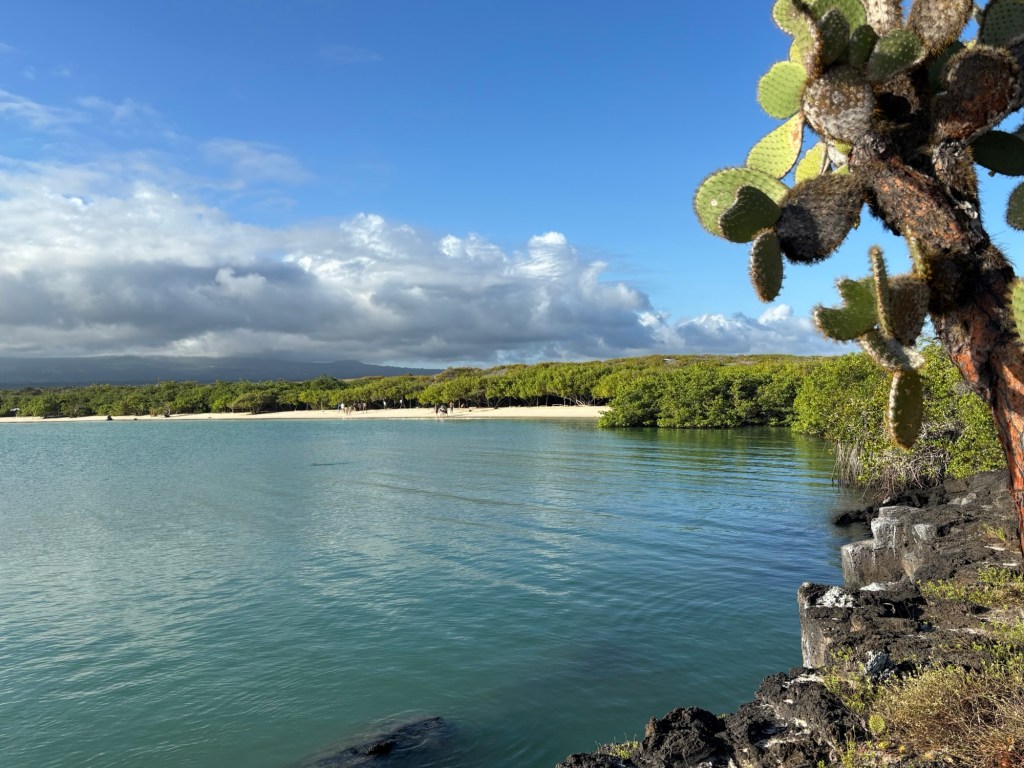
If you walk just a little bit further, you can see the entire bay with the mountains behind from a rocky peninsula, where the opuntia cactus grows. Tomorrow I’ll head up into those highlands in search of giant tortoises, but for now, it’s just me, the sea and the pufferfish swimming among the rocks below me.

I’ll close this post here – I had a lot more to report than I thought today. Maybe tomorrow will be a quieter one! BB x
In Darwin’s Footsteps

Puerto Baquerizo Moreno, Galápagos Islands. 04.57.

I woke up to the sound of the waves this morning. Well, I suppose morning is a stretch, since the clock on my bedside table said ten past four. I must have passed out around eight last night, beaten down by the lack of sleep on the plane and lulled into a Pacific lullaby by the sea. I can think of worse ways to spend a summer.

The garúa rolled in off the mainland last night, bringing with it relieving cloud and gentle rain. A passing shower came and went a few minutes back, but now it’s just the tap-tap sound of the lingering raindrops falling onto the roof of my cabin from the giant daisy tree.

There’s no point going back to sleep now, so I’ll spend some time writing up yesterday’s account of my first day on San Cristóbal.


The magic begins as soon as you’ve left the airport. Technically before, I suppose, since I could see the sharp-angled silhouettes of the island’s frigatebirds well before we landed. Outside the terminal, it’s a ten minute walk to the centre of Puerto Baquerizo Moreno, the largest settlement on San Cristóbal.

Three of Darwin’s keys can be found right next to the terminal building: small and medium ground finches, of evolutionary fame, and one of the island’s endemic species, the San Cristóbal mockingbird. It’s this last that’s especially important, as Darwin didn’t realise the significance of the finches until after he’d departed from the islands, but he did notice that the mockingbirds on each island were different in some way.

Like so many creatures on these islands, they are completely unfazed by the presence of man. They have a funny way of walking, with their cocked tail wagging from side to side. If I were a scientist, I might have called them metronomebirds for this singularly odd gait.


Most of the other travellers piled into taxis outside the terminal, which seemed a bit ridiculous, given just how close the town is to the airport, but I guess some habits die hard. I was quite happy pottering about with the ground finches. It’s not often you get to spend time with a species that literally changed the way we think about our place in the world.


The first thing you notice is the sea lions. They are absolutely everywhere. If you can’t see them, you can certainly hear them: that cartoonist arf arf arf you associate with children’s TV carries for quite some distance.


They don’t stick to the beach, either. A large number of them seek out shadier spots on the seafront parade, dozing quite carelessly on roads, park benches and boardwalks. It’s pupping season, so there’s no shortage of pups in varying stages of development sticking close to their mothers. I’d suggest giving them a wide berth – you never know where the bull might be.


In this case, I did know where the bull was – because he was announcing his presence every minute or so with that barking call, as though to remind everyone in the vicinity that the harem on the beach was his and his alone. Which, I suppose, is close to the truth.


You can tell the bulls apart from their size – nearly a third larger than the females – and the significant boss on their heads. I also hadn’t noticed before the claws in their flippers, but you can get so close to the great sea beasts here on the islands that there’s hardly a detail that will pass you by.


I had to wait a little while before checking in to my cabin on the edge of town, just a stone’s throw from Playa Mann. At a glance, there seem to be a lot of people who come to these islands for the beaches. To a dyed-in-the-wool naturalist like me, that does somewhat feel like going to the Serengeti for a tan, but I’m far too happy to judge. Who could possibly turn away from a chance to see these spectacular islands, given the chance?


I took myself straight back down to the sea once I’d checked in and found two more Galápagos specialities almost immediately. I’ve been mad about Sally Lightfoot crabs since they turned up in a wildlife spotting book I won as a prize for a sunflower growing competition when I was a kid. We have crabs in the British isles, of course, but none nearly so colourful as the Sally Lightfoot. They’re everywhere here, ranging from dark green to sunset red, hugging the molten rocks along the surf line and leaping between boulders with surprising agility.


The other specialty is a real treasure of the Galápagos, arguably as iconic as the giant tortoises that gave the islands their name. Marine iguanas, a short-faced ocean-going variant of the green giants found on the mainland, are often described as “ugly”, perhaps on account of Darwin’s first description of the creatures. Certainly, their patchy salt-washed skin and snub faces make them strange-looking beasts, and they’re not nearly as active as the sea lions as they soak up the sun on the beachfront, but they are tremendously interesting creatures.


Around midday, it gets rather hot here on San Cristóbal. Not unbearably so, but the humidity doesn’t help. I found a night heron sheltering from the heat in the shadow of the rocks earlier, and when I returned, it was sunning itself in a posture I haven’t seen in herons before.


A smaller heron was lurking among the boulders nearby: a lava heron, an island variant of the striated heron that can be found all the way up and down the coasts of the Americas. It was mesmerised by the dragonflies hawking over the beach, tilting its sharp beak and golden eyes every time one came close. I didn’t stick around long enough to see if it caught one.


After sorting out my snorkel gear for tomorrow’s expedition to Punta Pitt, I made for Cerro Tijeretas, a promontory to the north of town known as Frigatebird Hill. I passed a large Dutch contingent and a couple of Germans looking for a mockingbird, but other than that, I had the trail pretty much to myself. The Galápagos aren’t like Manu – you aren’t going to be tripping over a new species every few steps – but the encounters you do have with the island natives are more than a match in their total lack of fear. I found a Galápagos flycatcher hunting by the boardwalk and spent most of the afternoon followed by warblers.


From the top of the hill, you get a spectacular view out across the island to the east, all the way to the cliffs of Punta Pitt. The bay beneath Cerro Tijeretas seems to be a popular snorkelling spot, and I can see why. One shape drifting in the water seemed to the naked eye to be too compact to be human, but too mobile to be a rock, so I turned my lens on it to confirm my suspicions: a green turtle, one of a number that can be found around these islands. I’ve brought my own snorkelling mask so I’ll have to check this place out sometime, when it’s quieter, maybe.


I didn’t make it as far as Playa Baquerizo, which really is a proper hike from town, across several kilometres of molten rock and daisy trees, so I’ll have to check it out later. Instead, I perched myself on a boulder and watched the sunset in a beach I had to myself. Noddies dancing across the surface of the water. Boobies hunting offshore. Frigatebirds wheeling above the bay on those vast black wings. This really is a paradise like few others. I hope for the islands’ sake it remains that way.


It’s nearly seven o’clock. It’s light now, and the island is covered by a merciful blanket of cloud. There are birds called outside but Merlin is struggling to identify them. That may have something to do with the generator that keeps clicking and whirring noisily outside. I’d better have a quick shower and then head out. I’ve rented a GoPro for today’s snorkelling adventures, but there’s also likely to be a heck of a lot to see at Punta Pitt itself, so watch this space! BB x

Firecrown

Las Condes, Santiago de Chile. 17.40.

With strong winds and heavy rain forecast for much of central and southern Chile this weekend, I decided against any madcap travels beyond Santiago. It’s just as well, too: even my whimsical considerations of hopping over the border to tick Argentina off the list with a flying visit to Mendoza would have been impossible, after yesterday’s renewed snowfall blocked the mountain pass, closing the terrifyingly steep Ruta 60 for what is likely to be quite some time.

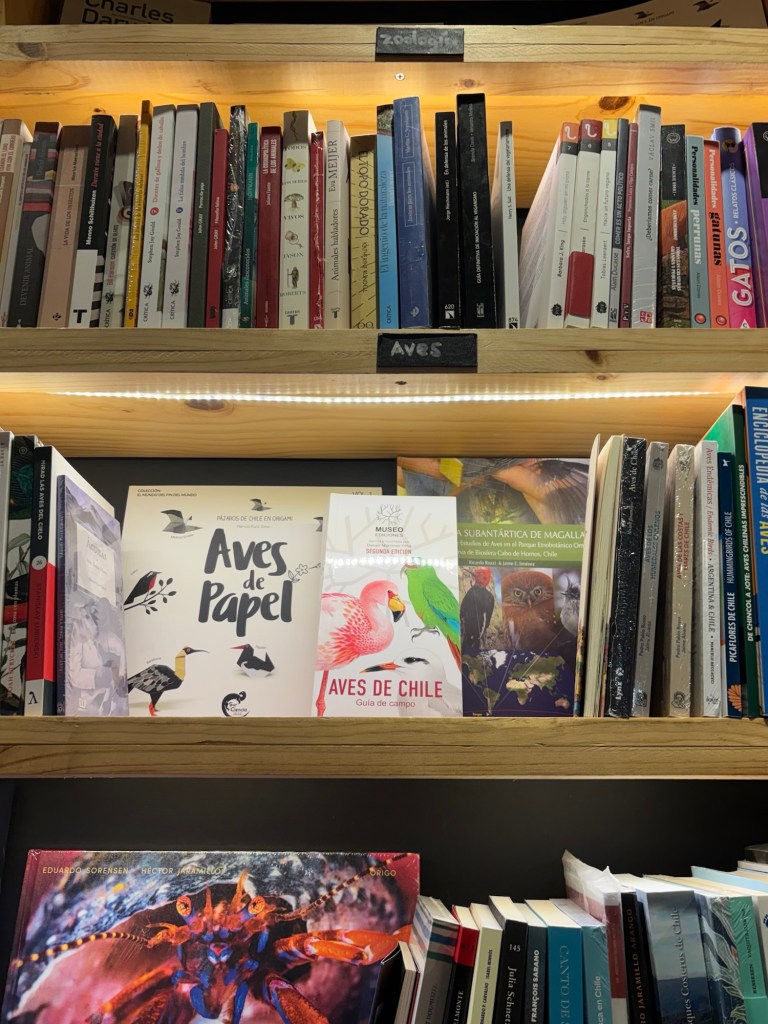
For once, I erred on the side of common sense and spent my Saturday in downtown Santiago, stocking up on a few important supplies for my final adventure in South America, now less than a week away. My main target was the sportswear giant Decathlon, but while I was hunting it down I stumbled upon a fabulous bookshop specialising in natural history in an underground mall at Tobalaba. I’ll simply have to come back here before I go – the selection of books on offer was incredibly tempting.

I still can’t get over how much birdwatching is a thing over here. I’m so used to Hispanics being generally disinterested in birds they can’t shoot out of the sky. It’s so heartwarming that that particular aspect of Hispanic culture is shifting, and that Latin Americans seem to be the driving force behind it.


With my Decathlon business concluded, I popped into Jumbo – Chile’s answer to Spain’s Mercadona – to grab a couple of snacks for the week ahead. Amazingly, the supermarket did me for lunch, too: they were giving out free samples of the seafood stew mix (which was amazing!) as well as free samples of strawberry yoghurt and pistachio ice cream. They weren’t exactly full-size dishes, but Tomás ordered far too much pizza last night, so I was quite happy with a couple of free nibbles for lunch.


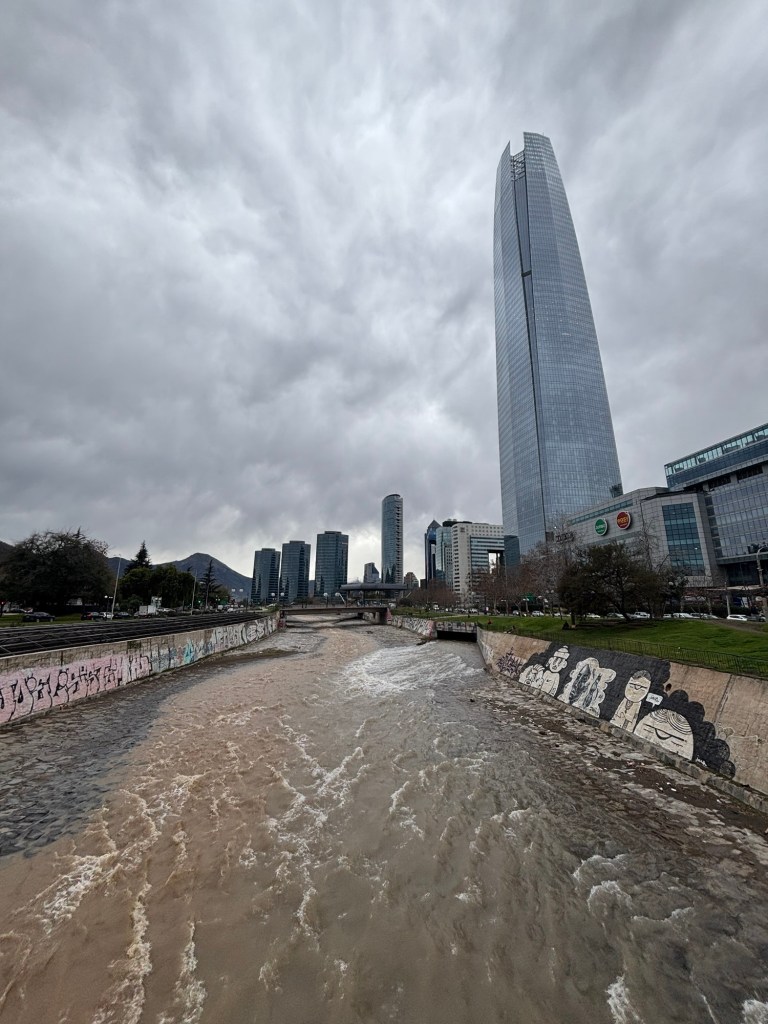
The heavy rains of the past couple of weeks have transformed the Mapocho River which runs through the city. When I arrived, it was little more than a steady flow in a largely dry canal. It’s now a roaring torrent that cuts above the din of the traffic when you’re close enough. Chile really is a country of extremes: when it rains here, people have to be prepared for property damage and flood control, even up here in the mountains.


By the time I reached the car park at the foot of Cerro San Cristobal, it was already half past one, and a lot of city folk had come to the same conclusion as me: that is, that it would be nicer to go for a walk today, rather than tomorrow, when the scheduled rains are due to come down hard. Parquemet was full of cyclists and runners, as it was on my last ascent now three weeks ago, but after a flying visit to the Japanese Garden – which was probably the noisiest zen garden in creation, thanks to it being located within a Hispanic capital city – I ducked off the road, following one of the many forest tracks intended for downhill mountain bikers. But for a lone jogger, I had this route to myself, which meant it was alive with wildlife.

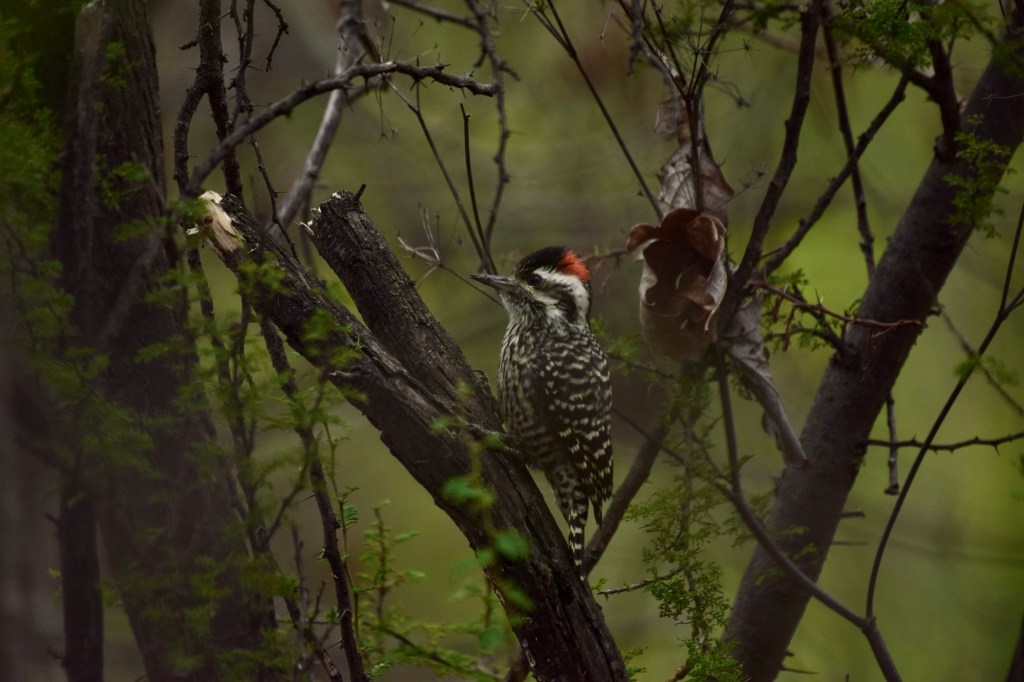
The first critter to show up was a woodpecker. I never did find the famous Magellanic woodpecker during my visit to Patagonia – a very good reason to come back someday – so this striped woodpecker or carpinterito is my first in Chile. Like most woodpeckers, it was a nightmare to capture on film, being in the darkest part of the forest, moving constantly and under a dark, overcast sky, but I just about managed a couple of shots before it disappeared among the trees.


A large flock of finches followed me along the spine of the cerro, feeding among the dead foliage at the side of the path. The siskins here look and sound a lot like the ones back home, but the sierra finches are really rather special. I saw some of these pretty birds in Cusco, but in Santiago they’re essentially garden birds.


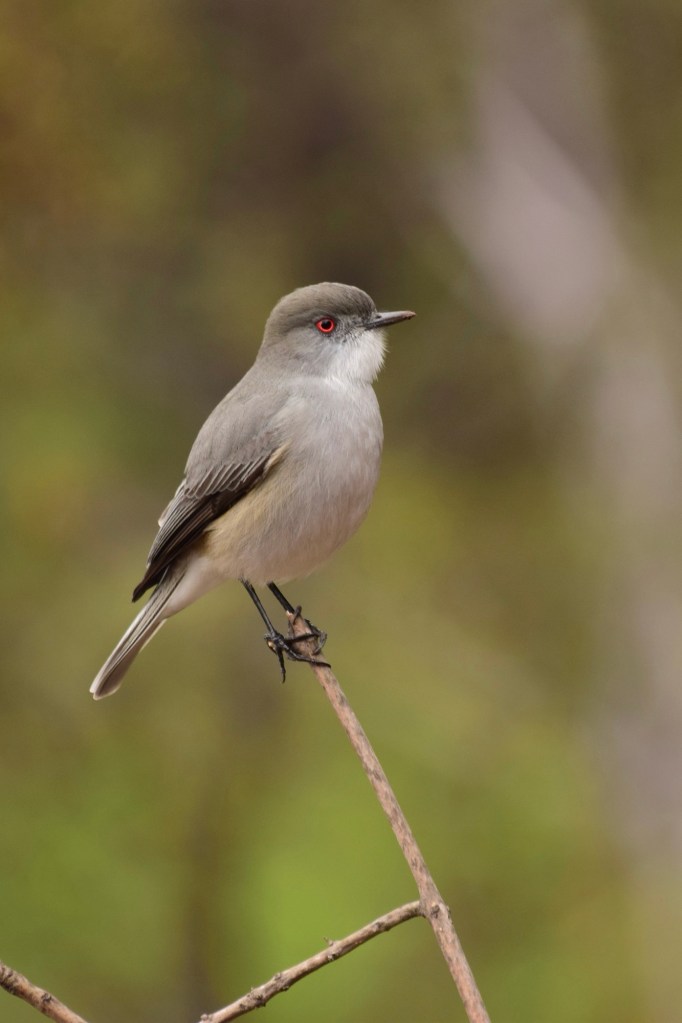
I hoped I might find some of the pretty diuca finches that are so common at school. There weren’t any on the cerro today, but I did keep running into diucons, their fiery red eyes even more obvious in the midday light than they were the other day, when I was shooting into the sun.


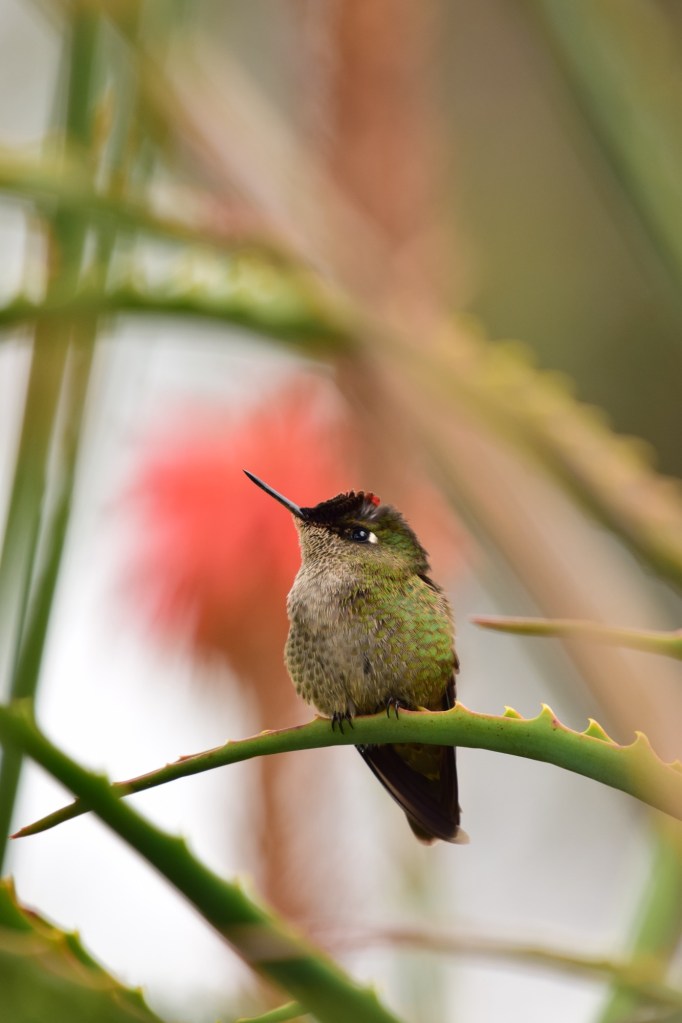
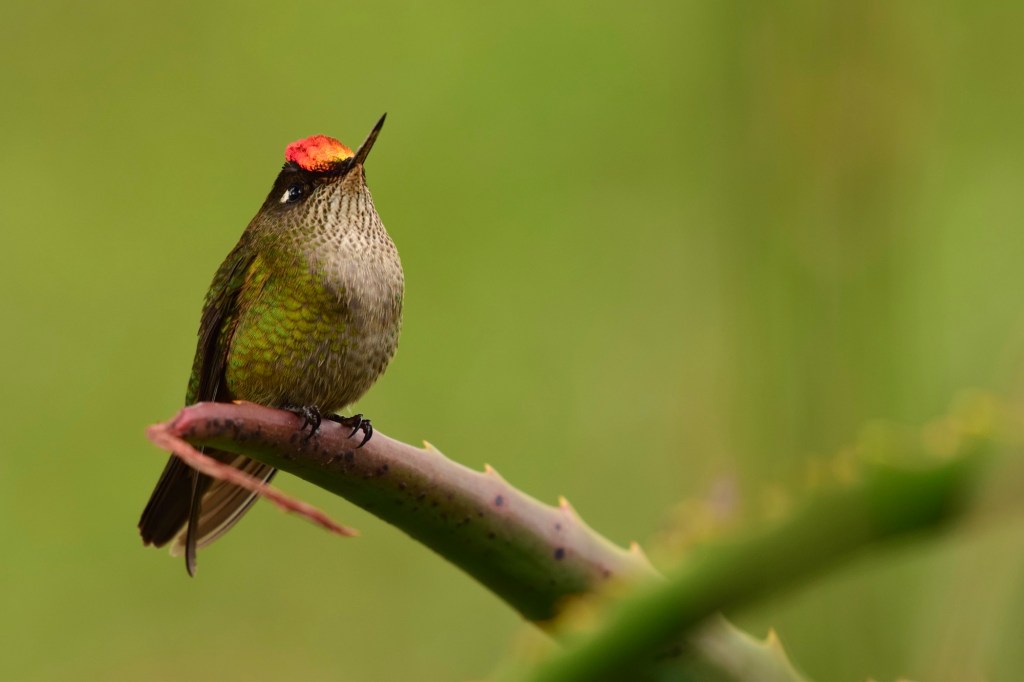
The best find of all, though, was a bird I’ve become very familiar with here in Santiago. I hear them every single day, and see them at least three days out of seven, whenever I should be near a poker plant. The green-backed firecrown is probably Chile’s most well-known hummingbird, since it seems to have a home on even the busiest streets in the city centre.


The last time I had a close encounter with one of these living gemstones, I didn’t have my camera on me. This time, I came prepared. Firecrowns are fearless little creatures, driven by an insatiable hunger that is a side-effect of their rapid metabolism – so, once again, I was able to sit quite close and watch, until the bird landed so close I could see its heartbeat and its tiny tongue tasting the air.


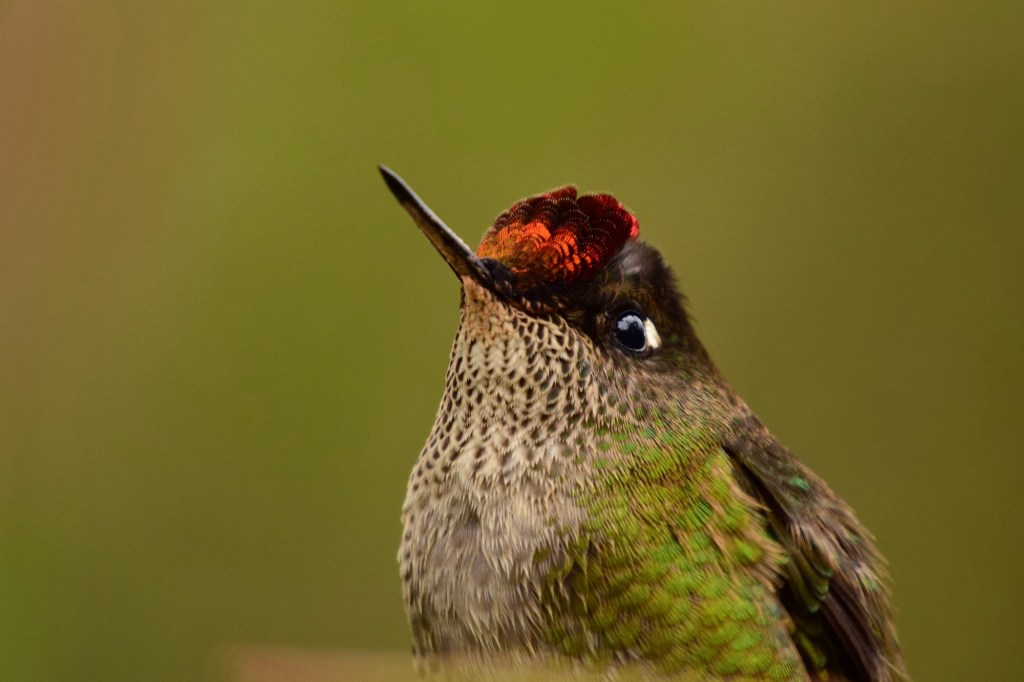
The firecrown gets its name from the male’s plumage, which really is quite something. Even with the naked eye, you can’t miss that sudden flash of scarlet when they alight upon a branch, just like hoopoes do with their crests when they land.


The secret is the iridescent sheen to its feathers, each one bending the light slightly differently depending on its position on the bird’s forehead. They can, of course, flatten and raise their crests at will, so I had to wait a little while before I was able to capture that ripple of red light.


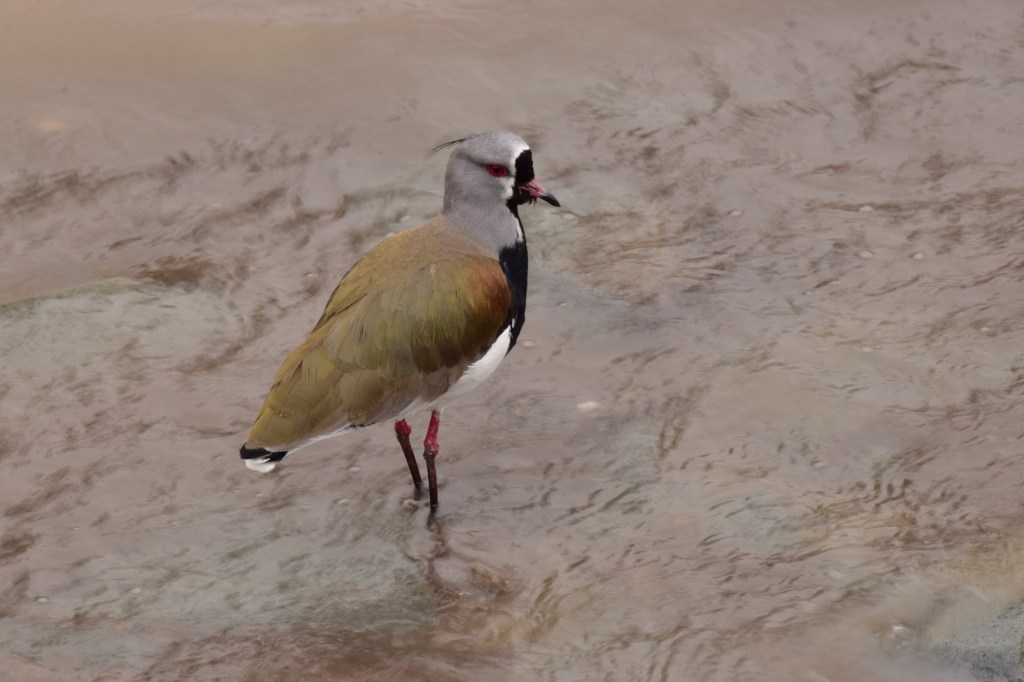
After spending a happy half hour or so with the firecrowns, I wound my way back down the cerro and used what little battery I had left on my phone to catch a bus back to Las Condes. I only stopped one more time, just before stepping on board the 409, to see a couple of Southern Lapwings that had flown in and gone down to the river. I see and hear these birds every day, too, as they’re a lot noisier than the firecrowns, but I haven’t yet had the chance to get a photo. They’re usually patrolling the rugby pitches in pairs, and they have a reputation for being ferocious with passers-by in the spring, when they have eggs or chicks near at hand.


Well, it’s getting dark outside. I didn’t expect to have such a good afternoon’s birdwatching on what was essentially an extended shopping trip, but sometimes, it’s the outings you don’t plan that turn out to be the best.

That said, I’ve done a lot of planning for next week’s mad adventure, so I hope that turns out for the best, too. It really is going to be rather special. BB x