The Notebook Kid

My parents used to tell me it was exceptionally bad manners to carry my drawing book around with me. Something along the lines of attention-seeking, they said. In my defence, the idea behind was quite the opposite. As a kid I was simply looking for just about any means of avoiding conversation. That it usually backfired and had people asking me about my drawings was beside the point. It was a defence mechanism and a habit I never really grew out of, as proved by the fact that even today, in my job as a teaching assistant, I still give classes with a sketchbook on my person at all times.

The hardest thing for me to do in any language is to explain my novel, for no other reason than that I have difficulty summing it up in English. It’s one of those books that requires a fair amount of backtracking, it being historical fiction. Until the day I find a means of summing it up succinctly in English, attempting to do so in Spanish or even Arabic should be beyond me. But that doesn’t stop me from trying. And as carrying the sketchbook around with me practically guarantees that somebody will ask after the subject, I put myself in the firing line on an almost daily basis. It’s a real bastard of a task, but I do have a knack for constantly setting myself up for challenges that are very almost beyond me. You’ve got to keep yourself on your toes, after all. There’s no use in securing the moat when besieging the keep is the perfect practice.

In two weeks’ time it will all be over and I’ll be at home, enjoying the second half of a forty-eight hour respite between shifts before I’m needed in Tetouan. But let’s not talk about that. It hurts.

Villafranca isn’t half rolling out the party parade for my final week. I’ve got a two day trip to the countryside coming up with my 3° ESO class, which will largely consist of forty-eight hours of birdwatching, hiking and singing campfire songs. And, of course, speaking the most beautiful language on God’s earth. Then it’s two more days with the Carmelitas, and a whole bunch of farewells there – especially to my seniors, who I will miss terribly when they’re gone. It was the Day of Santa Joaquina yesterday and the school took the day off to celebrate in style. Touchingly, the lower sixth put on a celebration last night for the upper sixth; a fifteen-minute sequence of dance from the entire year group, ranging from classical dance to salsa – at which almost all of them were reasonably professional. Something you wouldn’t expect in an English school.

For some reason I don’t get much contact with the upper sixth in either school. There’s just a handful of leavers in my Cambridge FIRST class, and the others know me only because they usually stop to wave and scream at me when they’re going past one of my classes on a Thursday afternoon. Kids. Last night I went to watch the show (under orders from lower sixth to photograph the event) and the leavers seized upon the chance to grab a conversation last night. Two on-the-go portraits and several photoshoots later, I was enjoying a decent conversation with two of the girls, who I’d met – apparently – on a night out in Alemdralejo once. I should show face to these of events more often.

It’s only recently occurred to me that I no longer need that warm-up period to get into the driving seat as far as Spanish is concerned. These days it’s simply a case of jumping in and off we go. I thought I’d settle any lingering doubts by taking that CEFR Spanish Language Assessment that’s been hanging over me for some time. When I left, it graded me at B2 level, which stung a little. I had high standards.

This time it came back C2.

So, officially, I’ve done it. Fluent. I already knew I could handle myself in just about any situation in Spanish now, but it takes something like an official grading to drive the point home. It’s easy to overlook how far you’ve got until you’re out of the native country. I recall feeling like I was failing massively when I left Olvera, only to find myself half-fluent when I got home. It’s all a matter of perspective.

Must dash – the upper sixth are graduating today and I do believe I’m expected. And tonight, the final gathering of the guiris in Almendralejo. It promises to be a grand finale. BB x
Sins of the Fathers: Lessons in Perspective from an Israeli

My biggest failing when traveling is overestimating my staying power. I’ll always give myself just a few hours, days or, on occasion, weeks more than I really need. Call it arrogance or a mistaken belief in my own capabilities – or perhaps, sheer idiocy – but it’s the one mistake I never fail to repeat, beating underpacking, undereating and underbudgeting to the top spot. I’ve been at this traveling game for a while now, honing my skills in Spain this year, and in all honesty, it’s a mistake I don’t intend to amend anytime soon.

Why? Because every second counts. Especially the last.

I remember backing out of my last week whilst crossing Spain in the trek of ’13, partly out of fatigue (I’d slept rough in the hills for several nights and lost a shaming amount of weight) and partly out of a harrowing loneliness, the kind of loneliness that really begins to gnaw at you after three weeks alone on the road with only yourself for company (you can only run through the script of your favourite musical with you playing every character twice, apparently…)

I was younger then; quieter, inexperienced, even more shy than I am now. I saw a shot at an early exit and I took it. But those last two days, trying though they might have been, served up some of the most memorable moments: swimming in the crystal waters of the Mediterranean with an entire cove to myself, being chased along the beach at night by men with torches, falling asleep to the sound of the sea and the eerie silence of the lighthouse doing its rounds on the cliffs. Pure Almería. Pure Spain. Pure living.

The same thing happened in Uganda. The last week felt like an eternity when all we really wanted was to be home in time for Christmas, but when the last night rolled around I realized what a fool I’d been to ever want to leave. And my own mother had phoned just days before telling me to make the most of the time I had left. I’ve been kicking myself ever since.

Even in Jordan – dear Jordan – I met my match in our last week. The veil was lifted a little; Amman was no longer the inhuman monster it had first appeared. It was friendly, warm and oh-so-very human. But just as it was starting to bloom, we were on the plane and out of there. Oh, I look back and laugh now; it’s so very easy to do. And trying though it was, I don’t half appreciate it all the more. We all need challenging experiences like that in our lives. And since I don’t go in for drink, drugs, sex or sports, where else am I to find experience but in the open road?

Jordan’s twilight was like a sunset over a battlefield – if you’ll forgive the expression. Suddenly, just for a moment, what was once so terrifying became beautiful. It made sense. The final hours can make all the difference.

Today it was just a couple of hours’ difference: a choice between the 11:25 or the 14:20. As usual I decided on the later bus, assuming I’d find something to do that would fill the hours. That something was looking very much like the first season of Doctor Who at eight o’clock this morning, when my limbs were still recovering from being scratched, scraped and strained in yesterday’s gorse-navigating adventure. A tempting offer.

That is, until I met Roy.

Roy was the only other guest in the hostel this morning. He was bound for Monfragüe for no particular reason beyond that it was a recommended spot, so I told him what he might expect to find and pointed him in the right direction. We’d got talking indirectly – as is so often the case when I’m involved – through a two-way conversation with the friendly hostelier about the impossibility of Spanish accents (a subject on which I consider myself reasonably well-versed). Roy, a native Israeli, had taught himself Spanish through the genius of Michel Tomas during his military service and, after reading Coelho’s The Alchemist, had decided to visit Spain, eschewing the post-military course for India, Australia and the Americas.

Naturally, Israel came up in conversation. I don’t remember how exactly. I think it was because I mentioned that I’d been nearby last year, when I saw the Golan Heights from the Jordanian side. He told me a little about his home, and let me tell you, it was refreshing to hear a little of the other side of the argument for once – or at least, an Israeli approach, as Roy’s was hardly the mainline view. Despite living in the Western World, the last three years have shown me nothing but anti-Israel sentiment. For obvious reasons, Jordan isn’t the best place in the world to go looking for a balanced view on the Israel question, but neither is my own Arabic class. Perhaps the study of Arabic makes us more sympathetic to the plight of Palestine?

I’m not entirely sure what it is, but I was brought up to idolize hooked noses and Jewish perseverance by a mother who spent a very long time searching for her own faith, so I’m not naturally predisposed to see Israel as the enemy it’s often made out to be. Nation and religion should never be mixed, and Israel is the example, but there is something more to a country that still values its faith. I could have visited last year… if I’d been ready. But I wasn’t. For me, Israel is more than just a nation. It’s more than an idea. It’s more than an Instagram on the West Bank. It’s a dream, and when I saw the sun setting over those mountains and went weak at the knees I knew I wasn’t ready. Israel could very easily destroy me… because I fell in love with it. And my track record for destructive love affairs would back me up.

Roy, however, gave me exactly the answer I was looking for. One of hope, understanding, of looking forward rather than back. That, he claimed, was the problem in Israel: there is too much emphasis on the past. The old Holocaust clause; bring it up and you’ve lost the argument. Does Israel deserve the entire landmass? You might ask, does Mexico belong to the Aztecs, or does Britain deserve its former empire? Hardly. Israel has as much right to the West Bank as the Asturian knights did to Granada. These things are gone. History is to be studied and learned from, not brandished as a weapon in court. And speaking of courts, there’s a good deal of finger-pointing going on all over the world, but what good does it ever serve – especially when the culprits are two generations dead and buried and it’s their descendants taking the flak? What is done is done. What is important is to dream and to push on towards a better future… or whatever idealistic tripe should fill this gap. 

My apologies. An earthworm could have phrased that better. Personally, I’ve never believed in Utopia, nor would I ever want it. I only believe in hope and the good that it can do. As for the present, I take the Doctor’s approach; the world is perfect the way it is: that is, imperfect. The balance of good and evil, right and wrong. It’s that imperfection that makes us struggle to create a better world, and it’s that struggle that makes us so very human. I see that as perfection. Things could be so much worse than they are now.

Roy’s was a balanced opinion. Here was a man who’d gone through the Israeli military service telling me not of his blind hatred for the Arabs – as a couple of Palestinian cabbies would have had me believe – but of his desire to see the country where The Alchemist began. What is that if not human? There is no “us” and “them”. There never was. There never will be. There is only the future. And it is by looking ahead that we move ahead. Ever tried running backwards?

This is why I travel. This is why I give myself those few extra hours: for conversations like these. For Roy, for Simone and all the other brief and wonderful encounters on the road. It restores my faith in humanity. Trump, you should really give backpacking a try someday. It might just change your world.

I hate to end on a quote, as it seems so abominably unoriginal, but I’ll break my golden rule just this once because a certain Allan Quatermain spiel is simply crying out for this post. BB x

“It is the change, the danger, the hope always of finding something great and new, that attracted and still attracts me.”

Henry Rider Haggard, Child of Storm

Frustration

The year abroad, as is so often said, is supposed to be one of the best years of your life. Erasmus students say it. Universities say it. Even the interns say it. Heck, I’ve probably said it at least four or five times already. It’s about spreading your wings, perhaps for the first time, and branching out into the outside world.

The British Council sent me to Villafranca de los Barros, a middle-sized municipality in the Tierra de Barros of some fourteen-thousand inhabitants in Extremadura, a Spanish region largely overlooked by all but the most intrepid of tourists. That suited me just fine – after Amman I was practically desperate for the lull of a country town – but you’d think it’d be no place to start looking for contacts in the wider world.

Like me, you’d be wrong. Over the last couple of days, it’s as though somebody stepped on the accelerator pedal. A visiting school group from Lugoj, Romania, shook things up by giving me an unexpected two days of bilingual art class, working as both translator (Spanish into English, which the Romanians had a better grasp of) and art teacher in various exercises using Dadaist motion-capture techniques, light and shadow, cartoon creation and plasticine modelling.

Somehow, my vocabulary was just about up to the task. An easel, for the record, is a caballete.

As it turns out, the leaders of the expedition were so impressed by my attempts that they asked me to join them in July for the International Arts Festival held in their hometown, board and lodging all paid for. All I’d have to look into would be the flights.

In July. When I’m supposed to be in Morocco.

The following day I went out for lunch with the Romanians and their hosts from Meléndez Valdés, where one of my English-teaching colleagues put before me a proposition to spend the May Bank Holiday weekend with the English department in Morocco. Not one to turn down anything travel-related unless backed into a corner, I naturally said yes. Fortunately, I had no prior engagements that weekend. I’m booking that tomorrow, so more on that later.

Anyway, the lady in question offered to drop me off in Almendralejo afterwards, there to meet up with the Escuela de Idiomas and set off for our weekend language exchange in Burguillos del Cerro. In the car we discussed Morocco and she put before me another proposition, more enticing by far: Egypt.

You might remember my failed attempt to travel to Egypt last year; the one where Andrew, Mack and I were turned down because of the colour of our skin. Granted, it was a fair cop. In retrospect, crossing the Sinai peninsula by bus does sound a little hit-and-miss, to put it lightly. I’m still damned keen to see the place, if not for the fact that it’s bloody Egypt – enough said, surely – then for the simple fact that the place is so devoid of tourists at the moment. Ten years ago the pyramids and the temple complexes would have been heaving. These days, people are afraid. I suppose they have their reasons. They also have reason, which I tend to lack from time to time.

When? Oh, that’d be July, too. A couple of days after returning from Romania, to be precise.

The same teacher has her oposiciones coming up the following year and is keen to travel as much as she can before the year is out and she is thrown back into the impoverished, restricted life of a student once again. So she’s traveling to Thailand in August and – you guessed it – asked if I wanted to join.

Baby, I swear it’s déjà vu. This is Jordan clashing with Archie’s grand Central American adventure all over again. Only this time I genuinely want to do both. One of the main advantages of both Romania and Egypt – the two that are actually feasible, given the time frame – is that I would be traveling with Spaniards and consequently speaking almost entirely in Spanish. What that equates to is almost an entire year  working on perfecting my grandfather’s language, which is absolutely amazing for my Spanish.

As for my Arabic, it leaves much to be desired.

What I have to keep reminding myself is that Arabic is not a career path for me like Spanish is. I love the Arabic culture, the beauty of the language, the history and the world that is North Africa… but I’ve never wanted to work in politics, or diplomacy, or the Army, or even as a translator, and I’d like to think that I’ve at least enough morals not to even go near the oil industry. Besides, Spain feels like home. It always has. Therefore it has and always should occupy the greater part of my mind.

That said, I have to spend an absolute minimum of four months in an Arabic-speaking country. There’s simply no going around that. What with the sudden arrival of so many opportunities, it’s not just frustrating that I’ve got this quota to fill – one that I genuinely want to fill. It’s brutal in the extreme. If only I could stay abroad during Fresher’s Week and gain myself one week more… but I have prior commitments – not least of all the upkeep of this blog – that require me to be back in Durham before September is out.

I’m not saying I wasn’t warned. We were explicitly told on several occasions that taking up an eight-month British Council Assistantship would royally screw over your second language. Put bluntly. And I fiercely maintained that, come all the paradoxes of Hell, I was going to go for it anyway. Because I’m stubborn like that. And it’s been one of the very best decisions of my life, one that I don’t regret for a second, and an experience that I’ve loved so very much that I’m finding it very hard not to apply for the very same Villafranca de los Barros in a year’s time. The fact remains that I need that four month quota, and the way things are going, it’s looking like a month and a half on either side. Which isn’t exactly ideal.

Do you ever feel like time is running out on you? I do. So very often.

I’m going to do what anyone with half a brain would do in my situation: consult the parents. I had to back down from South Africa for various reasons, and I really don’t like quitting. Especially when there are so many people counting on me. Oh, to be free from the shackles of academia! 2017 can’t come soon enough… BB x

Griffonheart

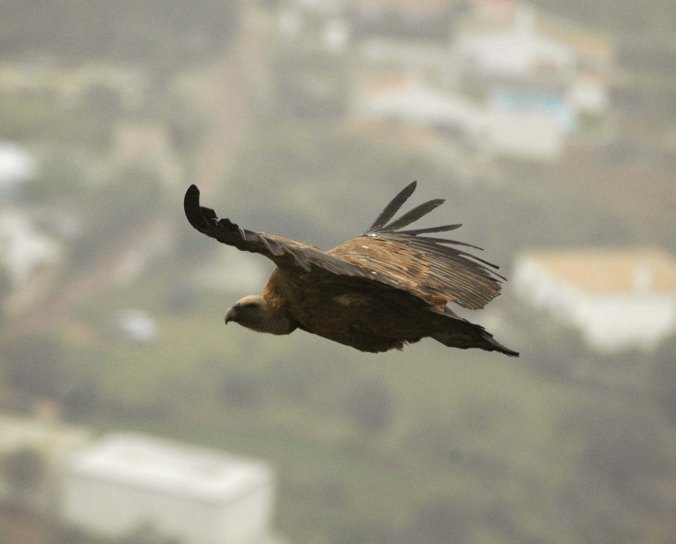
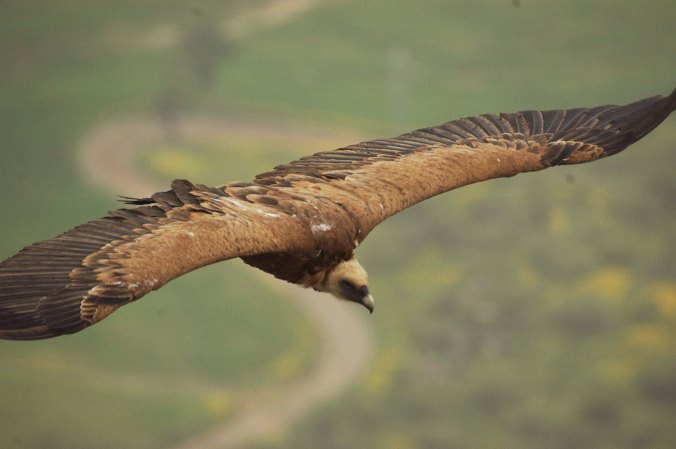
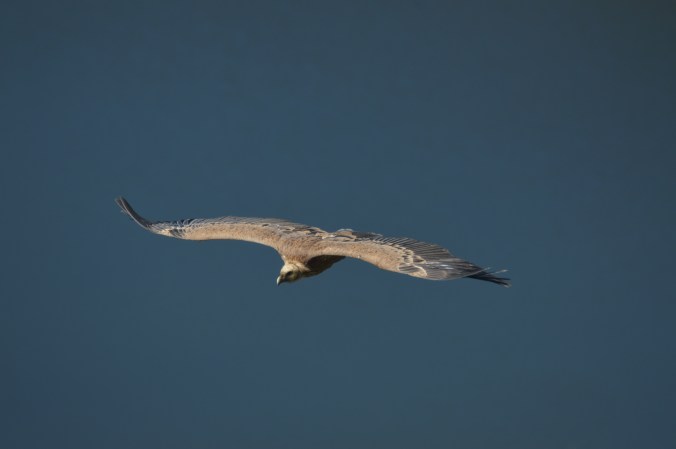
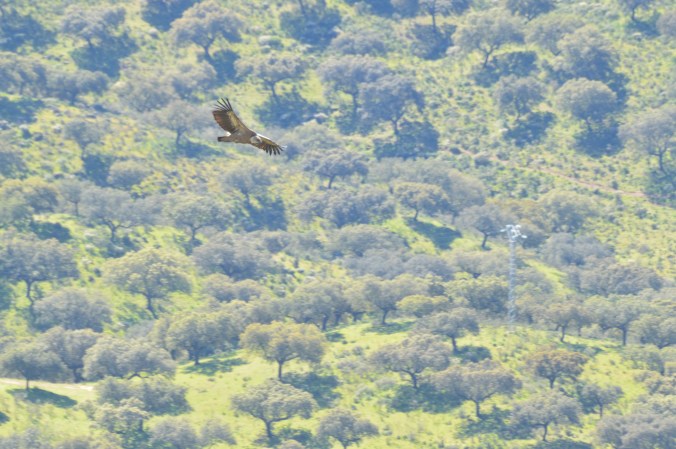
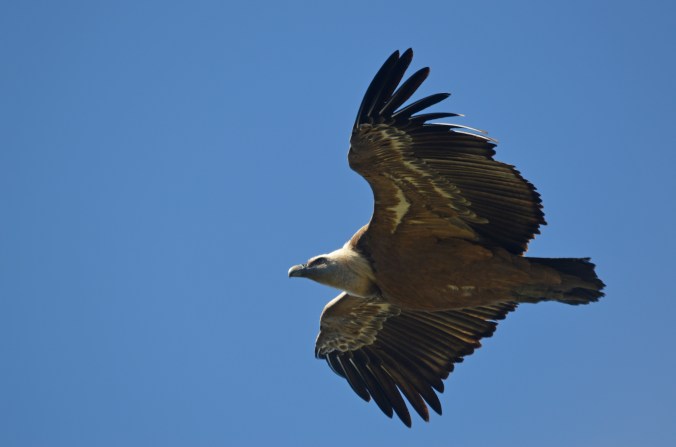
Sometimes, when a bird flies low over your head, you can hear the rush of wind through its wings. Swifts do that, from time to time. Swifts and pigeons. It’s a quiet, singing sound like a sudden release of breath, over and gone by the time you’ve worked out where it came from. Now try to picture the same scenario with a nine-foot wingspan. The result sounds something like a gale, a genuine roar of wind, every bit as impressive as those giant wings. This is Monfragüe and this is a griffon, truly one of the most spectacular creatures on the planet.

Griffon

I don’t really know what it is that attracts me to vultures so much. They’re not the most attractive creatures on the planet. Their heads are snake-like and feather-bare, their eyes are cold and sinister and they spend their entire lives feeding on dead things. If birds are supposed to sing, vultures sound like they have a bellyful of iron filings when they make a sound – and that isn’t often. But for some reason, I’m obsessed with the damned things, and always have been.

DSC_0610

Extremadura is a very special part of the world, but doubly so if you’re as much of a bird nut as I am. The immense blue skies are almost always dotted somewhere in the middle with a black speck wheeling round and round on the thermals: kite, eagle or vulture. I grew up in the south of England where the largest soaring bird you’re likely to see is a rook, and I still remember the sheer thrill of seeing my very first vulture when I was about nine years old. For me they represented Valmik Thapir’s India, of cliff-forts and desert kingdoms. To see them wheeling lazily about the Spanish sky was like something out of a dream. And so the love affair with the griffons began.

5385452975_2c3babecc1_o

Since then, they’ve got me stranded in the mountains, terrified my little brother, warned me of thunderstorms and – in quite possibly my favourite travel anecdote to date – they even got me arrested by the Spanish military police. I kid you not. Apparently photographing vultures isn’t a believable excuse for wandering about the countryside alone at fifteen without one’s passport…

4555278683_0c053028e4_o

(Not even for results like this…?)

If I’d had any idea what kind of scrapes my passion for vultures would get me into, I wonder whether I’d have had second thoughts. Somehow I doubt it. Something tells me I’d have found my way to the same spot sooner or later.

DSC_0761

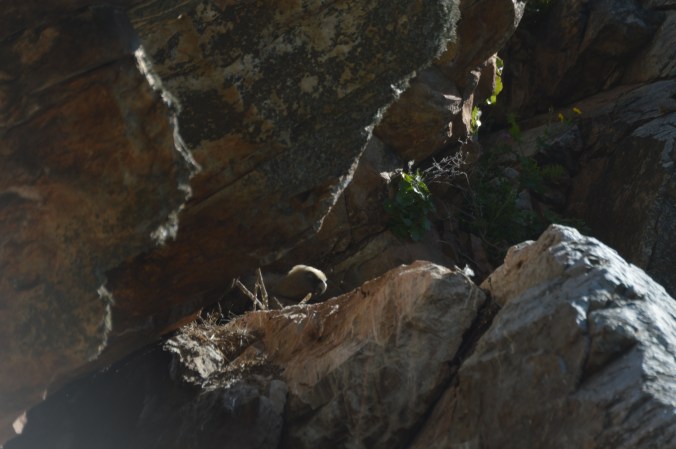
There are four kinds of vultures in Europe, and all four of them can be found in Spain – if you know where to look. The griffons are the most obvious and by far the most numerous, nesting in colonies that can number as many as a thousand strong. The other resident is the far rarer black vulture, recognisable by its sheer size alone; fully-grown adults measure three metres from wingtip to wingtip, making them one of the largest birds in the world. The Egyptian vulture is a smaller summer visitor from Africa, where they eat ostrich eggs by smashing them open with stones. But it is the fourth and final that is the most famous: the lammergeyer, a golden-bodied, diamond-tailed king of the skies that feeds almost entirely on bones. I’ve only ever seen one once, at an incredible distance, whilst in the French Pyrenees some seven years ago. It remains one of my greatest dreams to go chasing after the legendary quebrantahuesos, ‘the one that breaks bones’.

Like I said, I’m hooked on the creatures.

DSC_0857

I have to admit, they do have some seriously menacing eyes…

Dad was in a grouchy mood and didn’t let us stay very long. Must be something to do with the distance from Villafranca to Monfragüe (which, I should point out, is as beautifully in the middle of absolutely nowhere as are all of my favourite destinations). I could happily have spent five hours and more just stood atop the castle with the vultures wheeling about all around me, or sitting under the cliff and watching them plummeting out of the sky and onto the rock in a fierce rush of thunder.

DSC_0725

Needless to say I will be back. Everyone has their vice. Some like their drink, some like their fast cars, others have difficulty sitting still. I have this peculiar fascination with vultures and I’m not even close to understanding them. Yet. BB x

Pilgrim

That’s the first time I’ve ever walked twenty kilometres to get home after a night out. Suffice to say, I also sincerely hope it’s the last. Talk about a walk of shame…

Why did I do it? Because I could? Very possibly. I think it was more the thought of sitting shivering in the dark until the nine thirty bus that made me decide to walk the distance. It certainly wasn’t stinginess on my part; the Almendralejo bus fare is a paltry 1,31€. Perhaps I thought I could beat the earliest bus back to Villafranca on foot. That’s vaguely logical… in a very roundabout-Ben-way-of-thinking. But then, it was five forty-five in the morning. I don’t think I had any real sense of what I was doing. I just remember saying to myself “Alright, let’s do this” before marching off into the darkness like a low-budget Leeroy Jenkins.

As the crow flies, it’s just under twenty kilometres from Almendralejo to Villafranca. I had to take a detour to cross the motorway, so I reckon I clocked just over that. At night the distance looks deceptively close; the twinkling orange lights of the polígono merge with those of the hospital in the middle of the two towns, presumably so situated for industrial accidents in the field. Most of it is traced by the Via de la Plata, the pilgrim road to Santiago from Seville, so it wasn’t exactly a challenging hike. It’s also probably the first time I’ve been sincerely grateful for the vast, empty flat of the Tierra de Barros: navigation is as easy as pie when the nearest hills are a good forty kilometres behind your destination. 

The whole walking-at-night bit didn’t bother me in the slightest. I’d put that down to a six a.m. lack of awareness too, but then, it never has. Of all the things that frighten and frighten horribly in this world, I’ve never been afraid of the night. I learned a long time ago to consider night as just another shade of the day. It’s the same world, only somebody turned off the lights. No deep-seated fears of a shadowy assault or mugging either: I do believe that even the dullest criminal mind would have more sense than to be lying in wait in the countryside in the small hours. The countryside is safety. It always has been, in my eyes. In fact the only mildly unsettling thing in the whole walk was the occasional startled growls of the caged dogs in the farmsteads that dotted the early stages of the route. Alsatians, most of them. It’s a popular breed here. I remember saying to myself “Why can’t you people just keep cats?” and not for the first time. 

Besides the dogs, the soundscape of the early morning Tierra de Barros was really quite magical: roosters crowing, ravens croaking, the tinkle of a pipit overhead and, from somewhere far across the plains, the lonely cry of a stone-curlew. All of this as the sun rose dim and yellow into the clouds on the horizon. My feet might be punishing me two days later, but I don’t regret that walk for an instant. I just don’t think I’ll be repeating it all that soon. It’s a bit like that Spain north-to-south adventure of mine a few years back: it was there, it had to be done, and I did it. Now I can move on.

I don’t think I even stopped for one second to consider what I’d do if it started to rain. The forecast for the weekend was set to bucket it down. I guess I forgot all about that. That I will blame on my fatigue. If it had rained, I’d have been well and truly drenched, and in my best clothes, no less. Why is it that I’m always wearing my best clothes when I set out on these ridiculous adventures? At any rate, it did; a royal thunderstorm hit on the following night, sheet rain, lightning and all the works. Luckily by then I was holed up in my apartment with a cola cao and The Mummy: Tomb of the Dragon Emperor on TV. Someone up there likes me.

I’d like to think that it’s due to foolish misadventures like this that I get to see a side of Spain that most modern travelers simply pass over. You could be forgiven for thinking that Spain, like much of Europe, was fully humanised a long time ago: the sweep of olive plantations and vineyards in the Tierra de Barros certainly gives that impression. But all you have to is close your eyes and listen: the world survives on the fringes. The stone-curlews of these tilled fields and the mournful plovers that ply the once-pristine sands of the raped Costa del Sol hark back to an older Spain, one more ancient than even the oldest of the moorish forts that dot the distant hills. It puts me back in touch with that world to hear them again, just as though I were playing a record from a forgotten world.

It’s not a purely avian nostalgia. As I arrived on the fringes of Villafranca I saw another scene from a bygone age: a muddle of tents positioned about a small campfire where a couple of ragged-looking men stood cooking a light breakfast. Spain’s native gypsies (if such a term is not a misnomer) are a heavily romanticized lot and were mostly squeezed out if their old ways by government programs decades ago, but this new generation of travelers – Romanians, mostly – have taken their place. When I say tents I don’t mean the bright canvas of a modern traveler, nor the UNICEF-stamped donations you might encounter in a war-torn country. These ones might have been cut out of a picture book from the 1930s. Situated on the very fringes of the town, hidden from sight by the town’s waterworks, it’s the very definition of a gypsy encampment. And I thought such echoes had long since faded into history.

You don’t see them in Villafranca proper. The only encounters I’ve had with them so far have all been in Dia supermarket, where they are instantly recognizable by their clothes, by their language and by their complexion; a rich, ochre-brown, marbled like the soil. I’d like to get to know them, to know why they’re here, where they came from and what other stories they might have brought with them, but the townsfolk only have dirt to say on their account. And in my propensity for romanticising the underdog, am I really any better?

Seeing the Romanian encampment made me think of home for some reason, but I was really too tired by then to dwell on it for long. It was purely because I was still moving that I didn’t collapse from fatigue; on the two occasions I paused to get my bearings my head began to spin and I very nearly dozed off. It was only later that night, when sorting through my music collection and The Land Before Time‘s Whispering Winds came on, that my thoughts took me home again. I cried. Profusely. I always do when I hear that one. Damn you, Don Bluth, for producing a film that still brings tears to my eyes some twenty years later. Damn your genius.

Many auxiliares use the holidays to go home to be with their families. Some of my closest friends out here have done just that. It’s a very sensible move, but it’s only when I stumble over such memories that I remember how vulnerable and human I really am. Whispering Winds is on my iPod for exactly that reason; 1608 times around I can put my weaknesses aside and soldier on alone, but there’s that 1609th song that’s there to remind me that neither home nor family is ever truly put aside.

I won’t be seeing home until August. I won’t have time to do so until then, since the third and final leg of my year abroad across the Strait begins almost as soon as I’m done here. Fortunately my parents are coming out to visit me in a couple of weeks, so I don’t have to. I won’t deny that I’m looking forward to having a car at my disposal – being in Europe’s bird capital and relying on public transport is nothing less than tortuous – but more than that, I miss my parents. And there’s absolutely nothing wrong with that. Sometimes I need to remind myself of that. There’s only four of us left; my family is precious to me, no matter what impression my aloofness might give.

A lot of things have happened over the past year. Some good, some not so good. Now that I’ve got the time, I’m retreating for a couple of days to the one place in the whole world that makes me truly happy. It’s a place that has answers… of a sort. My rock, my cradle, my very own Shangri-La. BB x

Be Kind, Rewind

My primary function over the last week has been more akin to a substitute CD player than a teacher. The Epiphany term is drawing to a close and mock exams are very much in fashion. The trouble is, the school’s CD players are acting up, and have been for years. I was called in to help – in my free time, I’ll have you know – to ‘improvise’ a brand new listening text for them on the Tate Modern.

And I’ll also have you know it was totally worth it. Whipping up a different, two-minute text on the same subject to suit different ability sets every time might sound dull, but as a writer I found it deliciously challenging. And as a former Langtonian, to whom improvisation comes quite naturally (for want of a better term beginning with B), it’s something I’m rather good at.

I’m now quite used to doing favors for my school. I feel I owe it to them every time I get a lesson off (which isn’t often, but it does happen from time to time). But that’s a mercenary approach: it’s more because I simply love what I’m doing. If I didn’t have these occasional hankerings to go adventuring at the weekends, I don’t half wonder whether I’d throw my day off out the window and work Fridays as well. It’s not as though I don’t already come into school on the occasional Friday almost hoping to be asked to take a lesson. I really must be a few screws loose.

I appreciate that I’ve been damned lucky to have landed such a jammy set-up. I wouldn’t say it’s the best shift in the world – the kids are about as rebellious as you might expect from teenage Spaniards – but it comes very close. I’m still going to strike out for somewhere new in the year after Durham – and I’m thinking one of either Aragón, Andalucía or a different part of Extremadura – but I’m almost 100% set on coming back to Villafranca in September 2018. I mean that. It’s not the most exciting place in the world to live, but it’s a wonderful place to be from a people perspective. The only thing I lack is a friend circle of people my own age, and that’s due in part to my Olvereñan fatalism and my awareness that this was always going to be a year in transition; perfect for getting a taste, impossible for laying down roots.

Sadly, I’ve become painfully aware that there’s only ten teaching weeks left. It was Brocklesby who alerted me to that; beforehand, I’d barely given it thought. That does mean ten more weeks of new lesson plans, of riotous primary classes and of absent teachers, but the ups outnumber the downs.

And best of all, it really is spring now. I forgot to wear my hoodie to sleep last night as I’ve been in the practice of doing since October (Spamish duvets are stupidly thin) and I didn’t notice until I put it on this morning. Spain’s about to put on her very best dress and I can’t wait to see what her stylist has done with her this year. BB x

  
PS. One of my colleagues just came to the staff room to tell me that despite the difficulty of the text, quite a few of them actually overachieved, so it shows they were listening after all. Which is kind of what you’d hope in a Listening exam, but there you go. It’s little things like that that make my days! They were also shown the artwork which I chose to talk about, which just so happens to be an old enemy of mine. It’s Andre’s Equivalent VIII (The Bricks). I’ve met it once before. The students hated it. The teacher hated it. And if I’m perfectly honest, out of my entire art class of 2011, I couldn’t stand it either. Great minds, eh?

Tractor Beam

Andalucia and Extremadura have plenty in common. They’re both southern, they’re both gorgeously hot and sunny most of the time and the language in both of them borders on the incomprehensible. So you can understand why I applied for both when I got myself into this auxiliar malarkey just over a year ago. My third choice, unmentioned since my very first blog posts back in May, was Cantabria. Land of cows, snow-capped mountains, green hills and tractors. The Iberian Alps, the Spanish Yorkshire. About as far away from the dusky south as you can get. So what in Creation drove me there this weekend – besides a frustratingly slow bus?

I’ll put it like this. You can’t keep a good man down, and you most definitely can’t shut up a wanderer in his house for long.

Besides hopping down to Olvera for Carnaval, I’ve done no traveling since Madrid back in the first week of January. That’s only a couple of months back, granted, but compared to the madness of last term, I’ve been doing a lot of nothing of late. In any case, I got a bad case of itchy feet last week and, watching the weather forecast, I made a spontaneous decision to visit my dear friend Kate in Cantabria – on the other side of the country. She’s working as an auxiliar up there and we’ve got much the same setup, right down to the state/private school split. If you haven’t already been keeping up with her adventures, check them out over at Langlesby Travels. Besides being jolly good fun, it makes for a lot easier reading than most of my biweekly outpourings!

I’d planned on two full days up north, as for the first time since I started trawling the site last year there was a super-convenient BlaBlaCar bound for Santander at midnight on Thursday, meaning I’d be in Cantabria for seven o’clock in the morning. It was just too good to be true…!

And so it proved. After a fourth BlaBlaBlunder where the driver changed his mind and shifted the drive six hours earlier, bang in the middle of my afternoon classes, any hopes of arriving early were dashed, so I resigned myself instead to one day in Cow Country and one whole day on the bus. Thanks, BlaBlaCar. I feel like it’s important to point out that as a system it’s by no means foolproof, as so many headstrong young things would have you think. It’s done me some very good turns and I do believe it really is the way forward, but it’s screwed me over in equal measure. You win some, you lose some. In that sense, perhaps BlaBlaCar is a good metaphor for life.

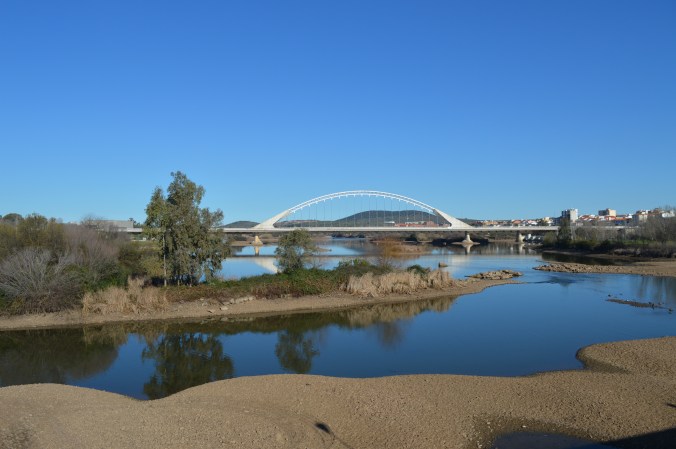
The journey began, as they so often do, in Mérida, where I found myself on the Roman bridge, scanning the reeds for a ridiculously early little bittern. Villafranca and its endlessly repetitive surroundings lack a viable soul spot, which Mérida offers in the ever-changing Guadiana. Mérida may always seem to be lacking something, but the river has never let me down. There’s something beautifully elemental about rivers. This one in particular is never the same. The first time I saw it, the river was playing host to several families of purple gallinules, frolicking about in the reeds. A month later the whole stretch was clogged with water hyacinth. Three weeks after that, half of it had been siphoned off and the rest was being heaped onto the banks by a team of gumboots. This weekend, the river was barely ankle-deep, with only the deepest stretch in full flow – only to be magically restored to life two days later. Oh Guadiana, you baffle me.

DSC_0003

What gives, Guadiana?

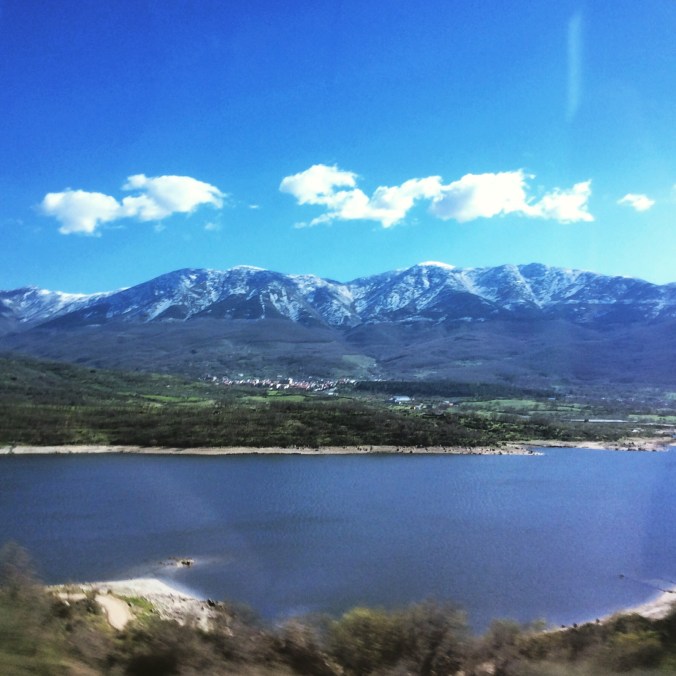
The journey north was fairly uneventful. I spent almost all of it trying to read Cavell’s Moghul, but more often than not staring out of the window at the changing scenery and, before sundown, came to the conclusion that Cáceres province truly is one of the most beautiful places on Earth. If you don’t believe me, visit Plasencia. If Spain has an Eden outside of Doñana, it may be found there.

img_3567

Snow on the mountains in Castilla y Leon

Despite reassurances from the driver that we were perfectly on schedule, we still pulled into Torrelavega a full twenty minutes late – which, coincidentally, is the exact amount of time I’d factored on giving myself to get from the bus station to the train station. Sprint as fast as I did – I may not be much of a sportsman, but I consider myself half-decent over a short distance – I arrived at the station just as the last train was leaving. Last year’s BB would have cried in frustration at this oh-so predictable turn of events; this year’s BB shrugged it off and chartered a taxi. It ended up costing me almost as much to go the last few kilometres to Cabezón de la Sal as it did to come all the way from Mérida, and at least three times the train fare, but that’s taxes for you. I’ve told you before… I don’t like taxis. Period.

DSC_0051

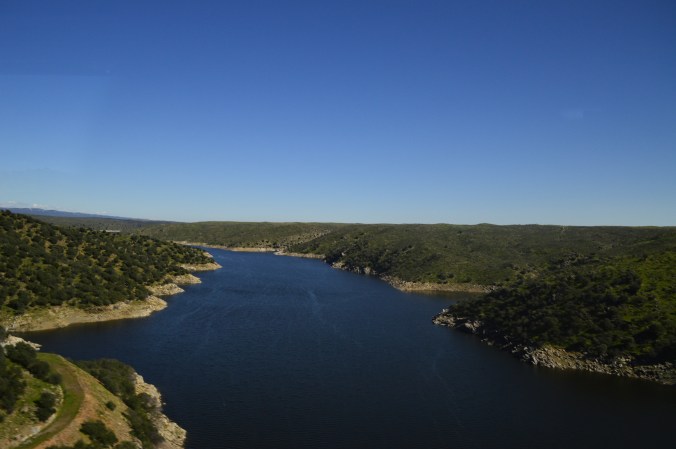
The River Tagus in the plains of Caceres

At any rate, I made it to Cabezón de la Sal and, after wandering aimlessly in the dark, lost in the Alpine beauty of the place, Kate finally found me, introduced me to her friend Almu and I had my southern accent swiftly corrected. That can only mean one thing: all those weekends in Olvera are paying off. They’ll make a guiritano out if me yet.

The following day’s adventures require a post in their own right, so I’ll give them that much. Keep your eyes peeled for the second installment! BB x

The Many Faces of Lisbon

For a city that’s only a few hundred miles from the Spanish border, Lisbon and its environs could hardly be less Spanish. I guess I naively went in expecting Portugal to be no more different from Spain than, say, Germany is to Austria, or England to Ireland. Once again, yours truly demonstrates his supreme capacity for some Langton-style bullshitting.

This is a very last-minute holiday, even by my standards. Bus tickets bought, hostels booked and maps drawn less than twenty four hours before departure. And this time I don’t even speak the language. Either I’m getting more confident or more careless. So far, so good, so I’ll assume the former.

Lisbon is really quite something. As capital cities go, it’s a treasure. It’s not too big or crowded so as to set a country bumpkin like me off, and it’s not too small so as to be lacking in life or things to do either. On the contrary, for its size, it’s positively crammed with interesting sights to see. And with the Lisbon Card on hand – a natty little device that gives you free access to all forms of public transport for one, two or three days – getting around the place couldn’t be easier. Heck, it’s even entertaining to ride the Metro just for the sake of it, with that kind of freedom.

It’s also a tantalizingly great location for one of my favourite hobbies: people-watching. Capital cities tend to have a wider racial mix than country backwaters, so this is something that never fails to amaze me, but Lisbon’s got a damned beautiful pot-pourris of ethnicities going on. West African immigrants, in all their multicoloured splendour, rub shoulders with Berbers from the Rif and the Portuguese themselves, who are surprisingly different from their Hispanic neighbours. Beetle-black eyes, lemon-gold skin and blonde hair are a lot more common here than the dusky Moorish beauty of the Spanish south. As in Extremadura, I find myself trying to imagine these people dressed in seventeenth century clothes, wandering the streets of a pre-earthquake Lisbon or setting foot on the shores of the New World and beyond in the Age of Discoveries.

Forgive me that splurge into racial obsession. I’ve always been hooked on the beauty of the various peoples of our world. For every shade except my own, in fact. A reverse racism in the truest sense of the word. Fortunately, I’ve since learned to love my own nation for all its flaws, recognizing my angst for what it was: angst, some dim leftover from when my ego was torn to shreds in the wake of my first relationship. The healing process sure has been long enough in the completion.

Lisbon, Benjamin. You’re supposed to be talking about Lisbon.

I took a train out of town to the former royal retreat of Sintra, up in the mountains above the city. Once again you’ll find yourself in a world away from picture-book Iberia: with all the pine forest-covered granite slopes and the pink and yellow spires of the Neuschwanstein-esque follies poking out of the trees like decorated Turkish delights,  you might as well be in Austria. That, and Portuguese sounds decidedly Eastern European with all those zh and sh sounds. The gigantic überfolly that is the Palacio de Pena, the last word in Romantic architectural orgasm, looked just too ridiculous to be true on arrival, so I settled instead for the Castelo dos Mouros, the old Moorish lookout sat astride the Boulder-strewn hill opposite. Sometimes it’s simply easier to stick to what you know.

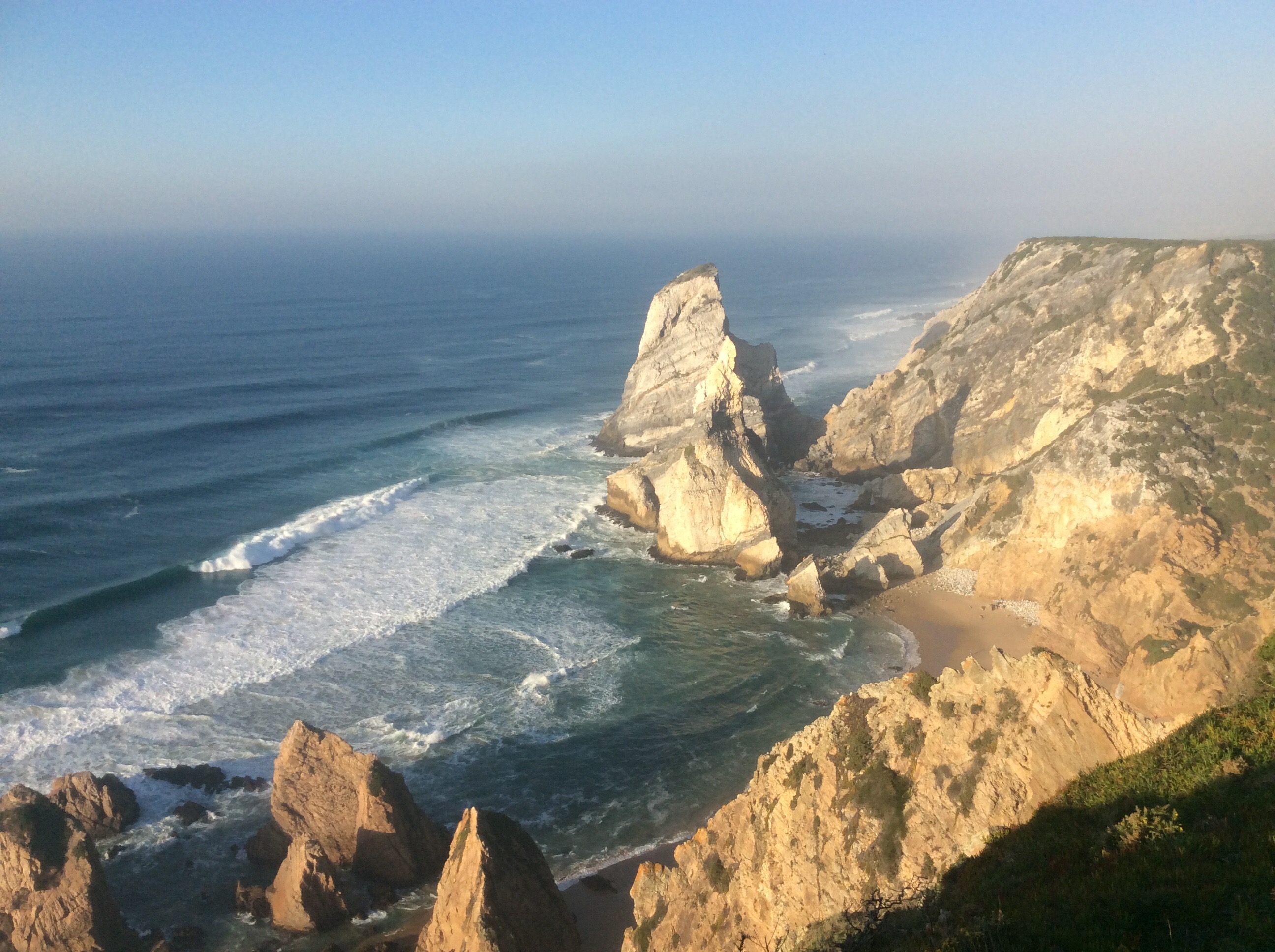
Best moment of the day goes to my main reason for coming this far west: not for Lisbon per se, but the windswept cliffs of the Cabo da Roca, Europe’s most westerly point. The headland itself was crowded – it being a gloriously sunny Saturday afternoon – so I wandered off in search of one of the cliff top trails. But for a couple of abandoned motorbikes, a young couple braving the steep, winding track down to the beach and a man piloting his camera-drone over the cape, I had the coast more or less to myself. It’s funny how most people rarely stray beyond the main sights, especially when the outskirts are almost always far more rewarding. See below if you don’t believe me.


Stunning. The sunset itself, salmon-pink and ablaze, was twice as beautiful again. The trouble is, it’s one thing to look on such beauty alone and quite another to have somebody to share it with. Here at the Cabo da Roca, as in Sintra, and on the train, and the Metro, and the banks of the Tagus, and every row but mine on the bus from Spain, I find myself looking out on a world of couples from my island. A decent half-hour’s meditation on the clifftop helped to doctor my heart a little, but it’s an unavoidable fact that humans are sociable creatures. We’re not supposed to be alone. Traveling is my primary means of fighting back against a world that rejects or friend-zones me at every turn, but it’s not supposed to be that way. So there, high on the cliffs, I contented myself with writing an imaginary letter from my princess to her lover. One day, if I should be so lucky, I’ll find the One who’ll hit the road with me. One day

Lisbon, Benjamin!

Shaking off the loneliness birds, I decided to investigate the famed brilliance of Lisbon nightlife. It’s definitely worth sampling, if you’re ever in the area. I suppose it’s no different than what you might find in London or Paris, but it blew me away. And let me tell you, after two and a half months of Reggaeton, it was a dream come true to have some Justin Timberlake, Uptown Funk and Notorious B.I.G blasting through the speakers. I ended up in a dance-off with a group of Guineans and it was insane. You know you’ve made it in dance when a black guy commends you on your moves. Box ticked.

Oh! But here’s a funny story for you. This ought to lighten the mood. You see, in a town the size of the one I live and work in, everybody knows everyone else, and the general atmosphere is overall more familial than friendly. And since I’m a rookie to city-hopping, I’m guilty of several major faux-pas, like putting my shoes on the bed and ignoring traffic lights. But tonight’s really takes the biscuit. I decided to take a side-alley detour back to my hostel and, in doing so, wound up in a rather seedy part of town; the outskirts of the clubbing district, in retrospect. I found myself alone in the street and thought it odd enough until two women came about the street corner (yes, you can kind of see where this is going.  I, funnily enough, couldn’t). They looked a little lost, and when one of them waved me over, I took my earphones out and asked what I could do to help. The answer I got was a husky ‘babe, you’re so beautiful’.

I don’t think I’ve ever run faster in my life.

The bus is pulling into Coimbra. Aveiro can’t be too far away now; another hour and a half, tops. I’ll close this report for now so that I have something to say in my next post. Até logo, morangos. BB x

And the Manacles are Off

It’s over, at last! After almost a month of to-and-froing between school, the ayuntamiento and the Almendralejo police station, I have a Spanish bank account and the admin period is finally at an end. Alright, so there’s still some confusion over whether I really need a Spanish social security number and I’m not entirely sure how to top up my phone since it isn’t compatible with its own network app, but the most important stage (and one that, by the sounds of things, the other assistants accomplished weeks ago) is done and dusted.

So what better way to celebrate than with a little travel?

You see, I adore traveling. I’m sure I didn’t need to tell you that, but I feel like in the three weeks I’ve been here I’ve never had the chance to get out. Not for want of opportunity, of course, but I told myself right at the beginning that I wasn’t to go traveling until I’d finished all the paperwork. That was supposed to be before my (abortive) training course in Cáceres on 1st October. Well, now it’s the 16th. But that’s ok. Villafranca feels like home now, I’ve christened it with my first stupidly long walk, and I have to say I’m quite enjoying being ‘El Inglés’. But I’ve waited long enough, and now here I am in the Plaza Alta in Badajoz, enjoying a ración of some seriously high-quality croquetas as the city wakes up for the night.

A paltry three and a half euros took me all the way to Mérida, the regional capital of Extremadura. It’s also minuscule compared to Badajoz and Cáceres, for which the two provinces of Extremadura are named, which means you can get around the place in a couple of hours. I didn’t plan on staying long, since I only intended to use the city as a launch-pad for getting to Badajoz – there’s only one bus direct from Villafranca and it leaves at nine in the morning – but, as is so often the way of things, Mérida turned out to be a whole lot more than a collection of pristine Roman ruins.

DSC_0051

At first glance it looks a lot like Córdoba, with the Roman bridge and the great big river splitting the old town from the new. But then, so does Badajoz. It’s missing the beauty of the mosque, of course, but then, Córdoba is and always will be in a league of its own. What it does have is a spectacular aqueduct on the north side of town. If you see any photos of Mérida, it’s bound to feature in more than one of them. Unlike the one in Segovia the city gave it breathing space and there’s a park around it now, but that hasn’t stopped the storks from taking advantage of all those convenient flat-topped towers.

DSC_0196

Ah, but I can do better than that. It took me almost half an hour to cross the Roman bridge over the Guadiana this morning, not because of its length – you can span it in five minutes or less at a stride – but because I was held up by two of my favourite little riverside friends, both of them easy to spot because of all the noise they were making.

I haven’t been to Doñana National Park almost every year for the last seven years for nothing, and when I heard a distinctly disgruntled grunting cutting over the babble of an approaching horde of school kids, I was hanging over the side of the bridge and scanning the reeds in a flash; and sure enough, there he was. Old Longshanks himself.

DSC_0072

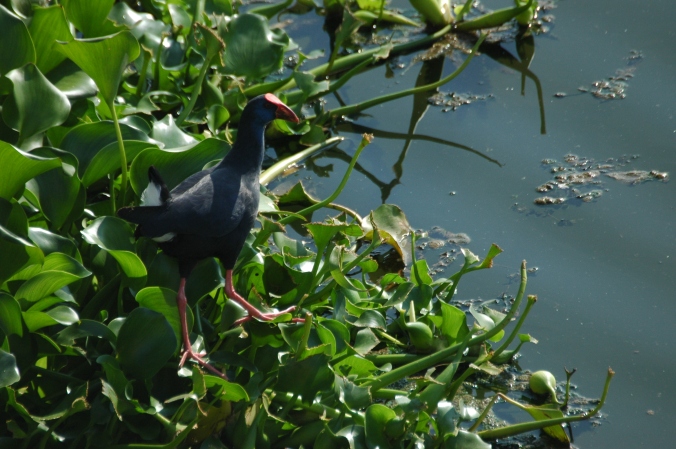
What can I say? Gallinules. Love ’em. Loved the ridiculous things since I first saw a picture of one in a book. The name’s daft enough – Purple Swamp-Hen, in full – but the feet are something else.

DSC_0081

I don’t know why I make such a big deal about gallinules over anything else, but they’ve always been the ultimate Doñana bird for me. Perhaps it’s because it’s basically a giant purple chicken. Mm, close enough.

DSC_0088

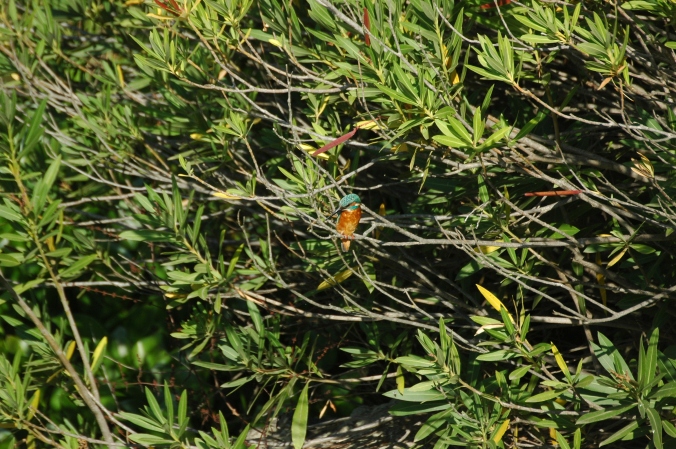
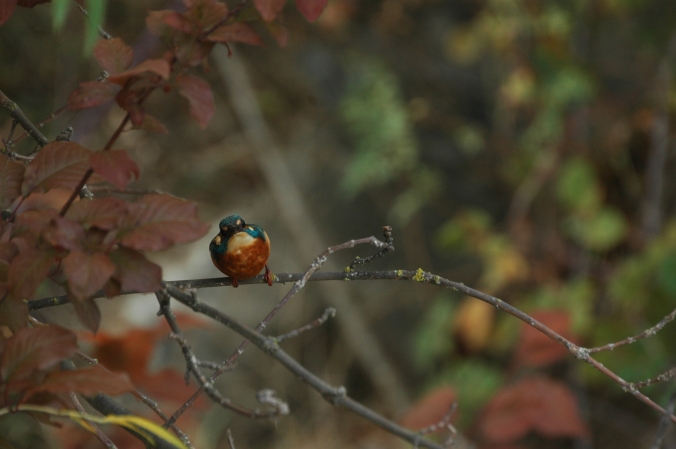
Feathered friend number two should be a lot more familiar to most of you. He’s also rather colourful, but a heck of a lot smaller and shinier to boot. And once you know what they sound like, you’ll see a lot more of them. It’s a kingfisher, of course!

DSC_0112

At least, I hope you know what a kingfisher is. Nobody here does. Not even if I give them the equally impressive Spanish name of martin pescador.

DSC_0127

I’m still waiting on that perfect kingfisher photo. The one everyone wants: wings spread wide, water droplets falling from a dive, fish in beak etc. but until that moment, they’re always a pleasure to watch.

DSC_0172

Everybody else was walking on by and doubtless wondering who that young loony was in the maroon hoodie-and-chinos combo with the ridiculous lens, hanging half over the bridge, but hey, I was having a good time. That’s my idea of a morning well spent, anyway.

Sheesh, long post. My travelogues usually are. Badajoz is rather beautiful, and if my right thigh weren’t still punishing me for that 45km cross-country hike last weekend, I’d probably be enjoying it more. I could do with a rest. It’s a lot bigger than Mérida and I had to double the distance when it turned out that the albergue I had in mind was a school groups affair. I was accosted outside by three young girls who asked me if I wanted a blowjob and called out ‘oyé, feo’ and ‘mochila verde’ after me when I ignored them. Then I tried taking a shortcut through the park into the Alcazaba, but shortcuts do tend to make long delays, and in this case the road came to a sudden and unexpected end. The door was there alright, but the road… wasn’t.

The adventures never end! Left the restaurant to soak up the night in the square and a wandering troupe of musicians asked me for directions to the ayuntamiento. I pointed them in the right direction, but their leader deduced that I clearly wasn’t from Badajoz. Back atcha, tío; ‘I’m from Villafranca de los Barros’. ‘Villafranca?! Hombre, somos de Ribera!’ (the next town along from VdB). It’s a small world. And I’ve just noticed that I missed a major performance from the best gypsy musicians of Badajoz at the theatre tonight. Only two doors down from the hostel, as well. Rats. I’ll be back.

I’d better call it a night there and head on back to the hostel. I might try for sunrise over the Guadiana after this evening’s gorgeous Portuguese sunset. On a final note, I had the happiest moment of the month on the road to Badajoz when I saw, in the distance, a giant V-flock of some one hundred and twenty cranes on their way south. It’s only the very moment I’ve been waiting for, the first true sign of winter in Extremadura. I was practically jumping out of my seat, I was so happy.

The photo hardly does it justice, so I’ll go hunting for them some other time when I’m not stuck on a bus. But that’s an adventure for another day. BB, which may or may not stand for Bird-Brain amongst other things, signing out x

Return of the Paperwork Fiend

I’ve been riding on an unfairly long streak of good luck for the last week, as you might have guessed by the cheery tone of the articles. As is to be expected, the honeymoon-period had to come to an abrupt end at some point as the stresses of making one’s own way in the world came to a head, and as usual, it’s the little things that take you by surprise. I managed to dodge the iceberg that was the NIE without even a scratch, only to plough straight into the reef that is trying to open a Spanish bank account.

What have the Romans ever done for us? Administration. You’ll hear a lot of horror stories about foreign administration, especially in France and Spain, where the foul creature was spawned long ago. The Spanish love their paperwork, arming themselves with signed forms, photocopies, rubber stamps and enough identity cards to start a national trading-card game. Obtaining an NIE – a numero de identidad de extranjero – is one of the most important parts of enrolling as an auxiliar de conversacion, as without it you cannot open a bank account or be a legal resident in Spain. Normally it’s this that gives most people a bellyache, when pencil-pushing fiends in the foreign affairs office at the local police station decide to liven up the tedium of their day’s work by sending you on a merry wild goose chase after that form that looks just like the one you brought in, but with one number’s difference, which of course changes everything. And of course, you’re not the only one after one of these precious little commodities.

Right now it’s coming up to harvest season and Extremadura is awash with migrant workers here to reap the benefit of a temporary boom in the job market. This year, the officials in Almendralejo have their hands full with a large group of Romanians, also requiring an NIE to validate their existence in this country. If it hadn’t been for the Director and my mentor in the English department, I honestly think I’d have turned back when they told us to return at nine o’clock the following morning. But the sad fact of the matter is that ‘big old whitie’ always prevails, and I was shunted to the front of the queue so that I could leave that very morning with my NIE stamped, cleared and ready to go. There’s something very sick about that system. Guilt aside, it wasn’t as clear-cut as I’d have liked. My landlord hadn’t thought to give me a contract, so I couldn’t apply for my tarjeta de residencia on the spot. That wasn’t too difficult to achieve, but it would have been handy to know in advance, before attempting to tackle the bank this morning – which, of course, needed that precious tarjeta also. Passport, NIE, proof of address and proof of stable financial employment are all well and good, but if you don’t have that little red card – if you’ll forgive the expression – it don’t mean jack.

Did you know that the United States has a Paperwork Reduction Act, dated from 1980? Spain could sure do with something like that.

Following on from this trend, today’s been a bit of a bad luck day all around. My timetable’s still in flux because of the absence of any bachillerato classes, which the authorities decree needs changing. And until that’s done, I can’t clarify the timetable of my second job with the Order of the Carmelites. And since both of those are paid affairs, this bank situation needs clearing up fast, or I’m going to end up high and dry soon enough, Erasmus grant or no Erasmus grant. Don’t even get me started on that.

As a final hurdle, I stumbled just short of the fence over the Jornadas de Formacion in Caceres this morning. My BlaBlaCar driver didn’t show up, the only bus that passes through this town leaves at half four, which is when the training day begins, and I haven’t received a smidgen of confirmation as to whether I’ve actually got anywhere to stay there tonight. So all in all, despite not having fully prepared any classes, I’ve decided to toss that in the towel and start work today. It’s not a major loss, as I’ve had two teaching jobs before and I’ve done half of the paperwork already, the main focus of these meetings. They’re also non-compulsory, so it’s no big deal, but I was hoping to go if just to formalise the whole shebang, though perhaps more so to meet some other auxiliares. I may be a blood traitor to my kin, choosing to eschew any and all English speakers by living with Spaniards way out here in the sticks, but that doesn’t mean I don’t miss my mother tongue. At the moment writing is proving my only channel for it, and Hell, is that benefiting from an absence of conversation…! I must have written a chapter a day for the last four days. That’s ten A4 pages a day. I have far too much time on my hands – for now.

How’s that for a healthy antidote to the ‘I’m having the best year of my life on my year abroad’ drawl I’ve been riding on for the last week? Alright, alright, I’ll quit putting myself down so. On the plus side (finally!) teaching’s been really fun, and that’s what I’m here for. My Spanish is improving daily, in vocabulary, grammar (I never did learn the simple past tense at school and I’ve been winging it for the last ten years) and stumble-rate. The latter is, of course, a problem in every language I speak – even English – and has more to do with my machine-gun rate of speech than anything else. Teachers have been telling me to slow down for years. ‘You never will learn, Benjamin’, as my father would say. He’s right on that count.

The shining light in my experience though, above and beyond school, is the couple of hours I spend a week with the husband of one of the staff here, who’s requested extra English lessons. Not only is his English at a much higher level than any of my students, but he’s also one of the most interesting men I’ve ever met: a genuine intellectual if there ever was one, his bookcases lined with legal tomes and a collection of certificates and photographs on his desk, featuring such leading lights as Umberto Eco, King Felipe VI and Mikhail Gorbachev. We had to cut our lesson short yesterday when, mid-meeting, he received an important call from a government official promoting him to high office, a decision which he had been labouring over for some time since it would require a drastic change in his life. He took the job and poured out his heart to me, and I felt more than honoured to be the first person to hear about it; before his wife, children and even his own secretary. ‘I feel like a child at EuroDisney… like a little boy on Christmas Day’. That was how he put it to me. I left him to open his Christmas presents and set off to treasure that warm fuzzy for an hour in the park. It may only be for a couple of hours, but it’s already the highlight of my week.

And there I am, fussing over kids, when the real gem out here is a man older than most of my teaching colleagues. Life has a funny way of playing around with you, sometimes. BB x