Camino II: Dawnbreaker

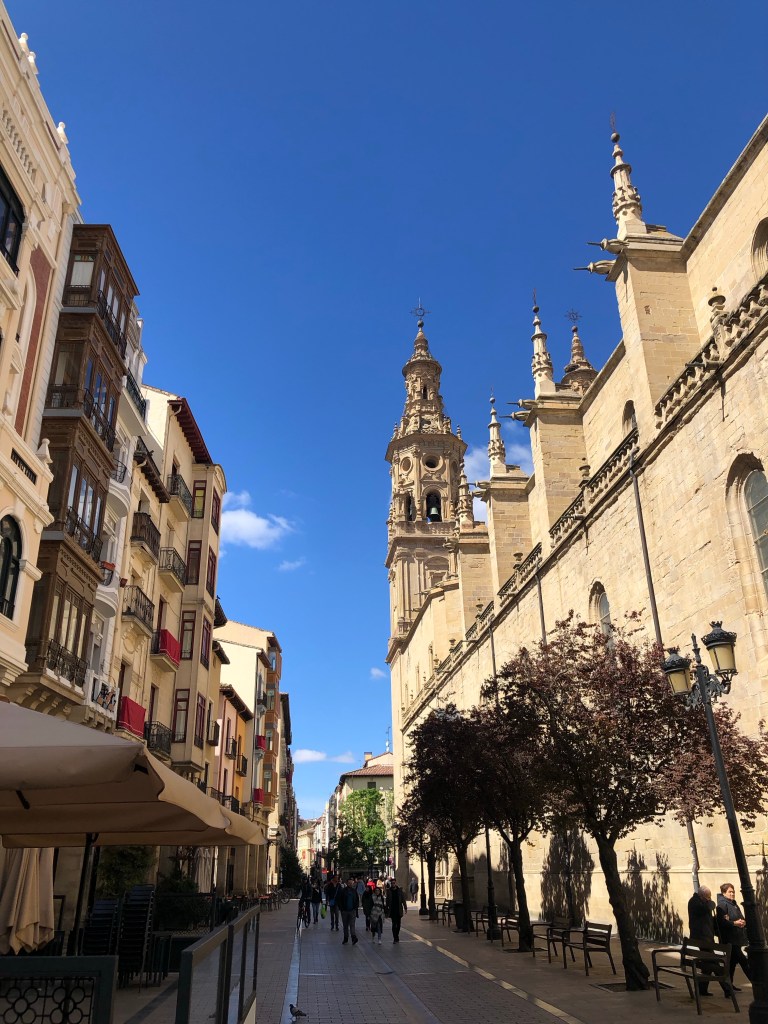
Holy Week got off to a flying start last night outside Logroño’s cathedral, Santa María de La Redonda. It isn’t always easy to tell which towns will have a serious procesión, but for the record, Logroño goes the distance. It looked as though all the brotherhoods were out in force last night, garbed in white, red, green, black and blue. Crucially for me, they also beat out the same halting drumbeat from my memories of Holy Week in the south. Not every town does it, but you’ll notice if they do: it’s the ever so slightly delayed drum roll during the march that, once you hear it, you can’t unhear. It’s the suspense of the last days of Jesus’ life, as his followers waited to see if he would save himself. At least, that’s one way of reading into it.

I had supper with a rather awkward American, the only other guest for dinner at the albergue. He wasn’t even staying there, but appeared to have wandered in looking for a menu peregrino (the cheap three-course fare offered to pilgrims on the Camino). He had his reservations about how sociable people are on the Camino and pined for the quieter stretches, and from his less than satisfied reaction to the ‘vegetarian option’ he’d asked for, I couldn’t help wondering what he was doing out here. He was quick to want to fact check my anecdote about his home state of California being one of the only places in the world named for a fictional location (it takes its name from the mythical island in Montalvo’s 16th-century chivalric novel, Las sergas de Esplandián) but I won’t begrudge him for it. After Trump and the fake news boom, who’d trust anyone?


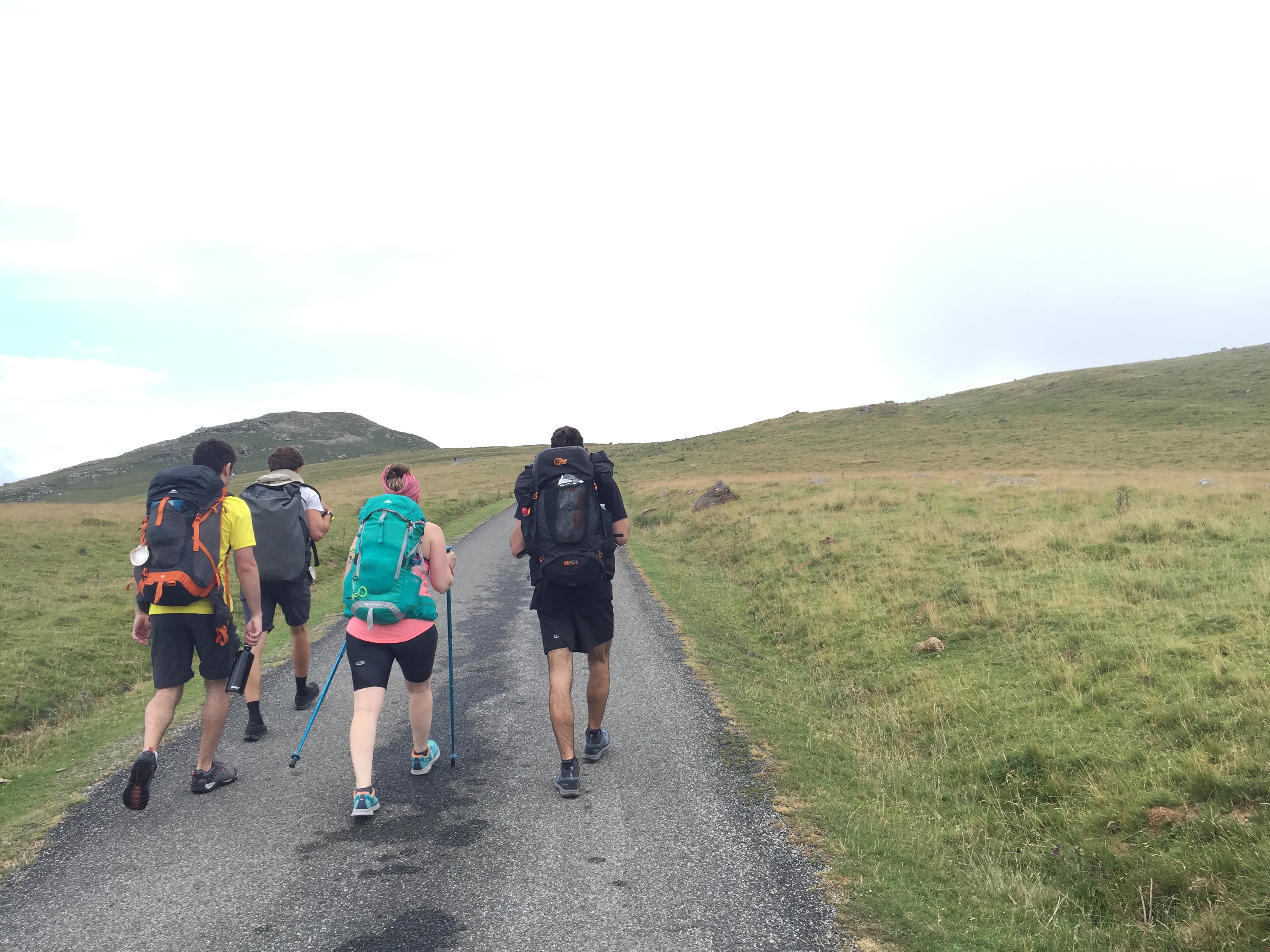
I was definitely one of the first out of town this morning. Though I passed some pilgrims on the road a few hours in, from the speed at which they were walking I suspect they’d been lodging one or two towns ahead. As a result, I had pretty much the whole 30km hike to Nájera to myself – including the first hour and a half before sunrise, which is always one of the most magical times to walk the Camino.

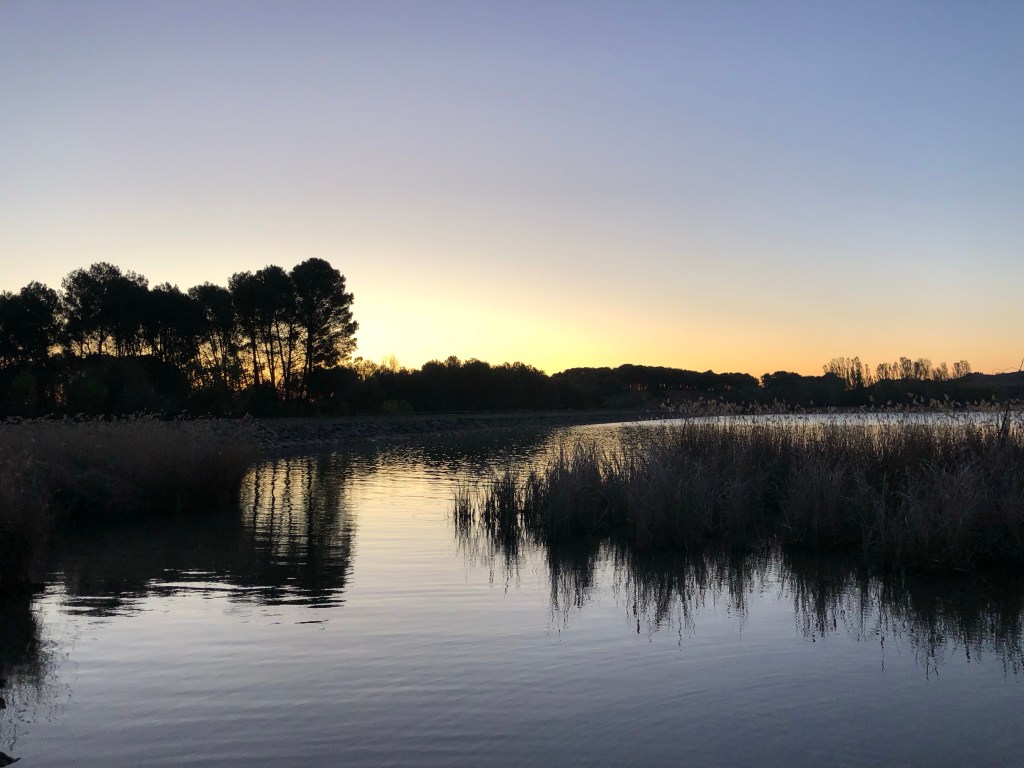
Approaching the Laguna de Grajera from the east, I counted about six or seven night herons flying in from their roost somewhere beyond Logroño. You can just about make out the silhouette of one of them in the photo above, as dawn was starting to break. There were rabbits everywhere – more than I’ve ever seen in this country – and the morning sky was alive with the songs of blackbirds and larks. I could have waited for company at any point, but I do love to have that part of the day to myself. Self indulgent, perhaps, but worth indulging all the same.
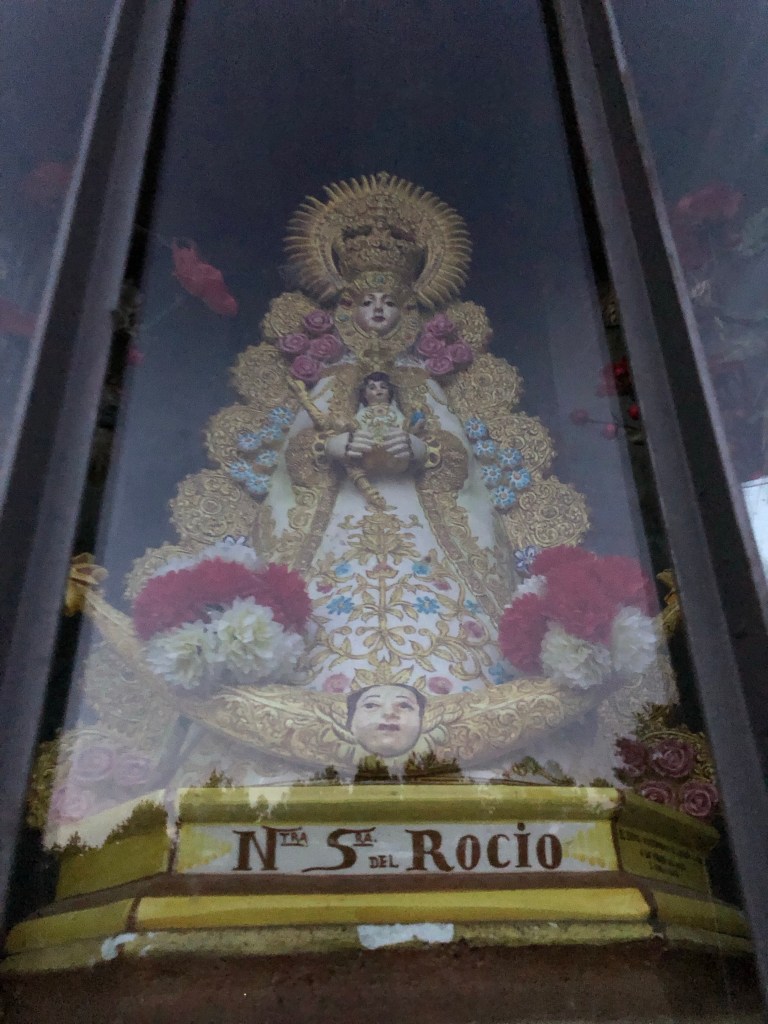
There was even an icon of Nuestra Señora del Rocío on the lakeside. Whether or not I sang her into existence through various repetitions of Las llanuras ardientes and El Rocío es un milagro as I was walking is conjecture. It felt special to find her here, so far from her usual haunt in the marismas down south.
Now, while I needn’t have set off quite so early (the 8 hours in the guidebook is a joke, the trek is at the very most 6h30 with a stop for lunch) I did have my reasons, and one was to catch a very specific angle of the sunrise at just the right moment.

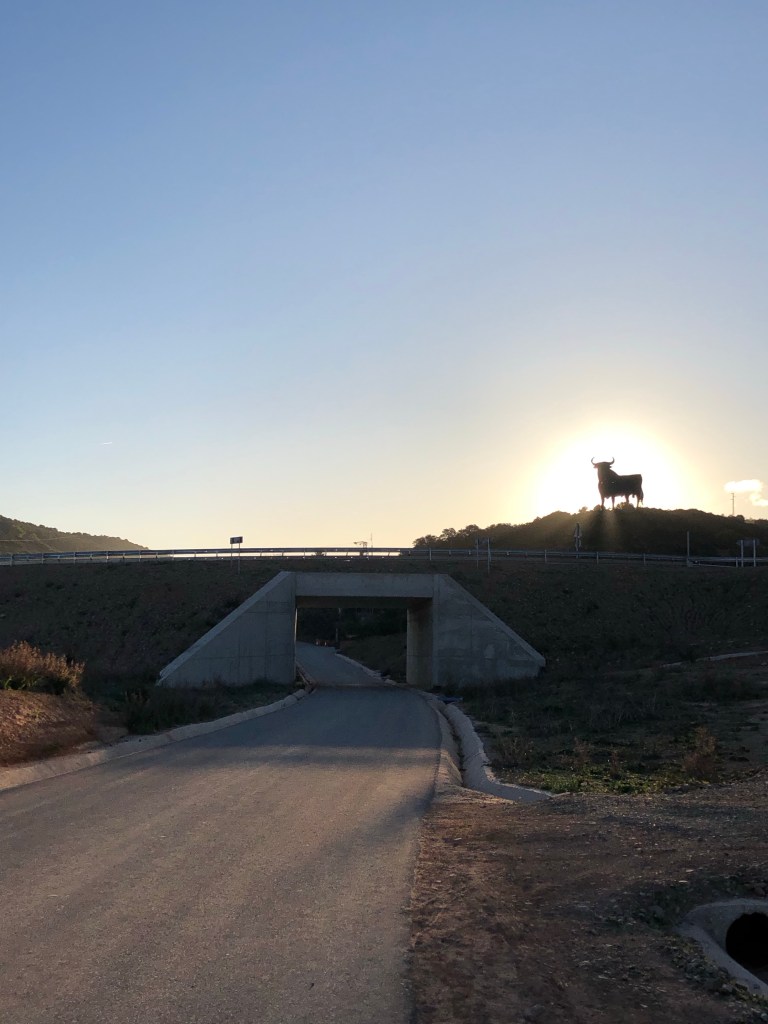
At the brow of a hill to the west of the laguna stands one of the famous Osborne bulls for which Spain is so famous. By the time I got clear of it – at around 8.20am – the sun was almost exactly behind it. I could not have timed it better. Point and shoot!
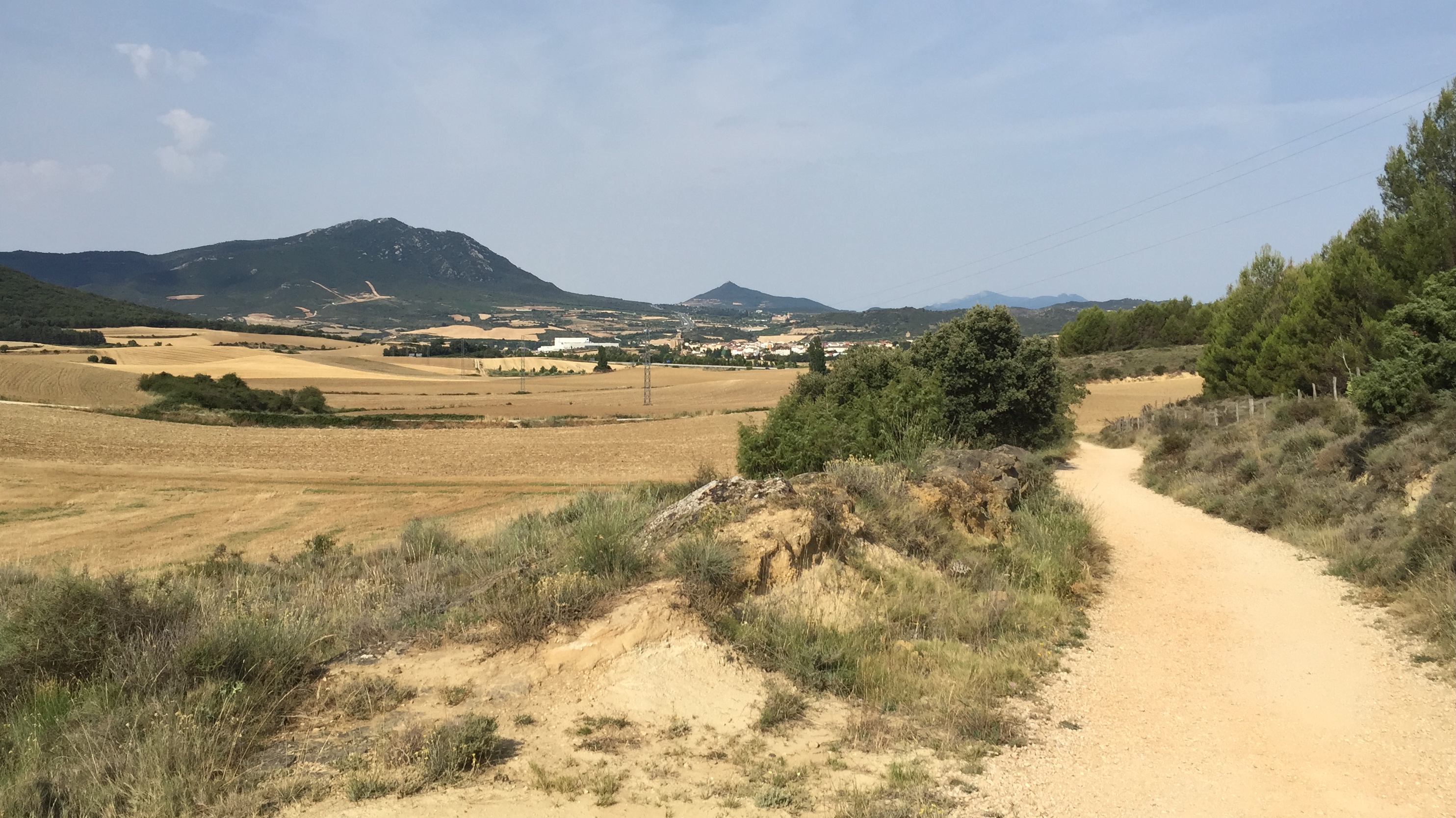
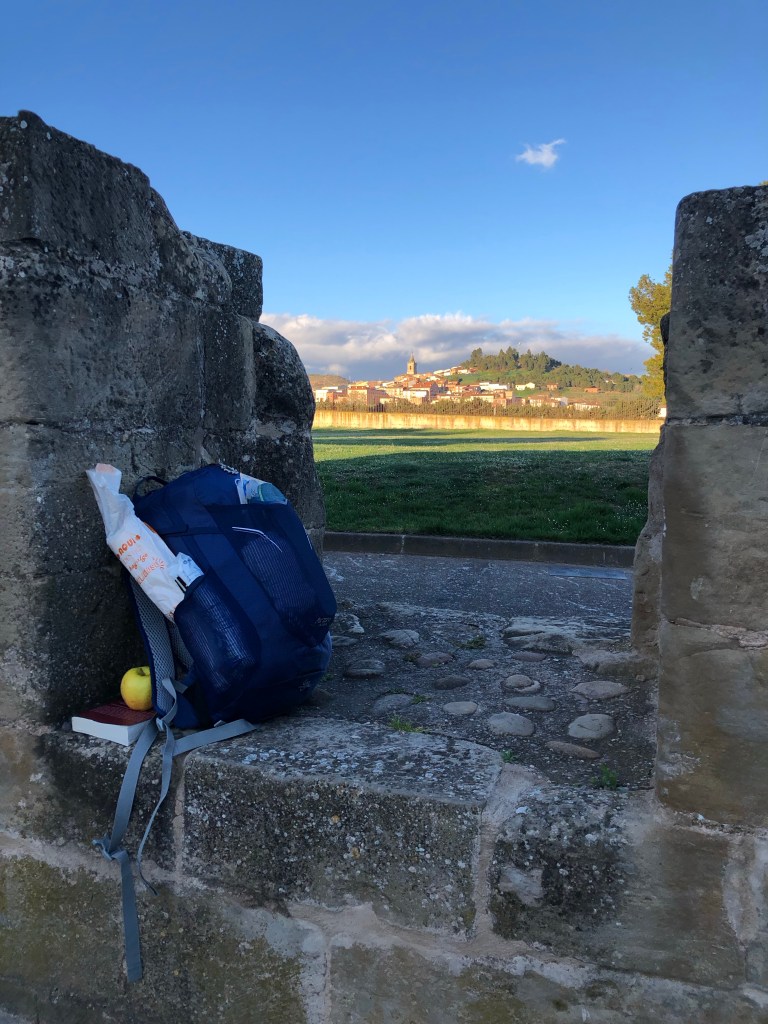
The rest of the walk was pretty straightforward. The ruins of the old pilgrims’ hospice at San Juan de Acre were picturesque and the Camino itself, though it cleaved close to the road on occasion, was quiet and easy underfoot. I let a couple of Dutch pilgrims overtake and continued to have the road to myself. The Sierra de Cebollera remained cloudbound for most of the walk, and I kept my hoodie on until I reached Nájera – it simply wasn’t hot enough to justify fewer layers, and that’s not bad thing!
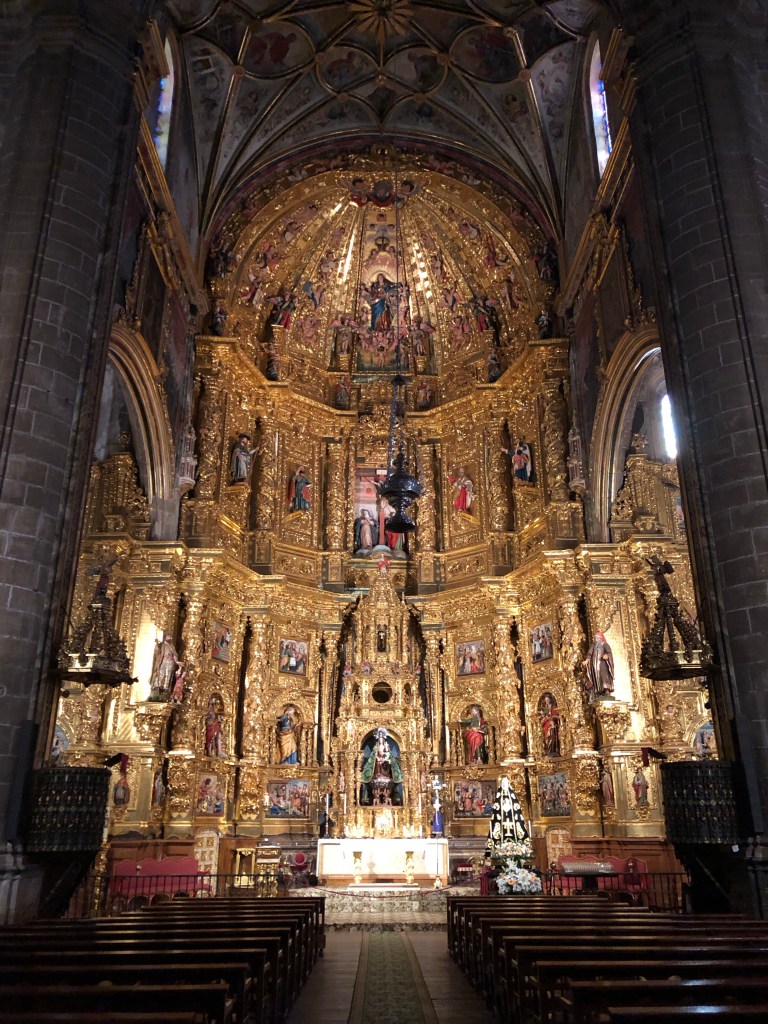
Navarrete was stunning – easily one of my favourite stations on the Camino so far. The church is a classic Spanish affair: pokey and generic on the outside, and an immense explosion of heavenly gold within. I lit a candle for abuelo, left a story in the visitor’s book, sang through Thomas Morley’s Nolo mortem peccatoris (since there was nobody there) and moved on.
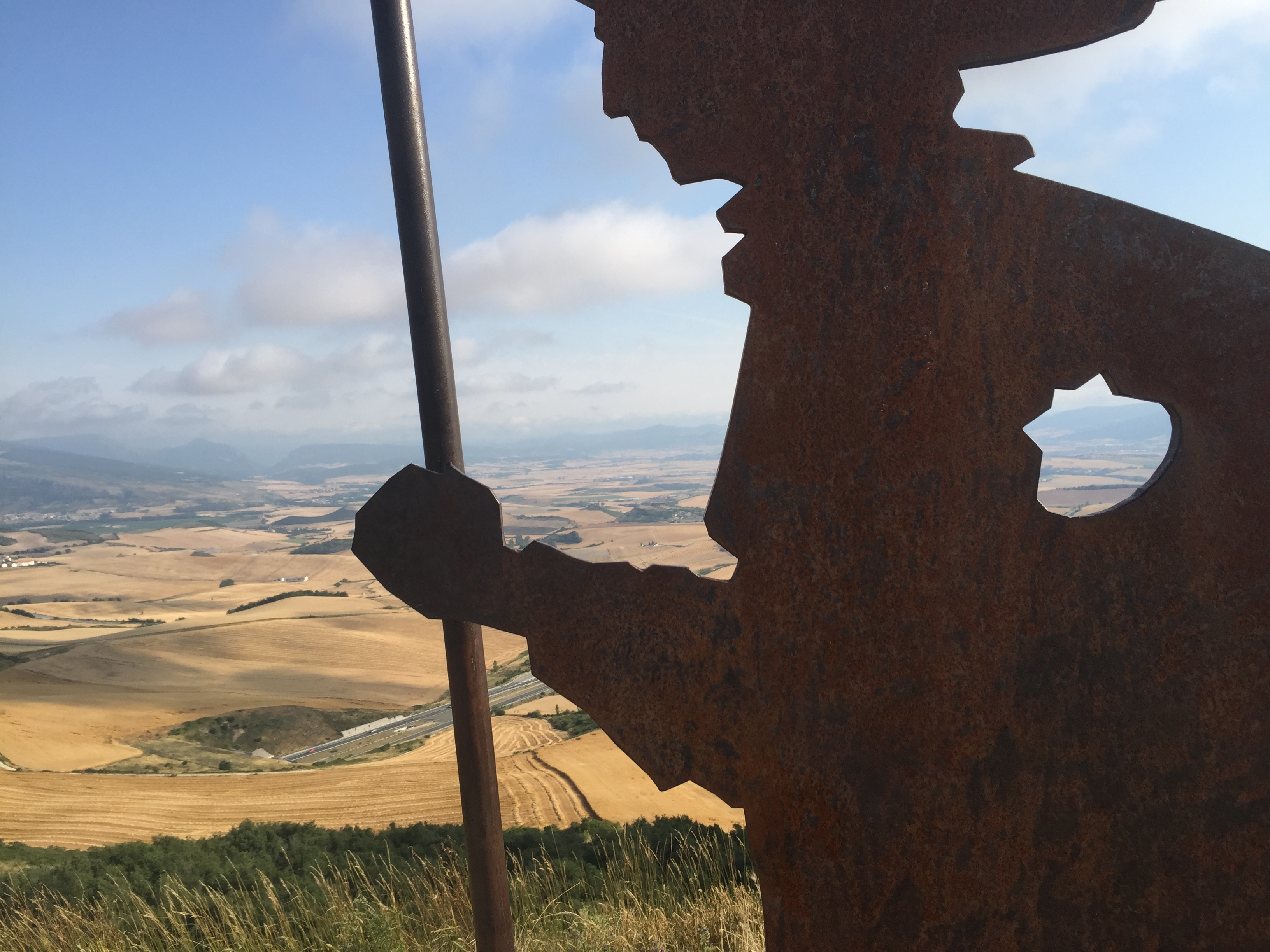
From Navarrete, the final stretch rolled across the hills before sloping down toward the cliff face of Nájera. Legend has it the French hero Roland fought a Syrian giant on one of these hills in a single combat that went on for days, but I was happy enough to see the familiar silhouette of the giants of my childhood: griffon vultures, circling high above the meseta in the distance. I didn’t keep a tally, but there were raptors everywhere today. Kestrels and kites – both black and red – and buzzards and booted eagles, these last in both white and brown. Since it’s still early enough in the season, some of them were displaying still, climbing high and then plummeting down in a sharp V with wings tucked in. Between that and the flute-song of woodlarks that followed me for the last hour before Nájera, I have been in seventh heaven all morning. Oh Camino, I have missed you!

The Albergue Municipal is filling up. Maybe I’ll meet some of these people later. But for now, I’ve done my write-up for the day and I could use a little shut-eye before I seek further adventures in Nájera this evening. Until the next time, folks. BB x
Camino I: Plus Ultra

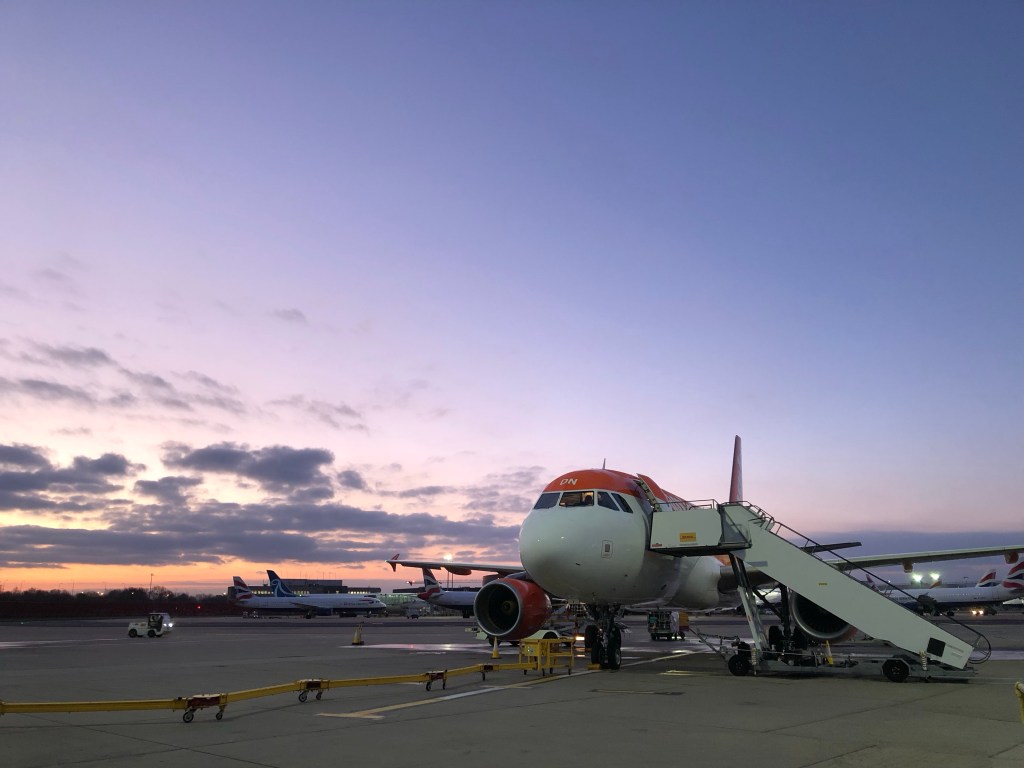
6.15am, Gatwick North Terminal

I left over an hour and a half to make my flight this morning, but I could easily have done it in less. Even with the extras (a few more items of clothing than originally planned in case of inclement weather), I’m traveling lighter than ever. Who’d have the fuss of a suitcase when the open road is so inviting?

I think I must have raced to the gate in my eagerness. It was almost deserted for some time when I got here. Only two or three others joined me in my vigil: a Spanish girl chaperoned by her mother, a Greek/English couple (yes, I googled the man’s passport symbol – call me a nosy Parker but the square cross had me stumped) and a woman who from her accent could only be Basque: one side of her head shaved, brow furrowed, a black hoodie emblazoned with the slogan ‘DESIGNED BY AN IMMIGRANT’ in block white capitals.

No tannoy for this flight – the attendant called out Bilbao almost as quietly as I did trying to call a student over in the canteen last week for his poor choice of language. She only changed her tune to ‘Speedy Boarding Only’ when the first six or seven of us were clear. Sometimes, just occasionally, it pays to arrive ahead of schedule.


10.18am, Bilbao Intermodal Bus Station

I’ll say this much for Bilbao Airport: it’s a lot less hassle than Gatwick. All in all I don’t think it took much more than fifteen minutes between touchdown and the shuttle bus.

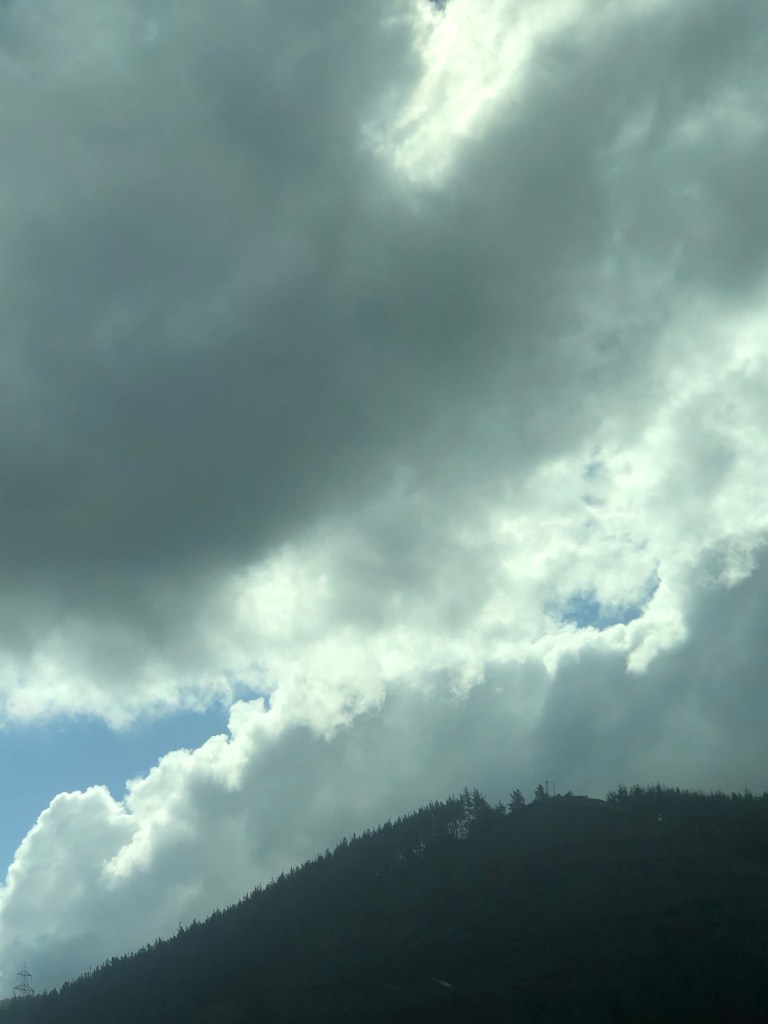
As I thought, the skies over Bilbao when we landed were clouded, grey and low. They always have been on my visits to this corner of Spain, to the extent that clouds and the Basque Country are virtually inseparable in my mind. The Spanish author Miguel Delibes once said that the sky over Castile is so high because the castellanos themselves put it there from staring at it so much. While my kith and kin chase the coy heavens plus ultra, always in search of the new, the ever practical Basques bring the skies down to their level, coveting the Viscayan rain and wrapping their dark forests in mist and cloud. I don’t expect to be free of that shroud until we reach the frontier.


11.56am, near Pobes

I’m now racing south on the Bilbao-Logroño bus, basking in the intermittent glow of the Spanish sun. Craters of blue have started to appear in the sky as though punched through by some celestial artillery, and still the Basque line of defence holds.

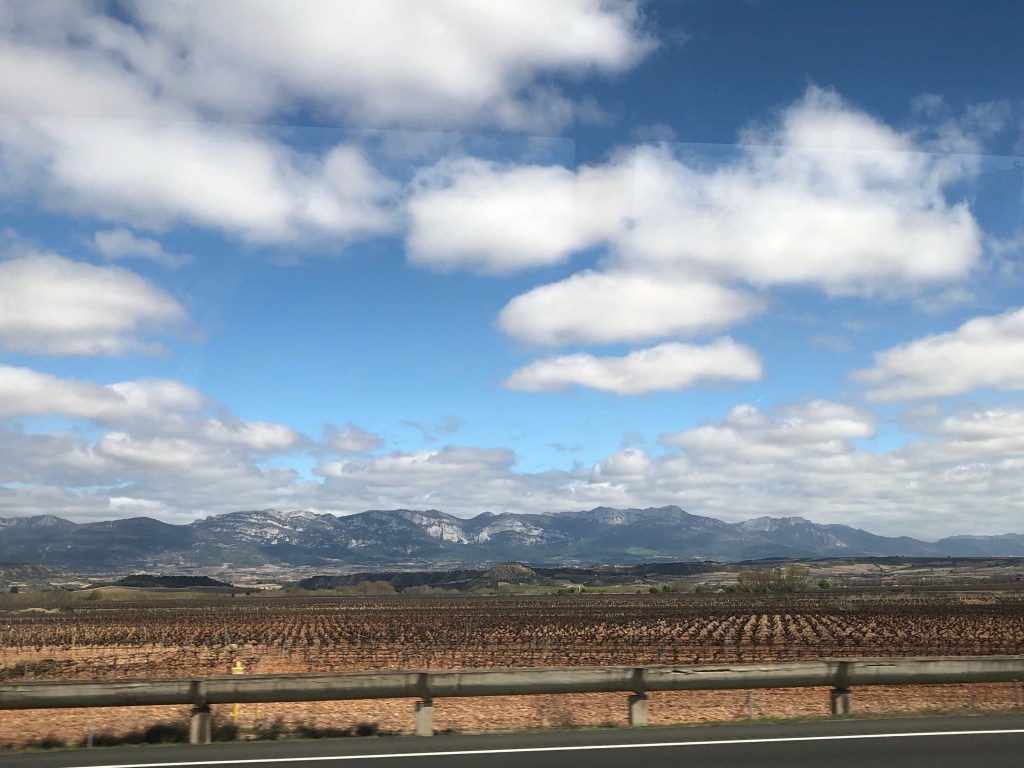
Here below, the landscape is changing. The military ranks of pines encamped around Bilbao suddenly give way to a gentle blanket of beech trees. Patches of brilliant green herald the coming of spring to these hills, and limestone crags scar the mountains like bones – first in uniform grey, then bleached with that warm golden stain that is so evocative of Spain’s highlands.

And then, suddenly, the dark hills of the Basque Country fall away and the plains of Castile are all around me: a forgivingly flat golden country, nestled between the high crags north of Haro and the snowbound peaks of the Sierra de Cebollera to the south. Castles and monasteries dating back to the time of a real frontier sit atop the hills and knolls like childish imitations of the limestone cliffs behind, the handiwork of the greatest craftsman of all.

And there, racing over the fields near an Alcampo petrol station, is my first swallow of the year. It’s only a fleeting glimpse as the bus races on past a bodega and a Lidl in quick succession, but it’s enough to make my heart soar – higher still than those Castilian skies.

I’m drunk on all this scenery, in case that wasn’t obvious (the overblown choice of a frontier semantic field was probably a dead giveaway). Rehab is the usual cure. However – to keep in line with this post’s choice of imagery – sod that for a game of soldiers. I have a week and more to wander around my grandfather’s country once again. I can’t think of a better rehab than this.


5.27pm, Albergue Santiago Apostol, Logroño

Logroño is climbing back out of its siesta. I’ve spent the afternoon here and there, though perhaps more here than there. Here being the Albergue Santiago Apostol, the same place I stayed when I last did the Camino four years ago. The only thing that seems to have changed is the stamp for my pilgrim’s passport. That, and I’ve come alone this time.

The albergue is quiet. I’ve only crossed paths with a handful of other pilgrims: Joan i Laura, a couple of peregrinos from Girona, a French family of three and a German family of four. I expected the Camino to be busier during Semana Santa, but I guess if you have a week’s holiday you’d do the stretch that can be done in a week or less – that is, the last 100km from Sarria. Out here in La Rioja, it’s likely to be rather quiet.

That will make for a rather soul-searching experience, which is no bad thing!

I’ve gone for dinner and breakfast at the albergue, 1) to make sure I actually eat and eat well and 2) to meet some of the other pilgrims ahead of the 31km stretch tomorrow. And also 3) because, at 16€ for dinner and breakfast, it’s a steal. I hadn’t forgotten how affordable the Camino is, but it is nice to rediscover, as it were.

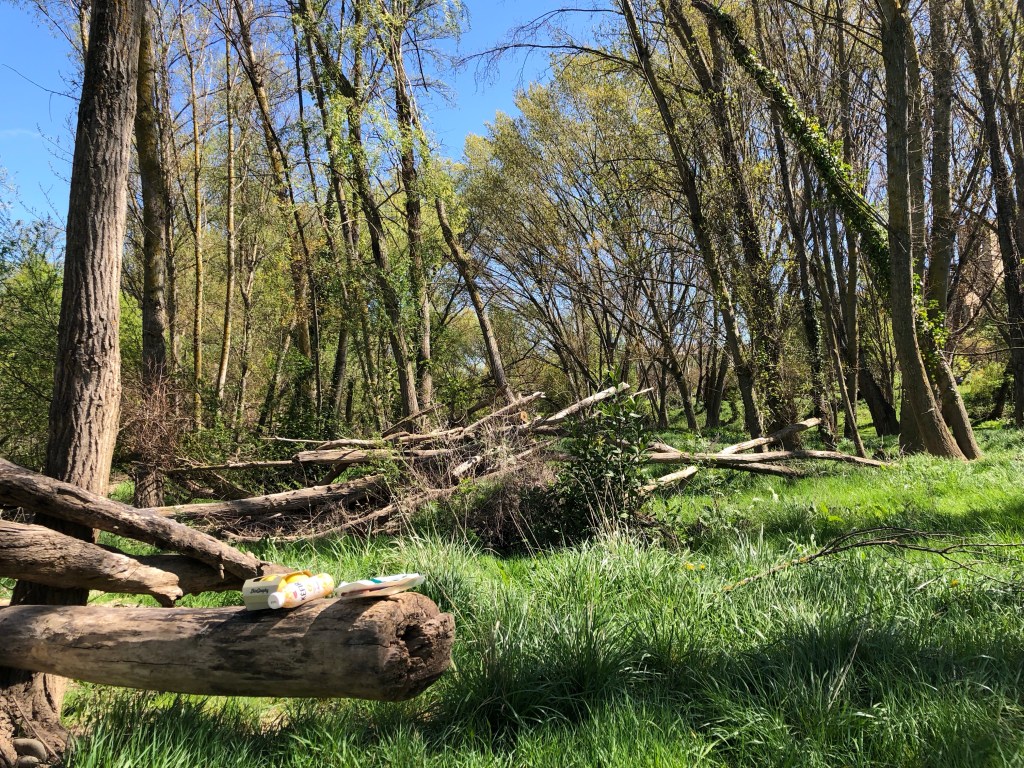
I ate my lunch (chorizo and queso curado in a fresh barra de pan) under a beech tree on the bank of the Ebro river. Spring may be slow in coming to England but she’s been here a while already. The beak-clicking display of the local storks can be heard every so often, even from the albergue, though a drumming woodpecker in the park was giving them a run for their money.

English and Spanish birdsong combined on the riverbank. Blackcaps, wrens and blackbirds supported a local chorus of serins, short-toed treecreepers and wrynecks. I don’t think I’ve seen (or heard) a wryneck since my first stint in Villafranca back in 2015, but I hadn’t forgotten its call. After scanning the branches for a minute or so I tracked it down to a lightning tree just a few metres from where I was sitting. They really do look bizarre, the way they move about mechanically, looking for all the world like the clockwork nightingale from Hans Christian Andersen’s fairy tale. The wryneck kept me company for most of my lunch and only took off when a dog walker came by, carrying an African grey parrot on his arm.

I’ll try to catch the first of the procesiones tonight. ‘It’s only Monday,’ said the hostalero at the desk, alluding to the fact that the pinnacle of Semana Santa is toward the end of the week. Even so, my pride as a Spanish teacher is at stake (I have just been teaching the topic to my Year 10s) and besides, I’m a fanatic for the pasos. You can blame my year in Andalucía for that. I’ll also see if I can’t locate the local legend of the Bookseller of Logroño that fellow English traveler George Borrow recounted in his book on the Gypsies of Spain, published a little under two hundred years ago – because what’s an adventure without a quest of some description? BB x

Peregrino Soy

Last night, according to the Beeb, there was a planetary parade. After yesterday’s exceptional conditions – the first day of spring in every sense – it would have been easy to spot from home. That the news decided to report the phenomenon exclusively in the past tense was a kick in the teeth. At the very least it would have been something to write about before the holidays. A warm-up exercise, so to speak, since that’s usually when I have the time to write. I bent the usual dry spell of the summer holidays to my will last year, but this year’s summer break is looking to be all about wheels with little to no time for anything else. Knowing I have to spend a great deal of the summer learning to drive is a pain in the neck, albeit a necessary one, and it’s naturally got me thinking about all the things I’d rather be doing. Fortunately, at this point in my life I can limit all those things to one thing and one thing only, and that’s the job I didn’t finish two years ago: the Camino de Santiago.

So, in my typical stubborn fashion, I’ve thrown caution to the wind and booked a return flight to Bilbao to pick up where I left off over the Easter break. Peregrino soy, volando voy.

Last time I made the trek I got as far as Logroño before having to fly home for both a house move and my pre-PGCE literacy and numeracy test. That’s somewhere between a quarter and a fifth of the total distance (780km). And though I’m not a fan of re-starting things if I can help it, it does feel like one of those treks that ought to be made in one, if you can.

Realistically, it takes about a month to walk the whole Camino, from Saint-Jean-Pied-de-Port to Santiago de Compostela. A month of 5am starts and 12pm finishes, racking up around 20km a day before noon with afternoons spent resting, exploring and talking to fellow pilgrims. It’s an experience like none other. Everyone is on the same road, but no two people started in the same spot or with the same motivations. You fall into a healthy routine after a couple of days, and yet every day is different.

People come from all over the world to walk the Camino. For the first couple of days, I tagged along with three Italians and an Argentinian. We parted ways at Estella when I stayed behind, enchanted by the Basque town. You could easily walk the Camino in a month, but there’s so much to see and do that it’s worth stopping every so often to see all the towns along the pilgrim route have to offer – and your feet will appreciate a day off after five or six days’ walking. Since I’m traveling within the parameters of a two-week holiday I don’t have all the time in the world, so I’ll try to follow the same pattern this time around: five or six days of solid walking, broken up by a decent night’s sleep in somewhere that isn’t an albergue at either end. That tends to be a good idea.

My credencial, or pilgrim’s passport, is already sitting on the coffee table, open at the last stamp. My sleeping bag is rolled up and ready to go and I’ve ordered a good quality rucksack as the one I used last time is at my parents’ place – and it was falling apart after more than a decade of use. For a sense of continuity, I’ll aim to stay at the same place where I came to a stop last time. My Spanish colleagues at work expressed some dismay at the idea of doing the Camino at this time of year – “pero oye, esto se hace en verano” – but I’m going to trust my instinct on this one.

I’m well aware that I’m heading out in none other than Semana Santa, the holiest week in the Spanish calendar. As well as adding to the colour of the Camino nights, with all the reckless passion of the pasos, it may well make for a busier (and more Spanish) Camino than usual. But after a couple of safe and highly-organised school trips, I’m more than game for a proper adventure. And few things provide quite like the Camino.

Bring it on! BB x