Flippers, Fins and Feathers

Puerto Baquerizo Moreno, Galápagos Islands. 20.40.

The days here on the islands are falling into a sort of rhythm. Morning brings a slow and dark sunrise through the garúa, followed by spells of gentle rain falling on the roof over my head. The clouds hug the island for most of the morning, until the sun burns through them all shortly after one o’clock, which allows for a spell of humid sunshine until the clouds swallow up the sun once again before sunset.

August is – it should be said – definitely not the sunniest time of the year here in the Galapagos. Come to think of it, nowhere in South America seems to be, whenever I’m passing through. In fact, of the fifty-six days I’ve spent in South America this year, just under half have been washed out with rain. That could just be bad luck – I have been to each destination in its “off season”, which does usually coincide with the rainy season – but it could equally be an anomaly. Chile, for one, does not usually get as much rain as it did this winter.

It’s not so bad here, though. It doesn’t come down in buckets like it did in Chile and the Peruvian Amazon, and it does have the added perk of keeping the beaches and trails free of day-trippers, most of whom hole up in their hotels during the rain.
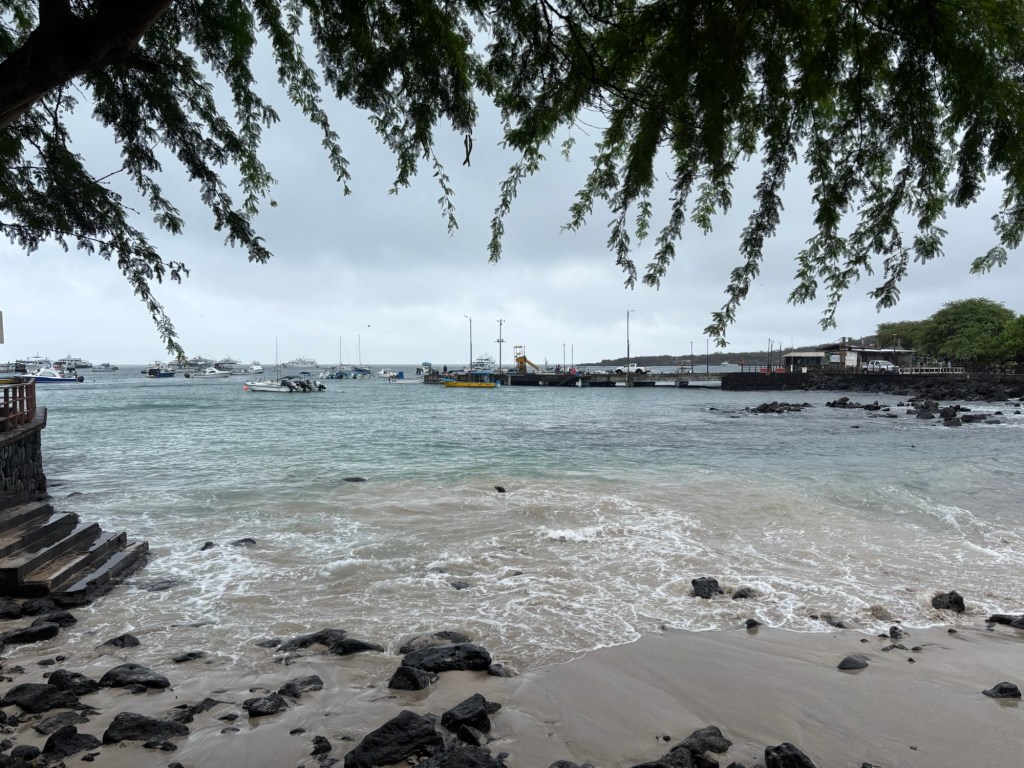

After a fake-out from the sun this morning (which was only briefly with us before the rain clouds returned) I set out up the Tijeretas trail to the cove I’d seen the other day. It was, predictably, almost deserted: just one other swimmer was there, the same one I saw when I scouted out the trail a few days ago, doing lengths of the bay.

I didn’t have a rental GoPro on me this time. Not that it really matters – some things are best remembered by memory alone. All the advice online had said the water would be much too cold to go in without a wetsuit. I suppose that advice was targeted at Americans, specifically the ones from Florida, where the daily temperature is a lot warmer. As an Englishman who has swum in the shores of the English Channel more than once, I found the water around San Cristóbal to be blissfully warm. I could have been in there for hours.

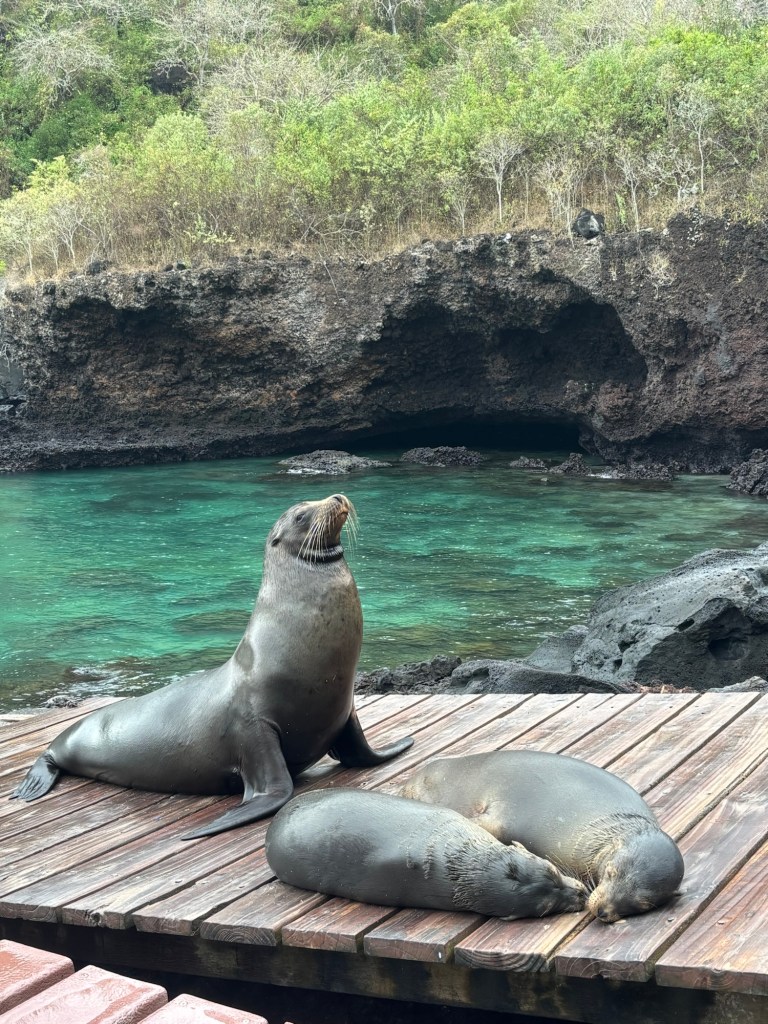
Here, as everywhere, I was joined in both land and sea by the sea lions. They really are everywhere on these islands, but they properly come into their own underwater, where their powerful flippers help them to fly through the water like birds in the air. At least twice during my swim I was nearly clipped by one that appeared out of nowhere, shimmering like gold in the grey water.

As for the rest of the world beneath the waves… where do I even begin? Butterflyfish and parrotfish, sergeant majors and surgeonfish, hogfish and hawkfish… all as wildly named and widely colourful as a Dr Seuss book. Like so many who come to the Galápagos, no doubt, I was especially captivated by the impressive king angelfish, one of the larger species you can find close to the shore, its dark body lined with an almost iridescent electric blue, complete with a smart shoulder stripe and a tail as yellow as a flame. What must Darwin and his men have thought when they saw these oceans full of living jewels on their voyage here, nearly two hundred years ago?

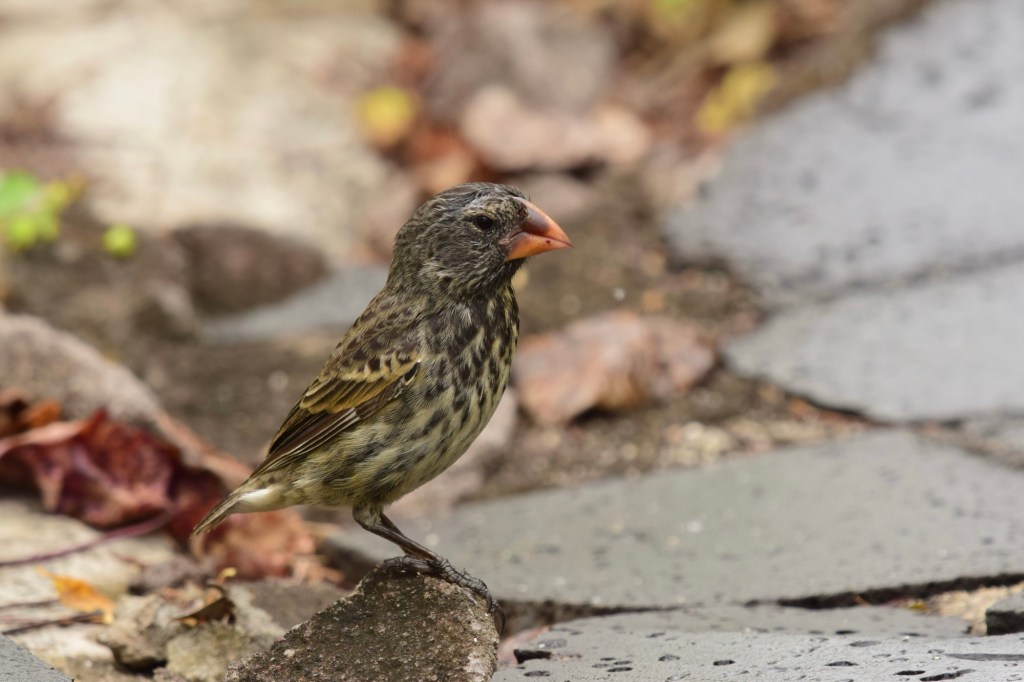
Speaking of Darwin, after I’d done a full length of the bay and dried off, I took my time heading back to my cabin so that I could linger in the forest. Mangrove warblers are just about everywhere, but it’s Darwin’s finches that are the real celebrities. Both species of ground finch are fairly easy to spot: small and medium. About as creatively named as a Starbucks order, they are at least easy to tell apart by the size of their bills.
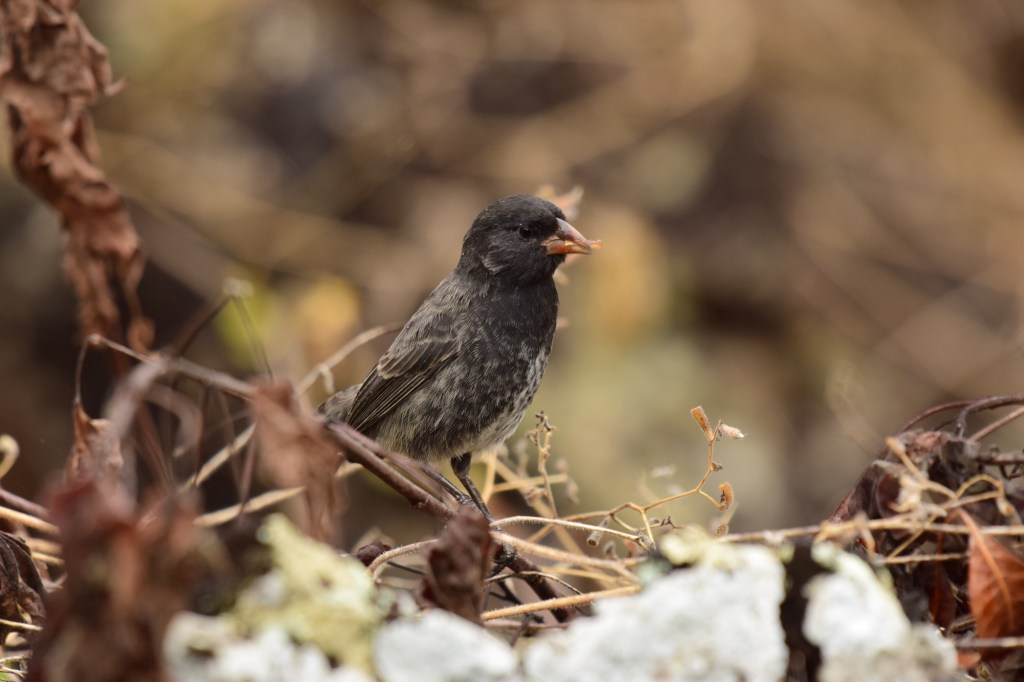
Small ground finch (male), Cerro Tijeretas.

Medium ground finch (female), Cerro Tijeretas.

I had lunch for $6 at a really lovely local joint in town, el Rincón de Sebas. I hadn’t eaten anything since lunch yesterday, so the bowl of steaming hot shrimp soup and the breaded fish were nothing short of heavenly. I’m not really the dieting type, but there is something to be said for delayed gratification.

I waited out the hottest part of the day in the cabin, wrestling unsuccessfully with the dry weeds that festooned one of my tops which gel from the balcony where it was drying into the rocks below. Whatever plant it was, it’s like no weed I’ve ever encountered before. Short of a professional roller, that burdock-like debris isn’t coming off easily, so I’ve had to admit defeat for the time being. Fortunately, it’s not exactly long-sleeved weather up here.

After negotiating tomorrow’s plan with Samuel, my guide from the other day, I opted for his discounted trip to León Dormido, also known as Kicker Rock. There was still a chance I could hold out for a possible opening on Española’s Punta Suárez, but that particular adventure has become synonymous with frustration on this trip, to the point where I have christened the place “Impossible Island”. Even if it were to appear now, I would be faced with paying double the price of the alternative – which, when you consider it would cost more than a one way flight to Peru from London, massively puts it into perspective.

Thanks, but no thanks. I’ll diversify my options and spend a day with the fish.

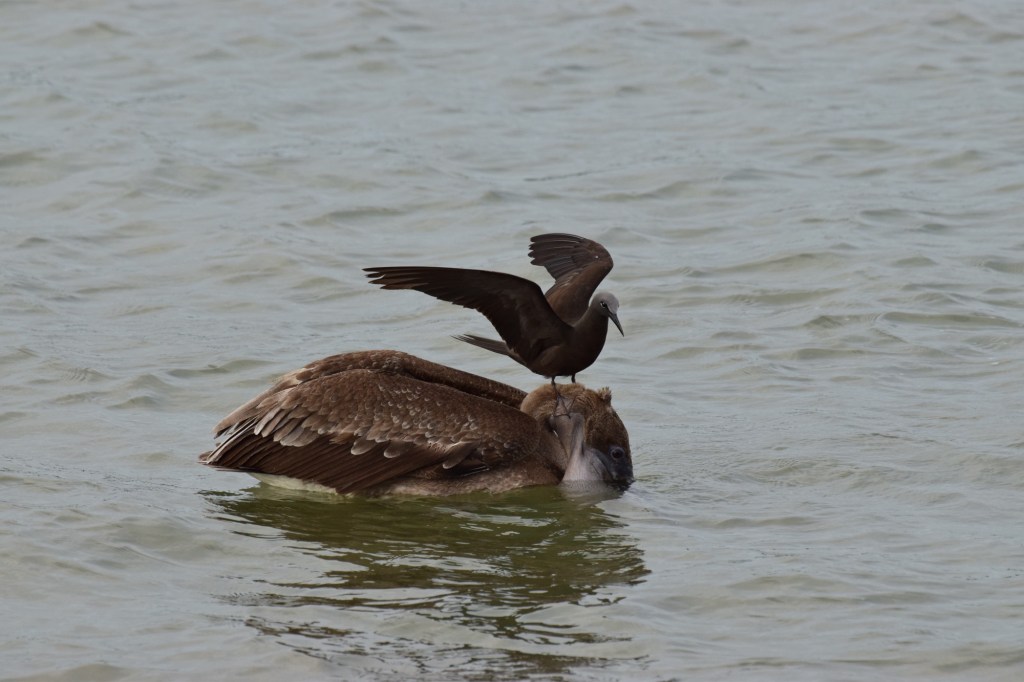
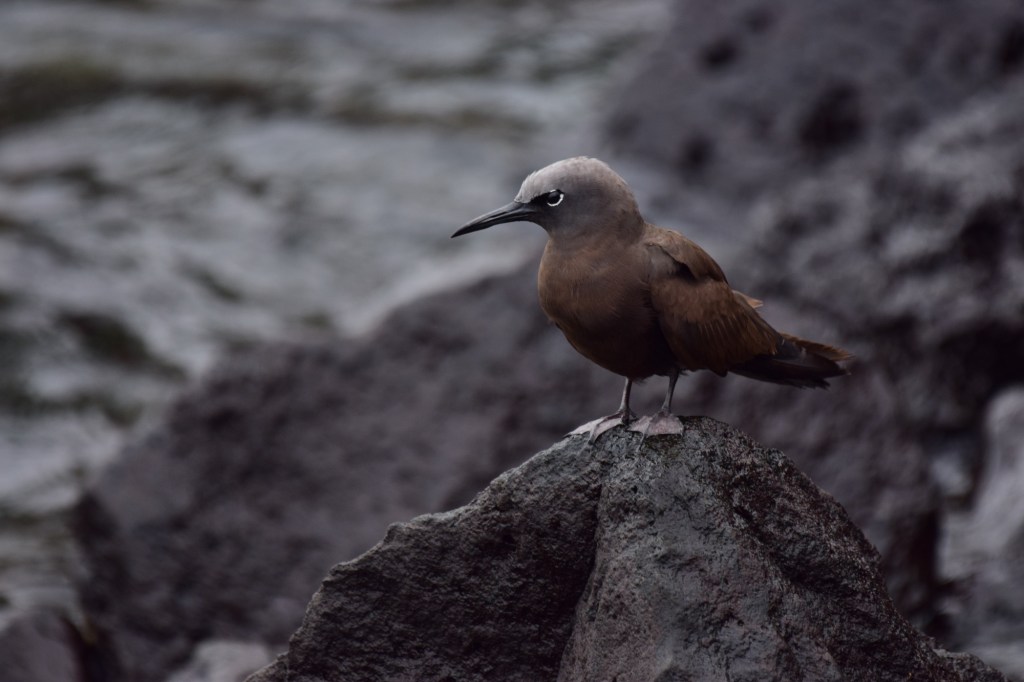
There’s always something to see in Puerto Baquerizo Moreno’s harbour, so I took my camera with me on my way into town to collect my snorkelling gear. Sure enough, the manglar and its connecting channel near the Ecuadorean naval base was a wildlife magnet, so there was much to see here. The local noddies were pestering a young pelican that was fishing in the bay. One of them continually tried to land on its head, doubtless hoping to snatch anything the giant caught before it went straight down the bird’s gullet.

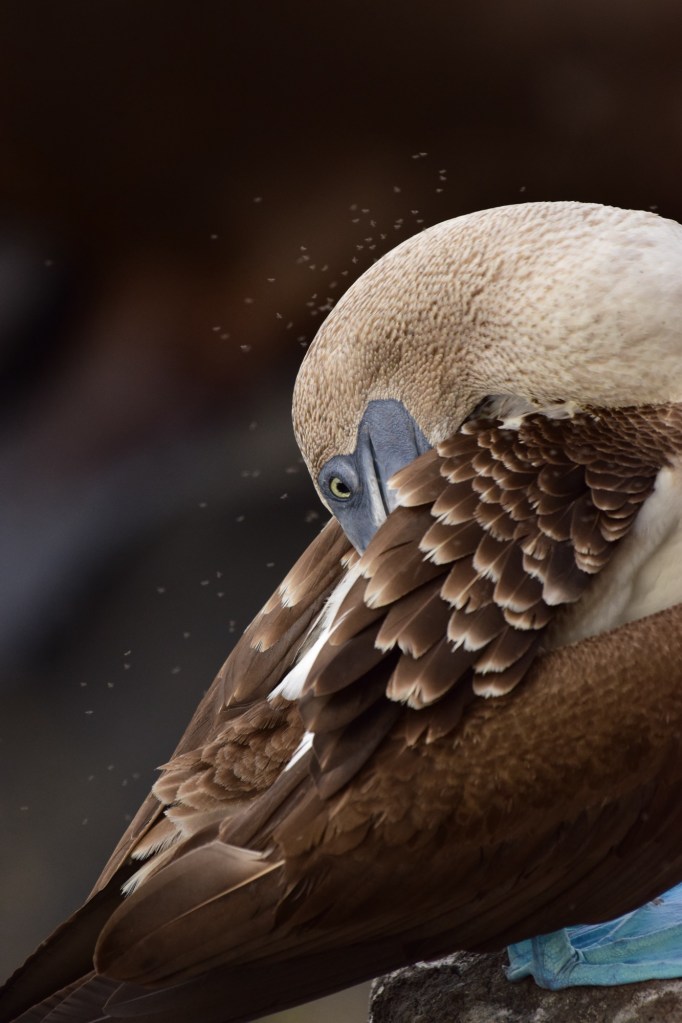
A couple of boobies were drawing a small crowd – not the American family watching them (/their smartphones) but the flies around their heads. I’ve noticed that these gnats seem to pester the iguanas quite a bit, so naturally a larger and more warm-blooded creature such as a booby would make for a better target.

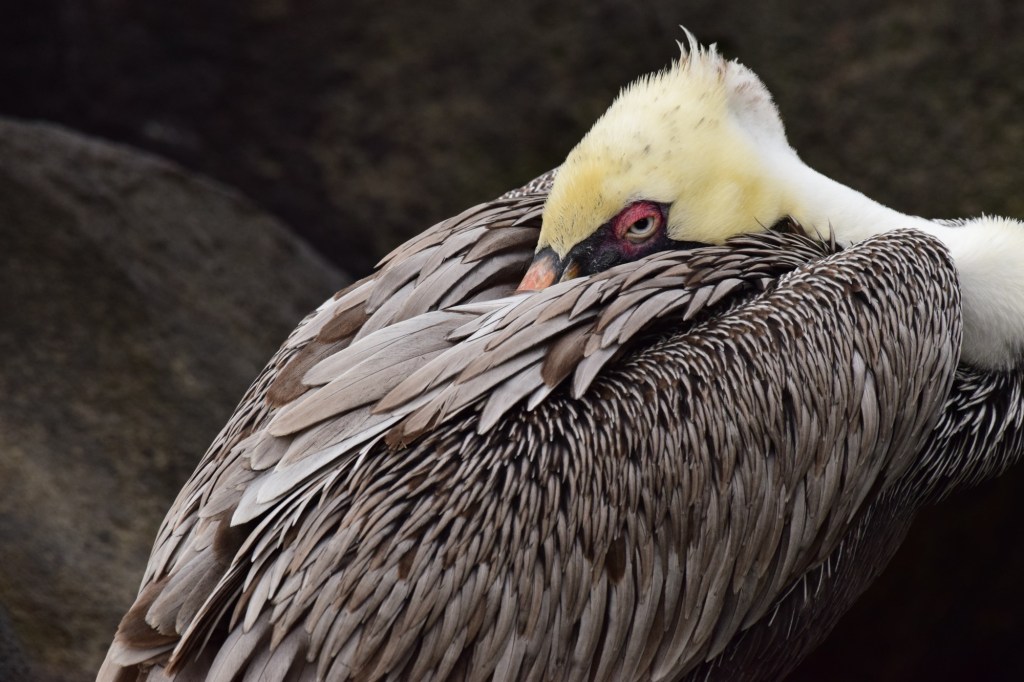
The oldest of the pelicans was avoiding the problem by simply burying its face between its wings. It kept one eye open, languidly watching the world go by. I didn’t get to see this particularly impressive specimen in full breeding plumage, because it took off and left while I was distracted by something else.

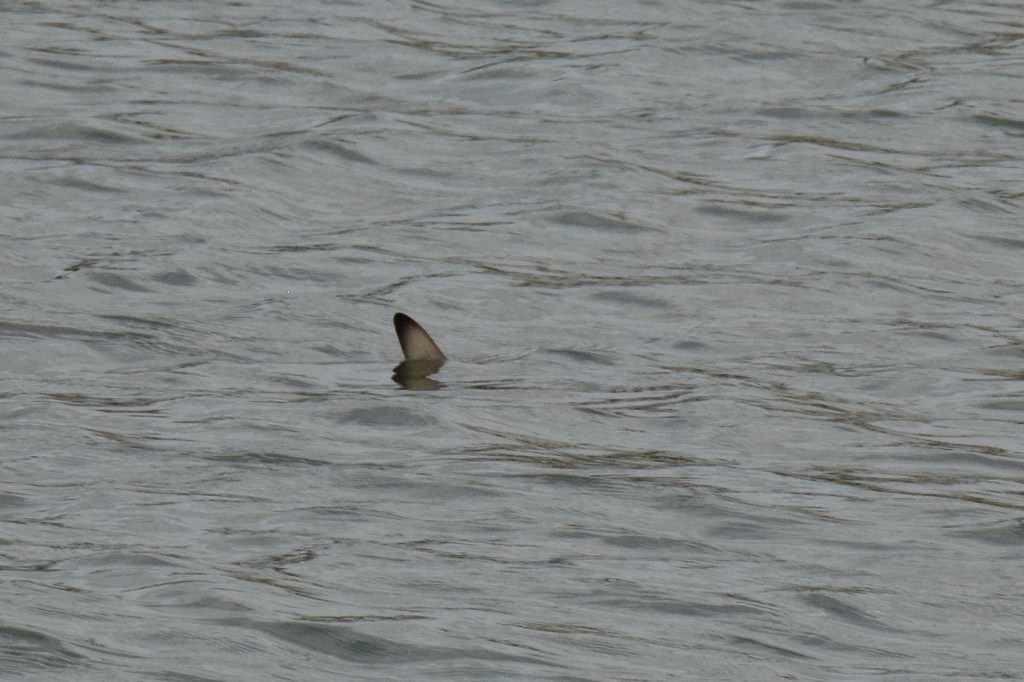
That something else was just a glimpse, but enough to be sure of what I was seeing: the tip of the dorsal fin of a shark. They don’t usually come this far into the shallows, so I was surprised to see the familiar Jaws-esque fin break the surface, putting the local sea lions on edge.

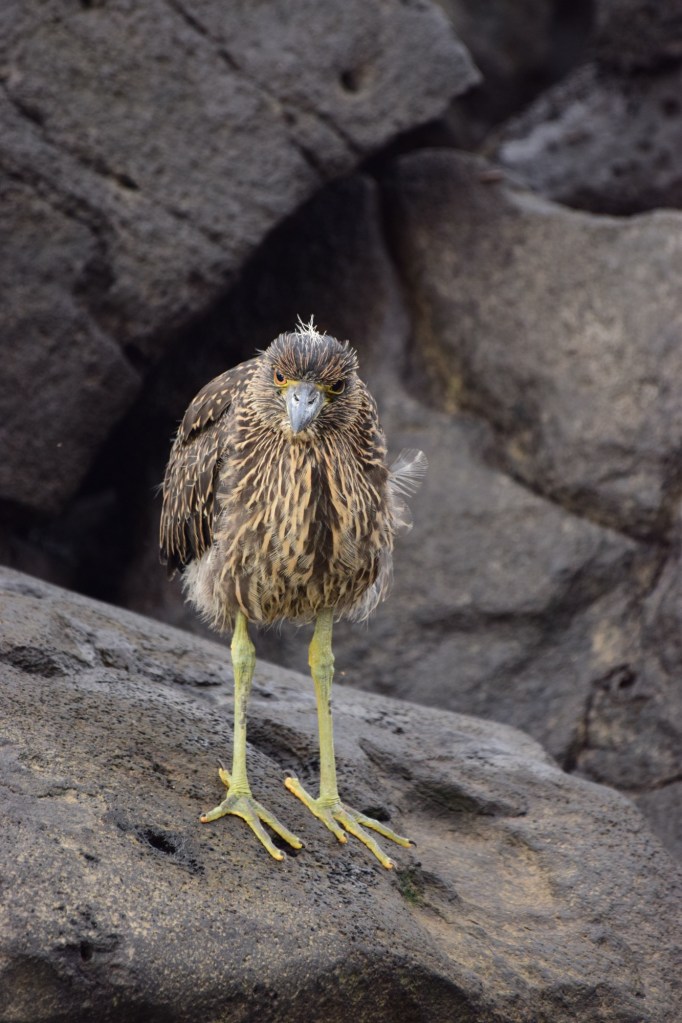
The channel that runs alongside the road is a heron magnet. All three species of San Cristóbal’s small herons can be found here: yellow-crowned night heron, striated heron and lava heron. The sunbathing night heron from the other day was here, but I was more intrigued by the scruffy-looking youngsters hanging around the rocks. Head-on, they are remarkably frog-like in their appearance.

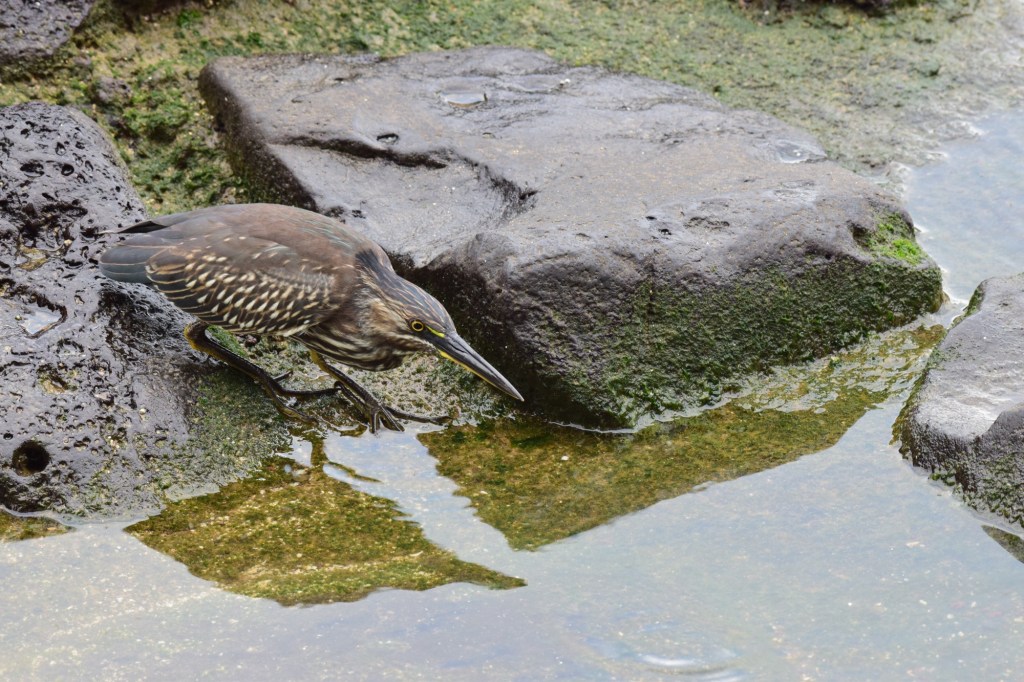
The striated heron – the same one that can be found across the Americas – is a lot like the endemic lava heron, only a lot more patterned. I tested out the camera’s dynamic range options with this one as it hunted in the shallows. I’m still learning as a photographer, but if I can get to the stage where my photos aren’t so blurry anymore, I’ll be a happy man.

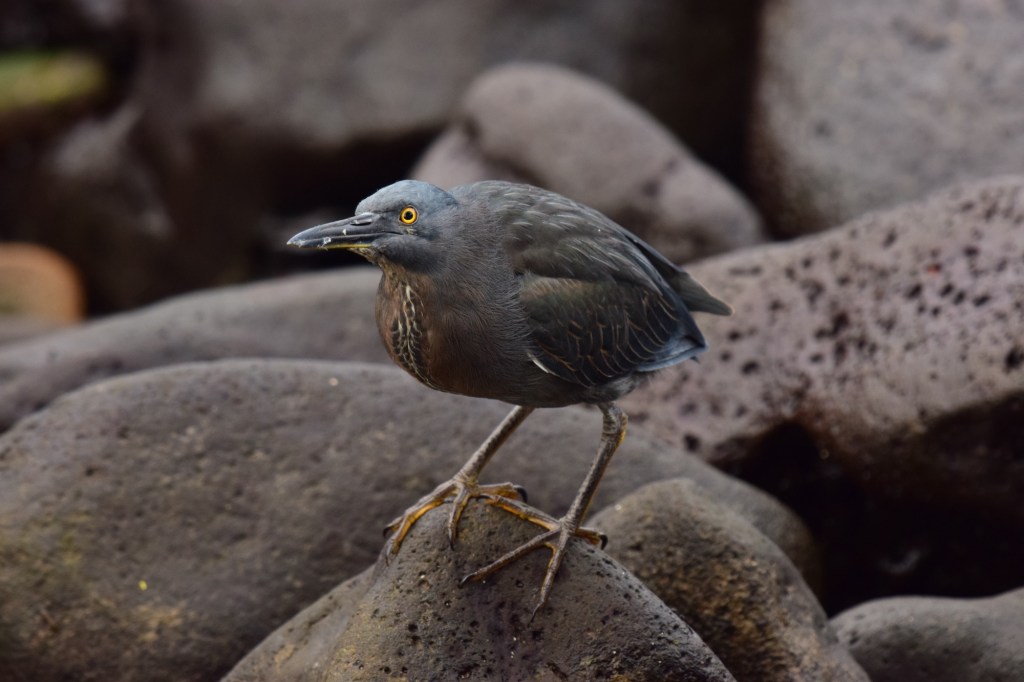
One photo I am particularly happy with is this one. The lava herons are really hard to shoot as they are fundamentally dark birds that haunt a dark and rocky background, making conditions difficult. Fortunately, they’re a lot less active than the finches or shearwaters who have been giving me the run-around, so I had time to frame this one nicely.

Tomorrow is a day in the water. I hope the weather is kinder. Who knows what we will find in the legendary depths of Kicker Rock? Another shark would be nice, but I’d settle for a turtle or ray. BB x
Show Me Your Boobies

Puerto Baquerizo Moreno, Galápagos Islands. 18.45.

At the time of writing, I still haven’t heard back from the folks at EcoChallenger about the trip to Española. They did say they’d had engine troubles last week and would provide me with a full refund if they couldn’t go ahead, but also that they would keep me informed. I sent a chaser to see if if they’d fixed their boat, but no luck.

So, rather than feeling glum about it, I found an alternative tour for today out to the other side of the island: Punta Pitt, the easternmost point of the Galápagos. Here, with any luck, I might be able to recreate at least some of what I would have found out on Española.


I picked up my snorkel gear from the Kingfisher GPS agency and walked back to the marina to meet my guide. Traveling with me today were a lesbian couple from California, a couple of American missionaries, their sister and her three children and a shy Australian birder. We were due to have one more on the team, but they never showed up – but at least while we waited I had time to get a better shot of the noddy sitting in the harbour, in the same place I saw it yesterday.


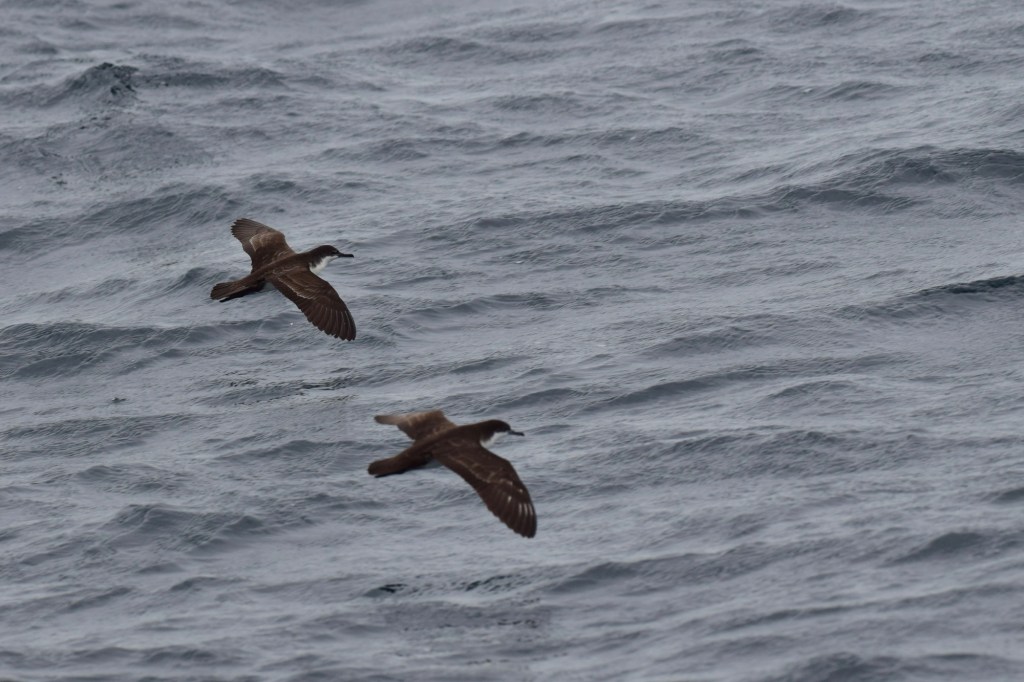
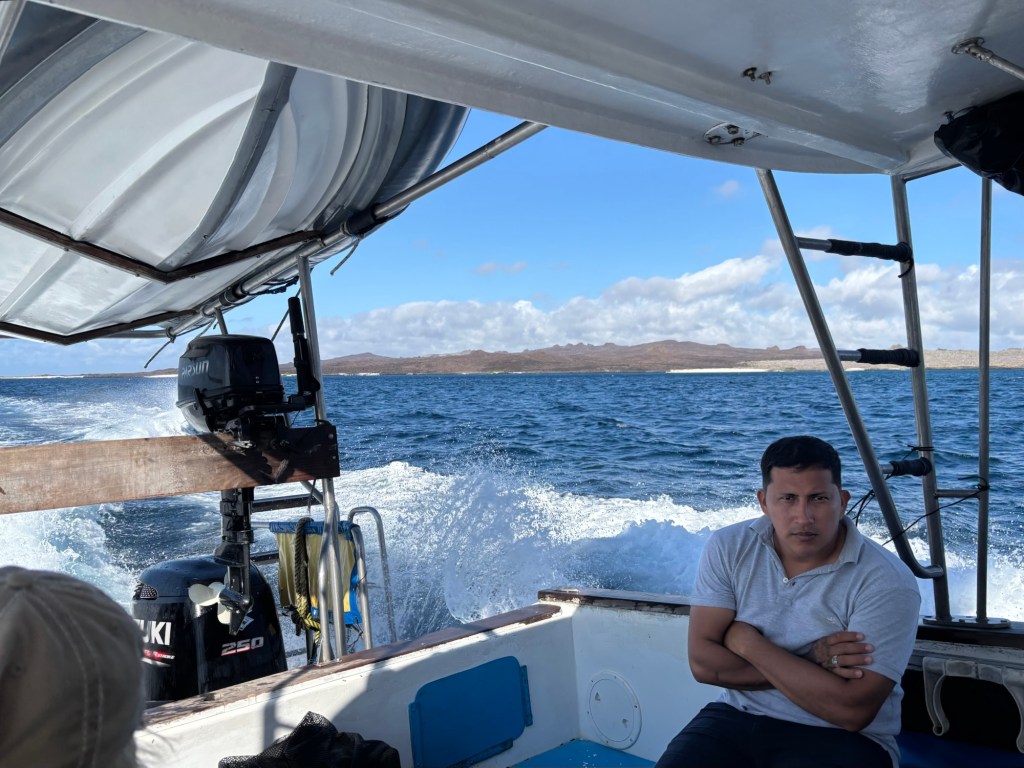
The journey to Punta Pitt from Puerto Baquerizo Moreno takes you all the way along the north coast of the island, and after passing the lighthouse at Punta Carola, it’s nothing but volcanic rock on one side and the open ocean on the other. Kicker Rock looms in the distance – a freestanding volcanic cliff famous for being the haunt of hammerhead sharks in the right season – but that wasn’t part of our itinerary, so we sailed on past. Beyond Kicker Rock, some of the Galapagos’ pelagic birds picked up our trail and followed the boat: Galapagos petrels, Galapagos shearwaters and two kinds of storm-petrel native to these waters.

I don’t believe in reincarnation, but if it did exist, I should love to come back as a shearwater. The speed with which they race across the water, seemingly delighting in the thrill of it… it’s magical to watch, even if they are in a mad hurry to find enough food to raise their chicks, sequestered in some burrow near or far away.

I was so busy keeping an eye out for seabirds that at least once I saw something else with wings leaping from the water: a flying fish, recently arrived in these islands, and just in time for the breeding season.


The weather looked unpredictable but the sea itself was a bit easier to read, so when we reached Islote Pitt, I made the decision not to enter the water. Sure, it was a waste of $30 on the rental GoPro, but I know I made the right call. Even the guide upon his return admitted grimly that the conditions were awful. The water was cold, choppy in the extreme and visibility was limited to about 10cm. Those that did take a dip said they’d managed to see a couple of sergeant majors, but that was about it. The qualified divers had a bit more luck with some eagle rays, but even they confessed that it was a hard and relatively fruitless dive.


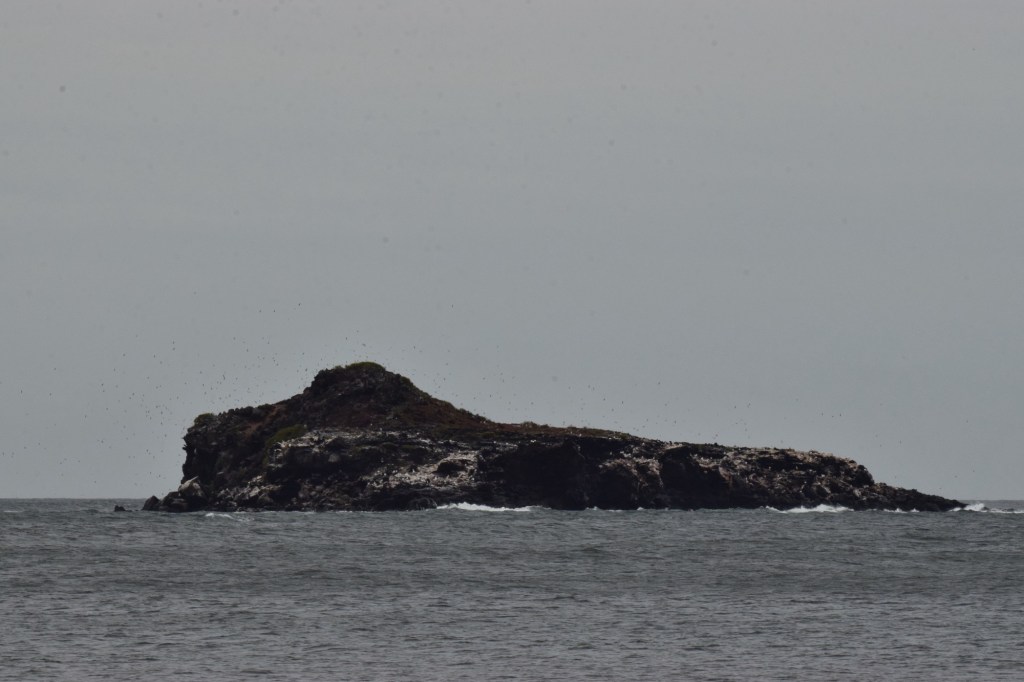
I, on the other hand, was having a whale of a time. Islote Pitt is home to a ridiculous quantity of endemic species, including both Elliot’s and wedge-tailed storm-petrels, Galápagos shearwaters and swallow-tailed gulls – the only nocturnal gulls in the world. I’m used to seeing storm-petrels at a distance, zooming across the surface of the open ocean and next to impossible to track with a camera, but I’ve never seen a colony before.


I’ve seen a lot of South American gulls on this trip: kelp gulls, dolphin gulls, grey gulls and lava gulls, to be precise. But swallow-tailed gulls are really rather special. Whether it’s their white wings and silver mantle, or the smart red ring around their eyes, or even their eerily haunting cry, they’re simply unlike any other gull I’ve ever seen.


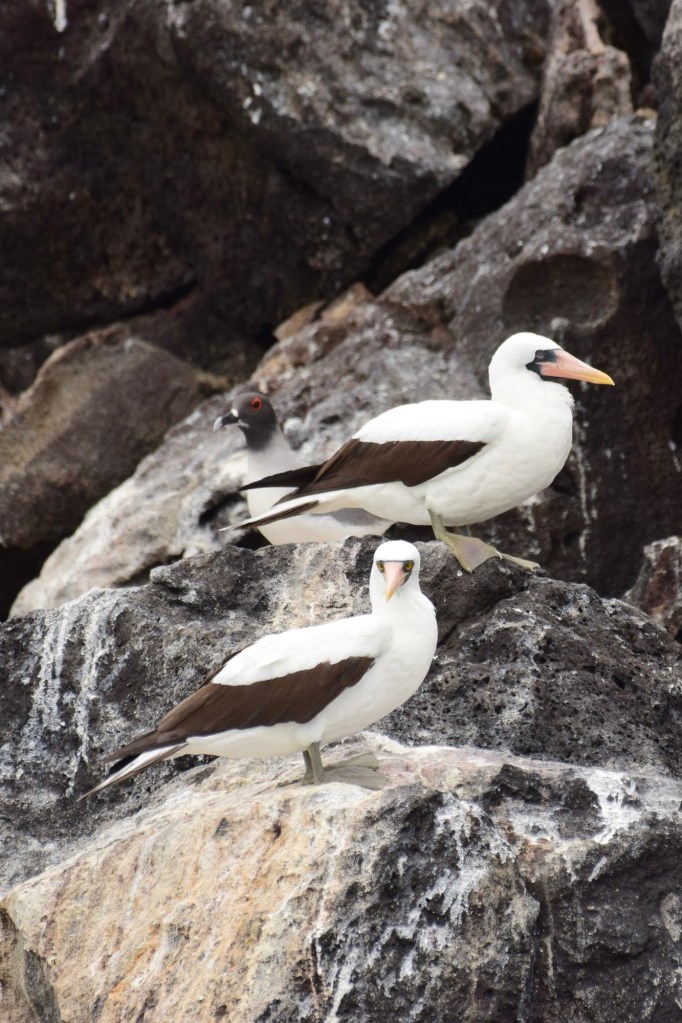
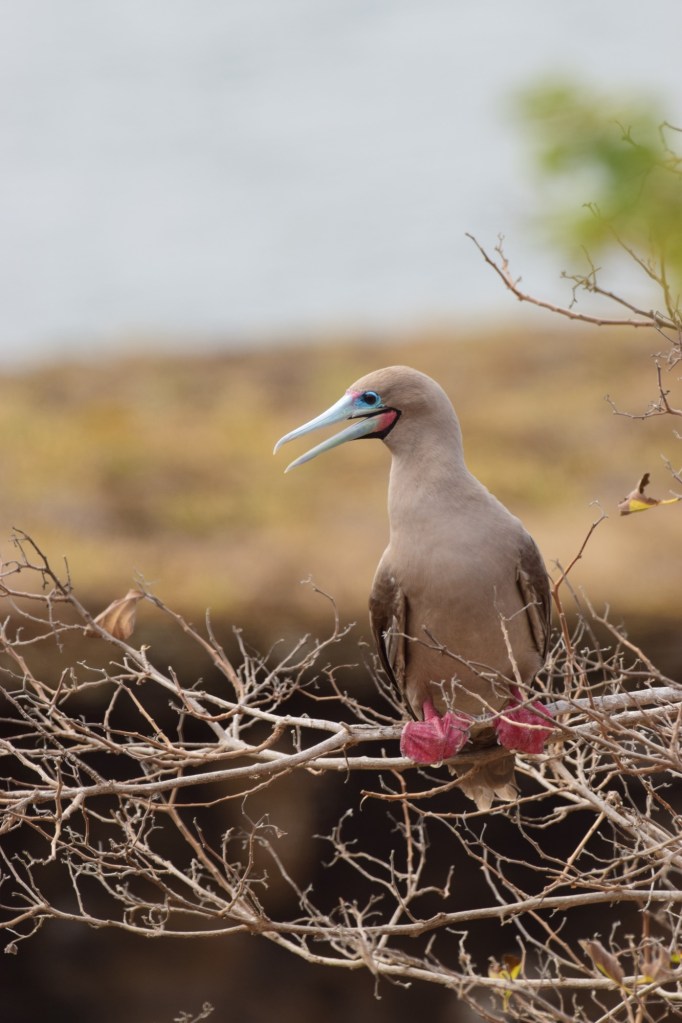
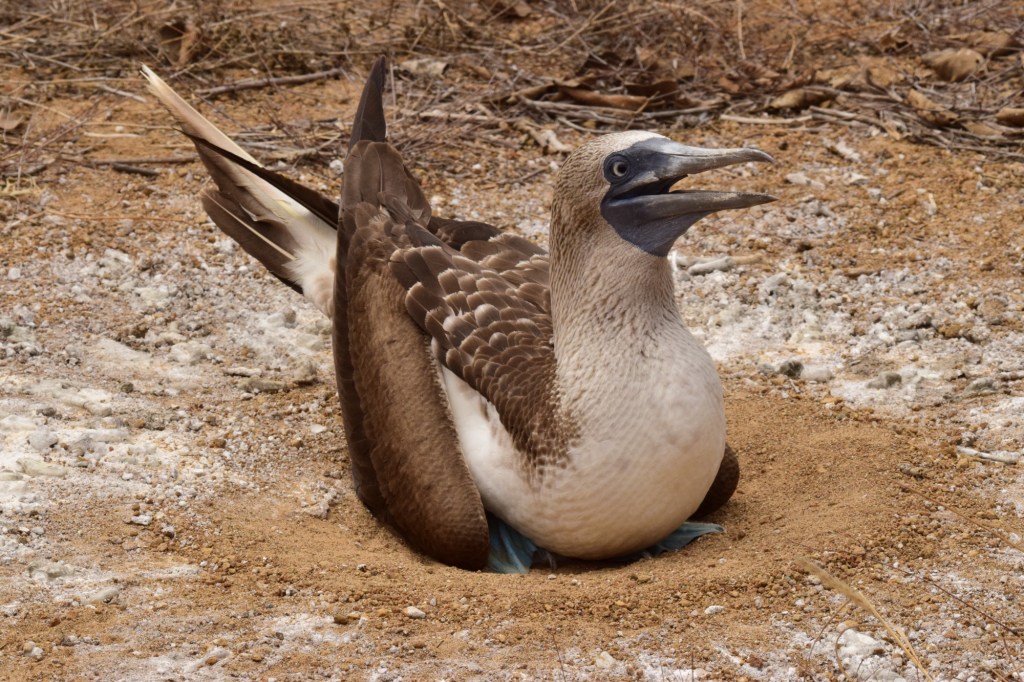
Punta Pitt’s major claim to fame (as well as the explanation behind the title) is that it is the only place in the Galápagos Islands where all three species of booby can be found together. Each one nests in a different spot: blue-footed boobies on the ground, red-footed boobies in the trees and Nazca boobies on the cliffs.

The Nazca boobies at Punta Pitt itself nest on a cliff some distance from the path at the point itself, so your best views would be at Islote Pitt, which is home to an enormous colony of the handsome seabird, alongside the frigatebirds, swallow-tailed gulls and a legion of storm petrels.


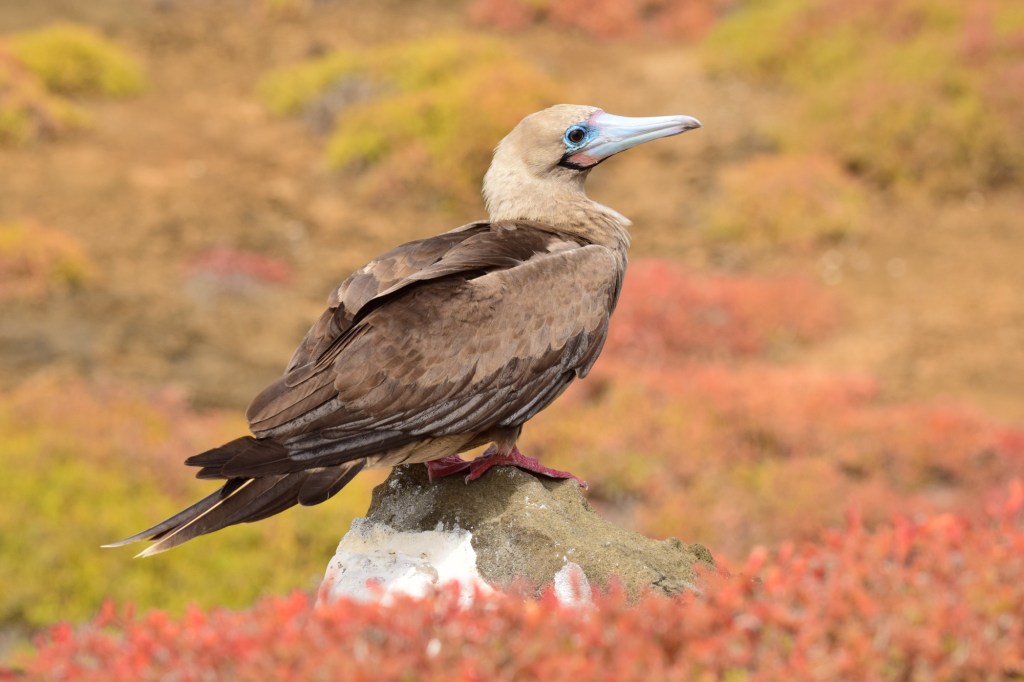
The hike up into the cliffs from the cove at Punta Pitt takes you deep into the volcanic coastline, up a tree-lined gully that becomes a torrent in times of severe rainfall. You’ll encounter the most famous residents of Punta Pitt, the rare red-footed boobies, shortly before climbing the pass over to the other side: they’re hard to miss, as they nest right next to the path.

Boobies get their bright-coloured feet from their choice of diet, which seems to be an evolutionary choice in the race to find a mate. Red-footed boobies primarily hunt squid and flying fish, both rich in carotenoids, which gives them their red colouring; blue-footed boobies are after the same nutrients, but their choice of catch – sardines – gives them a wholly different colouration. The brighter the feet, the more successful the bird is at finding a mate.


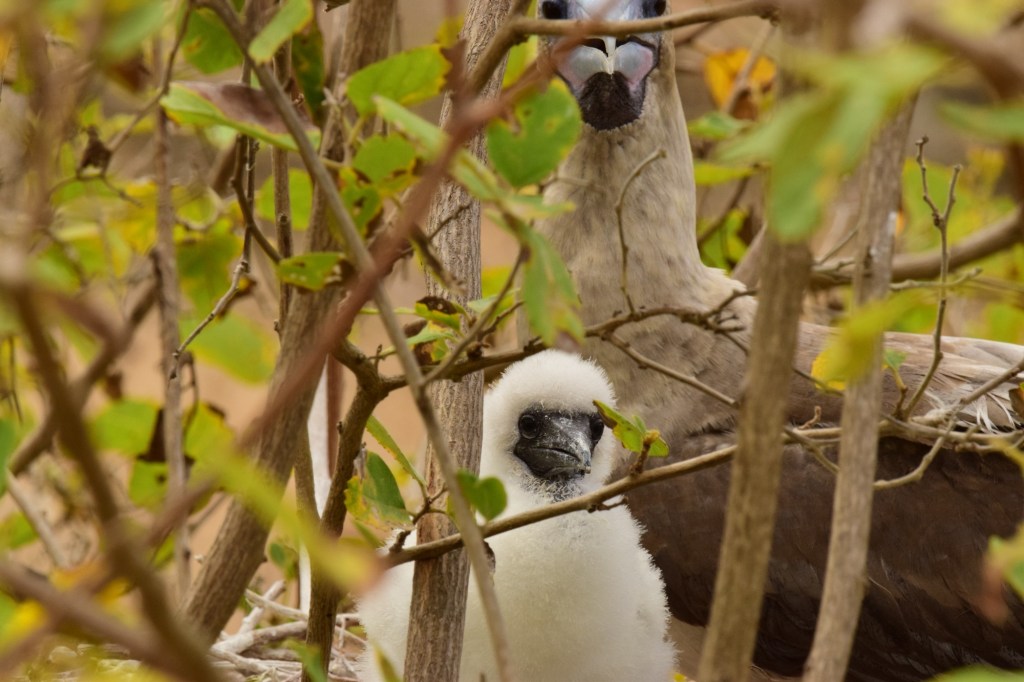
In August, the breeding season is already well under way, with some early partners already feeding large fluffy chicks. Others are still taking it in turns to incubate their eggs, with one partner flying in from a morning’s hunting to relieve the other on the nest.

For once, I was with a really respectful group of tourists. Once they worked out that the birds don’t like being approached too closely, they asked if we could keep our distance and move on so as not to disturb the birds further. Music to my ears!


Sometimes you didn’t have much choice but to be close, as their choice of nests catch you by surprise, in a scrape beside the path or tucked away in a tree in the middle of the road.


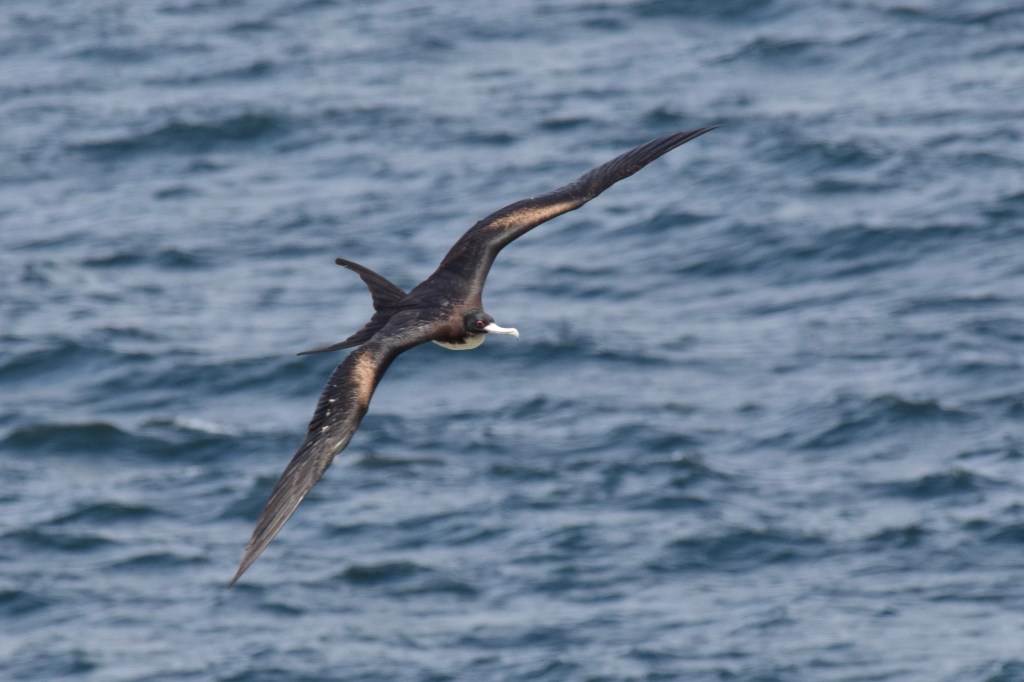
They’re not the only iconic Galápagos residents that breed at Punta Pitt. The enormous frigatebirds can be found here too, looking even more fluffy than the boobies, albeit at least twice the size.


Frigatebirds are absolutely enormous – you won’t truly appreciate just how big they are until you see them for yourself. Using their swallow-like forked tail as a rudder, opening and closing their streamers to steer in the wind, they are masters of the air, perfectly designed for outspeeding the boobies and robbing them of their fish, which I have been lucky enough to witness.

I also saw a beautiful angel of a seabird here: a red-billed tropicbird, all white with long streamers and a bright red bill. They’re small – tern size at best – and nest in crevices in the cliffs that are impossible to reach, so you won’t see them as well as the other denizens of Punta Pitt, but it was quite a sight to see as it set out to sea to go fishing.


The red-footed boobies come in two colours: a white morph – more common in the western Pacific – and a coffee-coloured brown morph which is more easily found here in the Galapagos. The two morphs are totally interchangeable and cross-breed from time to time: for the ladies, it’s not about the colour of their feathers but the brightness of their feet.


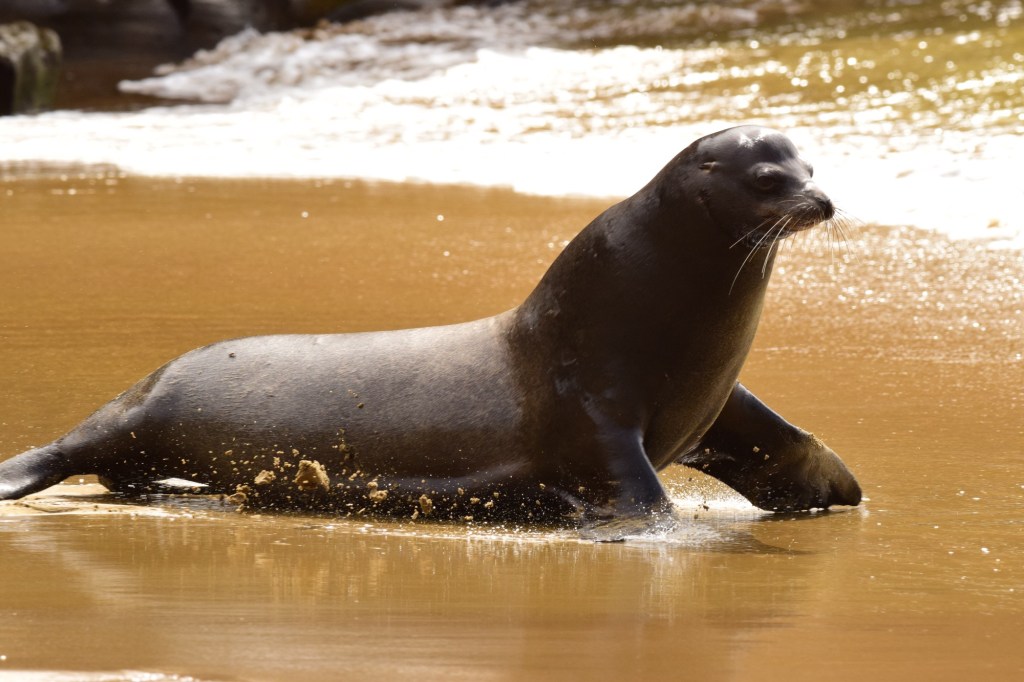
After a solid two hour hike up into the cliffs, we left the boobies and their ramshackle nests and climbed back down to the beach where we landed. While the captain’s boy ferried us back to the boat on a small skiff, the local sea lion alpha was busy defending his territory, chasing off a rival male that had just arrived on the beach.

I overheard a family of Americans in Puerto Baquerizo Moreno watching the sea lions lazing around the port and saying how easy life must be for them. For the dominant male, it couldn’t be further from the truth. From the moment he assumed command, he cannot hunt, eat or sleep, patrolling his territory constantly and fighting off suitors as they come. This is, of course, extremely debilitating, leaving them physically weakened after nearly a month without food, but there are cases of individual alpha males returning to reclaim their harem up to three times in a single season. So when you hear the endless barking that is such a part of the soundscape of Puerto Baquerizo Moreno, remember how long it might have been since the males have been able to eat. For sea lions, the urge to mate simply outweighs all other options on the table, including eating and sleeping.


The boat ride back to Puerto Baquerizo takes a lot less time as you ride the fast-moving current back, shaving a whole hour off the journey. In the middle of the day, there’s not as much to see either, so most of my companions fell asleep, aided by those curious neck-braces with built-in fans that I saw some colleagues wearing back home during the June heatwave.

Samuel, our guide, was keen to know how long I’d be here. I told him how last minute this whole operation was, and that I’d more or less given up on Española with no news from the folks at EcoChallenger. He said he’d ask around – after all, it’s not the agencies here that conduct the tours but rather the guides and their attendant boatmen. The agencies merely act as middlemen, sending a certain quota to the actual operators down in the harbour. So who knows? Maybe I’ll get to go to Española after all. either way, I’m glad I opted for Punta Pitt – it was absolutely incredible.


I’ll get an early night and have a quieter day tomorrow. I could do with some time to put the snorkeling mask to good use. I hear the bay where I saw the turtles is an almost guaranteed spot to see them year-round, so I think I’ll go there first if the weather is kind. It’s usually rainy and cloudy in the mornings and then sunny in the afternoons here, which is an easy enough pattern to follow.

See you next time! BB x
Penguins in the Desert

Hostal Pariwana, Lima. 8.05.

Today is a travel day. My onward flight to Arequipa doesn’t leave until 5pm – a luxury in a trip full of early starts – so I’m having a proper rest this morning.

It also gives me ample time to give yesterday’s adventure the write-up it deserves.


When I leave Lima for Arequipa on Thursday, I won’t see the Pacific again until I return to the capital for my flight home in just over two weeks’ time. That means saying goodbye to something awesome and powerful that has been the eternal backdrop to my Peruvian adventures thus far, and trading it in for the majesty of the Andes, the longest mountain chain in the world.

I couldn’t leave without going out onto the waters of the Pacific at least once, so today I jumped onto a trip to the Islas Ballestas – the Ballista Islands – run by the Peruvian tourism colossus, Peru Hop.

Paracas is a proper schlep from Lima – four hours, to be precise – so the company’s iconic red bus picked me up at 5.30am. One of the backpackers from my hostel panicked because it wasn’t there bang on half past, which I thought was surprising from a person who had been traveling South America far longer than I. In any event, the guides came looking for us at each hostel along the way, which I thought was bloody efficient, given the size of Lima itself.

Peru goes to the polls to elect its next president on the 12th April, and there are billboards for the various presidential candidates everywhere. Comedians. Bankers. Career politicians and military generals. Relatives of former presidents. Every district seems to have its own champion. If it’s a two-horse race like it so often is elsewhere in the world, you’d never know at a glance.

I’ll be deep in the Amazon rainforest when it all goes down, but at least I’ll be here. What a time to be in Peru!


The bus to Paracas was packed – every seat taken. Mostly young backpackers, but a scattering of older couples as well. A British woman all in pink ended up next to me – pink crop top, pink smartwatch, pink nails, pink leggings, pink lipstick, pink stripes on her shoes, pink cover for her phone, pink handbag… An Essex Elle Woods if ever there were one. I suspect she was off to Pisco and Huacachina for wine-tasting and dune-buggying, rather than a tour of the national park. To quote an old friend, “you don’t need foundation for a safari”.

In Paracas, all three buses in our convoy were disgorged onto the steps of the Hotel Residencial Los Frailes, before being led straight to the jetty for the boat trip to the Islas Ballestas. Honestly, I was expecting more hassle from local touts on route, but my experience so far of Peruvian hawkers is that they are considerably less aggressive in their tactics than their African and Asian counterparts. I wasn’t hassled once.

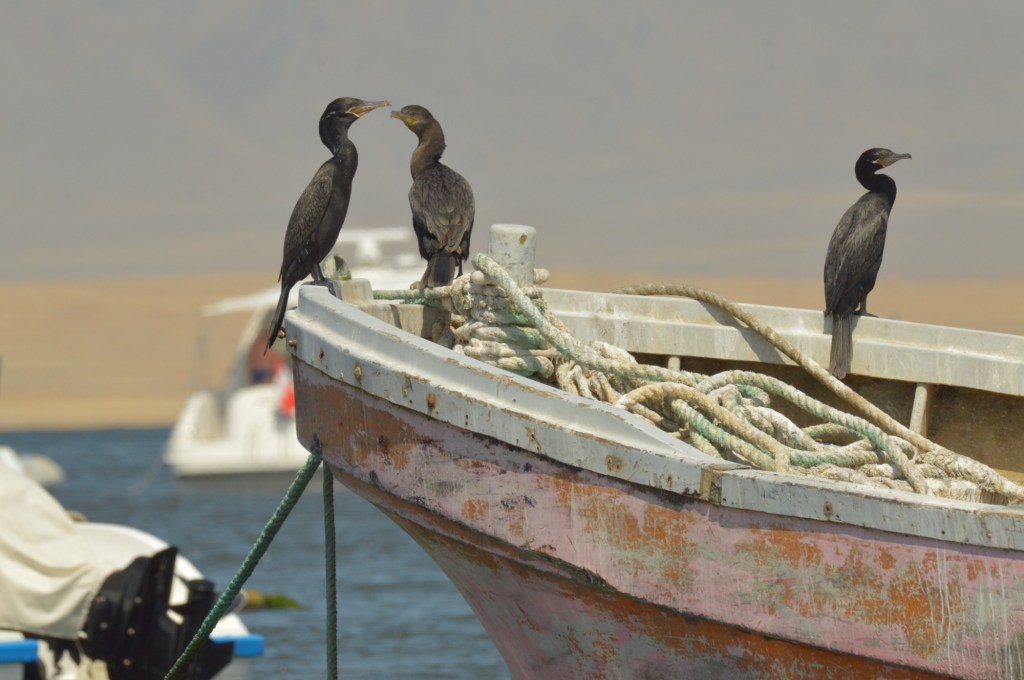
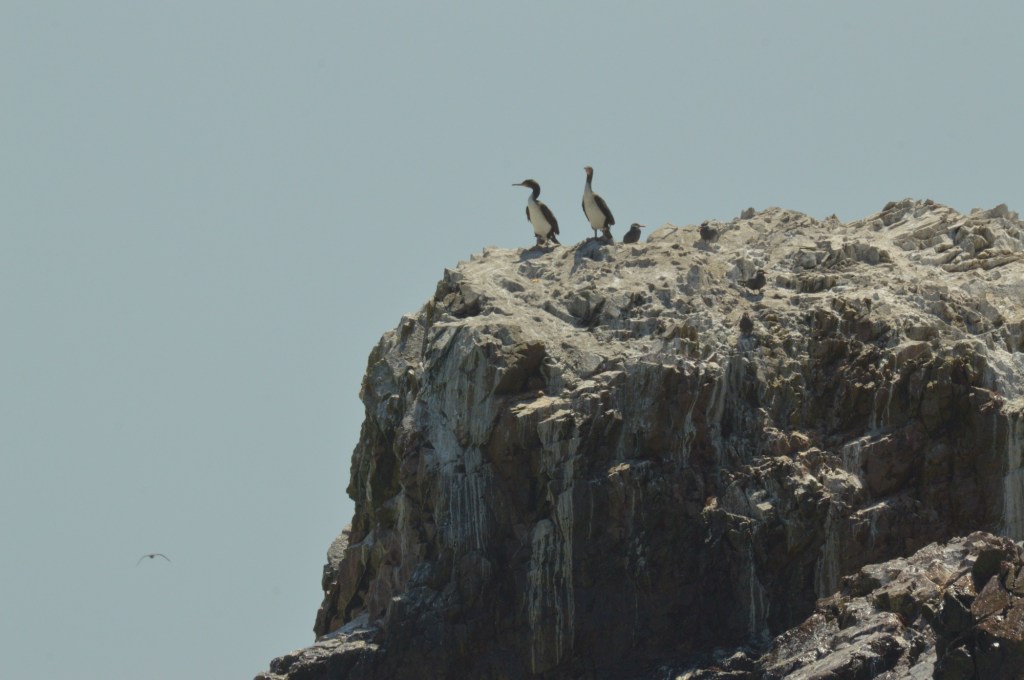
There’s plenty to see before you even leave the still waters of the harbour. Neotropic cormorants are just about everywhere, perched on the hulls of almost every skiff in the bay, but they’re far from the most obvious residents of Paracas.


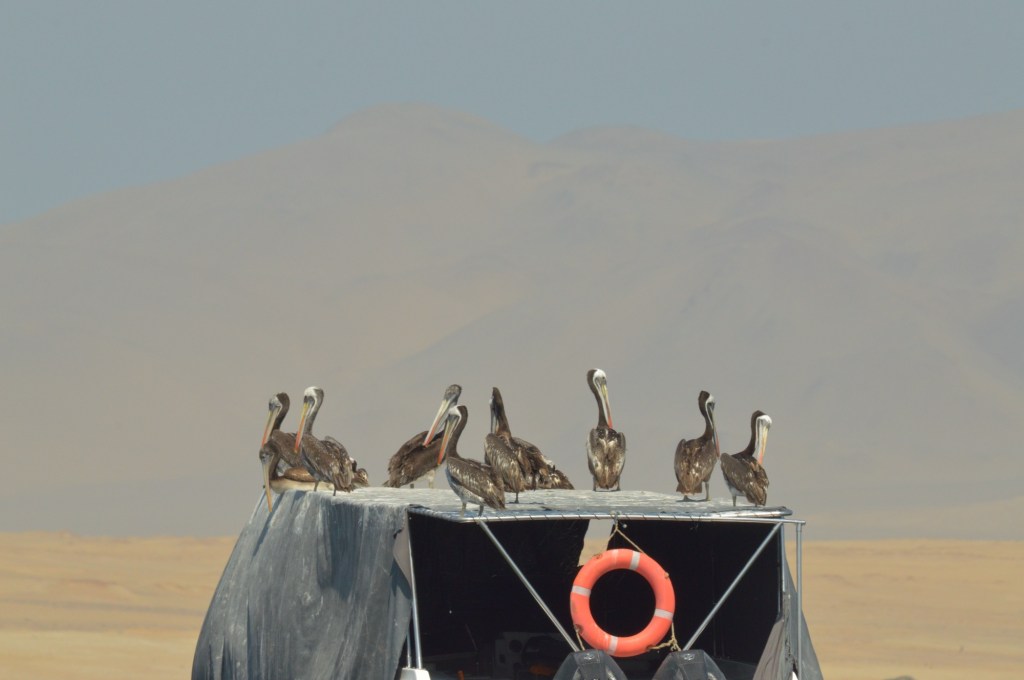
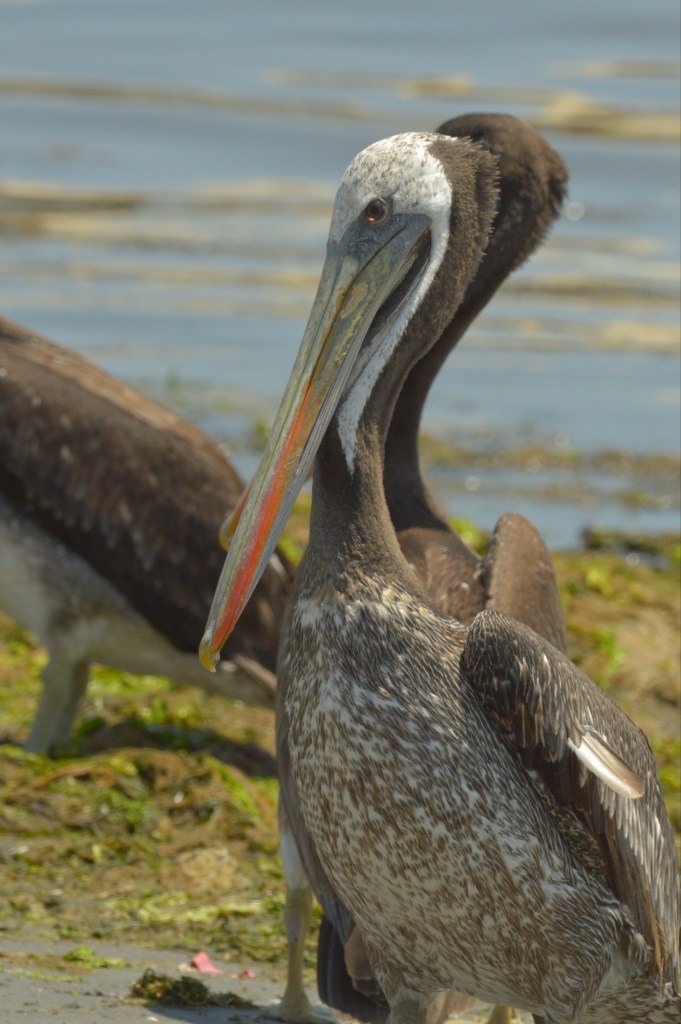
Far larger and more impressive are the pelicans, with a seven foot wingspan and standing at around five feet tall. That’s as tall as the average Peruvian woman. They’re not exactly shy, either. While they’re more commonly observed resting on boats and skiffs or crashing headfirst into the sea in a clumsy imitation of the Peruvian booby, they can often be found right at the heart of human activity. There were a few loitering around the jetty in Paracas, but I had a boat to catch, so I made a mental note to swing by later.


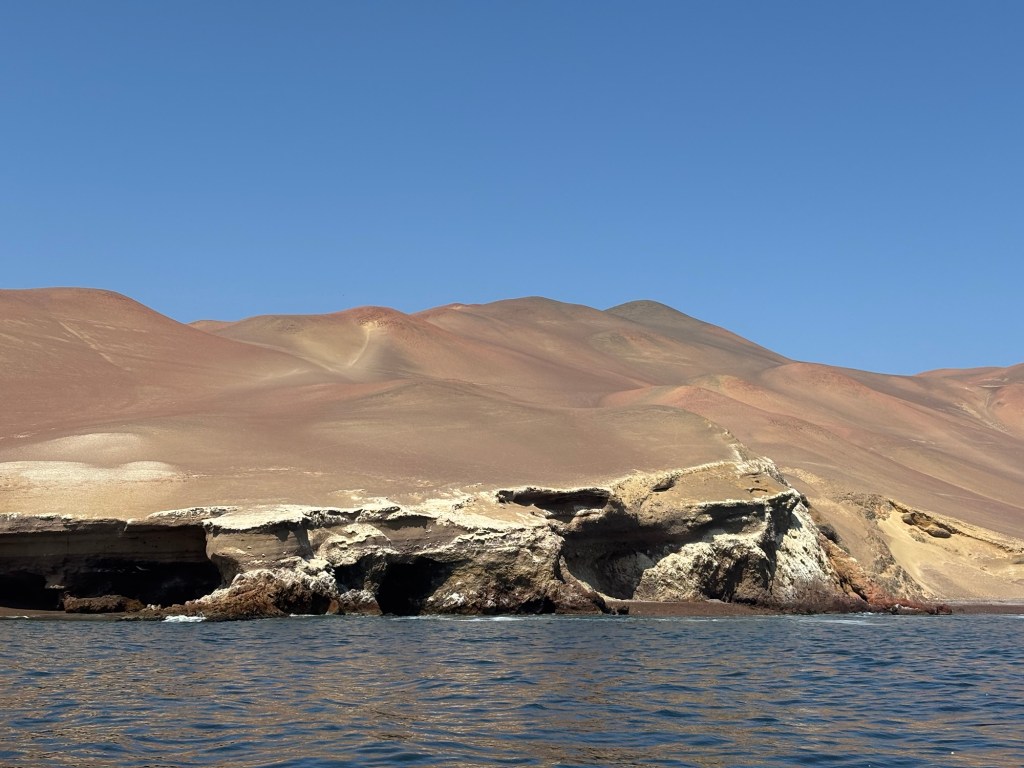
The Peruvian coastline from the sea is nothing short of mesmerising: undulating deserts of marbled rock set against a powder-blue sky that lightens toward the horizon. The cliffs are scored with white, a combination of thousands of years of accumulated salt and guano, the bird droppings that once made Peru one of the richest countries in South America.


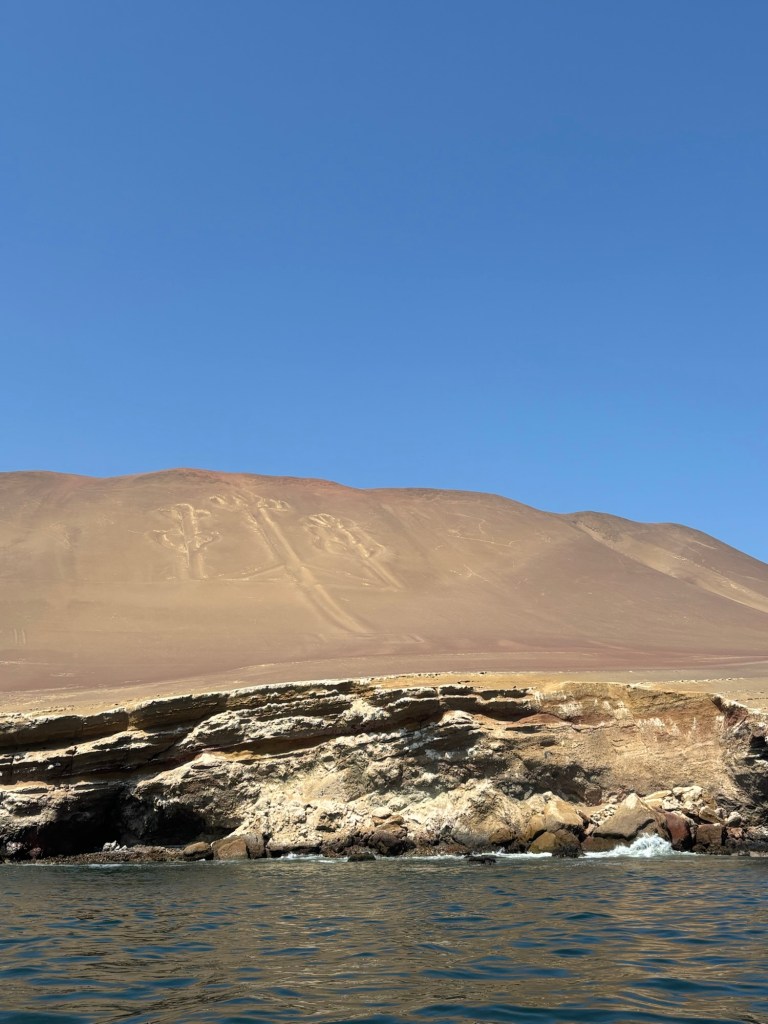
One of the most iconic sights in this corner of Peru is the enormous geoglyph, “El Candelabro”. This 170 metre tall symbol was carved into the earth some 2,500 years ago and, due to the extreme scarcity of rainfall here (it rains for an average of thirty minutes a year), it has never been washed away.

Scholars believe it may be related in some way to the Nazca lines, which can be found further inland along the coast. I had originally planned to see these for myself, but they aren’t on my itinerary this year. Maybe next time.


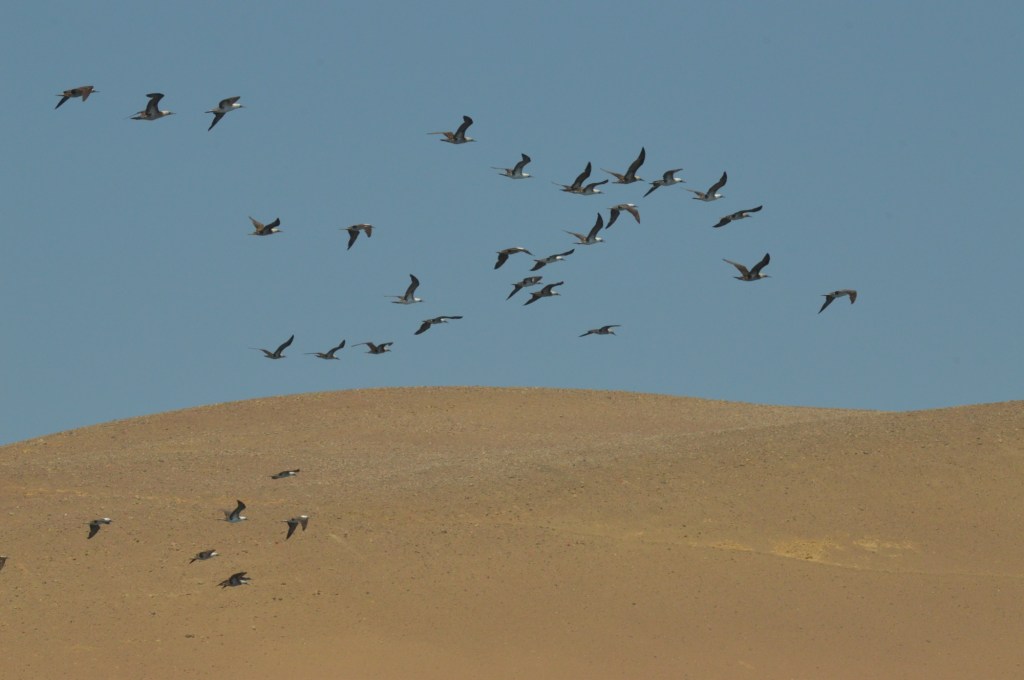
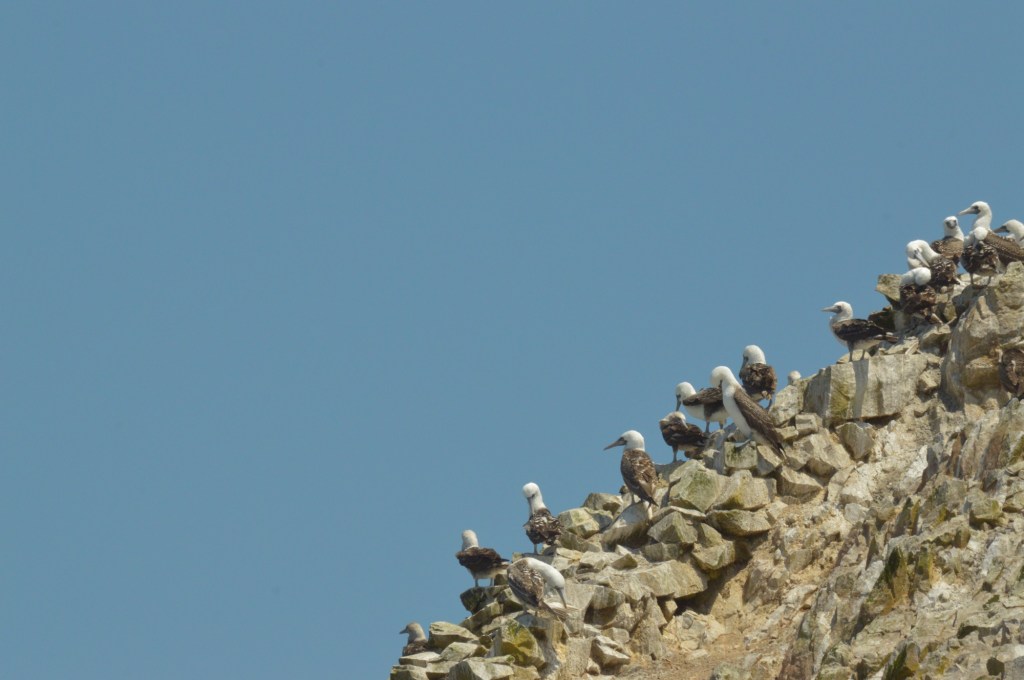
Everyone on the boat got up on their feet to get a photo or selfie with the enormous geoglyph, but I was quite happy with the one picture I had. I was a lot more trigger-happy with the feathered denizens of the cliffs – the pelicans, boobies and Inca terns – which were fishing all around us. They made for quite an awesome sight against the backdrop of the desert.


After visiting the geoglyph, the captain turned the boat around and stepped on the gas in the direction of the islands. The Islas Ballestas take their name from the crossbow used by hunters long ago against the thousands of birds who call these craggy cliffs home.

Incidentally, that’s also where the name “booby” comes from. These beautiful seabirds were bobos to Spanish sailors – stupid – because they were so unafraid of people that they came right up to the boats, only to be captured and clubbed to death. Boobies are extremely monogamous, usually pairing just once during their lifetimes. It is said that they will perish of a broken heart if their partner is killed. As such, they are also known in Peru as “bobos románticos”.

It says a lot about the human character that we once saw such devotion as something foolish.


These islands were once home to an enormous colony of guanay cormorants – the primary source of the guano on these cliffs – but they have all but evacuated the place. The reason is not hunting or overfishing but the vicious avian flu epidemic in 2022, which cost the lives of nearly six hundred sea lions and fifty-five thousand seabirds, decimating the islands’ populations of boobies, pelicans, cormorants and penguins. The colony is slowly recovering, but the cormorants that once turned the sanctuary cliffs black and white are now just a shadow of what they once were, especially outside of the breeding season.


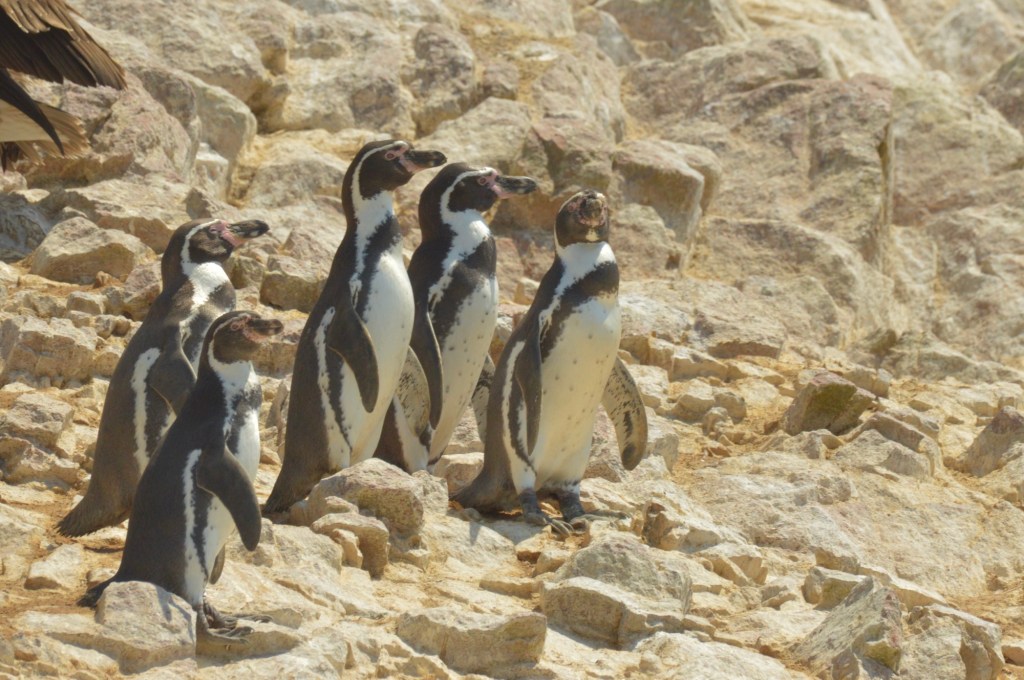
One of the biggest draws on the islands remains its dwindling colony of Humboldt penguins. We saw only seven of them, but there may have been others out hunting in the open ocean, as the breeding season is now long behind us. How these bipedal creatures made it high up onto the cliffs beats me, but it was fun to see them waddling down to the edge to watch us sailing by.


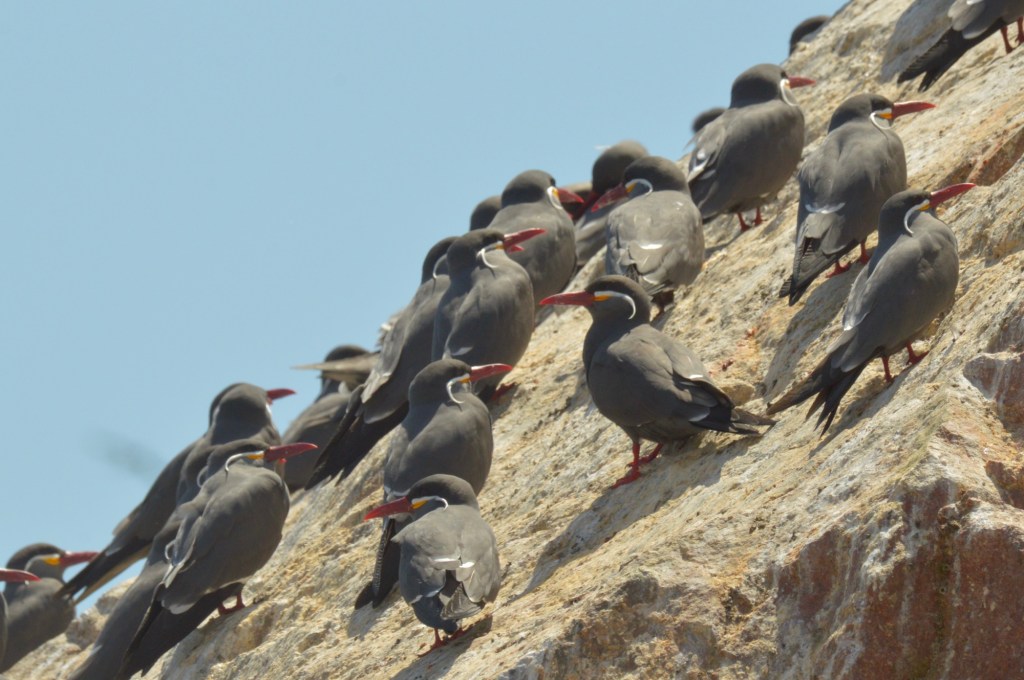
The last of the feathered residents of the islands that deserve a mention are its Inca terns, an especially smart seabird with handsome “whiskers” beneath its eyes. They’re known colloquially as “ladrones del mar” on account of their habit of stealing fish from the neighbouring cormorants and boobies, but I didn’t see any thieving today. On the contrary, they were showing remarkable success in their own fishing endeavours around the islands, and like most terns, they’re tremendously acrobatic and quite a joy to watch.


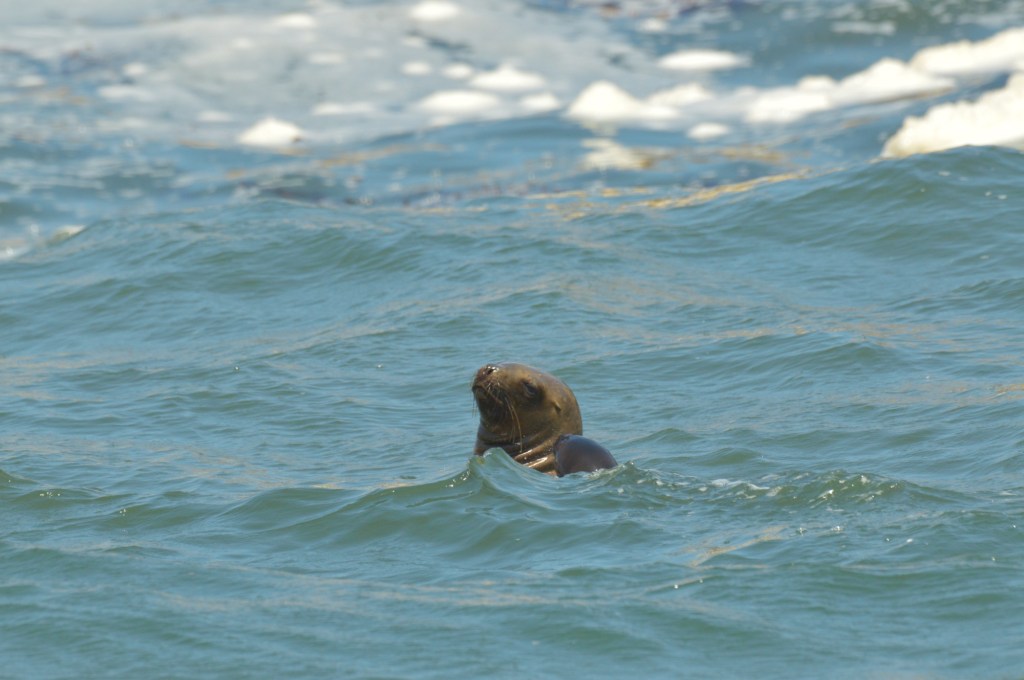
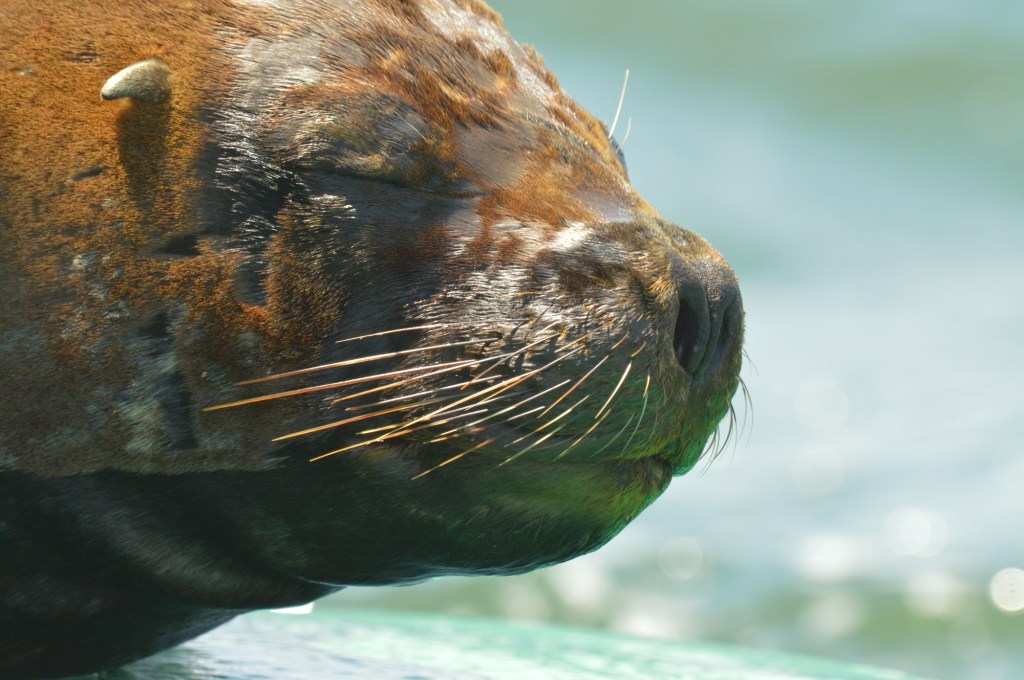
It would be remiss of me not to mention the fur seals and sea lions that live on these islands. They’re not as fun to photograph as the birds, and as we’re in the middle of their breeding season, we weren’t allowed to get too close to their sanctuary beach (males and females live apart, with only the dominant male having access to his mighty harem). The fur seals were mostly lounging around in the midday sun, but I did see a few sea lions chasing our boat there and back, and a mother and pup playing in the surf not too far from the boat.


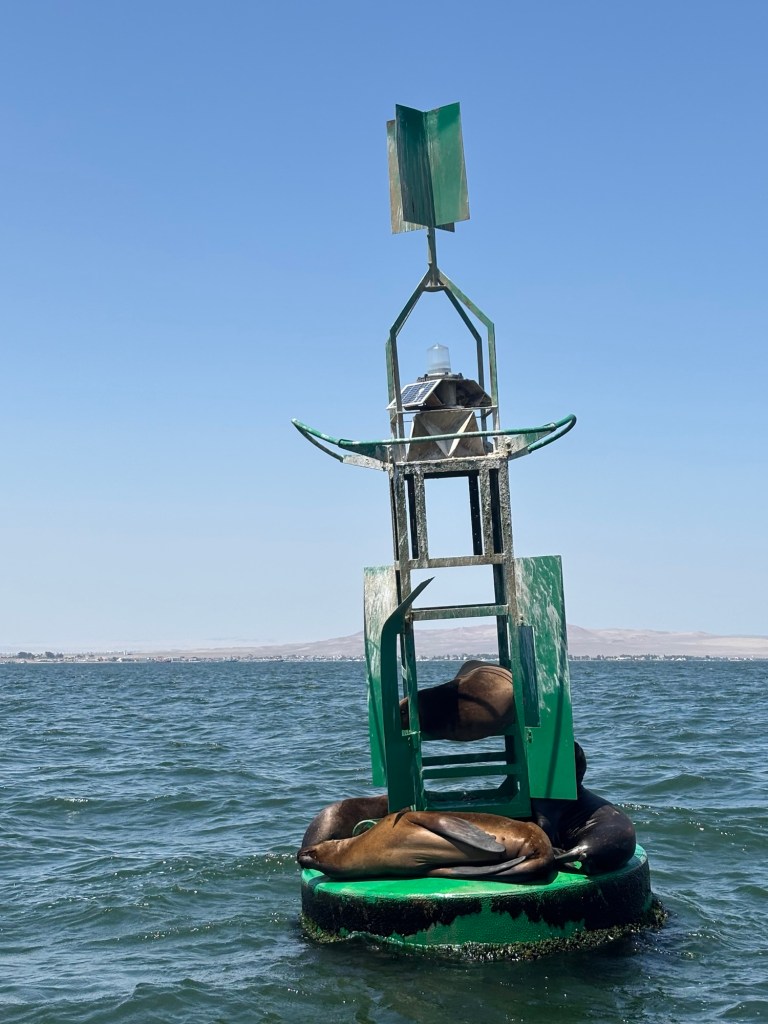
The return journey to Paracas stops at a buoy, which is apparently a favourite haul-out for the seals. Why here, halfway between the islands and the coast, was not explained, though I suspect it’s because the waters are especially rich in this spot. There was a huge amount of activity from both birds and fishermen around here.


The captain drove right up to the buoy, which spooked the fur seal that was already in the water, but the others didn’t seem to troubled. It was already pretty hot, and with the waters in these parts carrying the Antarctic chill of the Humboldt current, it must be nice to have an isolated spot to come and warm up, out of reach of the blue sharks that hunt them further out to sea.


Back in Paracas, I made sure to revisit the pelicans, who clearly hadn’t gone very far since we set out. I suspect they’re enticed by a couple of savvy local touts who hope to draw in tourist traffic by keeping a few of these mighty creatures close at hand, but they didn’t give me any trouble. One advantage of having the mighty zoom lens on me is that I don’t need to get too close, especially when to comes to birds as big as the Peruvian pelican.


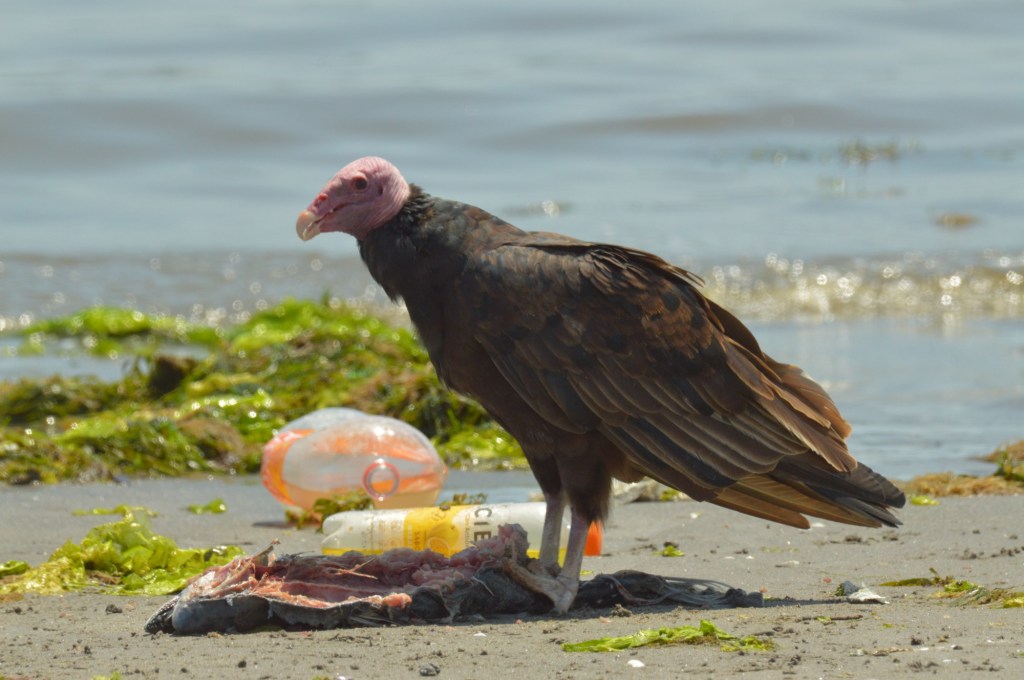
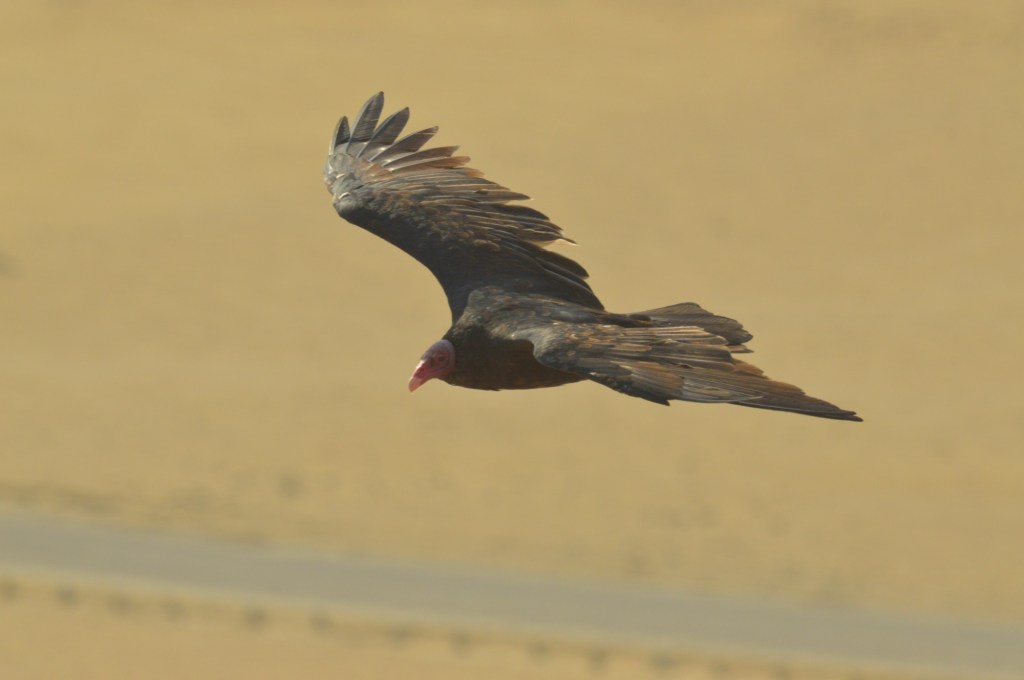
Swooping in to steal the spotlight, however, came a cousin of the gallinazos I spent so long with yesterday: a turkey vulture. If black vultures were the stars of yesterday’s adventure, the turkey vulture worked overtime to take its place today, starting with this happy chappie who had a large fish all to himself – once he’d scared off the kelp gulls who had found the thing first.


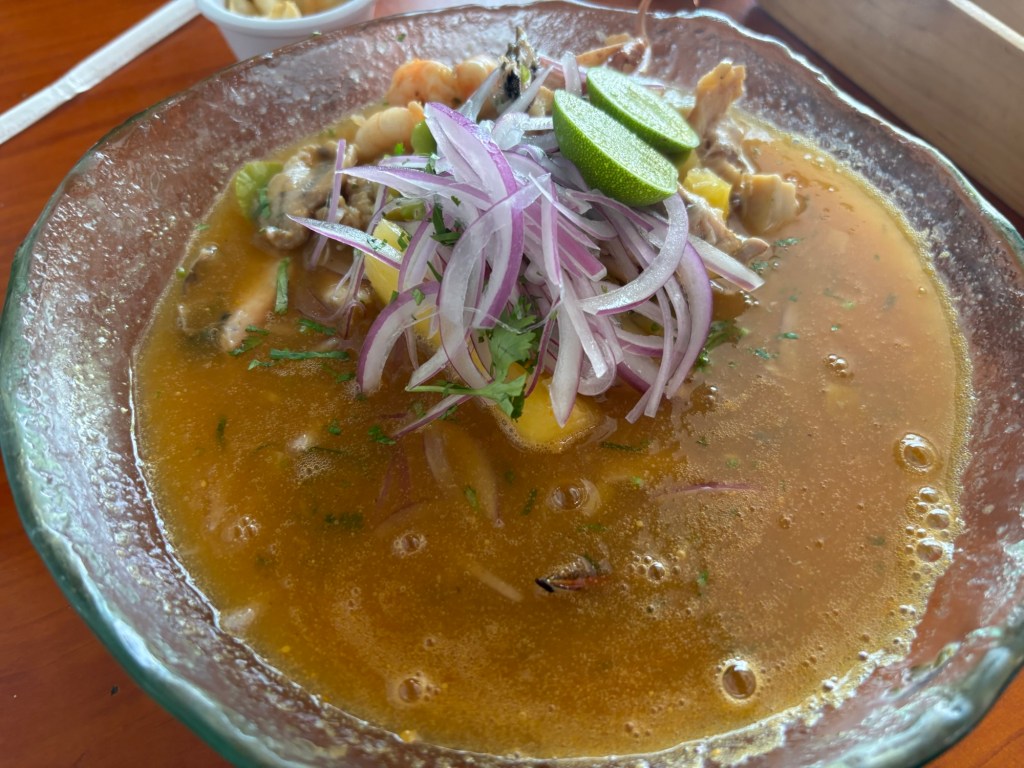
Seeing the vulture tucking in reminded me that, bar a light street food snack the night before, I hadn’t really eaten a square meal since departing Colombia on Monday. As such, I was quite prepared to go all out for lunch. There were plenty of spots offering ceviche, a Peruvian specialty, but I was much more interested in the parihuela, a crab-based seafood stew laced with Peruvian lime.

Honestly? One of the best meals I’ve ever had, and that’s not only because my hunger was keen. They left the entire crab in the bowl to intensify the flavour, and I very nearly ate the entire dish, defeated only by a couple of spoonfuls.

One large bowl of the stuff was enough to keep me going all day and well into the following morning. I wonder if that’s a healthier way to live? It sure makes a nice change from three school meals a day.


After lunch, I swapped buses with the tour heading into the national park. There were only nine of us including the two guides, Deborah and Paul, which made for a much more peaceful and reflective adventure into the desert. I wound up next to a chatty English girl on her gap year, who was headed for Panama and had struck it out alone for most of the journey. There seem to be quite a few types like that out here, wending their way up the continent, and with bus and flight prices being why they are, I’m hardly surprised.


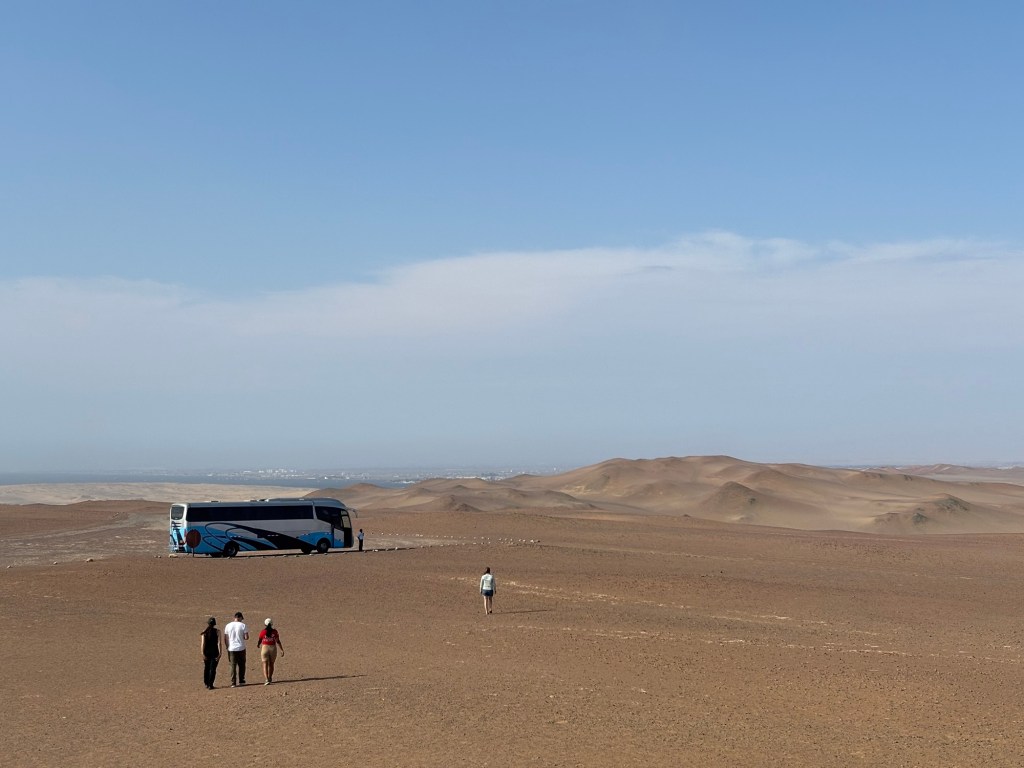
The Paracas peninsula is special in that it is one of the last stretches of the Atacama Desert, the driest desert on the planet. True to form, there was very little to see by way of life from the bus. No vegetation, no water, almost no sign of life at all.

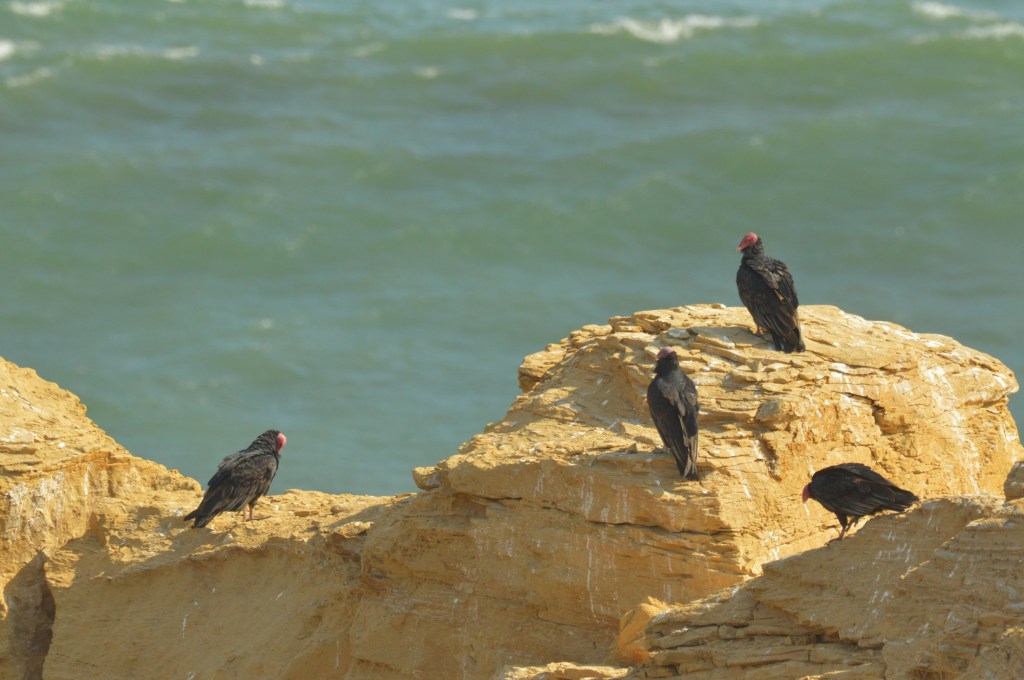
That is, except for the turkey vultures, which have a colony of their own along the cliffs.


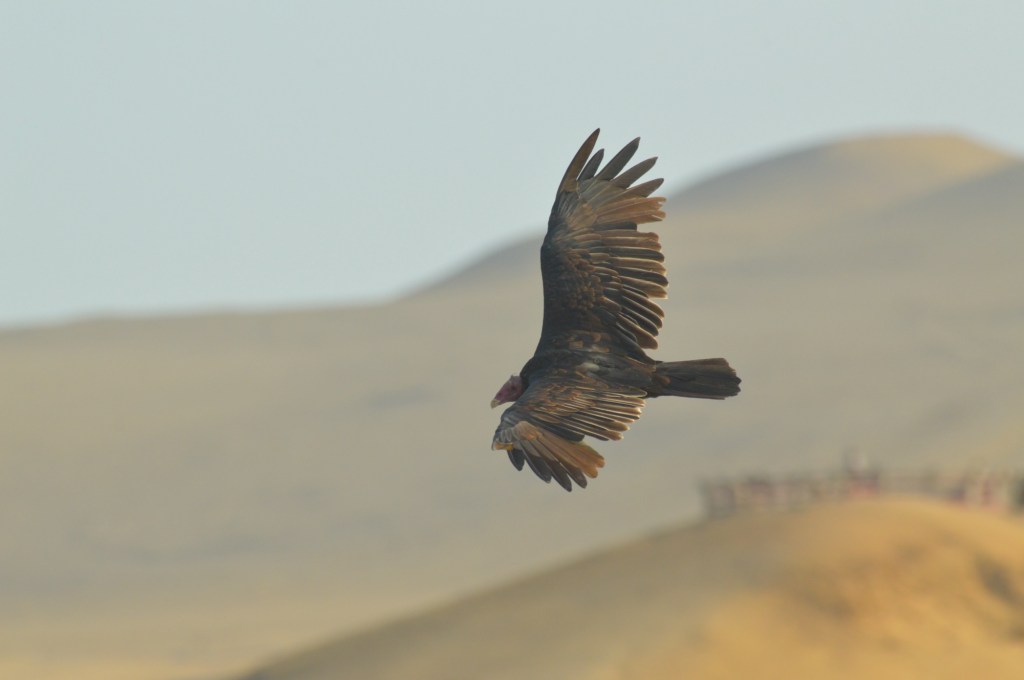
In the late afternoon, with the wind picking up, these handsome creatures ride the thermals along the coast and can be seen at eye level as they glide up towards you from the bay below.


It’s always special to see a vulture from above, as they’re usually specks against the firmament. I’m fully expecting that to be the case with the condors, but if I should be so lucky, I might just get the same experience in Colca tomorrow. Fingers crossed!


Right – that will do for today. That took me the best part of two hours to write. Now I should really think about packing up, checking out and heading into Lima for lunch before taking my onward flight to Arequipa, the next stop on my journey.

The world around me is about to change. Quite literally, it’s only up from here. BB x