Camino XXXIII: Forty-Five

Albergue Pensión Casa Cuartel, A Fonsagrada. 17.15.

My feet are seriously tired, but I’ve done it – the longest stint yet on this year’s Camino. Forty-five kilometres of hills, sierras and reservoirs, of steep descents and sunlit climbs, which puts me one day closer to Santiago and gives me the peace of mind to spend a day exploring the city the day after I get there. I sacrificed seeing a local festival in Grandas de Salime for this, but after speaking to some of the pilgrims in this hostel, I think I made the right choice. It sounds just like the set-up at Castrojeriz, which – if memory serves – left me with a little less than two hours’ sleep after the local verbena went on into the small hours.

There are two English lads in this hostel who must be fresh out of private school, talking about “going for brekkie” in that easily identifiable southern drawl and using the same slang terms like “cooked” and “rizz” that my students do. They’re sitting on the steps outside playing one of those mobile phone games that their generation seems to be absolutely hooked on. They’ve been doing so for the best part of the last two hours, talking loudly about their tactics as they do. The two men from Valencia who went the wrong way today are both fast asleep in the next bunk, which is the quietest the shorter of the two has been all afternoon – he’s a particularly merry sort.


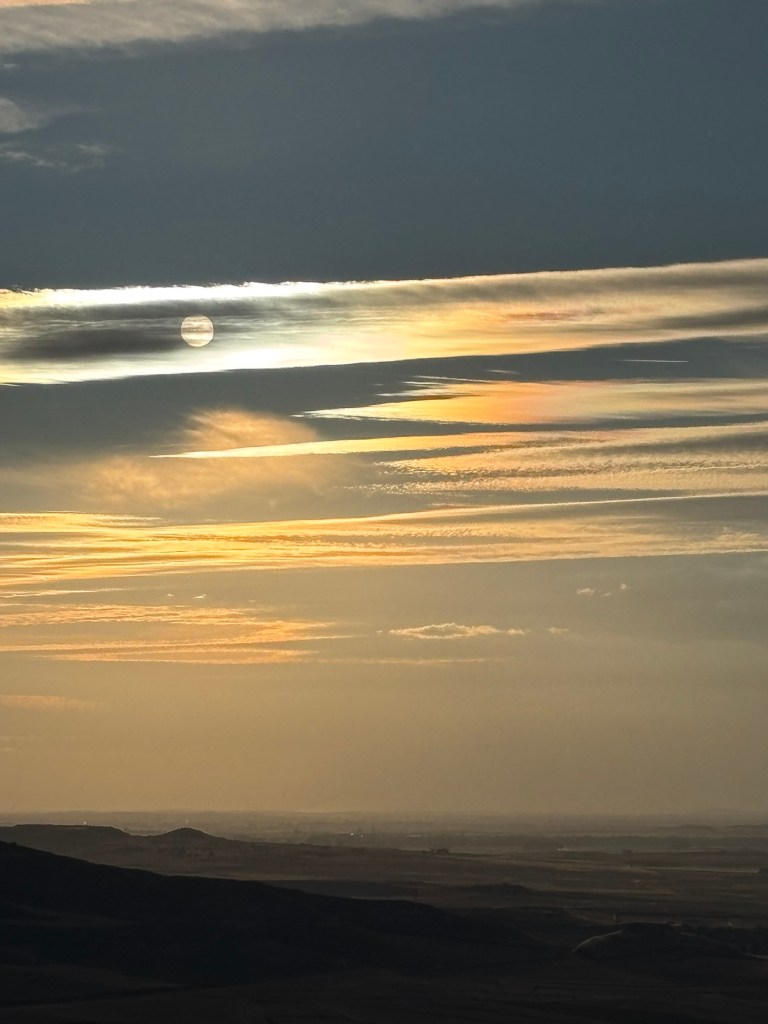
I left Berducedo a full two hours before dawn, long before any of the other pilgrims were up. There wasn’t even the faintest glow on the horizon, so I did have to use my phone torch for some of the trek, especially the hundred metres or so that cut through a forest (where a number of large bats seemed to enjoy the light and the moths it attracted). The constellations were a sight to behold, as was the arm of the Milky Way stretching away to the west, towards Santiago. It’s not quite Perseid season – that’s still a little over a week away – but I did see one shooting star away to the south and made a wish.


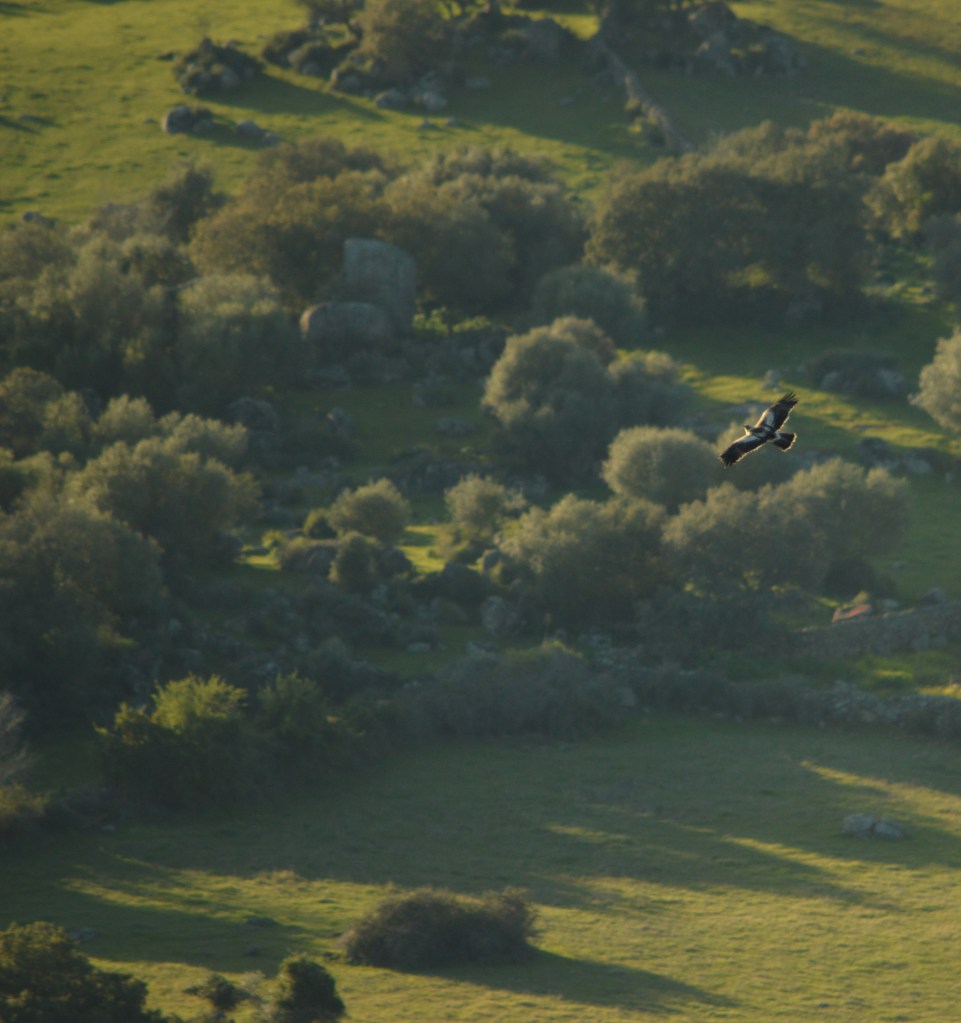
The first cold glow of dawn descended as I began my own descent into the valley before Grandas de Salime. It’s a very steep path that zigzags down the hillside, descending by 800m in a very short space of time. I was quite happily enjoying the Battle of Helm’s Deep when a nightjar almost clipped my face with its wings and one of the rocks in the path ahead suddenly grew wings of its own and took off into the morning air. There were at least three of them hawking about the track, looking for all the world like enormous feathered moths with their strange alternating flight, sometimes flappy, sometimes gliding with their wings held high.

One landed in a tree nearby and set up its eerie churring call, which is almost as iconic to the Camino as the endless tread of my own feet.
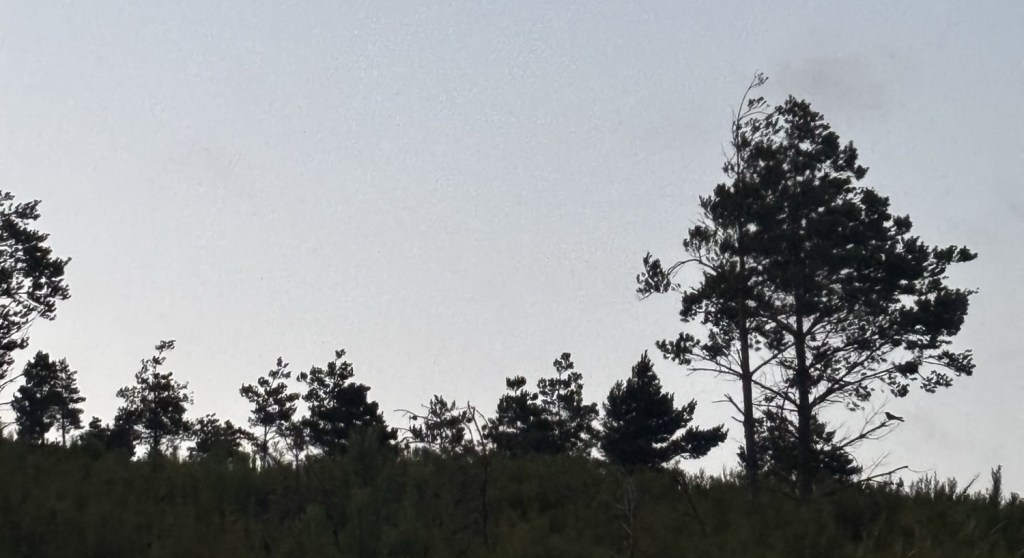

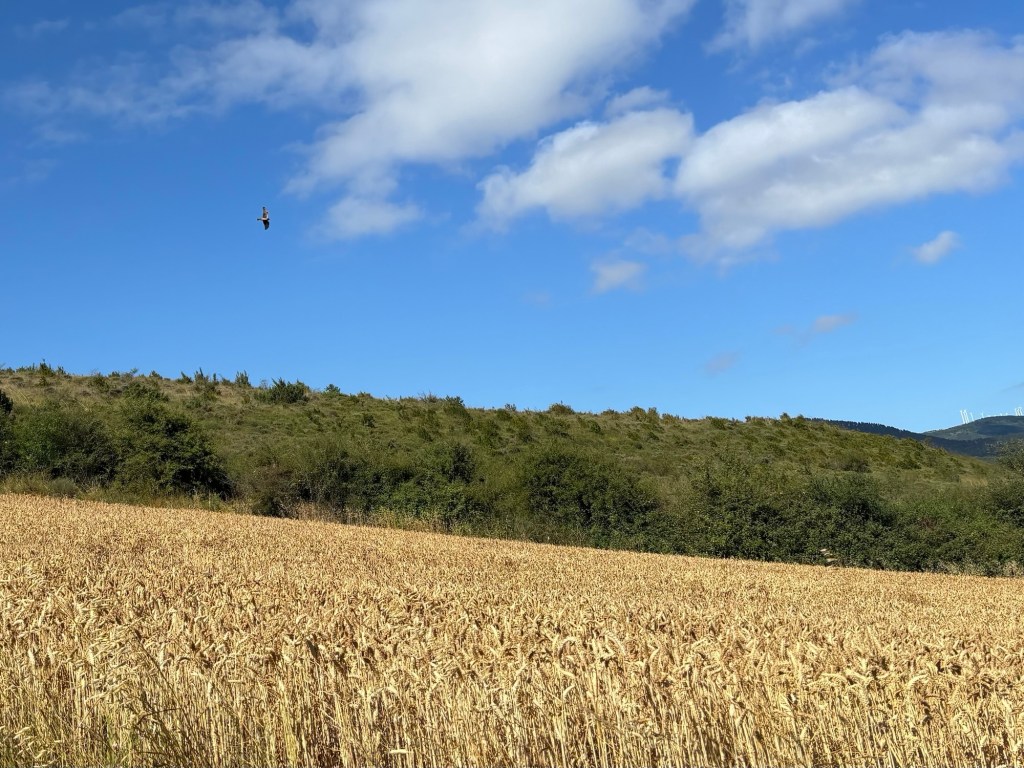
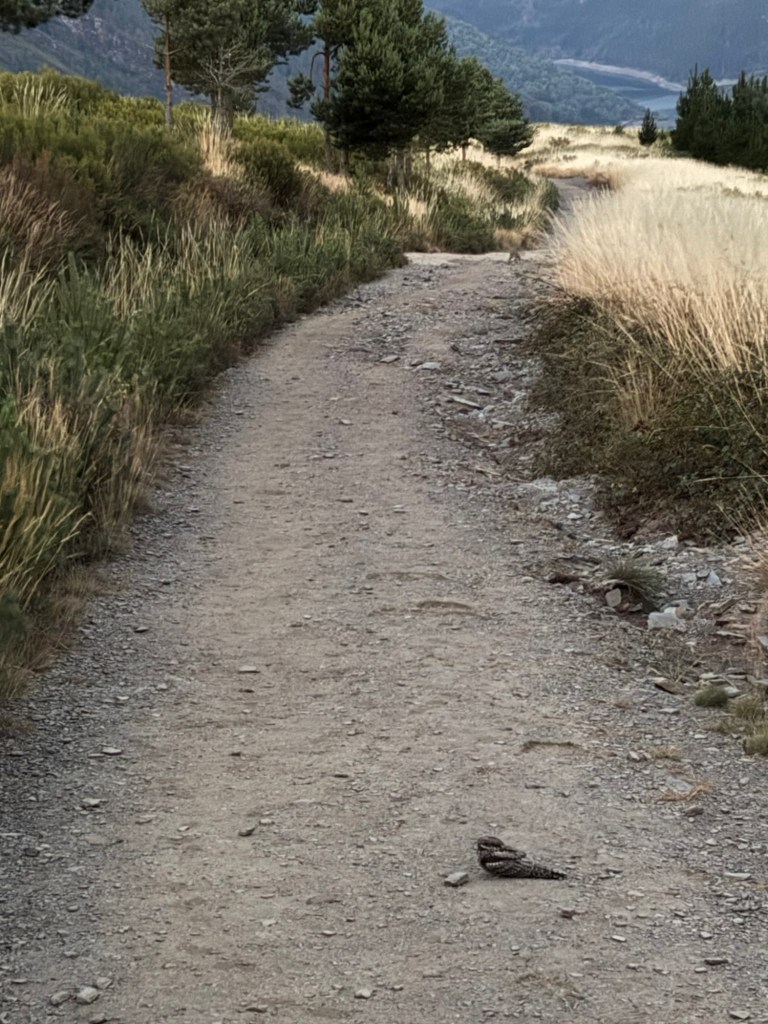
Another – the one I had mistaken for a rock – alighted on the track a little way ahead. I approached very slowly and, at least for a little while, it didn’t look like it was in any hurry to take off again. I got so close that I could see it yawn with my own eyes: their vast, gaping mouths are one of the features that gave them their Spanish name of “chotacabras”, or goatsuckers. I almost missed the hare that came bounding out of the grass behind it, appearing more clearly in the photos I took than it did in reality.

Of course, it took off before I could get too close, making its strange grooik flight call as it did so. It landed a little way back up the path but I left it alone and pressed on.

Nightjars are just one of the rewards of setting out early on the Camino. You might hear them, but you’d never see them if you set out after breakfast. I’ve been lucky enough to see quite a few on this year’s Camino, but never so close and never on camera. I haven’t wanted my SLR often on this Camino – I’m carrying enough as it is – but today I would have given a small part of my library to have had it in my hands!

I reached Grandas de Salime shortly after nine, making it a four hour walk from Berducedo (compared to the guidebooks’ suggestion of six or seven). This is usually the stage end, but as it was not even the halfway point, I allowed myself a decent breakfast of a tostada con aceite y tomate, a slice of tortilla and some fresh orange juice so that I might have the energy to push on. There were a few pilgrims having breakfast at the bar, but not that many. The townsfolk were setting up for the second night of their local festival, and I imagine a number of pilgrims had decided to stick around and have fun. I, however, had another twenty-five kilometres still to go and couldn’t stay for long.


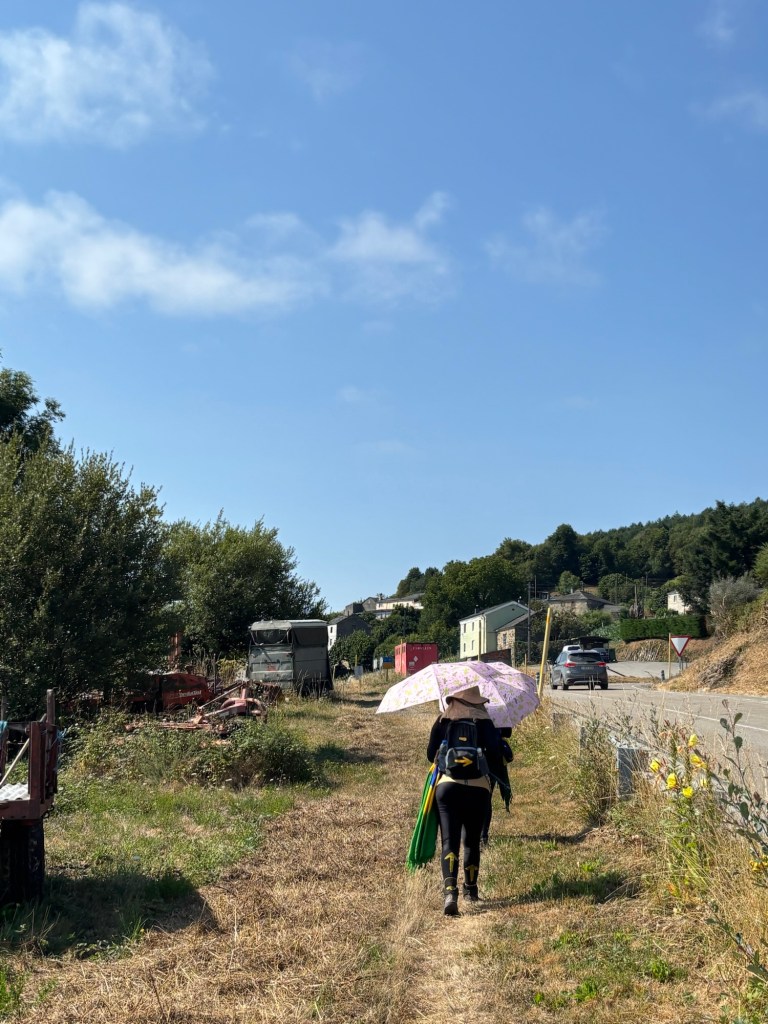
I trailed a couple of Brazilian pilgrims for a little while before Peñafuente, dressed in sporty Lycra, marching cactus-print parasols, a giant Brazilian flag and immaculate hair (something the Brazilian pilgrims seem to prioritise above all other things). I’ve become a lot less cagey about drinking from unmarked fountains along the Camino and the one at Peñafuente was absolutely incredible. The guidebooks recommended the one at Fonfría, but that wasn’t as good or as cold as the one at Peñafuente, so I drank deep and bottled deeper, as it was still a long way to A Fonsagrada. I had hardly begun the second leg, which the guidebooks suggested should take eight to nine hours, and what clouds there were in the sky did very little to block the sun. I was going to need all the water I could get. I can be a real camel on the Camino, but it’s always best to be prepared.

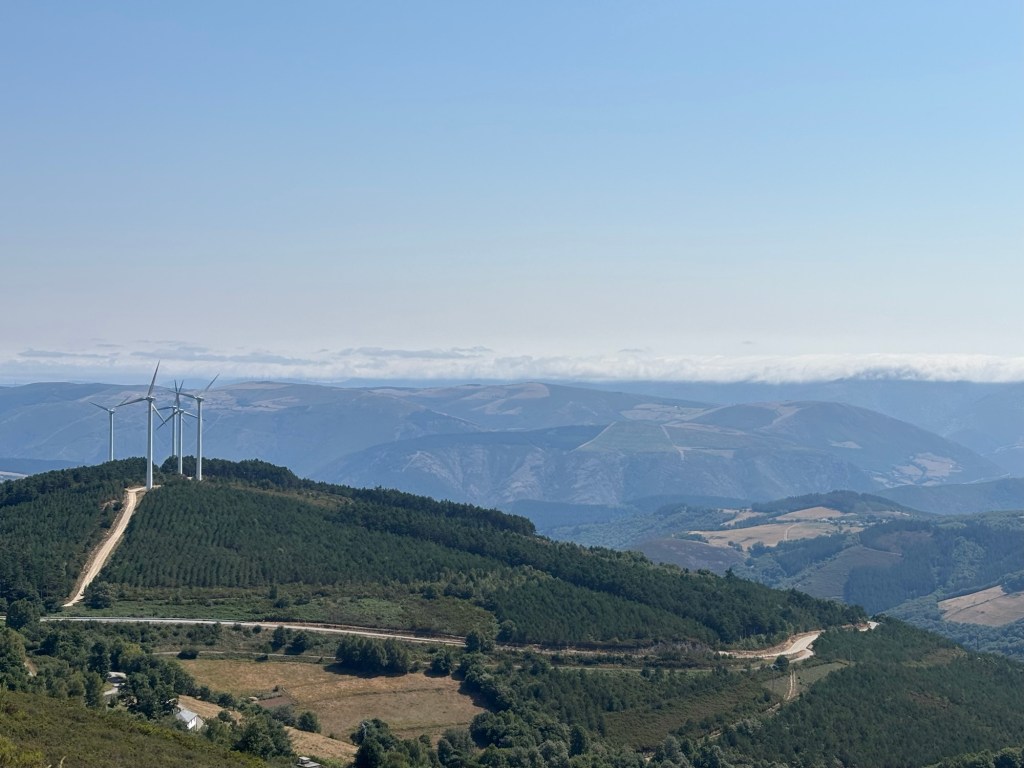
There are quite a few hills to climb between Grandas and A Fonsagrada, none of which were particularly easy under the midday sun. The Camino cuts right through one of Asturias’ many wind farms, though these ones are nowhere near as enormous as the turbines found up in the mountains on the San Salvador route. The heavy whoosh of their arms as they spin in the wind is quite something to hear up close, punctuated with the odd mechanical whirr when the head tilts one way or the other. The way the Spaniards were complaining about the wind up in the mountains yesterday, you’d think that wind was a rare occurrence in Spain – but the turbines that crown many of Spain’s hills and sierras say otherwise.
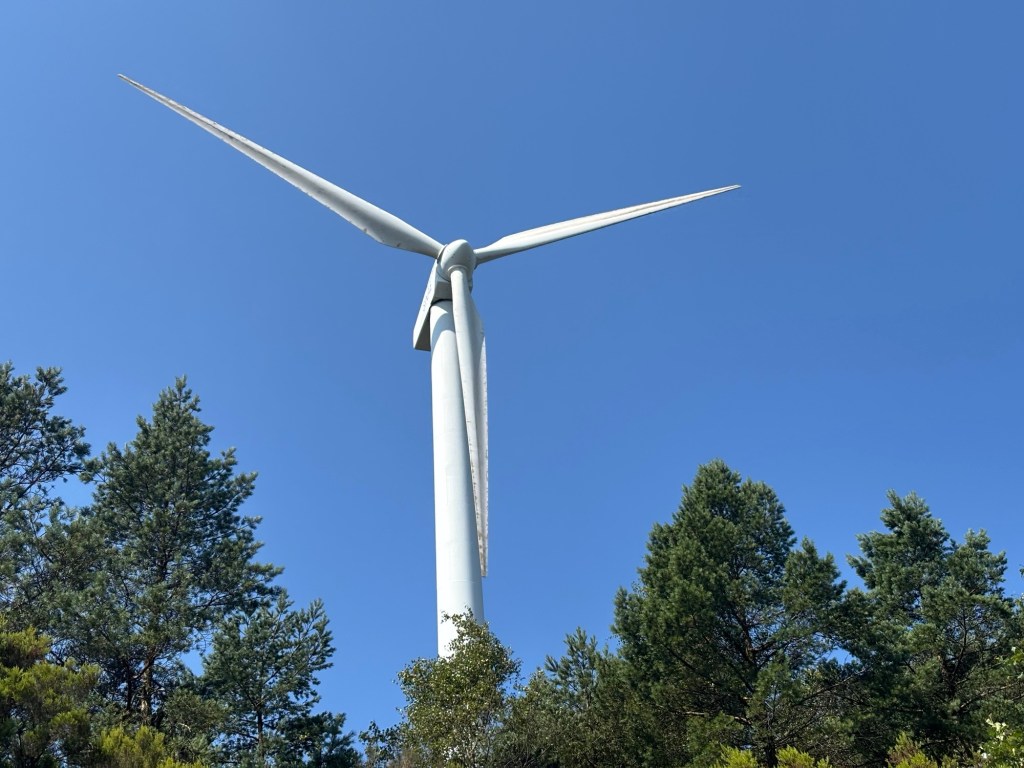

The Spanish are nothing if not practical with their high places. If there isn’t a watchtower, a sanctuary, a hermitage or a radio mast on top of this or that hill, there’s usually a row of wind turbines.

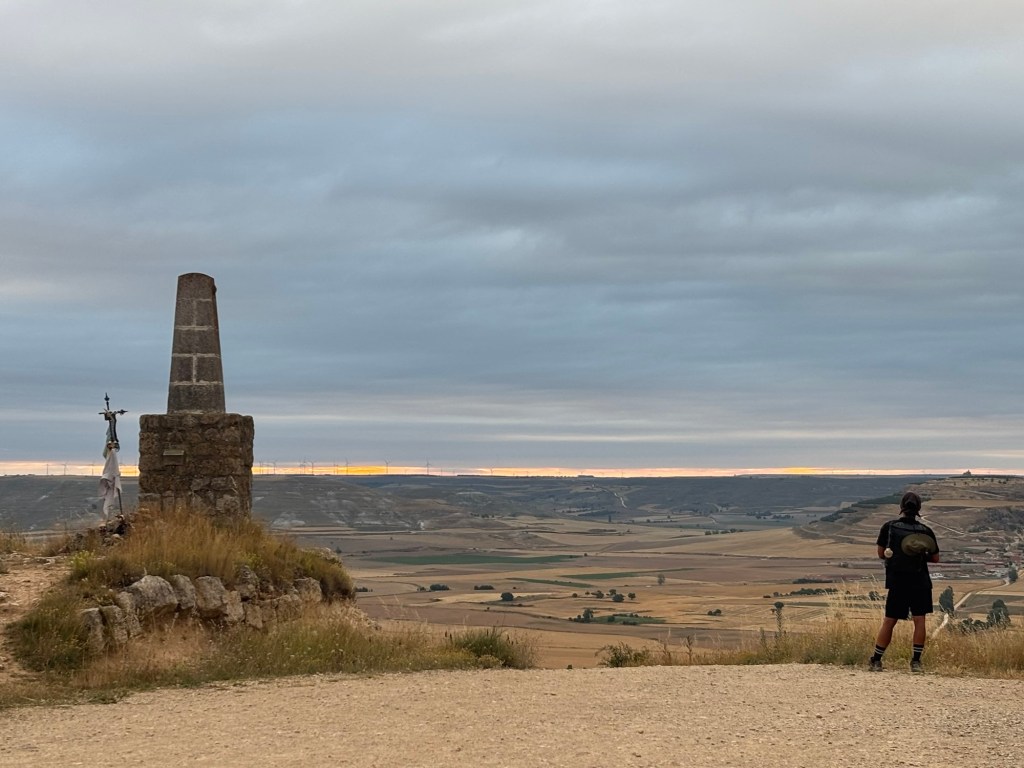
I passed the first row of turbines before sunrise this morning. You can just about see them to the right of the nearer turbines in the photo below, on the last range of hills before the wall of cloud held back by the mountains of Asturias. It’s a good indicator of just how far I walked today.

Shortly after passing the last row of turbines, I crossed the border into Galicia, the last of Spain’s regions on the Camino de Santiago. The marker wasn’t as grand as the one at O Cebreiro – just a crude line of flints and a small cement block featuring a Facebook link to a motorcycle page owned by a guy called Nando, which also happened to indicate that Asturias was on one side and Galicia on the other.

The scenery is already different. The hills are no longer quite as rugged. Instead, they’re carpeted in golden grass and purple heather. I was sorely tempted to get an ice cream at O Acebo, but decided to postpone that desire until I had reached my destination. It took another two and a half hours from the border to reach A Fonsagrada, and the last steep climb up to the hilltop town didn’t help, but I was relieved to learn that the albergue I had found was a bit of a step up from the usual, with real linen bedsheets, soap in the showers and an in-house washer-dryer complex (though I still prefer to wash my clothes by hand whenever I can).
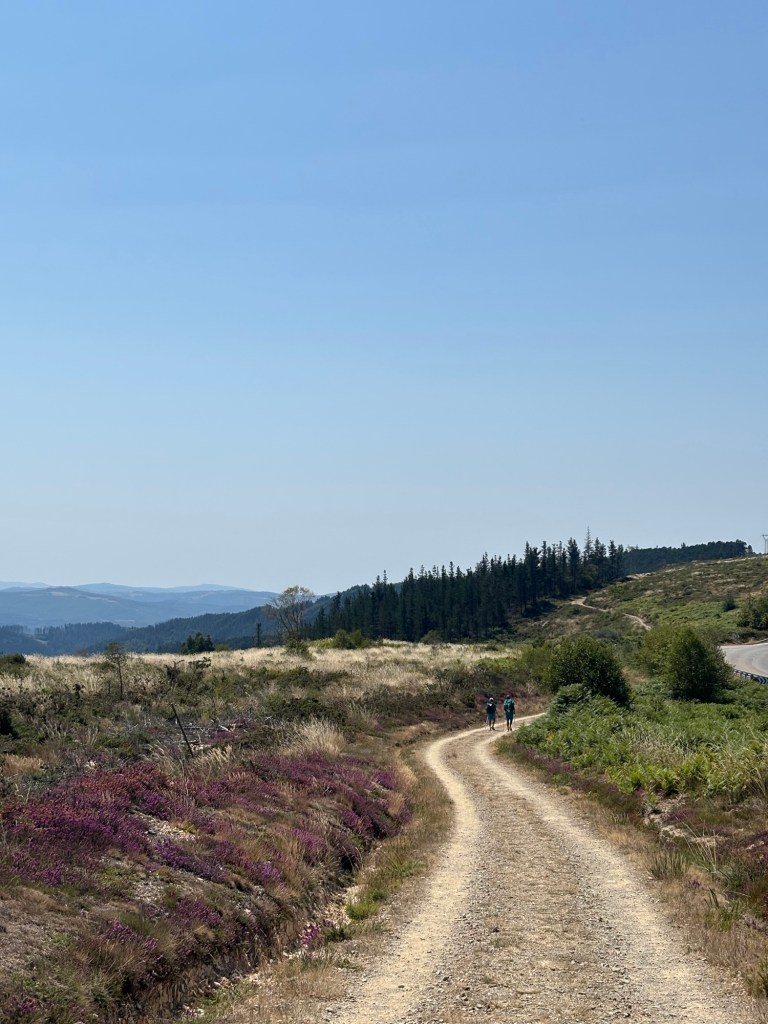

So… forty-five kilometre days can be done, even on the Primitivo! That’s the longest I’ve done so far, and probably the longest I’ll do this year. There’s no sense in rushing to Santiago, which is a lot more expensive to stay in than the towns and villages along the way, so from here on out I intend to enjoy the Camino at a relatively leisurely pace.

Which is, of course, a white lie – because after 45km, 30km is relatively casual. Or 35. Or even 37… BB x
Camino XXIV: The Road Not Taken

Plaza Mayor, León. 21.03.

Tomorrow marks the end of one Camino and the beginning of another. And not a moment too soon. I fear my social battery is at maximum capacity. I got the jitters after showing up late to the dinner the others had arranged at the Royal Tandoori, to find a crowd of fourteen.

Maybe it was the sudden shift from the intimate setting of my haircut the hour before to a busy table of English and Americans holding court over an Indian meal; or maybe it was the location of my Siege Perilous as the final invitee, squashed into the corner; or the fact that they’d started without me.

Whatever it was, I know now that my decision to leave the Camino Francés is a wise one. It’s a little shameful to admit, but I could use a break. I’m not proud of the fact that these social settings continue to throw me every so often, but I am getting better at hitting the escape button before it escalates.


On the walk into León this morning, Talia asked me a question that has genuinely had me thinking all day. I think it was something like this:

When did you decide not to pursue a career in biology?

At first it seemed a pretty straightforward question. My grades in Biology were never all that great, the competition at my school was just too much and it never occurred to me even once to study Biology (or Natural Sciences) at university.

But with a little context, I can see why she asked me that out of the blue – and I’m frankly amazed how much I’ve suppressed what is nothing less than a core memory that might once have changed the course of my life.

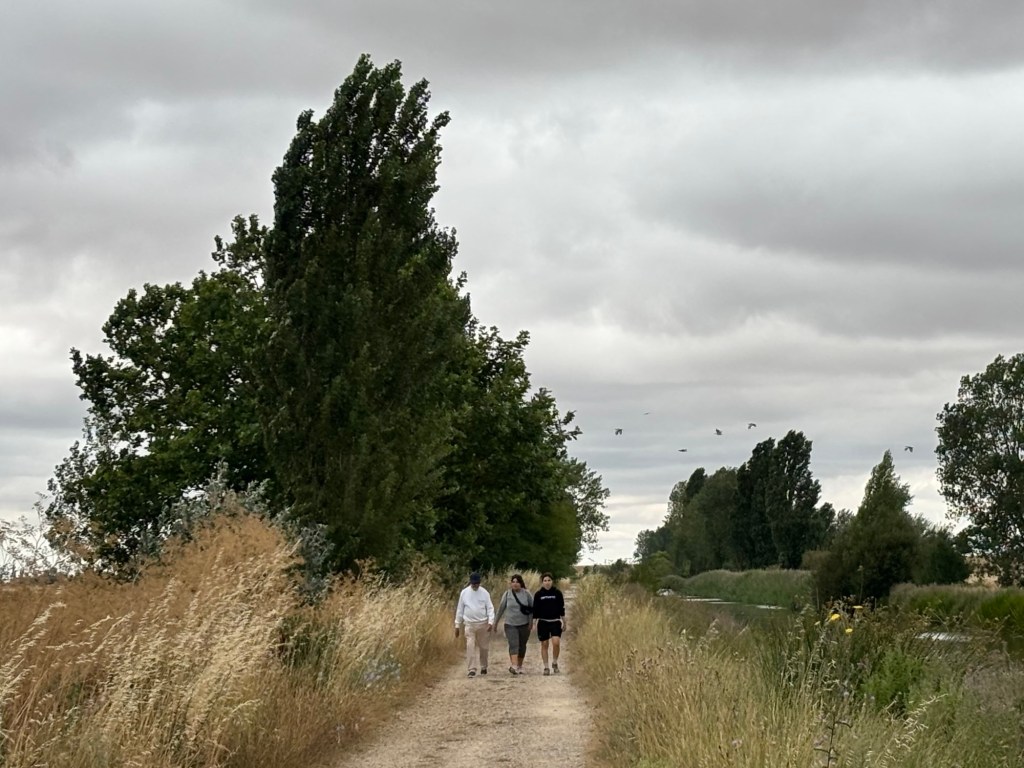
Audrey was using an app to identify some of the birds we’d seen since leaving Mansilla de las Mulas – I think it was Seek. I pointed out a few things I could hear: serins in the branches of a nearby tree, a booted eagle circling in a field, the bee-eaters we’d heard the day before.

I guess it was that quickfire succession of names that prompted Talia’s question. My answer was fairly improvised, but I think it checks out.

When did I decide not to pursue a career in biology? When I realised that it was never going to be about zoology – not under the British education system, anyway. That, and my mathematical ability was (and is), quite frankly, dismal.


I have various interests. I’m a musician. A linguist. A writer, an occasional poet and a Hispanist. A mimic. A Catholic. But before all of these things, I am a naturalist. Before I found my fluency in Spanish and French, I could already understand the calls of every bird in the British Isles and could tell you what most of them meant: warning, alarm, hunger and mating calls. It was, I suppose, the first language I ever learned.

I was just as obsessive with my childhood interest in dinosaurs: I had to know them all. Where they were found, why they were called what they were called. It wasn’t enough to know the famous ones, like the T-Rex and velociraptors – I had to dig deeper. One such precocious example that comes to mind was my decision to bring along a Eustreptospondylus drawing to Show and Tell at primary school. Doubtless an elephant would have sufficed, but why would I ever have settled for something as basic as that?

I still have discarded exercise books that my parents gave me where I logged all the species mentioned in wildlife documentaries. I always put down the title and locations covered, and I sometimes wrote the date, too. Others I used as scrapbooks, taping in feathers and sketching footprints and writing about when and where I found them.

You’d have thought that these might have been the early indicators of a scientist. Certainly, I wanted nothing more than to be a palaeontologist when I was a kid (which can be gently excused by the fact that the BBC’s peerless Walking with Dinosaurs documentary series came out just in time to capitalise on my five-year-old dinosaur obsession.

When I was a little older, I genuinely considered a career in conservation. I entertained the idea of a degree in Ornithology, or something similar, to allow me to put my fiendishly good memory for birds and their calls to use.

And then, suddenly, that dream died.


It was probably the maths that killed it. All the natural science degrees I explored required a basic level of mathematical competence and at the time I was struggling to scrape even a passing grade at GCSE. Chemistry, too – a lot of Zoology degrees suggested chemistry as an A Level, and chemistry was far too mathematical for me. Without maths, my conservation aspirations were dead in the water. That was that.

But there was another factor that pushed an old dream out of the nest: the slow decay of a child’s interest as the subject closest to his heart never even materialised in the subject that should have concerned it most intimately.

My memories of Biology center on two things: plant cells and sourdough bread. I was so excited when food chains and food webs came up, until I realised that, within the British curriculum, that was the one and only time that animals would be mentioned. Everything else was so cold, so clinical. Palisade walls and mytochondria. Genomes and inheritance, though usually in plants. The fact that I knew the names of every animal and bird in the British Isles (and most of Europe, for that matter) gave me no advantage whatsoever.

My school was a specialist science school. Our Biology department was doing really exciting things with MS research, and it was one of my Biology teachers who was instrumental in sending me out to Uganda on my first ever teaching post. But somewhere along the way, my aspirations as a conservationist were slowly choked by the strangling vines of the British science curriculum. Zoology, palaeontology, anthropology, ornithology and even primatology were all areas I was desperate to explore, but as the years went by and Biology concerned itself less and less with the natural world and more and more with the minutiae of bacteria and cell structure, the less I cared for it.

It must have been around then that I first entertained the idea of becoming a teacher – once I realised I would never be good enough at two of my weakest subjects to survive to the point when Biology became Zoology. Fifteen years old and already carrying the shards of a shattered dream.


One way or another, I think I realised early on that there was little that a Zoology degree could teach me that I truly desired. I didn’t need to pursue a career in science to justify my greatest love. Knowing the names of every animal and bird gave me a sort of spiritual connection with each and every one of them – no scientific research could work a greater magic than that. Still, it’s interesting to think where my life could have gone if I’d really committed to that path.

Instead, here I am, gone thirty, walking the Camino with a head that twists so quickly when I see the silhouette of a kite or vulture that it’s a miracle I haven’t twisted my neck yet.

It’s hard to say what my experience would be like if I walked all the way to the end of the road with these wonderful people. I will never know, because I have made my choice. And I know it is the right choice. It will take me up into the mountains and back into the natural world, where I am and have always been at my happiest.

Here’s to that – to good health and happiness, and a significantly harder road ahead! BB x
Camino XX: Soup and Bustards

Albergue Municipal de Peregrinos, Frómista. 19.59.

Well, you’ve got to hand it to the good people of Castrojeriz. They may not sleep much, but they sure know how to party.

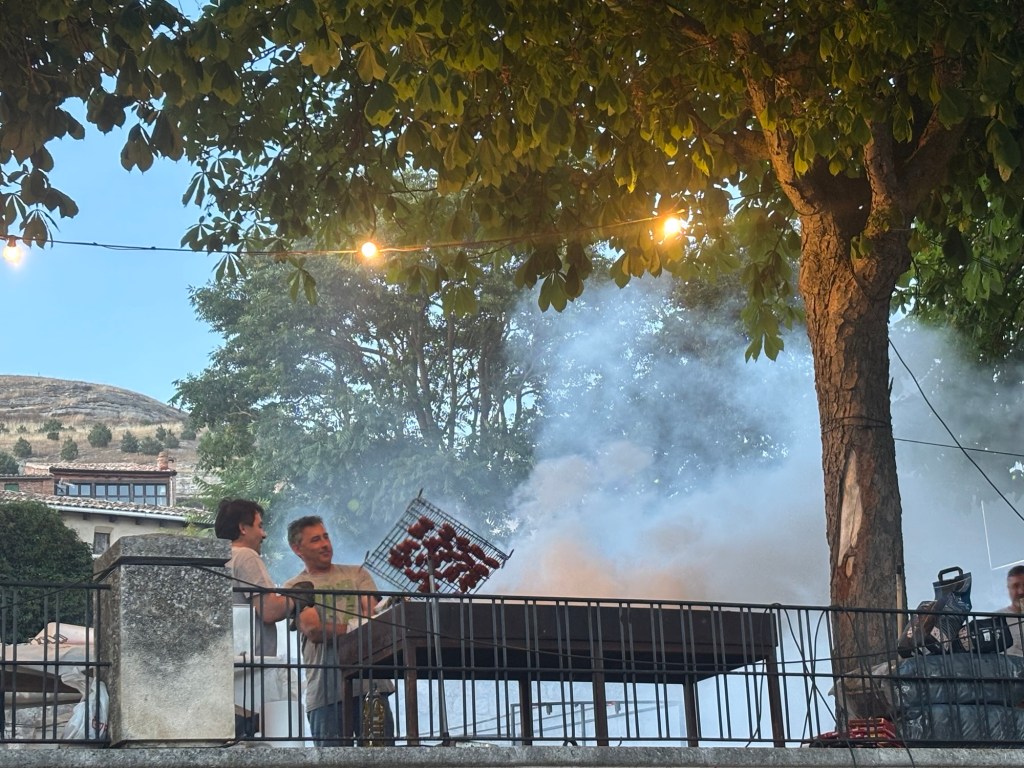
The Garlic Festival kicked off at around 7pm. While the others ordered pizza, I went without supper (with the free sopa de ajo in mind), which turned out to be a mistake. They finally started serving at 9.40pm, and queuing for half an hour, I reached the serving station only to find that you had to bring your own bowl. Turns out the identical brown bowls the townsfolk were all carrying can be found in every home in Castrojeriz and beyond. It would have been nice to know before getting in line – you know, like a sign or something – but then, Spain has never been overly fond of letting non-locals in on its secrets. So I was dismissed with an apologetic ‘ay, pobre’ by one of the volunteers and went to bed on an empty stomach.


I had about an hour’s sleep until the Orquesta Dakar started playing just after midnight. They didn’t stop until ten past two in the morning, after which they were followed by a DJ until half past four. I’d be lying if I said I didn’t enjoy the music, as it was absolutely my taste – Suavemente, Las manos pa’ arriba, Bailando, Madre Tierra, Mentirosa, El Tiburón and, randomly, You’re the One that I Want, to name just a few – but it did mean sleep was impossible. Then there was the family of locals who stopped beneath our window and, for whatever reason, decided to start howling and barking like dogs for a couple of minutes sometime between two and four (clearly all that garlic had no effect on the local werewolf population). I must have passed out somewhere around four, and was up again by five.

Thank goodness today was a shorter day!


There wasn’t much call for shooting off early on some monstrously long hike on no sleep (which I’ve been known to do when sleep-deprived), so I stuck around and had the fried breakfast buffet I’d paid for. We tackled the Alto de Mostelares and were up and over by half past seven. It was an easier climb of it than it would have been under the midday sun, but I couldn’t shake the feeling that I should have pressed on yesterday and made for the Ermita de San Nicolas for a more spiritual (and restful) stop.


Descending from the hill, I found a manic speed in my feet and took off at a vicious pace. I didn’t need to, really, considering I had left far too late in the morning for another mad rush to Carrión, but for some reason I wanted to go it alone this morning.

It did mean for a bit more wildlife observation than I’ve managed for a while. There were a few silhouetted harriers up on the high Sierra de Mostelares, and a couple of rabbits and red deer grazing in the fields beyond. I was accompanied all the way by small families of stonechats and huge flocks of serins, twittering merrily from the stands of trees by the road.

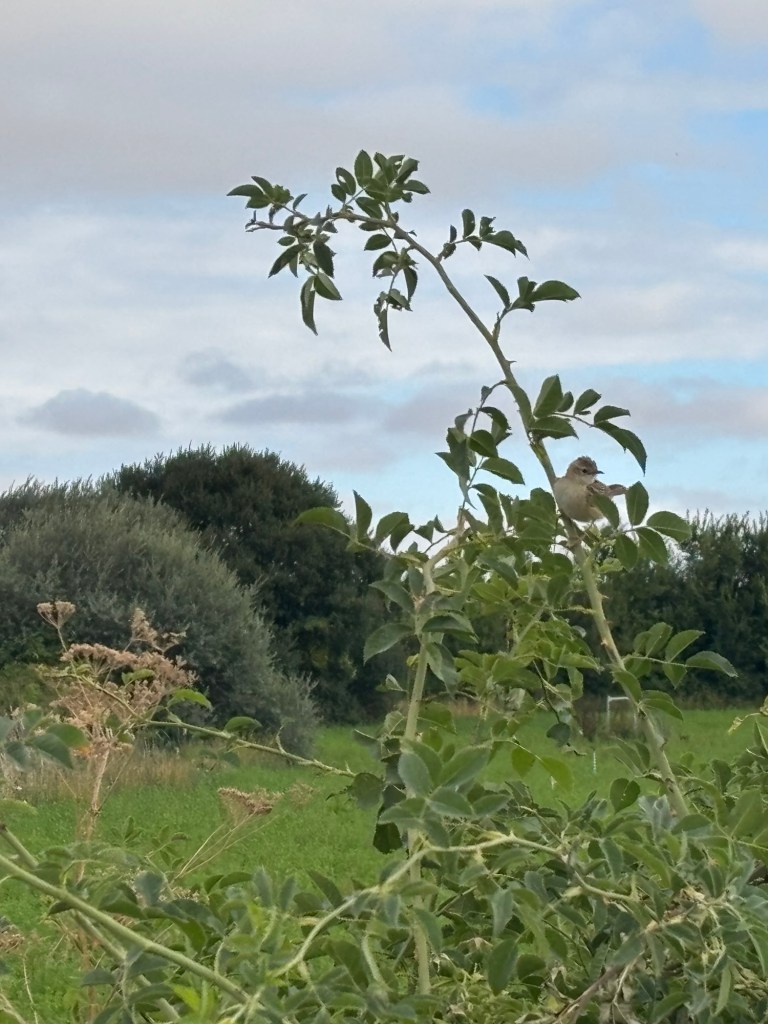
This morning I had a close encounter with a zitting cisticola, a characterful little bird with a name that pretty much tells you all you need to know to identify it. They’re usually heard and not seen, measuring around 10cm from beak to tail and zitting high in the air and out of sight, but this one was quite happy to watch me go by, and didn’t flinch when I stopped to take a photo.


I considered staying in Boadilla del Camino, but just like two years ago, I arrived around 10, about three hours before the albergue was due to open. So I waited for the others, had a drink and carried on.

From Boadilla, the Camino follows the Canal de Castilla, a strange 18th century project that irrigates the northern reaches of Castilla y León. I saw just the one family coming the other way and no pilgrims, but I did have a brief encounter with a magical creature of the steppe: a flock of great bustards, one of Europe’s largest, rarest and most impressive birds. I’ve only ever seen them in the distance from trains or buses, but they’re always unmistakeable in flight: enormous, swan-like things with mottled feathers and pure white wings. It made my heart soar a little in this strange and man-made part of the Camino.


Well, I’m here in Frómista, which I bypassed last time. You know what? It’s not so bad. The albergue municipal is decent and the company is highly entertaining. I guess I gave it the cold shoulder last time in my hurry to press on and meet the crowd. I’m glad I stayed over. BB x
Camino VIII: A Hundred Eyes

Albergue de Peregrinos, Monreal. 15.10.

One of the best things about the Camino – at least, for somebody who does not particularly enjoy sticking to a strict plan – is its absolute freedom. You can aim for a particular destination at the end of the morning, but if you overshoot, or find a place you like along the way, you can always change your plan. And – it goes without saying – there is no “true” Camino. There never has been. There is simply your route to Santiago, wherever that may lead you.

Today, I decided to take a major detour through the Foz de Lumbier, deviating from the “official” Camino by some six kilometres, in search of one of the most striking landscapes to be seen on all of the routes to Santiago de Compostela.


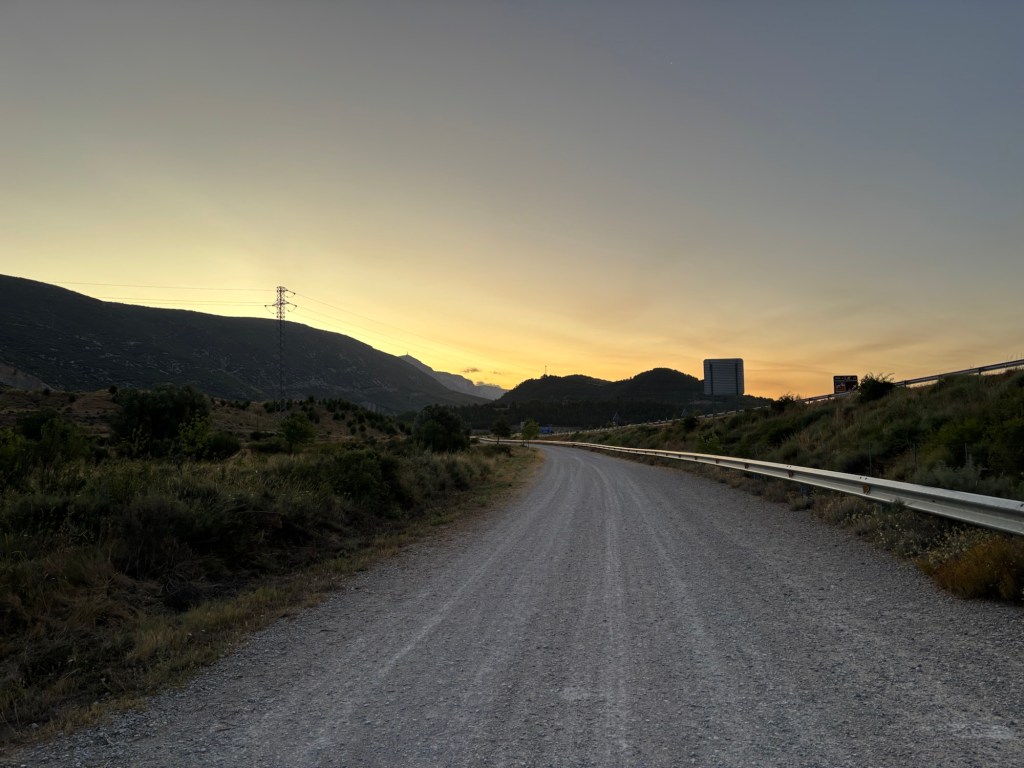
Google Maps suggested the detour would take around eight hours, so I set out early, leaving Sangüesa’s albergue at around 5.15am (5.20, technically, as I left my sticks behind and had to double-back to get them). The Camino turns off about half a kilometre north of Sangüesa, just before the Smurfit industrial complex, but I pushed on along the road towards Liédana. There was quite a bit of traffic at first, but it was mostly workers going to the factory: after leaving the complex behind, I hardly saw anyone on the road.


There were a few scattered yellow arrows west of Liédana, indicating that this must once have been one of the many Camino routes, if not perhaps one of the more commonly known alternatives. I had timed my arrival at La Foz for sunrise, knowing that any earlier would have been far too cold and dark and any later would risk a merciless march along the roads later on. Plus, in the first hour after dawn, it’s always possible you’ll find something unexpected, as the animals of the night make their final rounds before retreating into the dark places where they hide during the day.

I had not counted on the wind. A fierce north wind was blowing this morning, almost strong enough to knock the sunglasses off the top of my head, and easily powerful enough to make it impossible to listen to the audiobook I had on (Robert Harris’ Conclave – a little late to the party, I know).


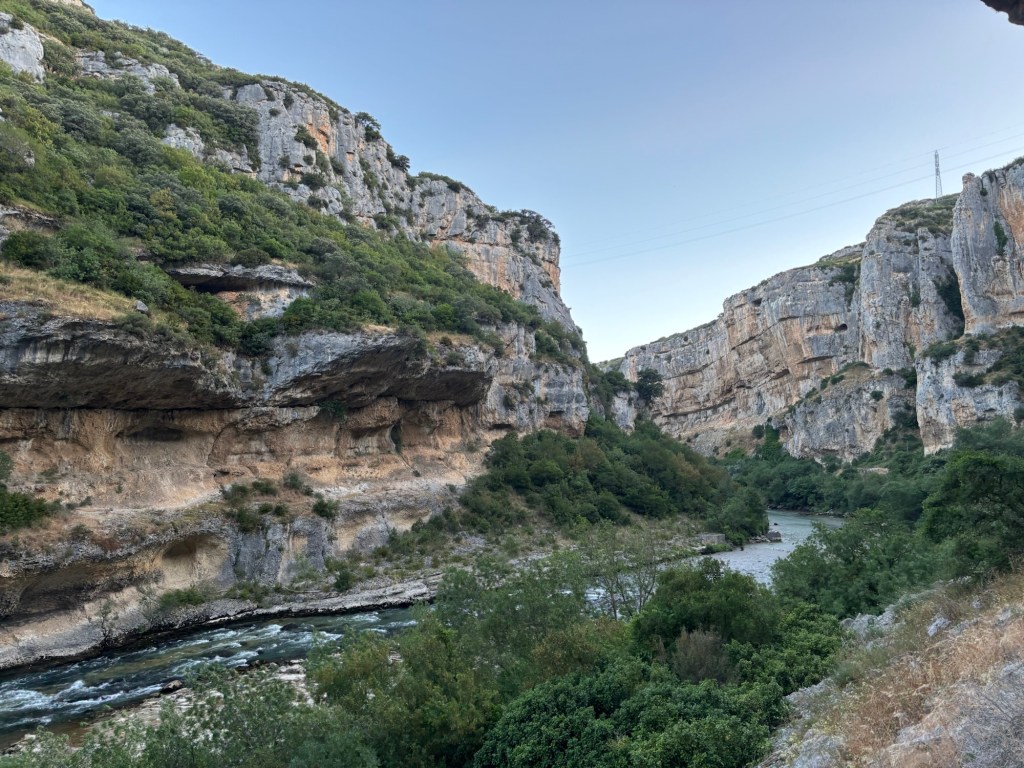
La Foz de Lumbier is one of two major canyons that can be found in the Sierra de Leyre, formed by the southwest passage of two rivers, the Irati and the Salazar. The other, La Foz de Arbaiun, is even grander still, but stands some twelve kilometres to the east of Lumbier, putting it well out of reach of even this overambitious pilgrim for today.

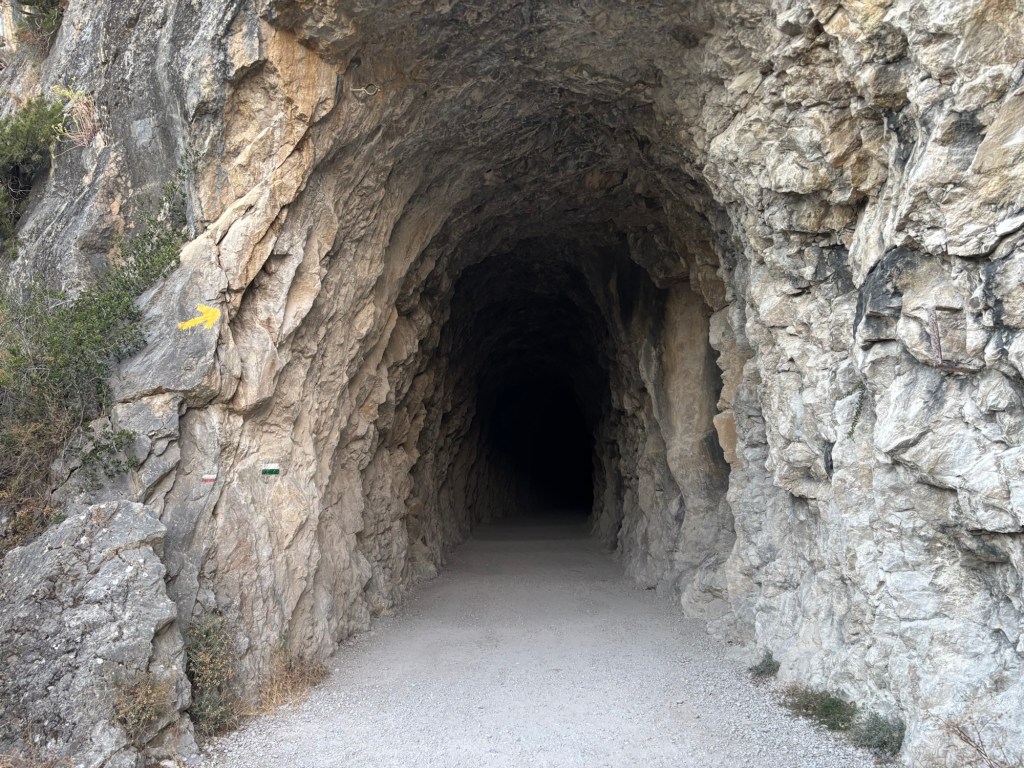
The north wind was still howling down the canyon when I arrived, which made the tunnel access all the spookier: the only way in and out of the canyon is via two long tunnels cut into the cliffs, neither of which are lit. The southern tunnel curves around to the right, pitching you into total darkness for half a minute or so.


Once inside, a gravel track known as a Via Verde (a converted railway line) leads you along the gorge. Had I arrived later in the day, perhaps, I might have seen some of the canyon’s famous Egyptian Vultures: bizarre, chicken-faced creatures with white plumage and diamond-shaped tales that migrate to Spain from their winter quarters in Africa each year. However, they were nowhere to be seen this morning, presumably sitting on their nests deep in the many caves within the cliffs.

The gorge’s other resident vultures, however, were everywhere.


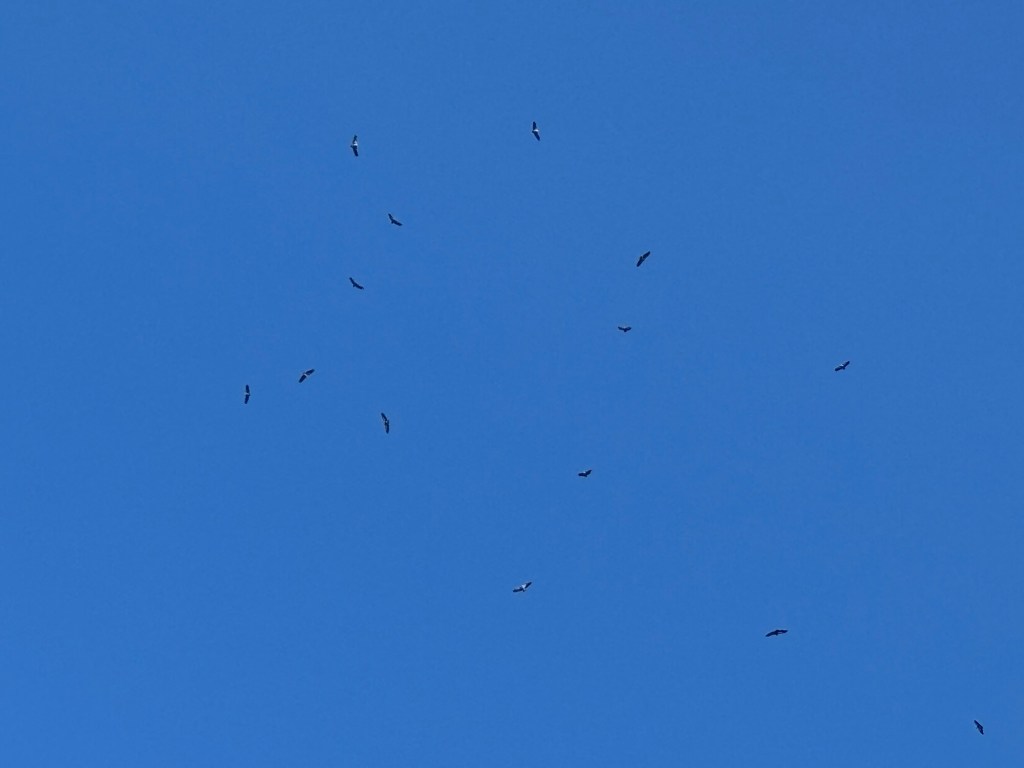
I couldn’t shake the feeling that my passage through the canyon was being very closely watched, as though hundreds of eyes were following me along the river. My guess wasn’t far off the mark: once my eyes adapted to the twilight of the canyon, I realised that many of the bushes atop the canyon walls were in fact a great host of griffons, staring down at me with bobbing movements of their snakelike necks.

Every so often one or two of them would spread their monstrously huge wings and take off into the morning, before returning, feet dangling, to land on some other outcrop downriver, before turning their hulking shapes to see how much progress I had made.

I make no secret of my love for vultures. They are far and away my favourite animals on this planet, and especially griffons. I have never recovered from seeing one for the first time during that first trip to Spain: never accustomed to anything larger than a herring full, I was spellbound by the sheer size of the beasts, with their hulking shape, their silent circling flight and the long, trailing fingers on the end of each wing. That obsession only intensified when I came face to face with them during a solitary climb up the misty mountain of El Gastor, where I spent an incredible hour watching the giants appear suddenly out of the mist at eye level, merely feet away from my perch at the edge of the mountain.

So perhaps you’ll understand why I was so quick to slap an extra six kilometres onto today’s 27km hike, if only to spend some time in the presence of these magnificent creatures. They truly take my breath away.


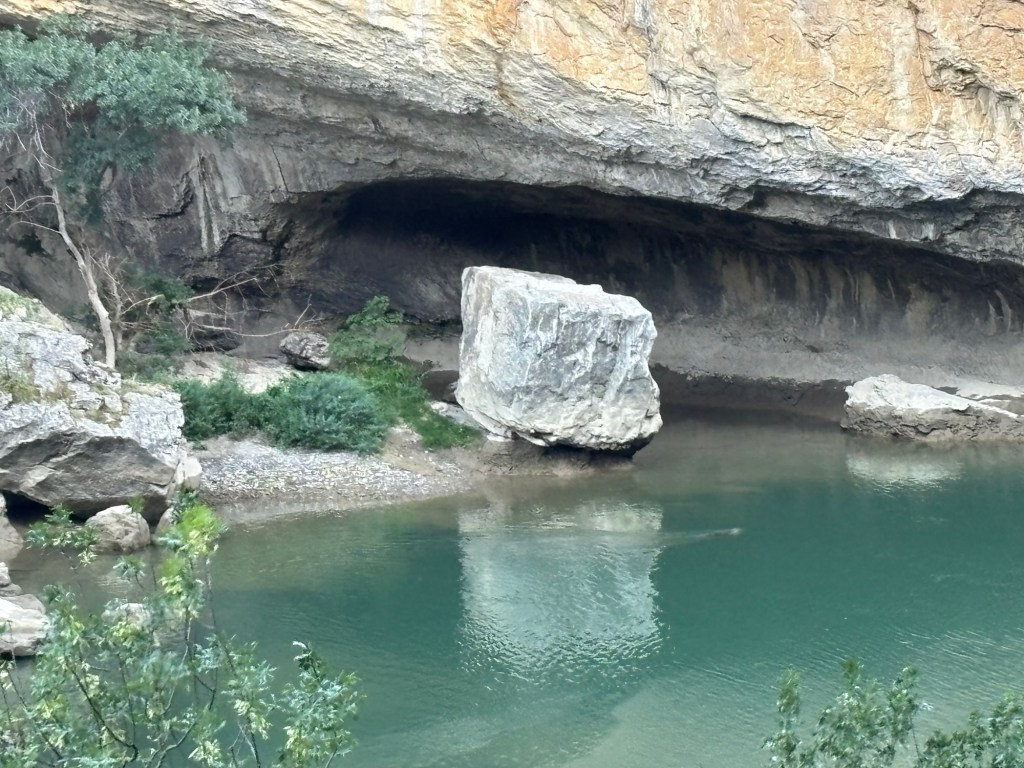
But Lumbier had more than just vultures to sling at me. Just before leaving the gorge, I noticed something moving in the water below. It might have been the wind, which had been making shapes across the surface of the river all morning, but this was moving slowly against the current. Something long, snake-like, with a white-whiskered face: an otter. Talk about a stroke of luck! Just like the lynx I encountered in Doñana earlier this year, this was a first: I have never seen an otter in the wild before, or at least, one that I could call with any degree of certainty. iPhone cameras are good, but they can’t zoom and they’re not brilliant at moving objects in low light, but if you look closely you can just about tell what you’re looking at!


Really, I ought to have hung around at the other side of the tunnel to see if it reappeared, but I wasn’t entirely sure how long it would take me to get back to the Camino, so I played it safe and left the otter to his morning swim. I certainly couldn’t have done an awful lot better with my phone camera even if it did return. I’ll just have to come back someday with the rest of my kit.

Instead, I skirted the town of Lumbier and made my way back to the Camino. This was easier said than done: the “official” route meanders through the turbine-topped hills on the other side of the roaring A-21. Getting back to it was no easy feat, so I followed the old concrete road to Jaca for about 8km.

Normally, road stretches along the Camino can be quite hairy, with grim or even challenging looks from drivers. A spate of pilgrim deaths on the “original” Camino, now overlaid with concrete highways, led to the move toward the current network of tracks and footpaths. However, thanks to the A-21, which runs parallel, there was hardly anyone on the road at all, which made for a very peaceful (if monotonous) walk.

The sun was well on its way to its throne in the Castilian sky by now, and with it, the vultures of La Foz de Lumbier came drifting out on the thermals, as though to see me off.


I had a veritable fleet of raptors to keep me company today. As well as the vultures, a few kestrels, buzzards and booted eagles were circling the hills around Izco, along with the usual red and black kites. Today added two new encounters to the mix: a pair of short-toed eagles – exceptional snake-hunters – and a young hen harrier, my first (and hopefully not last) of the Camino. I have an especial fondness for harriers, especially the ghostly grey males, whose long, tapering wings and bouncy flight always conjure up images of the endless meseta in my head.


The cattle-crowded foothills of the French Pyrenees seem like an age ago. We are now very much in crop country. It hasn’t had much of an impact on the flies, which are everywhere this summer (I suspect the two months of rain Spain had this spring has caused their numbers to explode this year), but it does make for considerably easier terrain.


Contrary to what the guidebooks say, Monreal does have a working bar/restaurante. The hospitalera should know – it’s her husband who runs it! So I will grab a pizza there tonight, before the last long march of the Camino Aragonés tomorrow toward Puente La Reina and the start of the next stage of my journey: the busier Camino Francés. At least, I hope it will be busier! There’s no guarantee in July, but it should at least have more than one pilgrim in the albergue from night to night! BB x

Camino I: The Wall

Monastère de Sarrance, Sarrance. 15.07.

I’m sitting in the garden of Sarrance’s Premonstratensian monastery after a good morning’s walk. I didn’t have too far to go today: just over 20km, all in all, which is a good distance for the first couple of days as my feet get used to walking long distances again.

Sarrance is a quiet little village, perched on the west bank of the Aspe river which snakes its way north out of the mountains. Every now and then I see great shadows on the mountainside, cast by the hulking shape of a griffon vulture. There must be about eight or nine of them up there, circling above the craggy ridge of Escot. It feels good to be back in griffon country. It feels like home.


I left Oloron at seven on the dot this morning. Late, by summer Camino standards, but as I wasn’t aiming to travel far, there seemed no point in rushing a decent breakfast only to have to wait at the other end. There aren’t many pilgrims on this Camino, but I had a lovely communal dinner with Christian and Miguel, a Frenchman from Toulouse and a Belgian (rather, a Spaniard from Málaga who has lived in Belgium for almost his entire life and is now, to all intents and purposes, as Belgian as Leffe beer).

I set out on my own, as is my Camino tradition (and also because I know my pace tends to outstrip most pilgrims). Mercifully, somebody sent down from on high a great belt of clouds, so for the first half of the morning I was sheltered from the heatwave that is raging across Europe right now.

Which is just as well, as I was absolutely mauled by mosquitoes last night (it was far too hot to slip under even the flimsy sheet provided, never mind my sleeping bag liner), so the last thing I needed was a full morning’s sunburn to worry about on top!


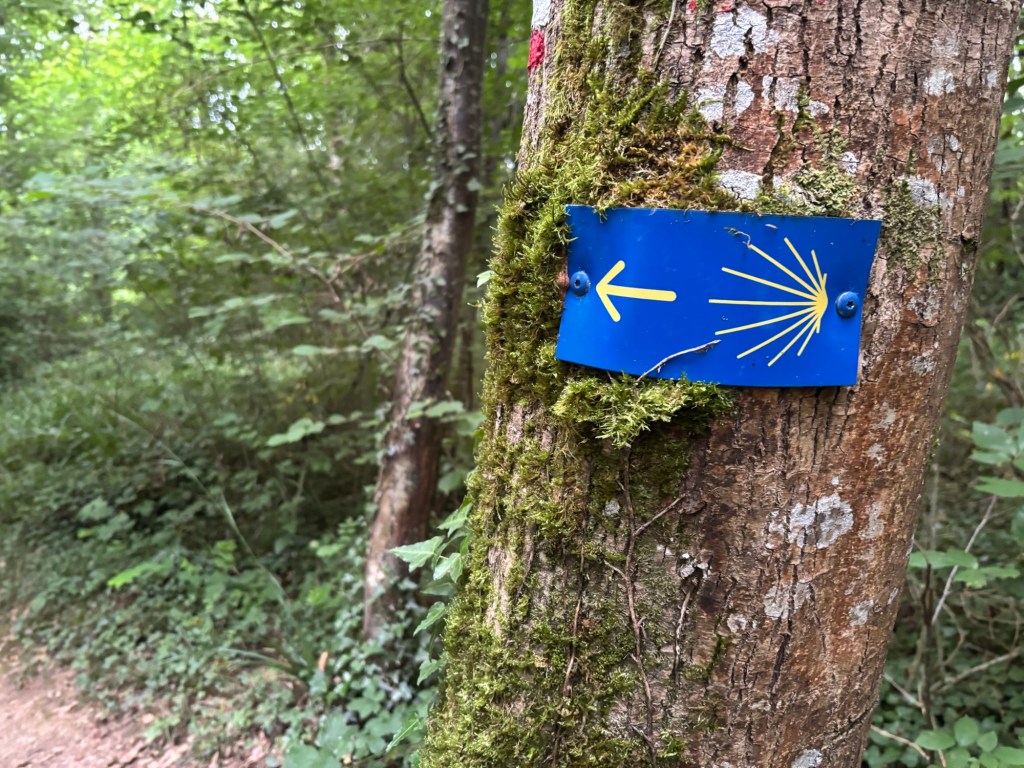
Today’s stretch involved quite a bit of off-roading through the dark Pyrenean forests that cover the valley floor. There isn’t as much signposting here as there is on the Camino francés, but the reliable GR symbol (the red and white stripes) and the occasional seashell serve as decent waymarkers. I didn’t get lost once today, and that’s the important thing, because in this heat, every detour and reroute becomes a proper trial.


By nine o’clock the sun was back with a vengeance, clearing all the cloud cover in a minutes. I was sweating buckets at this point, so thank goodness for breathable fabric, or putting my backpack on after every stop would have been very unpleasant!

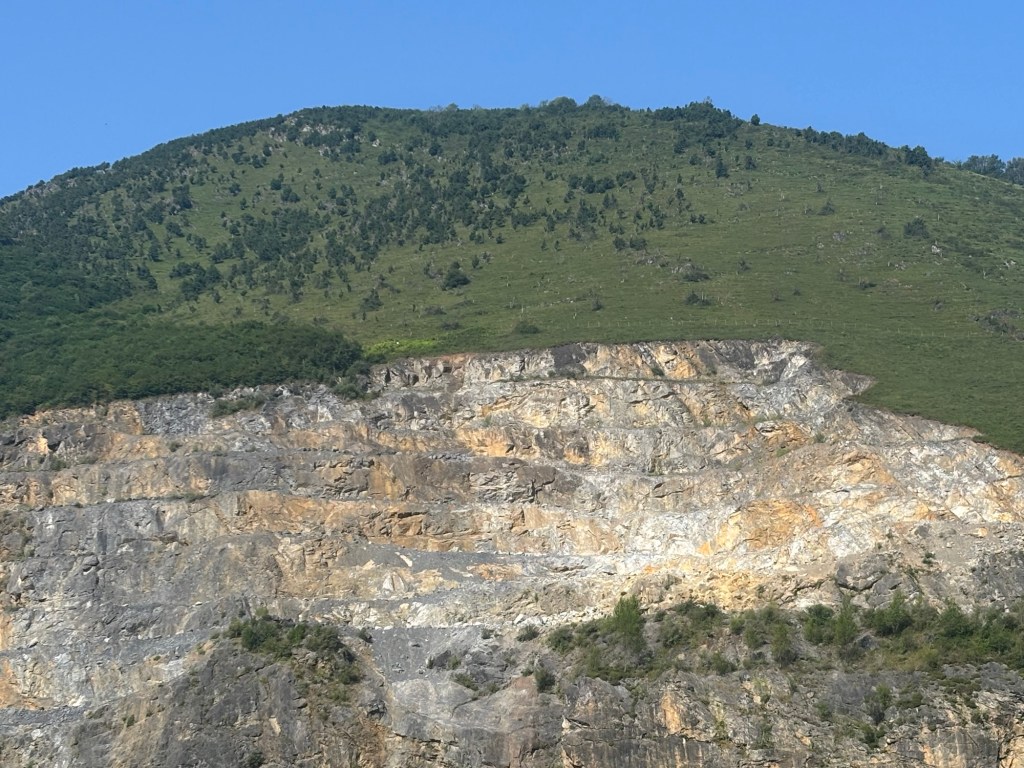
There’s a huge quarry carved into the mountainside just south of Lurbe-Saint-Christau. I don’t think I’d have given it much thought beyond ‘Jesus, who’d be working in this heat’ and ‘what kind of demon thinks it’s a good idea to take a huge bite out of a mountain’ until a deafening explosion caught my attention not longer after I’d passed it by. I couldn’t quite tell, but from the column of smoke and the enormous boulder tumbling down the slope it looked like the workers had dynamited a piece of the mountain.

I wonder if quarry workers ever feel a sense of remorse for what they do. It takes millions of years to build a mountain, and seconds to punch a hole in it. Or maybe I’m just being sentimental.


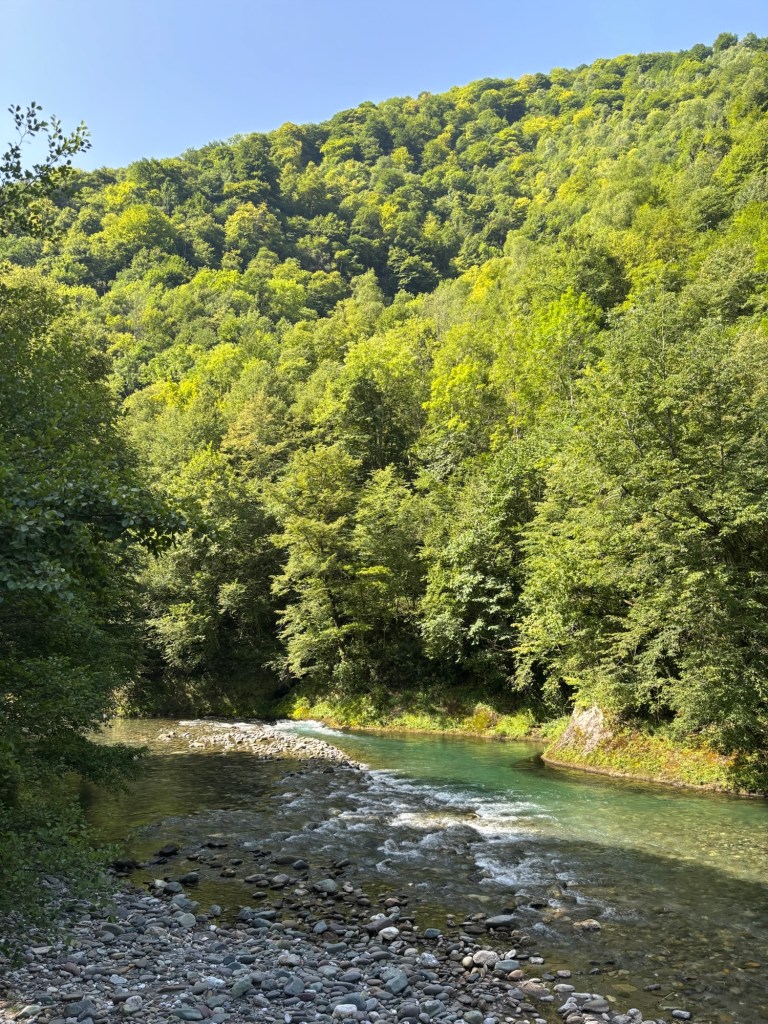
After the hamlet of Escot, the Camino winds its way through the forest along the banks of the Aspe River. There’s really nothing quite so pure and beautiful as a mountain stream, and I was drinking in the sight and sound of it for all of an hour and a half. It was all I could do not to strip down to my shorts and dive into the water (though I bet it would have been teeth-chatteringly chilly). I kept an eye out for otters, kingfishers, and even the Pyrenean desman, but no luck. Plenty of other critters kept me company along the road, like black redstarts, woodlarks, robins and a couple of red-backed shrikes, here near the westernmost limit of their range.


I got to Sarrance at around 11.30, making it a four-hour trek (with a half hour’s rest stop halfway). I thought I’d be far too early to check in, but one of the volunteers spotted me in the shade after the midday Mass and let me into the monastery to shower and wash my clothes, which was nothing short of bliss. Christian and Miguel showed up a couple of hours later, and we had a Leffe beer each at Miguel’s insistence while I counted raptors in the sky above. Within the space of half an hour I had clocked buzzards, honey buzzards, red and black kites, a booted eagle, kestrels and griffon vultures, all in the same airspace. No lammergeiers yet, but I’m keeping my eyes wide open for a sign of that diamond-shaped tail.


I spent most of the afternoon in the gardens, watching the vultures circling over the mountains. For about an hour there was a nearly constant drumroll of thunder to the south, but such is the natural wonder of the Pyrenees: the high mountains form one of Europe’s most imposing natural barriers, a great wall of stone that, throughout history, has cut the Iberian Peninsula off from the rest of Europe, dividing everything but the Basques and their language. A great belt of storm clouds had built itself up like mountains above the mountains, but it never did reach us here in Sarrance, breaking on the Spanish side like a besieging army. All we got was the wind, which was just what I needed after a long and hot walk.

The Premonstratensian fathers invited us to Vespers in their chapel before dinner, which was a warm and sociable affair. Christian and Miguel will take different route tomorrow, both by bus, so it may be that I find myself alone in Borce – I haven’t seen any other pilgrims on the road.

A quick leaf through the guestbook showed that the English are by far the least represented of all the nationalities on the Camino. I wonder why that is? Time was when we had one of the most famous pilgrim routes in Europe, the road to Saint Thomas A’Beckett’s tomb in Canterbury. What happened?

Naturally, we’re not a Catholic country, but I wonder if it’s deeper than that: after all, there are plenty of Europeans (and Americans) who do the Camino with no faith-oriented motivation whatsoever. Have we simply lost the culture of pilgrimage? The long and arduous journey on foot? Are we so wrapped up in our small island concerns and independence that the idea of schlepping across a landmass like Europe seems downright insane? I could name plenty of friends who consider themselves experienced walkers, but none of them has ever done the Camino. It’s not unheard of. It’s just not on our radar.

Anyway, that’s the first day of the Camino done! Only another forty-five or so to go! Here’s to them being mozzie-free, or I might just go mad. BB x

Black Sand and Starlight

Caserío los Partidos, Tenerife. 8.19am.

Well, if that wasn’t the best sleep I’ve had in a week, I don’t know what a good sleep is. The four-hundred-year old stone walls of my room might not look like the cosiest setup, but it couldn’t be more enchanting: a log-burning stove in the corner, a skylight above the bed so you can see the stars from the comfort of your bed, and a warm shower… I’d have settled for less, especially after several hours’ hiking around the ash flow of Chinyero, but it was nothing short of heaven on my return.


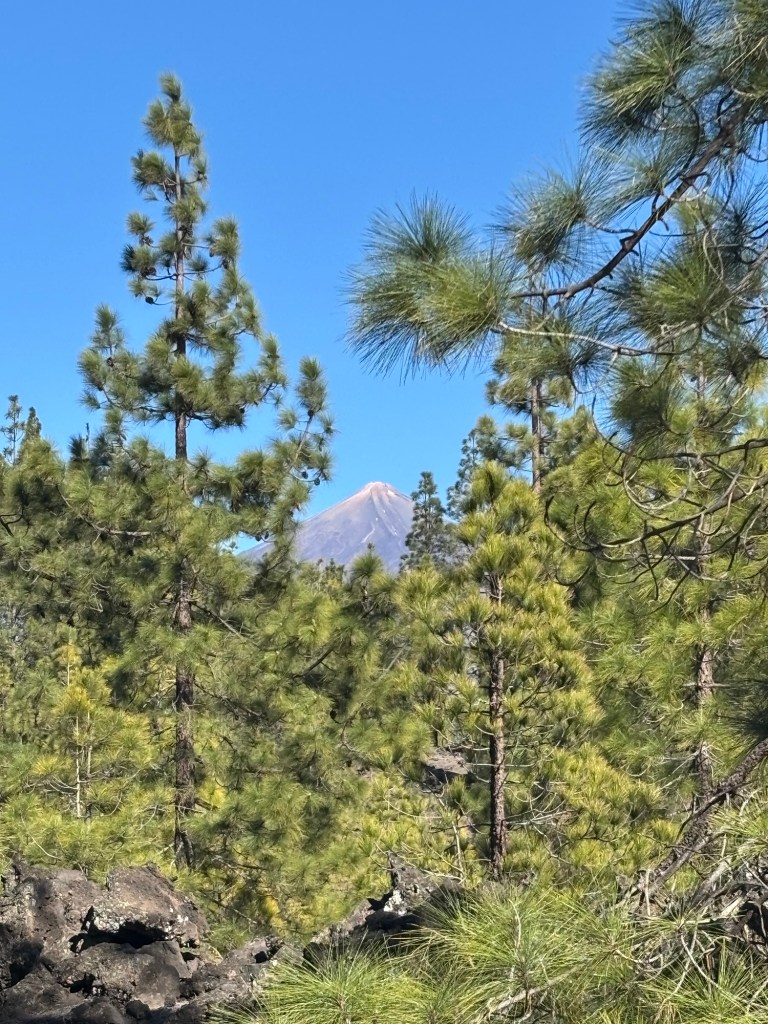
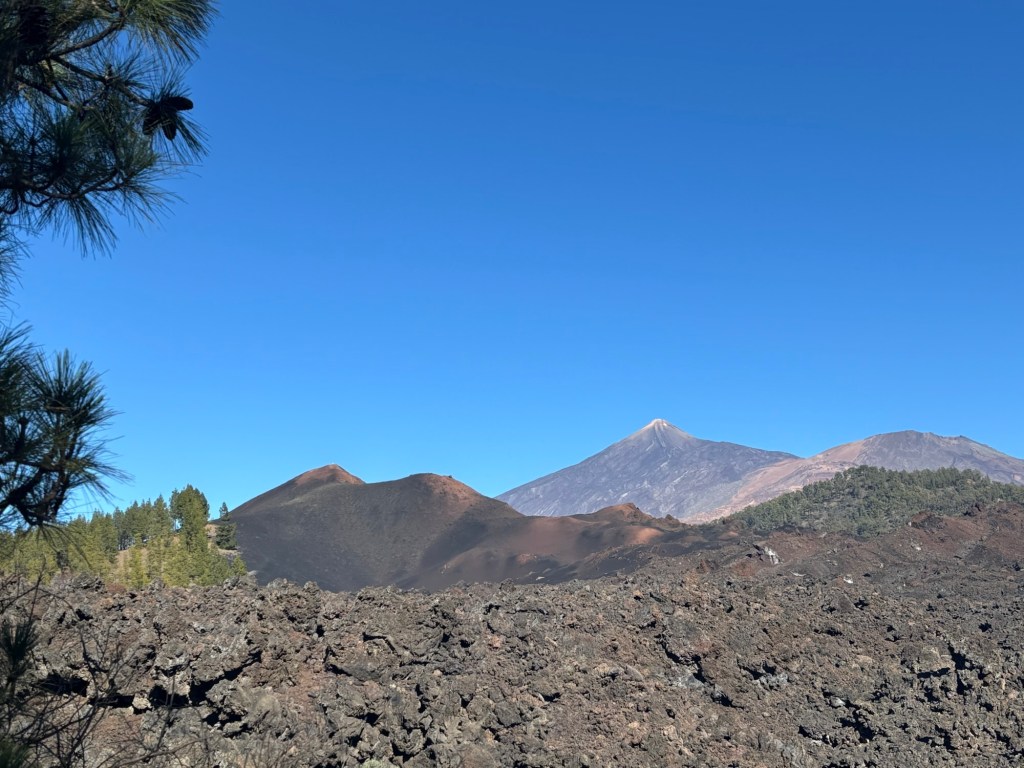
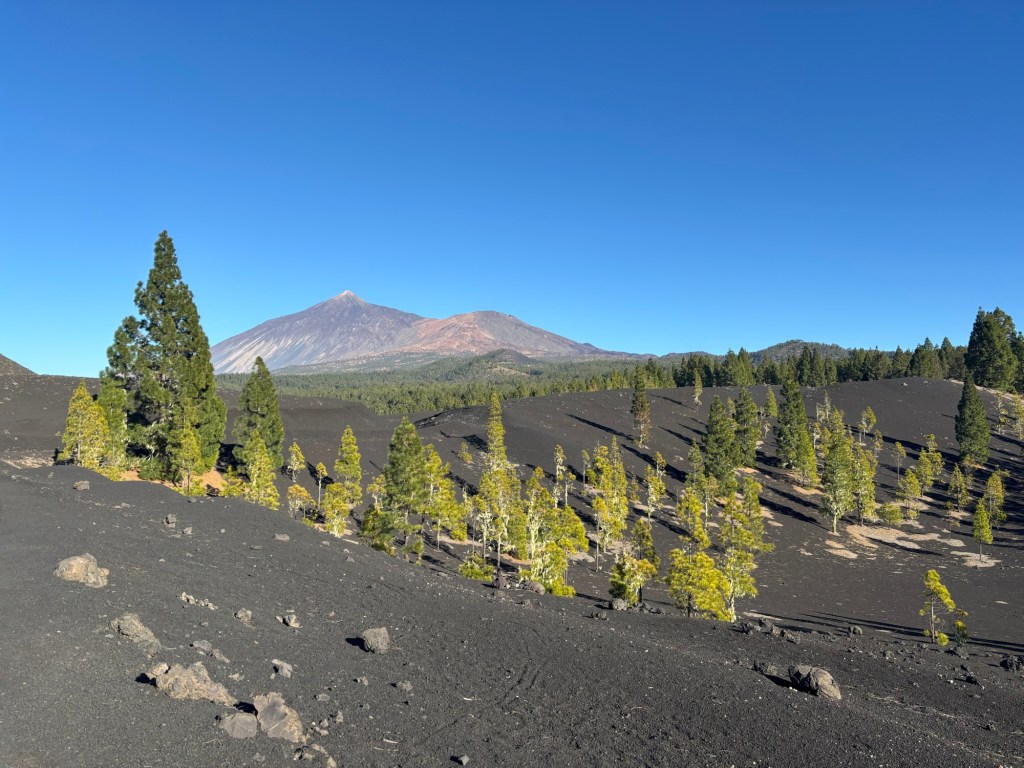
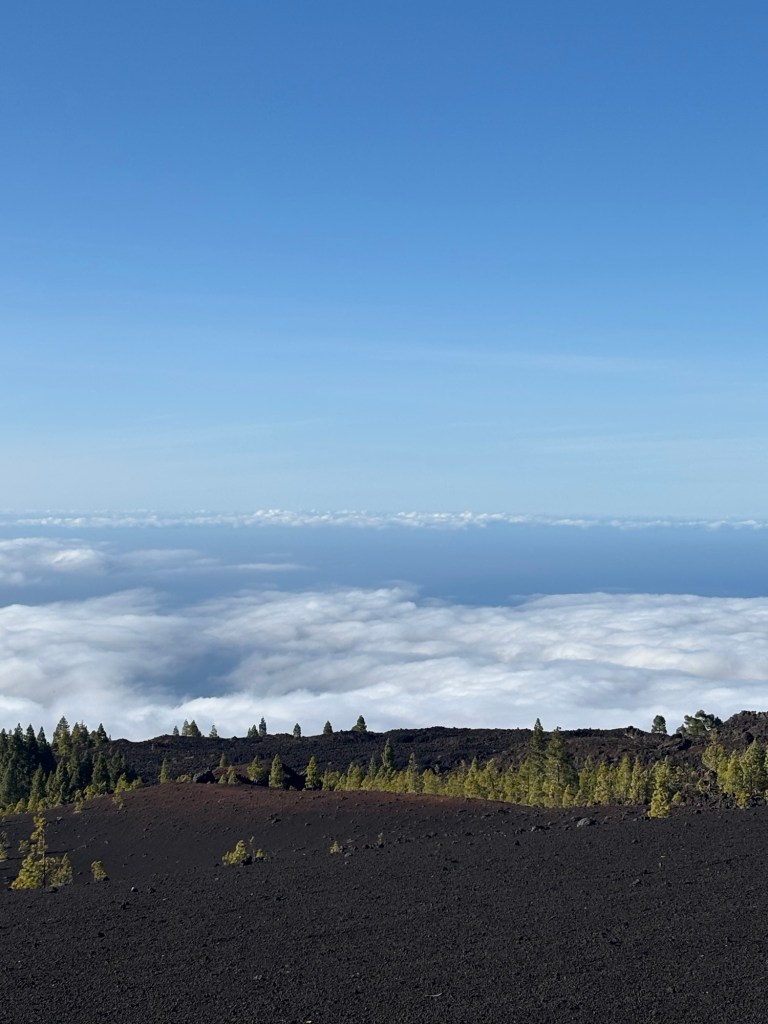
Chinyero is the reason I’m here. This is the site of the last eruption in 1909, Chinyero being one of the vents of Teide, which looms over everything to the west. This is also Teide’s best side: from here, it is perfectly conical, like a child’s drawing of a volcano, and at this time of year you can still see the last traces of snow and ice in the deep gulleys running down its peak. Sure, the Roque Cinchado may have been a worthy candidate for one of the Top Ten sights of this trip, but what I really wanted to see here in Tenerife was the black sand forest: a natural marvel growing out of the destruction wrought by Teide over a hundred years ago. I was not to be disappointed.


It’s a two and a half hour circular hike from Caserío up into the ash fields, most of it very well signposted and all over well-trodden paths, though the hardened basalt and steep climbs make for slow going at times. I saw three or four cyclists and one other hiker far off, but compared to Teide National Park, it’s a much more personal experience of the mountain on this side of the island. Most of the hike takes place in the shade of the Corona Forestal, the crown of pine trees that ring the mountain (but especially its fertile north face). Some of the trees look like they still bear the scars and scorch marks of the fires that raged through here when Chinyero erupted, long ago.


Did you ever see Fantasia 2000 as a kid? This place reminds me of the Firebird sequence, which plays Stravinsky’s masterpiece as the backdrop to the eruption and rebirth of a volcano. It also gives off major Primeval and Walking with Dinosaurs vibes, which is true for at least one of those TV shows, as the final episode of the first season of Primeval was filmed on the almost identical ash fields of Gran Canaria. All three creations draw on an ancient force in an even older setting, and the black sands of Chinyero really do feel like a walk back in time – if not on the surface of another planet.


There are very few mammals native to Tenerife, as is often the case with island fauna, which usually specialises in creatures with fins or wings (or those that had wings, once upon a time). I saw a couple of rabbits during my hike, which accounts for the presence of buzzards in these forests, but besides that, the ash fields seem almost deserted, unless you listen closely. The island’s canaries were singing away in the treetops, along with a few goldcrests, treecreepers, chiffchaffs and the local Canarian race of great tits. I counted at least three woodpeckers drumming at different frequencies on the descent, though I only saw one. Best of all was a brief encounter with a blue chaffinch, a special bird found only on the islands of Tenerife and Gran Canaria and only above the tree line. Tracking it by its call, I tried imitating it to get its attention, and it came to have a look. I got pretty close, but it must have thought me a very strange chaffinch indeed.

Meanwhile, to the north, the island seems to fall away into the sea, disappearing beneath the clouds. We really are very high up here.


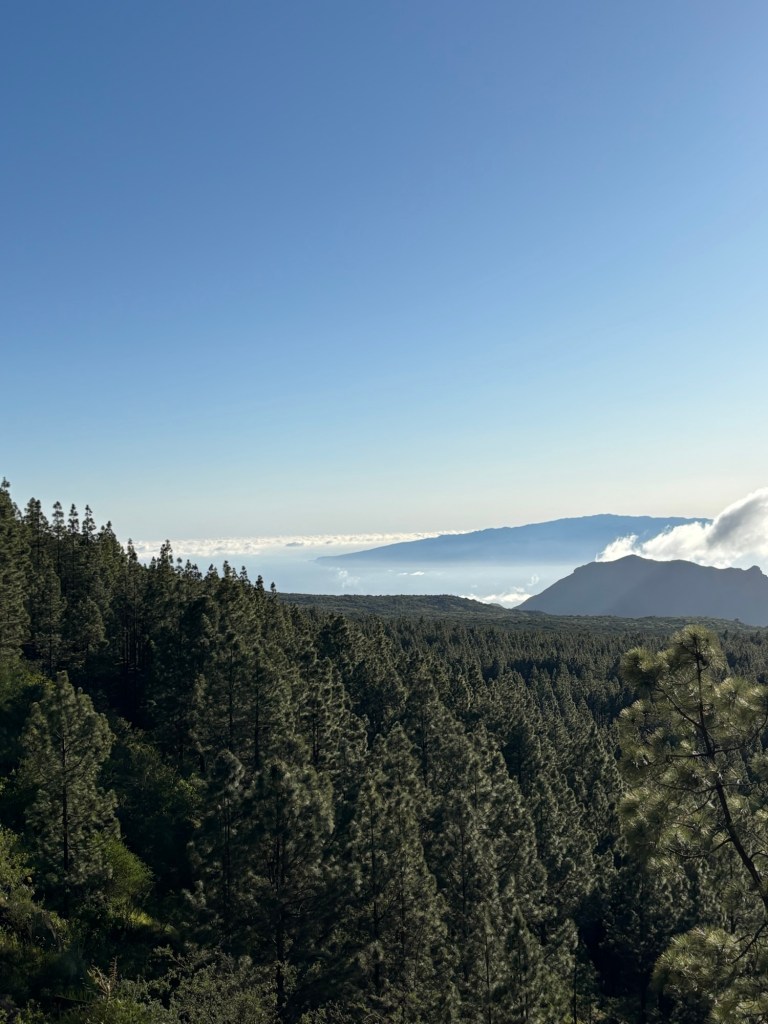
The views on the climb back down to Caserío are breathtaking, especially at the end of the day when the sun is beginning to sink into the Atlantic to the west. Stand at just the right spot and you can see the neighbouring islands of La Gomera and La Palma, flanking the Teno mountains on the westernmost point of Tenerife. I don’t know much about La Palma, but La Gomera harbours an otherworldly rainforest in its centre, the Garajonay National Park, full of gnarled and twisted trees and trailing beards of moss and lichen. If I should return, that would be near the top of my list.


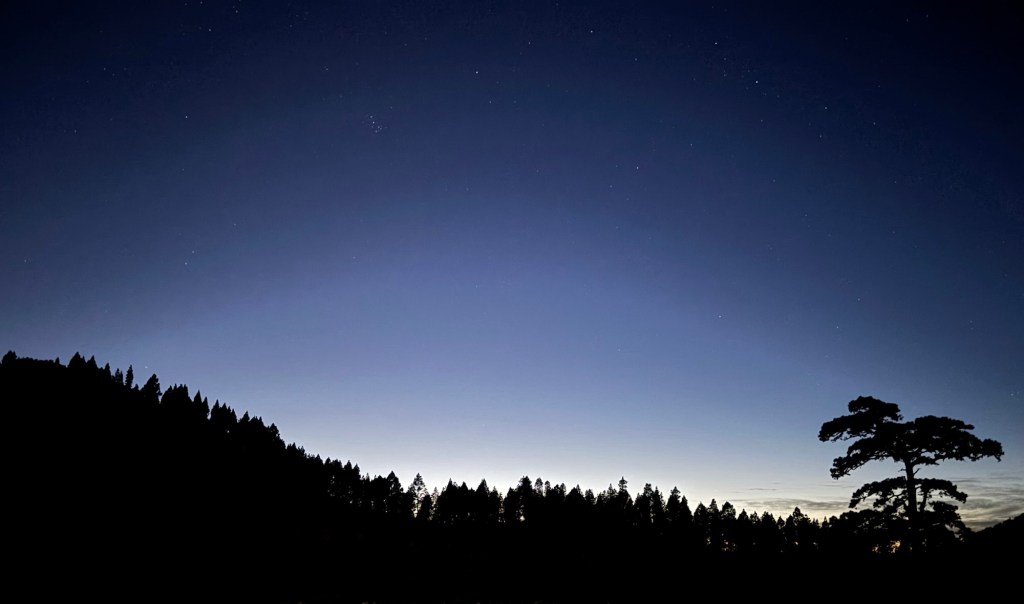
I had a well-earned dinner and a glass of wine back at Caserío, the last of which very nearly knocked me out – perhaps that explains the long sleep. But I did hold on to my senses long enough to properly appreciate the other thing I came all the way out here to see (not just to Chinyero, but the Canaries as a whole): the night sky. The English fixation with security and LED lighting means it’s hard to get an unpolluted view of the stars anywhere in the country (outside of Northumberland, anyway), since we seem to delight in stringing glaring yellow street lamps along our roads like fairy lights, and filling our towns and cities with floodlights.

Out here, however, the lighting is less pervasive and restricted to the larger cities. And up here in the mountains, there’s almost no lighting at all, so the stargazing is spectacular.


I didn’t see any shooting stars this time, but I’d be willing to bet that this is an incredible place to be at the peak of the Perseid meteor shower in the summer. I did count a number of constellations I haven’t properly seen before, blinking dimly behind the belt of Orion: Leo, Cancer, mighty Hercules and the Corona Borealis. And, of course, the full body of Ursa Major, not just the twinkling torso of the Plough.


My SLR would have struggled, but the iPhone did a remarkable job in the twilight. It may not be able to perform a quality zoom to save its life, but it does handle low light incredibly well.


Tomorrow is another day. Since I made it up to Chinyero a day early, I’ll take it easy. If I can, I’ll try to navigate round the south of the island to Santa Cruz for a change of scenery. I can’t say it’s the side of the island with the most appeal to me, being by far the more resort-heavy side, but that might make for something to write about in itself. But first, I have to find a bus to take me out of here – and that might be easier said than done! BB x
Tiny Wings

3rd October, 10.40pm. The Flat

The October half term holiday came to a rather unorthodox end this evening with a last minute trip into town to catch a talk by celebrated English nature-writer, John Lewis-Stempel, on his latest release: England: A Natural History. It isn’t every day you get to meet people who you have grown up reading, and as this is a year for saying yes to things, why not? I came away with a signed copy and a really interesting chat with the author about the importance of names – not just the scientific names of the animals and plants around us, mind, but the old English names that are disappearing even faster than some of the creatures themselves: you might have heard of a peewit or yaffle, or possibly even a dumbledore, but would you know a bumbarrel or cuddy bear* if they were sitting in a tree in your garden? (Answers at the end!)


I’m feeling much recharged after ten days’ leave. These boarding school terms really do knock the stuffing out of you, though as I like to say, I’m happiest when I’m up to my eyeballs – it leaves less time for dwelling on things. I left it a little late for any far-flung adventures this year, but I did make it to Dartmoor a few nights back, taking advantage of the last few days of the public bus service that crosses the moors before they shut down over the winter.


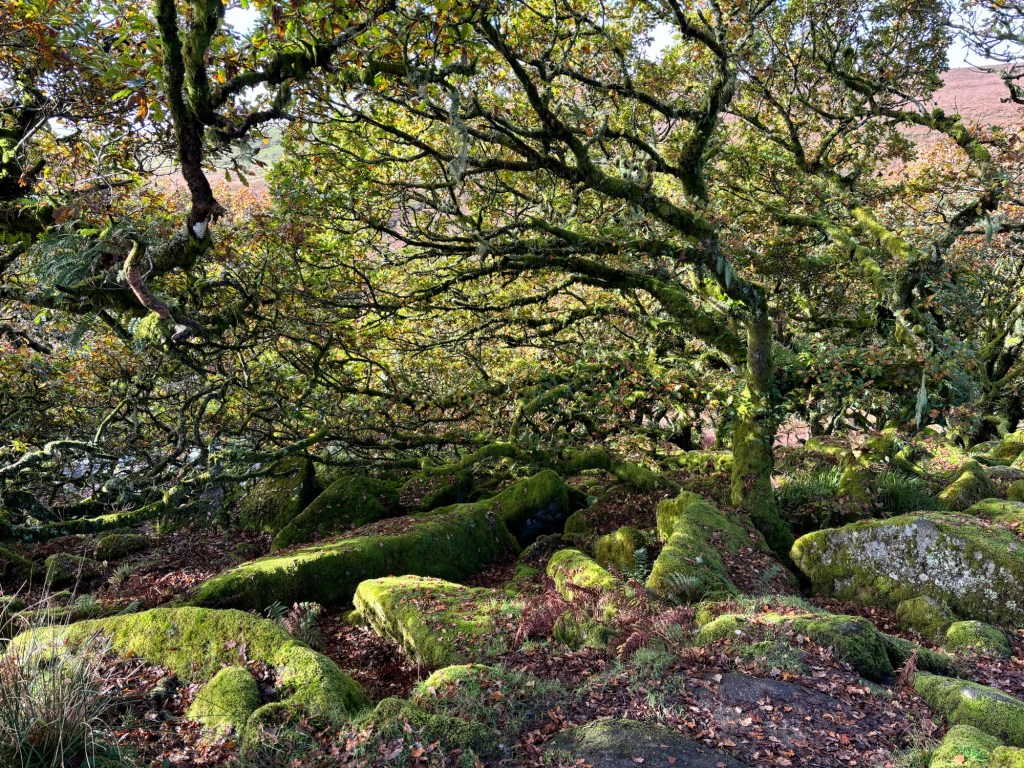
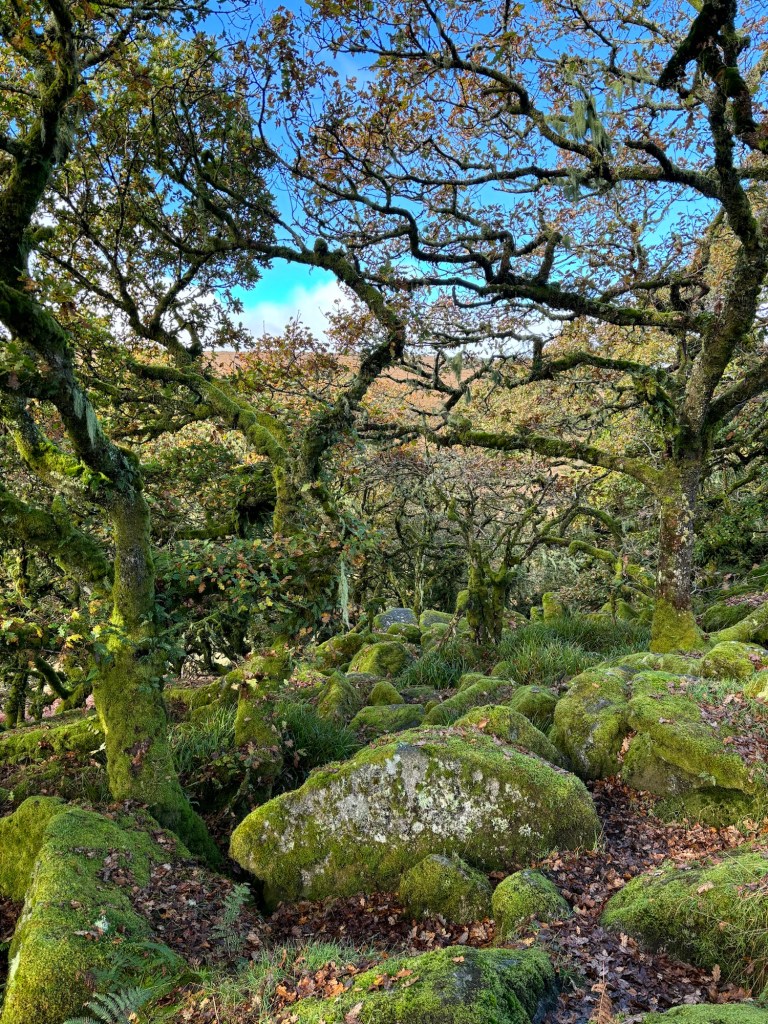
Why Dartmoor? Possibly because it’s arguably easier to get to by public transport than Exmoor, which is a lot closer, but mainly because I had an insatiable itch to see the legendary Wistman’s Wood, a tiny sliver of temperate rainforest nestled deep in the heart of the national park. It popped up in a number of ghost stories I read a while back and again in Guy Shrubsole’s The Lost Rainforests of Britain. The desire to see that last fragment of the Great Wood that once covered this island ended up pressing against the inside of my skull like Wistman’s own stunted trees.

I was holding out for mist and fog, but I had neither. The weather was actually remarkably pleasant for fickle Dartmoor, so instead of mirk and mystery I was treated to soft clouds and sunlight through the ancient branches; the kind of warm glow that Tolkien bestowed for a moment upon Fangorn Forest, an ancient wood of his own design. Did he pass through here, I wonder? His faithful illustrator Alan Lee certainly must have done at some point.


Just as it sits in a valley in the innermost chamber of Dartmoor’s heart, so too is Wistman’s Wood at the heart of much of Dartmoor’s folklore. It is said to be haunted by the spirit of a terrier who can still be heard scampering through the boulders, while by night it is prowled by the far more sinister wisht hounds, a local variant of the hell-hound myth that can be found across the British Isles, from the gytrash and Barghest to the Beast of Bodmin. The wisht hounds were believed to be kennelled in Wistman’s Wood by Old Crockern himself, the ancient pagan spirit of the moor whose foreboding tor rides the crest of the hills a short distance to the west of the woods.

There were no malevolent spirits during my brief stay, of course – at least, none that I could see from my perch atop a boulder on the fringes of the forest (visitors are no longer allowed to enter the wood proper, so as to protect the longevity of this sacred and truly unique ecosystem). But that is not to say the place was lifeless: quite the contrary, in fact. There was no wind, but the trees were alive with rustling leaves that turned out to be the beating of tiny wings. In the space of a single minute I clocked three species of tit (blue, great and coal), blackbirds, redwings, wrens, robins, tiny treecreepers and the truly pint-sized goldcrest, our smallest native bird. I haven’t seen a forest so alive in a long time. Even the air itself felt different, a fact that would have been obvious to all but the senseless by the thick, mossy lichen growing on every surface, a perfect natural yardstick for a healthy forest.


I spent the next five hours or so wandering in a wide arc around the surrounding moorland, following a rather makeshift path swiped from the internet the night before. I haven’t hiked around Dartmoor since I was at primary school, so I’d forgotten that, up on the moors, river crossings are often not bridges but rows of stepping stones. Which are a delightful challenge in balmy summer weather, no doubt, but something of a roadblock after the first heavy rains of autumn. I made the tactical decision to not tempt fate and so I took off boots, rolled my trousers up to my knees and waded across.

I hardly need to point out that Dartmoor’s rivers are devilishly chilly – and surprisingly deep. I was just shy of the other bank when the water came almost up to my waist. Thank goodness I’d brought a spare pair of trousers, or I’d have had a very wet hike back to the inn!


Luckily, as I crested the hills due south of Two Bridges, the sun came out to guide me home. It seemed to turn the grass to gold, in a wave that washed down the hillside until I was stranded in an ocean of golden blades. I straggled up to the Crock of Gold, a small stone-strewn vantage point where, as if on cue, a shining rainbow daubed itself across the grey sky to the north. No leprechauns on this occasion, but I got my gold one way or another.


Well, I’d better put down my proverbial pen and get some sleep. Back to work tomorrow, and another busy term awaits! BB x


*Bravo for holding out for the answers! A peewit is of course a lapwing, a yaffle is a green woodpecker and a dumbledore is a bumblebee, while cuddy bear and bumbarrel are old English names for the wren and long-tailed tit respectively! Go figure!

Gators, Gumbo and Vanishing Cabinets

Alright, so the primary reason for my trip to the States is to soak up the music out here. Yes, I’m perfectly aware that I could have saved a little and gone to Glastonbury, but frankly the idea of camping out in a field with thousands of party-goers sounds like Hell on Earth to me. I’m quite happy chasing a more traditional, more intimate range of older styles out here in the States. That’s why I’ve shelled out on a couple of jazz-themed events this afternoon. But before that, there’s one other major reason I decided to kick off my American adventure in Louisiana. The Bayou.


I’ve got a thing for swamps. I spent weeks of my childhood clomping around the misty reedbeds of Stodmarsh in search of bitterns and marsh harriers, while anybody else my age with half a brain was honing their social skills at the park or on the pitch. The Easter holidays required a ritual voyage to Doñana National Park, the ‘Mother of the Marshes’, which became something of a Mecca of mine. So to come to Louisiana and not pay a visit to the Bayou would be foolishness in the extreme.

Of course, it isn’t all that easy to get into the Bayou proper without a boat, or a car for that matter. Fortunately there are a lot of offers on the table to take you out of New Orleans and into the swamps. I threw in my lot with Cajun Encounters – it looked to be far and away the best one going.

The bus picked me up from outside the hotel shortly after eight, giving me plenty of time to wolf down breakfast. The driver, though not a tour guide himself, did a brilliant job pointing out the sights as he took us through the residential districts of New Orleans and out into the wilds of Slidell. The devastation of Hurricane Katrina is remarkably apparent, even twenty years on: together with the hulking wrecks of houses and ships, the skeleton of New Orleans’ only amusement park can still be seen arching above the trees, while the bizarre Fisherman’s Castle on the edge of Lake Pontchartrain remains the only building to have survived the floodwaters intact.

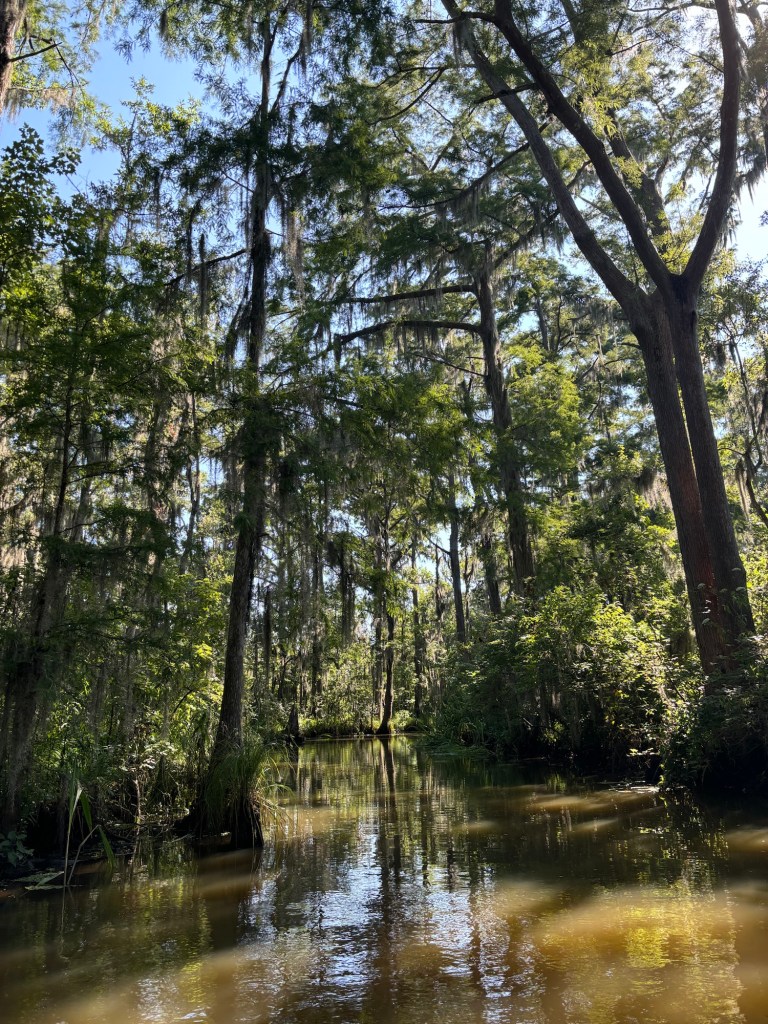
The tour begins beyond sleepy Slidell on the bank of an inlet of the Pearl River, where the swamp-folk came pearl fishing many years ago. The six of us in my boat were assigned the formidable Captain Zander, a former warehouse packer and a true Cajun to boot. To say we drew the winning ticket would be an understatement. As well as being a no-nonsense authority on the Bayou, he seems to know just about everybody out on the Pearl River – including Cindy, one of the biggest gators in the swamp.


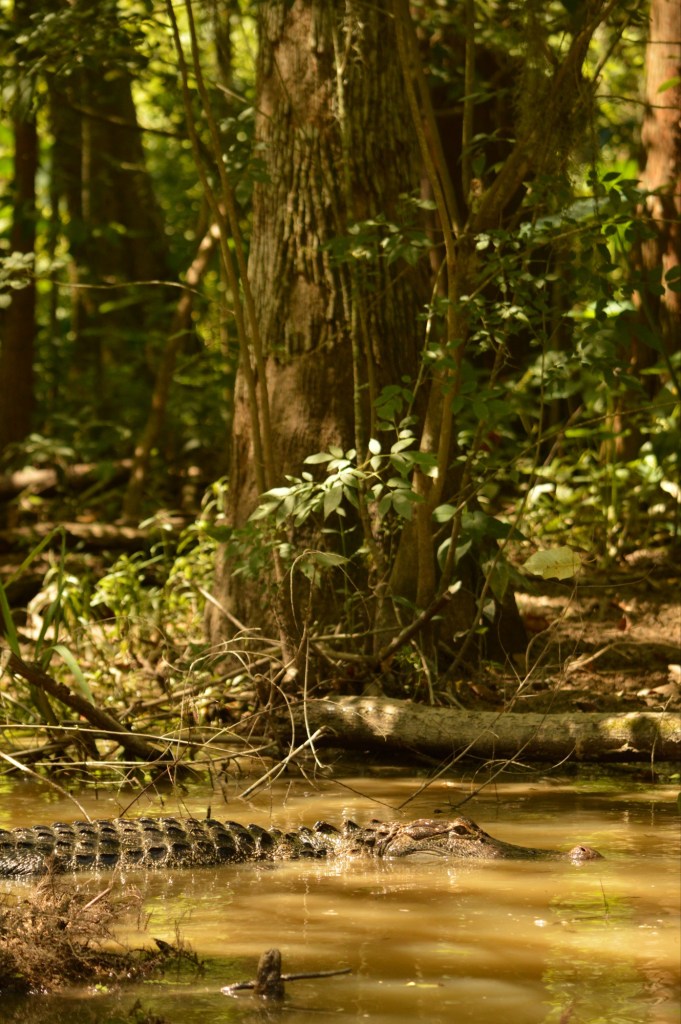
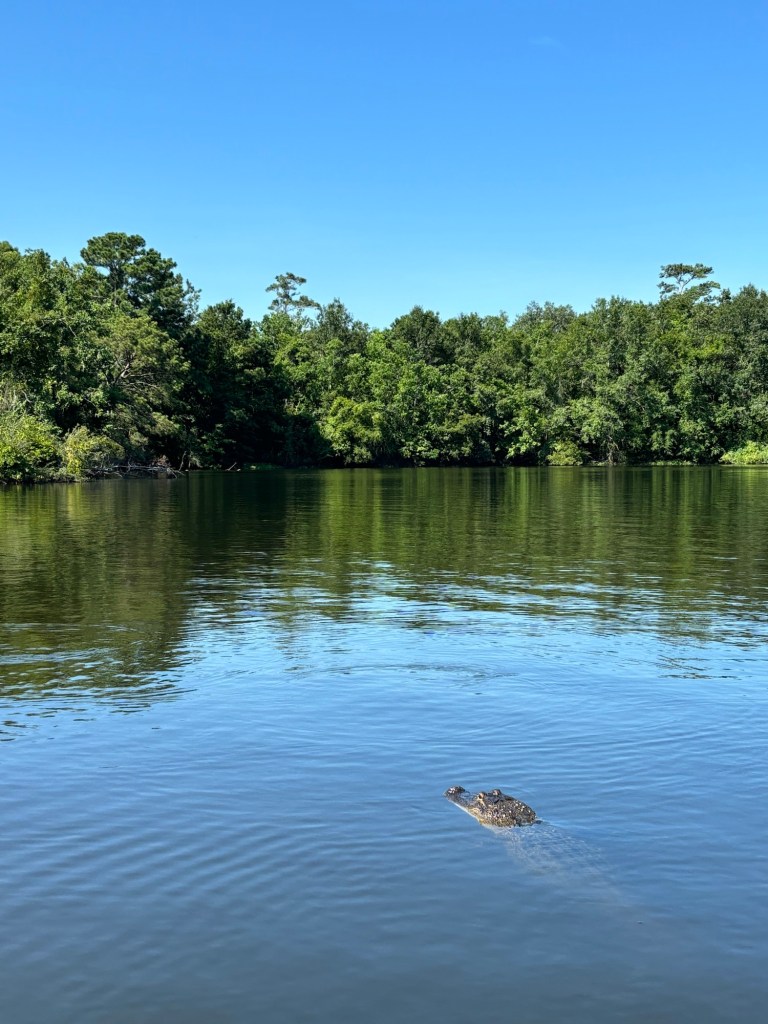
You’d be surprised how quickly you get used to the presence of the alligators. I must have counted around forty by the end of the outing, from amber-skinned yearlings to hulking, black-scuted beasts, visible only by the unmistakeable silhouette of their snouts just above the water. Before you know it, you feel as though they’re just part of the scenery!


When I was a kid I had a picture book that listed the American Alligator as endangered – which is true, as back in the 90s it was facing the very real danger of extirpation. Since then, however, the environmentalists have stepped in to throw the spirit of the Bayou a lifeline, and they have returned in force: more than a million can now be found in the Louisiana swamps alone.


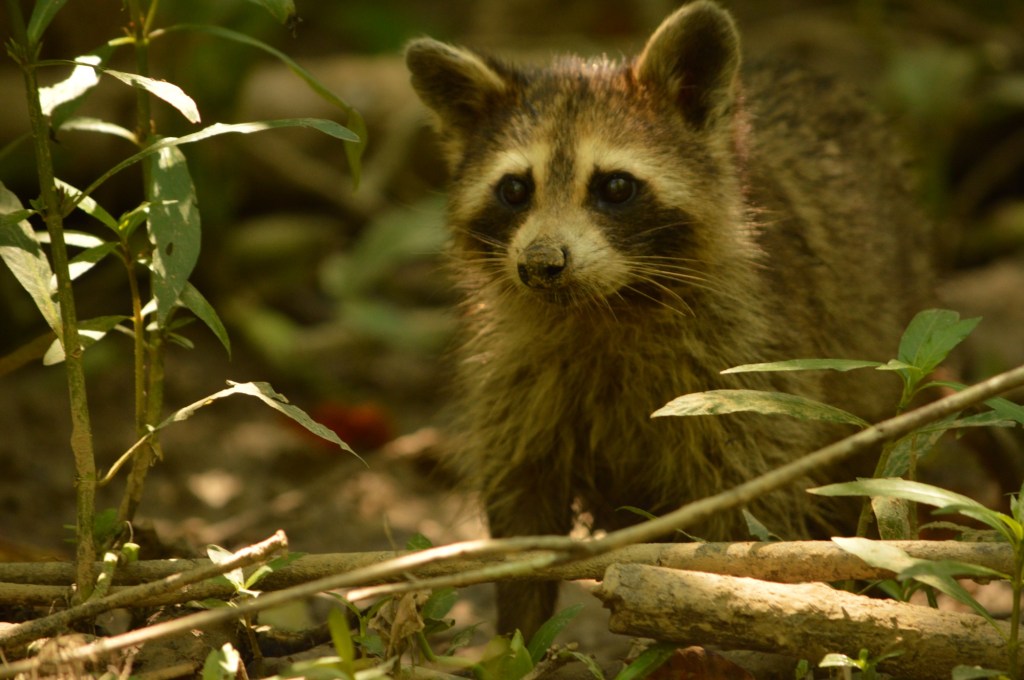
Summer is one of the best times to see Louisiana’s gators, but the heavy foliage can make it harder to see the other denizens of the Bayou. All the same, over two hours I clocked wood ducks, whistling ducks, a pair of high-flying anhingas, several ospreys, green, yellow-crowned and black-crowned night herons, roseate spoonbills, cattle and great egrets, a single great blue heron and, in one of the deeper inlets of the Pearl River, a family of raccoons – a real American experience!


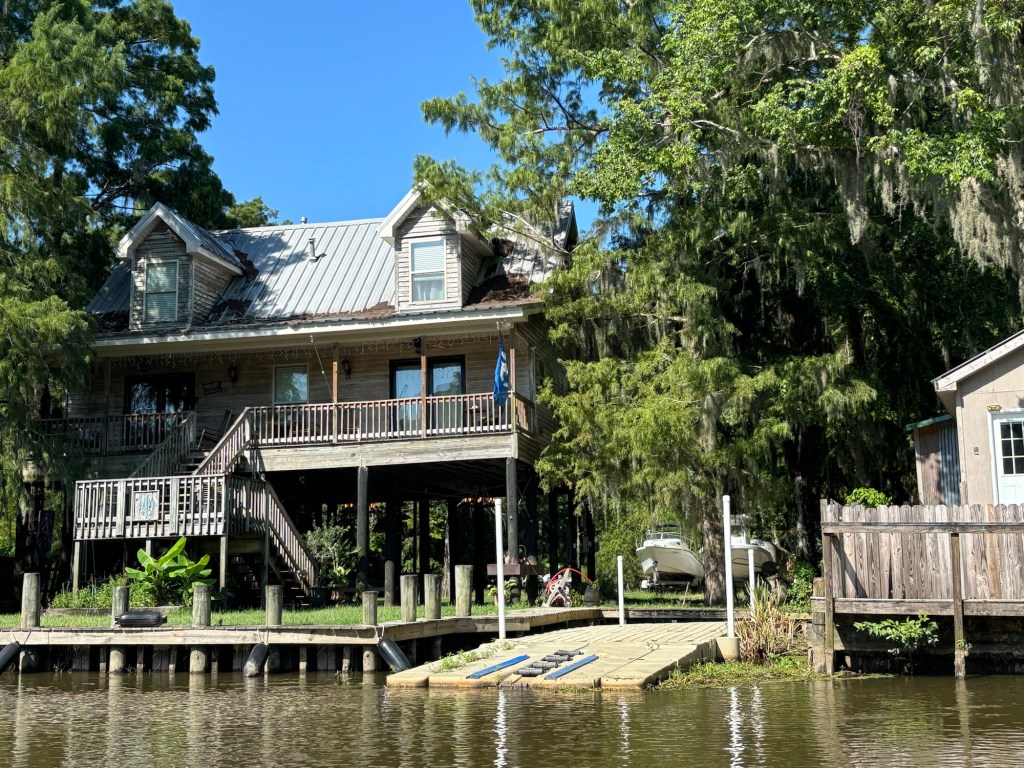
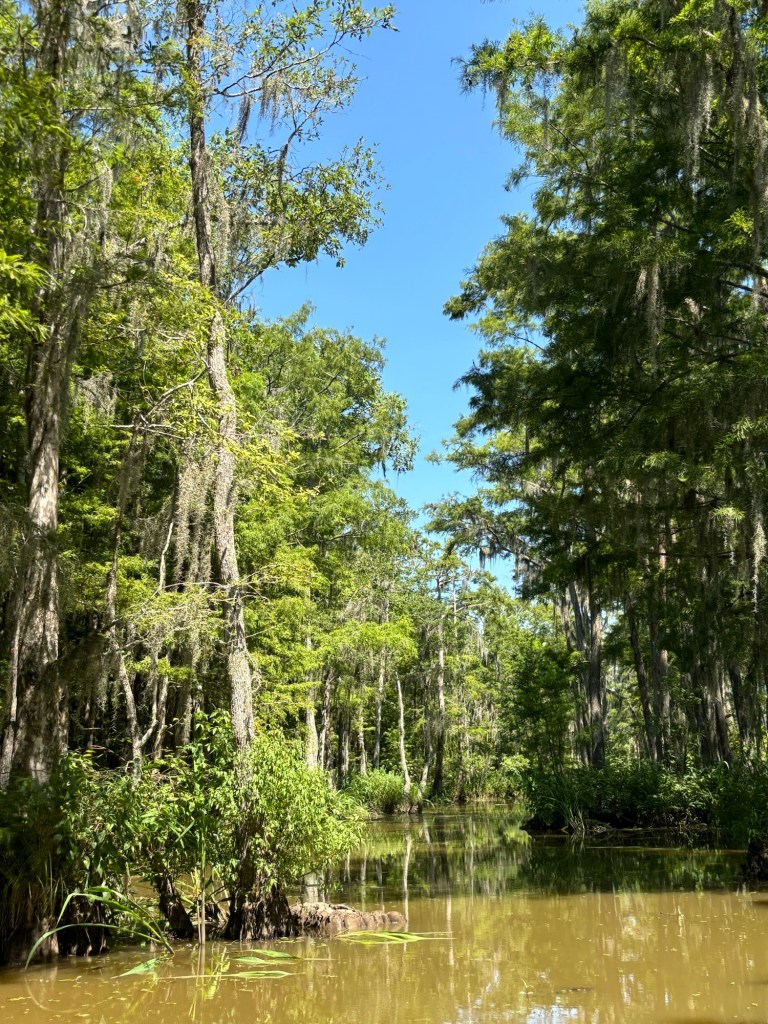
It really was quite something to drift along the snaking rivulets that cut through the Bayou, shielded from the merciless Southern Sun by the trailing beards of Spanish moss hanging from the cypress trees – named neither for their origin or their species (being neither Spanish nor a type of moss) but for their resemblance to the long grey beards of the first Spanish explorers to pass through these swamps hundreds of years ago. I wonder if Cabeza de Vaca and his brave company passed through here on their odyssey?


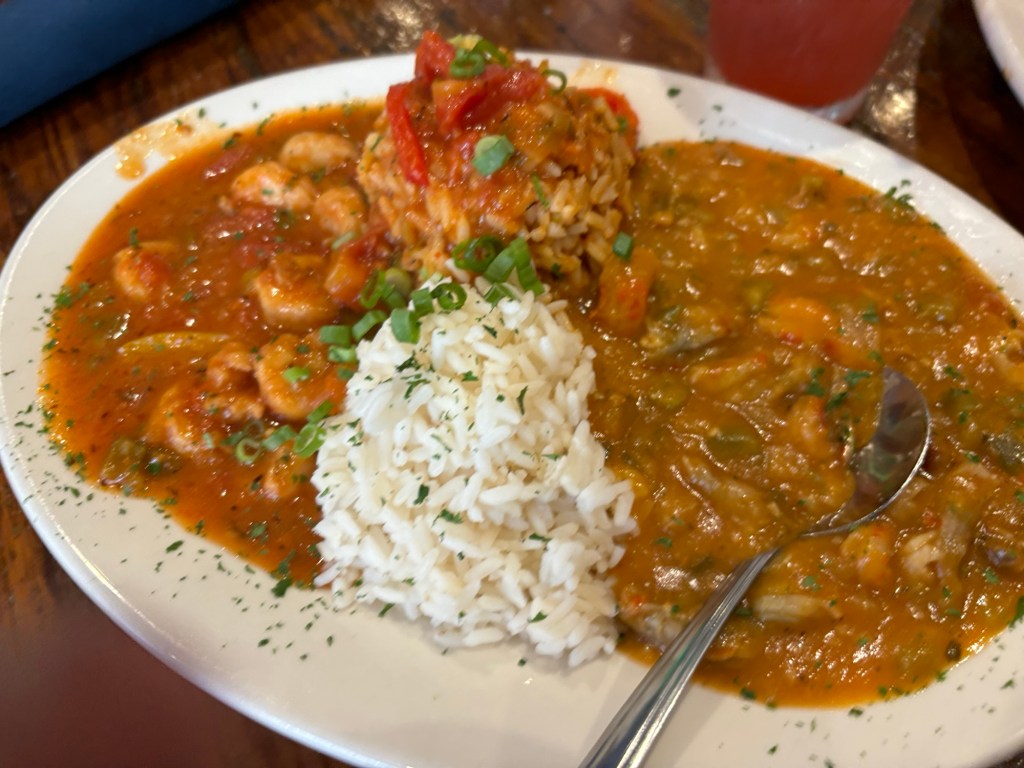
Back in New Orleans, I grabbed some lunch at Mr Ed’s Oyster Bar, following a tip-off from my Uber driver. It’s easy to shell out on your first meal in another country when you don’t know how things work, and I ended up with a starter that could have fed three as well as a main and a drink – before factoring in the inevitable 20% tip expected in the States and, of course, the inescapable taxes. That said, one cannot come to New Orleans and not try the food, and I have to admit the crawfish étouffée has shot up into the top ten foods I’ve ever tried. It was absolutely sensational. Didn’t feel brave enough for the oysters just yet, but maybe next time!


When I came back to the hostel, it was to find that Room 302 was being taken in hand: three Mexican labourers were hard at work uninstalling the ceiling tiles to address the leaking air-con unit, which meant I had to linger in the lobby until they were finished.

I had the shock of my life after they left, when I returned to the room to find my locker open and all the contents removed, with the exception of two shot glasses from Prague (a gift for a friend). Clothes, camera, the cash my students gave me as a leaving gift – all gone. In a blind panic I took the stairs at a run to find the receptionist and let them know what had happened… only to get a knowing smile and a ‘forgive me’ gesture.

Turns out they’d moved all my belongings into a new room while the works were being done and hadn’t found me yet to tell me.

Crisis averted – at the expense of a couple of years off my life! I’m not generally that fussed when it comes to losing things on my adventures – one less thing to carry and all that – but as this is my first time in the States, I’d rather be prepared, not to mention have enough clothes to wear for the next few weeks! BB x

Camino XXVII: Journey’s End

Finisterre. The End of the World. It’s a fitting place to end the Camino, which can sometimes feel like it really does go ever on and on, down from the door where it began. Well, here we are at the end of the road. Kilometre 0. My great quest for the summer is over.


With a good thirty-two kilometres between O Logoso and the seaside town of Fisterra, Simas and I set off early this morning. One last six o’clock start, an hour or so before the dawn, to end the Camino as it began: in the dark. The churring of nightjars echoed in the forest around us as far as Hospital, after which the road climbed up over a treeless moor before slowly beginning to descend toward the clouded horizon beyond.

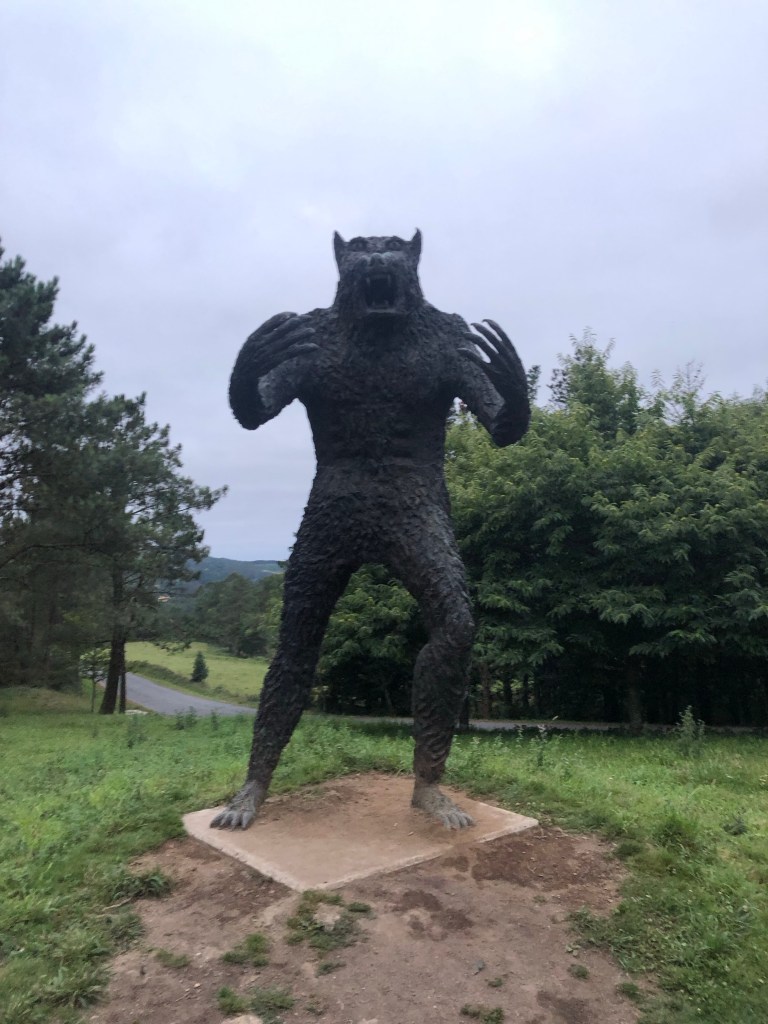
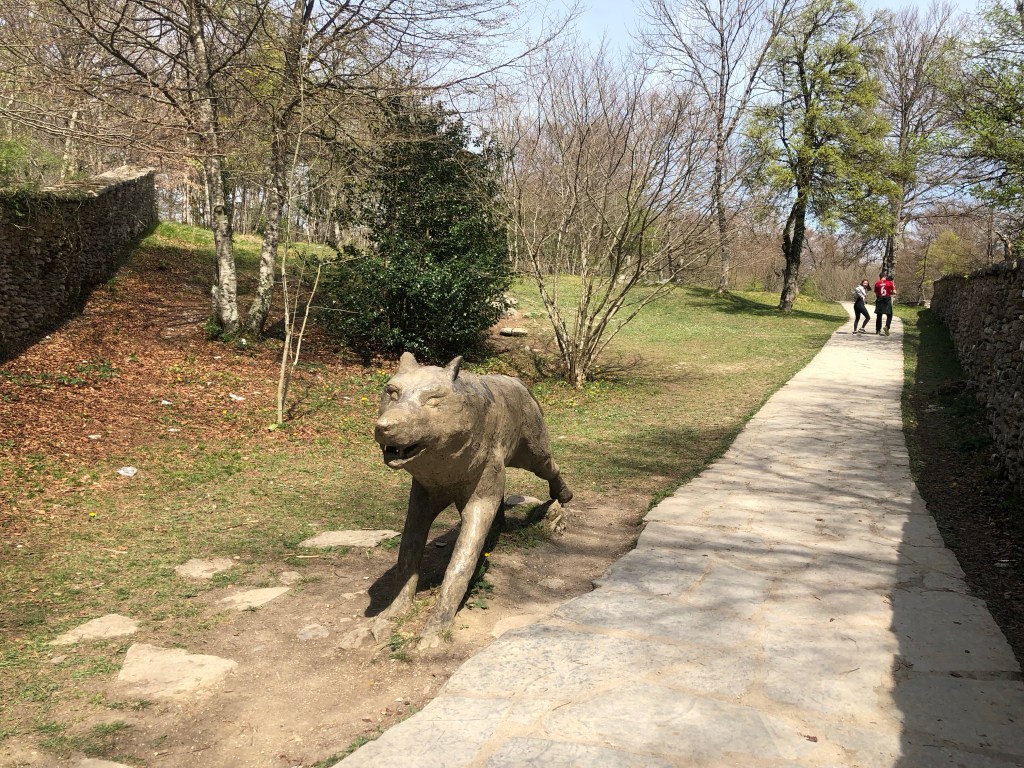
We passed a few alarming signs declaring ‘territorio vákner’, which didn’t make a lot of sense until we stumbled upon an enormous sculpture in the woods of a wolf-man. The ‘vákner’ was, according to 15th century pilgrim lore, a Galician forerunner of the werewolf legend, and one of a number of terrible beasts that beset pilgrims in the forests after Santiago. The more you know!


Less fantastical, though by no means less legendary, we found a Tupperware box on one of the stone walls deeper in the woods containing a number of breakfast options: yoghurts, bananas and pastries, complete with plastic spoons in case of need. The invisible benefactor, an eleven-year old local boy, was trying to raise money for a trip to Madrid. I tipped him generously via his piggy bank and enjoyed the breakfast I otherwise might not have had this morning. What a little angel!


Shortly after leaving the forest, as though out of a dream, the sea came into view. I have been so excited to see the sea after three weeks on the road and saving it as a reward for the final day was definitely the right thing to do. We came down into the busy former whaling town of Cee and had a proper breakfast of churros con chocolate, for the princely sum of 3.75€. And that’s including Simas’ café con leche. I’m going to miss how cheap this country is.

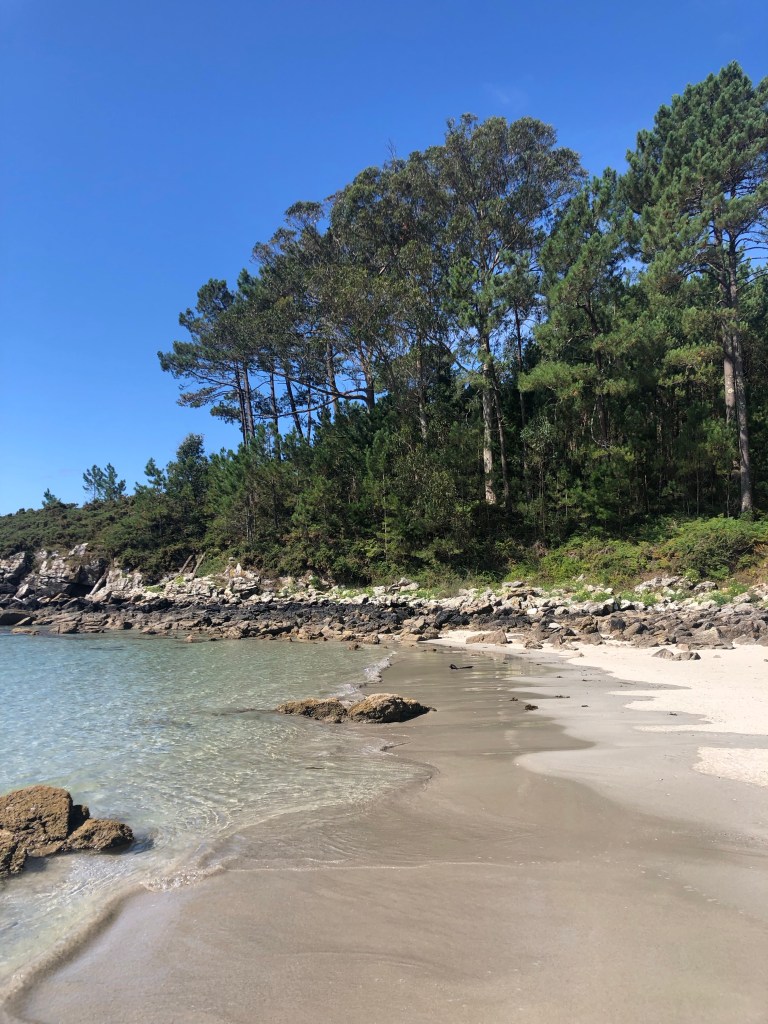
Having killed an hour, we pressed on north and west through Corcubión, which was being kitted out for a medieval fair. We detoured a little to see the coast, and were guided back to the Camino by a friendly local afflicted by throat cancer, who pointed us back to the road using a robotic device at his throat. We had not gone much further than Estorde when the sun came out, causing the white sands of the beaches to shine out like a beacon. Given the gloomy forecast for the rest of the day, we took a chance and detoured once again to one of the coves, finding it deserted. And boy am I glad we did!


This was what I walked five hundred and sixty kilometres for: truly, the treasure at the end of the rainbow. There were no pots of gold, but there might as well have been diamonds in the water: each gentle wave kicked up clouds of white sand that glittered in the sunlight like a thousand twinkling stars. Sand eels and mullets darted in silver shoals nearby and a sandpiper scurried up and down the shoreline at a safe distance from us. The way the forests practically tumble right into the ocean, ringed with beaches that shine a purer white than anything the Mediterranean can muster… I’m amazed the Galician coast isn’t as heavy a hitter on the tourist trail as the Costa Brava. Amazed – and grateful. Because from some of the graffiti on the town walls – no a la Marbellización – it’s pretty clear the gallegos don’t want it to have that level of fame either.


A special mention should be made for saint number two of the journey: Nacho, a Valencian who had set himself up on the hill overlooking the Langosteira beach with two paella dishes full of home cooking that he was handing out to passers-by, free of charge. He was quite insistent on this last point, maintaining that though he was between jobs he had enough money by the grace of God to live on, and wanted to share his luck with the world. We had a good natter about what constitutes a real paella, but above all it was really uplifting to meet such a good-hearted man from my grandfather’s region – because while I’m proud to have Manchego heritage, my grandfather was actually born in Torrevieja, which means my immediate ancestry is actually Valencian. Go figure!


We reached Fisterra just after one and checked into the albergue municipal, which was already quickly filling up. It is as well that we did, too, as it landed us the final stamp in the credencial and an additional compostela for completing the final 100km of the Camino. After a quick nap we grabbed a table at O Pirata, a very characterful port-side seafood restaurant whose staff (and hangers-on) really did give off the right vibes as a motley crew rather than a team of restauranteurs. Between our waiter, who might well be the fastest-talking man in Spain, the chef with his black bandana and earring, and the three musicians sat outside, strumming guitars and clapping along – not to mention the seafood itself, which was delicious – it was easily the best meal of the whole Camino. Best of all, they threw in a free ego massage, telling me it wasn’t just the La Mancha shirt that gave away my Spanish heritage but also my ‘actitud’. I’ve actually managed to convince quite a few Spaniards that I’m a native on this Camino, which is a huge thing for me. I’m one step closer every day to reclaiming my heritage!


After lunch, Simas went back to the albergue for a siesta but I fancied a wander around town before the forecasted rain came down. What I thought might be a museum/aquarium in the harbour turned out to be an open-air working fishery, where a raised walkway lets you look down on the fishermen at work, processing and sorting the morning’s catch. It’s a brilliant idea and a fascinating way to have a look-in behind the scenes – especially after enjoying the fruits of their hard work for lunch! One chap was sat measuring the many thousands of razor clams and sorting them by weight, which looked to be a truly Sisyphean task: it must take hours to finish before the next haul arrives and the task begins again.


Stamps and celebratory seafood platters aside, you can’t say you’ve completed the Camino unless you really do go all the way to the end of the road, which is another three kilometres down the coast to the windswept cliffs of Cape Finisterre. The pictures imply a lonely lighthouse watches the cape, but it’s also home to a hotel, a bar, a car park and a couple of souvenir shops, so it’s not as remote a spot as you might think. The steep banks of the cliffs were pretty busy when we got there, with both pilgrims and tourists from various parts of Spain, and it was a good place to bid farewell to several pilgrims I have crossed paths with on the road: Alan, the wannabe hostalero, and the French team of three, Jean-Paul, Adine and Philippe; as well as Liza the Belgian (whose wish was granted by beating me to the Cape) and Catherine the German (who wins the award for the most random encounters along the whole Camino).

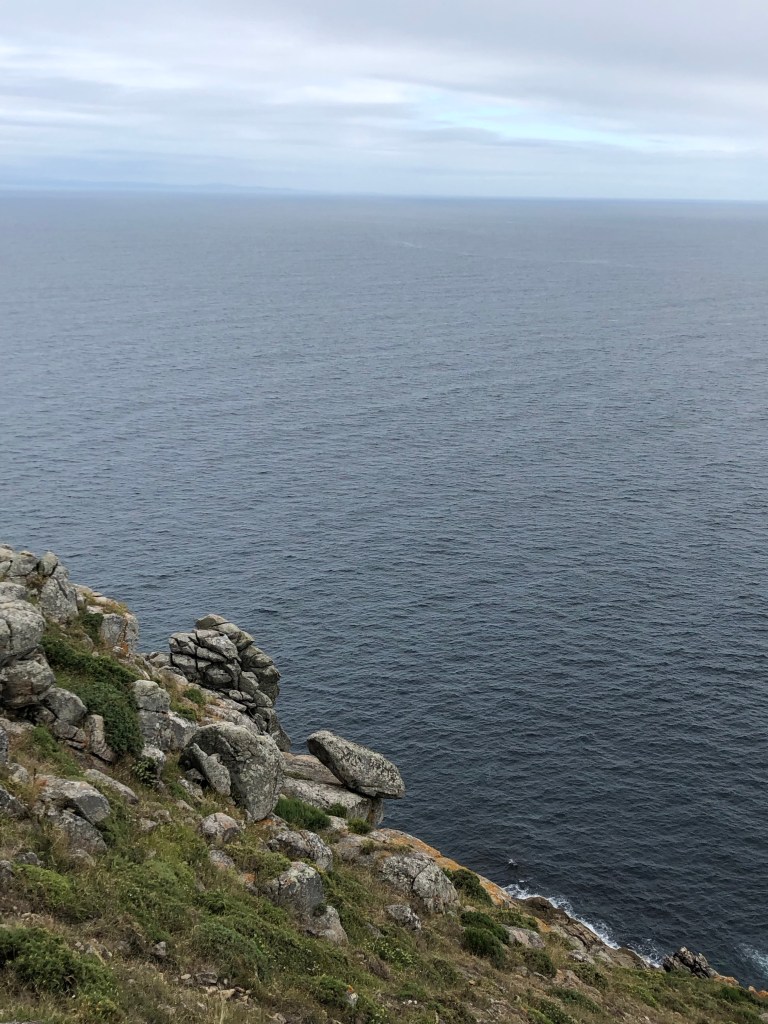
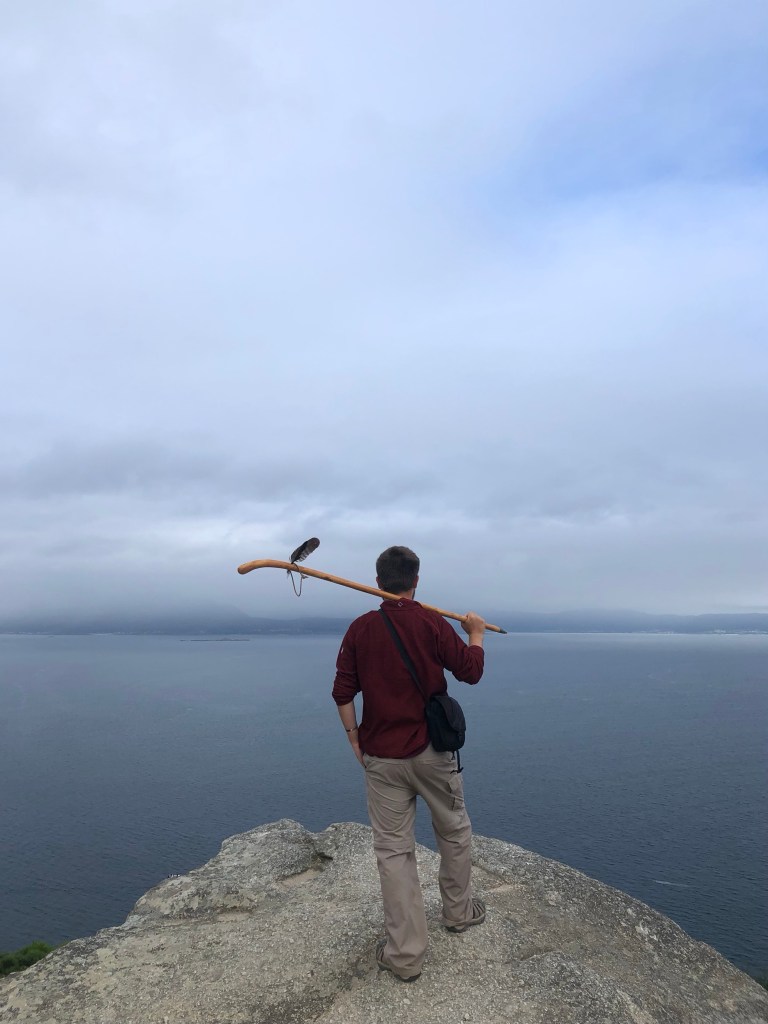
I found a quieter spot lower down and sat there for a while, watching the waters of the Atlantic below. It was a good place to reflect. I let go of a lot of things at last, letting them drift from my heart through my fingers and out across the ocean. Down below, gulls wheeled and cried around the cliff edge while a sparrow and a redstart made a few dizzying sallies across the precipice. My eyes were trained on the waves, searching for one thing in particular, and after half an hour – in the wake of a fishing boat – I saw what I was seeking. Not the lonely gannet or flight of shags that rounded the cape, but a fleet of shearwaters, an endearing and highly acrobatic seabird that truly lives up to its name, flying low over the water with the tips of their wings slicing the tips of the waves like blades. I was far too high up to tell what kind they might be, but I imagine they were Balearics, given their size and number.

If the ghostly harrier and quail were the spirits of the early Camino, it’s the handsome shearwater that marks its end. While I’ve walked most of the Camino alone, I’ve had companions every step of the way, from the merry stonechats that have been with me every day to the nightjars that have kept me company in the twilight hours. If you can put a name to the sights and sounds all around you, you’re never truly alone on the road.


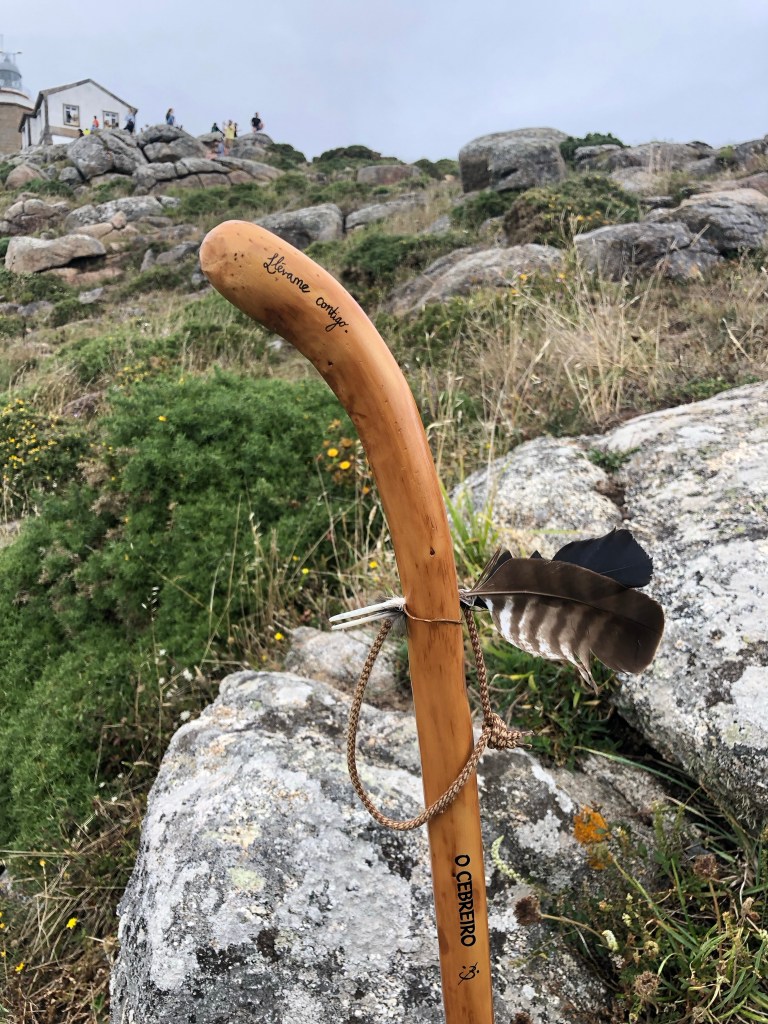
If you kept going in a straight line from here, you’d reach Long Island and perhaps even New York City. But unless you have the stamina of a god and the strength to match, that’s simply not possible, so here the road ends at last. I penned the words ‘Llévame contigo’ (Take me with you) into my faithful stick and planted it in the earth just behind where I had been sitting. I hope somebody does take it with them, and that it brings them as much joy and support as it has brought me.

I thought of its predecessor, and the feathers that had made it so memorable to other travellers on the road, and as I did, a couple of ravens suddenly appeared on the wind, soaring in circles around the cliffs below. One of those feathers I carried before belonged to a raven – so perhaps they were with me all along in spirit. I’d like to think that. According to legends of old, it was a raven that first brought the light of hope into the world.


Well, that’s a wrap. It’s now twenty to eight on Friday 28th August. The rain is falling outside and I’m booked on the 11:45 bus back to Santiago. I’m going to find myself a café near the harbour and do some writing while I wait, in this seaside town with which I have fallen in love. Galicia has been beautiful since O Cebreiro but its coast has utterly enchanted me. It feels like home, and yet like Spain at the same time. It feels like Edinburgh, Hythe and Olvera all rolled into one.

I will come back. There is more to the Costa da Morte than I have seen. I must come back. BB x

Cross Country

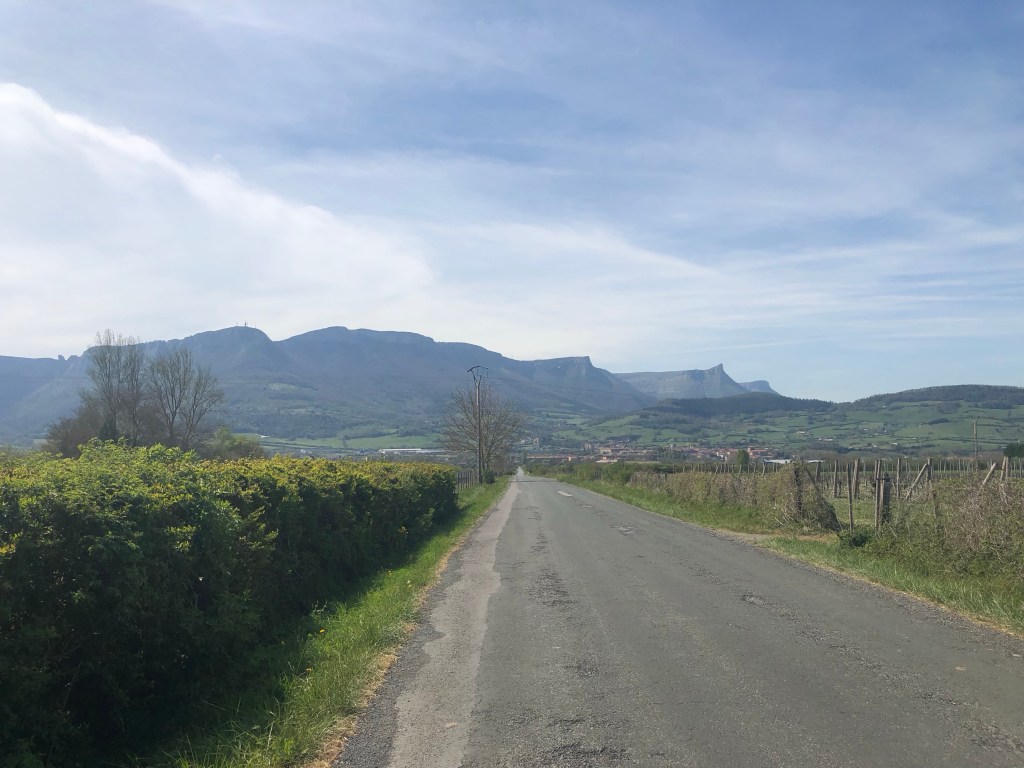
The Camino might be over for this year, but the adventure certainly isn’t. Before my flight back home tomorrow, one last challenge remained: to scale Monte Santiago and lay eyes upon Spain’s highest waterfall, the Salto del Nervión. Since I’m staying in Bilbao, which straddles the Nervión on its journey to the sea, it seemed only natural to go in search of its source. The fact that it springs from a mountain bearing the same name as the patron saint of the Camino clinched it. So, just after eight o’clock this morning, I grabbed my rucksack and poncho (just in case) and set off for the Bilbao-Arando train station.


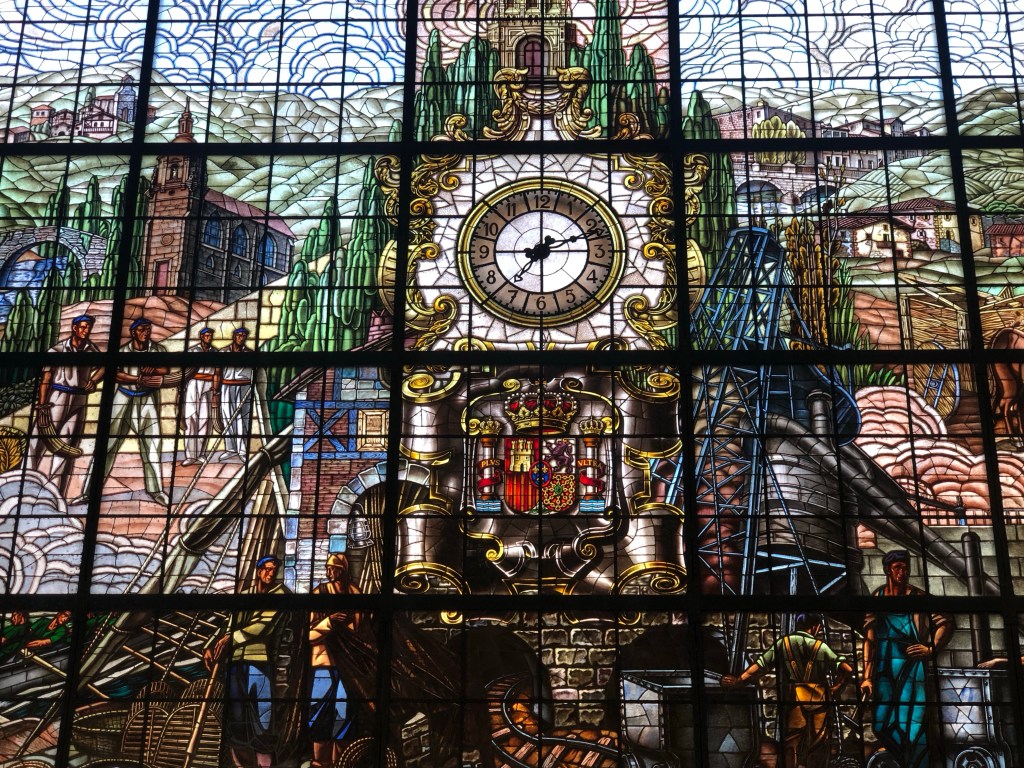
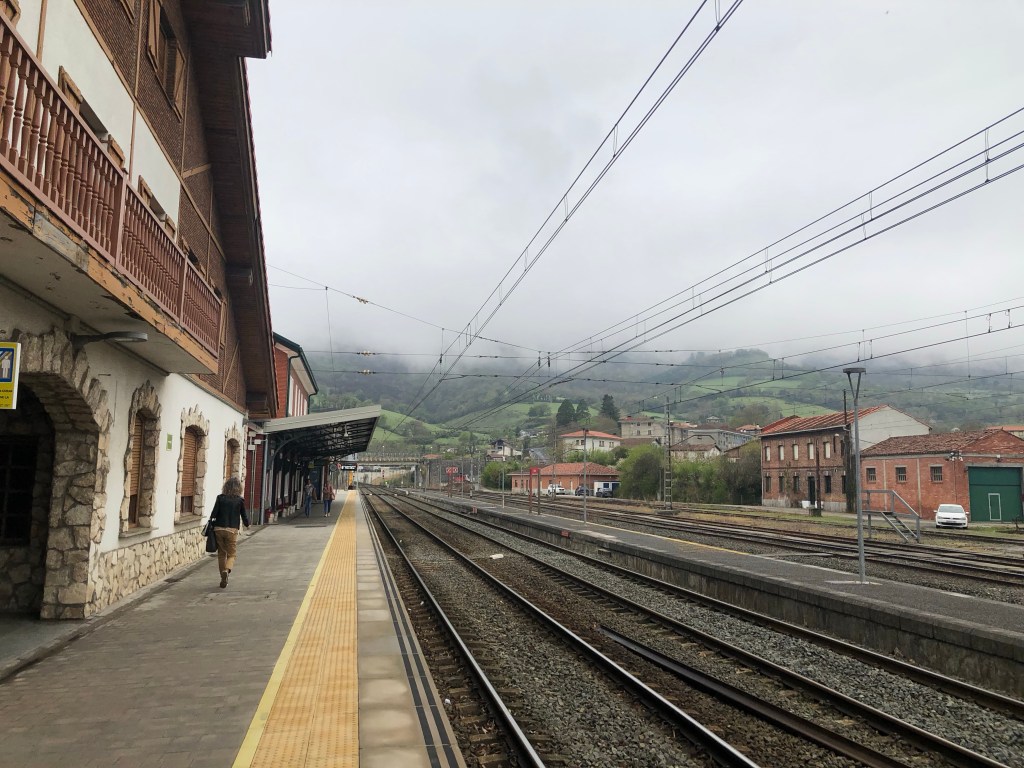
Leaving the stained-glass masterpiece of Bilbao-Arando behind, I took the 8.25 to Orduña on the C3 line. It’s the furthest stop on the Cercanías line and the trains were running very consistently even through the holiday season, so I was pretty confident about getting there and back OK.


Orduña itself was just waking up when the train pulled in. I made a quick detour via an AlCampo mini-market to grab a picnic lunch: the usual fare of semicurado cheese, chorizo slices and a fresh loaf of bread, with a punnet of grapes to boot. I then doubled back, crossed the bridge over the railway and started to climb up into the hills.

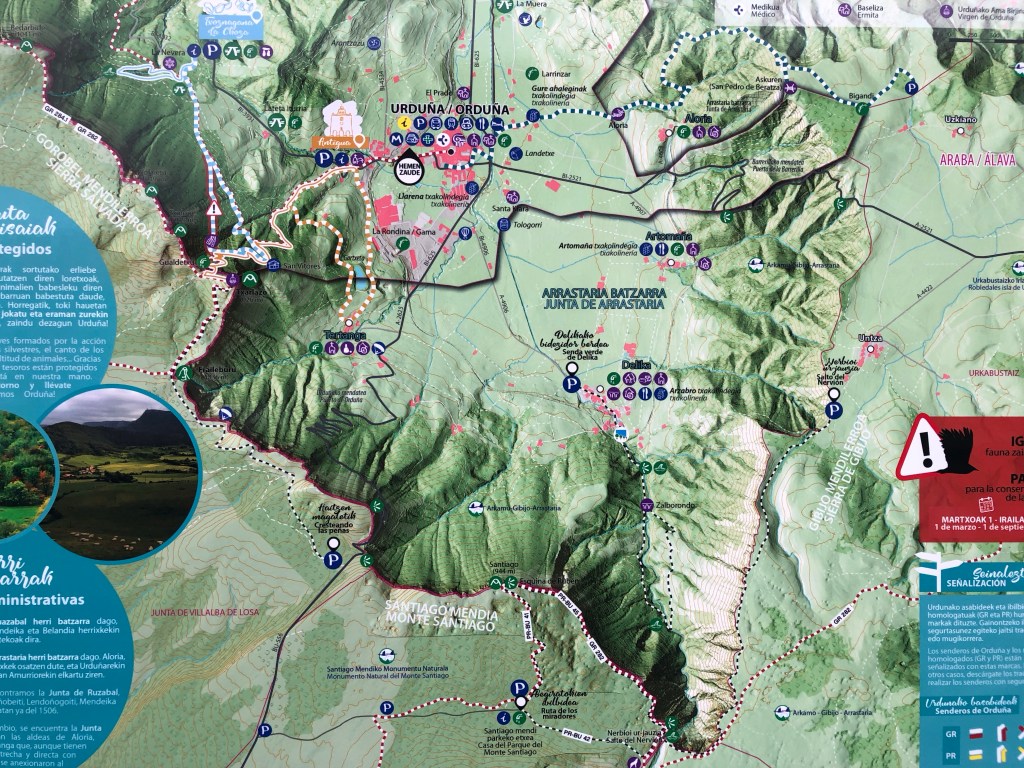
Fortunately for me, somebody had the peace of mind to leave a clearly-labelled map outside the train station. I’d found a few maps online, but I was relieved to find a more reliable one at the start of the trail, so I snapped a photo and used it as my map for the day. I can’t find it online, so here’s a copy if you’re interested:


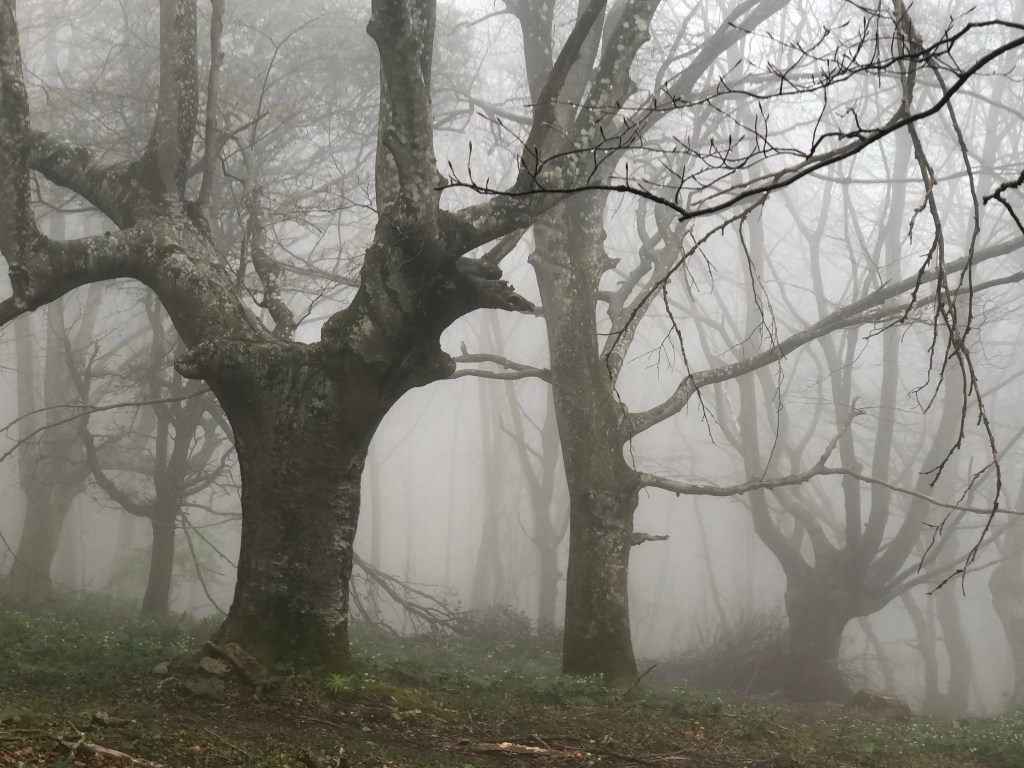
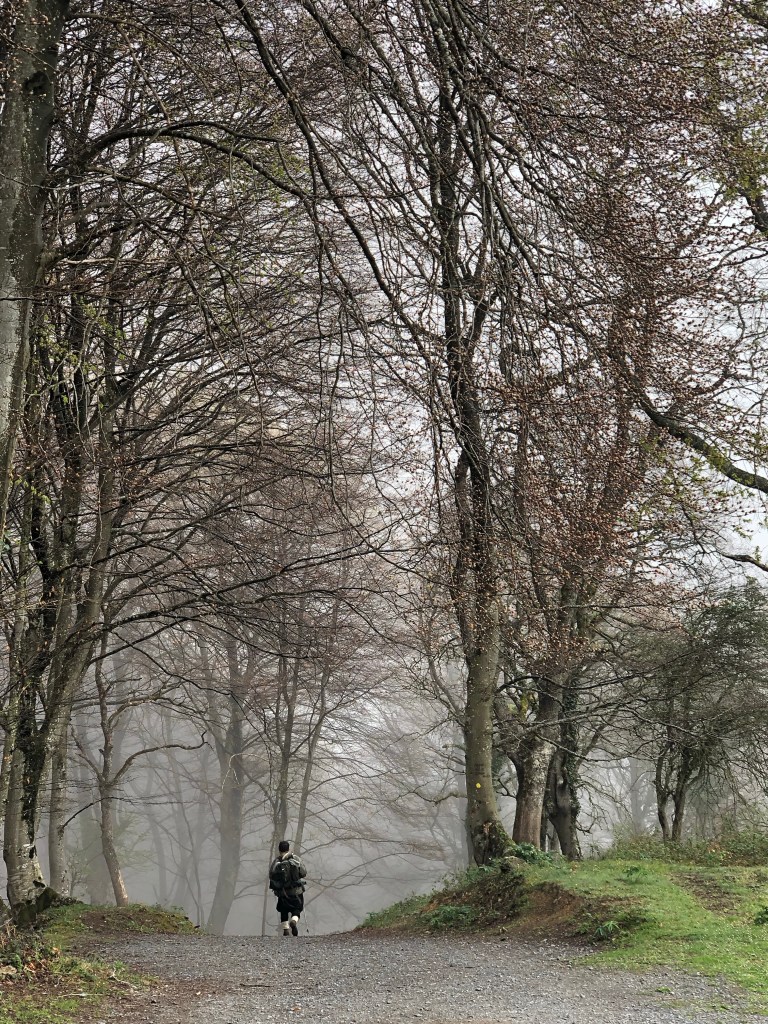
First things first: the climb was bloody steep. Easy to follow, but steep. And before long, I’d climbed up beyond the cloud level and was weaving in and out of the mist. Sometimes I couldn’t see more than ten metres or so ahead, and sometimes the road seemed to stretch on forever up the mountainside. A jay screeched at me from the base to the summit, and while it may well have been a number of them, I had the strange feeling it was the same bird watching my slow progress. And yet, whenever I tried to lock eyes upon it, I only ever caught a disappearing shadow between the trees.

In the deep woods of the Basque Country, when the clouds are at ground level, it’s easy to see how myths of the Basajaun – wild men of the woods – persisted for so long. God only knows what was watching me unseen in the mist.


I only met two other souls on the road coming down: a local man with a hiking pole in hand about halfway up and a jogger leaving the forest, which would imply he’d just run down the mountain. There’s a reason the Basques have a formidable reputation.


Near the summit, a spring of crystal clear water was a welcome find. I couldn’t help remembering a childhood memory of vomiting for days after drinking from a village spring in the Alpujarras, but the water looked so clean I couldn’t help myself. It was easily the most delicious water I’ve had out here – mountain water always is, if you can get it – though I was sane enough not to use the metal cup chained to the rock, which looked in dire need of a good clean. In a nearby tank, filled to the brim with the spotless spring water, a few tiny newt efts were swimming about.

After what felt like an age (but in reality only took ten minutes over an hour) the track suddenly came to a narrow crevasse which cut a path through the karst to the clifftop. With one last screech from the jay echoing after me, I put the cloud forest behind me, pushed the metal gate open and stepped out of the Basque Country and back into Castilla.

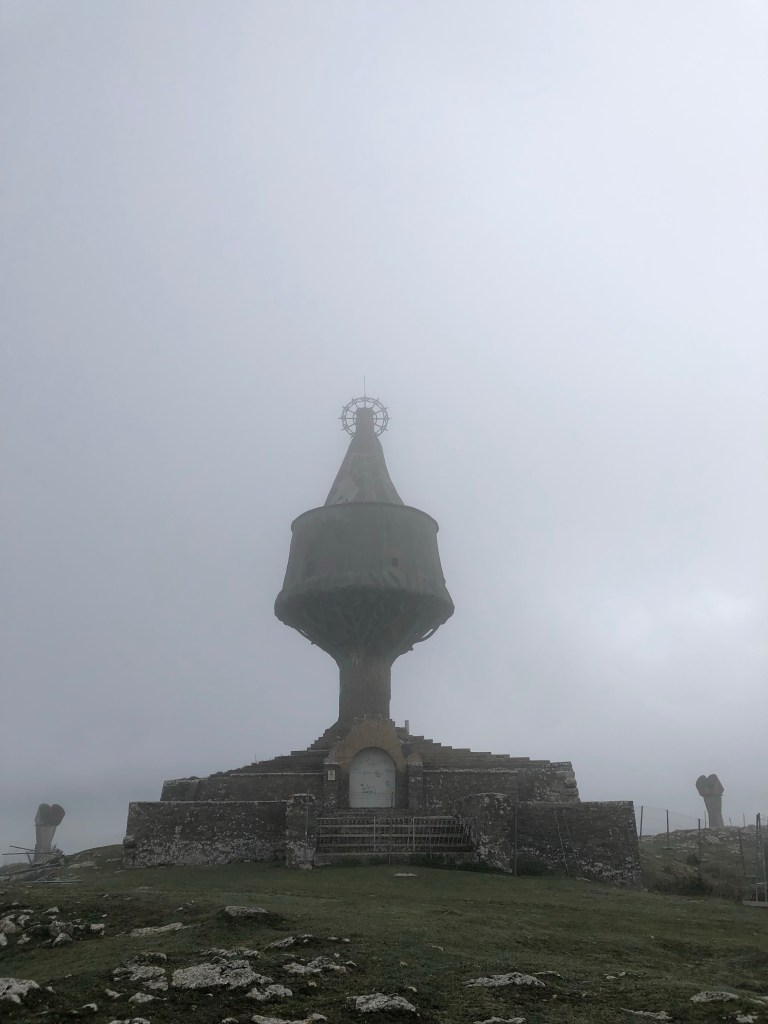
At first, the rolling clouds shrouded all but the peak upon which I was standing from view. I could just about make out the bizarre sculpture to an apparition of the Virgin Mary in the form of a colossal concrete block supported by a stylised tree looming out of the mist, but it looked like it had been fenced off and graffitied for good measure long ago.


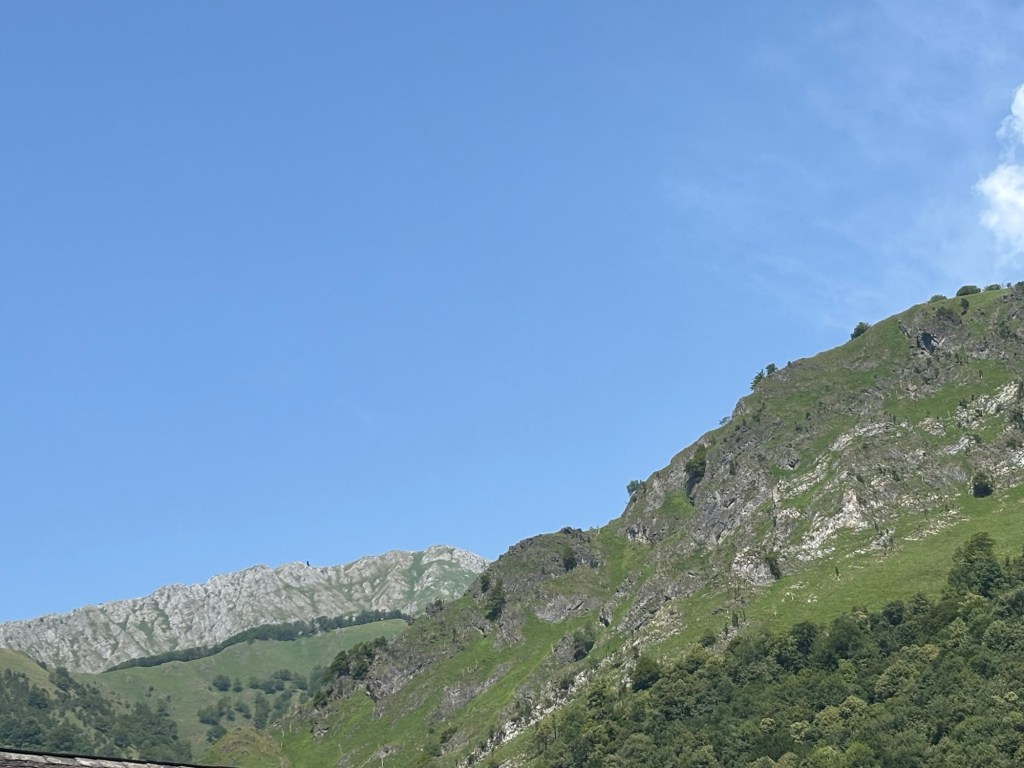
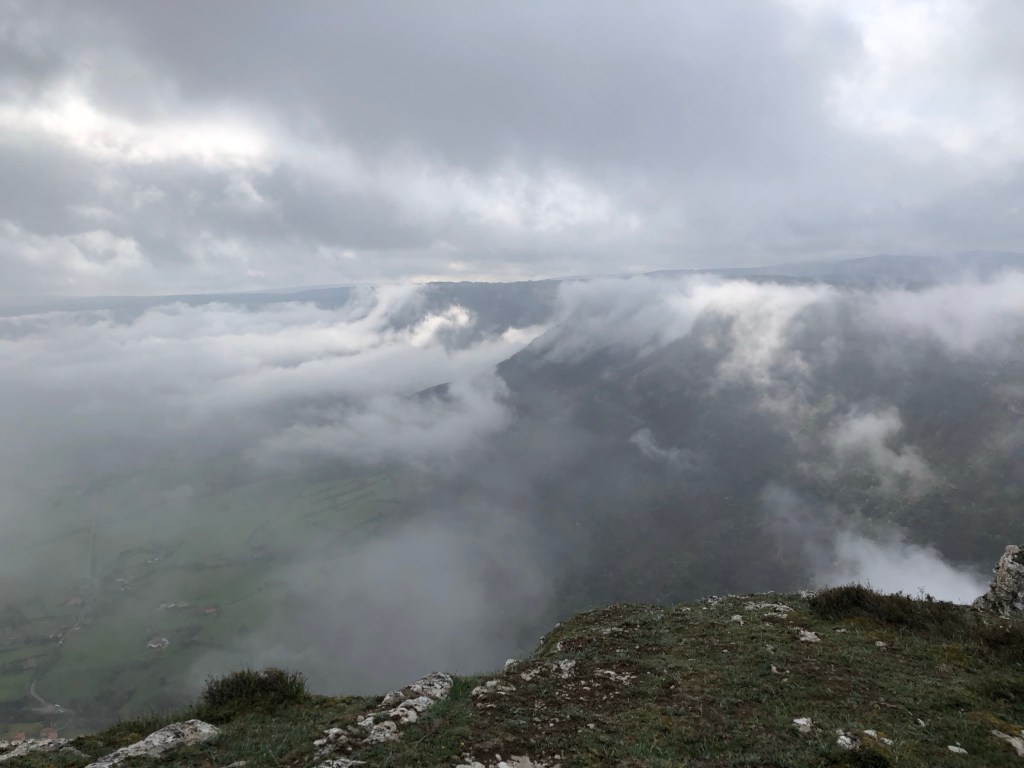
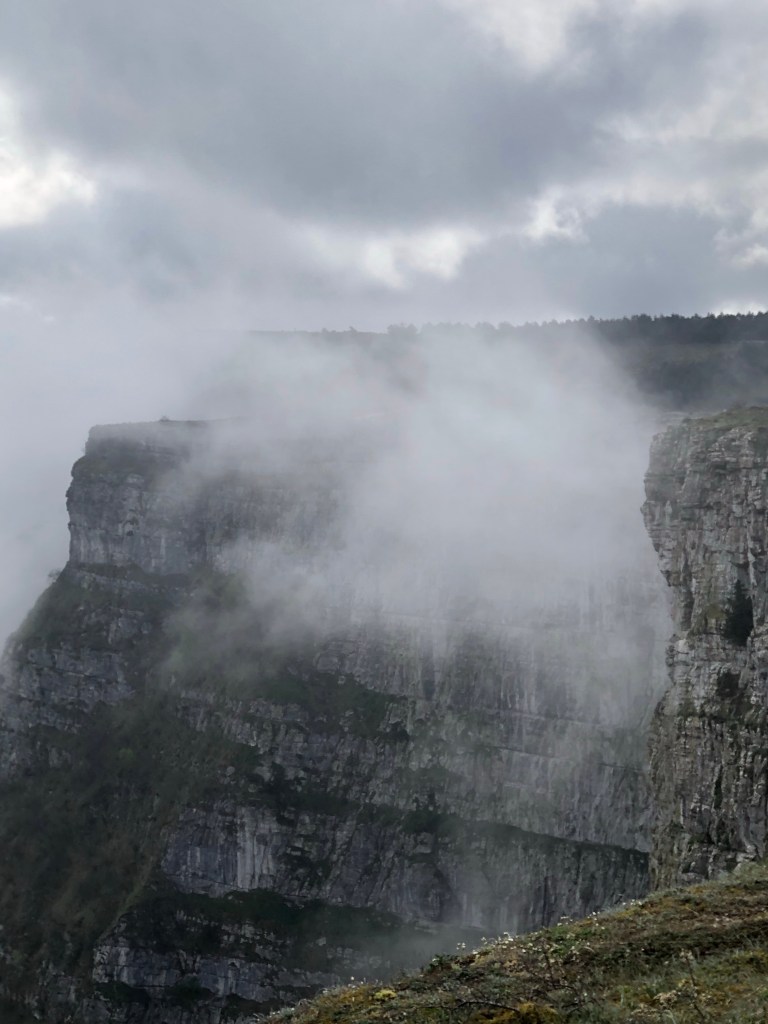
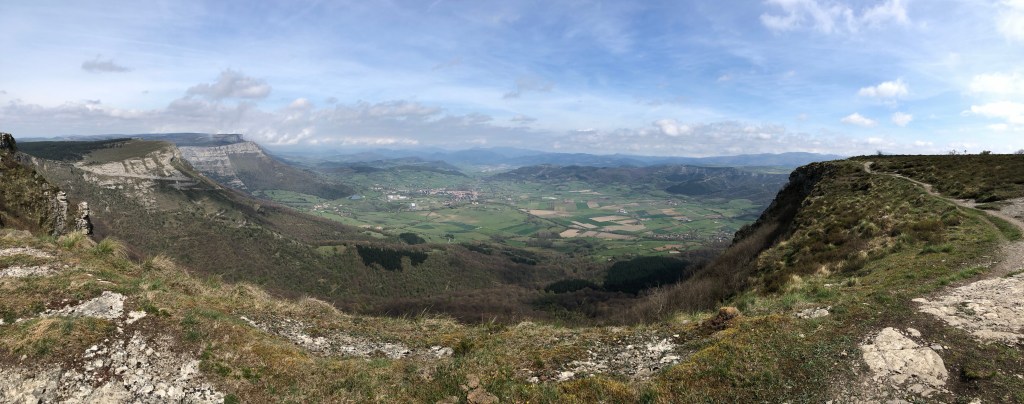
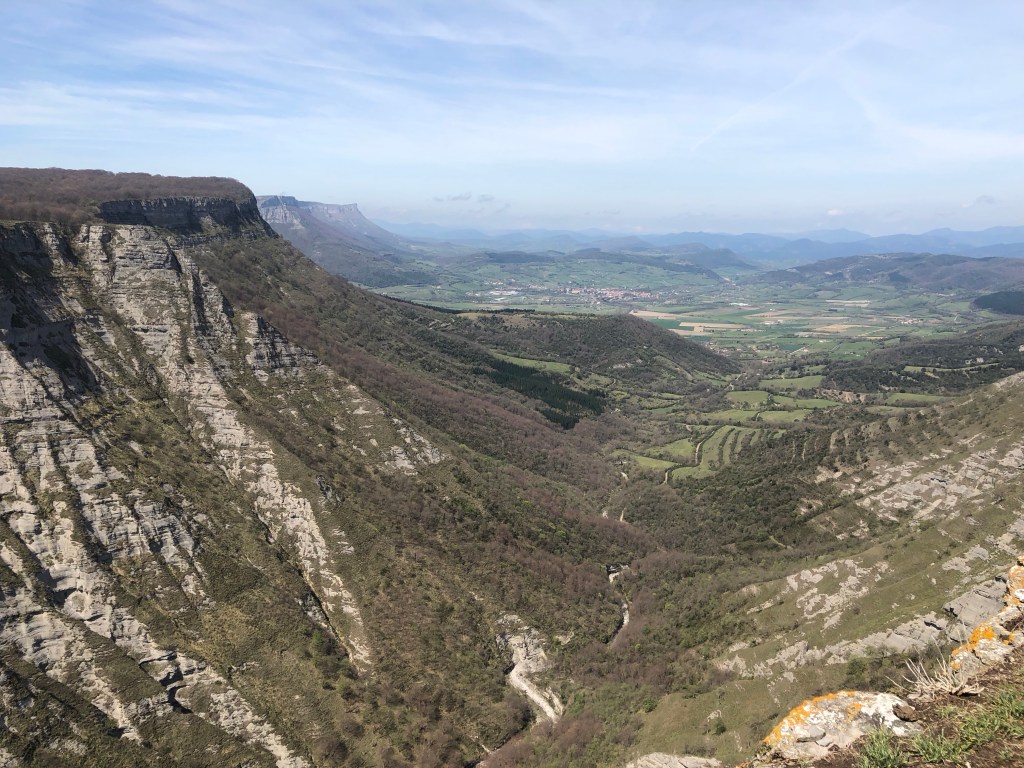
More impressive by far was what I could see when I turned around. The Castilian sun began to beat down through the clouds, and suddenly the sheer majesty of the Sierra Sálvada began to unroll before me like a painting. I was lost for words. Pictures don’t do it justice, but they might bring you closer to that wonder I witnessed.


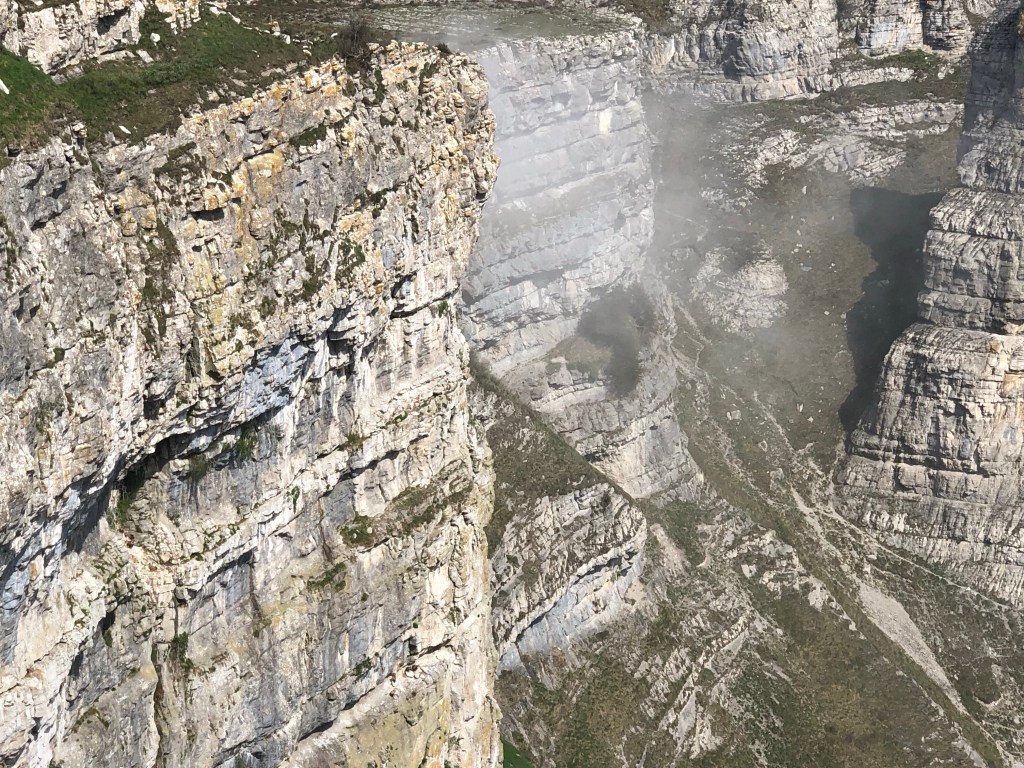
The breathtaking crags of the Sierra Sálvada give an indication of what to expect from the Salto del Nervión long before you reach it. It’s a drop of more than 200m to the bottom in places, and even the thought of kicking a pebble over the edge is enough to tie your stomach in several uncomfortable knots.

Don’t get me wrong. I’m absolutely mad about mountains. But there’s nothing funny about a drop of that height, particularly when it isn’t broken by any tree or slope on the way down.


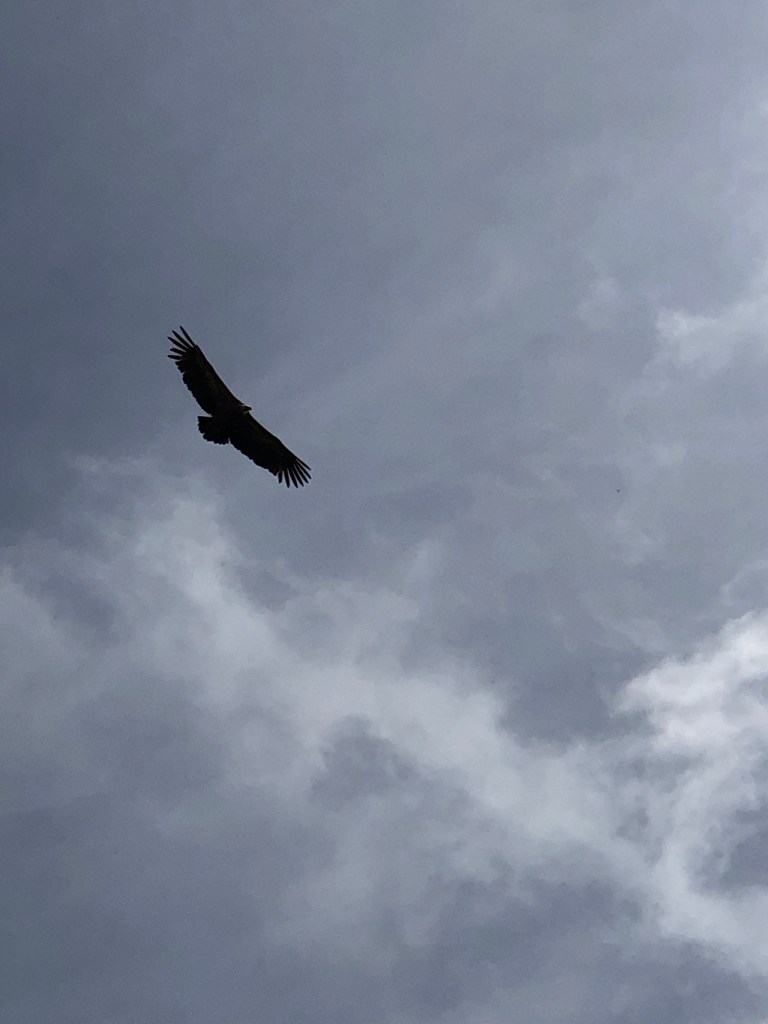
Ironically, perhaps, some of Spain’s biggest creatures are perfectly at home here. The hulking shape of the griffon vulture was rarely out of sight during my wanderings along the clifftop, but nowhere more so than about the stark stack known as the Fraileburu – the Friar’s Head – an utterly unassailable column where many of the Sierra’s griffons had chosen to roost, haughtily observing the valley below. I haven’t needed my camera once on this holiday – my phone has done a more than satisfactory job – but I was missing it then more than ever. A decent telephoto could have worked wonders on the griffons riding the thermals below, as well as pulling the acrobatic choughs and the few pairs of Egyptian vultures into focus for good measure. Instead you’ll just have to see how many you can spot clinging to the cliff face below.


From the summit of Monte Santiago, it’s a fair trek to the Salto del Nervión. I didn’t stop often and I keep a pretty merciless pace, but it still took me the better part of two hours to reach the waterfall. Fortunately, the path cuts through tree cover for a large stretch, and the views are incredible – especially so as the sun had burned off most of the mist by this point, offering spectacular views down to Orduña, now some way in the distance.


The Mirador at the Salto was quite busy by the time I arrived (around one o’clock) but one look was enough. The river was bone dry: I might have guessed from the absence of any sound of crashing water. So much for the highest waterfall in Spain! It seems it’s only really in action after heavy rain, otherwise the Nervión is supplied by a network of underground rivers that ensure it flows year-round, while its primary spring in neighbouring Castilla has a tendency of drying up in all but the wettest seasons.

Still – box ticked, I suppose.


Perhaps more interesting than a dry waterfall is the nearby lobera, an ancient wolf trap built possibly over two thousand years ago by the ancient Basques to hunt wolves and other large game on the clifftop. In a fashion akin to the Native American buffalo jumps, the wolf would be chased into a funnel, with men beating drums on one side and the cliff on the other, driving the poor beast into a deep pit at the end of the funnel as its only escape.

I didn’t see any wolves during the hike, though they have been seen recently in the area after a long absence. Instead I disturbed an amorous couple who had straddled the large wolf statue and were enjoying each other’s company, though they had picked an exceedingly odd place: I can think of better spots for a tryst than the site of a Neolithic abattoir.


From the Salto del Nervión, I decided to fork east and descend back into the valley of Orduña that way. The trouble was, the map – which had been utterly brilliant thus far – was pretty dismal about suggesting a way back down bar turning around and heading back the way I came. One of the maps I’d found online seemed to indicate a track that led down through the forest an hour or so to the north of the Salto, but I couldn’t find anything like it. Scanning the east side of the valley during the hike didn’t show much either, beyond what might have been a dry river gulley running down the mountainside.

In the end, rather than face a possibly two or three-hour march to the north, I decided to follow the beginnings of a track that appeared as the cliff began to slope rather than drop. Whether it was made by man or beast I’m not entirely sure, only that it probably wasn’t the track suggested online and that it very quickly came to an end.

There are few things more frustrating than getting halfway down a mountain and realising you’ve lost the path. At least you can surrender going up, but on the descent, you have no choice but to find a way down somehow. So I did what I have done in the past, foolhardy though it seems, and cut across country.

This is a lot easier said than done when the cross country in question is a forest thick with underbrush that happens to be growing on the side of a mountain. The ground under my feet was not always stable, there were thorns everywhere and the animals tracks I was following – boar, I wouldn’t wonder – were not always reliable. The heat of the midday sun was similarly unwelcome, silencing the forest and making my every step sound like a cannon. The vultures circling overhead only added to the dismal state of affairs.


Twice I came upon what looked like a road, but rather than wind up on some local farmer’s turf (and potentially ending up in really cross country) I decided to stick to a personal motto (don’t ever, under any circumstances, f*ck with the Basques) and continue to forge my own path.

It took just over an hour to escape the forest. I don’t think I’ve been more relieved to see a tarmac road in years.


I made it back to Orduña’s train station with seven minutes to spare before the 16.45 train back to Bilbao. I must have looked a beardy, sweaty mess but I was past caring. Despite the mountain’s best efforts, I’d made it back in one piece.

My old English teacher once told me you can’t claim to conquer a mountain, a thing which has been standing on this earth since the world was young and will be there long after you have gone. I’m still hooked on the idea of climbing higher than the vultures – there are few things in this world more awe-inspiring than looking down on creatures that are usually specks in the great blue beyond – but I’ll hand it to him here. Mountains are ancient, treacherous things that deserve to be treated with respect.


I finished my time in Spain by summiting Santiago’s mountain, but the mountain very nearly got the better of me on the way down. A knock to my hubris – and a necessary one.

I’ll stick to regular cross country around the school grounds for now. I’ve had quite enough wayfaring for one holiday! BB x