Camino XIV: Black Eyes

Cafetería La Concha, Grañón. 16.15.

A red sky in the morning is usually a herald of rain. I saw the rising sun for just a fraction of a minute as I left Nájera: a huge blood-red disk, perfectly circular, disappearing almost as soon as it appeared behind a low curtain of cloud that stretched at least as far as Aragón, and perhaps beyond. It’s certainly true that it was a cooler and cloudier morning than most, but whatever promise of rain the sun made it the early hours was forgotten once it was out of sight, like a fickle lover. The clouds have almost entirely disappeared, leaving behind the immense blue heavens for which Spain is so famous.

I’m here in Grañón – ice cream in hand – and it couldn’t have worked out for the better.


I was woken in the night by a pillow to the face. In the half-light I saw the pilgrim on the bunk below standing there. He said something, but it was in German and I was half-asleep, so I neither understood nor recall what he said. I guess I might have been snoring, though that’s not usually a problem these days – but I was on the top bunk, which had no railings, so my sleeping posture probably wasn’t the best last night.

The others – my Camino family, as it were – were all still fast asleep, and their intention was to reach Santo Domingo de la Calzada (the guidebooks do have a strong hand in where pilgrims end up), so I set out alone. I have somewhat mastered the “Irish Exit” strategy, and the Camino lends itself very well to such a move.

The reward for striking out alone was a nightjar – and not just the sound of one, but the sight of one as well. They’re bizarre creatures, nightjars: shaped like a cuckoo, or maybe a small hawk, with an owl-like face, a whispered beak and enormous black eyes. They’re often heard in the places they frequent, but rarely seen due to their nocturnal habits, so it’s remarkable that they should have left such an impression as to have such an intensely evocative name in each language.

In German they’re nachtschwalben – night swallows. In Spanish, chotacabras – goat-suckers (the Italian succiacapre is much the same). The French use the term engoulevent – literally, wind-eater, on account of their hunting habit of flying through the twilight air with their beaks wide open. In English, I can only assume the name is phonic: because the nightjar’s call can only be described as a long, rasping jar or churr, which it can go on producing for hours with seemingly no need to rest.

I only saw it a few times as it moved beneath the forest canopy, with the jerky motion of a child’s toy glider, its wings held high as it manoeuvred dextrously through the trees. But it was enough. I consider that a very good start to the day.
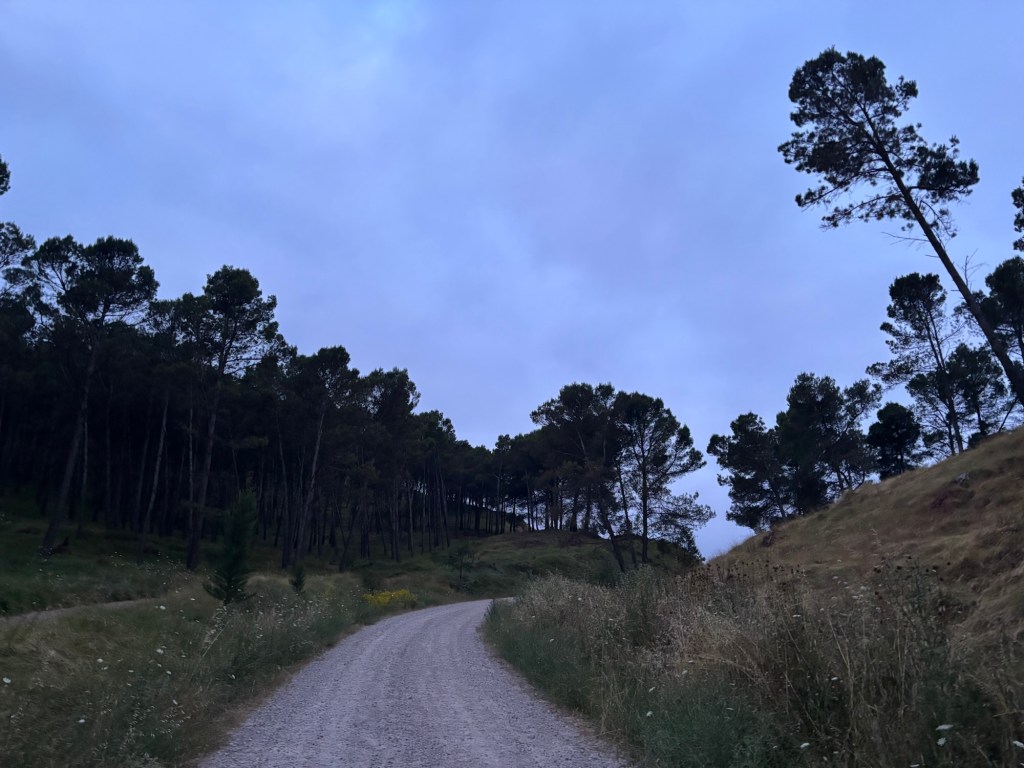

I came this way during the spring a few years ago and I remember needing gloves, it was so cold. There was even frost on the ground. Not so today: the endless green fields of shimmering wheat have since turned to gold, as though by the hand of Midas. With the merciful cover of the clouds, they were not blinding to the eye, so the loss of my sunglasses in Sansol the other day was no concern, though I did buy a new pair in Santo Domingo; it would be nothing short of madness to attempt the ceaseless flat of the Meseta without them (where it sometimes feels like you’re walking on the sky).


I stopped in Santo Domingo to have the rest of the pâté and bread I bought yesterday as a light lunch. The last time I came here, I was with Mikkel, Lachlan and Sophia and so I never got around to visiting the cathedral, so I made good on that today. Apart from netting me another couple of stamps for the credencial, it also housed a number of treasures that I wanted to investigate – not least of all the famous “resurrected chickens” that feature so prominently in the town’s history.


Santo Domingo de la Calzada, like so many towns along the Camino, was born on the pilgrim road, founded by the same Domingo García who gave the town its name. Its most famous legend tells of the execution of a young German pilgrim who, passing through the town, attracted the attention of the mesonera (innkeeper). After rejecting her amorous advances, the spiteful mesonera concealed a silver cup in the pilgrim’s bag before he left, for which he was accused of theft, sentenced to death and hanged on the spot. When his parents came to identify the body, they found him alive, claiming Santo Domingo had saved him. The sceptical mayor, who was fairly sure that the boy they had hanged the day before had been executed properly, claimed he was as alive as the chicken on his plate – which promptly stood up and crowed, testifying to the truth of the pilgrim’s fate.

Ever since, a pair of the descendants of the resurrected chickens (don’t ask me how they check) have been kept in the cathedral, together with a piece of the scaffold where they hanged – or tried to hang – the innocent pilgrim, all those centuries ago. Go figure.
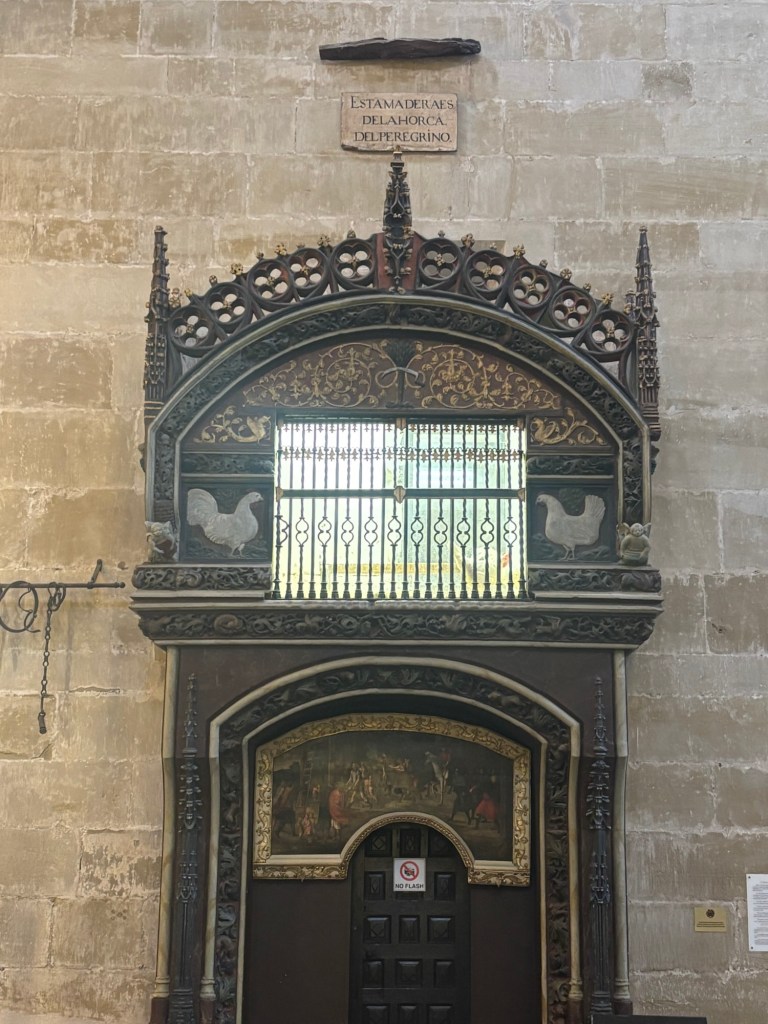

Santo Domingo’s cathedral, like many in Spain, is full of hidden treasures. I was particularly taken – as always – by the mythical creatures that pop up in the stonemasonry. Harpies, dragons, demons, griffins… for a faith that spent so much time and money driving all traces of paganism from the land, it sure is amusing to see that Spain’s churches are full to the rafters – quite literally – with frozen memories of that dark world.
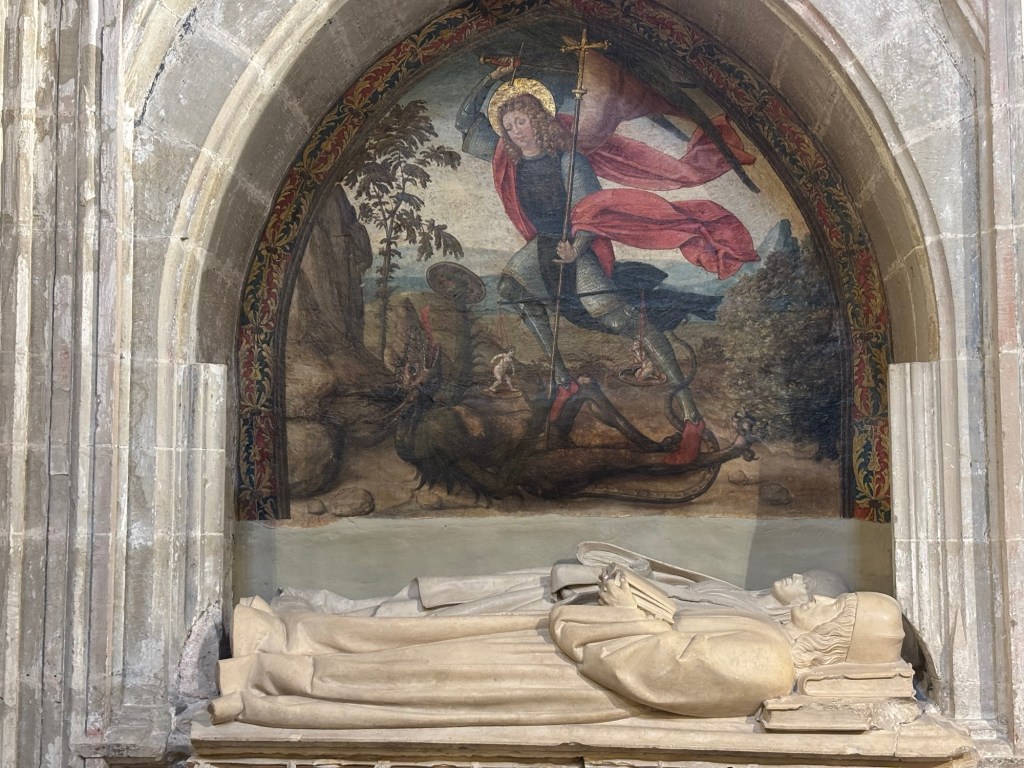

One really stands out, especially after some recent reading. In one alcove, an icon of the Virgin Mary and child stands above the carved image of a griffin – in fact, there’s quite a few griffins watching over the chapel from the surrounding pillars. There’s a deeper poignancy at work here: griffins have been symbols of maternity since their invention over a thousand years ago.
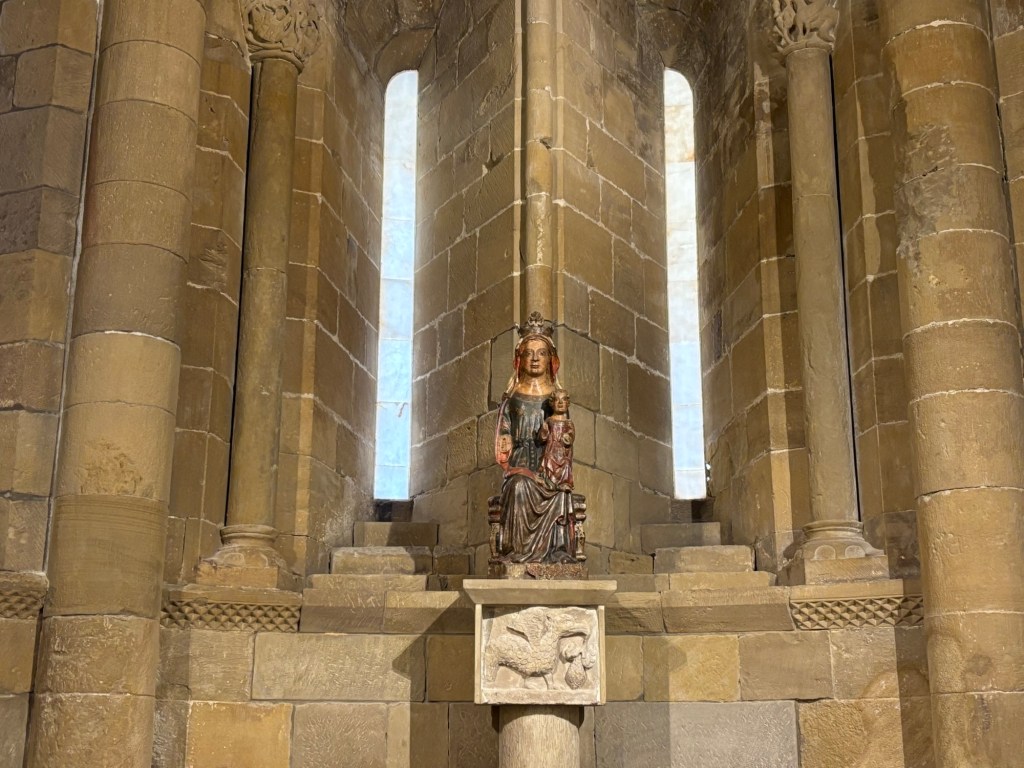

Unlike the other mythological beasts of the ancient world, like centaurs, unicorns and minotaurs – which have a solid grounding in Greek mythology – the griffin seems to spring into existence out of nowhere, but already fully-formed.

Adrienne Mayor has a very convincing theory that the griffin is an unmistakeable reimagining of the protoceratops, a Cretaceous era dinosaur often found protecting its young in the lands where griffins were believed to reside (Central Asia). As stories of such “griffins” reached Europe, they entered our heraldic system, and are often to be found around the Virgin Mary, the single most important symbol of maternity in the Christian faith. A seemingly bizarre pairing – but a perfectly logical one. Two ancient beliefs meeting in the middle.


Under the cathedral, where Santo Domingo is buried, a relatively recent mosaic stares out at you from a thousand shining tiles. The design is modern, but the style is almost Byzantine: teardrop-shaped faces line the wall with huge, almond eyes the colour of midnight.


This is the kind of religious art that I have always found especially compelling. There’s an otherworldliness to it that borders on the mystical, a connection to the faith of those first believers long ago. That’s what I sometimes think the modern church is missing, why so many lose interest: the more it tries to modernise, to catch up to the new generations “on their level”, the more it loses the mystery that made the early church so compelling. I know that for me, at least, it’s that connection to the ancient ways, to tradition, that speaks to me. And I get a piece of that when I see this kind of art, even in imitation. A mirror to the ancient world, when faith was new and hot like a flame.


It’s nearly half past five. I’d better head back to the albergue – I’m on dinner duty. That’s the price for arriving early! BB x
Camino IV: The Dark World

Casa Mamré, Jaca. 20.08

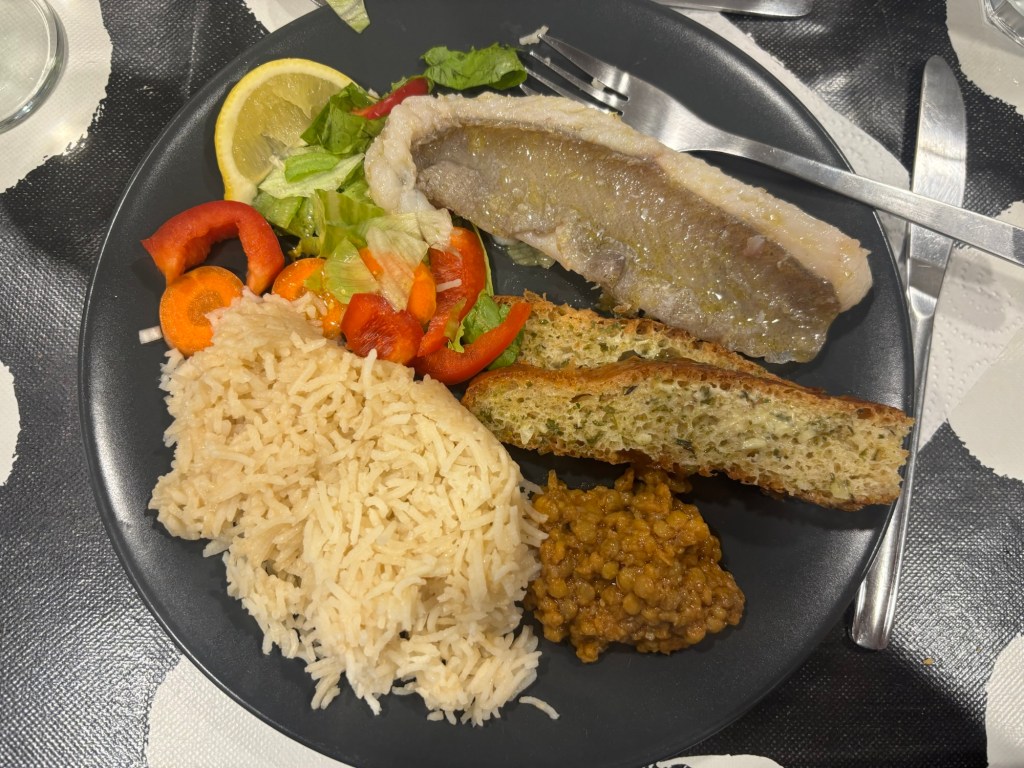
Well, first of all, dinner last night was phenomenal. Heidi, one of our hospitaleros, cooked up an absolute smorgasbord supper, and still under the banner of donativo. I hope the other pilgrims also tipped generously, because it must be really hard to whip up a spread like this without the generous donations of the pilgrims themselves. Remember, donativo doesn’t mean free – pay what you can, and what you feel the place deserves!


I was one of the last to leave this morning, as I was hoping I might score a few more stamps in churches along the way. as a matter of fact, they were all shut – every single one of them – so I needn’t have dawdled. I did only have 19km or so to go today, though, so I was in no hurry.

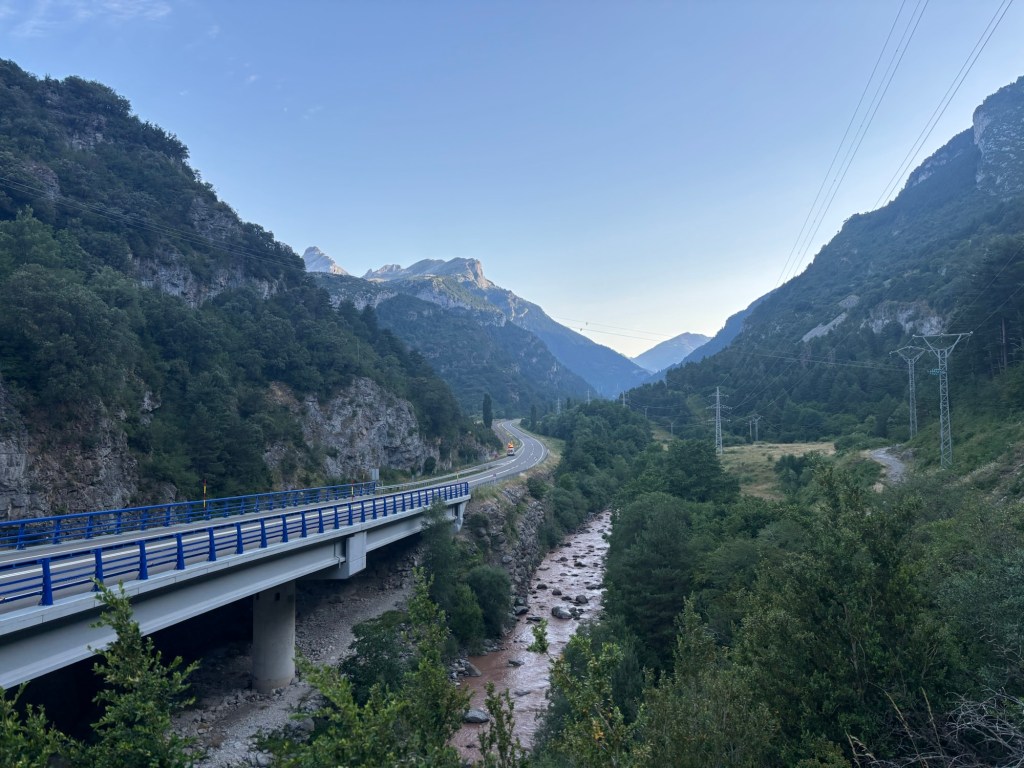
Leaving Canfranc behind, the Camino follows the river through the Valle de Aragón all morning, only turning away for the ascent to Jaca at the end of the road. What was only a mountain stream yesterday is already a powerfully flowing river, carving an impressive series of gorges in the granite along its course.


The next town along is Villanúa, where you are confronted with a strange sculpture in the shape of a many-limbed tree stump. On closer inspection, it’s actually an abstract representation of the women of Aragón who were persecuted for the crime of witchcraft during the Middle Ages. A single face carved into the structure drives the message home. There used to be a rope hanging from one of the branches, in a nod to one of the favoured methods of execution of witches, but it looks like that was removed.


During the Middle Ages, Aragón was knee-deep in tales of witchcraft. The Inquisition tasked itself with purging the region of heretics – a very broad umbrella that encompassed Protestants and “Judaizers” as well as witches – but such was the strength of belief in the occult in this remote and mountainous corner of Spain that witchcraft remained a talking point until as late as the 19th century, as can be seen in the pinturas negras of the Aragonese painter, Francisco de Goya.

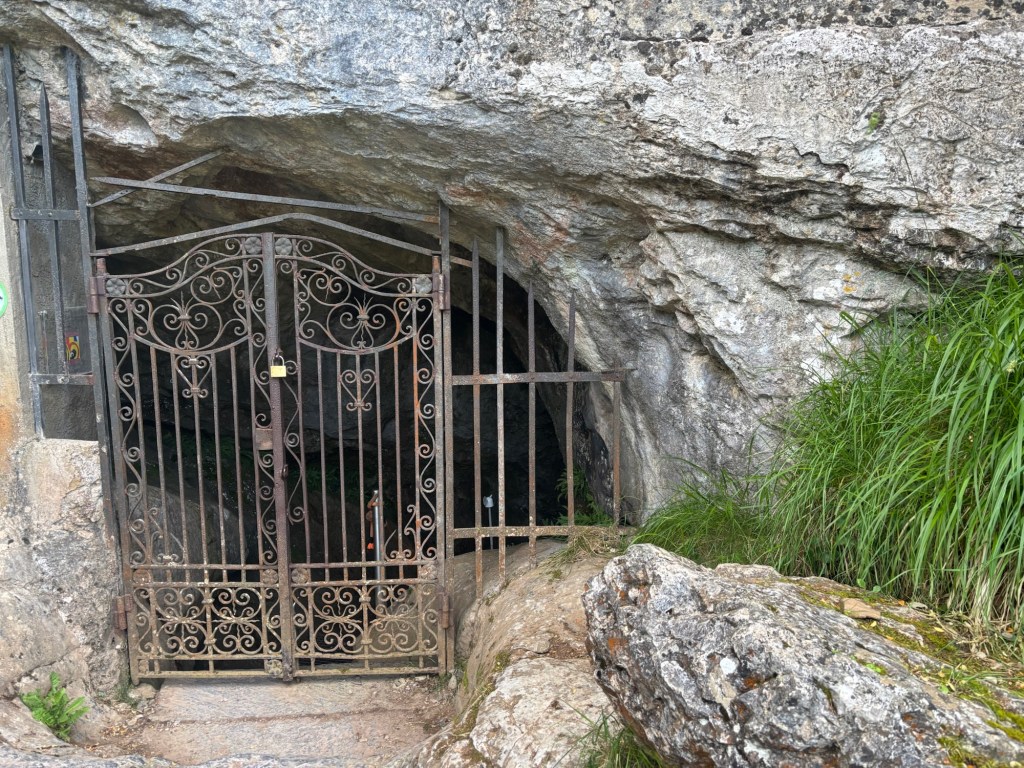
The reason Villanúa comes into this can be found just off the Camino a hundred metres or so before entering the town. A series of steps cut into the rock lead up to a cave, accessible only via a guided tour. You can feel the chill of it as you climb towards it, and while there are plenty of perfectly reasonable scientific explanations for the drop in temperature near a cave mouth, it’s easy to see why such a place might have instilled a sense of fear in the ancients. The steps go deep, and in its heart is a large cavern lit by a great hole in the ceiling. It is believed that this was where the witches of Villanúa came to practice their akelarres – Witches’ Sabbaths – summoning evil spirits and bathing naked in the moonlight.

Of course, it’s just as likely that most (if not all) of those accused of witchcraft in the Middle Ages were completely innocent. Some local pedant seems to think so, anyway, adding a footnote to the information, claiming the accused were “too busy being burned and hanged by the misogynists of their time” (#romantizandomasacres).

It may well be true, even if it does take away from the mystery, but it’s worth bearing in mind that curanderos – folk healers – were frequently called upon throughout the Medieval period, especially in times of environmental stress. It’s plausible that some of the so-called witches really were trying to bring about some kind of change in their own way.

For me, it’s never been about their innocence. Whether or not they were witches is of no consequence (though I’d rather believe they were). The real demons of the story are the ones who were so strangled by their own fear that they saw fit to send these unfortunate souls to their deaths.

Either way, peregrino, if you feel a chill on your approach to Villanúa, it might just be the lingering malice of the Cueva de las Güixas on your left.


I had to double-back today, not because I’d forgotten something, but because I’d missed something rather special. The boulder-strewn fields before Villanúa harbour more than just witches’ grottos. There are older and more mystical relics by far, though I’d wager the average pilgrim completely passes them by, fatigued as they are from their three-hour climb down from the mountains.

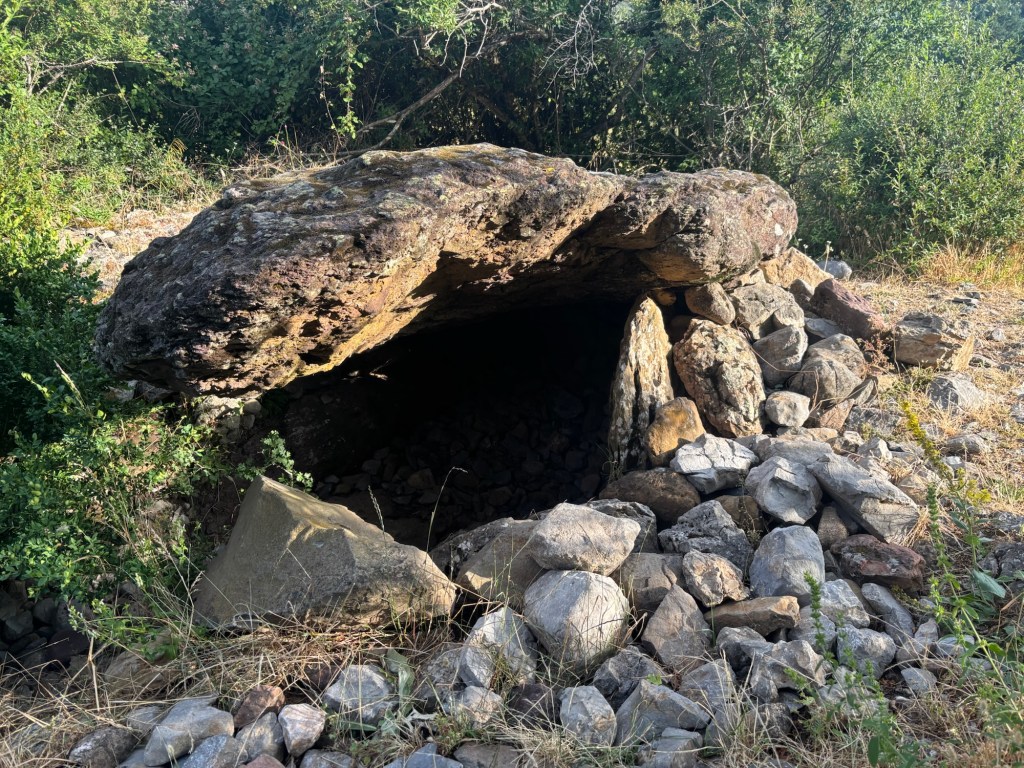
It’s a dolmen – an ancient burial site from the Stone Age. There are quite a few of these in the area – large stones (or megaliths) being plentiful in the Pyrenean basin – but at least one can be visited from the Camino without too much effort. Dolmens like these can be found all over Europe, from the islands of the Mediterranean to northwestern France and Britain. In a way, they are just as much a symbol of the Camino as the yellow arrows, since they mark the westward expansion of our earliest ancestors as they moved west across Europe, until they could go no further.


The remaining fifteen kilometres or so to Jaca are easy to follow, if a little rocky underfoot. I’d spent so much time exploring the caves, dolmens and ruins of long-abandoned villages that I now had quite a long march beneath the risen sun, and my feet were definitely starting to complain after yesterday’s exertions. So, for once, I plugged in and listening to an audiobook – William Golding’s The Inheritors – as a way to push on. I hoped I might pop in on a few churches along the way, but as I suspected, they were all shut, so I got to Jaca by midday without further delay. Mariano, the musical madrileño from the albergue in Canfranc, had got there just before me, but we still had a little wait before the dueña showed up to let us in.


I bought lunch for myself and Mariano (I’ve had an easy ride with others treating me so far, and it’s only fair to share), before giving myself an hour or so to explore Jaca. The cathedral is austere but impressive, as Spanish churches often are, but its real treasures were in its Diocesan museum. At 3€ for pilgrims – with a stamp for the credencial thrown in – it’s a steal, especially when you see what it contains.


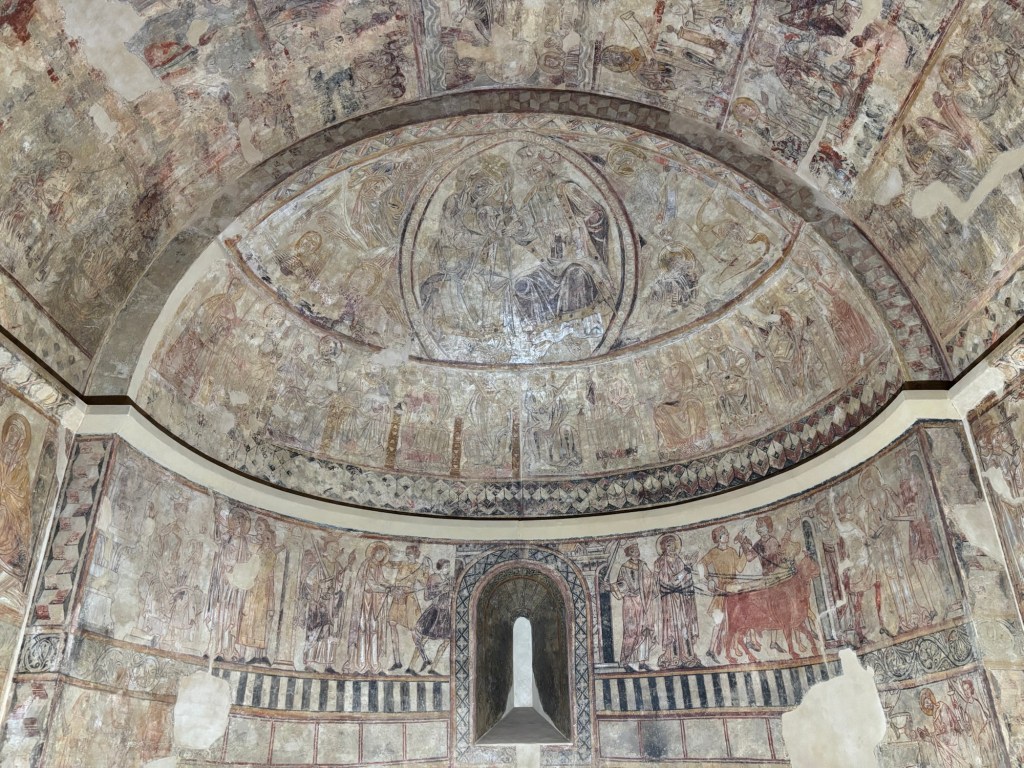
These Halls of Stories are bewitching beautiful, recreating scenes from the Bible for the illiterate masses while the holy words were kept in the jealously guarded secret language of the elite, Latin. I’m not normally one for religious art – the Renaissance obsession with ecstasy in its subjects is a major turn-off for me – but anything Gothic or earlier and I’m all in. The world was a darker and more mysterious place back then – and doesn’t that make it so much more interesting?


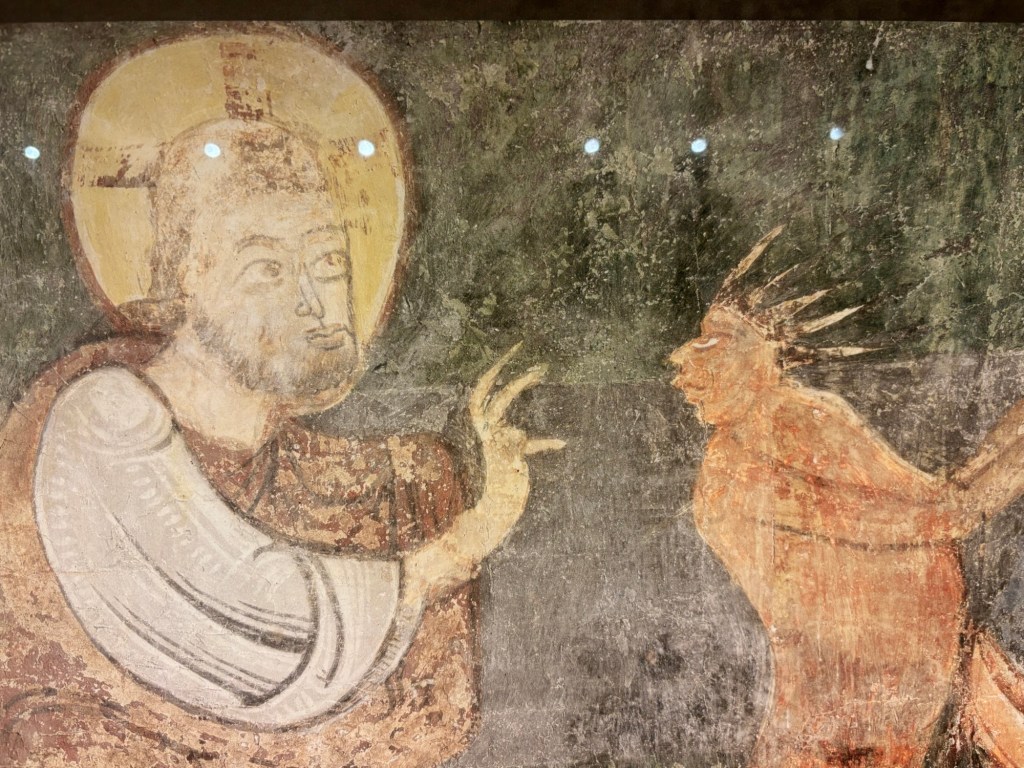
Latterly, I’ve become a lot more interested in ancient depictions of monsters, and the Devil definitely falls into that bracket. It took me a little while to realise the crowned imp in the image above – a detail from the mural of Bagüés – is a representation of Satan. I wonder what their reference was? With the red skin, narrow eyes and the feather-like crown, he almost looks like a Taino Indian, but that would be anachronistic in the extreme – these paintings were created four hundred years before Columbus sailed to the Americas.

Are there elements of Pan, the pagan god of the wilderness? It’s no secret that the goat-legged minor deity had a huge impact on the Christian devil, with the early Christian scholar Eusebius of Caesarea claiming the two were one and the same in the 4th century. Pan represented all that Christianity sought to suppress: vice, sin and animal instincts, crystallised in Pan’s half-beast limbs.

It’s not always goats, either. Traditional depictions of the devil often feature scaly or bird-like legs, akin to a chicken or a hawk. Most paintings of Saint Michael feature the Archangel standing triumphant over the body of a demon, and it’s easy to see the inspiration in these paintings: pigs’ ears for greed, scaly skin for the deception of the serpent, and thick, knotted talons for the eagle, one of the most feared and respected predators of the ancient world (if you’re not convinced, just look at how many world flags feature an eagle).


The references are much clearer here, but what of the Red Devil from the Bagüés mural? He has neither the goatee beard nor the cloven hooves. Who was the artist’s muse? Perhaps we’ll never know.


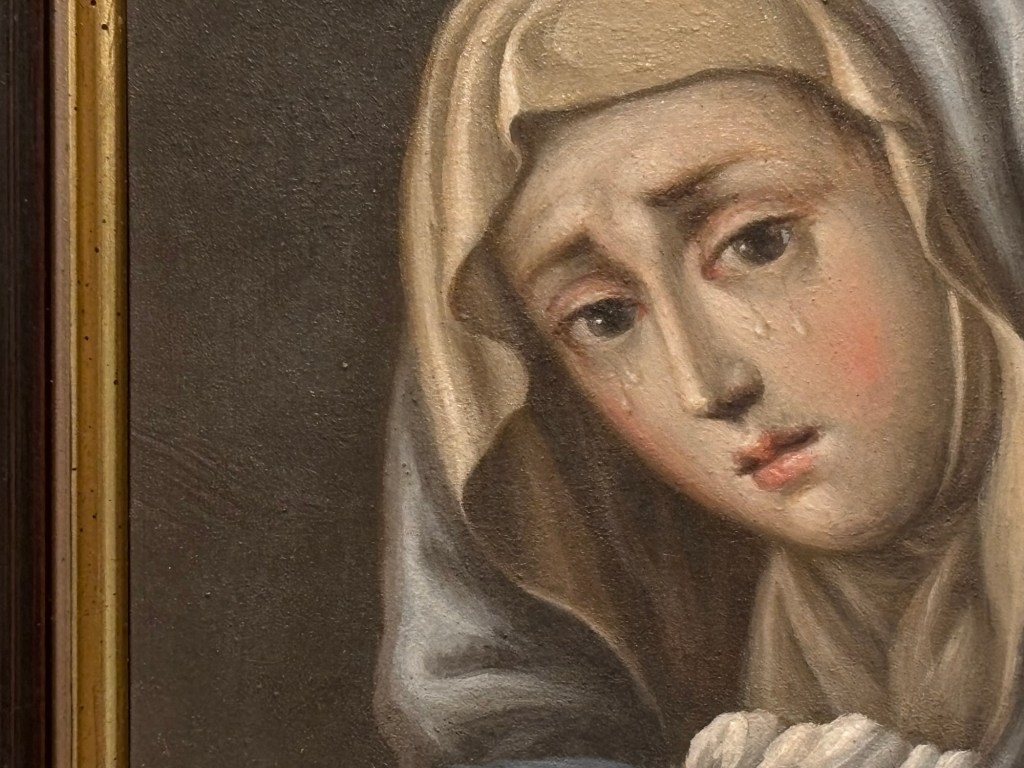
As I worked my way round the exhibit to the exit, a solitary face caught my attention. Or rather, a pair of eyes. Amid a wall of depictions of a saintly and contented Mary – Inmaculada, Asunción, Madre de Diós – a little painting of Dolorosa follows you with its eyes, which are bloodshot and full of tears. Her Son, arrested by the religious authorities and sentenced to death for the crime of working miracles, was crucified before a baying crowd.

Over a thousand years later, the same story played out again and again across Europe, only now it was done in Christ’s name. There must have been a thousand Marys who watched their sons and daughters befall a similar fate. And still it plays on.

Critics may say the Catholic Church puts far too much emphasis on the doom, gloom and damnation, but there is wisdom in the Catholic acknowledgement of the darkness. We might have been created in God’s image, but that does not make us perfect, and history tells us that some of us stray very far from the path when we try to be perfect.

Mary’s grief is eternal: it ripples across time.


Wow, that got pretty heavy. Check back in tomorrow for some more light-hearted adventures across Aragón! BB x
Lost Souls

Calle de San Millán, Madrid. 21.03.

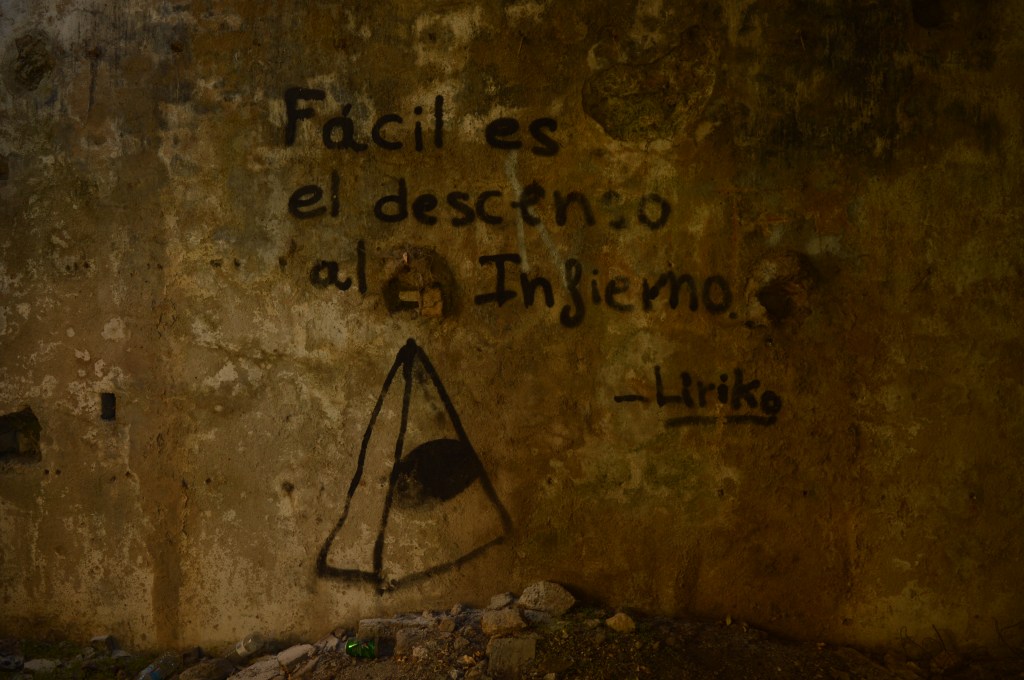
The gates of Hell are open night and day / smooth the descent, and easy the way.

Virgil, The Aeneid

At the foot of the mighty bridge that spans the gorge over the Río Tajo in Ronda, the yellowing ruin of an old pumphouse steadily crumbles into oblivion. Trees grow out of its windows and human and animal detritus clusters against its walls, as though they shrink from the searching light of the world beyond. Abandoned spots like this would be covered in graffiti in England; profane scribbles and indecipherable tags whose meanings will fade from the world long before their makers. A single graffito marks the eastern wall. Of all things, it is a quote from Virgil.


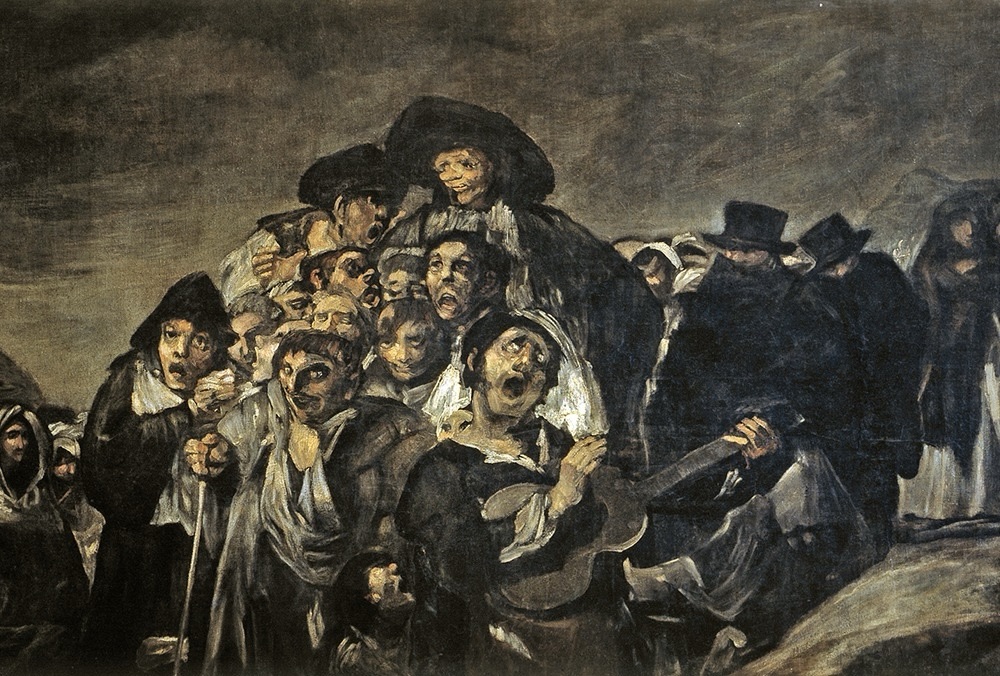
The memory came into my head as I stood before Goya’s Pinturas negras in the depths of the Prado, bewitched – and not for the first time – by the unfettered darkness on the canvas.


In the opinion of this jaded wanderer, there are few artists who can hold a candle to Goya, an artist whose style was shaped – or, perhaps, perfected – by the ravages of one of the darkest periods in Spain’s history.

The Prado does a fantastic job at telling his story. On the top floor, illuminated by the brilliant natural glow of several skylights, his early works shine with an innocent halo. Paintings such as El quitasol and La vendimia tell of a happier time, when Goya was young and using his gifts to make a name for himself in the circles of the rich and powerful, as many an artist had done before him for generations.

Descend to the ground floor, and some of his younger naïveté is stripped away like a layer of paint to reveal a cunning eye for detail and social commentary. Unlike the illustrious royal portraits by Titian and Velázquez which grace the walls further down, Goya’s subjects are painted as they are, without any false veneers of lustre or glory. Maja vestida has a cute smile, but she is a pale imitation of Maja vestida, whose knowing expression betrays a far greater honesty.

And then you descend to the basement. The lights dim. War comes to Spain, Goya’s former patrons flee for their lives, and the country descends into chaos. Goya sees it all and sketches furiously. The illness that robbed him of his hearing pushes him into a deeper, darker school of thought, and his subjects trade their rosy cheeks and playful smiles for pallid masks and devilish grins. At the same time, the faces become much more recognisably Iberian, replacing the stateless Western mannequins who previously adorned his tapestries. Still a master of light, Goya now perfects its dexter side, drawing on the darkness of the maddening world around him, culminating in the macabre frescos of the Quinta del sordo. The sunken, bulging eyes of Saturn and his gaping maw stare out of the canvas with a malice that is at once pitiful and horrifying.

An American girl is toured swiftly around the room by her imperious mother, the latter commenting loudly on the broader collection ‘back home in Washington’. A Latin-looking schoolboy fills out a couple of questions on a worksheet on one of the paintings and moves on. Two young parents push their infant child by in a pushchair. They cast Saturn a brief glance and move on, a little faster. A gallery official in black and red watches from a corner, but nobody needs reminding that photos are not allowed in here. Goya’s demons still have the power to strike terror, two hundred years later.


Out in the daylight, Madrid goes about its business. My footsteps take me back into the heart of the city. There are a lot of indios about: current estimates hold that they make up one in seven of the capital’s population. In the city centre, I’d wager the ratio is even higher. Pizarro’s pigeons have come home to roost.

In a side-street, two officers of the municipal police search a couple of North African men, who have their hands on their heads – “Qué hacéis por aquí?”. A carton of box wine lies discarded in the road, ignored by a street sweeper who is watching the scene unfold over his shoulder, sweeping the same dust in circles.


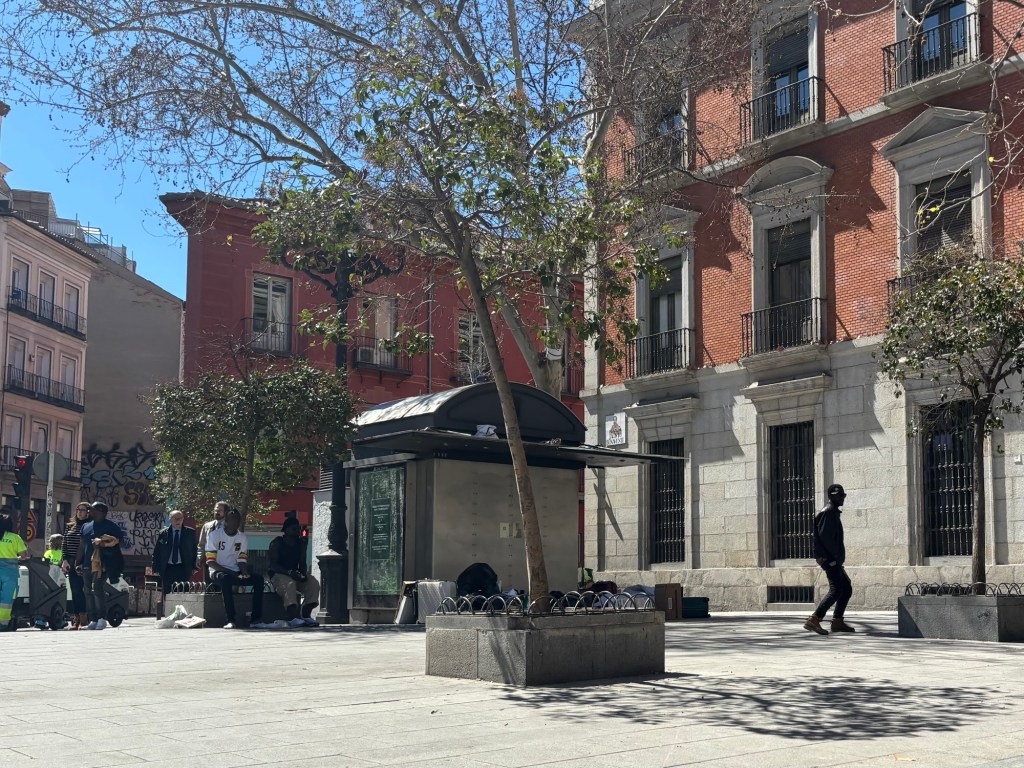
In Plaza Santa Ana, a small group of Africans have laid out their wares on white blankets and try to flog what they can to passers by in reluctant, almost disinterested tones. Clutched in their hands at all times are the ropes fastened to each corner of the blanket, ready to be drawn up in a moment’s notice. These unfortunate hawkers are known in Spain as top manta, and are usually more in evidence in the larger cities along the coast: Barcelona, Valencia, Málaga… wherever careless tourist money can be found.


It crosses my mind, as it has before, to strike up a conversation with one of them. To get their side of things. To hear their story. Something checks me: a sense that unfriendly eyes are watching. I scan the square.

Sure enough, standing in the shade of a plane tree at the edge of the square is their overseer: a surly man in a Cameroonian football shirt. He appears motionless, but his eyes are fixed on the street vendors, who occasionally return his gaze, like nervous shorebirds before a sleeping crocodile.

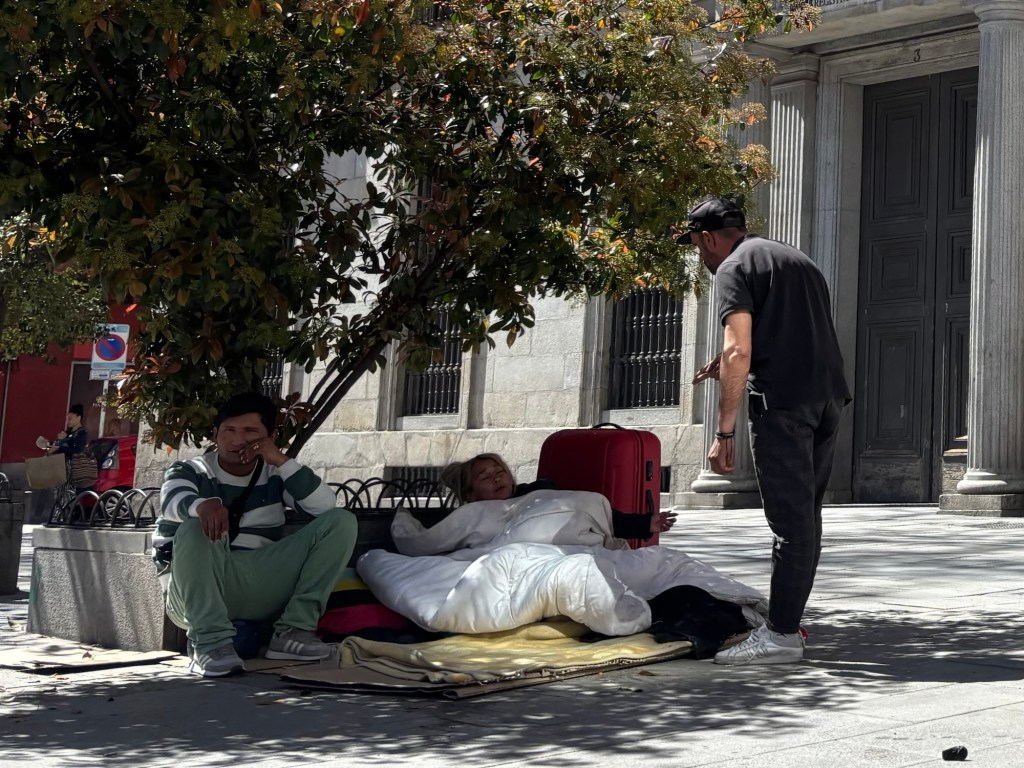
My speculation becomes flesh when one of the hawkers approaches him with what seems to be a question. The conversation is obviously not an amicable one, and the overseer is on his feet and shouting, followed swiftly by his companion, a big chap with dark shades and a military-style beret. The overseer barks at the hawker and sends him packing. “No eres más que un puto negro.” It’s a loaded insult, but since it’s contained, hurled from one immigrant at another, nobody seems to notice. Madrid’s shoppers continue about their business. Tourists sink half pints of Mahou and Amstel mere yards away. A lost soul staggers to keep his balance, either too drunk or too drugged up to pay the scene any heed. The two Latino vagrants sleeping rough in the shade of a nearby bush hardly bat an eyelid. One stirs slightly, the other draws on his cigarette, casting a gentle orange glow in the shadows.


As I turn down a street toward the city centre, I see a police car slowly crawling toward the square. I turn around, but the top manta touts have already got wind of the impending threat: their bags are slung across their shoulders and they are retreating into the shadows. They will be gone long before the police arrive.


Goya’s Madrid is a dichotomy: a place full of light and consequently of shadows also, of rosy-cheeked beauty and ugly avarice. This is no less true now than it was two hundred years ago: it just wears Adidas trainers now.


Tomorrow I leave the capital behind and make for the windswept coast of Galicia. I have never been much enamoured of cities, being inclined to agree with the author M.M. Kaye, who described them as “the breeding places of the very worst aspects of humanity”. My destination is the Costa da Morte – the Coast of Death – the wrecking place of many a luckless merchant sailor. But its name is deceptive: for me, it is a place of unfiltered light and hope.

The gates of hell are open night and day / Smooth the descent, and easy is the way / But to return, and view the cheerful skies / In this the task and mighty labor lies.

Virgil, The Aeneid

The mighty labour has begun. There are still fragments of my heart in need of healing after last year’s American adventure. Hard work and endless endeavour have been a good palliative, but they are not the solution. Finisterre healed my heart before. It will do so again. I am sure of it. BB x

Equestrian

Wandering the streets of Paris, it’s easy to understand why the city was surrendered to the Germans without a fight in the summer of 1940. I have been lucky enough to see a number of beautiful cities all around the world, but there is something truly exceptional about the French capital – calm, curated, unspoiled. As the official line went in that dreadful summer, as Britain stood alone on the edge of a darkening Europe, “no valuable strategic result justified the sacrifice of Paris”. The West is full of cities scarred by the ravages of war, and while it may have earned them an unfair reputation for cowardice in popular culture, you really have to admire the gall of the French for putting their beloved city above their freedom, the first and foremost of their three sacred values. It gleams to this day.


A personal mission took me to Versailles, on the outskirts of Paris. My Metro pass was only for Zones 1-3, which was one stop shy of the Château itself, but I was very grateful for the break. The half-hour walk to the famous 18th century palace takes you through the tranquil suburbs of verdant Viroflay, and with the mottled darkness of the Meudon Forest rising up and over the hill behind you, Paris seems a lot more than half an hour away.

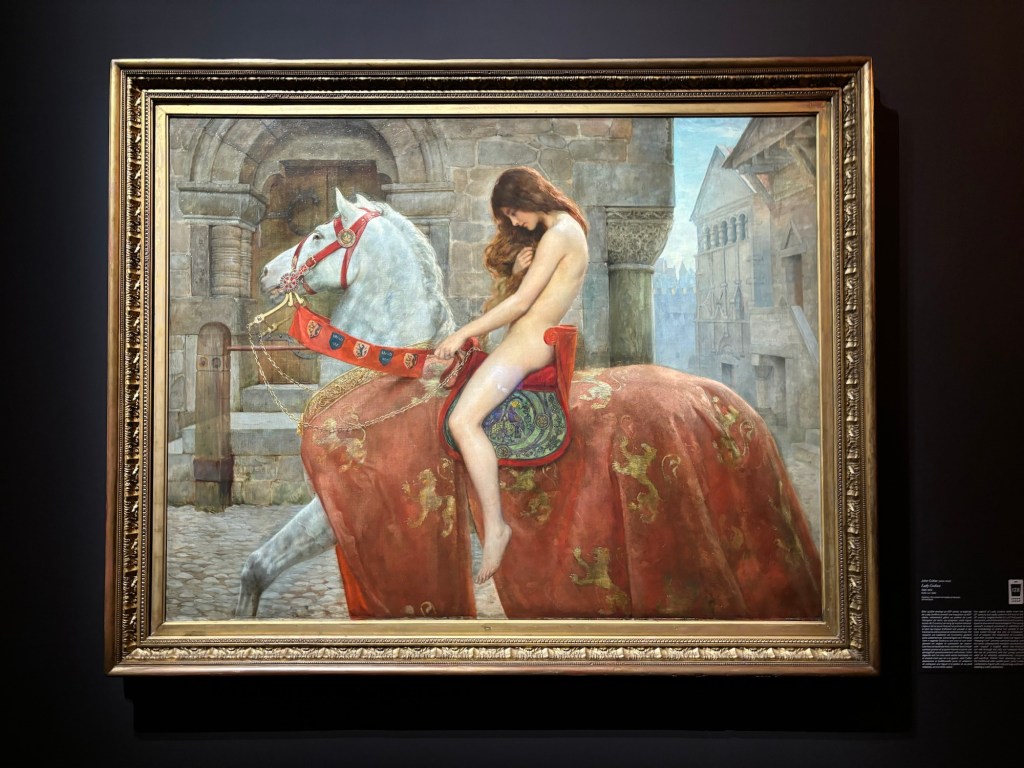
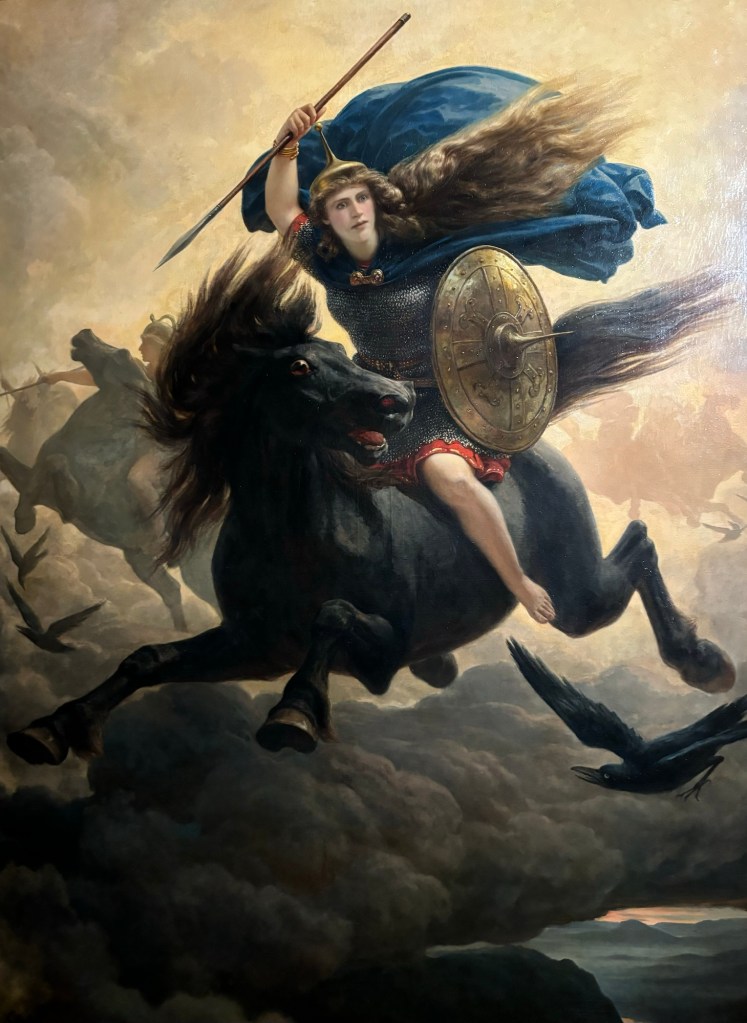
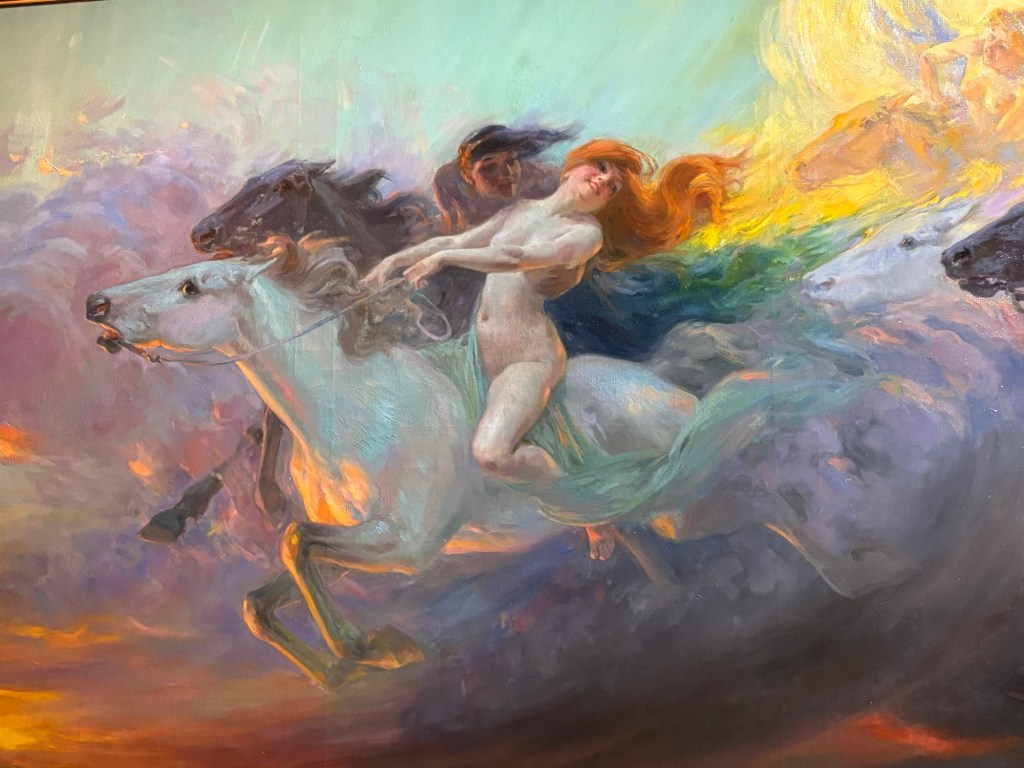
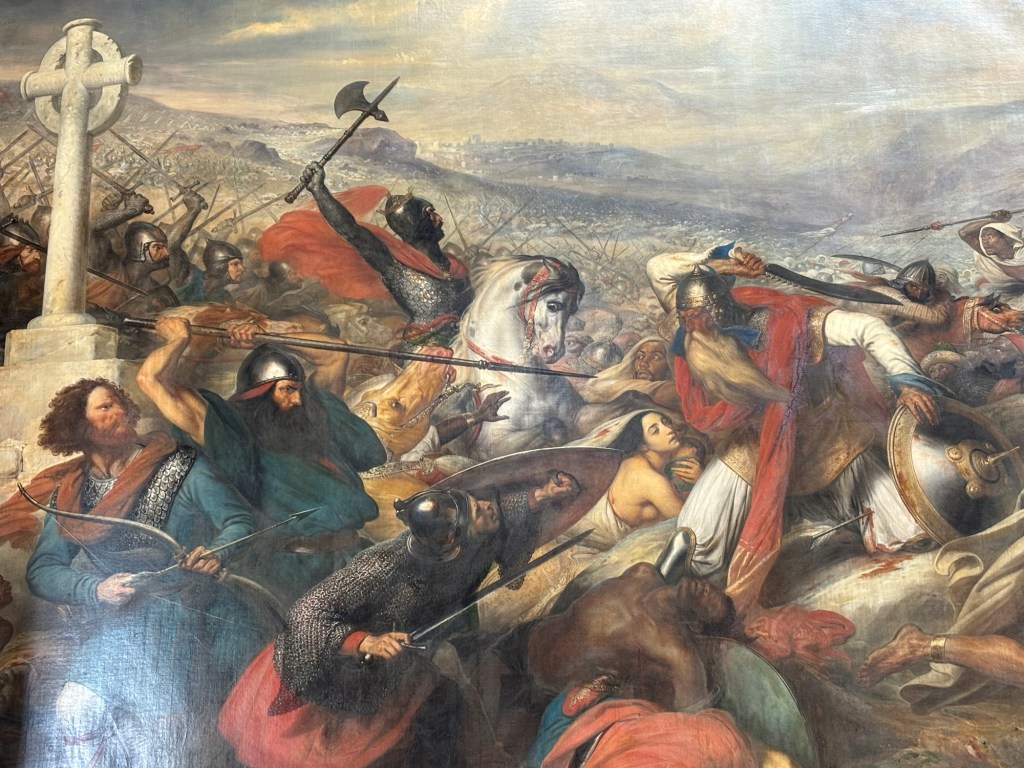
I came here in search of a shot glass, of all things, but I found something far more arresting: an exhibition of equestrian paintings of immeasurable beauty. So I’ll take you on a little tour of the inside of my head as I stood there in awe.

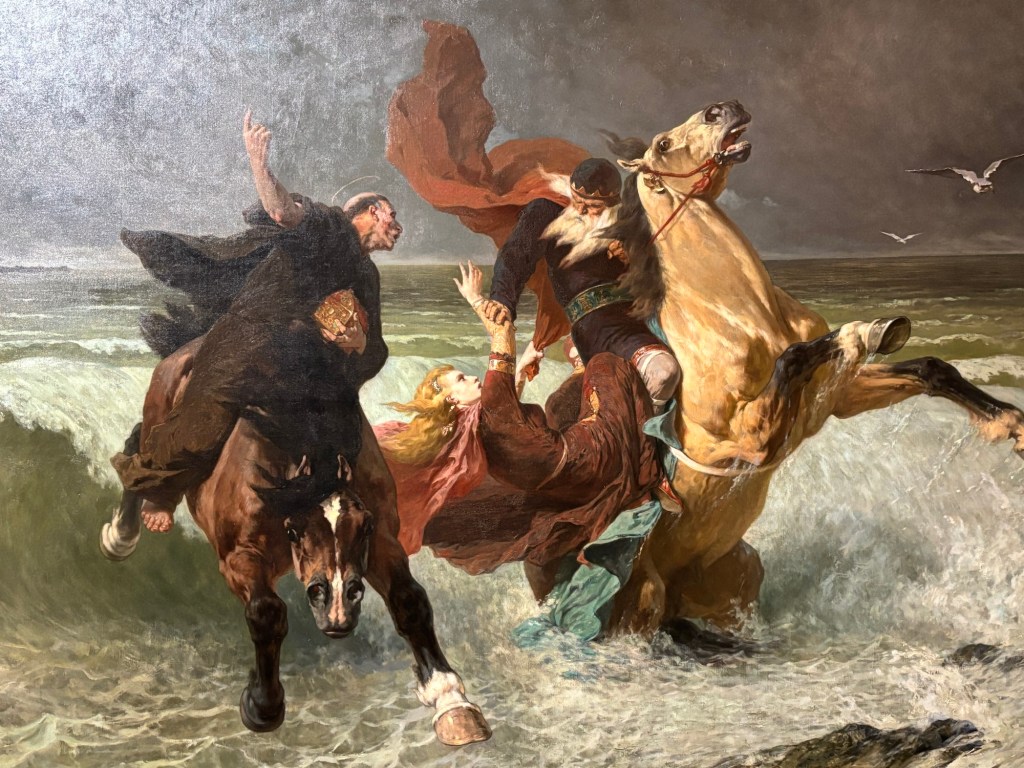
The first one to catch my eye was an enormous tableau by the 19th century artist Evariste-Vital Luminais, known as the painter of the Gauls. Titled La fuite de Gradlon, it tells the story of the escape of King Gradlon from the legendary city of Ys, the Breton counterpart to Atlantis. The tale tells that Ys was destroyed when the king’s wayward daughter, Dahut, opened the dikes that protected the city from the sea, ostensibly to allow her lover in to see her. Fleeing the destruction across the sinking floodplain, Gradlon’s friend and advisor, Saint Gwénnolé, implored him to cast off the demon he brought out of Ys, or risk losing his own life in the endeavour. Dahut was thrown into the merciless sea, and Gradlon and Gwénnolé escaped with their lives. I guess that makes it the oldest account of the “begone thot” meme.

I have always been captivated by stories of Atlantis. Dig deep enough and you’ll find stories of sunken cities all over Europe: Tartessos, Akra, Saeftinghe and Rungholt. Tolkien’s Numenor might even be considered a fanciful addition to that list. I should give this Ys legend a closer look.


No prizes for guessing the subject of this one: it’s the naked ride of Lady Godiva by the English pre-Raphaelite painter John Collier. Most depictions of this legend have her riding side-saddle, an enduring medieval custom that preserved a woman’s modesty by keeping her knees together while reducing the risk of an accidental tear of the hymen (the age-old proof of virginity). Collier has her riding astride, all the stronger for her position, focusing on her dauntless courage in the face of her husband’s oppression.

It isn’t easy to remember one’s sexual awakening, or when and where it began. I’ve seen various authors ascribe theirs to a range of sources, from the older siblings of friends and schoolteachers to National Geographic magazines and Uma Thurman’s role in Pulp Fiction. I didn’t exactly gobble up popular culture in the Nineties and Noughties with the same fervour as my classmates, so I think mine started with an illustration of Lady Godiva in a children’s book of folktales and legends – if not with the Little Mermaid (setting in motion a lifelong fascination with red hair that has proved impossible to shake).


You couldn’t have an equestrian exhibition without at least one painting of the famous Valkyries of Norse legend, shield-maidens and psychopomps that herd the souls of the slain to Valhalla, the Hall of the Dead. It’s a dark and moody piece, but I would have given a great deal to see Peter Arbo’s more famous painting, Åsgårdsreien, which depicts Odin’s “Wild Hunt”, a spectral apparition said to appear on stormy nights as a herald of woe and disaster for the beholder. I’ve had a thing for that folktale since I found its equivalent in Cataluña, centred on the doomed Compte Arnau who rides again at night with skin afire, pursued by his hungry hounds. There’s even a country song by Stan Jones about the famous “Ghost Riders in the Sky” that Johnny Cash went on to cover, which has the Valkyries of old trade in their helmets for stetsons.

I do love it when a myth goes global.


One painting in particular caught my eye (and not just because the leading lady has red hair!): Crepúsculo by the Spanish painter Ulpiano Checa y Sanz. Even without the aid of the title, you know straight away what you’re looking at by the colours alone: the halcyon flash of twilight, as the last rays of the setting sun scatter across the darkening world in a brilliant array of colours. Am I glad that the painting that really took my breath away was crafted by a Spaniard? You bet. The landscape below reminds of the opening crawl of the Charlton Heston El Cid film, and in its strange and featureless way, it is so very Spanish. Foreign painters of Spanish scenes often play up to the Romantic stereotype of dusky maidens with hooded eyes lounging on street corners with flowers in their hair, so it’s nice to see a native sharing my weakness for a change.


Finally, a painting I really didn’t expect to see, but one that must have been at Versailles for some time, as it was not in the equestrian exhibition but in the palace’s Galérie des Batailles. As patriotic paintings go, it’s got to be up there with La Liberté guidant le peuple by Delacroix (though perhaps not as widely known). This is Charles de Steuben’s Bataille de Poitiers en octobre 732, and it tells the story of the decisive battle between the Frankish forces under Charles Martel, “the Hammer”, and the invading Umayyad army Abd al-Rahman al-Ghafiqi. I must have seen this painting a thousand times for it is tied up with the history of Spain, and of Europe itself: had the Umayyads not been stopped so decisively, they might well have gone on to conquer the rest of Europe. It’s one of those real watershed moments that comes around but rarely in history, and I was amazed to see the real thing – which is, like the armies it portrays, vast.

Not a good time to be a horse, or a European for that matter, but what a find!


Well, that’s quite enough painting perambulations for one post. I’ve just arrived in the pirate city of Saint-Malo where the sun is shining and the water is crystal clear. I think I’ll go for a dip while the weather holds! BB x
Storm Clouds over Soho

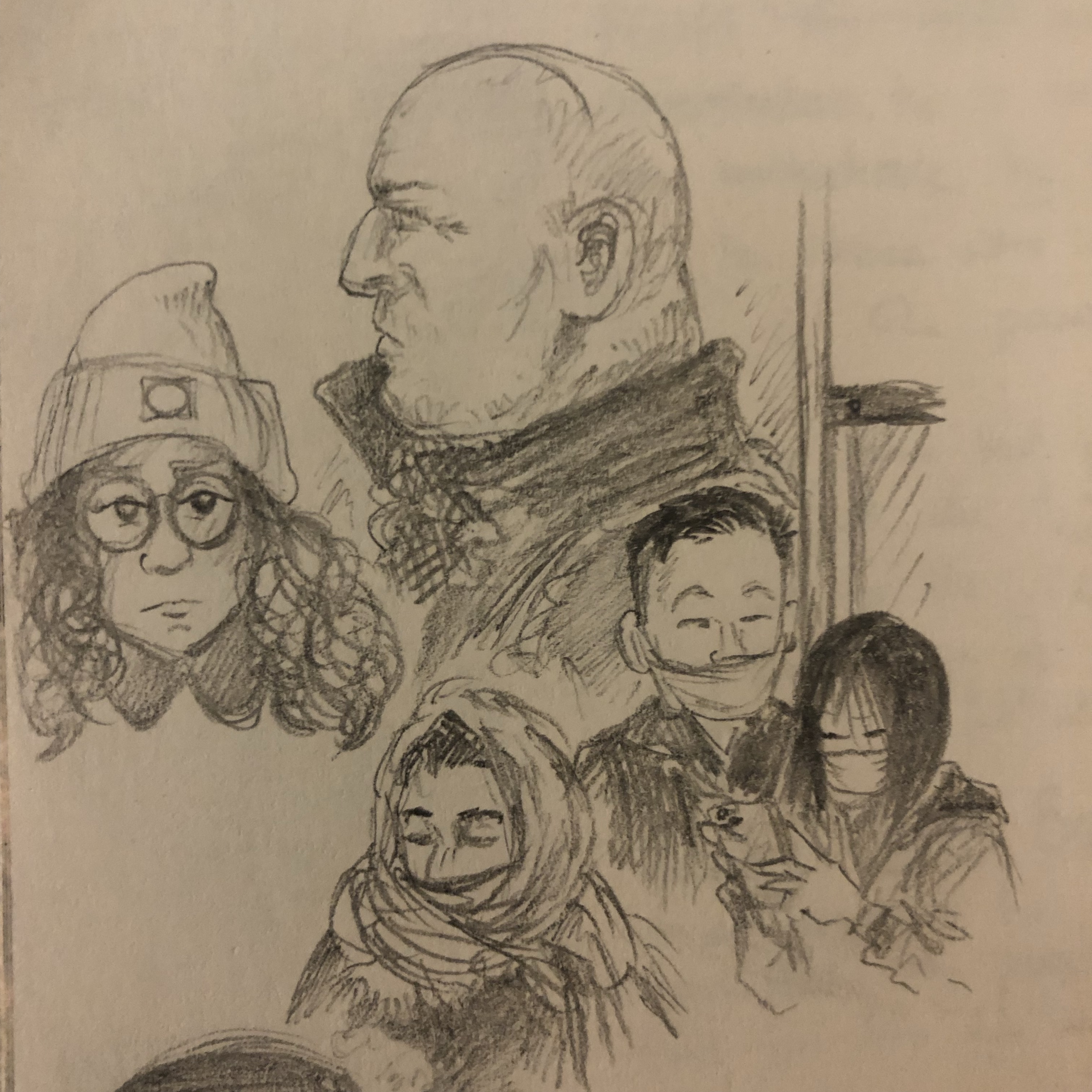
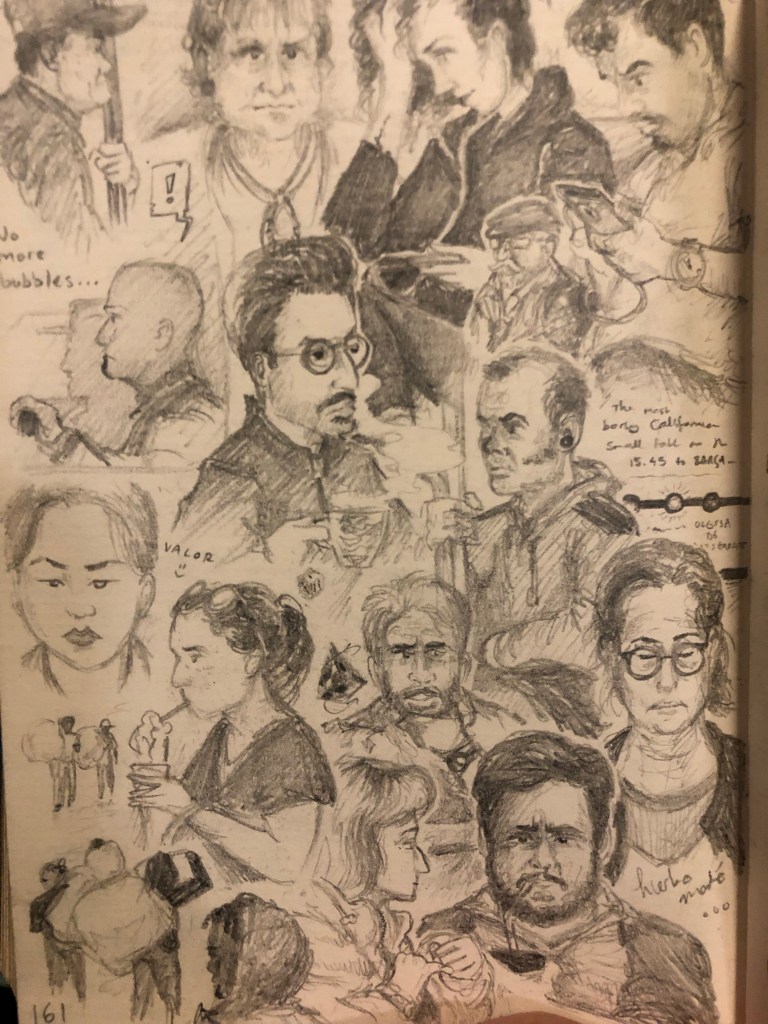
I got the train up to London today with a view to getting my hands on a decent pair of shoes, since I’m told the Italians can be a little snobbish when it comes to standards of dress. With the Northern Line under repairs, it took a little longer to get up to Bloomsbury, so I took a leisurely ride on the Circle Line from Blackfriars and indulged in a favourite pastime: sketching commuters on the Underground. There’s an art to it (no pun intended) – you’ve got to be quick, since most of them only travel a few stops before getting off. And now that face masks are a minority affair, it’s a lot more enjoyable a practice than it was.

Predictably, I got waylaid in Gower Street’s Waterstones en route to the shoe shop. Ever on the hunt for new additions to my Spanish library, I thought I’d do some digging at one of London’s finest bookstores, since it’s been quite a long time since my last visit. I managed to exercise a considerable amount of restraint this time, leaving behind two case studies on the Inquisition from the antiques section in the basement and Minder’s The Struggle for Catalonia… though I’ll be back for that one eventually. Giles Tremlett has brought out a new book on Spain which looks like it will pump out a lot of material I can use with my A Level Spanish students, which is my way of justifying that purchase. The only book I didn’t question was an account of Walter Starkie’s Camino. Starkie wrote so vividly about his journeys as a minstrel across Spain in Spanish Raggle Taggle and peppers his writing with old verses all over the place, so I had to salvage that one.

I wandered down towards Oxford Street in search of a decent pair of shoes, but I couldn’t find anything that jumped off the shelves at me, so I decided to make do what I have (a fine piece of advice at the best of times, which I wantonly ignore whenever I should be near a bookshop) and cut across town back to the river through Soho.

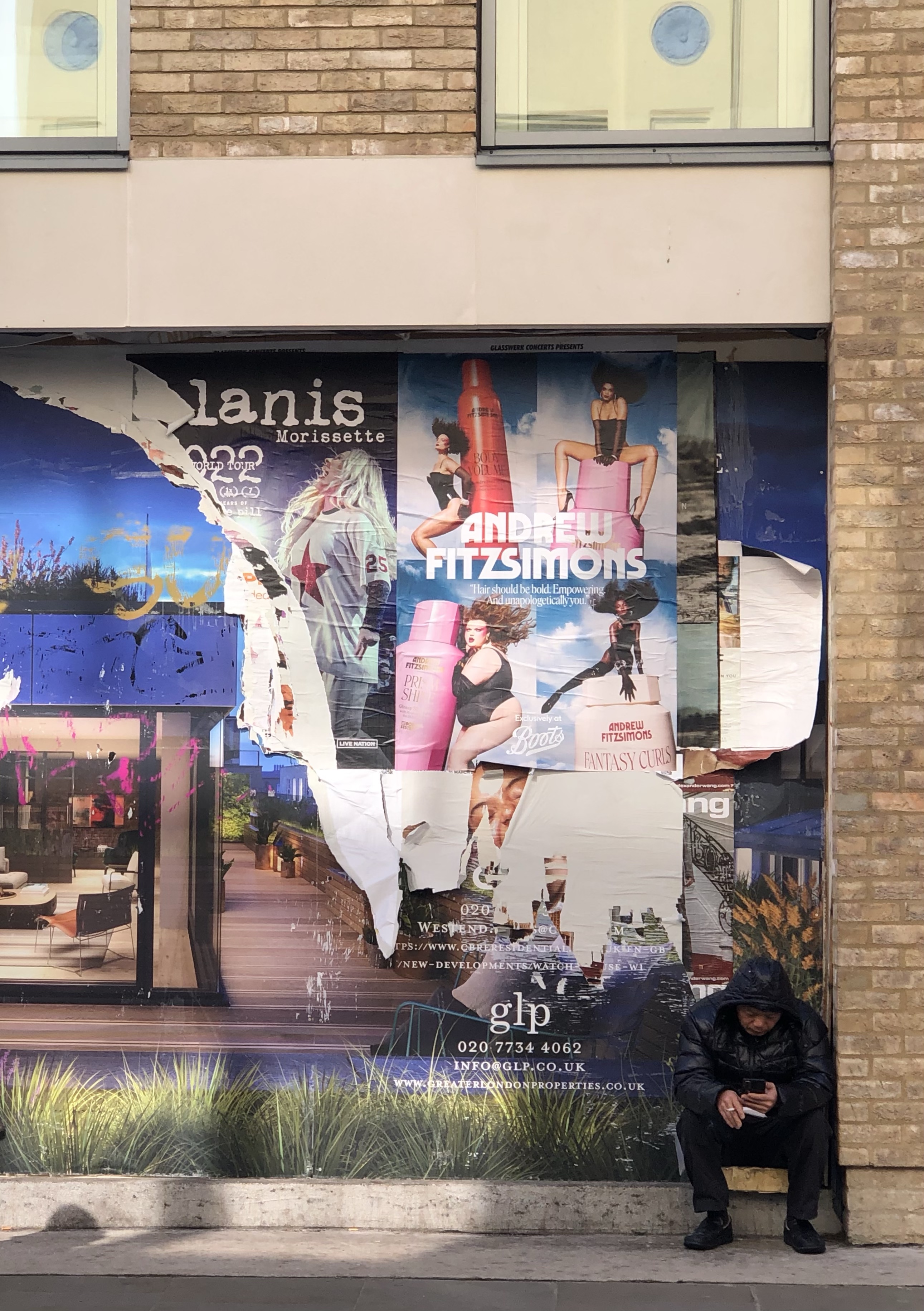
I’ve either forgotten how luridly seedy Soho is, or I haven’t properly explored the place before. What looked like a shortcut led me down a dark alleyway with shady adult stores on either side. The noise of Oxford Street seemed to die in the distance, like the record player in the Waterstones’ basement, stifled into silence by a wall of books… only now by grimy bricks and a mere sliver of sunlight through a gap between the buildings above. I almost collided with a stocky man in a big puffer jacket with a cough came lumbering out of a film store, stuffing something under the sleeve of his coat. Two Arabs stopped talking and gave me a funny look as I passed, clutching my journal in one hand and one strap of my rucksack with the other, humming the tenor line from Ola Gjeilo’s Northern Lights to myself. I guess Soho isn’t on the tourist trail.

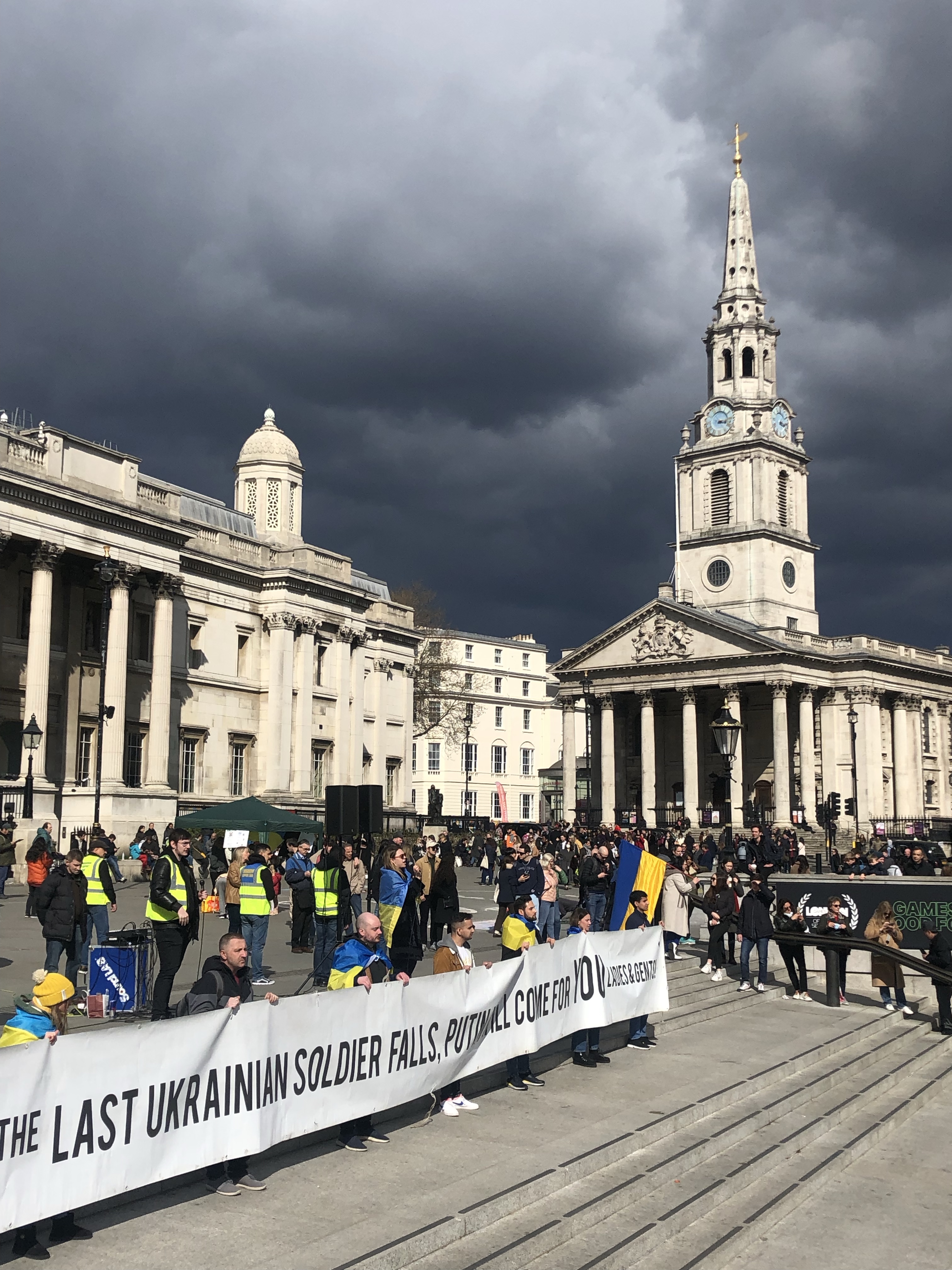
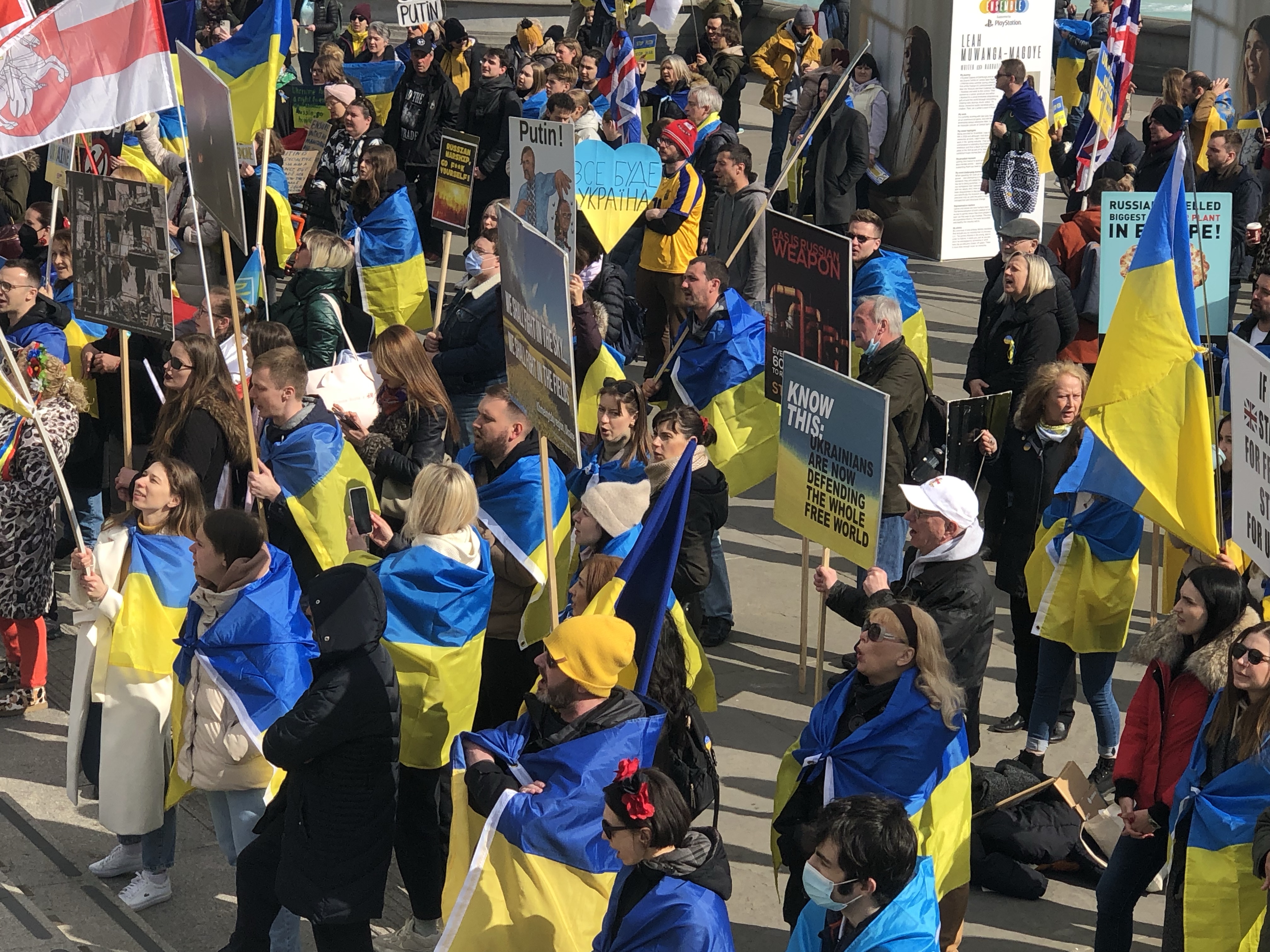
Leaving Soho behind, I wandered through the crowds in Chinatown and came out onto Trafalgar Square, where a large crowd had gathered on the steps. Unsurprisingly, it was a rally against the war in Ukraine. Blue-and-yellow flags fluttered high above the throng, joined here and there by Polish and Hungarian partisans adding their colours to the mast. One woman, the tryzub emblazoned on her cape, stood defiant at the front of the congregation, fist raised in a powerful salute for most of the half-hour I stuck around to watch.

Boycott Russia.
Arm Ukraine.
Stop Putin, stop the war.

Those were the chants, coming around and around before the crowd. The main speaker apologised for the necessity of being so blunt, before decrying the rape of Ukrainian women by Russian forces and the slaughter of its children. An Englishman spoke slightly hesitantly about the need to support Ukraine’s disabled and elderly refugees, and a Ukrainian began to sing a national lament as the sky darkened overhead and the sun faded from sight. I’ll admit I half expected there to be a police van lurked nearby, its officers on standby for any disruption, but I couldn’t find a visible copper for love nor money.

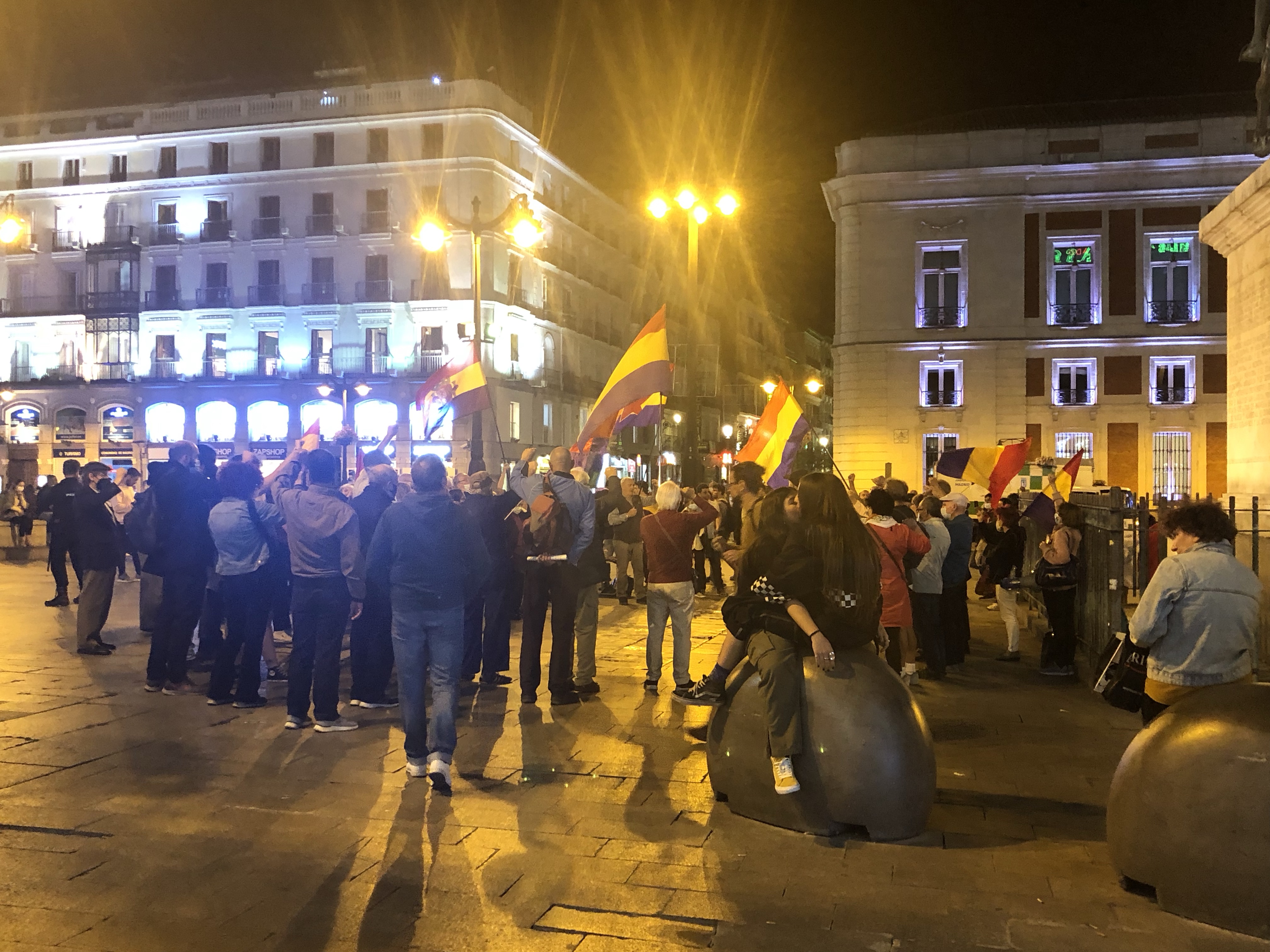
The last time I saw a demonstration like this was back in October in Madrid’s Puerta del Sol, as I walked back to my hostel with one of my cousins. “They’re always here,” he told me, “and so are they,” indicating the loitering policia who hang back just shy of the crowd, silent, hands on their truncheons, watching the Republican flags flying in the night air. The crowd was surprisingly mixed: an old man in a flat cap stood shouting his passionate support in the centre of the throng, while two girls shared an equally passionate and equally political moment on one of the bollards. The policia watched on, silently.

Puerta del Sol, October 2021

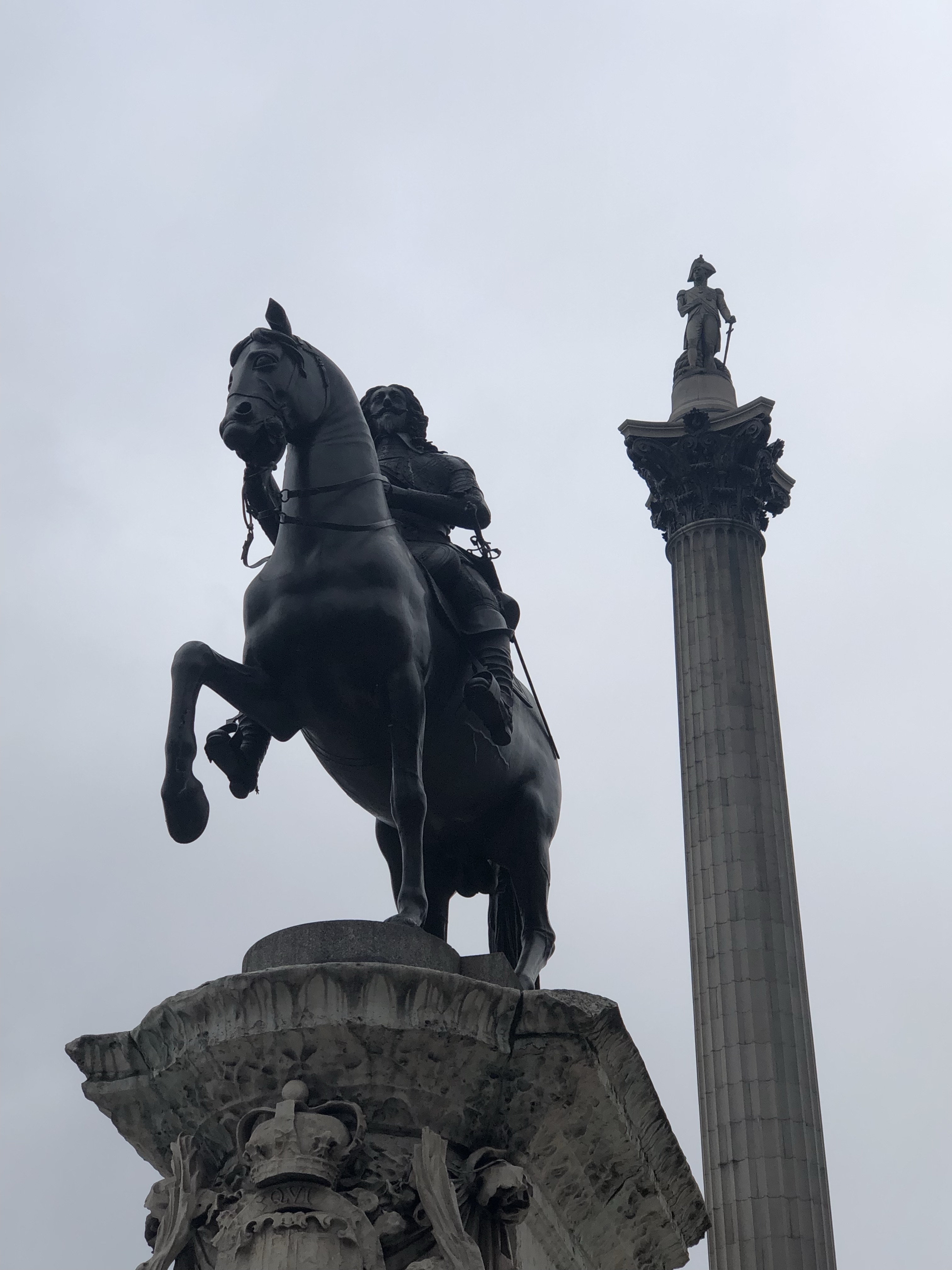
On my way back to the station, I stopped at the traffic lights and looked back to Trafalgar Square. Lord Nelson and a mounted Charles I stared southwards over my head, silhouetted against the clouded sky: two men who got personally involved in European wars and paid a physical price for their efforts. Little wonder, then, that the European powers are so reluctant to send any troops into open battle to defend the Gateway of Europe.

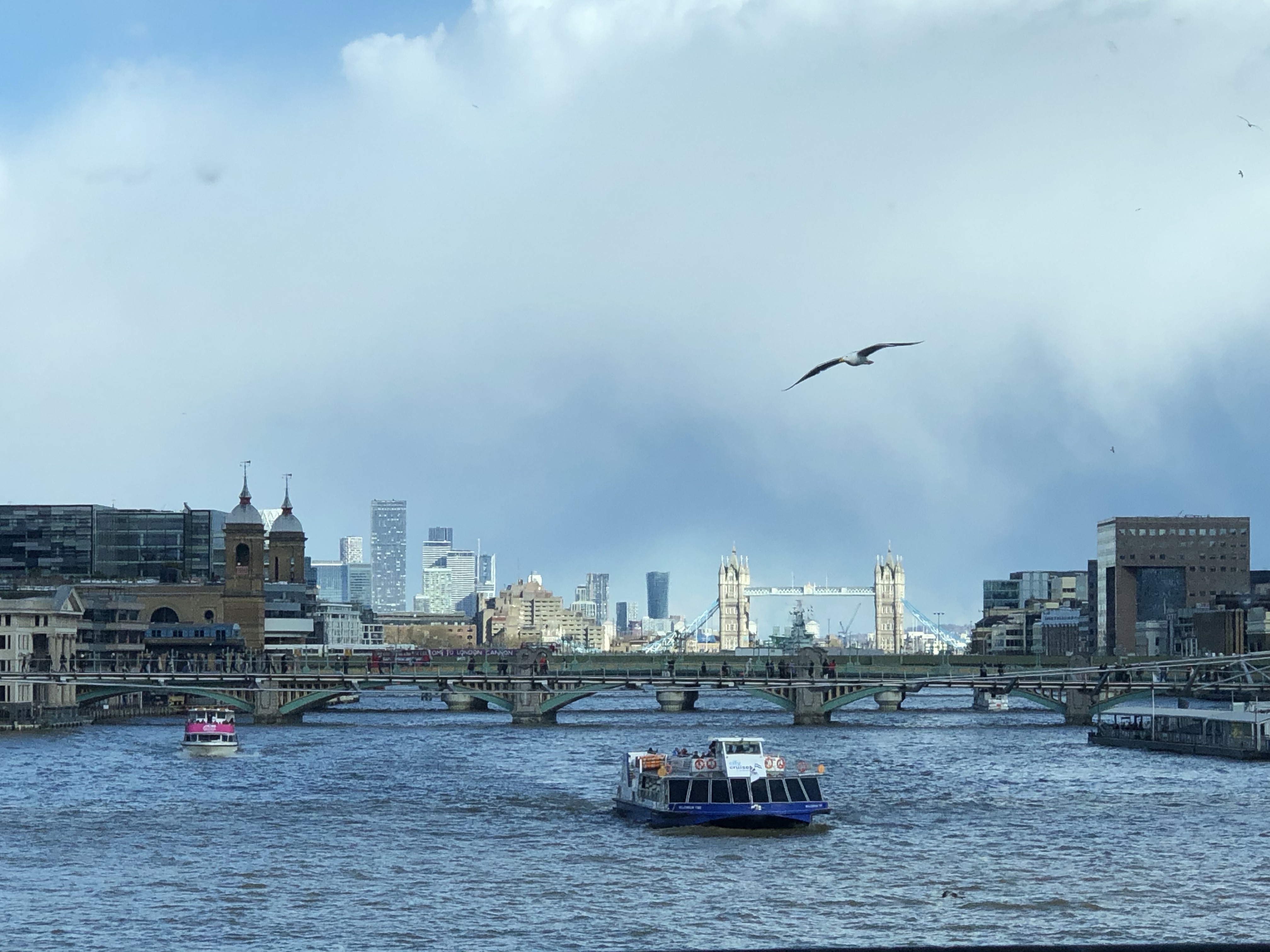
Back at Blackfriars, the rally seemed a world away. I missed the early train by a whisker and had to wait twenty minutes for the next one. A Catalan girl sat on a bench nearby, a red-and-yellow skiing jacket from Cerdanya proudly displaying her winter colours. I instinctively reached for my face, but my usual rojigualda facemask was at home: I’d opted for a less nationalistic face covering today. Away to the east, the sun broke through the clouds over the Thames, lighting up Tower Bridge against the rainclouds rolling in from the south. London seems to go on forever, whatever happens to the rest of the world, and yet it’s Rome that holds the title of the Eternal City. I’m looking forward to seeing it with my own eyes and reading such stories as I can find in its people and its streets. BB x
Finding Doré

Women’s eyes are always bright, whatever the colour.

HENRY RIDER HAGGARD, KING SOLOMON’S MINES

Sunday 27th March. Eight days until Italy, my first solo adventure in a long time. My desk is a little cluttered: a Marco Polo guidebook to Rome, a spare exam paper for Year 7 French, the Greenwich Maritime Museum’s Pirates: Fact & Fiction and various other odds and sundries. The pile of books I dip in and out of continues to grow. Previous girlfriends would have kept that habit in check, but in this bachelor’s pad, the library creeps through the house like an advancing army, billeting its troops on every flat surface in sight.

I don’t know what to expect from Italy. The last time I set off with a city break in mind I came home early. Barcelona was all a bit much, and I didn’t have much of a plan beyond seeing the old city. After three months of windowless boarding school life, however, I’m just looking for a change of scenery, really. Something to make my journal hum with anticipation (since this one is currently the least-travelled of the five, despite having the longest shelf life – thanks a lot, COVID). I’m hoping I’ll meet some interesting people who’ll give me stories to tell, and with whom I can share stories of my own, but the most likely outcome is a solid twenty-odd pages of sketches. And that’s no bad thing.

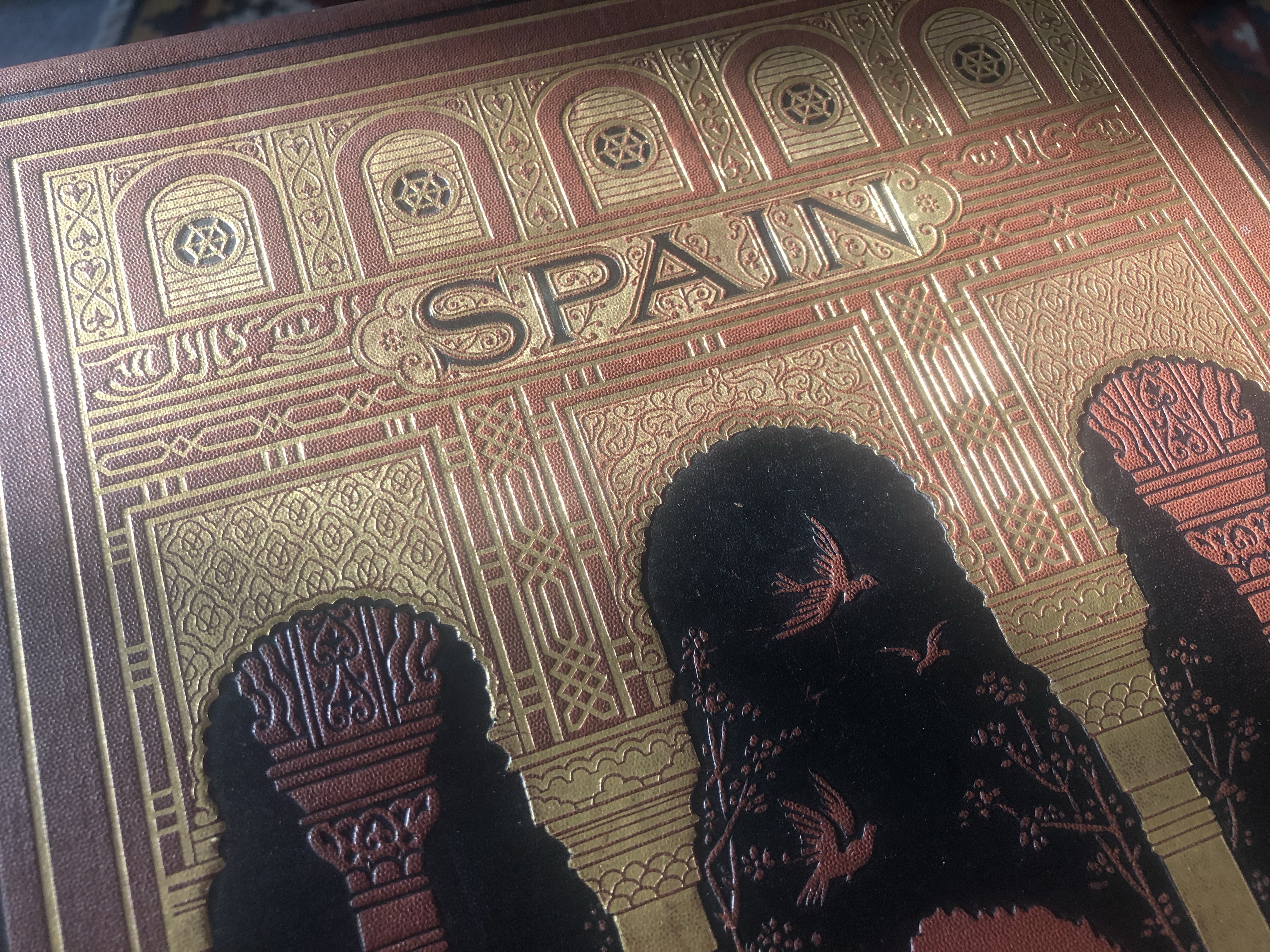
My primary inspiration in this field is the French illustrator Gustave Doré. You may have seen his works before, even if you don’t know the name: his was the creative genius behind the dark engravings that told the stories of Paradise Lost, Dante’s Inferno and Don Quixote, as well as various illustrations of the Bible. Some divine brilliance guided that man’s hand throughout his life. Half the hangings in my flat are prints of his, and all of them pillaged from desecrated copies of the most precious book in my library: an illustrated account of the Spanish adventures of Jean Charles Davillier.

It took me over a year to track down a copy of said book for myself. I’m not a collector of rare books, but I do take a small amount of pride in having a well-stocked Spanish library, and when I learned of the existence of this masterpiece, I knew I had to get my hands on one somehow – before they were all chopped up for their precious prints. Its rarity is evident in the ludicrous priced charged by some vendors on the internet: I’ve seen well-kept copies of the book go for as much as £1,350, with the most reasonable offers starting at around the £350 mark. So I could hardly believe my luck when I found an eBay vendor trying to get rid of theirs for £50. Collection only – as if that would prove an obstacle for such a prize. I’ll never forget the sheepish look on the trader’s face as she handed it over.

“Are you a collector, then? It was in a box in my dad’s garage along with all this other junk. Feel free to have a look. We’re converting the place and need to get rid of a lot of his old things. It’s funny, the day after you paid for it, I saw another copy going for several hundred. I guess I undervalued it.”

She did. Considerably. But beauty is in the eye of the beholder, and to me, it’s more than just a rare book of Doré’s. It’s a window into another man’s head: another man who, like myself, came to Spain and was bewitched by its very own brand of black magic.

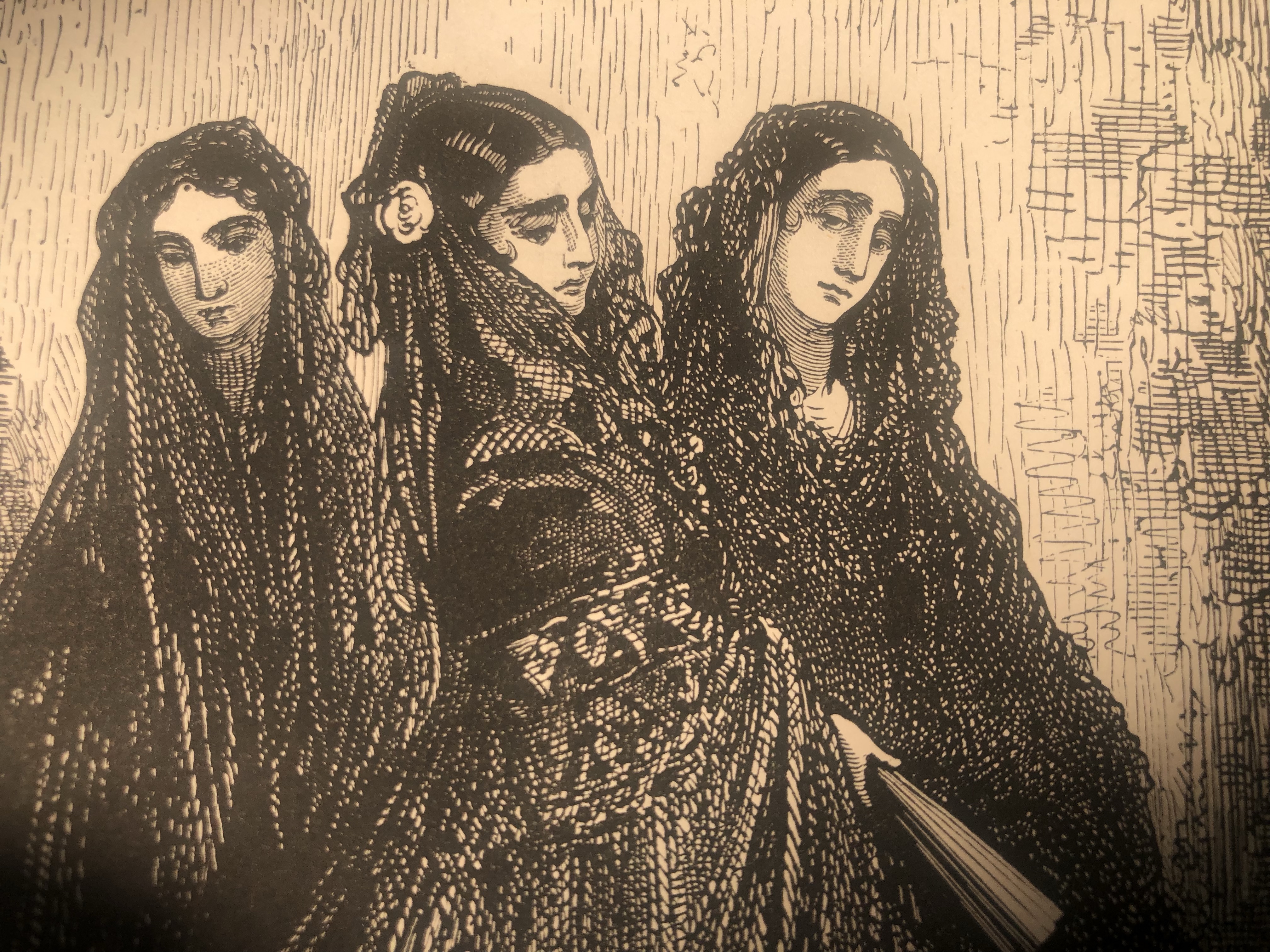
Of all Doré’s prints, I treasure his landscapes most of all, but it’s his portraits of the Spaniards themselves that I want to leave with you today – and particularly the fair Spanish ladies.

I’ll be honest with you, I’m as much a sucker for beauty as the next man, and when I’m sitting on the high street, or on the Tube, or scrolling through Pinterest, nine times out of ten it’s the girls who catch my eye and stir my pencil into action (Freud and a thousand schoolboys would have a field day with that sentence, I know). Double the prize if the sun is shining at the right angle, and Doré does this spectacularly – you can almost hear the midday heat in the image above with its shadows cast straight down by an unforgiving Castilian sun immediately overhead.

The grass is always greener on the other side, right? My grandfather found something that caught his eye in an English girl, a long time ago, but it’s his people who hold my eye. Not that I’ve ever held down a relationship with a Spaniard. It’s a hard thing to do when you live on this rainy rock, as Spaniards’ ties to their homeland are stronger than steel. I’ve met a few wanderers, but they are the exception to the rule. Cortes, the great conquistador of Cuba and Honduras and the Mexica Empire, came home to die. And when Spain is as beautiful a country as she is, who can blame them?

I’ll leave it to San Isidro of Sevilla to conclude with words more powerful than my own:

Of all the lands that extend from the west to India, thou are the fairest, o sacred Hispania, ever-fecund mother of princes and peoples, rightful queen of all the provinces, from whom west and east draw their light.

SAINT ISIDORE OF SEVILLE, DE LAUDE HISPANIAE

See you soon. BB x
Living out of a Book: Adventures with a Journal

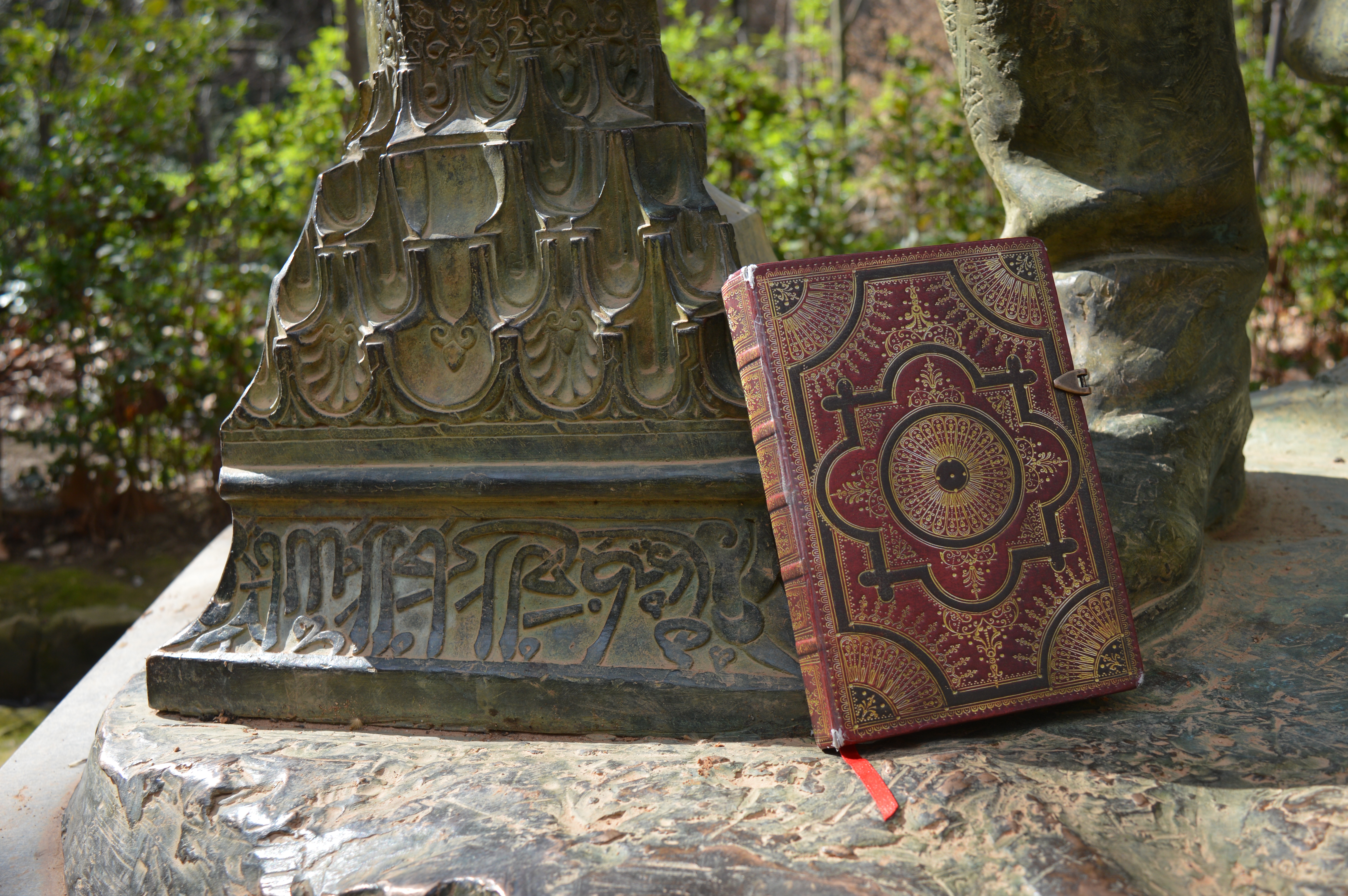
The Red Book (my first “Renaissance” journal) at the feet of Washington Irving, Granada (March 2016)

Let me tell you something for free: full-time employment is a writer’s bane. You knew that already, so neither of us lost anything in that transaction. Except me, and the ever-increasing gaps between the dates in my journal.

I spent so much of this weekend powering through marking after a week of KS3 assessments that it only occurred to me as I filed my Year 9 papers away that last weekend was the first time I’d given my novel some serious thought in a year and a half. Since you can chalk that “blip” up to the first lockdown, it’s probably safe to say the last time I made any real headway with my book was before I took up a post in a boarding school back here in the UK. That is to say, back when I was living in Extremadura, now almost four years ago. If it weren’t for the fact that I still carry a journal around with me, I’d have made no progress in that time whatsoever.

But since I’m more of a glass-half-full kind of guy, I’m going to focus less on the killing instinct of working life and more on the magic of keeping a journal. Because, as always, there’s a story behind it – and in my case, it’s a lot more personal than I ever knew.

I’ve written reasonably extensively about my journalling habit before, but in case you missed it, click here for an earlier piece on one of my favourite journals, the Red Book.

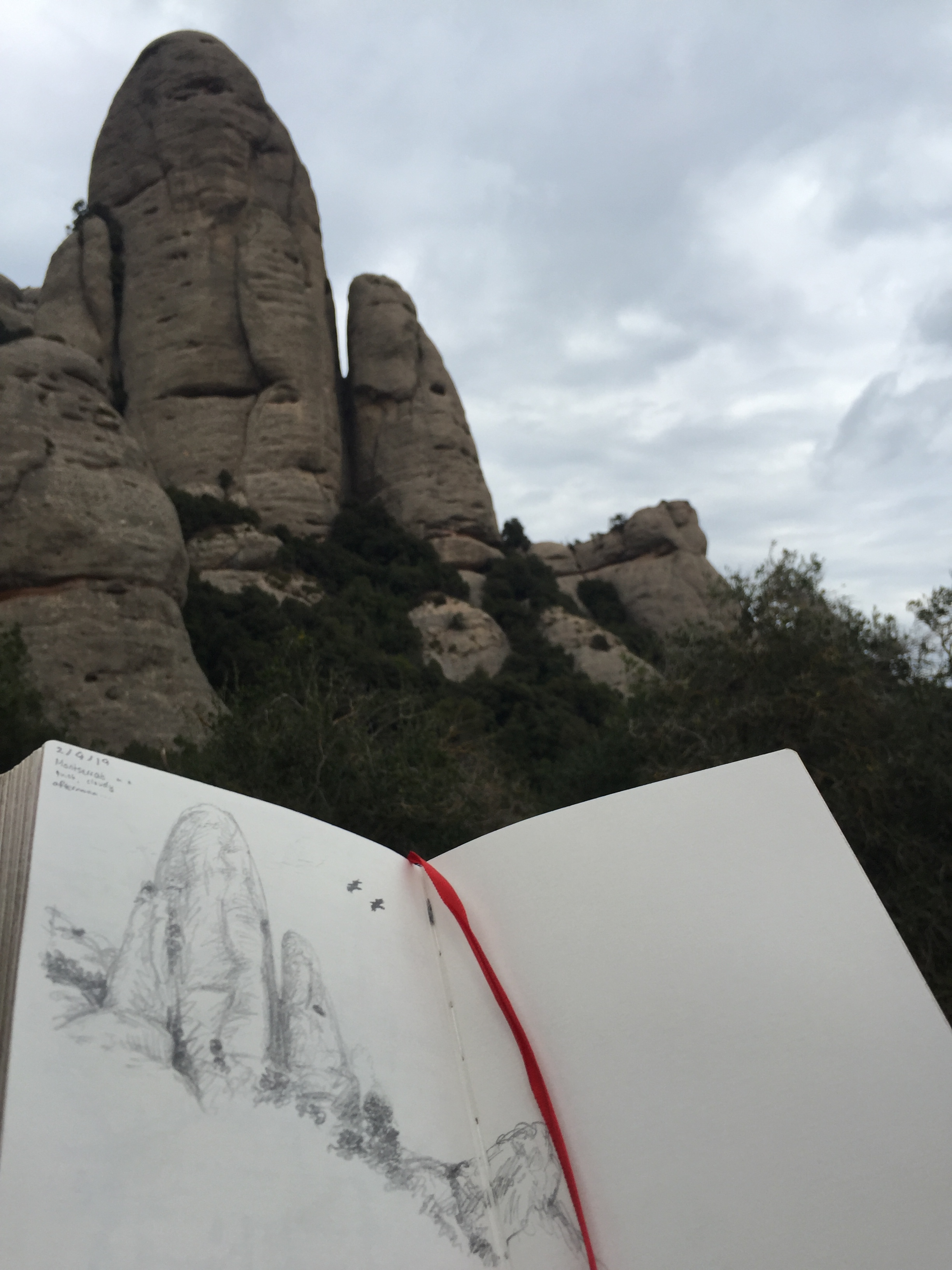
Sketching the windy peaks of Montserrat (April 2019)

I don’t think I’ve ever been without a sketchbook of sorts. Going back to my parents’ place for Christmas turned up quite a few of my oldest surviving books, dog-eared, half-filled and almost all of them featuring the same cast of characters that share a space in my head and my heart to this day. Studying Art for GCSE and A Level naturally fed the habit, though I seem to remember having separate sketchbooks for school and for myself right the way through. I suppose I should reach out to a couple of early inspirations here: to Mr Howe, for his no-holds-barred approach to sketchbook work (“unfinished pieces are often more interesting than finished pieces” has stuck with me); to my old friend Freddie, whose handwriting I secretly admired and have long since adapted into my own; and, of course, to my own mother, who must have kept several journals of her own when she was younger.

These first attempts were more art than word, though. It wasn’t until my eighteenth year that I took the craft of journalling more seriously, riding off the back of having successfully kept a diary for a little over a whole year – to date, the longest successful writing streak in my life. With many long months to go until the first day of my degree, I picked up a small flip-journal from Waterstones and penned some thoughts. At first, it was just lists: locations in my novel, possible pen names, key elements for fantasy fiction. On the second page I branched out and jotted down some facts that I found interesting, for a change of pace (my brother was quick to point out this was a considerably less interesting way to use a journal). I guess not everybody needs to know that the underside of a waterfall is called an undercutting; that Mullah Omar donned the mystical Cloak of the Prophet to drum up support in 1996; and that Dr William Bryden was the sole survivor of the Khyber Pass massacre of 1842.

Three pages in and the novel is the back in the limelight – and so it continues. Every so often, I find something in a book or on the news that I deem worthy of recording, but as a rule, the bulk of my pen-and-pencilwork concerns the fate of my cast of characters and the world in which they live, ever-growing, ever-crystallising. Sketches in pencil duck and weave through the gaps like weasels, giving over onto full page illustrations when I really found my mojo. It’s a formula I have deviated from very little for nine years now.

Gypsy Legends and Grenadine Gifts (2020)

When I was younger, and I still had these crazy notions (as the young and reckless always do) of embarking upon death-defying expeditions to Afghanistan and beyond, I remember thinking that, if something should happen to me, the world in my head that I had spent all but the first seven years of my life creating would disappear completely. That is, unless I left enough material behind for somebody to pick up the pieces. I suppose that morbid justification stuck, because there is now enough information spread across my various journals for somebody to put together the various stories I have always wanted to tell.

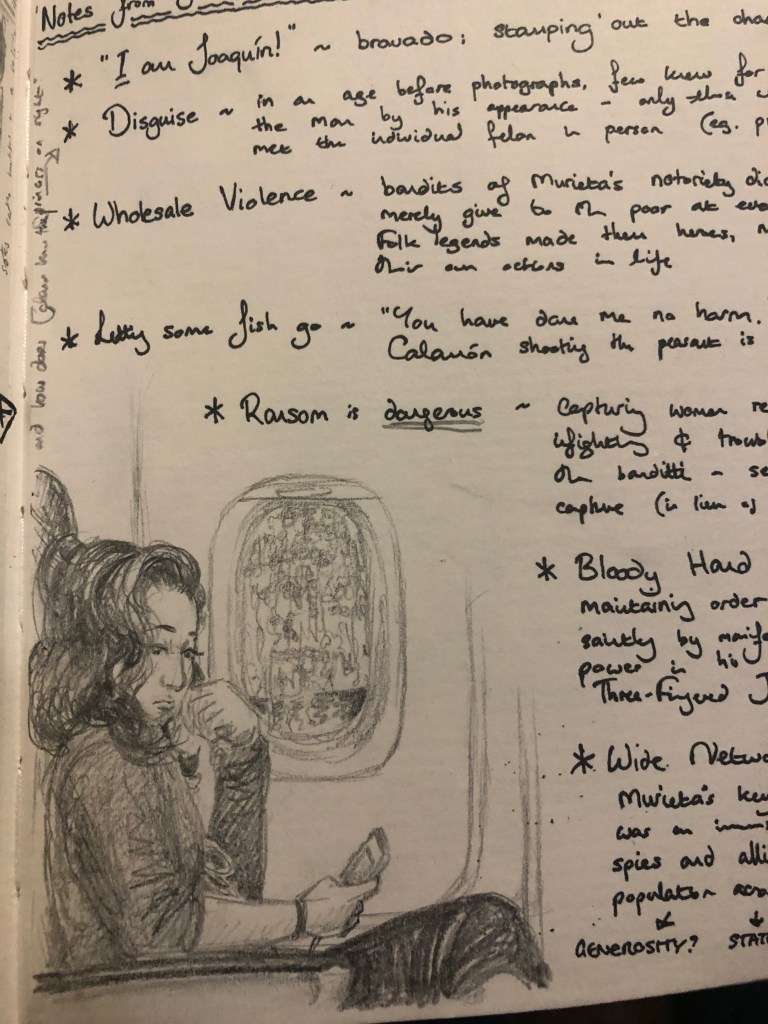
The rain in Spain on the plane (August 2019)

And perhaps there’s a logical explanation for that mindset.

My great-grandmother Mercedes was a woman ahead of her time. In a Spain teetering on the brink of Civil War, she found love with a poet and musician called Mateo. They corresponded in verse, quoting Oscar Wilde and Keats and Plato and Engels. Their handwritten letters to each other – safeguarded by my family for over fifty years – tell of a truly devoted husband and wife on an equal intellectual footing, flying in the face of the dictadura and the expectations of women outlined in the Guia de la buena esposa. Mercedes was well-known about town for her journal, which was as much a part of her character as her glass of brandy and cigars. Though her locally legendary journals themselves are lost to time, it is chiefly through her precious letters to her Mateo that I can see through a window in that past. It is a past which comes clearer into focus the more I get to know my family out there. The fatalist in me cannot help but wonder at the sequence of events that led to me arriving at my family’s door with little more than my journal in hand, unconsciously carrying the one item that would prove my connection to a great-grandmother I never had the chance to meet. Mercedes left this world the very same year I came into it.

I spent the greater part of my search for my family focused on the grandfather I never knew, but it is my bisabuela Mercedes who guides my hand these days. I’m a strong believer in upholding family traditions, and it doesn’t half lend a sense of purpose to the scribblings in my journals, even if they never lead anywhere. My ancestors left me a literal paper trail and I must follow.

Barcelona vignettes (March 2019)

Have you ever kept a journal? I’d highly recommend it. It’s less onerous than a diary and a beautiful thing to look back on. Through mine, I can read the world around me through the strokes of my pen: the euphoria of success in the a cappella semifinals; my bewilderment at Brexit; the shockwaves of the fire of Notre-Dame; and my bottomless love for the country of my ancestors. It’s all there, and since boarding school life makes it nigh-on impossible to knock out a couple of chapters a week like I used to, my journals do a thumping good job at telling the story.

And maybe, one day, that’s exactly what they’ll do, when they fall into the hands of my grandchildren. I’d like that. I think Mercedes would have liked that, too.

BB x
Chaouen and the Petra Effect

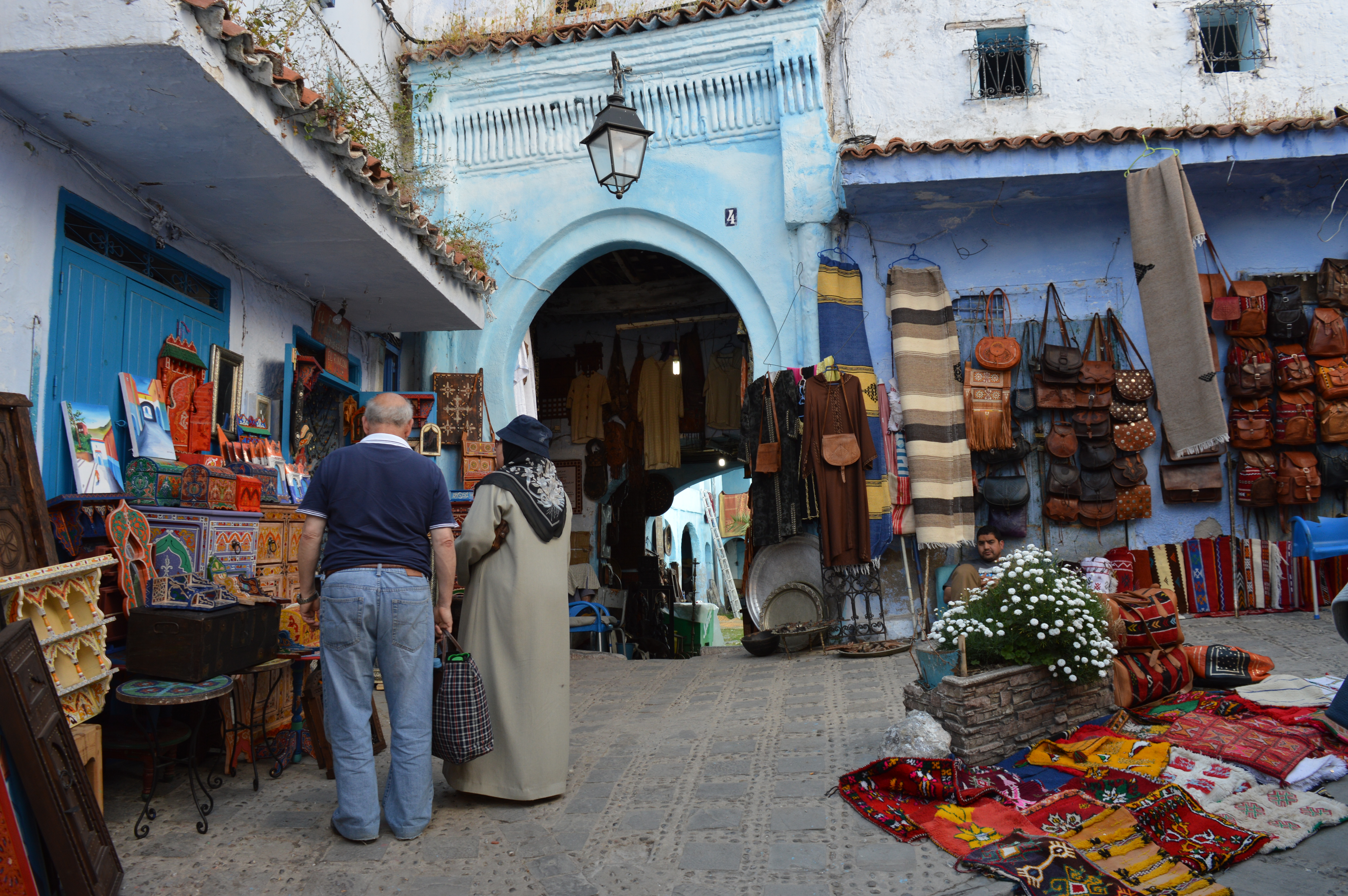
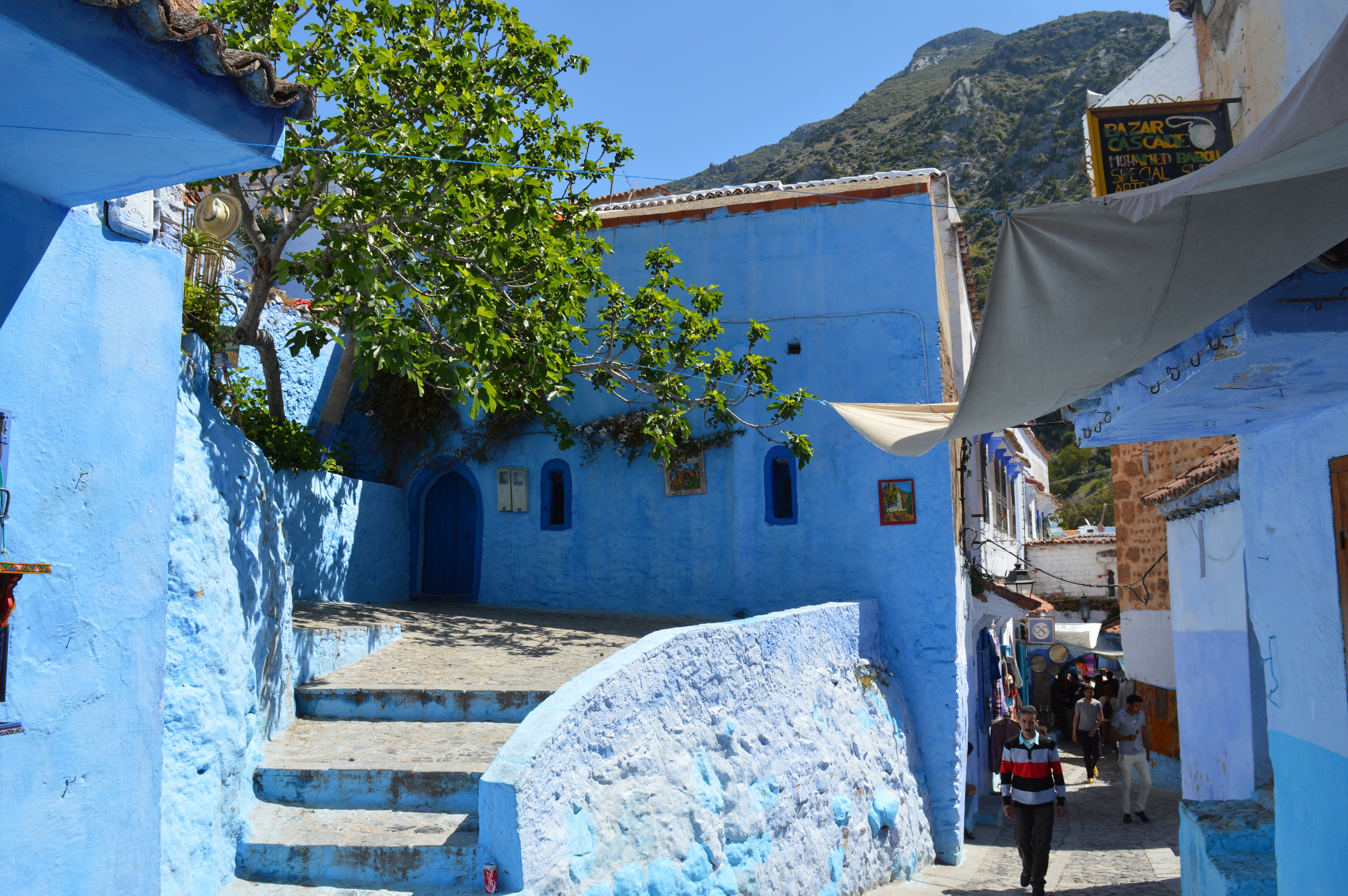
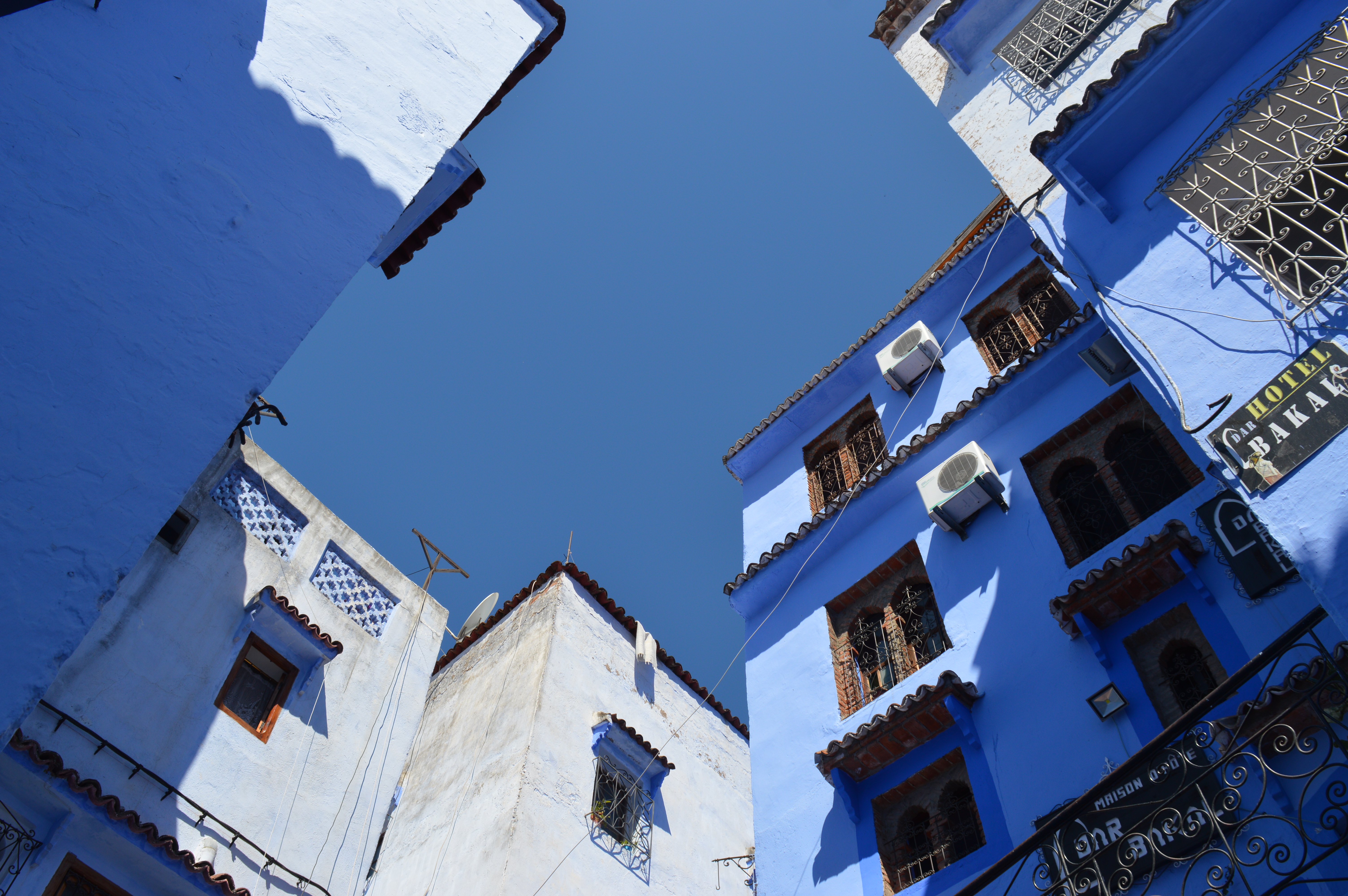
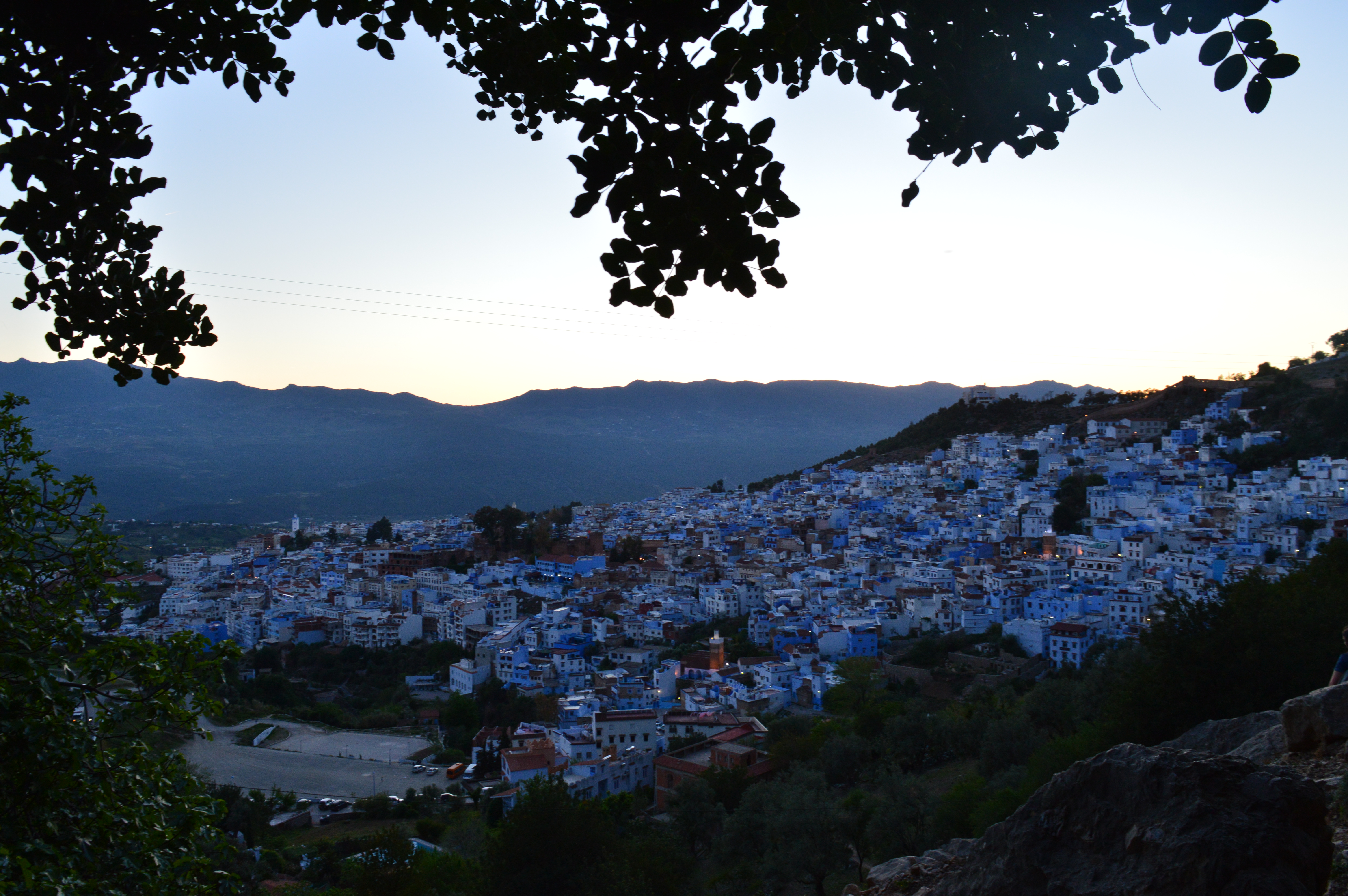
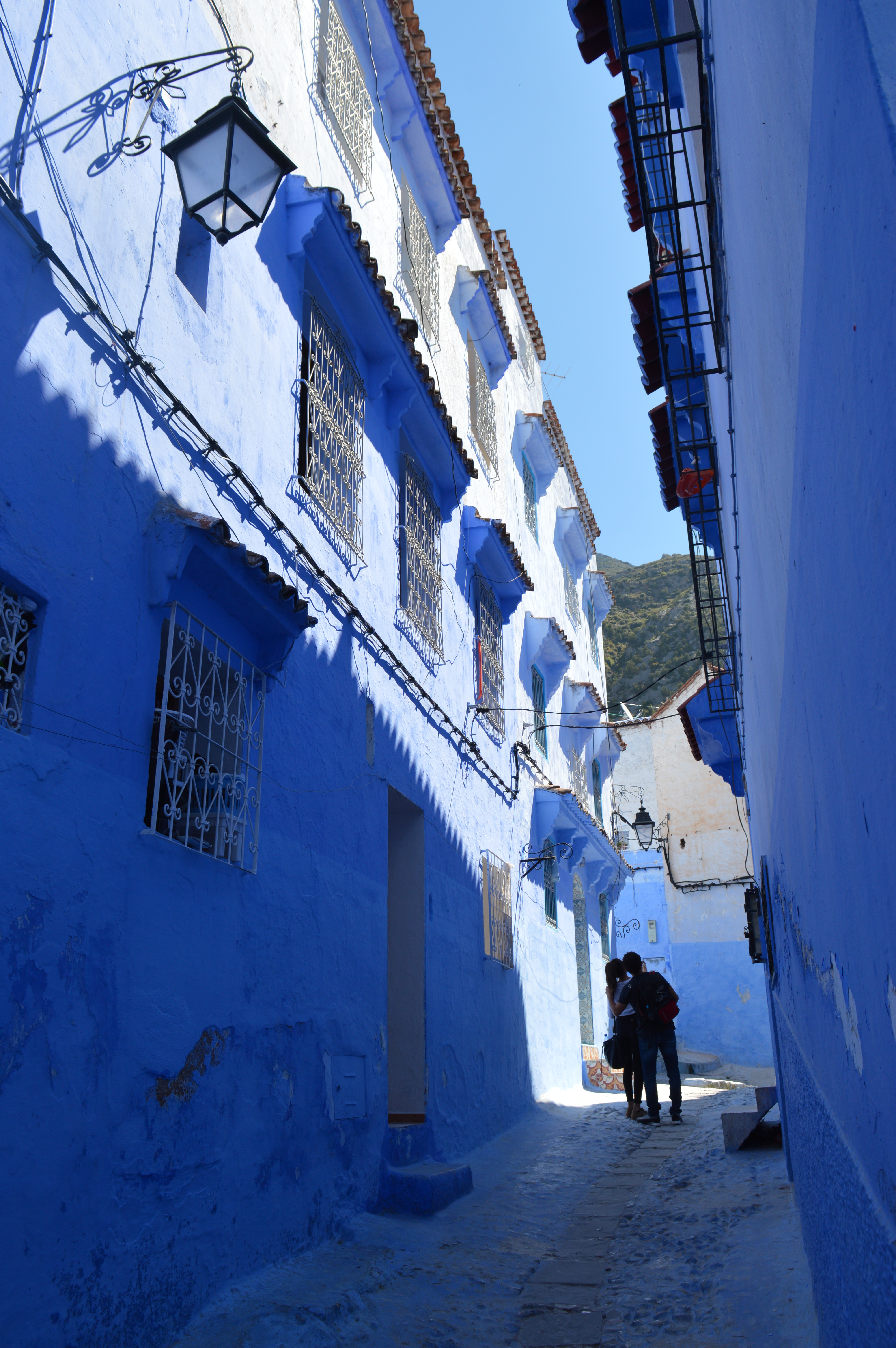
There are some places that you come across that feature on almost everybody’s wish list. The pyramids of Giza, the lost city of Machu Picchu and the Great Wall of China, the name a few of the standout examples. Ask for more and you might encounter a few more classics, like New York’s Central Park and the bustling canals of Venice. Extend the list a little further and you’ll probably find a small Moroccan town nestled deep in the Rif mountains of some forty thousand inhabitants. Why? Because a large part of the old town is painted powder blue. Introducing Chefchaouen, the blue pearl of Morocco.

DSC_0443

I should point out, it’s currently under scaffolding in anticipation of its upcoming designation as a UNESCO World Heritage site. Just like the Fes tanneries last year, that’s another visit hamstrung by the UNESCO beetles. Fortunately, I’ll be a mere hour away all summer, so I’ll be back when they’re done. It promises to be spectacular.

DSC_0560

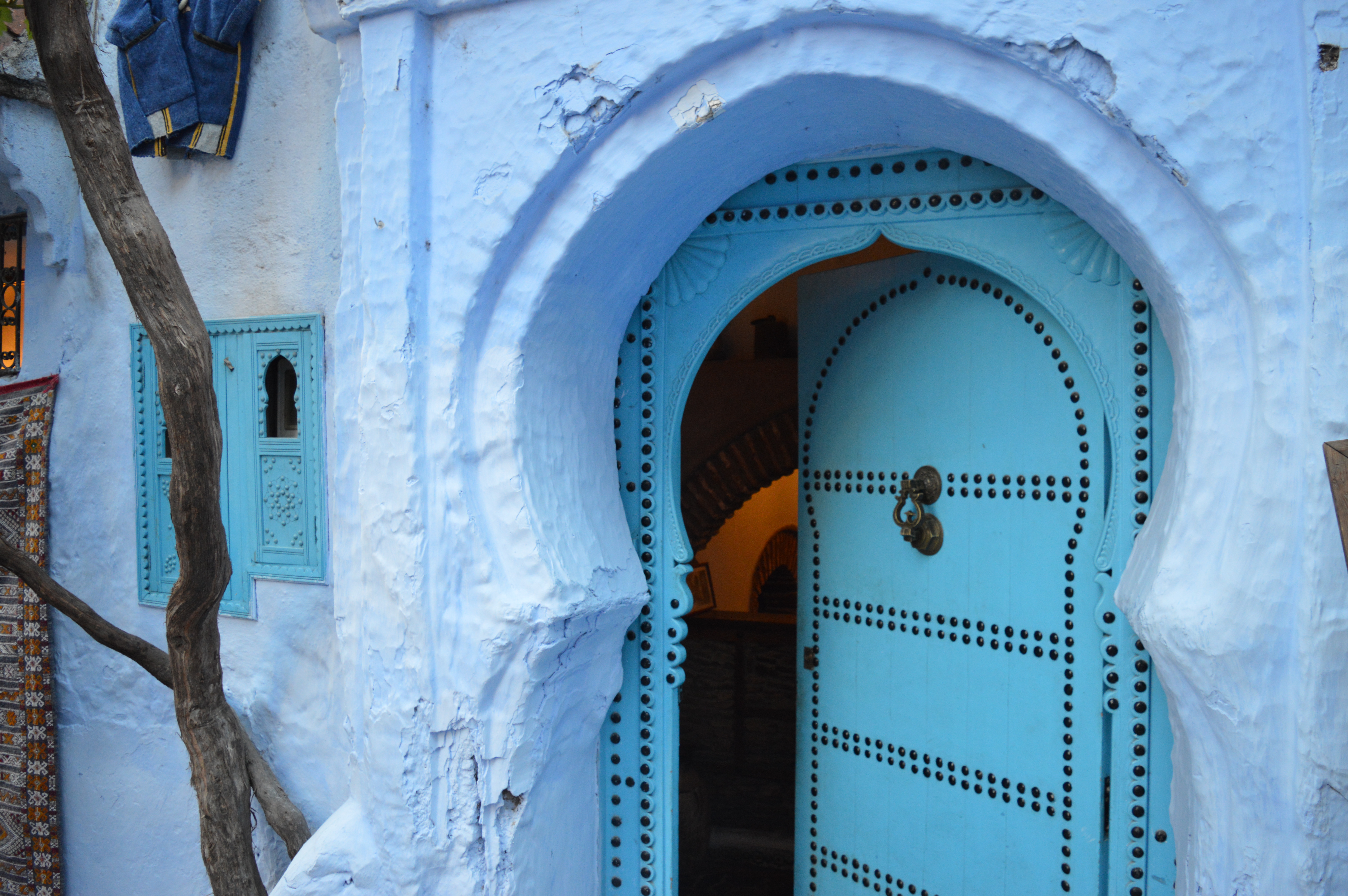
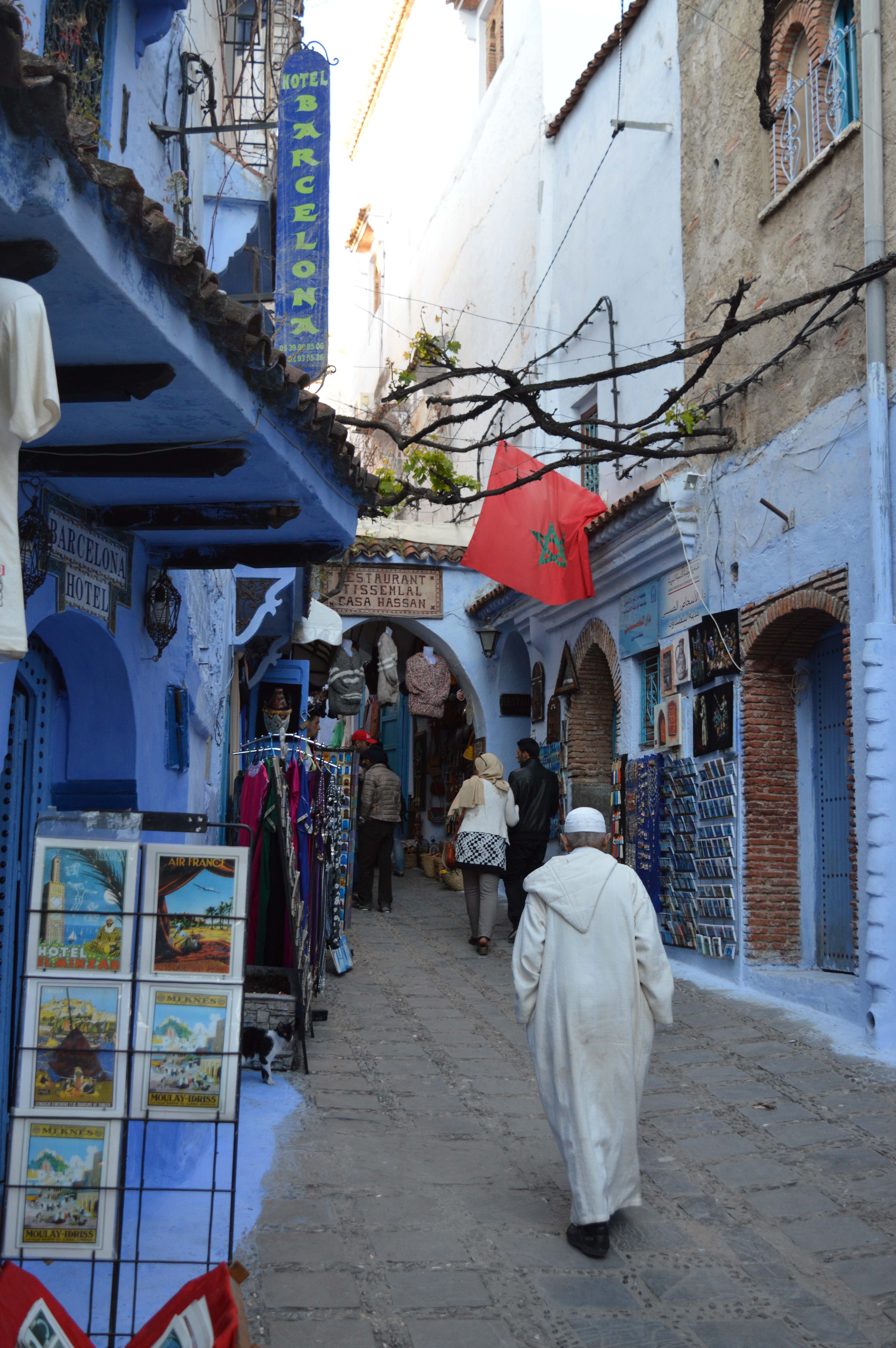
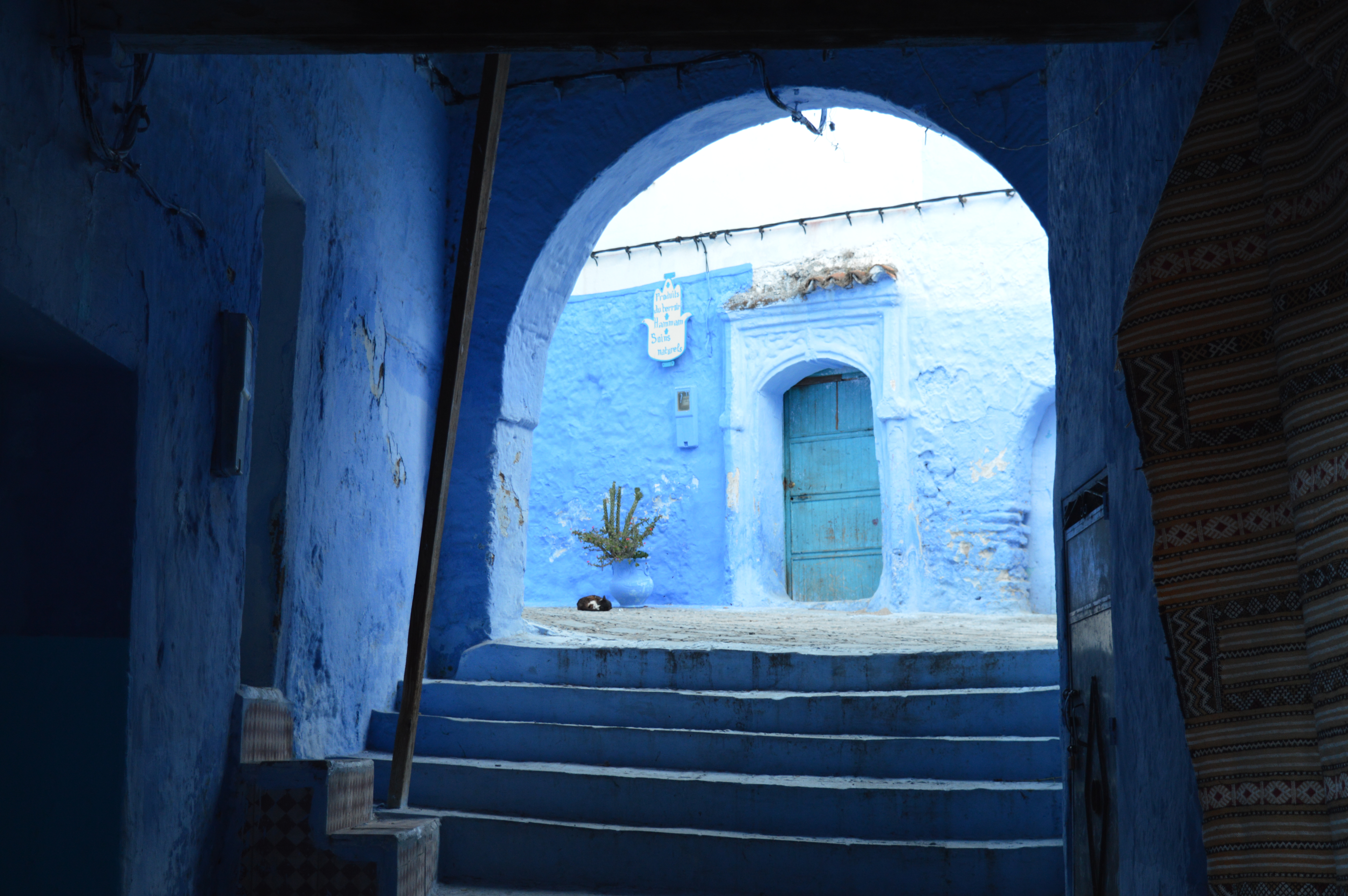
It’s a strange experience, wandering along an entirely blue street. The whole medina looks like something out of a picture book. You can almost hear the suspicious mutterings of the locals when the first travelers stumbled upon the town a century or so ago; a four hundred-year old refuge from the zealous rage of Castile. There are some doorways and passages that are instantly recognizable from the travel guides and Instagram accounts, and with good reason: they practically scream out for a photo.

And that’s where the trouble begins.

DSC_0454

Chefchaouen is, at the same time, a photographer’s dream and nightmare. Not only have you got some of the most beautiful colours to play around with that architecture can provide, but the villagers themselves are extremely photogenic and set off any street scene like saffron – if you feel like risking it.

DSC_0460

Chaouen has been in the mainstream tourist trade for some five years now and it’s inhabitants have had plenty of time to develop their own opinions about being posted all over the global social media on a daily basis. Being the cautious type, I’d rather avoid trouble and settle for those unoriginal empty street shots, taking proper dioramas only when all backs are turned. But even that, it seems, is sometimes a little too much to ask.

DSC_0369

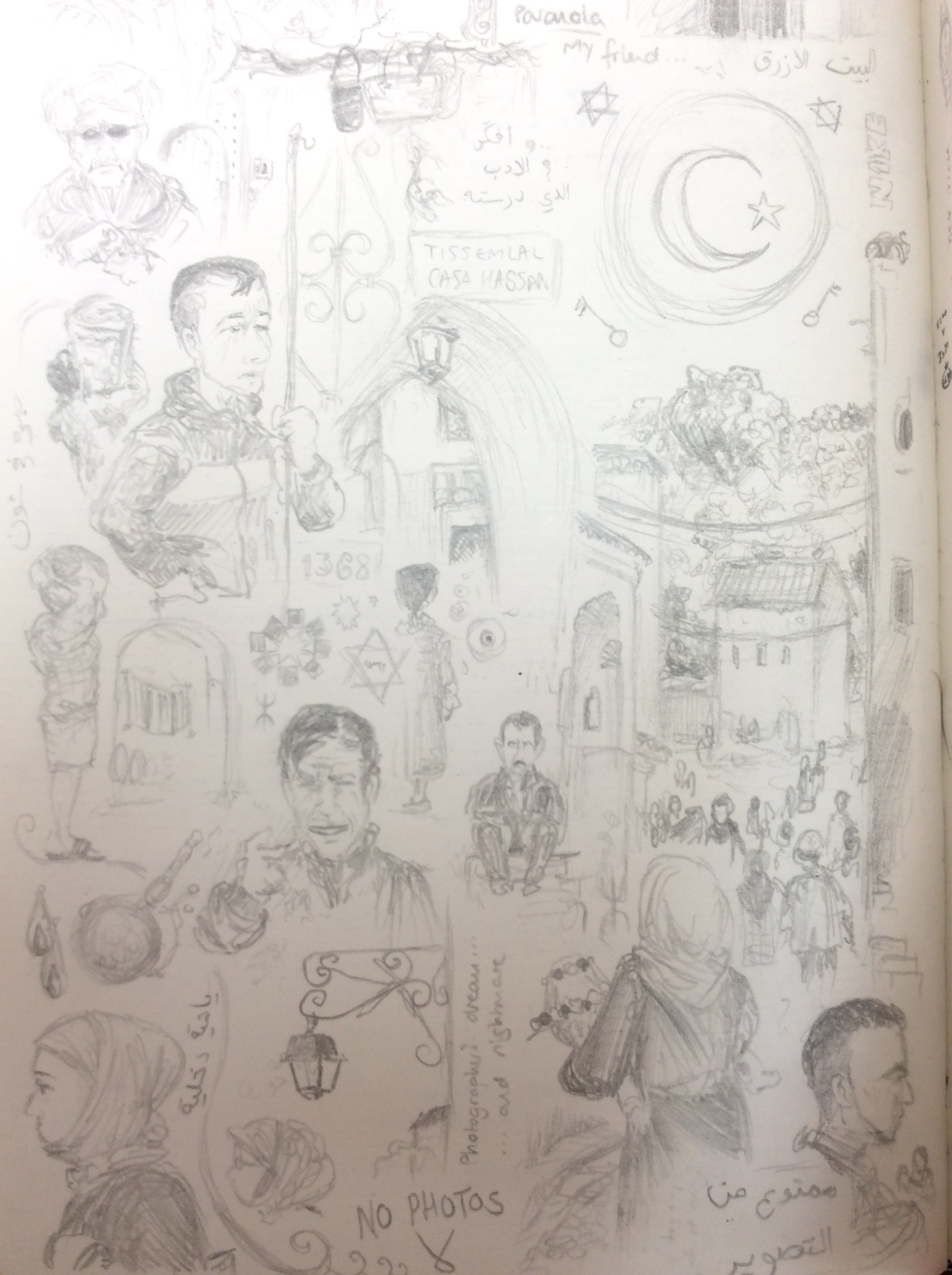
‘No photos! No photos!’ cries an old woman, rounding a corner just as I press down the shutter on what was mere seconds previously an empty street. I hastily stow away my camera as she grumbles to herself in Arabic about the likelihood of it cropping up on Facebook tomorrow morning. True to self, I’m left feeling so guilty for taking that snap one second too late that I end up doing the rest of Chaouen sans apareil. Thanks for that, jaddatii.

A common joke bandied about by Moroccans – aimed almost exclusively at people like me, I shouldn’t doubt – is the ‘no paranoia’ jibe, reserved for all those travelers who assume indifference when hailed in the street. I had this two or three times after my run-in with the camera-shy abuela, when I bemused a few stallholders by passing by a gorgeous Chaoueni door without reaching for my camera.

DSC_0564

I tried my luck again the following morning, having recovered from that little stumble, only to run into exactly the same problem when I was quite innocently photographing a lantern. ‘No! No!’ says a villager, climbing the stairs towards me. ‘No photos!’. Jesus, Chaouen, what am I allowed to photograph?

The result? I spent the entire day sketching instead.

Sketching appears to be harmless. I’m not entirely sure what the difference is between a sketch and a photograph – a true craftsman puts just as much work into both – but people don’t seem to mind you standing on a street corner and scribbling away for twenty minutes or so. You’d think after a couple of minutes that it’s fairly obvious that you’re the subject of a doodle when the artist in question keeps stealing a casual glance over your shoulder to the mountains behind, and that that might bother some folks… but apparently not. It even has curious passers-by stop and talk to you.

Perhaps that easily-offended old Chaoueni did me a good turn after all. It’s all too easy to become lost behind a camera.

DSC_0559

I have mixed feelings about Chaouen. On the one hand I do admit that it is rather gorgeous, as Moroccan towns go. For me it’s not a scratch on the more authentic Taroudant or Imoulas, but that has more to do with the thriving tourist traffic than the town itself. My main problem with it, it must be said, is what I term the Petra effect: when something receives so much hype that the reality can’t help but disappoint. It’s unfair to say that you shouldn’t rave about an especially beautiful place, but sometimes I’d rather make my own discovery than find the path trodden down before me by the world entire and the locals already soured by thousands of camera-toting holiday-makers. One almost misses the hippies.

DSC_0486

Like Petra before it, I’d heard so very many enticing anecdotes and seen so many beautiful photos of Chaouen that I wasn’t as bowled over as I probably should have been. I will, however, be back. There’s more to the town than I had time to see… and I have all summer. BB x

Jekyll and Hyde

One week from today, I’ll be sitting on the beach at Aqaba with term over and my labours temporarily at an end. Two weeks from today, I’ll be waking up in the comfort of my own bed once again, looking out over the Sussex Downs. Three weeks from today I’ll probably be back in Kent with the family, to see my brother in especial before he leaves for University. And one month from today, I’ll be sitting in the bus station in the sunblasted Plaza de Armas in Seville, waiting for the coach that will take me northwards to what is to be my home for the next nine months.

It’s all moving thick and fast roundabout now. I’m taking some time out in Ali Baba to work on the novel for a bit. Most everyone else has gone off in different directions: some to Wadi Mujib, some to grab a falafel lunch, others to one of the nearby cafes for some quiet study. I’m here in search of my voice, which I seem to have lost whilst I’ve been out here. I spoke to Andrew for quite a bit about this last night, reading back over some of my notes that I penned last year, in various states of emotion. Andrew gave me quite a jolt when he opined that my writing was a great deal better back then. Those aren’t easy words to take for somebody who’s set himself on the path to bettering his writing… How could this be, I wonder? Is it because I’m writing every other day, so I’m drip-feeding my thoughts rather than saving them up for a grand oeuvre? Or maybe it’s because I’m not finding enough time for myself to think properly out here in the city? I think there’s a bit of truth in both of those. My writing has become rather acerbic of late. Compared to all the self-help greenie moralising I used to throw about, my later work comes across as bitter, over-excitable, and above all else more than a little opinionated. I hope it’s not a lasting trend. I took the time to read over my notes a second time after I’d discussed them with Andrew and I’m a lot happier with them, though I know I wasn’t at the time. Maybe I’ll look back on these blog posts in the same way, and maybe not. My saving grace is that there was a victory achieved last night, however small; after comparing my writing, Andrew conceded that maybe sticking it out in a city really isn’t good for me at all. Because if there’s anything that might be described as a true window into the soul, it’s the way we express ourselves, poetry, paint or prose.

My summary of Amman a week ago was misinterpreted by some as an all-out attack on Jordan. I’d like to come clean on that point and confess that it’s really not that. In many ways, I’ve loved Jordan. The dizzying views up into the Golan Heights from across the river, the crashing waterfalls of Wadi Mujib and the stars stretched out like glittering velvet over the desert. Dana in all her majesty. Jordan is beautiful. And capital city though it may be, even Amman has its bright sides. In my melancholy, I’ve been unable to see it; largely, I guess, because I didn’t want to see it. It eludes me still. Picture this: you’re at the cinema, and the guy in the row in front of you turns around and asks you to stop kicking the back of his chair. You didn’t even realise you were doing it. Of course, you then spend the next five minutes wanting the kick the chair even harder – or is that just me? There’s a window into my mind and a half.

What I’m trying to say is that I have a bad stubborn streak, and this city – or any city, for that matter – brings it out of me like never before. When somebody tells me to stop doing something, or that I’m going to like something, my first instinct is to disobey. Watch Mean Girls, they say, ‘because it’s unavoidable… it’s part of our culture’. Instinct tells me therefore I cannot, under any circumstances, be made to watch it. Wait it out in Amman, they say, and try to learn to love it ‘because city life is just something you have to get used to… and Amman is actually a really cool place once you get to know it.’ Sod’s law dictates that it cannot be. It’s the old ‘I’ve come this far, I can’t turn back now’ line.

When you set it down in writing, it’s really quite pathetic…

What’s a guy to do? I reckon the thing that I’m missing most of all, perhaps even more than escaping the metropolis, is time. Time to think, to write, and to be myself. It’s not just my writing that got bitter out here, it’s my personality. It sure is helpful having people around to point that out before it gets rotten. The year abroad is such an important part of your degree that it can feel criminal to ‘waste’ even an hour of it. As such, the last two months have been almost non-stop. Wake up, class, study, go downtown, shopping, sightseeing, studying, repeat. I rarely have more than an hour or so to get my head straight and that’s seldom in the solitary silence that I crave. Maybe I’ve made myself too dependant on ‘me time’; if there’s one common feature in all of my notes from last year, it’s a heavy emphasis on the importance of ‘me time’. I was busy then, too, rushing from class to rehearsal to gig after gig – and yet, I still managed to find time to wind down every week or so and defuse. Not so here. And it shows, right?

Oh, there’ll be one last big reflection on everything that’s gone down out here in the Middle East before I go. I hope that will be a better read, too. A blog in itself is a funny old thing, pasting your thoughts and feelings for the world to see. But that’s what writers do, paper or pixels. Some of my best writing was set down when I was in the throes of a hopeless crush, some time ago. Or maybe it’s just because we’re human, and we all love a good gossip. I don’t know. I’m going to keep looking for my voice, and I hope that I can find it again before I leave this place, if just to leave you with Jekyll’s view on Amman rather than Hyde’s. I think that would be fair. (Oh look, I’ve gone and done a JK Rowling, leaving the explanation of the title to the very last line of the chapter. Now I really do need to get reading some more!) BB x


Tick Tock

Blimey, we’re on our fifty-fifth day already. Another two weeks and it’ll be almost time to head for home. In some ways it’s felt like every day of fifty-five, in others it’s flown by. I think it’s safe to say that we’re all ready to pack up and head for home, though. It’s been fun, but it’s been hard work too, and factoring in all of those post-exam rehearsals, I haven’t really had a decent respite since… Well, come to think of it, since the Christmas holidays. Ouch!

We had a lot of fun in class this morning acting out two or three of Nasreddin’s tales. You might also know him as Juha (جحا او نصر الدين). Plenty of opportunities to lark about. For counterpoint, we spent the second hour discussing the wonderfully British tradition of the stiff upper lip; that is, suffering in silence rather than causing anybody problems. Quite a world apart from the very hands-on Arab approach! Even though I’m not planning on returning to the Middle East in the near future, the 3amia classes (the local Arabic dialect) have been useful, if just for learning all the expressions and idioms which I adore. Here’s to the vain hope that some carry across into the Moroccan darija dialect, or even Egyptian.

Proof that I’ve been here too long is that I found myself slipping in and out of Arabic whilst trying to talk to my mum in Spanish over FaceTime. I’ve never had that problem before, not even with French. That’s probably a good thing for my Arabic, which has definitely improved since being here, but it’s doing no wonders for my mental state vis-a-vis my Spanish. Now that I’ve booked my flight it all feels a lot closer, a month and more away though it may yet be. A couple of days with my mega-drawing and it’ll all be over in an instant. I don’t know whether I’ll ever catch up at this rate; I’m already two years in arrears, so to speak. I’m going to have bite my lip pretty damn hard to stop myself from taking it out with me. But a promise is a promise: I’ll give it unti Christmas to get a feel for my new home in Villafranca de los Barros, wherever that may be, before I lug the monster out to Spain with me.

No, I haven’t started house-hunting yet. I’m kind of hoping to do that on foot when I get there. At the very least, I’m not making the same mistake I made out here in settling for a ridiculously expensive option for speed and safety’s sake. And no, I haven’t given up on my dreams of running into Lady Luck with flowing dark hair when I get there either. Or should that be Señora Suerte? Whatever. Miracles can happen. I’m not banking on it, knowing my luck, but it’d sure be a deal sweetener.

Ach, would you look at that, I’m setting myself up for a fall already! I’ve been rambling for a little longer than I intended to. I’ll love you and leave you for now. I need my afternoon nap as much as anybody. Andrew, in his wisdom, went straight home after class to take his. I think it’s time I followed suit. BB x