Peru: The Perfect Introduction to South America

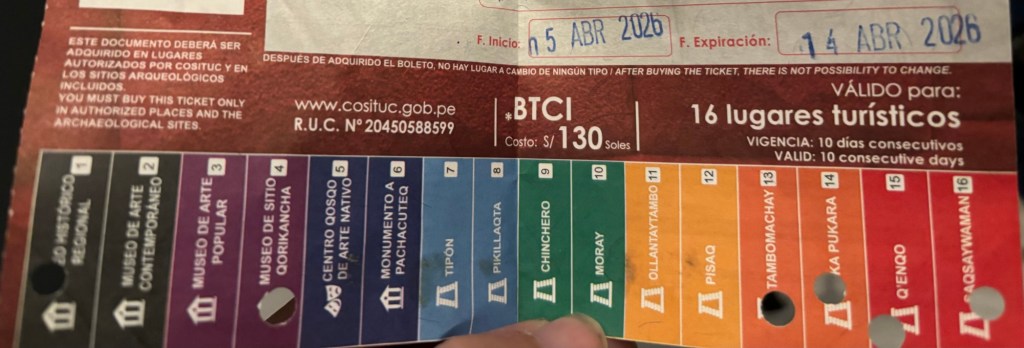
Aeropuerto Internacional Alejandro Velasco Astete, Cusco. 12.27.

My journeys around Peru have come to an end – and with them, my first foray into Latin America is complete. It has taken a dreadfully long time for this Hispanist to cross the Atlantic and put my Spanish to the test in the New World, but I have done it. I return to my day job with a much stronger understanding of the South American angle of my subject.

Doubtless I won’t have much to report today, between transit after transit (leaving Ollantaytambo for Cusco, Cusco for Lima and then Lima for New York and home). As such, I thought it might be worth doing a quick TLDR version of my adventures for anyone interested in visiting Peru. Read on if you’re curious.

Language

First things first: Peru is a Spanish-speaking country, but much of its signage and a lot of its citizens (even the beggars on the streets of Cusco) have a good understanding of English because of the sheer number of tourists who come here. I stood my ground and spoke Spanish almost all the time, but I reckon you’d probably be alright out here without being fluent in Spanish – though it really does help to grease the wheels, make friends of the locals and avoid coming across as a total gringo.

Safety

One of the biggest deterrents to travel around South America is, of course, whether it’s safe to do so. I can only answer with a resounding yes. I have spent three weeks lugging a very expensive camera around the country, which ought to have made me quite the target (and, for the record, I don’t look very Hispanic, let alone Peruvian) but I haven’t had any trouble whatsoever. Naturally, you need to keep your eyes open and avoid certain areas after dark (Lima’s Callao, for example) but that advice applies just as much to travel at home as it does here. In short: Peru is a very safe country.

Oh, and while I remember, it’s not the massage vendors in Cusco you need to keep an eye on. It’s actually the painting sellers, who are really drug dealers in disguise. Just so you know.

Food

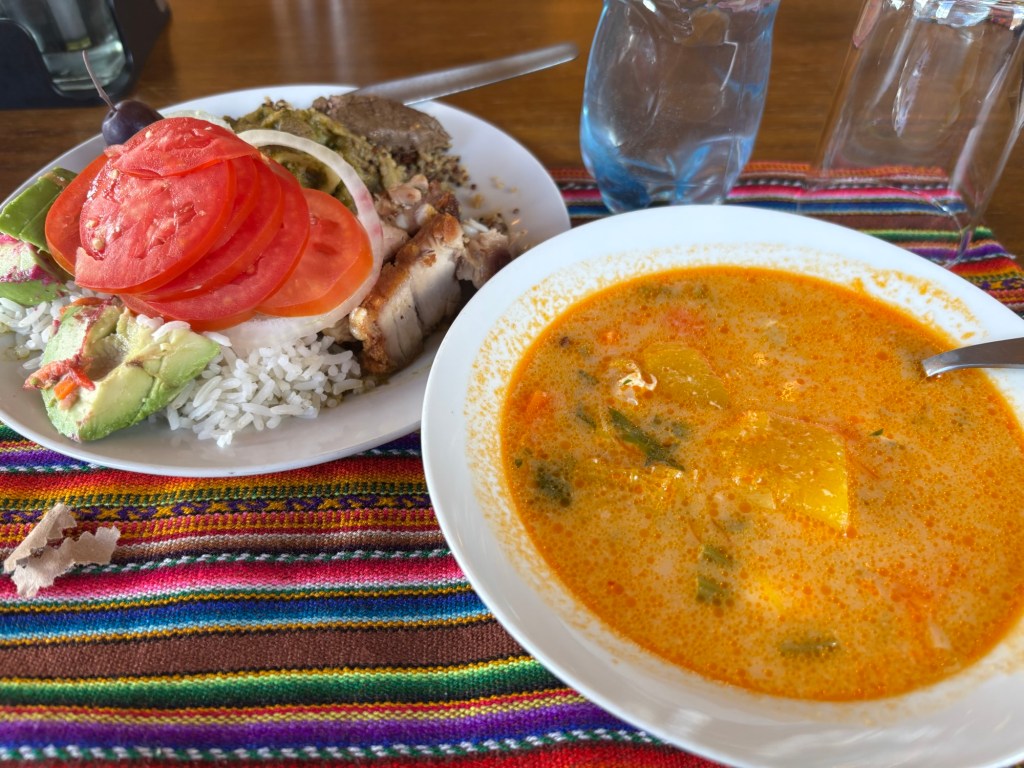
Peruvian cuisine is phenomenal. While I never did get around to trying the national favourite of cuy frito or fried guinea pig (too many bones) I have eaten some of the most wonderful dishes ever out here. Whether you’re on the coast and deciding between spicy ceviche or aromatic parihuela, or up in the mountains and sampling the delicious lomo saltado with a glass of chicha morada, there are a thousand flavours to choose from. It’s also a very vegetarian friendly country, with plenty of healthy meat-free options in most of the major cities. I come away from this place with a new obsession for amaranth in the form of kiwicha – a deliciously healthy Peruvian porridge spiced with cinnamon and clove. If I can get a hold of the ingredients back home, I’m teaching myself how to make it.

Weather

If you travel to Peru at this time of year (March/April), you need to be prepared for everything. Light clothing for the coast, where it can hit 30°C and the sun is fierce. Winter wear for the mountains, where it is a full twenty degrees colder, especially if you’re planning on hiking up to the snowbound peaks. Rain gear, for sure, as the rainy season doesn’t end until May. Finally, a high factor sun lotion, because whatever the weather, the UV risk is high here.

Cost

Getting to Peru is the expensive part – but there are ways to reduce your costs. By flying from Madrid, I took about £200 off the total cost, which was still a money-saving hack even after factoring in a flight to Madrid and a night there. I’m not sure whether the flight I found was anomalous, but there is definitely something to be said for waking up at 4am and checking SkyScanner – both of the deals I found were only that price in the small hours of the morning.

Once you’re here, it’s unbelievably cheap to get around. I’ve played it safe with the limited time I had and flown LatAm between my three main destinations of Lima, Arequipa and Cusco, but it still worked out very affordable. Travel by bus is cheaper still – considerably – but it does entail a lot of overnight rides that can last for more than ten hours. Uber is also an affordable and safe way to get around, especially to and from the country’s airports.

In total, I think I’ve managed to stick to my budget of £2000 – including flights, accommodation and everything in between – but I know I could have done it for even cheaper.

Tours and Activities

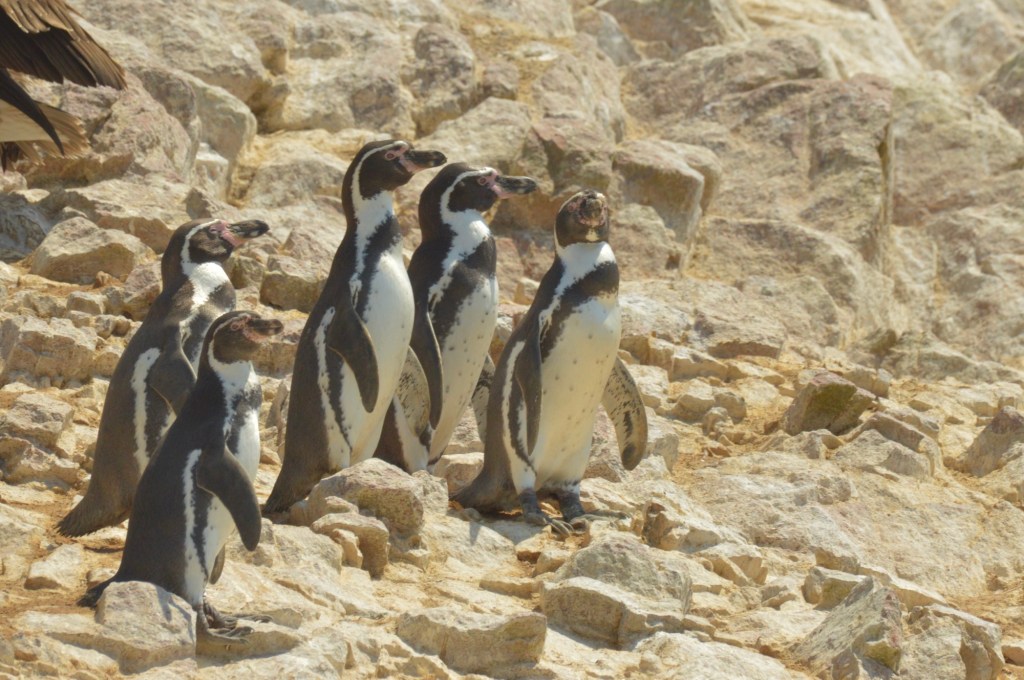
With the exception of a few days’ roaming, I have relied heavily on GetYourGuide out here, and it has not let me down yet. If you’re the type that likes everything planned out before you go, you can organise all of your activities before you even set out. Most of the day trips are rarely beyond the £40 mark and are great value for money in terms of what they allow you to access: faraway attractions like Colca Canyon and the Islas Ballestas are considerably more achievable thanks to the myriad of day trips on offer. If you’re short on time, I can’t recommend PeruHop more highly – they were incredibly warm and professional (a rare combination).

And of course, there’s Amazon Wildlife Peru. I loved my 6D/5N tour to Manu National Park so much that I’m seriously considering coming back for another tour with them someday. If you’re in the market for an Amazon adventure with phenomenal cooking but you don’t fancy a malaria-ridden location that requires a whole lot of jabs, check them out. You won’t regret it.

Wildlife

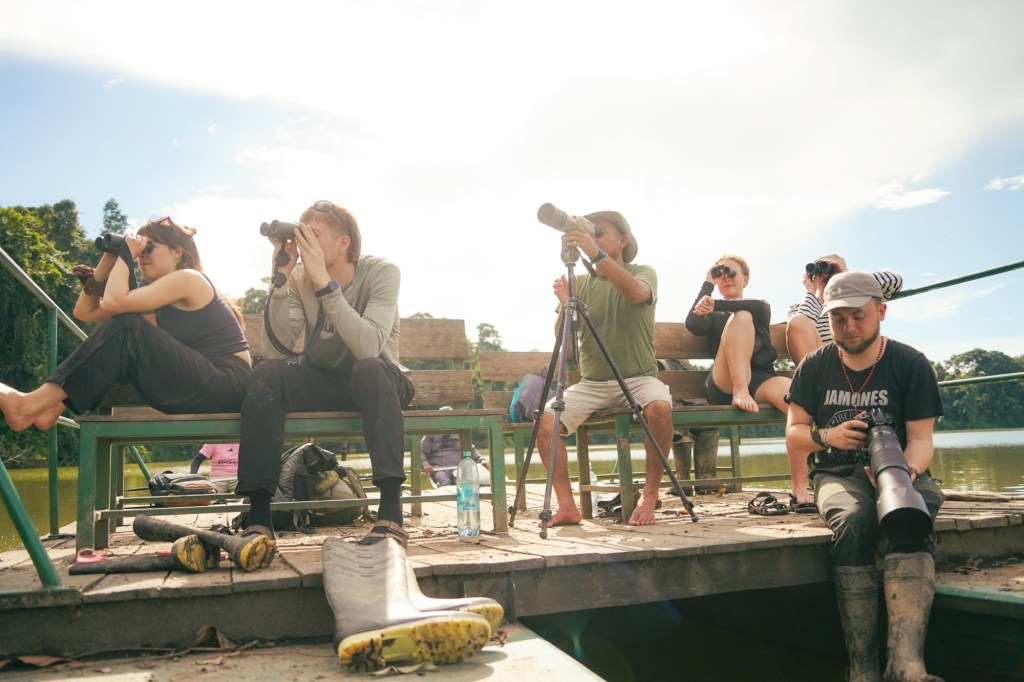
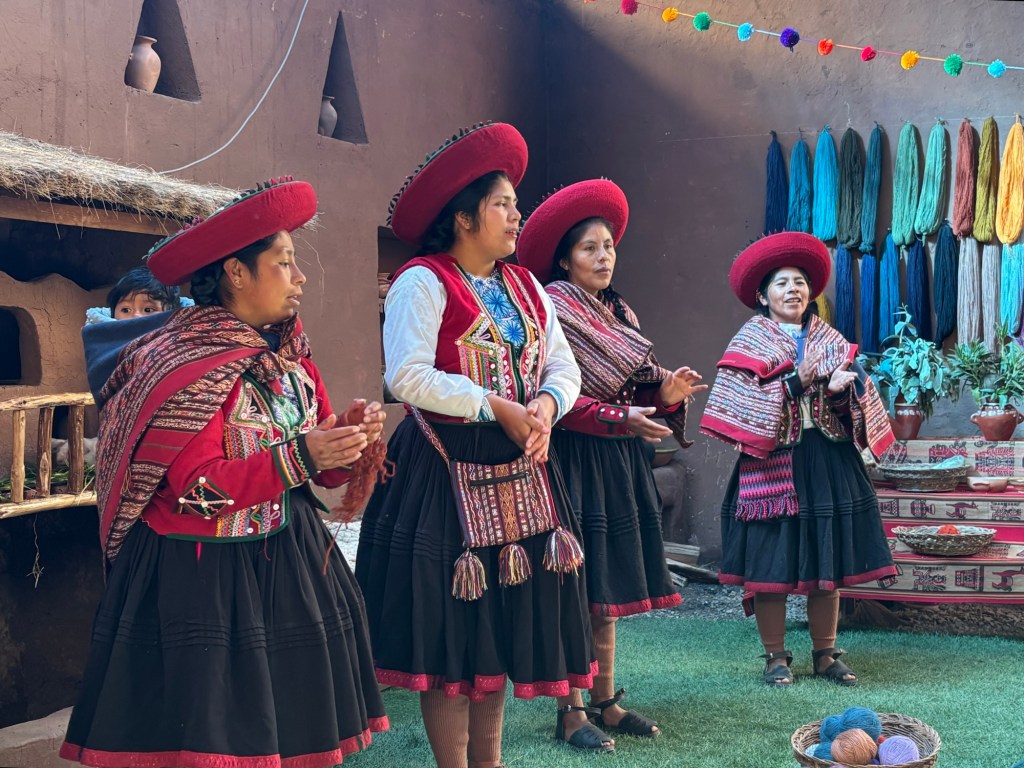
If I’m qualified to report on anything, it’s this. Peru is a naturalist’s dream come true. Over nineteen days, I’ve seen nearly three hundred species of birds, as well as dolphins, tapirs, capybara, black and white caimans, a fer-de-lance snake, bullet ants, stick insects and, of course, giant otters and monkeys galore. I could have seen even more if I’d done a few tailored birding excursions, which I passed up this time around (I thought 300$ for a private tour in search of a few endemic passerines was hard to justify for someone who isn’t really an anorak).

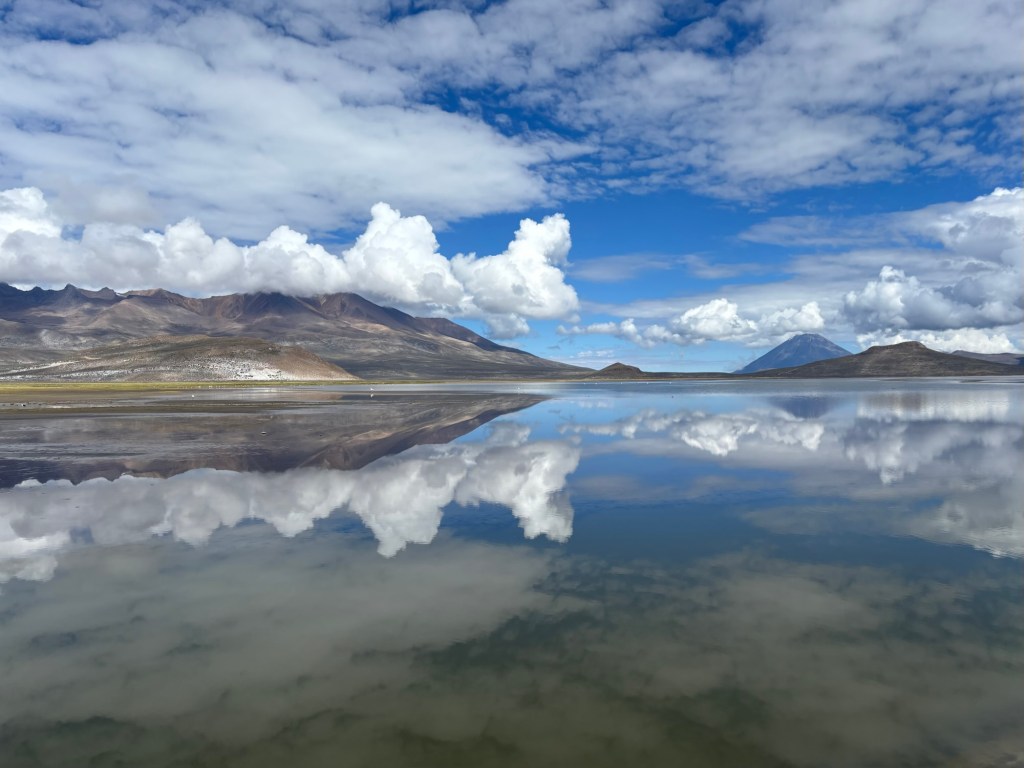
Peru has it all: deserts, coastlines, marshes, mountains, salt lakes, cloud forests and rainforests. Even if you only limited yourself to a week split between Cusco and Manu, you’d still see more animals than many people do in a lifetime.

I’ll be back.

Things I will miss

  • Kiwicha for breakfast
  • Coca tea
  • Hummingbirds absolutely everywhere
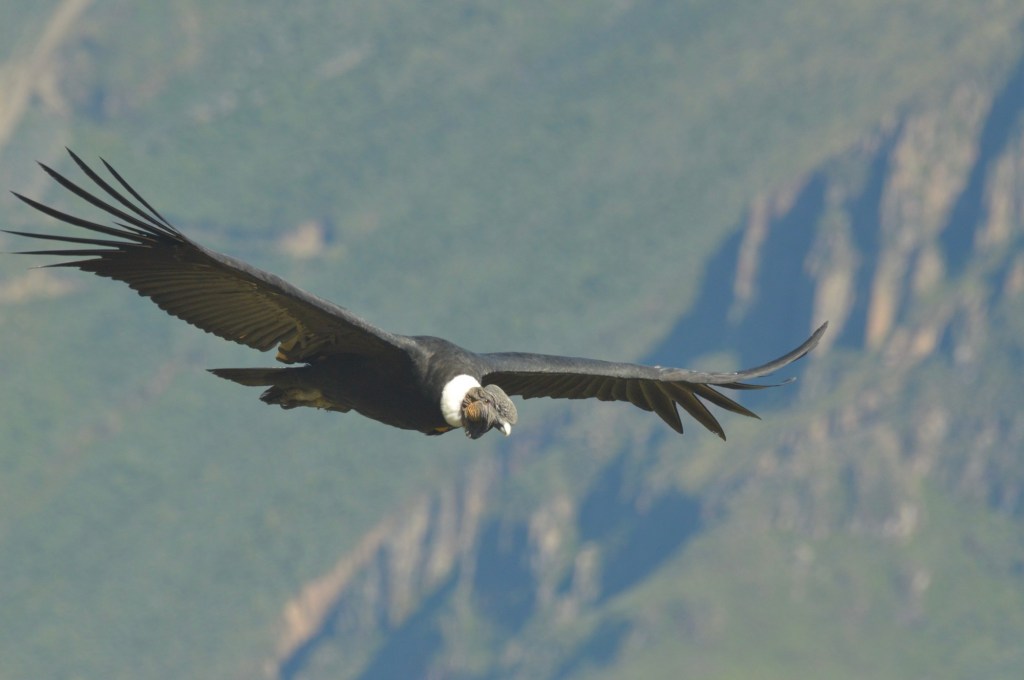
  • Condors
  • The snow-capped peaks of the Andes
  • Huaynos (very romantic Andean music)
  • Being visible on a dating app for a change
  • The height of the average Peruvian
  • Manu National Park

Things I won’t miss

  • Gringos in ponchos (it’s not a good look)
  • DEET-resistant biting flies
  • Rain that lasts longer than three days
  • Seceo (give me a Castilian ethe any day)

I think that’ll do for now. It’s still a couple of hours until my flight to Lima starts boarding. I’ll ask the waitress for a tres leches cake when she comes around. I could use the energy! BB x
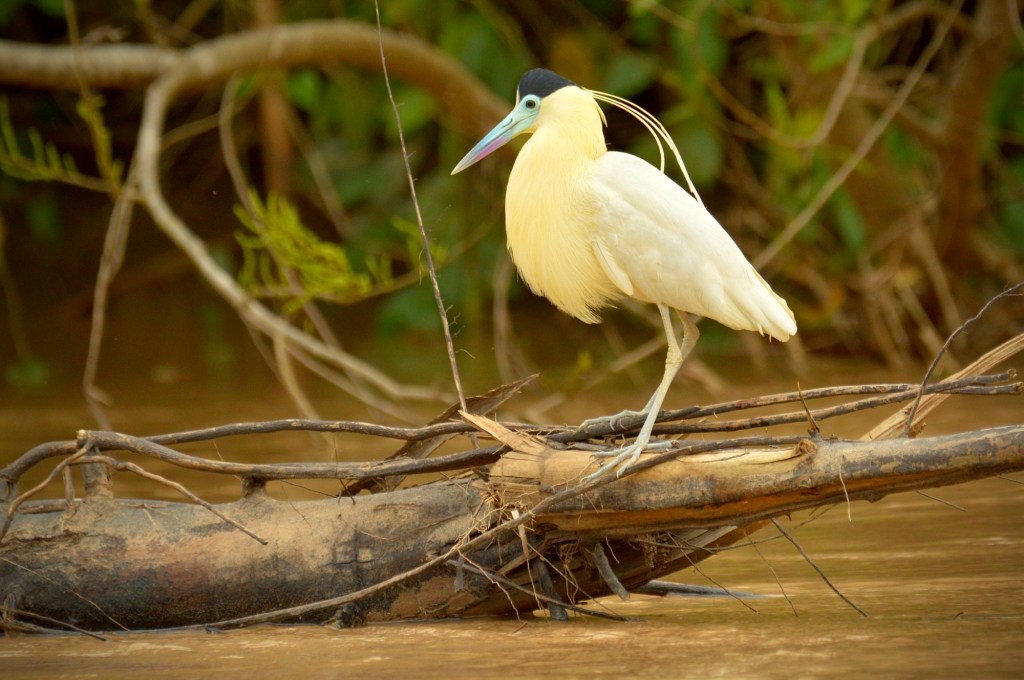
Strangers in the Forest

Bonanza Lodge, 20.13.

The great Amazonian adventure is almost over. Like the macaws flying in shrieking groups across the river, I too will soon be traveling away from here. I am starting to get cold feet about leaving this place. I don’t have a choice, as I’m with an organised tour, and getting here without one would be next to impossible, but I can’t help feeling greatly attached to this place. There is something eternal about forests that pulls you in. Maybe it’s an inherited memory from years ago, before our ancestors left the shelter of the trees and walked out into the world.

Which is a very fitting image for what happened today.


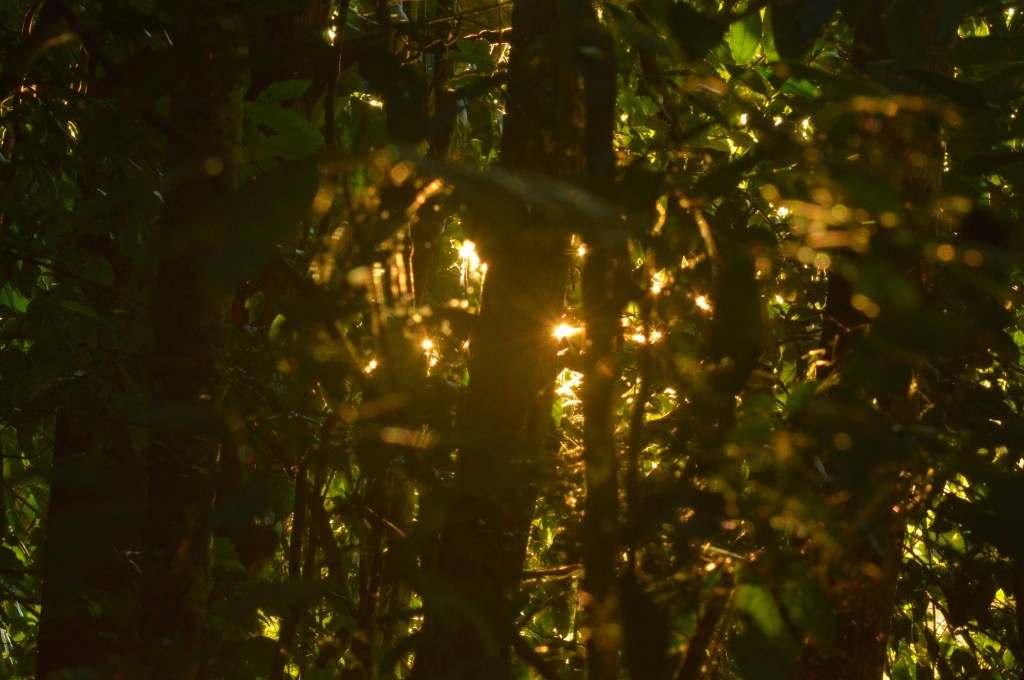
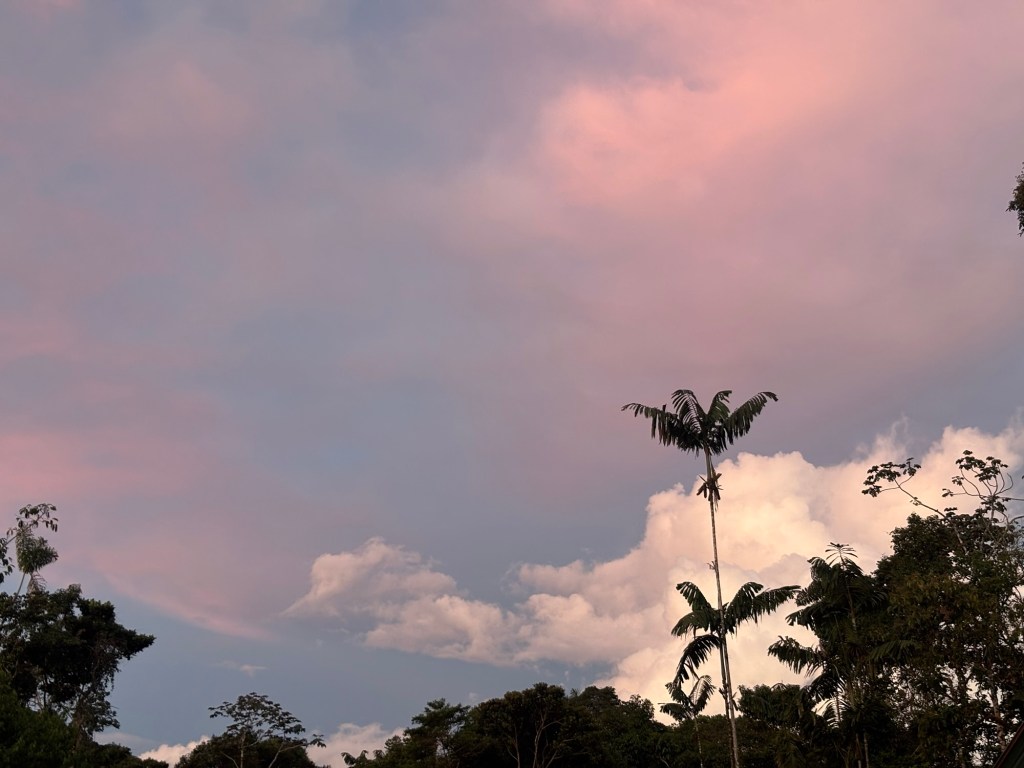
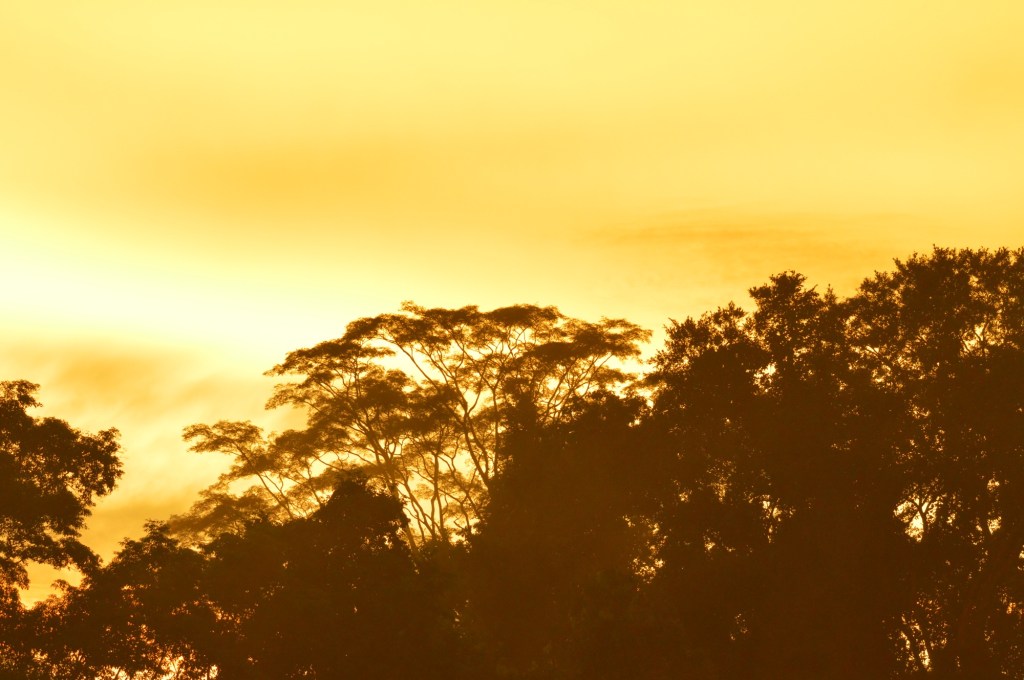
Dawn breached like a golden whale through the clouded sky, bathing the forest in its hopeful glow. I haven’t had as many Amazonian sunrises as I’d have liked due to the inclement weather, but this morning made up for it.

We stopped off at the ranger station to sign out and fill out a couple of surveys. The posters in there about the pet trade stabbed at my heart like they did the first time – and, just like then, I seriously wondered what I was doing teaching when I could be out here, fighting for what I believe in. If I hadn’t pinned all my hopes on finding Her and raising a family, this is where I would be. Somewhere like this, anyway.

Flights of fancy aside, we set out for the river confluence we forded the other day, only this time we sailed downriver for a kilometre or so to reach Boca Manu, Rive’s hometown, so that he could vote in the presidential election.

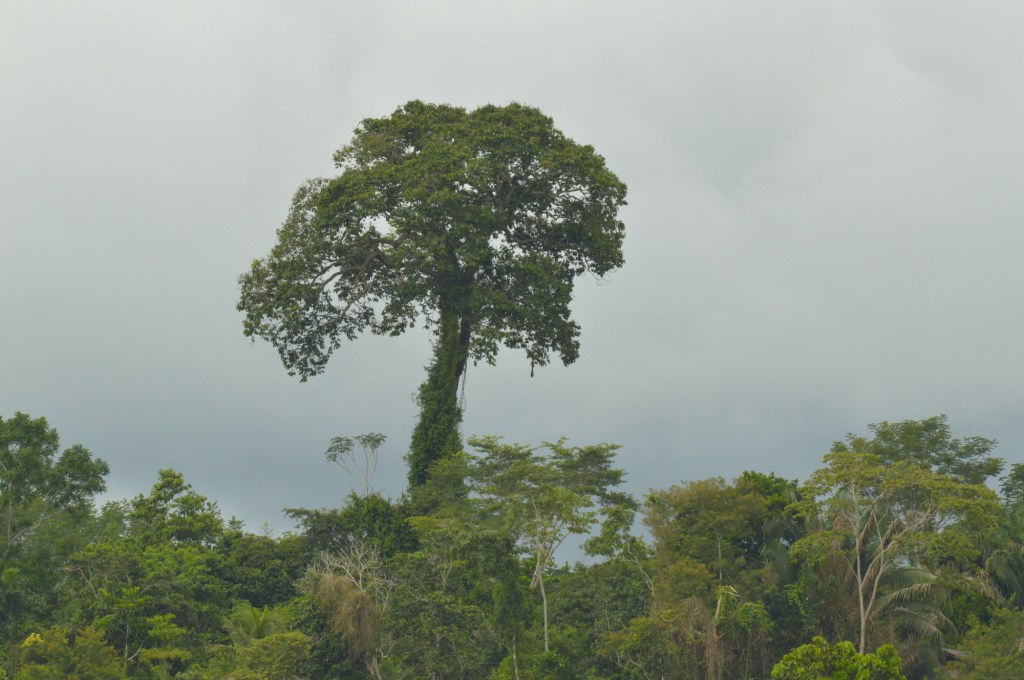
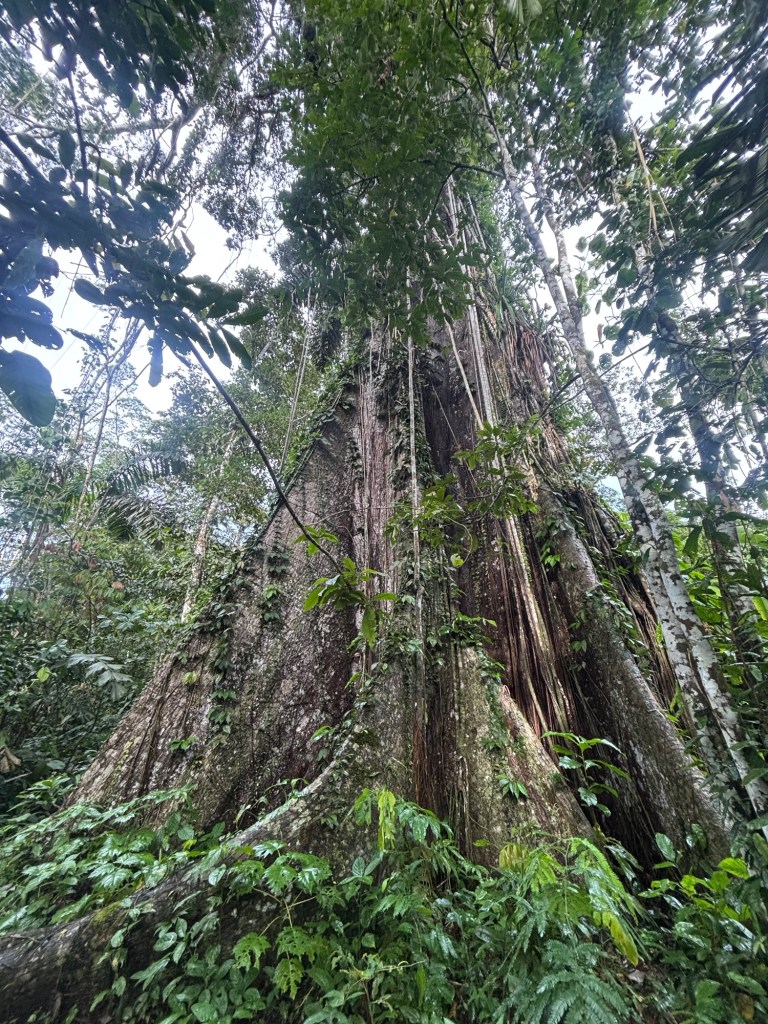
I had almost forgotten that the rest of the world was still turning within the timeless shelter of these mighty kapok trees. Here, life goes on as it has done for millions of years. The sun rises over a misty canopy and sets to the shriek of macaws and the chirping of a thousand crickets. Politics feels so petty in a place like this.


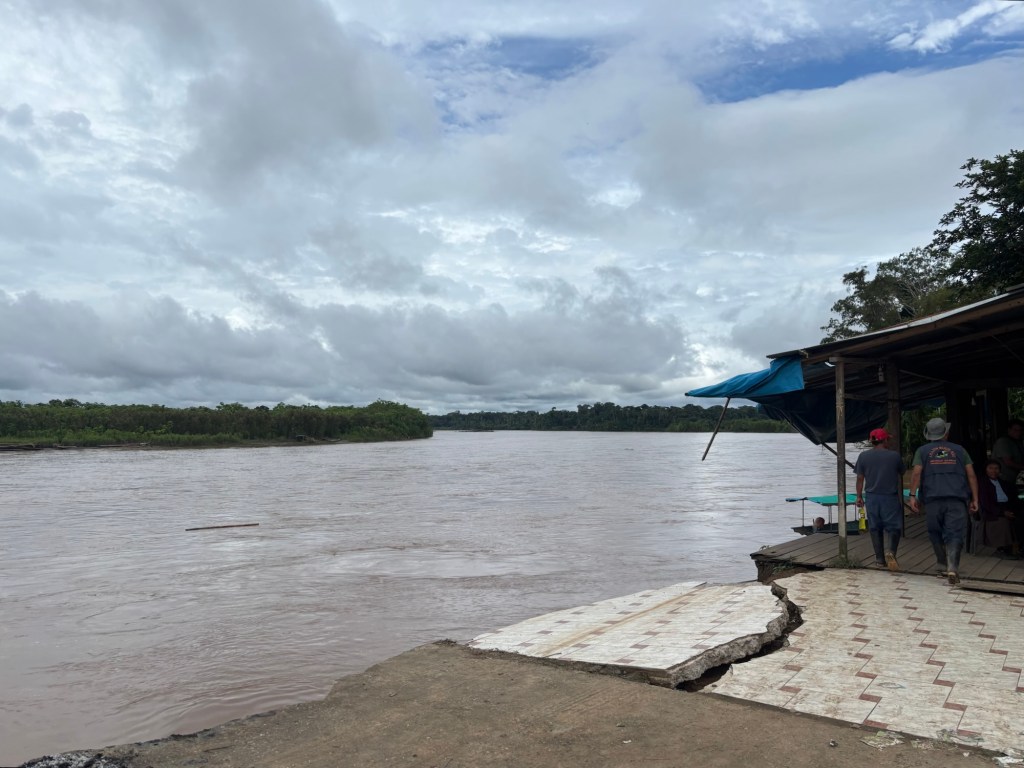
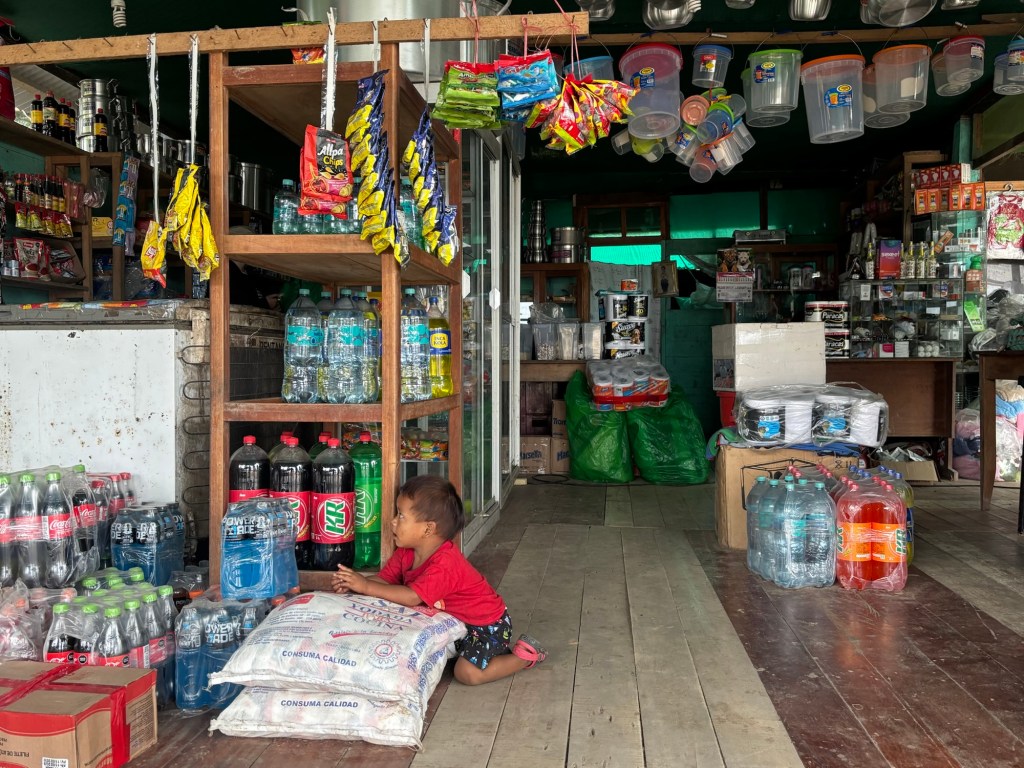
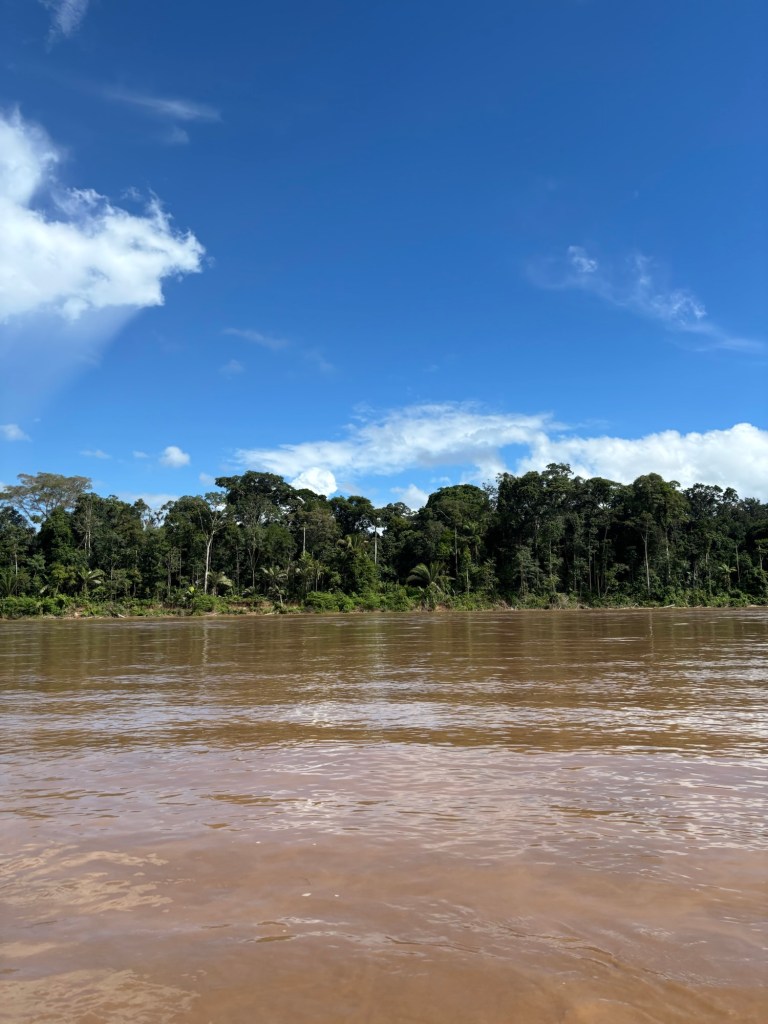
Boca Manu is a world away from Cusco. This largely native community sits on the edge of the national park, where the Manu river meets the mighty Madre de Dios. So fierce is the flow of the combined rivers that the town is steadily retreating into the forest. The jetty is a few slabs of wood fastened to several oil drums with a plank bridge leading up to a tiled section of the riverbank that was once a couple of houses, long since lost to the river. Only the scaffold of a single wall remains, and it has been converted into an advertising post for the local ferrymen.


My companions set out for a walk into town while Rive went to cast his vote for one of the thirty-six contenders for Peru’s next president. I followed, albeit at a distance. From the way people stared, I don’t think Boca Manu gets many visitors. It’s certainly wouldn’t be on the itinerary if not for today being election day.


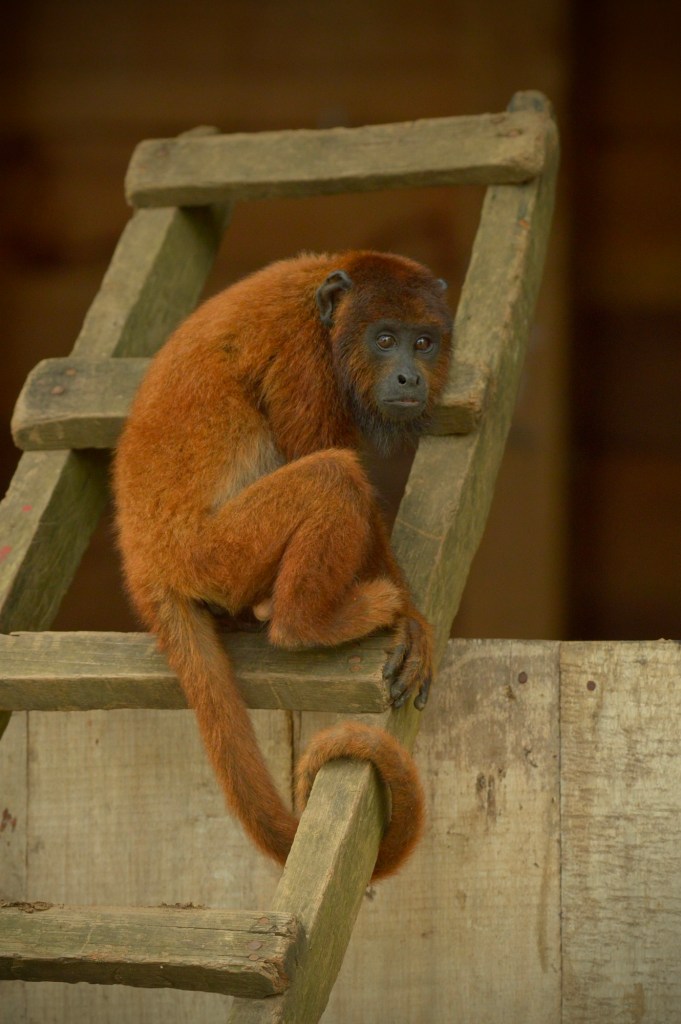
For the second time on this trip, I saw a case of jungle domestication. If I hadn’t met the resident macaw at Bonanza, I might have been more startled when a red howler monkey suddenly appeared out of nowhere, slipping through a farm gate and into a kitchen window, before the monkey’s owner, a small boy not much taller than the monkey itself, came back out with the howler wrapped protectable around his back.

It would be so easy to judge with a European eye, and yet I am sure these animals mean more to the locals here because they can name them. In our rush to become civilised, we have become worryingly nature-blind in the West. If I should be so lucky as to have children of my own one day, I will try to teach them what I know. When you a put a name to something (or even someone), it suddenly matters a whole lot more than it did before.


I dozed off on the boat, but was stirred back out of my reverie by a slightly cautious word from Rive: “Native people, on the bank of the river”.

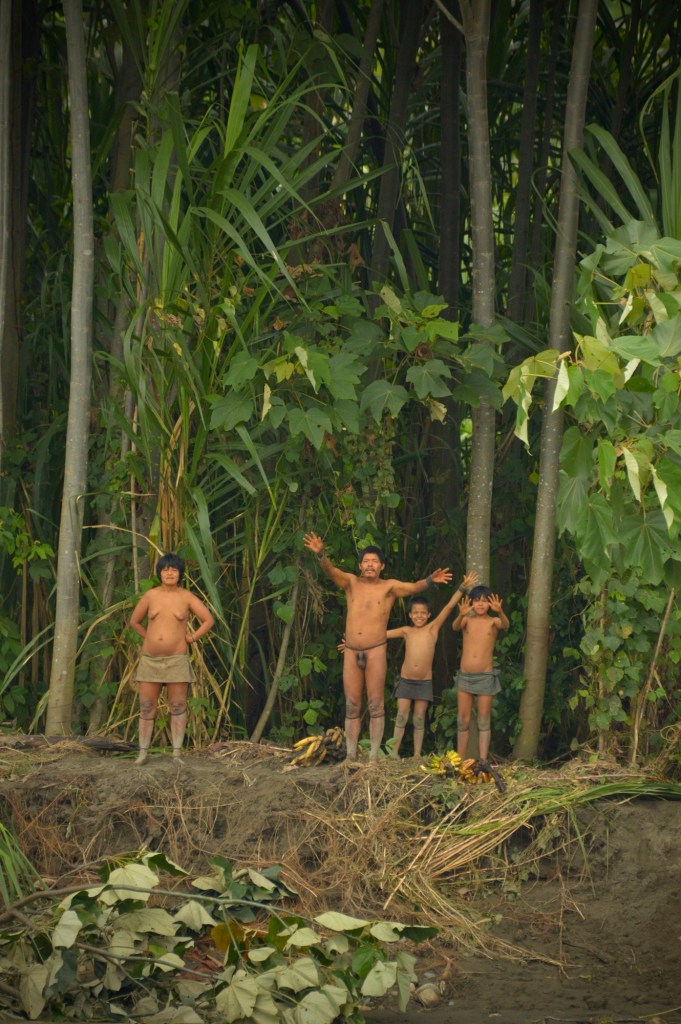
I looked with my eyes first. Sure enough, there they were: brown figures at the forest’s edge, watching us. A man and woman, dressed in little but string and strips of cloth, flanked by a couple of grinning children. They stared at us at first, and then waved enthusiastically in our direction. A fifth child watched from the shadow of the trees, one finger in his mouth, unflinching.


I counted five, but Rive assured us that there would be a great deal more hidden away in the trees who would appear if we got too close. We respected the law of the land and moved on, feeling the curiosity of their eyes burning into our backs as we sailed on up the river.

Manu National Park is home to an unknown number of indigenous uncontacted tribes, some of the last people on Earth to remain beyond the reach of civilisation. Some were driven into these protected forests by conflict with farmers and miners over the Brazilian border. Others have been here since long before the borders of the park were drawn.

A Proto-Arawak people, the uncontacted tribes are divided into family groups throughout the vast area of forest stretching west from the river to the cloud forests at the foot of the Andes. They are only very rarely encountered on visits to Manu, which is all to the good, as their interactions with us in the past have not always been friendly. Camera traps around the lakes show that they have been known to trail visiting tourists on their walks through the forest, running silently through the trees and making their presence known only by their splayed footprints in the mud and, sometimes, bows, arrows and woven baskets left behind in a panic.

It’s dark out there now. I wonder what that family is called. What hopes and ambitions those young children have. The tribes are known to fight and each other over each other’s women – an important economic force in these communities, since more women means more babies, and more babies means a stronger community. Another side note that we have chosen to ignore in the West.


Back at Bonanza, the weather continued to be exceptionally kind – an apology, perhaps, for all those days of rain.

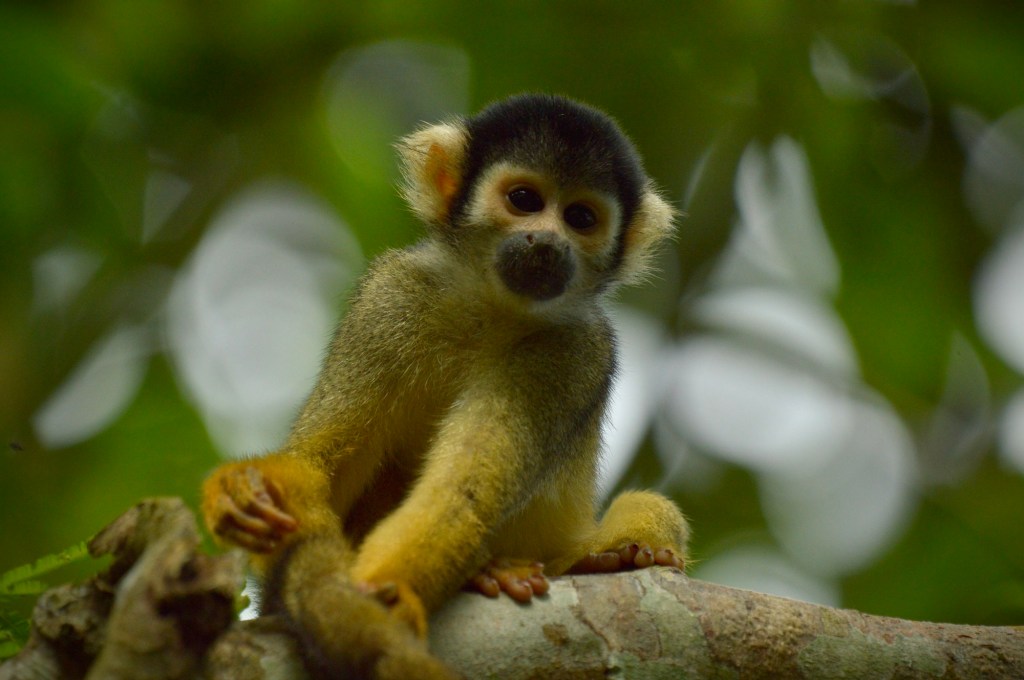
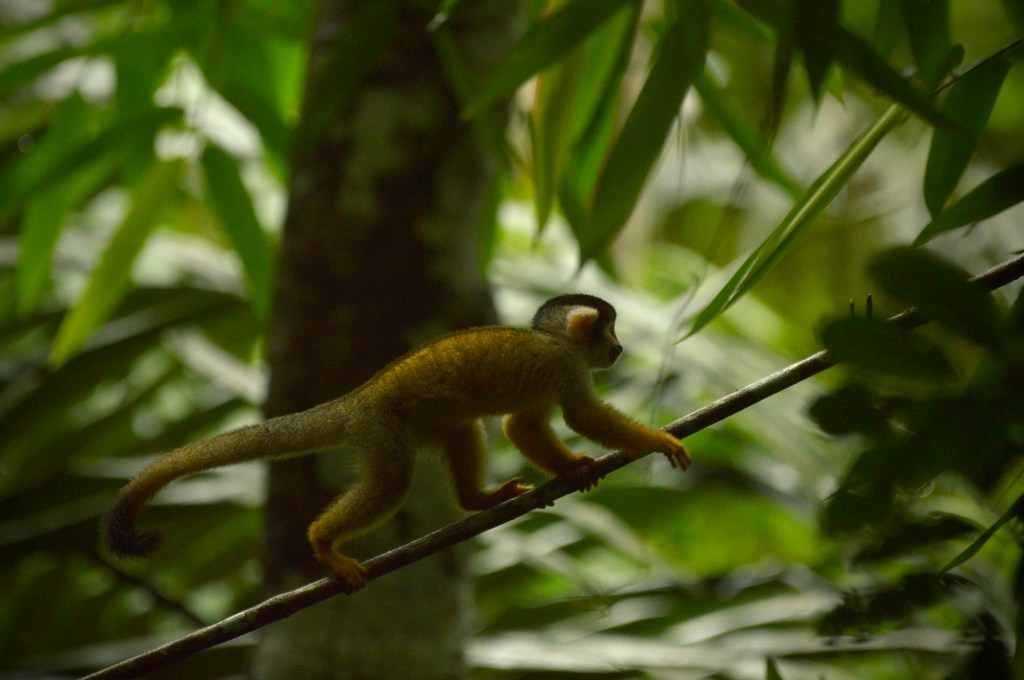
We had two hours to rest. I spent them exploring the grounds, chasing after a sunbittern that was lurking around the flooded ditch by the lodge and watching an adorable troop of squirrel monkeys feeding in the trees just behind my cabin. I’d forgotten how hard they can be to photograph as they move numbly through the canopy, especially once they’ve become used to your presence and no longer stop to stare at you out of curiosity.

I wonder – do they look at us the same way we looked looked at those native people at the edge of the forest?


After a chat with Rive about the natives over a bowl of Bernadino’s homemade snacks, we went into the forest to look for bats roosting in the great kapok tree. The flooded creek was still nearly waist high in parts, so we couldn’t reach the observation tower to watch the parrots flying in to roost at sunset, which was a shame. Seeing a different kind of bat made up for it though.


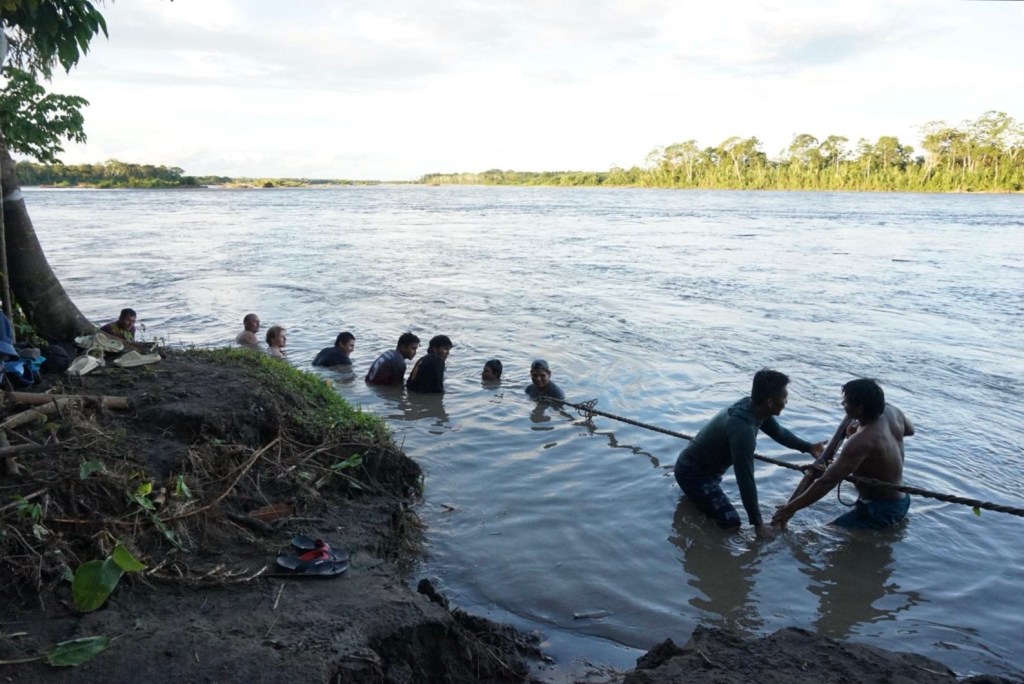
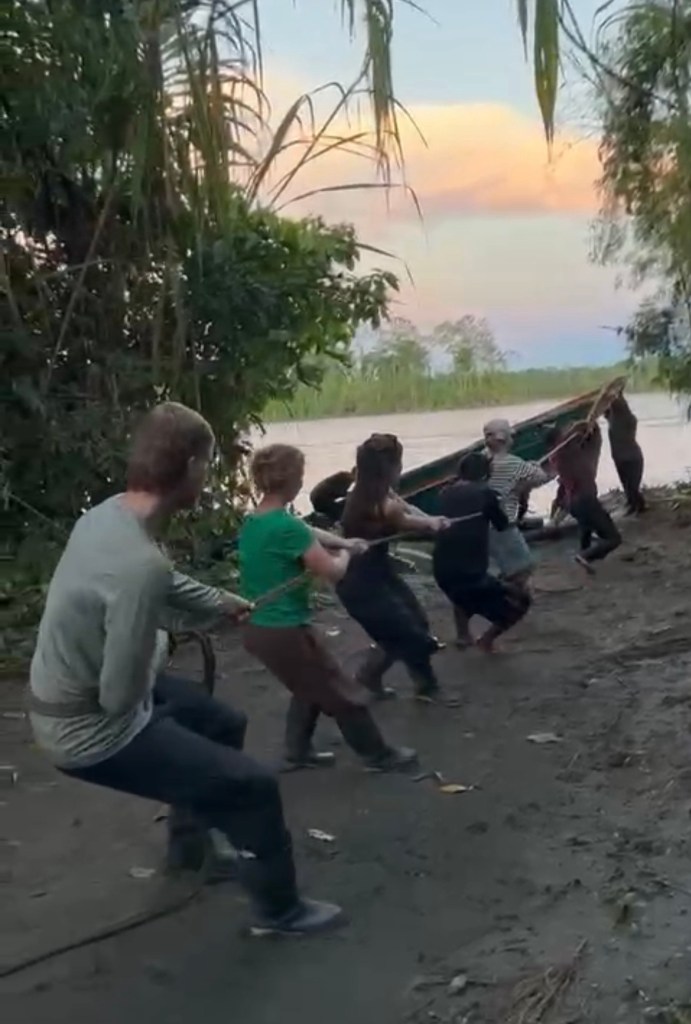
Instead, Rive suggested going to help the lodge’s boys retrieve their sunken fishing boat from the river’s edge. We had noticed it on the day we arrived, visible only by its prow sticking out of the water. Weighed down with the sheer volume of rain the night before we arrived, it had tipped over and the river had done the rest, filling it with silt and stones.


I was delayed because I had set out into the forest to try to track down a tinamou that was calling just metres from the forest path. They’re exceptionally hard to locate, though, being cryptically camouflaged and calling from the shelter of the thickest parts of the undergrowth. To make up for my lateness, I stripped down to my shorts once I got there and got into the river up to my neck with the rest of the men.

It took a team of twelve men in the water and another support team of gringos on the rope up on dry land the best part of half an hour (and no shortage of pivoting and digging) to get the job done. Led by our captain, a burly native man from Atalaya who engineered a makeshift tourniquet using logs and thick rope to drag the skiff closer to the shore, we eventually managed to haul the fishing boat up and out of the mud. It felt good to be helpful, rather than just coming and going through Manu like any other passive tourist.


I also learned at first hand why the uncontacted tribes have remained so, with civilisation so close at hand. Swimming from one side of the sunken skiff to the other, I found myself more than a metre from the riverbank. It dropped steeply all of sudden, deeper than I could reach, and the force of the current dragged me downriver. The only reason I didn’t get carried far was because I wasn’t that far out and I had the boat to hold on to.

I’m not the most powerful swimmer, but I don’t think even the strongest swimmer could fight a current that strong. In the dry season, the river isn’t quite as high, but it still flows with the cumulative force of hundreds of miles of rainwater, and the ground here is sloped as it climbs up into the cloud forests and becomes the Andes once again, adding to its momentum. I don’t think I’ve ever seen a river where the water wasn’t level before today. I’ve certainly never been in one that was quite so strong.

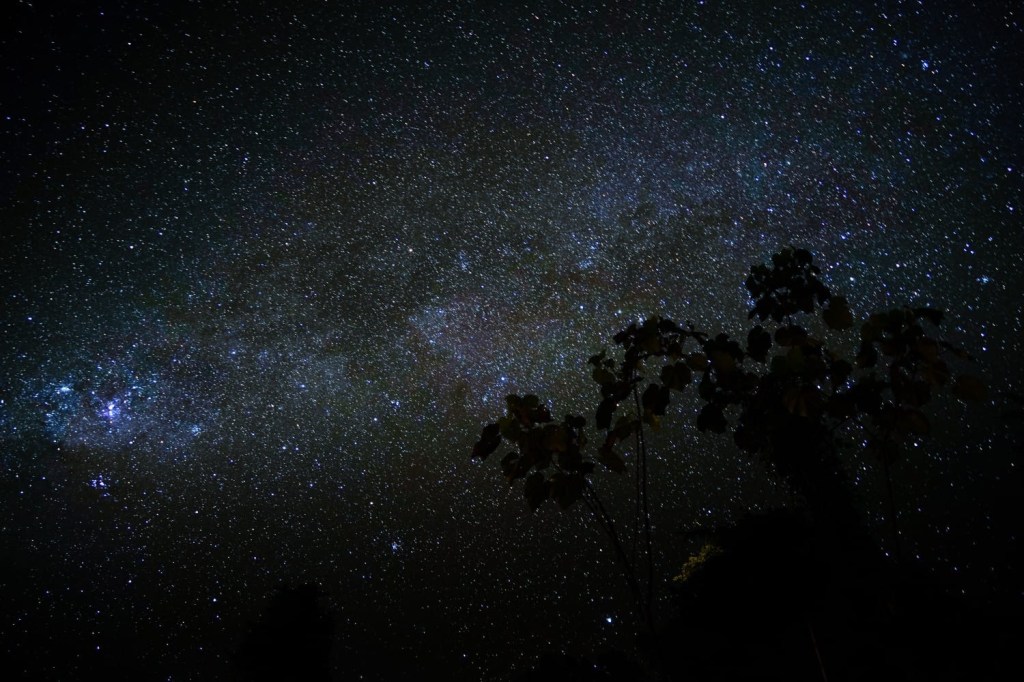
Dinner felt earned after that – as did the cold shower immediately afterwards. I stuck around outside for a while before heading back into my lodge to sleep, as the night sky was too good to miss. Accompanied by the eerie flash of fireflies below the skyline, an enormous arm of the Milky Way cut right overhead, flanked by strange new constellations that I’ve only ever read about in books, like the Southern Cross. I might have seen it briefly in Uganda, too, but I was only south of the Equator for a few days. And anyway, that was a very long time ago.


I don’t know when I’ll see a sky this clear again. The only light here comes from the dim lamps in one or two of the lodges, and the nearest town, Boca Manu, is many miles away to the north. So here, deep in the Amazon rainforest, you can see the night sky as it was always intended to be: immense, magical and unspoiled, like the rainforest all around me.

I don’t want to go. My clothes would really appreciate being somewhere higher and drier (especially after my dip in the river), but this place has got into my heart like nowhere else in Peru – and I’ve adored pretty much every part of this country that I have seen.

But going is tomorrow’s business, not tonight’s. I should get some sleep – we have an early start and a long journey tomorrow. I’ll let the rainforest sing me go sleep one last time. BB x

River Wolves

Bonanza Lodge, Manu NP. 14.29.

Some days are red letter days. I should have known today would be one of those days when I woke up and it wasn’t raining.

After three days and nearly sixty-six hours of on-and-off rain, the sun had returned. The forest looks so different in the sunlight. I had almost forgotten what being dry felt like.


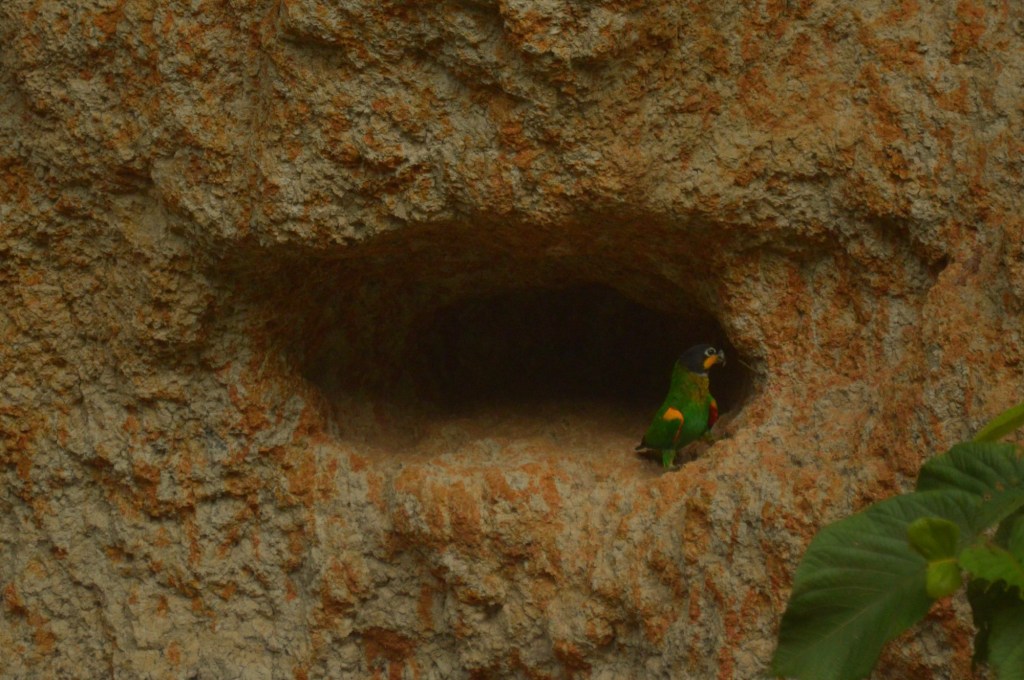
Our destination this morning was the macaw clay lick or collpa in search of parrots. Bernardino sent us off with a packed breakfast and Rive led us deep into the surrounding rainforest, with the caution that the macaws would not come in the numbers that they do in the dry season, owing to the abundance of fruit-bearing trees at this time of year. As such, I wasn’t expecting much – so I wasn’t overly disappointed when the only psitticaforme to put in an appearance (beyond the distant flyby pairs of macaws) was a couple of orange-cheeked parrots. They were adorable to watch, but they weren’t quite the spectacle that this place sees in the hotter months.


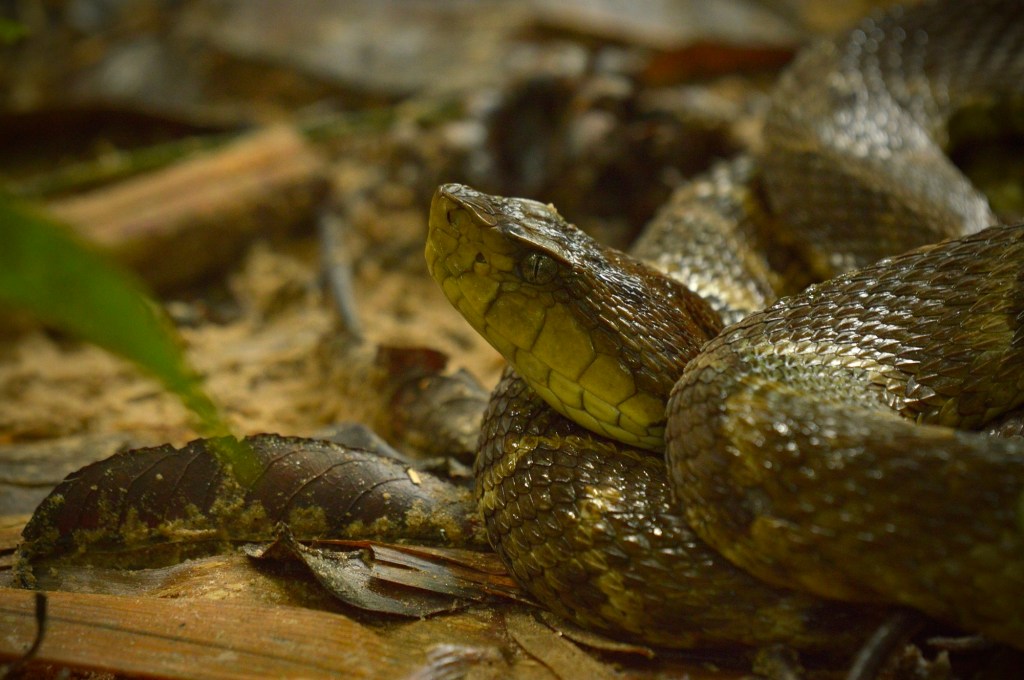
Eager to find us something to celebrate, Rive went out into the rainforest and came running back a half-hour later with the news that he had found a Fer-de-lance snake – the deadliest snake in South America and one of the most dangerous denizens of the Amazon – near the mammal clay lick a short distance away. Leaving our supplies in the macaw hide, we set out after him.

Sure enough, it was sitting right where Rive had found it: a beautiful and deadly viper, whose untreated bite is fatal. I didn’t need to worry about getting close enough for a good photo, as the lens was the perfect safeguard.


While we waited out the final hours, a troupe of squirrel monkeys and an accompanying pair of capuchins kept us company. I had been hoping for a close encounter with some of South America’s monkeys since we entered the park, and I wasn’t disappointed.


Back at the lodge, Rive called in a few favours and managed to secure us a couple of extra hours on the lagoon so that we could search for the otters again. Visits to the lake are strictly controlled by the rangers, but since we had laboured fruitlessly under a downpour the day before, Rive was given the green light to take us out again.

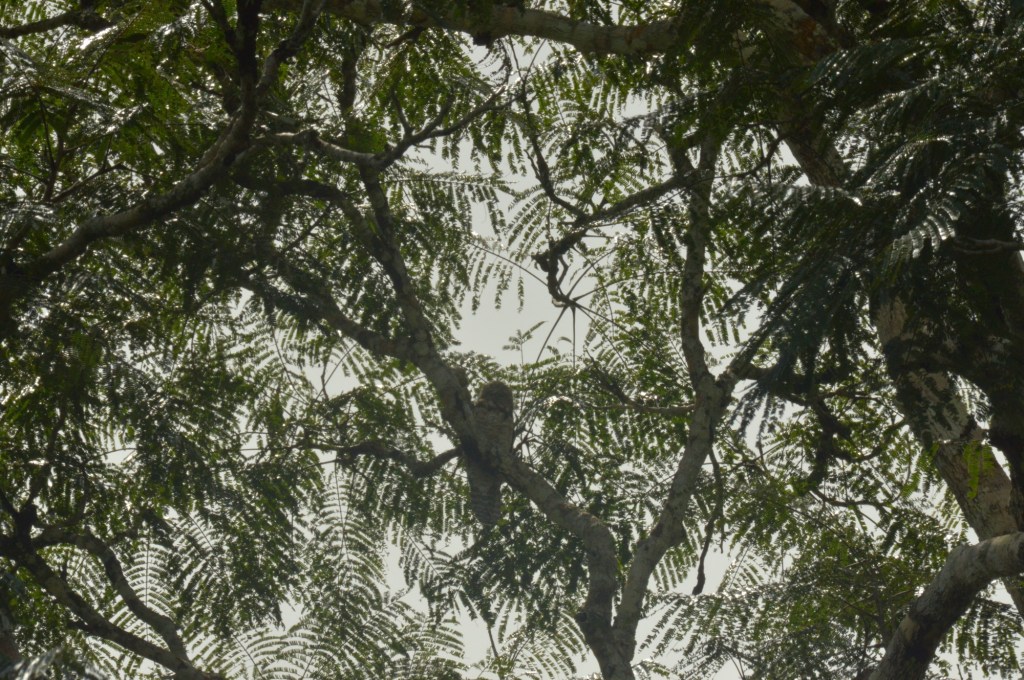
While the sun was shining (and the forest was suddenly absolutely sweltering) we rushed to wash and dry our clothes – they were, it must be said, a mass of damp and sweaty fabric by this point. While I was coming and going, one of the lodge groundskeepers approached with a smile and asked me something I didn’t at first understand: “¿quiere el gripotú?”. It was only when I realised that – just like our guide – he was saying a bird’s name in English that I gathered he was offering to show me a great pottoo. It was high up in the tallest tree, unmoving, looking for all the world like an extension of the branch upon which it was sitting, but this Leandro was able to point it out. I was very grateful – hard as they are to find, I was hoping to see one of these cryptic creatures out here.


After another incredible spread put on by our chef Bernadino, we set out. Hoping for a change of fortune, I doubled back and took my rosary this time. Maybe the Lady of the Marshes would give us the luck we needed to find the river wolves of the Cocha Salvador.


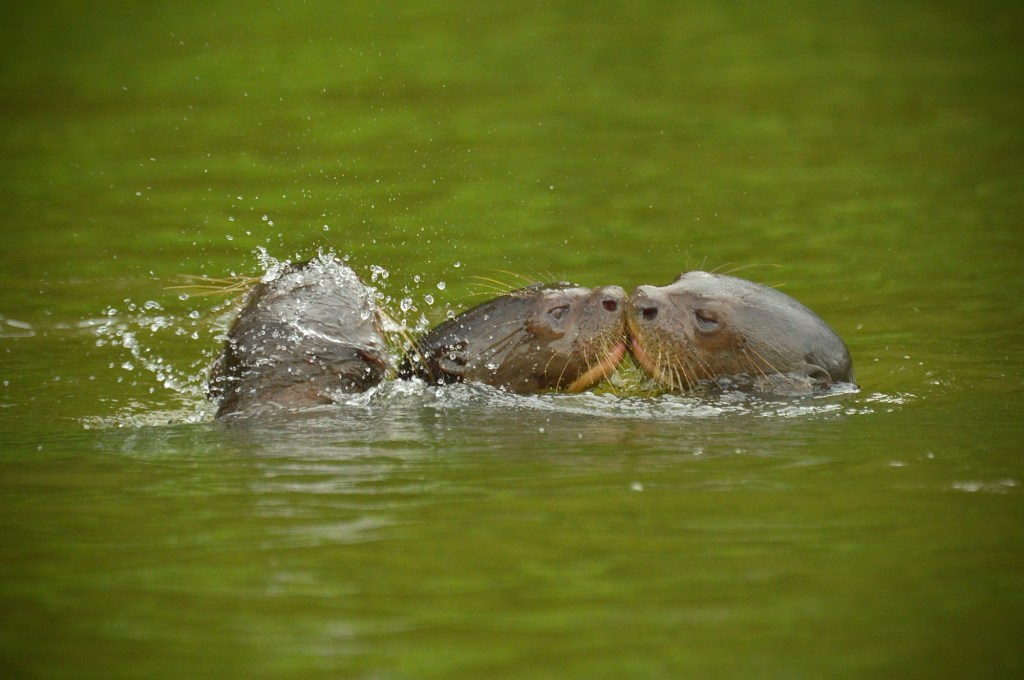
And she did. We had hardly been standing at the dock on the concha when our boatman called out “otter otter!”. We got into the catamaran and drifted out into the lake, but didn’t need to paddle the thing far – the otters came straight to us!


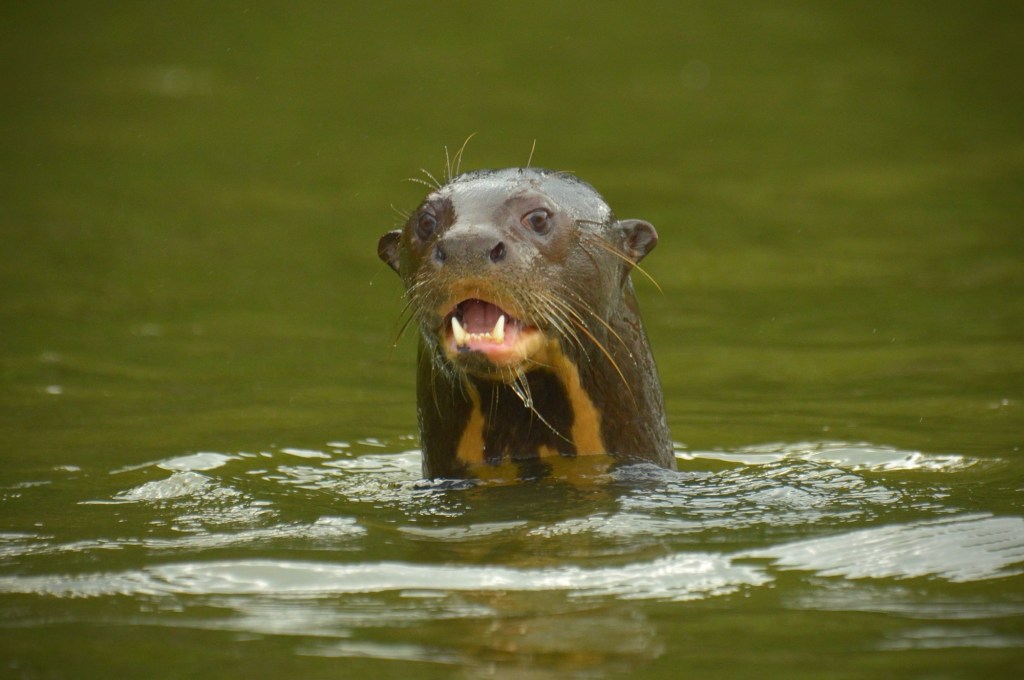
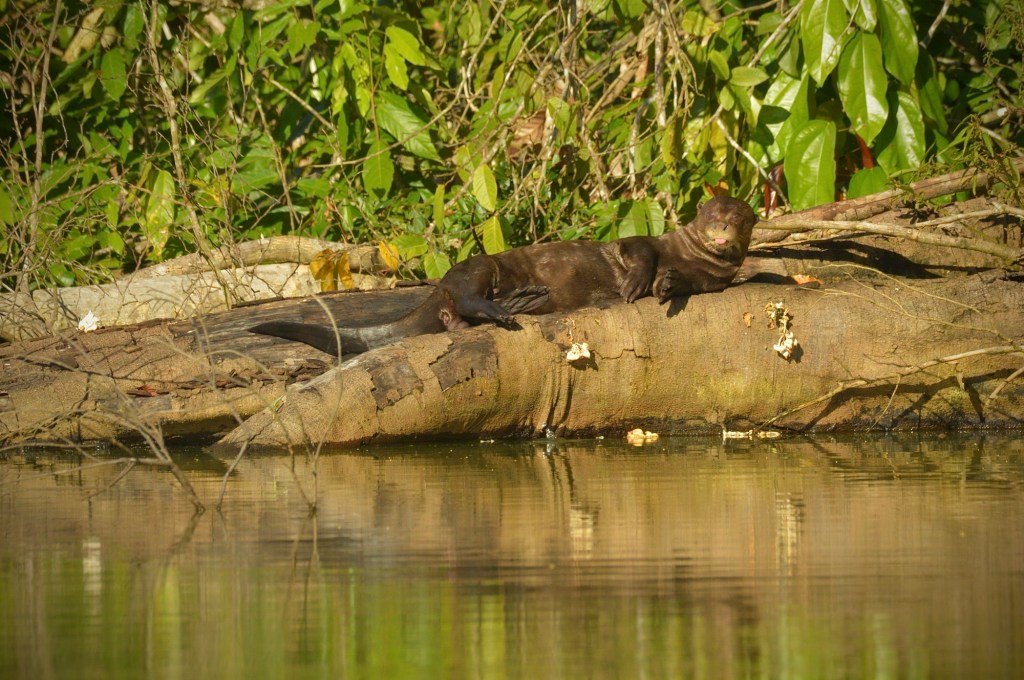
Giant otters are found only in South America. The largest of them – the dominant male and female of each family – can grow to an astounding two metres in length. They were hunted to near extinction a few decades ago when overfishing and the demand for otter fur purses led many wily Peruvians to export their pelts for great profit, but in places like Manu they have been able not only to survive but to thrive. Hundreds of otters are estimated to live in the conchas along the Manu river, with each family staking out a territory of their own.


They’re very endearing to watch, whether they’re hunting, eating or just playing around. The locals call them lobos – wolves – rather than nutrias (the Spanish word for otter) on account of their habit of forming family packs around a dominant male and female, but when they’re hauled out of the water and rolling around looking for a comfy spot, they look a lot more like very long cats.


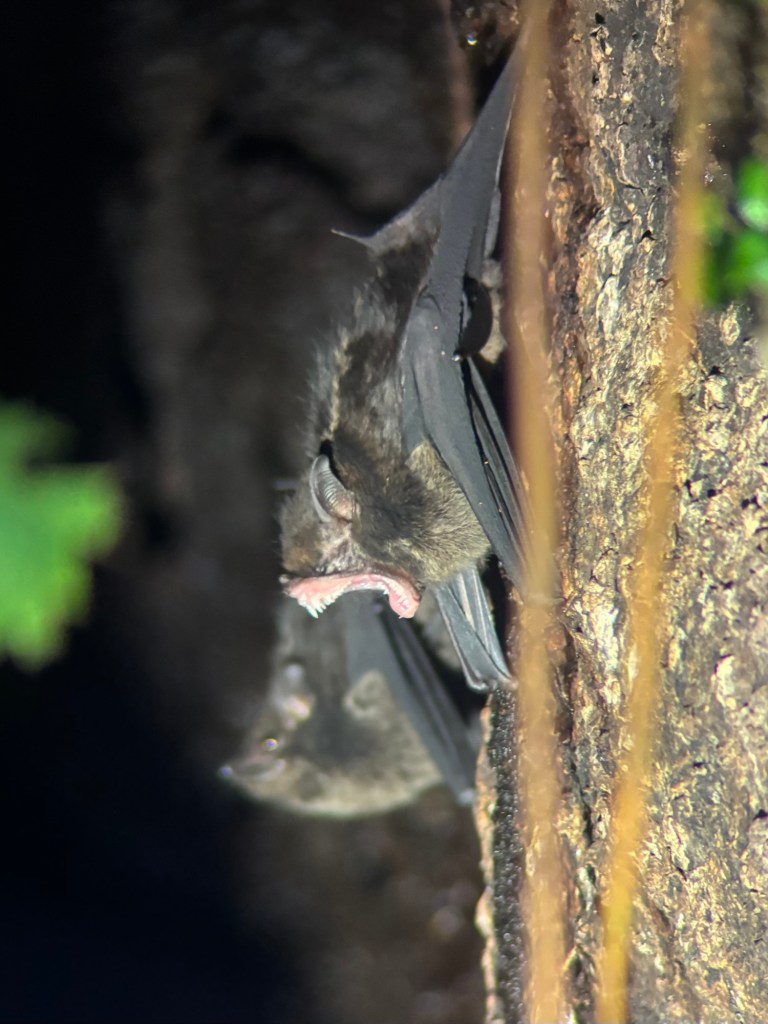
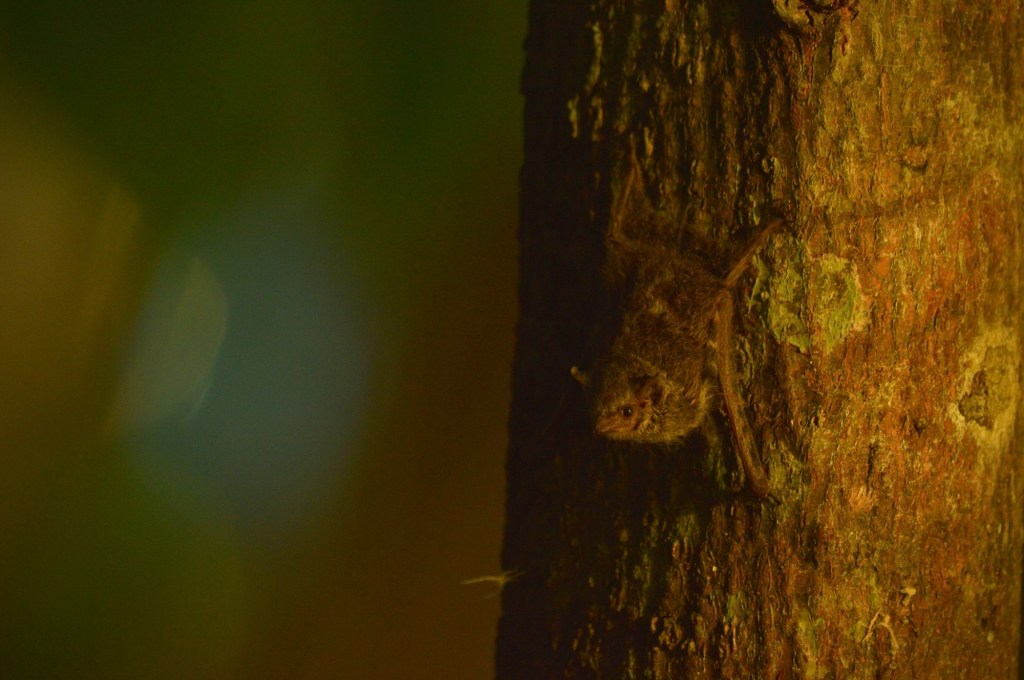
Another tour group was waiting for us to return with the catamaran, so we couldn’t hang out with the otters all afternoon – which is just as well, because my arms got absolutely mauled by the lake’s biting flies, which didn’t seem to be bothered by the DEET I had applied before setting out. My right arm in particular looks like a measles case. We were dropped off at the second of the lake’s two docks, putting a large roost of long-nosed bats to flight from under the jetty as we arrived. I hoped to catch one in flight, but I got luckier: one of them landed on a tree by the jetty and clung to the trunk, watching me from those tiny, beady eyes. It only took off when one of my companions returned from the forest and stepped out onto the jetty.


Before heading back to the lodge, Rive took us on a night walk through the forest. The rainforest is a magical place in the first half hour after sunset: a symphony of birds coming off shift and insects and amphibians taking their place. Tinamous whistling mournfully in the undergrowth and woodcreepers echoing their cries from the canopy. The descending hoot of a pygmy-owl, the beautifully sad song of the ant-thrush and the piping calls of poison frogs from the leaf litter. What an incredible place this is!


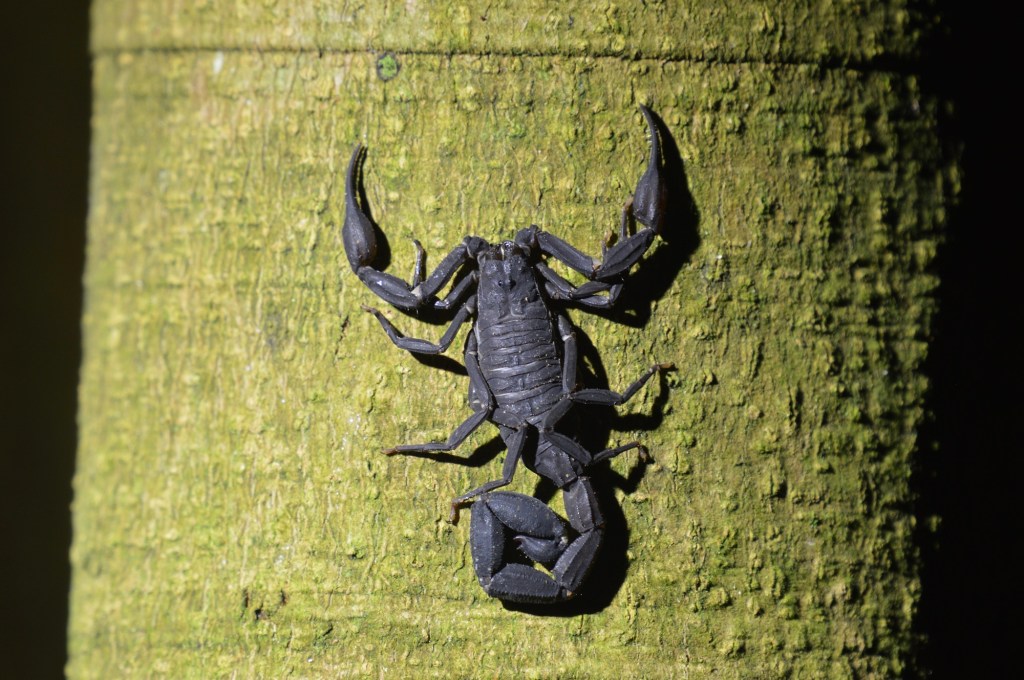
Incredible – and also incredibly dangerous. As if the poison frogs weren’t enough, we found an enormous cane toad, many tremendously large spiders and two scorpions, including this especially monstrous individual clinging to a tree trunk near the river. I’ve been checking my boots and shoes twice as carefully ever since!


Bernadino had prepared another incredible feast for dinner, which felt like a triumph after the day’s work. Rive was pleased: essentially, we had ticked every box so far but the jaguar, and that was always going to be a Herculean task during the rainy season, with the sandbars all submerged by the swollen river and the mornings much too rainy to encourage any of the great beasts out into the open.

Tomorrow we begin the twenty-hour trek back to Cusco. Eight hours in the boat as far as Bonanza and then another twelve from there. I am very happy with all that I have seen, and I am ready to return to civilisation, but I still want to come back. In my heart I know that I am not finished with Manu. It has been a very special place. Someday, I hope I will see this place again. It is already imprinted upon my heart like so many places: a lighting tree in Huelva, a porch in Boroboro, a smooth boulder on the cliff at Finisterre.

Someday, Manu. Someday. BB x

Deluge

Bonanza Lodge, Manu NP. 14.00.

After a full week of clear skies, Peru has decided to remind me that we are still in the rainy season.

When Sirius, the Dog Star, disappeared beneath a looming dark shroud and the first drops of rain began to fall, I knew we were in for a tropical storm, but I underestimated both its ferocity and its stamina. The heavens opened around eight o’clock last night and it was well past nine the following morning when it finally stopped. The reprieve was brief – brief enough to see us up the Madre de Diós river to our base camp at Bonanza Lodge, at any rate – before the rains returned with a vengeance. As I write, I do not know how long this spell will last, but I can only pray it is a passing tempest.

If it rains this hard again, our chances of seeing anything at the clay lick tonight are next to zero. We may even have to swim there.

This explains the look of concern on the manager’s face and her repeated plea to stay positive. I knew I was chancing it coming here in the rainy season, but the driest season is also the busiest, and I did so want to avoid the crowds. Besides, it’s not like I had the economy of choice. As a teacher my hands are tied when it comes to holidays.

So here I am, deep in the Amazon, bracing myself for a long, dark and probably very wet night.

Mary, mother of God. The river that brought me here was named for you. Show mercy and spare us from this endless downpour.


Fourteen Hours Later

The rain has returned. We were spared for the afternoon and most of the evening, but shortly before midnight it came down hard. It’s not torrential, but it is constant, beating down upon the iron roof of the lodge like a thousand furious fists.

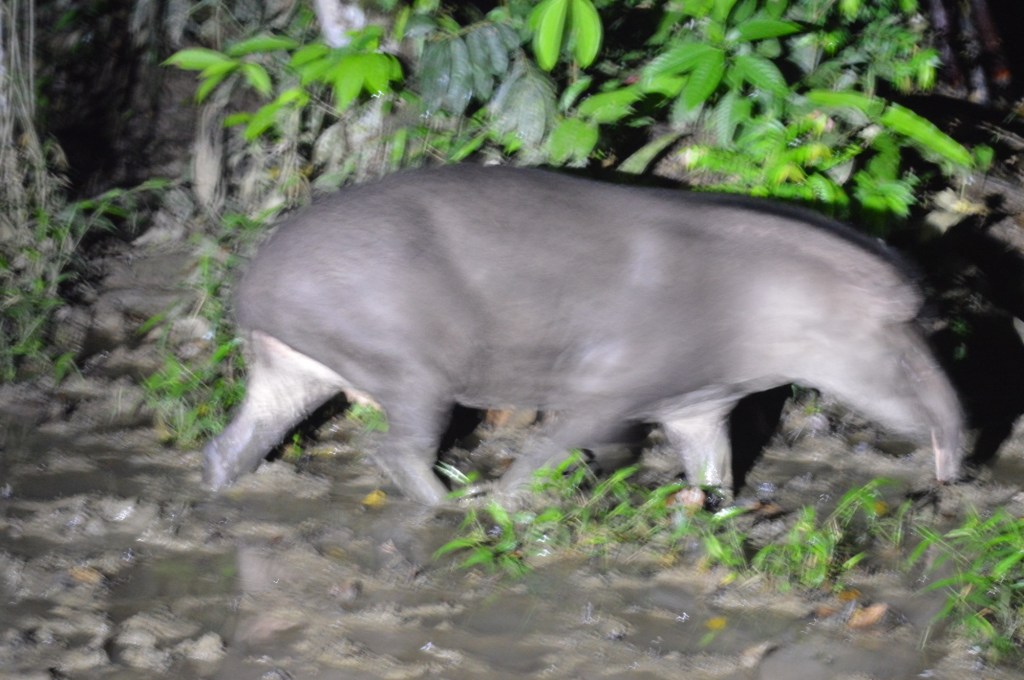
But we did it. We saw the tapirs. In retrospect, it probably wasn’t worth bringing the camera, but I wasn’t to know. They’re tremendously skittish for such great beasts. A couple of seconds of Rive’s flashlight beam was enough to send them lurching off into the trees.


I’ll need to be up and ready to leave after five, so there’s little point in sleeping now. I might as well write and record.

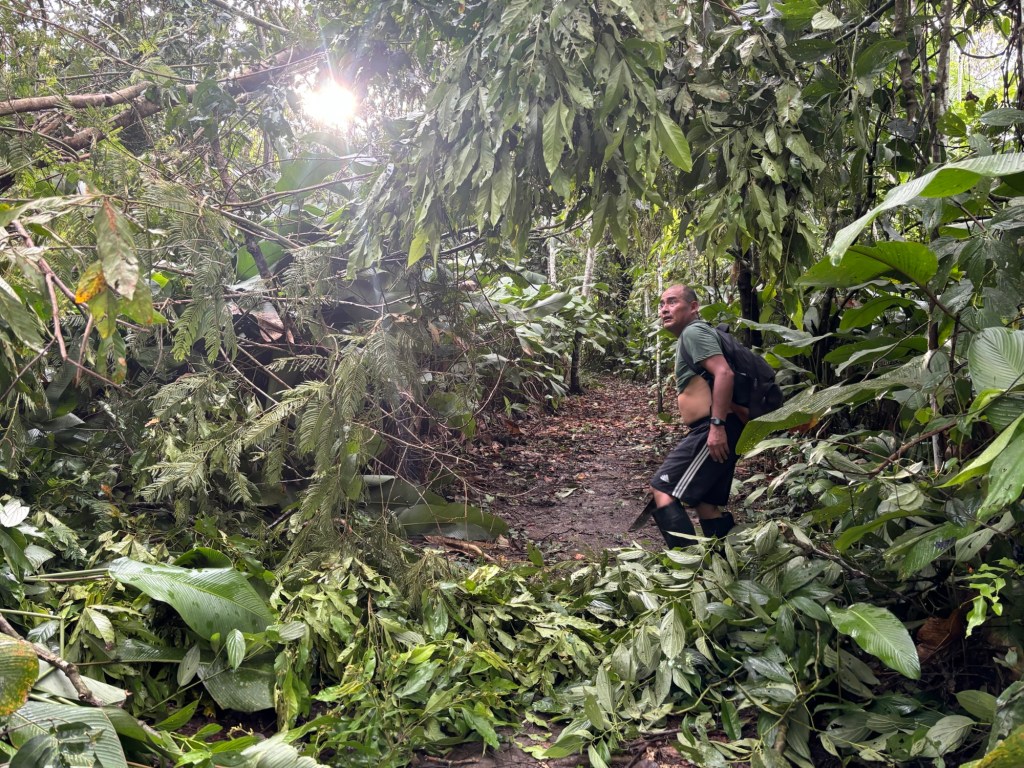
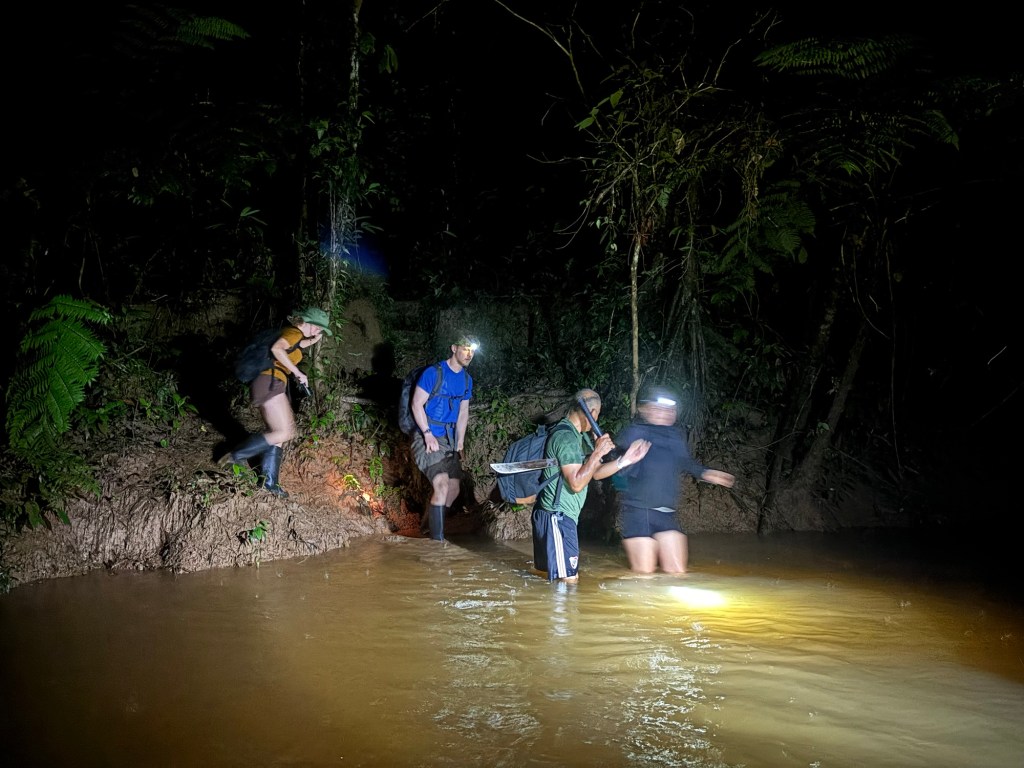
After docking at Bonanza Lodge, we had an hour or so to prepare a night kit and then we set out into the forest after Rive, our guide. He packed light: a couple of strong torches and a machete. I don’t suppose you need much more to cut a path through the forest, day or night.


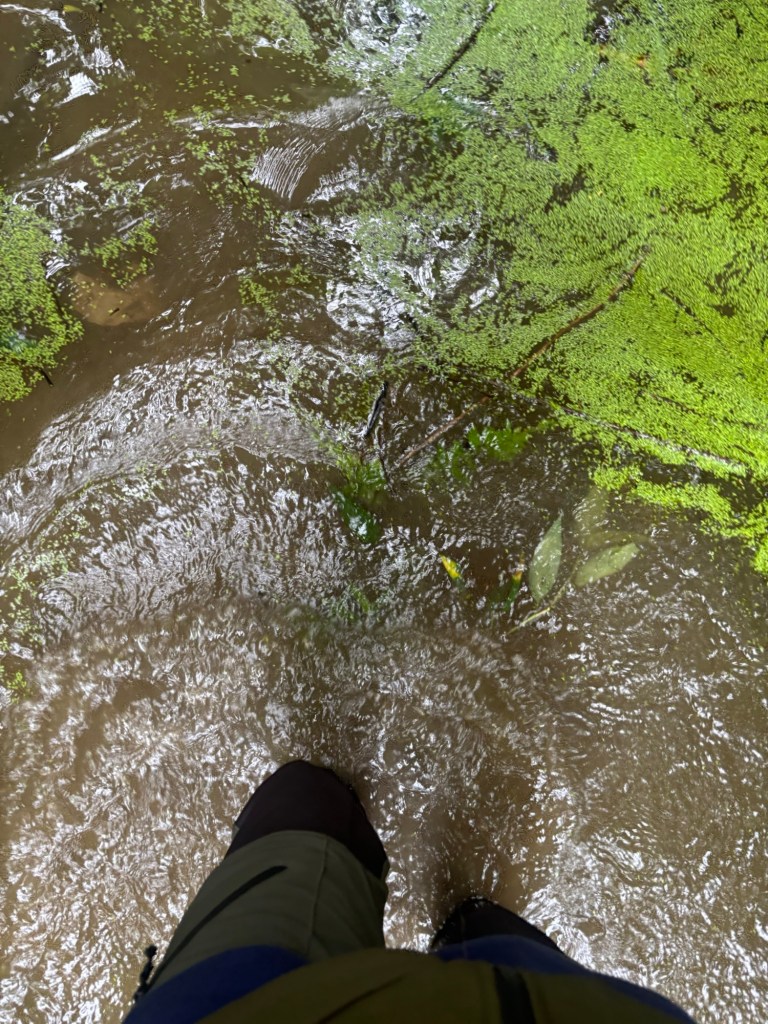
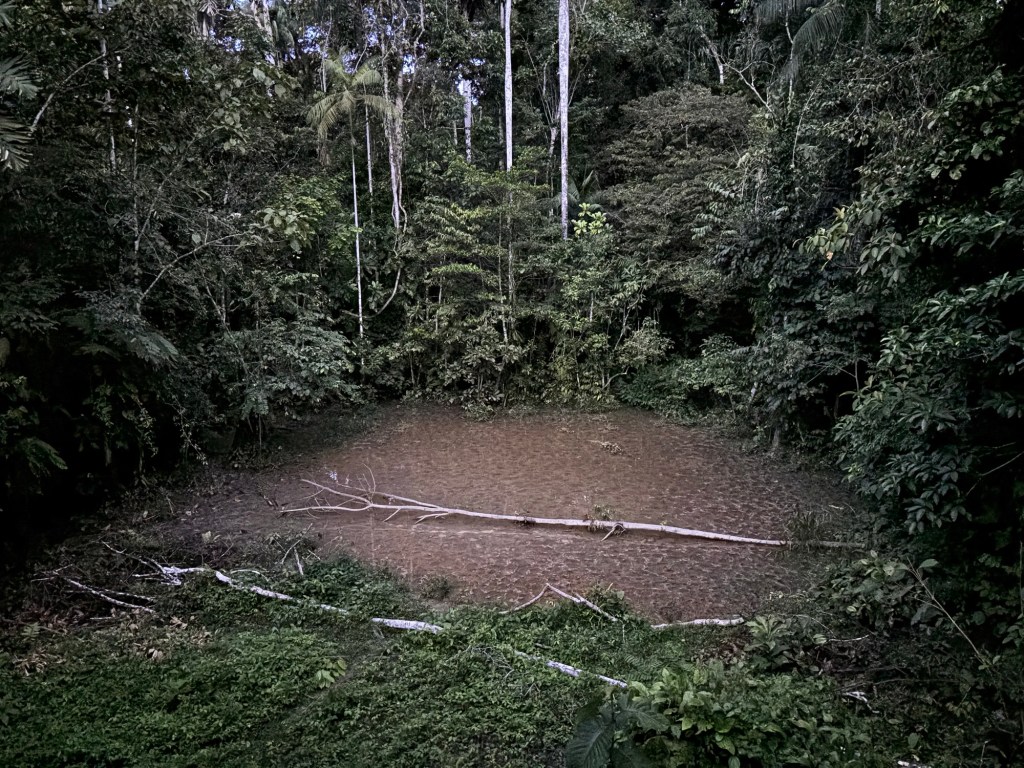
The rain had swelled the river considerably, so naturally it had a similar effect on the creeks between the lodge and the clay lick. Some of them had makeshift bridges laid across them. Others didn’t. The water was never as high as we had feared – that is, chest height – but it did reach well above the tops of my boots, so as well as wading through the water, we had to stop after each crossing to empty out half the contents of the creek.


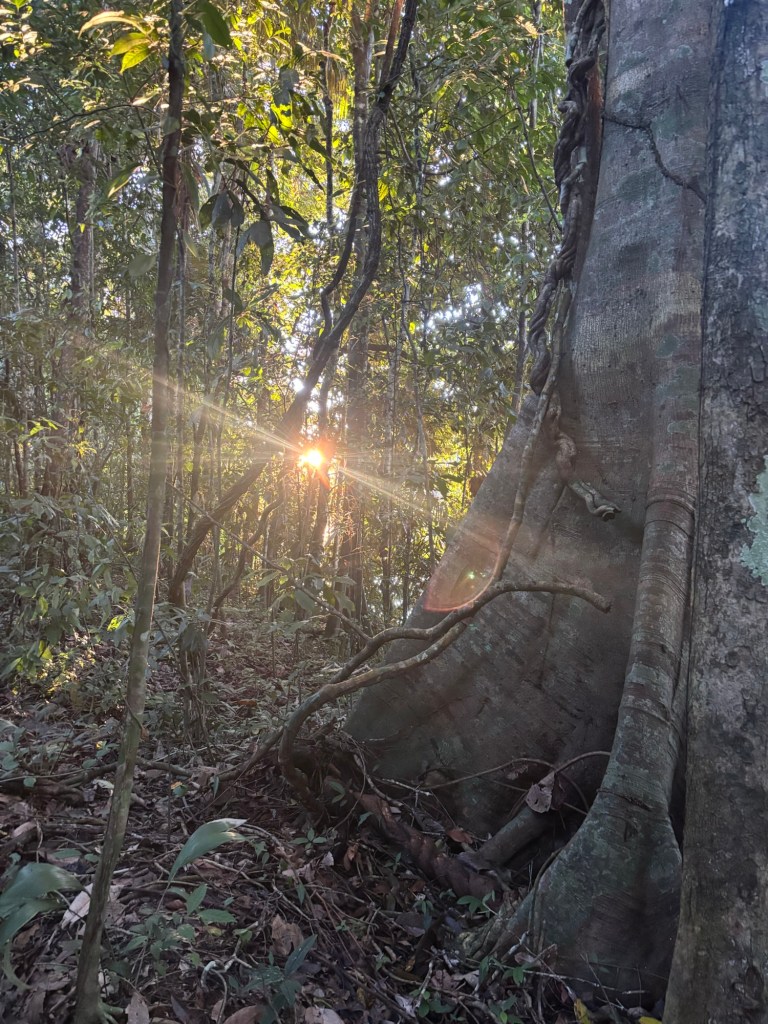
All around us was the forest. In the dying light of the afternoon, it is a truly magical place. The flash of electric blue of a morpho butterfly. The eerie descending trill of an ant-thrush. The hooting call of some kind of monkey, faraway, indistinct. The ominous croak of cane toads and the repeated growl of a crested owl from somewhere high up in the canopy. Crickets – everywhere. Every now and again, the enormous roots of a magnificent kapok tree, the true lord of the rainforest, towering above the canopy.


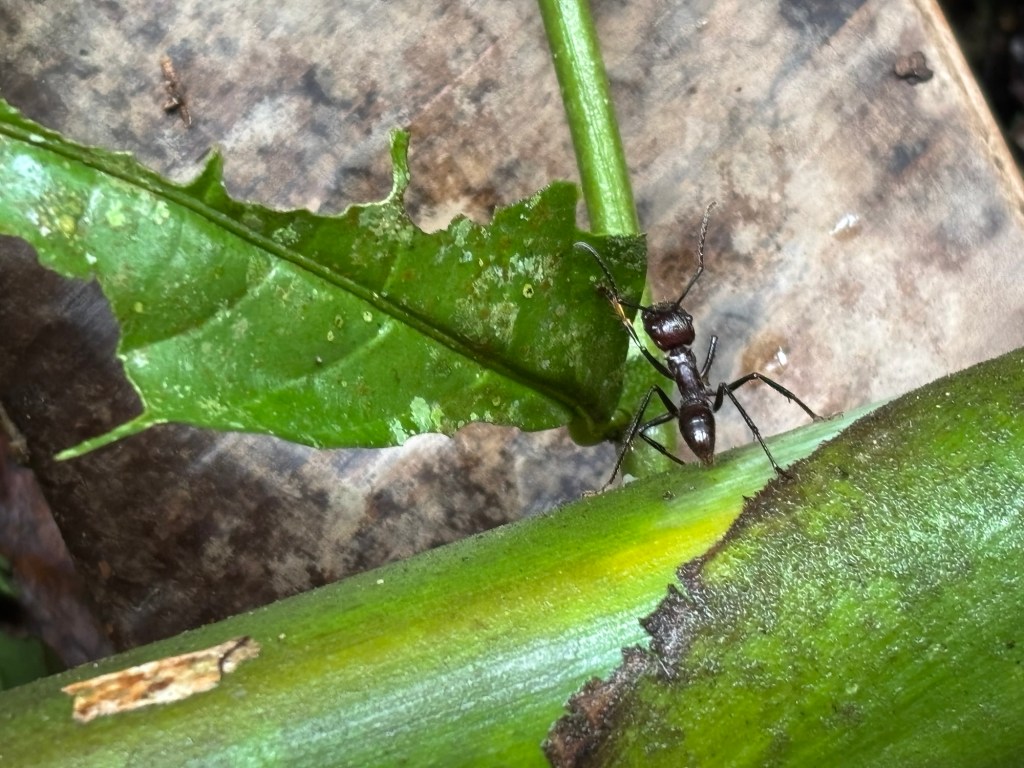
I often needed to remind myself to look down at the path ahead, which was perilous – if not for the thick, sucking mud around the creeks, then for the armies of tropical insects all about. Leafcutter ants marching in single file along branches that might have acted as guide ropes. Spiders the size of butterflies lurking in webs strung out across the path. At least once, I saw a bullet ant, a fearsome denizen of the forest, recognisable by both its size and its solitary habits. Their bite is what gave them their name. A creature best given a very wide berth.


We reached the clay lick shortly after dusk, just as the light was beginning to fail. The watchtower sits well above the forest floor, overlooking a muddy clearing, pockmarked with the sunken wells of animal prints. A large bird – like a guan, but even bigger – kept us company as we laid out the mattresses and mosquito nets and laid out for a long vigil. Rive said it was a blue-throated piping-guan. I couldn’t see in the dark, so he showed himself once again a bloody good guide.


I might have got some sleep here or there. Or I might not. I’m not sure. I know I was woken when the first tapir arrived, and that I was already awake when the second appeared. I know that my camera struggled to lock onto the great beast, despite the brilliance of Rive’s torch beam.


Rive gave us the order around three o’clock to return to camp. Leading the way with light and knife, he escorted our sodden party back through the woods. I cared little for wet feet this time and simply plowed through the creeks up to my thighs. When the rest of you is already soaking, wading through a river isn’t as bad as it sounds.


We made it back to camp within forty minutes or so. I’ve left my boots out to dry on the steps, upside-down, and have used my shirt to dry their insides as best I can – they’ll be more useful from here on out than my hiking shoes. In a minute, I’ll need to be up and dressed again. The rain hasn’t let up, and it’s showing no signs of doing so, but we still have a long way to go. Two days of travel around its border and we aren’t even in the reserve yet. That’s just how big Manu is.

Was it worth it? To see a tapir – a secretive creature of the forest? Absolutely. To have even a glimpse at what Vietnam must have been like? Of course. But for me, the best of all was the soundscape. No YouTube video could ever recreate the all-encompassing magic of the rainforest at night.


Dawn is here – but I can’t see it. Maybe the deluge will stop before midday today. All I can do is hope. BB x

Into the Jungle

Rainforest Lodge, Manu NP. 17.57.

I probably didn’t get enough sleep last night. I woke up several times between eleven and four and, in the end, I gave up trying to get to sleep. Honestly? I genuinely haven’t been this excited for a very long time.

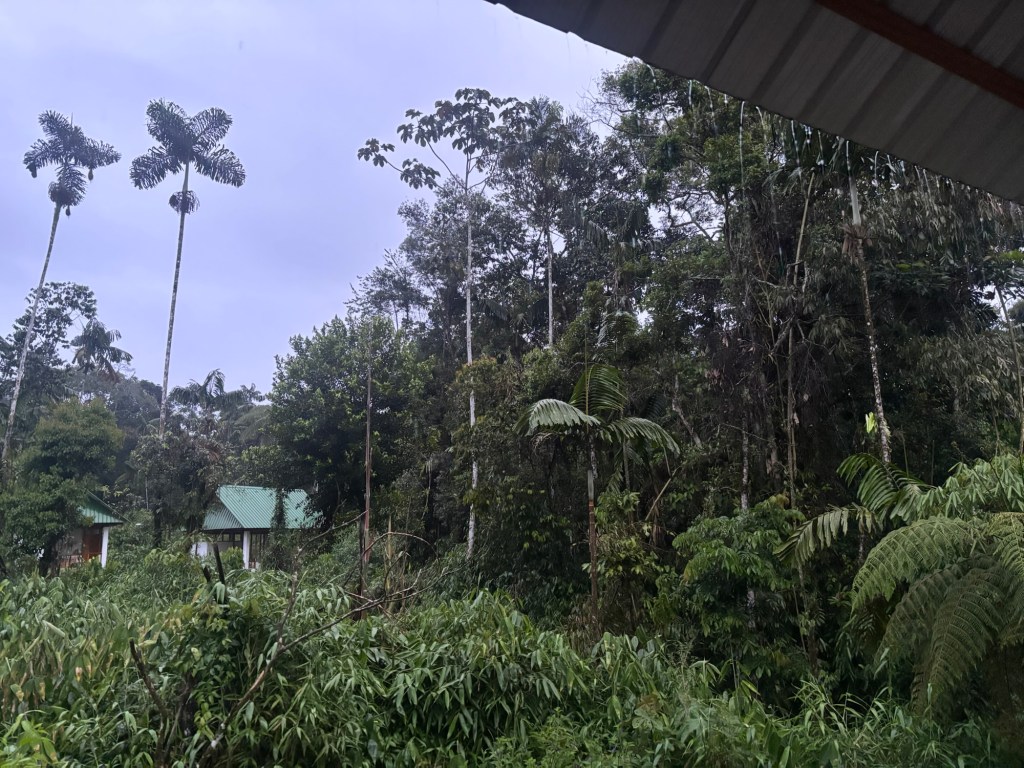
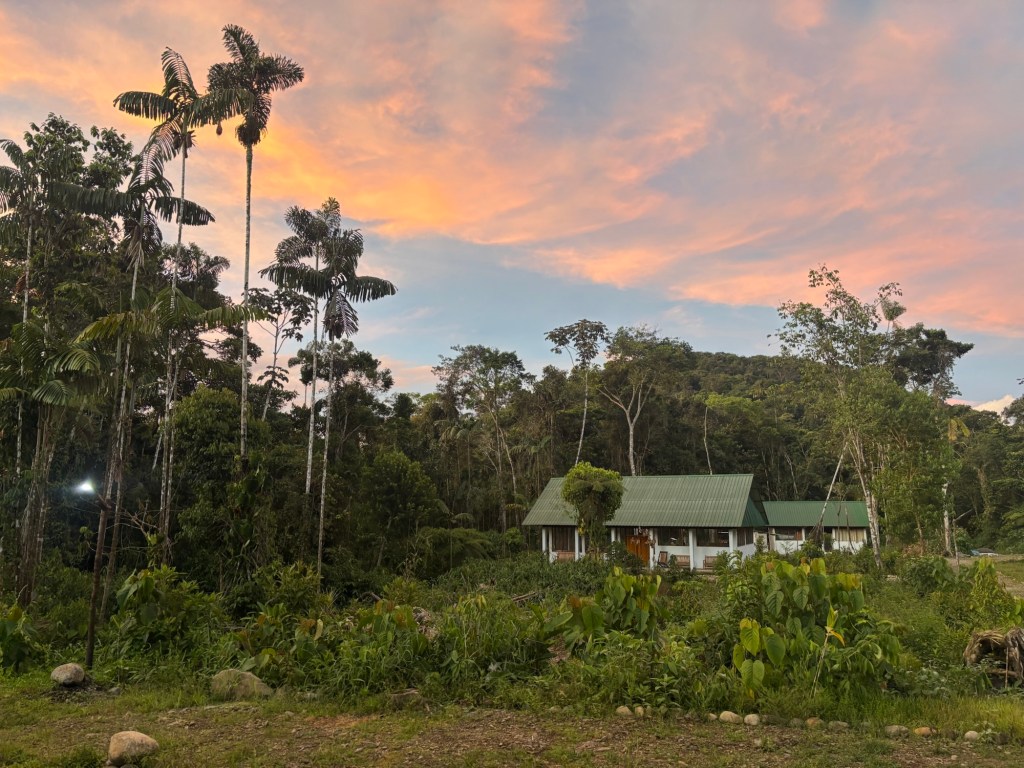
Let me describe it to you. I’m sitting in a very comfy chair in Rainforest Lodge, on the edge of the Amazon Rainforest. No – within that rainforest. We hit the Amazon when the stands of eucalyptus trees died away on the southern slope of the Andes to be replaced with mile after mile of endless indigenous forest.

Frogs croaking. Crickets chirping. The shriek of macaws flying in to roost. The heavy wingbeat of a guan, a kind of Amazonian turkey. I can still see its silhouette up in one of the trees above the main lodge. Earlier, I heard the piping song of a toucan, and the quiet hoot of a faraway tinamou. And up above, enormous banks of cloud, like I’ve never seen before – unless it was in wildlife documentaries about this vast forested part of the world.


Rive, our guide, picked me up from Casa Tunki shortly after five thirty. It was a fairly quiet drive out of Cusco, as we had a lot of ground to cover. We passed Huacarpay early doors – I’m glad I’m not shelling out 180$ for a private tour to that place. It looked like a bit of a step down from Lima’s Pantanos de Villa (which, though a whim decision, really was top notch).

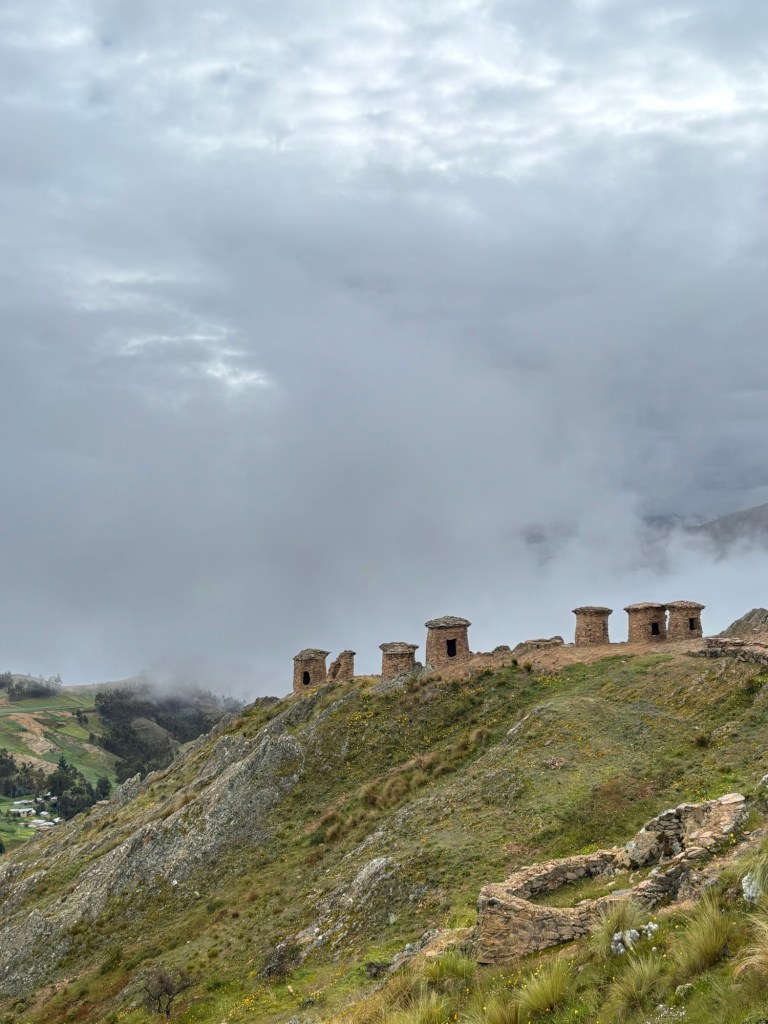
We made two stops. One in Paucartambo for breakfast, and another just before at the Chullpas of Ninamarca, a collection of pre-Inca tombs the Spanish ransacked years ago – but that the locals still visit with offerings in memory of their ancestors from time to time.


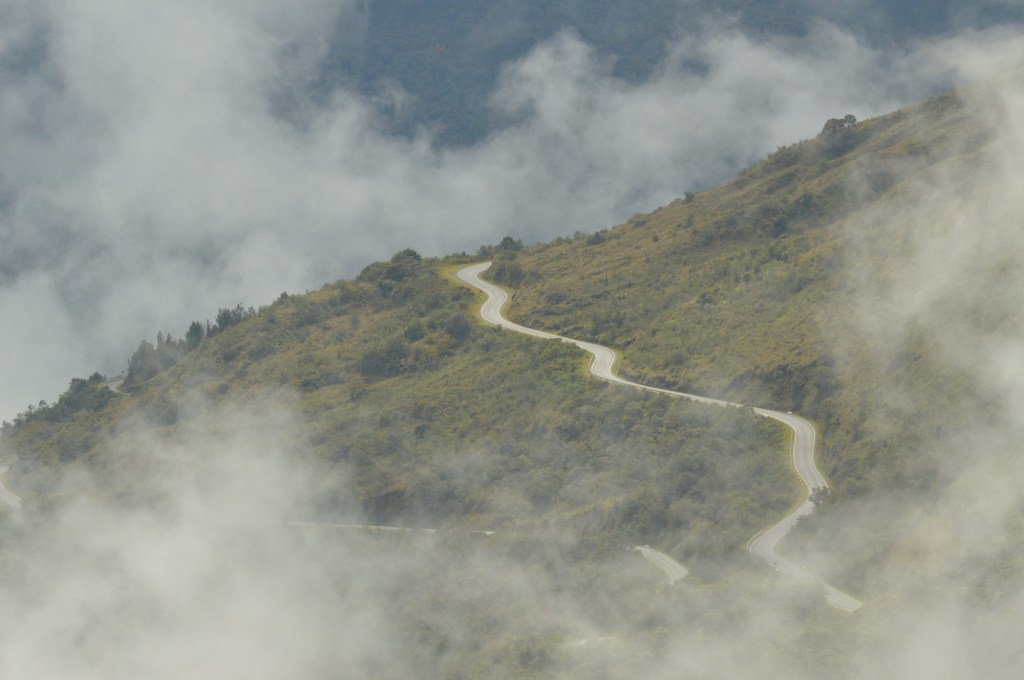
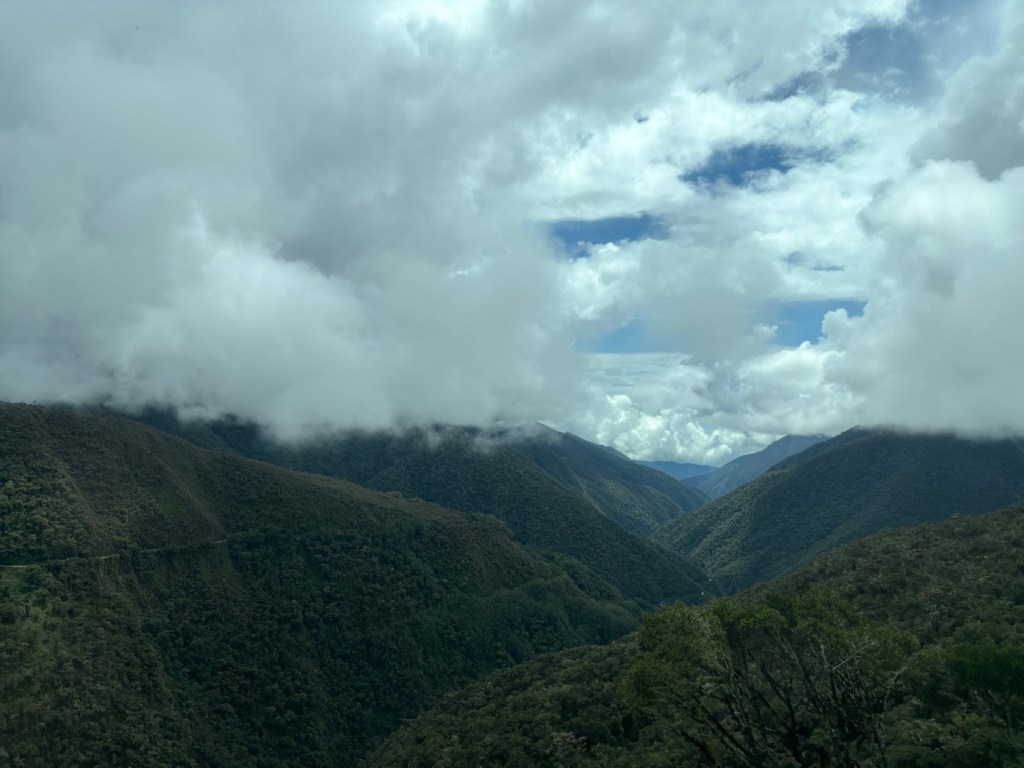
The Manu Road is famous for the quality of its birdwatching. Of the more than a thousand species that can be found in Manu, some five hundred or so can be encountered along the road. We didn’t see anywhere near that many of them, but that’s mostly because of the rain that came down hard during our passage of the long and winding road down through the mountains.


The forest seems infinite, and we haven’t even reached the reserved zone yet. These are what are known as the “habitable quarters” – the zona cultural. Already, in the last hour alone, I have seen more species than I could ever hope to see in Taunton in a single year.

This is a very special place.


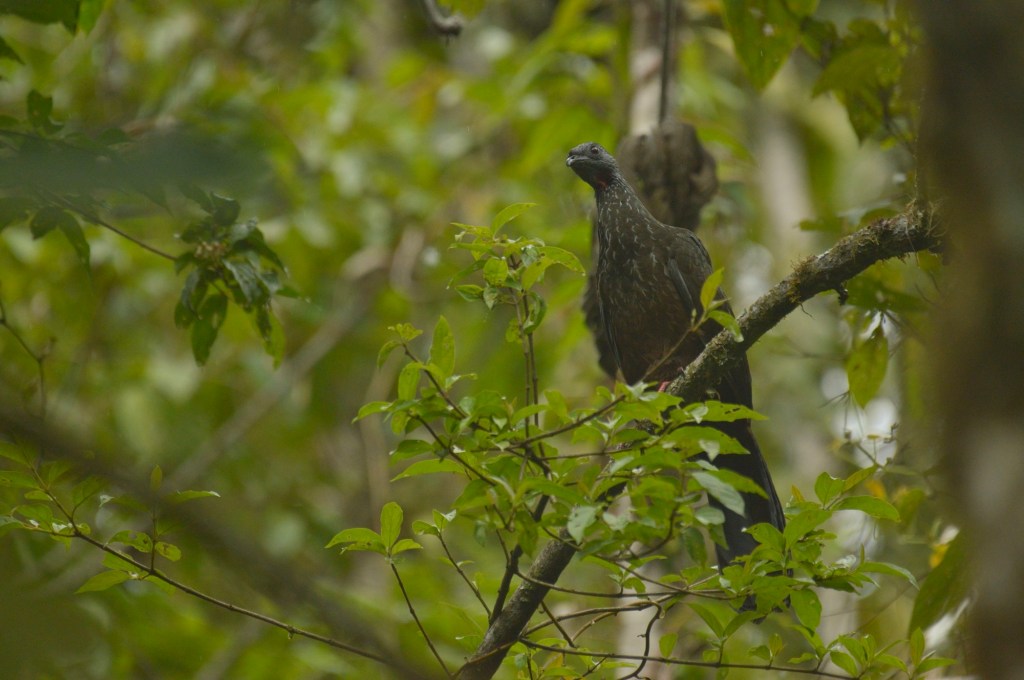
We took a short walk along the road (as the rain came down) in search of cloud forest species. Most of them kept well hidden, though our guide did locate an Andean guan watching us from the side of the road.


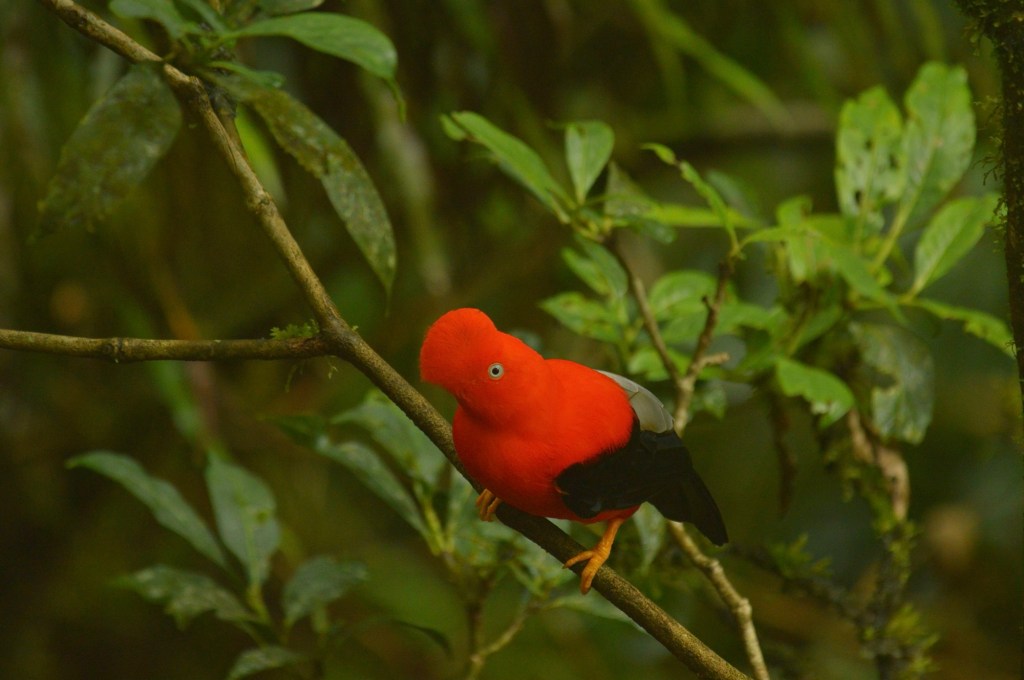
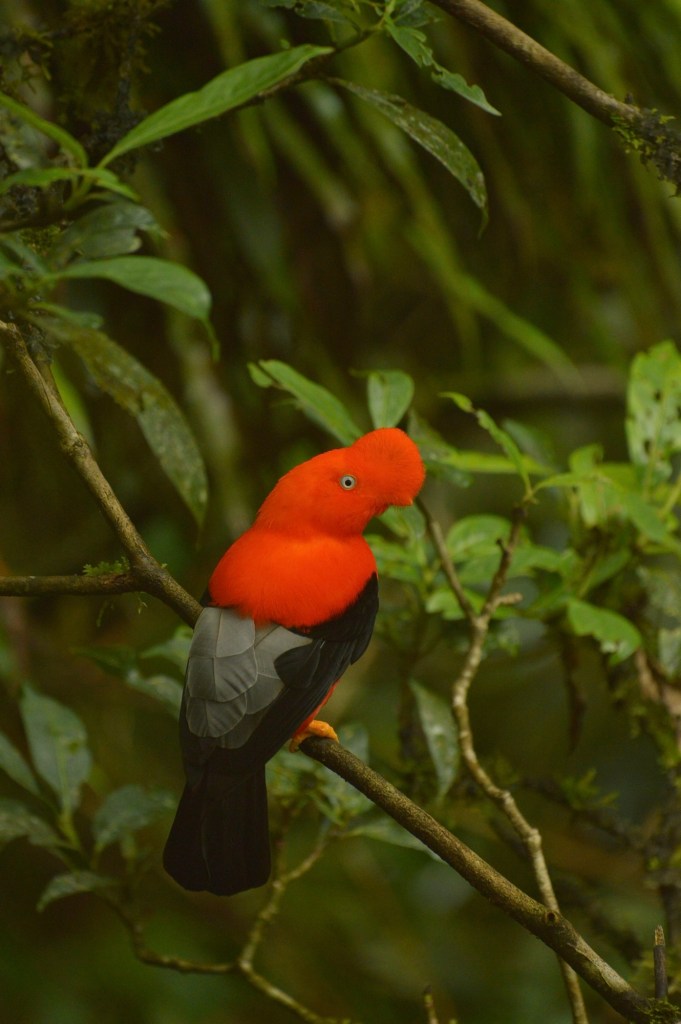
We had a lot more luck after lunch with the hunt for Peru’s national bird, the Andean Cock-of-the-Rock (in case I didn’t already have enough Andean birds on my list). The breeding season may not be for several months – kicking off in September – but the local males keep a strict routine at their lek, cleaning their favourite perches and practising their dances for when the females come looking.


They’re fairly hard to miss, being a shade of orange so loud they might well be visible in the dark. I’m going into Manu without expectations – the thing I wanted to see most of all was a condor, and I was truly blessed on that front – but it was really special to see a bird so important to the Peruvians that they made it their national bird.


The lodge itself is an explosion of rainforest life. I’m having to lean heavily on the Merlin app to help me identify what I can hear: toucans, tinamous, tanagers, parrots, macaws, honeycreepers, earthcreepers and oropendolas. None of which I’ve ever seen or heard before.

I can’t see any charging stations, so I’d better leave it there. We set out early tomorrow for the Madre de Dios river at Atalaya. I have signal, which I wasn’t expecting (a begrudging thanks to Elon Musk’s Skylink) but I might run out of power at some point. So I’ll stop writing now and enjoy the sounds of the rainforest for a while. Dinner isn’t until seven – and I know it will be incredible, because our chef Bernardino is an absolute legend.

Wish me luck! BB x


N.B. Dinner was amazing, the night sky is even better (I saw a shooting star!) and there’s a changing station in the lodge – but not tomorrow, so I need to be prepared. But right now it’s raining with biblical proportions out there, so I’ll wait a bit for my phone to finish charging before making a break for it to my cabin!

Venice II: Madonna and the Amazons

This morning I struck out alone, early, just after sunrise.

So early, in fact, that most things were closed, even after a false start on the wrong vaporetto. St Mark’s Basilica wasn’t taking any visitors when I arrived, though at the moment it looks like a building site with all the scaffolding on its central façade.

The scaffolding curse strikes again. After my last piece on the subject disappeared under mysterious circumstances (I swear I remember publishing a piece called “Ode to the Scaffold” and Facebook tells me I’m not lying), I’m all the more convinced there’s a global conspiracy that has every major world heritage monument under restoration when I’m in town. Altamira, Fes’ tanneries, Lindisfarne, León’s cathedral, Gaudí’s Casa Battló and now the Basilica di San Marco. I’m truly cursed.

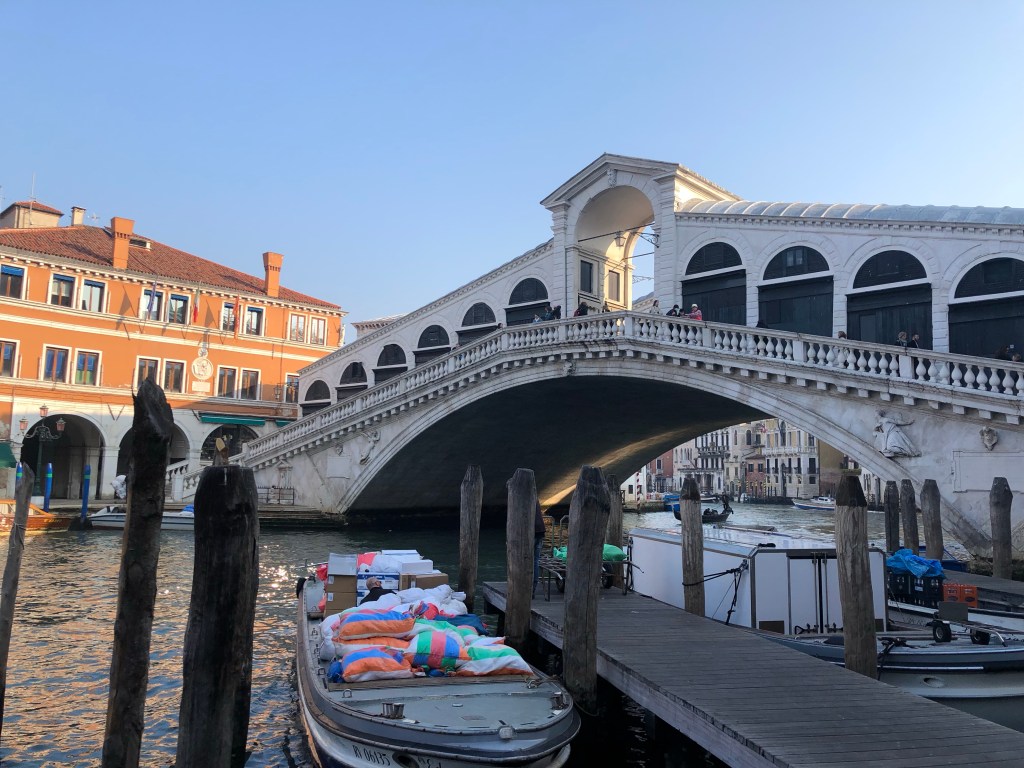
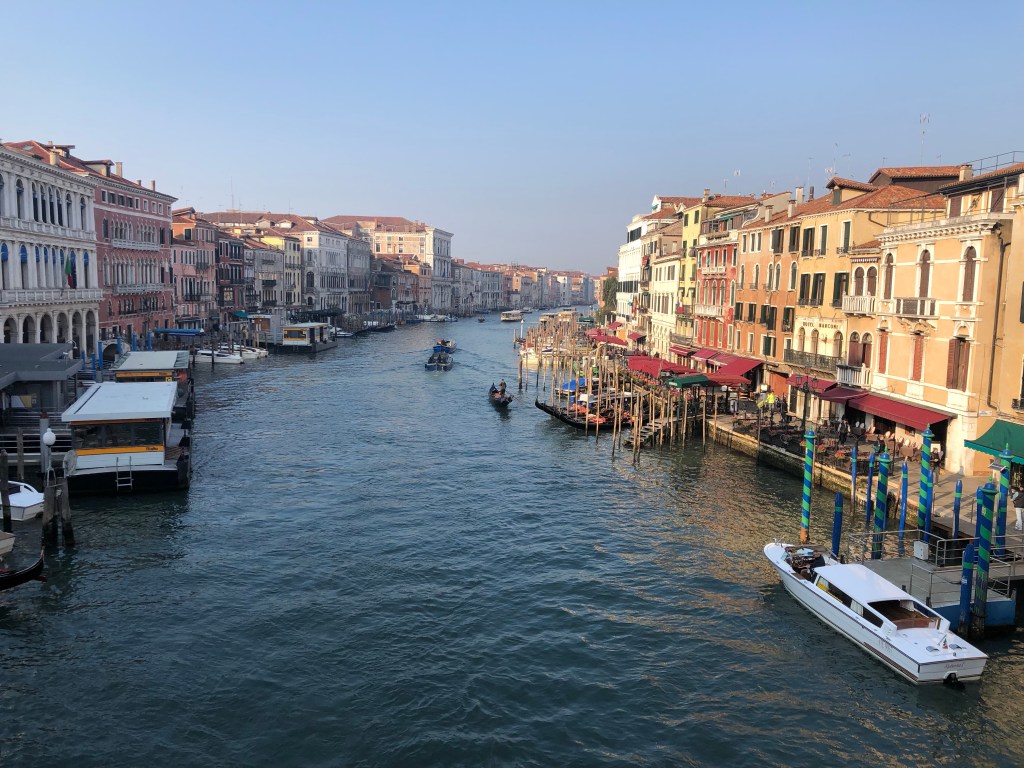
Fortunately, building interiors and Renaissance paintings don’t hold as much fascination for me as the city itself, so I set off in search of some other parts of Venice with stories to tell. And where better to begin than the Rialto? The great bridge over the Grand Canal where Shylock learned of his rival’s ruin?

I’ll admit that today was something of a schoolboy-fanboy morning. Othello and The Merchant of Venice were two of my A Level texts back in the day and walking down the very streets where some of Shakespeare’s greatest works were set felt nothing short of magical. Some come to Venice seeking romance, fine dining and Renaissance majesty, but I’m wired differently. Jews, plague and Shakespeare – that’s why I’m here.

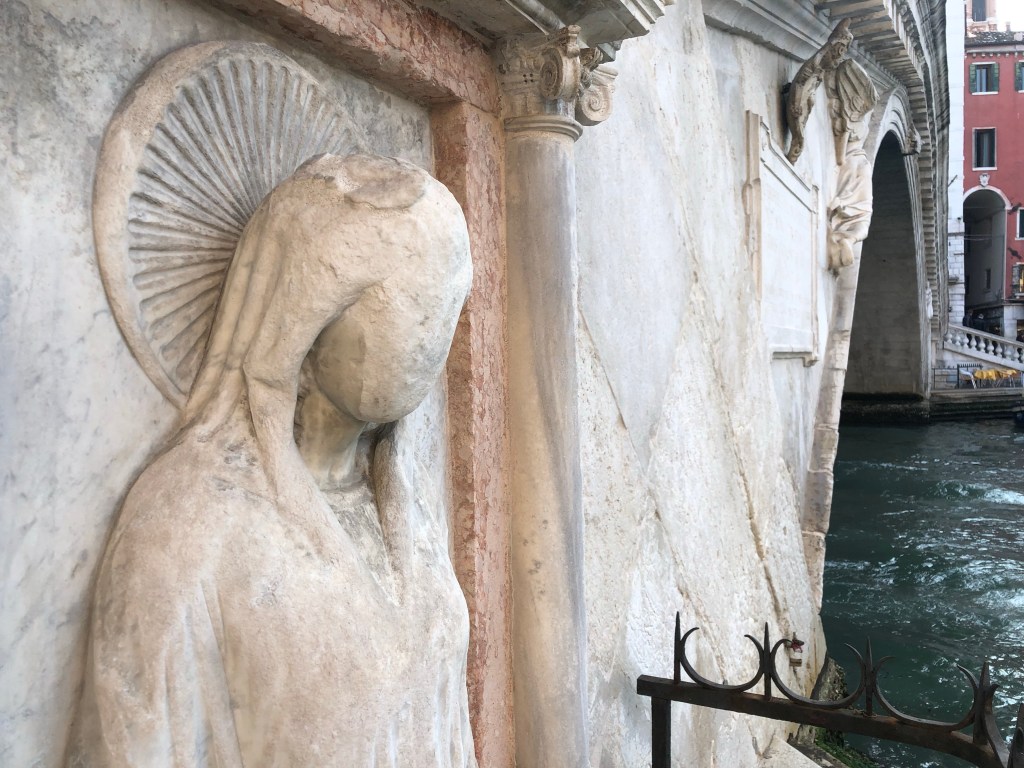
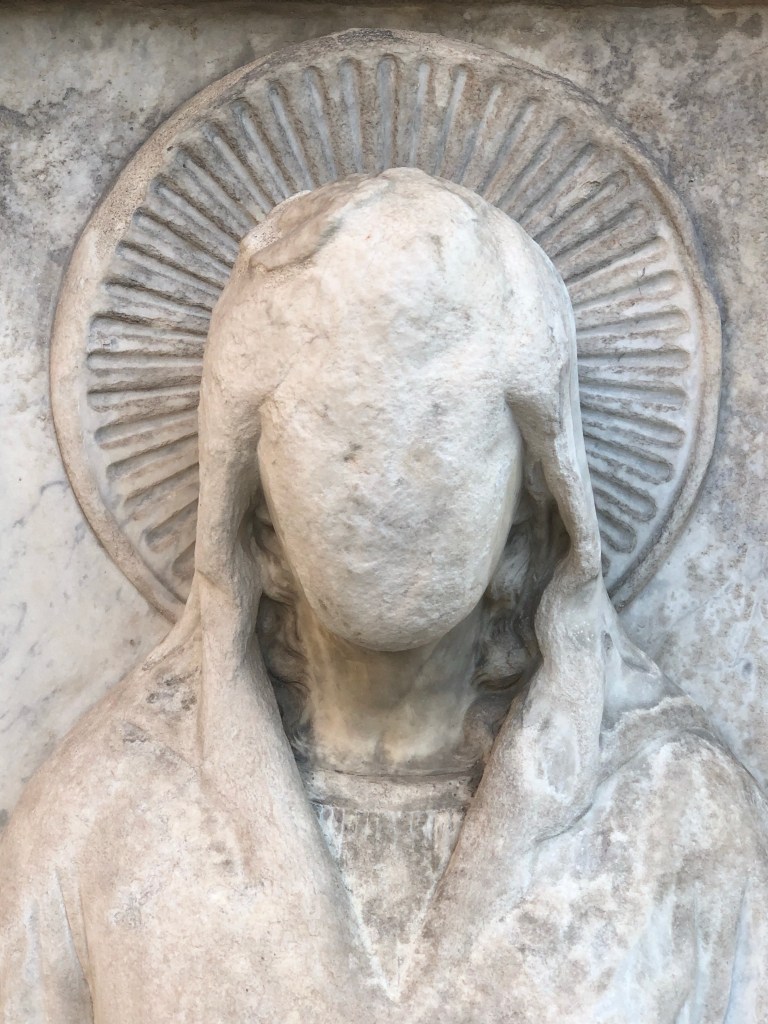
A faceless bust of the Madonna sits carved in marble on the west side of the bridge. I can’t find anything on her, and my Italian isn’t quite up to scratch to ask a local yet, but in a city filled with busts of Mary, this faceless one grabbed my attention.

How many have touched her face over the centuries in adoration? How many have asked for her intercession? I see that many of the older Venetians, like their coreligionists across the sea, cross themselves whenever they pass one of these ancient busts. Were their wishes granted, or did their ships founder on the Goodwin Sands (or not, in a rather silly plot twist from the Bard)?

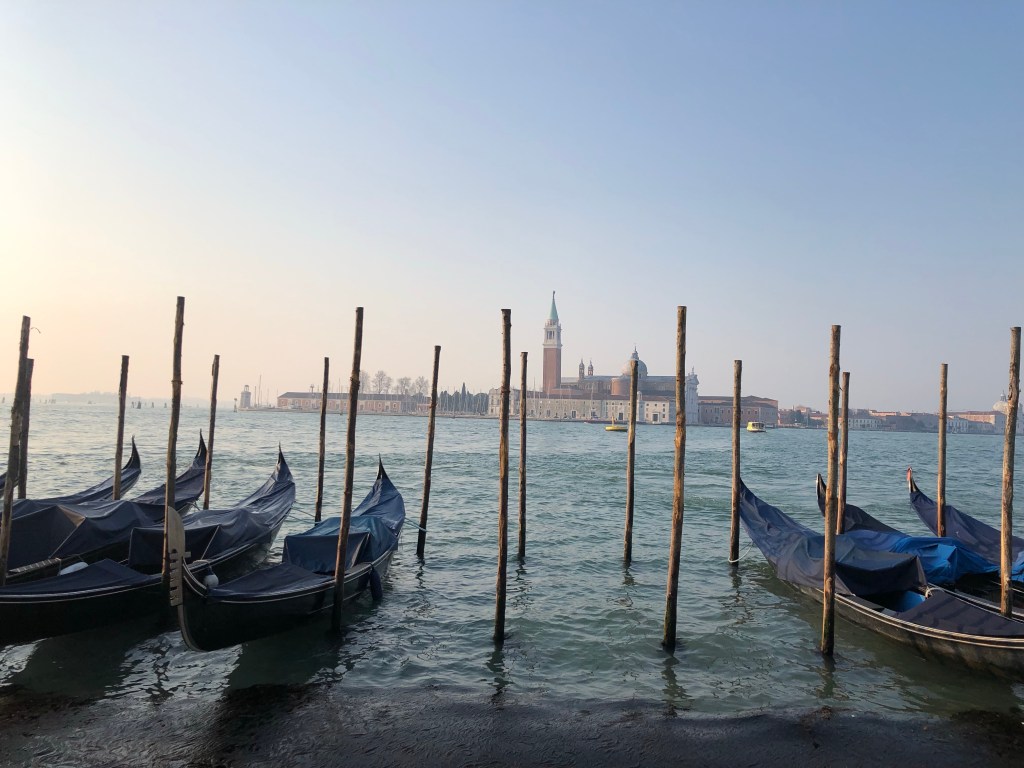
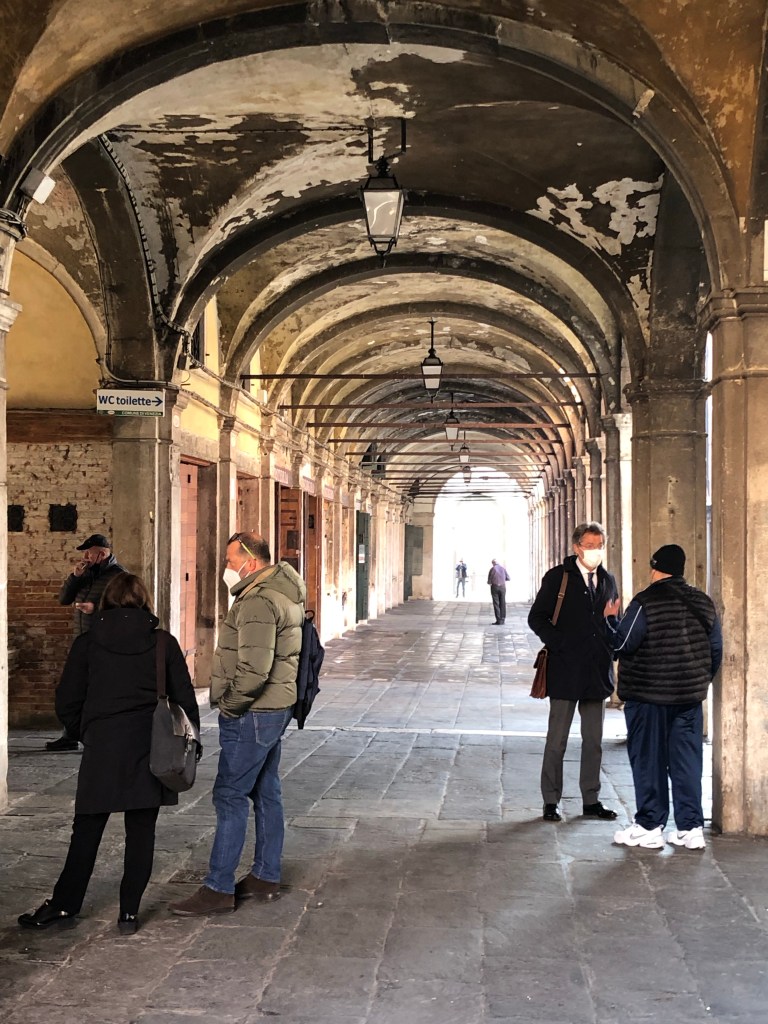
Onwards from the Rialto and deeper into the heart of the city. I’m seeking Cannaregio and the ghettos, but I keep getting distracted by the Venetians themselves. How tall these Italians are! We of Spanish blood are a stocky folk at the best of times, and I feel blessed to be taller than average for once whenever I’m there, but here I am dwarfed. Broad-shouldered gondolieri swaggering about with bolshy Italian charm, thickset old-timers puffing on cigars as they vent about che succede, exceptionally elegant young women on long legs and perfectly chosen outfits. And that especially fetching eye colour that is so particular to the Italians, a fair and greenish brown that arrests the heart for a moment.

Ok, I’m staring. Time to move on.

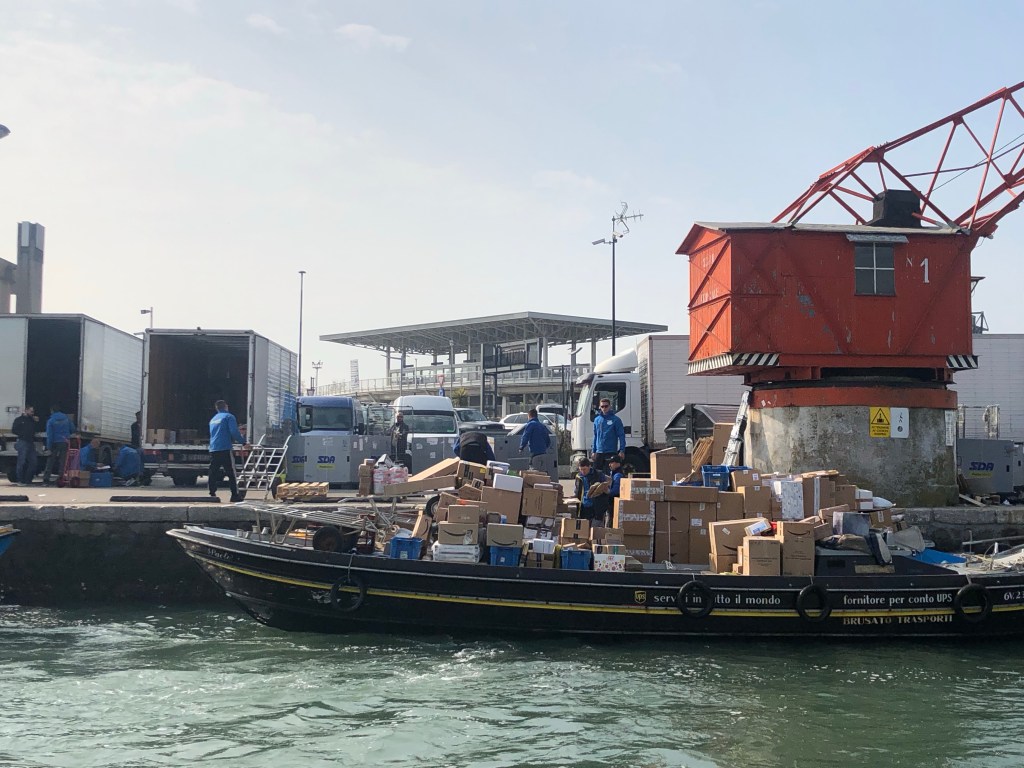
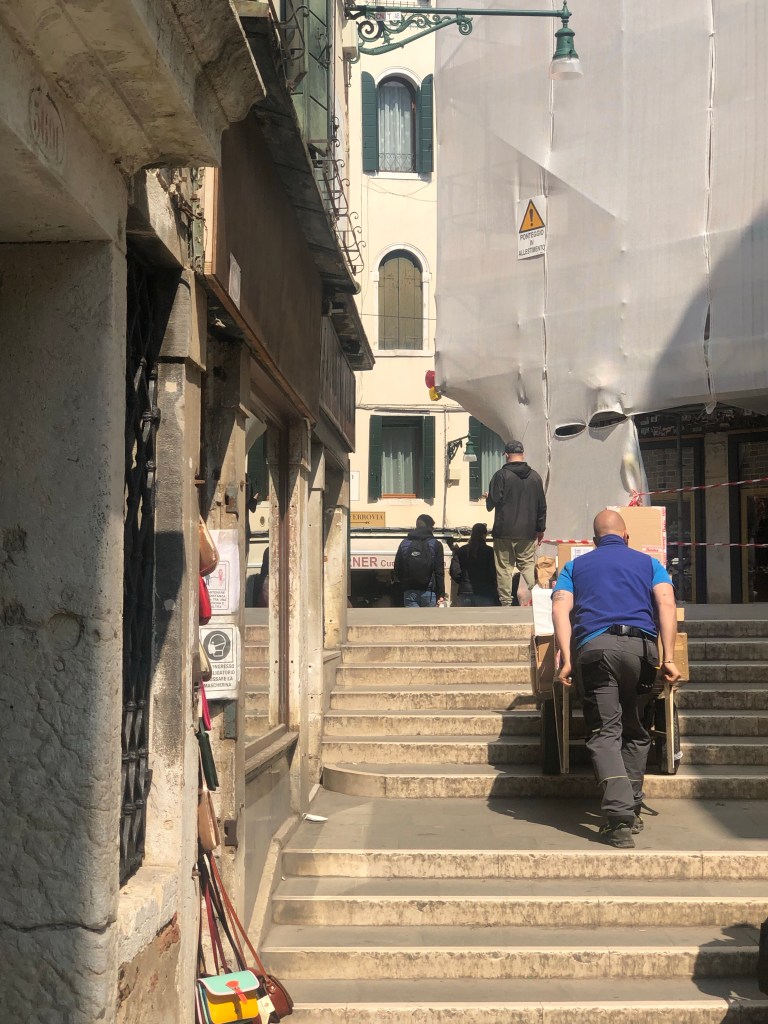
One thing that’s really got my attention today is how Venice has adapted to the age of Amazon Prime. In a city with no cars, the usual “white van man” has no jurisdiction. Instead, I’ve watched boats ferrying parcels in from the mainland all morning, while wiry, suntanned porters haul the day’s Amazon payload up and over the city’s many bridges using a purpose-built trolley that seems designed to tackle Venice’s myriad steps. Ingenious!

I could think of better places to work for Amazon, but as Venice has been a trading hub since its inception, I expect the Venetians are used to it.

I ate my lunch/brunch of a focaccia ai olive and an extremely filling lemon ricotta cheesecake in Campo San Geremia, after overshooting the ghetto district by a bridge or two. I listened to a Senegalese busker and wondered if African minstrels were a thing in Shakespeare’s Venice, too. His music was fun and his voice captivating. My dad would have said it was repetitive. I would have said it was catchy. Mr Busker would probably have said he was just having the time of his life – and raking it in in the process Seriously, I’ve rarely seen a busker’s cap so full – there was more shine coming off the euros on his guitar case than ripples on the Grand Canal. Venice must be a minstrel’s dream.

My thoughts and feelings wandering through the ghetto vechio and the ghetto novo were much too powerful to sum up in what is already a comprehensive article. I’ll save them for when I return tomorrow. Right now, the brightest part of the day is almost over and I’m feeling rested. Time to go and explore again. BB x