Venice IV: Ghettos, Glass and Gold

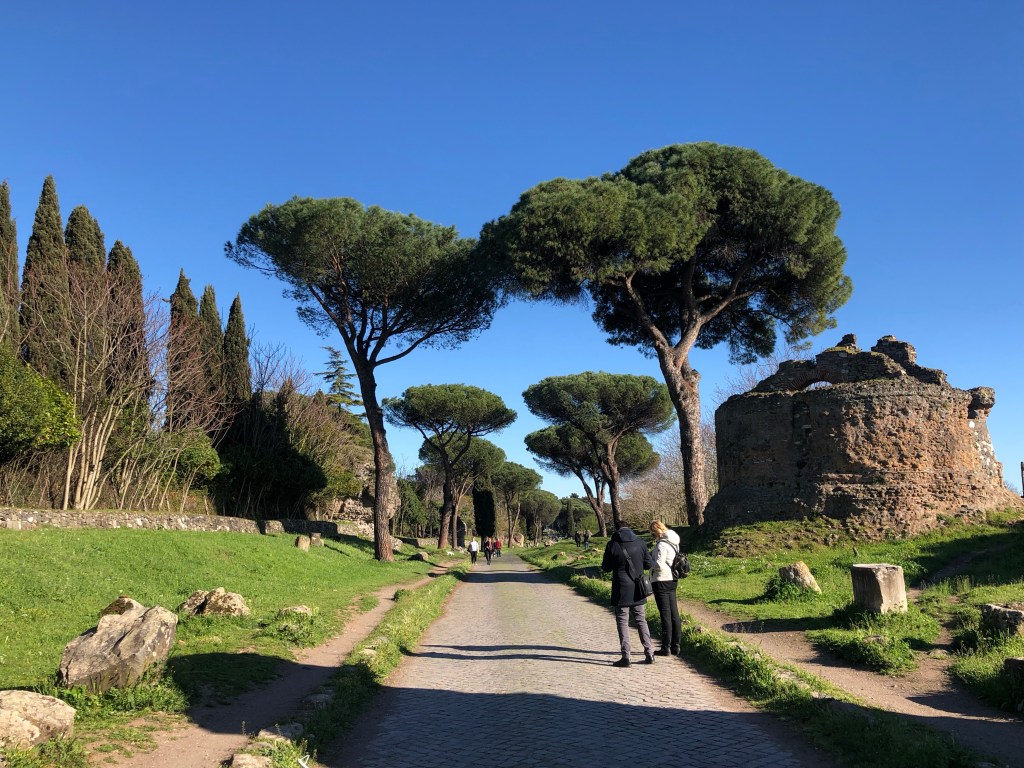
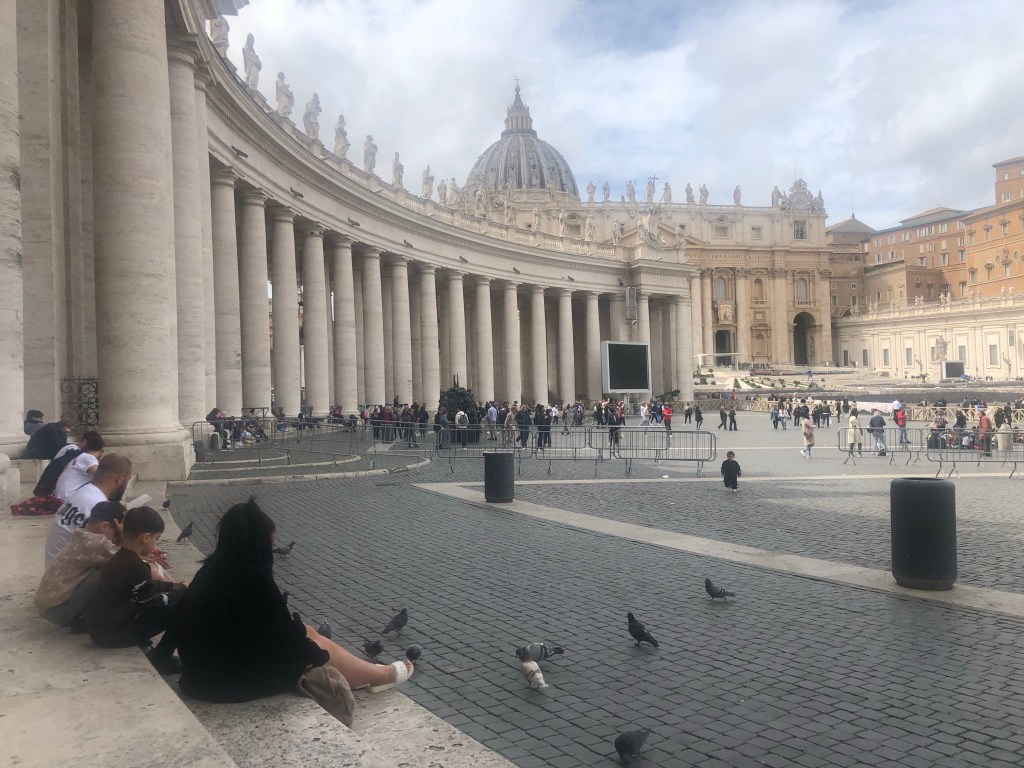
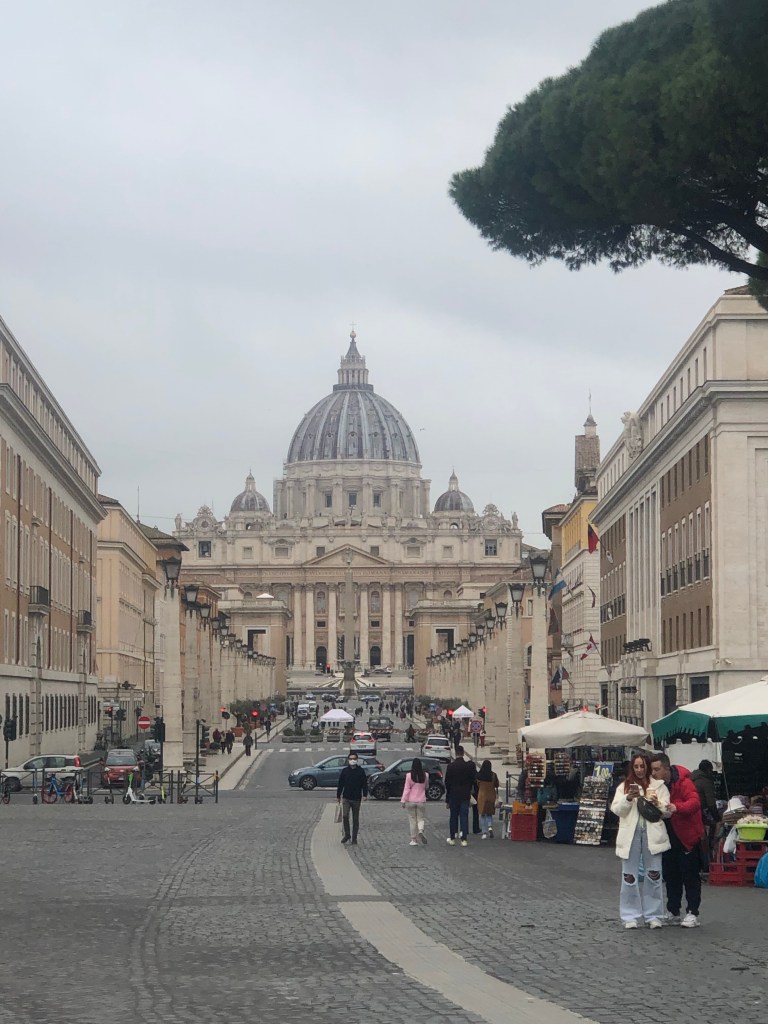
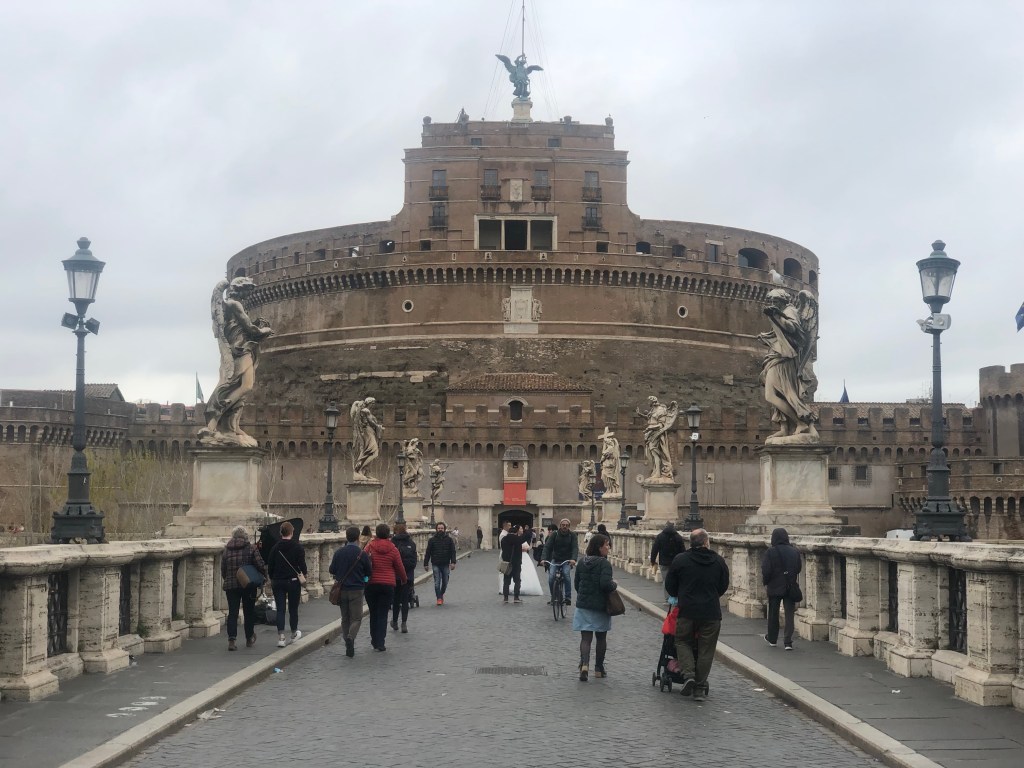
The Italo high-speed train races across the Ponte della Libertà, leaving Venice and its islands far behind. I’m bound for Rome, the Eternal City, my final stop in this first expedition to Italy. In what is possibly a crime against humanity, I’m skipping Florence this time, on the pretext that to spend anything less than two full days in Dante’s city would be to woefully undervalue one of Italy’s greatest treasures. Next time – and there will be a next time – I’ll come back for Florence, and Trento, and maybe even Milan. But since it’s my first time here, and my Italian is rudimentary at best, I’d rather depart with a hunger to return.


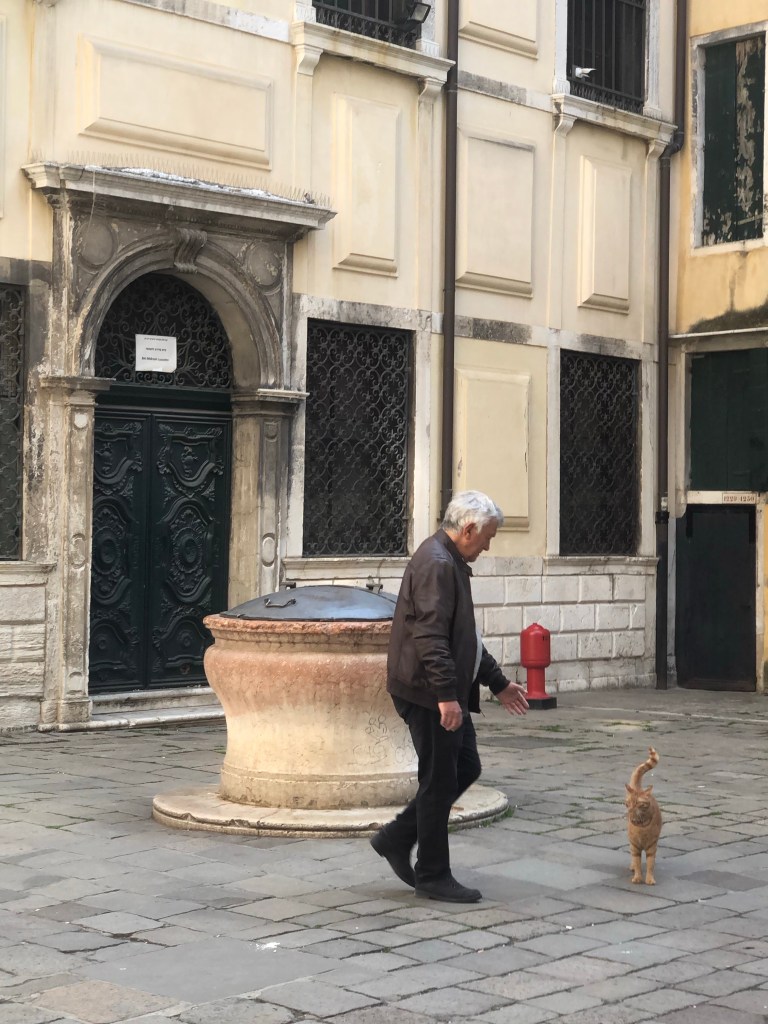
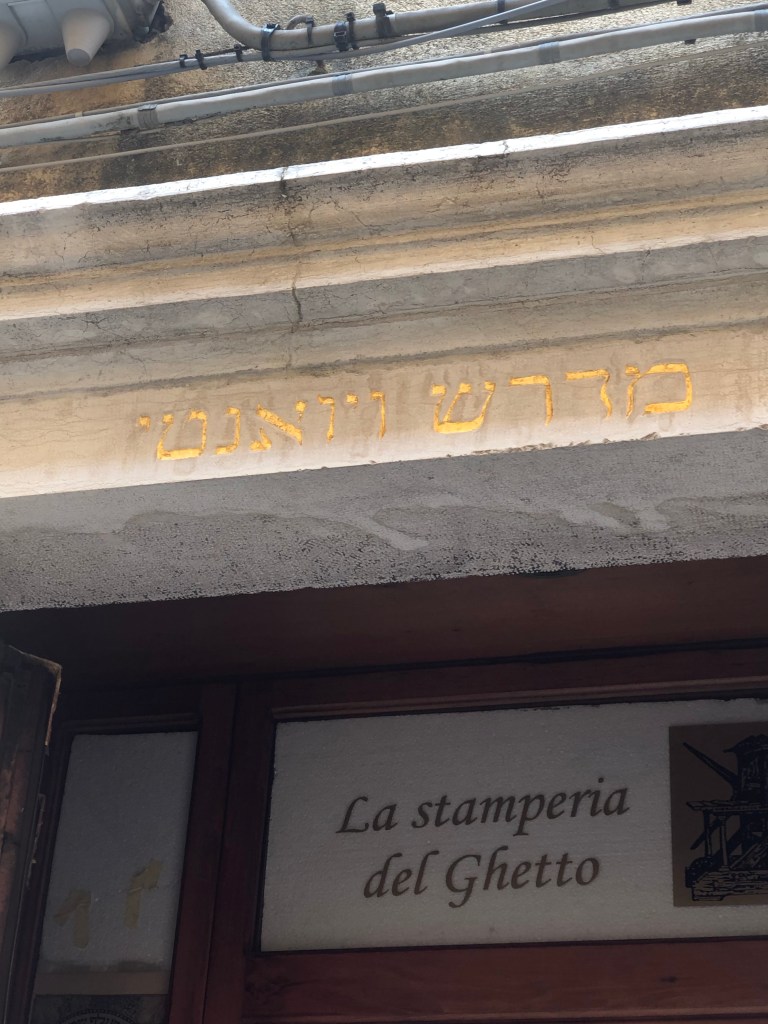
Far and away my favourite corner of Venice is the Cannaregio district to the north of the island. It’s marked with a Star of David on most maps, and it’s where you’ll find the city’s former Jewish ghettos (not in confusingly named Giudecca which, despite being a mangling of judaica, was never home to the city’s Jewish population). It’s a quieter corner of the city, dark and understated, but take a moment to stop and take stock of your surroundings and you’ll see some surprising sights – chiefest of all being the Jews themselves, hanging on tenaciously in the same corner of the city in which they were once corralled.

My contact with the Jewish world has been ethereal for the greater part of these last twenty-eight years. I played a Jewish tailor in Fiddler on the Roof and Klezmer stalwarts like Hava Nagilah and Tants, Yidelekh, tants (Dance, Jew, Dance) were my go-to violin pieces as a child, but that’s about as close as I ever got. Doubly so after Covid derailed my trip to Israel two years ago. To tell the truth, I could probably count on the fingers of one hand – two, tops – the number of Jews I’ve ever had a conversation with. So coming to Venice and seeing not just a sizeable but highly active Jewish community in the flesh has been nothing short of heart-stopping.

As usual, the Spanish connection was the real draw. Among the Italians, there are a great many Spanish surnames carved into the various memorials commemorating the disappeared and the dead. Morenos. Navarro. Vidal. Grim reminders of the centuries-long fate of the Jews, fleeing from one intolerant regime into the arms of another. At some point in their history, many of Spain’s Sephardim must have been faced with the painful choice: to abandon hope and their homes, or to abandon their faith. If the stories I do so want to believe are true, then my ancestors made the bitter decision to remain under the unforgiving aegis of a Christian God, rather than leaving behind the land that had been their home for generations. Could you blame them for that?

As I wandered through the ghetto nuovo, I saw a Haredi gathering through a window. A boy stood outside the window, shawl at his waist, shuckling at prayer. A girl on the vaporetto at Murano had a gold necklace bearing the Hebrew letter he (ה). Out in the backwaters of Burano, a man sped by on his boat as I ate my lunch, sidelocks flying in the wind. I didn’t expect Venice to be such a centre of Jewish activity, but it’s a miracle to behold.


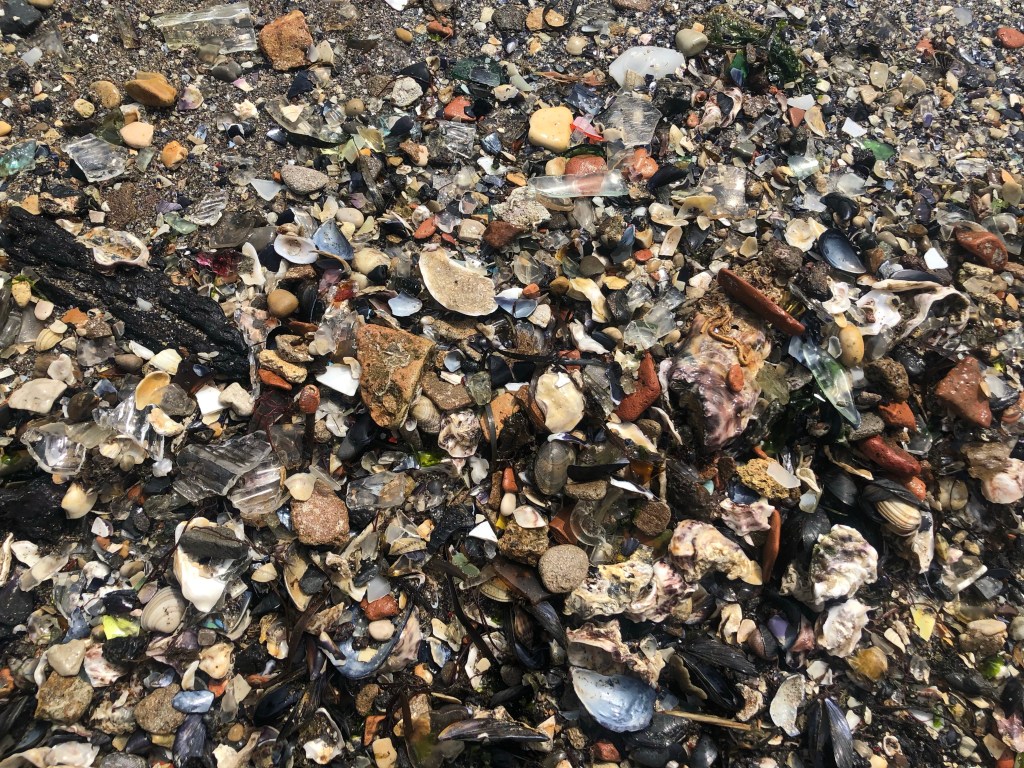
My eagle eyes were trained on other things than just bird life and Hebrew paraphernalia. If you visit Murano for its glasswork, something you ought to do is go beach-combing by the vaporetto stop near the lighthouse. For one thing, it’s ridiculously easy to spend a week in Venice without ever touching the water once, and this is a very accessible point to make contact. For another, an island whose primary output is glass and clumsy tourists makes for a mudlark’s dream: scattered amongst the lagoon’s mussel and oyster shells you’ll find all manner of glass washed up on the shore. Who knows how old the shards are? Some of them might be decades or even centuries old. A great many more were probably dropped in yesterday by this or that day tripper who was careless in boarding the boats. Whatever their history, there’s a rainbow of debris along Murano’s shoreline that’s well worth a careful investigation, if you fancy getting your hands on some free if highly fragmented Murano glass.

With only a few hours left on the clock, I very almost missed Venice’s main attraction entirely. Despite passing St Mark’s Basilica every time I got off the vaporetto from Giudecca, I confess I hadn’t considered going in to explore at all, until the realisation that I might let my private feud with scaffolding debar me from seeing one of the most beautiful churches in Christendom finally got the better of me. And not a moment too soon – after my island-hopping excursion around the lagoon, I only just made it back in time for the final opening hour.

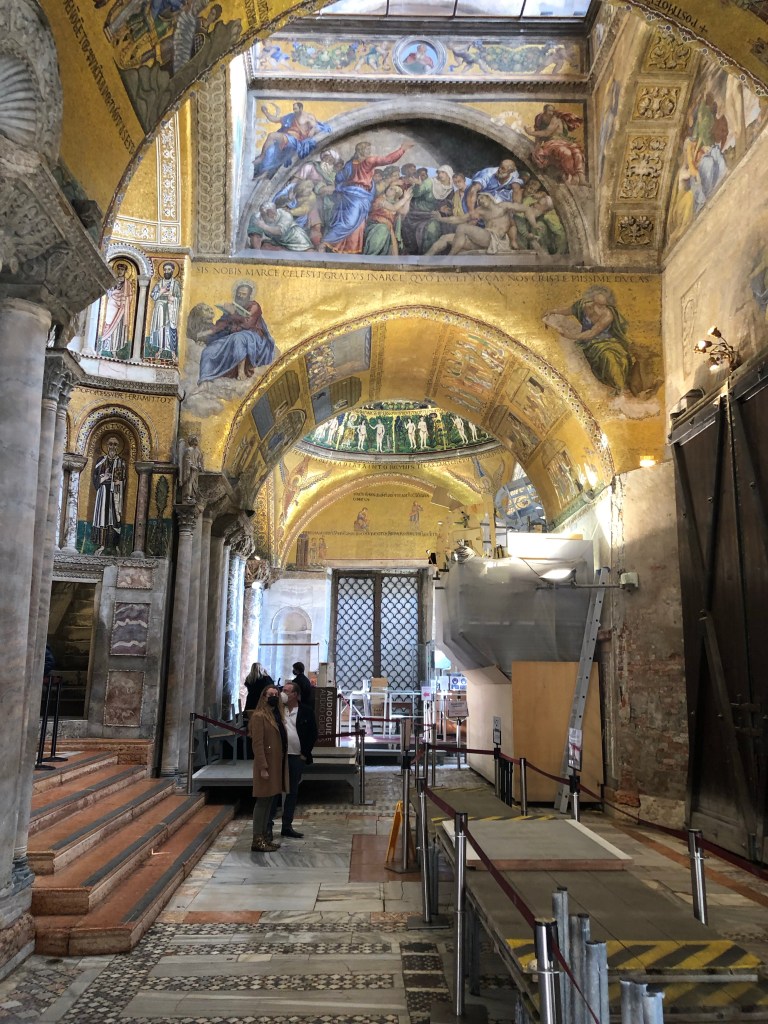
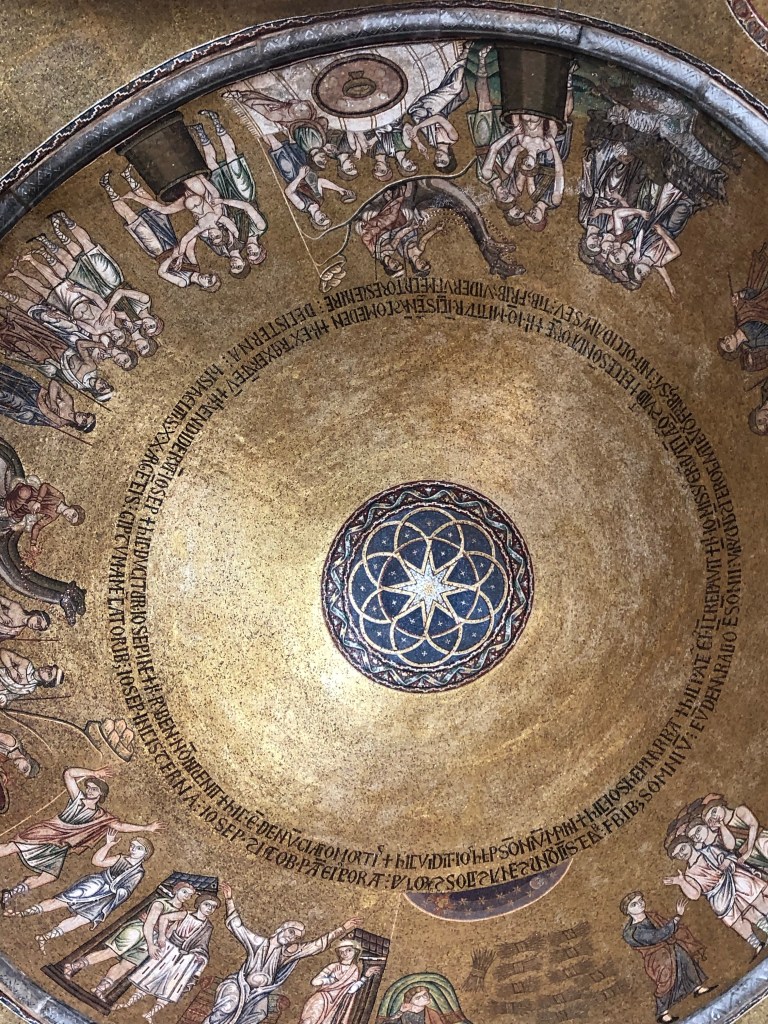
In short, I’m glad I did. It’s not free to enter like it once was, but 3€ is a pitifully small sum to pay to see the glittering Byzantine majesty that is St Mark’s ceiling. Heathen that I am, I don’t have a lot of time for Renaissance art, but there’s something about the sunken, staring eyes of Byzantine saints that I find absolutely spellbinding. And St Mark’s certainly isn’t short on saints.

Probably the most awe-inspiring part of the interior is the entrance itself – while you’re busy buying your ticket, don’t forget to look up at some of the best lit (and best preserved) of the basilica’s mosaics!

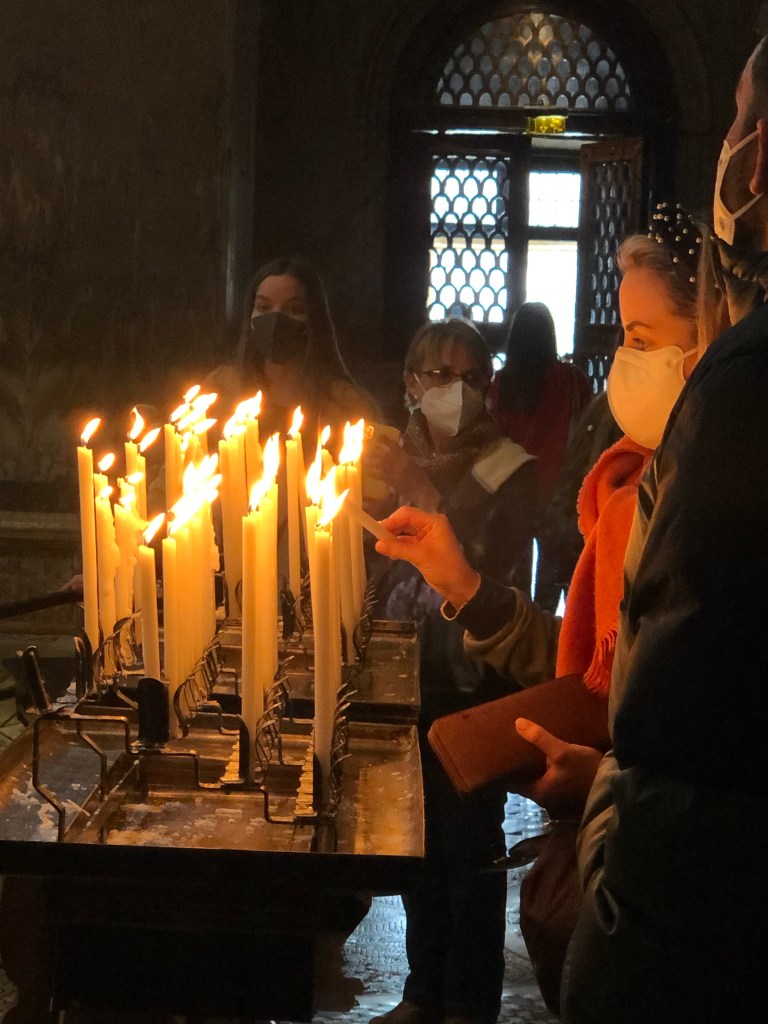
I lit a candle for my ancestors before leaving. My grandfather was a traveler, but I doubt he ever made it this far. So when I travel, I travel for him; just as when I write in my journal, I do so in memory of my great-grandmother. Traditions are everything. Insert your Fiddler on the Roof pun here.

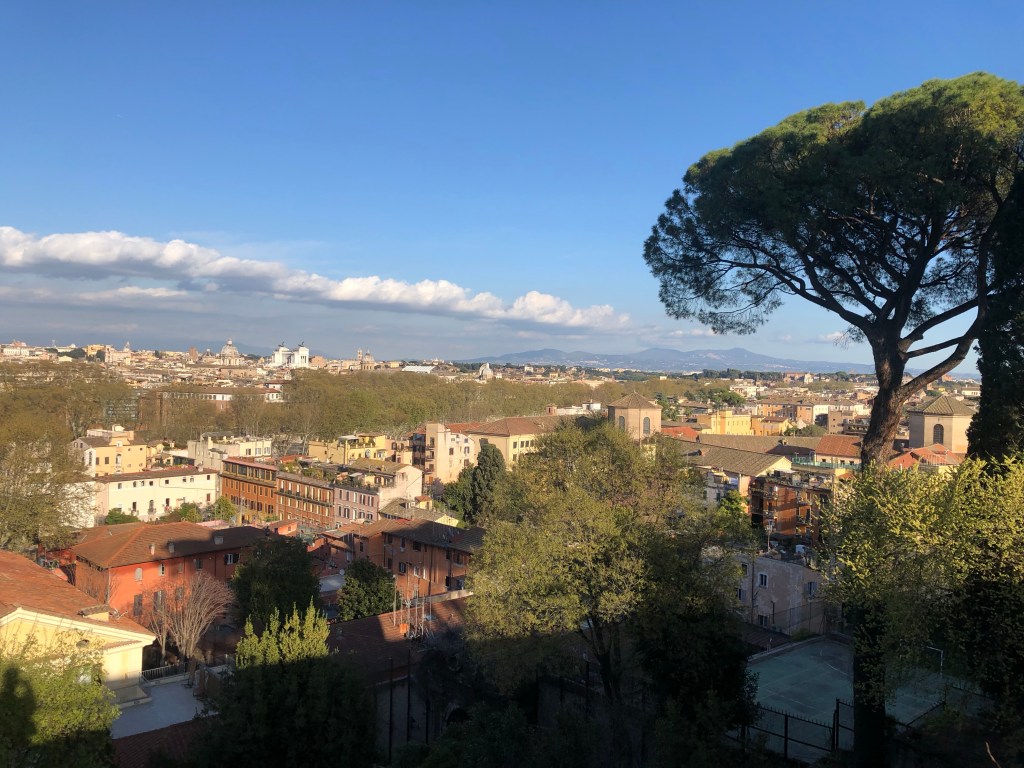
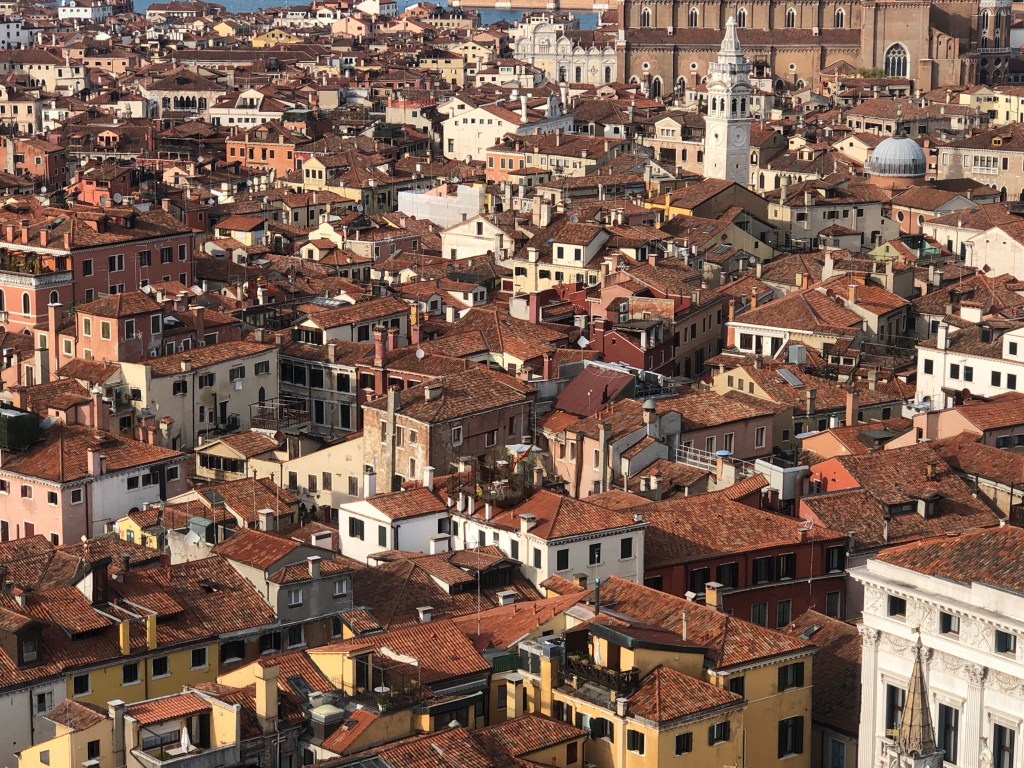
To round out my stay in Venice, I took the lift up the campanile to see the city from on high. It’s worth the 10€ – the views are spectacular and it really helps to put your adventures around the lagoon in context, as you can see most of the islands from up there. There aren’t many cities in the world that aren’t eaten away at by modern cement monstrosities, so Venice is a city you should see from as many angles as you can. And since I didn’t have the window seat on the flight in, this was the next best thing!

The train is slowing down. We’ve cleared the long dark tunnel through the Apennine Mountains and left clouded Florence far behind. The group of four American travellers from Badiddlyboing, Odawidaho (right out of the frighteningly accurate Harry and Paul skit https://youtu.be/BGc3zFOFI-s) have finally stopped talking about Geoff’s wine tour and are playing Candy Crush in silence. Outside, the sun shines on Lazio, and I’m ready for the next adventure. Andiamo di qua! BB x

Venice III: Spirits of the Marshes

Three days in and I’m already a day behind. I guess that’s a good thing, as it means I not only had a packed day yesterday, I also had a busy sociable evening swapping stories with fellow travellers. It’s travelling done right, and all I ask is your patience, dear readers – such days make for good writing.


Wednesday was another make-it-up-as-you-go kind of day. I had it in mind to visit the smaller islands out in the lagoon – namely Murano and Burano – but as the vaporetto rolled up to Fondamente Nove, I suddenly decided to take a chance on mysterious Torcello, Venice’s predecessor. Most of the guidebooks pointed out it was almost deserted with very little to see other than an ancient church – the oldest in the lagoon – but if you’ve been reading for a while, you’ll know that’s one big fat tick in the box for me.

The lagoon feels truly vast once you’re out on it and Venice is behind you. Wooden struts stacked in threes mark what can only be described as water highways, giving the lagoon the appearance of a race course – until you realise it’s not mere practicality but also a safety measure for sailors, as there are multiple areas of the lagoon that are considerably shallower than they seem. Here and there, large expanses of mudflats rise out of the water, giving the lagoon’s waterbirds a place to retreat from the noise of the city.

The vaporetto chugged into Murano, city of glass, and then Burano in turn, city of lace and paintbox streets, but I spurned both of these for the diamond in the rough that is Torcello, risking a stranding for a chance to see one of the lagoon’s hidden gems. (In hindsight, I needn’t be so melodramatic – Torcello is surprisingly well serviced by the vaporetti, with a boat every fifteen minutes from neighbouring Burano).

Why come way out here? Easy. Torcello is nothing less than Venice’s ancestor, home of the first Venetians who arrived in these islands around the year 422 fleeing the forces of Attila and his Huns as the Western Roman Empire fell beneath fire and the sword. Guided by the visions of their priest, the refugees escaped into the lagoon, believing the great water would hide them from the Huns. They named their new home Torcello, meaning “Tower and Sky” – which is eerily apt today, as that’s almost all that’s left of what was once a thriving city.

In its heyday, some twenty thousand people called this island home, and it punched well above its weight as a centre of commerce and tolerance until at least the tenth century, though you’d never guess to look at it today. All that remains are some twenty residents, a few houses, some scattered allotments, a collection of Romanesque statues abandoned to time and an old church in the Roman-Byzantine style, whose bell-tower still dominates the landscape – the “Sky Tower” that gave the town its name. On a clear day you can just about see it from Venice itself, staring jealously across the lagoon.

Several factors brought about Torcello’s decline, not least of all the lagoon itself. Just as she did during the first COVID lockdown, Nature showed how quickly she can regain control when she wants to. Over time the island began to sink back beneath the water, swallowing up the villages and turning the once prosperous salt-flats into malaria-ridden marshes. Torcello’s disciples fled in the wake of the tide, seeking refuge on the other islands.

And then, of course, there was Venice herself. What was originally an offshoot of Torcello quickly took advantage of its father’s plight, absorbing its fugitives into its own ranks. Eventually, the son far outshone the father, and as more and more citizens abandoned their former home to its fate, the glory of Torcello faded into memory. The many thousands who once called this island home simply disappeared.

I had my lunch on a jetty east of the Roman church with four ducks paddling hopefully in attendance below. Venice is quiet, but Torcello is something else. Sure, maybe not so much that afternoon, as one of the locals had his radio on full blast as he scoured his fishing boat upriver, but I can imagine this place is as silent as the desert most days.

I’ve always been attracted to the desolate corners of the world. A childhood spent exploring Dungeness, Stodmarsh, Elmley and Doñana National Park has left me with a voracious appetite for marshlands that has never really gone away. So when I look out across the mudflats and listen to the cries of the shorebirds, my heart falls into step and I feel calm and content. But marshes are lonely places. I can think of few places in the world with a lonelier atmosphere. The mournful cries of plovers and sandpipers out on the flats give the place an eerie sadness. The gulls almost sound as though they’re laughing at you for losing yourself here. Solitary herons and egrets prowl the canals like watchmen. And of course there’s the mournful curlew, whose bubbling trill is possibly one of the most haunting sounds in nature. What unholy terror drove the first Venetians to such a lonely place? Their fear of the Huns must have been great indeed to seek to build a home out here in the lonely marshes.

As I leave the island, a thin dark cloud appears on the horizon, moving fast toward Burano. As it draws near, I see it is no cloud at all but a raft of pygmy cormorants, thousands of them, flying in a loose formation that surely stretches for half a kilometre in length. Like oversized starlings, they sail over the marshes, moving deeper into the lagoon.

Perhaps these little sea-crows are the perfect metaphor for the Venetians themselves. A creature of the land that took to the water, making himself a master fisherman, building his nest out on the lagoon. I’m not the first to jump to that conclusion either. A sixth century Roman official wrote of the denizens of Torcello thus:

You live like sea-birds, with your homes dispersed, like the Cyclades, across the surface of the water.

Cassiodorus, 523 AD

Standing on the forgotten shore of Torcello, it’s easy to imagine that the thousands of cormorants passing by really are the spirits of those first Venetians, making the same exodus from land to lagoon every morning for generation after generation, like the denouement to a tragic Greek myth: some cruel trick of the old gods, granting the refugees an eternal escape from their would-be oppressors. That such creatures should choose to haunt Torcello, the forgotten ancestral home of the Venetians, only adds to that mythos.

The outlying marshlands of the Venetian lagoon are full of such spirits, if you’re prepared to leave the bustle of Venice and its glass-blowing cousins behind for a couple of hours. If you truly want to see what Venice might have looked like before its canals become cloudy and green from all the water traffic, come to Torcello, whose ancient canals are clear as daylight, revealing a colourful array of sea grasses, seaweed and scuttling crabs on the silt below. And listen, just for a moment, to the ghosts out on the mudflats, knowing you’re hearing the same haunting sounds that the first Venetians defied to make their home here, over a thousand years ago. BB x
Venice II: Madonna and the Amazons

This morning I struck out alone, early, just after sunrise.

So early, in fact, that most things were closed, even after a false start on the wrong vaporetto. St Mark’s Basilica wasn’t taking any visitors when I arrived, though at the moment it looks like a building site with all the scaffolding on its central façade.

The scaffolding curse strikes again. After my last piece on the subject disappeared under mysterious circumstances (I swear I remember publishing a piece called “Ode to the Scaffold” and Facebook tells me I’m not lying), I’m all the more convinced there’s a global conspiracy that has every major world heritage monument under restoration when I’m in town. Altamira, Fes’ tanneries, Lindisfarne, León’s cathedral, Gaudí’s Casa Battló and now the Basilica di San Marco. I’m truly cursed.

Fortunately, building interiors and Renaissance paintings don’t hold as much fascination for me as the city itself, so I set off in search of some other parts of Venice with stories to tell. And where better to begin than the Rialto? The great bridge over the Grand Canal where Shylock learned of his rival’s ruin?

I’ll admit that today was something of a schoolboy-fanboy morning. Othello and The Merchant of Venice were two of my A Level texts back in the day and walking down the very streets where some of Shakespeare’s greatest works were set felt nothing short of magical. Some come to Venice seeking romance, fine dining and Renaissance majesty, but I’m wired differently. Jews, plague and Shakespeare – that’s why I’m here.

A faceless bust of the Madonna sits carved in marble on the west side of the bridge. I can’t find anything on her, and my Italian isn’t quite up to scratch to ask a local yet, but in a city filled with busts of Mary, this faceless one grabbed my attention.

How many have touched her face over the centuries in adoration? How many have asked for her intercession? I see that many of the older Venetians, like their coreligionists across the sea, cross themselves whenever they pass one of these ancient busts. Were their wishes granted, or did their ships founder on the Goodwin Sands (or not, in a rather silly plot twist from the Bard)?

Onwards from the Rialto and deeper into the heart of the city. I’m seeking Cannaregio and the ghettos, but I keep getting distracted by the Venetians themselves. How tall these Italians are! We of Spanish blood are a stocky folk at the best of times, and I feel blessed to be taller than average for once whenever I’m there, but here I am dwarfed. Broad-shouldered gondolieri swaggering about with bolshy Italian charm, thickset old-timers puffing on cigars as they vent about che succede, exceptionally elegant young women on long legs and perfectly chosen outfits. And that especially fetching eye colour that is so particular to the Italians, a fair and greenish brown that arrests the heart for a moment.

Ok, I’m staring. Time to move on.

One thing that’s really got my attention today is how Venice has adapted to the age of Amazon Prime. In a city with no cars, the usual “white van man” has no jurisdiction. Instead, I’ve watched boats ferrying parcels in from the mainland all morning, while wiry, suntanned porters haul the day’s Amazon payload up and over the city’s many bridges using a purpose-built trolley that seems designed to tackle Venice’s myriad steps. Ingenious!

I could think of better places to work for Amazon, but as Venice has been a trading hub since its inception, I expect the Venetians are used to it.

I ate my lunch/brunch of a focaccia ai olive and an extremely filling lemon ricotta cheesecake in Campo San Geremia, after overshooting the ghetto district by a bridge or two. I listened to a Senegalese busker and wondered if African minstrels were a thing in Shakespeare’s Venice, too. His music was fun and his voice captivating. My dad would have said it was repetitive. I would have said it was catchy. Mr Busker would probably have said he was just having the time of his life – and raking it in in the process Seriously, I’ve rarely seen a busker’s cap so full – there was more shine coming off the euros on his guitar case than ripples on the Grand Canal. Venice must be a minstrel’s dream.

My thoughts and feelings wandering through the ghetto vechio and the ghetto novo were much too powerful to sum up in what is already a comprehensive article. I’ll save them for when I return tomorrow. Right now, the brightest part of the day is almost over and I’m feeling rested. Time to go and explore again. BB x
Venice: First Impressions

My eyes hurt. The 4.15am start probably didn’t help, but I’d wager the blinding light of the Venetian sky has something to do with it, too. The good weather is supposed to start tomorrow, but today the city is draped in a lagoon of cloud – and that’s no ugly thing.

Check-in was easy. Considerably so. Though it’s a little sad the world has gone and got itself in a big damn hurry and replaced most of the human interactions in airports with machines, it doesn’t half cut the time spent queuing. Despite one of the smoothest transitions from home to gate, however, the plane was all of forty five minutes late leaving Gatwick. Apparently they’d oversold the flight by one and by the time they’d sorted that one out, we’d missed our slot. I was listening to Ravel’s Boléro which only made the anticipation all the more amusing – that piece is basically thirteen minutes of build up to a two minute finale. I could have listened to it three times over in the time between our original departure time and takeoff… but, as I’m not a masochist, I didn’t. Fifteen minutes of snare drums is good enough.

Have EasyJet seats shrunk over the years or have I just forgotten? In any event, Venice’s Marco Polo Airport is very easy to navigate. Passport control is also machine-operated, though I did still get my stamp from a singing security guard. The one upshot of Brexit is that my passport is beginning to look well-travelled again, after years of “ghosting” between the UK and Spain.

Those who’ve traveled with me before will know I prefer to keep an open book when I travel. That can make me either the most liberating or the most frustrating person to travel with. However, it’s a rule I stick to. It is, of course, considerably easier to do when you travel alone.

I thought about sailing into Venice on one of Alilaguna’s water transports and even got as far as buying a ticket, only to be told that the Rosso service via Giudecca wasn’t running today. Nobody thought to tell the machine. This, I suppose, is one example where machines will be the death of us – starting small, bleeding the shy and the awkward of their petty cash, before bloodying us when Skynet takes over.

Joking aside, I decided to skip the hassle and take the bus. A much better idea – it’s a short ride and at only 8€ it’s an easy, affordable trip. And though I was planning on heading straight to Giudecca to drop off my gear, in the end taking the bus swayed me to get to know the floating city a little along the way.

I’ve been good this time. I haven’t actually done a lot of research. I haven’t binged in Venice photos or read up on travel blogs. The only real binging I’ve been indulging in is my Italian, which is already paying dividends out here. As a result, I’ve managed to dodge the Petra Effect this time. Hype really is a killer – so I’ve arrived blissfully underexposed. And what an impact that has!

First impressions? I think one of the most surprising things about Venice is how quiet it is. I was expecting one of the most beautiful cities in Europe to be absolutely heaving, but it’s not. I lost count of the number of times I found myself crossing a bridge in an empty, silent street, with nothing meeting my ears but the rippling water and the crying of gulls overhead. Even the Venetians themselves seem toned down (but then, I am used to Milanese Italians who are especially vocal). But no. None of that. It’s incredibly peaceful here.

The vaporetti couldn’t be easier to use. I’ve bought a three-day pass for 40€ that will allow me to bounce on and off them over the next few days. If you stay on Giudecca, you’ll be making frequent use of them just to get to the city and back, and at 7.50€ for a single trip you’ll make a saving even if you only plan to make a return trip from Giudecca once each day. I have a few days to play with, so I’m going to try to explore the outlying islands of Murano and Burano. Better hold on to that ticket!

Giudecca is a quiet place to stay. I spent most of the afternoon snagging photographs of the cityscape in a mirrored window and chasing a cormorant down the waterfront. For once I’m armed with my trusty 300mm and can get back to my roots as an amateur wildlife photographer. I ought to invest in a means of transferring my photos straight to my phone for on-the-go reporting like this, but for now, a grab shot from the old iPhone will have to do.

Looks like the other occupants of my dorm are stirring. I noticed a Spanish book on someone’s bed as I came in. I can see a Pembroke College Cambridge tog bag hanging from one of the bunks and I know I recognised a French accent back there. Time to break a habit and instigate a conversation for once. I fancy dinner and a chat. I’ve missed this way of life. Catch you later! BB x
White Hart

This time tomorrow I will be in Venice, hopefully enjoying una cena veneta with a few fellow travelers, but more likely getting some rest from a busy day on the road (and a 4.30am start). So, as is tradition, I went for a walk in the countryside to bid adieu – or even addio – to the England I love, as it will be almost a fortnight before I return to this island.

I originally meant to get a breath of fresh air and nothing more, having spent most of the day inside, packing and preparing. But the darkness between the trees in the dying light of the evening pulled me in, so I decided to take an alternative route home through the forest.

There’s something intensely magical about walking in a forest after sunset. For some reason it’s never given me the shivers – at least, not if we don’t count that frightful wild camping episode I wrote about a couple of months back. With the light failing with every second, your sense of hearing intensifies: the crunching leaves beneath your feet crackle like a bonfire, and the alarm calls of blackbirds echo through the trees like klaxons.

If you stop and stand still for a moment, though, you’ll hear other sounds. The rustle of movement in the undergrowth. The drumroll wingbeat of a cock pheasant after his cry. The distant hoot of an owl. The footsteps of deer, not too far away.

I came across the herd in their usual clearing, where the poplars grow. I call it the cathedral, because of the way the trees soar into the air in four rows, their branches covering the sky like the vaulted arches of Canterbury. It’s also blissfully dark here in summer, when the leaves blot out the sun, and I often find the muntjac here. Tonight, the fallow herd were resting between the pillars – until they heard me coming, that is.

Even with my keen eyesight, the deer did a fantastic job at staying out of sight, though there must have been at least twenty of them, fading seamlessly into the forest floor the moment they stopped moving. Only one remained visible, shining like the morning star: the white hart. Look closely and you’ll see it, even in the shoddy resolution of my phone’s camera.

In British folklore, white stags are quintessential symbols of quests. Lots of children’s books feature white stags that can never be caught. If anything one ought to feel sorry for the beasts, as nature can hardly play a crueller trick than to make a prey animal absolutely incapable of blending in to any environment that isn’t covered in thick snow. All the same, it’s always a sight to see – even if our white heart hasn’t got any antlers to show for it. So I won’t be following in the footsteps of Saint Eustace and seeing Christ between its antlers. Not that I got close enough to see whether it really was Jesus or a chaffinch perched upon its head – the beast had enough good sense to disappear deeper into the forest as I drew near. Saint Eustace must have been a damned good sneak.

As for my quest, my quest is to rediscover the thrill of the open road once again. With my taxi due to arrive in only a few hours’ time, I suppose I’ll know soon enough. BB x
Storm Clouds over Soho

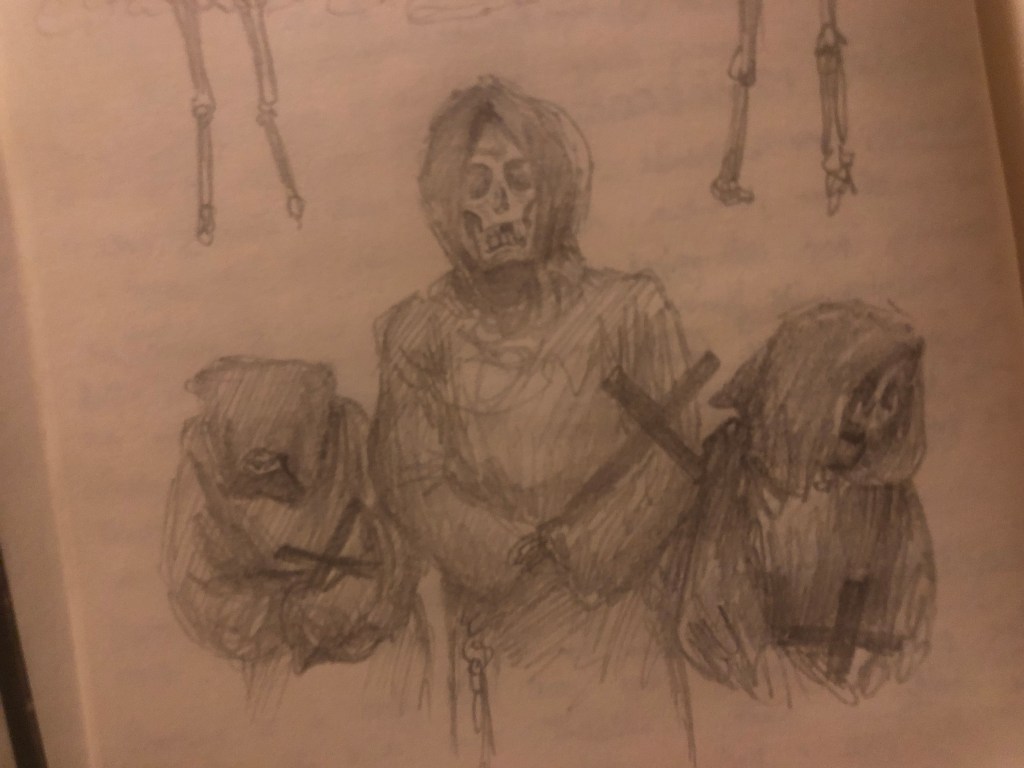
I got the train up to London today with a view to getting my hands on a decent pair of shoes, since I’m told the Italians can be a little snobbish when it comes to standards of dress. With the Northern Line under repairs, it took a little longer to get up to Bloomsbury, so I took a leisurely ride on the Circle Line from Blackfriars and indulged in a favourite pastime: sketching commuters on the Underground. There’s an art to it (no pun intended) – you’ve got to be quick, since most of them only travel a few stops before getting off. And now that face masks are a minority affair, it’s a lot more enjoyable a practice than it was.

Predictably, I got waylaid in Gower Street’s Waterstones en route to the shoe shop. Ever on the hunt for new additions to my Spanish library, I thought I’d do some digging at one of London’s finest bookstores, since it’s been quite a long time since my last visit. I managed to exercise a considerable amount of restraint this time, leaving behind two case studies on the Inquisition from the antiques section in the basement and Minder’s The Struggle for Catalonia… though I’ll be back for that one eventually. Giles Tremlett has brought out a new book on Spain which looks like it will pump out a lot of material I can use with my A Level Spanish students, which is my way of justifying that purchase. The only book I didn’t question was an account of Walter Starkie’s Camino. Starkie wrote so vividly about his journeys as a minstrel across Spain in Spanish Raggle Taggle and peppers his writing with old verses all over the place, so I had to salvage that one.

I wandered down towards Oxford Street in search of a decent pair of shoes, but I couldn’t find anything that jumped off the shelves at me, so I decided to make do what I have (a fine piece of advice at the best of times, which I wantonly ignore whenever I should be near a bookshop) and cut across town back to the river through Soho.

I’ve either forgotten how luridly seedy Soho is, or I haven’t properly explored the place before. What looked like a shortcut led me down a dark alleyway with shady adult stores on either side. The noise of Oxford Street seemed to die in the distance, like the record player in the Waterstones’ basement, stifled into silence by a wall of books… only now by grimy bricks and a mere sliver of sunlight through a gap between the buildings above. I almost collided with a stocky man in a big puffer jacket with a cough came lumbering out of a film store, stuffing something under the sleeve of his coat. Two Arabs stopped talking and gave me a funny look as I passed, clutching my journal in one hand and one strap of my rucksack with the other, humming the tenor line from Ola Gjeilo’s Northern Lights to myself. I guess Soho isn’t on the tourist trail.

Leaving Soho behind, I wandered through the crowds in Chinatown and came out onto Trafalgar Square, where a large crowd had gathered on the steps. Unsurprisingly, it was a rally against the war in Ukraine. Blue-and-yellow flags fluttered high above the throng, joined here and there by Polish and Hungarian partisans adding their colours to the mast. One woman, the tryzub emblazoned on her cape, stood defiant at the front of the congregation, fist raised in a powerful salute for most of the half-hour I stuck around to watch.

Boycott Russia.
Arm Ukraine.
Stop Putin, stop the war.

Those were the chants, coming around and around before the crowd. The main speaker apologised for the necessity of being so blunt, before decrying the rape of Ukrainian women by Russian forces and the slaughter of its children. An Englishman spoke slightly hesitantly about the need to support Ukraine’s disabled and elderly refugees, and a Ukrainian began to sing a national lament as the sky darkened overhead and the sun faded from sight. I’ll admit I half expected there to be a police van lurked nearby, its officers on standby for any disruption, but I couldn’t find a visible copper for love nor money.

The last time I saw a demonstration like this was back in October in Madrid’s Puerta del Sol, as I walked back to my hostel with one of my cousins. “They’re always here,” he told me, “and so are they,” indicating the loitering policia who hang back just shy of the crowd, silent, hands on their truncheons, watching the Republican flags flying in the night air. The crowd was surprisingly mixed: an old man in a flat cap stood shouting his passionate support in the centre of the throng, while two girls shared an equally passionate and equally political moment on one of the bollards. The policia watched on, silently.

Puerta del Sol, October 2021

On my way back to the station, I stopped at the traffic lights and looked back to Trafalgar Square. Lord Nelson and a mounted Charles I stared southwards over my head, silhouetted against the clouded sky: two men who got personally involved in European wars and paid a physical price for their efforts. Little wonder, then, that the European powers are so reluctant to send any troops into open battle to defend the Gateway of Europe.

Back at Blackfriars, the rally seemed a world away. I missed the early train by a whisker and had to wait twenty minutes for the next one. A Catalan girl sat on a bench nearby, a red-and-yellow skiing jacket from Cerdanya proudly displaying her winter colours. I instinctively reached for my face, but my usual rojigualda facemask was at home: I’d opted for a less nationalistic face covering today. Away to the east, the sun broke through the clouds over the Thames, lighting up Tower Bridge against the rainclouds rolling in from the south. London seems to go on forever, whatever happens to the rest of the world, and yet it’s Rome that holds the title of the Eternal City. I’m looking forward to seeing it with my own eyes and reading such stories as I can find in its people and its streets. BB x
Keep the Faith

Last night, in a return to pre-COVID tradition, we celebrated Tenebrae in the Abbey Church. With the latest wave of infections sweeping the staff and students, I’ll admit I had my doubts I’d be able to go up and sing as I used to with a house to run, but my housemaster very kindly stepped in, allowing me to bolster the tenor line. It’s hard to overstate the importance of making music in my faith: singing is an act of worship. Perhaps that’s why I didn’t go to Mass when the churches opened last year, while the ban on singing was still in place – how could I practice my faith without lips to speak? I remember saying as much to one of the school’s youth chaplains once, who remarked that I ought to rethink my approach to faith. Was he right? I don’t think so. I think everyone’s path to God is individual. Mine just happens to be through music, which, all things considered, is hardly surprising.

I spent a great deal of my childhood in and out of churches. My mother played the organ for the village church when I was very young, and I remember sitting (probably not so quietly) next to the pedals, listening to the growling hum of the organ long after the last notes faded into the stone walls. Later, during my short spell at a prep school, I spent two nights a week up in the organ loft of Canterbury Cathedral while my father sang for the cathedral choir. What was undoubtedly an incredible privilege became routine – that is, until a Victorian-minded parishioner who happened to look up one week decided that children were better “seen and not heard” and my brother and I were unceremoniously ousted, forced to sit in the quire thereafter.

Perhaps that was God’s will, because twenty years later, I still jump at the chance to stand in just such a stall and tangle with some sacred music. There’s really nothing quite like it.

I have a somewhat unorthodox relationship with God. If it were a Facebook status, I might just go for “It’s complicated”. Somewhere deep within, my spiritual compass spins toward Israel. Maybe it’s the stories my mother brought me up with or the belief we both share that our ancestors were among the many thousands of Spain’s Jews who converted to hide from the Inquisition, many hundreds of years ago. It would go some way towards explaining the ferocious proclivity for the arts borne across the generations by my ancestors, at a time when intellectualism was unwise and even dangerous. Millán-Astray’s battle cry of “muera la inteligencia” in 1936 – around about the time my grandfather was born – hardly seems out of place for a country where, for hundreds of years, it was better to hacer mala letra than open your mouth and betray your wits. Our own Michael Gove gave us an uncomfortable reminder of this dark past when he claimed the British had “had enough of experts” in the lead-up to Brexit.
I can hold my head up high every day as a teacher knowing that I am the next in a long line of teachers, all of whom dabbled in music and poetry and art. Were they really Jews, though? I’d like to think so – I really would – but I have no proof of that. I have barely enough solid proof of my connection to my grandfather, never mind a connection to a Hebrew ancestry that may or may not have ever existed. The silver Star of David I sometimes wear beneath my suit is no heirloom, but rather a keepsake from a Jewish silversmith in Cordoba; a reminder of the terrible fate suffered by the Chosen People in a land far from home that was once their paradise. Will I ever know for sure? I doubt it. But some things you see with your eyes, others with your heart. This is one of those things the heart sees. Something you have always known or believed with little to no provocation. I believe because I cannot be sure. It’s the weakest of arguments, the merest of threads. But about such threads, Faiths are often weaved into being.

So why am I a Catholic? With such silent conviction, how can I stand there in the darkness, singing Christian verses and watching the candles going out to mark the extinguishing of Jesus’ light and life from the world, a little under two thousand years ago?

I am a Catholic because I would make the same journey as my family. Whether or not my ancestors found their way to the Christian God through awe or terror, I would take that road that they took. And there is something fundamentally grounding about faith. Standing as one with my students and singing songs that have been sung for hundreds of years… you feel a power, there, echoing down the generations. It’s all the more powerful when you see the date at the top of the copy reaching back to the middle ages. One imagines one’s voice reaching up to the heavens and mingling with the voices of those who came before you on its journey across the stars. Perhaps that’s what the choir of Heaven is: the echo of thousands of years of collective prayer through song. I’d like that.

I might also point out that the Catholic church represents an important bastion against the foe, since modern Christian music is, to my ears, quite possibly the wettest, most uninspiring drivel ever produced. It clearly works wonders for some, but it does nothing for me. Give me plainchant any day. A colleague once joked that one of his greatest fears was that he should reach the pearly gates only to find that Mozart and his kin are nowhere to be found, and Hillsong reigns triumphant. It’s a joke (and a nightmare) I share. But that’s a story for another time.

I am also a Catholic because Faith is a journey of forgiveness. Noli mortem peccatoris. Those were the words of power that spoke to me last night, as the last of the candles were snuffed out. I do not want the death of the wicked. I bear no ill will against those shadows who persecuted my people, because there is too much hate in the world already. I wept on the shores of the Dead Sea years ago at the sight of the sun going down over the Holy Land, knowing I was not yet ready to see it with my own eyes. Jerusalem evades me still: the last time I tried to make that journey, a little hiccup called Covid-19 came thundering in.

Finally, I am a Catholic because of what it stands for. Katholikos. Universal. It chimes with me in much the same way that the Arabic expression ahl al-Kitaab – people of the book – called out to me in my Arabic studies, many years ago. The world is immense and no two people are the same, and I think it’s as foolish to expect everyone to share the same faith as it is to expect to find two identical grains of sand on a beach: the closer you look, the more you’ll find yourself doubting. But I have built my faith upon doubt rather than surety, because that, to me, is what faith is all about. Believing in the light when all the world is darkness because your heart tells you to do so. Fate may be the master builder of the temples of our lives, but hope is the cement that holds the stones together. I believe in that light and in that hope. And in my heart I know I would go on hoping, though every light in the world were extinguished as they were last night, one by one.

In three days’ time I set out for Italy on my first solo adventure in a long time. Venice will inspire, no doubt, but it’s Rome I’m especially excited to see. I hope I can catch some music there during my stay. I could use some of that ancient magic after what has been quite a long term. BB x

A Taste of Adventure

One of the very best things about my job is my role as the middle school Gifted and Talented Co-Ordinator. As one of the few not on the G&T list in my grammar school days you might jump to the conclusion that there’s a chip on my shoulder there, but that’s not quite right. A more likely excuse is that in my sixth form days I was involved with my school’s Arts and Humanities Society, a pre-university lecture/seminar group run by my history teachers, and it was so pivotal in my development as an academic that I have spent the last few years wanting to set up a society of my own here. The simple fact of the matter is that, four years into my teaching career, I’ve found the niche that allows me to do what I’ve always wanted to do: explore learning for its own sake.

So far, what that has entailed is two after school lectures, one every half term, on subjects that my students might otherwise not encounter in the classroom. I got the ball rolling last term with a talk on the Aztec, where we went on a whirlwind tour of the history of the Mexica, the geography of Mexico and the fierce deities of the Aztec pantheon – as well as the tale of Cortes, la Malinche and the fall of Tenochtitlan. Since I’d much rather the sessions were seminars rather than dialogues, I make a real point of taking questions and posing some of my own as I go so that these talks are more of a journey together than a lesson with me at the front. In the best of all possible worlds – the world I’m trying to create in a Monday afternoon classroom – I’d like to come out of the hour knowing that I haven’t added to their knowledge so much as given them new avenues to explore. That’s why I conclude each session by asking my students what they’d be interested in learning about next time. Today, there were a lot of requests for Chinese history: the Tang Dynasty, the Civil War and the Opium Wars. Perhaps that’s because we took a ride with Zheng He and his treasure fleet this afternoon.

Today’s talk was on Explorers, after one of my students requested a lecture on adventurers like Cook and Lewis & Clark. It was so much fun to research, not least of all because I have been lucky enough to do no small amount of exploring myself in my twenty-eight years on this Earth. I started off with the graphic below and, after we’d agreed Mr Young really doesn’t suit a beard, I picked my students’ brains about the locations in each one. Using the clues of this man’s local dress, and the mountain gorilla, and the facade of the rose city, and the scallop shell, they smashed every single one. Proud teacher moment.

I get a lot of satisfaction from seeing my kids go from strength to strength in the language classroom. But I’d call myself a seeker of knowledge for its own sake long before I call myself a linguist, and this is where somebody like me is in his element. Seeing the electric enthusiasm of my students sparkling like Saint Elmo’s fire from their outstretched fingers as they vie to share their collected wisdom with their peers, answering questions I haven’t yet posed four slides in advance because they read this book here or their parents showed them that thing there… There’s few things like it. It’s one of those “this is why I teach” moments, and the best thing about it is that you’re not having to do an awful lot of teaching. The knowledge is there. All you have to do is open a few doors.

This afternoon, over the space of an hour, we traveled the world. We sailed around China, Africa and the Indian ocean with Marco Polo, Ibn Battuta and Zheng He. We crossed the Atlantic with Leif Eriksson and the Basques and wondered what took Christopher Columbus so long. We learned to navigate by the stars and explored the constellations. We met mild-mannered mountain men, meddling missionaries and bloodthirsty bandeirantes. We searched for Amelia Earhart’s final resting place, climbed the Matterhorn (and fell down the other side) and, saving the best until last, we sat down and had a difficult conversation with that most impressive of adventurers, and one of the greatest linguists (or even, in the opinion of this author, Britons) of all time: Sir Richard Francis Burton. Somehow I managed to cram it all into the space of an hour.

Well. Almost. We ran overtime by about five minutes, but not a single one of my kids reached for their phone, or started to pack up and leave. And that may well have to do with the fact that I chose to end the talk with the personal story of a friend of mine who gives us all a reason to believe in hope again: Luke Grenfell-Shaw, triathlete, fellow Arabist and CanLiver, and champion of the Bristol2Beijing tandem ride across the world. The best thing about that? Once again, I wasn’t even adding to their knowledge. Two of my students lit up at the image alone. They knew this man. They had heard of him.

I can’t tell his story. I won’t. Read about him for yourself – there are few men in this world like Luke. And though I poured my heart and soul into this evening’s talk, I’d like to think that it will be Luke’s story that my kids take home tonight. The world is vast, and explorers and adventurers have already been over so much of it and documented everything. But that doesn’t mean the age of adventure is over. People like Luke are living proof that adventure lies within, in our hearts and in what we choose to do with the world around us.

Godspeed, Luke. We’re rooting for you here.

https://www.bristol2beijing.org/

In the meantime, I’d better find myself an expert on Chinese history! BB x

Finding Doré

Women’s eyes are always bright, whatever the colour.

HENRY RIDER HAGGARD, KING SOLOMON’S MINES

Sunday 27th March. Eight days until Italy, my first solo adventure in a long time. My desk is a little cluttered: a Marco Polo guidebook to Rome, a spare exam paper for Year 7 French, the Greenwich Maritime Museum’s Pirates: Fact & Fiction and various other odds and sundries. The pile of books I dip in and out of continues to grow. Previous girlfriends would have kept that habit in check, but in this bachelor’s pad, the library creeps through the house like an advancing army, billeting its troops on every flat surface in sight.

I don’t know what to expect from Italy. The last time I set off with a city break in mind I came home early. Barcelona was all a bit much, and I didn’t have much of a plan beyond seeing the old city. After three months of windowless boarding school life, however, I’m just looking for a change of scenery, really. Something to make my journal hum with anticipation (since this one is currently the least-travelled of the five, despite having the longest shelf life – thanks a lot, COVID). I’m hoping I’ll meet some interesting people who’ll give me stories to tell, and with whom I can share stories of my own, but the most likely outcome is a solid twenty-odd pages of sketches. And that’s no bad thing.

My primary inspiration in this field is the French illustrator Gustave Doré. You may have seen his works before, even if you don’t know the name: his was the creative genius behind the dark engravings that told the stories of Paradise Lost, Dante’s Inferno and Don Quixote, as well as various illustrations of the Bible. Some divine brilliance guided that man’s hand throughout his life. Half the hangings in my flat are prints of his, and all of them pillaged from desecrated copies of the most precious book in my library: an illustrated account of the Spanish adventures of Jean Charles Davillier.

It took me over a year to track down a copy of said book for myself. I’m not a collector of rare books, but I do take a small amount of pride in having a well-stocked Spanish library, and when I learned of the existence of this masterpiece, I knew I had to get my hands on one somehow – before they were all chopped up for their precious prints. Its rarity is evident in the ludicrous priced charged by some vendors on the internet: I’ve seen well-kept copies of the book go for as much as £1,350, with the most reasonable offers starting at around the £350 mark. So I could hardly believe my luck when I found an eBay vendor trying to get rid of theirs for £50. Collection only – as if that would prove an obstacle for such a prize. I’ll never forget the sheepish look on the trader’s face as she handed it over.

“Are you a collector, then? It was in a box in my dad’s garage along with all this other junk. Feel free to have a look. We’re converting the place and need to get rid of a lot of his old things. It’s funny, the day after you paid for it, I saw another copy going for several hundred. I guess I undervalued it.”

She did. Considerably. But beauty is in the eye of the beholder, and to me, it’s more than just a rare book of Doré’s. It’s a window into another man’s head: another man who, like myself, came to Spain and was bewitched by its very own brand of black magic.

Of all Doré’s prints, I treasure his landscapes most of all, but it’s his portraits of the Spaniards themselves that I want to leave with you today – and particularly the fair Spanish ladies.

I’ll be honest with you, I’m as much a sucker for beauty as the next man, and when I’m sitting on the high street, or on the Tube, or scrolling through Pinterest, nine times out of ten it’s the girls who catch my eye and stir my pencil into action (Freud and a thousand schoolboys would have a field day with that sentence, I know). Double the prize if the sun is shining at the right angle, and Doré does this spectacularly – you can almost hear the midday heat in the image above with its shadows cast straight down by an unforgiving Castilian sun immediately overhead.

The grass is always greener on the other side, right? My grandfather found something that caught his eye in an English girl, a long time ago, but it’s his people who hold my eye. Not that I’ve ever held down a relationship with a Spaniard. It’s a hard thing to do when you live on this rainy rock, as Spaniards’ ties to their homeland are stronger than steel. I’ve met a few wanderers, but they are the exception to the rule. Cortes, the great conquistador of Cuba and Honduras and the Mexica Empire, came home to die. And when Spain is as beautiful a country as she is, who can blame them?

I’ll leave it to San Isidro of Sevilla to conclude with words more powerful than my own:

Of all the lands that extend from the west to India, thou are the fairest, o sacred Hispania, ever-fecund mother of princes and peoples, rightful queen of all the provinces, from whom west and east draw their light.

SAINT ISIDORE OF SEVILLE, DE LAUDE HISPANIAE

See you soon. BB x

Tears, Courage and Charisma

I hadn’t planned to write much this evening, what with reports to finish and the first round of the school debating competition to support, but as I let World Poetry Day pass me by without saying a word yesterday, I thought I might pay a short homage to some of my favourite poems and say why they’re so precious to me.


RITHA AL-ANDALUS

Ask Valencia what became of Murcia
And where is Jativa, or where is Jaen?
Where is Cordoba, the seat of great learning
And how many scholars of high repute remain there?
And where is Seville, the home of mirthful gatherings
On its great river, cooling and brimful with water?

These centres were the pillars of the country:
Can a building remain when the pillars are missing?
The white walls of ablution are weeping with sorrow
As a lover does when torn from his beloved;
They weep over the remains of dwellings devoid of Muslims,
Despoiled of Islam, now peopled by infidels!
Those mosques have now been changed into churches,
Where the bells are ringing and the crosses standing.

This misfortune has surpassed all that has preceded
And as long as time lasts, it can never be forgotten!

Lament for the Fall of Seville, Abu al-Baqaa al-Rundi (1267)

Al-Rundi’s lament for the fall of al-Andalus is poetry in action. It’s a desperate plea for help from the Muslims of al-Andalus to their coreligionists across the sea in the language in which they excelled. Regardless of where you stand on the debate over whether Islamic Spain really was a haven of tolerance in a darkening world, it is hard not to be moved by the words of its poets as the westernmost star of the Islamic world was dragged below the horizon, never to rise again. Perhaps it was that sense of impending doom, with the Christian wolves howling mightily at the door, that infuses the words of al-Rundi and Ibn Zaydun and their kin with such mournful magic, conjuring up an image not of what was lost that had once been great, but of what could have been in such a land. I could have chosen any one of a number of beautiful Hebrew poems to chime in more closely with my family’s experience, but al-Rundi says it so masterfully.

As a child growing up in a former Moorish stronghold in Andalusia, I was completely bewitched by the lost paradise of the Moors. I am under that spell still.

Of course, it sounds a lot better in Arabic – especially since Arabic poetry of the highest calibre is song in its purest form. You can have a listen here.


IF

If you can keep your head when all about you
Are losing theirs and blaming it on you,
If you can trust yourself when all men doubt you,
But make allowance for their doubting too;
If you can wait and not be tired by waiting,
Or being lied about, don’t deal in lies,
Or being hated, don’t give way to hating,
And yet don’t look too good, nor talk too wise;

If you can talk with crowds and keep your virtue,
Or walk with Kings – nor lose the common touch,
If neither foes nor loving friends can hurt you,
If all men count with you, but none too much,
If you can fill the unforgiving minute
With sixty seconds’ worth of distance run,
Yours is the Earth and everything that’s in it,
And – which is more – you’ll be a Man, my son!

Rudyard Kipling (1895)

I’ve always been a fan of Kipling. I guess you can chalk that up to a few years in a prep school when I was younger. Colonialism, privilege, blah blah blah. That doesn’t shake the fact he had a special gift for words. My relationship with this particular poem started on my first day as a deputy boarding master. My first housemaster kept a copy of this poem on his desk, propped up against the computer, and I made a point of reading it every time I should be in the office. It gave me strength in what was arguably a tough year – training as a teacher for the first time is tough enough without an earth-shattering global pandemic cutting right through the middle of it.

I really can’t think of a better poem for a housemaster. The virtues Kipling offers up (an edited selection above) are just as important today as they ever were, and if I should follow that path myself someday, I too will have a copy of this verse in my office. For myself, if not for my boys.


EL MOZO ARRIERO Y LOS SIETE BANDOLEROS

Camino de Naranjales
caminaba un arriero:
buen zapato, buena media,
buena bolsa de dinero.
Arreaba siete mulos,
ocho con el delantero;
nueve se podian contar,
con el de la silla y freno.
A la salida de un monte
siete pillos le salieron:
– Donde caminas, buen mozo,
el buen mozo arriero?
– Camino hacia la Mancha
a un encarguito que llevo.
– A la Mancha iremos todos
como buenos companeros.

Al revolver de una esquina
una taberna que vieron,
– Echa vino, montanes,
echa vino, tabernero,
que lo pagara el buen mozo,
el buen mozo arriero.
– Yo si lo pagare,
que tengo mucho dinero,
que tengo mas de doblones
que estrellitas tiene el cielo.
El primer vaso que echo
se le dieron al arriero.
– Eso no lo quiero yo,
que yo veneno no bebo.
Que lo beba el rey de Espana
que esta muy gordito y bueno.

Sacan los siete sus sables
saca el suyo el arriero.
De los siete mato a cinco
y los otros dos huyeron.
Viene la Guardia Civil
y se llevan al arriero
y el arriero tuvo tiempo
y a la reina escribio un priego.

Y la reina se reia
Cuando lo estaba leyendo
– Si como ha matado a cinco
hubiera matado ciento.
Y cinco reales son diario
mientras viva el arriero.

Camino a Naranjales, Spanish Folksong

Not all poems have to speak from the heart. I love a poem that tells a story. And I’ve loved this one since I first heard it years ago in the grating tenor voice of an extremeno shepherd, recorded for posterity in the archives of the town library. There’s a beguiling frivolity in a lot of Spanish verse that pairs jauntily with the mournful Andalusian elegies and love poems, but it’s the tales of the arrieros, the brave and hardy muleteers, that I’m especially drawn to. No art, no gravitas, just a wily muleteer who bests seven rogues and is rewarded for his courage by a queen, no less. Pure Spanish whimsy – and I adore it.


What are the poems that shaped your world? Do you have any favourite lines or stanzas? Do you sometimes try to weave them into your writing like I do? (You might have spotted a thinly-veiled reference to Lawrence Ferlinghetti’s Two Scavengers in a Truck, Two Beautiful People in a Mercedes in Sunday’s post, which remains stamped across my heart – like most poems one studies for GCSE.)

I should read more poetry this year. I’ll start this weekend, while I’m on duty. It’s a lot easier to get through a poem a day than a chapter of a book, I find. Especially as a teacher. BB x