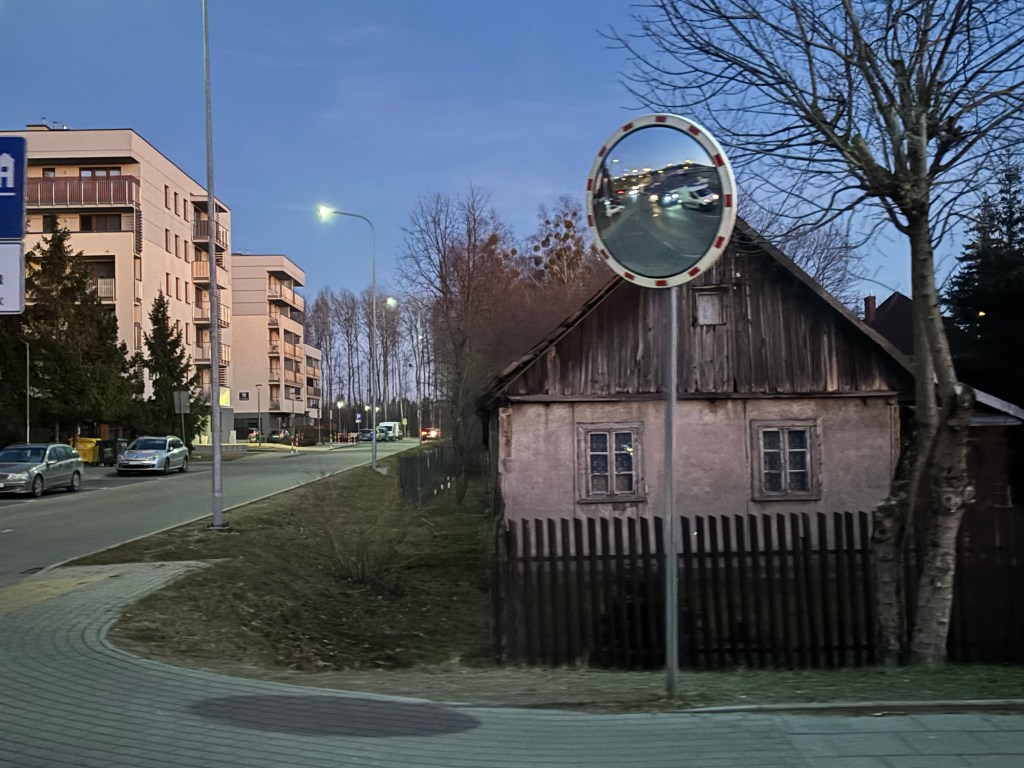
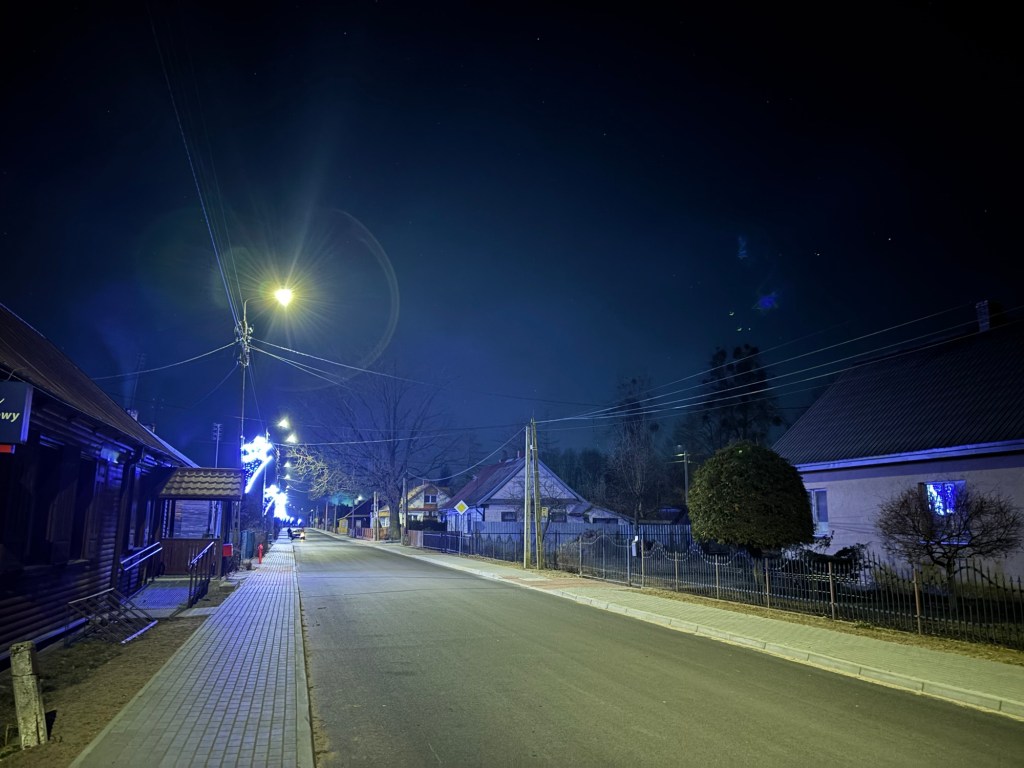
They weren’t kidding about the cold here in Poland. It’s hasn’t snowed properly yet this year, but the full moon is just a few days away and it’s set to bring the first snow in its wake. An icy vanguard has already won the field. The grass in the car park was already crunchy underfoot after lunch, and when I could take my eyes off the stars on my way back to my room tonight, the wood panelling outside glittered like stardust.
I’ve come out here on an organised tour run by Wild Poland, a firm that I must have recalled from ads in the wildlife magazines I read as a kid. Łukasz, our guide, met me outside a Costa coffee shop in the arrivals lounge of Warsaw-Chopin Airport, together with the other three members of our group. It’s definitely what you’d call a private tour – but that’s not how it’s always been. “We barely survived COVID”, Łukasz explained. “Back then, we had a team of maybe thirty people. Now it’s just me and Tomasz. Brexit didn’t help. Before Brexit, maybe fifty perfect of our clients were British. Then they stopped coming. Not altogether, but not as many as before. Maybe they were worried about getting stuck over here.”
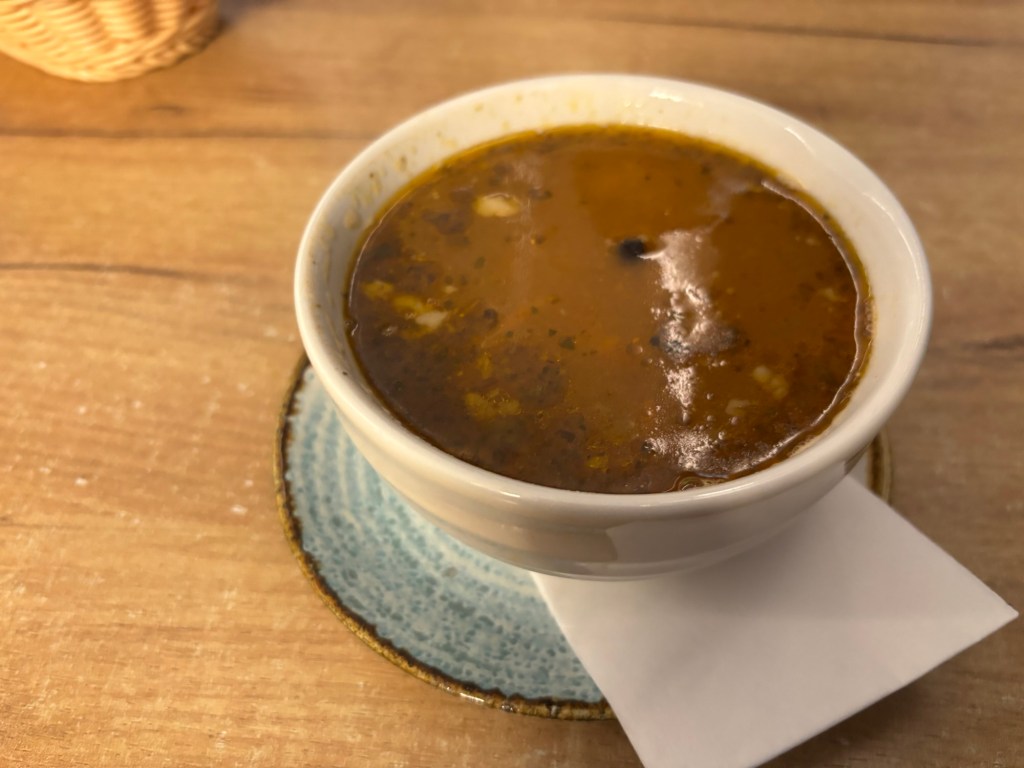
We stopped for lunch at a hotel-restaurant outside Wyszkow. The couple of British retirees provided some entertainment in their desperate search for a vegetarian option on the menu, while the third member of the expedition, a French wildlife photographer from Zürich, wasted no time in wolfing down a bowl of flaczki (beef tripe soup) followed by a rare steak topped with two fat king prawns.
Tour-hoppers are an interesting sort. I haven’t met people like these since I went gorilla trekking back in 2012. The Frenchman seems to travel the world for work, taking every opportunity he can to spend an extended weekend “shooting animals” – with one of his two cameras, of course, though before the ambiguity was cleared it was very amusing to see the momentary alarm in the faces of the retired couple when he said he was going to spend his Christmas in the south of France shooting flamingoes.
The retirees themselves seem to have spent their entire lives traveling. Iraq, Libya, India, Lake Baikal, Switzerland, Costa Rica, South Africa… it doesn’t sound like there’s a place they haven’t been. They seem to have done bloody well for themselves for a couple who left school at sixteen without mentioning work once during the day’s conversation, but perhaps belonging to the generation that inherited houses bought on the cheap in London has something to do with it. Their speech smacked of the Grand Tour. I couldn’t quite square the lady’s worldly, highly tolerant attitude with her strict vegetarianism, but I guess it takes all sorts.
It’s very quiet here in Narewka. The forest crowds in on all sides, dark and unforgiving. The lurid green Christmas decorations hanging from the lamp-posts, wrought in the shape of half-trees look rather ridiculous – a pathetic artificial import of the real thing, which stands mere feet away, as the myriad stars of the winter night sky glitter and gleam between the branches of the ancient forest. Art imitates nature and, as usual, fails to match its majesty.
Over dinner, Łukasz takes out his map and shows us the plan for the next few days. On a table behind, five men in heavy blue policja overalls play cards, sometimes coming and going, sometimes replaced by a new face, but always totalling five.
“They’re here to patrol the border,” our guide explains. “They will work through the night.” The Belarusian border is only ten kilometres away as the crow flies, slicing right through the heart of the forest. It’s been a natural crossing point for immigrants over the last few years, so the police presence here is fairly notable. I’ve seen more officers than locals.
It feels odd to be so close to the border and to hear it talked about as though it were the Iron Curtain resurgent. It feels only all the more odd with these two retired Brits talking about their carefree travels in the 1970s, before the wall came down, and all the other borders went up – before the world was gentrified.
Not for the first time, I wonder if I was cheated out of an adventure on the Greyhound buses by every American I ever met, purely because of an inherited terror incubated over decades of a world beyond the safety of their own property. Now that you can travel without fear of risk, why would you travel any other way? Adventure – from the Latin advenire – implies something unexpected, something about to happen. Something alien to a generation of tourists who only want the social clout of a shiny new Instagram photo or another country on their roster. And with more and more influencers joining their ranks every day, it’s only set to get worse.
The age of adventure didn’t stop when the last corner of the world was discovered. It ended when we sent a marketing team there.
I’ve avoided organised tours for so long because I have a deep mistrust of others managing my travels for me. I appreciate my freedom, and I prefer it to be absolute – to allow me to meet the real people and get to know the place properly. In this case, my Polish isn’t up to scratch, and I want to see a proper wildlife tracker at work.
I also really, really want to see a wild wolf. So fingers crossed for a lucky weekend! BB x
I had my probation meeting today. No, don’t worry, it’s nothing to worry about – just the first part of the “settling in” process of the new job. It’s always good to get constructive feedback on your teaching, and even better to get positive feedback from kids, colleagues and parents alike. Emails remain the bane of my existence, my beast to be slain, and I dare to say that, had I gone into the teaching profession a hundred years ago, before the days of instant communication, I might even have been an exemplary teacher.
Most of all, however, I can’t help but find it delightfully ironic that my main piece of constructive criticism was that I still have a tendency to “say yes to everything”. Saying yes was something of a New Year’s resolution, and it’s been a bloody good one, to be honest. So far “saying yes” has given me: a new job, a short-lived but precious romance with an American beauty, a string of adventures from Paris and Prague to Poland, the chance to teach French again after several years’ oblivion, the title of Head of Debating & Public Speaking and, finally, a well-intentioned caution.
In fact, probably the only thing I’ve said no to this term was tonight’s post-carols drinks with the staff, and that was only because I’d have missed my train if I’d delayed even a minute longer.
I guess that’s just as well. I don’t think I’ve ever felt more exhausted after a Christmas term. It’s been pretty full-on, even by my standards.
I’m off to Poland tomorrow. Polish is absolutely not one of the languages I claim as part of my arsenal, so communication is going to be a bit ropey – but, hey, that’s nothing new to me. It has nothing in common at all with any of the languages I speak, so learning has been slow… on top of everything else I’ve had on this term. Sometimes I have to take a step back and think about all the plates I’m spinning at work:
Teaching French and Spanish to Years 7-13 (spanning two different exam boards for GCSE as well as A Level and the IB)
Heading up the Debating & Public Speaking events and competitions
Living on-site as a boarding house deputy and working two overnight shifts a week
Volunteering with a local school
Tenoring in the Chapel Choir and staffing any and all music trips
Attending as many home fixtures as I can to support the boys
No small wonder I’ve had no time for a relationship or driving lessons this term…! The stress of the latter might just have broken me, if I’d managed to fit my lessons in anywhere at all into my crammed schedule – which is highly unlikely. I think the only reason I managed last year was because I was six years into the job and had taught most of the kids for years, so I could walk straight from my driving lesson into teaching Year 10 GCSE Spanish without batting an eyelid.
Most rational teachers would be practically collapsing into bed tonight after a term like this one. Instead, I’m lugging two rucksacks across the country to catch an early morning flight to Warsaw, so that I can spend the first four days of the Christmas holidays in some bleak corner of Eastern Europe searching for wolves (or traces of wolves). I blame all that time spent reading The Tiger this summer. I’d be tracking Siberian tigers if I could, but I’ve traveled across the world once already this year in search of a dream, so I’m settling for an adventure a little closer to home this time.
At least it’s meant I have something to say in return when my students tell me about their Christmas plans in India, Florida and/or the Maldives. “Wolf tracking” seems to fall under the banner of decidedly unusual responses to the question “any plans for the holidays?”.
Thunderstruck is playing in the one functioning ear of my earphones. The train is fifteen minutes late but racing to make up for lost time. I’ve fired off the usual end-of-term fusillade of messages to friends and family, bursting upon the surface of my WhatsApp in two-minute intervals like an underwater volcanic vent. Old habits die hard. Thunderstruck was the great gift of my American adventure, and it’s been a real mood-lifter ever since. Unsurprisingly, it’s my most played song on Spotify this year.
I think I’ll listen to it a couple times more as the train nears its destination. I could use a boost. BB x
There’s a small oak tree that grows beside the boarding house. It shed its leaves a couple of weeks ago, briefly covering the tarmac in a golden-brown carpet, before the groundskeepers swept them all up into the back of a truck and took them away to the tip. A beautiful gift of death tossed into the trash. Word must have got around, in that silent way that trees have, as so many of the trees around the school have since held jealously onto their leaves well into the usual falling season. My oak, stripped to the skin, looks cold. Winter will soon be here and it has lost its coat.
The world seems a little darker right now. It’s not just the longer nights. The news is full of it. Abuse in the Church of England. Treachery and death in the Middle East. A self-confessed day-one-dictator returning to the White House. Politicians who once laughed at the Man spinelessly throwing in their lot behind the future power base. Shadows creeping over Ukraine. I expected to see more of it on my social media feed, but there’s been surprisingly little said about the US elections. Perhaps the folks I know have listened to the voices in the wind and decided that now is not the time to voice their concerns online. Perhaps they vented their frustration elsewhere. Or perhaps – and I suspect this to be the grim truth – most of them just didn’t care overmuch.
There’s a quote often attributed to the Anglo-Irish philosopher Edmund Burke that runs along the lines of ‘evil triumphs when good men do nothing’. As is the way with so much these days, there’s almost no evidence that he actually said such a thing. We have learned to doubt everything. In that light, how can you blame a nation for putting their confidence in a self-confessed liar?
Burke did, however, say something similar, albeit a lot more profound:
When bad men combine, the good must associate; else they will fall, one by one, an unpitied sacrifice in a contemptible struggle. Thoughts on the Cause of the Present Discontents (1770)
He might have been writing a little over two hundred and fifty years ago, but he might just as well have been describing the world as it is today. It is always rather chilling when the voices of history stretch their pale and clammy hands into the present.
Until we learn to put our differences aside and work together – even with those with whom we do not, cannot or simply will not see eye to eye – our future will be in somebody else’s hands. Until the educated West accepts this reality, there will be no end to the head-scratching and the bewilderment. I have beat upon this drum since my schooldays, where it was doubtless drummed into me by my teachers, but I still believe this to be true: that you should always be prepared to listen and engage in conversation, no matter what you believe. Cancel culture does not work. It just fans the flames of those who feel their needs are being ignored and their voices silenced. We are marching into an increasingly intolerant age, and it worries me that those who fight for tolerance’s sake are among the vanguard, whether they know it or not. Men like Trump ride into power on the backs of such virtue-signallers.
I’m reading my way through a number of books to try to see the world through somebody else’s eyes. It’s my way of dealing with the situation – particularly when my profession is to help children to make their way in the world. I’ve started with Douglas Murray’s The Strange Death of Europe in an attempt to understand the growing immigration frustration in my country (having been an immigrant myself, however briefly). Ilan Pappé is in the wings. I can’t say I agree with everything I read, but it’s broadening my perspective a little more, and that’s no bad thing.
In the spirit of remembrance, they read the list of names of former students of the school who lost their lives in the two world wars in front of the war memorial yesterday. All of the numbered fallen had one thing in common: not a single one had died on the field of battle. Died in a collision during training. Run over by a lorry near base camp. Killed by an explosive during a training exercise. Shot down by friendly anti-aircraft fire after returning from a successful mission. The senseless waste of war was never more plain. When I was younger I had the morbid suspicion I would see another such great war in my lifetime. It was only ever a whimsy, but these days I am not so sure.
Some of the students were dressed in their military uniform. I had a grim vision of a towering cenotaph. Etched into the cold marble slab were names from every corner of the globe. I hope it does not come to that.
On closer inspection, my little oak has not lost everything. Not yet. A few golden leaves have held onto life, a full fortnight after the rest bowed to the inevitable. It just so happens that they are growing on the branch that reaches closest to the light. I wonder if that is what is keeping them alive.
We can’t give up hope. Hope is one of the things that makes us human. As winter draws near and the world darkens a little more every day, remember to hold on to the light in whatever form that takes for you. It is a warm and precious thing. BB x
The October half term holiday came to a rather unorthodox end this evening with a last minute trip into town to catch a talk by celebrated English nature-writer, John Lewis-Stempel, on his latest release: England: A Natural History. It isn’t every day you get to meet people who you have grown up reading, and as this is a year for saying yes to things, why not? I came away with a signed copy and a really interesting chat with the author about the importance of names – not just the scientific names of the animals and plants around us, mind, but the old English names that are disappearing even faster than some of the creatures themselves: you might have heard of a peewit or yaffle, or possibly even a dumbledore, but would you know a bumbarrel or cuddy bear* if they were sitting in a tree in your garden? (Answers at the end!)
I’m feeling much recharged after ten days’ leave. These boarding school terms really do knock the stuffing out of you, though as I like to say, I’m happiest when I’m up to my eyeballs – it leaves less time for dwelling on things. I left it a little late for any far-flung adventures this year, but I did make it to Dartmoor a few nights back, taking advantage of the last few days of the public bus service that crosses the moors before they shut down over the winter.
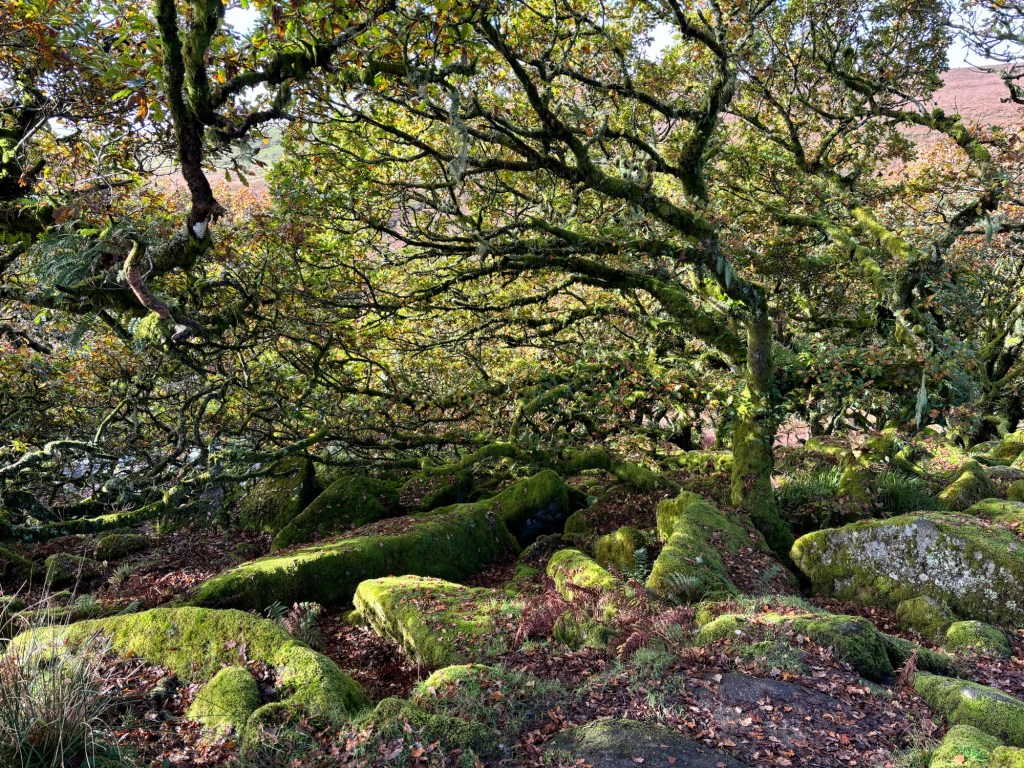
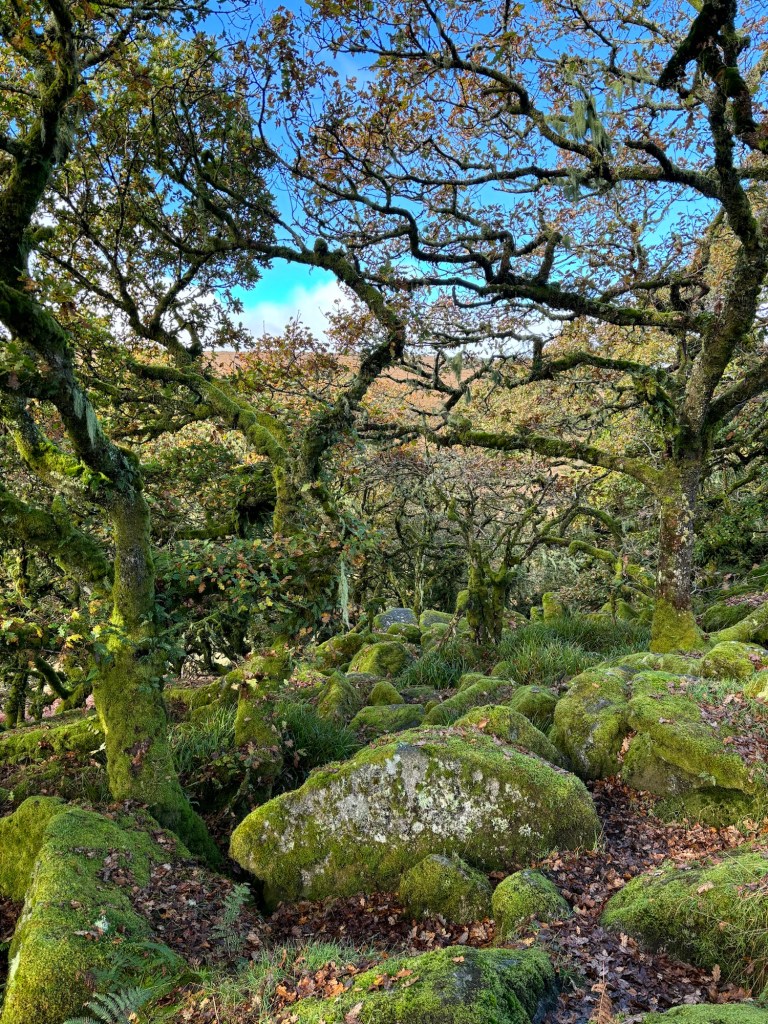
Why Dartmoor? Possibly because it’s arguably easier to get to by public transport than Exmoor, which is a lot closer, but mainly because I had an insatiable itch to see the legendary Wistman’s Wood, a tiny sliver of temperate rainforest nestled deep in the heart of the national park. It popped up in a number of ghost stories I read a while back and again in Guy Shrubsole’s The Lost Rainforests of Britain. The desire to see that last fragment of the Great Wood that once covered this island ended up pressing against the inside of my skull like Wistman’s own stunted trees.
I was holding out for mist and fog, but I had neither. The weather was actually remarkably pleasant for fickle Dartmoor, so instead of mirk and mystery I was treated to soft clouds and sunlight through the ancient branches; the kind of warm glow that Tolkien bestowed for a moment upon Fangorn Forest, an ancient wood of his own design. Did he pass through here, I wonder? His faithful illustrator Alan Lee certainly must have done at some point.
Just as it sits in a valley in the innermost chamber of Dartmoor’s heart, so too is Wistman’s Wood at the heart of much of Dartmoor’s folklore. It is said to be haunted by the spirit of a terrier who can still be heard scampering through the boulders, while by night it is prowled by the far more sinister wisht hounds, a local variant of the hell-hound myth that can be found across the British Isles, from the gytrash and Barghest to the Beast of Bodmin. The wisht hounds were believed to be kennelled in Wistman’s Wood by Old Crockern himself, the ancient pagan spirit of the moor whose foreboding tor rides the crest of the hills a short distance to the west of the woods.
There were no malevolent spirits during my brief stay, of course – at least, none that I could see from my perch atop a boulder on the fringes of the forest (visitors are no longer allowed to enter the wood proper, so as to protect the longevity of this sacred and truly unique ecosystem). But that is not to say the place was lifeless: quite the contrary, in fact. There was no wind, but the trees were alive with rustling leaves that turned out to be the beating of tiny wings. In the space of a single minute I clocked three species of tit (blue, great and coal), blackbirds, redwings, wrens, robins, tiny treecreepers and the truly pint-sized goldcrest, our smallest native bird. I haven’t seen a forest so alive in a long time. Even the air itself felt different, a fact that would have been obvious to all but the senseless by the thick, mossy lichen growing on every surface, a perfect natural yardstick for a healthy forest.
I spent the next five hours or so wandering in a wide arc around the surrounding moorland, following a rather makeshift path swiped from the internet the night before. I haven’t hiked around Dartmoor since I was at primary school, so I’d forgotten that, up on the moors, river crossings are often not bridges but rows of stepping stones. Which are a delightful challenge in balmy summer weather, no doubt, but something of a roadblock after the first heavy rains of autumn. I made the tactical decision to not tempt fate and so I took off boots, rolled my trousers up to my knees and waded across.
I hardly need to point out that Dartmoor’s rivers are devilishly chilly – and surprisingly deep. I was just shy of the other bank when the water came almost up to my waist. Thank goodness I’d brought a spare pair of trousers, or I’d have had a very wet hike back to the inn!
Luckily, as I crested the hills due south of Two Bridges, the sun came out to guide me home. It seemed to turn the grass to gold, in a wave that washed down the hillside until I was stranded in an ocean of golden blades. I straggled up to the Crock of Gold, a small stone-strewn vantage point where, as if on cue, a shining rainbow daubed itself across the grey sky to the north. No leprechauns on this occasion, but I got my gold one way or another.
Well, I’d better put down my proverbial pen and get some sleep. Back to work tomorrow, and another busy term awaits! BB x
*Bravo for holding out for the answers! A peewit is of course a lapwing, a yaffle is a green woodpecker and a dumbledore is a bumblebee, while cuddy bear and bumbarrel are old English names for the wren and long-tailed tit respectively! Go figure!
It’s Halloween. If the increasingly squishy pumpkins and themed sweets in the supermarket didn’t clue you in, the half-dressed ravers on the train today just might. I’m sitting in my living room, writing by the light of a standing lamp while Vaughan Williams’ Fantasia on a Theme by Thomas Tallis is playing on my new UE Boom speaker (my old one disappeared during my move over the summer). The mushrooms in the fridge were nearing their use-by date so I threw them into a chorizo and pea risotto for lunch. I’m only a few pages off finishing The Tiger, which has taken me far too long to read, and somewhere behind the normalcy I’m hoping one of my matches from the last week will get back to me.
I’ve tactfully avoided blogging about my dating experience at large on here – it does rather feel like airing one’s dirty laundry out in public – but after reading a number of well-written articles on the web, I thought I’d throw in my few cents on the matter, for what they’re worth. You might be surprised. Or you might not!
Total transparency here: I was twenty-seven before I dipped a toe in the dating scene. I might belong to the generation that turned eighteen the year Tinder became a thing, but I had a healthy (or perhaps unhealthy) aversion to the idea of finding a partner that way throughout my early twenties, largely but not entirely on account of being in a committed relationship for six years. My experience of that world was limited to stories of friends who had had – by the sounds of things – a really rather terrible time with these strangers they had met through their phones.
I guess I turned my nose up at the whole “no strings attached” vibe. It didn’t sit right with my world view at all. It still doesn’t.
Of the various dating apps I’ve tried out over the last five years, Hinge has been by far the best. I can count on the fingers of one hand the number of matches I’ve had on Bumble and Tinder *combined* in that time. By contrast, I’ve been on several dates through Hinge, most of them leading to a second date and two of them blossoming into long-term relationships (or one and a half, depending on your take on the status of situationships). There’s hardly any difference in my profiles between the three, so I suspect the trick to Hinge’s significantly higher match rate is the ability to start a conversation without needing to pay for the privilege.
You know, the basic privilege of being human and usingthe power of speech.
For those who aren’t familiar with the app, Hinge puts more of an emphasis on written responses across the board, asking its users to write three responses to a range of prompts to give their profile some colour. As such, while it’s still ultimately a swiping app like the others, it allows you to look beyond a person’s looks and learn something about their character… So what you write matters. Since I’ve been a lot luckier with Hinge, it would be easy to jump to the awkward conclusion that I write a lot better than I look. Which is probably true, but there’s more to it than that.
Most profiles will give you something to react to, provided they aren’t recycling one of a number of implausibly trending prompts. For instance, if I had a pound for every girl who, for their “fun fact”, said something about otters holding hands so they don’t drift apart when they sleep, I could make a better dent in my annual student loan repayments than my last pay rise. I’m sure it’s intended to reel in some hackneyed pun along the lines of ‘can I be your significant otter’, but such a lack of creativity really is a red flag…
Matching on Hinge (or any dating app, for that matter) usually follows the same cycle. It can be a little disheartening, to be honest, but I’m a fundamentally optimistic sort of guy, so I try not to let it get me down. It runs something like this:
Scroll for a while. Read carefully. Check for the fundamentals: for me, that’s close in age, university educated and wants children. If there’s an indication that they might be a musician, speak another language or are into the natural world in some way, that’s an instant green flag. Strangely, it’s the former of these three that’s proved the hardest to find (to my shame, I still haven’t dated a fellow musician since my teen years). Having some sort of faith would be nice, but it’s not a dealbreaker. I don’t really have a physical type, but red or brown hair and brown eyes have always been a pretty dangerous combination. I couldn’t care less about distance, since every relationship I’ve ever had has been long-distance anyway, but I tend to have my outer limit set at around 45km for practicality’s sake. I have to be realistic, as my lack of both car and driving license (a red flag if there ever were one) does hamstring my options a little
Nine times out of ten, I’ll make a point of initiating the conversation with a written message. Those times I don’t are invariably because there’s just nothing I can work with on their profile. When I started out, some three years ago, my standards were sky high and I was very choosy about sending ‘likes’. These days I’m a lot more open to the possibility of meeting up and seeing how things go, so I don’t mind throwing a few more coins into the wishing well
If I’m lucky, perhaps one in forty of those coins will come back
If I’m lucky, one in three of those will turn into a conversation that lasts longer than a three-way exchange (my opener, her reply and my response). As a rule, if the conversation makes it that far, it’s usually a very good sign
As for likes received, I’m somewhat handicapped by my habit of living outside the larger cities, which may or may not account for the fact that I might get one “like” every one or two months or so. Hinge at least lets you see the most recent of these, so I treat any incoming likes like my emails: read carefully, decide on a response and discard straight away if I don’t think it will do me any good. I tend to work on the basis that instinct is a good guide.
I’m well aware that the odds are stacked against me. The ratio of men to women on dating apps in the UK is around 2:1, and that imbalance is set to worsen with the current trend of women leaving the apps in frustration at a generation of toxic, misogynistic men. If the number of alarmingly young single mothers on these apps is anything to go by, there must be a hell of a lot of those types around. My heart bleeds a little for all the implicit hurt and heartbreak out there.
Honestly? I said “if I’m lucky” a lot back there, but I do consider myself to have been rather lucky. My experience on Hinge has been, on the whole, very positive. Every one of my dates has been a learning curve. I’ve met social workers, rocket scientists and call centre operators. I’ve met people who work with the Royal Family, people who carry a genuine ‘little black book’ and people who keep a running commentary for their followers on TikTok about every date they have. I’ve been to the cinema, gone dancing like the good old days and had a candlelit dinner to the sound of violins in Covent Garden. Every one of them has added to my life in some way.
So what if my first Hinge date led to a relationship that was doomed from the start? She taught me that I had the courage to stand up for myself and walk away when things weren’t working out.
So what if my second date didn’t light a fire in me like I hoped? She taught me that I could be honest about my feelings when they weren’t there.
So what if my thirddate led to what can only be described as a transcontinental situationship and a broken heart? She rekindled my wandering spirit and opened my eyes to a fantastic genre of music I’d never properly understood before.
So what if my last two dates have fizzled out, and I’m to blame? They have taught me that I’m just as capable of being the heartbreaker – a necessary knock to my hubris – and, more importantly, that I’m just not cut out for the modern dating scene when it comes to weighing up my options. Following up one potential date with another the following week left me with the unmistakeable feeling that my heart was rotting on the inside. Talk about Catholic guilt! I’m absolutely a one woman man, and that applies just as much to casual dating as it does to a relationship. It’s probably not the best strategy, but it is me, and I think it’s really important to be true to yourself when trying to find somebody to share your world.
I have learned so much from my experiences and still think the world of the wonderful women I have had the fortune to cross paths with, no matter how things turned out.
The wait continues. I don’t believe in harrying a person for a response (at work or in dating), so if I don’t hear back after we’ve matched, I don’t usually try to re-start the conversation. You have to keep a clear head and remember that you’re probably one of any number of conversations the lady in question is in the middle of, so if she stops replying, it could be that she’s found someone she clicks with – or she’s just hit a wall and can’t bring herself to reply at the moment. Frankly, I don’t blame her. I feel the same way about my emails.
I think the most unhinged thing about Hinge and the wider online dating scene is that most of us on there wish we didn’t have to resort to it. You can see that a mile off from the number of profiles carrying prompts that run along the lines of ‘together we could come up with a fake story for how we met’.
The trouble is that the old ways are pretty much dead and gone. Nobody meets in bars anymore. That’s just not how it’s done. The looming omnipresence of the online dating scene puts temptation at the feet of countless school-spun and university-spun romances. There was a time when families might step in and try to make introductions, and love might blossom in the workplace. Somewhere at home, I even have my great-grandmother’s dance card, with space for the names of three men she met at a village dance.
Nowadays, a preponderance of choice, a desire for total independence and a fear of accusations of unprofessionalism have pushed a generation of would-be Romeos and Juliets into the only space left: the cold and emotionless void of cyberspace. It’s quite a depressing reality, when you think about it.
I have thought about signing off on all of the options once or twice, but my choice of a career leaves me with precious little time or mobility for most of the year, so I keep my options open. In my heart, however, I’m still holding out for some of that old school romance. I haven’t forgotten that my longest and most successful relationship to date was the result of a chance encounter, the kind that becomes increasingly hard to engineer after the university years are behind you.
My recent experiences haven’t yet stripped from me that Hispanic passion for the grand geste, that same streak that has been the driving force behind, amongst other things, buying front row seats to see TheLion King with a childhood sweetheart to fulfil an old wish, booking a Valentine’s weekend at a parador, scattering rose petals on the bed and suiting up for dinner, or even catching a flight to America for a third date. (Though perhaps after this last play I have been a little more cautious of late…)
Ultimately, I think I’ve been spoiled rotten by all the fairy tales I read as a kid. I do believe I took most of the romance at face value and still hope to find that kind of selfless love in life. I’ve been told more than once that I approach the world as though it were ‘one of my books’, and I’m still not sure if that’s a compliment or a caution.
I’ll find her someday, God willing. It’s very possible that I’m still not ready, even five months after the events of the summer, and goodness knows I have enough to be dealing with in my professional life right now. So despite the wave of wedding photos breaking across social media as my generation waves goodbye to their twenties, I remind myself: there’s no rush.
Tomorrow is the first day of a new life. After a long summer of alternating adventures, up-and-down driving lessons and watching the clock, it’s back to school for this bleeding heart. I’m determined to make a success of it. Once again, I find myself thinking back to my first teaching post in Uganda, nearly twelve years ago – where it all began. Did I know it then? I must have had an inkling – that was partly why I went, to see if teaching was for me – but I suspect I was blinded by the lure of seeing Africa with my own eyes. My lanyard is hanging from the door, my notebook is on my bedside table and the pen pot on my desk – a gift in the shape of a Dia de los Muertos mug – is stuffed with fully-loaded board markers. It’s nearly time to get started. But for now, let’s dive back into the realm of memories; to a remote farmstead on the banks of the White Nile…
9th October 2012 Ugandan Independence Day (50th Anniversary)
One month into our stay in Boroboro in northern Uganda, Luke Ojungu came trundling into the driveway of the Bishop’s compound in his enormous four-by-four. With Uganda on the brink of celebrating the fiftieth anniversary of its independence from Britain, we had an unexpected holiday on our hands and the former headmaster had offered to take us to stay at his farm in the Apac region to the southwest. The bishop said a prayer to bless our journey and send us on our way with God’s protection, though Luke’s impressive 6’5″ stature might well have been all the protection we needed. His plan? To show us a corner of Uganda we might not see otherwise, and to put us to work herding his cattle.
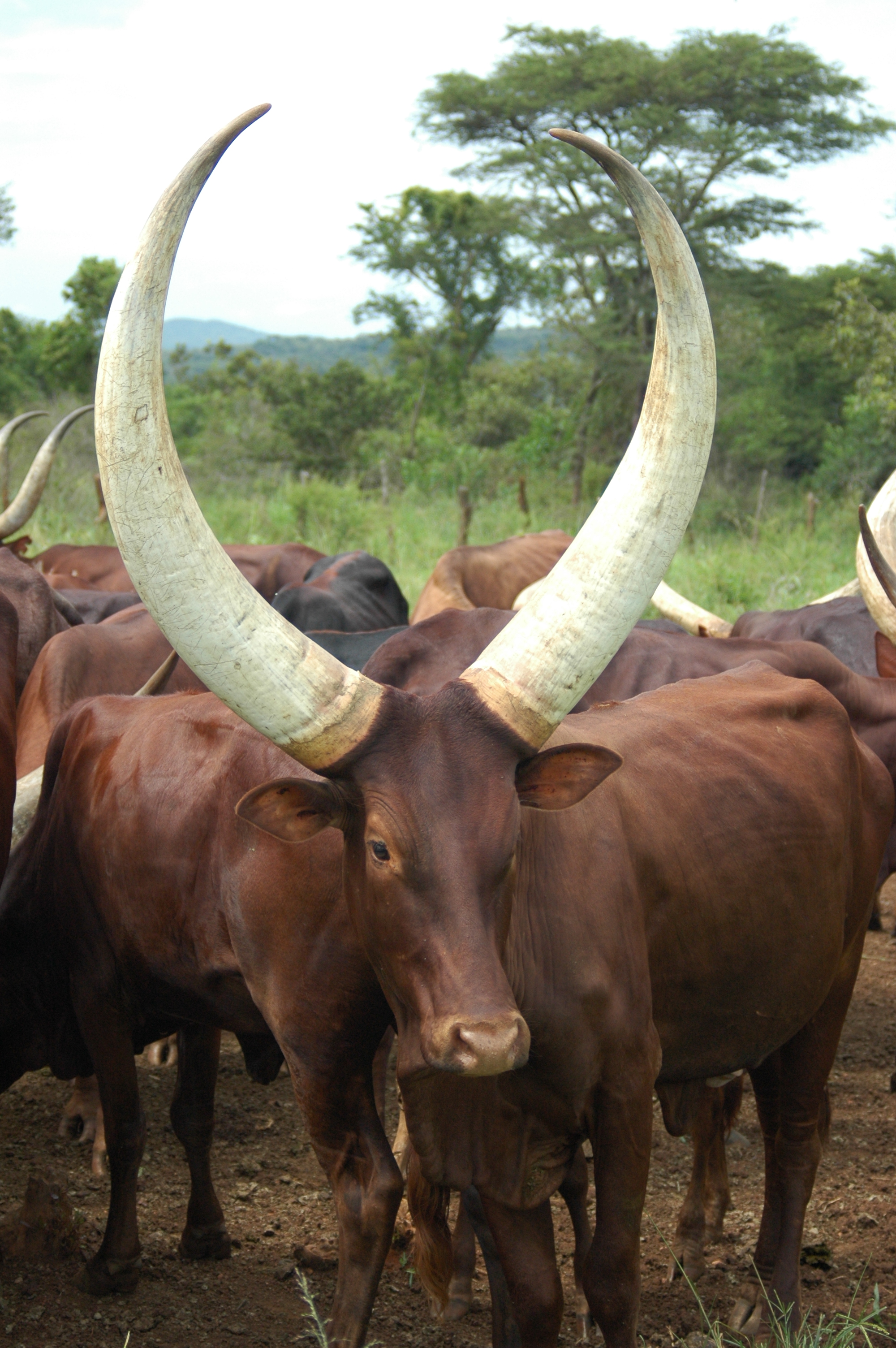
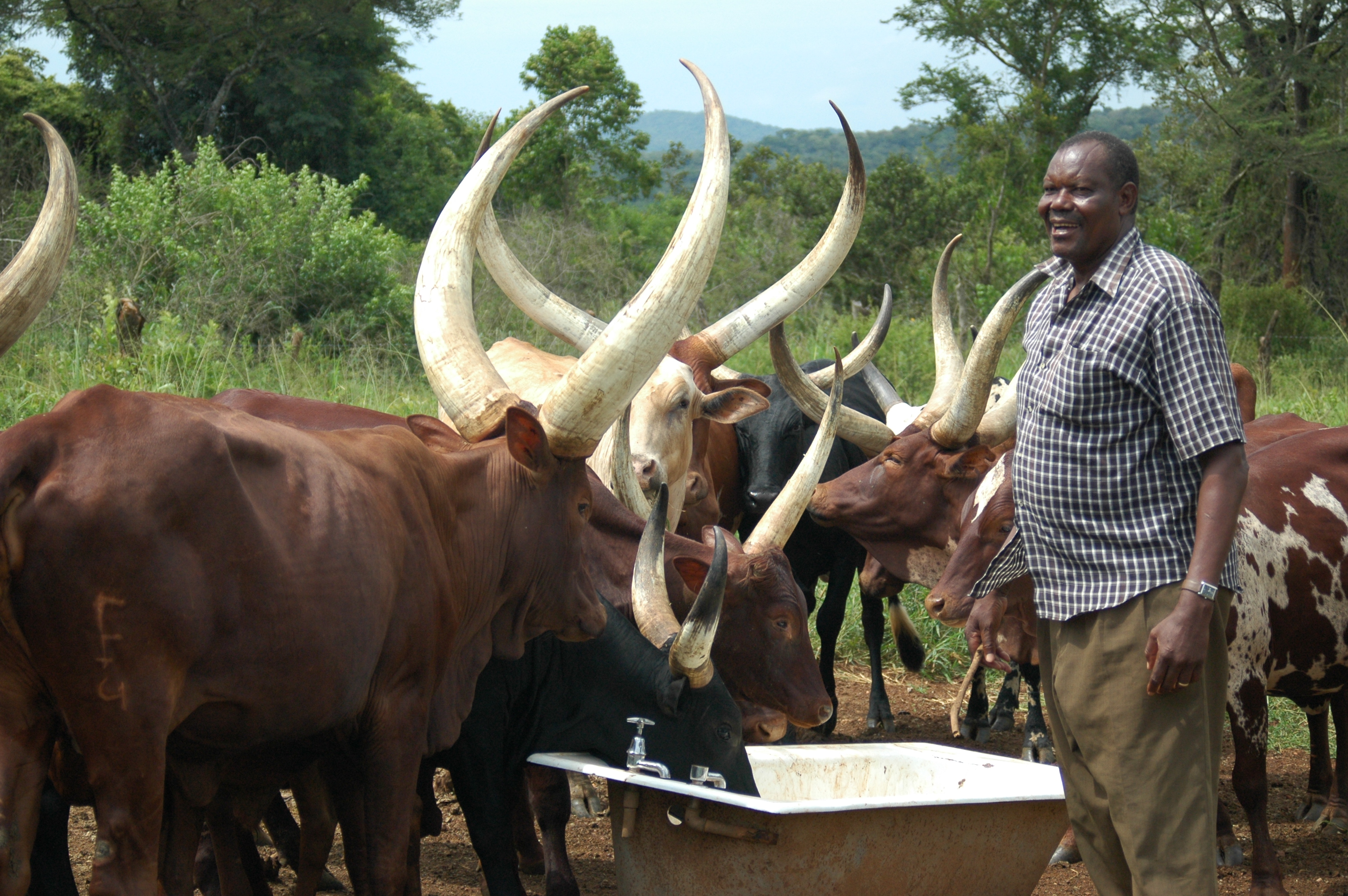
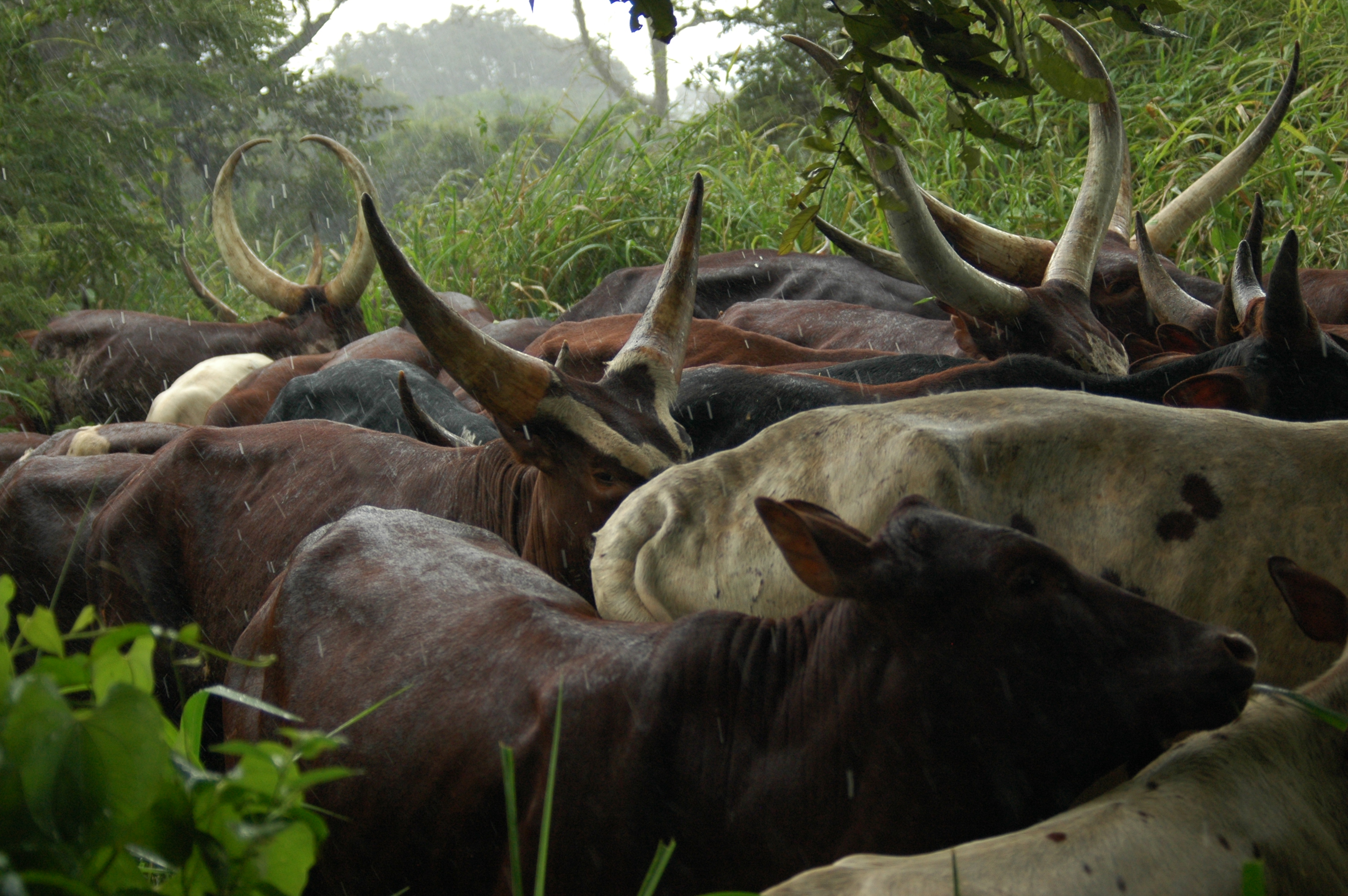
No visitor to Uganda who makes it out of the capital can possibly miss the famous Ankole cattle. For one thing, they’re everywhere, and for another, their enormous horns make them easy to spot over a great distance. I wonder if that was an intentional bit of genetic wizardry on the part of the cattlemen, so that they could keep stock of their herds from far away?
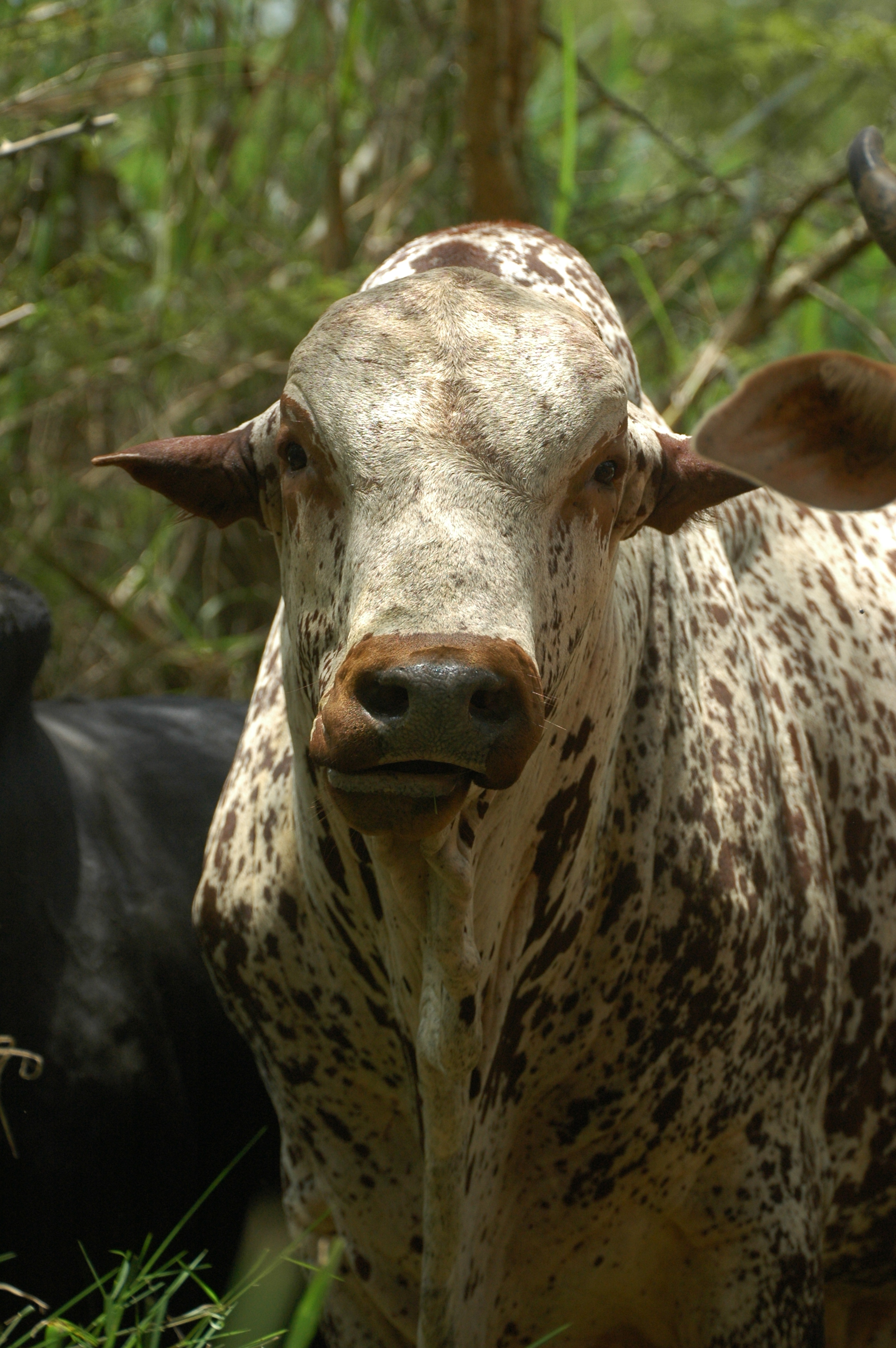
Luke had several hundred longhorn cattle spread across his lands south of the river, along with a large number of goats and chickens back on the home farm, which by Ugandan standards (or any standards, for that matter) made him a rather wealthy landowner. He was very keen to point out Matthew, the hornless bull he had named after the headmaster of our school back in England. It was hard to tell whether it was an affectionate gesture or somewhat tongue-in-cheek, choosing the one longhorn bull without horns for such an honour, but we had a laugh all the same. A running in-joke was born and Matthew “the most indie cow in the world” and his distaste for anything mainstream kept the four of us amused all weekend.
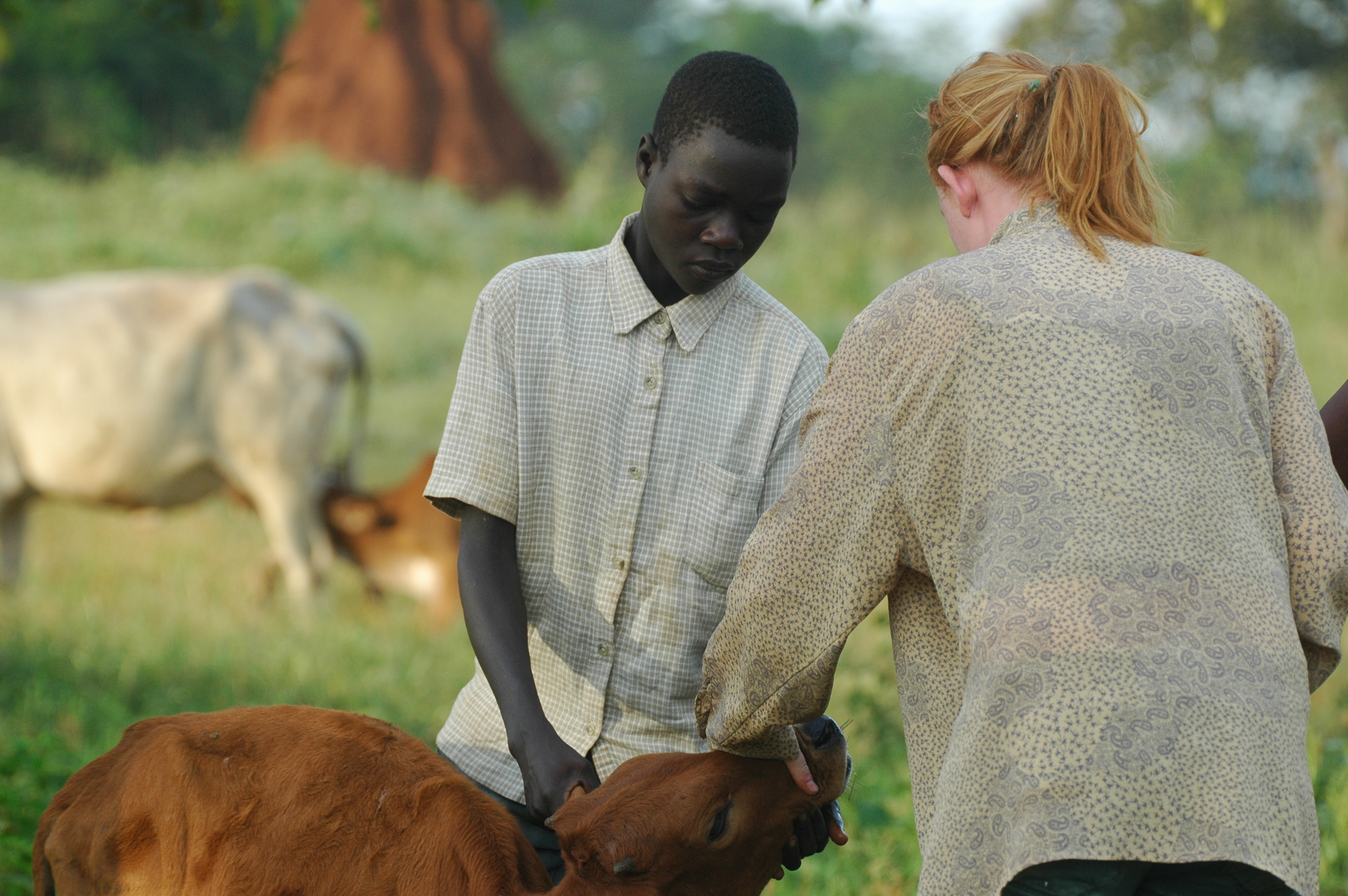
We arrived in time to help with administering the inoculations, which had already taken a couple of days, what with the herds spread out across the forested hills. Maddie, the team scientist, took the lead on this one, seeing a chance to do a little fieldwork ahead of the Biology degree ahead of her. Several years ahead of the rest of us in maturity and wisdom, if not in age, she was always out in front and seizing any and all opportunities that came floating our way, whether we joined her or not. It was Maddie’s idea to go to Uganda in person to snag a better deal on the national park permits. It was Maddie’s idea to spend all night dancing with locals down the road from our tumbledown hotel in Bwindi Impenetrable National Park. I should have followed her lead more often.
Mind you, it was also Maddie’s idea to ride along with the staff to a remote village in the north to the funeral of a colleague we’d never met, even though the service was conducted entirely in Lango (of which we understood perhaps four words between the four of us) and the return journey had me sandwiched between quite possibly the two largest women in Uganda.
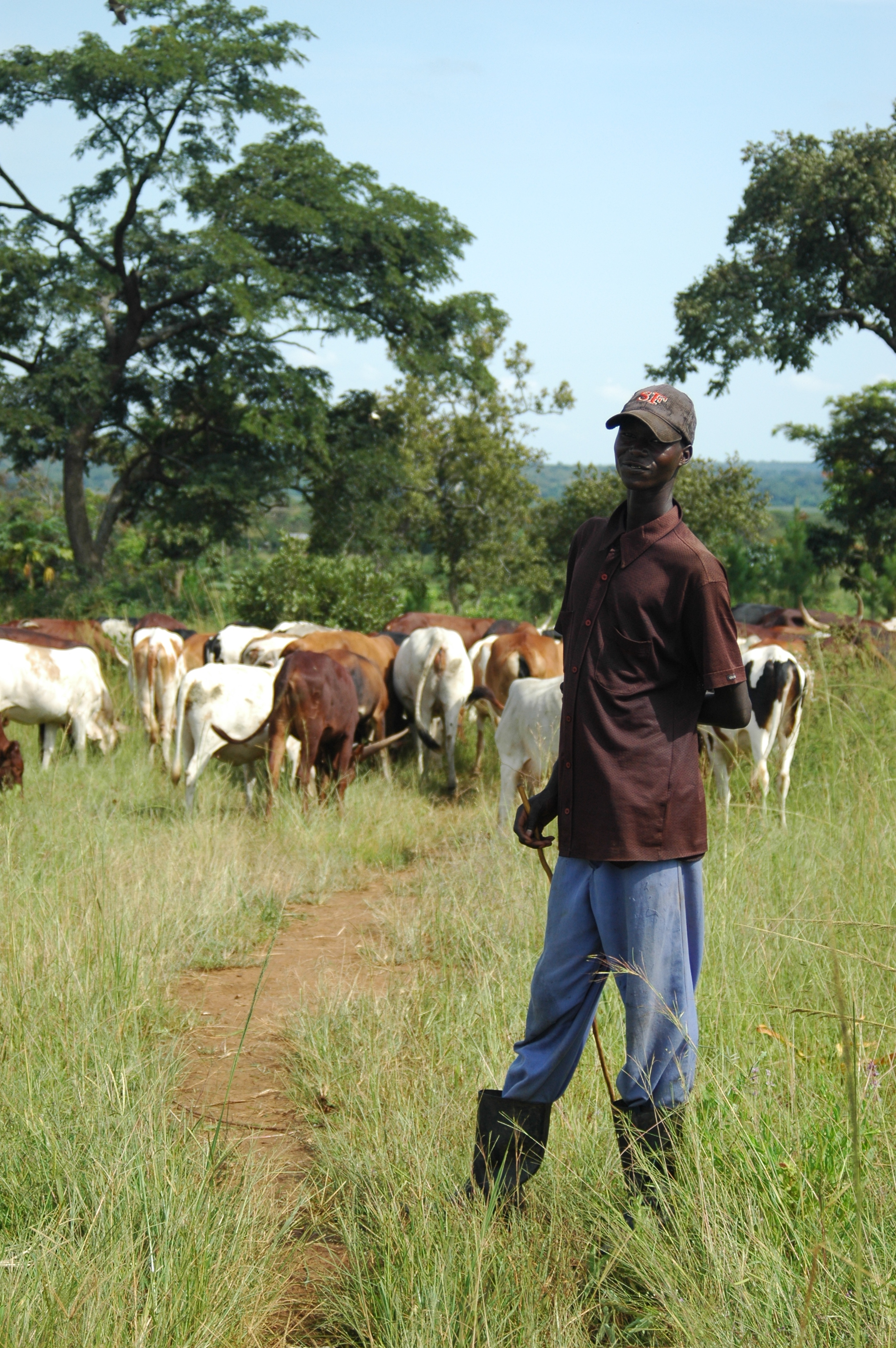
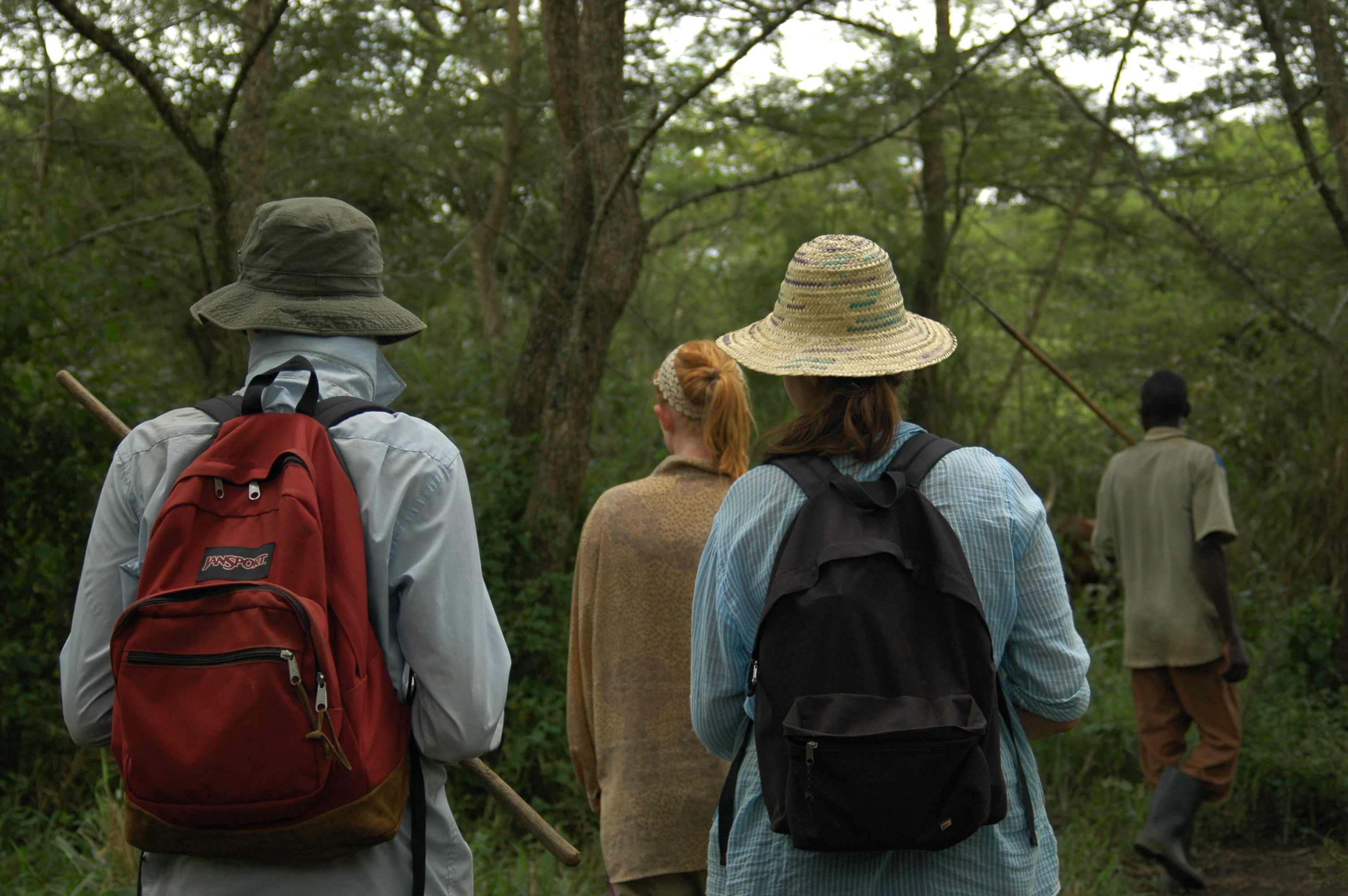
With jabs administered, Luke left us in the care of two of his cattlemen, Alphonse and Gideon (I definitely misheard Gideon as Geryon the first time around, since that’s what I wrote in my journal, though that would have been a very fitting name for a cattle herder!). Out in the bush, I got my wish: to explore a proper African wilderness. True, it was grazed by Luke’s hundred-strong herd of cattle, but there were wild things everywhere: drongos, hornbills, cuckoos, parrots and forest kingfishers. Overhead, the awkward silhouette of a pair of bateleurs kept us company across the open marches. In the course of a single cattle drive I counted at least forty species I’d never seen before, jotting down details of what I’d seen and sketching while the memory was fresh.
In short, I’d make a decent Darwin, but a useless cowherd.
The drive took us deep into the forest, which swallowed up the herd quite capably. The going was a little hard, with thorny acacia branches poking in all directions, and we got to wondering whether we were being watched by other, more sinister residents of the forest as we cut a path through the trees: our encounter with a troop of baboons at the crossing at Karuma the day before had left me with a deep-seated awe (and justified terror) of the things, and I couldn’t shake the idea that they might be hiding in the trees, watching us from evil, sunken eyes.
I needn’t have bothered: the great herd of longhorns drove most of the forest creatures before it like a scourge. But it’s funny what gets into your head.
What was waiting for us, however, was a tropical storm. We had reached the heart of the forest, where the bush was at its thickest, when Alphonse brought us to a stop at the sound of a heavy drumroll from the north. Gideon went on ahead to divert the herd, but we had gone no further than a hundred metres when the heavens opened. It did not happen gradually, as rainstorms do in the British Isles, but in an instant: one minute the sky was grey with promise, the next it was sheet-white and bucketing it down. It was as though somebody had turned on an almighty showerhead, the way it just came down all of a sudden, and it went on for the best part of an hour. At Alphonse’s suggestion we sheltered beneath the scant cover of the trees, holding the herd at a standstill while we waited for the worst of it to pass. The waterproof hiking boots which had endured similar conditions in the Lake District were waterlogged within minutes, and we were all of us soaked to the skin – it was hard to imagine that only moments before it had been a balmy thirty degrees and we had been bemoaning having run out of sun lotion. I don’t think I have ever been so utterly drenched. If I remember correctly, I was quite miserable. We all were.
Luke came to the rescue around midday, picking us up from the side of the road when we finally broke free of the forest and saw the Nile, our intended destination, winding across the valley ahead. Regardless of the conditions, it would still have been another couple of hours’ march to the river, and Luke was quite anxious that we would not catch our death of cold on his watch, so we were whisked back to the farm for a warm cup of tea and fresh clothes. Alphonse and Gideon bade us farewell and pushed on toward the river, even as the clouds threatened a second deluge with flash and thunder.
We conceded defeat before these incredibly hardy cattlemen and their herd, and returned to teaching the following week with a renewed sense of purpose: we had a lot more to offer in passing on what we had learned than in wandering blindly through the bush in the wake of men who had been herding cattle since they were children.
I said I was miserable – which, according to my diary, is a fact – but like most things that get me down, I’d do it all again in a heartbeat, if only to see the rain come down as ferociously as it did that day, and to feel that shudder in my heart when the first drumroll of the rainy season came thundering in. Matthew wouldn’t have thought all that much of it. After all, there’s all manner of cliches when one gets to talking of a thunderstorm, and Matthew is far too indie for any of that nonsense. BB x
Back in April, I made a flying trip to Prague to spend a few days with my dear friends Andrew and Babette. I’d never been to the Czech Republic before, so I used the opportunity to see the sights: the statue of Jan Hus, the Jewish cemetery and the tomb of Rabbi Loew, creator of the legendary Golem of Prague. But I was in for an unexpected treat when Andrew took me to see an evening show of Moje Sibiř, a spatial composition centred around the spirit of Siberia. Over the space of 45 minutes and seven movements, Roman Zabelov and his troupe dimmed the lights and carried the audience away into the endless forests of the Siberian taiga by the power of music alone.
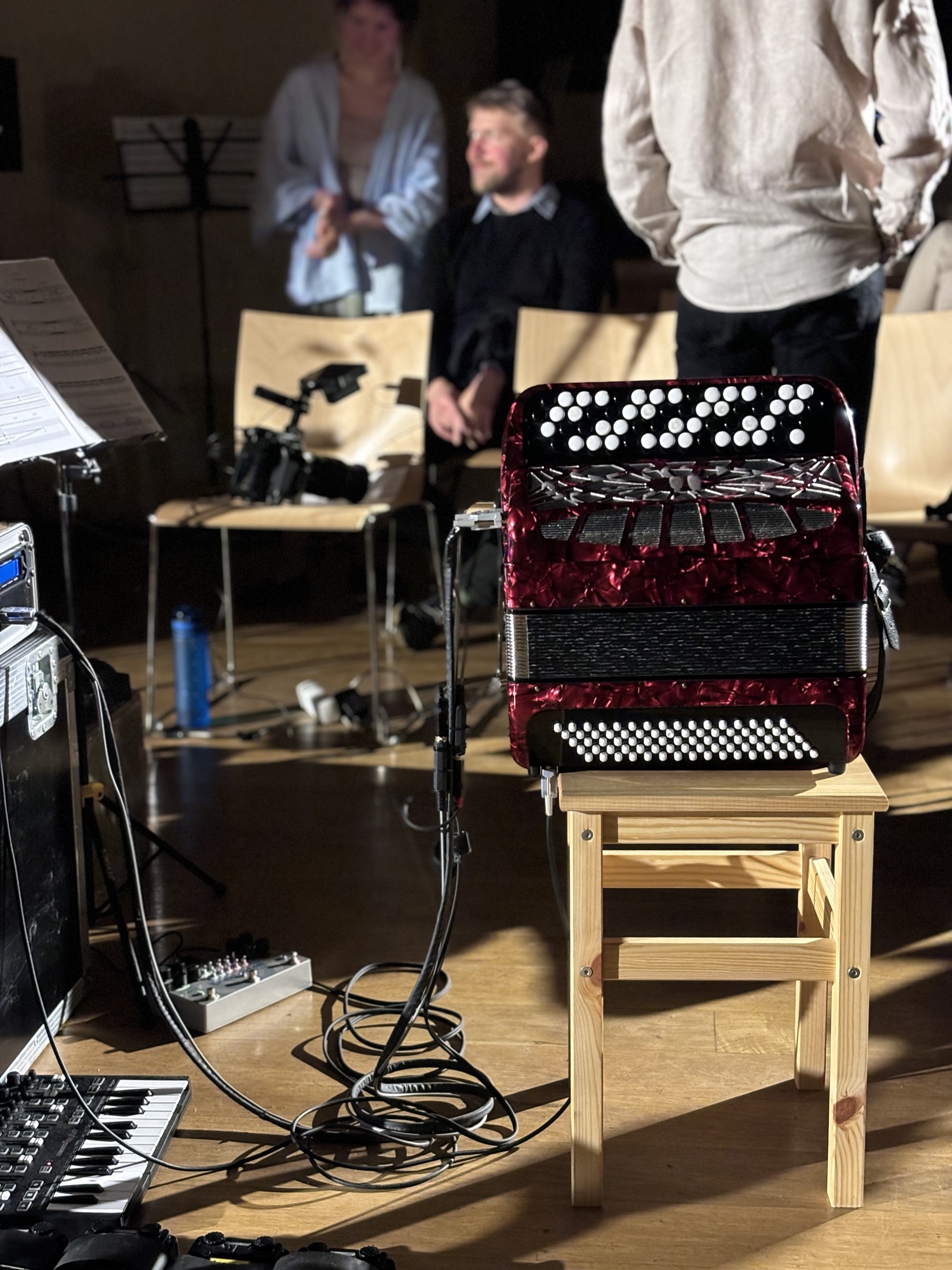
Roman led the suite with his voice and his accordion, conducting much of the composition with eyes closed tight in the manner of a shaman weaving some kind of ancient magic. Speaking of spellbinding, I have never seen an accordion played so creatively: it is obvious that Roman is a something of a frontiersman, combining unorthodox techniques with a quasi-mystical, body-and-soul engagement with his craft, like a Belarusian Pan of the Far East. Zabelov’s ensemble, stationed in various locations around the performance space, worked together to turn the hall into something far more intense than a simple performance space. Through a clever combination of ethereal singing, haunting vocals and long, whooshing breaths, it felt as though they were summoning the arctic wind itself into the room. I had to close my eyes for one of the movements and let it carry me away.
The setting might have been showstopping in its own right, with seating arranged beneath the myriad paintings of the Baroque Refectory of the Dominican Cathedral of St. Giles, but a combination of technical wizardry and clever vocal choreography transformed the gallery into an illusory space: shadows seemed to leap from the paintings and follow the echoes around the room, while the heavens above rippled beneath the rusty iron waters of a tundra pool. I might as well have been holding the heart of the taiga in my hands.
Whether or not it was Roman’s intention, I have been spellbound by the idea of Siberia ever since. I suppose it’s the instigator behind my current fascination with the Amur region and its tigers. If it weren’t for the fact that any and all possibilities of traveling out there are off the table because of the current tension between Russia and the West, I might well have been looking into making my own way out there. It’s amazing what a little musical hypnotic suggestion can do. BB x
There are places that whisper and shout. There are places we return to and that we look for all our lives. These places are both real and imaginary, but that doesn’t detract from their reality. Such is My Siberia. Roman Zabelov
Today is a day for farewells. I caught the early train to London Paddington to take lunch with the family of a former student and two of my colleagues. These are not just acquaintances, no mere ships in the night: these are people who I have shared my work and (quite literally) my world with for the last six years. When the time comes to say goodbye, I usually make a habit of leaving a parting shot in the form of a lengthy card or letter, but I wasn’t in the right headspace today. I’d have probably stayed longer if She wasn’t in town.
It’s been a very long and painful summer. I can’t remember one quite like it. It’s nearly over – thank God – and work, the Great Healer, will soon put me right. But heartbreak is a hard thing to manage when you live alone, far from everyone and everything you know. How do you move on when your heart is still broken, nearly two months on, and your world is at a standstill?
I’ve been reading a lot. I’m working through John Vaillant’s The Tiger at the moment, which deals with a much starker isolation in the Russian Far East than the one I’ve known this summer, albeit much less melodramatic. One quote from this morning’s reading has stuck:
The most important test for a human being is to be in absolute isolation. Alone and with no witnesses, he starts to learn about himself – who is he really? Because nobody’s watching, you can easily become an animal… […] You can run in fear and nobody will know. You have to have something, some force, which allows and helps you to survive without witnesses.
John Vaillant, The Tiger
After thirty summers I know who I am, and I know my weakness for acting on heart over head. So instead of buying an off-peak return – which would have given me the time to say the goodbyes I wanted – I booked myself onto the 5.30 train home, with no room for manoeuvre. I suppose I wanted to stop myself from doing something rash.
In another universe, I would have watched the sunset from London’s famous Sky Garden with her tonight – my idea of a final goodbye to the city where we met – but in this reality, I must be the gentleman and let her go without another word. So this is me, the dichotomy: the gentleman and the animal, doing the right thing and running away.
My head, for once, is talking to my heart.
My only regret is leaving before I could say a proper farewell to my dear colleagues. I will make it up to them with a handwritten letter this evening. I’ve always been a lot better at conveying my feelings in words written rather than spoken, anyway.
My force – the thing that keeps me going without witnesses – is Hope. Hope that, someday, my heart will heal and things will get better. Hope that these things are sent not just to try us, but to bring a moment of light and happiness into our lives, even if, like a match on a winter’s night – or even a shooting star – that light is followed by a temporary darkness. Hope that somewhere out there is a future where somebody falls for me just as hard as I do for them. Where “sorry” and “thank you” are not our watchwords.
I have not given up on old fashioned romance, and I never will. It is out there, shining, somewhere beyond the stars.
Heartbreak is good for you. It brings you to your knees, but that only makes it easier to look up. It forces you to look inwards and to love yourself again. It reminds you that you were not afraid to love with your whole heart, even if you had no idea that was your intention.
Ride north, Macumazahn, for there you will find great happiness – yes, and great sorrow. But no man should run from happiness because of the sorrow.
Henry Rider Haggard, Allan’s Wife
Feeling with your whole heart makes you vulnerable, especially in affairs of the heart, but I wouldn’t change it for the world. Because, hand-in-hand with the gut-wrenching lows come soaring highs, an ecstasy of joy and excitement that is impossible to convey.
I cannot escape it; it runs in the family. My great-grandparents found each other in the middle of a bloody civil war that threatened to tear their country apart, and they held onto each other even as the regime started to eliminate their loved ones for their beliefs. And still they believed.
My grandfather put his whole world on the line for an English girl who captured his heart one summer, risking everything to hold on to the happiness he had found. Would their love have stood the test of time? I will never know – he lost his life in his early twenties in a hit-and-run incident that tore his future apart – but I am convinced that it is that whole-hearted Hispanic passion for life that runs in my veins.
Today is a day for farewells, and I have made mine. The next chapter is about to begin. BB x
The white IKEA bookcase in the corner of my bedroom holds my most treasured memories: cherished books from my childhood, photo albums fit to bursting and hand-written diaries that stretch back as far as 2012. One of these last, spineless and soft around the edges, features a Van der Grinten map of the world: an eighteenth birthday present from a friend. It contains the tales of my adventures in Uganda, the first teaching post I ever held. As I open it, a handful of photos fall out: a vulture, a much younger me in Kyambura Gorge and the misty mountains of Bwindi Impenetrable Forest. Memories come flooding back. Come with me down memory lane, and I’ll take you on one of the most breath-taking adventures I ever made.
19th September 2012
According to my diary, it was an early start. My alarm clock woke me up at 3am, and while I was dressed and ready to go, my companions were a little slower on the uptake. Can you blame them? I sat on the concrete porch of the little house in the garden of the Bishop’s residence, watching the stars. There is no night quite like the African night. It is a deeper black than you can possibly imagine in the West: enlightenment has left our world overlit. Without streetlights to pollute the sky, the heavens sparkle with an ethereal light that has not been seen in most of Europe for over a century. I counted more than twenty shooting stars before our driver arrived and whisked us away into the dawn.
The Langton Four – that was what they called us. We were the first student representatives to visit our partner school in Boroboro in the once troubled north of Uganda. There had been staff exchanges in the past, but with the Lord’s Resistance Army waging a private war in the region for the last two decades, the idea of any kind of student involvement was limited to non-uniform days until my final year at school. When the opportunity suddenly presented itself, I practically bit their arm off. I read the required BBC article on David Cameron’s threat to withdraw aid to Uganda over and over again, and I turned up to my interview with a portfolio of printed photographs (which I still have). I suppose I was hoping to angle my way in as the team journalist. The team was chosen on the night of the interviews and my name was among the four. I still think of it as one of the happiest nights of my life.
The sky began to glow red around 6.40am, and the sun was up moments later. African sunrises really are like the opening to Disney’s The Lion King – that is, visibly quick. Maddie got out for a run in the morning light – we had been on the road for two hours already – before we reached the town of Purongo, a collection of red-walled houses and small businesses on the northern edge of Murchison Falls National Park. This was our Ugandan “welcome wagon”, as it were: a trip to Uganda’s first national park at the end of our first week at the school. Getting in was complicated by the print-date of my US dollars – the Uganda Wildlife Authority (UWA) had taken the decision to refuse any dollars printed before 1981 – but on this occasion they let it slide. We were joined by Robert, one of the park rangers, which brought the total in the car up to seven. I drew the short straw and ended up on the left-side of the middle row, landing a window seat that looked straight into the rising sun.
We learned within the first half-hour of our safari that it was wiser to keep the windows closed: the tsetse flies that share a home with Africa’s megafauna have a taste for human blood, when they can get it. Forget the harmless bluebottles that hurl themselves at your window: tsetse flies are another beast entirely. They’re loud, they have a bite like a needle, and they’re very hard to kill once they get into the car, despite their size, which is considerable. They clung to the glass like remoras for most of the morning, just waiting for somebody to wind down the window for air.
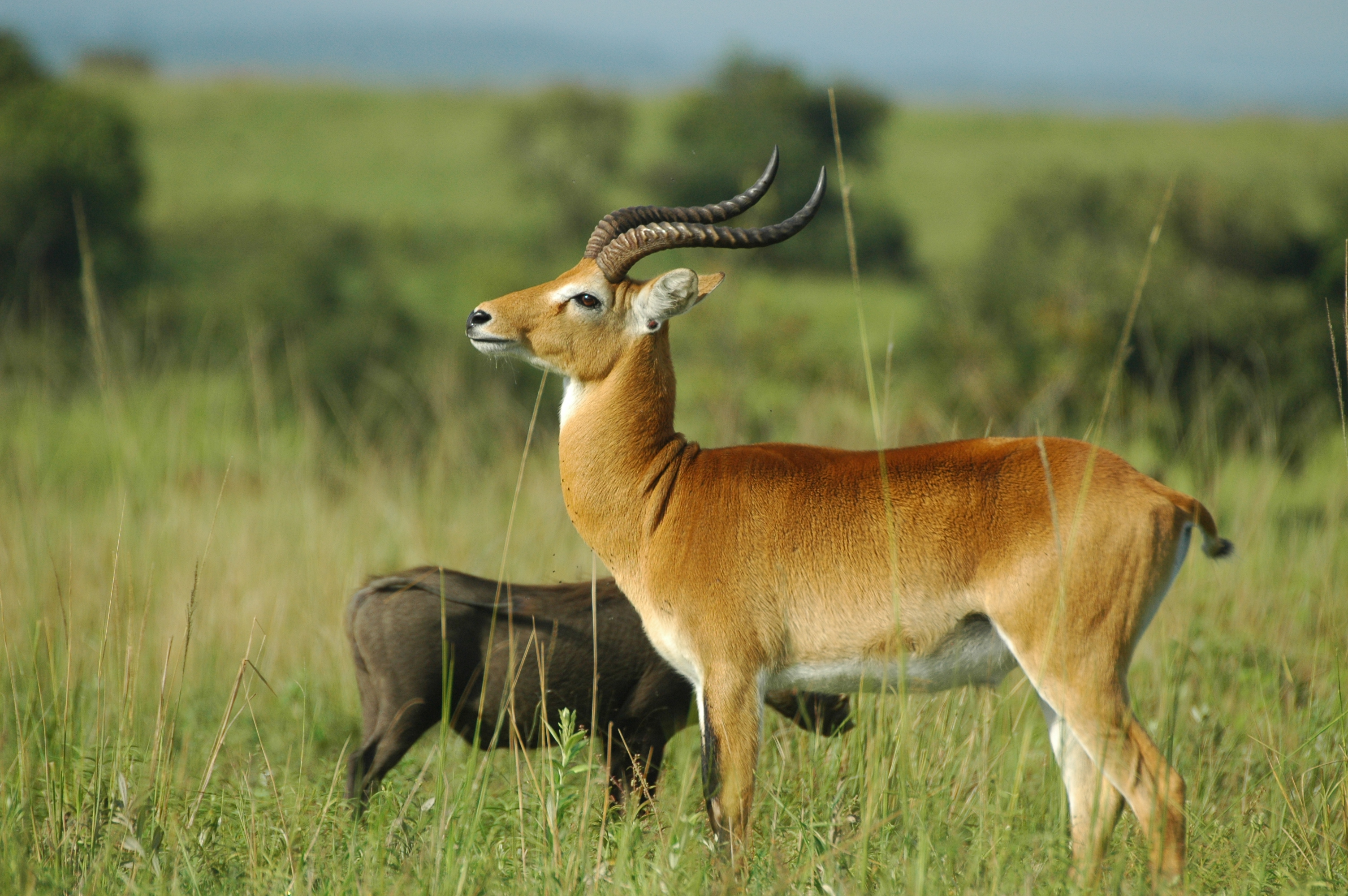
The first of the park’s larger inhabitants came into view just beyond the gates in the form of a herd of Ugandan kob, a stocky antelope that with the crowned crane forms one half of the Ugandan coat of arms. It was a modest start to the safari, and I was a lot more interested in the bizarre-looking hartebeest standing in their midst. With a head that might have given birth to the expression ‘why the long face?’, they look too warped to be real, like a badly stretched photo on a student PowerPoint. It spooked when the car came to a stop and bolted. They seem more skittish than other antelope species: though I saw several of the strange beasts during my time in Uganda, I never did get a good photo of one.
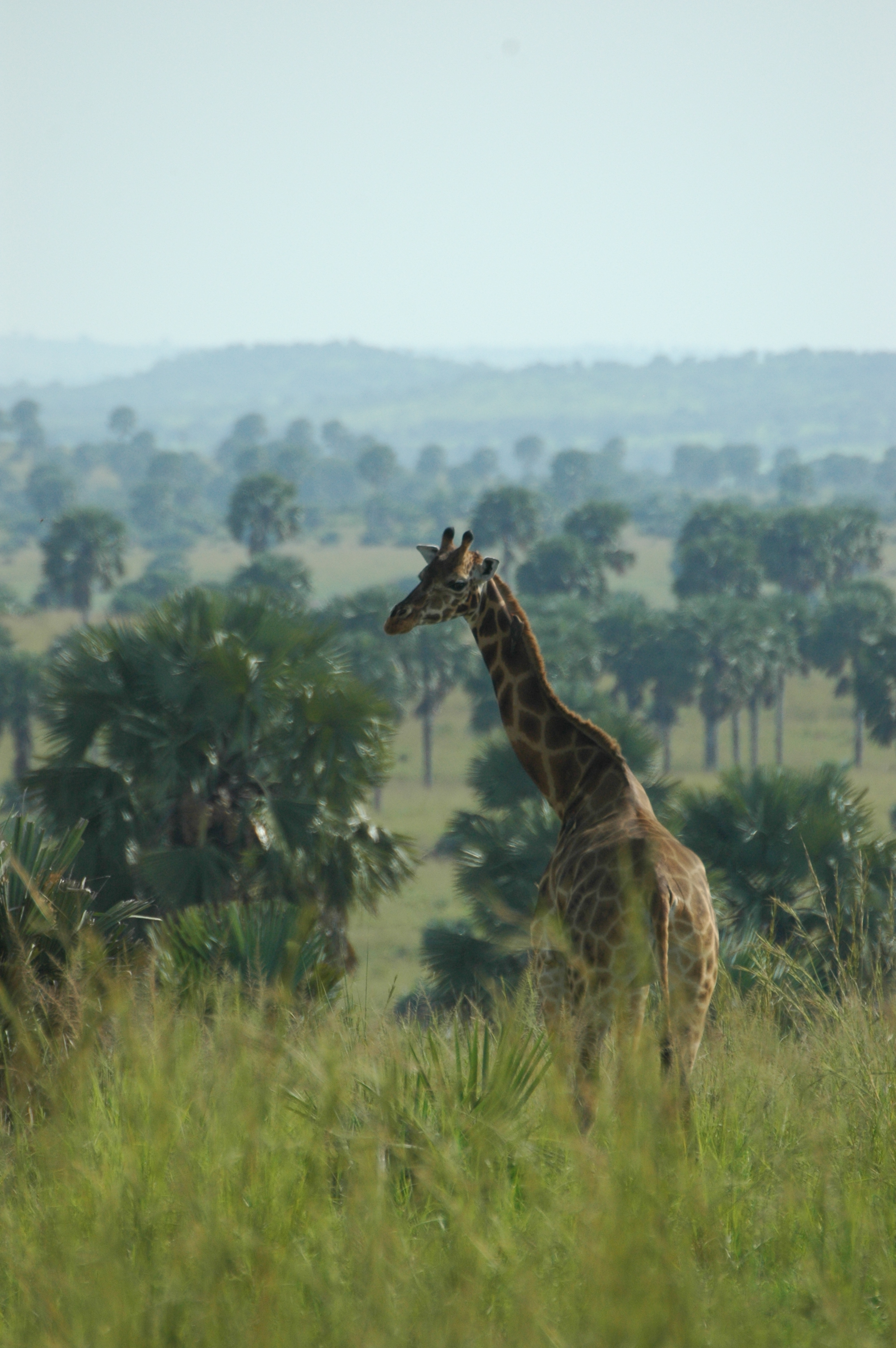
We didn’t have to go much deeper into the park before the park ranger pointed out a giraffe. He needn’t have bothered: at over five metres tall, they aren’t exactly hard to spot. Murchison Falls NP was one of the last holdouts of the giraffe in Uganda, after war and poaching drastically reduced their numbers in the last century. The giraffes that can be seen in Uganda are the nominate species, known as Nubian giraffes, and could once be found as far north as Egypt. Back in 2012, they were still known as Rothschild’s giraffes – they were reclassified in 2016 – so it looks as though they have been “decolonised”, dropping the name of a wealthy British banker and zoologist in favour of a name that conjures up their former homeland. Murchison Falls itself was similarly renamed under the Ugandan dictator, Idi Amin Dada, though the fact that he was the brains behind the switch may account for the fact that the park formerly known as Kabalega Falls has since reverted to its old colonial title, for better or for worse.
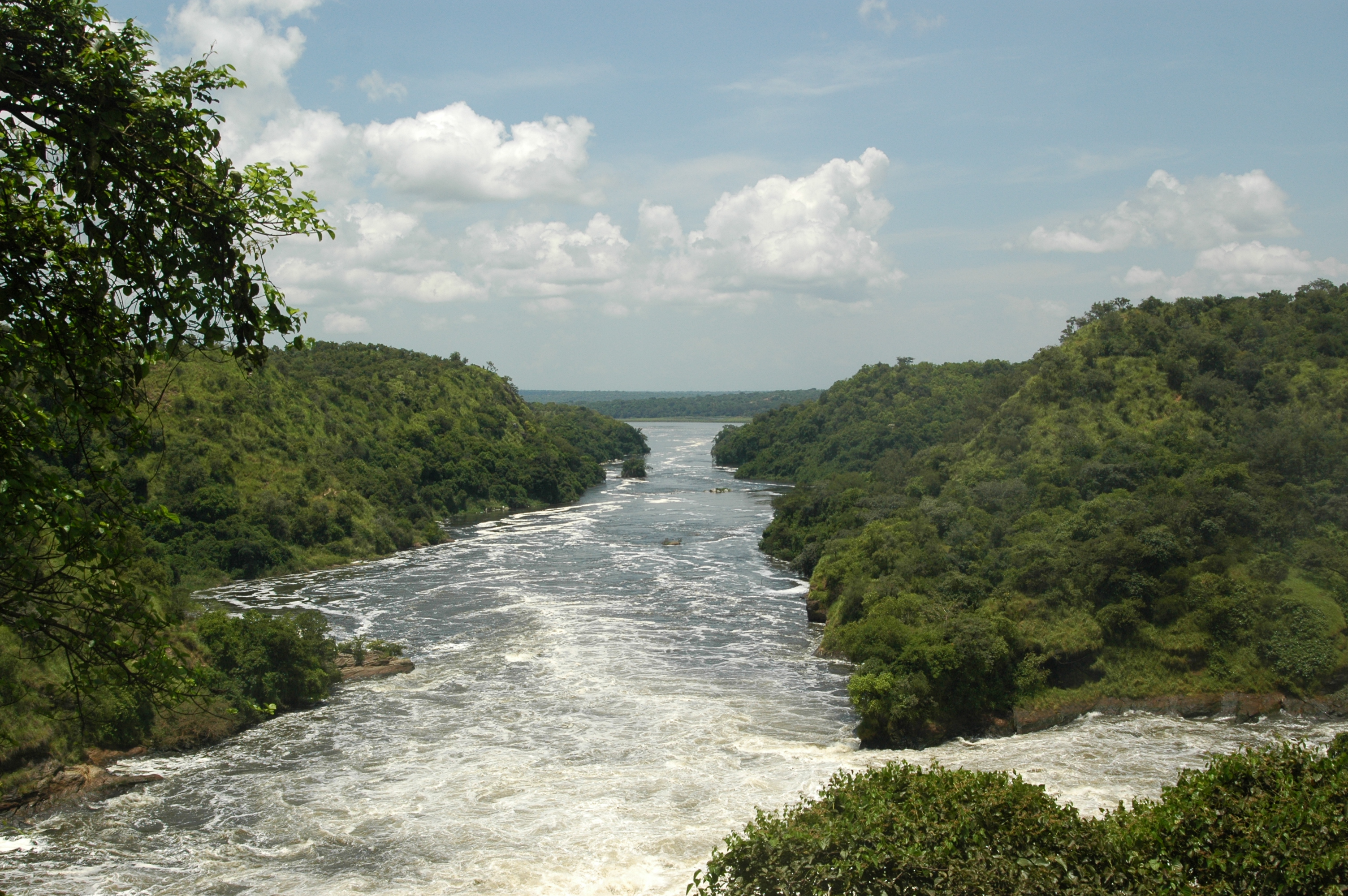
We reached Paraa around midday, where the Victoria Nile cuts right through the hearts of the national park. We missed the ferry by minutes so we parked up on the riverbank and waited for it to return under a thick cover of cloud. My friends had to stop me from getting too close to the water, as a large pod of hippos were dozing just metres from the bank. Some estimates hold that hippos are responsible for around 500 deaths a year, making them one of the more dangerous creatures on the continent – though not as dangerous as Africa’s snakes, which claim thousands of victims every year. I think I was actually more interested in the gangling jacana that was bobbing around at the water’s edge, but that’s by the by. Just like me to miss the wood for the trees.
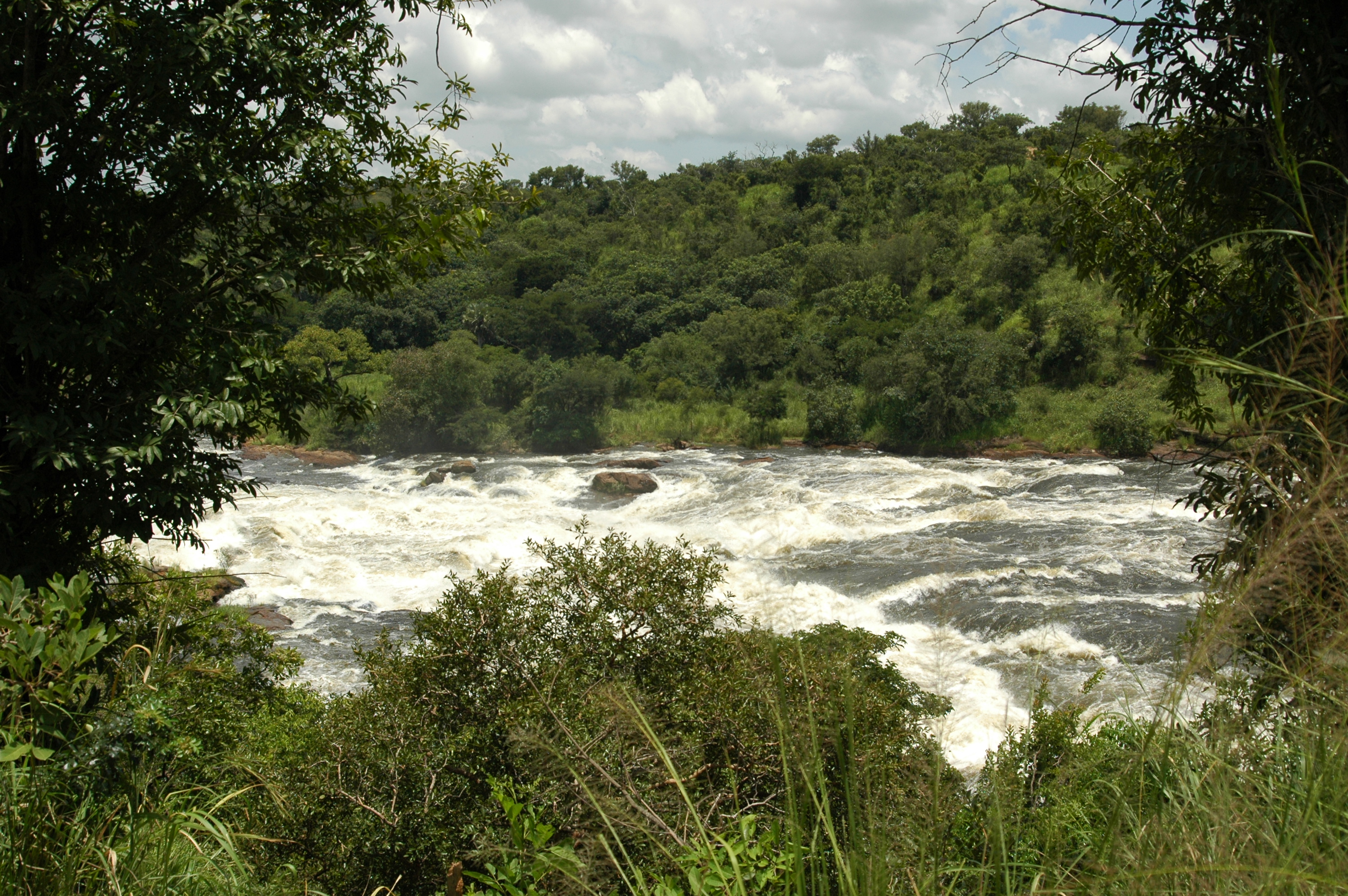
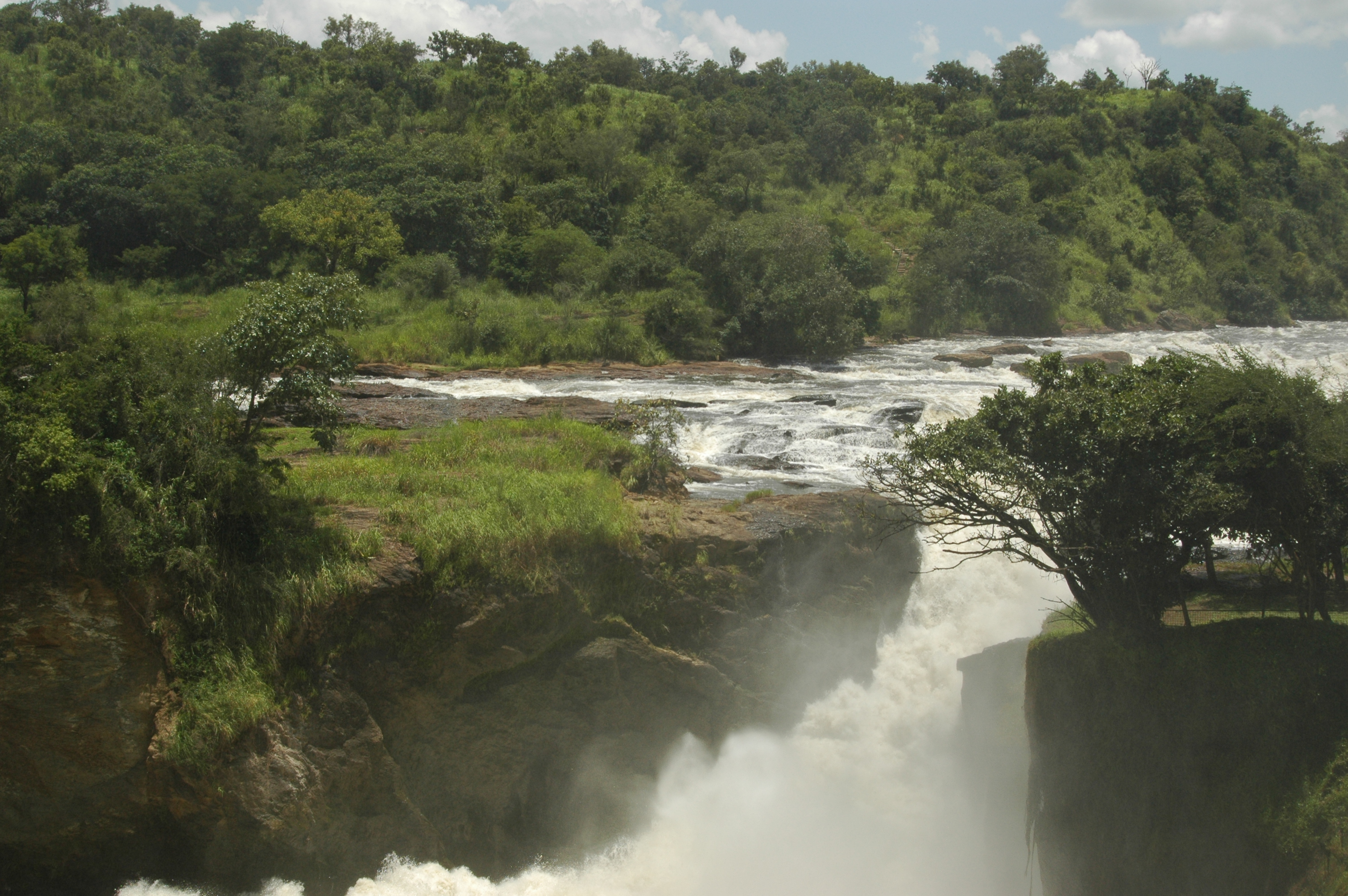
From Paraa, it’s a bumpy ride to the falls for which the park is named. I’ve described them in my journal as “royal”. Kabalega – Amin’s preferred name for the falls – comes from Chwa Kabalega II, King of the Bunyoro people who call this corner of Uganda home, so it’s not a poor choice of an adjective. Hailed by the UWA as “the world’s most powerful waterfall”, the Nile is forced through an eight-metre chokepoint, creating a thunderous spectacle as the full force of the world’s longest river is hurled into an abyss known as the Devil’s Cauldron. It really does have to be seen to be believed.
It’s incredible to think that this mighty river winds its way all the way up to the Mediterranean. For centuries, the origins of the Nile were a mystery to the Western World. The Banyoro knew of the great river, of course, but they would have been just as surprised to know that the river that thundered through their kingdom watered the deltas of the pharaohs, some two thousand miles to the north. It might seem strange that the source of such a historically important river remained a mystery well into the nineteenth century, but as the early explorers discovered, the Nile is a treacherous creature that holds onto its secrets with a jealous force almost as strong as its flow: once you reach Sudan, the river becomes heavily overgrown, making navigating by boat near impossible, and stands of reeds and papyrus hug the banks so densely that, in some parts of its course, it obscures the river entirely from view.
The Ancient Romans had a saying, Nili caput quaerere, “to seek the head of the Nile”, which meant to attempt the impossible. It’s possible the saying originated with the Emperor Nero who did just that, tasking a small expeditionary force of his Praetorian Guard to find the legendary source in the first century AD. The historical accounts claim they made it as far as Southern Sudan before finding their passage blocked, but some claim they may have made it as far as the thundering waterfalls of northern Uganda. It’s a strange thought, to picture the Praetorian Guard standing here, staring in awe at the falls in the same spot that shadowed Winston Churchill, Ernest Hemingway, Humphrey Bogart and, much later, myself.
What the photos don’t show is the spectacular double rainbow that forms over the Devil’s Cauldron as the Nile thunders through the gorge. We saw the falls shortly after a brief spell of heavy rain, so the force of the flow was especially ferocious. Two weeks later, when the full force of the wet season came down, it would have been near impossible to get as close to the falls as we got without being blasted with the spray. Apparently, these can sometimes be seen at night, when the moonlight is exceptionally strong: these are called “moonbows”, and have been spotted by birdwatchers who come here looking for the bizarre pennant-winged nightjars that nest in the surrounding forest. We didn’t stay long enough to find out, but I’m sure it must be a beautiful sight to behold.
The first thing I ever saw in Africa was a waterfall. The connecting flight from Heathrow to Addis Ababa rode the clouds for most of the journey, but shortly after waking up on that first morning, the clouds parted for just a moment, revealing a jaw-droppingly beautiful mountainscape, with a silver river launching itself over the edge of a high cliff the colour of bronze. Victoria Falls is the one that comes to mind for most, but for me, it’s a toss-up between Murchison Falls and that nameless cascade that first stopped my heart all those years ago. Maybe I should go in search of more waterfalls!
Honestly, I’m getting the travel bug just writing this. I think it’s time I blew the dust off the travel section in my library and started cooking up a plan. I know I’ve had a grand adventure this year to the States, and I’m grateful, but after a slightly abortive early finish, I feel like I haven’t quite sated the travel bug this time around. Let’s see… if I can pass my driving test, I think I will reward myself with another grand adventure – only next time, I will do it for me. It certainly makes for fun writing! BB x
I’ve got my third driving lesson of the summer this afternoon. They’re not going too badly, considering I had a three month hiatus after my last instructor was rushed to hospital, forcing me to cancel just two weeks shy of my test. I wouldn’t say I’m test ready, by any stretch of the imagination, but it’s becoming more natural behind the wheel, and I’m hopeful that I will be on the road in wheels of my own before the end of my thirtieth year. That’s the goal, anyway.
Cruising around the unfamiliar roads of Somerset had me thinking about the freedom I will have with a car of my own. It’s the thing people tend to point out time and again when the subject of getting my driver’s licence comes up in conversation, but it’s honestly not something I think about all that often. Which is absurd, because when I do have the chance to get out and explore, I know I’ll be out most weekends if I can, especially in this wild and sometimes desolate corner of the British Isles. With Exmoor, Dartmoor and the Jurassic Coast on my doorstep, I’d be a fool not to.
I’ve been on a number of grand road trips over the course of my travels, and I thought I’d use some old photos as a launch to reminisce about a few of them: snapshots, if you will, of great adventures.
1. The Badia, Jordan. 3rd July 2015: 10:56am
At the end of my first week living in Jordan back in that sweltering summer of 2015, a couple of Dutch students from my language school, Bern and Marco, hired a van and offered to take a group of us out into the Eastern Desert, also known as the Badia, on a Jordanian road trip. It was a bit of a squeeze, fitting ten of us and our supplies into the damned thing, but it allowed us to see more of the country than the public transport system ever could.
Something that strikes you immediately about the Badia is how empty it is. The desert itself is vast, covering more than 72,000km. That’s larger than the Republic of Ireland, and it’s actually only a fraction of the greater Syrian Desert. Highway 40, the road that connects the oasis city of Azraq to the capital Amman, is a largely featureless drive across the edge of the Harrat as-Sham, often translated as the Black Desert. It is no misnomer. Forget your childish images of rolling sand dunes and palm trees. The Black Desert is an immense expanse of flat, black rock, stretching as far as the eye can see in all directions. The silence is almost as oppressive as the heat. One of my American friends, the enigmatic Washingtonian Mackenzie, used to play a game on the road, Camel or Human, every time something larger than a boulder appeared on the horizon. Usually it was a camel, but just every so often we’d pass a wanderer on the road, miles away from everything and everyone. Not exactly a forgiving place to break down.
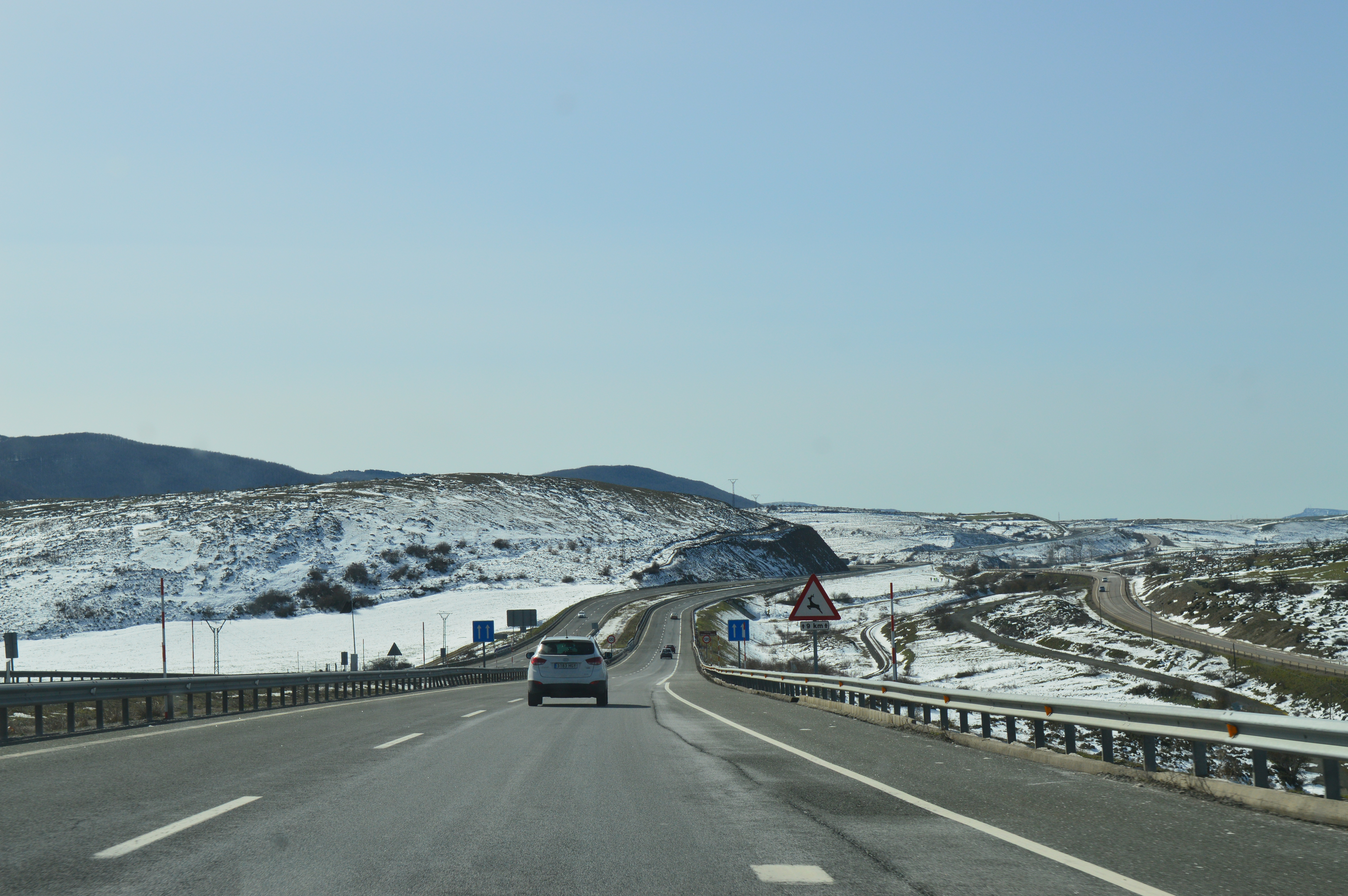
2. Reinosa, Spain. 21st February 2016: 11.46am
I used a variety of methods to travel around Spain when I lived out there: the carshare app BlaBlaCar, the short-distance Extremadura bus firm LEDA and, latterly, the superb train network RENFE. For the longest journeys I leaned heavily on ALSA, Spain’s answer to National Express. Cheap and efficient, provided you had time to spare, they serve most of Spain’s larger cities and provided a very reliable means of getting around. I took the bus one wintry weekend to see my friend Kate up in Cantabria. It was a ten-hour journey – not for those who get bored or travel-sick – but it does take you through some of Spain’s most breath-taking natural beauty: the wild steppe of Cáceres, the cherry-blossom valleys of Plasencia, the high meseta of Old Castile and the snow-covered mountains of the Cordillera Cantábrica. Driving from south to north across Spain, you really do feel as though you have arrived in a totally different country when you step out of the car at the end of the day.
I hitched a ride south to get home with a friendly student who was heading back to Algeciras after visiting family in Santander. At over 1,000km, it’s probably one of the longest drives you can do in the country. Luckily for me, Villafranca de los Barros was on his way home. In a year where I hardly saw any snow – and where Durham got some of its best in a decade – it was spellbinding to see the northern reaches of Castile covered in a heavy blanket of snow and ice. I’ll have to come back and explore someday.
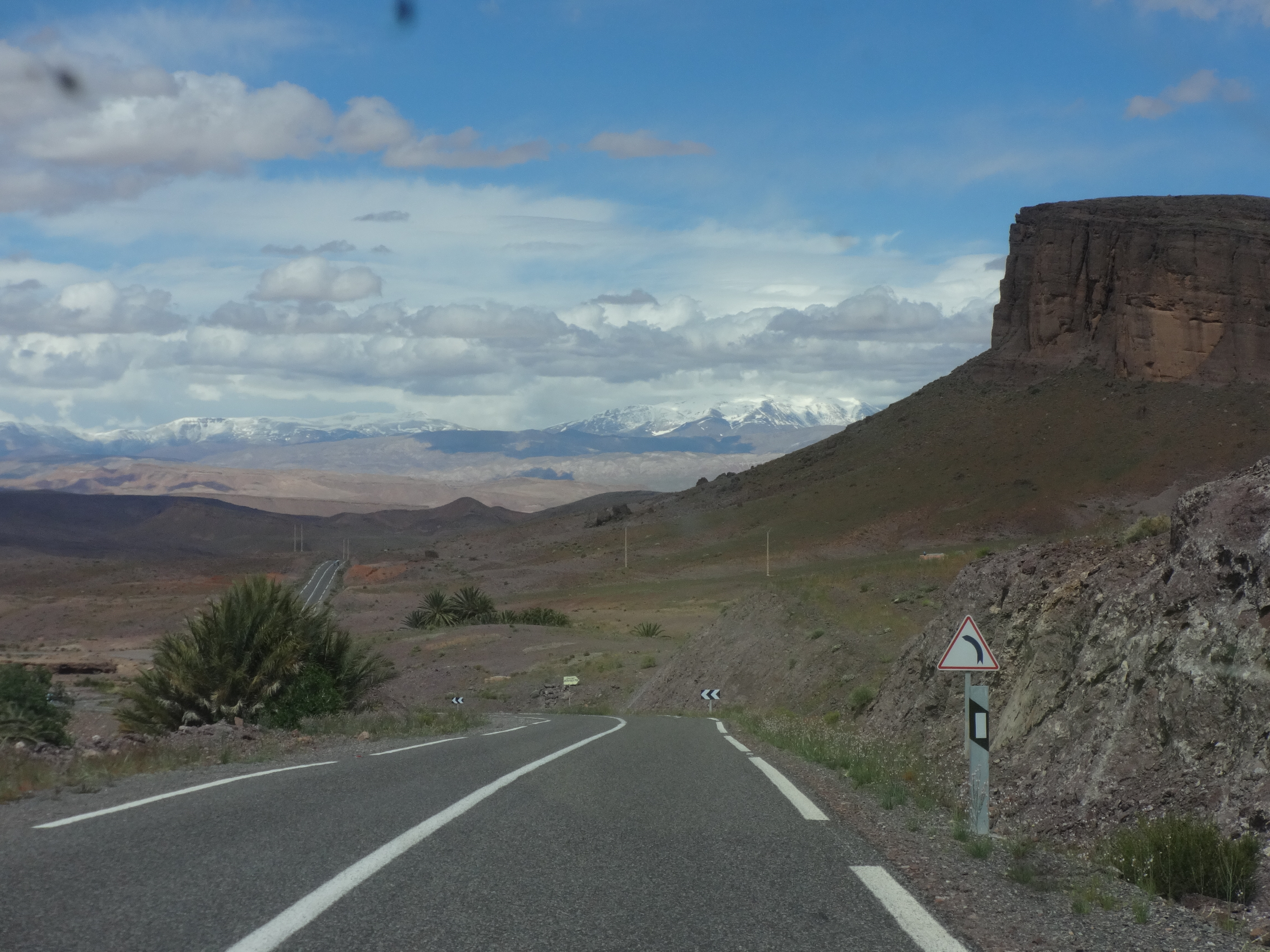
3. Piste 1507, Morocco. 20th March 2015. 11.45am
Another marathon road trip, and one of the most bizarre. My friend Archie and I hailed a grand taxi in Oulad Berhil for Ouarzazate, a desert town famous for being the location of choice for a number of movie studios who require a desert theme in a relatively safe location (including blockbusters like The Mummy and Gladitator). Our taxi driver, Ibrahim – whose name I only discerned from the badge on his windshield – was quite possibly the grouchiest, least sociable character I have ever encountered on my travels. Over the course of a three-and-a-half-hour drive across the rugged mountain valleys of Drâa-Tafilalet, he never said a word, despite our intermittent attempts to engage him in conversation. Perhaps he found us tiresome, or perhaps he was cooking up the plan he would later carry out to quintuple the price we had agreed back in Oulad Berhil, safe in the knowledge that Archie’s rucksack (and passport) was locked up in the boot of his car. I’ll never know. Archie fell asleep for much of the trek, but I spent the greater part of it with my eyes glued to the window, watching the world beyond sail past. I love road trips for that. I don’t think I could ever get tired of seeing the world.
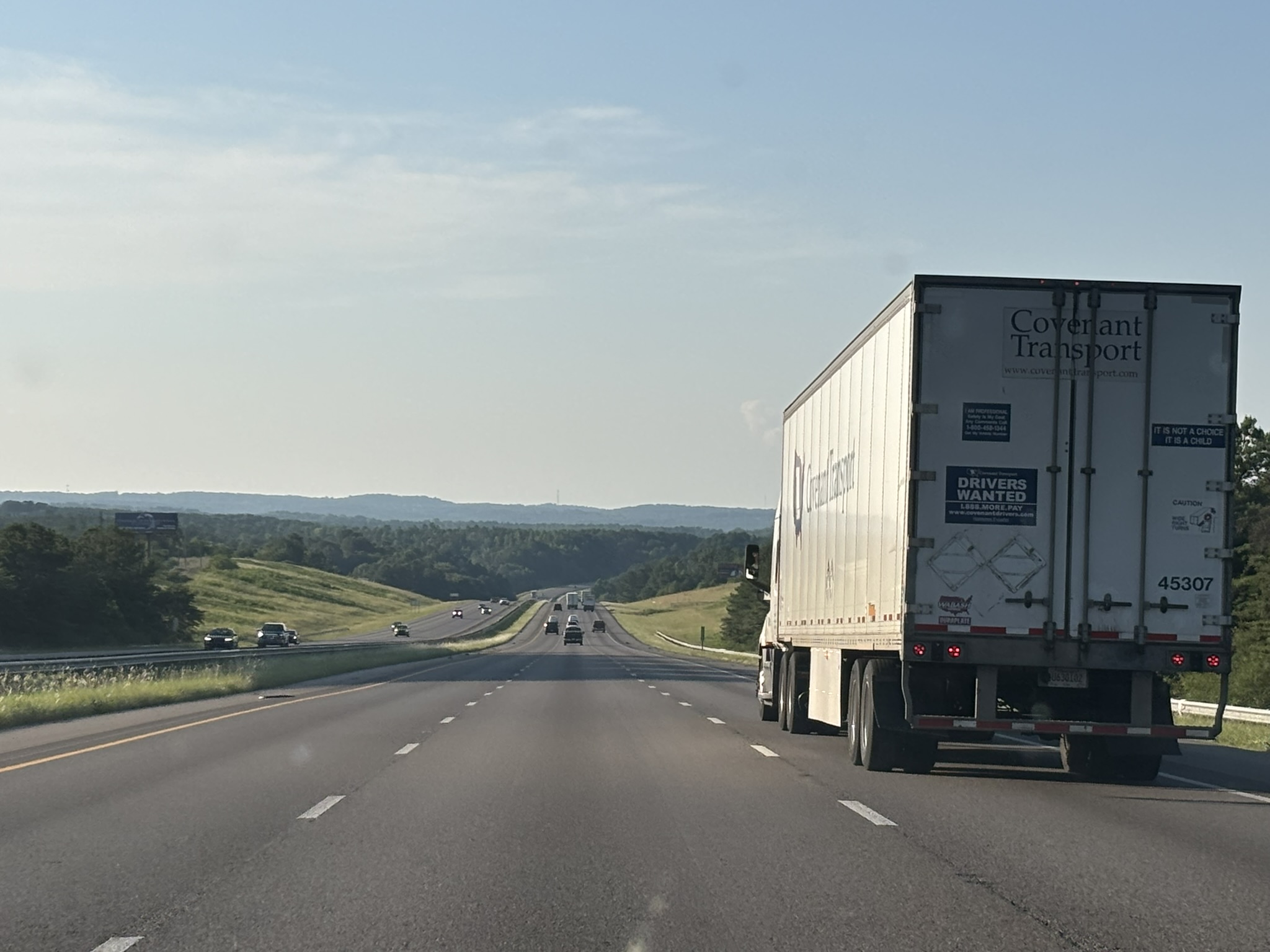
4. Interstate 65, Alabama, 3rd July 2024. 7.40pm
It’s one number shy of Route 66, but it was a phenomenal introduction to the American road trip. The highway in question travels north from Mobile on the south coast of Alabama all the way up to the shores of Lake Michigan in Gary, Indiana. I was only on the road for a fraction of it, from Birmingham up to Huntsville, but it was enough to make my eyes pop. Squashed armadillos, discarded tyre tracks and billboards were features I had anticipated to some degree, but the forests… I don’t think I was aware at all of just how forested North America truly was. The history books and the movies give the impression that most of the great tracts of forest were cut down, but in the American South – especially in the foothills of Appalachians – they go on for mile after mile, stretching across the land like an immense green carpet. The highways just cut right through them, dynamiting their way through hill and mountain as though they were merely molehills.
If I’d known how painful the destination would prove, would I have still made that journey?
Absolutely. Without a second’s hesitation. Some things are worth burning for. Some things are worth traveling all around the world to see, even if only for a moment in your life.
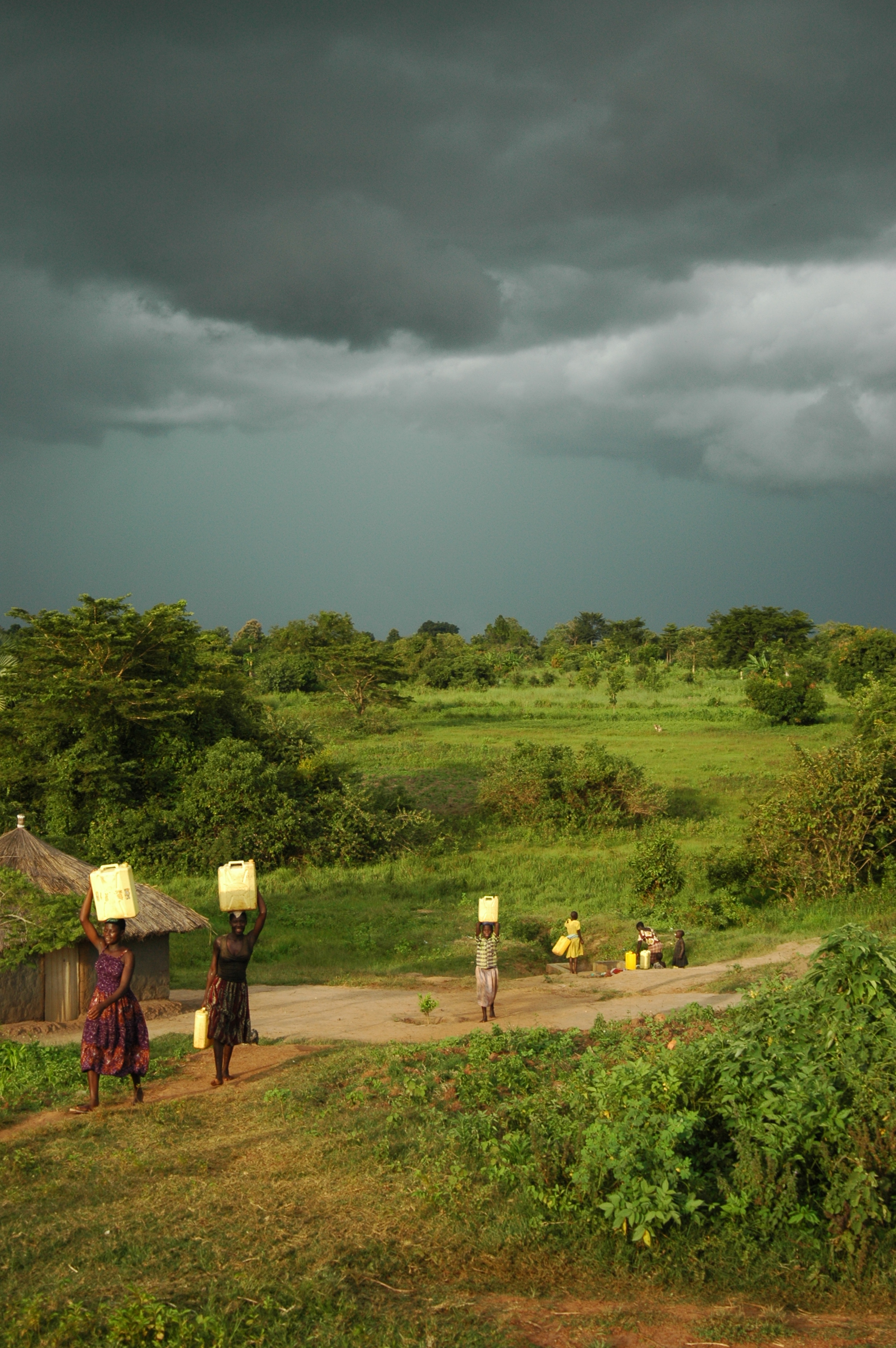
5. Boroboro, Uganda, 11th October 2012. 5.06pm
I thought I’d end this post with what is probably the best photo I’ve ever taken, and one that has a real story behind it.
One month into my first teaching post in northern Uganda, I was invited to visit the former headmaster, Mr Ojungu Hudson Luke, on his farm on the banks of the White Nile. It was an incredible experience, herding Uganda’s famous longhorn cattle through the forests and the driving rain, with one of the world’s greatest rivers thundering away in the background, and perhaps I’ll tell you that story and more as the summer draws to a close. On the way home, after three days without access to electricity, my camera was out of charge, bringing my frenetic documentary spree to a standstill. Uganda’s roads can be treacherous and breakdowns are common, and when they do happen, they can be final: I will always remember the graveyard of trucks and lorries between Boroboro and Lira, rotting at the side of the road where they collapsed. Luckily, we made it back to Lira with little trouble, just in time to meet a tropical storm riding in on dark clouds.
The lighting was spectacular: brilliant evening sunshine, heavy, dark clouds, vivid colours all around. Red African soil and a thousand shades of green. Not for the first time in my life, I gave the finger to the sunburn on my skin and rode the last hour of the journey in the back of the truck so that I could see the world with my own eyes. Determined to capture the moment, I took the battery out of my camera and tried to breathe new life into it by rubbing it between my hands and – well – breathing on it. The first roll of thunder came rumbling down just as I pushed the battery back in and bought myself a couple of seconds. With Luke Ojungu still hurtling up the road at quite a pace, I grabbed two shots of the passing countryside from the back of the truck before the camera died.
We were a hundred metres or so from home when a lightning bolt struck a tree just ahead of us, bringing half the trunk down across the telegraph wires, which exploded in a shower of brilliant sparks. We were lucky to avoid any harm, but we soon found out we would be without power for the best part of a week until the electricians came around to fix the problem. It was only after that, with power restored, that I was able to charge my camera and see what I had managed to capture: a beautifully evocative shot of the countryside around Boroboro, lined up almost as though on command. I have it framed in my living room beneath a matching frame of Kanyonyi, the silverback of the mountain gorilla troupe we tracked on that same expedition.
Do stay tuned – I think it might be fun to relive my Ugandan adventures with you, since they predated the blog by some three years! BB x