Venice: First Impressions

My eyes hurt. The 4.15am start probably didn’t help, but I’d wager the blinding light of the Venetian sky has something to do with it, too. The good weather is supposed to start tomorrow, but today the city is draped in a lagoon of cloud – and that’s no ugly thing.

Check-in was easy. Considerably so. Though it’s a little sad the world has gone and got itself in a big damn hurry and replaced most of the human interactions in airports with machines, it doesn’t half cut the time spent queuing. Despite one of the smoothest transitions from home to gate, however, the plane was all of forty five minutes late leaving Gatwick. Apparently they’d oversold the flight by one and by the time they’d sorted that one out, we’d missed our slot. I was listening to Ravel’s Boléro which only made the anticipation all the more amusing – that piece is basically thirteen minutes of build up to a two minute finale. I could have listened to it three times over in the time between our original departure time and takeoff… but, as I’m not a masochist, I didn’t. Fifteen minutes of snare drums is good enough.

Have EasyJet seats shrunk over the years or have I just forgotten? In any event, Venice’s Marco Polo Airport is very easy to navigate. Passport control is also machine-operated, though I did still get my stamp from a singing security guard. The one upshot of Brexit is that my passport is beginning to look well-travelled again, after years of “ghosting” between the UK and Spain.

Those who’ve traveled with me before will know I prefer to keep an open book when I travel. That can make me either the most liberating or the most frustrating person to travel with. However, it’s a rule I stick to. It is, of course, considerably easier to do when you travel alone.

I thought about sailing into Venice on one of Alilaguna’s water transports and even got as far as buying a ticket, only to be told that the Rosso service via Giudecca wasn’t running today. Nobody thought to tell the machine. This, I suppose, is one example where machines will be the death of us – starting small, bleeding the shy and the awkward of their petty cash, before bloodying us when Skynet takes over.

Joking aside, I decided to skip the hassle and take the bus. A much better idea – it’s a short ride and at only 8€ it’s an easy, affordable trip. And though I was planning on heading straight to Giudecca to drop off my gear, in the end taking the bus swayed me to get to know the floating city a little along the way.

I’ve been good this time. I haven’t actually done a lot of research. I haven’t binged in Venice photos or read up on travel blogs. The only real binging I’ve been indulging in is my Italian, which is already paying dividends out here. As a result, I’ve managed to dodge the Petra Effect this time. Hype really is a killer – so I’ve arrived blissfully underexposed. And what an impact that has!

First impressions? I think one of the most surprising things about Venice is how quiet it is. I was expecting one of the most beautiful cities in Europe to be absolutely heaving, but it’s not. I lost count of the number of times I found myself crossing a bridge in an empty, silent street, with nothing meeting my ears but the rippling water and the crying of gulls overhead. Even the Venetians themselves seem toned down (but then, I am used to Milanese Italians who are especially vocal). But no. None of that. It’s incredibly peaceful here.

The vaporetti couldn’t be easier to use. I’ve bought a three-day pass for 40€ that will allow me to bounce on and off them over the next few days. If you stay on Giudecca, you’ll be making frequent use of them just to get to the city and back, and at 7.50€ for a single trip you’ll make a saving even if you only plan to make a return trip from Giudecca once each day. I have a few days to play with, so I’m going to try to explore the outlying islands of Murano and Burano. Better hold on to that ticket!

Giudecca is a quiet place to stay. I spent most of the afternoon snagging photographs of the cityscape in a mirrored window and chasing a cormorant down the waterfront. For once I’m armed with my trusty 300mm and can get back to my roots as an amateur wildlife photographer. I ought to invest in a means of transferring my photos straight to my phone for on-the-go reporting like this, but for now, a grab shot from the old iPhone will have to do.

Looks like the other occupants of my dorm are stirring. I noticed a Spanish book on someone’s bed as I came in. I can see a Pembroke College Cambridge tog bag hanging from one of the bunks and I know I recognised a French accent back there. Time to break a habit and instigate a conversation for once. I fancy dinner and a chat. I’ve missed this way of life. Catch you later! BB x
Dagobah: The Longest Night of my Life

Planning ahead for Italy this April has got me thinking about the last time I travelled solo, now almost a decade ago.

When I was eighteen years old, my mother gave me a copy of Laurie Lee’s As I Walked Out One Midsummer Morning and a map of northern Spain. I joined the dots and bought myself a one way flight to Santander, planning to walk south as he did, until I reached the Mediterranean Sea.

It didn’t exactly pan out like that, but it was and is to this day one of the toughest and most formative adventures I’ve ever made in my life.

Travelling solo is not for everyone. You’ve got to be comfortable with your own company for long periods of time. You have to be able to think on your feet and adapt to whatever happens around you, because nobody is going to look out for you but yourself. Most importantly of all, you need to be brave. You’ll hear plenty of stories about the kindness of strangers, but nine times out of ten, it’s a case of shy bairns get nowt; if you aren’t prepared to talk to people, the loneliness birds will start to circle.

That’s what happened to me, all those years ago. My Spanish was good – more than good enough to hold my own in a conversation – but my courage was lacking. The bottomless charisma that comes almost by osmosis from working in a private school hadn’t sunk in yet, and I would have rather bitten my own tongue than enter into a conversation with a stranger. Consequently, I spent the greater part of those four and a half weeks in what can only be described as a state of monastic silence.

As a rule, I’ve tried to find a travel partner on every adventure since, as there are few things more reassuring than good company on the road. Back then, halfway through my gap year, I was cut off like never before: everybody I knew was either at university, at work or halfway across the globe on gap years of their own. So I didn’t have much choice.

I was young, inexperienced, and woefully naïve about how much I ought to be spending daily on food. Little wonder, then, that when I came home I was dangerously underweight. That first encounter with solo travel taught me a lot, but most of all it taught me never to skimp on food. Ever.

Looking back, it’s so easy to focus on the negatives, largely because of how didactic they all were. One stands clear above the others like a lonely mountain. Sleeping rough in the mountains above Madrid with nothing but a sleeping bag and a rucksack for a pillow. That endless night will be with me forever. Let me paint it for you.


Picture it. A patch of relatively stable ground in the heart of a dark pine forest, on the lower slopes of the mountains. At least two hours’ walk from the nearest settlement. Pine needles where the grass doesn’t grow, and the roots of the trees poking out of the ground here and there like toes in the sand. The light fading as dusk sets in, no sunset, just a gradual darkening of the grey light between the trees as the world before your eyes starts to fuzz and crackle like static on an old television. From somewhere far off, a raven croaks, and once or twice, an owl.

You put your head on your rucksack and try to shut your eyes, but sleep doesn’t come. Maybe it’s because it’s still light out there. Minutes feel like hours. You turn on your iPod and ration a few songs to pass the time. Maybe fatigue will get you in the end. But it doesn’t.

Night falls, but there’s no moon. The ground under your sleeping bag is cold. Wet. It sinks through the lining and into your skin. Your teeth are chattering. You put on all the clothing you’ve brought; three layers of socks, two sweaters and a makeshift scarf. It doesn’t stop the chattering. Then there’s the gentle sound of rain as the clouds roll across the mountainside, scattering water through the trees.

You check your watch. It’s only been twenty minutes. It’s still only just after nine o’clock. Most Spaniards aren’t even in bed at this time. You ration some more music.

The darkness is almost absolute. You can only just make out the silvery light of the trunks of the nearest trees, lit by the ghost of the moon, buried deep in the clouded night. The patter of rain echoes through the whole forest.

Suddenly, a harsh bark breaks the silence. It shouldn’t scare you out of your wits, but it does. You freeze, listening, half expecting – wait! There it is again. It’s a roe deer, you know that. You’re sure of it. You’ve heard that barking cry so many times before back home. It’s just a deer. Harmless. But what good is that knowledge when you’re wrapped up in a sleeping bag, alone, and nobody knows you’re up there? And what if you’re not so sure? What if it’s something… else?

It’s funny how the mind plays tricks on you in the darkness. How quickly you can unravel. For a time I am certain I had managed to convince myself it was not deer but wolves I was hearing – that ancient terror of the deep forest that all of us carry, buried deep inside.

The barking goes on for hours. Or maybe minutes. The minutes feel like hours. The hours feel like days. Time seems to have slowed to a crawl. The night is endless. No moon, no stars, no light from the distant towns. Just the static darkness that creeps through the trees, and the rain, the endless, endless rain.

You count the barks. You count sheep. You call home, consider bailing there and then. You talk to yourself, argue with yourself. You turn to God, perhaps for the first time. You swear. You laugh. You cry. You drain the iPod to zero to keep your spirits up, trying not to picture the prowling things between the trees that your eyes are so keen to paint.

Sleep is fleeting: a minute or two of semi-consciousness here and there, leaving you more and more tired, and yet less able to find that rest you now desire above all things.

And when the dawn comes, that first blessed grey light between the trees, you don’t even care anymore how little you’ve slept. You hardly notice the gnawing aches in your legs, or the numbness in your teeth from all the chattering. You’re just overjoyed to see the light once again – because there’s a magic in the dawn that is timeless. The darkness is on the run, and there’s a new day on the way. Dawn was ever the hope of men.


Looking back now, there’s so much I didn’t do that I know I should have done. I didn’t tell anybody where I was going. I didn’t pack enough food. And any of you with even a little camping experience will have spotted one glaring absence: never mind the obvious lack of a tent, I didn’t even bring a roll mat. No wonder I spent the night shivering.

One thing’s for certain: there’ll be no repeats of that night in the Guadarrama, not in Italy, not ever. I’ve had some long and painful nights in my life, but that one stands head and shoulders above the others. I don’t think I’ve ever felt more alone. But that makes it all the more powerful a memory. It’s a lightning-rod for my fears. Whenever I’m feeling down for whatever reason, I think of that night in the mountains. I was miserable, I was lonely, I was terrified – but I survived.

In the old Star Wars stories, Master Yoda went into exile on the swamp world of Dagobah, a planet with a strong connection to the dark side of the Force. Hubris had laid his order low and taken everything from him; only by humbling himself in isolation and communing with the dark was he able to understand it – and, in so doing, learn to rise above it all.

At some point in our lives, we all need to be brought to our knees, if only to understand who we really are when it all falls apart. I wouldn’t say I look back on that night with pride – the whole enterprise was nothing short of madness to begin with – but it did settle once and for all what I believed.

Darkness is not something to run from. It cannot be escaped. There’s darkness in all of us, as sure as shadows lengthen in the light. But, like a shadow, it must be faced head on if you would not be afraid. We have to confront our fears if we wish to understand them – and to understand how we react it to them. And to face your demons, whatever and wherever they may be, you need your starlight. I call that starlight Hope.

Hope and despair. The light and the dark. All that I am today is built on that bedrock. Hope is my raison d’etre, my polestar, my core value if you will, and it was forged in that endless night on Guadarrama.

Travelling alone can be tough – especially if you’re inclined to sadistic escapades like sleeping rough in the mountains like I was – but I can think of few better ways to find the meaning of life.

And if you’re wondering why I put myself through that ordeal, there’s a perfectly logical answer: there’s a chapter in my book where my protagonist is abandoned in the wild, and my English teacher once told me to “write only about what you know”! The things we do for art…

I don’t expect anything nearly as dramatic in Italy. Heck, I’m mainly going to fill some pages in my journal. But I am going with a hopeful heart once again, to feel that brush with the world beyond.

And to find a better Margherita pizza than the ones they make at Lirios. Maybe. BB x
Kicking the Habit

I can’t believe it. I’ve done the unthinkable: I’ve booked myself a holiday, and for once, it’s not Spain. Well, that’s not strictly true. I should say I’ve booked half a holiday that isn’t in Spain, because there’s nowhere else in the world I’d rather be in Holy Week than with my family, especially since the procesiones haven’t happened for two years now. But after an evening spent stuck in a rut over where to go and what to do in the week prior, I decided it was high time I broke the mould and explored somewhere new for a change. It’s a place I’ve never been before, and yet it’s also a place I’ve had so much to do with over the years that it would be nothing short of criminal to keep ignoring it.

The destination…? Italy!

For years the excuse for passing over Italy has been my (completely unfounded) belief that “everything Italy can do, Spain can do better… plus they speak Spanish”. Spoken like a true tercio, but not exactly the most grounded of opinions, nor a particularly sensible idea for somebody who’s supposed to be a modern foreign languages teacher.

So I’m giving myself a week out there to open my eyes and blow my mind.

I have six weeks to teach myself some basic Italian. Given the almost daily contact I have with Italians at work, that shouldn’t be too difficult – and hey, I could use a challenge.

Part of me feels I’m getting a little old for this solo travel malarkey, and yet there’s another part of me that’s been getting restless for months. I need something to take my mind off how messy 2021 was, something to jumpstart the thrill of adventure I used to feel all those years ago… and, most important of all, something that will give me stories to tell on here that aren’t always about my grandparents. I could certainly do with some fresh material for a change.

A slightly mad move on my part, but if I have to spend another holiday at home I’ll almost certainly go mad. 2017 Me is wagging a finger and calling this kind of behaviour entitled, but then, 2017 Me thought he had it all figured out – and he had just spent a week up at the Edinburgh Fringe, which was probably one of the most expensive holidays I’ve ever had. To throw more fuel on the fire, this year’s summer holidays are going to be little but driving lessons, and as the Camino de Santiago has yet to return to normal, I have no excuses. So it all hangs on Easter.

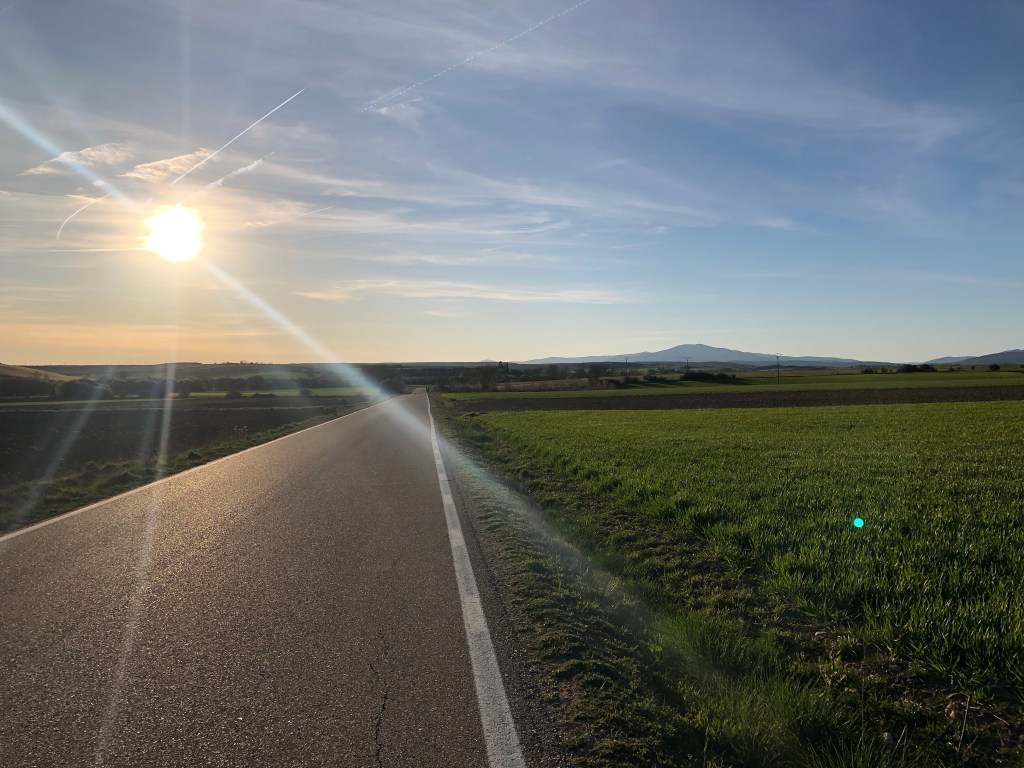
I have a start point in Venice. And I have an end point in Rome. Eight days is what I have to play around with. I suspect there’s so much to see in both cities that I ought to split the week in half between the two rather than trying to cram in anywhere else en route, but I’ll cross that bridge later. For now, I have a language to learn.

Gee, I haven’t felt this motivated in ages. It’s time to fall in love with the open road once again. Fatti sotto, Italia! BB x
Streets of London

2.20am. I’m riding home on the 2.08 from London Victoria. I didn’t even know trains still ran at that ungodly hour of the morning. Apparently they do: one every hour at eight minutes past the hour. They lock the station until ten minutes or so before the train leaves, and there’s quite a crowd loitering outside the gates just before they open them. Three Bridges is clearly the place to be at two in the morning. Who’d have thought it?

I did some much needed “getting out” today. With a couple of exceptions I’ve more or less turtled for four years or more. I guess that’s the nature of life in a boarding school: whereas most other folks can play their weekends and snatch evenings here and there, in teaching you block out your free time by your holidays…

The chap two seats ahead is fast asleep in his seat. His phone alarm is going off for the third time. The lads on the row of seats opposite looked annoyed at first, but one of them has struck up a conversation with the sleeper and asked if he’s going to get home OK.

I killed some time with my sketchbook on the Underground this afternoon, and again waiting in the street in Holborn before the party. A homeless man wandered over, cap in hand, to ask for help. Normally I have to admit I’d probably turn a callous blind eye, but something about London draws me in, makes me think differently. I asked for his name and we got talking. He said his name was James, and that he was trying to find a place that would take both him and his dog for the night. I gave him something to start his hunt – for once I happened to have a loose note on me. We shook hands and he set off at a run.

I didn’t have to make the trek home quite so soon. A friend offered me the key to his place for the night, if I could find my way there. I turned it down, partly out of habit, partly out of pride, and partly because of James. Having such an easy solution in London when so many are out on the streets… for some reason it didn’t sit right. You think in a different key in the small hours.

I remember sleeping rough in the wastelands beyond Almeria years ago. Gaunt from a month of under budgeting and undereating and feeling hollow. I remember the fear of that first night, the isolation. It could never compare to the real thing, of course, but I was young, foolhardy, and I wanted to have an idea of how it felt. One night I was curled up in the dunes when a couple of cars rolled up onto the beach around two in the morning. Men with flashlights climbed out and scanned the beach. I got the jitters and decided to move – they were probably night-fishing, but your brain plays all kinds of tricks at night. I don’t think I’ll ever forget the genuine pit-of-my-stomach terror when, barely a few yards down the beach, I saw two of the torch beams slowly sweep the beach and lock onto me. I ran. My God, did I run. I don’t think I’ve ever run so fast in my life. I must have gone at least a kilometre or more before I collapsed in the dunes.

Almeria seems a long way away. London is surprisingly busy in the small hours. Not the city that never sleeps, per se, but one that keeps at least one eye open all night. Offices lit up, calendars and Macs on desks. Lads coming home from the lash. A girl tottering home on heels, makeup streaming, eyes weeping. And many, many sleeping bags in doorways.

It felt good to go out again. I haven’t danced in years – not since university, I shouldn’t wonder. And as it’s London, the music was both a) quality and b) perfect for dancing shoes. I should do this again sometime. Not that I’d make a habit out of catching the 2.08, though.

Gatwick Airport ahead. Only another five minutes or so to go, and then it’s the long walk back through the forest. I’ll probably be in bed by 4, with or without the moonlight to guide me – I’ve made that journey so often I could probably do it blind.

I’ll sign off now so my phone has enough juice for another chapter or so of Michelle Paver’s Ghost Hunter on Audible. That will take me at least as far as the forest – there, at least, I will feel safe again. BB x
Under the Shadow of the Stone Pines

On a balmy September afternoon back in 2012, three friends and I were sitting on our suitcases in the bustling complex that is Heathrow Airport. We’d already played the find-the-most-expensive-item-in-duty-free game and were killing time for the gate to flare up on the departures board. We were bound for Uganda, to our partner school in the north, on what could so very easily be construed as your generic gap yah adventure. We were under no illusions as to that. Teddy made a joke about one of us ‘finding ourselves’ out there. Maddie was quick to reply that she’d already found herself right here in the terminal. That made me chuckle – probably because, with good reason, that joke about ‘finding yourself’ was squarely directed at me.

I’ll admit it. I have a habit of falling head over heels for things. Especially places. It goes with the terrain of being a self-confessed Romantic. Naturally, this obsession with location carries over into my reading. Setting is one of the first things that I look for when I read a book. Bother dialogue. Bother clever plot twists. If the cast doesn’t travel any further than their cul-de-sac then I’m out. Any author that can make the setting just as enthralling as the plot has me round their finger. That’s why I’ve always adored M.M. Kaye’s The Far Pavilions. India comes to life through her words, so vividly that at times I could almost hear it, smell it, feel it through the pages. Michelle Paver weaves a similar magic in her writing, and I earnestly try to conjure the same enchantments in my own efforts, though Spain is a fickle mistress and so very hard to please.

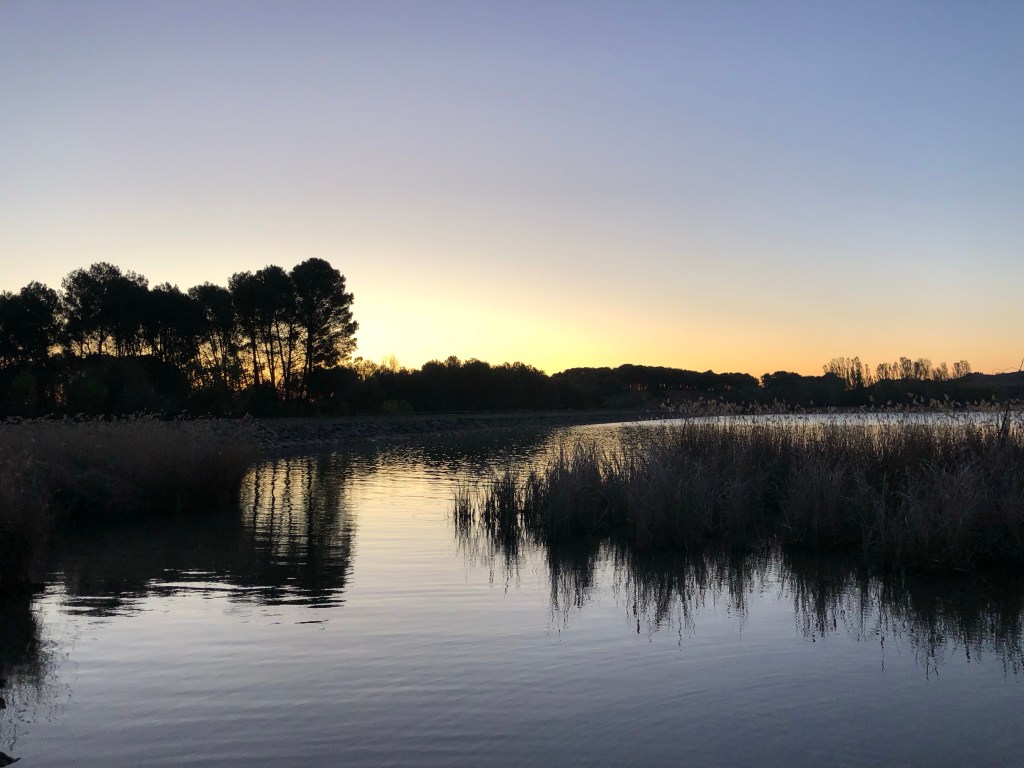
The funny thing about travel and this idea of ‘finding yourself’ is that no two people ever feel the same way about a place. I remember all the raised eyebrows when I used to tell colleagues that my favourite place in all of Spain was a town in the western marshes of Andalusia by the name of El Rocío. Outside of romería season, it’s ostensibly little more than a cluster of whitewashed houses overlooking a seasonal lagoon in arguably the flattest corner of the peninsula, where you can stare across the horizon and see nothing but mile upon mile of shimmering heat. And yet, there is something about that corner of Huelva that calls to me, some spell that weaved its secret magic on me a long time ago.

I’ve had the good fortune to travel across Spain a great deal over the last few years, and there are a number of contenders now for that ever-congested corner of my heart. The gorge at Ronda and the green hills of La Vera. The limestone maw of Zaframagon and the devil’s leap of Monfrague. The vast steppe of Caceres and fair Trujillo, a throne set upon Extremadura’s golden fields. The lonely silhouette of Olvera, and Hornachos, jewel in the Moriscos’ crown and once proud watchtower over the Sierra Grande. Putting my extremely biased affection for Andalusia and Extremadura into a basket, you can add the mysterious heights of Montserrat, the windmill-crowned slopes of La Mancha and the awesome majesty of the Picos de Europa that once guided the weary conquistadors home. All this, and I know I’ve only really scratched the surface.

All the same, though my heart is spread across Spain with a rigour that would reduce a piece of toast to crumbs, there is still one spot that reigns supreme over them all. If you’ve been reading this blog since the beginning, you’ll have seen it over and over again in the header up there. But in case you missed it, here it is again.

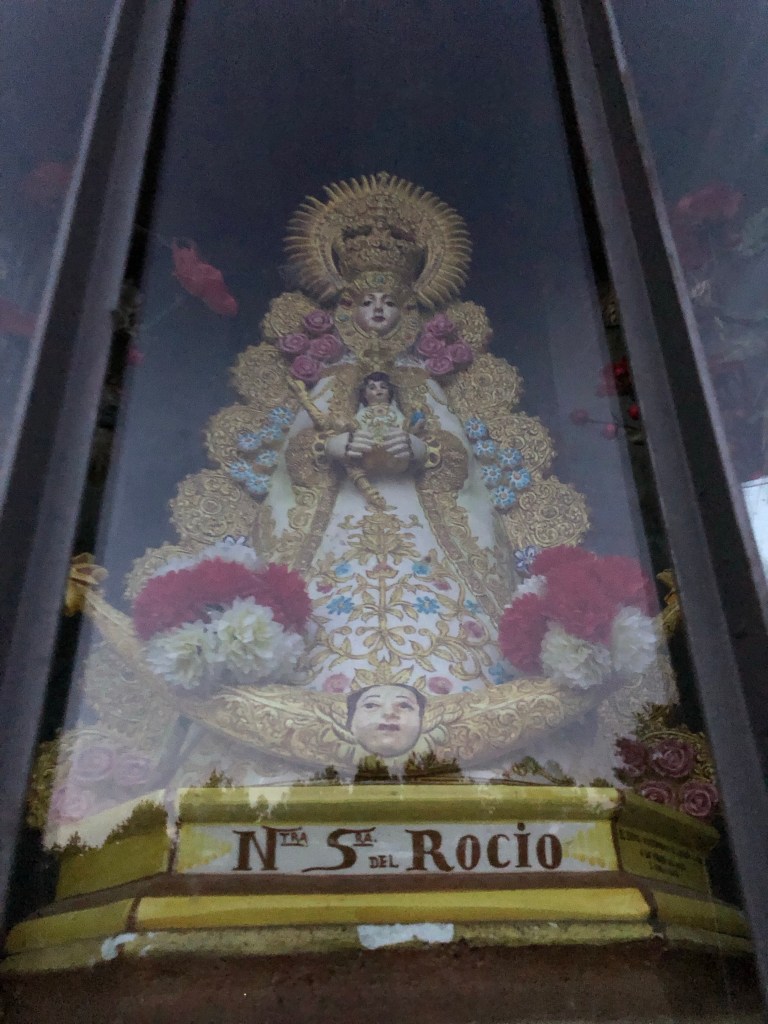
To the east of the sanctuary town of El Rocío lies the Raya Real, a sandy track that cuts through the heart of the Parque Nacional de Doñana. Once a year, it serves as the primary conduit for almost a million pilgrims who descend upon the town in colourful, bolshy gaiety (as only Spaniards can) to pay homage to the Blanca Paloma herself, the guardian patroness of the marshes. Like most pilgrimages, it’s as much about the journey as the destination, and listen to any one of the many sevillanas sung by the pilgrims and you’ll get a flavour for just how in tune they are with the world around them. What an excuse to journey through some of the most incredible scenery on God’s Earth, all while dressed to the nines!

This is all romantically hypothetical, of course. I’ve never seen the Romería in full swing. All the same, there’s this one patch of the Raya Real that I can see in my mind’s eye right now, if I close my eyes for a moment. As for you, dear reader, you need only direct your eyes back up at the top of this post. It’s that tree on the left.

There’s a cluster of stone-pine trees (acebuches) that grow in an island of grass where the Raya Real forks temporarily, before the two tracks converge at the Puente del Ajolí, the last stop on the pilgrimage. A dead tree stands at its westernmost edge, which more often than not hides a gecko or two – I even spooked a Montpelier’s snake mid-hunt here once. A stand of ashes flank the edge of the great pinar, where cuckoos sometimes sing, and in the skies above the Raya Real, bee-eaters go wheeling and soaring in the spring, with bellies like sapphires, backs like rubies and voices like springwater.

Here, under the shadow of the stone pines, I used to sit when I was a boy and listen. After a few seconds you tune in to the silence and hear it all. The wind over the shimmering plains, the rustle of the ash trees. The whistling kites overhead and the mechanical clang of a butcher-bird in one of the branches nearby. From somewhere far off, a panzorrino (native) calling to his horses, or the bark of a dog. Open your eyes for a moment and stare into the blue, and you might see a tiny speck or two up high in the heavens; a griffon and his mate, perhaps, riding the thermals above the coto below. Just once I saw a Spanish Imperial Eagle here, soaring high above the kites below. Maybe that was the first wave of the wand for me – I was a highly impressionable novice birdwatcher at the time. And though it’s kites and booted eagles that have plied the skies on every return visit, the magic in those splayed wings is always there.

In my eighteenth year, I remember sitting beneath my tree, leafing through a copy of Lorca’s Yerma that I’d picked up in town, when a couple of horses rode down the track nearby, one mounted, one riderless. A local girl had fallen from her horse some way back and tried unsuccessfully to get back into the saddle for a few hundred metres. She asked if I could lend a hand, and so I did, giving her my hands to step up and back into the saddle. I watched them go, I heard them laugh and look back, and I went back to my tree, to Yerma and the kites. A golden opportunity to get to know the town of my dreams through its people slipped through my fingers like the sand on which it stands. I’d make some quip about the Virgen del Rocío being a jealous woman, but I really think I had my head in the clouds then and there.

Fool.

Is there a place you return to in spirit, even if you can’t be there in person? This is mine, beneath the shade of the stone pines on the Raya Real. Millions pass by that tree every year without knowing the connection I have to that singular tree, to the kites that nested in its branches once, to the snakes and geckos and their game of cat-and-mouse about its roots. And why should they, when their goal is in sight? They don’t need to do any soul-searching: la Blanca Paloma waits with open arms.

I’ll leave you with a couple of lines from one of my favourite sevillanas that conjures up some of the magic where my words fail. If you like, you can listen to it here – sevillanas should never be read when they can be sung – performed by that band which takes its very name from the road of my dreams: Raya Real.

Las llanuras ardientes de la marisma
El ganado retinto con paso lento
Se acerca hasta el arroyo que esta sediento
Seco está el monte bajo, seco está el rio
Los pastos del invierno ya se han perdido

El Rocío es un milagro, una mañana lo vi
Cuando Triana cruzaba el Puente del Ajolí

Until next time. BB x
Hesperornis

At around eight o’clock in the morning, the sun isn’t quite all the way up yet and the beaches around Arenal d’en Castell are, for the most part, empty of swimmers. A few Speedo-wearing junkies hug the shoreline, and the running girl is back on the boardwalk as she was yesterday, same time, same place. Other than that, the beach is empty – except for one unexpected bather out for a morning swim.

The Mediterranean Shag – perhaps more appropriately dubbed in Spanish as the tufted cormorant – is a diving bird that one normally associates with the rugged cliffs and seabird colonies of the north. The last time I saw these odd-looking snake-necked seabirds I was standing atop the windswept cliffs of Inner Farne, where the birds had built their messy nests mere inches from the footpath. The Farne Islands are magical in their own right with their denizens so fearless and so close at hand, so I suppose I assumed the Farne birds to be a braver sort. In most other parts of the world, birds (and other animals for that matter) know well enough to steer clear of the capricious hand of man. The Great Auk didn’t – and is consequently no longer with us.

Before the tourism industry boomed in the Mediterranean, sea turtles and monk seals swam into the sandy coves to give birth and plovers nested on the shorelines. The human demand for a place in the sun has pushed many of these creatures to local extinction – the Mediterranean monk seal is now one of the rarest mammals on the planet – but some species have decided the only way to cope with the summer surge of noisy humanity is to simply go about their business as though nothing had changed. The shags of Arenal d’en Castell do not appear to mind the presence of their human neighbours in the slightest. The waters of the bay are still teeming with fish, and for this master fisherman, the presence of a few hardy toe-dippers is no obstacle to a morning’s hunting.

There are at least three shags in the bay, not counting those that haunt the rocky cliffs of the headland to the northeast. Like many “urban” animals, they lack the lustre of their wild counterparts. The shining bottle-green feathers of the Farne birds are absent here: Phalacrocorax aristotelis desmarestii dons a more humble suit, with a touch of the sandy-grey “pardel” colour that flecks the coats of all Spain’s beasts, from its mice and rabbits to its bears and wolves.
Or at least, this bunch of townies do.

They really are masterful swimmers. This youngster did an entire length of the bay in a matter of minutes, displaying incredible agility as it darted through the shallows, oftentimes passing within a few feet of the day’s first paddlers, and avoiding what obstacles it encountered with incredible dexterity – with one exception. Perhaps age will bring wisdom.

Every once in a while, nature, that ancient mechanic, finds a form it likes and seems to say to itself ‘yes, that’ll do – no need for further adjustments’. Sharks and sponges and jellyfish have filled an ecological niche since time immemorial, and there is much in the shag that harks back to some of the earliest birds, not least of all the fearsome Hesperornis, a seagoing avian dinosaur with sharp teeth on its beak. There are no teeth on its descendant, but as it floats along the surface of the water, snorkelling often and propelling itself along by its back legs, it seems an ancient creature; and when it finds what it was looking for, it kicks with its powerful legs and dives. And if it looked a capable swimmer on the surface, that is nothing compared to what it can achieve below the waves.

Would that I had an underwater camera and could show you just what I mean! Swimming around the headland this afternoon, I ran into the bird again, paddling only a few metres away without a care in the world. When it dived, I went under and followed it on its underwater hunt. Such speed! The bird moves like a torpedo through the water, powering ahead with powerful kicks of its bright yellow feet. I could only keep up for as long as it allowed; when it had enough of the lumbering tag-along, it kicked harder and took off through the depths. Were the sea calmer I might have watched it go, but the high winds stirred up the sand on the seabed and within seconds it disappeared into the gloom.

It’s moments like this that I wake up for. The flycatchers hawking around the climbing frame in the garden. The hummingbird hawkmoth that visits the hedge every day, the turtle doves that purr from the Aleppo pines, and the blue rock thrushes that warble from the cliffs of every rocky cove – and all of this within five minutes of the flat. Menorca is wild and, for the nature lover for whom a casual swim is simply not enough, it is a truly beautiful place to explore.

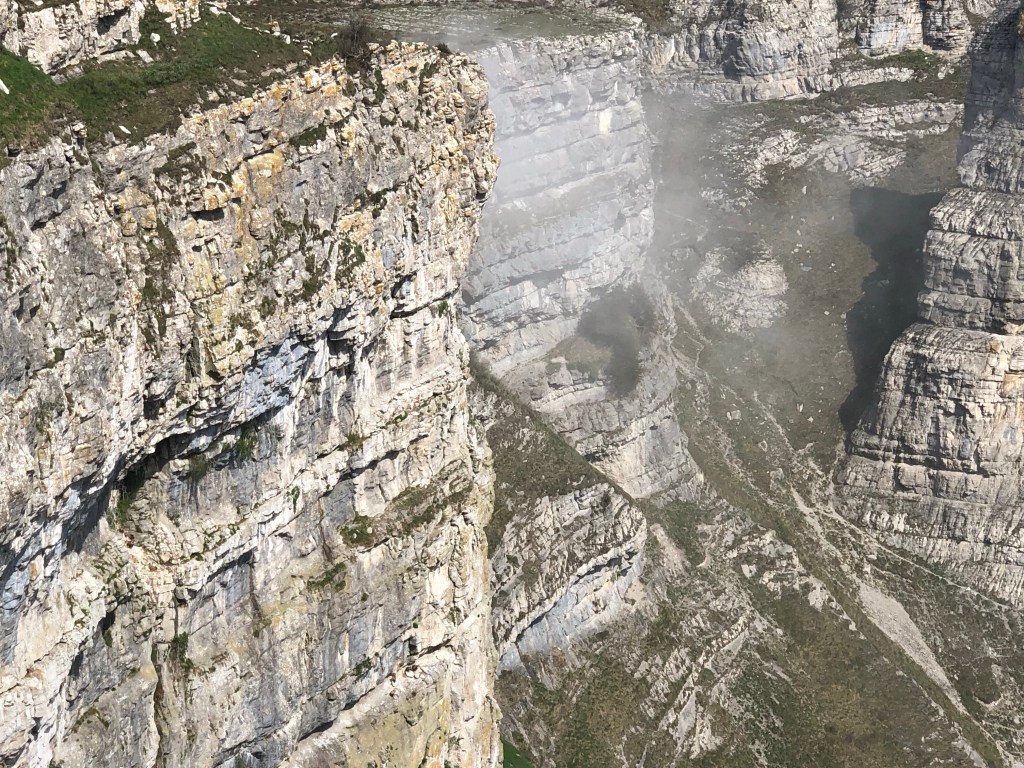
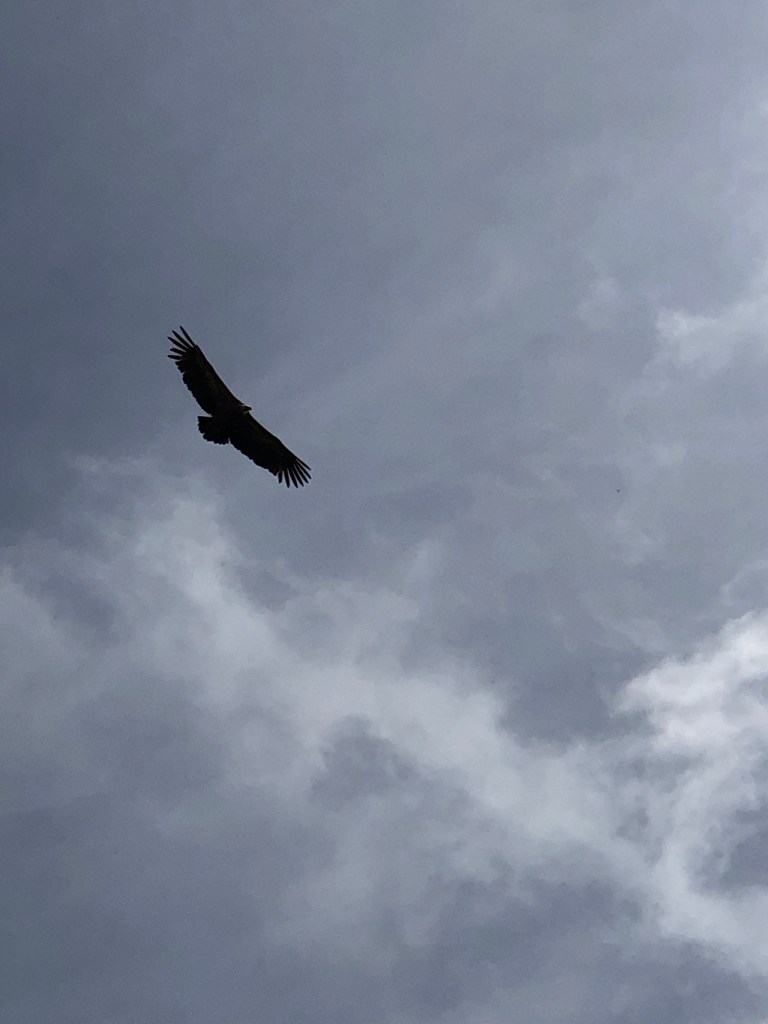
The high winds of the last few days are finally on the wane; the waves are not crashing upon the headland as they were this morning. Tomorrow I make for Fornells to explore the reefs on the northernmost cape of the island. I hear there are moray eels to be seen, though I should consider myself more fortunate if I should have the chance to swim with the shags once again. It was a real RSPB moment, up there with the vultures in the mist and the saltpan harrier, and I shall treasure it for years to come. BB x

Stormchasing

It only rained for three minutes this evening – four, at a push – but it was enough. The muggy, sweat-laundering heat that swallowed me body and soul from the moment I stepped out of the plane this morning is over, and with a night breeze blowing and the temperature pleasantly cool, the last three hours of the day are for writing. I’ve not had the time or mental energy to put pen to paper for several months, and I doubt I will at all next year. So tonight, and maybe for the next few nights, the sun is shining and a haymaker am I.

Sweet Caroline is playing on a loudspeaker in the hotel bar down the road. The only other sounds, besides the ever more distant rumblings of thunder, are the chirring of crickets, the metallic ring of a flagpole in the wind and snatches of conversation from the holidaymakers in the surrounding block. I thought tonight might be a night for geckos, but I can’t see or hear any tonight. Not on my balcony, anyway. The rain might have driven them off.

Beach holidays have been late in coming to me. As with so much in my life, I suppose I have been contrary: what appealed to everybody else must therefore be uninspired and dull. I’d love to say I’m still game to throw myself gung-ho into another madcap adventure, but after a year in a boarding school, I’m quite spent, and for once the idea of spending more than a couple of days on the beach isn’t quite as dreary as it once sounded.

Ok, scratch that. The storm that rolled in over the cliffs today lit a fire in my soul and I was up and out the door in a heartbeat.

Standing alone atop the wind-scarred wastes of the Cap des Redoble, I looked out to the west and watched the thunderstorm come rolling in. I have seen displays of grater majesty and covered my ears before more deafening drumrolls, but it felt truly sensational to stand alone, high atop a cliff, as thunderbolts great and small rained down all around me.

Some forked across the sky, skirting beneath the clouds like bubbles under ice, whilst others weaved in and out of the haze as though there were a holes in the clouds. Others still hurtled straight into the sea offshore, some thin and wispy, others monstrous and so bright they lit up the sea in their wake and pulsed in stasis upon the grey canvas of the sky behind before disappearing into the ether – invariably just before I’d pressed down the shutter on my camera.

I love a good thunderstorm. Who doesn’t? It is truly one of nature’s most awesome performances, and who can blame the ancients for believing gods great and wicked were behind such electric devilry. Only weeks ago I wandered out into the grounds at night to watch a silent storm from the hilltop, and stood in equally silent awe for almost half an hour as lightning danced across the sky in flashes of silver and violet, twelve strikes to a minute. And six years before that, in the garden of the bishop’s residence in Boroboro, I watched a similar storm paint the sky shades of purple I had never seen before.

I had planned this first post to be about swimming with tetras and breams and mullets and wrasse, but the thunderstorm that followed somewhat stole its… well. You get the idea.

Nature has always been my elixir. A reliable restorative that works every time, if only I allow myself the time to go out in search of it. That’s part of the draw of working in a rural boarding school, I guess – that at any given moment, if I have an hour or two to spare, I can strap on my walking shoes and be in the heart of an English forest within minutes. My fears are gone, the world is put to rights and my soul is singing. Amman simply couldn’t offer that and I suffered.

In The Power of One, one of Bryce Courtenay’s best and one of my favourite books of all time, the wise and humble Doc tells Peekay that, whatever the question, ‘the answer you shall find in nature‘. Wise words and I swear by ’em. I just wish I were wise enough to act on them more often. Next year is likely to be my greatest hurdle yet, and I will need every trick in my arsenal to pull through.

Four more days in Menorca are just what the doctor ordered. And when Menorca is but a distant memory, a thunderstorm or two like the one I saw today wouldn’t be so bad. BB x

God in the High Places

“You can’t help but wonder what compelled anybody to build a monastery way up there on the mountain.”

For just a moment in their hour-long conversation about real estate, American sitcoms and friends who had near scrapes with cancer, a Californian woman on the train remarks to her companion on the mystery of the world heritage site they have been visiting, as it speedily slides out of sight as the train turns a corner. It lasts but a moment; within seconds they’re discussing Ellen DeGeneres’ Instagram and Oprah’s twitter feed.

I’ve always been amazed by karst ever since my first visit to El Torcal when I was a kid. It affected me so much that it became the setting for one of the main episodes in my book, and I have spent much of my adult life dreaming of finding similar geological wonders around the world. But if El Torcal was beautiful, the jagged mountains of Montserrat were impressive on a whole other level. The name itself – serrated mountain – tells of its stark, toothlike appearance, standing high above the lowlands around Barcelona. That on a clear day you can see them from the city itself only adds to their majesty.

Small wonder, then, that the monks of eleventh century Catalonia saw fit to build a monastery there, ad maiorem Dei gloriam.

There was a rush for the first train at 8.35am, but on arrival in Monistrol, the town at the foot of the mountain, they all herded straight onto the cable car and rack railway services without a second’s thought. Alone, carrying my lunch under one arm and my sketchbook under the other, I began the two hour climb up the mountainside.

It was quiet on the way up. The kind of quiet I haven’t heard since the last time I climbed a mountain, now almost two years ago. Cirl buntings and greenfinches chattered in the bushes, treecreepers and blue tits sang from the woods, and every so often the croak of a raven came in on the wind. Only the intermittent rattle of the train in the valley below broke the spell. It was an old place, and it felt that way for much of the climb.

The mid morning bells were ringing as I rounded the last bend in the track and began the final ascent towards the monastery. It was, of course, like most scenic places of worship, completely crawling with tourists. Three coach-loads of French schoolkids arrived just as I did, and a huge Chinese group of over a hundred-strong with their pike square of selfie sticks made getting up the narrow walkway to the monastery grounds a slow and uneasy business. Never mind the obnoxiously loud Americans, the even louder Italians, and the ridiculously dressed young Briton, almost as red-faced as his bright red shorts as he wandered around with his sketchbook. That is, of course, me.

Not for the first time I found myself wishing I could step back in time, to a time before mass tourism, when you could stay in the monastery for around the cost of a single euro (or equivalent). When, looking out across the hills of Barcelona towards the sea, you wouldn’t see motorways and industrial sites, but green hills and church towers lining the Llobregat river. In my very British way, I pined for the pastoral glory of days long gone.

I could not find God in the monastery itself, so I gathered my things and set off up into the mountains instead. Only twenty minutes out, with the monastery still in sight, it was calm again, and I was back in the silence. Which, I suppose, is precisely why the Benedictine monks of Montserrat chose to build such a wonder so far removed from society. To retreat is to escape from the world. Perhaps that’s why it struck me as so strange that a place of reflective retreat had become such a magnet for mass tourism. But mankind is all alike, in some respects; what occurs to one wandering mind must also occur to a dozen others. And who is to say any one person has more of a right to go?

Nowadays there’s this widespread notion that God is everywhere. He loves you, so naturally he is everywhere. He resides in every man and woman, every street corner, every kiosk, every artificial tree. Is it because he’s become so much a part of the everyday that so many people have forgotten him? When was the last time you really took stock of a kiosk?

The ancients believed that God could be found in the holy places: a high mountain, a desert oasis or a tree said to be older than time itself. I wonder whether if we stopped imagining that he is everywhere for a moment and instead went to seek him in the wilderness, as the ancients did, we might at least find that small measure of peace that resides in the high places of the world. For if he is the God of love, so too is he the God of peace. The Monastery of Montserrat might have sold its peace in part to the tourism industry, but wander a little higher up into the mountains beyond and you might begin to get a sense for why it is that God of old chose the wilderness. BB x

Broken Glass

I took a gamble, booking a flight to Barcelona on the day after Brexit was due to happen. Some people said I was mad, that I’d have lost my money, and that I might end up grounded. Some people said there was nothing to worry about. I chose to believe in the latter and did nothing, trusting that Project Fear would only cause a few minor disruptions at best.

And I got lucky. In over ten years of flying to and from Gatwick Airport, I swear I’ve never seen it so empty. Security took all of three minutes, queues, baggage check and the whole taking off and refastening one’s belt charade. In short, no queues at all. Well, none besides the giant queue for the cancelled Cathay Pacific flight to Hong Kong. I suppose you can’t blame Project Fear for that.

I managed to lose one of my lenses sometime between boarding and takeoff. Fortunately it wasn’t one of my camera lenses, but one of the eyeglasses from my shades. So now I have to spend the holidays looking like a low budget Terminator. Alternatively I could buy some new ones, but that would spoil the magic a little. Stories aren’t so interesting when everything gets mended all the time.

Well, here I am in Barcelona. This hostel doesn’t appear to hand out padlocks for its lockers like some of the ones I’ve stayed in over in western Spain, but no matter. I’m going on a nighttime stroll to take in the city a bit. Catch you later. BB x

Commuter Vignettes

A collection of observations from London and Madrid.


14.38The Lonely One

A girl gets on the Metro before me. She has that listless look of a twenty-first century child, of a face torn away from the blue glare of her mobile phone. The phone is there, of course – it always is – sitting dormant in her hand but very much alive. Maybe she’s sad because nobody’s messaging her right this instant. There’s something Latin about her look: behind the white Adidas shirt and the pale blue jeans, there’s an arch to her nose that wouldn’t have looked out of place on Montezuma, and she wears bold red lipstick on her thick-lipped pout. It looks a little out of place on her frown. She looks about eighteen, but with that tricksy Latin blood in her veins, she could be anywhere between that and thirty.

The tannoy goes off for Nuevos Ministerios and she leaves.


10.40The Spider

A London micro-manager discusses his six-month leave and coffee with Tom this morning, at a volume just loud enough for the carriage to hear. If the asking price rises into the millions, he suggests waiting for the results to deteriorate, like a bald and very well-dressed spider. Business is the meal of the day. His latest victim, a Gucci exec, writhes in his binds down the line, whilst the shadow on the receiver worries about growth. All of this is, yep, yeh, very good, cheers. The flies will just have to resign themselves to another day of good business.

The tannoy goes off for East Croydon and he leaves.


10.46The Ghost

Could the onboard supervisor contact the driver please.

‘Perhaps he’s not onboard,’ says an old timer. He gets a lot of laughs.
‘Gone AWOL,’ says a glamorous matriarch. She gets a few more.
‘Gone home,’ says a jumper-round-the-neck. The laughing streak dies out. ‘I mean, I haven’t noticed anybody check our tickets, so perhaps there isn’t one.’

Three minutes later, the train pulls out anyway. It doesn’t sound as though the onboard supervisor made contact.
‘Gonna be late now,’ says the matriarch, looking at her phone. ‘Ten minutes delayed.’

The tannoy goes off for Clapham Junction and she leaves.


11.23The Sardine Run

The 10.09 Southern Services train to Redhill is delayed. Apparently this is still newsworthy. Downstairs, the Underground splits at the seams. Giants with sports shorts and mop-tops jostle for standing room with Catalan sightseers, Russian students and a Rastafarian flyerman, dozing silently over his stack of pamphlets. The driver on the tannoy is profusely apologetic about the frozen train, citing an earlier faulty train as the reason for the blown lines ahead. The three-minute delay becomes a five-minute delay, which in turn becomes a ten-minute delay. Five was enough to oust the man in the navy pinstripe suit and the other big fish. I’m only going one stop so I really could have walked, but people-watching isn’t so easy on the move.

The tannoy goes off for Green Park and I leave.


22.52The Platoon

Small talk sweeps Cabin Six. Three late-twenties girls types discuss renting flats, grown-up men and which was the most distressing Harry Potter death, Dobby or Hedwig. One of the three isn’t contributing so much. Another keeps the flow going. Their ringleader dominates the conversation with perfectly formed silences and sentences. Corporal, Captain and Commander. They each tell a tale: the tale of the bright orange Maine Coon and a cactus, the tale of the old lady who fell asleep watching the BBC news and the tale of the silent nurse. The underlying moral of this urban saga? If you live in a flat, you can hear someone go to the toilet. A twenty-first century aphorism if ever there was one.

The tannoy goes off for Redhill, the Corporal gets off, but the Commander’s tales go on.


10.43The Herd

Three stag parties board the plane. Two of them are your standard bunch of square-jawed gym jocks, joking loudly about how muntered Gavin is going to get, how he’ll be flat on his face, gatted, smashed, trolleyed. The other herd follows their oddly-dressed leader down the aisle like a pagan procession, their Chosen One wrapped up in a pink and purple sari with all the bells and whistles – except, of course, the kameez that usually covers a Hindu bride’s modesty. Nip slips are clearly less of an issue for six-foot tall white men. When your average Joe has umpteen problems getting through airport security, it’s frankly ridiculous that he walked through untouched. He’s obviously done his homework if he’s going as an untouchable, though somehow I don’t think that’s the idea his cronies had in mind. The Arabic music crawling out of the speaker in his back pocket would seem to suggest that. At least in Madrid he won’t look out of place. In Gatwick Airport on a Friday morning he just looks like a prat.


15.16The Slaves

Jenny Seville might have painted the scene in front of me. A perfect tableau. Three commuters stand over me with their hands on the rail, facing out across my head, with their eyes glued to their mobile phones. A smart, short-haired man in a blue suit with his earphones in, a disgruntled middle-aged lady in a pink blouse and a professional women with a sharp nose and dark eyes. They stand before me like some grotesque Swiftian pantheon, their smallest features blown up and illuminated in the backlight. To their left and right, lesser gods scroll soundlessly in the blue glare. I feel tiny, sat pressed into the chair at their feet. All along the train, heads are down, faces are blue and conversation is fleeting. There are islands of humanity in the slave ship: a huddle of Latino men talking jovially with no electronic assistance, and a couple of old women discussing train delays in central Madrid. Every time I look around me, I catch the eye of the Green Woman, the only other person in the slave ship who isn’t glued to her phone. She looks like a slightly larger and slightly less airbrushed Anne Hathaway.

The tannoy goes off for Atocha and she pulls her phone from her pocket. I have no binds, so why do I feel so shackled? BB x