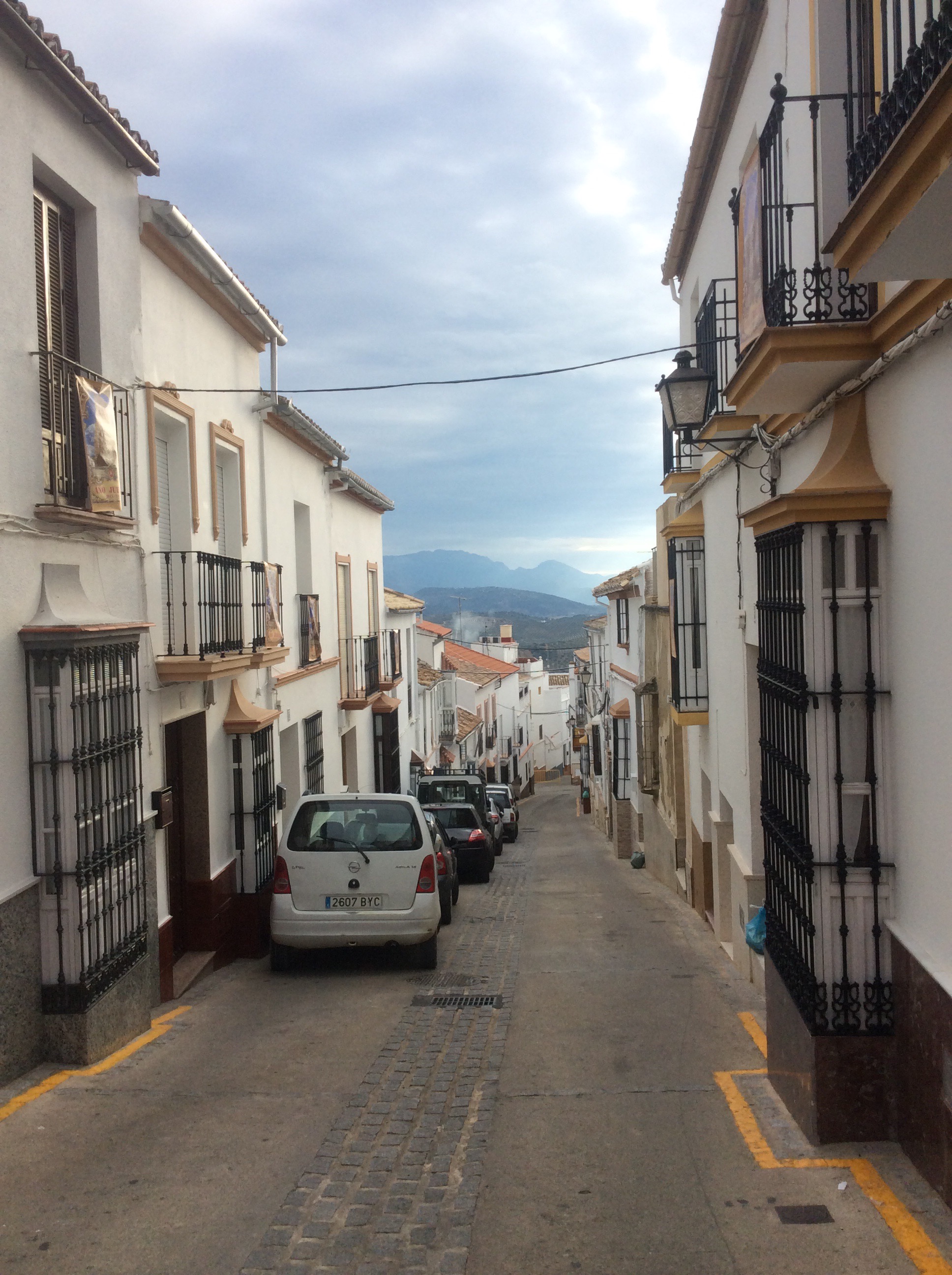
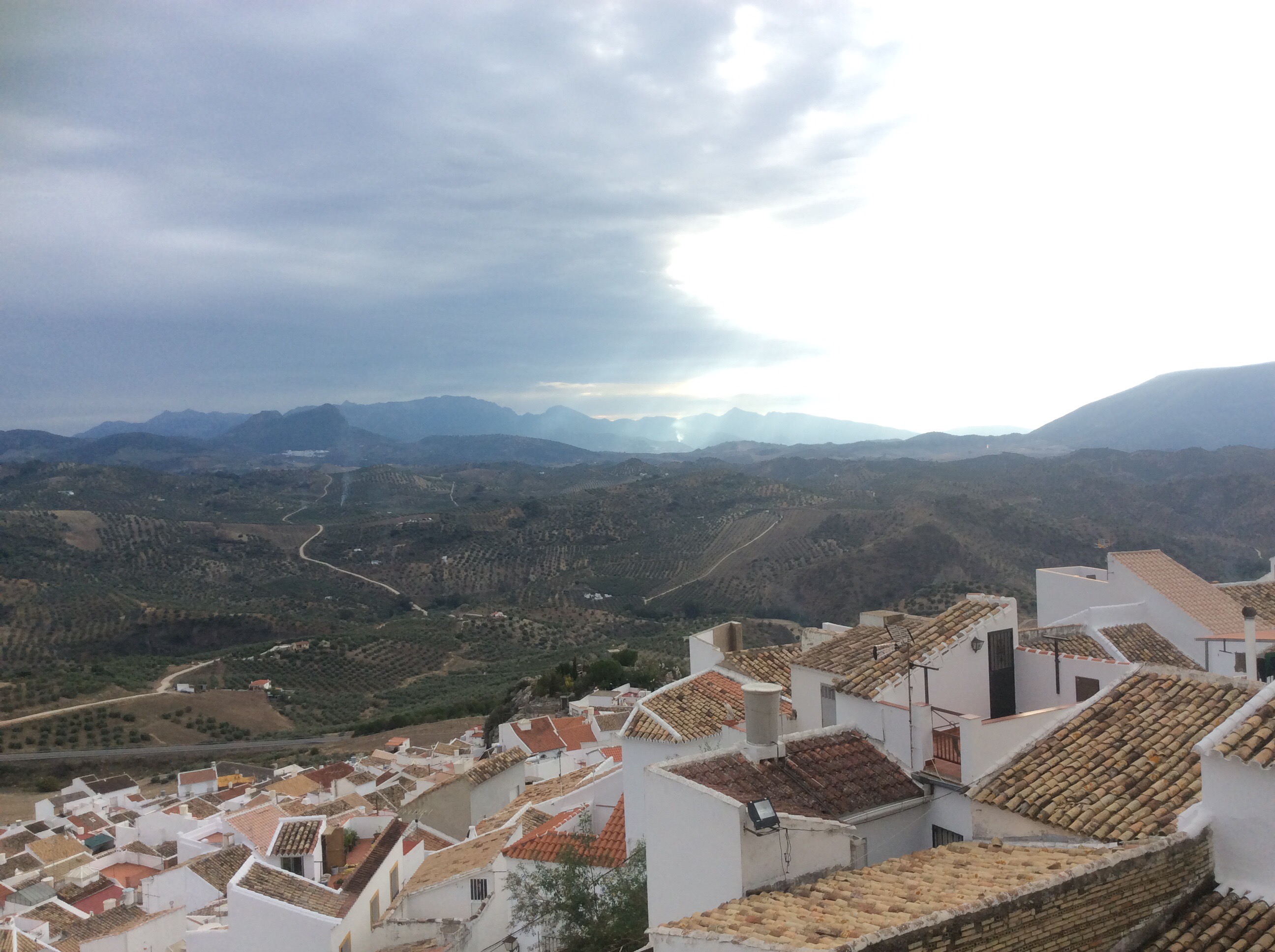
The Green Hills of England

It’s drawing near to December, that time of year when, like as not, English hearts across the world look back to Albion. Say what you like, but Christmas just isn’t the same anywhere else. I’ve been told as much by the Spaniards themselves, some of whom know it only from what they’ve seen in books and on TV.

I’ve never been the kind to get too nostalgic about home, probably because I’ve always lived by the creed that home is where the heart is, and if truth be told, my heart is rather portable. I’ve been none too careful with it. There’s pieces of it everywhere; in Olvera, in El Rocio, in Boroboro and in the Lake District. This year is no different. I’ve been working here in Villafranca for exactly two months now, and I’ve yet to feel any desperate pangs for home home. How can I, when there are so many places I want to be? I’m also a natural loner, by habit and by necessity. Spending long periods in my own company has never bothered me all that much. Sometimes I prefer it that way. It’s a lot less complicated. So it’s got a fair amount to do with my personality, but it could well be because I’m simply too busy to get homesick. Being told I wasn’t needed for one of my classes this morning felt so decidedly wrong that I heard myself asking to make up the time later. I’ve told you before, I can’t deal with not being busy up to my eyes. It’s a state I both love and hate. But it’s a damn sight better than having nothing to do, which is the very worst state of all – just short of despair, which, I suppose, it is, in a way.

Enough musing! I’m not completely immune, and after reading several blog posts on a similar theme, I’ve got to wondering what it is that I miss about England when I’m not there, and I came up with a few:

  1. Milk. You know, regular, cold milk, none of this warm UHT stuff. Yes, I get it, we’re the only species that drinks another animal’s milk and it’s unnatural, but it’s a lot nicer in the morning than UHT.
  2. Music. I’ve already elaborated on this one, so I won’t go into it again.
  3. Footpaths. When you’ve grown up in a country so well-stocked with public footpaths across open country, coming to a land where unsigned farm tracks of dubious public status are the only alternative to roads is a little depressing.
  4. Rain. There’s something magical about rain. It makes me feel elated, especially the real storms, the ones where you simply have to rush outside and get soaked to the skin. That’s more of an African thing than an English thing, but we do get a lot of rain in England, and a lot more than Spain, anyway.
  5. Green. It’s not as much of a problem here as it was in Jordan, as Extremadura is actually rather green itself at this time of year, especially in the north. But it extends beyond that. It’s that cold wind in the night, the dewy scent in the morning, the crunch of frosty ground underfoot. An English autumn green and red and gold. As much as I love hot countries, it’s the one thing I truly miss when I’m gone. And nowhere, NOWHERE does it better than the Lakes.

That’s about as much as I can think of. Family, obviously, would be at the top of the list, but that’s a given. That’s the only reason I’m going home for Christmas this year, because I’m rushing straight back out here for January; for the Reyes Magos, for Olvera and for the Lion King in Madrid (I’ll save that for a later post). What with my younger brother at university now, all four of us left in the Young family are living and working in four different places, so it’ll be nice to be home together again for Christmas. As for the things I thought I’d miss – friends, food and life in general – I’ve got plenty of all three out here, and in a few cases it’s better than back home.

But the important thing is this: Christmas is a time for being with your family. Forget Christmas; the end of the year, when it’s dark and cold, and a new year is on the brink – that’s a better time than any to be with your nearest and dearest. I’d have liked to have stuck it out here, in defiance, or maybe gone to Olvera to spend it with my friends, but at the end of the day, they have their own families, and I wouldn’t want to hijack somebody else’s special day. So for England I’ll be bound, mere hours before Christmas Day, and for once, for the first time in as long as I can remember, I’m not ashamed to be British. And I have Allan Quatermain to thank for that. Allan Quatermain, and John Lockley, and Flashman, and all the other British heroes of literature, who in spite of all of my self-imposed angst at the shame of being British, have shown me that there is in fact a fierce integrity in being from Albion.

For the first time in history, I’m an Englishman abroad – and it doesn’t bother me in the slightest. BB x

On Olives…

I have to admit, going olive-harvesting in my best red chinos was not quite the date I had in mind this weekend. Highly entertaining and not a day to forget, but neither did I see it coming.

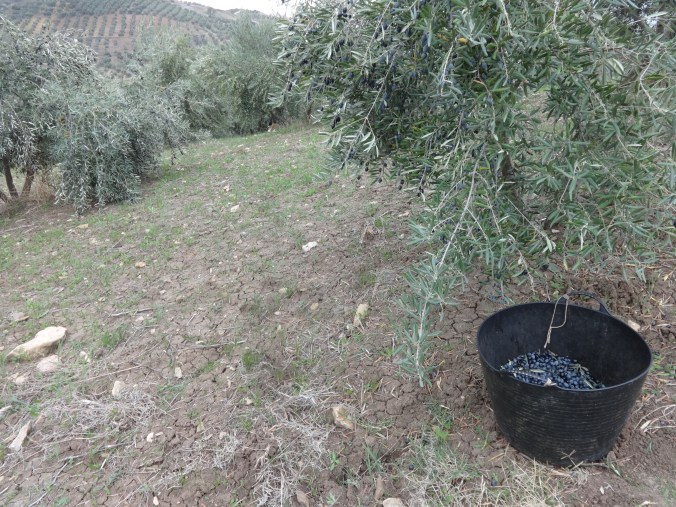
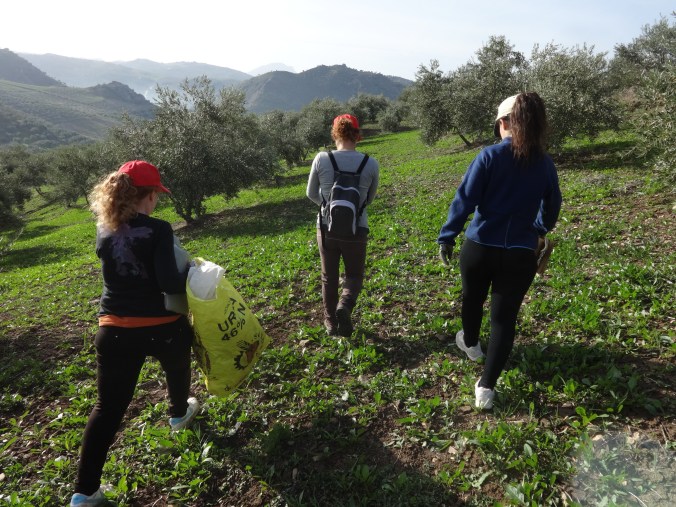
Whether Ali’s father’s suggestion that I tag along for the day and help out was made in jest or not is beyond me, but then, I’ve never been particularly good at saying no to anything. And that’s how I found myself  armed with two right-hand gloves and a campo hat, scrabbling about in the soil for olive windfall. It’s got to be both the strangest and the most enjoyable morning out here so far.

Like a lot of Olvereñans – it might not be too bold to say most – Ali’s family has their own campo, or plot, where they earn a modest income from their olives. Just like the interior of a Spanish house, Spaniards take great pride in their campo too, and Ali was very apologetic about the state of the place when we rolled up in the car. Of course, compared to the cave-house of mine that’s now sporting its very own jasmine jungle, it might have been a manicured lawn.

DSC05280

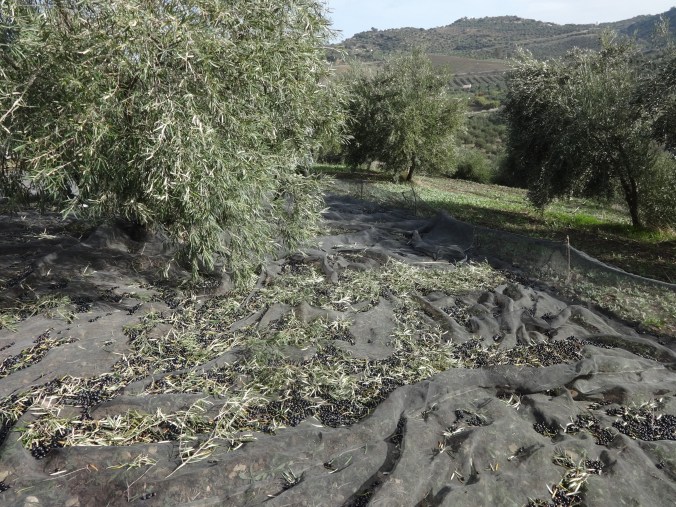
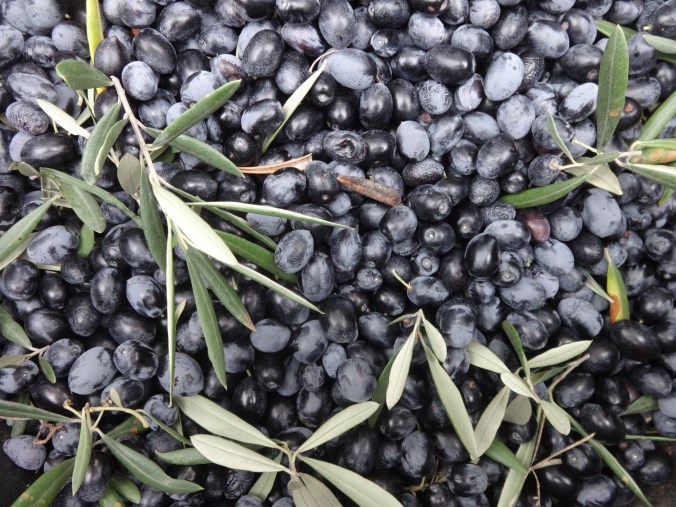
I digress. We kitted up, Ali and her mother sporting rodillas, leather knee-guards which look for all the world like hockey pads, and set off across the grove to the spot where her father and his friend Chico were already hard at work, the one shaking the branches of an olive tree with a motorized contraption of some description whilst the other beat the hardiest olives out of the tree with a heavy stick, or palo. With the tarpaulin stretched out for several metres in all four directions, it was clear they’d not been idle in the first two hours of the working day: the lower end of the tarp was already a sea of shining black, laced with the green leaves and branches that had been dislodged in the vigor of the machine. There was only one palo to hand so they set me to work removing the unwanted debris from the harvest, as the gritty stuff – the hand picking of the olives that fell before the harvest began – is apparently women’s work. The use of machines and the bashing of the trees is a man’s job. How very Spanish.

And how very Benjamín to be relegated to said women’s work later, anyway.

DSC05286

I didn’t particularly mind. It meant I was doing something a lot more useful, even if I did need my technique corrected every few minutes. Here’s a few staples:

1. Always pick facing uphill, from the bottom up. This is better for your back.

2. Use both hands. This increases speed and efficiency.

3. Keep the bucket in front of you. That way, you don’t have to turn whilst picking.

4. Be selective, but don’t be too selective. Dried out olives don’t yield good oil, but they don’t have to be shiny and new either.

DSC05287

Ali’s father went off for a beer with Chico leaving me and the women to keep working. Over a few hours my Spanish got more comfortable – there’s always a reload period – and I found myself discussing the positives and negatives of staying bruto (rustic) in the face of Castilian, which would be both easier and more globally understandable. Personally, I can’t help myself: I for one consider the gaditano slur to be one of the sexiest accents in the world, cutting just ahead of Parisian French and Donegal Irish. How much I understand depends largely on the person; I understand most of what Ali and her friends say to me, but much of what Ali’s father said got lost in the ether. I know that at some point he thought me Ali’s boyfriend and joshed me about the appealing sight of his daughter fishing for olives on her hands and knees up in front (specifically, “tío, when I was your age, I certainly had a good look”), but any other teasing/scolding/words of wisdom were lost on me.

DSC05295

I got another chance for a long conversation with Ali when we had a tree to ourselves, there to practice a different aceitunero technique: ordeñar, or stripping the branches by hand, in much the same way you milk a cow (hence, ordeñar). Nine years is a long time apart and I’ve still plenty of stories to share, but most of them sadly do not fall under the remit of Intermediate Level Spanish, so I fear she had to put up with a lot of jumbled sentences before I was understood. I really must study grammar this Christmas. The conditional has been plaguing me more than I thought it might.

DSC05294

The temperature plummeted just before lunch and rain threatened, so we raced back to the house with our harvest and took lunch there: tortilla, bread and… olives. Each kilo sells to the local cooperativa for several centimos, which surprised me, but goes some way to explaining why, for all the millions of olive trees and hundreds of olives on each one, Andalucía is still a very poverty-stricken corner of Europe. To be an aceitunero is not a job in itself, certainly. It’s something extra the locals do come harvest time to earn a little more.

Well, I’m no aceitunero. I know a great deal more than I did before, but it’s a different world. It’s very much the earthy heart and soul of the very Andalucía I cherish, and I wonder just how much of an interloper I must be, taking part in such an intrinsically Andalusian rite. There are guiris who’ll pay for the experience: voluntourism. I got it for free, on account of my game-for-anything personality and affection for the campesino‘s daughter. I wonder what that meant on a deeper level…


It’s because of the olives that we can’t see each other again for several weeks. Such are the travails of a ‘pobrecito‘ and his campo. I suppose that gives me time to think, and to write. But it’s always worth the wait, even if it’s only for Olvera herself. Next time I’ll give myself a day to tackle the vulture mountain of Zaframagón. Or that abandoned convent I discovered once upon a time. Andalucía is something special, from the olives to the people who farm them. I hope it never leaves my heart. BB x

Explosions in the Night

When Eyjafjallajökull erupted and grounded flights across Europe, I was one of the last to hear of it. Indeed, my mother and I knew nothing of it until we got to the airport, only to be told there’d be no flights for several days because of the Icelandic volcano – didn’t you see the news? It wasn’t even for want of connectivity to the outside world, though I was spending a couple of days in the marshy outpost of El Rocío at the time, but because Spanish news the night before decided to prioritize a report on whether Spaniards actually react to STOP signs, as they’re written in English, over the eruption. Of all the nights…

Last night, once again, the world was rocked by explosions of a very different, more sinister nature, and I slept through them unawares – until I saw the news this morning. And if I’m being totally truthful, I heard plenty of explosions last night here in Extremadura, but they were all of them of my own making. IS declared its actions to be an act of war this morning, and another great and terrible power made a similar declaration the night before – in my head.

I’m here in Cáceres for the Fiesta de las Tres Culturas, ostensibly to do a bit of sightseeing but primarily in search of inspiration for my novel. Cáceres is a stunningly beautiful medieval city, especially so when the town is kitted out with a giant medieval market and the townsfolk are all dressed up. There are crepe-peddlers from Lisbon, camel farmers from Valladolid and a musical troupe from Tetouan, to name just a few. And of course there’s at least one Englishman wandering about the old city with a sketchbook, snatching the occasional character out of the street with his pencils. All in the name of the novel. As I’m now set on nothing else for a career, I’ve started to take this writing malarkey very seriously.

Last night I was scripting the grand denouement of my saga, involving a terrible siege and the destruction of several beautiful buildings, as is necessary for the eventual outcome. As the bombs went off in Paris and gunfire turned the streets into a second Beirut, I had musket and cannon salvos in my head. That the idea came to me at around the same time as the attacks began is probably pure coincidence. The realization this morning of said coincidence made me feel quite sick. Everybody in the hostel cafe was silent with their eyes fixed on the TV as the ticker tape spelled out Spain’s reportage of the dreadful events of the previous night. The whole of Paris in a state of emergency? Citizens told not to leave their homes and the army deployed onto the streets? It’s like something out of a story in itself. And once again, we’re told the perpetrators were operating under the shadowy veil of IS. A war of a very different nature to the ones going on in my mind. There, in the simplified romanticism of my imagination, there are always two clear sides, figures of questionable authority in leading roles on both fronts, and a battleground on which to resolve any dispute by military force.

Not so in the real world. Twenty-first century warfare is a far more sinister affair. It’s international. A war of proxy, of shady political dealings and old worlds dragged unwillingly into democracy and the present day. Of drone strikes and mobile phones. Skirmishes fought in the East are avenged by agents operating upon the civilian population in the West. A state of total war where nobody is safe, from the soldier out on manoeuvres in Damascus to the man back home who used to deliver him the mail. At least, that’s as much as I remember of the term from my wrangling with A-Level History (before it got tedious and became the study of historians and social policy, not kings).

In short, I don’t have the foggiest as to how to react. I’m just a wannabe author voicing my feelings as they come to me. Ask a history or international relations student for their views if you want a kernel of experience: my foray with Charlie Hebdo showcased my inadequacy for dealing with such weighty matters in a succinct, un-detached manner. That’s only natural; growing up as a writer, I’ve fought hard to hold on to my imagination, and with it the childish way of seeing things as fair and unfair, good and evil, where everything can be tied back to the condition of the human heart. Mine, at the very least, is a gentle one, and it doesn’t take much to make it bleed. Hence the moniker. But it would do us all well to remember that at the heart of this long and terrible nightmare are human beings like you and me.

Personally, I ask for no swift vengeance on IS and its agents. A beast pushed into a corner is capable of unpredictable ferocity, and we’ve been pushing for long enough. The wave of violence will only spiral out of control, and many innocents will be caught up in the whirlwind before it’s over. That being said, I sincerely hope that the surviving perpetrators feel the weight of every casualty in their hearts. Some villains are unshakeable in their resolve – I turn you to fiction once again: Iago, Moriarty, the Joker and all the martyrs and psychopaths of that nature – but under the cloak of a righteous cause, there’s as human a heart, imbalanced and afraid, as everyone else.
At least, that’s my way of looking at it. I’ve probably got the wrong end of the stick as usual, but writing is my trade, and if I must write, it will be from the heart, and mine currently hurts from all I’ve seen and heard. My thoughts and prayers go not just to the people of Paris, but to the beleaguered Syrians themselves, for whom this dark threat is ever at hand, and who, fleeing said terror, have found so many European powers that bow not to the strength of their humanity but to whatever quota they deem acceptable; to a land that, for all its sympathy, continues to look to its own, until its own become the targets. To them, and to all the victims of terror around the world, in whatever form it may take, Eastern or Western.
I never did believe in Utopia, and I never will, but the sooner we can put an end to this shadowy decades-long war of terror, the better. BB x

A Dearth of Music

I have to confess, the absence of YouTube in my life is doing me wonders. But it comes with a cost: the main reason I use it, for browsing music old and new, is sorely missed. Villafranca de los Barros is supposedly the ‘City of Music’. In all honesty, you’ll find more music variety in Lloyds’ Durham on a Wednesday night.

Ever since the sequence of events in February 2015 that saw my iPod disappear and reappear a month later, my laptop give out and the arrival of this highly portable but sadly much-desiring Chromebook – which is too feeble to support either my music library or even an iTunes account in the first place – my iPod’s music selection has been stuck on the stuff I had loaded onto it from January this year. All the music I’ve discovered since, from the Moroccan beach-town hostels to my music-concert escapades in Jordan, has to be consigned to memory instead. Which is fine, but as music is such an important part of my life, it’s a little tragic. I’m not umbilically attached to my iPod by any means, but on Mondays and Wednesdays when I’m faced with an hour of mutinous six-year old Spaniards, it really is an essential piece of my arsenal to go in armed with at least five minutes’ listening to my Africa playlist, or my Super-Hyper-Motivator playlist, or what-have-you. It keeps me smiling. It’s like a more short-range and portable form of meditation.

But I’m limited to what I knew in January 2015 – which is obviously the bulk of my music, that’s a given, but music’s a transitive thing; more often than not, it’s the more recent tunes that I want in my ears, and not the old classics – though they surprise me anew and anon with Shuffle on. The Rite of Spring came up this morning and I listened to the whole thing from start to finish for the first time in a while. I’d quite forgotten how masterful the whole thing is – personal prejudice from growing up with Fantasia aside.

But it’s not just the listening I miss. It’s the performing. Bowing to the occasional whims of my students as a performing monkey isn’t the same. I miss singing and I miss the stage. Teaching is always on a kind of stage with all the spotlights on you, and so’s the dancing I tend to go in for, but it’s not the same. And that’s where my personal vendetta against ukuleles and guitarists comes in. You guys have it far too easy, and open mics are the ultimate test of proof. Unaccompanied singing just doesn’t work. I’m a singer before anything else (we’ll forget that I wandered away from Grade Six violin several years ago for now) but singing alone is more of a shower affair than a stand-up thing. Armed with a uke in hand or a guitar across your lap, you’re good to go. Me, I just feel like a fish out of water without the backing of a band or a chorus.

As such, I’ve only ever done one open mic. Shake Your Tailfeather a cappella. Never again.

There’s a Christmas concert coming up in a couple of weeks (in November… go figure) for which the music teacher and a small group of girls have asked me to help conduct/choreograph All I Want for Christmas Is You… Predictable, much. It’s the best I’m going to get for a while so I’m throwing myself into it, naturally, but just you wait until the bilingual schools’ intercambio here in February, for which we’re supposed to put on a show. I’ll be pulling out all the stops with some classics then, for sure. The only question is, do I go with Northern Lights or do I throw them some easier African numbers? Either way, I win. And either way, I’m going to end up tear-stained, as I dearly miss both my old gang and the feeling I used to get in every African Singing and Drumming performance. Jimminy Christmas, but I miss having music in my life. It’s the only killer of living in Spain. They’re big on their reggaeton, and of course there’s flamenco, but they just don’t get music in the same way. Or maybe that’s just me growing up in a family where both my parents were music teachers, and thus spending almost all twenty-two years of my life involved in one way or another in choirs, bands, musicals and orchestras of all descriptions.

On a positive note I’ve just been paid by one of my two jobs, which is a welcome relief in a time when the rest of the world (myself including) is still waiting on the all-important paycheck from the Ministry of Education, which may or may not be with us in arrears until Christmas, or so the horror stories go. I’m currently dreaming of where to go with both the time and money next August, as I’m not used to having both at the same time. Having the latter at all is a novelty, but together with time is a very new thing for me. The painful memories of the longest gap year with no job, no desire to obtain one and consequently barely a penny to my name are still vivid in my mind.

Magnum Opus_GYAH (1)

Hooked on Africa

I’m currently hooked on the idea of backpacking in South Africa, which I’ve been toying with on-and-off for years. The first girl I ever dated was half-Afrikaner, which I suppose is where the obsession began in earnest, but it’s the music that’s the real draw. My mum and dad are of the opinion that I would be better served waiting for the Soweto Gospel Choir to tour a little closer to home if it’s the music I’m after, but I don’t see it that way. I miss the joy of the open road, the terror of nor knowing where I’m going to end up, the awkward encounters and the divine, and the host of colourful characters you meet along the way. In short, I miss a decent bit of travelling. All I have to do before August 2016 is to find somebody bonkers enough to want to come with. Not that I wouldn’t go alone, but it’d be a lot more fun with a friend. If you’re reading, dear companions, give it some thought!

I’ll leave you with the latest pox upon my heart, which is (of course) a Soweto number. I tell you, if it weren’t for my job, my degree and a certain gaditana, I’d up sticks right away and go straight to South Africa every time I hear this. Yours truly really is a bleeding heart, and if I’m not careful, it’ll be more than just my heart bleeding one day. BB x

Diamond in the Rough

This week started just about the same way as every week begins, with me waking up to the sound of my seven o’clock alarm, with the morning’s first class just an hour and a quarter away, and finding myself struck with the weekly conundrum that is ‘now, what am I going to teach today?’.

For the first three weeks I had some stellar lesson plans, but we’re filing into my fifth working week here now (I told you before, my observation week became my first teaching week) and my tried-and-true classes have come and gone. Four down, twenty-seven to go. Since in school I teach across the age-groups, from six to twenty-two, I have to split my material in half depending on their ability, which requires two new lesson plans each week. Not exactly a challenge, per se, especially when several of those are shared between groups, meaning it’s possible (and highly recommended) to recycle material; but it’s a weekly problem, after a weekend spent traveling, partying or what have you, that on Sunday night the question is always there on the tip of my tongue as I bed down for the night. What am I going to teach them today?

Today I thought I’d brave it and try literature on the kids. Foolhardy, I know, especially after my last attempt at sparking some creativity amongst the would-be dullards, but I’m not about to give up on them yet. To spark their interest – and since I’ve just spent most of the weekend reading the tale – I kicked things off by drawing a blackboard-sized Moby Dick on the board, complete with scars, harpoons and rigging. Most of them had heard of it, but understandably, none of them had actually read it.

Well, not quite. One of them had.

I did a little double-take at this and made him explain the plot to the class. The way he put it, in English, a language that is not his own, told the tale better than Herman Manville (personally, I found the text hard-going, turgid even, though the story itself was impeccable). Better yet, he beat me to it and cited Manville as the author. I thought I’d let him sit on his laurels for a while and ask the others for any books they’d read recently, but they just stared blankly at me, as though I’d asked them if they’d like to spend the rest of the day doing quadratics. Moby – the pseudonym I shall forthwith use for this very literate kid – had his hand up the whole time and went on to tell me about Bram Stoker’s Dracula, Jules Verne’s Around the World in Eighty Days and Edgar Allan Poe’s The Tell-Tale Heart. That he had read them in translation is beside the point. This is a boy of fifteen who’s busy working his way through the classics.

As I was struggling to elicit some kind of interest from the rest of the class – who, as you might expect, were getting visibly bothered by Moby’s contributions – my colleague spent the hour taking notes of other writers that he might enjoy, amongst them Arthur Conan Doyle and Charles Dickens. One of Moby’s companions lost it and complained loudly that it was unfair that only Moby was talking. My colleague and I soundly brought him down a size by repeating that all I was asking for was a story any of them had read, and that as Moby was the only one who was willing to talk, they only had themselves to blame for their silence. I opened the floodgates a little by allowing them to tell me about a film or television series they might have seen, but on that inch they took a mile and missed the point completely; three accounts down the line I had to remind them that match reports, game shows and reality TV are not stories, and consequently didn’t count.

Pushed into a corner, one kid looked very chuffed to say he thought his favourite TV show, a Spanish version of Match of the Day, was far better entertainment than any book he’d ever read. Granted, he probably hasn’t read very widely – I hadn’t at his age – but for good measure I told him that a show where two obnoxious early retirees discuss what happened, what might have happened, what should have happened and what might happen next time in a football match for an entire hour could hardly be as entertaining as a decent read. I could have done worse, of course, but I held back. Most of it went over his head anyway, as it was supposed to. I’m not foolhardy enough to let my personal prejudices against the tedium that is the world of football discussion ruin my relationship with my students, who already know I’m none too keen on it.

As you might have guessed, I was getting pretty frustrated by this point. I’ve learned to mask it after a month of teaching these kids, but it’s still pretty galling when you ask a simple question and all you get in return is twenty-three gormless expressions. But Moby came back with the goods, stating that he hadn’t read any books in English yet, but that over Christmas he was going to try with Tolkein’s The Lord of the Rings. You’ve got to hand it to the kid; starting to read in a foreign language with Tolkein…? That takes guts. My parents are prolific readers and they can’t stand his writing, and sadly they’re not alone (though I, for one, can’t get enough of the stuff).

In the other establishment I work at there are several kids like Moby in every class; students who are well-read, well-cultured and whose English is streets ahead of their companions. It’s the norm in a private school. And teaching in both private and state has its merits. But kids like Moby make the state school experience so much more worthwhile, for all the challenges. Here is a boy who, despite everything, is working his way through the literary greats for the pure pleasure of it, with his mind bent on attending university in Toronto of all places. It’s kids like Moby who remind me just why it is that I love teaching. Because for all the sour looks, disinterest and gossipping that goes on, when there’s at least one kid who’s shining with promise there’s a reason to go on. Obviously you can’t cater to that one child alone – if it were that simple, everyone would want to be a teacher, I think – but as long as you know that what you’re dealing is going towards somebody’s personal development, that’s reward enough for all your travails.

As for me, I’ve got a fair amount of catching up to do. Moby Dick was this weekend’s read; The Adventures of Tom Sawyer and Robinson Crusoe await, along with Allan Quatermain (after a two-month hiatus). Maybe I’ll recommend King Solomon’s Mines to Moby when I next get the chance. It’s certainly one of my favourites. BB x

El Guiri y La Andaluza

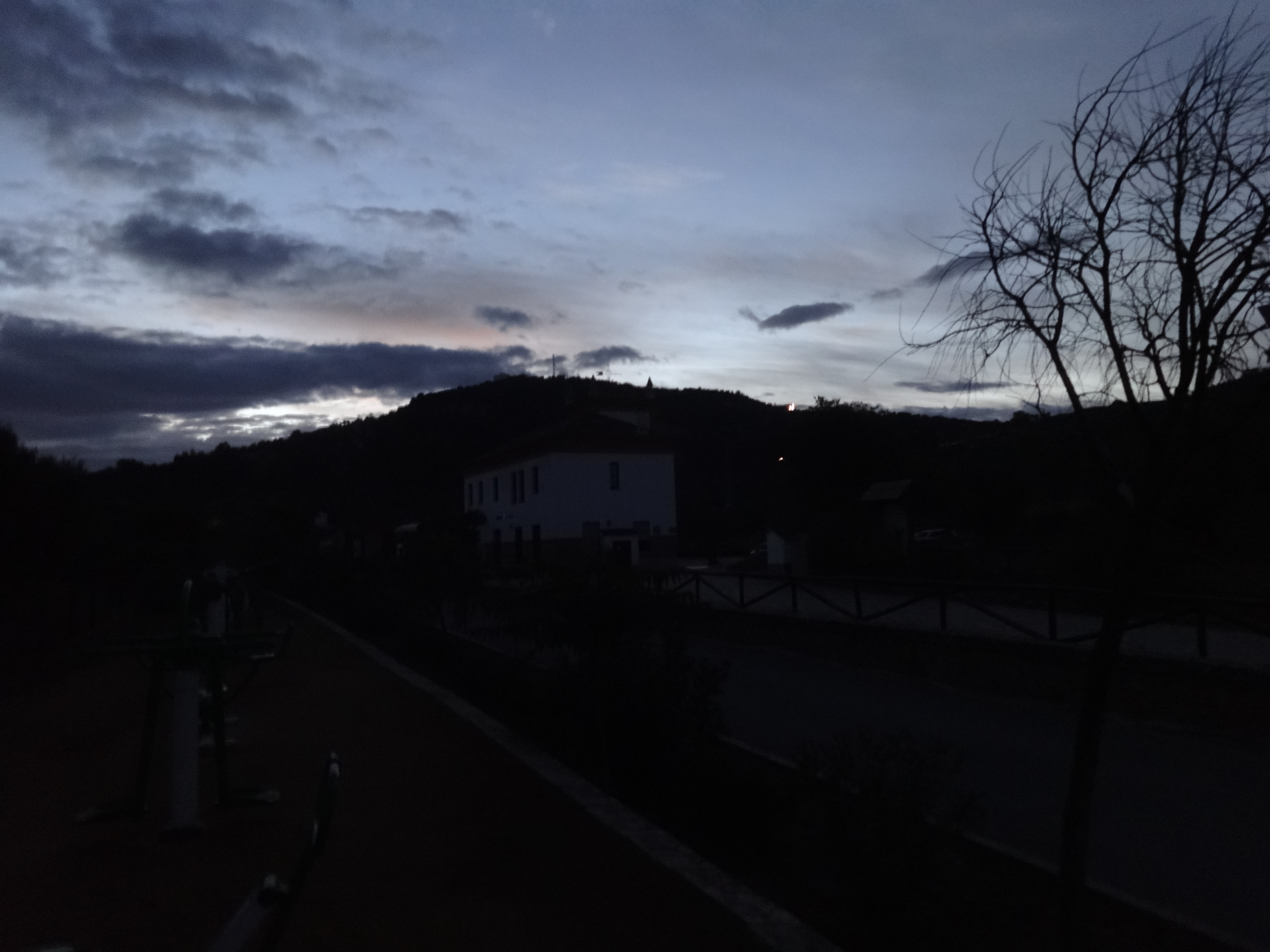
What. A. Night. No, seriously, what a night. It really does look beautiful from the abandoned hillside of the Via Verde at five o’clock in the morning. The night sky is terrific. You could save yourself several hundred quid and skip Wadi Rum for this, if getting locked out of a hostel doesn’t bother you.

Oh, to own a camera good enough to capture all the night skies I've seen!

Oh, to own a camera good enough to capture all the night skies I’ve seen!

Yes, he’s done it again. Yours truly has managed to spend another night locked out and consigned to wandering in the twilight. But that’s ok. Any other night might really bother me, but my bus home isn’t until five o’clock in the afternoon, and frankly, for everything that happened tonight, I’d be locked out all over again just to live it through once more.

Hallelujah, it's almost dawn...

Hallelujah, it’s almost dawn…

The reunion of the decade was everything I wanted it to be and more (and I just saw a shooting star racing overhead as I looked up for inspiration. This was meant to be). That my former classmates hadn’t forgotten me is a given; though Olvera has a tenaciously stalwart expat scene, I was the English kid there too, the guiri, one of only three in the primary school (the other two being my younger brother and a tot in the infantil group, both desperately shy when it came to mingling). So that doesn’t surprise me all that much. That they should be so happy to see me after so many years, however, is something I can hardly believe. This is a town where friendships are cast for life. Within ten minutes I was nattering away in Spanish as I never knew I could, as though I’d never left at all. Jorge was quick to point out that I’d improved a great deal since the last time we met, which leads me to wonder when exactly that happened, as I recall acing my Spanish GCSE two years early. Perhaps it has something to do with actually knuckling under and learning the preterite. Otherwise, I’ll take it on trust.

Where to begin? How does one even embark upon nine lost years? I’d spent most of the morning narrowing down the years into the most worthy tales, and the rest of the time looking up any key words that might have escaped me, from the lesbian ex-girlfriend to the misunderstanding with the Guardia Civil and my successive failed attempts at tracking them down before. It was quite entertaining to play the Storyteller, but it was better still to hear all the things they’d been up to. Foolishly I’d expected them all to be in the same big group from primary school – a technical oversight anyone with half a brain could have known in advance – and it came as a fair surprise to see how everyone had splintered off. That’s growing up, though. I have to admit their voices alone sent my head spinning. When last I knew this lot, we were primary school kids with unbroken voices. Oddly enough I got the same start on being addressed by Jorge in his low Olvereñan bass that my entire generation got when Ron wound down the window and said ‘Hiya Harry’ at the opening of The Chamber of Secrets.

Jorge had to spark off to Málaga to another party – they’re all driving now – and we called it a night. I’d only just taken off my jumper when Alicia, another old friend of mine, gave me a buzz to let me know she’d arrived. Cue Catch-Up Round Two over tapas with Little Miss Popular before she invited me out to a night out on the town with her girls. What could I say? A night out with five Spanish girls, and andaluzas at that? That’s not the kind of invitation you turn aside.

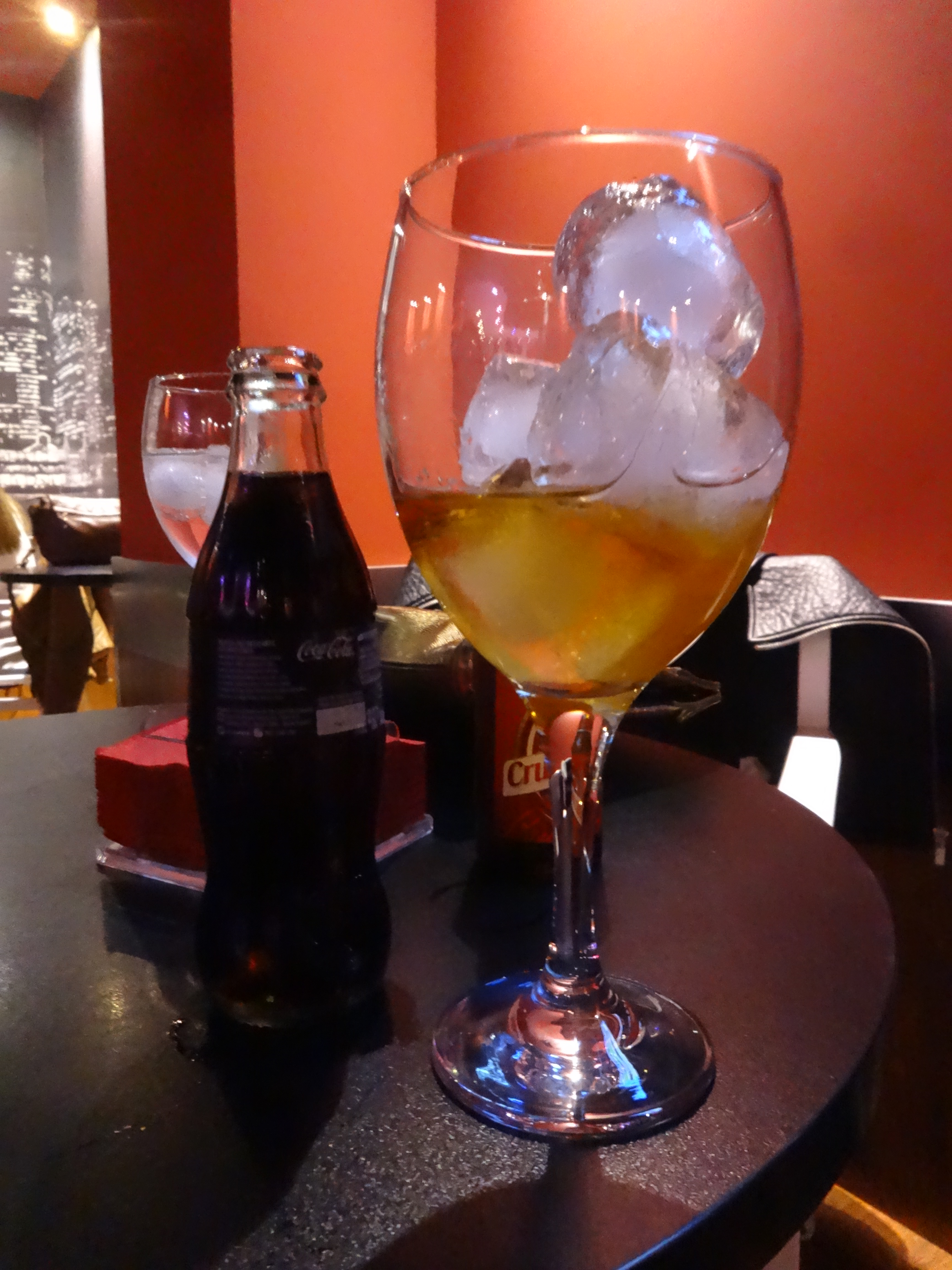
Breaking the habit of a decade to celebrate the quest of a decade!

Breaking the habit of a decade to celebrate the quest of a decade!

I hadn’t exactly planned on sampling Olvereñan nightlife, but it found me nonetheless. All I need say is that it was everything I’ve ever wanted from a club – and this in nothing more than a bar, no less: great atmosphere, a broad clientele, impeccable music (zero Taylor Swift – sorry) and a crowd quite happy to get up and dance. Alicia taught me to dance the bachata and I taught her a few moves of my own. I haven’t ever had such an obliging dance partner – mostly because in the UK, any guy really going for it in a club is almost instantly written off as gay and given a wide berth by all but the most determined non-closet cases (speaking from experience). When Alicia left to grab another Barcecola to share, I was hailed over by a group of girls sitting at a table across the floor who asked the inevitable question. But instead of surprise when I said I wasn’t gay, they gave me an encore. ‘Hombre, tienes dos cojones y bailas muy bien,’ said one, ‘podrías salir con cualquier chica que te apetece.’ That’s probably not strictly true, but it’s a damned sight better than the usual British reaction. England, you could learn a lot from this world.

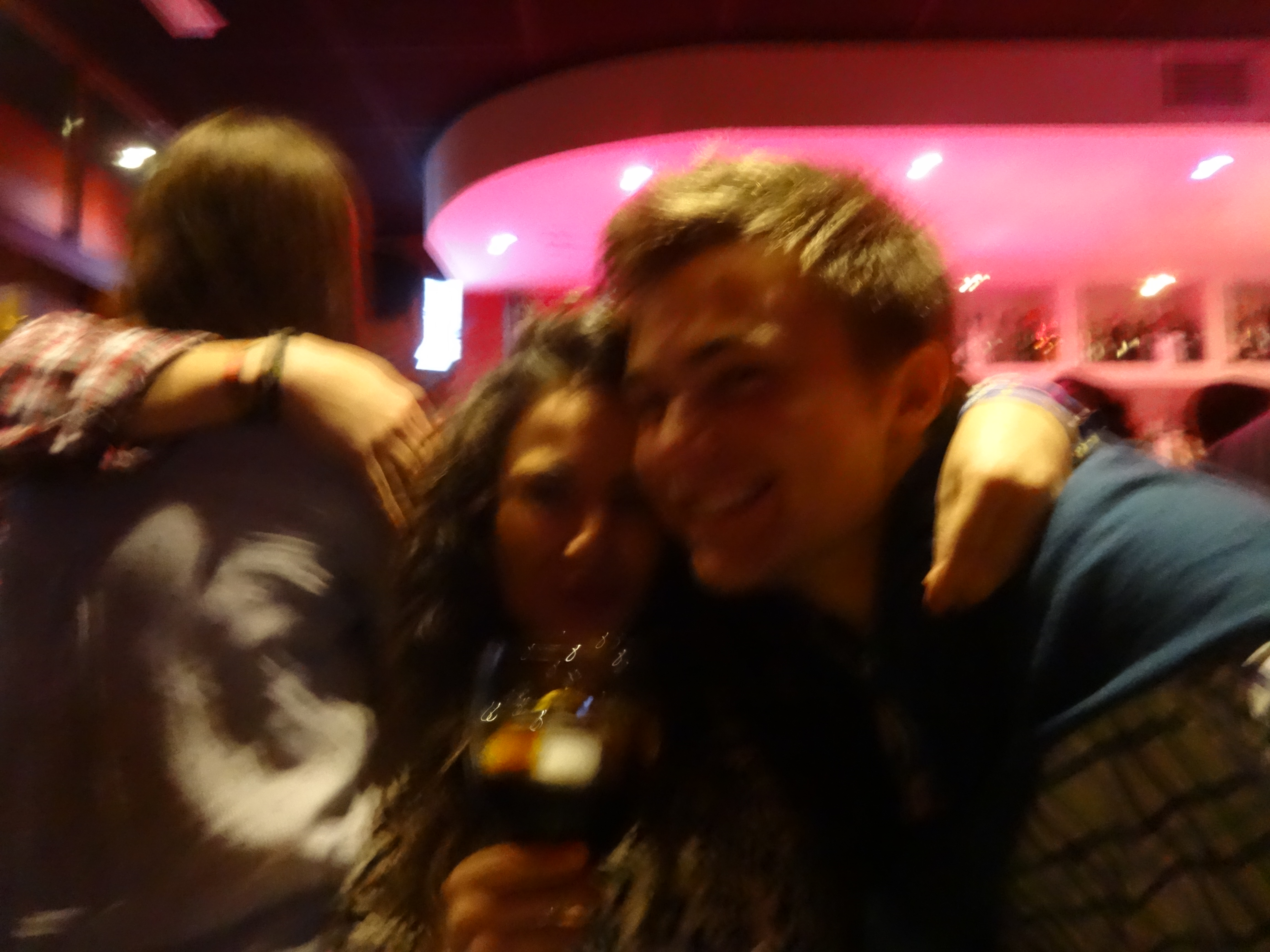
Having way too much fun to bother about blur

Having way too much fun to bother about blur

The bar gradually began to empty and eventually it was just the guiri and the andaluza left on the floor. We clocked out just before four o’clock, closing time, and left the night there. Four hours of dancing. Think about that for a second. That’s more than brilliant. It’s bloody phenomenal. 2015’s been the best year yet, but that night trumps the lot: Saad Lamjarred, June Ball and the Music Durham inaugural concert in Durham Cathedral, they don’t even come close. And Alicia tells me that’s just a regular night; next week is a puente, and the parties will be better, busier and longer. And so I find myself on the bus back to Seville, happy in the knowledge that I’ll be back in Olvera in five days’ time. If that’s how the rest of my year abroad is set to pan out, I’m one happy guy.

It’s going to be a year spent living a double-life: one as a teacher in Villafranca under one name, the other as a party animal in Olvera under the other. English in one location, Spanish in another. So we’re juggling again. But I’ve been juggling for several years now and I’m getting the hang of it.

Seriously, though. There are only a few times in my life I’d willingly relive. I don’t look back. Last night, however, was definitely one of them. BB x

Homecoming

How do I begin to describe it? The feeling of being home again, some nine years after I left? It’s like your first ever Christmas morning. Like getting into a hot bath at the end of a hard working day. Like falling in love for the second time. All these things at once. It doesn’t matter how many times I’ve seen it, every time I see that silhouette on the horizon, there are tears in my eyes and my heart starts racing.

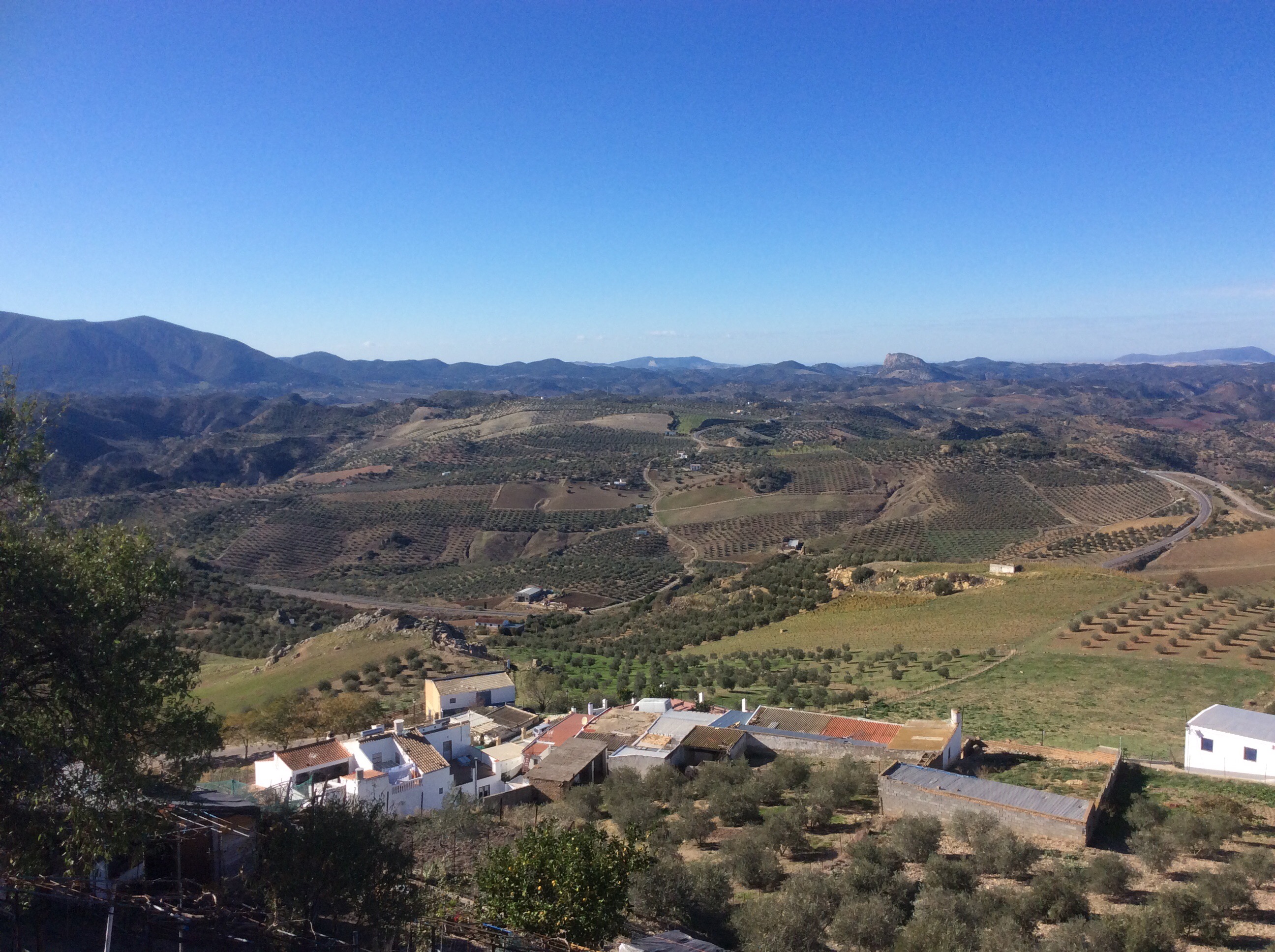
I’ve lived in several places during my twenty-one years of existence, from Dover to Durham to Boroboro and beyond, but no one hometown has ever had the same effect on me as Olvera. Not even El Rocío stirs up quite the same initial rush, like a starstorm in my heart, and El Rocío is far and away my favourite place on the planet. Maybe that’s Olvera’s own magic at work. I wasn’t born here and I didn’t even live here for all that long – all of ten months and more – but if anybody asks, I always tell them that this is where I grew up. Pretentious, yes, but there’s more than vague half-blood pride behind that statement. I was twelve when I moved here, and turned thirteen just over a week after I returned to England, so I was here at a critical time for growing up. I had my first crush out here. I developed a serious passion for languages, I had my musical awakening – and consequently began to toy with the idea of abandoning my violin – and, perhaps most importantly of all, I became the avid naturalist that I am today. Oh, I’ve always been stark-raving mad about animals, but it was only here when it got to the stage where I started going out on my own and putting names to things furry and feathered (mostly feathered) without the aid of a book. My own book came into its own here – I even went on local TV to advertise it when the chance arose. Essentially, the four pillars of my life, music, writing, travel and nature, were cast here, from the same marble that mottles the rolling hills that cradle the lonely peak of Olvera.

Oh, and of course, Andalucía, like a shard from the Devil’s mirror, lodged itself in my heart and I’ve not been able to remove it since.  
I’ve used the word ‘heart’ three times now. I’m aware of that. I’ll try to keep a level head. It’s not an easy thing to do right now.

But simply being here isn’t the best part. In truth I’ve made three return trips since 2007, once with my family, once with mum when we were grounded by the Eyjafjallajökll eruption and the third, the last, towards the end of my crazy pan-Iberian adventure back in 2013 when, my endurance failing me, I turned from my road towards the homely peaks of the Sierra de Grazalema. On all three occasions I tried to find my old school companions, without success. This time, armed with WhatsApp, I’ve finally managed to track them down, and a reunion of almost a decade in the making is on the cards. Excited? You bet I am. Ecstatic? That doesn’t even cover it. I’ve been planning this day in my head for the last nine years, adding new stories every year. I’m still going to walk into it and freelance it anyway, but that doesn’t kill the hype. These are people I haven’t seen since we were primary school children with brightly-coloured rucksacks and unbroken voices. I’ll bet I’m still the one who sands out a mile with the blonde hair and the blue eyes – and now, of course, the shirts – but I wonder how much will be refreshingly familiar?

  
I get the feeling they’re planning something behind my back as well. All I have is a time and a place, the rest is Cristina’s doing. I have twenty-four hours. That’s perfect. It means that I can spend tonight rediscovering the delights of my old Friday night haunt, the pizzeria Lirios. Better still, the red murder that’s scarred my face since Jordan is fading away thanks to a visit to the doctor yesterday, and only just in time. With a little luck, I’ll be as good as new by tomorrow.

  
It’s coming up to nine o’clock. I think I’ll wander on up to Lirios. I wonder if the ginger-haired porter from the Hotel Sierra y Cal who used to frequent the place is still there? If anyone in this town would recognise me, it’d be him. He was the first Olvereñan I ever met. It would be so very fateful if he were. There’s an air of fate hanging about this whole weekend. That’s what I’m feeling. BB x

Creativity in the Classroom: A Step Too Far?

I´m falling into something of a routine out here, now. Three hours with the state school, two hours with the Catholic school, one hour´s private English lesson, one hour´s Spanish conversation with my flatmate, a couple of hour´s reading and then bed. That´s good. I like a routine. It lets me know what I´m doing. I tend to go a bit spare without exact orders.

As I guessed all along, the term ´language assistant´ is a very loose one, interpreted by different schools in different ways. Some of my companions are working as ´classic´ language assistants, taking individuals or small groups for short periods for conversation. Others attend class with an English teacher as a human dictionary, there to lend a hand whenever a native speaker´s touch is needed. In Spanish, the term ´language assistant´ gets shortened down to just one word – auxiliar – which leaves even more room for interpretation. And just as happened in the last two ´language assistant´ jobs I´ve had, I seem to be working a real teacher rota.

Granted, I had prior warning this time. The first time I was promoted, so to speak, I had no idea that I was supposed to be taking full classes on my own until I was told that the diminutive head of the French department had decided to benefit from my presence by taking a month´s holiday at short notice. This time I was given a couple of lessons´ observation to get the feel of it, and even though they mostly left me leading the events – a harbinger, I guess – it was good to know what I was getting myself in for in advance.

So I´m a sub-teacher. That´s not a problem. In fact, it´s exactly what I wanted. It´s just… well, it´s reassuring to know that it doesn´t matter where you go in the world, ´language assistant´ is always a very flexible term.

In one school I take entire classes on my own, from bawling primary level to studious upper sixth. In the other I also prepare an hour´s class for whichever groups of the twelve I have that day – equally widely-spread, but fortunately without the weekly terrors of the primaria – and these are almost always under the supervision and occasional assistance of one of the English staff. The irony there is that they´re probably doing what comes under my job description. The system in place is the one used by bilingual schools nationwide: one class where the language of conversation can only be English, to compliment the others which are spent on writing and grammar. Nobody likes grammar. So that means it´s my class that everyone looks forward to by default, which is something to smile about.

Taking a full class obviously means you need an hour´s worth of material, and with teenagers thrown into the mix, you need to be prepared for all eventualities. I´m learning what to do when they´re tired, and how to calm them down when they´re exciteable, without letting them know there´s a system to it all. I´m learning what ideas students wants to discuss and which ones turn them off, and which games work well, and which ones don´t. And though I should have seen it coming a mile off, I tried this week once again with what is and always has been the greatest stumbling block of all: tapping into the students´ creativity.

Now this is something I feel very strongly about, and I´ve already written one behemoth of a text this week, so I´ll tackle it as lightly as I can. The simple fact of the matter is that there isn´t enough emphasis placed on creativity in schools these days. To tell the truth, I´m not entirely sure there ever has been. One of my English teachers once announced at a parents´ evening that she was ´paid to teach, not to inspire´. I disagree entirely. Inspiration should be right at the front of teaching, if we´re not all to become mindless robots.

Ah, but this is beginning to smack of yesterday´s post. It´s vaguely related, primarily because the game I´ve been ending my technology lessons with – a simplified variation on the British radio show I´m Sorry I Haven´t A Clue´s “Good News, Bad News” – has, time and again, come up dead in the water. The reason? Because nobody´s able to tap into their own creativity. I don´t know whether it got stamped out of the education system in favour of textual comprehension or the study of presentational devices – the kind of stuff that actually comes up in an exam – but the art of coming up with stories seems to disappear once you hit secondary school level.

For a budding author, I find this nothing short of horrifying. I spent most of my school career writing stories, and yes, it probably did affect my grades, but I left with an impressive English mark, and it´s my English that has always saved my neck. I´d have been flat-out rejected from grammar school if it hadn´t been for my English, since my mathematical capability is comparable to that of a wet flannel. The only excuse I can think of is that I´ve never stopped writing: from short stories to novels, diaries to blogs, love letters to newspaper articles. It keeps me alive. More importantly, it keeps my brain alive.

The higher up the education system you go, the less you´re encouraged to think for yourself. At some point you have to start quoting other writers. Then you have to start referencing other texts you´ve read and basing your arguments on the standpoints of extinct luminaries. The result, of course, is that by the time you get to university and you´re suddenly encouraged to come up with your own argument, a lot of people are quite understandably left high and dry, because they haven´t been taught how to think that way.

Here´s the difficulty. Creativity cannot be taught. It can be encouraged, it can be inspired, but it cannot be taught. For starters, how do you mark creativity? This is a regular feature of the arts world, of course, but outside the tripartite kingdom of Art, Music and Drama, creativity doesn´t get all that much of a look-in. In a world where everybody is mark-centric, from pupils to parents to headmasters and the governors to whom they bow, that kind of question gets thrown out early on, and the baby with the bathwater. So me going headlong into a class of fifteen year-olds and expecting them to come up with a story in fifteen minutes of “Good News, Bad News” was the very height of foolishness, especially for somebody with two jobs´ worth of teaching experience under his belt. A different English teacher – one who certainly did know how to inspire – once told us that the truth of the matter is that there are those who can, and those who can´t. I´m still not entirely sure where I stand on that, since I´m none too keen to cut anybody off, but I acknowledge that there´s more than a kernel of truth in that statement.

Creativity, I believe, is something that we´re all born with. We all loved to listen to stories when we were children, and most of us will have tried our hand at making one or two, intentionally or no. Heck, it´s fuelled language growth, all the arts and technology for all human existence. The trouble is that so much of it disappears when we grow up, when we´re told we have to put fiction behind us and focus on the real world. Unless you´re a stubborn little bastard like me, and you decide early on to defy that and to hold on to your creativity and remain a child forever. Like a twenty-first century Peter Pan.

In short, it´s perhaps too much to expect every student to be able to create stories of their own, especially at secondary level. There are a few rogue elements – it´s not difficult to recognise your own characteristics in others – but on the whole it strays much too far into the awkward silence minefield. Well, I´ve learned my lesson (no pun intended). But I´m not about to concede defeat. Never. I doubt I´ll make story-tellers out of the lot of them, but if I can sow the seeds of a budding Cervantes or Lope amongst the drowsy horde, I´ll consider my job accomplished. At the end of the day, we´re all story-tellers in one way or another. All it takes is the courage to leave behind what is real and to dabble with what is not. I said right at the start that I like exact orders. True. But there´s enough of an anarchist in me to want to break free sometimes. I hope there´s a little anarchy in everybody. BB x
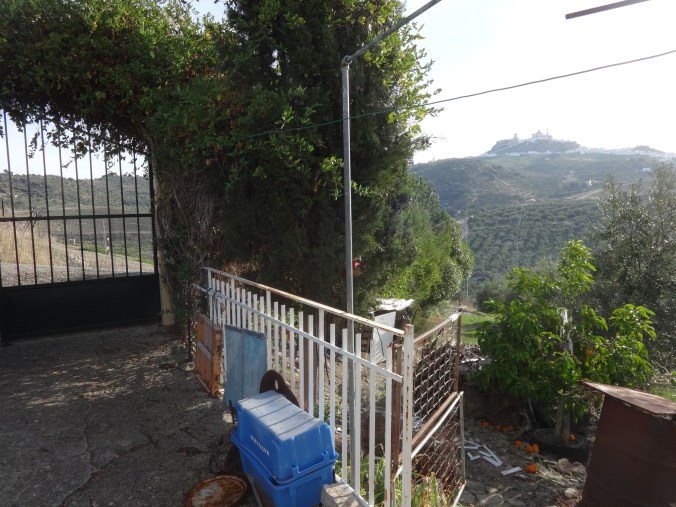
The Trouble with WhatsApp

By the time this blog post reaches you, it’ll have been several hours since I finished writing this article. In a world where so much of what we do is instant, from long-distance communication to microwaveable dinners, it’s both painful and exhilarating to be stuck on what seems like a desert island in the wavestorm. Perhaps even a little rebellious, too. So, in a way, quite a bit like sex. But what do I know?

I’m currently living in a very comfortable two-bedroom flat on the edge of town, just a three minute walk from school and a seven minute walk to the nearest supermarket. During the week I share it with a flatmate some ten years older than me who returns home to his family every weekend, leaving the flat all to me if I’m not traveling. That’s just to give you some background detail. We agreed early on that there wasn’t much point in getting internet for the flat, despite his having access to a discounted deal, as we have no mainline phone, but chiefly because there’s free internet whenever we want it at school.

That means one thing: I live under a communication curfew. When school finally shuts its doors at half past nine, I’m off the grid until the following morning.

To my knowledge there are two other WiFi access points in town, if you don’t count all the cafés and bars: there’s the hotspot in the town park, and the WiFi service operated by the town’s youth hostel. I’ve been leeching off both for the last month, but neither are reliable. The park is a very hit-and-miss affair; sometimes there’s WiFi, sometimes there isn’t. Usually, there isn’t. The albergue is normally operational, but it’s a longer walk, and you have to be inside the front door to get a good signal, and that just looks plain suspicious. Which it is. I only play that card these days if I’m out of all other options and really need to contact somebody.

The crux of the matter is that I’m leading a largely internet-free existence. I’m not fully weaned of the system by any stretch of the imagination, but I’ve taken the first few steps.

For one thing, YouTube no longer dominates my spare time the way it used to. I haven’t even accessed YouTube since I left England some four weeks ago. Nor do I have the option to spend hours trawling Facebook for whatever reason I used to do so. And since nobody out here ever uses SMS – this is a world where WhatsApp has well and truly taken over – my contact with the outside world is limited to an average of an hour a day: which, when you think about it, is still more than what you need. In an hour you can send and reply to a few messages, check your emails, Google a query that might have been troubling you and still have time to check the news. Anything more than that is unnecessary.

The trouble, as I’ve already mentioned, is WhatsApp. The whole world seems to turn on it, and Spain in particular has taken a really obsessive shine to it. All communication happens through WhatsApp. ‘Join our WhatsApp group’, ‘envíame una WhatsApp’, ‘don’t bother with Facebook, I haven’t checked mine in weeks, message me on WhatsApp’… I hear the same lines every day, unfailingly echoed word for word, like quotes from a cult film. It seems to be the only way people keep in touch, both personally and professionally. Even my colleagues among the staff have their own WhatsApp group, which swamps me with some three hundred new messages each time I’m back in wireless range. I asked a class to guess how many messages they send a day – upon investigation, every single one has both a smartphone and WhatsApp – and got the answer five hundred. As an absolute minimum.

I don’t know whether it’s the same in England, because I never could get WhatsApp on my old phone, so I never bothered. It’s an undercurrent I’ve done without thus far. And I don’t know whether, like Facebook, eBooks and Instagram, I’ll get sucked into the mire like everyone else in time, but I hope not. Face-to-face conversation is so much more worthwhile, worth waiting for. Surely there’s no need to go on talking into the small hours, firing round after round of thumbs-up, smileys, voice clips and the rest of the arsenal? I’m a very chatty bean when I want to be, but only if I’ve anything worth saying – small talk is something I’ve never really mastered, let alone understood – and anything worth saying is worth saying face-to-face. Cue Thumper: ‘If you can’t say something nice, don’t say nothing at all’.

The hypocrisy of my argument is this blog, of course. But as I said before, these posts are usually conversations with myself more than informative insights – as well as being my university job.

I thought I’d broach the subject because I had a particularly fulfilling debate with my Seniors class on this and other subjects last week. I had them explain to me the Spanish attitude to the online world and their stance on the blight of WhatsApp. They’re all well and truly connected, but they were at least able to recognize the foolishness of it. A few observations from my students, for the record:

  • Facebook is for older people. (This is notable because that’s how it was, once upon a time, in the UK, before it became a social staple for everybody from eleven and up.)
  • Instagram is only for artistic photos, not for food. (Preach.)
  • Checking in should be solely a holiday feature, if you ever use it.
  • WhatsApp is a problem, but it’s unavoidable – and cheaper than SMS.

In my internet-free evenings, I’m getting a lot more done than I used to. I’m reading more. I’m writing more. I’m even watching the odd film on TV. The news suddenly means a lot more to me, now that I’m not getting it ticker-tape-style every second. And the conversations I have with the people I live and work with on a daily basis are so much more entertaining for the silence between each encounter. News is fresh and comes in a wave, and I enjoy that. It’s a hermit life, but I’ve always been rather partial to that kind of existence.

Please don’t take this as a holier-than-thou condemnation of the rest of the world. I’m the one at fault, the Luddite, the Philistine; as usual, it’s probably yet another case of ‘it’s not the rest of the world, it’s you’. (More’s the fool I am for having left my weekly shop to a Sunday, when everywhere is shut… Tch. Catholic countries. Looks like lentils and rice for dinner once again…) What it is is a welcome break from the year abroad whines and shines that we’re all bombarding you with right now, though you might read it as a wake-up call to myself and others as well, before we’re all swamped by the touch-talk phenomenon of the twenty-first century… if you’re so inclined.

If you made it all the way to the end of this tirade, all I can say is I admire your stamina, and thank you for your patience – I had quite a lot to get off my chest! I’ll leave the musing and tell you all about this past weekend’s adventures as soon as I find a way of getting my photos off my old SLR. In the meantime, I’ll reward your endurance by giving you a final insight into something sweeter.

This coming weekend I’m finally returning to my old hometown of Olvera, some nine years after I left for England for good. I can’t wait to see my old friends again, as I was still a child when last I saw them, but there’s one in particular I’d dearly like to see. She was a good friend, and one of the only ones I haven’t yet got back in touch with, for whatever reason. But I’m saving all nine years of stories for when I see her, like something out of the fairy tales I spend my life writing. It’s childish, foolish and more than a little bit wet, but it’s a damned sight more real than a buzz in your pocket. That is the reality of it, and that’s this year’s big project: breaking free. BB x

The Griffon

‘Si te intereses a las aves, hay un buitre al otro lado del río. Hay mucha gente allí esperando que los bomberos lo remuevan. Por si lo sabes…’

The last thing on the hostel TV last night, after the late night showing of Colombiana, was a brief news report documenting the beginnings of a rise in interest in ornithology in Extremadura. I have to say I’m impressed; surprised and impressed. In my experience of living and working in Spain, the most interest the majority of ‘folk here take in birds is whether or not they go well with olive oil. Spain’s not unique in this regard. As my secondary school Physics teacher once said when I explained the risk the Bristol wind farm posed to migrating waterfowl, ‘if it won’t end up on my plate, I couldn’t give a monkey’s’. And that was in England, the biggest nation of bleeding hearts. Well, here’s a little proof that Spain at least is finally taking a turn for the better.

I’ve got a fairly long wait until the bus home, so I thought I’d take a walk along the Guadiana again whilst I’m here and look across the river to Portugal. The cormorants were out on the rocks with their wings spread wide after a morning’s hunting, so I got my camera out for a few shots with Respighi’s The Pines of Rome playing in my ears. And that’s when I got a tap on the shoulder and a friendly local pointed me in the direction of a grounded vulture on the east bank of the river.

DSC_0243

I haven’t power-walked so fast in years. A vulture? Here, in the middle of Badajoz? It sounded too ridiculous a notion to be a lie, so I packed up my gear and left the bridge and the sunning cormorants I was photographing behind in the dust. At first I thought he might have confused buitre with any other large bird – it wouldn’t be the first time – but this just must be my lucky weekend or something, because just a short distance before the second bridge…

DSC_0248

…boom. Sulking in the shade of the roadworks with a crowd of five or six startled onlookers. It could hardly be anything else: vultures are bloody huge, even youngsters like this one.

DSC_0257

I was worried that it might have a broken wing, as it didn’t seem particularly keen to get back into the air. What it was doing here, bang in the middle of the city, is anyone’s guess. Perhaps it was simply tired. At any rate, it wasn’t all too bothered by the two men who’d gone down to join it, both to have a closer look at something you normally only see high in the sky above, and to ward off any dog-walkers that might cause the bird any further distress. My heart goes out to those two.

DSC_0271

I have to admit, I probably won’t ever get a better viewing of a wild vulture than this. Not even in Monfragüe, which is the best place to see them in all of Spain. And here, in Badajoz, of all places! Bonkers.

DSC_0272

‘Watch out,’ said one of the onlookers as it came bouncing forward, ‘That thing’s got a beak that can bite through bone.’

DSC_0275

To everyone’s relief, there was nothing wrong with it in the end, because after some ten minutes it puffed up its feathers, made a few bounding leaps and took off into the air on two giant wings. It wheeled about over the river and almost flew headlong into the bridge, clearing it by little over a metre or so, and flew off in the direction of Portugal.

DSC_0280

Not something you see every day! And now I need to go in search of a USB cable or card reader of some description, because my memory card is chock-full. Well, gallinules, kingfishers, cranes and a griffon vulture, all in twenty-four hours of city-hopping! Now there’s a feathery micro-adventure for you. BB x