Camino XIII: Milady

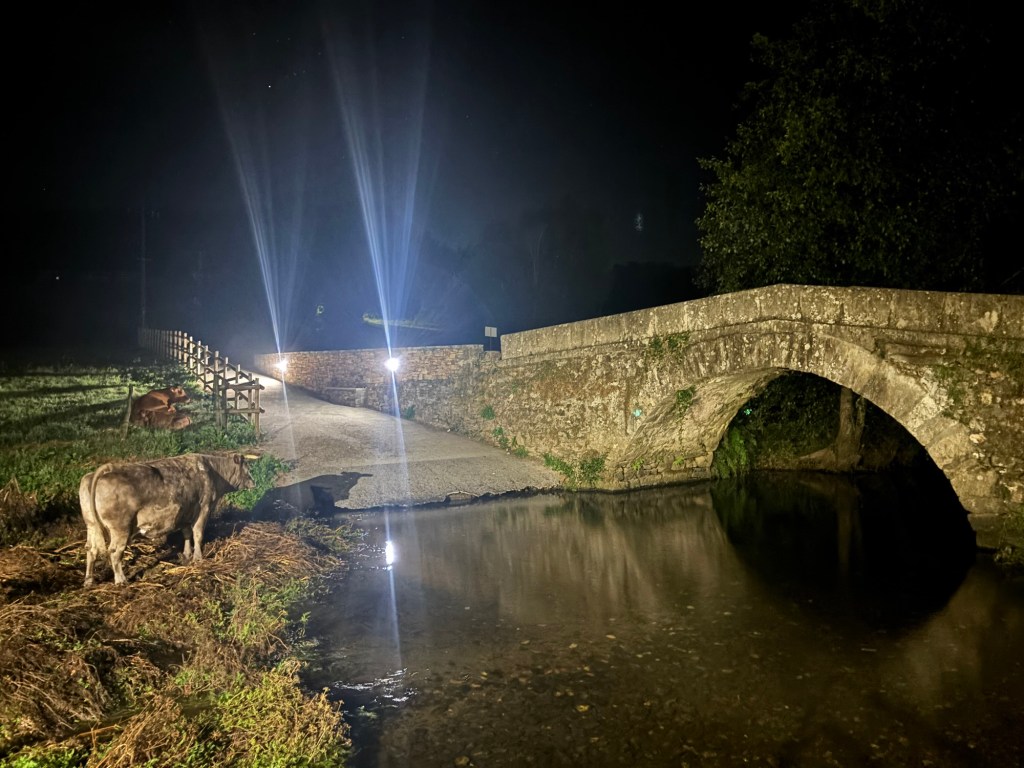
Albergue de Peregrinos de Nájera. 12.59.

I was supposed to take the day off today, but as it’s a Sunday, nothing is open. No shops, no museums, zilch. So, since my intention to use my rest day to restock was somewhat redundant, I set out at the relatively tardy hour of half past six for Nájera.

Logroño must have been partying late into the night, like Jaca last week. There were more than a few amorous couples locked in each other’s arms in front of doorways on the streets running off the Gran Vía. The average age a Spaniard is able to leave home is now in the mid-thirties, which must make dating considerably more complicated here: the sexual revolution has happened, society has caught up, but the financial reality has got Spain’s youth in a stranglehold.


There are still Palestinian flags everywhere you go. It probably chimes with the mindset of the average liberal peregrino, but there’s another reason they’re so ubiquitous in this stretch of the Camino: we’re still in the Basque territories. And if any people are more likely to sympathise with an oppressed nation under the heel of a supposed colonising force, it’s the Basques, whose own freedom-fighting/terrorist organisation, ETA, only stopped its violent methods in the 1990s. I’ve seen one prayer in Hebrew for one of the captives still held by Hamas along the Camino, so it’s not entirely one-sided, but the Palestinian flag is far and away the most common flag along the entire Camino so far.


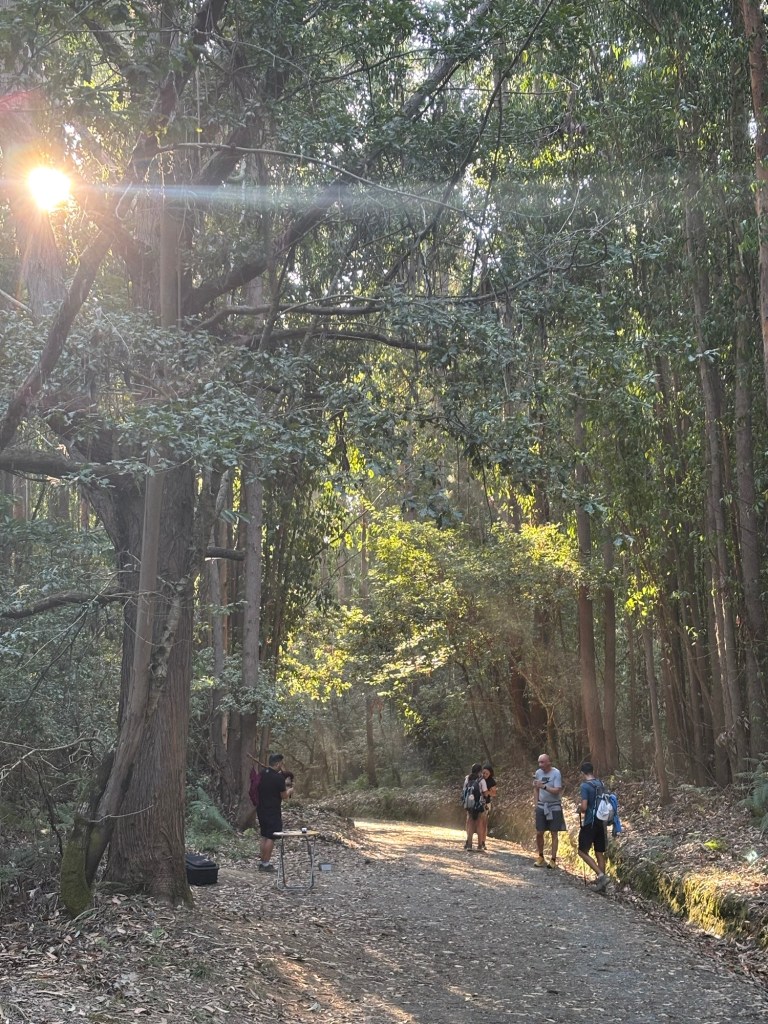
I reached the Parque de la Grajera about an hour after leaving the city. I was early enough to catch the night herons that seem to hang around the place. They have a somewhat patchy distribution across Europe, but they were here when I last did the Camino from Logroño to Burgos in the spring of 2023, so I was glad to see them again.

They were much too far off for a photograph, but the park’s red squirrels were a lot more obliging. Without the invading greys to worry about, they seem a lot more confident around people here, and so I was able to get quite close – or rather, it came quite close to me on its jaunty sortie across the bridge.


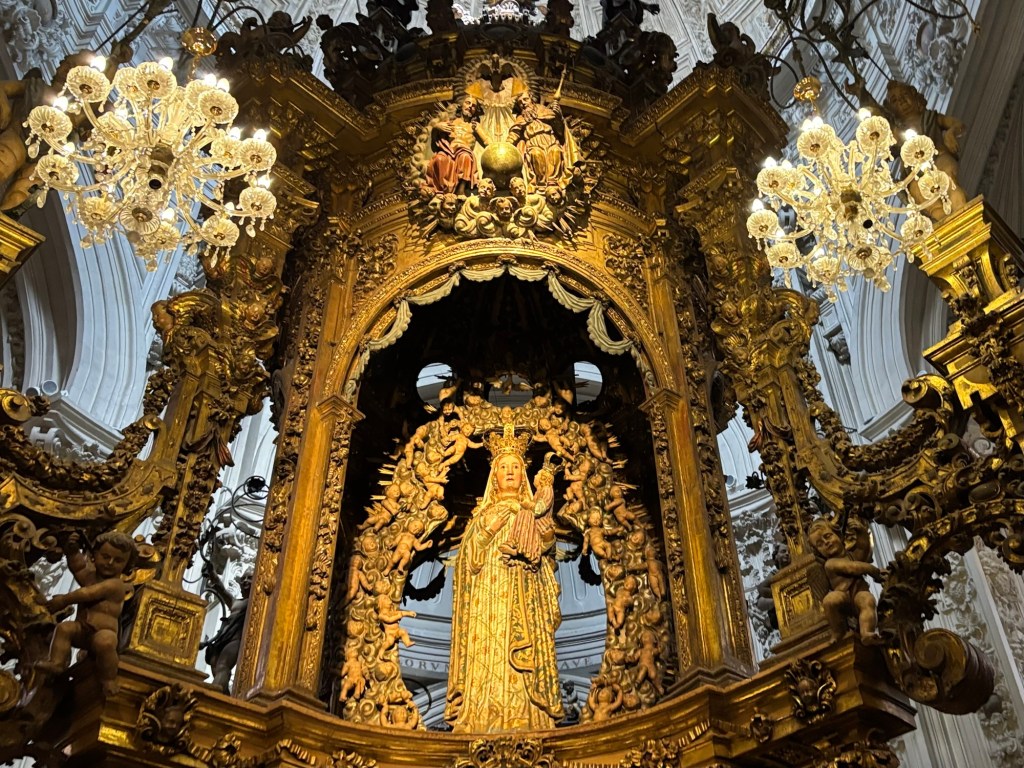
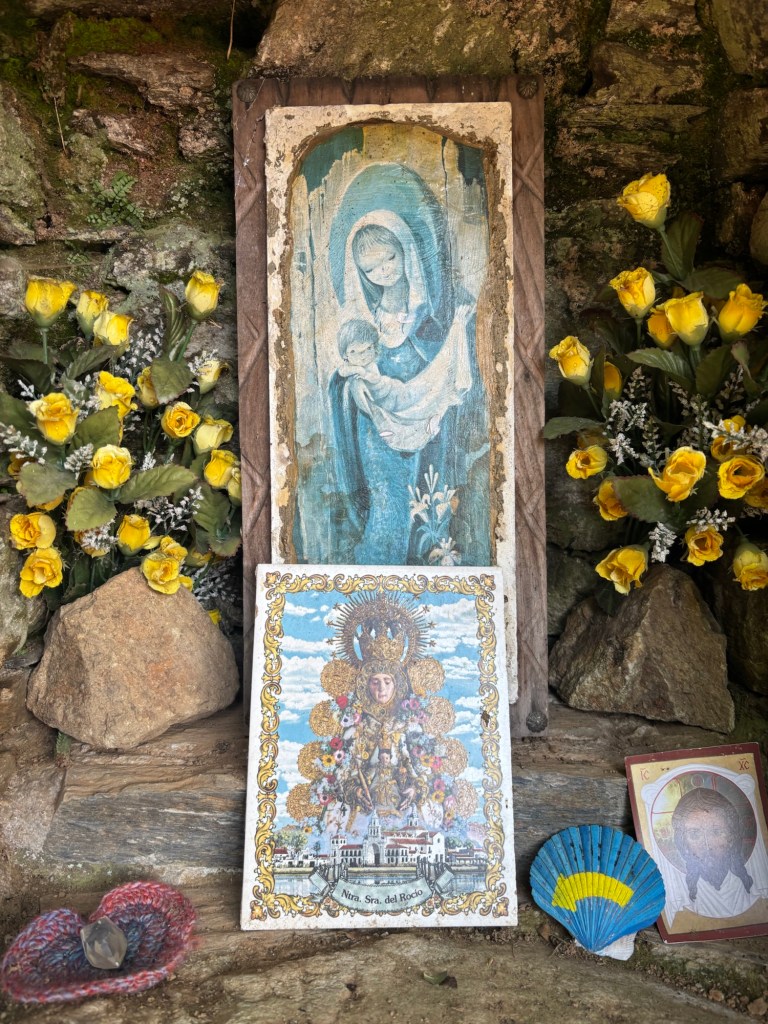
Today’s route featured a small pilgrimage of its own, to the shrine of La Virgen del Rocío. She is, in the humble opinion of this devotee, one of Spain’s most beautiful incarnations of the Virgin Mary. She certainly knows how to pick out a home, with her sanctuary within the Elysian marshes of Doñana National Park far to the south… and here she is, watching over a lagoon in La Rioja.

I remain convinced that it was partly her intercession – and that of the natural paradise where she resides – that healed me at last from last summer’s heartbreak, and it is partly because of that intercession that I am walking the Camino this summer… to say thanks. I owe her that much.


There were more squirrels to keep me company around the edge of the lagoon, including a boisterous couple that were quite unfazed by my presence, chasing each other up and down the trees on the edge of the lake. You have to travel quite some way in the UK to see these endangered creatures, since the American greys drove them out, but here they’re much more common.


La Virgen del Rocío is, among her other titles, a water spirit of sorts. Maybe that’s why she speaks to me more than the other incarnations across Spain that I’ve encountered: El Pilar, Remedios, Guadalupe… I’ve always felt some sort of connection to marshes and wetlands. It may seem odd that Mary, a woman from the hill country of Southern Galilee, should have such a devoted following in the wetlands of southwest Andalusia, but there it is.

El Rocío is the Spanish word for dew, and the Marian association with the Morning Star – Venus – as the herald of the rising sun is almost as old as her worship as the Mother of God.

I’ve often wondered whether the various Marian cults across the Mediterranean aren’t simply evolutions of the Roman tradition of the lares – guardian deities assigned to individual places – or perhaps even the Celtic peoples before that. In that light, it’s easy to see why other Christians find certain aspects of Catholicism hard to understand. But I think we’re all reaching for the same thing. Many Protestants would say they’re reaching for a more personal relationship with Jesus.

Well, what could be more personal than feeling an intense connection to God through a place that is so close to your heart?


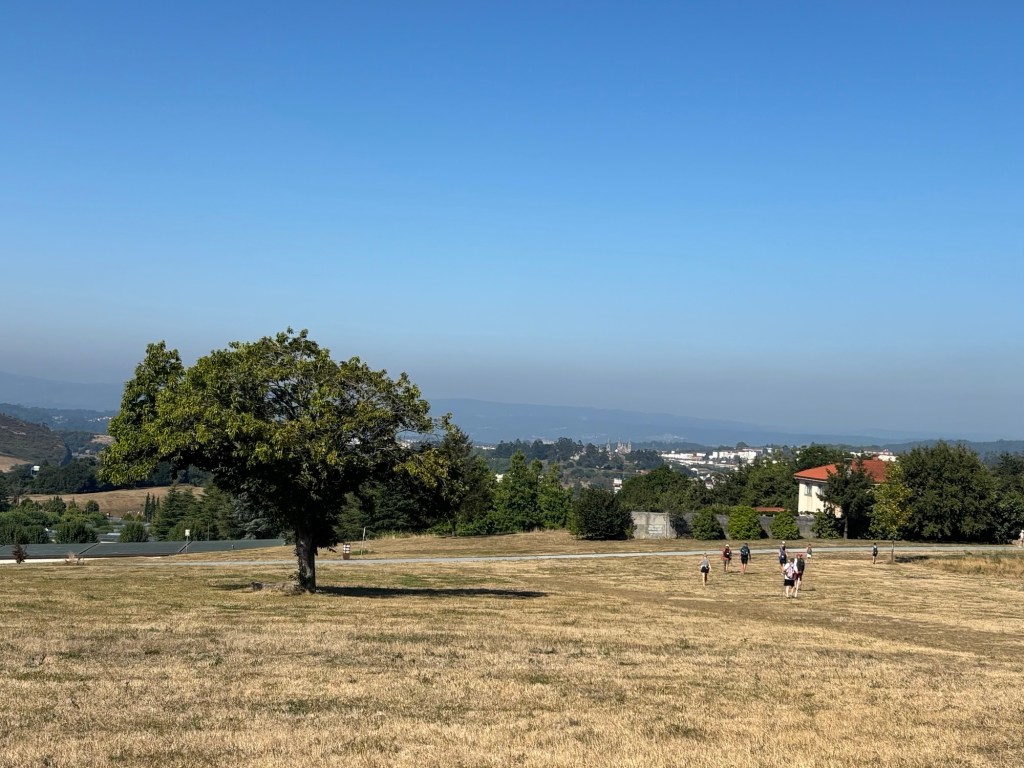
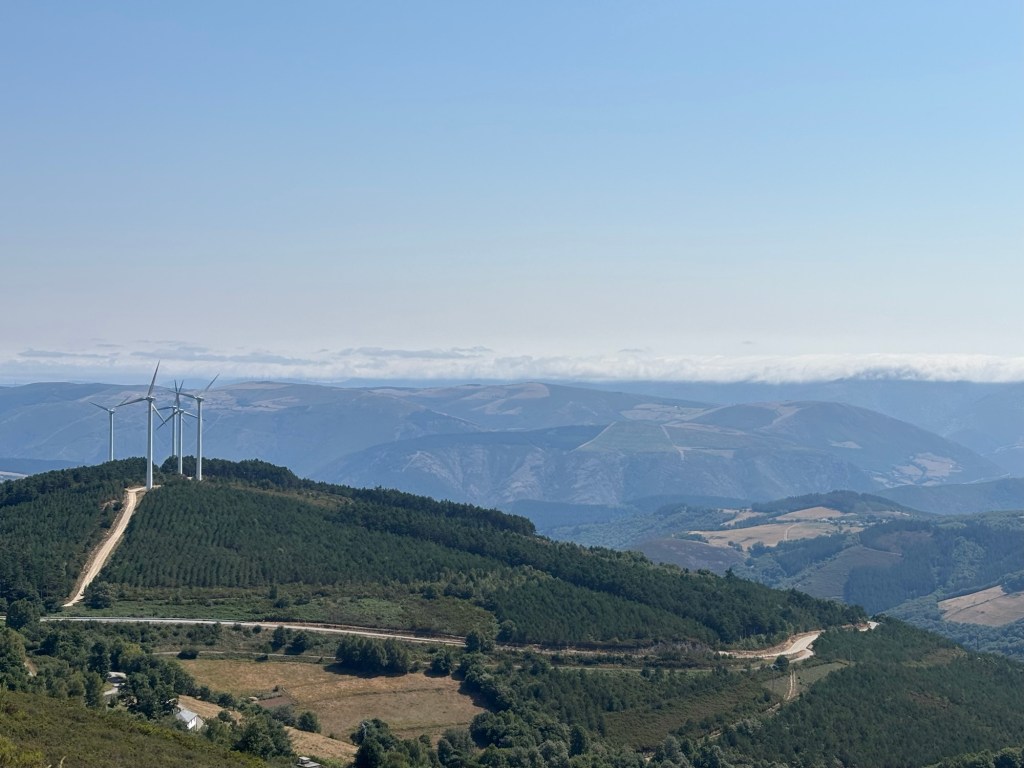
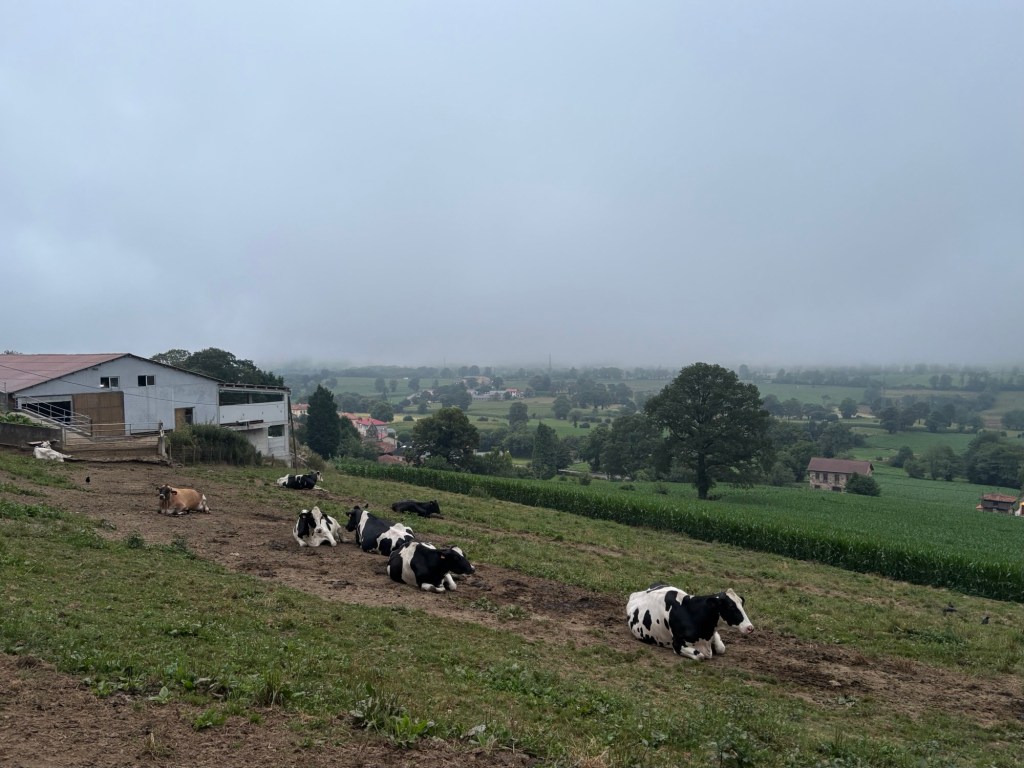
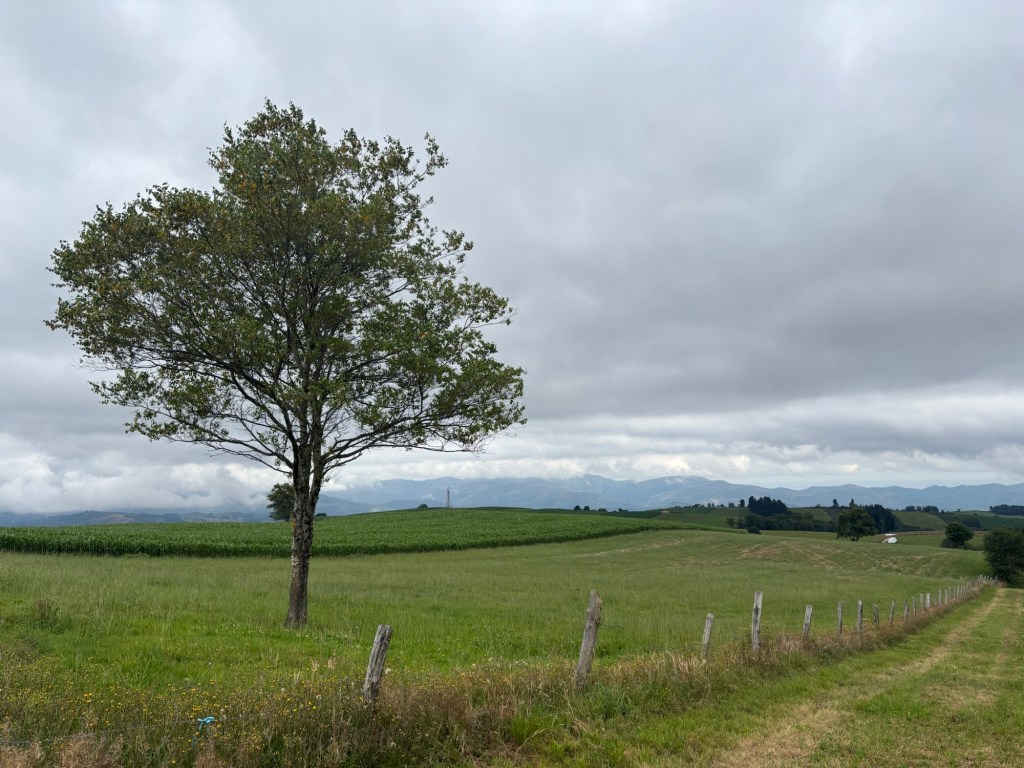
West of Navarrete, the Camino meanders through a vast network of vineyards: a reminder that the tiny autonomous community of La Rioja punches above its weight in wine production (even if it can’t meet the demand on its own). It’s a 29km walk from Logroño to Nájera, but an easy one, and I was in town shortly after 12pm from a 6.30am start. I call that good going.


Reunited with the young folks tonight after an Irish exit and a hiatus of two days. Time for a sociable pizza night! I think I’ve earned it. BB x

Camino XII: Tormentón

Albergue Parroquial de Santiago, Logroño. 19.20.

Last night, quite out of nowhere, a summer storm swept across the north. No rain, no hail; nothing but the unfettered might of the wind. One moment the sun was shining, the next the wind had reached gale force and the shutters were slamming against the windows as a dirty vortex of dust, leaves and debris slammed into Sansol like a hurricane.

It didn’t last long – five minutes, tops – but it darkened the sky, and lightning bolts fell in silent flashes all through the night.


When I left Sansol the following morning, after a long night of waking dreams, it was to a battered world. A pool full of leaves. Branches uprooted and cast across the path. Trees felled. A solitary stone curlew cried its mournful call in the darkness amid the devastation. Perhaps it’s the same bird I heard six years ago. As I tiptoed through the debris, I nearly stepped on a baby toad, almost invisible amid the scattered stones.


It’s a fair hike from Sansol to the next town, Viana, but it is the last stop before Logroño, which you can see from the hills long before you get there. This is also where we say goodbye to Navarra and the last glimpse of far-off Aragón, before they disappear behind the hills for good.

We’re now in the wine country of La Rioja – the rolling fields of wheat are still with us, but they’re interlaced with green vineyards now. Rioja wine is famous the world over, so it should come as no surprise that one of Spain’s smaller regions can’t handle the demand all on its own. In fact, most of the grapes that make a good Rioja actually come from neighbouring Castilla La Mancha, one of Spain’s largest regions, before being processed here. La Mancha produces its own incredible wine (which, realistically, should be up to the same standard), but it isn’t quite as famous as the world-renowned Rioja. One day, perhaps.


The wind picked up again as I reached Logroño. I didn’t much like the look of the clouds, and it looked like the storm had done even more damage here than in Sansol. Several of the trees lining the Ebro river had been ripped up by the roots and lay where they had fallen across the pavement. A quick glance at the Spanish news implied that it had looked even worse this morning, so perhaps they just hadn’t got around to fixing the park yet.


A flash of electric blue caught my eye as I crossed the bridge – a kingfisher. Who could ever lose that sense of wonder at such a sight? It didn’t hang around for long, but long enough for me to see it dive into the river in a halcyon blur before speeding away downriver.

It was still a good three hours until the Albergue Parroquial opened its doors, so I stashed my luggage in a locker which I hired for 6.50€ and set out to explore, unencumbered. It costs about the same to have the Jacotrans couriers deliver your rucksack to the next town for the day, but I felt a lot less guilty about this minor transaction. It’s difficult to justify lugging a whopping great backpack around a museum, after all.

The rain came down while I was in the Museo de La Rioja, so I managed to dodge the worst of it. It wasn’t as impressive as the collection in Jaca or Santa Cruz de Tenerife, but I was rather taken with one of the paintings, which featured a blonde Virgin Mary. I don’t think I’ve ever seen her painted with blonde hair before. Jesus seems to have more colourings than a Pantene catalogue, but Mary is pretty consistently dark-haired, so this one stood out for… well, looking so odd. Beautiful, but… odd. Like an understudy. Was she the artist’s unrequited love, I wonder?


Once the rain had cleared, I grabbed my bag and checked in, before nipping back out for another wander. A tuna band was in town, dressed in their usual medieval splendour and serenading ladies left and right.


I’ve always loved tuna bands. If I’d done an Erasmus year or studied abroad, which was my original intention, I’m pretty sure I’d have launched myself at one. My uncle Rafael was in a tuna in his university days, and I suspect my grandfather and great-grandfather were also involved to some degree. It’s a tradition that goes back to the 13th century, so it’s a little bit grander than the a cappella groups that have taken the university music scene by storm. However, it is limited to Spain, and it is fundamentally a social and busking enterprise, so it’s not likely to break into a world championship anytime soon. After all – surely the real prize is a smile from the serenaded lady in question, be she twenty-one or seventy-three!


Logroño’s tapas street was absolutely packed, and with good reason: it’s famous for its gastronomy (not just the wine), with around fifty bars serving tapas and pintxos all within the city centre. There were at least six stag/hen do’s in town, all with matching t-shirts (together with one fairy godmother and one Jafar) so I was quite relieved to have a communal dinner with the other pilgrims at the Albergue Parroquial.

Dinner was a lovely affair, and a linguistic hurdle for me, constantly switching between English, French, Italian and Spanish. Sometimes I get bugged by the language barrier (I’m not fluent in Italian), but it does me a lot of good to listen and learn as I walk.

Tomorrow is still up in the air. I have in mind a rest day of sorts, going only as far as Navarrete. I’m not a huge fan of rest days, but I figure I might need it if I’m going to stay fit and healthy on my feet for the next four weeks. It might also be nice to shuffle the pilgrim pack a little. I haven’t really found my scene yet.


It’s gone twenty past ten. The Slovak flirt in the next bunk has finally stopped yapping away with the American girls and gone to bed. I should head, too. I might change my mind and make for Nájera tomorrow, or I might not. I’m still undecided. And that’s the best thing about the Camino. It allows me to be free. Every day. If only every day could be like this. BB x

Camino XI: Not Here

Albergue de Sansol. 16.38.

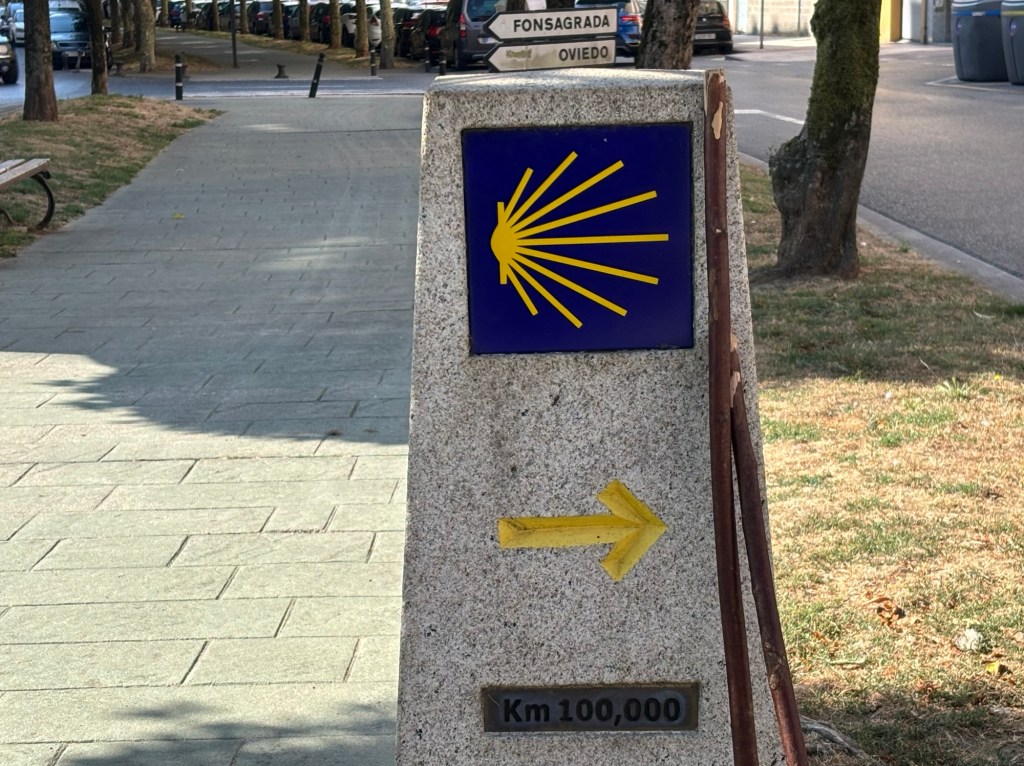
Well, so much for Plan A. The American pilgrims I set out with this morning were in such a tearing hurry to beat the heat that we reached Los Arcos shortly before 10am. I’ve done the Camino a few times before, and my instincts tell me that – shy of the discovery of a true marvel – it’s nothing short of ridiculous to call it a day before the hour has even reached double figures. So I excused myself, picked up my sticks and set out, as I did all those years before, for Sansol.


Estella is pretty much an essential stopover on the Camino de Santiago, but the primary disadvantage of doing so is the fact that the famous wine fountain of Iratxe is hardly a forty minute walk from the city. If you save your visit for the small hours of the morning, and expect the wine to flow like water, you will be disappointed. At least today it was running – the last time I came by it wasn’t operating at all – but it hardly gave more than a few drops when we reached it at around 5.50am.

I can’t think of many places in the world that have actual wine fountains, so it’s definitely worth checking out, but for those who want a little more than a few drops, this may be one to investigate via an afternoon sortie from Estella.


I walked with the Americans for a bit, but I stopped for breakfast in Azqueta and let them press on. It was easy to seek them out for a laugh and good company, but even easier to forget the gulf in age between us (I am about ten years older than all of them), which became steadily more apparent as the conversations went on. I was also missing the solitary aspects of the Camino that had become so deeply ingrained since Oloron – as I suspected I might – and the distance did me good.


My DNA Heritage tests results came back today. Turns out I’m actually more Spanish than English, if the test kit is gospel (which I would very much like to believe!): 37.5% Iberian to 26.4% English. Either the Spanish genes on my mother’s side are ridiculously strong or the English genes on my father’s side are a lot more varied than I thought. As it turns out, as well as the obvious Spanish genetic indicators (I didn’t really need a box kit to tell me that), I apparently have a not inconsiderable amount of French and Breton ancestry (6% each).

This last detail is really very interesting, as I’ve latterly developed something of a soft spot for Bretagne after spending the summer in Saint-Malo last year. Granted, the Breton genome encompasses most of Normandy, too, so it’s just as likely a relict trace of Norman (aka British) DNA, but still – I’ll take it. I’ll take any connection to that beautiful part of the world.


Now I’m on the Camino Francés, pilgrim junk is much more of a feature of the Camino. Stones piled in cairns upon the trailmarkers, obnoxious stickers plastered all over the signs, clothes and prayer flags left hanging in the branches of low-hanging trees… Even if the yellow arrows weren’t there, it would be hard to lose your way for all the detritus.

It’s very easy to criticise, and perhaps I shouldn’t. After all, as is so often repeated in hostels and on the Camino Facebook groups, everyone walks the Camino in their own way. But I do think we forget that this is a country, with real people getting on with their lives, long after we have come and gone.

Do the piles of stones left behind really make a difference, even to those who choose to do so, or are you just following a fad you’ve seen? And what happens when they start to change the landscape, as at Cruz de Ferro, and need to be removed by heavy machinery to prevent further damage?

Do the stickers you leave on signs actually contribute to the experience of the Camino for those who come after you, or are you just creating one more labour-intensive task for some local official who will have to spend hours scraping them off – or even using local funds to buy new signage?

Do we really need to be reminded to visit Baden-Würrtemberg? For the record, I thought Baden-Würrtemberg was bloody beautiful when I stayed in Karlsrühe in 2019, but after seeing the “Nett hier” stickers once too often in a place of spectacular beauty, I have developed a profound dislike for the name and the arrogance implied by the stickers. There is such a thing as overadvertising!


At the root of my consternation in today’s post is this. It’s been eleven days on the Camino de Santiago and I’ve yet to encounter somebody who’s here for reasons of faith. Everyone – everyone – is here for a walk. Because they’ve heard of the Camino. For a challenge. A holiday. An adventure. And the pilgrim community, like a hive, is very quick to turn angrily on anyone who voices the opinion that somewhere, underneath the spirit of free and individualistic adventure, might be found the bones of a genuinely spiritual journey.

Maybe I’ve just not had much luck. But it would be nice to share the road with another believer, in a place where you might have thought it so much more likely to find one.

I’m still stopping in every church I pass. I still say a prayer to God on behalf of my grandparents and my dear friends’ father before every cross, every chapel, every shrine. I don’t feel “holier” than my fellow pilgrims, because I’m just as guilty of using the Camino as an affordable excuse to spend my entire summer holiday in Spain. But still – it’d be nice to meet someone who has come to the Camino for a genuine reason beyond “I heard about it and it sounded pretty awesome”.

Perhaps the Koreans are the answer. The trouble is, they don’t speak much English, and no Spanish at all beyond Buen Camino, so conversation is something of a non-starter.

Spain needs pilgrim money now as much as it did when the wars against the Muslims were still raging on and cash was hard to come by. But I do wonder where they all are, those walking the Camino with spiritual intent. Maybe I’ll find them out on the Meseta. It truly is a magical place.


England is experiencing another heatwave, but out here, the weather is mild. The hospitalero is cooking up an enormous paella to share between us tonight. That is, me and the five other pilgrims who made it out here: a quiet German lady, an ageing Italian who talks to himself a lot and snores like it’s an Olympic sport, a Tuscan with a strong accent and a couple of very lovey-dovey Romans. The least that can be said is that English is no longer the lingua franca and that is such a sweet relief. I was almost starting to feel I’d left Spain behind! BB x
Camino X: Hellmouth

Albergue Municipal, Estella-Lizarra. 20.39.

Excuse the late entry – I’ve chosen to be sociable today and have spent most of the afternoon in the company of fellow pilgrims from around the world. It’s been a welcome change after nine days of silence! But a promise is a promise, and I have a duty to uphold! So here’s today’s report.


I was up early this morning – five to four, to be precise. Falling asleep around ten didn’t help my sleep pattern, I guess. I couldn’t quite justify striking out for Estella so soon – it is only just under 22km from Puente La Reina – so I dawdled until five, at which point several pilgrims were already getting ready to go. Again, I dawdled, not wanting to arrive in Estella with two hours to kill before being able to jettison my rucksack, so I carved the names “Niña” and “Pinta” into my sticks (after Columbus’ ships – the Santa María, the third of the trio, is my rosary). It’s not especially visible, as all I had to hand was a kitchen knife, but it’s a start.


I was one of the first to strike out, but I gradually let a fair number of pilgrims overtake me. I stopped frequently; waiting for the sunrise at Cirauqui, sketching a lonely cemetery, grabbing a tortilla sandwich at the same bar I ate in when I walked this path with my mother six years ago. I also managed to collect a few stamps, which is always a plus.


I spent a lot of time today looking at the decorations on houses and doors, which suddenly become more elaborate upon entering the Basque territories. Many houses bear a heraldic crest, and around here the motif of the knight’s helmet with the visor raised is fairly common. In heraldry, this is usually the sign of high-ranking nobility. Many of medieval Spain’s most prominent nobles were of Basque extraction (or Basque adjacent), like the Mendoza, Loyola and Haro lines.

Curiously, scratched beneath one of these crests were two symbols. One is easily recognisable as the Índalo, an ancient fertility symbol from Spain’s southeast. The other is… well, I’m not entirely sure. I’m fairly certain it’s an invention by the artist who left the Índalo, in much the same style, with what seems to be a serpent drawn out of the end. Graffiti usually has a point to make – I wonder what it could mean?


I couldn’t help noticing the door knockers as I passed through Cirauqui. My mother used to fill memory cards with photographs of these things, which in the south (and here) often take the shape of a woman’s hand holding a metal ball, known as a Hand of Fátima. It’s an ancient Moorish motif used to ward off the evil eye, and appears in a lot of Mediterranean and North African jewellery. The lion’s head – a style much more familiar to those of us who live on the other side of the Pyrenees – does much the same thing, warding off evil spirits with its frozen roar.


I am, of course, reading far too much into this. I imagine your average Joe (or José) probably doesn’t consider how effective this or that door knocker will be at warding off evil spirits. Still, it’s one of those things that’s so deeply embedded into our psyche that we don’t even realise we’re doing it. Like Christmas, in a way. Most of us don’t give thanks to God for the birth of Jesus Christ on the 25th December, but that doesn’t stop us from opening presents and celebrating late into the night.


I spent so much time hobnobbing with fellow pilgrims this afternoon that I didn’t really get to explore Estella much. It was also a sweltering 36°C, which didn’t exactly encourage an afternoon wander. Fortunately, I stayed here for two whole days the last time I came through, so I’ve seen all of Estella and its charms before.

One thing I did seek out, though, was the remarkable archway of the Iglesia del Santo Sepulcro. It caught my attention today for the same reason it did all those years ago: the horrifying maw swallowing sinners, and dragging them into Hell.


This motif is not unique to Estella. It can be found all over Europe. I’m fairly sure I saw one in Bordeaux last week. It’s known as a Hellmouth, and it can be found in Anglo-Saxon artwork at least as far back as the 8th century. It’s thought to be a representation of the “Crack of Doom”, the Day of Judgment – crack having a dual meaning in English, being both a harsh sound (like a thunderbolt or trumpet blast) and a chasm or pit. It may even have ties to an old Scandinavian legend of the Fenris Wolf, who was destined to swallow up Odin, the Allfather, and thus the world entire.

It’s certainly funny to think that such an English (read: Anglo-Saxon) blend of Christian and pagan imagery should find its way onto the doorway of a Spanish church, over a thousand kilometres to the south. It’s just one more reminder of the power of a good story: dropped in the right place, and told in the right way, it can send ripples that cross entire oceans.


Tomorrow I make for Los Arcos, a town I bypassed last time in favour of the ice baths of Sansol. Let’s see what I missed! BB x
Camino IX: Switching Lanes

Albergue de Peregrinos de los Padres Reparadores, Puente La Reina. 17.00.

At last, after nine days of having practically the entire Camino Aragonés to myself, I have joined up with the pilgrims on the Camino Francés. What a change it’s been! Puente La Reina is much the same as it was when I was last here, some six years ago, but it is a lot busier. A lot. There must be nearly a hundred people in this albergue alone, and it’s not even the only one in town. Still – it’s good to see other people again!


I left Monreal shortly before six this morning, which, in retrospect, was a mistake. I probably should have left half an hour earlier, given the distance (another 31km day today). It was quite a trek, and most of it under the sun.

I bade farewell to Aragón two days ago when I crossed the border into Navarra, but today was the “real” goodbye, as the mighty peaks of the Pyrenees slipped beyond the horizon for the last time. I shall miss them. I overtook the seventy-eight year old pilgrim Mari Carmen for the last time and then the road was mine, for perhaps the last time in many weeks.

I was not entirely alone. A fox raced along the path ahead of me for a short distance, and a small herd of deer had come down from the sierra to feed. They looked up as I walked by but didn’t seem all that bothered. I guess they’re more used to pilgrims in this part of the world.


The Camino skirts the northern edge of the Montes de Valdorba, the last of the pre-Pyrenean sierras before the great open fields of the Ebro floodplain. Along the way, it passes a number of immense limestone quarries, like the Canteras de Alaiz: great, gaping wounds in the mountainside, sometimes laddered like a pyramid, sometimes sliced in a perfect square, and sometimes belching great pillars of dust into the morning light like something out of Tolkien’s fiery pits of Utumno.


A similarly industrial hellscape met me on the other side of the AP-15, the busy highway connecting Pamplona and San Sebastián with Zaragoza. It looks like they’re extending the road out west, so I was glad to have the company of Robert Harris’ Conclave for a time.


The final two-and-a-half hour trek across the fields west of Tiebas were tough, as the sun was already high and the forested slopes of the sierra were quickly becoming a distant memory. There were butterflies absolutely everywhere: little blues, skippers, commas, red admirals, painted ladies, marbled whites and the odd swallowtail. I suspect they were less troubled by the heat than the birds, who were keeping mostly to the shade, their beaks open and their chests rising and falling quickly.


La Iglesia de Santa Maria de Eunate was noteworthy in that it was the first albergue of the Camino so far which was A) open and B) had a stamp for the credencial to offer. I made a promise before setting out on this pilgrimage to pray for one soul in particular in every church I found, so it’s a tremendous source of relief when I can go inside, rather than having to genuflect before the door, under the sun.


After what seemed like an age – and with the audiobook reaching its final line only just in time – I suddenly realised that I recognised the Camino I was walking, because I’d done it before. The Caminos converge just after Óbanos (where I picked up another stamp), and from there it was a relatively easy march to Puente La Reina. My legs were beginning to tire, which is not entirely surprising after two 30km+ days back to back, so I was greatly relieved to reach the albergue merely minutes later.

And here we are! I’ve already met a number of interesting pilgrims: Ruby, a gap year Physicist from Kent; Max, a Salzburger who set out from his front door three months ago; an Irishman who teaches English in Shanghai; a Finn with a penchant for Spanish girls; and Amaya, a Basque girl bound for Logroño.

And Puente La Reina put me right, food-wise. One of the bars offering a menu peregrino had sopa de ajo on the menu, so I was drawn right in.


There’s a pilgrim’s mass at 7.30pm, so I’ll try to make for that – I remember it being very friendly the last time I was here. Here’s to a highly sociable few weeks! BB x

Camino VIII: A Hundred Eyes

Albergue de Peregrinos, Monreal. 15.10.

One of the best things about the Camino – at least, for somebody who does not particularly enjoy sticking to a strict plan – is its absolute freedom. You can aim for a particular destination at the end of the morning, but if you overshoot, or find a place you like along the way, you can always change your plan. And – it goes without saying – there is no “true” Camino. There never has been. There is simply your route to Santiago, wherever that may lead you.

Today, I decided to take a major detour through the Foz de Lumbier, deviating from the “official” Camino by some six kilometres, in search of one of the most striking landscapes to be seen on all of the routes to Santiago de Compostela.


Google Maps suggested the detour would take around eight hours, so I set out early, leaving Sangüesa’s albergue at around 5.15am (5.20, technically, as I left my sticks behind and had to double-back to get them). The Camino turns off about half a kilometre north of Sangüesa, just before the Smurfit industrial complex, but I pushed on along the road towards Liédana. There was quite a bit of traffic at first, but it was mostly workers going to the factory: after leaving the complex behind, I hardly saw anyone on the road.


There were a few scattered yellow arrows west of Liédana, indicating that this must once have been one of the many Camino routes, if not perhaps one of the more commonly known alternatives. I had timed my arrival at La Foz for sunrise, knowing that any earlier would have been far too cold and dark and any later would risk a merciless march along the roads later on. Plus, in the first hour after dawn, it’s always possible you’ll find something unexpected, as the animals of the night make their final rounds before retreating into the dark places where they hide during the day.

I had not counted on the wind. A fierce north wind was blowing this morning, almost strong enough to knock the sunglasses off the top of my head, and easily powerful enough to make it impossible to listen to the audiobook I had on (Robert Harris’ Conclave – a little late to the party, I know).


La Foz de Lumbier is one of two major canyons that can be found in the Sierra de Leyre, formed by the southwest passage of two rivers, the Irati and the Salazar. The other, La Foz de Arbaiun, is even grander still, but stands some twelve kilometres to the east of Lumbier, putting it well out of reach of even this overambitious pilgrim for today.

The north wind was still howling down the canyon when I arrived, which made the tunnel access all the spookier: the only way in and out of the canyon is via two long tunnels cut into the cliffs, neither of which are lit. The southern tunnel curves around to the right, pitching you into total darkness for half a minute or so.


Once inside, a gravel track known as a Via Verde (a converted railway line) leads you along the gorge. Had I arrived later in the day, perhaps, I might have seen some of the canyon’s famous Egyptian Vultures: bizarre, chicken-faced creatures with white plumage and diamond-shaped tales that migrate to Spain from their winter quarters in Africa each year. However, they were nowhere to be seen this morning, presumably sitting on their nests deep in the many caves within the cliffs.

The gorge’s other resident vultures, however, were everywhere.


I couldn’t shake the feeling that my passage through the canyon was being very closely watched, as though hundreds of eyes were following me along the river. My guess wasn’t far off the mark: once my eyes adapted to the twilight of the canyon, I realised that many of the bushes atop the canyon walls were in fact a great host of griffons, staring down at me with bobbing movements of their snakelike necks.

Every so often one or two of them would spread their monstrously huge wings and take off into the morning, before returning, feet dangling, to land on some other outcrop downriver, before turning their hulking shapes to see how much progress I had made.

I make no secret of my love for vultures. They are far and away my favourite animals on this planet, and especially griffons. I have never recovered from seeing one for the first time during that first trip to Spain: never accustomed to anything larger than a herring full, I was spellbound by the sheer size of the beasts, with their hulking shape, their silent circling flight and the long, trailing fingers on the end of each wing. That obsession only intensified when I came face to face with them during a solitary climb up the misty mountain of El Gastor, where I spent an incredible hour watching the giants appear suddenly out of the mist at eye level, merely feet away from my perch at the edge of the mountain.

So perhaps you’ll understand why I was so quick to slap an extra six kilometres onto today’s 27km hike, if only to spend some time in the presence of these magnificent creatures. They truly take my breath away.


But Lumbier had more than just vultures to sling at me. Just before leaving the gorge, I noticed something moving in the water below. It might have been the wind, which had been making shapes across the surface of the river all morning, but this was moving slowly against the current. Something long, snake-like, with a white-whiskered face: an otter. Talk about a stroke of luck! Just like the lynx I encountered in Doñana earlier this year, this was a first: I have never seen an otter in the wild before, or at least, one that I could call with any degree of certainty. iPhone cameras are good, but they can’t zoom and they’re not brilliant at moving objects in low light, but if you look closely you can just about tell what you’re looking at!


Really, I ought to have hung around at the other side of the tunnel to see if it reappeared, but I wasn’t entirely sure how long it would take me to get back to the Camino, so I played it safe and left the otter to his morning swim. I certainly couldn’t have done an awful lot better with my phone camera even if it did return. I’ll just have to come back someday with the rest of my kit.

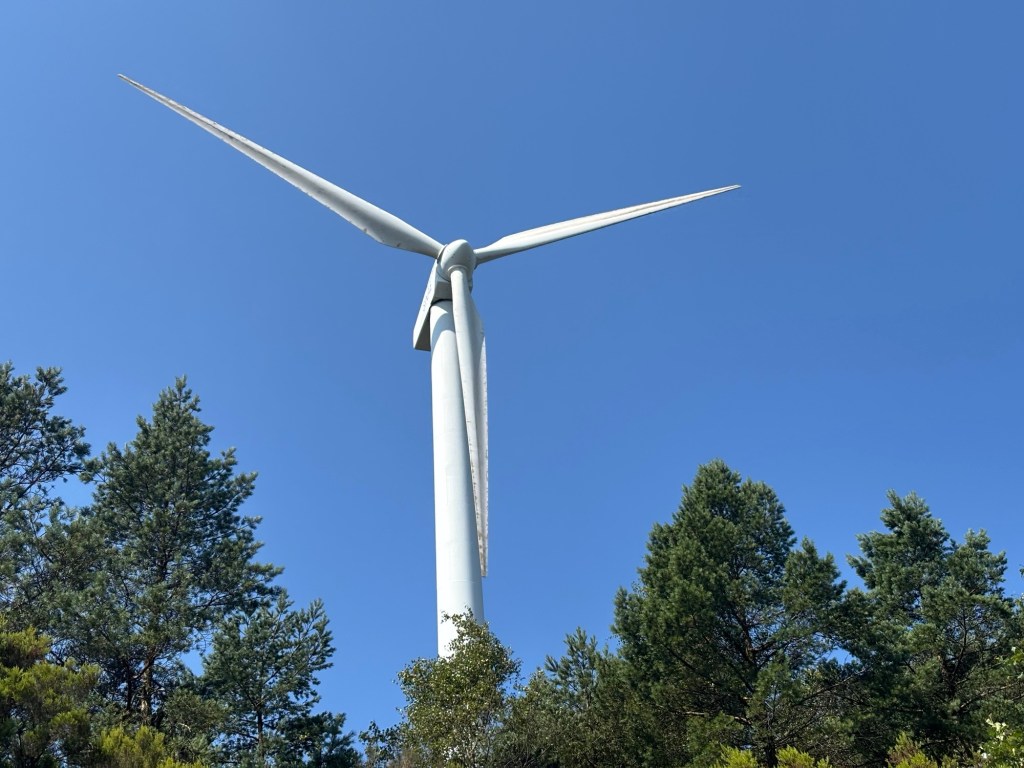
Instead, I skirted the town of Lumbier and made my way back to the Camino. This was easier said than done: the “official” route meanders through the turbine-topped hills on the other side of the roaring A-21. Getting back to it was no easy feat, so I followed the old concrete road to Jaca for about 8km.

Normally, road stretches along the Camino can be quite hairy, with grim or even challenging looks from drivers. A spate of pilgrim deaths on the “original” Camino, now overlaid with concrete highways, led to the move toward the current network of tracks and footpaths. However, thanks to the A-21, which runs parallel, there was hardly anyone on the road at all, which made for a very peaceful (if monotonous) walk.

The sun was well on its way to its throne in the Castilian sky by now, and with it, the vultures of La Foz de Lumbier came drifting out on the thermals, as though to see me off.


I had a veritable fleet of raptors to keep me company today. As well as the vultures, a few kestrels, buzzards and booted eagles were circling the hills around Izco, along with the usual red and black kites. Today added two new encounters to the mix: a pair of short-toed eagles – exceptional snake-hunters – and a young hen harrier, my first (and hopefully not last) of the Camino. I have an especial fondness for harriers, especially the ghostly grey males, whose long, tapering wings and bouncy flight always conjure up images of the endless meseta in my head.


The cattle-crowded foothills of the French Pyrenees seem like an age ago. We are now very much in crop country. It hasn’t had much of an impact on the flies, which are everywhere this summer (I suspect the two months of rain Spain had this spring has caused their numbers to explode this year), but it does make for considerably easier terrain.


Contrary to what the guidebooks say, Monreal does have a working bar/restaurante. The hospitalera should know – it’s her husband who runs it! So I will grab a pizza there tonight, before the last long march of the Camino Aragonés tomorrow toward Puente La Reina and the start of the next stage of my journey: the busier Camino Francés. At least, I hope it will be busier! There’s no guarantee in July, but it should at least have more than one pilgrim in the albergue from night to night! BB x
Camino VII: Out of the Woods

Albergue de Peregrinos, Sangüesa. 16.06.

I overslept today – by Camino standards, anyway. I’m pretty sure I set both alarms last night, but I have a habit of turning them off and falling straight back to sleep. Either way, it was gone six o’clock when I woke up today. Mari Carmen, the seventy-eight year old Valencian who is the only other pilgrim on the road, had already packed and gone. I dressed quickly and had breakfast, which had been left out for me in the dining room. I wouldn’t exactly call two slabs of bread with butter and jam and tea-making facilities a bargain – that cost me 6€ yesterday – but Ruesta is so cut-off from everything and everywhere else that there were no other options, and beggars can’t be choosers.

Gronze (the Camino website I’ve been using to map out the Voie d’Arles and the Camino Aragonés) describes today’s stage as “melancholic”. I thought that was probably a bit melodramatic, but it’s actually a pretty accurate adjective for the first hour and half. Leaving the abandoned village of Ruesta behind (I was genuinely the only person in the entire village when I left), the Camino snakes downhill to ford a narrow stretch of the Embalse de Yesa before climbing slowly back up the other side over the space of an hour. I usually like the forested stretches, as they can be more mysterious and refreshing than the unforgiving plains, and yet… something was off about this forest. It was far too quiet. There’s usually some birdsong in the early hours before the sun crests the hills, but over the space of an hour, I only heard one sound, and that was the screech of a jay far off.

I’ve often experienced this feeling in the presence of Spain’s false lakes. The Embalse de Yesa and its surrounding pine forests are entirely artificial. I saw a doe racing through the trees near the summit, and a red squirrel high up in the branches of a tree, but the lack of birdsong was chilling. It’s as though they keep a mournful silence for the drowned valley below, unwilling to disturb the rest of the watery dead.


I sometimes wonder if nature is laughing at us when we try to shape the world like her, or if she is just quietly disappointed.

As for me, I was quietly relived when the trees cleared and I was in the sunlit fields once again. The quails had returned, along with a host of finches and larks, and with my spirits restored, I set off toward Undués de Lerda.


Undués looks like many Aragonese hillside towns: built of the same stone upon which it stands, it has a habit of vanishing from sight under the cover of cloud, becoming obvious to the eye only when the sun reveals the shadows of its doors and windows. I arrived shortly before nine, but the town was still fast asleep, and everything from the bar to the church was shut up tight. So I moved on.

Near the Aragonese frontier, I saw something in the grass at my feet that made me pause. It was a swallowtail, and it wasn’t leaping into the air as they are wont to do when people draw near. On closer inspection, I think it must have had a run-in with a predator, because one of its swallowtails was missing and part of the same wing was damaged.


Known in English as the scarce swallowtail (on account of its rarity as a migrant in the British Isles), this species is actually fairly common in Spain. It’s not often you get to see one so close outside of a butterfly sanctuary, however, and the markings on its wings are really remarkable. They’re actually made up of thousands of scales, each one containing pigments like melanin or papiliochromes, that create a vivid array of colours used for sending messages, either to potential predators or partners. I saw a sign in a butterfly sanctuary on Tenerife where somebody had managed to make an entire alphabet just from close-ups from butterfly wing patterns. With nearly 20,000 specified of butterfly in the world, perhaps that’s not surprising.

This little fella was in a dangerous spot, right in the middle of the road, so I gently coaxed it onto my hand and then found a more sheltered spot in the verge where it might be out of harm’s way. Unless it recovers the ability to fly, it will probably end up as a snack for an enterprising bee-eater – a bird both large and nimble enough to deal with a swallowtail – so I hope it finds its strength.


A small stone marker in Basque lettering indicated that I had left Aragón and was now in the former kingdom of Navarra. The landscape has changed: the high mountains of Aragón, ever at my side for the last few days, have been replaced by a series of endlessly rolling hills, a patchwork of gold and olive green. This will be the scenery for the next week and half, until I reach Burgos and the meseta begins in earnest.

I was lucky to see one of Spain’s oldest traditions in action shortly after crossing the border. One of the cañadas reales crosses the Camino here, specifically the Cañada Real de los Roncaleses. These are the old migration routes across the country, where shepherds have led their flocks from north to south in search of fresh pastures since the medieval period. A source of milk, cheese and the precious merino wool, Spain’s sheep were a highly valuable commodity and the cañadas received royal protection and their own guild, El Honrado Concejo de la Mesta, which had tremendous privileges.

Nowadays, of course, merino wool can be found all around the world – you can thank Napoleon’s invasion of Spain for breaking that monopoly – but the shepherds still use these ancient pathways, as their ancestors have done for over a thousand years.


It’s been a pretty mild walk today, so it was surprising to see a mass of estivating snails on the way in to Sangüesa. They must have done this during the heatwave, when temperatures in some parts of Spain soared into the forties. They’re not dead, as such, but in a state of dormancy, waiting out the worst of the summer until they can return to life when the temperatures cool down.


Well, Sangüesa is the busiest town I’ve seen so far. The albergue is nearly full, though not with your usual pilgrims: these are almost entirely Spanish bicigrinos, a term used to describe pilgrims who travel by bicycle. It’s a portmanteau, but one can’t help the feeling that it’s almost always just a little pejorative, with many pilgrims feeling that their lycra-clad one-night companions are not true pilgrims in the strictest sense. The decibel count in the albergue has certainly gone up since they arrived, just in time to replace the building site next to the albergue and the slamming windows.

Still – it’s a good ease-in to the popularity of the Camino Francés, the most popular of all the roads to Santiago. I’ve enjoyed my own company for the last week, and though I’m looking forward to meeting all sorts of interesting people on the road, I will miss these long stretches of quiet. BB x

Camino VI: The Ventriloquist

Albergue de Ruesta. 16.20.

Picture this, if you can. Call upon all of your senses.

First, sound. Wind, cool and dry, blowing in the branches of the pine trees above, their branches coated in trailing clumps of lichen. A blackcap singing an enchanting solo in the forest, and an endless percussion of cicadas, assailing the ear with their rasping ostinato from every side. You can’t see them. But they’re there. Hundreds of them.

Next, smell. The fresh scent of pine bark, mingling with the dusty trace of crumbling masonry. The occasional coolness of water blowing in off the lake. Mingling with taste, a hint of fried fish from the bar, which closed up shop half an hour ago.

Touch, then. The feel of carved wood, nearly two centuries old. The trace of numbers in stone, chiselled in many hundreds of years before even that. The uneven cobbles of a road long since neglected, and the powdery feel of the houses that line it, within which a thousand plants have weaved a citadel of their own.

Finally, sight. Picture an entire village abandoned a hundred years ago. See the stone balconies, carved with Roman triumph, presiding over an empty world. A church, with fragments of brilliant blue still visible in the decaying fresco above the spot where the slate once stood, stripped bare and opened to the heavens. A lonely watchtower, manned now by thirsty crows, their beaks agape in the heat of the afternoon.

This is my stop for tonight: the abandoned village of Ruesta, one of the last stops before leaving Aragón.


I left on time this morning, shortly before six, sent on my way by Lulu and Nicole with a packed sandwich, an orange and a boiled egg. It felt like being sent off to school. Some hospitaleros really do push the boat out to make you feel at home during your brief stay!

I missed the sign in the darkness and so headed north for a kilometre before joining the road and returning to my westward trajectory. It added about fifteen minutes to my time, but it did give me an unrestricted view of the morning.


Camino sunrises are something of a tradition on the way to Santiago, but I am going to miss these Aragonese mornings. There’s something about the mountains that makes them that much more mystical. Maybe it’s the way the light turns each row of hills a different shade of blue, always fading toward the base.


I spent a considerable part of the morning chasing quails. They’re almost impossible to see with the naked eye, standing at around 16cm tall (that’s just over half a ruler) and seldom taking flight when alarmed, preferring to sit tight and rely on their cryptic camouflage to avoid detection. They were all over the place, though – I must have counted at least forty individuals calling from different spots along the Camino in the hour or two after sunrise. They can throw their voices around 150 metres, which can make them very hard to locate, especially when there are four or five in the same field calling at once. I flushed one completely by accident at the side of the road and it took off into one of the vast wheat fields on sharp, whirring wings.

England must have sounded like this, a long time ago. There are places you can go in the UK and hear quails, which do migrate that far (some make it all the way to Scotland), but not on the same scale as you can here in Spain.

Along with the quails, I saw a grey partridge – a rarity in Spain, confined to the north – and goodness knows how many corn buntings, but I think it’s the foxes that stood out the most. There must be plenty in the area, as I saw three within a rather short space of time, including one sprinting across a field near Martés.


A major feature of today’s walk were the badlands de yeso: strange, wrinkled mounds of gypsum, a distinctive feature of Aragón, Navarra and Almería. This is the kind of terrain that contains fossils like the shell I found yesterday: a prehistoric stockpile of marine life, buried deep beneath the soft grey hills. They’re really quite striking, and since there are no Caminos that pass through the Bardenas Reales to the southwest (one of the strangest lunar landscapes you can find in Europe), the Camino Aragonés does at least provide an introduction.


I stopped for water shortly after a brief exploration of Artieda and its gypsum hills (to the great confusion of a local who thought I’d lost the Camino). Here, at my feet of all places, I found one of the ventriloquists: not a quail, but a cicada. They usually conceal themselves high up in the trees, where their voices carry and their mottled bodies blend perfectly into the bark. This one was clearly an amateur, however, as the motion of its churring was trembling the blade of grass in its legs, making it stand out like a sore thumb.


Not to be outdone, my final hour was a butterfly parade, with a scarce swallowtail taking centre stage. I have fond memories of this little creature as it’s one of the ten animals I recorded on my first trip to Spain as an eleven-year-old. Contrary to the famous adage popularised by Muhammad Ali, most butterflies don’t “float”, having a rather manic and jerky flight. Swallowtails, however, are on the larger side, and they do float, or at least seem to, fanning their wings out midflight to glide on the air. They’re skittish, like most butterflies, so it’s hard to get close, but their size, acrobatics and striking colours make them a delight to watch.


Which brings me to Ruesta. There’s really all sorts on the Camino, and Ruesta is very much one of the sorts. Abandoned in 1959 after a lengthy decline – largely because of the construction of the nearby Yesa reservoir, which flooded most of the agricultural land the village depended on – the village has largely fallen into a slow state of disrepair.

Ruesta’s church had some spectacular frescos, which were carefully transferred to Jaca’s Diocesan museum to prevent them from being lost forever. I imagine the place might once have looked not too dissimilar to Artieda, a hilltop town not too far from here. From some angles, you can still just about imagine life as usual: children running down the street to school, the bakery in full swing, old locals gathered at a street corner to gossip…


Ruesta has two functioning buildings: a casa de cultura (of all things) and an albergue, complete with a lively bar/restaurante. The secret to Ruesta’s survival is its acquisition by the CGT, the Confederación General del Trabajo, one of Spain’s larger trade unions. There are plenty of clues for those who don’t recognise the red-and-black flag: the raised fist, the quotes and dates graffitied across the walls and the plethora of signage in Catalan, Galician and Basque (the CGT, being anarcho-syndicalist in its outlook, has strong ties to the local separatist movements).

To their credit, they’ve done a wonderful job. The regional government won’t step in to rebuild Ruesta, as it’s just one of over two hundred abandoned towns in Aragón, so the syndicate has stepped in. They’ve carved out a fully-functioning community in the heart of the old village and are carefully coexisting with the place, without feeling the need to develop or bulldoze what doesn’t serve. The result is a very unique staging post of the Camino de Santiago. There’s not many places along the profitable pilgrim road that have been allowed to fall apart, and yet at the same time been so carefully curated.


I wonder how the future will see us? The creatures of the past left their traces in the rocks by chance. We’ve been deliberately stamping our seal on the earth for thousands of years. Will they marvel at tyre tracks in the mud and put them in museums? Will they weave fantastical stories around the objects they find, like discarded vapes and perfume bottles? What will we make of it all, a thousand years from now?


The Camino gives you a lot of time to think. Six hour walks through the countryside, every day for six weeks… It’s a test of resilience, if not of your sanity. Thank goodness I’m perfectly happy with my own company! BB x

Camino V: Along the Aragón

Albergue de Peregrinos de Arrés. 13.48.

I bid Mariano adiós at around 5.45 this morning and left Jaca just all the young folks were finding their way home after an enjoyable Friday night on the town. Far away to the south, a summer thunderstorm lit up the sky every four or five minutes, and by counting the seconds between flashes, I was able to catch one of the strikes with my camera.


With Jaca behind me, I am very conscious I am headed into a world of great distances and tiny villages, so I did double-check to make sure I had enough cash to last at least three days – the time it will take to get to the next town with a functioning ATM.

With the thunderclouds rumbling away in the distance, I had to keep turning back to watch the sunrise, which was singularly spectacular this morning. The sky was a shade of pastel pink normally reserved for Renaissance paintings, and the clouds building up above the mountains could only hold back the sunburst for so long. When it came, it pierced two gaping holes in the clouds, like gleaming eyes, before ripping an almighty gash right through the centre and sending a hundred golden rays into the morning sky.


I had a choice to make today – to press on to Arrés or take a lengthy detour via the Monastery of San Juan de la Peña – but in the end it was the weather that made my mind. A gentle summer rain began to fall shortly after sunrise – not the heavy, sheet rain that makes any outdoor activity miserable, but a light, warm, refreshing rain. The kind that provides relief after a long morning on the road – but makes cross-country hikes hard and soggy work. Rerouting to San Juan de la Peña turns an already reasonable itinerary (24.6km) into a trek (38.4km), and after my ascent and descent of the Pyrenees in one go two days ago, I thought it wiser to forgo the monastery this time – after all, these feet have to take me all the way to Santiago. I have to be careful!


The Camino from Jaca mostly follows the road and the river, but it does provide several forested cross-country stretches that offer some relief. On one of these, in the hills south of Ascara, I stopped for a breather and there I found a most remarkable thing: a symbol of Santiago, a shell, but ancient. A fossil from an ancient sea, perhaps ten million years old or more, just sitting at the side of the Camino, waiting to be found.


I’ve always wanted to come to Aragón for its fossil beds. Teruel, Aragón’s southernmost province, is believed to have the highest concentration of fossils per square metre in Europe, and there’s even a sauropod named for the region (Aragosaurus). There are some incredible relics from the ancient world to be found in this vast region, including a large number of well-preserved dinosaur footprints at El Castellar and Galve. I wasn’t expecting to have any luck with dinosaurs on the Camino, as the fossil beds themselves are far from the pilgrim road and pretty hard to reach without a car, so I can’t believe my luck in finding a Miocene scallop shell – and in such good condition!


Today’s hike was a pretty solitary one. That’s not to say I’ve met many pilgrims on the road – today I saw one, and that’s one more than the last four days – but the distances between the towns today felt immense. That’s fairly typical of the Spanish interior, and Aragón is no exception. What makes this part of Spain so striking is its singular orography: so many of the hills in the Río Aragón basin are perfectly flat on top, forming an alien landscape that reaches its peak in the Bardenas Reales to the southwest.

Naturally, in this land of shifting frontiers, many of these mesas have a hilltop town or castle sitting neatly on top. I can see at least one from my stop for tonight in the hill town of Arrés: Canal de Berdún, away to the north. If Arrés had proved to be a ghost town, I would have tried my luck there.


Fortunately, it isn’t. Arrés is little more than a hamlet tucked away in a cleft of the long wooded sierra that runs the length of the Río Aragón, with some fifty permanent residents or less to its name, but don’t let its silence deceive you (even on a Saturday afternoon when everything seems to have ground to a halt). The municipal albergue is fully operational and perfectly equipped, allowing for a stay in possibly one of the most beautiful corners of the Camino Aragonés.


I’ve done my washing by hand, as usual, and it’s hanging out to dry. In this heat, it already will be within another ten minutes or so.


To end the day, the French hospitaleras, Lulu and Nicole, gave us a tour of the village, showed us the sunset from the highest point (which was spectacular) and cooked up a wonderful dinner which we shared between the six of us (including two Aragonese bicigrinos who showed up five minutes before dinner).


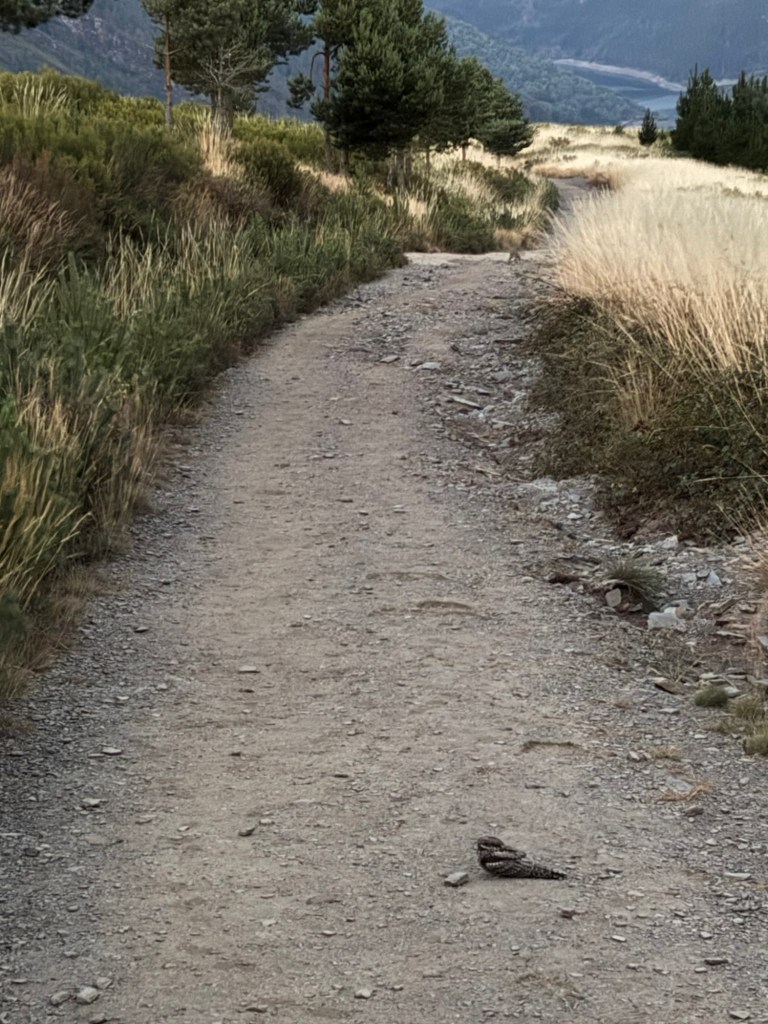
I’m just penning the last details now, drinking a chamomile tea, and listening to the night sounds of crickets, a distant dog barking and, somewhere in the valley below, the ceaseless extraterrestrial churring of a nightjar. It’s blissfully quiet here. I’m looking forward to the sociable side of the Camino Francés, but I’m so glad I came this way. It’s been spectacular. BB x

Camino IV: The Dark World

Casa Mamré, Jaca. 20.08

Well, first of all, dinner last night was phenomenal. Heidi, one of our hospitaleros, cooked up an absolute smorgasbord supper, and still under the banner of donativo. I hope the other pilgrims also tipped generously, because it must be really hard to whip up a spread like this without the generous donations of the pilgrims themselves. Remember, donativo doesn’t mean free – pay what you can, and what you feel the place deserves!


I was one of the last to leave this morning, as I was hoping I might score a few more stamps in churches along the way. as a matter of fact, they were all shut – every single one of them – so I needn’t have dawdled. I did only have 19km or so to go today, though, so I was in no hurry.

Leaving Canfranc behind, the Camino follows the river through the Valle de Aragón all morning, only turning away for the ascent to Jaca at the end of the road. What was only a mountain stream yesterday is already a powerfully flowing river, carving an impressive series of gorges in the granite along its course.


The next town along is Villanúa, where you are confronted with a strange sculpture in the shape of a many-limbed tree stump. On closer inspection, it’s actually an abstract representation of the women of Aragón who were persecuted for the crime of witchcraft during the Middle Ages. A single face carved into the structure drives the message home. There used to be a rope hanging from one of the branches, in a nod to one of the favoured methods of execution of witches, but it looks like that was removed.


During the Middle Ages, Aragón was knee-deep in tales of witchcraft. The Inquisition tasked itself with purging the region of heretics – a very broad umbrella that encompassed Protestants and “Judaizers” as well as witches – but such was the strength of belief in the occult in this remote and mountainous corner of Spain that witchcraft remained a talking point until as late as the 19th century, as can be seen in the pinturas negras of the Aragonese painter, Francisco de Goya.

The reason Villanúa comes into this can be found just off the Camino a hundred metres or so before entering the town. A series of steps cut into the rock lead up to a cave, accessible only via a guided tour. You can feel the chill of it as you climb towards it, and while there are plenty of perfectly reasonable scientific explanations for the drop in temperature near a cave mouth, it’s easy to see why such a place might have instilled a sense of fear in the ancients. The steps go deep, and in its heart is a large cavern lit by a great hole in the ceiling. It is believed that this was where the witches of Villanúa came to practice their akelarres – Witches’ Sabbaths – summoning evil spirits and bathing naked in the moonlight.

Of course, it’s just as likely that most (if not all) of those accused of witchcraft in the Middle Ages were completely innocent. Some local pedant seems to think so, anyway, adding a footnote to the information, claiming the accused were “too busy being burned and hanged by the misogynists of their time” (#romantizandomasacres).

It may well be true, even if it does take away from the mystery, but it’s worth bearing in mind that curanderos – folk healers – were frequently called upon throughout the Medieval period, especially in times of environmental stress. It’s plausible that some of the so-called witches really were trying to bring about some kind of change in their own way.

For me, it’s never been about their innocence. Whether or not they were witches is of no consequence (though I’d rather believe they were). The real demons of the story are the ones who were so strangled by their own fear that they saw fit to send these unfortunate souls to their deaths.

Either way, peregrino, if you feel a chill on your approach to Villanúa, it might just be the lingering malice of the Cueva de las Güixas on your left.


I had to double-back today, not because I’d forgotten something, but because I’d missed something rather special. The boulder-strewn fields before Villanúa harbour more than just witches’ grottos. There are older and more mystical relics by far, though I’d wager the average pilgrim completely passes them by, fatigued as they are from their three-hour climb down from the mountains.

It’s a dolmen – an ancient burial site from the Stone Age. There are quite a few of these in the area – large stones (or megaliths) being plentiful in the Pyrenean basin – but at least one can be visited from the Camino without too much effort. Dolmens like these can be found all over Europe, from the islands of the Mediterranean to northwestern France and Britain. In a way, they are just as much a symbol of the Camino as the yellow arrows, since they mark the westward expansion of our earliest ancestors as they moved west across Europe, until they could go no further.


The remaining fifteen kilometres or so to Jaca are easy to follow, if a little rocky underfoot. I’d spent so much time exploring the caves, dolmens and ruins of long-abandoned villages that I now had quite a long march beneath the risen sun, and my feet were definitely starting to complain after yesterday’s exertions. So, for once, I plugged in and listening to an audiobook – William Golding’s The Inheritors – as a way to push on. I hoped I might pop in on a few churches along the way, but as I suspected, they were all shut, so I got to Jaca by midday without further delay. Mariano, the musical madrileño from the albergue in Canfranc, had got there just before me, but we still had a little wait before the dueña showed up to let us in.


I bought lunch for myself and Mariano (I’ve had an easy ride with others treating me so far, and it’s only fair to share), before giving myself an hour or so to explore Jaca. The cathedral is austere but impressive, as Spanish churches often are, but its real treasures were in its Diocesan museum. At 3€ for pilgrims – with a stamp for the credencial thrown in – it’s a steal, especially when you see what it contains.


These Halls of Stories are bewitching beautiful, recreating scenes from the Bible for the illiterate masses while the holy words were kept in the jealously guarded secret language of the elite, Latin. I’m not normally one for religious art – the Renaissance obsession with ecstasy in its subjects is a major turn-off for me – but anything Gothic or earlier and I’m all in. The world was a darker and more mysterious place back then – and doesn’t that make it so much more interesting?


Latterly, I’ve become a lot more interested in ancient depictions of monsters, and the Devil definitely falls into that bracket. It took me a little while to realise the crowned imp in the image above – a detail from the mural of Bagüés – is a representation of Satan. I wonder what their reference was? With the red skin, narrow eyes and the feather-like crown, he almost looks like a Taino Indian, but that would be anachronistic in the extreme – these paintings were created four hundred years before Columbus sailed to the Americas.

Are there elements of Pan, the pagan god of the wilderness? It’s no secret that the goat-legged minor deity had a huge impact on the Christian devil, with the early Christian scholar Eusebius of Caesarea claiming the two were one and the same in the 4th century. Pan represented all that Christianity sought to suppress: vice, sin and animal instincts, crystallised in Pan’s half-beast limbs.

It’s not always goats, either. Traditional depictions of the devil often feature scaly or bird-like legs, akin to a chicken or a hawk. Most paintings of Saint Michael feature the Archangel standing triumphant over the body of a demon, and it’s easy to see the inspiration in these paintings: pigs’ ears for greed, scaly skin for the deception of the serpent, and thick, knotted talons for the eagle, one of the most feared and respected predators of the ancient world (if you’re not convinced, just look at how many world flags feature an eagle).


The references are much clearer here, but what of the Red Devil from the Bagüés mural? He has neither the goatee beard nor the cloven hooves. Who was the artist’s muse? Perhaps we’ll never know.


As I worked my way round the exhibit to the exit, a solitary face caught my attention. Or rather, a pair of eyes. Amid a wall of depictions of a saintly and contented Mary – Inmaculada, Asunción, Madre de Diós – a little painting of Dolorosa follows you with its eyes, which are bloodshot and full of tears. Her Son, arrested by the religious authorities and sentenced to death for the crime of working miracles, was crucified before a baying crowd.

Over a thousand years later, the same story played out again and again across Europe, only now it was done in Christ’s name. There must have been a thousand Marys who watched their sons and daughters befall a similar fate. And still it plays on.

Critics may say the Catholic Church puts far too much emphasis on the doom, gloom and damnation, but there is wisdom in the Catholic acknowledgement of the darkness. We might have been created in God’s image, but that does not make us perfect, and history tells us that some of us stray very far from the path when we try to be perfect.

Mary’s grief is eternal: it ripples across time.


Wow, that got pretty heavy. Check back in tomorrow for some more light-hearted adventures across Aragón! BB x